Cambridge A Level Biology 9700 — 2021 Feb/March Paper 2 · Variant 2
9700/22/F/M/21 · 6 questions · 60 marks · ≈68 min
The question paper and its mark scheme, free to read here and free to download. This is Cambridge’s own paper, exactly as it was sat.
Question paper16 pages
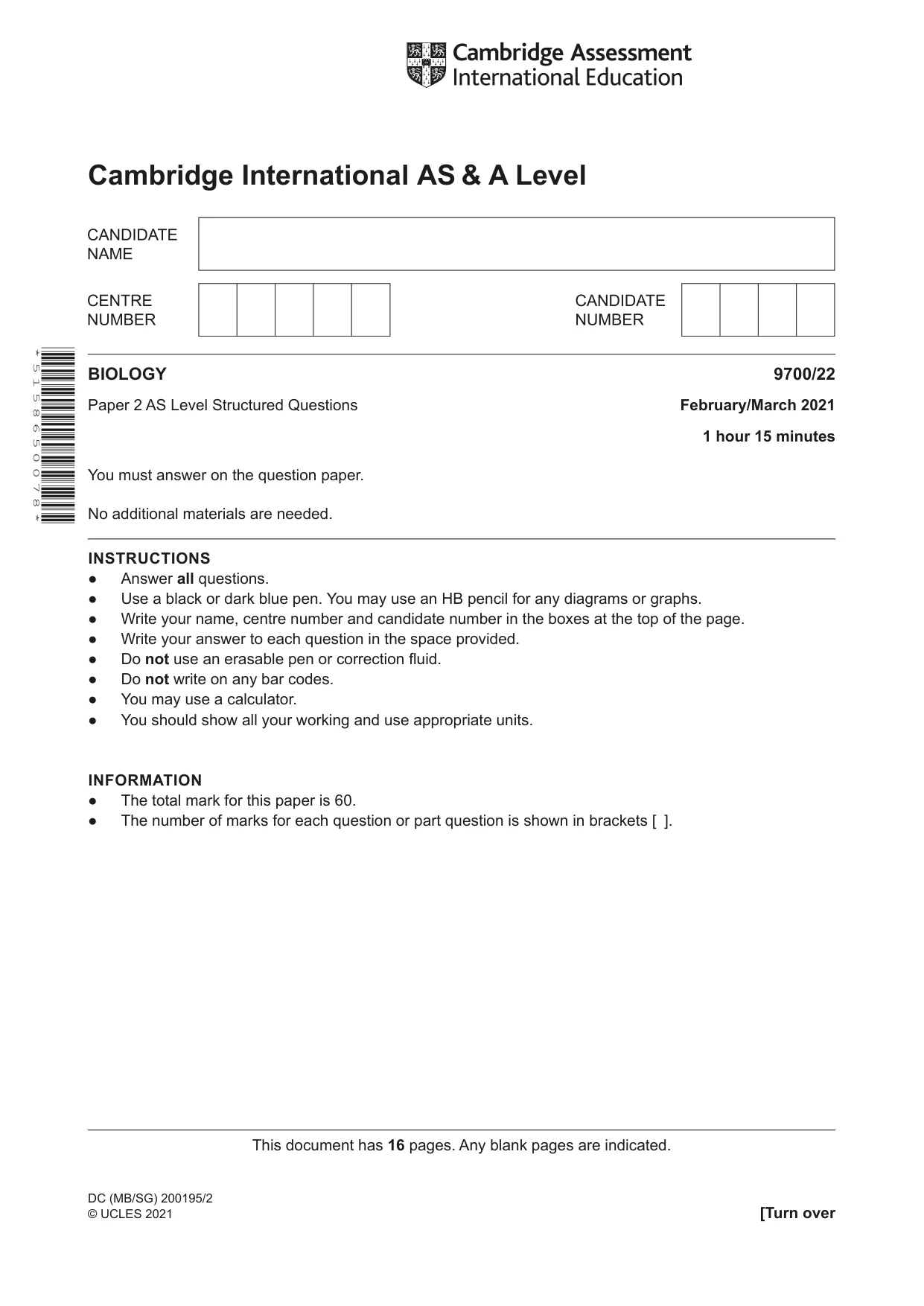
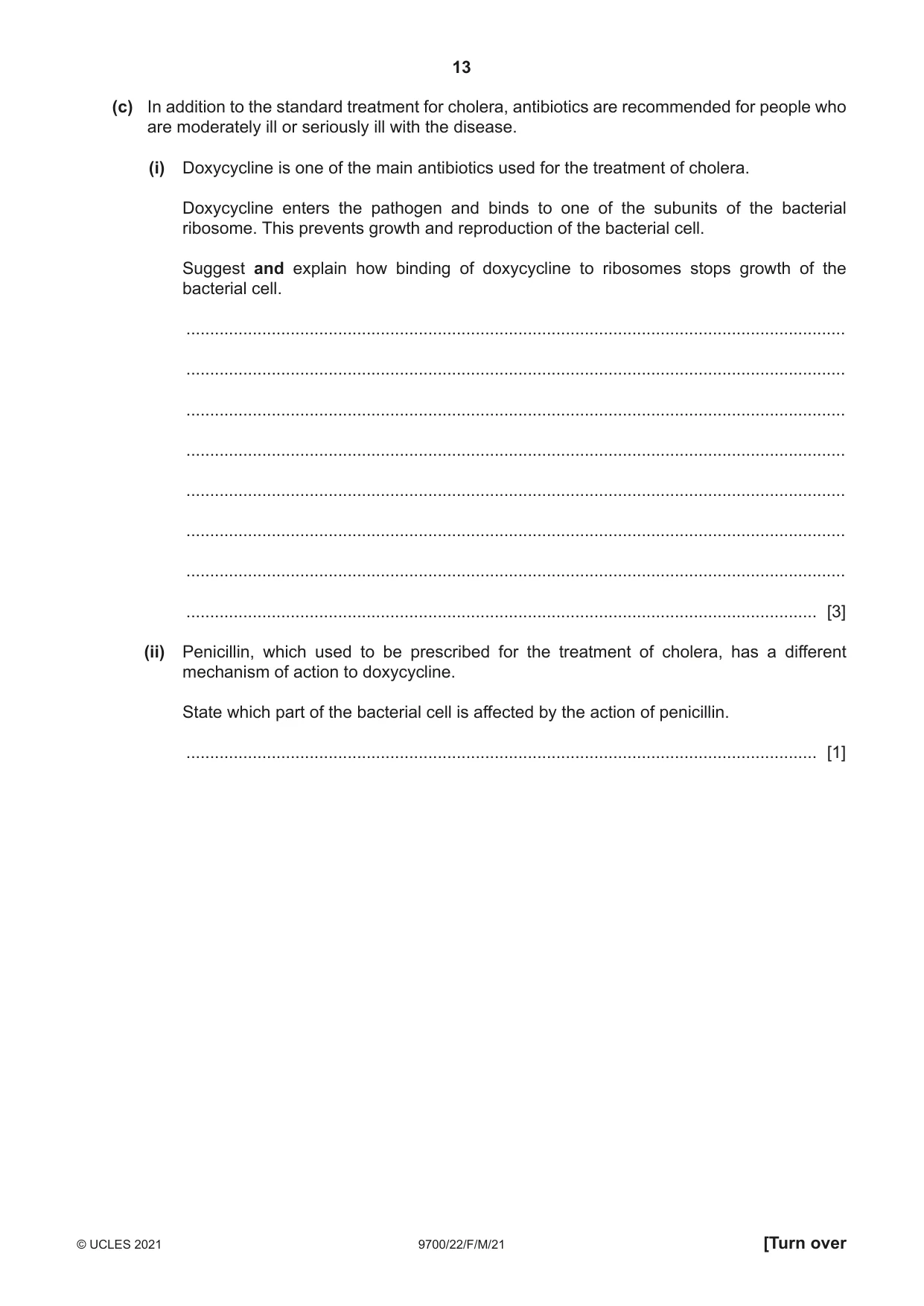
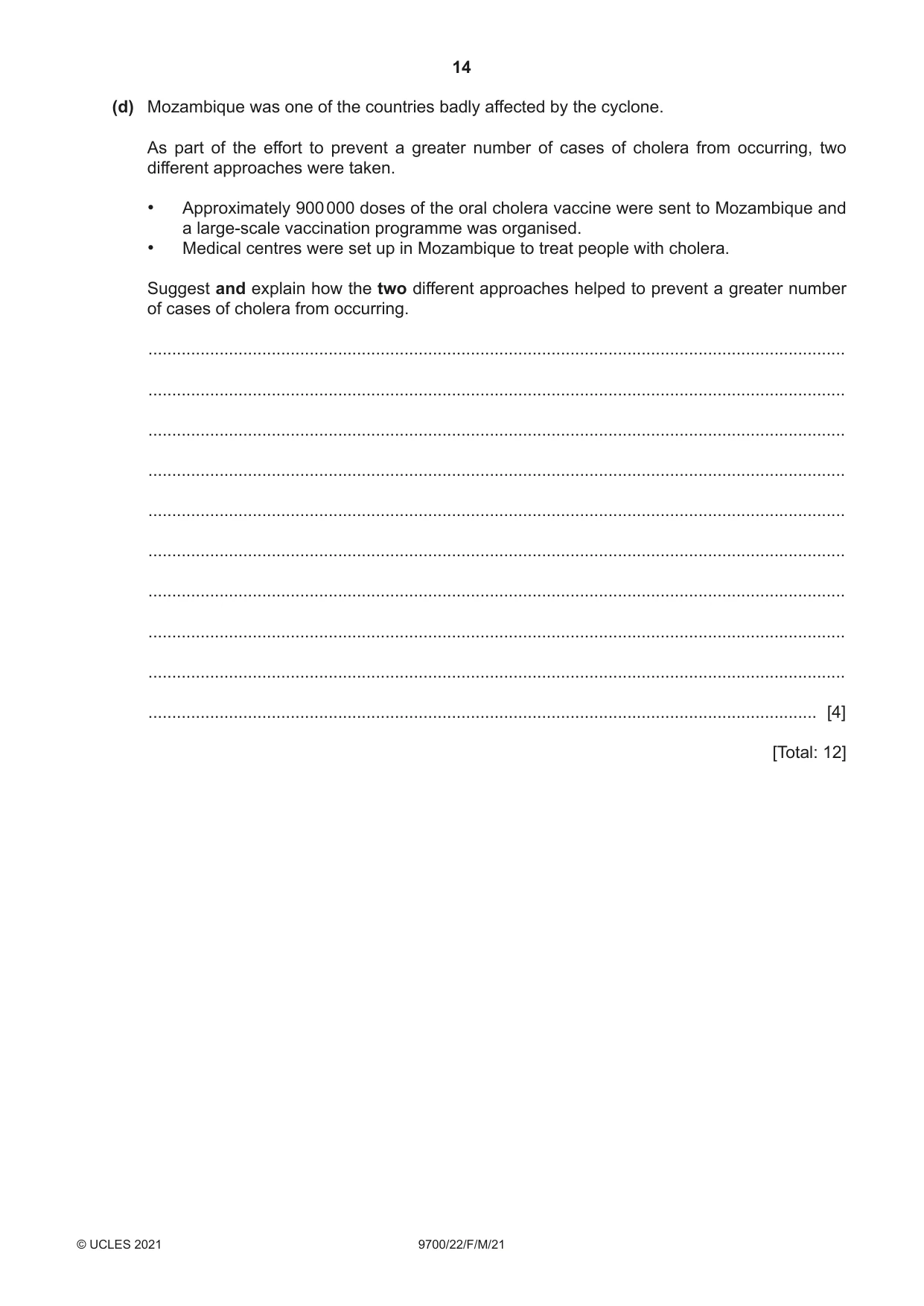

Mark scheme15 pages
Answers below. Sit the paper first if you are practising.
Questions as text
Q1 · An image of a transverse section through the trachea of the gas exchange system
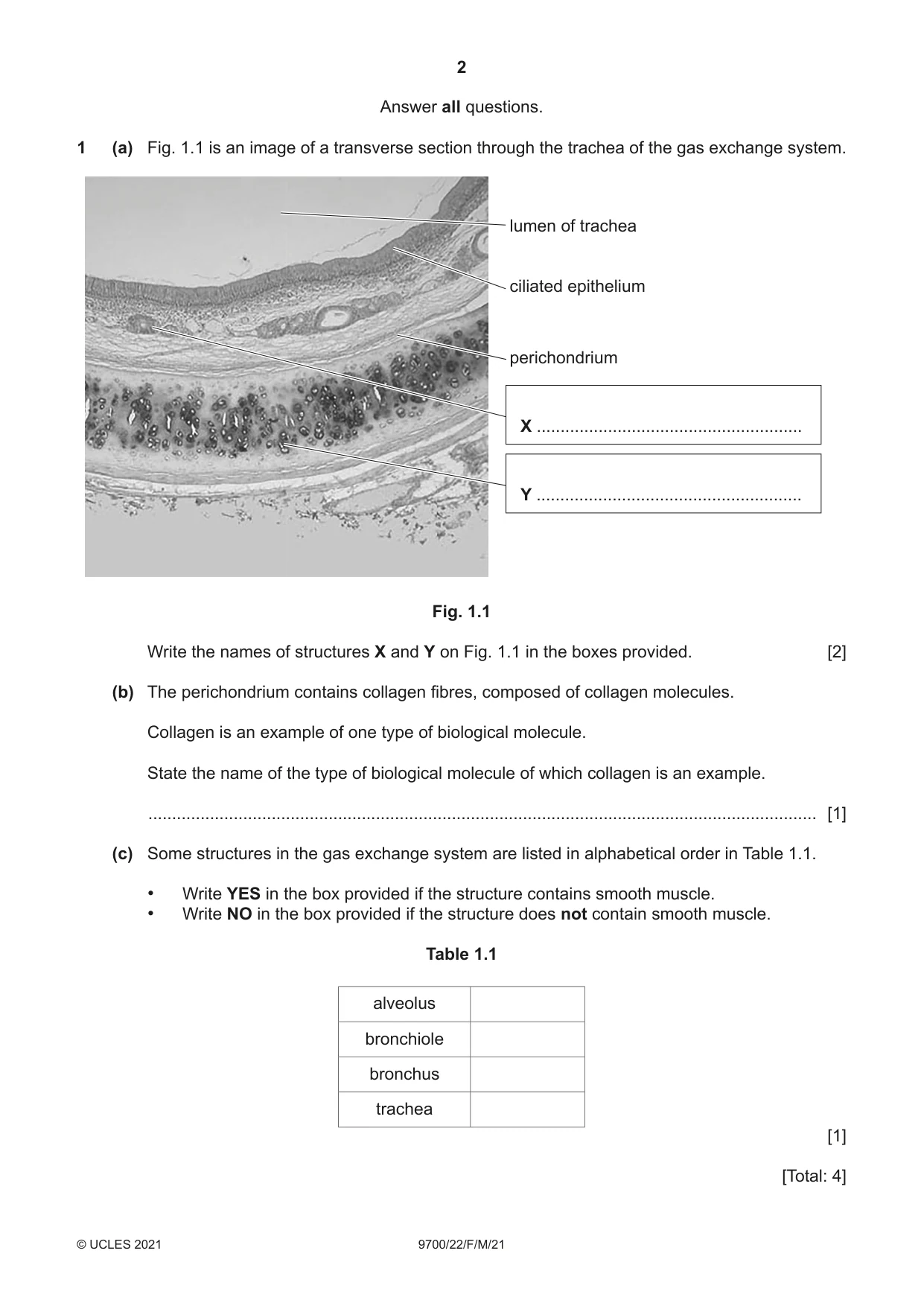
1 (a) Fig. 1.1 is an image of a transverse section through the trachea of the gas exchange system. lumen of trachea ciliated epithelium perichondrium X ........................................................ Y ........................................................ Fig. 1.1 Write the names of structures X and Y on Fig. 1.1 in the boxes provided. [2] (b) The perichondrium contains collagen fibres, composed of collagen molecules. Collagen is an example of one type of biological molecule. State the name of the type of biological molecule of which collagen is an example. ............................................................................................................................................. [1] (c) Some structures in the gas exchange system are listed in alphabetical order in Table 1.1. • Write YES in the box provided if the structure contains smooth muscle. • Write NO in the box provided if the structure does not contain smooth muscle. Table 1.1 alveolus bronchiole bronchus trachea [1] [Total: 4]
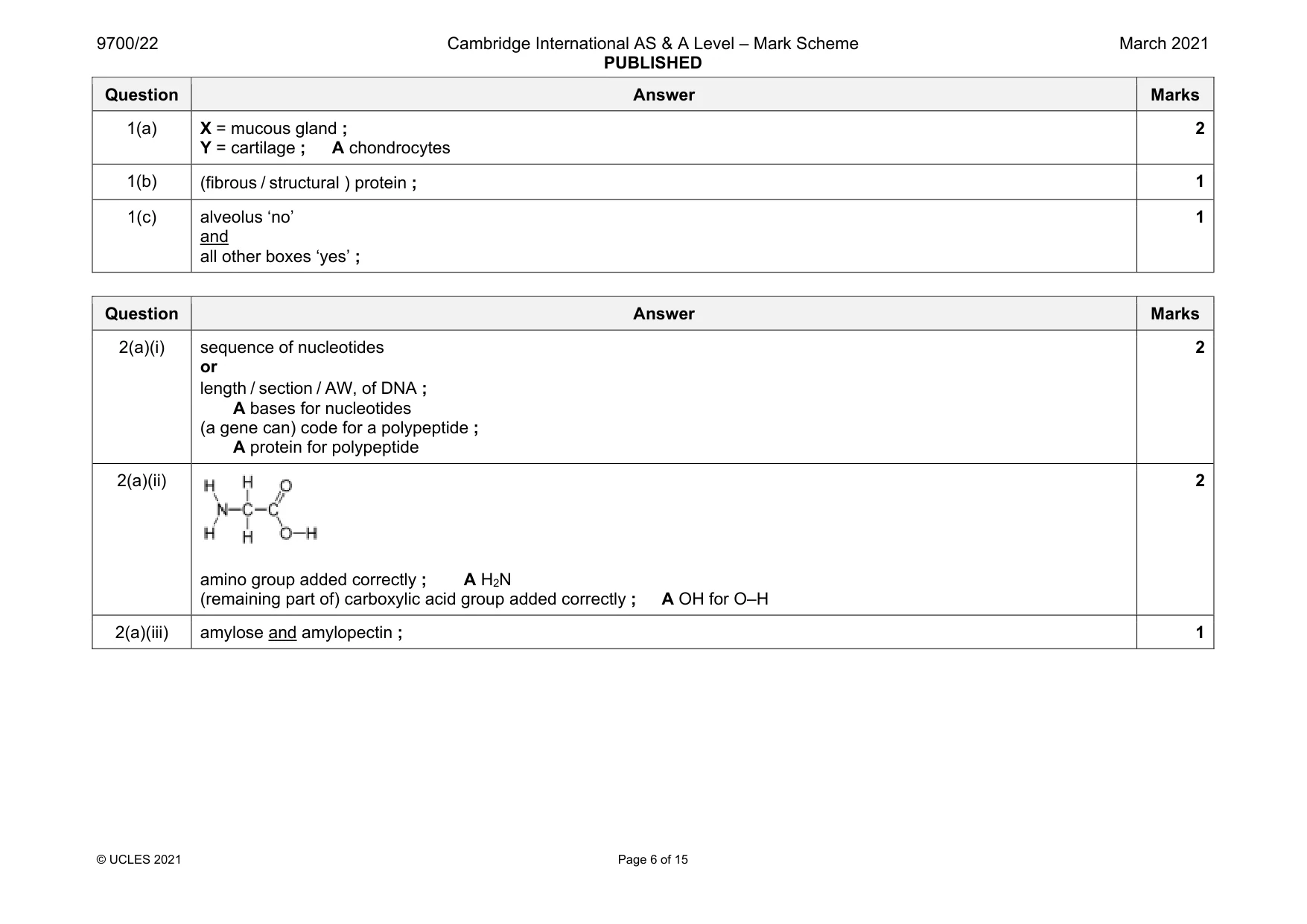
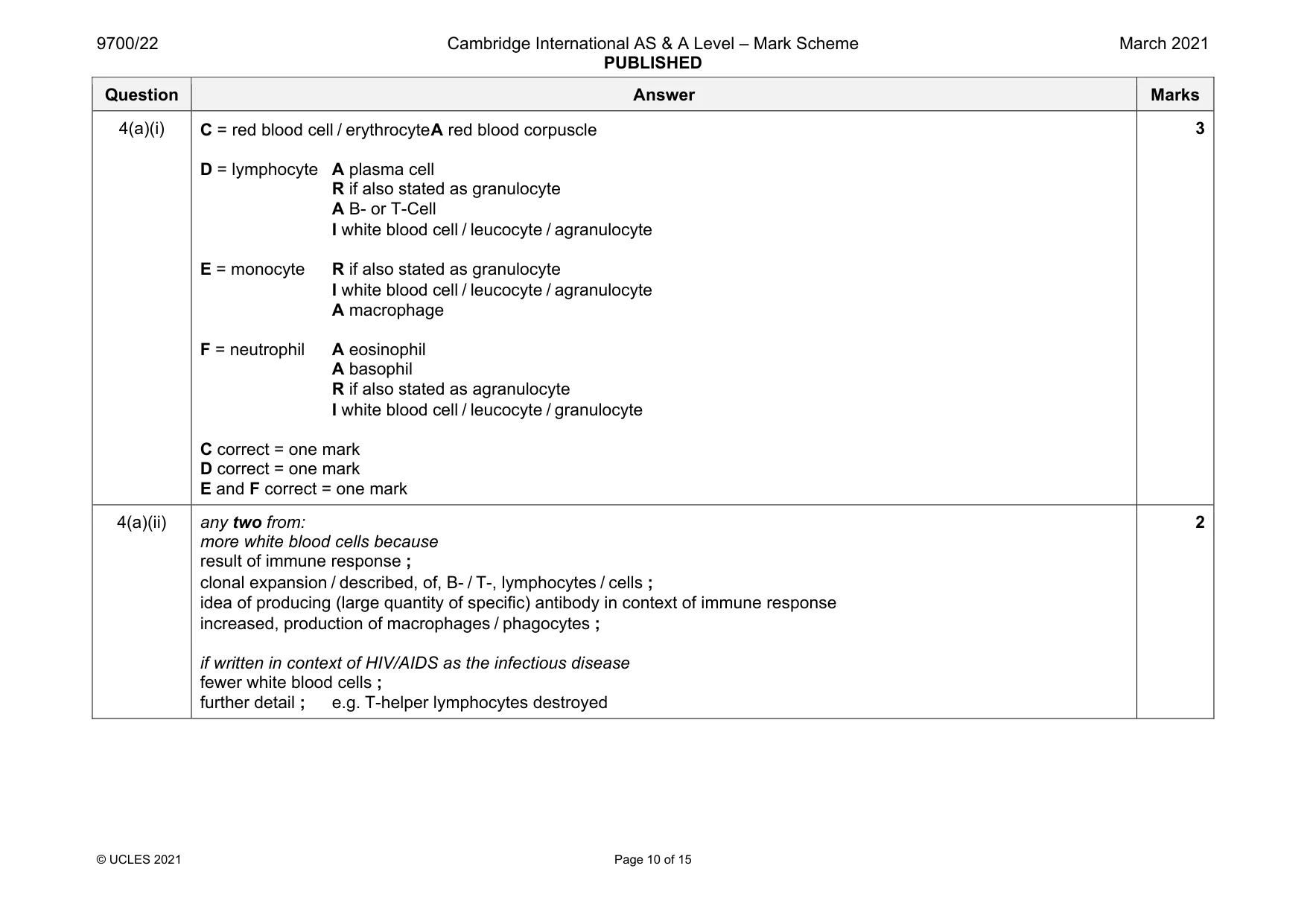
Mark scheme: 1(a) X = mucous gland ; Y = cartilage ; A chondrocytes 2 1(b) (fibrous / structural ) protein ; 1 1(c) alveolus ‘no’ and all other boxes ‘yes’ ; 1
Q2 · Starch molecules are the main storage molecules in many types of cereal grain, such as…
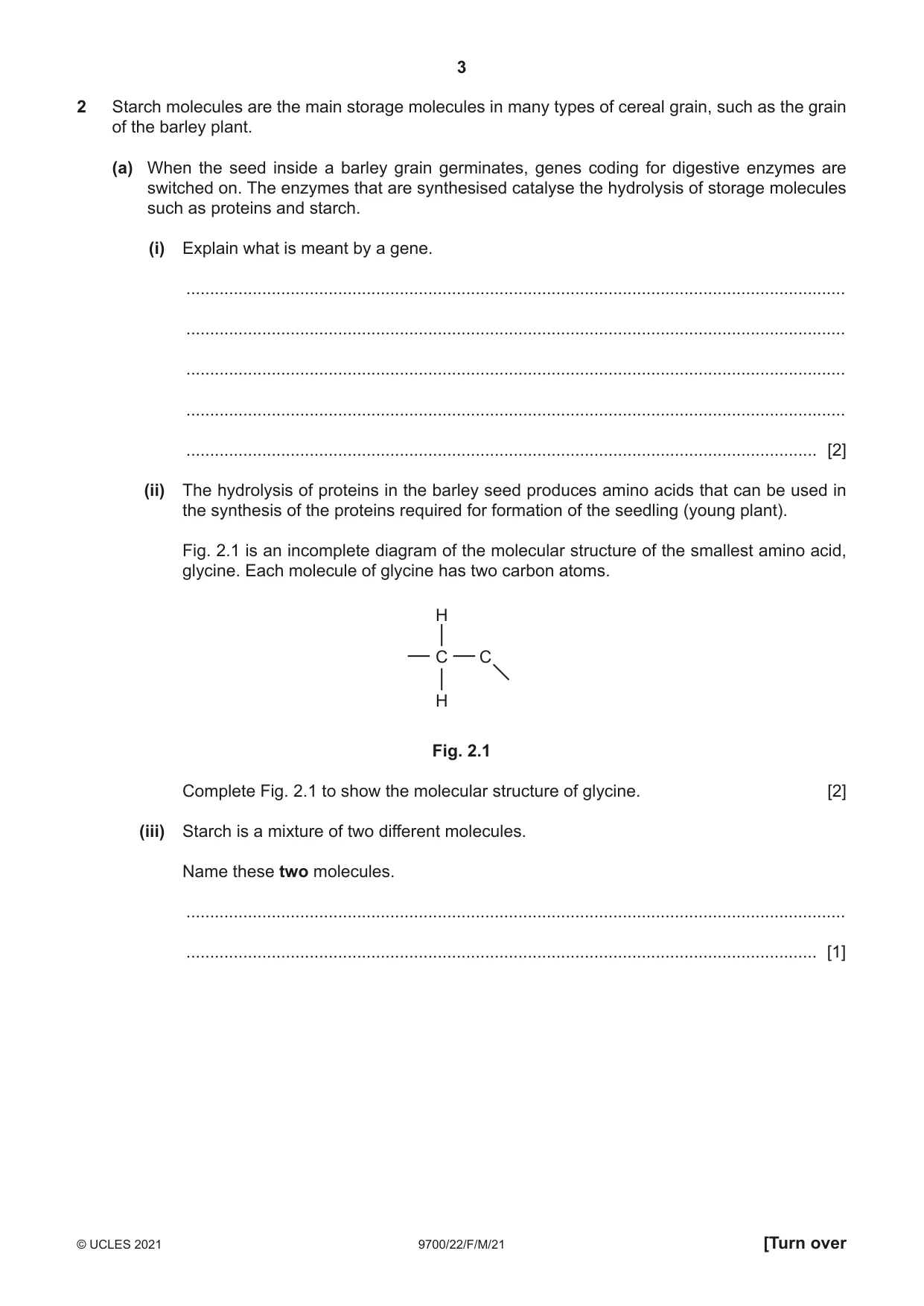
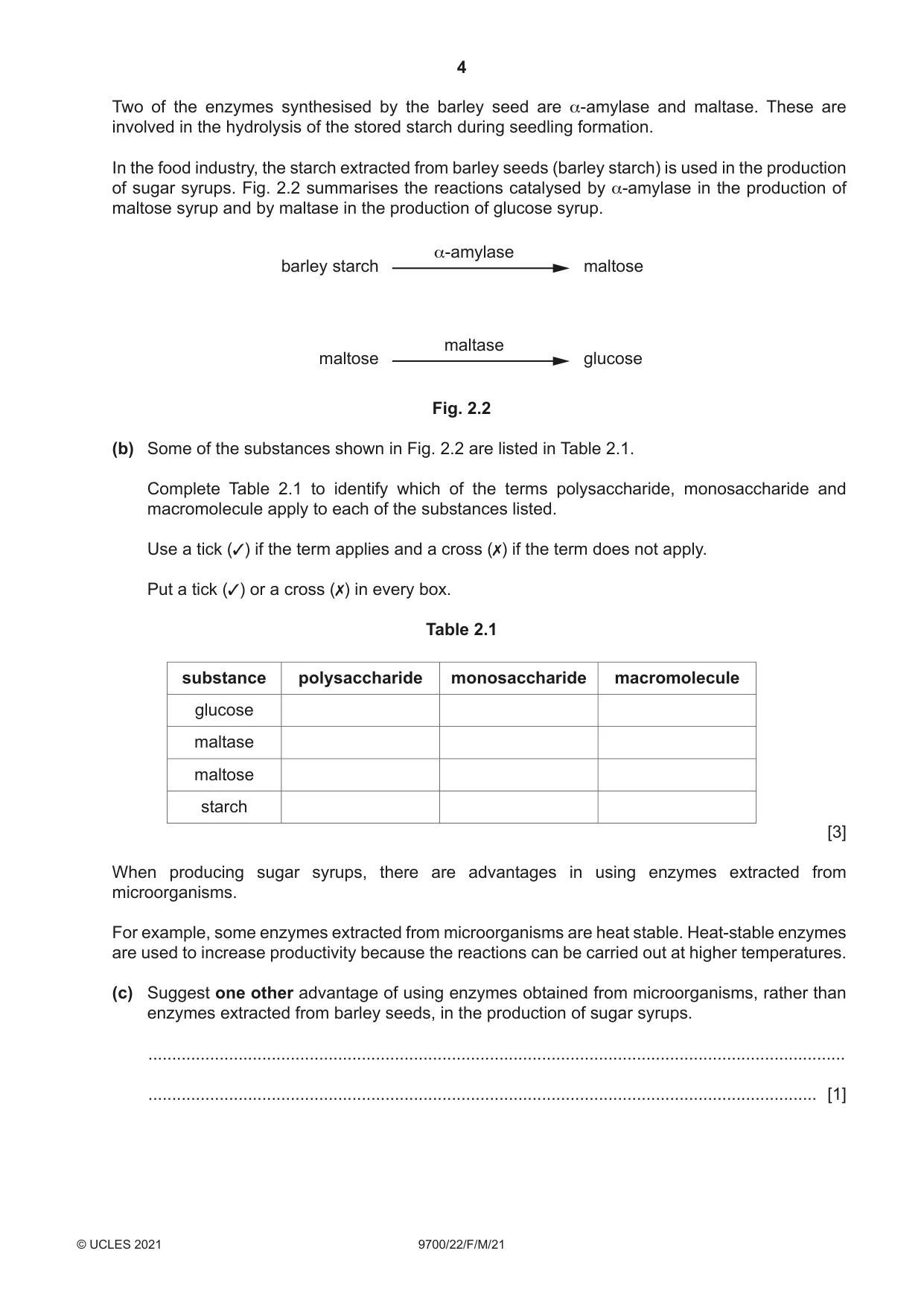
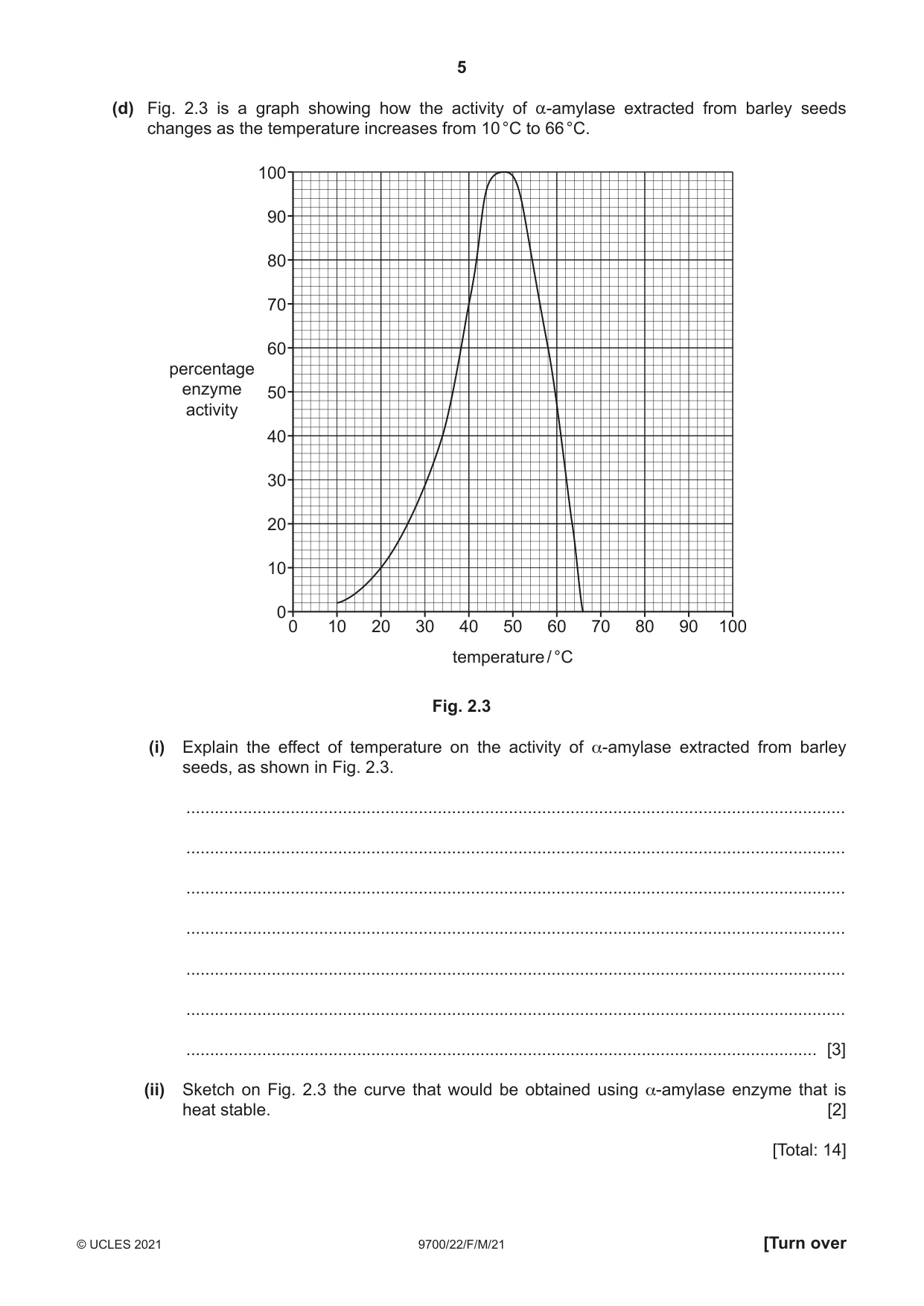
2 Starch molecules are the main storage molecules in many types of cereal grain, such as the grain of the barley plant. (a) When the seed inside a barley grain germinates, genes coding for digestive enzymes are switched on. The enzymes that are synthesised catalyse the hydrolysis of storage molecules such as proteins and starch. (i) Explain what is meant by a gene. ........................................................................................................................................... ........................................................................................................................................... ........................................................................................................................................... ........................................................................................................................................... ..................................................................................................................................... [2] (ii) The hydrolysis of proteins in the barley seed produces amino acids that can be used in the synthesis of the proteins required for formation of the seedling (young plant). Fig. 2.1 is an incomplete diagram of the molecular structure of the smallest amino acid, glycine. Each molecule of glycine has two carbon atoms. H C C H Fig. 2.1 Complete Fig. 2.1 to show the molecular structure of glycine. [2] (iii) Starch is a mixture of two different molecules. Name these two molecules. ........................................................................................................................................... ..................................................................................................................................... [1] Two of the enzymes synthesised by the barley seed are α-amylase and maltase. These are involved in the hydrolysis of the stored starch during seedling formation. In the food industry, the starch extracted from barley seeds (barley starch) is used in the production of sugar syrups. Fig. 2.2 summarises the reactions catalysed by α-amylase in the production of maltose syrup and by maltase in the production of glucose syrup. α-amylase barley starch maltose maltase maltose glucose Fig. 2.2 (b) Some of the substances shown in Fig. 2.2 are listed in Table 2.1. Complete Table 2.1 to identify which of the terms polysaccharide, monosaccharide and macromolecule apply to each of the substances listed. Use a tick (3) if the term applies and a cross (7) if the term does not apply. Put a tick (3) or a cross (7) in every box. Table 2.1 substance polysaccharide monosaccharide macromolecule glucose maltase maltose starch [3] When producing sugar syrups, there are advantages in using enzymes extracted from microorganisms. For example, some enzymes extracted from microorganisms are heat stable. Heat-stable enzymes are used to increase productivity because the reactions can be carried out at higher temperatures. (c) Suggest one other advantage of using enzymes obtained from microorganisms, rather than enzymes extracted from barley seeds, in the production of sugar syrups. ................................................................................................................................................... ............................................................................................................................................. [1] (d) Fig. 2.3 is a graph showing how the activity of a-amylase extracted from barley seeds changes as the temperature increases from 10 °C to 66 °C. 100 90 80 70 60 percentage enzyme 50 activity 40 30 20 10 0 0 10 20 30 40 50 60 70 80 90 100 temperature / °C Fig. 2.3 (i) Explain the effect of temperature on the activity of α-amylase extracted from barley seeds, as shown in Fig. 2.3. ........................................................................................................................................... ........................................................................................................................................... ........................................................................................................................................... ........................................................................................................................................... ........................................................................................................................................... ........................................................................................................................................... ..................................................................................................................................... [3] (ii) Sketch on Fig. 2.3 the curve that would be obtained using α-amylase enzyme that is heat stable. [2] [Total: 14]
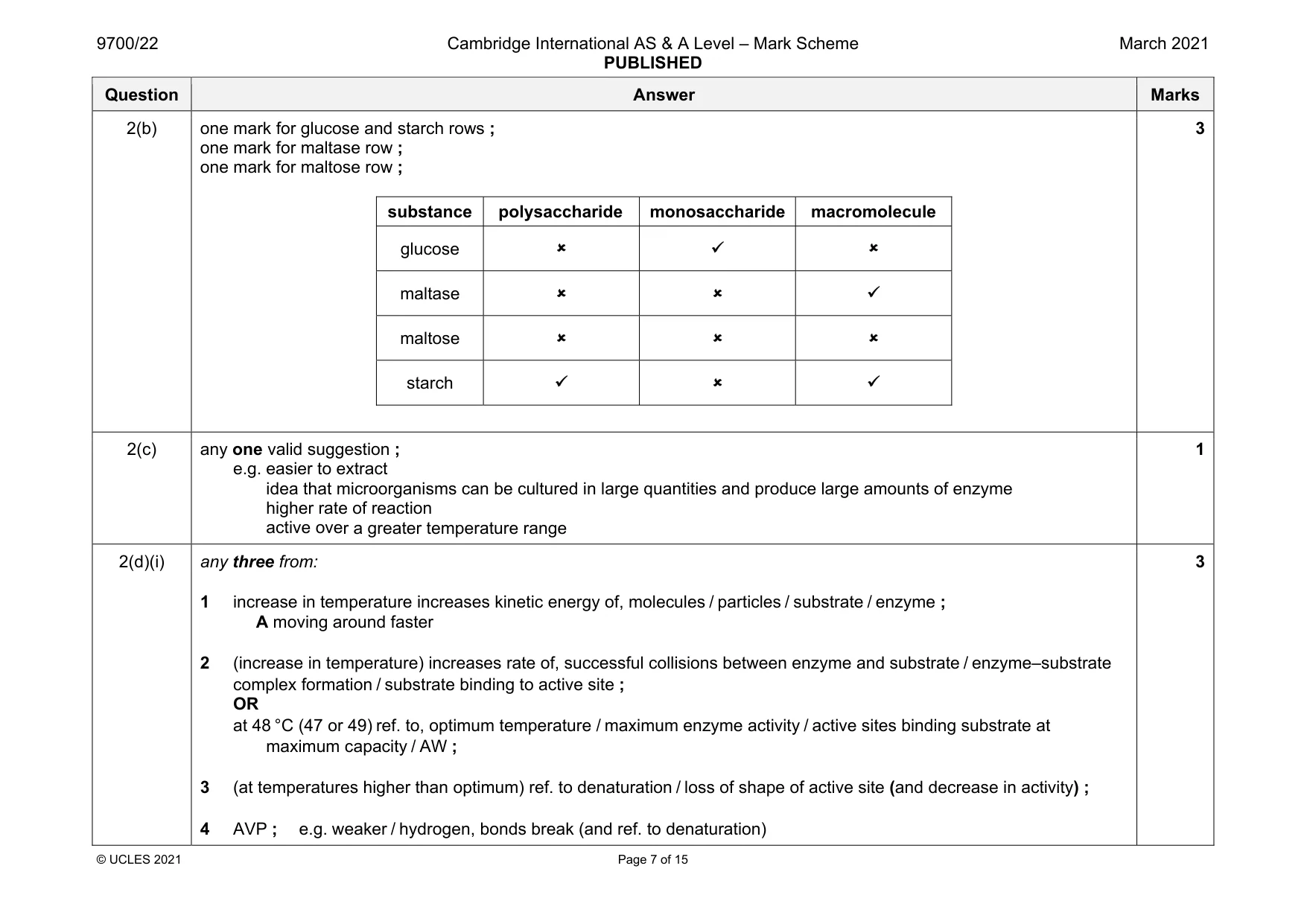
Mark scheme: 2(a)(i) sequence of nucleotides or length / section / AW, of DNA ; A bases for nucleotides (a gene can) code for a polypeptide ; A protein for polypeptide 2(a)(ii) amino group added correctly ; A H2N (remaining part of) carboxylic acid group added correctly ; A OH for O–H 2 2(a)(iii) amylose and amylopectin ; 1 Question Answer Marks 2(b) one mark for glucose and starch rows ; one mark for maltase row ; one mark for maltose row ; substance polysaccharide monosaccharide macromolecule glucose maltase maltose starch 3 2(c) any one valid suggestion ; e.g. easier to extract idea that microorganisms can be cultured in large quantities and produce large amounts of enzyme higher rate of reaction active over a greater temperature range 1 2(d)(i) any three from: 1 increase in temperature increases kinetic energy of, molecules / particles / substrate / enzyme ; A moving around faster 2 (increase in temperature) increases rate of, successful collisions between enzyme and substrate / enzyme–substrate complex formation / substrate binding to active site ; OR at 48 °C (47 or 49) ref. to, optimum temperature / maximum enzyme activity / active sites binding substrate at maximum capacity / AW ; 3 (at temperatures higher than optimum) ref. to denaturation / loss of shape of active site (and decrease in activity) ; 4 AVP ; e.g. weaker / hydrogen, bonds break (and ref. to denaturation) 3 Question Answer Marks 2(d)(ii) optimum / peak / max activity / at 100% and to right of original ; line beyond optimum must be to right and, reach vertical axis at 50% or below / reach horizontal axis ; 2
Q3 · T-helper lymphocytes and Leydig cells are two types of mammalian cells
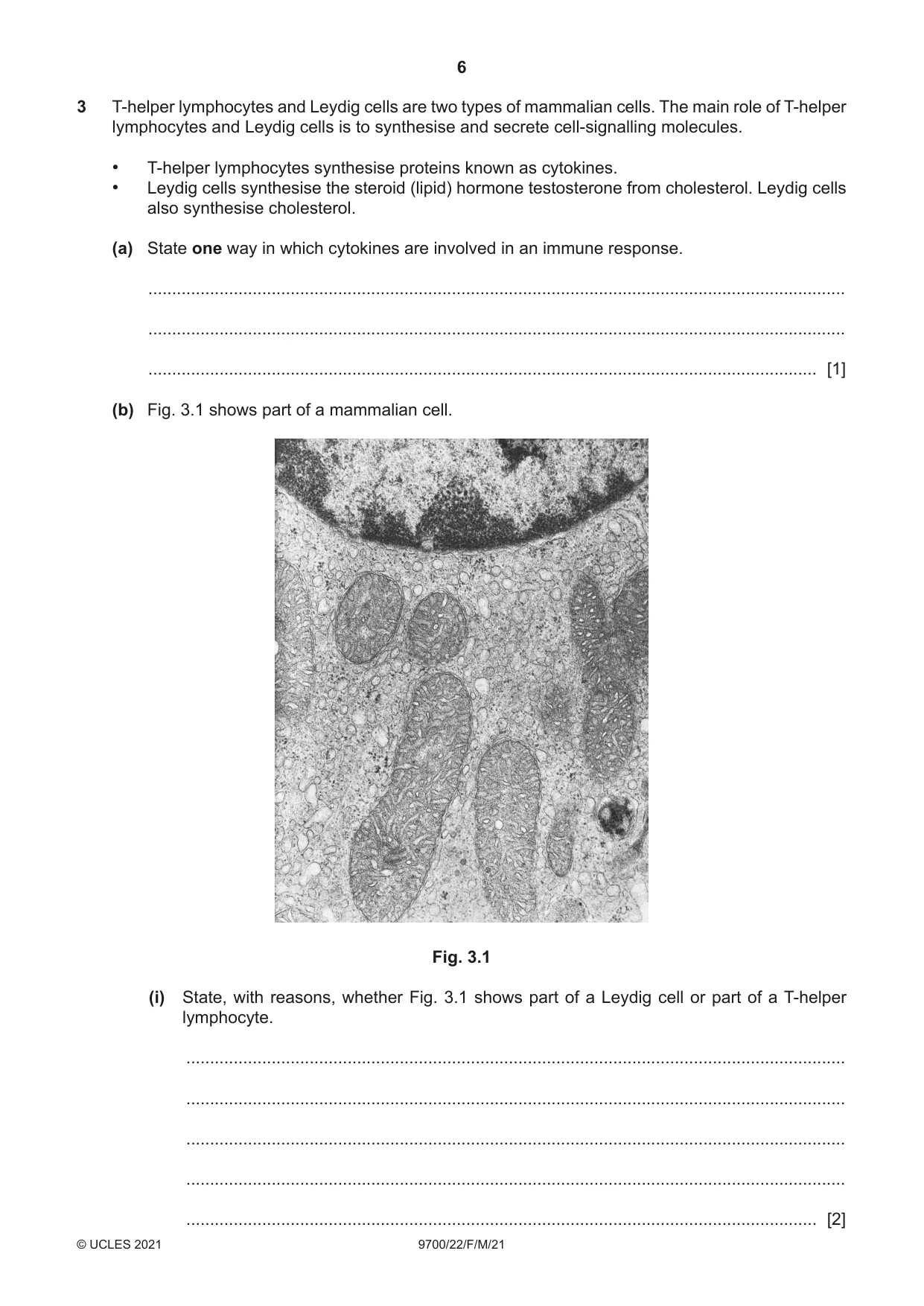
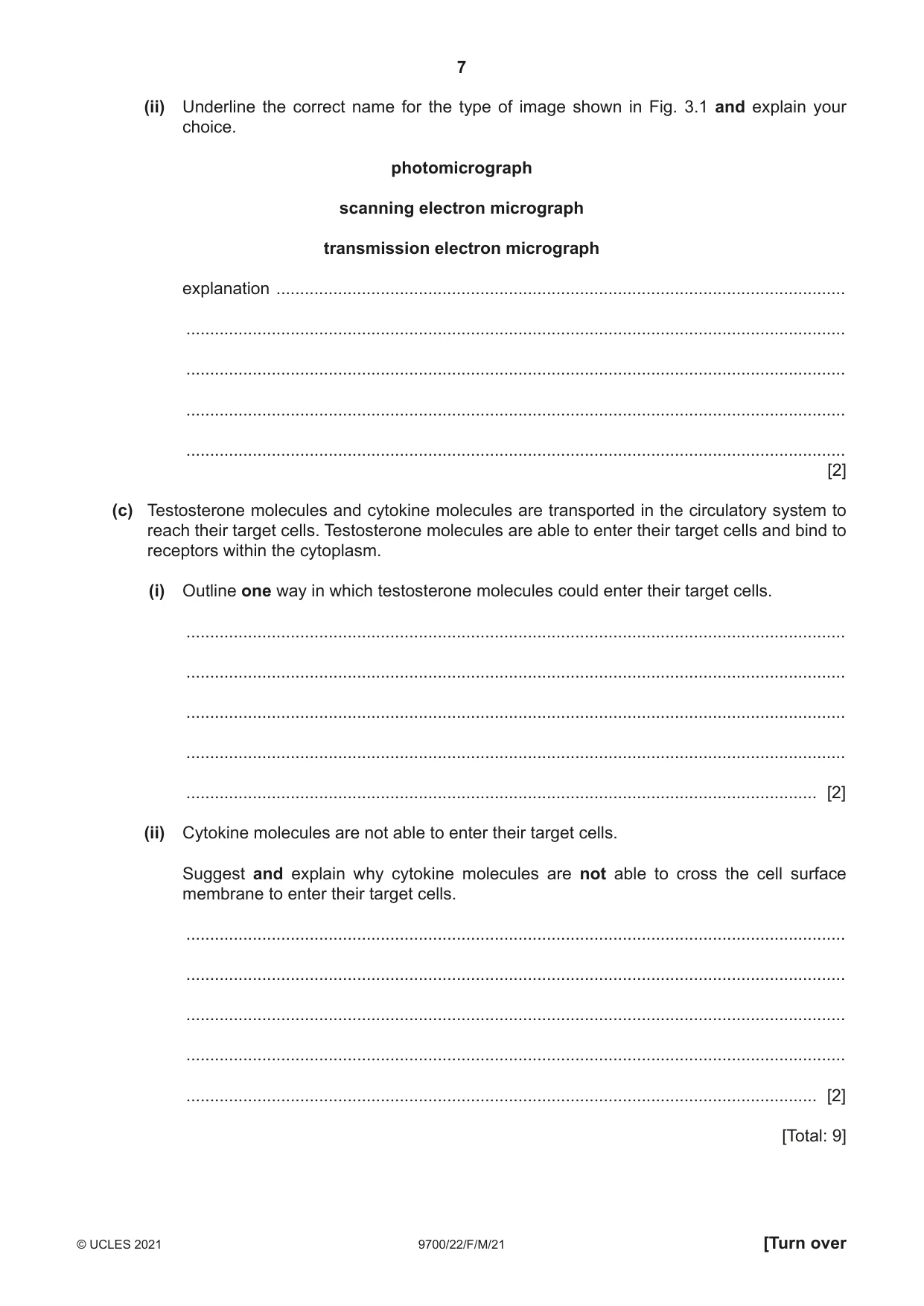
3 T-helper lymphocytes and Leydig cells are two types of mammalian cells. The main role of T-helper lymphocytes and Leydig cells is to synthesise and secrete cell-signalling molecules. • T-helper lymphocytes synthesise proteins known as cytokines. • Leydig cells synthesise the steroid (lipid) hormone testosterone from cholesterol. Leydig cells also synthesise cholesterol. (a) State one way in which cytokines are involved in an immune response. ................................................................................................................................................... ................................................................................................................................................... ............................................................................................................................................. [1] (b) Fig. 3.1 shows part of a mammalian cell. Fig. 3.1 (i) State, with reasons, whether Fig. 3.1 shows part of a Leydig cell or part of a T-helper lymphocyte. ........................................................................................................................................... ........................................................................................................................................... ........................................................................................................................................... ........................................................................................................................................... ..................................................................................................................................... [2] (ii) Underline the correct name for the type of image shown in Fig. 3.1 and explain your choice. photomicrograph scanning electron micrograph transmission electron micrograph explanation ........................................................................................................................ ........................................................................................................................................... ........................................................................................................................................... ........................................................................................................................................... ........................................................................................................................................... [2] (c) Testosterone molecules and cytokine molecules are transported in the circulatory system to reach their target cells. Testosterone molecules are able to enter their target cells and bind to receptors within the cytoplasm. (i) Outline one way in which testosterone molecules could enter their target cells. ........................................................................................................................................... ........................................................................................................................................... ........................................................................................................................................... ........................................................................................................................................... ..................................................................................................................................... [2] (ii) Cytokine molecules are not able to enter their target cells. Suggest and explain why cytokine molecules are not able to cross the cell surface membrane to enter their target cells. ........................................................................................................................................... ........................................................................................................................................... ........................................................................................................................................... ........................................................................................................................................... ..................................................................................................................................... [2] [Total: 9]
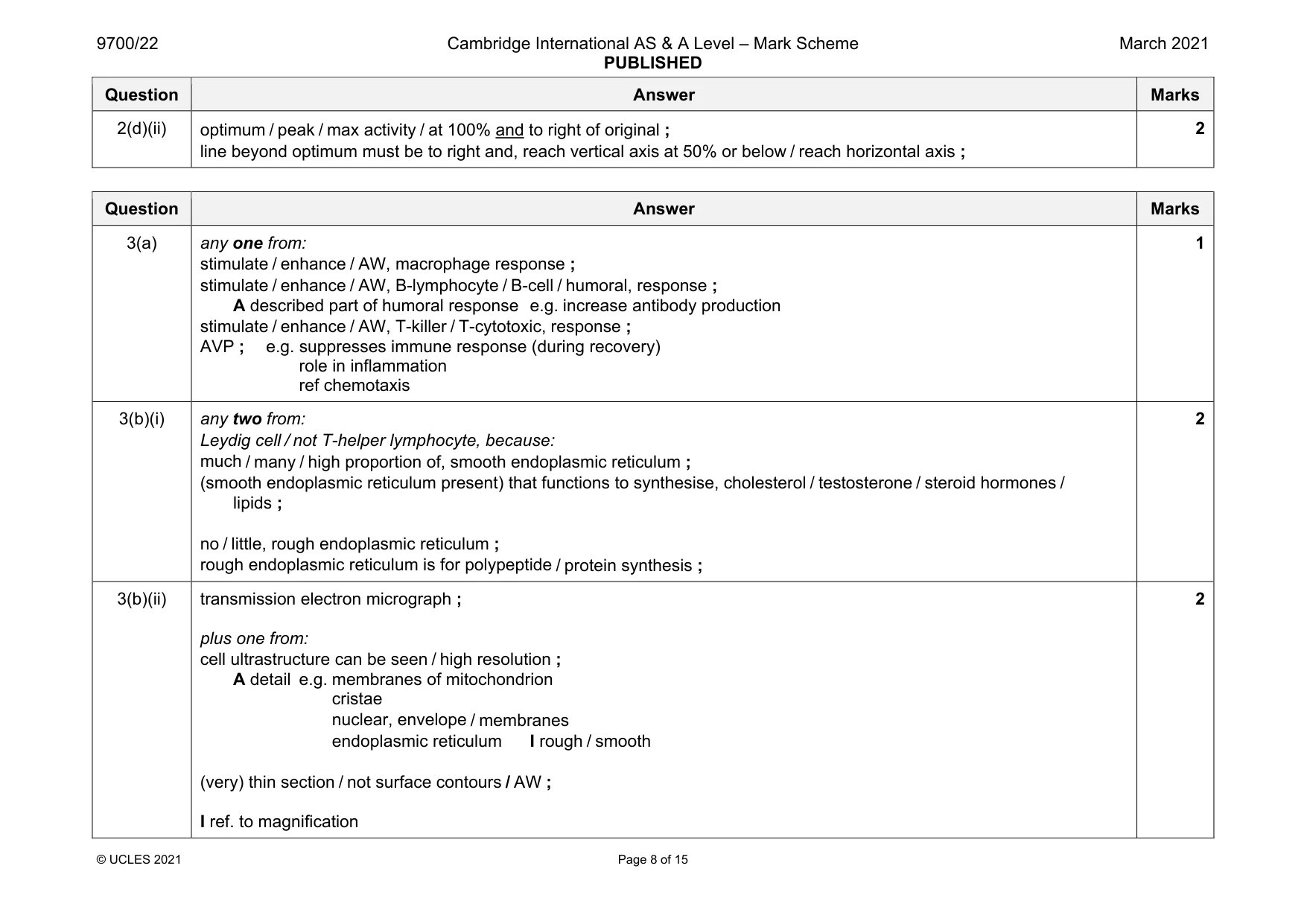
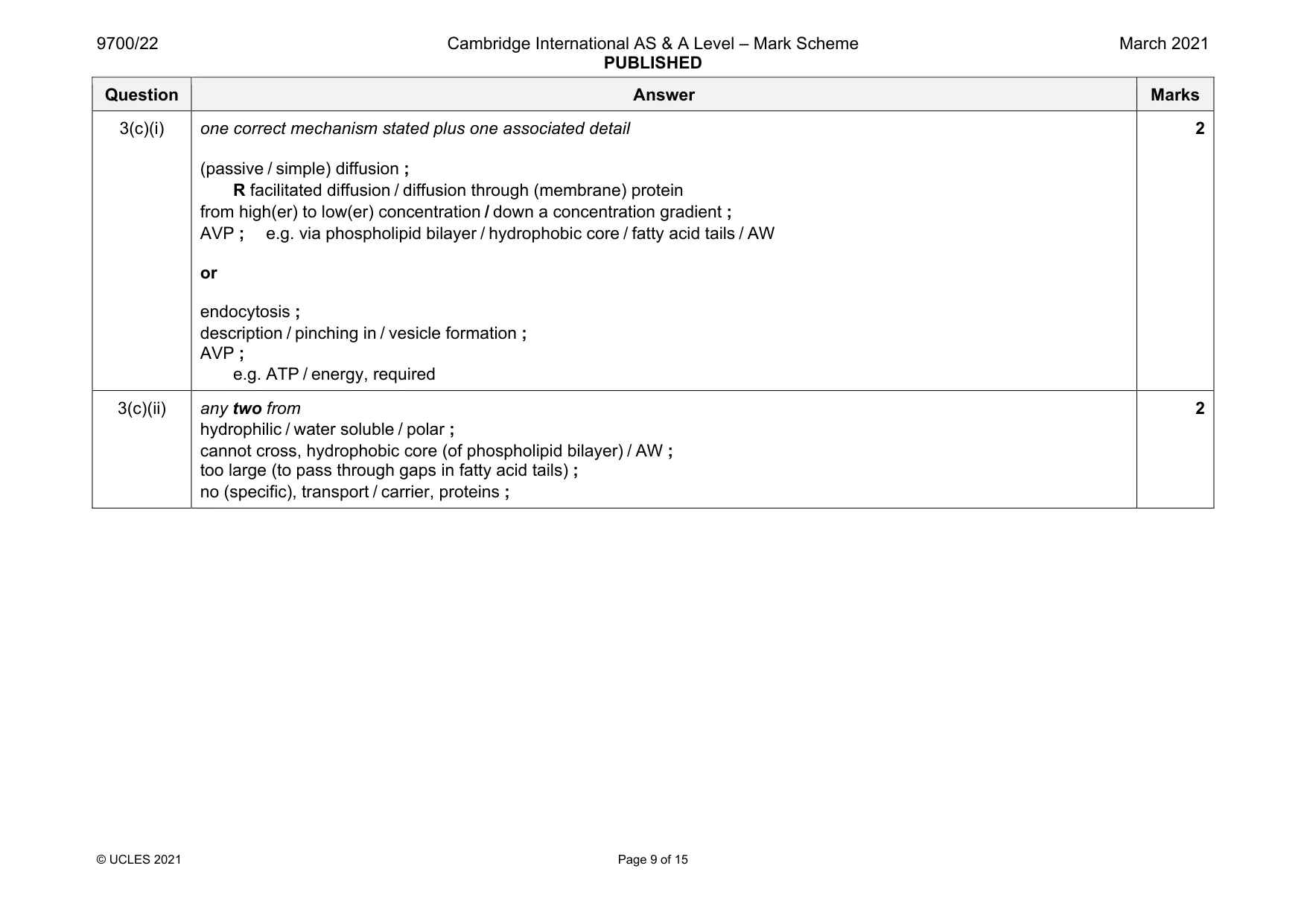
Mark scheme: 3(a) any one from: stimulate / enhance / AW, macrophage response ; stimulate / enhance / AW, B-lymphocyte / B-cell / humoral, response ; A described part of humoral response e.g. increase antibody production stimulate / enhance / AW, T-killer / T-cytotoxic, response ; AVP ; e.g. suppresses immune response (during recovery) role in inflammation ref chemotaxis 1 3(b)(i) any two from: Leydig cell / not T-helper lymphocyte, because: much / many / high proportion of, smooth endoplasmic reticulum ; (smooth endoplasmic reticulum present) that functions to synthesise, cholesterol / testosterone / steroid hormones / lipids ; no / little, rough endoplasmic reticulum ; rough endoplasmic reticulum is for polypeptide / protein synthesis ; 2 3(b)(ii) transmission electron micrograph ; plus one from: cell ultrastructure can be seen / high resolution ; A detail e.g. membranes of mitochondrion cristae nuclear, envelope / membranes endoplasmic reticulum I rough / smooth (very) thin section / not surface contours / AW ; I ref. to magnification 2 Question Answer Marks 3(c)(i) one correct mechanism stated plus one associated detail (passive / simple) diffusion ; R facilitated diffusion / diffusion through (membrane) protein from high(er) to low(er) concentration / down a concentration gradient ; AVP ; e.g. via phospholipid bilayer / hydrophobic core / fatty acid tails / AW or endocytosis ; description / pinching in / vesicle formation ; AVP ; e.g. ATP / energy, required 2 3(c)(ii) any two from hydrophilic / water soluble / polar ; cannot cross, hydrophobic core (of phospholipid bilayer) / AW ; too large (to pass through gaps in fatty acid tails) ; no (specific), transport / carrier, proteins ; 2
More questions on Cells as the basic units of living organisms
Q4 · Using a light microscope at a magnification of ×400, it is possible to identify different…
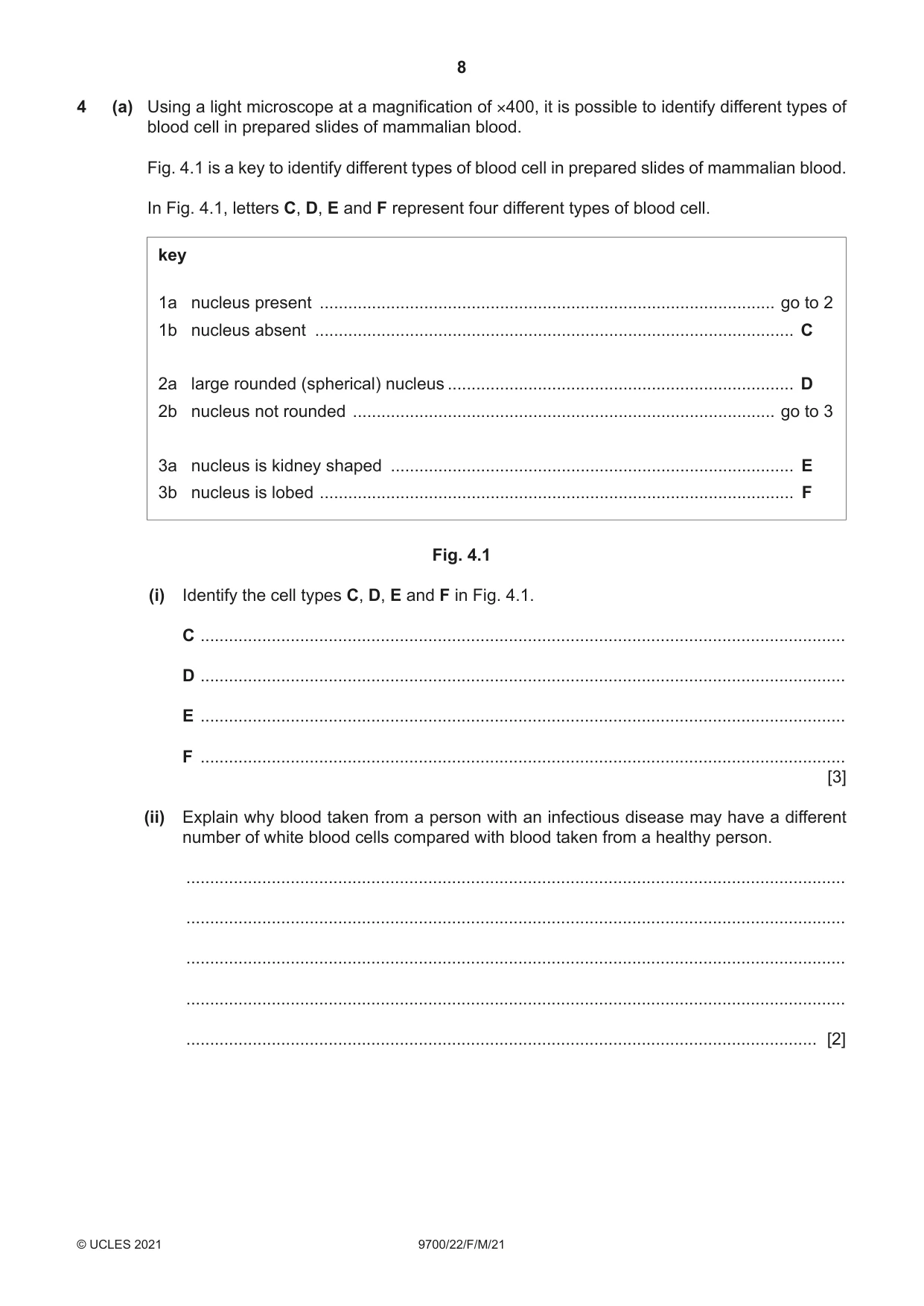
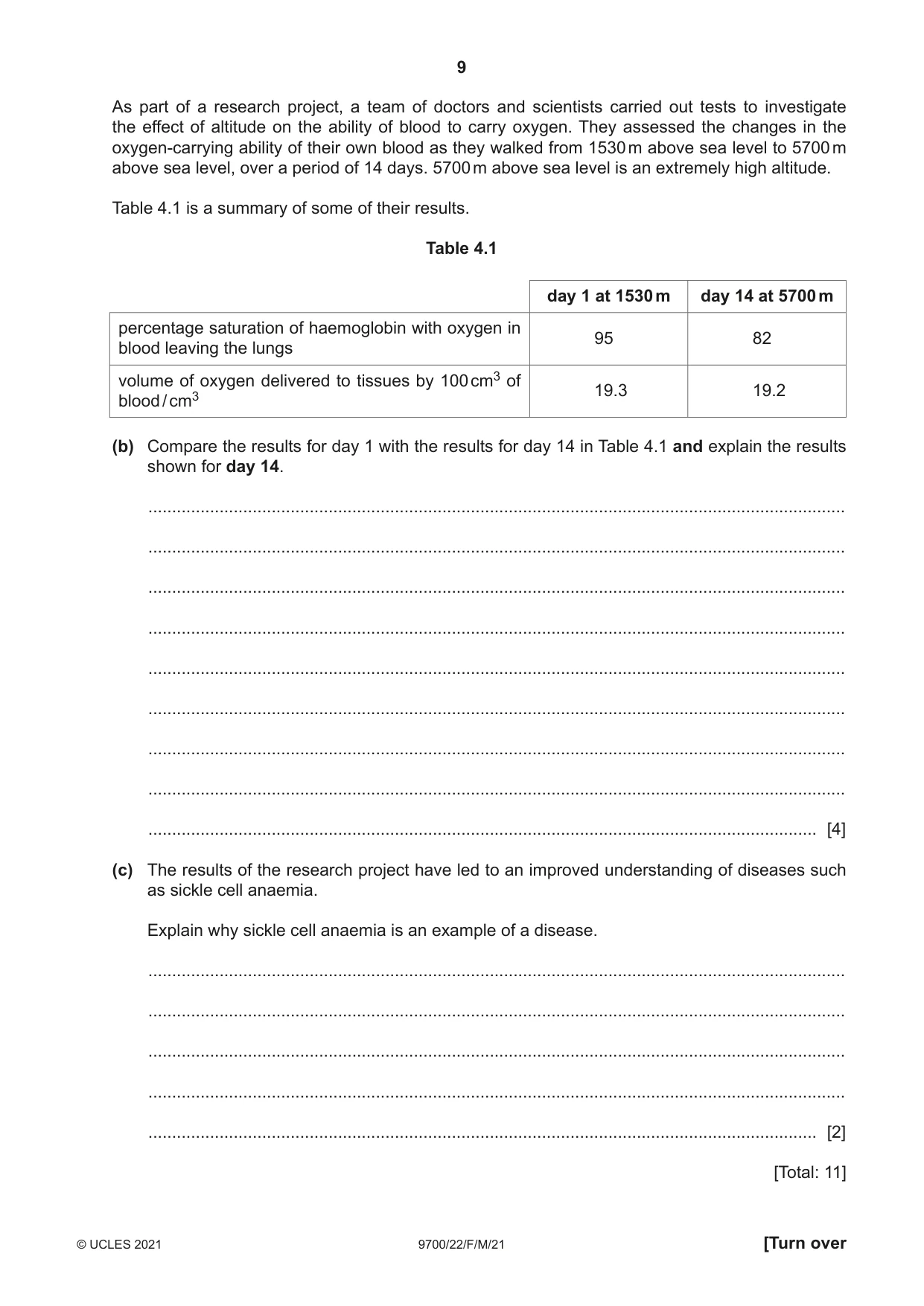
4 (a) Using a light microscope at a magnification of ×400, it is possible to identify different types of blood cell in prepared slides of mammalian blood. Fig. 4.1 is a key to identify different types of blood cell in prepared slides of mammalian blood. In Fig. 4.1, letters C, D, E and F represent four different types of blood cell. key 1a nucleus present ................................................................................................ go to 2 1b nucleus absent ..................................................................................................... C 2a large rounded (spherical) nucleus ......................................................................... D 2b nucleus not rounded ......................................................................................... go to 3 3a nucleus is kidney shaped ..................................................................................... E 3b nucleus is lobed .................................................................................................... F Fig. 4.1 (i) Identify the cell types C, D, E and F in Fig. 4.1. C ........................................................................................................................................ D ........................................................................................................................................ E ........................................................................................................................................ F ........................................................................................................................................ [3] (ii) Explain why blood taken from a person with an infectious disease may have a different number of white blood cells compared with blood taken from a healthy person. ........................................................................................................................................... ........................................................................................................................................... ........................................................................................................................................... ........................................................................................................................................... ..................................................................................................................................... [2] As part of a research project, a team of doctors and scientists carried out tests to investigate the effect of altitude on the ability of blood to carry oxygen. They assessed the changes in the oxygen-carrying ability of their own blood as they walked from 1530 m above sea level to 5700 m above sea level, over a period of 14 days. 5700 m above sea level is an extremely high altitude. Table 4.1 is a summary of some of their results. Table 4.1 day 1 at 1530 m day 14 at 5700 m percentage saturation of haemoglobin with oxygen in 95 82 blood leaving the lungs volume of oxygen delivered to tissues by 100 cm3 of 19.3 19.2 blood / cm3 (b) Compare the results for day 1 with the results for day 14 in Table 4.1 and explain the results shown for day 14. ................................................................................................................................................... ................................................................................................................................................... ................................................................................................................................................... ................................................................................................................................................... ................................................................................................................................................... ................................................................................................................................................... ................................................................................................................................................... ................................................................................................................................................... ............................................................................................................................................. [4] (c) The results of the research project have led to an improved understanding of diseases such as sickle cell anaemia. Explain why sickle cell anaemia is an example of a disease. ................................................................................................................................................... ................................................................................................................................................... ................................................................................................................................................... ................................................................................................................................................... ............................................................................................................................................. [2] [Total: 11]
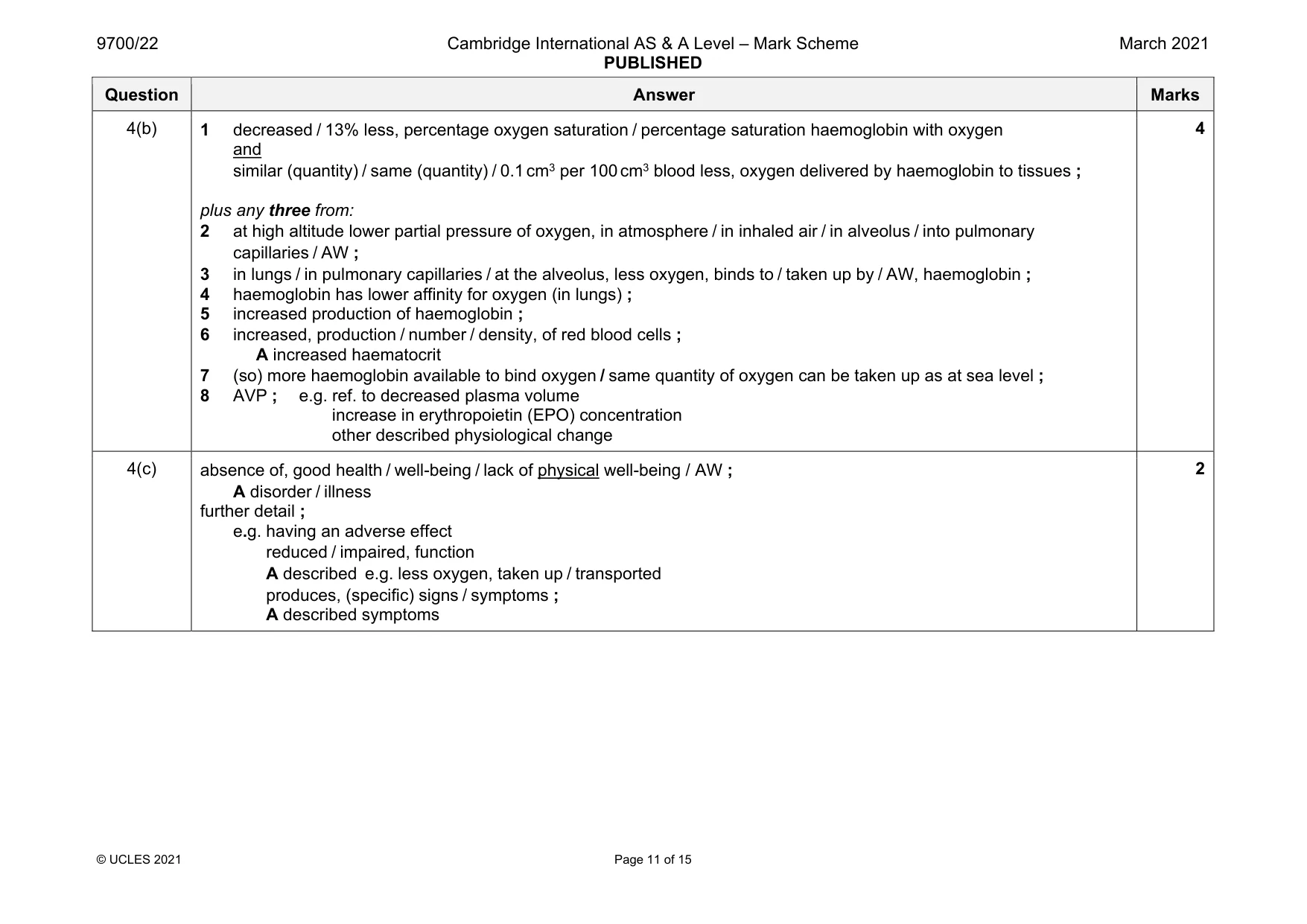
Mark scheme: 4(a)(i) C = red blood cell / erythrocyte A red blood corpuscle D = lymphocyte A plasma cell R if also stated as granulocyte A B- or T-Cell I white blood cell / leucocyte / agranulocyte E = monocyte R if also stated as granulocyte I white blood cell / leucocyte / agranulocyte A macrophage F = neutrophil A eosinophil A basophil R if also stated as agranulocyte I white blood cell / leucocyte / granulocyte C correct = one mark D correct = one mark E and F correct = one mark 4(a)(ii) any two from: more white blood cells because result of immune response ; clonal expansion / described, of, B- / T-, lymphocytes / cells ; idea of producing (large quantity of specific) antibody in context of immune response increased, production of macrophages / phagocytes ; if written in context of HIV/AIDS as the infectious disease fewer white blood cells ; further detail ; e.g. T-helper lymphocytes destroyed 2 Question Answer Marks 4(b) 1 decreased / 13% less, percentage oxygen saturation / percentage saturation haemoglobin with oxygen and similar (quantity) / same (quantity) / 0.1 cm3 per 100 cm3 blood less, oxygen delivered by haemoglobin to tissues ; plus any three from: 2 at high altitude lower partial pressure of oxygen, in atmosphere / in inhaled air / in alveolus / into pulmonary capillaries / AW ; 3 in lungs / in pulmonary capillaries / at the alveolus, less oxygen, binds to / taken up by / AW, haemoglobin ; 4 haemoglobin has lower affinity for oxygen (in lungs) ; 5 increased production of haemoglobin ; 6 increased, production / number / density, of red blood cells ; A increased haematocrit 7 (so) more haemoglobin available to bind oxygen / same quantity of oxygen can be taken up as at sea level ; 8 AVP ; e.g. ref. to decreased plasma volume increase in erythropoietin (EPO) concentration other described physiological change 4 4(c) absence of, good health / well-being / lack of physical well-being / AW ; A disorder / illness further detail ; e.g. having an adverse effect reduced / impaired, function A described e.g. less oxygen, taken up / transported produces, (specific) signs / symptoms ; A described symptoms 2
Q5 · Each meristem cell in a leaf bud is able to grow and divide by mitosis to produce two…
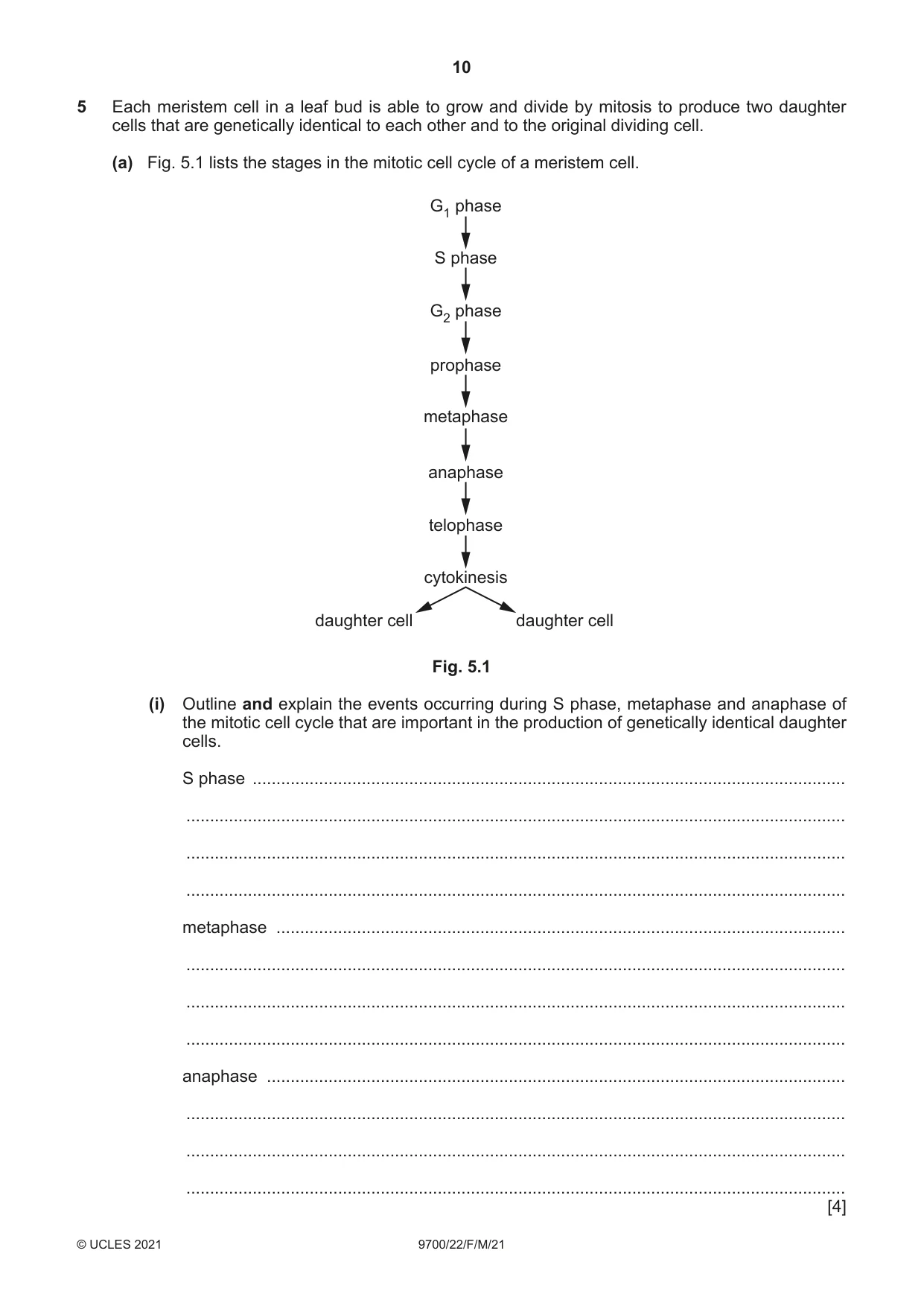
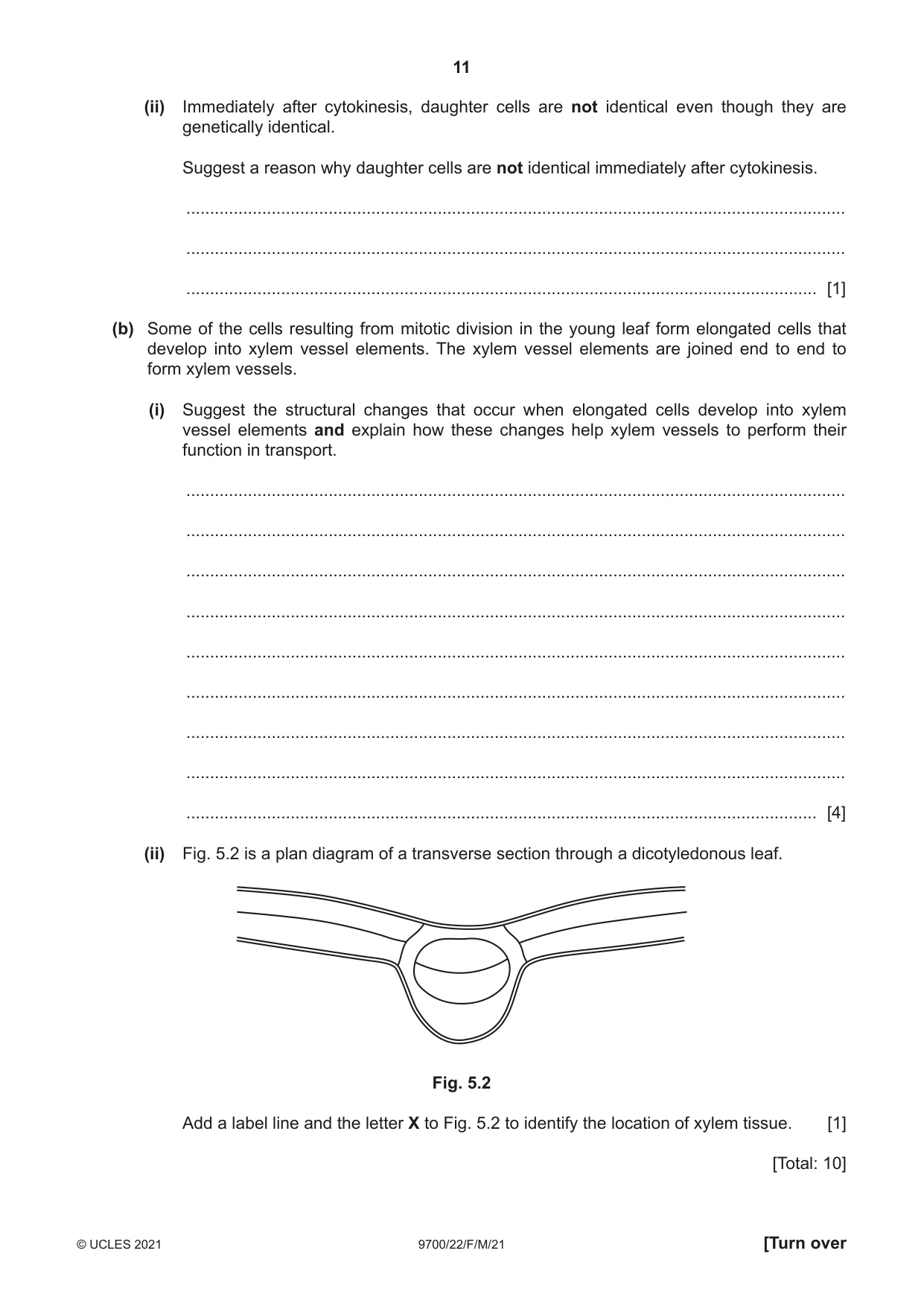
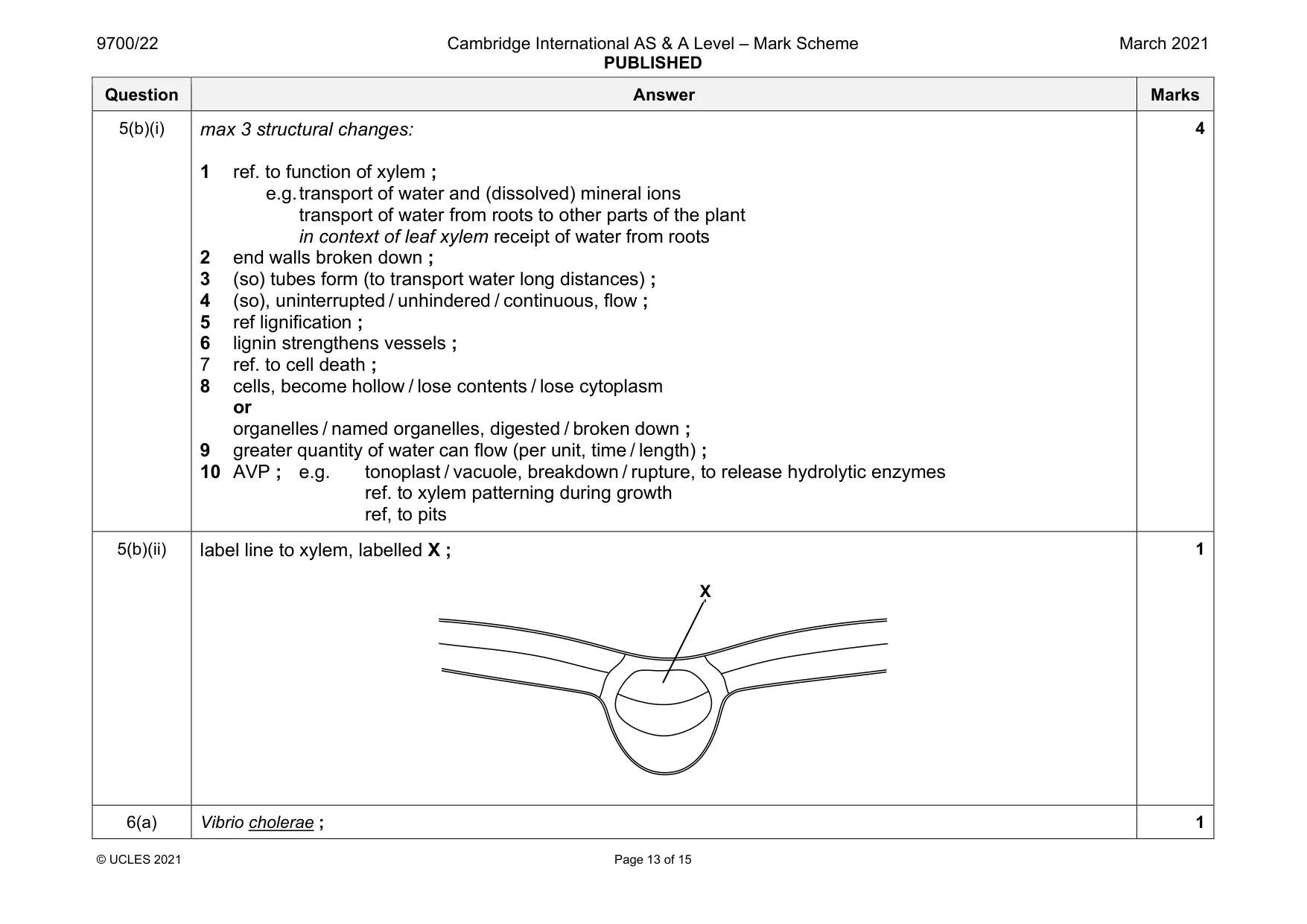
5 Each meristem cell in a leaf bud is able to grow and divide by mitosis to produce two daughter cells that are genetically identical to each other and to the original dividing cell. (a) Fig. 5.1 lists the stages in the mitotic cell cycle of a meristem cell. G1 phase S phase G2 phase prophase metaphase anaphase telophase cytokinesis daughter cell daughter cell Fig. 5.1 (i) Outline and explain the events occurring during S phase, metaphase and anaphase of the mitotic cell cycle that are important in the production of genetically identical daughter cells. S phase ............................................................................................................................. ........................................................................................................................................... ........................................................................................................................................... ........................................................................................................................................... metaphase ........................................................................................................................ ........................................................................................................................................... ........................................................................................................................................... ........................................................................................................................................... anaphase .......................................................................................................................... ........................................................................................................................................... ........................................................................................................................................... ........................................................................................................................................... [4] (ii) Immediately after cytokinesis, daughter cells are not identical even though they are genetically identical. Suggest a reason why daughter cells are not identical immediately after cytokinesis. ........................................................................................................................................... ........................................................................................................................................... ..................................................................................................................................... [1] (b) Some of the cells resulting from mitotic division in the young leaf form elongated cells that develop into xylem vessel elements. The xylem vessel elements are joined end to end to form xylem vessels. (i) Suggest the structural changes that occur when elongated cells develop into xylem vessel elements and explain how these changes help xylem vessels to perform their function in transport. ........................................................................................................................................... ........................................................................................................................................... ........................................................................................................................................... ........................................................................................................................................... ........................................................................................................................................... ........................................................................................................................................... ........................................................................................................................................... ........................................................................................................................................... ..................................................................................................................................... [4] (ii) Fig. 5.2 is a plan diagram of a transverse section through a dicotyledonous leaf. Fig. 5.2 Add a label line and the letter X to Fig. 5.2 to identify the location of xylem tissue. [1] [Total: 10]
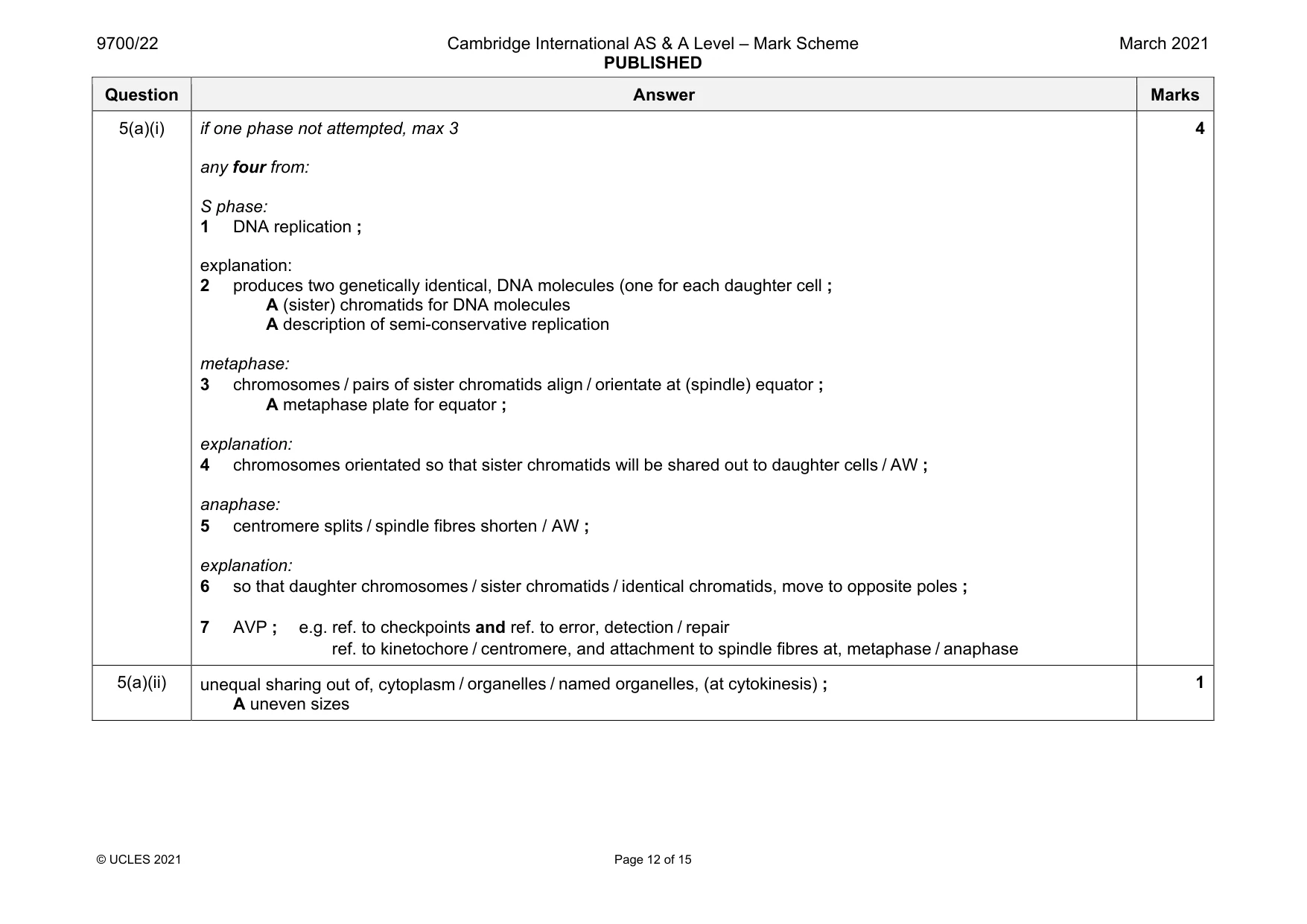
Mark scheme: 5(a)(i) if one phase not attempted, max 3 any four from: S phase: 1 DNA replication ; explanation: 2 produces two genetically identical, DNA molecules (one for each daughter cell ; A (sister) chromatids for DNA molecules A description of semi-conservative replication metaphase: 3 chromosomes / pairs of sister chromatids align / orientate at (spindle) equator ; A metaphase plate for equator ; explanation: 4 chromosomes orientated so that sister chromatids will be shared out to daughter cells / AW ; anaphase: 5 centromere splits / spindle fibres shorten / AW ; explanation: 6 so that daughter chromosomes / sister chromatids / identical chromatids, move to opposite poles ; 7 AVP ; e.g. ref. to checkpoints and ref. to error, detection / repair ref. to kinetochore / centromere, and attachment to spindle fibres at, metaphase / anaphase 4 5(a)(ii) unequal sharing out of, cytoplasm / organelles / named organelles, (at cytokinesis) ; A uneven sizes 1 Question Answer Marks 5(b)(i) max 3 structural changes: 1 ref. to function of xylem ; e.g. transport of water and (dissolved) mineral ions transport of water from roots to other parts of the plant in context of leaf xylem receipt of water from roots 2 end walls broken down ; 3 (so) tubes form (to transport water long distances) ; 4 (so), uninterrupted / unhindered / continuous, flow ; 5 ref lignification ; 6 lignin strengthens vessels ; 7 ref. to cell death ; 8 cells, become hollow / lose contents / lose cytoplasm or organelles / named organelles, digested / broken down ; 9 greater quantity of water can flow (per unit, time / length) ; 10 AVP ; e.g. tonoplast / vacuole, breakdown / rupture, to release hydrolytic enzymes ref. to xylem patterning during growth ref, to pits 4 5(b)(ii) label line to xylem, labelled X ; 1 X
Q6 · In March 2019, a tropical cyclone in the south-west Indian Ocean caused widespread…
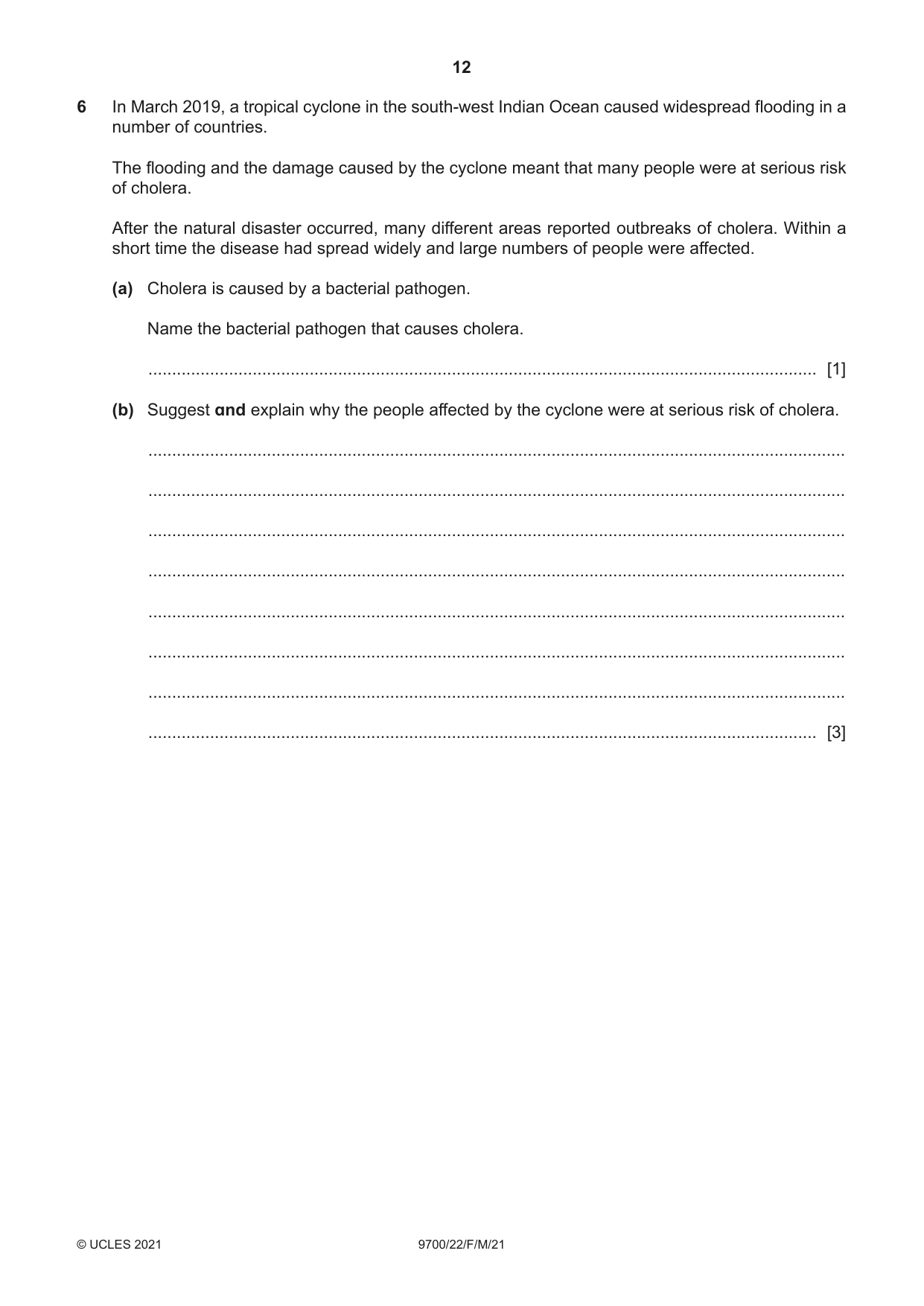
6 In March 2019, a tropical cyclone in the south-west Indian Ocean caused widespread flooding in a number of countries. The flooding and the damage caused by the cyclone meant that many people were at serious risk of cholera. After the natural disaster occurred, many different areas reported outbreaks of cholera. Within a short time the disease had spread widely and large numbers of people were affected. (a) Cholera is caused by a bacterial pathogen. Name the bacterial pathogen that causes cholera. ............................................................................................................................................. [1] (b) Suggest and explain why the people affected by the cyclone were at serious risk of cholera. ................................................................................................................................................... ................................................................................................................................................... ................................................................................................................................................... ................................................................................................................................................... ................................................................................................................................................... ................................................................................................................................................... ................................................................................................................................................... ............................................................................................................................................. [3] (c) In addition to the standard treatment for cholera, antibiotics are recommended for people who are moderately ill or seriously ill with the disease. (i) Doxycycline is one of the main antibiotics used for the treatment of cholera. Doxycycline enters the pathogen and binds to one of the subunits of the bacterial ribosome. This prevents growth and reproduction of the bacterial cell. Suggest and explain how binding of doxycycline to ribosomes stops growth of the bacterial cell. ........................................................................................................................................... ........................................................................................................................................... ........................................................................................................................................... ........................................................................................................................................... ........................................................................................................................................... ........................................................................................................................................... ........................................................................................................................................... ..................................................................................................................................... [3] (ii) Penicillin, which used to be prescribed for the treatment of cholera, has a different mechanism of action to doxycycline. State which part of the bacterial cell is affected by the action of penicillin. ..................................................................................................................................... [1] (d) Mozambique was one of the countries badly affected by the cyclone. As part of the effort to prevent a greater number of cases of cholera from occurring, two different approaches were taken. • Approximately 900 000 doses of the oral cholera vaccine were sent to Mozambique and a large-scale vaccination programme was organised. • Medical centres were set up in Mozambique to treat people with cholera. Suggest and explain how the two different approaches helped to prevent a greater number of cases of cholera from occurring. ................................................................................................................................................... ................................................................................................................................................... ................................................................................................................................................... ................................................................................................................................................... ................................................................................................................................................... ................................................................................................................................................... ................................................................................................................................................... ................................................................................................................................................... ................................................................................................................................................... ............................................................................................................................................. [4] [Total: 12]
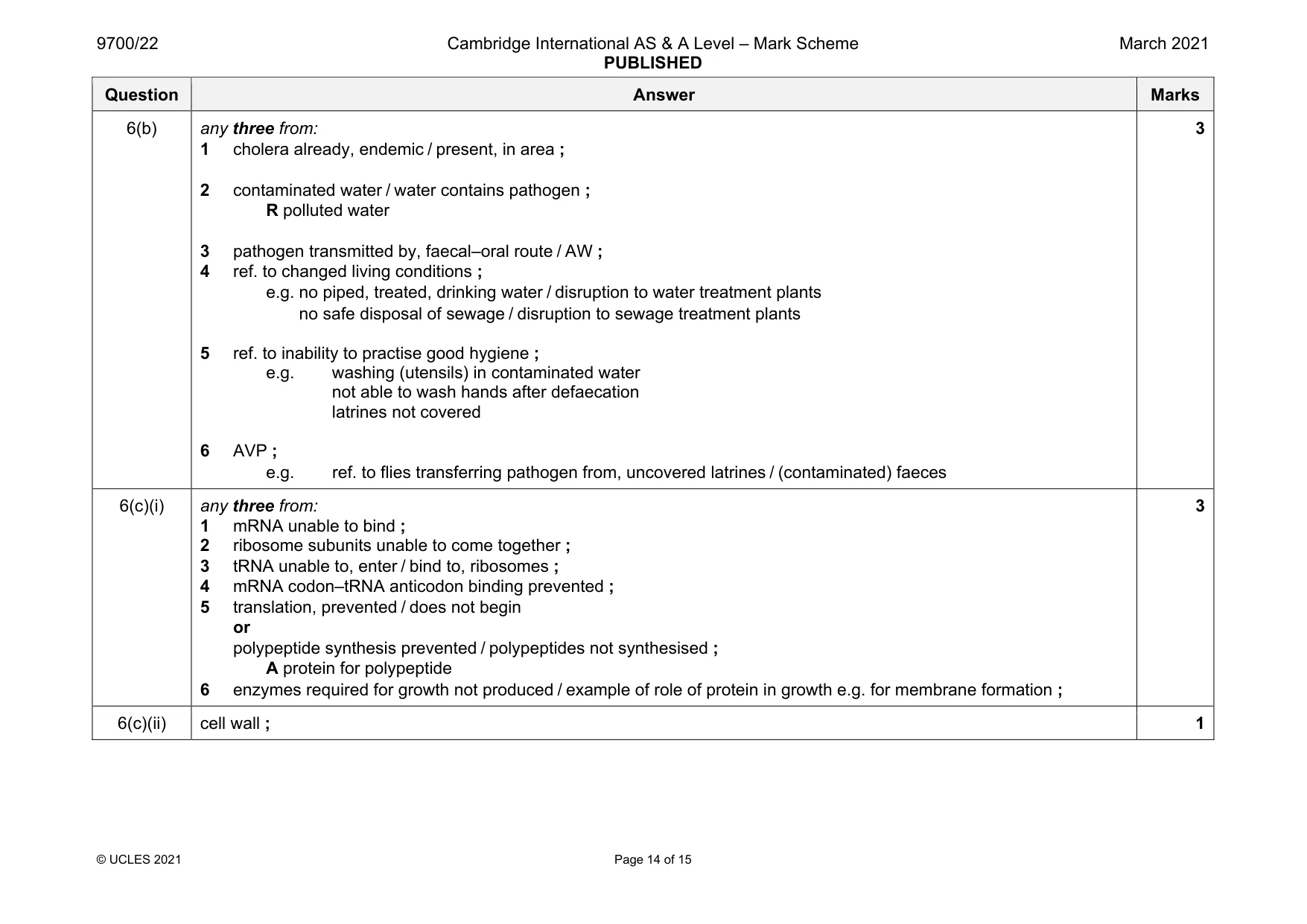
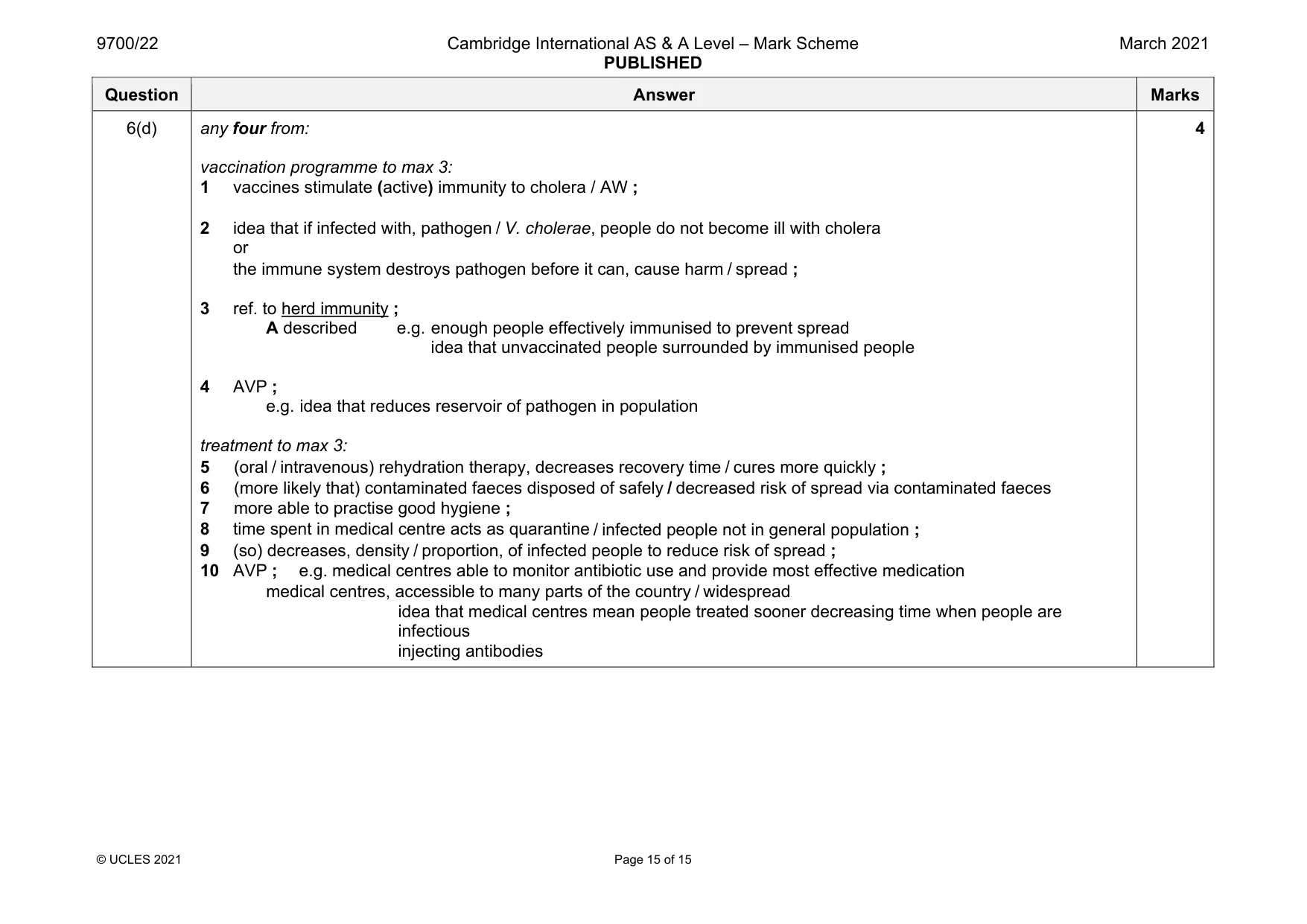
Mark scheme: 6(a) Vibrio cholerae ; 1 Question Answer Marks 6(b) any three from: 1 cholera already, endemic / present, in area ; 2 contaminated water / water contains pathogen ; R polluted water 3 pathogen transmitted by, faecal–oral route / AW ; 4 ref. to changed living conditions ; e.g. no piped, treated, drinking water / disruption to water treatment plants no safe disposal of sewage / disruption to sewage treatment plants 5 ref. to inability to practise good hygiene ; e.g. washing (utensils) in contaminated water not able to wash hands after defaecation latrines not covered 6 AVP ; e.g. ref. to flies transferring pathogen from, uncovered latrines / (contaminated) faeces 3 6(c)(i) any three from: 1 mRNA unable to bind ; 2 ribosome subunits unable to come together ; 3 tRNA unable to, enter / bind to, ribosomes ; 4 mRNA codon–tRNA anticodon binding prevented ; 5 translation, prevented / does not begin or polypeptide synthesis prevented / polypeptides not synthesised ; A protein for polypeptide 6 enzymes required for growth not produced / example of role of protein in growth e.g. for membrane formation ; 3 6(c)(ii) cell wall ; 1 Question Answer Marks 6(d) any four from: vaccination programme to max 3: 1 vaccines stimulate (active) immunity to cholera / AW ; 2 idea that if infected with, pathogen / V. cholerae, people do not become ill with cholera or the immune system destroys pathogen before it can, cause harm / spread ; 3 ref. to herd immunity ; A described e.g. enough people effectively immunised to prevent spread idea that unvaccinated people surrounded by immunised people 4 AVP ; e.g. idea that reduces reservoir of pathogen in population treatment to max 3: 5 (oral / intravenous) rehydration therapy, decreases recovery time / cures more quickly ; 6 (more likely that) contaminated faeces disposed of safely / decreased risk of spread via contaminated faeces 7 more able to practise good hygiene ; 8 time spent in medical centre acts as quarantine / infected people not in general population ; 9 (so) decreases, density / proportion, of infected people to reduce risk of spread ; 10 AVP ; e.g. medical centres able to monitor antibiotic use and provide most effective medication medical centres, accessible to many parts of the country / widespread idea that medical centres mean people treated sooner decreasing time when people are infectious injecting antibodies 4
What was in this paper
The subtopics covered by these 6 questions, and how many questions each got. Open one in a new tab to see every Cambridge question on it.
What you needed in this session
Cambridge’s own grade thresholds for 2021 Feb/March, Paper 2 · Variant 2. A higher threshold means an easier paper — the bar moves with how the cohort did.