Cambridge A Level Biology 9700 — 2017 Feb/March Paper 2 · Variant 2
9700/22/F/M/17 · 6 questions · 60 marks · ≈68 min
The question paper and its mark scheme, free to read here and free to download. This is Cambridge’s own paper, exactly as it was sat.
Question paper16 pages
Mark scheme9 pages
Answers below. Sit the paper first if you are practising.
Questions as text
Q1 · A diagram of a chromosome from a dividing cell is shown in Fig
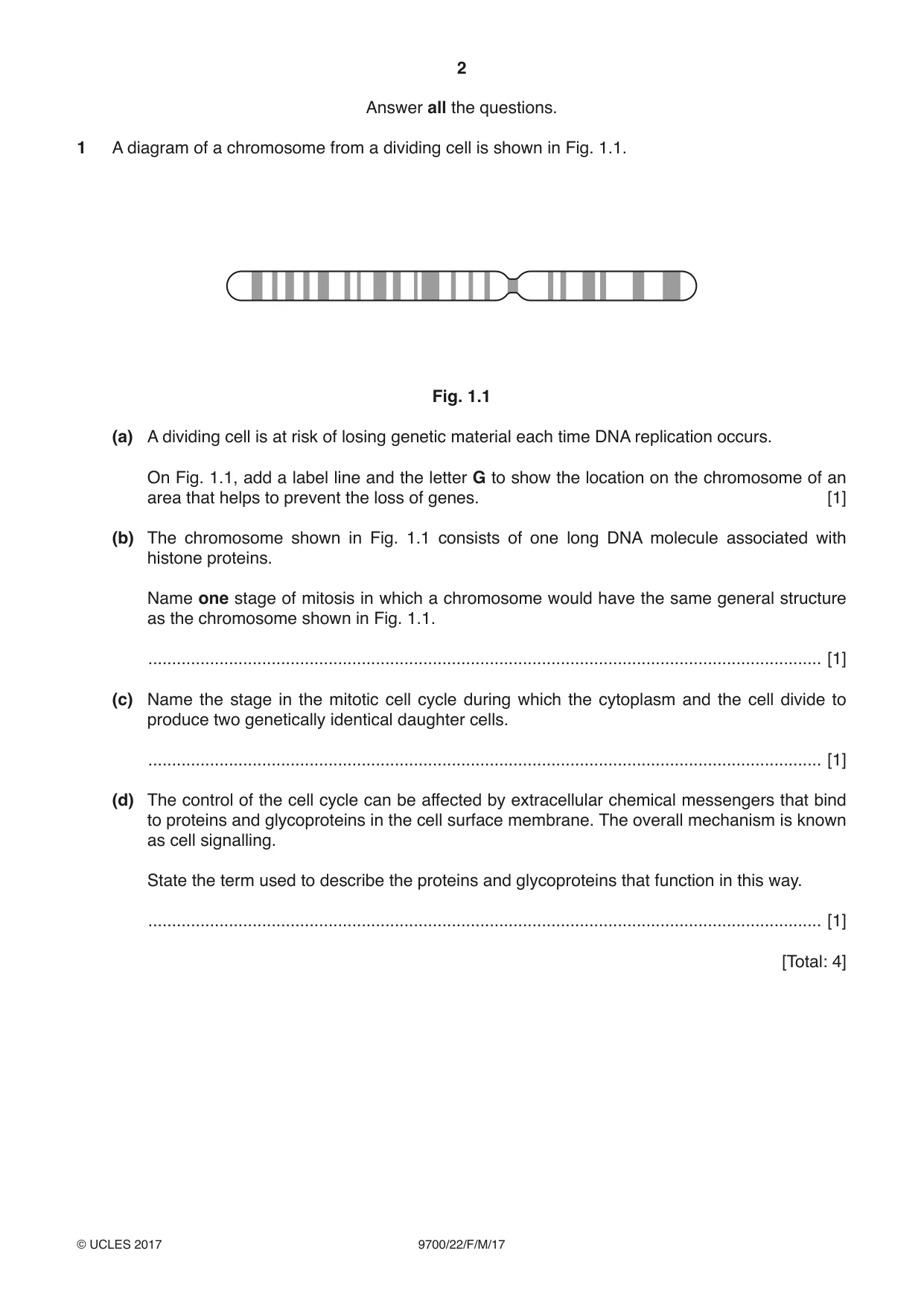
1 A diagram of a chromosome from a dividing cell is shown in Fig. 1.1. Fig. 1.1 (a) A dividing cell is at risk of losing genetic material each time DNA replication occurs. On Fig. 1.1, add a label line and the letter G to show the location on the chromosome of an area that helps to prevent the loss of genes. [1] (b) The chromosome shown in Fig. 1.1 consists of one long DNA molecule associated with histone proteins. Name one stage of mitosis in which a chromosome would have the same general structure as the chromosome shown in Fig. 1.1. .............................................................................................................................................. [1] (c) Name the stage in the mitotic cell cycle during which the cytoplasm and the cell divide to produce two genetically identical daughter cells. .............................................................................................................................................. [1] (d) The control of the cell cycle can be affected by extracellular chemical messengers that bind to proteins and glycoproteins in the cell surface membrane. The overall mechanism is known as cell signalling. State the term used to describe the proteins and glycoproteins that function in this way. .............................................................................................................................................. [1] [Total: 4]
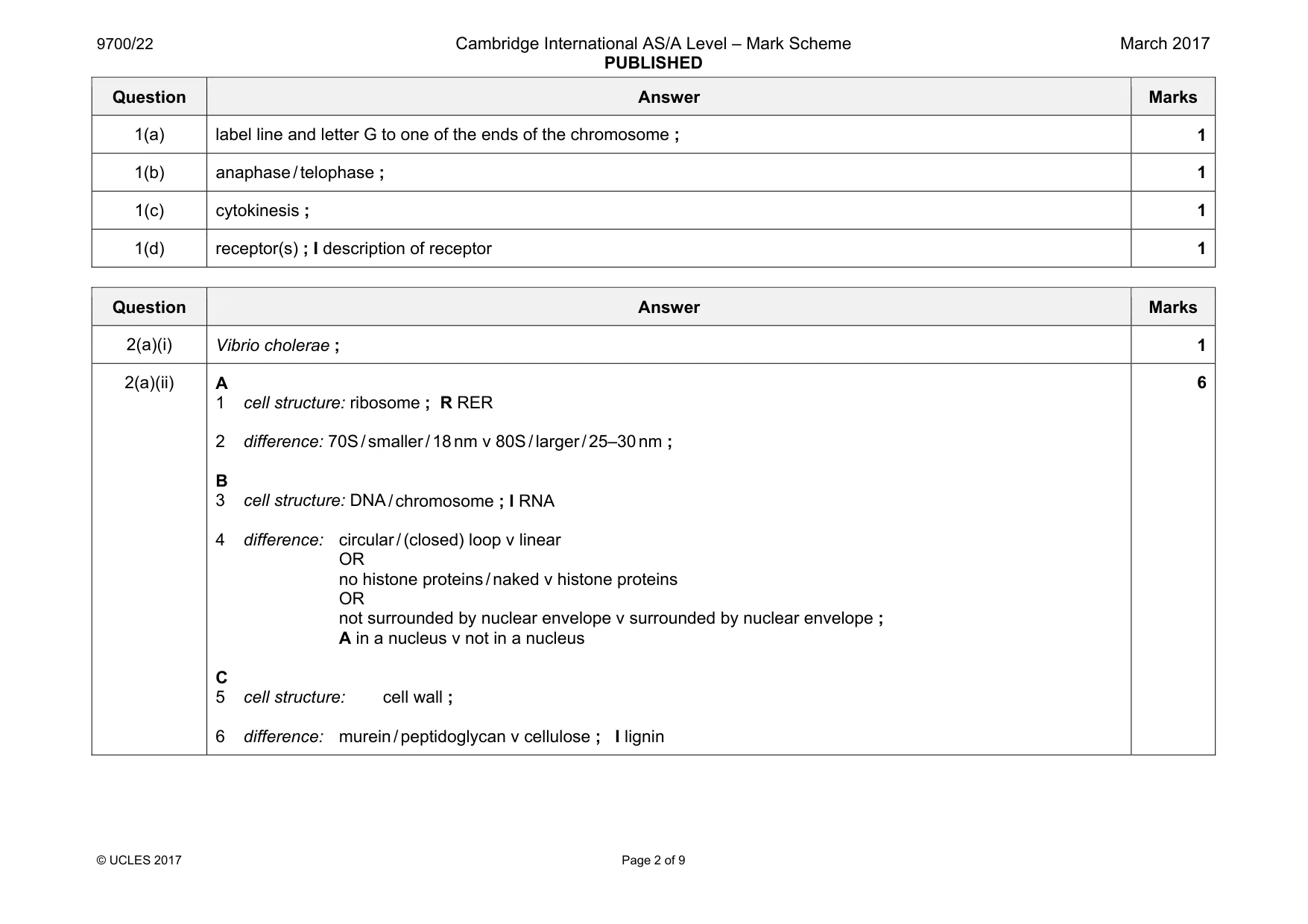
Mark scheme: 1(a) label line and letter G to one of the ends of the chromosome ; 1 1(b) anaphase / telophase ; 1 1(c) cytokinesis ; 1 1(d) receptor(s) ; I description of receptor 1
Q2 · The infectious disease cholera is caused by a bacterium
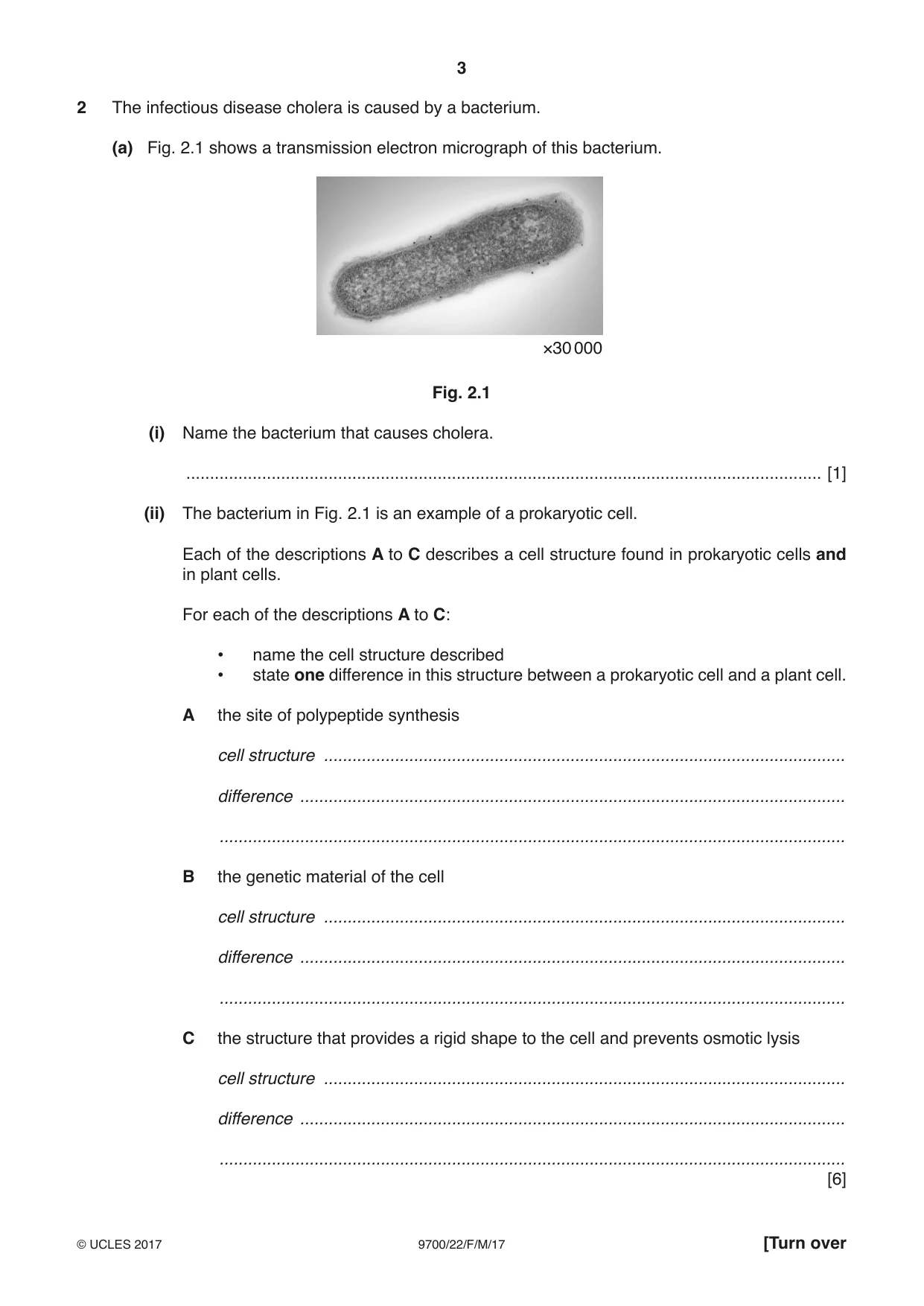
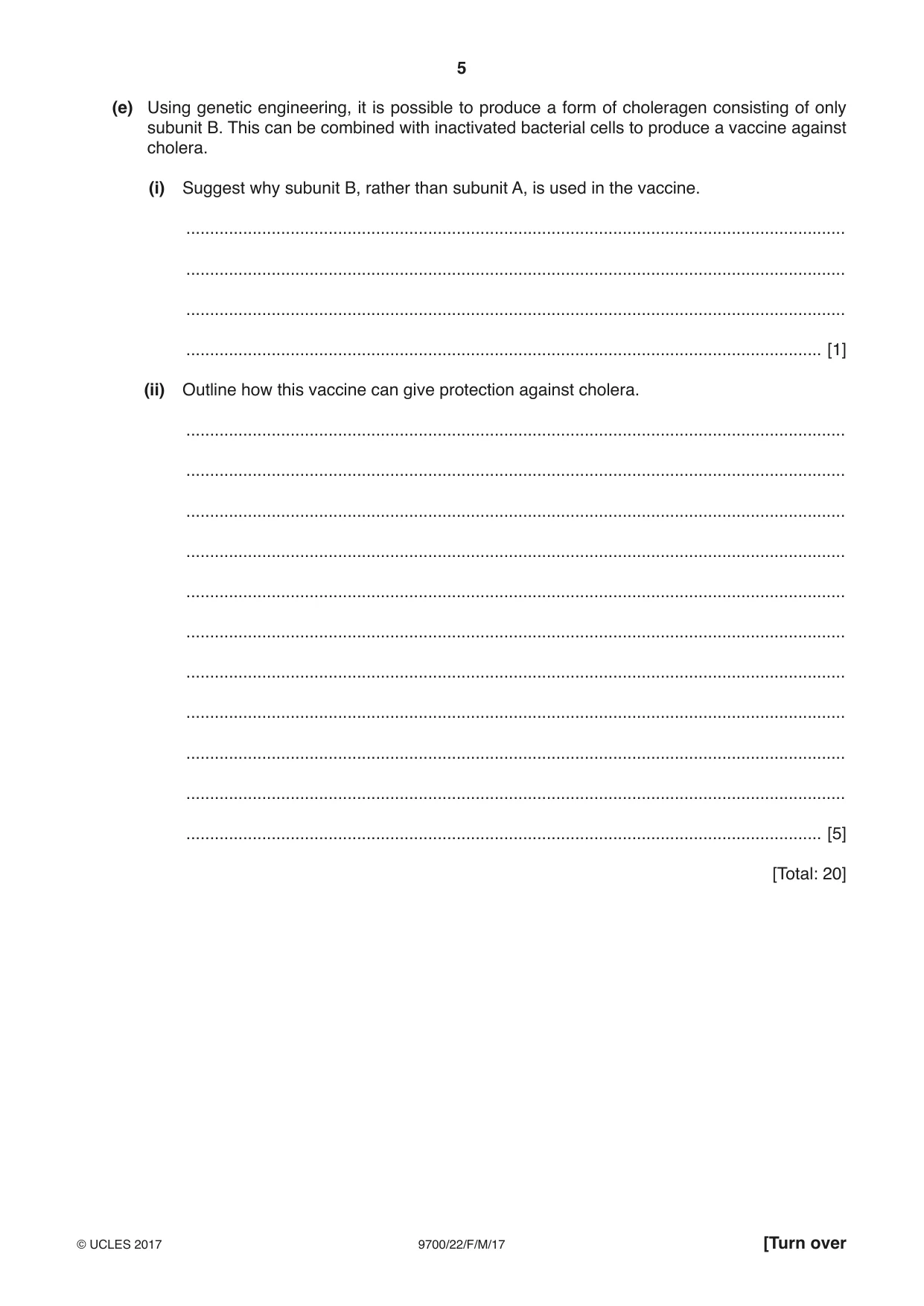
2 The infectious disease cholera is caused by a bacterium. (a) Fig. 2.1 shows a transmission electron micrograph of this bacterium. ×30 000 Fig. 2.1 (i) Name the bacterium that causes cholera. ...................................................................................................................................... [1] (ii) The bacterium in Fig. 2.1 is an example of a prokaryotic cell. Each of the descriptions A to C describes a cell structure found in prokaryotic cells and in plant cells. For each of the descriptions A to C: • name the cell structure described • state one difference in this structure between a prokaryotic cell and a plant cell. A the site of polypeptide synthesis cell structure .............................................................................................................. difference ................................................................................................................... .................................................................................................................................... B the genetic material of the cell cell structure .............................................................................................................. difference ................................................................................................................... .................................................................................................................................... C the structure that provides a rigid shape to the cell and prevents osmotic lysis cell structure .............................................................................................................. difference ................................................................................................................... .................................................................................................................................... [6] (b) Cholera is an example of an infectious disease. Explain what is meant by an infectious disease. ................................................................................................................................................... ................................................................................................................................................... ................................................................................................................................................... .............................................................................................................................................. [2] The symptoms of cholera are caused by choleragen, a toxin released by the bacterium. Choleragen is a protein made up of six polypeptides: • a single copy of a polypeptide known as the A subunit that includes an extended alpha helix • five polypeptides that together make the B subunit. The B subunit of choleragen binds to a cell surface membrane component, known as GM1, of an intestinal epithelial cell. The complete choleragen protein then enters the cell by endocytosis. Once inside the cell, the A subunit of the protein acts as an enzyme, disrupting the normal functioning of the cell. (c) List the levels of protein structure present in choleragen. ................................................................................................................................................... .............................................................................................................................................. [2] (d) Outline the mechanism by which choleragen enters the cell. You may use the space for annotated diagrams. ................................................................................................................................................... ................................................................................................................................................... ................................................................................................................................................... ................................................................................................................................................... ................................................................................................................................................... .............................................................................................................................................. [3] (e) Using genetic engineering, it is possible to produce a form of choleragen consisting of only subunit B. This can be combined with inactivated bacterial cells to produce a vaccine against cholera. (i) Suggest why subunit B, rather than subunit A, is used in the vaccine. ........................................................................................................................................... ........................................................................................................................................... ........................................................................................................................................... ...................................................................................................................................... [1] (ii) Outline how this vaccine can give protection against cholera. ........................................................................................................................................... ........................................................................................................................................... ........................................................................................................................................... ........................................................................................................................................... ........................................................................................................................................... ........................................................................................................................................... ........................................................................................................................................... ........................................................................................................................................... ........................................................................................................................................... ........................................................................................................................................... ...................................................................................................................................... [5] [Total: 20]
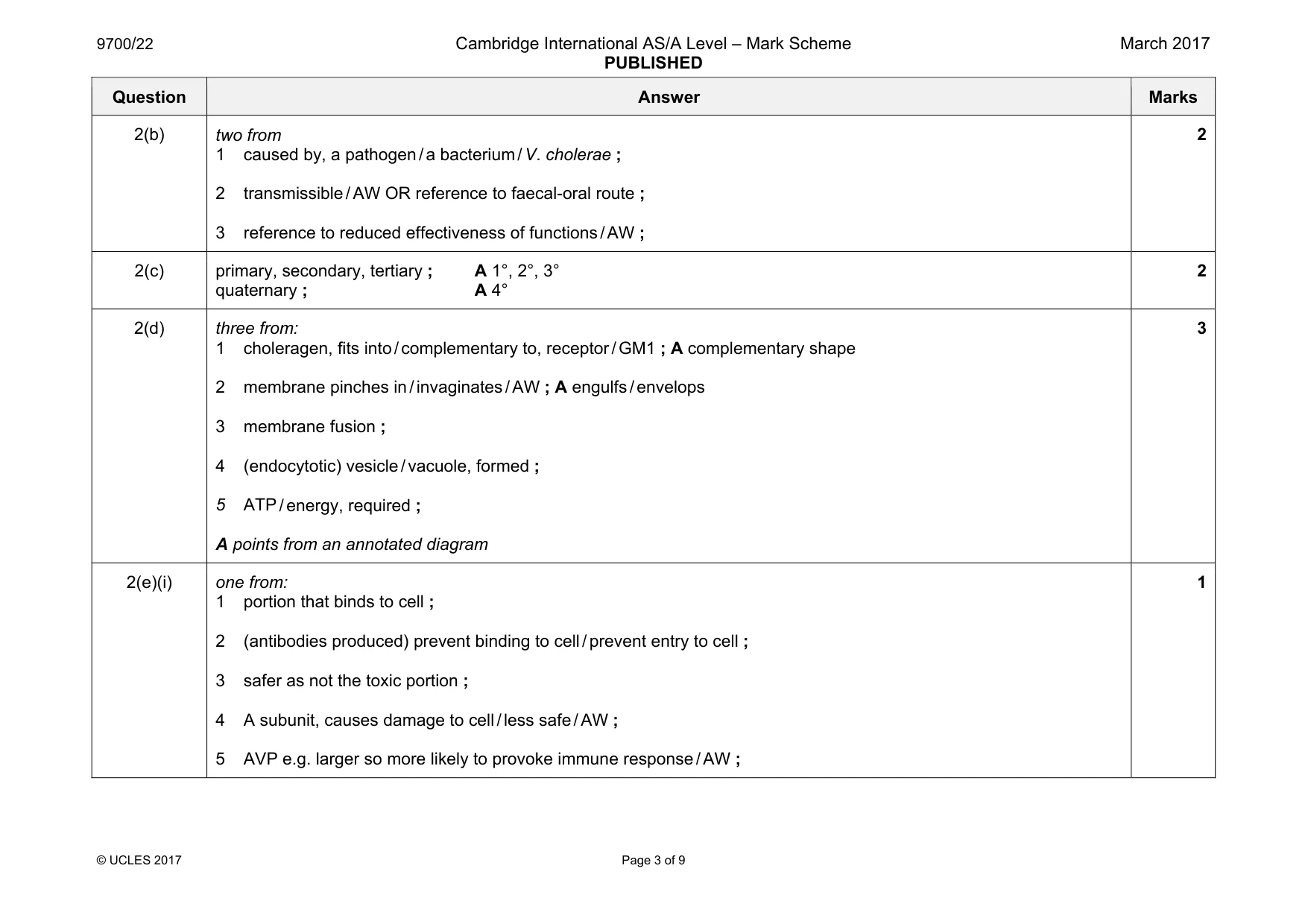
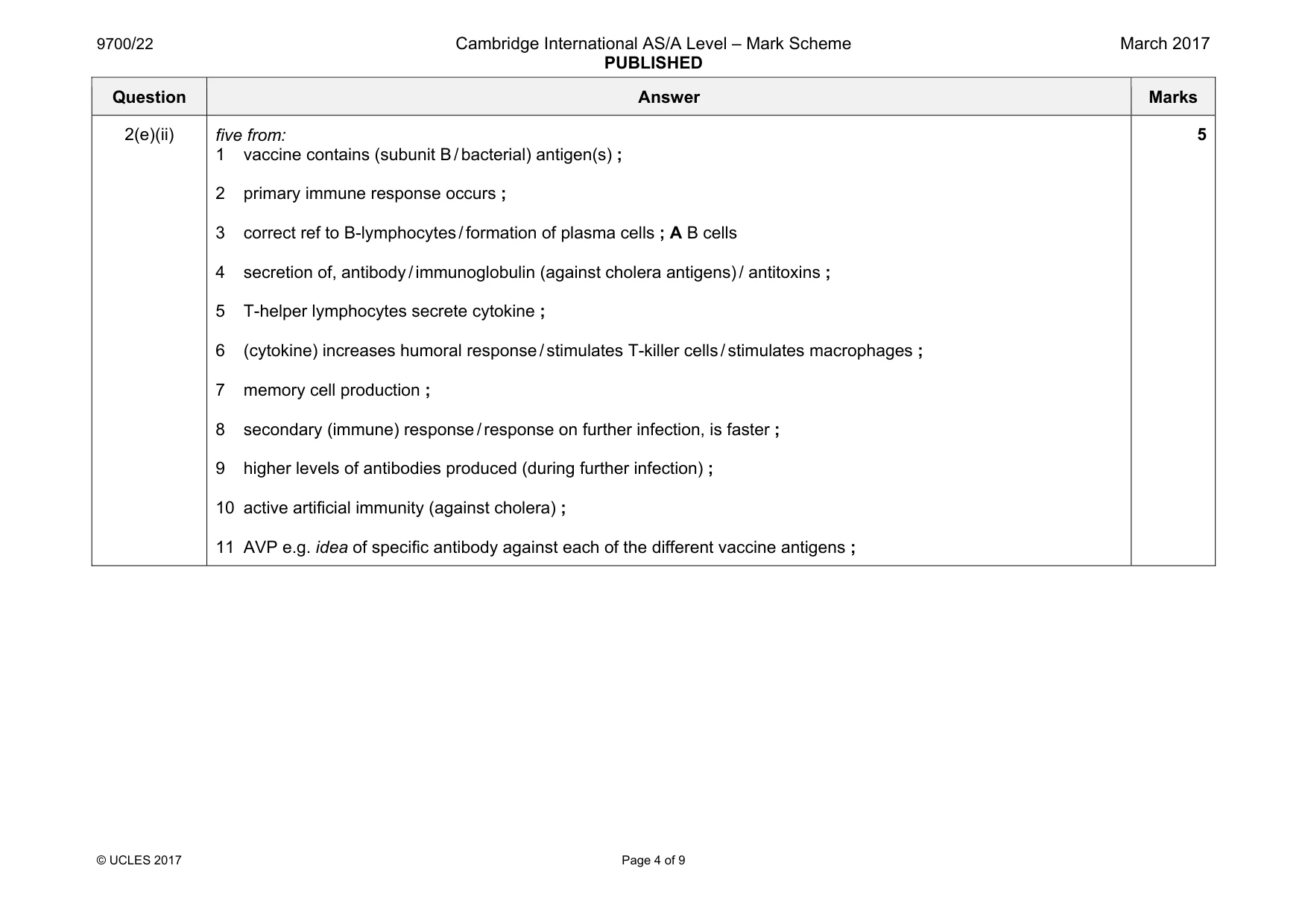
Mark scheme: 2(a)(i) Vibrio cholerae ; 1 2(a)(ii) A 1 cell structure: ribosome ; R RER 2 difference: 70S / smaller / 18 nm v 80S / larger / 25–30 nm ; B 3 cell structure: DNA / chromosome ; I RNA 4 difference: circular / (closed) loop v linear OR no histone proteins / naked v histone proteins OR not surrounded by nuclear envelope v surrounded by nuclear envelope ; A in a nucleus v not in a nucleus C 5 cell structure: cell wall ; 6 difference: murein / peptidoglycan v cellulose ; I lignin 6 Question Answer Marks 2(b) two from 1 caused by, a pathogen / a bacterium / V. cholerae ; 2 transmissible / AW OR reference to faecal-oral route ; 3 reference to reduced effectiveness of functions / AW ; 2 2(c) primary, secondary, tertiary ; A 1°, 2°, 3° quaternary ; A 4° 2 2(d) three from: 1 choleragen, fits into / complementary to, receptor / GM1 ; A complementary shape 2 membrane pinches in / invaginates / AW ; A engulfs / envelops 3 membrane fusion ; 4 (endocytotic) vesicle / vacuole, formed ; 5 ATP / energy, required ; A points from an annotated diagram 3 2(e)(i) one from: 1 portion that binds to cell ; 2 (antibodies produced) prevent binding to cell / prevent entry to cell ; 3 safer as not the toxic portion ; 4 A subunit, causes damage to cell / less safe / AW ; 5 AVP e.g. larger so more likely to provoke immune response / AW ; 1 Question Answer Marks 2(e)(ii) five from: 1 vaccine contains (subunit B / bacterial) antigen(s) ; 2 primary immune response occurs ; 3 correct ref to B-lymphocytes / formation of plasma cells ; A B cells 4 secretion of, antibody / immunoglobulin (against cholera antigens) / antitoxins ; 5 T-helper lymphocytes secrete cytokine ; 6 (cytokine) increases humoral response / stimulates T-killer cells / stimulates macrophages ; 7 memory cell production ; 8 secondary (immune) response / response on further infection, is faster ; 9 higher levels of antibodies produced (during further infection) ; 10 active artificial immunity (against cholera) ; 11 AVP e.g. idea of specific antibody against each of the different vaccine antigens ; 5
Q3 · Catalase is an enzyme that catalyses the breakdown of hydrogen peroxide, a toxic waste…
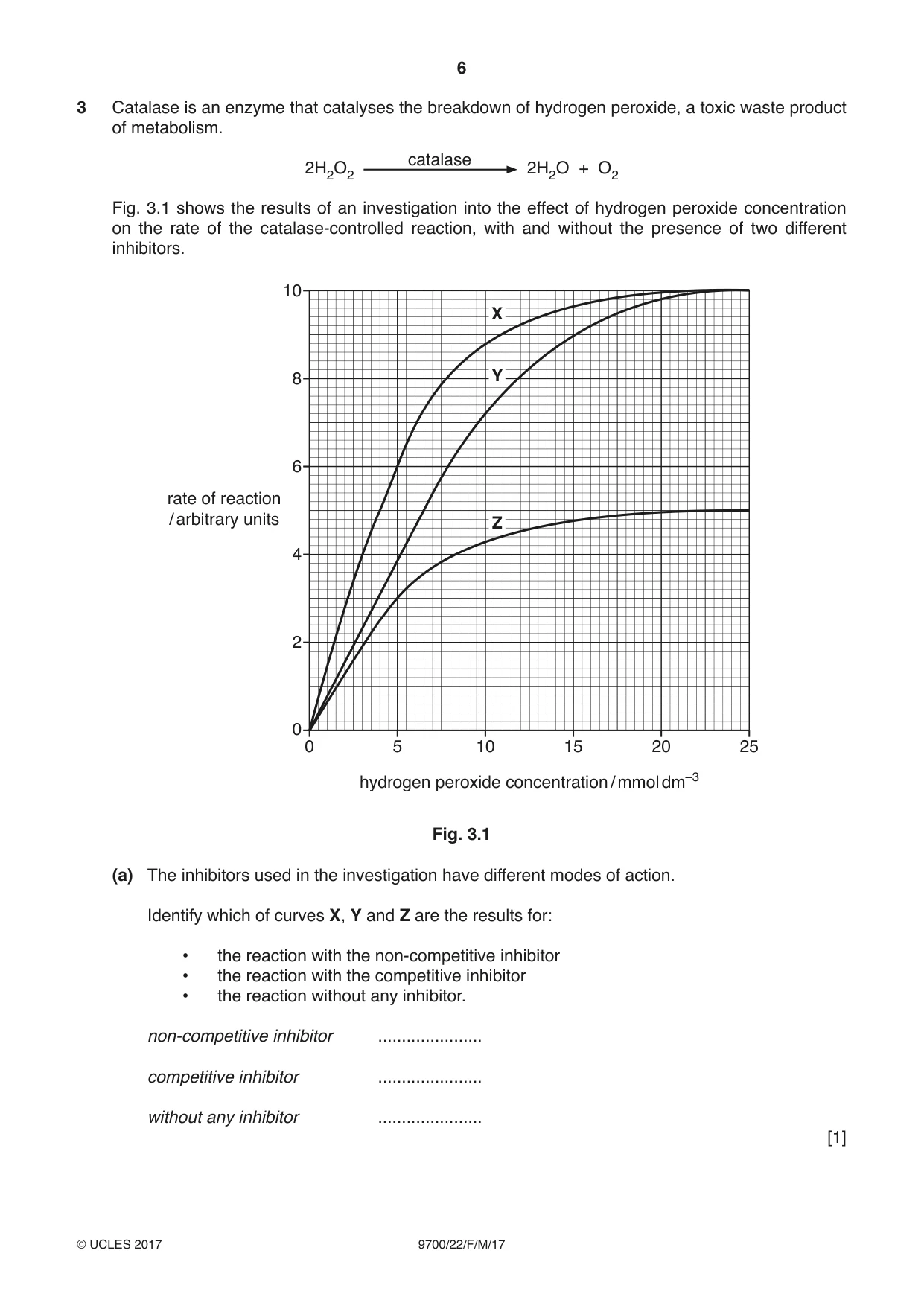
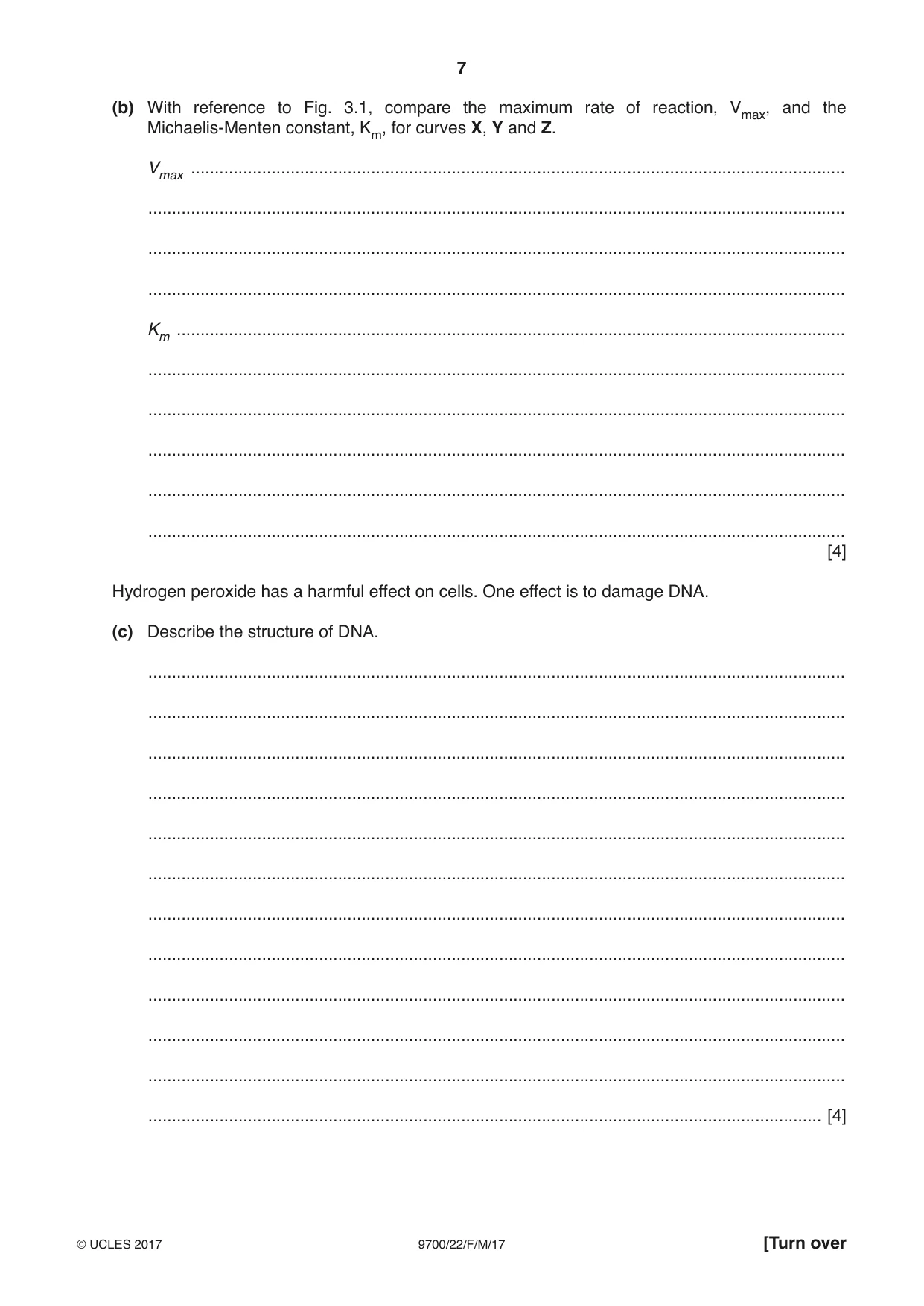
3 Catalase is an enzyme that catalyses the breakdown of hydrogen peroxide, a toxic waste product of metabolism. catalase 2H2O2 2H2O + O2 Fig. 3.1 shows the results of an investigation into the effect of hydrogen peroxide concentration on the rate of the catalase-controlled reaction, with and without the presence of two different inhibitors. 10 X 8 Y 6 rate of reaction / arbitrary units Z 4 2 0 0 5 10 15 20 25 hydrogen peroxide concentration / mmol dm–3 Fig. 3.1 (a) The inhibitors used in the investigation have different modes of action. Identify which of curves X, Y and Z are the results for: • the reaction with the non-competitive inhibitor • the reaction with the competitive inhibitor • the reaction without any inhibitor. non-competitive inhibitor ...................... competitive inhibitor ...................... without any inhibitor ...................... [1] (b) With reference to Fig. 3.1, compare the maximum rate of reaction, Vmax, and the Michaelis-Menten constant, Km, for curves X, Y and Z. Vmax .......................................................................................................................................... ................................................................................................................................................... ................................................................................................................................................... ................................................................................................................................................... Km ............................................................................................................................................. ................................................................................................................................................... ................................................................................................................................................... ................................................................................................................................................... ................................................................................................................................................... ................................................................................................................................................... [4] Hydrogen peroxide has a harmful effect on cells. One effect is to damage DNA. (c) Describe the structure of DNA. ................................................................................................................................................... ................................................................................................................................................... ................................................................................................................................................... ................................................................................................................................................... ................................................................................................................................................... ................................................................................................................................................... ................................................................................................................................................... ................................................................................................................................................... ................................................................................................................................................... ................................................................................................................................................... ................................................................................................................................................... .............................................................................................................................................. [4] (d) The cell has mechanisms to repair the damage to DNA caused by hydrogen peroxide. Errors in repair may cause a change to the structure of DNA. Studies have investigated possible risks associated with foods and drinks that contain hydrogen peroxide. This is because the compound can be considered a mutagen. Mutagens cause mutations. Explain why hydrogen peroxide can be considered a mutagen. ................................................................................................................................................... ................................................................................................................................................... ................................................................................................................................................... ................................................................................................................................................... .............................................................................................................................................. [2] [Total: 11] Question 4 starts on page 10
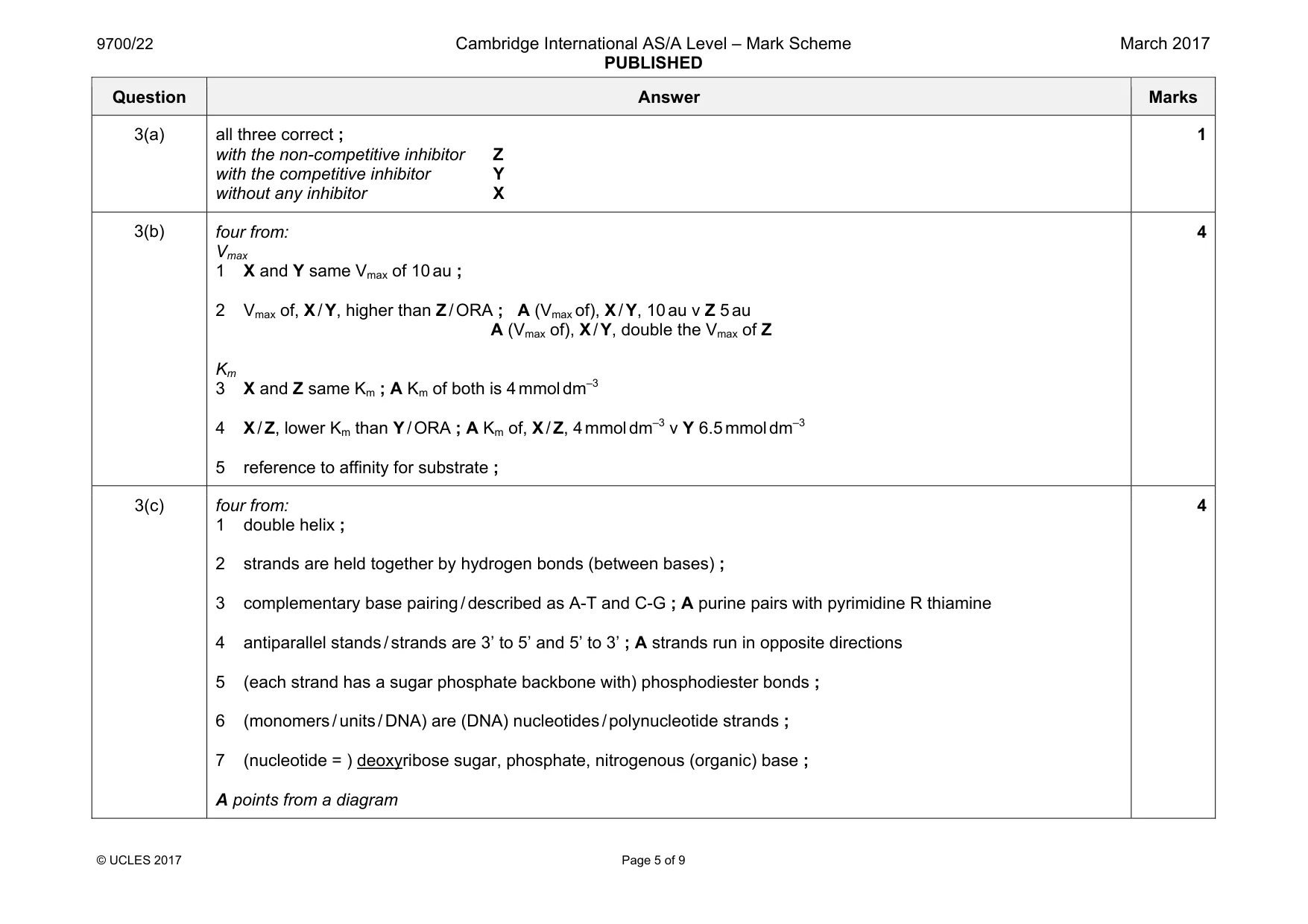
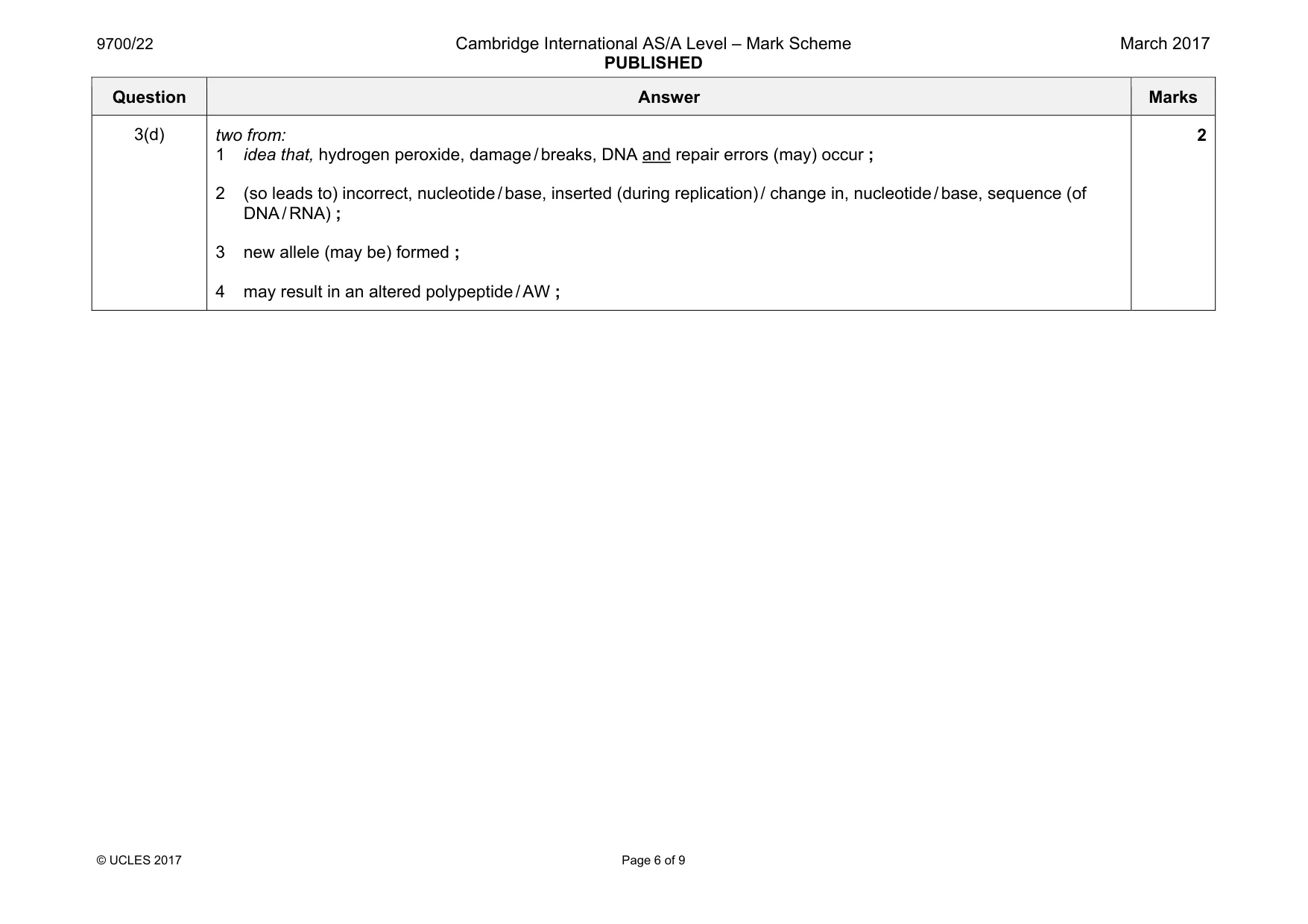
Mark scheme: 3(a) all three correct ; with the non-competitive inhibitor Z with the competitive inhibitor Y without any inhibitor X 1 3(b) four from: Vmax 1 X and Y same Vmax of 10 au ; 2 Vmax of, X / Y, higher than Z / ORA ; A (Vmax of), X / Y, 10 au v Z 5 au A (Vmax of), X / Y, double the Vmax of Z Km 3 X and Z same Km ; A Km of both is 4 mmol dm–3 4 X / Z, lower Km than Y / ORA ; A Km of, X / Z, 4 mmol dm–3 v Y 6.5 mmol dm–3 5 reference to affinity for substrate ; 4 3(c) four from: 1 double helix ; 2 strands are held together by hydrogen bonds (between bases) ; 3 complementary base pairing / described as A-T and C-G ; A purine pairs with pyrimidine R thiamine 4 antiparallel stands / strands are 3’ to 5’ and 5’ to 3’ ; A strands run in opposite directions 5 (each strand has a sugar phosphate backbone with) phosphodiester bonds ; 6 (monomers / units / DNA) are (DNA) nucleotides / polynucleotide strands ; 7 (nucleotide = ) deoxyribose sugar, phosphate, nitrogenous (organic) base ; A points from a diagram 4 Question Answer Marks 3(d) two from: 1 idea that, hydrogen peroxide, damage / breaks, DNA and repair errors (may) occur ; 2 (so leads to) incorrect, nucleotide / base, inserted (during replication) / change in, nucleotide / base, sequence (of DNA / RNA) ; 3 new allele (may be) formed ; 4 may result in an altered polypeptide / AW ; 2
More questions on Structure of nucleic acids and replication of DNA
Q4 · The transport systems of plants and mammals both function to transport substances to and…
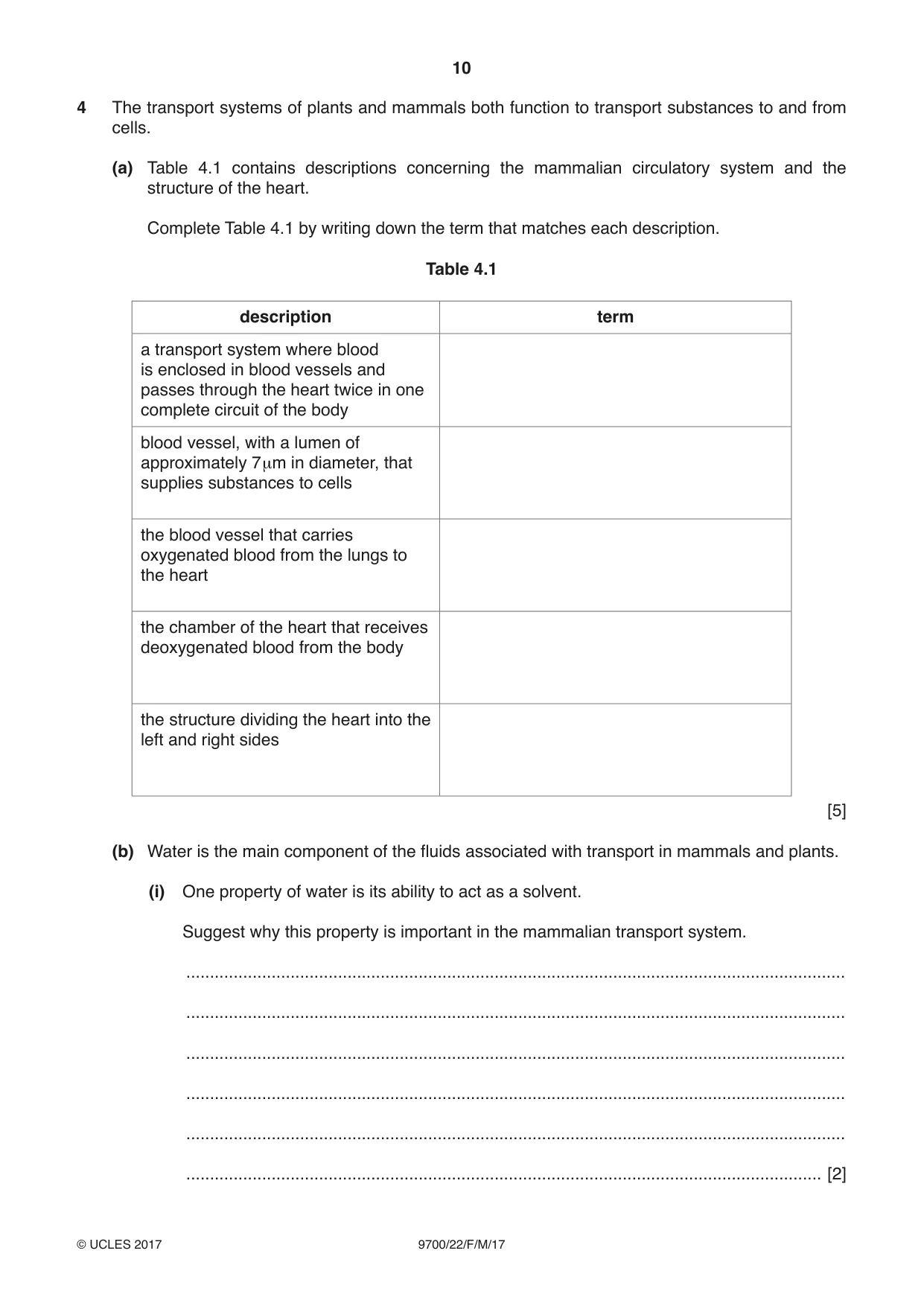
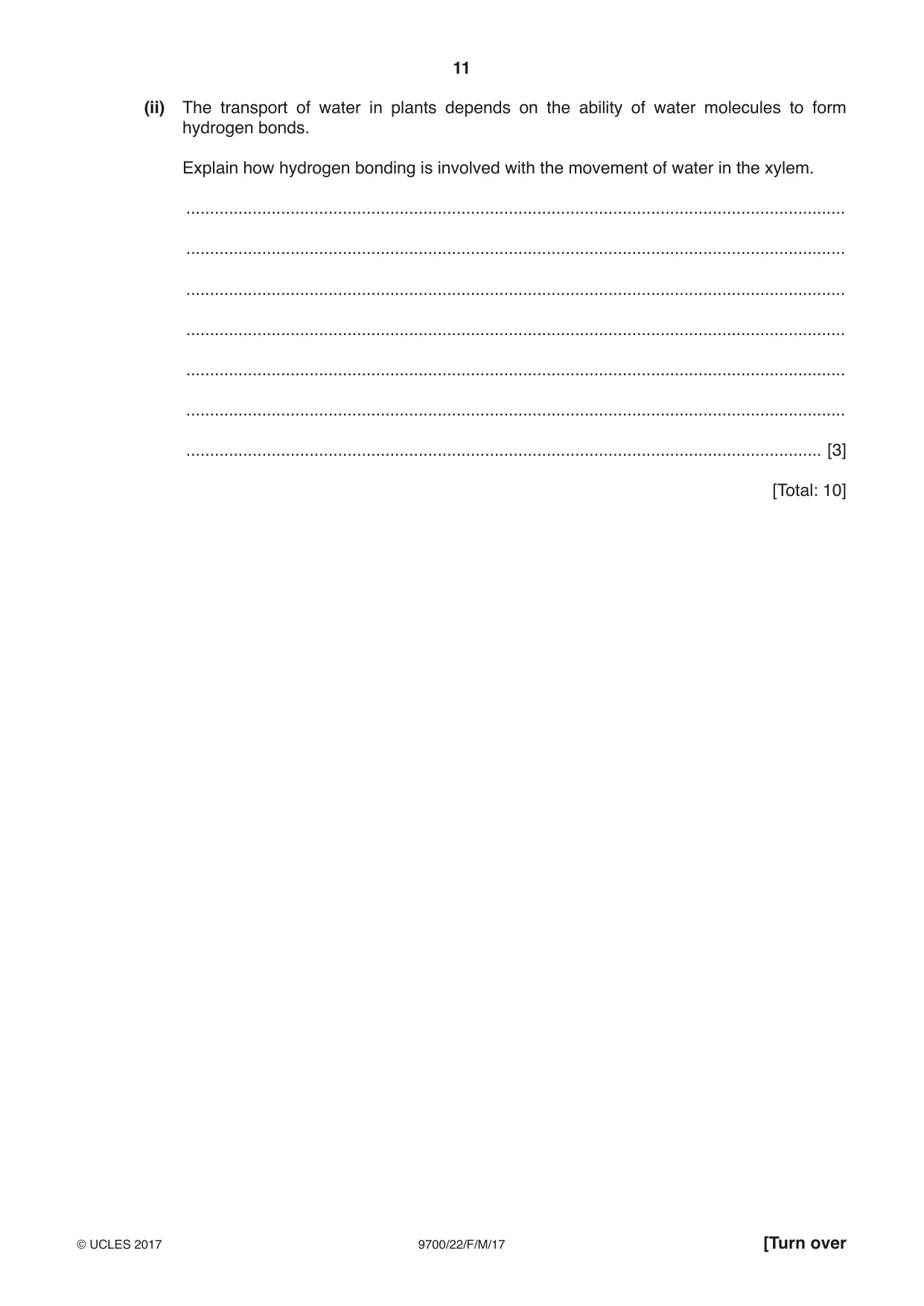
4 The transport systems of plants and mammals both function to transport substances to and from cells. (a) Table 4.1 contains descriptions concerning the mammalian circulatory system and the structure of the heart. Complete Table 4.1 by writing down the term that matches each description. Table 4.1 description term a transport system where blood is enclosed in blood vessels and passes through the heart twice in one complete circuit of the body blood vessel, with a lumen of approximately 7 μm in diameter, that supplies substances to cells the blood vessel that carries oxygenated blood from the lungs to the heart the chamber of the heart that receives deoxygenated blood from the body the structure dividing the heart into the left and right sides [5] (b) Water is the main component of the fluids associated with transport in mammals and plants. (i) One property of water is its ability to act as a solvent. Suggest why this property is important in the mammalian transport system. ........................................................................................................................................... ........................................................................................................................................... ........................................................................................................................................... ........................................................................................................................................... ........................................................................................................................................... ...................................................................................................................................... [2] (ii) The transport of water in plants depends on the ability of water molecules to form hydrogen bonds. Explain how hydrogen bonding is involved with the movement of water in the xylem. ........................................................................................................................................... ........................................................................................................................................... ........................................................................................................................................... ........................................................................................................................................... ........................................................................................................................................... ........................................................................................................................................... ...................................................................................................................................... [3] [Total: 10]
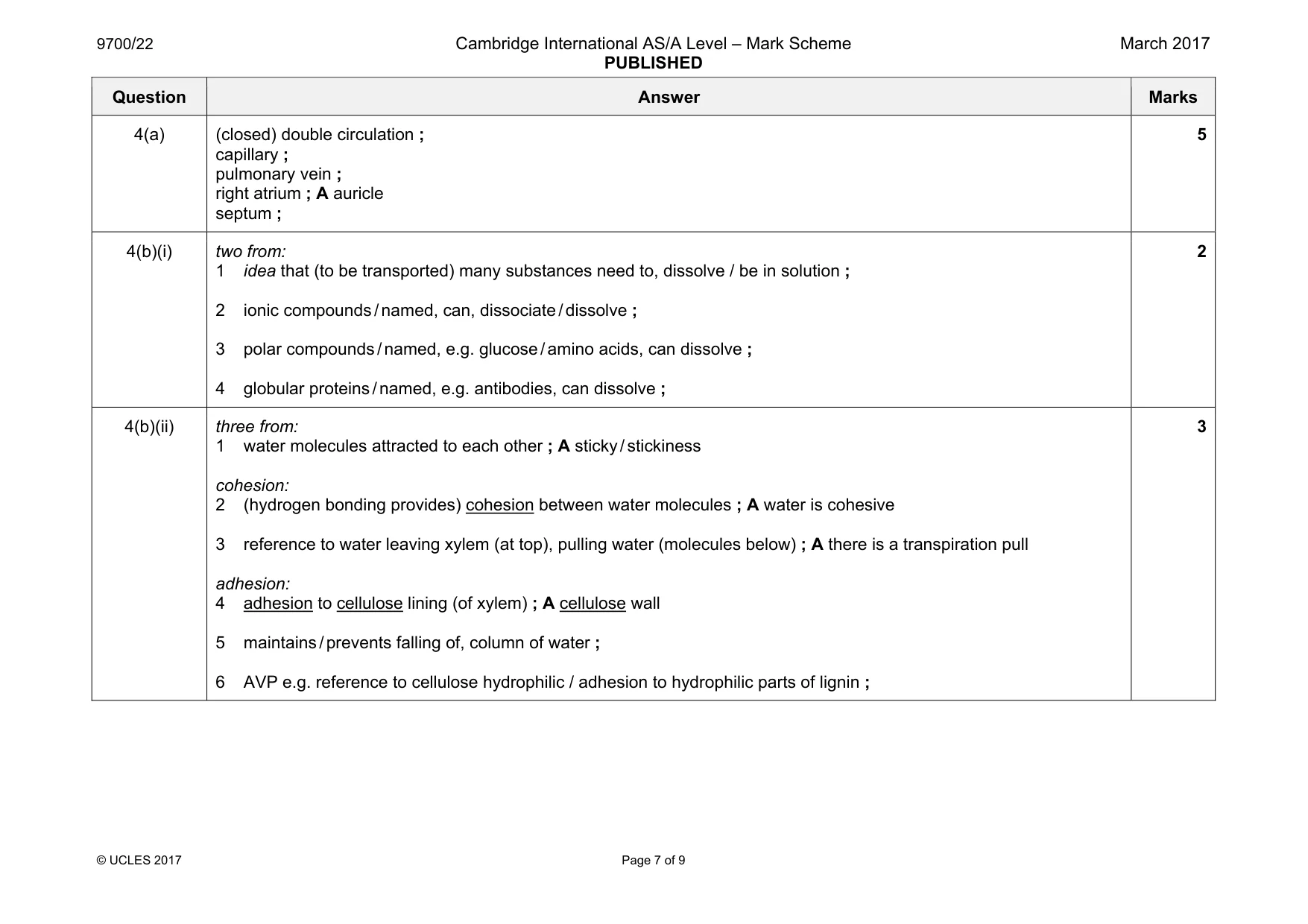
Mark scheme: 4(a) (closed) double circulation ; capillary ; pulmonary vein ; right atrium ; A auricle septum ; 5 4(b)(i) two from: 1 idea that (to be transported) many substances need to, dissolve / be in solution ; 2 ionic compounds / named, can, dissociate / dissolve ; 3 polar compounds / named, e.g. glucose / amino acids, can dissolve ; 4 globular proteins / named, e.g. antibodies, can dissolve ; 2 4(b)(ii) three from: 1 water molecules attracted to each other ; A sticky / stickiness cohesion: 2 (hydrogen bonding provides) cohesion between water molecules ; A water is cohesive 3 reference to water leaving xylem (at top), pulling water (molecules below) ; A there is a transpiration pull adhesion: 4 adhesion to cellulose lining (of xylem) ; A cellulose wall 5 maintains / prevents falling of, column of water ; 6 AVP e.g. reference to cellulose hydrophilic / adhesion to hydrophilic parts of lignin ; 3
Q5 · Smooth muscle and cartilage are two of the tissues found in the walls of structures of…
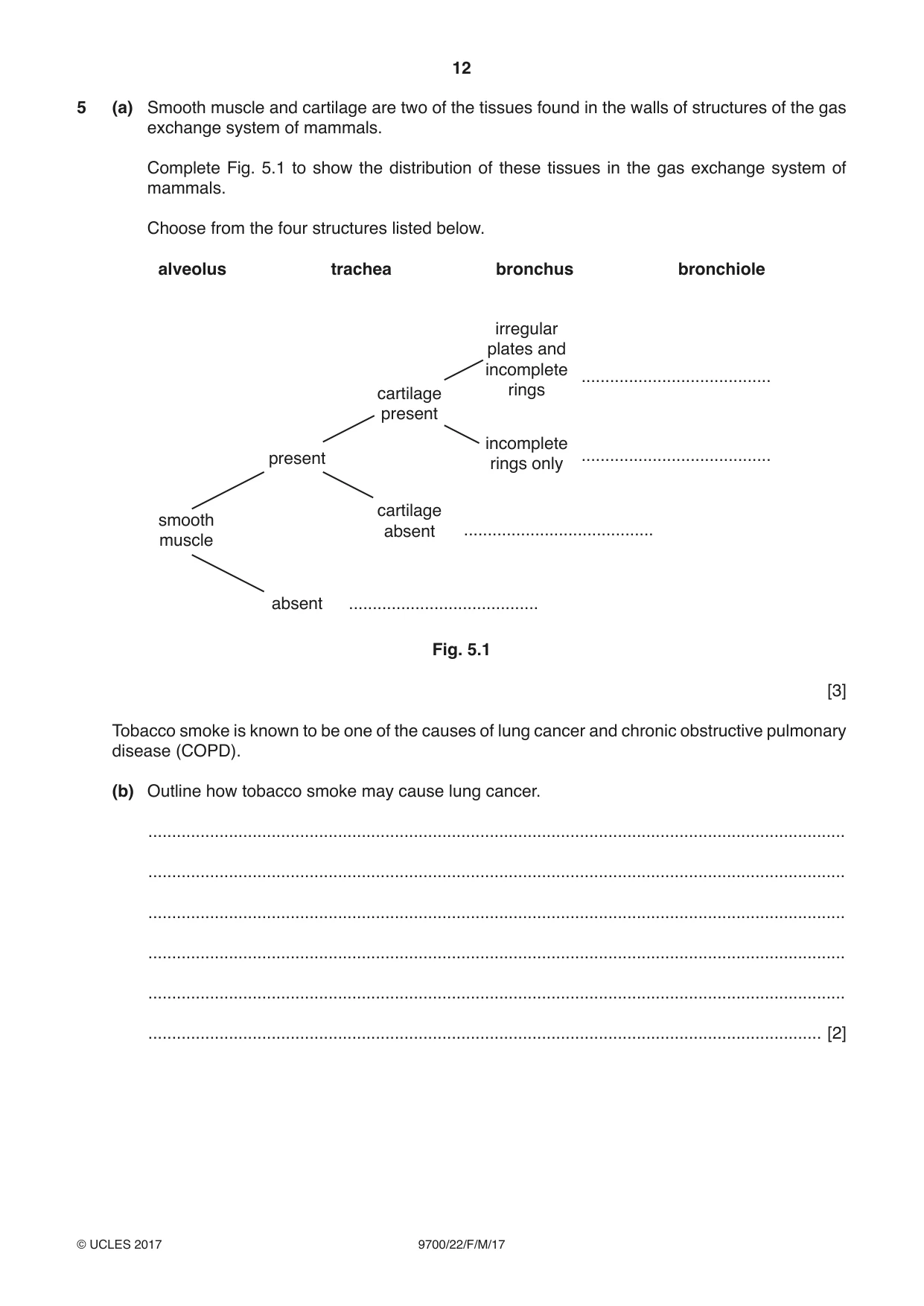
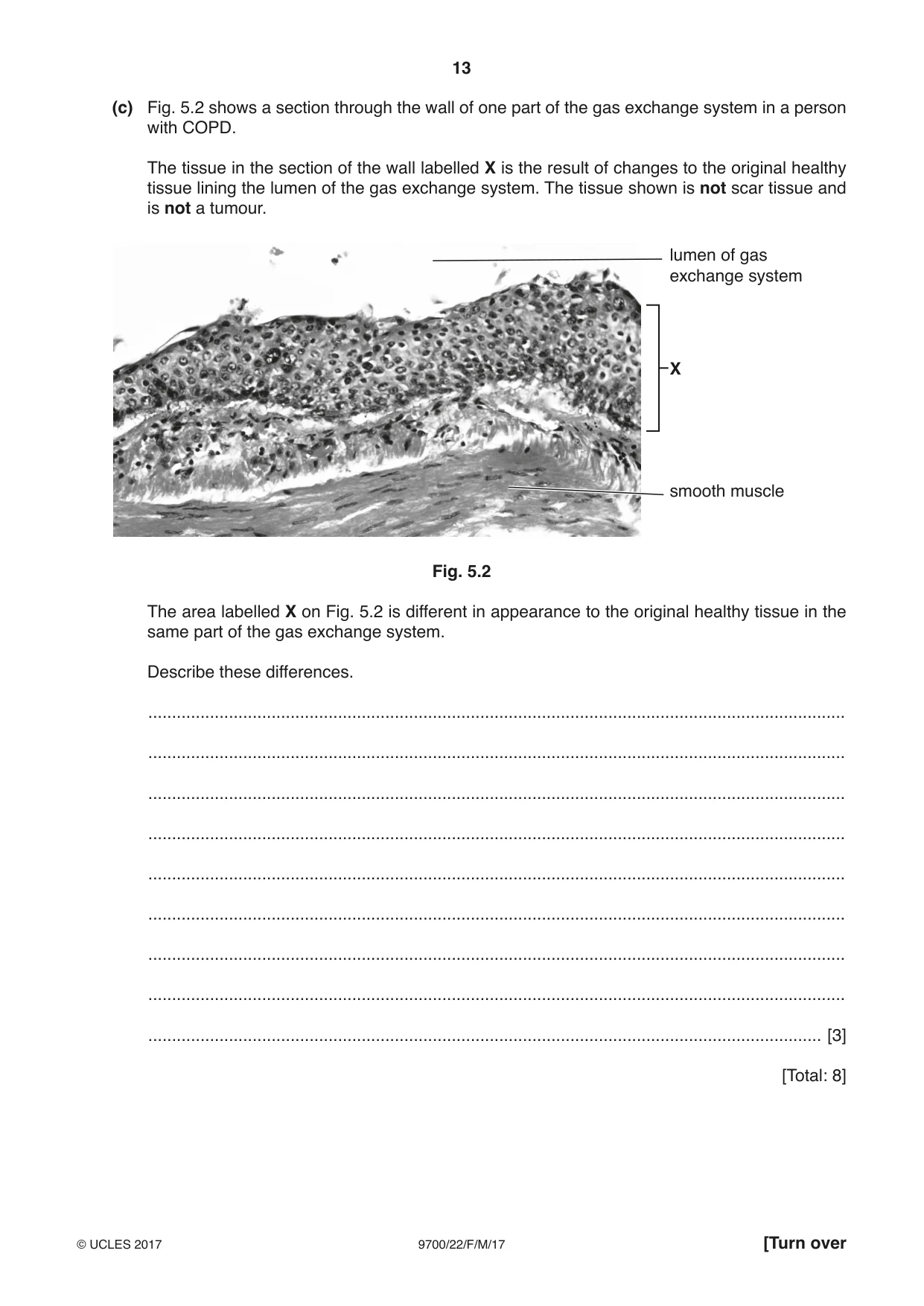
5 (a) Smooth muscle and cartilage are two of the tissues found in the walls of structures of the gas exchange system of mammals. Complete Fig. 5.1 to show the distribution of these tissues in the gas exchange system of mammals. Choose from the four structures listed below. alveolus trachea bronchus bronchiole irregular plates and incomplete ........................................ cartilage rings present incomplete present ........................................ rings only cartilage smooth absent ........................................ muscle absent ........................................ Fig. 5.1 [3] Tobacco smoke is known to be one of the causes of lung cancer and chronic obstructive pulmonary disease (COPD). (b) Outline how tobacco smoke may cause lung cancer. ................................................................................................................................................... ................................................................................................................................................... ................................................................................................................................................... ................................................................................................................................................... ................................................................................................................................................... .............................................................................................................................................. [2] (c) Fig. 5.2 shows a section through the wall of one part of the gas exchange system in a person with COPD. The tissue in the section of the wall labelled X is the result of changes to the original healthy tissue lining the lumen of the gas exchange system. The tissue shown is not scar tissue and is not a tumour. lumen of gas exchange system X smooth muscle Fig. 5.2 The area labelled X on Fig. 5.2 is different in appearance to the original healthy tissue in the same part of the gas exchange system. Describe these differences. ................................................................................................................................................... ................................................................................................................................................... ................................................................................................................................................... ................................................................................................................................................... ................................................................................................................................................... ................................................................................................................................................... ................................................................................................................................................... ................................................................................................................................................... .............................................................................................................................................. [3] [Total: 8]
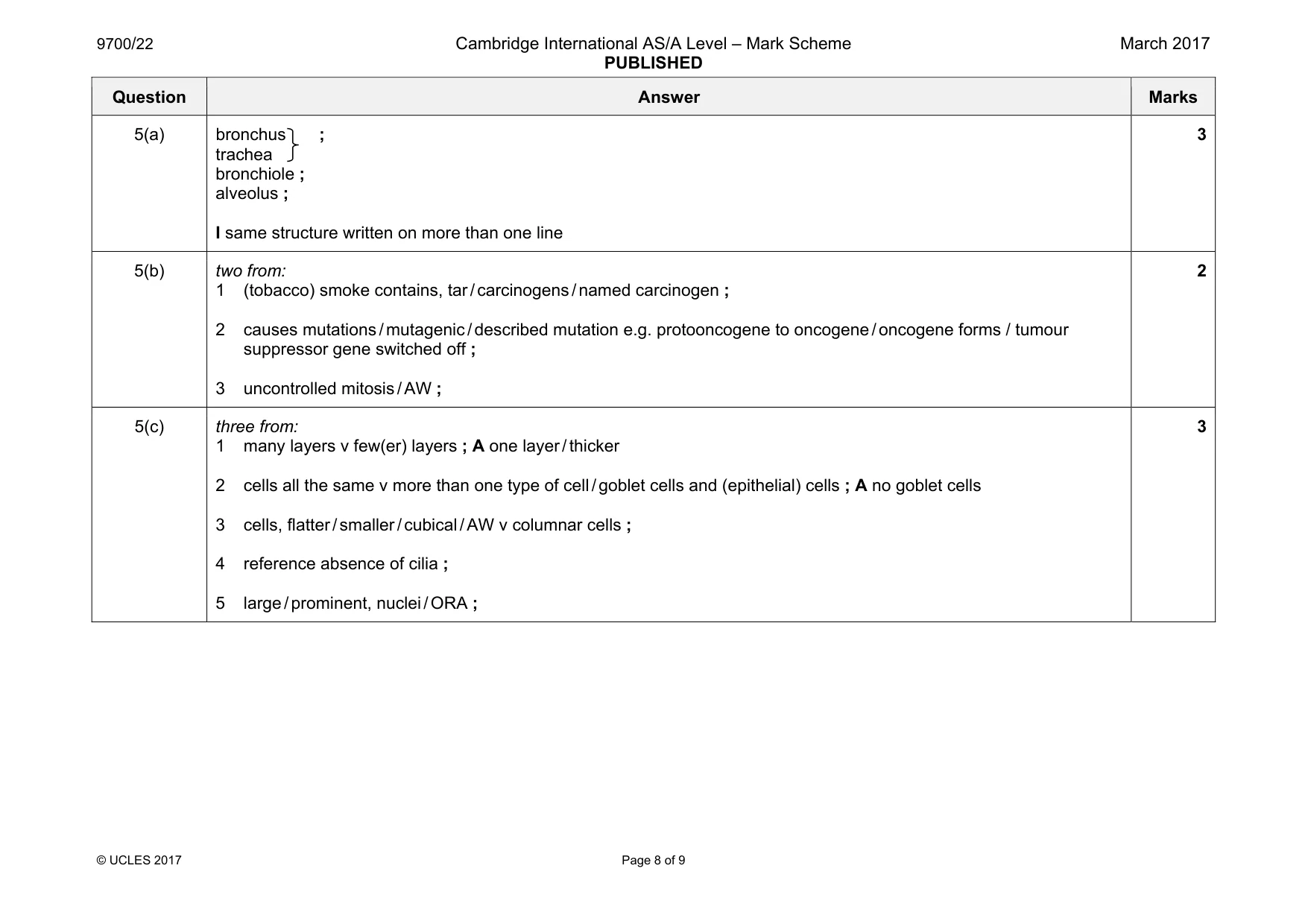
Mark scheme: 5(a) bronchus ; trachea bronchiole ; alveolus ; I same structure written on more than one line 3 5(b) two from: 1 (tobacco) smoke contains, tar / carcinogens / named carcinogen ; 2 causes mutations / mutagenic / described mutation e.g. protooncogene to oncogene / oncogene forms / tumour suppressor gene switched off ; 3 uncontrolled mitosis / AW ; 2 5(c) three from: 1 many layers v few(er) layers ; A one layer / thicker 2 cells all the same v more than one type of cell / goblet cells and (epithelial) cells ; A no goblet cells 3 cells, flatter / smaller / cubical / AW v columnar cells ; 4 reference absence of cilia ; 5 large / prominent, nuclei / ORA ; 3
Q6 · A student investigated the effect of changing the surface area to volume ratio on…
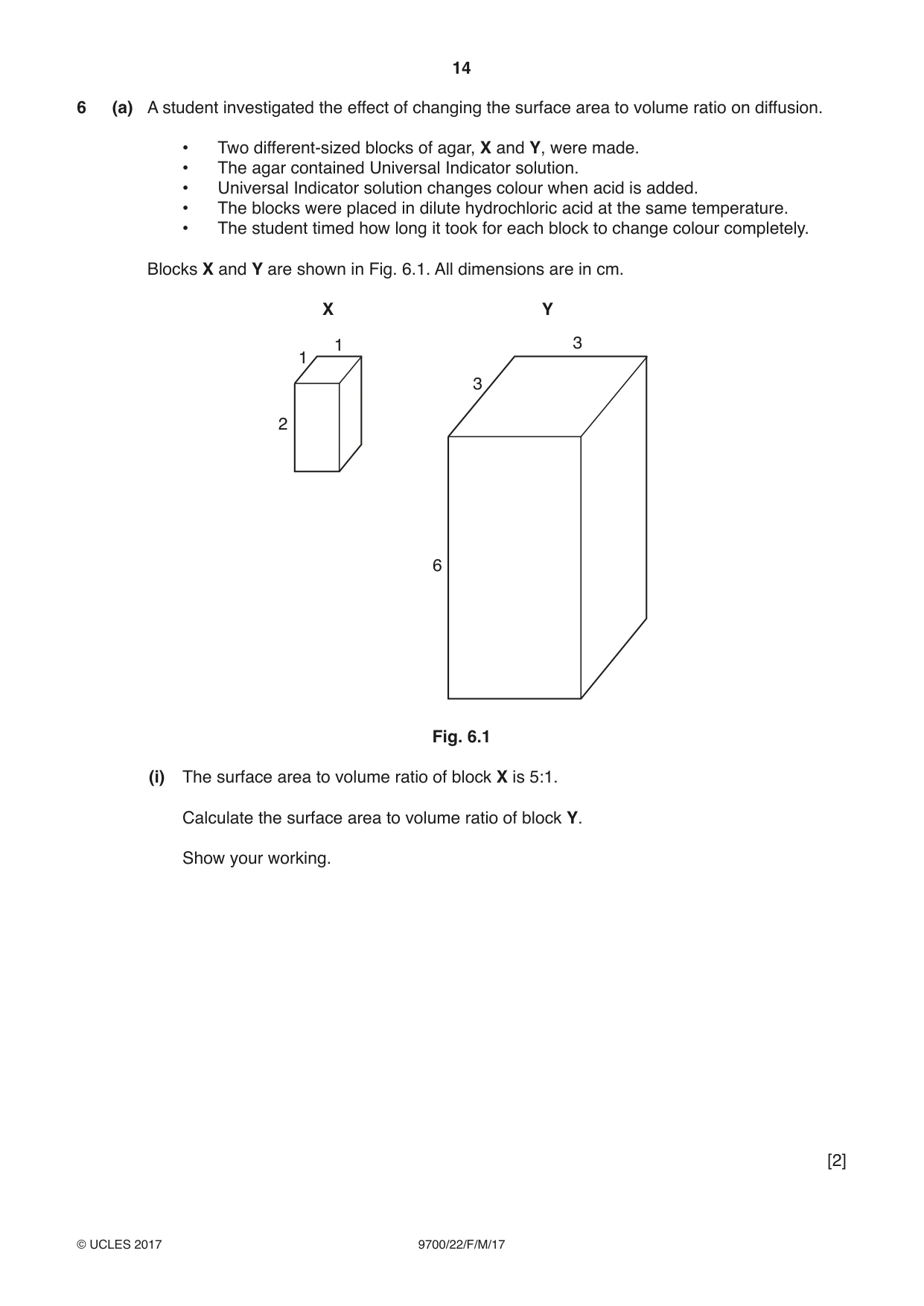
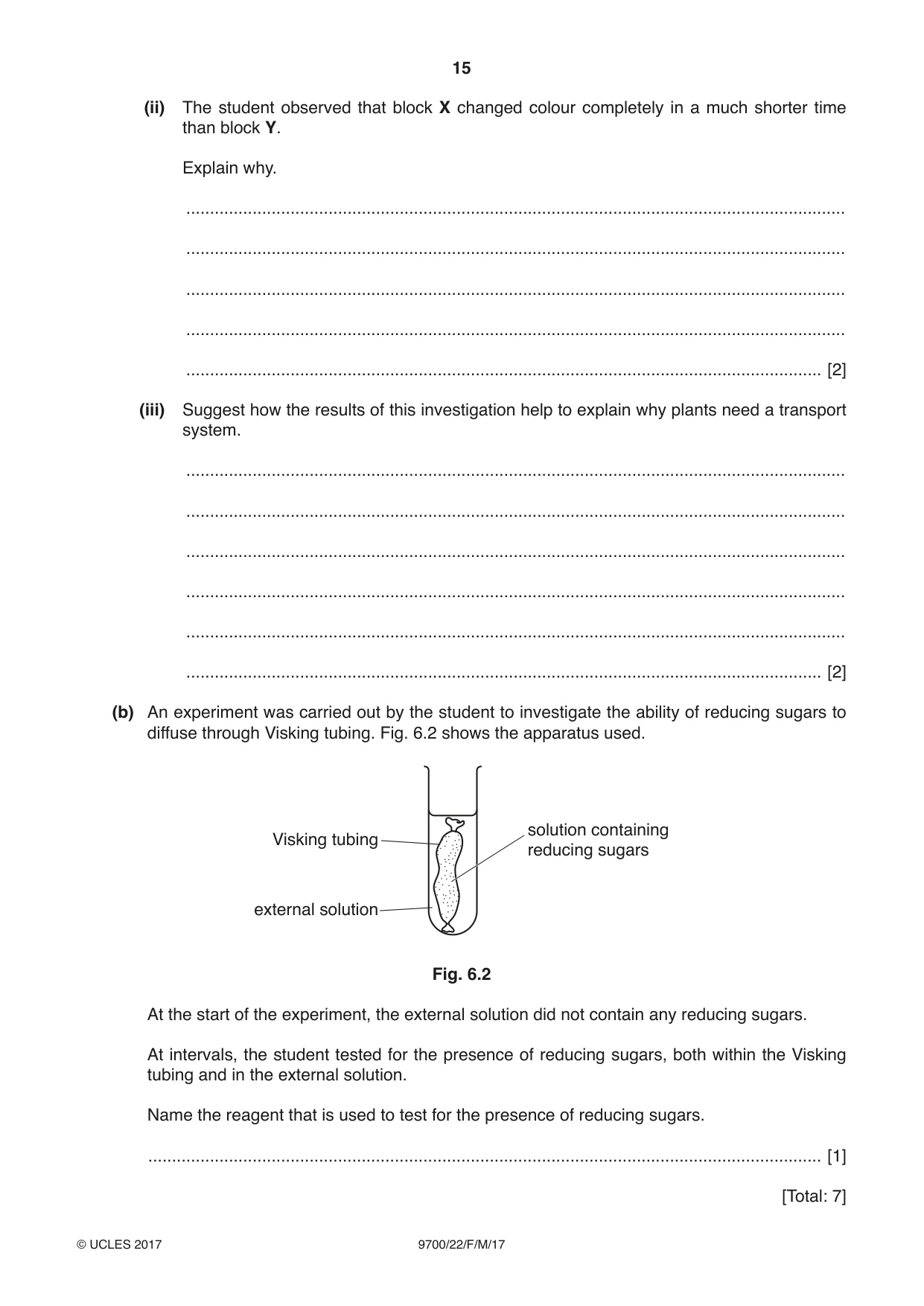
6 (a) A student investigated the effect of changing the surface area to volume ratio on diffusion. • Two different-sized blocks of agar, X and Y, were made. • The agar contained Universal Indicator solution. • Universal Indicator solution changes colour when acid is added. • The blocks were placed in dilute hydrochloric acid at the same temperature. • The student timed how long it took for each block to change colour completely. Blocks X and Y are shown in Fig. 6.1. All dimensions are in cm. X Y 1 3 1 3 2 6 Fig. 6.1 (i) The surface area to volume ratio of block X is 5:1. Calculate the surface area to volume ratio of block Y. Show your working. [2] (ii) The student observed that block X changed colour completely in a much shorter time than block Y. Explain why. ........................................................................................................................................... ........................................................................................................................................... ........................................................................................................................................... ........................................................................................................................................... ...................................................................................................................................... [2] (iii) Suggest how the results of this investigation help to explain why plants need a transport system. ........................................................................................................................................... ........................................................................................................................................... ........................................................................................................................................... ........................................................................................................................................... ........................................................................................................................................... ...................................................................................................................................... [2] (b) An experiment was carried out by the student to investigate the ability of reducing sugars to diffuse through Visking tubing. Fig. 6.2 shows the apparatus used. solution containing Visking tubing reducing sugars external solution Fig. 6.2 At the start of the experiment, the external solution did not contain any reducing sugars. At intervals, the student tested for the presence of reducing sugars, both within the Visking tubing and in the external solution. Name the reagent that is used to test for the presence of reducing sugars. .............................................................................................................................................. [1] [Total: 7]
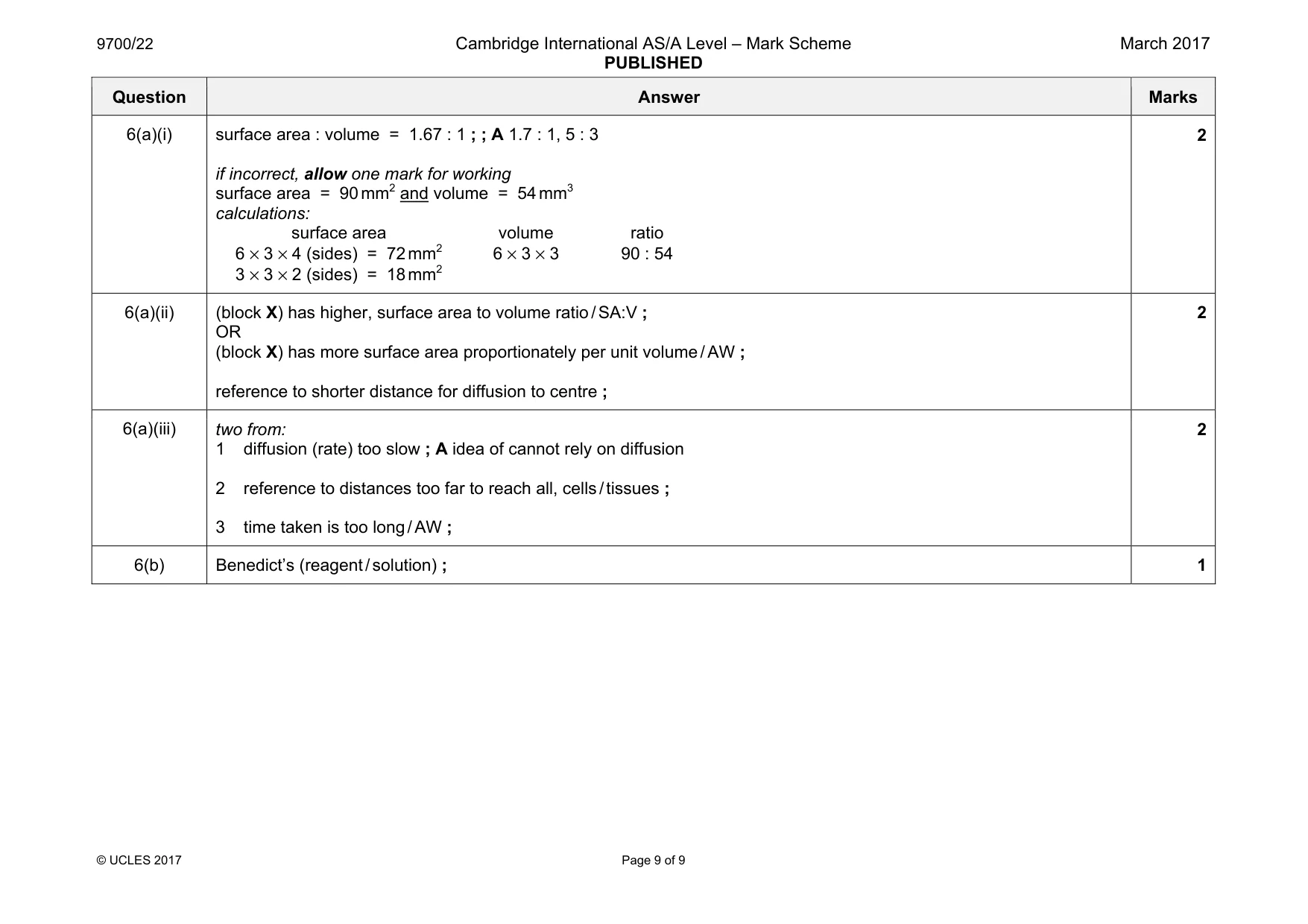
Mark scheme: 6(a)(i) surface area : volume = 1.67 : 1 ; ; A 1.7 : 1, 5 : 3 if incorrect, allow one mark for working surface area = 90 mm2 and volume = 54 mm3 calculations: surface area volume ratio 6 × 3 × 4 (sides) = 72 mm2 6 × 3 × 3 90 : 54 3 × 3 × 2 (sides) = 18 mm2 2 6(a)(ii) (block X) has higher, surface area to volume ratio / SA:V ; OR (block X) has more surface area proportionately per unit volume / AW ; reference to shorter distance for diffusion to centre ; 2 6(a)(iii) two from: 1 diffusion (rate) too slow ; A idea of cannot rely on diffusion 2 reference to distances too far to reach all, cells / tissues ; 3 time taken is too long / AW ; 2 6(b) Benedict’s (reagent / solution) ; 1
What was in this paper
The subtopics covered by these 6 questions, and how many questions each got. Open one in a new tab to see every Cambridge question on it.
What you needed in this session
Cambridge’s own grade thresholds for 2017 Feb/March, Paper 2 · Variant 2. A higher threshold means an easier paper — the bar moves with how the cohort did.