Cambridge A Level Biology 9700 — 2016 Feb/March Paper 2 · Variant 2
9700/22/F/M/16 · 60 marks · ≈68 min
The question paper and its mark scheme, free to read here and free to download. This is Cambridge’s own paper, exactly as it was sat.
Question paper16 pages


Mark scheme8 pages
Answers below. Sit the paper first if you are practising.
Paper as text
Question paper, page 1
This document consists of 14 printed pages and 2 blank pages. DC (ST/SG) 108511/4 © UCLES 2016 [Turn over Cambridge International Examinations Cambridge International Advanced Subsidiary and Advanced Level * 6 2 4 6 5 7 9 2 3 3 * BIOLOGY 9700/22 Paper 2 AS Level Structured Questions February/March 2016 1 hour 15 minutes Candidates answer on the Question Paper. No Additional Materials are required. READ THESE INSTRUCTIONS FIRST Write your Centre number, candidate number and name in the spaces provided at the top of this page. Write in dark blue or black pen. You may use an HB pencil for any diagrams or graphs. Do not use staples, paper clips, glue or correction fluid. DO NOT WRITE IN ANY BARCODES. Answer all questions. Electronic calculators may be used. You may lose marks if you do not show your working or if you do not use appropriate units. At the end of the examination, fasten all your work securely together. The number of marks is given in brackets [ ] at the end of each question or part question.
Question paper, page 2
2 9700/22/F/M/16 © UCLES 2016 Answer all the questions. 1 Statements A to E relate to biological molecules. For each statement, identify the most appropriate term that matches the description. A The molecule formed from a condensation reaction between fructose and glucose. … B The name of the bond broken when two amino acids are separated by hydrolysis. … C The unbranched polymer consisting only of β-glucose molecules. … D The reagent used to test for the presence of proteins. … E The molecule produced, in addition to fatty acids, when a triglyceride is hydrolysed. … [5] [Total: 5]
Question paper, page 3
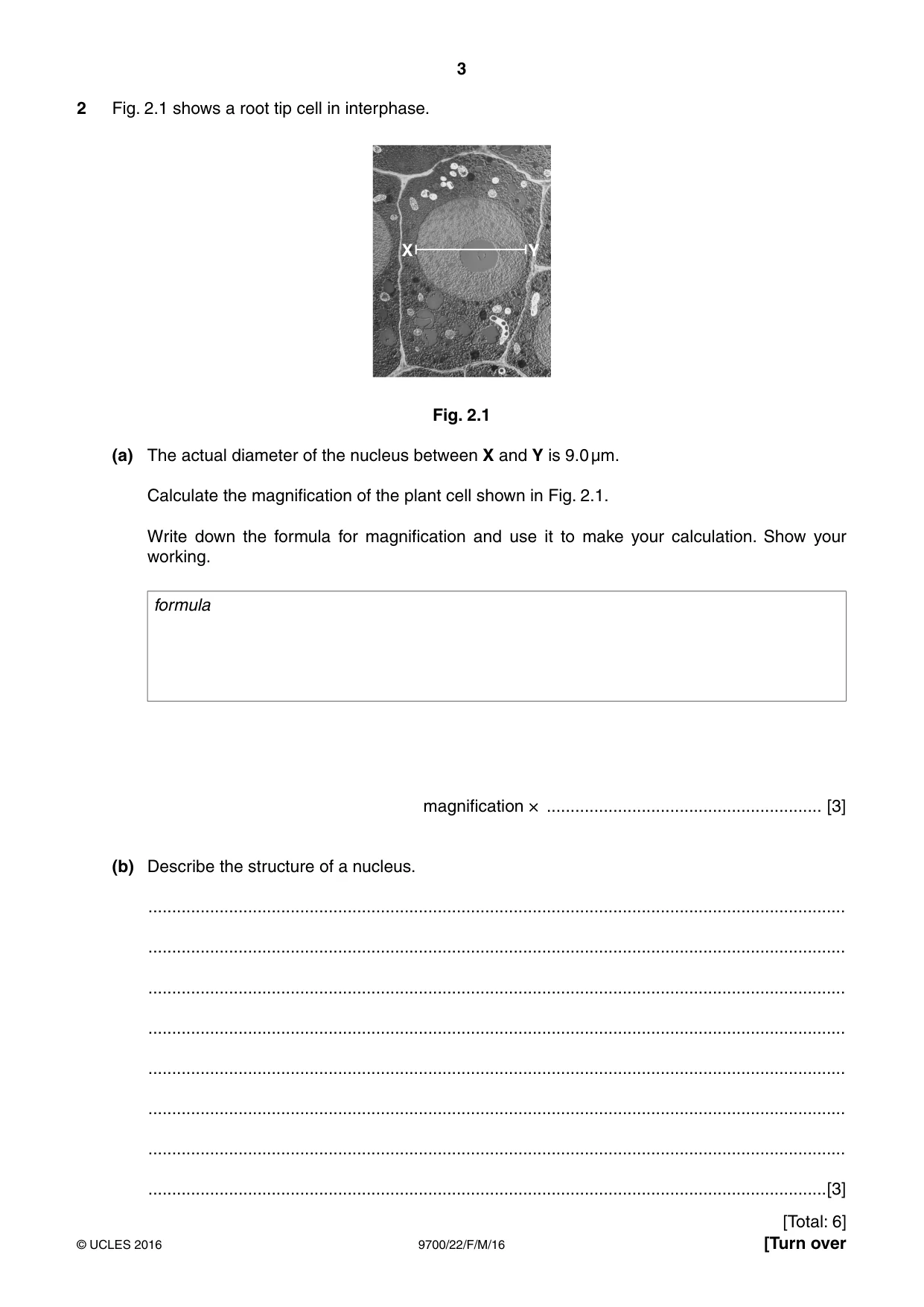
3 9700/22/F/M/16 © UCLES 2016 [Turn over 2 Fig. 2.1 shows a root tip cell in interphase. X Y Fig. 2.1 (a) The actual diameter of the nucleus between X and Y is 9.0 µm. Calculate the magnification of the plant cell shown in Fig. 2.1. Write down the formula for magnification and use it to make your calculation. Show your working. formula magnification × … [3] (b) Describe the structure of a nucleus. … … … … … … … …[3] [Total: 6]
Question paper, page 4
4 9700/22/F/M/16 © UCLES 2016 3 Erythropoietin, also known as EPO, is a large glycoprotein synthesised by specialised cells in the kidney. These cells are very sensitive to changes in oxygen concentration in the blood passing through the kidney and respond to a low oxygen concentration by increasing the synthesis of EPO. EPO acts at the surface of particular target cells, such as cells in the bone marrow. These bone marrow cells are stimulated to produce red blood cells. (a) (i) A low oxygen concentration also leads to an increase in the quantity of mRNA in the specialised cells in the kidney. Suggest and explain why there is this increase in the quantity of mRNA. … … … … … …[2] (ii) EPO is stored in secretory vesicles before being released from the specialised kidney cells. Outline how EPO is released from the cells. … … … … … … …[2]
Question paper, page 5
5 9700/22/F/M/16 © UCLES 2016 [Turn over (b) All cells of the body are exposed to circulating blood plasma containing EPO, but only particular target cells respond. (i) Suggest and explain how EPO acts on target cells and why other cells are not affected. … … … … … … … … … …[3] (ii) EPO cannot pass through the cell surface membrane to enter the bone marrow cells. Suggest one reason why this is so. … … …[1] (c) Red blood cells originate from undifferentiated cells in the bone marrow that are capable of continuous mitotic cell division. State the name of this type of undifferentiated cell. …[1]
Question paper, page 6
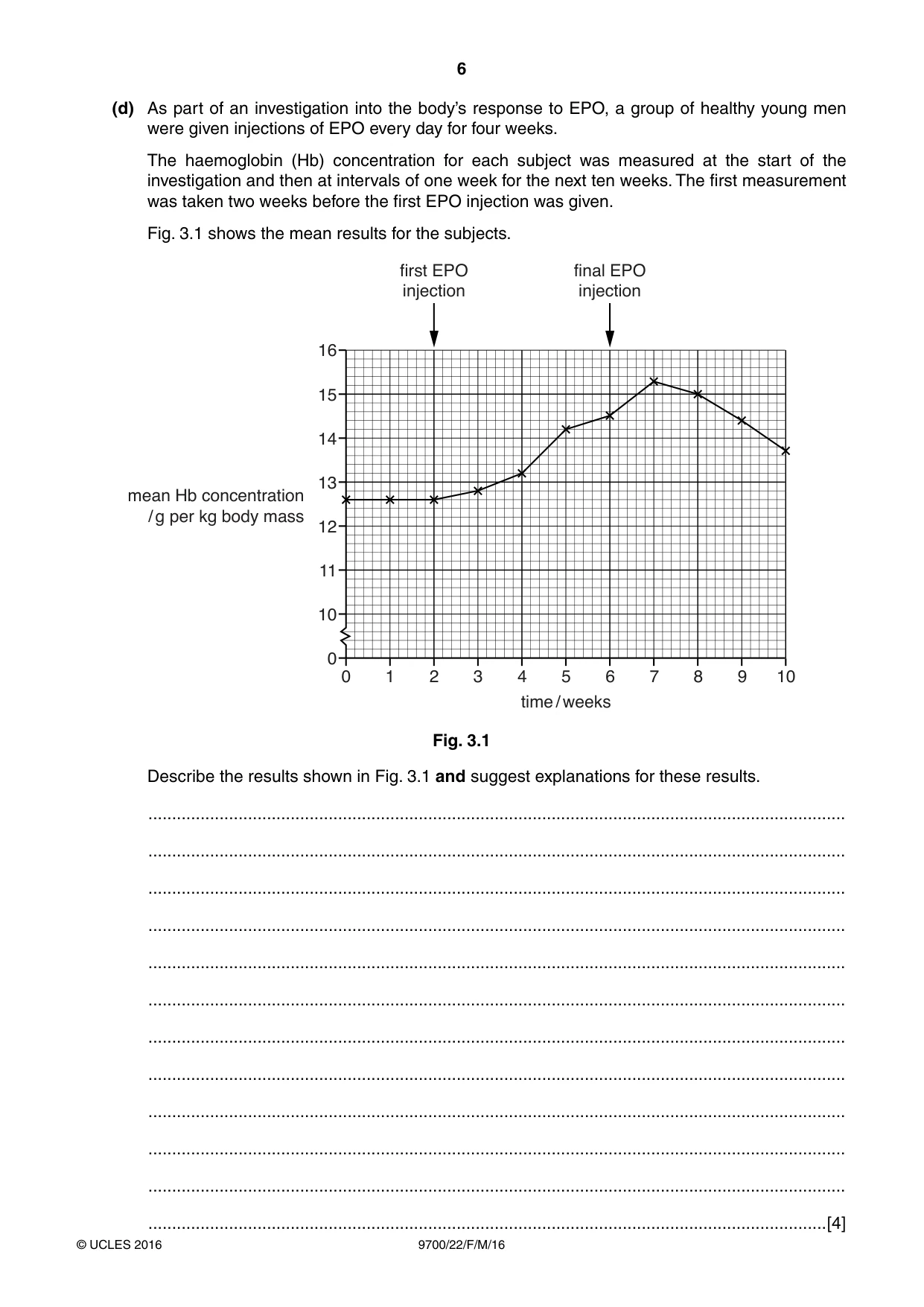
6 9700/22/F/M/16 © UCLES 2016 (d) As part of an investigation into the body’s response to EPO, a group of healthy young men were given injections of EPO every day for four weeks. The haemoglobin (Hb) concentration for each subject was measured at the start of the investigation and then at intervals of one week for the next ten weeks. The first measurement was taken two weeks before the first EPO injection was given. Fig. 3.1 shows the mean results for the subjects. 16 15 14 13 12 11 10 0 1 2 3 4 5 6 7 8 9 10 0 time / weeks mean Hb concentration / g per kg body mass first EPO injection final EPO injection Fig. 3.1 Describe the results shown in Fig. 3.1 and suggest explanations for these results. … … … … … … … … … … … …[4]
Question paper, page 7
7 9700/22/F/M/16 © UCLES 2016 [Turn over (e) The concentration of EPO in the blood plasma of a person will increase when travelling from sea level to a high altitude. This is in response to the decrease in oxygen partial pressure in the atmosphere. Explain why an increase in EPO blood plasma concentration will be of benefit if the person remains at high altitude. … … … … … … … …[3] [Total: 16]
Question paper, page 8
8 9700/22/F/M/16 © UCLES 2016 BLANK PAGE
Question paper, page 9
9 9700/22/F/M/16 © UCLES 2016 [Turn over 4 Morbillivirus, which causes measles, and the human immunodeficiency virus (HIV) share these common features: • outer envelope surrounding the protein coat • RNA as the genetic material • infect cells of the immune system. (a) Compare the modes of transmission of Morbillivirus and HIV. … … … … … … … … … …[4] (b) Antibiotics are not used to treat viral infections. Explain why antibiotics do not affect viruses. … … … … …[2]
Question paper, page 10
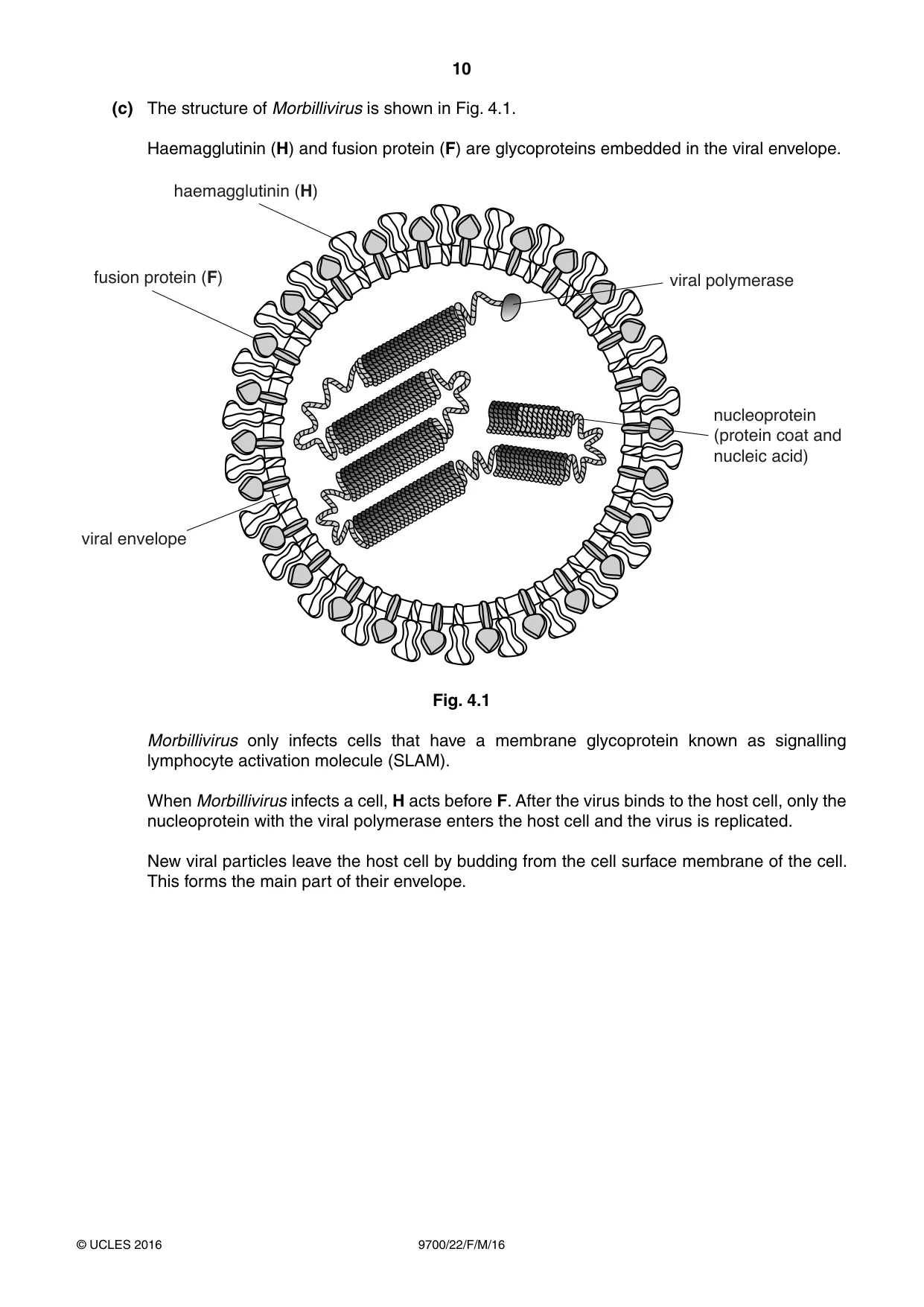
10 9700/22/F/M/16 © UCLES 2016 (c) The structure of Morbillivirus is shown in Fig. 4.1. Haemagglutinin (H) and fusion protein (F) are glycoproteins embedded in the viral envelope. haemagglutinin (H) fusion protein (F) viral envelope viral polymerase nucleoprotein (protein coat and nucleic acid) Fig. 4.1 Morbillivirus only infects cells that have a membrane glycoprotein known as signalling lymphocyte activation molecule (SLAM). When Morbillivirus infects a cell, H acts before F. After the virus binds to the host cell, only the nucleoprotein with the viral polymerase enters the host cell and the virus is replicated. New viral particles leave the host cell by budding from the cell surface membrane of the cell. This forms the main part of their envelope.
Question paper, page 11
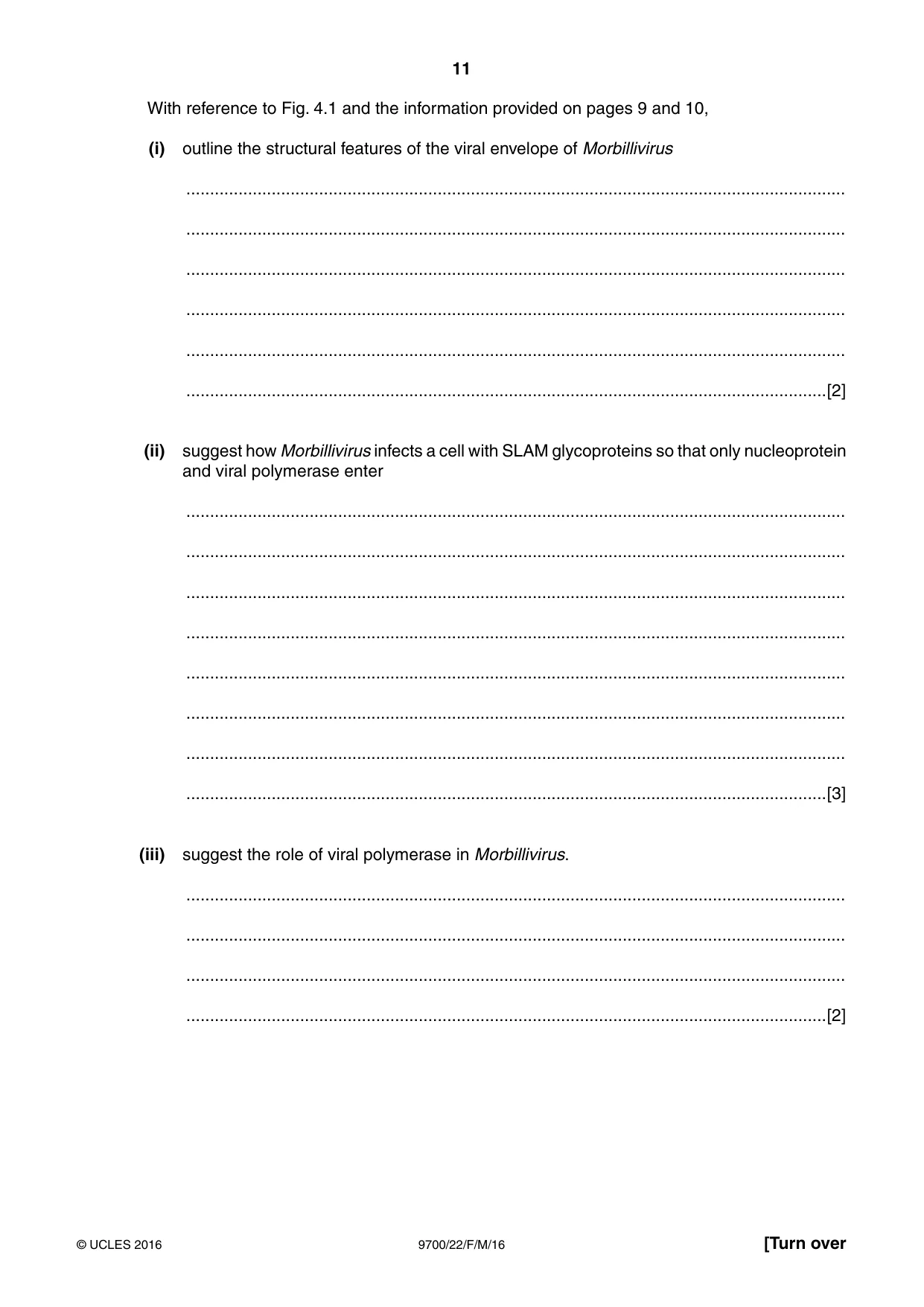
11 9700/22/F/M/16 © UCLES 2016 [Turn over With reference to Fig. 4.1 and the information provided on pages 9 and 10, (i) outline the structural features of the viral envelope of Morbillivirus … … … … … …[2] (ii) suggest how Morbillivirus infects a cell with SLAM glycoproteins so that only nucleoprotein and viral polymerase enter … … … … … … … …[3] (iii) suggest the role of viral polymerase in Morbillivirus. … … … …[2]
Question paper, page 12
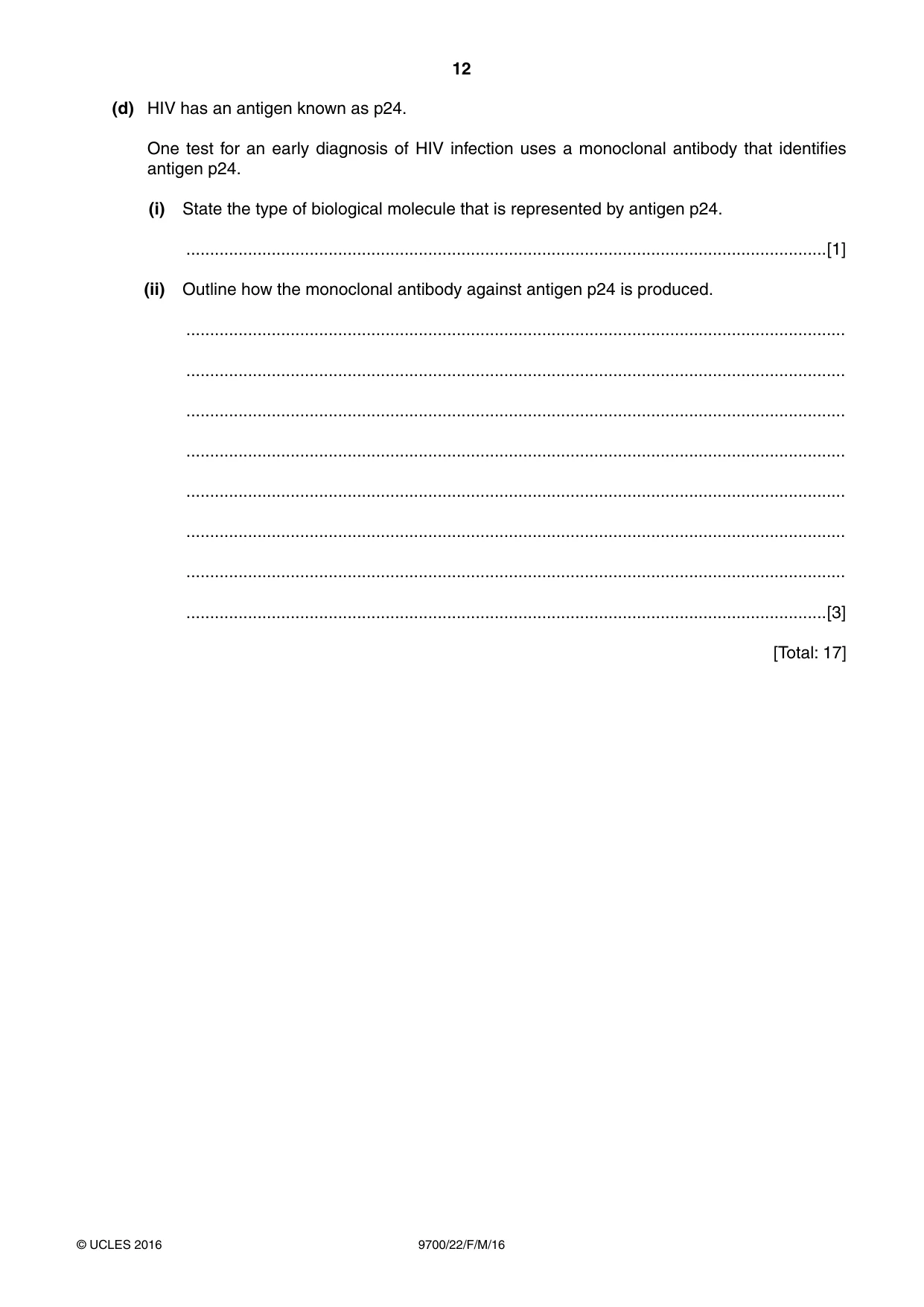
12 9700/22/F/M/16 © UCLES 2016 (d) HIV has an antigen known as p24. One test for an early diagnosis of HIV infection uses a monoclonal antibody that identifies antigen p24. (i) State the type of biological molecule that is represented by antigen p24. …[1] (ii) Outline how the monoclonal antibody against antigen p24 is produced. … … … … … … … …[3] [Total: 17]
Question paper, page 13
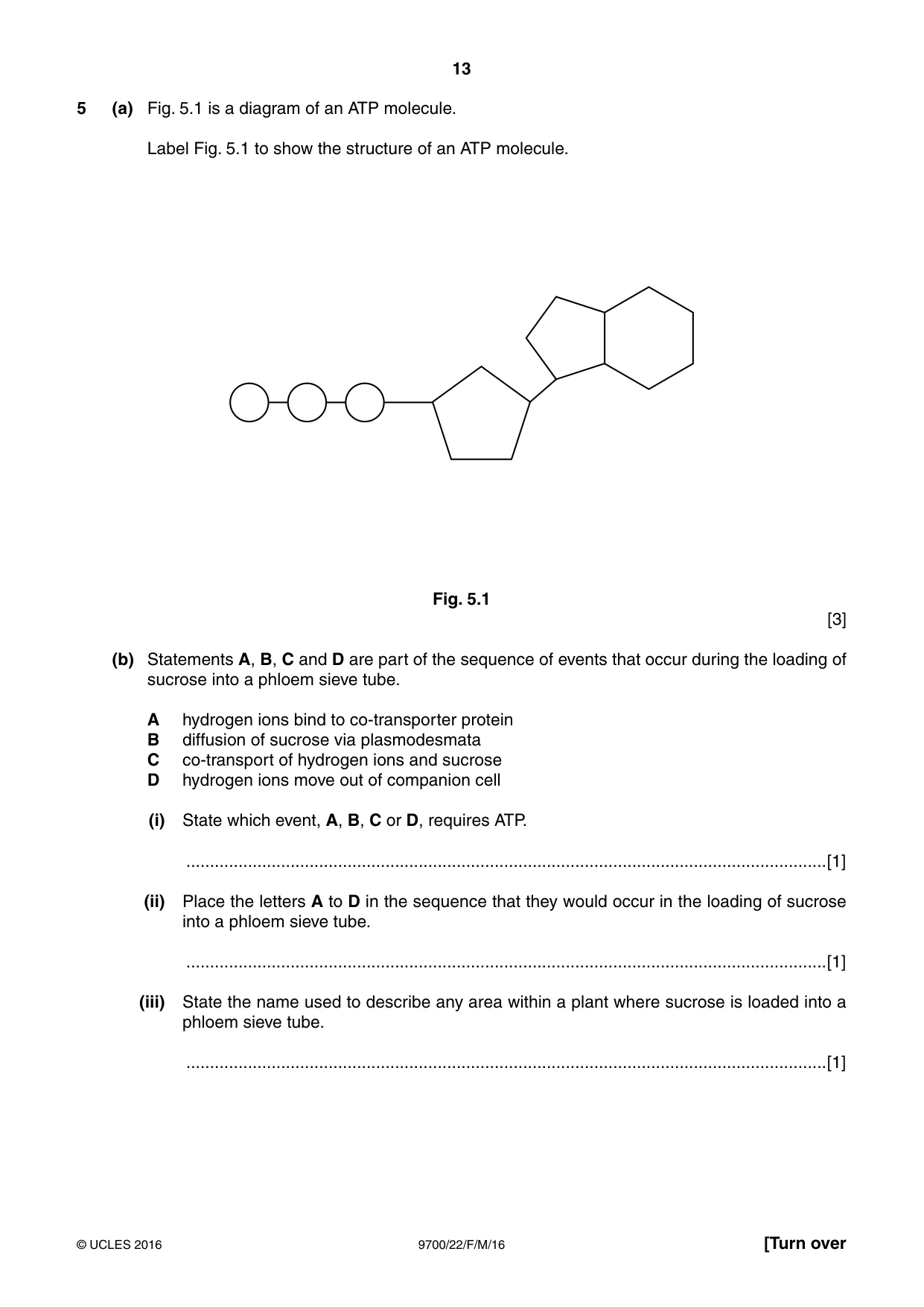
13 9700/22/F/M/16 © UCLES 2016 [Turn over 5 (a) Fig. 5.1 is a diagram of an ATP molecule. Label Fig. 5.1 to show the structure of an ATP molecule. Fig. 5.1 [3] (b) Statements A, B, C and D are part of the sequence of events that occur during the loading of sucrose into a phloem sieve tube. A hydrogen ions bind to co-transporter protein B diffusion of sucrose via plasmodesmata C co-transport of hydrogen ions and sucrose D hydrogen ions move out of companion cell (i) State which event, A, B, C or D, requires ATP. …[1] (ii) Place the letters A to D in the sequence that they would occur in the loading of sucrose into a phloem sieve tube. …[1] (iii) State the name used to describe any area within a plant where sucrose is loaded into a phloem sieve tube. …[1]
Question paper, page 14
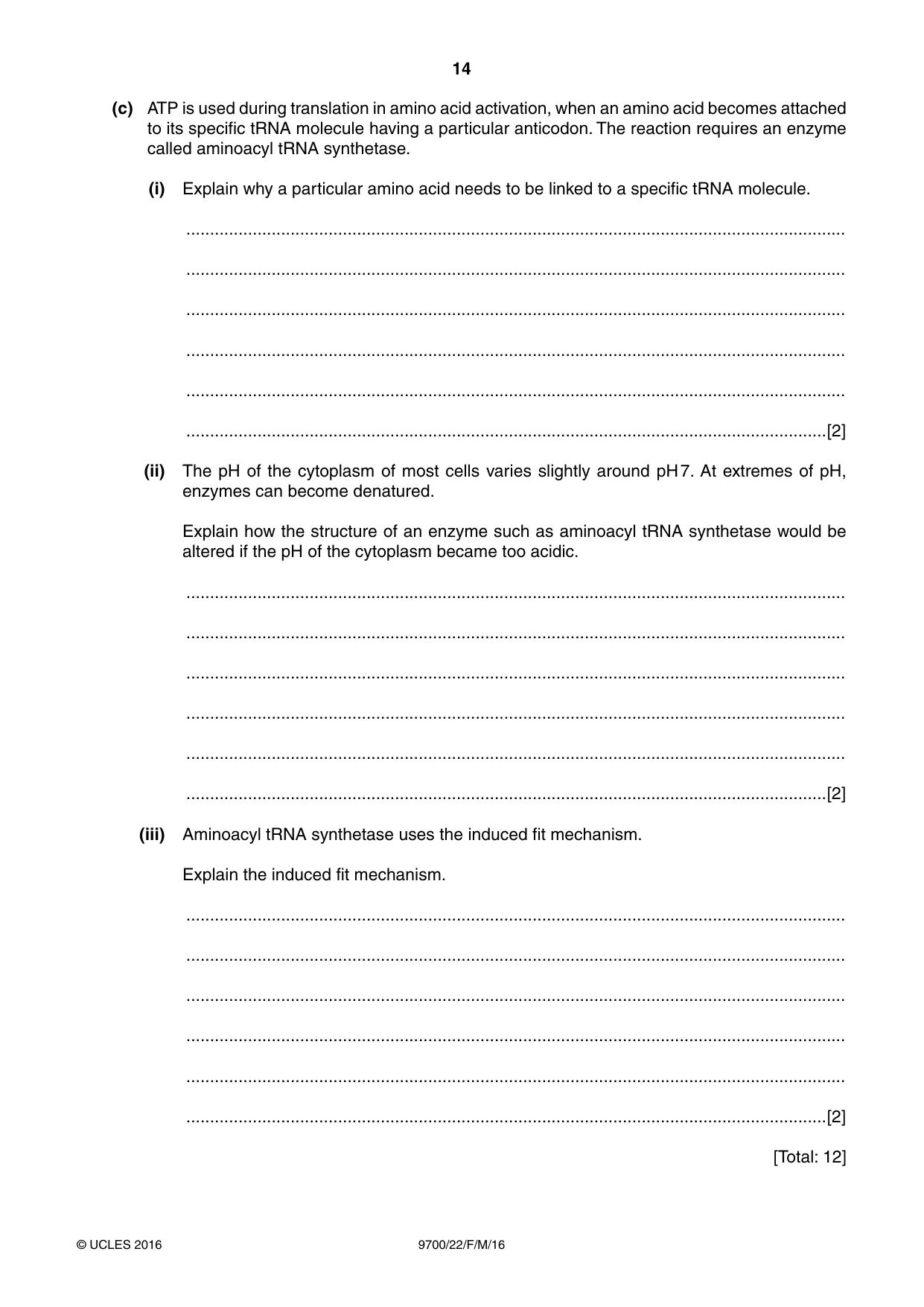
14 9700/22/F/M/16 © UCLES 2016 (c) ATP is used during translation in amino acid activation, when an amino acid becomes attached to its specific tRNA molecule having a particular anticodon. The reaction requires an enzyme called aminoacyl tRNA synthetase. (i) Explain why a particular amino acid needs to be linked to a specific tRNA molecule. … … … … … …[2] (ii) The pH of the cytoplasm of most cells varies slightly around pH 7. At extremes of pH, enzymes can become denatured. Explain how the structure of an enzyme such as aminoacyl tRNA synthetase would be altered if the pH of the cytoplasm became too acidic. … … … … … …[2] (iii) Aminoacyl tRNA synthetase uses the induced fit mechanism. Explain the induced fit mechanism. … … … … … …[2] [Total: 12]
Question paper, page 15
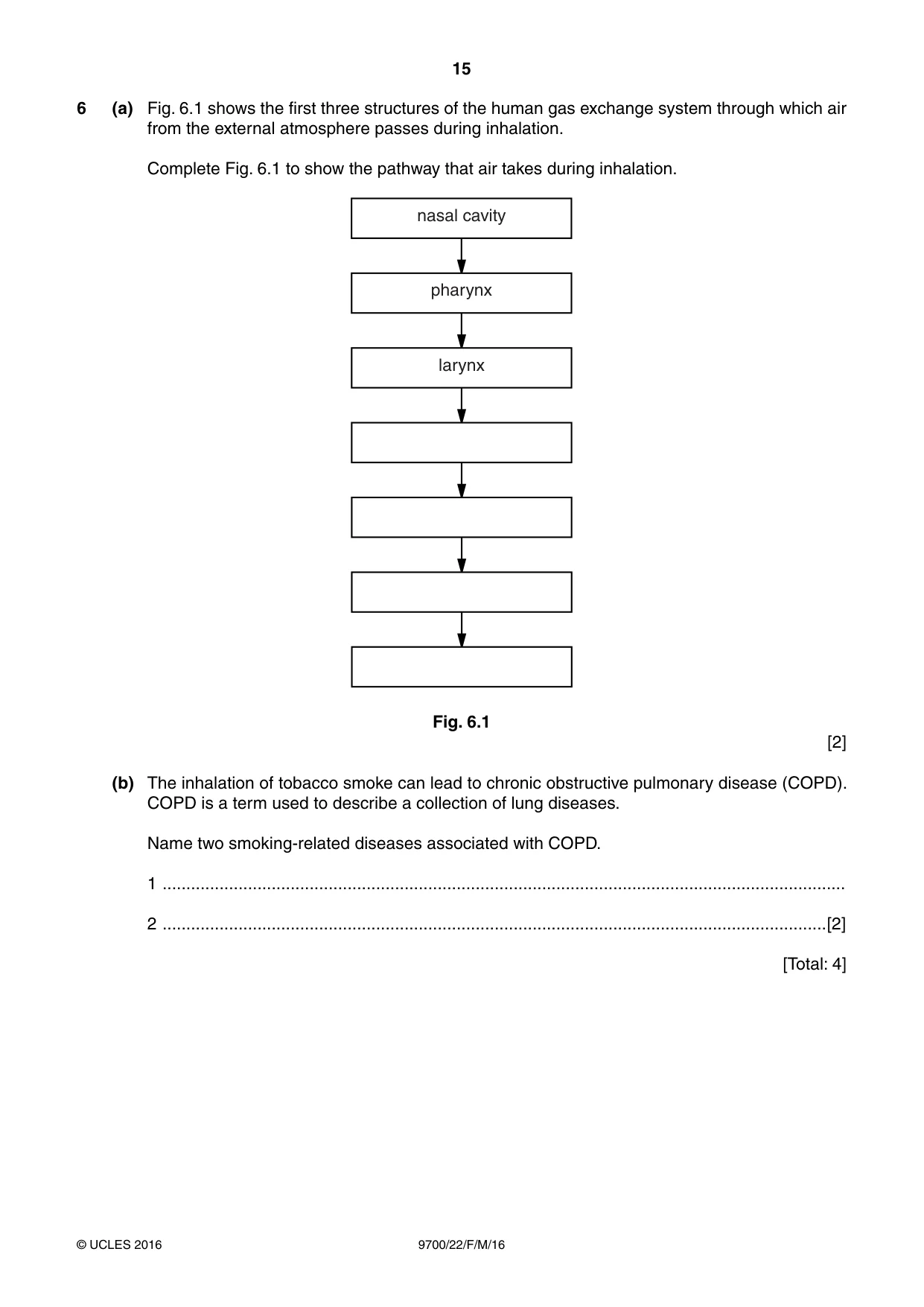
15 9700/22/F/M/16 © UCLES 2016 6 (a) Fig. 6.1 shows the first three structures of the human gas exchange system through which air from the external atmosphere passes during inhalation. Complete Fig. 6.1 to show the pathway that air takes during inhalation. nasal cavity pharynx larynx Fig. 6.1 [2] (b) The inhalation of tobacco smoke can lead to chronic obstructive pulmonary disease (COPD). COPD is a term used to describe a collection of lung diseases. Name two smoking-related diseases associated with COPD. 1 … 2 …[2] [Total: 4]
Question paper, page 16
16 9700/22/F/M/16 © UCLES 2016 Permission to reproduce items where third-party owned material protected by copyright is included has been sought and cleared where possible. Every reasonable effort has been made by the publisher (UCLES) to trace copyright holders, but if any items requiring clearance have unwittingly been included, the publisher will be pleased to make amends at the earliest possible opportunity. To avoid the issue of disclosure of answer-related information to candidates, all copyright acknowledgements are reproduced online in the Cambridge International Examinations Copyright Acknowledgements Booklet. This is produced for each series of examinations and is freely available to download at www.cie.org.uk after the live examination series. Cambridge International Examinations is part of the Cambridge Assessment Group. Cambridge Assessment is the brand name of University of Cambridge Local Examinations Syndicate (UCLES), which is itself a department of the University of Cambridge. BLANK PAGE
Mark scheme, page 1
® IGCSE is the registered trademark of Cambridge International Examinations. CAMBRIDGE INTERNATIONAL EXAMINATIONS Cambridge International Advanced Subsidiary and Advanced Level MARK SCHEME for the March 2016 series 9700 BIOLOGY 9700/22 Paper 2 (AS Level Structured Questions), maximum raw mark 60 This mark scheme is published as an aid to teachers and candidates, to indicate the requirements of the examination. It shows the basis on which Examiners were instructed to award marks. It does not indicate the details of the discussions that took place at an Examiners’ meeting before marking began, which would have considered the acceptability of alternative answers. Mark schemes should be read in conjunction with the question paper and the Principal Examiner Report for Teachers. Cambridge will not enter into discussions about these mark schemes. Cambridge is publishing the mark schemes for the March 2016 series for most Cambridge IGCSE® and Cambridge International A and AS Level components.
Mark scheme, page 2
Page 2 Mark Scheme Syllabus Paper Cambridge International AS/A Level – March 2016 9700 22 © Cambridge International Examinations 2016 Mark scheme abbreviations: ; separates marking points / alternative answers for the same point R reject A accept (for answers correctly cued by the question or by extra guidance) AW alternative wording (where responses vary more than usual) underline actual word given must be used by candidate (grammatical variants accepted) max indicates the maximum number of marks that can be given ora or reverse argument mp marking point (with relevant number) ecf error carried forward I ignore AVP alternative valid point (examples given as guidance)
Mark scheme, page 3
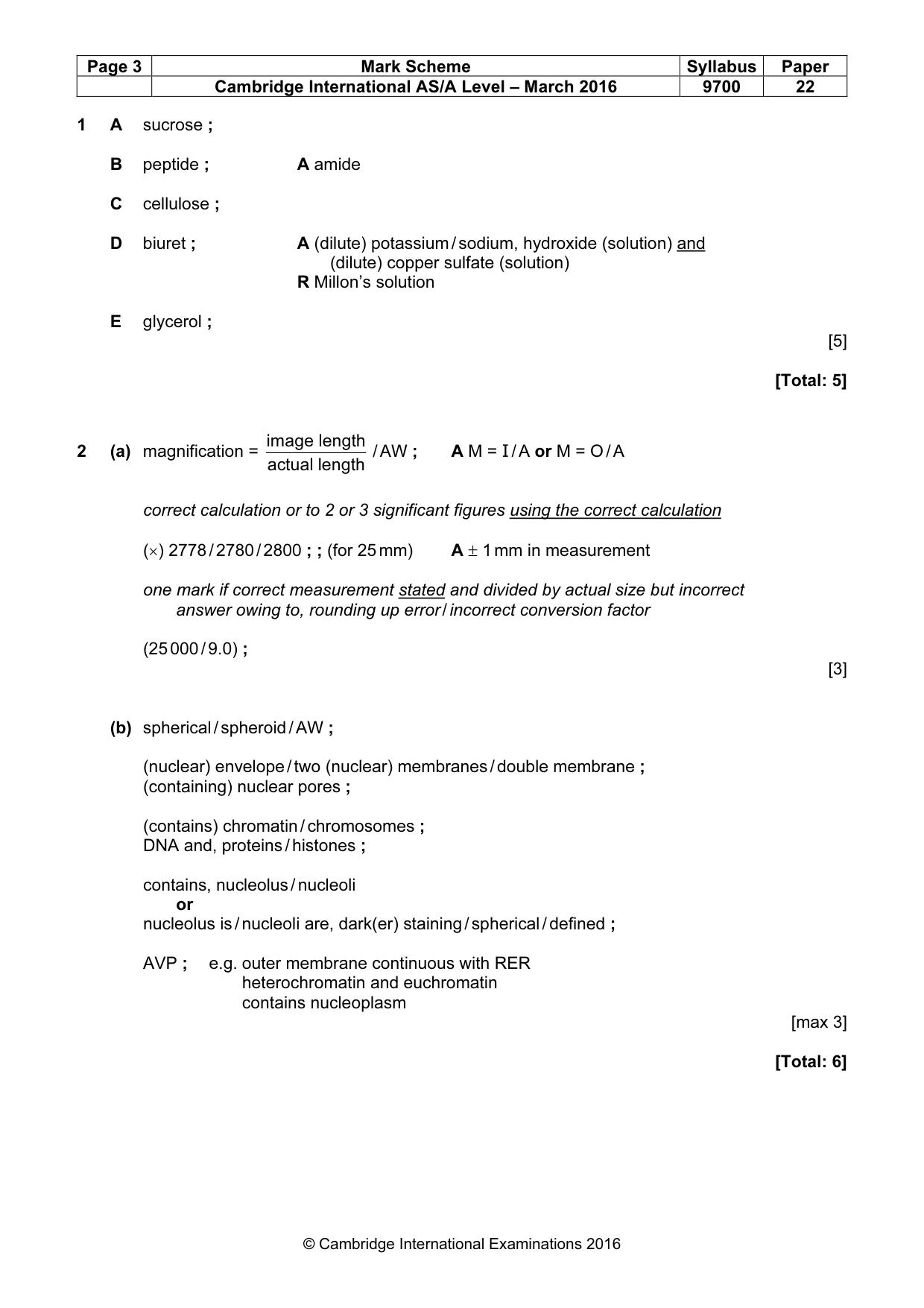
Page 3 Mark Scheme Syllabus Paper Cambridge International AS/A Level – March 2016 9700 22 © Cambridge International Examinations 2016 1 A sucrose ; B peptide ; A amide C cellulose ; D biuret ; A (dilute) potassium / sodium, hydroxide (solution) and (dilute) copper sulfate (solution) R Millon’s solution E glycerol ; [5] [Total: 5] 2 (a) magnification = image length actual length / AW ; A M = I / A or M = O / A correct calculation or to 2 or 3 significant figures using the correct calculation (×) 2778 / 2780 / 2800 ; ; (for 25 mm) A ± 1 mm in measurement one mark if correct measurement stated and divided by actual size but incorrect answer owing to, rounding up error / incorrect conversion factor (25 000 / 9.0) ; [3] (b) spherical / spheroid / AW ; (nuclear) envelope / two (nuclear) membranes / double membrane ; (containing) nuclear pores ; (contains) chromatin / chromosomes ; DNA and, proteins / histones ; contains, nucleolus / nucleoli or nucleolus is / nucleoli are, dark(er) staining / spherical / defined ; AVP ; e.g. outer membrane continuous with RER heterochromatin and euchromatin contains nucleoplasm [max 3] [Total: 6]
Mark scheme, page 4
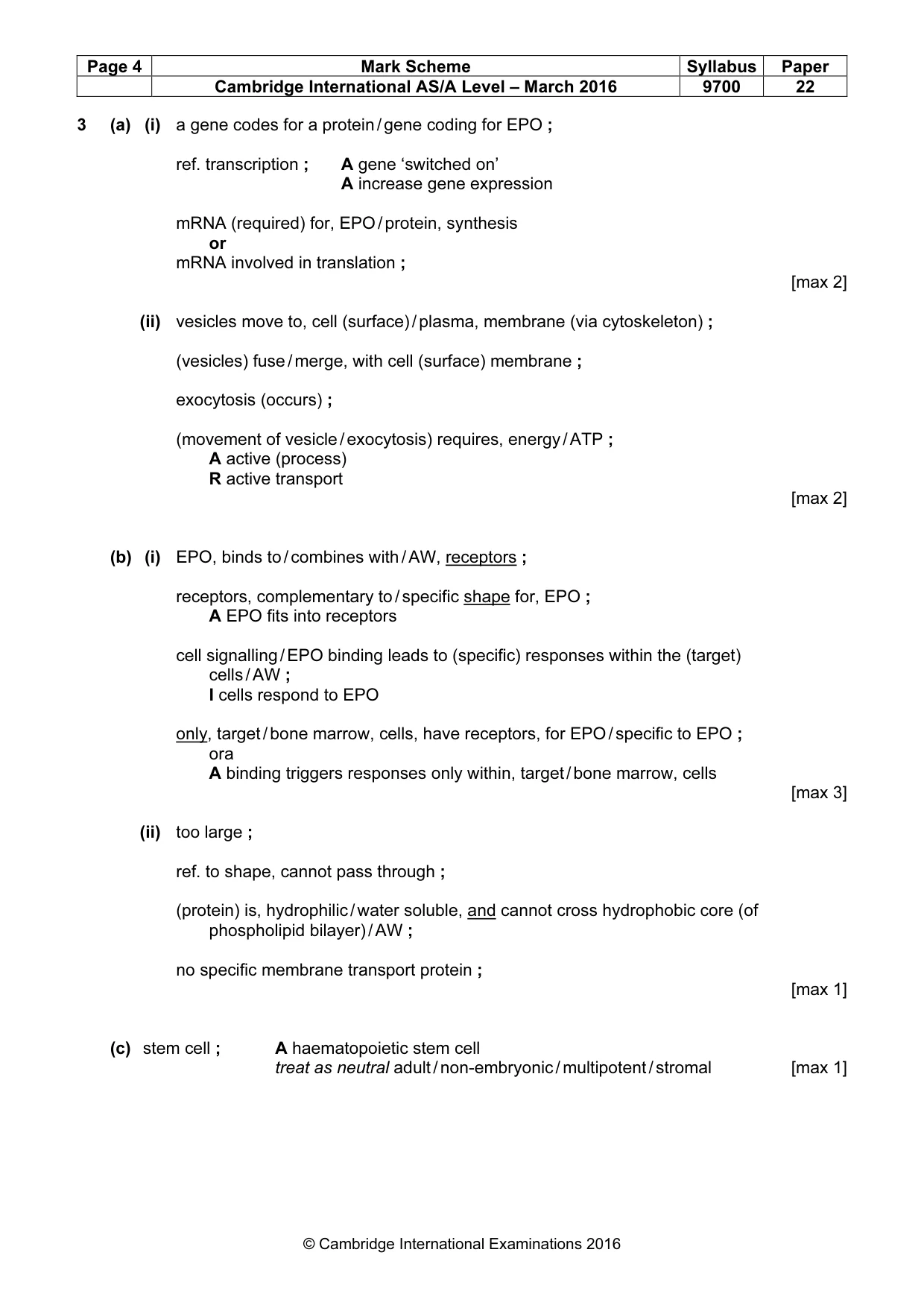
Page 4 Mark Scheme Syllabus Paper Cambridge International AS/A Level – March 2016 9700 22 © Cambridge International Examinations 2016 3 (a) (i) a gene codes for a protein / gene coding for EPO ; ref. transcription ; A gene ‘switched on’ A increase gene expression mRNA (required) for, EPO / protein, synthesis or mRNA involved in translation ; [max 2] (ii) vesicles move to, cell (surface) / plasma, membrane (via cytoskeleton) ; (vesicles) fuse / merge, with cell (surface) membrane ; exocytosis (occurs) ; (movement of vesicle / exocytosis) requires, energy / ATP ; A active (process) R active transport [max 2] (b) (i) EPO, binds to / combines with / AW, receptors ; receptors, complementary to / specific shape for, EPO ; A EPO fits into receptors cell signalling / EPO binding leads to (specific) responses within the (target) cells / AW ; I cells respond to EPO only, target / bone marrow, cells, have receptors, for EPO / specific to EPO ; ora A binding triggers responses only within, target / bone marrow, cells [max 3] (ii) too large ; ref. to shape, cannot pass through ; (protein) is, hydrophilic / water soluble, and cannot cross hydrophobic core (of phospholipid bilayer) / AW ; no specific membrane transport protein ; [max 1] (c) stem cell ; A haematopoietic stem cell treat as neutral adult / non-embryonic / multipotent / stromal [max 1]
Mark scheme, page 5
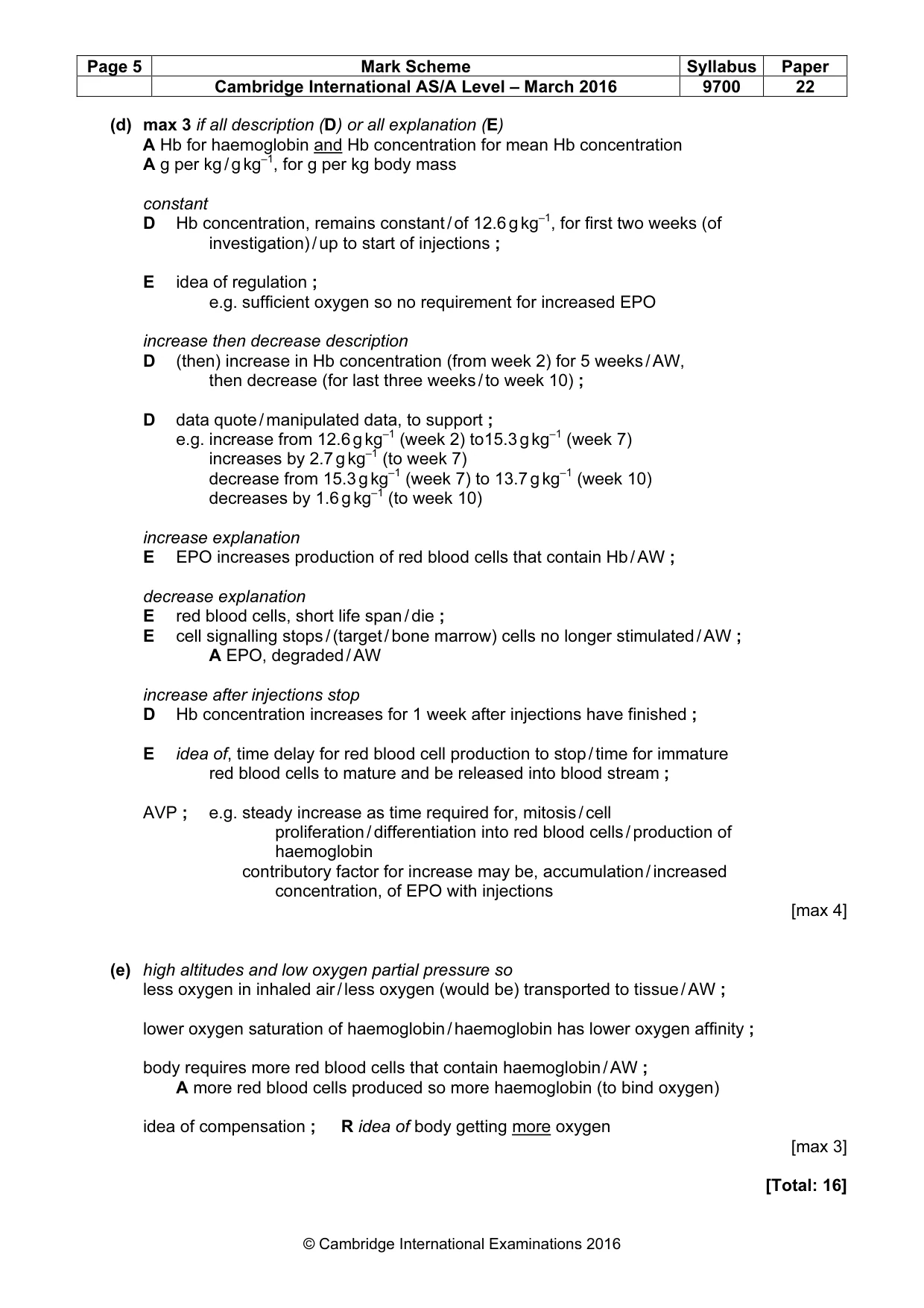
Page 5 Mark Scheme Syllabus Paper Cambridge International AS/A Level – March 2016 9700 22 © Cambridge International Examinations 2016 (d) max 3 if all description (D) or all explanation (E) A Hb for haemoglobin and Hb concentration for mean Hb concentration A g per kg / g kg–1, for g per kg body mass constant D Hb concentration, remains constant / of 12.6 g kg–1, for first two weeks (of investigation) / up to start of injections ; E idea of regulation ; e.g. sufficient oxygen so no requirement for increased EPO increase then decrease description D (then) increase in Hb concentration (from week 2) for 5 weeks / AW, then decrease (for last three weeks / to week 10) ; D data quote / manipulated data, to support ; e.g. increase from 12.6 g kg–1 (week 2) to15.3 g kg–1 (week 7) increases by 2.7 g kg–1 (to week 7) decrease from 15.3 g kg–1 (week 7) to 13.7 g kg–1 (week 10) decreases by 1.6 g kg–1 (to week 10) increase explanation E EPO increases production of red blood cells that contain Hb / AW ; decrease explanation E red blood cells, short life span / die ; E cell signalling stops / (target / bone marrow) cells no longer stimulated / AW ; A EPO, degraded / AW increase after injections stop D Hb concentration increases for 1 week after injections have finished ; E idea of, time delay for red blood cell production to stop / time for immature red blood cells to mature and be released into blood stream ; AVP ; e.g. steady increase as time required for, mitosis / cell proliferation / differentiation into red blood cells / production of haemoglobin contributory factor for increase may be, accumulation / increased concentration, of EPO with injections [max 4] (e) high altitudes and low oxygen partial pressure so less oxygen in inhaled air / less oxygen (would be) transported to tissue / AW ; lower oxygen saturation of haemoglobin / haemoglobin has lower oxygen affinity ; body requires more red blood cells that contain haemoglobin / AW ; A more red blood cells produced so more haemoglobin (to bind oxygen) idea of compensation ; R idea of body getting more oxygen [max 3] [Total: 16]
Mark scheme, page 6
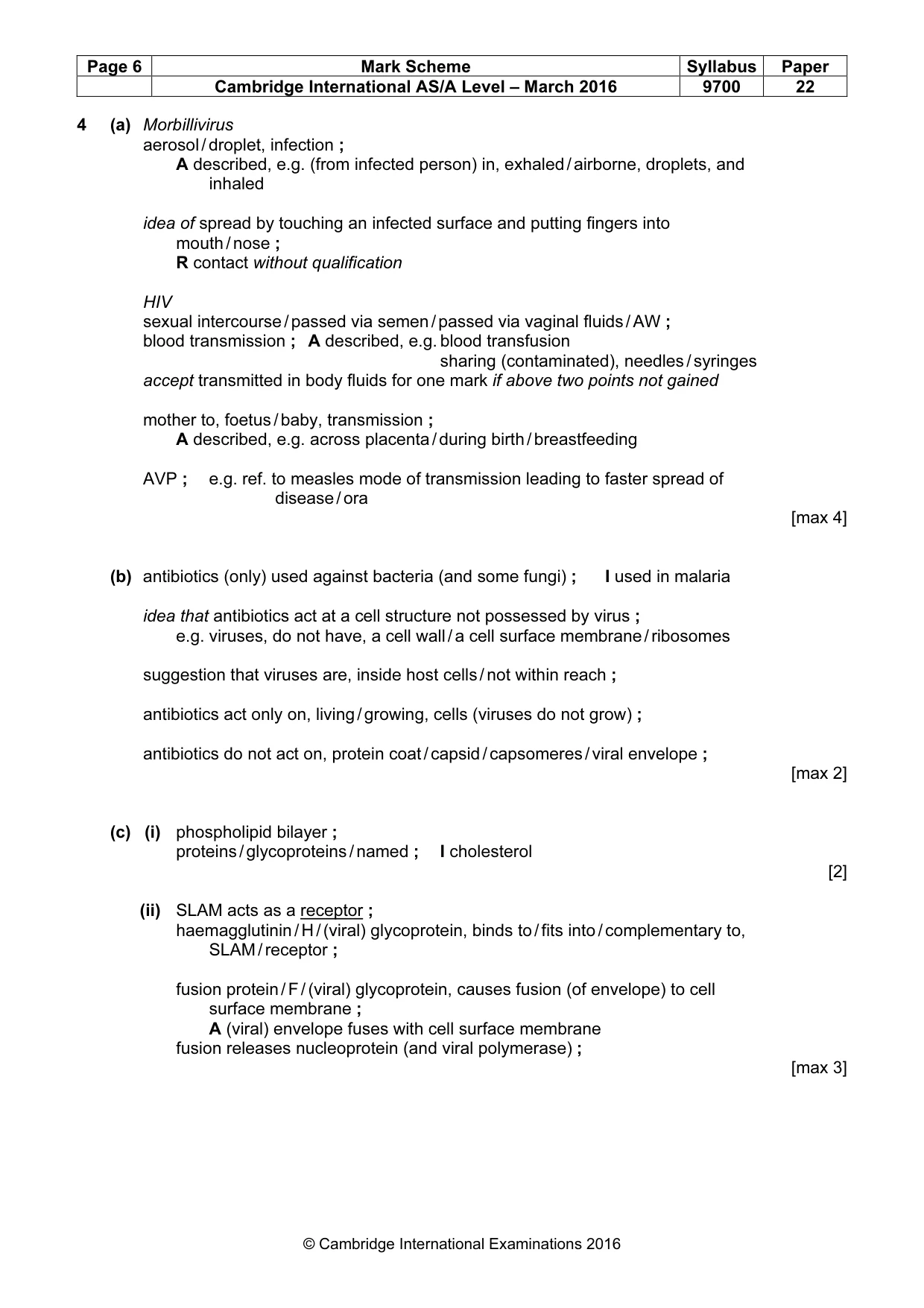
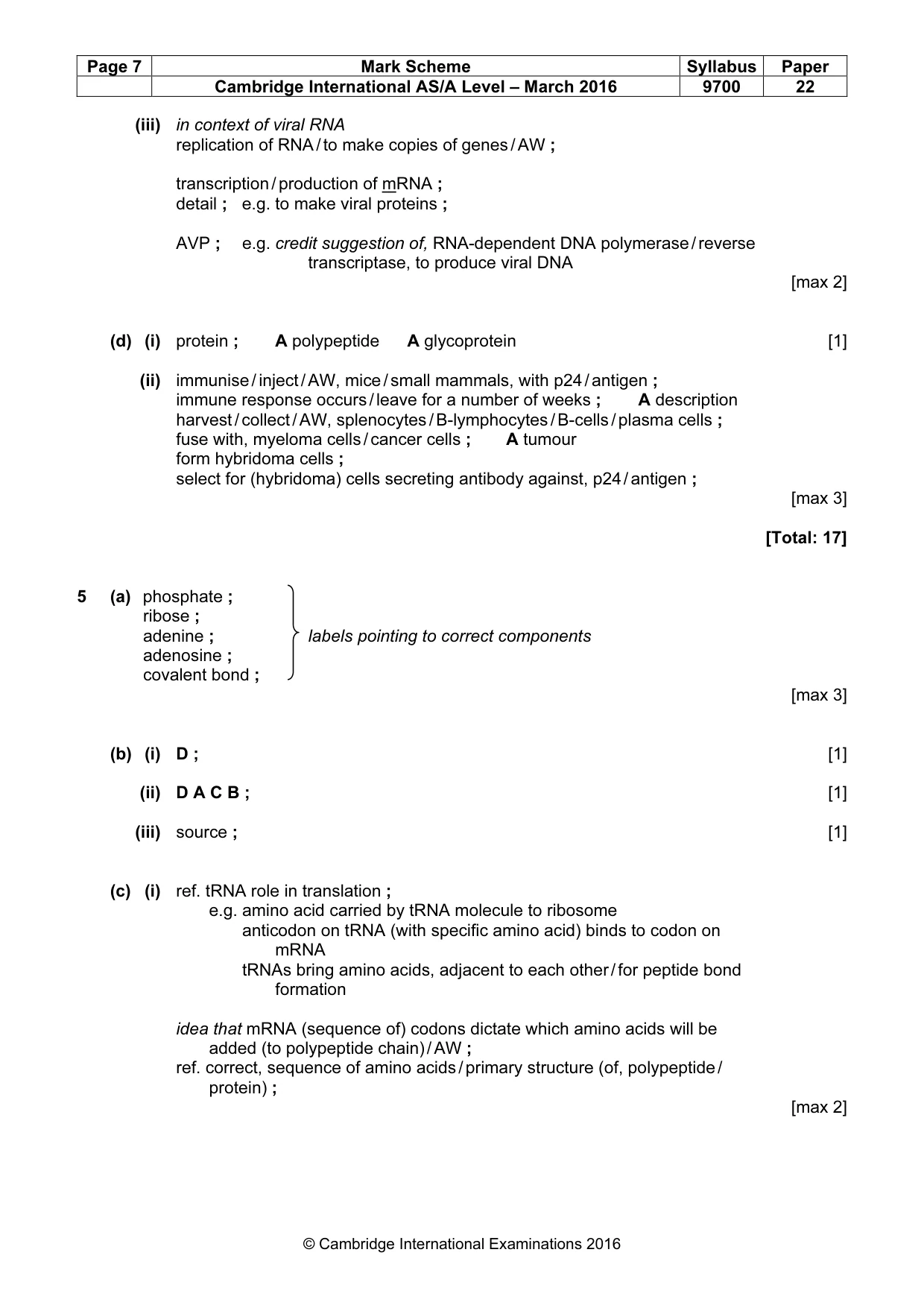
Page 6 Mark Scheme Syllabus Paper Cambridge International AS/A Level – March 2016 9700 22 © Cambridge International Examinations 2016 4 (a) Morbillivirus aerosol / droplet, infection ; A described, e.g. (from infected person) in, exhaled / airborne, droplets, and inhaled idea of spread by touching an infected surface and putting fingers into mouth / nose ; R contact without qualification HIV sexual intercourse / passed via semen / passed via vaginal fluids / AW ; blood transmission ; A described, e.g. blood transfusion sharing (contaminated), needles / syringes accept transmitted in body fluids for one mark if above two points not gained mother to, foetus / baby, transmission ; A described, e.g. across placenta / during birth / breastfeeding AVP ; e.g. ref. to measles mode of transmission leading to faster spread of disease / ora [max 4] (b) antibiotics (only) used against bacteria (and some fungi) ; I used in malaria idea that antibiotics act at a cell structure not possessed by virus ; e.g. viruses, do not have, a cell wall / a cell surface membrane / ribosomes suggestion that viruses are, inside host cells / not within reach ; antibiotics act only on, living / growing, cells (viruses do not grow) ; antibiotics do not act on, protein coat / capsid / capsomeres / viral envelope ; [max 2] (c) (i) phospholipid bilayer ; proteins / glycoproteins / named ; I cholesterol [2] (ii) SLAM acts as a receptor ; haemagglutinin / H / (viral) glycoprotein, binds to / fits into / complementary to, SLAM / receptor ; fusion protein / F / (viral) glycoprotein, causes fusion (of envelope) to cell surface membrane ; A (viral) envelope fuses with cell surface membrane fusion releases nucleoprotein (and viral polymerase) ; [max 3]
Mark scheme, page 7
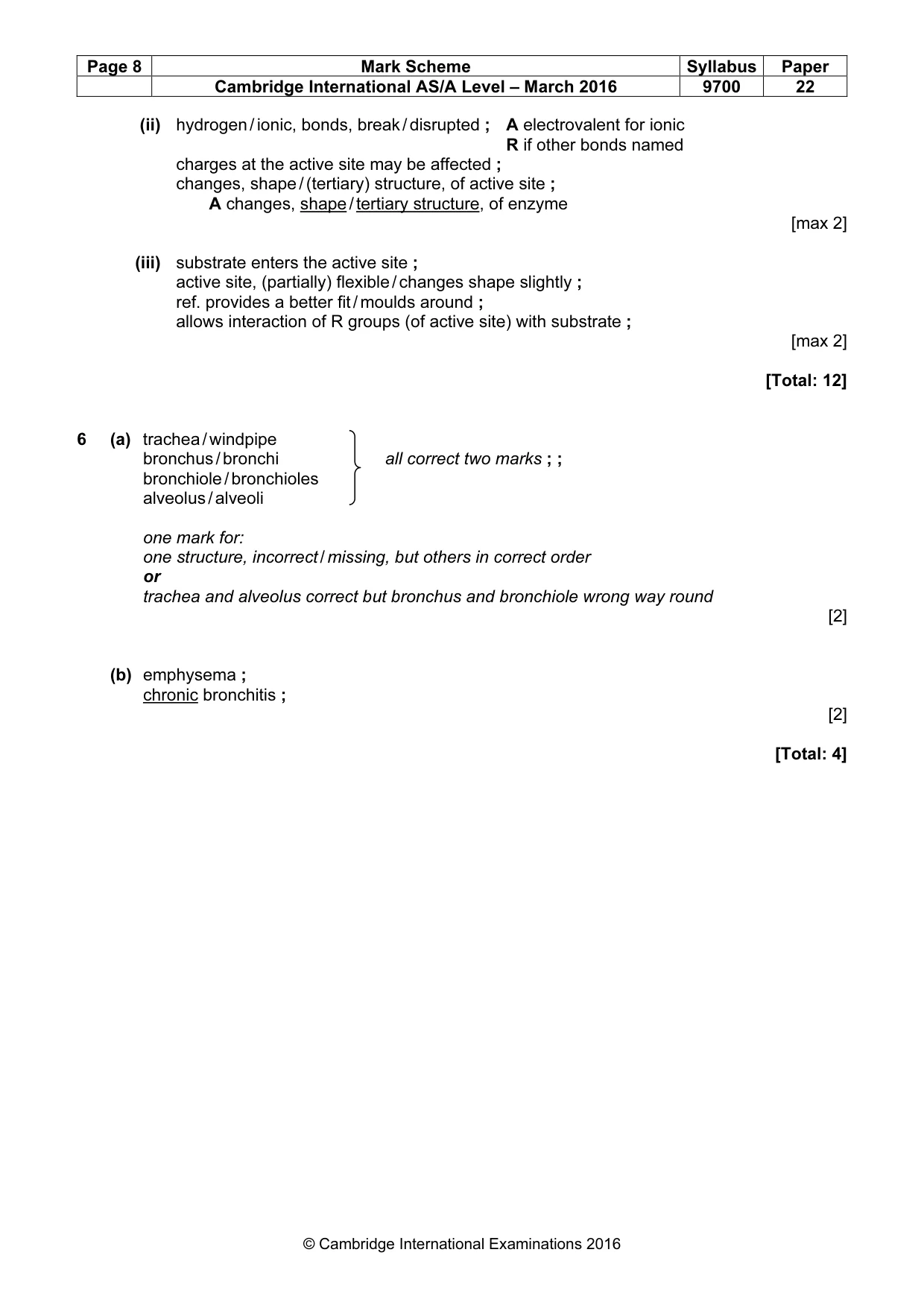
Page 7 Mark Scheme Syllabus Paper Cambridge International AS/A Level – March 2016 9700 22 © Cambridge International Examinations 2016 (iii) in context of viral RNA replication of RNA / to make copies of genes / AW ; transcription / production of mRNA ; detail ; e.g. to make viral proteins ; AVP ; e.g. credit suggestion of, RNA-dependent DNA polymerase / reverse transcriptase, to produce viral DNA [max 2] (d) (i) protein ; A polypeptide A glycoprotein [1] (ii) immunise / inject / AW, mice / small mammals, with p24 / antigen ; immune response occurs / leave for a number of weeks ; A description harvest / collect / AW, splenocytes / B-lymphocytes / B-cells / plasma cells ; fuse with, myeloma cells / cancer cells ; A tumour form hybridoma cells ; select for (hybridoma) cells secreting antibody against, p24 / antigen ; [max 3] [Total: 17] 5 (a) phosphate ; ribose ; adenine ; labels pointing to correct components adenosine ; covalent bond ; [max 3] (b) (i) D ; [1] (ii) D A C B ; [1] (iii) source ; [1] (c) (i) ref. tRNA role in translation ; e.g. amino acid carried by tRNA molecule to ribosome anticodon on tRNA (with specific amino acid) binds to codon on mRNA tRNAs bring amino acids, adjacent to each other / for peptide bond formation idea that mRNA (sequence of) codons dictate which amino acids will be added (to polypeptide chain) / AW ; ref. correct, sequence of amino acids / primary structure (of, polypeptide / protein) ; [max 2]
Mark scheme, page 8
Page 8 Mark Scheme Syllabus Paper Cambridge International AS/A Level – March 2016 9700 22 © Cambridge International Examinations 2016 (ii) hydrogen / ionic, bonds, break / disrupted ; A electrovalent for ionic R if other bonds named charges at the active site may be affected ; changes, shape / (tertiary) structure, of active site ; A changes, shape / tertiary structure, of enzyme [max 2] (iii) substrate enters the active site ; active site, (partially) flexible / changes shape slightly ; ref. provides a better fit / moulds around ; allows interaction of R groups (of active site) with substrate ; [max 2] [Total: 12] 6 (a) trachea / windpipe bronchus / bronchi all correct two marks ; ; bronchiole / bronchioles alveolus / alveoli one mark for: one structure, incorrect / missing, but others in correct order or trachea and alveolus correct but bronchus and bronchiole wrong way round [2] (b) emphysema ; chronic bronchitis ; [2] [Total: 4]
What you needed in this session
Cambridge’s own grade thresholds for 2016 Feb/March, Paper 2 · Variant 2. A higher threshold means an easier paper — the bar moves with how the cohort did.