Cambridge A Level Biology 9700 — 2014 May/June Paper 5 · Variant 2
9700/52/M/J/14 · 30 marks · ≈34 min
The question paper and its mark scheme, free to read here and free to download. This is Cambridge’s own paper, exactly as it was sat.
Question paper12 pages


Mark scheme10 pages
Answers below. Sit the paper first if you are practising.
Paper as text
Question paper, page 1
This document consists of 9 printed pages and 3 blank pages. DC (SLM/SW) 79190/3 © UCLES 2014 [Turn over Cambridge International Examinations Cambridge International Advanced Level * 2 8 4 7 6 3 1 2 2 6 * BIOLOGY 9700/52 Paper 5 Planning, Analysis and Evaluation May/June 2014 1 hour 15 minutes Candidates answer on the Question Paper. No Additional Materials are required. READ THESE INSTRUCTIONS FIRST Write your Centre number, candidate number and name on all the work you hand in. Write in dark blue or black pen. You may use a soft pencil for any diagrams, graphs or rough working. Do not use staples, paper clips, highlighters, glue or correction fluid. DO NOT WRITE IN ANY BARCODES. Answer all questions. Electronic calculators may be used. At the end of the examination, fasten all your work securely together. The number of marks is given in brackets [ ] at the end of each question or part question.
Question paper, page 2
2 9700/52/M/J/14 © UCLES 2014 1 (a) A group of students was given the task of planning a method to compare the effect of two different restriction enzymes on some DNA extracted from peas. The students used the following procedure to extract and digest DNA from the peas. • 3 g of sodium chloride was dissolved in 90 cm3 of distilled water in a beaker. • 10 cm3 of liquid detergent was added to the salt solution and stirred. • 50 g of peas were ground up using a glass rod and then added to the salty detergent solution. • The beaker containing the mixture of peas and salty detergent solution was left in a water bath at 60°C for exactly 15 minutes. • The mixture was then cooled in an ice-water bath for 5 minutes, stirring frequently. • The mixture was filtered into another beaker. • 10 cm3 of filtrate was transferred into a boiling tube and 2–3 drops of a protease solution were added. This was left for a few minutes. • Ice-cold ethanol was then poured down the side of the boiling tube to form a layer on top of the filtrate. This was left undisturbed for a few minutes to form a layer of precipitated DNA. • The precipitated DNA was separated from the cold ethanol layer by twisting the DNA onto a glass hook. • The DNA was mixed with 20 cm3 EDTA buffer solution. • 5 cm3 samples of the EDTA buffer solution containing the DNA extract were placed into three separate test-tubes, 1, 2 and 3. • Two different restriction enzymes, Eco RI and Hin dIII, were added to the samples as shown in Table 1.1. Table 1.1 sample 1 2 3 restriction enzymes added Eco RI Hin dIII Eco R1 and Hin dIII • These were left for three hours to complete digestion of the DNA into fragments of different sizes. Suggest a reason for each of the following steps in the procedure for extracting DNA. (i) using detergent … …[1] (ii) leaving at 60°C … …[1] (iii) filtering the mixture … …[1]
Question paper, page 3
3 9700/52/M/J/14 © UCLES 2014 [Turn over (iv) adding protease … …[1] (b) The students used gel electrophoresis to separate the DNA fragments produced by the digestion with the restriction enzymes. Describe the main stages used in gel electrophoresis that the students could use to separate and locate the DNA fragments. … … … … … … … … … … … … … … … …[5] (c) (i) Identify a dependent variable that the student could measure. … …[1] (ii) State two variables that the students should standardise to ensure that the results from the different samples shown in Table 1.1 can be compared. 1. … … 2. … …[2]
Question paper, page 4
4 9700/52/M/J/14 © UCLES 2014 (d) Fig. 1.1 shows the results of the electrophoresis. cut with Eco RI cut with Hin dIII cut with Eco RI and Hin dIII direction of electrophoresis Fig. 1.1 The students concluded that the DNA of peas had more restriction sites for Eco RI than for Hin dIII and that some of the Hin dIII sites were within fragments produced by Eco RI. (i) State one piece of evidence in Fig. 1.1 to support each of these conclusions: there are more restriction sites for Eco RI than for Hin dIII … … … there are some Eco RI sites within fragments produced by Hin dIII. … … …[2]
Question paper, page 5
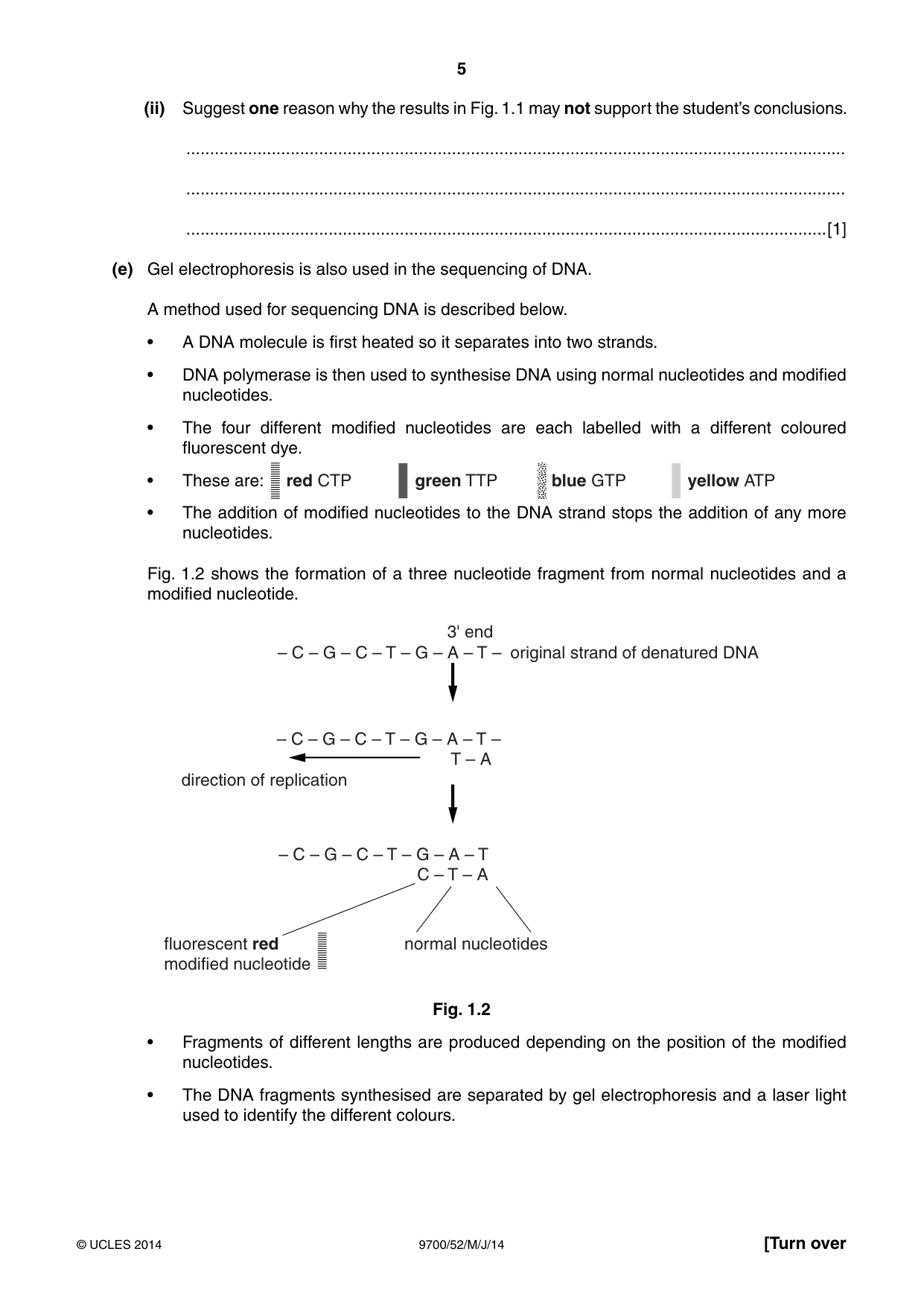
5 9700/52/M/J/14 © UCLES 2014 [Turn over (ii) Suggest one reason why the results in Fig. 1.1 may not support the student’s conclusions. … … …[1] (e) Gel electrophoresis is also used in the sequencing of DNA. A method used for sequencing DNA is described below. • A DNA molecule is first heated so it separates into two strands. • DNA polymerase is then used to synthesise DNA using normal nucleotides and modified nucleotides. • The four different modified nucleotides are each labelled with a different coloured fluorescent dye. • These are: red CTP green TTP blue GTP yellow ATP • The addition of modified nucleotides to the DNA strand stops the addition of any more nucleotides. Fig. 1.2 shows the formation of a three nucleotide fragment from normal nucleotides and a modified nucleotide. – C – G – C – T – G – A – T – – C – G – C – T – G – A – T – T – A – C – G – C – T – G – A – T C – T – A original strand of denatured DNA 3' end direction of replication normal nucleotides fluorescent red modified nucleotide Fig. 1.2 • Fragments of different lengths are produced depending on the position of the modified nucleotides. • The DNA fragments synthesised are separated by gel electrophoresis and a laser light used to identify the different colours.
Question paper, page 6
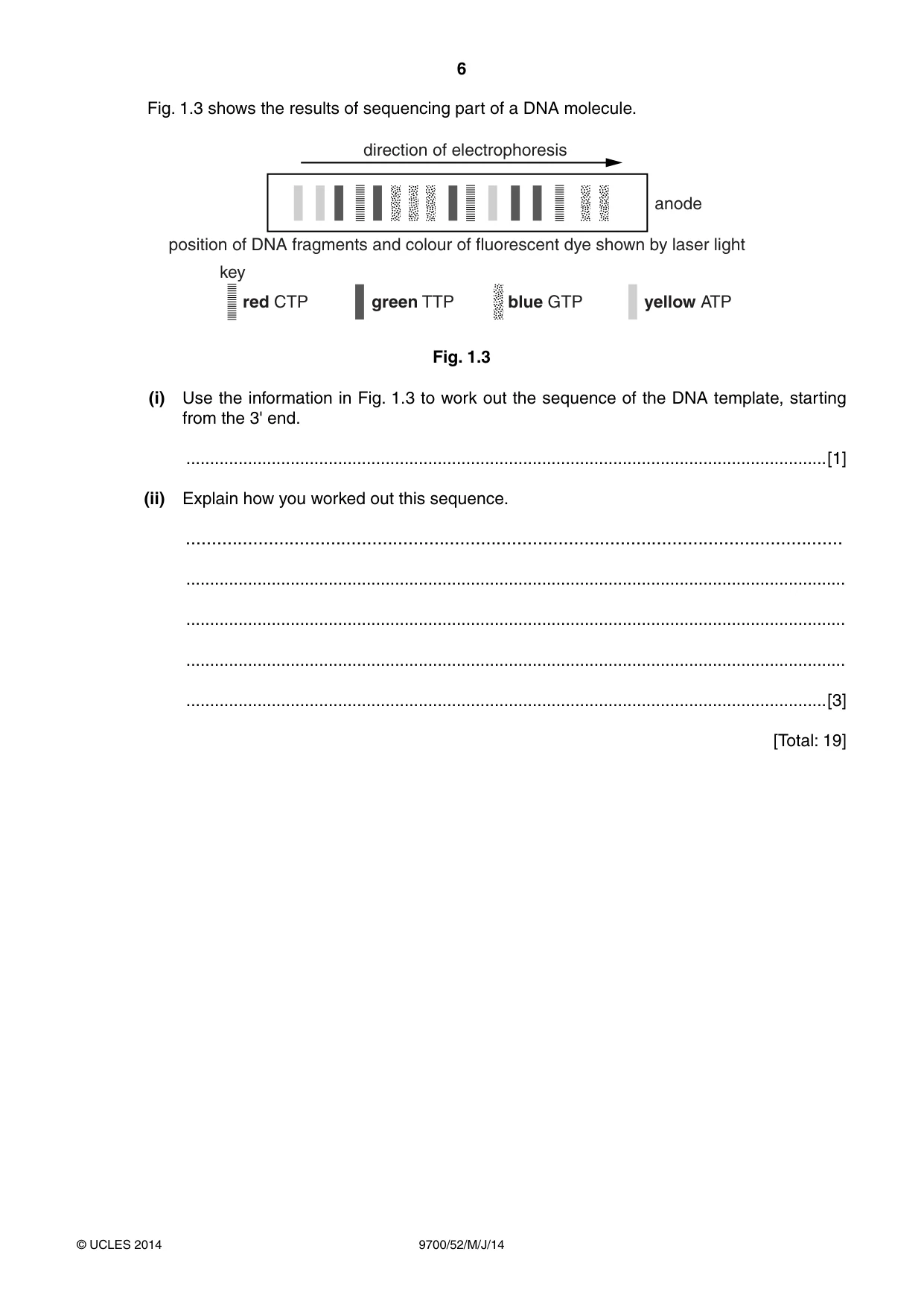
6 9700/52/M/J/14 © UCLES 2014 Fig. 1.3 shows the results of sequencing part of a DNA molecule. direction of electrophoresis anode position of DNA fragments and colour of fluorescent dye shown by laser light red CTP key green TTP blue GTP yellow ATP Fig. 1.3 (i) Use the information in Fig. 1.3 to work out the sequence of the DNA template, starting from the 3' end. …[1] (ii) Explain how you worked out this sequence. … … … … …[3] [Total: 19]
Question paper, page 7
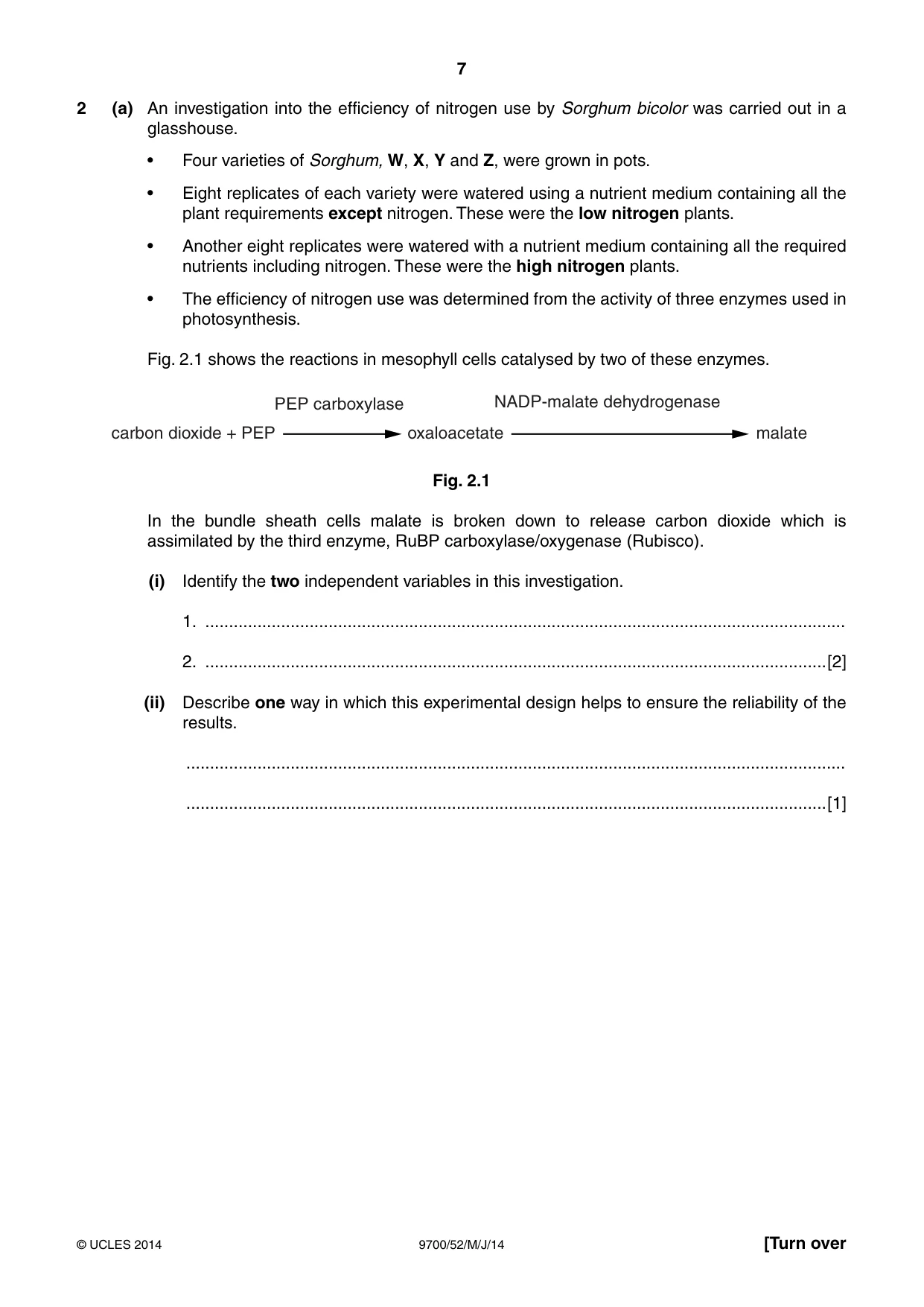
7 9700/52/M/J/14 © UCLES 2014 [Turn over 2 (a) An investigation into the efficiency of nitrogen use by Sorghum bicolor was carried out in a glasshouse. • Four varieties of Sorghum, W, X, Y and Z, were grown in pots. • Eight replicates of each variety were watered using a nutrient medium containing all the plant requirements except nitrogen. These were the low nitrogen plants. • Another eight replicates were watered with a nutrient medium containing all the required nutrients including nitrogen. These were the high nitrogen plants. • The efficiency of nitrogen use was determined from the activity of three enzymes used in photosynthesis. Fig. 2.1 shows the reactions in mesophyll cells catalysed by two of these enzymes. carbon dioxide + PEP oxaloacetate malate PEP carboxylase NADP-malate dehydrogenase Fig. 2.1 In the bundle sheath cells malate is broken down to release carbon dioxide which is assimilated by the third enzyme, RuBP carboxylase/oxygenase (Rubisco). (i) Identify the two independent variables in this investigation. 1. … 2. …[2] (ii) Describe one way in which this experimental design helps to ensure the reliability of the results. … …[1]
Question paper, page 8
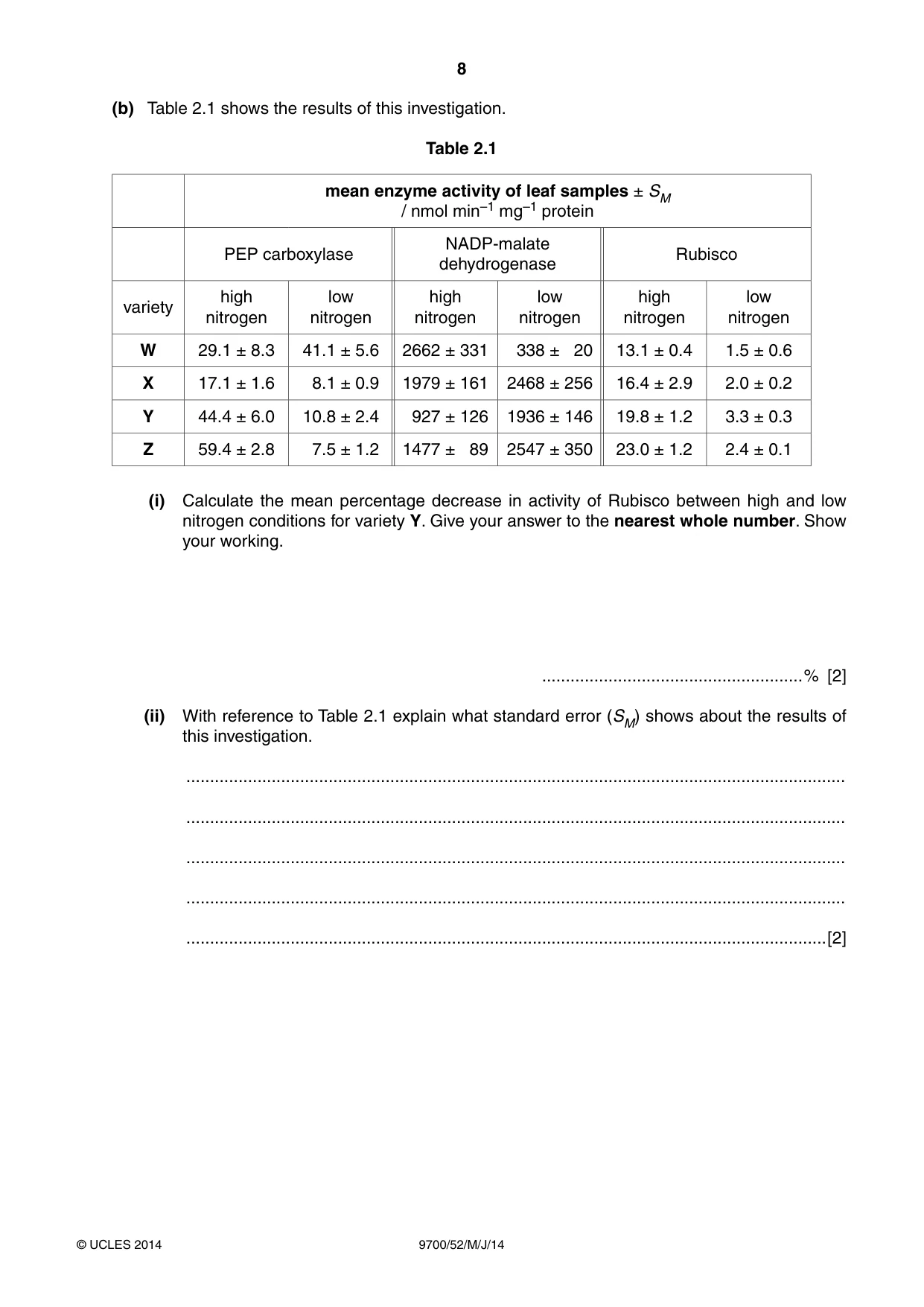
8 9700/52/M/J/14 © UCLES 2014 (b) Table 2.1 shows the results of this investigation. Table 2.1 mean enzyme activity of leaf samples ± SM / nmol min–1 mg–1 protein PEP carboxylase NADP-malate dehydrogenase Rubisco variety high nitrogen low nitrogen high nitrogen low nitrogen high nitrogen low nitrogen W 29.1 ± 8.3 41.1 ± 5.6 2662 ± 331 338 ± 20 13.1 ± 0.4 1.5 ± 0.6 X 17.1 ± 1.6 8.1 ± 0.9 1979 ± 161 2468 ± 256 16.4 ± 2.9 2.0 ± 0.2 Y 44.4 ± 6.0 10.8 ± 2.4 927 ± 126 1936 ± 146 19.8 ± 1.2 3.3 ± 0.3 Z 59.4 ± 2.8 7.5 ± 1.2 1477 ± 89 2547 ± 350 23.0 ± 1.2 2.4 ± 0.1 (i) Calculate the mean percentage decrease in activity of Rubisco between high and low nitrogen conditions for variety Y. Give your answer to the nearest whole number. Show your working. …% [2] (ii) With reference to Table 2.1 explain what standard error (SM) shows about the results of this investigation. … … … … …[2]
Question paper, page 9
9 9700/52/M/J/14 © UCLES 2014 (c) A number of t-tests were carried out to find out if the difference in activity of the enzymes was significantly different in the four varieties tested. The tests carried out were between the following pairs of varieties: W and X W and Y W and Z X and Y X and Z Y and Z (i) With reference to the activity of NADP-malate dehydrogenase in low nitrogen, shown in Table 2.1, identify the t-test(s) in which the difference in activity of NADP-malate dehydrogenase is not likely to be significant. Show your answer by underlining the test(s). Give a reason for your answer. … …[2] (ii) State why 14 degrees of freedom was used for each of the t-test calculations. … …[1] (d) Using the information in Table 2.1, suggest which one of the varieties appears to be anomalous. Give a reason for your answer. … …[1] [Total: 11]
Question paper, page 10
10 9700/52/M/J/14 © UCLES 2014 BLANK PAGE
Question paper, page 11
11 9700/52/M/J/14 © UCLES 2014 BLANK PAGE
Question paper, page 12
12 9700/52/M/J/14 © UCLES 2014 Permission to reproduce items where third-party owned material protected by copyright is included has been sought and cleared where possible. Every reasonable effort has been made by the publisher (UCLES) to trace copyright holders, but if any items requiring clearance have unwittingly been included, the publisher will be pleased to make amends at the earliest possible opportunity. Cambridge International Examinations is part of the Cambridge Assessment Group. Cambridge Assessment is the brand name of University of Cambridge Local Examinations Syndicate (UCLES), which is itself a department of the University of Cambridge. BLANK PAGE
Mark scheme, page 1
CAMBRIDGE INTERNATIONAL EXAMINATIONS GCE Advanced Subsidiary Level and GCE Advanced Level MARK SCHEME for the May/June 2014 series 9700 BIOLOGY 9700/52 Paper 5 (Planning, Analysis and Evaluation), maximum raw mark 30 This mark scheme is published as an aid to teachers and candidates, to indicate the requirements of the examination. It shows the basis on which Examiners were instructed to award marks. It does not indicate the details of the discussions that took place at an Examiners’ meeting before marking began, which would have considered the acceptability of alternative answers. Mark schemes should be read in conjunction with the question paper and the Principal Examiner Report for Teachers. Cambridge will not enter into discussions about these mark schemes. Cambridge is publishing the mark schemes for the May/June 2014 series for most IGCSE, GCE Advanced Level and Advanced Subsidiary Level components and some Ordinary Level components.
Mark scheme, page 2
Page 2 Mark Scheme Syllabus Paper GCE AS/A LEVEL – May/June 2014 9700 52 © Cambridge International Examinations 2014 Mark scheme abbreviations: ; separates marking points / alternatives answers for the same point R reject A accept (for answers correctly cued by the question, or extra guidance) AW alternative wording (where responses vary more than usual) underline actual word given must be used by candidate (grammatical variants accepted) max indicates the maximum number of marks that can be given ora or reverse argument ecf error carried forward I ignore mp marking point (with relevant number)
Mark scheme, page 3
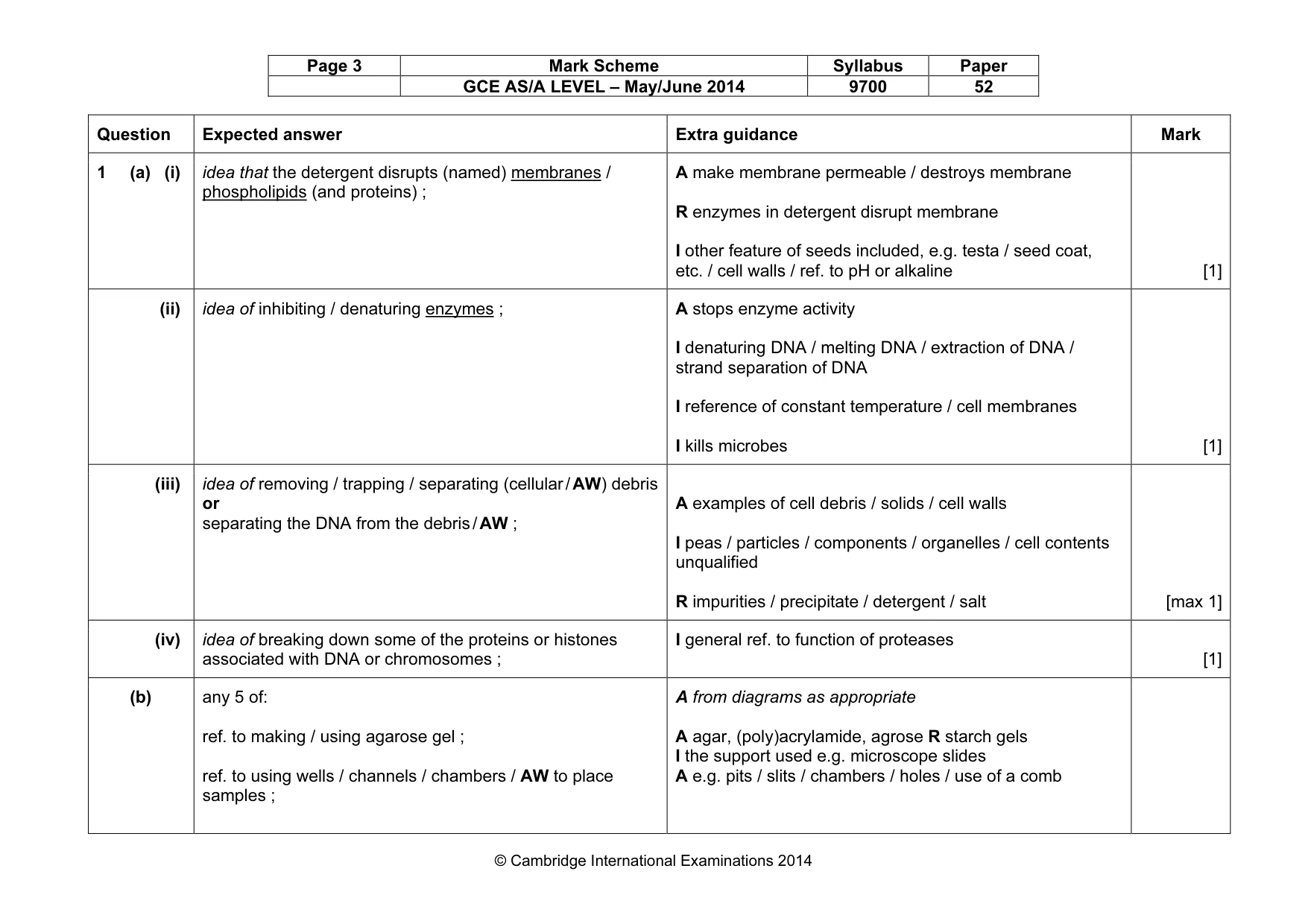
Page 3 Mark Scheme Syllabus Paper GCE AS/A LEVEL – May/June 2014 9700 52 © Cambridge International Examinations 2014 Question Expected answer Extra guidance Mark 1 (a) (i) idea that the detergent disrupts (named) membranes / phospholipids (and proteins) ; A make membrane permeable / destroys membrane R enzymes in detergent disrupt membrane I other feature of seeds included, e.g. testa / seed coat, etc. / cell walls / ref. to pH or alkaline [1] (ii) idea of inhibiting / denaturing enzymes ; A stops enzyme activity I denaturing DNA / melting DNA / extraction of DNA / strand separation of DNA I reference of constant temperature / cell membranes I kills microbes [1] (iii) idea of removing / trapping / separating (cellular / AW) debris or separating the DNA from the debris / AW ; A examples of cell debris / solids / cell walls I peas / particles / components / organelles / cell contents unqualified R impurities / precipitate / detergent / salt [max 1] (iv) idea of breaking down some of the proteins or histones associated with DNA or chromosomes ; I general ref. to function of proteases [1] (b) any 5 of: ref. to making / using agarose gel ; ref. to using wells / channels / chambers / AW to place samples ; A from diagrams as appropriate A agar, (poly)acrylamide, agrose R starch gels I the support used e.g. microscope slides A e.g. pits / slits / chambers / holes / use of a comb
Mark scheme, page 4
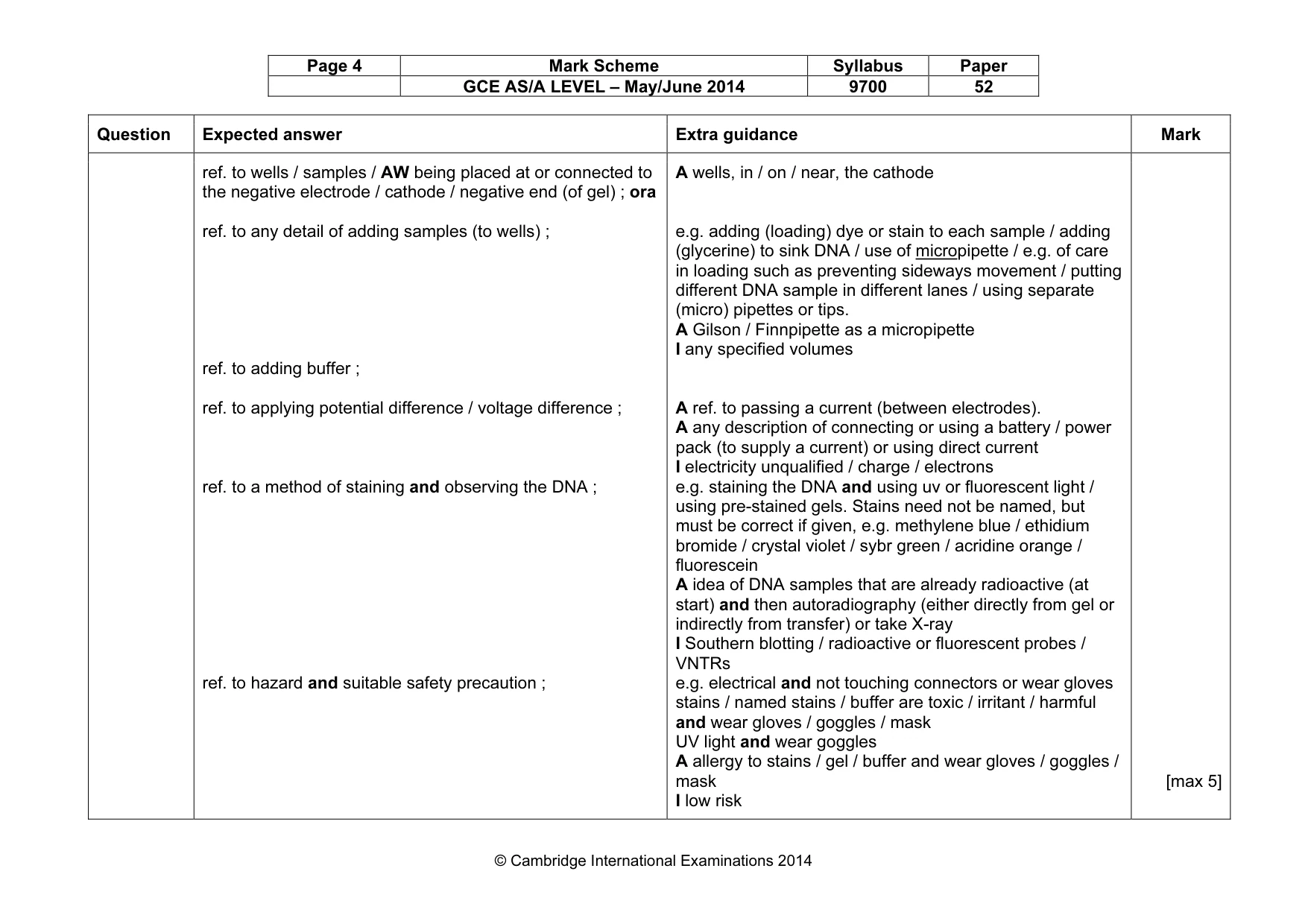
Page 4 Mark Scheme Syllabus Paper GCE AS/A LEVEL – May/June 2014 9700 52 © Cambridge International Examinations 2014 Question Expected answer Extra guidance Mark ref. to wells / samples / AW being placed at or connected to the negative electrode / cathode / negative end (of gel) ; ora ref. to any detail of adding samples (to wells) ; ref. to adding buffer ; ref. to applying potential difference / voltage difference ; ref. to a method of staining and observing the DNA ; ref. to hazard and suitable safety precaution ; A wells, in / on / near, the cathode e.g. adding (loading) dye or stain to each sample / adding (glycerine) to sink DNA / use of micropipette / e.g. of care in loading such as preventing sideways movement / putting different DNA sample in different lanes / using separate (micro) pipettes or tips. A Gilson / Finnpipette as a micropipette I any specified volumes A ref. to passing a current (between electrodes). A any description of connecting or using a battery / power pack (to supply a current) or using direct current I electricity unqualified / charge / electrons e.g. staining the DNA and using uv or fluorescent light / using pre-stained gels. Stains need not be named, but must be correct if given, e.g. methylene blue / ethidium bromide / crystal violet / sybr green / acridine orange / fluorescein A idea of DNA samples that are already radioactive (at start) and then autoradiography (either directly from gel or indirectly from transfer) or take X-ray I Southern blotting / radioactive or fluorescent probes / VNTRs e.g. electrical and not touching connectors or wear gloves stains / named stains / buffer are toxic / irritant / harmful and wear gloves / goggles / mask UV light and wear goggles A allergy to stains / gel / buffer and wear gloves / goggles / mask I low risk [max 5]
Mark scheme, page 5
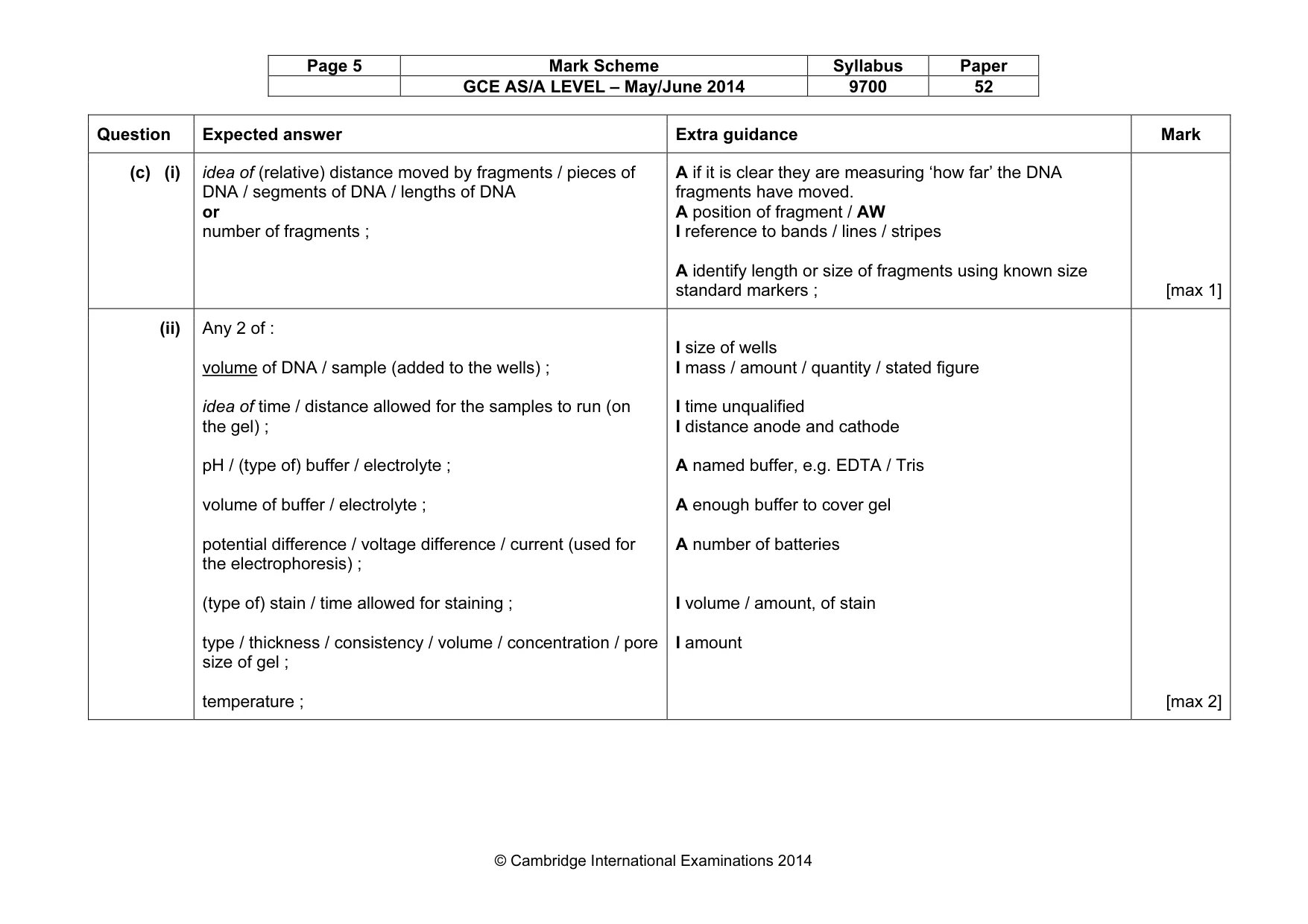
Page 5 Mark Scheme Syllabus Paper GCE AS/A LEVEL – May/June 2014 9700 52 © Cambridge International Examinations 2014 Question Expected answer Extra guidance Mark (c) (i) idea of (relative) distance moved by fragments / pieces of DNA / segments of DNA / lengths of DNA or number of fragments ; A if it is clear they are measuring ‘how far’ the DNA fragments have moved. A position of fragment / AW I reference to bands / lines / stripes A identify length or size of fragments using known size standard markers ; [max 1] (ii) Any 2 of : volume of DNA / sample (added to the wells) ; idea of time / distance allowed for the samples to run (on the gel) ; pH / (type of) buffer / electrolyte ; volume of buffer / electrolyte ; potential difference / voltage difference / current (used for the electrophoresis) ; (type of) stain / time allowed for staining ; type / thickness / consistency / volume / concentration / pore size of gel ; temperature ; I size of wells I mass / amount / quantity / stated figure I time unqualified I distance anode and cathode A named buffer, e.g. EDTA / Tris A enough buffer to cover gel A number of batteries I volume / amount, of stain I amount [max 2]
Mark scheme, page 6
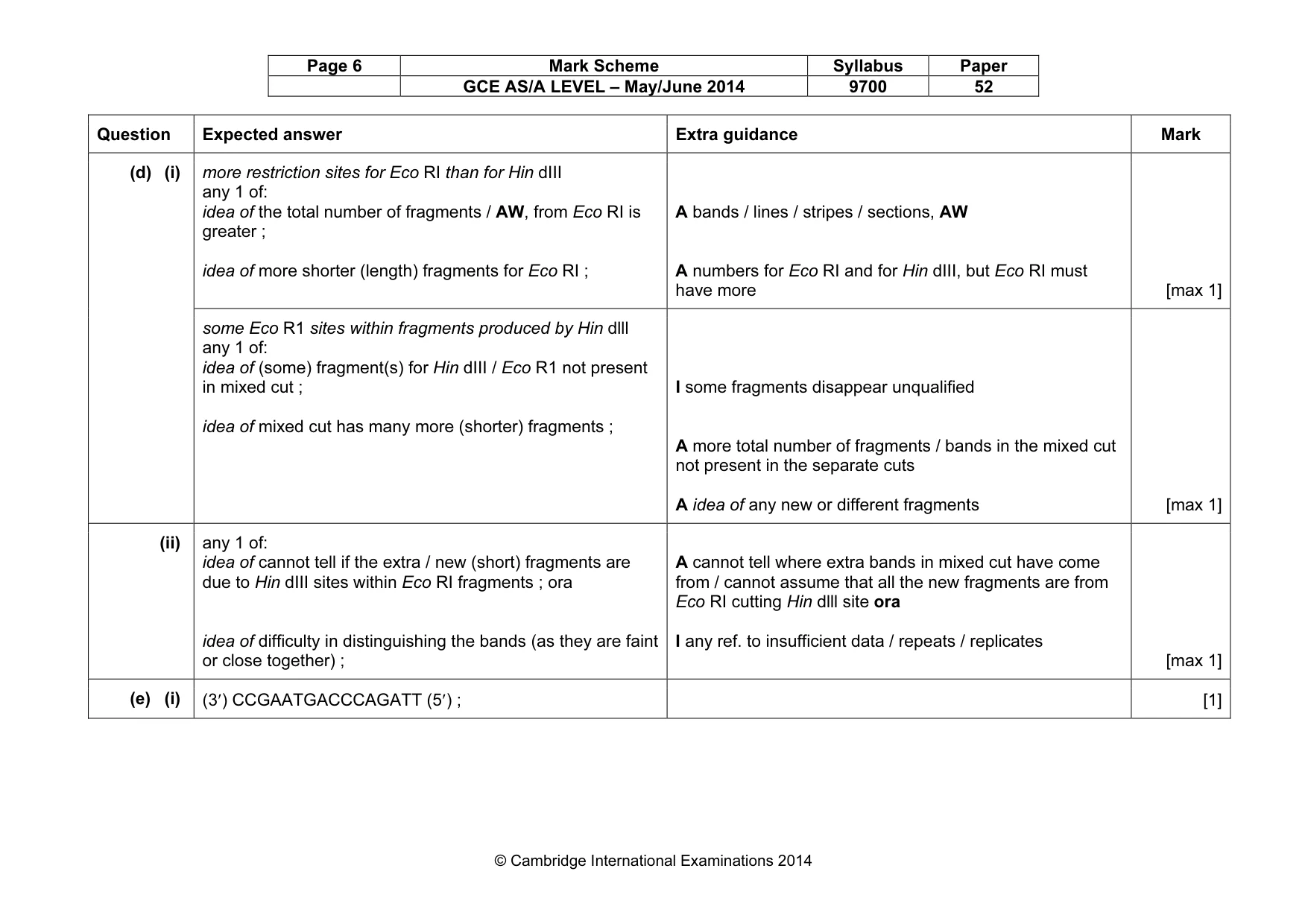
Page 6 Mark Scheme Syllabus Paper GCE AS/A LEVEL – May/June 2014 9700 52 © Cambridge International Examinations 2014 Question Expected answer Extra guidance Mark (d) (i) more restriction sites for Eco RI than for Hin dIII any 1 of: idea of the total number of fragments / AW, from Eco RI is greater ; idea of more shorter (length) fragments for Eco RI ; A bands / lines / stripes / sections, AW A numbers for Eco RI and for Hin dIII, but Eco RI must have more [max 1] some Eco R1 sites within fragments produced by Hin dlll any 1 of: idea of (some) fragment(s) for Hin dIII / Eco R1 not present in mixed cut ; idea of mixed cut has many more (shorter) fragments ; I some fragments disappear unqualified A more total number of fragments / bands in the mixed cut not present in the separate cuts A idea of any new or different fragments [max 1] (ii) any 1 of: idea of cannot tell if the extra / new (short) fragments are due to Hin dIII sites within Eco RI fragments ; ora idea of difficulty in distinguishing the bands (as they are faint or close together) ; A cannot tell where extra bands in mixed cut have come from / cannot assume that all the new fragments are from Eco RI cutting Hin dlll site ora I any ref. to insufficient data / repeats / replicates [max 1] (e) (i) (3′) CCGAATGACCCAGATT (5′) ; [1]
Mark scheme, page 7
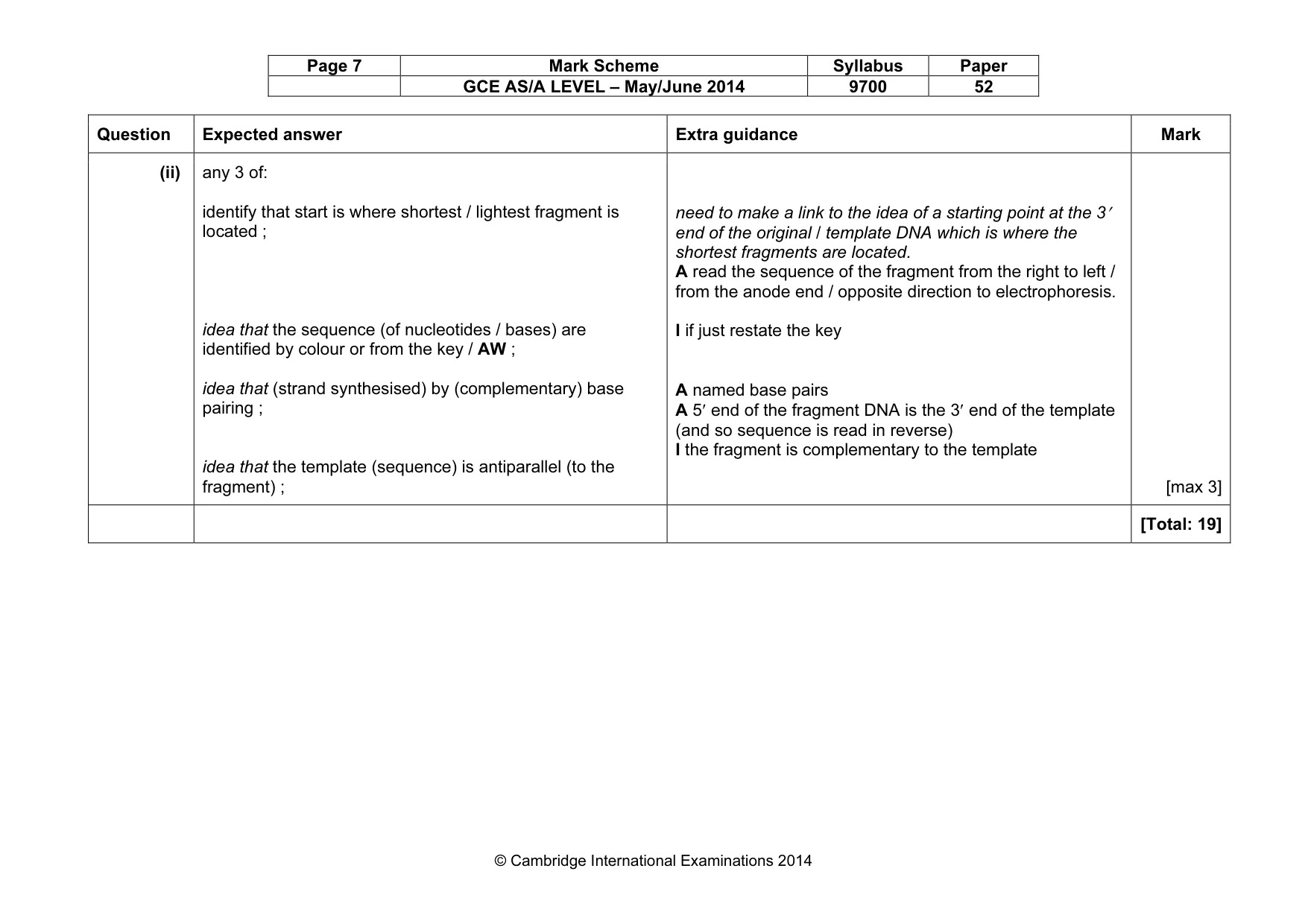
Page 7 Mark Scheme Syllabus Paper GCE AS/A LEVEL – May/June 2014 9700 52 © Cambridge International Examinations 2014 Question Expected answer Extra guidance Mark (ii) any 3 of: identify that start is where shortest / lightest fragment is located ; idea that the sequence (of nucleotides / bases) are identified by colour or from the key / AW ; idea that (strand synthesised) by (complementary) base pairing ; idea that the template (sequence) is antiparallel (to the fragment) ; need to make a link to the idea of a starting point at the 3′ end of the original / template DNA which is where the shortest fragments are located. A read the sequence of the fragment from the right to left / from the anode end / opposite direction to electrophoresis. I if just restate the key A named base pairs A 5′ end of the fragment DNA is the 3′ end of the template (and so sequence is read in reverse) I the fragment is complementary to the template [max 3] [Total: 19]
Mark scheme, page 8
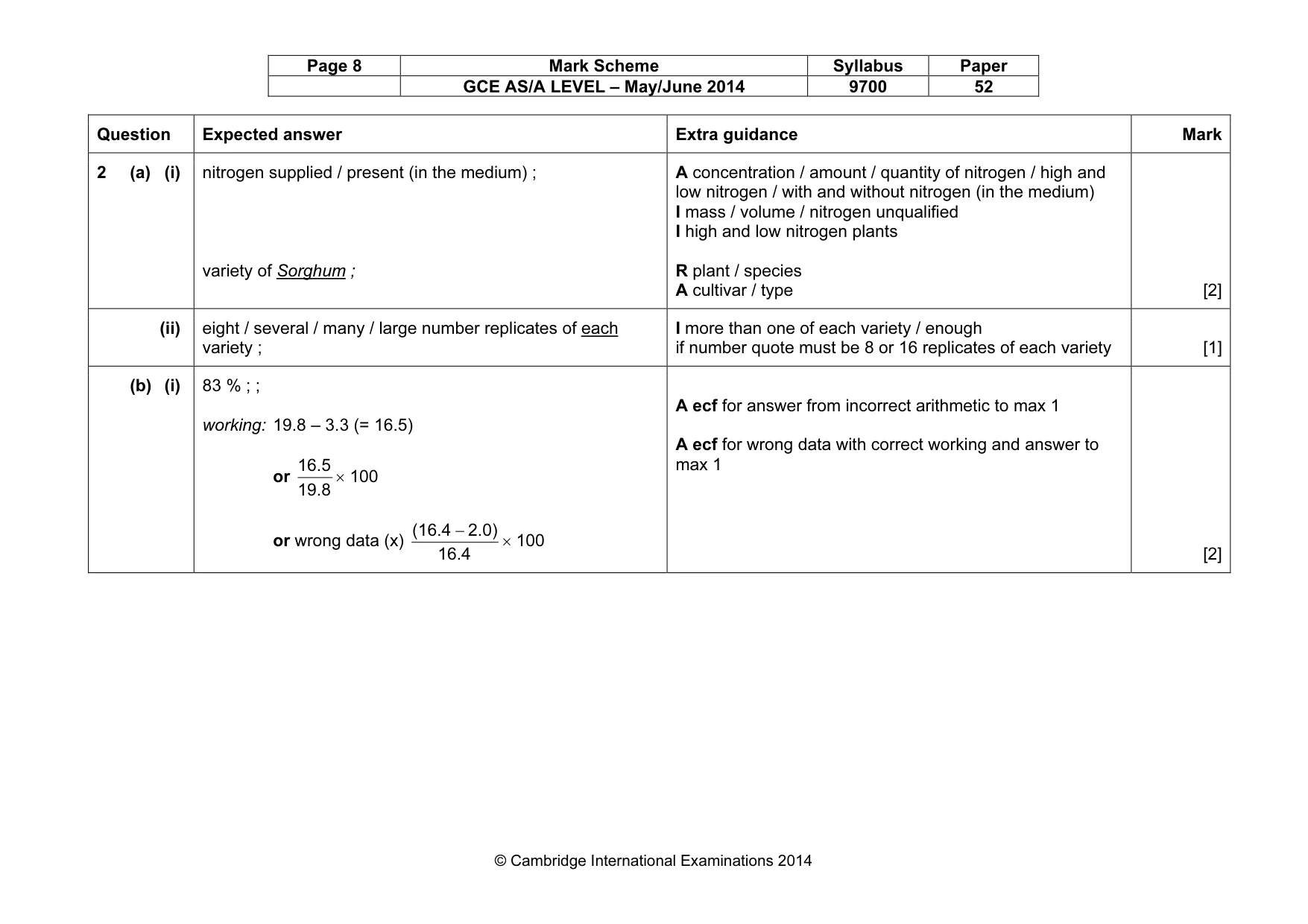
Page 8 Mark Scheme Syllabus Paper GCE AS/A LEVEL – May/June 2014 9700 52 © Cambridge International Examinations 2014 Question Expected answer Extra guidance Mark 2 (a) (i) nitrogen supplied / present (in the medium) ; variety of Sorghum ; A concentration / amount / quantity of nitrogen / high and low nitrogen / with and without nitrogen (in the medium) I mass / volume / nitrogen unqualified I high and low nitrogen plants R plant / species A cultivar / type [2] (ii) eight / several / many / large number replicates of each variety ; I more than one of each variety / enough if number quote must be 8 or 16 replicates of each variety [1] (b) (i) 83 % ; ; working: 19.8 – 3.3 (= 16.5) or 19.8 16.5 × 100 or wrong data (x) 16.4 2.0) (16.4 − × 100 A ecf for answer from incorrect arithmetic to max 1 A ecf for wrong data with correct working and answer to max 1 [2]
Mark scheme, page 9
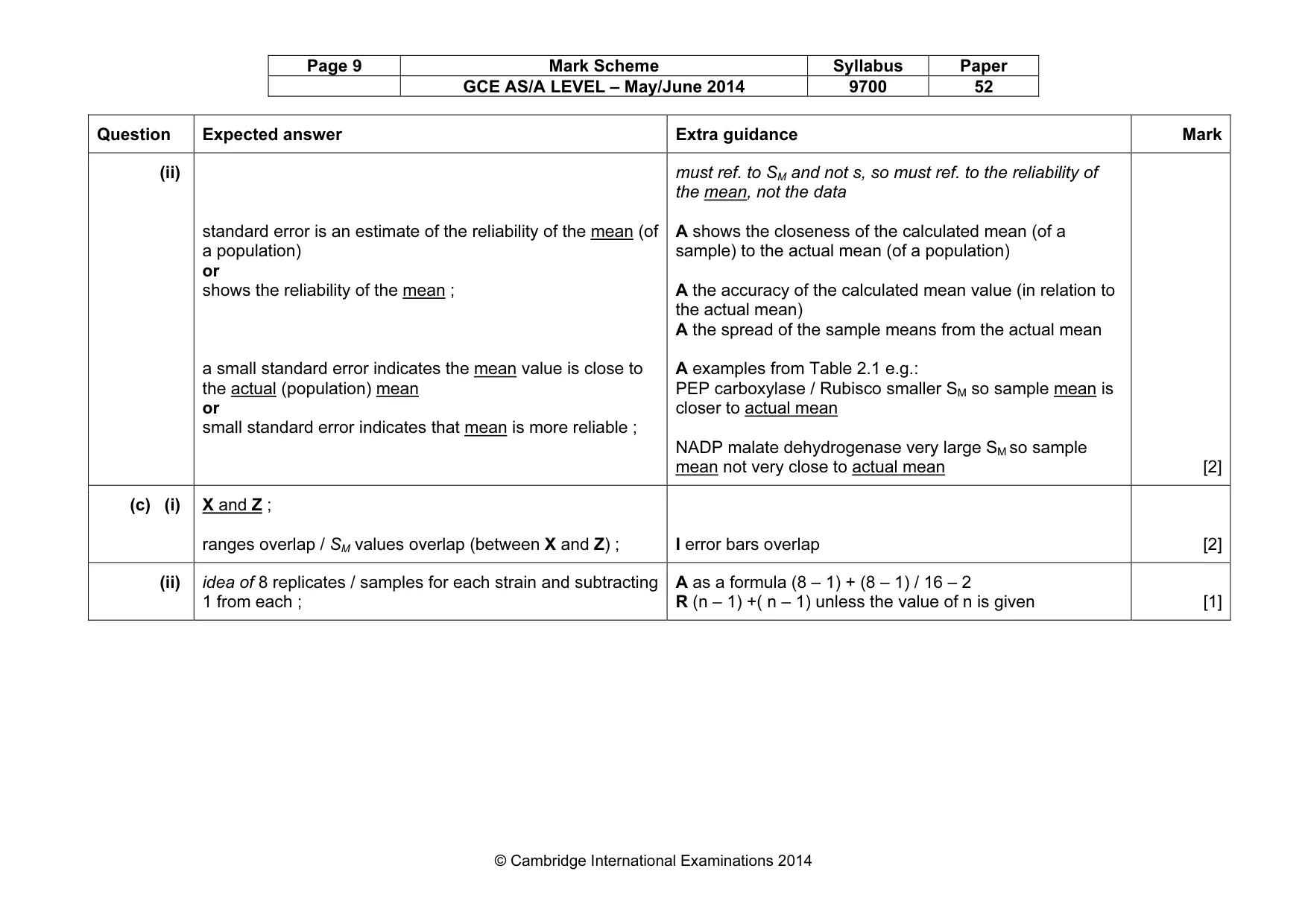
Page 9 Mark Scheme Syllabus Paper GCE AS/A LEVEL – May/June 2014 9700 52 © Cambridge International Examinations 2014 Question Expected answer Extra guidance Mark (ii) standard error is an estimate of the reliability of the mean (of a population) or shows the reliability of the mean ; a small standard error indicates the mean value is close to the actual (population) mean or small standard error indicates that mean is more reliable ; must ref. to SM and not s, so must ref. to the reliability of the mean, not the data A shows the closeness of the calculated mean (of a sample) to the actual mean (of a population) A the accuracy of the calculated mean value (in relation to the actual mean) A the spread of the sample means from the actual mean A examples from Table 2.1 e.g.: PEP carboxylase / Rubisco smaller SM so sample mean is closer to actual mean NADP malate dehydrogenase very large SM so sample mean not very close to actual mean [2] (c) (i) X and Z ; ranges overlap / SM values overlap (between X and Z) ; I error bars overlap [2] (ii) idea of 8 replicates / samples for each strain and subtracting 1 from each ; A as a formula (8 – 1) + (8 – 1) / 16 – 2 R (n – 1) +( n – 1) unless the value of n is given [1]
Mark scheme, page 10
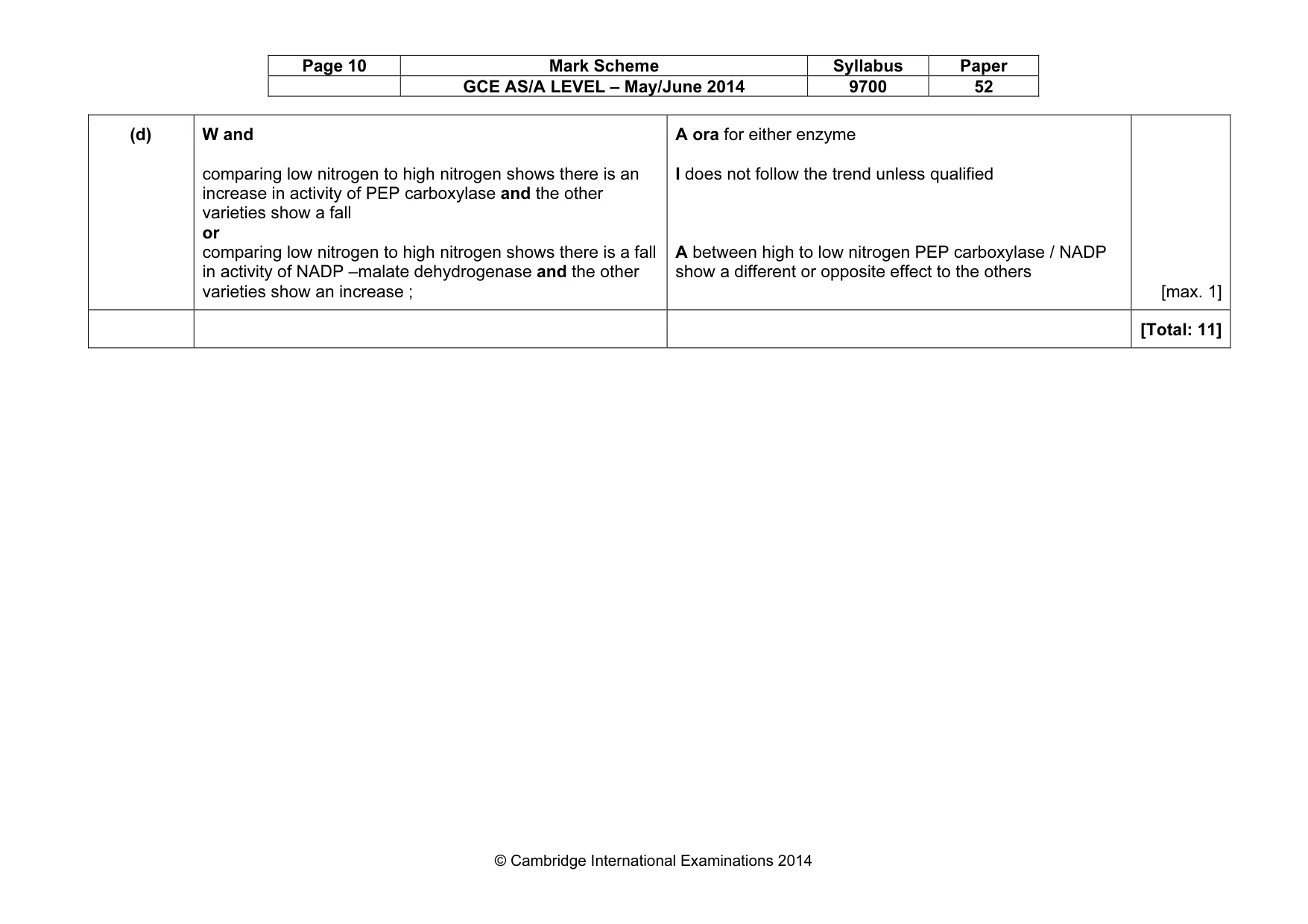
Page 10 Mark Scheme Syllabus Paper GCE AS/A LEVEL – May/June 2014 9700 52 © Cambridge International Examinations 2014 (d) W and comparing low nitrogen to high nitrogen shows there is an increase in activity of PEP carboxylase and the other varieties show a fall or comparing low nitrogen to high nitrogen shows there is a fall in activity of NADP –malate dehydrogenase and the other varieties show an increase ; A ora for either enzyme I does not follow the trend unless qualified A between high to low nitrogen PEP carboxylase / NADP show a different or opposite effect to the others [max. 1] [Total: 11]
What you needed in this session
Cambridge’s own grade thresholds for 2014 May/June, Paper 5 · Variant 2. A higher threshold means an easier paper — the bar moves with how the cohort did.