Cambridge A Level Biology 9700 — 2013 May/June Paper 4 · Variant 2
9700/42/M/J/13 · 100 marks · ≈113 min
The question paper and its mark scheme, free to read here and free to download. This is Cambridge’s own paper, exactly as it was sat.
Question paper24 pages





Mark scheme13 pages
Answers below. Sit the paper first if you are practising.
Paper as text
Question paper, page 1
This document consists of 22 printed pages and 2 lined pages. DC (NF/SW) 62592/3 © UCLES 2013 [Turn over UNIVERSITY OF CAMBRIDGE INTERNATIONAL EXAMINATIONS General Certificate of Education Advanced Level * 6 3 5 4 4 4 5 4 2 1 * BIOLOGY 9700/42 Paper 4 A2 Structured Questions May/June 2013 2 hours Candidates answer on the Question Paper. Additional Materials: Answer Paper available on request. READ THESE INSTRUCTIONS FIRST Write your Centre number, candidate number and name on all the work you hand in. Write in dark blue or black ink. You may use a pencil for any diagrams, graphs, or rough working. Do not use staples, paper clips, highlighters, glue or correction fluid. DO NOT WRITE IN ANY BARCODES. Answer all questions in Section A and one question from Section B. Circle the number of the Section B question you have answered in the grid below. Electronic calculators may be used. At the end of the examination, fasten all your work securely together. The number of marks is given in brackets [ ] at the end of each question or part question. For Examiner’s Use Section A 1 2 3 4 5 6 7 8 Section B 9 or 10 Total
Question paper, page 2
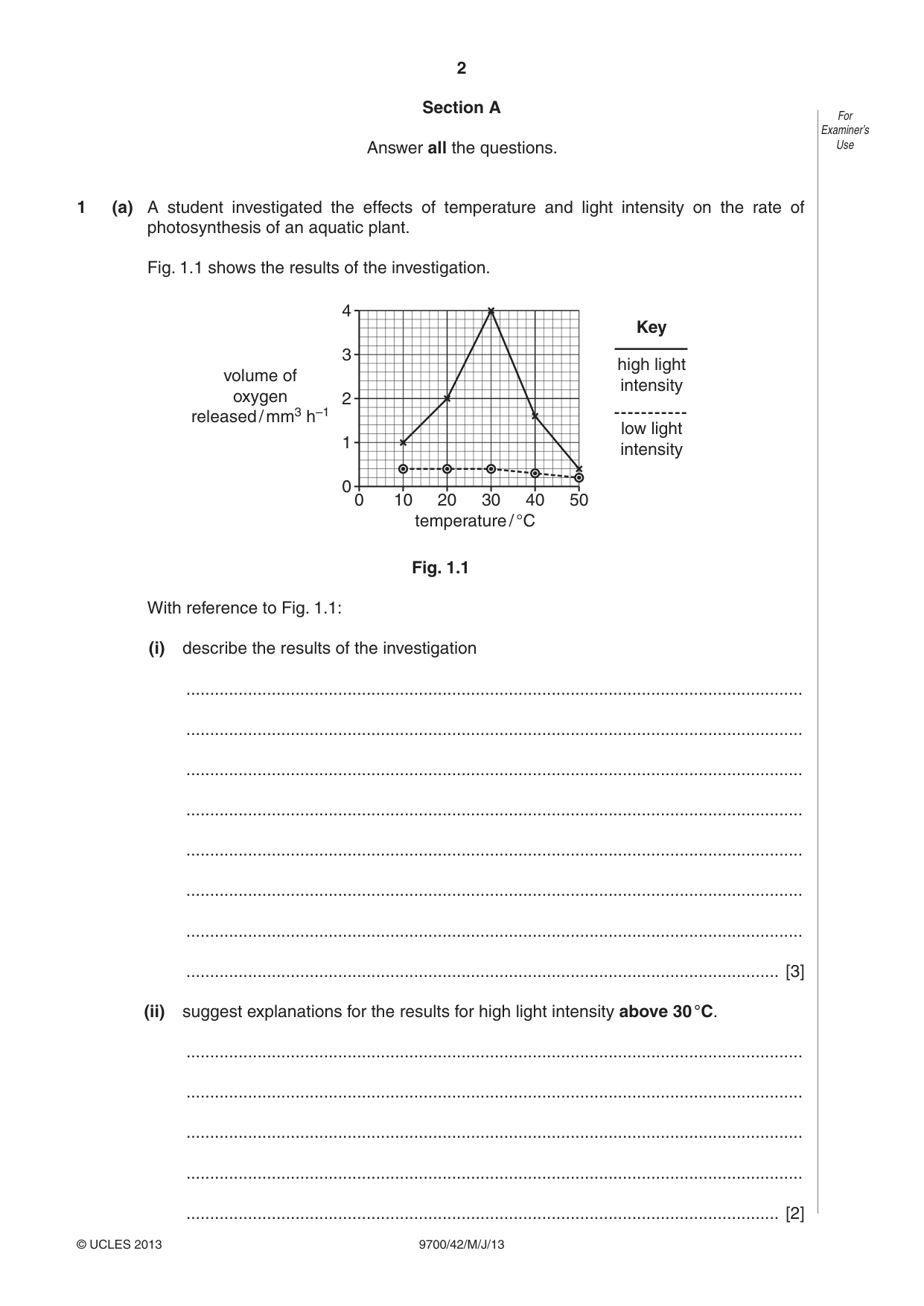
2 9700/42/M/J/13 © UCLES 2013 For Examiner’s Use Section A Answer all the questions. 1 (a) A student investigated the effects of temperature and light intensity on the rate of photosynthesis of an aquatic plant. Fig. 1.1 shows the results of the investigation. 0 0 1 2 3 4 10 20 30 temperature / °C volume of oxygen released / mm3 h–1 high light intensity Key low light intensity 40 50 Fig. 1.1 With reference to Fig. 1.1: (i) describe the results of the investigation … … … … … … … … [3] (ii) suggest explanations for the results for high light intensity above 30 °C. … … … … … [2]
Question paper, page 3
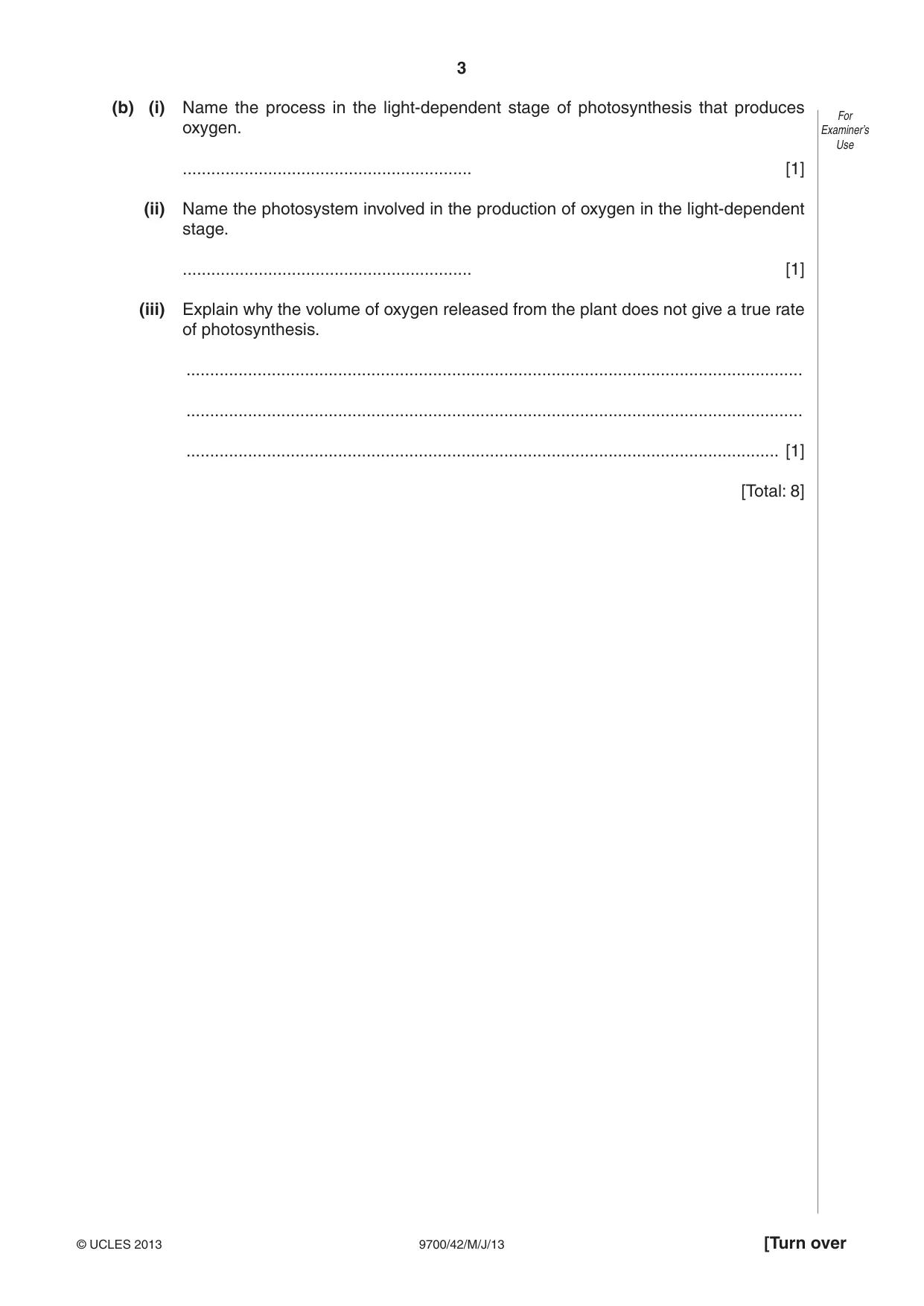
3 9700/42/M/J/13 © UCLES 2013 [Turn over For Examiner’s Use (b) (i) Name the process in the light-dependent stage of photosynthesis that produces oxygen. … [1] (ii) Name the photosystem involved in the production of oxygen in the light-dependent stage. … [1] (iii) Explain why the volume of oxygen released from the plant does not give a true rate of photosynthesis. … … … [1] [Total: 8]
Question paper, page 4
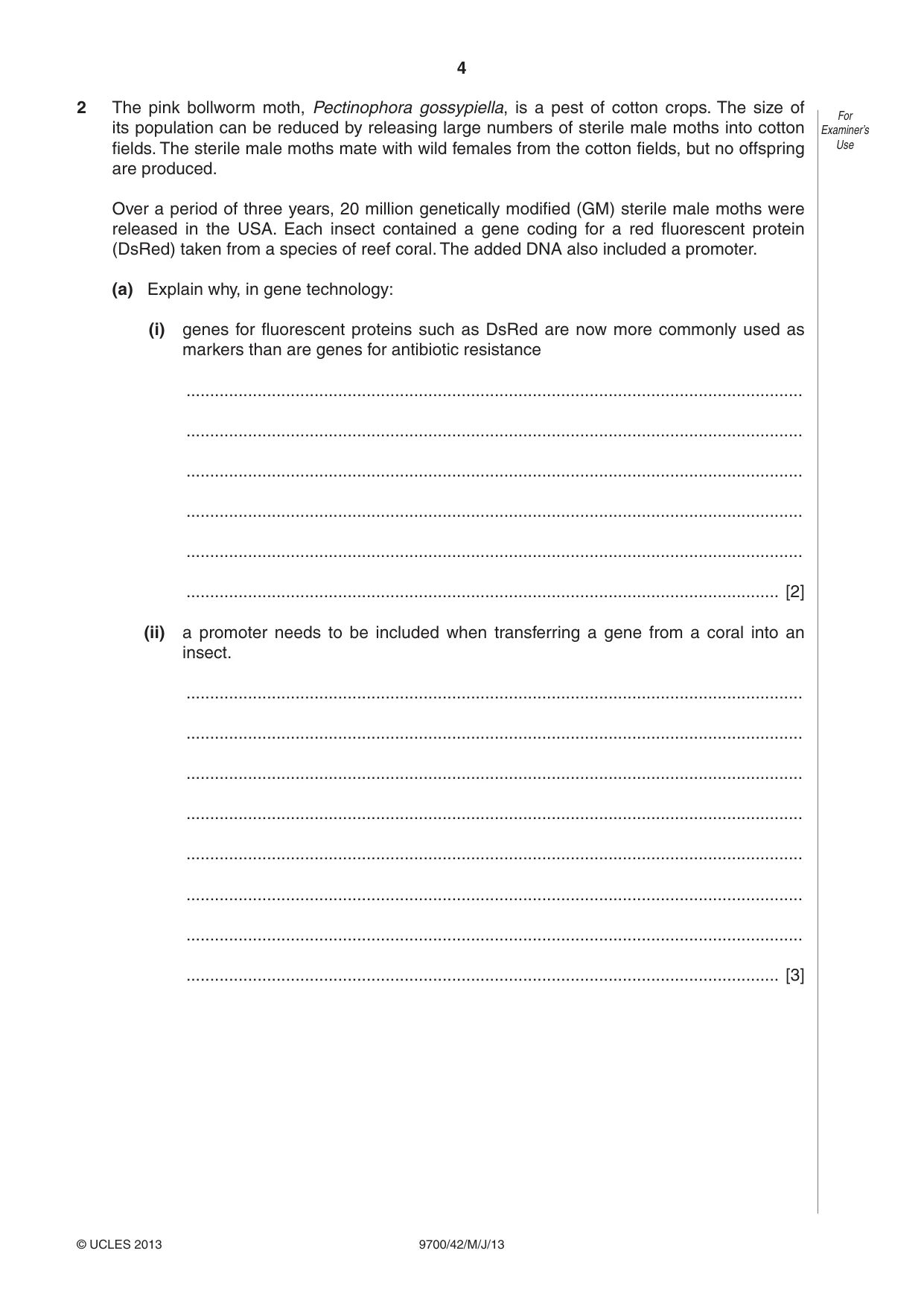
4 9700/42/M/J/13 © UCLES 2013 For Examiner’s Use 2 The pink bollworm moth, Pectinophora gossypiella, is a pest of cotton crops. The size of its population can be reduced by releasing large numbers of sterile male moths into cotton fields. The sterile male moths mate with wild females from the cotton fields, but no offspring are produced. Over a period of three years, 20 million genetically modified (GM) sterile male moths were released in the USA. Each insect contained a gene coding for a red fluorescent protein (DsRed) taken from a species of reef coral. The added DNA also included a promoter. (a) Explain why, in gene technology: (i) genes for fluorescent proteins such as DsRed are now more commonly used as markers than are genes for antibiotic resistance … … … … … … [2] (ii) a promoter needs to be included when transferring a gene from a coral into an insect. … … … … … … … … [3]
Question paper, page 5
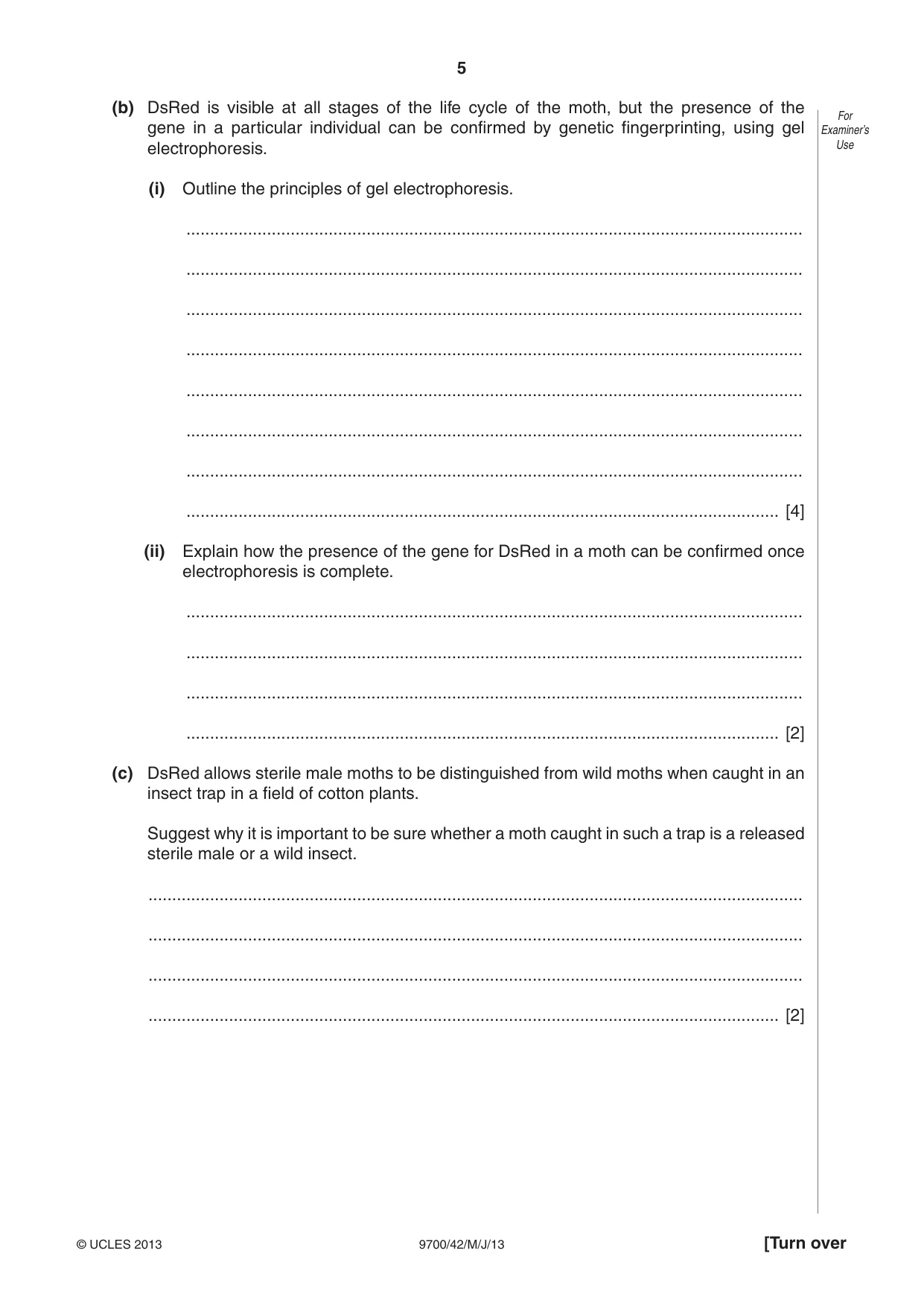
5 9700/42/M/J/13 © UCLES 2013 [Turn over For Examiner’s Use (b) DsRed is visible at all stages of the life cycle of the moth, but the presence of the gene in a particular individual can be confirmed by genetic fingerprinting, using gel electrophoresis. (i) Outline the principles of gel electrophoresis. … … … … … … … … [4] (ii) Explain how the presence of the gene for DsRed in a moth can be confirmed once electrophoresis is complete. … … … … [2] (c) DsRed allows sterile male moths to be distinguished from wild moths when caught in an insect trap in a field of cotton plants. Suggest why it is important to be sure whether a moth caught in such a trap is a released sterile male or a wild insect. … … … … [2]
Question paper, page 6
6 9700/42/M/J/13 © UCLES 2013 For Examiner’s Use (d) The United States Department of Agriculture has ruled that the release of sterile males to control insect pest numbers is environmentally preferable to all other alternatives. Suggest what information would be needed to determine whether the release of the sterile male moths, carrying the gene for DsRed, has a damaging effect on the environment. … … … … [2] [Total: 15]
Question paper, page 7
7 9700/42/M/J/13 © UCLES 2013 [Turn over Question 3 starts on page 8
Question paper, page 8
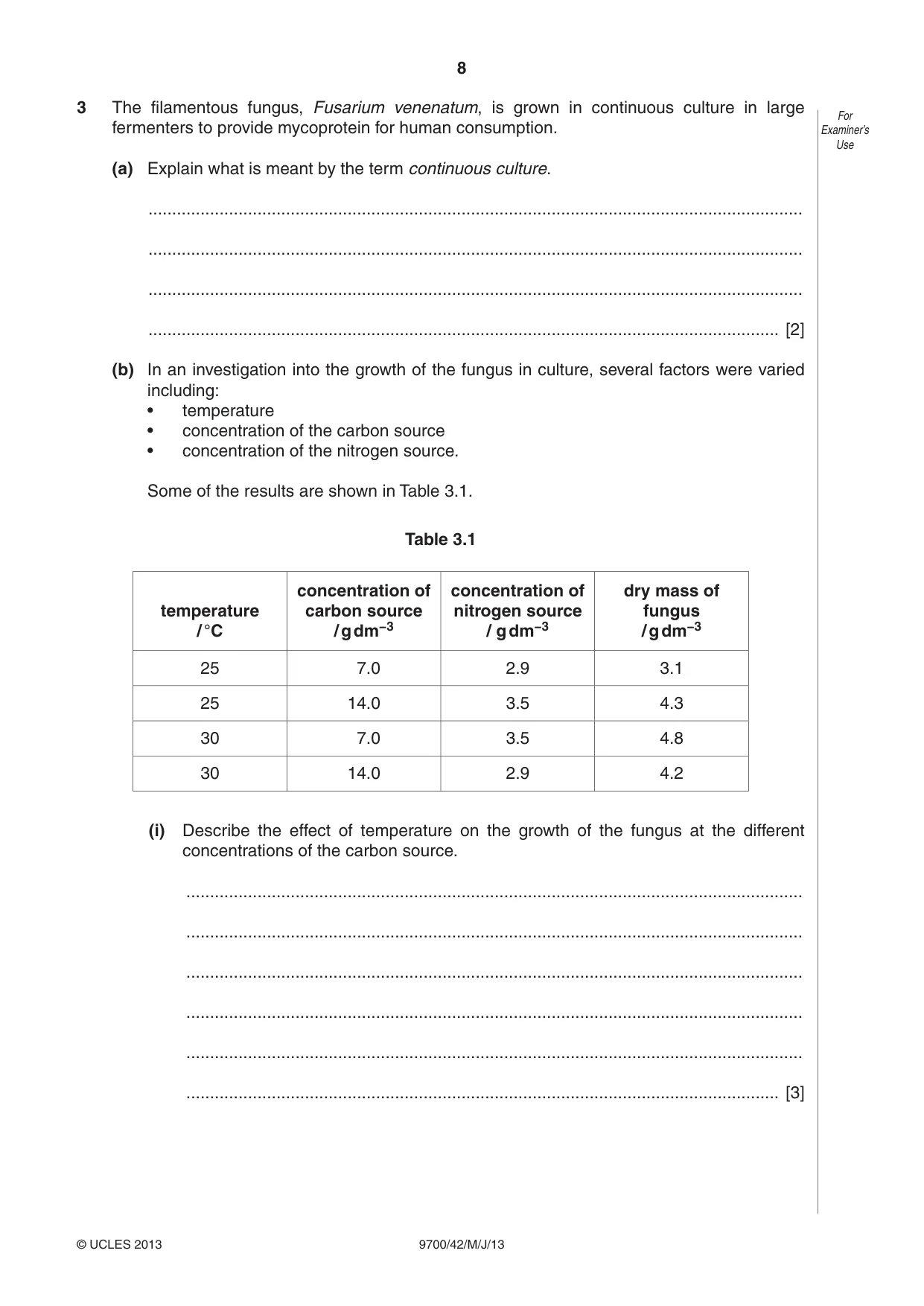
8 9700/42/M/J/13 © UCLES 2013 For Examiner’s Use 3 The filamentous fungus, Fusarium venenatum, is grown in continuous culture in large fermenters to provide mycoprotein for human consumption. (a) Explain what is meant by the term continuous culture. … … … … [2] (b) In an investigation into the growth of the fungus in culture, several factors were varied including: • temperature • concentration of the carbon source • concentration of the nitrogen source. Some of the results are shown in Table 3.1. Table 3.1 temperature / °C concentration of carbon source / g dm−3 concentration of nitrogen source / g dm−3 dry mass of fungus / g dm−3 25 7.0 2.9 3.1 25 14.0 3.5 4.3 30 7.0 3.5 4.8 30 14.0 2.9 4.2 (i) Describe the effect of temperature on the growth of the fungus at the different concentrations of the carbon source. … … … … … … [3]
Question paper, page 9
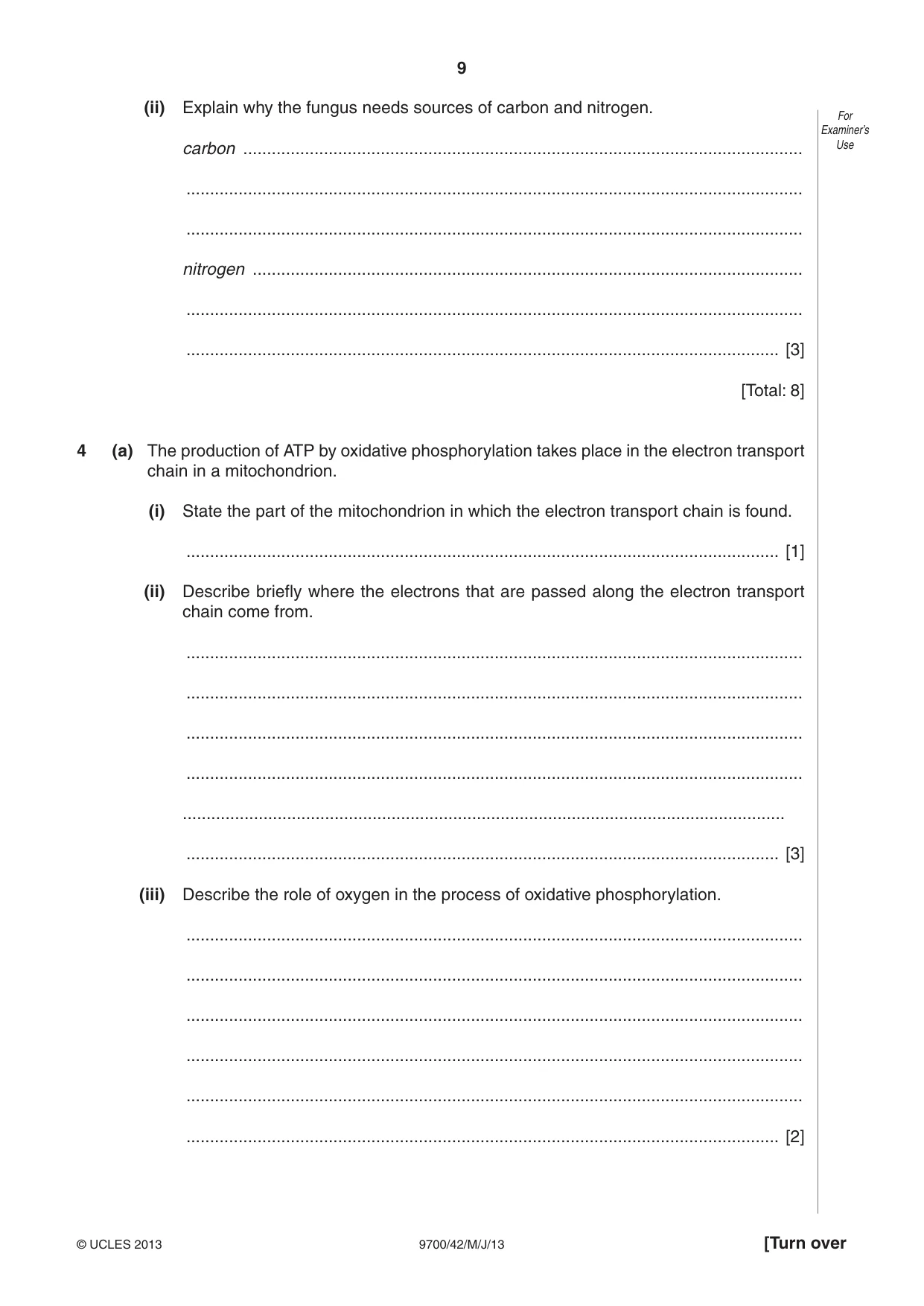
9 9700/42/M/J/13 © UCLES 2013 [Turn over For Examiner’s Use (ii) Explain why the fungus needs sources of carbon and nitrogen. carbon … … … nitrogen … … … [3] [Total: 8] 4 (a) The production of ATP by oxidative phosphorylation takes place in the electron transport chain in a mitochondrion. (i) State the part of the mitochondrion in which the electron transport chain is found. … [1] (ii) Describe briefly where the electrons that are passed along the electron transport chain come from. … … … … … … [3] (iii) Describe the role of oxygen in the process of oxidative phosphorylation. … … … … … … [2]
Question paper, page 10
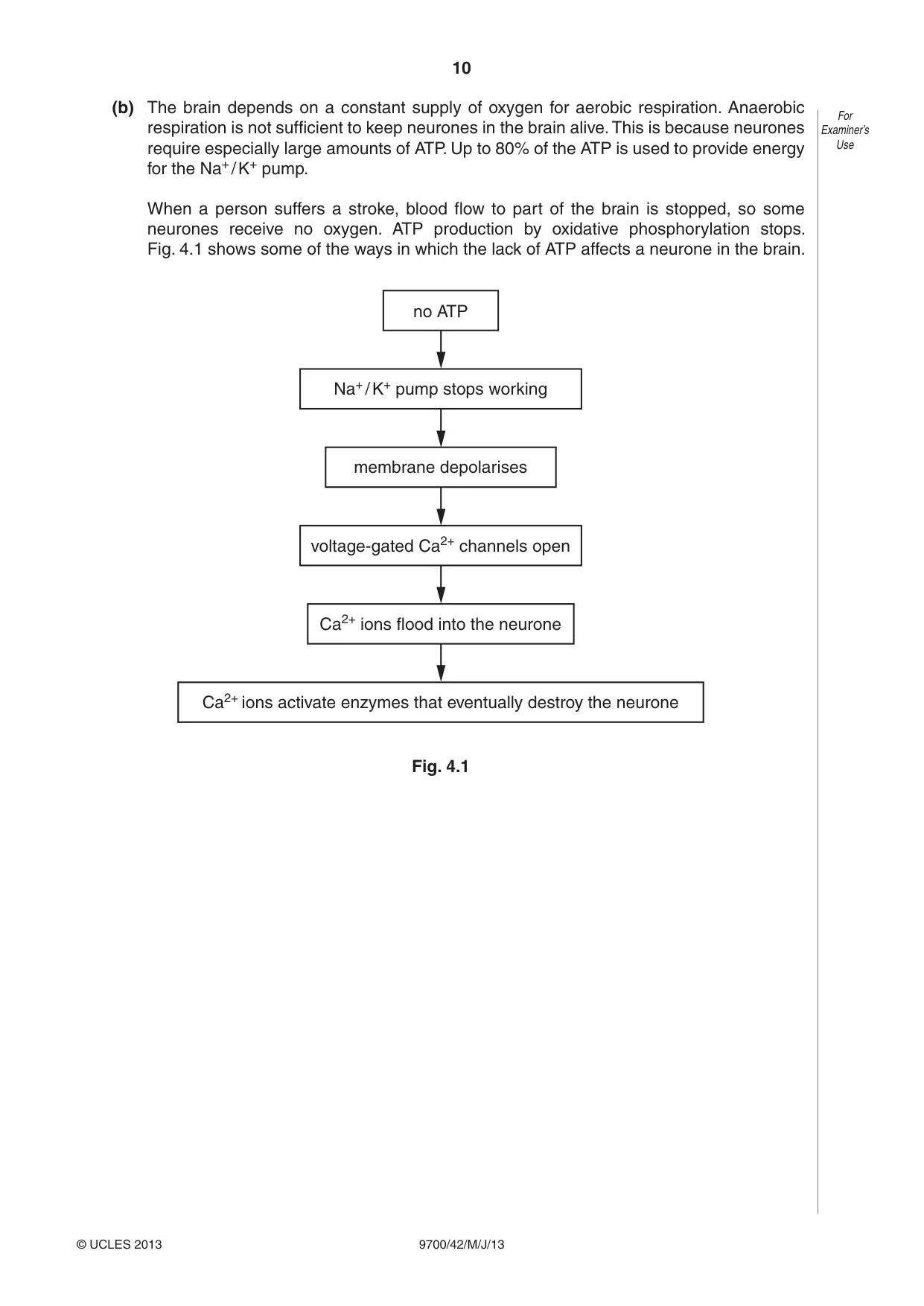
10 9700/42/M/J/13 © UCLES 2013 For Examiner’s Use (b) The brain depends on a constant supply of oxygen for aerobic respiration. Anaerobic respiration is not sufficient to keep neurones in the brain alive. This is because neurones require especially large amounts of ATP. Up to 80% of the ATP is used to provide energy for the Na+ / K+ pump. When a person suffers a stroke, blood flow to part of the brain is stopped, so some neurones receive no oxygen. ATP production by oxidative phosphorylation stops. Fig. 4.1 shows some of the ways in which the lack of ATP affects a neurone in the brain. no ATP Na+ / K+ pump stops working membrane depolarises voltage-gated Ca2+ channels open Ca2+ ions flood into the neurone Ca2+ ions activate enzymes that eventually destroy the neurone Fig. 4.1
Question paper, page 11
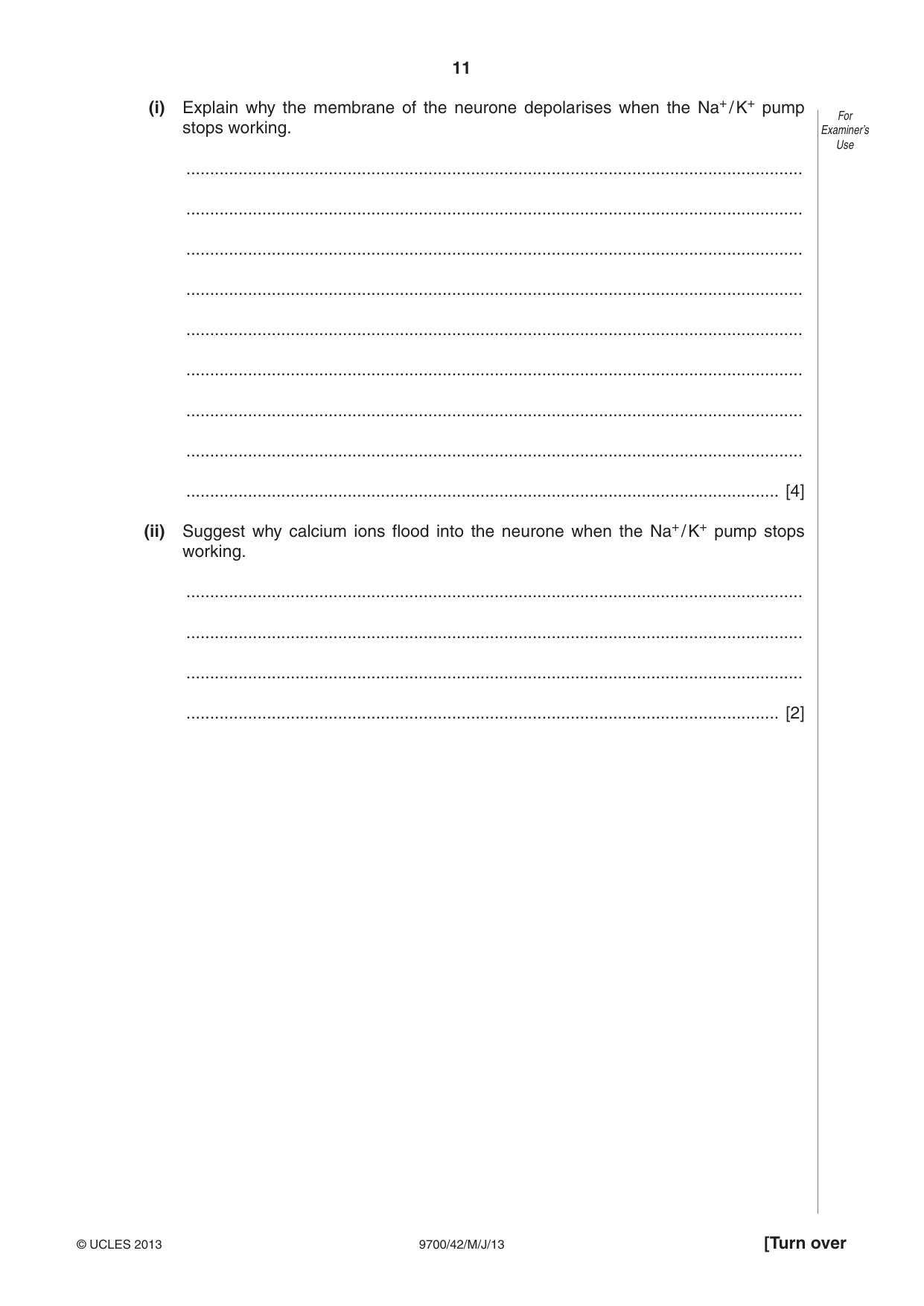
11 9700/42/M/J/13 © UCLES 2013 [Turn over For Examiner’s Use (i) Explain why the membrane of the neurone depolarises when the Na+ / K+ pump stops working. … … … … … … … … … [4] (ii) Suggest why calcium ions flood into the neurone when the Na+ / K+ pump stops working. … … … … [2]
Question paper, page 12
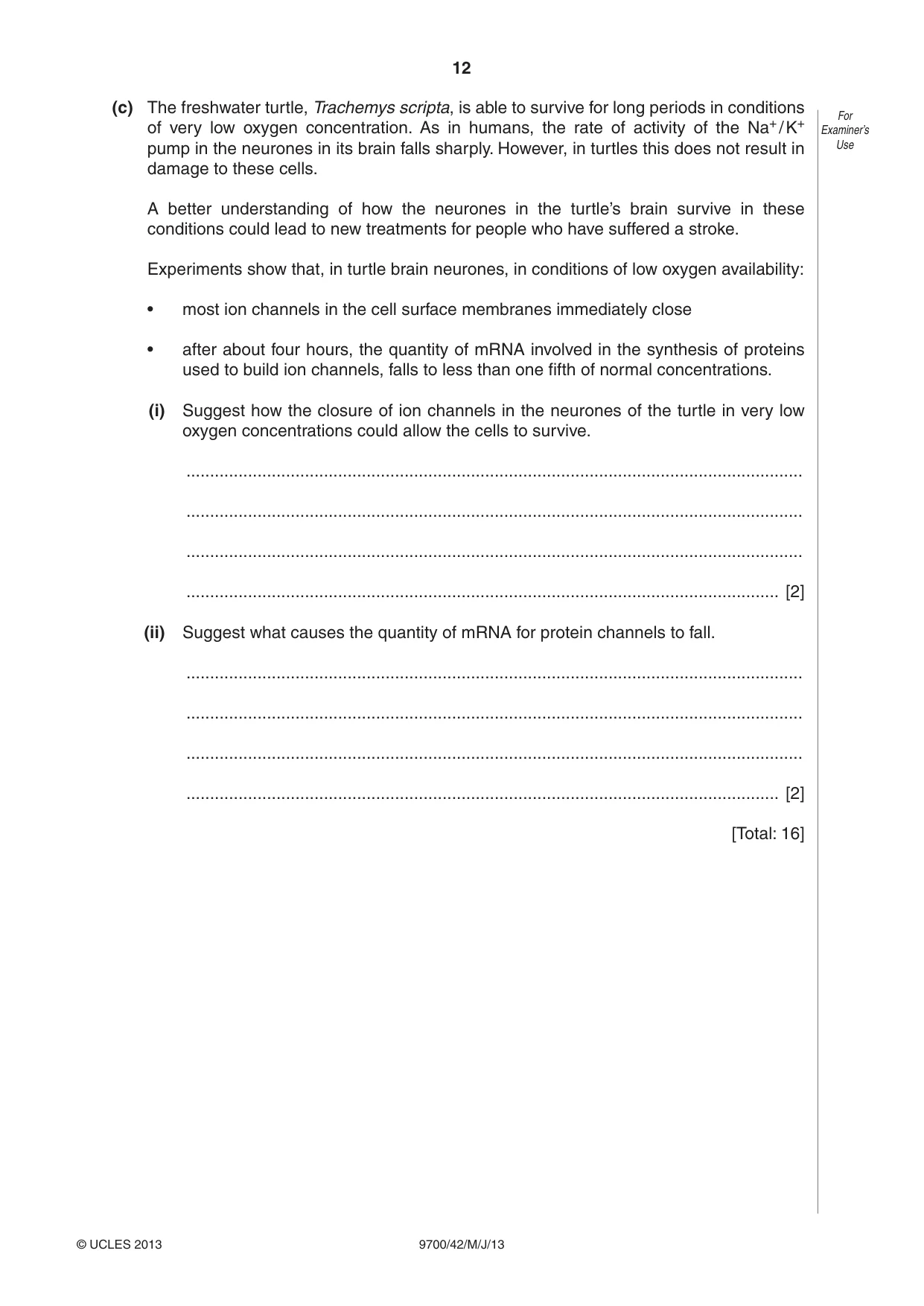
12 9700/42/M/J/13 © UCLES 2013 For Examiner’s Use (c) The freshwater turtle, Trachemys scripta, is able to survive for long periods in conditions of very low oxygen concentration. As in humans, the rate of activity of the Na+ / K+ pump in the neurones in its brain falls sharply. However, in turtles this does not result in damage to these cells. A better understanding of how the neurones in the turtle’s brain survive in these conditions could lead to new treatments for people who have suffered a stroke. Experiments show that, in turtle brain neurones, in conditions of low oxygen availability: • most ion channels in the cell surface membranes immediately close • after about four hours, the quantity of mRNA involved in the synthesis of proteins used to build ion channels, falls to less than one fifth of normal concentrations. (i) Suggest how the closure of ion channels in the neurones of the turtle in very low oxygen concentrations could allow the cells to survive. … … … … [2] (ii) Suggest what causes the quantity of mRNA for protein channels to fall. … … … … [2] [Total: 16]
Question paper, page 13
13 9700/42/M/J/13 © UCLES 2013 [Turn over For Examiner’s Use Question 5 starts on page 14
Question paper, page 14
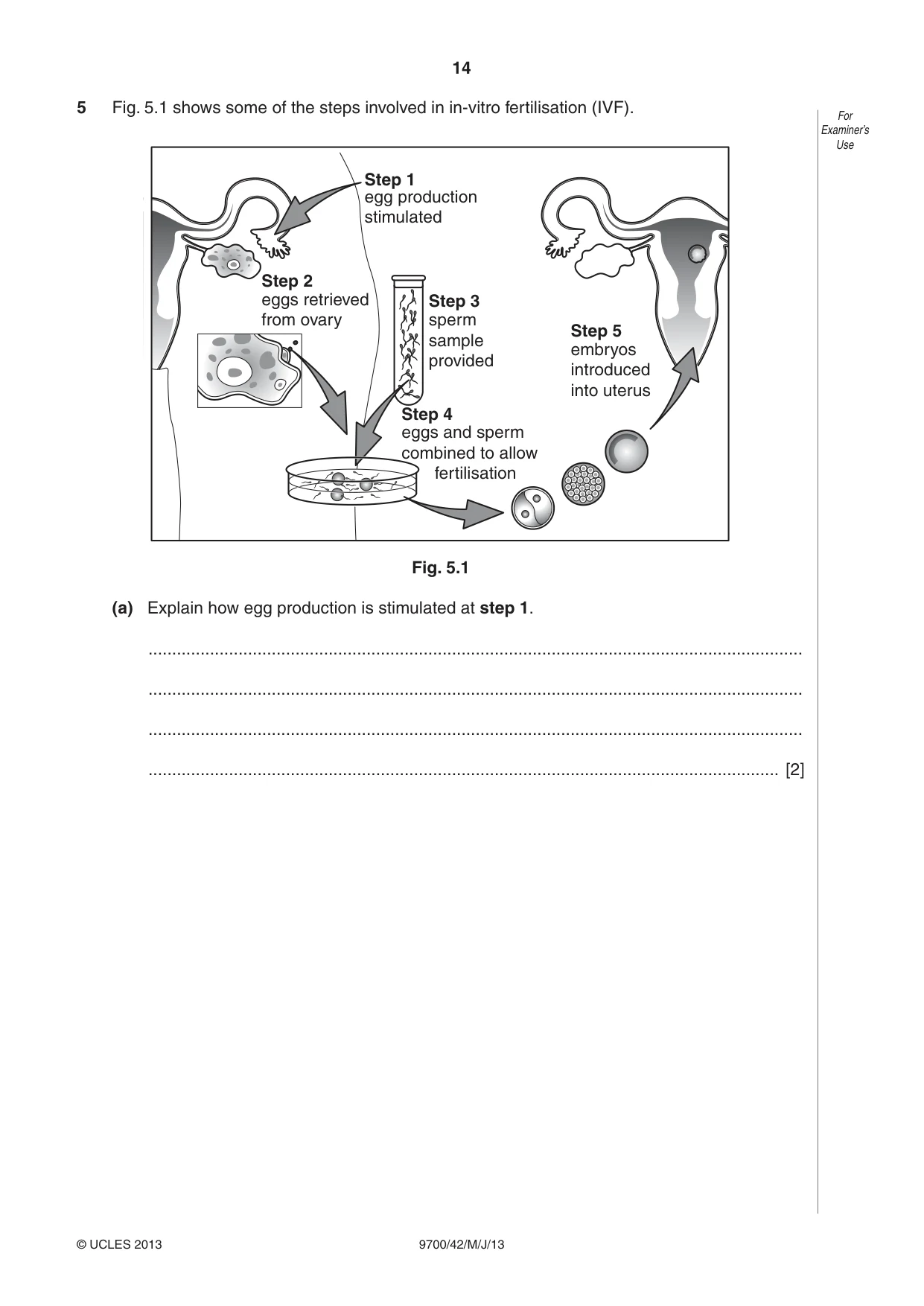
14 9700/42/M/J/13 © UCLES 2013 For Examiner’s Use 5 Fig. 5.1 shows some of the steps involved in in-vitro fertilisation (IVF). Step 1 egg production stimulated Step 3 sperm sample provided Step 2 eggs retrieved from ovary Step 5 embryos introduced into uterus Step 4 eggs and sperm combined to allow fertilisation Fig. 5.1 (a) Explain how egg production is stimulated at step 1. … … … … [2]
Question paper, page 15
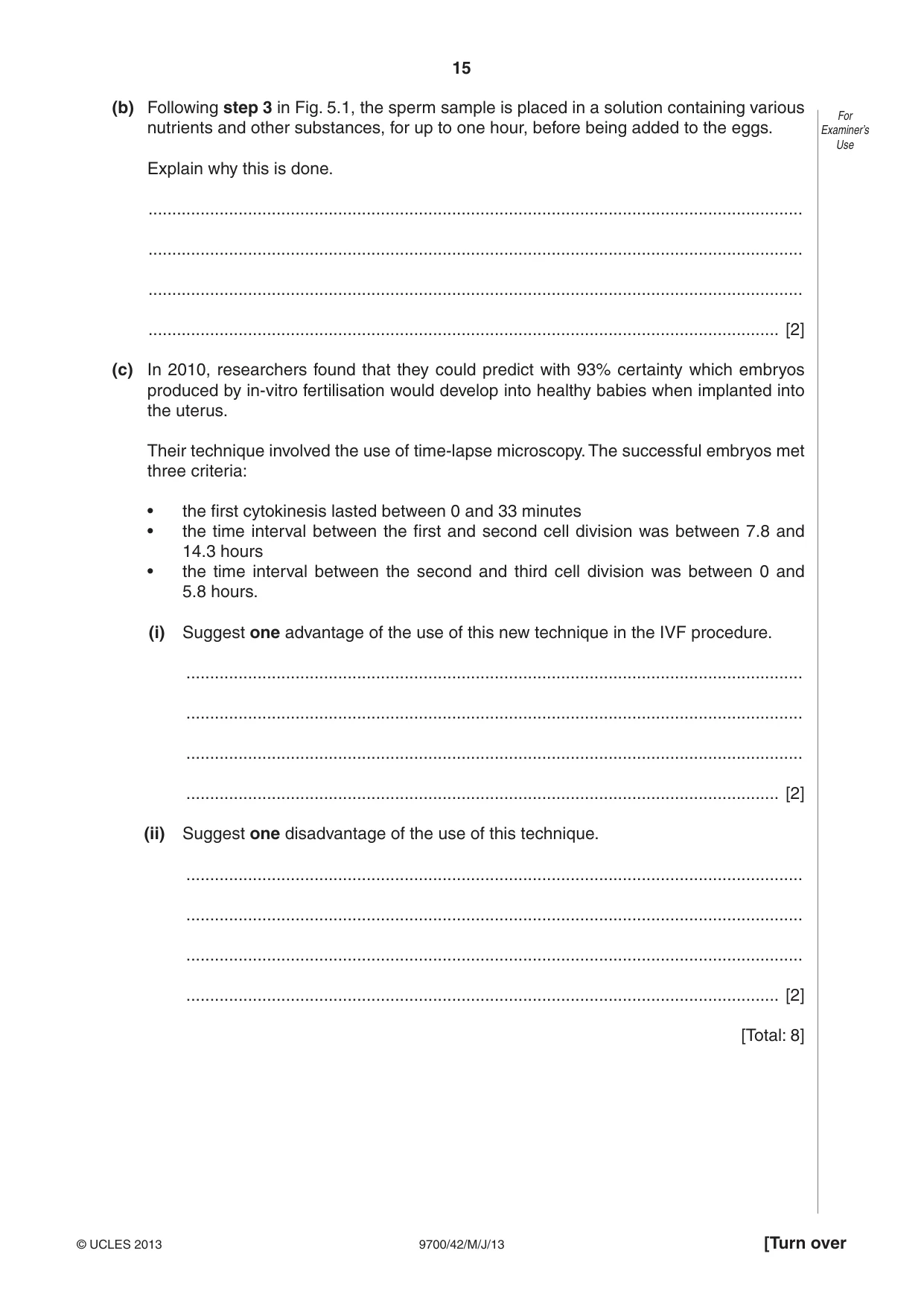
15 9700/42/M/J/13 © UCLES 2013 [Turn over For Examiner’s Use (b) Following step 3 in Fig. 5.1, the sperm sample is placed in a solution containing various nutrients and other substances, for up to one hour, before being added to the eggs. Explain why this is done. … … … … [2] (c) In 2010, researchers found that they could predict with 93% certainty which embryos produced by in-vitro fertilisation would develop into healthy babies when implanted into the uterus. Their technique involved the use of time-lapse microscopy. The successful embryos met three criteria: • the first cytokinesis lasted between 0 and 33 minutes • the time interval between the first and second cell division was between 7.8 and 14.3 hours • the time interval between the second and third cell division was between 0 and 5.8 hours. (i) Suggest one advantage of the use of this new technique in the IVF procedure. … … … … [2] (ii) Suggest one disadvantage of the use of this technique. … … … … [2] [Total: 8]
Question paper, page 16
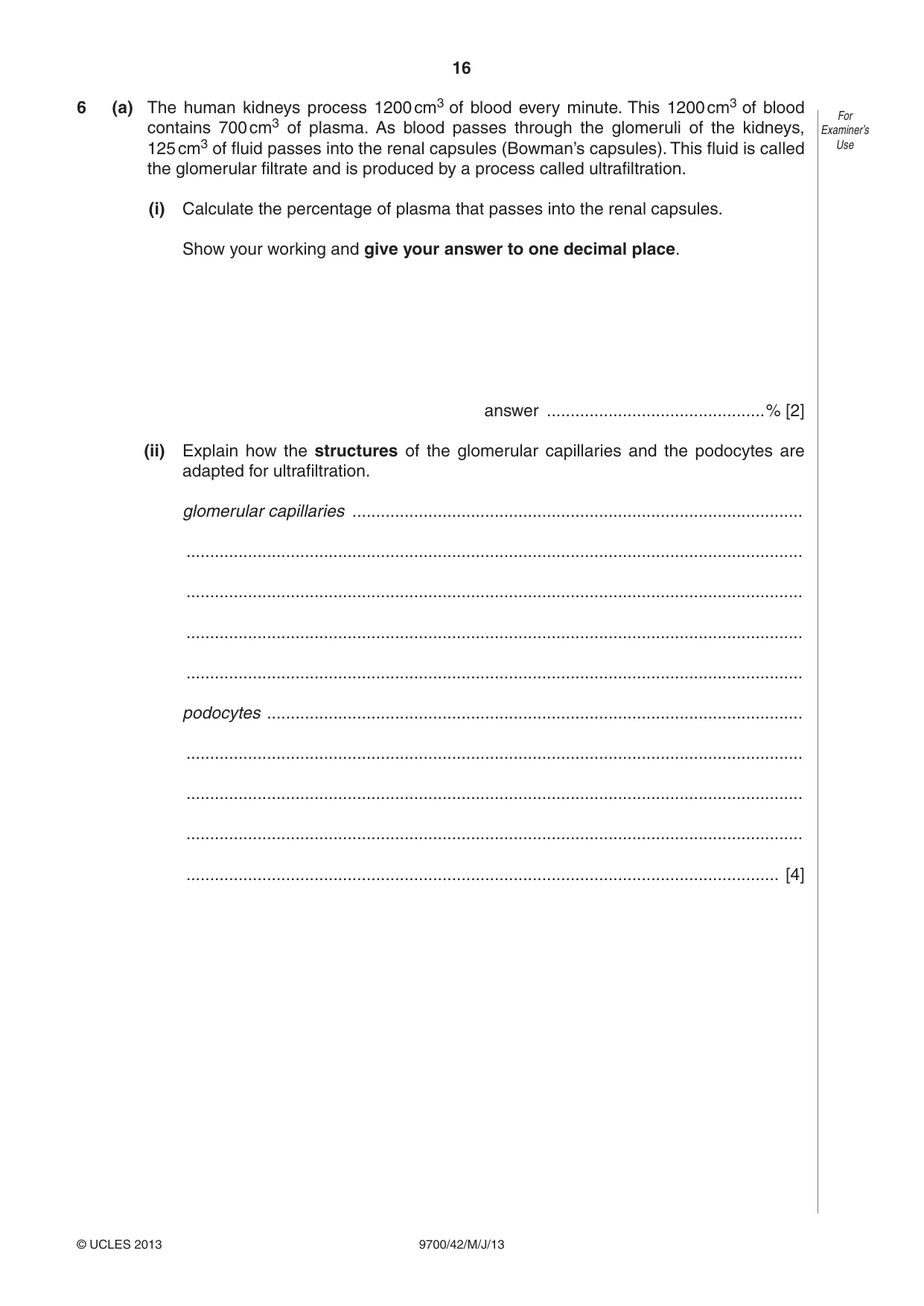
16 9700/42/M/J/13 © UCLES 2013 For Examiner’s Use 6 (a) The human kidneys process 1200 cm3 of blood every minute. This 1200 cm3 of blood contains 700 cm3 of plasma. As blood passes through the glomeruli of the kidneys, 125 cm3 of fluid passes into the renal capsules (Bowman’s capsules). This fluid is called the glomerular filtrate and is produced by a process called ultrafiltration. (i) Calculate the percentage of plasma that passes into the renal capsules. Show your working and give your answer to one decimal place. answer …% [2] (ii) Explain how the structures of the glomerular capillaries and the podocytes are adapted for ultrafiltration. glomerular capillaries … … … … … podocytes … … … … … [4]
Question paper, page 17
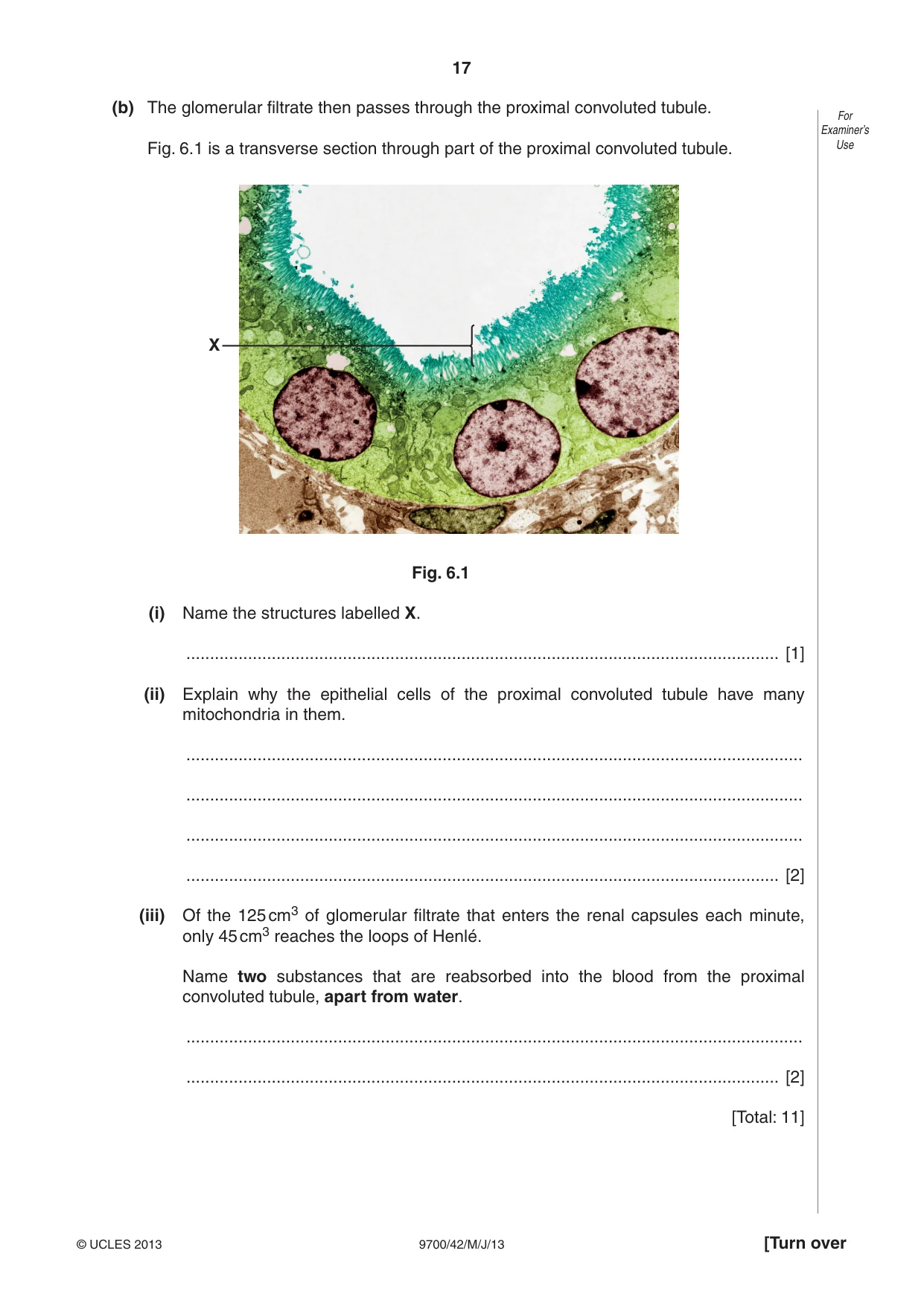
17 9700/42/M/J/13 © UCLES 2013 [Turn over For Examiner’s Use (b) The glomerular filtrate then passes through the proximal convoluted tubule. Fig. 6.1 is a transverse section through part of the proximal convoluted tubule. X Fig. 6.1 (i) Name the structures labelled X. … [1] (ii) Explain why the epithelial cells of the proximal convoluted tubule have many mitochondria in them. … … … … [2] (iii) Of the 125 cm3 of glomerular filtrate that enters the renal capsules each minute, only 45 cm3 reaches the loops of Henlé. Name two substances that are reabsorbed into the blood from the proximal convoluted tubule, apart from water. … … [2] [Total: 11]
Question paper, page 18
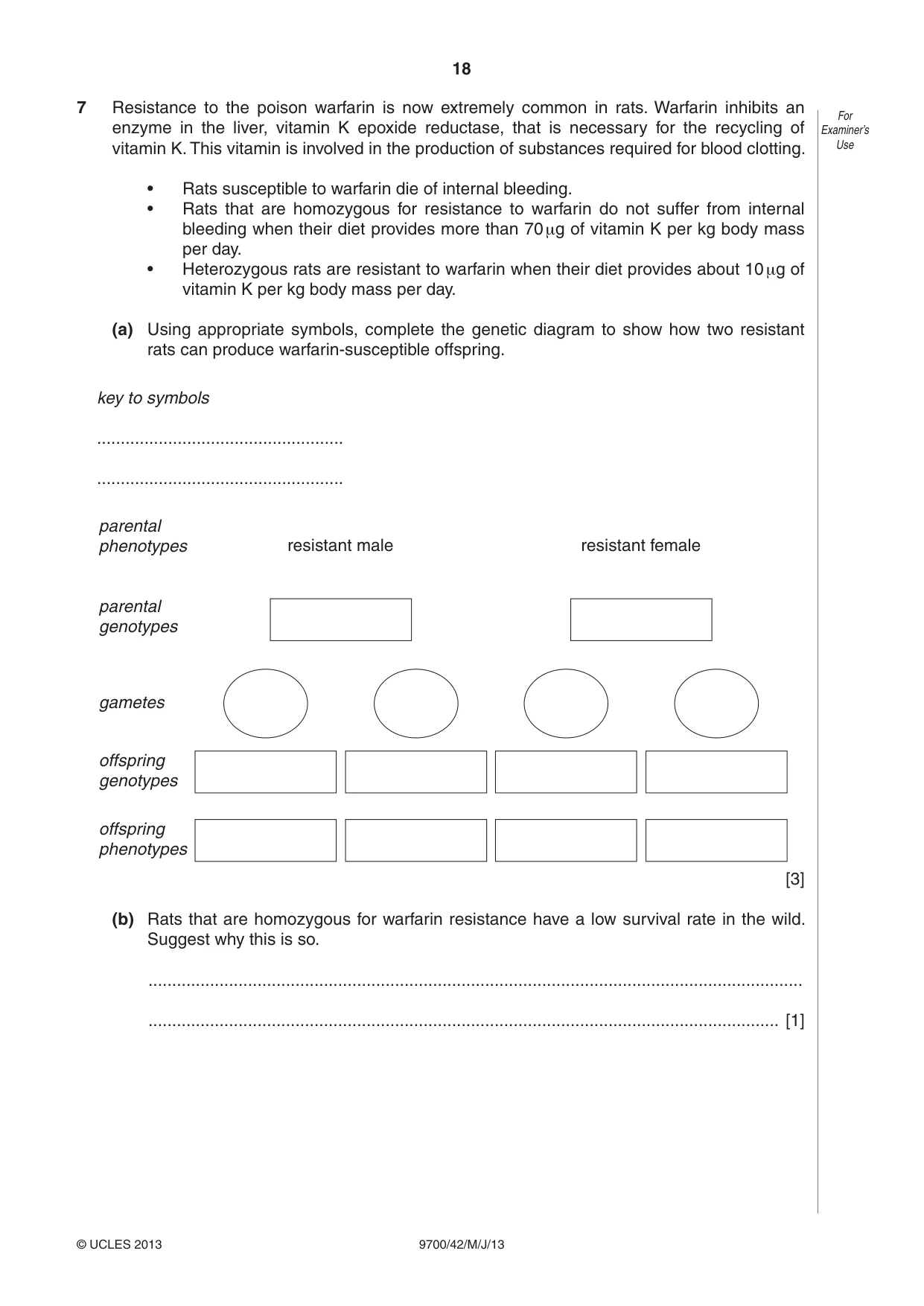
18 9700/42/M/J/13 © UCLES 2013 For Examiner’s Use 7 Resistance to the poison warfarin is now extremely common in rats. Warfarin inhibits an enzyme in the liver, vitamin K epoxide reductase, that is necessary for the recycling of vitamin K. This vitamin is involved in the production of substances required for blood clotting. • Rats susceptible to warfarin die of internal bleeding. • Rats that are homozygous for resistance to warfarin do not suffer from internal bleeding when their diet provides more than 70 μg of vitamin K per kg body mass per day. • Heterozygous rats are resistant to warfarin when their diet provides about 10 μg of vitamin K per kg body mass per day. (a) Using appropriate symbols, complete the genetic diagram to show how two resistant rats can produce warfarin-susceptible offspring. key to symbols … … parental phenotypes resistant male parental genotypes gametes offspring genotypes offspring phenotypes resistant female [3] (b) Rats that are homozygous for warfarin resistance have a low survival rate in the wild. Suggest why this is so. … … [1]
Question paper, page 19
19 9700/42/M/J/13 © UCLES 2013 [Turn over For Examiner’s Use (c) Warfarin can be safely given to humans who are at risk of unwanted blood clots. The clotting time of the blood is measured regularly and the warfarin dose is varied accordingly. Suggest, giving a reason, the type of inhibition warfarin has on the enzyme vitamin K epoxide reductase. type of inhibition … reason … … [2] (d) The allele for warfarin resistance may have originated by a single base substitution and resulted in a modified vitamin K epoxide reductase. Explain how a single base substitution may affect the phenotype of an organism. … … … … … … … … [3] [Total: 9]
Question paper, page 20
20 9700/42/M/J/13 © UCLES 2013 For Examiner’s Use 8 The Death Valley region of Nevada in the USA used to have an extensive lake system. Approximately 20 000 years ago the lakes started to dry up and now consist of isolated small pools. Four different species of the desert pupfish have been found living in these pools. Evidence indicates that over 20 000 years ago there was only one species of pupfish living in the lake system. Fig. 8.1 shows a desert pupfish. Fig. 8.1 (a) Explain how the change from an extensive lake system to just a few pools could have resulted in the evolution of four new species of desert pupfish. … … … … … … … … … … [5]
Question paper, page 21
21 9700/42/M/J/13 © UCLES 2013 [Turn over For Examiner’s Use (b) State how environmental factors can act as stabilising forces of natural selection in an isolated pool, after the initial evolution of a new species of desert pupfish. … … … … [2] (c) Suggest what may happen to the desert pupfish if water levels rise and the pools once more form an extensive lake system. … … … … … … … … [3] [Total: 10]
Question paper, page 22
22 9700/42/M/J/13 © UCLES 2013 For Examiner’s Use Section B Answer one question. 9 (a) Bacteria are members of the kingdom Prokaryota. Describe the main features of a bacterial cell. [8] (b) Outline the use of bacteria in the extraction of metals from ores. [7] [Total:15] 10 (a) Describe the structure of a chloroplast. [7] (b) Explain how rice is adapted to growing in flooded fields. [8] [Total:15] … … … … … … … … … … … … … … … … … …
Question paper, page 23
23 9700/42/M/J/13 © UCLES 2013 [Turn over For Examiner’s Use … … … … … … … … … … … … … … … … … … … … … … … … … … … …
Question paper, page 24
24 9700/42/M/J/13 © UCLES 2013 For Examiner’s Use … … … … … … … … … … … … … … … … … … … … … … … Copyright Acknowledgements: Fig. 6.1 © STEVE GSCHMEISSNER/SCIENCE PHOTO LIBRARY. Fig. 8.1 © Desert Pupfish, Blickwinkel; Alamy. Permission to reproduce items where third-party owned material protected by copyright is included has been sought and cleared where possible. Every reasonable effort has been made by the publisher (UCLES) to trace copyright holders, but if any items requiring clearance have unwittingly been included, the publisher will be pleased to make amends at the earliest possible opportunity. University of Cambridge International Examinations is part of the Cambridge Assessment Group. Cambridge Assessment is the brand name of University of Cambridge Local Examinations Syndicate (UCLES), which is itself a department of the University of Cambridge.
Mark scheme, page 1
CAMBRIDGE INTERNATIONAL EXAMINATIONS GCE Advanced Subsidiary Level and GCE Advanced Level MARK SCHEME for the May/June 2013 series 9700 BIOLOGY 9700/42 Paper 4 (A2 Structured Questions), maximum raw mark 100 This mark scheme is published as an aid to teachers and candidates, to indicate the requirements of the examination. It shows the basis on which Examiners were instructed to award marks. It does not indicate the details of the discussions that took place at an Examiners’ meeting before marking began, which would have considered the acceptability of alternative answers. Mark schemes should be read in conjunction with the question paper and the Principal Examiner Report for Teachers. Cambridge will not enter into discussions about these mark schemes. Cambridge is publishing the mark schemes for the May/June 2013 series for most IGCSE, GCE Advanced Level and Advanced Subsidiary Level components and some Ordinary Level components.
Mark scheme, page 2
Page 2 Mark Scheme Syllabus Paper GCE AS/A LEVEL – May/June 2013 9700 42 © Cambridge International Examinations 2013 Mark scheme abbreviations: ; separates marking points / alternative answers for the same point R reject A accept (for answers correctly cued by the question, or by extra guidance) AW alternative wording (where responses vary more than usual) underline actual word given must be used by candidate (grammatical variants excepted) max indicates the maximum number of marks that can be given ora or reverse argument mp marking point (with relevant number) ecf error carried forward I ignore AVP Alternative valid point (examples given as guidance)
Mark scheme, page 3
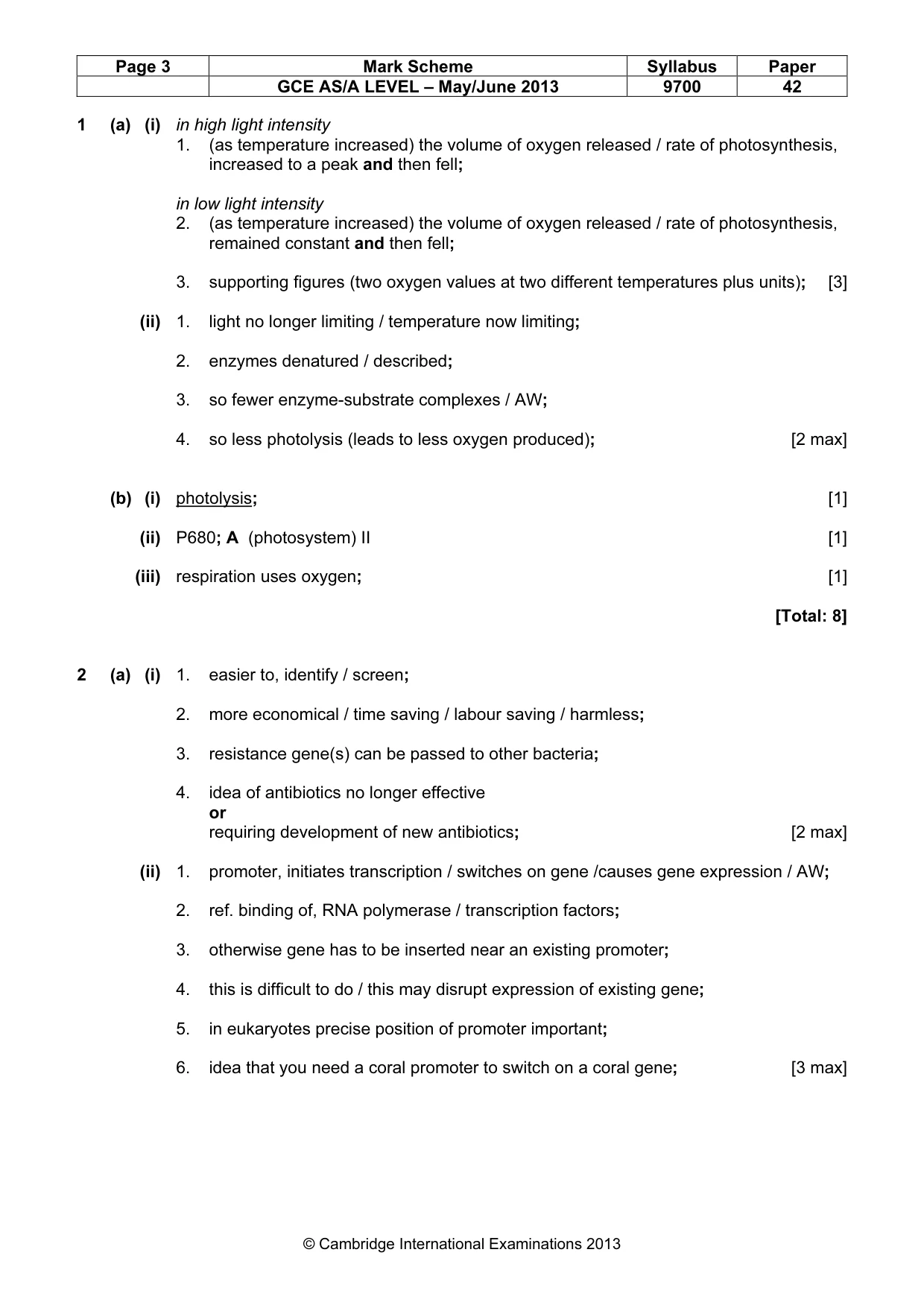
Page 3 Mark Scheme Syllabus Paper GCE AS/A LEVEL – May/June 2013 9700 42 © Cambridge International Examinations 2013 1 (a) (i) in high light intensity 1. (as temperature increased) the volume of oxygen released / rate of photosynthesis, increased to a peak and then fell; in low light intensity 2. (as temperature increased) the volume of oxygen released / rate of photosynthesis, remained constant and then fell; 3. supporting figures (two oxygen values at two different temperatures plus units); [3] (ii) 1. light no longer limiting / temperature now limiting; 2. enzymes denatured / described; 3. so fewer enzyme-substrate complexes / AW; 4. so less photolysis (leads to less oxygen produced); [2 max] (b) (i) photolysis; [1] (ii) P680; A (photosystem) II [1] (iii) respiration uses oxygen; [1] [Total: 8] 2 (a) (i) 1. easier to, identify / screen; 2. more economical / time saving / labour saving / harmless; 3. resistance gene(s) can be passed to other bacteria; 4. idea of antibiotics no longer effective or requiring development of new antibiotics; [2 max] (ii) 1. promoter, initiates transcription / switches on gene /causes gene expression / AW; 2. ref. binding of, RNA polymerase / transcription factors; 3. otherwise gene has to be inserted near an existing promoter; 4. this is difficult to do / this may disrupt expression of existing gene; 5. in eukaryotes precise position of promoter important; 6. idea that you need a coral promoter to switch on a coral gene; [3 max]
Mark scheme, page 4
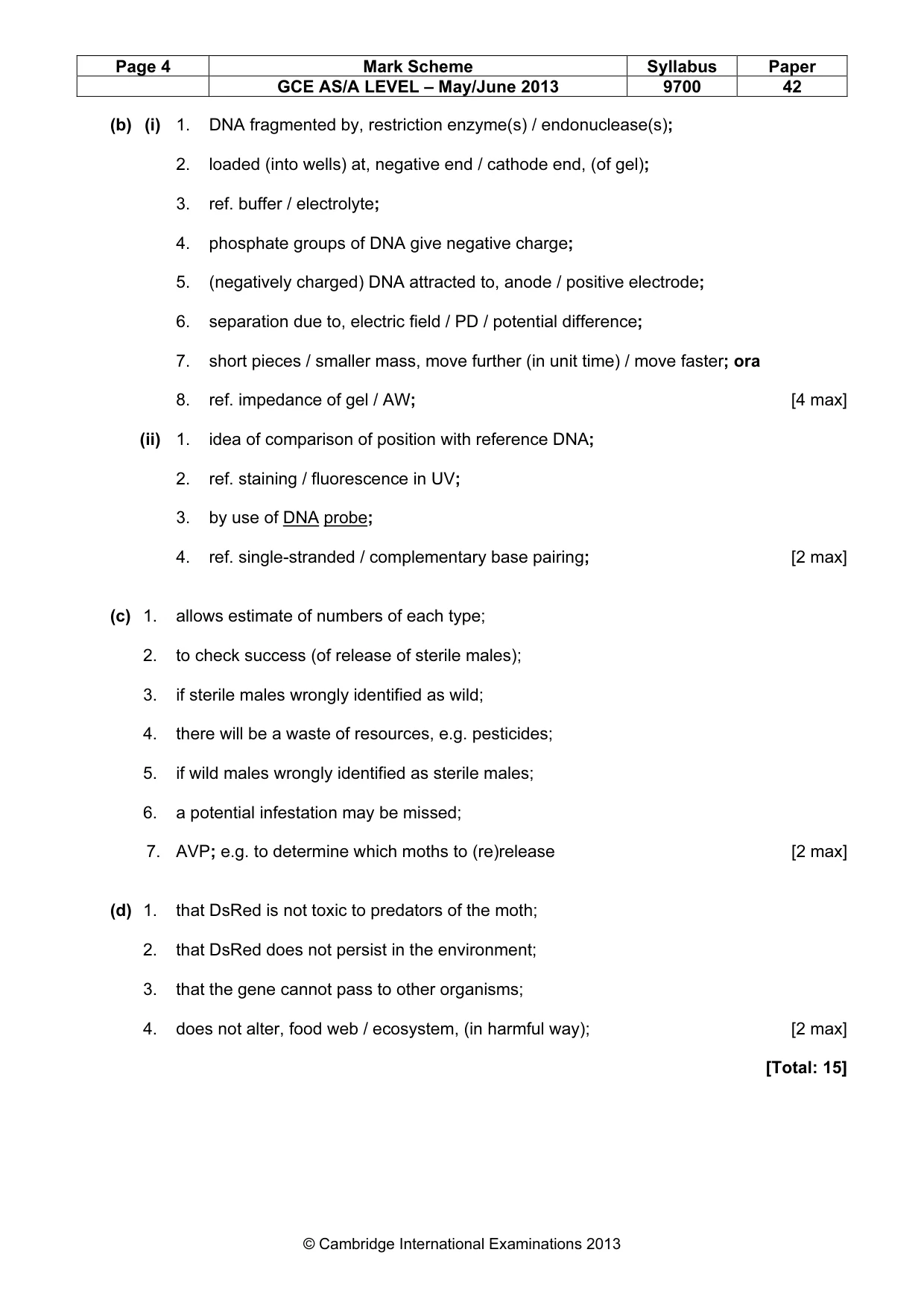
Page 4 Mark Scheme Syllabus Paper GCE AS/A LEVEL – May/June 2013 9700 42 © Cambridge International Examinations 2013 (b) (i) 1. DNA fragmented by, restriction enzyme(s) / endonuclease(s); 2. loaded (into wells) at, negative end / cathode end, (of gel); 3. ref. buffer / electrolyte; 4. phosphate groups of DNA give negative charge; 5. (negatively charged) DNA attracted to, anode / positive electrode; 6. separation due to, electric field / PD / potential difference; 7. short pieces / smaller mass, move further (in unit time) / move faster; ora 8. ref. impedance of gel / AW; [4 max] (ii) 1. idea of comparison of position with reference DNA; 2. ref. staining / fluorescence in UV; 3. by use of DNA probe; 4. ref. single-stranded / complementary base pairing; [2 max] (c) 1. allows estimate of numbers of each type; 2. to check success (of release of sterile males); 3. if sterile males wrongly identified as wild; 4. there will be a waste of resources, e.g. pesticides; 5. if wild males wrongly identified as sterile males; 6. a potential infestation may be missed; 7. AVP; e.g. to determine which moths to (re)release [2 max] (d) 1. that DsRed is not toxic to predators of the moth; 2. that DsRed does not persist in the environment; 3. that the gene cannot pass to other organisms; 4. does not alter, food web / ecosystem, (in harmful way); [2 max] [Total: 15]
Mark scheme, page 5
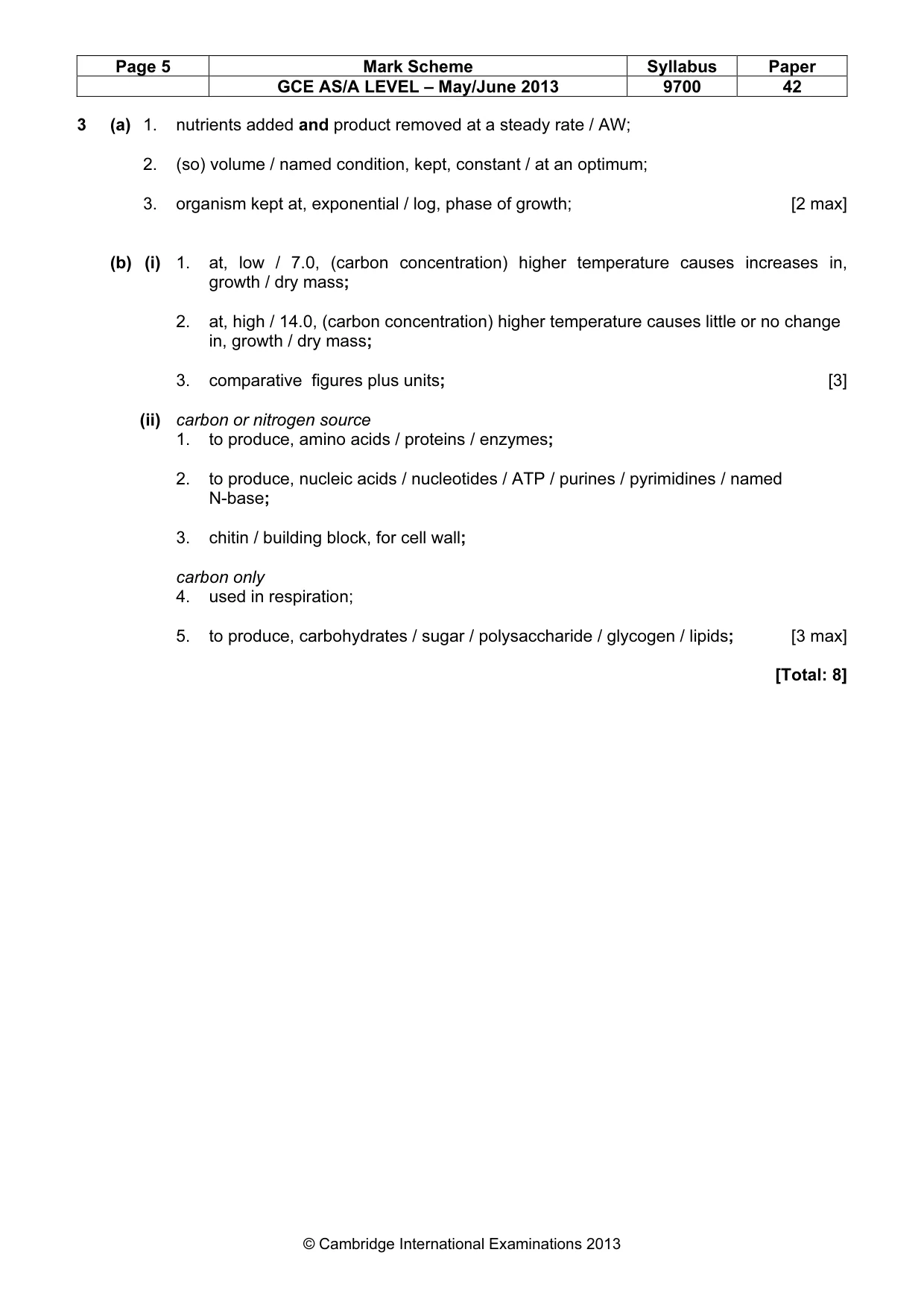
Page 5 Mark Scheme Syllabus Paper GCE AS/A LEVEL – May/June 2013 9700 42 © Cambridge International Examinations 2013 3 (a) 1. nutrients added and product removed at a steady rate / AW; 2. (so) volume / named condition, kept, constant / at an optimum; 3. organism kept at, exponential / log, phase of growth; [2 max] (b) (i) 1. at, low / 7.0, (carbon concentration) higher temperature causes increases in, growth / dry mass; 2. at, high / 14.0, (carbon concentration) higher temperature causes little or no change in, growth / dry mass; 3. comparative figures plus units; [3] (ii) carbon or nitrogen source 1. to produce, amino acids / proteins / enzymes; 2. to produce, nucleic acids / nucleotides / ATP / purines / pyrimidines / named N-base; 3. chitin / building block, for cell wall; carbon only 4. used in respiration; 5. to produce, carbohydrates / sugar / polysaccharide / glycogen / lipids; [3 max] [Total: 8]
Mark scheme, page 6
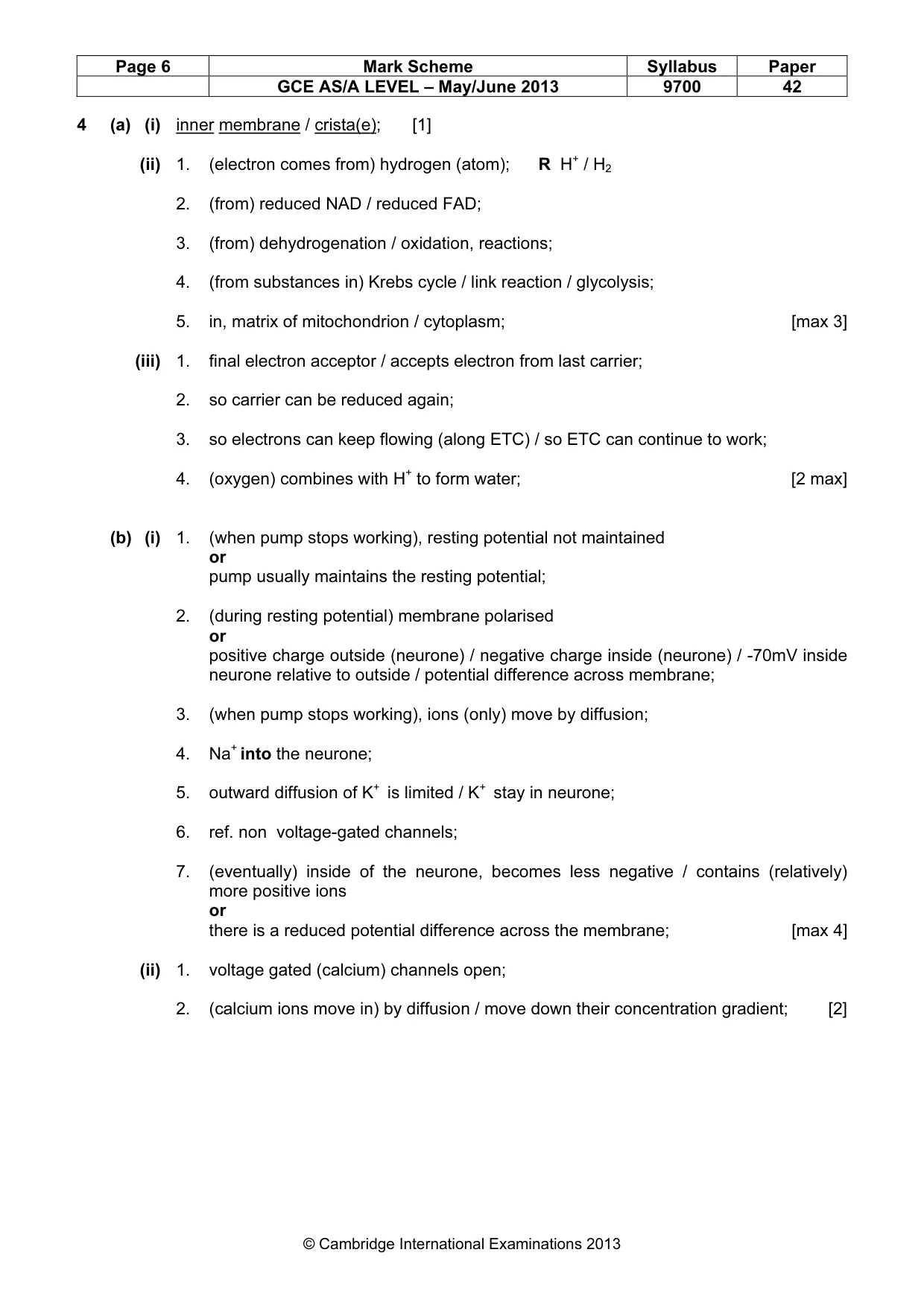
Page 6 Mark Scheme Syllabus Paper GCE AS/A LEVEL – May/June 2013 9700 42 © Cambridge International Examinations 2013 4 (a) (i) inner membrane / crista(e); [1] (ii) 1. (electron comes from) hydrogen (atom); R H+ / H2 2. (from) reduced NAD / reduced FAD; 3. (from) dehydrogenation / oxidation, reactions; 4. (from substances in) Krebs cycle / link reaction / glycolysis; 5. in, matrix of mitochondrion / cytoplasm; [max 3] (iii) 1. final electron acceptor / accepts electron from last carrier; 2. so carrier can be reduced again; 3. so electrons can keep flowing (along ETC) / so ETC can continue to work; 4. (oxygen) combines with H+ to form water; [2 max] (b) (i) 1. (when pump stops working), resting potential not maintained or pump usually maintains the resting potential; 2. (during resting potential) membrane polarised or positive charge outside (neurone) / negative charge inside (neurone) / -70mV inside neurone relative to outside / potential difference across membrane; 3. (when pump stops working), ions (only) move by diffusion; 4. Na+ into the neurone; 5. outward diffusion of K+ is limited / K+ stay in neurone; 6. ref. non voltage-gated channels; 7. (eventually) inside of the neurone, becomes less negative / contains (relatively) more positive ions or there is a reduced potential difference across the membrane; [max 4] (ii) 1. voltage gated (calcium) channels open; 2. (calcium ions move in) by diffusion / move down their concentration gradient; [2]
Mark scheme, page 7
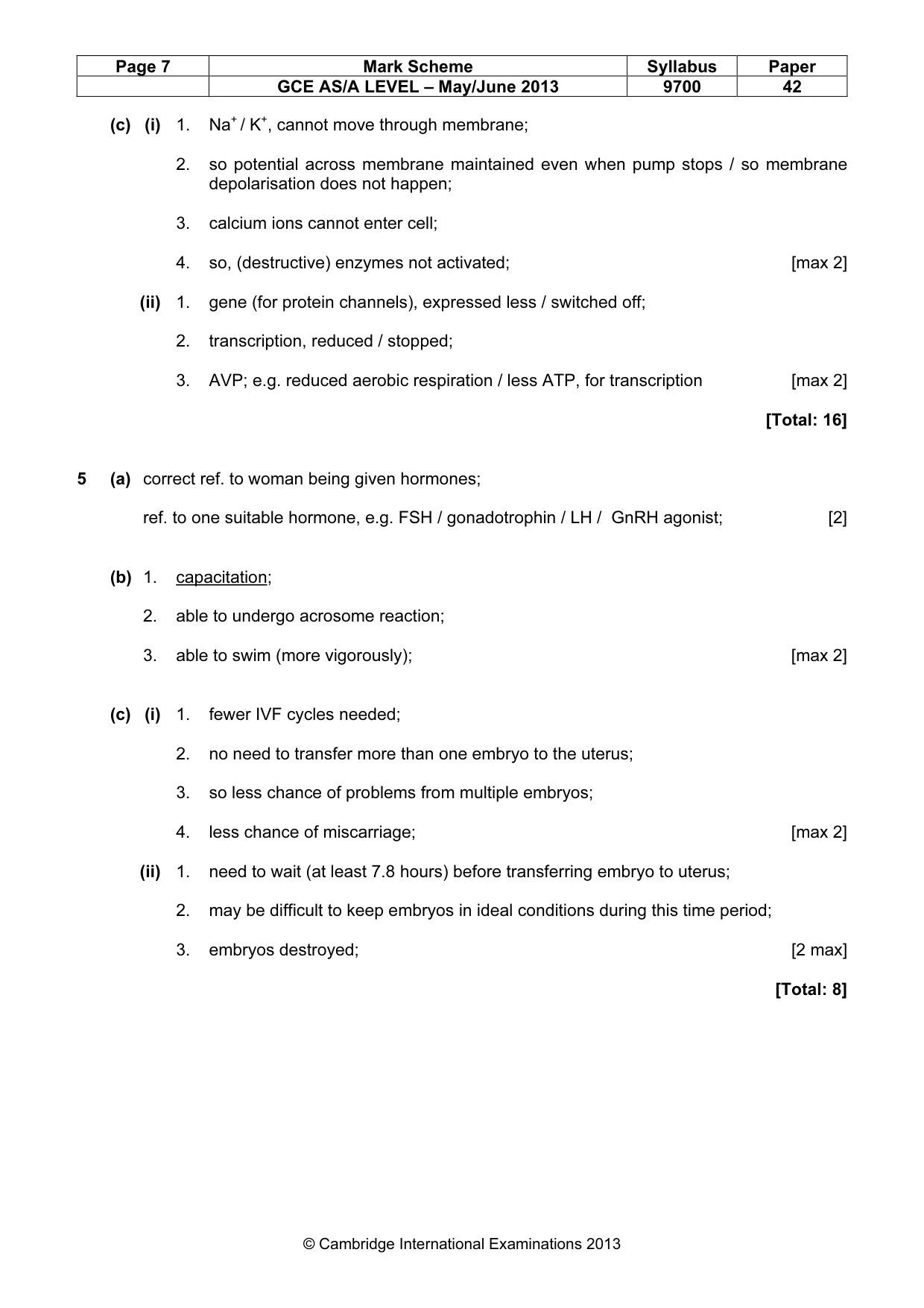
Page 7 Mark Scheme Syllabus Paper GCE AS/A LEVEL – May/June 2013 9700 42 © Cambridge International Examinations 2013 (c) (i) 1. Na+ / K+, cannot move through membrane; 2. so potential across membrane maintained even when pump stops / so membrane depolarisation does not happen; 3. calcium ions cannot enter cell; 4. so, (destructive) enzymes not activated; [max 2] (ii) 1. gene (for protein channels), expressed less / switched off; 2. transcription, reduced / stopped; 3. AVP; e.g. reduced aerobic respiration / less ATP, for transcription [max 2] [Total: 16] 5 (a) correct ref. to woman being given hormones; ref. to one suitable hormone, e.g. FSH / gonadotrophin / LH / GnRH agonist; [2] (b) 1. capacitation; 2. able to undergo acrosome reaction; 3. able to swim (more vigorously); [max 2] (c) (i) 1. fewer IVF cycles needed; 2. no need to transfer more than one embryo to the uterus; 3. so less chance of problems from multiple embryos; 4. less chance of miscarriage; [max 2] (ii) 1. need to wait (at least 7.8 hours) before transferring embryo to uterus; 2. may be difficult to keep embryos in ideal conditions during this time period; 3. embryos destroyed; [2 max] [Total: 8]
Mark scheme, page 8
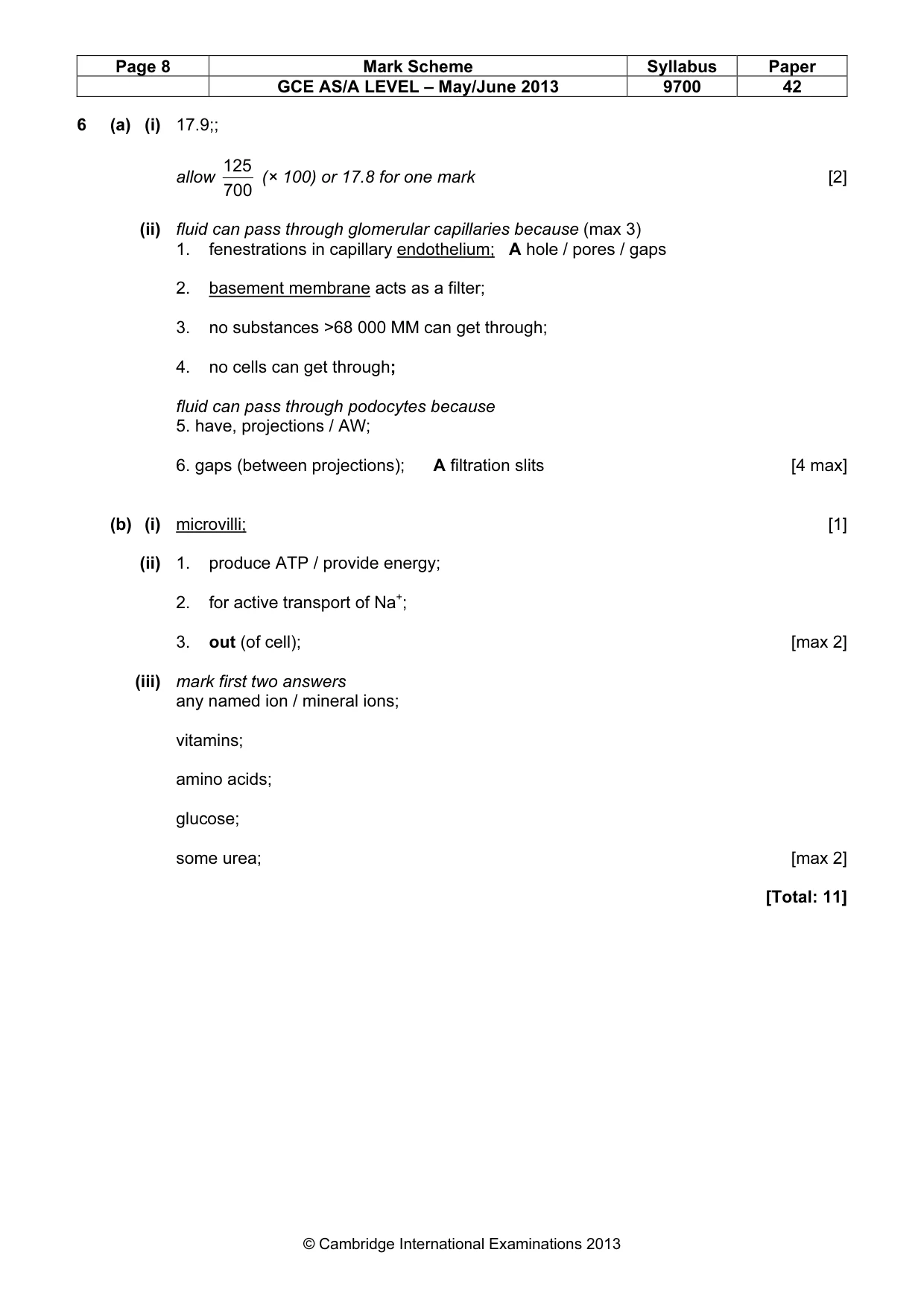
Page 8 Mark Scheme Syllabus Paper GCE AS/A LEVEL – May/June 2013 9700 42 © Cambridge International Examinations 2013 6 (a) (i) 17.9;; allow 700 125 (× 100) or 17.8 for one mark [2] (ii) fluid can pass through glomerular capillaries because (max 3) 1. fenestrations in capillary endothelium; A hole / pores / gaps 2. basement membrane acts as a filter; 3. no substances >68 000 MM can get through; 4. no cells can get through; fluid can pass through podocytes because 5. have, projections / AW; 6. gaps (between projections); A filtration slits [4 max] (b) (i) microvilli; [1] (ii) 1. produce ATP / provide energy; 2. for active transport of Na+; 3. out (of cell); [max 2] (iii) mark first two answers any named ion / mineral ions; vitamins; amino acids; glucose; some urea; [max 2] [Total: 11]
Mark scheme, page 9
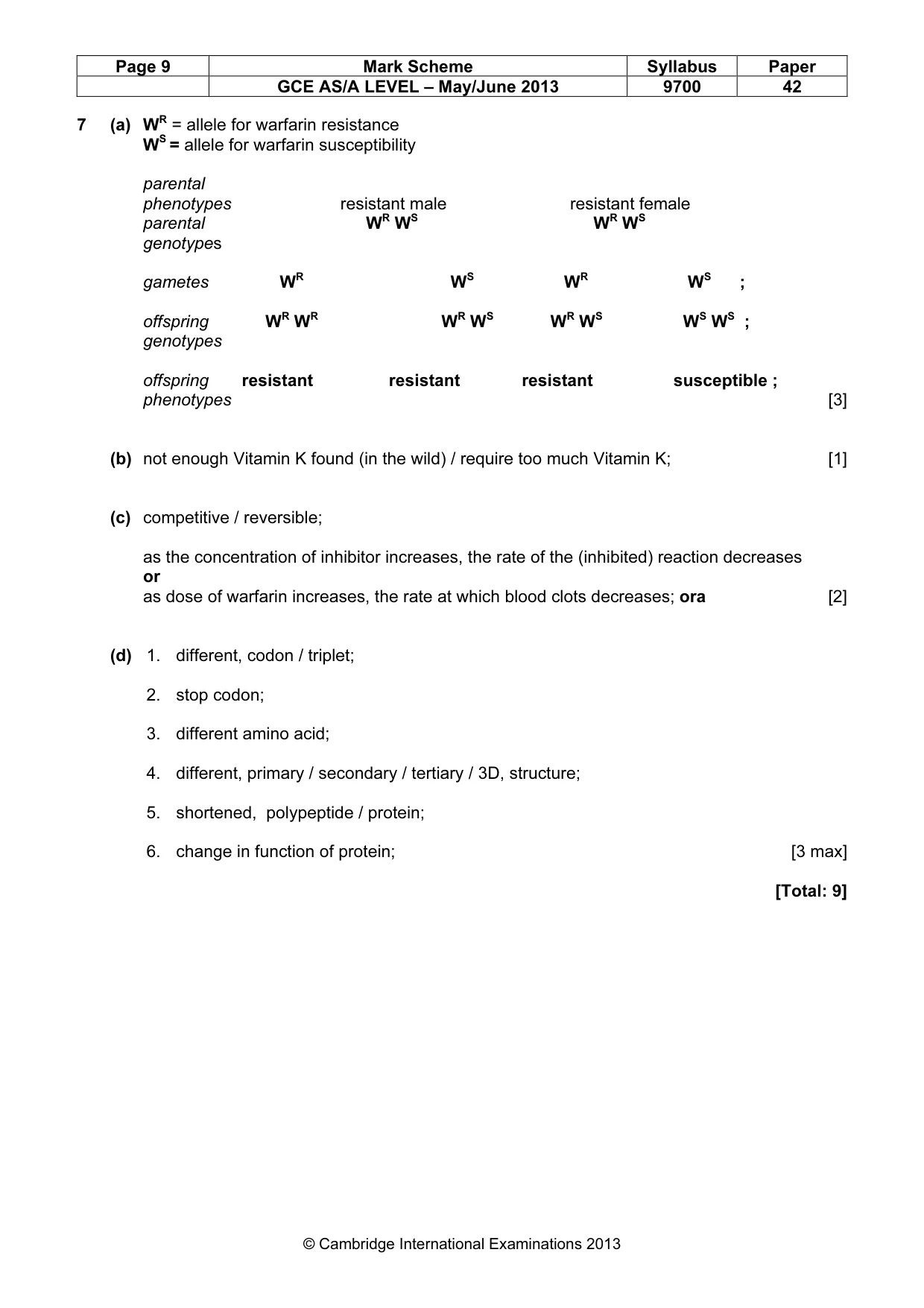
Page 9 Mark Scheme Syllabus Paper GCE AS/A LEVEL – May/June 2013 9700 42 © Cambridge International Examinations 2013 7 (a) WR = allele for warfarin resistance WS = allele for warfarin susceptibility parental phenotypes resistant male resistant female parental WR WS WR WS genotypes gametes WR WS WR WS ; offspring WR WR WR WS WR WS WS WS ; genotypes offspring resistant resistant resistant susceptible ; phenotypes [3] (b) not enough Vitamin K found (in the wild) / require too much Vitamin K; [1] (c) competitive / reversible; as the concentration of inhibitor increases, the rate of the (inhibited) reaction decreases or as dose of warfarin increases, the rate at which blood clots decreases; ora [2] (d) 1. different, codon / triplet; 2. stop codon; 3. different amino acid; 4. different, primary / secondary / tertiary / 3D, structure; 5. shortened, polypeptide / protein; 6. change in function of protein; [3 max] [Total: 9]
Mark scheme, page 10
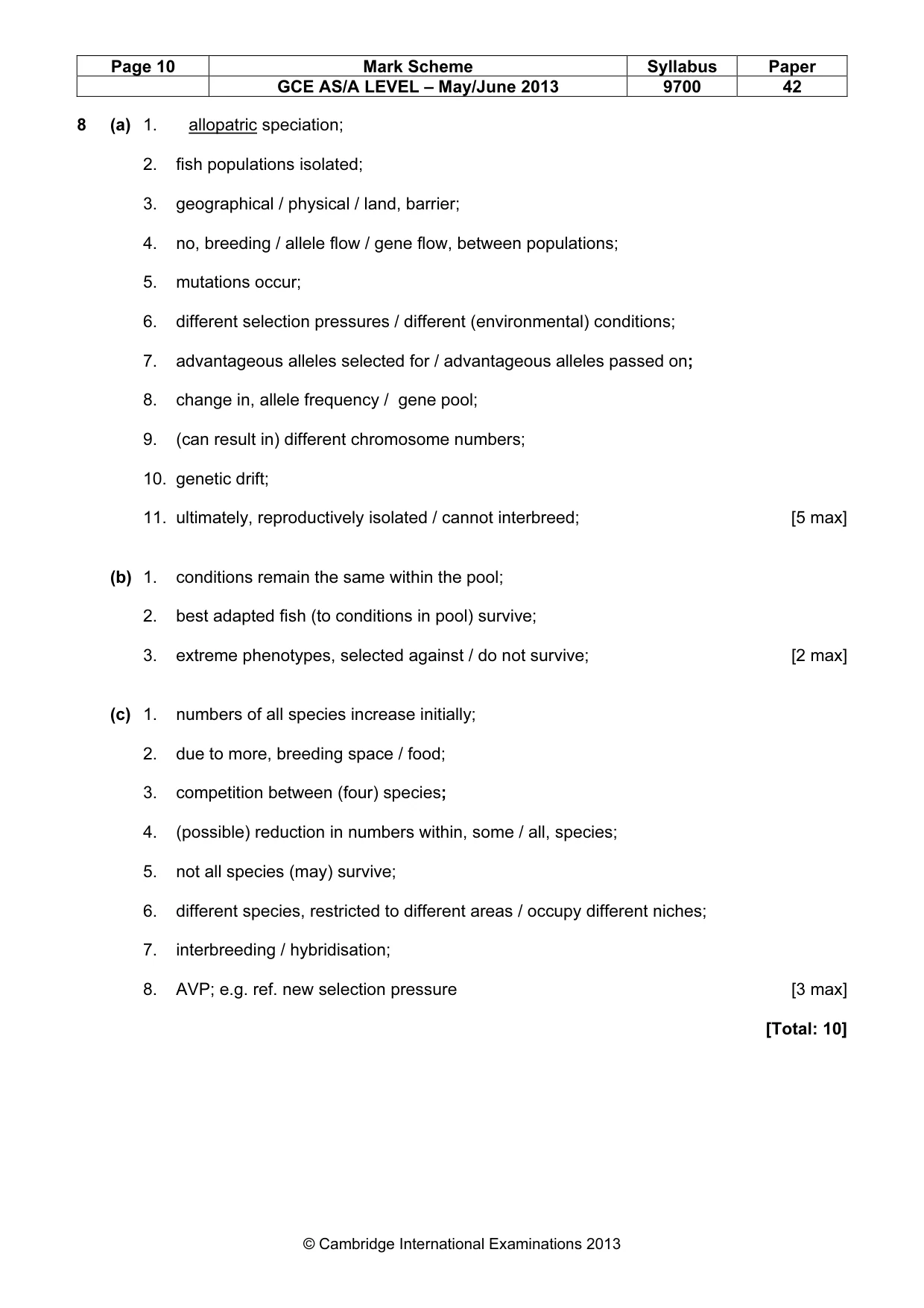
Page 10 Mark Scheme Syllabus Paper GCE AS/A LEVEL – May/June 2013 9700 42 © Cambridge International Examinations 2013 8 (a) 1. allopatric speciation; 2. fish populations isolated; 3. geographical / physical / land, barrier; 4. no, breeding / allele flow / gene flow, between populations; 5. mutations occur; 6. different selection pressures / different (environmental) conditions; 7. advantageous alleles selected for / advantageous alleles passed on; 8. change in, allele frequency / gene pool; 9. (can result in) different chromosome numbers; 10. genetic drift; 11. ultimately, reproductively isolated / cannot interbreed; [5 max] (b) 1. conditions remain the same within the pool; 2. best adapted fish (to conditions in pool) survive; 3. extreme phenotypes, selected against / do not survive; [2 max] (c) 1. numbers of all species increase initially; 2. due to more, breeding space / food; 3. competition between (four) species; 4. (possible) reduction in numbers within, some / all, species; 5. not all species (may) survive; 6. different species, restricted to different areas / occupy different niches; 7. interbreeding / hybridisation; 8. AVP; e.g. ref. new selection pressure [3 max] [Total: 10]
Mark scheme, page 11
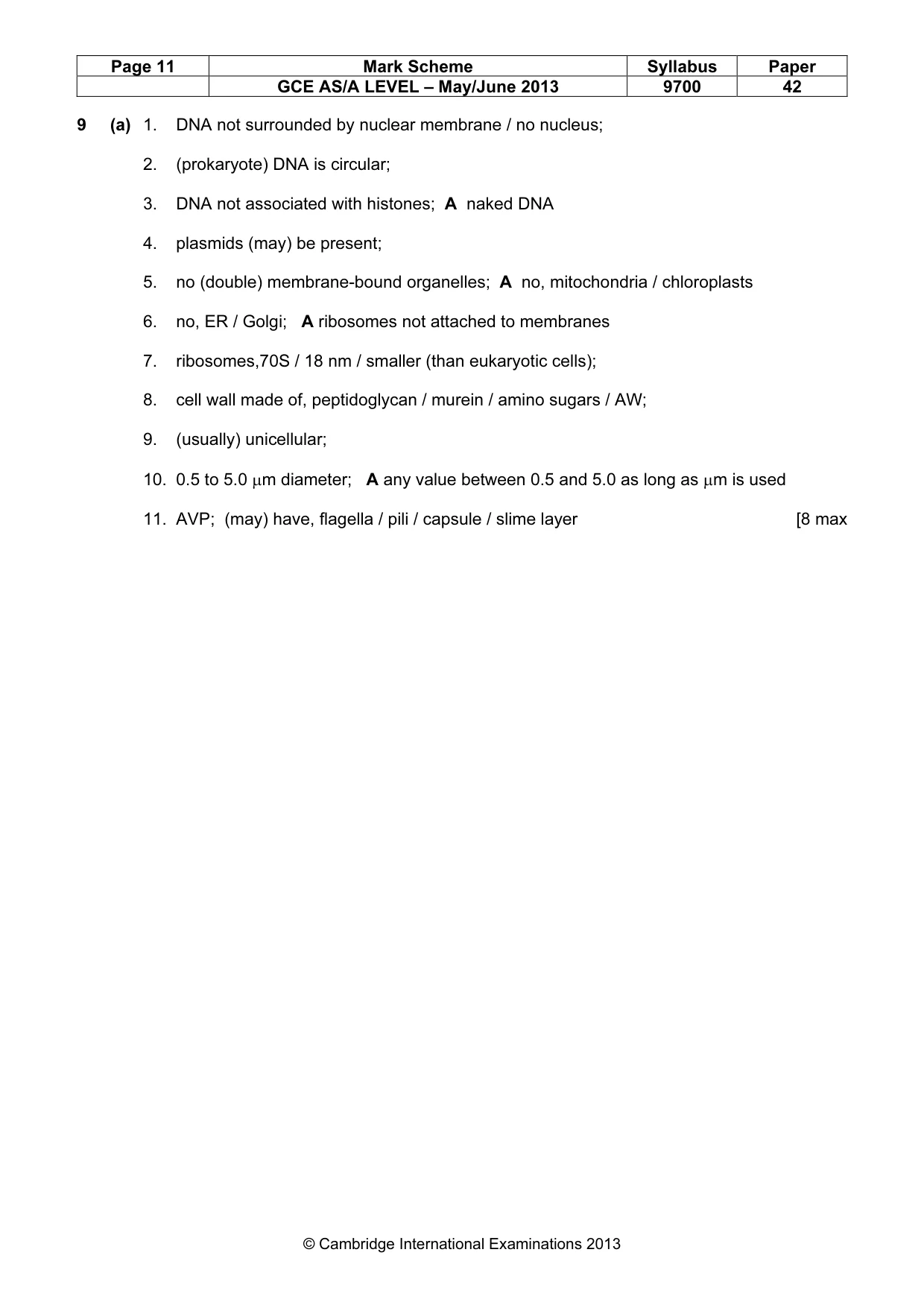
Page 11 Mark Scheme Syllabus Paper GCE AS/A LEVEL – May/June 2013 9700 42 © Cambridge International Examinations 2013 9 (a) 1. DNA not surrounded by nuclear membrane / no nucleus; 2. (prokaryote) DNA is circular; 3. DNA not associated with histones; A naked DNA 4. plasmids (may) be present; 5. no (double) membrane-bound organelles; A no, mitochondria / chloroplasts 6. no, ER / Golgi; A ribosomes not attached to membranes 7. ribosomes,70S / 18 nm / smaller (than eukaryotic cells); 8. cell wall made of, peptidoglycan / murein / amino sugars / AW; 9. (usually) unicellular; 10. 0.5 to 5.0 µm diameter; A any value between 0.5 and 5.0 as long as µm is used 11. AVP; (may) have, flagella / pili / capsule / slime layer [8 max
Mark scheme, page 12
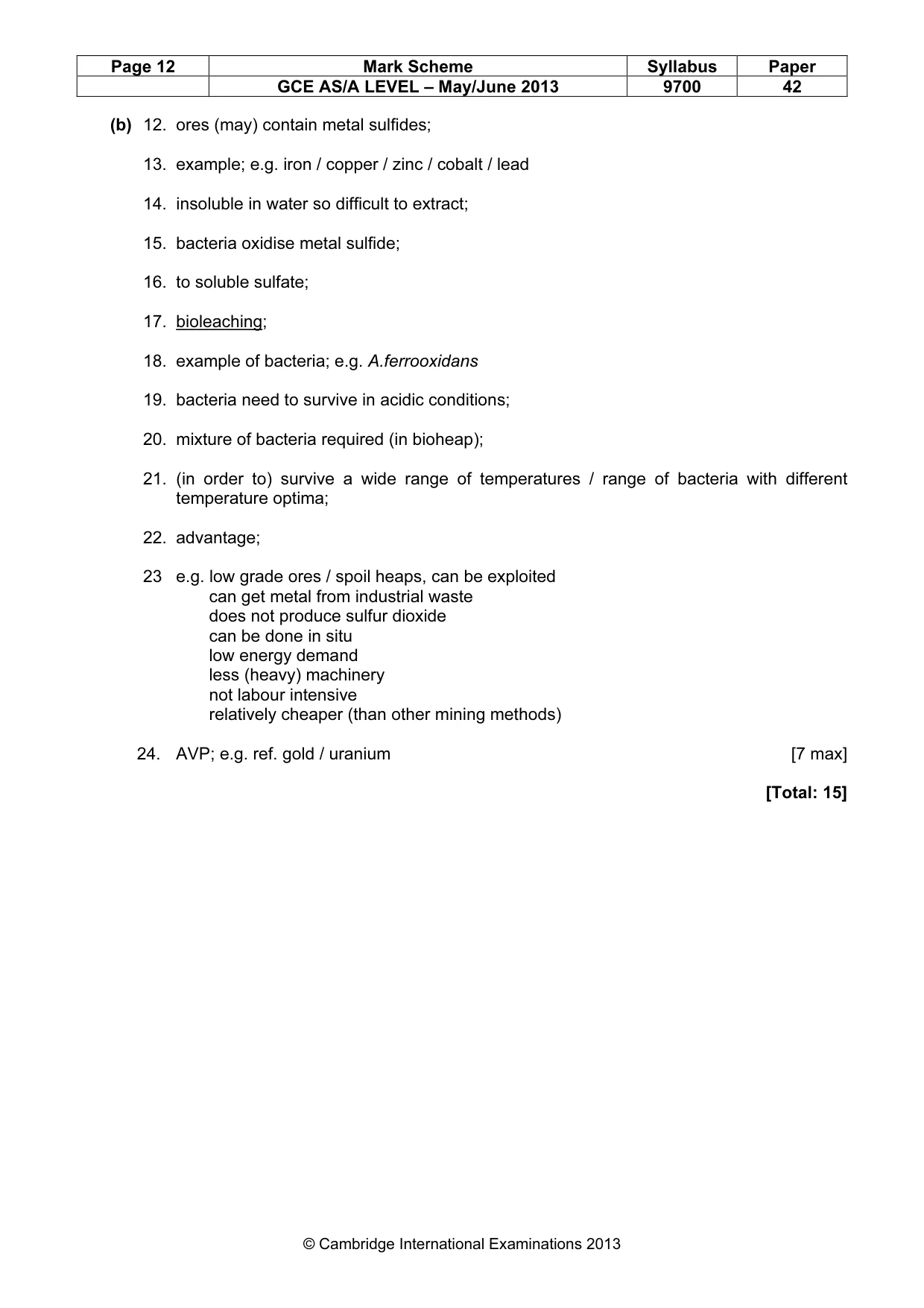
Page 12 Mark Scheme Syllabus Paper GCE AS/A LEVEL – May/June 2013 9700 42 © Cambridge International Examinations 2013 (b) 12. ores (may) contain metal sulfides; 13. example; e.g. iron / copper / zinc / cobalt / lead 14. insoluble in water so difficult to extract; 15. bacteria oxidise metal sulfide; 16. to soluble sulfate; 17. bioleaching; 18. example of bacteria; e.g. A.ferrooxidans 19. bacteria need to survive in acidic conditions; 20. mixture of bacteria required (in bioheap); 21. (in order to) survive a wide range of temperatures / range of bacteria with different temperature optima; 22. advantage; 23 e.g. low grade ores / spoil heaps, can be exploited can get metal from industrial waste does not produce sulfur dioxide can be done in situ low energy demand less (heavy) machinery not labour intensive relatively cheaper (than other mining methods) 24. AVP; e.g. ref. gold / uranium [7 max] [Total: 15]
Mark scheme, page 13
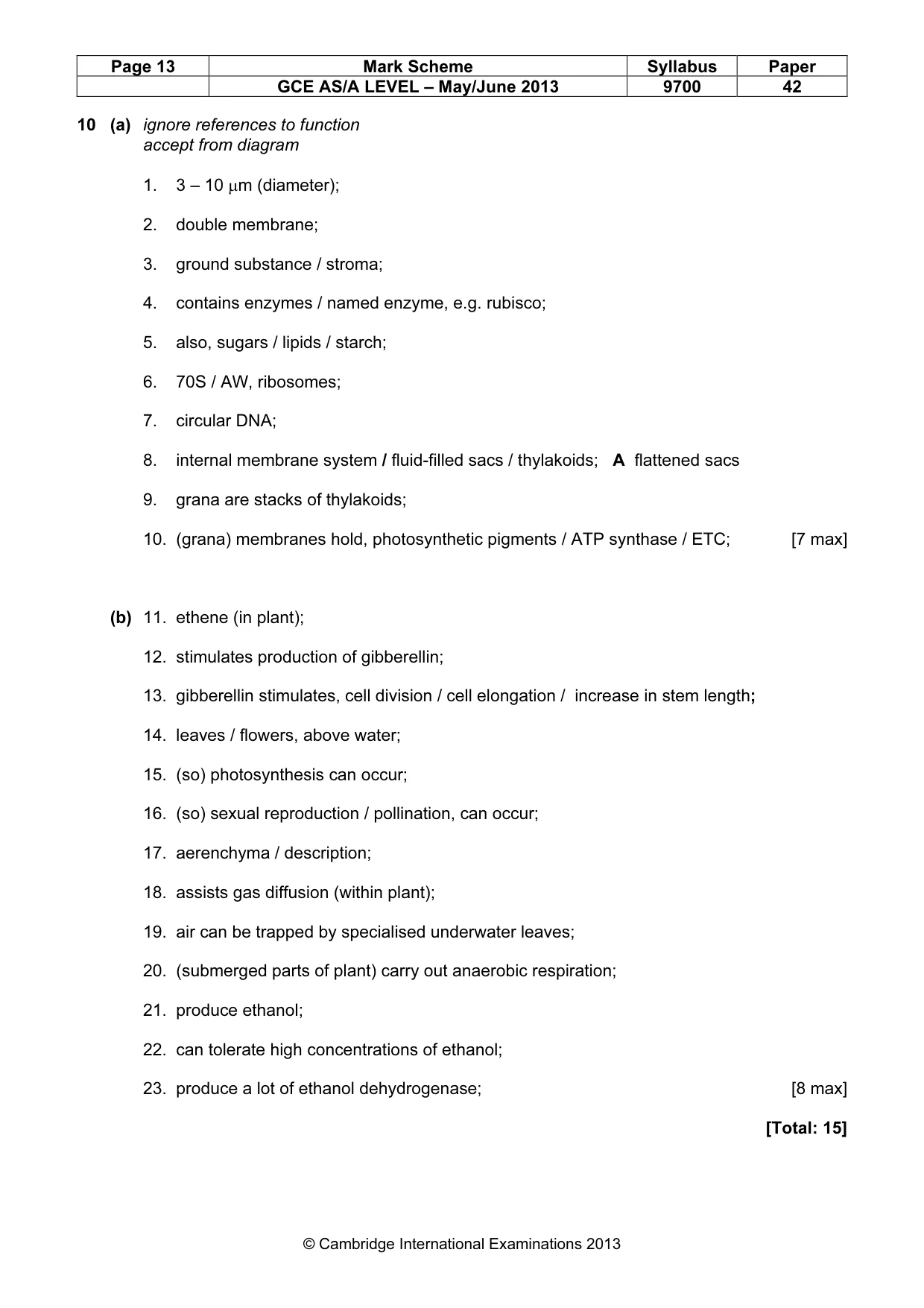
Page 13 Mark Scheme Syllabus Paper GCE AS/A LEVEL – May/June 2013 9700 42 © Cambridge International Examinations 2013 10 (a) ignore references to function accept from diagram 1. 3 – 10 µm (diameter); 2. double membrane; 3. ground substance / stroma; 4. contains enzymes / named enzyme, e.g. rubisco; 5. also, sugars / lipids / starch; 6. 70S / AW, ribosomes; 7. circular DNA; 8. internal membrane system / fluid-filled sacs / thylakoids; A flattened sacs 9. grana are stacks of thylakoids; 10. (grana) membranes hold, photosynthetic pigments / ATP synthase / ETC; [7 max] (b) 11. ethene (in plant); 12. stimulates production of gibberellin; 13. gibberellin stimulates, cell division / cell elongation / increase in stem length; 14. leaves / flowers, above water; 15. (so) photosynthesis can occur; 16. (so) sexual reproduction / pollination, can occur; 17. aerenchyma / description; 18. assists gas diffusion (within plant); 19. air can be trapped by specialised underwater leaves; 20. (submerged parts of plant) carry out anaerobic respiration; 21. produce ethanol; 22. can tolerate high concentrations of ethanol; 23. produce a lot of ethanol dehydrogenase; [8 max] [Total: 15]
What you needed in this session
Cambridge’s own grade thresholds for 2013 May/June, Paper 4 · Variant 2. A higher threshold means an easier paper — the bar moves with how the cohort did.