Cambridge A Level Biology 9700 — 2010 May/June Paper 2 · Variant 1
9700/21/M/J/10 · 60 marks · ≈68 min
The question paper and its mark scheme, free to read here and free to download. This is Cambridge’s own paper, exactly as it was sat.
Question paper16 pages


Mark scheme6 pages
Answers below. Sit the paper first if you are practising.
Paper as text
Question paper, page 1
This document consists of 14 printed pages and 2 blank pages. DC (SM/DJ) 25205/2 © UCLES 2010 [Turn over UNIVERSITY OF CAMBRIDGE INTERNATIONAL EXAMINATIONS General Certificate of Education Advanced Subsidiary Level and Advanced Level READ THESE INSTRUCTIONS FIRST Write your Centre number, candidate number and name in the spaces provided at the top of the page. Write in dark blue or black pen. You may use a soft pencil for any diagrams, graphs or rough working. Do not use staples, paper clips, highlighters, glue or correction fluid. DO NOT WRITE IN ANY BARCODES. Answer all questions. At the end of the examination, fasten all your work securely together. The number of marks is given in brackets [ ] at the end of each question or part question. * 2 8 9 9 8 7 1 3 9 4 * BIOLOGY 9700/21 Paper 2 Structured Questions AS May/June 2010 1 hour 15 minutes Candidates answer on the Question Paper. No Additional Materials are required. For Examiner’s Use 1 2 3 4 5 6 Total
Question paper, page 2
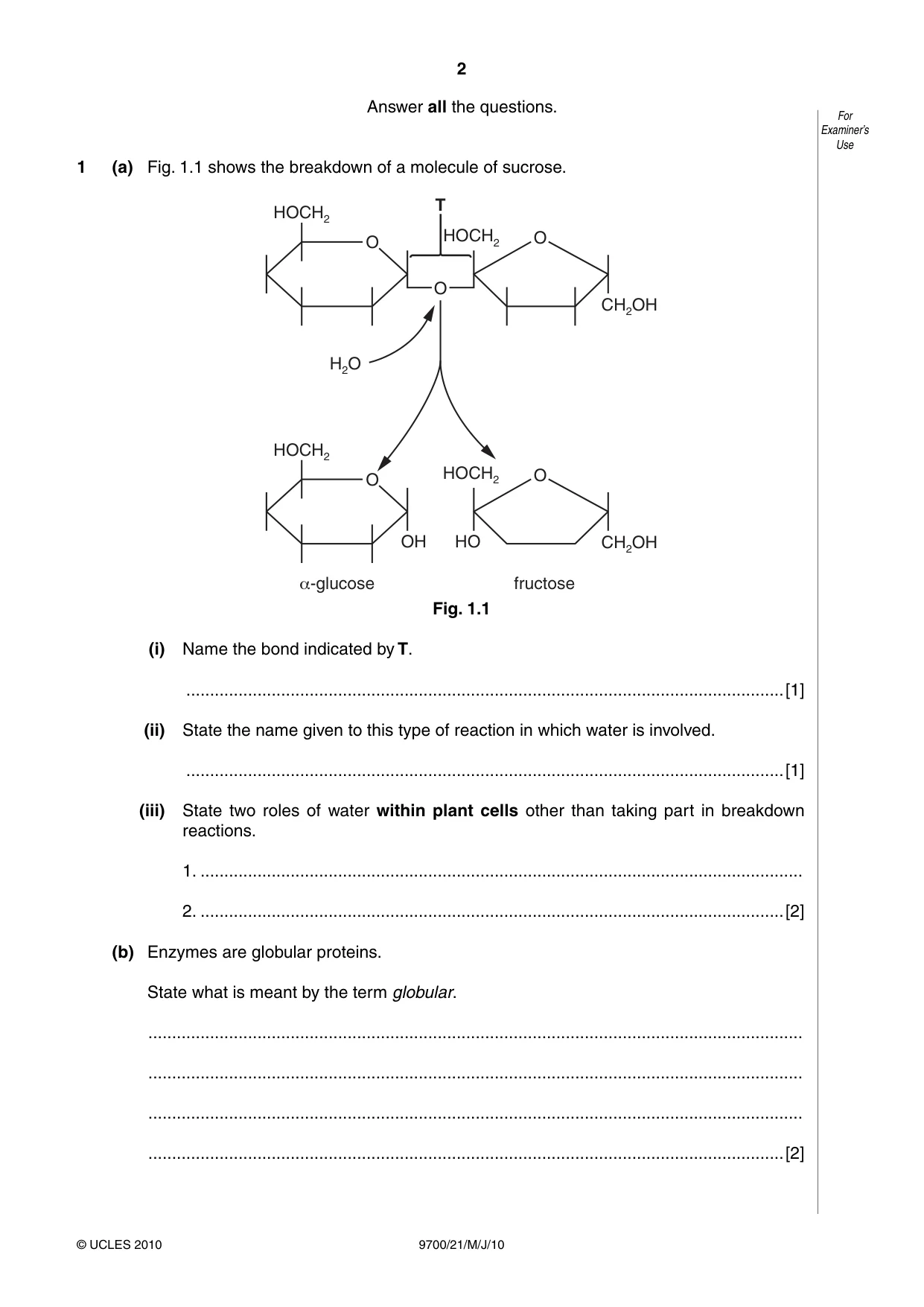
2 9700/21/M/J/10 © UCLES 2010 For Examiner’s Use Answer all the questions. 1 (a) Fig. 1.1 shows the breakdown of a molecule of sucrose. HOCH2 H2O HOCH2 T O O O O HOCH2 HOCH2 HO OH α-glucose fructose CH2OH CH2OH O Fig. 1.1 (i) Name the bond indicated by T. …[1] (ii) State the name given to this type of reaction in which water is involved. …[1] (iii) State two roles of water within plant cells other than taking part in breakdown reactions. 1. … 2. …[2] (b) Enzymes are globular proteins. State what is meant by the term globular. … … … …[2]
Question paper, page 3
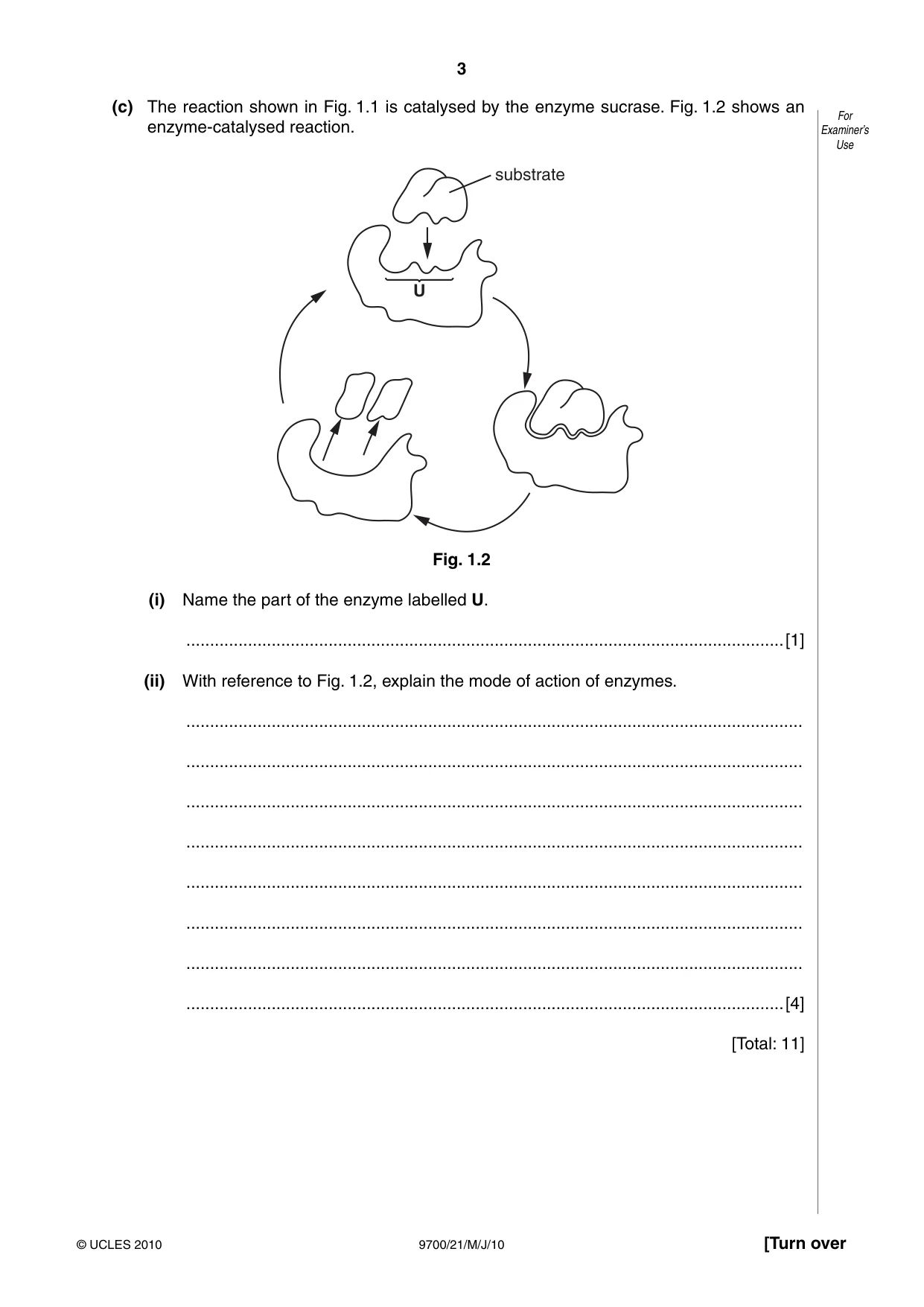
3 9700/21/M/J/10 © UCLES 2010 [Turn over For Examiner’s Use (c) The reaction shown in Fig. 1.1 is catalysed by the enzyme sucrase. Fig. 1.2 shows an enzyme-catalysed reaction. U substrate Fig. 1.2 (i) Name the part of the enzyme labelled U. …[1] (ii) With reference to Fig. 1.2, explain the mode of action of enzymes. … … … … … … … …[4] [Total: 11]
Question paper, page 4
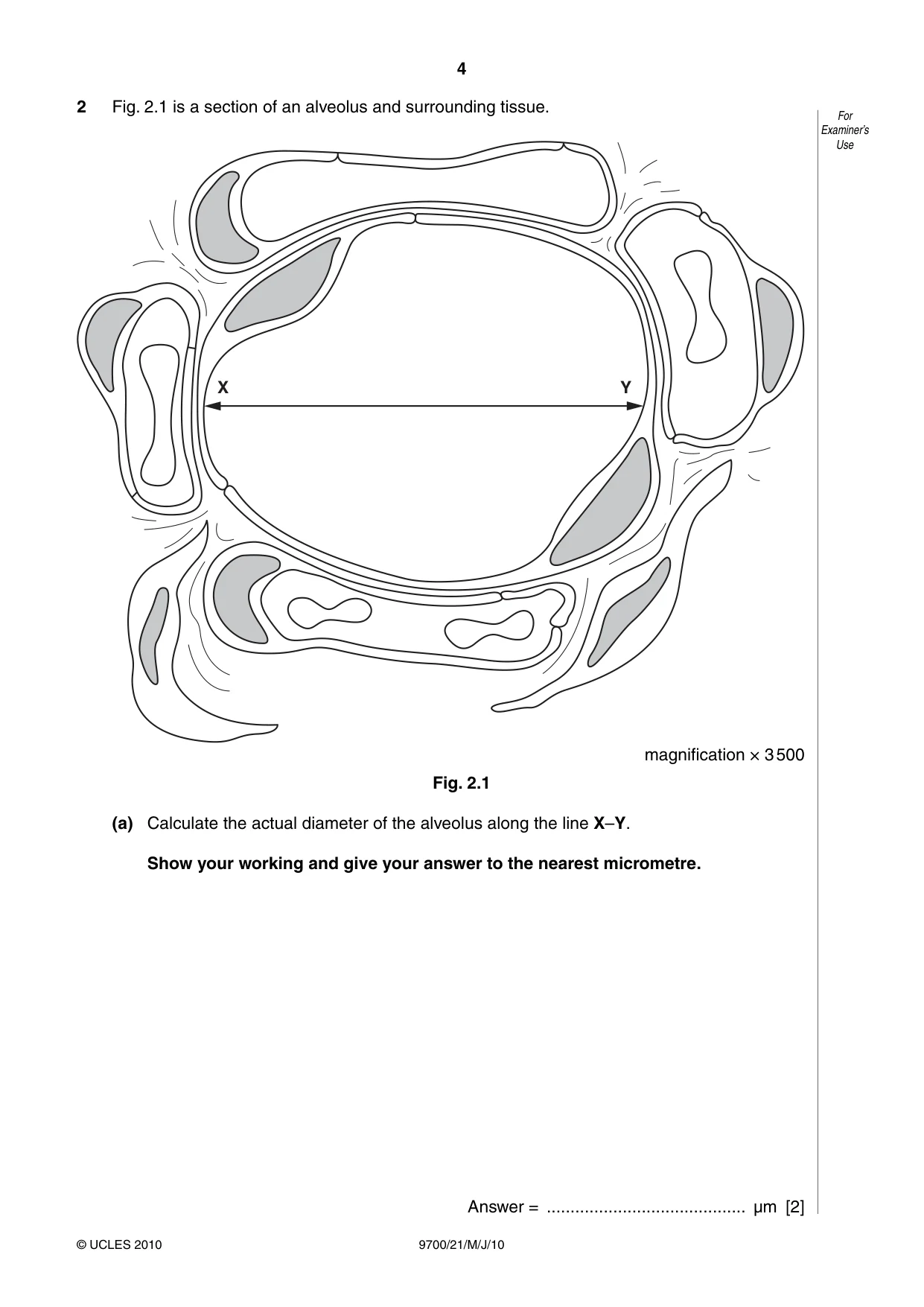
4 9700/21/M/J/10 © UCLES 2010 For Examiner’s Use 2 Fig. 2.1 is a section of an alveolus and surrounding tissue. X Y magnification × 3 500 Fig. 2.1 (a) Calculate the actual diameter of the alveolus along the line X–Y. Show your working and give your answer to the nearest micrometre. Answer = … µm [2]
Question paper, page 5
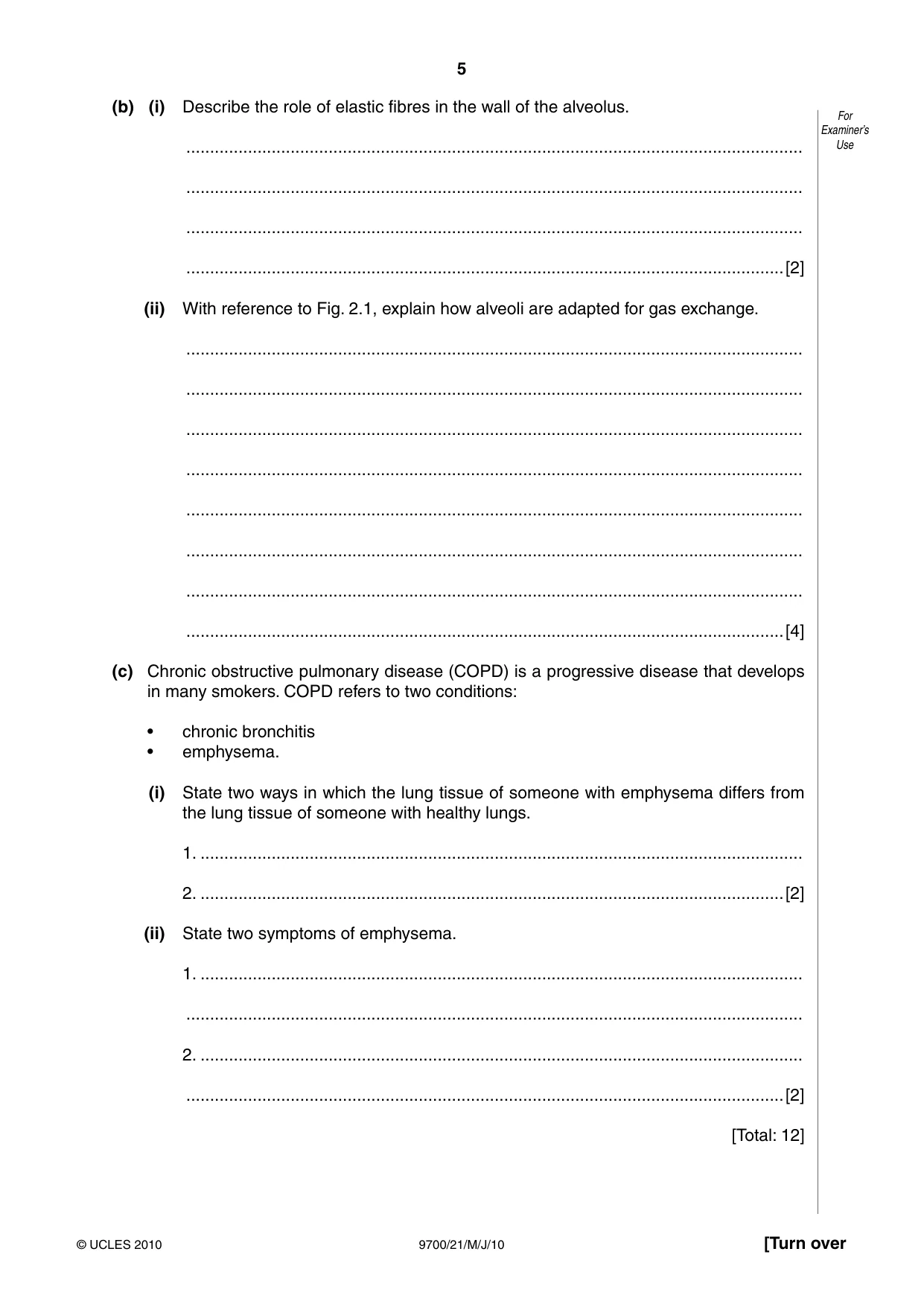
5 9700/21/M/J/10 © UCLES 2010 [Turn over For Examiner’s Use (b) (i) Describe the role of elastic fibres in the wall of the alveolus. … … … …[2] (ii) With reference to Fig. 2.1, explain how alveoli are adapted for gas exchange. … … … … … … … …[4] (c) Chronic obstructive pulmonary disease (COPD) is a progressive disease that develops in many smokers. COPD refers to two conditions: • chronic bronchitis • emphysema. (i) State two ways in which the lung tissue of someone with emphysema differs from the lung tissue of someone with healthy lungs. 1. … 2. …[2] (ii) State two symptoms of emphysema. 1. … … 2. … …[2] [Total: 12]
Question paper, page 6
6 9700/21/M/J/10 © UCLES 2010 BLANK PAGE
Question paper, page 7
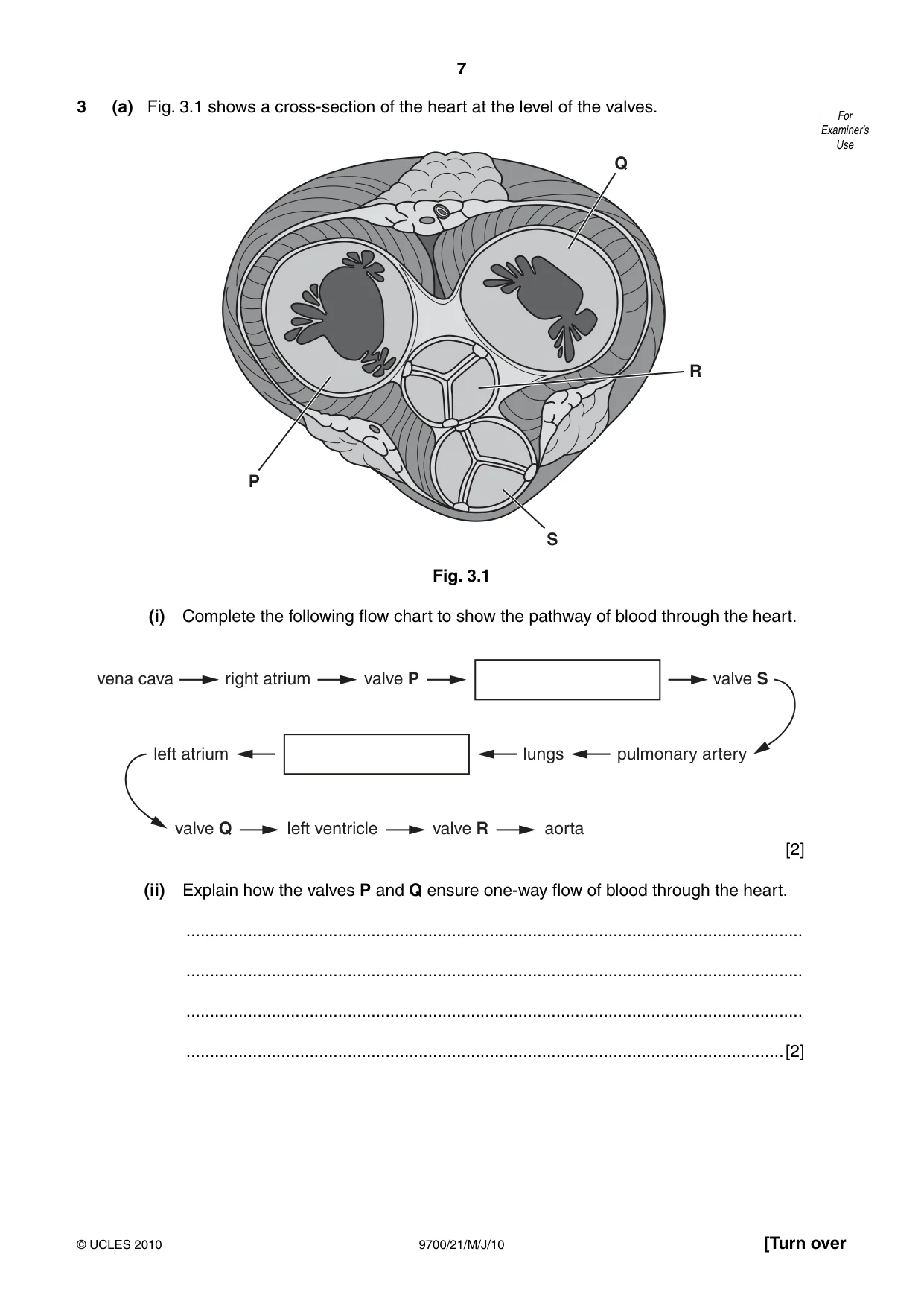
7 9700/21/M/J/10 © UCLES 2010 [Turn over For Examiner’s Use 3 (a) Fig. 3.1 shows a cross-section of the heart at the level of the valves. P S R Q Fig. 3.1 (i) Complete the following flow chart to show the pathway of blood through the heart. vena cava valve Q left ventricle valve R aorta right atrium valve P valve S pulmonary artery lungs left atrium [2] (ii) Explain how the valves P and Q ensure one-way flow of blood through the heart. … … … …[2]
Question paper, page 8
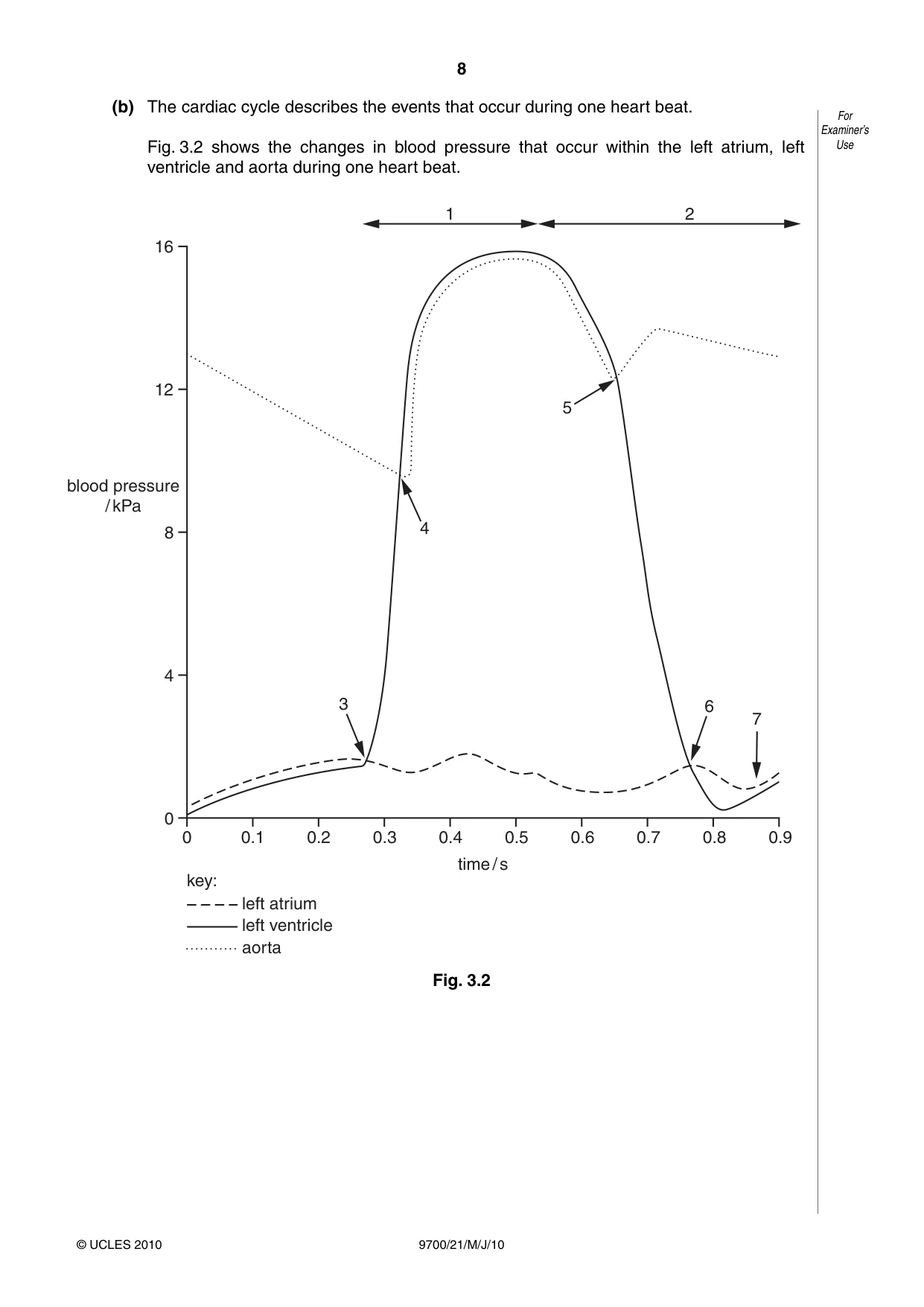
8 9700/21/M/J/10 © UCLES 2010 For Examiner’s Use (b) The cardiac cycle describes the events that occur during one heart beat. Fig. 3.2 shows the changes in blood pressure that occur within the left atrium, left ventricle and aorta during one heart beat. 16 1 4 5 3 6 7 2 blood pressure / kPa time / s left atrium 12 8 4 0 key: 0 0.1 0.2 0.3 0.4 0.5 0.6 0.7 0.8 0.9 left ventricle aorta Fig. 3.2
Question paper, page 9
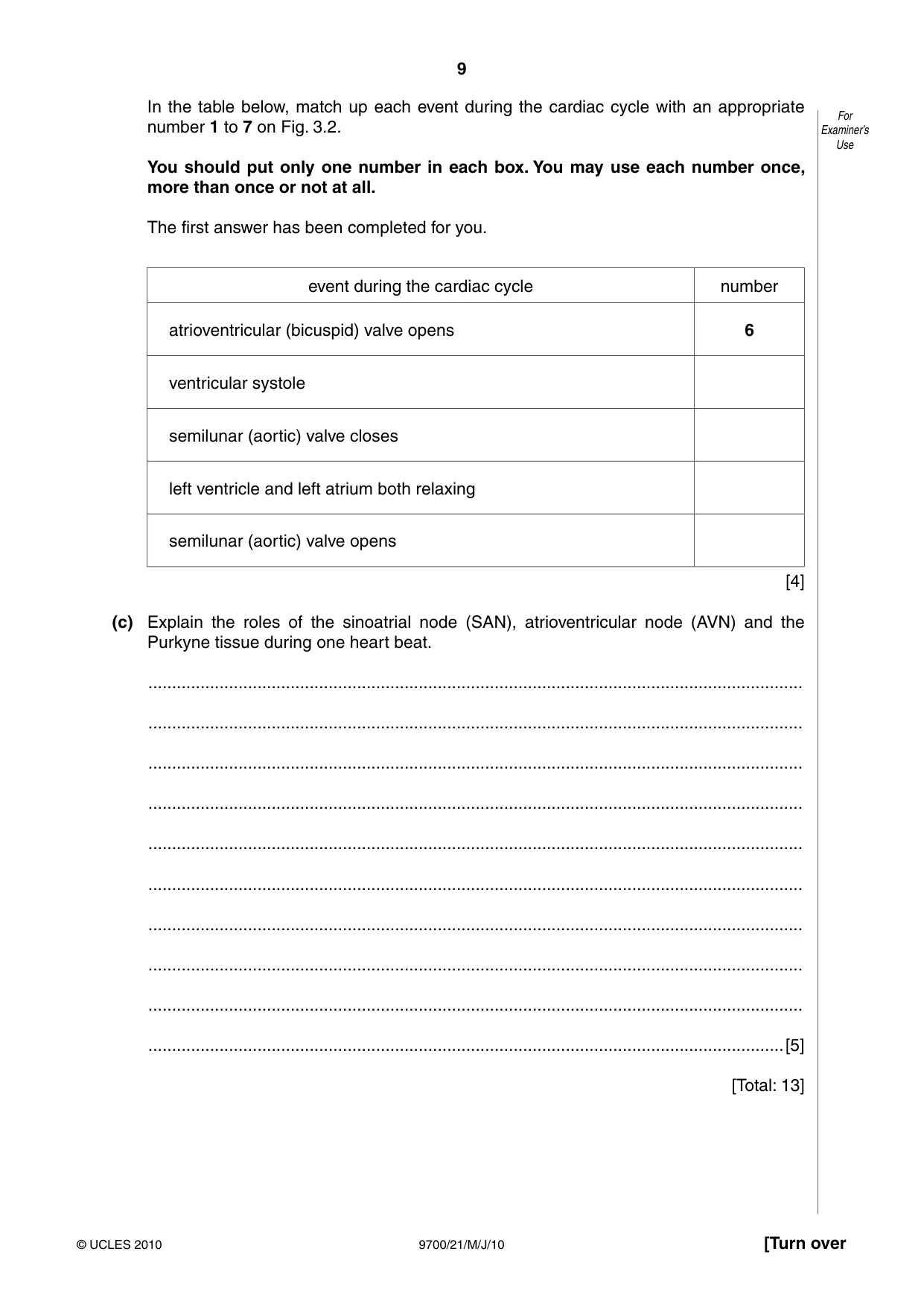
9 9700/21/M/J/10 © UCLES 2010 [Turn over For Examiner’s Use In the table below, match up each event during the cardiac cycle with an appropriate number 1 to 7 on Fig. 3.2. You should put only one number in each box. You may use each number once, more than once or not at all. The first answer has been completed for you. event during the cardiac cycle number atrioventricular (bicuspid) valve opens 6 ventricular systole semilunar (aortic) valve closes left ventricle and left atrium both relaxing semilunar (aortic) valve opens [4] (c) Explain the roles of the sinoatrial node (SAN), atrioventricular node (AVN) and the Purkyne tissue during one heart beat. … … … … … … … … … …[5] [Total: 13]
Question paper, page 10
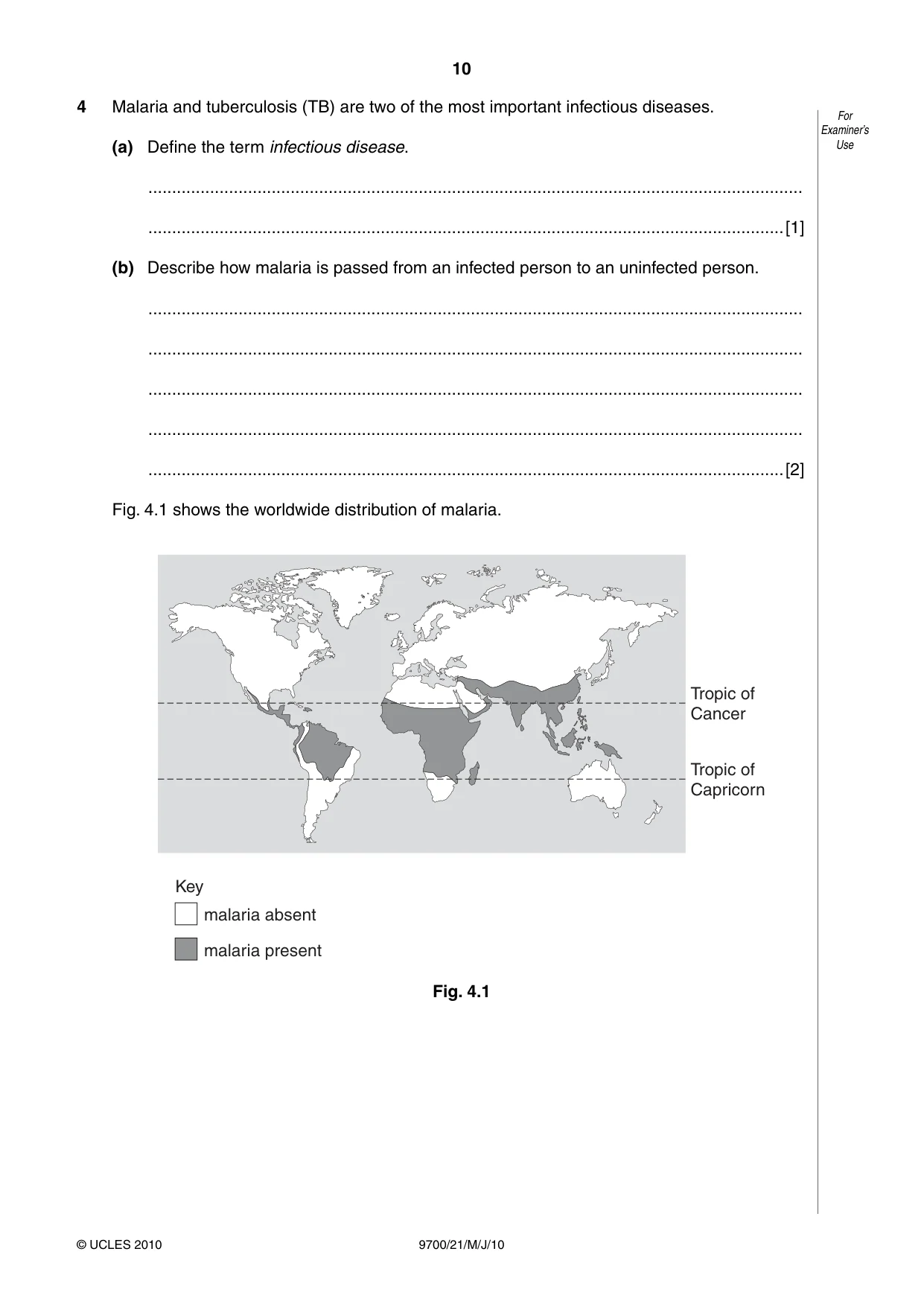
10 9700/21/M/J/10 © UCLES 2010 For Examiner’s Use 4 Malaria and tuberculosis (TB) are two of the most important infectious diseases. (a) Define the term infectious disease. … …[1] (b) Describe how malaria is passed from an infected person to an uninfected person. … … … … …[2] Fig. 4.1 shows the worldwide distribution of malaria. Tropic of Cancer Key malaria absent malaria present Tropic of Capricorn Fig. 4.1
Question paper, page 11
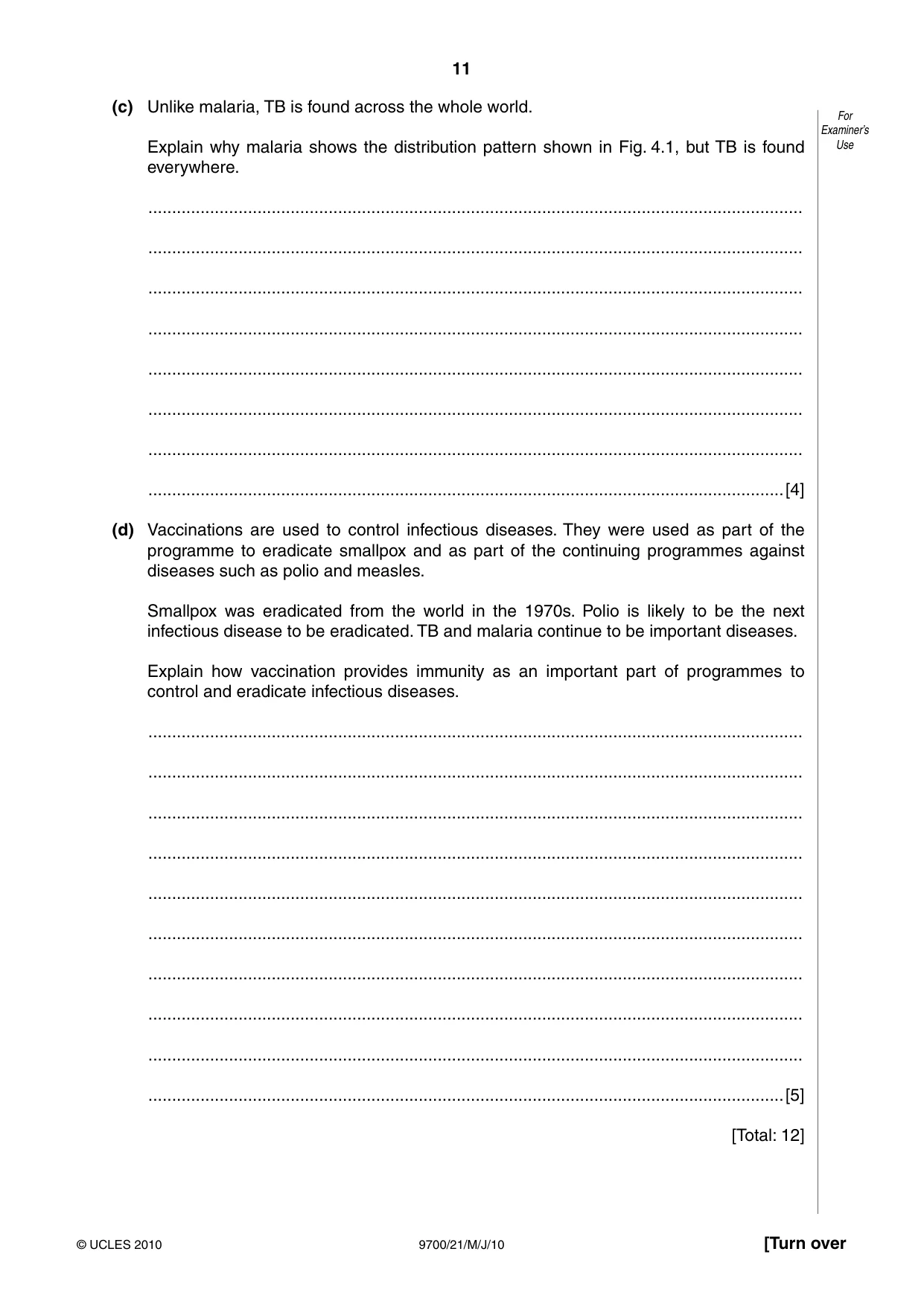
11 9700/21/M/J/10 © UCLES 2010 [Turn over For Examiner’s Use (c) Unlike malaria, TB is found across the whole world. Explain why malaria shows the distribution pattern shown in Fig. 4.1, but TB is found everywhere. … … … … … … … …[4] (d) Vaccinations are used to control infectious diseases. They were used as part of the programme to eradicate smallpox and as part of the continuing programmes against diseases such as polio and measles. Smallpox was eradicated from the world in the 1970s. Polio is likely to be the next infectious disease to be eradicated. TB and malaria continue to be important diseases. Explain how vaccination provides immunity as an important part of programmes to control and eradicate infectious diseases. … … … … … … … … … …[5] [Total: 12]
Question paper, page 12
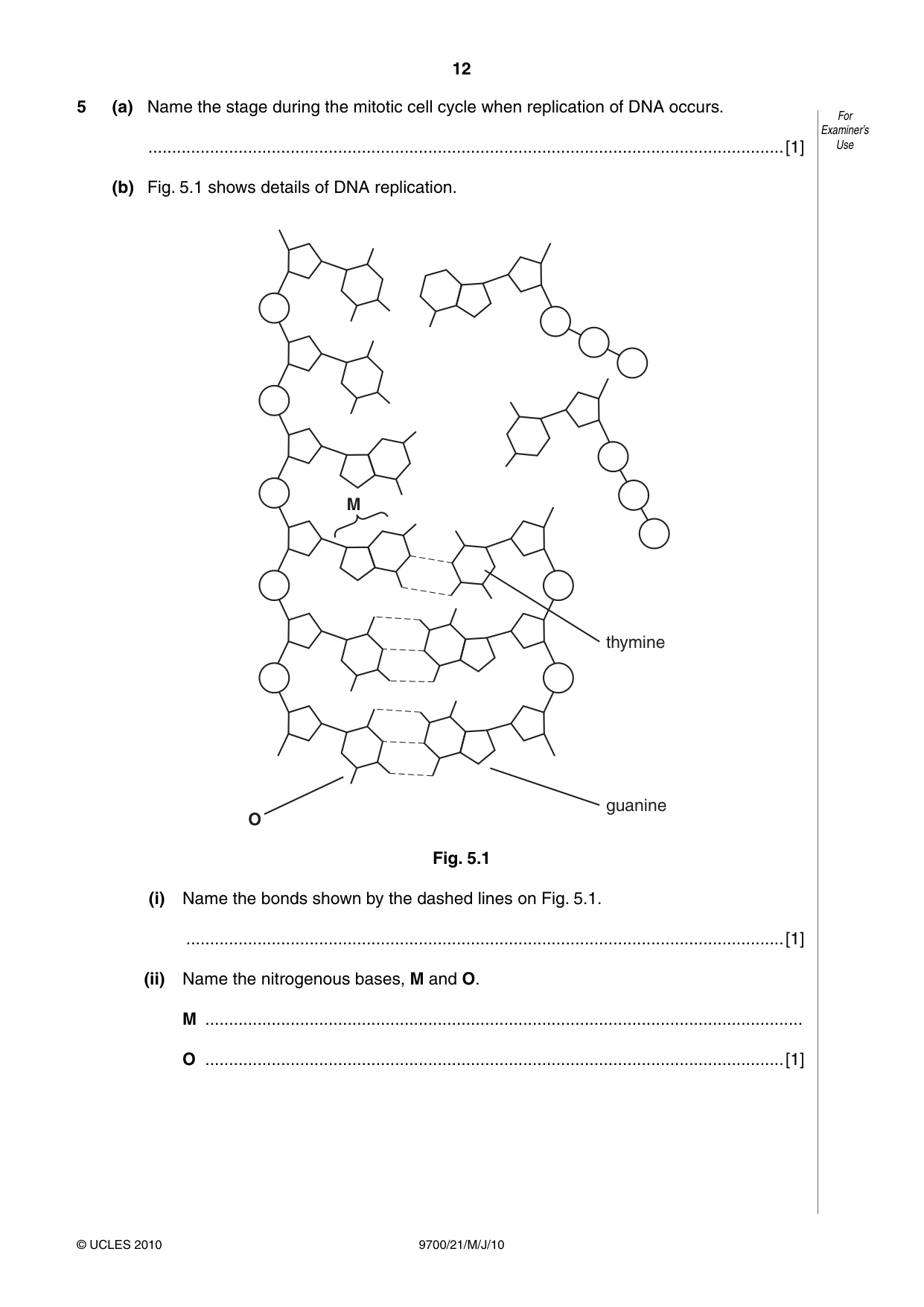
12 9700/21/M/J/10 © UCLES 2010 For Examiner’s Use 5 (a) Name the stage during the mitotic cell cycle when replication of DNA occurs. …[1] (b) Fig. 5.1 shows details of DNA replication. thymine guanine M O Fig. 5.1 (i) Name the bonds shown by the dashed lines on Fig. 5.1. …[1] (ii) Name the nitrogenous bases, M and O. M … O …[1]
Question paper, page 13
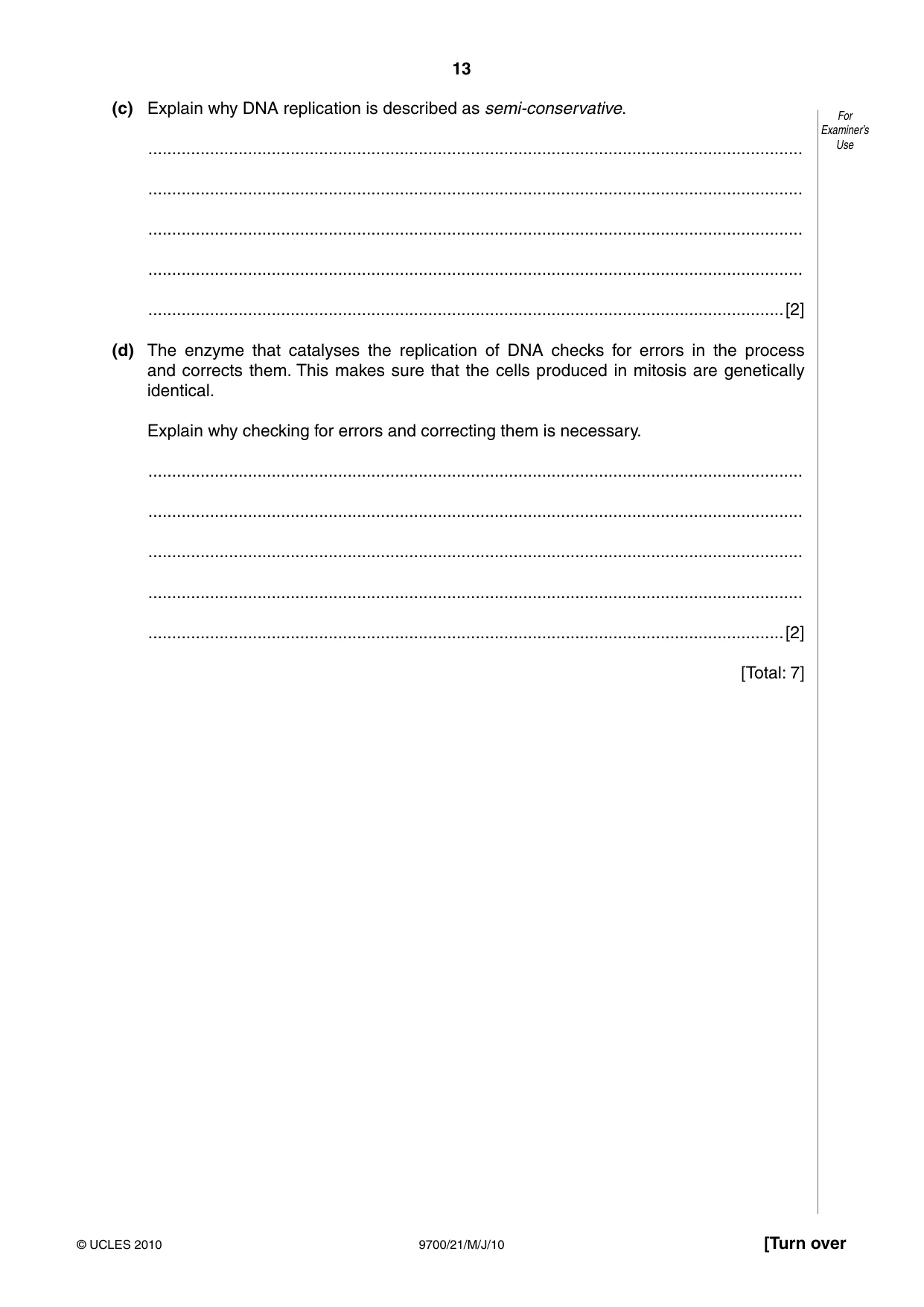
13 9700/21/M/J/10 © UCLES 2010 [Turn over For Examiner’s Use (c) Explain why DNA replication is described as semi-conservative. … … … … …[2] (d) The enzyme that catalyses the replication of DNA checks for errors in the process and corrects them. This makes sure that the cells produced in mitosis are genetically identical. Explain why checking for errors and correcting them is necessary. … … … … …[2] [Total: 7]
Question paper, page 14
14 9700/21/M/J/10 © UCLES 2010 For Examiner’s Use 6 Many species of legume grow in nitrate-deficient soils in the tropics. Some of these are large trees such as the flamboyant tree, Delonix regia. Bacteria of the genus Rhizobium live inside swellings along the roots of legumes. These swellings are known as root nodules. A student followed the cycling of nitrogen in an area with many flamboyant trees. Fig. 6.1 summarises the flow of nitrogen in the area. nitrogen (N2) in the air nitrate ions (NO3 -) in the soil J K ammonium ions (NH4 +) in the soil decomposition proteins in dead leaves proteins in legume leaf cells protein synthesis nitrogen (N2) in the air in the soil H nitrogen (N2) in Rhizobium in root nodules of legumes ammonia in Rhizobium amino acids in Rhizobium amino acids in legume leaf cells Fig. 6.1 (a) Name the processes that occur at H, J and K. H … J … K …[3]
Question paper, page 15
15 9700/21/M/J/10 © UCLES 2010 For Examiner’s Use (b) Suggest the advantages gained by legumes of having Rhizobium living in their roots. … … … … …[2] [Total: 5]
Question paper, page 16
16 9700/21/M/J/10 © UCLES 2010 BLANK PAGE Permission to reproduce items where third-party owned material protected by copyright is included has been sought and cleared where possible. Every reasonable effort has been made by the publisher (UCLES) to trace copyright holders, but if any items requiring clearance have unwittingly been included, the publisher will be pleased to make amends at the earliest possible opportunity. University of Cambridge International Examinations is part of the Cambridge Assessment Group. Cambridge Assessment is the brand name of University of Cambridge Local Examinations Syndicate (UCLES), which is itself a department of the University of Cambridge.
Mark scheme, page 1
UNIVERSITY OF CAMBRIDGE INTERNATIONAL EXAMINATIONS GCE Advanced Subsidiary Level and GCE Advanced Level MARK SCHEME for the May/June 2010 question paper for the guidance of teachers 9700 BIOLOGY 9700/21 Paper 2 (AS Structured Questions), maximum raw mark 60 This mark scheme is published as an aid to teachers and candidates, to indicate the requirements of the examination. It shows the basis on which Examiners were instructed to award marks. It does not indicate the details of the discussions that took place at an Examiners’ meeting before marking began, which would have considered the acceptability of alternative answers. Mark schemes must be read in conjunction with the question papers and the report on the examination. • CIE will not enter into discussions or correspondence in connection with these mark schemes. CIE is publishing the mark schemes for the May/June 2010 question papers for most IGCSE, GCE Advanced Level and Advanced Subsidiary Level syllabuses and some Ordinary Level syllabuses.
Mark scheme, page 2
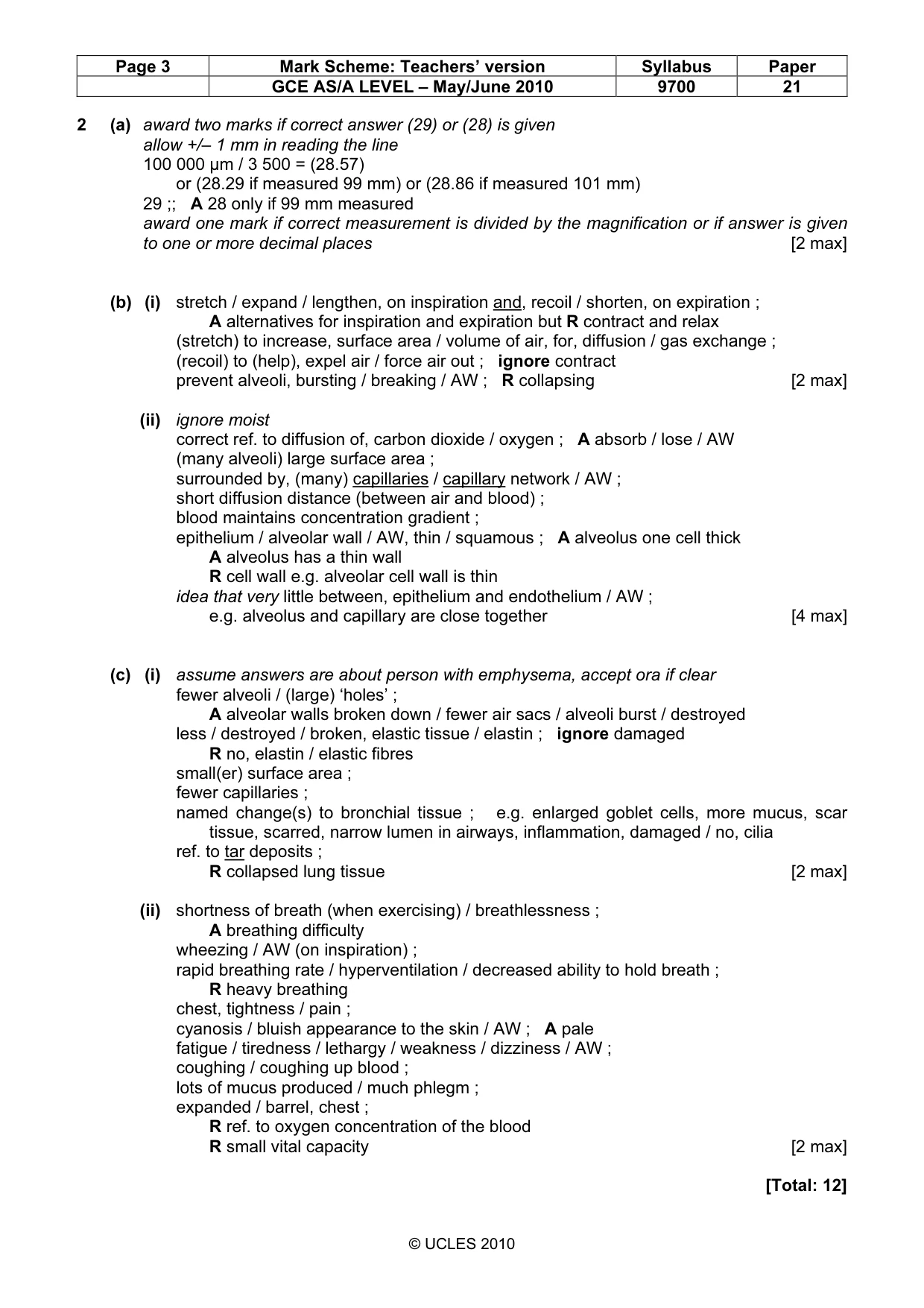
Page 2 Mark Scheme: Teachers’ version Syllabus Paper GCE AS/A LEVEL – May/June 2010 9700 21 © UCLES 2010 1 (a) (i) glycosidic ; [1] (ii) hydrolysis / hydrolytic ; [1] (iii) assume that the answer refers to within the cell unless told otherwise accept any two relevant examples, e.g. solvent / medium for reactions ; transport medium ; maintaining turgidity / keeping firm / prevents flaccidity / AW ; (raw material / reactant for) photosynthesis / photolysis ; expansion / elongation / growth ; maintains, hydrostatic pressure / pressure potential ; maintains water potential (gradient) ; A maintains osmotic gradient / prevents plasmolysis stomatal opening ; hydrophilic interactions of membranes ; (in vacuole) pushes chloroplast to edge of cell ; R hydrogen bonding unqualified by ref. to membranes [2 max] (b) spherical / ball-shaped / AW ; has a tertiary structure ; ignore quaternary hydrophilic / polar, groups on outside ; water soluble ; ignore ‘more than one polypeptide’ [2 max] (c) (i) active site ; ignore binding / catalytic [1] (ii) 1 (shape of) U / active site, gives specificity ; A ecf from (i) 2 substrate, fits into / binds with, active site / U ; A ecf from (i) 3 complementary (shape) / matching shape ; A ‘lock and key’ / induced fit R ‘same shape’ 4 further detail of substrate binding to active site ; 5 forms, enzyme-substrate / E-S, complex ; 6 causes stress in substrate / AW ; 7 lowers activation energy / reactions occur at low(er) temperatures ; 8 not used up in reaction / remain unchanged / reusable ; 9 high turnover number / catalyse many reactions per unit time ; [4 max] [Total: 11]
Mark scheme, page 3
Page 3 Mark Scheme: Teachers’ version Syllabus Paper GCE AS/A LEVEL – May/June 2010 9700 21 © UCLES 2010 2 (a) award two marks if correct answer (29) or (28) is given allow +/– 1 mm in reading the line 100 000 µm / 3 500 = (28.57) or (28.29 if measured 99 mm) or (28.86 if measured 101 mm) 29 ;; A 28 only if 99 mm measured award one mark if correct measurement is divided by the magnification or if answer is given to one or more decimal places [2 max] (b) (i) stretch / expand / lengthen, on inspiration and, recoil / shorten, on expiration ; A alternatives for inspiration and expiration but R contract and relax (stretch) to increase, surface area / volume of air, for, diffusion / gas exchange ; (recoil) to (help), expel air / force air out ; ignore contract prevent alveoli, bursting / breaking / AW ; R collapsing [2 max] (ii) ignore moist correct ref. to diffusion of, carbon dioxide / oxygen ; A absorb / lose / AW (many alveoli) large surface area ; surrounded by, (many) capillaries / capillary network / AW ; short diffusion distance (between air and blood) ; blood maintains concentration gradient ; epithelium / alveolar wall / AW, thin / squamous ; A alveolus one cell thick A alveolus has a thin wall R cell wall e.g. alveolar cell wall is thin idea that very little between, epithelium and endothelium / AW ; e.g. alveolus and capillary are close together [4 max] (c) (i) assume answers are about person with emphysema, accept ora if clear fewer alveoli / (large) ‘holes’ ; A alveolar walls broken down / fewer air sacs / alveoli burst / destroyed less / destroyed / broken, elastic tissue / elastin ; ignore damaged R no, elastin / elastic fibres small(er) surface area ; fewer capillaries ; named change(s) to bronchial tissue ; e.g. enlarged goblet cells, more mucus, scar tissue, scarred, narrow lumen in airways, inflammation, damaged / no, cilia ref. to tar deposits ; R collapsed lung tissue [2 max] (ii) shortness of breath (when exercising) / breathlessness ; A breathing difficulty wheezing / AW (on inspiration) ; rapid breathing rate / hyperventilation / decreased ability to hold breath ; R heavy breathing chest, tightness / pain ; cyanosis / bluish appearance to the skin / AW ; A pale fatigue / tiredness / lethargy / weakness / dizziness / AW ; coughing / coughing up blood ; lots of mucus produced / much phlegm ; expanded / barrel, chest ; R ref. to oxygen concentration of the blood R small vital capacity [2 max] [Total: 12]
Mark scheme, page 4
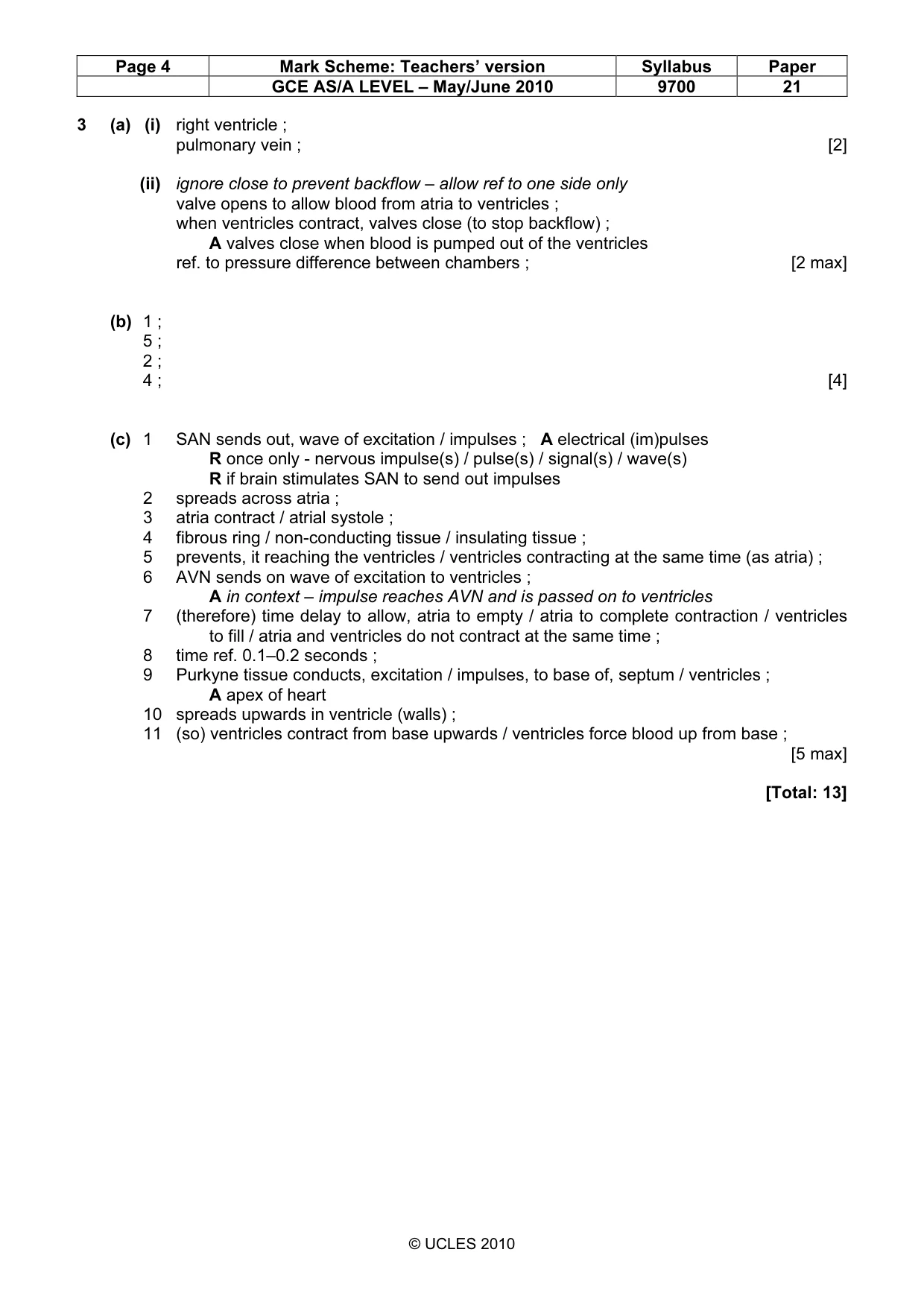
Page 4 Mark Scheme: Teachers’ version Syllabus Paper GCE AS/A LEVEL – May/June 2010 9700 21 © UCLES 2010 3 (a) (i) right ventricle ; pulmonary vein ; [2] (ii) ignore close to prevent backflow – allow ref to one side only valve opens to allow blood from atria to ventricles ; when ventricles contract, valves close (to stop backflow) ; A valves close when blood is pumped out of the ventricles ref. to pressure difference between chambers ; [2 max] (b) 1 ; 5 ; 2 ; 4 ; [4] (c) 1 SAN sends out, wave of excitation / impulses ; A electrical (im)pulses R once only - nervous impulse(s) / pulse(s) / signal(s) / wave(s) R if brain stimulates SAN to send out impulses 2 spreads across atria ; 3 atria contract / atrial systole ; 4 fibrous ring / non-conducting tissue / insulating tissue ; 5 prevents, it reaching the ventricles / ventricles contracting at the same time (as atria) ; 6 AVN sends on wave of excitation to ventricles ; A in context – impulse reaches AVN and is passed on to ventricles 7 (therefore) time delay to allow, atria to empty / atria to complete contraction / ventricles to fill / atria and ventricles do not contract at the same time ; 8 time ref. 0.1–0.2 seconds ; 9 Purkyne tissue conducts, excitation / impulses, to base of, septum / ventricles ; A apex of heart 10 spreads upwards in ventricle (walls) ; 11 (so) ventricles contract from base upwards / ventricles force blood up from base ; [5 max] [Total: 13]
Mark scheme, page 5
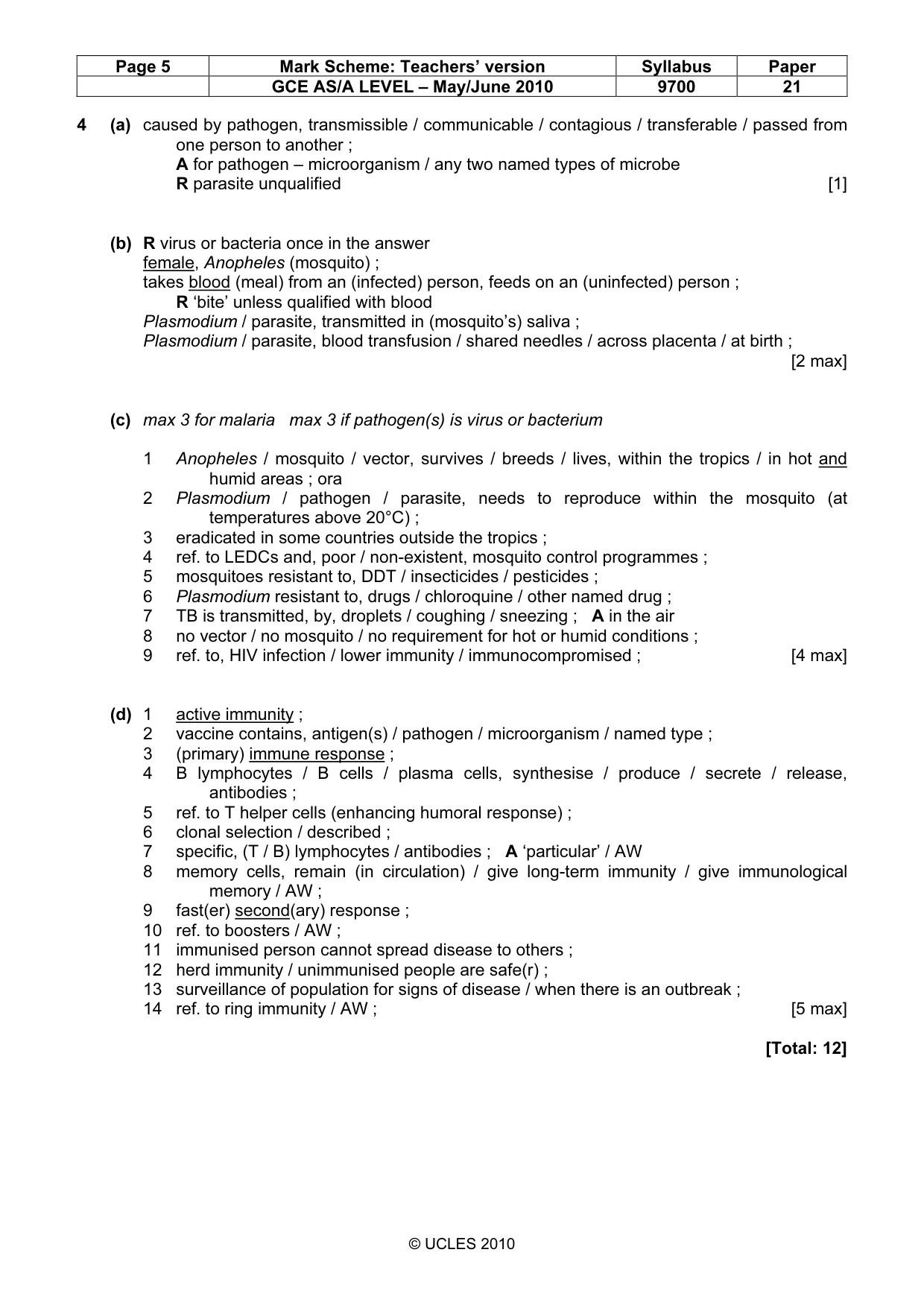
Page 5 Mark Scheme: Teachers’ version Syllabus Paper GCE AS/A LEVEL – May/June 2010 9700 21 © UCLES 2010 4 (a) caused by pathogen, transmissible / communicable / contagious / transferable / passed from one person to another ; A for pathogen – microorganism / any two named types of microbe R parasite unqualified [1] (b) R virus or bacteria once in the answer female, Anopheles (mosquito) ; takes blood (meal) from an (infected) person, feeds on an (uninfected) person ; R ‘bite’ unless qualified with blood Plasmodium / parasite, transmitted in (mosquito’s) saliva ; Plasmodium / parasite, blood transfusion / shared needles / across placenta / at birth ; [2 max] (c) max 3 for malaria max 3 if pathogen(s) is virus or bacterium 1 Anopheles / mosquito / vector, survives / breeds / lives, within the tropics / in hot and humid areas ; ora 2 Plasmodium / pathogen / parasite, needs to reproduce within the mosquito (at temperatures above 20°C) ; 3 eradicated in some countries outside the tropics ; 4 ref. to LEDCs and, poor / non-existent, mosquito control programmes ; 5 mosquitoes resistant to, DDT / insecticides / pesticides ; 6 Plasmodium resistant to, drugs / chloroquine / other named drug ; 7 TB is transmitted, by, droplets / coughing / sneezing ; A in the air 8 no vector / no mosquito / no requirement for hot or humid conditions ; 9 ref. to, HIV infection / lower immunity / immunocompromised ; [4 max] (d) 1 active immunity ; 2 vaccine contains, antigen(s) / pathogen / microorganism / named type ; 3 (primary) immune response ; 4 B lymphocytes / B cells / plasma cells, synthesise / produce / secrete / release, antibodies ; 5 ref. to T helper cells (enhancing humoral response) ; 6 clonal selection / described ; 7 specific, (T / B) lymphocytes / antibodies ; A ‘particular’ / AW 8 memory cells, remain (in circulation) / give long-term immunity / give immunological memory / AW ; 9 fast(er) second(ary) response ; 10 ref. to boosters / AW ; 11 immunised person cannot spread disease to others ; 12 herd immunity / unimmunised people are safe(r) ; 13 surveillance of population for signs of disease / when there is an outbreak ; 14 ref. to ring immunity / AW ; [5 max] [Total: 12]
Mark scheme, page 6
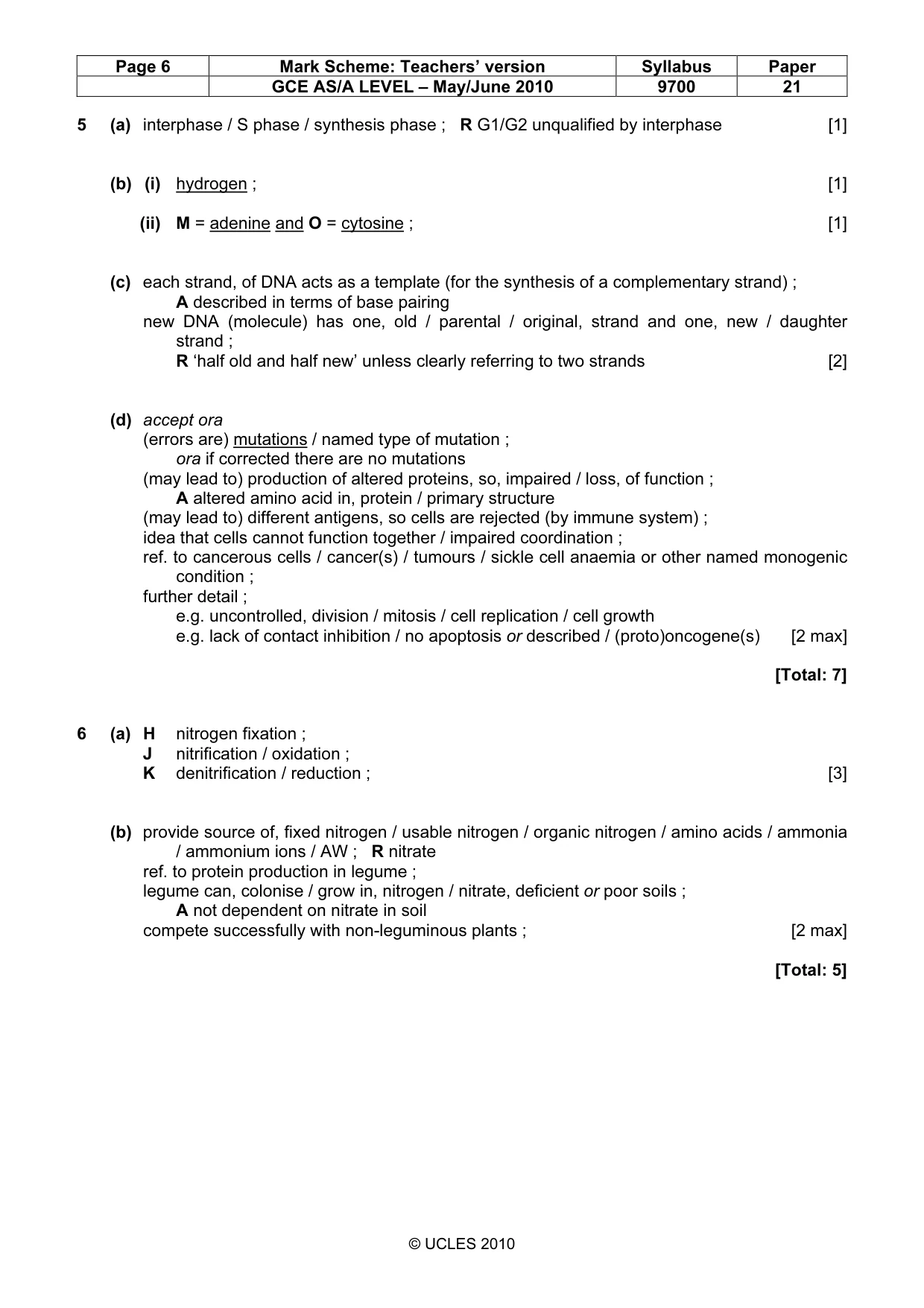
Page 6 Mark Scheme: Teachers’ version Syllabus Paper GCE AS/A LEVEL – May/June 2010 9700 21 © UCLES 2010 5 (a) interphase / S phase / synthesis phase ; R G1/G2 unqualified by interphase [1] (b) (i) hydrogen ; [1] (ii) M = adenine and O = cytosine ; [1] (c) each strand, of DNA acts as a template (for the synthesis of a complementary strand) ; A described in terms of base pairing new DNA (molecule) has one, old / parental / original, strand and one, new / daughter strand ; R ‘half old and half new’ unless clearly referring to two strands [2] (d) accept ora (errors are) mutations / named type of mutation ; ora if corrected there are no mutations (may lead to) production of altered proteins, so, impaired / loss, of function ; A altered amino acid in, protein / primary structure (may lead to) different antigens, so cells are rejected (by immune system) ; idea that cells cannot function together / impaired coordination ; ref. to cancerous cells / cancer(s) / tumours / sickle cell anaemia or other named monogenic condition ; further detail ; e.g. uncontrolled, division / mitosis / cell replication / cell growth e.g. lack of contact inhibition / no apoptosis or described / (proto)oncogene(s) [2 max] [Total: 7] 6 (a) H nitrogen fixation ; J nitrification / oxidation ; K denitrification / reduction ; [3] (b) provide source of, fixed nitrogen / usable nitrogen / organic nitrogen / amino acids / ammonia / ammonium ions / AW ; R nitrate ref. to protein production in legume ; legume can, colonise / grow in, nitrogen / nitrate, deficient or poor soils ; A not dependent on nitrate in soil compete successfully with non-leguminous plants ; [2 max] [Total: 5]
What you needed in this session
Cambridge’s own grade thresholds for 2010 May/June, Paper 2 · Variant 1. A higher threshold means an easier paper — the bar moves with how the cohort did.