Cambridge A Level Biology 9700 — 2008 Oct/Nov Paper 4 · Variant 1
9700/41/O/N/08 · 100 marks · ≈113 min
The question paper and its mark scheme, free to read here and free to download. This is Cambridge’s own paper, exactly as it was sat.
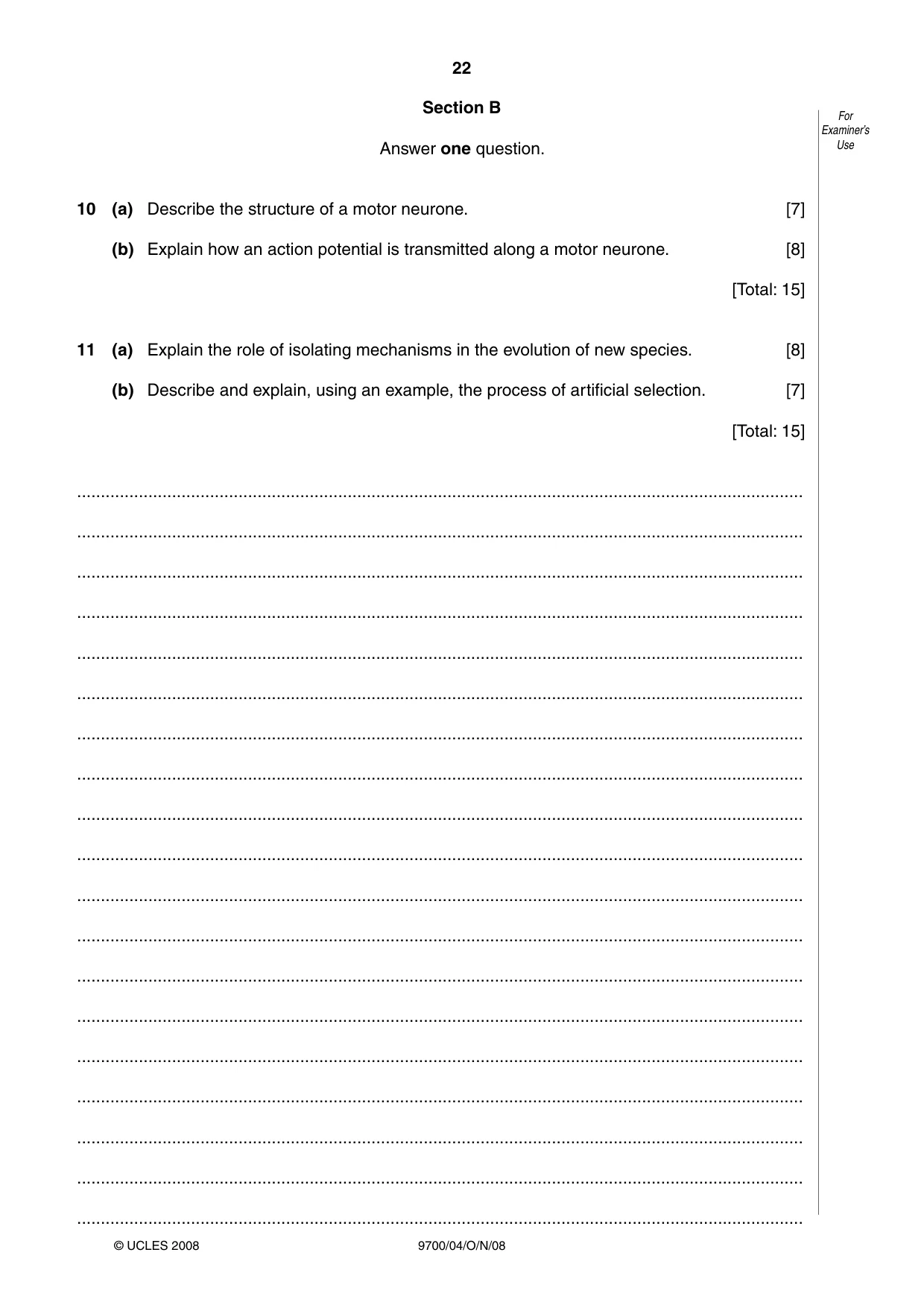
Question paper24 pages


Mark scheme11 pages
Answers below. Sit the paper first if you are practising.
Paper as text
Question paper, page 1
This document consists of 20 printed pages, 2 lined pages and 2 blank pages. SPA (DR/DR) T62741/3 © UCLES 2008 [Turn over UNIVERSITY OF CAMBRIDGE INTERNATIONAL EXAMINATIONS General Certificate of Education Advanced Level READ THESE INSTRUCTIONS FIRST Write your Centre number, candidate number and name in the spaces provided at the top of this page. Write in dark blue or black pen. Do not use staples, paper clips, highlighters, glue or correction fluid. DO NOT WRITE IN ANY BARCODES. Section A Answer all questions. Section B Answer one question. Circle the number of the Section B question you have answered in the grid below. At the end of the examination, fasten all your work securely together. The number of marks is given in brackets [ ] at the end of each question or part question. BIOLOGY 9700/04 Paper 4 Structured Questions A2 Core October/November 2008 2 hours Candidates answer on the Question Paper. No Additional Materials are required. For Examiner’s Use 1 2 3 4 5 6 7 8 9 Section B 10 or 11 Total
Question paper, page 2
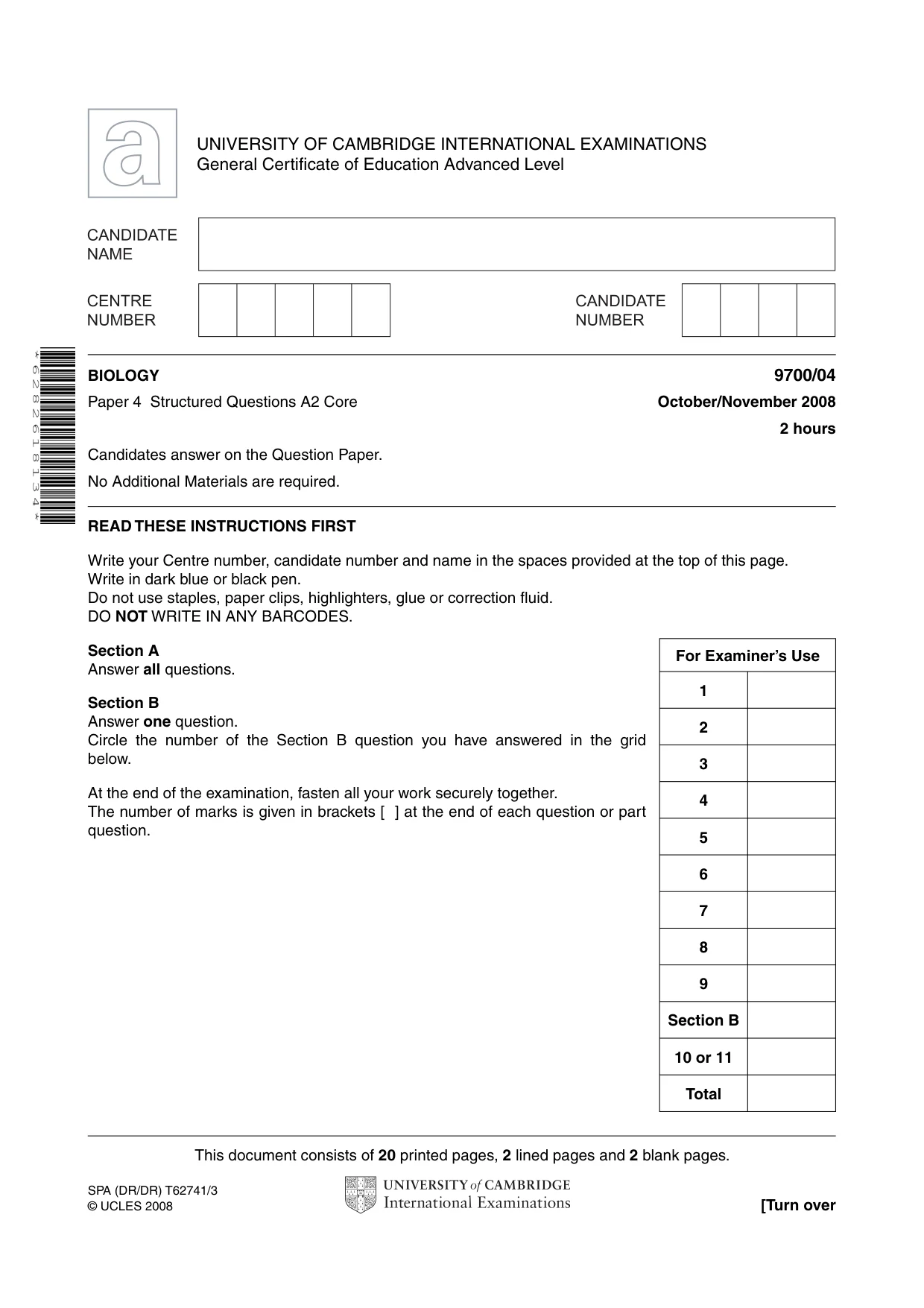
2 9700/04/O/N/08 For Examiner’s Use © UCLES 2008 Section A Answer all the questions. 1 The African hunting dog, Lycaon pictus, is a carnivore which hunts in packs in areas of East Africa. Fig. 1.1 shows an African hunting dog. Fig. 1.1 (a) The African hunting dog has cells that are eukaryotic while bacteria have cells that are prokaryotic. Describe the differences between eukaryotic and prokaryotic cells with respect to their DNA. … … …[2]
Question paper, page 3
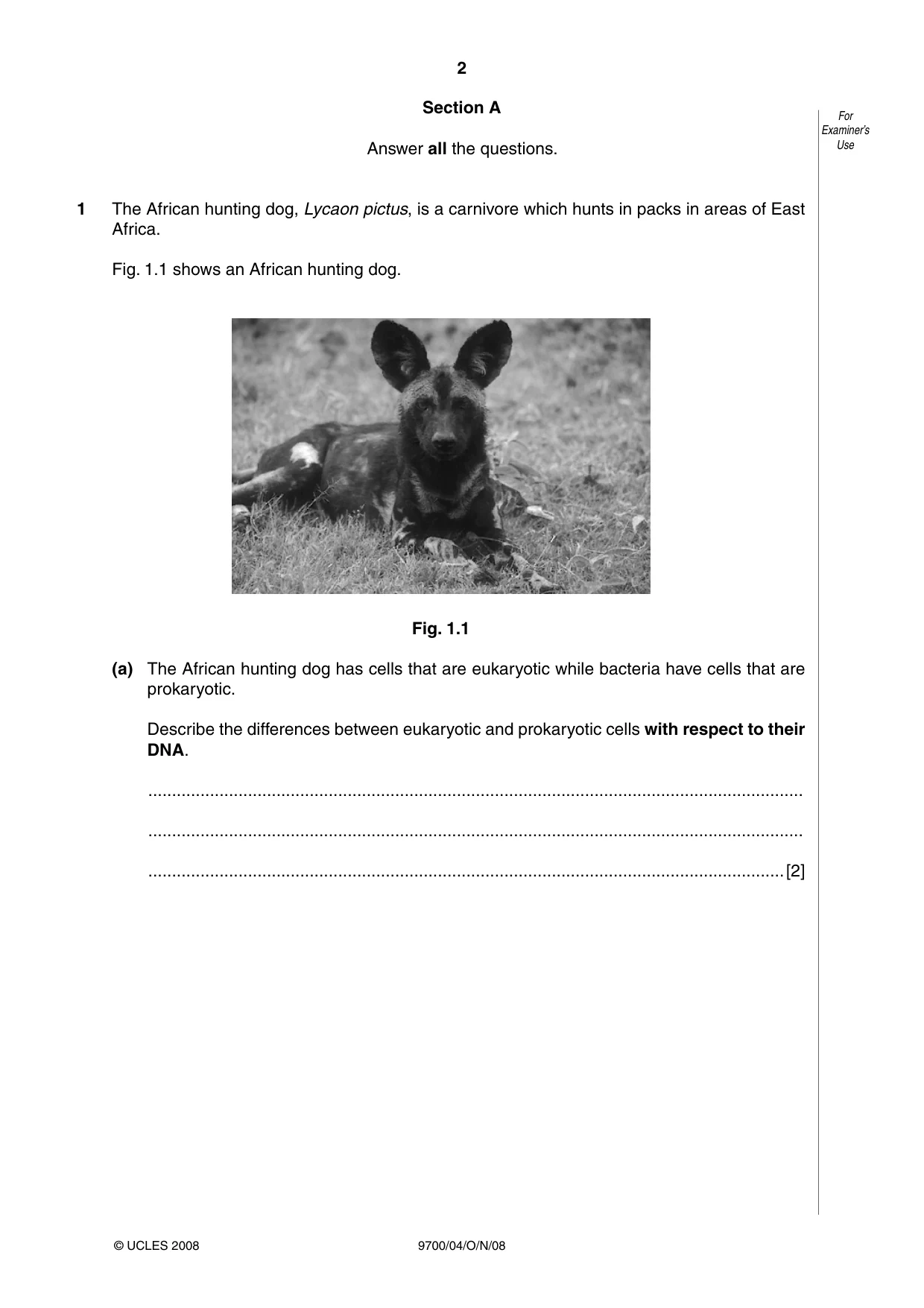
3 9700/04/O/N/08 [Turn over For Examiner’s Use © UCLES 2008 (b) In some parts of East Africa L. pictus is becoming an endangered species. Suggest reasons why L. pictus is becoming an endangered species. … … … … … … … …[3] (c) One way of protecting L. pictus is to create conservation areas. Describe two other methods of conserving endangered species such as L. pictus. … … …[2] [Total: 7]
Question paper, page 4
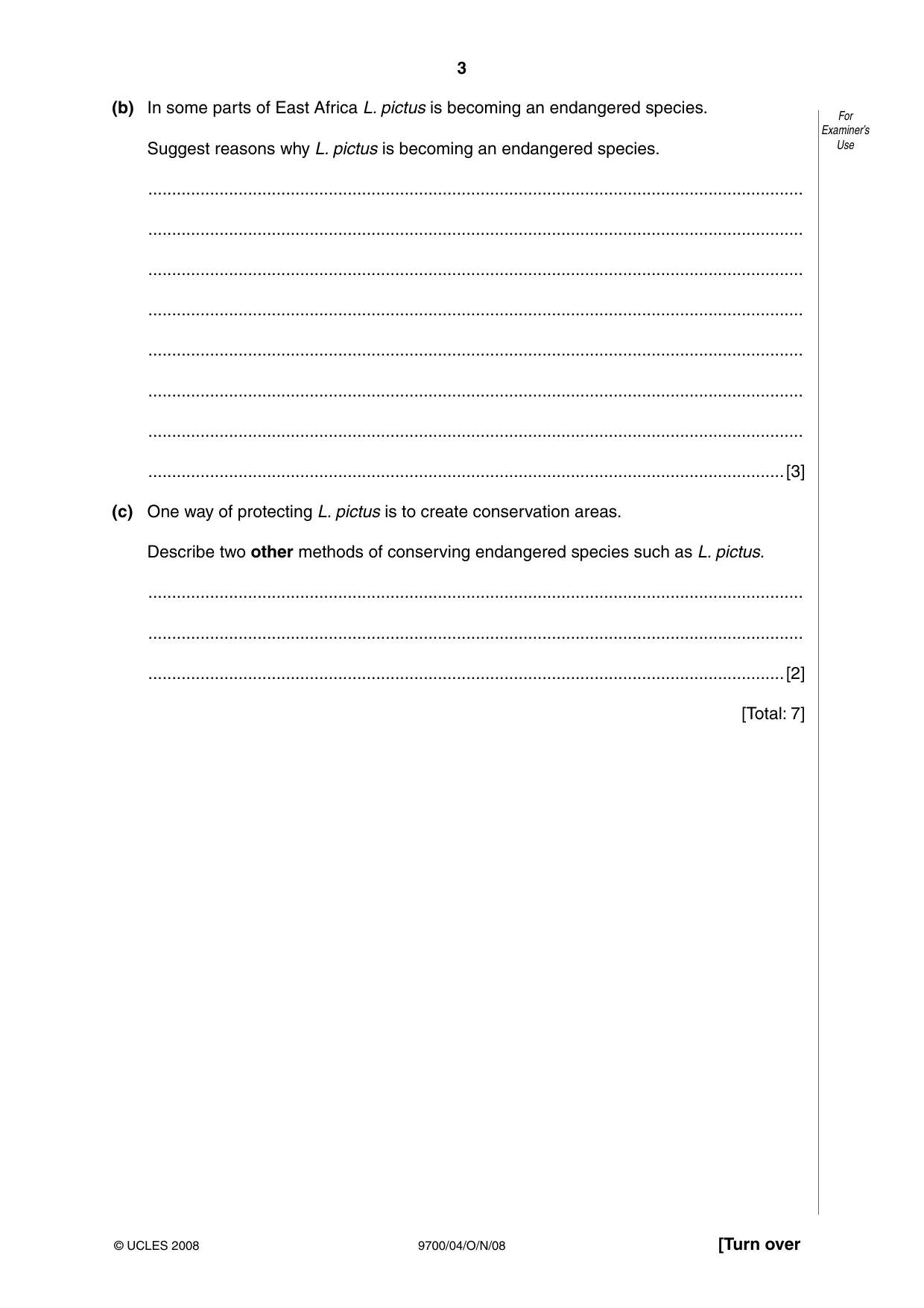
4 9700/04/O/N/08 For Examiner’s Use © UCLES 2008 2 Fig. 2.1 shows the CFTR (cystic fibrosis transmembrane conductance regulator) protein in a plasma (cell surface) membrane. Fig. 2.1 (a) (i) Describe the normal function of the CFTR protein. … … …[2] (ii) On Fig. 2.1, use the letter E to indicate the external face of the membrane. State how you identified this face. … …[1] (b) Cystic fibrosis is caused by a recessive allele of the CFTR gene. (i) Explain the meaning of the term recessive allele. … … …[2]
Question paper, page 5
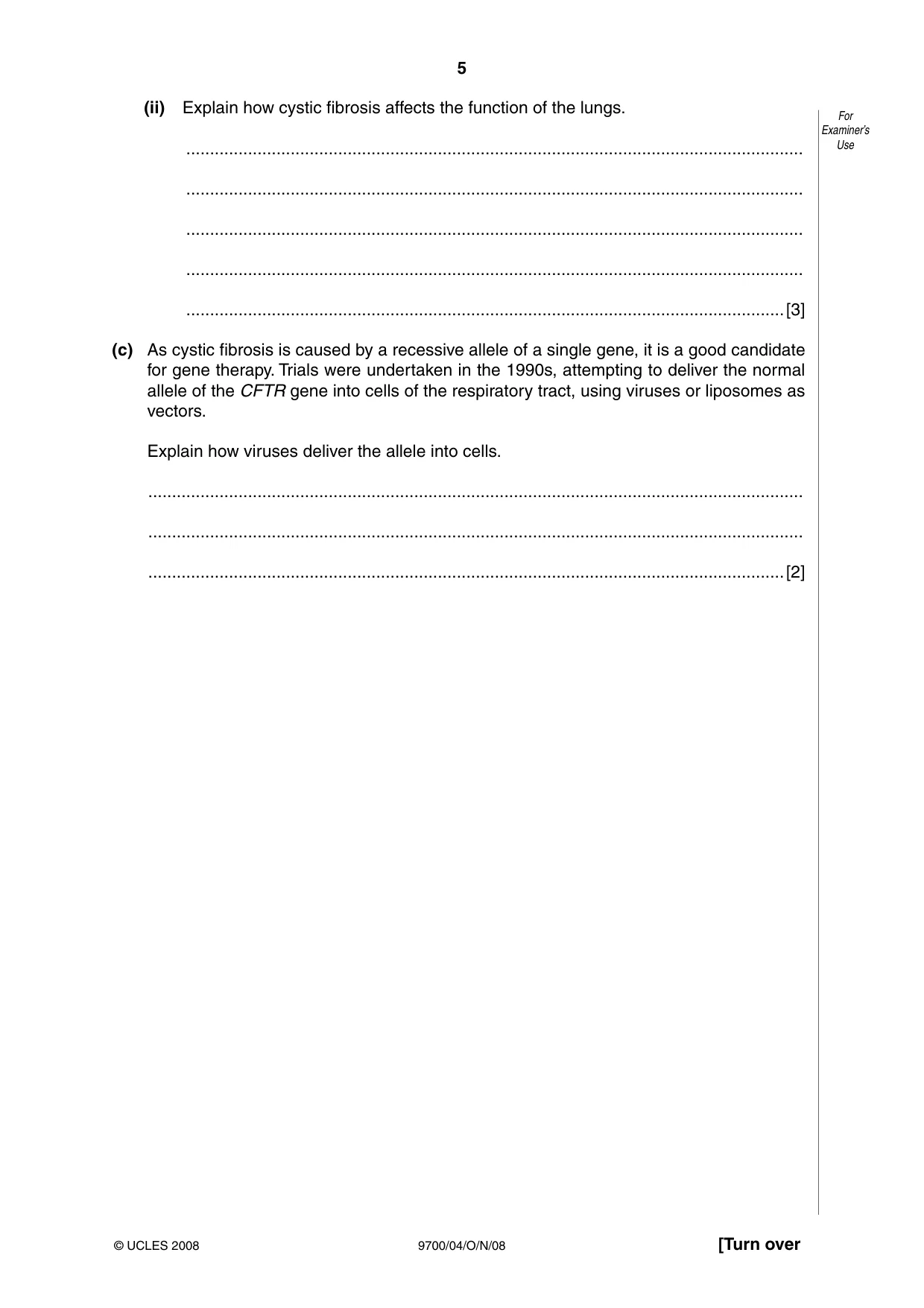
5 9700/04/O/N/08 [Turn over For Examiner’s Use © UCLES 2008 (ii) Explain how cystic fibrosis affects the function of the lungs. … … … … …[3] (c) As cystic fibrosis is caused by a recessive allele of a single gene, it is a good candidate for gene therapy. Trials were undertaken in the 1990s, attempting to deliver the normal allele of the CFTR gene into cells of the respiratory tract, using viruses or liposomes as vectors. Explain how viruses deliver the allele into cells. … … …[2]
Question paper, page 6
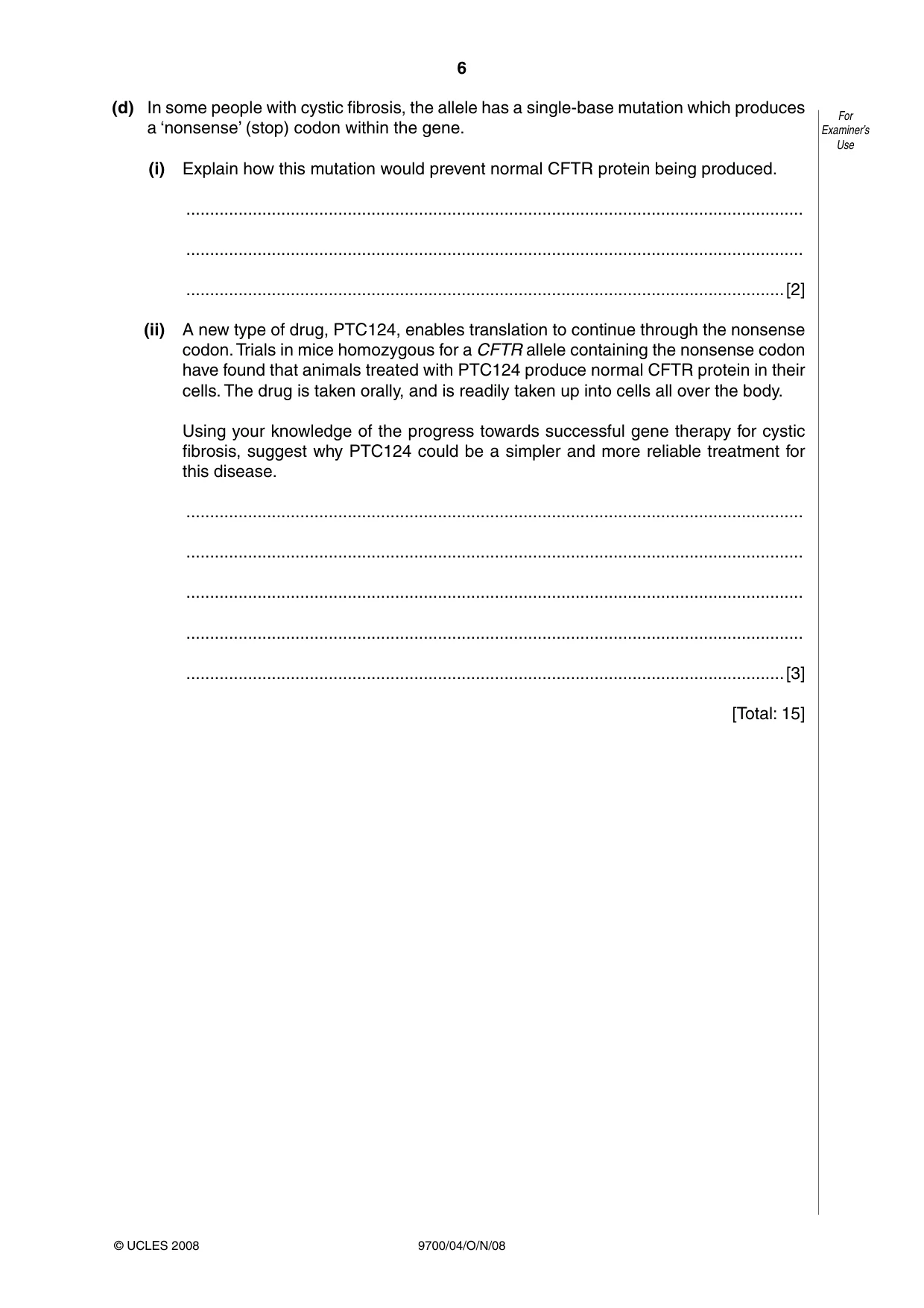
6 9700/04/O/N/08 For Examiner’s Use © UCLES 2008 (d) In some people with cystic fibrosis, the allele has a single-base mutation which produces a ‘nonsense’ (stop) codon within the gene. (i) Explain how this mutation would prevent normal CFTR protein being produced. … … …[2] (ii) A new type of drug, PTC124, enables translation to continue through the nonsense codon. Trials in mice homozygous for a CFTR allele containing the nonsense codon have found that animals treated with PTC124 produce normal CFTR protein in their cells. The drug is taken orally, and is readily taken up into cells all over the body. Using your knowledge of the progress towards successful gene therapy for cystic fibrosis, suggest why PTC124 could be a simpler and more reliable treatment for this disease. … … … … …[3] [Total: 15]
Question paper, page 7
7 9700/04/O/N/08 [Turn over © UCLES 2008 BLANK PAGE QUESTION 3 starts on page 8
Question paper, page 8
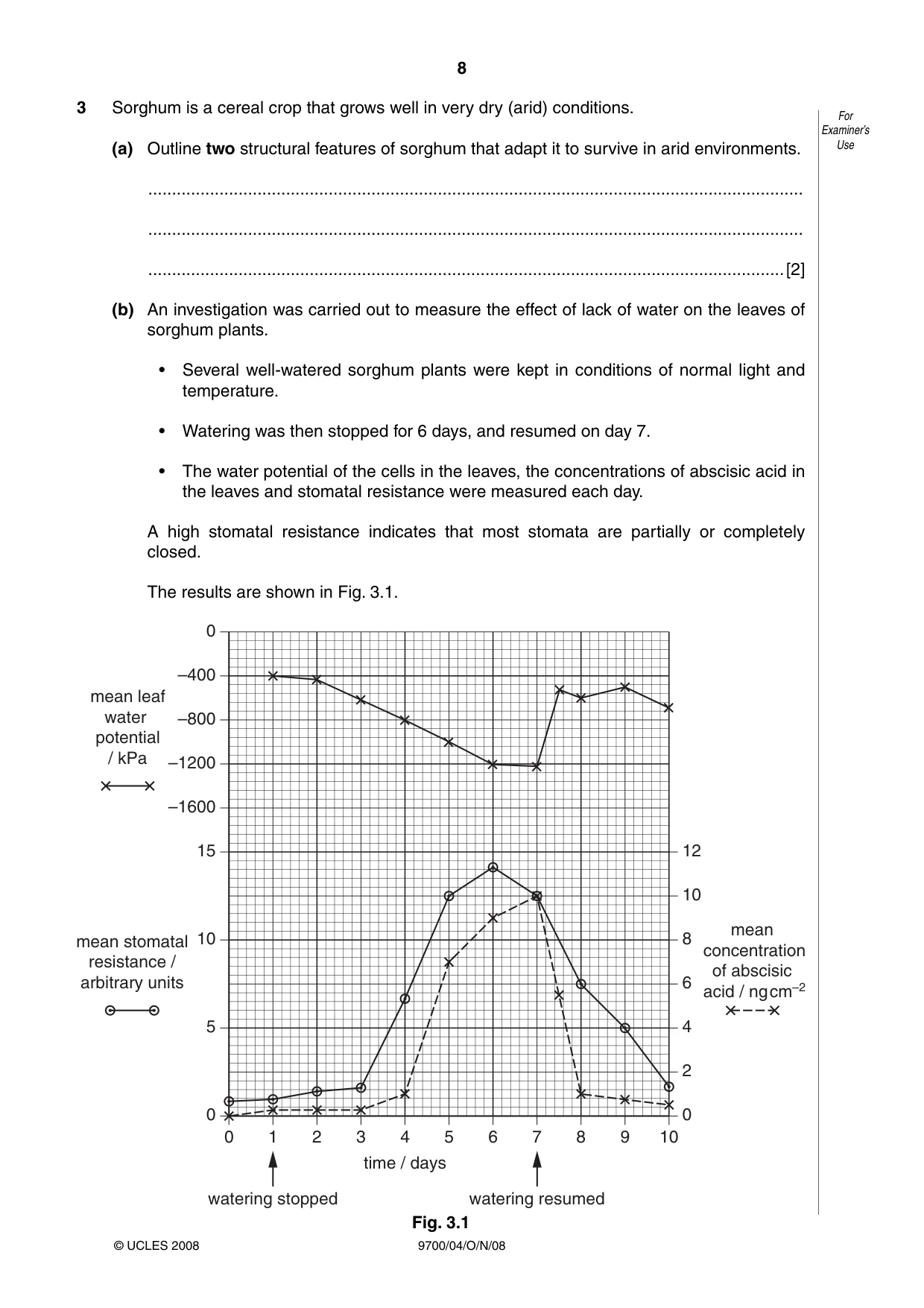
8 9700/04/O/N/08 For Examiner’s Use © UCLES 2008 3 Sorghum is a cereal crop that grows well in very dry (arid) conditions. (a) Outline two structural features of sorghum that adapt it to survive in arid environments. … … …[2] (b) An investigation was carried out to measure the effect of lack of water on the leaves of sorghum plants. • Several well-watered sorghum plants were kept in conditions of normal light and temperature. • Watering was then stopped for 6 days, and resumed on day 7. • The water potential of the cells in the leaves, the concentrations of abscisic acid in the leaves and stomatal resistance were measured each day. A high stomatal resistance indicates that most stomata are partially or completely closed. The results are shown in Fig. 3.1. 0 5 10 15 –1600 –1200 –800 –400 0 0 1 2 3 4 5 6 7 8 9 10 0 2 4 6 8 10 12 time / days watering stopped watering resumed mean concentration of abscisic acid / ngcm–2 mean stomatal resistance / arbitrary units mean leaf water potential / kPa Fig. 3.1
Question paper, page 9
9 9700/04/O/N/08 [Turn over For Examiner’s Use © UCLES 2008 With reference to Fig. 3.1, (i) describe and explain the changes in abscisic acid concentration over the 10 day period … … … … …[3] (ii) explain the changes in stomatal resistance over this period. … … …[2] (c) Explain how the changes you have described in (b) help sorghum to survive in arid conditions. … … …[2] [Total: 9]
Question paper, page 10
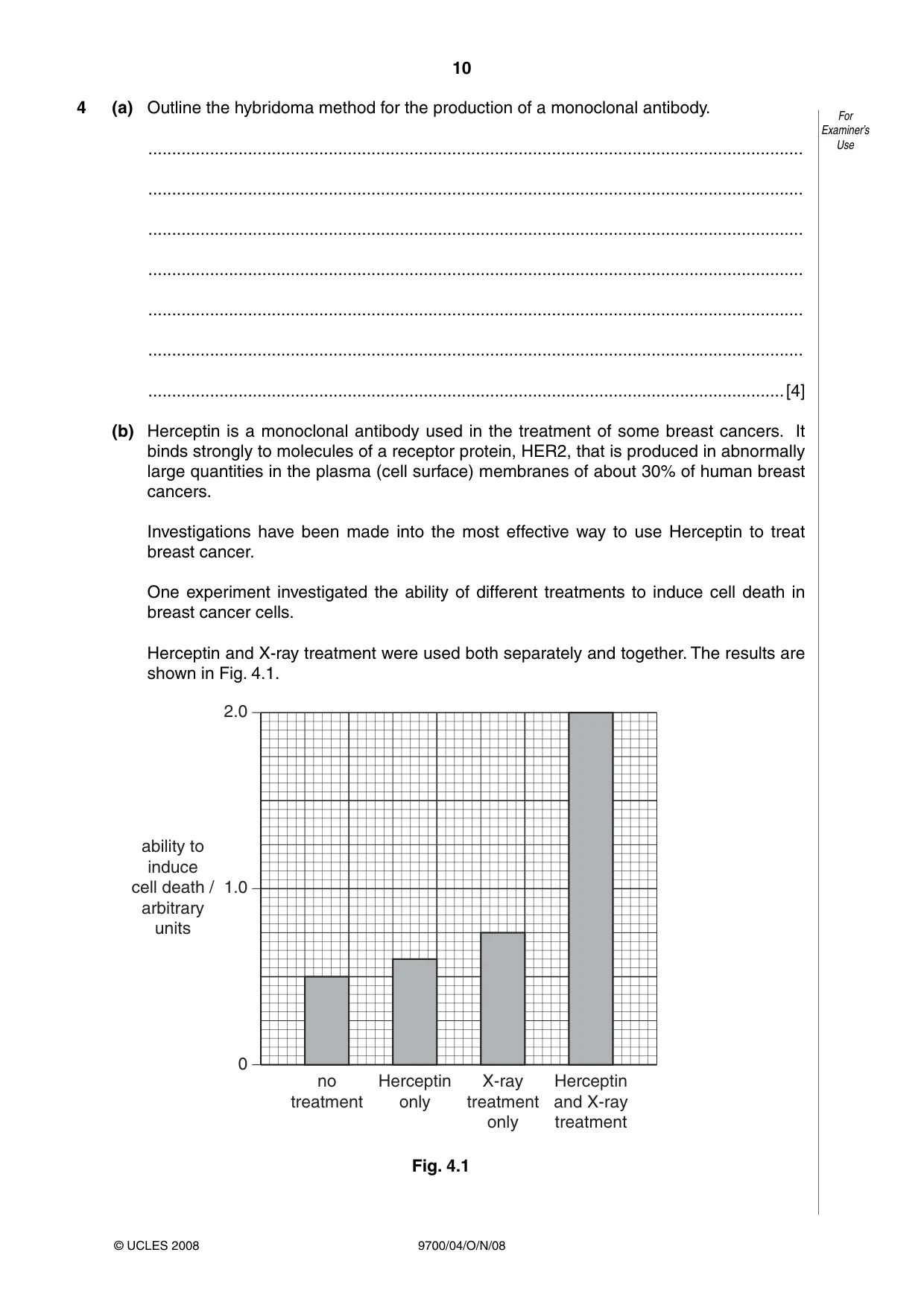
10 9700/04/O/N/08 For Examiner’s Use © UCLES 2008 4 (a) Outline the hybridoma method for the production of a monoclonal antibody. … … … … … … …[4] (b) Herceptin is a monoclonal antibody used in the treatment of some breast cancers. It binds strongly to molecules of a receptor protein, HER2, that is produced in abnormally large quantities in the plasma (cell surface) membranes of about 30% of human breast cancers. Investigations have been made into the most effective way to use Herceptin to treat breast cancer. One experiment investigated the ability of different treatments to induce cell death in breast cancer cells. Herceptin and X-ray treatment were used both separately and together. The results are shown in Fig. 4.1. 0 1.0 2.0 ability to induce cell death / arbitrary units no treatment Herceptin only X-ray treatment only Herceptin and X-ray treatment Fig. 4.1
Question paper, page 11
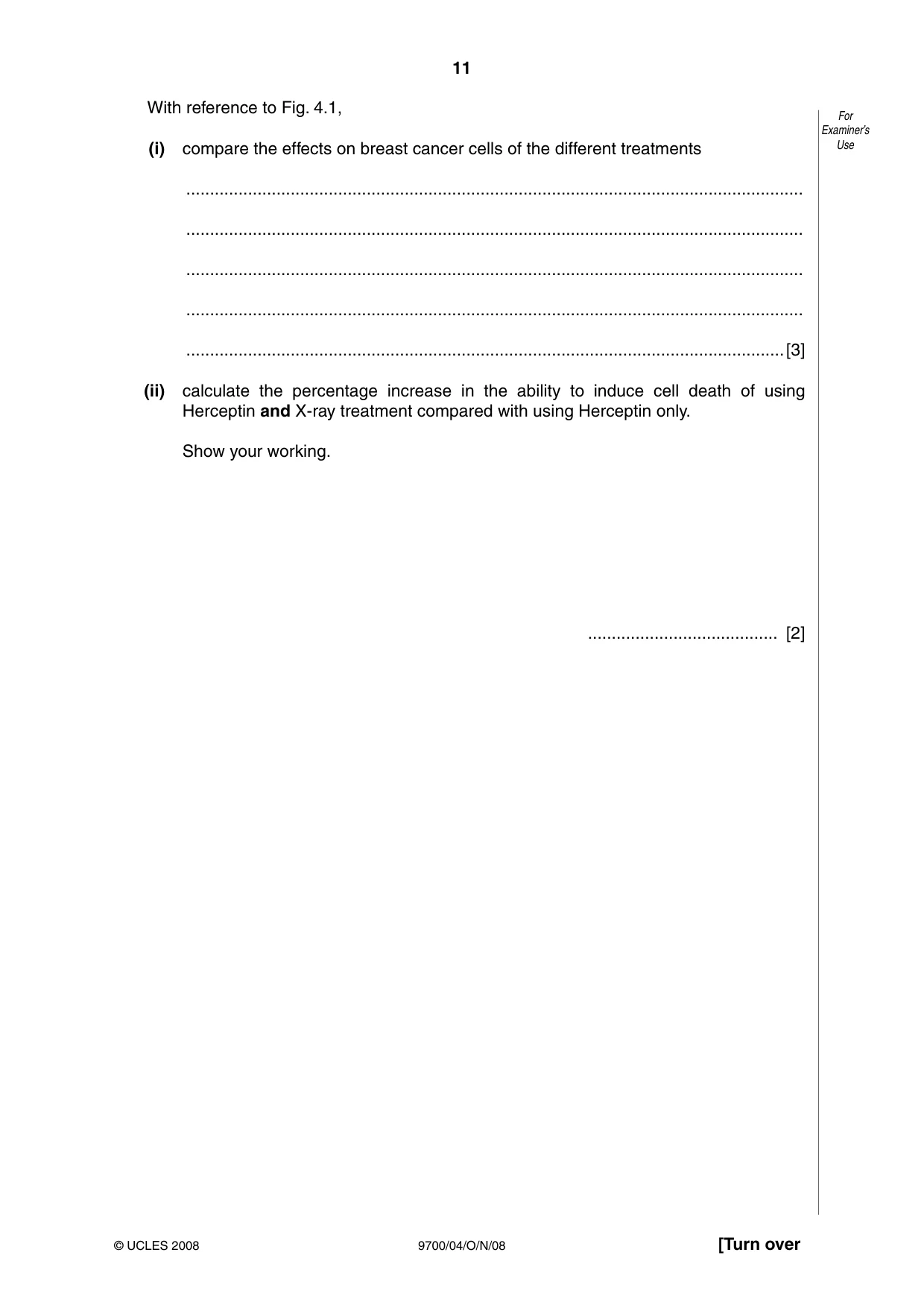
11 9700/04/O/N/08 For Examiner’s Use © UCLES 2008 With reference to Fig. 4.1, (i) compare the effects on breast cancer cells of the different treatments … … … … …[3] (ii) calculate the percentage increase in the ability to induce cell death of using Herceptin and X-ray treatment compared with using Herceptin only. Show your working. … [2] [Turn over
Question paper, page 12
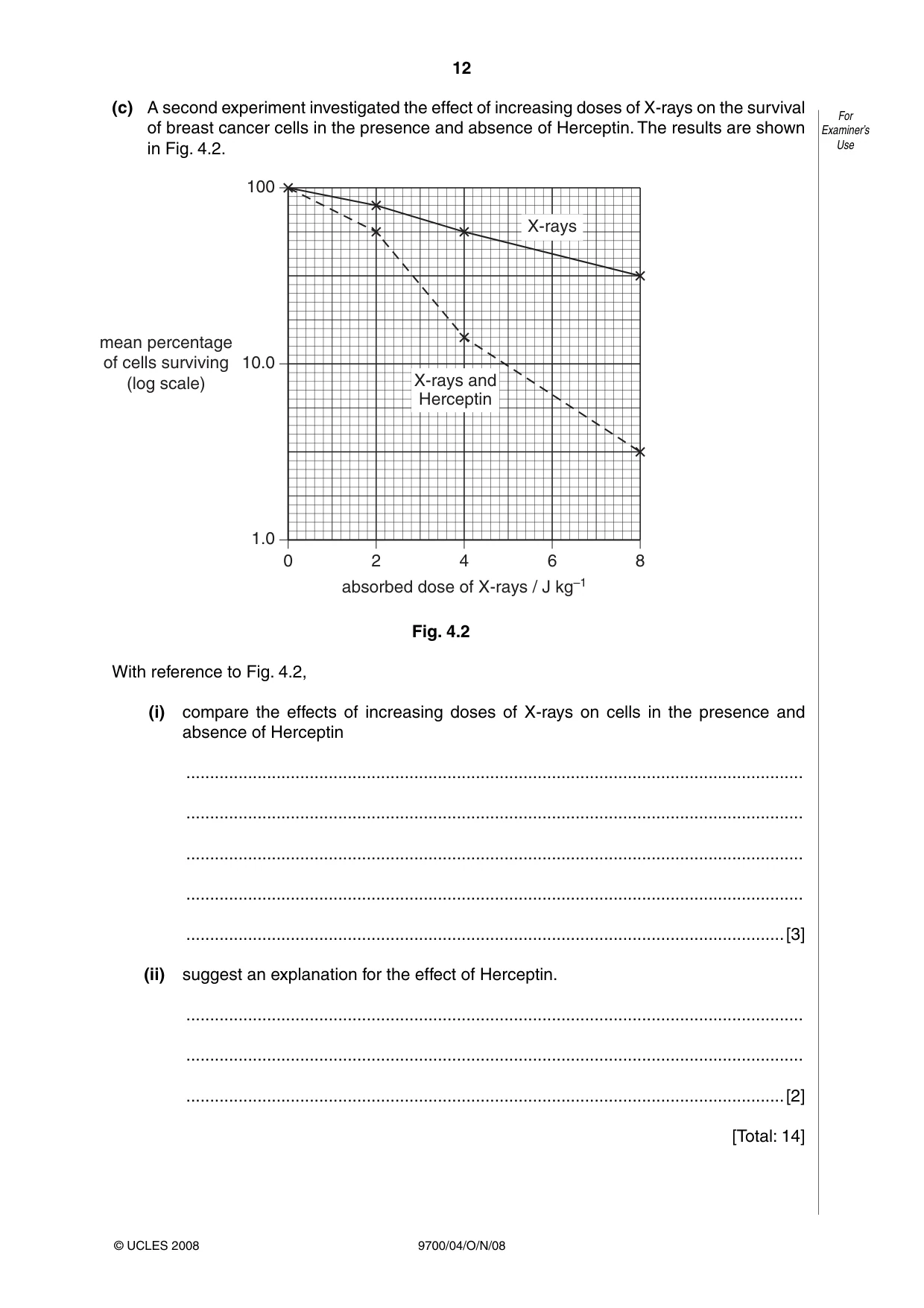
12 9700/04/O/N/08 For Examiner’s Use © UCLES 2008 (c) A second experiment investigated the effect of increasing doses of X-rays on the survival of breast cancer cells in the presence and absence of Herceptin. The results are shown in Fig. 4.2. 1.0 0 10.0 100 mean percentage of cells surviving (log scale) absorbed dose of X-rays / J kg–1 2 4 6 8 X-rays and Herceptin X-rays Fig. 4.2 With reference to Fig. 4.2, (i) compare the effects of increasing doses of X-rays on cells in the presence and absence of Herceptin … … … … …[3] (ii) suggest an explanation for the effect of Herceptin. … … …[2] [Total: 14]
Question paper, page 13
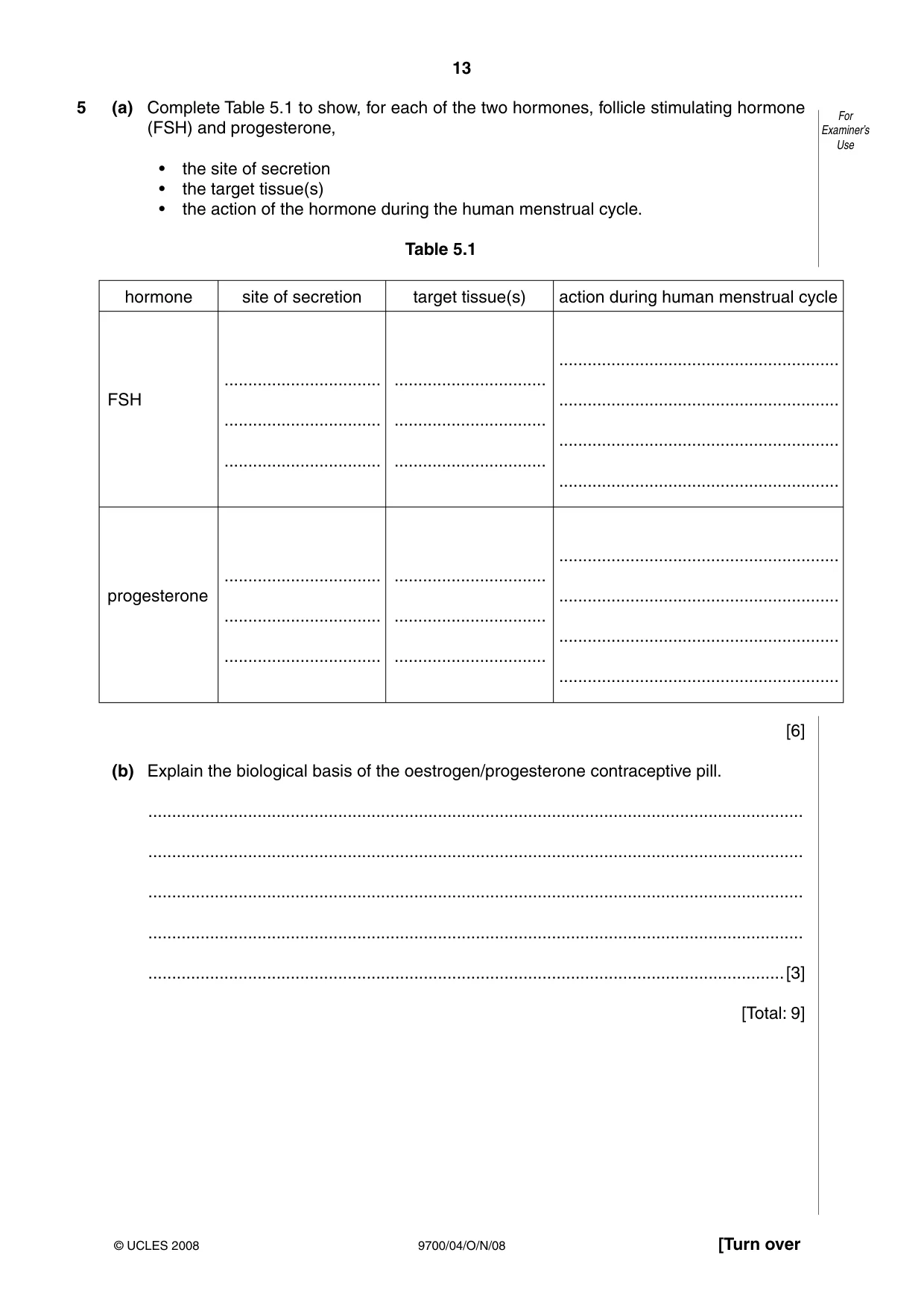
13 9700/04/O/N/08 [Turn over For Examiner’s Use © UCLES 2008 5 (a) Complete Table 5.1 to show, for each of the two hormones, follicle stimulating hormone (FSH) and progesterone, • the site of secretion • the target tissue(s) • the action of the hormone during the human menstrual cycle. Table 5.1 hormone site of secretion target tissue(s) action during human menstrual cycle FSH … … … … … … … … … … progesterone … … … … … … … … … … [6] (b) Explain the biological basis of the oestrogen/progesterone contraceptive pill. … … … … …[3] [Total: 9]
Question paper, page 14
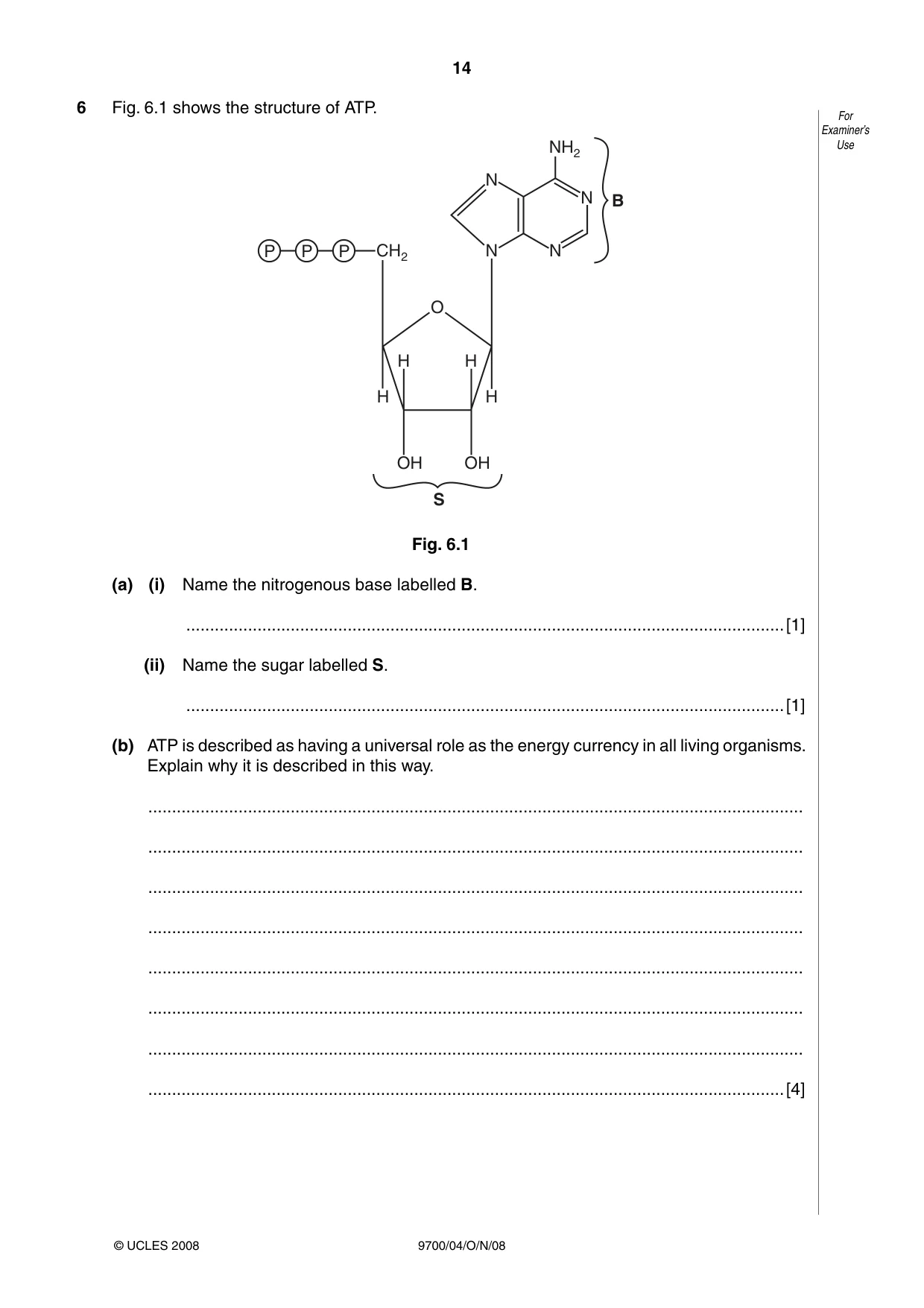
14 9700/04/O/N/08 For Examiner’s Use © UCLES 2008 6 Fig. 6.1 shows the structure of ATP. NH2 CH2 N N N H H H H OH N OH O P P P B S Fig. 6.1 (a) (i) Name the nitrogenous base labelled B. …[1] (ii) Name the sugar labelled S. …[1] (b) ATP is described as having a universal role as the energy currency in all living organisms. Explain why it is described in this way. … … … … … … … …[4]
Question paper, page 15
15 9700/04/O/N/08 [Turn over For Examiner’s Use © UCLES 2008 (c) State precisely two places where ATP is synthesised in cells. 1 … … 2 … …[2] [Total: 8]
Question paper, page 16
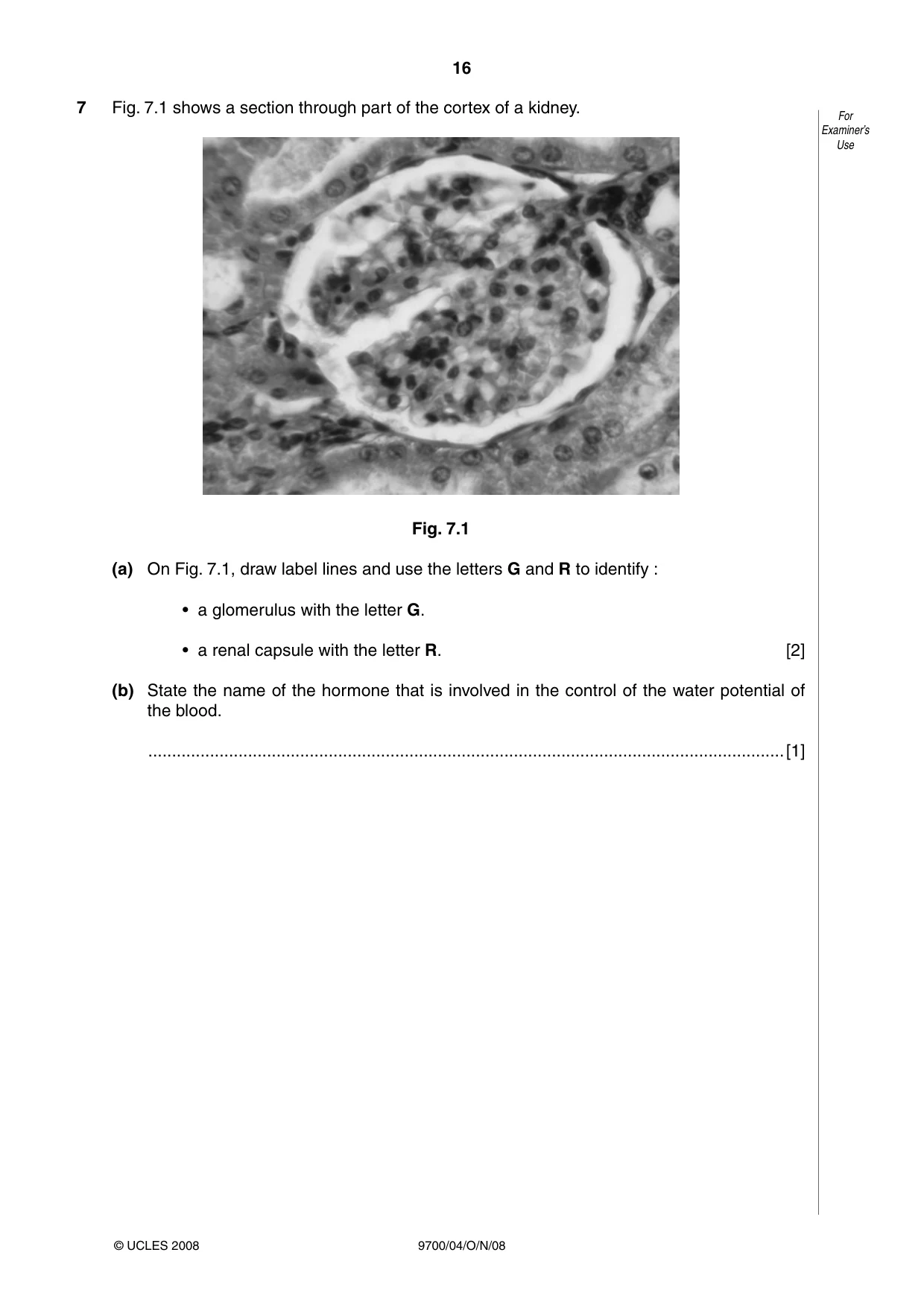
16 9700/04/O/N/08 For Examiner’s Use © UCLES 2008 7 Fig. 7.1 shows a section through part of the cortex of a kidney. Fig. 7.1 (a) On Fig. 7.1, draw label lines and use the letters G and R to identify : • a glomerulus with the letter G. • a renal capsule with the letter R. [2] (b) State the name of the hormone that is involved in the control of the water potential of the blood. …[1]
Question paper, page 17
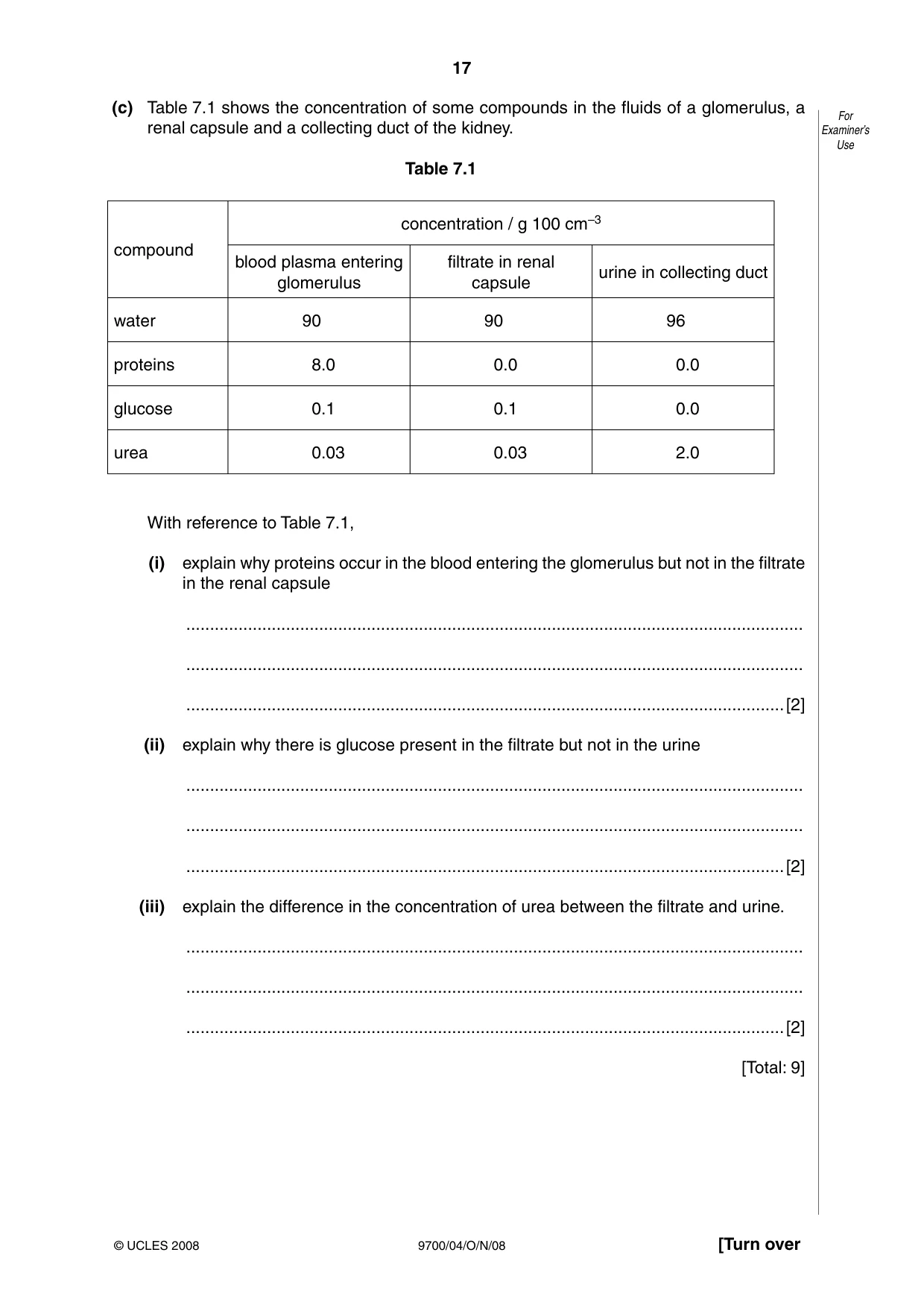
17 9700/04/O/N/08 [Turn over For Examiner’s Use © UCLES 2008 (c) Table 7.1 shows the concentration of some compounds in the fluids of a glomerulus, a renal capsule and a collecting duct of the kidney. Table 7.1 compound concentration / g 100 cm–3 blood plasma entering glomerulus filtrate in renal capsule urine in collecting duct water 90 90 96 proteins 8.0 0.0 0.0 glucose 0.1 0.1 0.0 urea 0.03 0.03 2.0 With reference to Table 7.1, (i) explain why proteins occur in the blood entering the glomerulus but not in the filtrate in the renal capsule … … …[2] (ii) explain why there is glucose present in the filtrate but not in the urine … … …[2] (iii) explain the difference in the concentration of urea between the filtrate and urine. … … …[2] [Total: 9]
Question paper, page 18
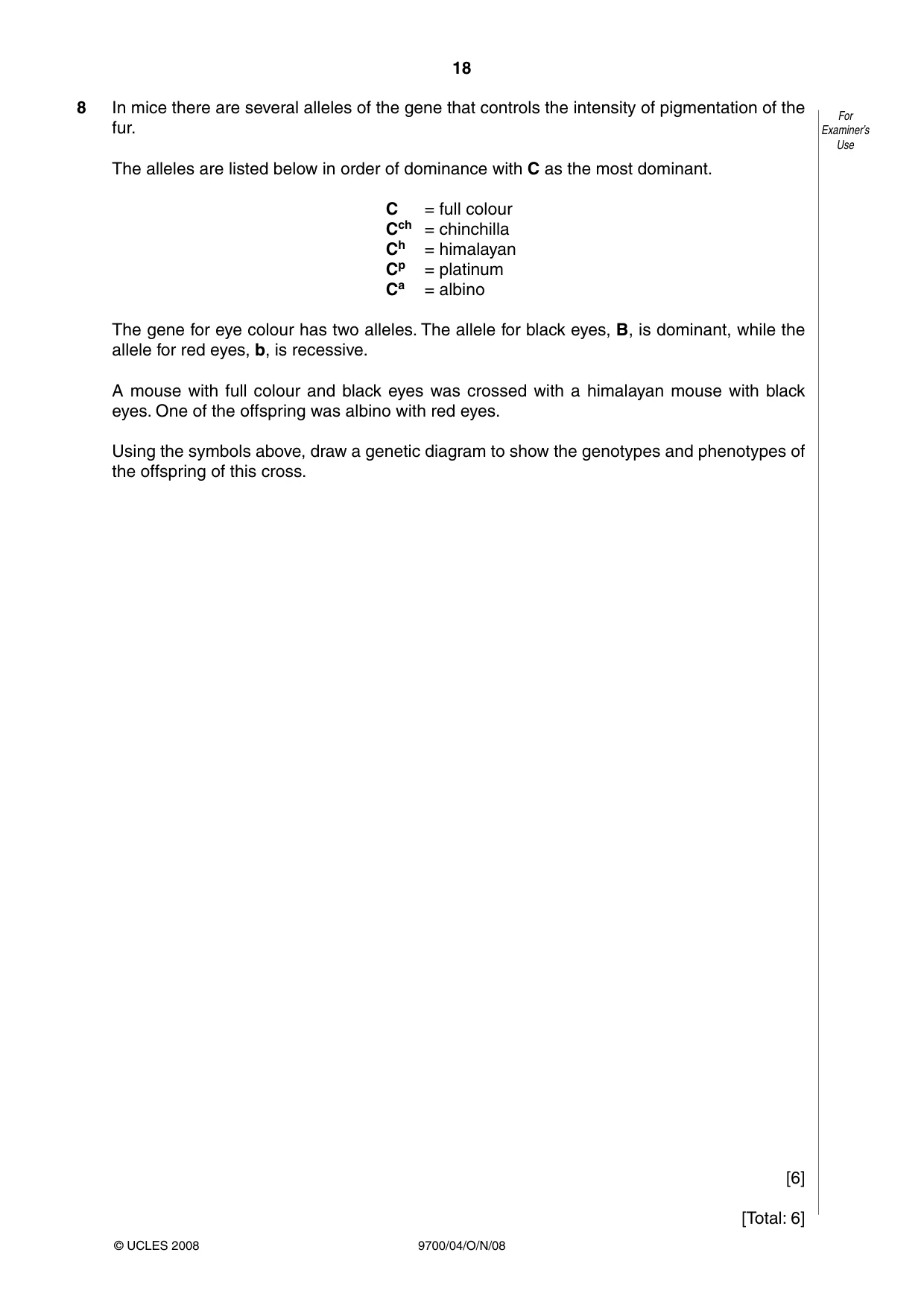
18 9700/04/O/N/08 For Examiner’s Use © UCLES 2008 8 In mice there are several alleles of the gene that controls the intensity of pigmentation of the fur. The alleles are listed below in order of dominance with C as the most dominant. C = full colour Cch = chinchilla Ch = himalayan Cp = platinum Ca = albino The gene for eye colour has two alleles. The allele for black eyes, B, is dominant, while the allele for red eyes, b, is recessive. A mouse with full colour and black eyes was crossed with a himalayan mouse with black eyes. One of the offspring was albino with red eyes. Using the symbols above, draw a genetic diagram to show the genotypes and phenotypes of the offspring of this cross. [6] [Total: 6]
Question paper, page 19
19 9700/04/O/N/08 [Turn over © UCLES 2008 BLANK PAGE QUESTION 9 starts on page 20
Question paper, page 20
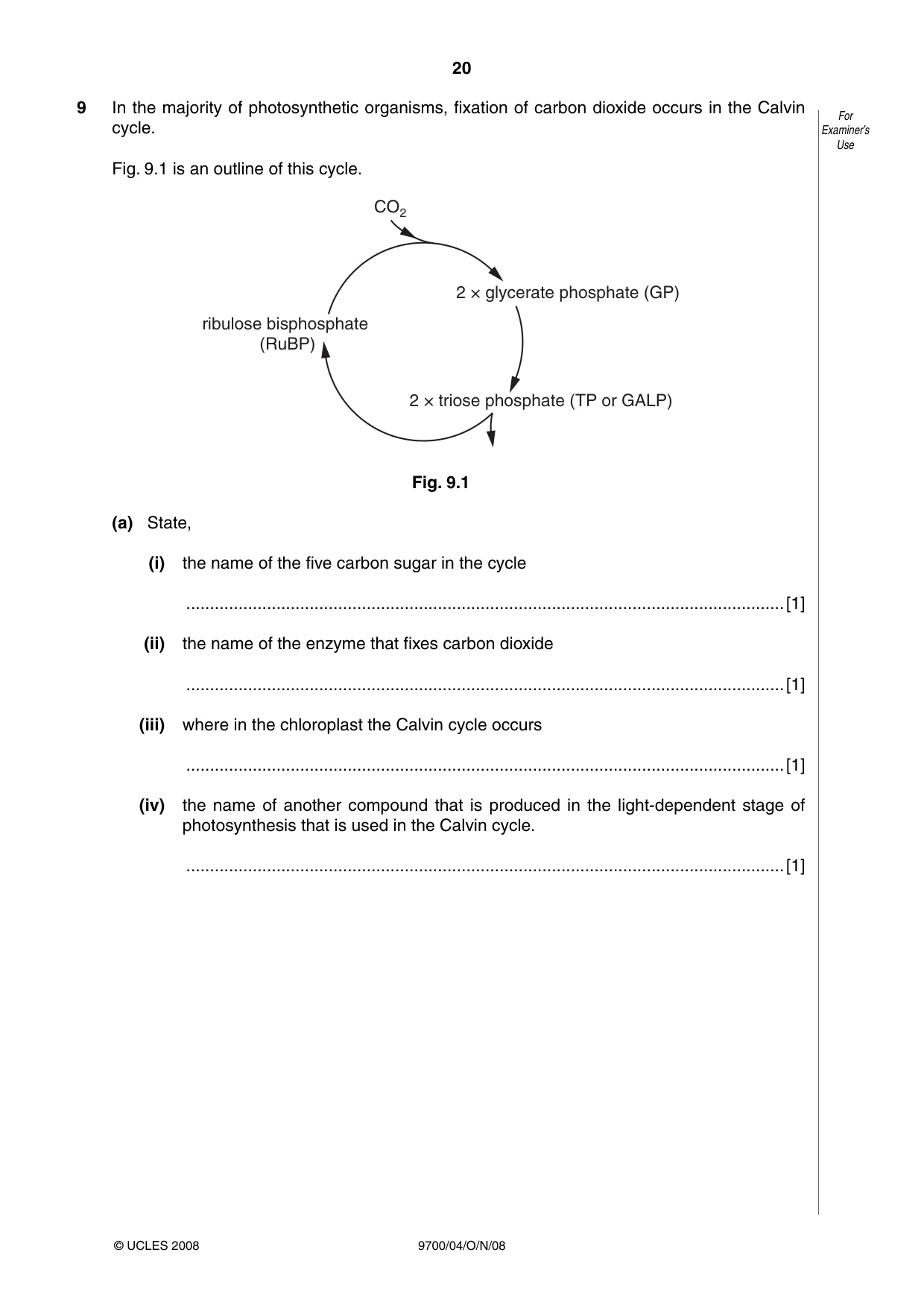
20 9700/04/O/N/08 For Examiner’s Use © UCLES 2008 9 In the majority of photosynthetic organisms, fixation of carbon dioxide occurs in the Calvin cycle. Fig. 9.1 is an outline of this cycle. 2 × glycerate phosphate (GP) ribulose bisphosphate (RuBP) 2 × triose phosphate (TP or GALP) CO2 Fig. 9.1 (a) State, (i) the name of the five carbon sugar in the cycle …[1] (ii) the name of the enzyme that fixes carbon dioxide …[1] (iii) where in the chloroplast the Calvin cycle occurs …[1] (iv) the name of another compound that is produced in the light-dependent stage of photosynthesis that is used in the Calvin cycle. …[1]
Question paper, page 21
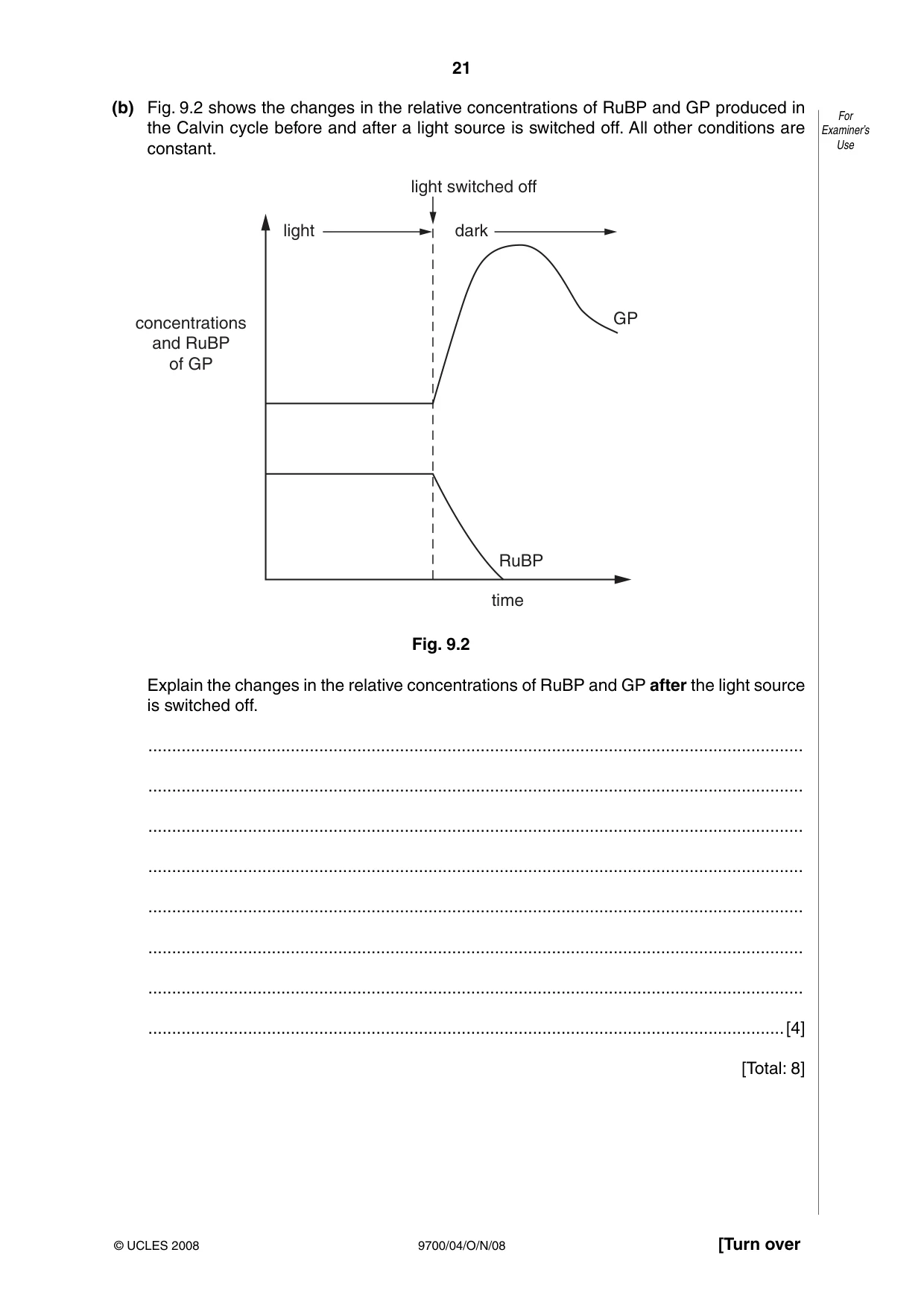
21 9700/04/O/N/08 [Turn over For Examiner’s Use © UCLES 2008 (b) Fig. 9.2 shows the changes in the relative concentrations of RuBP and GP produced in the Calvin cycle before and after a light source is switched off. All other conditions are constant. concentrations and RuBP of GP time light dark light switched off RuBP GP Fig. 9.2 Explain the changes in the relative concentrations of RuBP and GP after the light source is switched off. … … … … … … … …[4] [Total: 8]
Question paper, page 22
22 9700/04/O/N/08 For Examiner’s Use © UCLES 2008 Section B Answer one question. 10 (a) Describe the structure of a motor neurone. [7] (b) Explain how an action potential is transmitted along a motor neurone. [8] [Total: 15] 11 (a) Explain the role of isolating mechanisms in the evolution of new species. [8] (b) Describe and explain, using an example, the process of artificial selection. [7] [Total: 15] … … … … … … … … … … … … … … … … … … …
Question paper, page 23
23 9700/04/O/N/08 [Turn over For Examiner’s Use © UCLES 2008 … … … … … … … … … … … … … … … … … … … … … … … … … … … …
Question paper, page 24
24 9700/04/O/N/08 © UCLES 2008 … … … … … … … … … … … … … … … … … … … … … … Copyright Acknowledgements: Question 1 Fig. 1 © www.adenbartdreamteam.nl/Images/Mauritania/AnimalsMauritania001.bmp Permission to reproduce items where third-party owned material protected by copyright is included has been sought and cleared where possible. Every reasonable effort has been made by the publisher (UCLES) to trace copyright holders, but if any items requiring clearance have unwittingly been included, the publisher will be pleased to make amends at the earliest possible opportunity. University of Cambridge International Examinations is part of the Cambridge Assessment Group. Cambridge Assessment is the brand name of University of Cambridge Local Examinations Syndicate (UCLES), which is itself a department of the University of Cambridge. For Examiner’s Use
Mark scheme, page 1
UNIVERSITY OF CAMBRIDGE INTERNATIONAL EXAMINATIONS GCE Advanced Subsidiary Level and GCE Advanced Level MARK SCHEME for the October/November 2008 question paper 9700 BIOLOGY 9700/04 Paper 4 (Theory 2), maximum raw mark 100 This mark scheme is published as an aid to teachers and candidates, to indicate the requirements of the examination. It shows the basis on which Examiners were instructed to award marks. It does not indicate the details of the discussions that took place at an Examiners’ meeting before marking began. All Examiners are instructed that alternative correct answers and unexpected approaches in candidates’ scripts must be given marks that fairly reflect the relevant knowledge and skills demonstrated. Mark schemes must be read in conjunction with the question papers and the report on the examination. • CIE will not enter into discussions or correspondence in connection with these mark schemes. CIE is publishing the mark schemes for the October/November 2008 question papers for most IGCSE, GCE Advanced Level and Advanced Subsidiary Level syllabuses and some Ordinary Level syllabuses.
Mark scheme, page 2
Page 2 Mark Scheme Syllabus Paper GCE A/AS LEVEL – October/November 2008 9700 04 © UCLES 2007 Question Expected Answers Marks 1 (a) eukaryotic prokaryotic 1. linear / strands or circular ; 2. in nucleus or (free) in cytoplasm ; 3. associated with, proteins or histones or naked ; 4. in chromosomes or not in chromosomes ; assume eukaryotic if not stated [2 max] (b) 1 2 3 4 5/6 habitat destruction / deforestation ; disease ; fall in prey numbers / difficulty in finding food ; increased competition (with other carnivores) ; ref. named human activities ; ; e.g. killing / agriculture / logging R pollution [3 max] (c) 1 2 3 4 national parks ; zoos ; captive breeding programmes ; AVP ; e.g. banning hunting / gamete banks / education qualified [2 max] [Total:7] 2 (a) (i) acts as chloride channel ; A Cl – R chlorine Cl – moves out (of cell) ; active transport / binding site for ATP ; [2 max] (ii) E on diagram / upper face, because this is where, oligosaccharides / glycocalyx / carbohydrate chains, are present ; A glycoprotein R glycolipid [1]
Mark scheme, page 3
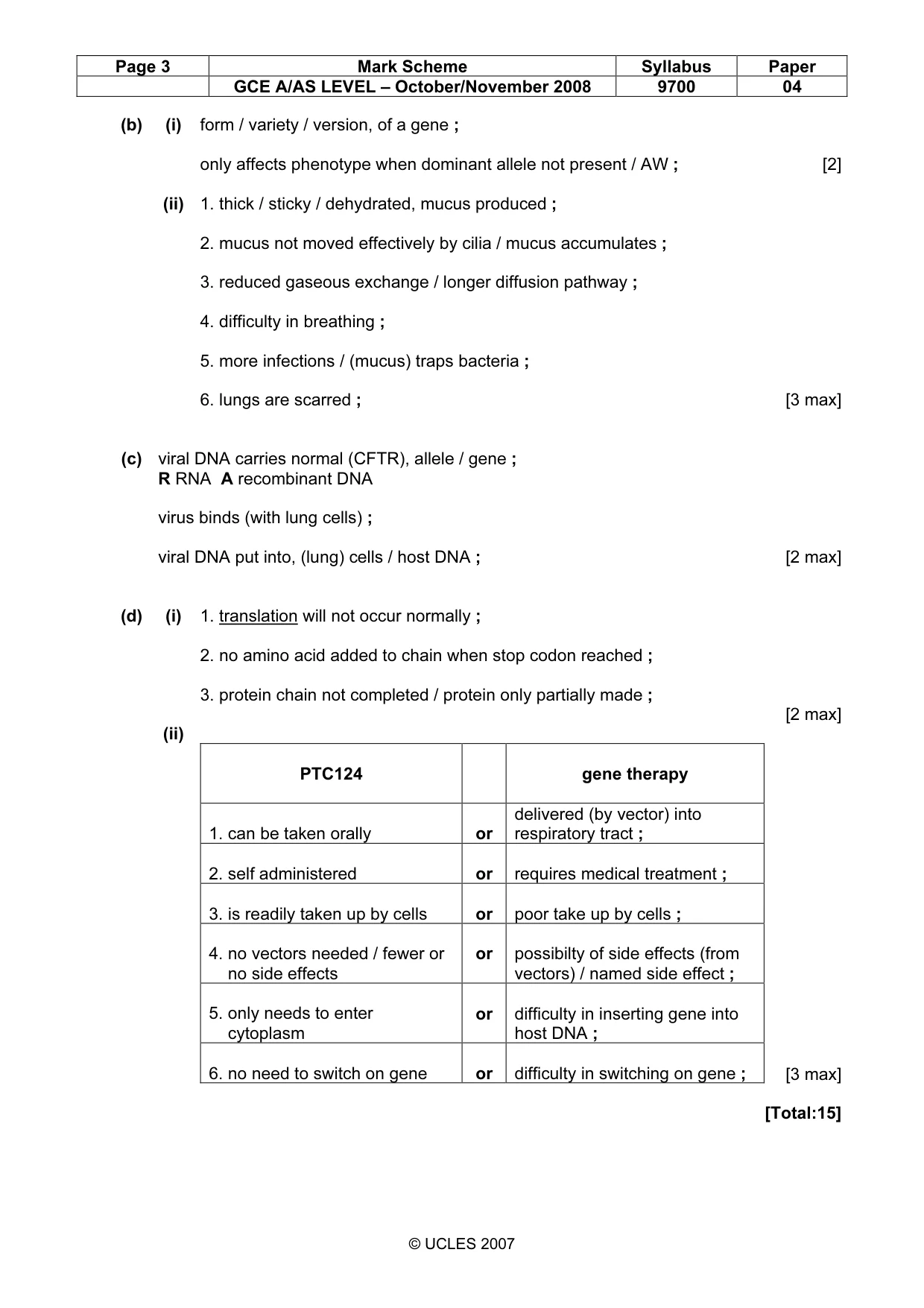
Page 3 Mark Scheme Syllabus Paper GCE A/AS LEVEL – October/November 2008 9700 04 © UCLES 2007 (b) (i) form / variety / version, of a gene ; only affects phenotype when dominant allele not present / AW ; [2] (ii) 1. thick / sticky / dehydrated, mucus produced ; 2. mucus not moved effectively by cilia / mucus accumulates ; 3. reduced gaseous exchange / longer diffusion pathway ; 4. difficulty in breathing ; 5. more infections / (mucus) traps bacteria ; 6. lungs are scarred ; [3 max] (c) viral DNA carries normal (CFTR), allele / gene ; R RNA A recombinant DNA virus binds (with lung cells) ; viral DNA put into, (lung) cells / host DNA ; [2 max] (d) (i) 1. translation will not occur normally ; 2. no amino acid added to chain when stop codon reached ; 3. protein chain not completed / protein only partially made ; [2 max] (ii) PTC124 gene therapy 1. can be taken orally or delivered (by vector) into respiratory tract ; 2. self administered or requires medical treatment ; 3. is readily taken up by cells or poor take up by cells ; 4. no vectors needed / fewer or no side effects or possibilty of side effects (from vectors) / named side effect ; 5. only needs to enter cytoplasm or difficulty in inserting gene into host DNA ; 6. no need to switch on gene or difficulty in switching on gene ; [3 max] [Total:15]
Mark scheme, page 4
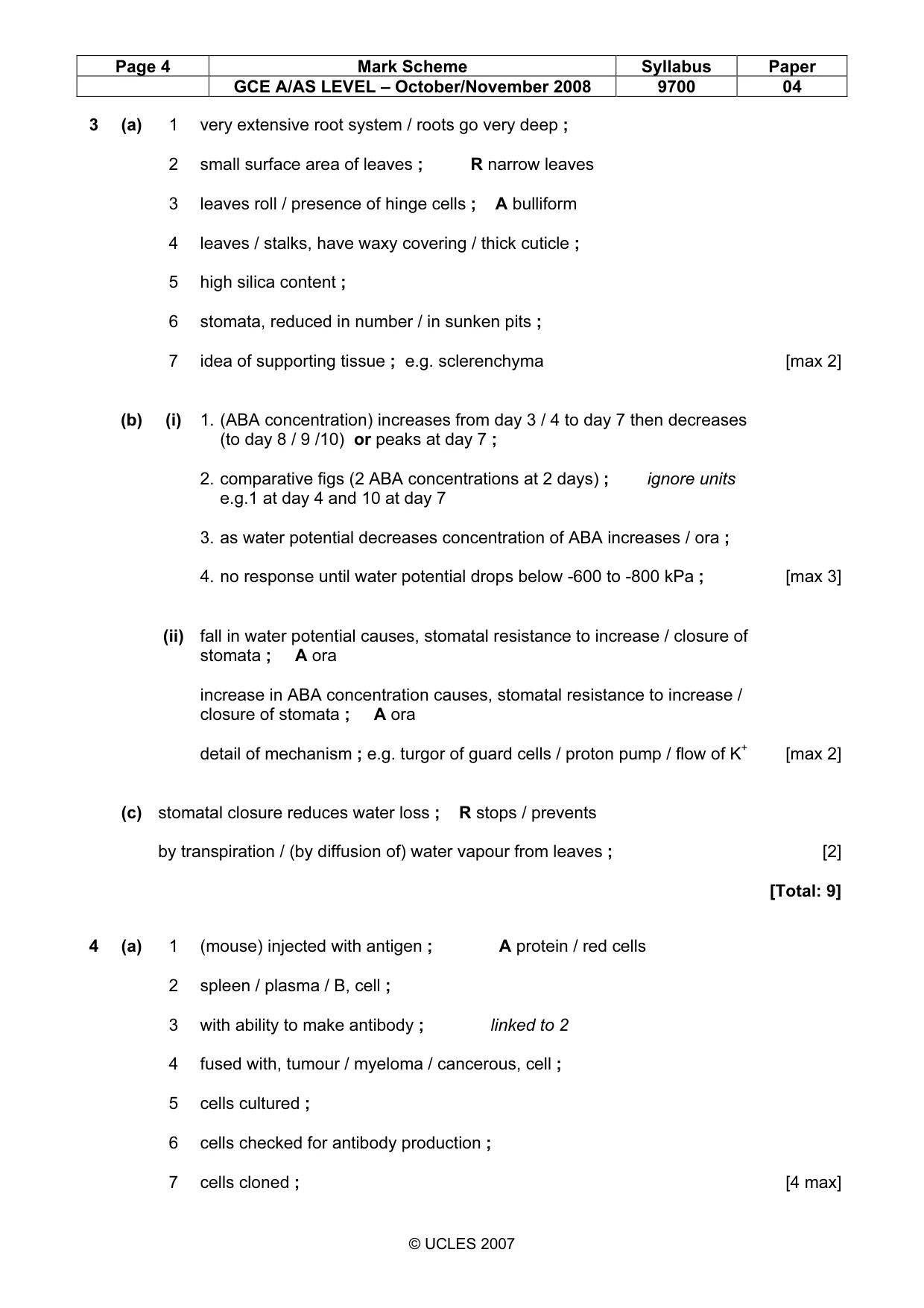
Page 4 Mark Scheme Syllabus Paper GCE A/AS LEVEL – October/November 2008 9700 04 © UCLES 2007 3 (a) 1 2 3 4 5 6 7 very extensive root system / roots go very deep ; small surface area of leaves ; R narrow leaves leaves roll / presence of hinge cells ; A bulliform leaves / stalks, have waxy covering / thick cuticle ; high silica content ; stomata, reduced in number / in sunken pits ; idea of supporting tissue ; e.g. sclerenchyma [max 2] (b) (i) 1. (ABA concentration) increases from day 3 / 4 to day 7 then decreases (to day 8 / 9 /10) or peaks at day 7 ; 2. comparative figs (2 ABA concentrations at 2 days) ; ignore units e.g.1 at day 4 and 10 at day 7 3. as water potential decreases concentration of ABA increases / ora ; 4. no response until water potential drops below -600 to -800 kPa ; [max 3] (ii) fall in water potential causes, stomatal resistance to increase / closure of stomata ; A ora increase in ABA concentration causes, stomatal resistance to increase / closure of stomata ; A ora detail of mechanism ; e.g. turgor of guard cells / proton pump / flow of K+ [max 2] (c) stomatal closure reduces water loss ; R stops / prevents by transpiration / (by diffusion of) water vapour from leaves ; [2] [Total: 9] 4 (a) 1 2 3 4 5 6 7 (mouse) injected with antigen ; A protein / red cells spleen / plasma / B, cell ; with ability to make antibody ; linked to 2 fused with, tumour / myeloma / cancerous, cell ; cells cultured ; cells checked for antibody production ; cells cloned ; [4 max]
Mark scheme, page 5
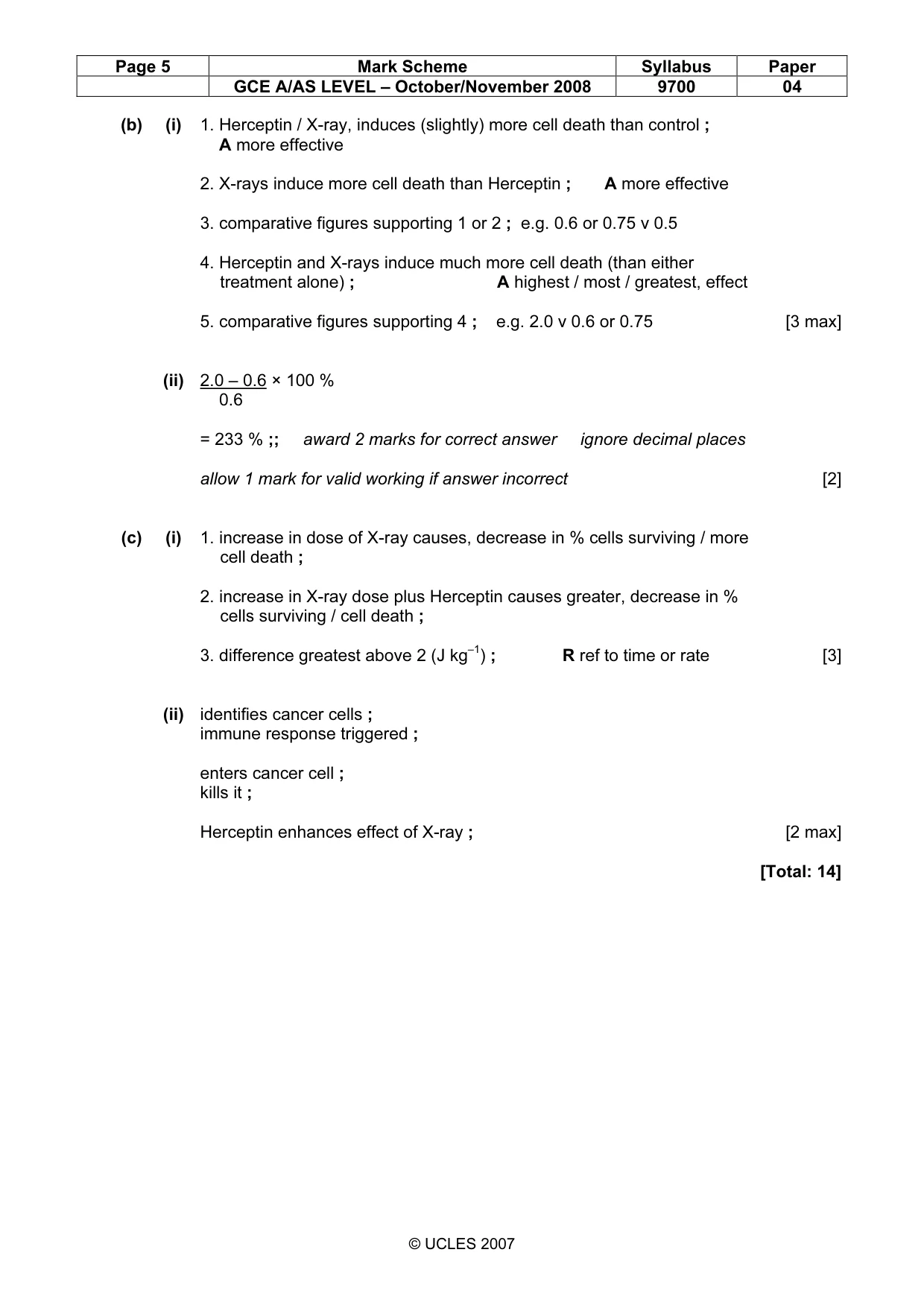
Page 5 Mark Scheme Syllabus Paper GCE A/AS LEVEL – October/November 2008 9700 04 © UCLES 2007 (b) (i) 1. Herceptin / X-ray, induces (slightly) more cell death than control ; A more effective 2. X-rays induce more cell death than Herceptin ; A more effective 3. comparative figures supporting 1 or 2 ; e.g. 0.6 or 0.75 v 0.5 4. Herceptin and X-rays induce much more cell death (than either treatment alone) ; A highest / most / greatest, effect 5. comparative figures supporting 4 ; e.g. 2.0 v 0.6 or 0.75 [3 max] (ii) 2.0 – 0.6 × 100 % 0.6 = 233 % ;; award 2 marks for correct answer ignore decimal places allow 1 mark for valid working if answer incorrect [2] (c) (i) 1. increase in dose of X-ray causes, decrease in % cells surviving / more cell death ; 2. increase in X-ray dose plus Herceptin causes greater, decrease in % cells surviving / cell death ; 3. difference greatest above 2 (J kg–1) ; R ref to time or rate [3] (ii) identifies cancer cells ; immune response triggered ; enters cancer cell ; kills it ; Herceptin enhances effect of X-ray ; [2 max] [Total: 14]
Mark scheme, page 6
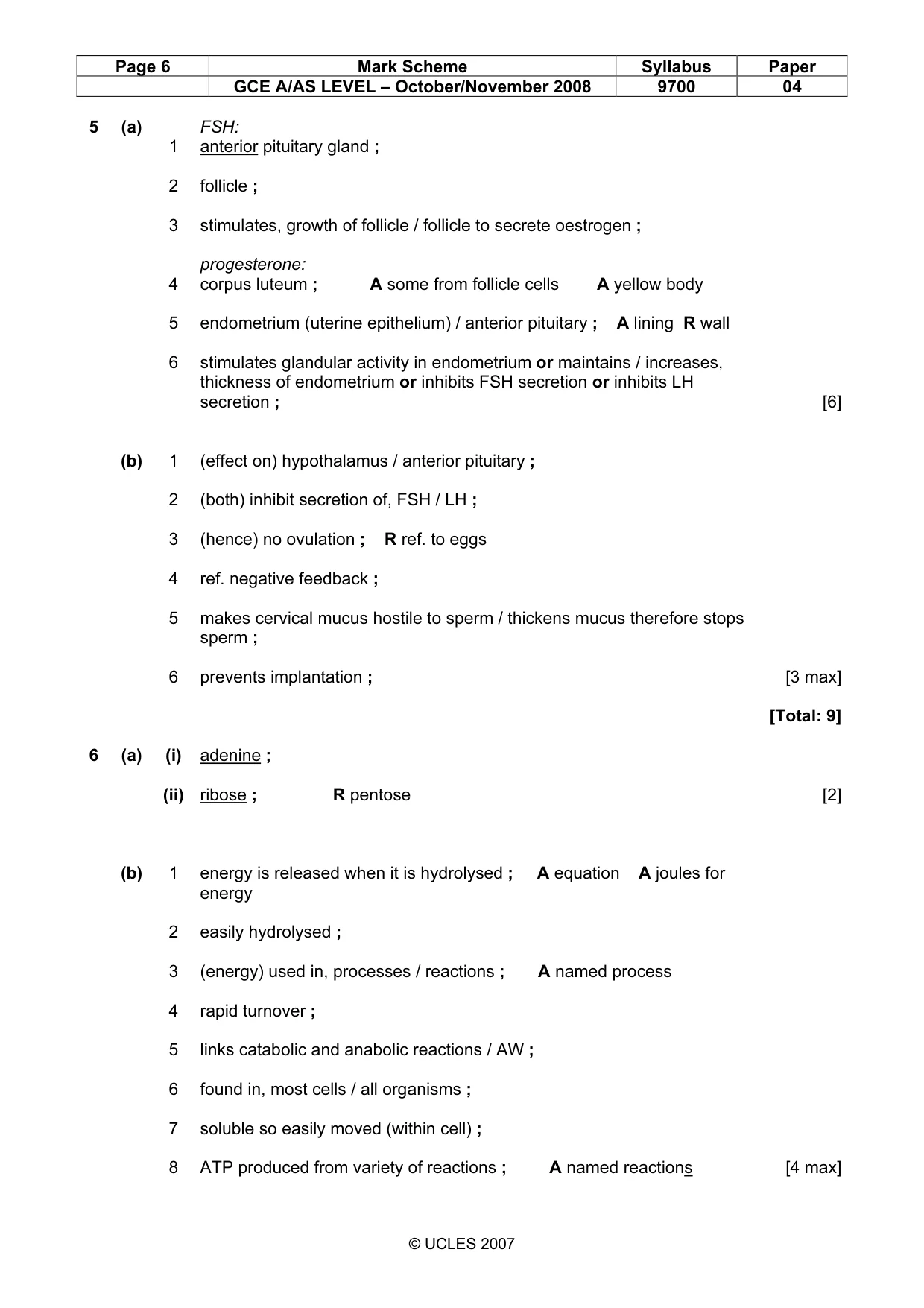
Page 6 Mark Scheme Syllabus Paper GCE A/AS LEVEL – October/November 2008 9700 04 © UCLES 2007 5 (a) 1 2 3 4 5 6 FSH: anterior pituitary gland ; follicle ; stimulates, growth of follicle / follicle to secrete oestrogen ; progesterone: corpus luteum ; A some from follicle cells A yellow body endometrium (uterine epithelium) / anterior pituitary ; A lining R wall stimulates glandular activity in endometrium or maintains / increases, thickness of endometrium or inhibits FSH secretion or inhibits LH secretion ; [6] (b) 1 2 3 4 5 6 (effect on) hypothalamus / anterior pituitary ; (both) inhibit secretion of, FSH / LH ; (hence) no ovulation ; R ref. to eggs ref. negative feedback ; makes cervical mucus hostile to sperm / thickens mucus therefore stops sperm ; prevents implantation ; [3 max] [Total: 9] 6 (a) (i) (ii) adenine ; ribose ; R pentose [2] (b) 1 2 3 4 5 6 7 8 energy is released when it is hydrolysed ; A equation A joules for energy easily hydrolysed ; (energy) used in, processes / reactions ; A named process rapid turnover ; links catabolic and anabolic reactions / AW ; found in, most cells / all organisms ; soluble so easily moved (within cell) ; ATP produced from variety of reactions ; A named reactions [4 max]
Mark scheme, page 7
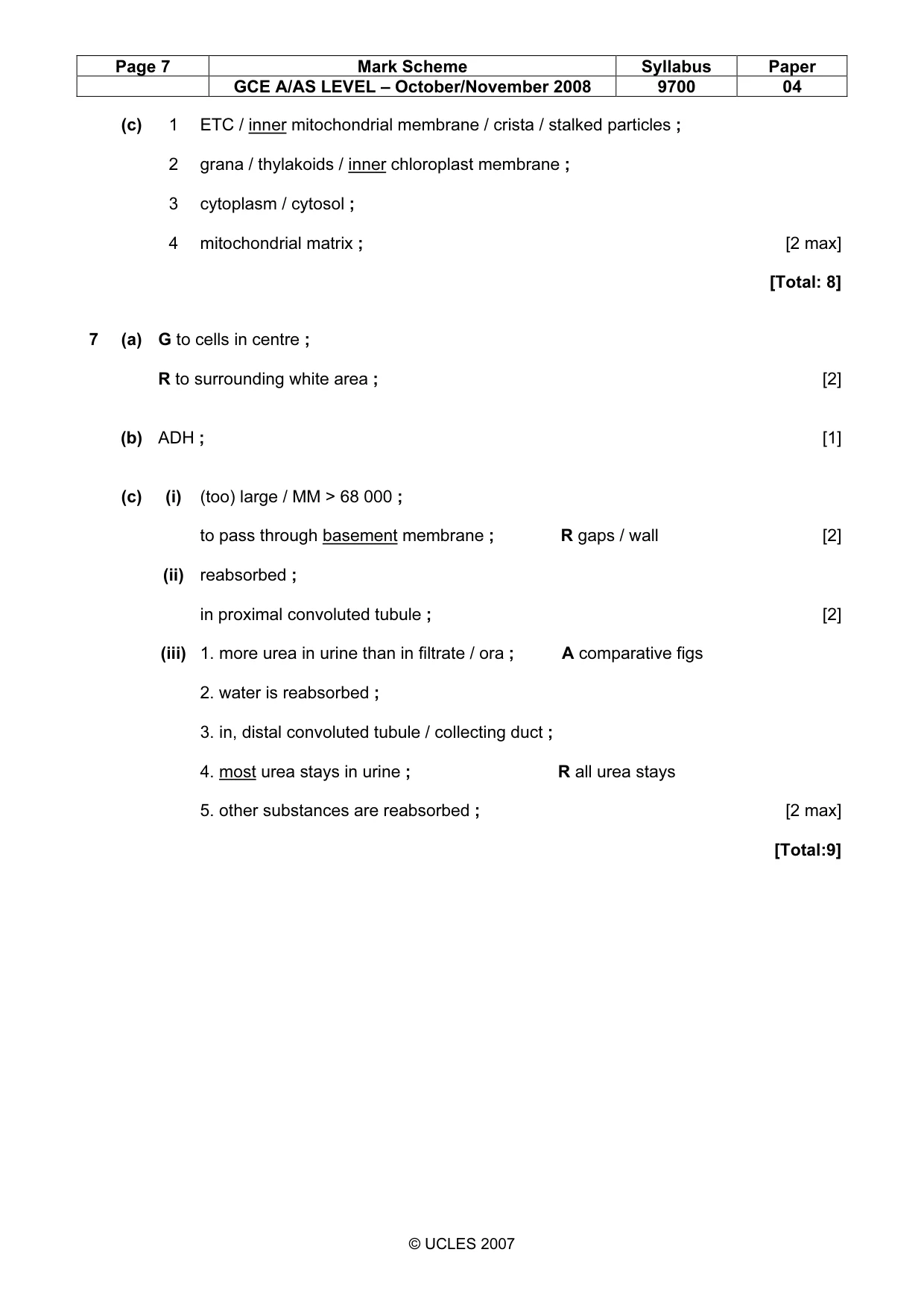
Page 7 Mark Scheme Syllabus Paper GCE A/AS LEVEL – October/November 2008 9700 04 © UCLES 2007 (c) 1 2 3 4 ETC / inner mitochondrial membrane / crista / stalked particles ; grana / thylakoids / inner chloroplast membrane ; cytoplasm / cytosol ; mitochondrial matrix ; [2 max] [Total: 8] 7 (a) G to cells in centre ; R to surrounding white area ; [2] (b) ADH ; [1] (c) (i) (too) large / MM > 68 000 ; to pass through basement membrane ; R gaps / wall [2] (ii) reabsorbed ; in proximal convoluted tubule ; [2] (iii) 1. more urea in urine than in filtrate / ora ; A comparative figs 2. water is reabsorbed ; 3. in, distal convoluted tubule / collecting duct ; 4. most urea stays in urine ; R all urea stays 5. other substances are reabsorbed ; [2 max] [Total:9]
Mark scheme, page 8
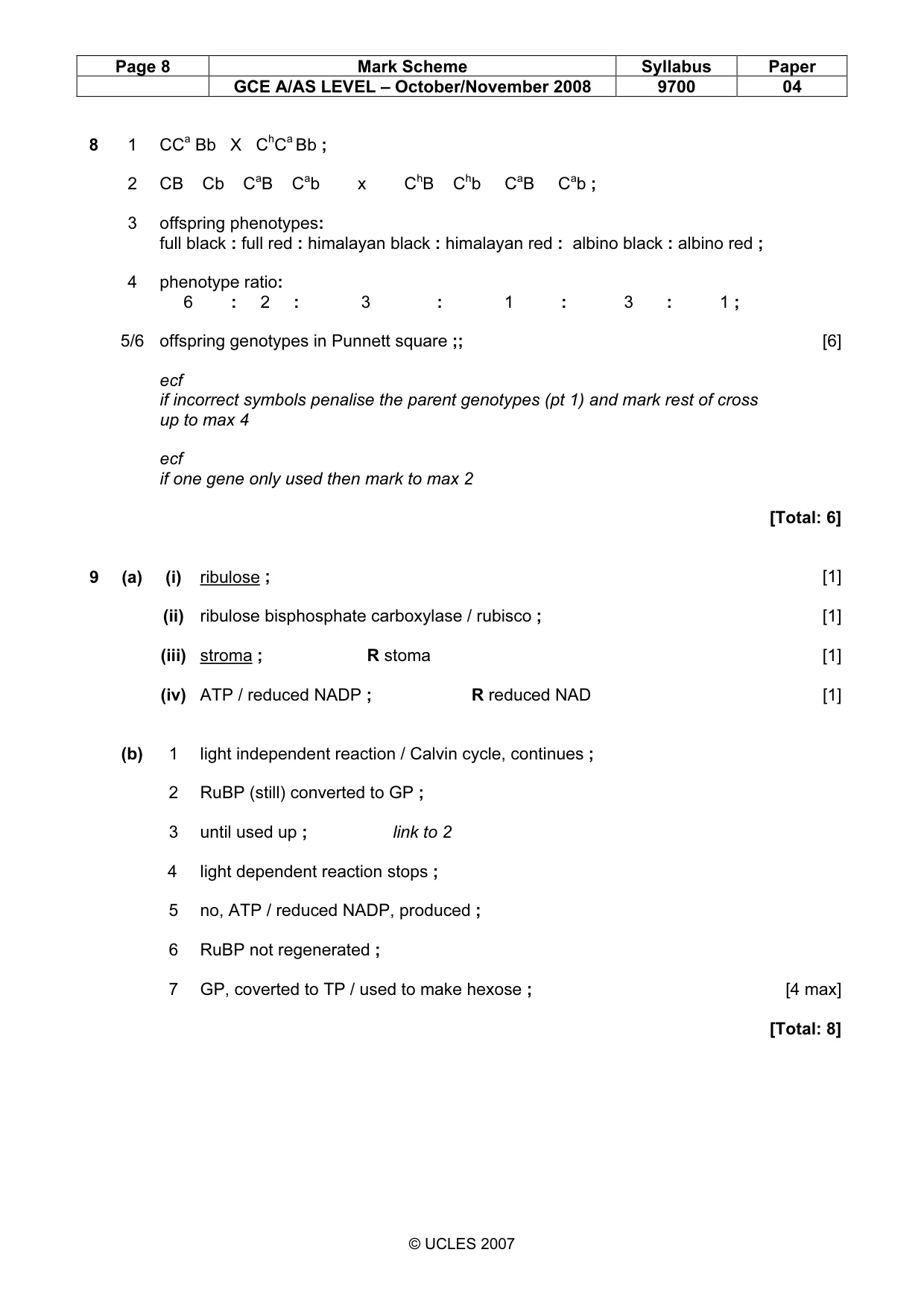
Page 8 Mark Scheme Syllabus Paper GCE A/AS LEVEL – October/November 2008 9700 04 © UCLES 2007 8 1 2 3 4 5/6 CCa Bb X ChCa Bb ; CB Cb CaB Cab x ChB Chb CaB Cab ; offspring phenotypes: full black : full red : himalayan black : himalayan red : albino black : albino red ; phenotype ratio: 6 : 2 : 3 : 1 : 3 : 1 ; offspring genotypes in Punnett square ;; [6] ecf if incorrect symbols penalise the parent genotypes (pt 1) and mark rest of cross up to max 4 ecf if one gene only used then mark to max 2 [Total: 6] 9 (a) (i) ribulose ; [1] (ii) ribulose bisphosphate carboxylase / rubisco ; [1] (iii) stroma ; R stoma [1] (iv) ATP / reduced NADP ; R reduced NAD [1] (b) 1 2 3 4 5 6 7 light independent reaction / Calvin cycle, continues ; RuBP (still) converted to GP ; until used up ; link to 2 light dependent reaction stops ; no, ATP / reduced NADP, produced ; RuBP not regenerated ; GP, coverted to TP / used to make hexose ; [4 max] [Total: 8]
Mark scheme, page 9
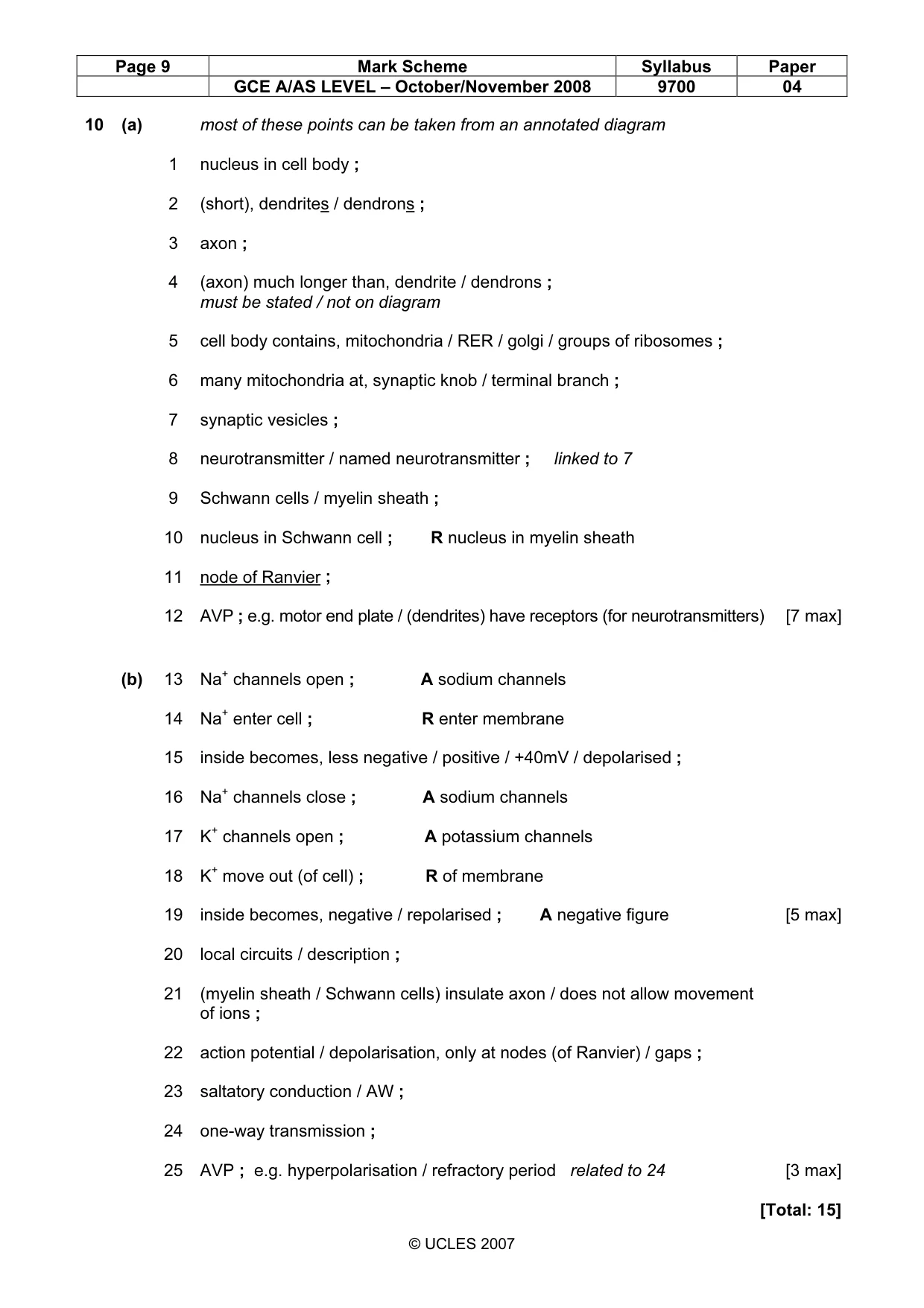
Page 9 Mark Scheme Syllabus Paper GCE A/AS LEVEL – October/November 2008 9700 04 © UCLES 2007 10 (a) 1 2 3 4 5 6 7 8 9 10 11 12 most of these points can be taken from an annotated diagram nucleus in cell body ; (short), dendrites / dendrons ; axon ; (axon) much longer than, dendrite / dendrons ; must be stated / not on diagram cell body contains, mitochondria / RER / golgi / groups of ribosomes ; many mitochondria at, synaptic knob / terminal branch ; synaptic vesicles ; neurotransmitter / named neurotransmitter ; linked to 7 Schwann cells / myelin sheath ; nucleus in Schwann cell ; R nucleus in myelin sheath node of Ranvier ; AVP ; e.g. motor end plate / (dendrites) have receptors (for neurotransmitters) [7 max] (b) 13 14 15 16 17 18 19 20 21 22 23 24 25 Na+ channels open ; A sodium channels Na+ enter cell ; R enter membrane inside becomes, less negative / positive / +40mV / depolarised ; Na+ channels close ; A sodium channels K+ channels open ; A potassium channels K+ move out (of cell) ; R of membrane inside becomes, negative / repolarised ; A negative figure local circuits / description ; (myelin sheath / Schwann cells) insulate axon / does not allow movement of ions ; action potential / depolarisation, only at nodes (of Ranvier) / gaps ; saltatory conduction / AW ; one-way transmission ; AVP ; e.g. hyperpolarisation / refractory period related to 24 [5 max] [3 max] [Total: 15]
Mark scheme, page 10
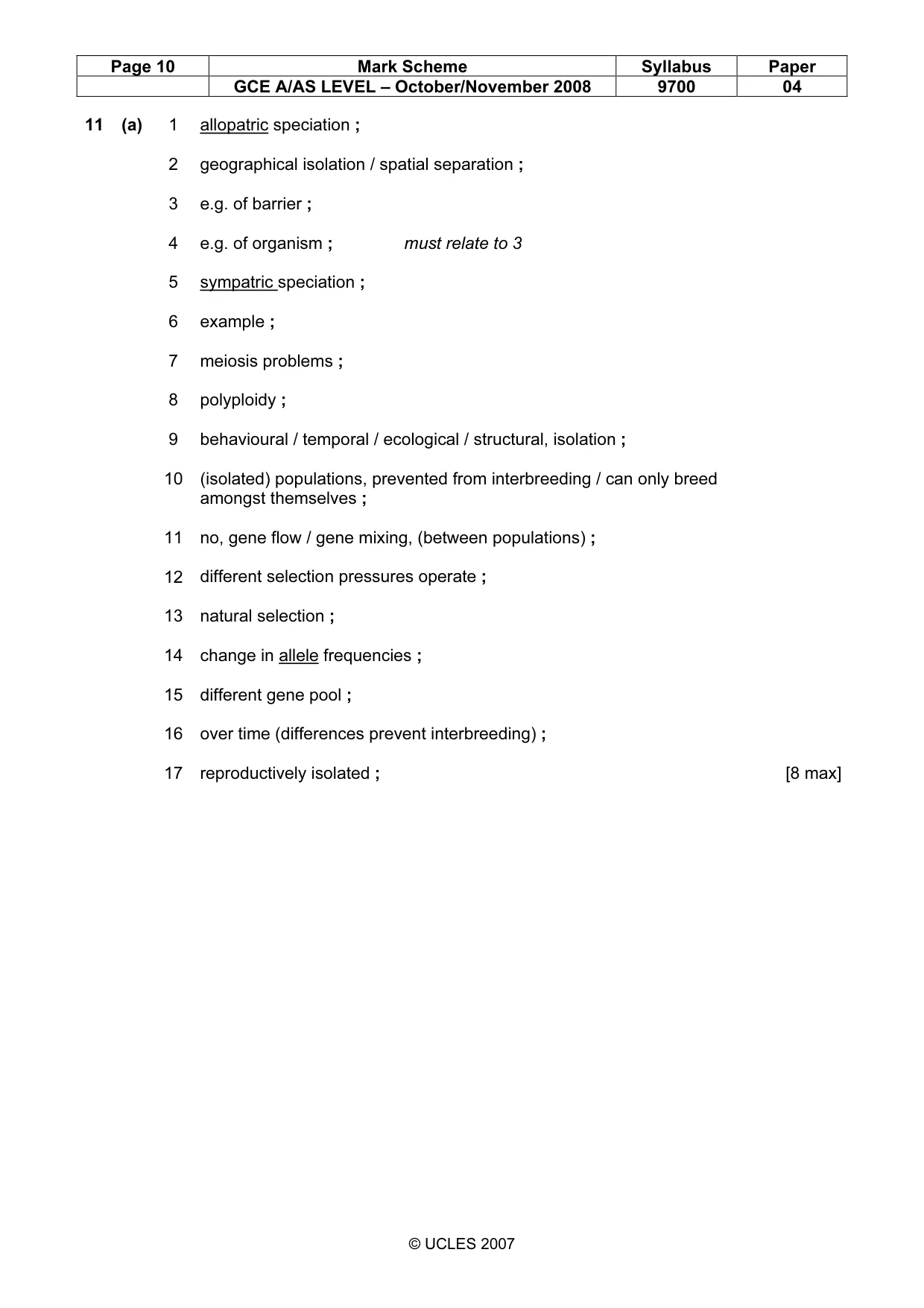
Page 10 Mark Scheme Syllabus Paper GCE A/AS LEVEL – October/November 2008 9700 04 © UCLES 2007 11 (a) 1 2 3 4 5 6 7 8 9 10 11 12 13 14 15 16 17 allopatric speciation ; geographical isolation / spatial separation ; e.g. of barrier ; e.g. of organism ; must relate to 3 sympatric speciation ; example ; meiosis problems ; polyploidy ; behavioural / temporal / ecological / structural, isolation ; (isolated) populations, prevented from interbreeding / can only breed amongst themselves ; no, gene flow / gene mixing, (between populations) ; different selection pressures operate ; natural selection ; change in allele frequencies ; different gene pool ; over time (differences prevent interbreeding) ; reproductively isolated ; [8 max]
Mark scheme, page 11
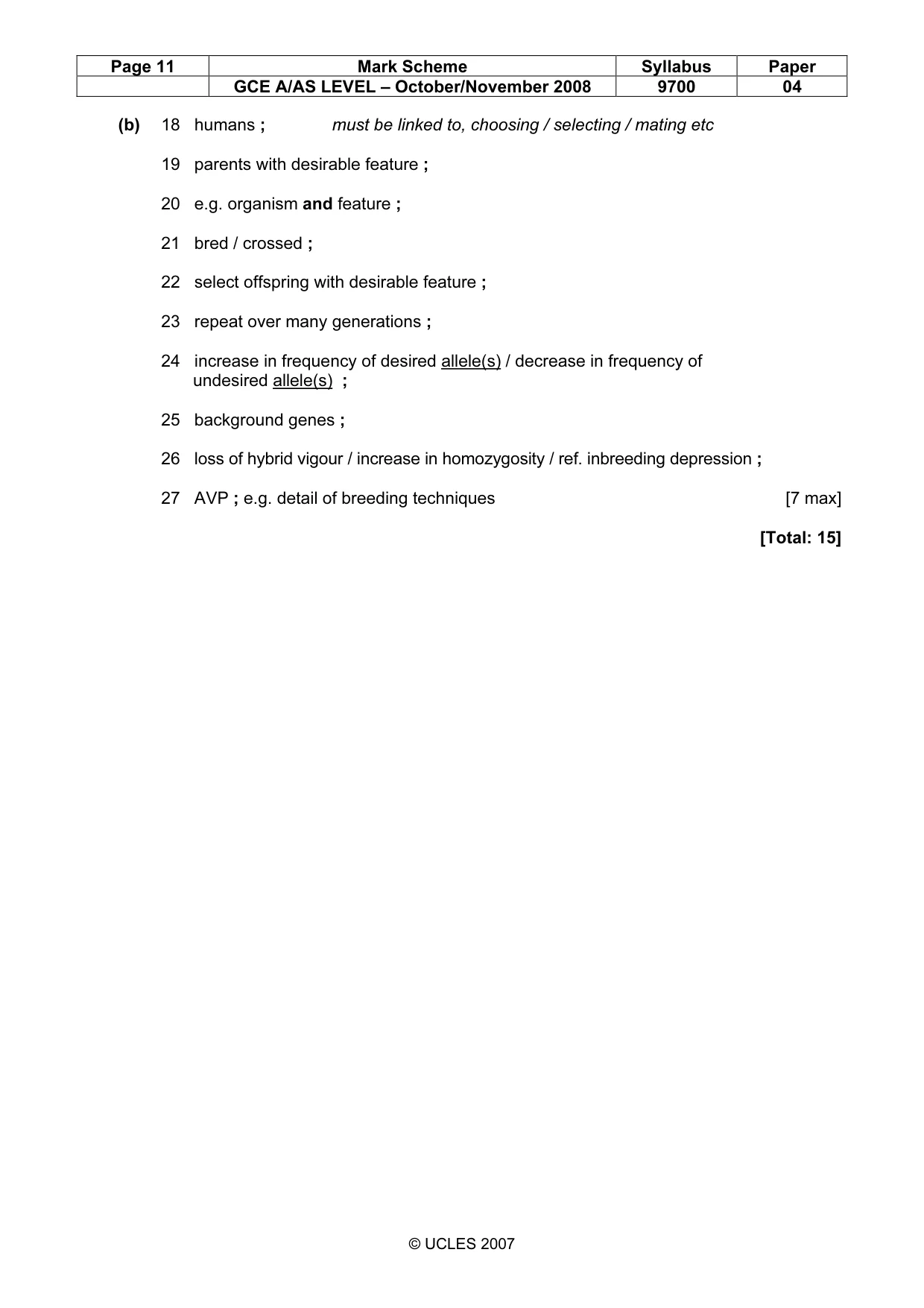
Page 11 Mark Scheme Syllabus Paper GCE A/AS LEVEL – October/November 2008 9700 04 © UCLES 2007 (b) 18 19 20 21 22 23 24 25 26 27 humans ; must be linked to, choosing / selecting / mating etc parents with desirable feature ; e.g. organism and feature ; bred / crossed ; select offspring with desirable feature ; repeat over many generations ; increase in frequency of desired allele(s) / decrease in frequency of undesired allele(s) ; background genes ; loss of hybrid vigour / increase in homozygosity / ref. inbreeding depression ; AVP ; e.g. detail of breeding techniques [7 max] [Total: 15]
What you needed in this session
Cambridge’s own grade thresholds for 2008 Oct/Nov, Paper 4 · Variant 1. A higher threshold means an easier paper — the bar moves with how the cohort did.