Cambridge A Level Biology 9700 — 2007 Oct/Nov Paper 2 · Variant 1
9700/21/O/N/07 · 60 marks · ≈68 min
The question paper and its mark scheme, free to read here and free to download. This is Cambridge’s own paper, exactly as it was sat.
Question paper16 pages


Mark scheme5 pages
Answers below. Sit the paper first if you are practising.
Paper as text
Question paper, page 1
This document consists of 13 printed pages and 3 blank pages. SP (NF/CGW) T26890/4 © UCLES 2007 [Turn over UNIVERSITY OF CAMBRIDGE INTERNATIONAL EXAMINATIONS General Certificate of Education Advanced Subsidiary Level and Advanced Level READ THESE INSTRUCTIONS FIRST Write your Centre number, candidate number and name in the spaces provided at the top of this page. Write in dark blue or black pen. You may use a soft pencil for any diagrams, graphs or rough working. Do not use staples, paper clips, highlighters, glue or correction fluid. DO NOT WRITE ON ANY BARCODES. Answer all questions. At the end of the examination, fasten all your work securely together. The number of marks is given in brackets [ ] at the end of each question or part question. * 8 2 1 0 0 4 0 5 0 5 * BIOLOGY 9700/02 Paper 2 Structured Questions AS October/November 2007 1 hour 15 minutes Candidates answer on the Question Paper. No Additional Materials are required. For Examiner’s Use 1 2 3 4 5 6 Total
Question paper, page 2
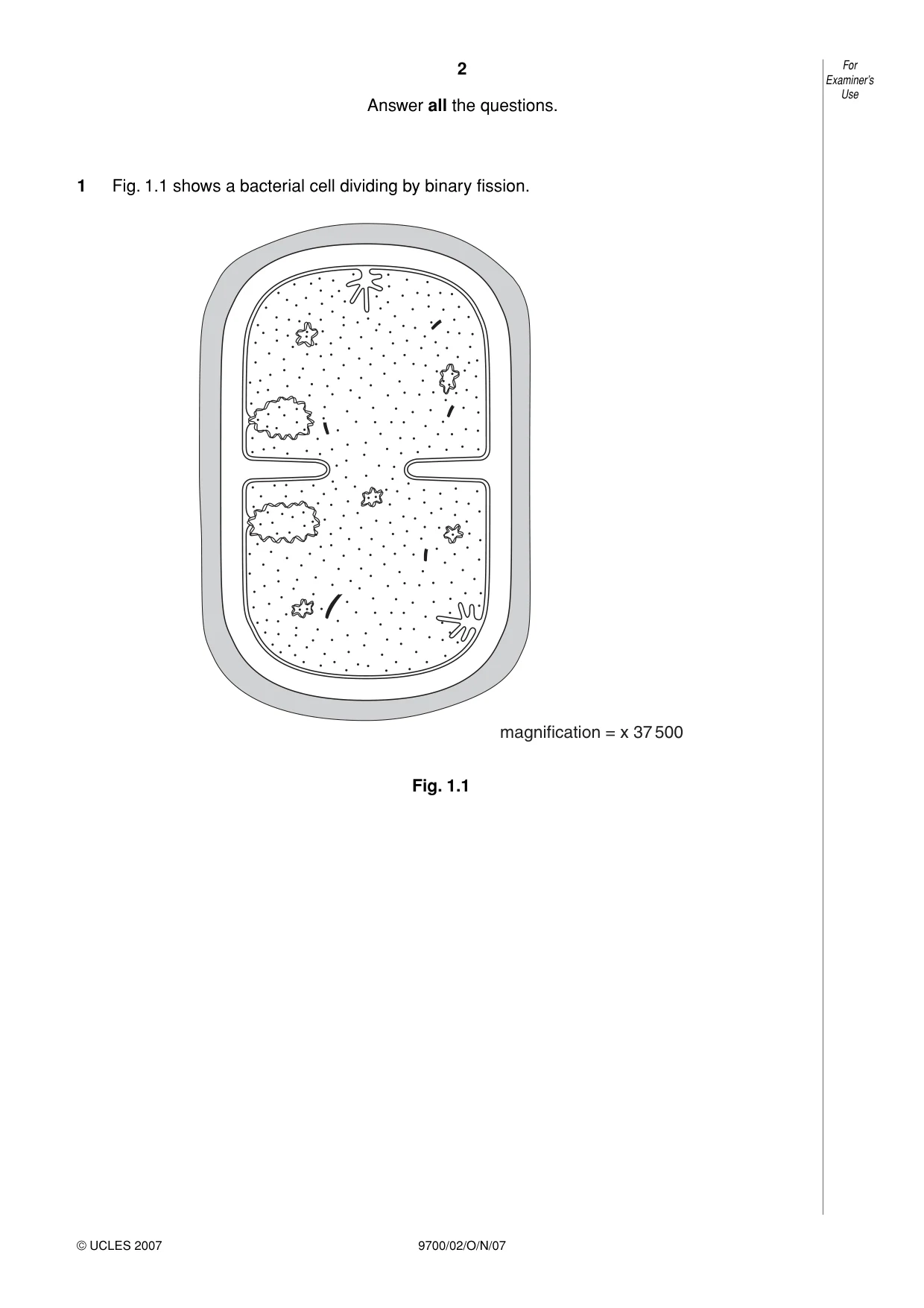
2 9700/02/O/N/07 For Examiner’s Use © UCLES 2007 Answer all the questions. 1 Fig. 1.1 shows a bacterial cell dividing by binary fission. magnification = x 37 500 Fig. 1.1
Question paper, page 3
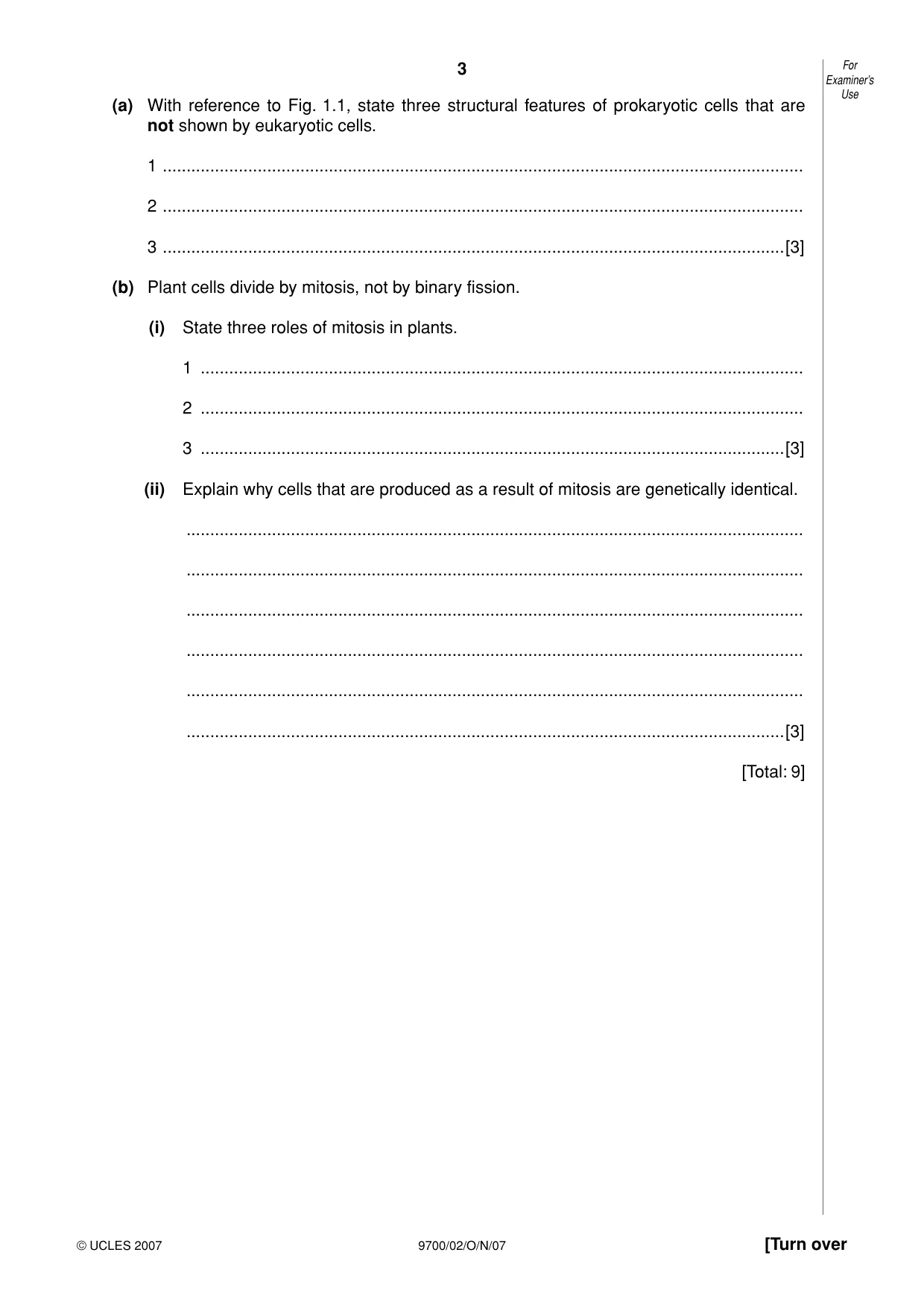
3 9700/02/O/N/07 [Turn over For Examiner’s Use © UCLES 2007 (a) With reference to Fig. 1.1, state three structural features of prokaryotic cells that are not shown by eukaryotic cells. 1 … 2 … 3 …[3] (b) Plant cells divide by mitosis, not by binary fission. (i) State three roles of mitosis in plants. 1 … 2 … 3 …[3] (ii) Explain why cells that are produced as a result of mitosis are genetically identical. … … … … … …[3] [Total: 9]
Question paper, page 4
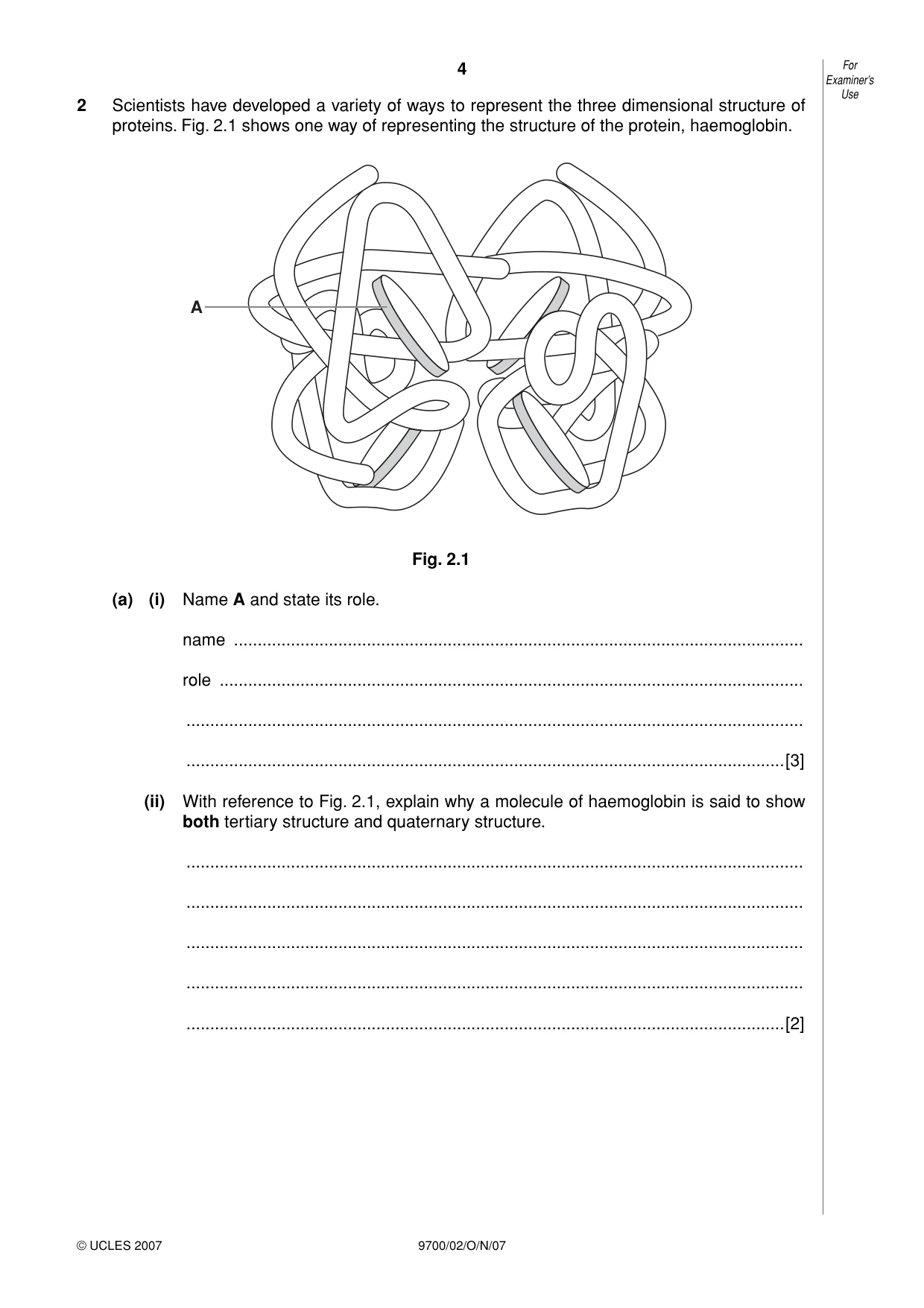
4 9700/02/O/N/07 For Examiner’s Use © UCLES 2007 2 Scientists have developed a variety of ways to represent the three dimensional structure of proteins. Fig. 2.1 shows one way of representing the structure of the protein, haemoglobin. A Fig. 2.1 (a) (i) Name A and state its role. name … role … … …[3] (ii) With reference to Fig. 2.1, explain why a molecule of haemoglobin is said to show both tertiary structure and quaternary structure. … … … … …[2]
Question paper, page 5
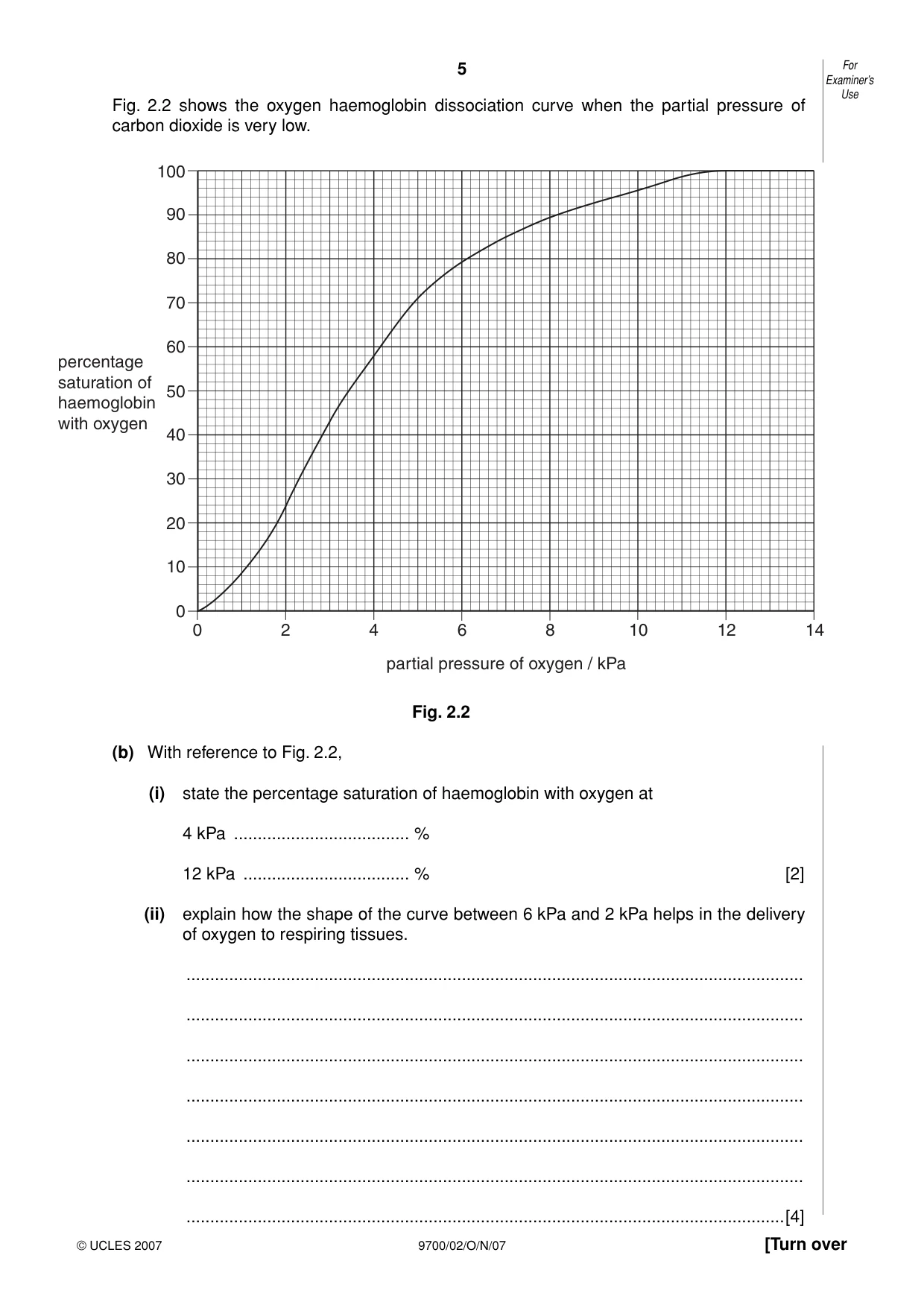
5 9700/02/O/N/07 [Turn over For Examiner’s Use © UCLES 2007 Fig. 2.2 shows the oxygen haemoglobin dissociation curve when the partial pressure of carbon dioxide is very low. 0 0 10 20 30 40 50 60 70 80 90 100 2 4 6 partial pressure of oxygen / kPa percentage saturation of haemoglobin with oxygen 8 10 12 14 Fig. 2.2 (b) With reference to Fig. 2.2, (i) state the percentage saturation of haemoglobin with oxygen at 4 kPa … % 12 kPa … % [2] (ii) explain how the shape of the curve between 6 kPa and 2 kPa helps in the delivery of oxygen to respiring tissues. … … … … … … …[4]
Question paper, page 6
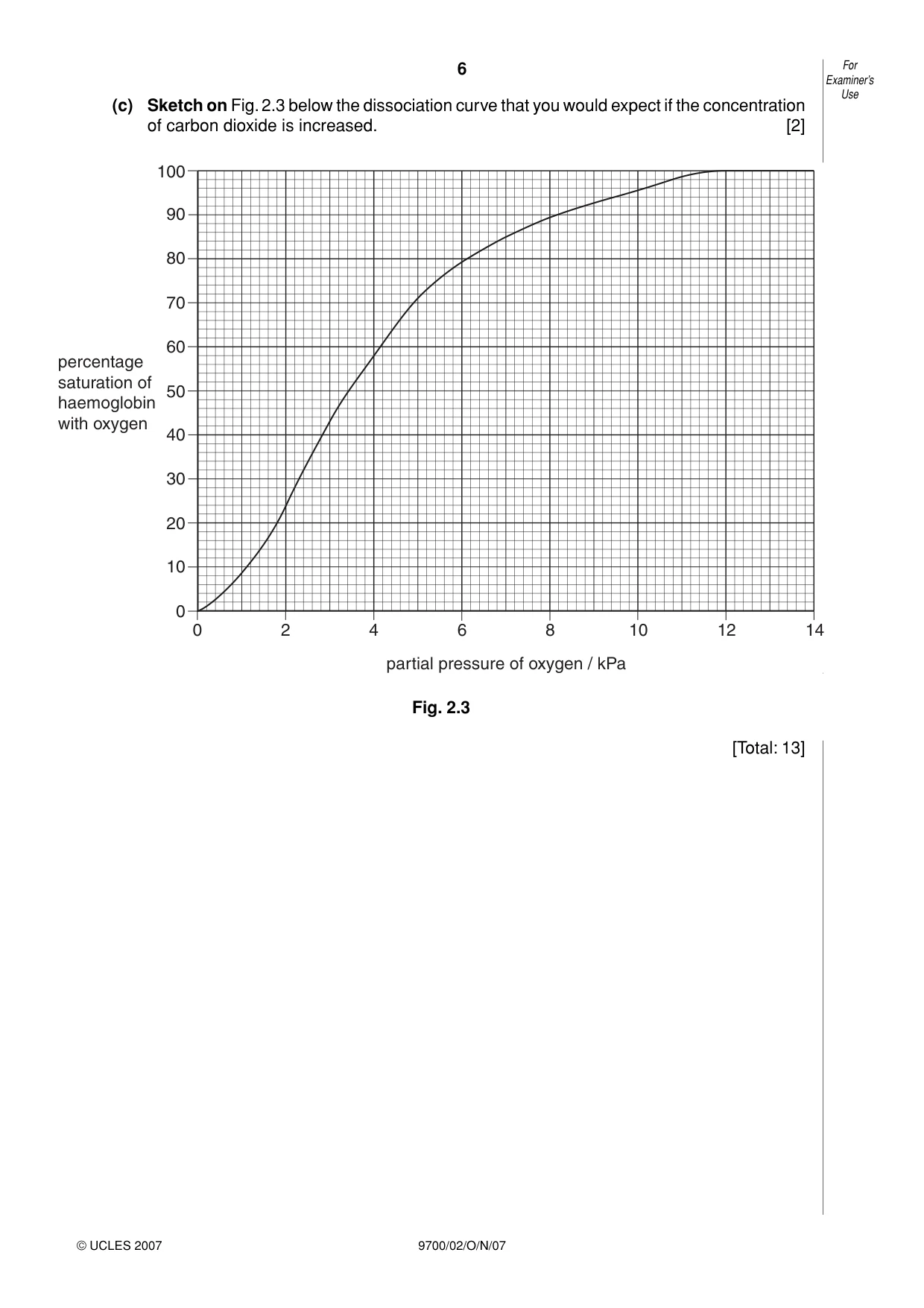
6 9700/02/O/N/07 For Examiner’s Use © UCLES 2007 (c) Sketch on Fig. 2.3 below the dissociation curve that you would expect if the concentration of carbon dioxide is increased. [2] 0 0 10 20 30 40 50 60 70 80 90 100 2 4 6 partial pressure of oxygen / kPa percentage saturation of haemoglobin with oxygen 8 10 12 14 Fig. 2.3 [Total: 13]
Question paper, page 7
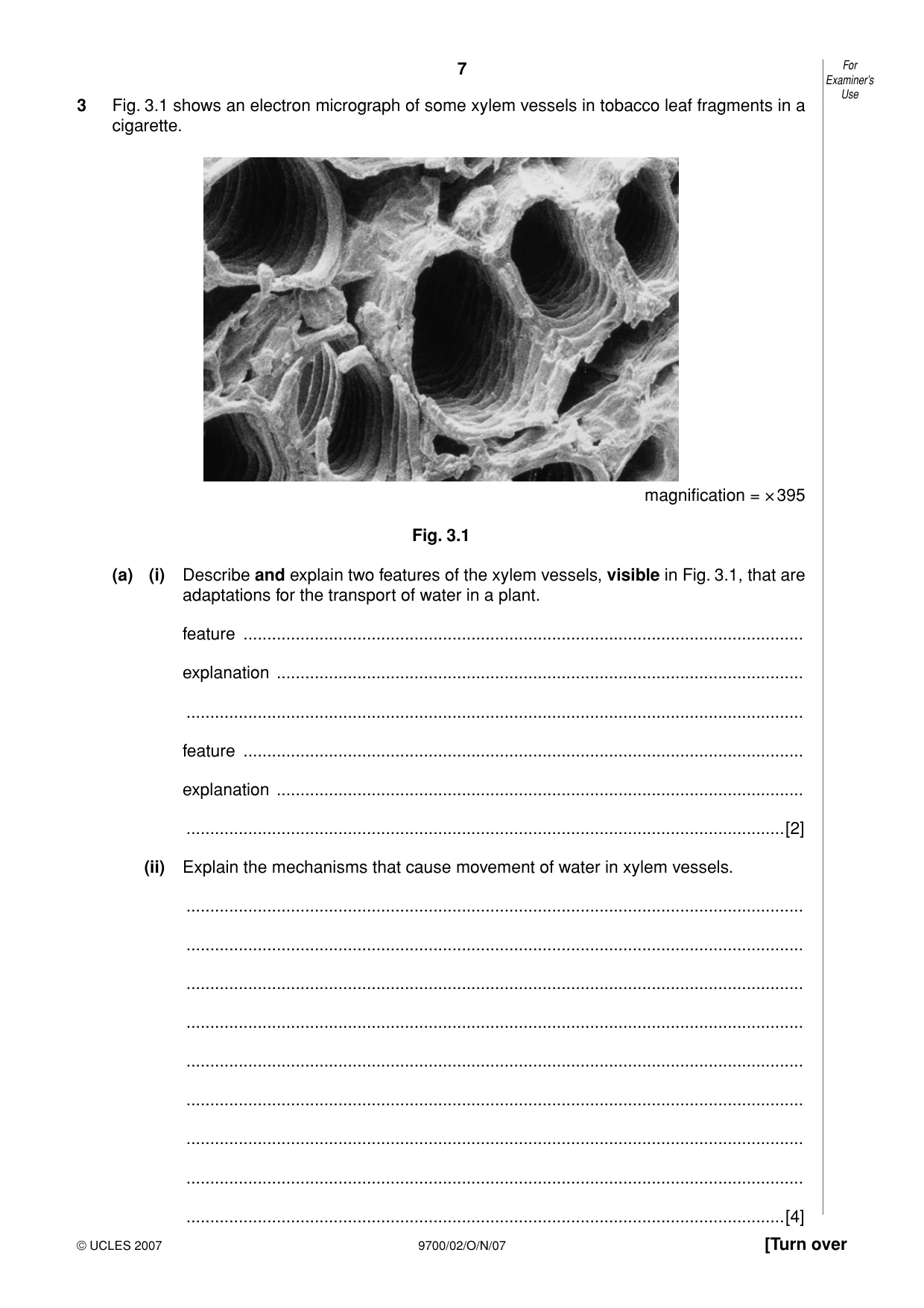
7 9700/02/O/N/07 [Turn over For Examiner’s Use © UCLES 2007 3 Fig. 3.1 shows an electron micrograph of some xylem vessels in tobacco leaf fragments in a cigarette. magnification = × 395 Fig. 3.1 (a) (i) Describe and explain two features of the xylem vessels, visible in Fig. 3.1, that are adaptations for the transport of water in a plant. feature … explanation … … feature … explanation … …[2] (ii) Explain the mechanisms that cause movement of water in xylem vessels. … … … … … … … … …[4]
Question paper, page 8
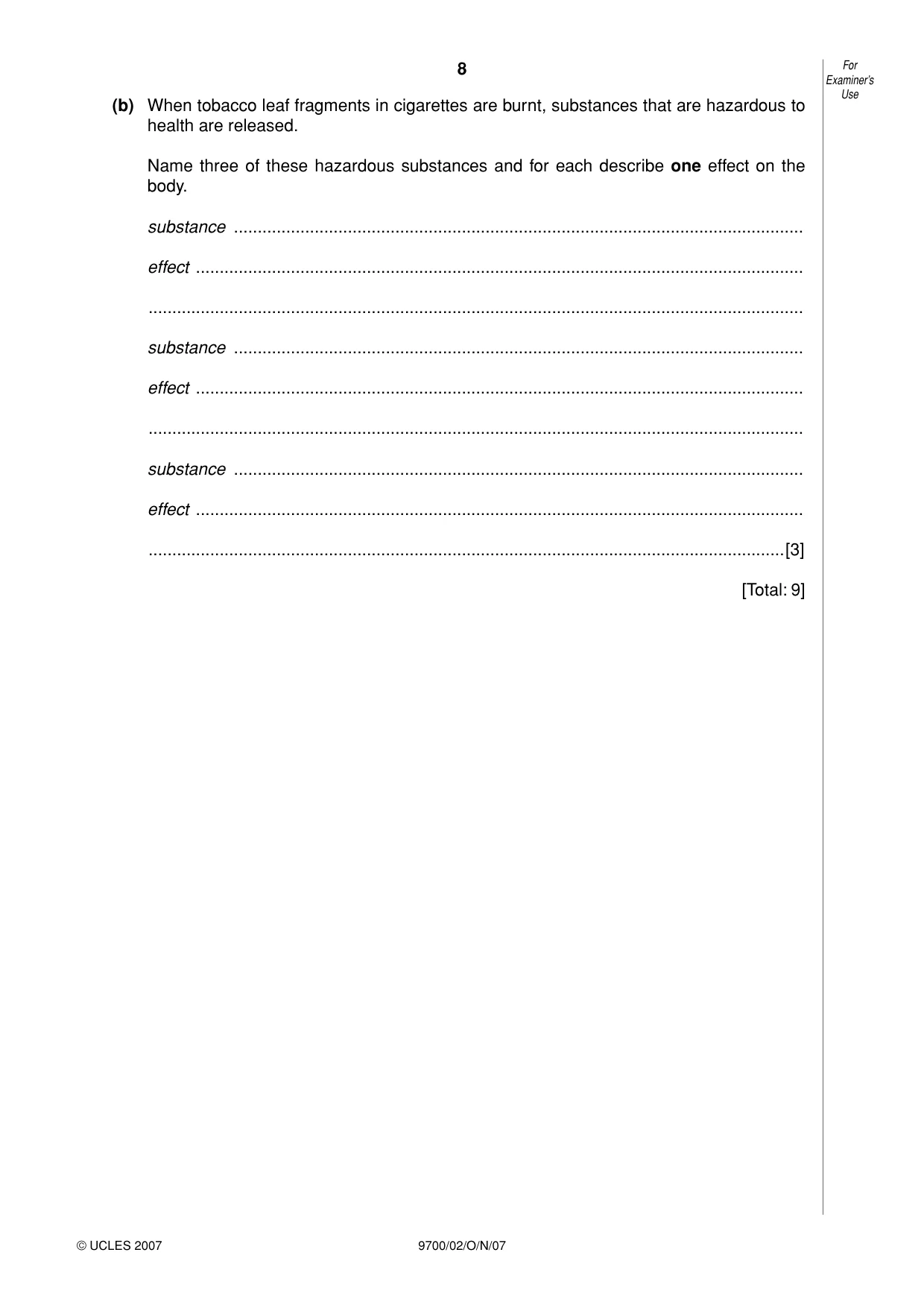
8 9700/02/O/N/07 For Examiner’s Use © UCLES 2007 (b) When tobacco leaf fragments in cigarettes are burnt, substances that are hazardous to health are released. Name three of these hazardous substances and for each describe one effect on the body. substance … effect … … substance … effect … … substance … effect … …[3] [Total: 9]
Question paper, page 10
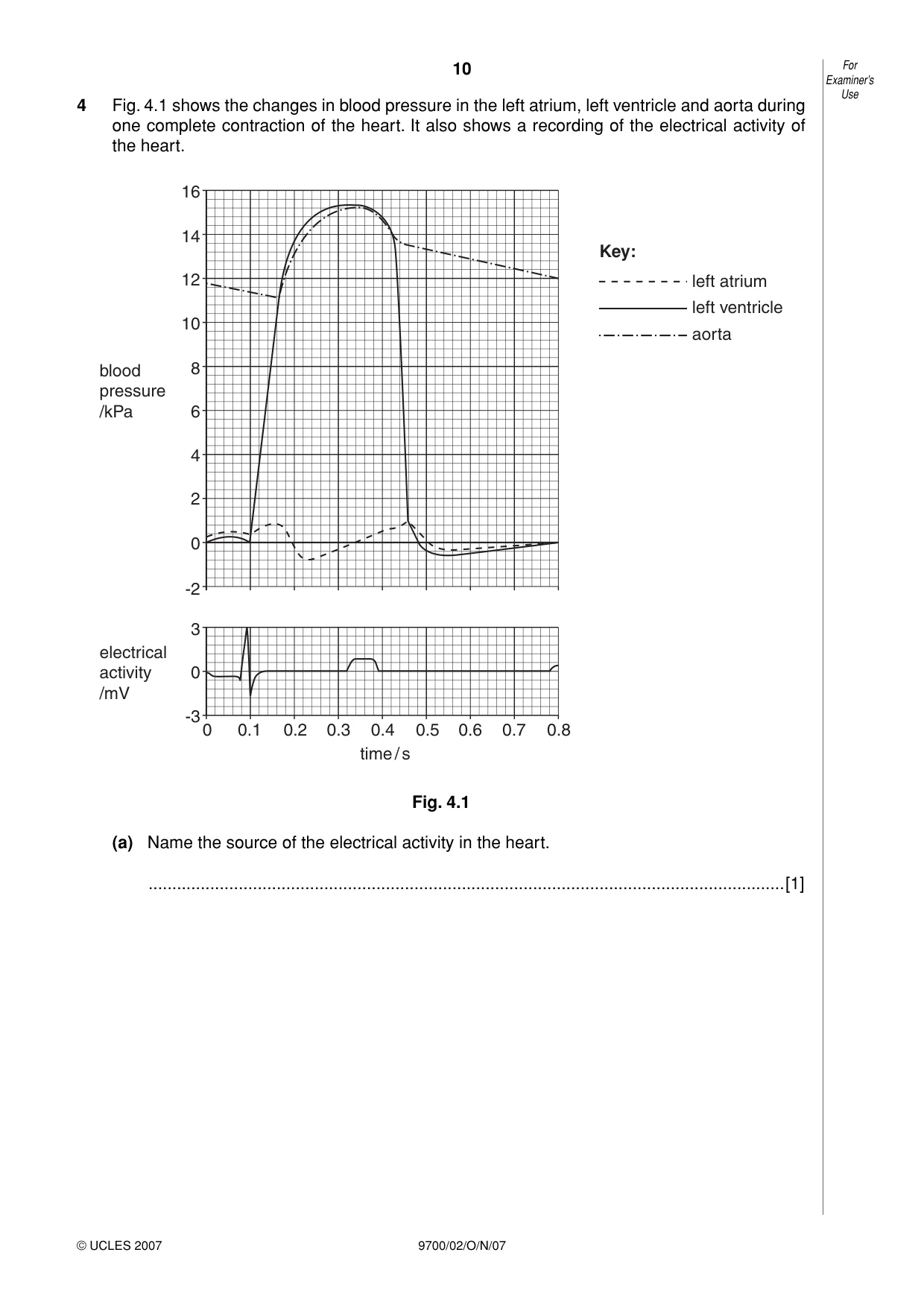
10 9700/02/O/N/07 For Examiner’s Use © UCLES 2007 4 Fig. 4.1 shows the changes in blood pressure in the left atrium, left ventricle and aorta during one complete contraction of the heart. It also shows a recording of the electrical activity of the heart. 0 -3 3 0 0.1 0.2 0.3 0.4 0.5 0.6 time / s left atrium left ventricle aorta Key: 0.7 0.8 -2 0 2 blood pressure /kPa electrical activity /mV 4 6 8 10 12 14 16 Fig. 4.1 (a) Name the source of the electrical activity in the heart. …[1]
Question paper, page 11
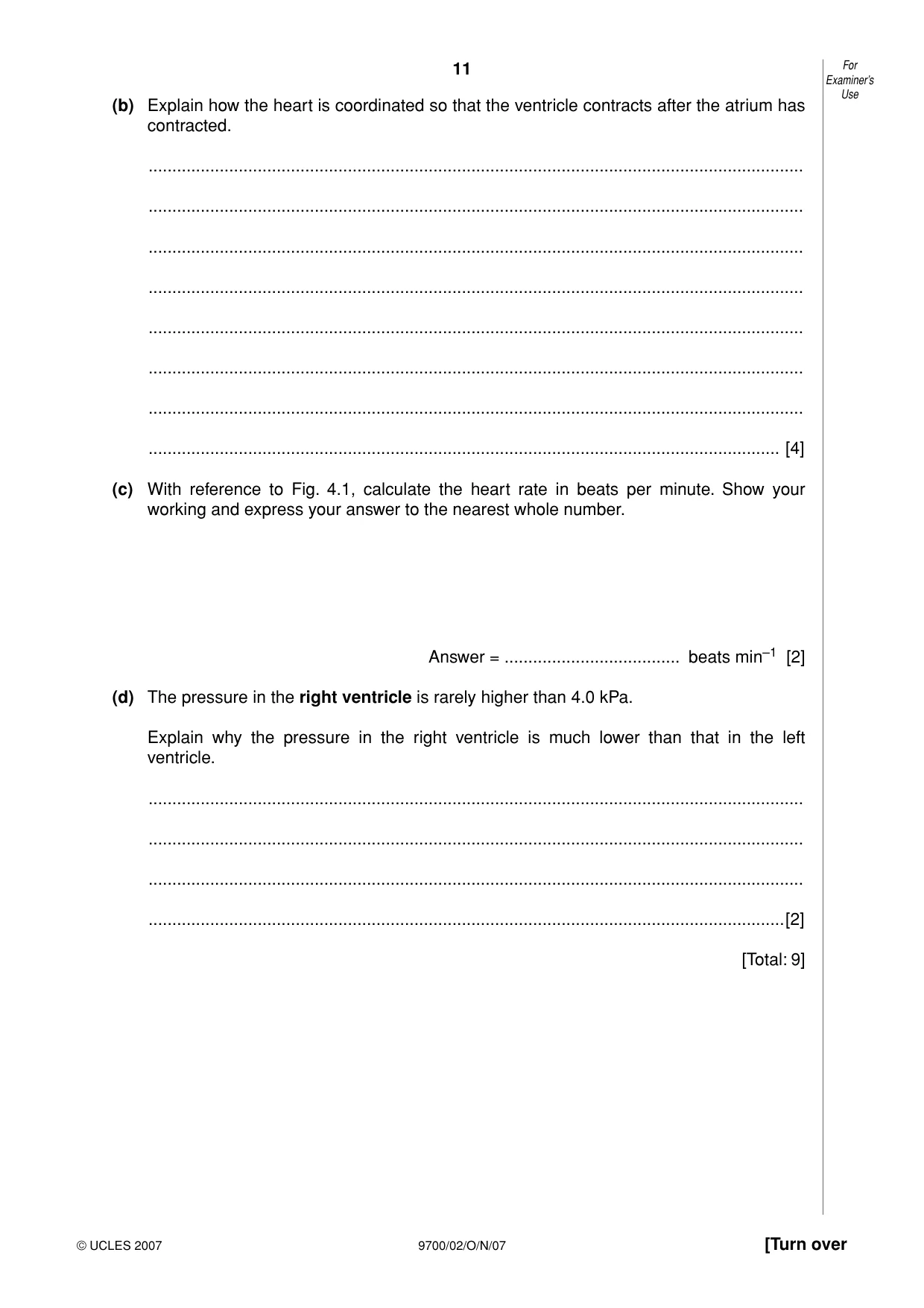
11 9700/02/O/N/07 [Turn over For Examiner’s Use © UCLES 2007 (b) Explain how the heart is coordinated so that the ventricle contracts after the atrium has contracted. … … … … … … … … [4] (c) With reference to Fig. 4.1, calculate the heart rate in beats per minute. Show your working and express your answer to the nearest whole number. Answer = … beats min–1 [2] (d) The pressure in the right ventricle is rarely higher than 4.0 kPa. Explain why the pressure in the right ventricle is much lower than that in the left ventricle. … … … …[2] [Total: 9]
Question paper, page 12
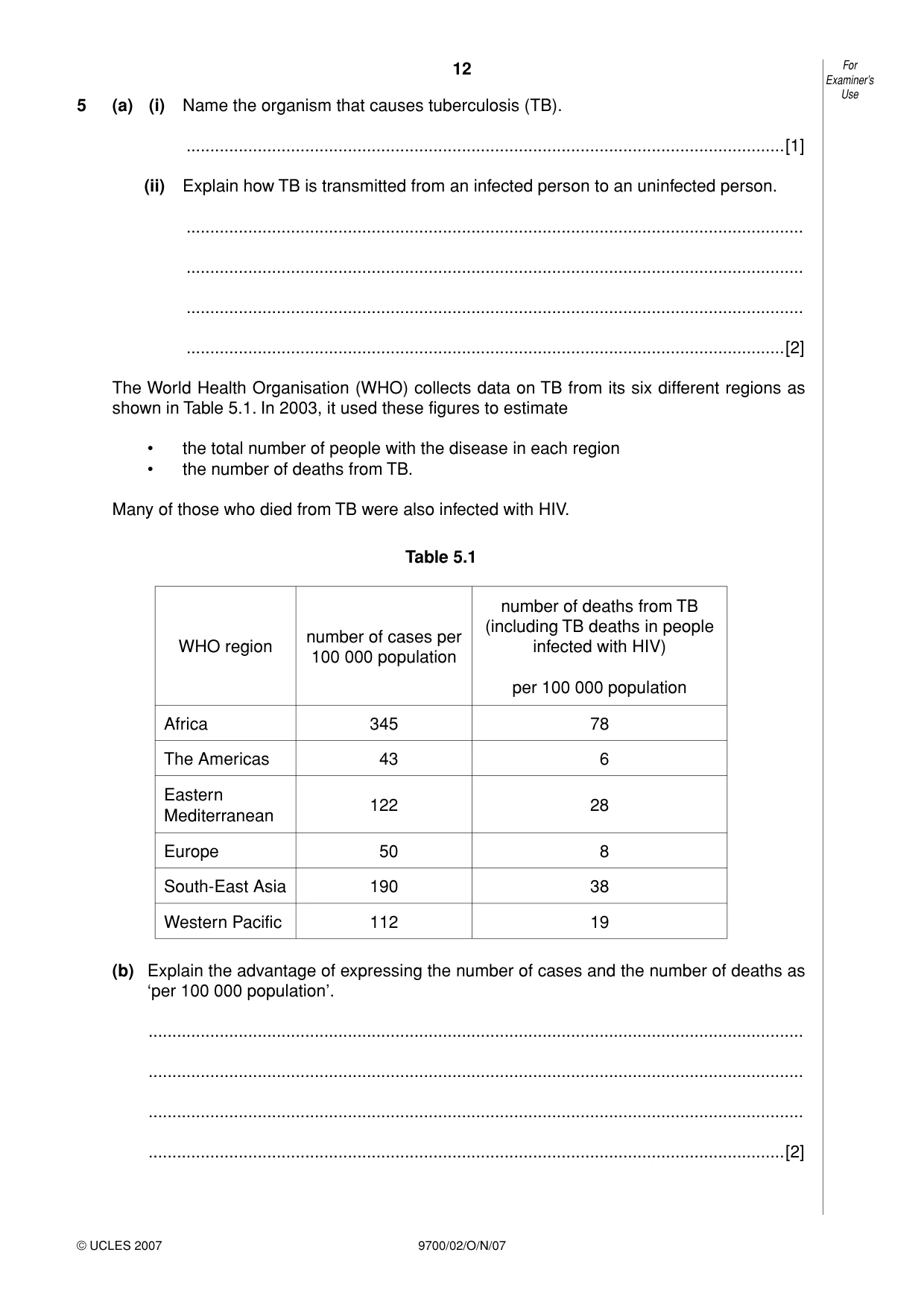
12 9700/02/O/N/07 For Examiner’s Use © UCLES 2007 5 (a) (i) Name the organism that causes tuberculosis (TB). …[1] (ii) Explain how TB is transmitted from an infected person to an uninfected person. … … … …[2] The World Health Organisation (WHO) collects data on TB from its six different regions as shown in Table 5.1. In 2003, it used these figures to estimate • the total number of people with the disease in each region • the number of deaths from TB. Many of those who died from TB were also infected with HIV. Table 5.1 WHO region number of cases per 100 000 population number of deaths from TB (including TB deaths in people infected with HIV) per 100 000 population Africa 345 78 The Americas 43 6 Eastern Mediterranean 122 28 Europe 50 8 South-East Asia 190 38 Western Pacific 112 19 (b) Explain the advantage of expressing the number of cases and the number of deaths as ‘per 100 000 population’. … … … …[2]
Question paper, page 13
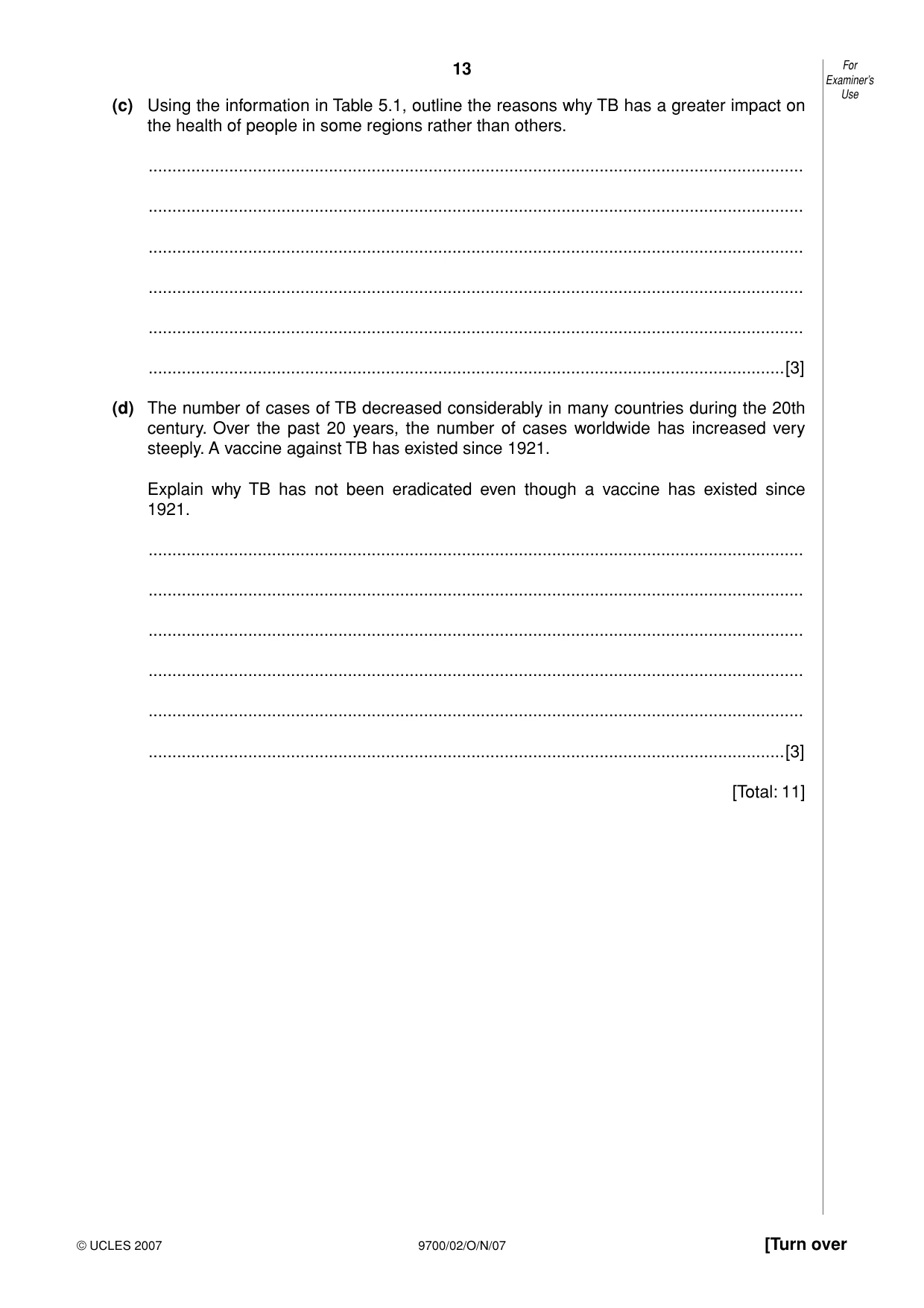
13 9700/02/O/N/07 For Examiner’s Use © UCLES 2007 (c) Using the information in Table 5.1, outline the reasons why TB has a greater impact on the health of people in some regions rather than others. … … … … … …[3] (d) The number of cases of TB decreased considerably in many countries during the 20th century. Over the past 20 years, the number of cases worldwide has increased very steeply. A vaccine against TB has existed since 1921. Explain why TB has not been eradicated even though a vaccine has existed since 1921. … … … … … …[3] [Total: 11] [Turn over
Question paper, page 14
14 9700/02/O/N/07 For Examiner’s Use © UCLES 2007 6 (a) An ecosystem may be as small as a pond or as large as a forest. Some scientists consider that the whole biosphere is an ecosystem. Give a detailed definition of the term ecosystem. You may use another example in your answer. … … … … … …[3] (b) In 1978, the American ecologist Paul Colinvaux published a book of essays with the title ‘Why Big Fierce Animals are Rare’. Explain why ‘big, fierce animals’ are rare in ecosystems. … … … … … …[3] (c) Many tropical islands have nitrogen-deficient soils. Leguminous trees, such as Royal Poinciana, Delonix regia, grow well in such conditions. Explain why leguminous plants grow well in these conditions. … … … … … …[3] [Total: 9]
Question paper, page 16
16 9700/02/O/N/07 BLANK PAGE Copyright Acknowledgements: Question 3 Fig. 3.1 © ANDREW SYRED / SCIENCE PHOTO LIBRARY. Permission to reproduce items where third-party owned material protected by copyright is included has been sought and cleared where possible. Every reasonable effort has been made by the publisher (UCLES) to trace copyright holders, but if any items requiring clearance have unwittingly been included, the publisher will be pleased to make amends at the earliest possible opportunity. University of Cambridge International Examinations is part of the Cambridge Assessment Group. Cambridge Assessment is the brand name of University of Cambridge Local Examinations Syndicate (UCLES), which is itself a department of the University of Cambridge.
Mark scheme, page 1
UNIVERSITY OF CAMBRIDGE INTERNATIONAL EXAMINATIONS GCE Advanced Subsidiary Level and GCE Advanced Level MARK SCHEME for the October/November 2007 question paper 9700 BIOLOGY 9700/02 Paper 2 (Theory 1), maximum raw mark 60 This mark scheme is published as an aid to teachers and candidates, to indicate the requirements of the examination. It shows the basis on which Examiners were instructed to award marks. It does not indicate the details of the discussions that took place at an Examiners’ meeting before marking began. All Examiners are instructed that alternative correct answers and unexpected approaches in candidates’ scripts must be given marks that fairly reflect the relevant knowledge and skills demonstrated. Mark schemes must be read in conjunction with the question papers and the report on the examination. • CIE will not enter into discussions or correspondence in connection with these mark schemes. CIE is publishing the mark schemes for the October/November 2007 question papers for most IGCSE, GCE Advanced Level and Advanced Subsidiary Level syllabuses and some Ordinary Level syllabuses.
Mark scheme, page 2
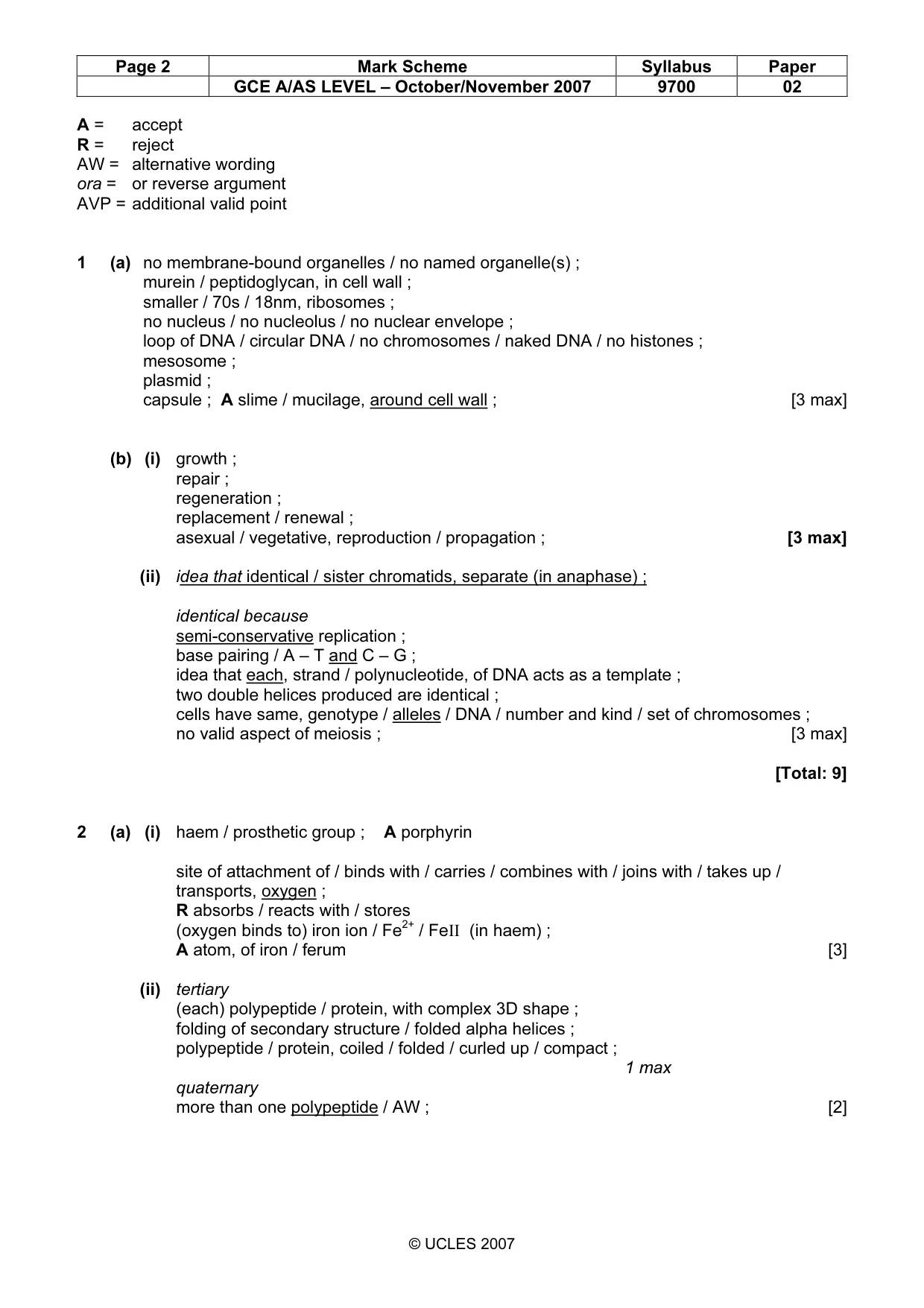
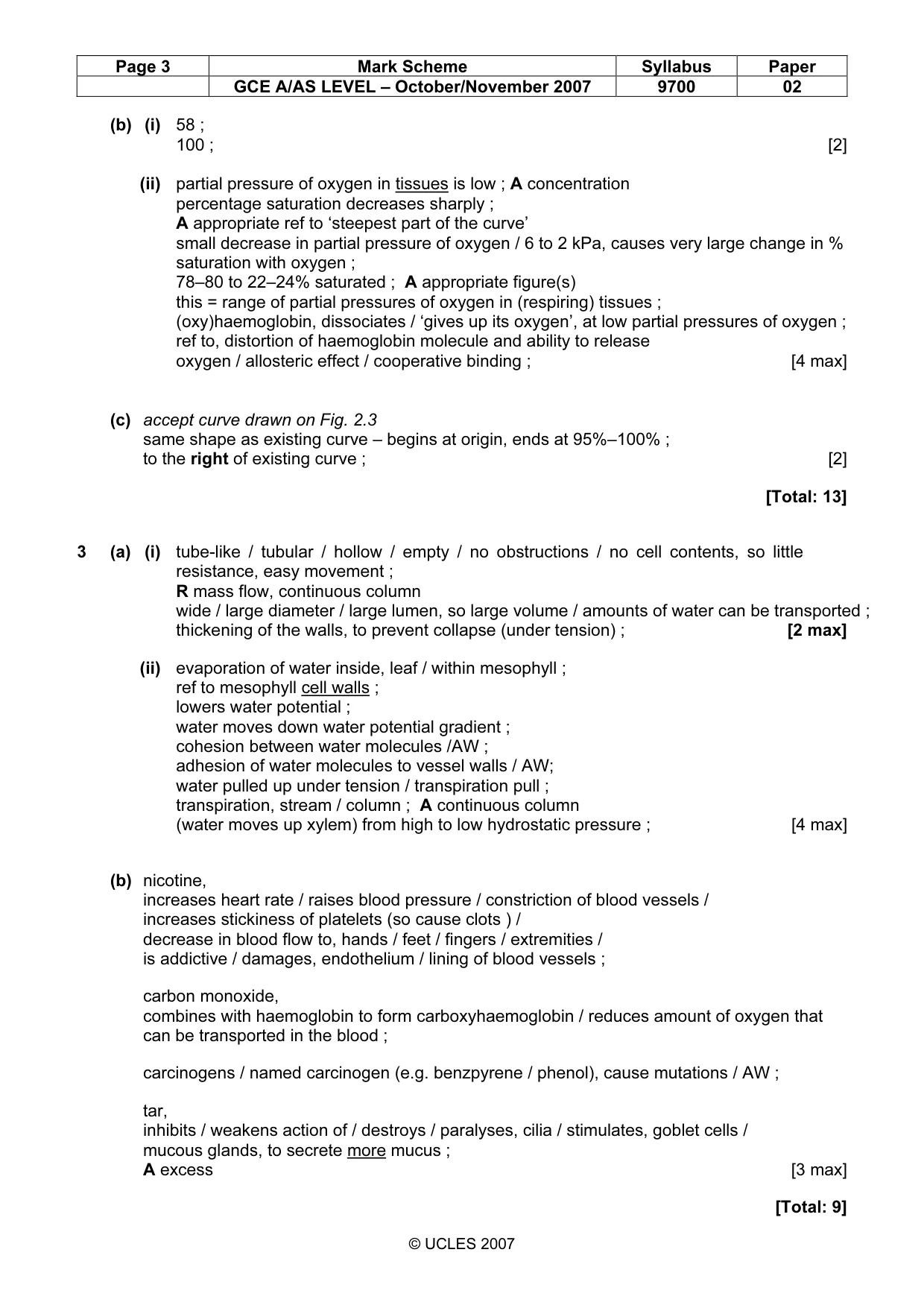
Page 2 Mark Scheme Syllabus Paper GCE A/AS LEVEL – October/November 2007 9700 02 © UCLES 2007 A = accept R = reject AW = alternative wording ora = or reverse argument AVP = additional valid point 1 (a) no membrane-bound organelles / no named organelle(s) ; murein / peptidoglycan, in cell wall ; smaller / 70s / 18nm, ribosomes ; no nucleus / no nucleolus / no nuclear envelope ; loop of DNA / circular DNA / no chromosomes / naked DNA / no histones ; mesosome ; plasmid ; capsule ; A slime / mucilage, around cell wall ; [3 max] (b) (i) growth ; repair ; regeneration ; replacement / renewal ; asexual / vegetative, reproduction / propagation ; [3 max] (ii) idea that identical / sister chromatids, separate (in anaphase) ; identical because semi-conservative replication ; base pairing / A – T and C – G ; idea that each, strand / polynucleotide, of DNA acts as a template ; two double helices produced are identical ; cells have same, genotype / alleles / DNA / number and kind / set of chromosomes ; no valid aspect of meiosis ; [3 max] [Total: 9] 2 (a) (i) haem / prosthetic group ; A porphyrin site of attachment of / binds with / carries / combines with / joins with / takes up / transports, oxygen ; R absorbs / reacts with / stores (oxygen binds to) iron ion / Fe2+ / FeII (in haem) ; A atom, of iron / ferum [3] (ii) tertiary (each) polypeptide / protein, with complex 3D shape ; folding of secondary structure / folded alpha helices ; polypeptide / protein, coiled / folded / curled up / compact ; 1 max quaternary more than one polypeptide / AW ; [2]
Mark scheme, page 3
Page 3 Mark Scheme Syllabus Paper GCE A/AS LEVEL – October/November 2007 9700 02 © UCLES 2007 (b) (i) 58 ; 100 ; [2] (ii) partial pressure of oxygen in tissues is low ; A concentration percentage saturation decreases sharply ; A appropriate ref to ‘steepest part of the curve’ small decrease in partial pressure of oxygen / 6 to 2 kPa, causes very large change in % saturation with oxygen ; 78–80 to 22–24% saturated ; A appropriate figure(s) this = range of partial pressures of oxygen in (respiring) tissues ; (oxy)haemoglobin, dissociates / ‘gives up its oxygen’, at low partial pressures of oxygen ; ref to, distortion of haemoglobin molecule and ability to release oxygen / allosteric effect / cooperative binding ; [4 max] (c) accept curve drawn on Fig. 2.3 same shape as existing curve – begins at origin, ends at 95%–100% ; to the right of existing curve ; [2] [Total: 13] 3 (a) (i) tube-like / tubular / hollow / empty / no obstructions / no cell contents, so little resistance, easy movement ; R mass flow, continuous column wide / large diameter / large lumen, so large volume / amounts of water can be transported ; thickening of the walls, to prevent collapse (under tension) ; [2 max] (ii) evaporation of water inside, leaf / within mesophyll ; ref to mesophyll cell walls ; lowers water potential ; water moves down water potential gradient ; cohesion between water molecules /AW ; adhesion of water molecules to vessel walls / AW; water pulled up under tension / transpiration pull ; transpiration, stream / column ; A continuous column (water moves up xylem) from high to low hydrostatic pressure ; [4 max] (b) nicotine, increases heart rate / raises blood pressure / constriction of blood vessels / increases stickiness of platelets (so cause clots ) / decrease in blood flow to, hands / feet / fingers / extremities / is addictive / damages, endothelium / lining of blood vessels ; carbon monoxide, combines with haemoglobin to form carboxyhaemoglobin / reduces amount of oxygen that can be transported in the blood ; carcinogens / named carcinogen (e.g. benzpyrene / phenol), cause mutations / AW ; tar, inhibits / weakens action of / destroys / paralyses, cilia / stimulates, goblet cells / mucous glands, to secrete more mucus ; A excess [3 max] [Total: 9]
Mark scheme, page 4
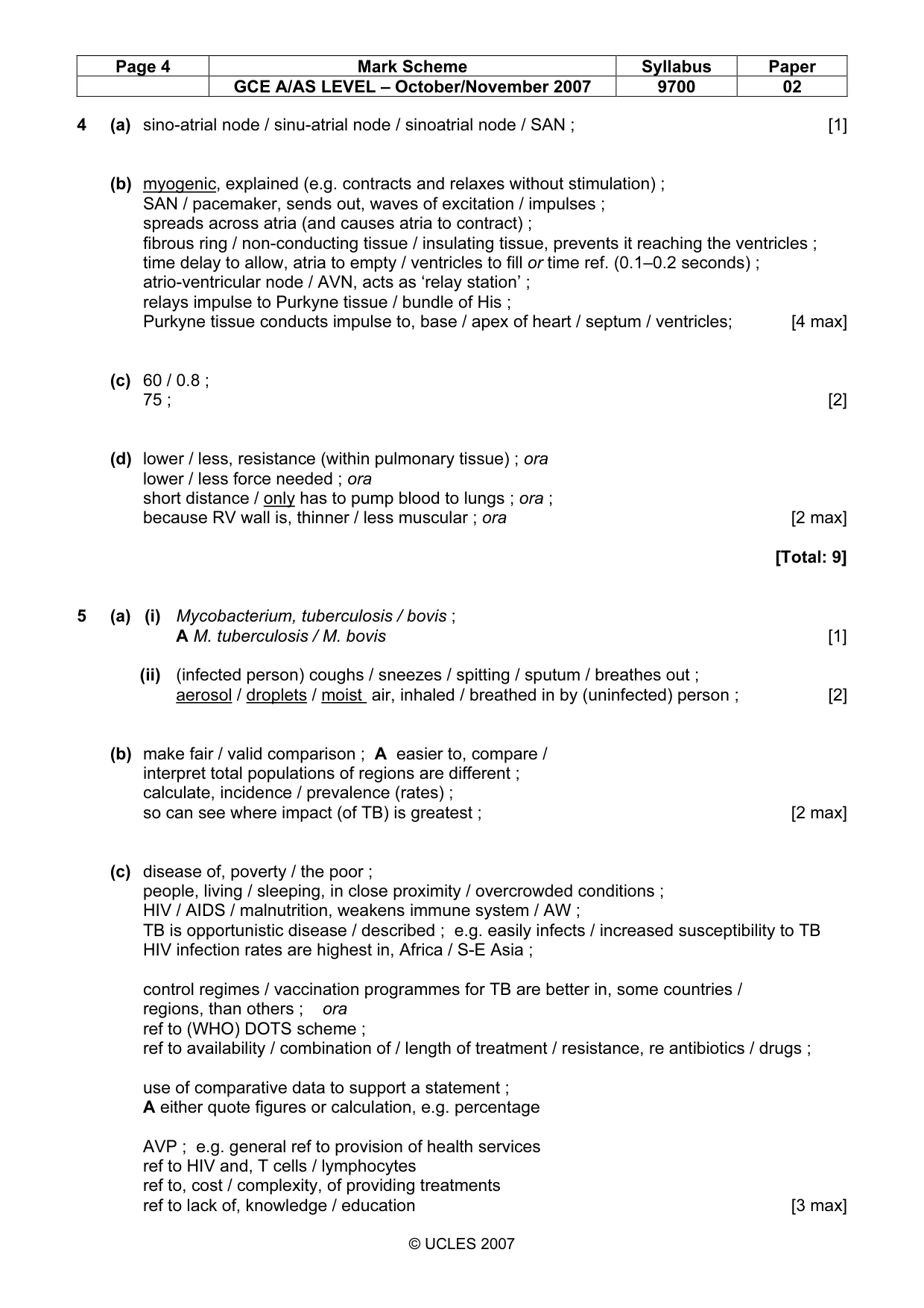
Page 4 Mark Scheme Syllabus Paper GCE A/AS LEVEL – October/November 2007 9700 02 © UCLES 2007 4 (a) sino-atrial node / sinu-atrial node / sinoatrial node / SAN ; [1] (b) myogenic, explained (e.g. contracts and relaxes without stimulation) ; SAN / pacemaker, sends out, waves of excitation / impulses ; spreads across atria (and causes atria to contract) ; fibrous ring / non-conducting tissue / insulating tissue, prevents it reaching the ventricles ; time delay to allow, atria to empty / ventricles to fill or time ref. (0.1–0.2 seconds) ; atrio-ventricular node / AVN, acts as ‘relay station’ ; relays impulse to Purkyne tissue / bundle of His ; Purkyne tissue conducts impulse to, base / apex of heart / septum / ventricles; [4 max] (c) 60 / 0.8 ; 75 ; [2] (d) lower / less, resistance (within pulmonary tissue) ; ora lower / less force needed ; ora short distance / only has to pump blood to lungs ; ora ; because RV wall is, thinner / less muscular ; ora [2 max] [Total: 9] 5 (a) (i) Mycobacterium, tuberculosis / bovis ; A M. tuberculosis / M. bovis [1] (ii) (infected person) coughs / sneezes / spitting / sputum / breathes out ; aerosol / droplets / moist air, inhaled / breathed in by (uninfected) person ; [2] (b) make fair / valid comparison ; A easier to, compare / interpret total populations of regions are different ; calculate, incidence / prevalence (rates) ; so can see where impact (of TB) is greatest ; [2 max] (c) disease of, poverty / the poor ; people, living / sleeping, in close proximity / overcrowded conditions ; HIV / AIDS / malnutrition, weakens immune system / AW ; TB is opportunistic disease / described ; e.g. easily infects / increased susceptibility to TB HIV infection rates are highest in, Africa / S-E Asia ; control regimes / vaccination programmes for TB are better in, some countries / regions, than others ; ora ref to (WHO) DOTS scheme ; ref to availability / combination of / length of treatment / resistance, re antibiotics / drugs ; use of comparative data to support a statement ; A either quote figures or calculation, e.g. percentage AVP ; e.g. general ref to provision of health services ref to HIV and, T cells / lymphocytes ref to, cost / complexity, of providing treatments ref to lack of, knowledge / education [3 max]
Mark scheme, page 5
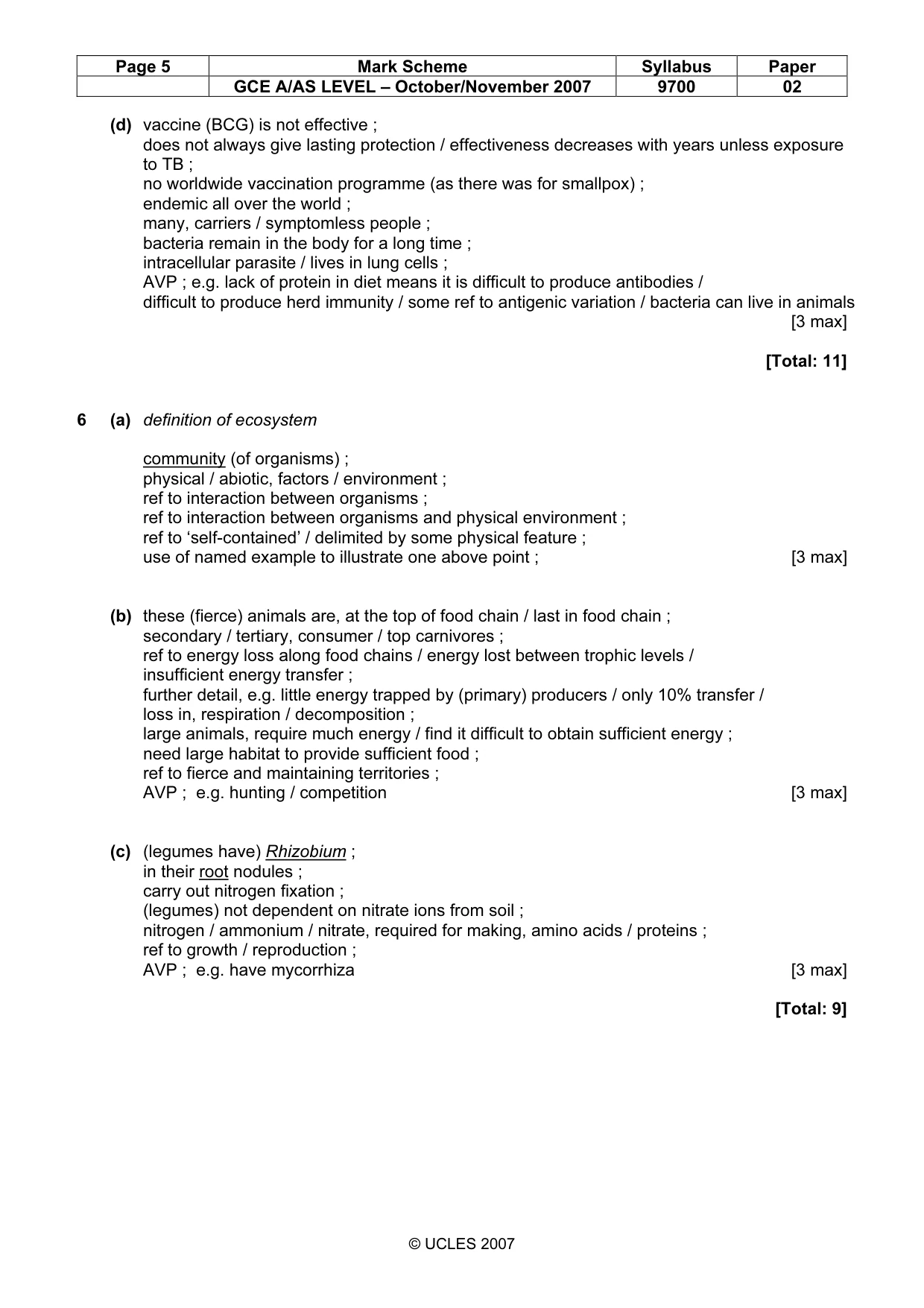
Page 5 Mark Scheme Syllabus Paper GCE A/AS LEVEL – October/November 2007 9700 02 © UCLES 2007 (d) vaccine (BCG) is not effective ; does not always give lasting protection / effectiveness decreases with years unless exposure to TB ; no worldwide vaccination programme (as there was for smallpox) ; endemic all over the world ; many, carriers / symptomless people ; bacteria remain in the body for a long time ; intracellular parasite / lives in lung cells ; AVP ; e.g. lack of protein in diet means it is difficult to produce antibodies / difficult to produce herd immunity / some ref to antigenic variation / bacteria can live in animals [3 max] [Total: 11] 6 (a) definition of ecosystem community (of organisms) ; physical / abiotic, factors / environment ; ref to interaction between organisms ; ref to interaction between organisms and physical environment ; ref to ‘self-contained’ / delimited by some physical feature ; use of named example to illustrate one above point ; [3 max] (b) these (fierce) animals are, at the top of food chain / last in food chain ; secondary / tertiary, consumer / top carnivores ; ref to energy loss along food chains / energy lost between trophic levels / insufficient energy transfer ; further detail, e.g. little energy trapped by (primary) producers / only 10% transfer / loss in, respiration / decomposition ; large animals, require much energy / find it difficult to obtain sufficient energy ; need large habitat to provide sufficient food ; ref to fierce and maintaining territories ; AVP ; e.g. hunting / competition [3 max] (c) (legumes have) Rhizobium ; in their root nodules ; carry out nitrogen fixation ; (legumes) not dependent on nitrate ions from soil ; nitrogen / ammonium / nitrate, required for making, amino acids / proteins ; ref to growth / reproduction ; AVP ; e.g. have mycorrhiza [3 max] [Total: 9]
What you needed in this session
Cambridge’s own grade thresholds for 2007 Oct/Nov, Paper 2 · Variant 1. A higher threshold means an easier paper — the bar moves with how the cohort did.