Cambridge A Level Biology 9700 — 2006 Oct/Nov Paper 2 · Variant 1
9700/21/O/N/06 · 60 marks · ≈68 min
The question paper and its mark scheme, free to read here and free to download. This is Cambridge’s own paper, exactly as it was sat.
Question paper16 pages


Mark scheme6 pages
Answers below. Sit the paper first if you are practising.
Paper as text
Question paper, page 1
This document consists of 14 printed pages and 2 blank pages. SP (CW/CGW) T24025/3 © UCLES 2006 [Turn over UNIVERSITY OF CAMBRIDGE INTERNATIONAL EXAMINATIONS General Certificate of Education Advanced Subsidiary Level and Advanced Level BIOLOGY 9700/02 Paper 2 Structured Questions AS October/November 2006 1 hour 15 minutes Candidates answer on the Question Paper. No Additional Materials are required. READ THESE INSTRUCTIONS FIRST Write your Centre number, candidate number and name in the spaces provided at the top of this page. Write in dark blue or black pen. You may use a pencil for any diagrams, graphs or rough working. Do not use staples, paper clips, highlighters, glue or correction fluid. Answer all questions. At the end of the examination, fasten all your work securely together. The number of marks is given in brackets [ ] at the end of each question or part question. Centre Number Candidate Number Name FOR EXAMINER’S USE 1 2 3 4 5 6 Total
Question paper, page 2
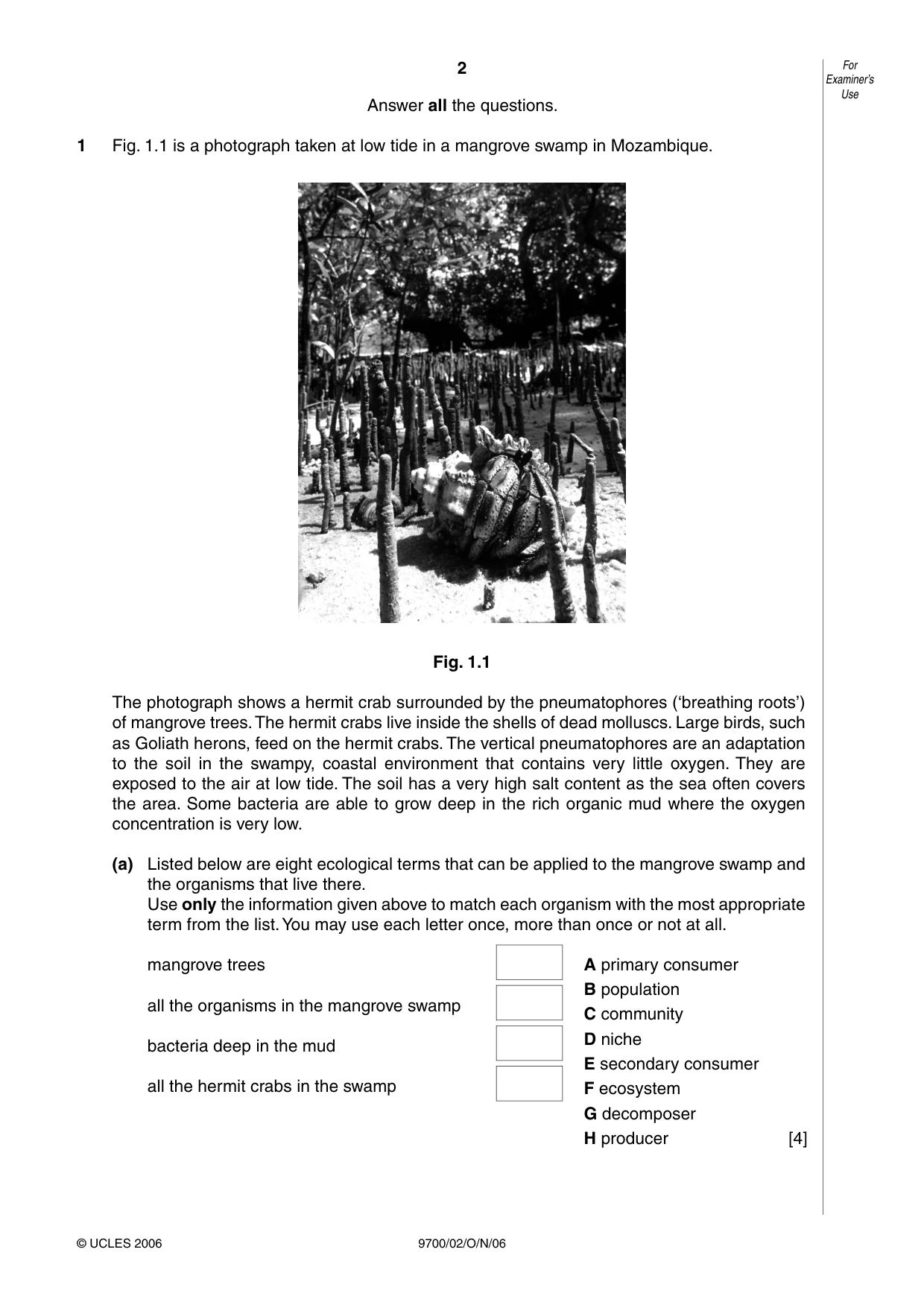
2 9700/02/O/N/06 For Examiner’s Use © UCLES 2006 Answer all the questions. 1 Fig. 1.1 is a photograph taken at low tide in a mangrove swamp in Mozambique. Fig. 1.1 The photograph shows a hermit crab surrounded by the pneumatophores (‘breathing roots’) of mangrove trees. The hermit crabs live inside the shells of dead molluscs. Large birds, such as Goliath herons, feed on the hermit crabs. The vertical pneumatophores are an adaptation to the soil in the swampy, coastal environment that contains very little oxygen. They are exposed to the air at low tide. The soil has a very high salt content as the sea often covers the area. Some bacteria are able to grow deep in the rich organic mud where the oxygen concentration is very low. (a) Listed below are eight ecological terms that can be applied to the mangrove swamp and the organisms that live there. Use only the information given above to match each organism with the most appropriate term from the list. You may use each letter once, more than once or not at all. mangrove trees all the organisms in the mangrove swamp bacteria deep in the mud all the hermit crabs in the swamp A primary consumer B population C community D niche E secondary consumer F ecosystem G decomposer H producer [4]
Question paper, page 3
3 9700/02/O/N/06 [Turn over For Examiner’s Use © UCLES 2006 (b) Explain how the cells in the roots of mangrove trees obtain sufficient oxygen and water in this extreme environment. oxygen … … … … water … … … … …[5] [Total: 9]
Question paper, page 4
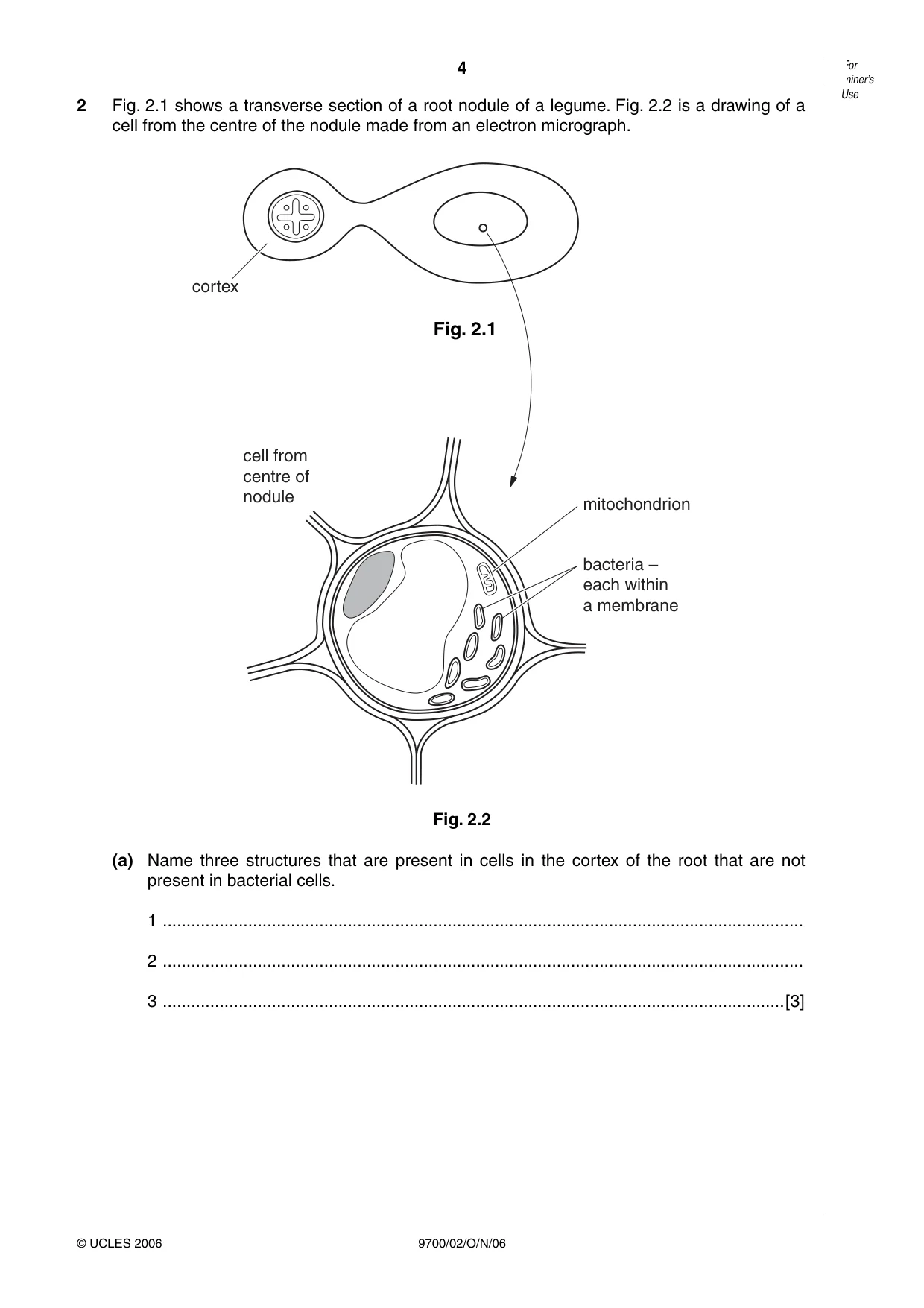
9700/02/O/N/06 For Examiner’s Use © UCLES 2006 2 Fig. 2.1 shows a transverse section of a root nodule of a legume. Fig. 2.2 is a drawing of a cell from the centre of the nodule made from an electron micrograph. cell from centre of nodule mitochondrion cortex bacteria – each within a membrane Fig. 2.1 Fig. 2.2 (a) Name three structures that are present in cells in the cortex of the root that are not present in bacterial cells. 1 … 2 … 3 …[3] 4
Question paper, page 5
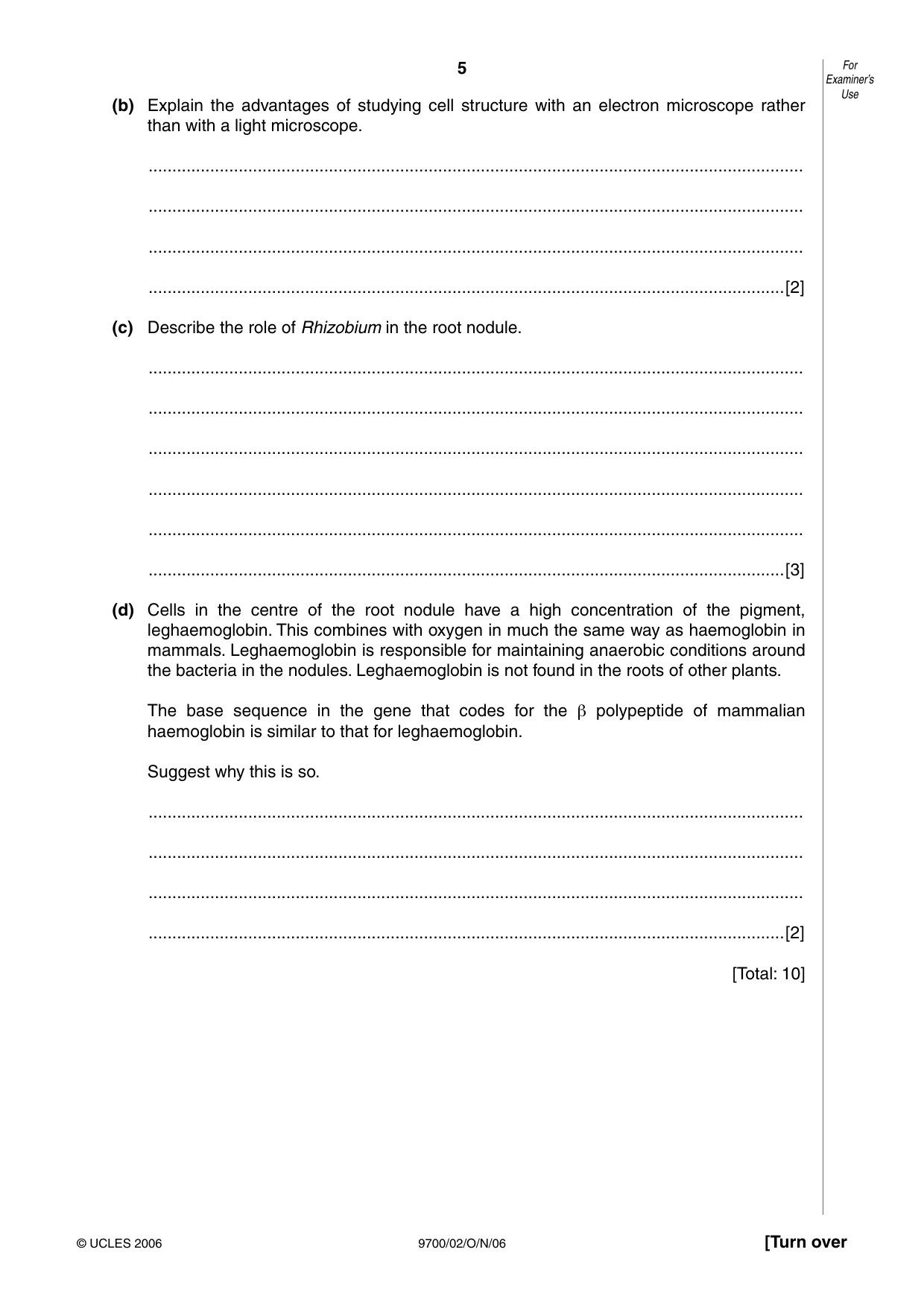
5 9700/02/O/N/06 [Turn over For Examiner’s Use © UCLES 2006 (b) Explain the advantages of studying cell structure with an electron microscope rather than with a light microscope. … … … …[2] (c) Describe the role of Rhizobium in the root nodule. … … … … … …[3] (d) Cells in the centre of the root nodule have a high concentration of the pigment, leghaemoglobin. This combines with oxygen in much the same way as haemoglobin in mammals. Leghaemoglobin is responsible for maintaining anaerobic conditions around the bacteria in the nodules. Leghaemoglobin is not found in the roots of other plants. The base sequence in the gene that codes for the β polypeptide of mammalian haemoglobin is similar to that for leghaemoglobin. Suggest why this is so. … … … …[2] [Total: 10]
Question paper, page 6
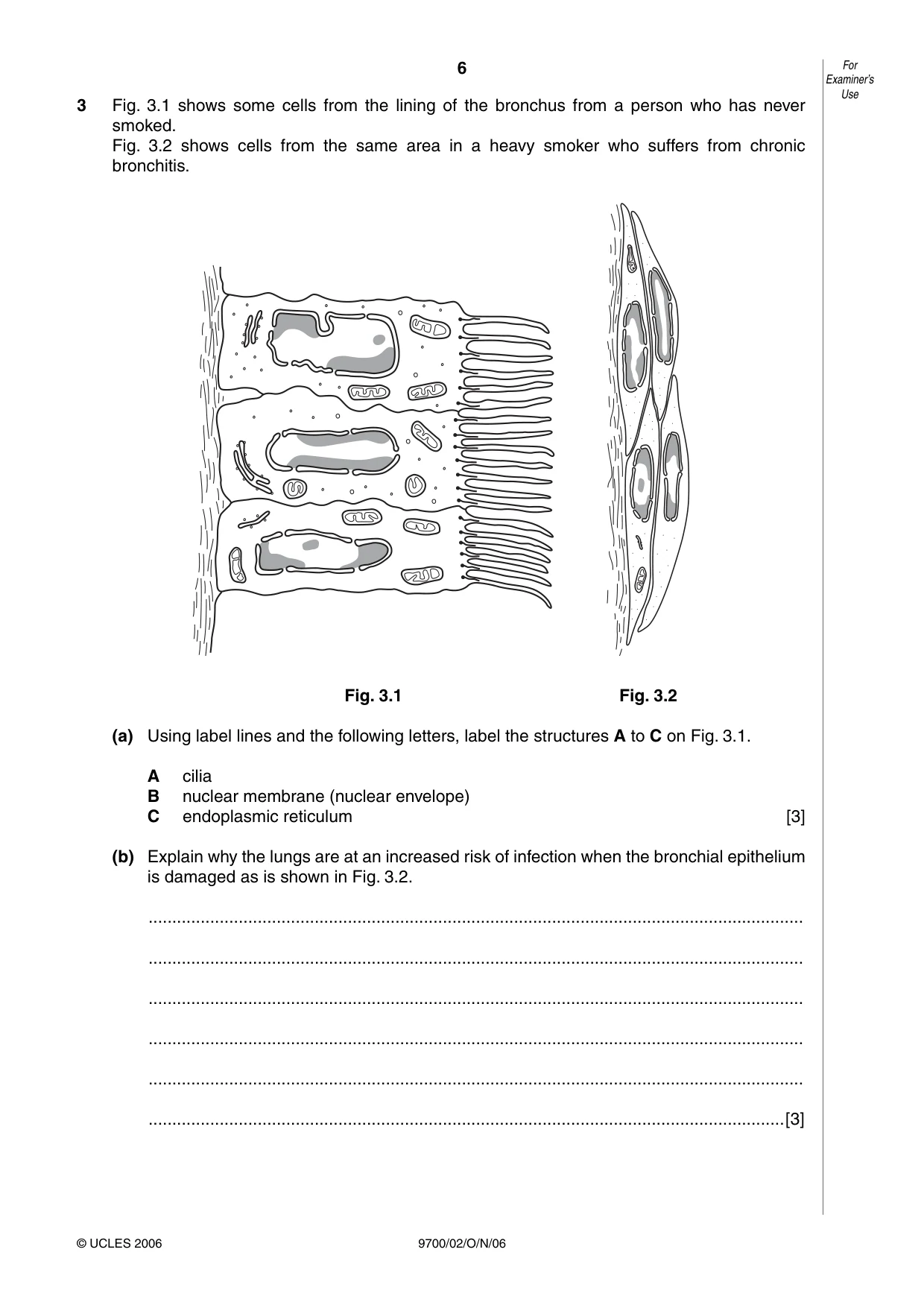
6 9700/02/O/N/06 For Examiner’s Use © UCLES 2006 3 Fig. 3.1 shows some cells from the lining of the bronchus from a person who has never smoked. Fig. 3.2 shows cells from the same area in a heavy smoker who suffers from chronic bronchitis. Fig. 3.1 Fig. 3.2 (a) Using label lines and the following letters, label the structures A to C on Fig. 3.1. A cilia B nuclear membrane (nuclear envelope) C endoplasmic reticulum [3] (b) Explain why the lungs are at an increased risk of infection when the bronchial epithelium is damaged as is shown in Fig. 3.2. … … … … … …[3]
Question paper, page 7
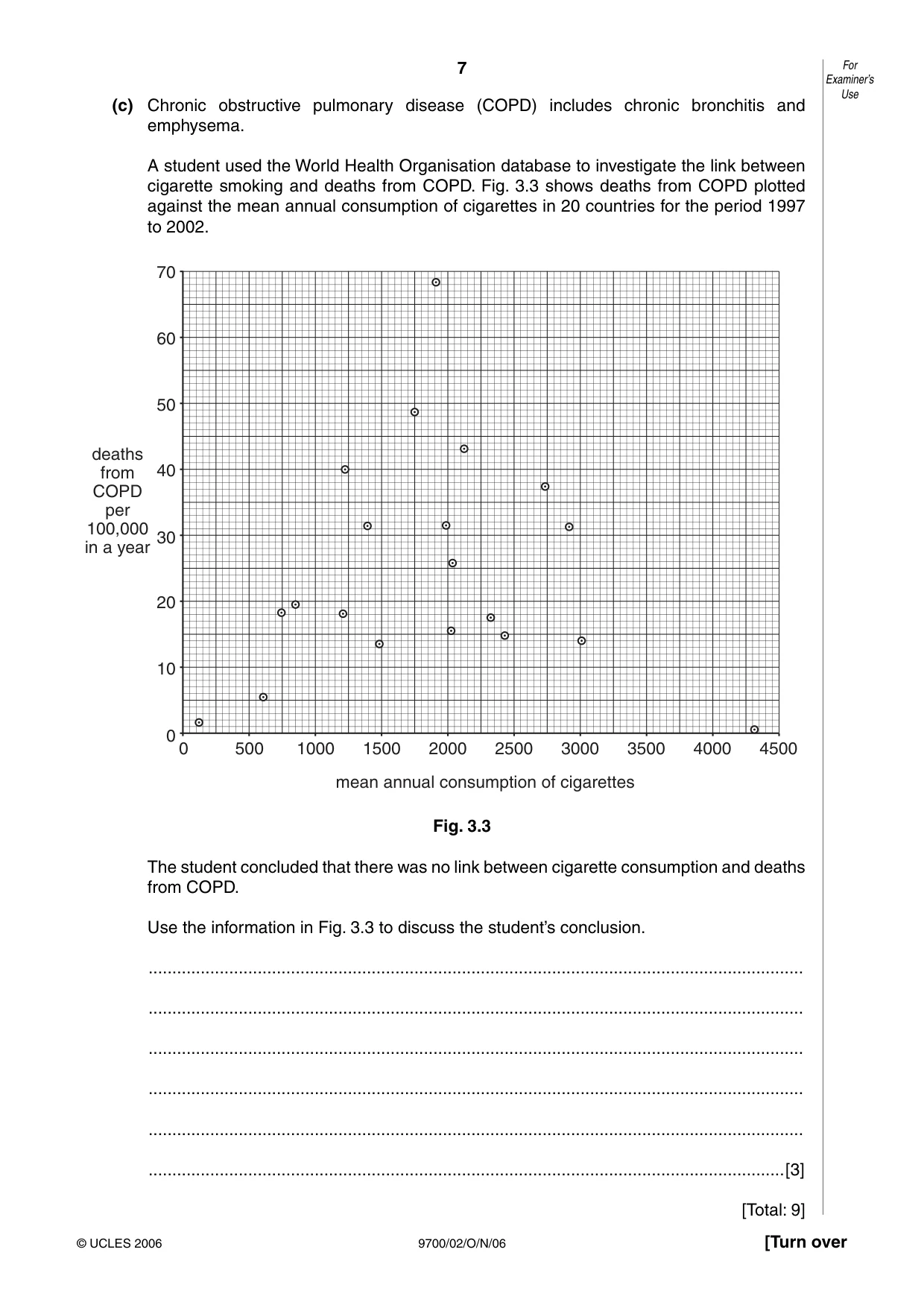
7 9700/02/O/N/06 [Turn over For Examiner’s Use © UCLES 2006 (c) Chronic obstructive pulmonary disease (COPD) includes chronic bronchitis and emphysema. A student used the World Health Organisation database to investigate the link between cigarette smoking and deaths from COPD. Fig. 3.3 shows deaths from COPD plotted against the mean annual consumption of cigarettes in 20 countries for the period 1997 to 2002. 500 0 0 10 20 30 40 50 60 70 1000 1500 2000 mean annual consumption of cigarettes deaths from COPD per 100,000 in a year 2500 3000 3500 4000 4500 Fig. 3.3 The student concluded that there was no link between cigarette consumption and deaths from COPD. Use the information in Fig. 3.3 to discuss the student’s conclusion. … … … … … …[3] [Total: 9]
Question paper, page 8
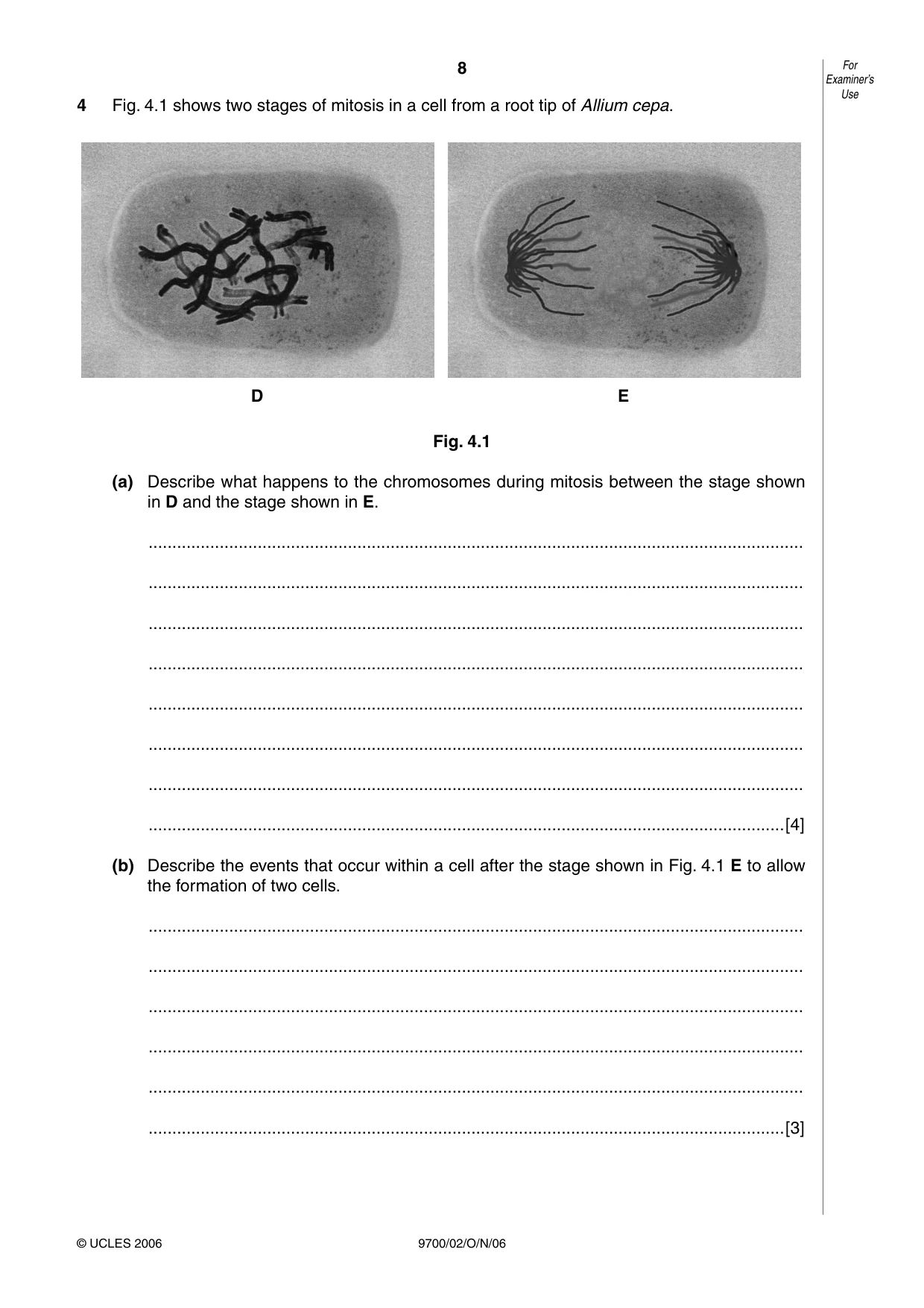
8 9700/02/O/N/06 For Examiner’s Use © UCLES 2006 4 Fig. 4.1 shows two stages of mitosis in a cell from a root tip of Allium cepa. D E Fig. 4.1 (a) Describe what happens to the chromosomes during mitosis between the stage shown in D and the stage shown in E. … … … … … … … …[4] (b) Describe the events that occur within a cell after the stage shown in Fig. 4.1 E to allow the formation of two cells. … … … … … …[3]
Question paper, page 9
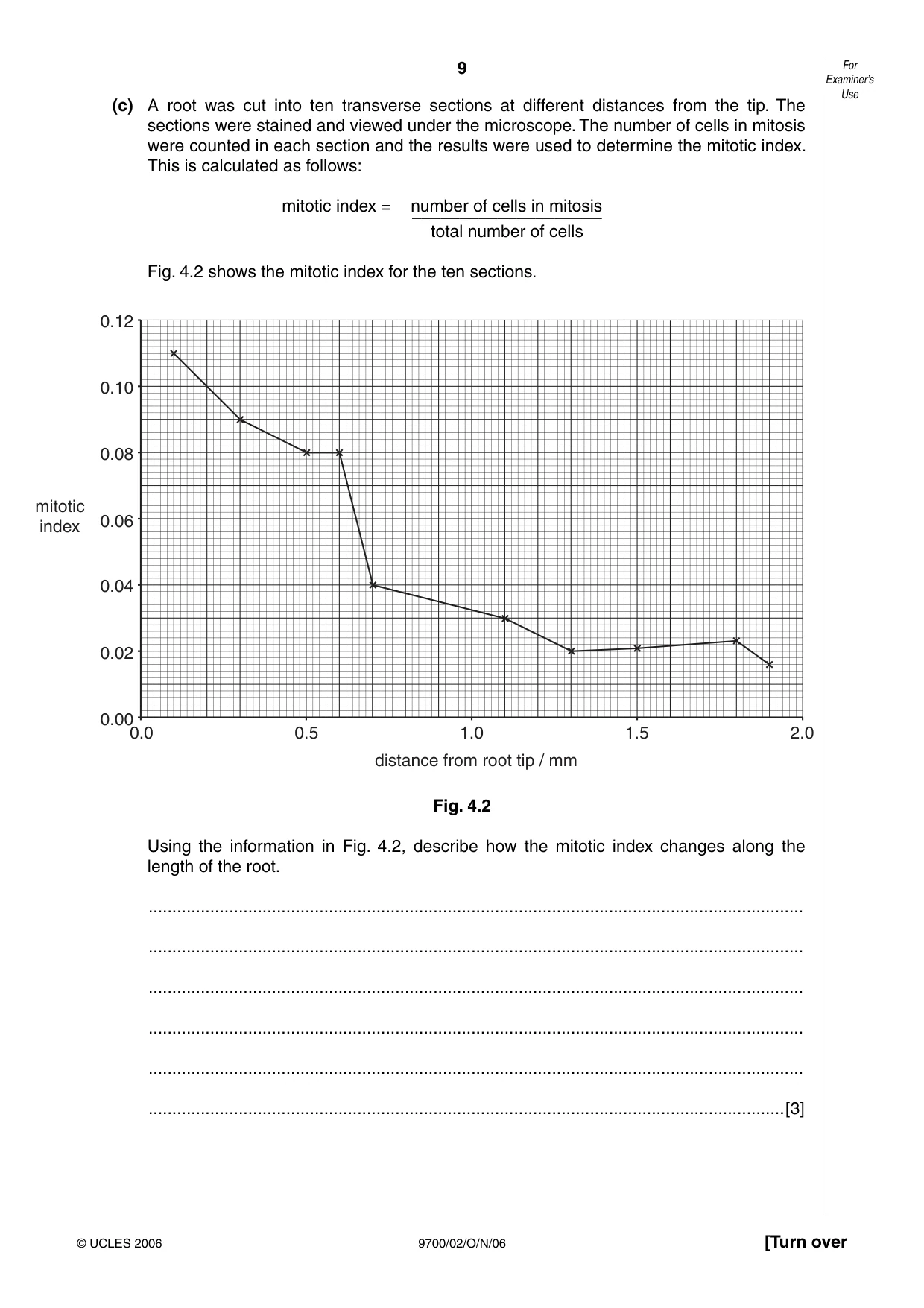
9 9700/02/O/N/06 [Turn over For Examiner’s Use © UCLES 2006 (c) A root was cut into ten transverse sections at different distances from the tip. The sections were stained and viewed under the microscope. The number of cells in mitosis were counted in each section and the results were used to determine the mitotic index. This is calculated as follows: mitotic index = number of cells in mitosis ____________________ total number of cells Fig. 4.2 shows the mitotic index for the ten sections. Fig. 4.2 Using the information in Fig. 4.2, describe how the mitotic index changes along the length of the root. … … … … … …[3] 0.0 0.00 0.02 0.04 0.06 0.08 mitotic index 0.10 0.12 0.5 1.0 distance from root tip / mm 1.5 2.0
Question paper, page 10
10 9700/02/O/N/06 For Examiner’s Use © UCLES 2006 (d) Explain how the events in the mitotic cell cycle ensure that all the cells in the root are genetically identical. … … … … … … … …[3] [Total: 13]
Question paper, page 12
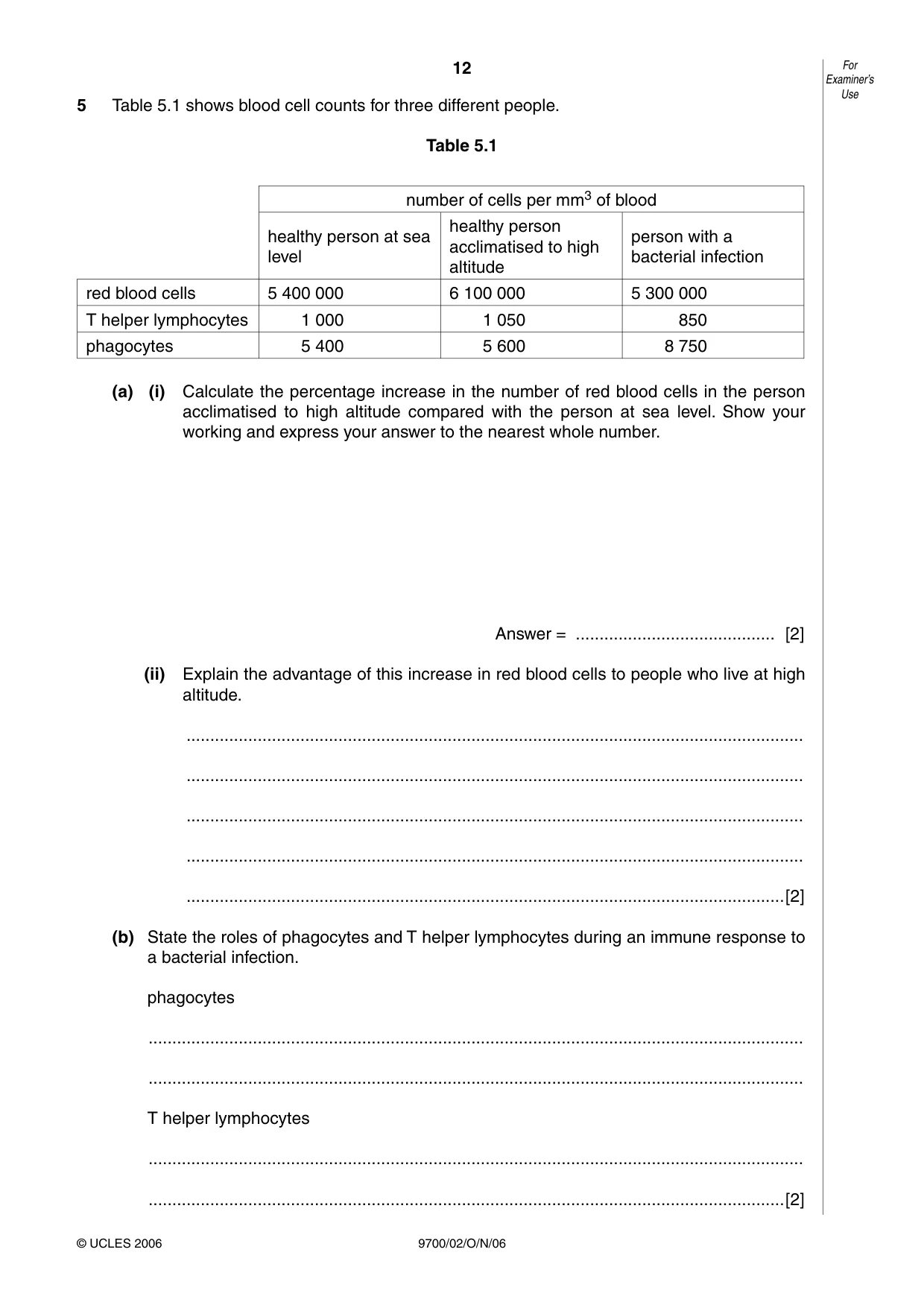
12 9700/02/O/N/06 For Examiner’s Use © UCLES 2006 5 Table 5.1 shows blood cell counts for three different people. Table 5.1 number of cells per mm3 of blood healthy person at sea level healthy person acclimatised to high altitude person with a bacterial infection red blood cells 5 400 000 6 100 000 5 300 000 T helper lymphocytes 1 000 1 050 850 phagocytes 5 400 5 600 8 750 (a) (i) Calculate the percentage increase in the number of red blood cells in the person acclimatised to high altitude compared with the person at sea level. Show your working and express your answer to the nearest whole number. Answer = … [2] (ii) Explain the advantage of this increase in red blood cells to people who live at high altitude. … … … … …[2] (b) State the roles of phagocytes and T helper lymphocytes during an immune response to a bacterial infection. phagocytes … … T helper lymphocytes … …[2]
Question paper, page 13
13 9700/02/O/N/06 [Turn over For Examiner’s Use © UCLES 2006 (c) Antibiotics are used to treat people with bacterial infections. Explain the danger of the widespread use of antibiotics to treat disease. … … … …[2] [Total: 8]
Question paper, page 14
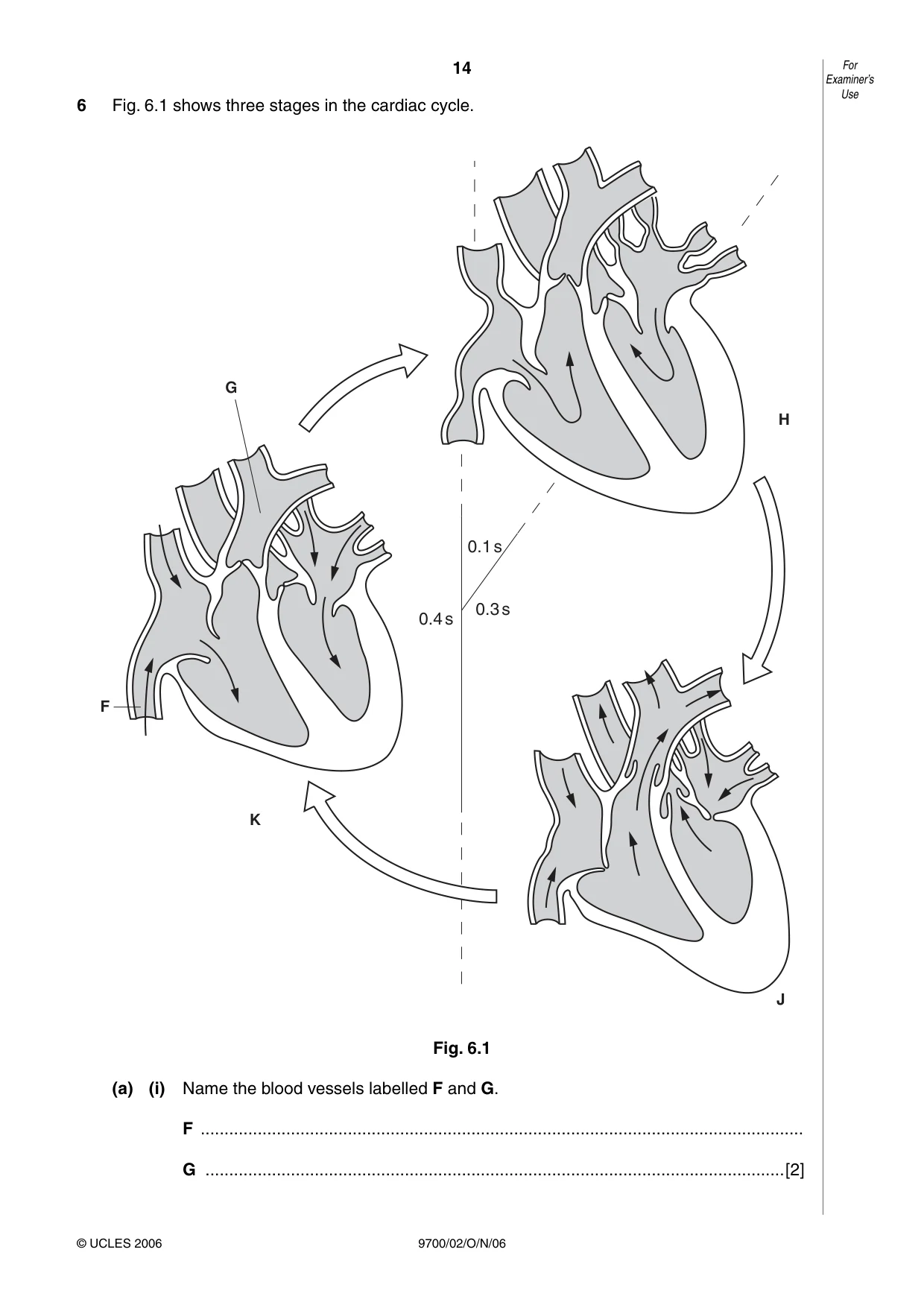
14 9700/02/O/N/06 For Examiner’s Use © UCLES 2006 6 Fig. 6.1 shows three stages in the cardiac cycle. 0.4 s 0.3 s 0.1 s G H J K F Fig. 6.1 (a) (i) Name the blood vessels labelled F and G. F … G …[2]
Question paper, page 15
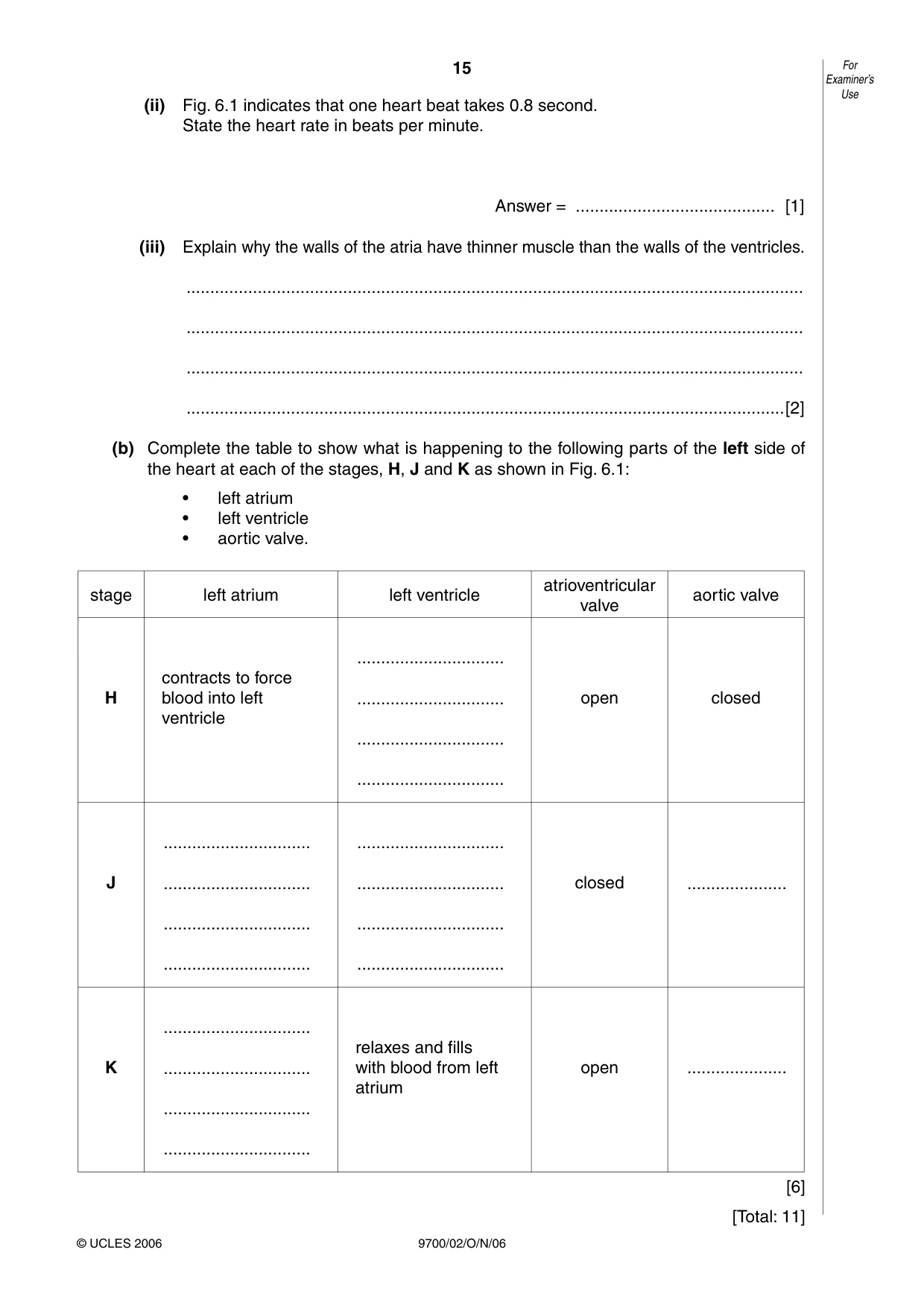
15 9700/02/O/N/06 For Examiner’s Use © UCLES 2006 (ii) Fig. 6.1 indicates that one heart beat takes 0.8 second. State the heart rate in beats per minute. Answer = … [1] (iii) Explain why the walls of the atria have thinner muscle than the walls of the ventricles. … … … …[2] (b) Complete the table to show what is happening to the following parts of the left side of the heart at each of the stages, H, J and K as shown in Fig. 6.1: • left atrium • left ventricle • aortic valve. stage left atrium left ventricle atrioventricular valve aortic valve H contracts to force blood into left ventricle … … … … open closed J … … … … … … … … closed … K … … … … relaxes and fills with blood from left atrium open … [6] [Total: 11]
Question paper, page 16
16 9700/02/O/N/06 BLANK PAGE Copyright Acknowledgements: Question 1 Fig. 1.1 © ALEXIS ROSENFELD / SCIENCE PHOTO LIBRARY. Question 3 Fig. 3.3 © http://www.who.int/tobacco/en/atlas40.pdf Permission to reproduce items where third-party owned material protected by copyright is included has been sought and cleared where possible. Every reasonable effort has been made by the publisher (UCLES) to trace copyright holders, but if any items requiring clearance have unwittingly been included, the publisher will be pleased to make amends at the earliest possible opportunity. University of Cambridge International Examinations is part of the University of Cambridge Local Examinations Syndicate (UCLES), which is itself a department of the University of Cambridge.
Mark scheme, page 1
UNIVERSITY OF CAMBRIDGE INTERNATIONAL EXAMINATIONS GCE Advanced Subsidiary Level and GCE Advanced Level MARK SCHEME for the October/November 2006 question paper 9700 BIOLOGY 9700/02 Paper 2 (Theory 1), maximum raw mark 60 This mark scheme is published as an aid to teachers and students, to indicate the requirements of the examination. It shows the basis on which Examiners were instructed to award marks. It does not indicate the details of the discussions that took place at an Examiners’ meeting before marking began. All Examiners are instructed that alternative correct answers and unexpected approaches in candidates’ scripts must be given marks that fairly reflect the relevant knowledge and skills demonstrated. Mark schemes must be read in conjunction with the question papers and the report on the examination. The grade thresholds for various grades are published in the report on the examination for most IGCSE, GCE Advanced Level and Advanced Subsidiary Level syllabuses. • CIE will not enter into discussions or correspondence in connection with these mark schemes. CIE is publishing the mark schemes for the October/November 2006 question papers for most IGCSE, GCE Advanced Level and Advanced Subsidiary Level syllabuses and some Ordinary Level syllabuses.
Mark scheme, page 2
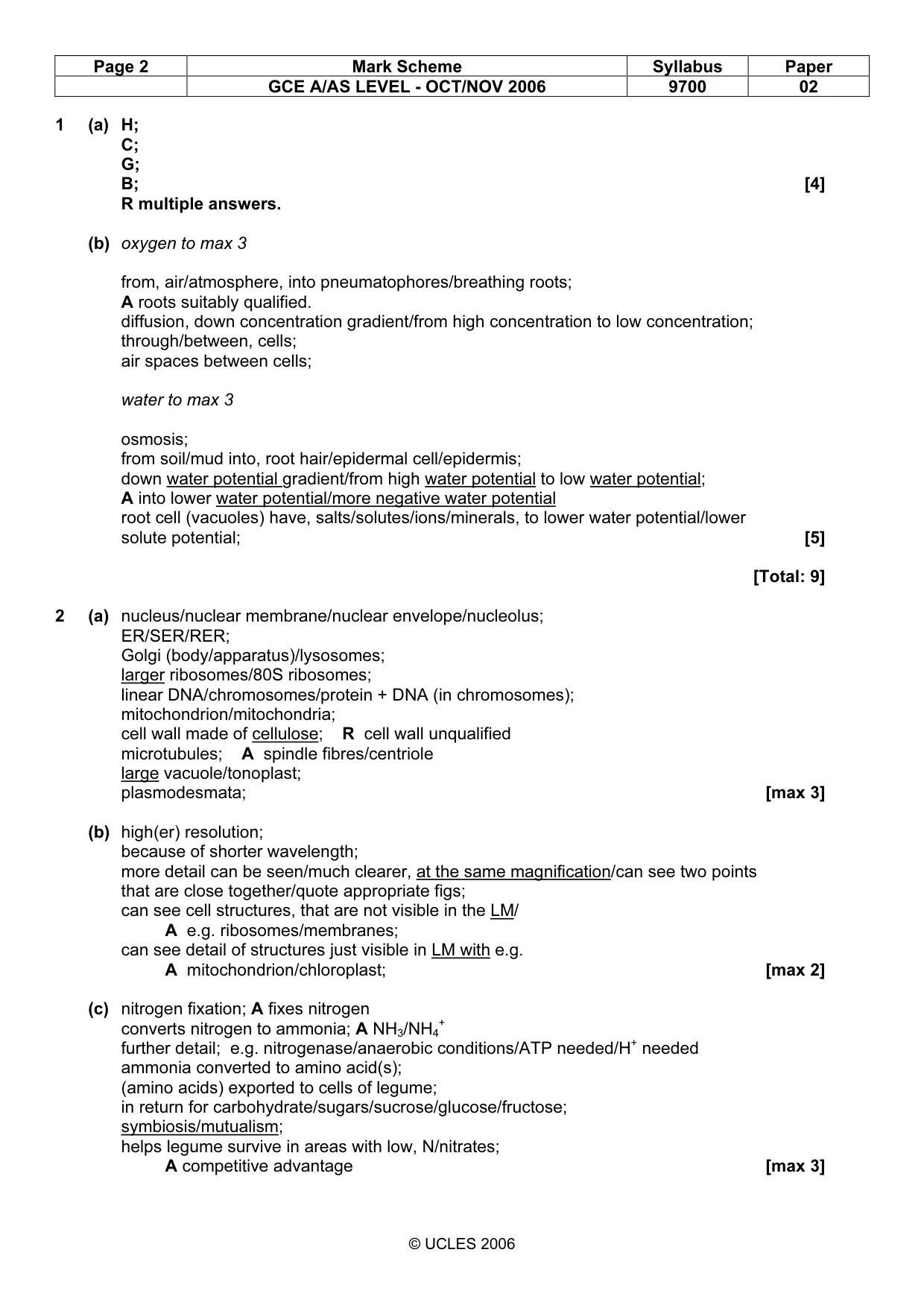
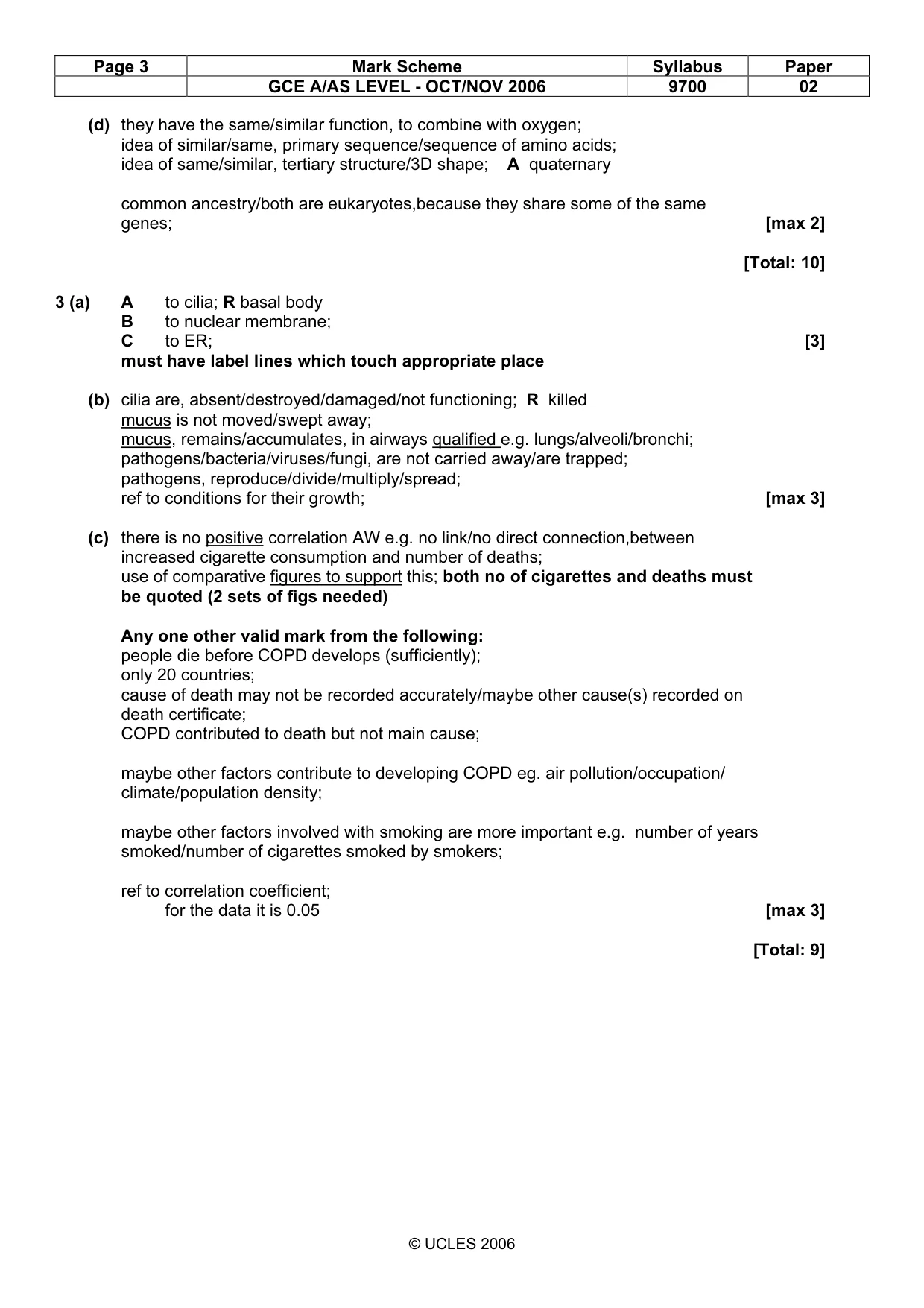
Page 2 Mark Scheme Syllabus Paper GCE A/AS LEVEL - OCT/NOV 2006 9700 02 © UCLES 2006 1 (a) H; C; G; B; [4] R multiple answers. (b) oxygen to max 3 from, air/atmosphere, into pneumatophores/breathing roots; A roots suitably qualified. diffusion, down concentration gradient/from high concentration to low concentration; through/between, cells; air spaces between cells; water to max 3 osmosis; from soil/mud into, root hair/epidermal cell/epidermis; down water potential gradient/from high water potential to low water potential; A into lower water potential/more negative water potential root cell (vacuoles) have, salts/solutes/ions/minerals, to lower water potential/lower solute potential; [5] [Total: 9] 2 (a) nucleus/nuclear membrane/nuclear envelope/nucleolus; ER/SER/RER; Golgi (body/apparatus)/lysosomes; larger ribosomes/80S ribosomes; linear DNA/chromosomes/protein + DNA (in chromosomes); mitochondrion/mitochondria; cell wall made of cellulose; R cell wall unqualified microtubules; A spindle fibres/centriole large vacuole/tonoplast; plasmodesmata; [max 3] (b) high(er) resolution; because of shorter wavelength; more detail can be seen/much clearer, at the same magnification/can see two points that are close together/quote appropriate figs; can see cell structures, that are not visible in the LM/ A e.g. ribosomes/membranes; can see detail of structures just visible in LM with e.g. A mitochondrion/chloroplast; [max 2] (c) nitrogen fixation; A fixes nitrogen converts nitrogen to ammonia; A NH3/NH4 + further detail; e.g. nitrogenase/anaerobic conditions/ATP needed/H+ needed ammonia converted to amino acid(s); (amino acids) exported to cells of legume; in return for carbohydrate/sugars/sucrose/glucose/fructose; symbiosis/mutualism; helps legume survive in areas with low, N/nitrates; A competitive advantage [max 3]
Mark scheme, page 3
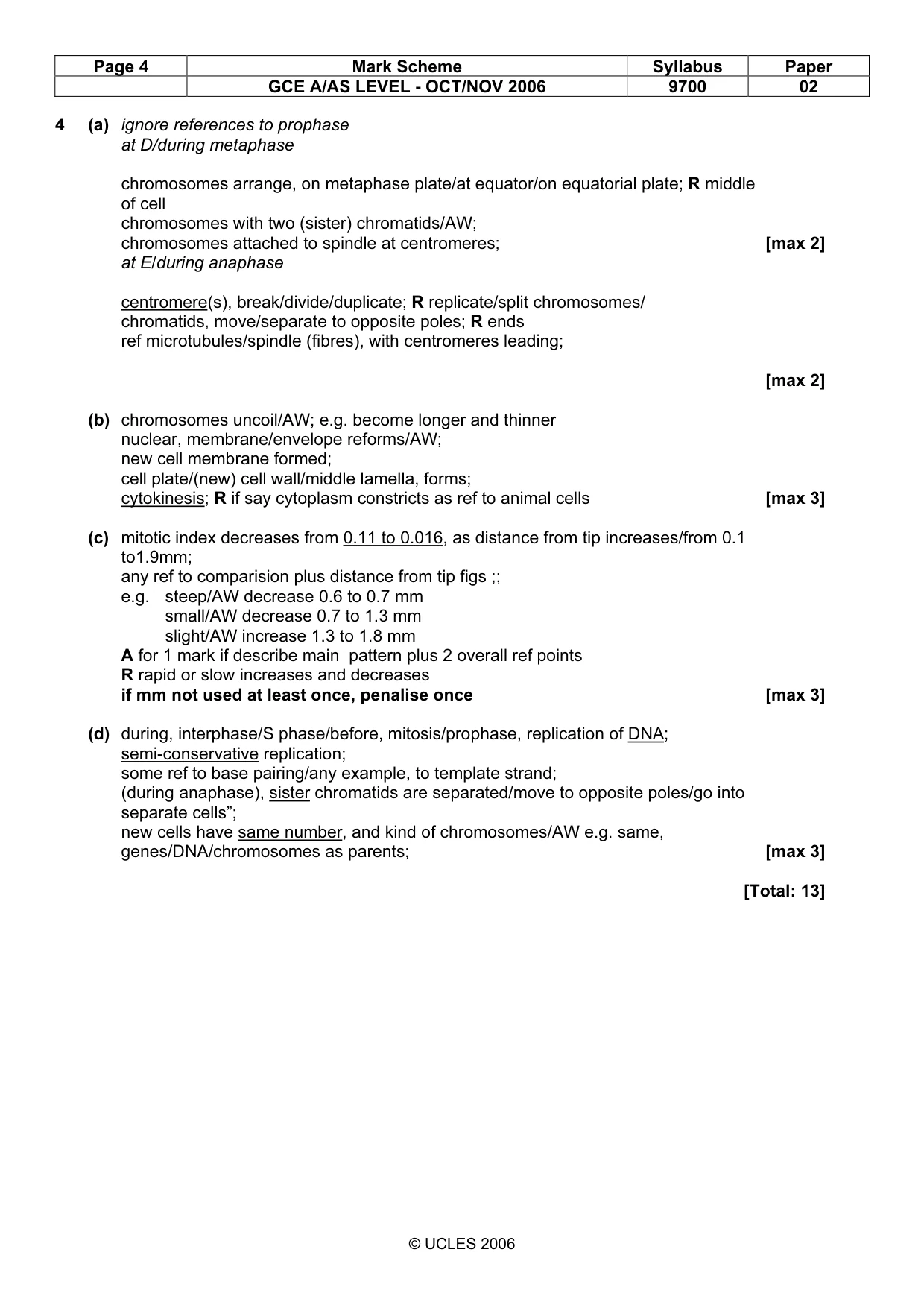
Page 3 Mark Scheme Syllabus Paper GCE A/AS LEVEL - OCT/NOV 2006 9700 02 © UCLES 2006 (d) they have the same/similar function, to combine with oxygen; idea of similar/same, primary sequence/sequence of amino acids; idea of same/similar, tertiary structure/3D shape; A quaternary common ancestry/both are eukaryotes,because they share some of the same genes; [max 2] [Total: 10] 3 (a) A to cilia; R basal body B to nuclear membrane; C to ER; [3] must have label lines which touch appropriate place (b) cilia are, absent/destroyed/damaged/not functioning; R killed mucus is not moved/swept away; mucus, remains/accumulates, in airways qualified e.g. lungs/alveoli/bronchi; pathogens/bacteria/viruses/fungi, are not carried away/are trapped; pathogens, reproduce/divide/multiply/spread; ref to conditions for their growth; [max 3] (c) there is no positive correlation AW e.g. no link/no direct connection,between increased cigarette consumption and number of deaths; use of comparative figures to support this; both no of cigarettes and deaths must be quoted (2 sets of figs needed) Any one other valid mark from the following: people die before COPD develops (sufficiently); only 20 countries; cause of death may not be recorded accurately/maybe other cause(s) recorded on death certificate; COPD contributed to death but not main cause; maybe other factors contribute to developing COPD eg. air pollution/occupation/ climate/population density; maybe other factors involved with smoking are more important e.g. number of years smoked/number of cigarettes smoked by smokers; ref to correlation coefficient; for the data it is 0.05 [max 3] [Total: 9]
Mark scheme, page 4
Page 4 Mark Scheme Syllabus Paper GCE A/AS LEVEL - OCT/NOV 2006 9700 02 © UCLES 2006 4 (a) ignore references to prophase at D/during metaphase chromosomes arrange, on metaphase plate/at equator/on equatorial plate; R middle of cell chromosomes with two (sister) chromatids/AW; chromosomes attached to spindle at centromeres; [max 2] at E/during anaphase centromere(s), break/divide/duplicate; R replicate/split chromosomes/ chromatids, move/separate to opposite poles; R ends ref microtubules/spindle (fibres), with centromeres leading; [max 2] (b) chromosomes uncoil/AW; e.g. become longer and thinner nuclear, membrane/envelope reforms/AW; new cell membrane formed; cell plate/(new) cell wall/middle lamella, forms; cytokinesis; R if say cytoplasm constricts as ref to animal cells [max 3] (c) mitotic index decreases from 0.11 to 0.016, as distance from tip increases/from 0.1 to1.9mm; any ref to comparision plus distance from tip figs ;; e.g. steep/AW decrease 0.6 to 0.7 mm small/AW decrease 0.7 to 1.3 mm slight/AW increase 1.3 to 1.8 mm A for 1 mark if describe main pattern plus 2 overall ref points R rapid or slow increases and decreases if mm not used at least once, penalise once [max 3] (d) during, interphase/S phase/before, mitosis/prophase, replication of DNA; semi-conservative replication; some ref to base pairing/any example, to template strand; (during anaphase), sister chromatids are separated/move to opposite poles/go into separate cells”; new cells have same number, and kind of chromosomes/AW e.g. same, genes/DNA/chromosomes as parents; [max 3] [Total: 13]
Mark scheme, page 5
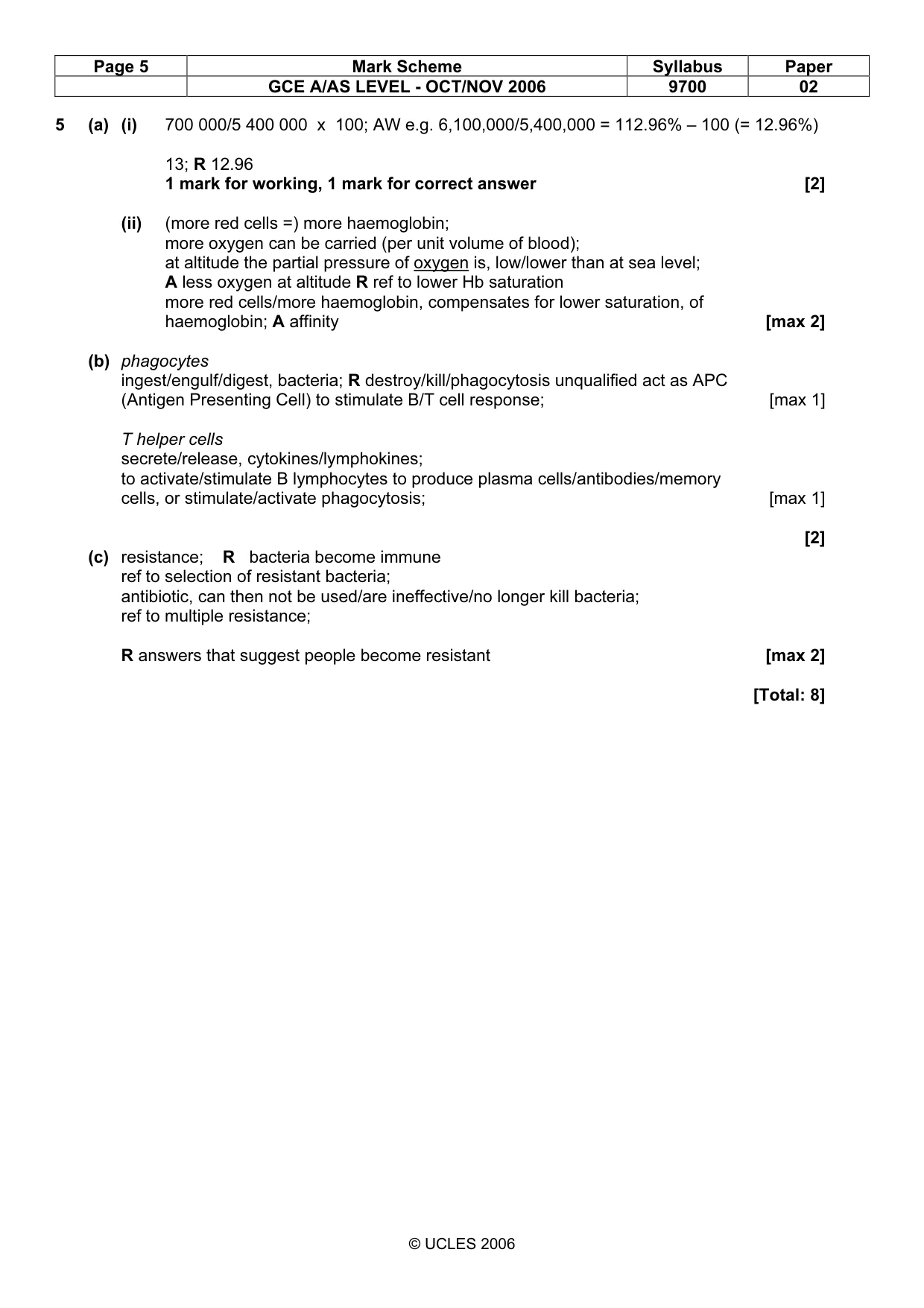
Page 5 Mark Scheme Syllabus Paper GCE A/AS LEVEL - OCT/NOV 2006 9700 02 © UCLES 2006 5 (a) (i) 700 000/5 400 000 x 100; AW e.g. 6,100,000/5,400,000 = 112.96% – 100 (= 12.96%) 13; R 12.96 1 mark for working, 1 mark for correct answer [2] (ii) (more red cells =) more haemoglobin; more oxygen can be carried (per unit volume of blood); at altitude the partial pressure of oxygen is, low/lower than at sea level; A less oxygen at altitude R ref to lower Hb saturation more red cells/more haemoglobin, compensates for lower saturation, of haemoglobin; A affinity [max 2] (b) phagocytes ingest/engulf/digest, bacteria; R destroy/kill/phagocytosis unqualified act as APC (Antigen Presenting Cell) to stimulate B/T cell response; [max 1] T helper cells secrete/release, cytokines/lymphokines; to activate/stimulate B lymphocytes to produce plasma cells/antibodies/memory cells, or stimulate/activate phagocytosis; [max 1] [2] (c) resistance; R bacteria become immune ref to selection of resistant bacteria; antibiotic, can then not be used/are ineffective/no longer kill bacteria; ref to multiple resistance; R answers that suggest people become resistant [max 2] [Total: 8]
Mark scheme, page 6
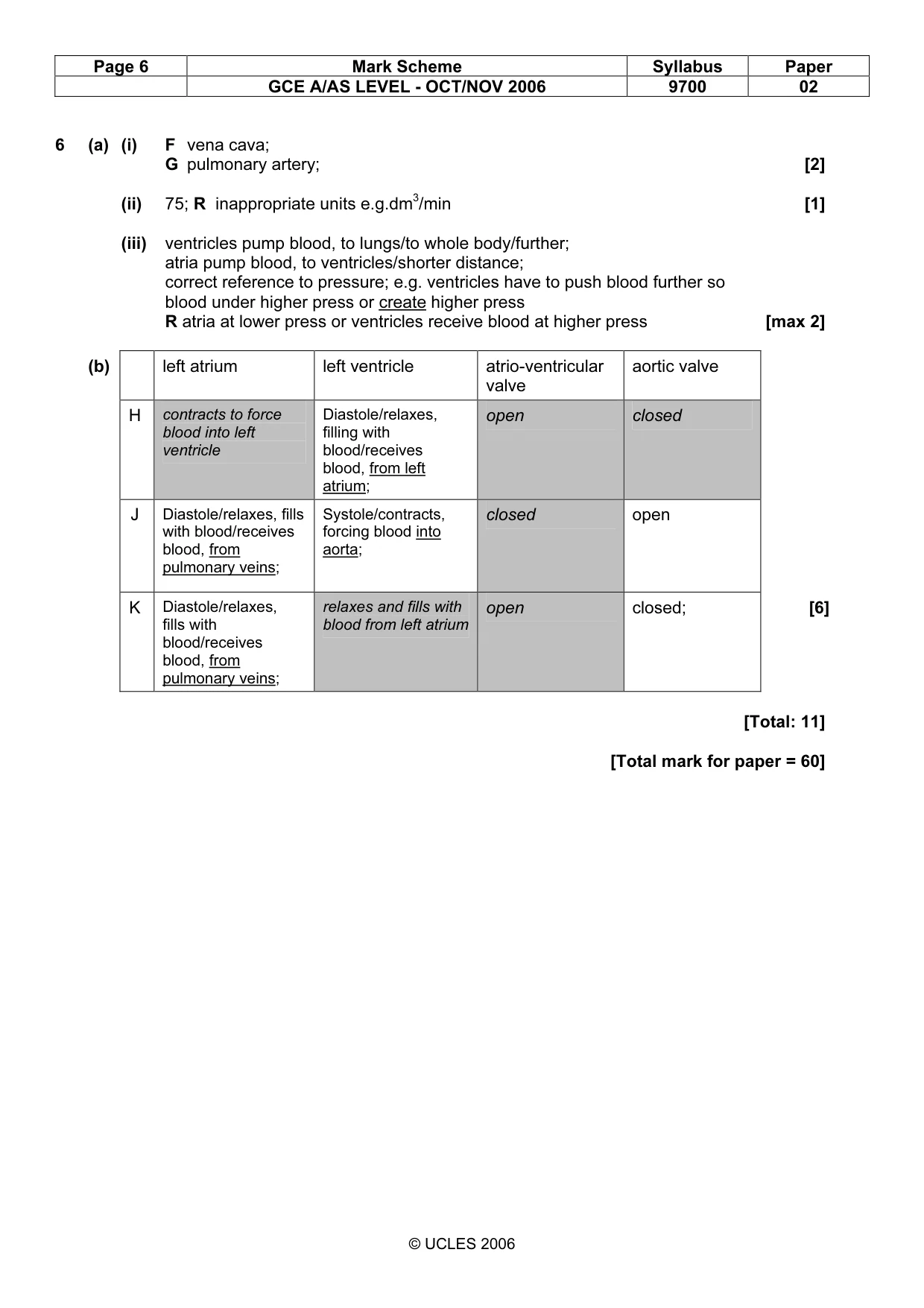
Page 6 Mark Scheme Syllabus Paper GCE A/AS LEVEL - OCT/NOV 2006 9700 02 © UCLES 2006 6 (a) (i) F vena cava; G pulmonary artery; [2] (ii) 75; R inappropriate units e.g.dm3/min [1] (iii) ventricles pump blood, to lungs/to whole body/further; atria pump blood, to ventricles/shorter distance; correct reference to pressure; e.g. ventricles have to push blood further so blood under higher press or create higher press R atria at lower press or ventricles receive blood at higher press [max 2] (b) left atrium left ventricle atrio-ventricular valve aortic valve H contracts to force blood into left ventricle Diastole/relaxes, filling with blood/receives blood, from left atrium; open closed J Diastole/relaxes, fills with blood/receives blood, from pulmonary veins; Systole/contracts, forcing blood into aorta; closed open K Diastole/relaxes, fills with blood/receives blood, from pulmonary veins; relaxes and fills with blood from left atrium open closed; [6] [Total: 11] [Total mark for paper = 60]
What you needed in this session
Cambridge’s own grade thresholds for 2006 Oct/Nov, Paper 2 · Variant 1. A higher threshold means an easier paper — the bar moves with how the cohort did.