Cambridge A Level Biology 9700 — 2005 Oct/Nov Paper 4 · Variant 1
9700/41/O/N/05
The question paper and its mark scheme, free to read here and free to download. This is Cambridge’s own paper, exactly as it was sat.
Question paper12 pages

Mark scheme6 pages
Answers below. Sit the paper first if you are practising.
Paper as text
Question paper, page 1
This document consists of 10 printed pages and 2 lined pages. SP (CW/KS) S86544/2 © UCLES 2005 [Turn over UNIVERSITY OF CAMBRIDGE INTERNATIONAL EXAMINATIONS General Certificate of Education Advanced Level BIOLOGY 9700/04 Paper 4 Structured Questions A2 Core October/November 2005 1 hour 15 minutes Candidates answer on the Question Paper. Additional Materials: Answer Paper should be available on request. READ THESE INSTRUCTIONS FIRST Write your Centre number, candidate number and name in the spaces provided at the top of this page. Write in dark blue or black pen in the spaces provided on the Question Paper. You may use a soft pencil for any diagrams, graphs or rough working. Do not use staples, paper clips, highlighters, glue or correction fluid. Answer all questions in Section A and one question from Section B. Circle the number of the Section B question you have answered in the grid below. At the end of the examination, fasten all your work securely together. The number of marks is given in brackets [ ] at the end of each question or part question. Centre Number Candidate Number Name For Examiner’s Use 1 2 3 4 5 Section A 6 or 7 Total
Question paper, page 2
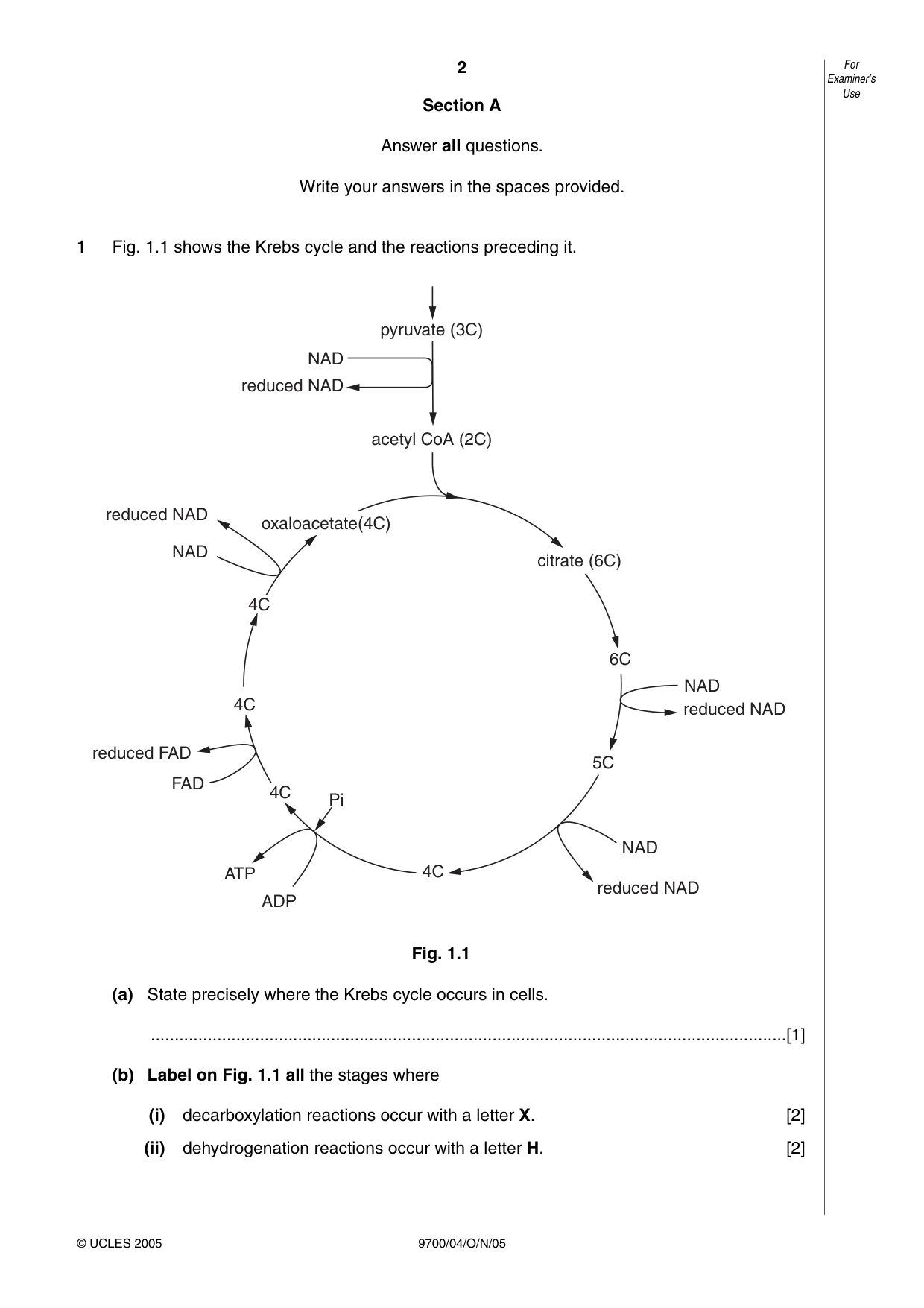
2 9700/04/O/N/05 Section A Answer all questions. Write your answers in the spaces provided. 1 Fig. 1.1 shows the Krebs cycle and the reactions preceding it. Fig. 1.1 (a) State precisely where the Krebs cycle occurs in cells. …[1] (b) Label on Fig. 1.1 all the stages where (i) decarboxylation reactions occur with a letter X. [2] (ii) dehydrogenation reactions occur with a letter H. [2] oxaloacetate(4C) acetyl CoA (2C) pyruvate (3C) 4C 4C 4C 4C 5C 6C citrate (6C) NAD reduced NAD NAD reduced NAD NAD reduced NAD NAD reduced NAD FAD reduced FAD ATP ADP Pi © UCLES 2005 For Examiner’s Use
Question paper, page 3
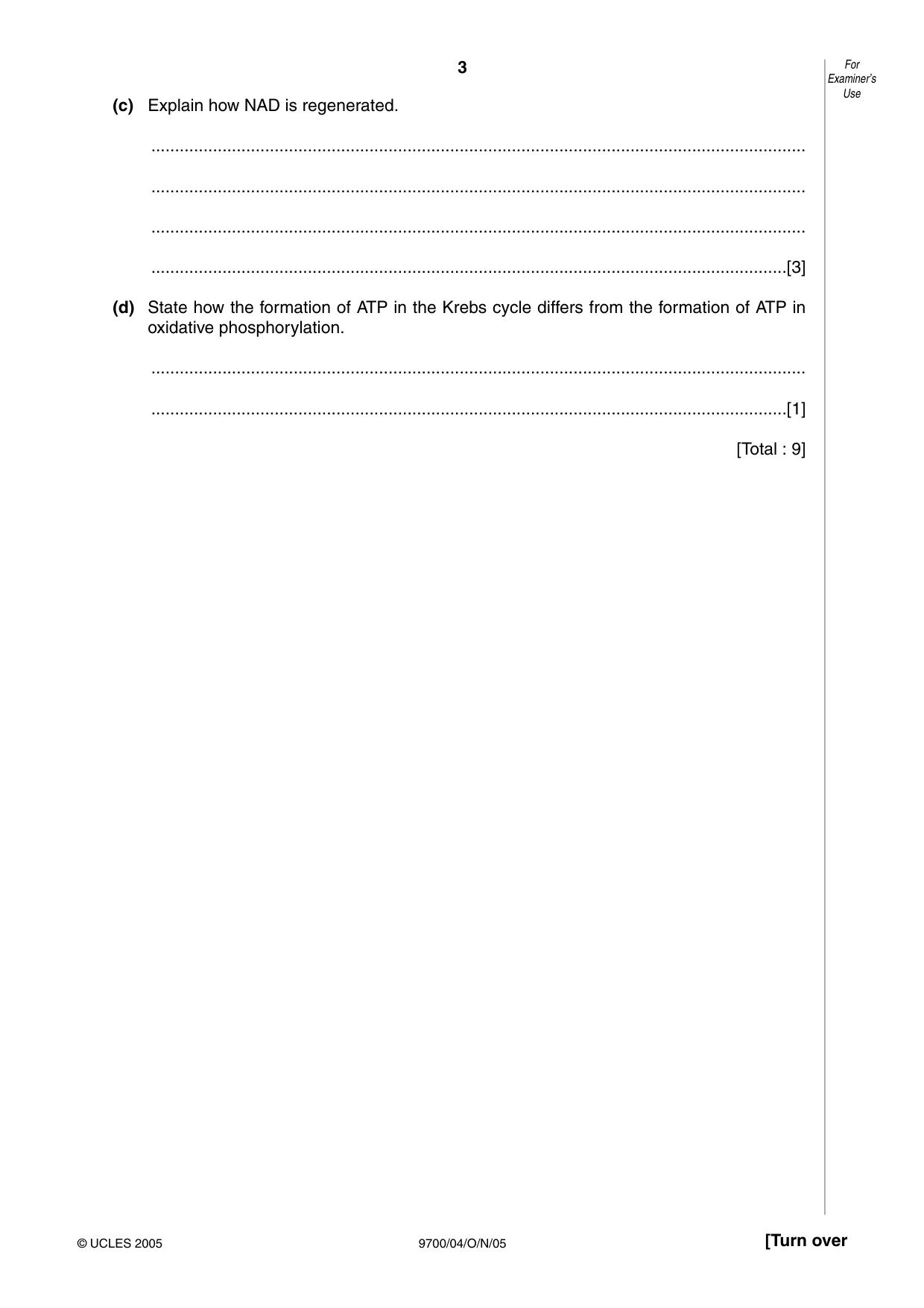
3 9700/04/O/N/05 [Turn over (c) Explain how NAD is regenerated. … … … …[3] (d) State how the formation of ATP in the Krebs cycle differs from the formation of ATP in oxidative phosphorylation. … …[1] [Total : 9] © UCLES 2005 For Examiner’s Use
Question paper, page 4
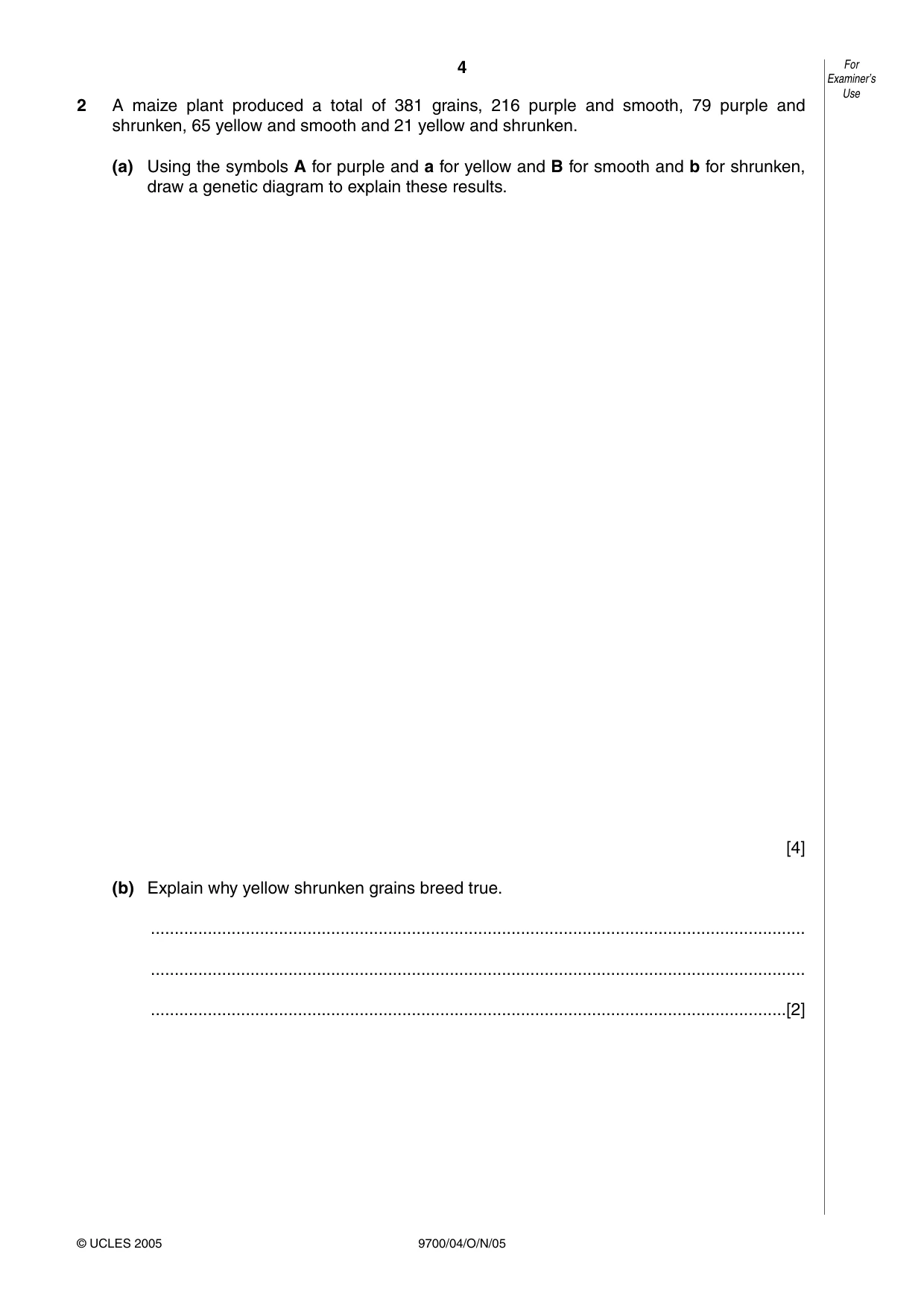
4 9700/04/O/N/05 2 A maize plant produced a total of 381 grains, 216 purple and smooth, 79 purple and shrunken, 65 yellow and smooth and 21 yellow and shrunken. (a) Using the symbols A for purple and a for yellow and B for smooth and b for shrunken, draw a genetic diagram to explain these results. [4] (b) Explain why yellow shrunken grains breed true. … … …[2] © UCLES 2005 For Examiner’s Use
Question paper, page 5
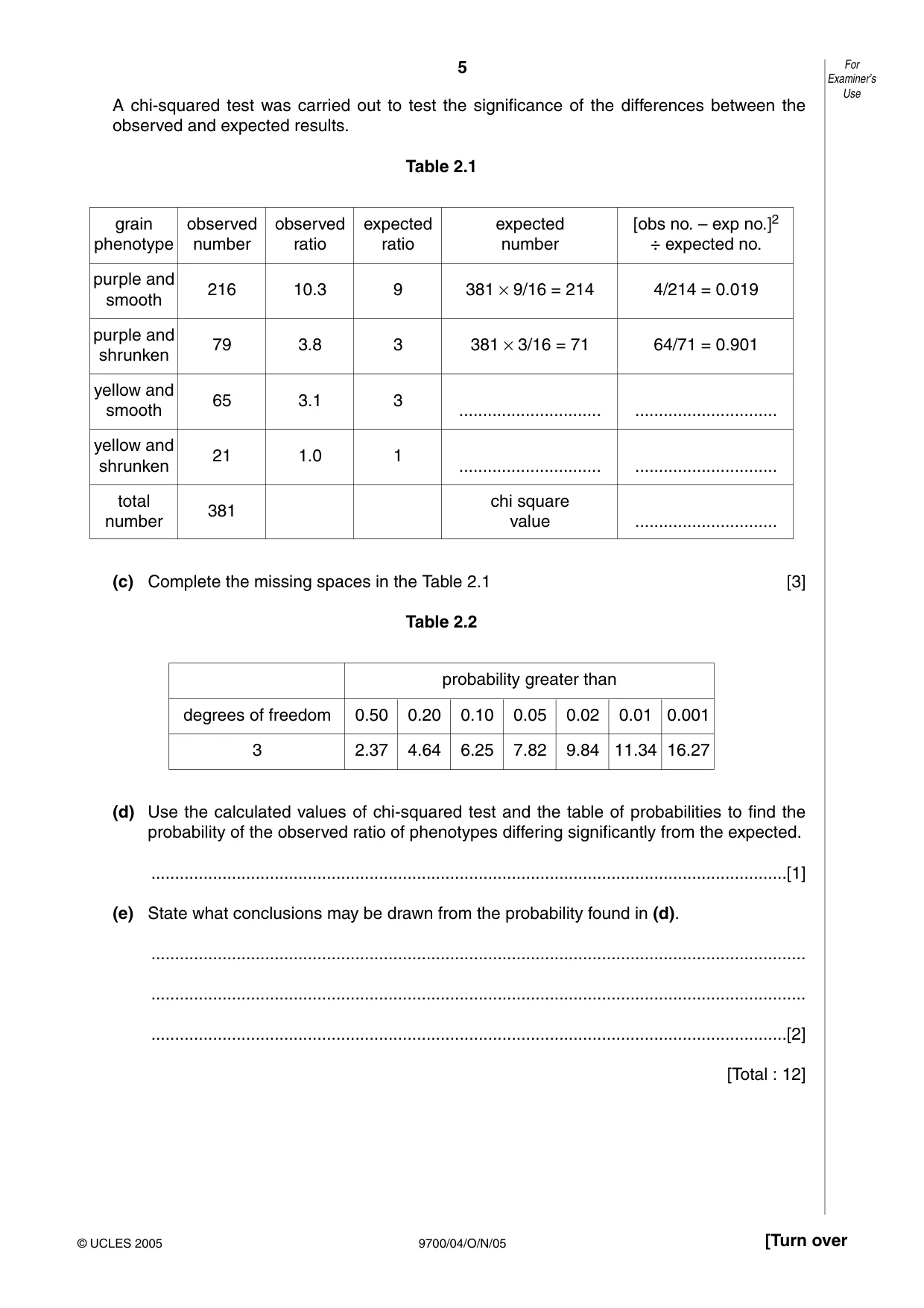
5 9700/04/O/N/05 [Turn over A chi-squared test was carried out to test the significance of the differences between the observed and expected results. Table 2.1 (c) Complete the missing spaces in the Table 2.1 [3] Table 2.2 (d) Use the calculated values of chi-squared test and the table of probabilities to find the probability of the observed ratio of phenotypes differing significantly from the expected. …[1] (e) State what conclusions may be drawn from the probability found in (d). … … …[2] [Total : 12] © UCLES 2005 For Examiner’s Use grain observed observed expected expected [obs no. – exp no.]2 phenotype number ratio ratio number ÷ expected no. purple and 216 10.3 9 381 × 9/16 = 214 4/214 = 0.019 smooth purple and 79 3.8 3 381 × 3/16 = 71 64/71 = 0.901 shrunken yellow and 65 3.1 3 smooth … … yellow and 21 1.0 1 shrunken … … total chi square 381 number value … degrees of freedom 0.50 0.20 0.10 0.05 0.02 0.01 0.001 3 2.37 4.64 6.25 7.82 9.84 11.34 16.27 probability greater than
Question paper, page 6
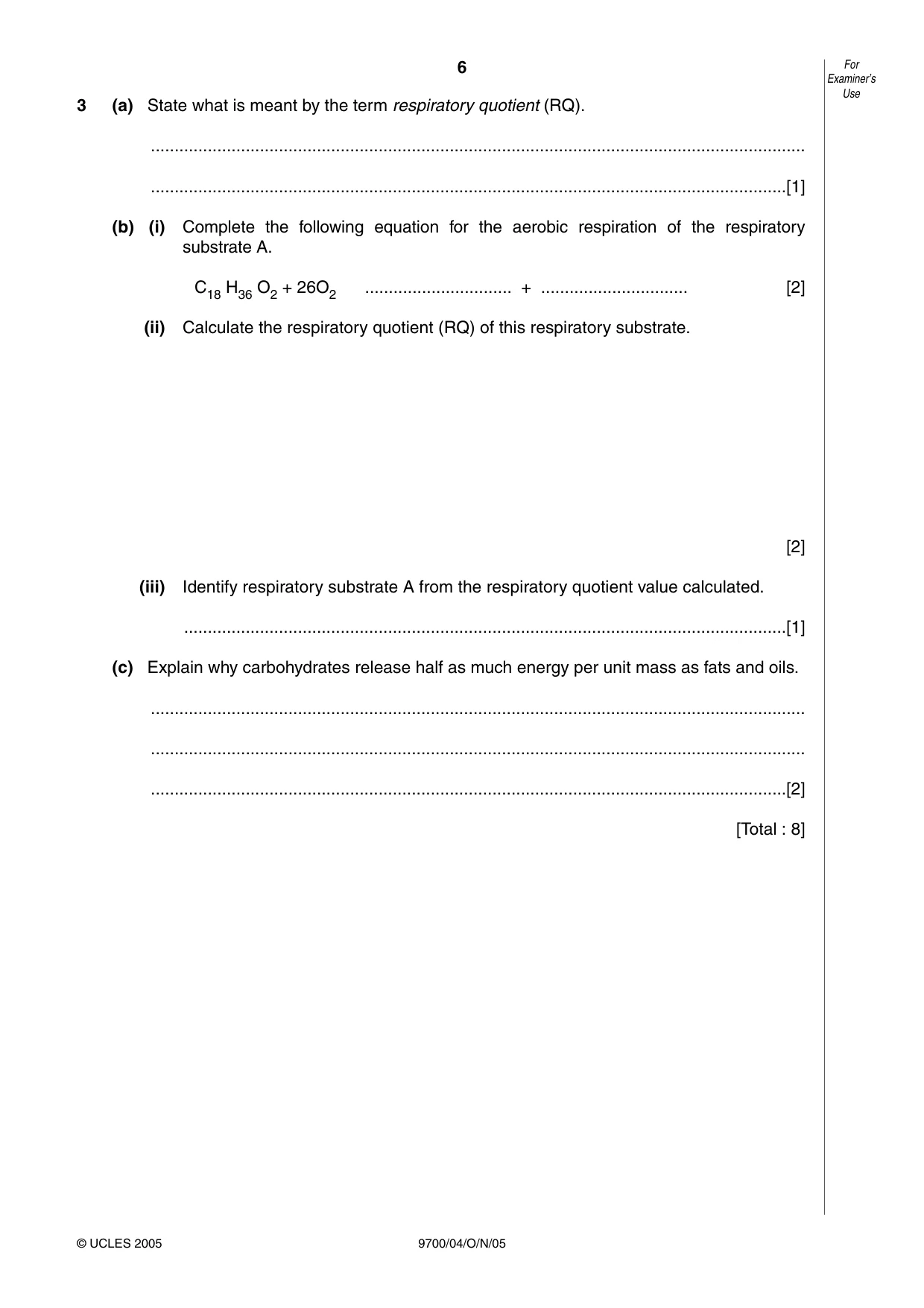
6 9700/04/O/N/05 3 (a) State what is meant by the term respiratory quotient (RQ). … …[1] (b) (i) Complete the following equation for the aerobic respiration of the respiratory substrate A. C18 H36 O2 + 26O2 … + … [2] (ii) Calculate the respiratory quotient (RQ) of this respiratory substrate. [2] (iii) Identify respiratory substrate A from the respiratory quotient value calculated. …[1] (c) Explain why carbohydrates release half as much energy per unit mass as fats and oils. … … …[2] [Total : 8] © UCLES 2005 For Examiner’s Use
Question paper, page 7
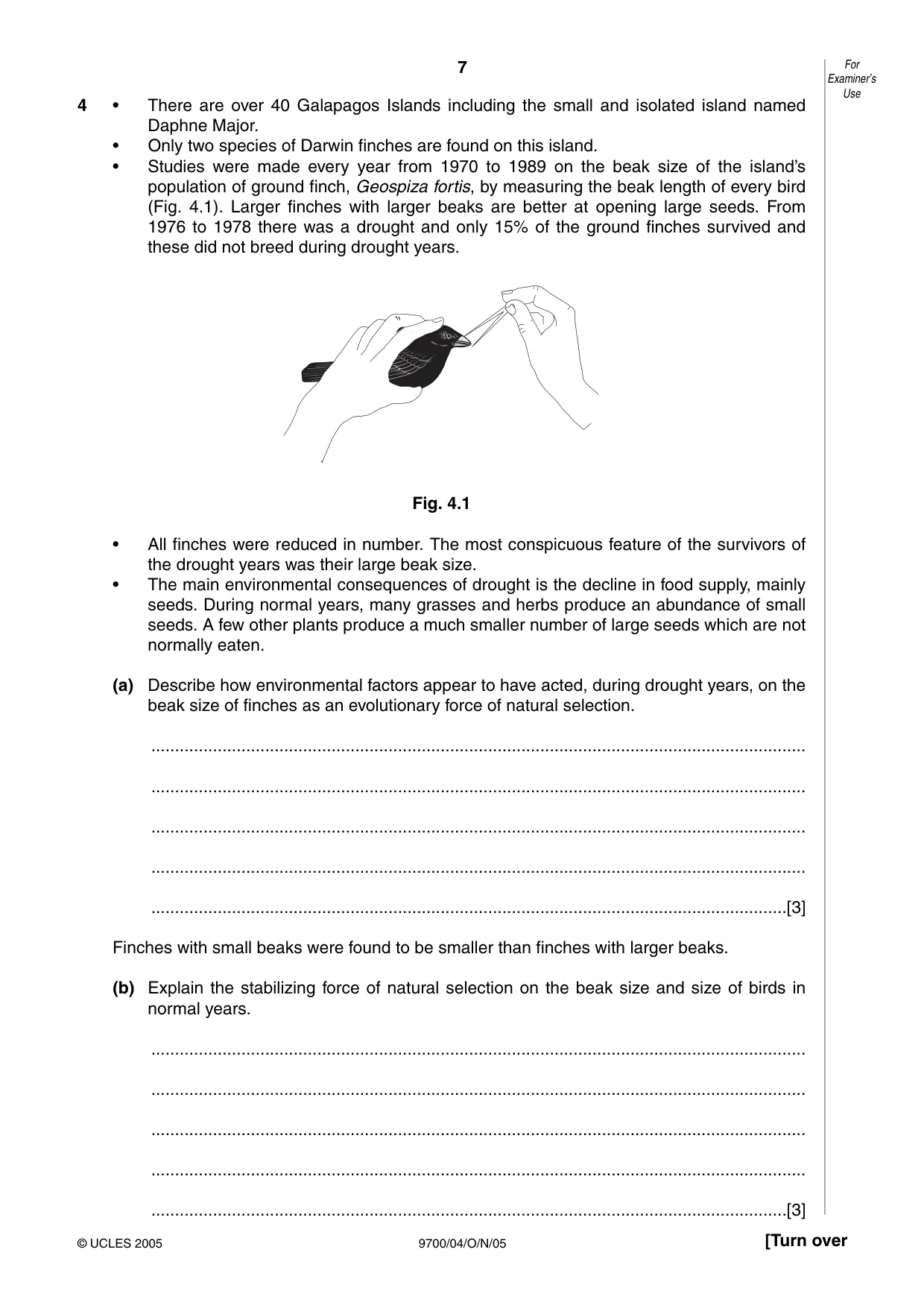
7 9700/04/O/N/05 [Turn over 4 • There are over 40 Galapagos Islands including the small and isolated island named Daphne Major. • Only two species of Darwin finches are found on this island. • Studies were made every year from 1970 to 1989 on the beak size of the island’s population of ground finch, Geospiza fortis, by measuring the beak length of every bird (Fig. 4.1). Larger finches with larger beaks are better at opening large seeds. From 1976 to 1978 there was a drought and only 15% of the ground finches survived and these did not breed during drought years. Fig. 4.1 • All finches were reduced in number. The most conspicuous feature of the survivors of the drought years was their large beak size. • The main environmental consequences of drought is the decline in food supply, mainly seeds. During normal years, many grasses and herbs produce an abundance of small seeds. A few other plants produce a much smaller number of large seeds which are not normally eaten. (a) Describe how environmental factors appear to have acted, during drought years, on the beak size of finches as an evolutionary force of natural selection. … … … … …[3] Finches with small beaks were found to be smaller than finches with larger beaks. (b) Explain the stabilizing force of natural selection on the beak size and size of birds in normal years. … … … … …[3] © UCLES 2005 For Examiner’s Use
Question paper, page 8
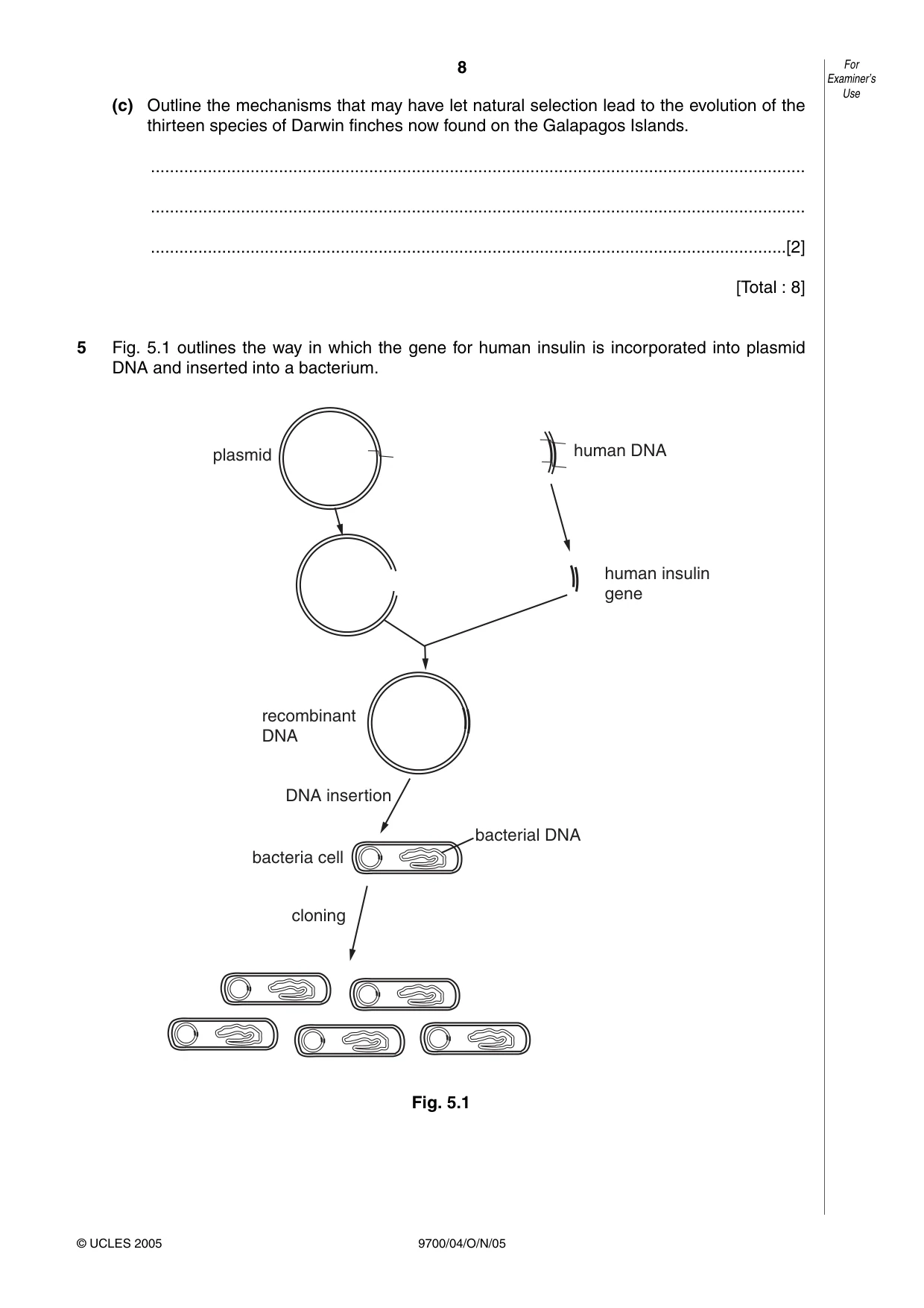
8 9700/04/O/N/05 (c) Outline the mechanisms that may have let natural selection lead to the evolution of the thirteen species of Darwin finches now found on the Galapagos Islands. … … …[2] [Total : 8] 5 Fig. 5.1 outlines the way in which the gene for human insulin is incorporated into plasmid DNA and inserted into a bacterium. Fig. 5.1 plasmid human DNA human insulin gene recombinant DNA DNA insertion bacterial DNA bacteria cell cloning © UCLES 2005 For Examiner’s Use
Question paper, page 9
9 9700/04/O/N/05 [Turn over (a) Describe how the plasmid DNA is cut. … … … …[3] (b) Explain how the human insulin gene is joined to the plasmid DNA. … … … …[3] (c) List two advantages of treating diabetics with human insulin produced by genetic engineering. 1. … … 2. … …[2] [Total : 8] © UCLES 2005 For Examiner’s Use
Question paper, page 10
10 9700/04/O/N/05 Section B Answer only one question from this section. In this section, answers should be illustrated by large, clearly labelled diagrams wherever possible. Your answer to Section B must be in continuous prose, where appropriate. Your answer must be set out in sections (a) and (b), as indicated in the question. 6 (a) Describe how the structure of a dicotyledonous leaf is related to its functions in photosynthesis. [7] (b) Discuss the effects that variations in carbon dioxide concentration and light intensity have on the rate of photosynthesis. [8] 7 (a) Describe how nitrogenous waste products are formed and explain why they need to be removed from the body. [6] (b) Describe how the kidney removes metabolic wastes from the body. [9] … … … … … … … … … … … … … … … … © UCLES 2005 For Examiner’s Use
Question paper, page 11
11 9700/04/O/N/05 … … … … … … … … … … … … … … … … … … … … … … … … … … … … © UCLES 2005 For Examiner’s Use
Question paper, page 12
12 9700/04/O/N/05 … … … … … … … … … … … … … … … … … … … … … … … … … … © UCLES 2005 For Examiner’s Use University of Cambridge International Examinations is part of the University of Cambridge Local Examinations Syndicate (UCLES), which is itself a department of the University of Cambridge.
Mark scheme, page 1
UNIVERSITY OF CAMBRIDGE INTERNATIONAL EXAMINATIONS GCE Advanced Level MARK SCHEME for the October/November question paper 9700 BIOLOGY 9700/04 Paper 4 maximum raw mark 60 This mark scheme is published as an aid to teachers and students, to indicate the requirements of the examination. This shows the basis on which Examiners were initially instructed to award marks. It does not indicate the details of the discussions that took place at an Examiners’ meeting before marking began. Any substantial changes to the mark scheme that arose from these discussions will be recorded in the published Report on the Examination. All Examiners are instructed that alternative correct answers and unexpected approaches in candidates’ scripts must be given marks that fairly reflect the relevant knowledge and skills demonstrated. Mark schemes must be read in conjunction with the question papers and the Report on the Examination. • CIE will not enter into discussion or correspondence in connection with these mark schemes. CIE is publishing the mark schemes for the October/November 2005 question papers for most IGCSE and GCE Advanced Level and Advanced Subsidiary Level syllabuses and some Ordinary Level syllabuses’.
Mark scheme, page 2
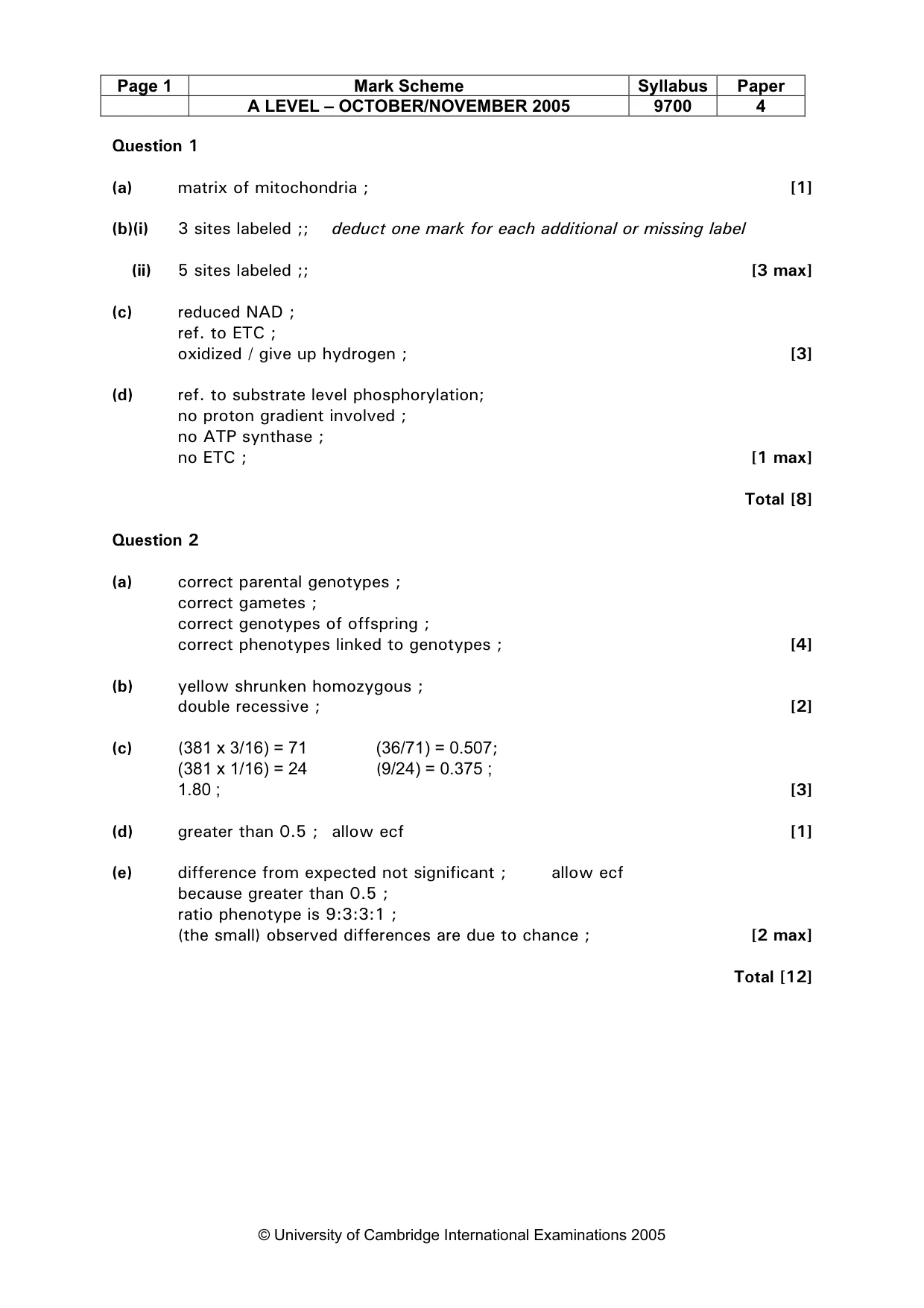
Page 1 Mark Scheme Syllabus Paper A LEVEL – OCTOBER/NOVEMBER 2005 9700 4 © University of Cambridge International Examinations 2005 Question 1 (a) matrix of mitochondria ; [1] (b)(i) 3 sites labeled ;; deduct one mark for each additional or missing label (ii) 5 sites labeled ;; [3 max] (c) reduced NAD ; ref. to ETC ; oxidized / give up hydrogen ; [3] (d) ref. to substrate level phosphorylation; no proton gradient involved ; no ATP synthase ; no ETC ; [1 max] Total [8] Question 2 (a) correct parental genotypes ; correct gametes ; correct genotypes of offspring ; correct phenotypes linked to genotypes ; [4] (b) yellow shrunken homozygous ; double recessive ; [2] (c) (381 x 3/16) = 71 (36/71) = 0.507; (381 x 1/16) = 24 (9/24) = 0.375 ; 1.80 ; [3] (d) greater than 0.5 ; allow ecf [1] (e) difference from expected not significant ; allow ecf because greater than 0.5 ; ratio phenotype is 9:3:3:1 ; (the small) observed differences are due to chance ; [2 max] Total [12]
Mark scheme, page 3
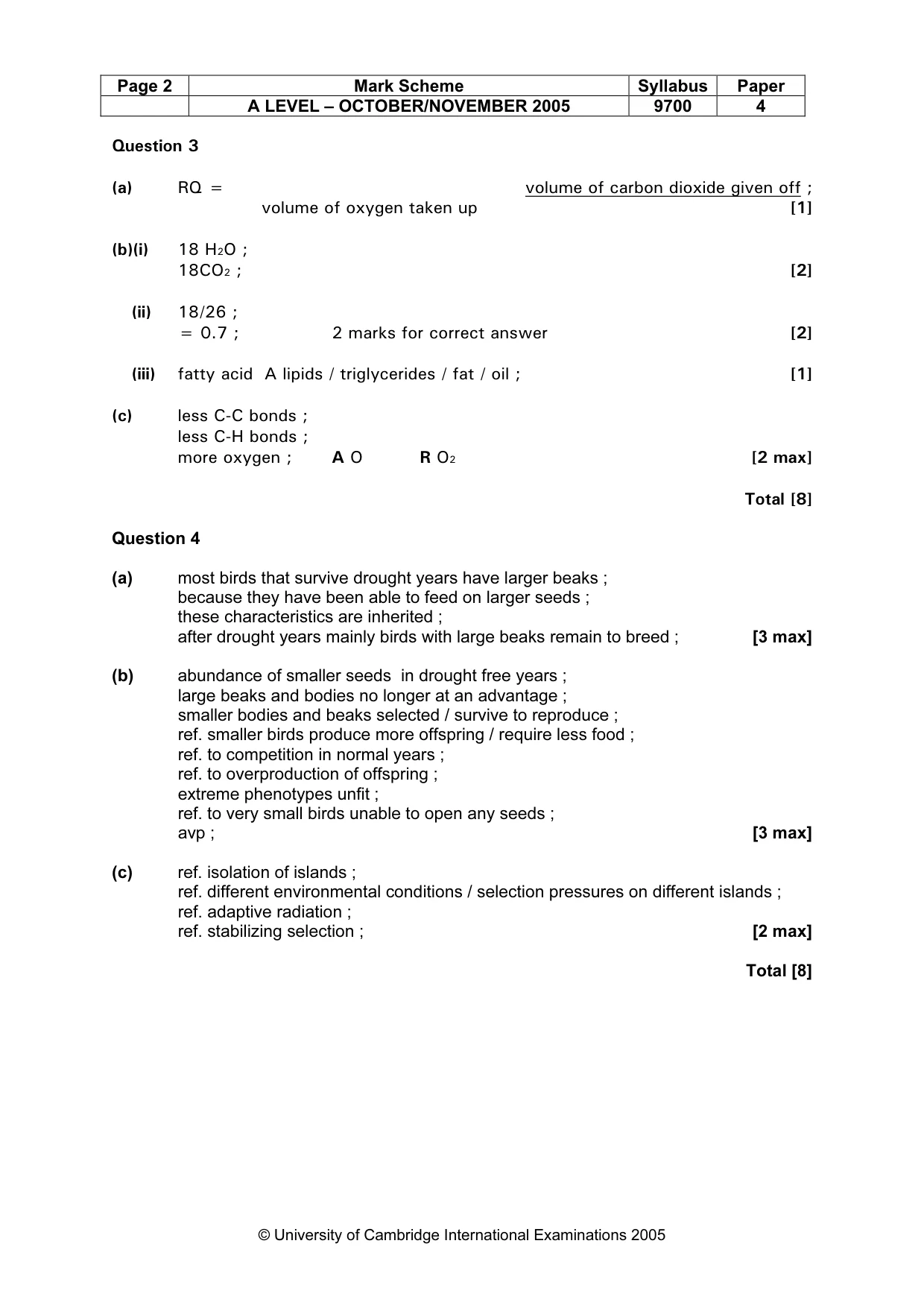
Page 2 Mark Scheme Syllabus Paper A LEVEL – OCTOBER/NOVEMBER 2005 9700 4 © University of Cambridge International Examinations 2005 Question 3 (a) RQ = volume of carbon dioxide given off ; volume of oxygen taken up [1] (b)(i) 18 H2O ; 18CO2 ; [2] (ii) 18/26 ; = 0.7 ; 2 marks for correct answer [2] (iii) fatty acid A lipids / triglycerides / fat / oil ; [1] (c) less C-C bonds ; less C-H bonds ; more oxygen ; A O R O2 [2 max] Total [8] Question 4 (a) most birds that survive drought years have larger beaks ; because they have been able to feed on larger seeds ; these characteristics are inherited ; after drought years mainly birds with large beaks remain to breed ; [3 max] (b) abundance of smaller seeds in drought free years ; large beaks and bodies no longer at an advantage ; smaller bodies and beaks selected / survive to reproduce ; ref. smaller birds produce more offspring / require less food ; ref. to competition in normal years ; ref. to overproduction of offspring ; extreme phenotypes unfit ; ref. to very small birds unable to open any seeds ; avp ; [3 max] (c) ref. isolation of islands ; ref. different environmental conditions / selection pressures on different islands ; ref. adaptive radiation ; ref. stabilizing selection ; [2 max] Total [8]
Mark scheme, page 4
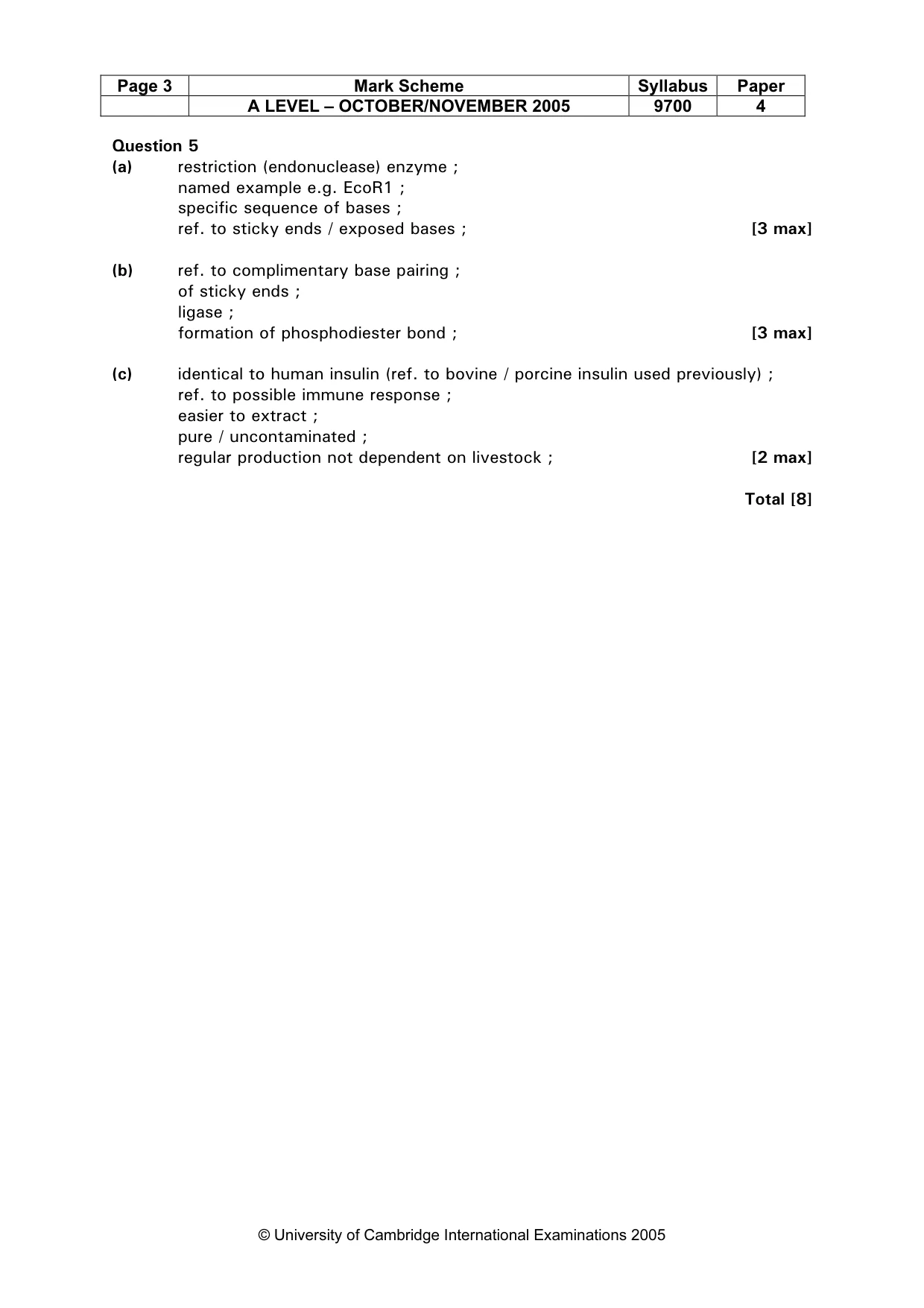
Page 3 Mark Scheme Syllabus Paper A LEVEL – OCTOBER/NOVEMBER 2005 9700 4 © University of Cambridge International Examinations 2005 Question 5 (a) restriction (endonuclease) enzyme ; named example e.g. EcoR1 ; specific sequence of bases ; ref. to sticky ends / exposed bases ; [3 max] (b) ref. to complimentary base pairing ; of sticky ends ; ligase ; formation of phosphodiester bond ; [3 max] (c) identical to human insulin (ref. to bovine / porcine insulin used previously) ; ref. to possible immune response ; easier to extract ; pure / uncontaminated ; regular production not dependent on livestock ; [2 max] Total [8]
Mark scheme, page 5
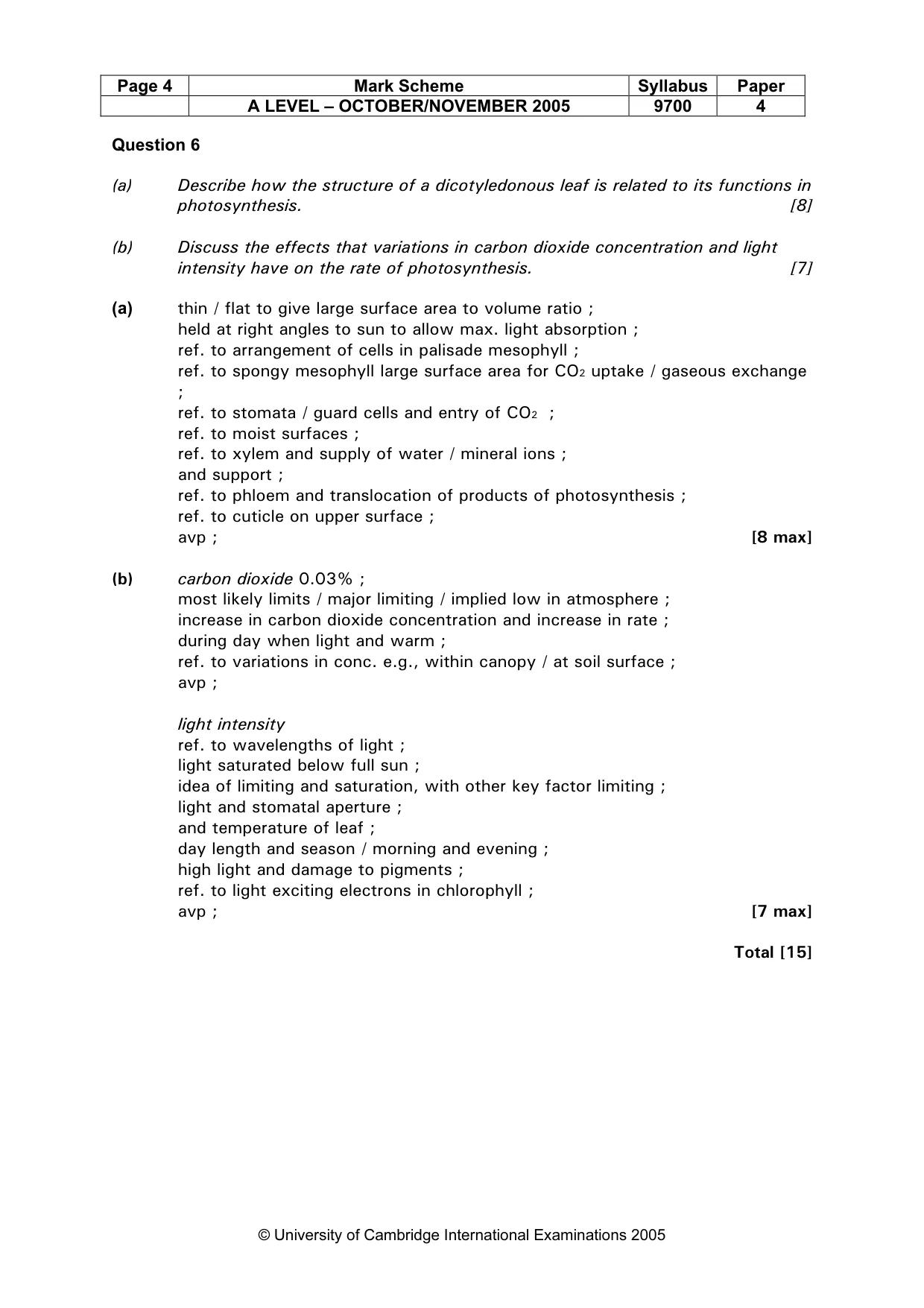
Page 4 Mark Scheme Syllabus Paper A LEVEL – OCTOBER/NOVEMBER 2005 9700 4 © University of Cambridge International Examinations 2005 Question 6 (a) Describe how the structure of a dicotyledonous leaf is related to its functions in photosynthesis. [8] (b) Discuss the effects that variations in carbon dioxide concentration and light intensity have on the rate of photosynthesis. [7] (a) thin / flat to give large surface area to volume ratio ; held at right angles to sun to allow max. light absorption ; ref. to arrangement of cells in palisade mesophyll ; ref. to spongy mesophyll large surface area for CO2 uptake / gaseous exchange ; ref. to stomata / guard cells and entry of CO2 ; ref. to moist surfaces ; ref. to xylem and supply of water / mineral ions ; and support ; ref. to phloem and translocation of products of photosynthesis ; ref. to cuticle on upper surface ; avp ; [8 max] (b) carbon dioxide 0.03% ; most likely limits / major limiting / implied low in atmosphere ; increase in carbon dioxide concentration and increase in rate ; during day when light and warm ; ref. to variations in conc. e.g., within canopy / at soil surface ; avp ; light intensity ref. to wavelengths of light ; light saturated below full sun ; idea of limiting and saturation, with other key factor limiting ; light and stomatal aperture ; and temperature of leaf ; day length and season / morning and evening ; high light and damage to pigments ; ref. to light exciting electrons in chlorophyll ; avp ; [7 max] Total [15]
Mark scheme, page 6
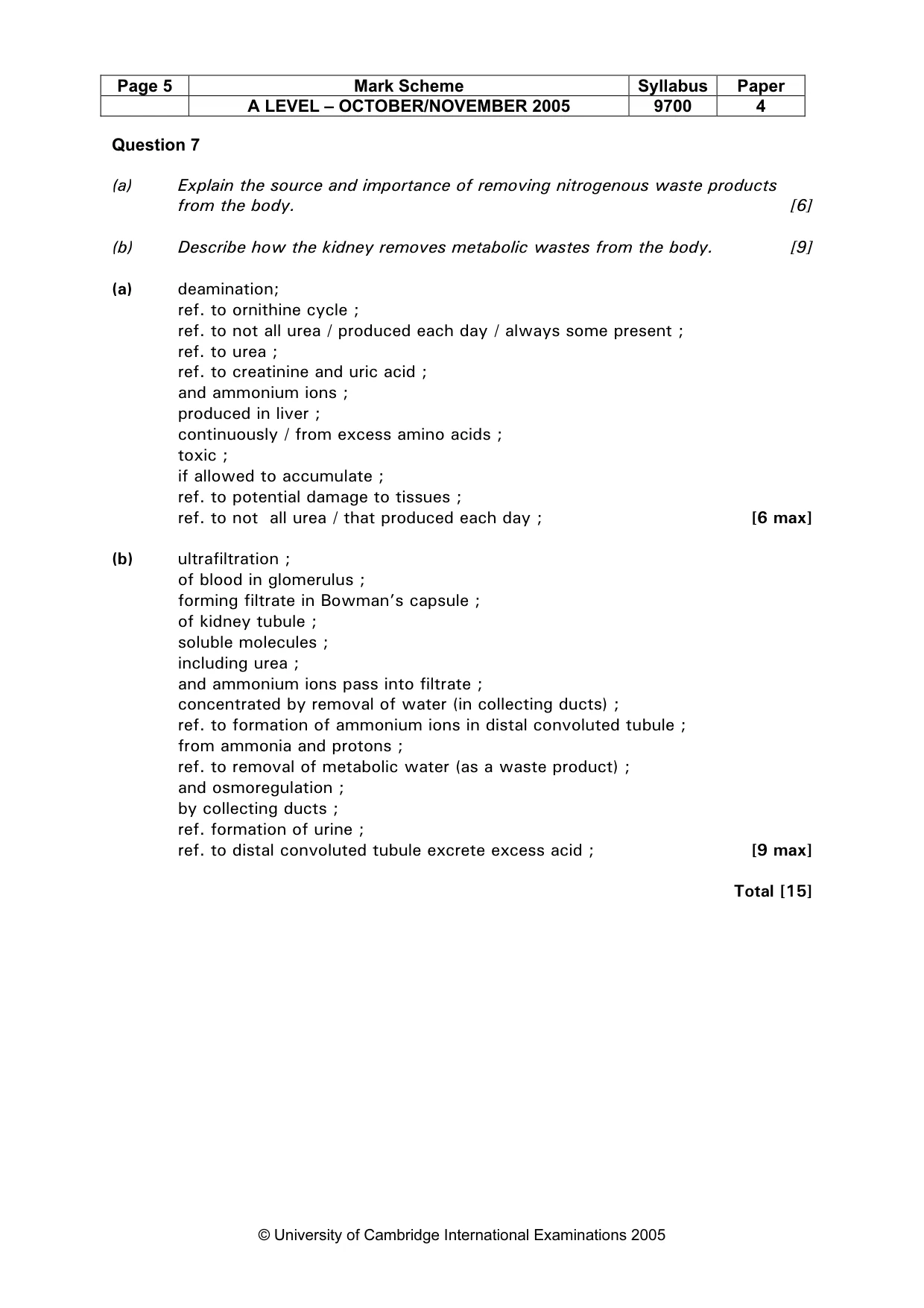
Page 5 Mark Scheme Syllabus Paper A LEVEL – OCTOBER/NOVEMBER 2005 9700 4 © University of Cambridge International Examinations 2005 Question 7 (a) Explain the source and importance of removing nitrogenous waste products from the body. [6] (b) Describe how the kidney removes metabolic wastes from the body. [9] (a) deamination; ref. to ornithine cycle ; ref. to not all urea / produced each day / always some present ; ref. to urea ; ref. to creatinine and uric acid ; and ammonium ions ; produced in liver ; continuously / from excess amino acids ; toxic ; if allowed to accumulate ; ref. to potential damage to tissues ; ref. to not all urea / that produced each day ; [6 max] (b) ultrafiltration ; of blood in glomerulus ; forming filtrate in Bowman’s capsule ; of kidney tubule ; soluble molecules ; including urea ; and ammonium ions pass into filtrate ; concentrated by removal of water (in collecting ducts) ; ref. to formation of ammonium ions in distal convoluted tubule ; from ammonia and protons ; ref. to removal of metabolic water (as a waste product) ; and osmoregulation ; by collecting ducts ; ref. formation of urine ; ref. to distal convoluted tubule excrete excess acid ; [9 max] Total [15]