Cambridge A Level Biology 9700 — 2005 Oct/Nov Paper 2 · Variant 1
9700/21/O/N/05
The question paper and its mark scheme, free to read here and free to download. This is Cambridge’s own paper, exactly as it was sat.
Question paper16 pages
Mark scheme7 pages
Answers below. Sit the paper first if you are practising.
Paper as text
Question paper, page 1
This document consists of 15 printed pages and 1 blank page. SP (NF/CGW) S86392/2 © UCLES 2005 [Turn over UNIVERSITY OF CAMBRIDGE INTERNATIONAL EXAMINATIONS General Certificate of Education Advanced Subsidiary Level and Advanced Level BIOLOGY 9700/02 Paper 2 Structured Questions AS October/November 2005 1 hour 15 minutes Candidates answer on the Question Paper. No Additional Materials are required. READ THESE INSTRUCTIONS FIRST Write your Centre number, candidate number and name in the spaces provided at the top of this page. Write in dark blue or black pen in the spaces provided on the Question Paper. You may use a soft pencil for any diagrams, graphs or rough working. Do not use staples, paper clips, highlighters, glue or correction fluid. Answer all questions. The number of marks is given in brackets [ ] at the end of each question or part question. Centre Number Candidate Number Name If you have been given a label, look at the details. If any details are incorrect or missing, please fill in your correct details in the space given at the top of this page. Stick your personal label here, if provided. FOR EXAMINER’S USE 1 2 3 4 5 6 TOTAL
Question paper, page 2
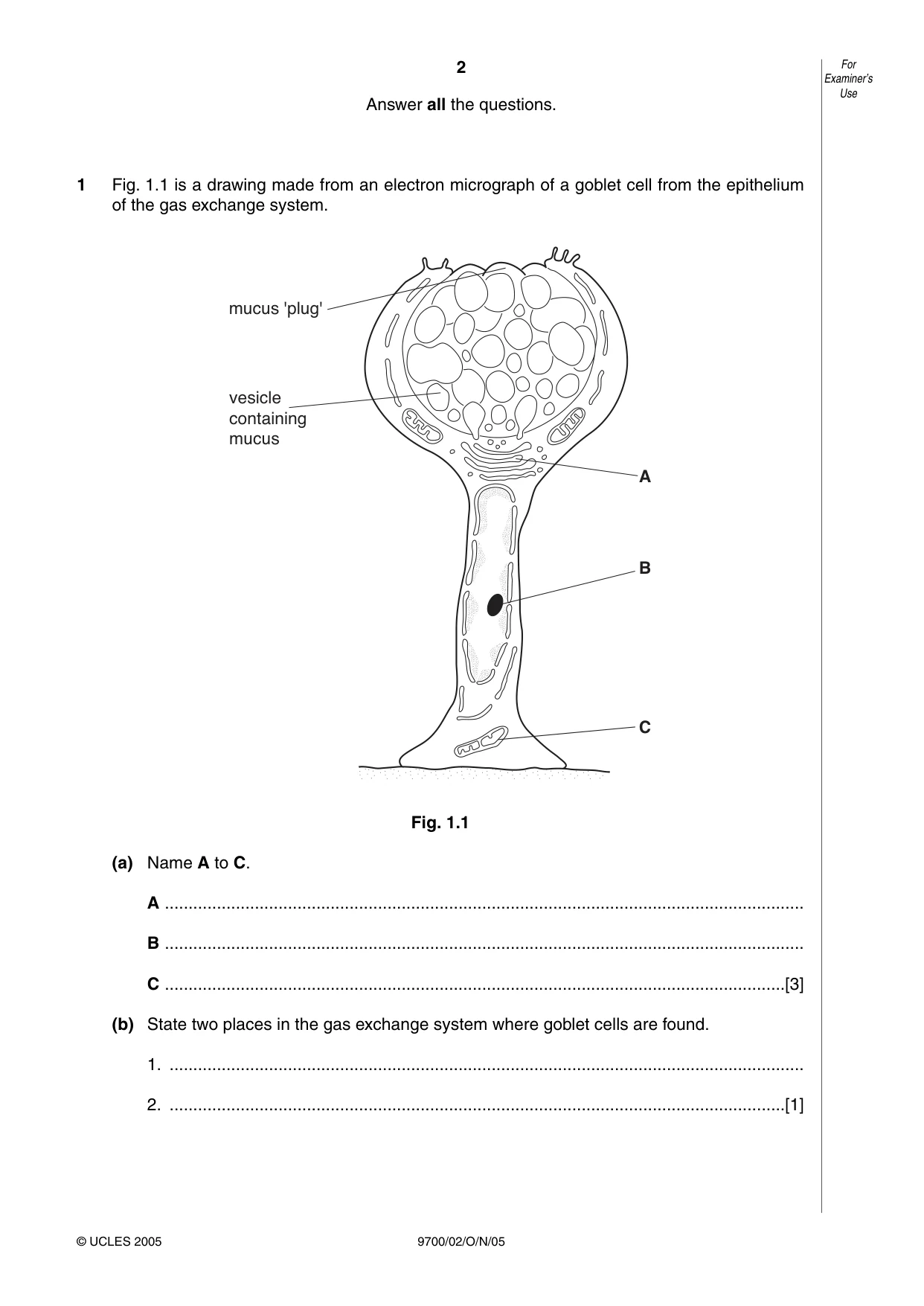
2 9700/02/O/N/05 Answer all the questions. 1 Fig. 1.1 is a drawing made from an electron micrograph of a goblet cell from the epithelium of the gas exchange system. Fig. 1.1 (a) Name A to C. A … B … C …[3] (b) State two places in the gas exchange system where goblet cells are found. 1. … 2. …[1] A mucus 'plug' vesicle containing mucus B C For Examiner’s Use © UCLES 2005
Question paper, page 3
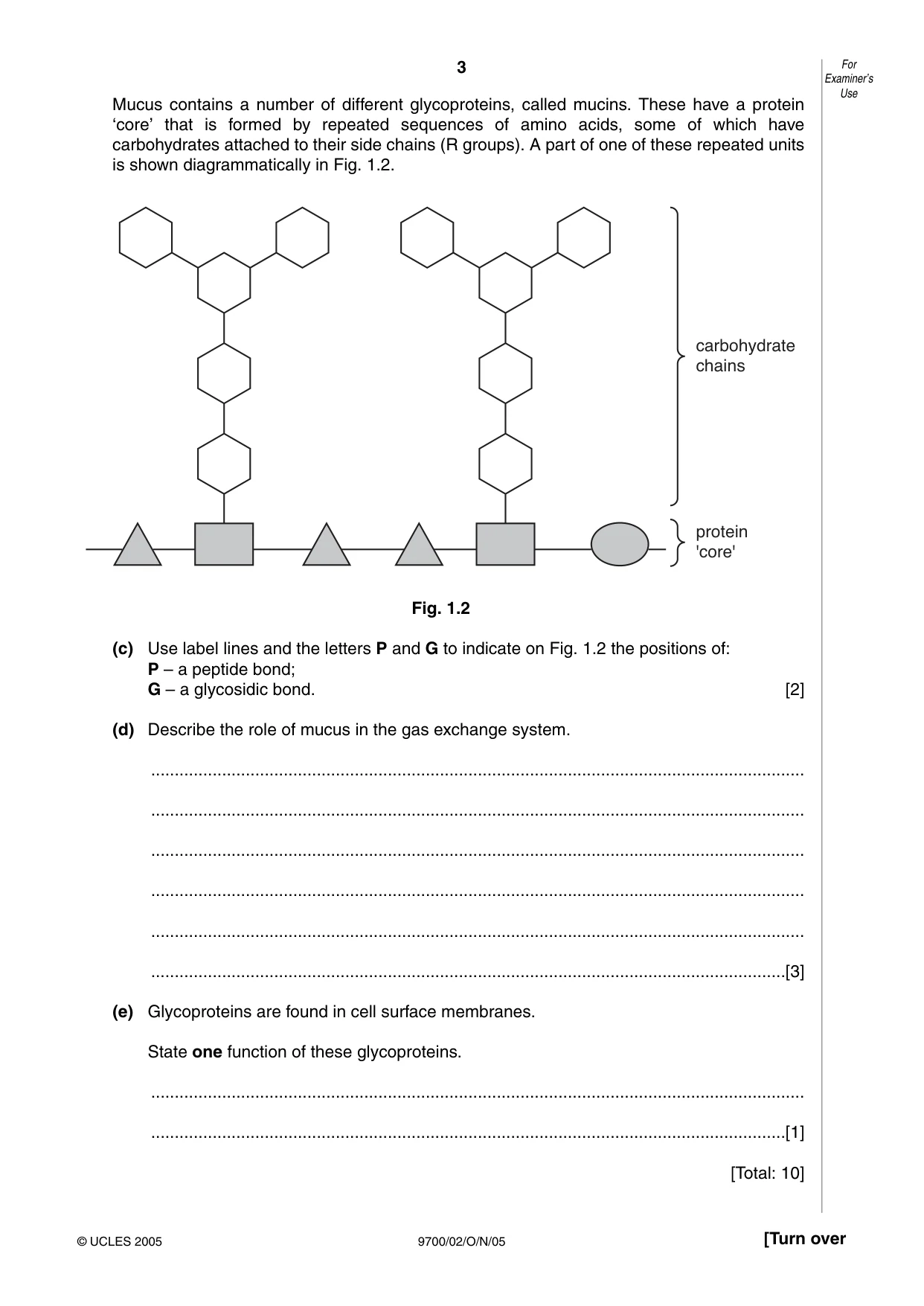
3 9700/02/O/N/05 [Turn over Mucus contains a number of different glycoproteins, called mucins. These have a protein ‘core’ that is formed by repeated sequences of amino acids, some of which have carbohydrates attached to their side chains (R groups). A part of one of these repeated units is shown diagrammatically in Fig. 1.2. Fig. 1.2 (c) Use label lines and the letters P and G to indicate on Fig. 1.2 the positions of: P – a peptide bond; G – a glycosidic bond. [2] (d) Describe the role of mucus in the gas exchange system. … … … … … …[3] (e) Glycoproteins are found in cell surface membranes. State one function of these glycoproteins. … …[1] [Total: 10] carbohydrate chains protein 'core' For Examiner’s Use © UCLES 2005
Question paper, page 4
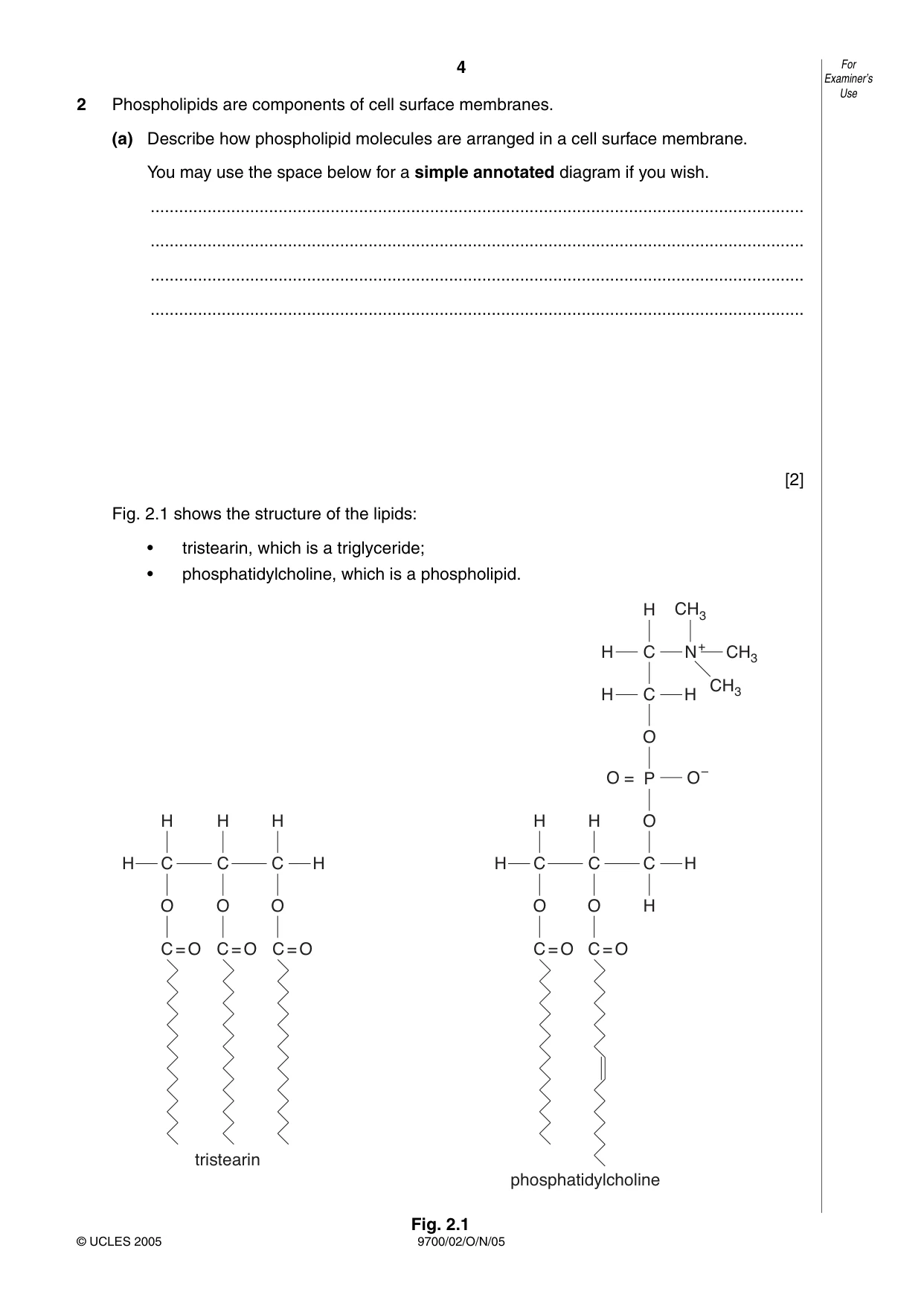
4 9700/02/O/N/05 2 Phospholipids are components of cell surface membranes. (a) Describe how phospholipid molecules are arranged in a cell surface membrane. You may use the space below for a simple annotated diagram if you wish. … … … … [2] Fig. 2.1 shows the structure of the lipids: • tristearin, which is a triglyceride; • phosphatidylcholine, which is a phospholipid. Fig. 2.1 H H H C O C = O C = O C = O H O H O C C H H H C O C = O C = O H O O H C C P O C H C O – O = H H N + CH3 CH3 CH3 H tristearin phosphatidylcholine For Examiner’s Use © UCLES 2005
Question paper, page 5
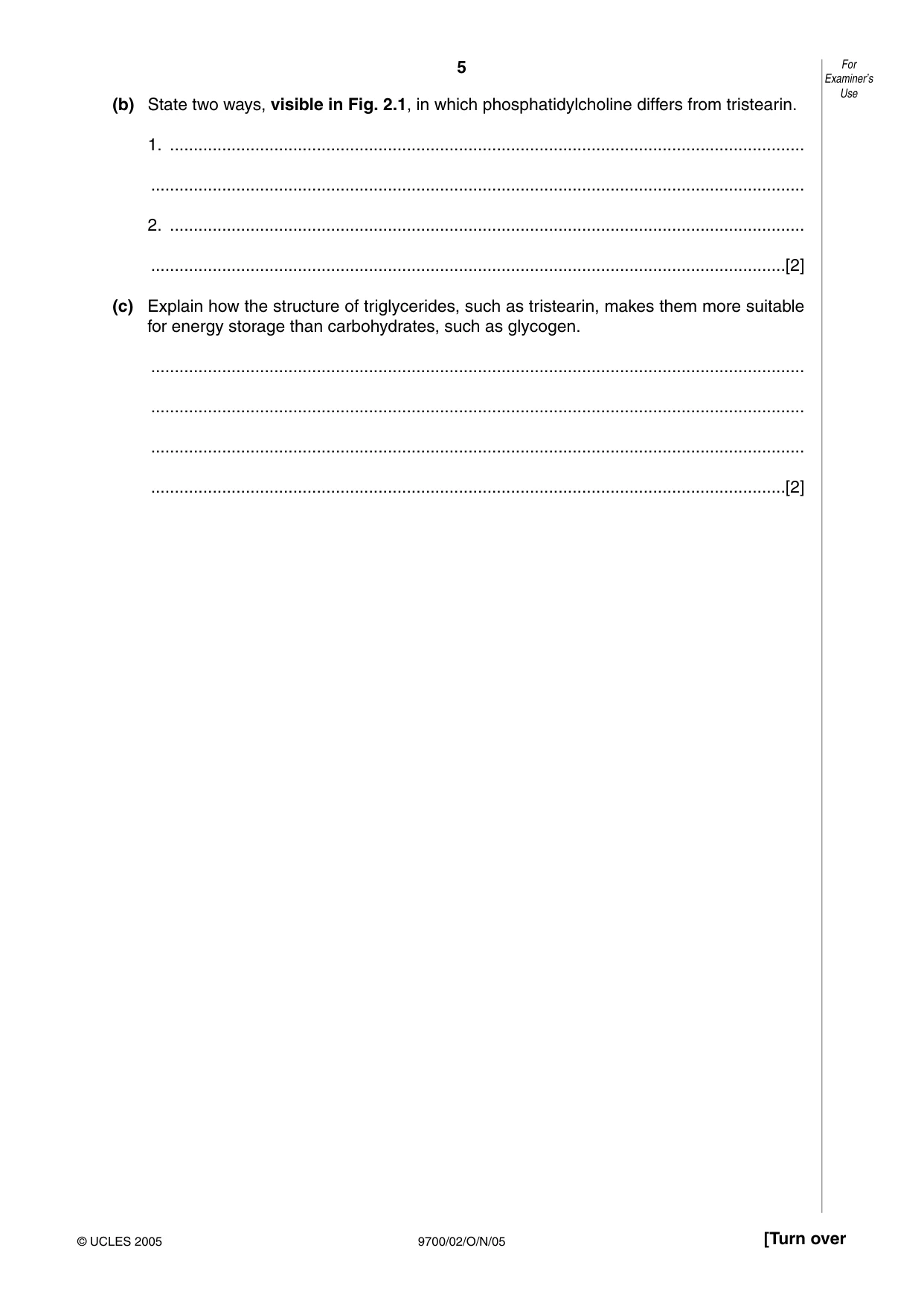
5 9700/02/O/N/05 [Turn over (b) State two ways, visible in Fig. 2.1, in which phosphatidylcholine differs from tristearin. 1. … … 2. … …[2] (c) Explain how the structure of triglycerides, such as tristearin, makes them more suitable for energy storage than carbohydrates, such as glycogen. … … … …[2] For Examiner’s Use © UCLES 2005
Question paper, page 6
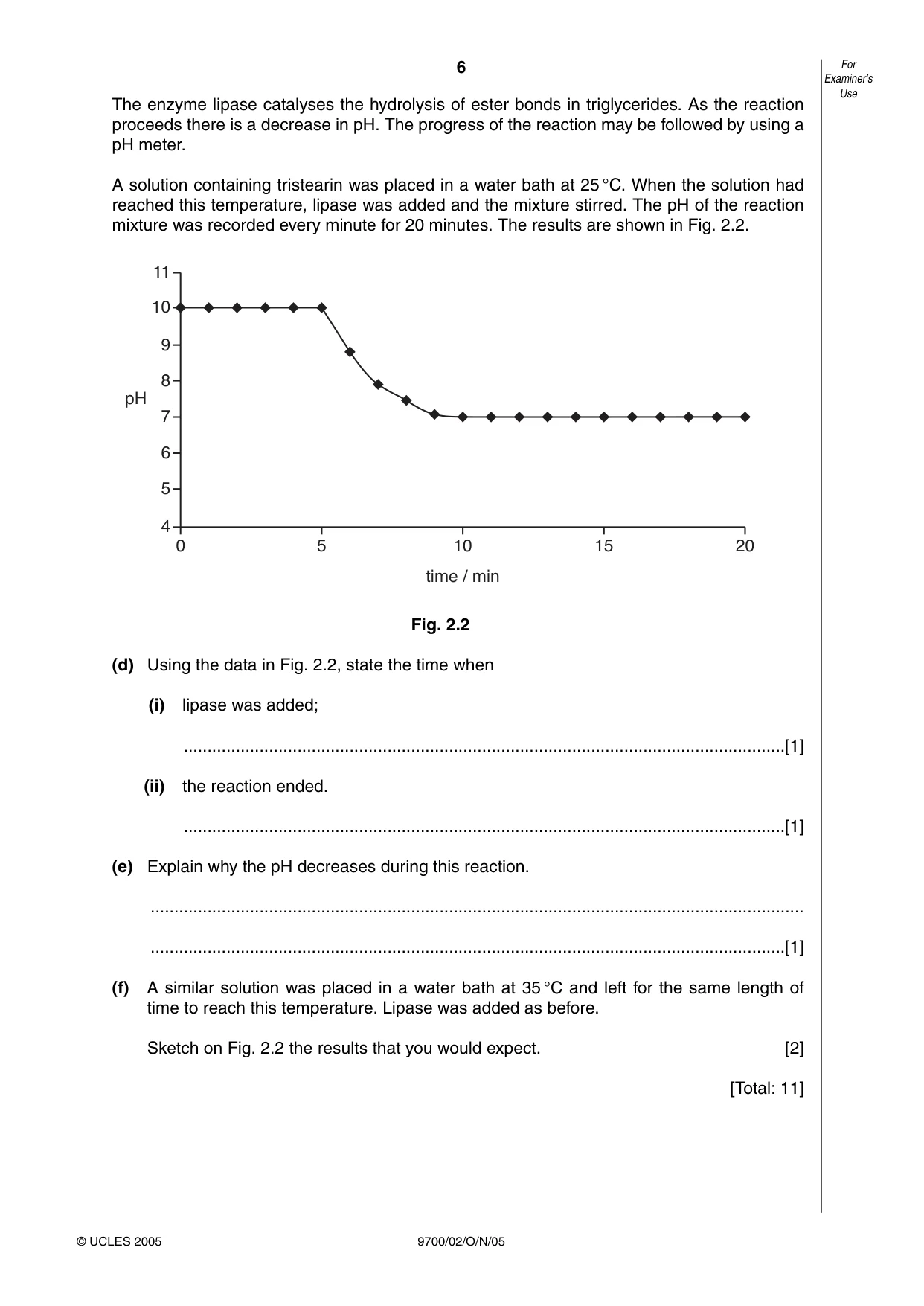
6 9700/02/O/N/05 The enzyme lipase catalyses the hydrolysis of ester bonds in triglycerides. As the reaction proceeds there is a decrease in pH. The progress of the reaction may be followed by using a pH meter. A solution containing tristearin was placed in a water bath at 25 °C. When the solution had reached this temperature, lipase was added and the mixture stirred. The pH of the reaction mixture was recorded every minute for 20 minutes. The results are shown in Fig. 2.2. Fig. 2.2 (d) Using the data in Fig. 2.2, state the time when (i) lipase was added; …[1] (ii) the reaction ended. …[1] (e) Explain why the pH decreases during this reaction. … …[1] (f) A similar solution was placed in a water bath at 35 °C and left for the same length of time to reach this temperature. Lipase was added as before. Sketch on Fig. 2.2 the results that you would expect. [2] [Total: 11] 11 10 9 pH 8 7 5 4 0 5 10 time / min 15 20 6 For Examiner’s Use © UCLES 2005
Question paper, page 7
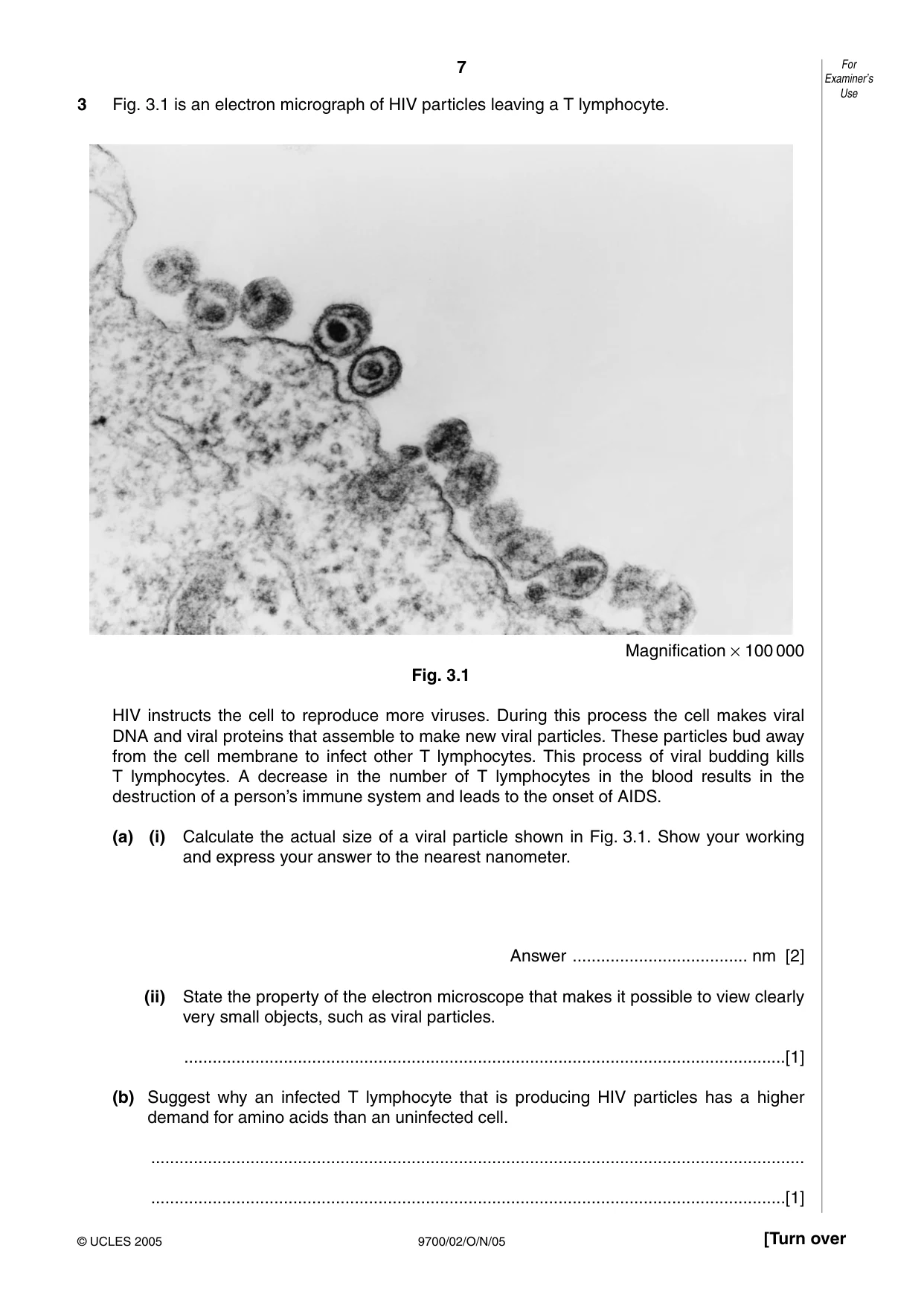
7 9700/02/O/N/05 [Turn over 3 Fig. 3.1 is an electron micrograph of HIV particles leaving a T lymphocyte. Magnification × 100 000 Fig. 3.1 HIV instructs the cell to reproduce more viruses. During this process the cell makes viral DNA and viral proteins that assemble to make new viral particles. These particles bud away from the cell membrane to infect other T lymphocytes. This process of viral budding kills T lymphocytes. A decrease in the number of T lymphocytes in the blood results in the destruction of a person’s immune system and leads to the onset of AIDS. (a) (i) Calculate the actual size of a viral particle shown in Fig. 3.1. Show your working and express your answer to the nearest nanometer. Answer … nm [2] (ii) State the property of the electron microscope that makes it possible to view clearly very small objects, such as viral particles. …[1] (b) Suggest why an infected T lymphocyte that is producing HIV particles has a higher demand for amino acids than an uninfected cell. … …[1] For Examiner’s Use © UCLES 2005
Question paper, page 8
8 9700/02/O/N/05 (c) State three ways in which HIV is transmitted. 1. … … 2. … … 3. … …[3] (d) Outline the problems involved in controlling the spread of HIV. … … … … … …[3] [Total: 10] For Examiner’s Use © UCLES 2005
Question paper, page 9
9 9700/02/O/N/05 [Turn over 4 (a) Explain why the mammalian circulatory system is described as a closed double circulation. … … … …[2] (b) Mature mammalian red blood cells have no nuclei. State one advantage and one disadvantage of this. advantage … … … disadvantage … … …[2] For Examiner’s Use © UCLES 2005
Question paper, page 10
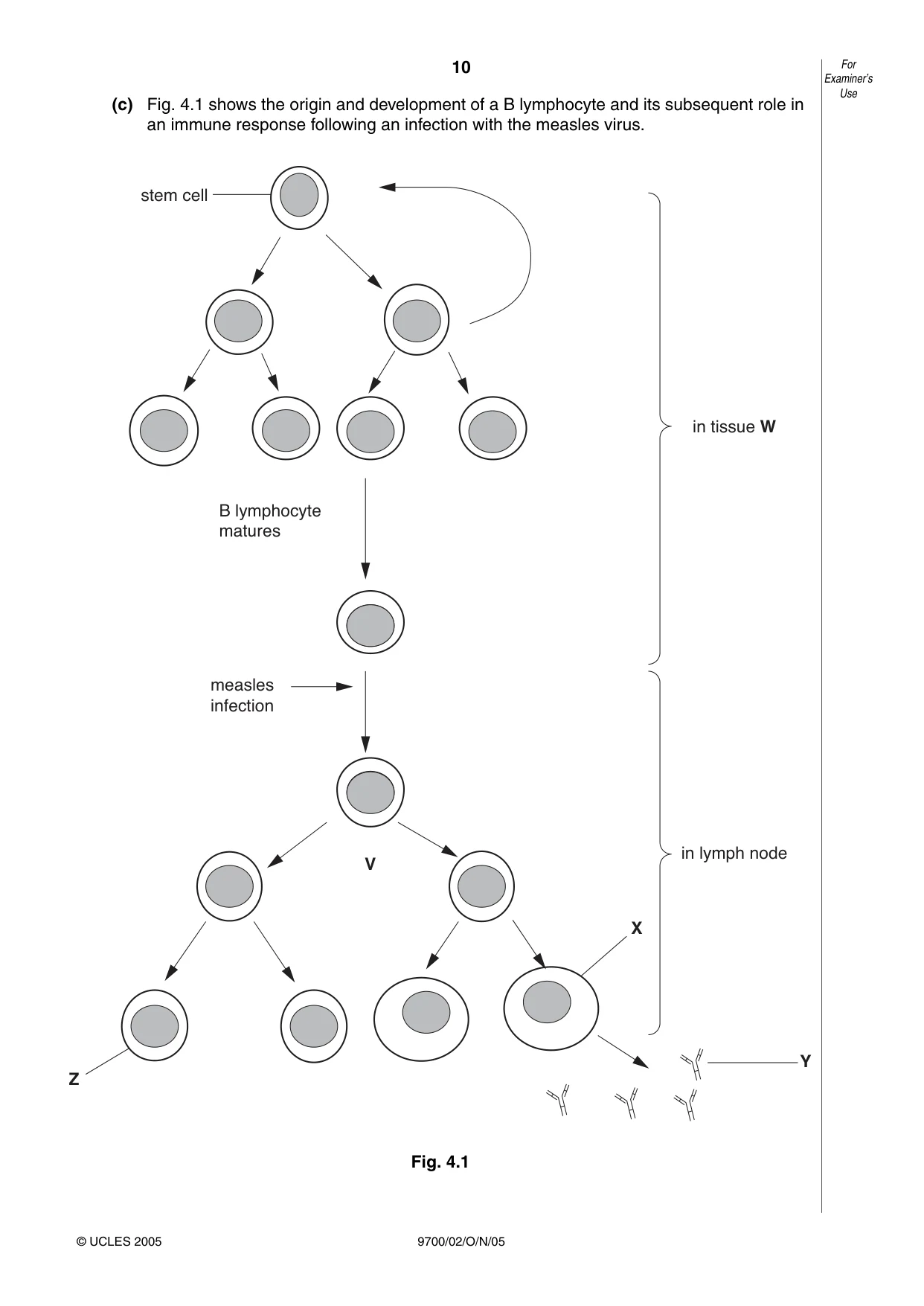
10 9700/02/O/N/05 (c) Fig. 4.1 shows the origin and development of a B lymphocyte and its subsequent role in an immune response following an infection with the measles virus. Fig. 4.1 For Examiner’s Use © UCLES 2005 Z V X Y measles infection in lymph node in tissue W B lymphocyte matures stem cell
Question paper, page 11
11 9700/02/O/N/05 [Turn over (i) Name the type of nuclear division that occurs at V. …[1] (ii) Name the tissue W. …[1] (iii) State the term given to foreign molecules, such as those on the surface of the measles virus, that stimulate an immune response. …[1] (iv) Name cell X and molecule Y. X … Y …[2] (v) Cell Z is responsible for long-term immunity to measles. Name cell Z and outline its role. name … role … … … …[3] [Total: 12] For Examiner’s Use © UCLES 2005
Question paper, page 12
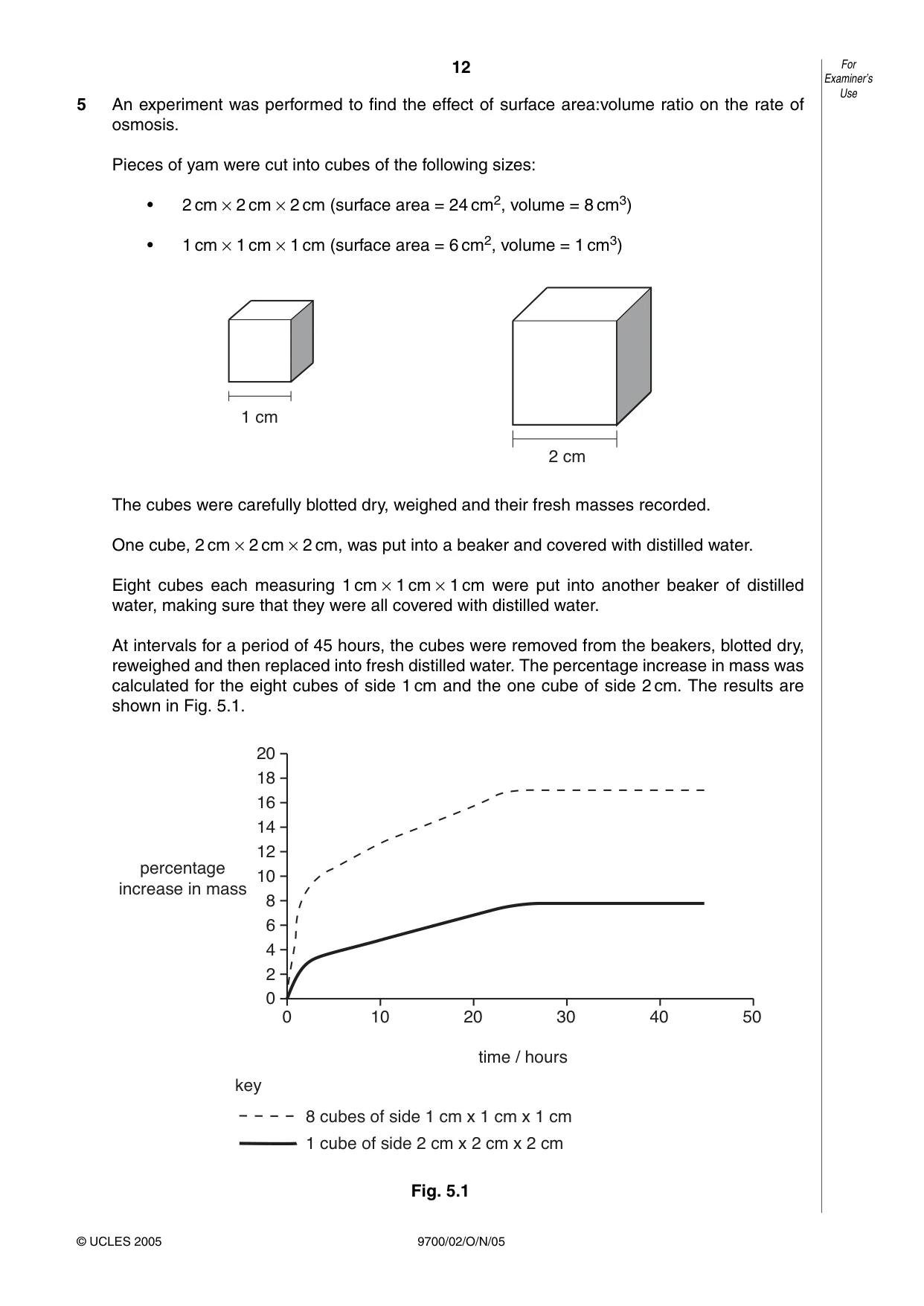
12 9700/02/O/N/05 5 An experiment was performed to find the effect of surface area:volume ratio on the rate of osmosis. Pieces of yam were cut into cubes of the following sizes: • 2 cm × 2 cm × 2 cm (surface area = 24 cm2, volume = 8 cm3) • 1 cm × 1 cm × 1 cm (surface area = 6 cm2, volume = 1 cm3) The cubes were carefully blotted dry, weighed and their fresh masses recorded. One cube, 2 cm × 2 cm × 2 cm, was put into a beaker and covered with distilled water. Eight cubes each measuring 1 cm × 1 cm × 1 cm were put into another beaker of distilled water, making sure that they were all covered with distilled water. At intervals for a period of 45 hours, the cubes were removed from the beakers, blotted dry, reweighed and then replaced into fresh distilled water. The percentage increase in mass was calculated for the eight cubes of side 1 cm and the one cube of side 2 cm. The results are shown in Fig. 5.1. Fig. 5.1 0 10 key 20 time / hours percentage increase in mass 30 40 50 20 18 16 14 12 10 8 6 4 2 0 8 cubes of side 1 cm x 1 cm x 1 cm 1 cube of side 2 cm x 2 cm x 2 cm 1 cm 2 cm For Examiner’s Use © UCLES 2005
Question paper, page 13
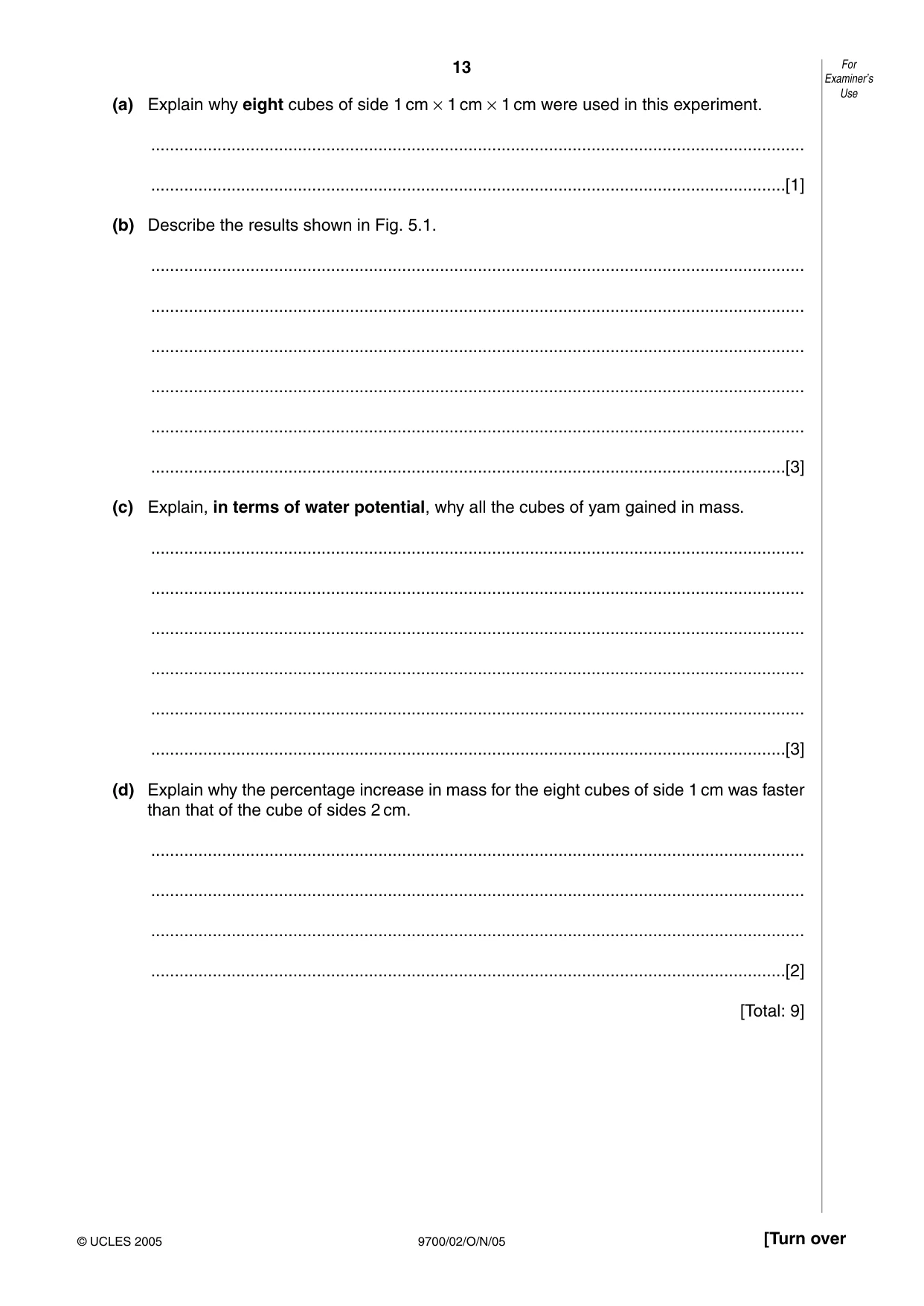
13 9700/02/O/N/05 [Turn over (a) Explain why eight cubes of side 1 cm × 1 cm × 1 cm were used in this experiment. … …[1] (b) Describe the results shown in Fig. 5.1. … … … … … …[3] (c) Explain, in terms of water potential, why all the cubes of yam gained in mass. … … … … … …[3] (d) Explain why the percentage increase in mass for the eight cubes of side 1 cm was faster than that of the cube of sides 2 cm. … … … …[2] [Total: 9] For Examiner’s Use © UCLES 2005
Question paper, page 14
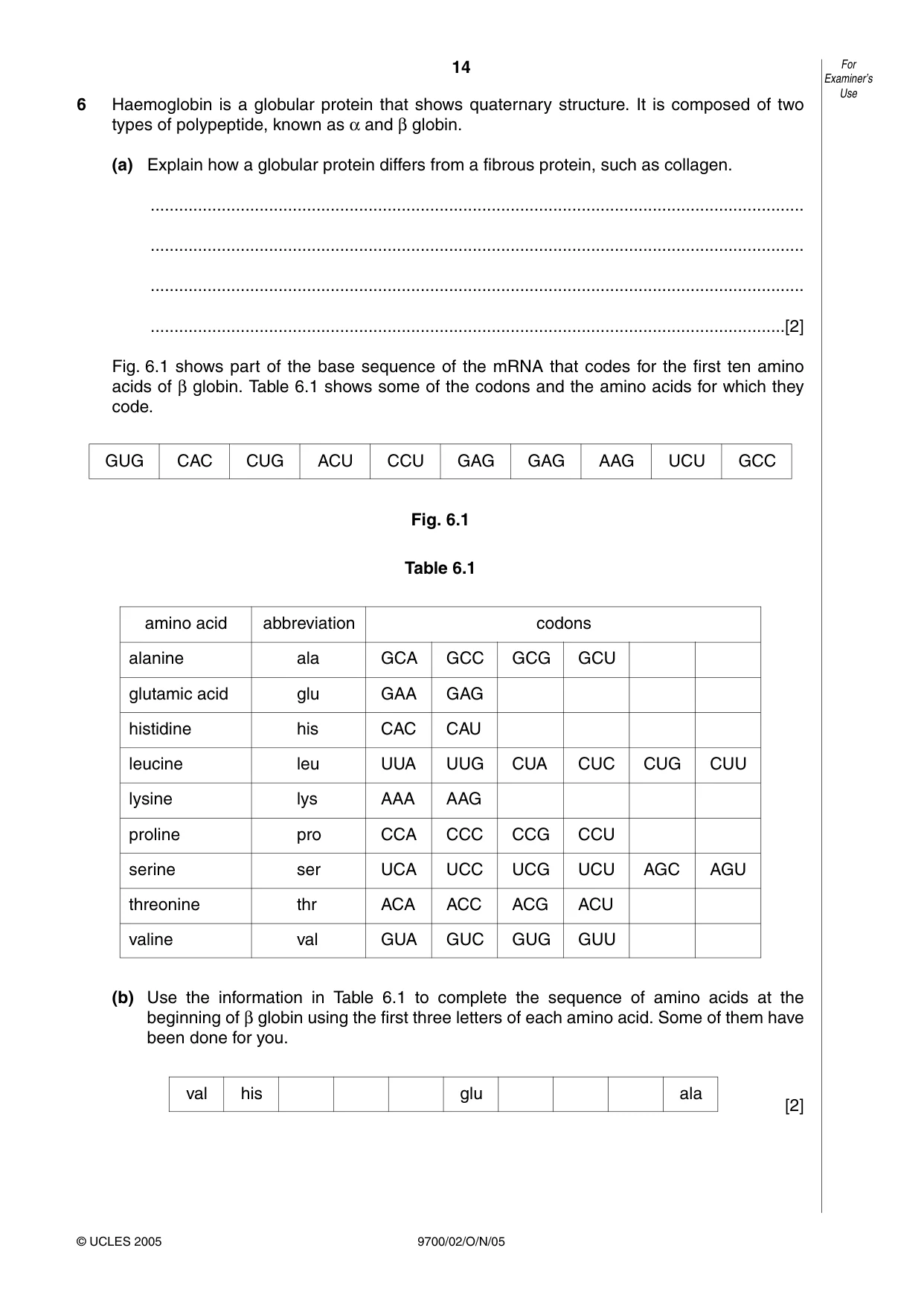
14 9700/02/O/N/05 6 Haemoglobin is a globular protein that shows quaternary structure. It is composed of two types of polypeptide, known as α and β globin. (a) Explain how a globular protein differs from a fibrous protein, such as collagen. … … … …[2] Fig. 6.1 shows part of the base sequence of the mRNA that codes for the first ten amino acids of β globin. Table 6.1 shows some of the codons and the amino acids for which they code. Fig. 6.1 Table 6.1 (b) Use the information in Table 6.1 to complete the sequence of amino acids at the beginning of β globin using the first three letters of each amino acid. Some of them have been done for you. [2] For Examiner’s Use © UCLES 2005 GUG CAC CUG ACU CCU GAG GAG AAG UCU GCC amino acid abbreviation codons alanine ala GCA GCC GCG GCU glutamic acid glu GAA GAG histidine his CAC CAU leucine leu UUA UUG CUA CUC CUG CUU lysine lys AAA AAG proline pro CCA CCC CCG CCU serine ser UCA UCC UCG UCU AGC AGU threonine thr ACA ACC ACG ACU valine val GUA GUC GUG GUU val his glu ala
Question paper, page 15
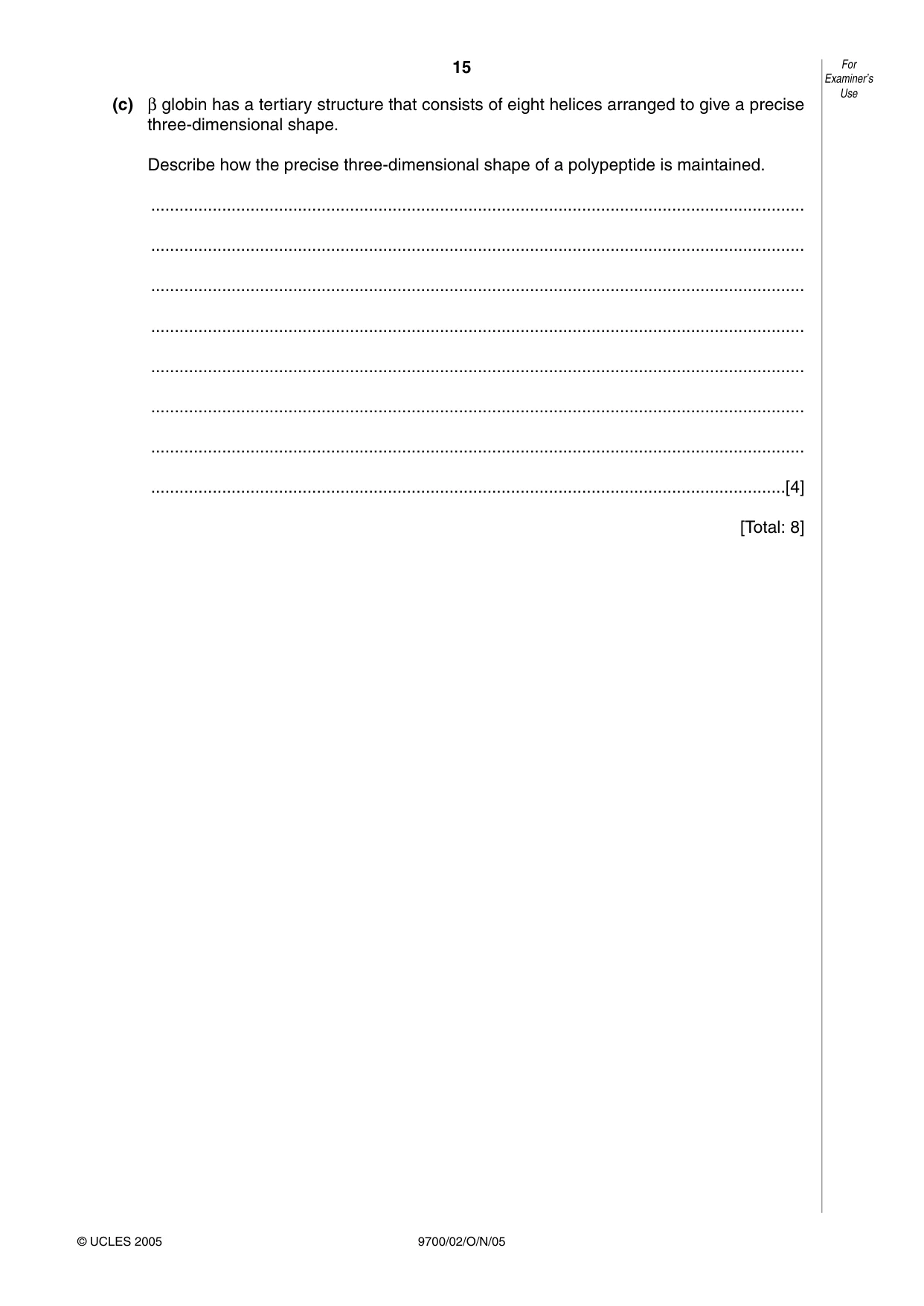
15 9700/02/O/N/05 (c) β globin has a tertiary structure that consists of eight helices arranged to give a precise three-dimensional shape. Describe how the precise three-dimensional shape of a polypeptide is maintained. … … … … … … … …[4] [Total: 8] For Examiner’s Use © UCLES 2005
Question paper, page 16
16 9700/02/O/N/05 BLANK PAGE Copyright Acknowledgements: Question 3 Fig. 3.1; © NIBSC/SCIENCE PHOTO LIBRARY. Question 5 Fig. 5.1; © Institute of Biology, London. Question 6 © Shafey O, Dolwick S, Guindon GE (eds). Tobacco Control County Profiles 2003, American Cancer Society, Atlanta, GA, 2003. Permission to reproduce items where third-party owned material protected by copyright is included has been sought and cleared where possible. Every reasonable effort has been made by the publisher (UCLES) to trace copyright holders, but if any items requiring clearance have unwittingly been included, the publisher will be pleased to make amends at the earliest possible opportunity. University of Cambridge International Examinations is part of the University of Cambridge Local Examinations Syndicate (UCLES), which is itself a department of the University of Cambridge.
Mark scheme, page 1
UNIVERSITY OF CAMBRIDGE INTERNATIONAL EXAMINATIONS GCE Advanced Subsidiary/Advanced Level MARK SCHEME for the November 2005 question paper 9700 BIOLOGY 9700/02 Paper 2 maximum raw mark 60 This mark scheme is published as an aid to teachers and students, to indicate the requirements of the examination. It shows the basis on which Examiners were initially instructed to award marks. It does not indicate the details of the discussions that took place at an Examiners’ meeting before marking began. Any substantial changes to the mark scheme that arose from these discussions will be recorded in the published Report on the Examination. All Examiners are instructed that alternative correct answers and unexpected approaches in candidates’ scripts must be given marks that fairly reflect the relevant knowledge and skills demonstrated. Mark schemes must be read in conjunction with the question papers and the Report on the Examination. The minimum marks in these components needed for various grades were previously published with these mark schemes, but are now instead included in the Report on the Examination for this session. • CIE will not enter into discussion or correspondence in connection with these mark schemes. CIE is publishing the mark schemes for the November 2005 question papers for most IGCSE and GCE Advanced Level and Advanced Subsidiary Level syllabuses and some Ordinary Level syllabuses.
Mark scheme, page 2
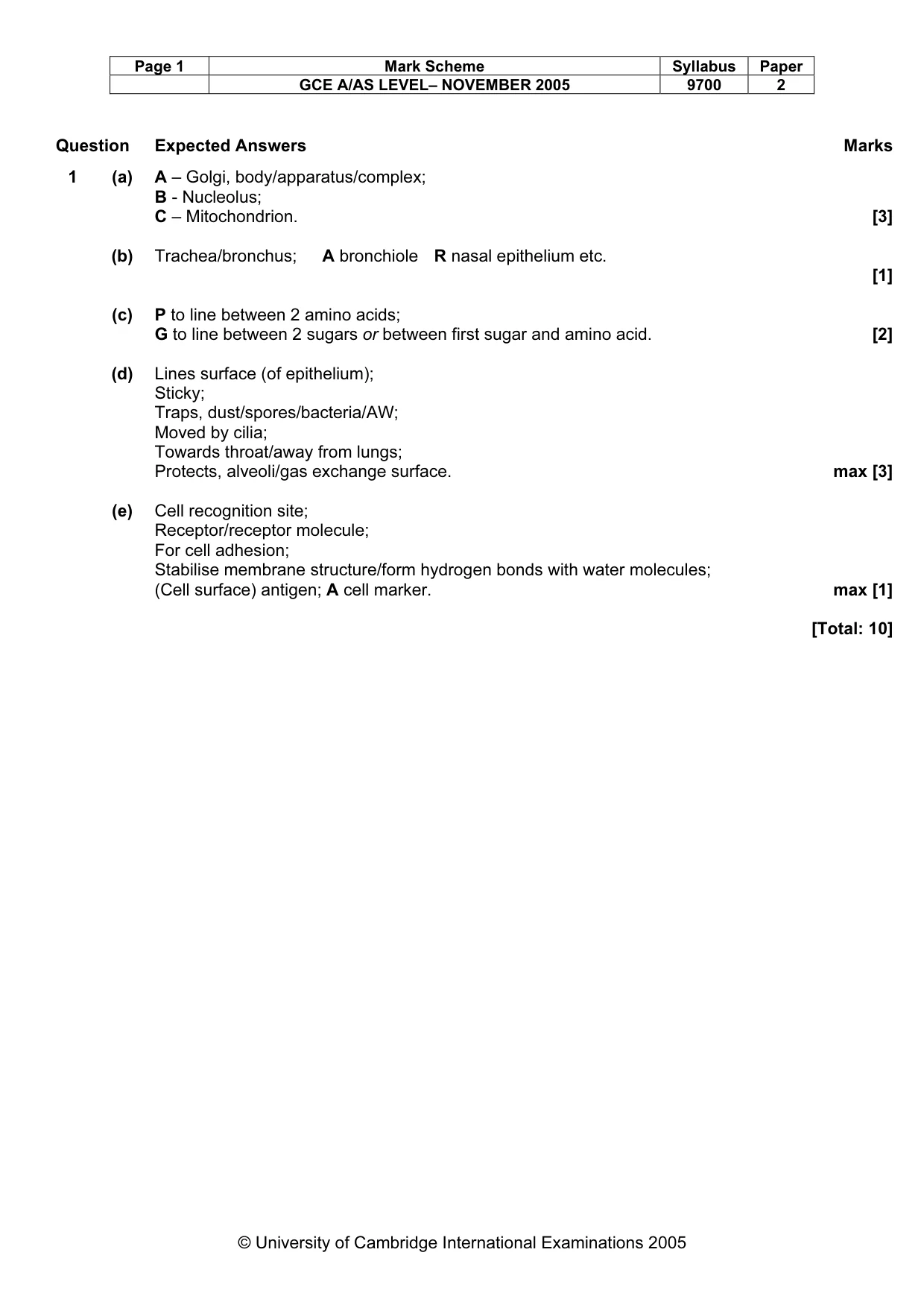
Page 1 Mark Scheme Syllabus Paper GCE A/AS LEVEL– NOVEMBER 2005 9700 2 © University of Cambridge International Examinations 2005 Question Expected Answers Marks 1 (a) A – Golgi, body/apparatus/complex; B - Nucleolus; C – Mitochondrion. [3] (b) Trachea/bronchus; A bronchiole R nasal epithelium etc. [1] (c) P to line between 2 amino acids; G to line between 2 sugars or between first sugar and amino acid. [2] (d) Lines surface (of epithelium); Sticky; Traps, dust/spores/bacteria/AW; Moved by cilia; Towards throat/away from lungs; Protects, alveoli/gas exchange surface. max [3] (e) Cell recognition site; Receptor/receptor molecule; For cell adhesion; Stabilise membrane structure/form hydrogen bonds with water molecules; (Cell surface) antigen; A cell marker. max [1] [Total: 10]
Mark scheme, page 3
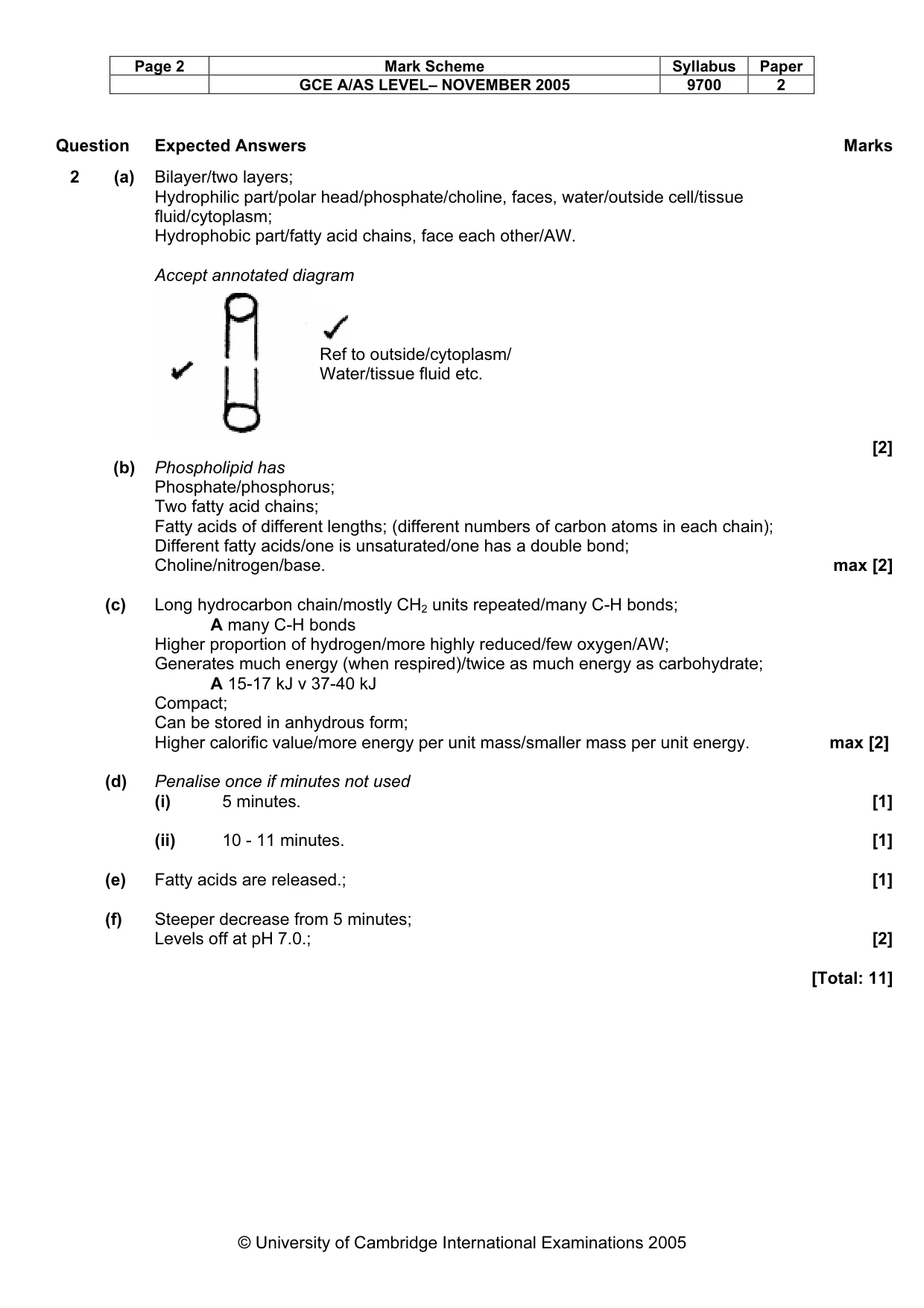
Page 2 Mark Scheme Syllabus Paper GCE A/AS LEVEL– NOVEMBER 2005 9700 2 © University of Cambridge International Examinations 2005 Question Expected Answers Marks Bilayer/two layers; Hydrophilic part/polar head/phosphate/choline, faces, water/outside cell/tissue fluid/cytoplasm; Hydrophobic part/fatty acid chains, face each other/AW. Accept annotated diagram 2 (a) Ref to outside/cytoplasm/ Water/tissue fluid etc. [2] (b) Phospholipid has Phosphate/phosphorus; Two fatty acid chains; Fatty acids of different lengths; (different numbers of carbon atoms in each chain); Different fatty acids/one is unsaturated/one has a double bond; Choline/nitrogen/base. max [2] (c) Long hydrocarbon chain/mostly CH2 units repeated/many C-H bonds; A many C-H bonds Higher proportion of hydrogen/more highly reduced/few oxygen/AW; Generates much energy (when respired)/twice as much energy as carbohydrate; A 15-17 kJ v 37-40 kJ Compact; Can be stored in anhydrous form; Higher calorific value/more energy per unit mass/smaller mass per unit energy. max [2] (d) Penalise once if minutes not used (i) 5 minutes. [1] (ii) 10 - 11 minutes. [1] (e) Fatty acids are released.; [1] (f) Steeper decrease from 5 minutes; Levels off at pH 7.0.; [2] [Total: 11]
Mark scheme, page 4
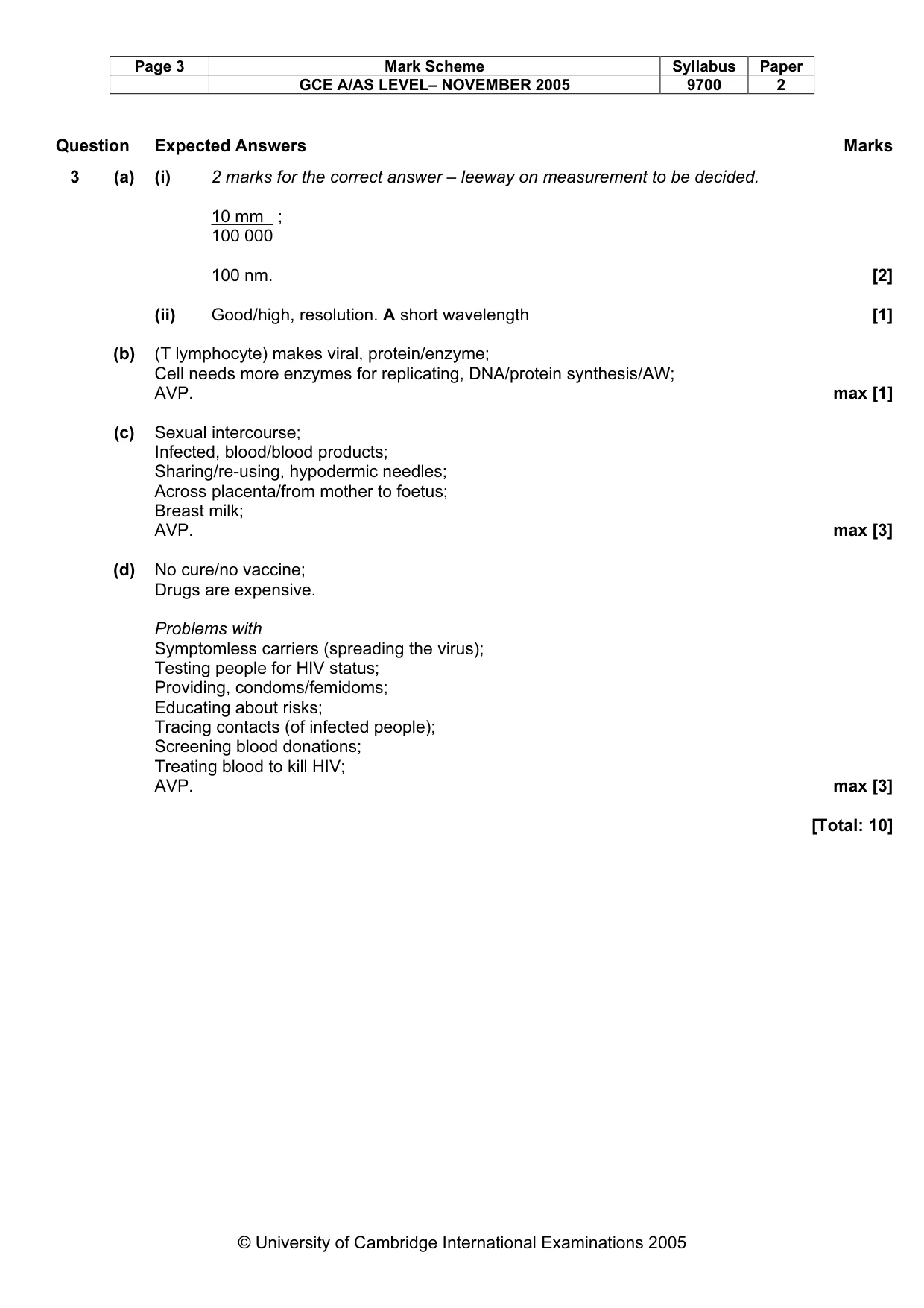
Page 3 Mark Scheme Syllabus Paper GCE A/AS LEVEL– NOVEMBER 2005 9700 2 © University of Cambridge International Examinations 2005 Question Expected Answers Marks 3 (a) (i) 2 marks for the correct answer – leeway on measurement to be decided. 10 mm ; 100 000 100 nm. [2] (ii) Good/high, resolution. A short wavelength [1] (b) (T lymphocyte) makes viral, protein/enzyme; Cell needs more enzymes for replicating, DNA/protein synthesis/AW; AVP. max [1] (c) Sexual intercourse; Infected, blood/blood products; Sharing/re-using, hypodermic needles; Across placenta/from mother to foetus; Breast milk; AVP. max [3] (d) No cure/no vaccine; Drugs are expensive. Problems with Symptomless carriers (spreading the virus); Testing people for HIV status; Providing, condoms/femidoms; Educating about risks; Tracing contacts (of infected people); Screening blood donations; Treating blood to kill HIV; AVP. max [3] [Total: 10]
Mark scheme, page 5
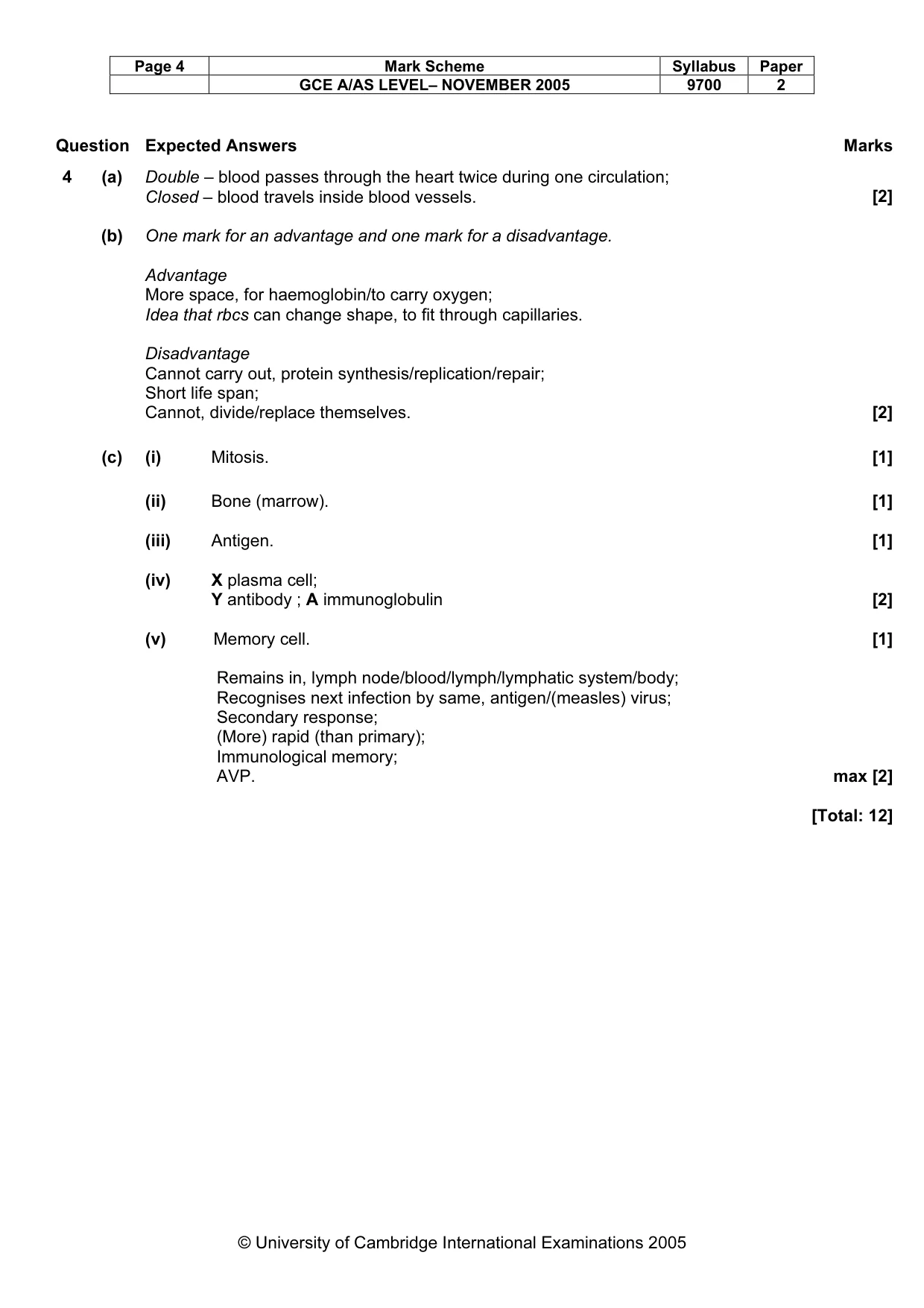
Page 4 Mark Scheme Syllabus Paper GCE A/AS LEVEL– NOVEMBER 2005 9700 2 © University of Cambridge International Examinations 2005 Question Expected Answers Marks 4 (a) Double – blood passes through the heart twice during one circulation; Closed – blood travels inside blood vessels. [2] (b) One mark for an advantage and one mark for a disadvantage. Advantage More space, for haemoglobin/to carry oxygen; Idea that rbcs can change shape, to fit through capillaries. Disadvantage Cannot carry out, protein synthesis/replication/repair; Short life span; Cannot, divide/replace themselves. [2] (c) (i) Mitosis. [1] (ii) Bone (marrow). [1] (iii) Antigen. [1] (iv) X plasma cell; Y antibody ; A immunoglobulin [2] (v) Memory cell. [1] Remains in, lymph node/blood/lymph/lymphatic system/body; Recognises next infection by same, antigen/(measles) virus; Secondary response; (More) rapid (than primary); Immunological memory; AVP. max [2] [Total: 12]
Mark scheme, page 6
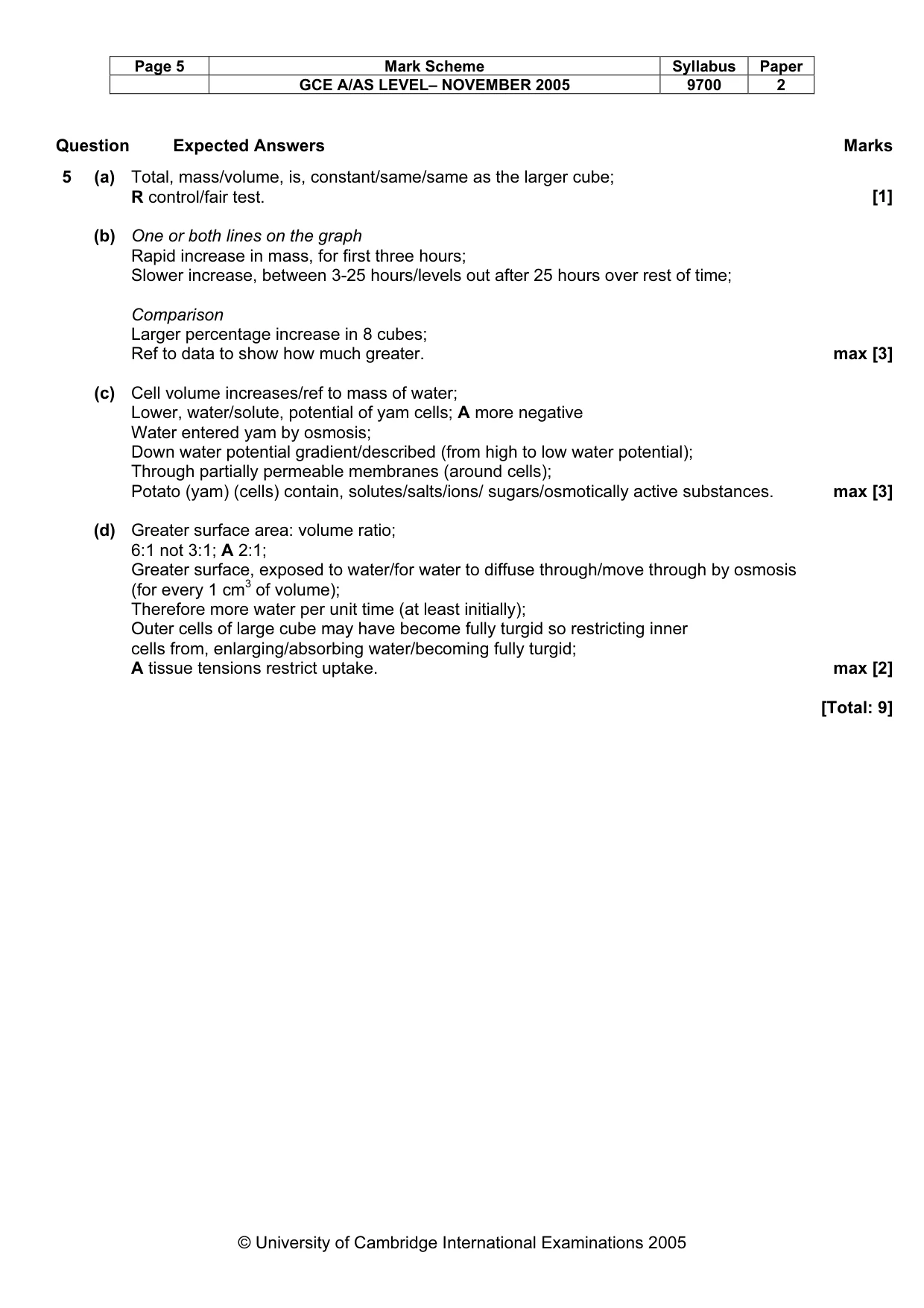
Page 5 Mark Scheme Syllabus Paper GCE A/AS LEVEL– NOVEMBER 2005 9700 2 © University of Cambridge International Examinations 2005 Question Expected Answers Marks 5 (a) Total, mass/volume, is, constant/same/same as the larger cube; R control/fair test. [1] (b) One or both lines on the graph Rapid increase in mass, for first three hours; Slower increase, between 3-25 hours/levels out after 25 hours over rest of time; Comparison Larger percentage increase in 8 cubes; Ref to data to show how much greater. max [3] (c) Cell volume increases/ref to mass of water; Lower, water/solute, potential of yam cells; A more negative Water entered yam by osmosis; Down water potential gradient/described (from high to low water potential); Through partially permeable membranes (around cells); Potato (yam) (cells) contain, solutes/salts/ions/ sugars/osmotically active substances. max [3] (d) Greater surface area: volume ratio; 6:1 not 3:1; A 2:1; Greater surface, exposed to water/for water to diffuse through/move through by osmosis (for every 1 cm3 of volume); Therefore more water per unit time (at least initially); Outer cells of large cube may have become fully turgid so restricting inner cells from, enlarging/absorbing water/becoming fully turgid; A tissue tensions restrict uptake. max [2] [Total: 9]
Mark scheme, page 7
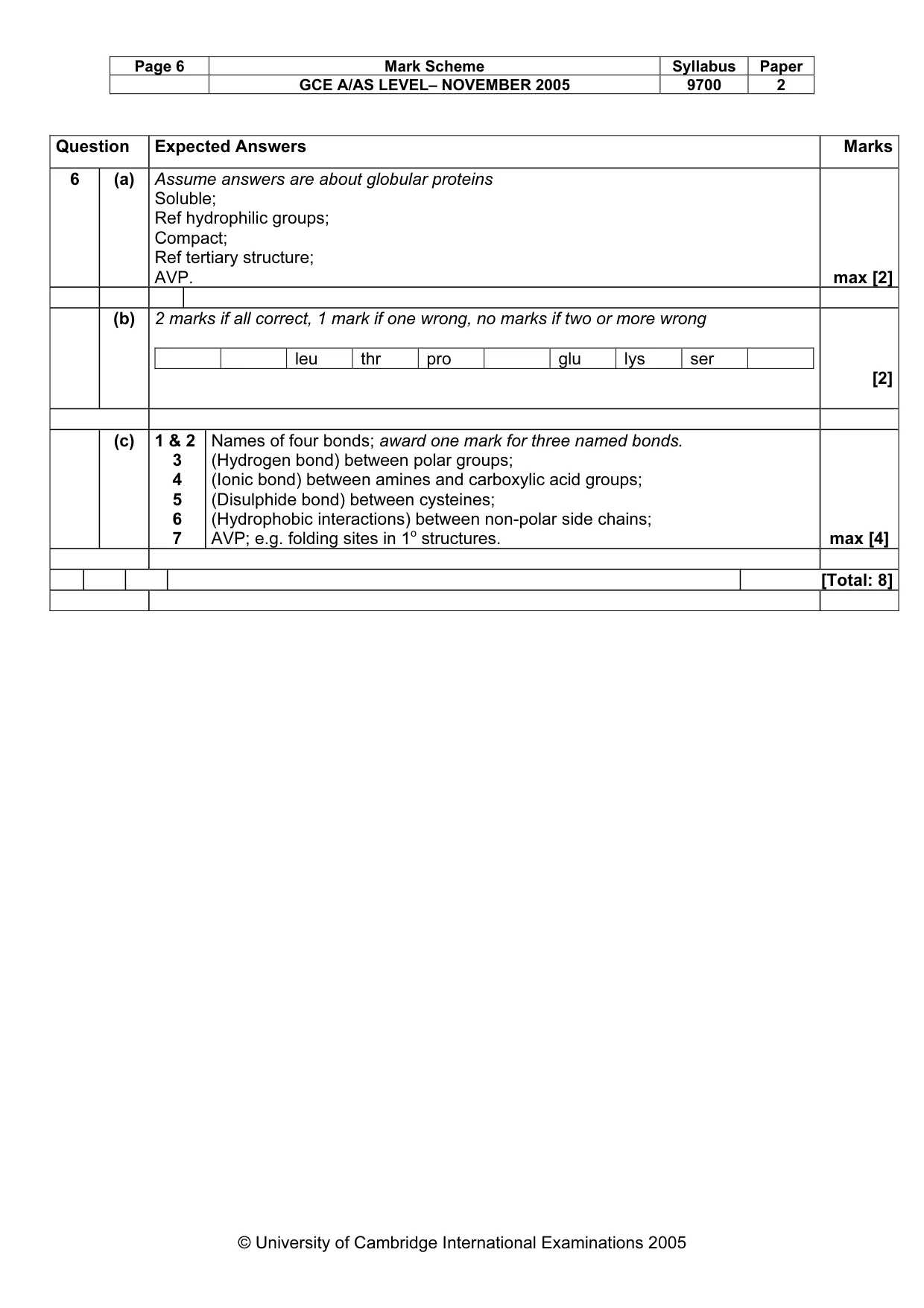
Page 6 Mark Scheme Syllabus Paper GCE A/AS LEVEL– NOVEMBER 2005 9700 2 © University of Cambridge International Examinations 2005 Question Expected Answers Marks 6 (a) Assume answers are about globular proteins Soluble; Ref hydrophilic groups; Compact; Ref tertiary structure; AVP. max [2] (b) 2 marks if all correct, 1 mark if one wrong, no marks if two or more wrong leu thr pro glu lys ser [2] (c) 1 & 2 3 4 5 6 7 Names of four bonds; award one mark for three named bonds. (Hydrogen bond) between polar groups; (Ionic bond) between amines and carboxylic acid groups; (Disulphide bond) between cysteines; (Hydrophobic interactions) between non-polar side chains; AVP; e.g. folding sites in 1o structures. max [4] [Total: 8]