Cambridge A Level Biology 9700 — 2004 Oct/Nov Paper 2 · Variant 1
9700/21/O/N/04
The question paper and its mark scheme, free to read here and free to download. This is Cambridge’s own paper, exactly as it was sat.
Question paper16 pages



Mark scheme9 pages
Answers below. Sit the paper first if you are practising.
Paper as text
Question paper, page 1
This document consists of 12 printed pages and 4 blank pages. SP (CW/GR) S67009/3 © UCLES 2004 [Turn over UNIVERSITY OF CAMBRIDGE INTERNATIONAL EXAMINATIONS General Certificate of Education Advanced Subsidiary Level and Advanced Level BIOLOGY 9700/02 Paper 2 Structured Questions AS October/November 2004 1 hour 15 minutes Candidates answer on the Question Paper. No Additional Materials are required. READ THESE INSTRUCTIONS FIRST Write your Centre number, candidate number and name in the spaces provided at the top of this page. Write in dark blue or black pen in the spaces provided on the Question Paper. You may use a soft pencil for any diagrams, graphs or rough working. Do not use staples, paper clips, highlighters, glue or correction fluid. Answer all questions. The number of marks is given in brackets [ ] at the end of each question or part question. Centre Number Candidate Number Name If you have been given a label, look at the details. If any details are incorrect or missing, please fill in your correct details in the space given at the top of this page. Stick your personal label here, if provided. FOR EXAMINER’S USE 1 2 3 4 5 TOTAL
Question paper, page 2
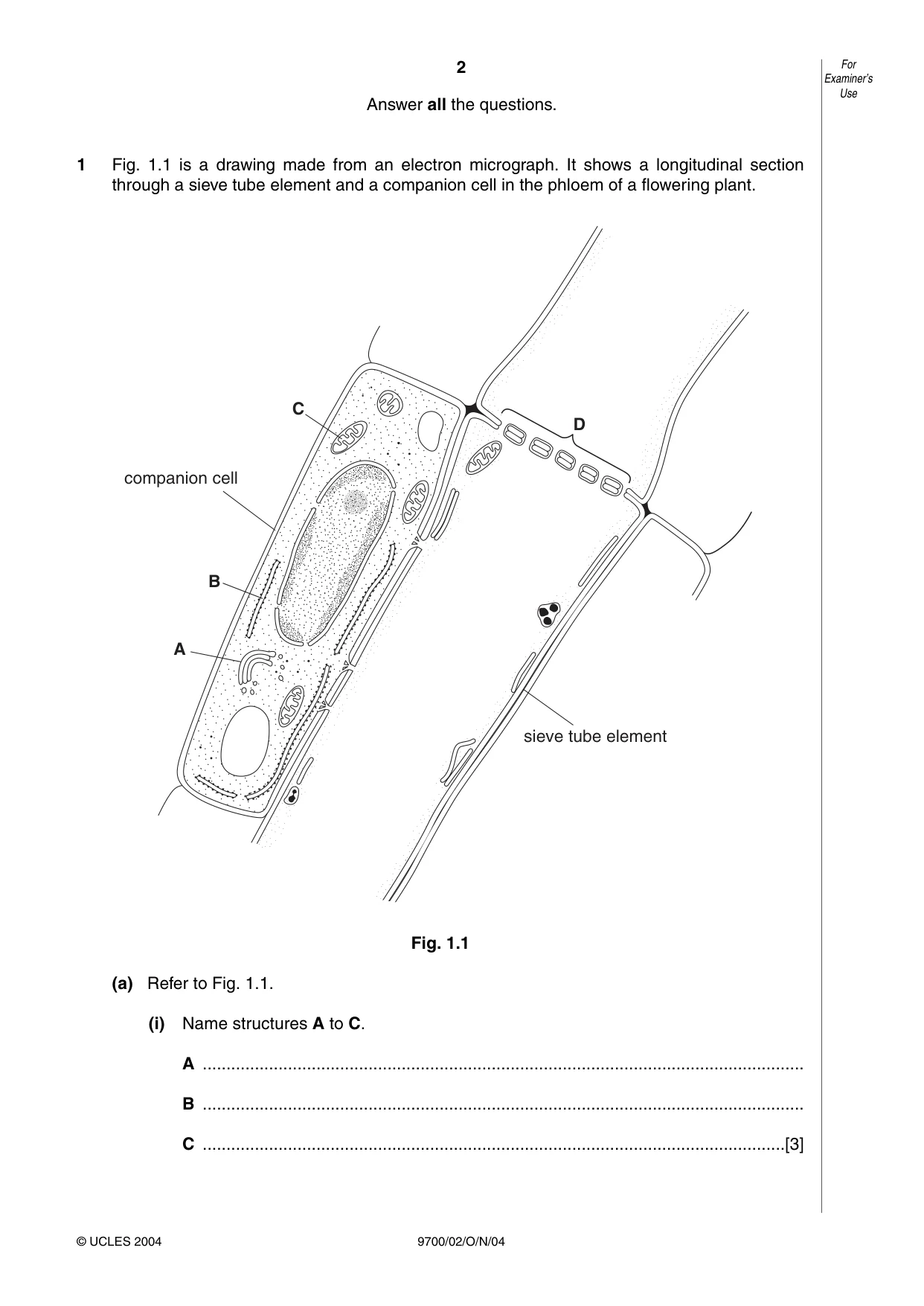
2 9700/02/O/N/04 Answer all the questions. 1 Fig. 1.1 is a drawing made from an electron micrograph. It shows a longitudinal section through a sieve tube element and a companion cell in the phloem of a flowering plant. Fig. 1.1 (a) Refer to Fig. 1.1. (i) Name structures A to C. A … B … C …[3] A B C D companion cell sieve tube element For Examiner’s Use © UCLES 2004
Question paper, page 3
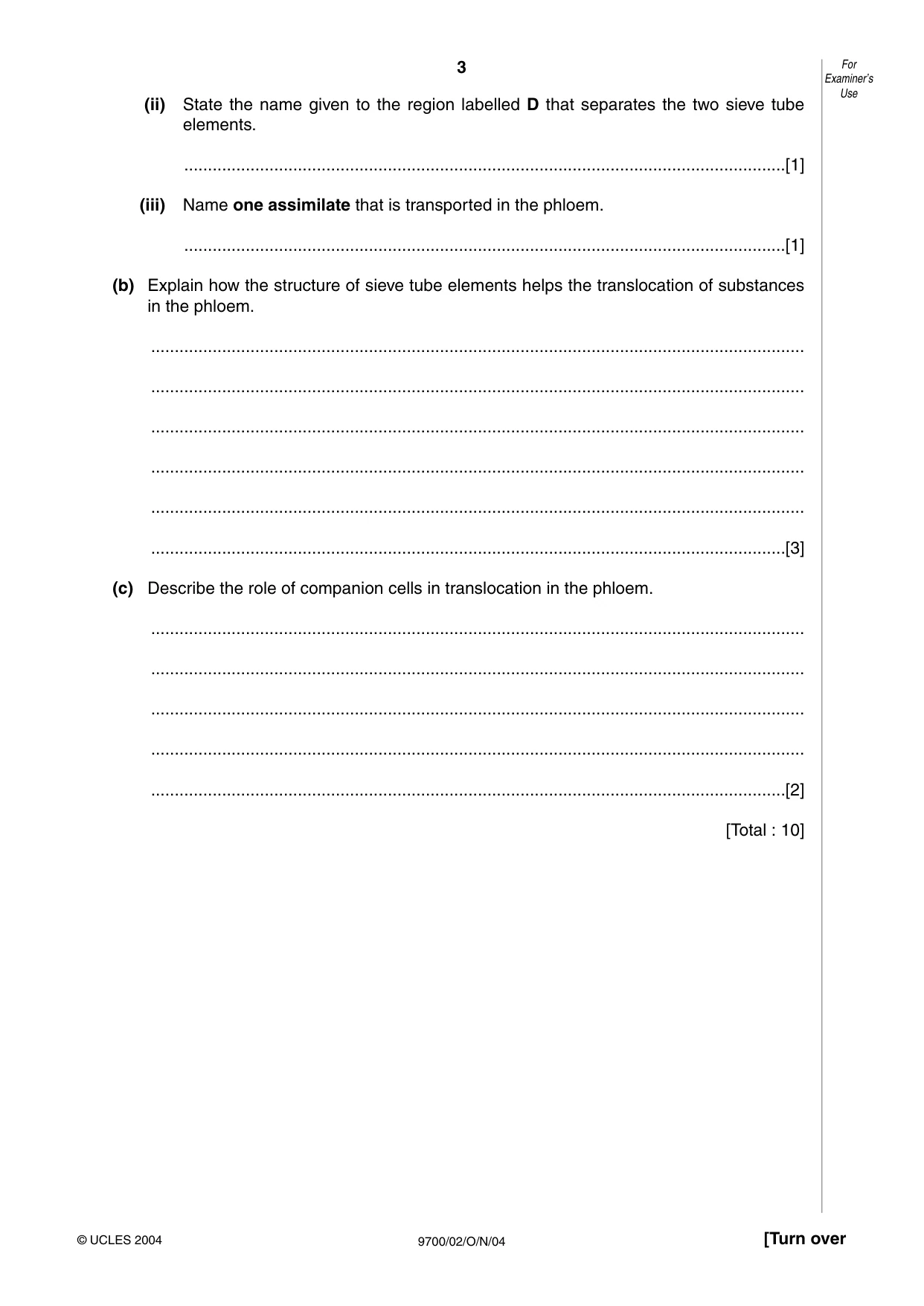
3 9700/02/O/N/04 [Turn over (ii) State the name given to the region labelled D that separates the two sieve tube elements. …[1] (iii) Name one assimilate that is transported in the phloem. …[1] (b) Explain how the structure of sieve tube elements helps the translocation of substances in the phloem. … … … … … …[3] (c) Describe the role of companion cells in translocation in the phloem. … … … … …[2] [Total : 10] For Examiner’s Use © UCLES 2004
Question paper, page 4
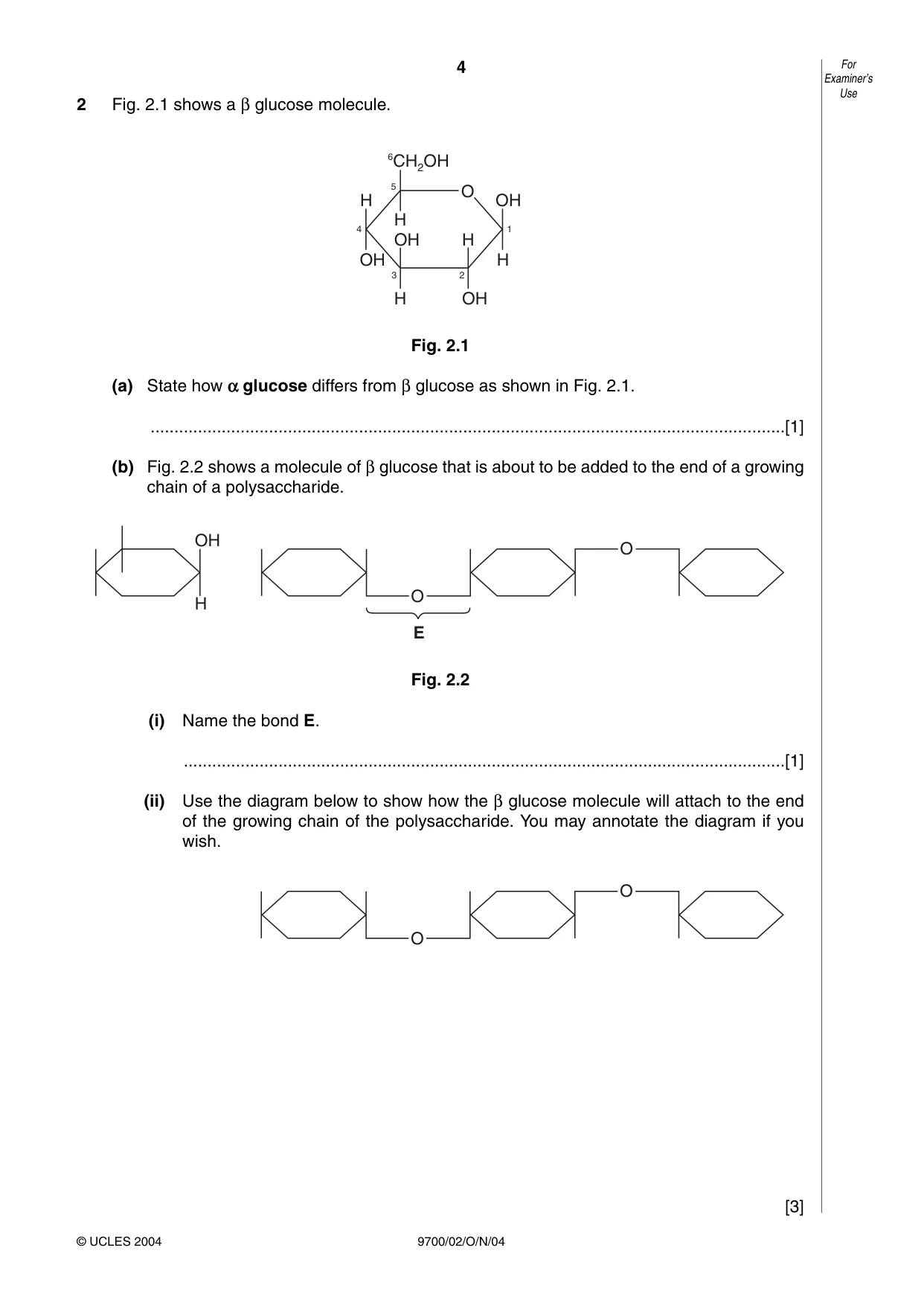
4 9700/02/O/N/04 2 Fig. 2.1 shows a β glucose molecule. Fig. 2.1 (a) State how α glucose differs from β glucose as shown in Fig. 2.1. …[1] (b) Fig. 2.2 shows a molecule of β glucose that is about to be added to the end of a growing chain of a polysaccharide. Fig. 2.2 (i) Name the bond E. …[1] (ii) Use the diagram below to show how the β glucose molecule will attach to the end of the growing chain of the polysaccharide. You may annotate the diagram if you wish. [3] O O OH H E O O 6CH2OH OH H H H OH H H O OH 1 4 5 3 OH 2 For Examiner’s Use © UCLES 2004
Question paper, page 5
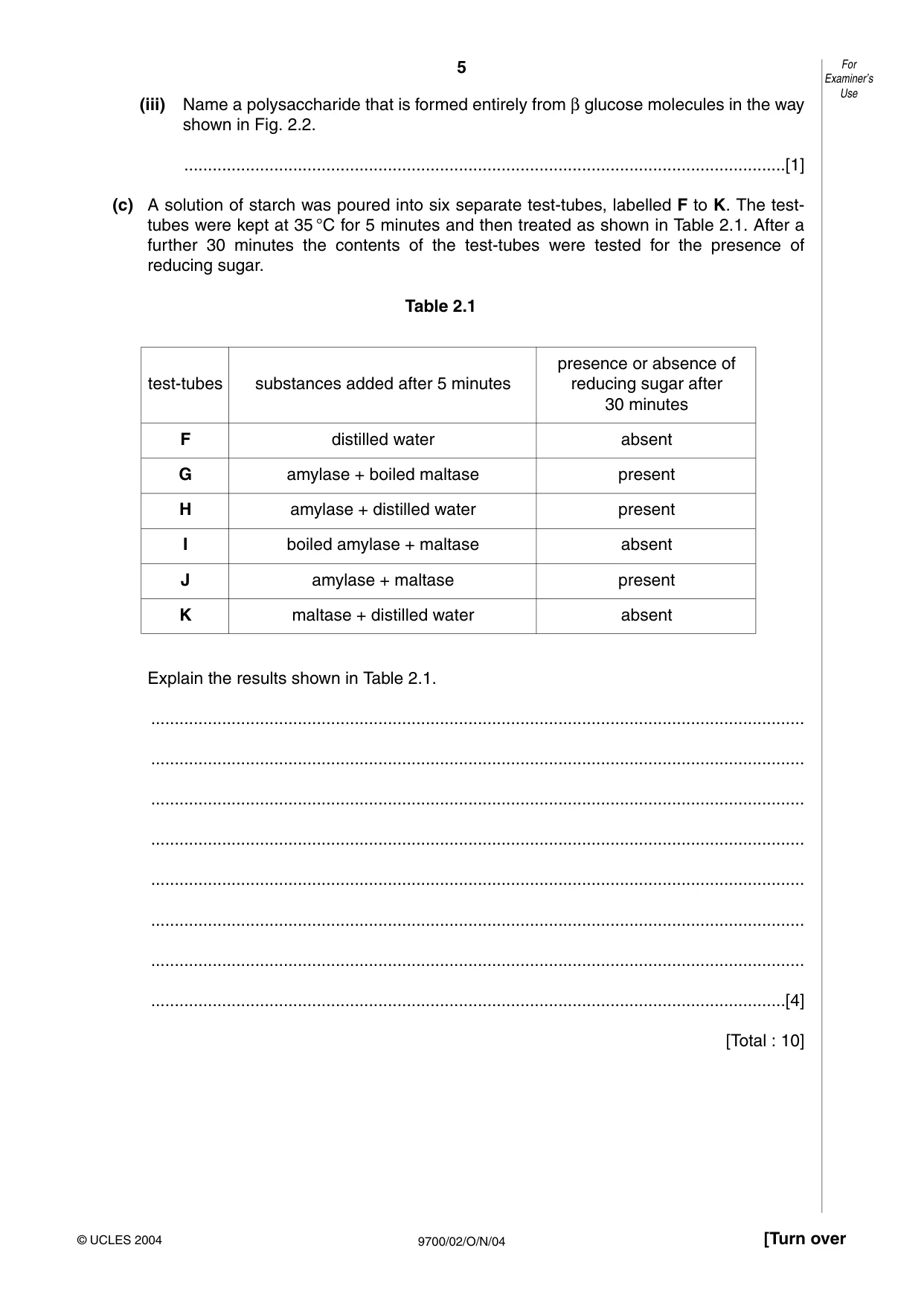
5 9700/02/O/N/04 [Turn over (iii) Name a polysaccharide that is formed entirely from β glucose molecules in the way shown in Fig. 2.2. …[1] (c) A solution of starch was poured into six separate test-tubes, labelled F to K. The test- tubes were kept at 35 °C for 5 minutes and then treated as shown in Table 2.1. After a further 30 minutes the contents of the test-tubes were tested for the presence of reducing sugar. Table 2.1 Explain the results shown in Table 2.1. … … … … … … … …[4] [Total : 10] For Examiner’s Use © UCLES 2004 presence or absence of test-tubes substances added after 5 minutes reducing sugar after 30 minutes F distilled water absent G amylase + boiled maltase present H amylase + distilled water present I boiled amylase + maltase absent J amylase + maltase present K maltase + distilled water absent
Question paper, page 6
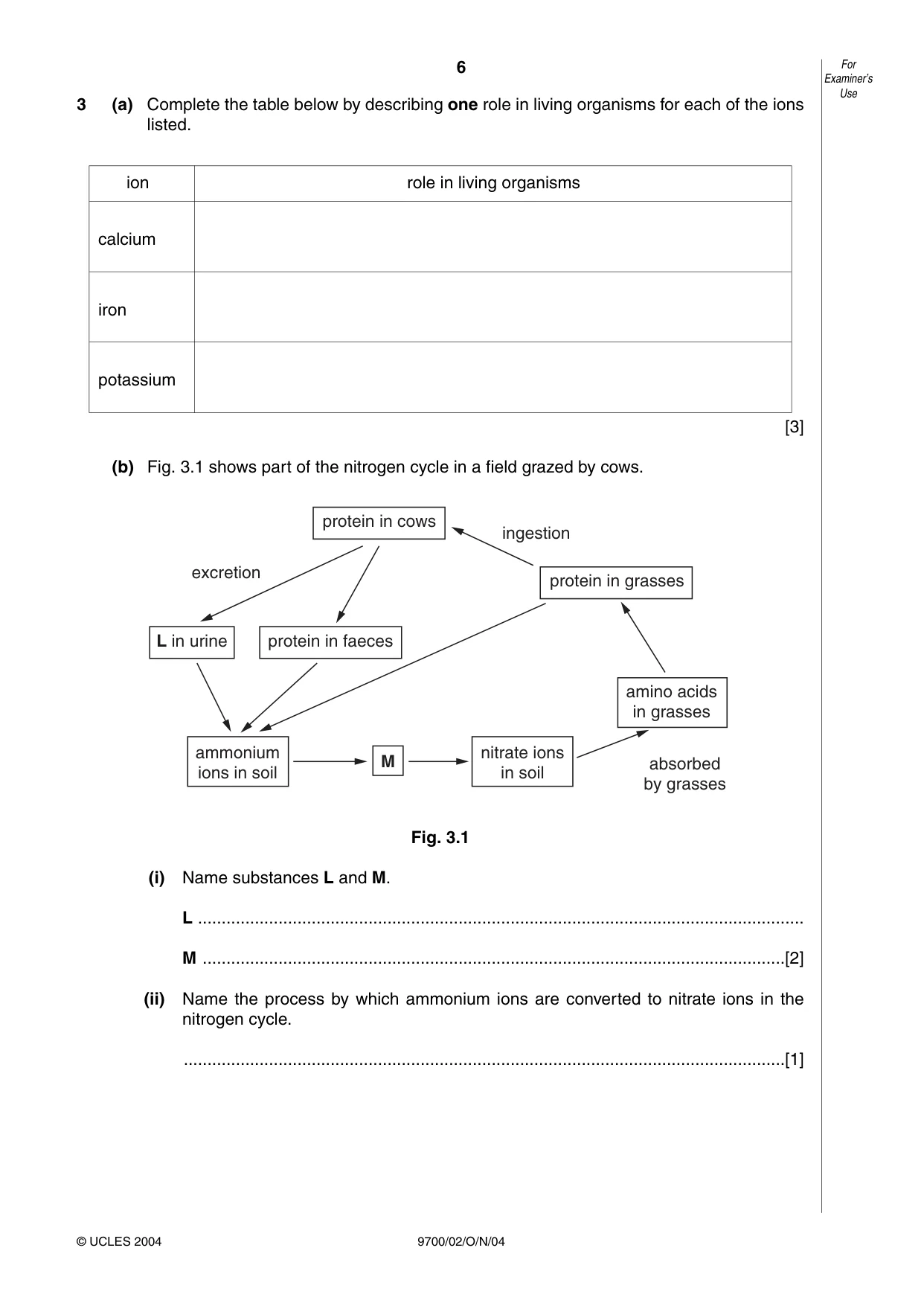
6 9700/02/O/N/04 3 (a) Complete the table below by describing one role in living organisms for each of the ions listed. [3] (b) Fig. 3.1 shows part of the nitrogen cycle in a field grazed by cows. Fig. 3.1 (i) Name substances L and M. L … M …[2] (ii) Name the process by which ammonium ions are converted to nitrate ions in the nitrogen cycle. …[1] protein in cows ingestion excretion protein in grasses amino acids in grasses absorbed by grasses L in urine protein in faeces ammonium ions in soil nitrate ions in soil M For Examiner’s Use © UCLES 2004 ion role in living organisms calcium iron potassium
Question paper, page 7
7 9700/02/O/N/04 [Turn over BLANK PAGE Question 3 continues on page 8
Question paper, page 8
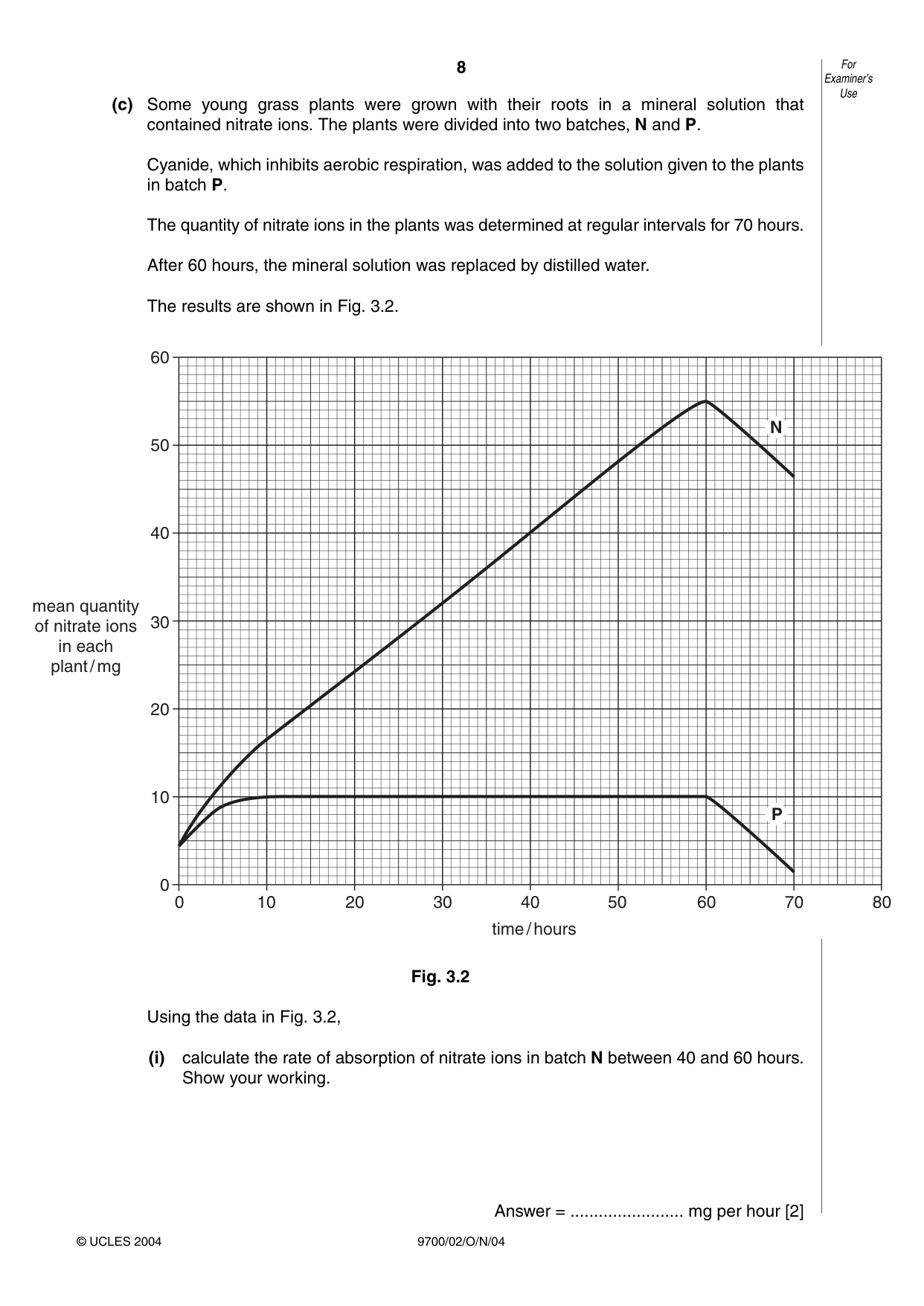
8 9700/02/O/N/04 (c) Some young grass plants were grown with their roots in a mineral solution that contained nitrate ions. The plants were divided into two batches, N and P. Cyanide, which inhibits aerobic respiration, was added to the solution given to the plants in batch P. The quantity of nitrate ions in the plants was determined at regular intervals for 70 hours. After 60 hours, the mineral solution was replaced by distilled water. The results are shown in Fig. 3.2. Fig. 3.2 Using the data in Fig. 3.2, (i) calculate the rate of absorption of nitrate ions in batch N between 40 and 60 hours. Show your working. Answer = … mg per hour [2] For Examiner’s Use © UCLES 2004 0 10 20 30 40 50 60 0 10 20 30 40 50 60 70 80 time / hours mean quantity of nitrate ions in each plant / mg N P
Question paper, page 9
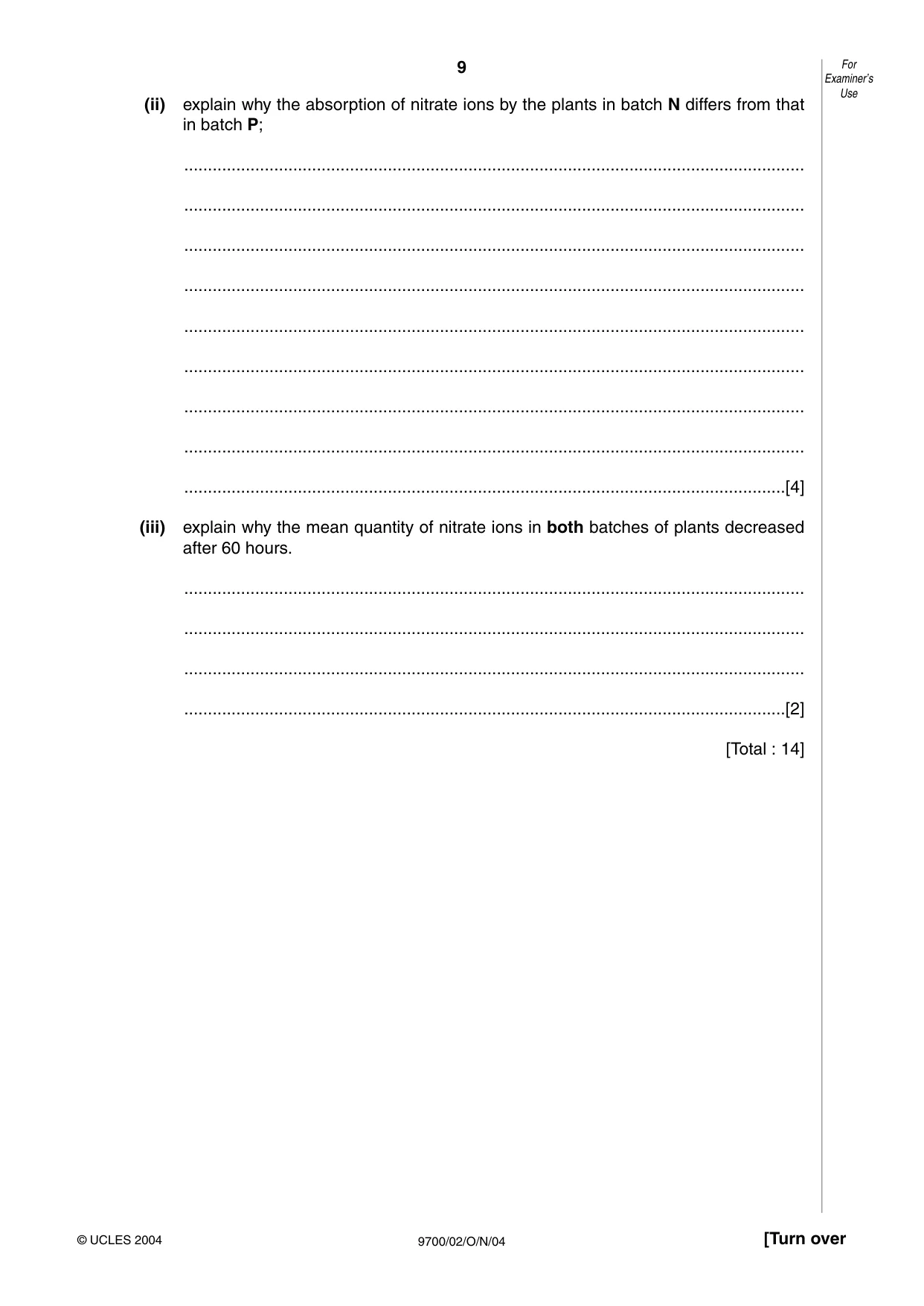
9 9700/02/O/N/04 [Turn over (ii) explain why the absorption of nitrate ions by the plants in batch N differs from that in batch P; … … … … … … … … …[4] (iii) explain why the mean quantity of nitrate ions in both batches of plants decreased after 60 hours. … … … …[2] [Total : 14] For Examiner’s Use © UCLES 2004
Question paper, page 10
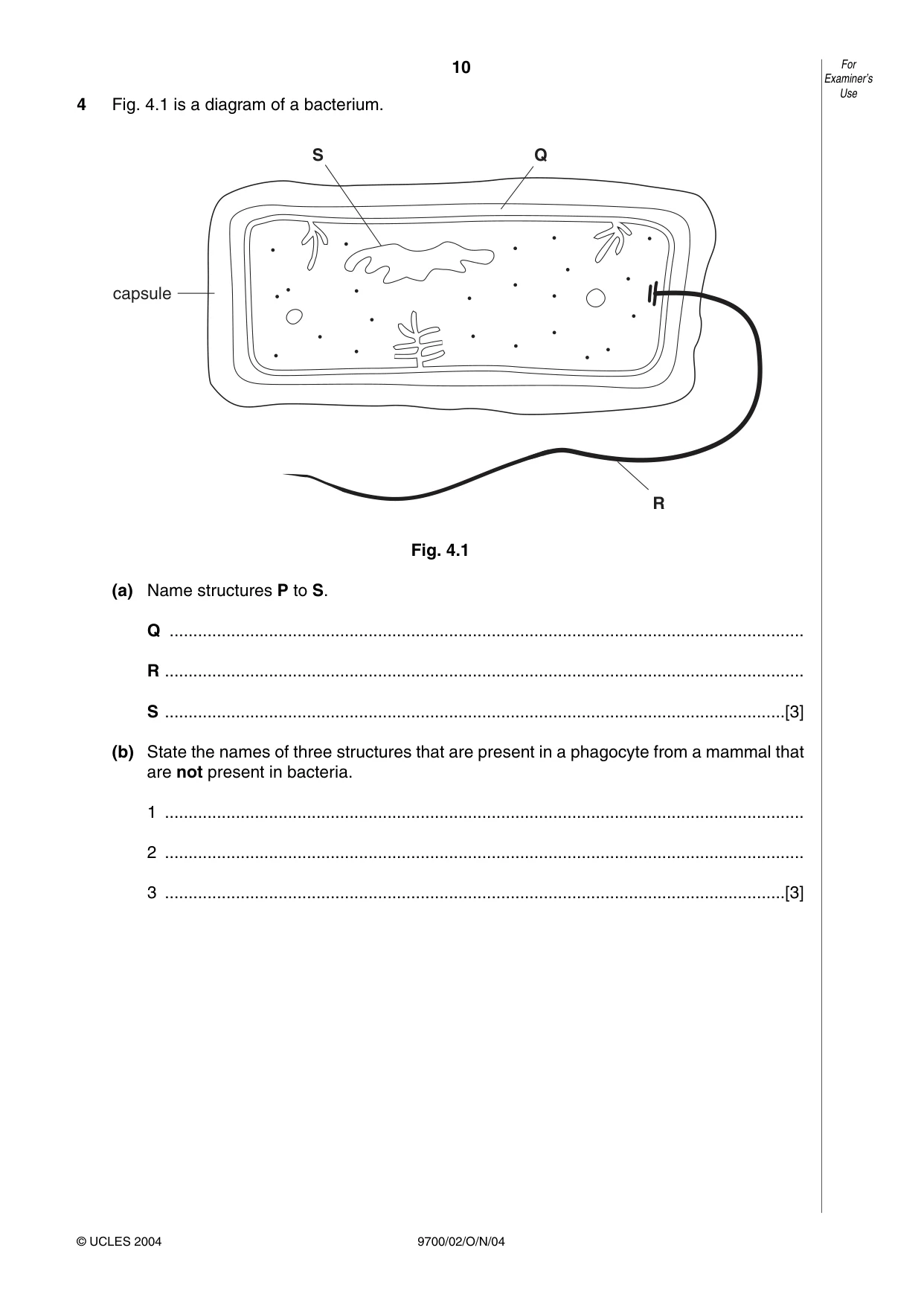
10 9700/02/O/N/04 4 Fig. 4.1 is a diagram of a bacterium. Fig. 4.1 (a) Name structures P to S. Q … R … S …[3] (b) State the names of three structures that are present in a phagocyte from a mammal that are not present in bacteria. 1 … 2 … 3 …[3] R S Q capsule For Examiner’s Use © UCLES 2004
Question paper, page 11
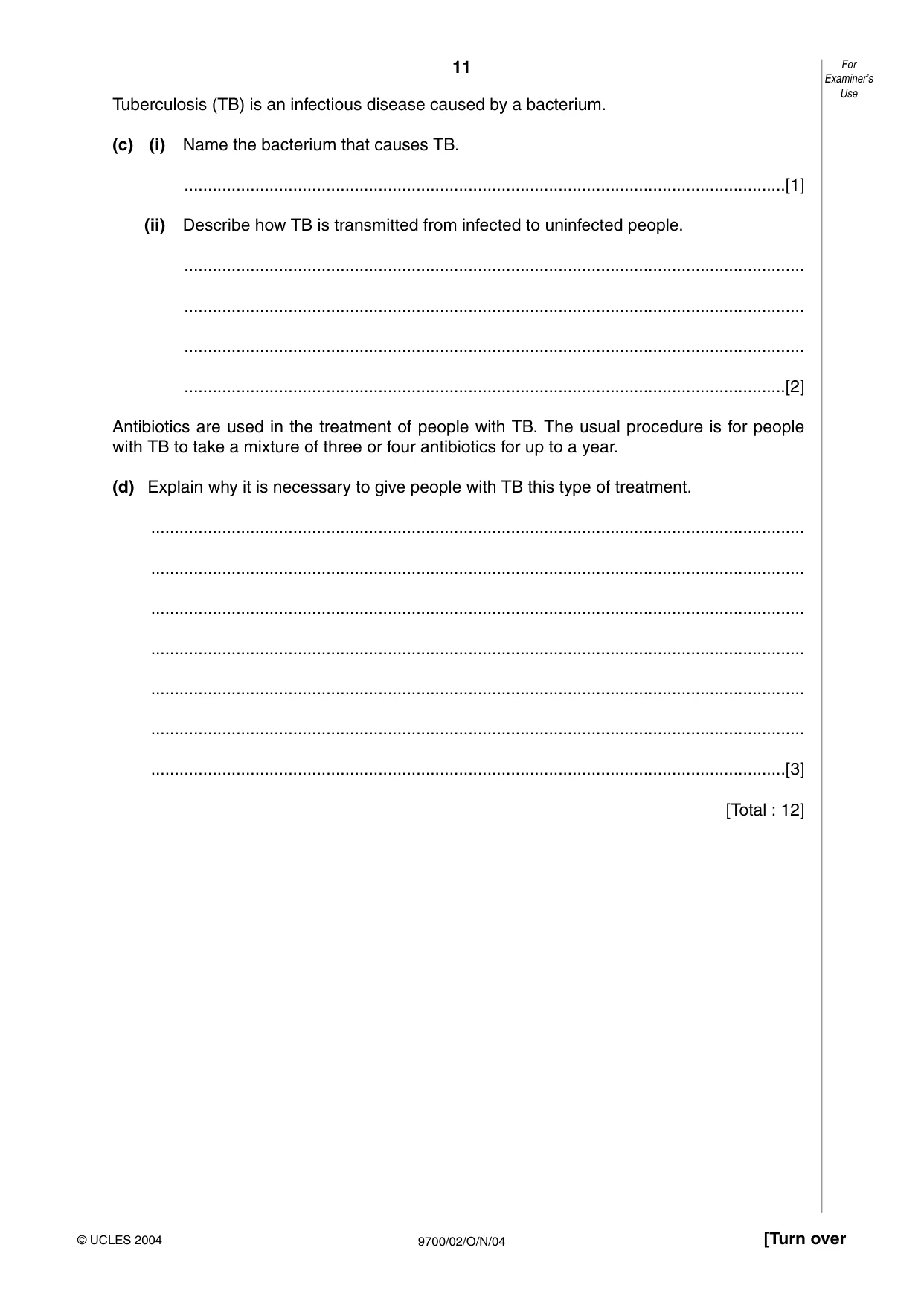
11 9700/02/O/N/04 [Turn over Tuberculosis (TB) is an infectious disease caused by a bacterium. (c) (i) Name the bacterium that causes TB. …[1] (ii) Describe how TB is transmitted from infected to uninfected people. … … … …[2] Antibiotics are used in the treatment of people with TB. The usual procedure is for people with TB to take a mixture of three or four antibiotics for up to a year. (d) Explain why it is necessary to give people with TB this type of treatment. … … … … … … …[3] [Total : 12] For Examiner’s Use © UCLES 2004
Question paper, page 12
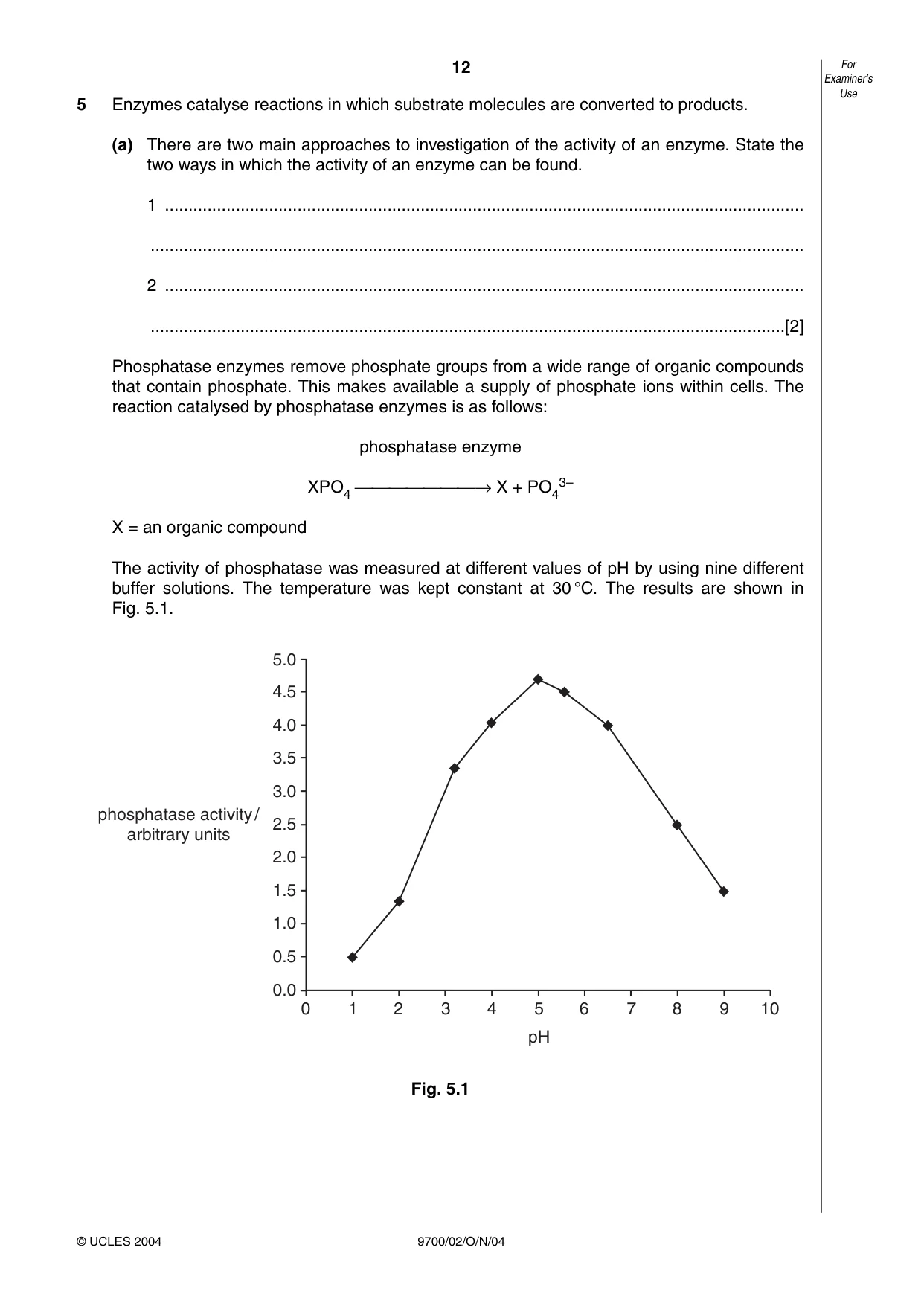
12 9700/02/O/N/04 5 Enzymes catalyse reactions in which substrate molecules are converted to products. (a) There are two main approaches to investigation of the activity of an enzyme. State the two ways in which the activity of an enzyme can be found. 1 … … 2 … …[2] Phosphatase enzymes remove phosphate groups from a wide range of organic compounds that contain phosphate. This makes available a supply of phosphate ions within cells. The reaction catalysed by phosphatase enzymes is as follows: phosphatase enzyme XPO4 →X + PO4 3– X = an organic compound The activity of phosphatase was measured at different values of pH by using nine different buffer solutions. The temperature was kept constant at 30 °C. The results are shown in Fig. 5.1. Fig. 5.1 5.0 4.5 4.0 3.5 3.0 2.5 2.0 1.5 1.0 0.5 0.0 0 1 2 3 4 5 6 7 8 9 10 pH phosphatase activity / arbitrary units For Examiner’s Use © UCLES 2004
Question paper, page 13
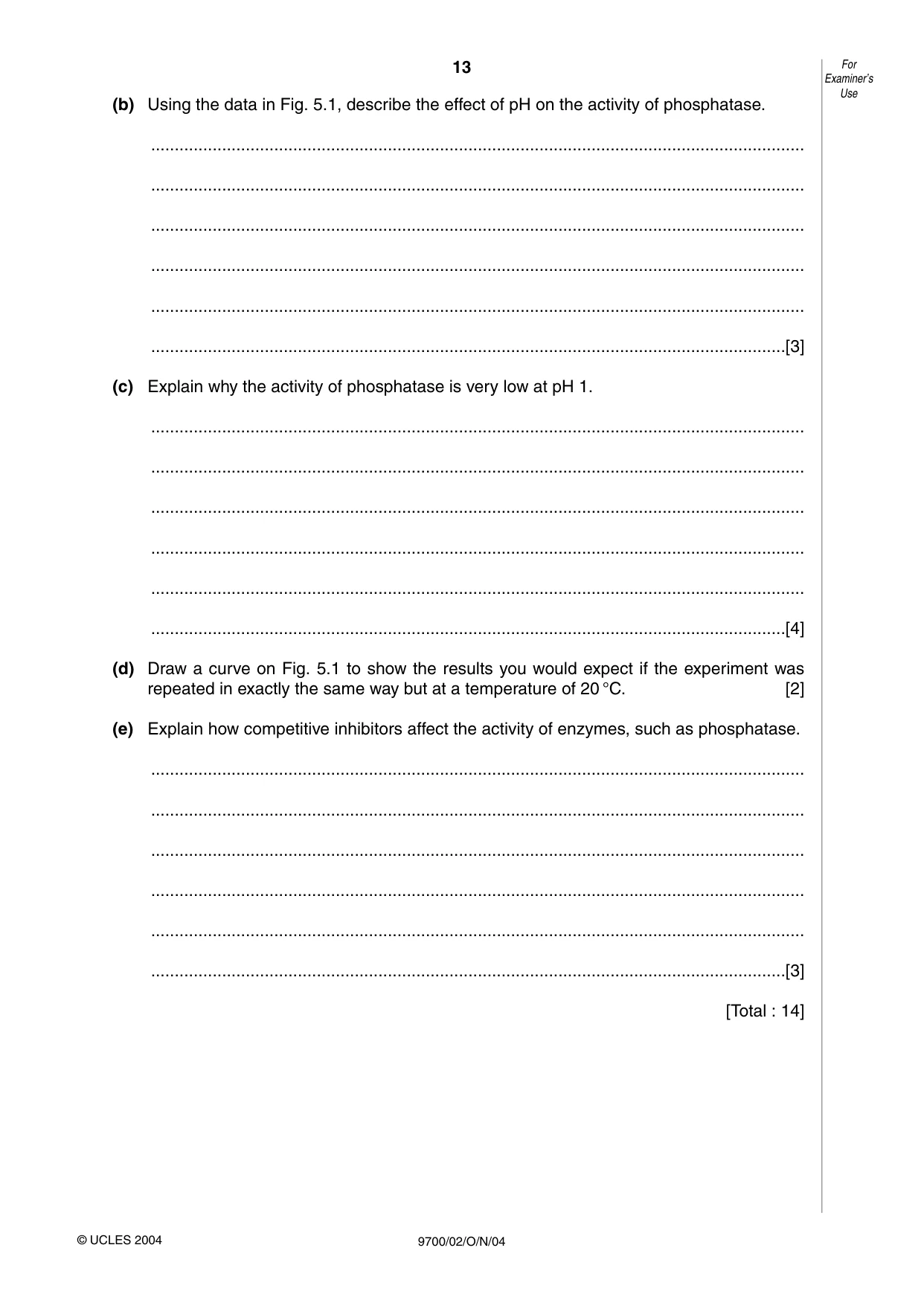
13 9700/02/O/N/04 (b) Using the data in Fig. 5.1, describe the effect of pH on the activity of phosphatase. … … … … … …[3] (c) Explain why the activity of phosphatase is very low at pH 1. … … … … … …[4] (d) Draw a curve on Fig. 5.1 to show the results you would expect if the experiment was repeated in exactly the same way but at a temperature of 20 °C. [2] (e) Explain how competitive inhibitors affect the activity of enzymes, such as phosphatase. … … … … … …[3] [Total : 14] For Examiner’s Use © UCLES 2004
Question paper, page 16
16 9700/02/O/N/04 BLANK PAGE Copyright Acknowledgements: Question 1 Fig. 1.1 EM of phloem in Biological Science, Cambridge University Press, 1997. Every reasonable effort has been made to trace all copyright holders where the publishers (i.e. UCLES) are aware that third-party material has been reproduced. The publishers would be pleased to hear from anyone whose rights they have unwittingly infringed. University of Cambridge International Examinations is part of the University of Cambridge Local Examinations Syndicate (UCLES), which is itself a department of the University of Cambridge.
Mark scheme, page 1
UNIVERSITY OF CAMBRIDGE INTERNATIONAL EXAMINATIONS GCE Advanced Subsidiary and Advanced Level MARK SCHEME for the November 2004 question paper 9700 BIOLOGY 9700/02 Paper 2 (Structured Questions AS), maximum mark 60 This mark scheme is published as an aid to teachers and students, to indicate the requirements of the examination. This shows the basis on which Examiners were initially instructed to award marks. It does not indicate the details of the discussions that took place at an Examiners’ meeting before marking began. Any substantial changes to the mark scheme that arose from these discussions will be recorded in the published Report on the Examination. All Examiners are instructed that alternative correct answers and unexpected approaches in candidates’ scripts must be given marks that fairly reflect the relevant knowledge and skills demonstrated. Mark schemes must be read in conjunction with the question papers and the Report on the Examination. • CIE will not enter into discussion or correspondence in connection with these mark schemes. CIE is publishing the mark schemes for the November 2004 question papers for most IGCSE and GCE Advanced Level syllabuses.
Mark scheme, page 2
Grade thresholds taken for Syllabus 9700 (Biology) in the November 2004 examination. minimum mark required for grade: maximum mark available A B E Component 2 60 43 38 26 The thresholds (minimum marks) for Grades C and D are normally set by dividing the mark range between the B and the E thresholds into three. For example, if the difference between the B and the E threshold is 24 marks, the C threshold is set 8 marks below the B threshold and the D threshold is set another 8 marks down. If dividing the interval by three results in a fraction of a mark, then the threshold is normally rounded down.
Mark scheme, page 3
November 2004 GCE A AND AS LEVEL MARK SCHEME MAXIMUM MARK: 60 SYLLABUS/COMPONENT: 9700/02 BIOLOGY Paper 2 (Structured Questions AS)
Mark scheme, page 4
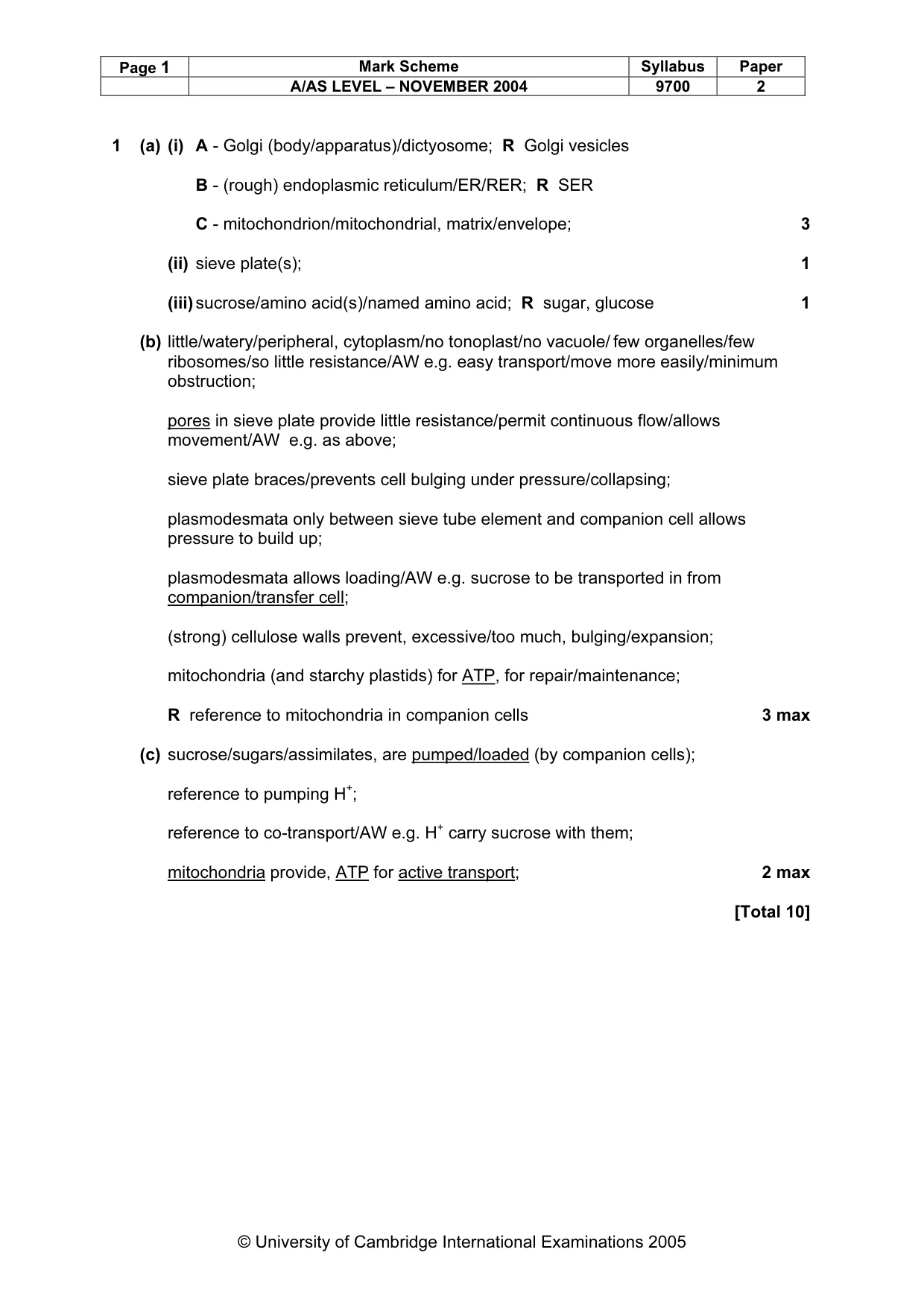
Page 1 Mark Scheme Syllabus Paper A/AS LEVEL – NOVEMBER 2004 9700 2 © University of Cambridge International Examinations 2005 1 (a) (i) A - Golgi (body/apparatus)/dictyosome; R Golgi vesicles B - (rough) endoplasmic reticulum/ER/RER; R SER C - mitochondrion/mitochondrial, matrix/envelope; 3 (ii) sieve plate(s); 1 (iii) sucrose/amino acid(s)/named amino acid; R sugar, glucose 1 (b) little/watery/peripheral, cytoplasm/no tonoplast/no vacuole/ few organelles/few ribosomes/so little resistance/AW e.g. easy transport/move more easily/minimum obstruction; pores in sieve plate provide little resistance/permit continuous flow/allows movement/AW e.g. as above; sieve plate braces/prevents cell bulging under pressure/collapsing; plasmodesmata only between sieve tube element and companion cell allows pressure to build up; plasmodesmata allows loading/AW e.g. sucrose to be transported in from companion/transfer cell; (strong) cellulose walls prevent, excessive/too much, bulging/expansion; mitochondria (and starchy plastids) for ATP, for repair/maintenance; R reference to mitochondria in companion cells 3 max (c) sucrose/sugars/assimilates, are pumped/loaded (by companion cells); reference to pumping H+; reference to co-transport/AW e.g. H+ carry sucrose with them; mitochondria provide, ATP for active transport; 2 max [Total 10]
Mark scheme, page 5
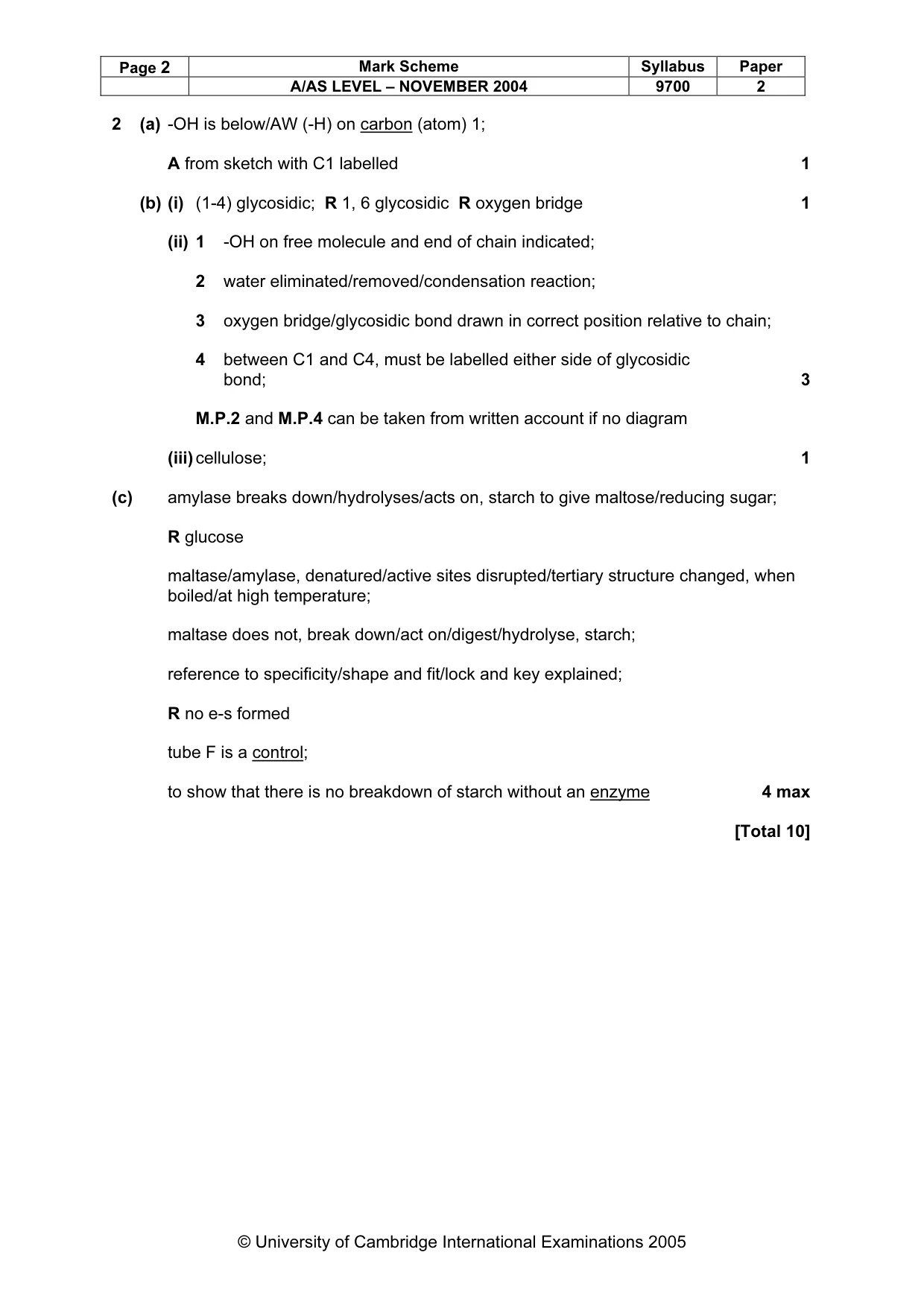
Page 2 Mark Scheme Syllabus Paper A/AS LEVEL – NOVEMBER 2004 9700 2 © University of Cambridge International Examinations 2005 2 (a) -OH is below/AW (-H) on carbon (atom) 1; A from sketch with C1 labelled 1 (b) (i) (1-4) glycosidic; R 1, 6 glycosidic R oxygen bridge 1 (ii) 1 -OH on free molecule and end of chain indicated; 2 water eliminated/removed/condensation reaction; 3 oxygen bridge/glycosidic bond drawn in correct position relative to chain; 4 between C1 and C4, must be labelled either side of glycosidic bond; 3 M.P.2 and M.P.4 can be taken from written account if no diagram (iii) cellulose; 1 (c) amylase breaks down/hydrolyses/acts on, starch to give maltose/reducing sugar; R glucose maltase/amylase, denatured/active sites disrupted/tertiary structure changed, when boiled/at high temperature; maltase does not, break down/act on/digest/hydrolyse, starch; reference to specificity/shape and fit/lock and key explained; R no e-s formed tube F is a control; to show that there is no breakdown of starch without an enzyme 4 max [Total 10]
Mark scheme, page 6
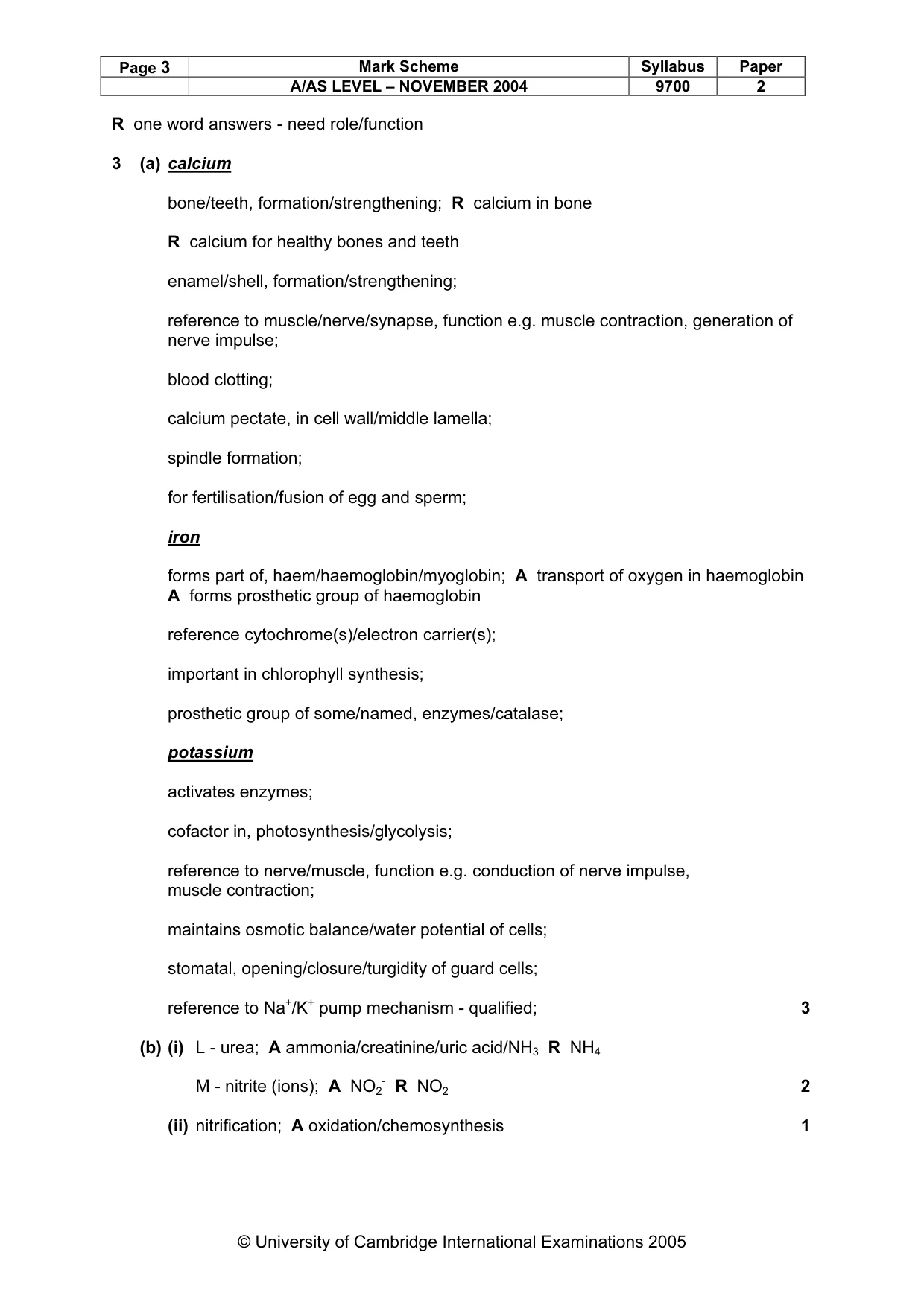
Page 3 Mark Scheme Syllabus Paper A/AS LEVEL – NOVEMBER 2004 9700 2 © University of Cambridge International Examinations 2005 R one word answers - need role/function 3 (a) calcium bone/teeth, formation/strengthening; R calcium in bone R calcium for healthy bones and teeth enamel/shell, formation/strengthening; reference to muscle/nerve/synapse, function e.g. muscle contraction, generation of nerve impulse; blood clotting; calcium pectate, in cell wall/middle lamella; spindle formation; for fertilisation/fusion of egg and sperm; iron forms part of, haem/haemoglobin/myoglobin; A transport of oxygen in haemoglobin A forms prosthetic group of haemoglobin reference cytochrome(s)/electron carrier(s); important in chlorophyll synthesis; prosthetic group of some/named, enzymes/catalase; potassium activates enzymes; cofactor in, photosynthesis/glycolysis; reference to nerve/muscle, function e.g. conduction of nerve impulse, muscle contraction; maintains osmotic balance/water potential of cells; stomatal, opening/closure/turgidity of guard cells; reference to Na+/K+ pump mechanism - qualified; 3 (b) (i) L - urea; A ammonia/creatinine/uric acid/NH3 R NH4 M - nitrite (ions); A NO2 - R NO2 2 (ii) nitrification; A oxidation/chemosynthesis 1
Mark scheme, page 7
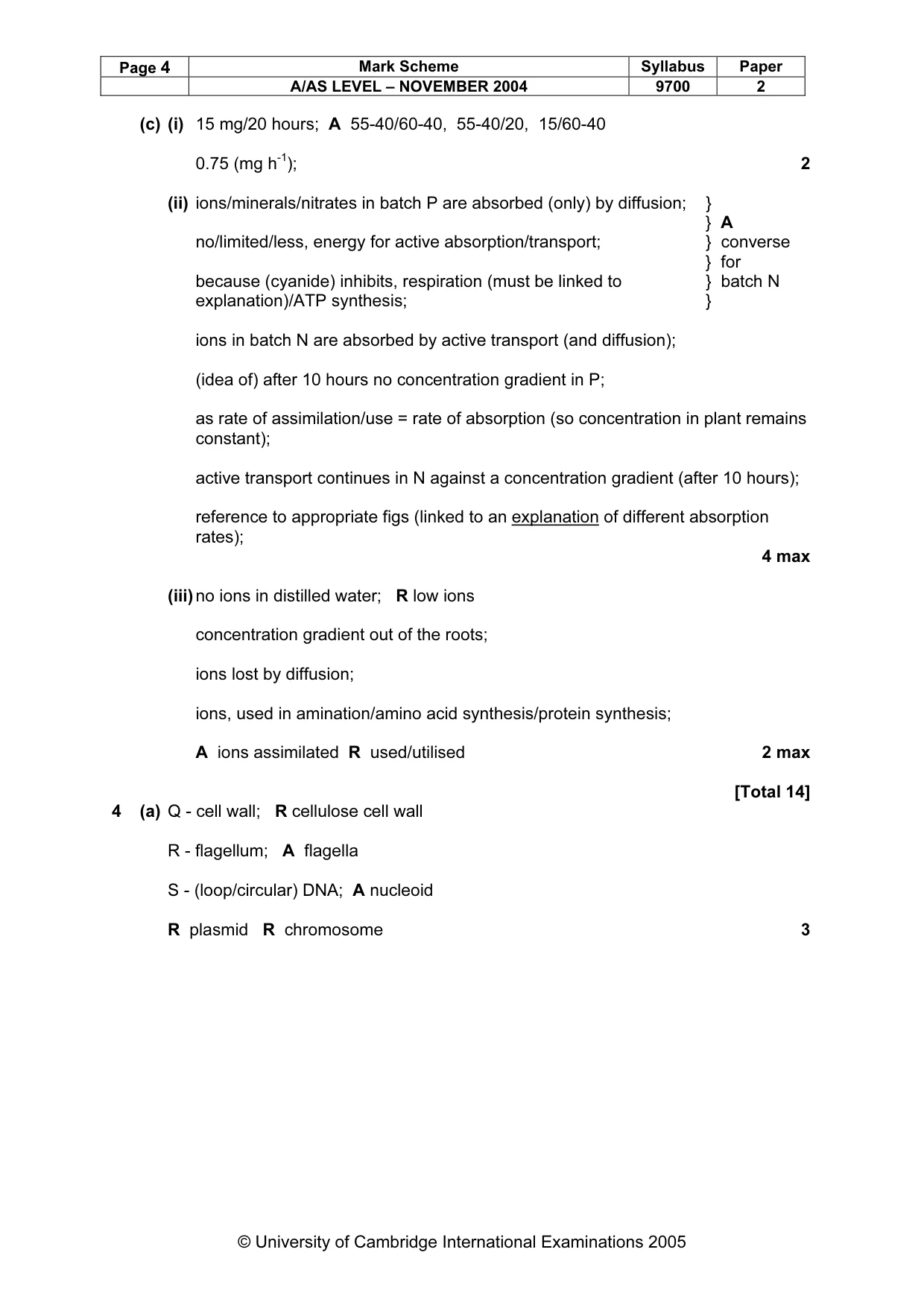
Page 4 Mark Scheme Syllabus Paper A/AS LEVEL – NOVEMBER 2004 9700 2 © University of Cambridge International Examinations 2005 (c) (i) 15 mg/20 hours; A 55-40/60-40, 55-40/20, 15/60-40 0.75 (mg h-1); 2 (ii) ions/minerals/nitrates in batch P are absorbed (only) by diffusion; } } A no/limited/less, energy for active absorption/transport; } converse } for because (cyanide) inhibits, respiration (must be linked to } batch N explanation)/ATP synthesis; } ions in batch N are absorbed by active transport (and diffusion); (idea of) after 10 hours no concentration gradient in P; as rate of assimilation/use = rate of absorption (so concentration in plant remains constant); active transport continues in N against a concentration gradient (after 10 hours); reference to appropriate figs (linked to an explanation of different absorption rates); 4 max (iii) no ions in distilled water; R low ions concentration gradient out of the roots; ions lost by diffusion; ions, used in amination/amino acid synthesis/protein synthesis; A ions assimilated R used/utilised 2 max [Total 14] 4 (a) Q - cell wall; R cellulose cell wall R - flagellum; A flagella S - (loop/circular) DNA; A nucleoid R plasmid R chromosome 3
Mark scheme, page 8
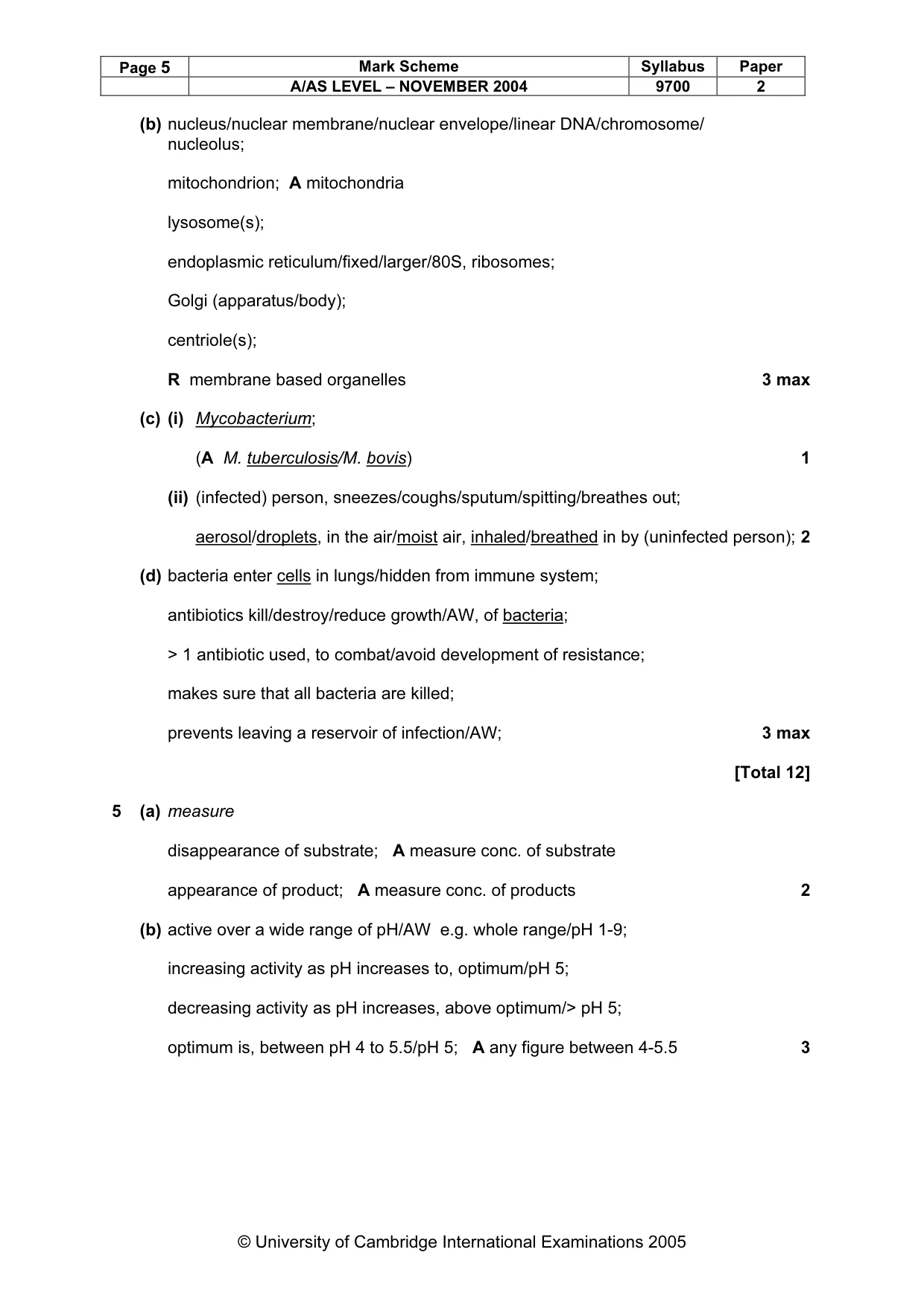
Page 5 Mark Scheme Syllabus Paper A/AS LEVEL – NOVEMBER 2004 9700 2 © University of Cambridge International Examinations 2005 (b) nucleus/nuclear membrane/nuclear envelope/linear DNA/chromosome/ nucleolus; mitochondrion; A mitochondria lysosome(s); endoplasmic reticulum/fixed/larger/80S, ribosomes; Golgi (apparatus/body); centriole(s); R membrane based organelles 3 max (c) (i) Mycobacterium; (A M. tuberculosis/M. bovis) 1 (ii) (infected) person, sneezes/coughs/sputum/spitting/breathes out; aerosol/droplets, in the air/moist air, inhaled/breathed in by (uninfected person); 2 (d) bacteria enter cells in lungs/hidden from immune system; antibiotics kill/destroy/reduce growth/AW, of bacteria; > 1 antibiotic used, to combat/avoid development of resistance; makes sure that all bacteria are killed; prevents leaving a reservoir of infection/AW; 3 max [Total 12] 5 (a) measure disappearance of substrate; A measure conc. of substrate appearance of product; A measure conc. of products 2 (b) active over a wide range of pH/AW e.g. whole range/pH 1-9; increasing activity as pH increases to, optimum/pH 5; decreasing activity as pH increases, above optimum/> pH 5; optimum is, between pH 4 to 5.5/pH 5; A any figure between 4-5.5 3
Mark scheme, page 9
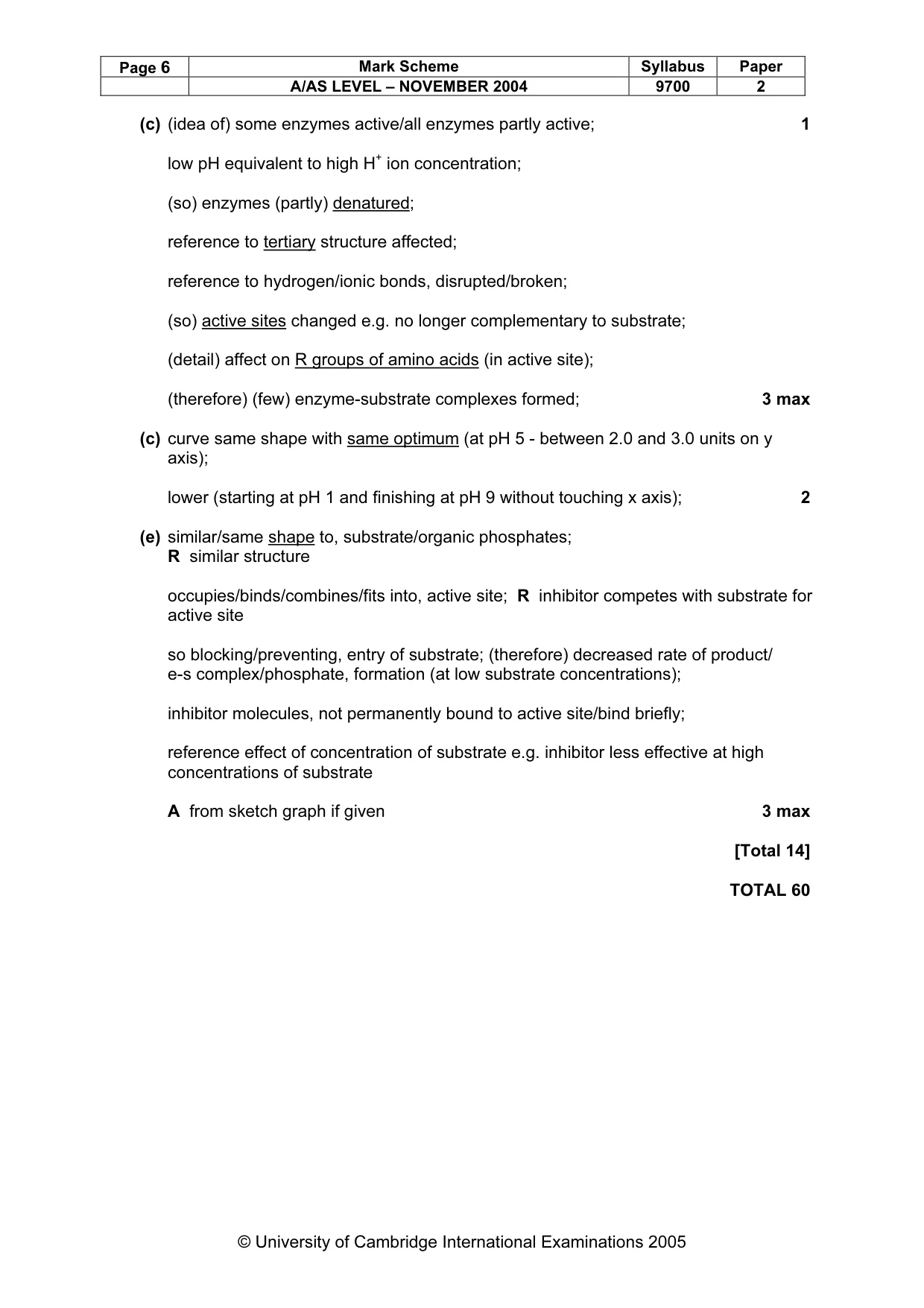
Page 6 Mark Scheme Syllabus Paper A/AS LEVEL – NOVEMBER 2004 9700 2 © University of Cambridge International Examinations 2005 (c) (idea of) some enzymes active/all enzymes partly active; 1 low pH equivalent to high H+ ion concentration; (so) enzymes (partly) denatured; reference to tertiary structure affected; reference to hydrogen/ionic bonds, disrupted/broken; (so) active sites changed e.g. no longer complementary to substrate; (detail) affect on R groups of amino acids (in active site); (therefore) (few) enzyme-substrate complexes formed; 3 max (c) curve same shape with same optimum (at pH 5 - between 2.0 and 3.0 units on y axis); lower (starting at pH 1 and finishing at pH 9 without touching x axis); 2 (e) similar/same shape to, substrate/organic phosphates; R similar structure occupies/binds/combines/fits into, active site; R inhibitor competes with substrate for active site so blocking/preventing, entry of substrate; (therefore) decreased rate of product/ e-s complex/phosphate, formation (at low substrate concentrations); inhibitor molecules, not permanently bound to active site/bind briefly; reference effect of concentration of substrate e.g. inhibitor less effective at high concentrations of substrate A from sketch graph if given 3 max [Total 14] TOTAL 60