Cambridge A Level Biology 9700 — 2002 May/June Paper 6 · Variant 1
9700/61/M/J/02
The question paper and its mark scheme, free to read here and free to download. This is Cambridge’s own paper, exactly as it was sat.
Question paper24 pages

Mark scheme18 pages
Answers below. Sit the paper first if you are practising.
Paper as text
Question paper, page 1
This question paper consists of 24 printed pages. SP (CW/JB) S24856/4 © CIE 2002 [Turn over CAMBRIDGE INTERNATIONAL EXAMINATIONS General Certificate of Education Advanced Level BIOLOGY 9700/6 PAPER 6 Options MAY/JUNE SESSION 2002 1 hour Additional materials: Answer paper TIME 1 hour INSTRUCTIONS TO CANDIDATES Write your name, Centre number and candidate number in the spaces at the top of this page and on all separate answer paper used. Answer the questions set on one of the options. Within your chosen option, Questions 1 and 2 are to be answered in the spaces provided on the question paper. Question 3 is to be answered on the separate answer paper provided. The answer to Question 3 should be illustrated by large, clearly labelled diagrams wherever appropriate. At the end of the examination, 1. fasten all separate answer paper securely to the question paper; 2. enter the number of the option you have answered in the grid below. INFORMATION FOR CANDIDATES The intended number of marks is given in brackets [ ] at the end of each question or part question. The options are: 1 – Biodiversity (page 2) 2 – Biotechnology (page 8) 3 – Growth, Development and Reproduction (page 12) 4 – Applications of Genetics (page 19) You are reminded of the need for good English and clear presentation in your answers. Candidate Centre Number Number Candidate Name FOR EXAMINER’S USE 1 2 3(a) 3(b) OPTION ANSWERED TOTAL
Question paper, page 2
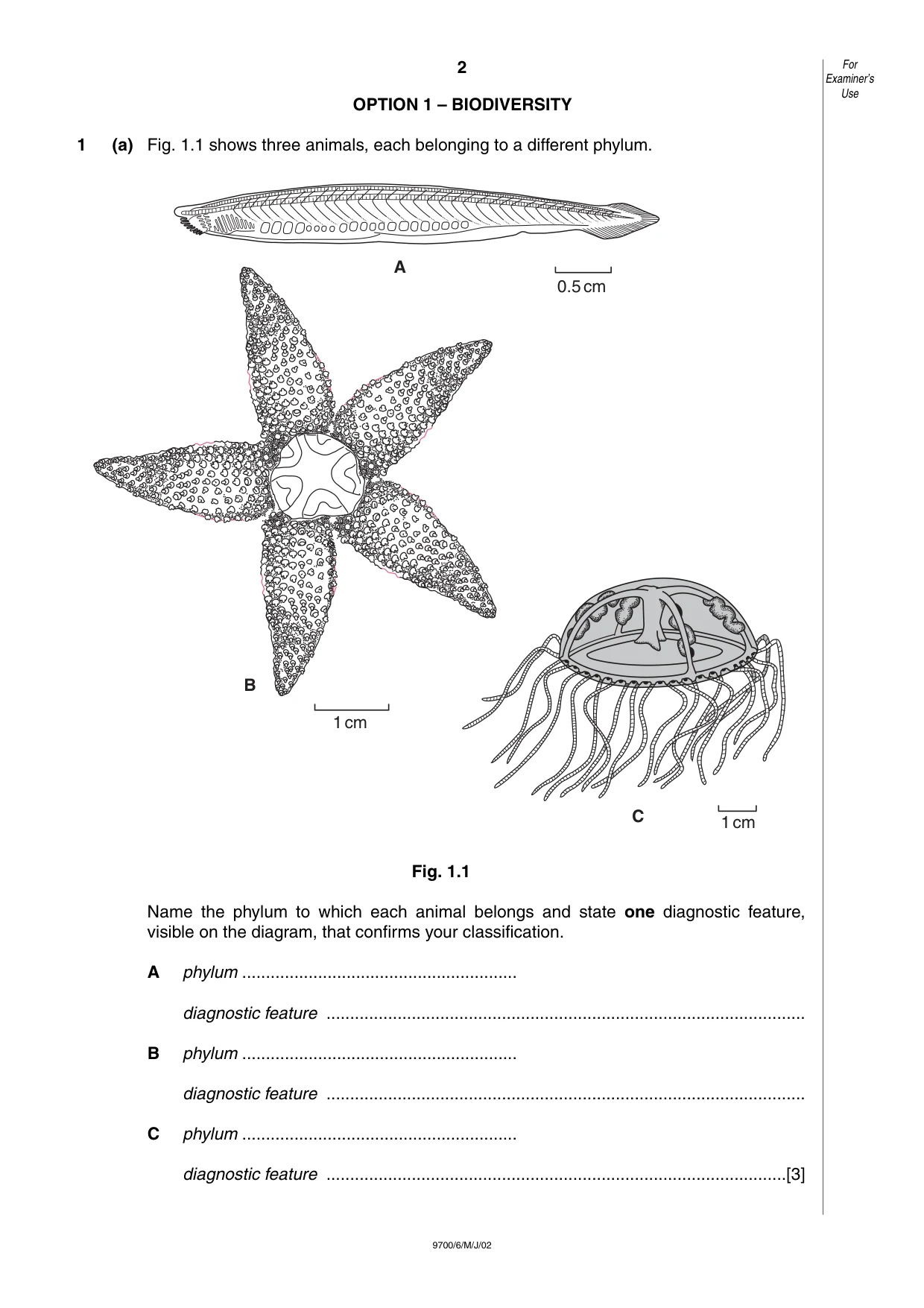
2 9700/6/M/J/02 OPTION 1 – BIODIVERSITY 1 (a) Fig. 1.1 shows three animals, each belonging to a different phylum. Fig. 1.1 Name the phylum to which each animal belongs and state one diagnostic feature, visible on the diagram, that confirms your classification. A phylum … diagnostic feature … B phylum … diagnostic feature … C phylum … diagnostic feature …[3] 0.5 cm 1 cm 1 cm A B C For Examiner’s Use
Question paper, page 3
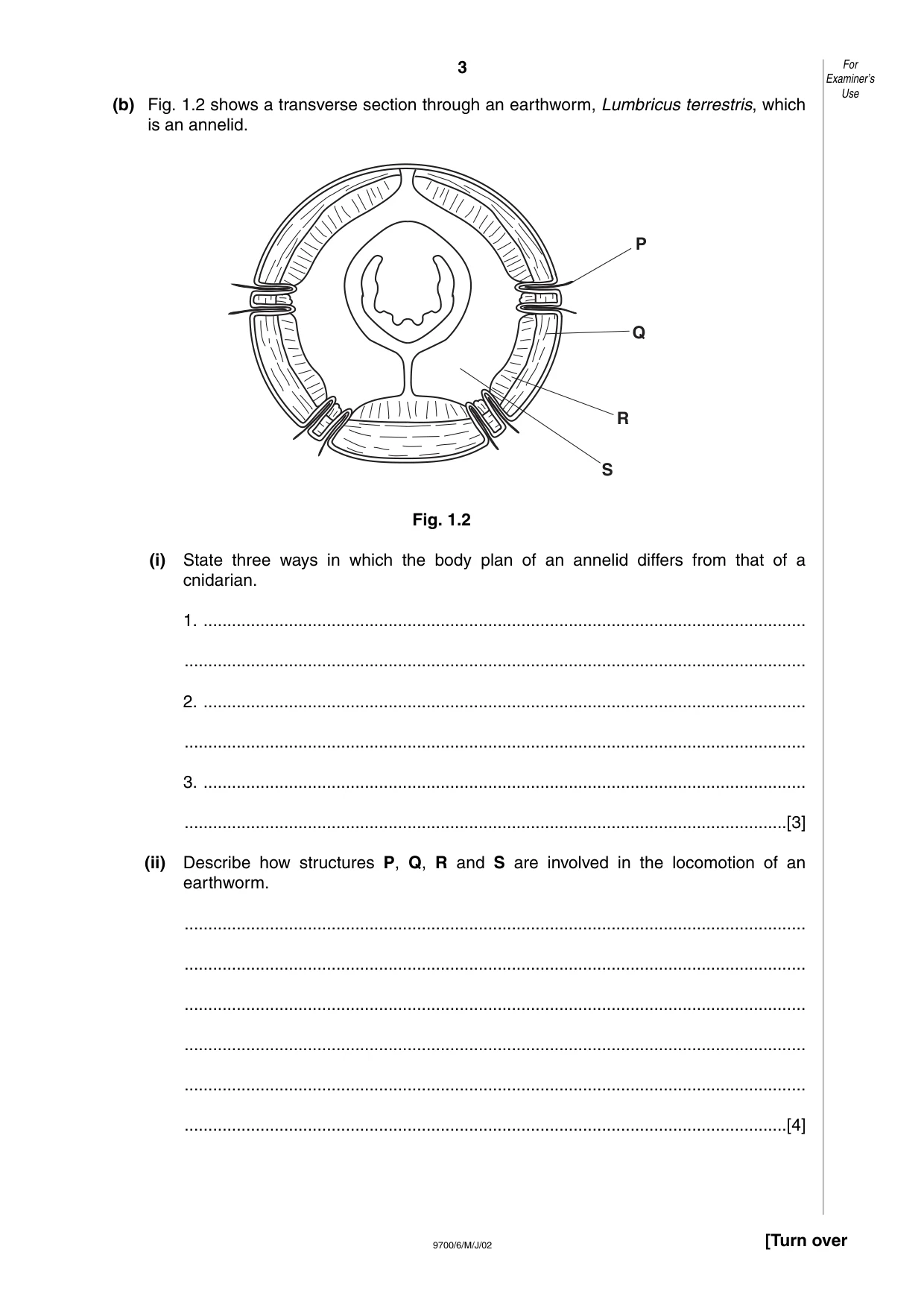
3 9700/6/M/J/02 [Turn over (b) Fig. 1.2 shows a transverse section through an earthworm, Lumbricus terrestris, which is an annelid. Fig. 1.2 (i) State three ways in which the body plan of an annelid differs from that of a cnidarian. 1. … … 2. … … 3. … …[3] (ii) Describe how structures P, Q, R and S are involved in the locomotion of an earthworm. … … … … … …[4] P Q R S For Examiner’s Use
Question paper, page 4
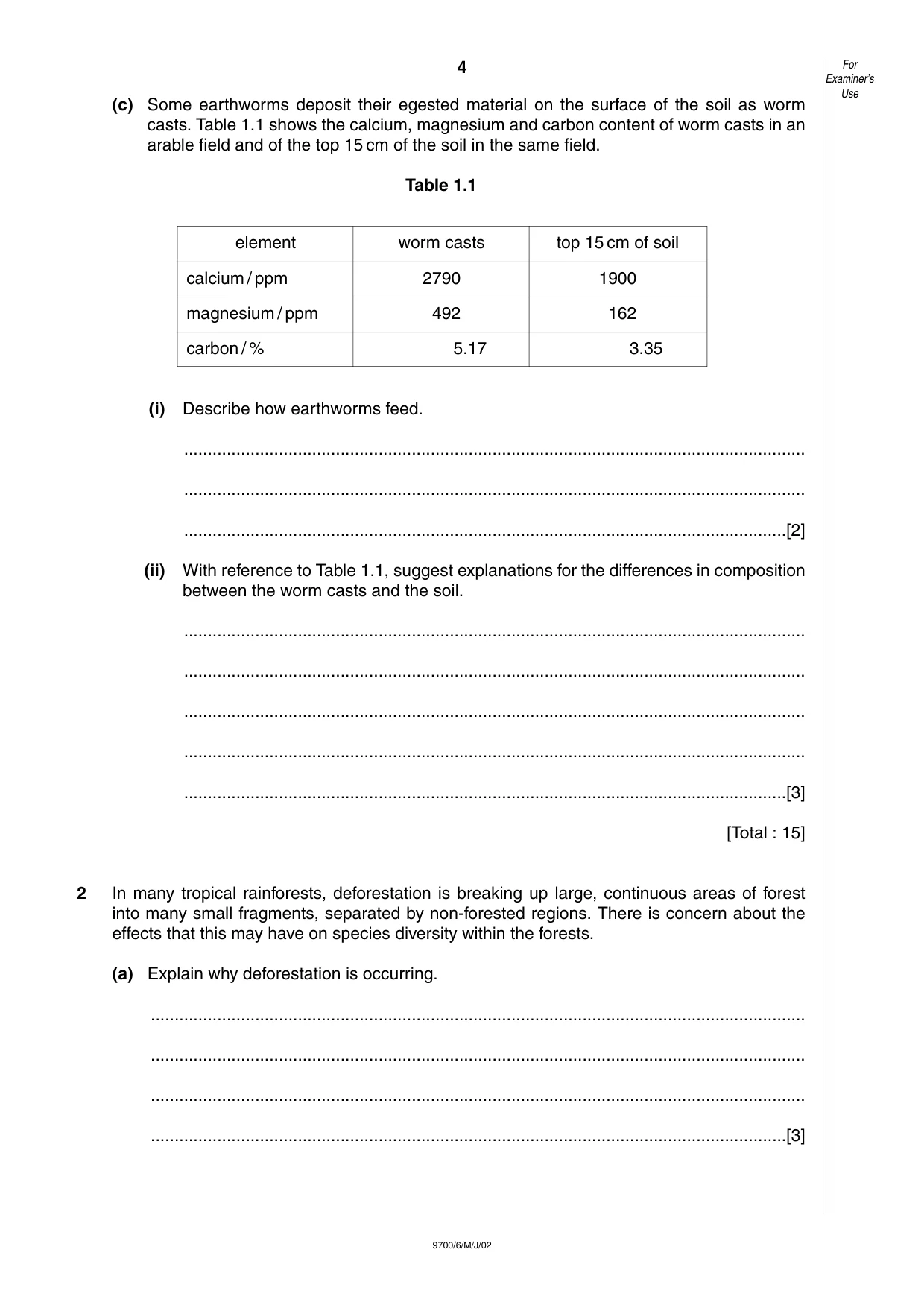
4 9700/6/M/J/02 (c) Some earthworms deposit their egested material on the surface of the soil as worm casts. Table 1.1 shows the calcium, magnesium and carbon content of worm casts in an arable field and of the top 15 cm of the soil in the same field. Table 1.1 (i) Describe how earthworms feed. … … …[2] (ii) With reference to Table 1.1, suggest explanations for the differences in composition between the worm casts and the soil. … … … … …[3] [Total : 15] 2 In many tropical rainforests, deforestation is breaking up large, continuous areas of forest into many small fragments, separated by non-forested regions. There is concern about the effects that this may have on species diversity within the forests. (a) Explain why deforestation is occurring. … … … …[3] For Examiner’s Use element worm casts top 15 cm of soil calcium / ppm 2790 1900 magnesium / ppm 492 162 carbon / % 5.17 3.35
Question paper, page 5
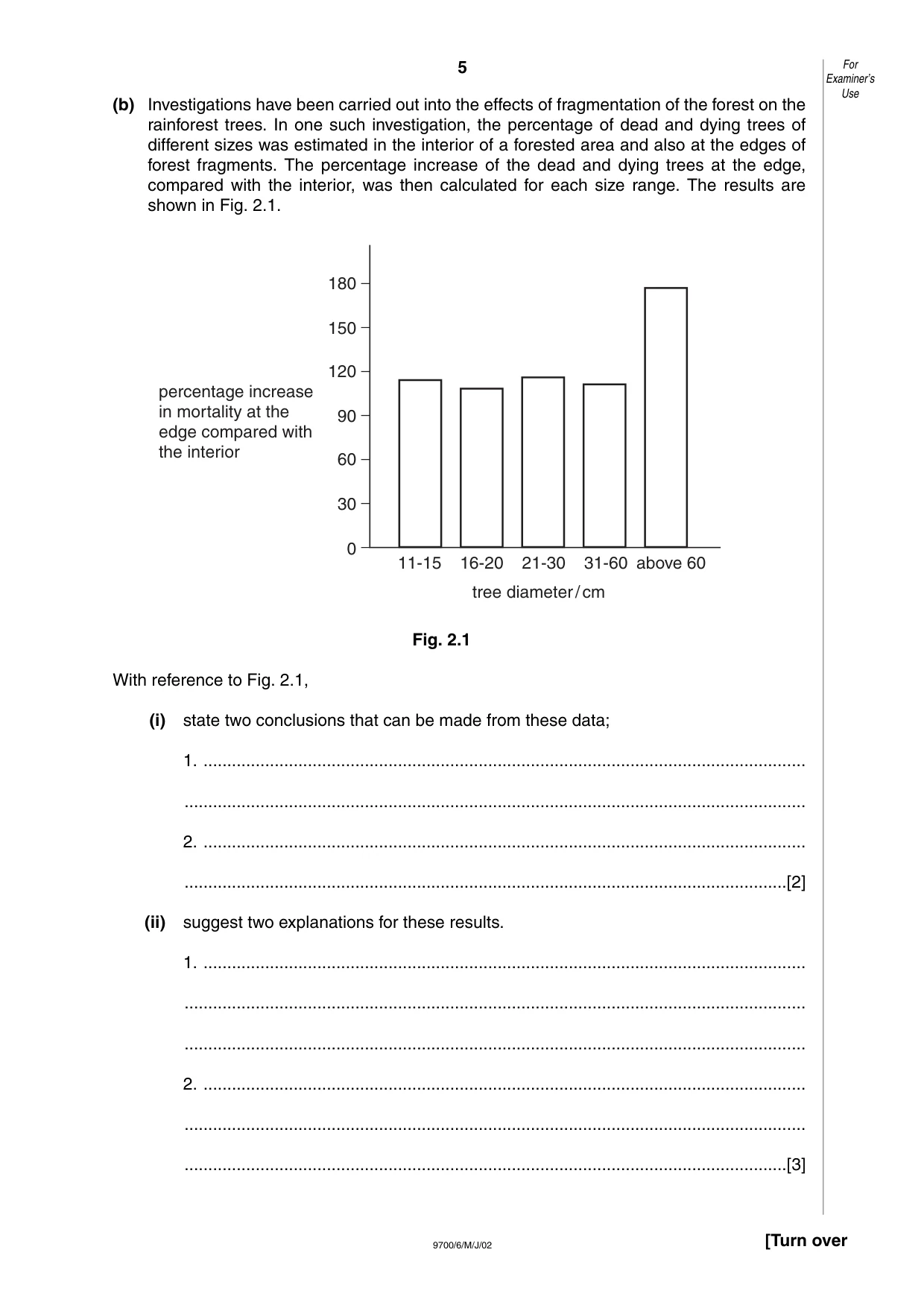
5 9700/6/M/J/02 [Turn over (b) Investigations have been carried out into the effects of fragmentation of the forest on the rainforest trees. In one such investigation, the percentage of dead and dying trees of different sizes was estimated in the interior of a forested area and also at the edges of forest fragments. The percentage increase of the dead and dying trees at the edge, compared with the interior, was then calculated for each size range. The results are shown in Fig. 2.1. Fig. 2.1 With reference to Fig. 2.1, (i) state two conclusions that can be made from these data; 1. … … 2. … …[2] (ii) suggest two explanations for these results. 1. … … … 2. … … …[3] 180 150 120 90 60 30 0 percentage increase in mortality at the edge compared with the interior 11-15 16-20 21-30 31-60 above 60 tree diameter / cm For Examiner’s Use
Question paper, page 6
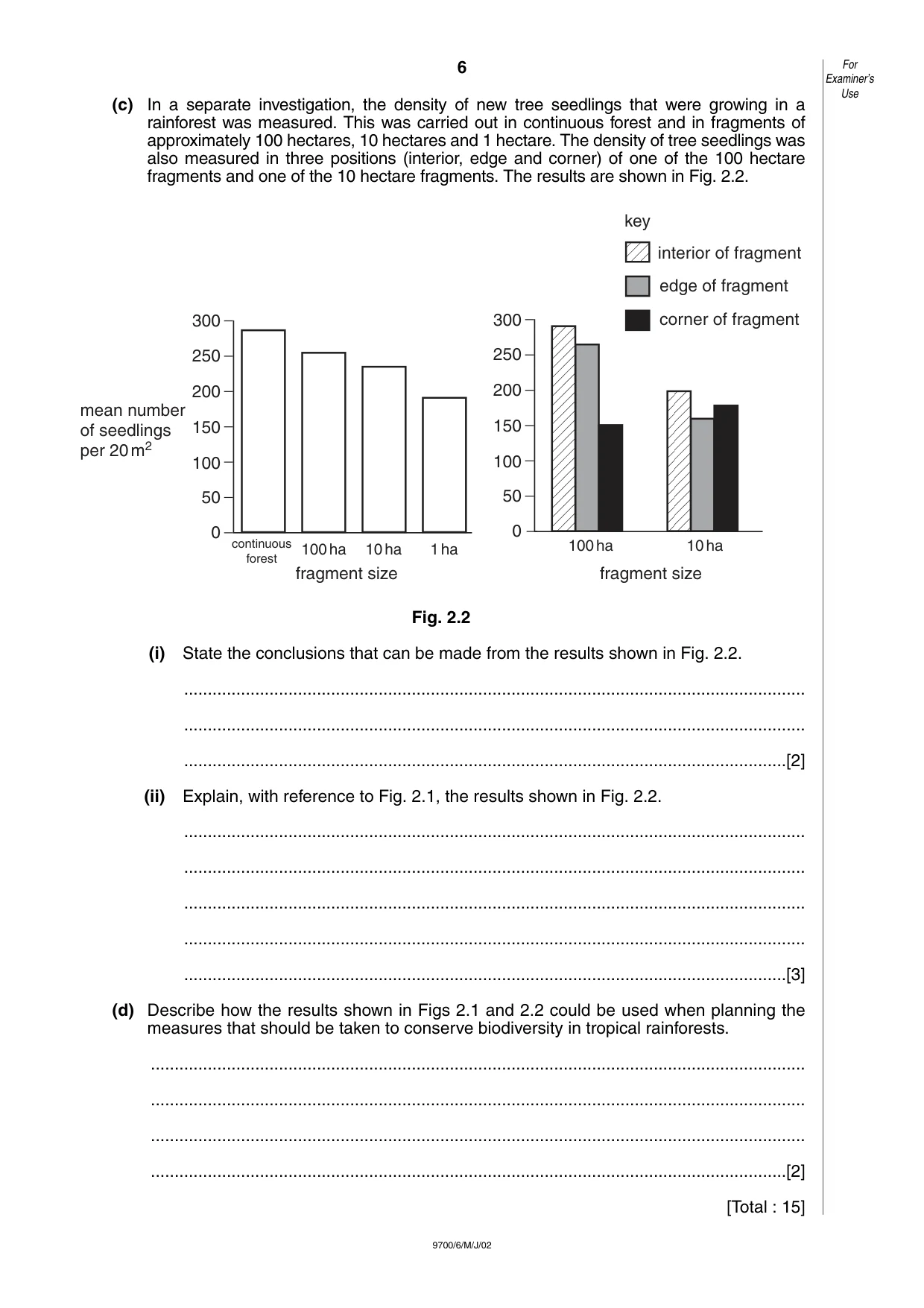
6 9700/6/M/J/02 (c) In a separate investigation, the density of new tree seedlings that were growing in a rainforest was measured. This was carried out in continuous forest and in fragments of approximately 100 hectares, 10 hectares and 1 hectare. The density of tree seedlings was also measured in three positions (interior, edge and corner) of one of the 100 hectare fragments and one of the 10 hectare fragments. The results are shown in Fig. 2.2. Fig. 2.2 (i) State the conclusions that can be made from the results shown in Fig. 2.2. … … …[2] (ii) Explain, with reference to Fig. 2.1, the results shown in Fig. 2.2. … … … … …[3] (d) Describe how the results shown in Figs 2.1 and 2.2 could be used when planning the measures that should be taken to conserve biodiversity in tropical rainforests. … … … …[2] [Total : 15] 300 250 200 150 100 50 300 250 200 150 100 50 0 continuous forest 100 ha 10 ha 100 ha 10 ha 1 ha fragment size fragment size mean number of seedlings per 20 m2 0 interior of fragment edge of fragment corner of fragment key For Examiner’s Use
Question paper, page 7
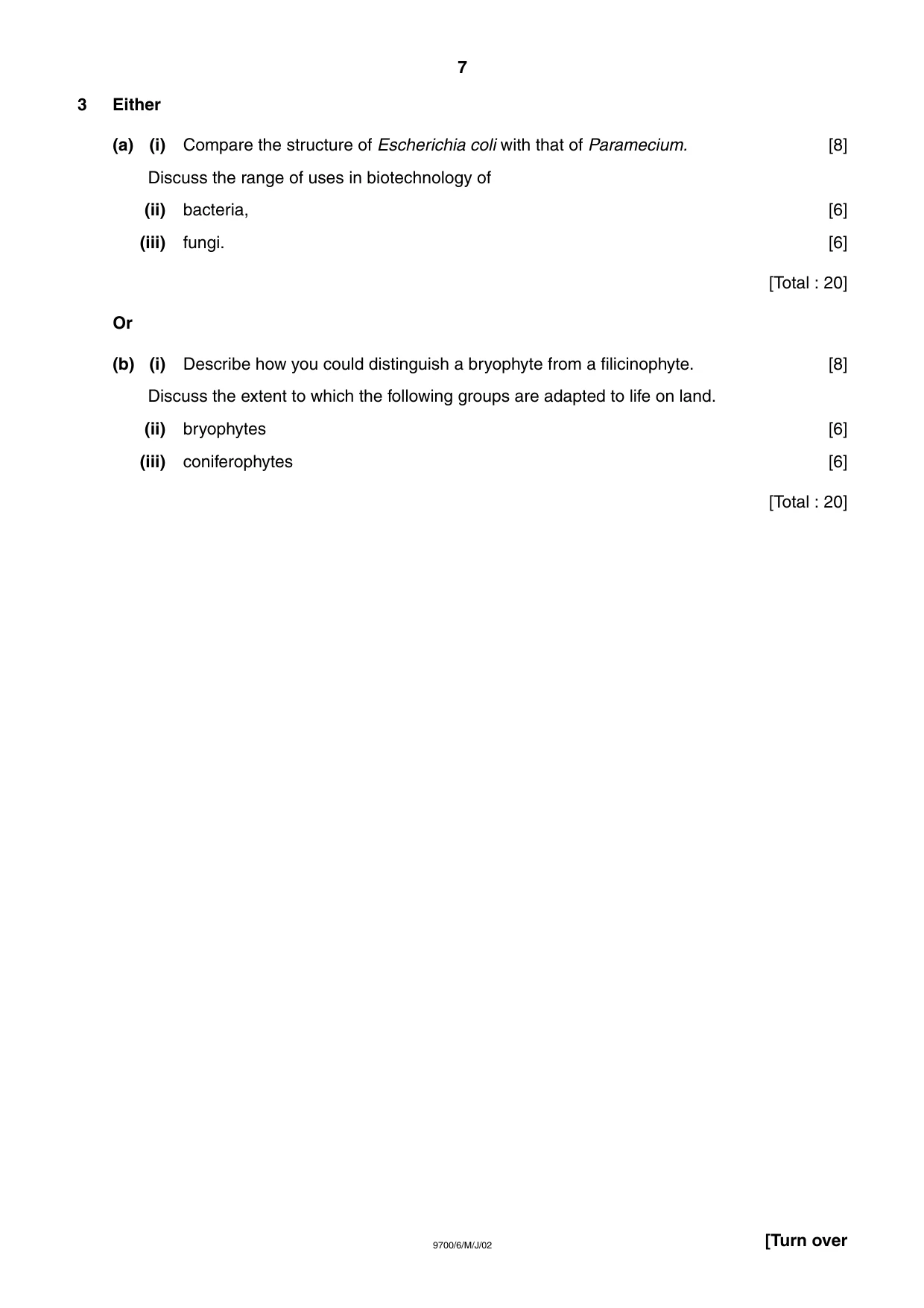
7 9700/6/M/J/02 [Turn over 3 Either (a) (i) Compare the structure of Escherichia coli with that of Paramecium. [8] Discuss the range of uses in biotechnology of (ii) bacteria, [6] (iii) fungi. [6] [Total : 20] Or (b) (i) Describe how you could distinguish a bryophyte from a filicinophyte. [8] Discuss the extent to which the following groups are adapted to life on land. (ii) bryophytes [6] (iii) coniferophytes [6] [Total : 20]
Question paper, page 8
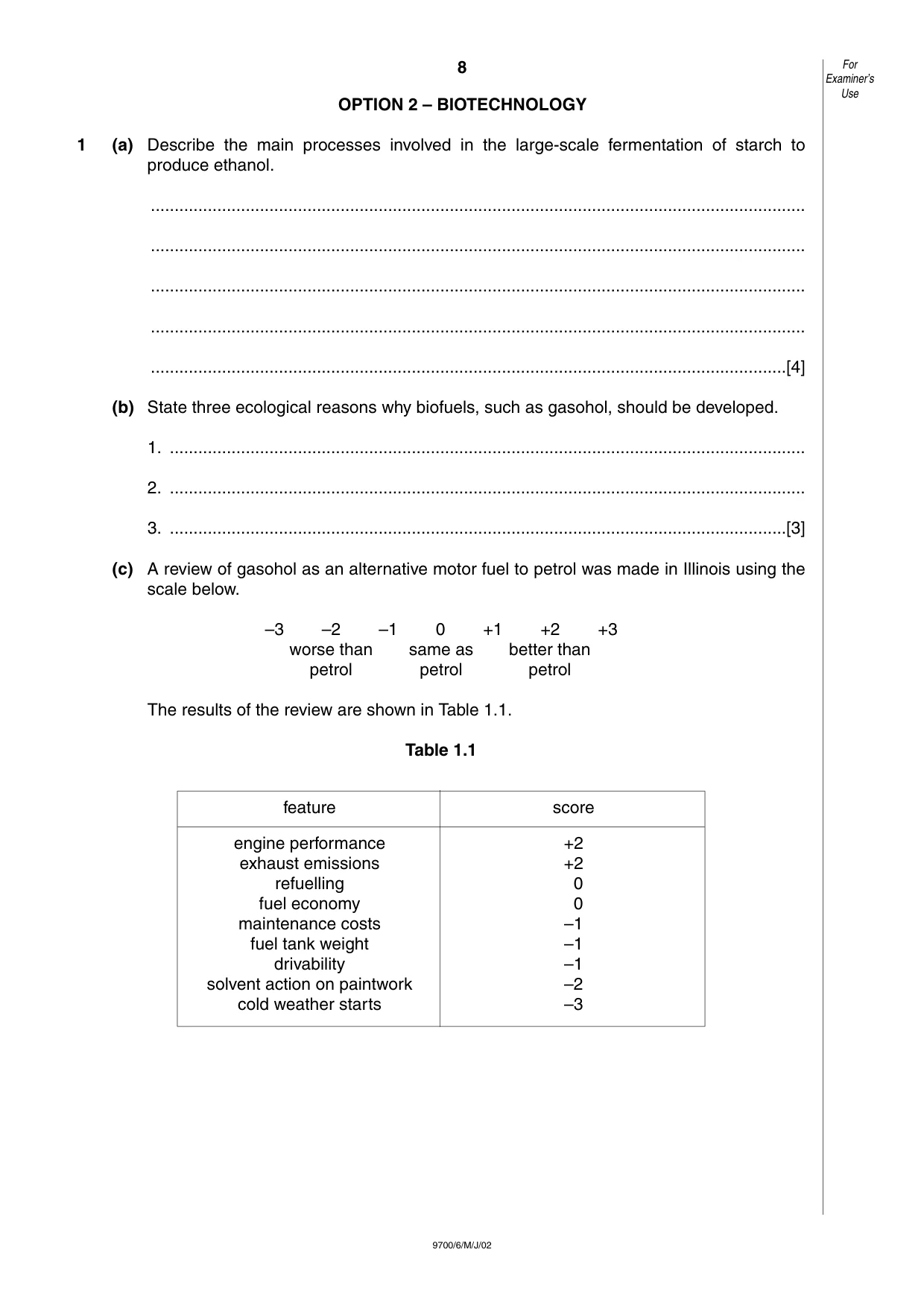
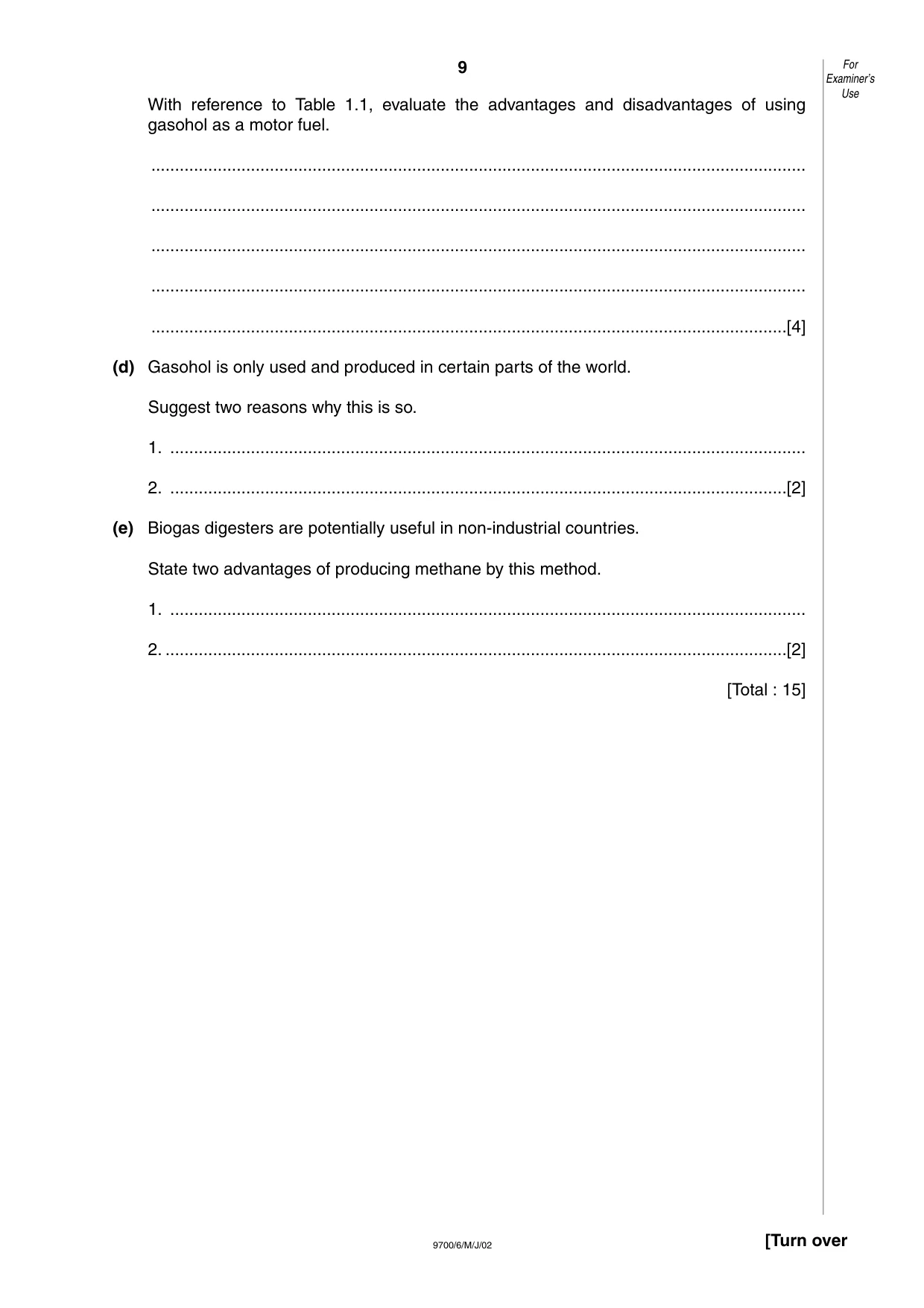
8 9700/6/M/J/02 OPTION 2 – BIOTECHNOLOGY 1 (a) Describe the main processes involved in the large-scale fermentation of starch to produce ethanol. … … … … …[4] (b) State three ecological reasons why biofuels, such as gasohol, should be developed. 1. … 2. … 3. …[3] (c) A review of gasohol as an alternative motor fuel to petrol was made in Illinois using the scale below. –3 –2 –1 0 +1 +2 +3 worse than same as better than petrol petrol petrol The results of the review are shown in Table 1.1. Table 1.1 For Examiner’s Use feature score engine performance +2 exhaust emissions +2 refuelling 0 fuel economy 0 maintenance costs –1 fuel tank weight –1 drivability –1 solvent action on paintwork –2 cold weather starts –3
Question paper, page 9
9 9700/6/M/J/02 [Turn over With reference to Table 1.1, evaluate the advantages and disadvantages of using gasohol as a motor fuel. … … … … …[4] (d) Gasohol is only used and produced in certain parts of the world. Suggest two reasons why this is so. 1. … 2. …[2] (e) Biogas digesters are potentially useful in non-industrial countries. State two advantages of producing methane by this method. 1. … 2. …[2] [Total : 15] For Examiner’s Use
Question paper, page 10
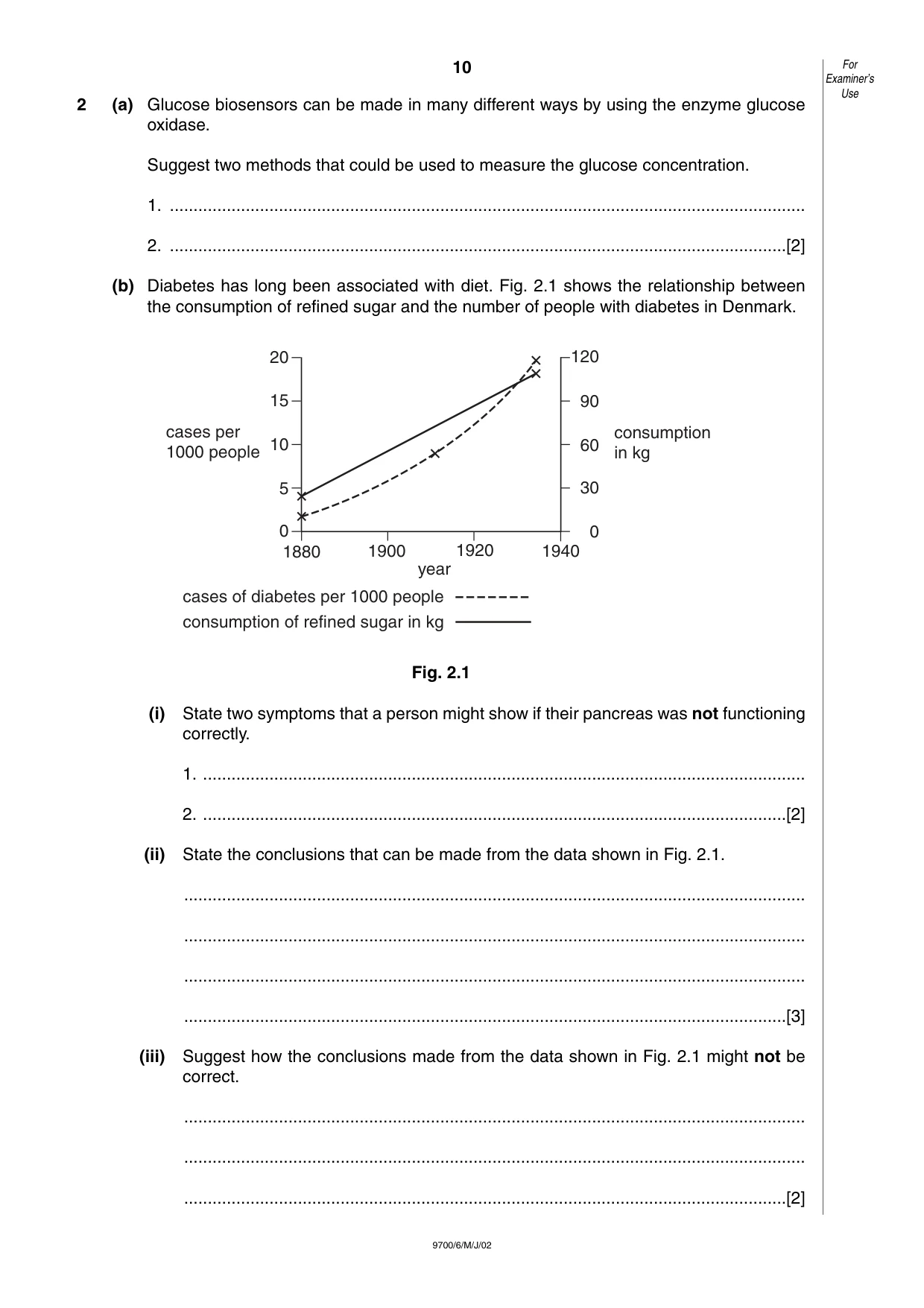
10 9700/6/M/J/02 2 (a) Glucose biosensors can be made in many different ways by using the enzyme glucose oxidase. Suggest two methods that could be used to measure the glucose concentration. 1. … 2. …[2] (b) Diabetes has long been associated with diet. Fig. 2.1 shows the relationship between the consumption of refined sugar and the number of people with diabetes in Denmark. Fig. 2.1 (i) State two symptoms that a person might show if their pancreas was not functioning correctly. 1. … 2. …[2] (ii) State the conclusions that can be made from the data shown in Fig. 2.1. … … … …[3] (iii) Suggest how the conclusions made from the data shown in Fig. 2.1 might not be correct. … … …[2] 20 15 10 5 0 120 90 60 30 0 1900 1880 1920 1940 cases per 1000 people consumption in kg year cases of diabetes per 1000 people consumption of refined sugar in kg For Examiner’s Use
Question paper, page 11
11 9700/6/M/J/02 [Turn over (c) The first pancreatic transplant took place in 1965. Others followed but the results were disappointing and the operations were stopped. State two benefits to a diabetic person of having a pancreas transplant. 1. … 2. …[2] (d) Bacteria have been genetically engineered to produce insulin and are now used in the large-scale production of insulin. Discuss the advantages of producing insulin in this way rather than extracting it from cows or pigs. … … … … …[4] [Total : 15] 3 Either (a) (i) Describe the production of mycoprotein. [8] Discuss the use of genetic engineering in improving the quality and yield of (ii) crop plants, [6] (iii) animals. [6] [Total : 20] Or (b) (i) Evaluate the relevance of agricultural biotechnology to a nation with limited areas of land suitable for agriculture. [6] Discuss the role of biotechnology in (ii) making yoghurt, [7] (iii) tenderising meat. [7] [Total : 20] For Examiner’s Use
Question paper, page 12
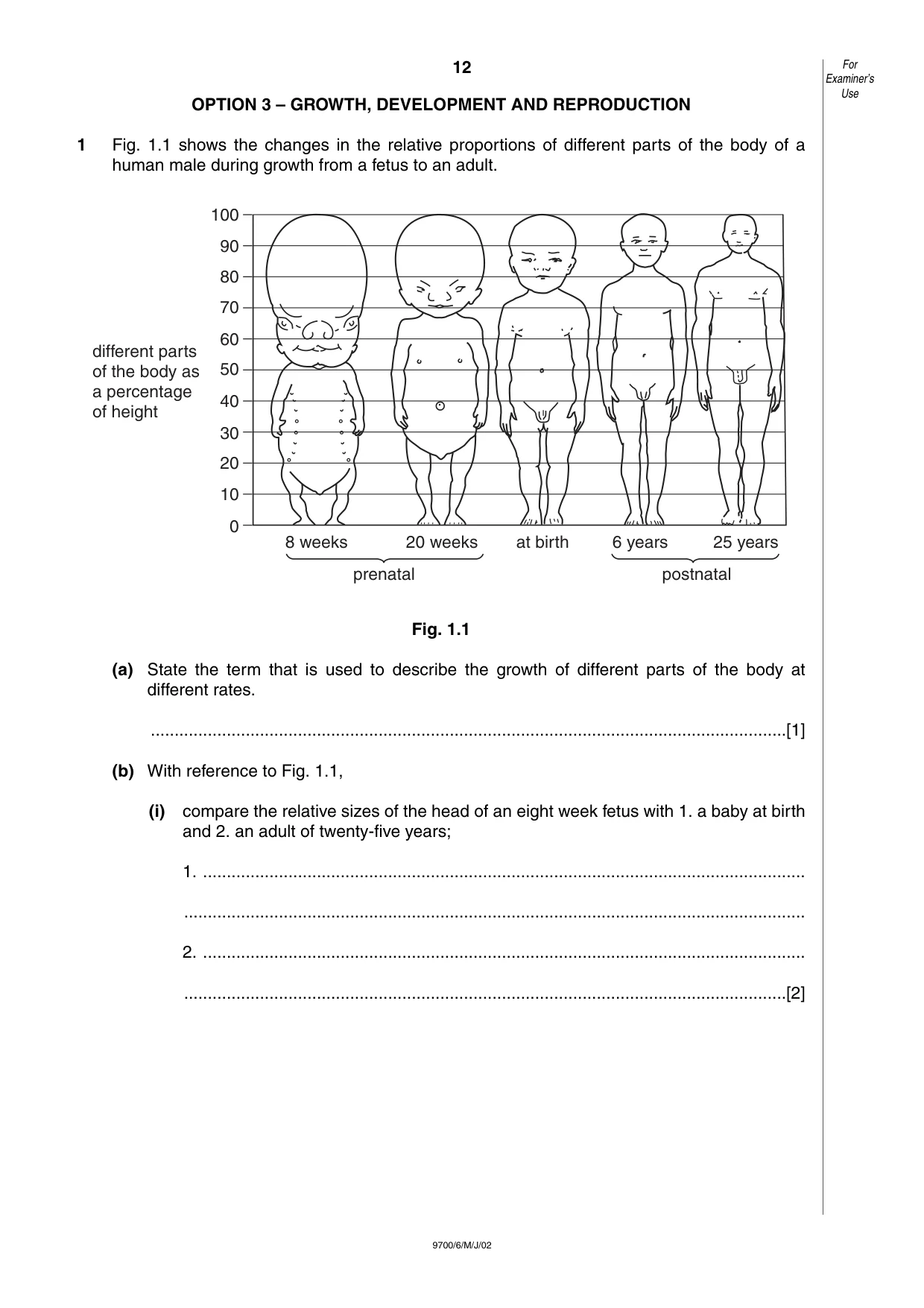
12 9700/6/M/J/02 OPTION 3 – GROWTH, DEVELOPMENT AND REPRODUCTION 1 Fig. 1.1 shows the changes in the relative proportions of different parts of the body of a human male during growth from a fetus to an adult. Fig. 1.1 (a) State the term that is used to describe the growth of different parts of the body at different rates. …[1] (b) With reference to Fig. 1.1, (i) compare the relative sizes of the head of an eight week fetus with 1. a baby at birth and 2. an adult of twenty-five years; 1. … … 2. … …[2] 100 90 80 70 60 50 40 30 20 10 0 different parts of the body as a percentage of height 8 weeks 20 weeks at birth 6 years 25 years prenatal postnatal For Examiner’s Use
Question paper, page 13
13 9700/6/M/J/02 [Turn over (ii) suggest three reasons that might account for the differing relative sizes you have described in (i). 1. … … 2. … … 3. … …[3] For Examiner’s Use
Question paper, page 14
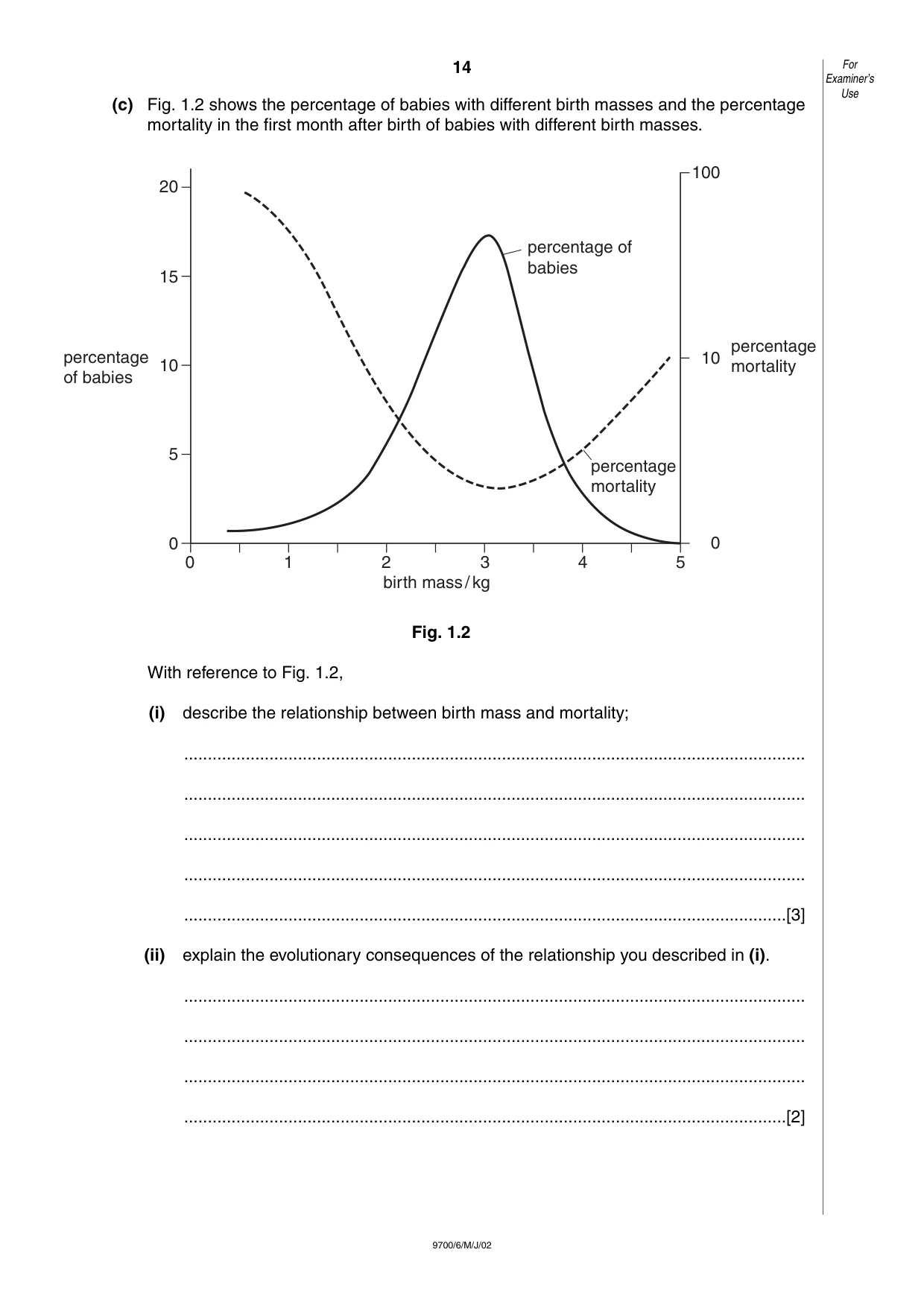
14 9700/6/M/J/02 (c) Fig. 1.2 shows the percentage of babies with different birth masses and the percentage mortality in the first month after birth of babies with different birth masses. Fig. 1.2 With reference to Fig. 1.2, (i) describe the relationship between birth mass and mortality; … … … … …[3] (ii) explain the evolutionary consequences of the relationship you described in (i). … … … …[2] For Examiner’s Use 20 15 10 5 0 0 1 2 3 4 5 100 10 0 percentage mortality percentage mortality percentage of babies birth mass / kg percentage of babies
Question paper, page 15
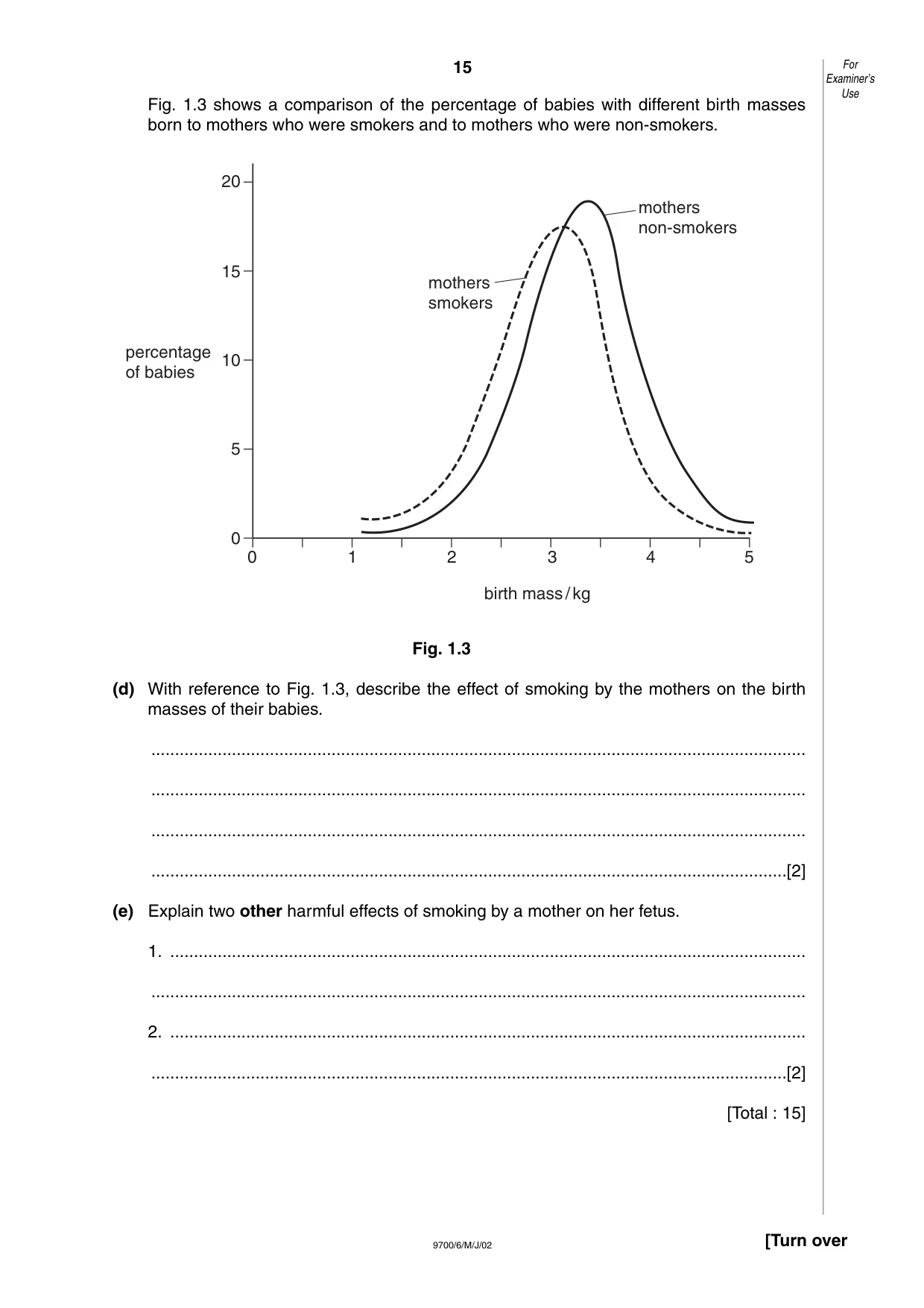
15 9700/6/M/J/02 [Turn over Fig. 1.3 shows a comparison of the percentage of babies with different birth masses born to mothers who were smokers and to mothers who were non-smokers. Fig. 1.3 (d) With reference to Fig. 1.3, describe the effect of smoking by the mothers on the birth masses of their babies. … … … …[2] (e) Explain two other harmful effects of smoking by a mother on her fetus. 1. … … 2. … …[2] [Total : 15] 20 15 10 5 0 0 1 2 3 4 5 percentage of babies mothers non-smokers mothers smokers birth mass / kg For Examiner’s Use
Question paper, page 16
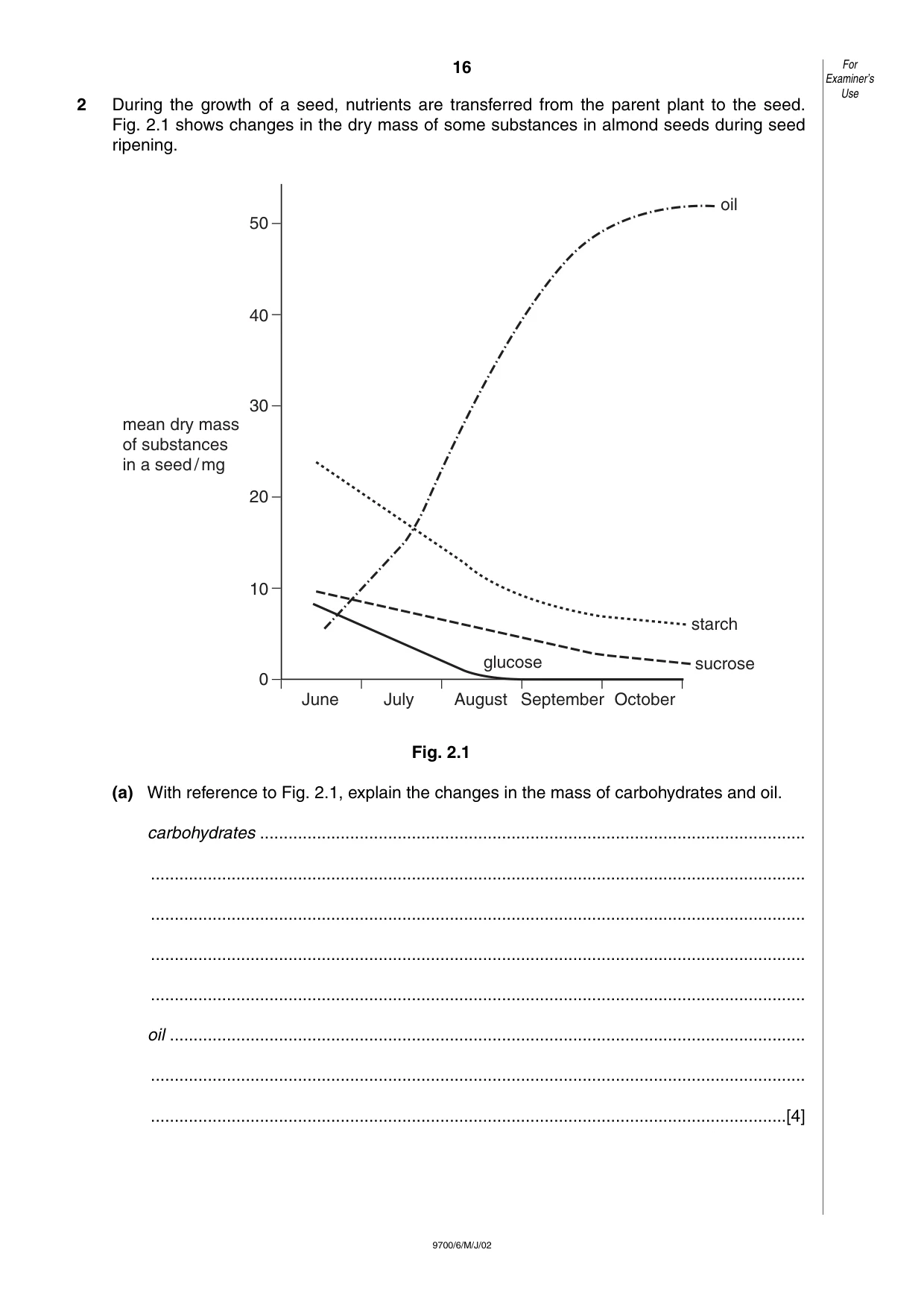
16 9700/6/M/J/02 2 During the growth of a seed, nutrients are transferred from the parent plant to the seed. Fig. 2.1 shows changes in the dry mass of some substances in almond seeds during seed ripening. Fig. 2.1 (a) With reference to Fig. 2.1, explain the changes in the mass of carbohydrates and oil. carbohydrates … … … … … oil … … …[4] 50 40 30 20 10 0 June July August September October oil starch sucrose glucose mean dry mass of substances in a seed / mg For Examiner’s Use
Question paper, page 17
17 9700/6/M/J/02 [Turn over (b) Explain the benefits to a plant of storing oil, rather than starch, as a reserve. … … …[2] (c) Describe how oil would be utilised by a germinating seed. … … … …[3] (d) Describe, with reasons, the changes in the dry mass of a seed from the onset of germination until the seedling is living independently of food reserves. … … … … …[4] (e) Seed germination is affected by certain plant growth regulators. Describe two actions of gibberellins during seed germination. 1. … … 2. … …[2] [Total : 15] For Examiner’s Use
Question paper, page 18
18 9700/6/M/J/02 3 Either (a) (i) Describe two different asexual methods used to propagate commercially important plants. [6] (ii) Discuss the advantages and disadvantages to crop growers of using asexual propagation. [7] (iii) Explain how sexual reproduction in flowering plants can lead to new genetic combinations. [7] [Total : 20] Or (b) (i) Describe the role of the thyroid gland and the functions of thyroxine in human growth and development. [8] (ii) Explain how thyroxine secretion is controlled within the body. [6] (iii) Outline the role of hormones in hormone replacement therapy (HRT). [6] [Total : 20]
Question paper, page 19
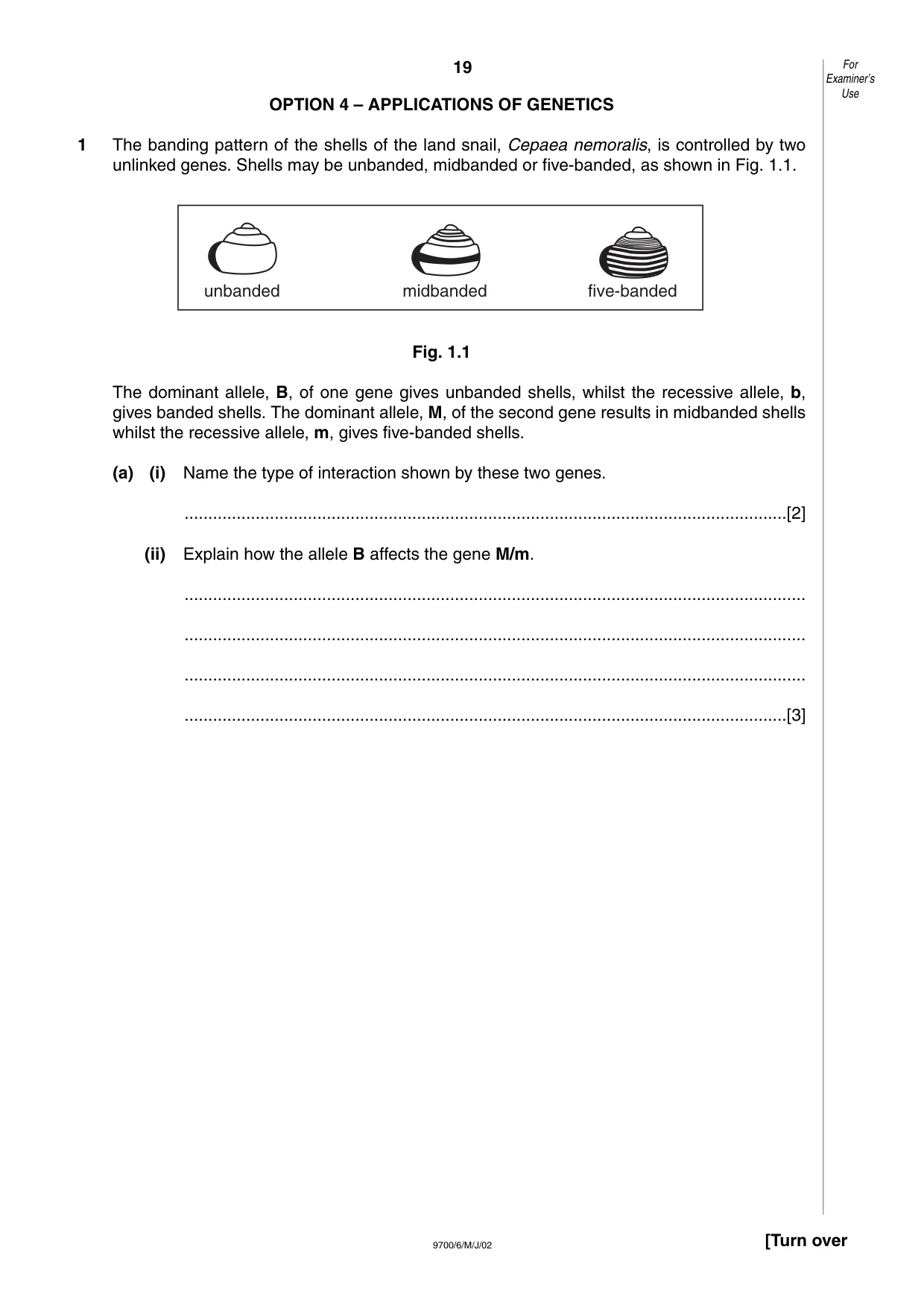
19 9700/6/M/J/02 [Turn over OPTION 4 – APPLICATIONS OF GENETICS 1 The banding pattern of the shells of the land snail, Cepaea nemoralis, is controlled by two unlinked genes. Shells may be unbanded, midbanded or five-banded, as shown in Fig. 1.1. Fig. 1.1 The dominant allele, B, of one gene gives unbanded shells, whilst the recessive allele, b, gives banded shells. The dominant allele, M, of the second gene results in midbanded shells whilst the recessive allele, m, gives five-banded shells. (a) (i) Name the type of interaction shown by these two genes. …[2] (ii) Explain how the allele B affects the gene M/m. … … … …[3] unbanded midbanded five-banded For Examiner’s Use
Question paper, page 20
20 9700/6/M/J/02 (b) A snail with an unbanded shell with the genotype BBMM was mated with a snail with a five-banded shell and the F1 offspring interbred to give an F2 generation. Draw a genetic diagram of this cross to show the genotype of the five-banded parent, the gametes and the genotypes and phenotypes of the F1 and F2 generations. State the ratio of phenotypes in the F2 generation. ratio of F2 phenotypes …[8] For Examiner’s Use
Question paper, page 21
21 9700/6/M/J/02 [Turn over (c) The B/b gene is very tightly linked to a gene controlling the colour of the snail shell. The allele giving a pink shell is dominant to that giving yellow. A homozygous, unbanded, pink-shelled snail was mated with a homozygous, banded, yellow-shelled snail and the F1 offspring test crossed. (i) State what is meant by the term linkage. … …[1] (ii) State the ratio of phenotypes expected in the offspring of the test cross described above. … …[1] [Total : 15] 2 (a) Explain briefly how DNA is prepared for electrophoresis in genetic fingerprinting and genetic screening. … … … … … …[4] Many cases of the genetic disease ß-thalassaemia result from a large deletion in the gene for ß globin. (b) Explain how electrophoresis allows an allele with a large deletion to be distinguished from the normal allele. … … …[2] For Examiner’s Use
Question paper, page 22
22 9700/6/M/J/02 One therapy for ß-thalassaemia is to transplant bone marrow cells from a genetically compatible donor into the patient. (c) Explain briefly the role of the major histocompatibility (HLA) system in genetic compatibility. … … … … …[4] A potential gene therapy for ß-thalassaemia involves adding the normal, dominant allele for ß globin to the patient’s bone marrow cells. (d) Explain why it is theoretically easier to perform gene therapy when a mutant allele is recessive than when it is dominant. … … … …[3] (e) Such gene therapy has been tested in mice. Bone marrow cells carrying the normal allele for human ß globin were implanted both in normal mice and in mice heterozygous for the deletion causing ß-thalassaemia. Twenty-four weeks later, the percentage of haemoglobin containing two human ß globin chains was measured in both types of mouse. The results are shown in Table 2.1. Table 2.1 With reference to Table 2.1, suggest why the human gene is expressed less in normal mice. … … …[2] [Total : 15] For Examiner’s Use type of mouse percentage of mouse haemoglobin with two human ß globin chains normal 13 heterozygous for the deletion causing ß-thalassaemia 24
Question paper, page 23
23 9700/6/M/J/02 3 Either (a) (i) Explain the need to maintain rare breeds of animals. [6] (ii) Describe the process of selective breeding in a named animal. [8] (iii) Describe the harmful effects of inbreeding animals. [6] [Total : 20] Or (b) (i) Explain briefly what is meant by the terms gene mutation and chromosome mutation. [6] (ii) Compare the mutations responsible for cystic fibrosis (CF) and Huntington’s disease (HD) and explain the effect on the inheritance of each disease. [8] (iii) Explain why mutations for antibiotic resistance spread so rapidly among bacteria. [6] [Total : 20]
Question paper, page 24
24 9700/6/M/J/02 Copyright Acknowledgements: Option 1. From Invertebrate Zoology, 6th Edition, E. Ruppert, R. Barnes. © 1994. Reprinted with permission of Brooks/Cole, an imprint of the Wadsworth Group, a division of Thomson Learning. Fax 800 730-2215. Option 3. Stanley Ulijaszek. Cambridge Encyclopedia of Human Growth and Development. 1998. Cambridge University Press. Option 4. M Carter. Genetics and Evolution. Reproduced by Hodder and Stoughton Educational Limited. Cambridge International Examinations has made every effort to trace copyright holders, but if we have inadvertently overlooked any we will be pleased to make the necessary arrangements at the first opportunity.
Mark scheme, page 1
CAMBRIDGE INTERNATIONAL EXAMINATIONS JUNE 2002 GCE Advanced Level MAXIMUM MARK : 50 SYLLABUS/COMPONENT :9700 /6 BIOLOGY (OPTIONS (A2)) P5255 UNIversITy of CAMBRIDGE “9 Local Examinations Syndicate
Mark scheme, page 2
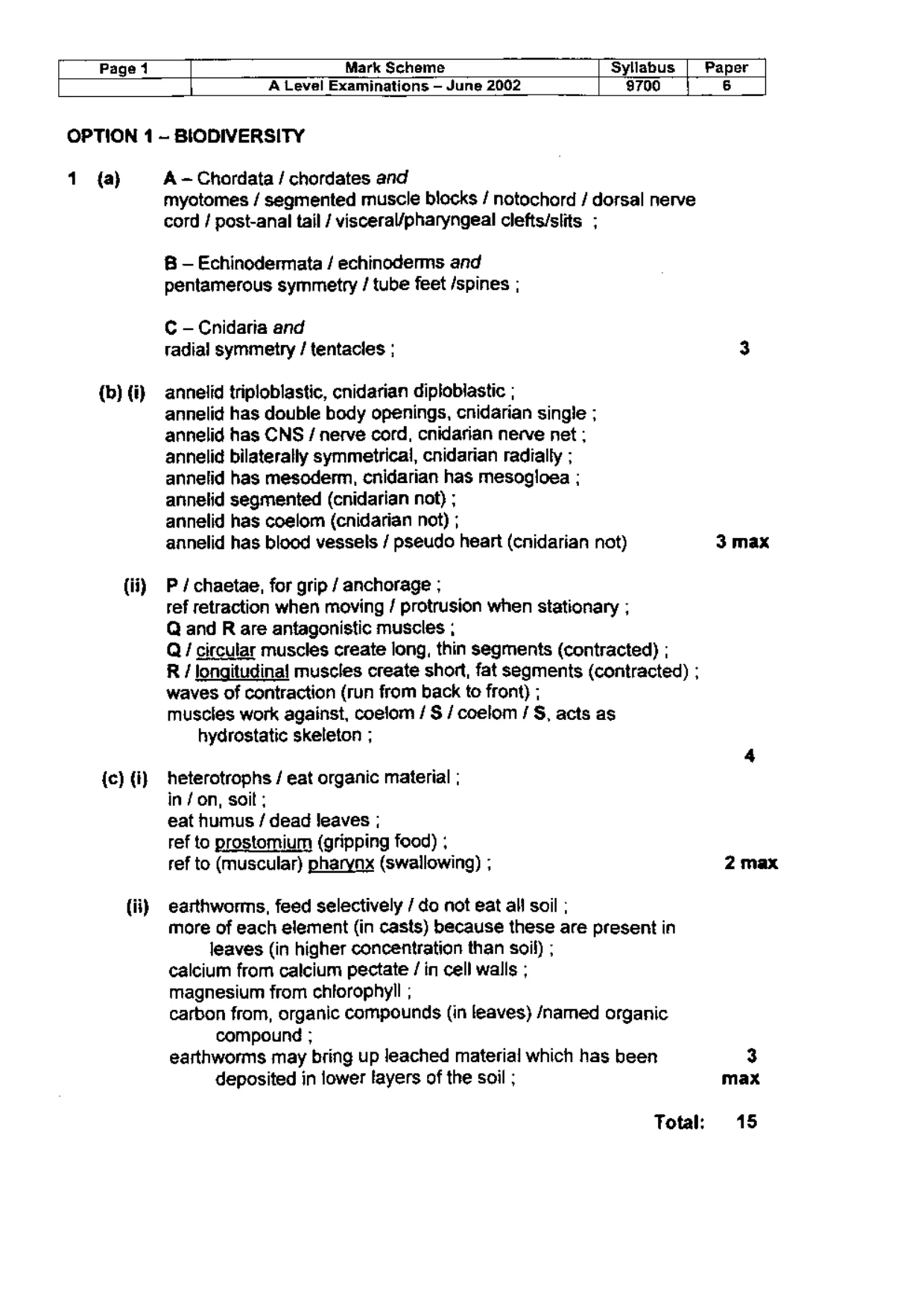
Page 1 Mark Scheme Syllabus | Paper A Level Examinations — June 2002 $700 6 OPTION 1 ~ BIODIVERSITY 1 (a) {b) (i) (ii) {c) {i) (ii) A- Chordata / chordates and myotomes / segmented muscle blocks / notochord / dorsal nerve cord / post-anal tail / visceral/pharyngeal clefts/slits ; B — Echinodermata / echinoderms and pentamerous symmetry / tube feet /spines ; C - Cnidaria and tadial symmetry / tentacles ; 3 annelid triploblastic, cnidarian diptobiastic ; annelid has double body openings, cnidarian single ; annelid has CNS / nerve cord, cnidarian nerve net ; annelid bilaterally symmetrical, cnidarian radially ; annelid has mesoderm, cnidarian has mesogloea ; annelid segmented (cnidarian not) ; annelid has coelom (cnidarian not) ; annelid has blood vessels / pseudo heart (cnidarian not) 3 max P / chaetae, for grip / anchorage ; ref retraction when moving / protrusion when stationary ; Qand R are antagonistic muscles ; Q/ circular muscles create long, thin segments (contracted) ; R / longitudinal muscles create short, fat segments (contracted) ; waves of contraction (run from back to front) ; muscles work against, coelom / S$ / coelom / S, acts as hydrostatic skeleton ; heterotrophs / eat organic material ; in/ on, soit; eat humus / dead leaves ; ref to prostomium (gripping food) ; ref to (muscular) pharynx (swallowing) ; 2 max earthworms, feed selectively / do not eat all soil ; more of each element (in casts) because these are present in leaves (in higher concentration than soil) ; calcium from calcium pectate / in cell walls ; Magnesium from chtorophyll ; carbon from, organic compounds (in leaves) /named organic compound ; earthworms may bring up leached material which has been 3 deposited in lower layers of the soil ; max Total: 15
Mark scheme, page 3
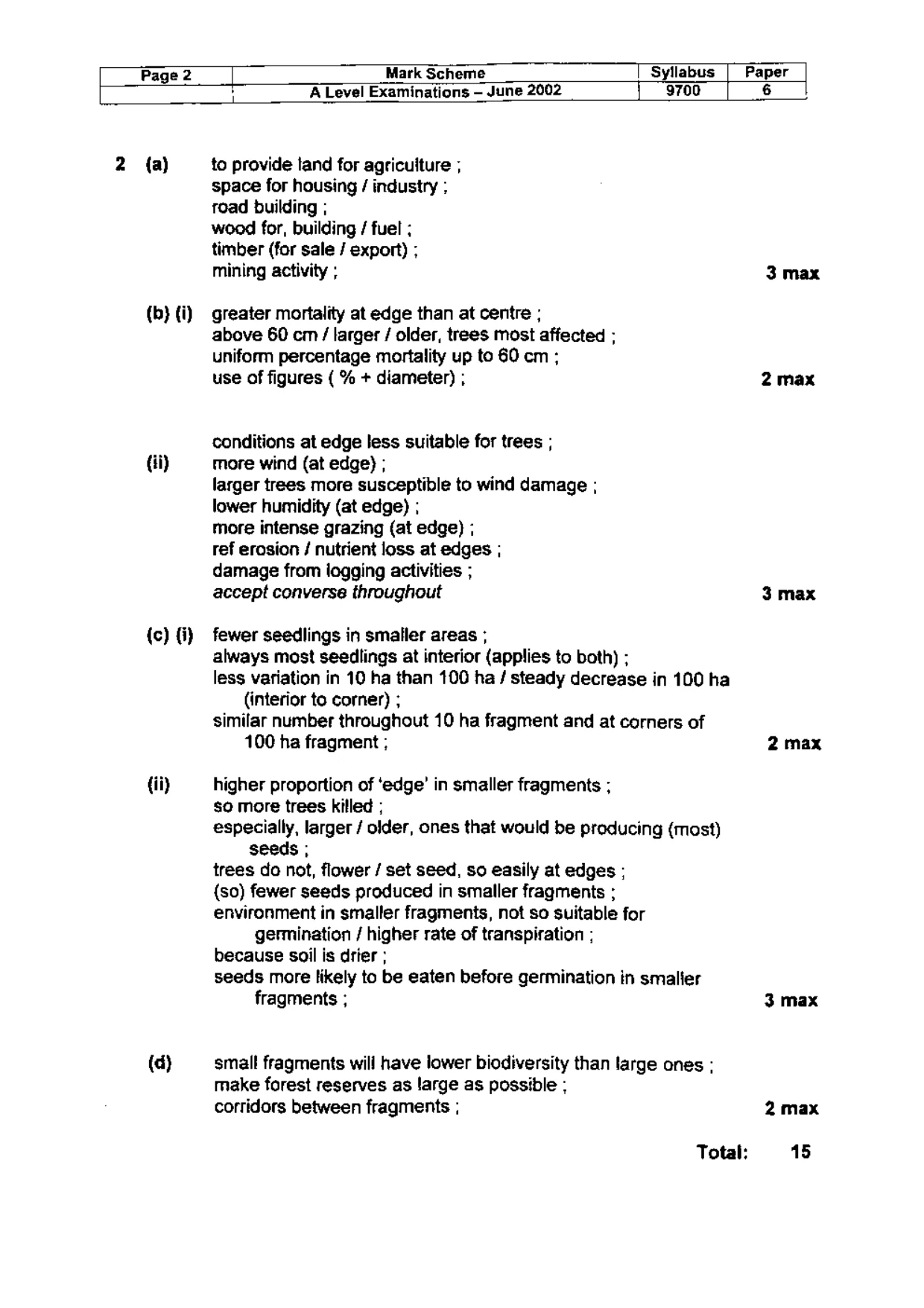
Page 2 an Mark Scheme | Syllabus | Paper F A Level Examinations — June 2002 {9700 6 2 = {a) (b} (i) Gi) {c) (i) tii) (d) to provide land for agricuiture ; space for housing / industry ; toad building ; wood for, building / fuel ; timber (for sale / export) ; mining activity ; 3 max greater mortality at edge than at centre ; above 60 cm / larger / older, trees most affected ; uniform percentage mortality up to 60 cm ; use of figures { % + diameter) ; 2max conditions at edge less suitable for trees ; more wind (at edge) ; larger trees more susceptible to wind damage ; lower humidity (at edge) ; more intense grazing (at edge) ; ref erosion / nutrient loss at edges ; damage from logging activities ; accept converse throughout 3 max fewer seedlings in smaller areas ; always most seedlings at interior (applies to both) ; less variation in 10 ha than 100 ha / steady decrease in 100 ha (interior to corner) ; similar number throughout 10 ha fragment and at corners of 100 ha fragment ; 2 max higher proportion of ‘edge’ in smaller fragments ; so more trees killed ; especially, larger / older, ones that would be producing (most) seeds ; trees do not, flower / set seed, so easily at edges ; {so) fewer seeds produced in smaller fragments ; environment in smalter fragments, not so suitable for germination / higher rate of transpiration ; because soil is drier ; seeds more likely to be eaten before germination in smalier fragments ; 3 max small fragments will have lower biodiversity than large ones ; make forest reserves as large as possible ; corridors between fragments ; 2 max Total: 15
Mark scheme, page 4
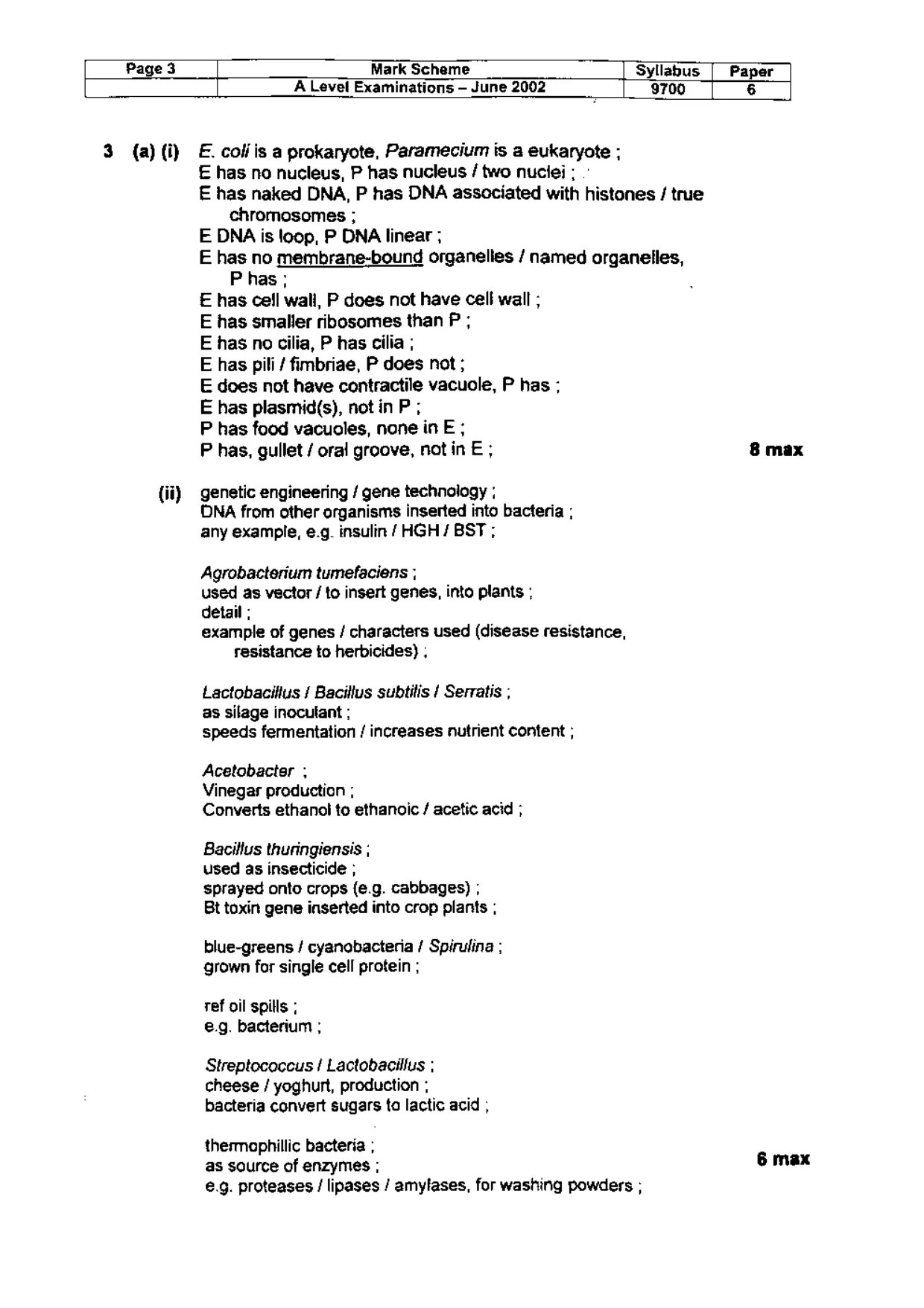
Page 3 Mark Scheme | Syllabus Paper A Level Examinations — June 2002 |. 9700 6 3 (a) (i) E. coliis a prokaryote, Paramecium is a eukaryote ; € has no nucleus, P has nucleus / two nuclei ; » E has naked DNA, P has DNA associated with histones / true chromosomes ; E DNA is loop, P DNA linear ; E has no membrane-bound organelles / named organelles, P has ; E has cell wall, P does not have cell wall ; E has smaller ribosomes than P ; E has no cilia, P has cilia ; E has pili / fimbriae, P does not ; E does not have contractile vacuole, P has ; E has plasmid(s), not in P ; P has food vacuoles, none in E ; P has, gullet / oral groove, not in E ; 8 max (ii) genetic engineering / gene technology ; DNA from other organisms inserted into bacteria ; any example, e.g. insulin / HGH / BST ; Agrobacterium tumefaciens ; used as vector / to insert genes, into plants ; detail ; example of genes / characters used (disease resistance, resistance to herbicides) ; Lactobacillus { Bacillus subtilis | Serratis ; as silage inoculant ; speeds fermentation / increases nutrient content ; Acetobacter ; Vinegars production ; Converts ethanol to ethanoic / acetic acid ; Bacillus thuringiensis ; used as insecticide ; sprayed onto crops (e.g. cabbages) ; Bt toxin gene inserted into crop plants ; blue-greens / cyanobacteria / Spirulina ; grown for single cell protein ; ref oil spills ; e.g. bacterium ; Streptococcus / Lactobacillus ; cheese / yoghurt, production ; bacteria convert sugars ta lactic acid ; thermophillic bacteria ; as source of enzymes ; 6 max €.g. proteases / lipases / amylases, for washing powders ;
Mark scheme, page 5
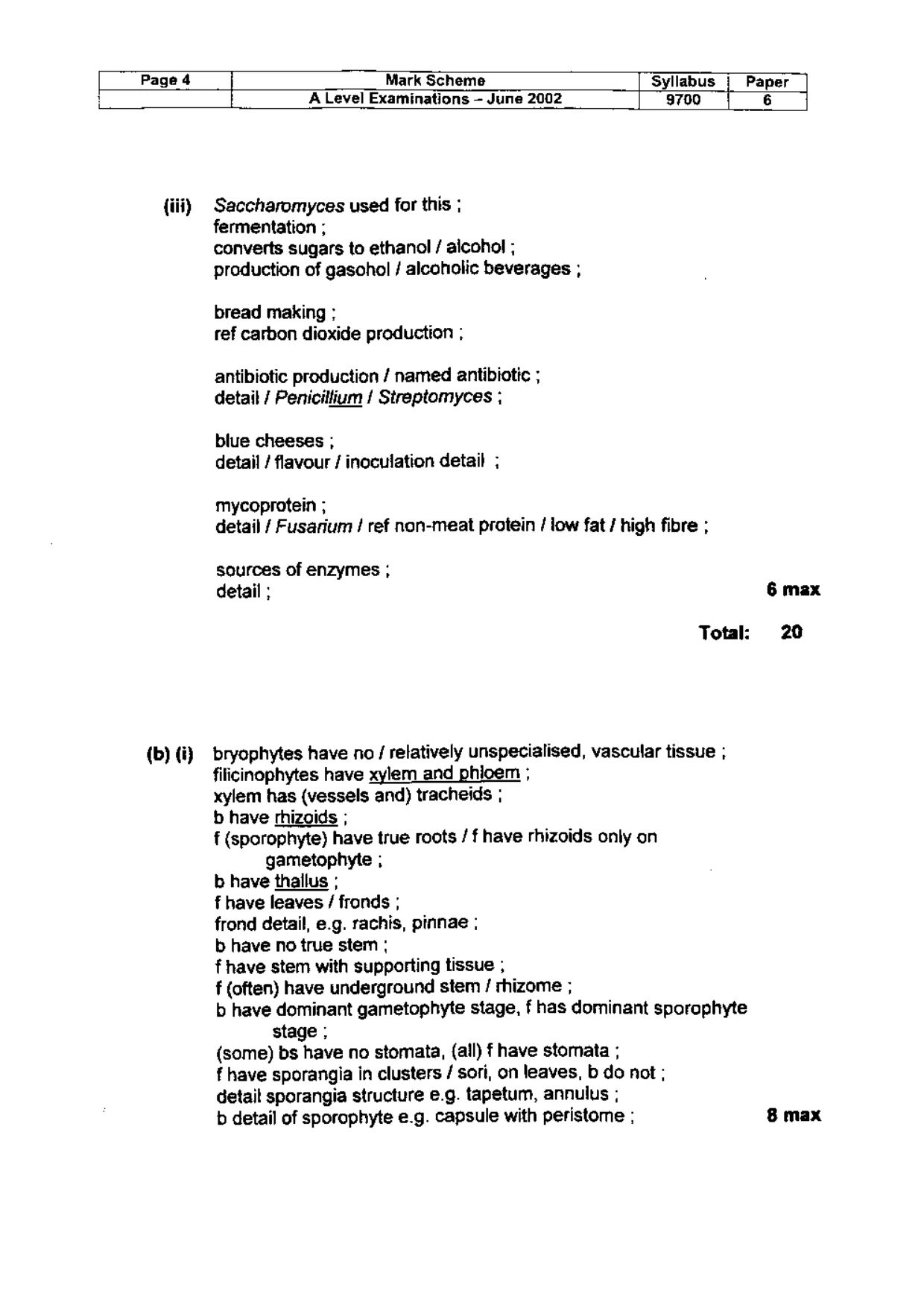
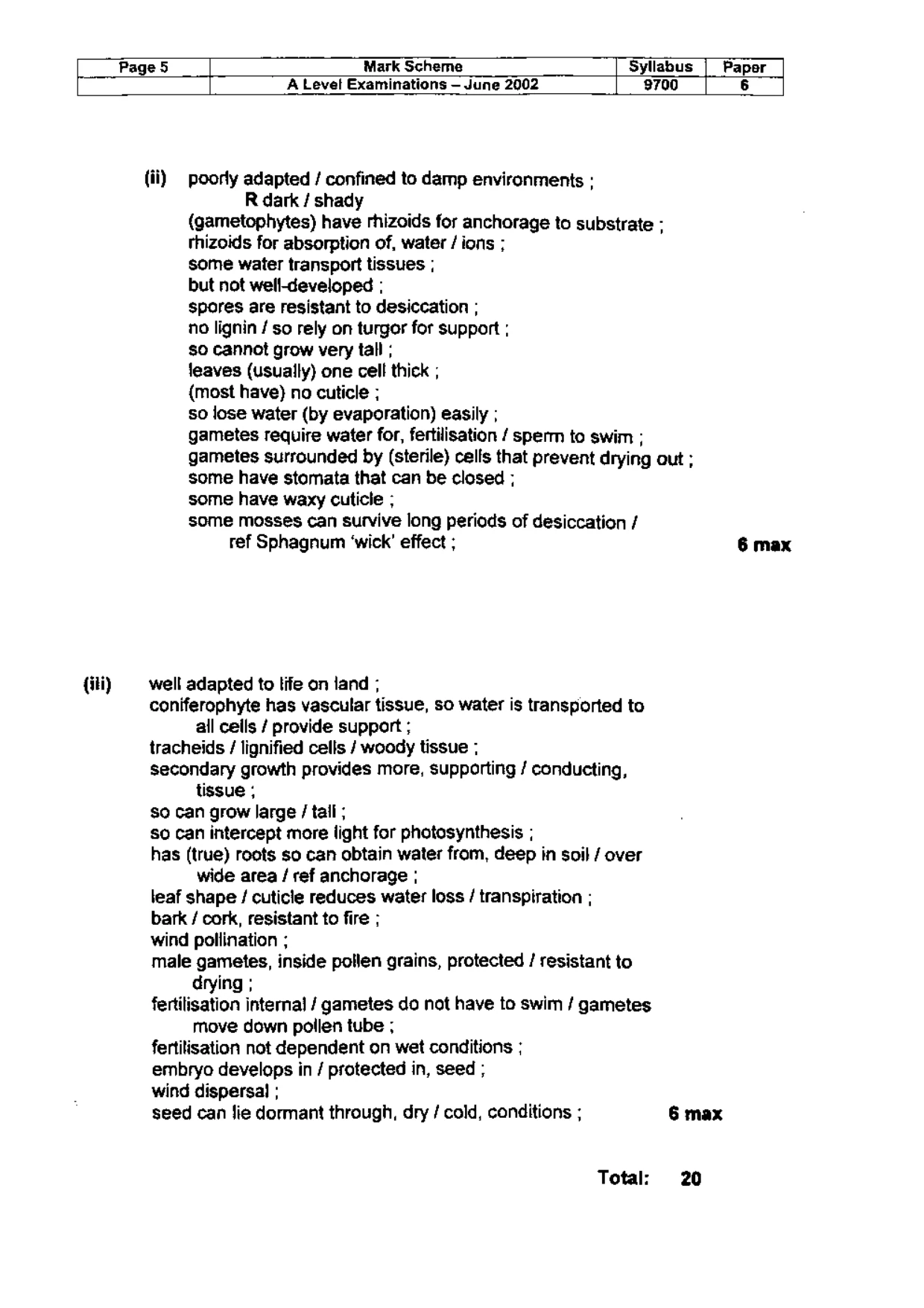
Page 4 Mark Scheme ae Paper A Level Examinations — June 2002 9700 {iii) (b) (i) Saccharomyces used for this ; fermentation ; converts sugars to ethanol / alcohol ; production of gasohol / alcoholic beverages ; bread making ; ref carbon dioxide production ; antibiotic production / named antibiotic ; detail / Penicillium /{ Streptomyces ; blue cheeses ; detail / flavour / inoculation detail ; mycoprotein ; detail / Fusarium / ref non-meat protein / low fat / high fibre ; sources of enzymes ; detail ; 6 max Total: 20 bryophytes have no / relatively unspecialised, vascular tissue ; filicinophytes have xylem and phioem ; xylem has (vessels and) tracheids ; b have rhizoids ; f (sporophyte) have true roots / f have rhizoids only on gametophyte ; b have thailus ; f have leaves / fronds ; frond detail, e.g. rachis, pinnae ; b have no true stem ; f have stem with supporting tissue ; f (often) have underground stem / rhizome ; b have dominant gametophyte stage, f has dominant sporophyte stage ; (some) bs have no stomata, (all) f have stornata ; f have sporangia in clusters / sori, on leaves, b do not ; detail sporangia structure e.g. tapetum, annulus ; b detail of sporophyte e.g. capsule with peristome ; 8 max
Mark scheme, page 6
Page 5 Mark Scheme Syllabus | Paper | A Level Examinations — June 2002 9700 | 6 (ili) (ii) poorly adapted / confined to damp environments ; R dark / shady (gametophytes) have rhizoids for anchorage to substrate ; thizoids for absorption of, water / ions ; some water transport tissues ; but not well-developed ; spores are resistant to desiccation ; no lignin / so rely on turgor for support ; $0 cannot grow very tall ; leaves (usually) one cell thick ; {most have} no cuticle ; so lose water (by evaporation) easily ; gametes require water for, fertilisation / sperm to swim ; gametes surrounded by (sterile) cells that prevent drying out ; some have stomata that can be closed ; some have waxy cuticle ; some mosses can survive long periods of desiccation / ref Sphagnum ‘wick’ effect ; 6 max well adapted to life on jand ; coniferophyte has vascular tissue, so water is transported to all ceils / provide support ; tracheids / lignified cells / woody tissue ; secondary growth provides more, supporting / conducting, tissue ; $0 Can grow large / tall ; So Can intercept more light for photosynthesis ; has (true) roots so can obtain water from, deep in soil / over wide area / ref anchorage ; leaf shape / cuticle reduces water loss / transpiration ; bark / cork, resistant to fire ; wind pollination ; male gametes, inside potlen grains, protected / resistant to arying ; fertilisation internal / gametes do not have to swim / gametes move down pollen tube ; fertilisation not dependent on wet conditions ; embryo develops in / protected in, seed ; wind dispersal ; seed can fie dormant through, dry / cold, conditions ; 6 max Total: 20
Mark scheme, page 7
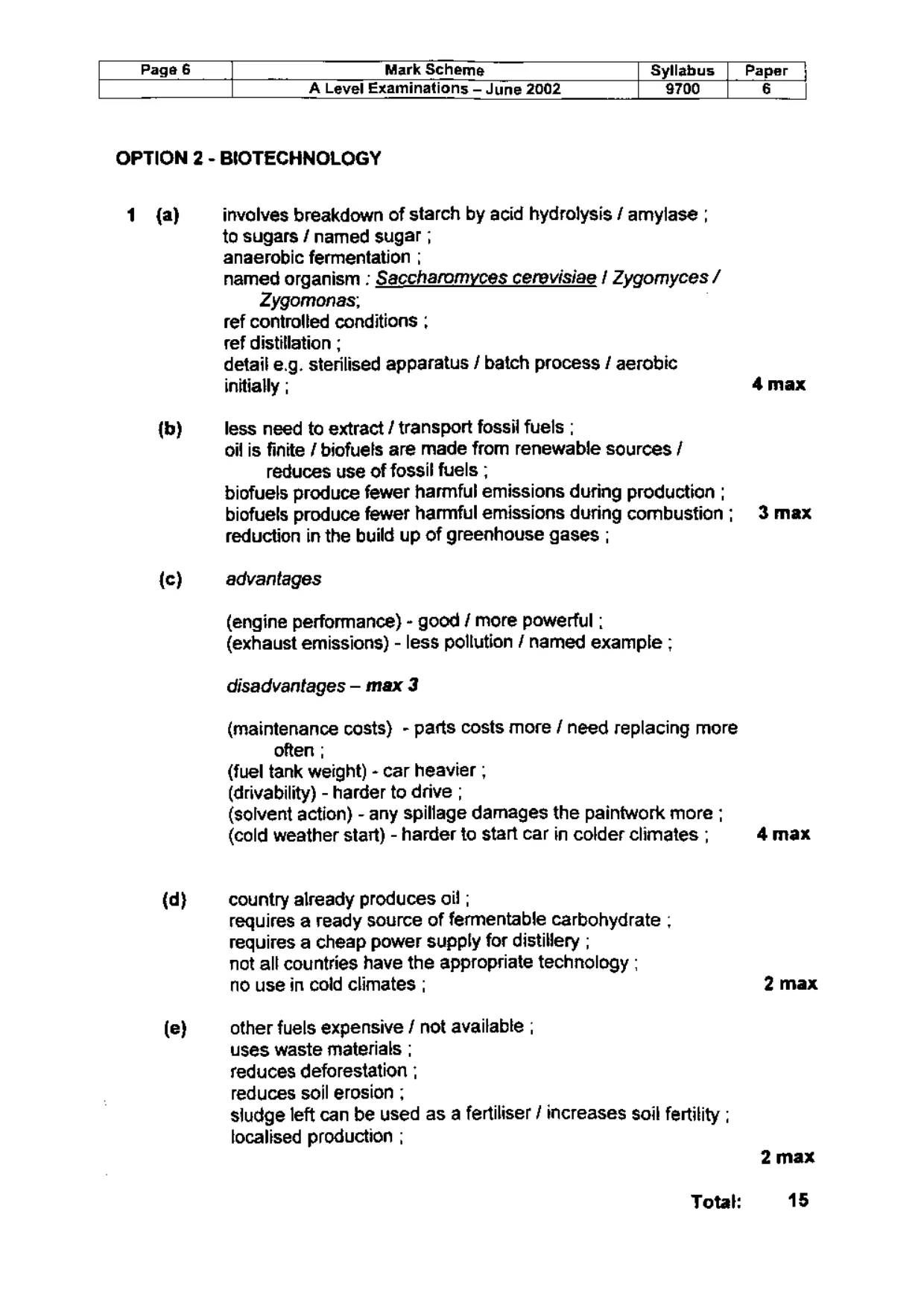
Page 6 l Mark Scheme Syllabus | Paper } l A Level Examinations - June 2002 $700 6 | OPTION 2 - BOTECHNOLOGY 1 {a) {b) {c) (d} (e) involves breakdown of starch by acid hydrolysis / amylase ; to sugars / named sugar ; anaerobic fermentation ; named organism : Saccharomyces cerevisiae | Zygomyces / Zygomonas; fef controlled conditions ; ref distillation ; detail e.g. sterilised apparatus / batch process / aerobic initially ; 4max less need to extract / transport fossil fuels ; oil is finite / biofuels are made from renewable sources / reduces use of fossil fuels ; biofuels produce fewer harmful emissions during production ; biofuels produce fewer harmful emissions during combustion; 3 max reduction in the build up of greenhouse gases ; advantages (engine performance) - good / more powerful ; (exhaust emissions) - less pollution / named example ; disadvantages — max 3 (maintenance costs) - parts costs more / need replacing more often ; (fuel tank weight) - car heavier ; (drivability) - harder to drive ; (solvent action) - any spillage damages the paintwork more ; (cold weather start) - harder to start car in colder climates ; 4 max country already produces oil ; requires a ready source of fermentable carbohydrate ; requires a cheap power supply for distillery ; not all countries have the appropriate technology ; no use in cold climates ; 2 max other fuels expensive / not available ; uses waste materials ; reduces deforestation ; reduces soil erosion ; sludge left can be used as a fertiliser / increases soil fertility ; localised production ; 2 max Total: 15
Mark scheme, page 8
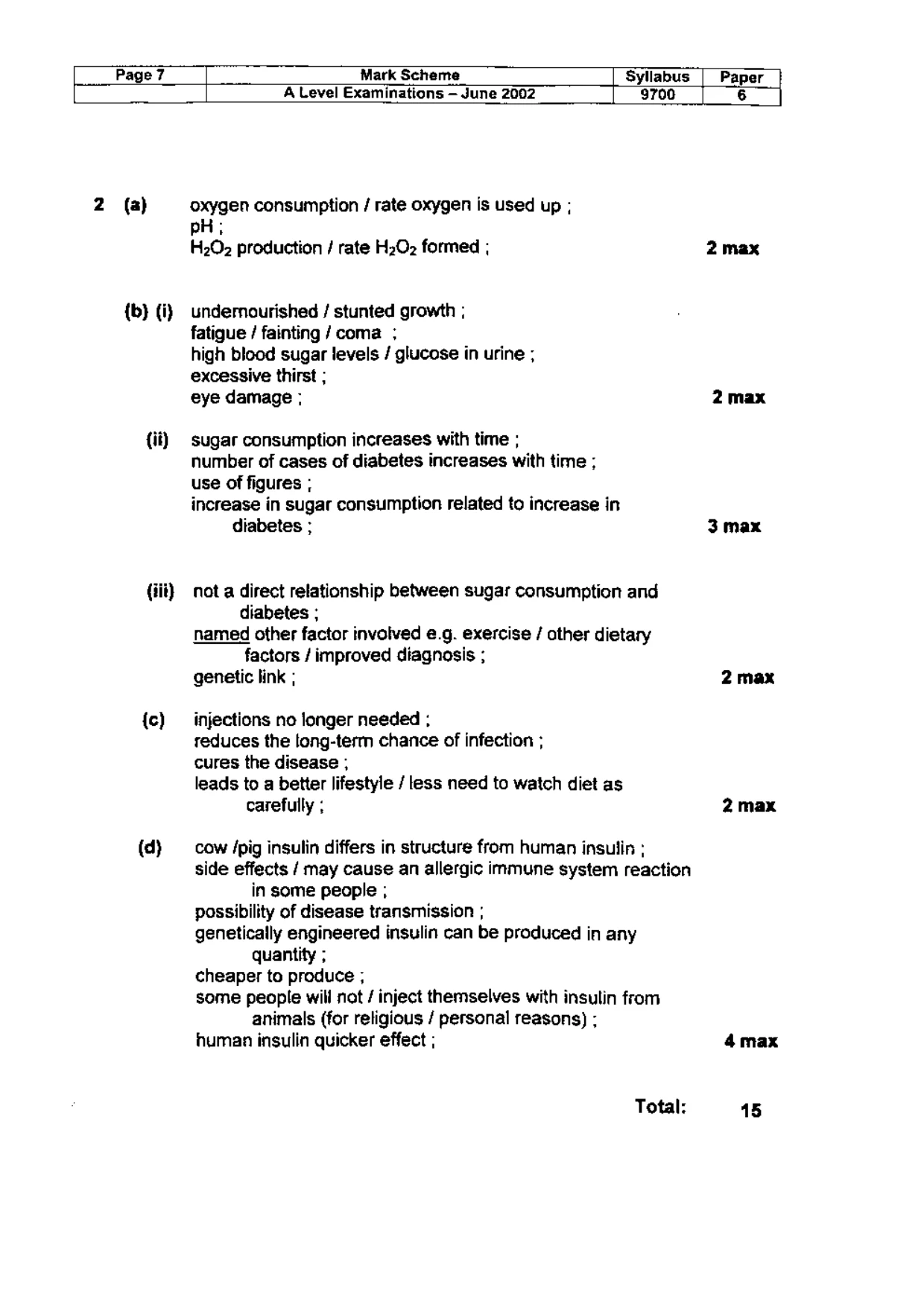
Page 7 Mark Scheme Syllabus | Paper A Level Examinations — June 2002 9700 | 6 2 (a) {b} (i) (ii) (iii) {c) (d) oxygen consumption / rate oxygen is used up ; pH; 02 production / rate H2O2 formed ; 2 max undernourished / stunted growth ; fatigue / fainting / coma ; high blood sugar levels / glucose in urine ; excessive thirst ; eye damage ; 2 max sugar consumption increases with time ; number of cases of diabetes increases with time ; use of figures ; increase in sugar consumption related to increase in diabetes ; 3 max not a direct relationship between sugar consumption and diabetes ; named other factor involved e.g. exercise / other dietary factors / improved diagnosis ; genetic link ; 2 max injections no longer needed ; reduces the tong-term chance of infection ; cures the disease ; leads to a better lifestyle / less need to watch diet as carefully ; 2 max cow /pig insulin differs in structure from human insulin ; side effects / may cause an allergic immune system reaction in some people ; possibility of disease transmission ; genetically engineered insulin can be produced in any quantity ; cheaper to produce ; some people will nat / inject themselves with insulin from animals (for religious / personal reasons) ; human insulin quicker effect ; 4 max Total: 15
Mark scheme, page 9
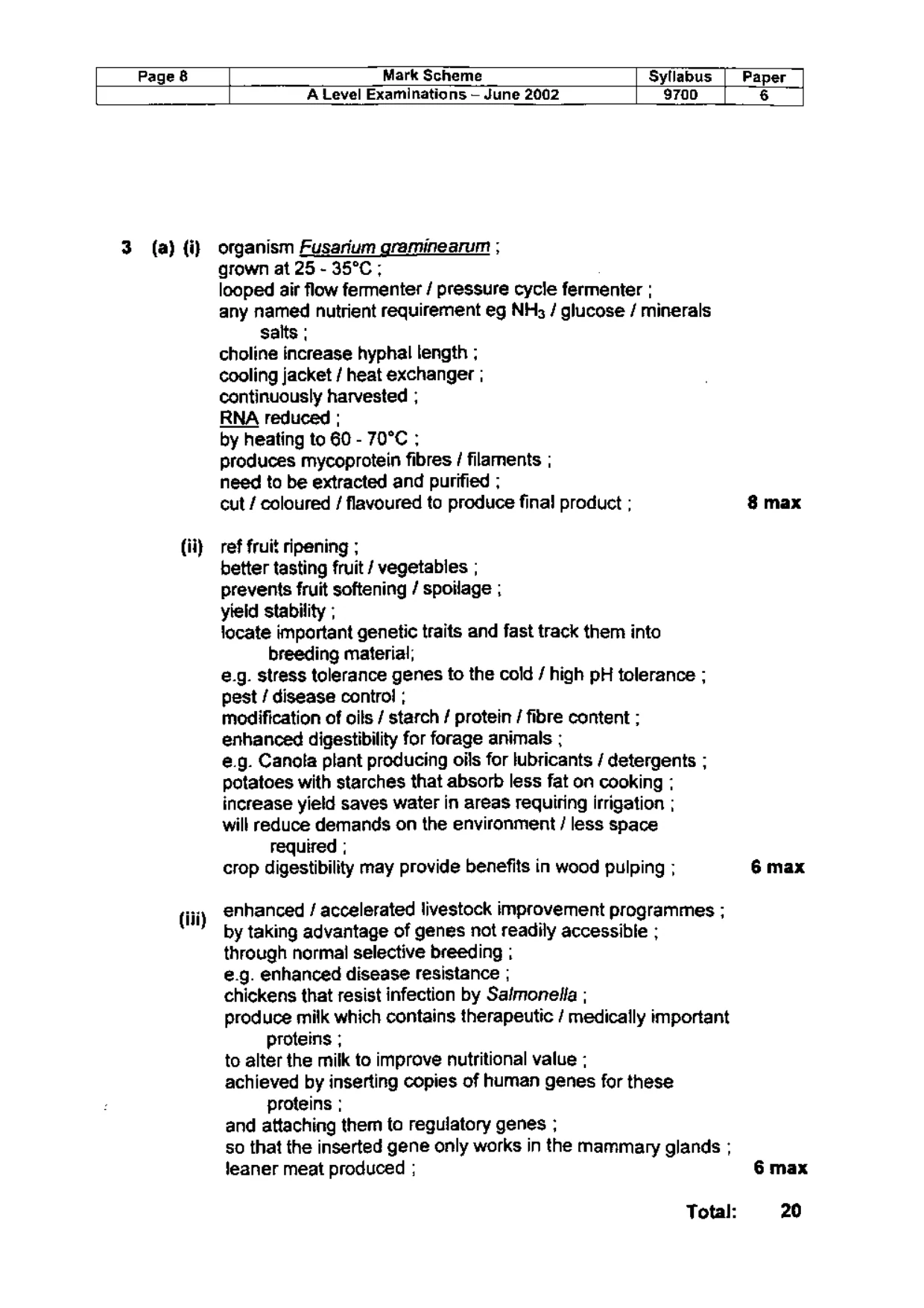
Page 8 Mark Scheme Sytiabus | Paper | A Level Examinations — June 2002 9700 6 | 3 (a) (i) (ii) (iii) organism Fusarium graminearum ; grown at 25 - 35°C ; looped air flow fermenter / pressure cycle fermenter ; any named nutrient requirement eg NHs / glucose / minerals salts ; choline increase hyphal length ; cooling jacket / heat exchanger ; continuously harvested ; RNA reduced ; by heating to 60 - 70°C ; produces mycoprotein fibres / filaments ; need to be extracted and purified ; cut / coloured / flavoured to produce final product ; 8 max ref fruit ripening ; better tasting fruit / vegetables ; prevents fruit softening / spoilage ; yield stability ; locate important genetic traits and fast track them into breeding material; e.g. stress tolerance genes to the cold / high pH tolerance ; pest / disease contro! ; modification of oils / starch / protein / fibre content ; enhanced digestibility for forage animals ; e.g. Canola plant producing oils for lubricants / detergents ; potatoes with starches that absorb less fat on cooking ; increase yield saves water in areas requiring irrigation ; will reduce demands on the environment / less space required ; crop digestibility may provide benefits in wood pulping ; 6 max enhanced / accelerated livestock improvement programmes ; by taking advantage of genes not readily accessible ; through normal selective breeding ; e.g. enhanced disease resistance ; chickens that resist infection by Safmonelia ; produce milk which contains therapeutic / medically important proteins ; to alter the milk to improve nutritional value ; achieved by inserting copies of human genes for these proteins ; and attaching them to regulatory genes ; so that the inserted gene only works in the mammary glands ; feaner meat produced ; 6 max Total: 20
Mark scheme, page 10
Page 9 Mark Scheme Syllabus | Paper | A Level Examinations — June 2002 9700 I 6 (b) (i) {ii) (iii) increases yield ; saves water in areas requiring irrigation ; less space required ; plants genetically engineered able to fix nitrogen ; external fertilisers not necessary ; excess fertiliser no longer causing pollution ; resistant to the attack of insects ; resistant to disease ; prevents fruit softening / spoilage ; starter culture of bacteria ; Lactobacillus bulgaricus, / Lactobacillus acidophitus ; and Streptococcus thermophilus / Bifida bifidum ; added to milk ; incubated at 38 - 46°C ; Lactobacillus breaks down protein ; releasing peptides ; which encourage Streptococcus to grow ; Streptococcus produces formic acid and CQz ; which stimulate Lactobacillus ; PH reduced to 4.4 - 4.6; Lactobacillus produces lactic acid ; both organisms produce acetaldehyde ; which gives yoghurt its characteristic flavour ; (inject) papain ; a protease ; into cattle immediately before / after slaughter ; enzyme circulates through tissues ; begins breakdown of fibrous proteins / collagen / elastin ; holding connective tissue together ; releases muscle fibre ; teduces storage time ; may cause an allergic reaction in some people ; public suspicious of treated meat ; Total: 7 max 7 max 20 J
Mark scheme, page 11
Page 10 Mark Scheme | Syllabus | Paper en A Level Examinations — June 2002 [9700 I 6 OPTION 3 — GROWTH, DEVELOPMENT AND REPRODUCTION 4 (a) (b) {c) (a) (e} 2 (a) i) (ii) 0) (ii) allometric ; baby at birth has head half as big ; (or eight week fetus has head twice as big) adult has head one quarter as big ; (or fetus has head four times as big) hormones ; growth hormone / thyroxin / testosterone ; growth of brain early ; growth of sense organs / examples of sense organs ; ref gene switching (in different tissues) ; most birth masses around 3 kg ; fewest deaths / lowest mortality, just above 3 kg ; approx 3% mortality (A 2.5 - 3.5%) ; increased mortality at lower and higher birth masses ; ref supporting figures of extreme birth masses and mortality ; faturat selection ; favours birth masses close to 3 kg approx ; heavy and light babies more likely to die ; tef stabilising selection ; so alleles (genes) for 3 kg birth masses passed on ; smokers have 17 - 18% / most, babies at 3 kg ; non smokers have 18.5 — 19.5% / most, babies above 3 kg ; on average, smokers have lighter babies ; {UGR / intrauterine growth retardation ; carbon monoxide, diffuses across placenta / forms carboxyhaemoglobin / reduces oxygen to fetus ; nicotine, affects nervous system / fetal circulation / placenta ; birth complications / premature births ; tesistance to infection reduced ; breathing problems / lungs immature, afterbirth ; vitamin C uptake of mother reduced ; Total carbohydrate ~ sucrose from phloem / parent plant declines ; glucose declines, as used for synthesis / respiration ; starch initial reserve ; tef to amylase ; oil -— oi! synthesised from carbohydrates ; starch converted to oil ; 3 max 3 max 2 max 2 max 2 max 15 4 max
Mark scheme, page 12
Page 14 Mark Scheme Syt!labus Paper A Level Examinations ~ June 2002 9700 6 (b) (c) (d) (e) low density / mass, allowing easier dispersal ; equal mass of lipid yields more energy than equal mass of carbohydrates ; tef to higher proportion of hydragen relative to oxygen ; tef reduced microbial attack ; 2 max digestion / hydrolysis ; R breakdown ref enzymes / lipases ; fatty acids for synthesis ; fef respiration ; detait of respiration ; 3 max dry mass would fall initially ; reserves used up ; reserves respired ; tef to oif / starch ; carbon dioxide released ; after plumule / leaves emerged ; when photosynthesis exceeds respiration ; dry mass would increase ; 4max breaks dormancy : acts on aleurone layer ; amylase / hydrolytic enzymes, activity increased / starch digestion affected ; effect on protein synthesis / RNA synthesis : tise during chilling / may remove need for cold period ; tef gene switching ; 2 max acts with IAA in elongation ; Total: 15 3 (a) (i) (2 different methods) method and appropriate plant ;; part / parts of plant involved ;: practical detail of selected technique ;; 6
Mark scheme, page 13
Page 12 Mark Scheme ~]_ Syllabus | Paper { { A Level Examinations - June 2002 9700 6 {ii} (iii) 3 (b) fi) advantages only one parent needed ; offspring genetically identical / clones ; known growing conditions ; known time of maturity / all together ; known quality / characteristics / example ; large numbers / rapid production, (from one stock plant) ; plant diseases avoided with meristems ; micropropagation at any time of year ; (exotic) plants that are hard to produce from seed can be propagated ; cloning following genetic engineering ; 5 max for advantages disadvantages labour intensive ; problem of disease transmission ; problem of disease spread through a whole crop ; problems of harvesting at one go ; 7 max meiosis ; producing pollen ; (R male gametes by meiosis) producing embryo sac ; (R female gametes by meiosis) independent assortment ; detail ; crossing-over ; detail ; new allele combinations ; non-disjunction ; sandom fusion of gametes ; two parents involved ; ref natural selection ; ref to cross-pollination ; 7 max Total: 20 secretion of thyroxin / Ts and tri-iodothyronine / T3 ; iodine / iodide concentrated from blood ; thyroglobulin made / stored ; hydrolysed / ref enzyme action ; secretion into, blood plasma / capillaries ; thyroxin controls BMR ; ref oxygen / food utilisation / heat generation ; cellular respiration / mitochondria stimulated ; thyroxin acts on nucieus / DNA / genes ; switches on RNA synthesis ; protein synthesis ; growth / development affected ; skeleton / bone ; mentai development ; heart rate ; 8 max
Mark scheme, page 14
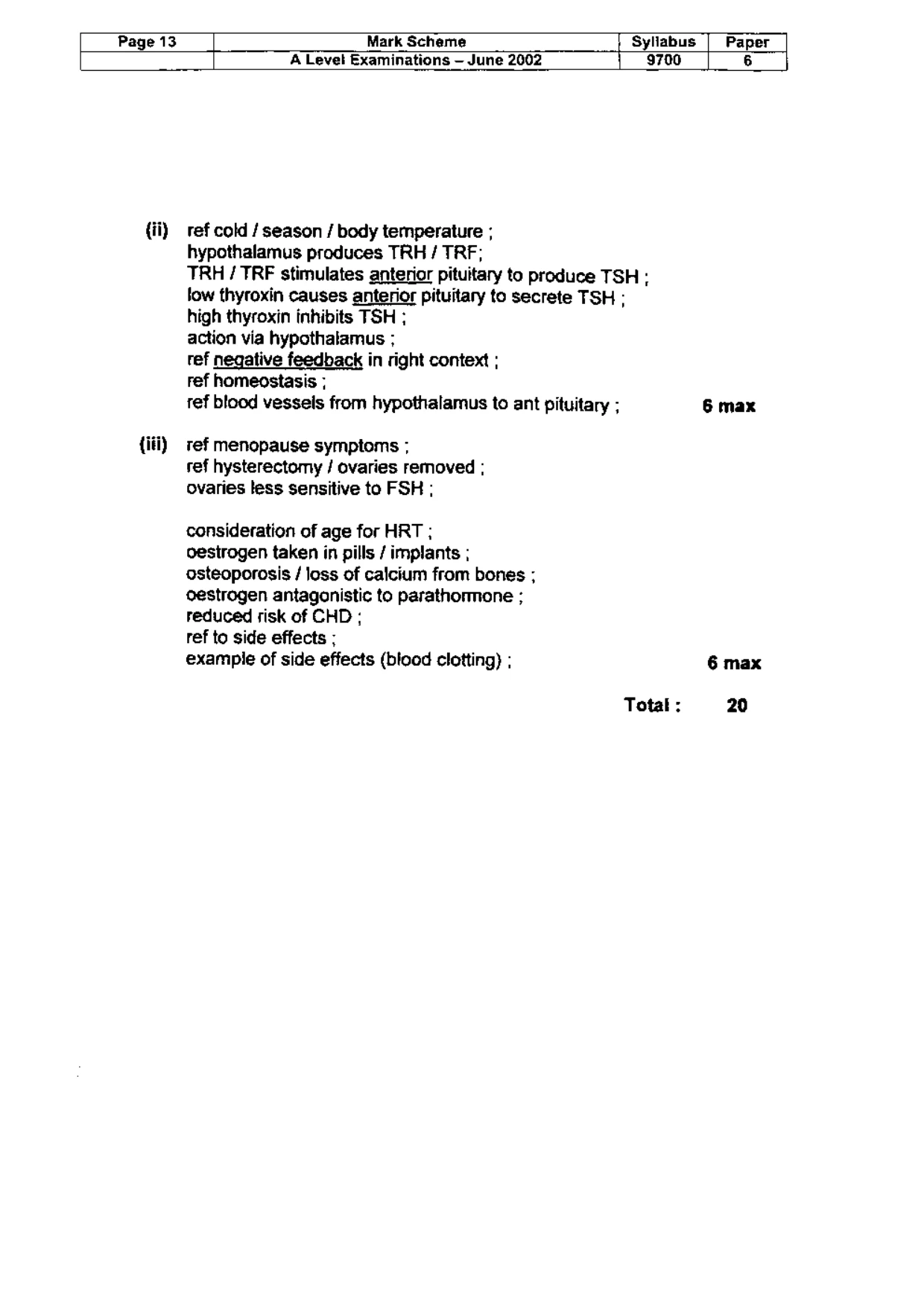
Page 13 (i) {iti) tef cold / season / body temperature ; hypothalamus produces TRH / TRF; high thyroxin inhibits TSH ; action via hypothalamus ; tef negative feedback in right context ; ref homeostasis ; tef menopause symptoms ; ref hysterectomy / ovaries removed ; ovaries less sensitive to FSH ; consideration of age for HRT ; oestrogen taken in pills / implants ; osteoporosis / loss of calcium from bones ; oestrogen antagonistic to parathormone ; reduced risk of CHD ; ref to side effects ; example of side effects (blood clotting) ; Mark Scheme [ Syllabus | Paper A Levelt Examinations — June 2002 {9700 6 TRH / TRF stimulates anterior pituitary to produce TSH : low thyroxin causes anterior pituitary to secrete TSH ; tef blood vessels from hypothalamus to ant pituitary ; 6 max 6 max Total : 20
Mark scheme, page 15
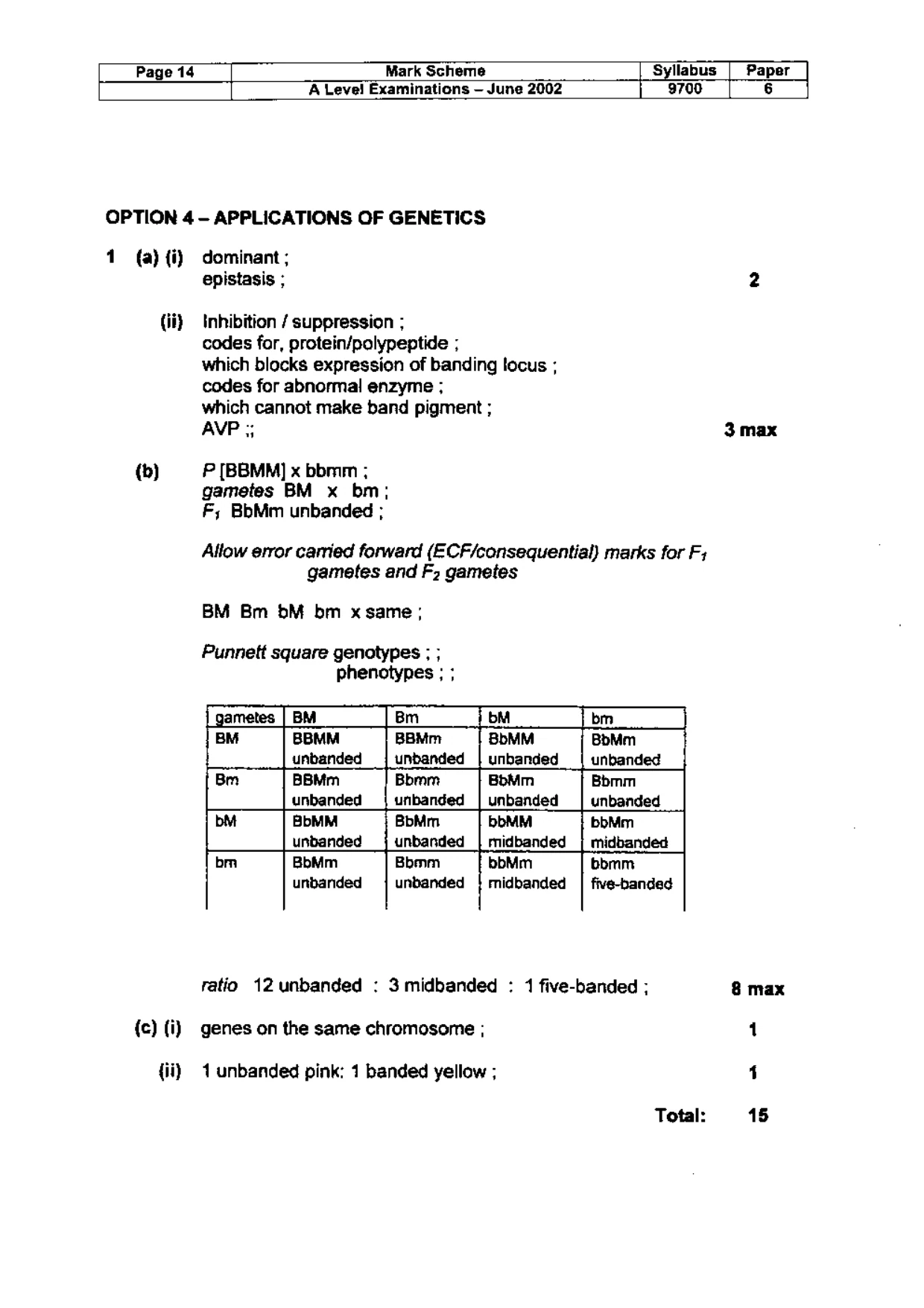
Page 14 Mark Scheme Syllabus ~ Paper] age A Level! Examinations — June 2002 9700 6 OPTION 4 —- APPLICATIONS OF GENETICS 1 (a) {i) dominant ; epistasis ; 2 {ii} Inhibition / suppression ; codes for, protein/polypeptide ; which blocks expression of banding focus ; codes for abnormal enzyme ; which cannot make band pigment ; AVP ;; 3 max (b) P [BBMN] x bbmm ; gametes BM x bm; F; BbMm unbanded ; Allow error carried forward (ECF/consequential) marks for F4 gametes and F, gametes BM Bm 6M bm x same; Punnett square genotypes ; ; phenotypes ; ; a BBMM BBMm BbMM BbMm unbanded unbanded | unbanded unbanded unbanded unbanded_| unbanded unbanded per | BbMm bbMM bbMm unbanded_| midbanded | midbanded bm unbanded unbanded | midbanded | five-banded ratio 12 unbanded : 3 midbanded : 1 five-banded ; 8 max {c) (i) genes on the same chromosome ; 1 {ii) 1 unbanded pink: 1 banded yellow ; 4 Total: 15
Mark scheme, page 16
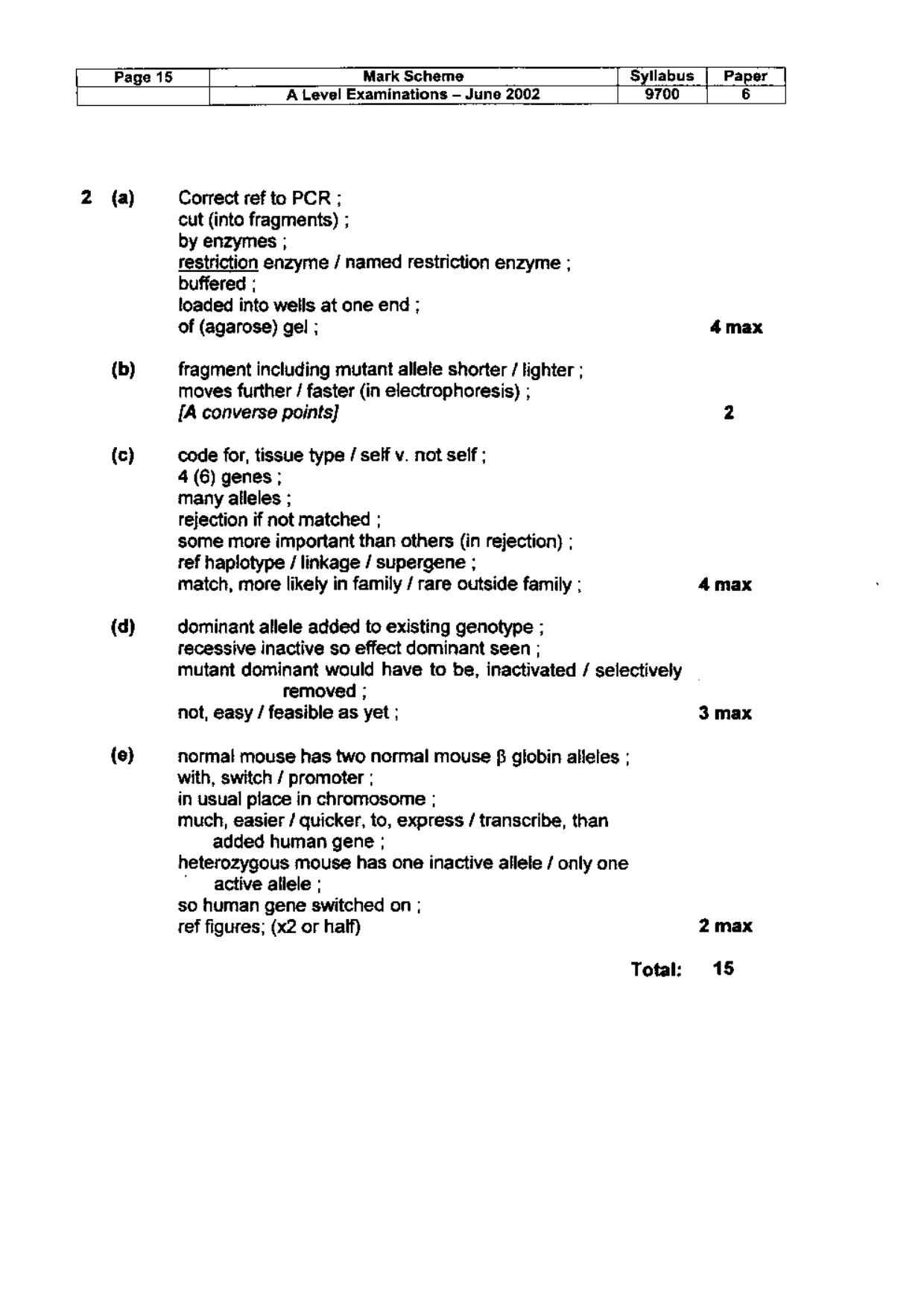
Page 15 Mark Scheme | Syllabus | Paper A Level Examinations - June 2002 [9700 6 (a) Correct ref to PCR ; tut (into fragments) ; by enzymes ; (b) (c) (4) {e} restriction enzyme / named restriction enzyme ; buffered ; loaded into wells at one end ; of (agarose) gel ; fragment including mutant allele shorter / lighter ; moves further / faster (in electrophoresis) ; {A converse points} code for, tissue type / self v. not self ; 4 (6) genes ; many alleles ; rejection if not matched ; some more important than others (in rejection) ; ref haplotype / linkage / supergene ; match, more likely in family / rare outside family ; dominant allele added to existing genotype ; recessive inactive so effect dominant seen ; 4 max 4Amax mutant dominant would have to be, inactivated / selectively removed ; not, easy / feasible as yet ; 3 max normal mouse has two normal mouse f globin alleles ; with, switch / promoter ; in usual place in chromosome ; much, easier / quicker, to, express / transcribe, than added human gene ; heterozygous mouse has one inactive allele / only one active aliele ; so human gene switched on ; ref figures; (x2 or half) 2 max Total: 15
Mark scheme, page 17
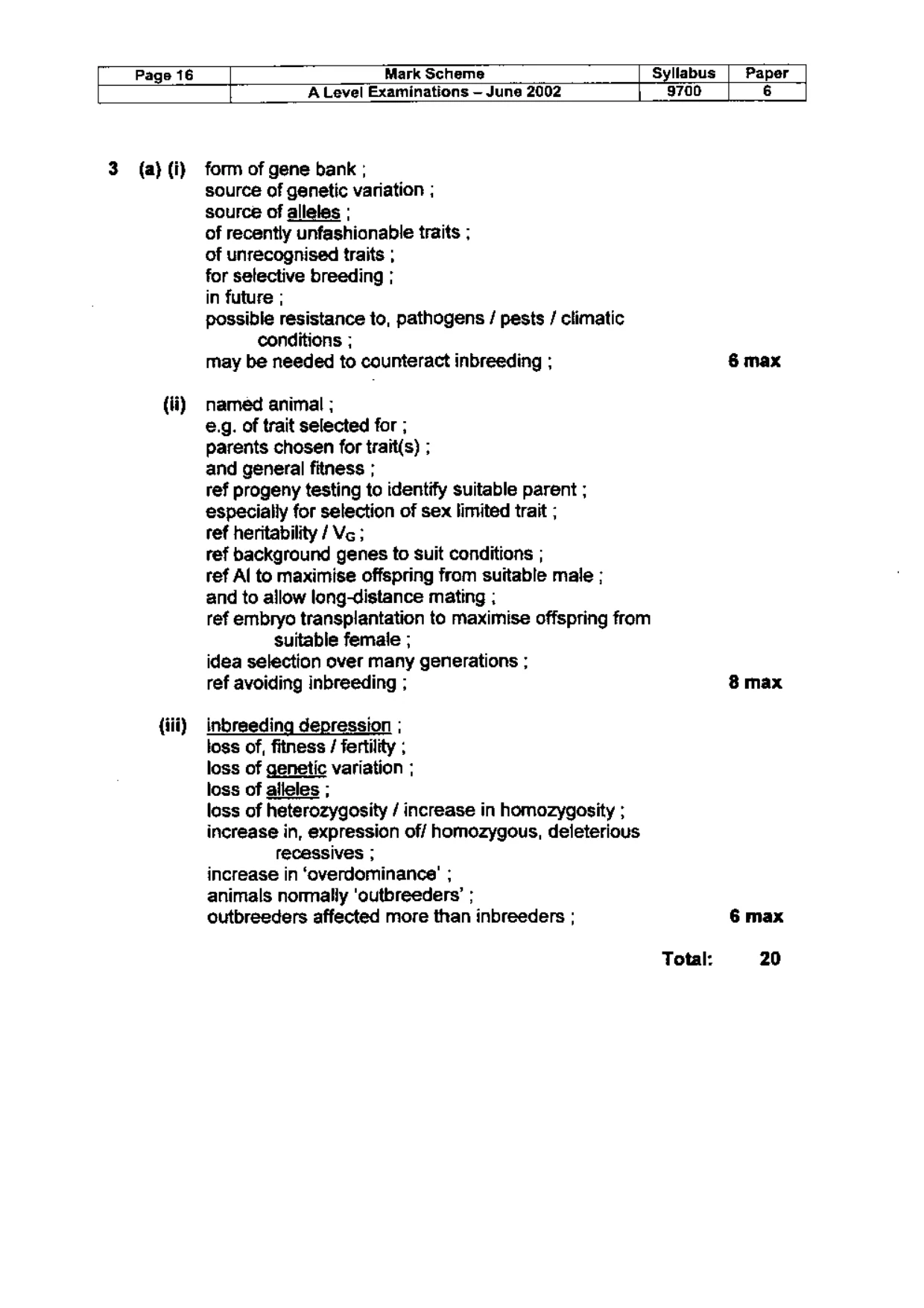
Page 16 [ Mark Scheme Syllabus | Paper [ A Level Examinations — June 2002 9700 6 3 (a) (i) (ii) {iii) form of gene bank ; source of genetic variation ; source of alleles ; of recently unfashionable traits ; of unrecognised traits ; for selective breeding ; in future ; possible resistance to, pathogens / pests / climatic conditions ; may be needed to counteract inbreeding ; named animal ; e.g. of trait selected for ; parents chosen for trait(s) ; and general fitness ; tef progeny testing to identify suitable parent ; especially for selection of sex limited trait ; tef heritability / Vc ; ref background genes to suit conditions ; tef Al to maximise offspring from suitable male ; and to allow long-distance mating ; ref embryo transplantation to maximise offspring from suitable femate ; idea selection over many generations ; ref avoiding inbreeding ; inbreeding depression ; loss of, fitness / fertility ; loss of genetic variation ; loss of alleles ; loss of heterozygosity / increase in homozygosity ; increase in, expression off homozygous, deleterious fecassives ; increase in ‘overdominance' ; animals normally ‘outbreeders’ ; outbreeders affected more than inbreeders ; Total: 6 max 8 max 6 max 20
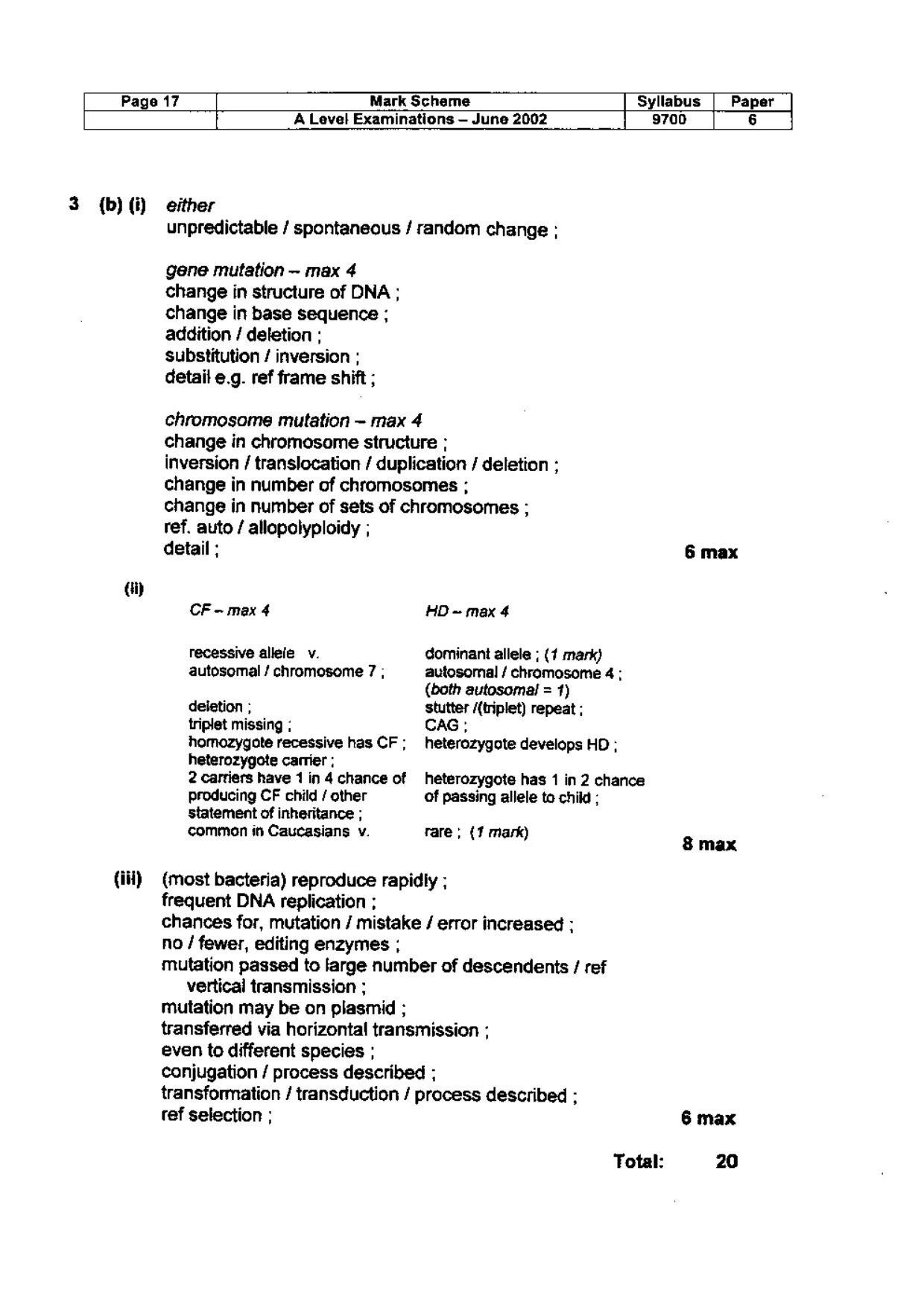
Mark scheme, page 18
A Level Examinations — June 2002 9700 Page 17 Mark Scheme | Syllabus Paper 6 3 (b) ai) (iii) either unpredictable / spontaneous / random change ; gene mutation ~ max 4 change in structure of DNA ; change in base sequence ; addition / deletion ; substitution / inversion ; detail e.g. ref frame shift ; chromosome mutation - max 4 change in chromosome structure ; inversion / translocation / duplication / deletion ; change in number of chromosomes ; change in number of sets of chromosomes ; tef. auto / allopolyploidy ; detail ; CF -~ max 4 HD ~ max 4 recessive allele v. dominant allele ; (4 mark) autosomal / chromosome 7 ; autosomal / chromosome 4 ; (both autosomal = 1) deietion ; stutter (triplet) repeat ; triplet missing ; CAG ; homozygote recessive has CF; heterozygote develops HD ; heterozygote carrier ; 2 carriers have 1 in 4 chance of heterozygote has 1 in 2 chance Producing CF child / other Of passing allele to child ; statement of inheritance ; commen in Caucasians v. fare ; (7 mark) (most bacteria) reproduce rapidly ; frequent DNA replication ; chances for, mutation / mistake / error increased ; no / fewer, editing enzymes ; mutation passed to large number of descendents / ref vertical transmission ; mutation may be on plasmid ; transferred via horizontal transmission ; even to different species ; conjugation / process described ; transformation / transduction / process described ; tef selection ; Total: & max 6 max 20