Cambridge A Level Biology 9700 — 2003 May/June Paper 6 · Variant 1
9700/61/M/J/03
The question paper and its mark scheme, free to read here and free to download. This is Cambridge’s own paper, exactly as it was sat.
Question paper28 pages





Mark scheme
No mark scheme is in the library for this paper.
Paper as text
Question paper, page 1
This document consists of 25 printed pages and 3 blank pages. SPA (SJF2886/TC) S43336/4 © UCLES 2003 [Turn over CAMBRIDGE INTERNATIONAL EXAMINATIONS General Certificate of Education Advanced Level BIOLOGY 9700/06 Paper 6 Options May/June 2003 1 hour Additional Materials: Answer Paper READ THESE INSTRUCTIONS FIRST Write your Centre Number, Candidate Number and Name in the spaces at the top of this page and on all separate answer paper used. Write in dark blue or black pen. You may use a soft pencil for any diagrams, graphs or rough working. Do not use staples, paper clips, highlighters, glue or correction fluid. Answer the questions set on one of the options. Within your chosen option, write your answers to Questions 1 and 2 in the spaces provided on the Question Paper. Write your answer to Question 3 on the separate Answer Paper provided. The answer to Question 3 should be illustrated by large, clearly labelled diagrams wherever appropriate. At the end of the examination, 1. fasten all your work securely together; 2. enter the number of the option you have answered in the grid below. INFORMATION FOR CANDIDATES The number of marks is given in brackets [ ] at the end of each question or part question. The options are: 1 – Biodiversity (page 2) 2 – Biotechnology (page 9) 3 – Growth, Development and Reproduction (page 14) 4 – Applications of Genetics (page 20) Centre Number Candidate Number Name If you have been given a label, look at the details. If any details are incorrect or missing, please fill in your correct details in the space given at the top of this page. Stick your personal label here, if provided. OPTION ANSWERED FOR EXAMINER’S USE 1 2 3(a) 3(b) TOTAL
Question paper, page 2
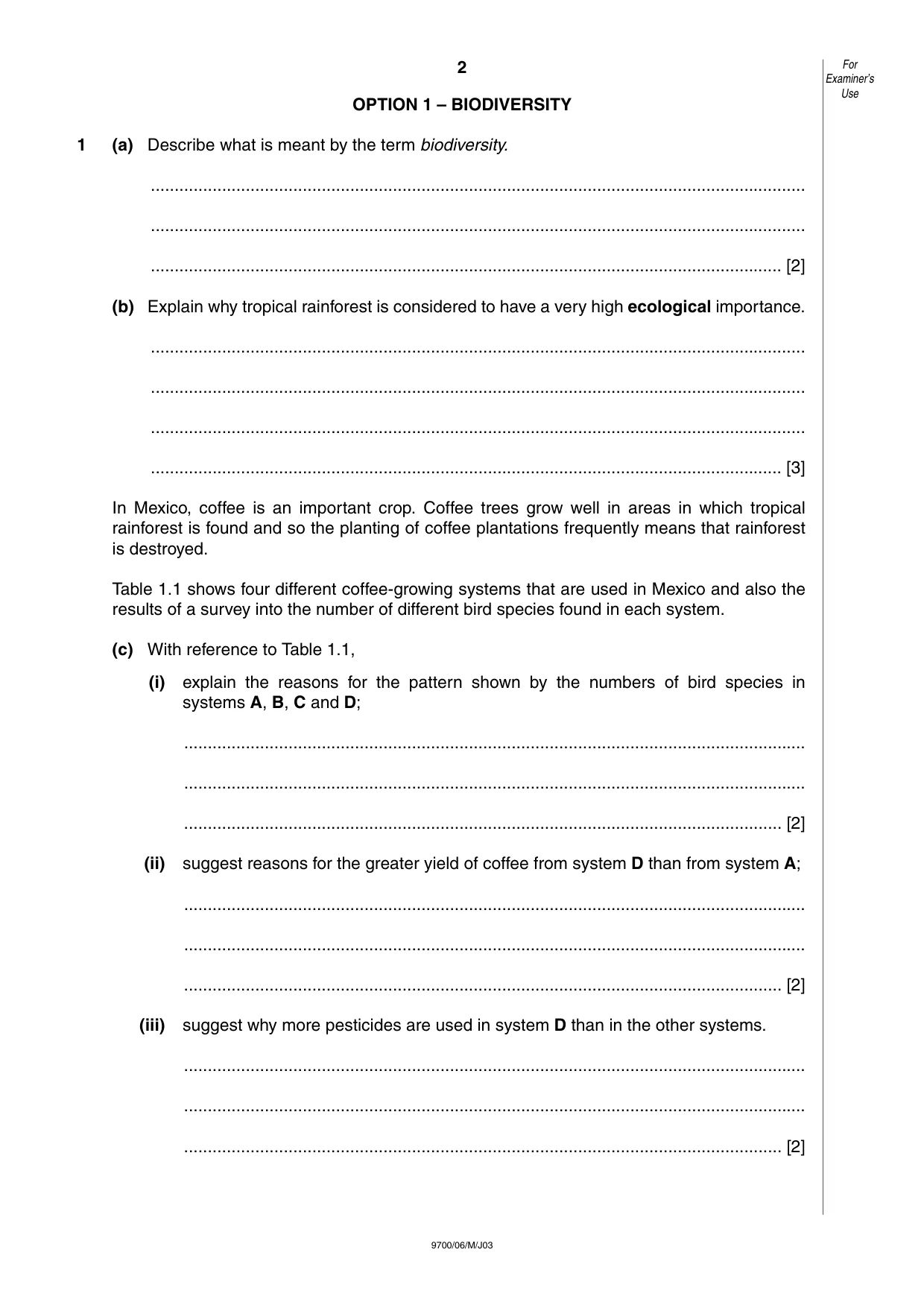
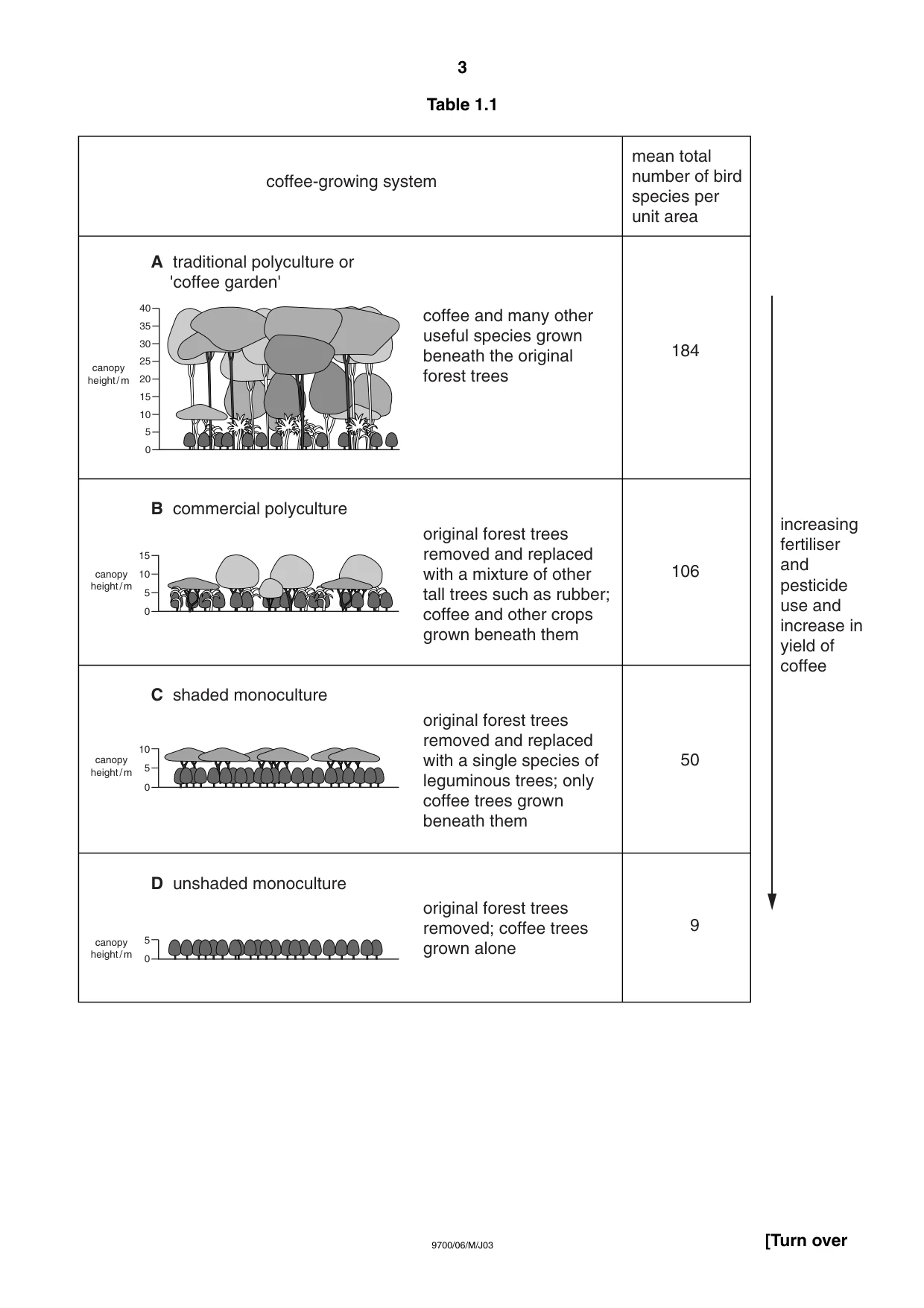
2 9700/06/M/J03 OPTION 1 – BIODIVERSITY 1 (a) Describe what is meant by the term biodiversity. … … … [2] (b) Explain why tropical rainforest is considered to have a very high ecological importance. … … … … [3] In Mexico, coffee is an important crop. Coffee trees grow well in areas in which tropical rainforest is found and so the planting of coffee plantations frequently means that rainforest is destroyed. Table 1.1 shows four different coffee-growing systems that are used in Mexico and also the results of a survey into the number of different bird species found in each system. (c) With reference to Table 1.1, (i) explain the reasons for the pattern shown by the numbers of bird species in systems A, B, C and D; … … … [2] (ii) suggest reasons for the greater yield of coffee from system D than from system A; … … … [2] (iii) suggest why more pesticides are used in system D than in the other systems. … … … [2] For Examiner’s Use
Question paper, page 3
3 9700/06/M/J03 [Turn over Table 1.1 coffee-growing system mean total number of bird species per unit area coffee and many other useful species grown beneath the original forest trees original forest trees removed and replaced with a mixture of other tall trees such as rubber; coffee and other crops grown beneath them A traditional polyculture or 'coffee garden' B commercial polyculture original forest trees removed and replaced with a single species of leguminous trees; only coffee trees grown beneath them C shaded monoculture original forest trees removed; coffee trees grown alone D unshaded monoculture 184 106 50 9 increasing fertiliser and pesticide use and increase in yield of coffee 0 5 10 15 20 25 30 35 40 canopy height/m 0 5 10 15 canopy height/m 0 5 10 canopy height/m 0 5 canopy height/m
Question paper, page 4
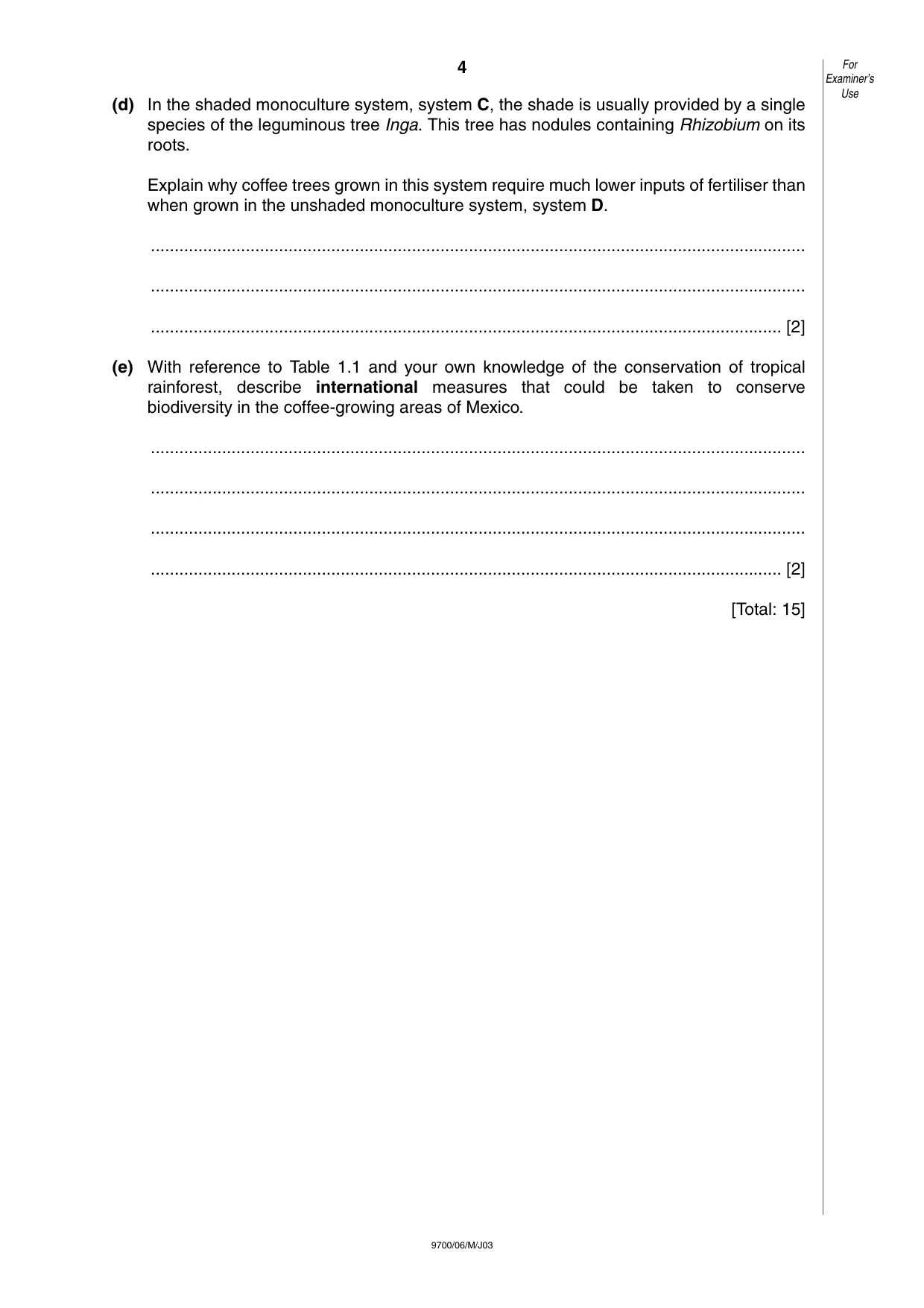
4 9700/06/M/J03 (d) In the shaded monoculture system, system C, the shade is usually provided by a single species of the leguminous tree Inga. This tree has nodules containing Rhizobium on its roots. Explain why coffee trees grown in this system require much lower inputs of fertiliser than when grown in the unshaded monoculture system, system D. … … … [2] (e) With reference to Table 1.1 and your own knowledge of the conservation of tropical rainforest, describe international measures that could be taken to conserve biodiversity in the coffee-growing areas of Mexico. … … … … [2] [Total: 15] For Examiner’s Use
Question paper, page 5
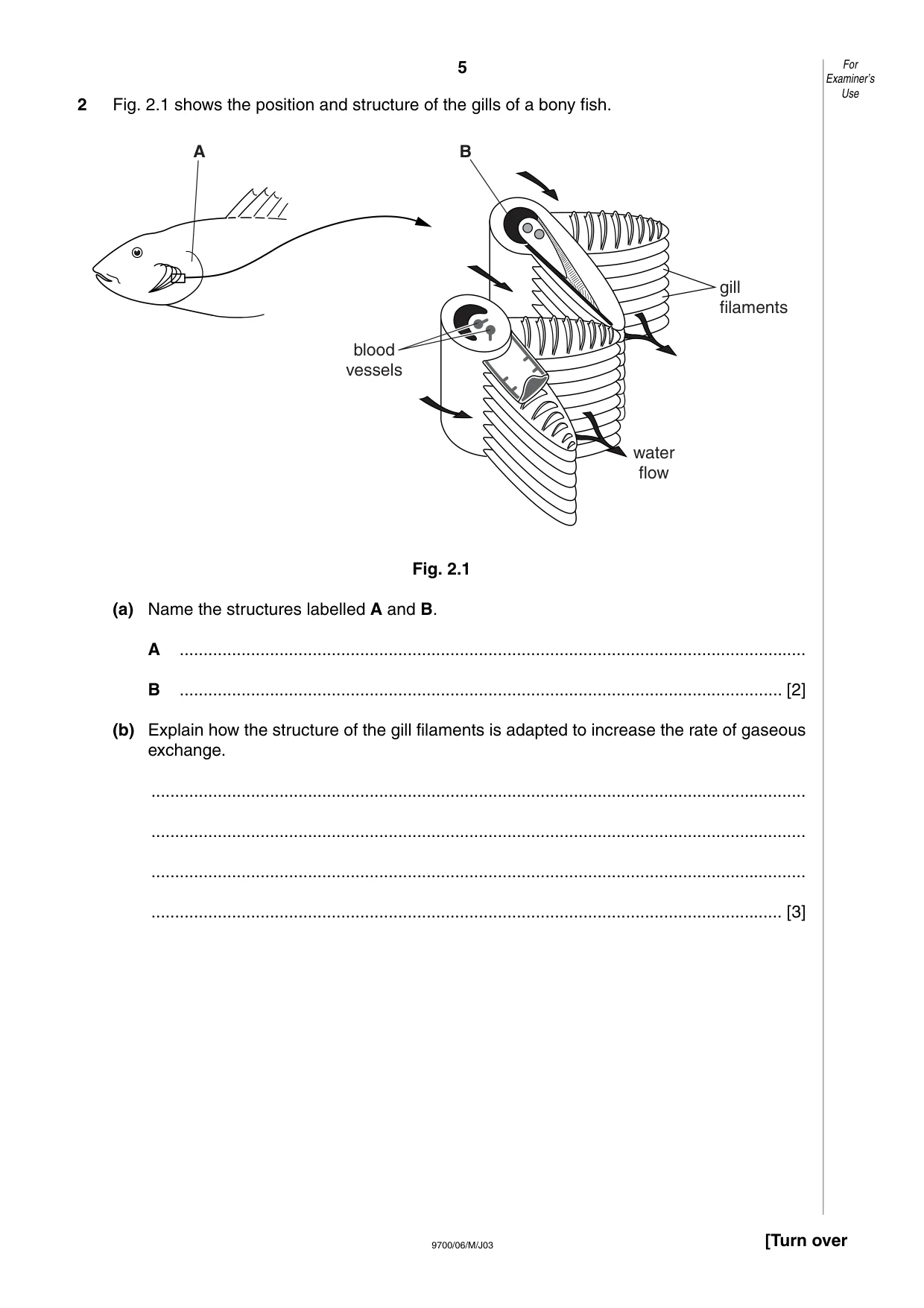
5 9700/06/M/J03 [Turn over 2 Fig. 2.1 shows the position and structure of the gills of a bony fish. Fig. 2.1 (a) Name the structures labelled A and B. A … B … [2] (b) Explain how the structure of the gill filaments is adapted to increase the rate of gaseous exchange. … … … … [3] blood vessels gill filaments water flow B A For Examiner’s Use
Question paper, page 6
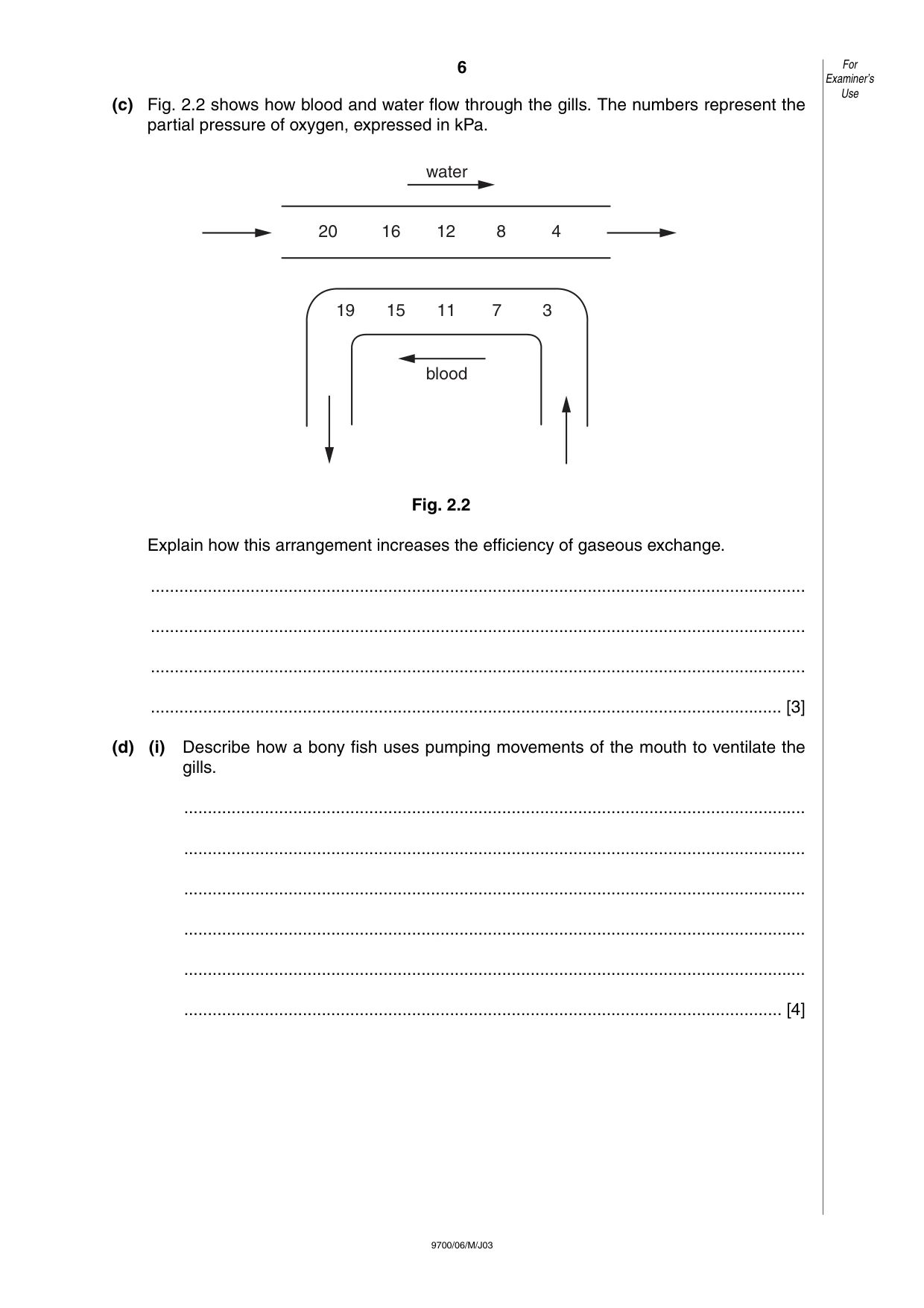
6 9700/06/M/J03 (c) Fig. 2.2 shows how blood and water flow through the gills. The numbers represent the partial pressure of oxygen, expressed in kPa. Fig. 2.2 Explain how this arrangement increases the efficiency of gaseous exchange. … … … … [3] (d) (i) Describe how a bony fish uses pumping movements of the mouth to ventilate the gills. … … … … … … [4] 20 16 12 8 4 19 15 11 7 3 blood water For Examiner’s Use
Question paper, page 7
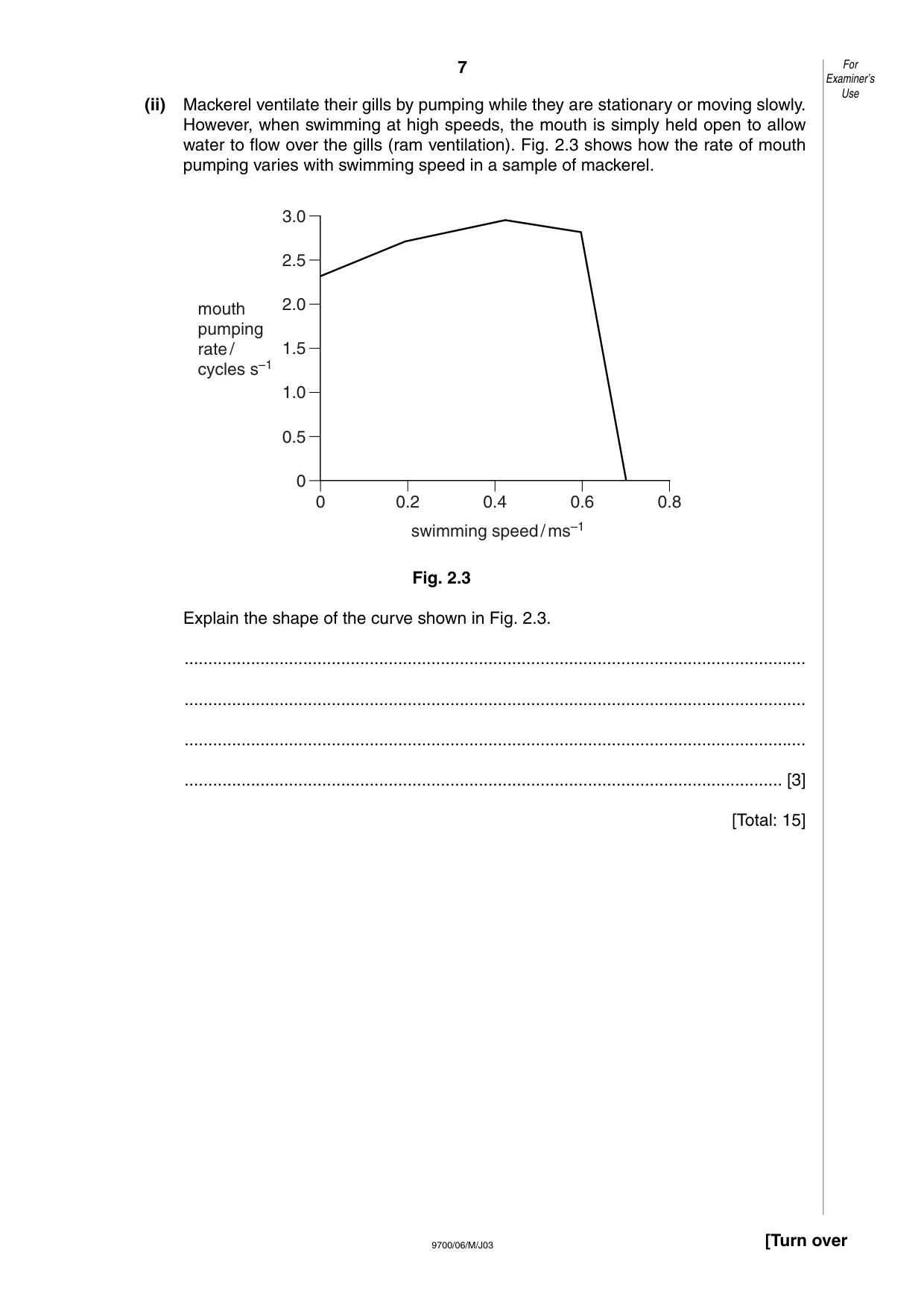
7 9700/06/M/J03 [Turn over (ii) Mackerel ventilate their gills by pumping while they are stationary or moving slowly. However, when swimming at high speeds, the mouth is simply held open to allow water to flow over the gills (ram ventilation). Fig. 2.3 shows how the rate of mouth pumping varies with swimming speed in a sample of mackerel. Fig. 2.3 Explain the shape of the curve shown in Fig. 2.3. … … … … [3] [Total: 15] 0 0 0.2 0.4 0.6 0.8 0.5 1.0 1.5 2.0 2.5 3.0 swimming speed/ms–1 mouth pumping rate/ cycles s–1 For Examiner’s Use
Question paper, page 8
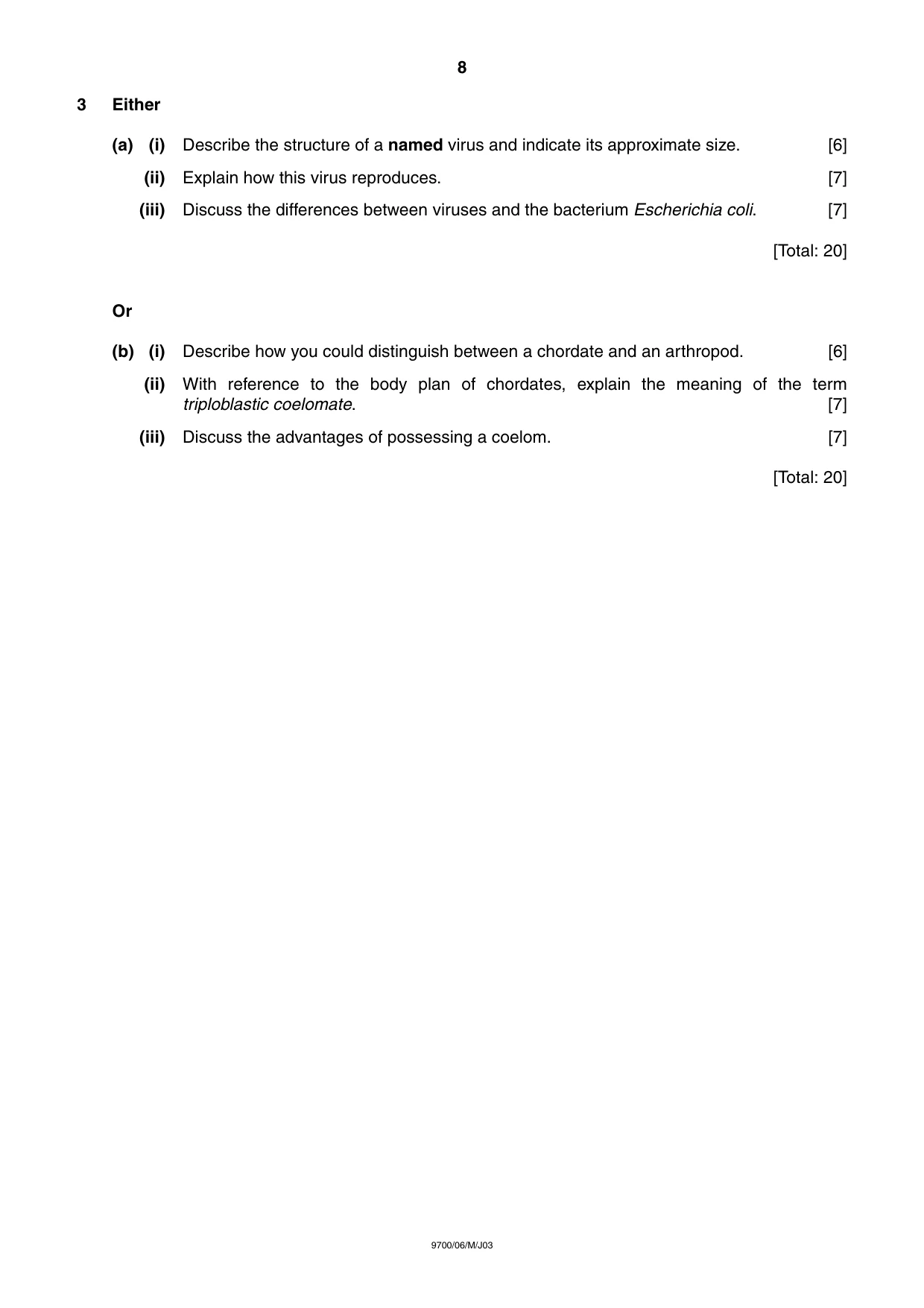
8 9700/06/M/J03 3 Either (a) (i) Describe the structure of a named virus and indicate its approximate size. [6] (ii) Explain how this virus reproduces. [7] (iii) Discuss the differences between viruses and the bacterium Escherichia coli. [7] [Total: 20] Or (b) (i) Describe how you could distinguish between a chordate and an arthropod. [6] (ii) With reference to the body plan of chordates, explain the meaning of the term triploblastic coelomate. [7] (iii) Discuss the advantages of possessing a coelom. [7] [Total: 20]
Question paper, page 9
9 9700/06/M/J03 [Turn over OPTION 2 – BIOTECHNOLOGY 1 (a) Define the term biotechnology. … … … [2] (b) The extent to which the potential of biotechnology will be realised depends on public attitudes towards the technology involved. Describe the factors that influence public opinion in determining the acceptability of the technology. … … … … … … [4] For Examiner’s Use
Question paper, page 10
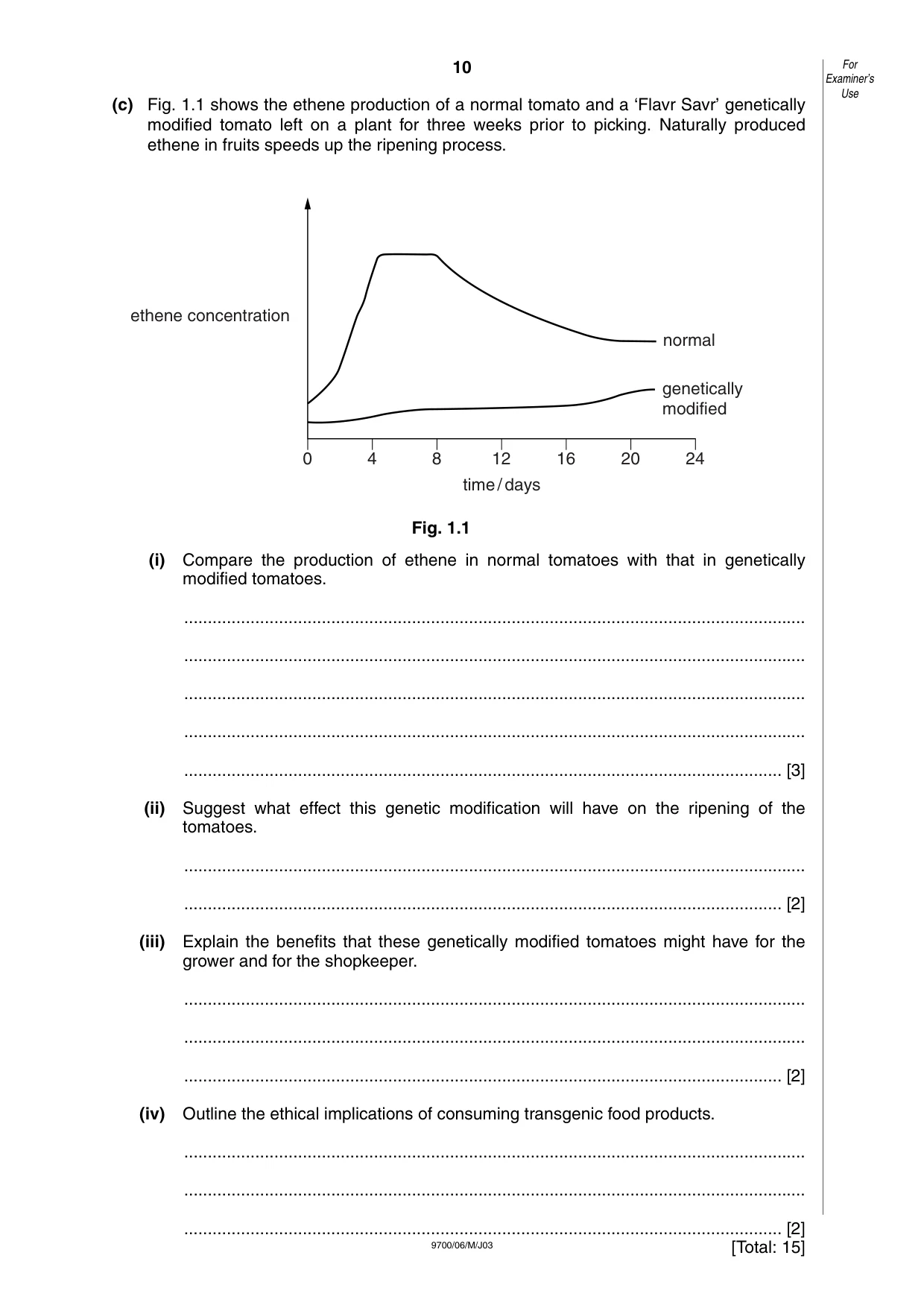
10 9700/06/M/J03 (c) Fig. 1.1 shows the ethene production of a normal tomato and a ‘Flavr Savr’ genetically modified tomato left on a plant for three weeks prior to picking. Naturally produced ethene in fruits speeds up the ripening process. Fig. 1.1 (i) Compare the production of ethene in normal tomatoes with that in genetically modified tomatoes. … … … … … [3] (ii) Suggest what effect this genetic modification will have on the ripening of the tomatoes. … … [2] (iii) Explain the benefits that these genetically modified tomatoes might have for the grower and for the shopkeeper. … … … [2] (iv) Outline the ethical implications of consuming transgenic food products. … … … [2] [Total: 15] 0 4 8 12 16 20 24 genetically modified normal time/days ethene concentration For Examiner’s Use
Question paper, page 11
11 9700/06/M/J03 [Turn over 2 (a) (i) Explain how vaccination can control disease. … … … … … [3] (ii) Outline the biosafety issues that arise from the use of live vaccines. … … … … … … [4] (iii) Describe the production of live vaccines. … … … … … … [4] For Examiner’s Use
Question paper, page 12
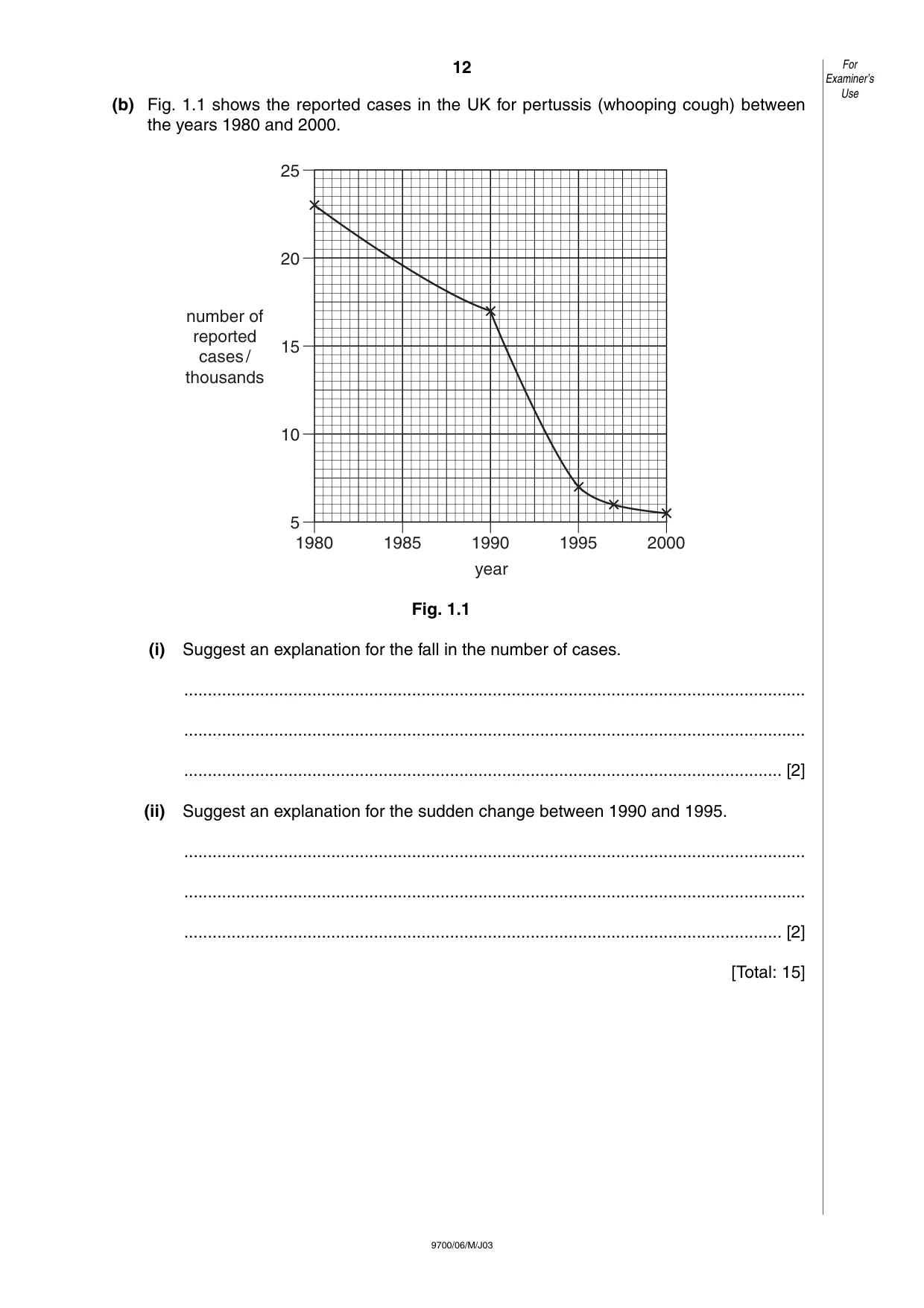
12 9700/06/M/J03 (b) Fig. 1.1 shows the reported cases in the UK for pertussis (whooping cough) between the years 1980 and 2000. Fig. 1.1 (i) Suggest an explanation for the fall in the number of cases. … … … [2] (ii) Suggest an explanation for the sudden change between 1990 and 1995. … … … [2] [Total: 15] 1980 1985 1990 1995 2000 year 10 5 15 20 25 number of reported cases/ thousands For Examiner’s Use
Question paper, page 13
13 9700/06/M/J03 [Turn over 3 Either (a) (i) Describe one example of soil-less culture. [8] (ii) Assess the advantages of soil-less culture over traditional farming methods. [6] (iii) Describe one use of tissue culture in agriculture. [6] [Total: 20] Or (b) (i) Explain the role of biotechnology in the production of beer or wine. [8] (ii) Describe how recent advances in biotechnology are revolutionising the production of beer or wine. [6] (iii) Describe the production of mycoprotein. [6] [Total: 20]
Question paper, page 14
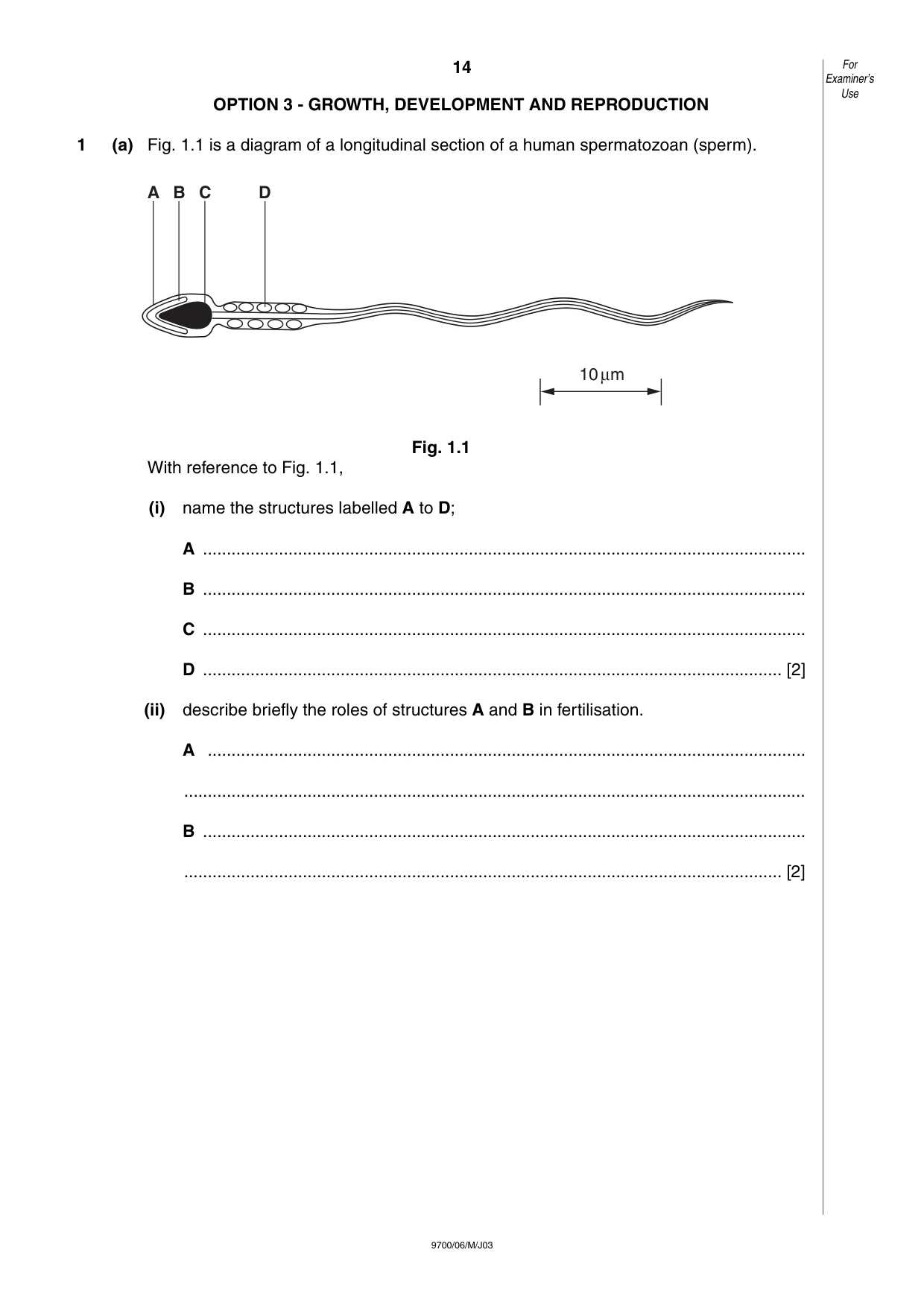
14 9700/06/M/J03 OPTION 3 - GROWTH, DEVELOPMENT AND REPRODUCTION 1 (a) Fig. 1.1 is a diagram of a longitudinal section of a human spermatozoan (sperm). Fig. 1.1 With reference to Fig. 1.1, (i) name the structures labelled A to D; A … B … C … D … [2] (ii) describe briefly the roles of structures A and B in fertilisation. A … … B … … [2] 10µm A B C D For Examiner’s Use
Question paper, page 15
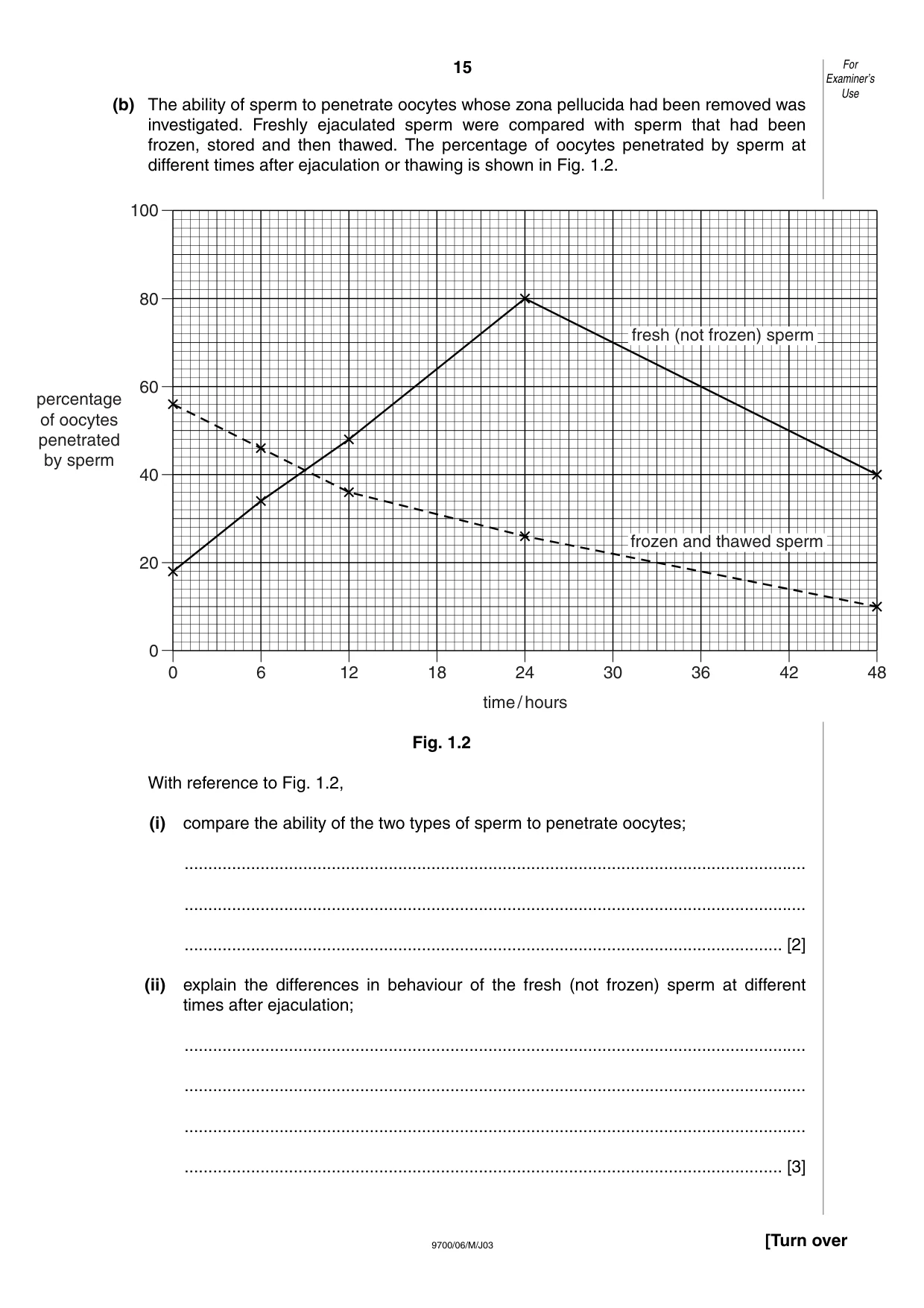
15 9700/06/M/J03 [Turn over (b) The ability of sperm to penetrate oocytes whose zona pellucida had been removed was investigated. Freshly ejaculated sperm were compared with sperm that had been frozen, stored and then thawed. The percentage of oocytes penetrated by sperm at different times after ejaculation or thawing is shown in Fig. 1.2. Fig. 1.2 With reference to Fig. 1.2, (i) compare the ability of the two types of sperm to penetrate oocytes; … … … [2] (ii) explain the differences in behaviour of the fresh (not frozen) sperm at different times after ejaculation; … … … … [3] For Examiner’s Use 0 0 6 12 18 24 48 42 36 30 20 40 60 80 100 time/hours percentage of oocytes penetrated by sperm fresh (not frozen) sperm frozen and thawed sperm
Question paper, page 16
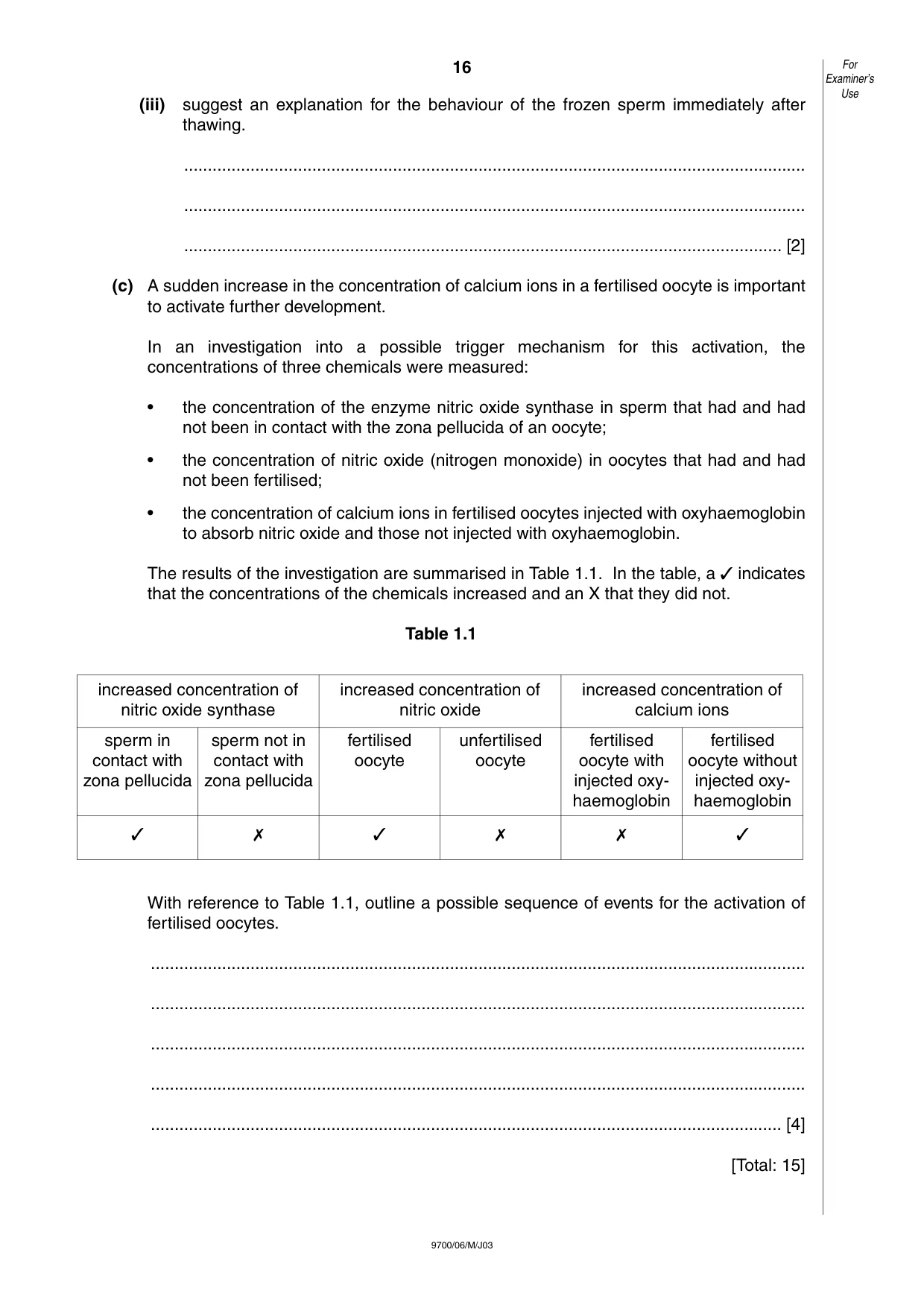
16 9700/06/M/J03 (iii) suggest an explanation for the behaviour of the frozen sperm immediately after thawing. … … … [2] (c) A sudden increase in the concentration of calcium ions in a fertilised oocyte is important to activate further development. In an investigation into a possible trigger mechanism for this activation, the concentrations of three chemicals were measured: • the concentration of the enzyme nitric oxide synthase in sperm that had and had not been in contact with the zona pellucida of an oocyte; • the concentration of nitric oxide (nitrogen monoxide) in oocytes that had and had not been fertilised; • the concentration of calcium ions in fertilised oocytes injected with oxyhaemoglobin to absorb nitric oxide and those not injected with oxyhaemoglobin. The results of the investigation are summarised in Table 1.1. In the table, a ✓indicates that the concentrations of the chemicals increased and an X that they did not. Table 1.1 With reference to Table 1.1, outline a possible sequence of events for the activation of fertilised oocytes. … … … … … [4] [Total: 15] For Examiner’s Use increased concentration of nitric oxide synthase increased concentration of nitric oxide increased concentration of calcium ions sperm in contact with zona pellucida sperm not in contact with zona pellucida fertilised oocyte unfertilised oocyte fertilised oocyte with injected oxy- haemoglobin fertilised oocyte without injected oxy- haemoglobin ✓ ✗ ✓ ✗ ✗ ✓
Question paper, page 17
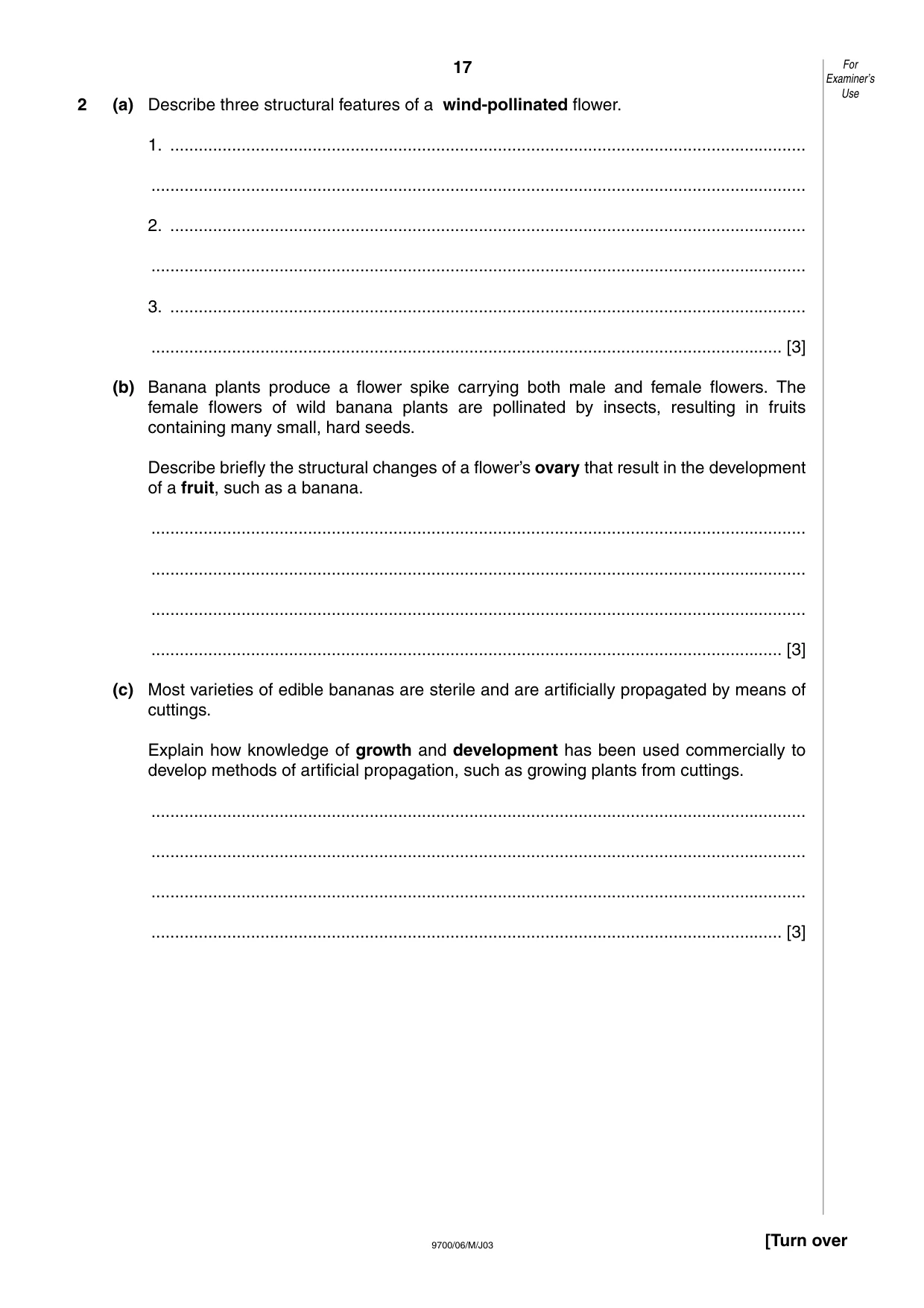
17 9700/06/M/J03 [Turn over 2 (a) Describe three structural features of a wind-pollinated flower. 1. … … 2. … … 3. … … [3] (b) Banana plants produce a flower spike carrying both male and female flowers. The female flowers of wild banana plants are pollinated by insects, resulting in fruits containing many small, hard seeds. Describe briefly the structural changes of a flower’s ovary that result in the development of a fruit, such as a banana. … … … … [3] (c) Most varieties of edible bananas are sterile and are artificially propagated by means of cuttings. Explain how knowledge of growth and development has been used commercially to develop methods of artificial propagation, such as growing plants from cuttings. … … … … [3] For Examiner’s Use
Question paper, page 18
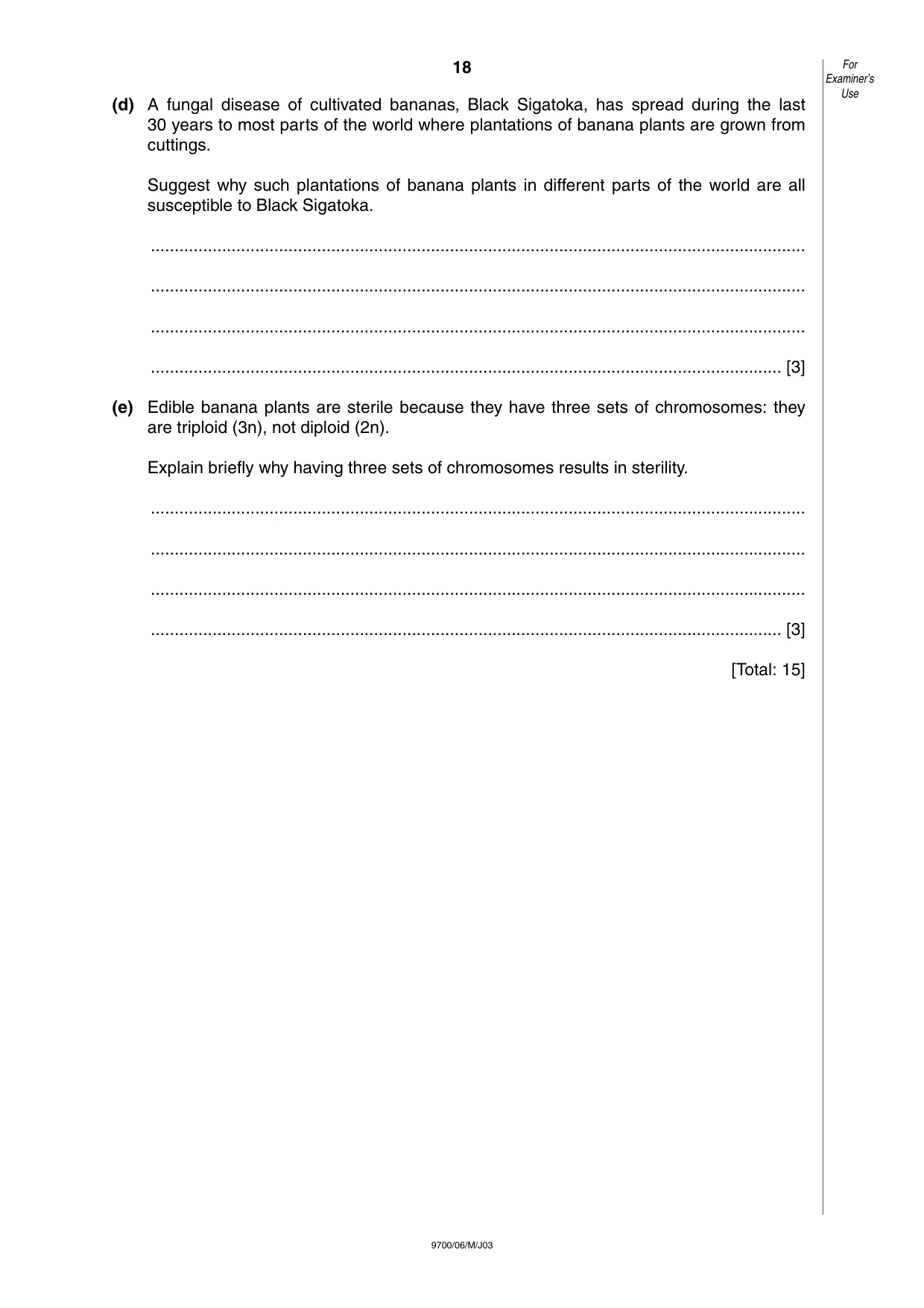
18 9700/06/M/J03 (d) A fungal disease of cultivated bananas, Black Sigatoka, has spread during the last 30 years to most parts of the world where plantations of banana plants are grown from cuttings. Suggest why such plantations of banana plants in different parts of the world are all susceptible to Black Sigatoka. … … … … [3] (e) Edible banana plants are sterile because they have three sets of chromosomes: they are triploid (3n), not diploid (2n). Explain briefly why having three sets of chromosomes results in sterility. … … … … [3] [Total: 15] For Examiner’s Use
Question paper, page 19
19 9700/06/M/J03 [Turn over 3 Either (a) (i) Distinguish between absolute and relative growth rates, giving one example of each. [6] (ii) Describe the measurement of growth of a named organism by means of dry mass. [8] (iii) Discuss the problems of measuring growth of an organism when it is not possible to use dry mass. [6] [Total: 20] Or (b) Outline the roles in human growth and development of (i) the hypothalamus; [6] (ii) the pituitary gland; [8] (iii) the thyroid gland. [6] [Total: 20]
Question paper, page 20
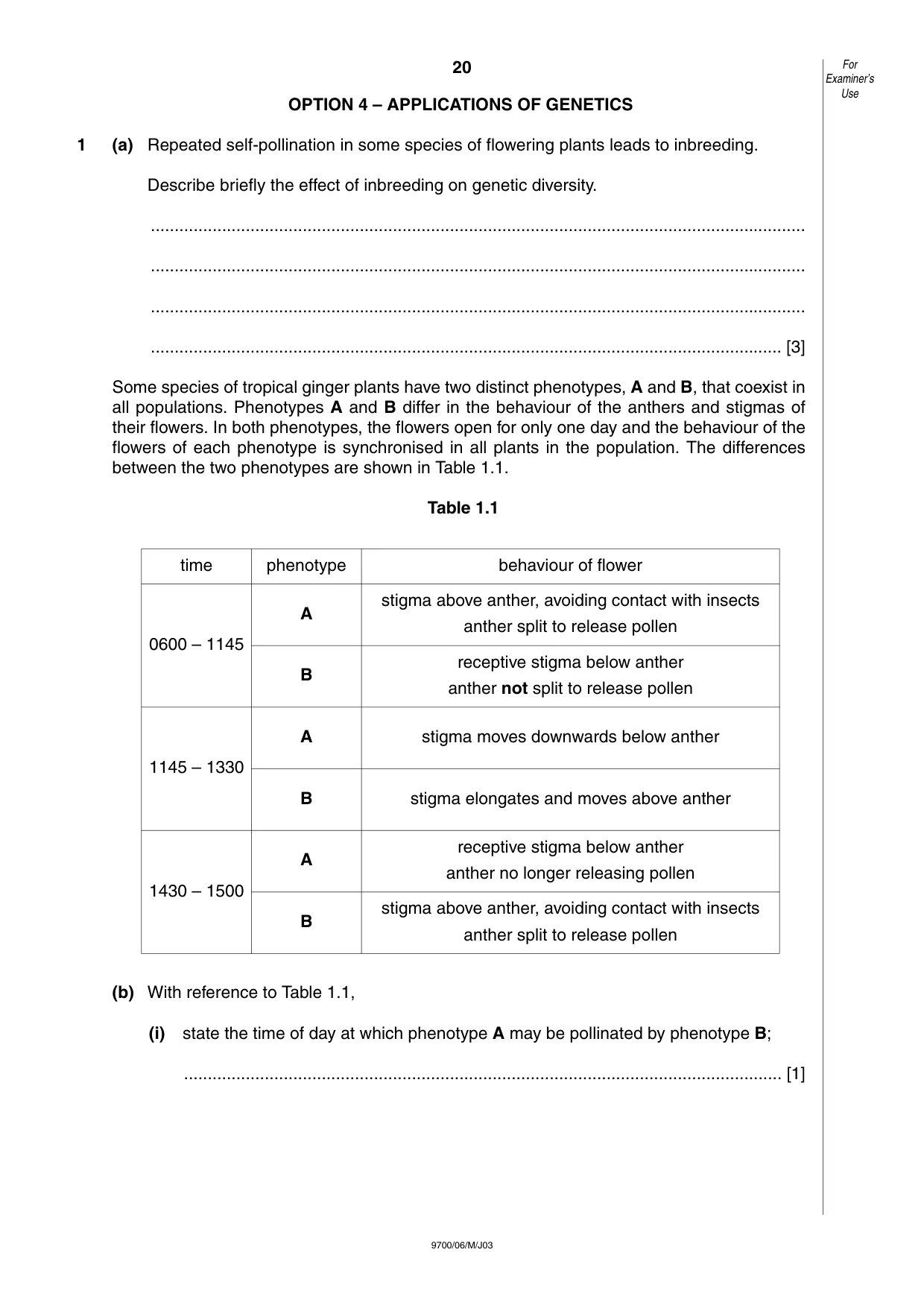
20 9700/06/M/J03 OPTION 4 – APPLICATIONS OF GENETICS 1 (a) Repeated self-pollination in some species of flowering plants leads to inbreeding. Describe briefly the effect of inbreeding on genetic diversity. … … … … [3] Some species of tropical ginger plants have two distinct phenotypes, A and B, that coexist in all populations. Phenotypes A and B differ in the behaviour of the anthers and stigmas of their flowers. In both phenotypes, the flowers open for only one day and the behaviour of the flowers of each phenotype is synchronised in all plants in the population. The differences between the two phenotypes are shown in Table 1.1. Table 1.1 (b) With reference to Table 1.1, (i) state the time of day at which phenotype A may be pollinated by phenotype B; … [1] For Examiner’s Use time phenotype A B behaviour of flower stigma above anther, avoiding contact with insects anther split to release pollen receptive stigma below anther anther not split to release pollen stigma moves downwards below anther stigma elongates and moves above anther receptive stigma below anther anther no longer releasing pollen stigma above anther, avoiding contact with insects anther split to release pollen 0600 – 1145 A B 1145 – 1330 A B 1430 – 1500
Question paper, page 21
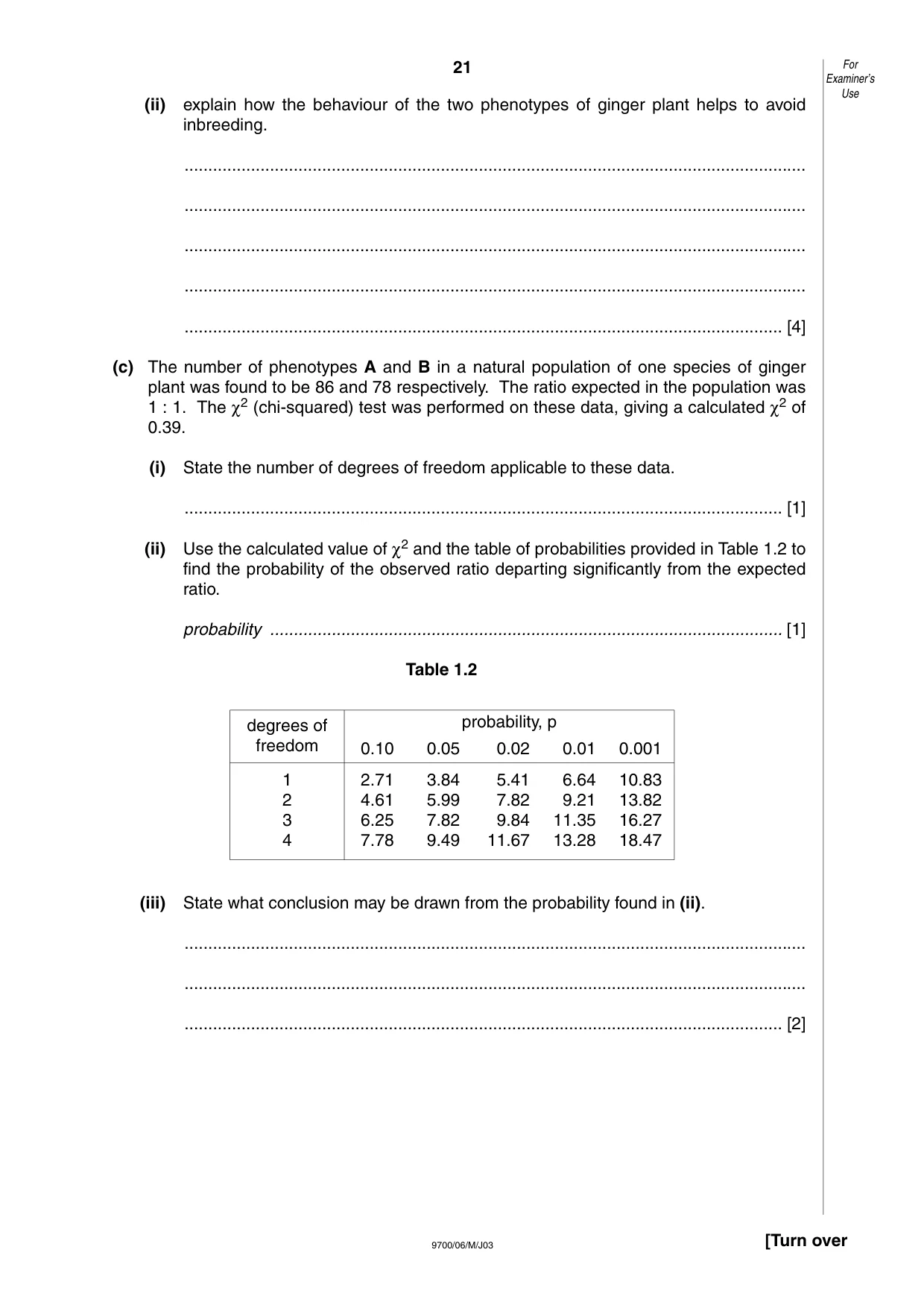
21 9700/06/M/J03 [Turn over (ii) explain how the behaviour of the two phenotypes of ginger plant helps to avoid inbreeding. … … … … … [4] (c) The number of phenotypes A and B in a natural population of one species of ginger plant was found to be 86 and 78 respectively. The ratio expected in the population was 1 : 1. The χ2 (chi-squared) test was performed on these data, giving a calculated χ2 of 0.39. (i) State the number of degrees of freedom applicable to these data. … [1] (ii) Use the calculated value of χ2 and the table of probabilities provided in Table 1.2 to find the probability of the observed ratio departing significantly from the expected ratio. probability … [1] Table 1.2 (iii) State what conclusion may be drawn from the probability found in (ii). … … … [2] For Examiner’s Use degrees of freedom 1 2 3 4 0.10 2.71 4.61 6.25 7.78 0.05 3.84 5.99 7.82 9.49 0.02 5.41 7.82 9.84 11.67 0.01 6.64 9.21 11.35 13.28 0.001 10.83 13.82 16.27 18.47 probability, p
Question paper, page 22
22 9700/06/M/J03 (iv) Suggest, using suitable symbols, genotypes for phenotypes A and B that would enable both phenotypes to be maintained in the ginger plant population for many generations. Explain the symbols you select. explanation of symbols … … genotype A … genotype B …[3] [Total: 15] For Examiner’s Use
Question paper, page 23
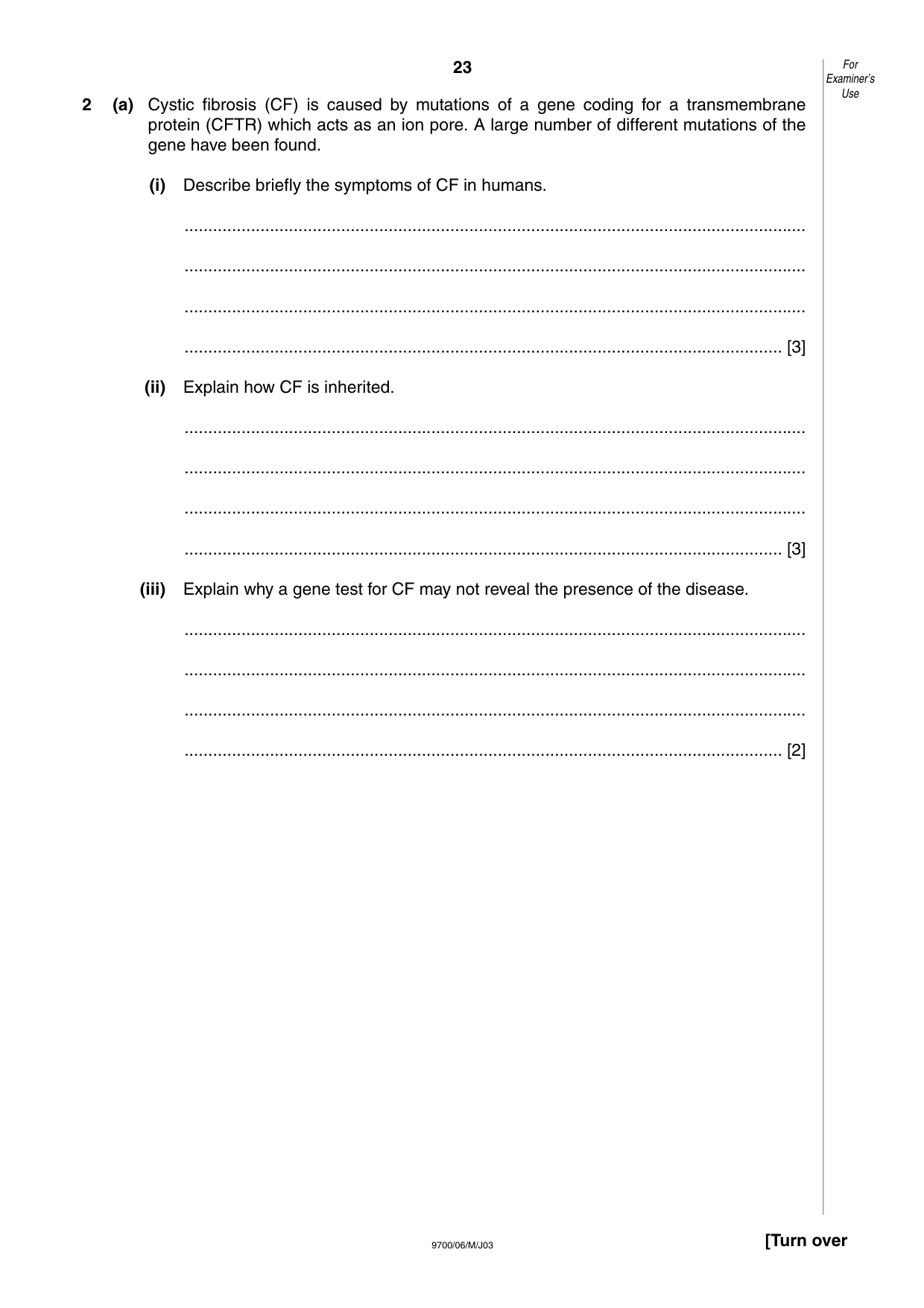
23 9700/06/M/J03 [Turn over 2 (a) Cystic fibrosis (CF) is caused by mutations of a gene coding for a transmembrane protein (CFTR) which acts as an ion pore. A large number of different mutations of the gene have been found. (i) Describe briefly the symptoms of CF in humans. … … … … [3] (ii) Explain how CF is inherited. … … … … [3] (iii) Explain why a gene test for CF may not reveal the presence of the disease. … … … … [2] For Examiner’s Use
Question paper, page 24
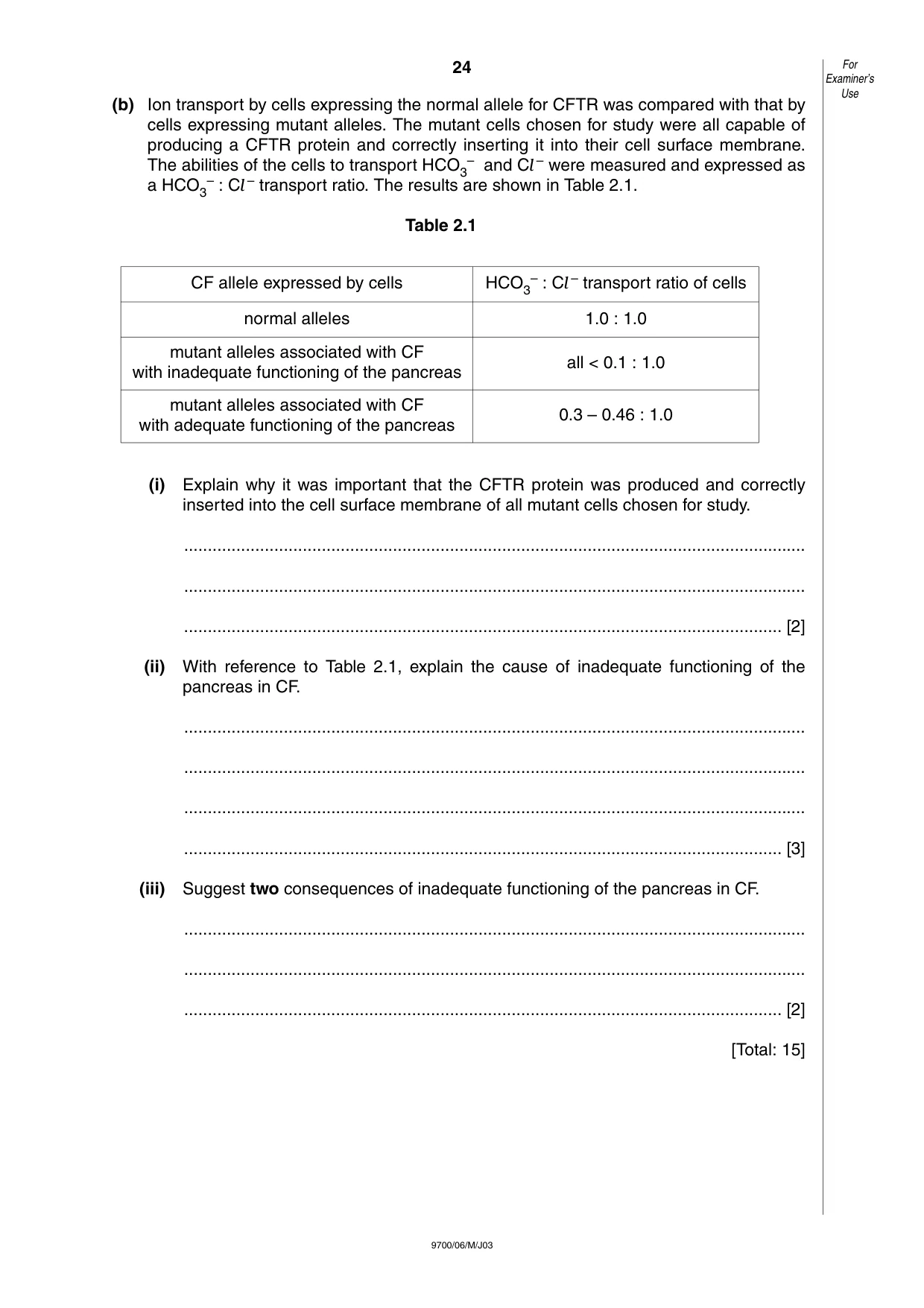
24 9700/06/M/J03 (b) Ion transport by cells expressing the normal allele for CFTR was compared with that by cells expressing mutant alleles. The mutant cells chosen for study were all capable of producing a CFTR protein and correctly inserting it into their cell surface membrane. The abilities of the cells to transport HCO3 – and Cl – were measured and expressed as a HCO3 – : Cl – transport ratio. The results are shown in Table 2.1. Table 2.1 (i) Explain why it was important that the CFTR protein was produced and correctly inserted into the cell surface membrane of all mutant cells chosen for study. … … … [2] (ii) With reference to Table 2.1, explain the cause of inadequate functioning of the pancreas in CF. … … … … [3] (iii) Suggest two consequences of inadequate functioning of the pancreas in CF. … … … [2] [Total: 15] For Examiner’s Use all < 0.1 : 1.0 0.3 – 0.46 : 1.0 mutant alleles associated with CF with inadequate functioning of the pancreas mutant alleles associated with CF with adequate functioning of the pancreas CF allele expressed by cells HCO3 – : Cl – transport ratio of cells 1.0 : 1.0 normal alleles
Question paper, page 25
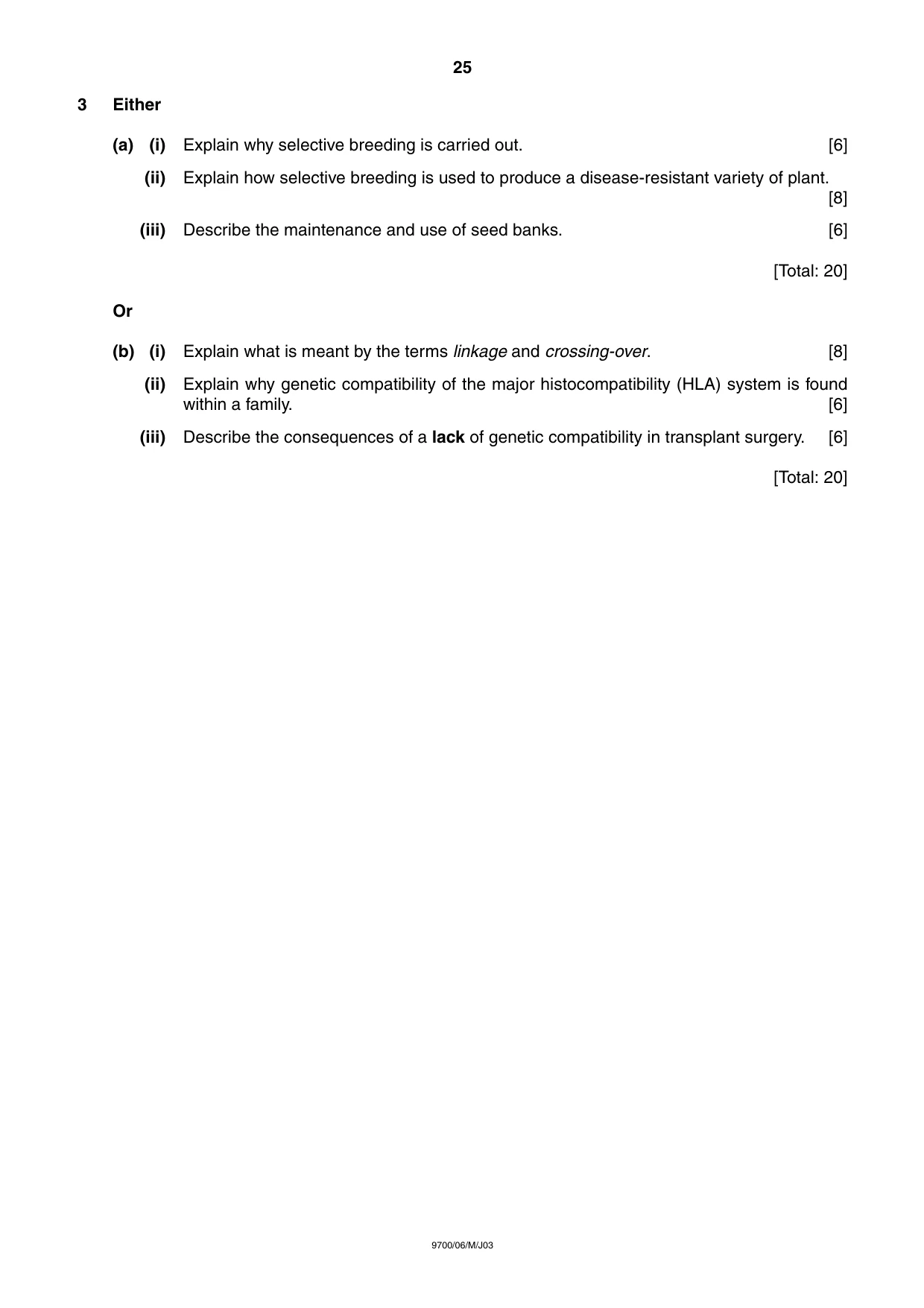
25 9700/06/M/J03 3 Either (a) (i) Explain why selective breeding is carried out. [6] (ii) Explain how selective breeding is used to produce a disease-resistant variety of plant. [8] (iii) Describe the maintenance and use of seed banks. [6] [Total: 20] Or (b) (i) Explain what is meant by the terms linkage and crossing-over. [8] (ii) Explain why genetic compatibility of the major histocompatibility (HLA) system is found within a family. [6] (iii) Describe the consequences of a lack of genetic compatibility in transplant surgery. [6] [Total: 20]