Cambridge A Level Biology 9700 — 2006 Oct/Nov Paper 6 · Variant 1
9700/61/O/N/06 · 40 marks · ≈45 min
The question paper and its mark scheme, free to read here and free to download. This is Cambridge’s own paper, exactly as it was sat.
Question paper36 pages



Mark scheme9 pages
Answers below. Sit the paper first if you are practising.
Paper as text
Question paper, page 1
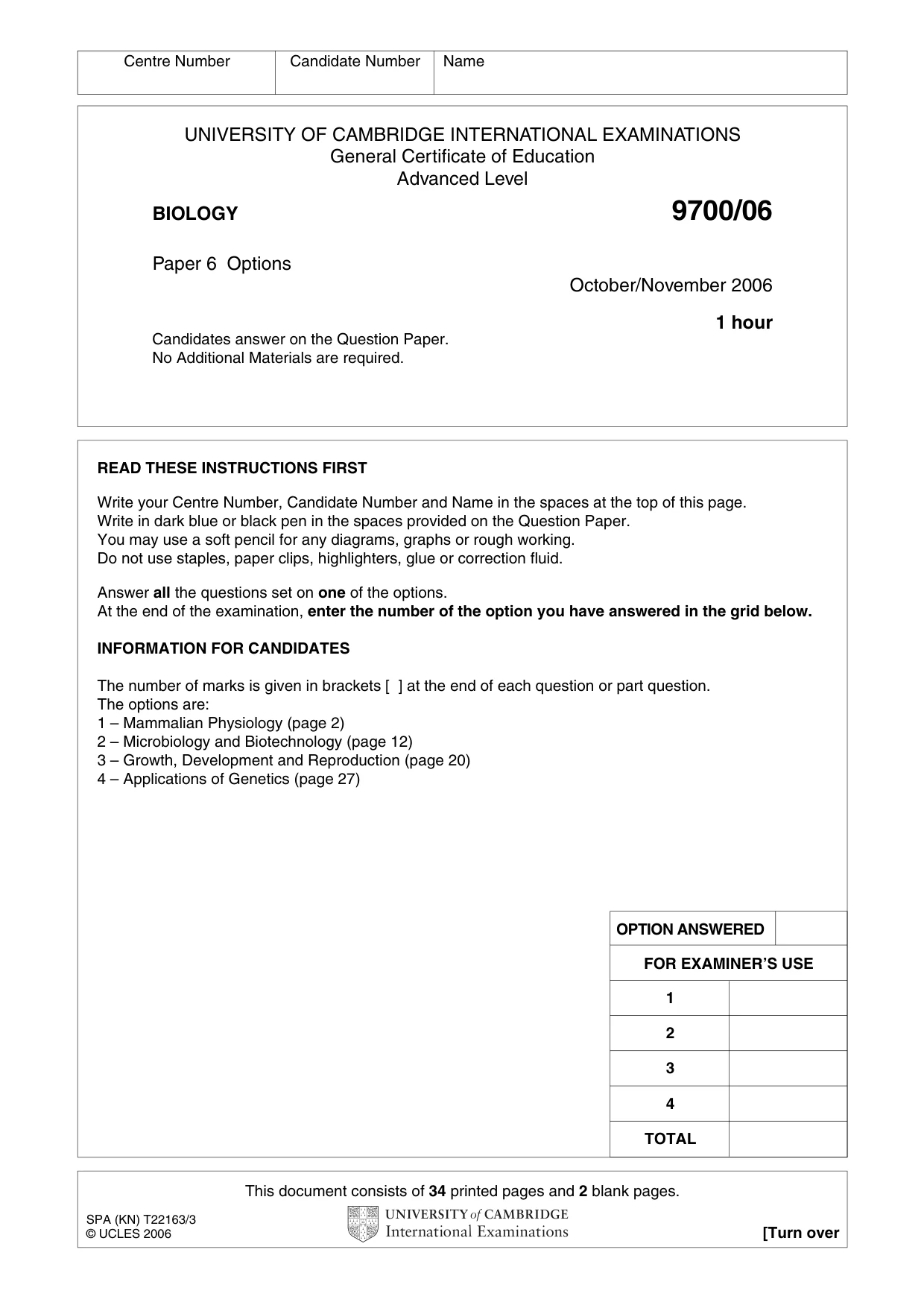
This document consists of 34 printed pages and 2 blank pages. SPA (KN) T22163/3 © UCLES 2006 [Turn over UNIVERSITY OF CAMBRIDGE INTERNATIONAL EXAMINATIONS General Certificate of Education Advanced Level BIOLOGY 9700/06 Paper 6 Options October/November 2006 1 hour Candidates answer on the Question Paper. No Additional Materials are required. READ THESE INSTRUCTIONS FIRST Write your Centre Number, Candidate Number and Name in the spaces at the top of this page. Write in dark blue or black pen in the spaces provided on the Question Paper. You may use a soft pencil for any diagrams, graphs or rough working. Do not use staples, paper clips, highlighters, glue or correction fluid. Answer all the questions set on one of the options. At the end of the examination, enter the number of the option you have answered in the grid below. INFORMATION FOR CANDIDATES The number of marks is given in brackets [ ] at the end of each question or part question. The options are: 1 – Mammalian Physiology (page 2) 2 – Microbiology and Biotechnology (page 12) 3 – Growth, Development and Reproduction (page 20) 4 – Applications of Genetics (page 27) Centre Number Candidate Number Name OPTION ANSWERED FOR EXAMINER’S USE 1 2 3 4 TOTAL
Question paper, page 2
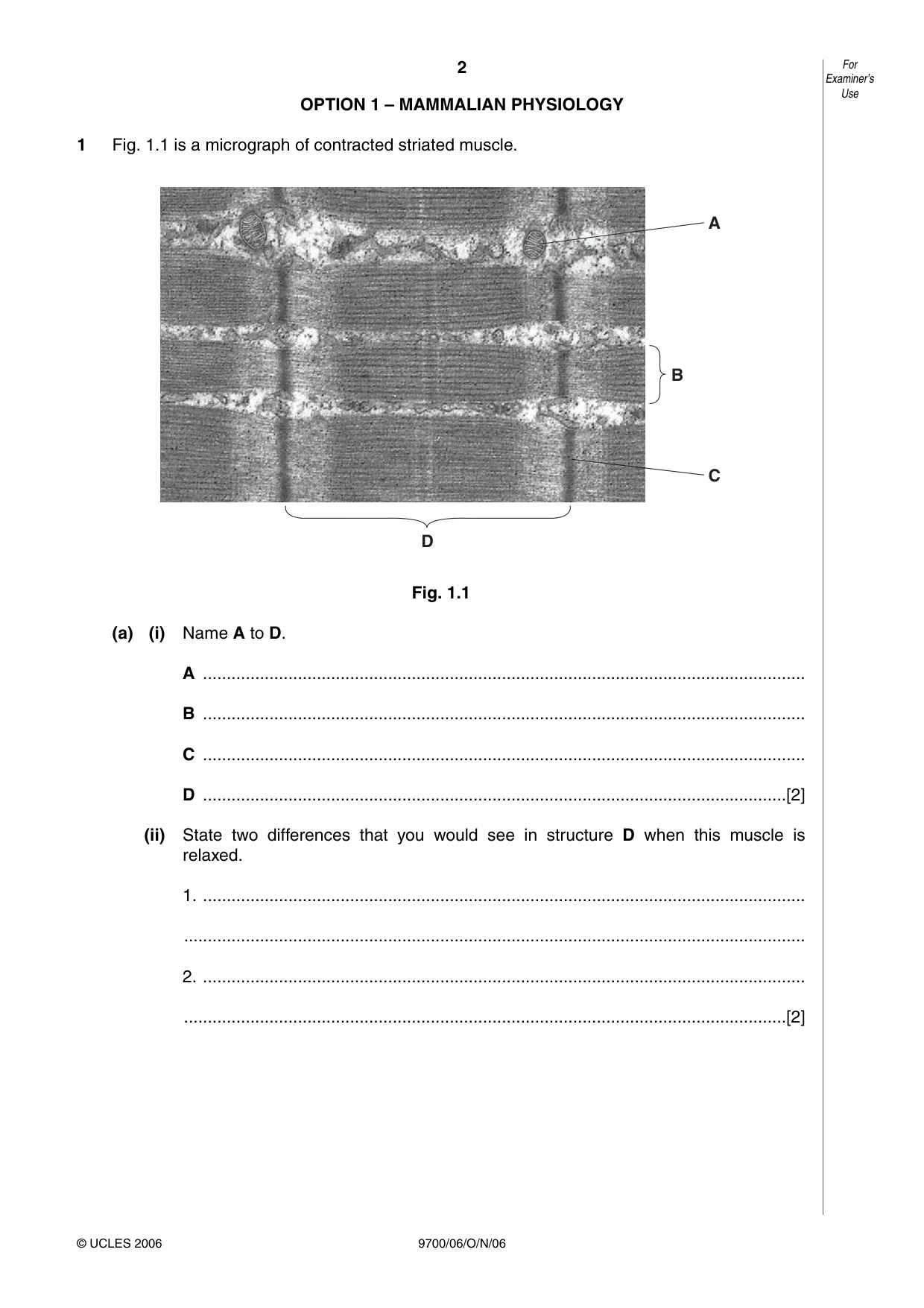
2 9700/06/O/N/06 OPTION 1 – MAMMALIAN PHYSIOLOGY 1 Fig. 1.1 is a micrograph of contracted striated muscle. Fig. 1.1 (a) (i) Name A to D. A … B … C … D …[2] (ii) State two differences that you would see in structure D when this muscle is relaxed. 1. … … 2. … …[2] D B C A For Examiner’s Use © UCLES 2006
Question paper, page 3
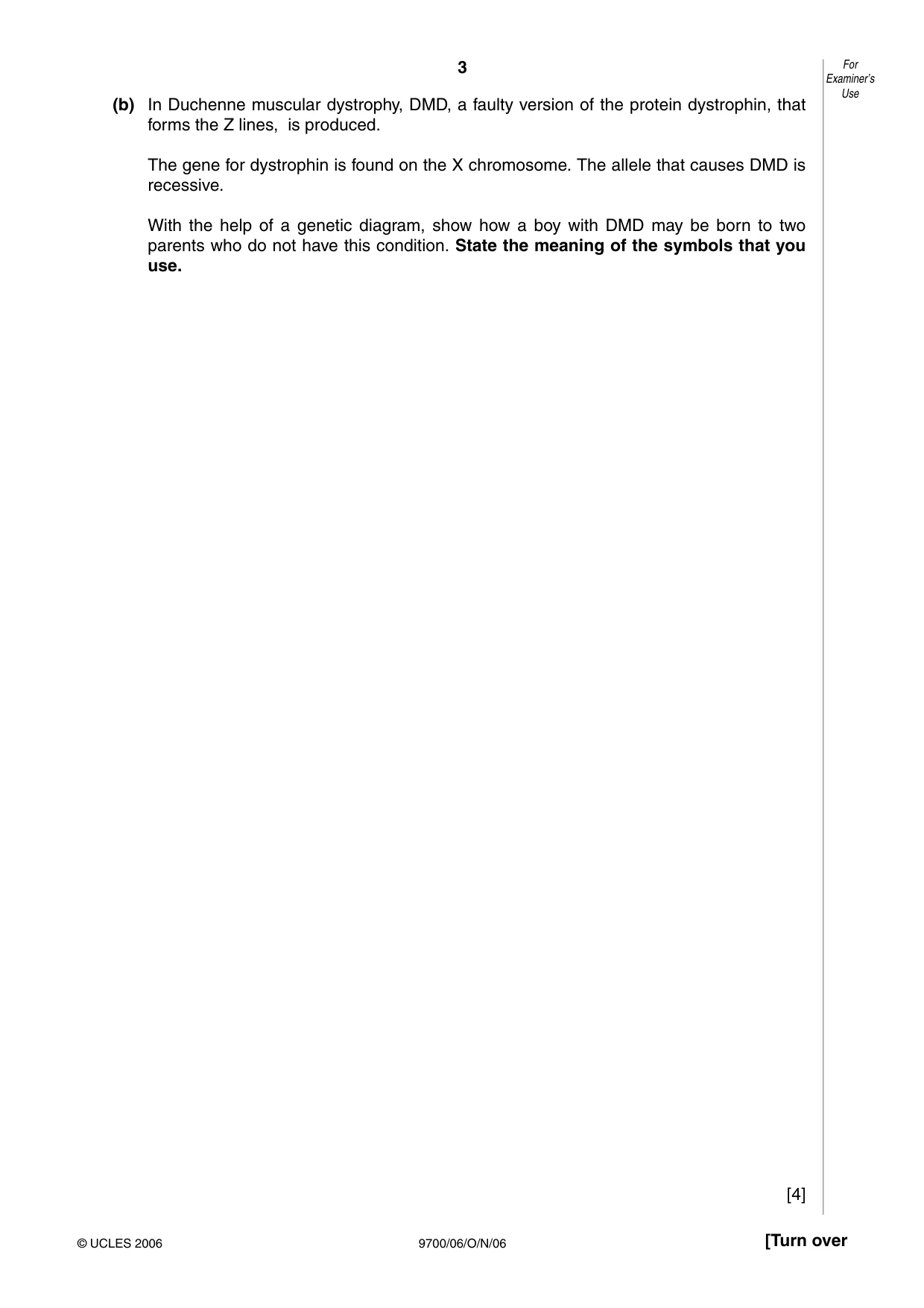
3 9700/06/O/N/06 [Turn over (b) In Duchenne muscular dystrophy, DMD, a faulty version of the protein dystrophin, that forms the Z lines, is produced. The gene for dystrophin is found on the X chromosome. The allele that causes DMD is recessive. With the help of a genetic diagram, show how a boy with DMD may be born to two parents who do not have this condition. State the meaning of the symbols that you use. [4] For Examiner’s Use © UCLES 2006
Question paper, page 4
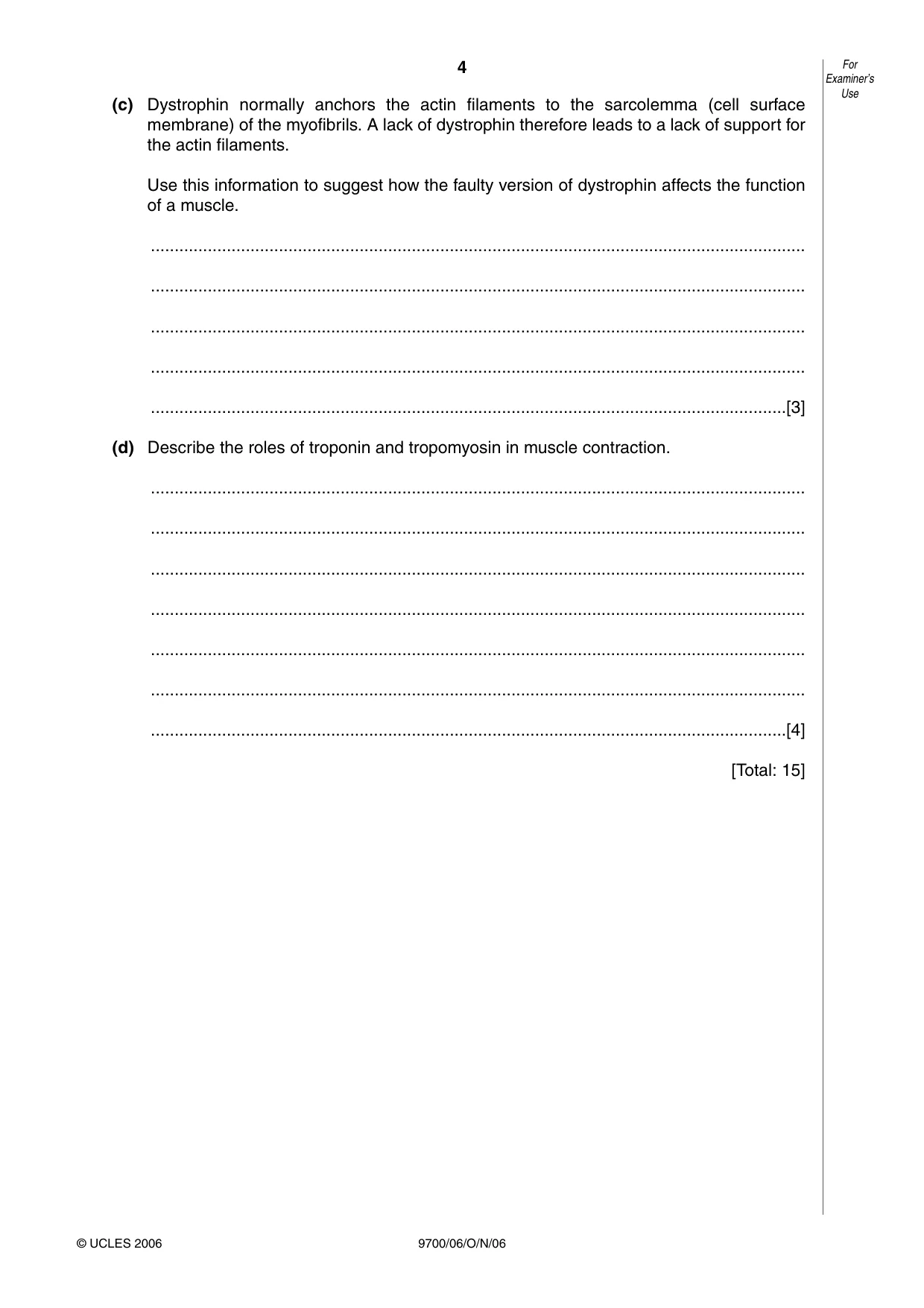
4 9700/06/O/N/06 (c) Dystrophin normally anchors the actin filaments to the sarcolemma (cell surface membrane) of the myofibrils. A lack of dystrophin therefore leads to a lack of support for the actin filaments. Use this information to suggest how the faulty version of dystrophin affects the function of a muscle. … … … … …[3] (d) Describe the roles of troponin and tropomyosin in muscle contraction. … … … … … … …[4] [Total: 15] For Examiner’s Use © UCLES 2006
Question paper, page 5
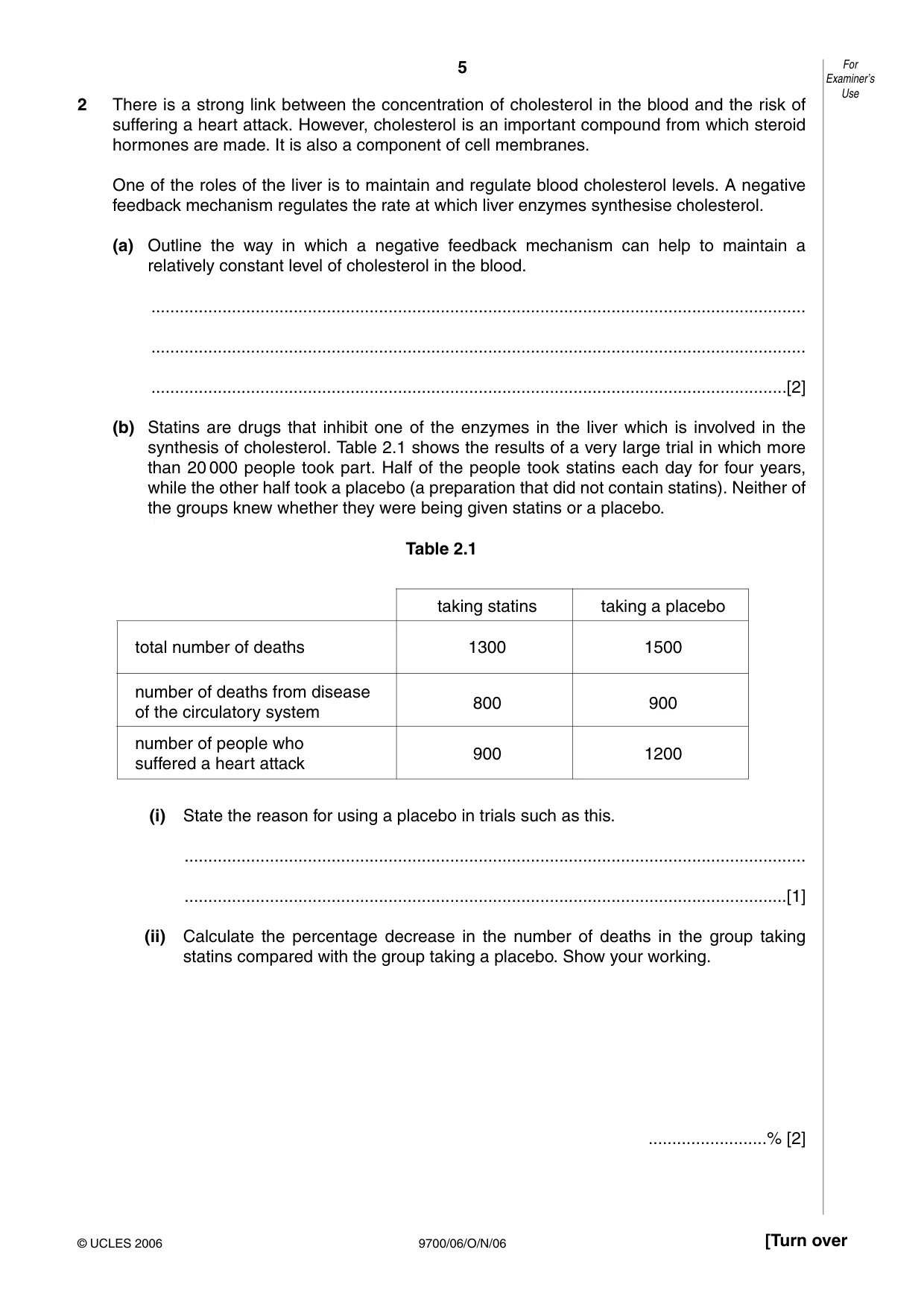
5 9700/06/O/N/06 [Turn over 2 There is a strong link between the concentration of cholesterol in the blood and the risk of suffering a heart attack. However, cholesterol is an important compound from which steroid hormones are made. It is also a component of cell membranes. One of the roles of the liver is to maintain and regulate blood cholesterol levels. A negative feedback mechanism regulates the rate at which liver enzymes synthesise cholesterol. (a) Outline the way in which a negative feedback mechanism can help to maintain a relatively constant level of cholesterol in the blood. … … …[2] (b) Statins are drugs that inhibit one of the enzymes in the liver which is involved in the synthesis of cholesterol. Table 2.1 shows the results of a very large trial in which more than 20 000 people took part. Half of the people took statins each day for four years, while the other half took a placebo (a preparation that did not contain statins). Neither of the groups knew whether they were being given statins or a placebo. Table 2.1 (i) State the reason for using a placebo in trials such as this. … …[1] (ii) Calculate the percentage decrease in the number of deaths in the group taking statins compared with the group taking a placebo. Show your working. …% [2] For Examiner’s Use © UCLES 2006 taking statins taking a placebo total number of deaths 1300 1500 number of deaths from disease of the circulatory system 800 900 number of people who suffered a heart attack 900 1200
Question paper, page 6
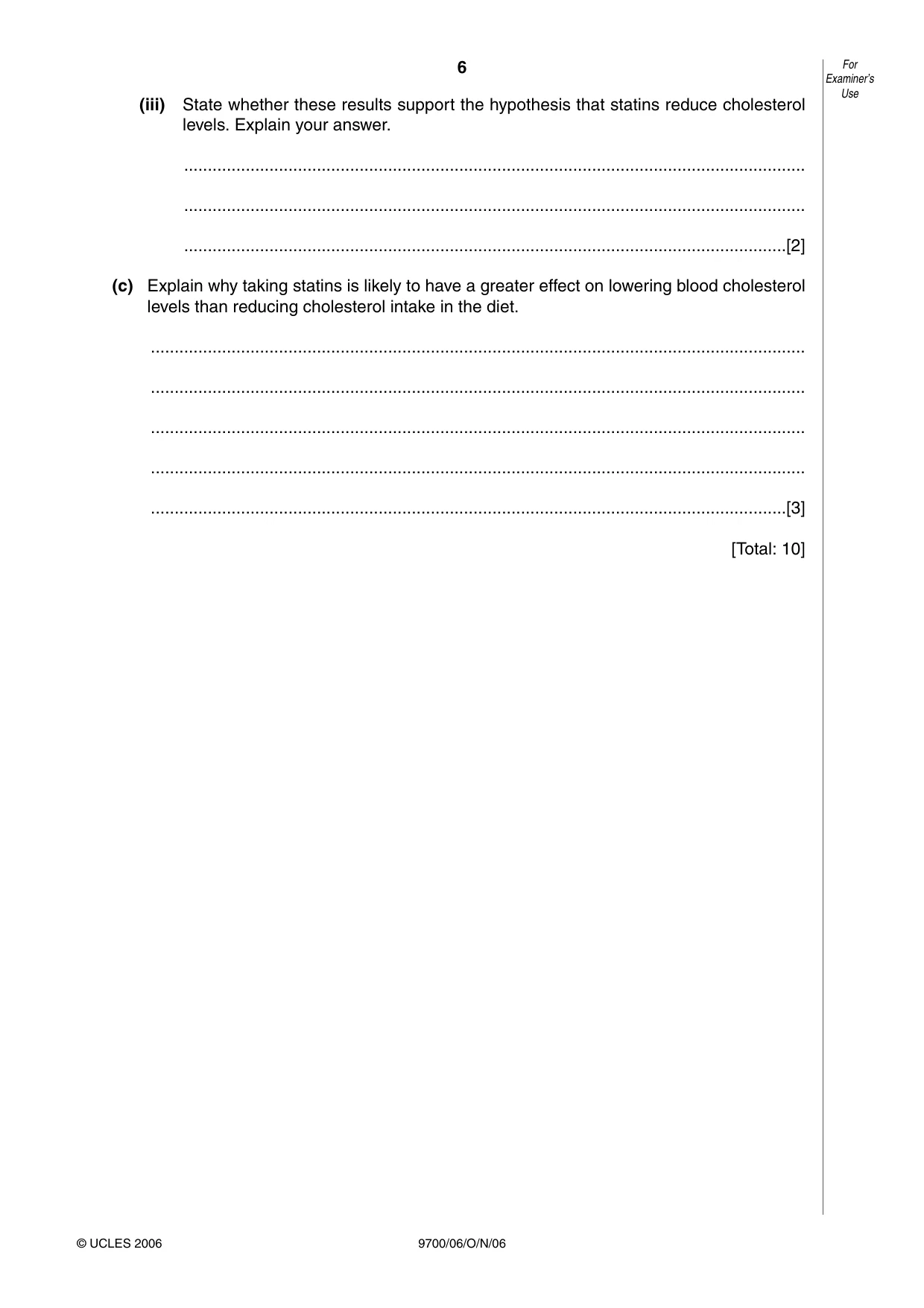
6 9700/06/O/N/06 (iii) State whether these results support the hypothesis that statins reduce cholesterol levels. Explain your answer. … … …[2] (c) Explain why taking statins is likely to have a greater effect on lowering blood cholesterol levels than reducing cholesterol intake in the diet. … … … … …[3] [Total: 10] For Examiner’s Use © UCLES 2006
Question paper, page 7
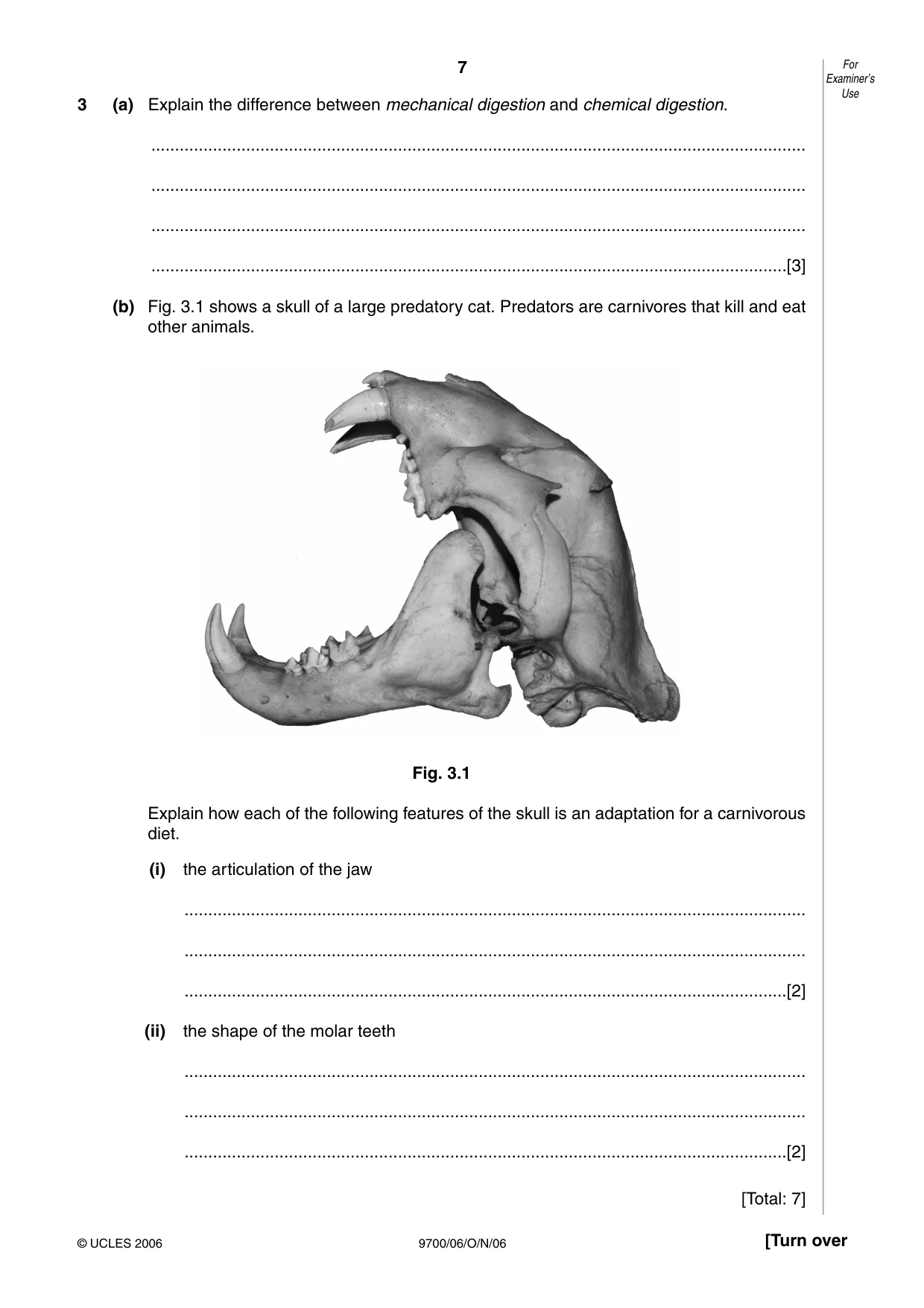
7 9700/06/O/N/06 [Turn over 3 (a) Explain the difference between mechanical digestion and chemical digestion. … … … …[3] (b) Fig. 3.1 shows a skull of a large predatory cat. Predators are carnivores that kill and eat other animals. Fig. 3.1 Explain how each of the following features of the skull is an adaptation for a carnivorous diet. (i) the articulation of the jaw … … …[2] (ii) the shape of the molar teeth … … …[2] [Total: 7] For Examiner’s Use © UCLES 2006
Question paper, page 8
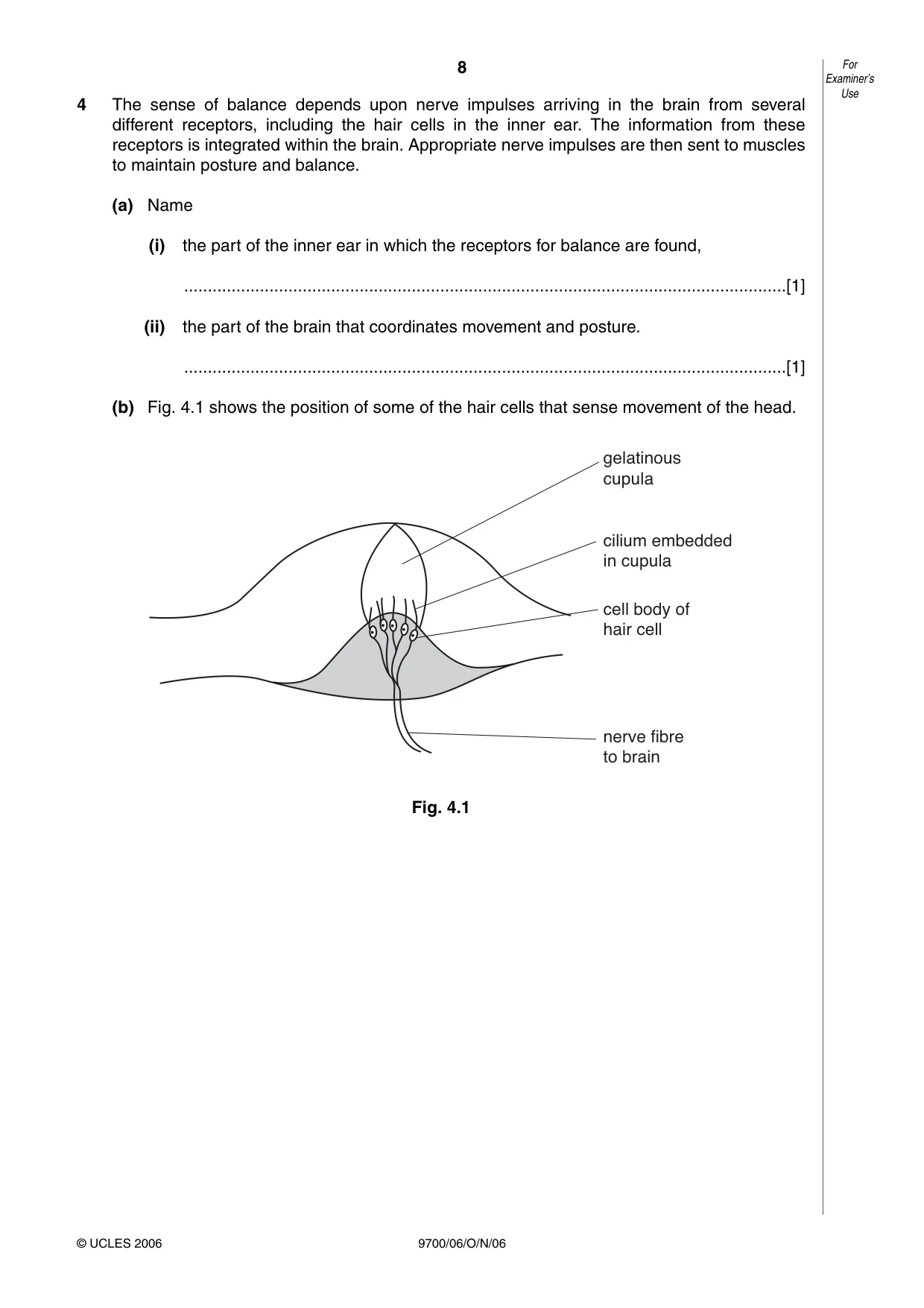
8 9700/06/O/N/06 4 The sense of balance depends upon nerve impulses arriving in the brain from several different receptors, including the hair cells in the inner ear. The information from these receptors is integrated within the brain. Appropriate nerve impulses are then sent to muscles to maintain posture and balance. (a) Name (i) the part of the inner ear in which the receptors for balance are found, …[1] (ii) the part of the brain that coordinates movement and posture. …[1] (b) Fig. 4.1 shows the position of some of the hair cells that sense movement of the head. Fig. 4.1 gelatinous cupula cilium embedded in cupula cell body of hair cell nerve fibre to brain For Examiner’s Use © UCLES 2006
Question paper, page 9
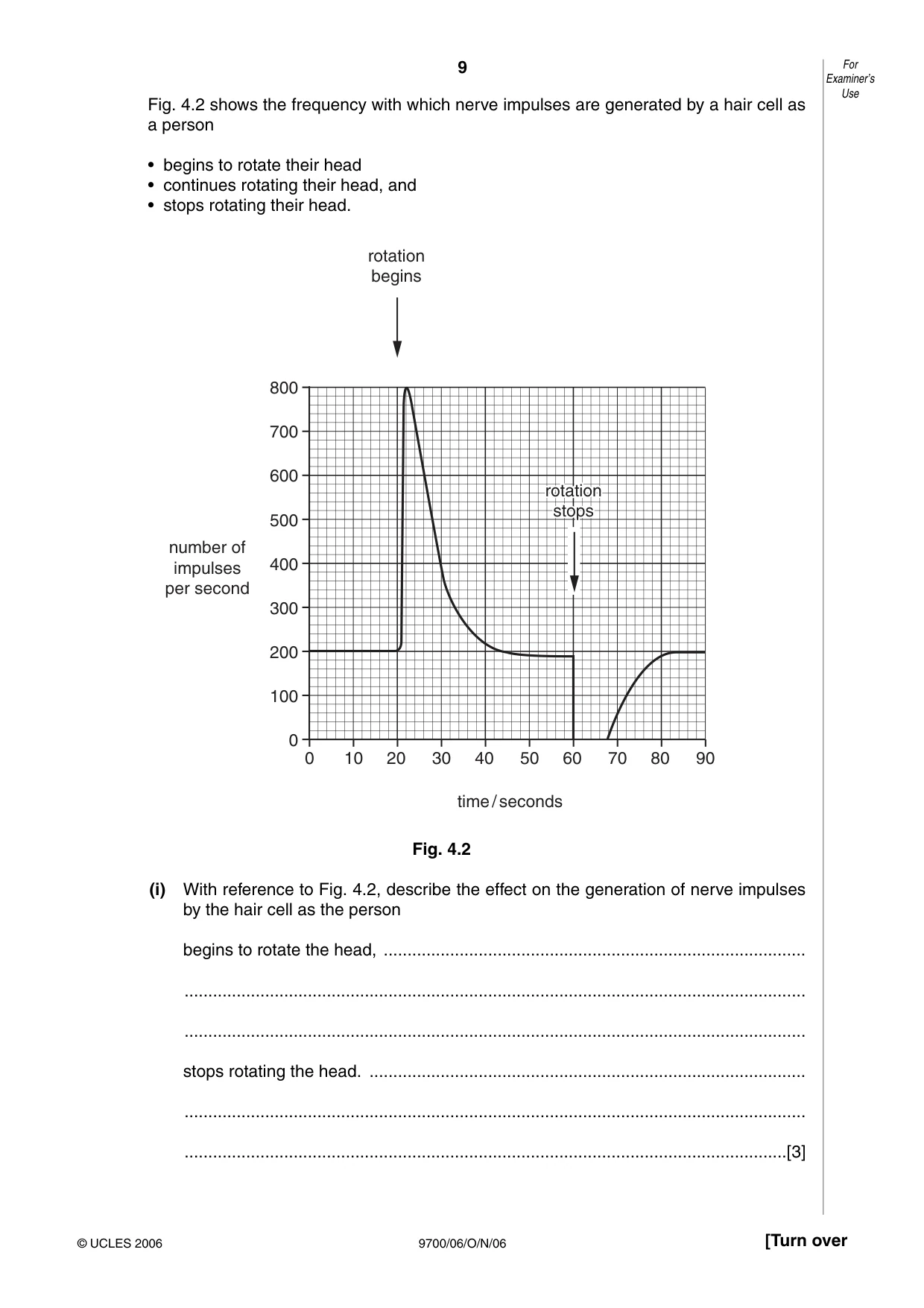
9 9700/06/O/N/06 [Turn over Fig. 4.2 shows the frequency with which nerve impulses are generated by a hair cell as a person • begins to rotate their head • continues rotating their head, and • stops rotating their head. Fig. 4.2 (i) With reference to Fig. 4.2, describe the effect on the generation of nerve impulses by the hair cell as the person begins to rotate the head, … … … stops rotating the head. … … …[3] 0 0 100 200 300 400 500 600 700 800 20 40 60 80 time / seconds number of impulses per second 10 30 50 70 90 rotation rotation stops stops rotation begins rotation stops For Examiner’s Use © UCLES 2006
Question paper, page 10
10 9700/06/O/N/06 (ii) With reference to Fig. 4.1, explain how these effects are brought about. … … … … … …[3] [Total: 8] For Examiner’s Use © UCLES 2006
Question paper, page 11
11 9700/06/O/N/06 [Turn over Option 2 begins on page 12 © UCLES 2006
Question paper, page 12
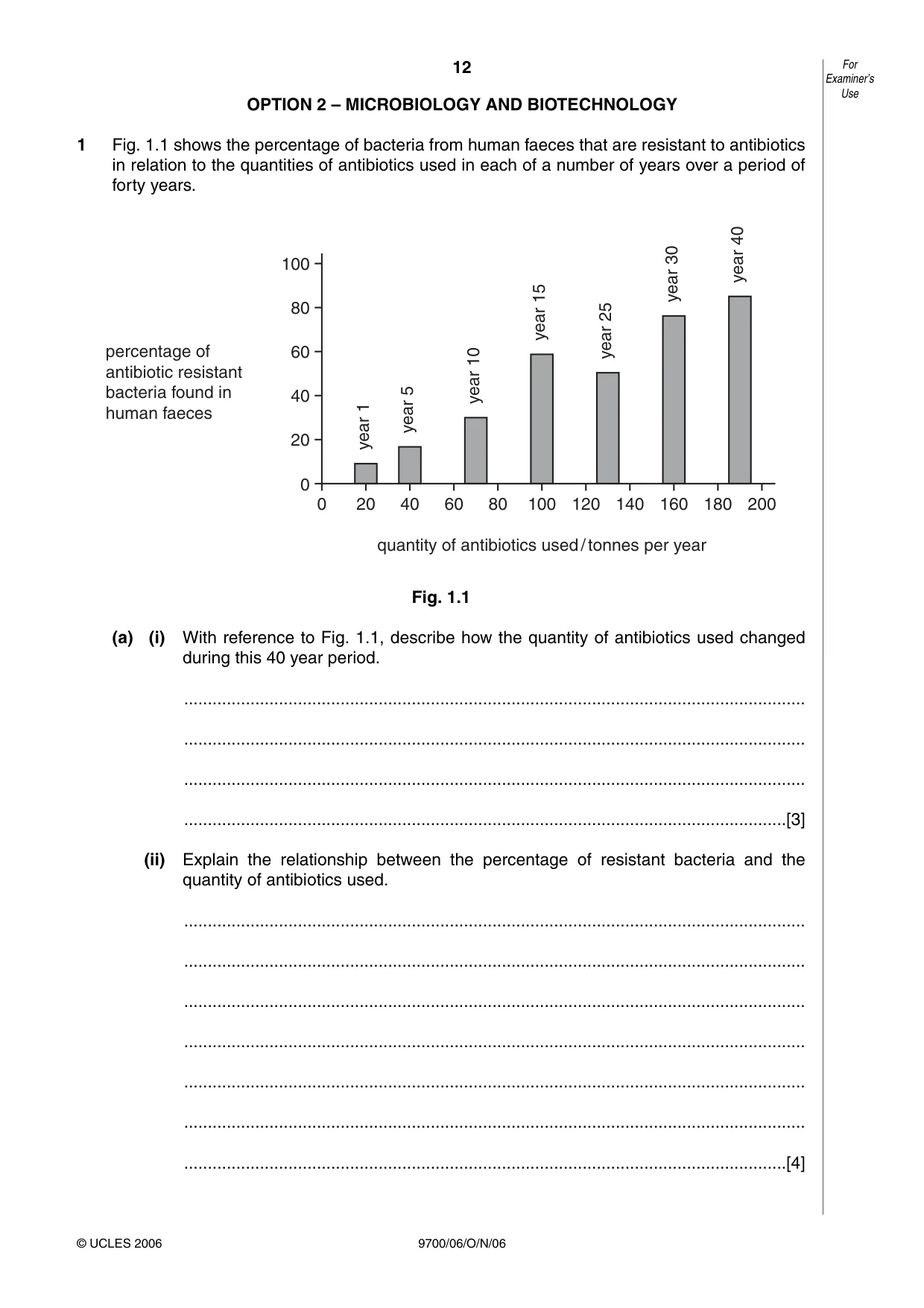
12 9700/06/O/N/06 OPTION 2 – MICROBIOLOGY AND BIOTECHNOLOGY 1 Fig. 1.1 shows the percentage of bacteria from human faeces that are resistant to antibiotics in relation to the quantities of antibiotics used in each of a number of years over a period of forty years. Fig. 1.1 (a) (i) With reference to Fig. 1.1, describe how the quantity of antibiotics used changed during this 40 year period. … … … …[3] (ii) Explain the relationship between the percentage of resistant bacteria and the quantity of antibiotics used. … … … … … … …[4] 0 20 40 60 80 100 0 20 40 60 80 100 quantity of antibiotics used / tonnes per year 120 140 160 180 200 percentage of antibiotic resistant bacteria found in human faeces year 1 year 5 year 10 year 15 year 25 year 30 year 40 For Examiner’s Use © UCLES 2006
Question paper, page 13
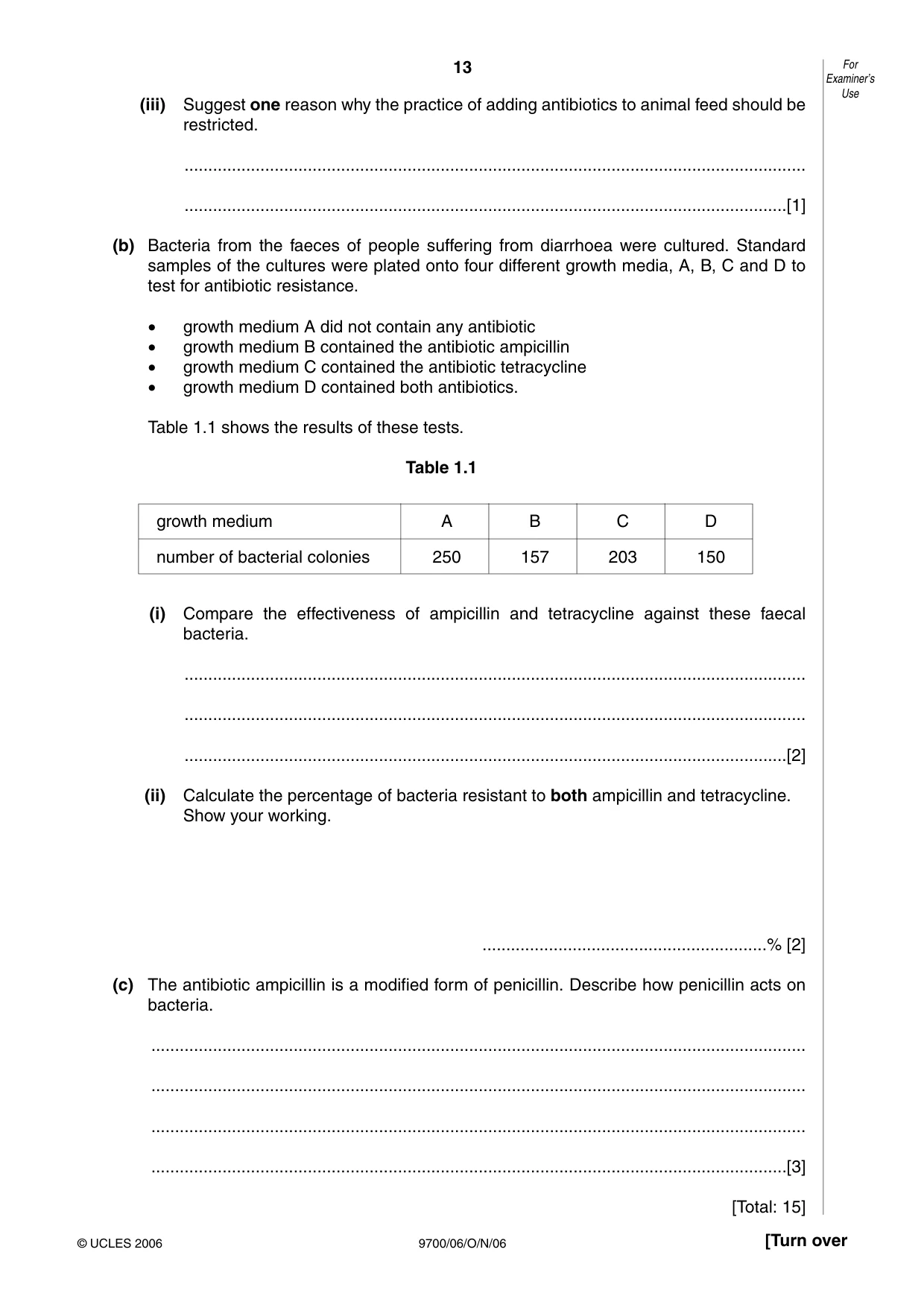
13 9700/06/O/N/06 [Turn over (iii) Suggest one reason why the practice of adding antibiotics to animal feed should be restricted. … …[1] (b) Bacteria from the faeces of people suffering from diarrhoea were cultured. Standard samples of the cultures were plated onto four different growth media, A, B, C and D to test for antibiotic resistance. • growth medium A did not contain any antibiotic • growth medium B contained the antibiotic ampicillin • growth medium C contained the antibiotic tetracycline • growth medium D contained both antibiotics. Table 1.1 shows the results of these tests. Table 1.1 (i) Compare the effectiveness of ampicillin and tetracycline against these faecal bacteria. … … …[2] (ii) Calculate the percentage of bacteria resistant to both ampicillin and tetracycline. Show your working. …% [2] (c) The antibiotic ampicillin is a modified form of penicillin. Describe how penicillin acts on bacteria. … … … …[3] [Total: 15] For Examiner’s Use © UCLES 2006 growth medium A B C D number of bacterial colonies 250 157 203 150
Question paper, page 14
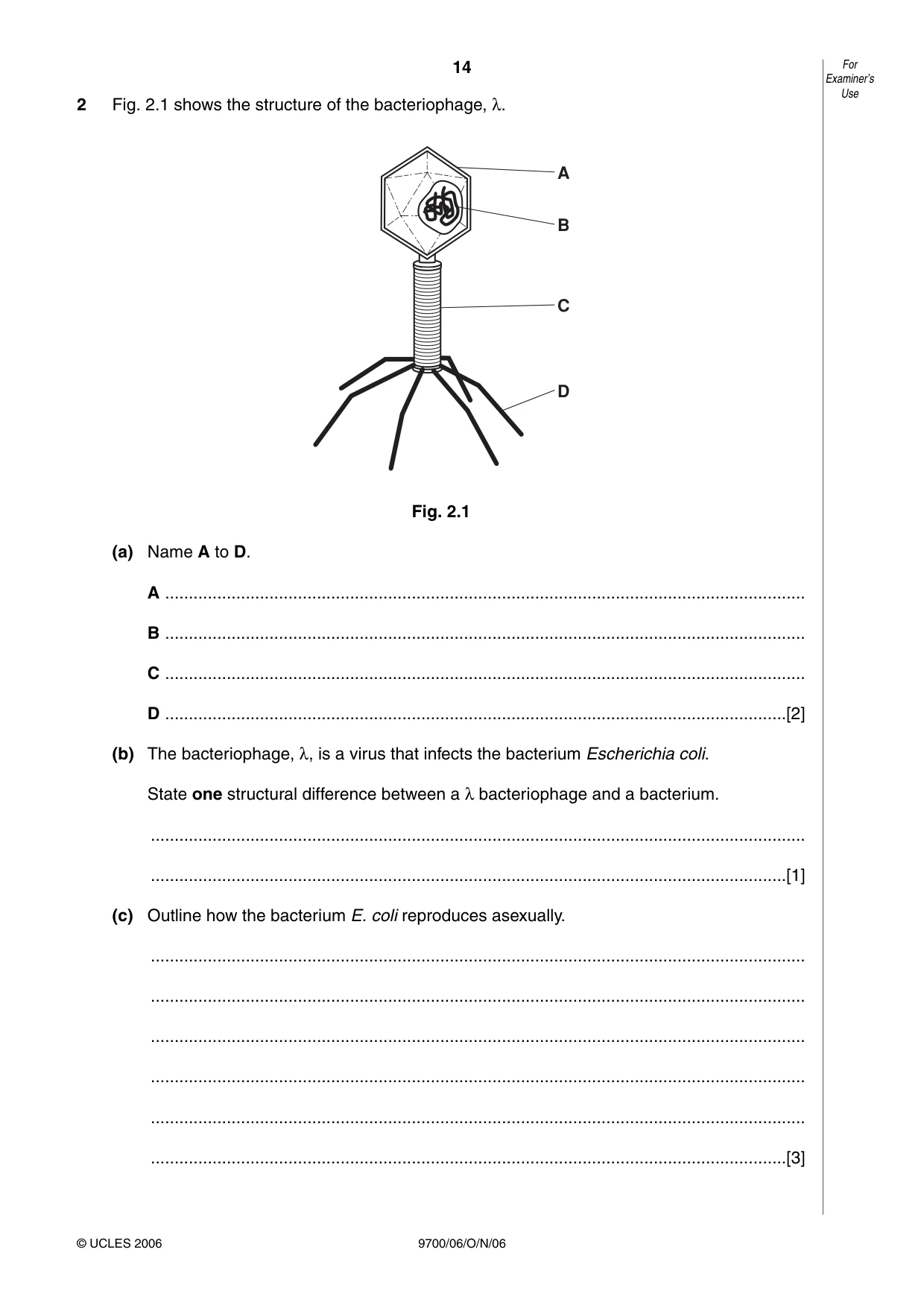
14 9700/06/O/N/06 2 Fig. 2.1 shows the structure of the bacteriophage, λ. Fig. 2.1 (a) Name A to D. A … B … C … D …[2] (b) The bacteriophage, λ, is a virus that infects the bacterium Escherichia coli. State one structural difference between a λ bacteriophage and a bacterium. … …[1] (c) Outline how the bacterium E. coli reproduces asexually. … … … … … …[3] A B C D For Examiner’s Use © UCLES 2006
Question paper, page 15
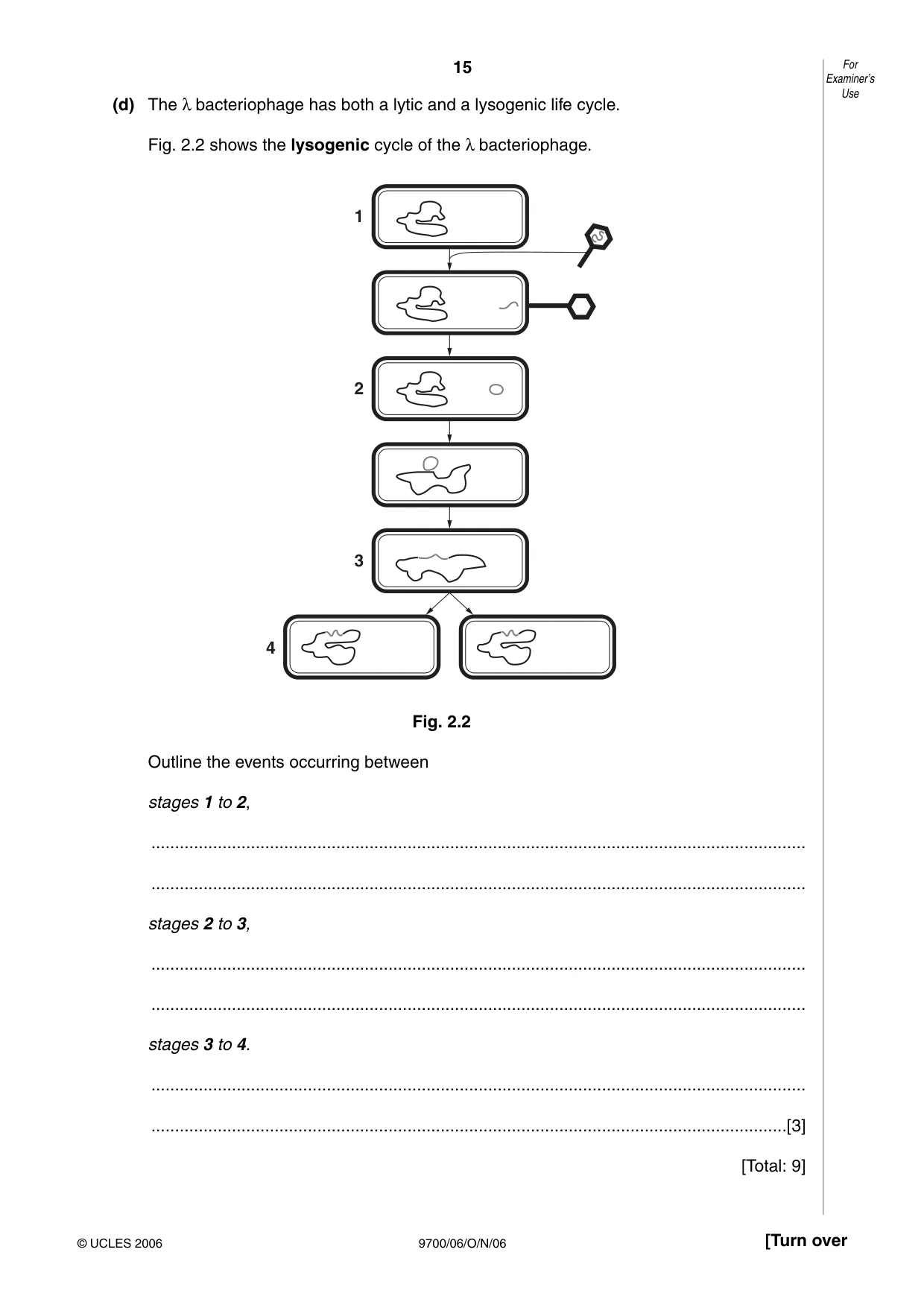
15 9700/06/O/N/06 [Turn over (d) The λ bacteriophage has both a lytic and a lysogenic life cycle. Fig. 2.2 shows the lysogenic cycle of the λ bacteriophage. Fig. 2.2 Outline the events occurring between stages 1 to 2, … … stages 2 to 3, … … stages 3 to 4. … …[3] [Total: 9] 4 3 2 1 For Examiner’s Use © UCLES 2006
Question paper, page 16
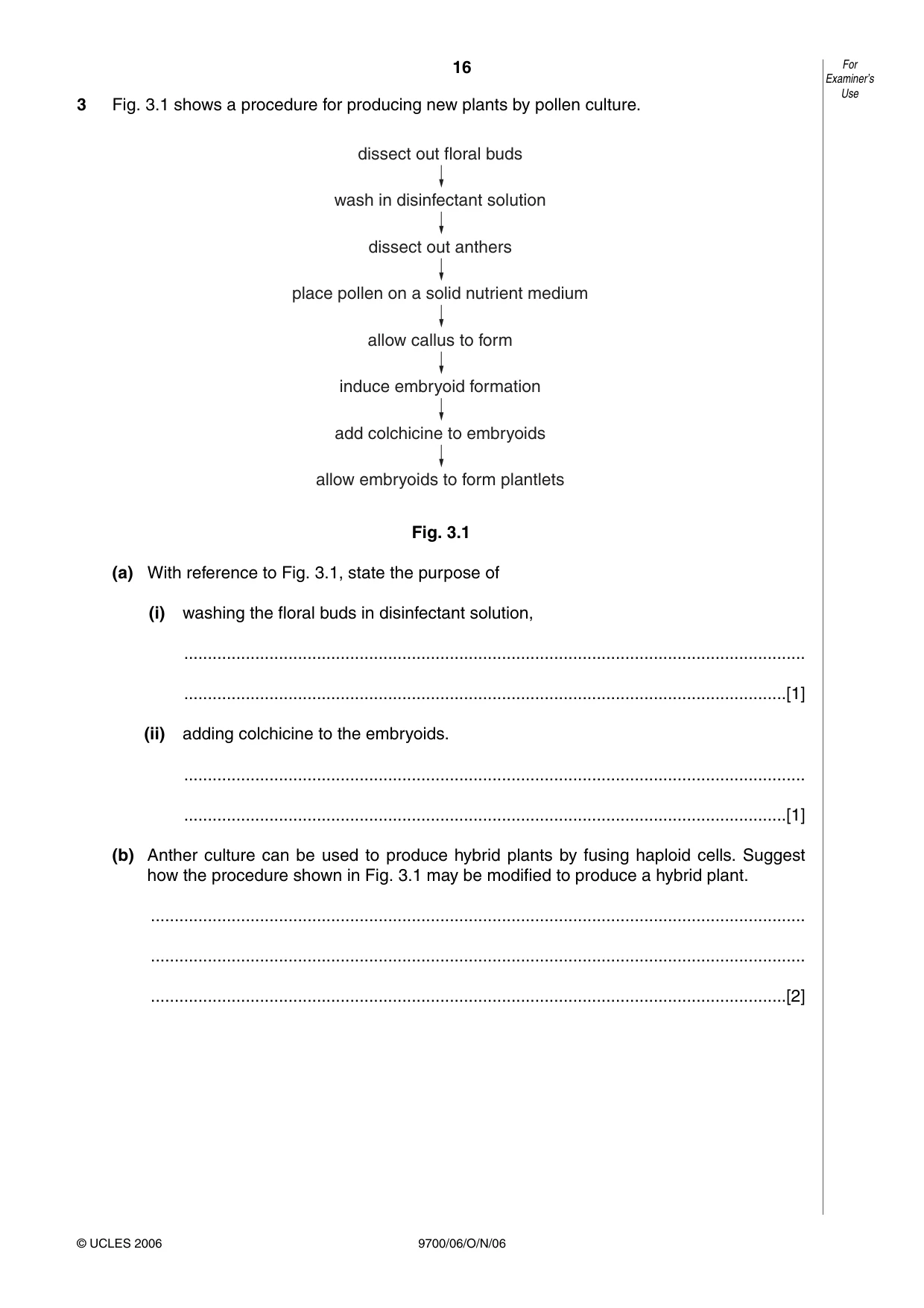
16 9700/06/O/N/06 3 Fig. 3.1 shows a procedure for producing new plants by pollen culture. Fig. 3.1 (a) With reference to Fig. 3.1, state the purpose of (i) washing the floral buds in disinfectant solution, … …[1] (ii) adding colchicine to the embryoids. … …[1] (b) Anther culture can be used to produce hybrid plants by fusing haploid cells. Suggest how the procedure shown in Fig. 3.1 may be modified to produce a hybrid plant. … … …[2] dissect out floral buds wash in disinfectant solution dissect out anthers place pollen on a solid nutrient medium allow callus to form induce embryoid formation add colchicine to embryoids allow embryoids to form plantlets For Examiner’s Use © UCLES 2006
Question paper, page 17
17 9700/06/O/N/06 [Turn over (c) The solid medium used to culture pollen contains nutrients required for the growth of the pollen. State how two named nutrients are used by the pollen. … … … … … … …[4] [Total: 8] For Examiner’s Use © UCLES 2006
Question paper, page 18
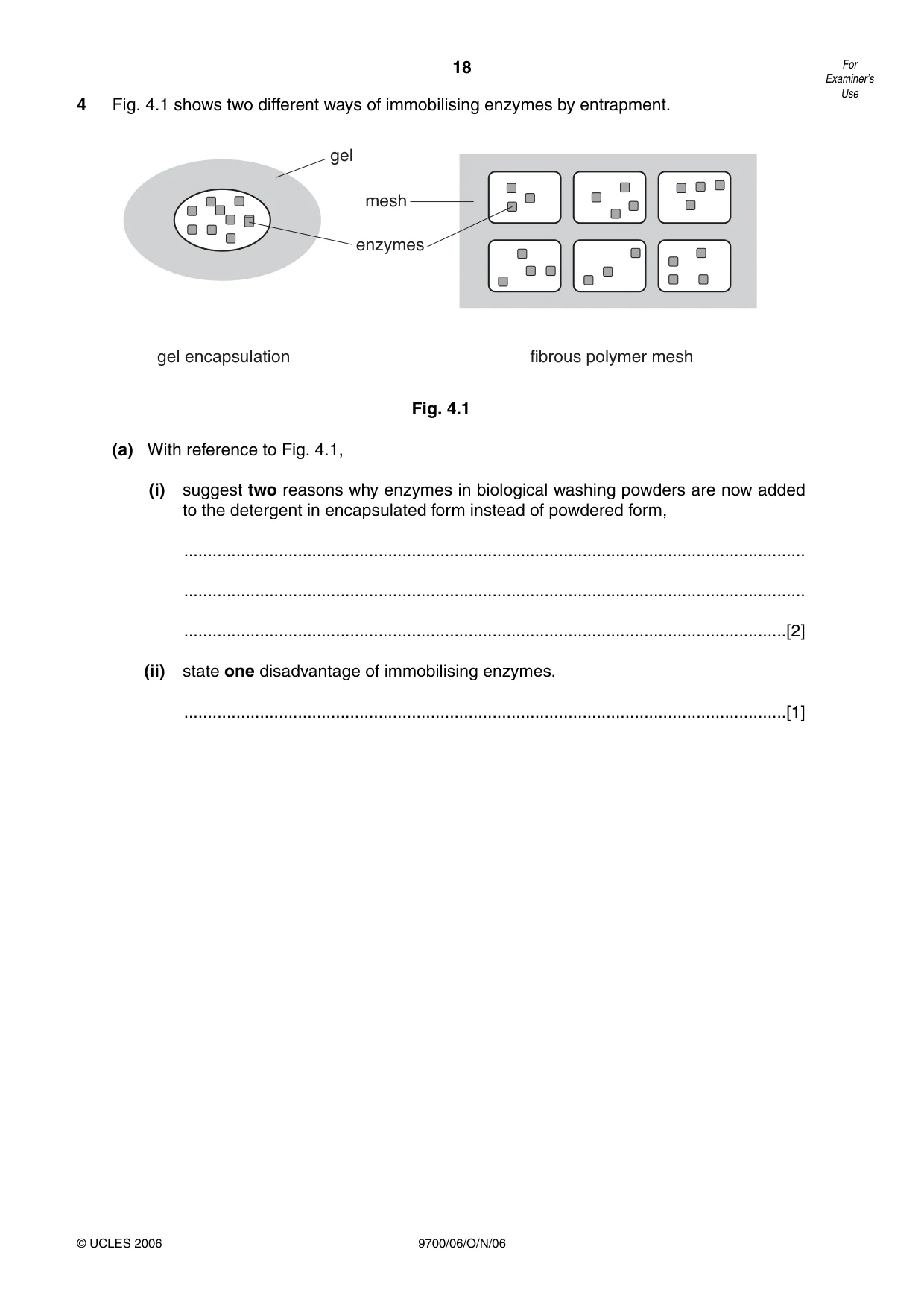
18 9700/06/O/N/06 4 Fig. 4.1 shows two different ways of immobilising enzymes by entrapment. Fig. 4.1 (a) With reference to Fig. 4.1, (i) suggest two reasons why enzymes in biological washing powders are now added to the detergent in encapsulated form instead of powdered form, … … …[2] (ii) state one disadvantage of immobilising enzymes. …[1] gel enzymes mesh gel encapsulation fibrous polymer mesh For Examiner’s Use © UCLES 2006
Question paper, page 19
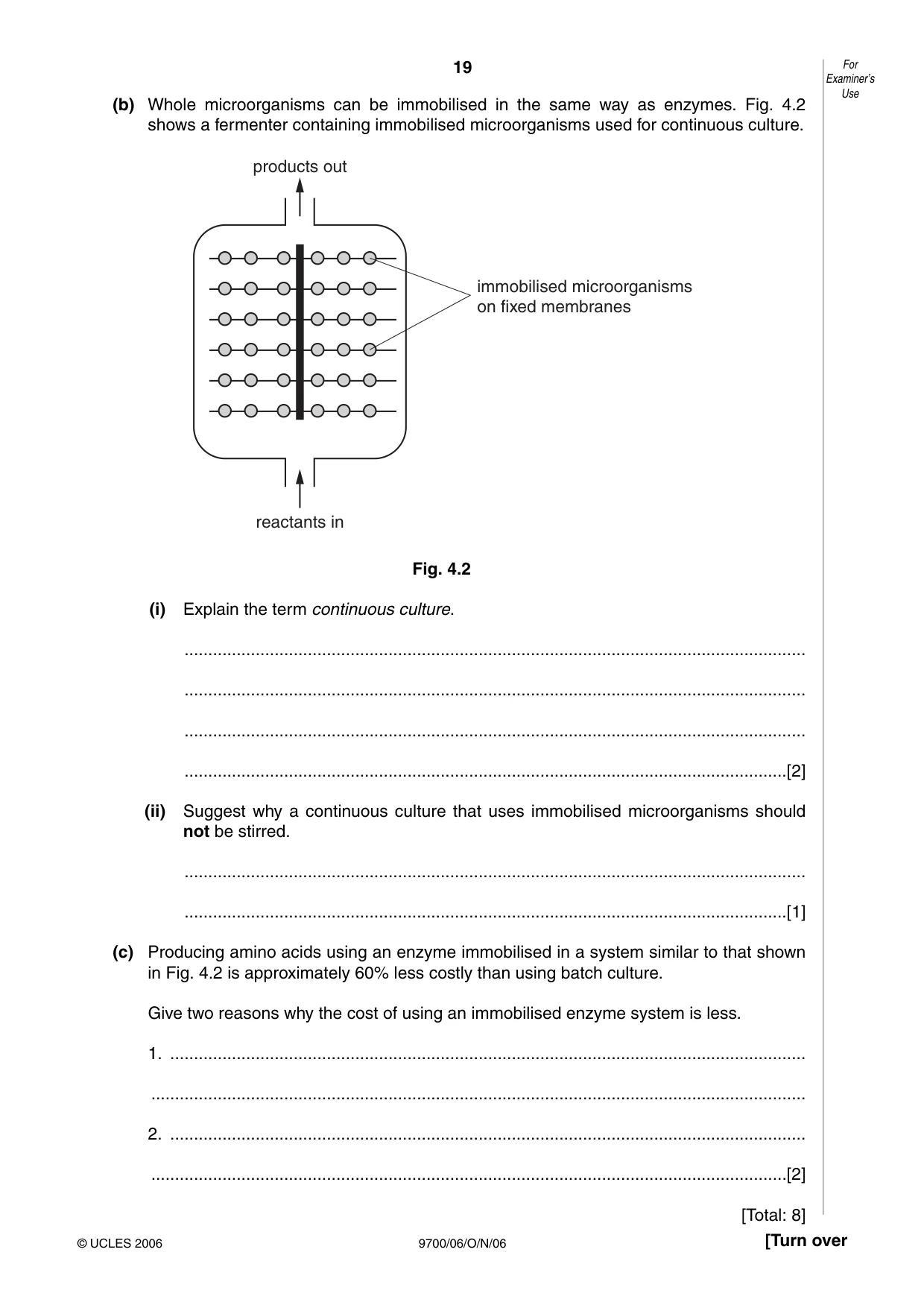
19 9700/06/O/N/06 [Turn over (b) Whole microorganisms can be immobilised in the same way as enzymes. Fig. 4.2 shows a fermenter containing immobilised microorganisms used for continuous culture. Fig. 4.2 (i) Explain the term continuous culture. … … … …[2] (ii) Suggest why a continuous culture that uses immobilised microorganisms should not be stirred. … …[1] (c) Producing amino acids using an enzyme immobilised in a system similar to that shown in Fig. 4.2 is approximately 60% less costly than using batch culture. Give two reasons why the cost of using an immobilised enzyme system is less. 1. … … 2. … …[2] [Total: 8] products out reactants in immobilised microorganisms on fixed membranes For Examiner’s Use © UCLES 2006
Question paper, page 20
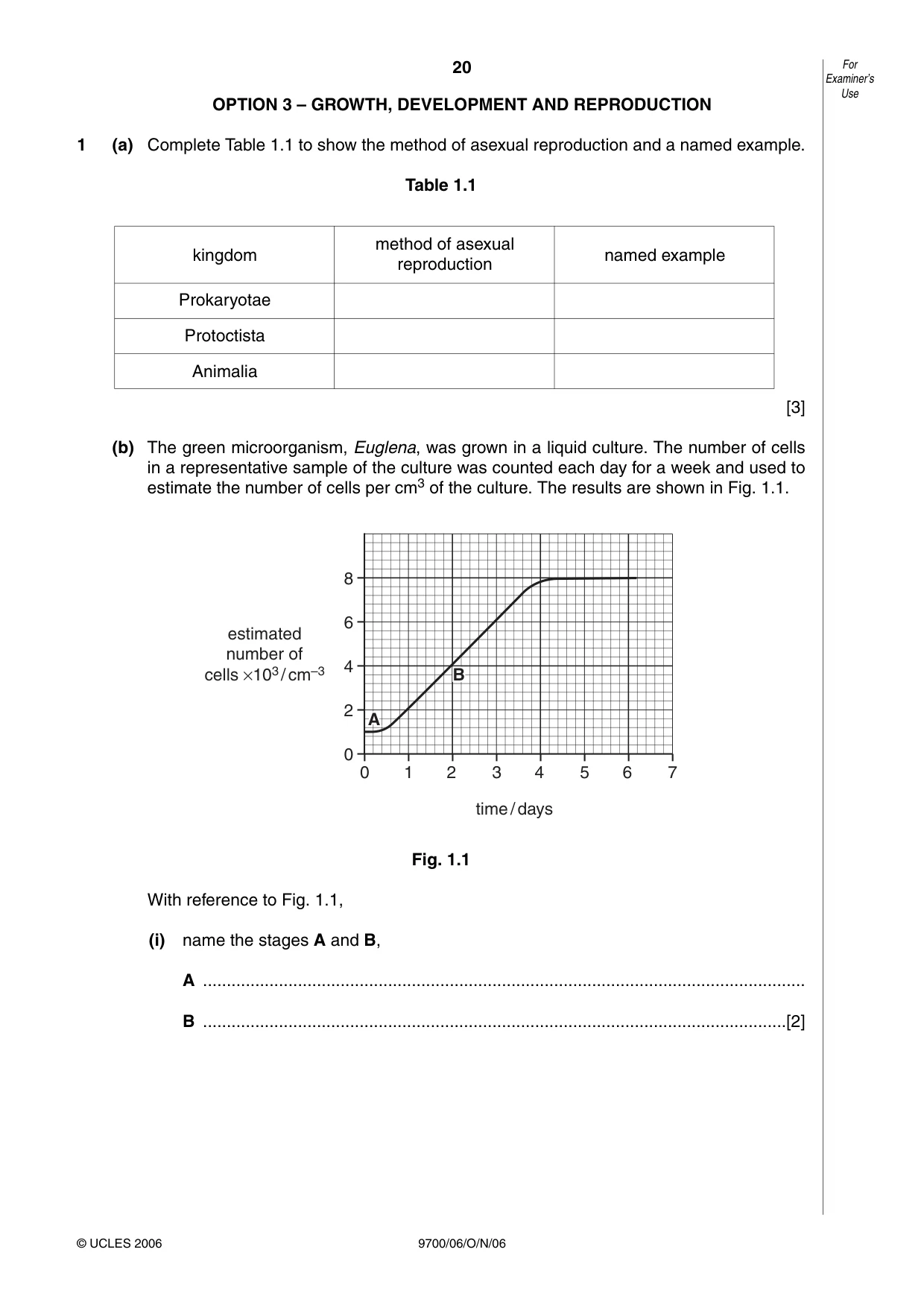
20 9700/06/O/N/06 OPTION 3 – GROWTH, DEVELOPMENT AND REPRODUCTION 1 (a) Complete Table 1.1 to show the method of asexual reproduction and a named example. Table 1.1 [3] (b) The green microorganism, Euglena, was grown in a liquid culture. The number of cells in a representative sample of the culture was counted each day for a week and used to estimate the number of cells per cm3 of the culture. The results are shown in Fig. 1.1. Fig. 1.1 With reference to Fig. 1.1, (i) name the stages A and B, A … B …[2] 0 0 2 4 6 8 2 4 6 time / days estimated number of cells ×103 / cm–3 1 3 5 7 B A B For Examiner’s Use © UCLES 2006 kingdom method of asexual named example reproduction Prokaryotae Protoctista Animalia
Question paper, page 21
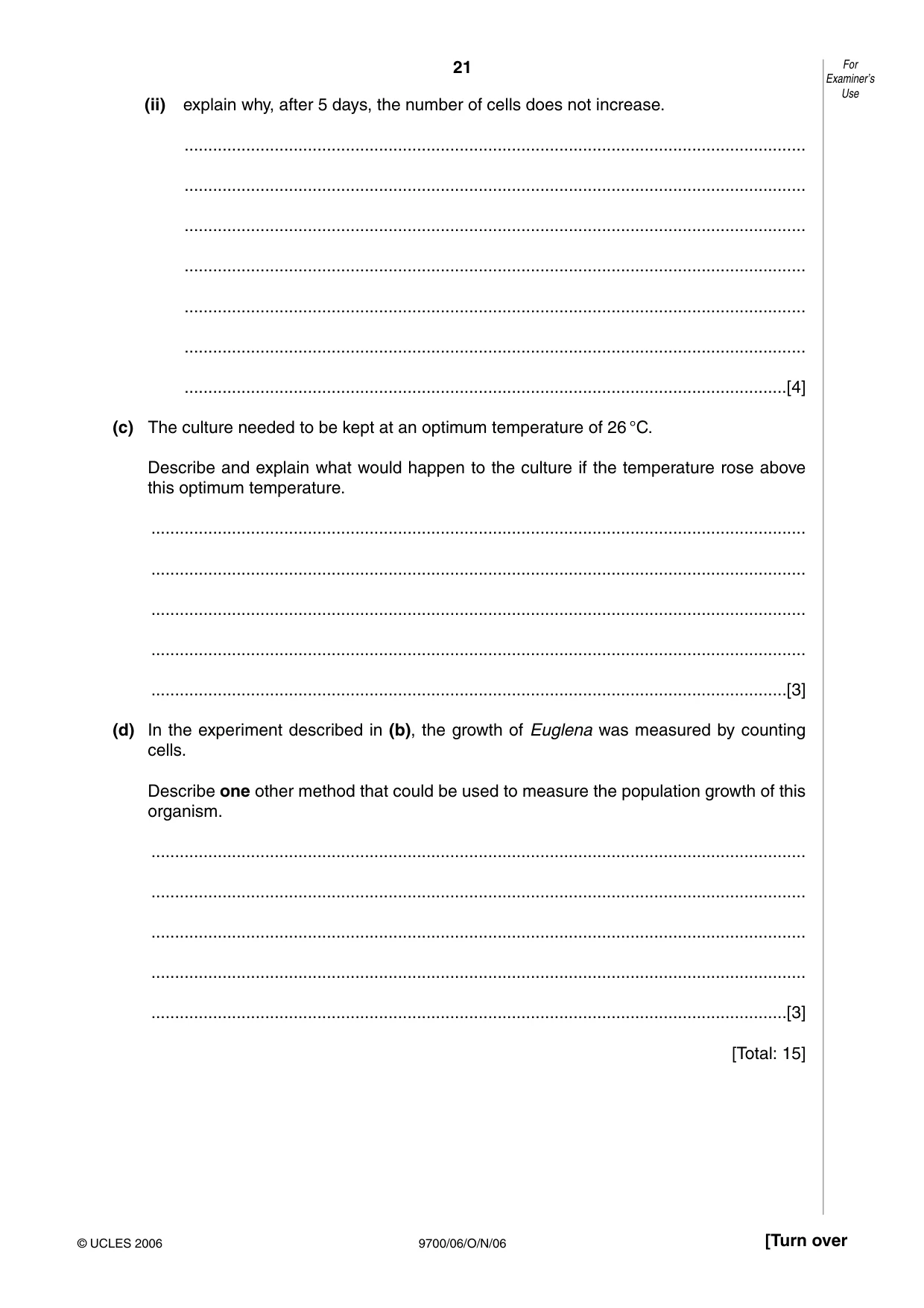
21 9700/06/O/N/06 [Turn over (ii) explain why, after 5 days, the number of cells does not increase. … … … … … … …[4] (c) The culture needed to be kept at an optimum temperature of 26 °C. Describe and explain what would happen to the culture if the temperature rose above this optimum temperature. … … … … …[3] (d) In the experiment described in (b), the growth of Euglena was measured by counting cells. Describe one other method that could be used to measure the population growth of this organism. … … … … …[3] [Total: 15] For Examiner’s Use © UCLES 2006
Question paper, page 22
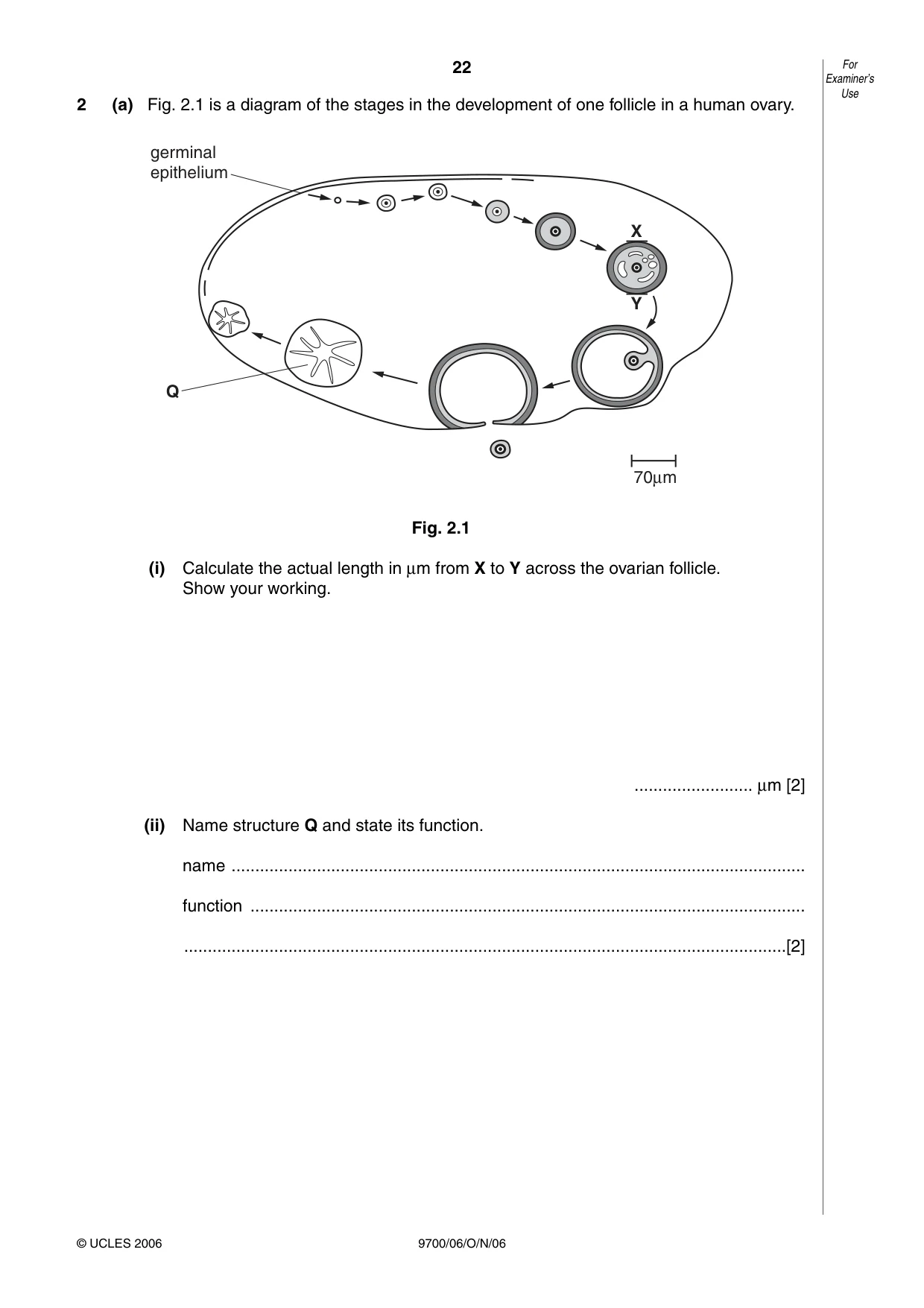
22 9700/06/O/N/06 2 (a) Fig. 2.1 is a diagram of the stages in the development of one follicle in a human ovary. Fig. 2.1 (i) Calculate the actual length in µm from X to Y across the ovarian follicle. Show your working. … µm [2] (ii) Name structure Q and state its function. name … function … …[2] germinal epithelium Q X Y 70µm For Examiner’s Use © UCLES 2006
Question paper, page 23
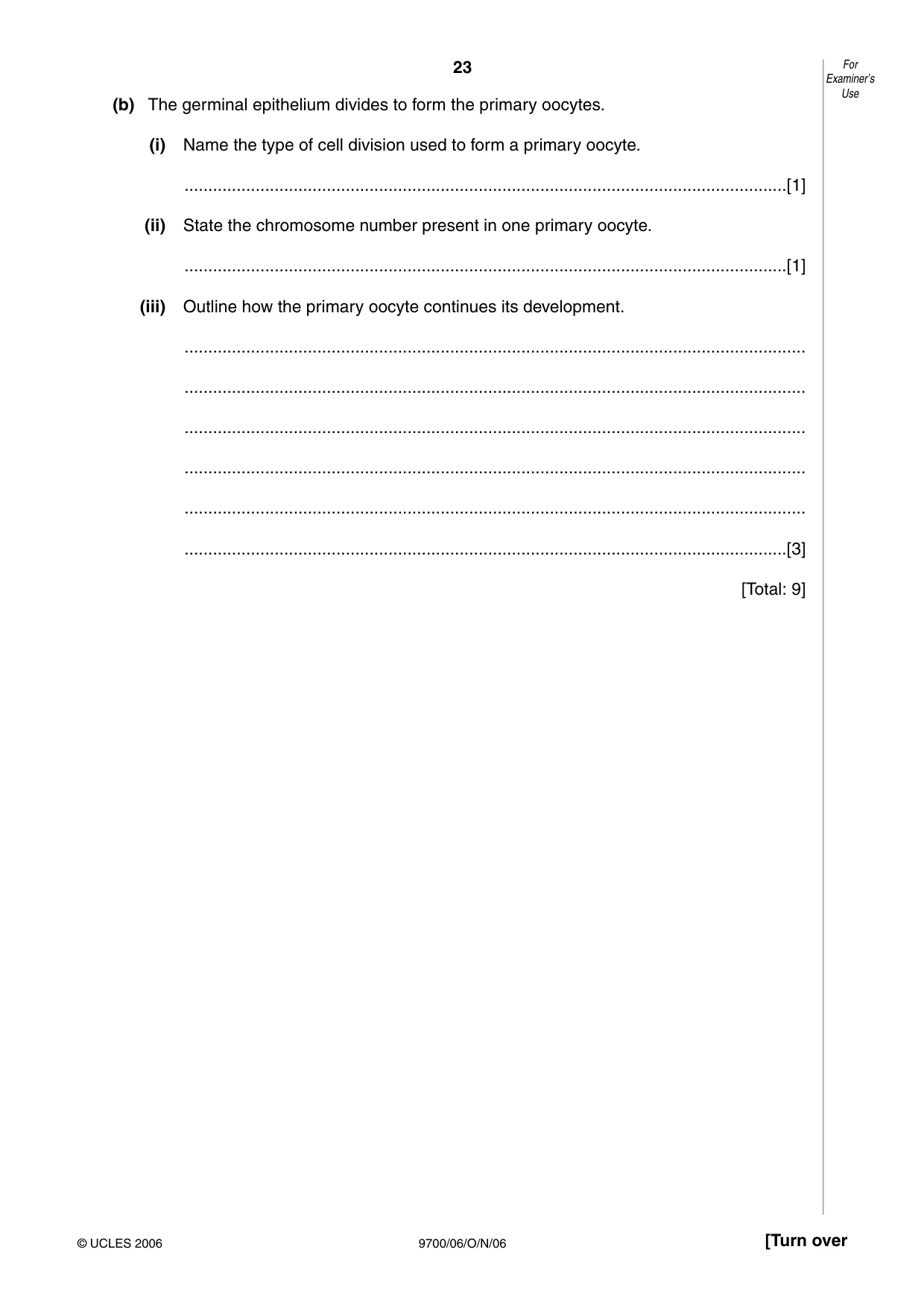
23 9700/06/O/N/06 [Turn over (b) The germinal epithelium divides to form the primary oocytes. (i) Name the type of cell division used to form a primary oocyte. …[1] (ii) State the chromosome number present in one primary oocyte. …[1] (iii) Outline how the primary oocyte continues its development. … … … … … …[3] [Total: 9] For Examiner’s Use © UCLES 2006
Question paper, page 24
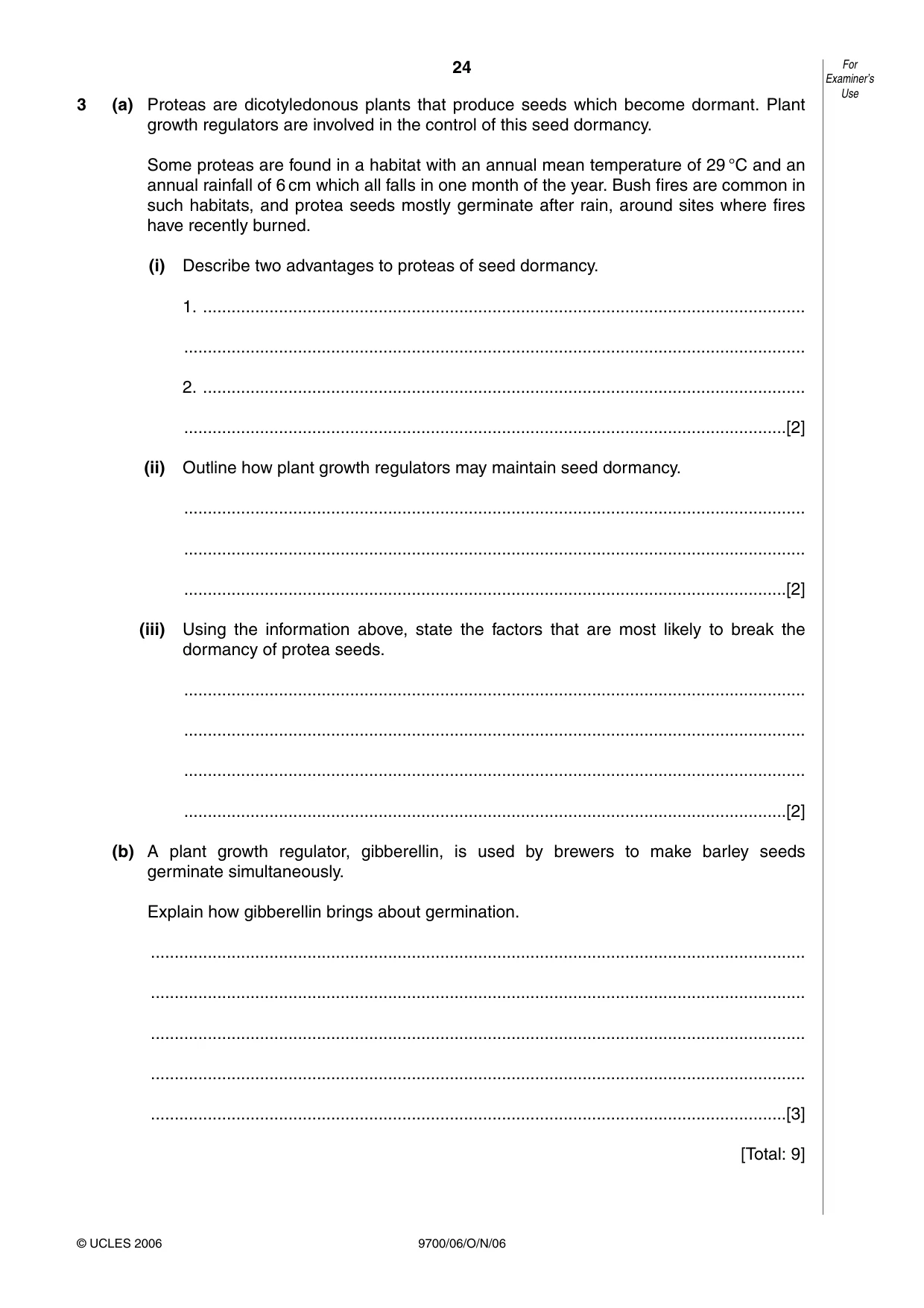
24 9700/06/O/N/06 3 (a) Proteas are dicotyledonous plants that produce seeds which become dormant. Plant growth regulators are involved in the control of this seed dormancy. Some proteas are found in a habitat with an annual mean temperature of 29 °C and an annual rainfall of 6 cm which all falls in one month of the year. Bush fires are common in such habitats, and protea seeds mostly germinate after rain, around sites where fires have recently burned. (i) Describe two advantages to proteas of seed dormancy. 1. … … 2. … …[2] (ii) Outline how plant growth regulators may maintain seed dormancy. … … …[2] (iii) Using the information above, state the factors that are most likely to break the dormancy of protea seeds. … … … …[2] (b) A plant growth regulator, gibberellin, is used by brewers to make barley seeds germinate simultaneously. Explain how gibberellin brings about germination. … … … … …[3] [Total: 9] For Examiner’s Use © UCLES 2006
Question paper, page 25
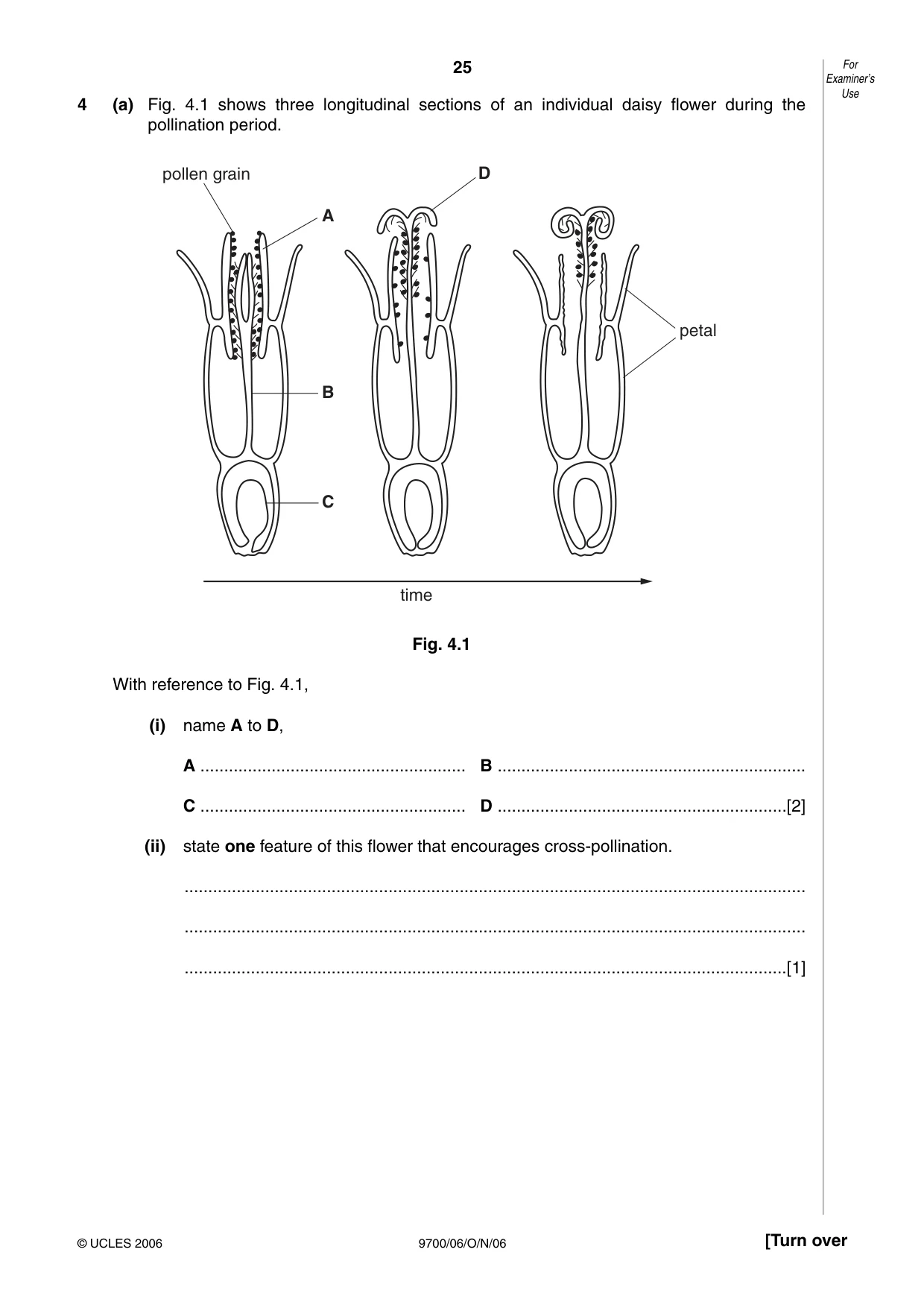
25 9700/06/O/N/06 [Turn over 4 (a) Fig. 4.1 shows three longitudinal sections of an individual daisy flower during the pollination period. Fig. 4.1 With reference to Fig. 4.1, (i) name A to D, A … B … C … D …[2] (ii) state one feature of this flower that encourages cross-pollination. … … …[1] A D B C pollen grain petal time For Examiner’s Use © UCLES 2006
Question paper, page 26
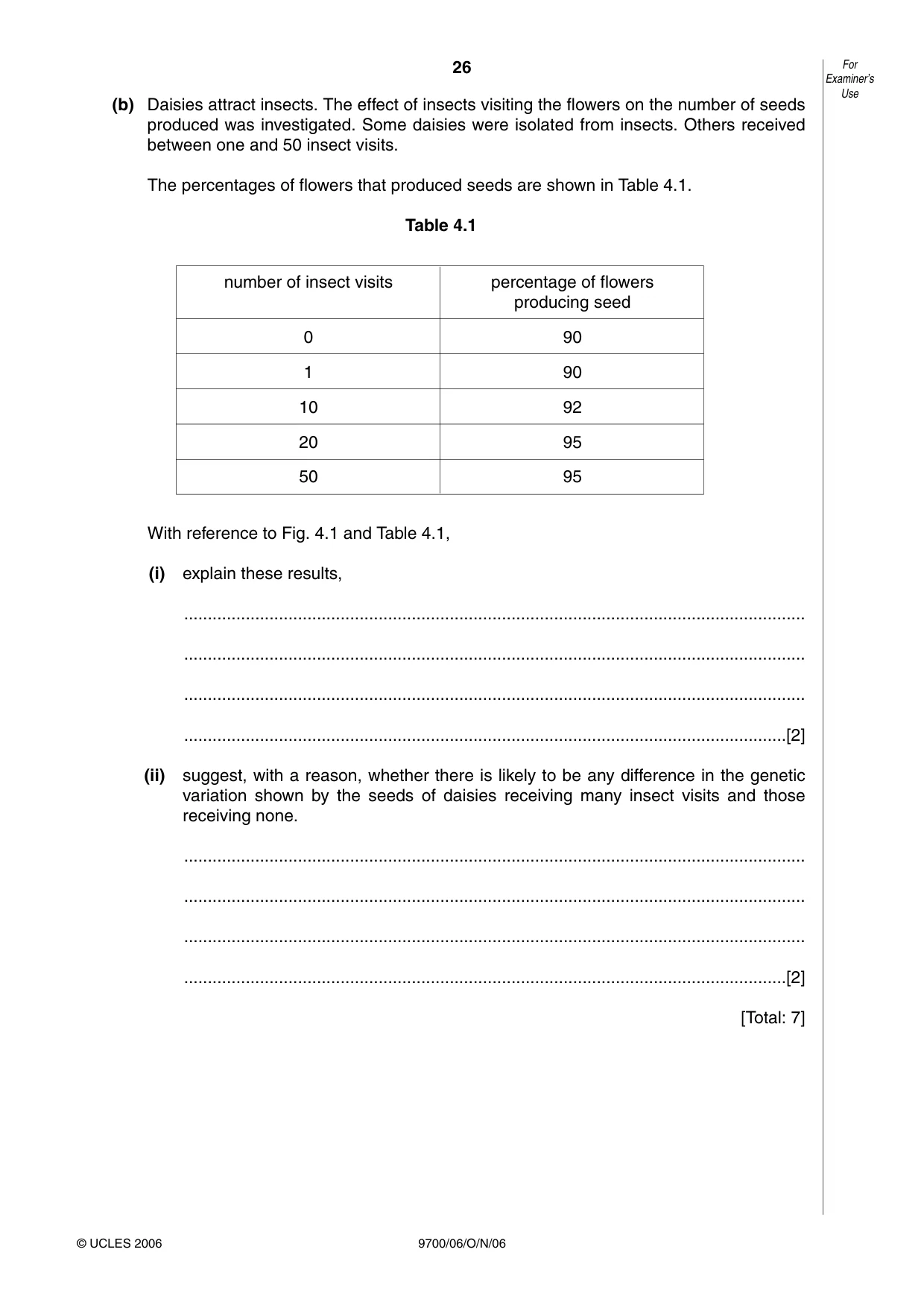
26 9700/06/O/N/06 (b) Daisies attract insects. The effect of insects visiting the flowers on the number of seeds produced was investigated. Some daisies were isolated from insects. Others received between one and 50 insect visits. The percentages of flowers that produced seeds are shown in Table 4.1. Table 4.1 With reference to Fig. 4.1 and Table 4.1, (i) explain these results, … … … …[2] (ii) suggest, with a reason, whether there is likely to be any difference in the genetic variation shown by the seeds of daisies receiving many insect visits and those receiving none. … … … …[2] [Total: 7] For Examiner’s Use © UCLES 2006 number of insect visits percentage of flowers producing seed 0 90 1 90 10 92 20 95 50 95
Question paper, page 27
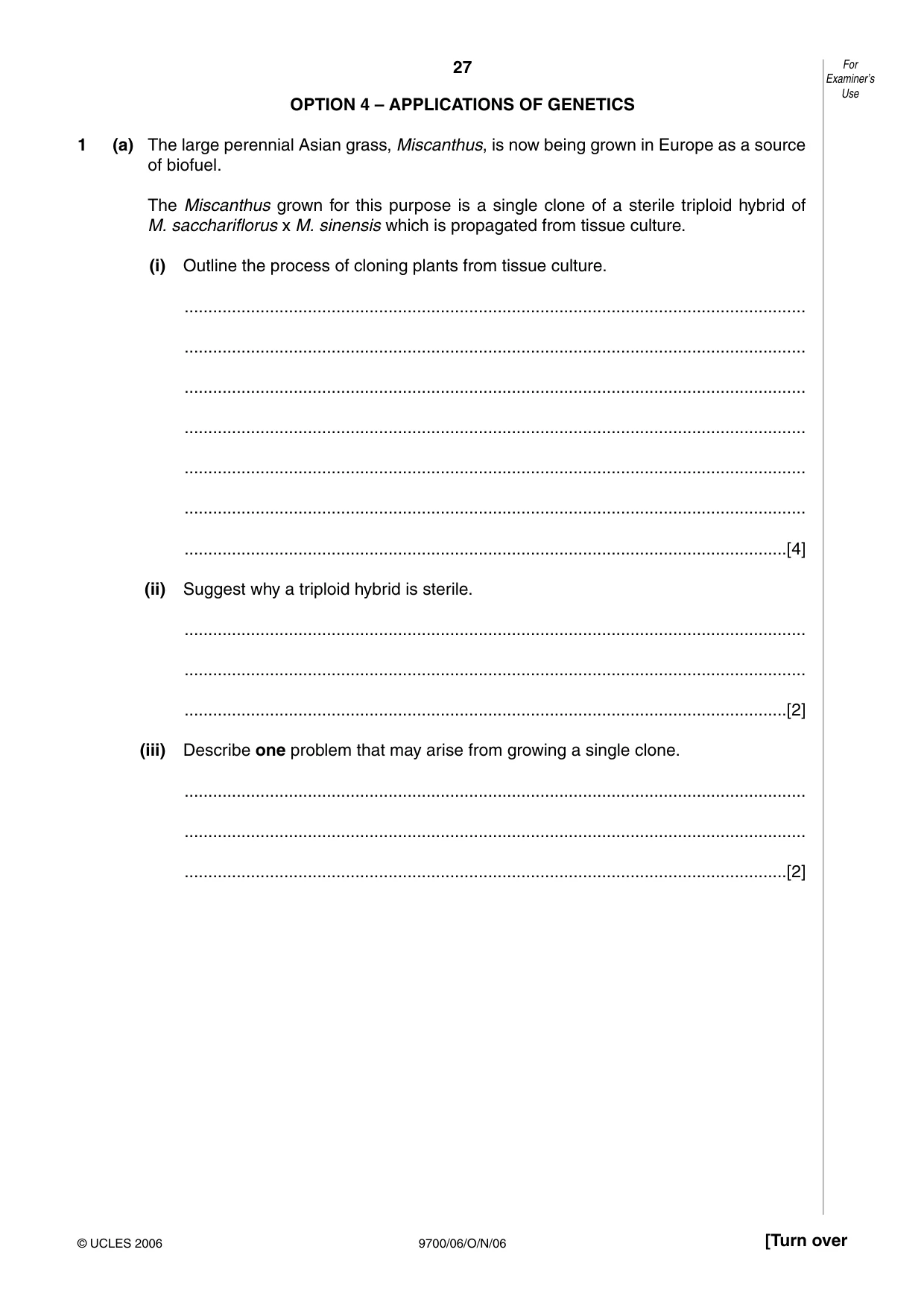
27 9700/06/O/N/06 [Turn over OPTION 4 – APPLICATIONS OF GENETICS 1 (a) The large perennial Asian grass, Miscanthus, is now being grown in Europe as a source of biofuel. The Miscanthus grown for this purpose is a single clone of a sterile triploid hybrid of M. sacchariflorus x M. sinensis which is propagated from tissue culture. (i) Outline the process of cloning plants from tissue culture. … … … … … … …[4] (ii) Suggest why a triploid hybrid is sterile. … … …[2] (iii) Describe one problem that may arise from growing a single clone. … … …[2] For Examiner’s Use © UCLES 2006
Question paper, page 28
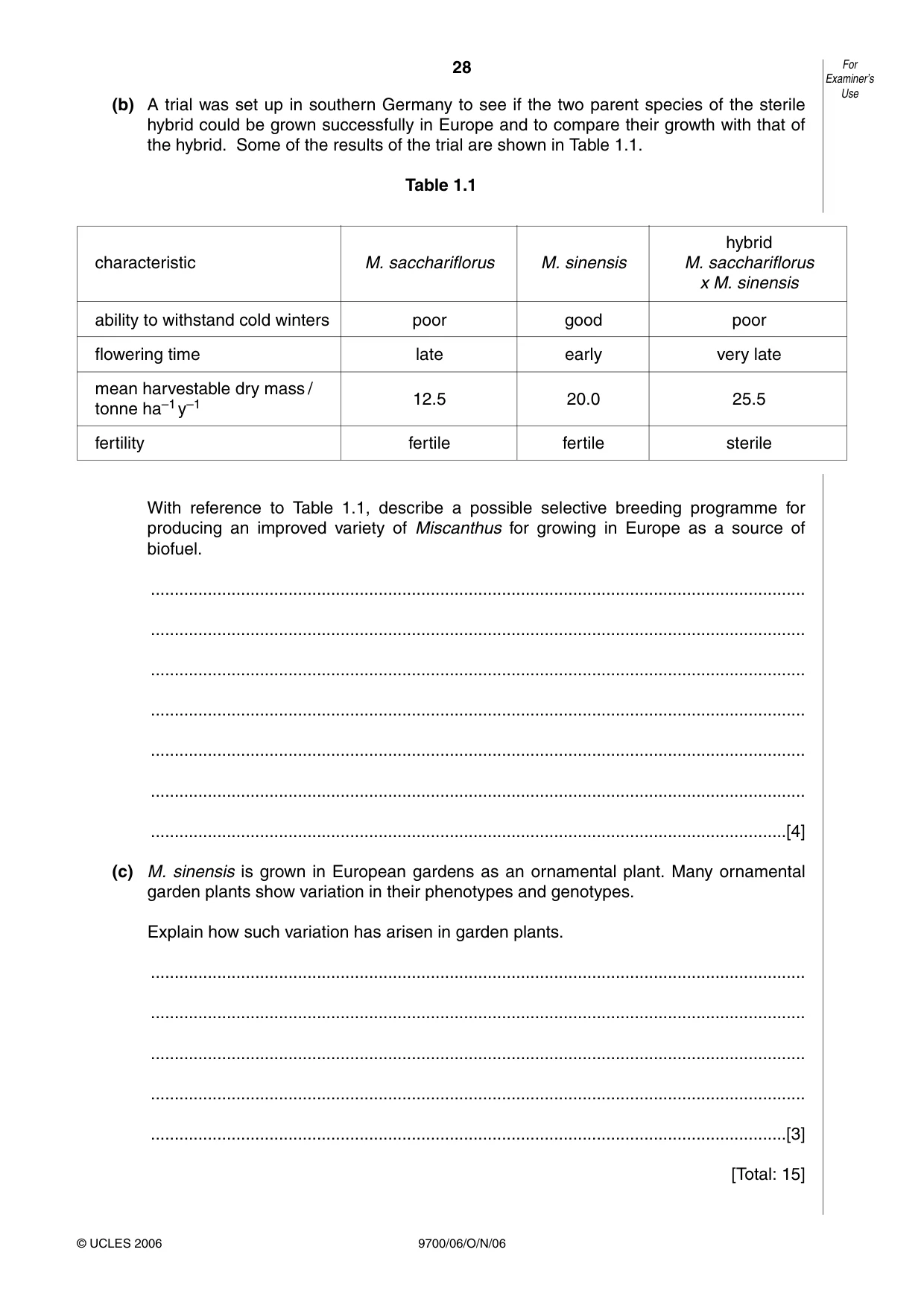
28 9700/06/O/N/06 (b) A trial was set up in southern Germany to see if the two parent species of the sterile hybrid could be grown successfully in Europe and to compare their growth with that of the hybrid. Some of the results of the trial are shown in Table 1.1. Table 1.1 With reference to Table 1.1, describe a possible selective breeding programme for producing an improved variety of Miscanthus for growing in Europe as a source of biofuel. … … … … … … …[4] (c) M. sinensis is grown in European gardens as an ornamental plant. Many ornamental garden plants show variation in their phenotypes and genotypes. Explain how such variation has arisen in garden plants. … … … … …[3] [Total: 15] For Examiner’s Use © UCLES 2006 hybrid characteristic M. sacchariflorus M. sinensis M. sacchariflorus x M. sinensis ability to withstand cold winters poor good poor flowering time late early very late mean harvestable dry mass / tonne ha–1y–1 12.5 20.0 25.5 fertility fertile fertile sterile
Question paper, page 29
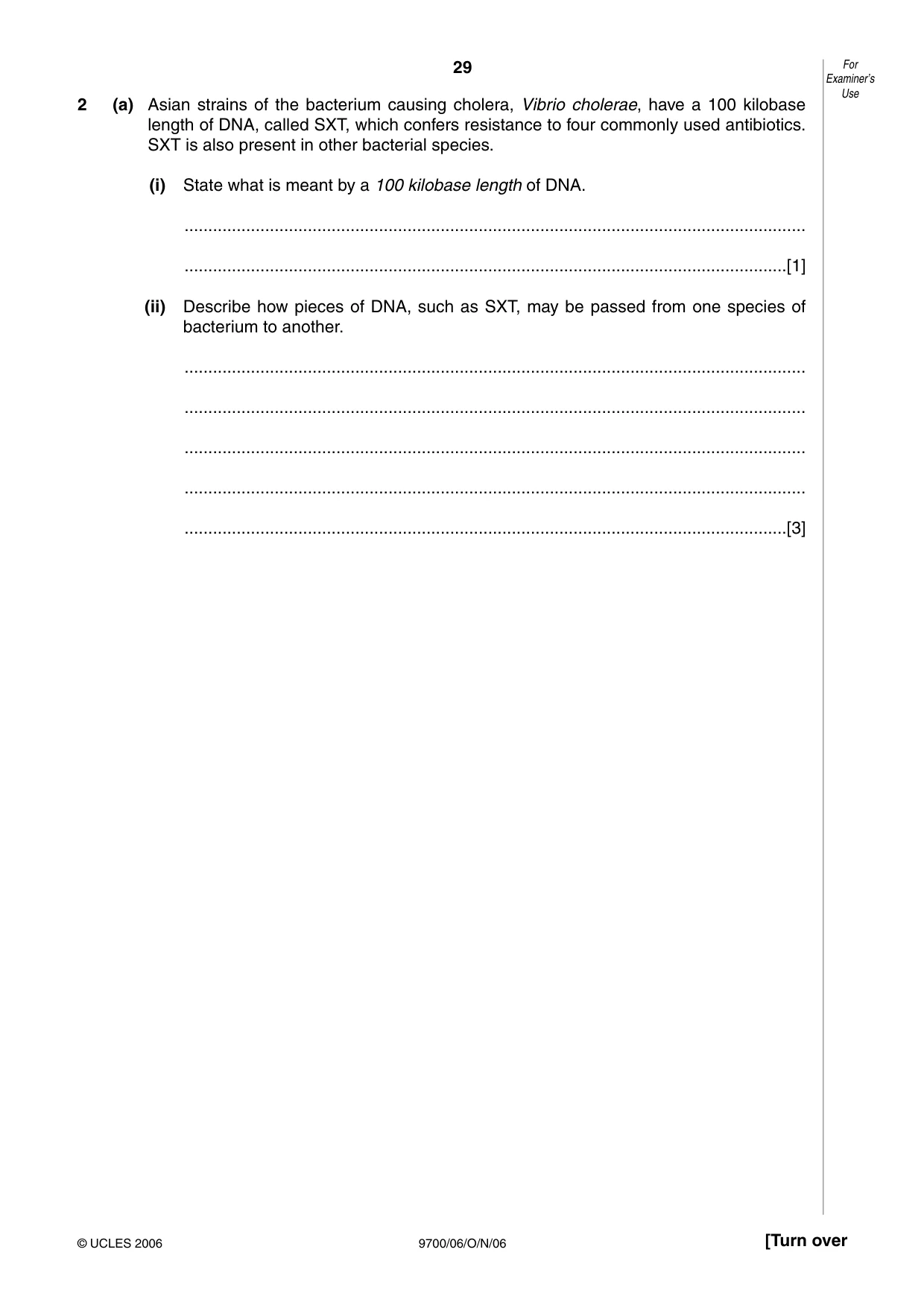
29 9700/06/O/N/06 [Turn over 2 (a) Asian strains of the bacterium causing cholera, Vibrio cholerae, have a 100 kilobase length of DNA, called SXT, which confers resistance to four commonly used antibiotics. SXT is also present in other bacterial species. (i) State what is meant by a 100 kilobase length of DNA. … …[1] (ii) Describe how pieces of DNA, such as SXT, may be passed from one species of bacterium to another. … … … … …[3] For Examiner’s Use © UCLES 2006
Question paper, page 30
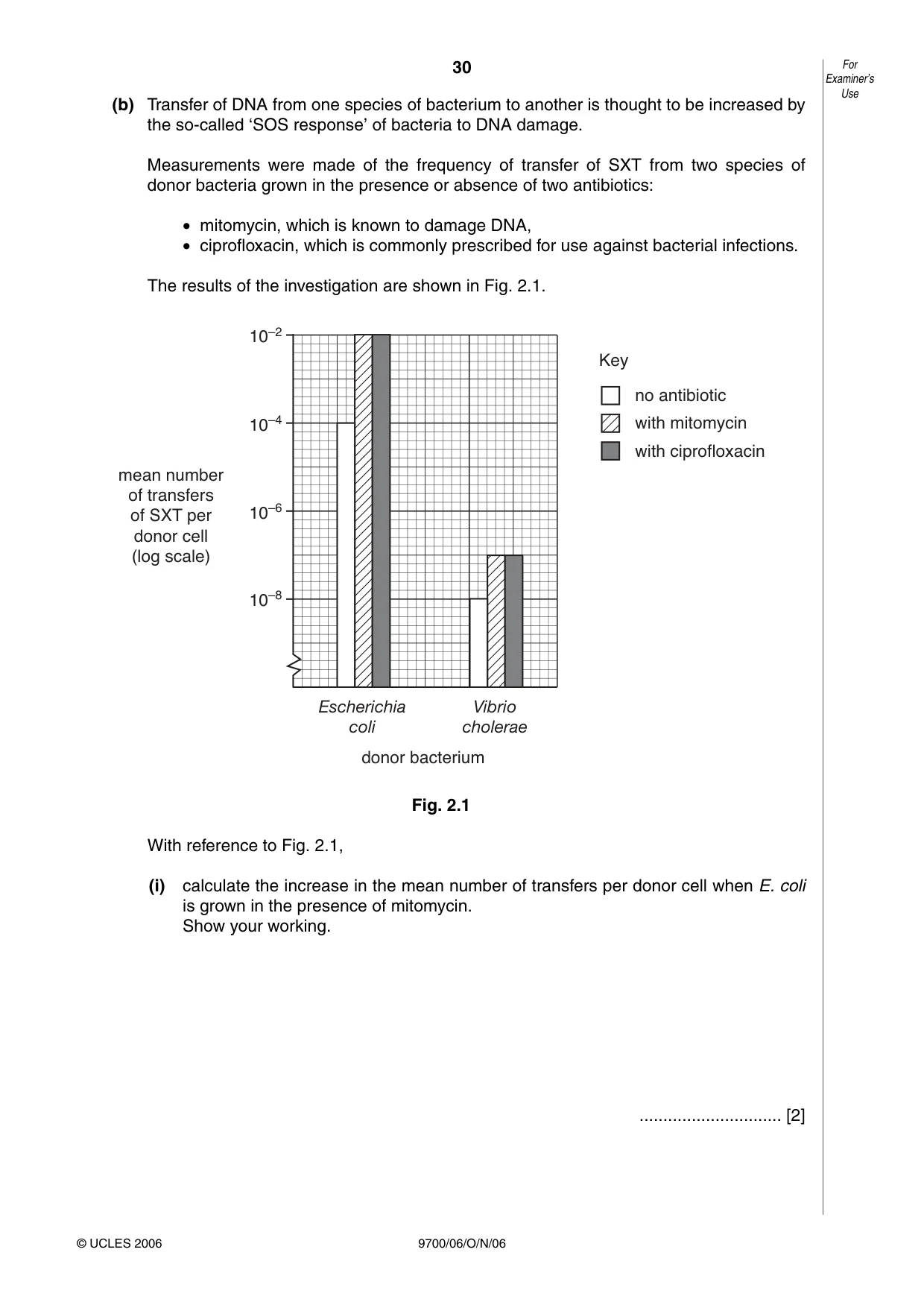
30 9700/06/O/N/06 (b) Transfer of DNA from one species of bacterium to another is thought to be increased by the so-called ‘SOS response’ of bacteria to DNA damage. Measurements were made of the frequency of transfer of SXT from two species of donor bacteria grown in the presence or absence of two antibiotics: • mitomycin, which is known to damage DNA, • ciprofloxacin, which is commonly prescribed for use against bacterial infections. The results of the investigation are shown in Fig. 2.1. Fig. 2.1 With reference to Fig. 2.1, (i) calculate the increase in the mean number of transfers per donor cell when E. coli is grown in the presence of mitomycin. Show your working. … [2] 10–8 10–6 10–4 10–2 donor bacterium mean number of transfers of SXT per donor cell (log scale) Key no antibiotic with mitomycin with ciprofloxacin Escherichia coli Vibrio cholerae For Examiner’s Use © UCLES 2006
Question paper, page 31
31 9700/06/O/N/06 [Turn over (ii) compare the effect of the antibiotics on transfer of SXT from the two species of donor bacteria, … … … …[3] (iii) suggest the likely effect on the bacterial gene pool when an infected patient who has been prescribed ciprofloxacin takes only a few of the tablets. … …[1] [Total: 10] For Examiner’s Use © UCLES 2006
Question paper, page 32
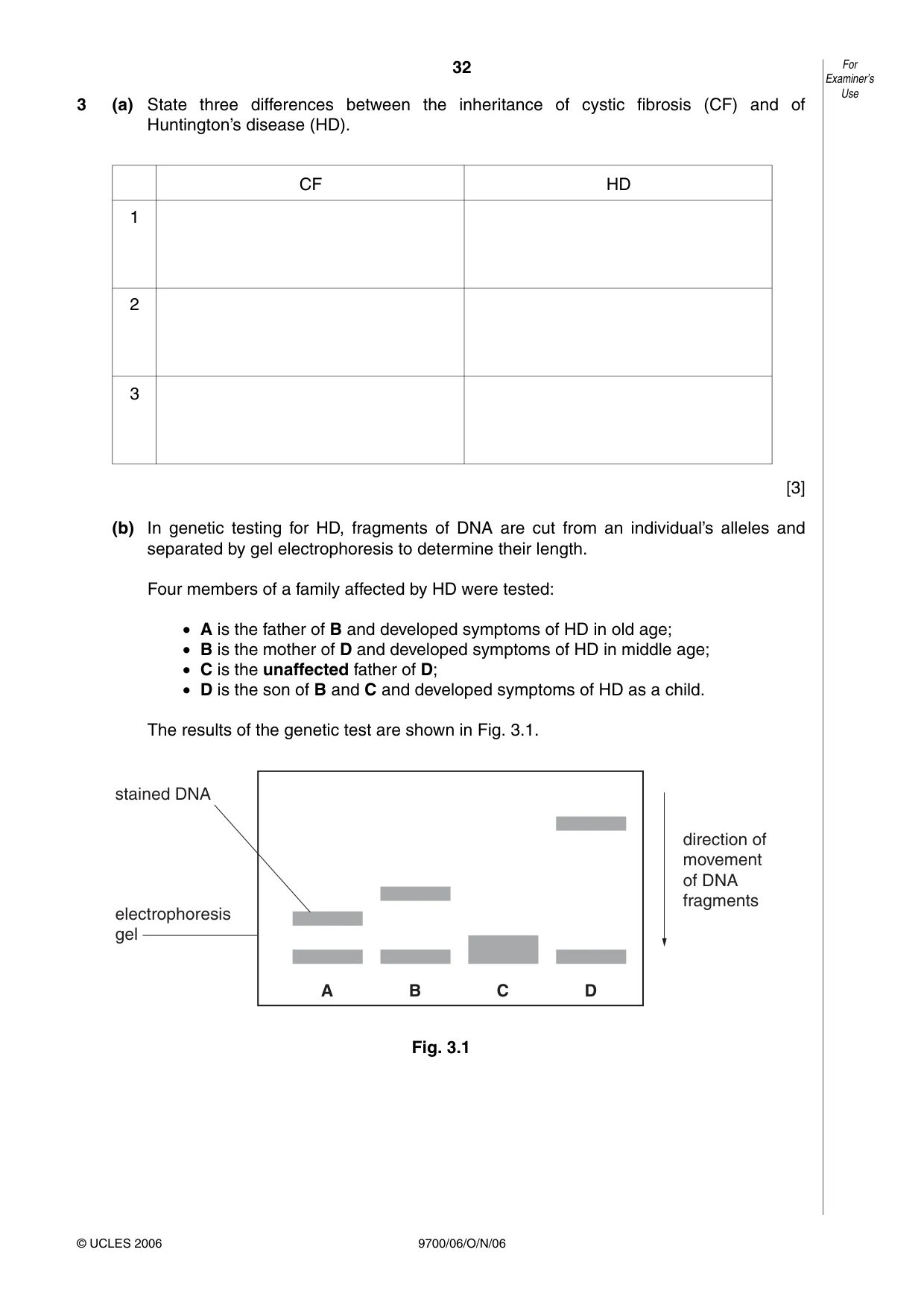
32 9700/06/O/N/06 3 (a) State three differences between the inheritance of cystic fibrosis (CF) and of Huntington’s disease (HD). [3] (b) In genetic testing for HD, fragments of DNA are cut from an individual’s alleles and separated by gel electrophoresis to determine their length. Four members of a family affected by HD were tested: • A is the father of B and developed symptoms of HD in old age; • B is the mother of D and developed symptoms of HD in middle age; • C is the unaffected father of D; • D is the son of B and C and developed symptoms of HD as a child. The results of the genetic test are shown in Fig. 3.1. Fig. 3.1 A B C D stained DNA electrophoresis gel direction of movement of DNA fragments For Examiner’s Use © UCLES 2006 CF HD 1 2 3
Question paper, page 33
33 9700/06/O/N/06 [Turn over With reference to Fig. 3.1, (i) describe the relationship between length of DNA fragment and age of onset of HD, … … …[2] (ii) explain the differences in positions of DNA fragments from the different members of the family in this test. … … … … …[3] [Total: 8] For Examiner’s Use © UCLES 2006
Question paper, page 34
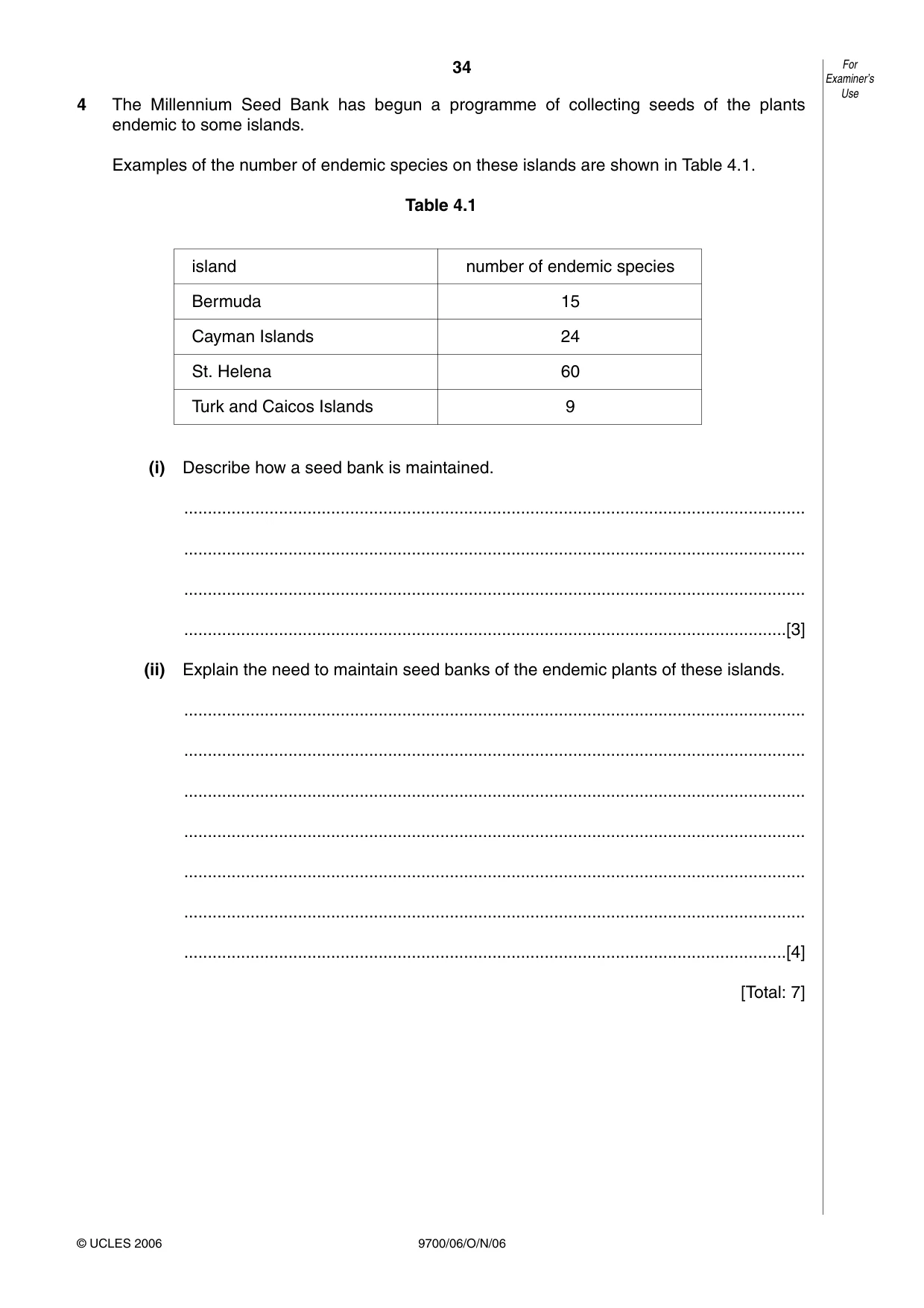
34 9700/06/O/N/06 4 The Millennium Seed Bank has begun a programme of collecting seeds of the plants endemic to some islands. Examples of the number of endemic species on these islands are shown in Table 4.1. Table 4.1 (i) Describe how a seed bank is maintained. … … … …[3] (ii) Explain the need to maintain seed banks of the endemic plants of these islands. … … … … … … …[4] [Total: 7] For Examiner’s Use © UCLES 2006 island number of endemic species Bermuda 15 Cayman Islands 24 St. Helena 60 Turk and Caicos Islands 9
Question paper, page 36
36 9700/06/O/N/06 BLANK PAGE Copyright Acknowledgements: Question 1 Fig. 1.1 © BSIP, SERCOMI/SCIENCE PHOTO LIBRARY. Permission to reproduce items where third-party owned material protected by copyright is included has been sought and cleared where possible. Every reasonable effort has been made by the publisher (UCLES) to trace copyright holders, but if any items requiring clearance have unwittingly been included, the publisher will be pleased to make amends at the earliest possible opportunity. University of Cambridge International Examinations is part of the University of Cambridge Local Examinations Syndicate (UCLES), which is itself a department of the University of Cambridge.
Mark scheme, page 1
UNIVERSITY OF CAMBRIDGE INTERNATIONAL EXAMINATIONS GCE Advanced Subsidiary Level and GCE Advanced Level MARK SCHEME for the October/November 2006 question paper 9700 BIOLOGY 9700/06 Paper 6 (Options), maximum raw mark 40 This mark scheme is published as an aid to teachers and students, to indicate the requirements of the examination. It shows the basis on which Examiners were instructed to award marks. It does not indicate the details of the discussions that took place at an Examiners’ meeting before marking began. All Examiners are instructed that alternative correct answers and unexpected approaches in candidates’ scripts must be given marks that fairly reflect the relevant knowledge and skills demonstrated. Mark schemes must be read in conjunction with the question papers and the report on the examination. The grade thresholds for various grades are published in the report on the examination for most IGCSE, GCE Advanced Level and Advanced Subsidiary Level syllabuses. • CIE will not enter into discussions or correspondence in connection with these mark schemes. CIE is publishing the mark schemes for the October/November 2006 question papers for most IGCSE, GCE Advanced Level and Advanced Subsidiary Level syllabuses and some Ordinary Level syllabuses.
Mark scheme, page 2
Page 2 Mark Scheme Syllabus Paper GCE A/AS LEVEL - OCT/NOV 2006 9700 06 © UCLES 2006 OPTION 1 – MAMMALIAN PHYSIOLOGY 1 (a) (i) A mitochondrion ; B myofibril ; C Z line ; D sarcomere ; ½ marks rounded up [2] (ii) it/D, would be longer/Z lines further apart ; light area on each side of Z line/I band, longer ; H band longer/wider ; [max 2] (b) correct use of X with superscript and allele symbols stated ; parents’ genotypes XFXf and XFY ; correct gamete genotypes ; possible offspring genotypes XFXF, XFXf , XFY, XfY ; boy with muscular dystrophy identified ; [max 4] (c) myosin (heads) pulls on actin ; no pull on/not transmitted to, muscle membranes/rest of muscle fibre ; no force generated/no pull overall ; muscle will not contract; [max 3] (d) tropomyosin lies along the actin ; troponin found at intervals along actin ; calcium binds with troponin (when action potential arrives) ; troponin changes shape ; tropomyosin moves ; (myosin) binding sites uncovered ; allows myosin to bind with actin/formation of cross-bridges ; [max 4] [Total: 15] 2 (a) change in level of blood cholesterol/stimulation of a receptor, (causes) ; action/effector, to bring level back to, normal/set point ; [2] (b) (i) as a control/to compare with the statin group ; [1] (ii) 1500 – 1300 = 200 ; (200 ÷ 1500) × 100 = 13% ; (13.3%) [2] (iii) they do (just about) support it/they do not support it/no significant difference ; but no direct link is shown between cholesterol levels and statins ; the link is only shown to be between statins and deaths ; ref. assumption of link between reduced no. of heart attacks and reduced conc. of cholesterol in blood ; further, tests/evidence, required ; [max 2] (c) ref. to negative feedback effect ; if less cholesterol in diet then liver will make more ; statins inhibit the enzyme responsible for synthesising cholesterol ; (statins) not affected by cholesterol level in blood/inhibition still takes place (even if blood cholesterol is low) ; [max 3] [Total: 10]
Mark scheme, page 3
Page 3 Mark Scheme Syllabus Paper GCE A/AS LEVEL - OCT/NOV 2006 9700 06 © UCLES 2006 3 (a) mechanical digestion breaks large pieces of food to small ones ; by teeth/mastication/churning of stomach ; chemical digestion breaks (large) molecules ; ref. to solubility ; ref to hydrolysis ; by enzymes ; ref. emulsification of lipids ; [max 3] (b) (i) allows up and down movement/not sideways movement ; great force to/canines can, pierce prey/grip prey (to prevent escape) ; allows wide opening (of mouth to catch prey) ; [max 2] (ii) sharp edges/many points/jagged ; act like scissor blades/slice past each other ; molars, slice flesh/cut meat into pieces/crush bones ; [max 2] [Total: 7] 4 (a) (i) semicircular canals/membranous labyrinth/ampulla/utriculus/macula ; [1] (ii) cerebellum ; [1] (b) (i) beginning rotation number of impulses per second increases ; from 200 to 800/4 times greater; stopping rotation number of impulses per second, decreases/stops ; from below base level/from 190, to 0 ; returns to base level within 20 (22) seconds of stopping ; max 2 [max 3] (ii) (surrounded by), fluid/endolymph ; changing rate of movement/acceleration ; inertia of fluid/relative difference in movement, of fluid or hair cell (c.f. to head) ; hair cells/cupula, bends/moves ; alters permeability of cell membrane ; depolarisation/generates an action potential ; ref. to explanation of drop of impulses sec–1 to zero when rotation stops ; [max 3] [Total: 8]
Mark scheme, page 4
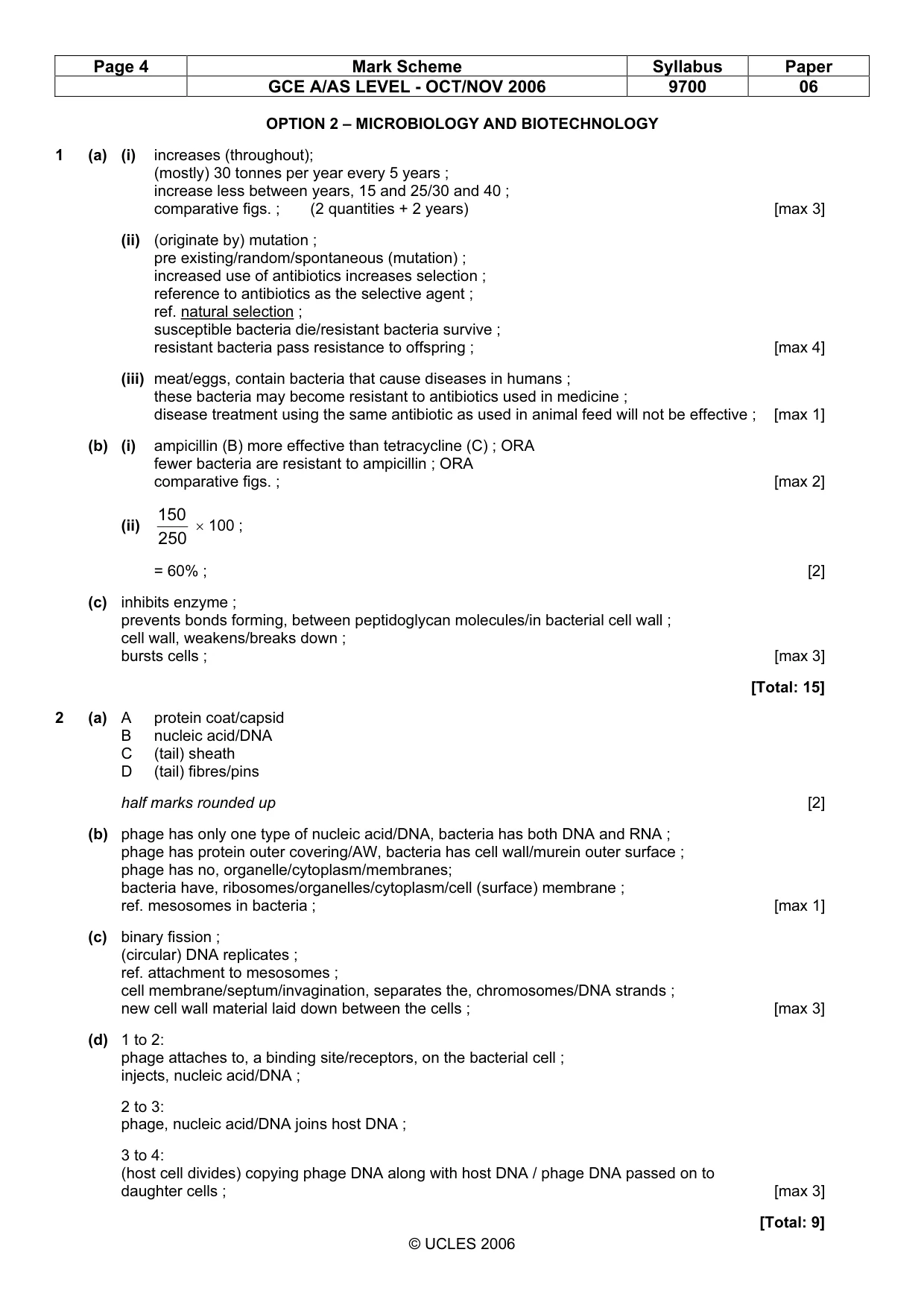
Page 4 Mark Scheme Syllabus Paper GCE A/AS LEVEL - OCT/NOV 2006 9700 06 © UCLES 2006 OPTION 2 – MICROBIOLOGY AND BIOTECHNOLOGY 1 (a) (i) increases (throughout); (mostly) 30 tonnes per year every 5 years ; increase less between years, 15 and 25/30 and 40 ; comparative figs. ; (2 quantities + 2 years) [max 3] (ii) (originate by) mutation ; pre existing/random/spontaneous (mutation) ; increased use of antibiotics increases selection ; reference to antibiotics as the selective agent ; ref. natural selection ; susceptible bacteria die/resistant bacteria survive ; resistant bacteria pass resistance to offspring ; [max 4] (iii) meat/eggs, contain bacteria that cause diseases in humans ; these bacteria may become resistant to antibiotics used in medicine ; disease treatment using the same antibiotic as used in animal feed will not be effective ; [max 1] (b) (i) ampicillin (B) more effective than tetracycline (C) ; ORA fewer bacteria are resistant to ampicillin ; ORA comparative figs. ; [max 2] (ii) 250 150 × 100 ; = 60% ; [2] (c) inhibits enzyme ; prevents bonds forming, between peptidoglycan molecules/in bacterial cell wall ; cell wall, weakens/breaks down ; bursts cells ; [max 3] [Total: 15] 2 (a) A protein coat/capsid B nucleic acid/DNA C (tail) sheath D (tail) fibres/pins half marks rounded up [2] (b) phage has only one type of nucleic acid/DNA, bacteria has both DNA and RNA ; phage has protein outer covering/AW, bacteria has cell wall/murein outer surface ; phage has no, organelle/cytoplasm/membranes; bacteria have, ribosomes/organelles/cytoplasm/cell (surface) membrane ; ref. mesosomes in bacteria ; [max 1] (c) binary fission ; (circular) DNA replicates ; ref. attachment to mesosomes ; cell membrane/septum/invagination, separates the, chromosomes/DNA strands ; new cell wall material laid down between the cells ; [max 3] (d) 1 to 2: phage attaches to, a binding site/receptors, on the bacterial cell ; injects, nucleic acid/DNA ; 2 to 3: phage, nucleic acid/DNA joins host DNA ; 3 to 4: (host cell divides) copying phage DNA along with host DNA / phage DNA passed on to daughter cells ; [max 3] [Total: 9]
Mark scheme, page 5
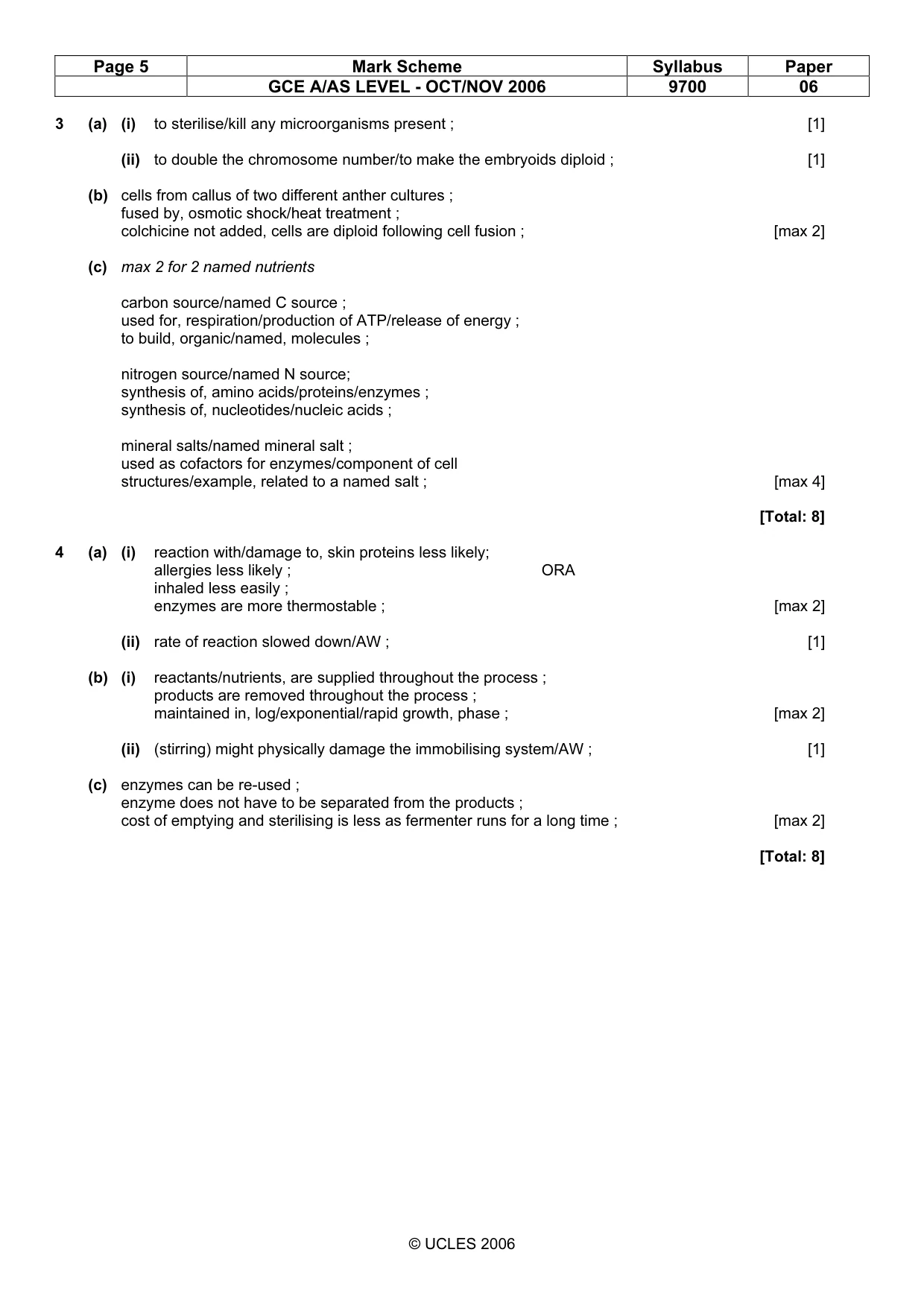
Page 5 Mark Scheme Syllabus Paper GCE A/AS LEVEL - OCT/NOV 2006 9700 06 © UCLES 2006 3 (a) (i) to sterilise/kill any microorganisms present ; [1] (ii) to double the chromosome number/to make the embryoids diploid ; [1] (b) cells from callus of two different anther cultures ; fused by, osmotic shock/heat treatment ; colchicine not added, cells are diploid following cell fusion ; [max 2] (c) max 2 for 2 named nutrients carbon source/named C source ; used for, respiration/production of ATP/release of energy ; to build, organic/named, molecules ; nitrogen source/named N source; synthesis of, amino acids/proteins/enzymes ; synthesis of, nucleotides/nucleic acids ; mineral salts/named mineral salt ; used as cofactors for enzymes/component of cell structures/example, related to a named salt ; [max 4] [Total: 8] 4 (a) (i) reaction with/damage to, skin proteins less likely; allergies less likely ; ORA inhaled less easily ; enzymes are more thermostable ; [max 2] (ii) rate of reaction slowed down/AW ; [1] (b) (i) reactants/nutrients, are supplied throughout the process ; products are removed throughout the process ; maintained in, log/exponential/rapid growth, phase ; [max 2] (ii) (stirring) might physically damage the immobilising system/AW ; [1] (c) enzymes can be re-used ; enzyme does not have to be separated from the products ; cost of emptying and sterilising is less as fermenter runs for a long time ; [max 2] [Total: 8]
Mark scheme, page 6
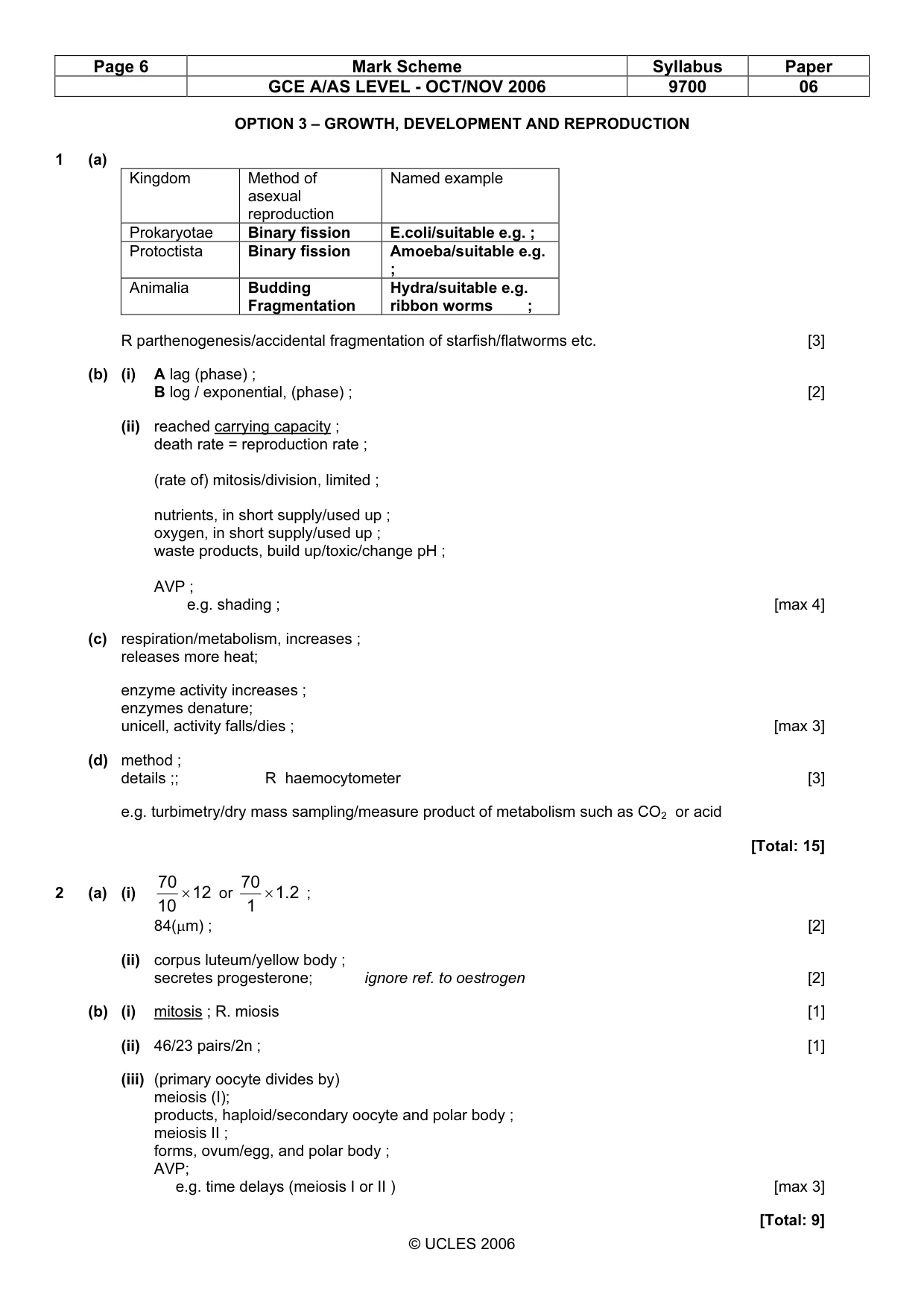
Page 6 Mark Scheme Syllabus Paper GCE A/AS LEVEL - OCT/NOV 2006 9700 06 © UCLES 2006 OPTION 3 – GROWTH, DEVELOPMENT AND REPRODUCTION 1 (a) Kingdom Method of asexual reproduction Named example Prokaryotae Binary fission E.coli/suitable e.g. ; Protoctista Binary fission Amoeba/suitable e.g. ; Animalia Budding Fragmentation Hydra/suitable e.g. ribbon worms ; R parthenogenesis/accidental fragmentation of starfish/flatworms etc. [3] (b) (i) A lag (phase) ; B log / exponential, (phase) ; [2] (ii) reached carrying capacity ; death rate = reproduction rate ; (rate of) mitosis/division, limited ; nutrients, in short supply/used up ; oxygen, in short supply/used up ; waste products, build up/toxic/change pH ; AVP ; e.g. shading ; [max 4] (c) respiration/metabolism, increases ; releases more heat; enzyme activity increases ; enzymes denature; unicell, activity falls/dies ; [max 3] (d) method ; details ;; R haemocytometer [3] e.g. turbimetry/dry mass sampling/measure product of metabolism such as CO2 or acid [Total: 15] 2 (a) (i) 12 10 70 × or 2 . 1 1 70 × ; 84(µm) ; [2] (ii) corpus luteum/yellow body ; secretes progesterone; ignore ref. to oestrogen [2] (b) (i) mitosis ; R. miosis [1] (ii) 46/23 pairs/2n ; [1] (iii) (primary oocyte divides by) meiosis (I); products, haploid/secondary oocyte and polar body ; meiosis II ; forms, ovum/egg, and polar body ; AVP; e.g. time delays (meiosis I or II ) [max 3] [Total: 9]
Mark scheme, page 7
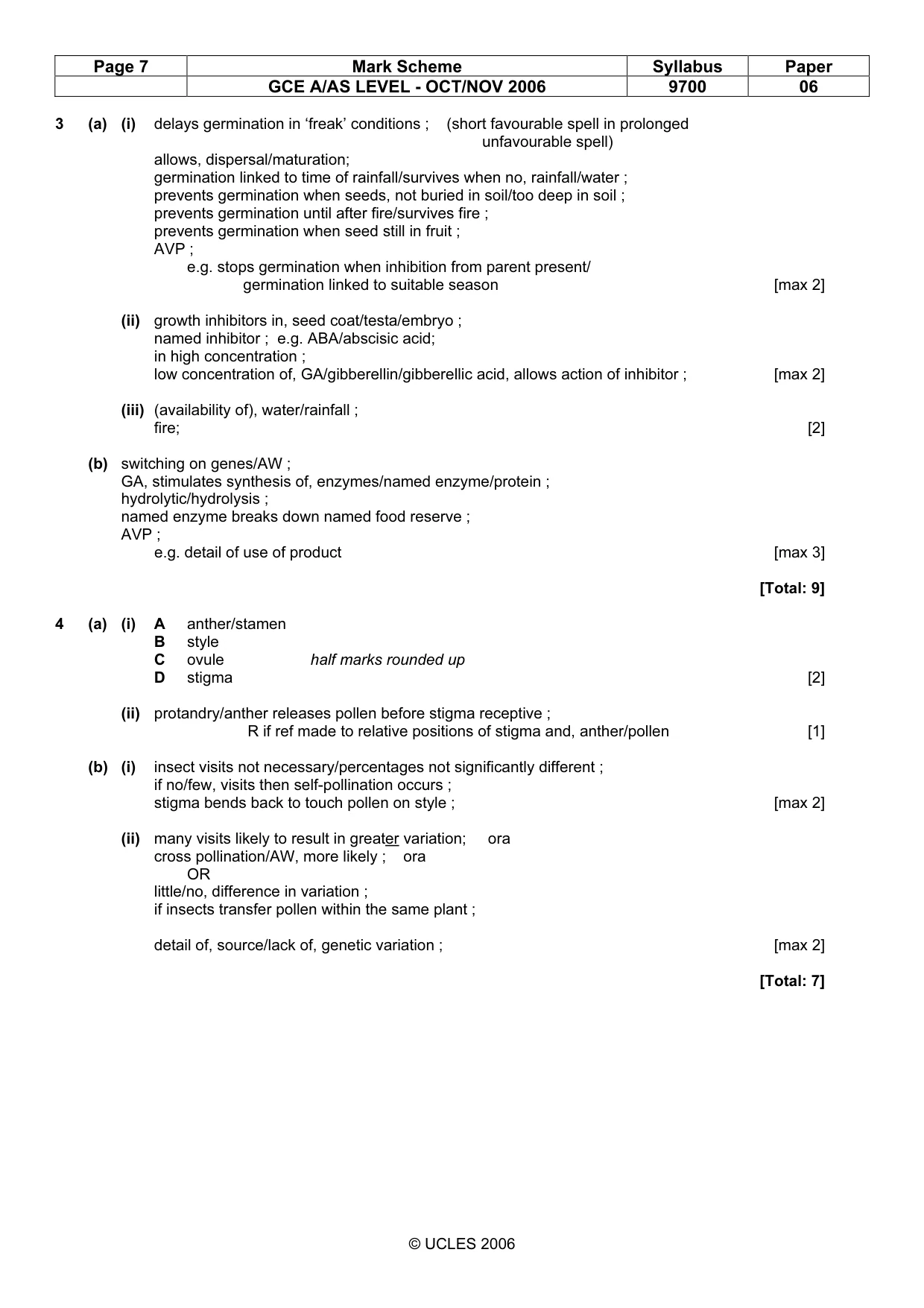
Page 7 Mark Scheme Syllabus Paper GCE A/AS LEVEL - OCT/NOV 2006 9700 06 © UCLES 2006 3 (a) (i) delays germination in ‘freak’ conditions ; (short favourable spell in prolonged unfavourable spell) allows, dispersal/maturation; germination linked to time of rainfall/survives when no, rainfall/water ; prevents germination when seeds, not buried in soil/too deep in soil ; prevents germination until after fire/survives fire ; prevents germination when seed still in fruit ; AVP ; e.g. stops germination when inhibition from parent present/ germination linked to suitable season [max 2] (ii) growth inhibitors in, seed coat/testa/embryo ; named inhibitor ; e.g. ABA/abscisic acid; in high concentration ; low concentration of, GA/gibberellin/gibberellic acid, allows action of inhibitor ; [max 2] (iii) (availability of), water/rainfall ; fire; [2] (b) switching on genes/AW ; GA, stimulates synthesis of, enzymes/named enzyme/protein ; hydrolytic/hydrolysis ; named enzyme breaks down named food reserve ; AVP ; e.g. detail of use of product [max 3] [Total: 9] 4 (a) (i) A anther/stamen B style C ovule half marks rounded up D stigma [2] (ii) protandry/anther releases pollen before stigma receptive ; R if ref made to relative positions of stigma and, anther/pollen [1] (b) (i) insect visits not necessary/percentages not significantly different ; if no/few, visits then self-pollination occurs ; stigma bends back to touch pollen on style ; [max 2] (ii) many visits likely to result in greater variation; ora cross pollination/AW, more likely ; ora OR little/no, difference in variation ; if insects transfer pollen within the same plant ; detail of, source/lack of, genetic variation ; [max 2] [Total: 7]
Mark scheme, page 8
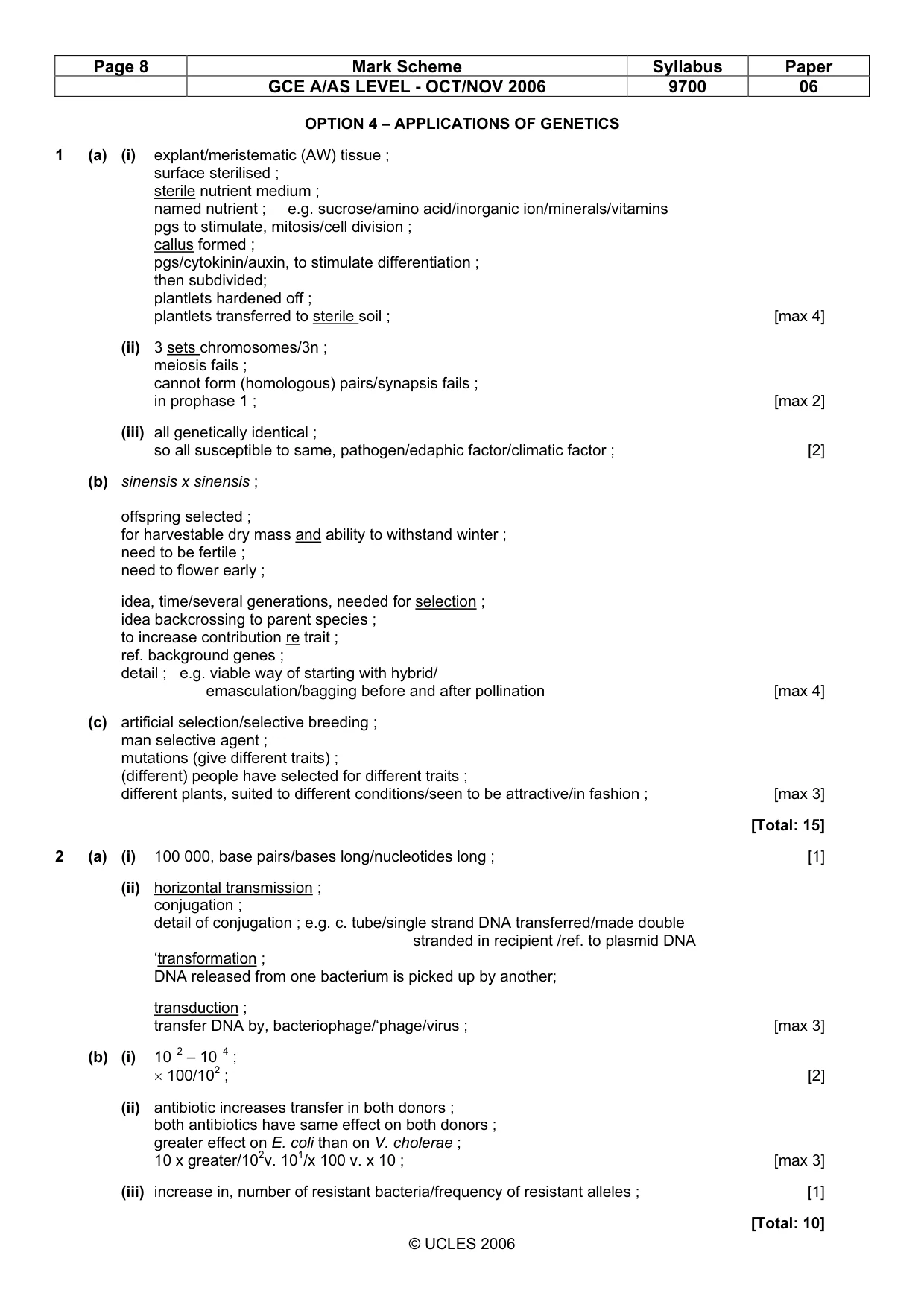
Page 8 Mark Scheme Syllabus Paper GCE A/AS LEVEL - OCT/NOV 2006 9700 06 © UCLES 2006 OPTION 4 – APPLICATIONS OF GENETICS 1 (a) (i) explant/meristematic (AW) tissue ; surface sterilised ; sterile nutrient medium ; named nutrient ; e.g. sucrose/amino acid/inorganic ion/minerals/vitamins pgs to stimulate, mitosis/cell division ; callus formed ; pgs/cytokinin/auxin, to stimulate differentiation ; then subdivided; plantlets hardened off ; plantlets transferred to sterile soil ; [max 4] (ii) 3 sets chromosomes/3n ; meiosis fails ; cannot form (homologous) pairs/synapsis fails ; in prophase 1 ; [max 2] (iii) all genetically identical ; so all susceptible to same, pathogen/edaphic factor/climatic factor ; [2] (b) sinensis x sinensis ; offspring selected ; for harvestable dry mass and ability to withstand winter ; need to be fertile ; need to flower early ; idea, time/several generations, needed for selection ; idea backcrossing to parent species ; to increase contribution re trait ; ref. background genes ; detail ; e.g. viable way of starting with hybrid/ emasculation/bagging before and after pollination [max 4] (c) artificial selection/selective breeding ; man selective agent ; mutations (give different traits) ; (different) people have selected for different traits ; different plants, suited to different conditions/seen to be attractive/in fashion ; [max 3] [Total: 15] 2 (a) (i) 100 000, base pairs/bases long/nucleotides long ; [1] (ii) horizontal transmission ; conjugation ; detail of conjugation ; e.g. c. tube/single strand DNA transferred/made double stranded in recipient /ref. to plasmid DNA ‘transformation ; DNA released from one bacterium is picked up by another; transduction ; transfer DNA by, bacteriophage/‘phage/virus ; [max 3] (b) (i) 10–2 – 10–4 ; × 100/102 ; [2] (ii) antibiotic increases transfer in both donors ; both antibiotics have same effect on both donors ; greater effect on E. coli than on V. cholerae ; 10 x greater/102v. 101/x 100 v. x 10 ; [max 3] (iii) increase in, number of resistant bacteria/frequency of resistant alleles ; [1] [Total: 10]
Mark scheme, page 9
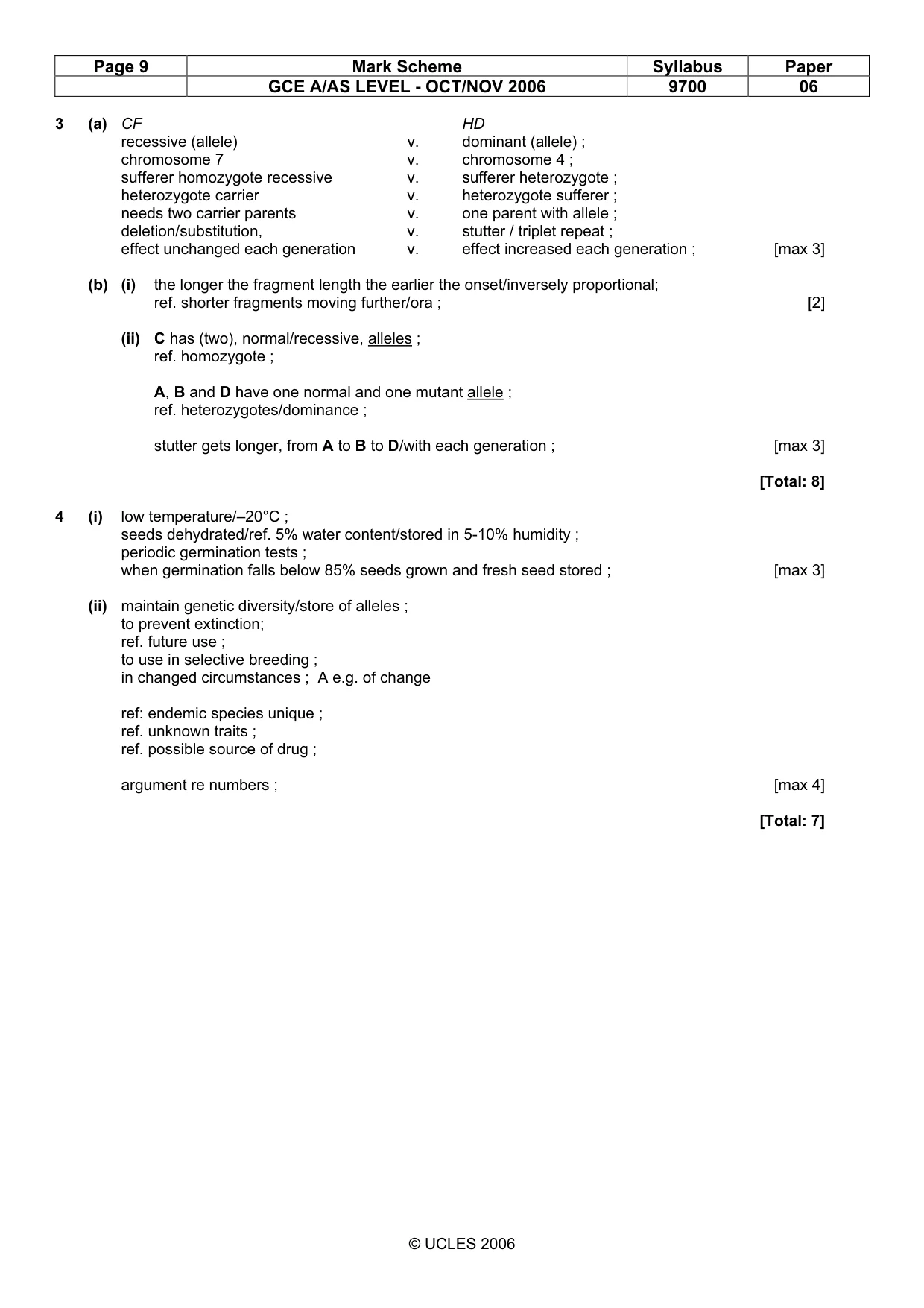
Page 9 Mark Scheme Syllabus Paper GCE A/AS LEVEL - OCT/NOV 2006 9700 06 © UCLES 2006 3 (a) CF HD recessive (allele) v. dominant (allele) ; chromosome 7 v. chromosome 4 ; sufferer homozygote recessive v. sufferer heterozygote ; heterozygote carrier v. heterozygote sufferer ; needs two carrier parents v. one parent with allele ; deletion/substitution, v. stutter / triplet repeat ; effect unchanged each generation v. effect increased each generation ; [max 3] (b) (i) the longer the fragment length the earlier the onset/inversely proportional; ref. shorter fragments moving further/ora ; [2] (ii) C has (two), normal/recessive, alleles ; ref. homozygote ; A, B and D have one normal and one mutant allele ; ref. heterozygotes/dominance ; stutter gets longer, from A to B to D/with each generation ; [max 3] [Total: 8] 4 (i) low temperature/–20°C ; seeds dehydrated/ref. 5% water content/stored in 5-10% humidity ; periodic germination tests ; when germination falls below 85% seeds grown and fresh seed stored ; [max 3] (ii) maintain genetic diversity/store of alleles ; to prevent extinction; ref. future use ; to use in selective breeding ; in changed circumstances ; A e.g. of change ref: endemic species unique ; ref. unknown traits ; ref. possible source of drug ; argument re numbers ; [max 4] [Total: 7]
What you needed in this session
Cambridge’s own grade thresholds for 2006 Oct/Nov, Paper 6 · Variant 1. A higher threshold means an easier paper — the bar moves with how the cohort did.