Cambridge A Level Biology 9700 — 2005 May/June Paper 6 · Variant 1
9700/61/M/J/05
The question paper and its mark scheme, free to read here and free to download. This is Cambridge’s own paper, exactly as it was sat.
Question paper36 pages



Mark scheme
No mark scheme is in the library for this paper.
Paper as text
Question paper, page 1
This document consists of 34 printed pages and 2 blank pages. SP (NF/CGW) S84450/2 © UCLES 2005 [Turn over UNIVERSITY OF CAMBRIDGE INTERNATIONAL EXAMINATIONS General Certificate of Education Advanced Level BIOLOGY 9700/06 Paper 6 Options May/June 2005 1 hour No Additional Materials are required READ THESE INSTRUCTIONS FIRST Write your Centre Number, Candidate Number and Name in the spaces at the top of this page and on all separate answer paper used. Write in dark blue or black pen. You may use a soft pencil for any diagrams, graphs or rough working. Do not use staples, paper clips, highlighters, glue or correction fluid. Answer the questions set on one of the options only. Answer all four questions from your chosen option only. Within your chosen option, write your answers to the Questions in the spaces provided on the Question Paper. At the end of the examination, enter the number of the option you have answered in the grid below. INFORMATION FOR CANDIDATES The number of marks is given in brackets [ ] at the end of each question or part question. The options are: 1 – Mammalian Physiology (page 2) 2 – Microbiology and Biotechnology (page 12) 3 – Growth, Development and Reproduction (page 20) 4 – Applications of Genetics (page 28) Centre Number Candidate Number Name OPTION ANSWERED FOR EXAMINER’S USE 1 2 3 4 TOTAL
Question paper, page 2
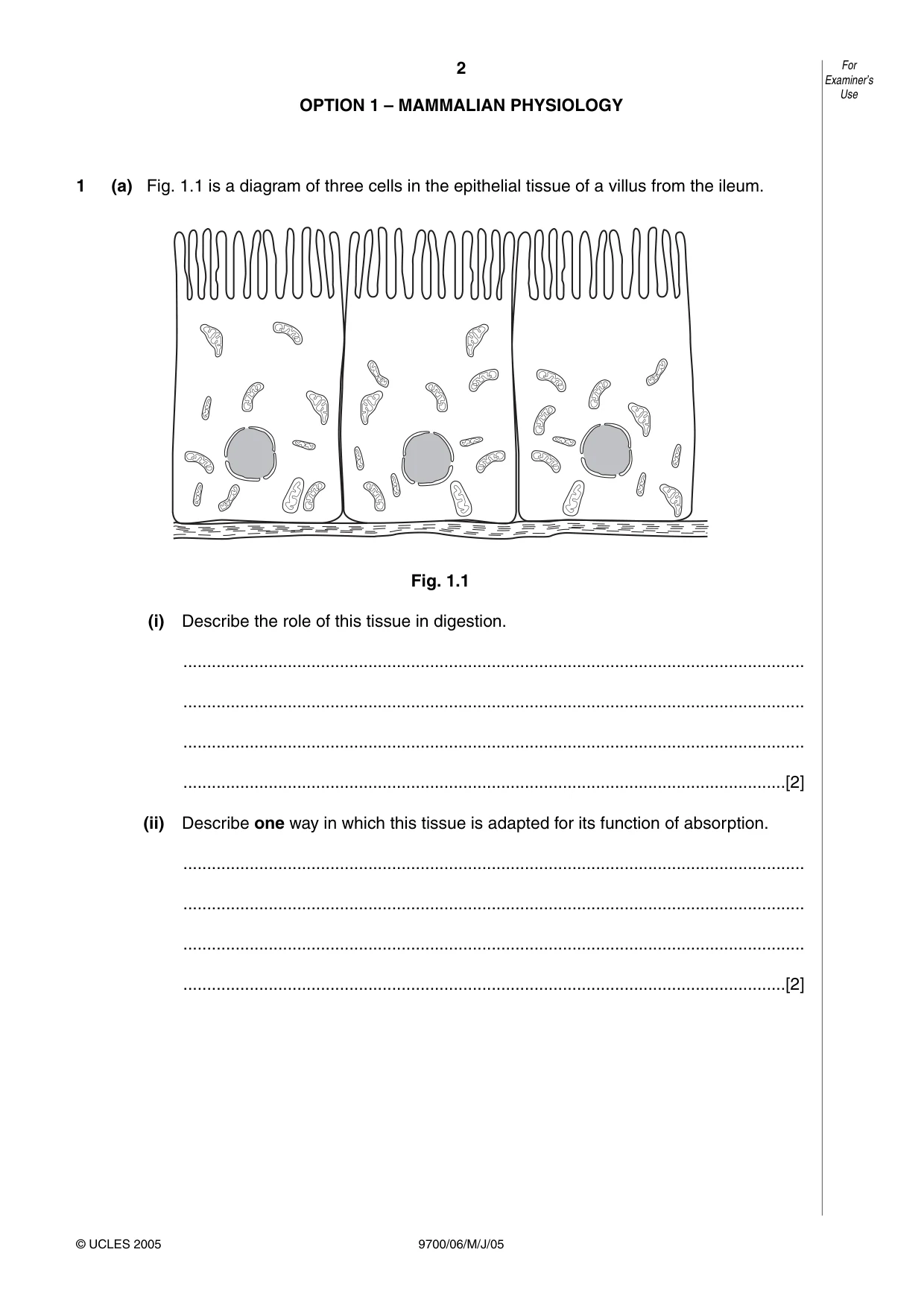
2 9700/06/M/J/05 OPTION 1 – MAMMALIAN PHYSIOLOGY 1 (a) Fig. 1.1 is a diagram of three cells in the epithelial tissue of a villus from the ileum. Fig. 1.1 (i) Describe the role of this tissue in digestion. … … … …[2] (ii) Describe one way in which this tissue is adapted for its function of absorption. … … … …[2] For Examiner’s Use © UCLES 2005
Question paper, page 3
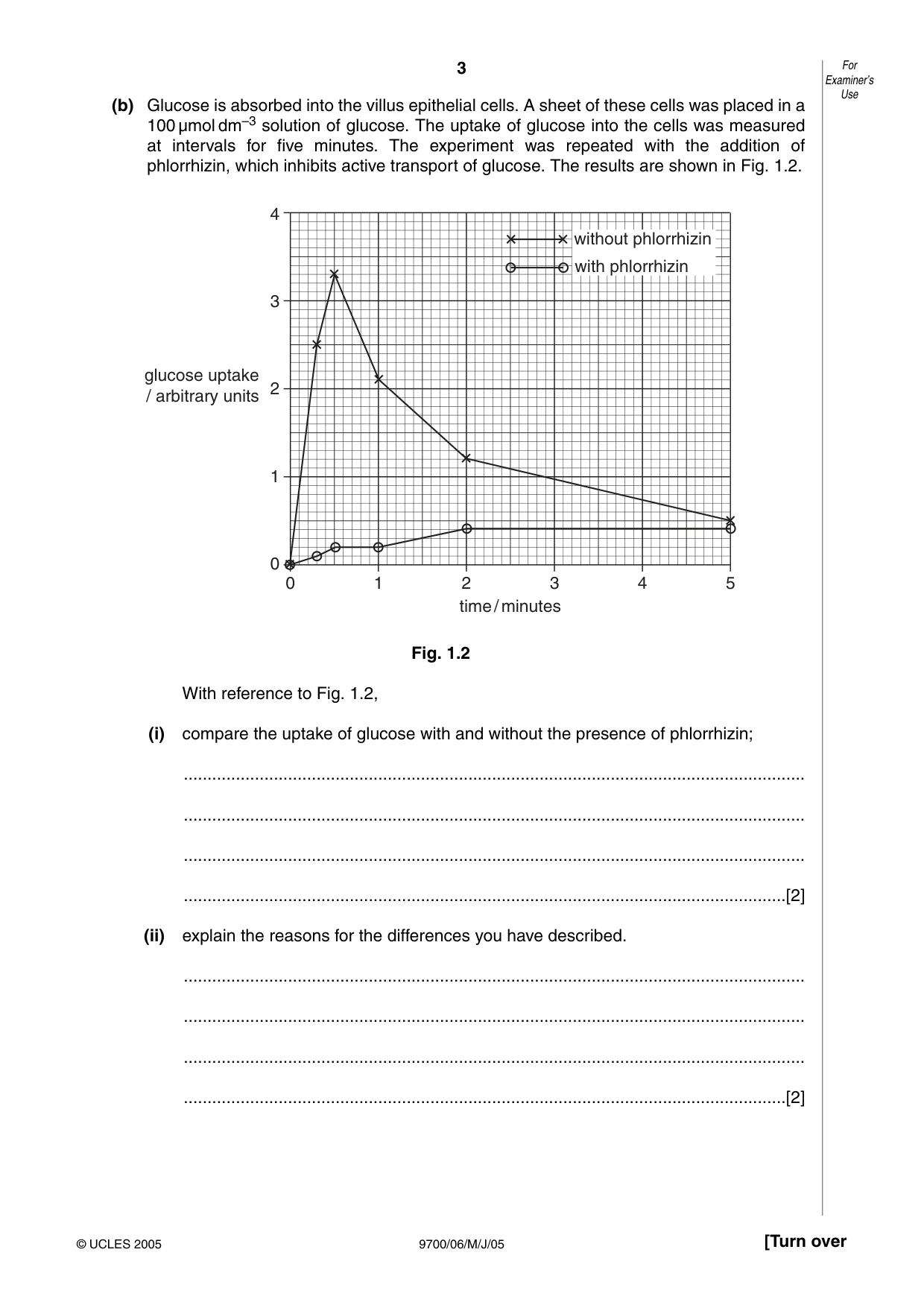
3 9700/06/M/J/05 [Turn over (b) Glucose is absorbed into the villus epithelial cells. A sheet of these cells was placed in a 100 µmol dm–3 solution of glucose. The uptake of glucose into the cells was measured at intervals for five minutes. The experiment was repeated with the addition of phlorrhizin, which inhibits active transport of glucose. The results are shown in Fig. 1.2. Fig. 1.2 With reference to Fig. 1.2, (i) compare the uptake of glucose with and without the presence of phlorrhizin; … … … …[2] (ii) explain the reasons for the differences you have described. … … … …[2] 4 3 2 1 0 0 1 2 time/minutes glucose uptake / arbitrary units 3 4 5 without phlorrhizin with phlorrhizin For Examiner’s Use © UCLES 2005
Question paper, page 4
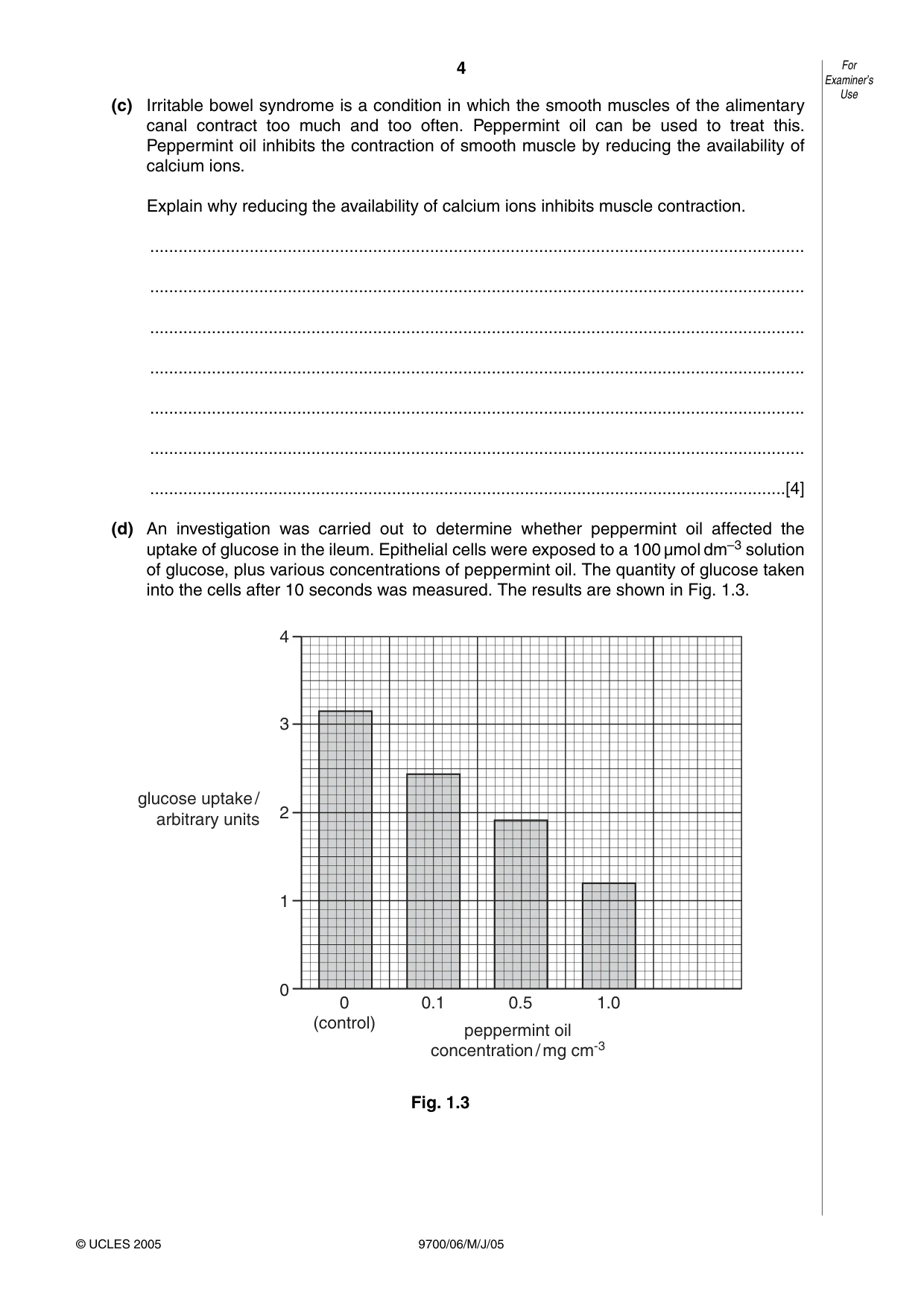
4 9700/06/M/J/05 (c) Irritable bowel syndrome is a condition in which the smooth muscles of the alimentary canal contract too much and too often. Peppermint oil can be used to treat this. Peppermint oil inhibits the contraction of smooth muscle by reducing the availability of calcium ions. Explain why reducing the availability of calcium ions inhibits muscle contraction. … … … … … … …[4] (d) An investigation was carried out to determine whether peppermint oil affected the uptake of glucose in the ileum. Epithelial cells were exposed to a 100 µmol dm–3 solution of glucose, plus various concentrations of peppermint oil. The quantity of glucose taken into the cells after 10 seconds was measured. The results are shown in Fig. 1.3. Fig. 1.3 0 0 (control) 0.1 0.5 peppermint oil concentration/mg cm-3 1.0 1 2 glucose uptake/ arbitrary units 3 4 For Examiner’s Use © UCLES 2005
Question paper, page 5
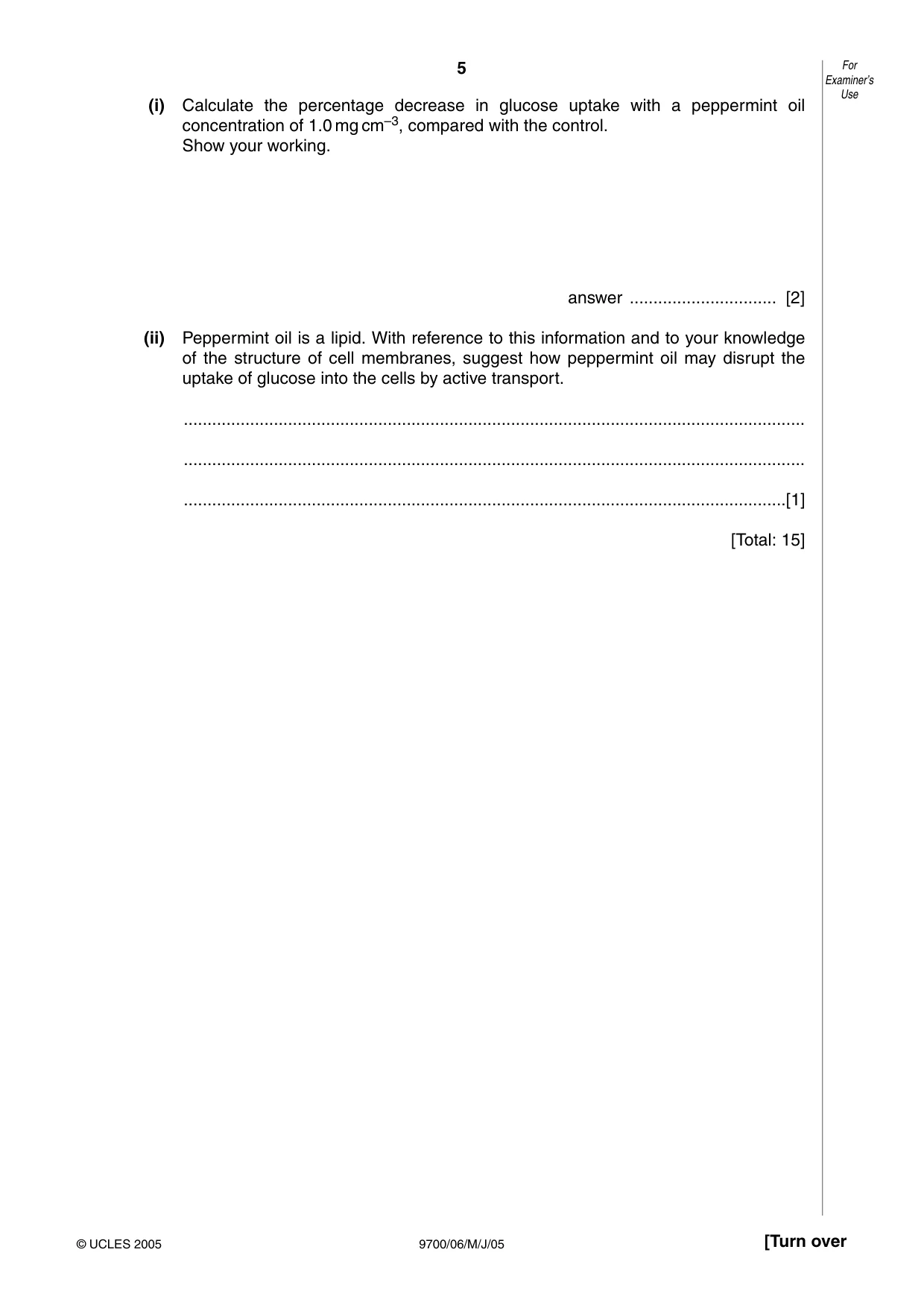
5 9700/06/M/J/05 [Turn over (i) Calculate the percentage decrease in glucose uptake with a peppermint oil concentration of 1.0 mg cm–3, compared with the control. Show your working. answer … [2] (ii) Peppermint oil is a lipid. With reference to this information and to your knowledge of the structure of cell membranes, suggest how peppermint oil may disrupt the uptake of glucose into the cells by active transport. … … …[1] [Total: 15] For Examiner’s Use © UCLES 2005
Question paper, page 6
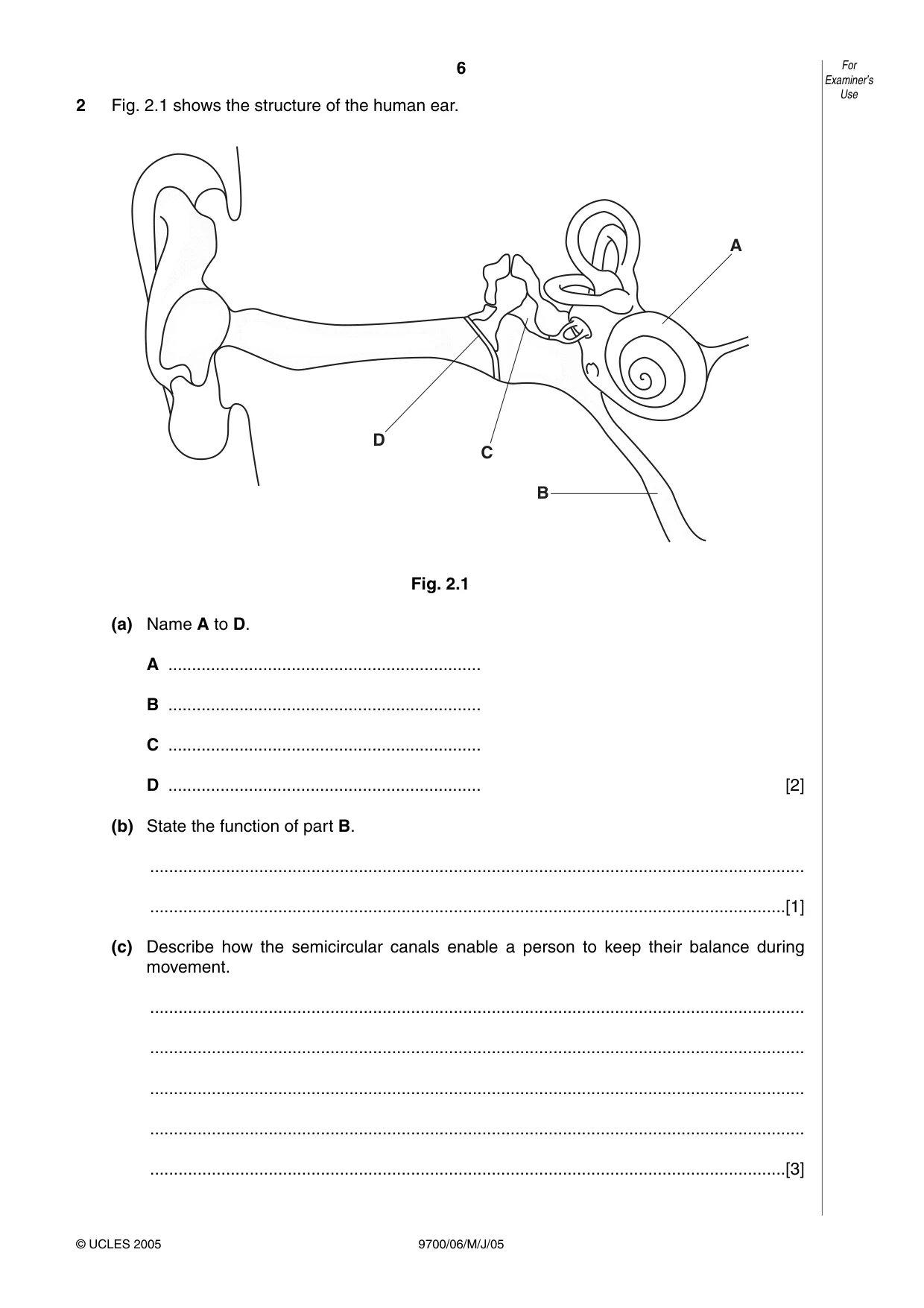
6 9700/06/M/J/05 2 Fig. 2.1 shows the structure of the human ear. Fig. 2.1 (a) Name A to D. A … B … C … D … [2] (b) State the function of part B. … …[1] (c) Describe how the semicircular canals enable a person to keep their balance during movement. … … … … …[3] A B C D For Examiner’s Use © UCLES 2005
Question paper, page 7
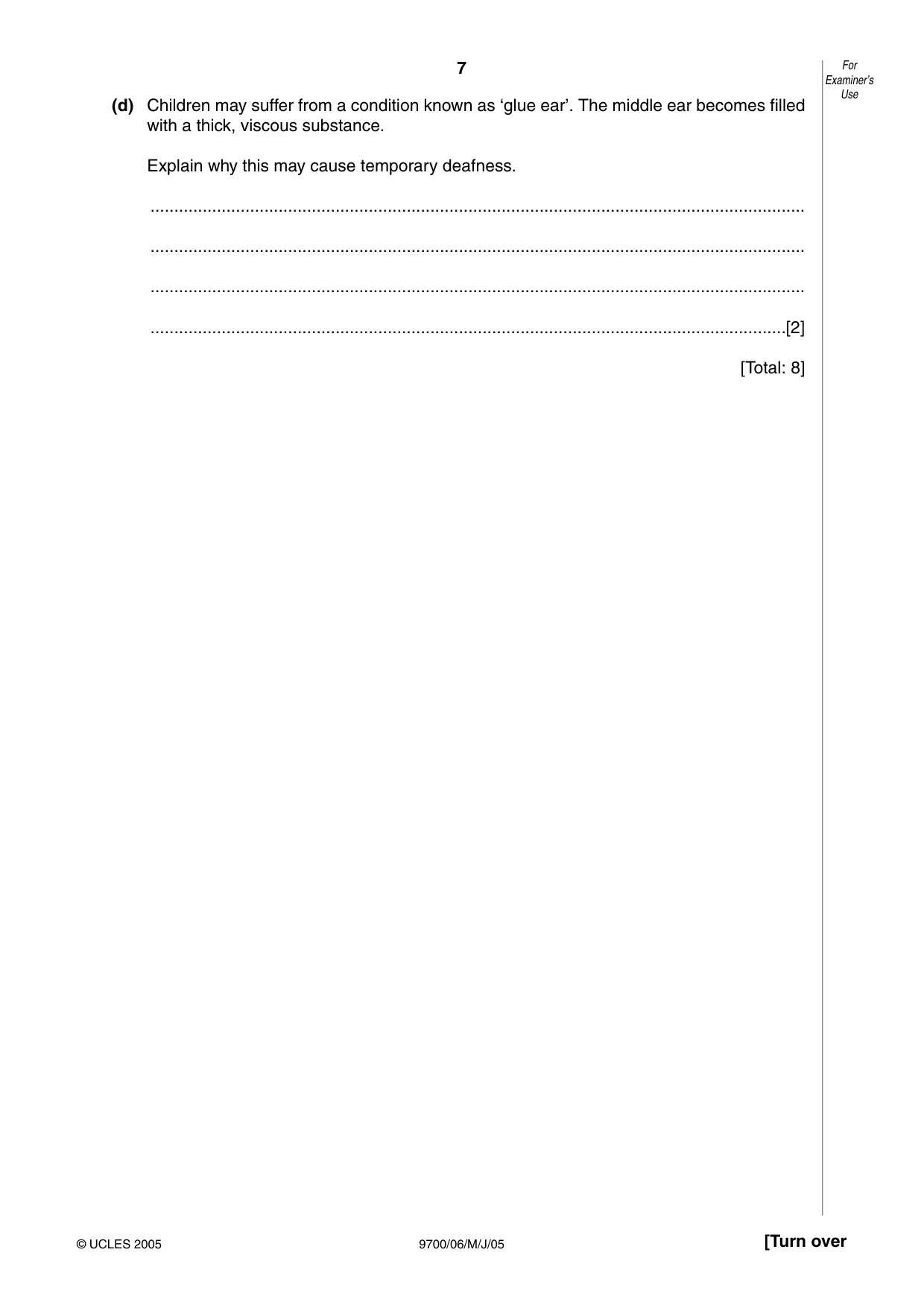
7 9700/06/M/J/05 [Turn over (d) Children may suffer from a condition known as ‘glue ear’. The middle ear becomes filled with a thick, viscous substance. Explain why this may cause temporary deafness. … … … …[2] [Total: 8] For Examiner’s Use © UCLES 2005
Question paper, page 8
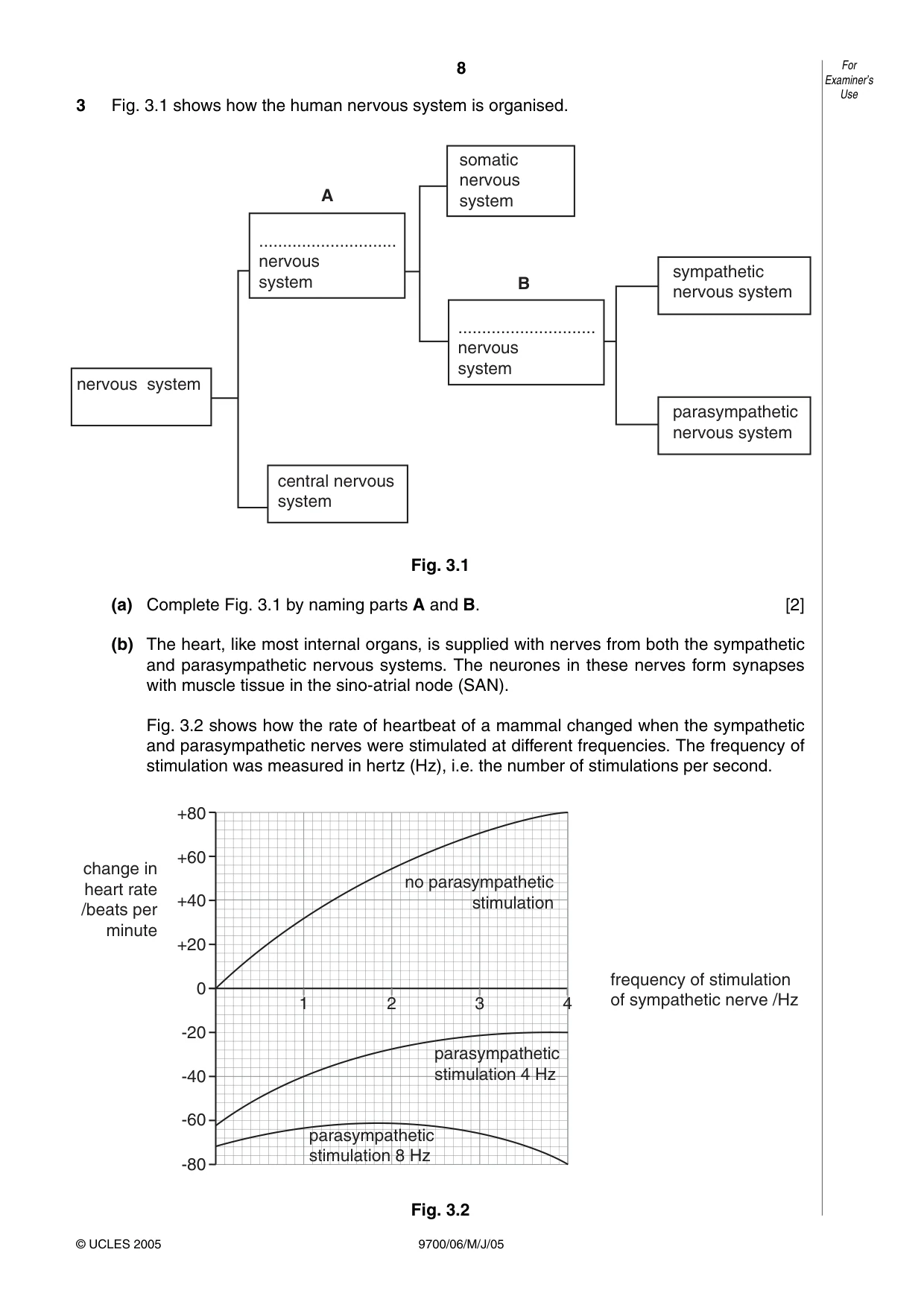
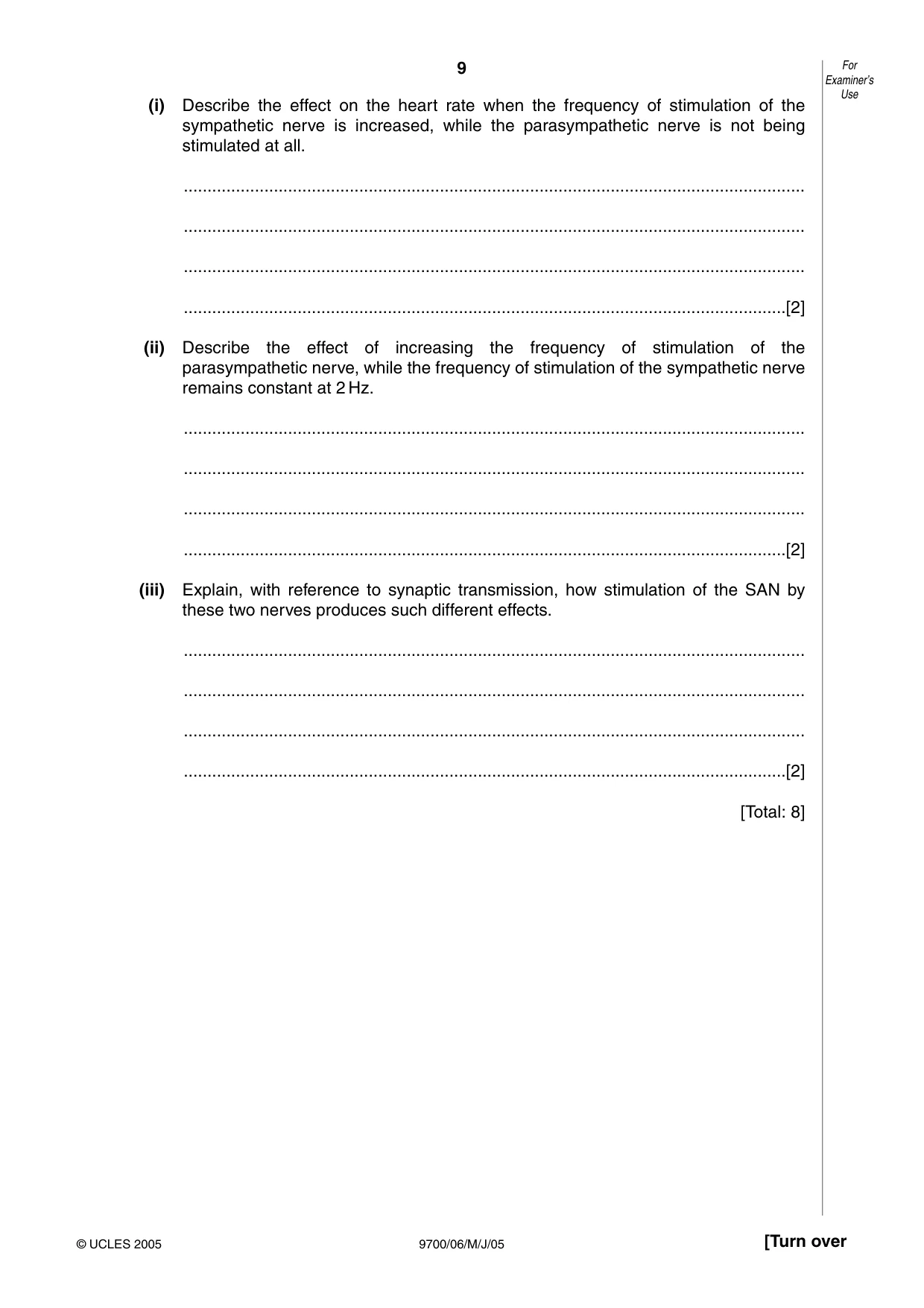
8 9700/06/M/J/05 3 Fig. 3.1 shows how the human nervous system is organised. Fig. 3.1 (a) Complete Fig. 3.1 by naming parts A and B. [2] (b) The heart, like most internal organs, is supplied with nerves from both the sympathetic and parasympathetic nervous systems. The neurones in these nerves form synapses with muscle tissue in the sino-atrial node (SAN). Fig. 3.2 shows how the rate of heartbeat of a mammal changed when the sympathetic and parasympathetic nerves were stimulated at different frequencies. The frequency of stimulation was measured in hertz (Hz), i.e. the number of stimulations per second. Fig. 3.2 1 -80 -60 -40 -20 +20 +40 +60 +80 0 2 change in heart rate /beats per minute no parasympathetic stimulation parasympathetic stimulation 4 Hz frequency of stimulation of sympathetic nerve /Hz parasympathetic stimulation 8 Hz 3 4 For Examiner’s Use © UCLES 2005 A B somatic nervous system … nervous system … nervous system nervous system central nervous system parasympathetic nervous system sympathetic nervous system
Question paper, page 9
9 9700/06/M/J/05 [Turn over (i) Describe the effect on the heart rate when the frequency of stimulation of the sympathetic nerve is increased, while the parasympathetic nerve is not being stimulated at all. … … … …[2] (ii) Describe the effect of increasing the frequency of stimulation of the parasympathetic nerve, while the frequency of stimulation of the sympathetic nerve remains constant at 2 Hz. … … … …[2] (iii) Explain, with reference to synaptic transmission, how stimulation of the SAN by these two nerves produces such different effects. … … … …[2] [Total: 8] For Examiner’s Use © UCLES 2005
Question paper, page 10
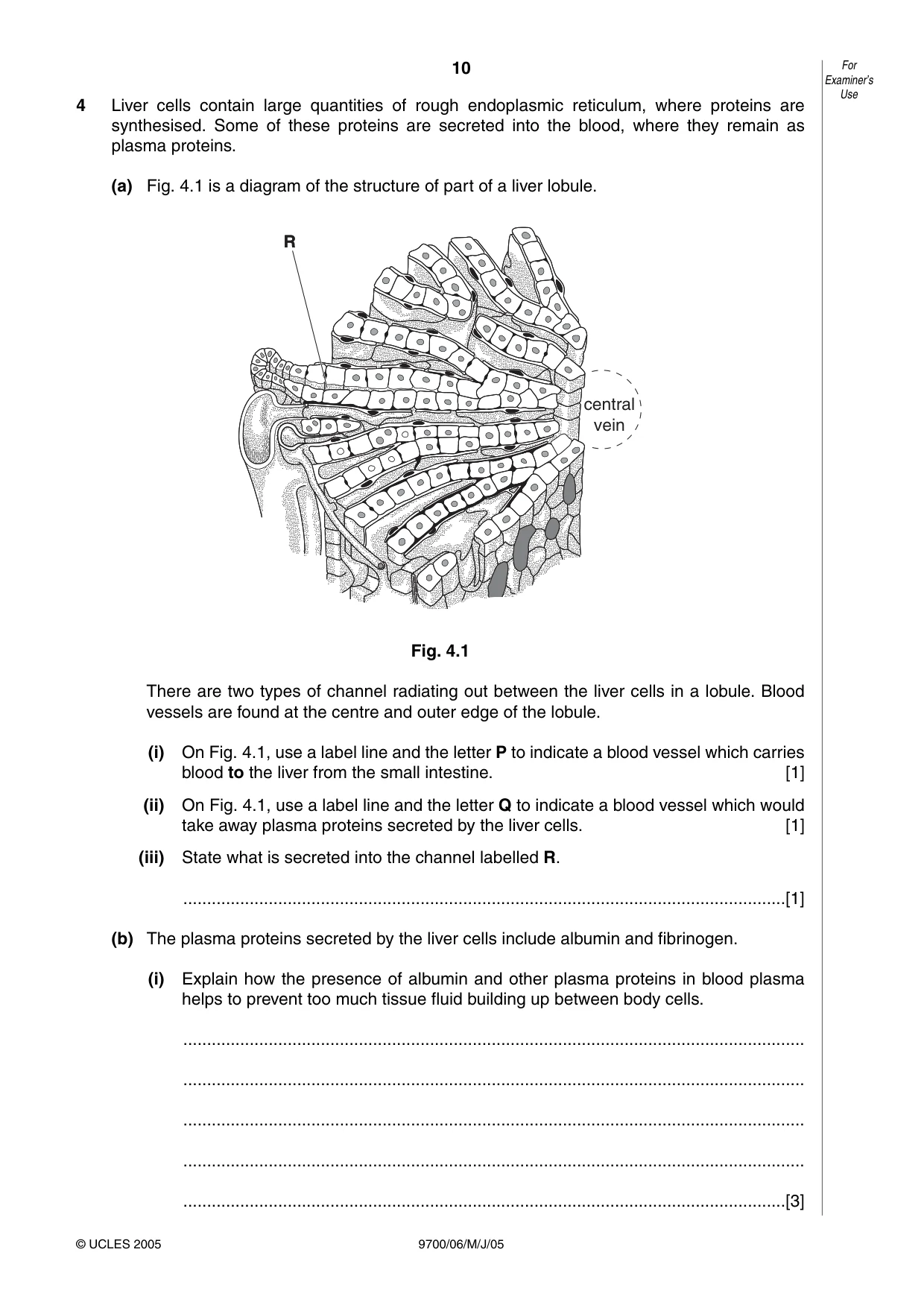
10 9700/06/M/J/05 4 Liver cells contain large quantities of rough endoplasmic reticulum, where proteins are synthesised. Some of these proteins are secreted into the blood, where they remain as plasma proteins. (a) Fig. 4.1 is a diagram of the structure of part of a liver lobule. Fig. 4.1 There are two types of channel radiating out between the liver cells in a lobule. Blood vessels are found at the centre and outer edge of the lobule. (i) On Fig. 4.1, use a label line and the letter P to indicate a blood vessel which carries blood to the liver from the small intestine. [1] (ii) On Fig. 4.1, use a label line and the letter Q to indicate a blood vessel which would take away plasma proteins secreted by the liver cells. [1] (iii) State what is secreted into the channel labelled R. …[1] (b) The plasma proteins secreted by the liver cells include albumin and fibrinogen. (i) Explain how the presence of albumin and other plasma proteins in blood plasma helps to prevent too much tissue fluid building up between body cells. … … … … …[3] R central vein For Examiner’s Use © UCLES 2005
Question paper, page 11
11 9700/06/M/J/05 [Turn over (ii) Describe the role of fibrinogen in the formation of a blood clot. … … … … …[3] [Total: 9] For Examiner’s Use © UCLES 2005
Question paper, page 12
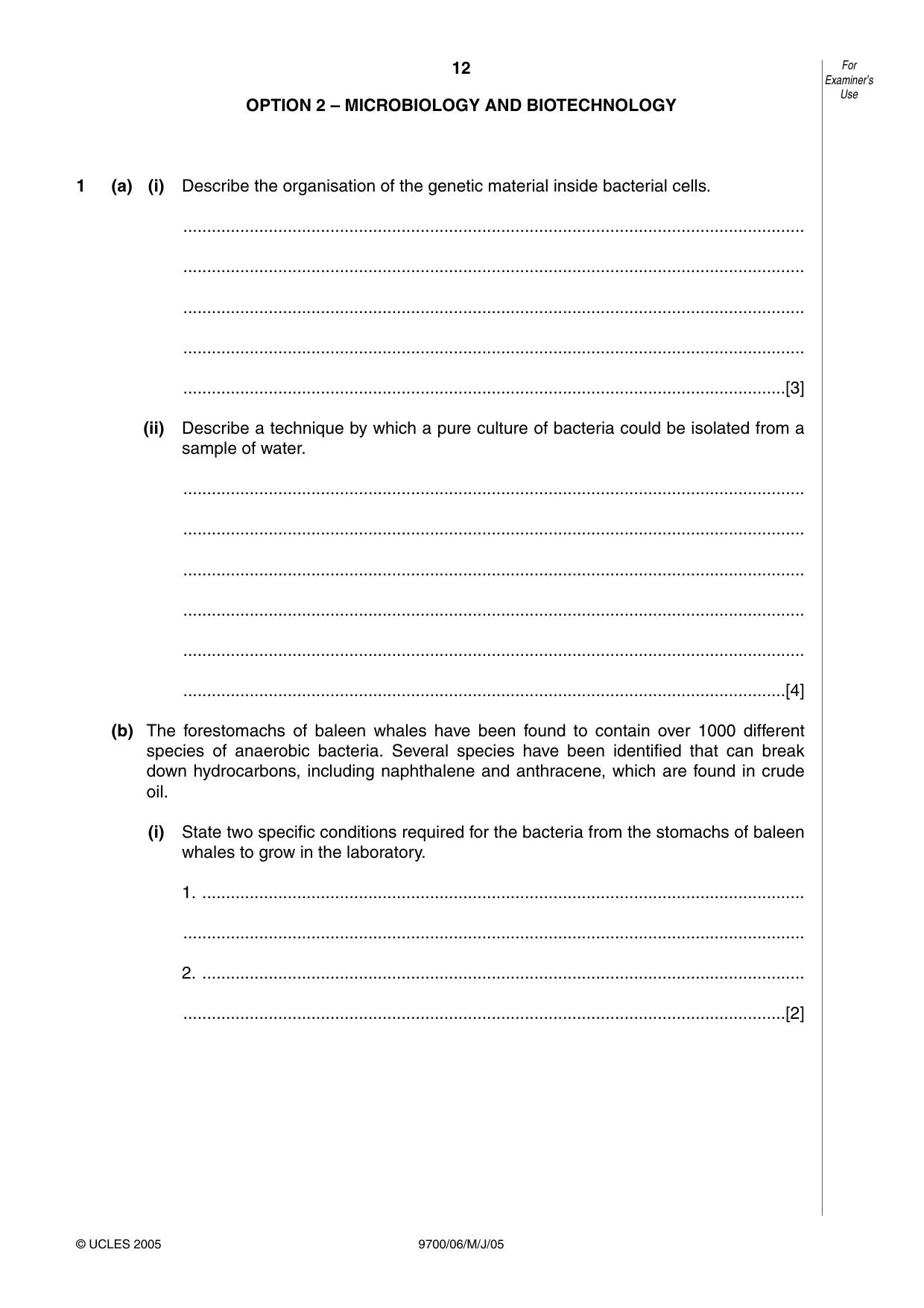
12 9700/06/M/J/05 OPTION 2 – MICROBIOLOGY AND BIOTECHNOLOGY 1 (a) (i) Describe the organisation of the genetic material inside bacterial cells. … … … … …[3] (ii) Describe a technique by which a pure culture of bacteria could be isolated from a sample of water. … … … … … …[4] (b) The forestomachs of baleen whales have been found to contain over 1000 different species of anaerobic bacteria. Several species have been identified that can break down hydrocarbons, including naphthalene and anthracene, which are found in crude oil. (i) State two specific conditions required for the bacteria from the stomachs of baleen whales to grow in the laboratory. 1. … … 2. … …[2] For Examiner’s Use © UCLES 2005
Question paper, page 13
13 9700/06/M/J/05 [Turn over (ii) It is unlikely that these bacteria existed before crude oil pollution became a serious problem in the seas. Explain how the bacteria that break down naphthalene and anthracene might have evolved in the stomachs of whales. … … … … …[3] (c) In the past, species of bacteria capable of breaking down crude oil into harmless products have only been able to work on the surface of an oil spill. Trials are currently taking place on oil spills of up to 25 dm3 in volume, using these recently isolated bacteria from the stomachs of whales. Explain why the recently isolated bacteria are likely to be more effective at breaking down oil spills. … … … … … …[3] [Total: 15] For Examiner’s Use © UCLES 2005
Question paper, page 14
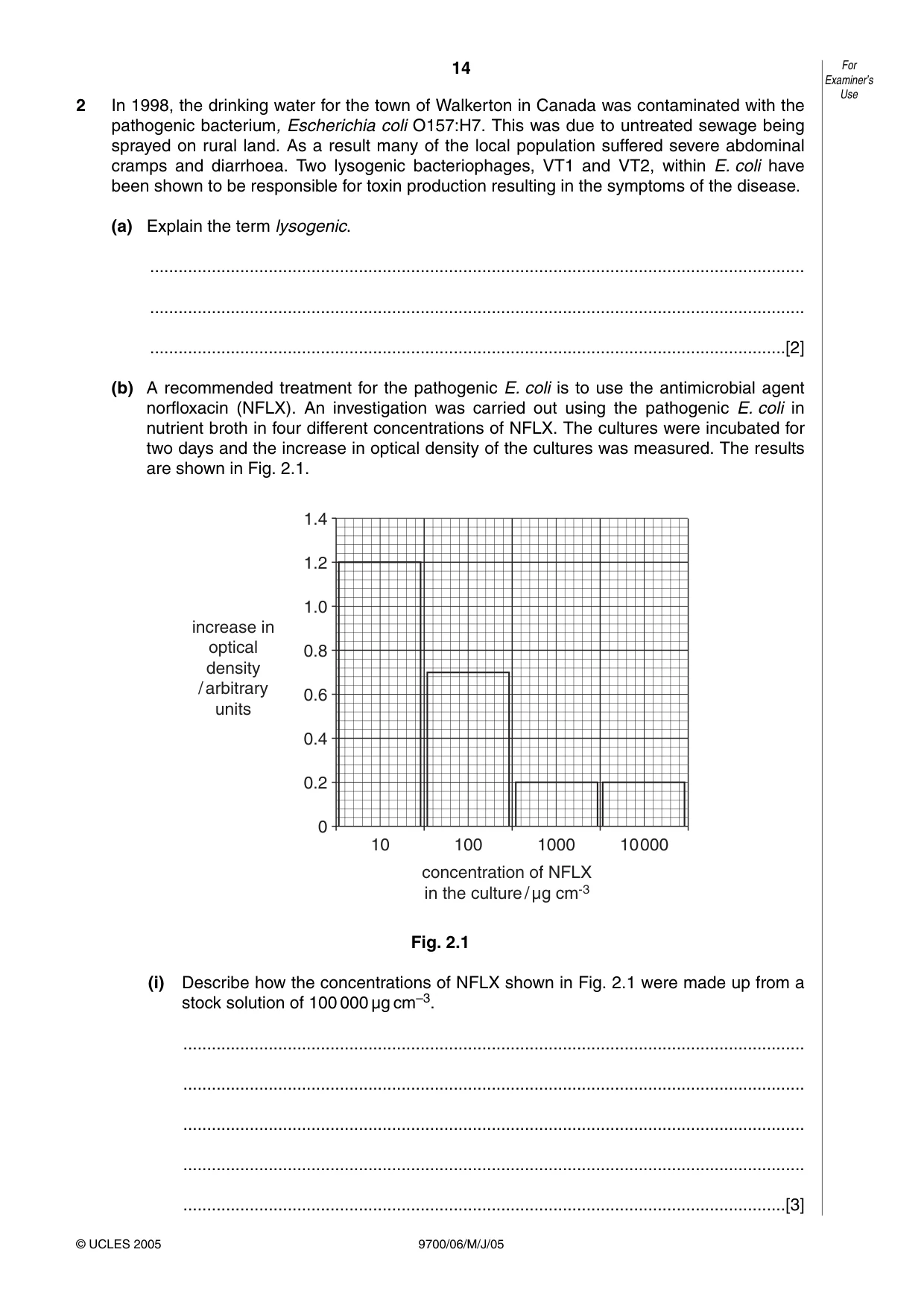
14 9700/06/M/J/05 2 In 1998, the drinking water for the town of Walkerton in Canada was contaminated with the pathogenic bacterium, Escherichia coli O157:H7. This was due to untreated sewage being sprayed on rural land. As a result many of the local population suffered severe abdominal cramps and diarrhoea. Two lysogenic bacteriophages, VT1 and VT2, within E. coli have been shown to be responsible for toxin production resulting in the symptoms of the disease. (a) Explain the term lysogenic. … … …[2] (b) A recommended treatment for the pathogenic E. coli is to use the antimicrobial agent norfloxacin (NFLX). An investigation was carried out using the pathogenic E. coli in nutrient broth in four different concentrations of NFLX. The cultures were incubated for two days and the increase in optical density of the cultures was measured. The results are shown in Fig. 2.1. Fig. 2.1 (i) Describe how the concentrations of NFLX shown in Fig. 2.1 were made up from a stock solution of 100 000 µg cm–3. … … … … …[3] 10 0 0.2 0.4 0.6 increase in optical density /arbitrary units 0.8 1.0 1.2 1.4 100 concentration of NFLX in the culture/µg cm-3 1000 10000 For Examiner’s Use © UCLES 2005
Question paper, page 15
15 9700/06/M/J/05 [Turn over (ii) Explain the results shown in Fig. 2.1. … … … …[3] [Total: 8] For Examiner’s Use © UCLES 2005
Question paper, page 16
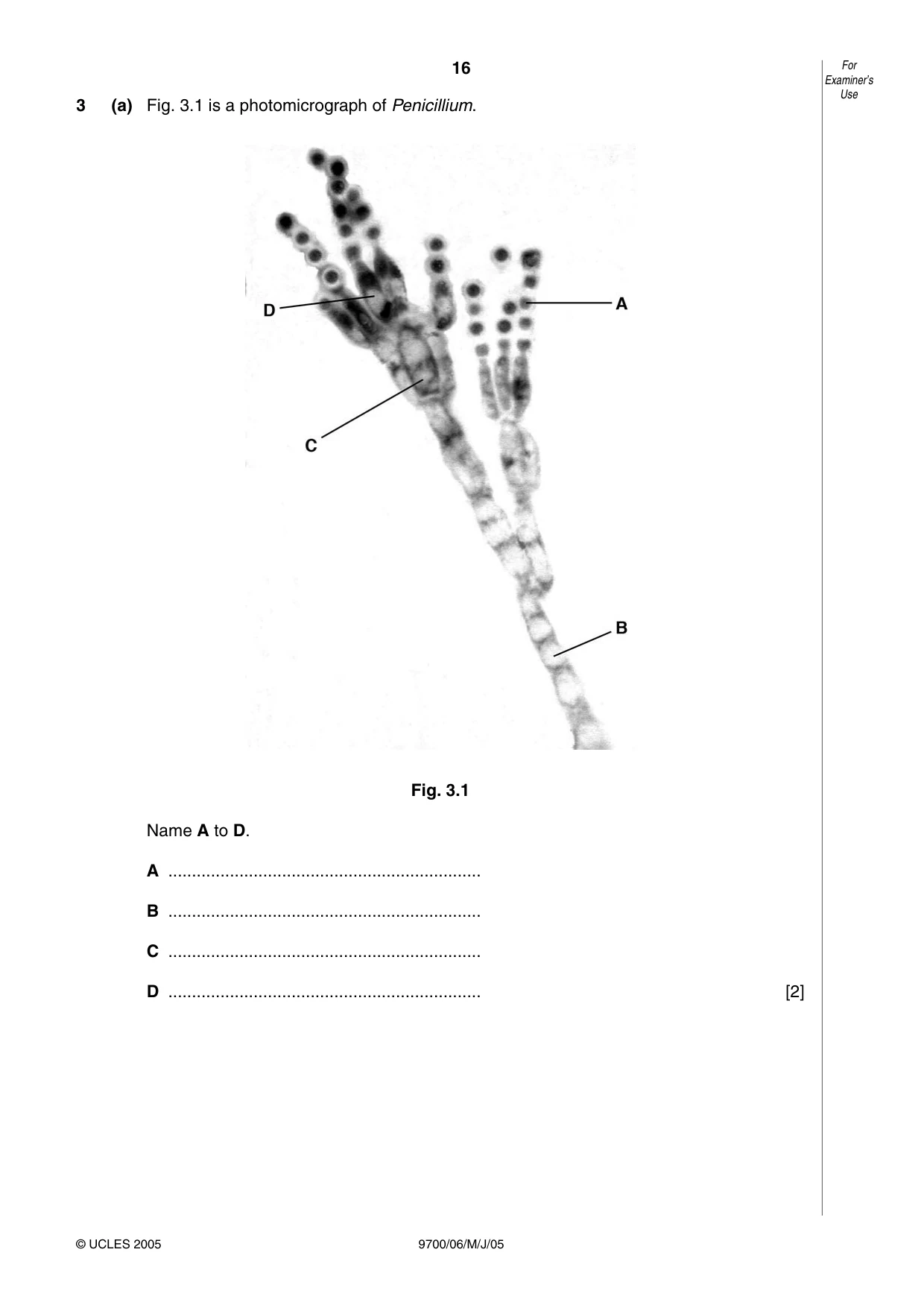
16 9700/06/M/J/05 3 (a) Fig. 3.1 is a photomicrograph of Penicillium. Fig. 3.1 Name A to D. A … B … C … D … [2] For Examiner’s Use © UCLES 2005
Question paper, page 17
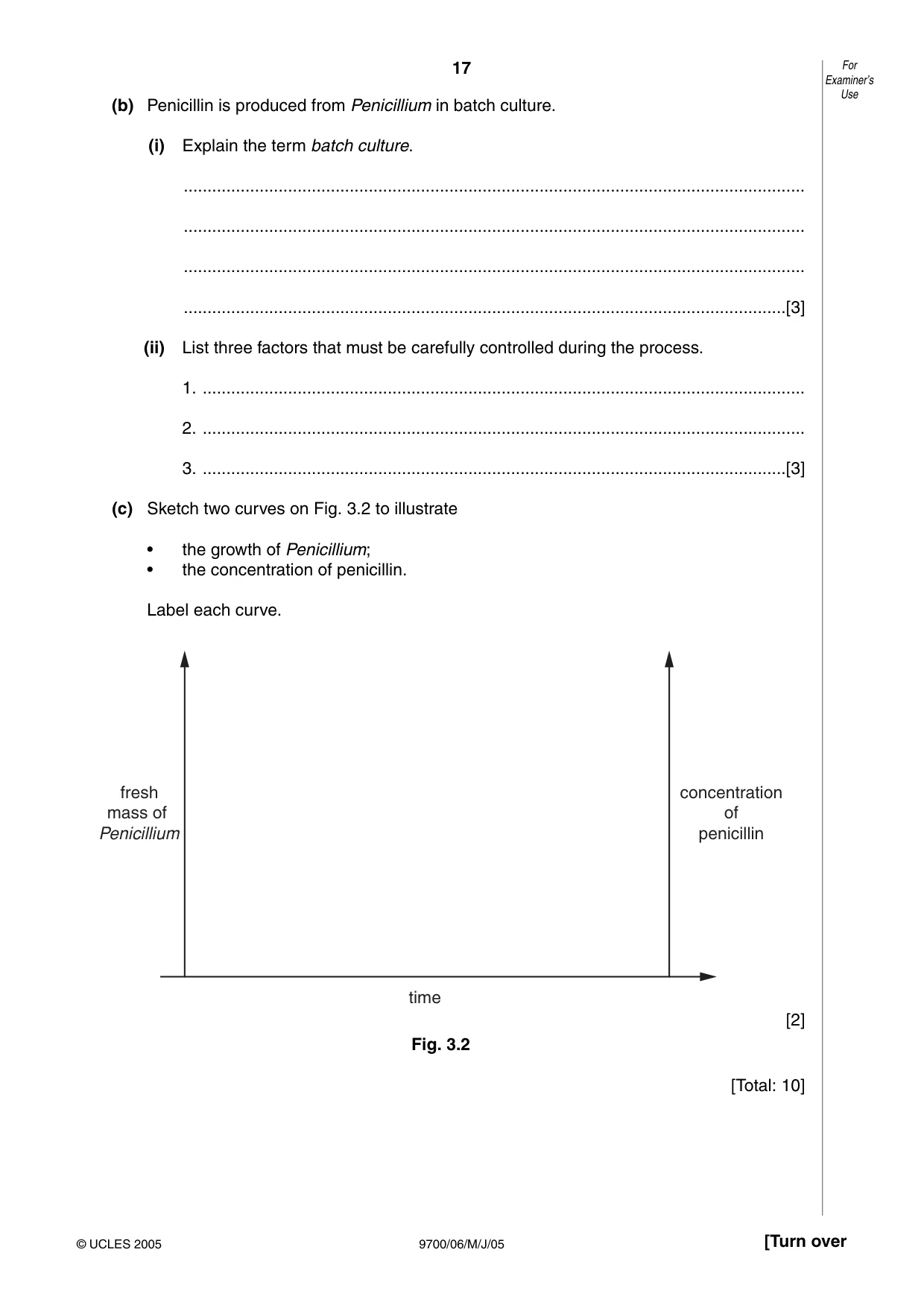
17 9700/06/M/J/05 [Turn over (b) Penicillin is produced from Penicillium in batch culture. (i) Explain the term batch culture. … … … …[3] (ii) List three factors that must be carefully controlled during the process. 1. … 2. … 3. …[3] (c) Sketch two curves on Fig. 3.2 to illustrate • the growth of Penicillium; • the concentration of penicillin. Label each curve. [2] Fig. 3.2 [Total: 10] time fresh mass of Penicillium concentration of penicillin For Examiner’s Use © UCLES 2005
Question paper, page 18
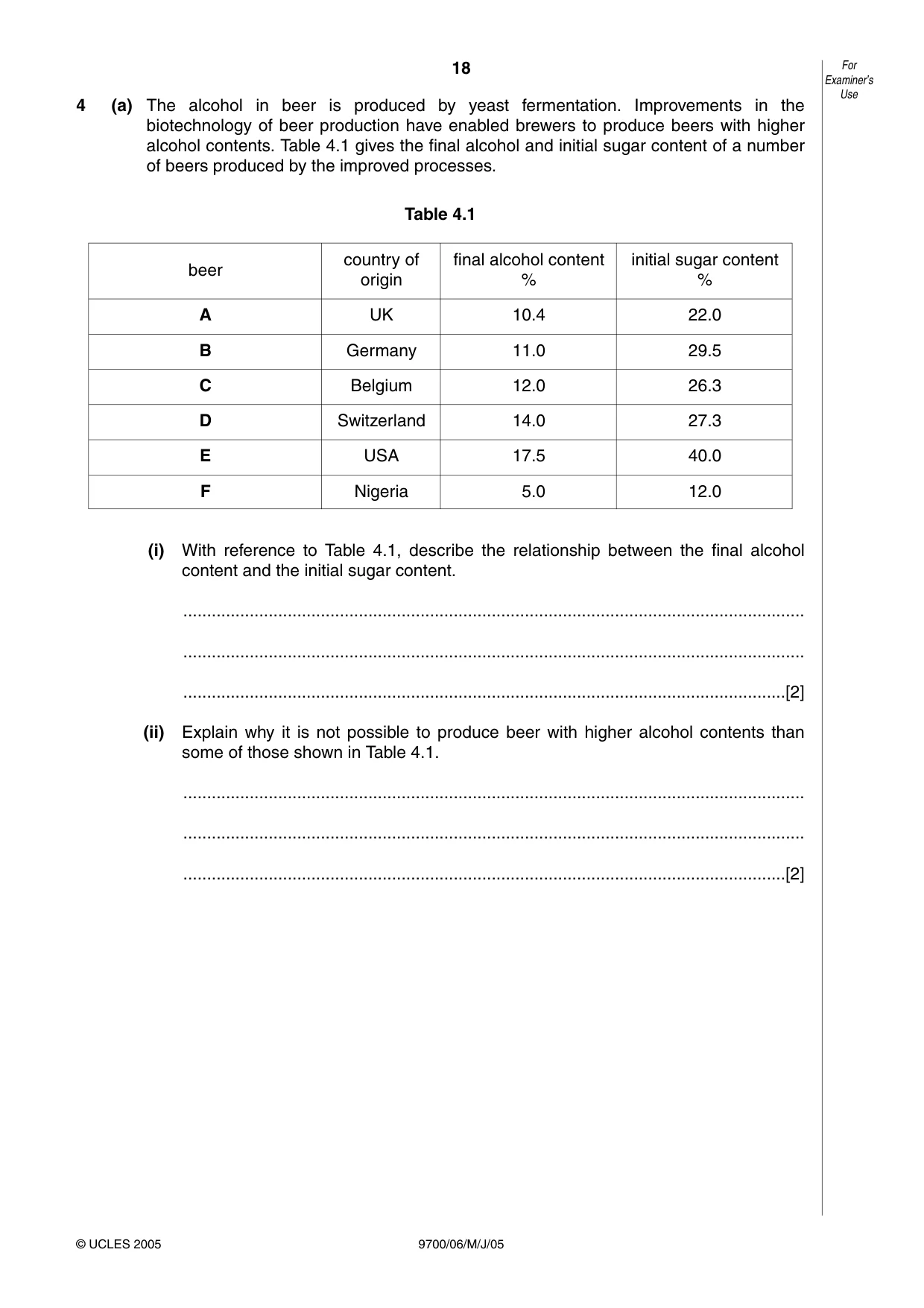
18 9700/06/M/J/05 4 (a) The alcohol in beer is produced by yeast fermentation. Improvements in the biotechnology of beer production have enabled brewers to produce beers with higher alcohol contents. Table 4.1 gives the final alcohol and initial sugar content of a number of beers produced by the improved processes. Table 4.1 (i) With reference to Table 4.1, describe the relationship between the final alcohol content and the initial sugar content. … … …[2] (ii) Explain why it is not possible to produce beer with higher alcohol contents than some of those shown in Table 4.1. … … …[2] For Examiner’s Use © UCLES 2005 beer country of final alcohol content initial sugar content origin % % A UK 10.4 22.0 B Germany 11.0 29.5 C Belgium 12.0 26.3 D Switzerland 14.0 27.3 E USA 17.5 40.0 F Nigeria 5.0 12.0
Question paper, page 19
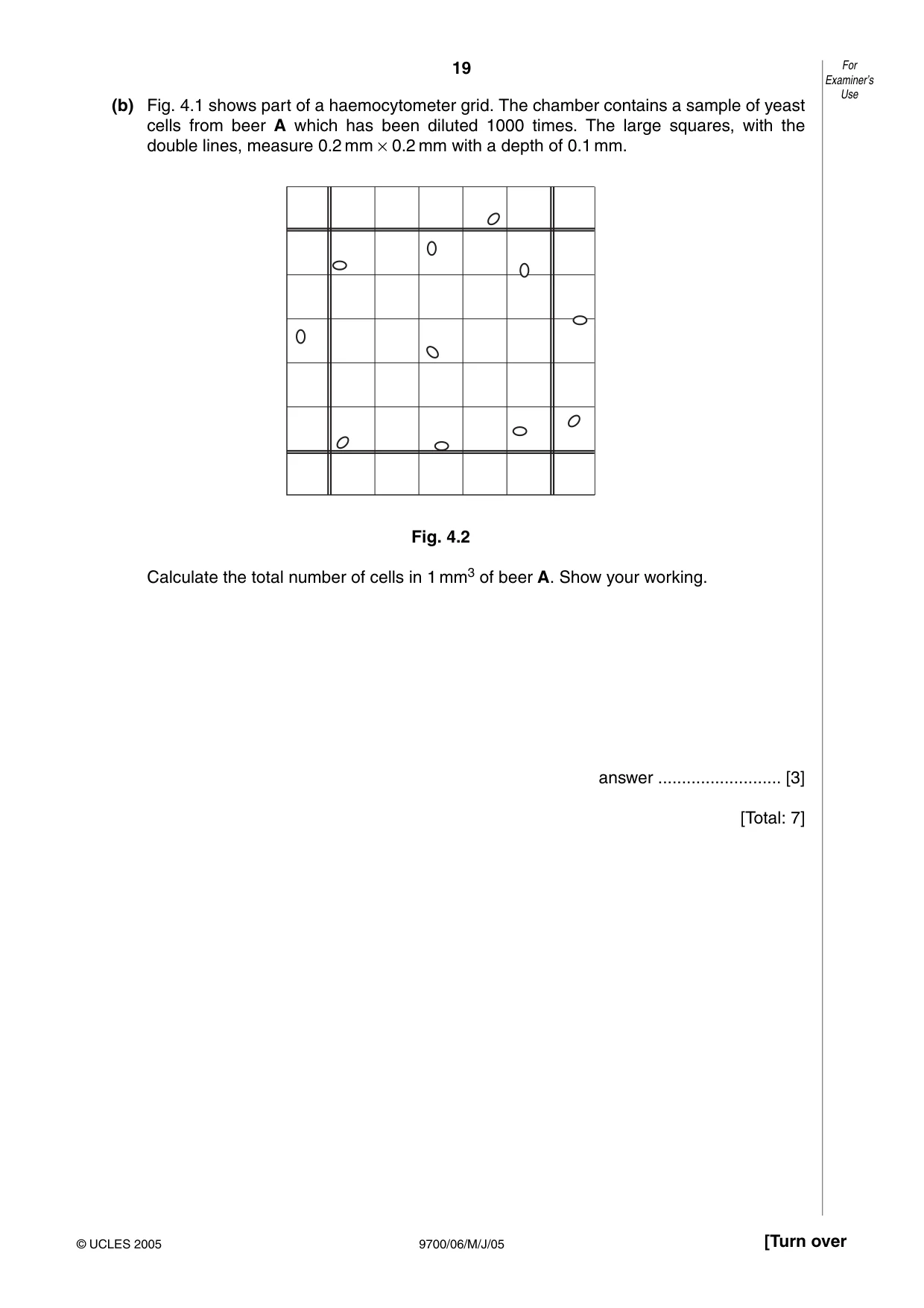
19 9700/06/M/J/05 [Turn over (b) Fig. 4.1 shows part of a haemocytometer grid. The chamber contains a sample of yeast cells from beer A which has been diluted 1000 times. The large squares, with the double lines, measure 0.2 mm × 0.2 mm with a depth of 0.1 mm. Fig. 4.2 Calculate the total number of cells in 1 mm3 of beer A. Show your working. answer … [3] [Total: 7] For Examiner’s Use © UCLES 2005
Question paper, page 20
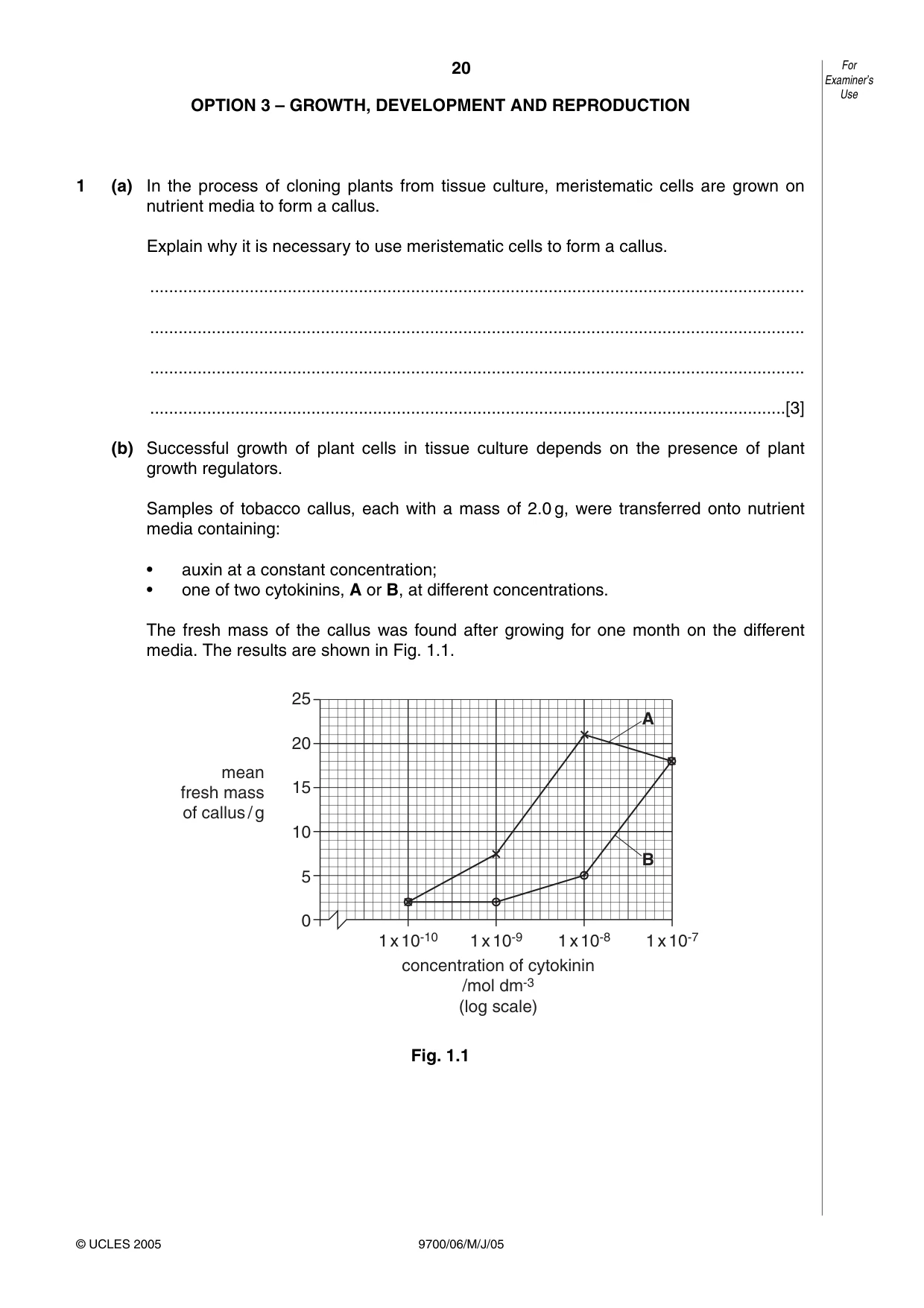
20 9700/06/M/J/05 OPTION 3 – GROWTH, DEVELOPMENT AND REPRODUCTION 1 (a) In the process of cloning plants from tissue culture, meristematic cells are grown on nutrient media to form a callus. Explain why it is necessary to use meristematic cells to form a callus. … … … …[3] (b) Successful growth of plant cells in tissue culture depends on the presence of plant growth regulators. Samples of tobacco callus, each with a mass of 2.0 g, were transferred onto nutrient media containing: • auxin at a constant concentration; • one of two cytokinins, A or B, at different concentrations. The fresh mass of the callus was found after growing for one month on the different media. The results are shown in Fig. 1.1. Fig. 1.1 0 A 5 mean fresh mass of callus/g 10 15 20 25 1x10⁻¹⁰ 1x10⁻⁹ 1x10⁻⁸ concentration of cytokinin /mol dm-3 (log scale) 1x10⁻⁷ B For Examiner’s Use © UCLES 2005
Question paper, page 21
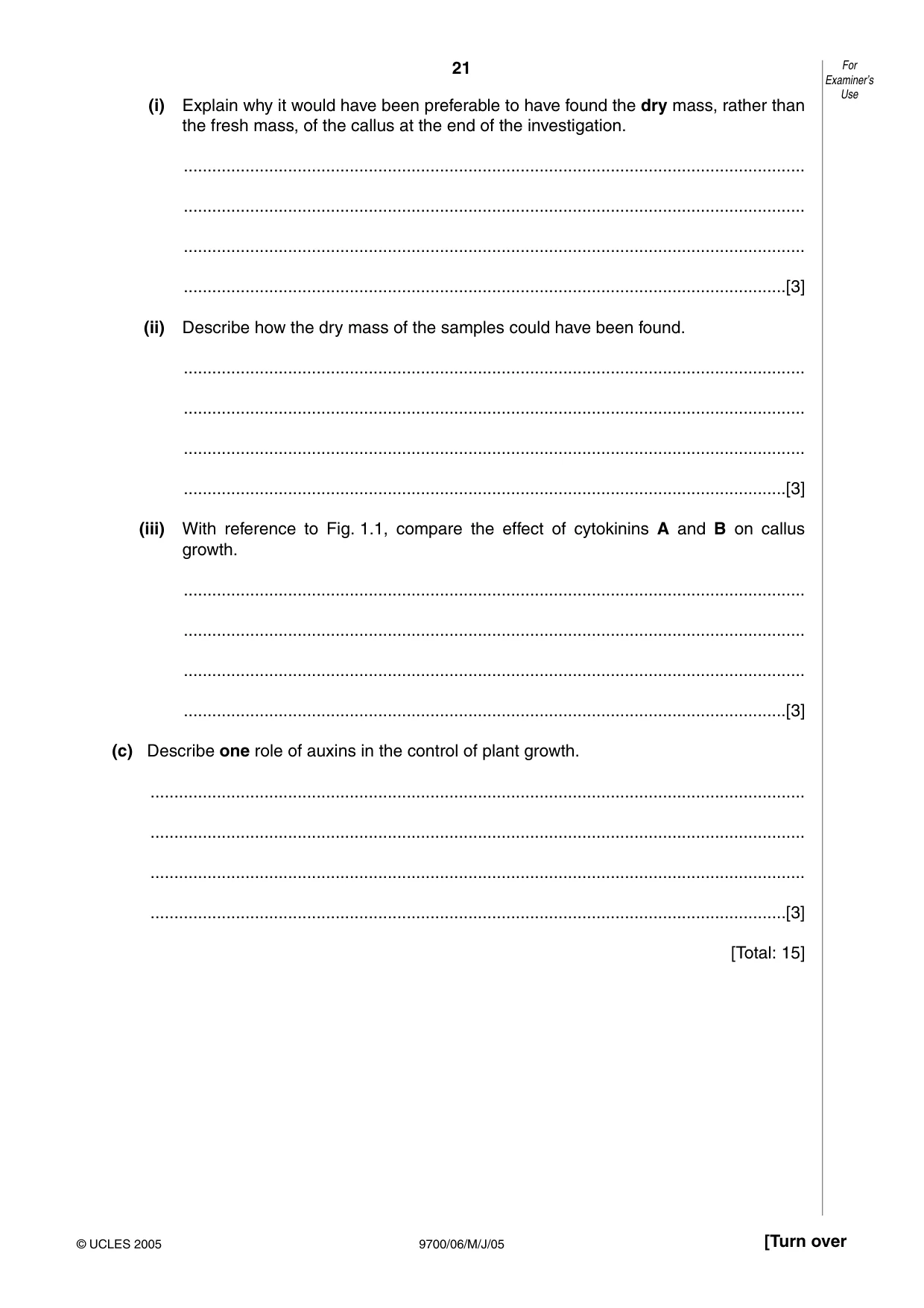
21 9700/06/M/J/05 [Turn over (i) Explain why it would have been preferable to have found the dry mass, rather than the fresh mass, of the callus at the end of the investigation. … … … …[3] (ii) Describe how the dry mass of the samples could have been found. … … … …[3] (iii) With reference to Fig. 1.1, compare the effect of cytokinins A and B on callus growth. … … … …[3] (c) Describe one role of auxins in the control of plant growth. … … … …[3] [Total: 15] For Examiner’s Use © UCLES 2005
Question paper, page 22
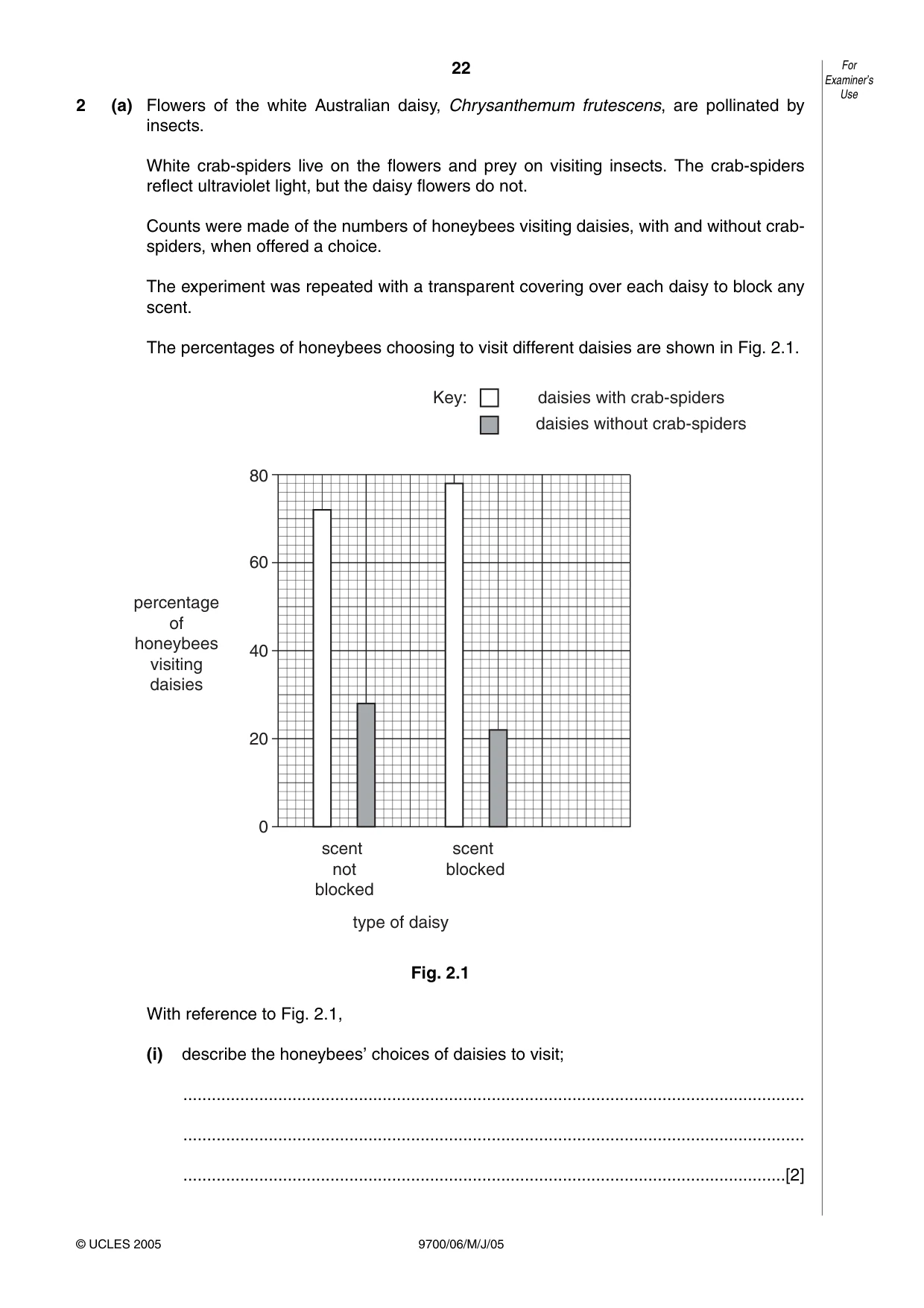
22 9700/06/M/J/05 2 (a) Flowers of the white Australian daisy, Chrysanthemum frutescens, are pollinated by insects. White crab-spiders live on the flowers and prey on visiting insects. The crab-spiders reflect ultraviolet light, but the daisy flowers do not. Counts were made of the numbers of honeybees visiting daisies, with and without crab- spiders, when offered a choice. The experiment was repeated with a transparent covering over each daisy to block any scent. The percentages of honeybees choosing to visit different daisies are shown in Fig. 2.1. Fig. 2.1 With reference to Fig. 2.1, (i) describe the honeybees’ choices of daisies to visit; … … …[2] 80 Key: daisies with crab-spiders daisies without crab-spiders 60 percentage of honeybees visiting daisies scent not blocked scent blocked type of daisy 40 20 0 For Examiner’s Use © UCLES 2005
Question paper, page 23
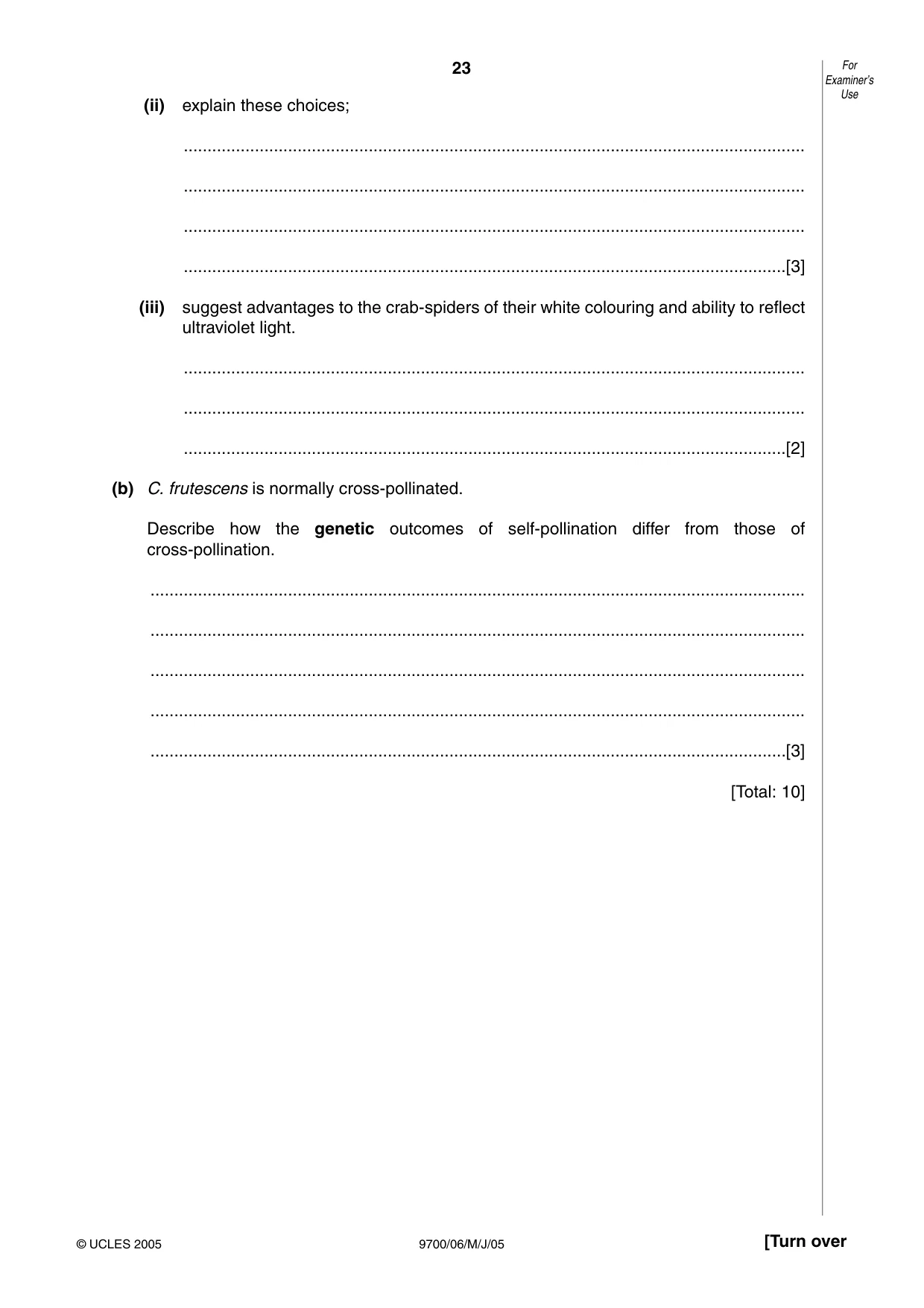
23 9700/06/M/J/05 [Turn over (ii) explain these choices; … … … …[3] (iii) suggest advantages to the crab-spiders of their white colouring and ability to reflect ultraviolet light. … … …[2] (b) C. frutescens is normally cross-pollinated. Describe how the genetic outcomes of self-pollination differ from those of cross-pollination. … … … … …[3] [Total: 10] For Examiner’s Use © UCLES 2005
Question paper, page 24
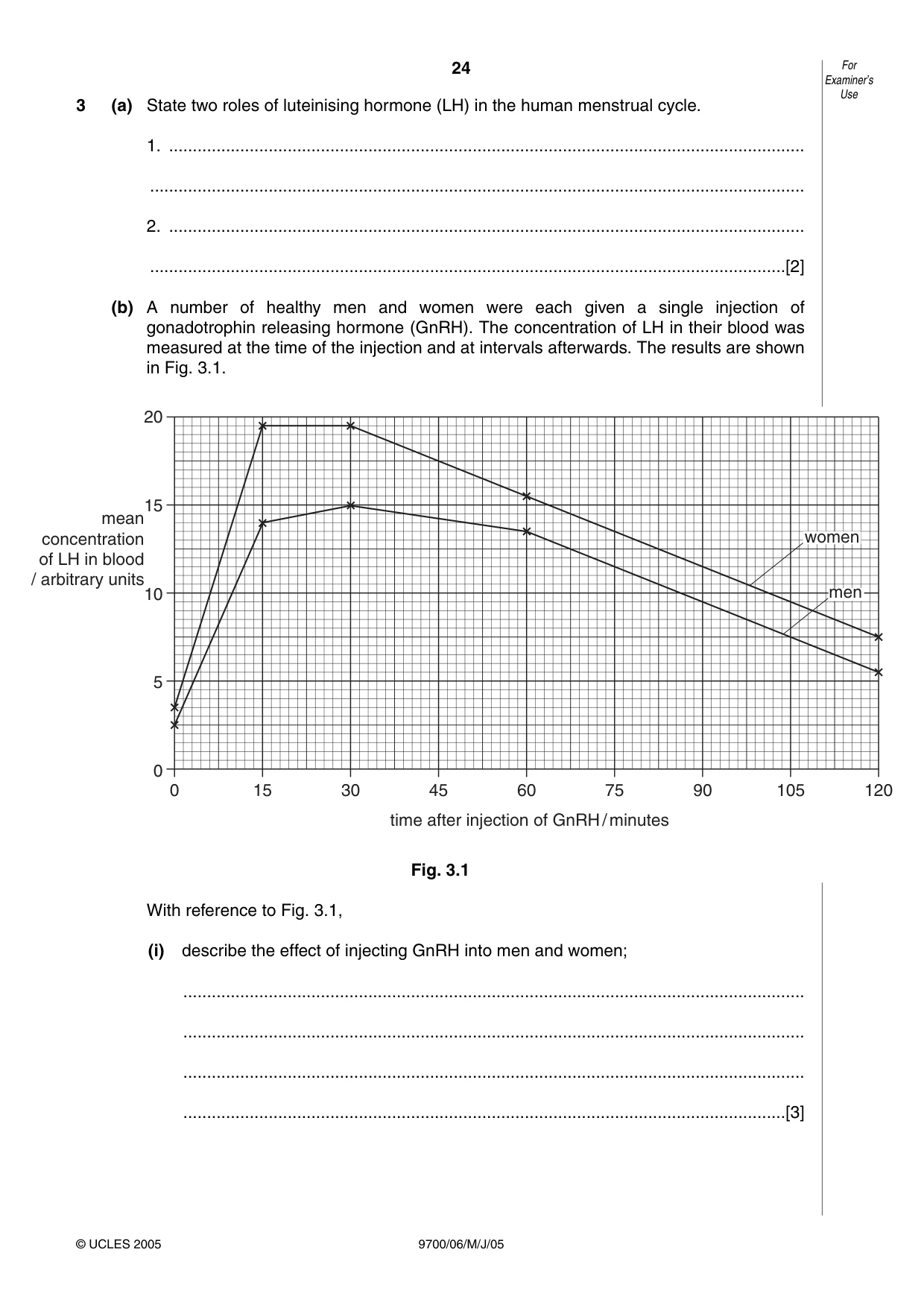
24 9700/06/M/J/05 3 (a) State two roles of luteinising hormone (LH) in the human menstrual cycle. 1. … … 2. … …[2] (b) A number of healthy men and women were each given a single injection of gonadotrophin releasing hormone (GnRH). The concentration of LH in their blood was measured at the time of the injection and at intervals afterwards. The results are shown in Fig. 3.1. Fig. 3.1 With reference to Fig. 3.1, (i) describe the effect of injecting GnRH into men and women; … … … …[3] For Examiner’s Use © UCLES 2005 0 5 0 15 30 45 60 time after injection of GnRH/minutes 75 90 105 120 10 15 20 mean concentration of LH in blood / arbitrary units women men
Question paper, page 25
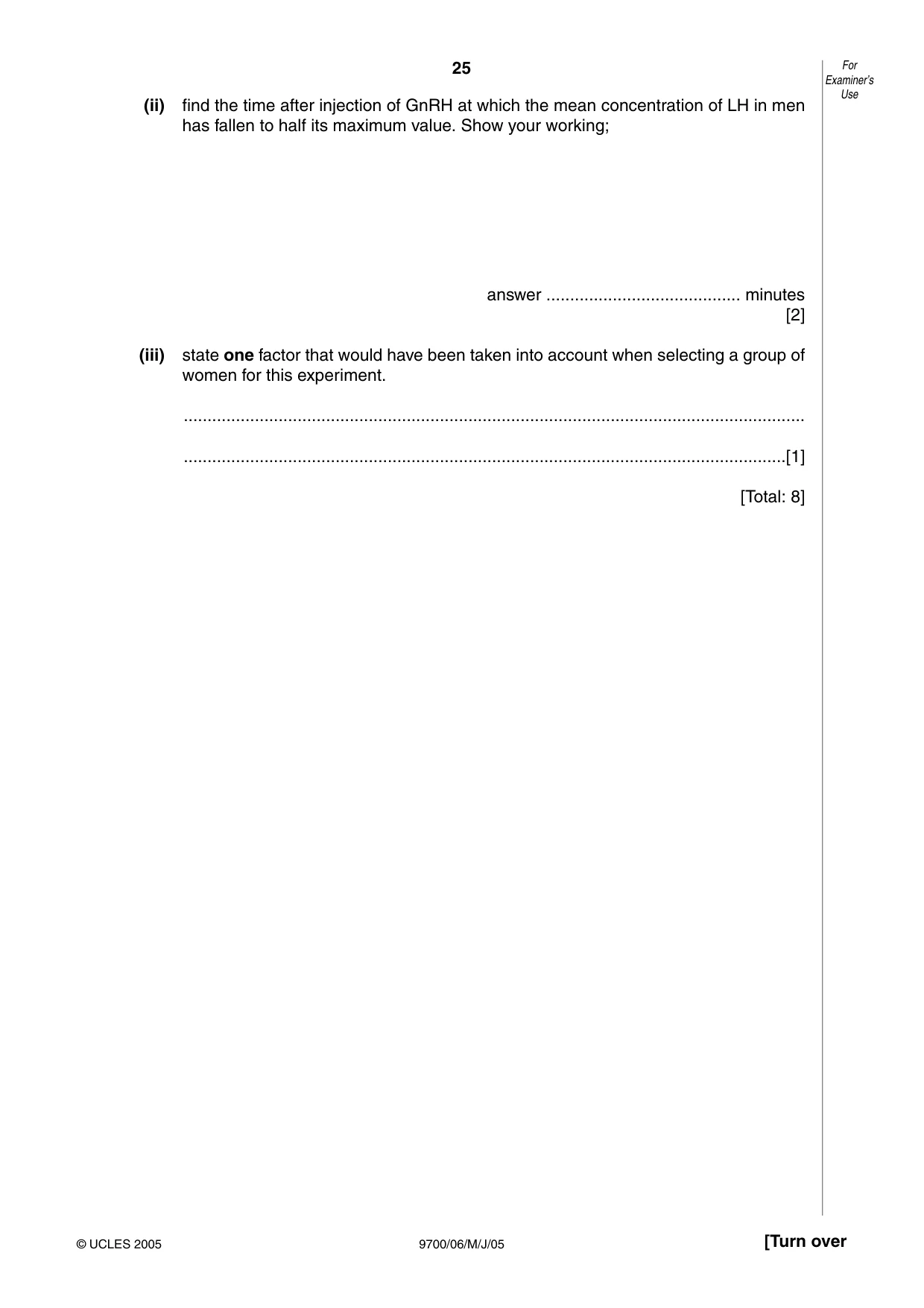
25 9700/06/M/J/05 [Turn over (ii) find the time after injection of GnRH at which the mean concentration of LH in men has fallen to half its maximum value. Show your working; answer … minutes [2] (iii) state one factor that would have been taken into account when selecting a group of women for this experiment. … …[1] [Total: 8] For Examiner’s Use © UCLES 2005
Question paper, page 26
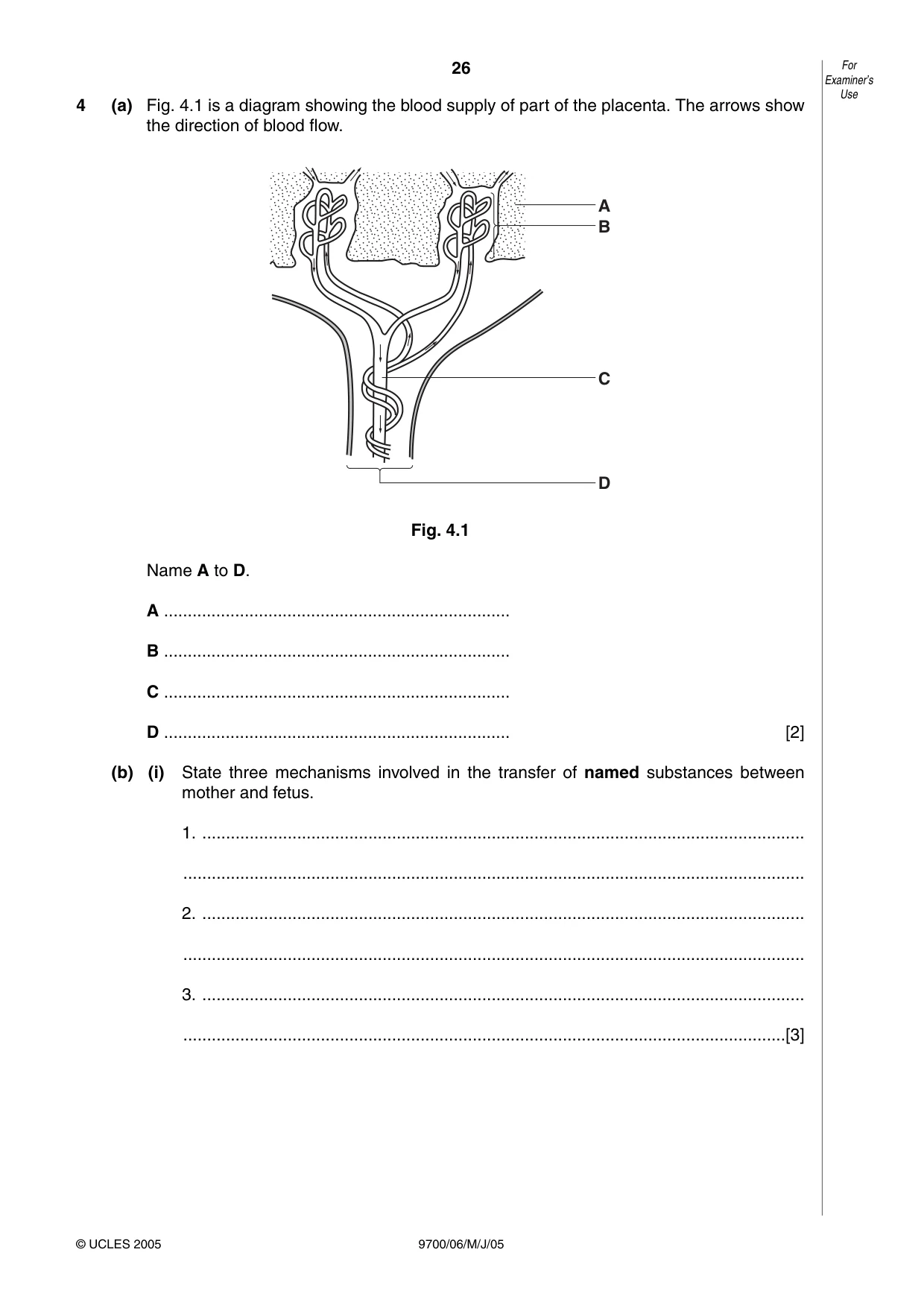
26 9700/06/M/J/05 4 (a) Fig. 4.1 is a diagram showing the blood supply of part of the placenta. The arrows show the direction of blood flow. Fig. 4.1 Name A to D. A … B … C … D … [2] (b) (i) State three mechanisms involved in the transfer of named substances between mother and fetus. 1. … … 2. … … 3. … …[3] D C B A For Examiner’s Use © UCLES 2005
Question paper, page 27
27 9700/06/M/J/05 [Turn over (ii) State how the structure of the placenta is adapted for such transfer. … … …[2] [Total: 7] For Examiner’s Use © UCLES 2005
Question paper, page 28
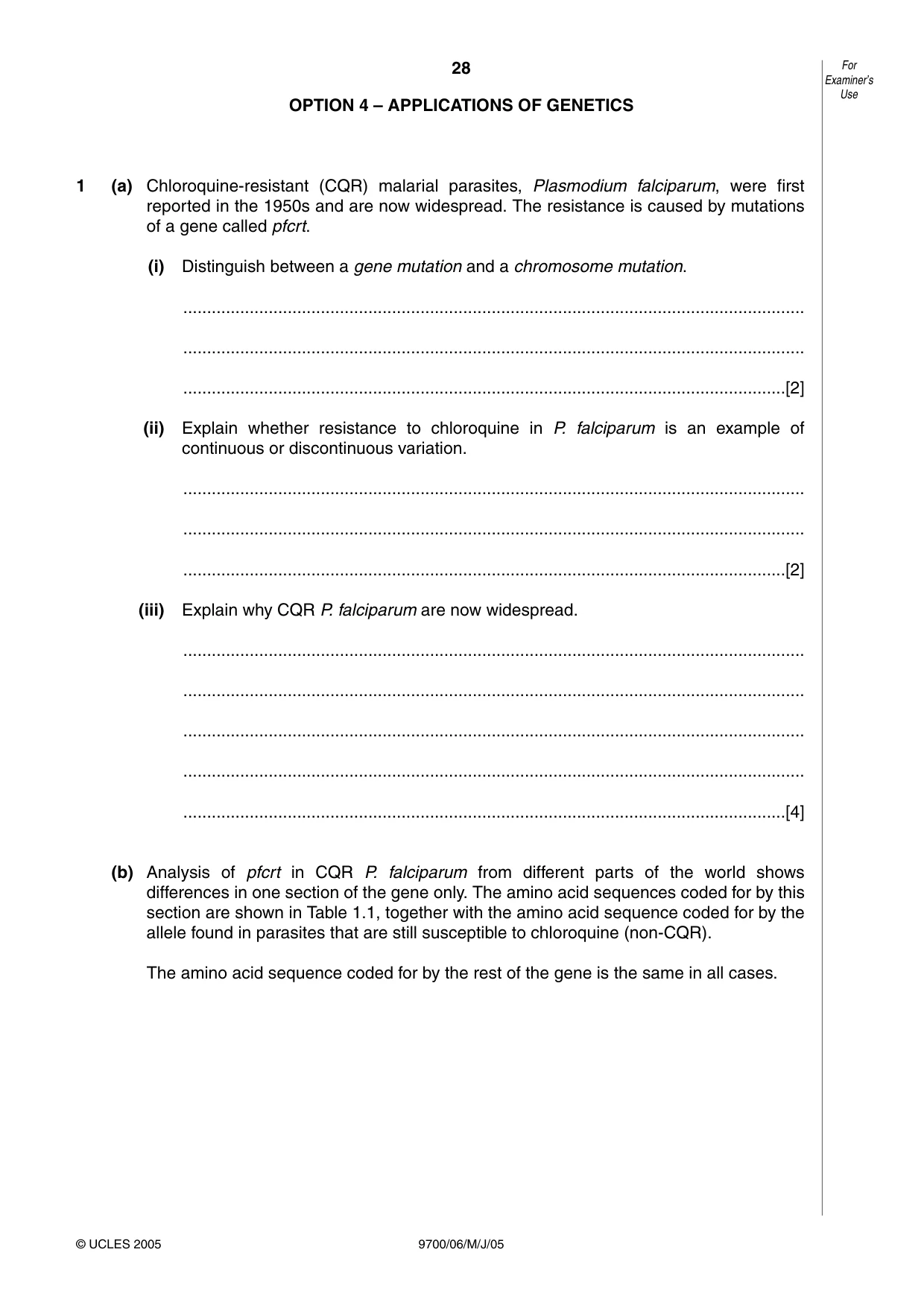
28 9700/06/M/J/05 OPTION 4 – APPLICATIONS OF GENETICS 1 (a) Chloroquine-resistant (CQR) malarial parasites, Plasmodium falciparum, were first reported in the 1950s and are now widespread. The resistance is caused by mutations of a gene called pfcrt. (i) Distinguish between a gene mutation and a chromosome mutation. … … …[2] (ii) Explain whether resistance to chloroquine in P. falciparum is an example of continuous or discontinuous variation. … … …[2] (iii) Explain why CQR P. falciparum are now widespread. … … … … …[4] (b) Analysis of pfcrt in CQR P. falciparum from different parts of the world shows differences in one section of the gene only. The amino acid sequences coded for by this section are shown in Table 1.1, together with the amino acid sequence coded for by the allele found in parasites that are still susceptible to chloroquine (non-CQR). The amino acid sequence coded for by the rest of the gene is the same in all cases. For Examiner’s Use © UCLES 2005
Question paper, page 29
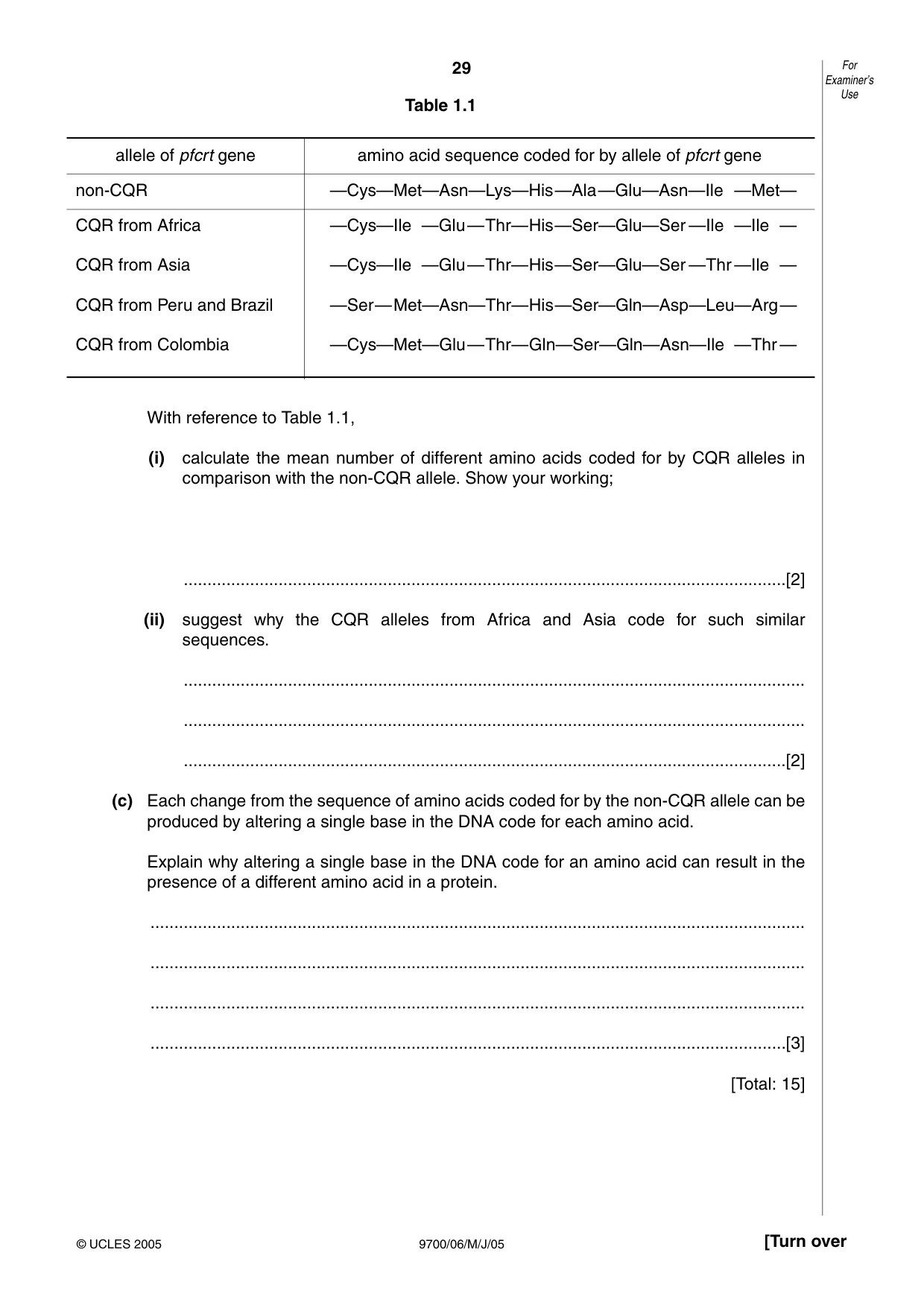
29 9700/06/M/J/05 [Turn over Table 1.1 With reference to Table 1.1, (i) calculate the mean number of different amino acids coded for by CQR alleles in comparison with the non-CQR allele. Show your working; …[2] (ii) suggest why the CQR alleles from Africa and Asia code for such similar sequences. … … …[2] (c) Each change from the sequence of amino acids coded for by the non-CQR allele can be produced by altering a single base in the DNA code for each amino acid. Explain why altering a single base in the DNA code for an amino acid can result in the presence of a different amino acid in a protein. … … … …[3] [Total: 15] For Examiner’s Use © UCLES 2005 allele of pfcrt gene amino acid sequence coded for by allele of pfcrt gene non-CQR —Cys—Met—Asn—Lys—His—Ala—Glu—Asn—Ile —Met— CQR from Africa —Cys—Ile —Glu—Thr—His—Ser—Glu—Ser —Ile —Ile — CQR from Asia —Cys—Ile —Glu—Thr—His—Ser—Glu—Ser —Thr —Ile — CQR from Peru and Brazil —Ser—Met—Asn—Thr—His—Ser—Gln—Asp—Leu—Arg— CQR from Colombia —Cys—Met—Glu—Thr—Gln—Ser—Gln—Asn—Ile —Thr —
Question paper, page 30
30 9700/06/M/J/05 2 (a) Describe the harmful genetic effects of inbreeding. … … … … …[3] (b) Californian sea lions were investigated to see whether inbreeding increased their susceptibility to infection. Each sea lion’s DNA was analysed by genetic fingerprinting to find its extent of inbreeding. Explain how the banding patterns of a genetic fingerprint can show whether or not an animal is inbred. … … … … …[3] For Examiner’s Use © UCLES 2005
Question paper, page 31
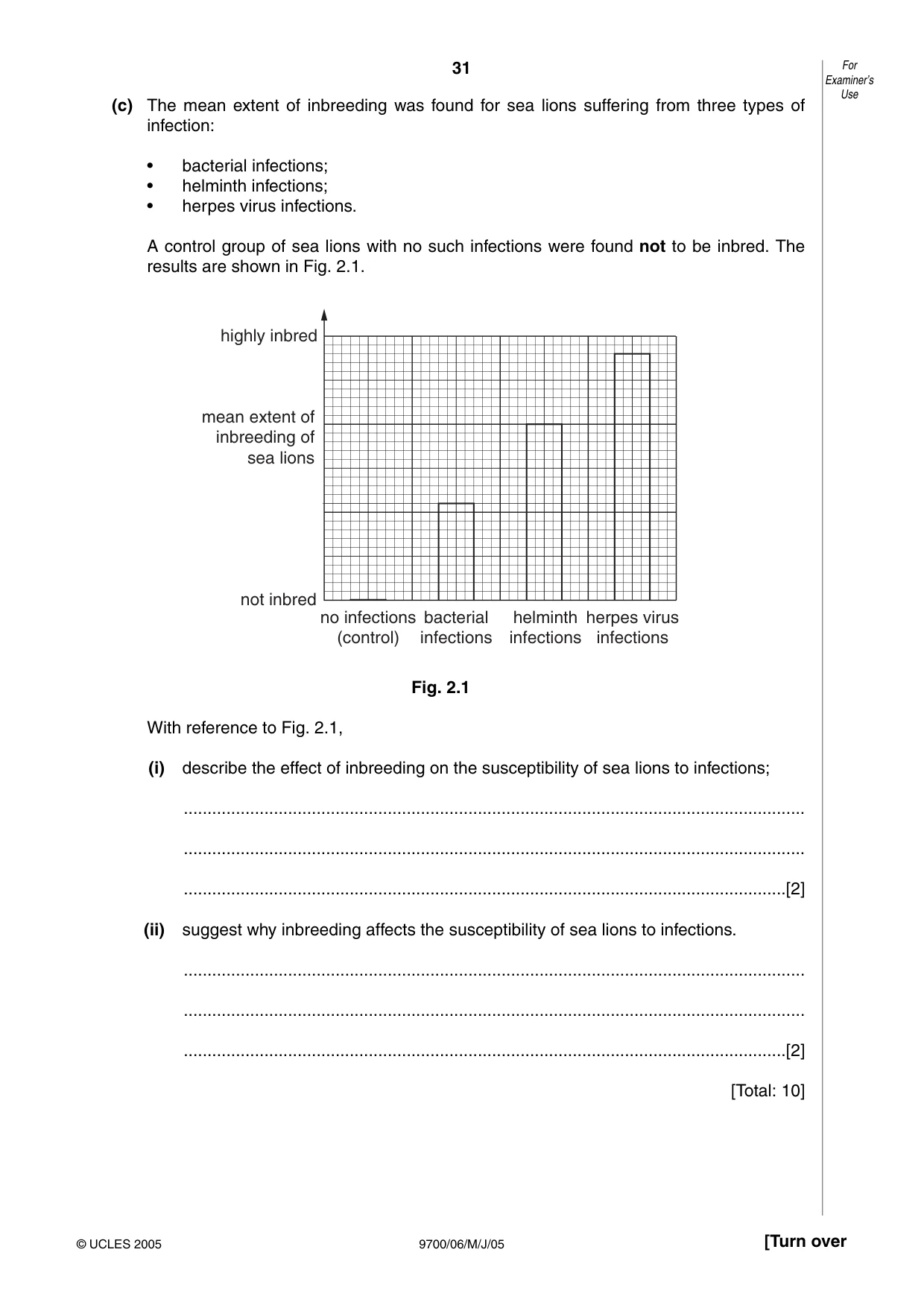
31 9700/06/M/J/05 [Turn over (c) The mean extent of inbreeding was found for sea lions suffering from three types of infection: • bacterial infections; • helminth infections; • herpes virus infections. A control group of sea lions with no such infections were found not to be inbred. The results are shown in Fig. 2.1. Fig. 2.1 With reference to Fig. 2.1, (i) describe the effect of inbreeding on the susceptibility of sea lions to infections; … … …[2] (ii) suggest why inbreeding affects the susceptibility of sea lions to infections. … … …[2] [Total: 10] highly inbred not inbred no infections (control) bacterial infections helminth infections herpes virus infections mean extent of inbreeding of sea lions For Examiner’s Use © UCLES 2005
Question paper, page 32
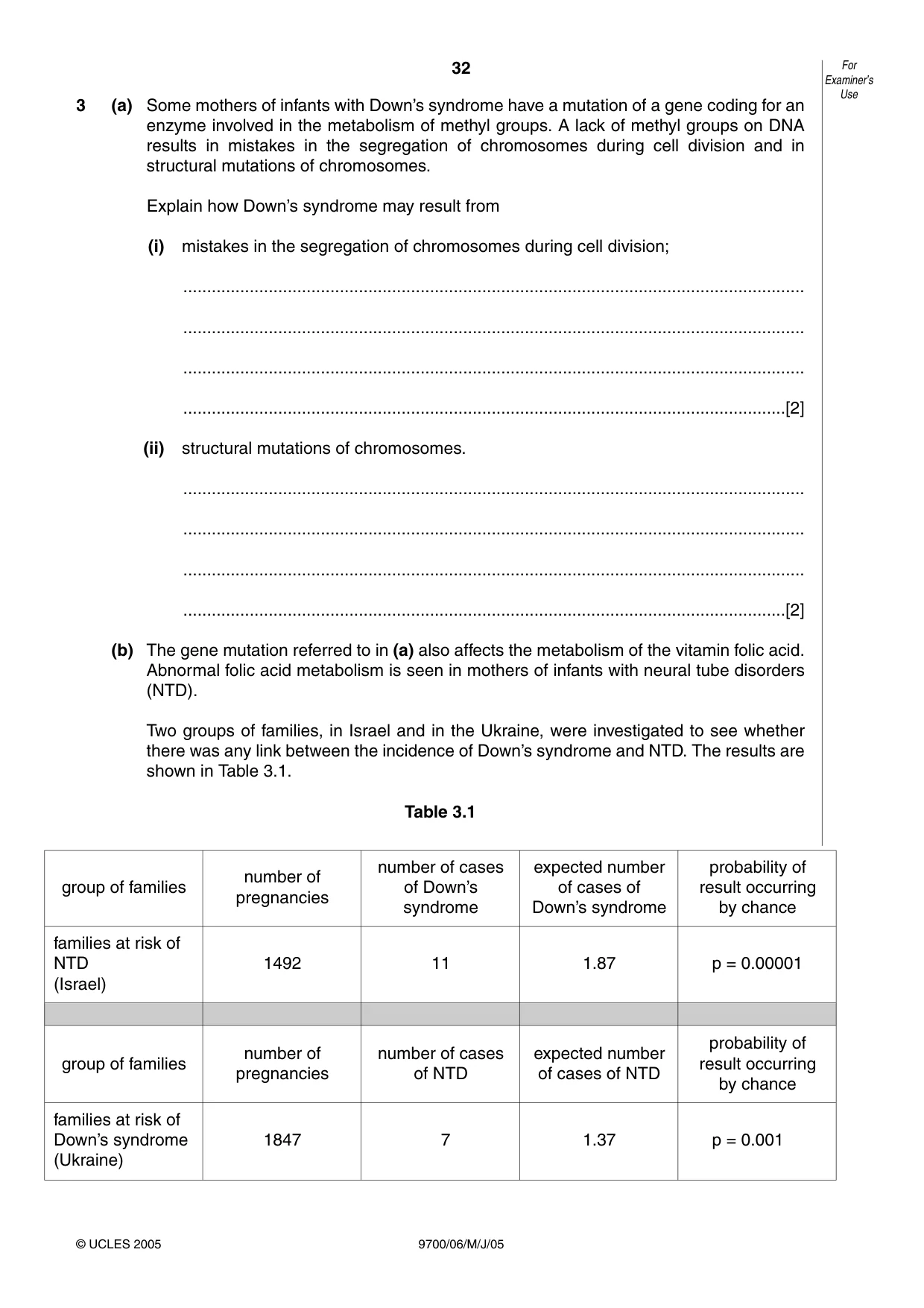
32 9700/06/M/J/05 3 (a) Some mothers of infants with Down’s syndrome have a mutation of a gene coding for an enzyme involved in the metabolism of methyl groups. A lack of methyl groups on DNA results in mistakes in the segregation of chromosomes during cell division and in structural mutations of chromosomes. Explain how Down’s syndrome may result from (i) mistakes in the segregation of chromosomes during cell division; … … … …[2] (ii) structural mutations of chromosomes. … … … …[2] (b) The gene mutation referred to in (a) also affects the metabolism of the vitamin folic acid. Abnormal folic acid metabolism is seen in mothers of infants with neural tube disorders (NTD). Two groups of families, in Israel and in the Ukraine, were investigated to see whether there was any link between the incidence of Down’s syndrome and NTD. The results are shown in Table 3.1. Table 3.1 For Examiner’s Use © UCLES 2005 number of number of cases expected number probability of group of families pregnancies of Down’s of cases of result occurring syndrome Down’s syndrome by chance families at risk of NTD 1492 11 1.87 p = 0.00001 (Israel) number of number of cases expected number probability of group of families pregnancies of NTD of cases of NTD result occurring by chance families at risk of Down’s syndrome 1847 7 1.37 p = 0.001 (Ukraine)
Question paper, page 33
33 9700/06/M/J/05 [Turn over With reference to Table 3.1, (i) explain whether the observed numbers of Down’s syndrome and NTD are significantly different from the numbers expected; … … … …[2] (ii) describe the evidence for a link between Down’s syndrome and NTD in these families. … … … …[2] [Total: 8] For Examiner’s Use © UCLES 2005
Question paper, page 34
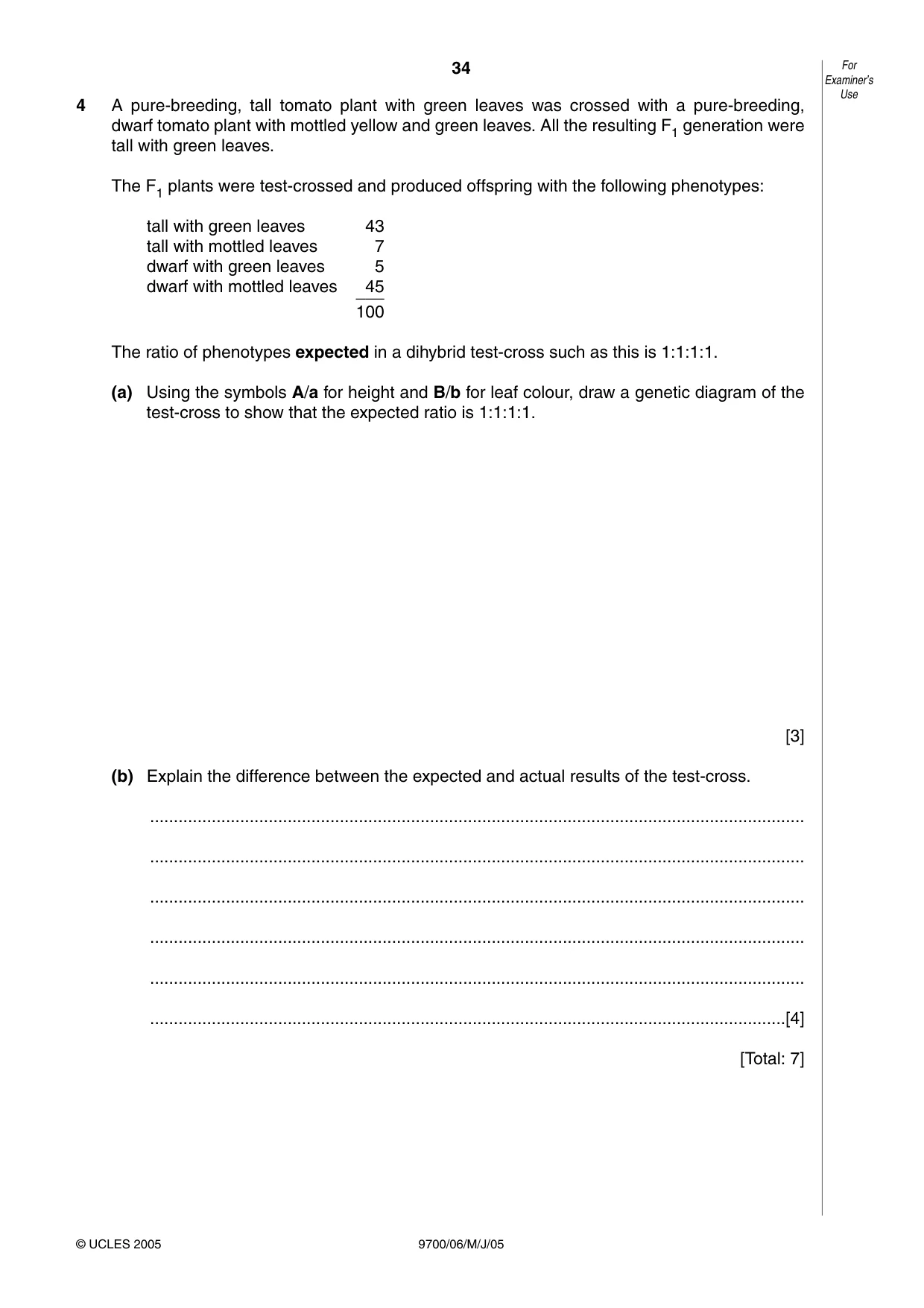
34 9700/06/M/J/05 4 A pure-breeding, tall tomato plant with green leaves was crossed with a pure-breeding, dwarf tomato plant with mottled yellow and green leaves. All the resulting F1 generation were tall with green leaves. The F1 plants were test-crossed and produced offspring with the following phenotypes: tall with green leaves 43 tall with mottled leaves 7 dwarf with green leaves 5 dwarf with mottled leaves 45 ___ 100 The ratio of phenotypes expected in a dihybrid test-cross such as this is 1:1:1:1. (a) Using the symbols A/a for height and B/b for leaf colour, draw a genetic diagram of the test-cross to show that the expected ratio is 1:1:1:1. [3] (b) Explain the difference between the expected and actual results of the test-cross. … … … … … …[4] [Total: 7] For Examiner’s Use © UCLES 2005
Question paper, page 36
36 9700/06/M/J/05 BLANK PAGE Permission to reproduce items where third-party owned material protected by copyright is included has been sought and cleared where possible. Every reasonable effort has been made by the publisher (UCLES) to trace copyright holders, but if any items requiring clearance have unwittingly been included, the publisher will be pleased to make amends at the earliest possible opportunity. University of Cambridge International Examinations is part of the University of Cambridge Local Examinations Syndicate (UCLES), which is itself a department of the University of Cambridge.