Cambridge A Level Biology 9700 — 2006 May/June Paper 6 · Variant 1
9700/61/M/J/06 · 40 marks · ≈45 min
The question paper and its mark scheme, free to read here and free to download. This is Cambridge’s own paper, exactly as it was sat.
Question paper36 pages


Mark scheme13 pages
Answers below. Sit the paper first if you are practising.
Paper as text
Question paper, page 1
This document consists of 34 printed pages and 2 blank pages. SP (SLM/CGW) T10868/3 © UCLES 2006 [Turn over UNIVERSITY OF CAMBRIDGE INTERNATIONAL EXAMINATIONS General Certificate of Education Advanced Level BIOLOGY 9700/06 Paper 6 Options May/June 2006 1 hour Candidates answer on the Question Paper. No Additional Materials are required READ THESE INSTRUCTIONS FIRST Write your Centre Number, Candidate Number and Name on all the work you hand in. Write in dark blue or black pen. You may use a pencil for any diagrams, graphs or rough working. Do not use staples, paper clips, highlighters, glue or correction fluid. Answer the questions set on one of the options only. Answer all four questions from your chosen option only. Within your chosen option, write your answers to the Questions in the spaces provided on the Question Paper. Enter the number of the option you have answered in the grid below. The number of marks is given in brackets [ ] at the end of each question or part question. The options are: 1 – Mammalian Physiology (page 3) 2 – Microbiology and Biotechnology (page 12) 3 – Growth, Development and Reproduction (page 20) 4 – Applications of Genetics (page 28) At the end of the examination, fasten all your work securely together. Centre Number Candidate Number Name OPTION ANSWERED FOR EXAMINER’S USE 1 2 3 4 TOTAL
Question paper, page 3
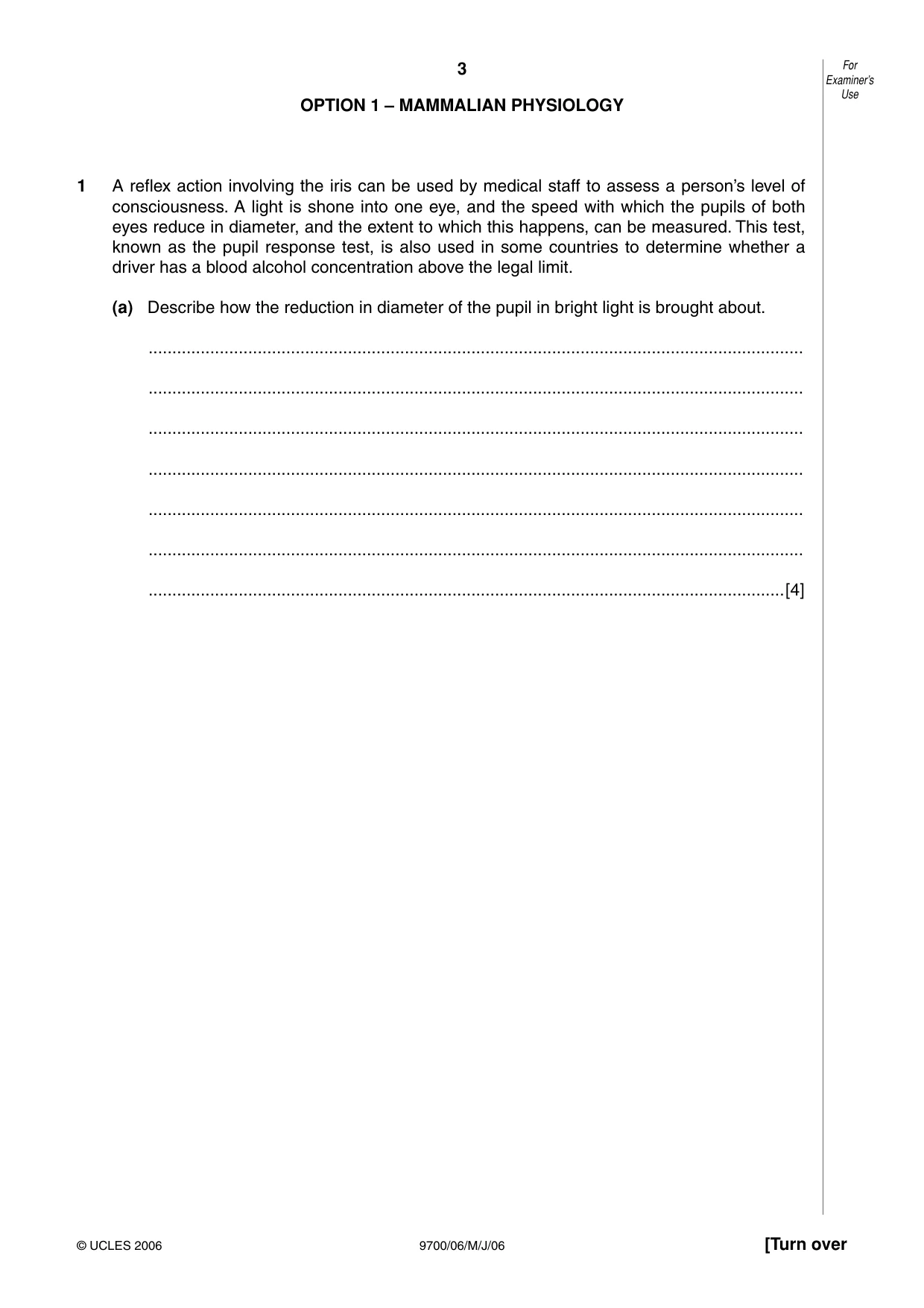
3 9700/06/M/J/06 [Turn over For Examiner’s Use © UCLES 2006 OPTION 1 – MAMMALIAN PHYSIOLOGY 1 A reflex action involving the iris can be used by medical staff to assess a person’s level of consciousness. A light is shone into one eye, and the speed with which the pupils of both eyes reduce in diameter, and the extent to which this happens, can be measured. This test, known as the pupil response test, is also used in some countries to determine whether a driver has a blood alcohol concentration above the legal limit. (a) Describe how the reduction in diameter of the pupil in bright light is brought about. … … … … … … …[4]
Question paper, page 4
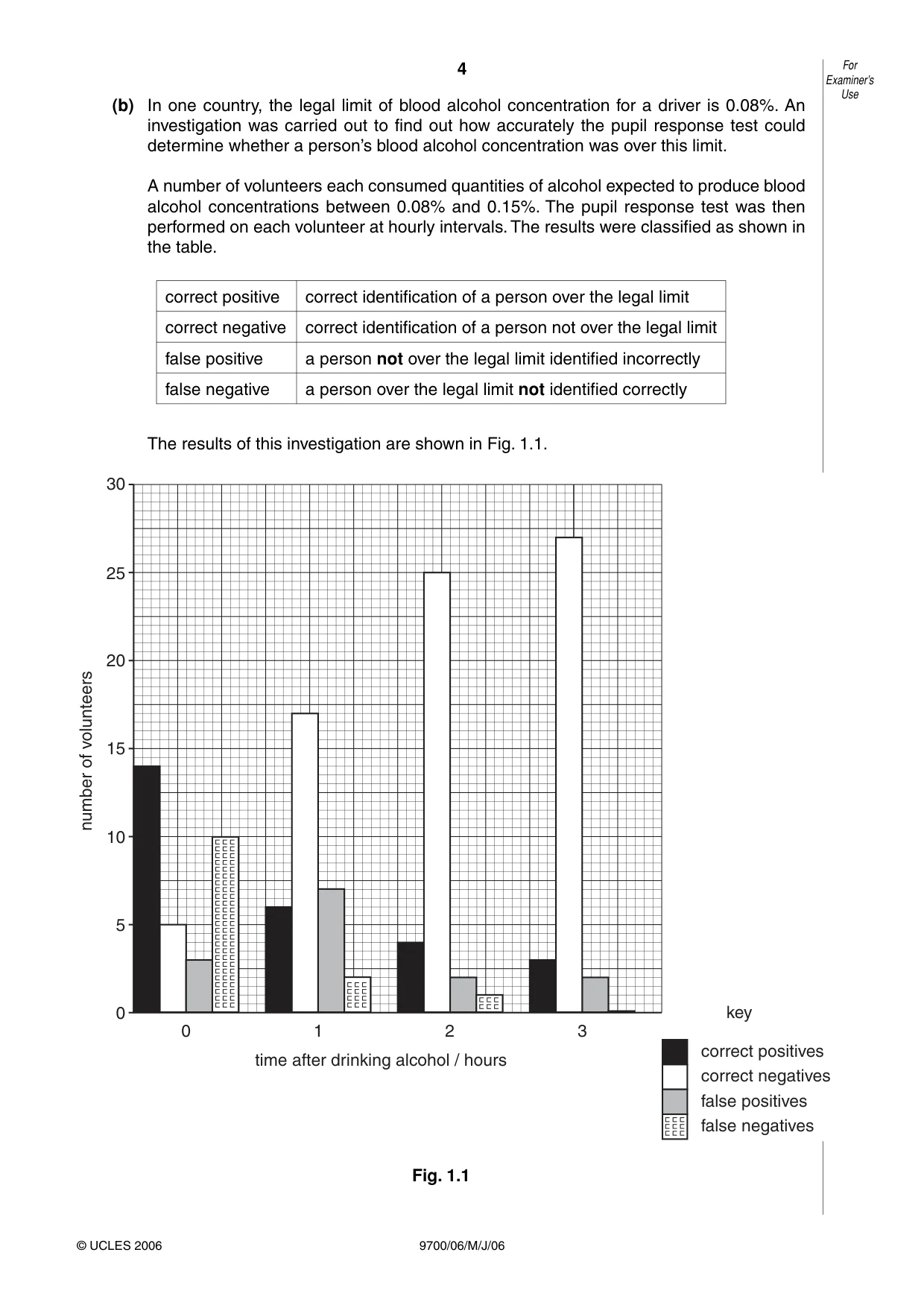
4 9700/06/M/J/06 For Examiner’s Use © UCLES 2006 (b) In one country, the legal limit of blood alcohol concentration for a driver is 0.08%. An investigation was carried out to find out how accurately the pupil response test could determine whether a person’s blood alcohol concentration was over this limit. A number of volunteers each consumed quantities of alcohol expected to produce blood alcohol concentrations between 0.08% and 0.15%. The pupil response test was then performed on each volunteer at hourly intervals. The results were classified as shown in the table. correct positive correct identification of a person over the legal limit correct negative correct identification of a person not over the legal limit false positive a person not over the legal limit identified incorrectly false negative a person over the legal limit not identified correctly The results of this investigation are shown in Fig. 1.1. 0 0 1 2 correct positives key time after drinking alcohol / hours 3 5 10 15 20 number of volunteers 25 30 correct negatives false positives false negatives Fig. 1.1
Question paper, page 5
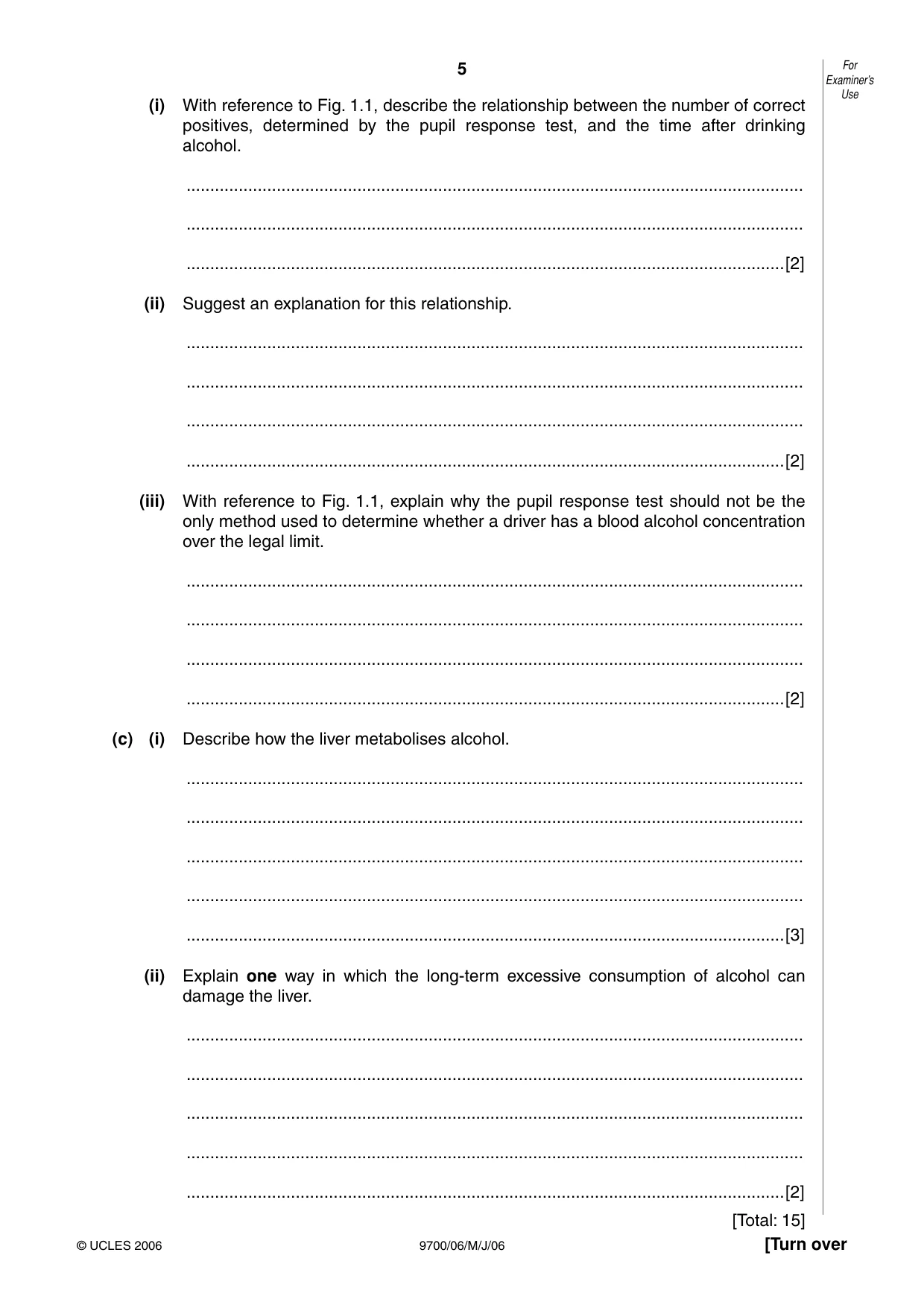
5 9700/06/M/J/06 [Turn over For Examiner’s Use © UCLES 2006 (i) With reference to Fig. 1.1, describe the relationship between the number of correct positives, determined by the pupil response test, and the time after drinking alcohol. … … …[2] (ii) Suggest an explanation for this relationship. … … … …[2] (iii) With reference to Fig. 1.1, explain why the pupil response test should not be the only method used to determine whether a driver has a blood alcohol concentration over the legal limit. … … … …[2] (c) (i) Describe how the liver metabolises alcohol. … … … … …[3] (ii) Explain one way in which the long-term excessive consumption of alcohol can damage the liver. … … … … …[2] [Total: 15]
Question paper, page 6
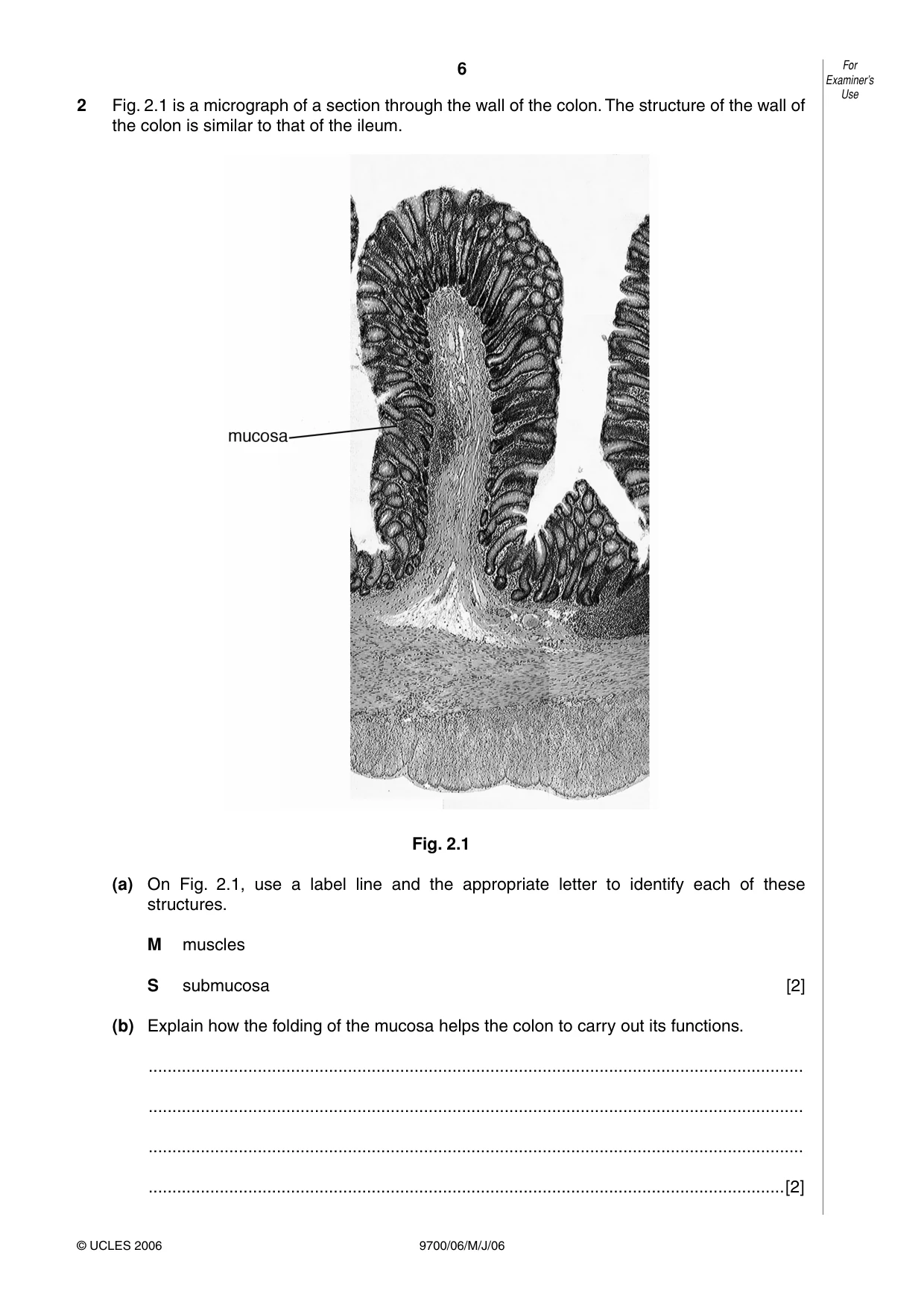
6 9700/06/M/J/06 For Examiner’s Use © UCLES 2006 2 Fig. 2.1 is a micrograph of a section through the wall of the colon. The structure of the wall of the colon is similar to that of the ileum. Fig. 2.1 (a) On Fig. 2.1, use a label line and the appropriate letter to identify each of these structures. M muscles S submucosa [2] (b) Explain how the folding of the mucosa helps the colon to carry out its functions. … … … …[2]
Question paper, page 7
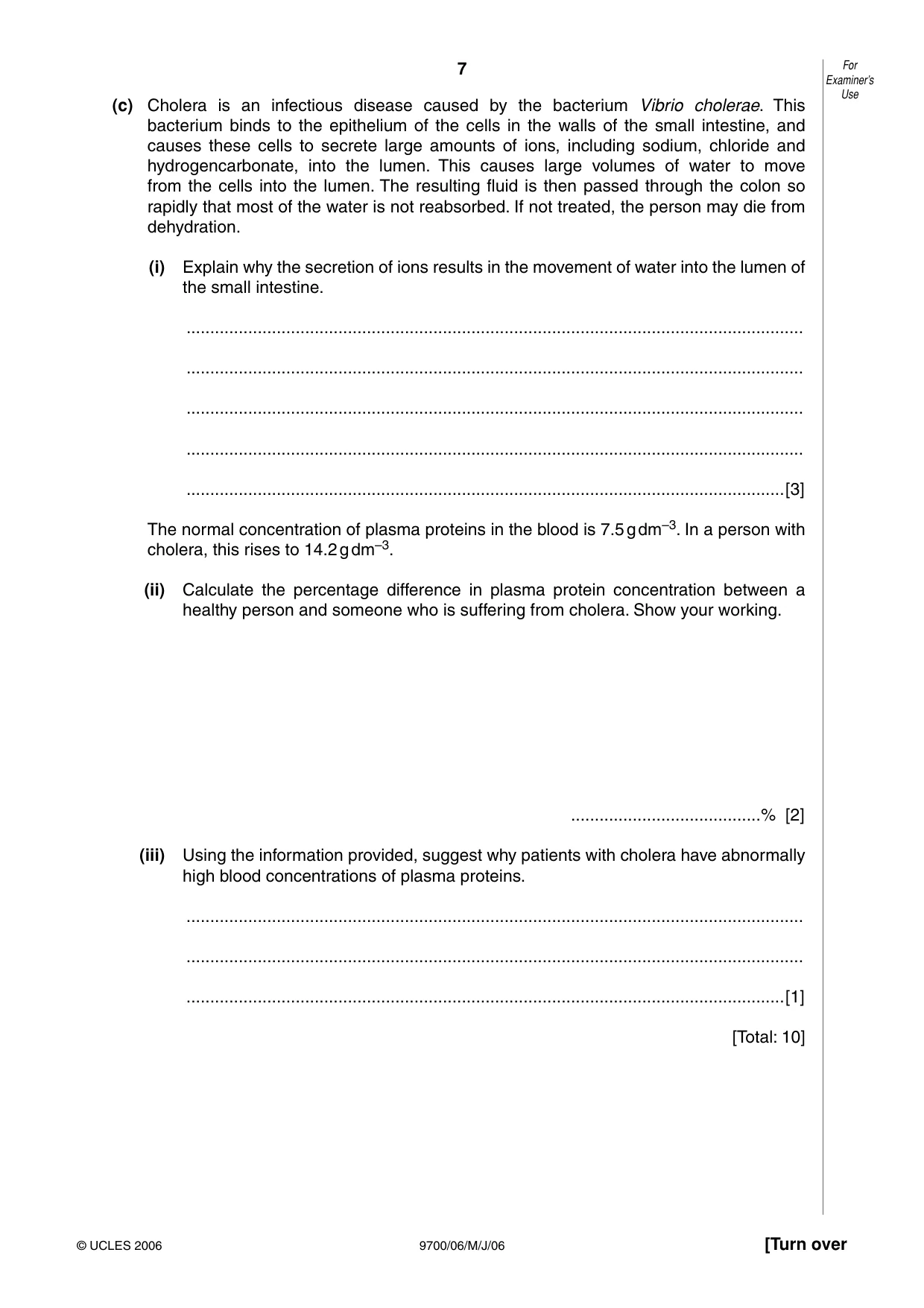
7 9700/06/M/J/06 [Turn over For Examiner’s Use © UCLES 2006 (c) Cholera is an infectious disease caused by the bacterium Vibrio cholerae. This bacterium binds to the epithelium of the cells in the walls of the small intestine, and causes these cells to secrete large amounts of ions, including sodium, chloride and hydrogencarbonate, into the lumen. This causes large volumes of water to move from the cells into the lumen. The resulting fluid is then passed through the colon so rapidly that most of the water is not reabsorbed. If not treated, the person may die from dehydration. (i) Explain why the secretion of ions results in the movement of water into the lumen of the small intestine. … … … … …[3] The normal concentration of plasma proteins in the blood is 7.5 g dm–3. In a person with cholera, this rises to 14.2 g dm–3. (ii) Calculate the percentage difference in plasma protein concentration between a healthy person and someone who is suffering from cholera. Show your working. …% [2] (iii) Using the information provided, suggest why patients with cholera have abnormally high blood concentrations of plasma proteins. … … …[1] [Total: 10]
Question paper, page 8
8 9700/06/M/J/06 For Examiner’s Use © UCLES 2006 3 The lens in the eye is made of layers of normally transparent cells which contain proteins. As a person ages, these proteins tend to denature so that the lens loses its elasticity. The proteins may also begin to clump together to form a cloudy area known as a cataract. (a) Explain how each of these changes will affect vision. (i) loss of elasticity of the lens … … … …[3] (ii) formation of a cloudy area … … …[2] (b) Describe how cataracts are treated. … … …[2] [Total: 7]
Question paper, page 9
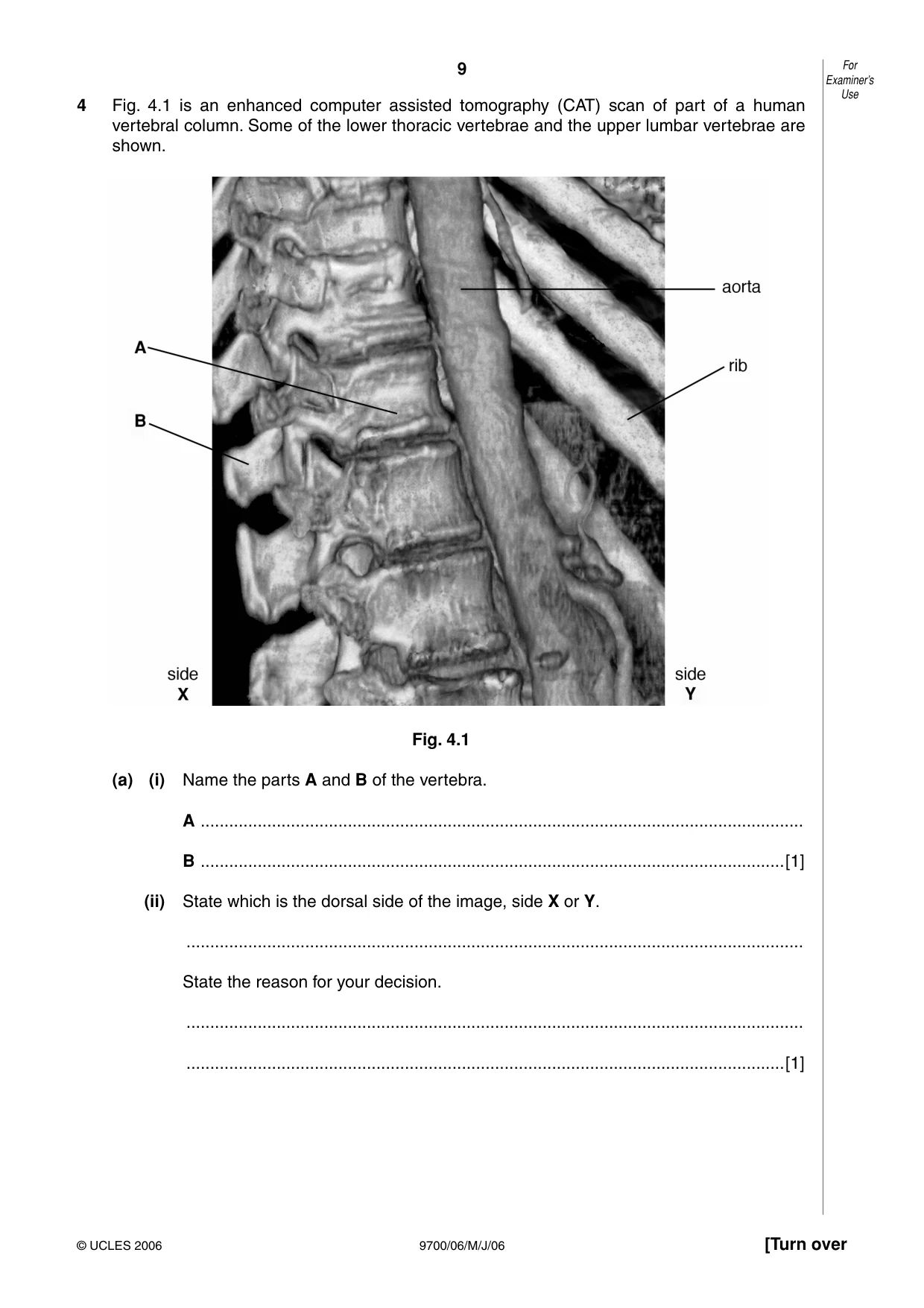
9 9700/06/M/J/06 [Turn over For Examiner’s Use © UCLES 2006 4 Fig. 4.1 is an enhanced computer assisted tomography (CAT) scan of part of a human vertebral column. Some of the lower thoracic vertebrae and the upper lumbar vertebrae are shown. Fig. 4.1 (a) (i) Name the parts A and B of the vertebra. A … B …[1] (ii) State which is the dorsal side of the image, side X or Y. … State the reason for your decision. … …[1]
Question paper, page 10
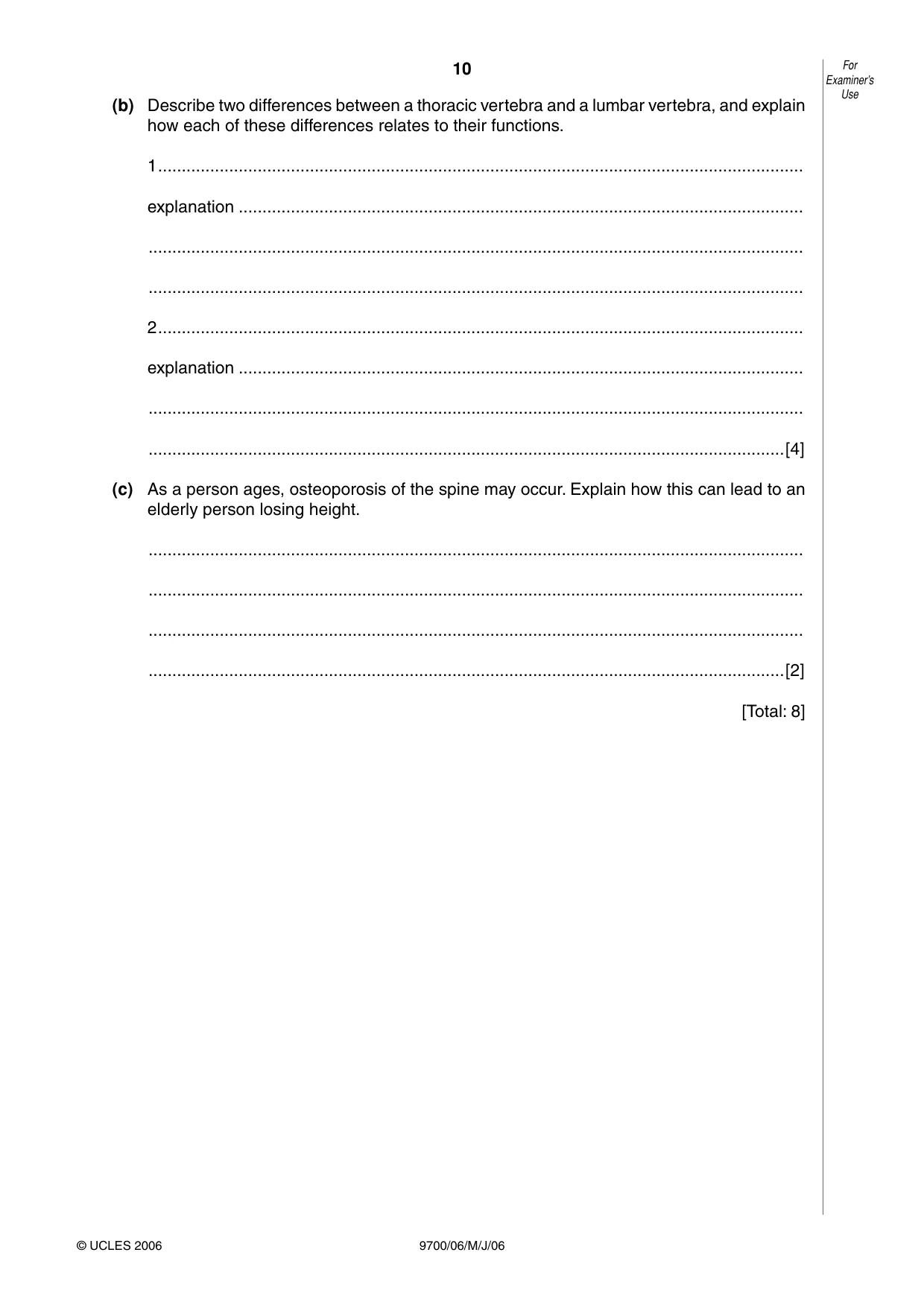
10 9700/06/M/J/06 For Examiner’s Use © UCLES 2006 (b) Describe two differences between a thoracic vertebra and a lumbar vertebra, and explain how each of these differences relates to their functions. 1 … explanation … … … 2 … explanation … … …[4] (c) As a person ages, osteoporosis of the spine may occur. Explain how this can lead to an elderly person losing height. … … … …[2] [Total: 8]
Question paper, page 12
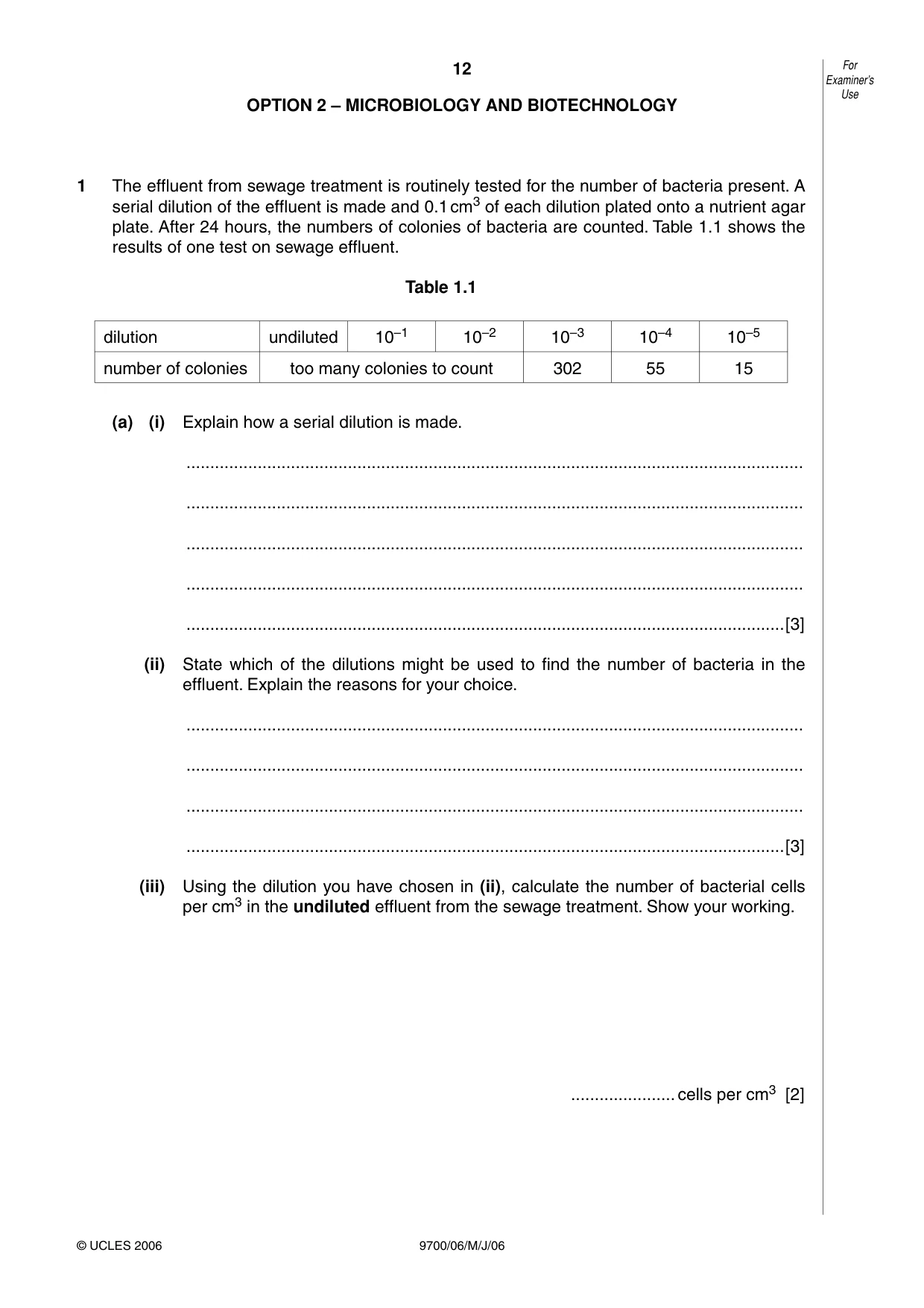
12 9700/06/M/J/06 For Examiner’s Use © UCLES 2006 OPTION 2 – MICROBIOLOGY AND BIOTECHNOLOGY 1 The effluent from sewage treatment is routinely tested for the number of bacteria present. A serial dilution of the effluent is made and 0.1 cm3 of each dilution plated onto a nutrient agar plate. After 24 hours, the numbers of colonies of bacteria are counted. Table 1.1 shows the results of one test on sewage effluent. Table 1.1 dilution undiluted 10–1 10–2 10–3 10–4 10–5 number of colonies too many colonies to count 302 55 15 (a) (i) Explain how a serial dilution is made. … … … … …[3] (ii) State which of the dilutions might be used to find the number of bacteria in the effluent. Explain the reasons for your choice. … … … …[3] (iii) Using the dilution you have chosen in (ii), calculate the number of bacterial cells per cm3 in the undiluted effluent from the sewage treatment. Show your working. … cells per cm3 [2]
Question paper, page 13
13 9700/06/M/J/06 [Turn over For Examiner’s Use © UCLES 2006 (b) Outline how microorganisms are involved in the aerobic treatment of sewage. … … … … …[3] (c) Dried solid sediment left from sewage treatment is suitable for use as fertiliser because it contains high levels of nitrate formed by microbial action during sewage treatment. Describe how this nitrate is formed from the organic molecules present in sewage. … … … … … … …[4] [Total: 15]
Question paper, page 14
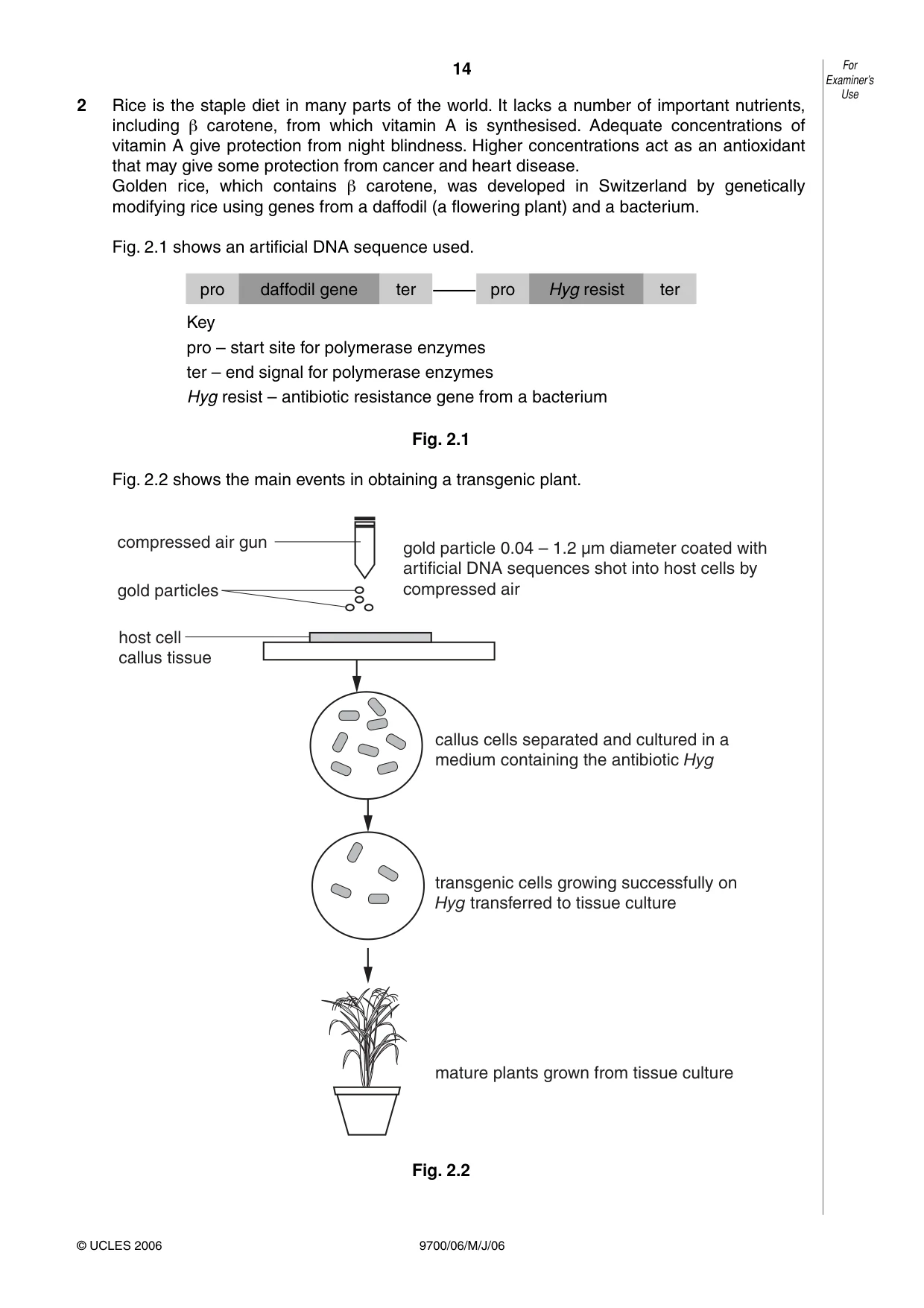
14 9700/06/M/J/06 For Examiner’s Use © UCLES 2006 2 Rice is the staple diet in many parts of the world. It lacks a number of important nutrients, including β carotene, from which vitamin A is synthesised. Adequate concentrations of vitamin A give protection from night blindness. Higher concentrations act as an antioxidant that may give some protection from cancer and heart disease. Golden rice, which contains β carotene, was developed in Switzerland by genetically modifying rice using genes from a daffodil (a flowering plant) and a bacterium. Fig. 2.1 shows an artificial DNA sequence used. pro daffodil gene ter pro Hyg resist ter Key pro – start site for polymerase enzymes ter – end signal for polymerase enzymes Hyg resist – antibiotic resistance gene from a bacterium Fig. 2.1 Fig. 2.2 shows the main events in obtaining a transgenic plant. mature plants grown from tissue culture compressed air gun gold particles host cell callus tissue transgenic cells growing successfully on Hyg transferred to tissue culture callus cells separated and cultured in a medium containing the antibiotic Hyg gold particle 0.04 – 1.2 µm diameter coated with artificial DNA sequences shot into host cells by compressed air Fig. 2.2
Question paper, page 15
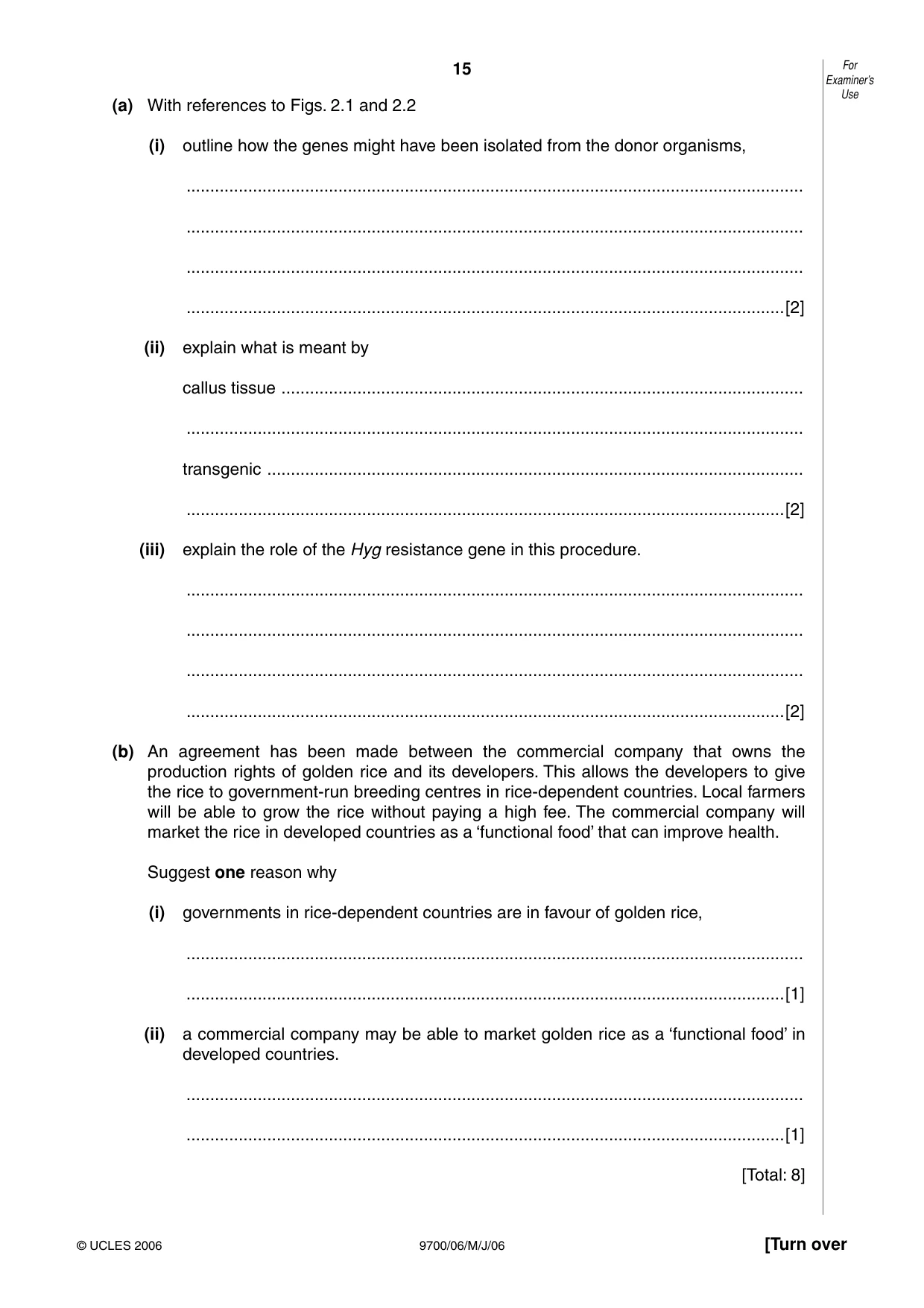
15 9700/06/M/J/06 [Turn over For Examiner’s Use © UCLES 2006 (a) With references to Figs. 2.1 and 2.2 (i) outline how the genes might have been isolated from the donor organisms, … … … …[2] (ii) explain what is meant by callus tissue … … transgenic … …[2] (iii) explain the role of the Hyg resistance gene in this procedure. … … … …[2] (b) An agreement has been made between the commercial company that owns the production rights of golden rice and its developers. This allows the developers to give the rice to government-run breeding centres in rice-dependent countries. Local farmers will be able to grow the rice without paying a high fee. The commercial company will market the rice in developed countries as a ‘functional food’ that can improve health. Suggest one reason why (i) governments in rice-dependent countries are in favour of golden rice, … …[1] (ii) a commercial company may be able to market golden rice as a ‘functional food’ in developed countries. … …[1] [Total: 8]
Question paper, page 16
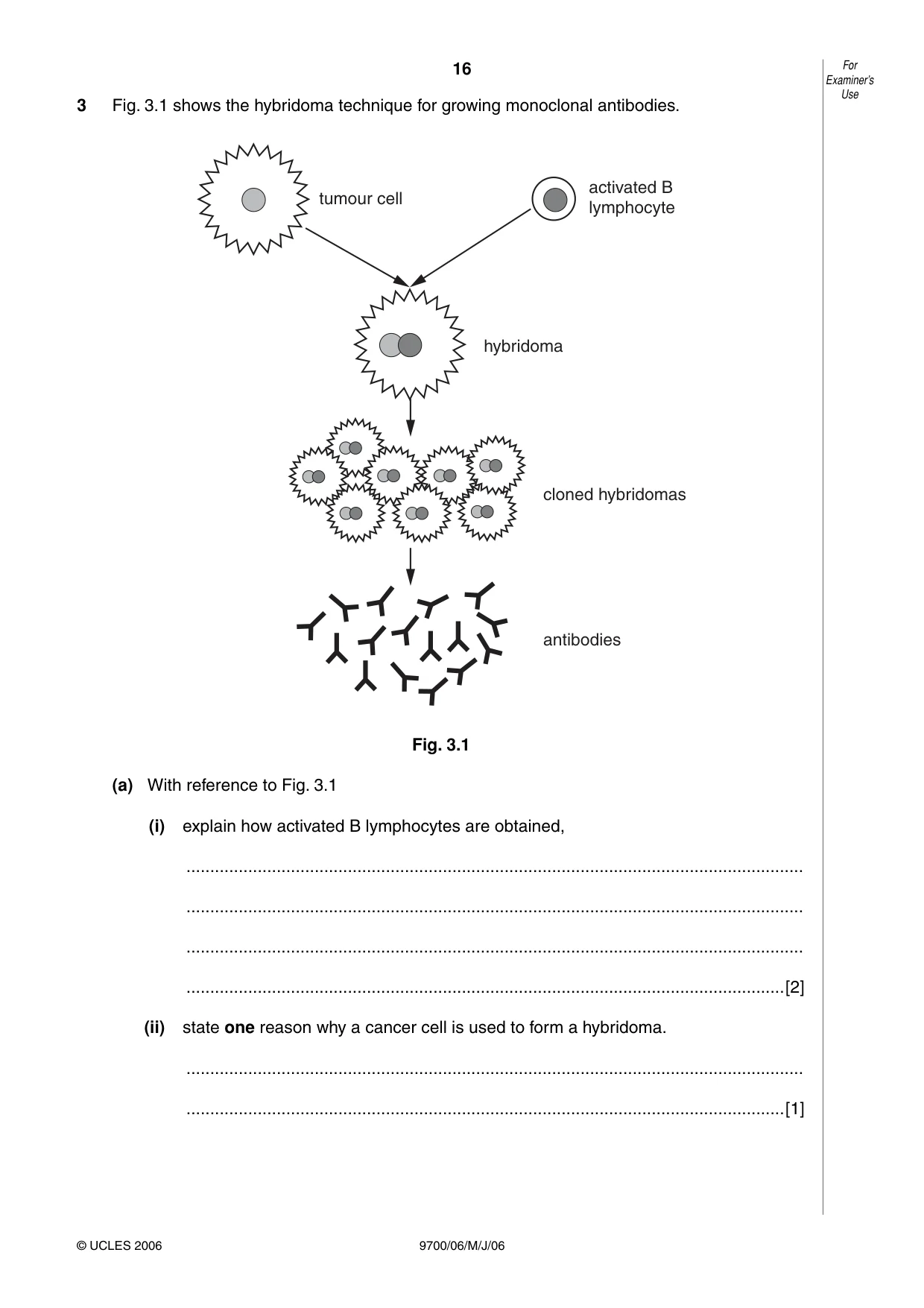
16 9700/06/M/J/06 For Examiner’s Use © UCLES 2006 3 Fig. 3.1 shows the hybridoma technique for growing monoclonal antibodies. hybridoma activated B lymphocyte tumour cell cloned hybridomas antibodies Fig. 3.1 (a) With reference to Fig. 3.1 (i) explain how activated B lymphocytes are obtained, … … … …[2] (ii) state one reason why a cancer cell is used to form a hybridoma. … …[1]
Question paper, page 17
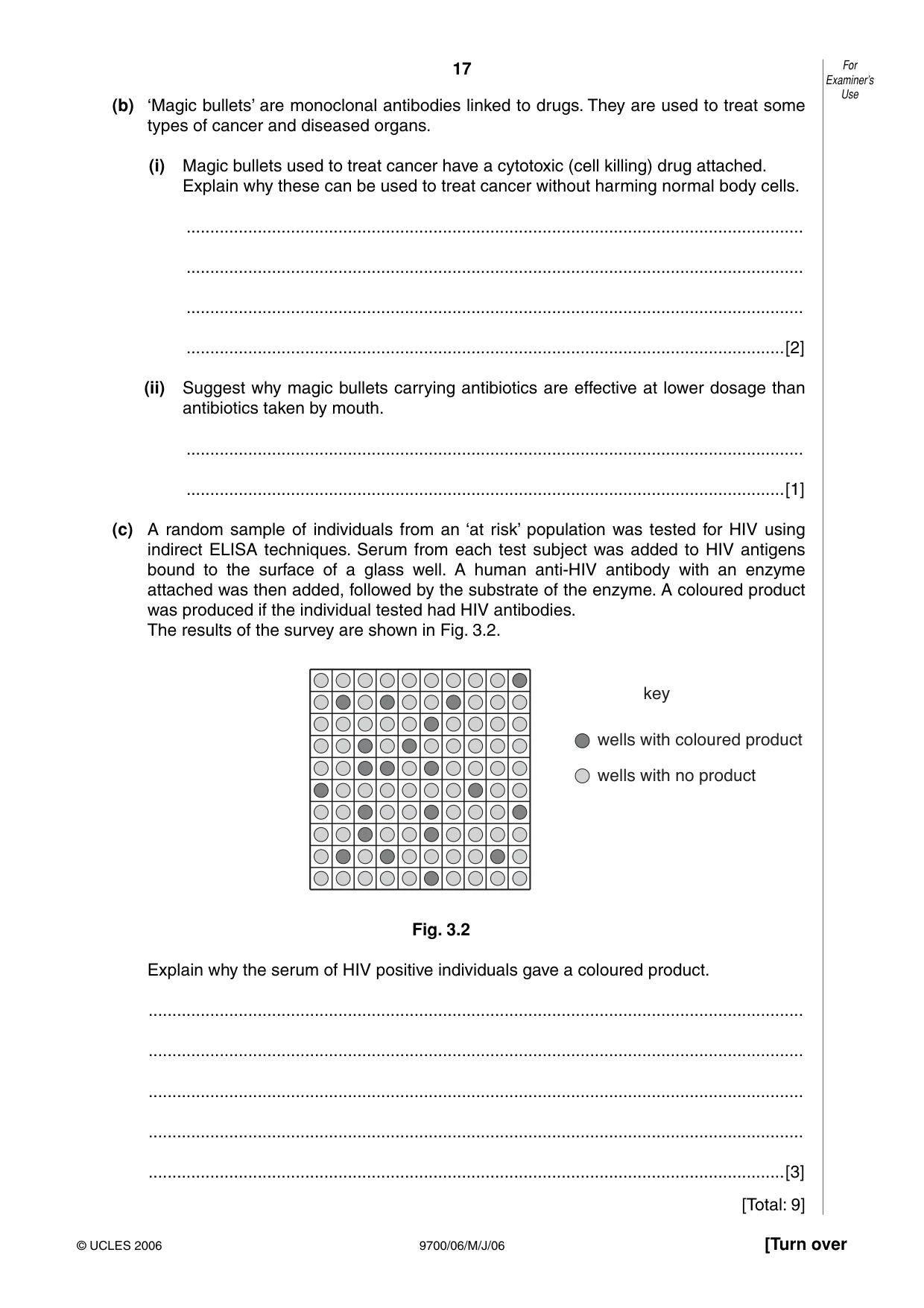
17 9700/06/M/J/06 [Turn over For Examiner’s Use © UCLES 2006 (b) ‘Magic bullets’ are monoclonal antibodies linked to drugs. They are used to treat some types of cancer and diseased organs. (i) Magic bullets used to treat cancer have a cytotoxic (cell killing) drug attached. Explain why these can be used to treat cancer without harming normal body cells. … … … …[2] (ii) Suggest why magic bullets carrying antibiotics are effective at lower dosage than antibiotics taken by mouth. … …[1] (c) A random sample of individuals from an ‘at risk’ population was tested for HIV using indirect ELISA techniques. Serum from each test subject was added to HIV antigens bound to the surface of a glass well. A human anti-HIV antibody with an enzyme attached was then added, followed by the substrate of the enzyme. A coloured product was produced if the individual tested had HIV antibodies. The results of the survey are shown in Fig. 3.2. wells with coloured product wells with no product key Fig. 3.2 Explain why the serum of HIV positive individuals gave a coloured product. … … … … …[3] [Total: 9]
Question paper, page 18
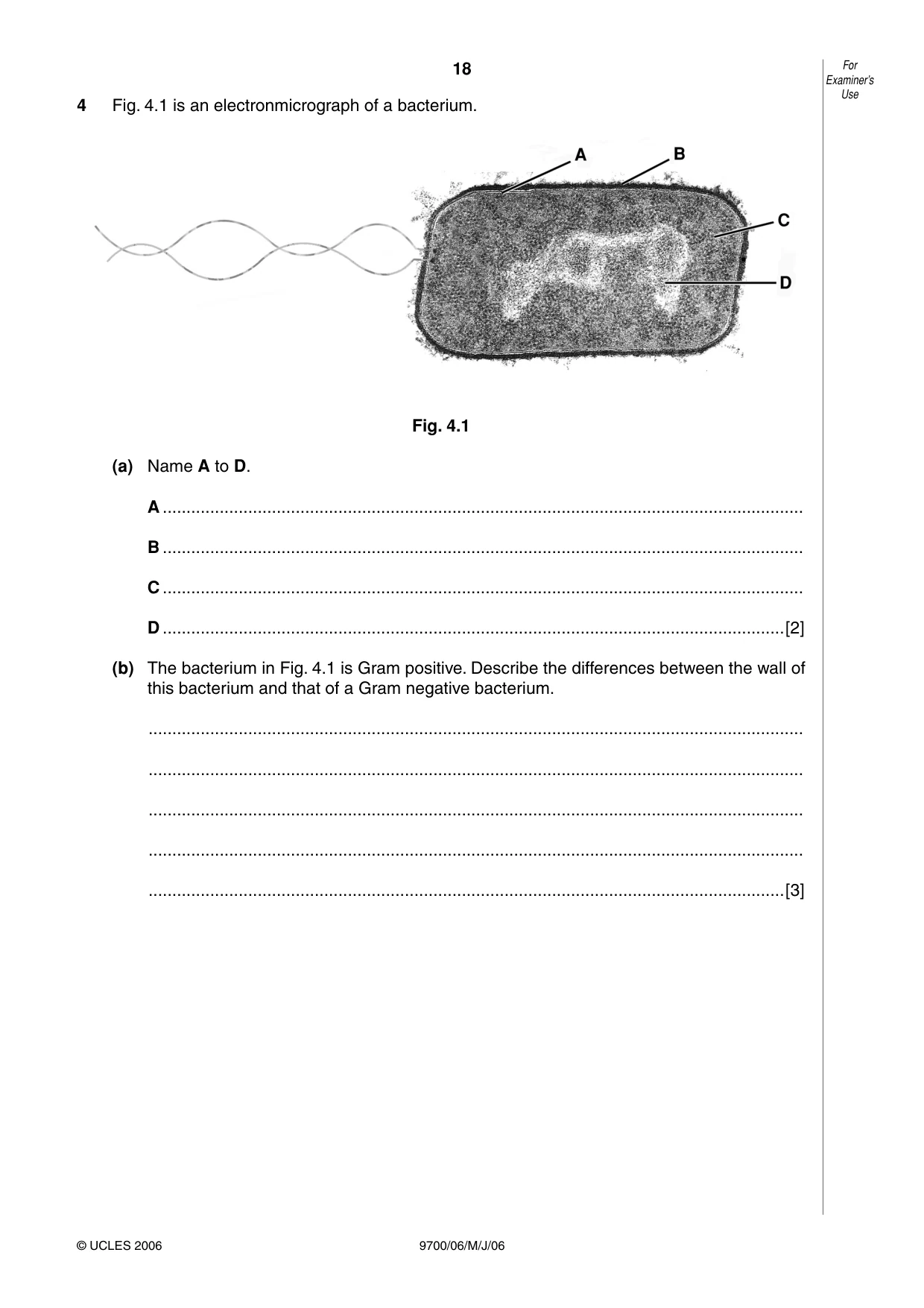
18 9700/06/M/J/06 For Examiner’s Use © UCLES 2006 4 Fig. 4.1 is an electronmicrograph of a bacterium. Fig. 4.1 (a) Name A to D. A … B … C … D …[2] (b) The bacterium in Fig. 4.1 is Gram positive. Describe the differences between the wall of this bacterium and that of a Gram negative bacterium. … … … … …[3]
Question paper, page 19
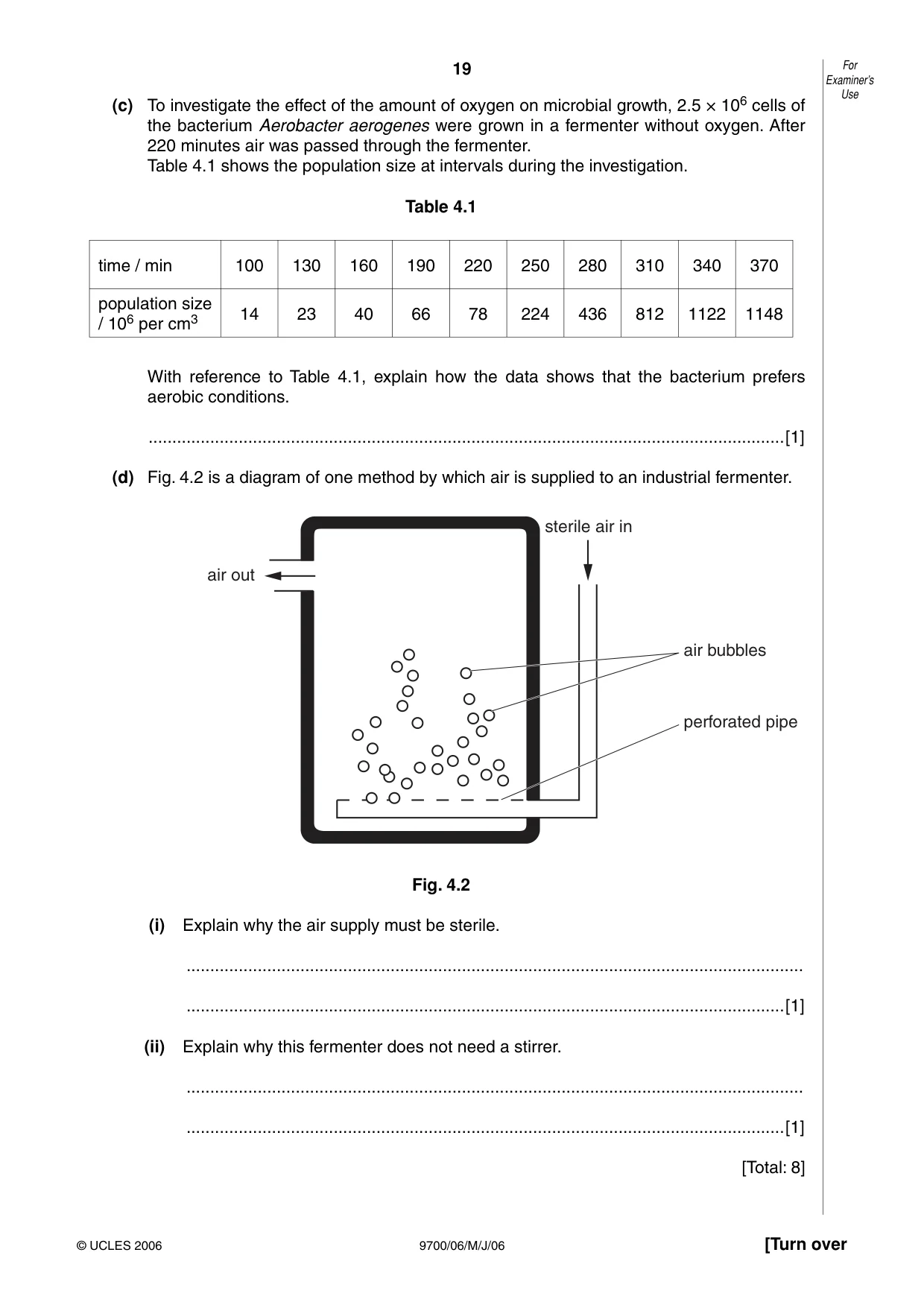
19 9700/06/M/J/06 [Turn over For Examiner’s Use © UCLES 2006 (c) To investigate the effect of the amount of oxygen on microbial growth, 2.5 × 10⁶ cells of the bacterium Aerobacter aerogenes were grown in a fermenter without oxygen. After 220 minutes air was passed through the fermenter. Table 4.1 shows the population size at intervals during the investigation. Table 4.1 time / min 100 130 160 190 220 250 280 310 340 370 population size / 106 per cm3 14 23 40 66 78 224 436 812 1122 1148 With reference to Table 4.1, explain how the data shows that the bacterium prefers aerobic conditions. …[1] (d) Fig. 4.2 is a diagram of one method by which air is supplied to an industrial fermenter. sterile air in air out air bubbles perforated pipe Fig. 4.2 (i) Explain why the air supply must be sterile. … …[1] (ii) Explain why this fermenter does not need a stirrer. … …[1] [Total: 8]
Question paper, page 20
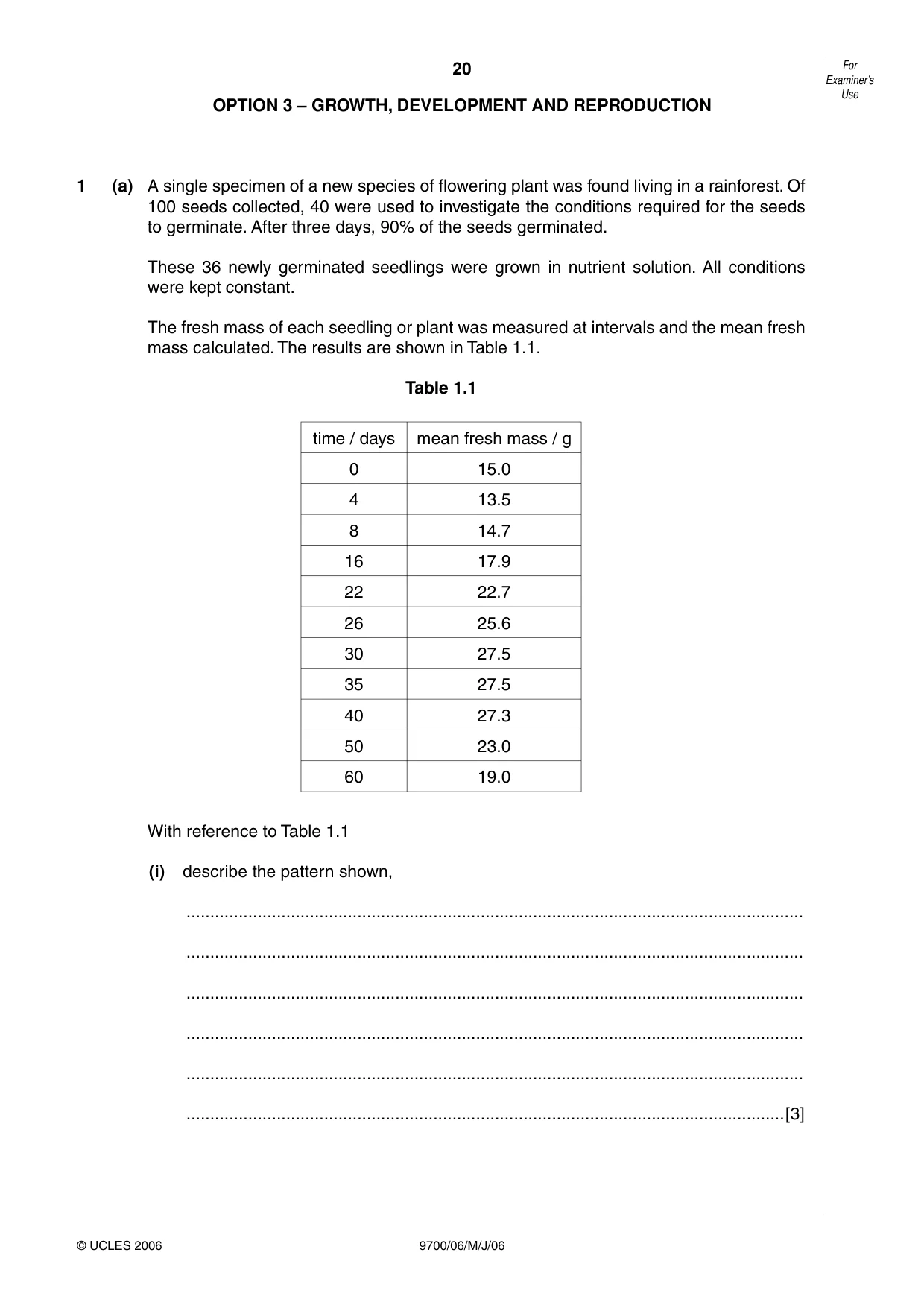
20 9700/06/M/J/06 For Examiner’s Use © UCLES 2006 OPTION 3 – GROWTH, DEVELOPMENT AND REPRODUCTION 1 (a) A single specimen of a new species of flowering plant was found living in a rainforest. Of 100 seeds collected, 40 were used to investigate the conditions required for the seeds to germinate. After three days, 90% of the seeds germinated. These 36 newly germinated seedlings were grown in nutrient solution. All conditions were kept constant. The fresh mass of each seedling or plant was measured at intervals and the mean fresh mass calculated. The results are shown in Table 1.1. Table 1.1 time / days mean fresh mass / g 0 15.0 4 13.5 8 14.7 16 17.9 22 22.7 26 25.6 30 27.5 35 27.5 40 27.3 50 23.0 60 19.0 With reference to Table 1.1 (i) describe the pattern shown, … … … … … …[3]
Question paper, page 21
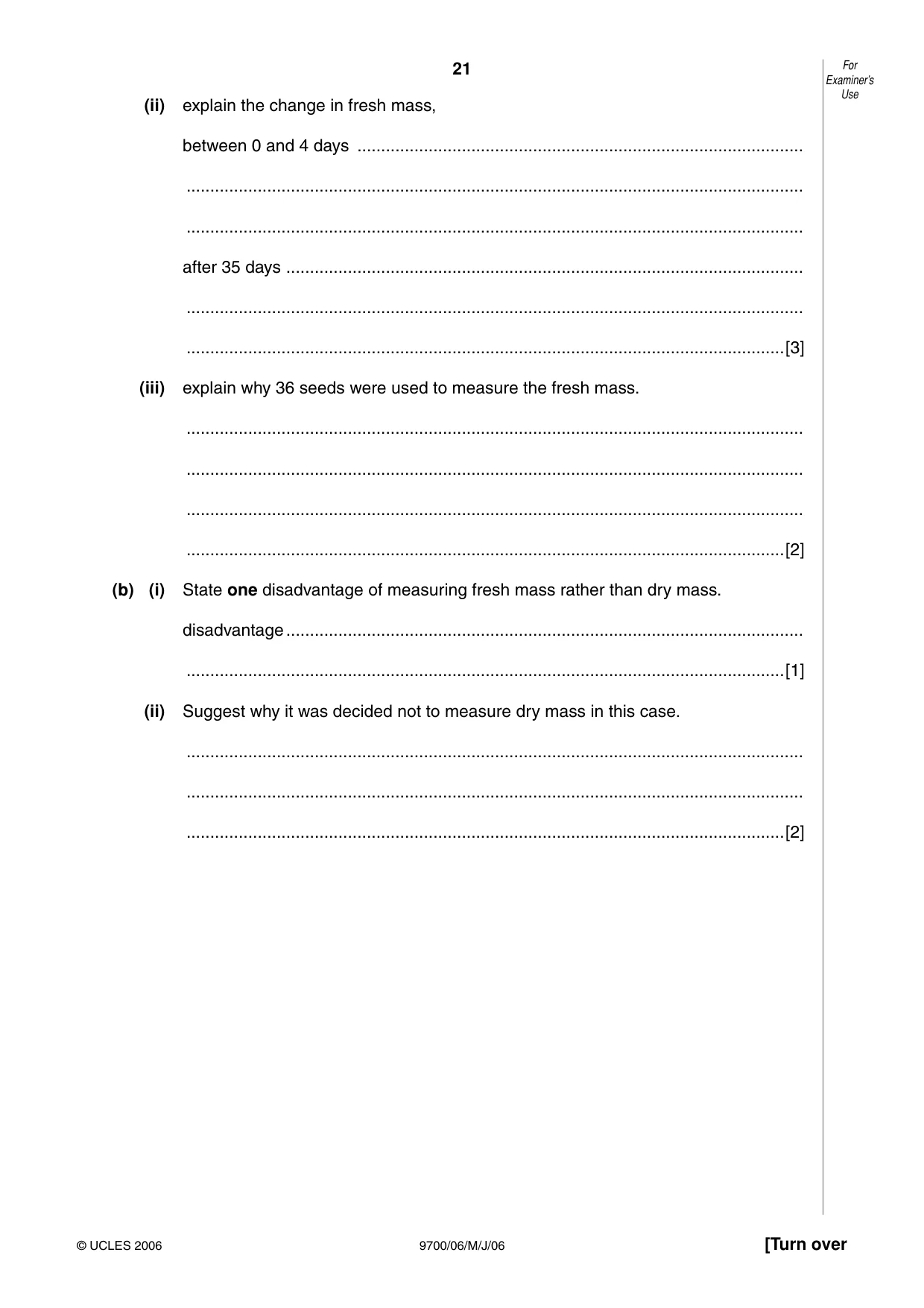
21 9700/06/M/J/06 [Turn over For Examiner’s Use © UCLES 2006 (ii) explain the change in fresh mass, between 0 and 4 days … … … after 35 days … … …[3] (iii) explain why 36 seeds were used to measure the fresh mass. … … … …[2] (b) (i) State one disadvantage of measuring fresh mass rather than dry mass. disadvantage … …[1] (ii) Suggest why it was decided not to measure dry mass in this case. … … …[2]
Question paper, page 22
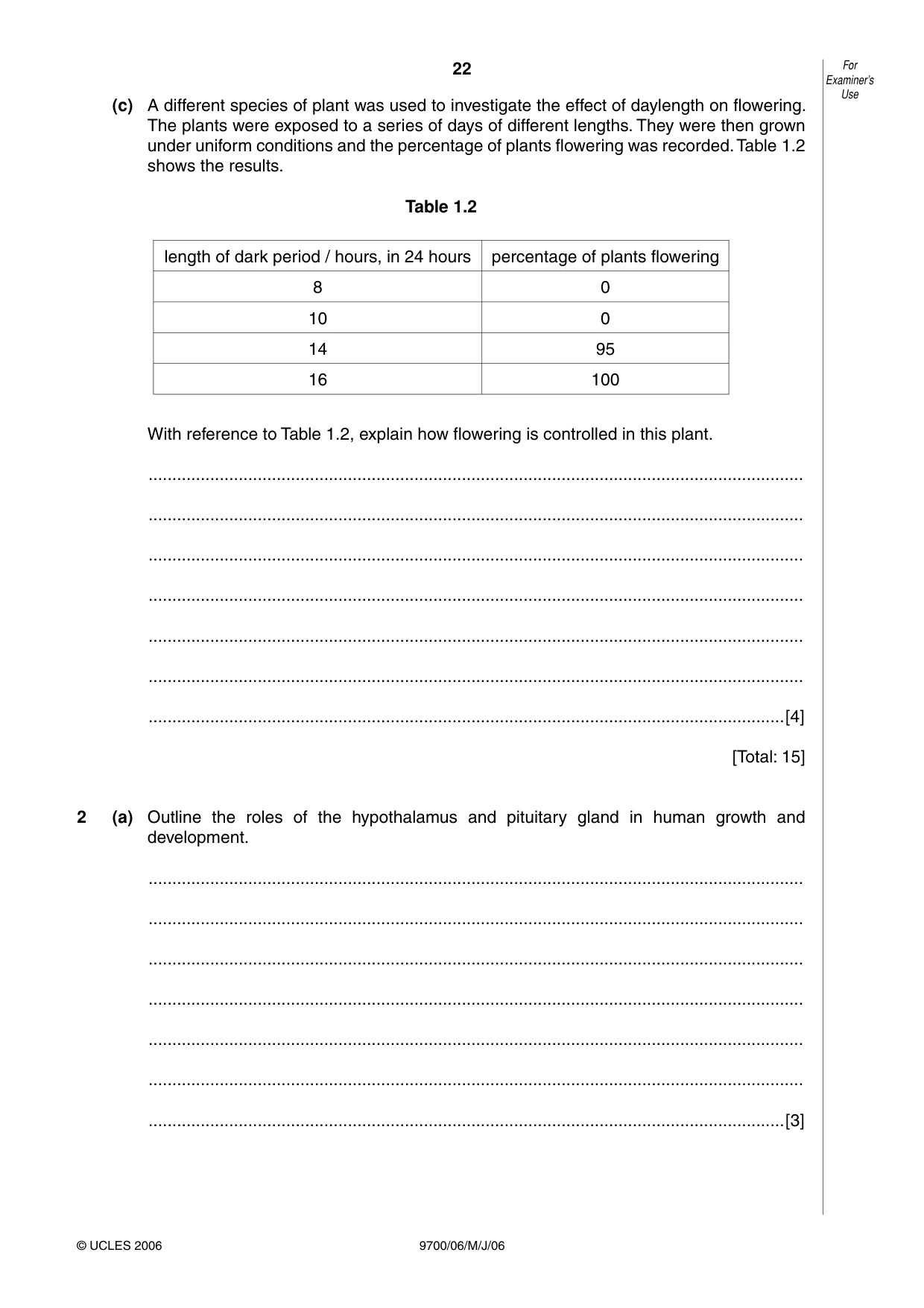
22 9700/06/M/J/06 For Examiner’s Use © UCLES 2006 (c) A different species of plant was used to investigate the effect of daylength on flowering. The plants were exposed to a series of days of different lengths. They were then grown under uniform conditions and the percentage of plants flowering was recorded. Table 1.2 shows the results. Table 1.2 length of dark period / hours, in 24 hours percentage of plants flowering 8 0 10 0 14 95 16 100 With reference to Table 1.2, explain how flowering is controlled in this plant. … … … … … … …[4] [Total: 15] 2 (a) Outline the roles of the hypothalamus and pituitary gland in human growth and development. … … … … … … …[3]
Question paper, page 23
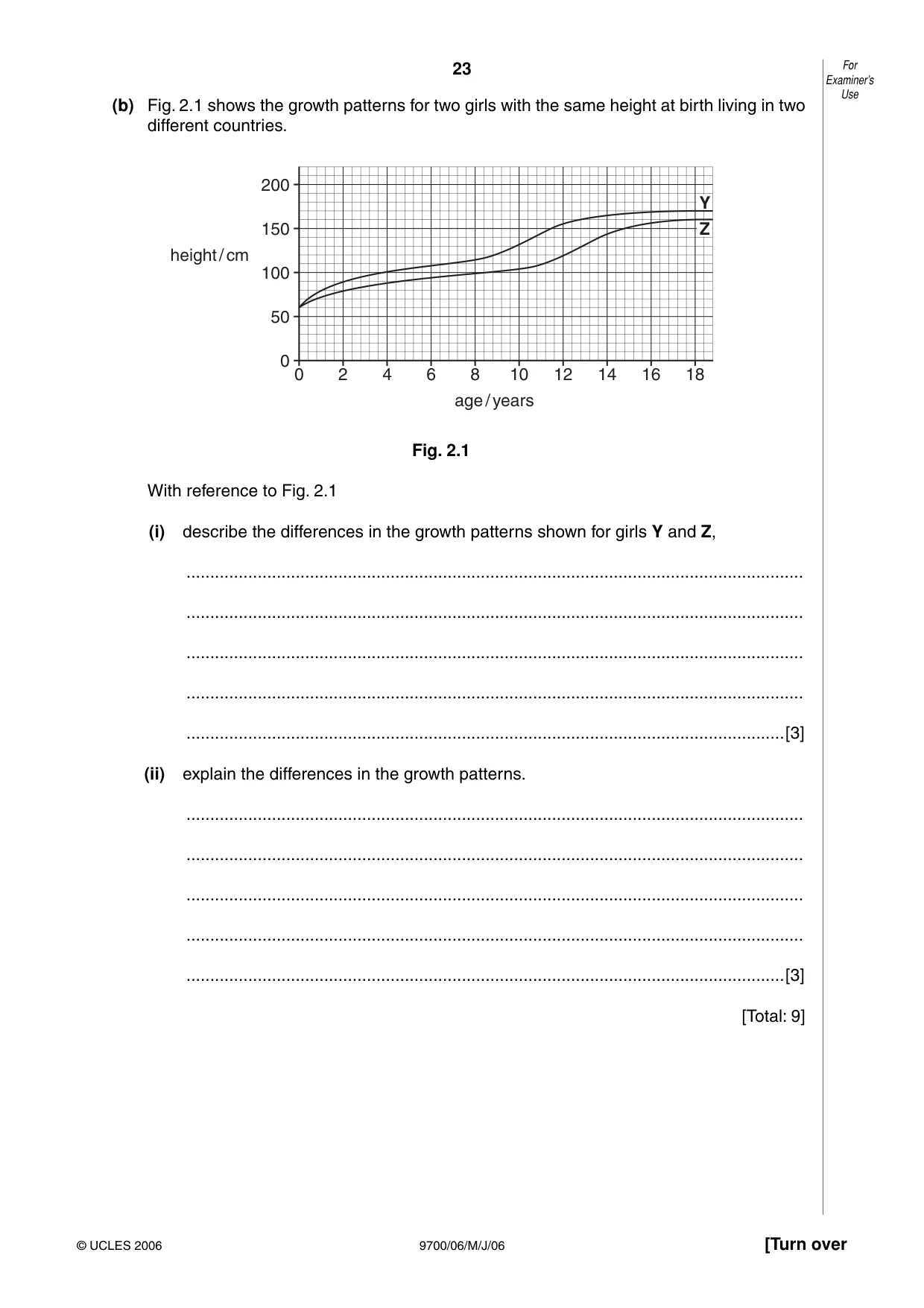
23 9700/06/M/J/06 [Turn over For Examiner’s Use © UCLES 2006 (b) Fig. 2.1 shows the growth patterns for two girls with the same height at birth living in two different countries. 0 0 50 150 200 100 2 4 6 8 age / years height / cm 10 12 14 16 18 Z Y Fig. 2.1 With reference to Fig. 2.1 (i) describe the differences in the growth patterns shown for girls Y and Z, … … … … …[3] (ii) explain the differences in the growth patterns. … … … … …[3] [Total: 9]
Question paper, page 24
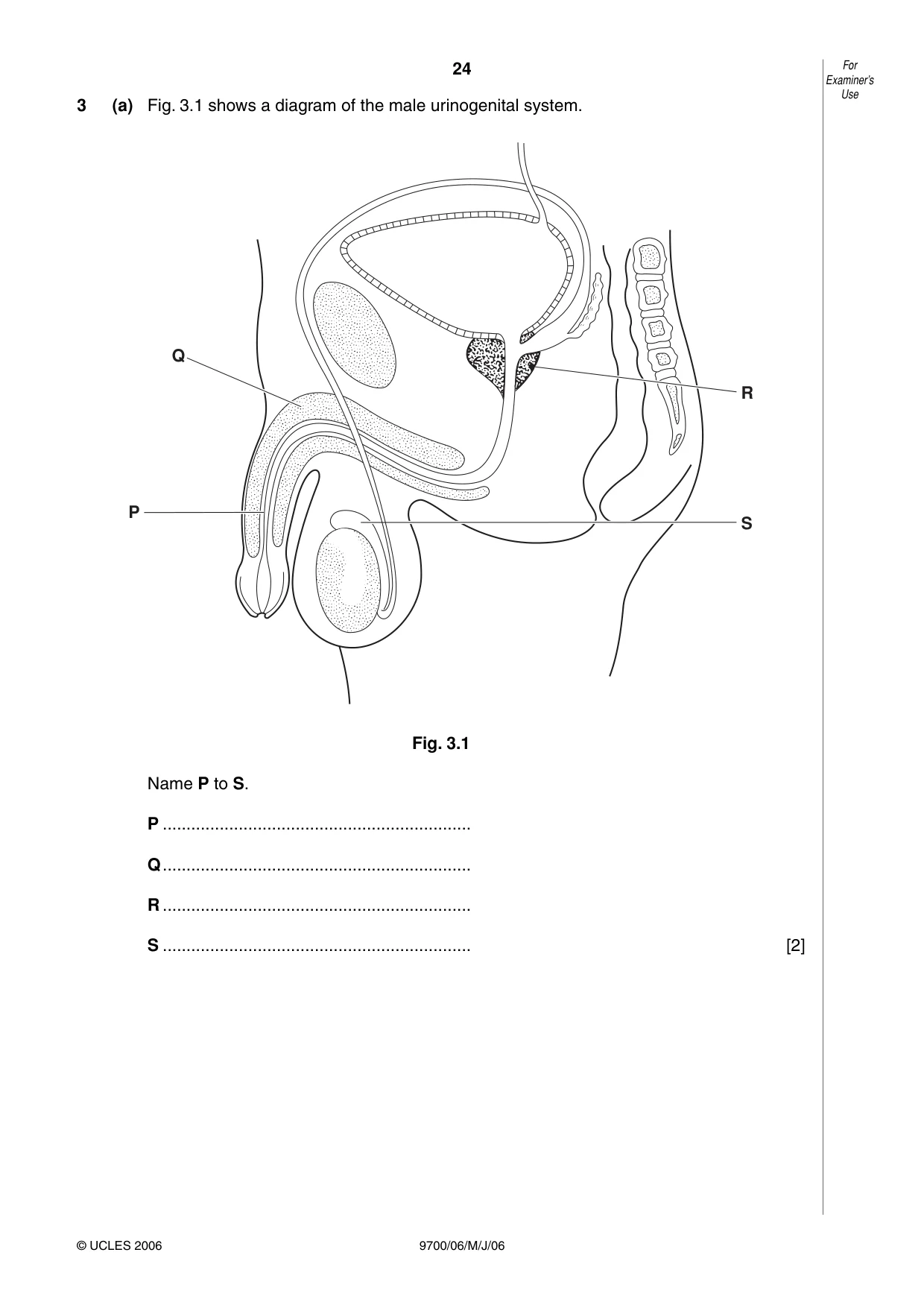
24 9700/06/M/J/06 For Examiner’s Use © UCLES 2006 3 (a) Fig. 3.1 shows a diagram of the male urinogenital system. S R P Q Fig. 3.1 Name P to S. P … Q … R … S … [2]
Question paper, page 25
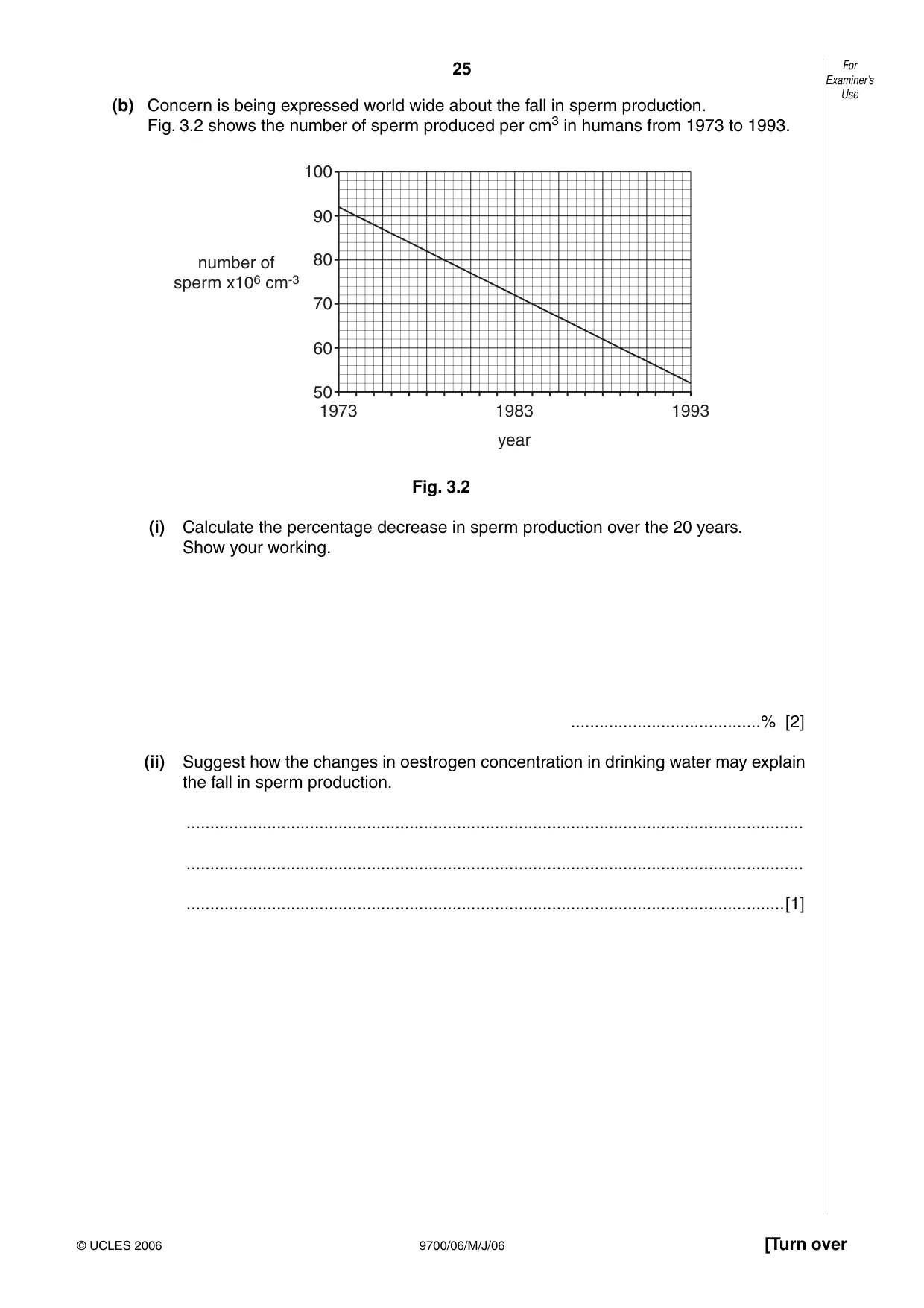
25 9700/06/M/J/06 [Turn over For Examiner’s Use © UCLES 2006 (b) Concern is being expressed world wide about the fall in sperm production. Fig. 3.2 shows the number of sperm produced per cm3 in humans from 1973 to 1993. 50 1973 1983 year number of sperm x106 cm-3 1993 60 70 80 90 100 Fig. 3.2 (i) Calculate the percentage decrease in sperm production over the 20 years. Show your working. …% [2] (ii) Suggest how the changes in oestrogen concentration in drinking water may explain the fall in sperm production. … … …[1]
Question paper, page 26
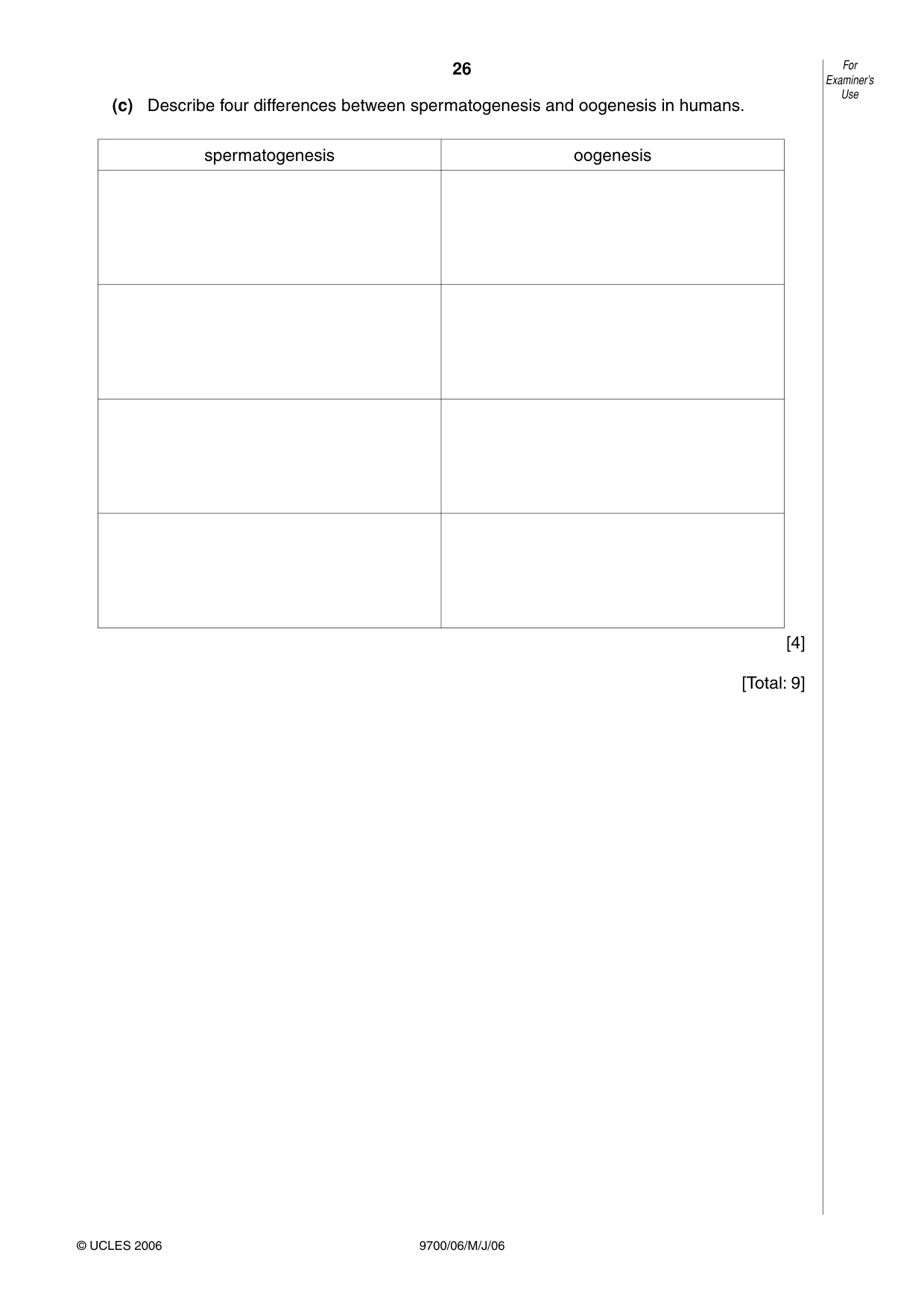
26 9700/06/M/J/06 For Examiner’s Use © UCLES 2006 (c) Describe four differences between spermatogenesis and oogenesis in humans. spermatogenesis oogenesis [4] [Total: 9]
Question paper, page 27
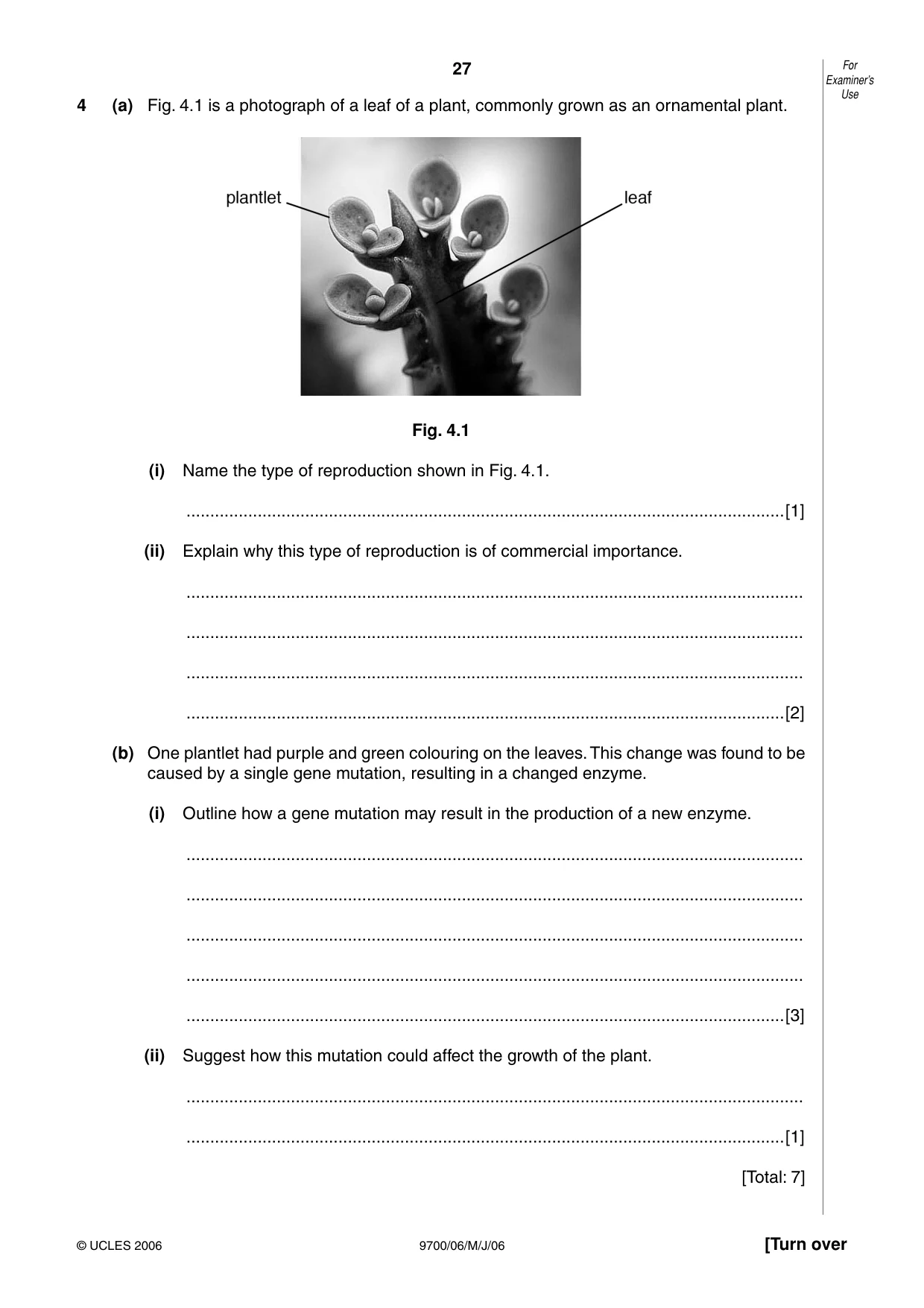
27 9700/06/M/J/06 [Turn over For Examiner’s Use © UCLES 2006 4 (a) Fig. 4.1 is a photograph of a leaf of a plant, commonly grown as an ornamental plant. Fig. 4.1 (i) Name the type of reproduction shown in Fig. 4.1. …[1] (ii) Explain why this type of reproduction is of commercial importance. … … … …[2] (b) One plantlet had purple and green colouring on the leaves. This change was found to be caused by a single gene mutation, resulting in a changed enzyme. (i) Outline how a gene mutation may result in the production of a new enzyme. … … … … …[3] (ii) Suggest how this mutation could affect the growth of the plant. … …[1] [Total: 7]
Question paper, page 28
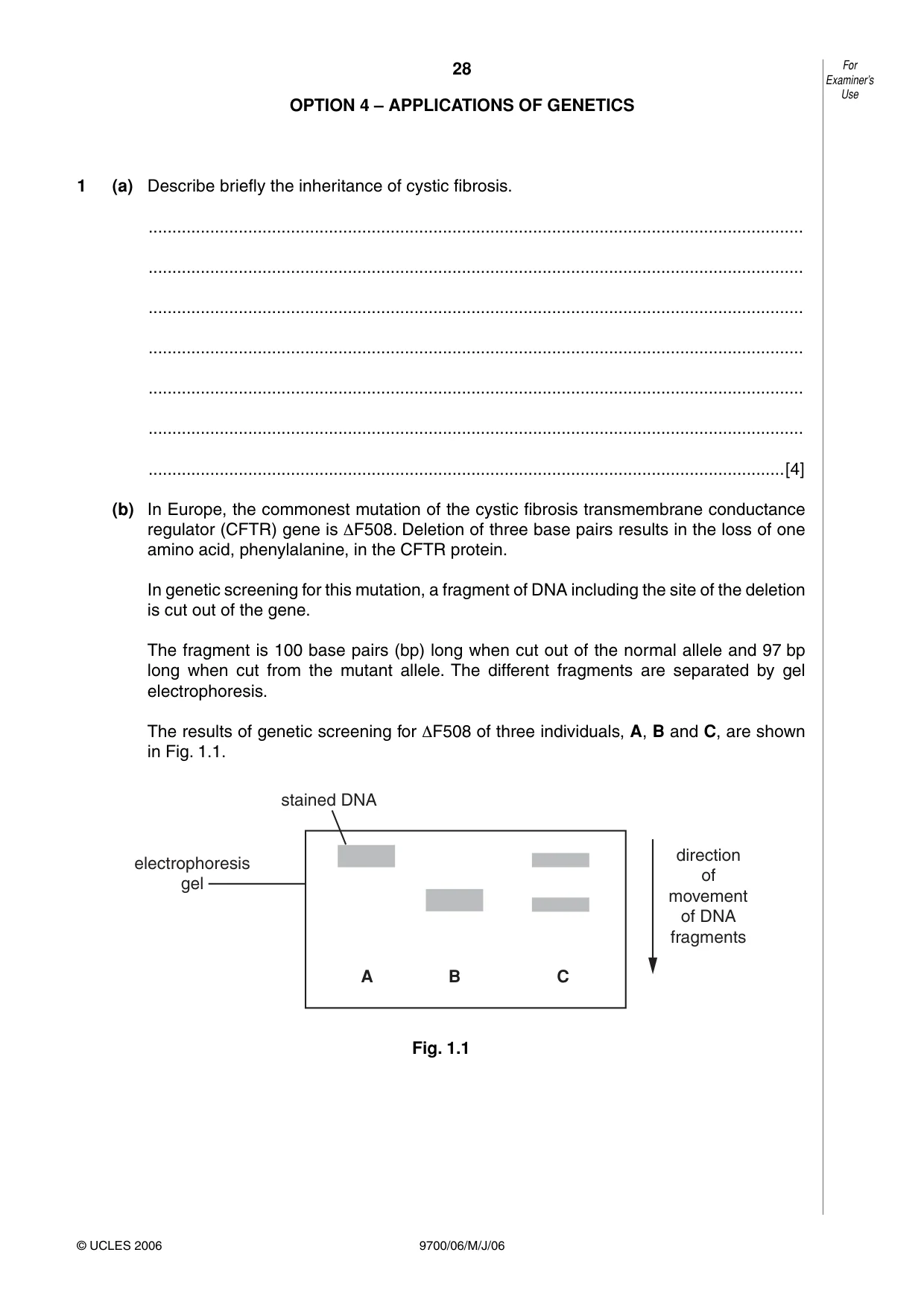
28 9700/06/M/J/06 For Examiner’s Use © UCLES 2006 OPTION 4 – APPLICATIONS OF GENETICS 1 (a) Describe briefly the inheritance of cystic fibrosis. … … … … … … …[4] (b) In Europe, the commonest mutation of the cystic fibrosis transmembrane conductance regulator (CFTR) gene is ΔF508. Deletion of three base pairs results in the loss of one amino acid, phenylalanine, in the CFTR protein. In genetic screening for this mutation, a fragment of DNA including the site of the deletion is cut out of the gene. The fragment is 100 base pairs (bp) long when cut out of the normal allele and 97 bp long when cut from the mutant allele. The different fragments are separated by gel electrophoresis. The results of genetic screening for ΔF508 of three individuals, A, B and C, are shown in Fig. 1.1. stained DNA direction of movement of DNA fragments electrophoresis gel A C B Fig. 1.1
Question paper, page 29
29 9700/06/M/J/06 [Turn over For Examiner’s Use © UCLES 2006 (i) Describe how DNA fragments are separated in gel electrophoresis. … … … … …[3] (ii) Identify the position of a 97 bp fragment on Fig. 1.1 by means of a labelled arrow. [1] (iii) Explain the result obtained from individual C. … … …[2]
Question paper, page 30
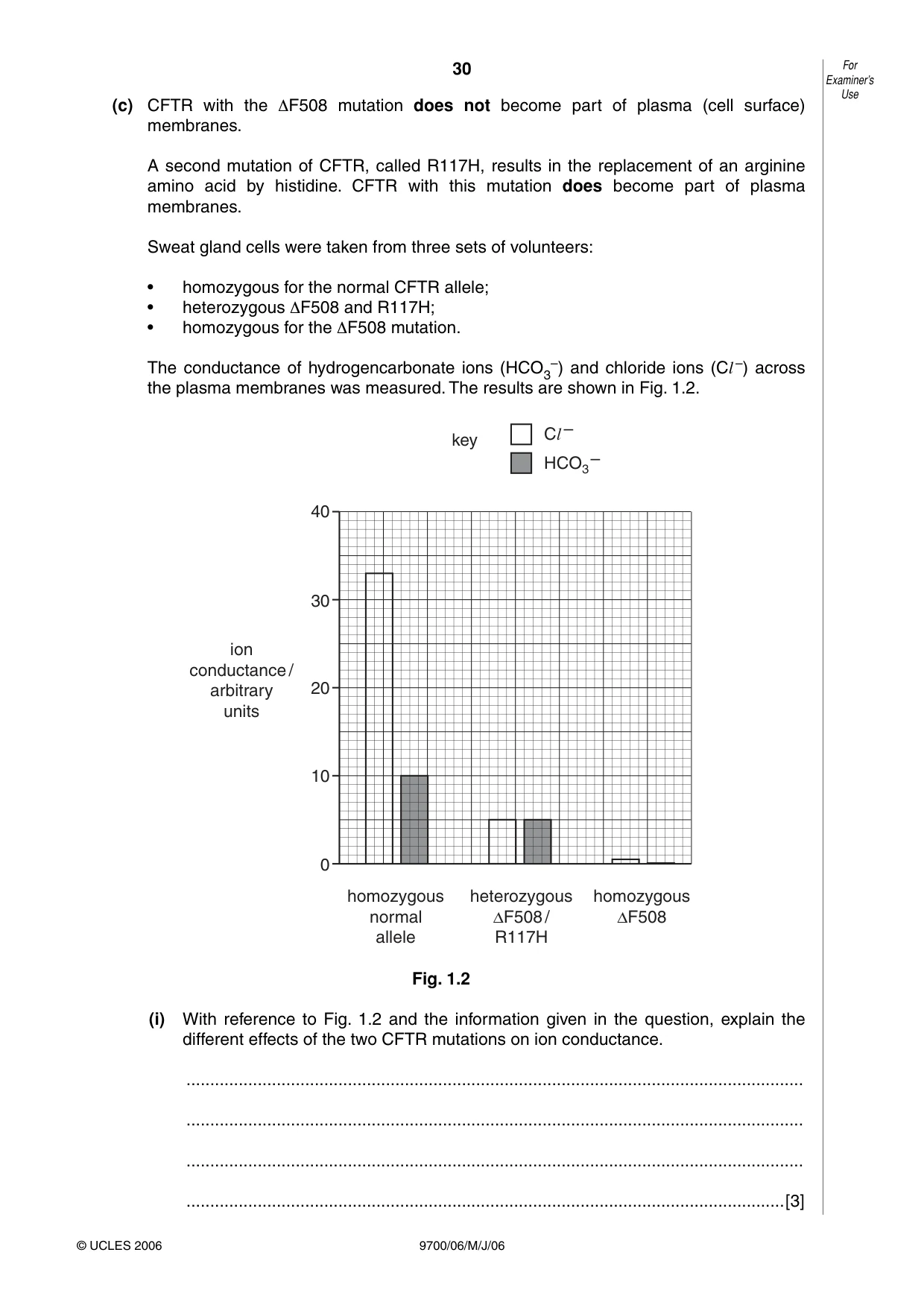
30 9700/06/M/J/06 For Examiner’s Use © UCLES 2006 (c) CFTR with the ΔF508 mutation does not become part of plasma (cell surface) membranes. A second mutation of CFTR, called R117H, results in the replacement of an arginine amino acid by histidine. CFTR with this mutation does become part of plasma membranes. Sweat gland cells were taken from three sets of volunteers: • homozygous for the normal CFTR allele; • heterozygous ΔF508 and R117H; • homozygous for the ΔF508 mutation. The conductance of hydrogencarbonate ions (HCO3 –) and chloride ions (Cl –) across the plasma membranes was measured. The results are shown in Fig. 1.2. 0 10 20 30 HCO3 – Cl – key 40 ion conductance / arbitrary units homozygous normal allele heterozygous ∆F508 / R117H homozygous ∆F508 Fig. 1.2 (i) With reference to Fig. 1.2 and the information given in the question, explain the different effects of the two CFTR mutations on ion conductance. … … … …[3]
Question paper, page 31
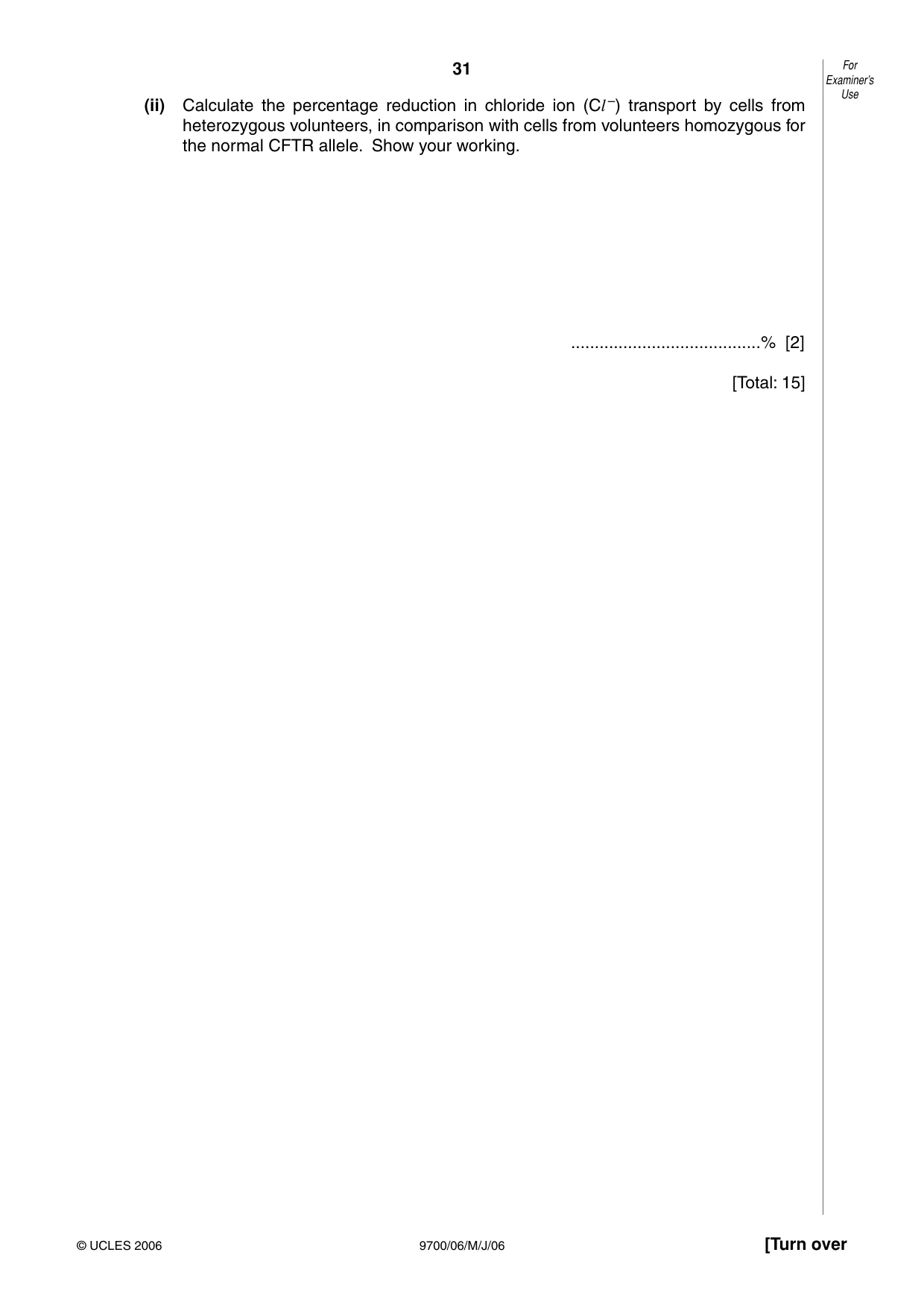
31 9700/06/M/J/06 [Turn over For Examiner’s Use © UCLES 2006 (ii) Calculate the percentage reduction in chloride ion (Cl –) transport by cells from heterozygous volunteers, in comparison with cells from volunteers homozygous for the normal CFTR allele. Show your working. …% [2] [Total: 15]
Question paper, page 32
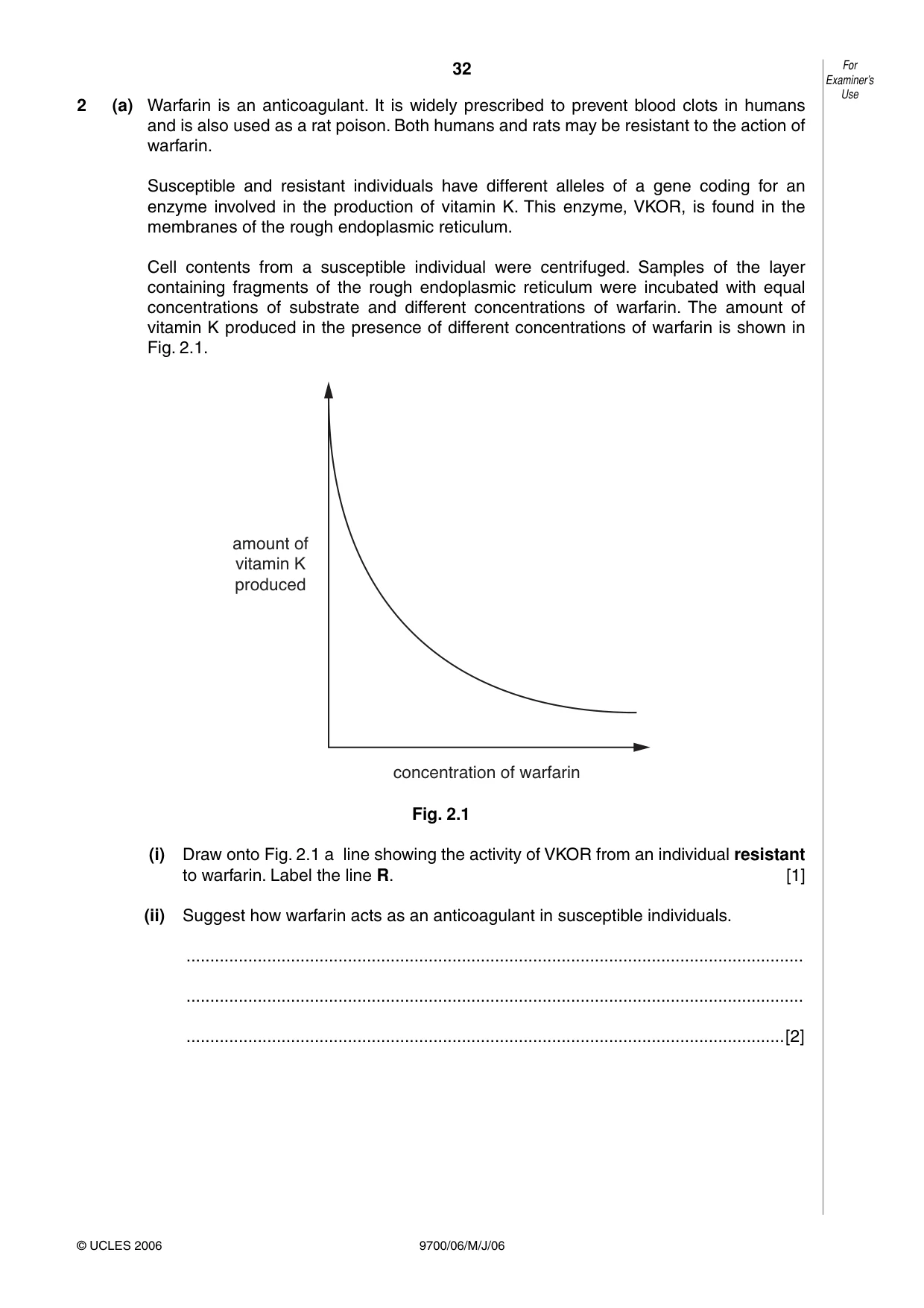
32 9700/06/M/J/06 For Examiner’s Use © UCLES 2006 2 (a) Warfarin is an anticoagulant. It is widely prescribed to prevent blood clots in humans and is also used as a rat poison. Both humans and rats may be resistant to the action of warfarin. Susceptible and resistant individuals have different alleles of a gene coding for an enzyme involved in the production of vitamin K. This enzyme, VKOR, is found in the membranes of the rough endoplasmic reticulum. Cell contents from a susceptible individual were centrifuged. Samples of the layer containing fragments of the rough endoplasmic reticulum were incubated with equal concentrations of substrate and different concentrations of warfarin. The amount of vitamin K produced in the presence of different concentrations of warfarin is shown in Fig. 2.1. amount of vitamin K produced concentration of warfarin Fig. 2.1 (i) Draw onto Fig. 2.1 a line showing the activity of VKOR from an individual resistant to warfarin. Label the line R. [1] (ii) Suggest how warfarin acts as an anticoagulant in susceptible individuals. … … …[2]
Question paper, page 33
33 9700/06/M/J/06 [Turn over For Examiner’s Use © UCLES 2006 (b) The differences between VKOR from susceptible and resistant individuals involve one of its 163 amino acids. Explain (i) how such differences in enzyme structure occur, … … … …[3] (ii) how a change of a single amino acid of VKOR can result in resistance to warfarin. … … … … … … …[4] [Total: 10]
Question paper, page 34
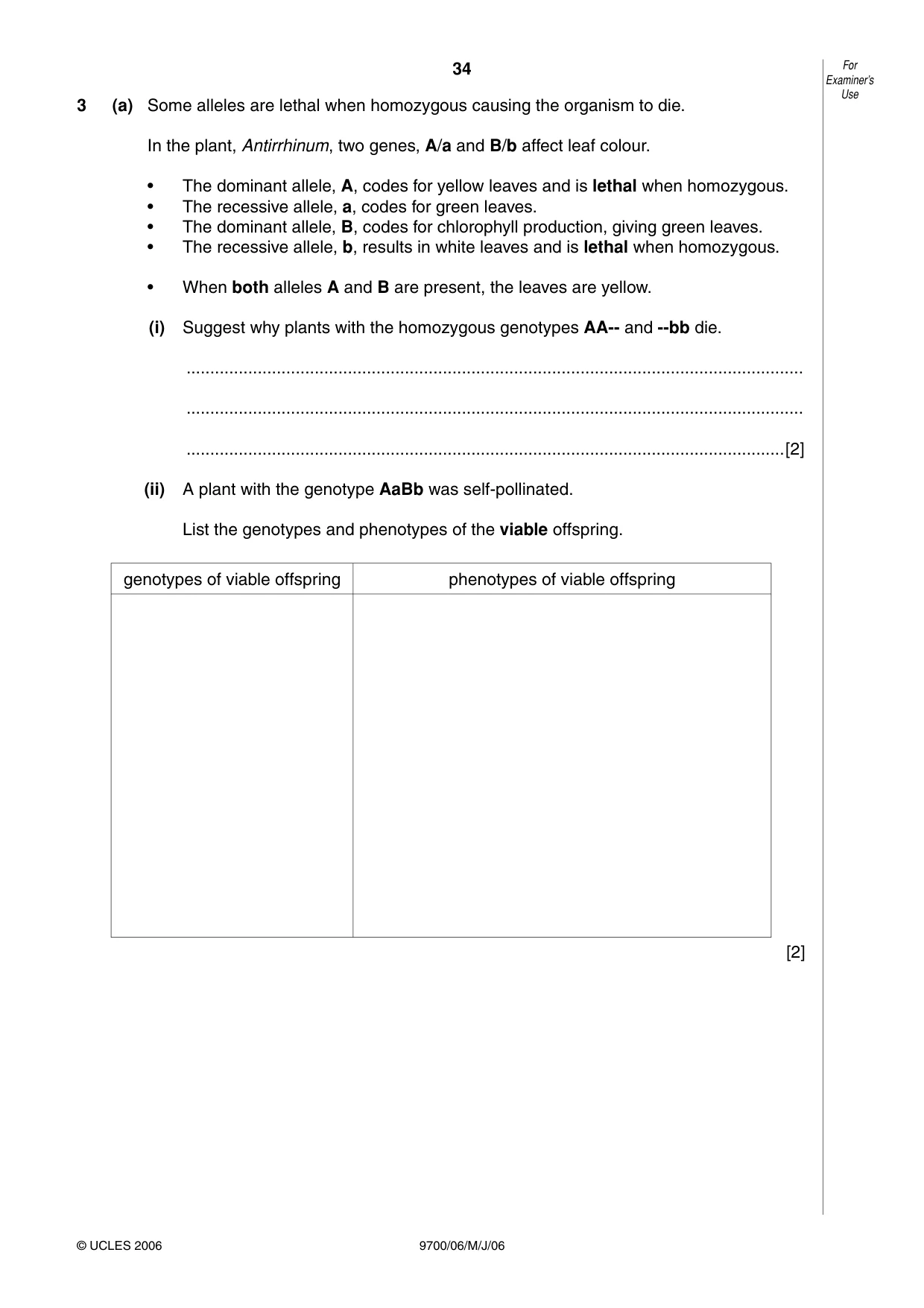
34 9700/06/M/J/06 For Examiner’s Use © UCLES 2006 3 (a) Some alleles are lethal when homozygous causing the organism to die. In the plant, Antirrhinum, two genes, A/a and B/b affect leaf colour. • The dominant allele, A, codes for yellow leaves and is lethal when homozygous. • The recessive allele, a, codes for green leaves. • The dominant allele, B, codes for chlorophyll production, giving green leaves. • The recessive allele, b, results in white leaves and is lethal when homozygous. • When both alleles A and B are present, the leaves are yellow. (i) Suggest why plants with the homozygous genotypes AA-- and --bb die. … … …[2] (ii) A plant with the genotype AaBb was self-pollinated. List the genotypes and phenotypes of the viable offspring. genotypes of viable offspring phenotypes of viable offspring [2]
Question paper, page 35
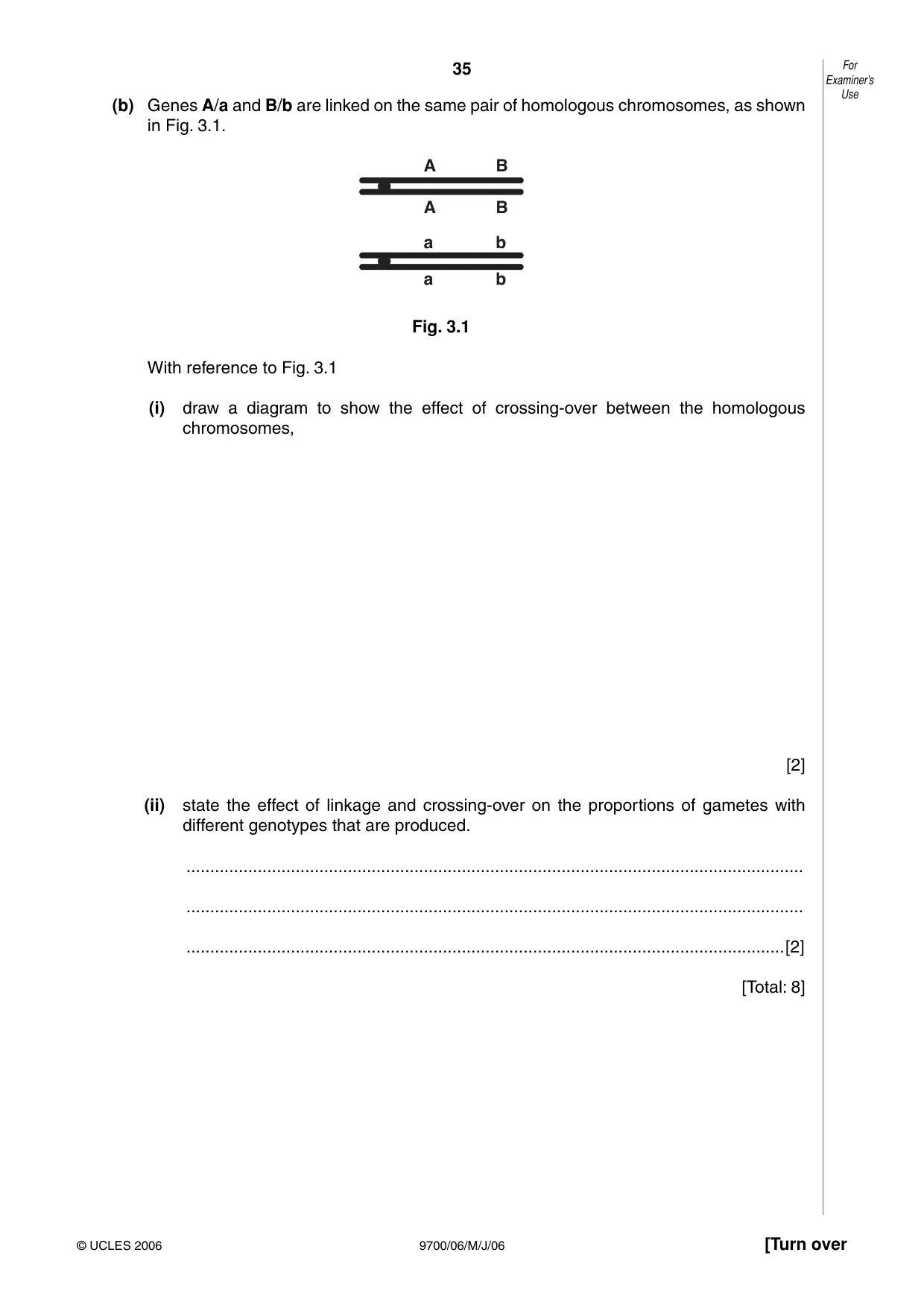
35 9700/06/M/J/06 [Turn over For Examiner’s Use © UCLES 2006 (b) Genes A/a and B/b are linked on the same pair of homologous chromosomes, as shown in Fig. 3.1. A B A B a b a b Fig. 3.1 With reference to Fig. 3.1 (i) draw a diagram to show the effect of crossing-over between the homologous chromosomes, [2] (ii) state the effect of linkage and crossing-over on the proportions of gametes with different genotypes that are produced. … … …[2] [Total: 8]
Question paper, page 36
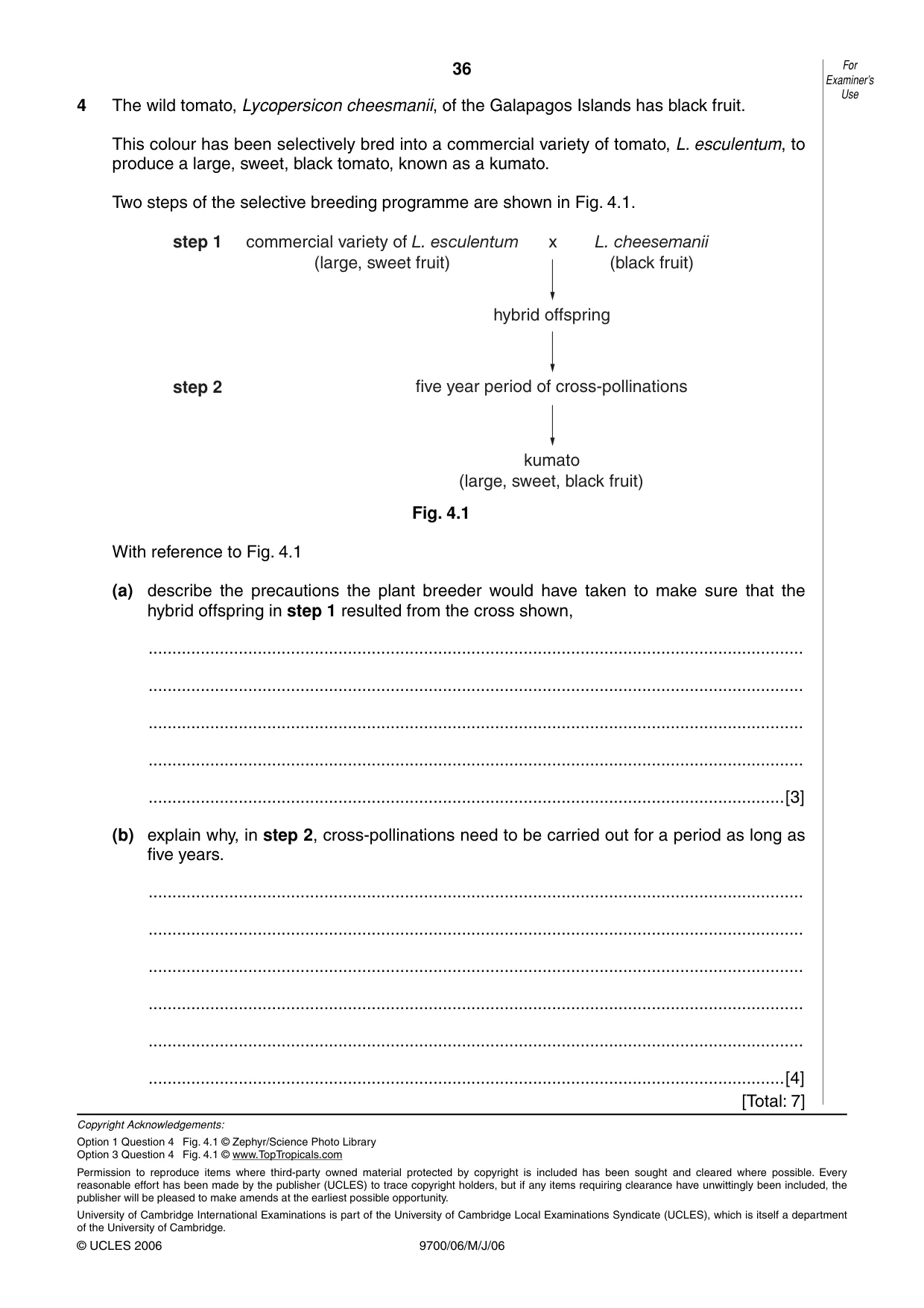
36 9700/06/M/J/06 For Examiner’s Use © UCLES 2006 Copyright Acknowledgements: Option 1 Question 4 Fig. 4.1 © Zephyr/Science Photo Library Option 3 Question 4 Fig. 4.1 © www.TopTropicals.com Permission to reproduce items where third-party owned material protected by copyright is included has been sought and cleared where possible. Every reasonable effort has been made by the publisher (UCLES) to trace copyright holders, but if any items requiring clearance have unwittingly been included, the publisher will be pleased to make amends at the earliest possible opportunity. University of Cambridge International Examinations is part of the University of Cambridge Local Examinations Syndicate (UCLES), which is itself a department of the University of Cambridge. 4 The wild tomato, Lycopersicon cheesmanii, of the Galapagos Islands has black fruit. This colour has been selectively bred into a commercial variety of tomato, L. esculentum, to produce a large, sweet, black tomato, known as a kumato. Two steps of the selective breeding programme are shown in Fig. 4.1. step 1 step 2 commercial variety of L. esculentum (large, sweet fruit) hybrid offspring L. cheesemanii (black fruit) x five year period of cross-pollinations kumato (large, sweet, black fruit) Fig. 4.1 With reference to Fig. 4.1 (a) describe the precautions the plant breeder would have taken to make sure that the hybrid offspring in step 1 resulted from the cross shown, … … … … …[3] (b) explain why, in step 2, cross-pollinations need to be carried out for a period as long as five years. … … … … … …[4] [Total: 7]
Mark scheme, page 1
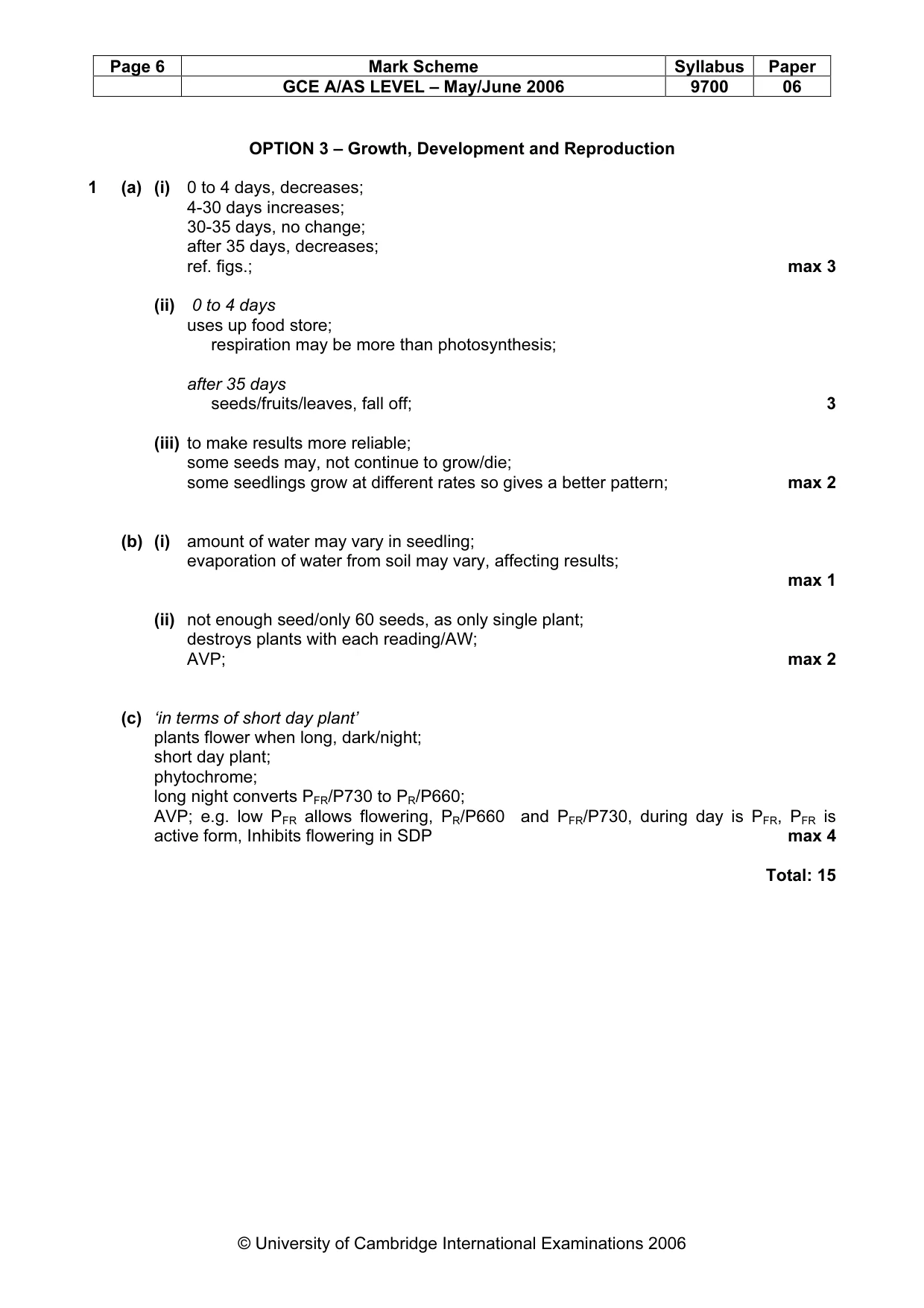
UNIVERSITY OF CAMBRIDGE INTERNATIONAL EXAMINATIONS GCE Advanced/Advanced Subsidiary Level MARK SCHEME for the May/June 2006 question paper 9700 BIOLOGY 9700/06 Paper 6 Maximum raw mark 40 This mark scheme is published as an aid to teachers and students, to indicate the requirements of the examination. It shows the basis on which Examiners were initially instructed to award marks. It does not indicate the details of the discussions that took place at an Examiners’ meeting before marking began. Any substantial changes to the mark scheme that arose from these discussions will be recorded in the published Report on the Examination. All Examiners are instructed that alternative correct answers and unexpected approaches in candidates’ scripts must be given marks that fairly reflect the relevant knowledge and skills demonstrated. Mark schemes must be read in conjunction with the question papers and the Report on the Examination. The minimum marks in these components needed for various grades were previously published with these mark schemes, but are now instead included in the Report on the Examination for this session. • CIE will not enter into discussion or correspondence in connection with these mark schemes. CIE is publishing the mark schemes for the May/June 2006 question papers for most IGCSE and GCE Advanced Level and Advanced Subsidiary Level syllabuses and some Ordinary Level syllabuses.
Mark scheme, page 2
Page 1 Mark Scheme Syllabus Paper GCE A/AS LEVEL – May/June 2006 9700 06 © University of Cambridge International Examinations 2006 OPTION 1: Mammalian Physiology: 1 (a) light sensed by, retina / cones / rods; nerve impulses along optic nerve; to brain; nerve impulses to muscles in Iris; radial muscles contract; ref. automatic nervous system; max 4 (b) (i) as time increases number of correct positives decreases; non-linear relationship / words to that effect; use of correct manipulated figures max 2 (ii) blood alchohol concentration is going down; as liver breaks down alchohol so fewer people will be over the limit / have more than 0.08% blood alchohol concentration; max 2 (iii) many false negatives even at time 0; when all subjects were expected to have more than 0.08% blood alchohol concentration; some false positives at all times; could lead to people being wrongly, convicted / words to that effect; ref. figures. max 2 (c) (i) alchohol dehydrogenase; converts (ethanol) to, ethanal / acetaldehyde; aldehyde dehydrogenase; converts, ethanal / acetaldehyde, to, ethanoate / acetate; hydrogens picked up by NAD / NAD is coenzyme / NAD is reduced; max 3 (ii) fatty acids accumulate; fats deposited (in liver) / fatty liver; alchohol, toxic to / kills hepatocytes; fibrous tissue, builds up/replaces hepatocytes; blood supply reduced; cirrhosis; max 2 Total: 15 2 (a) one mark for each correct label; 2 (b) increases surface area; faster absorbtion; of water / ions; max 2 (c) (i) ref. osmosis; water potential in lumen is lowered; below that of the, cells / intestine wall; water moves down water potential gradient; max 3 (ii) difference is 14.2 – 7.5 = 6.7 ; so percentage change is (6.7 ÷ 14.2) x 100 = 47.2 % ; or (6.7 ÷ 7.5) x 100 = 89.3% 2 (iii) water has left the blood;
Mark scheme, page 3
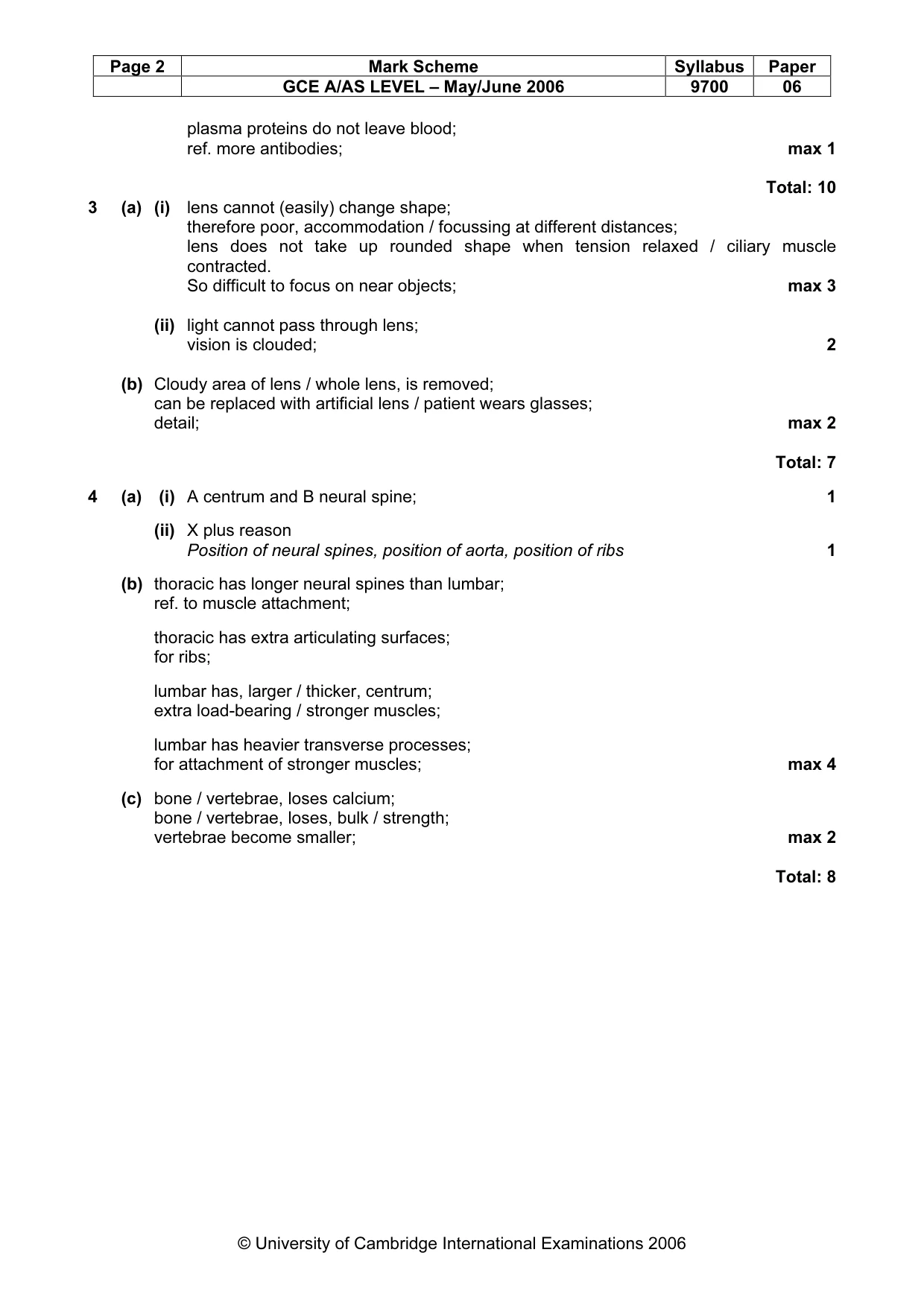
Page 2 Mark Scheme Syllabus Paper GCE A/AS LEVEL – May/June 2006 9700 06 © University of Cambridge International Examinations 2006 plasma proteins do not leave blood; ref. more antibodies; max 1 Total: 10 3 (a) (i) lens cannot (easily) change shape; therefore poor, accommodation / focussing at different distances; lens does not take up rounded shape when tension relaxed / ciliary muscle contracted. So difficult to focus on near objects; max 3 (ii) light cannot pass through lens; vision is clouded; 2 (b) Cloudy area of lens / whole lens, is removed; can be replaced with artificial lens / patient wears glasses; detail; max 2 Total: 7 4 (a) (i) A centrum and B neural spine; 1 (ii) X plus reason Position of neural spines, position of aorta, position of ribs 1 (b) thoracic has longer neural spines than lumbar; ref. to muscle attachment; thoracic has extra articulating surfaces; for ribs; lumbar has, larger / thicker, centrum; extra load-bearing / stronger muscles; lumbar has heavier transverse processes; for attachment of stronger muscles; max 4 (c) bone / vertebrae, loses calcium; bone / vertebrae, loses, bulk / strength; vertebrae become smaller; max 2 Total: 8
Mark scheme, page 4
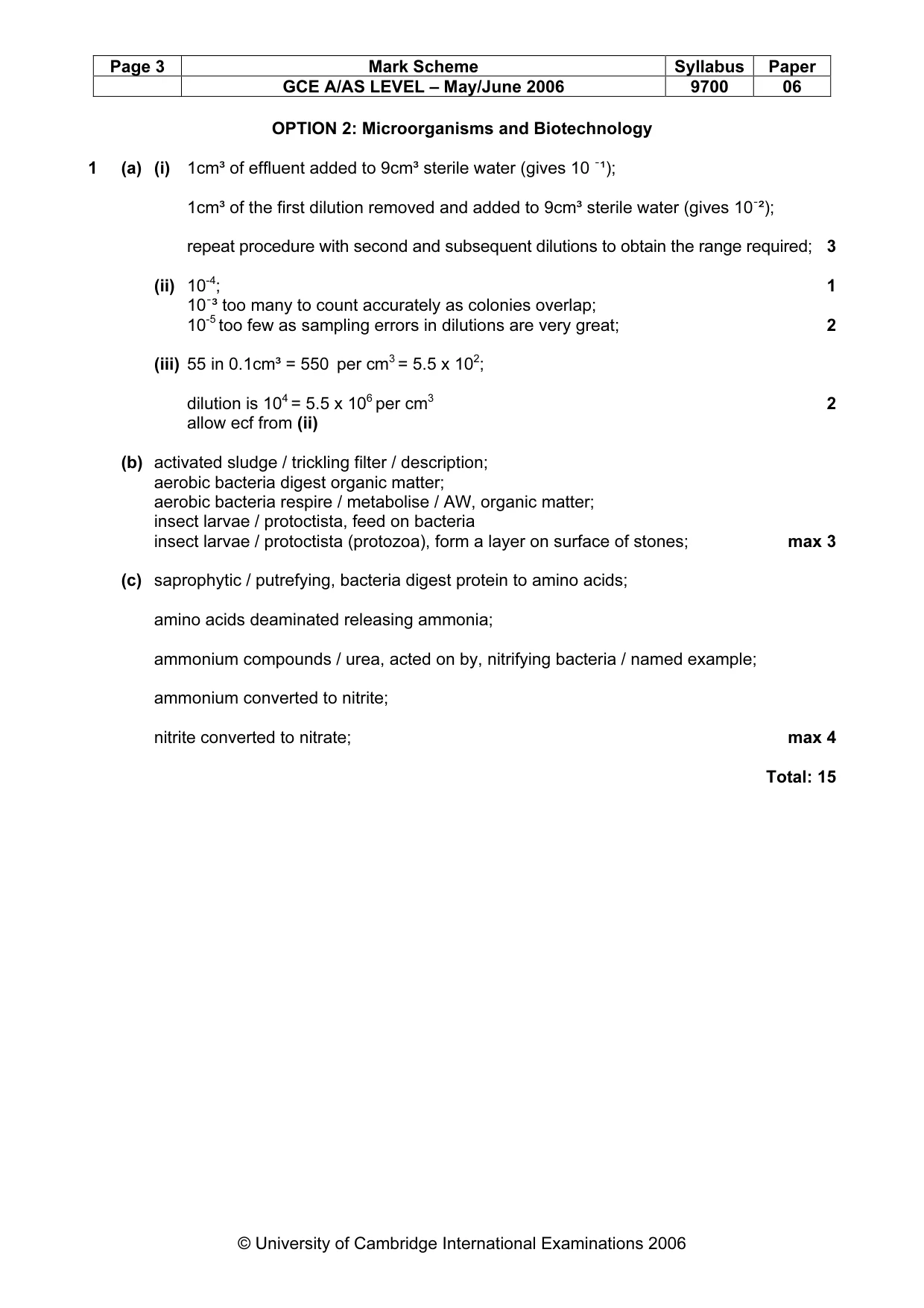
Page 3 Mark Scheme Syllabus Paper GCE A/AS LEVEL – May/June 2006 9700 06 © University of Cambridge International Examinations 2006 OPTION 2: Microorganisms and Biotechnology 1 (a) (i) 1cm³ of effluent added to 9cm³ sterile water (gives 10 ֿ¹); 1cm³ of the first dilution removed and added to 9cm³ sterile water (gives 10ֿ²); repeat procedure with second and subsequent dilutions to obtain the range required; 3 (ii) 10-4; 1 10ֿ³ too many to count accurately as colonies overlap; 10-5 too few as sampling errors in dilutions are very great; 2 (iii) 55 in 0.1cm³ = 550 per cm3 = 5.5 x 10²; dilution is 104 = 5.5 x 10⁶ per cm3 2 allow ecf from (ii) (b) activated sludge / trickling filter / description; aerobic bacteria digest organic matter; aerobic bacteria respire / metabolise / AW, organic matter; insect larvae / protoctista, feed on bacteria insect larvae / protoctista (protozoa), form a layer on surface of stones; max 3 (c) saprophytic / putrefying, bacteria digest protein to amino acids; amino acids deaminated releasing ammonia; ammonium compounds / urea, acted on by, nitrifying bacteria / named example; ammonium converted to nitrite; nitrite converted to nitrate; max 4 Total: 15
Mark scheme, page 5
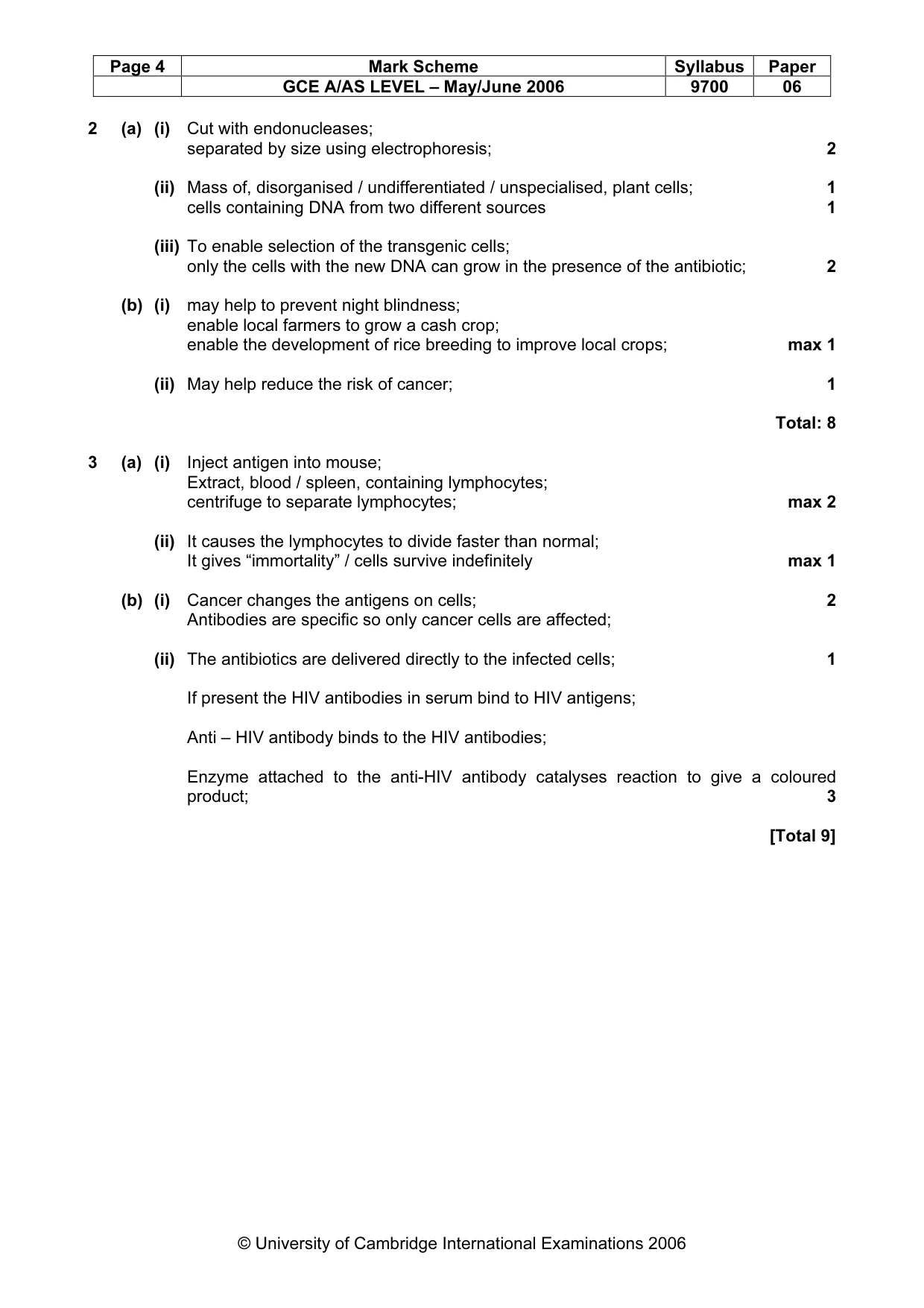
Page 4 Mark Scheme Syllabus Paper GCE A/AS LEVEL – May/June 2006 9700 06 © University of Cambridge International Examinations 2006 2 (a) (i) Cut with endonucleases; separated by size using electrophoresis; 2 (ii) Mass of, disorganised / undifferentiated / unspecialised, plant cells; 1 cells containing DNA from two different sources 1 (iii) To enable selection of the transgenic cells; only the cells with the new DNA can grow in the presence of the antibiotic; 2 (b) (i) may help to prevent night blindness; enable local farmers to grow a cash crop; enable the development of rice breeding to improve local crops; max 1 (ii) May help reduce the risk of cancer; 1 Total: 8 3 (a) (i) Inject antigen into mouse; Extract, blood / spleen, containing lymphocytes; centrifuge to separate lymphocytes; max 2 (ii) It causes the lymphocytes to divide faster than normal; It gives “immortality” / cells survive indefinitely max 1 (b) (i) Cancer changes the antigens on cells; 2 Antibodies are specific so only cancer cells are affected; (ii) The antibiotics are delivered directly to the infected cells; 1 If present the HIV antibodies in serum bind to HIV antigens; Anti – HIV antibody binds to the HIV antibodies; Enzyme attached to the anti-HIV antibody catalyses reaction to give a coloured product; 3 [Total 9]
Mark scheme, page 6
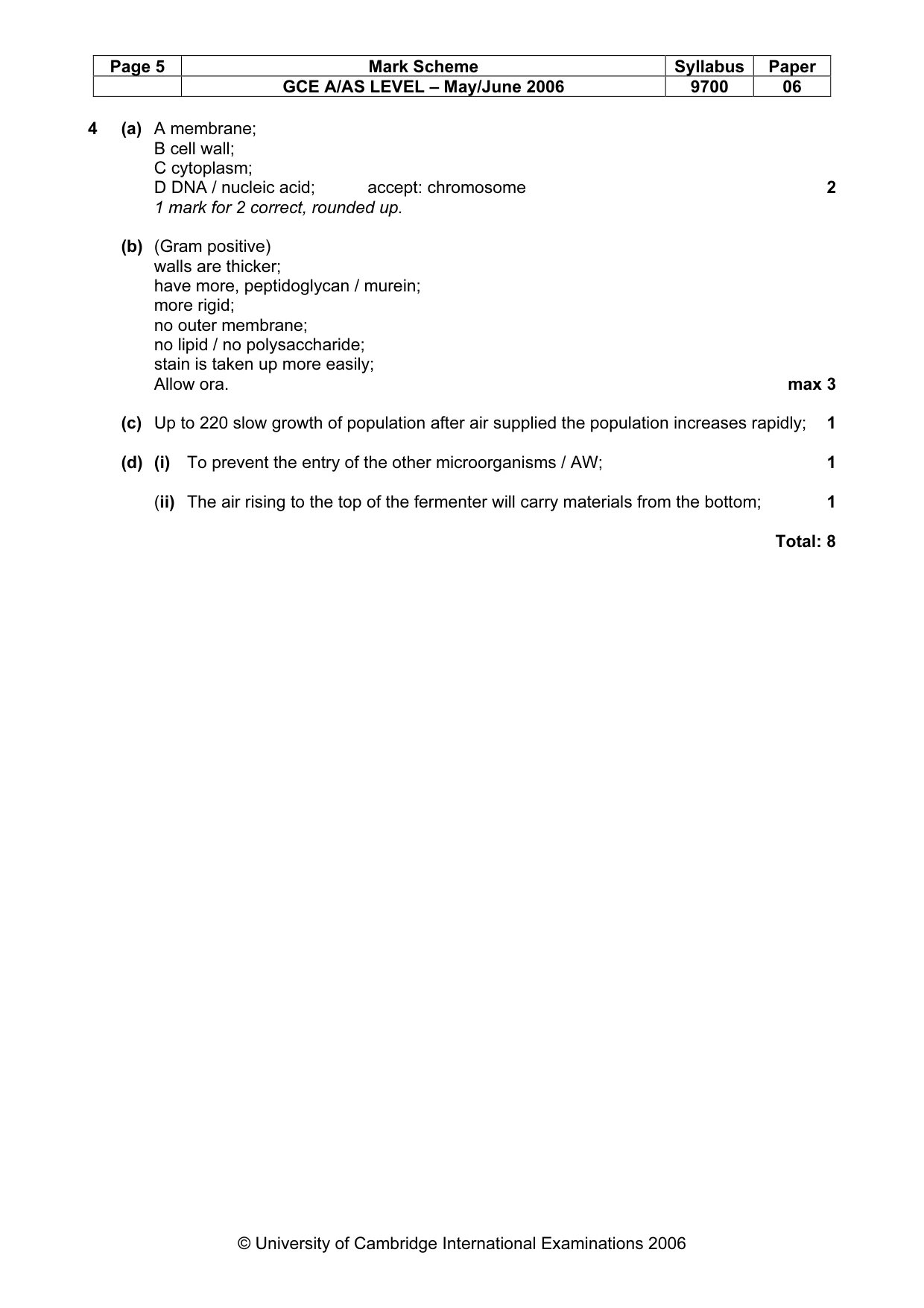
Page 5 Mark Scheme Syllabus Paper GCE A/AS LEVEL – May/June 2006 9700 06 © University of Cambridge International Examinations 2006 4 (a) A membrane; B cell wall; C cytoplasm; D DNA / nucleic acid; accept: chromosome 2 1 mark for 2 correct, rounded up. (b) (Gram positive) walls are thicker; have more, peptidoglycan / murein; more rigid; no outer membrane; no lipid / no polysaccharide; stain is taken up more easily; Allow ora. max 3 (c) Up to 220 slow growth of population after air supplied the population increases rapidly; 1 (d) (i) To prevent the entry of the other microorganisms / AW; 1 (ii) The air rising to the top of the fermenter will carry materials from the bottom; 1 Total: 8
Mark scheme, page 7
Page 6 Mark Scheme Syllabus Paper GCE A/AS LEVEL – May/June 2006 9700 06 © University of Cambridge International Examinations 2006 OPTION 3 – Growth, Development and Reproduction 1 (a) (i) 0 to 4 days, decreases; 4-30 days increases; 30-35 days, no change; after 35 days, decreases; ref. figs.; max 3 (ii) 0 to 4 days uses up food store; respiration may be more than photosynthesis; after 35 days seeds/fruits/leaves, fall off; 3 (iii) to make results more reliable; some seeds may, not continue to grow/die; some seedlings grow at different rates so gives a better pattern; max 2 (b) (i) amount of water may vary in seedling; evaporation of water from soil may vary, affecting results; max 1 (ii) not enough seed/only 60 seeds, as only single plant; destroys plants with each reading/AW; AVP; max 2 (c) ‘in terms of short day plant’ plants flower when long, dark/night; short day plant; phytochrome; long night converts PFR/P730 to PR/P660; AVP; e.g. low PFR allows flowering, PR/P660 and PFR/P730, during day is PFR, PFR is active form, Inhibits flowering in SDP max 4 Total: 15
Mark scheme, page 8
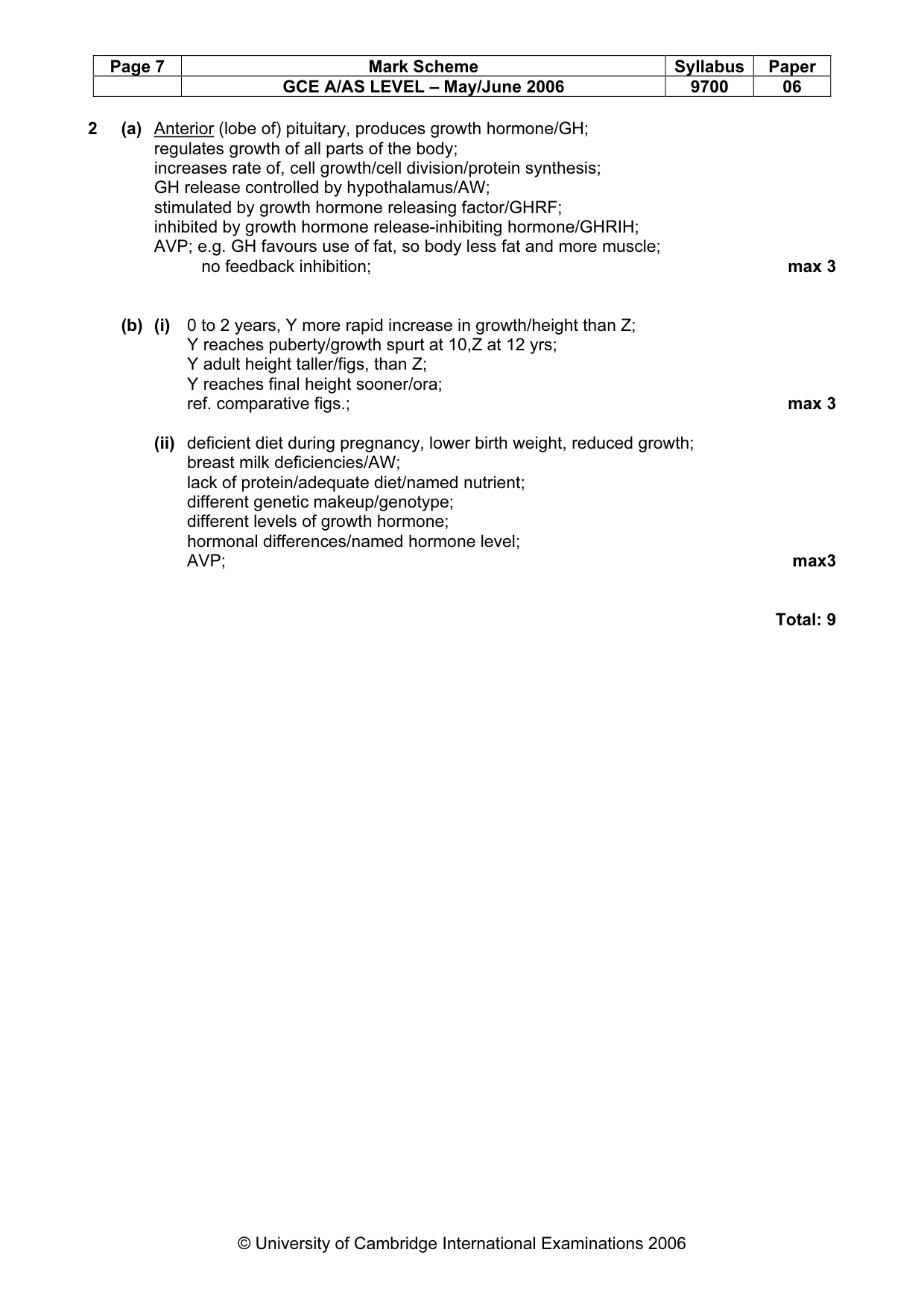
Page 7 Mark Scheme Syllabus Paper GCE A/AS LEVEL – May/June 2006 9700 06 © University of Cambridge International Examinations 2006 2 (a) Anterior (lobe of) pituitary, produces growth hormone/GH; regulates growth of all parts of the body; increases rate of, cell growth/cell division/protein synthesis; GH release controlled by hypothalamus/AW; stimulated by growth hormone releasing factor/GHRF; inhibited by growth hormone release-inhibiting hormone/GHRIH; AVP; e.g. GH favours use of fat, so body less fat and more muscle; no feedback inhibition; max 3 (b) (i) 0 to 2 years, Y more rapid increase in growth/height than Z; Y reaches puberty/growth spurt at 10,Z at 12 yrs; Y adult height taller/figs, than Z; Y reaches final height sooner/ora; ref. comparative figs.; max 3 (ii) deficient diet during pregnancy, lower birth weight, reduced growth; breast milk deficiencies/AW; lack of protein/adequate diet/named nutrient; different genetic makeup/genotype; different levels of growth hormone; hormonal differences/named hormone level; AVP; max3 Total: 9
Mark scheme, page 9
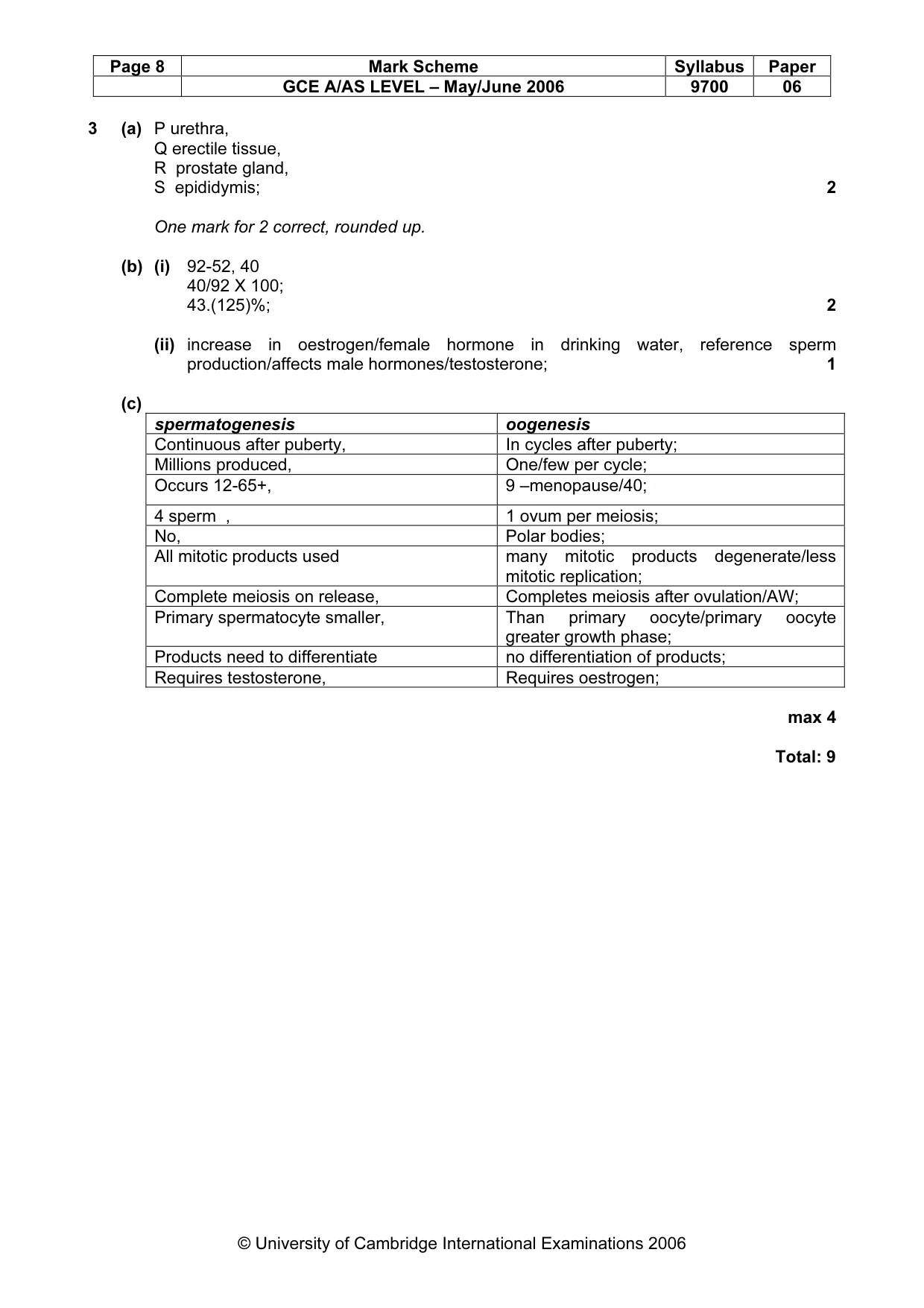
Page 8 Mark Scheme Syllabus Paper GCE A/AS LEVEL – May/June 2006 9700 06 © University of Cambridge International Examinations 2006 3 (a) P urethra, Q erectile tissue, R prostate gland, S epididymis; 2 One mark for 2 correct, rounded up. (b) (i) 92-52, 40 40/92 X 100; 43.(125)%; 2 (ii) increase in oestrogen/female hormone in drinking water, reference sperm production/affects male hormones/testosterone; 1 (c) spermatogenesis oogenesis Continuous after puberty, In cycles after puberty; Millions produced, One/few per cycle; Occurs 12-65+, 9 –menopause/40; 4 sperm , 1 ovum per meiosis; No, Polar bodies; All mitotic products used many mitotic products degenerate/less mitotic replication; Complete meiosis on release, Completes meiosis after ovulation/AW; Primary spermatocyte smaller, Than primary oocyte/primary oocyte greater growth phase; Products need to differentiate no differentiation of products; Requires testosterone, Requires oestrogen; max 4 Total: 9
Mark scheme, page 10
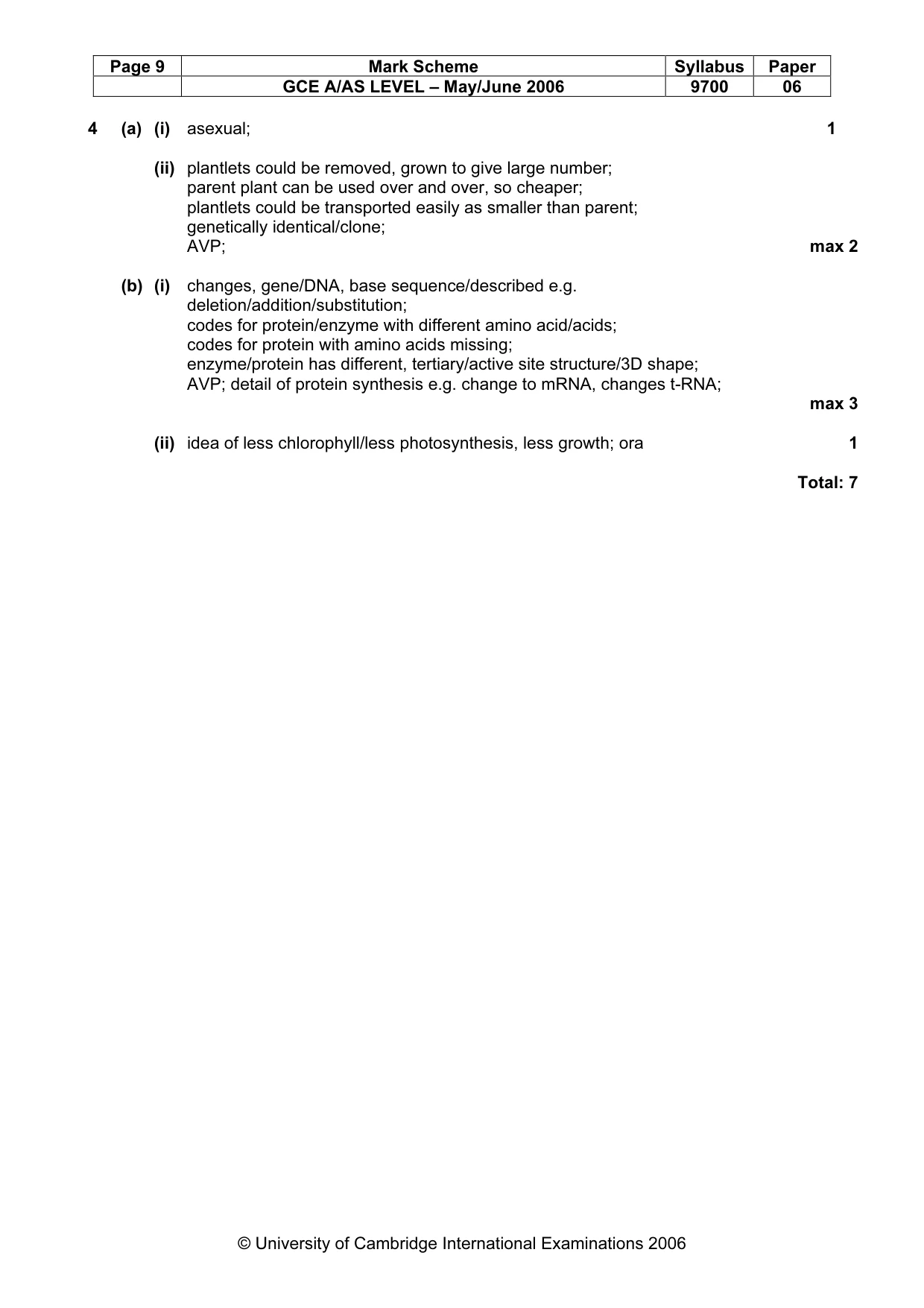
Page 9 Mark Scheme Syllabus Paper GCE A/AS LEVEL – May/June 2006 9700 06 © University of Cambridge International Examinations 2006 4 (a) (i) asexual; 1 (ii) plantlets could be removed, grown to give large number; parent plant can be used over and over, so cheaper; plantlets could be transported easily as smaller than parent; genetically identical/clone; AVP; max 2 (b) (i) changes, gene/DNA, base sequence/described e.g. deletion/addition/substitution; codes for protein/enzyme with different amino acid/acids; codes for protein with amino acids missing; enzyme/protein has different, tertiary/active site structure/3D shape; AVP; detail of protein synthesis e.g. change to mRNA, changes t-RNA; max 3 (ii) idea of less chlorophyll/less photosynthesis, less growth; ora 1 Total: 7
Mark scheme, page 11
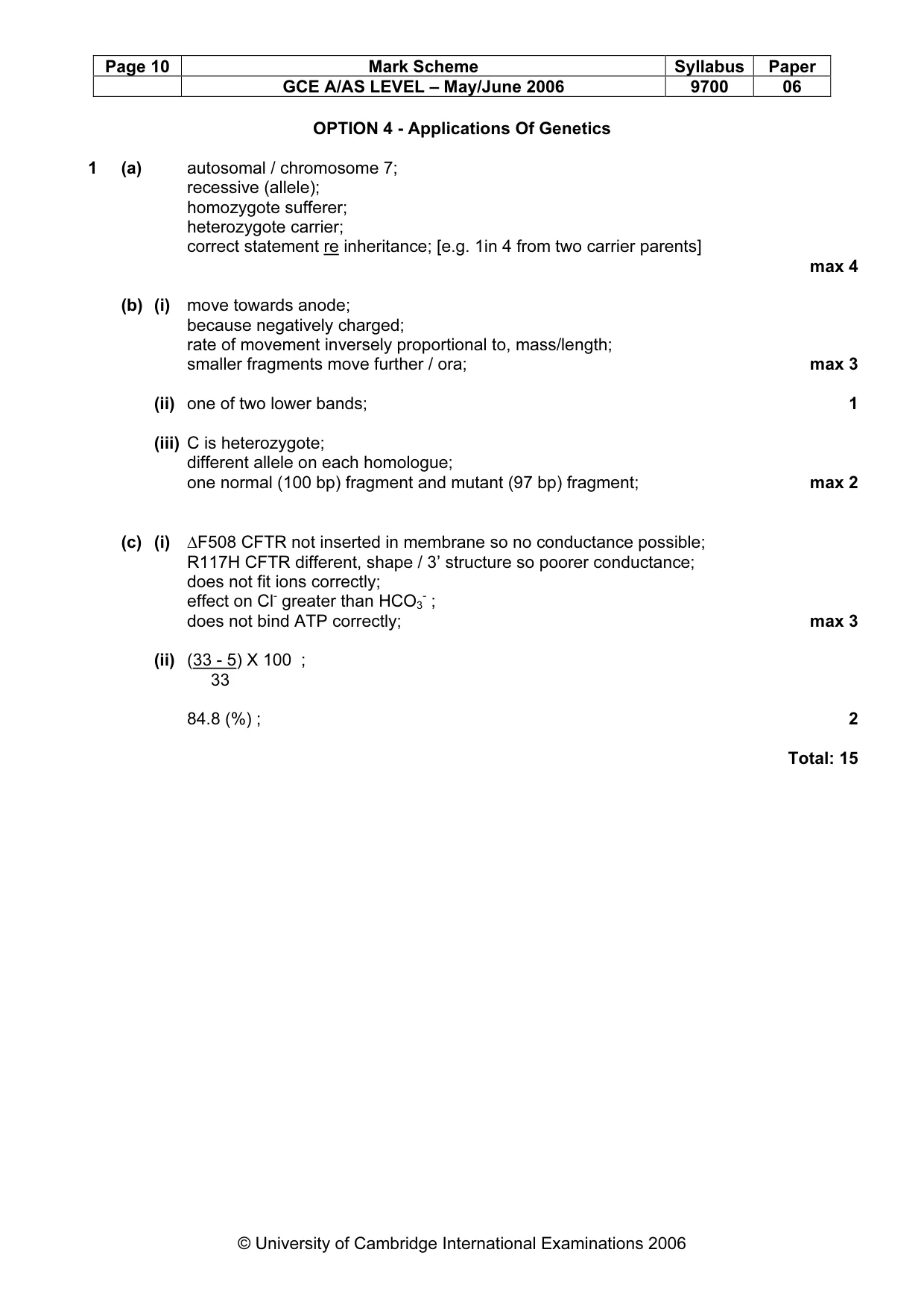
Page 10 Mark Scheme Syllabus Paper GCE A/AS LEVEL – May/June 2006 9700 06 © University of Cambridge International Examinations 2006 OPTION 4 - Applications Of Genetics 1 (a) autosomal / chromosome 7; recessive (allele); homozygote sufferer; heterozygote carrier; correct statement re inheritance; [e.g. 1in 4 from two carrier parents] max 4 (b) (i) move towards anode; because negatively charged; rate of movement inversely proportional to, mass/length; smaller fragments move further / ora; max 3 (ii) one of two lower bands; 1 (iii) C is heterozygote; different allele on each homologue; one normal (100 bp) fragment and mutant (97 bp) fragment; max 2 (c) (i) ∆F508 CFTR not inserted in membrane so no conductance possible; R117H CFTR different, shape / 3’ structure so poorer conductance; does not fit ions correctly; effect on Cl- greater than HCO3 - ; does not bind ATP correctly; max 3 (ii) (33 - 5) X 100 ; 33 84.8 (%) ; 2 Total: 15
Mark scheme, page 12
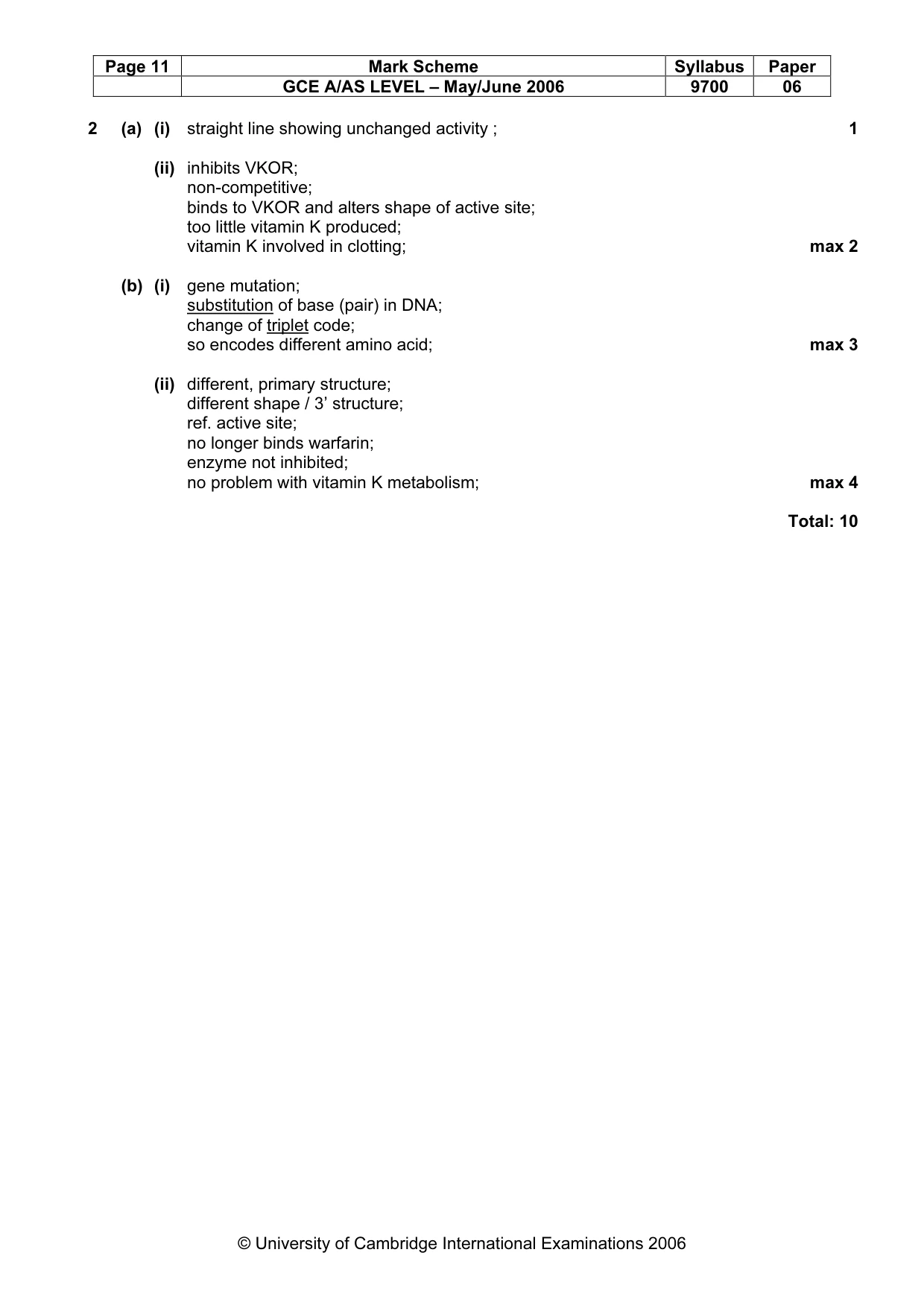
Page 11 Mark Scheme Syllabus Paper GCE A/AS LEVEL – May/June 2006 9700 06 © University of Cambridge International Examinations 2006 2 (a) (i) straight line showing unchanged activity ; 1 (ii) inhibits VKOR; non-competitive; binds to VKOR and alters shape of active site; too little vitamin K produced; vitamin K involved in clotting; max 2 (b) (i) gene mutation; substitution of base (pair) in DNA; change of triplet code; so encodes different amino acid; max 3 (ii) different, primary structure; different shape / 3’ structure; ref. active site; no longer binds warfarin; enzyme not inhibited; no problem with vitamin K metabolism; max 4 Total: 10
Mark scheme, page 13
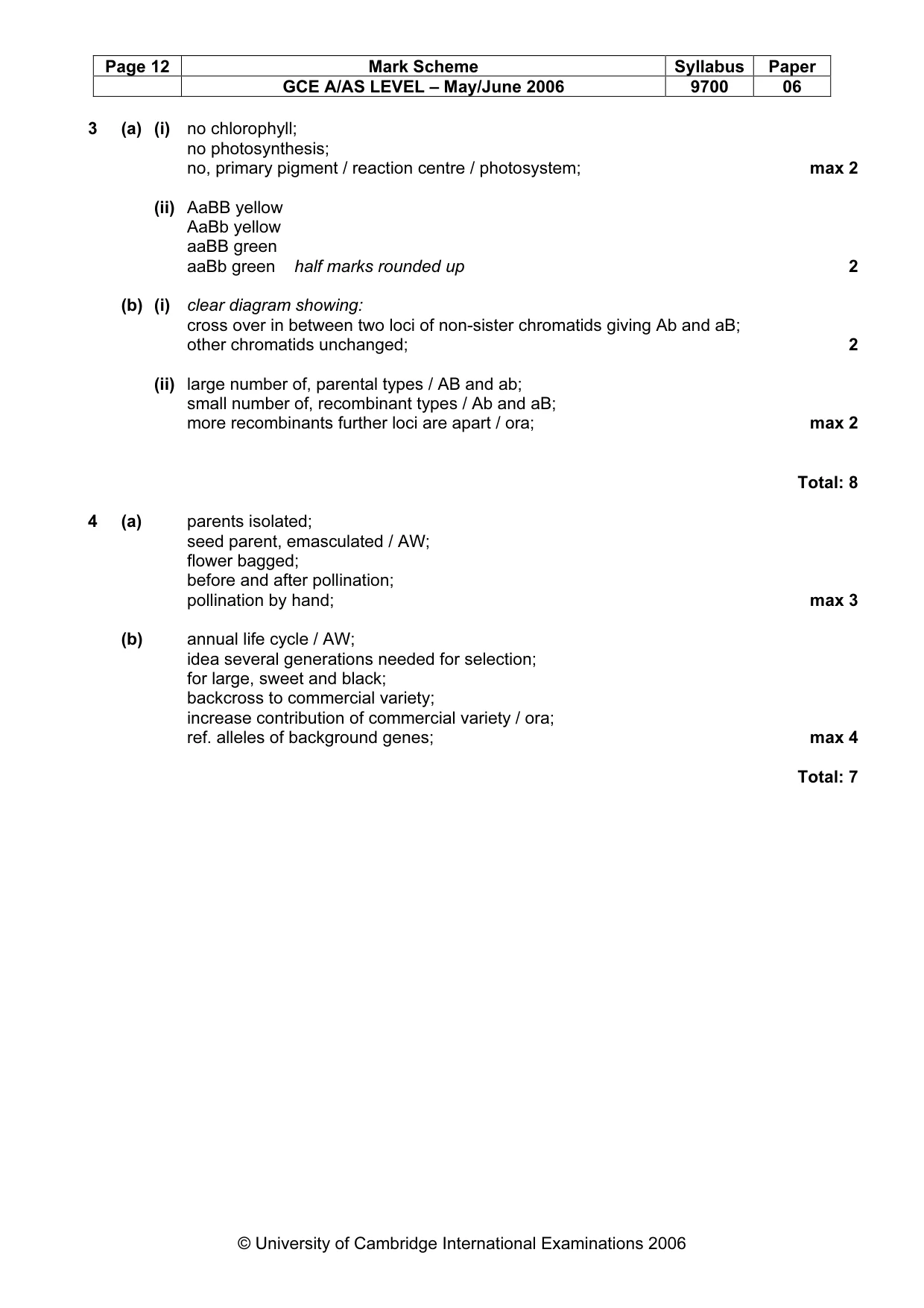
Page 12 Mark Scheme Syllabus Paper GCE A/AS LEVEL – May/June 2006 9700 06 © University of Cambridge International Examinations 2006 3 (a) (i) no chlorophyll; no photosynthesis; no, primary pigment / reaction centre / photosystem; max 2 (ii) AaBB yellow AaBb yellow aaBB green aaBb green half marks rounded up 2 (b) (i) clear diagram showing: cross over in between two loci of non-sister chromatids giving Ab and aB; other chromatids unchanged; 2 (ii) large number of, parental types / AB and ab; small number of, recombinant types / Ab and aB; more recombinants further loci are apart / ora; max 2 Total: 8 4 (a) parents isolated; seed parent, emasculated / AW; flower bagged; before and after pollination; pollination by hand; max 3 (b) annual life cycle / AW; idea several generations needed for selection; for large, sweet and black; backcross to commercial variety; increase contribution of commercial variety / ora; ref. alleles of background genes; max 4 Total: 7
What you needed in this session
Cambridge’s own grade thresholds for 2006 May/June, Paper 6 · Variant 1. A higher threshold means an easier paper — the bar moves with how the cohort did.