Cambridge A Level Biology 9700 — 2005 Oct/Nov Paper 6 · Variant 1
9700/61/O/N/05
The question paper and its mark scheme, free to read here and free to download. This is Cambridge’s own paper, exactly as it was sat.
Question paper36 pages

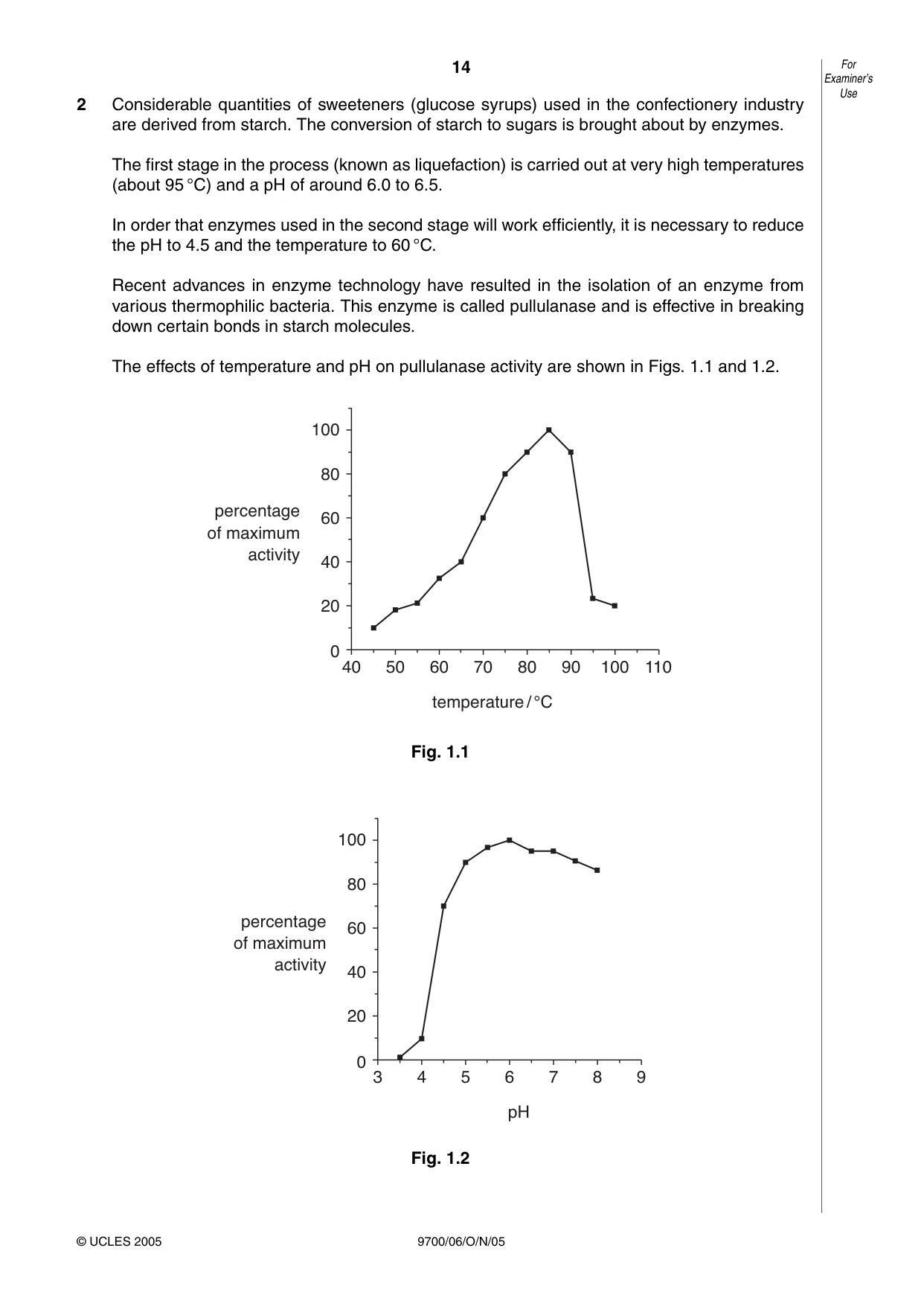
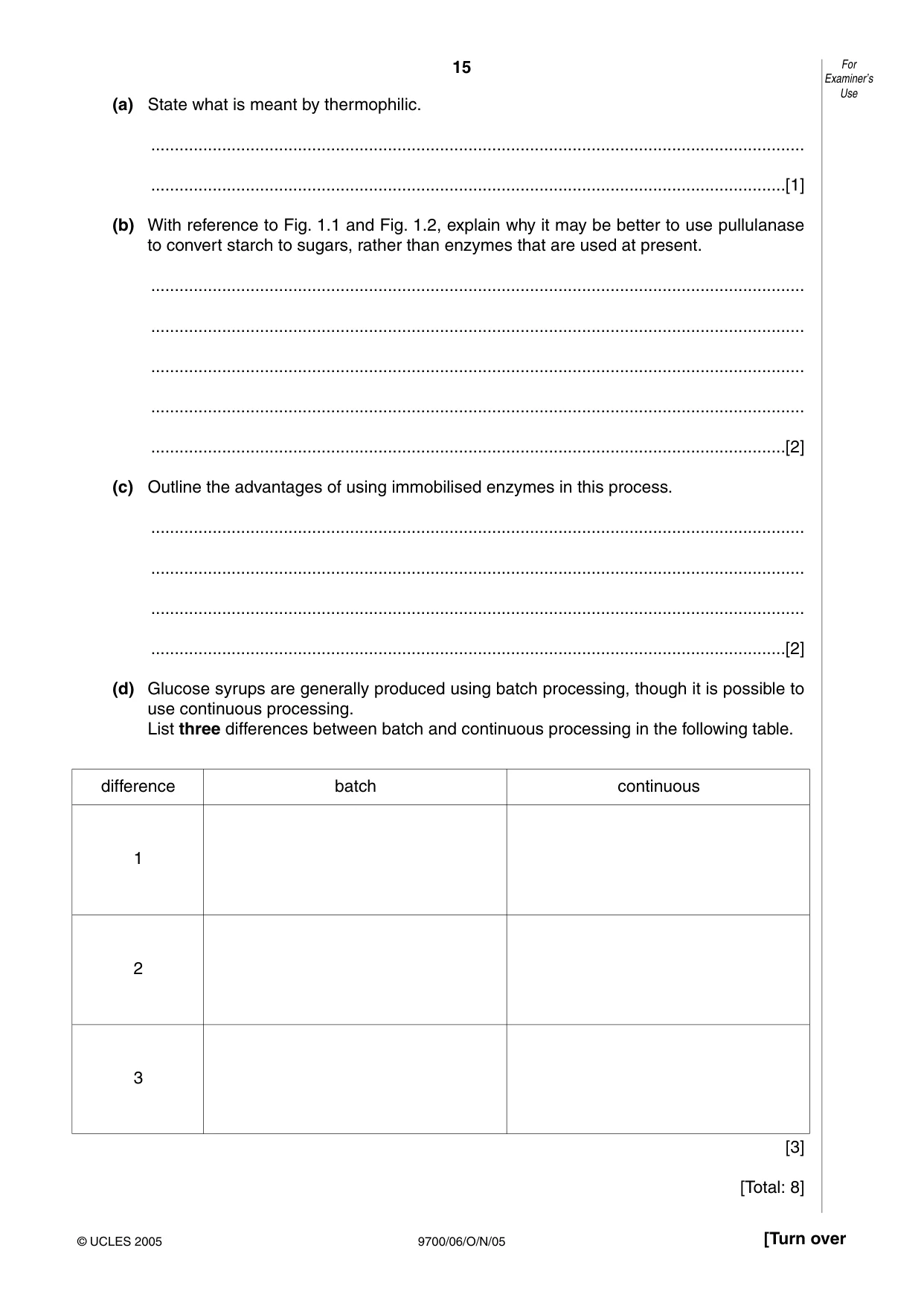
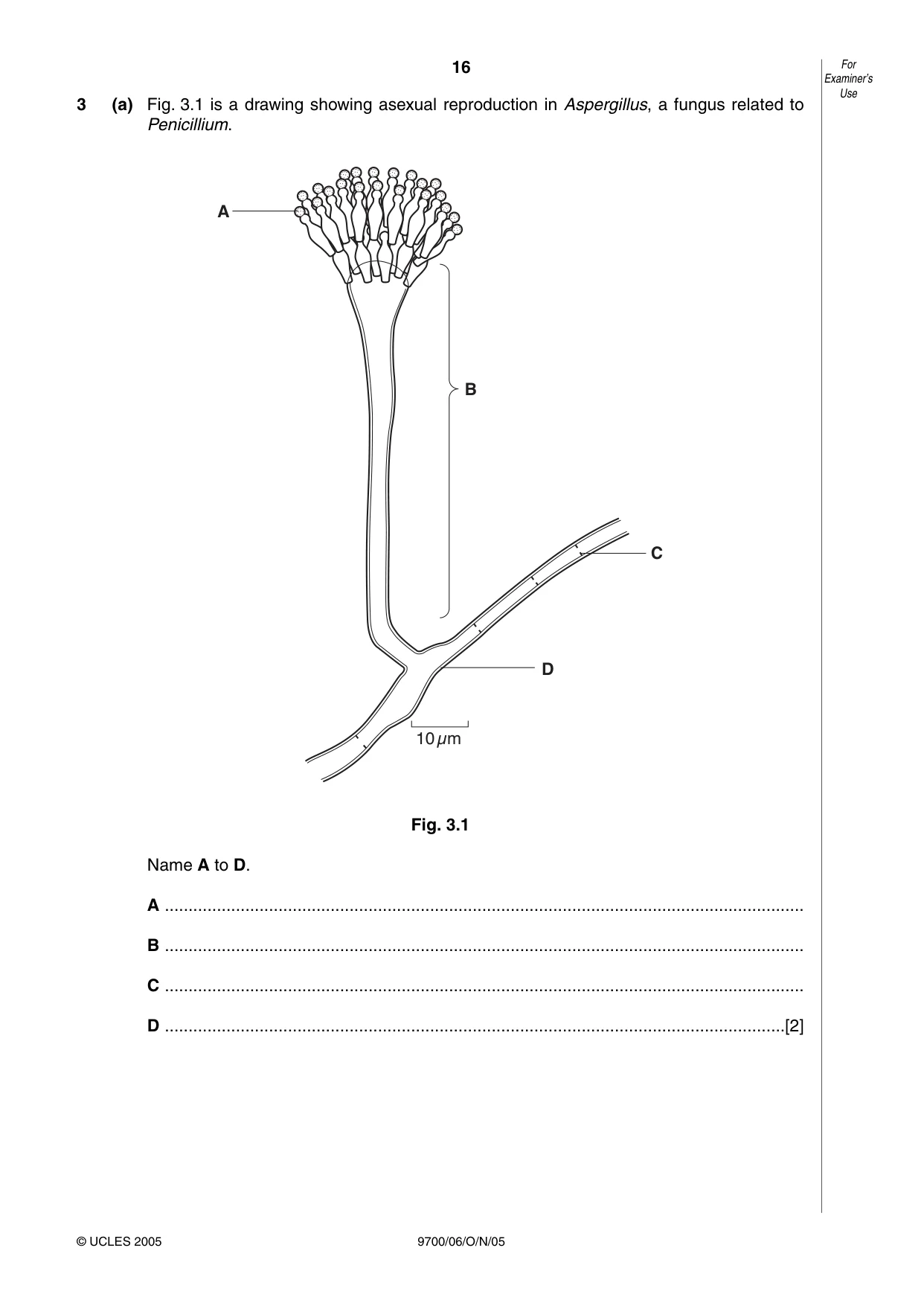
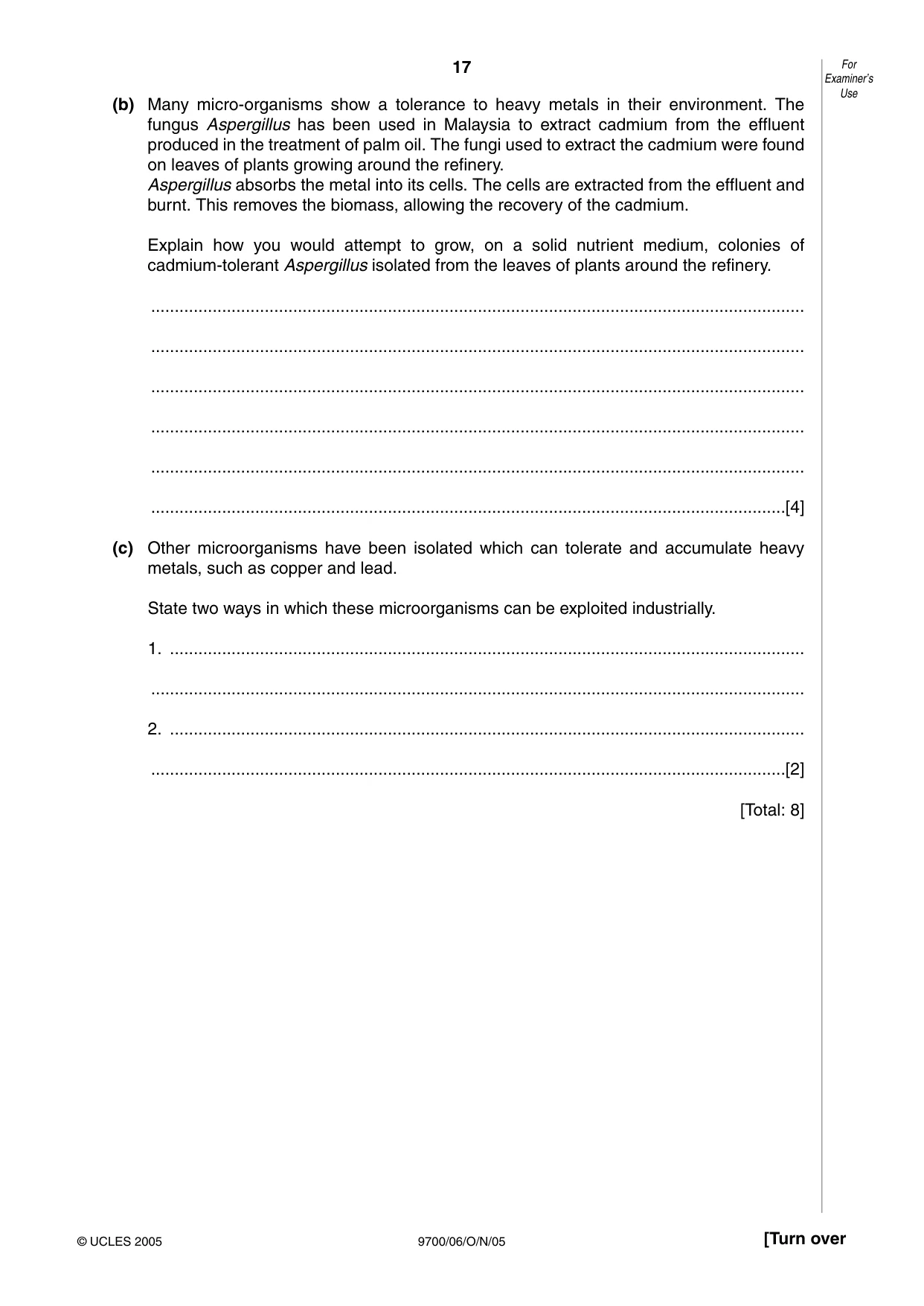



Mark scheme13 pages
Answers below. Sit the paper first if you are practising.
Paper as text
Question paper, page 1
This document consists of 32 printed pages and 4 blank pages. SP (NF/CGW) S87985/3 © UCLES 2005 [Turn over UNIVERSITY OF CAMBRIDGE INTERNATIONAL EXAMINATIONS General Certificate of Education Advanced Level BIOLOGY 9700/06 Paper 6 Options October/November 2005 1 hour Candidates answer on the Question Paper. No Additional Materials are required. READ THESE INSTRUCTIONS FIRST Write your Centre Number, Candidate Number and Name in the spaces at the top of this page. Write in dark blue or black pen in the spaces provided on the Question Paper. You may use a soft pencil for any diagrams, graphs or rough working. Do not use staples, paper clips, highlighters, glue or correction fluid. Answer all the questions set on one of the options. At the end of the examination, enter the number of the option you have answered in the grid below. INFORMATION FOR CANDIDATES The number of marks is given in brackets [ ] at the end of each question or part question. The options are: 1 – Mammalian Physiology (page 2) 2 – Microbiology and Biotechnology (page 11) 3 – Growth, Development and Reproduction (page 20) 4 – Applications of Genetics (page 27) Centre Number Candidate Number Name FOR EXAMINER’S USE 1 2 3 4 OPTION ANSWERED TOTAL
Question paper, page 2
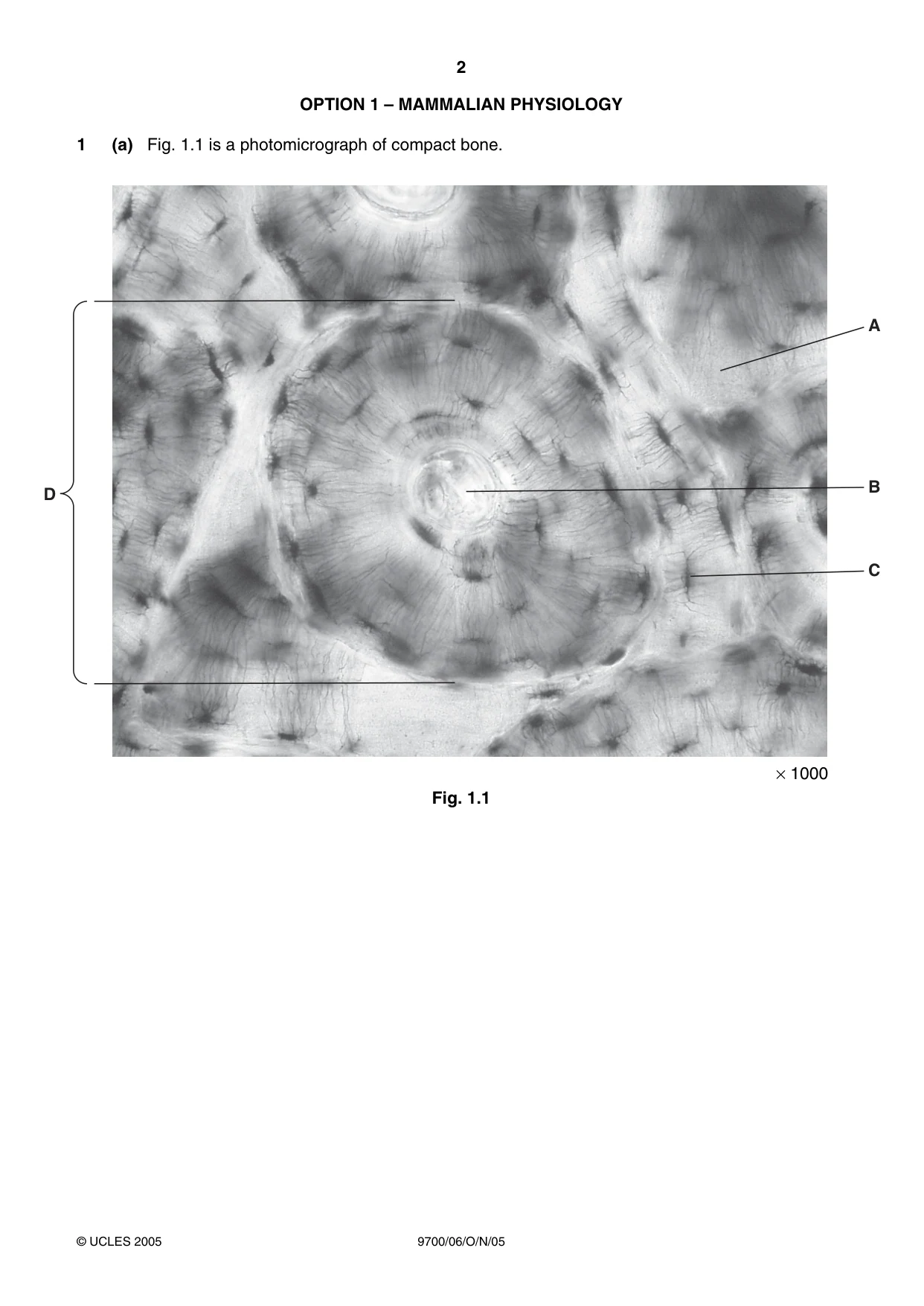
2 9700/06/O/N/05 OPTION 1 – MAMMALIAN PHYSIOLOGY 1 (a) Fig. 1.1 is a photomicrograph of compact bone. × 1000 Fig. 1.1 © UCLES 2005 D A B C
Question paper, page 3
3 9700/06/O/N/05 [Turn over Name A to D. A … B … C … D …[2] (b) State where in a limb bone you would find bone tissue like that in Fig. 1.1. …[1] (c) The ends of limb bones are covered with a layer of cartilage. (i) State two ways in which the structure of cartilage differs from that of bone. 1. … … 2. … …[2] (ii) Explain one advantage of the ends of limb bones being covered with a layer of cartilage rather than bone. … … …[2] For Examiner’s Use © UCLES 2005
Question paper, page 4
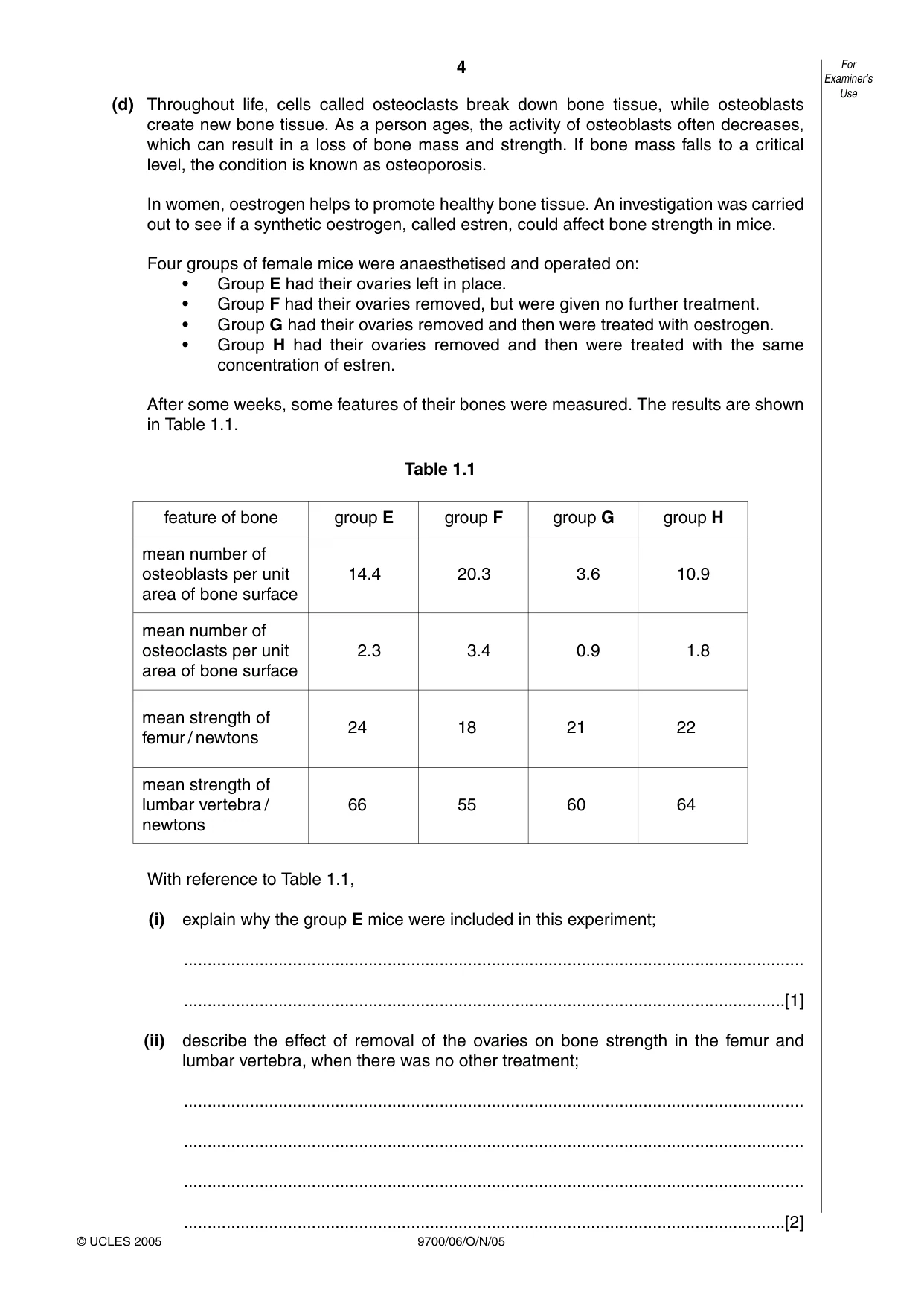
4 9700/06/O/N/05 (d) Throughout life, cells called osteoclasts break down bone tissue, while osteoblasts create new bone tissue. As a person ages, the activity of osteoblasts often decreases, which can result in a loss of bone mass and strength. If bone mass falls to a critical level, the condition is known as osteoporosis. In women, oestrogen helps to promote healthy bone tissue. An investigation was carried out to see if a synthetic oestrogen, called estren, could affect bone strength in mice. Four groups of female mice were anaesthetised and operated on: • Group E had their ovaries left in place. • Group F had their ovaries removed, but were given no further treatment. • Group G had their ovaries removed and then were treated with oestrogen. • Group H had their ovaries removed and then were treated with the same concentration of estren. After some weeks, some features of their bones were measured. The results are shown in Table 1.1. Table 1.1 With reference to Table 1.1, (i) explain why the group E mice were included in this experiment; … …[1] (ii) describe the effect of removal of the ovaries on bone strength in the femur and lumbar vertebra, when there was no other treatment; … … … …[2] For Examiner’s Use © UCLES 2005 feature of bone group E group F group G group H mean number of osteoblasts per unit 14.4 20.3 3.6 10.9 area of bone surface mean number of osteoclasts per unit 2.3 3.4 0.9 1.8 area of bone surface mean strength of femur / newtons 24 18 21 22 mean strength of lumbar vertebra / 66 55 60 64 newtons
Question paper, page 5
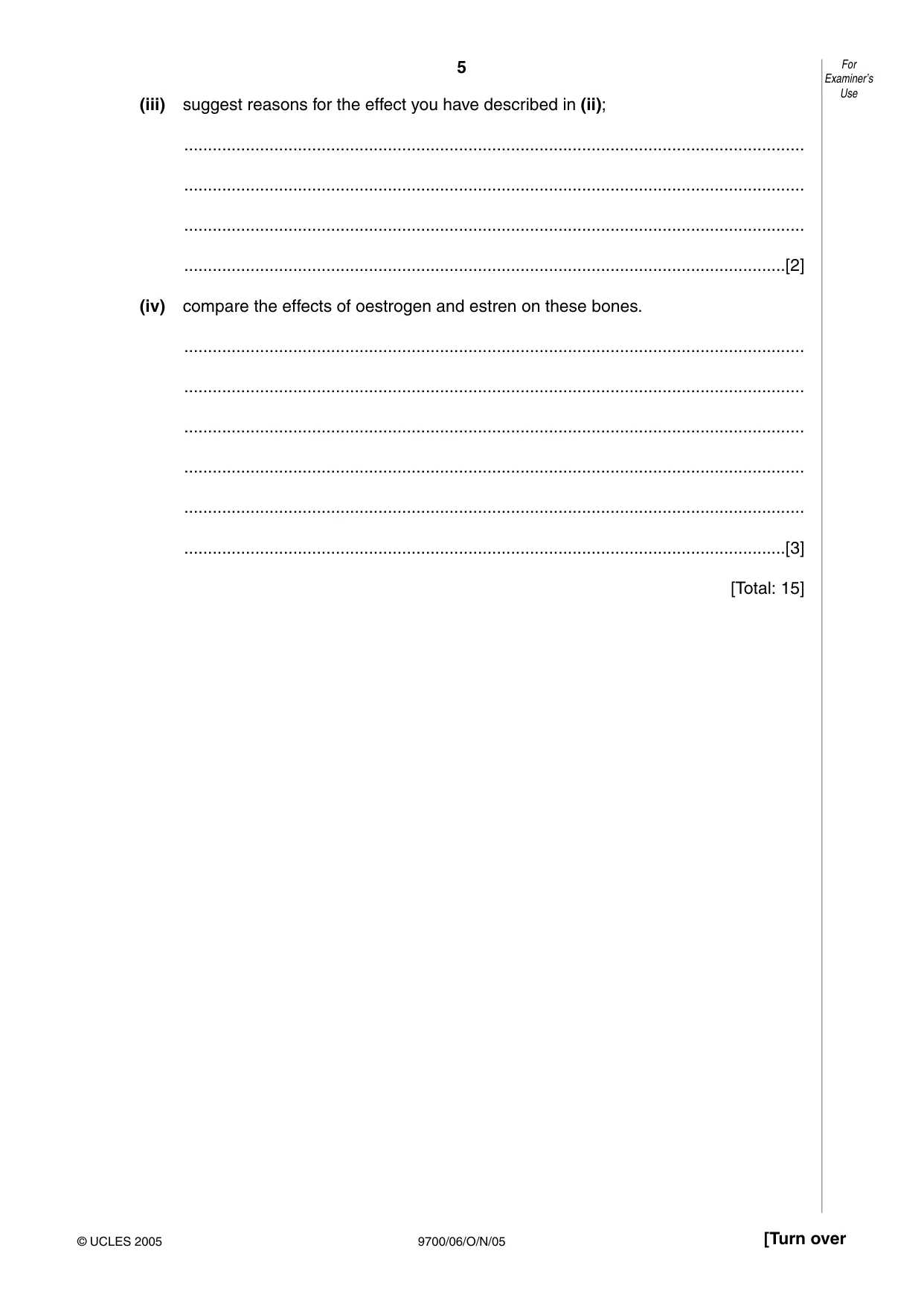
5 9700/06/O/N/05 [Turn over (iii) suggest reasons for the effect you have described in (ii); … … … …[2] (iv) compare the effects of oestrogen and estren on these bones. … … … … … …[3] [Total: 15] For Examiner’s Use © UCLES 2005
Question paper, page 6
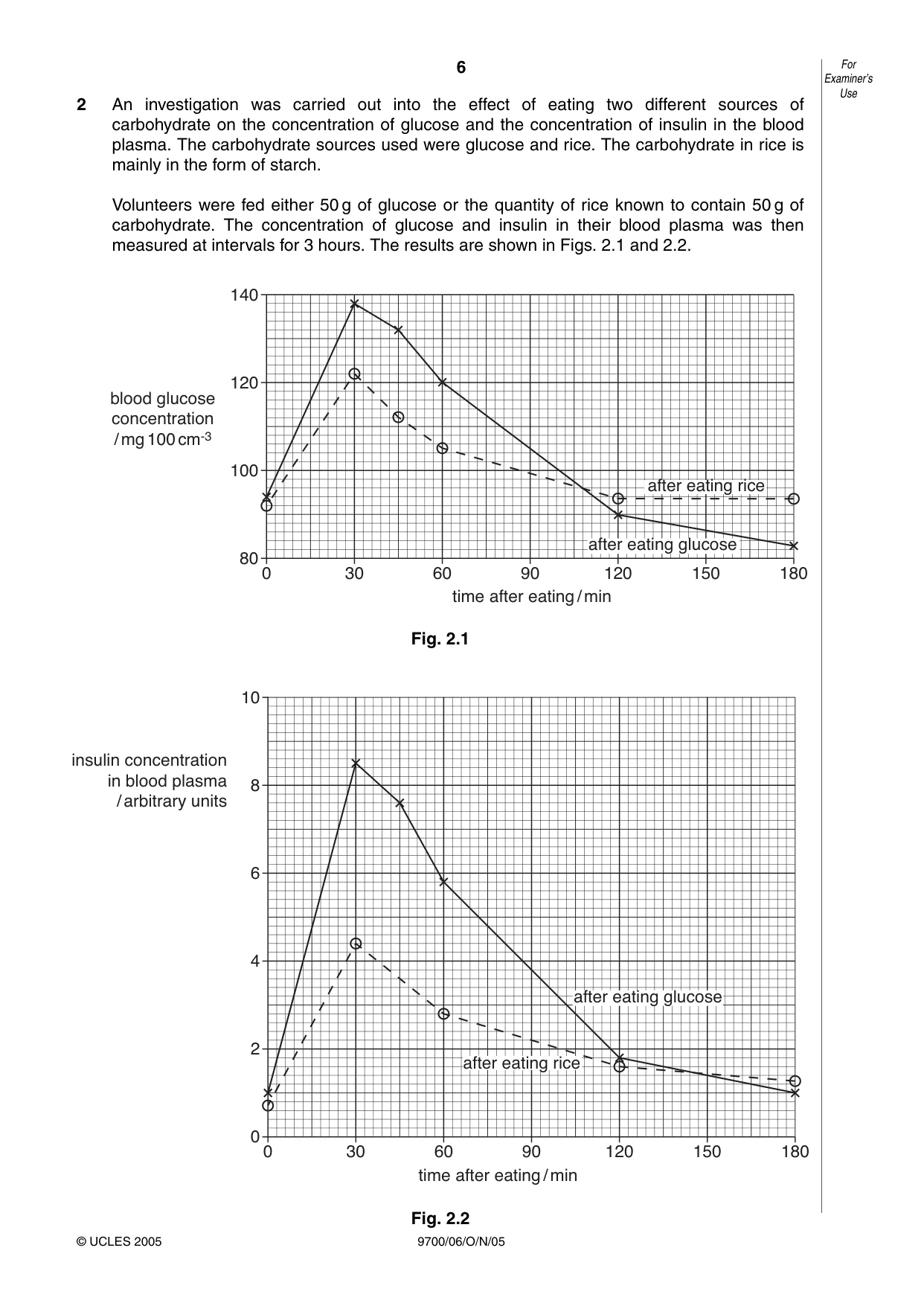
6 9700/06/O/N/05 2 An investigation was carried out into the effect of eating two different sources of carbohydrate on the concentration of glucose and the concentration of insulin in the blood plasma. The carbohydrate sources used were glucose and rice. The carbohydrate in rice is mainly in the form of starch. Volunteers were fed either 50 g of glucose or the quantity of rice known to contain 50 g of carbohydrate. The concentration of glucose and insulin in their blood plasma was then measured at intervals for 3 hours. The results are shown in Figs. 2.1 and 2.2. Fig. 2.1 Fig. 2.2 For Examiner’s Use © UCLES 2005 0 0 30 60 time after eating / min insulin concentration in blood plasma / arbitrary units 90 120 150 180 2 4 6 8 10 after eating rice after eating glucose 80 0 30 60 time after eating / min blood glucose concentration / mg 100 cm-3 90 120 150 180 100 120 140 after eating rice after eating glucose
Question paper, page 7
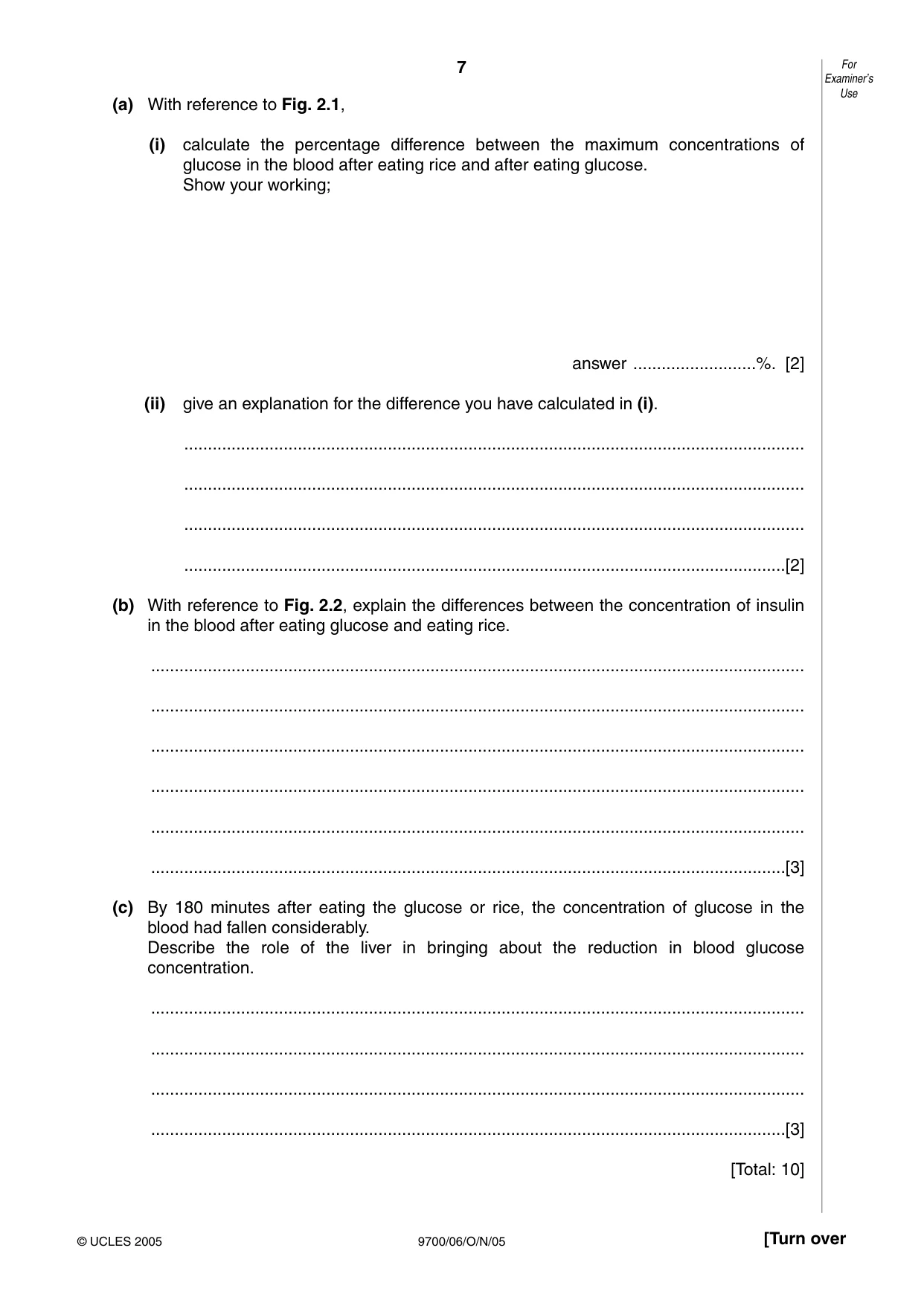
7 9700/06/O/N/05 [Turn over (a) With reference to Fig. 2.1, (i) calculate the percentage difference between the maximum concentrations of glucose in the blood after eating rice and after eating glucose. Show your working; answer …%. [2] (ii) give an explanation for the difference you have calculated in (i). … … … …[2] (b) With reference to Fig. 2.2, explain the differences between the concentration of insulin in the blood after eating glucose and eating rice. … … … … … …[3] (c) By 180 minutes after eating the glucose or rice, the concentration of glucose in the blood had fallen considerably. Describe the role of the liver in bringing about the reduction in blood glucose concentration. … … … …[3] [Total: 10] For Examiner’s Use © UCLES 2005
Question paper, page 9
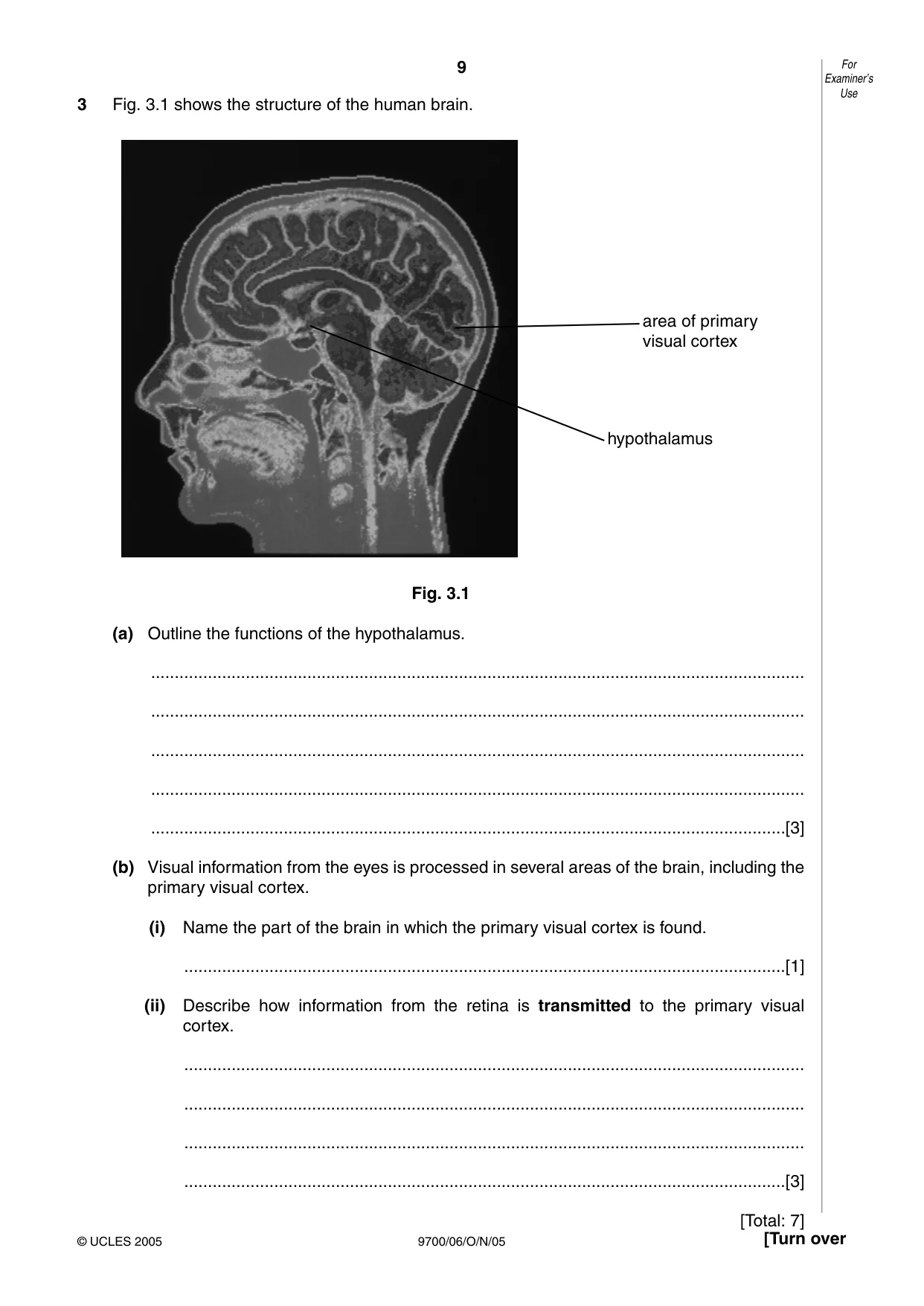
9 9700/06/O/N/05 [Turn over 3 Fig. 3.1 shows the structure of the human brain. Fig. 3.1 (a) Outline the functions of the hypothalamus. … … … … …[3] (b) Visual information from the eyes is processed in several areas of the brain, including the primary visual cortex. (i) Name the part of the brain in which the primary visual cortex is found. …[1] (ii) Describe how information from the retina is transmitted to the primary visual cortex. … … … …[3] [Total: 7] For Examiner’s Use © UCLES 2005 area of primary visual cortex hypothalamus
Question paper, page 10
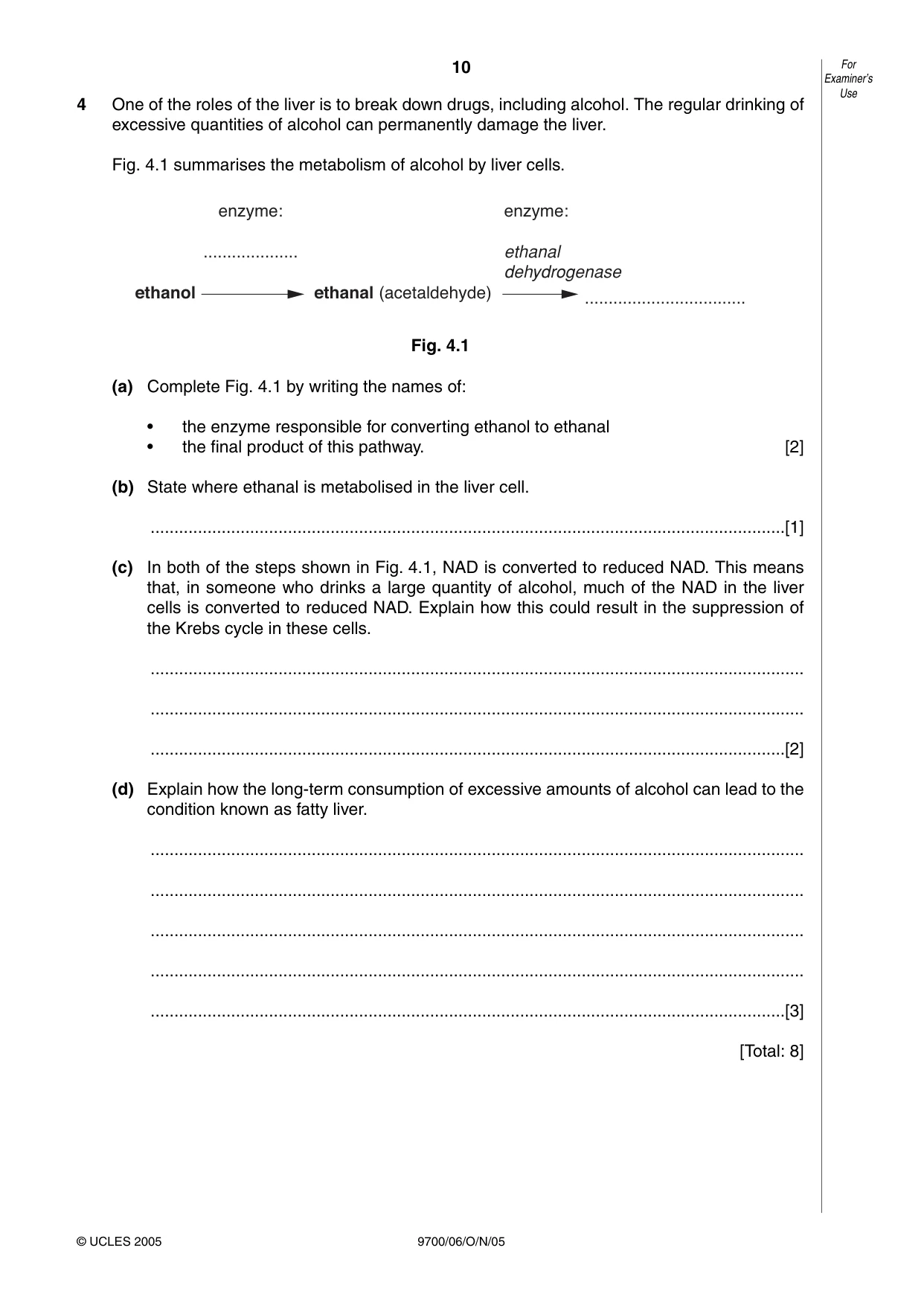
10 9700/06/O/N/05 4 One of the roles of the liver is to break down drugs, including alcohol. The regular drinking of excessive quantities of alcohol can permanently damage the liver. Fig. 4.1 summarises the metabolism of alcohol by liver cells. Fig. 4.1 (a) Complete Fig. 4.1 by writing the names of: • the enzyme responsible for converting ethanol to ethanal • the final product of this pathway. [2] (b) State where ethanal is metabolised in the liver cell. …[1] (c) In both of the steps shown in Fig. 4.1, NAD is converted to reduced NAD. This means that, in someone who drinks a large quantity of alcohol, much of the NAD in the liver cells is converted to reduced NAD. Explain how this could result in the suppression of the Krebs cycle in these cells. … … …[2] (d) Explain how the long-term consumption of excessive amounts of alcohol can lead to the condition known as fatty liver. … … … … …[3] [Total: 8] ethanol ethanal (acetaldehyde) enzyme: … … enzyme: ethanal dehydrogenase For Examiner’s Use © UCLES 2005
Question paper, page 11
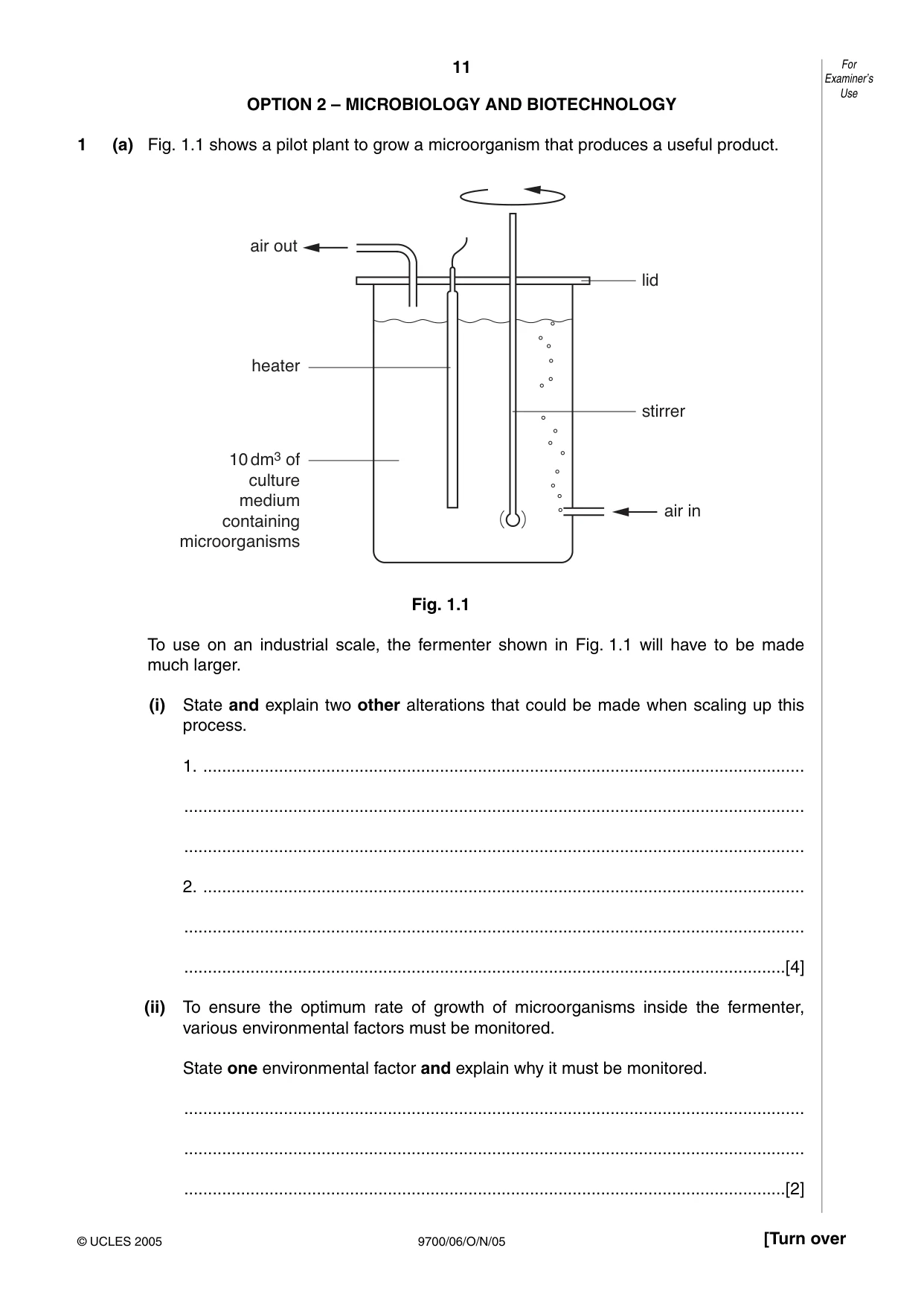
11 9700/06/O/N/05 [Turn over OPTION 2 – MICROBIOLOGY AND BIOTECHNOLOGY 1 (a) Fig. 1.1 shows a pilot plant to grow a microorganism that produces a useful product. Fig. 1.1 To use on an industrial scale, the fermenter shown in Fig. 1.1 will have to be made much larger. (i) State and explain two other alterations that could be made when scaling up this process. 1. … … … 2. … … …[4] (ii) To ensure the optimum rate of growth of microorganisms inside the fermenter, various environmental factors must be monitored. State one environmental factor and explain why it must be monitored. … … …[2] air out lid stirrer heater 10 dm3 of culture medium containing microorganisms air in For Examiner’s Use © UCLES 2005
Question paper, page 12
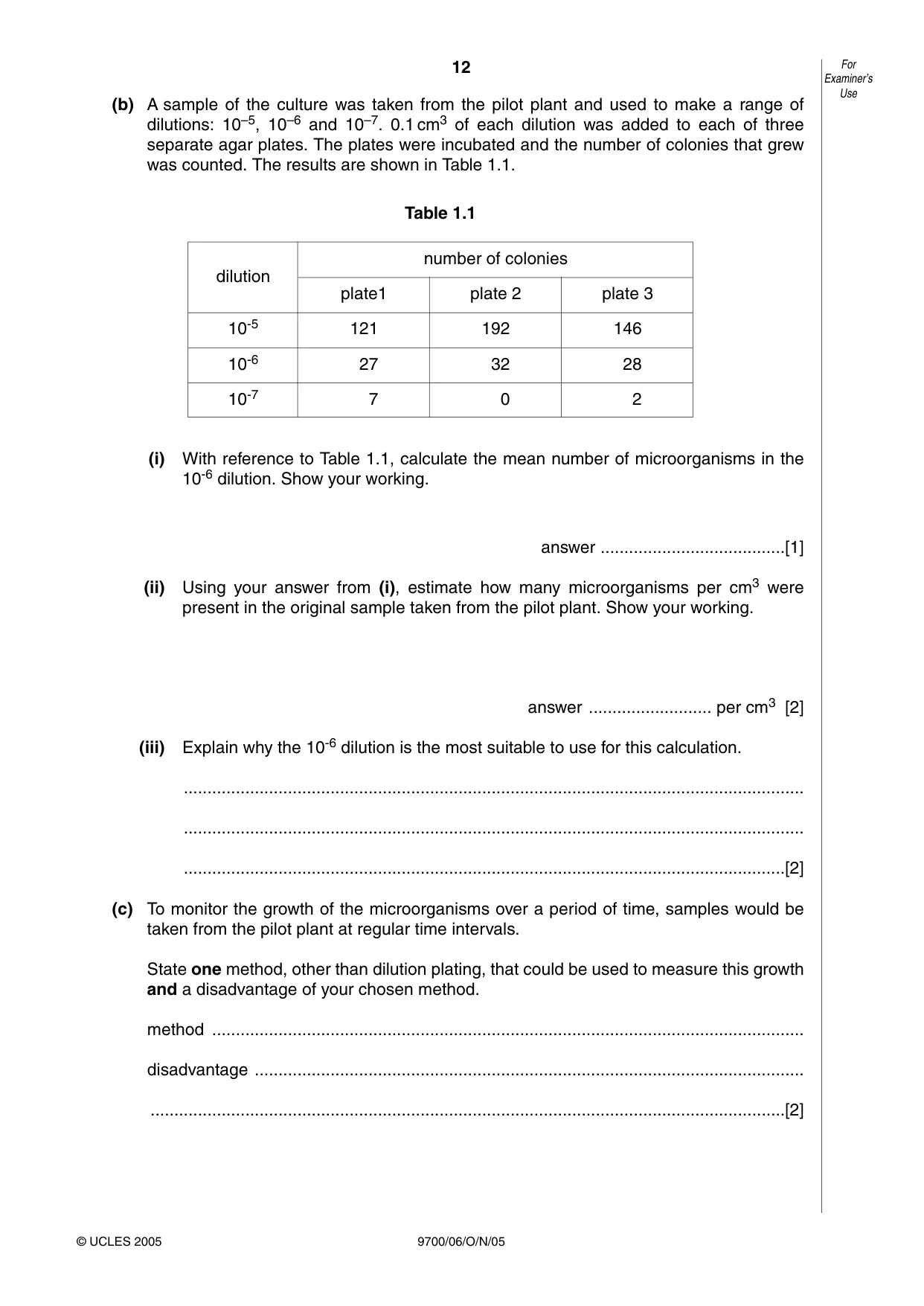
12 9700/06/O/N/05 (b) A sample of the culture was taken from the pilot plant and used to make a range of dilutions: 10–5, 10–6 and 10–7. 0.1 cm3 of each dilution was added to each of three separate agar plates. The plates were incubated and the number of colonies that grew was counted. The results are shown in Table 1.1. Table 1.1 (i) With reference to Table 1.1, calculate the mean number of microorganisms in the 10-6 dilution. Show your working. answer …[1] (ii) Using your answer from (i), estimate how many microorganisms per cm3 were present in the original sample taken from the pilot plant. Show your working. answer … per cm3 [2] (iii) Explain why the 10-6 dilution is the most suitable to use for this calculation. … … …[2] (c) To monitor the growth of the microorganisms over a period of time, samples would be taken from the pilot plant at regular time intervals. State one method, other than dilution plating, that could be used to measure this growth and a disadvantage of your chosen method. method … disadvantage … …[2] For Examiner’s Use © UCLES 2005 number of colonies dilution plate1 plate 2 plate 3 10-5 121 192 146 10-6 27 32 28 10-7 7 0 2
Question paper, page 13
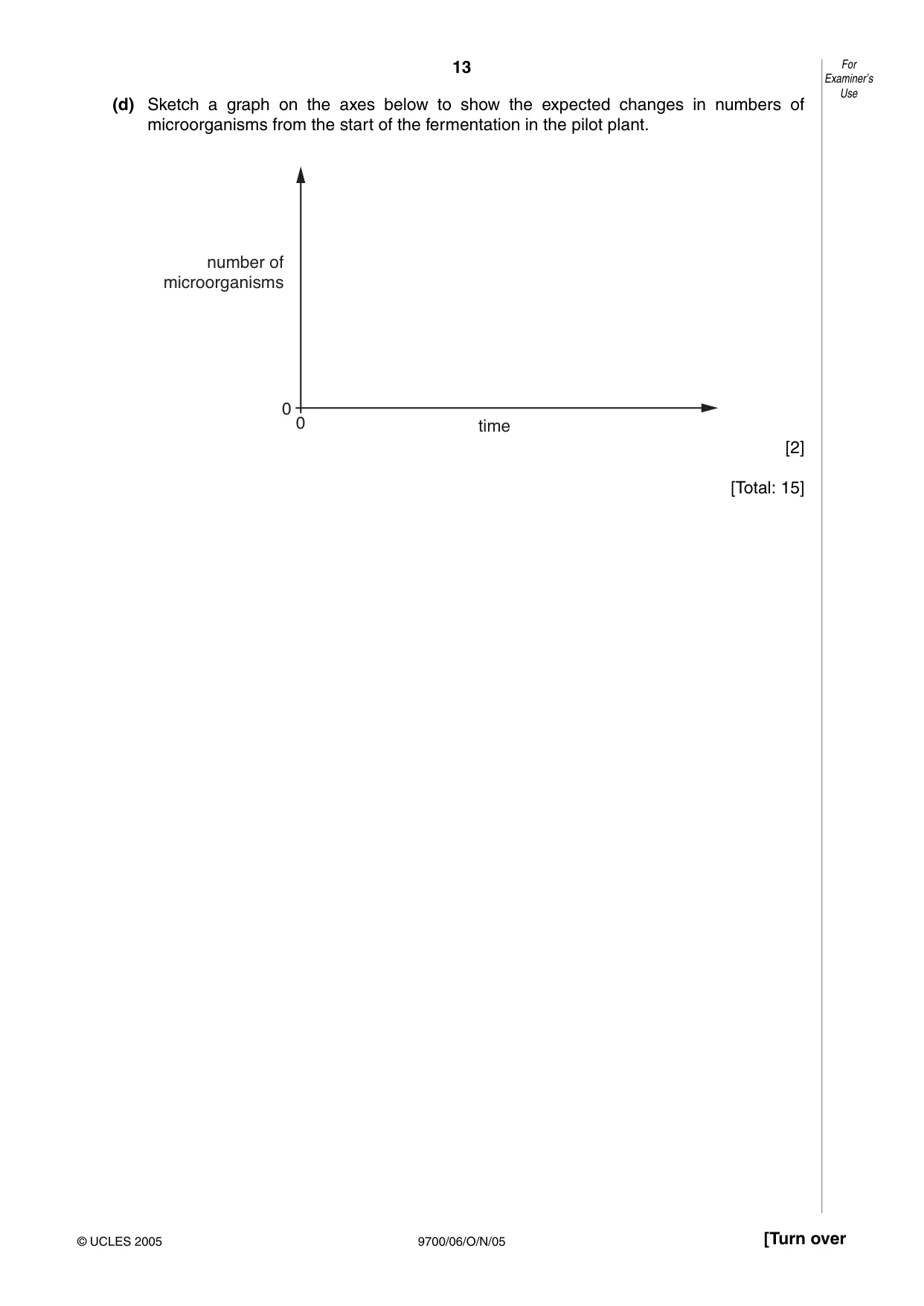
13 9700/06/O/N/05 [Turn over (d) Sketch a graph on the axes below to show the expected changes in numbers of microorganisms from the start of the fermentation in the pilot plant. [2] [Total: 15] number of microorganisms time 0 0 For Examiner’s Use © UCLES 2005
Question paper, page 14
14 9700/06/O/N/05 2 Considerable quantities of sweeteners (glucose syrups) used in the confectionery industry are derived from starch. The conversion of starch to sugars is brought about by enzymes. The first stage in the process (known as liquefaction) is carried out at very high temperatures (about 95 °C) and a pH of around 6.0 to 6.5. In order that enzymes used in the second stage will work efficiently, it is necessary to reduce the pH to 4.5 and the temperature to 60 °C. Recent advances in enzyme technology have resulted in the isolation of an enzyme from various thermophilic bacteria. This enzyme is called pullulanase and is effective in breaking down certain bonds in starch molecules. The effects of temperature and pH on pullulanase activity are shown in Figs. 1.1 and 1.2. Fig. 1.1 Fig. 1.2 3 0 percentage of maximum activity 20 40 60 80 100 5 4 6 pH 8 7 9 40 0 percentage of maximum activity 20 40 60 80 100 60 50 70 temperature / °C 90 110 80 100 For Examiner’s Use © UCLES 2005
Question paper, page 15
15 9700/06/O/N/05 [Turn over (a) State what is meant by thermophilic. … …[1] (b) With reference to Fig. 1.1 and Fig. 1.2, explain why it may be better to use pullulanase to convert starch to sugars, rather than enzymes that are used at present. … … … … …[2] (c) Outline the advantages of using immobilised enzymes in this process. … … … …[2] (d) Glucose syrups are generally produced using batch processing, though it is possible to use continuous processing. List three differences between batch and continuous processing in the following table. [3] [Total: 8] For Examiner’s Use © UCLES 2005 difference batch continuous 1 2 3
Question paper, page 16
16 9700/06/O/N/05 3 (a) Fig. 3.1 is a drawing showing asexual reproduction in Aspergillus, a fungus related to Penicillium. Fig. 3.1 Name A to D. A … B … C … D …[2] A B C D 10 µm For Examiner’s Use © UCLES 2005
Question paper, page 17
17 9700/06/O/N/05 [Turn over (b) Many micro-organisms show a tolerance to heavy metals in their environment. The fungus Aspergillus has been used in Malaysia to extract cadmium from the effluent produced in the treatment of palm oil. The fungi used to extract the cadmium were found on leaves of plants growing around the refinery. Aspergillus absorbs the metal into its cells. The cells are extracted from the effluent and burnt. This removes the biomass, allowing the recovery of the cadmium. Explain how you would attempt to grow, on a solid nutrient medium, colonies of cadmium-tolerant Aspergillus isolated from the leaves of plants around the refinery. … … … … … …[4] (c) Other microorganisms have been isolated which can tolerate and accumulate heavy metals, such as copper and lead. State two ways in which these microorganisms can be exploited industrially. 1. … … 2. … …[2] [Total: 8] For Examiner’s Use © UCLES 2005
Question paper, page 18
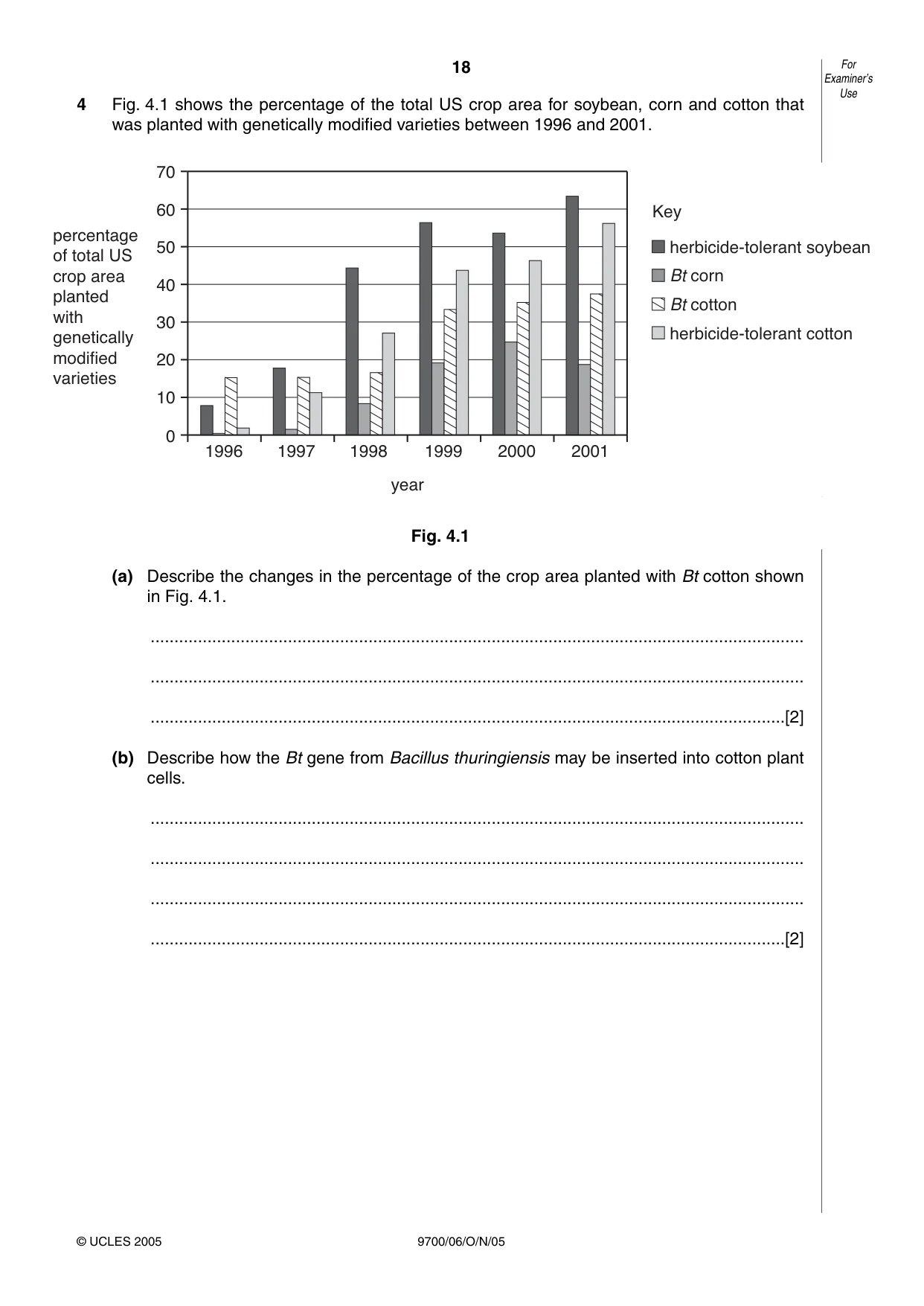
18 9700/06/O/N/05 4 Fig. 4.1 shows the percentage of the total US crop area for soybean, corn and cotton that was planted with genetically modified varieties between 1996 and 2001. Fig. 4.1 (a) Describe the changes in the percentage of the crop area planted with Bt cotton shown in Fig. 4.1. … … …[2] (b) Describe how the Bt gene from Bacillus thuringiensis may be inserted into cotton plant cells. … … … …[2] For Examiner’s Use © UCLES 2005 1996 0 10 20 30 40 50 percentage of total US crop area planted with genetically modified varieties 60 70 1997 1998 year 1999 2000 2001 herbicide-tolerant soybean Key Bt corn Bt cotton herbicide-tolerant cotton
Question paper, page 19
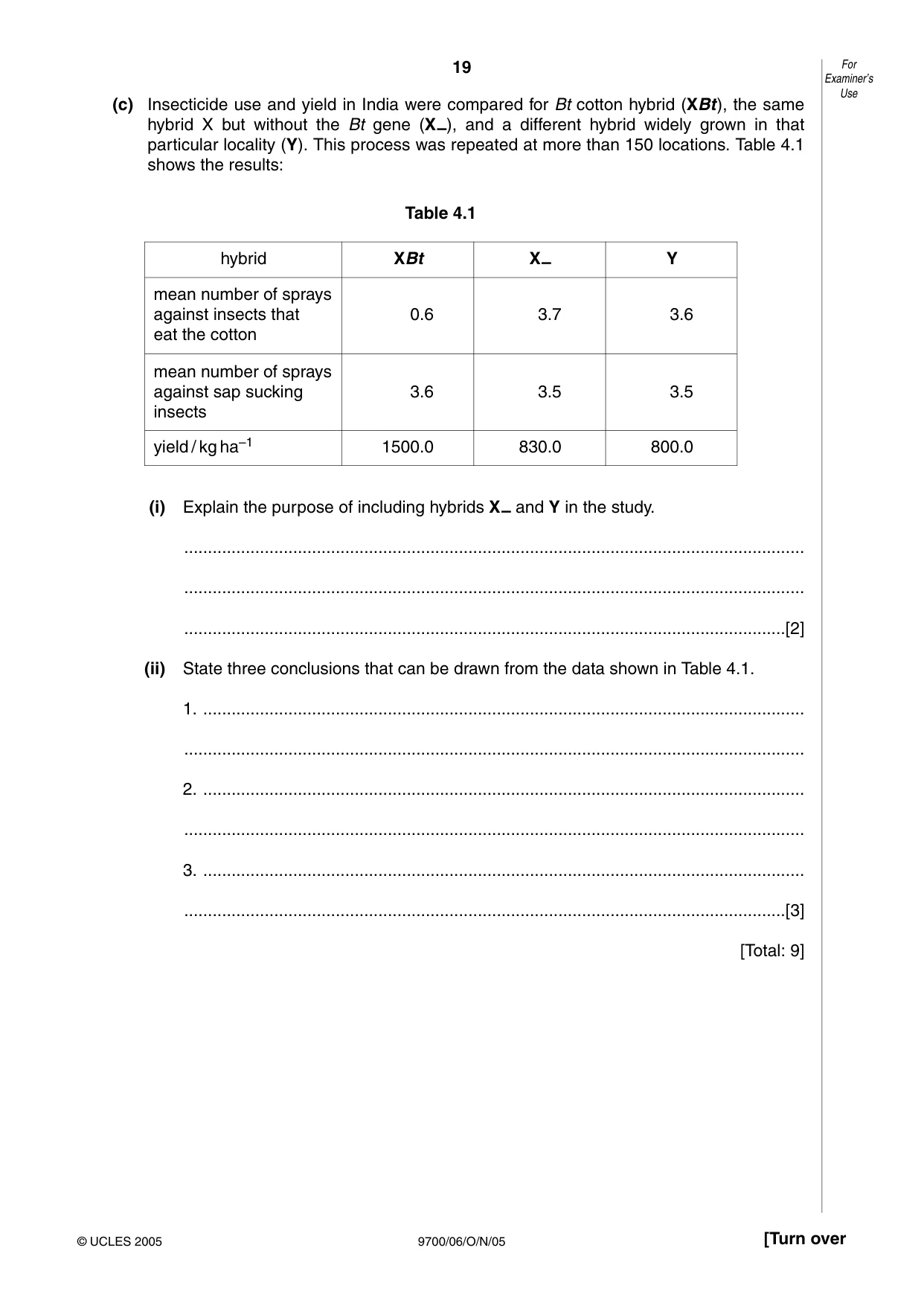
19 9700/06/O/N/05 [Turn over (c) Insecticide use and yield in India were compared for Bt cotton hybrid (XBt), the same hybrid X but without the Bt gene (X–), and a different hybrid widely grown in that particular locality (Y). This process was repeated at more than 150 locations. Table 4.1 shows the results: Table 4.1 (i) Explain the purpose of including hybrids X– and Y in the study. … … …[2] (ii) State three conclusions that can be drawn from the data shown in Table 4.1. 1. … … 2. … … 3. … …[3] [Total: 9] For Examiner’s Use © UCLES 2005 hybrid XBt X– Y mean number of sprays against insects that 0.6 3.7 3.6 eat the cotton mean number of sprays against sap sucking 3.6 3.5 3.5 insects yield / kg ha–1 1500.0 830.0 800.0
Question paper, page 20
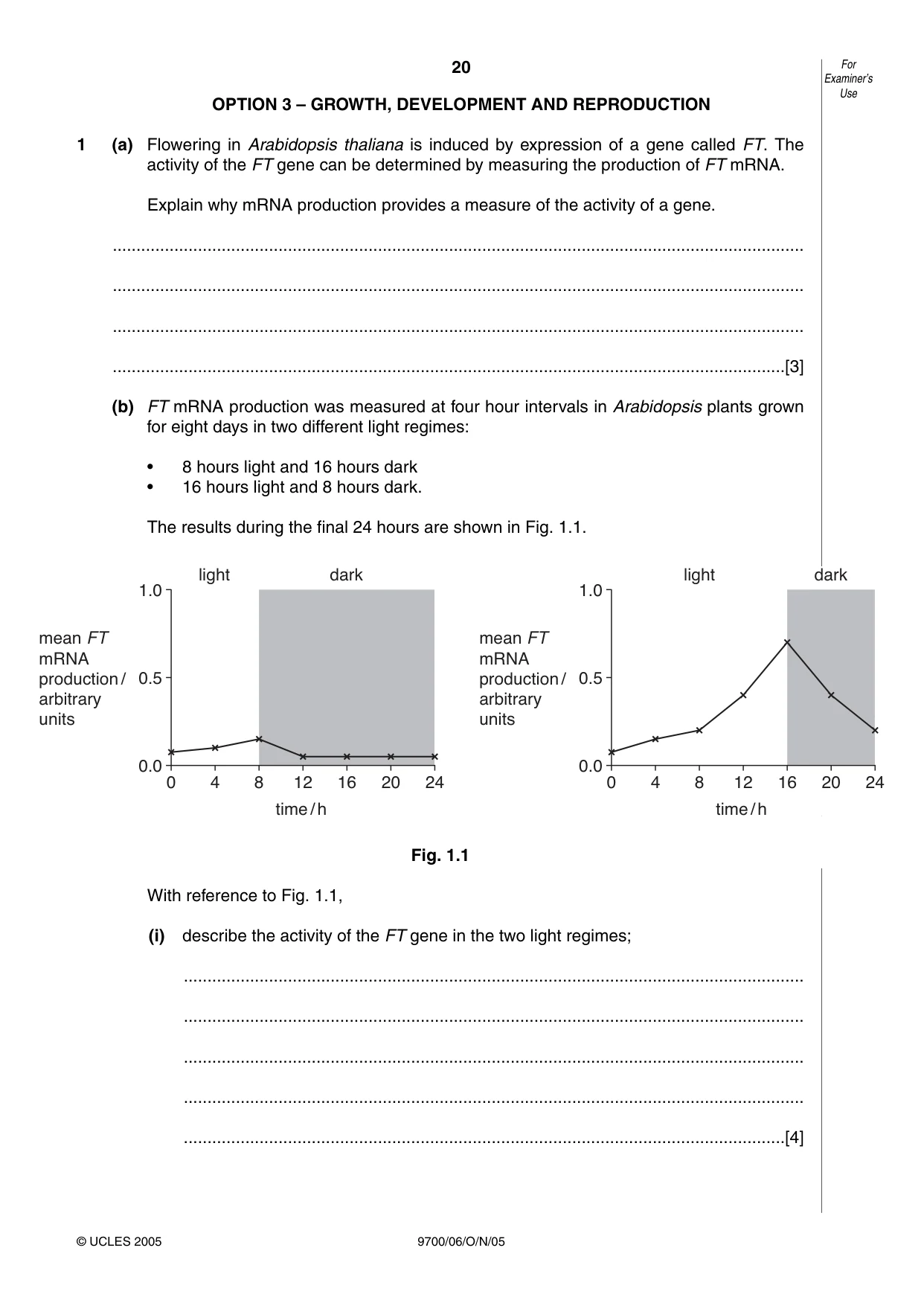
20 9700/06/O/N/05 OPTION 3 – GROWTH, DEVELOPMENT AND REPRODUCTION 1 (a) Flowering in Arabidopsis thaliana is induced by expression of a gene called FT. The activity of the FT gene can be determined by measuring the production of FT mRNA. Explain why mRNA production provides a measure of the activity of a gene. … … … …[3] (b) FT mRNA production was measured at four hour intervals in Arabidopsis plants grown for eight days in two different light regimes: • 8 hours light and 16 hours dark • 16 hours light and 8 hours dark. The results during the final 24 hours are shown in Fig. 1.1. Fig. 1.1 With reference to Fig. 1.1, (i) describe the activity of the FT gene in the two light regimes; … … … … …[4] For Examiner’s Use © UCLES 2005 0 0.0 0.5 1.0 8 16 24 4 20 12 light dark time / h mean FT mRNA production / arbitrary units 0 0.0 0.5 1.0 8 16 24 4 20 12 light dark time / h mean FT mRNA production / arbitrary units
Question paper, page 21
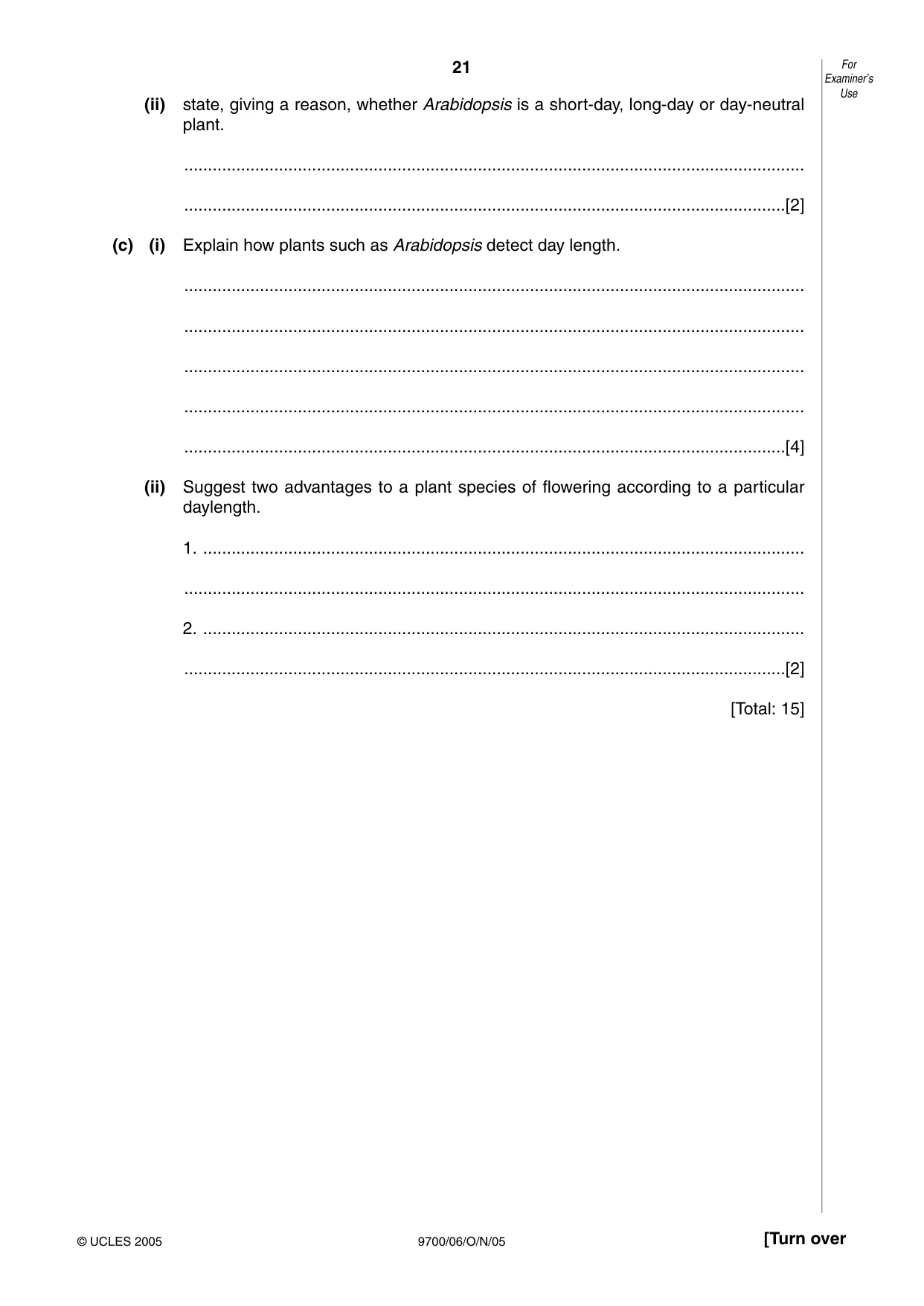
21 9700/06/O/N/05 [Turn over (ii) state, giving a reason, whether Arabidopsis is a short-day, long-day or day-neutral plant. … …[2] (c) (i) Explain how plants such as Arabidopsis detect day length. … … … … …[4] (ii) Suggest two advantages to a plant species of flowering according to a particular daylength. 1. … … 2. … …[2] [Total: 15] For Examiner’s Use © UCLES 2005
Question paper, page 22
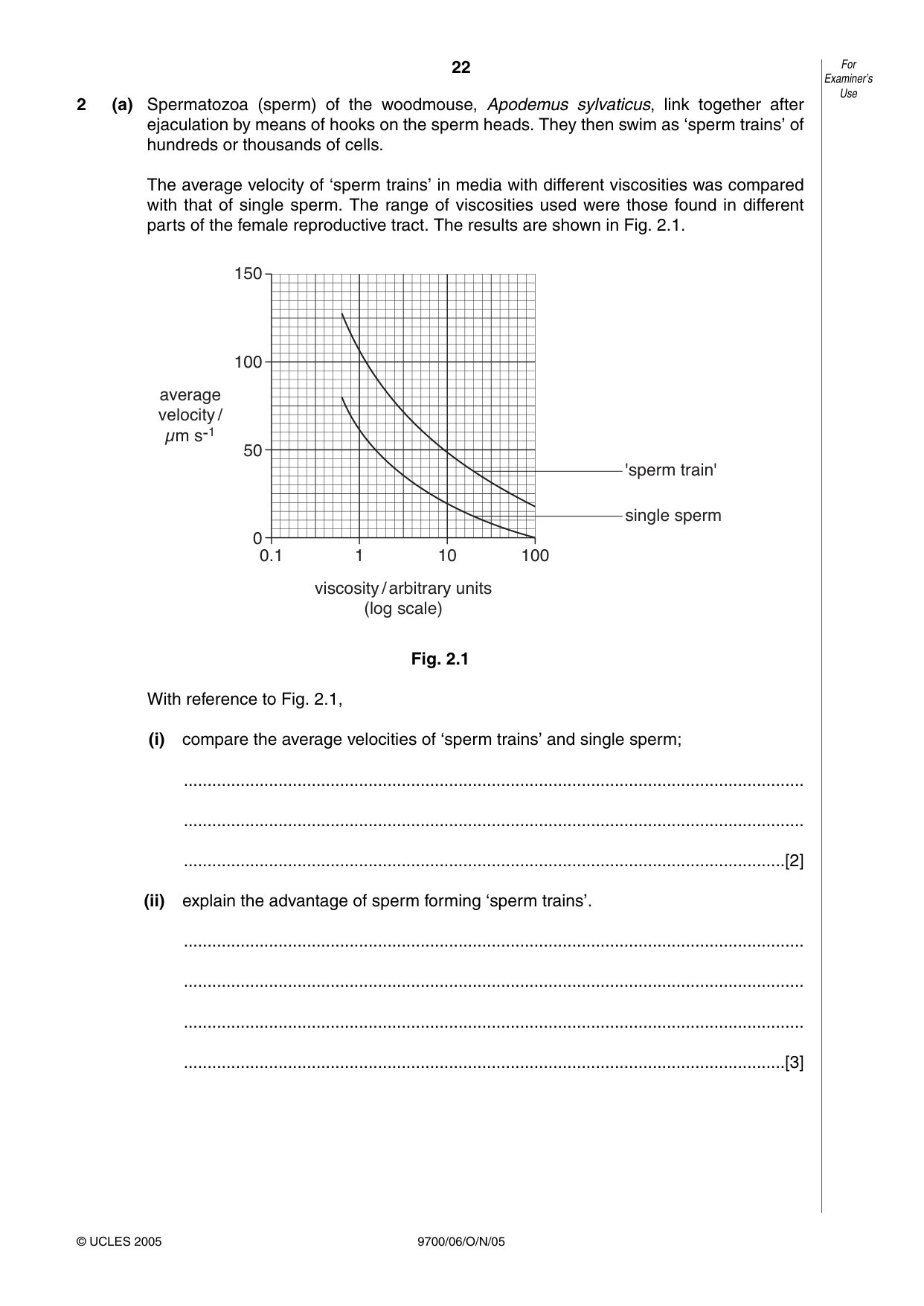
22 9700/06/O/N/05 2 (a) Spermatozoa (sperm) of the woodmouse, Apodemus sylvaticus, link together after ejaculation by means of hooks on the sperm heads. They then swim as ‘sperm trains’ of hundreds or thousands of cells. The average velocity of ‘sperm trains’ in media with different viscosities was compared with that of single sperm. The range of viscosities used were those found in different parts of the female reproductive tract. The results are shown in Fig. 2.1. Fig. 2.1 With reference to Fig. 2.1, (i) compare the average velocities of ‘sperm trains’ and single sperm; … … …[2] (ii) explain the advantage of sperm forming ‘sperm trains’. … … … …[3] 0.1 0 50 average velocity / µm s-1 100 150 1 10 viscosity / arbitrary units (log scale) 100 'sperm train' single sperm For Examiner’s Use © UCLES 2005
Question paper, page 23
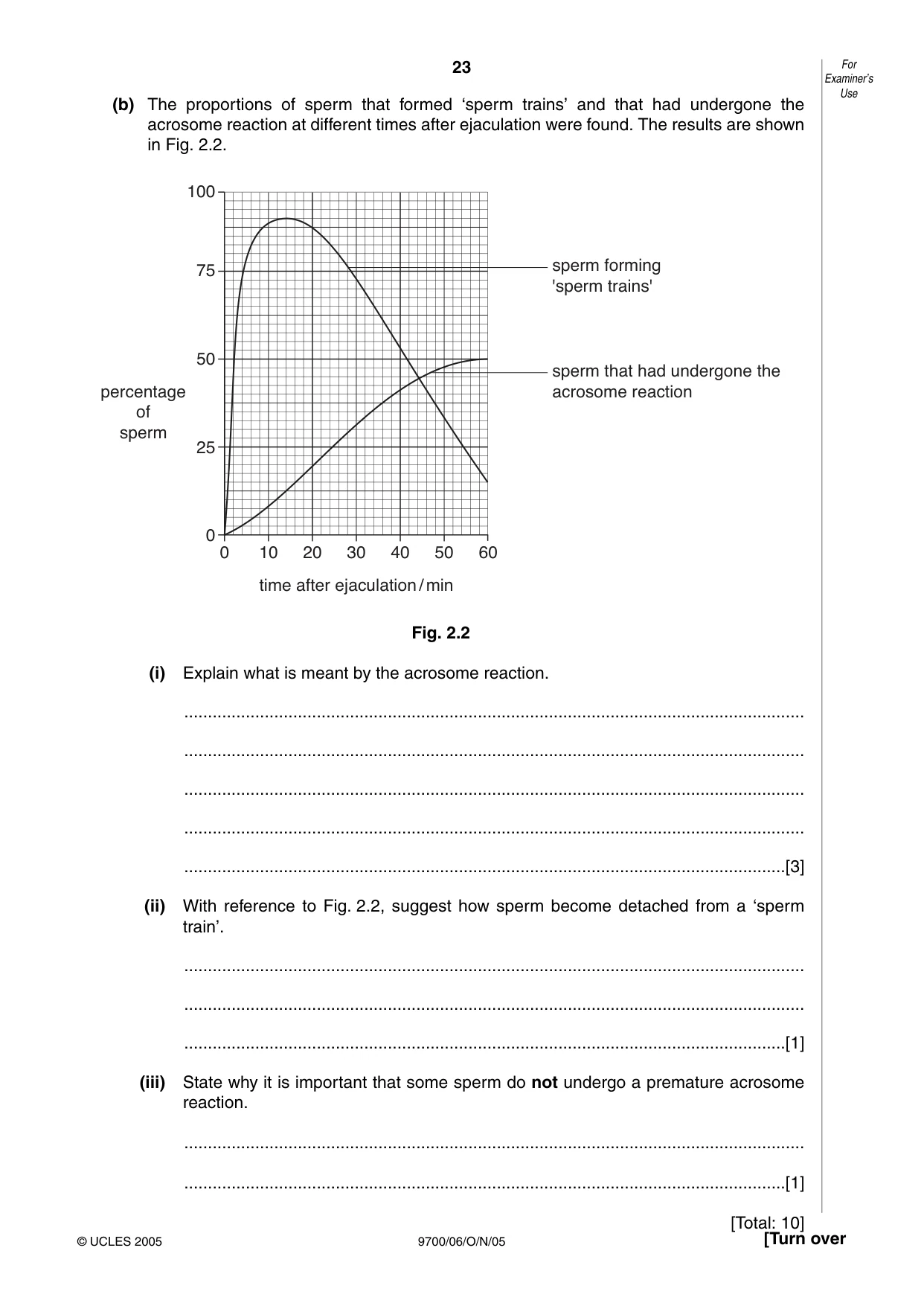
23 9700/06/O/N/05 [Turn over (b) The proportions of sperm that formed ‘sperm trains’ and that had undergone the acrosome reaction at different times after ejaculation were found. The results are shown in Fig. 2.2. Fig. 2.2 (i) Explain what is meant by the acrosome reaction. … … … … …[3] (ii) With reference to Fig. 2.2, suggest how sperm become detached from a ‘sperm train’. … … …[1] (iii) State why it is important that some sperm do not undergo a premature acrosome reaction. … …[1] [Total: 10] 0 10 30 50 0 25 sperm forming 'sperm trains' sperm that had undergone the acrosome reaction percentage of sperm 50 75 100 20 40 time after ejaculation / min 60 For Examiner’s Use © UCLES 2005
Question paper, page 24
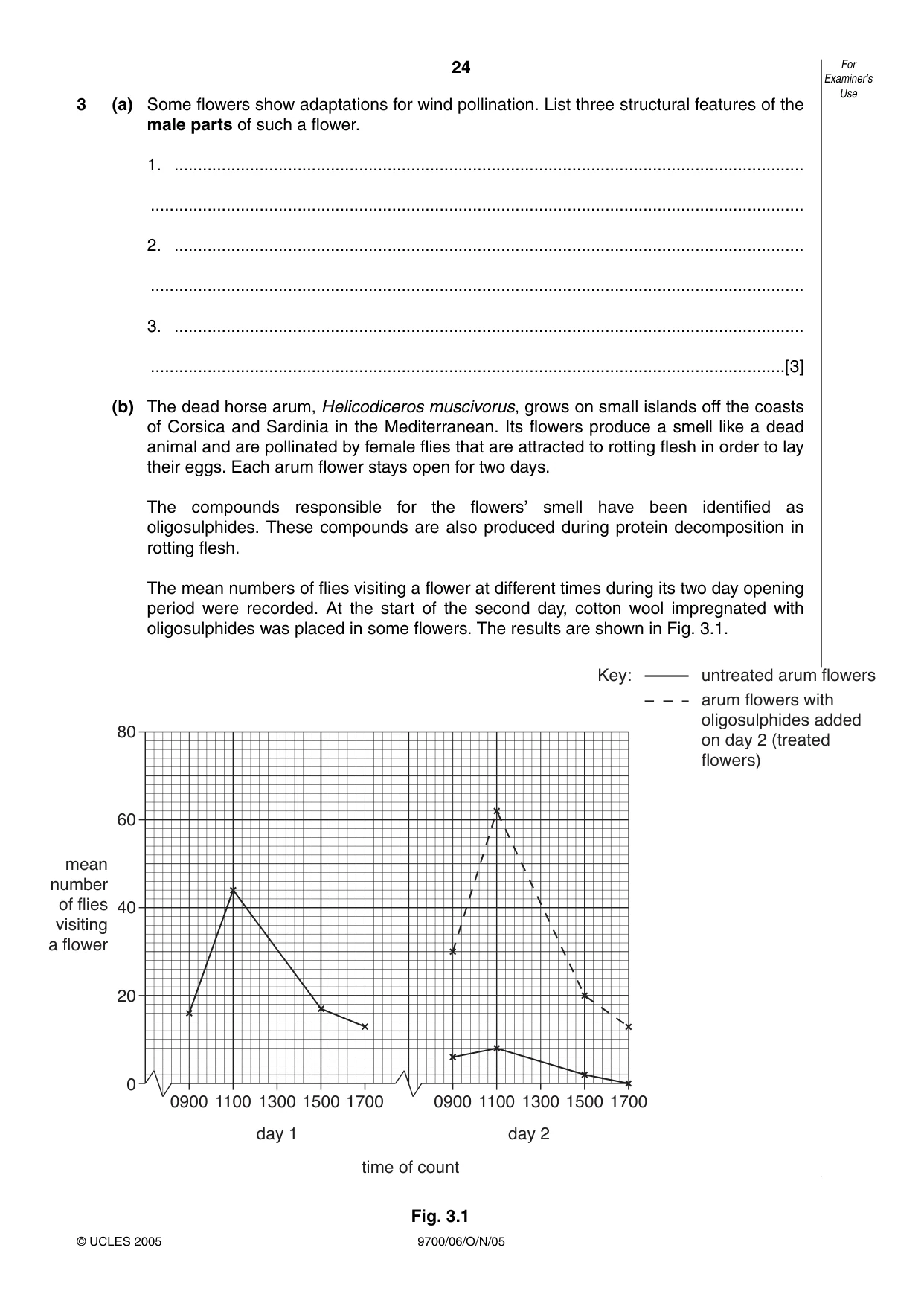
24 9700/06/O/N/05 3 (a) Some flowers show adaptations for wind pollination. List three structural features of the male parts of such a flower. 1. … … 2. … … 3. … …[3] (b) The dead horse arum, Helicodiceros muscivorus, grows on small islands off the coasts of Corsica and Sardinia in the Mediterranean. Its flowers produce a smell like a dead animal and are pollinated by female flies that are attracted to rotting flesh in order to lay their eggs. Each arum flower stays open for two days. The compounds responsible for the flowers’ smell have been identified as oligosulphides. These compounds are also produced during protein decomposition in rotting flesh. The mean numbers of flies visiting a flower at different times during its two day opening period were recorded. At the start of the second day, cotton wool impregnated with oligosulphides was placed in some flowers. The results are shown in Fig. 3.1. Fig. 3.1 For Examiner’s Use © UCLES 2005 0900 0 20 mean number of flies visiting a flower 40 60 80 1100 1300 1500 1700 0900 1100 1300 1500 1700 day 1 time of count day 2 Key: untreated arum flowers arum flowers with oligosulphides added on day 2 (treated flowers)
Question paper, page 25
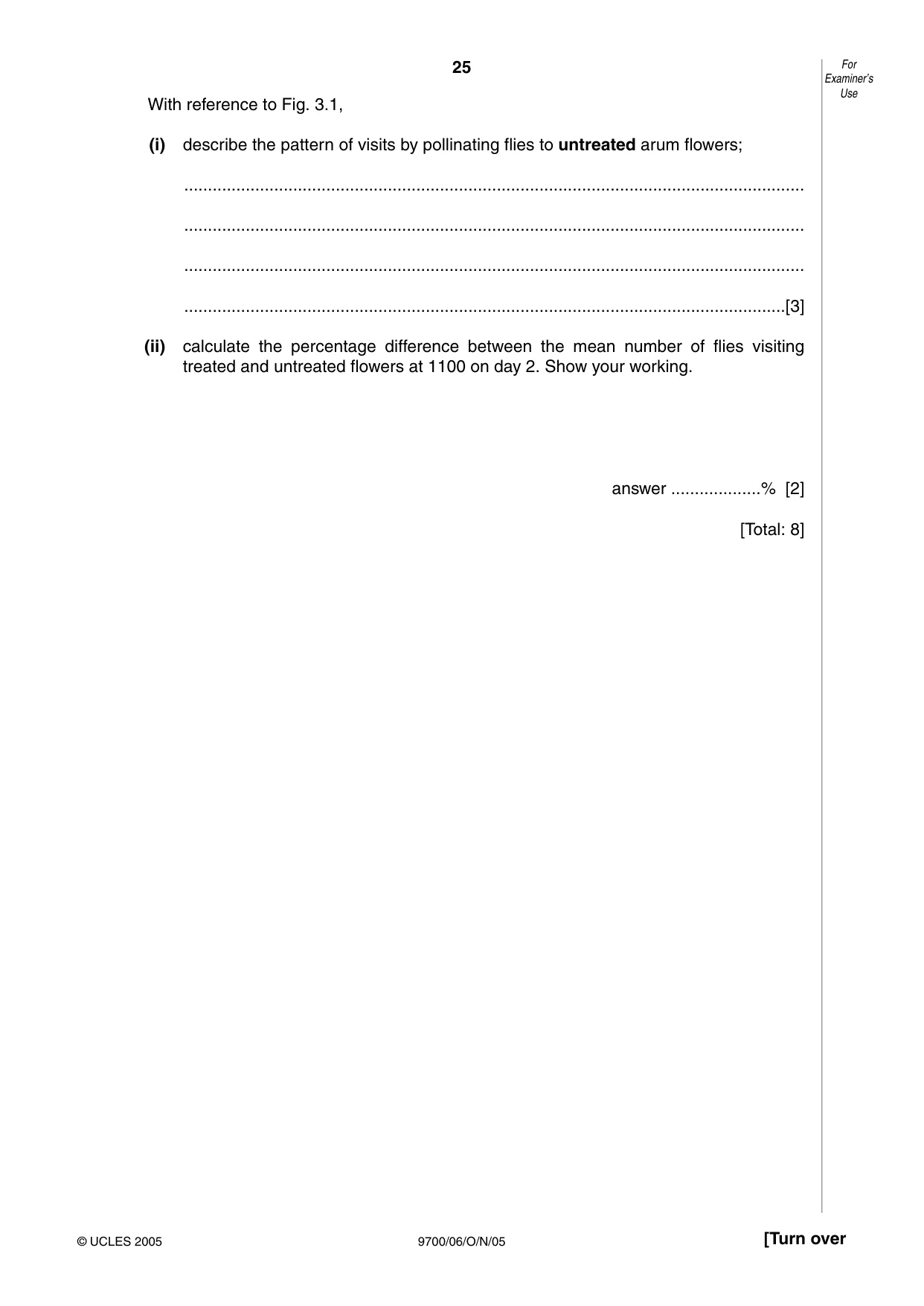
25 9700/06/O/N/05 [Turn over With reference to Fig. 3.1, (i) describe the pattern of visits by pollinating flies to untreated arum flowers; … … … …[3] (ii) calculate the percentage difference between the mean number of flies visiting treated and untreated flowers at 1100 on day 2. Show your working. answer …% [2] [Total: 8] For Examiner’s Use © UCLES 2005
Question paper, page 26
26 9700/06/O/N/05 4 (a) The marbled crayfish, Procambarus sp., is a popular aquarium animal. All the animals are females. They grow rapidly to adult size and produce large numbers of offspring without any fertilisation taking place. Parent and offspring are genetically identical and form a clone. (i) State two advantages of such reproduction. 1. … … 2. … …[2] (ii) Explain the evolutionary consequences of such reproduction. … … … …[3] (iii) Suggest why the release of a marbled crayfish into a fresh water ecosystem might have serious environmental consequences. … … …[2] [Total: 7] For Examiner’s Use © UCLES 2005
Question paper, page 27
27 9700/06/O/N/05 [Turn over OPTION 4 – APPLICATIONS OF GENETICS 1 (a) Explain why the sinoatrial node is known as the pacemaker of the heart. … … … …[3] (b) All cells of the heart of an early embryo mammal have intrinsic pacemaker ability, but this activity is suppressed in the atria and ventricles as the heart develops. This lack of activity is caused by the expression of a gene for extra potassium ion channels. In the presence of these channels the cells have a strongly negative resting potential, which prevents the cells from reaching the ‘threshold to fire’. A possible gene therapy for restoring a heart’s lost pacemaker activity involves adding a dominant mutant allele of the gene for this ion channel to atrium or ventricle cells. (i) Explain the theoretical basis of gene therapy. … … … … …[3] (ii) The normal and mutant alleles of the gene differ in their coding for three adjacent amino acids of the ion channel: normal ion channel ————— glycine - tyrosine - glycine ————— mutant ion channel ————— alanine - alanine - alanine ————— The ion channel produced by the mutant allele is inactive. Suggest why the ion channel produced by the mutant allele is inactive. … … … …[2] For Examiner’s Use © UCLES 2005
Question paper, page 28
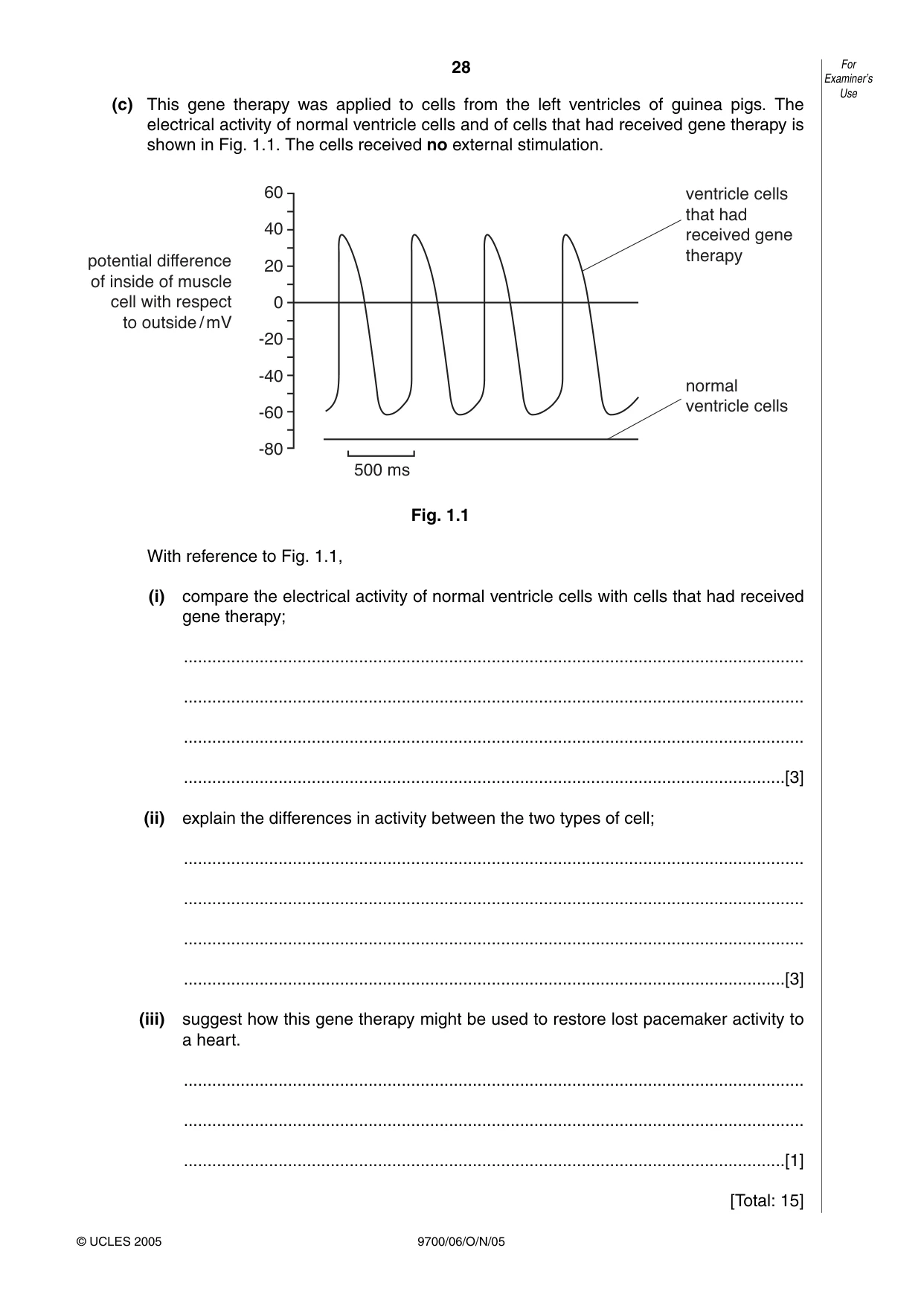
28 9700/06/O/N/05 (c) This gene therapy was applied to cells from the left ventricles of guinea pigs. The electrical activity of normal ventricle cells and of cells that had received gene therapy is shown in Fig. 1.1. The cells received no external stimulation. Fig. 1.1 With reference to Fig. 1.1, (i) compare the electrical activity of normal ventricle cells with cells that had received gene therapy; … … … …[3] (ii) explain the differences in activity between the two types of cell; … … … …[3] (iii) suggest how this gene therapy might be used to restore lost pacemaker activity to a heart. … … …[1] [Total: 15] 500 ms ventricle cells that had received gene therapy normal ventricle cells -80 -60 -40 -20 potential difference of inside of muscle cell with respect to outside / mV 0 20 40 60 For Examiner’s Use © UCLES 2005
Question paper, page 30
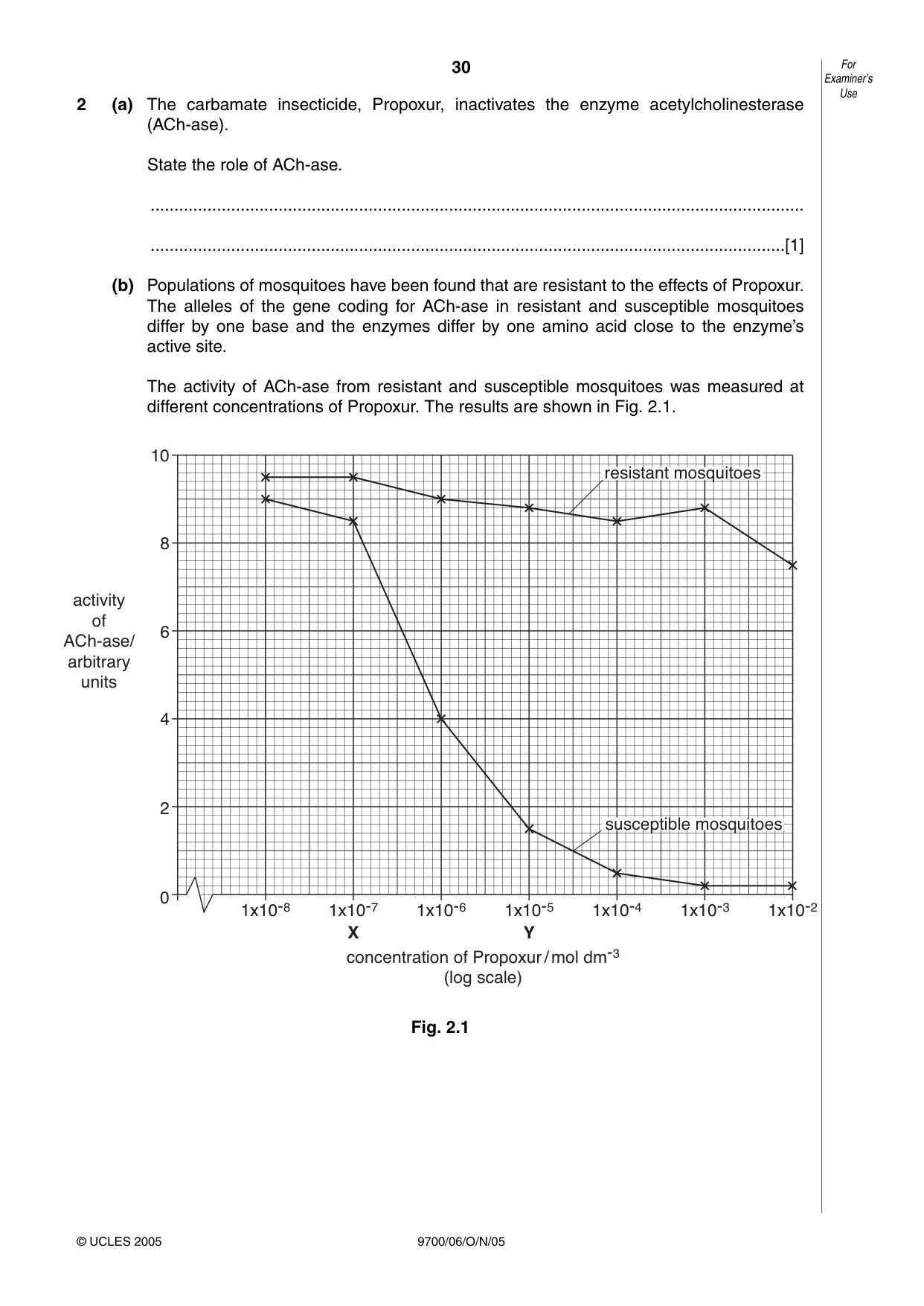
30 9700/06/O/N/05 2 (a) The carbamate insecticide, Propoxur, inactivates the enzyme acetylcholinesterase (ACh-ase). State the role of ACh-ase. … …[1] (b) Populations of mosquitoes have been found that are resistant to the effects of Propoxur. The alleles of the gene coding for ACh-ase in resistant and susceptible mosquitoes differ by one base and the enzymes differ by one amino acid close to the enzyme’s active site. The activity of ACh-ase from resistant and susceptible mosquitoes was measured at different concentrations of Propoxur. The results are shown in Fig. 2.1. Fig. 2.1 For Examiner’s Use © UCLES 2005 0 1x10⁻⁸ 1x10⁻⁷ 1x10⁻⁶ concentration of Propoxur / mol dm-3 (log scale) 1x10⁻⁵ 1x10⁻⁴ 1x10⁻³ 1x10⁻² 2 activity of ACh-ase/ arbitrary units X Y 4 6 8 10 resistant mosquitoes susceptible mosquitoes
Question paper, page 31
31 9700/06/O/N/05 [Turn over With reference to Fig. 2.1, (i) compare the effect of different concentrations of Propoxur on ACh-ase from resistant and susceptible mosquitoes; … … … …[3] (ii) calculate the percentage decrease in the activity of ACh-ase from susceptible mosquitoes between Propoxur concentrations X and Y. Show your working. answer … % [2] (c) Explain how resistance to Propoxur has arisen and spread in some populations of mosquitoes. … … … … … …[4] [Total: 10] For Examiner’s Use © UCLES 2005
Question paper, page 32
32 9700/06/O/N/05 3 (a) The Rare Breeds Survival Trust is a charity dedicated to the support of rare breeds of livestock. It maintains a sperm bank, the ‘reGENEration bank’ for 63 breeds. (i) Explain the need to maintain rare breeds of livestock. … … … …[3] (ii) Describe how a sperm bank is maintained. … … … …[3] (b) Some breeds have recently reached critically low numbers. For example, in 2003 there were only 21 vaymol cattle and 66 boreray sheep left in the world. Explain how a sperm bank is used to maintain such breeds. … … …[2] [Total: 8] For Examiner’s Use © UCLES 2005
Question paper, page 33
33 9700/06/O/N/05 [Turn over 4 (a) Two unlinked genes control the production of yellow flavone pigment in petals of Dahlia flowers. The dominant allele, A, of one gene produces yellow pigment. No pigment is produced by the recessive allele, a. The dominant allele, B, of the second gene inhibits pigment production by A. The recessive allele, b, has no effect. When no yellow pigment is produced the petals are white. This is an example of dominant epistasis. (i) Explain the term dominant epistasis. … … …[2] (ii) State the colours of the petals of plants with the following genotypes: AaBb … Aabb … [1] For Examiner’s Use © UCLES 2005
Question paper, page 34
34 9700/06/O/N/05 (b) Plants with the genotypes AABB and aabb were crossed and the resulting F1 generation test-crossed with aabb plants. Draw a genetic diagram of the test-cross to show the genotypes and phenotypes of the parents and offspring. State the ratio of phenotypes of the offspring. ratio of phenotypes …[4] [Total: 7] For Examiner’s Use © UCLES 2005
Question paper, page 36
36 9700/06/O/N/05 BLANK PAGE Copyright Acknowledgements: Option 1 Fig. 1.1; © Copyright Lutz Slomianka 1998–2004, from website http://www.lab.anhb.uwa.edu.au/mb140/Big/Bit.htm Fig. 3.1; © MEHAU KULYK / SCIENCE PHOTO LIBRARY. Permission to reproduce items where third-party owned material protected by copyright is included has been sought and cleared where possible. Every reasonable effort has been made by the publisher (UCLES) to trace copyright holders, but if any items requiring clearance have unwittingly been included, the publisher will be pleased to make amends at the earliest possible opportunity. University of Cambridge International Examinations is part of the University of Cambridge Local Examinations Syndicate (UCLES), which is itself a department of the University of Cambridge.
Mark scheme, page 1
UNIVERSITY OF CAMBRIDGE INTERNATIONAL EXAMINATIONS GCE Advanced Level MARK SCHEME for the November 2005 question paper 9700 BIOLOGY 9700/06 Paper 6 (Options), maximum raw mark 40 This mark scheme is published as an aid to teachers and students, to indicate the requirements of the examination. This shows the basis on which Examiners were initially instructed to award marks. It does not indicate the details of the discussions that took place at an Examiners’ meeting before marking began. Any substantial changes to the mark scheme that arose from these discussions will be recorded in the published Report on the Examination. All Examiners are instructed that alternative correct answers and unexpected approaches in candidates’ scripts must be given marks that fairly reflect the relevant knowledge and skills demonstrated. Mark schemes must be read in conjunction with the question papers and the Report on the Examination. • CIE will not enter into discussion or correspondence in connection with these mark schemes. CIE is publishing the mark schemes for the October/November 2005 question papers for most IGCSE and GCE Advanced Level and Advanced Subsidiary Level syllabuses and some Ordinary Level syllabuses.
Mark scheme, page 2
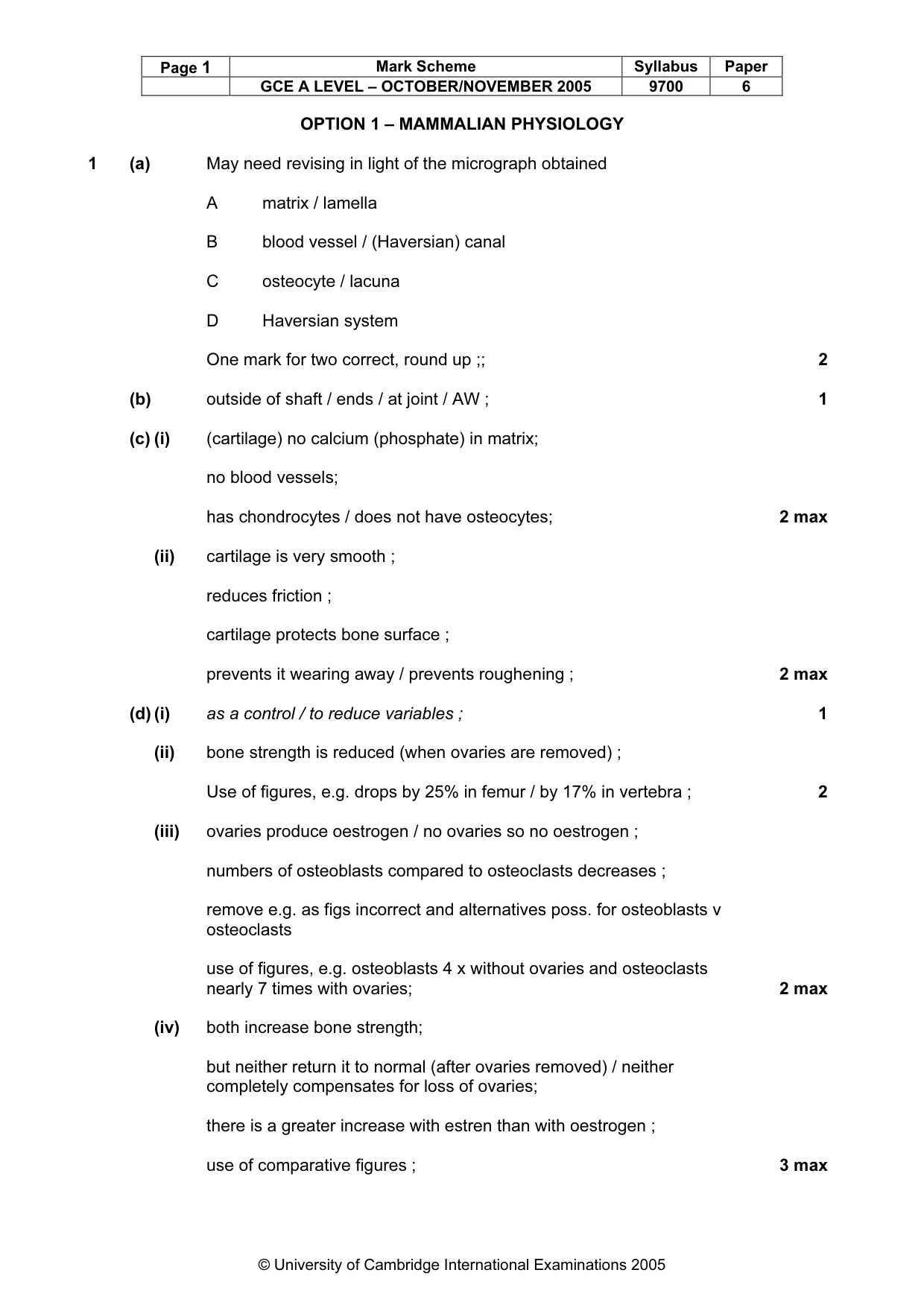
Page 1 Mark Scheme Syllabus Paper GCE A LEVEL – OCTOBER/NOVEMBER 2005 9700 6 © University of Cambridge International Examinations 2005 OPTION 1 – MAMMALIAN PHYSIOLOGY 1 (a) May need revising in light of the micrograph obtained A matrix / lamella B blood vessel / (Haversian) canal C osteocyte / lacuna D Haversian system One mark for two correct, round up ;; 2 (b) outside of shaft / ends / at joint / AW ; 1 (c) (i) (cartilage) no calcium (phosphate) in matrix; no blood vessels; has chondrocytes / does not have osteocytes; 2 max (ii) cartilage is very smooth ; reduces friction ; cartilage protects bone surface ; prevents it wearing away / prevents roughening ; 2 max (d) (i) as a control / to reduce variables ; 1 (ii) bone strength is reduced (when ovaries are removed) ; Use of figures, e.g. drops by 25% in femur / by 17% in vertebra ; 2 (iii) ovaries produce oestrogen / no ovaries so no oestrogen ; numbers of osteoblasts compared to osteoclasts decreases ; remove e.g. as figs incorrect and alternatives poss. for osteoblasts v osteoclasts use of figures, e.g. osteoblasts 4 x without ovaries and osteoclasts nearly 7 times with ovaries; 2 max (iv) both increase bone strength; but neither return it to normal (after ovaries removed) / neither completely compensates for loss of ovaries; there is a greater increase with estren than with oestrogen ; use of comparative figures ; 3 max
Mark scheme, page 3
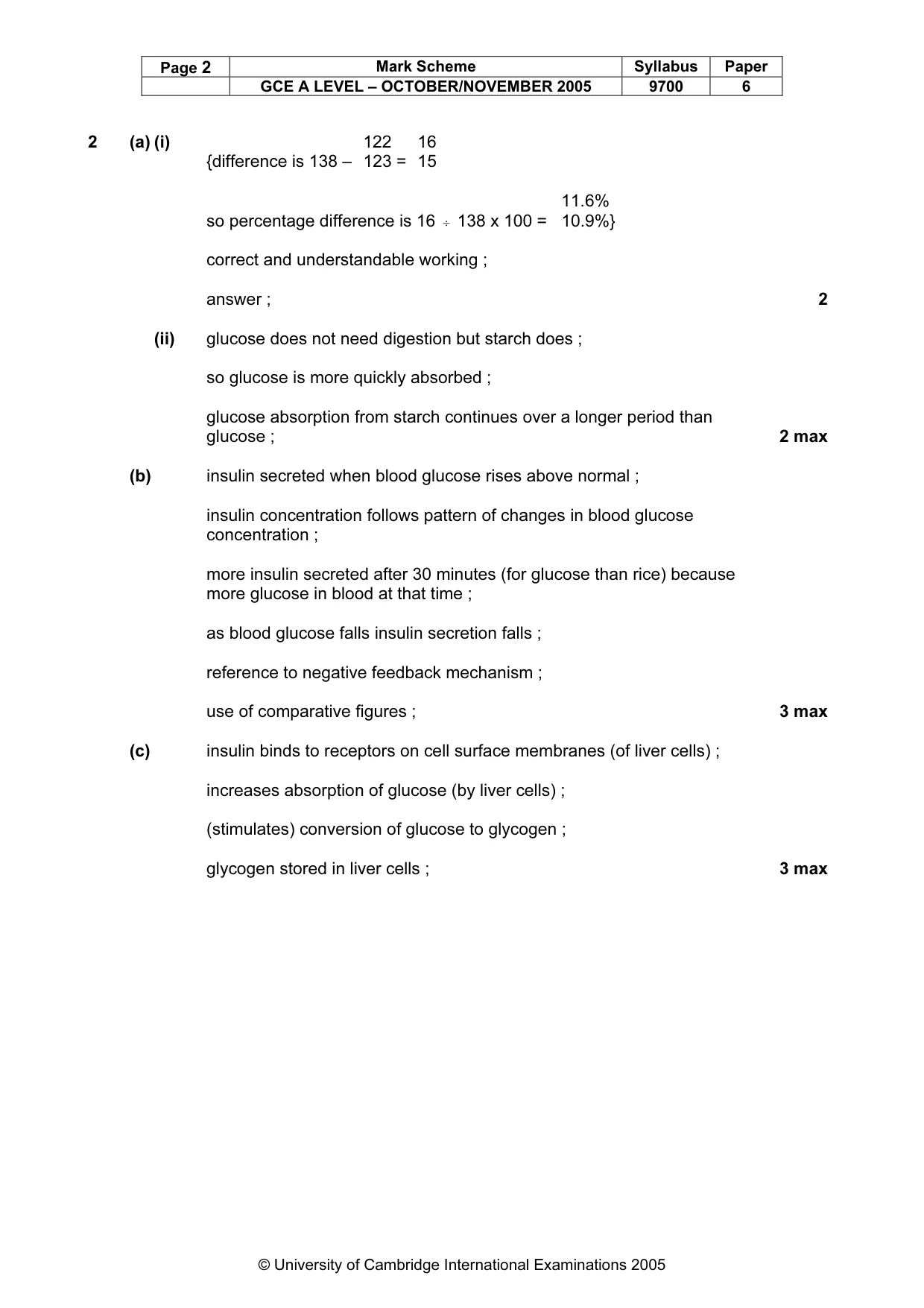
Page 2 Mark Scheme Syllabus Paper GCE A LEVEL – OCTOBER/NOVEMBER 2005 9700 6 © University of Cambridge International Examinations 2005 2 (a) (i) 122 16 {difference is 138 – 123 = 15 11.6% so percentage difference is 16 ÷ 138 x 100 = 10.9%} correct and understandable working ; answer ; 2 (ii) glucose does not need digestion but starch does ; so glucose is more quickly absorbed ; glucose absorption from starch continues over a longer period than glucose ; 2 max (b) insulin secreted when blood glucose rises above normal ; insulin concentration follows pattern of changes in blood glucose concentration ; more insulin secreted after 30 minutes (for glucose than rice) because more glucose in blood at that time ; as blood glucose falls insulin secretion falls ; reference to negative feedback mechanism ; use of comparative figures ; 3 max (c) insulin binds to receptors on cell surface membranes (of liver cells) ; increases absorption of glucose (by liver cells) ; (stimulates) conversion of glucose to glycogen ; glycogen stored in liver cells ; 3 max
Mark scheme, page 4
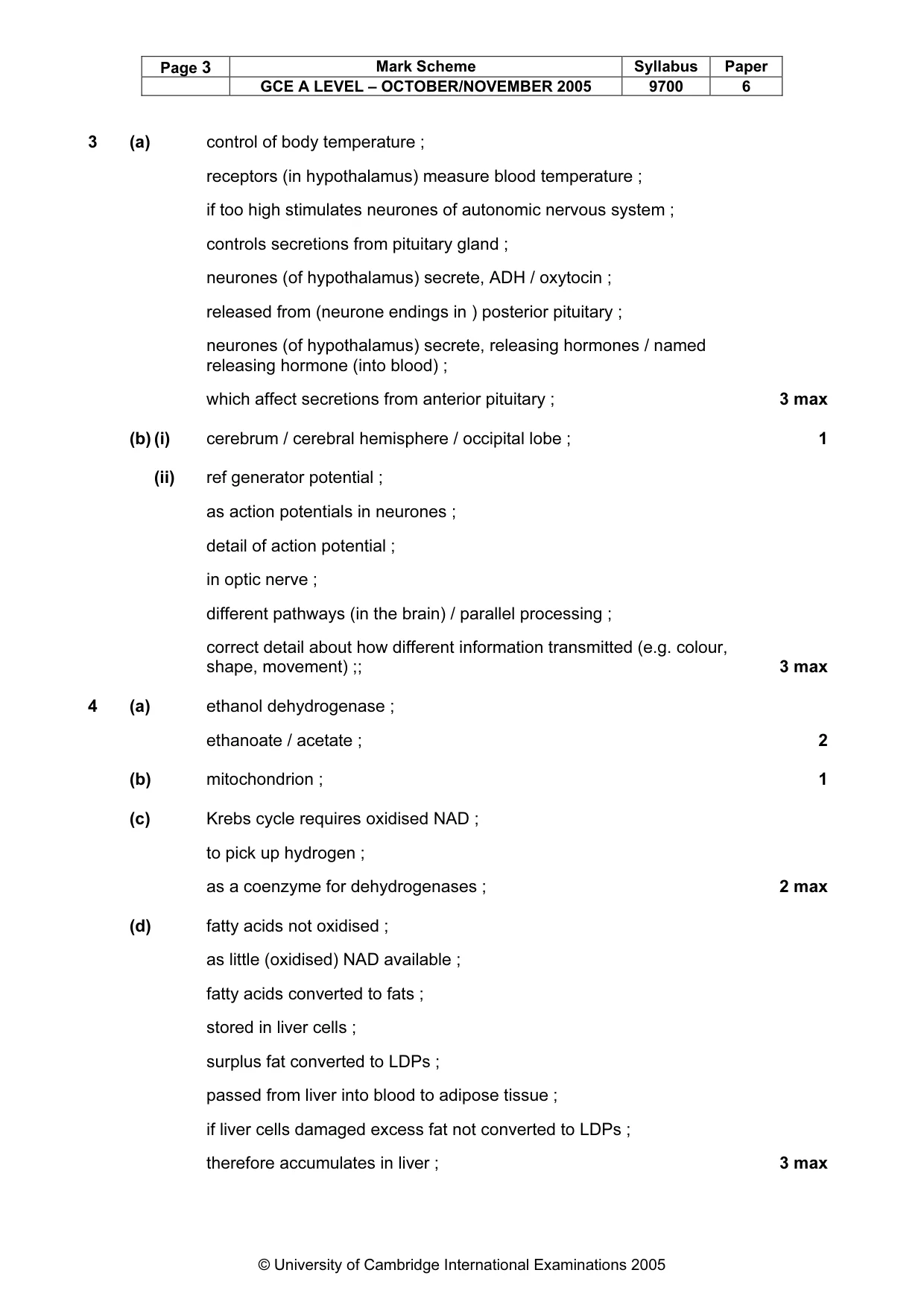
Page 3 Mark Scheme Syllabus Paper GCE A LEVEL – OCTOBER/NOVEMBER 2005 9700 6 © University of Cambridge International Examinations 2005 3 (a) control of body temperature ; receptors (in hypothalamus) measure blood temperature ; if too high stimulates neurones of autonomic nervous system ; controls secretions from pituitary gland ; neurones (of hypothalamus) secrete, ADH / oxytocin ; released from (neurone endings in ) posterior pituitary ; neurones (of hypothalamus) secrete, releasing hormones / named releasing hormone (into blood) ; which affect secretions from anterior pituitary ; 3 max (b) (i) cerebrum / cerebral hemisphere / occipital lobe ; 1 (ii) ref generator potential ; as action potentials in neurones ; detail of action potential ; in optic nerve ; different pathways (in the brain) / parallel processing ; correct detail about how different information transmitted (e.g. colour, shape, movement) ;; 3 max 4 (a) ethanol dehydrogenase ; ethanoate / acetate ; 2 (b) mitochondrion ; 1 (c) Krebs cycle requires oxidised NAD ; to pick up hydrogen ; as a coenzyme for dehydrogenases ; 2 max (d) fatty acids not oxidised ; as little (oxidised) NAD available ; fatty acids converted to fats ; stored in liver cells ; surplus fat converted to LDPs ; passed from liver into blood to adipose tissue ; if liver cells damaged excess fat not converted to LDPs ; therefore accumulates in liver ; 3 max
Mark scheme, page 5
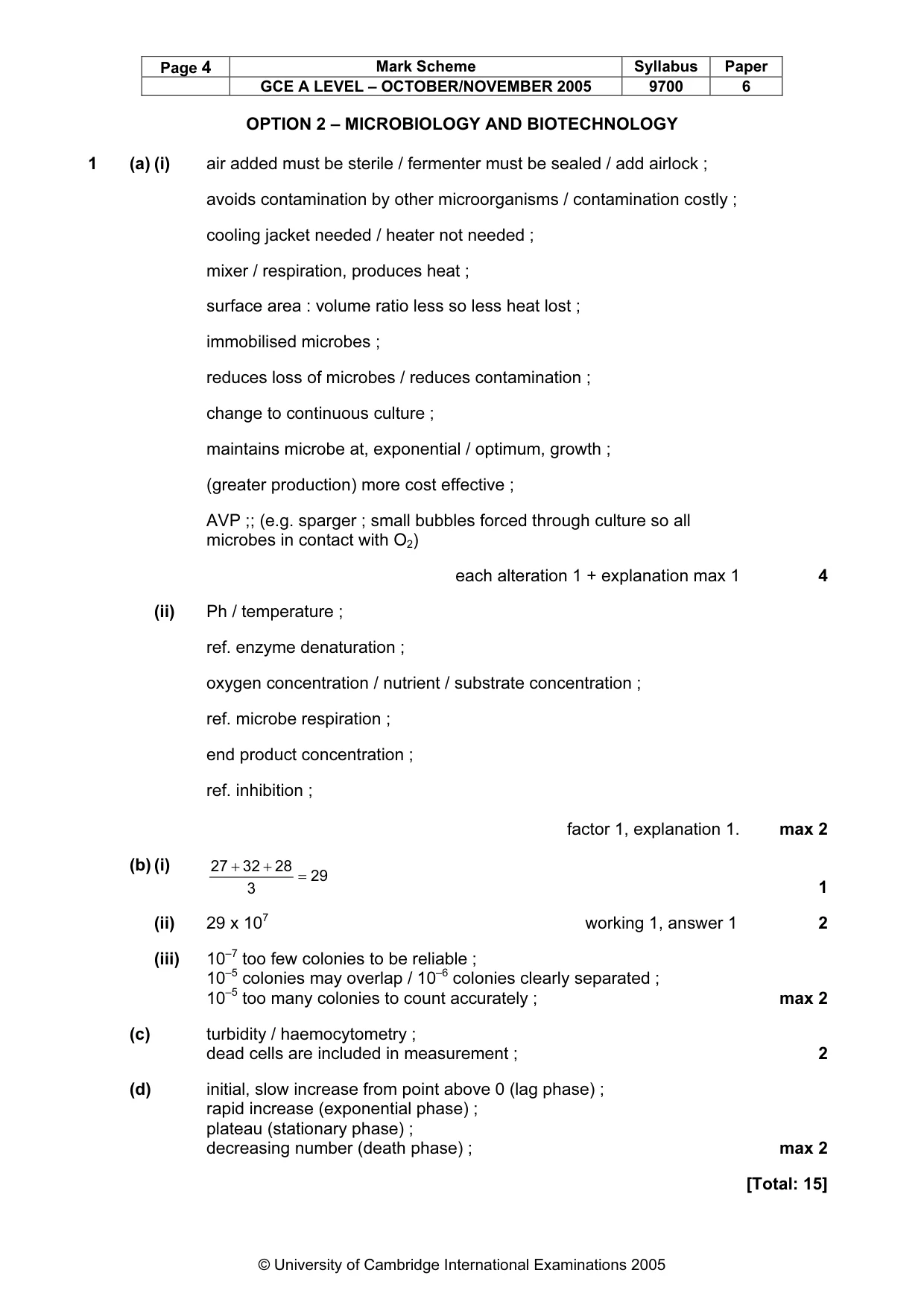
Page 4 Mark Scheme Syllabus Paper GCE A LEVEL – OCTOBER/NOVEMBER 2005 9700 6 © University of Cambridge International Examinations 2005 OPTION 2 – MICROBIOLOGY AND BIOTECHNOLOGY 1 (a) (i) air added must be sterile / fermenter must be sealed / add airlock ; avoids contamination by other microorganisms / contamination costly ; cooling jacket needed / heater not needed ; mixer / respiration, produces heat ; surface area : volume ratio less so less heat lost ; immobilised microbes ; reduces loss of microbes / reduces contamination ; change to continuous culture ; maintains microbe at, exponential / optimum, growth ; (greater production) more cost effective ; AVP ;; (e.g. sparger ; small bubbles forced through culture so all microbes in contact with O2) each alteration 1 + explanation max 1 4 (ii) Ph / temperature ; ref. enzyme denaturation ; oxygen concentration / nutrient / substrate concentration ; ref. microbe respiration ; end product concentration ; ref. inhibition ; factor 1, explanation 1. max 2 (b) (i) 29 3 28 32 27 = + + 1 (ii) 29 x 107 working 1, answer 1 2 (iii) 10–7 too few colonies to be reliable ; 10–5 colonies may overlap / 10–6 colonies clearly separated ; 10–5 too many colonies to count accurately ; max 2 (c) turbidity / haemocytometry ; dead cells are included in measurement ; 2 (d) initial, slow increase from point above 0 (lag phase) ; rapid increase (exponential phase) ; plateau (stationary phase) ; decreasing number (death phase) ; max 2 [Total: 15]
Mark scheme, page 6
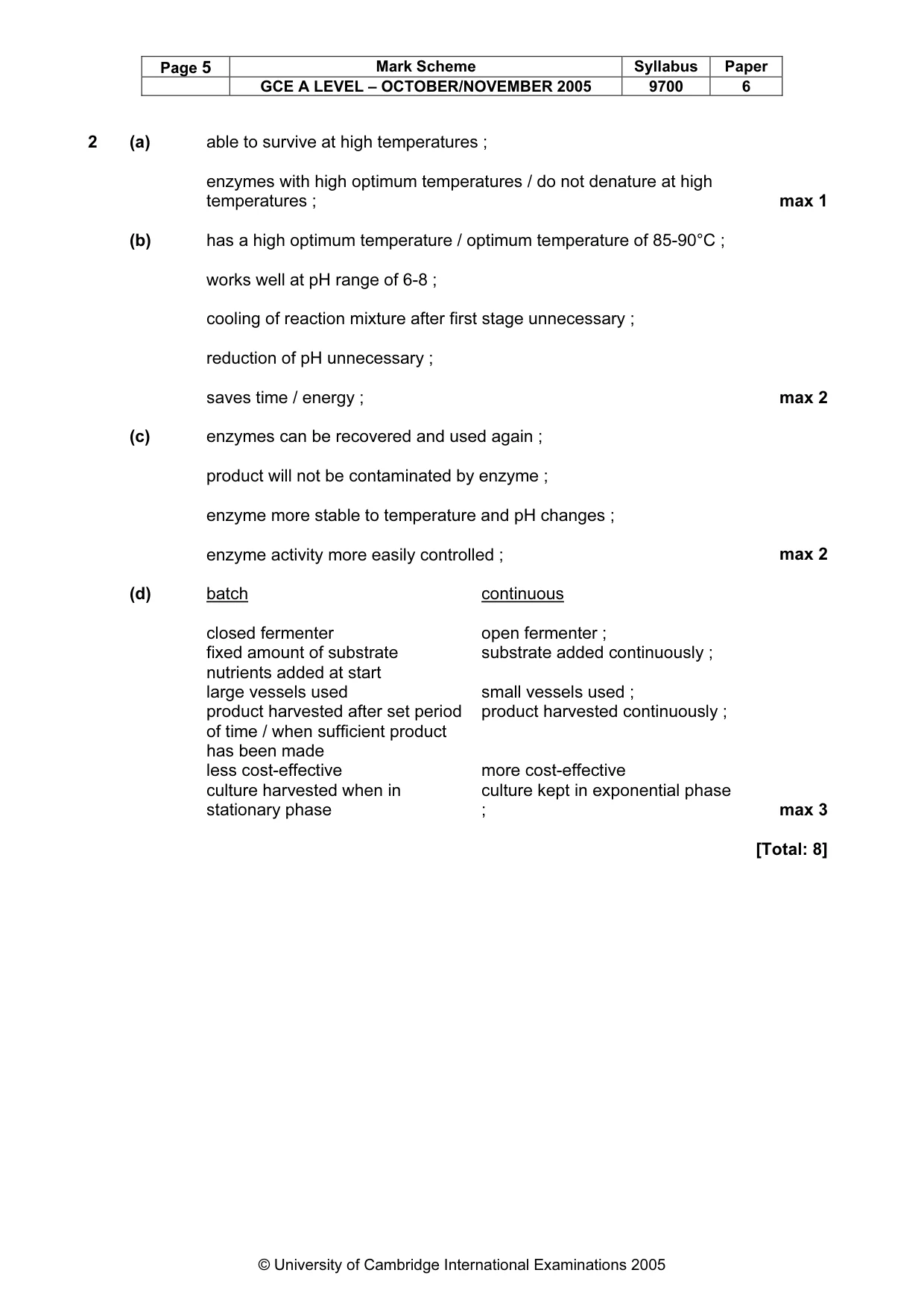
Page 5 Mark Scheme Syllabus Paper GCE A LEVEL – OCTOBER/NOVEMBER 2005 9700 6 © University of Cambridge International Examinations 2005 2 (a) able to survive at high temperatures ; enzymes with high optimum temperatures / do not denature at high temperatures ; max 1 (b) has a high optimum temperature / optimum temperature of 85-90°C ; works well at pH range of 6-8 ; cooling of reaction mixture after first stage unnecessary ; reduction of pH unnecessary ; saves time / energy ; max 2 (c) enzymes can be recovered and used again ; product will not be contaminated by enzyme ; enzyme more stable to temperature and pH changes ; enzyme activity more easily controlled ; max 2 (d) batch closed fermenter fixed amount of substrate nutrients added at start large vessels used product harvested after set period of time / when sufficient product has been made less cost-effective culture harvested when in stationary phase continuous open fermenter ; substrate added continuously ; small vessels used ; product harvested continuously ; more cost-effective culture kept in exponential phase ; max 3 [Total: 8]
Mark scheme, page 7
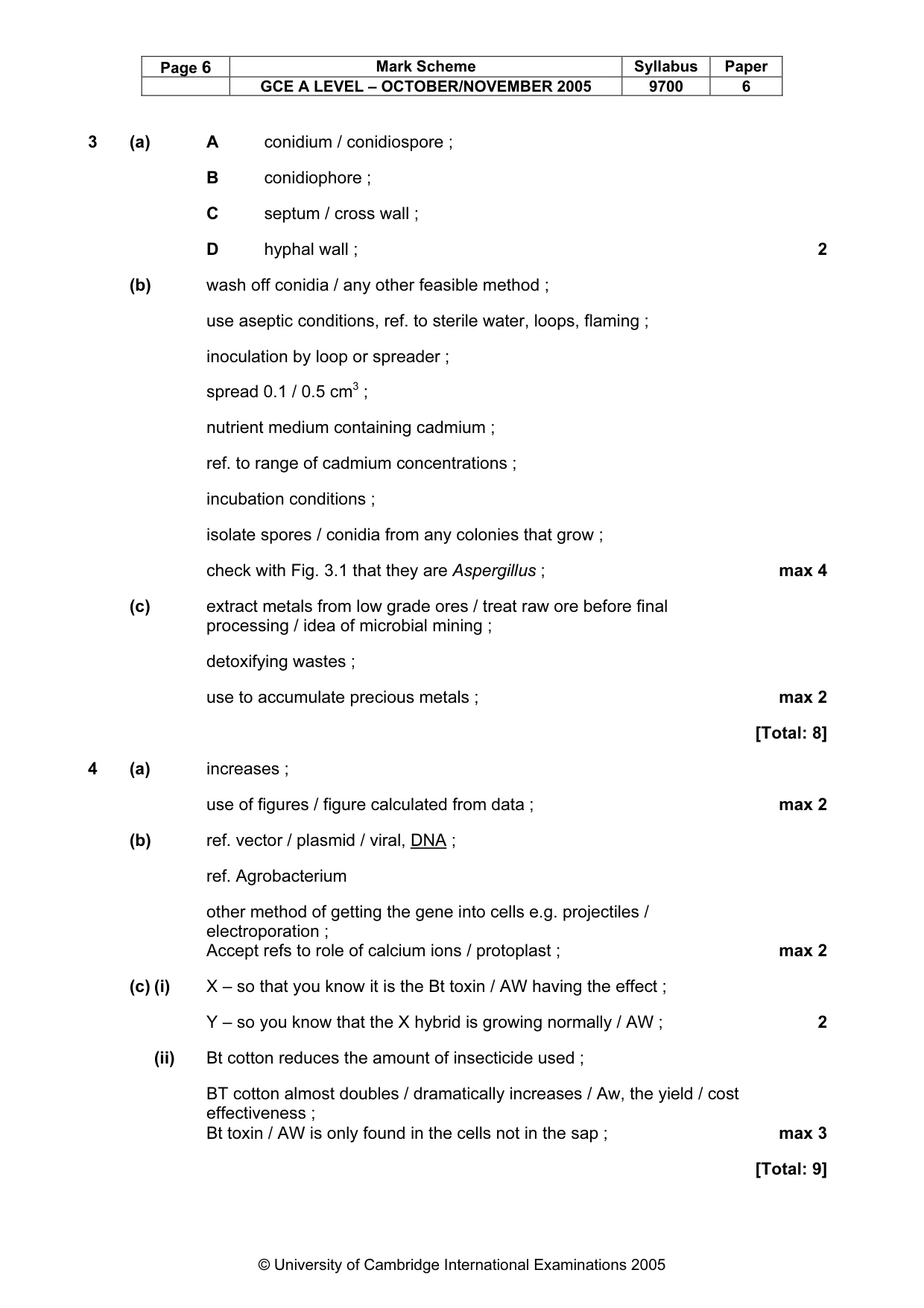
Page 6 Mark Scheme Syllabus Paper GCE A LEVEL – OCTOBER/NOVEMBER 2005 9700 6 © University of Cambridge International Examinations 2005 3 (a) A conidium / conidiospore ; B conidiophore ; C septum / cross wall ; D hyphal wall ; 2 (b) wash off conidia / any other feasible method ; use aseptic conditions, ref. to sterile water, loops, flaming ; inoculation by loop or spreader ; spread 0.1 / 0.5 cm3 ; nutrient medium containing cadmium ; ref. to range of cadmium concentrations ; incubation conditions ; isolate spores / conidia from any colonies that grow ; check with Fig. 3.1 that they are Aspergillus ; max 4 (c) extract metals from low grade ores / treat raw ore before final processing / idea of microbial mining ; detoxifying wastes ; use to accumulate precious metals ; max 2 [Total: 8] 4 (a) increases ; use of figures / figure calculated from data ; max 2 (b) ref. vector / plasmid / viral, DNA ; ref. Agrobacterium other method of getting the gene into cells e.g. projectiles / electroporation ; Accept refs to role of calcium ions / protoplast ; max 2 (c) (i) X – so that you know it is the Bt toxin / AW having the effect ; Y – so you know that the X hybrid is growing normally / AW ; 2 (ii) Bt cotton reduces the amount of insecticide used ; BT cotton almost doubles / dramatically increases / Aw, the yield / cost effectiveness ; Bt toxin / AW is only found in the cells not in the sap ; max 3 [Total: 9]
Mark scheme, page 8
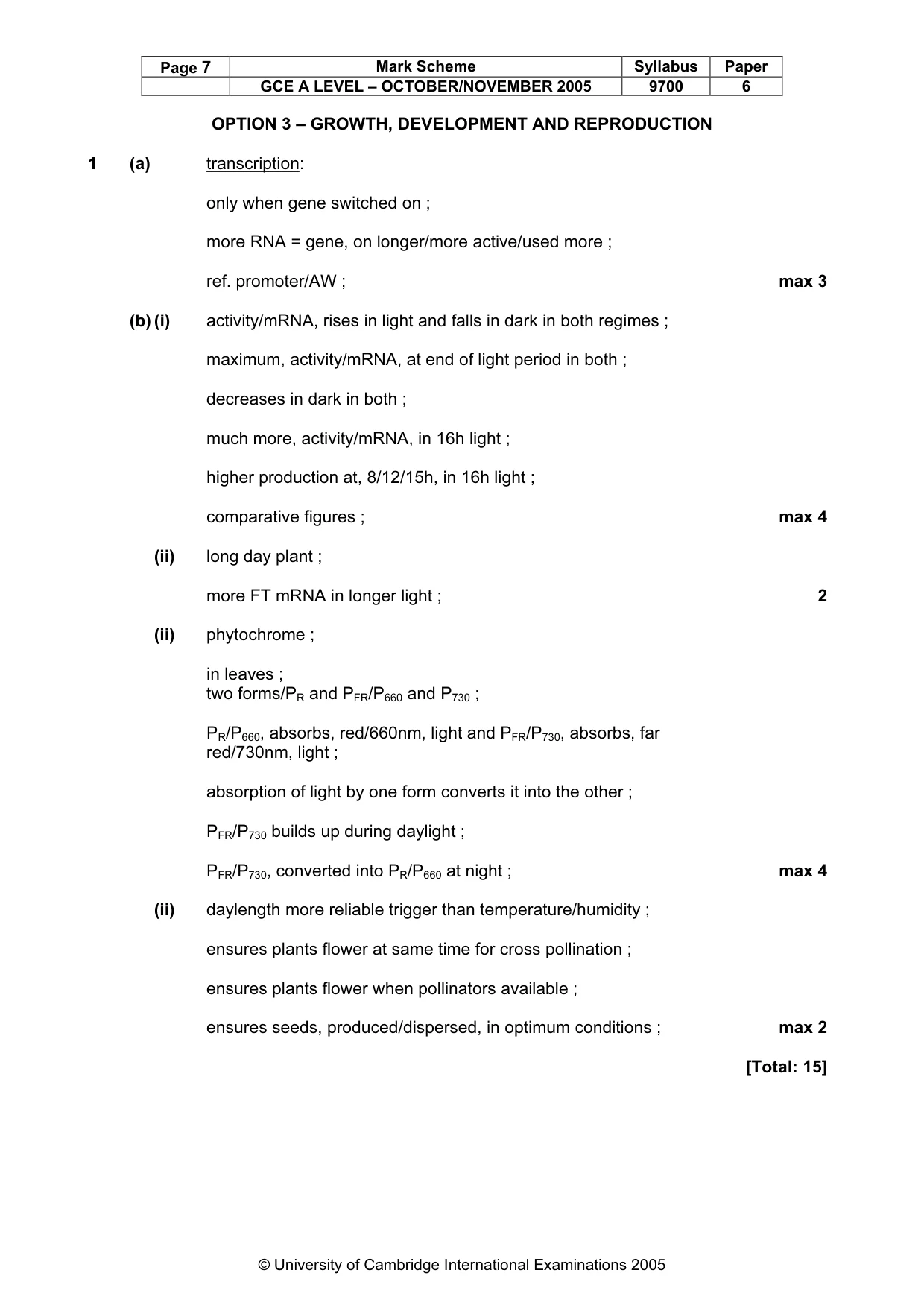
Page 7 Mark Scheme Syllabus Paper GCE A LEVEL – OCTOBER/NOVEMBER 2005 9700 6 © University of Cambridge International Examinations 2005 OPTION 3 – GROWTH, DEVELOPMENT AND REPRODUCTION 1 (a) transcription: only when gene switched on ; more RNA = gene, on longer/more active/used more ; ref. promoter/AW ; max 3 (b) (i) activity/mRNA, rises in light and falls in dark in both regimes ; maximum, activity/mRNA, at end of light period in both ; decreases in dark in both ; much more, activity/mRNA, in 16h light ; higher production at, 8/12/15h, in 16h light ; comparative figures ; max 4 (ii) long day plant ; more FT mRNA in longer light ; 2 (ii) phytochrome ; in leaves ; two forms/PR and PFR/P660 and P730 ; PR/P660, absorbs, red/660nm, light and PFR/P730, absorbs, far red/730nm, light ; absorption of light by one form converts it into the other ; PFR/P730 builds up during daylight ; PFR/P730, converted into PR/P660 at night ; max 4 (ii) daylength more reliable trigger than temperature/humidity ; ensures plants flower at same time for cross pollination ; ensures plants flower when pollinators available ; ensures seeds, produced/dispersed, in optimum conditions ; max 2 [Total: 15]
Mark scheme, page 9
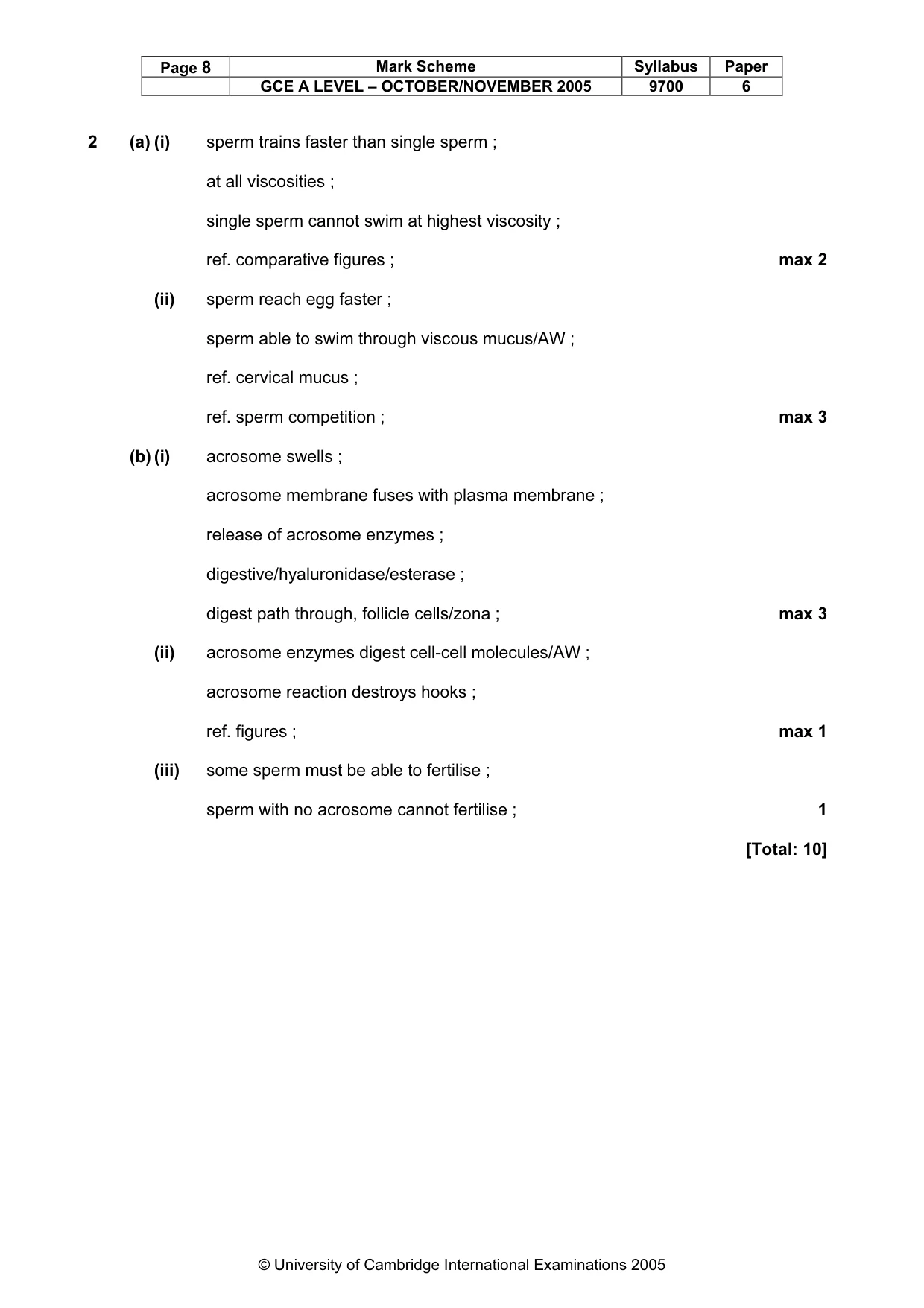
Page 8 Mark Scheme Syllabus Paper GCE A LEVEL – OCTOBER/NOVEMBER 2005 9700 6 © University of Cambridge International Examinations 2005 2 (a) (i) sperm trains faster than single sperm ; at all viscosities ; single sperm cannot swim at highest viscosity ; ref. comparative figures ; max 2 (ii) sperm reach egg faster ; sperm able to swim through viscous mucus/AW ; ref. cervical mucus ; ref. sperm competition ; max 3 (b) (i) acrosome swells ; acrosome membrane fuses with plasma membrane ; release of acrosome enzymes ; digestive/hyaluronidase/esterase ; digest path through, follicle cells/zona ; max 3 (ii) acrosome enzymes digest cell-cell molecules/AW ; acrosome reaction destroys hooks ; ref. figures ; max 1 (iii) some sperm must be able to fertilise ; sperm with no acrosome cannot fertilise ; 1 [Total: 10]
Mark scheme, page 10
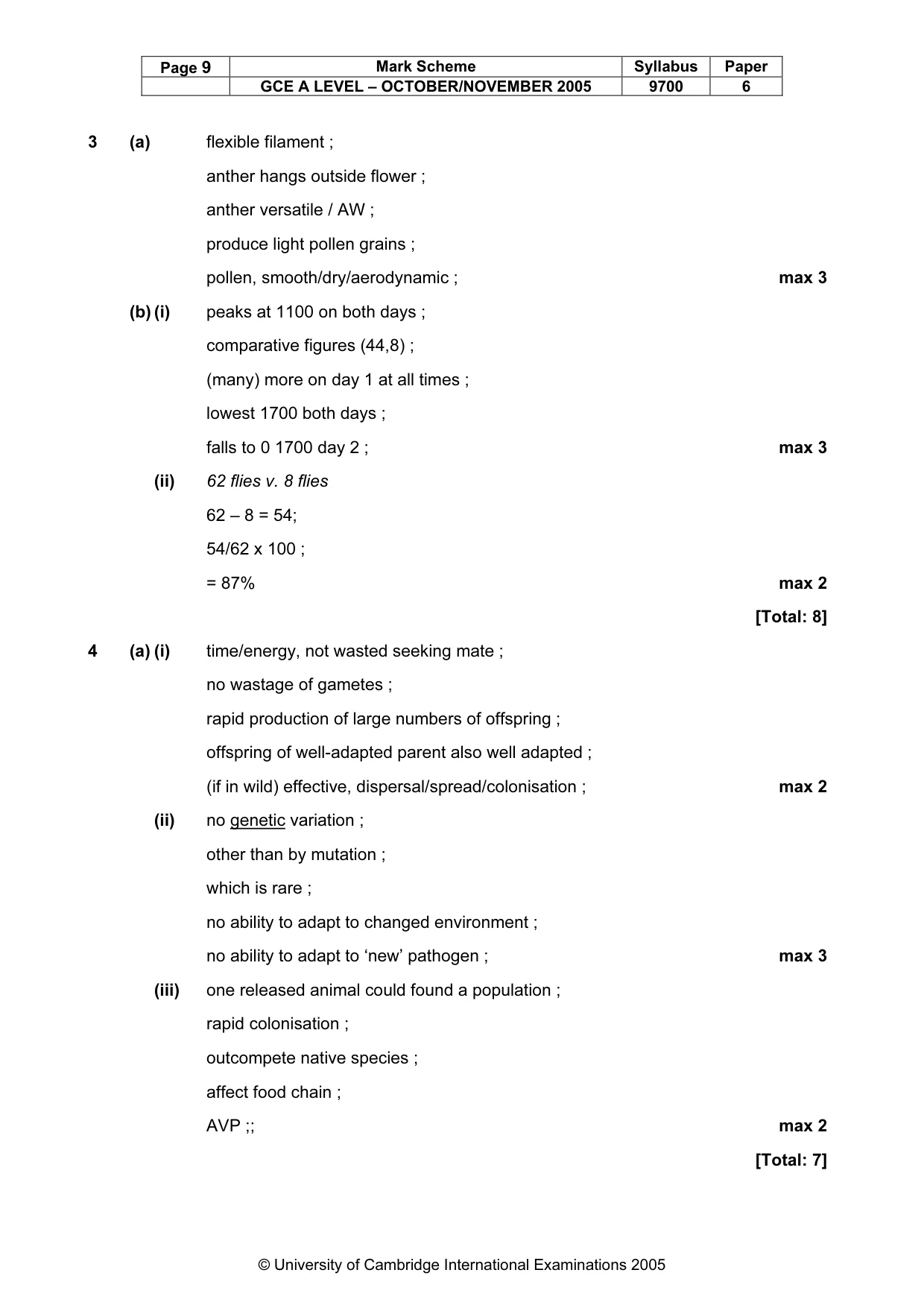
Page 9 Mark Scheme Syllabus Paper GCE A LEVEL – OCTOBER/NOVEMBER 2005 9700 6 © University of Cambridge International Examinations 2005 3 (a) flexible filament ; anther hangs outside flower ; anther versatile / AW ; produce light pollen grains ; pollen, smooth/dry/aerodynamic ; max 3 (b) (i) peaks at 1100 on both days ; comparative figures (44,8) ; (many) more on day 1 at all times ; lowest 1700 both days ; falls to 0 1700 day 2 ; max 3 (ii) 62 flies v. 8 flies 62 – 8 = 54; 54/62 x 100 ; = 87% max 2 [Total: 8] 4 (a) (i) time/energy, not wasted seeking mate ; no wastage of gametes ; rapid production of large numbers of offspring ; offspring of well-adapted parent also well adapted ; (if in wild) effective, dispersal/spread/colonisation ; max 2 (ii) no genetic variation ; other than by mutation ; which is rare ; no ability to adapt to changed environment ; no ability to adapt to ‘new’ pathogen ; max 3 (iii) one released animal could found a population ; rapid colonisation ; outcompete native species ; affect food chain ; AVP ;; max 2 [Total: 7]
Mark scheme, page 11
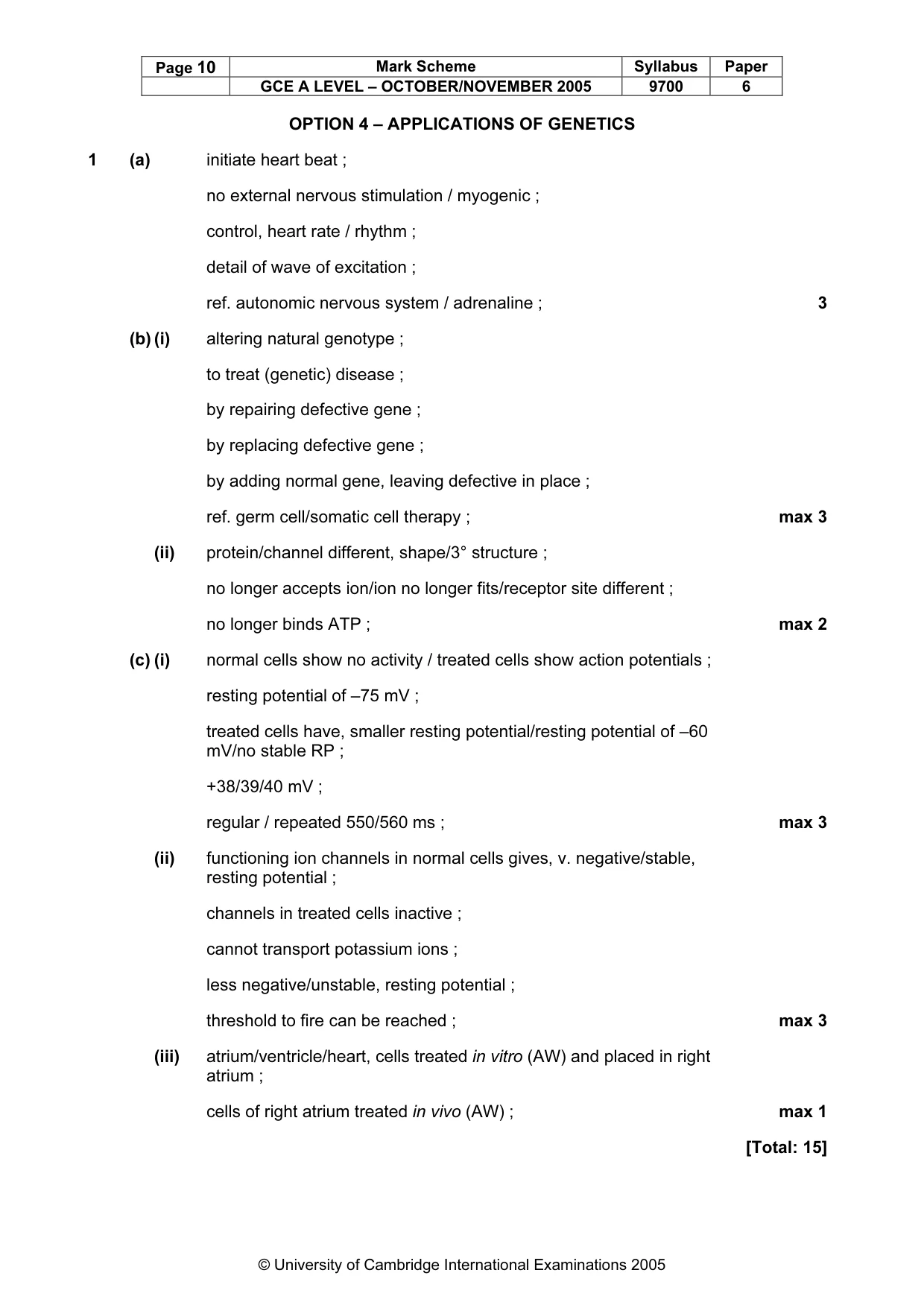
Page 10 Mark Scheme Syllabus Paper GCE A LEVEL – OCTOBER/NOVEMBER 2005 9700 6 © University of Cambridge International Examinations 2005 OPTION 4 – APPLICATIONS OF GENETICS 1 (a) initiate heart beat ; no external nervous stimulation / myogenic ; control, heart rate / rhythm ; detail of wave of excitation ; ref. autonomic nervous system / adrenaline ; 3 (b) (i) altering natural genotype ; to treat (genetic) disease ; by repairing defective gene ; by replacing defective gene ; by adding normal gene, leaving defective in place ; ref. germ cell/somatic cell therapy ; max 3 (ii) protein/channel different, shape/3° structure ; no longer accepts ion/ion no longer fits/receptor site different ; no longer binds ATP ; max 2 (c) (i) normal cells show no activity / treated cells show action potentials ; resting potential of –75 mV ; treated cells have, smaller resting potential/resting potential of –60 mV/no stable RP ; +38/39/40 mV ; regular / repeated 550/560 ms ; max 3 (ii) functioning ion channels in normal cells gives, v. negative/stable, resting potential ; channels in treated cells inactive ; cannot transport potassium ions ; less negative/unstable, resting potential ; threshold to fire can be reached ; max 3 (iii) atrium/ventricle/heart, cells treated in vitro (AW) and placed in right atrium ; cells of right atrium treated in vivo (AW) ; max 1 [Total: 15]
Mark scheme, page 12
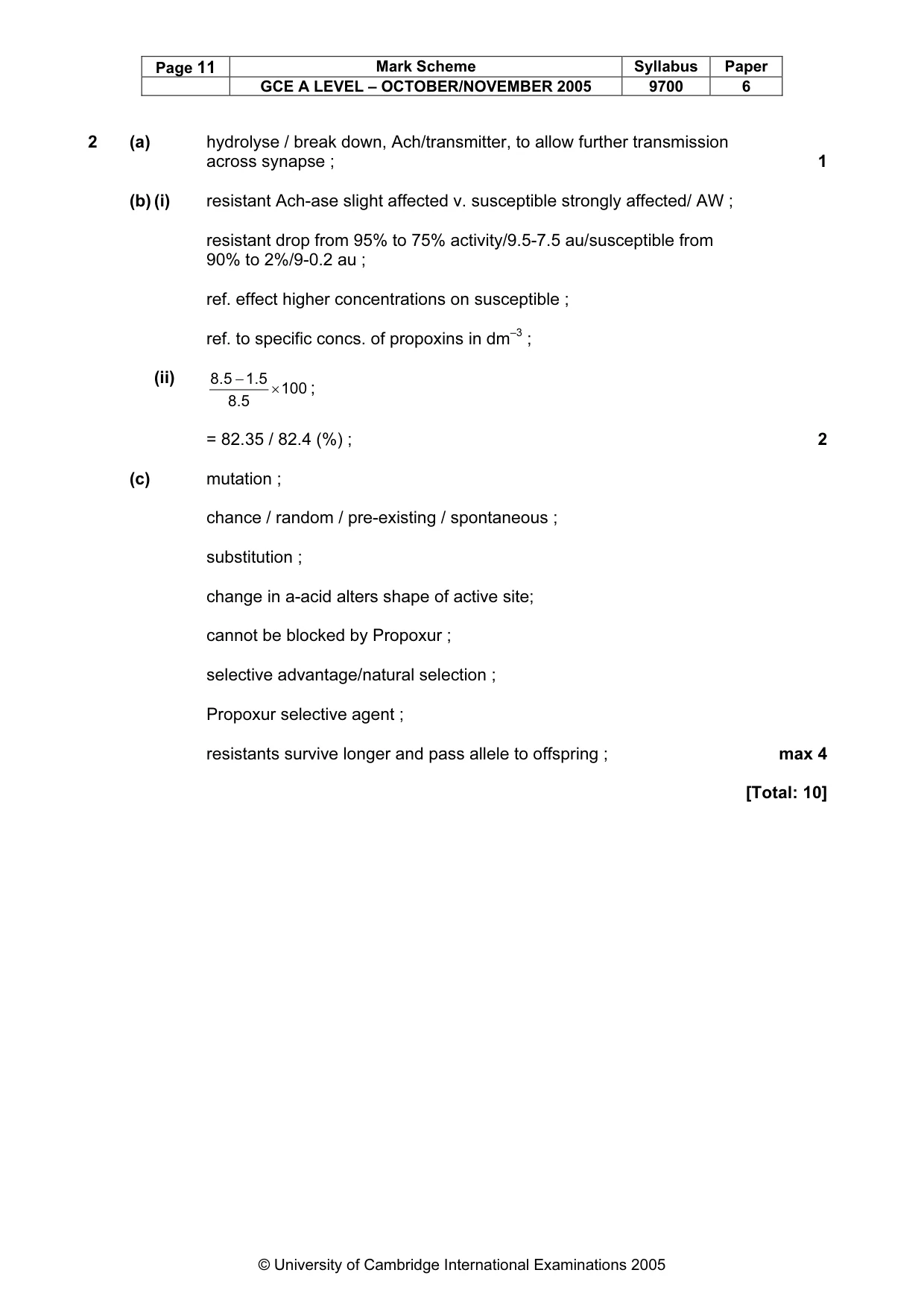
Page 11 Mark Scheme Syllabus Paper GCE A LEVEL – OCTOBER/NOVEMBER 2005 9700 6 © University of Cambridge International Examinations 2005 2 (a) hydrolyse / break down, Ach/transmitter, to allow further transmission across synapse ; 1 (b) (i) resistant Ach-ase slight affected v. susceptible strongly affected/ AW ; resistant drop from 95% to 75% activity/9.5-7.5 au/susceptible from 90% to 2%/9-0.2 au ; ref. effect higher concentrations on susceptible ; ref. to specific concs. of propoxins in dm–3 ; (ii) 100 5 . 8 5 . 1 5 . 8 × − ; = 82.35 / 82.4 (%) ; 2 (c) mutation ; chance / random / pre-existing / spontaneous ; substitution ; change in a-acid alters shape of active site; cannot be blocked by Propoxur ; selective advantage/natural selection ; Propoxur selective agent ; resistants survive longer and pass allele to offspring ; max 4 [Total: 10]
Mark scheme, page 13
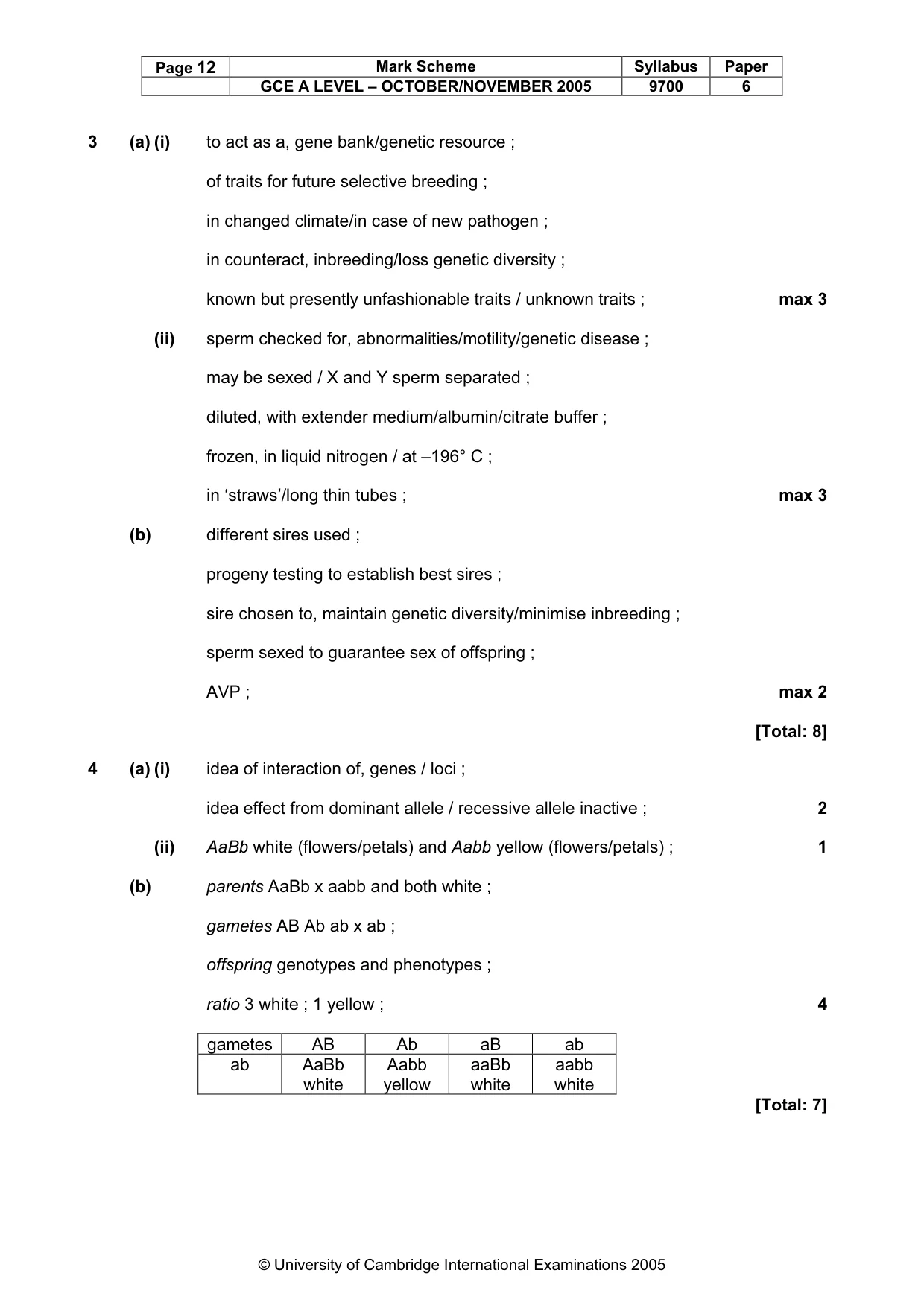
Page 12 Mark Scheme Syllabus Paper GCE A LEVEL – OCTOBER/NOVEMBER 2005 9700 6 © University of Cambridge International Examinations 2005 3 (a) (i) to act as a, gene bank/genetic resource ; of traits for future selective breeding ; in changed climate/in case of new pathogen ; in counteract, inbreeding/loss genetic diversity ; known but presently unfashionable traits / unknown traits ; max 3 (ii) sperm checked for, abnormalities/motility/genetic disease ; may be sexed / X and Y sperm separated ; diluted, with extender medium/albumin/citrate buffer ; frozen, in liquid nitrogen / at –196° C ; in ‘straws’/long thin tubes ; max 3 (b) different sires used ; progeny testing to establish best sires ; sire chosen to, maintain genetic diversity/minimise inbreeding ; sperm sexed to guarantee sex of offspring ; AVP ; max 2 [Total: 8] 4 (a) (i) idea of interaction of, genes / loci ; idea effect from dominant allele / recessive allele inactive ; 2 (ii) AaBb white (flowers/petals) and Aabb yellow (flowers/petals) ; 1 (b) parents AaBb x aabb and both white ; gametes AB Ab ab x ab ; offspring genotypes and phenotypes ; ratio 3 white ; 1 yellow ; 4 gametes AB Ab aB ab ab AaBb white Aabb yellow aaBb white aabb white [Total: 7]