Cambridge A Level Biology 9700 — 2002 May/June Paper 2 · Variant 1
9700/21/M/J/02
The question paper and its mark scheme, free to read here and free to download. This is Cambridge’s own paper, exactly as it was sat.
Question paper12 pages



Mark scheme6 pages
Answers below. Sit the paper first if you are practising.
Paper as text
Question paper, page 1
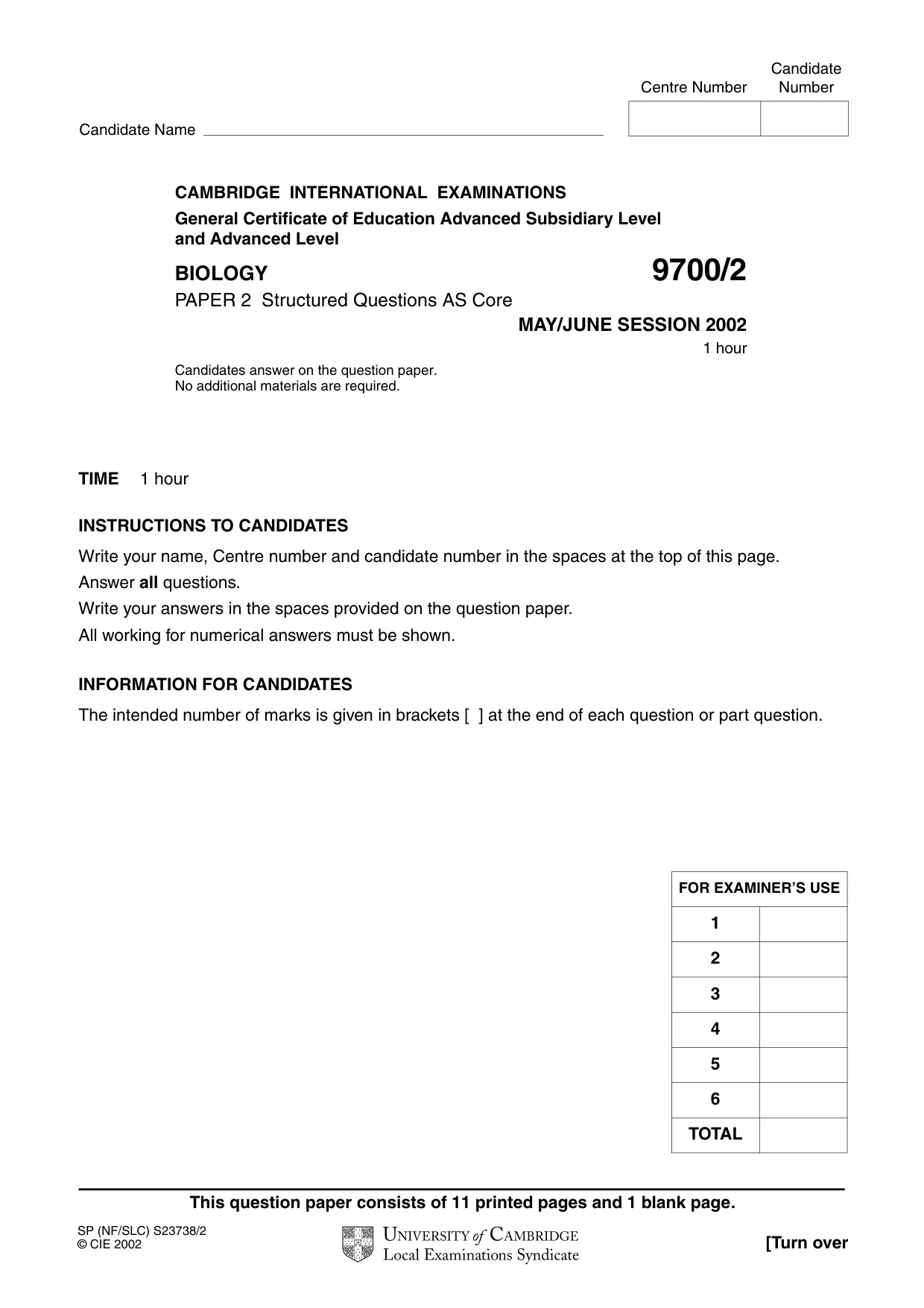
This question paper consists of 11 printed pages and 1 blank page. SP (NF/SLC) S23738/2 © CIE 2002 [Turn over CAMBRIDGE INTERNATIONAL EXAMINATIONS General Certificate of Education Advanced Subsidiary Level and Advanced Level BIOLOGY 9700/2 PAPER 2 Structured Questions AS Core MAY/JUNE SESSION 2002 1 hour Candidates answer on the question paper. No additional materials are required. TIME 1 hour INSTRUCTIONS TO CANDIDATES Write your name, Centre number and candidate number in the spaces at the top of this page. Answer all questions. Write your answers in the spaces provided on the question paper. All working for numerical answers must be shown. INFORMATION FOR CANDIDATES The intended number of marks is given in brackets [ ] at the end of each question or part question. Candidate Centre Number Number Candidate Name FOR EXAMINER’S USE 1 2 3 4 5 6 TOTAL
Question paper, page 2
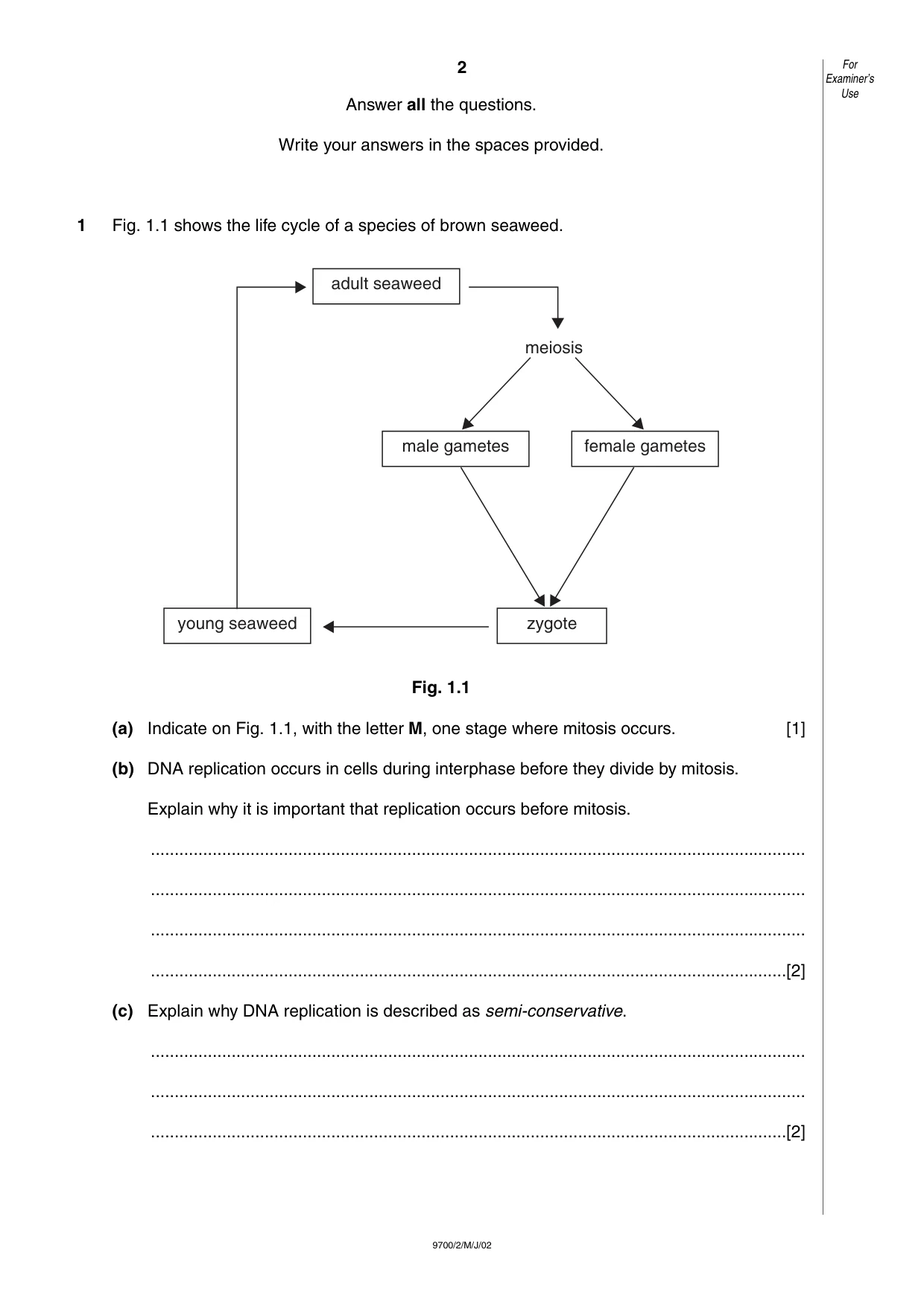
2 9700/2/M/J/02 Answer all the questions. Write your answers in the spaces provided. 1 Fig. 1.1 shows the life cycle of a species of brown seaweed. Fig. 1.1 (a) Indicate on Fig. 1.1, with the letter M, one stage where mitosis occurs. [1] (b) DNA replication occurs in cells during interphase before they divide by mitosis. Explain why it is important that replication occurs before mitosis. … … … …[2] (c) Explain why DNA replication is described as semi-conservative. … … …[2] adult seaweed young seaweed zygote male gametes female gametes meiosis For Examiner’s Use
Question paper, page 3
3 9700/2/M/J/02 [Turn over (d) Explain why meiosis occurs in the life cycle of this seaweed. … … … …[3] [Total : 8] For Examiner’s Use
Question paper, page 4
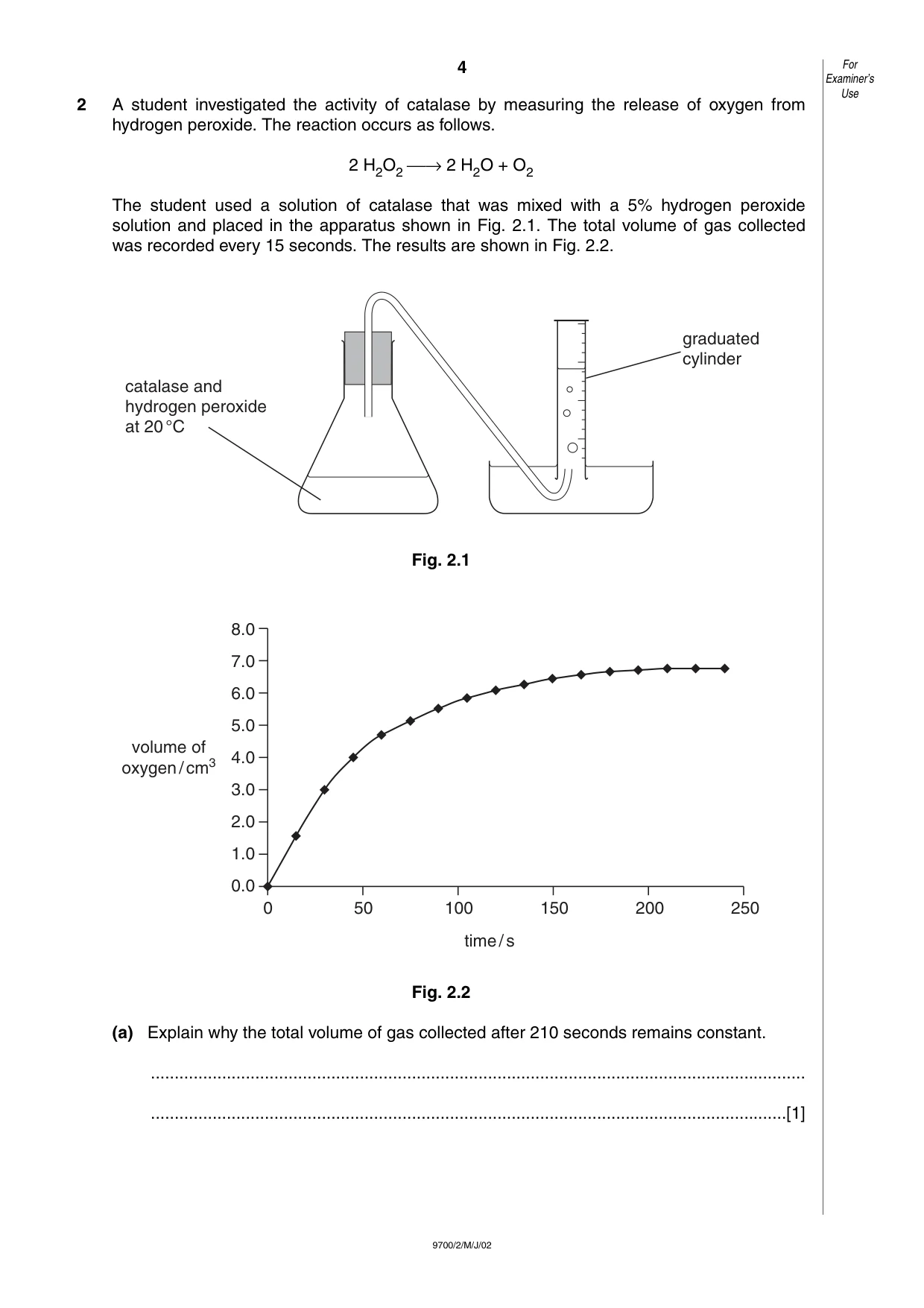
4 9700/2/M/J/02 2 A student investigated the activity of catalase by measuring the release of oxygen from hydrogen peroxide. The reaction occurs as follows. 2 H2O2 →2 H2O + O2 The student used a solution of catalase that was mixed with a 5% hydrogen peroxide solution and placed in the apparatus shown in Fig. 2.1. The total volume of gas collected was recorded every 15 seconds. The results are shown in Fig. 2.2. Fig. 2.1 Fig. 2.2 (a) Explain why the total volume of gas collected after 210 seconds remains constant. … …[1] 0.0 1.0 2.0 3.0 4.0 5.0 6.0 7.0 8.0 0 50 100 150 200 250 time/s volume of oxygen/cm3 catalase and hydrogen peroxide at 20°C graduated cylinder For Examiner’s Use
Question paper, page 5
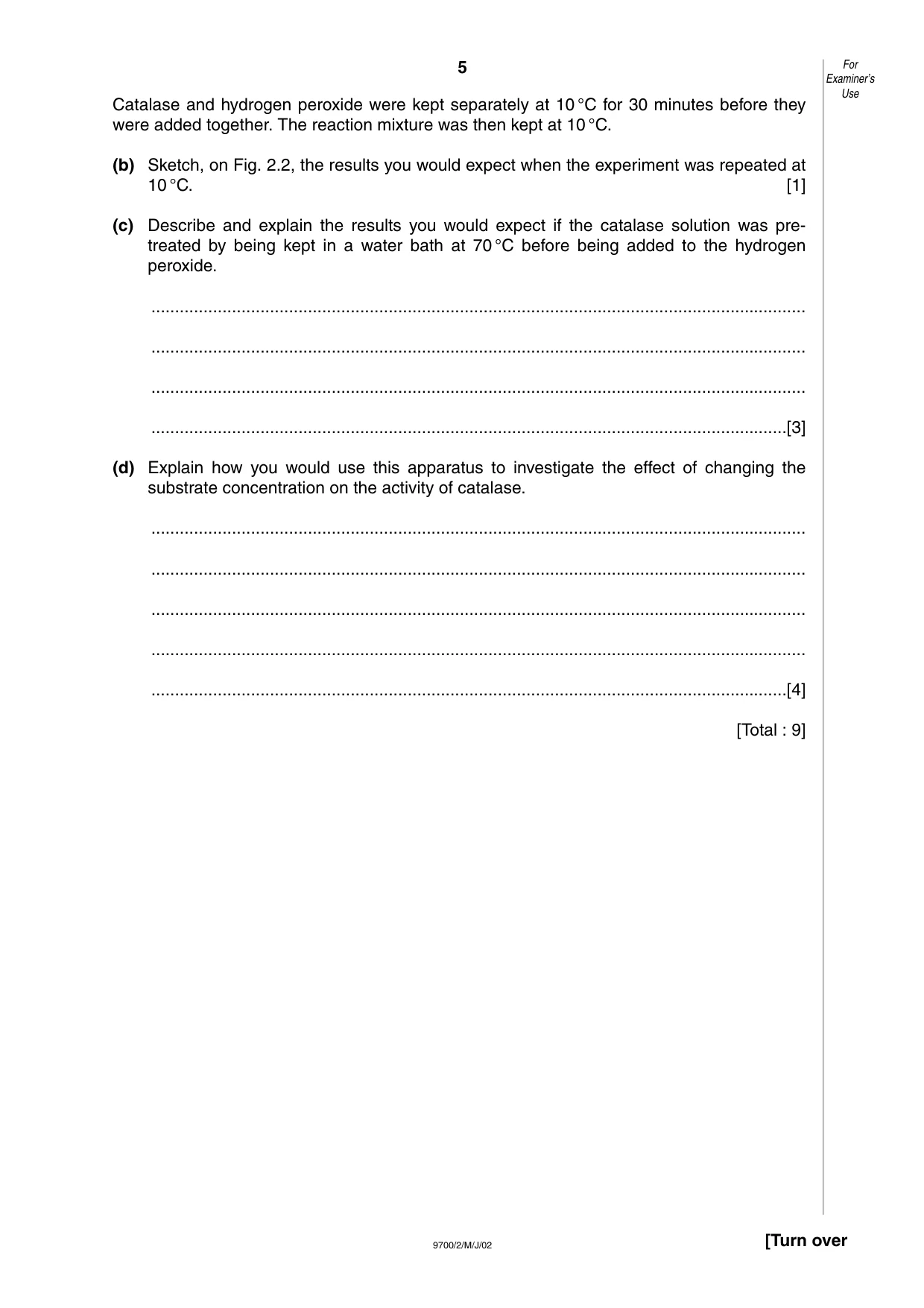
5 9700/2/M/J/02 [Turn over Catalase and hydrogen peroxide were kept separately at 10 °C for 30 minutes before they were added together. The reaction mixture was then kept at 10 °C. (b) Sketch, on Fig. 2.2, the results you would expect when the experiment was repeated at 10 °C. [1] (c) Describe and explain the results you would expect if the catalase solution was pre- treated by being kept in a water bath at 70 °C before being added to the hydrogen peroxide. … … … …[3] (d) Explain how you would use this apparatus to investigate the effect of changing the substrate concentration on the activity of catalase. … … … … …[4] [Total : 9] For Examiner’s Use
Question paper, page 6
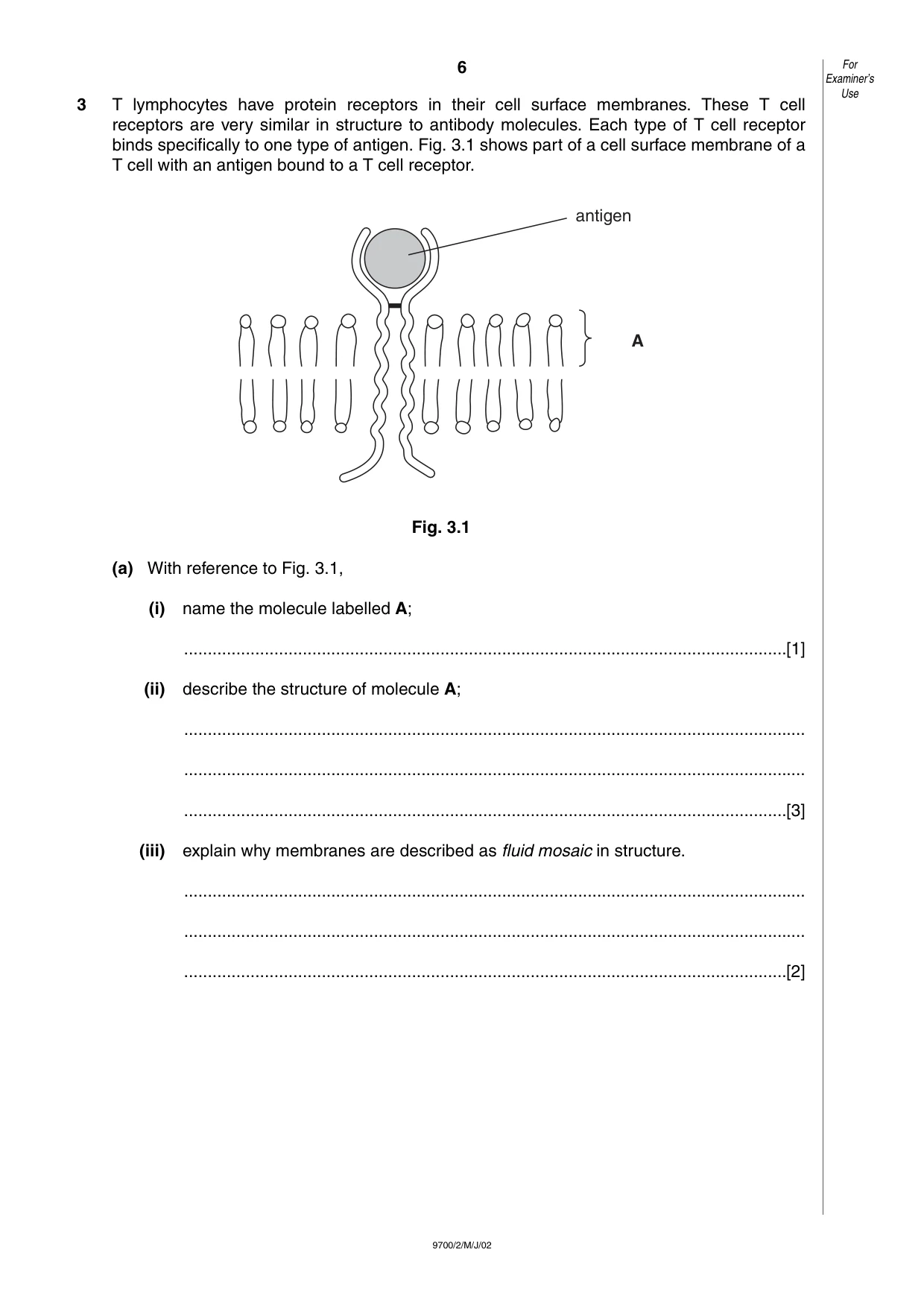
6 9700/2/M/J/02 3 T lymphocytes have protein receptors in their cell surface membranes. These T cell receptors are very similar in structure to antibody molecules. Each type of T cell receptor binds specifically to one type of antigen. Fig. 3.1 shows part of a cell surface membrane of a T cell with an antigen bound to a T cell receptor. Fig. 3.1 (a) With reference to Fig. 3.1, (i) name the molecule labelled A; …[1] (ii) describe the structure of molecule A; … … …[3] (iii) explain why membranes are described as fluid mosaic in structure. … … …[2] antigen A For Examiner’s Use
Question paper, page 7
7 9700/2/M/J/02 [Turn over (b) Explain, in terms of protein structure, how it is possible for each type of T cell receptor to bind specifically to one type of antigen. … … … …[3] [Total : 9] For Examiner’s Use
Question paper, page 8
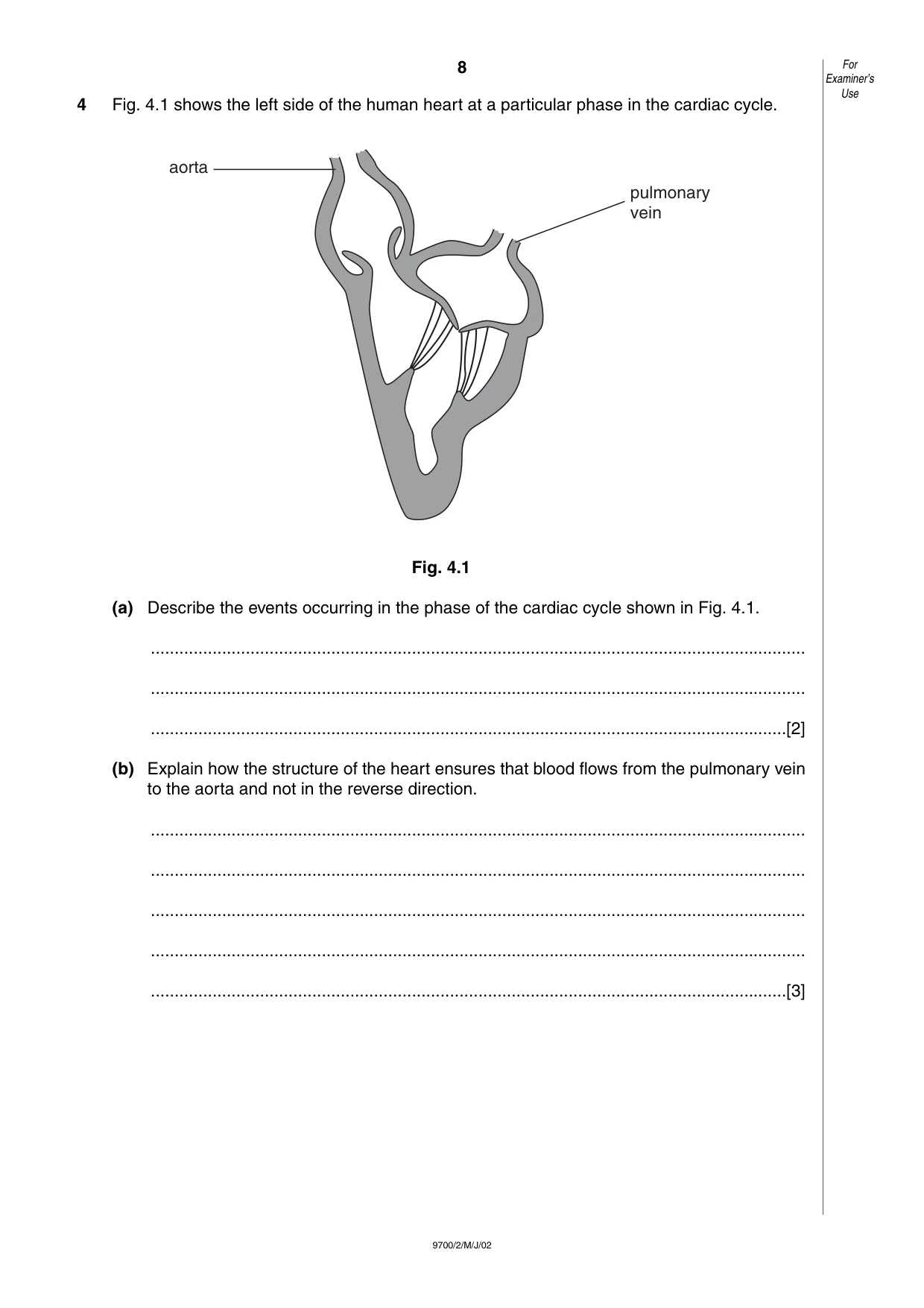
8 9700/2/M/J/02 4 Fig. 4.1 shows the left side of the human heart at a particular phase in the cardiac cycle. Fig. 4.1 (a) Describe the events occurring in the phase of the cardiac cycle shown in Fig. 4.1. … … …[2] (b) Explain how the structure of the heart ensures that blood flows from the pulmonary vein to the aorta and not in the reverse direction. … … … … …[3] aorta pulmonary vein For Examiner’s Use
Question paper, page 9
9 9700/2/M/J/02 [Turn over (c) Blood pressure is usually measured by placing a cuff over an artery in the arm. Explain why the blood pressure in the left ventricle falls to zero in the cardiac cycle, but the lowest pressure recorded in the arteries is about 10 kPa. … … … … … …[3] (d) Coronary heart disease and stroke are two forms of cardiovascular disease. Smoking is recognised as a contributory factor to these diseases. Explain how smoking may contribute to the development of cardiovascular diseases, such as coronary heart disease and stroke. … … … … …[3] [Total : 11] For Examiner’s Use
Question paper, page 10
10 9700/2/M/J/02 5 People who misuse heroin may become tolerant to the drug and physically dependent on it. (a) Explain the terms drug tolerance and physical dependence. drug tolerance … … … … physical dependence … … … …[3] (b) Alcoholic liver disease develops in some people who consume large quantities of alcohol over a long period of time. Describe the changes that may occur in the liver in people who consume alcohol over a long period of time. … … … … …[4] [Total : 7] For Examiner’s Use
Question paper, page 11
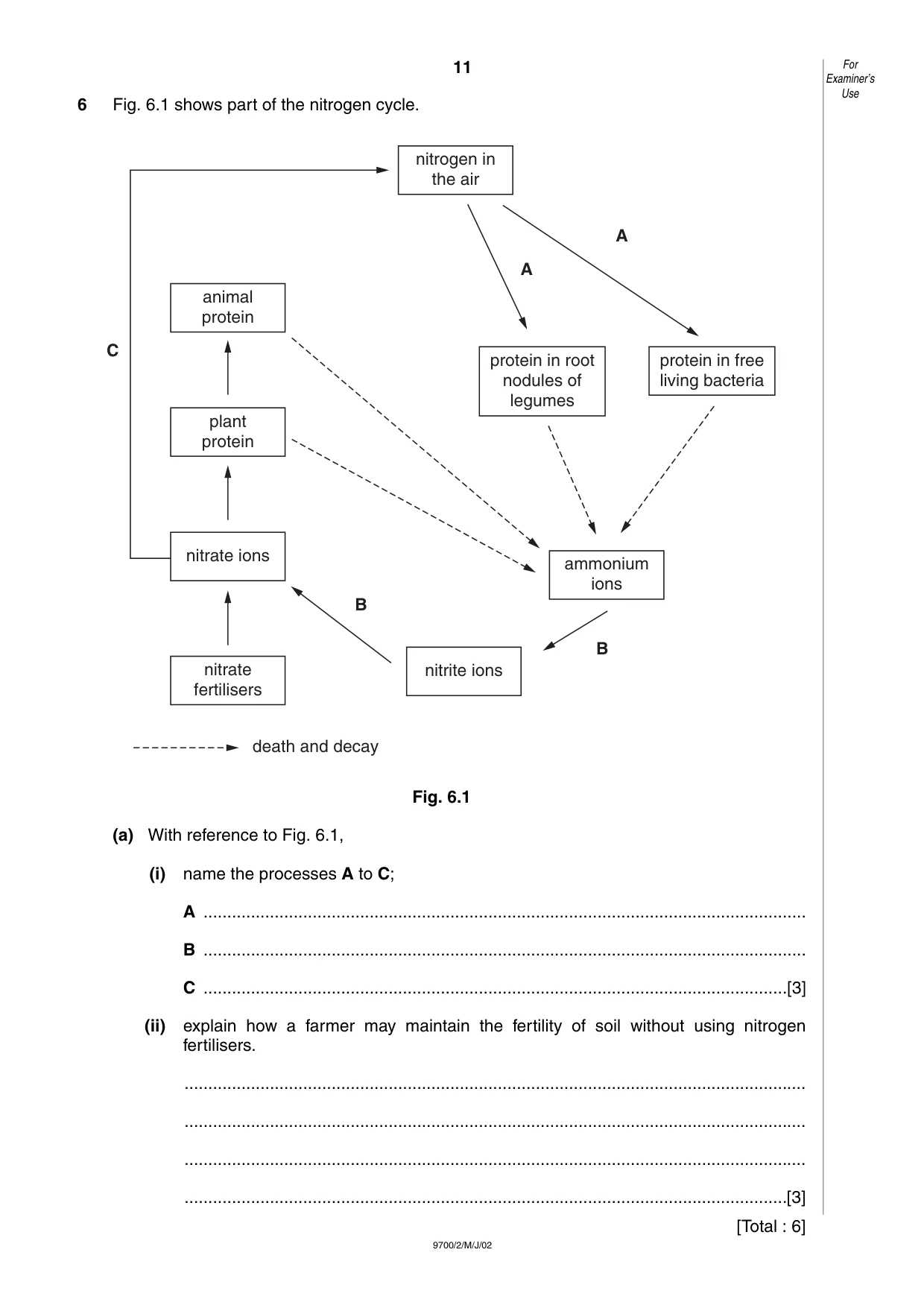
11 9700/2/M/J/02 6 Fig. 6.1 shows part of the nitrogen cycle. Fig. 6.1 (a) With reference to Fig. 6.1, (i) name the processes A to C; A … B … C …[3] (ii) explain how a farmer may maintain the fertility of soil without using nitrogen fertilisers. … … … …[3] [Total : 6] nitrogen in the air protein in free living bacteria protein in root nodules of legumes animal protein plant protein nitrate ions nitrite ions ammonium ions nitrate fertilisers death and decay C B B A A For Examiner’s Use
Mark scheme, page 1
CAMBRIDGE INTERNATIONAL EXAMINATIONS JUNE 2002 GCE Advanced Subsidiary Leve! MARK SCHEME MAXIMUM MARK : 60 SYLLABUS/COMPONENT :9700 /2 BIOLOGY (STRUCTURED QUESTIONS (AS)) Fel Universiry of CaMBripce 3% Local Examinations Syndicate
Mark scheme, page 2
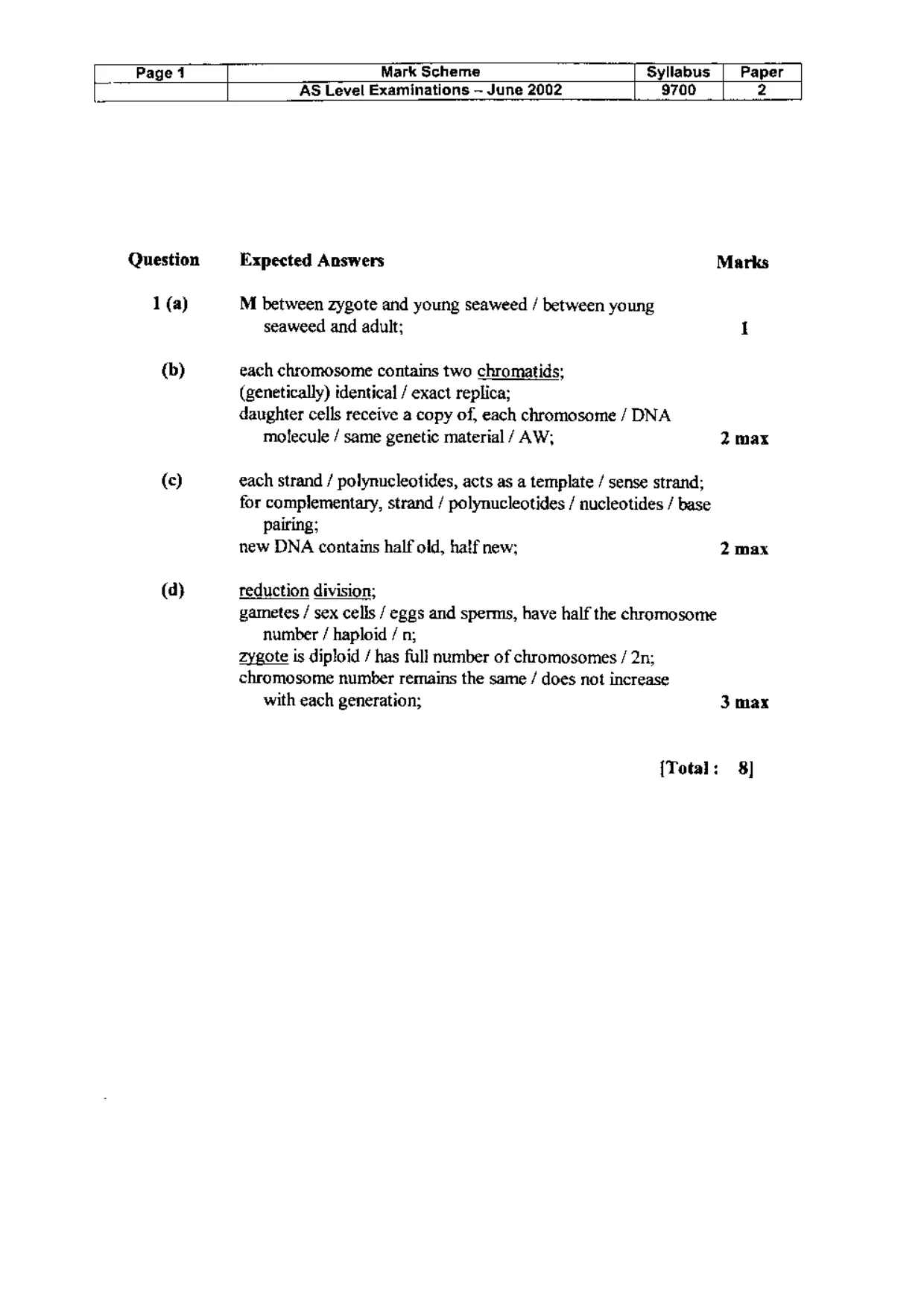
Page 1 Mark Scheme Syllabus | Paper AS Level Examinations — June 2002 9700 2 Question Expected Answers Marks 1 (a) M between zygote and young seaweed / between young seaweed and adult; I (b) each chromosome contains two chromatids; (genetically) identical / exact replica; daughter cells receive a copy of, each chromosome / DNA molecule / same genetic material / AW; 2 max (c) each strand / polynucleotides, acts as a template / sense strand; for complementary, strand / polynucleotides / nucleotides / base pairing; new DNA contains half old, hatf new; 2 max (a) reduction division; gametes / sex cells / eggs and sperms, have half the chromosome number / haploid / n; Zygote is diploid / has full number of chromosomes / 2n; chromosome number remains the same / does not increase with each generation; 3 max {Total: 8]
Mark scheme, page 3
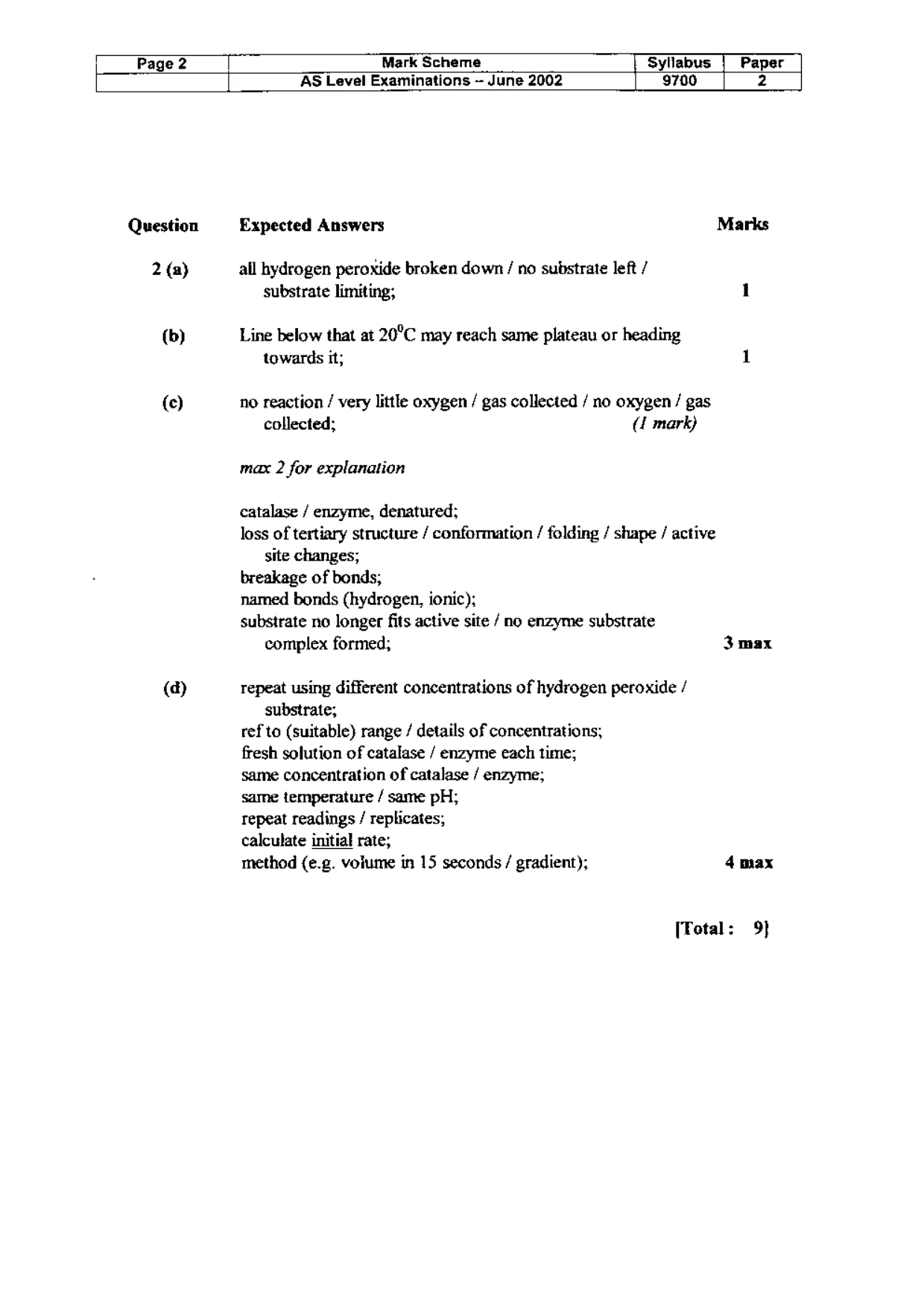
Page 2 Mark Scheme Syllabus Paper AS Level Examinations ~ June 2002 9706 2 Question 2(a) (b) () (@) Expected Answers Marks ail hydrogen peroxide broken down / no substrate left / substrate limiting; 1 Line below that at 20°C may reach same plateau or heading towards it; 1 no reaction / very little oxygen / gas collected / no oxygen / gas collected; (1 mark) max 2 for explanation catalase / enzyme, denatured; loss of tertiary structure / conformation / folding / shape / active site changes; breakage of bonds; named bonds (hydrogen, ionic); subsirate no longer fits active site / no enzyme substrate complex formed; 3 max repeat using different concentrations of hydrogen peroxide / substrate; ref to (suitable) range / details of concentrations; fresh solution of catalase / enzyme each time; same concentration of catalase / enzyme; same temperature / same pH; repeat readings / replicates; calculate initial rate; method (e.g. volume in 15 seconds / gradient); 4 max [Fotal: 9}
Mark scheme, page 4
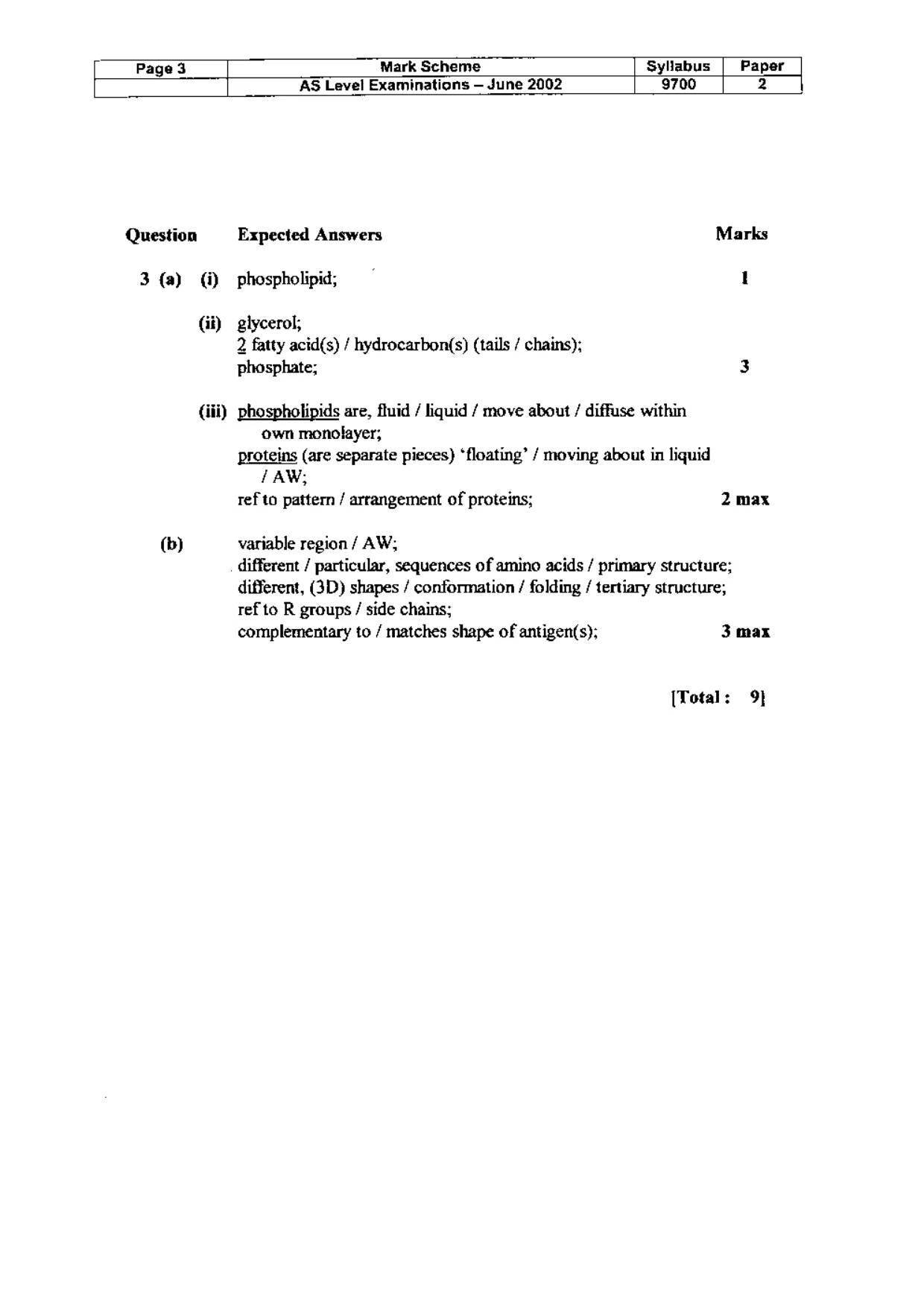
Page 3 Mark Scheme Syllabus Paper AS Level Examinations — June 2002 9700 2 Question 3 (a) (b) @ (ii) (iii) Expected Answers Marks phospholipid; ! glycerol; 2 fatty acid(s) / hydrocarbon(s) (tails / chains); phosphate; 3 phospholipids are, fluid / liquid / move about / diffuse within own monolayer; proteins (are separate pieces) ‘floating’ / moving about in liquid / AW; ref to pattern / arrangement of proteins; 2 max variable region / AW, different / particular, sequences of amino acids / primary structure; different, (3D) shapes / conformation / folding / tertiary structure; ref to R groups / side chains; complementary to / matches shape of antigen(s); 3 max [Total: 9}
Mark scheme, page 5
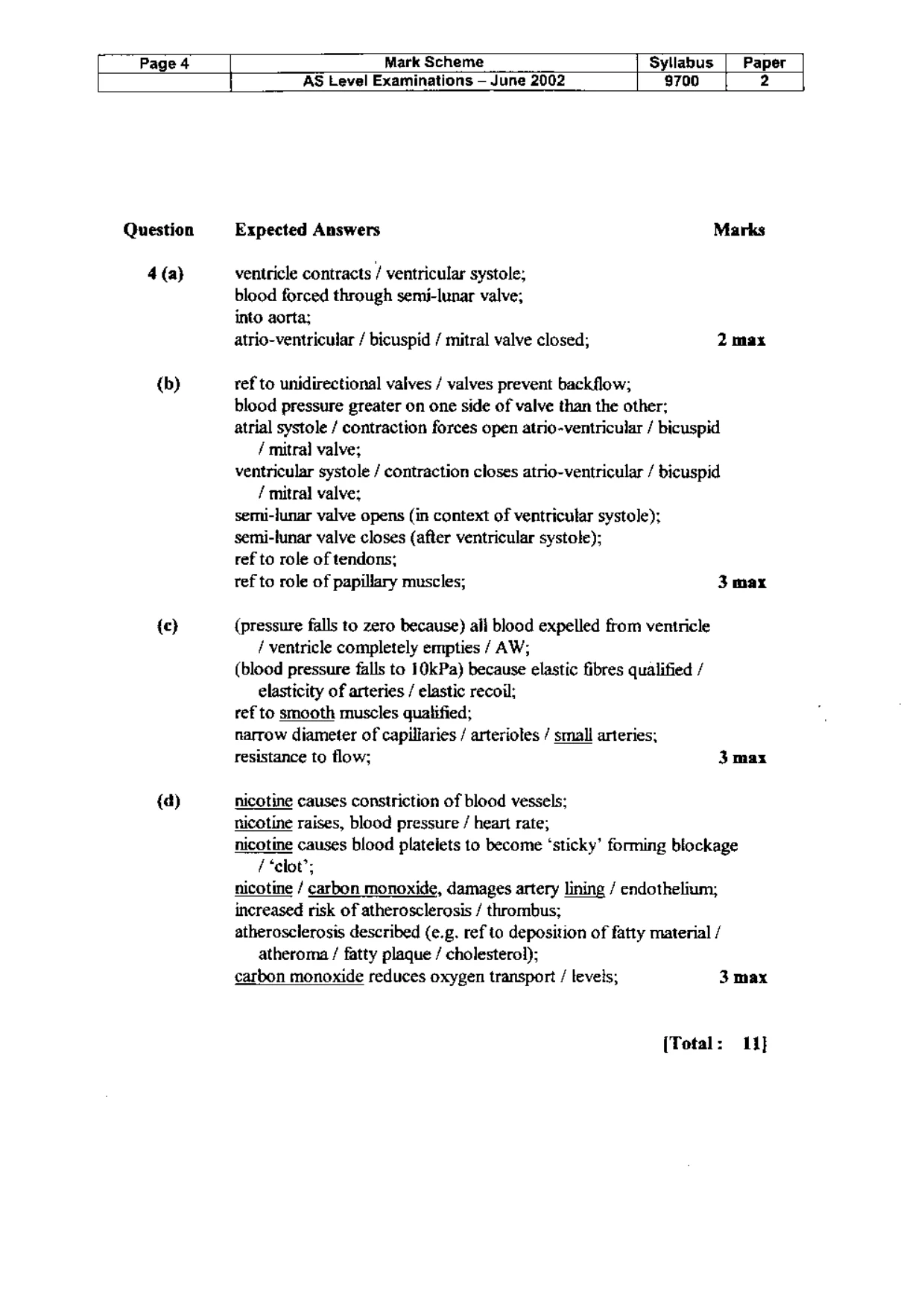
Page 4 Mark Scheme Syllabus Paper AS Level Examinations — June 2002 9700 2 Question 4(a) {b) {) (a) Expected Answers Marks ventricle contracts / ventricular systole; blood forced through semi-lunar valve; into aorta; atrio-ventricular / bicuspid / mitral valve closed; 2 max ref to unidirectional valves / valves prevent backflow; blood pressure greater on one side of valve than the other; atrial systole / contraction forces open atrio-ventricular / bicuspid / mitral valve; ventricular systole / contraction closes atrio-ventricular / bicuspid / mitral valve; semi-lunar valve opens (in context of ventricular systole); semi-lunar valve closes (after ventricular systole); ref to role of tendons; ref to role of papillary muscles; 3 max (pressure falls to zero because) ail blood expelled from ventricle / ventricle completely empties / AW; (blood pressure falls to 10kPa) because elastic fibres qualified / elasticity of arteries / elastic recoil; ref to smooth muscles qualified; narrow diameter of capillaries / arterioles / small arteries; resistance to flow; 3 max nicotine causes constriction of blood vessels: nicotine raises, blood pressure / heart rate; nicotine causes blood plateiets to become ‘sticky’ forming blockage f ‘clot’; nicotine / carbon monoxide, damages artery lining / endothelium; increased risk of atherosclerosis / thrombus; atherosclerosis described (e.g. ref to deposition of fatty material / atheroma / fatty plaque / cholesterol); carbon monoxide reduces oxygen transport / levels; 3 max (Total: 11]
Mark scheme, page 6
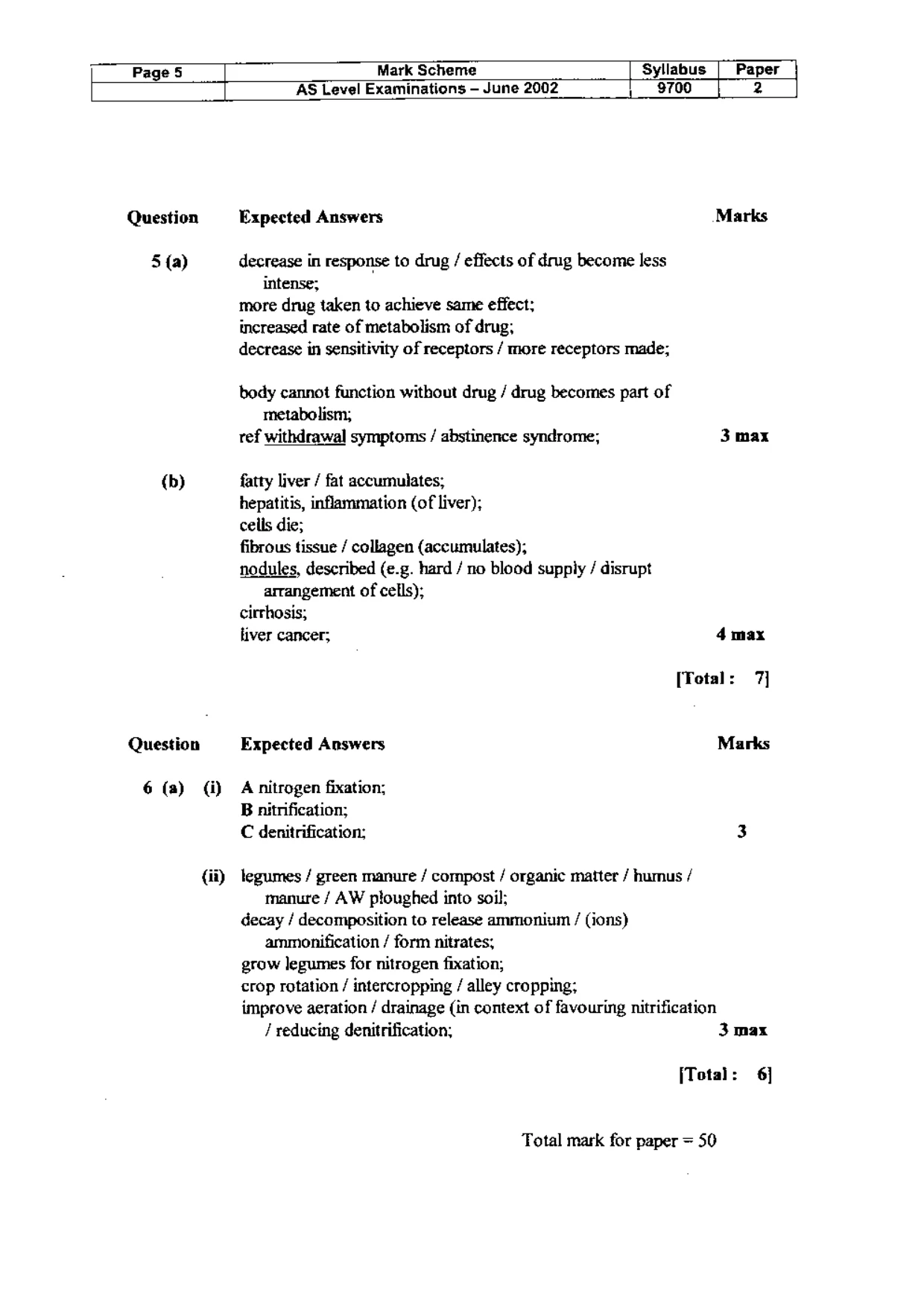
Page 5 Mark Scheme [ Syllabus | Paper AS Level Examinations — June 2002 9700 2 Question 5{a) (b) Question 6 (a) @ (ii) Expected Answers Marks decrease in response to drug / effects of drug become less intense; more drug taken to achieve same effect: increased rate of metabolism of drug; decrease in sensitivity of receptors / more receptors made; body cannot function without drug / drug becomes part of metabolism; ref withdrawal symptoms / abstinence syndrome; 3 max fatty liver / fat accumulates; hepatitis, inflammation (of liver); cells die; fibrous tissue / collagen (accumulates); nodules, described (e.g. hard / no blood supply / disrupt arrangement of cells); cirrhosis; liver cancer; 4 max [Total: 7] Expected Answers Marks A nitrogen fixation; B nitrification; C denitrification; 3 legumes / green manure / compost / organic matter / humus / manure / AW ploughed into soil; decay / decomposition to release ammonium / (ions) ammonification / form nitrates; grow legumes for nitrogen fixation; crop rotation / intercropping / alley cropping; improve aeration / drainage (in context of favouring nitrification / reducing denitrification; 3 max [Total: 6] Total mark for paper = 50