Cambridge A Level Accounting 9706 — 2019 Feb/March Paper 2 · Variant 2
9706/22/F/M/19 · 5 questions · 90 marks · ≈101 min
The question paper and its mark scheme, free to read here and free to download. This is Cambridge’s own paper, exactly as it was sat.
Question paper20 pages

Mark scheme16 pages
Answers below. Sit the paper first if you are practising.
Questions as text
Q1 · The following balances were extracted from the books of K Limited at 30 September 2018
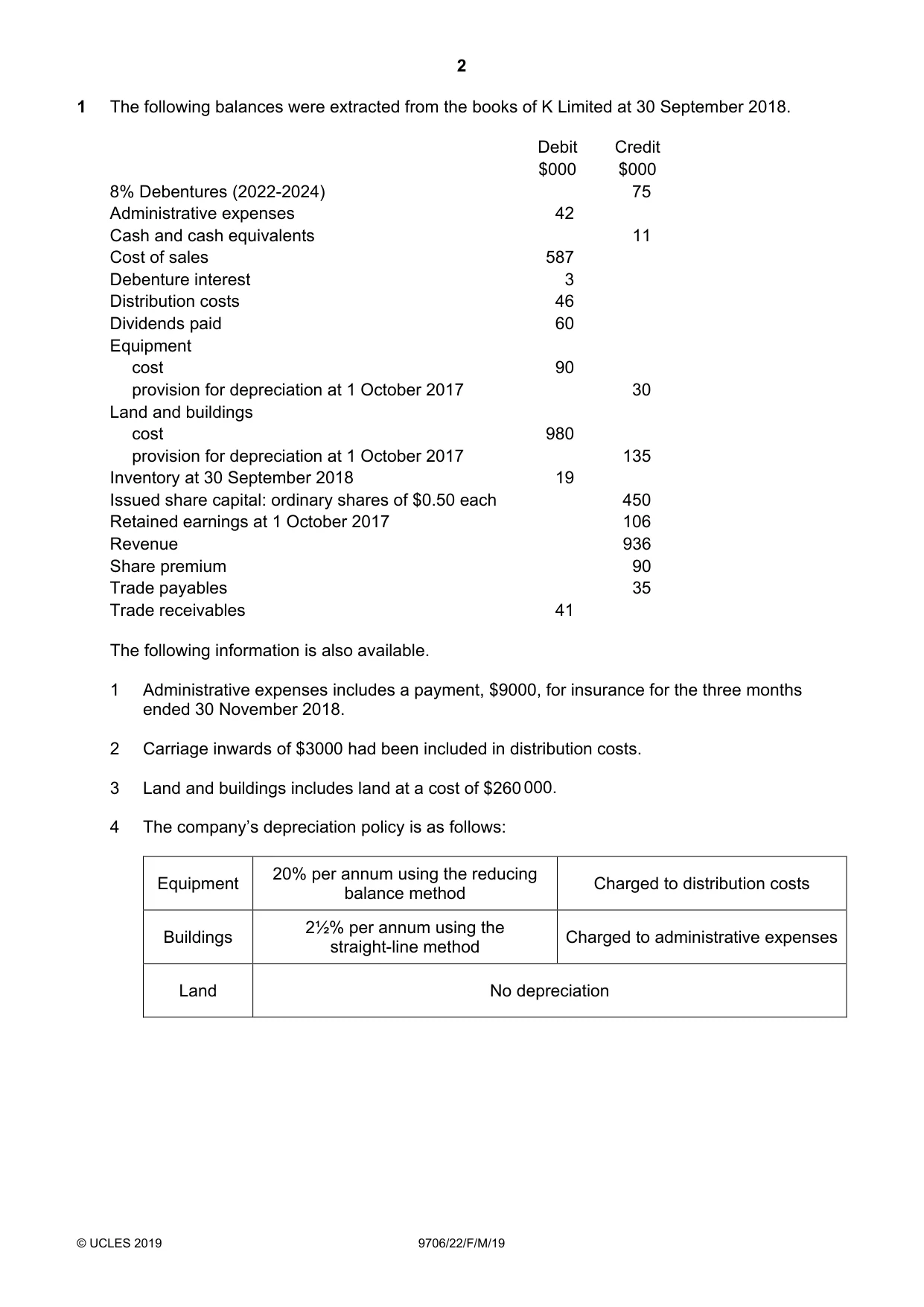
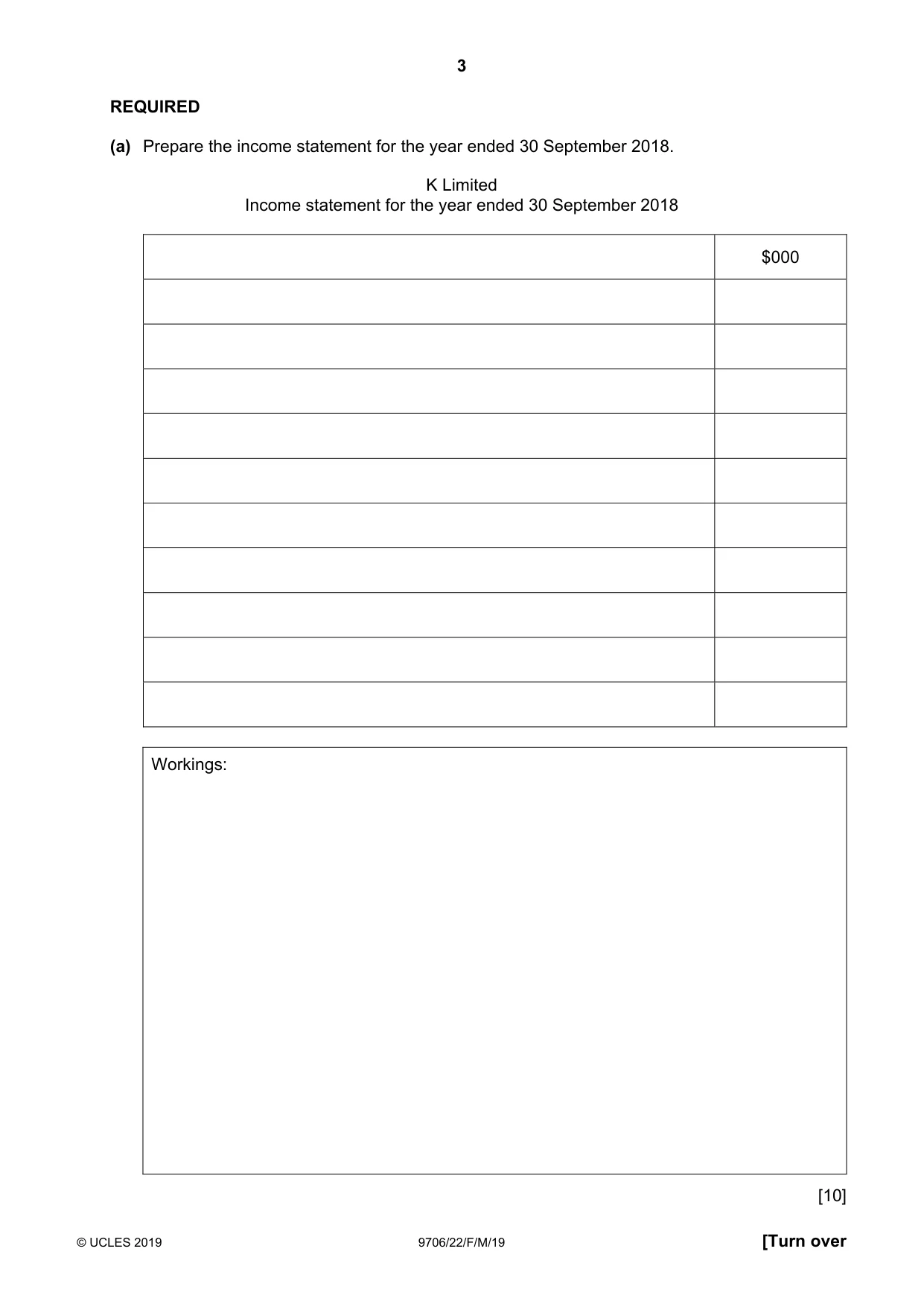
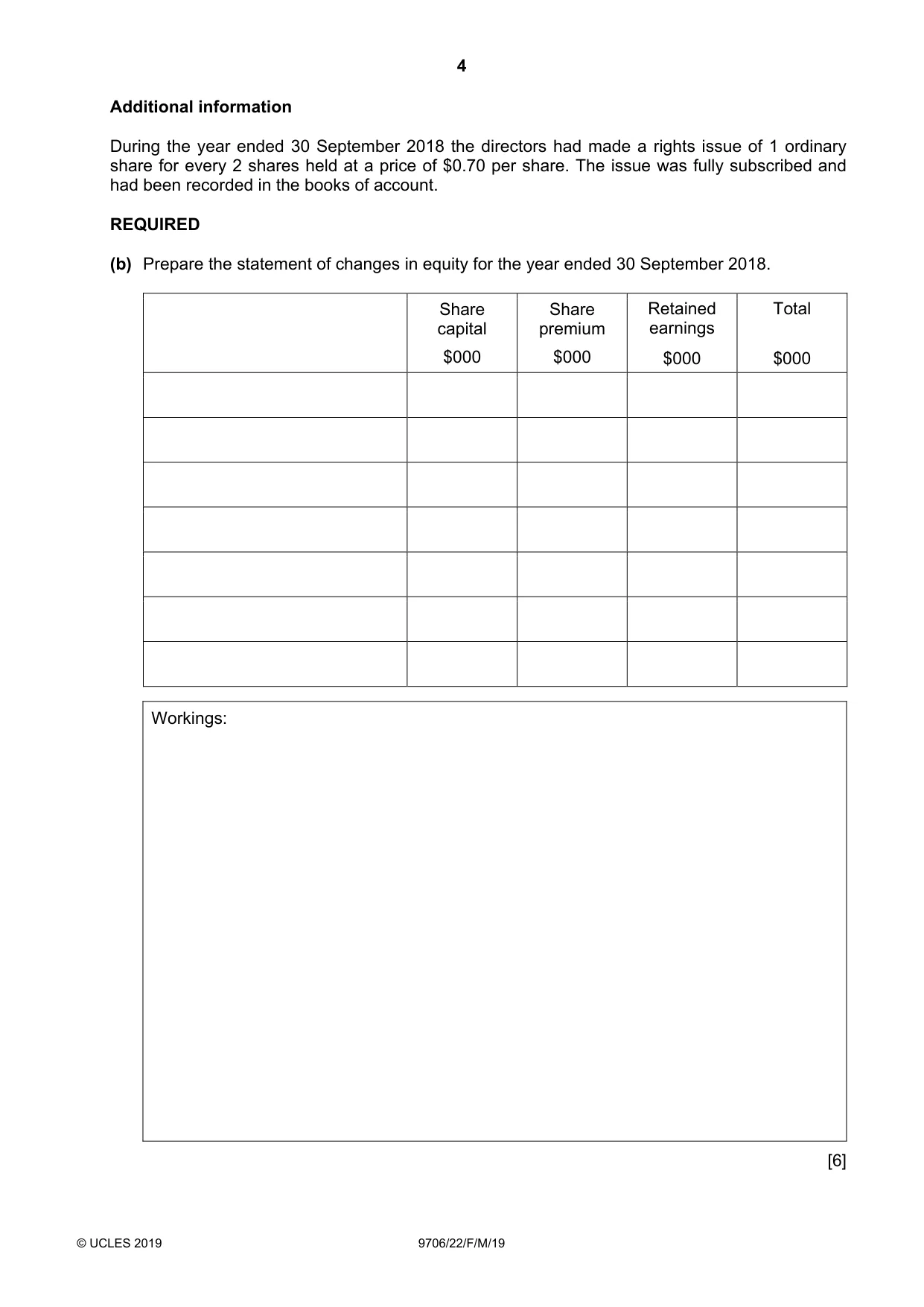
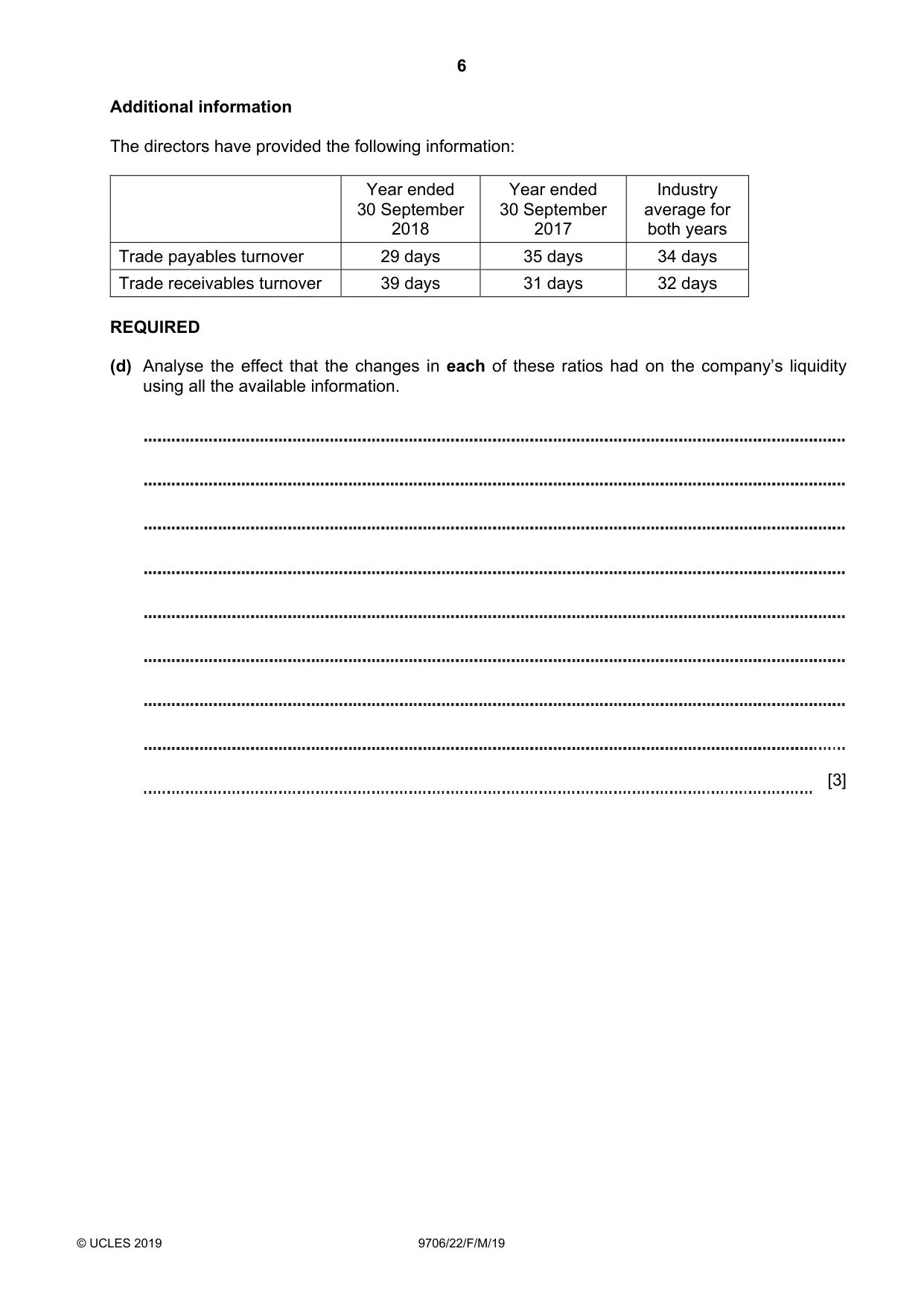
1 The following balances were extracted from the books of K Limited at 30 September 2018. Debit Credit $000 $000 8% Debentures (2022-2024) 75 Administrative expenses 42 Cash and cash equivalents 11 Cost of sales 587 Debenture interest 3 Distribution costs 46 Dividends paid 60 Equipment cost 90 provision for depreciation at 1 October 2017 30 Land and buildings cost 980 provision for depreciation at 1 October 2017 135 Inventory at 30 September 2018 19 Issued share capital: ordinary shares of $0.50 each 450 Retained earnings at 1 October 2017 106 Revenue 936 Share premium 90 Trade payables 35 Trade receivables 41 The following information is also available. 1 Administrative expenses includes a payment, $9000, for insurance for the three months ended 30 November 2018. 2 Carriage inwards of $3000 had been included in distribution costs. 3 Land and buildings includes land at a cost of $260 000. 4 The company’s depreciation policy is as follows: 20% per annum using the reducing Equipment Charged to distribution costs balance method 2½% per annum using the Buildings Charged to administrative expenses straight-line method Land No depreciation REQUIRED (a) Prepare the income statement for the year ended 30 September 2018. K Limited Income statement for the year ended 30 September 2018 $000 Workings: [10] Additional information During the year ended 30 September 2018 the directors had made a rights issue of 1 ordinary share for every 2 shares held at a price of $0.70 per share. The issue was fully subscribed and had been recorded in the books of account. REQUIRED (b) Prepare the statement of changes in equity for the year ended 30 September 2018. Share Share Retained Total capital premium earnings $000 $000 $000 $000 Workings: [6] Additional information The directors wish to raise additional finance. They are considering making either a further rights issue of ordinary shares or issue another debenture. REQUIRED (c) Advise the directors which option they should choose. Justify your answer. [5] Additional information The directors have provided the following information: Year ended Year ended Industry 30 September 30 September average for 2018 2017 both years Trade payables turnover 29 days 35 days 34 days Trade receivables turnover 39 days 31 days 32 days REQUIRED (d) Analyse the effect that the changes in each of these ratios had on the company’s liquidity using all the available information. [3] (e) State three ways in which a business could reduce trade receivables turnover. 1 2 3 [3] (f) State three drawbacks of increasing trade payables turnover. 1 2 3 [3] [Total: 30] Question 2 is on the next page.
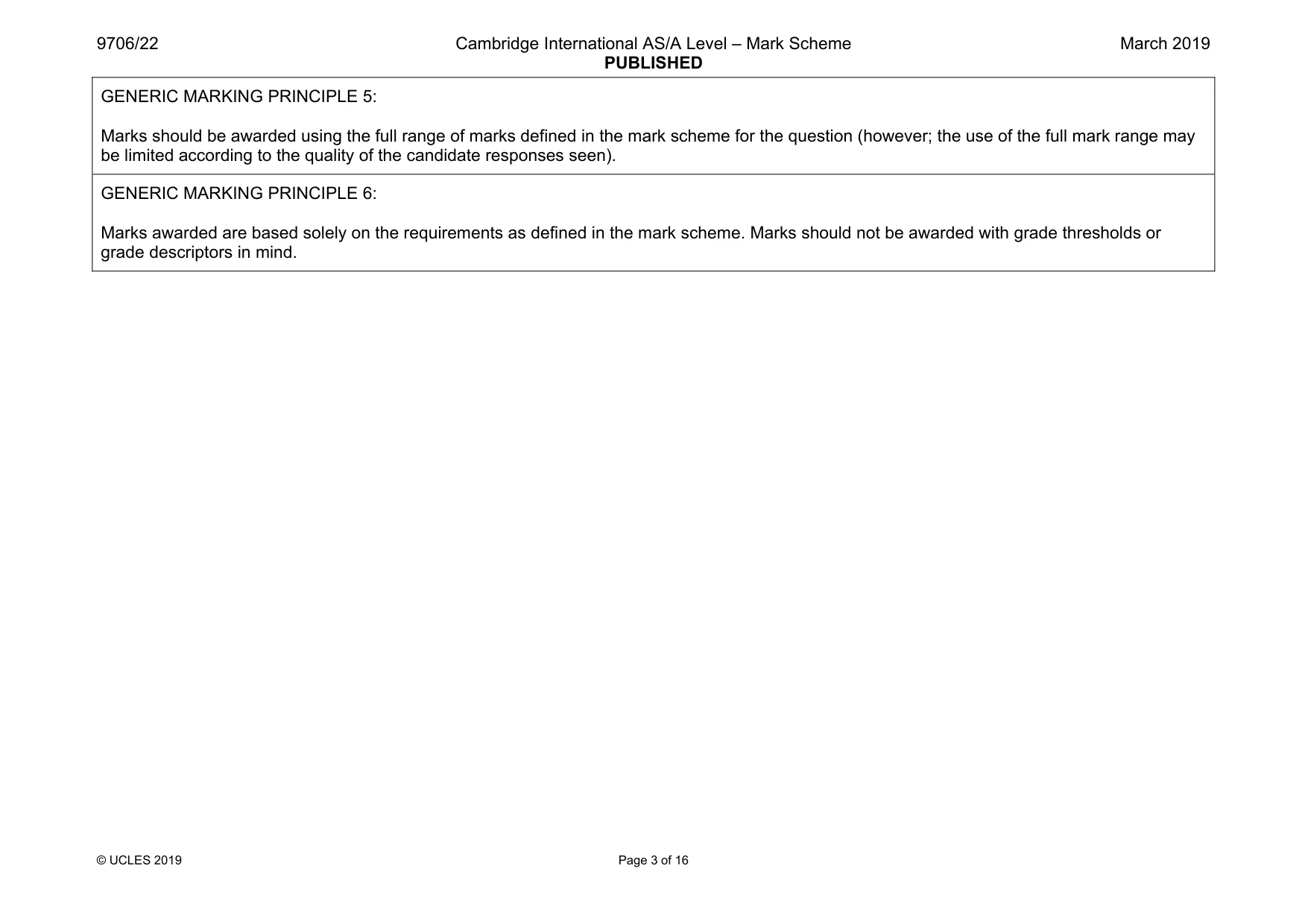
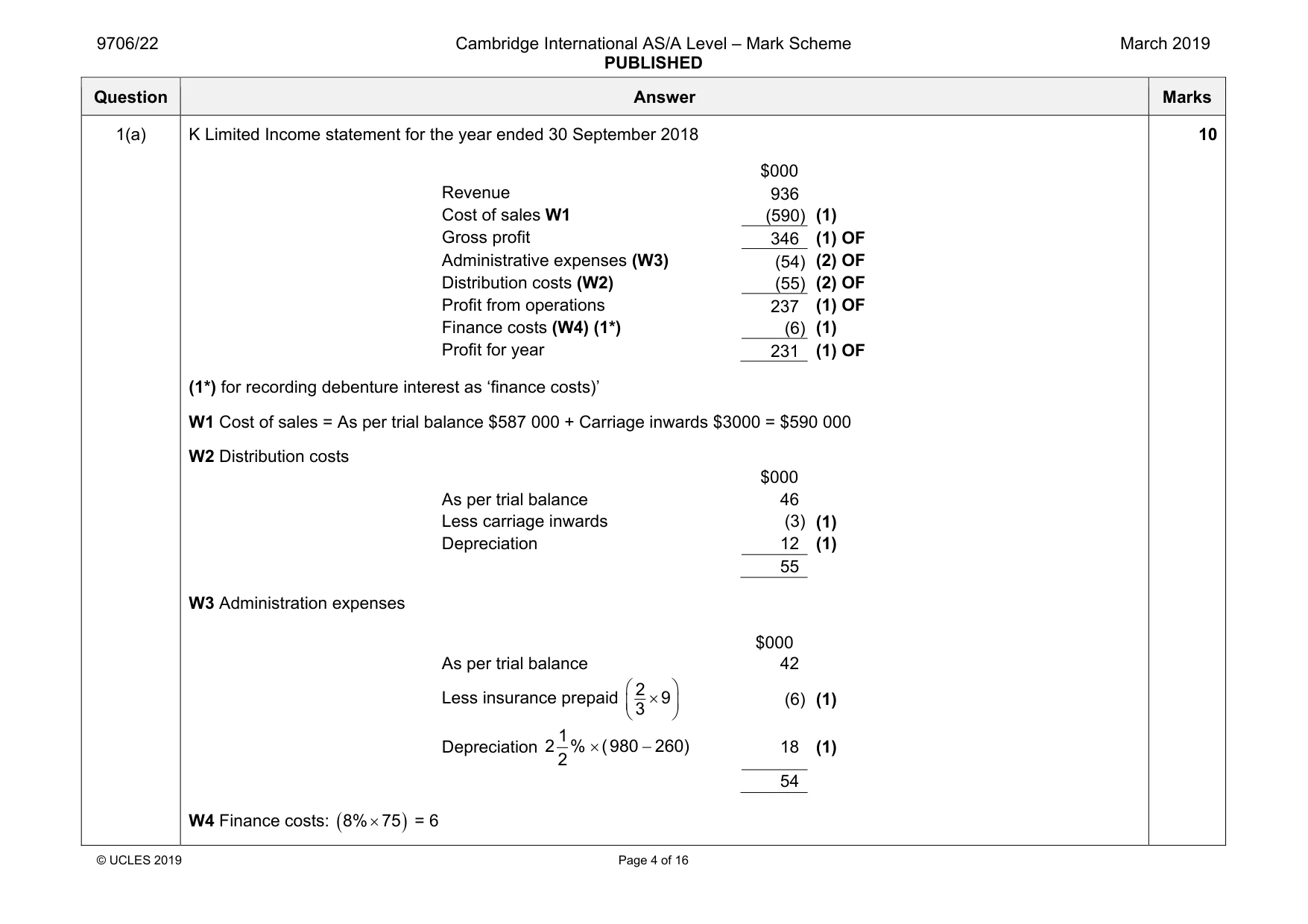
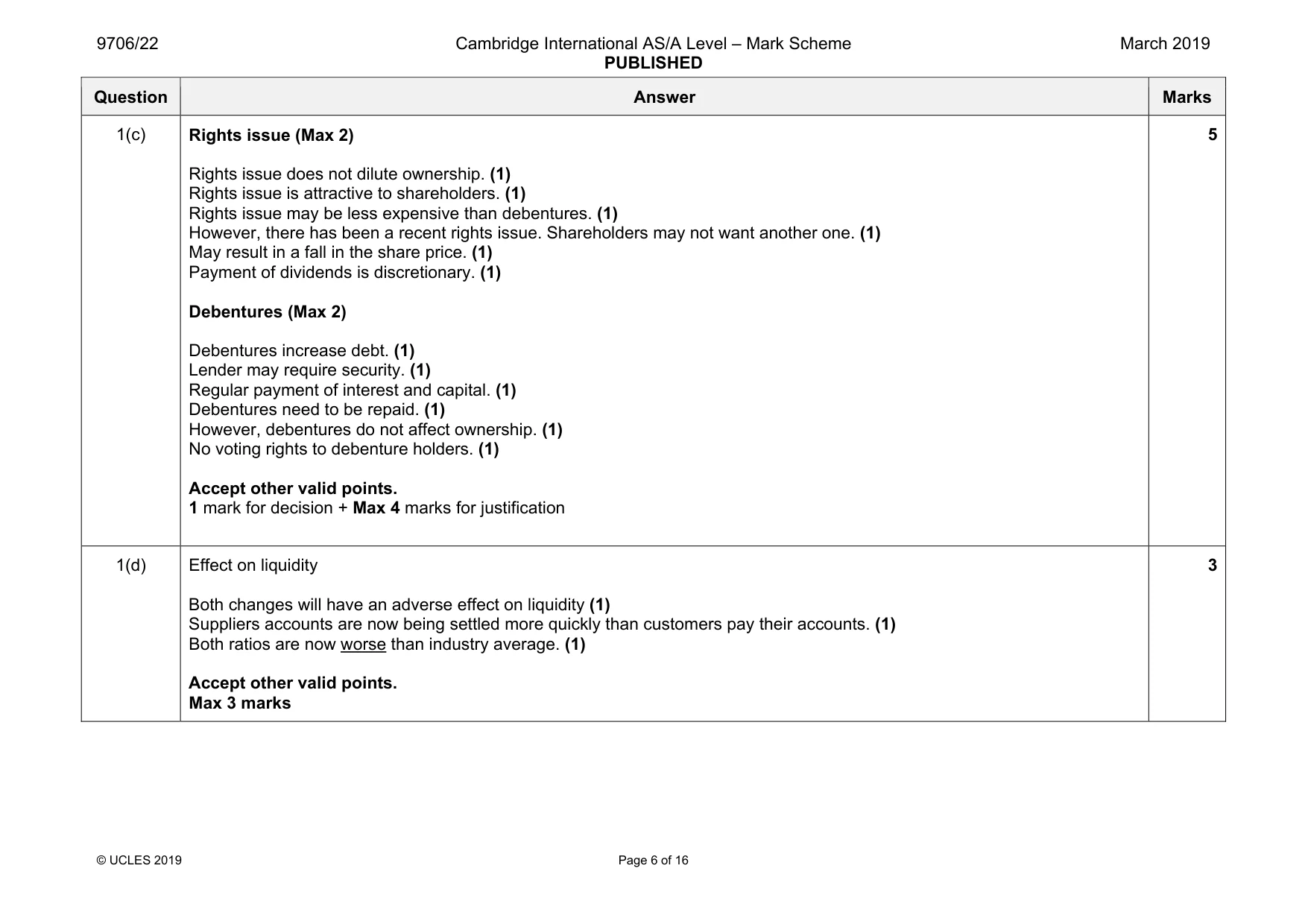
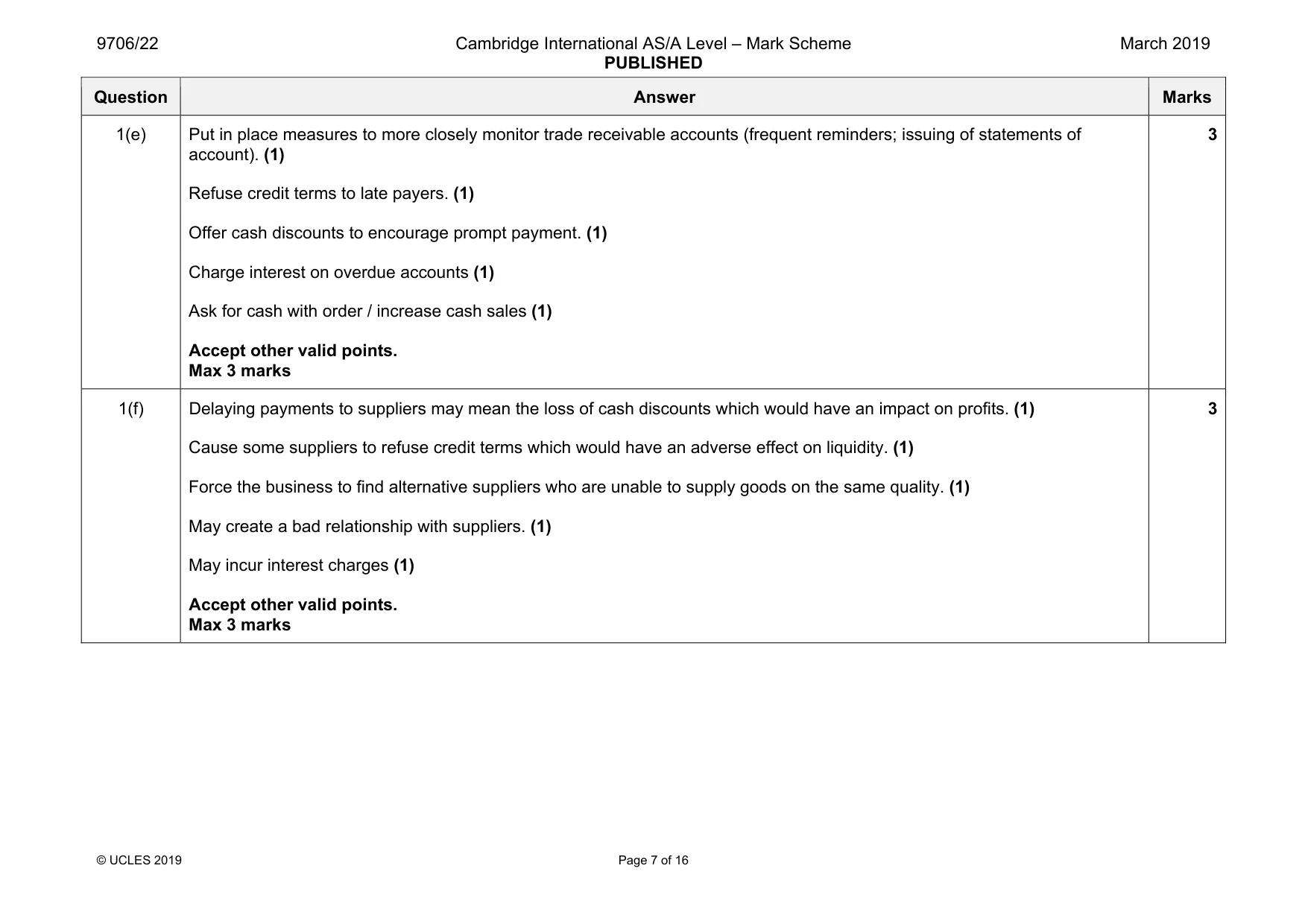
Mark scheme: 1(a) K Limited Income statement for the year ended 30 September 2018 $000 Revenue 936 Cost of sales W1 (590) (1) Gross profit 346 (1) OF Administrative expenses (W3) (54) (2) OF Distribution costs (W2) (55) (2) OF Profit from operations 237 (1) OF Finance costs (W4) (1*) (6) (1) Profit for year 231 (1) OF (1*) for recording debenture interest as ‘finance costs)’ W1 Cost of sales = As per trial balance $587 000 + Carriage inwards $3000 = $590 000 W2 Distribution costs $000 As per trial balance 46 Less carriage inwards (3) (1) Depreciation 12 (1) 55 W3 Administration expenses $000 As per trial balance 42 Less insurance prepaid × 2 9 3 (6) (1) Depreciation × − 1 2 % (980 260) 2 18 (1) 54 W4 Finance costs: ( ) × 8% 75 = 6 10 Question Answer Marks 1(b) Statement of changes in equity for the year ended 30 September 2018 Share capital Share premium Retained earnings Total $000 $000 $000 $000 Balance, 1 October 2017 (W1) 300 30 106 436 (1) Rights issue (W1) 150 (1) 60 (1) 210 Dividends paid (60) (1) (60) Profit for the year 231 (1) OF 231 Balance, 30 September 2018 450 90 277 817 (1) OF W1 Rights issue and opening balances Rights issue: 1 for 2 leading to share capital 450: so issue was 1 3 × 450 = 150 Share premium: 20 cents on each 50 cents share = 2 5 × 150 = 60 Opening share capital: 450 – 150 = 300 Opening share premium: 90 – 60 = 30 6 Question Answer Marks 1(c) Rights issue (Max 2) Rights issue does not dilute ownership. (1) Rights issue is attractive to shareholders. (1) Rights issue may be less expensive than debentures. (1) However, there has been a recent rights issue. Shareholders may not want another one. (1) May result in a fall in the share price. (1) Payment of dividends is discretionary. (1) Debentures (Max 2) Debentures increase debt. (1) Lender may require security. (1) Regular payment of interest and capital. (1) Debentures need to be repaid. (1) However, debentures do not affect ownership. (1) No voting rights to debenture holders. (1) Accept other valid points. 1 mark for decision + Max 4 marks for justification 5 1(d) Effect on liquidity Both changes will have an adverse effect on liquidity (1) Suppliers accounts are now being settled more quickly than customers pay their accounts. (1) Both ratios are now worse than industry average. (1) Accept other valid points. Max 3 marks 3 Question Answer Marks 1(e) Put in place measures to more closely monitor trade receivable accounts (frequent reminders; issuing of statements of account). (1) Refuse credit terms to late payers. (1) Offer cash discounts to encourage prompt payment. (1) Charge interest on overdue accounts (1) Ask for cash with order / increase cash sales (1) Accept other valid points. Max 3 marks 3 1(f) Delaying payments to suppliers may mean the loss of cash discounts which would have an impact on profits. (1) Cause some suppliers to refuse credit terms which would have an adverse effect on liquidity. (1) Force the business to find alternative suppliers who are unable to supply goods on the same quality. (1) May create a bad relationship with suppliers. (1) May incur interest charges (1) Accept other valid points. Max 3 marks 3
Q2 · Mira, Sasha and Peta have been trading as a partnership
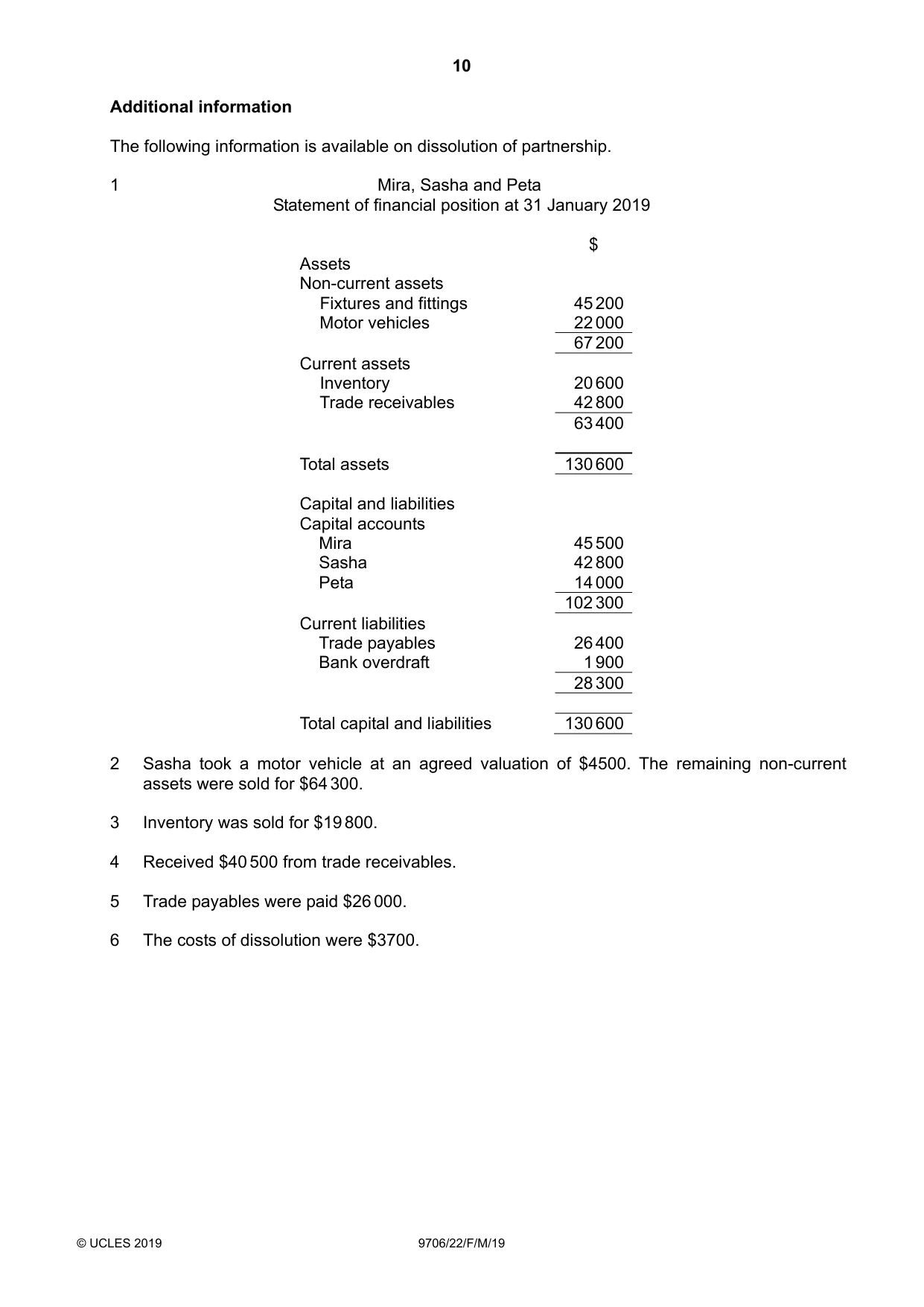
2 Mira, Sasha and Peta have been trading as a partnership. They share profits and losses in the ratio of 2 : 2 : 1 respectively. The partnership ceased trading on 31 January 2019. REQUIRED (a) State four reasons why a partnership may be dissolved. 1 2 3 4 [4] Additional information The following information is available on dissolution of partnership. 1 Mira, Sasha and Peta Statement of financial position at 31 January 2019 $ Assets Non-current assets Fixtures and fittings 45 200 Motor vehicles 22 000 67 200 Current assets Inventory 20 600 Trade receivables 42 800 63 400 Total assets 130 600 Capital and liabilities Capital accounts Mira 45 500 Sasha 42 800 Peta 14 000 102 300 Current liabilities Trade payables 26 400 Bank overdraft 1 900 28 300 Total capital and liabilities 130 600 2 Sasha took a motor vehicle at an agreed valuation of $4500. The remaining non-current assets were sold for $64 300.
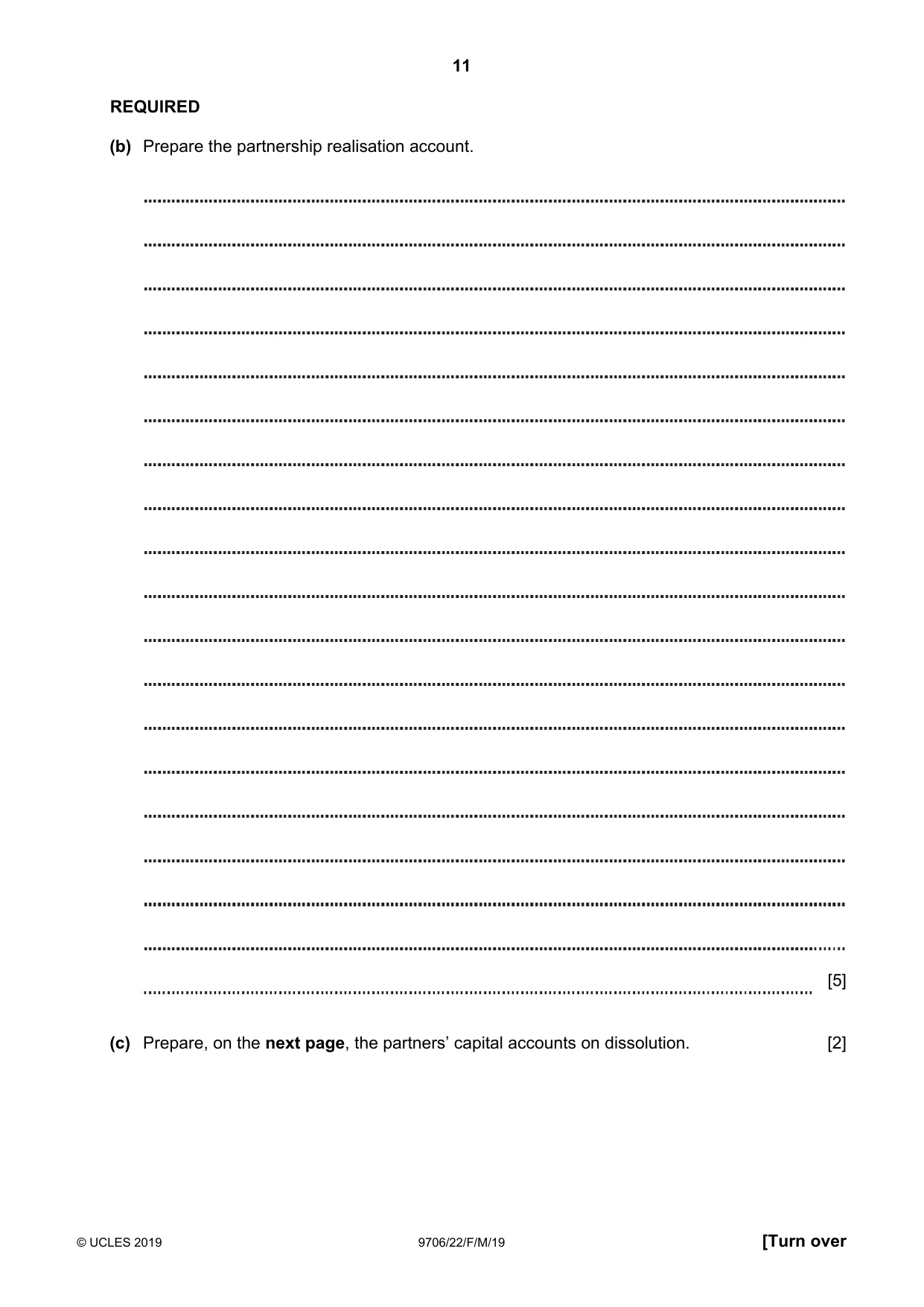
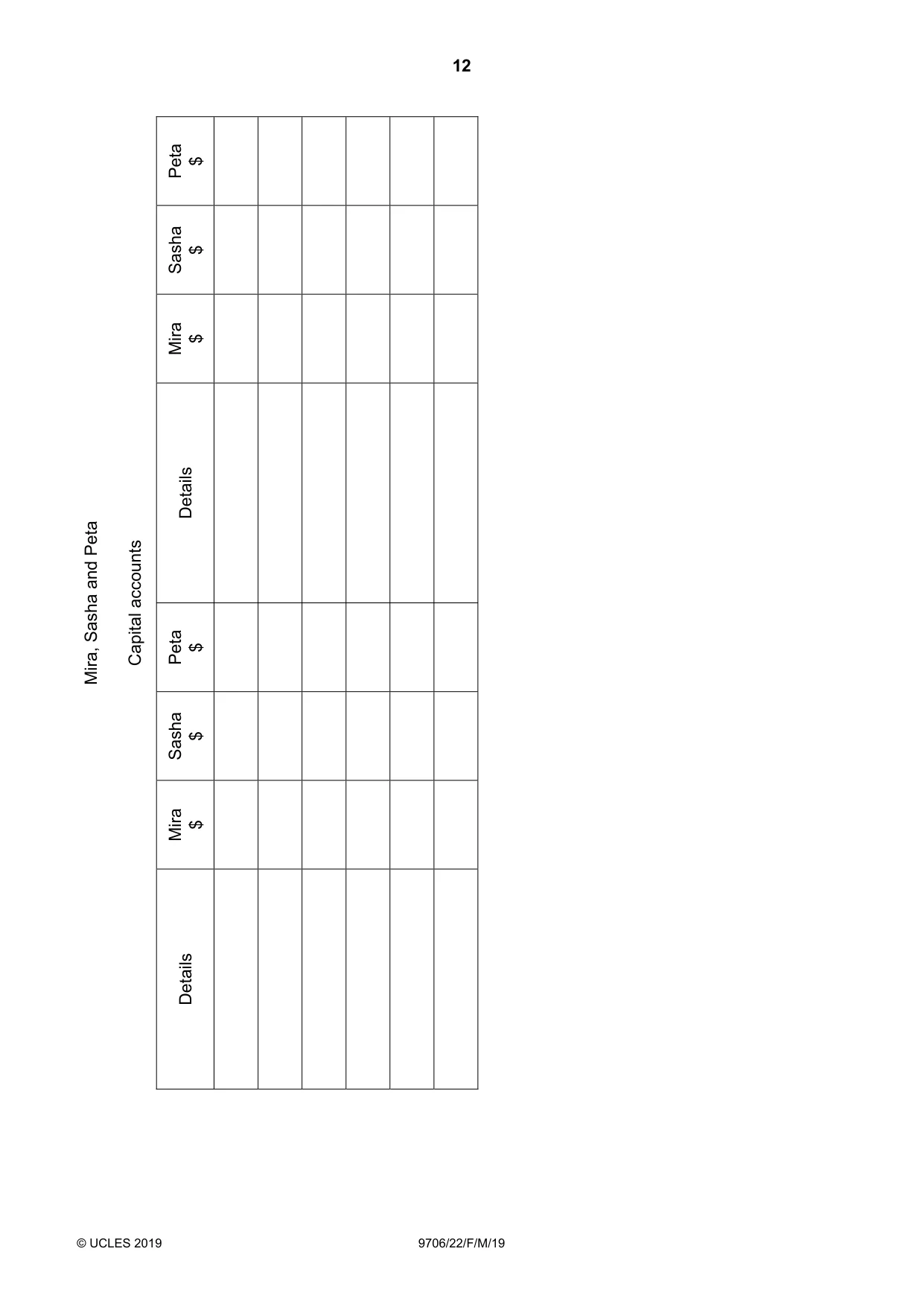
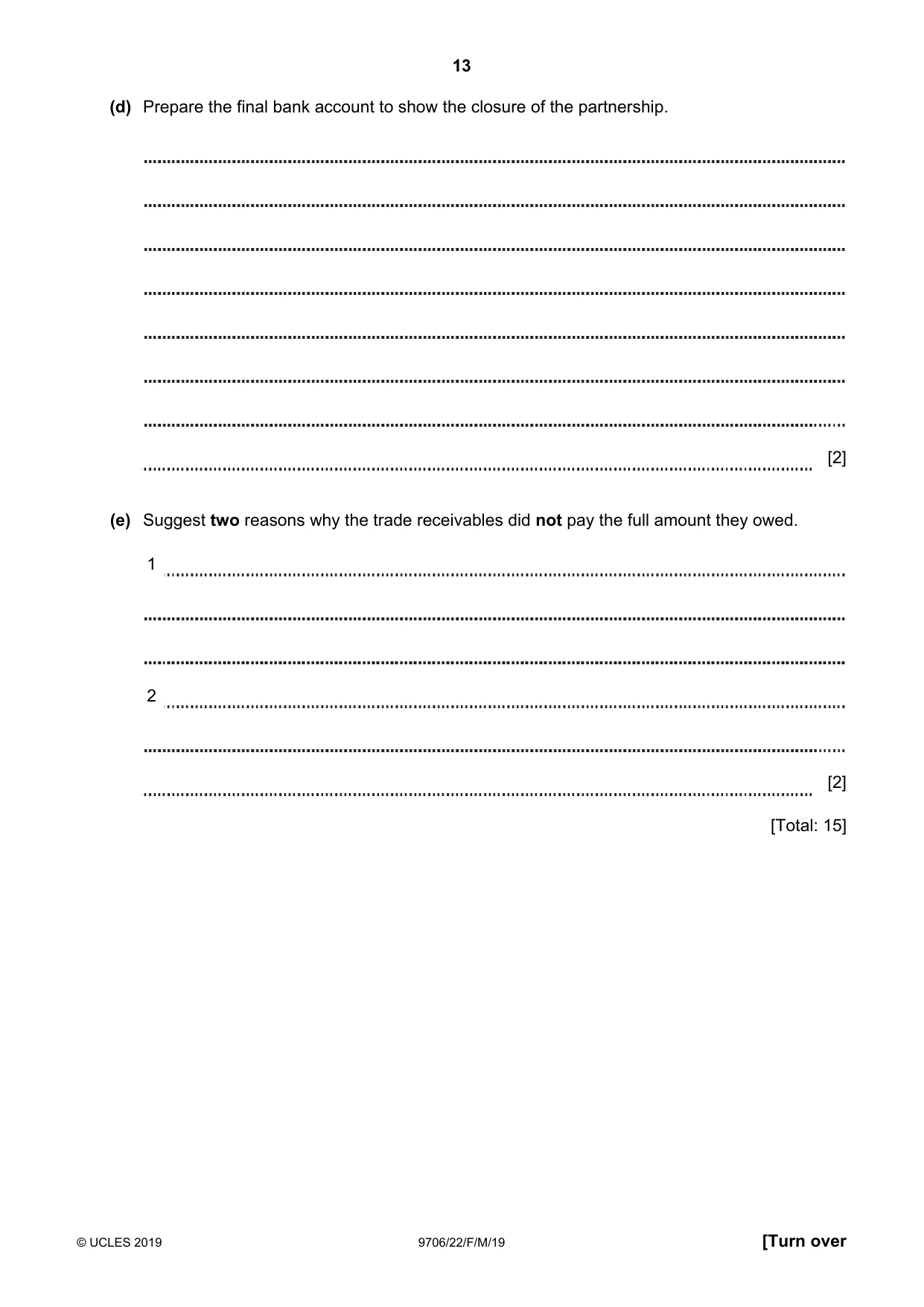
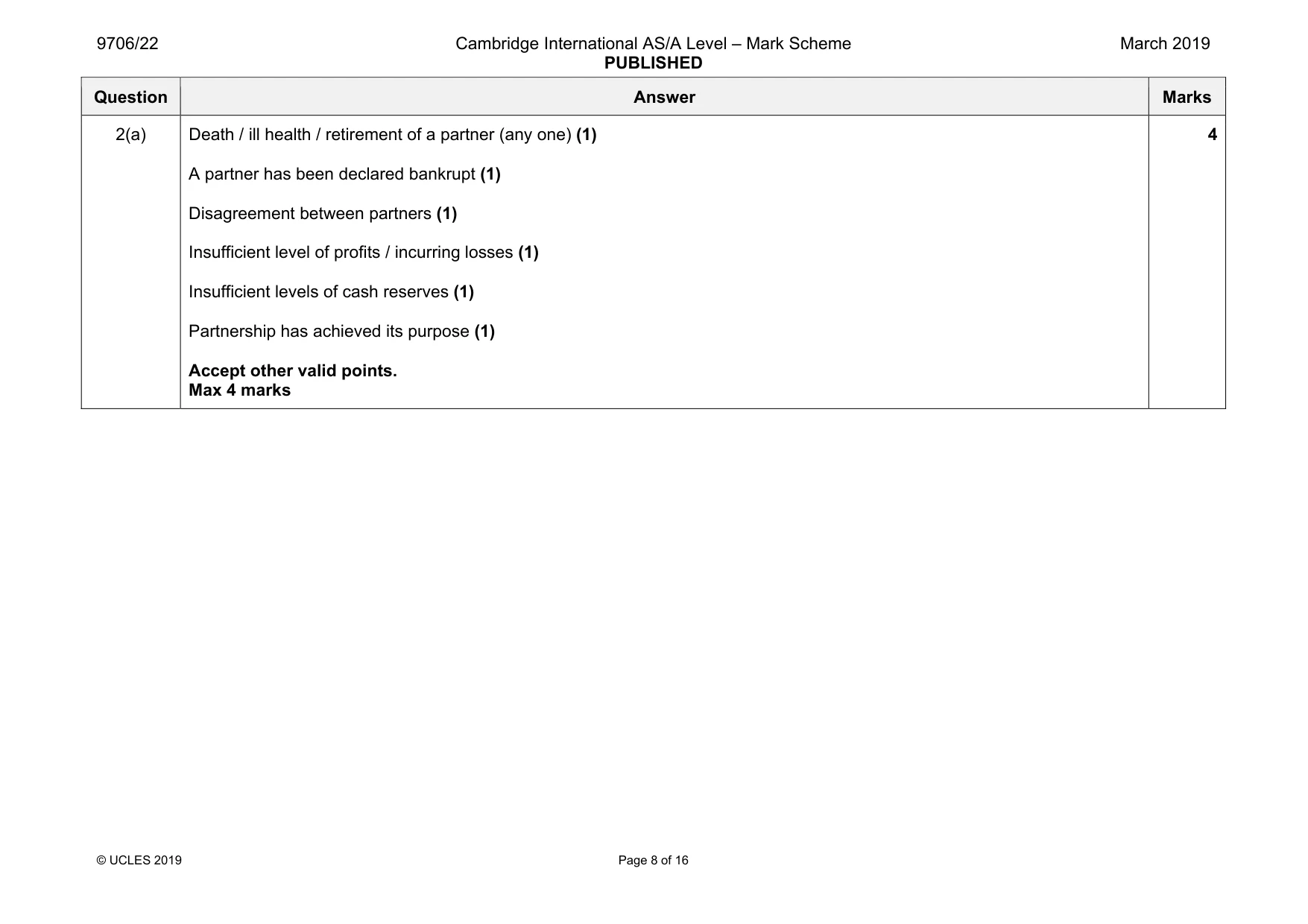
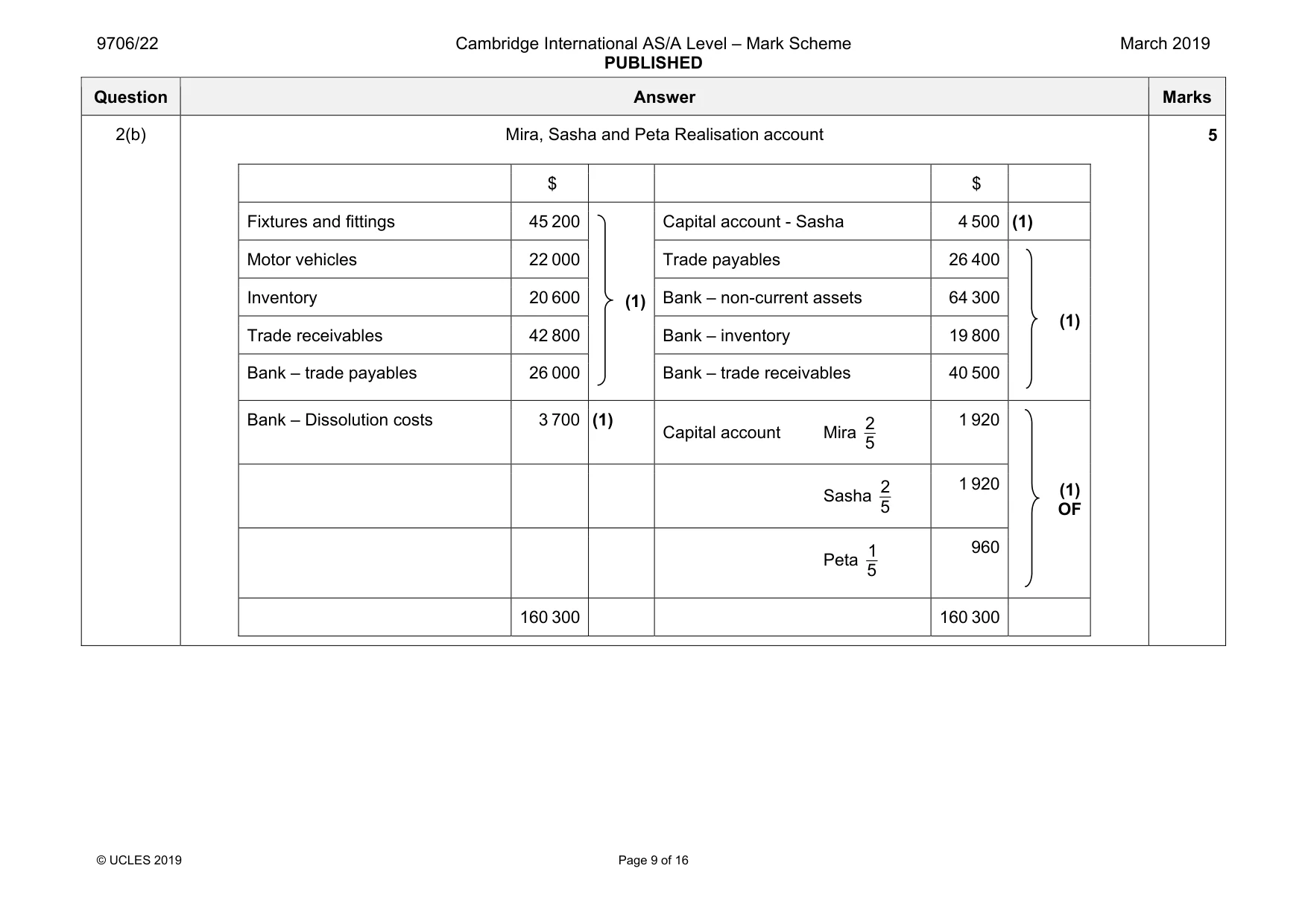
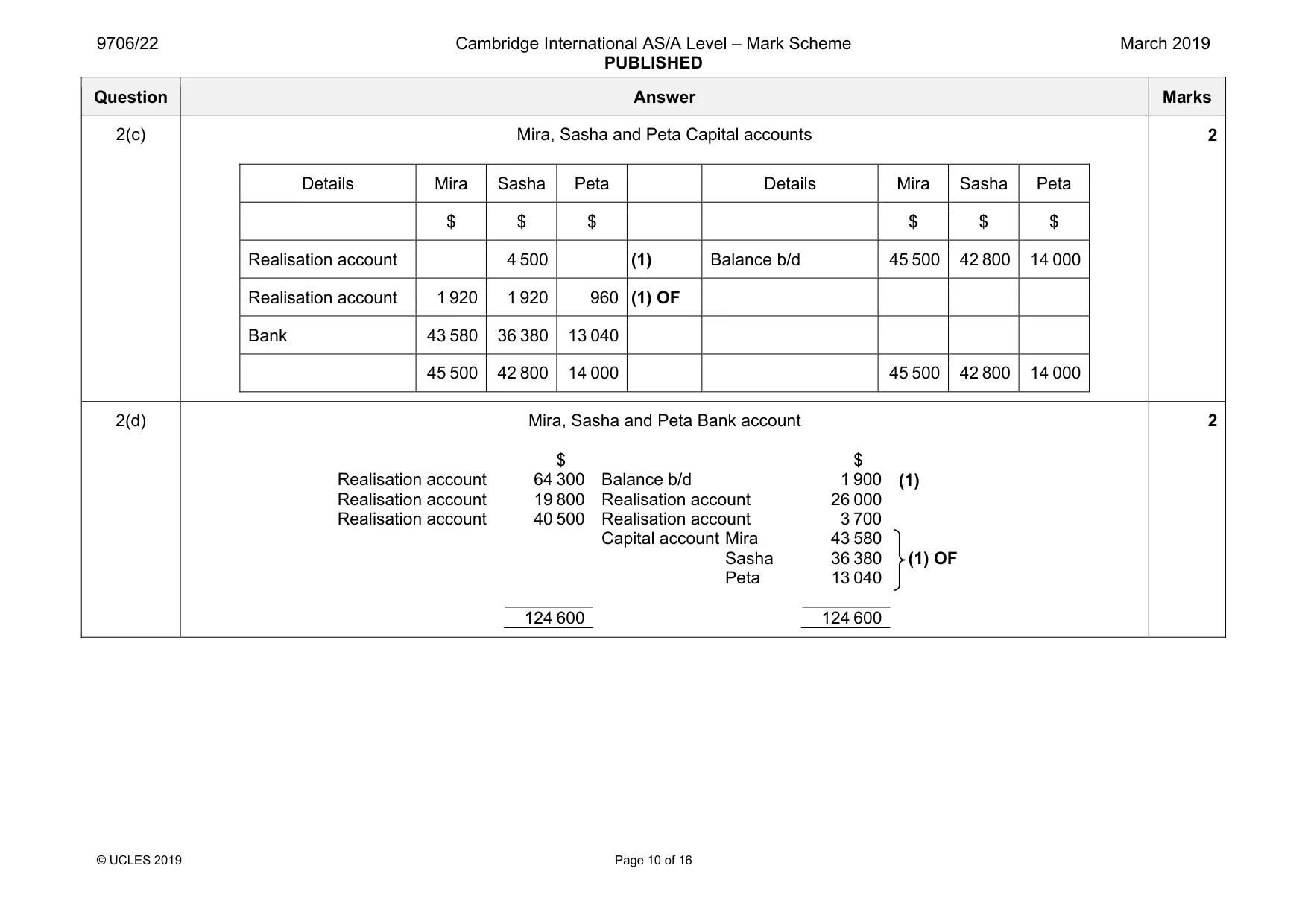
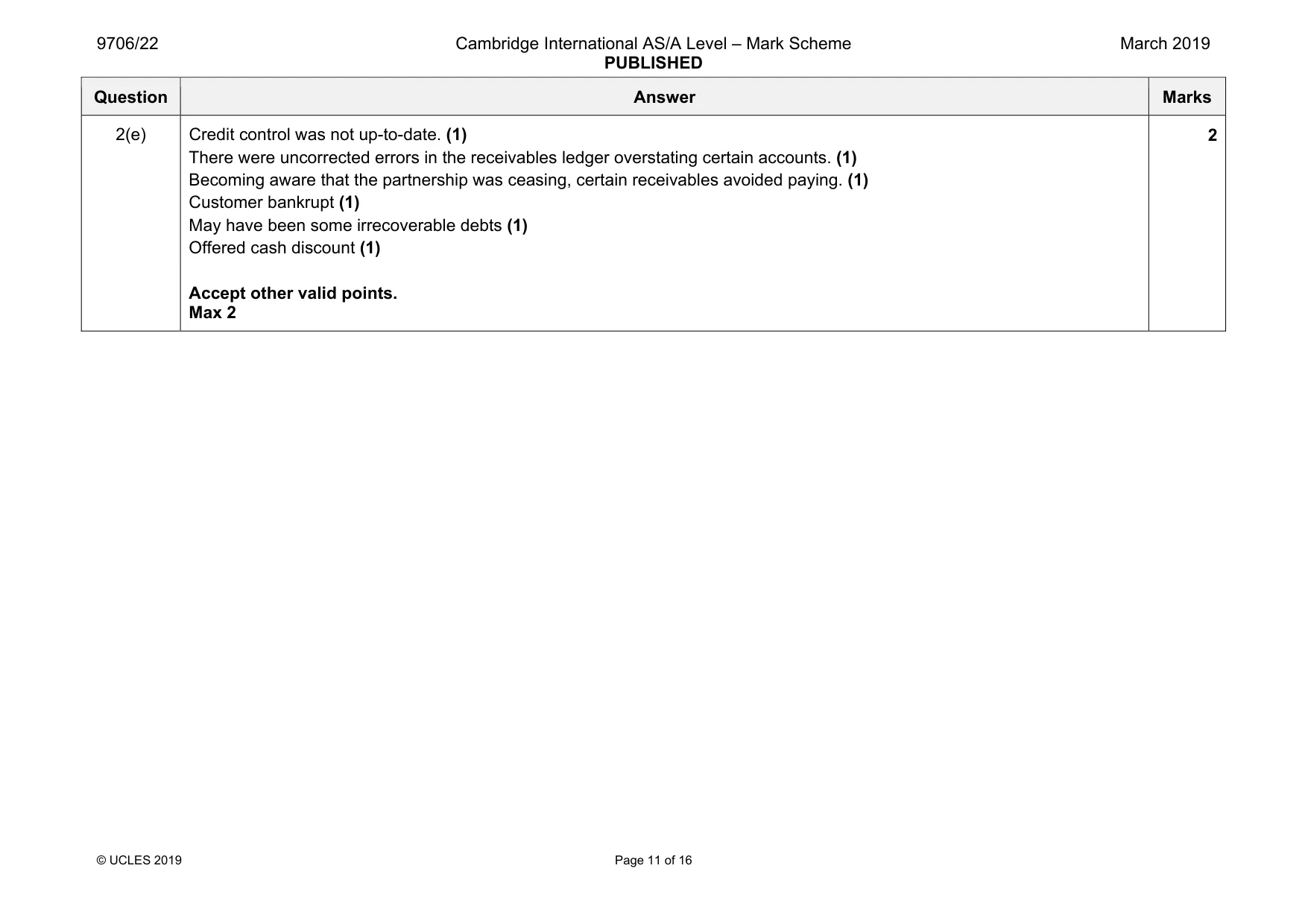
Mark scheme: 2(a) Death / ill health / retirement of a partner (any one) (1) A partner has been declared bankrupt (1) Disagreement between partners (1) Insufficient level of profits / incurring losses (1) Insufficient levels of cash reserves (1) Partnership has achieved its purpose (1) Accept other valid points. Max 4 marks 4 Question Answer Marks 2(b) Mira, Sasha and Peta Realisation account $ $ Fixtures and fittings 45 200 (1) Capital account - Sasha 4 500 (1) Motor vehicles 22 000 Trade payables 26 400 (1) Inventory 20 600 Bank – non-current assets 64 300 Trade receivables 42 800 Bank – inventory 19 800 Bank – trade payables 26 000 Bank – trade receivables 40 500 Bank – Dissolution costs 3 700 (1) Capital account Mira 2 5 1 920 (1) OF Sasha 2 5 1 920 Peta 1 5 960 160 300 160 300 5 Question Answer Marks 2(c) Mira, Sasha and Peta Capital accounts Details Mira Sasha Peta Details Mira Sasha Peta $ $ $ $ $ $ Realisation account 4 500 (1) Balance b/d 45 500 42 800 14 000 Realisation account 1 920 1 920 960 (1) OF Bank 43 580 36 380 13 040 45 500 42 800 14 000 45 500 42 800 14 000 2 2(d) Mira, Sasha and Peta Bank account $ $ Realisation account 64 300 Balance b/d 1 900 (1) Realisation account 19 800 Realisation account 26 000 Realisation account 40 500 Realisation account 3 700 Capital account Mira 43 580 Sasha 36 380 (1) OF Peta 13 040 124 600 124 600 2 Question Answer Marks 2(e) Credit control was not up-to-date. (1) There were uncorrected errors in the receivables ledger overstating certain accounts. (1) Becoming aware that the partnership was ceasing, certain receivables avoided paying. (1) Customer bankrupt (1) May have been some irrecoverable debts (1) Offered cash discount (1) Accept other valid points. Max 2 2
Q3 · Noor, a sole trader, was preparing her business’s financial statements for the year ended…
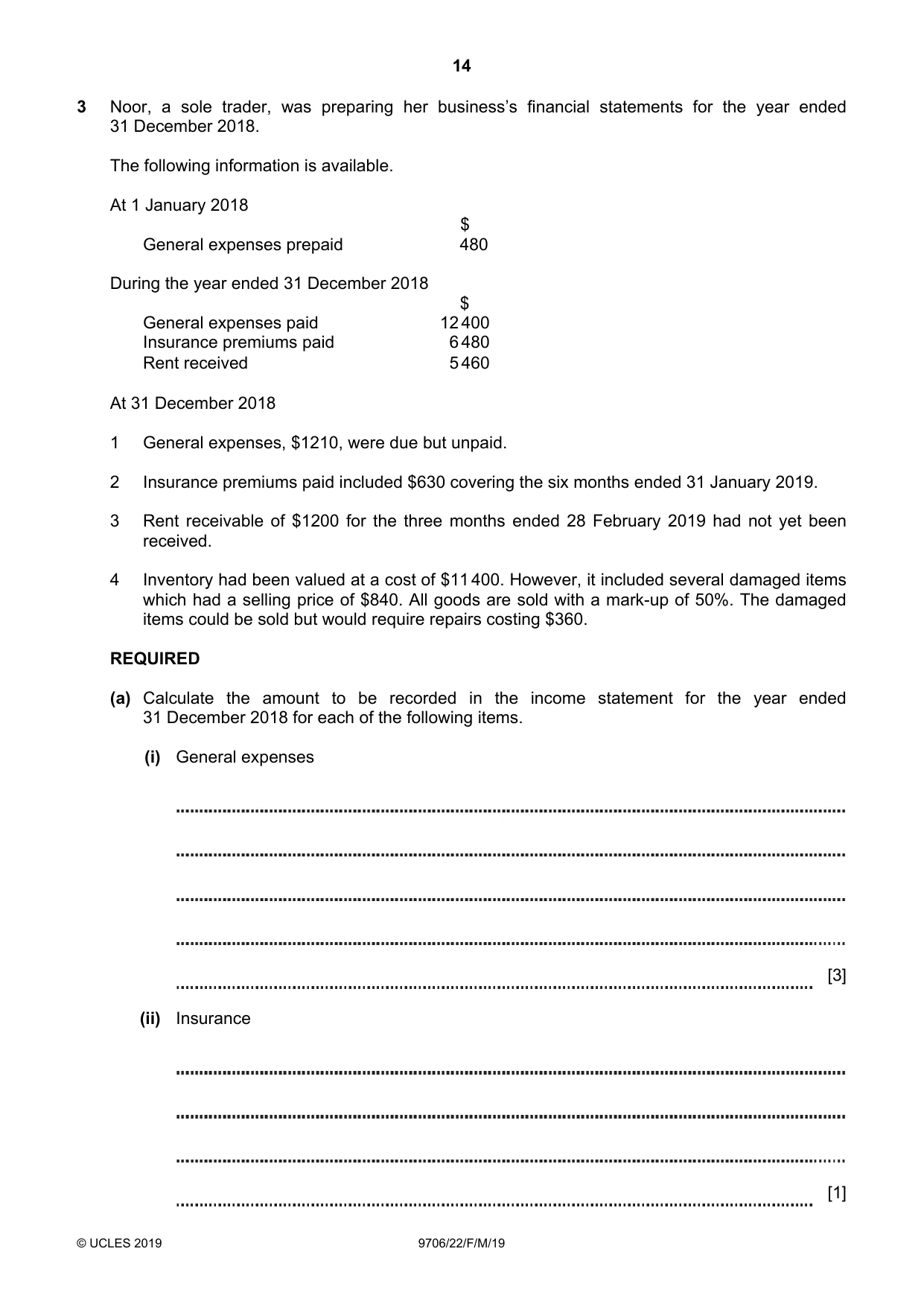
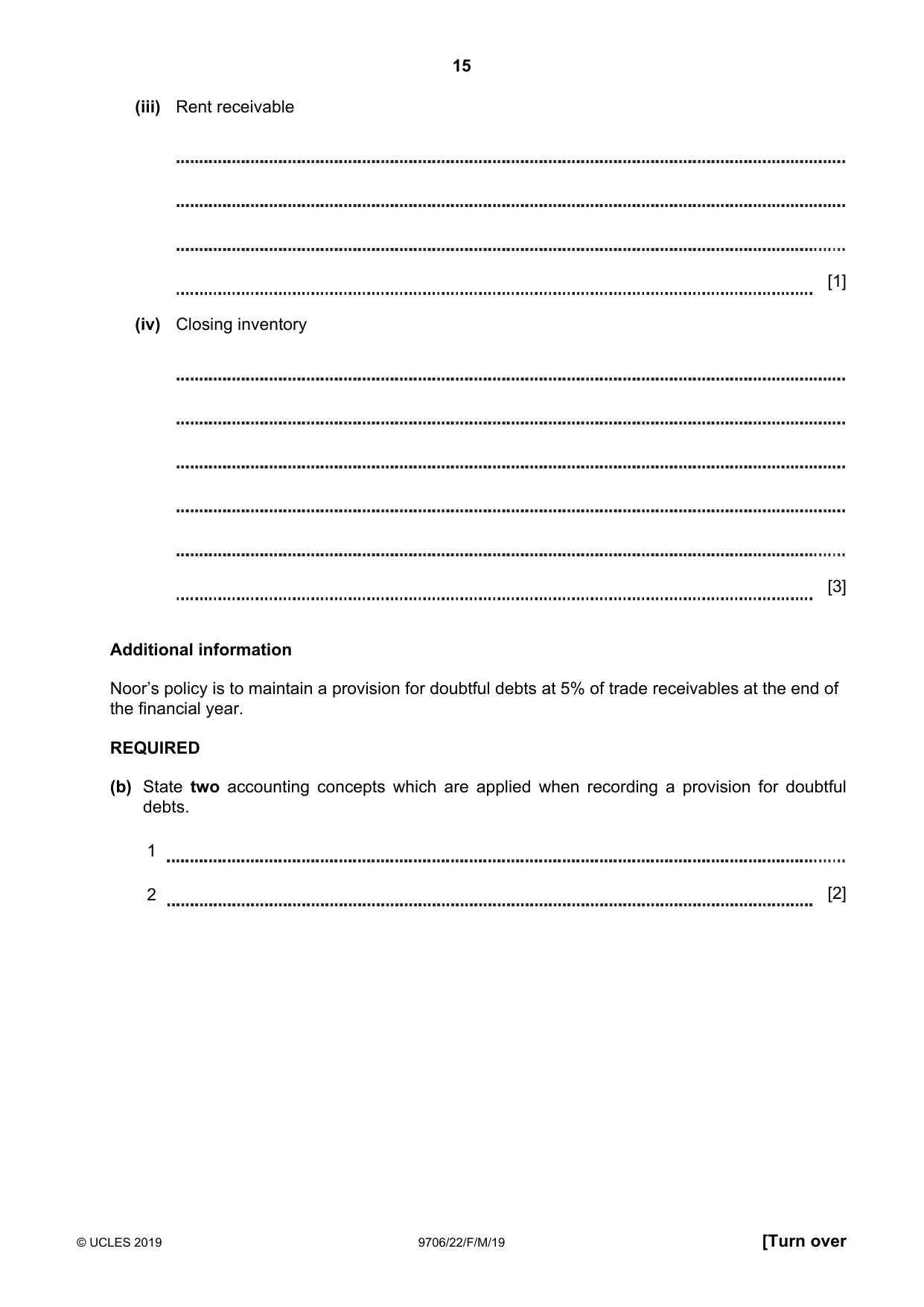
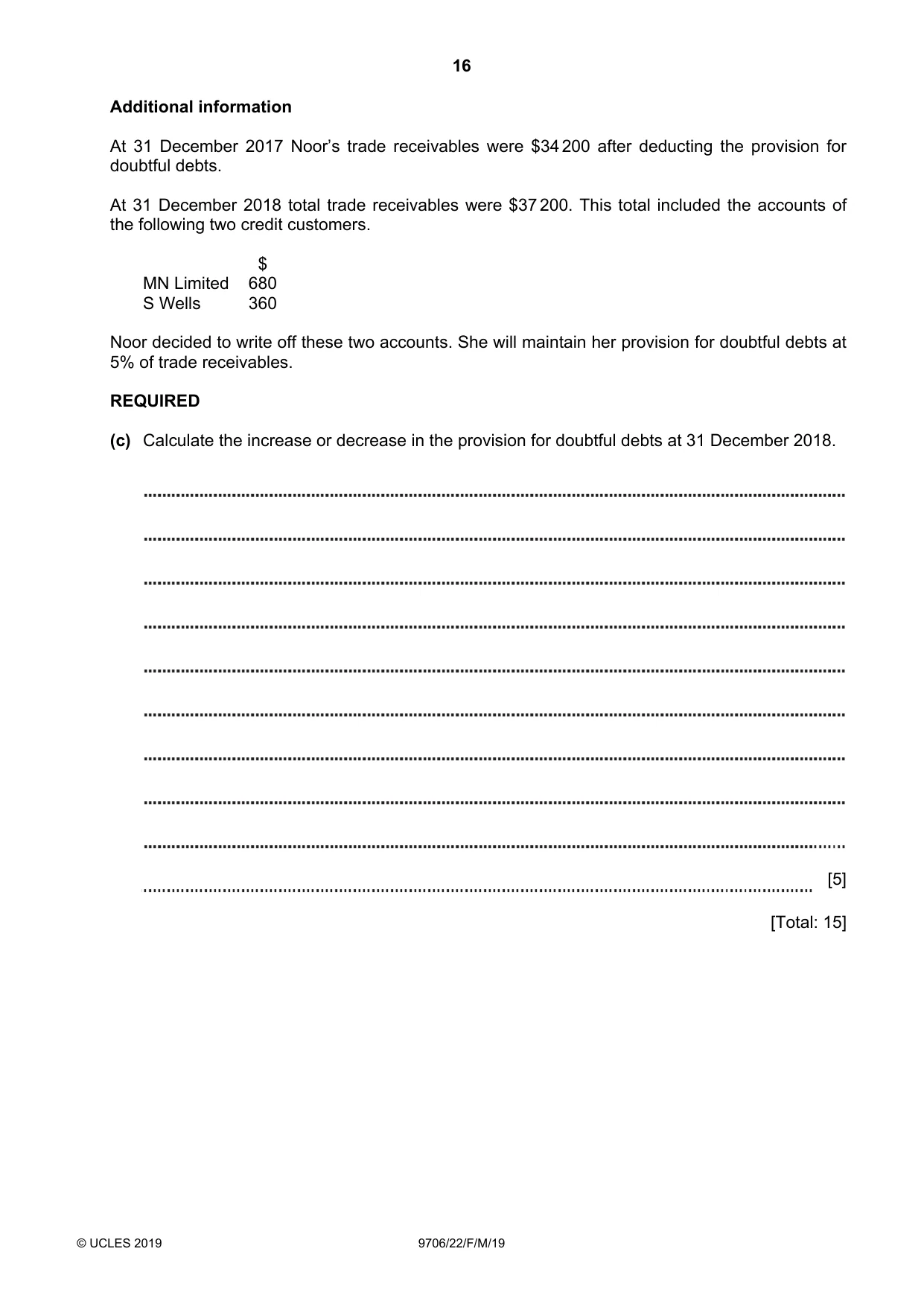
3 Noor, a sole trader, was preparing her business’s financial statements for the year ended 31 December 2018. The following information is available. At 1 January 2018 $ General expenses prepaid 480 During the year ended 31 December 2018 $ General expenses paid 12 400 Insurance premiums paid 6 480 Rent received 5 460 At 31 December 2018 1 General expenses, $1210, were due but unpaid. 2 Insurance premiums paid included $630 covering the six months ended 31 January 2019. 3 Rent receivable of $1200 for the three months ended 28 February 2019 had not yet been received. 4 Inventory had been valued at a cost of $11 400. However, it included several damaged items which had a selling price of $840. All goods are sold with a mark-up of 50%. The damaged items could be sold but would require repairs costing $360. REQUIRED (a) Calculate the amount to be recorded in the income statement for the year ended 31 December 2018 for each of the following items. (i) General expenses [3] (ii) Insurance [1] (iii) Rent receivable [1] (iv) Closing inventory [3] Additional information Noor’s policy is to maintain a provision for doubtful debts at 5% of trade receivables at the end of the financial year. REQUIRED (b) State two accounting concepts which are applied when recording a provision for doubtful debts. 1 2 [2] Additional information At 31 December 2017 Noor’s trade receivables were $34 200 after deducting the provision for doubtful debts. At 31 December 2018 total trade receivables were $37 200. This total included the accounts of the following two credit customers. $ MN Limited 680 S Wells 360 Noor decided to write off these two accounts. She will maintain her provision for doubtful debts at 5% of trade receivables. REQUIRED (c) Calculate the increase or decrease in the provision for doubtful debts at 31 December 2018. [5] [Total: 15]
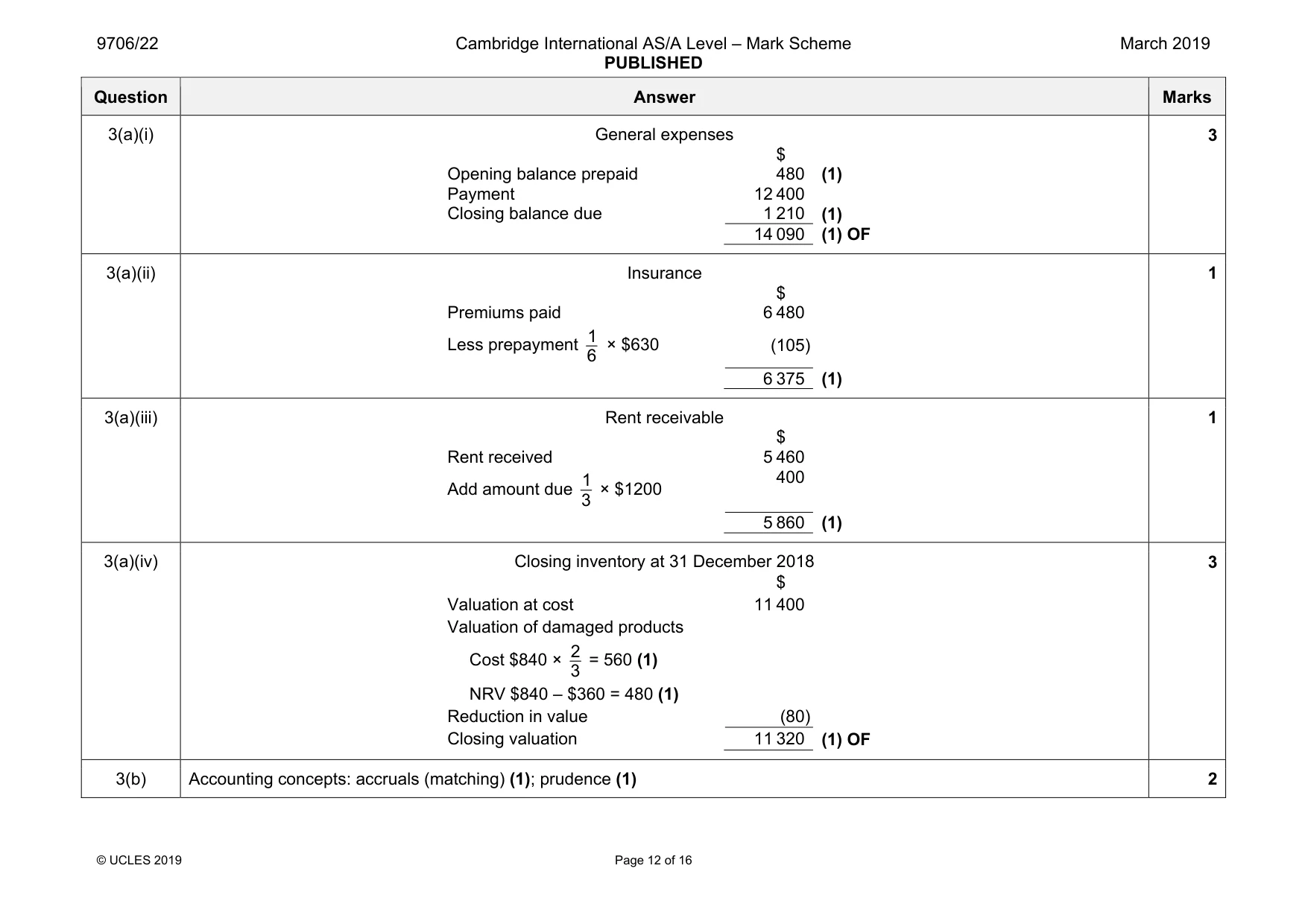
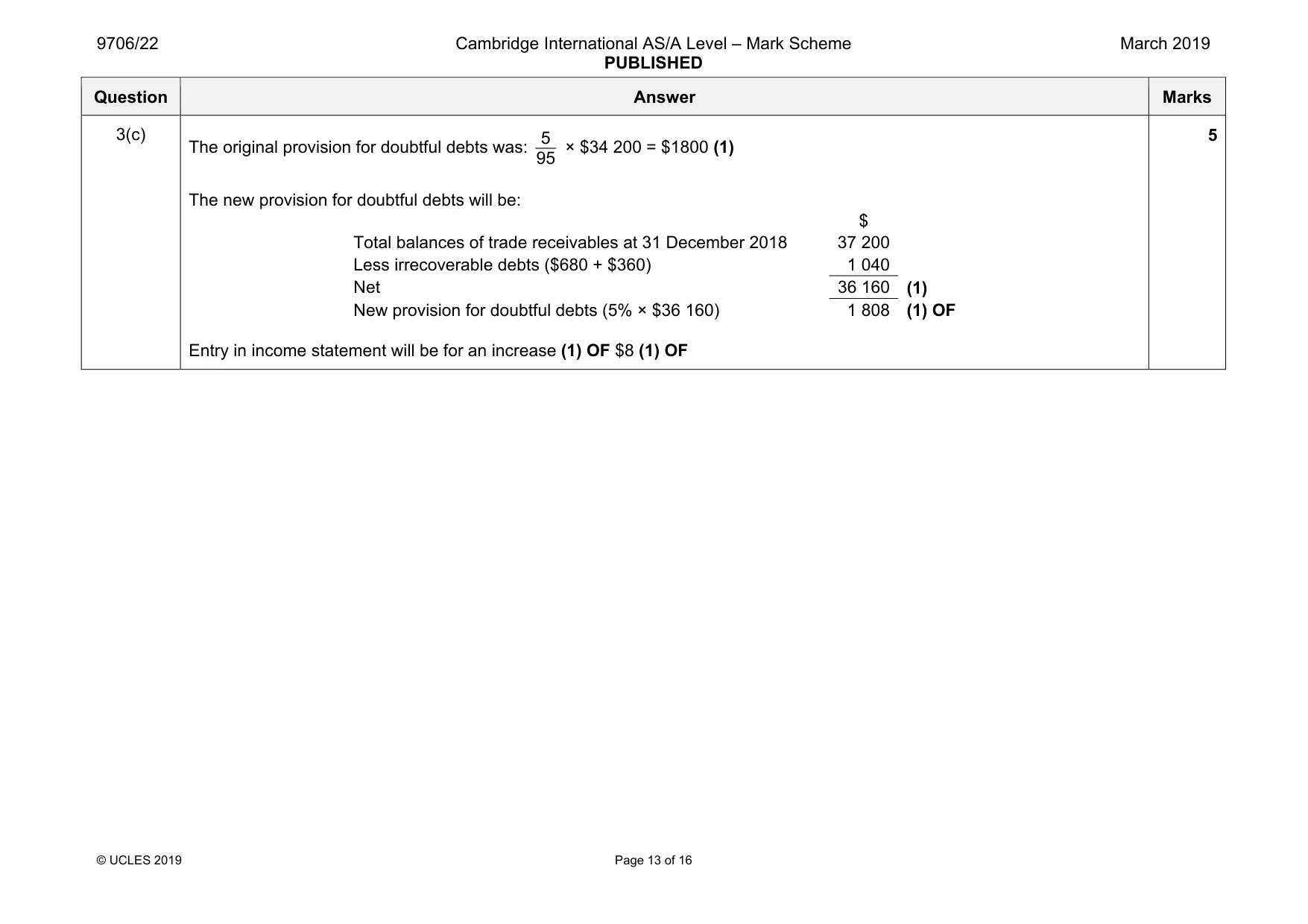
Mark scheme: 3(a)(i) General expenses $ Opening balance prepaid 480 (1) Payment 12 400 Closing balance due 1 210 (1) 14 090 (1) OF 3 3(a)(ii) Insurance $ Premiums paid 6 480 Less prepayment 1 6 × $630 (105) 6 375 (1) 1 3(a)(iii) Rent receivable $ Rent received 5 460 Add amount due 1 3 × $1200 400 5 860 (1) 1 3(a)(iv) Closing inventory at 31 December 2018 $ Valuation at cost 11 400 Valuation of damaged products Cost $840 × 2 3 = 560 (1) NRV $840 – $360 = 480 (1) Reduction in value (80) Closing valuation 11 320 (1) OF 3 3(b) Accounting concepts: accruals (matching) (1); prudence (1) 2 Question Answer Marks 3(c) The original provision for doubtful debts was: 5 95 × $34 200 = $1800 (1) The new provision for doubtful debts will be: $ Total balances of trade receivables at 31 December 2018 37 200 Less irrecoverable debts ($680 + $360) 1 040 Net 36 160 (1) New provision for doubtful debts (5% × $36 160) 1 808 (1) OF Entry in income statement will be for an increase (1) OF $8 (1) OF 5
Q4 · W Limited operates a system of marginal costing
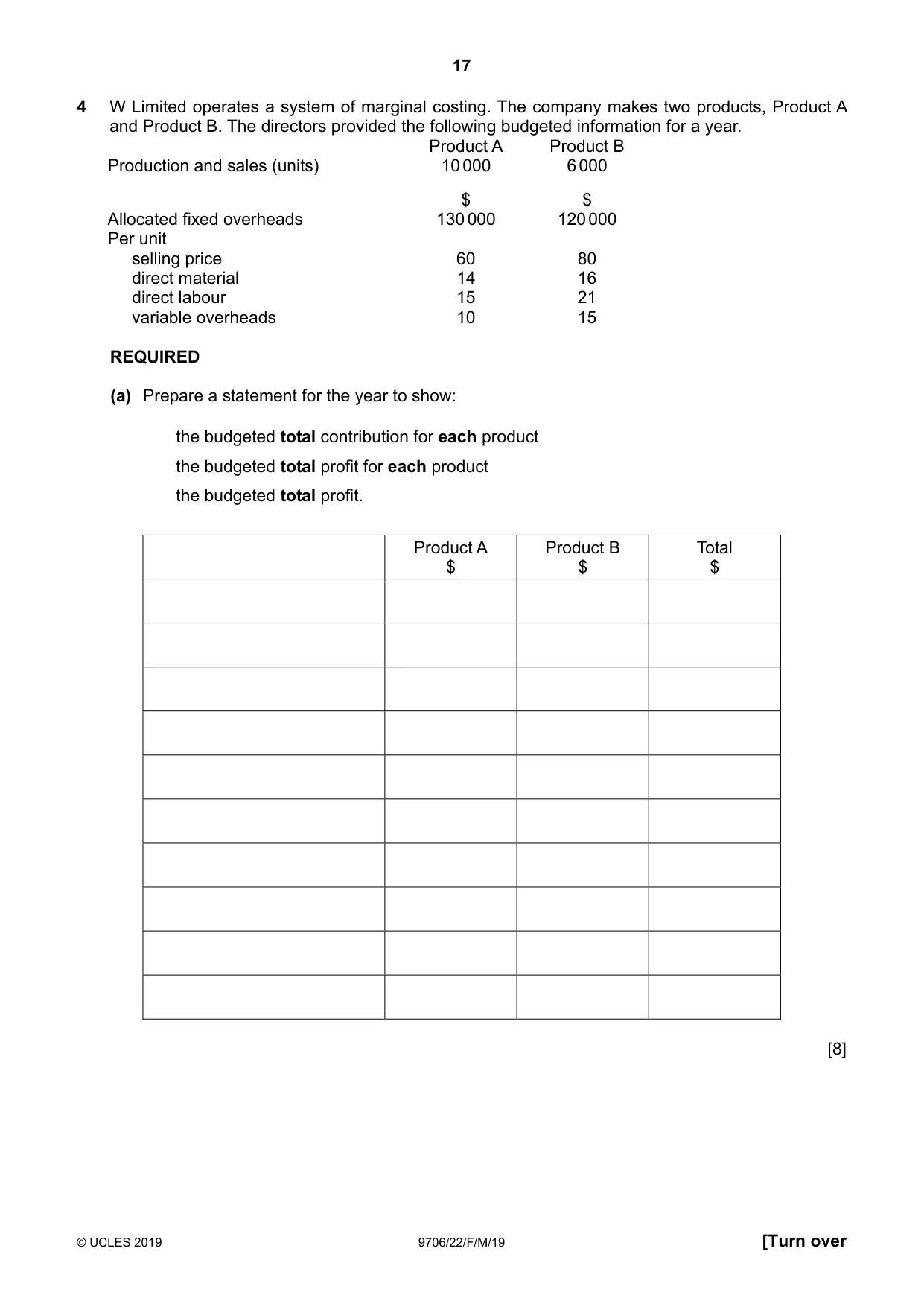
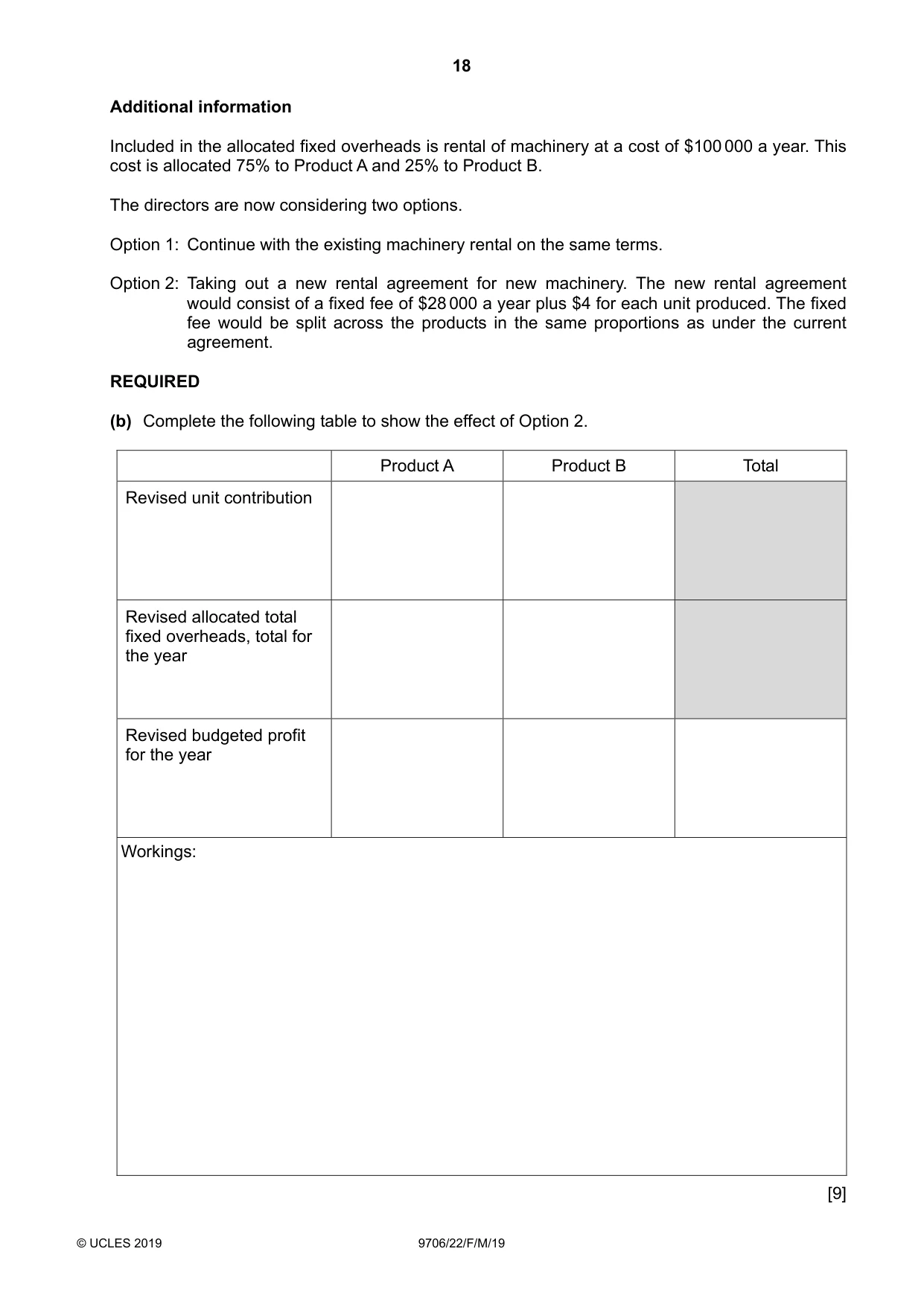
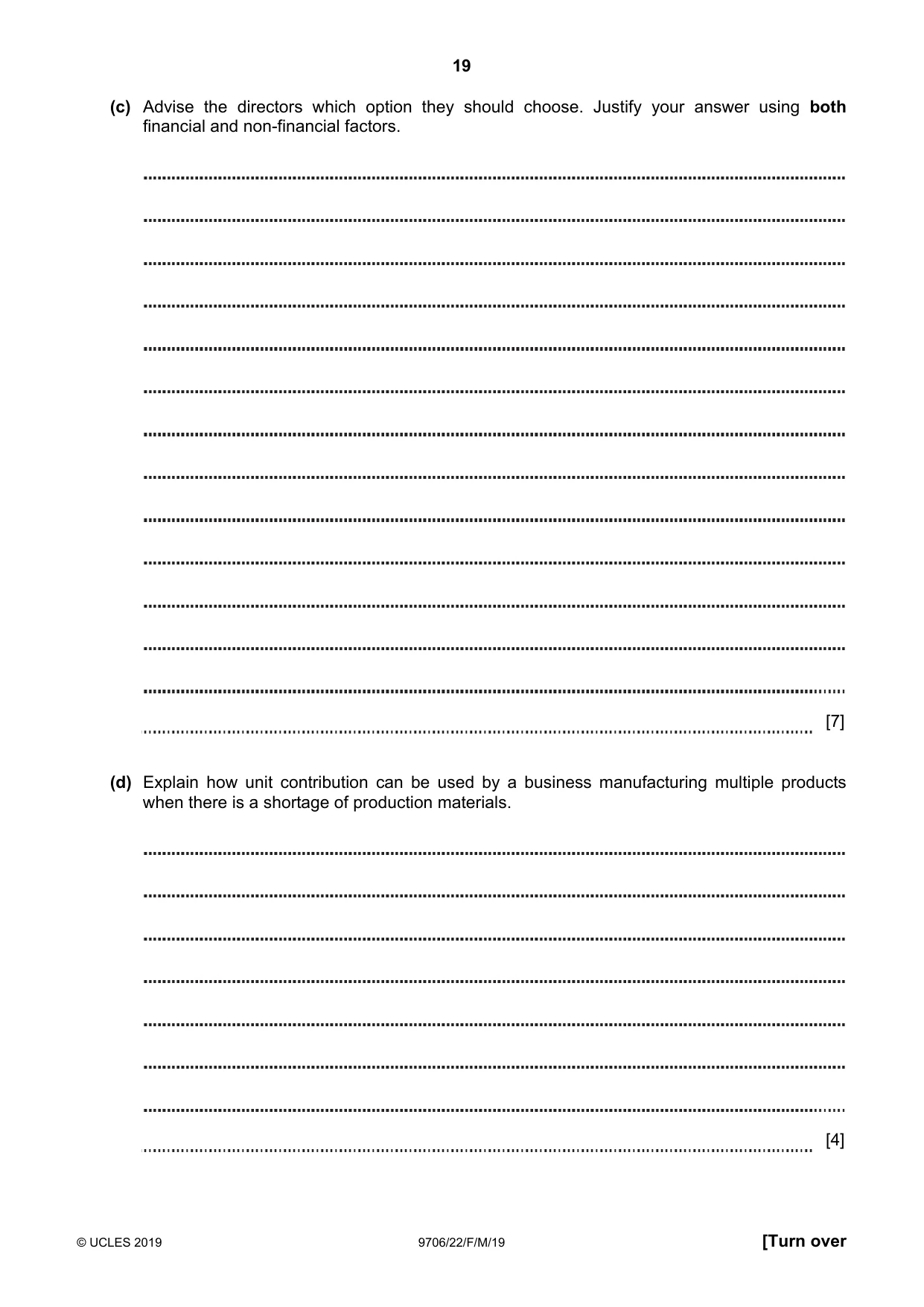
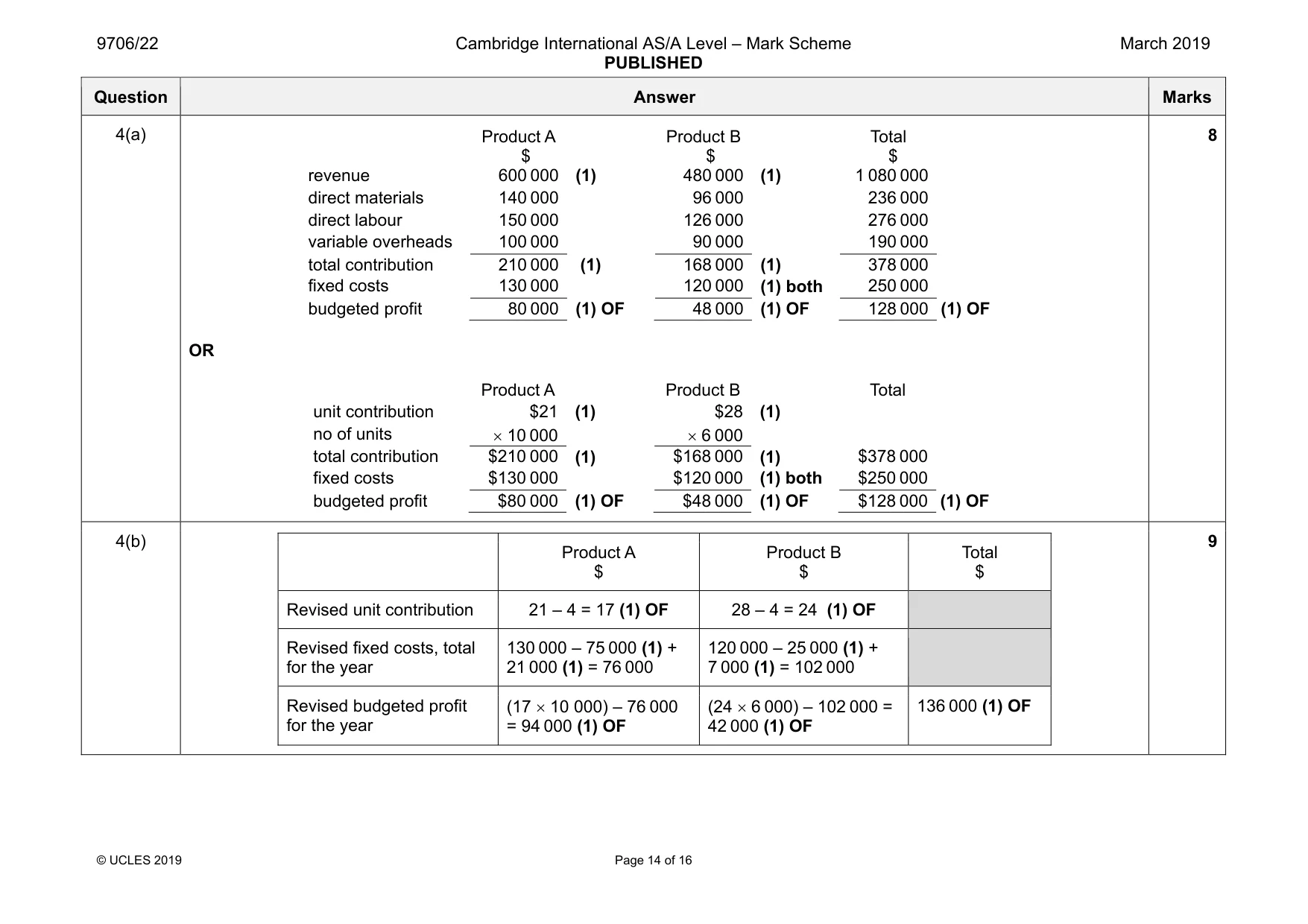
4 W Limited operates a system of marginal costing. The company makes two products, Product A and Product B. The directors provided the following budgeted information for a year. Product A Product B Production and sales (units) 10 000 6 000 $ $ Allocated fixed overheads 130 000 120 000 Per unit selling price 60 80 direct material 14 16 direct labour 15 21 variable overheads 10 15 REQUIRED (a) Prepare a statement for the year to show: the budgeted total contribution for each product the budgeted total profit for each product the budgeted total profit. Product A Product B Total $ $ $ [8] Additional information Included in the allocated fixed overheads is rental of machinery at a cost of $100 000 a year. This cost is allocated 75% to Product A and 25% to Product B. The directors are now considering two options. Option 1: Continue with the existing machinery rental on the same terms. Option 2: Taking out a new rental agreement for new machinery. The new rental agreement would consist of a fixed fee of $28 000 a year plus $4 for each unit produced. The fixed fee would be split across the products in the same proportions as under the current agreement. REQUIRED (b) Complete the following table to show the effect of Option 2. Product A Product B Total Revised unit contribution Revised allocated total fixed overheads, total for the year Revised budgeted profit for the year Workings: [9] (c) Advise the directors which option they should choose. Justify your answer using both financial and non-financial factors. [7] (d) Explain how unit contribution can be used by a business manufacturing multiple products when there is a shortage of production materials. [4]
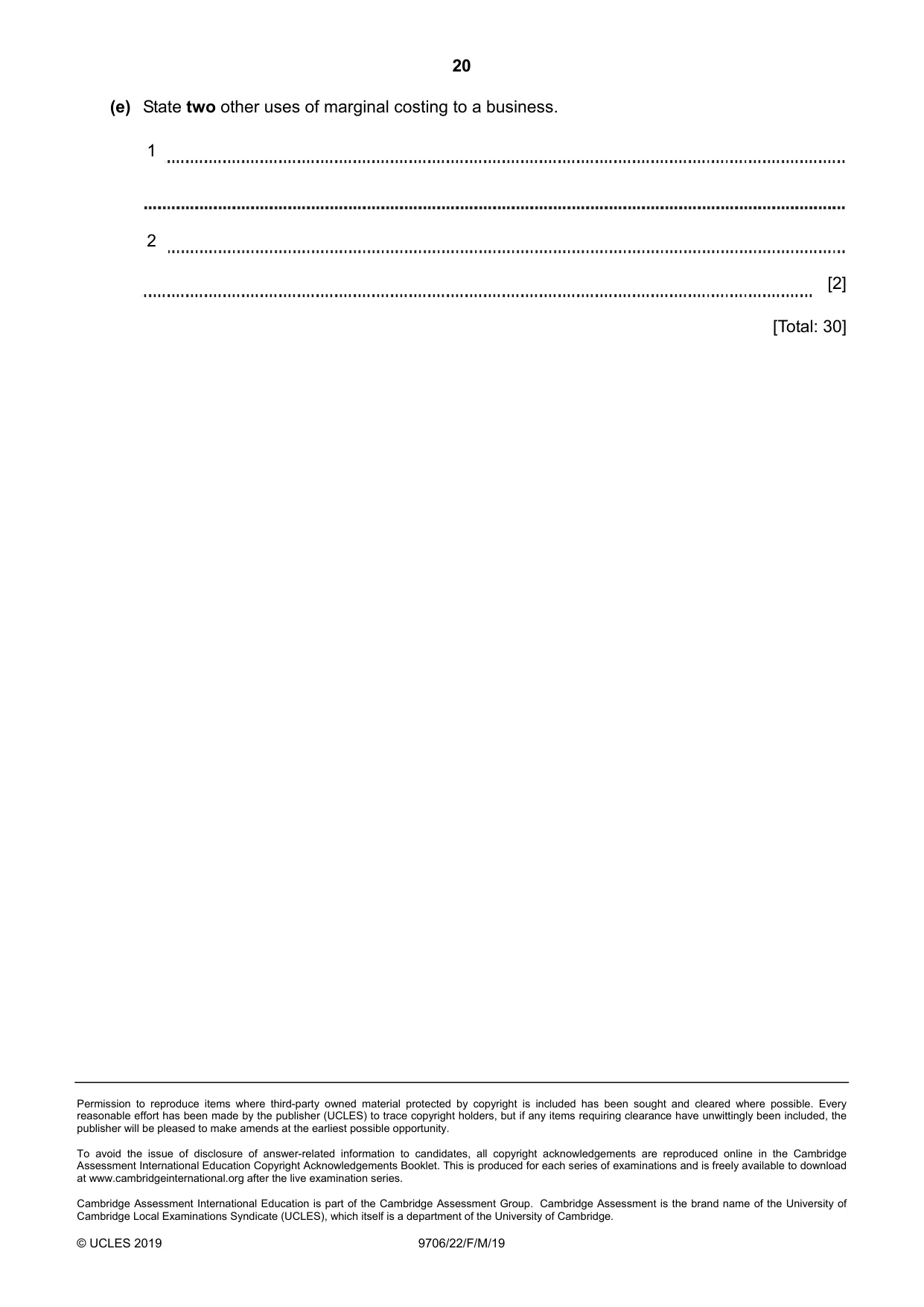
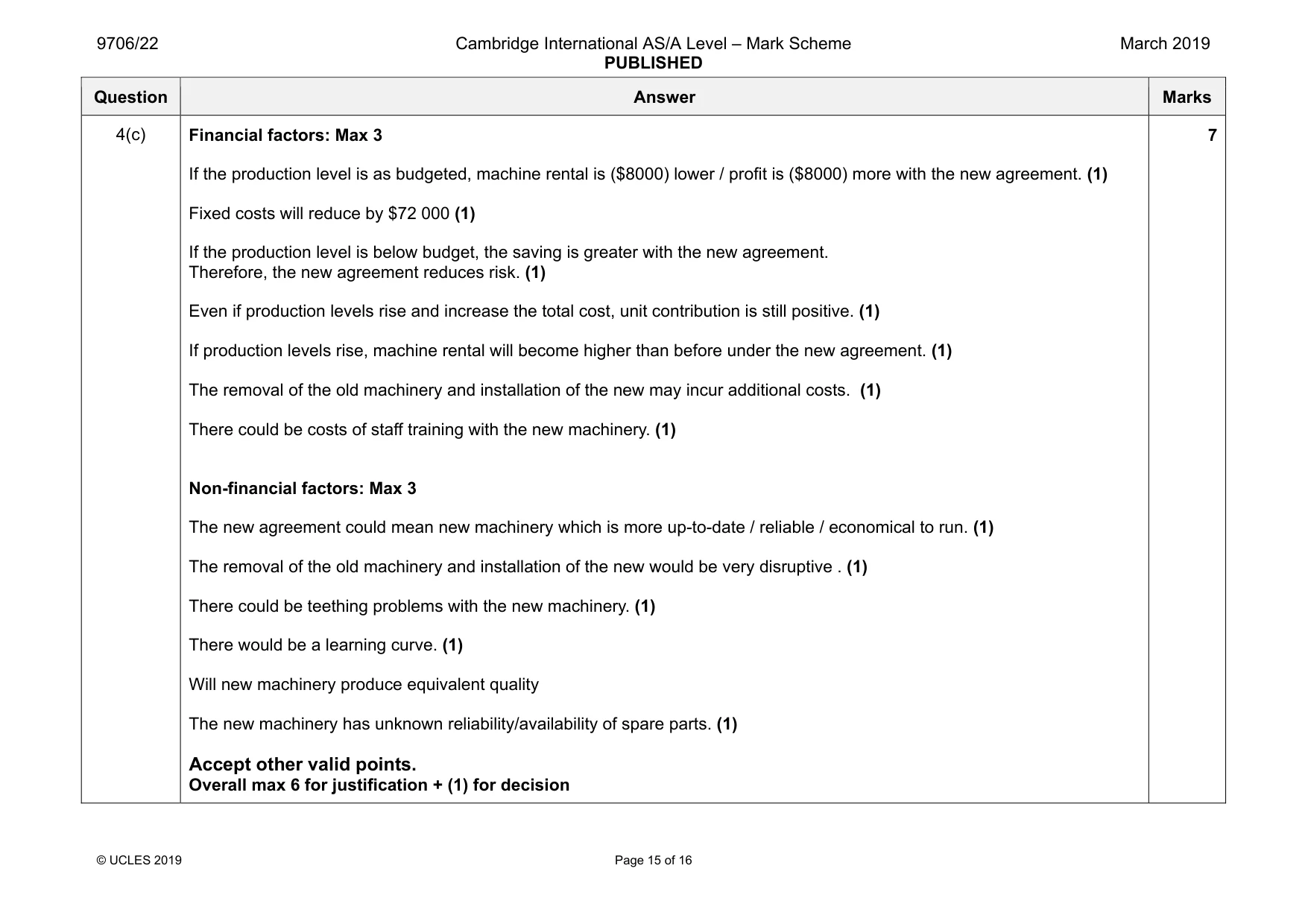
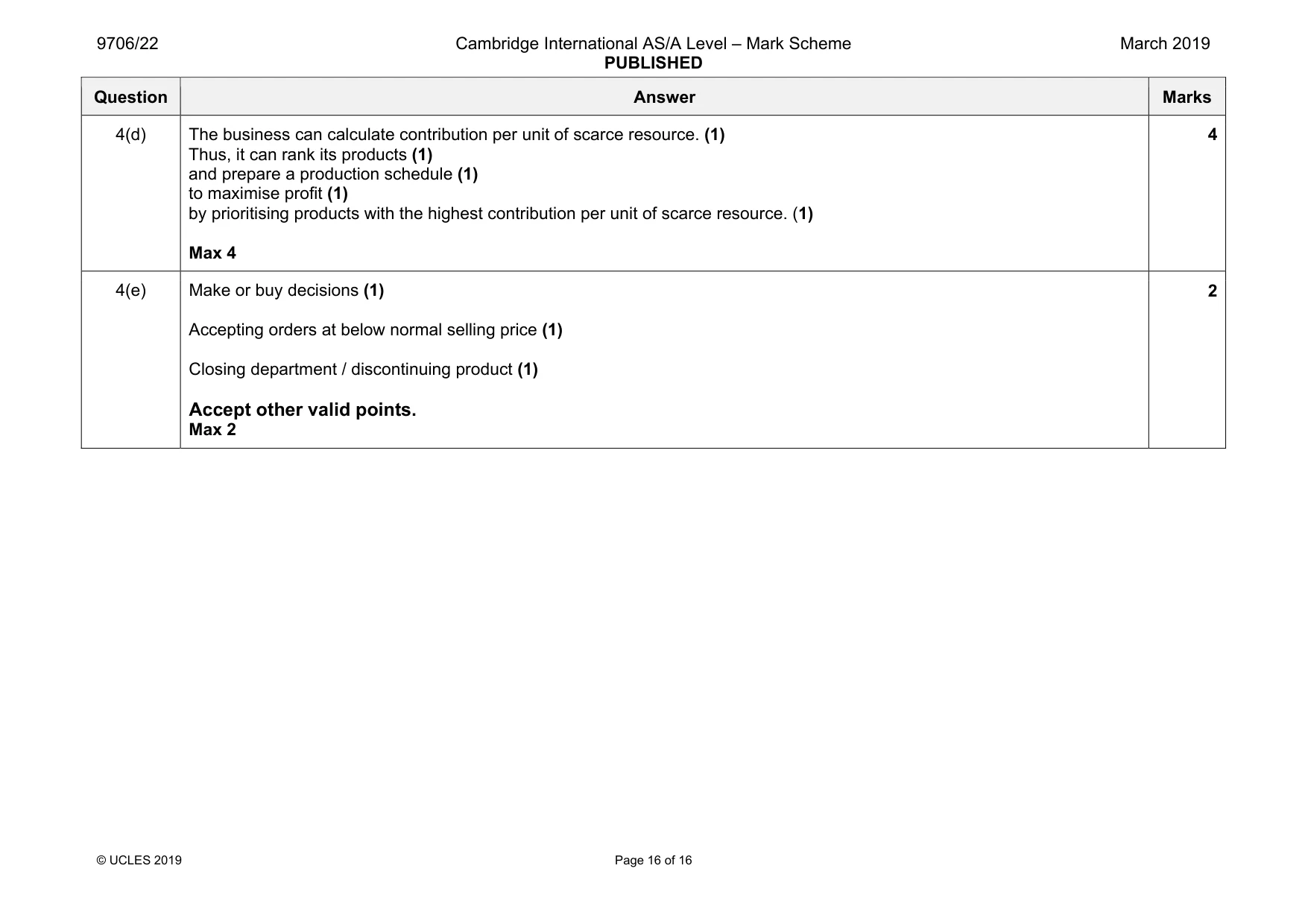
Mark scheme: 4(a) Product A $ Product B $ Total $ revenue 600 000 (1) 480 000 (1) 1 080 000 direct materials 140 000 96 000 236 000 direct labour 150 000 126 000 276 000 variable overheads 100 000 90 000 190 000 total contribution 210 000 (1) 168 000 (1) 378 000 fixed costs 130 000 120 000 (1) both 250 000 budgeted profit 80 000 (1) OF 48 000 (1) OF 128 000 (1) OF OR Product A Product B Total unit contribution $21 (1) $28 (1) no of units × 10 000 × 6 000 total contribution $210 000 (1) $168 000 (1) $378 000 fixed costs $130 000 $120 000 (1) both $250 000 budgeted profit $80 000 (1) OF $48 000 (1) OF $128 000 (1) OF 8 4(b) Product A $ Product B $ Total $ Revised unit contribution 21 – 4 = 17 (1) OF 28 – 4 = 24 (1) OF Revised fixed costs, total for the year 130 000 – 75 000 (1) + 21 000 (1) = 76 000 120 000 – 25 000 (1) + 7 000 (1) = 102 000 Revised budgeted profit for the year (17 × 10 000) – 76 000 = 94 000 (1) OF (24 × 6 000) – 102 000 = 42 000 (1) OF 136 000 (1) OF 9 Question Answer Marks 4(c) Financial factors: Max 3 If the production level is as budgeted, machine rental is ($8000) lower / profit is ($8000) more with the new agreement. (1) Fixed costs will reduce by $72 000 (1) If the production level is below budget, the saving is greater with the new agreement. Therefore, the new agreement reduces risk. (1) Even if production levels rise and increase the total cost, unit contribution is still positive. (1) If production levels rise, machine rental will become higher than before under the new agreement. (1) The removal of the old machinery and installation of the new may incur additional costs. (1) There could be costs of staff training with the new machinery. (1) Non-financial factors: Max 3 The new agreement could mean new machinery which is more up-to-date / reliable / economical to run. (1) The removal of the old machinery and installation of the new would be very disruptive . (1) There could be teething problems with the new machinery. (1) There would be a learning curve. (1) Will new machinery produce equivalent quality The new machinery has unknown reliability/availability of spare parts. (1) Accept other valid points. Overall max 6 for justification + (1) for decision 7 Question Answer Marks 4(d) The business can calculate contribution per unit of scarce resource. (1) Thus, it can rank its products (1) and prepare a production schedule (1) to maximise profit (1) by prioritising products with the highest contribution per unit of scarce resource. (1) Max 4 4 4(e) Make or buy decisions (1) Accepting orders at below normal selling price (1) Closing department / discontinuing product (1) Accept other valid points. Max 2 2
Q6 · REQUIRED (b) Prepare the partnership realisation account
REQUIRED (b) Prepare the partnership realisation account. [5] (c) Prepare, on the next page, the partners’ capital accounts on dissolution. [2] $ Peta $ Sasha $ Mira Details Peta and accounts Sasha $ Capital PetaMira, $ Sasha $ Mira Details
What was in this paper
The subtopics covered by these 5 questions, and how many questions each got. Open one in a new tab to see every Cambridge question on it.
What you needed in this session
Cambridge’s own grade thresholds for 2019 Feb/March, Paper 2 · Variant 2. A higher threshold means an easier paper — the bar moves with how the cohort did.