Cambridge IGCSE Sciences - Co-ordinated (Double) 0654 — 2023 Oct/Nov Paper 4 · Variant 2
0654/42/O/N/23 · 12 questions · 120 marks · ≈135 min
The question paper and its mark scheme, free to read here and free to download. This is Cambridge’s own paper, exactly as it was sat.
Question paper32 pages



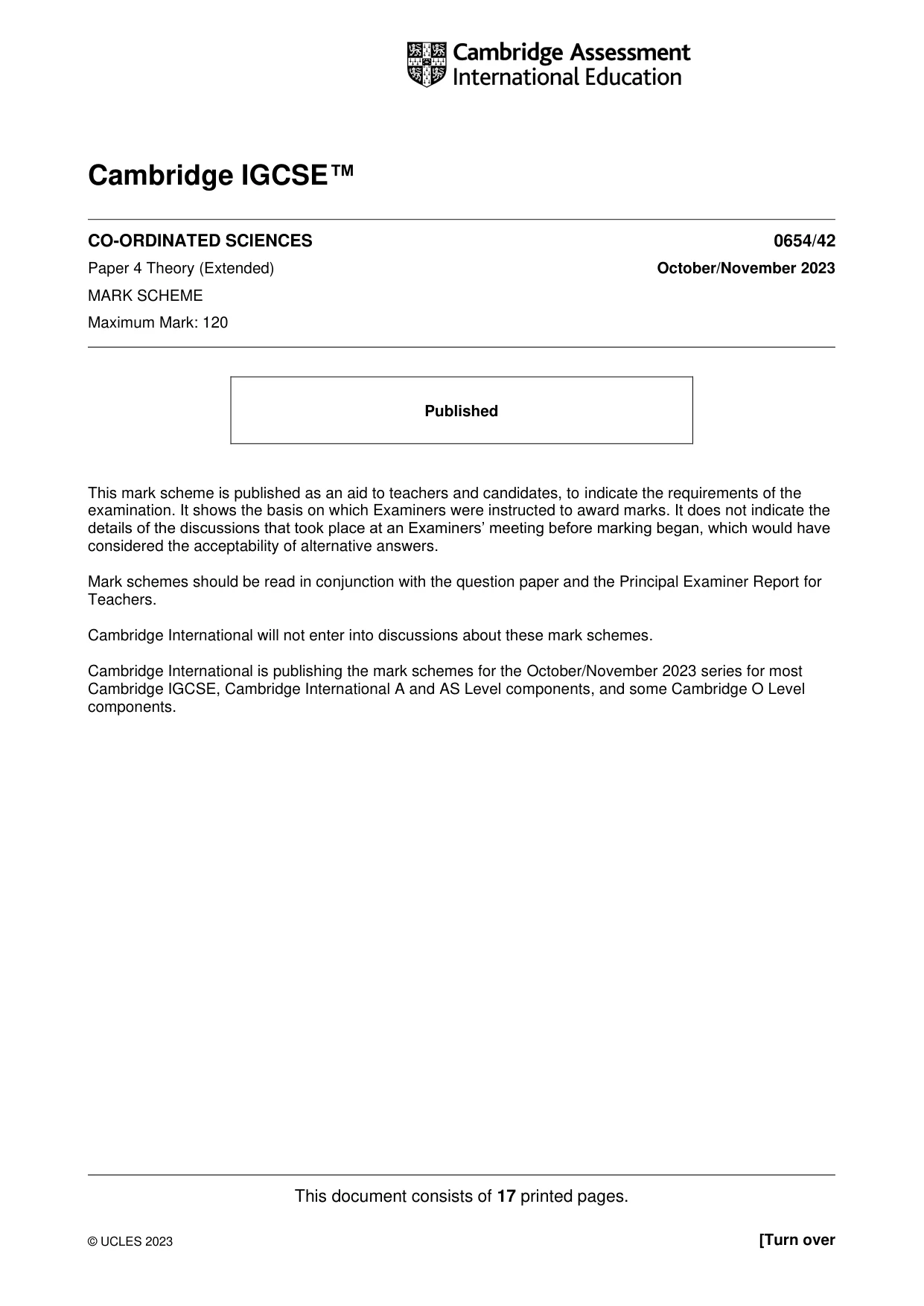
Mark scheme17 pages
Answers below. Sit the paper first if you are practising.
Questions as text
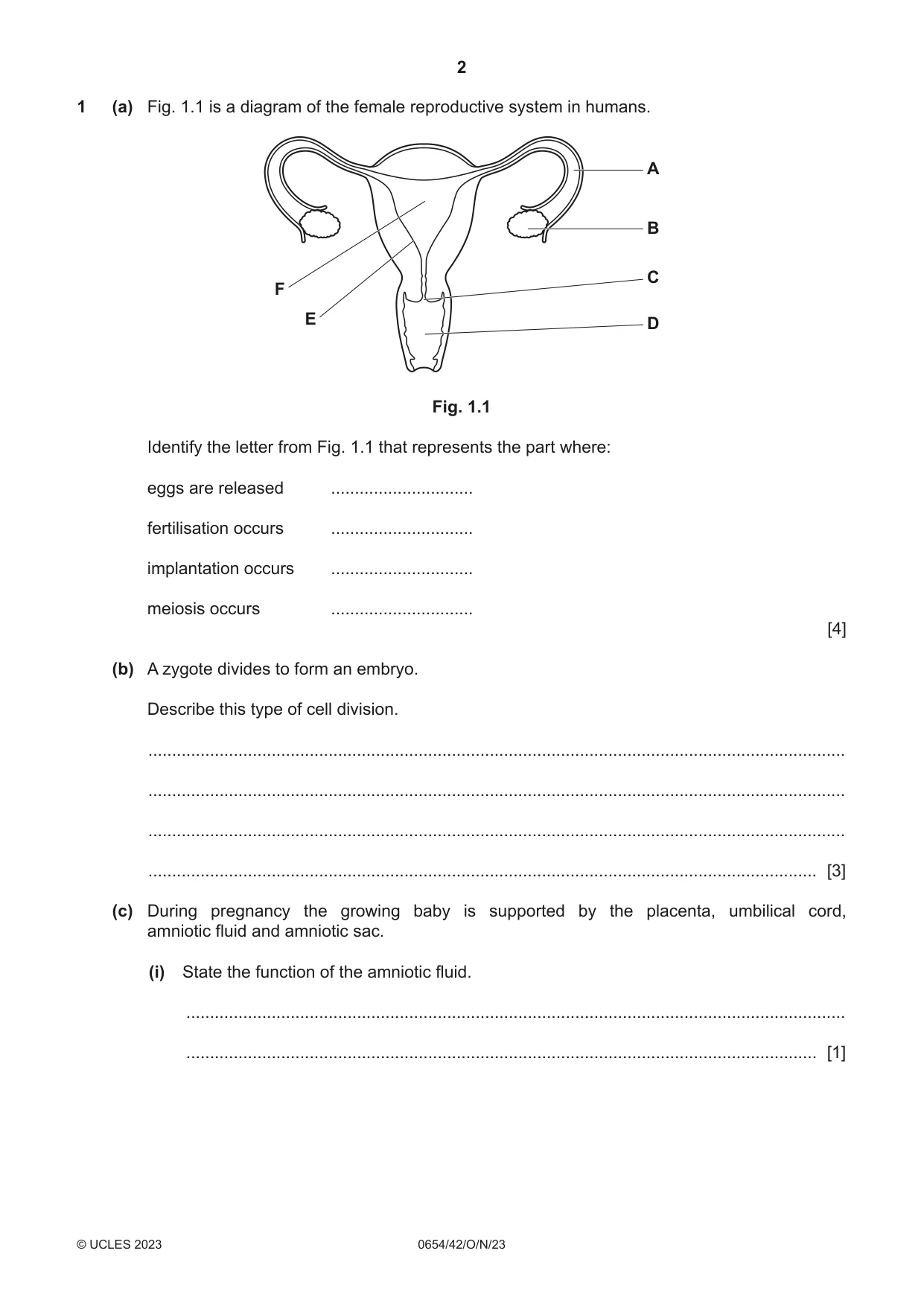
Q1 · A diagram of the female reproductive system in humans
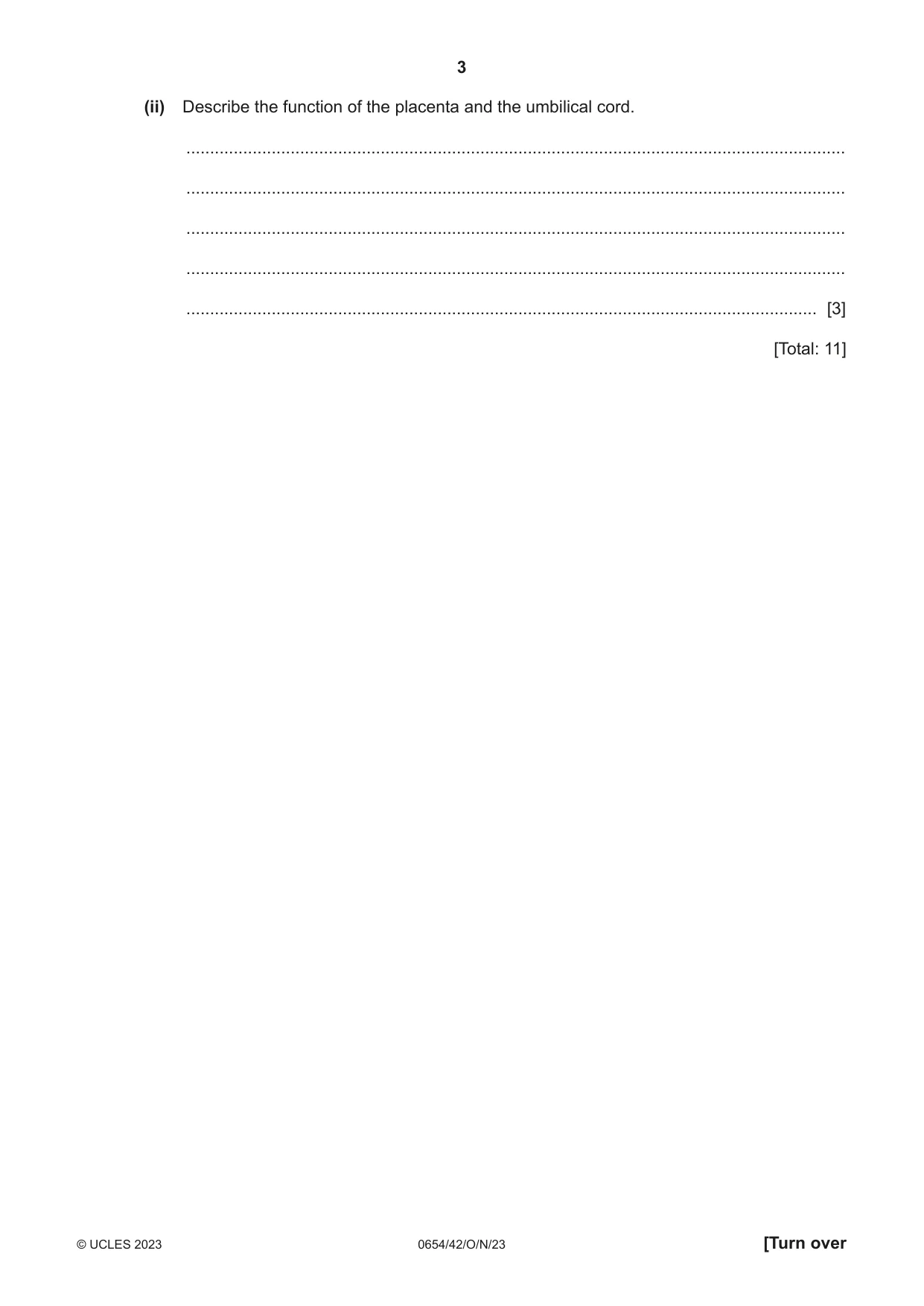
1 (a) Fig. 1.1 is a diagram of the female reproductive system in humans. A B C F E D Fig. 1.1 Identify the letter from Fig. 1.1 that represents the part where: eggs are released .............................. fertilisation occurs .............................. implantation occurs .............................. meiosis occurs .............................. [4] (b) A zygote divides to form an embryo. Describe this type of cell division. ................................................................................................................................................... ................................................................................................................................................... ................................................................................................................................................... ............................................................................................................................................. [3] (c) During pregnancy the growing baby is supported by the placenta, umbilical cord, amniotic fluid and amniotic sac. (i) State the function of the amniotic fluid. ........................................................................................................................................... ..................................................................................................................................... [1] (ii) Describe the function of the placenta and the umbilical cord. ........................................................................................................................................... ........................................................................................................................................... ........................................................................................................................................... ........................................................................................................................................... ..................................................................................................................................... [3] [Total: 11]
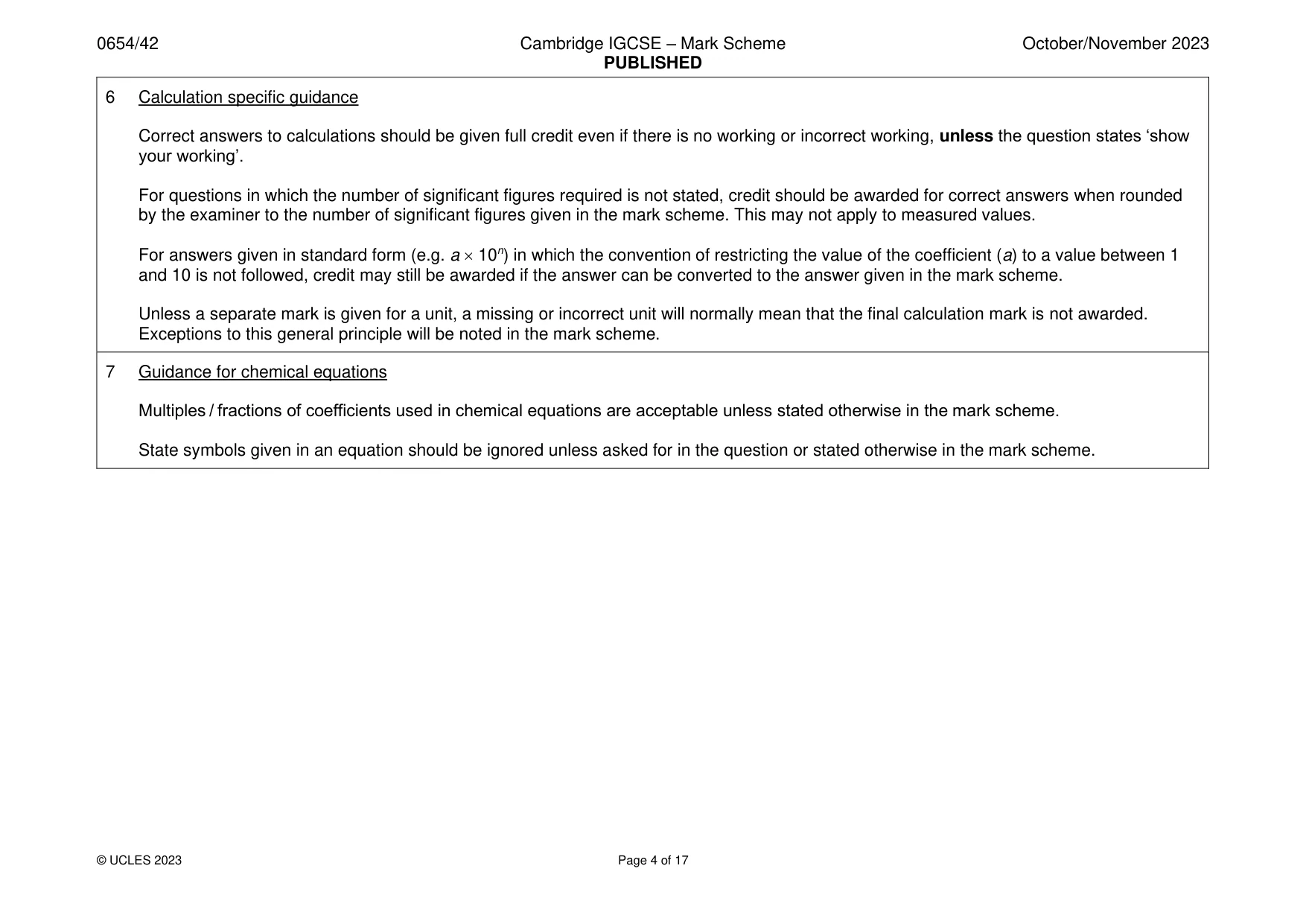
Mark scheme: Question Answer Marks 1(a) B ; 4 A ; E ; B ; 1(b) any three from: 3 mitosis ; nuclear division ; production of genetically identical cells ; ref to duplication of chromosomes (before mitosis) ; 1(c)(i) protection (from mechanical damage) ; 1 1(c)(ii) any three from: 3 placenta provides a barrier to toxins ; umbilical cord passes, oxygen / nutrients, to fetus (blood) ; umbilical cord passes, excretory products / carbon dioxide, to mothers (blood) ; ref to exchange of materials by diffusion (across the placenta) ;
Q2 · The element carbon exists as 3 naturally occurring isotopes
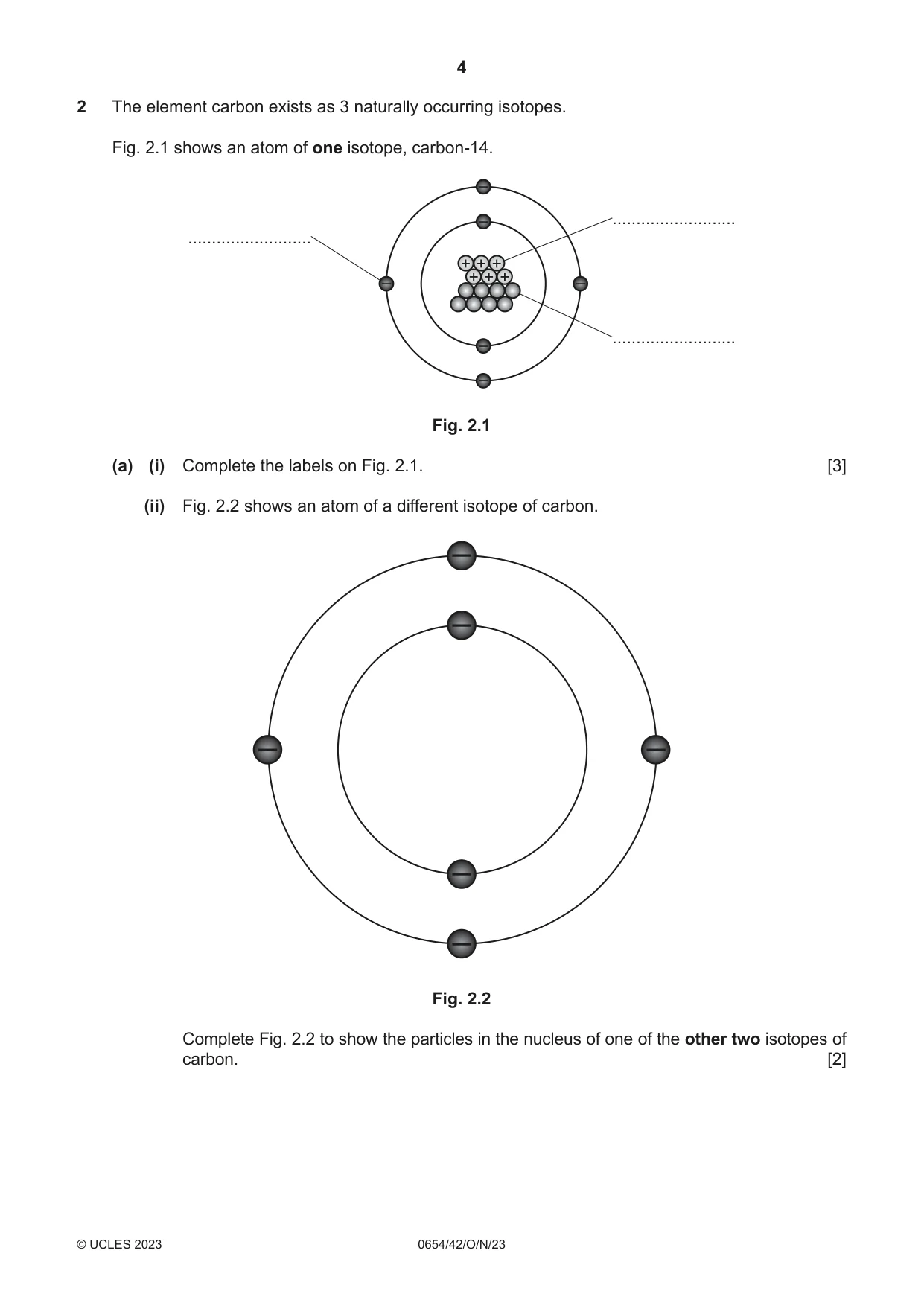
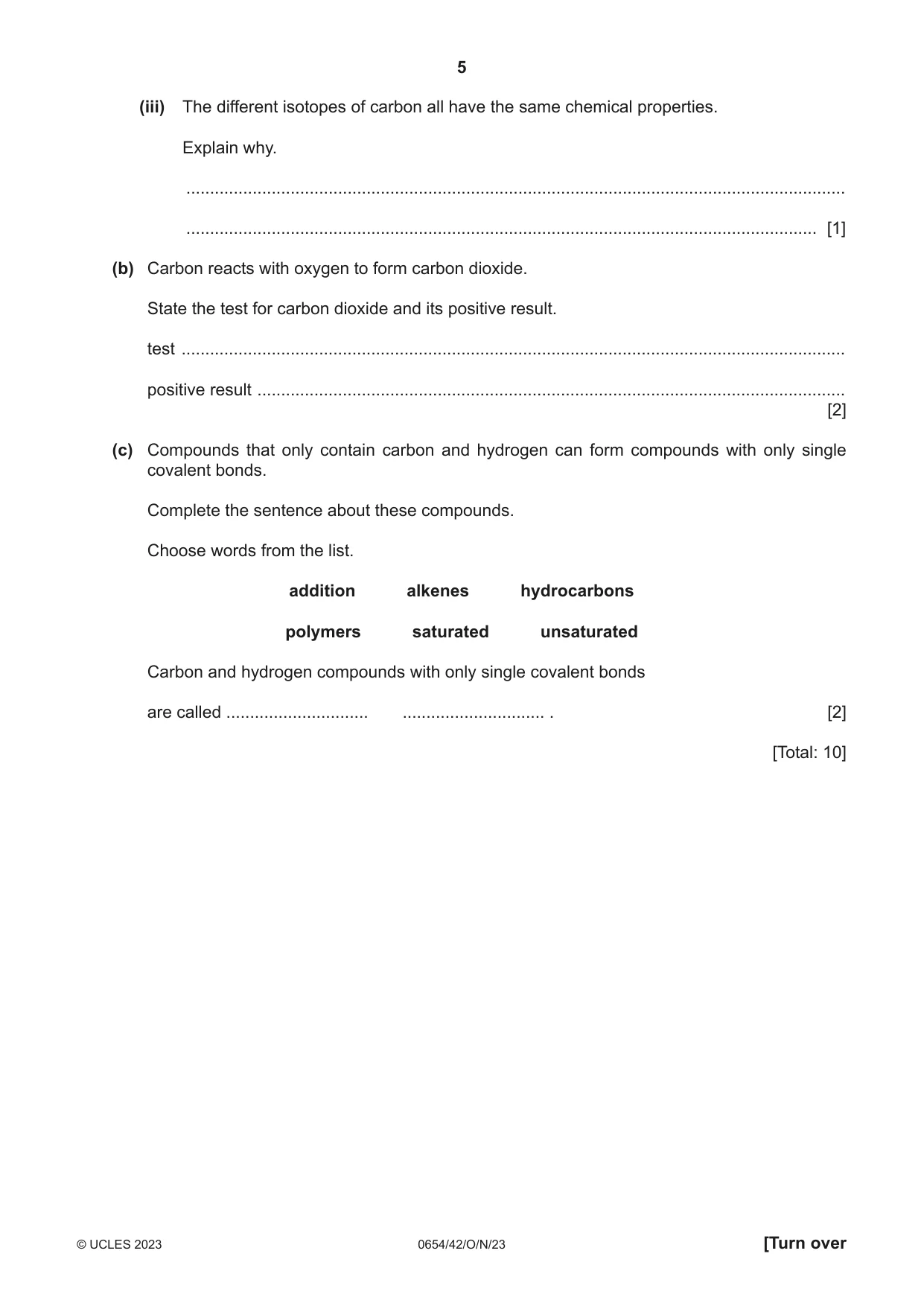
2 The element carbon exists as 3 naturally occurring isotopes. Fig. 2.1 shows an atom of one isotope, carbon-14. – – .......................... .......................... + + + + + + – – .......................... – – Fig. 2.1 (a) (i) Complete the labels on Fig. 2.1. [3] (ii) Fig. 2.2 shows an atom of a different isotope of carbon. – – – – – – Fig. 2.2 Complete Fig. 2.2 to show the particles in the nucleus of one of the other two isotopes of carbon. [2] (iii) The different isotopes of carbon all have the same chemical properties. Explain why. ........................................................................................................................................... ..................................................................................................................................... [1] (b) Carbon reacts with oxygen to form carbon dioxide. State the test for carbon dioxide and its positive result. test ............................................................................................................................................ positive result ............................................................................................................................ [2] (c) Compounds that only contain carbon and hydrogen can form compounds with only single covalent bonds. Complete the sentence about these compounds. Choose words from the list. addition alkenes hydrocarbons polymers saturated unsaturated Carbon and hydrogen compounds with only single covalent bonds are called .............................. .............................. . [2] [Total: 10]
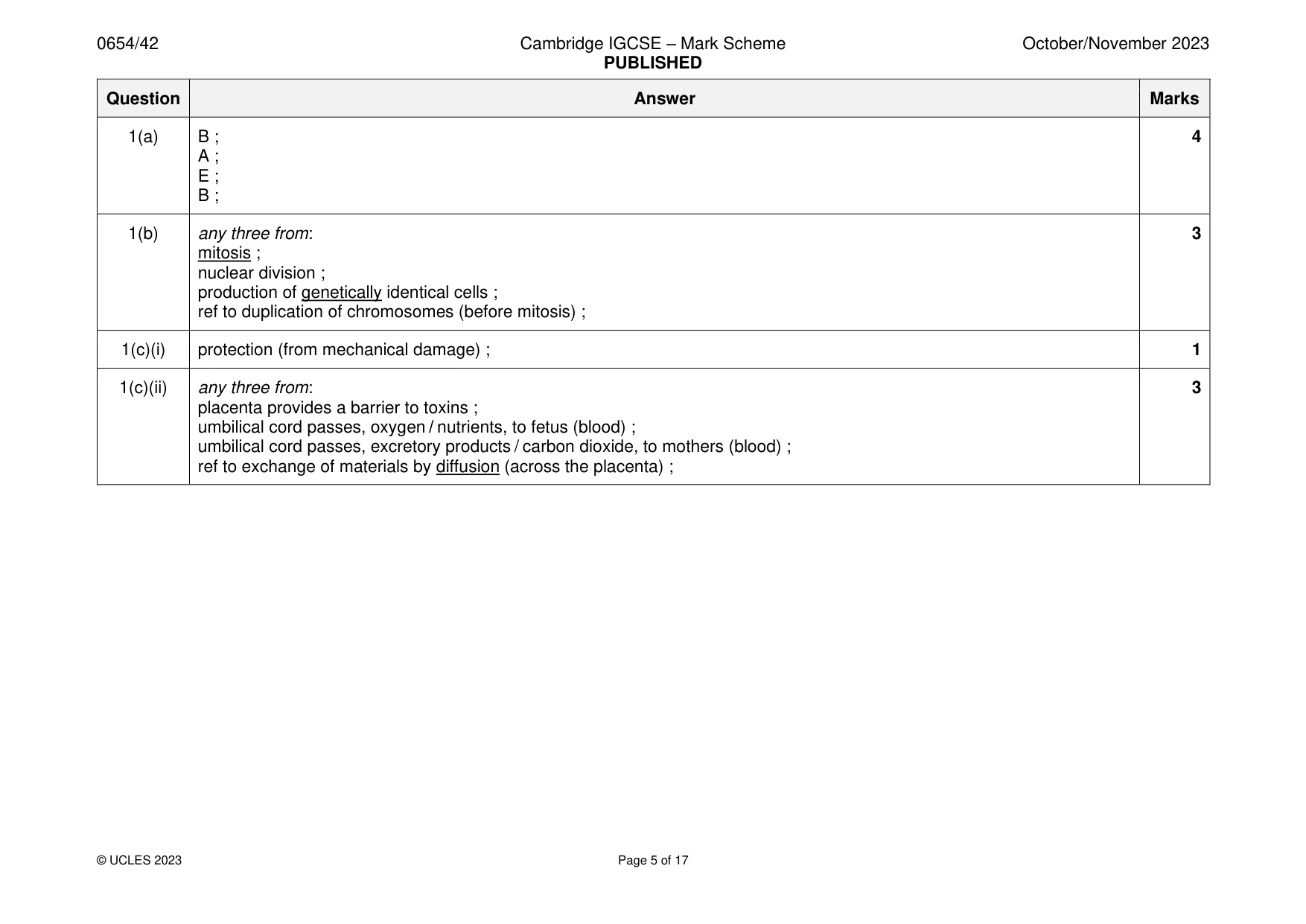
Mark scheme: 2(a)(i) 3 proton ; electron ; neutron ; 2(a)(ii) 6 protons ; 2 6 or 7 neutrons ; 2(a)(iii) same number of electrons in the outer shell ; 1 2(b) test: limewater ; 2 observation: milky / cloudy / white precipitate ; 2(c) saturated ; 2 hydrocarbons ;
Q3 · A circuit used by students investigating how the resistance of a metal wire varies with…
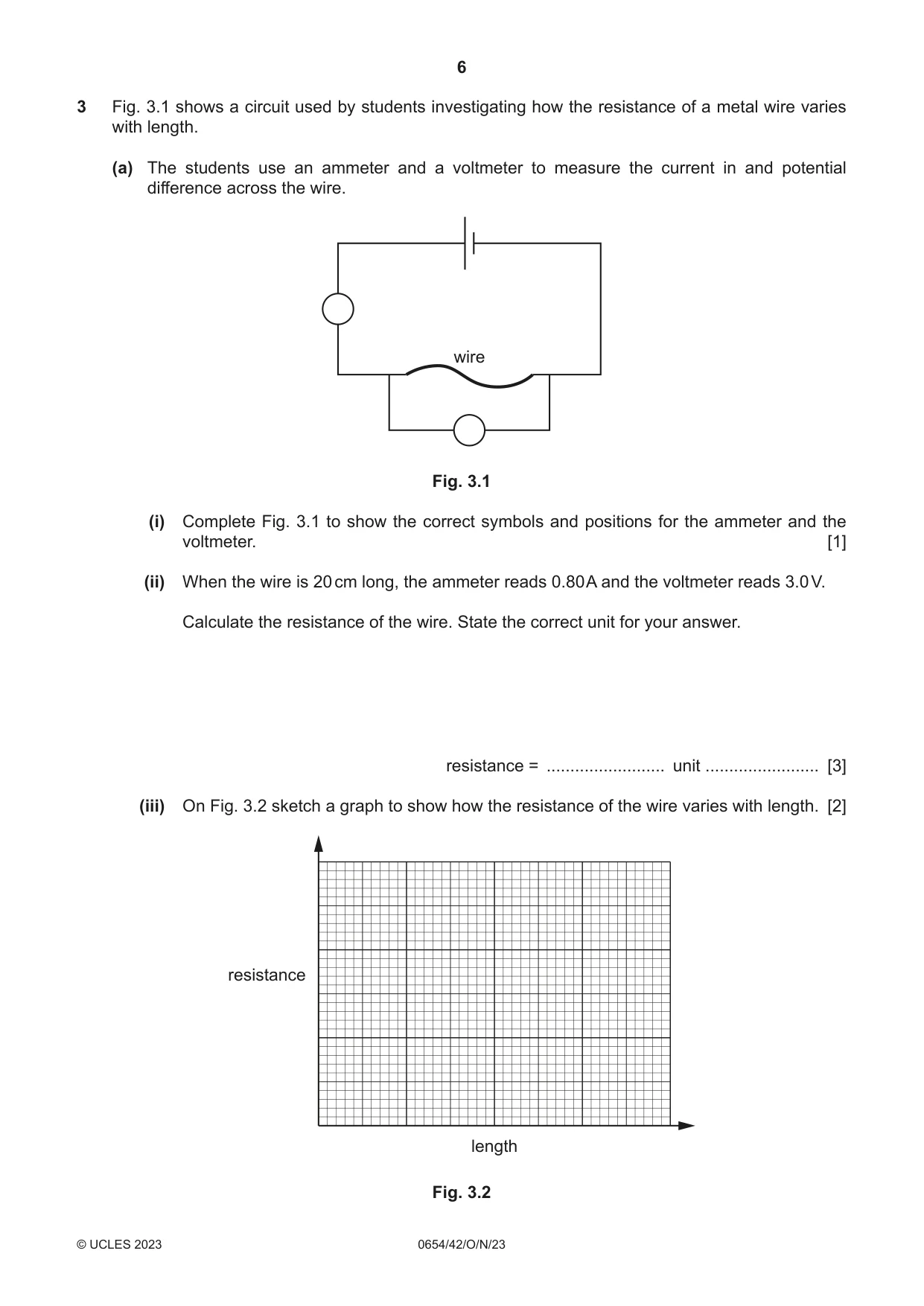
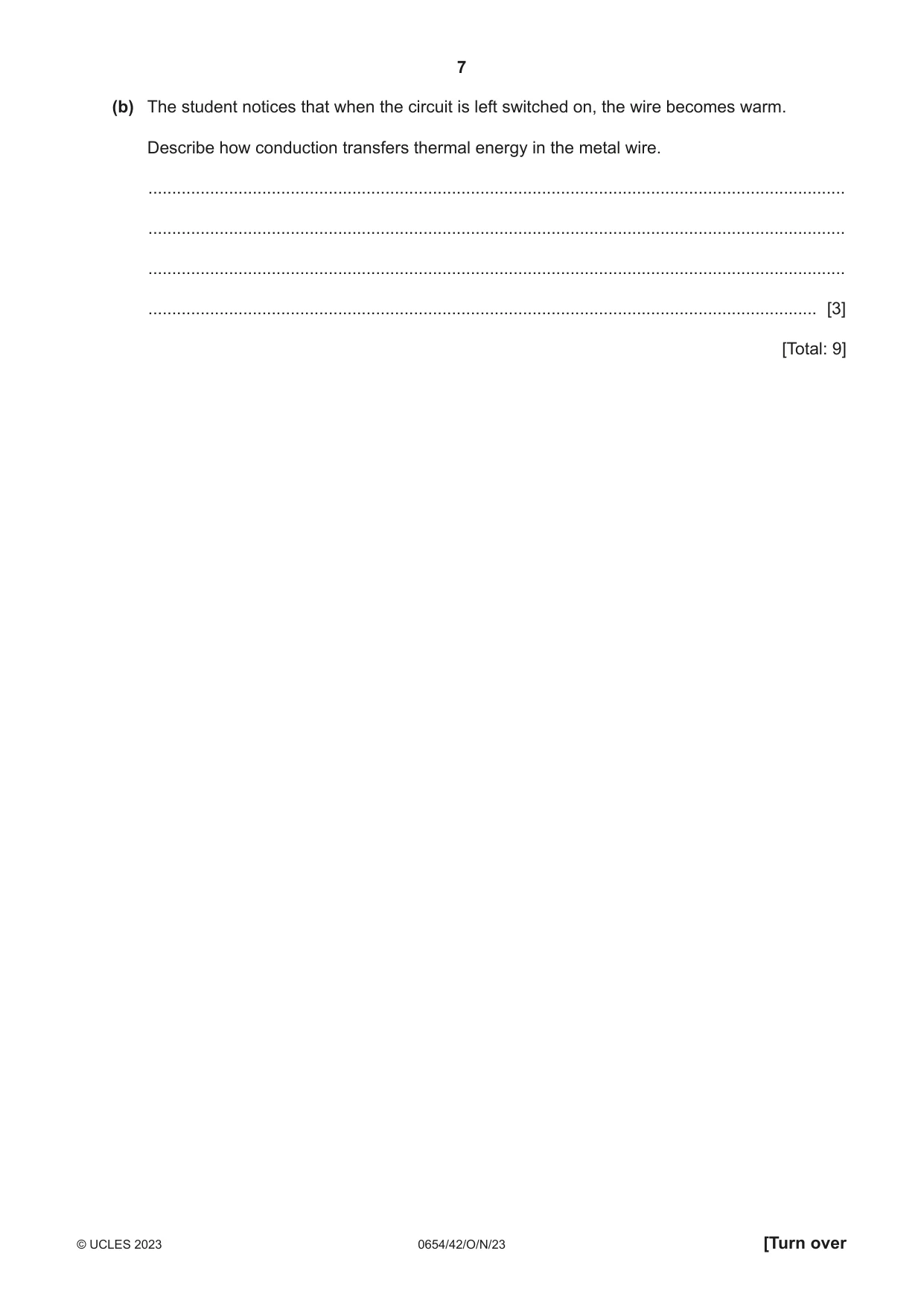
3 Fig. 3.1 shows a circuit used by students investigating how the resistance of a metal wire varies with length. (a) The students use an ammeter and a voltmeter to measure the current in and potential difference across the wire. wire Fig. 3.1 (i) Complete Fig. 3.1 to show the correct symbols and positions for the ammeter and the voltmeter. [1] (ii) When the wire is 20 cm long, the ammeter reads 0.80 A and the voltmeter reads 3.0 V. Calculate the resistance of the wire. State the correct unit for your answer. resistance = ......................... unit ........................ [3] (iii) On Fig. 3.2 sketch a graph to show how the resistance of the wire varies with length. [2] resistance length Fig. 3.2 (b) The student notices that when the circuit is left switched on, the wire becomes warm. Describe how conduction transfers thermal energy in the metal wire. ................................................................................................................................................... ................................................................................................................................................... ................................................................................................................................................... ............................................................................................................................................. [3] [Total: 9]
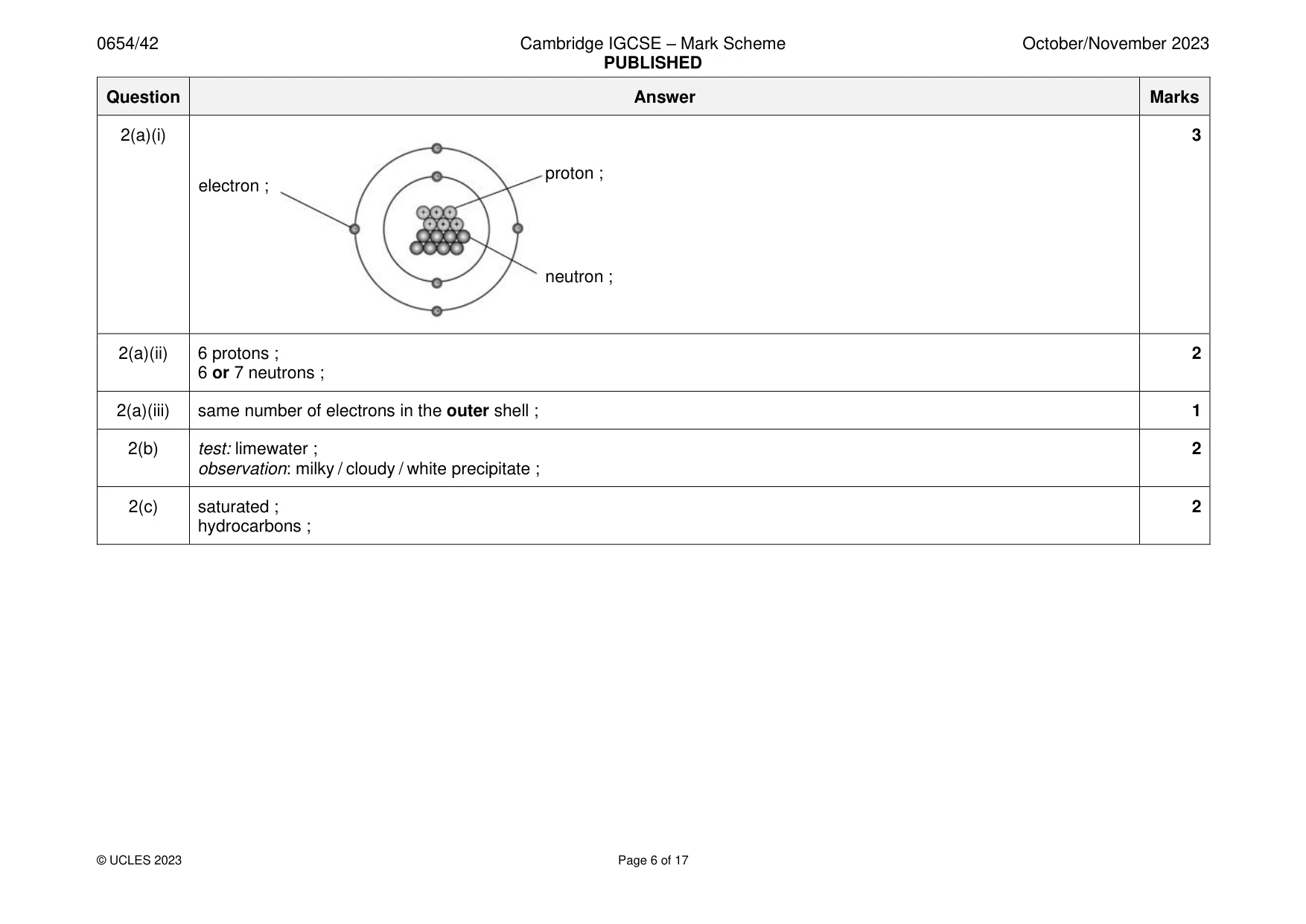
Mark scheme: 3(a)(i) 1 ; 3(a)(ii) (R =) V ÷ I / 3(.0) ÷ 0.8(0) ; 3 R =) 3.8 ; ohms / ; 3(a)(iii) 2 positive gradient ; straight line ; 3(b) atoms vibrate ; 3 (idea that) vibrations passed on to next atom ; (idea of) transfer by (free) electrons ;
Q4 · A student investigates the effect of humidity on the rate of water uptake in plant shoots
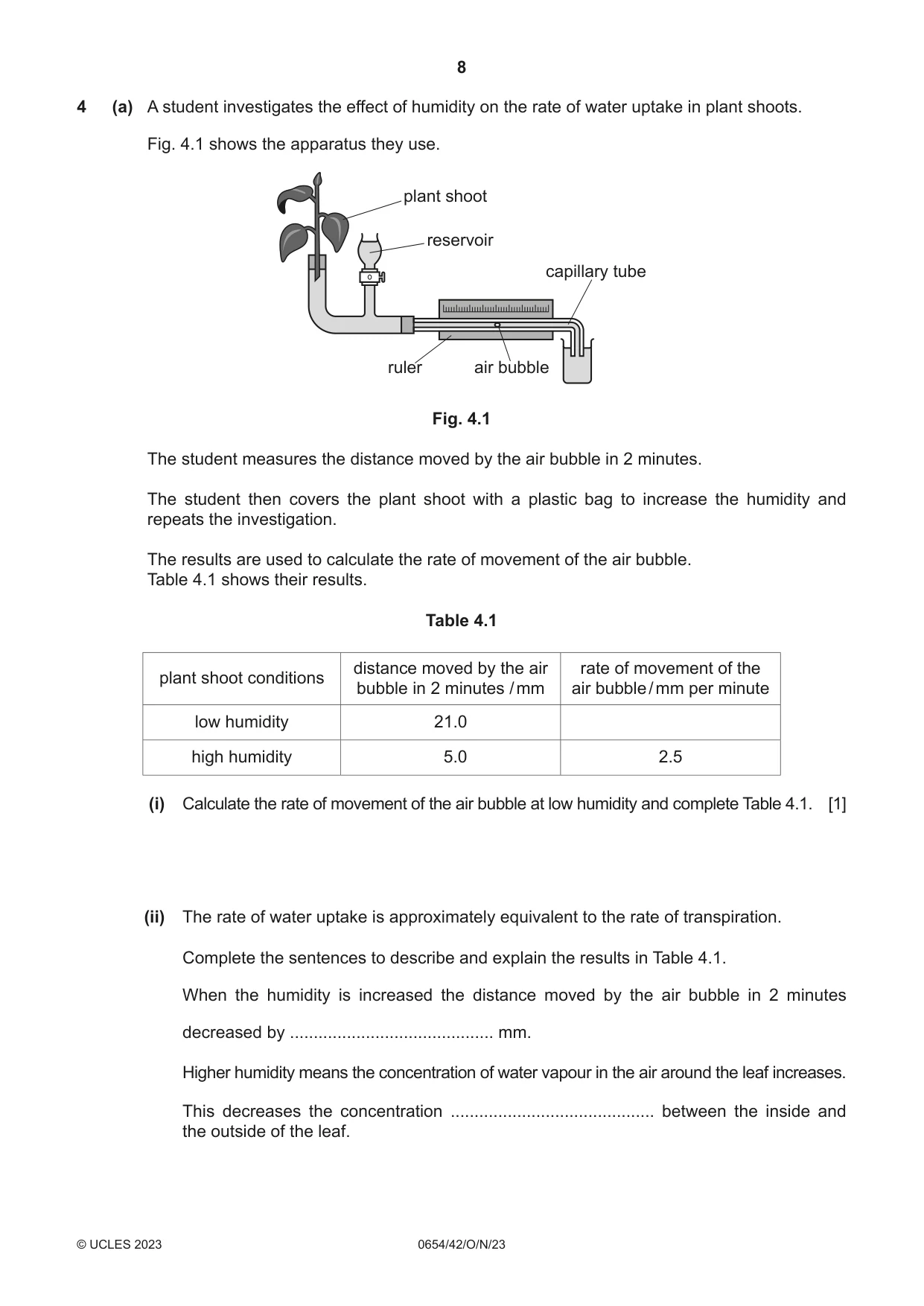
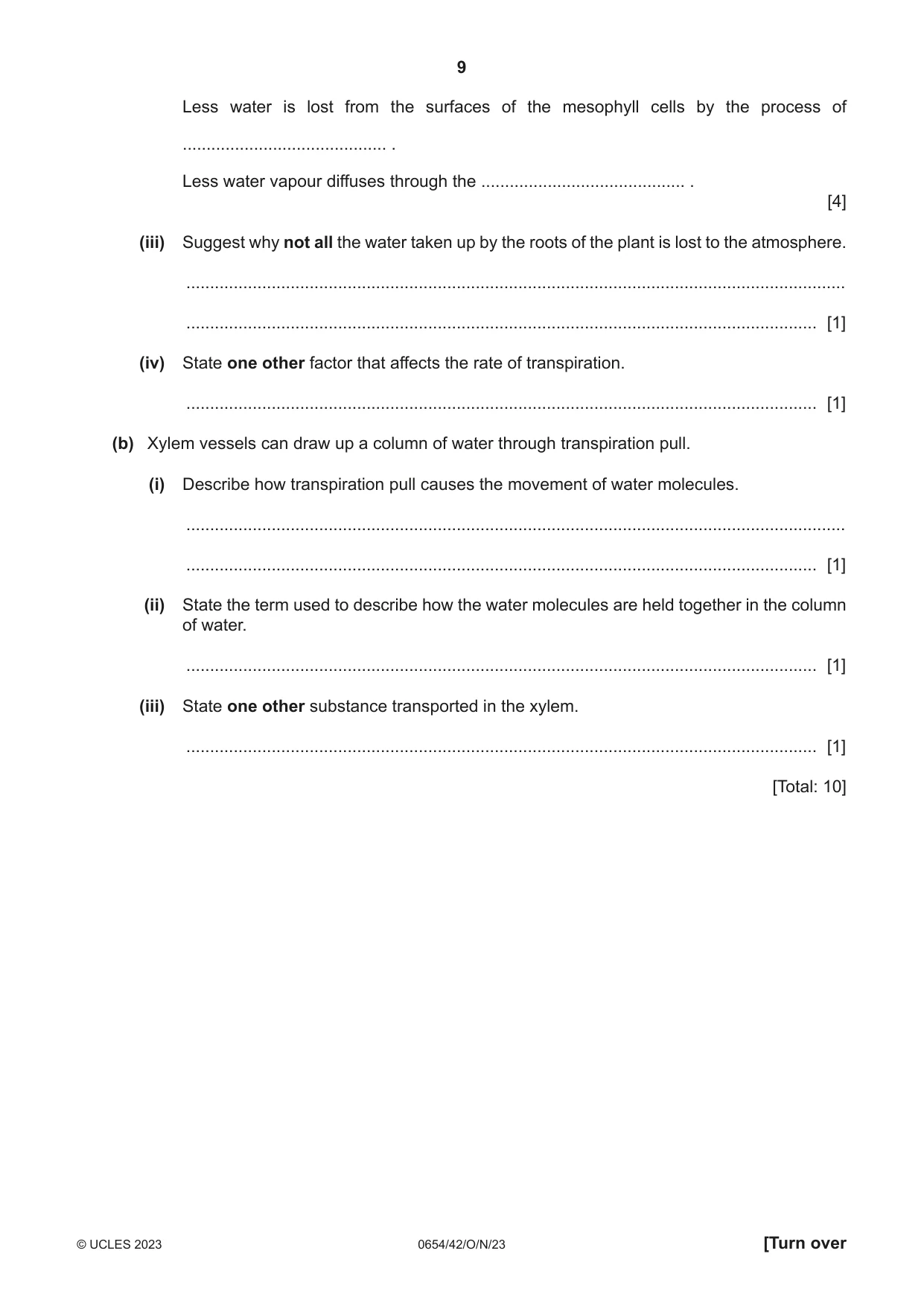
4 (a) A student investigates the effect of humidity on the rate of water uptake in plant shoots. Fig. 4.1 shows the apparatus they use. plant shoot reservoir capillary tube ruler air bubble Fig. 4.1 The student measures the distance moved by the air bubble in 2 minutes. The student then covers the plant shoot with a plastic bag to increase the humidity and repeats the investigation. The results are used to calculate the rate of movement of the air bubble. Table 4.1 shows their results. Table 4.1 distance moved by the air rate of movement of the plant shoot conditions bubble in 2 minutes / mm air bubble / mm per minute low humidity 21.0 high humidity 5.0 2.5 (i) Calculate the rate of movement of the air bubble at low humidity and complete Table 4.1. [1] (ii) The rate of water uptake is approximately equivalent to the rate of transpiration. Complete the sentences to describe and explain the results in Table 4.1. When the humidity is increased the distance moved by the air bubble in 2 minutes decreased by ........................................... mm. Higher humidity means the concentration of water vapour in the air around the leaf increases. This decreases the concentration ........................................... between the inside and the outside of the leaf. Less water is lost from the surfaces of the mesophyll cells by the process of ........................................... . Less water vapour diffuses through the ........................................... . [4] (iii) Suggest why not all the water taken up by the roots of the plant is lost to the atmosphere. ........................................................................................................................................... ..................................................................................................................................... [1] (iv) State one other factor that affects the rate of transpiration. ..................................................................................................................................... [1] (b) Xylem vessels can draw up a column of water through transpiration pull. (i) Describe how transpiration pull causes the movement of water molecules. ........................................................................................................................................... ..................................................................................................................................... [1] (ii) State the term used to describe how the water molecules are held together in the column of water. ..................................................................................................................................... [1] (iii) State one other substance transported in the xylem. ..................................................................................................................................... [1] [Total: 10]
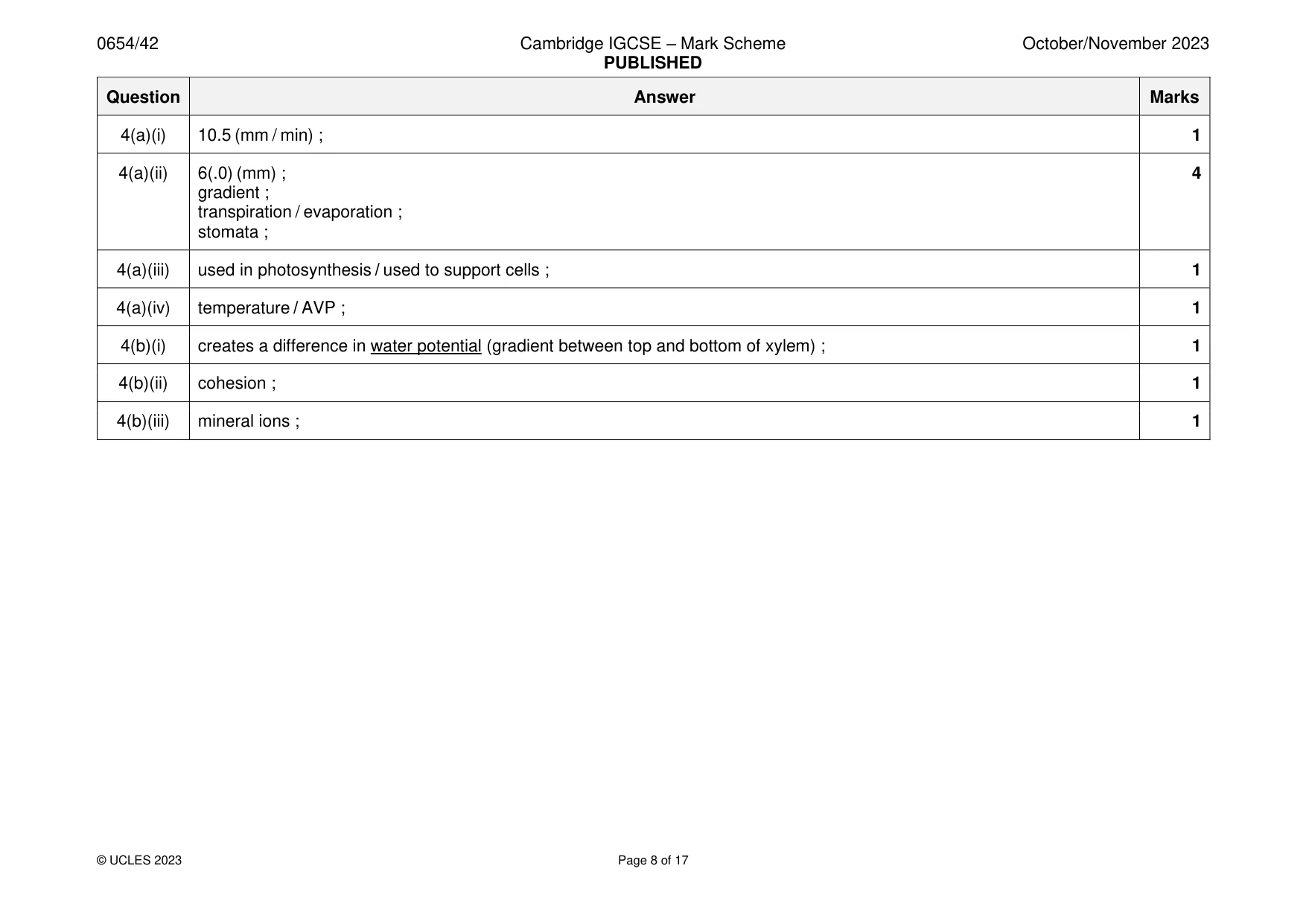
Mark scheme: 4(a)(i) 10.5 (mm / min) ; 1 4(a)(ii) 6(.0) (mm) ; 4 gradient ; transpiration / evaporation ; stomata ; 4(a)(iii) used in photosynthesis / used to support cells ; 1 4(a)(iv) temperature / AVP ; 1 4(b)(i) creates a difference in water potential (gradient between top and bottom of xylem) ; 1 4(b)(ii) cohesion ; 1 4(b)(iii) mineral ions ; 1
Q5 · Some information about the properties of the Group VII elements
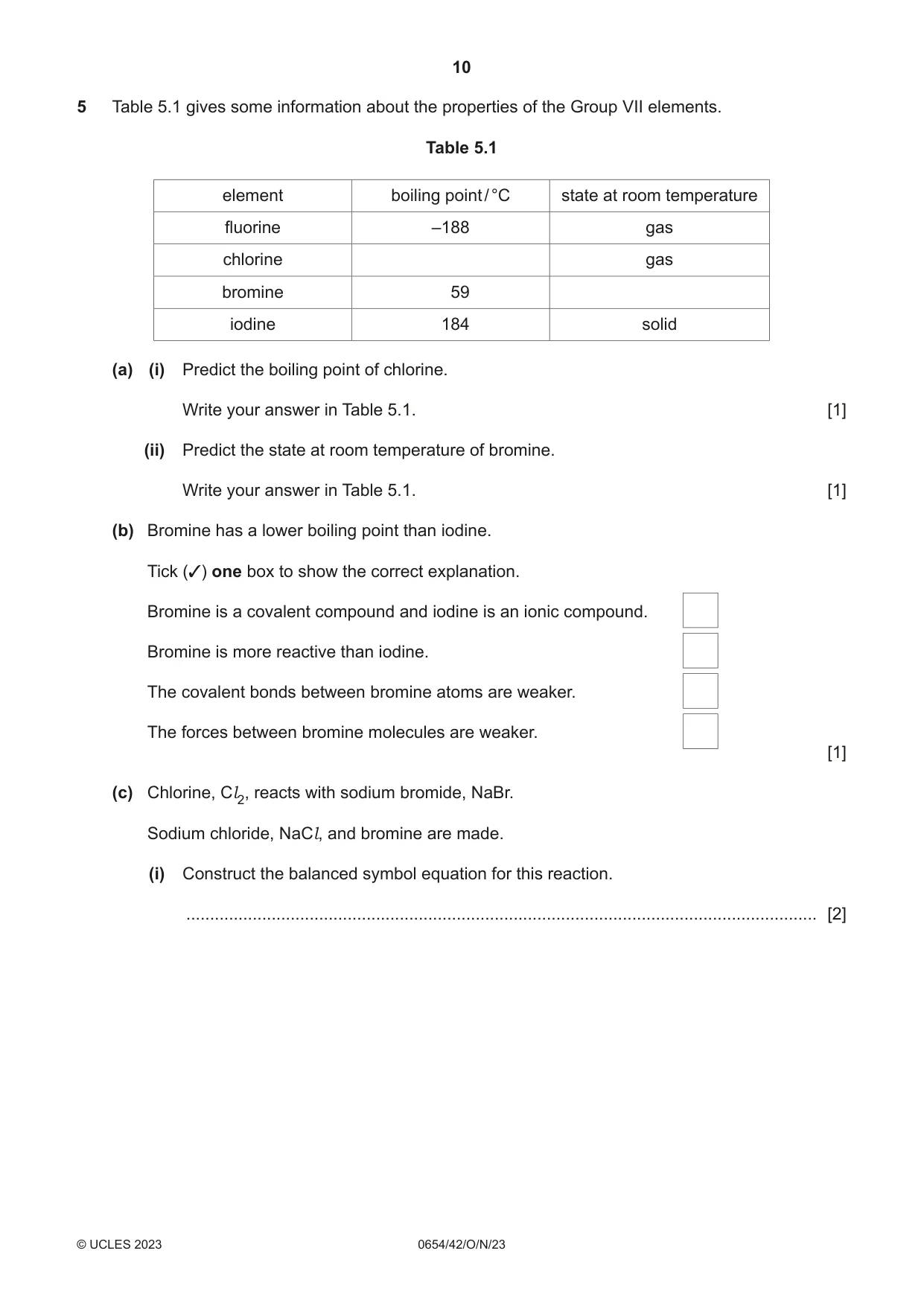
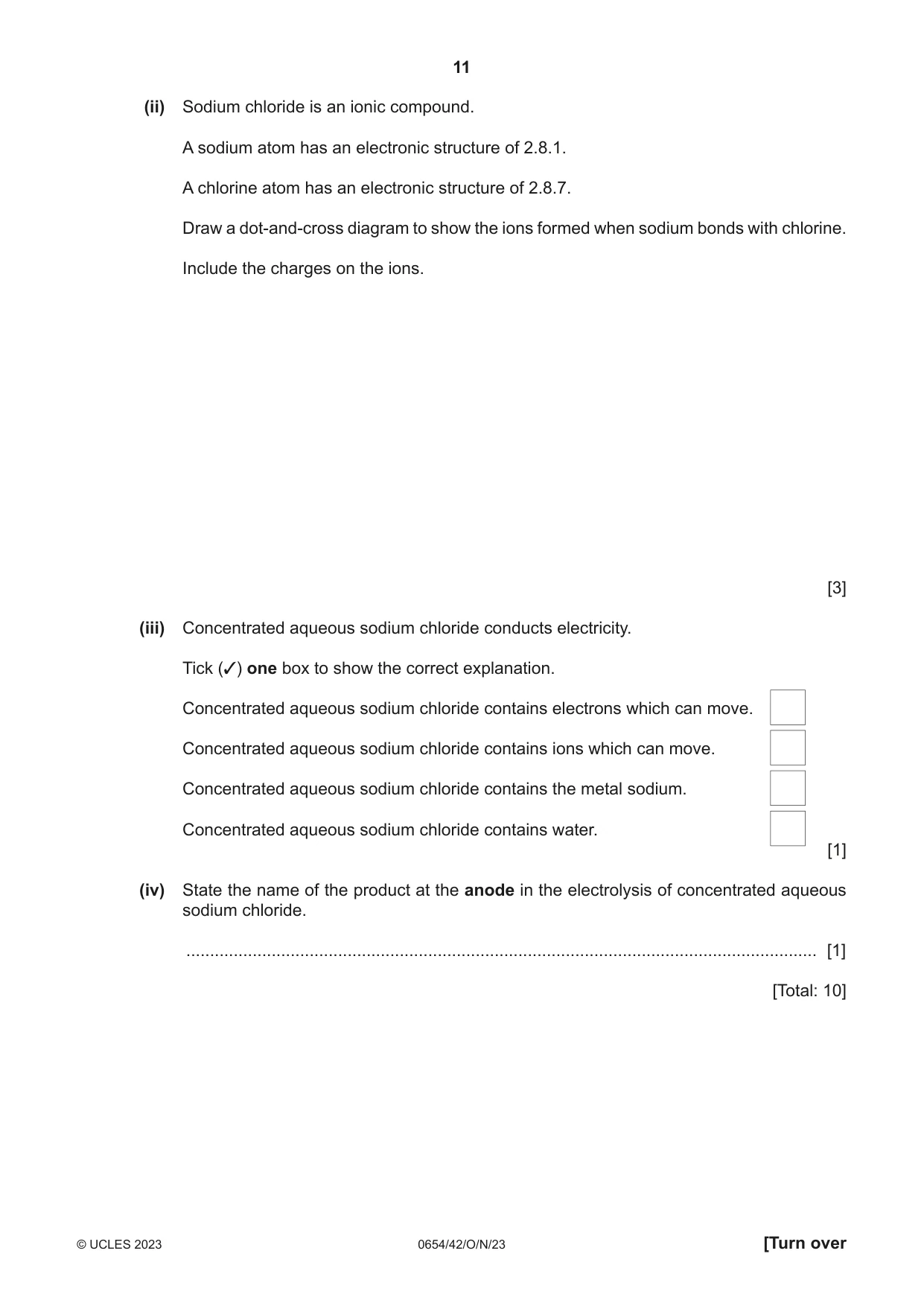
5 Table 5.1 gives some information about the properties of the Group VII elements. Table 5.1 element boiling point / °C state at room temperature fluorine –188 gas chlorine gas bromine 59 iodine 184 solid (a) (i) Predict the boiling point of chlorine. Write your answer in Table 5.1. [1] (ii) Predict the state at room temperature of bromine. Write your answer in Table 5.1. [1] (b) Bromine has a lower boiling point than iodine. Tick (3) one box to show the correct explanation. Bromine is a covalent compound and iodine is an ionic compound. Bromine is more reactive than iodine. The covalent bonds between bromine atoms are weaker. The forces between bromine molecules are weaker. [1] (c) Chlorine, Cl2, reacts with sodium bromide, NaBr. Sodium chloride, NaCl, and bromine are made. (i) Construct the balanced symbol equation for this reaction. ..................................................................................................................................... [2] (ii) Sodium chloride is an ionic compound. A sodium atom has an electronic structure of 2.8.1. A chlorine atom has an electronic structure of 2.8.7. Draw a dot-and-cross diagram to show the ions formed when sodium bonds with chlorine. Include the charges on the ions. [3] (iii) Concentrated aqueous sodium chloride conducts electricity. Tick (3) one box to show the correct explanation. Concentrated aqueous sodium chloride contains electrons which can move. Concentrated aqueous sodium chloride contains ions which can move. Concentrated aqueous sodium chloride contains the metal sodium. Concentrated aqueous sodium chloride contains water. [1] (iv) State the name of the product at the anode in the electrolysis of concentrated aqueous sodium chloride. ..................................................................................................................................... [1] [Total: 10]
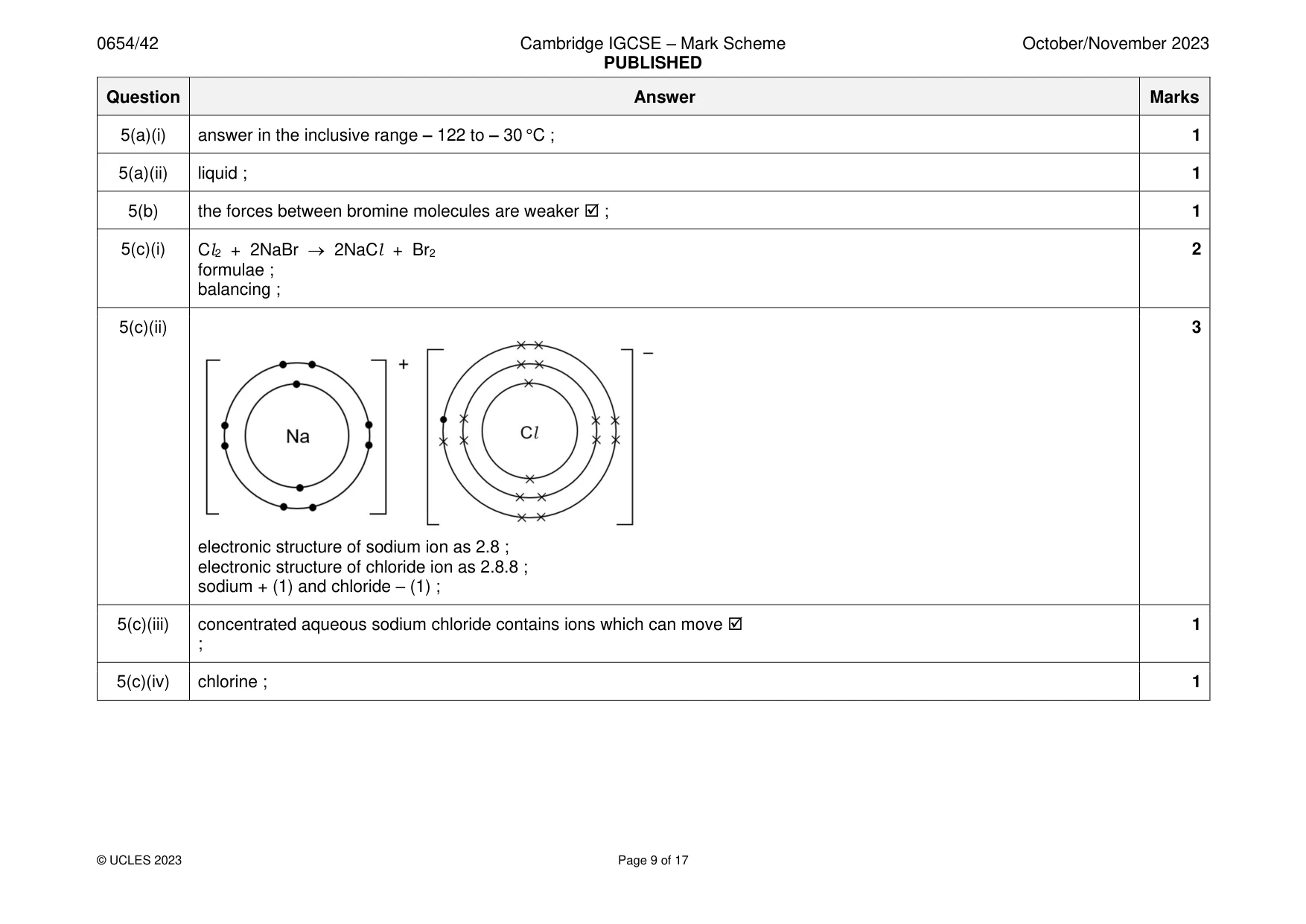
Mark scheme: 5(a)(i) answer in the inclusive range – 122 to – 30 °C ; 1 5(a)(ii) liquid ; 1 5(b) the forces between bromine molecules are weaker ; 1 5(c)(i) Cl2 + 2NaBr → 2NaCl + Br2 2 formulae ; balancing ; 5(c)(ii) 3 electronic structure of sodium ion as 2.8 ; electronic structure of chloride ion as 2.8.8 ; sodium + (1) and chloride – (1) ; 5(c)(iii) concentrated aqueous sodium chloride contains ions which can move 1 ; 5(c)(iv) chlorine ; 1
Q6 · Light is a transverse wave which is refracted by a transparent material
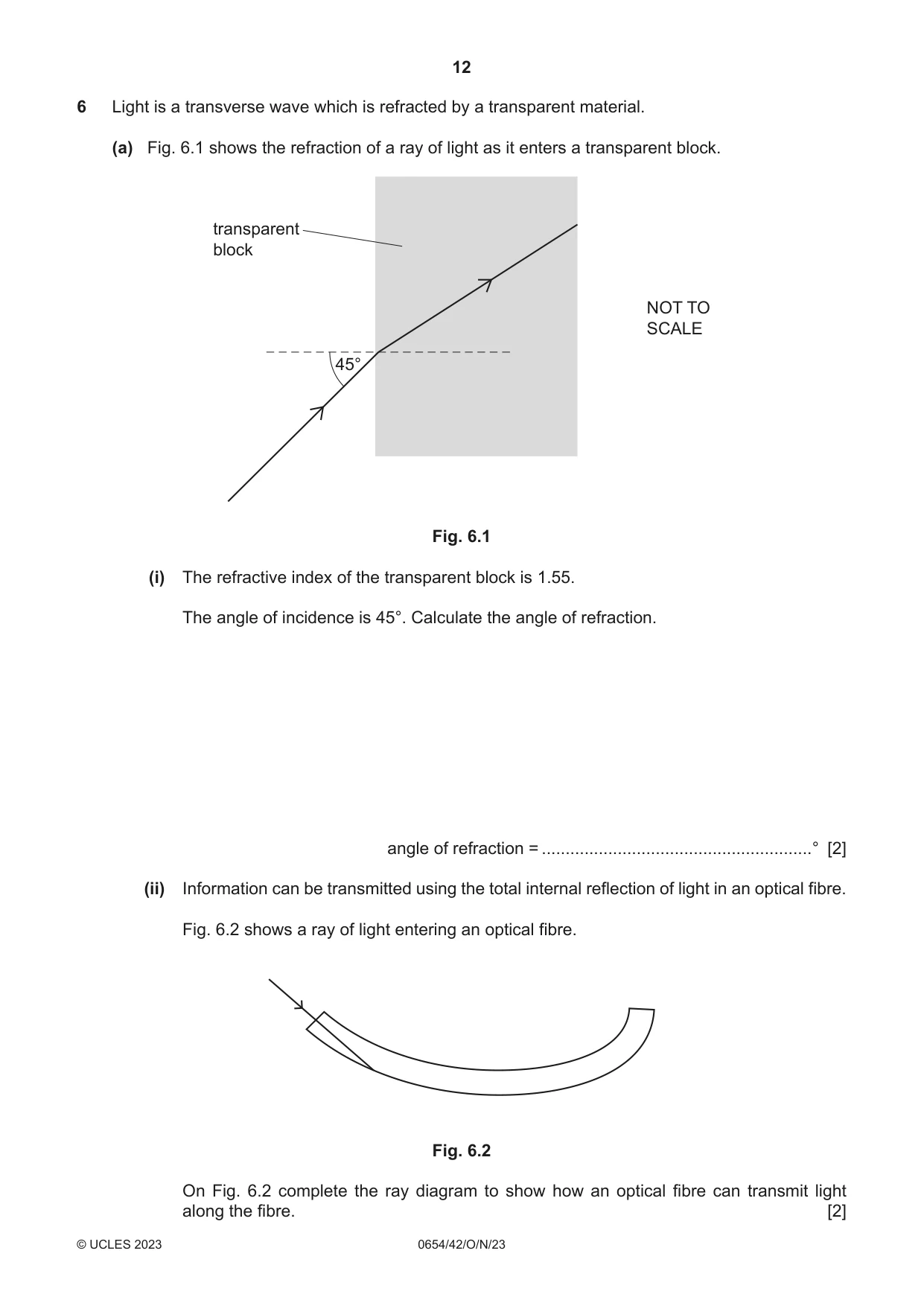
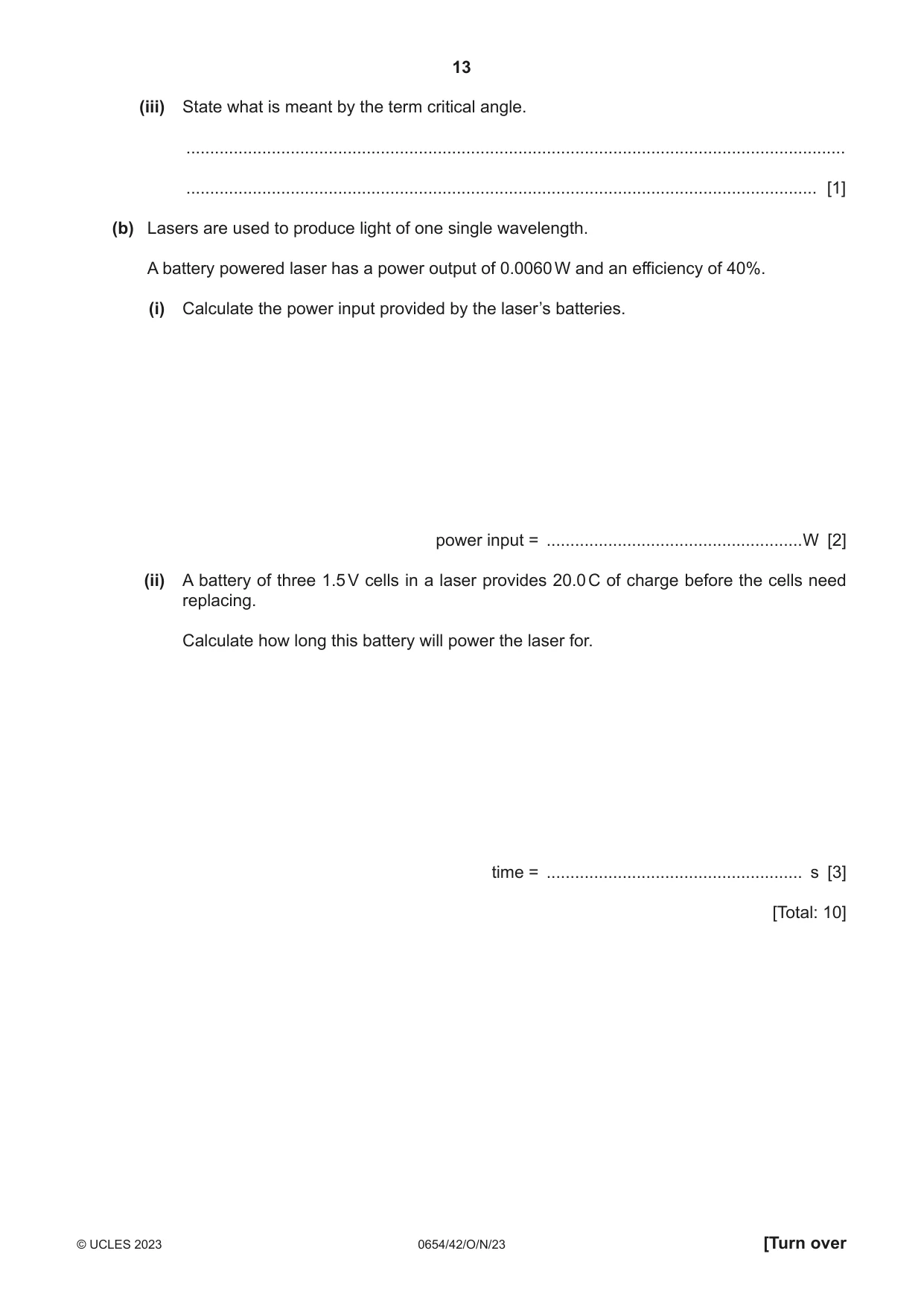
6 Light is a transverse wave which is refracted by a transparent material. (a) Fig. 6.1 shows the refraction of a ray of light as it enters a transparent block. transparent block NOT TO SCALE 45° Fig. 6.1 (i) The refractive index of the transparent block is 1.55. The angle of incidence is 45°. Calculate the angle of refraction. angle of refraction = .........................................................° [2] (ii) Information can be transmitted using the total internal reflection of light in an optical fibre. Fig. 6.2 shows a ray of light entering an optical fibre. Fig. 6.2 On Fig. 6.2 complete the ray diagram to show how an optical fibre can transmit light along the fibre. [2] (iii) State what is meant by the term critical angle. ........................................................................................................................................... ..................................................................................................................................... [1] (b) Lasers are used to produce light of one single wavelength. A battery powered laser has a power output of 0.0060 W and an efficiency of 40%. (i) Calculate the power input provided by the laser’s batteries. power input = ......................................................W [2] (ii) A battery of three 1.5 V cells in a laser provides 20.0 C of charge before the cells need replacing. Calculate how long this battery will power the laser for. time = ...................................................... s [3] [Total: 10]
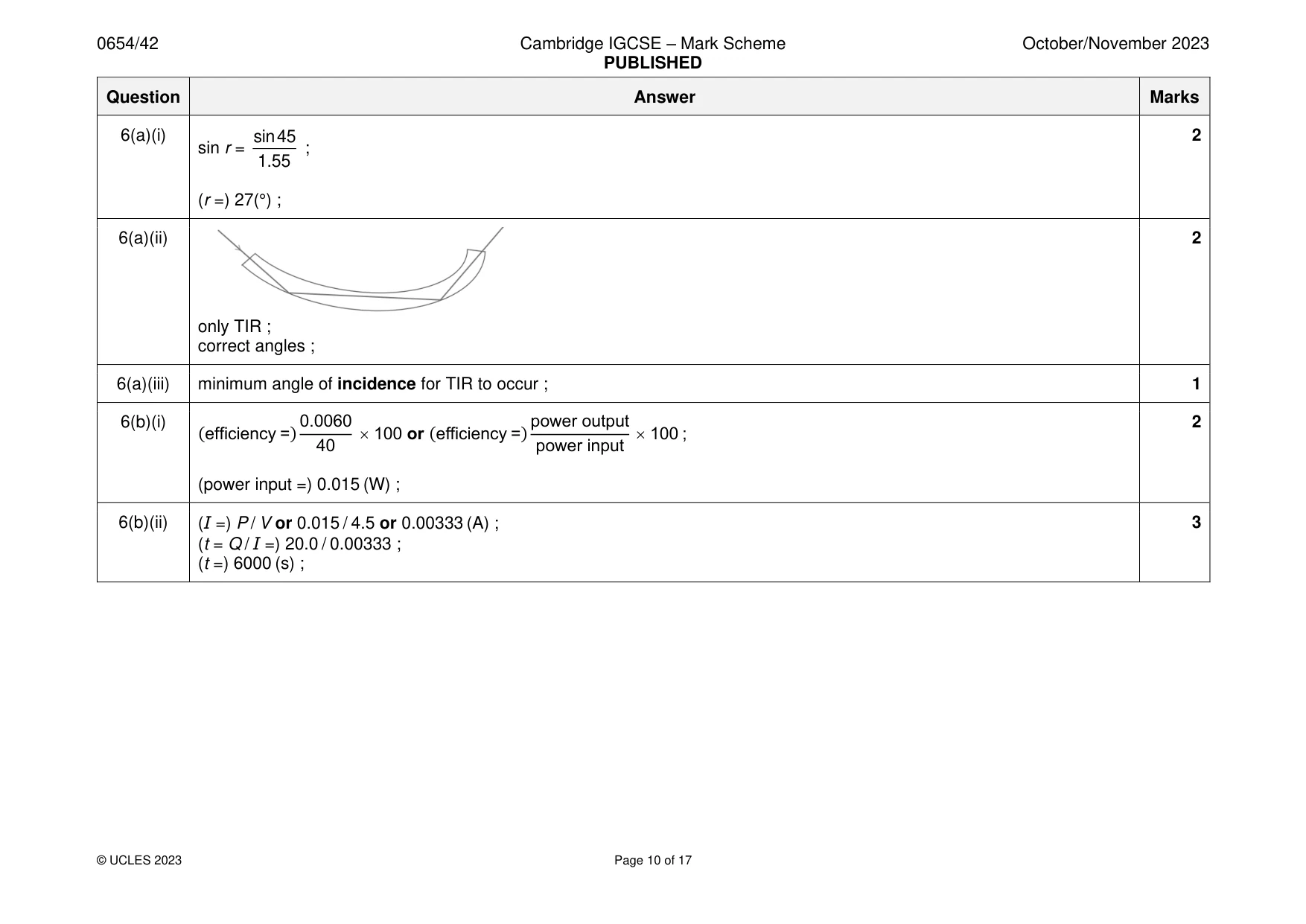
Mark scheme: 6(a)(i) sin45 2 sin r = ; 1.55 (r =) 27(°) ; 6(a)(ii) 2 only TIR ; correct angles ; 6(a)(iii) minimum angle of incidence for TIR to occur ; 1 6(b)(i) 0.0060 power output 2 (efficiency =) 100 or (efficiency =) 100 ; 40 power input (power input =) 0.015 (W) ; 6(b)(ii) (I =) P / V or 0.015 / 4.5 or 0.00333 (A) ; 3 (t = Q / I =) 20.0 / 0.00333 ; (t =) 6000 (s) ;
Q7 · A diagram of a villus
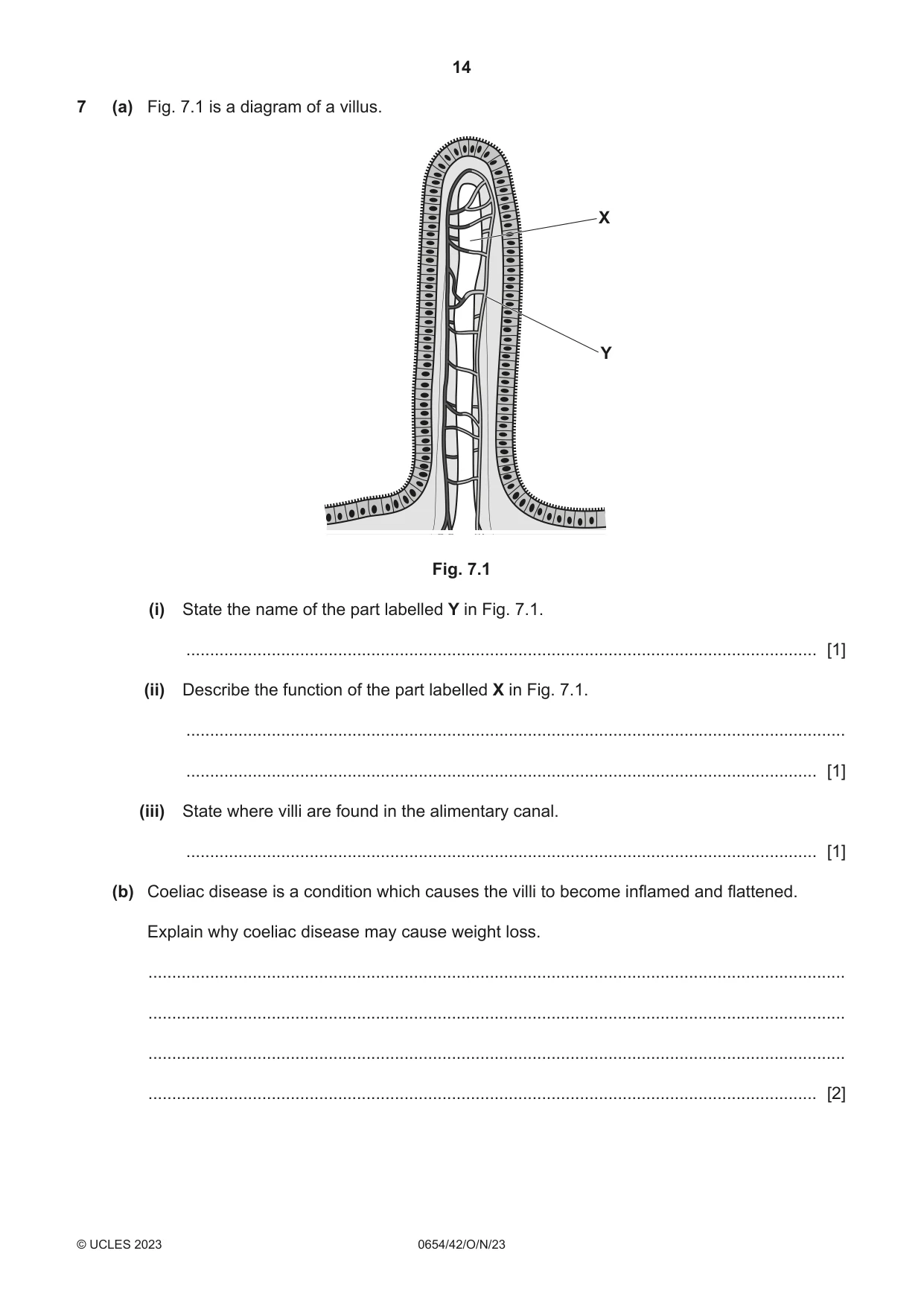
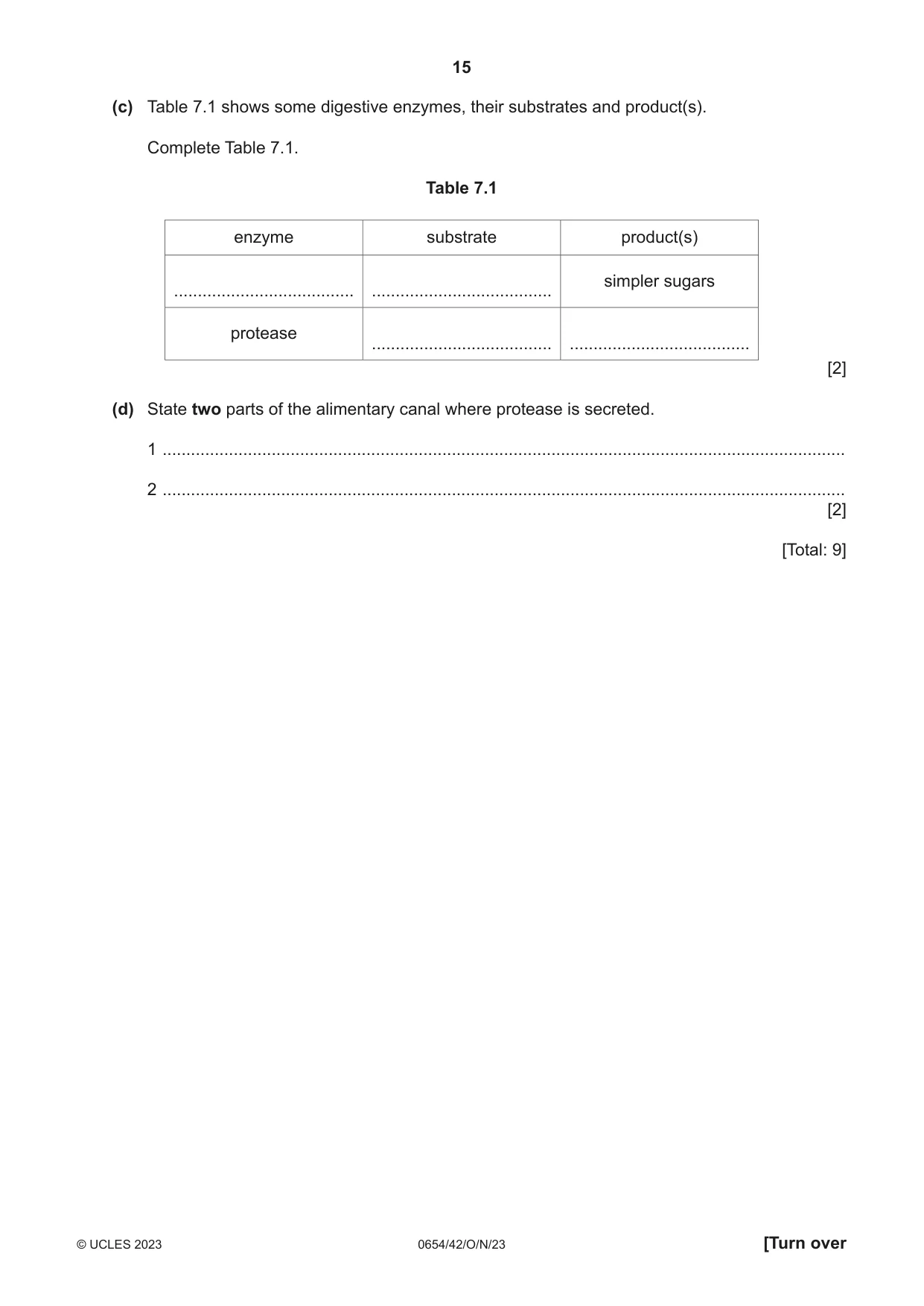
7 (a) Fig. 7.1 is a diagram of a villus. X Y Fig. 7.1 (i) State the name of the part labelled Y in Fig. 7.1. ..................................................................................................................................... [1] (ii) Describe the function of the part labelled X in Fig. 7.1. ........................................................................................................................................... ..................................................................................................................................... [1] (iii) State where villi are found in the alimentary canal. ..................................................................................................................................... [1] (b) Coeliac disease is a condition which causes the villi to become inflamed and flattened. Explain why coeliac disease may cause weight loss. ................................................................................................................................................... ................................................................................................................................................... ................................................................................................................................................... ............................................................................................................................................. [2] (c) Table 7.1 shows some digestive enzymes, their substrates and product(s). Complete Table 7.1. Table 7.1 enzyme substrate product(s) simpler sugars ...................................... ...................................... protease ...................................... ...................................... [2] (d) State two parts of the alimentary canal where protease is secreted. 1 ................................................................................................................................................ 2 ................................................................................................................................................ [2] [Total: 9]
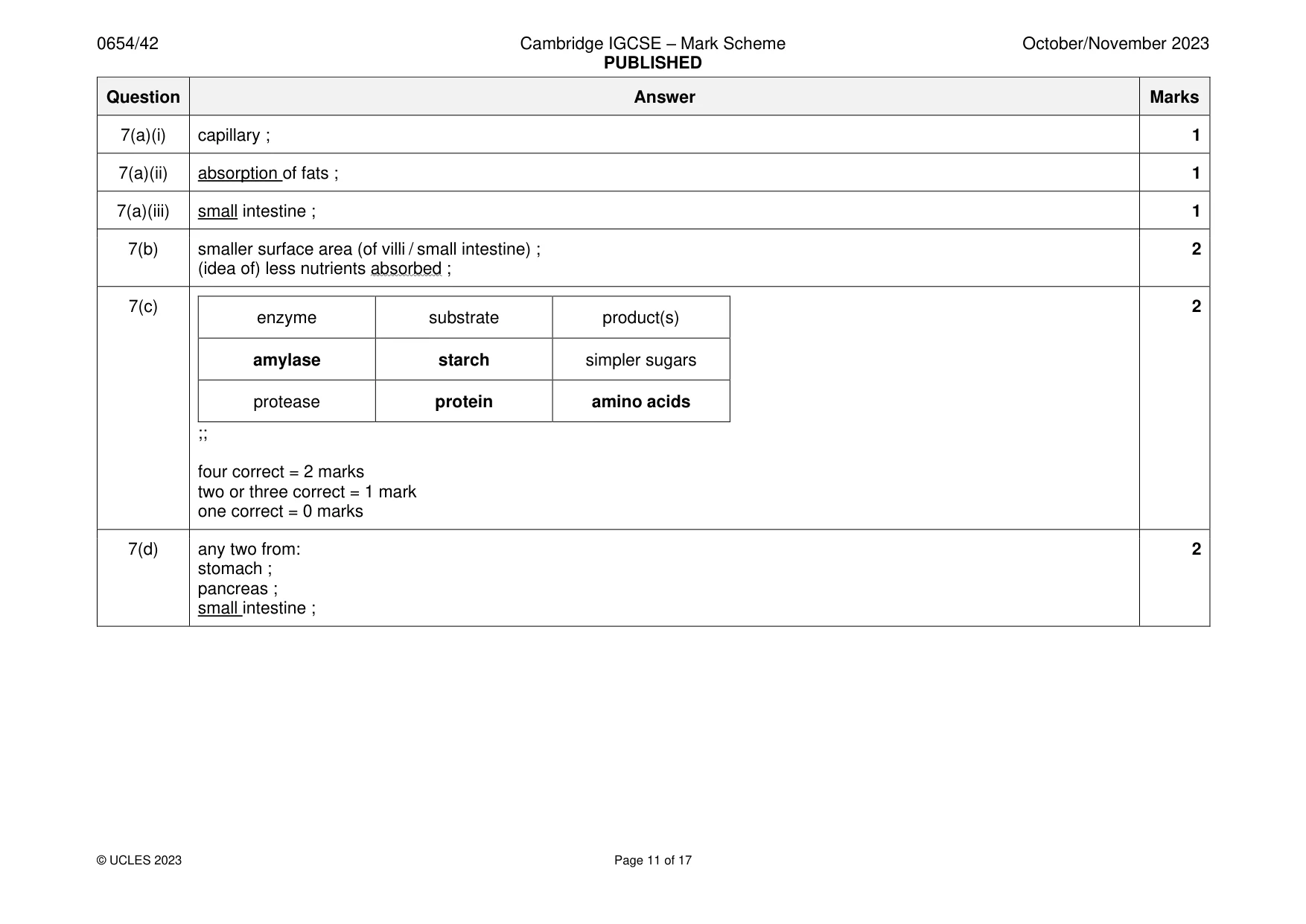
Mark scheme: 7(a)(i) capillary ; 1 7(a)(ii) absorption of fats ; 1 7(a)(iii) small intestine ; 1 7(b) smaller surface area (of villi / small intestine) ; 2 (idea of) less nutrients absorbed ; 7(c) 2 enzyme substrate product(s) amylase starch simpler sugars protease protein amino acids ;; four correct = 2 marks two or three correct = 1 mark one correct = 0 marks 7(d) any two from: 2 stomach ; pancreas ; small intestine ;
Q8 · A student investigates the reaction between large marble chips and excess dilute…
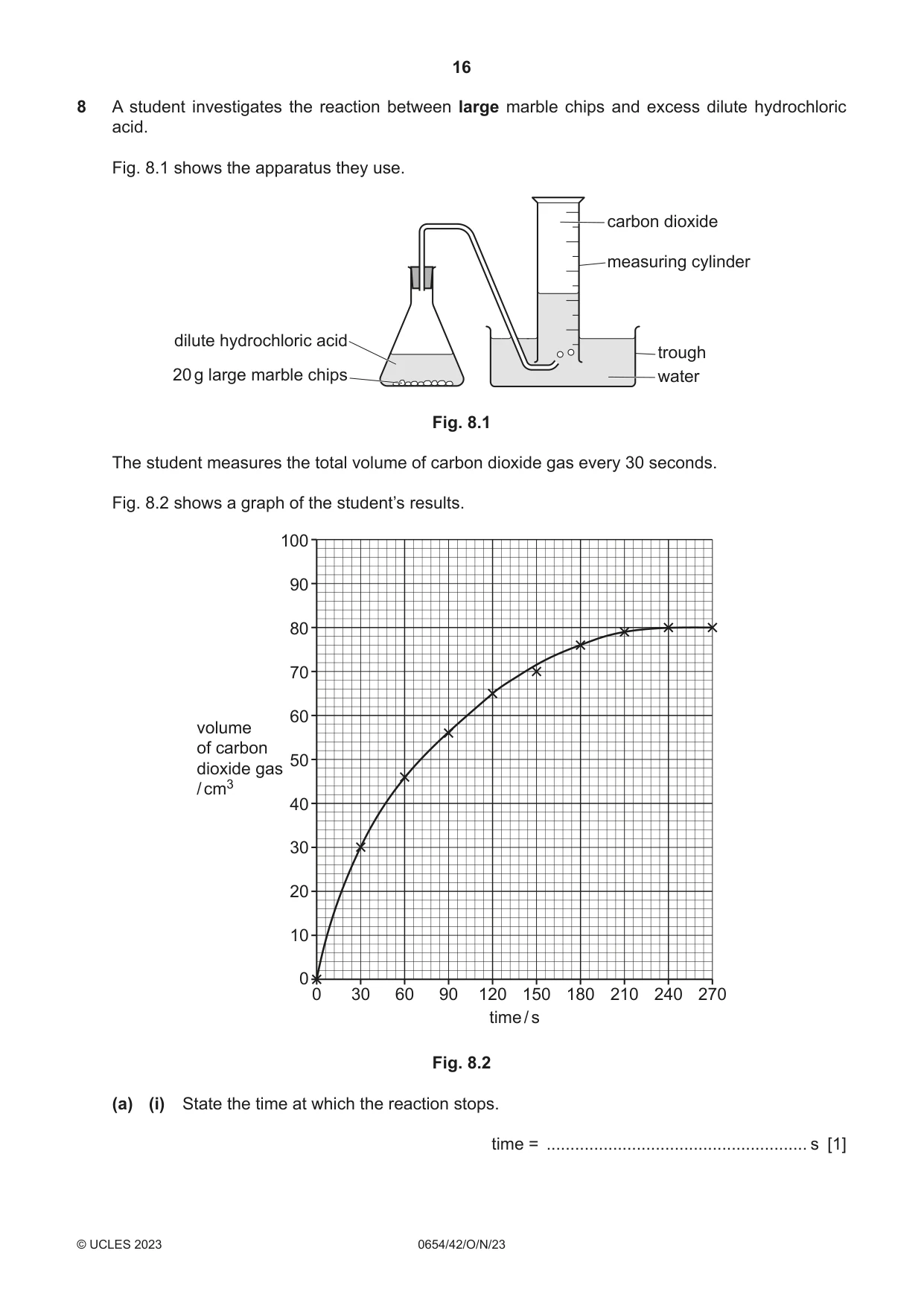
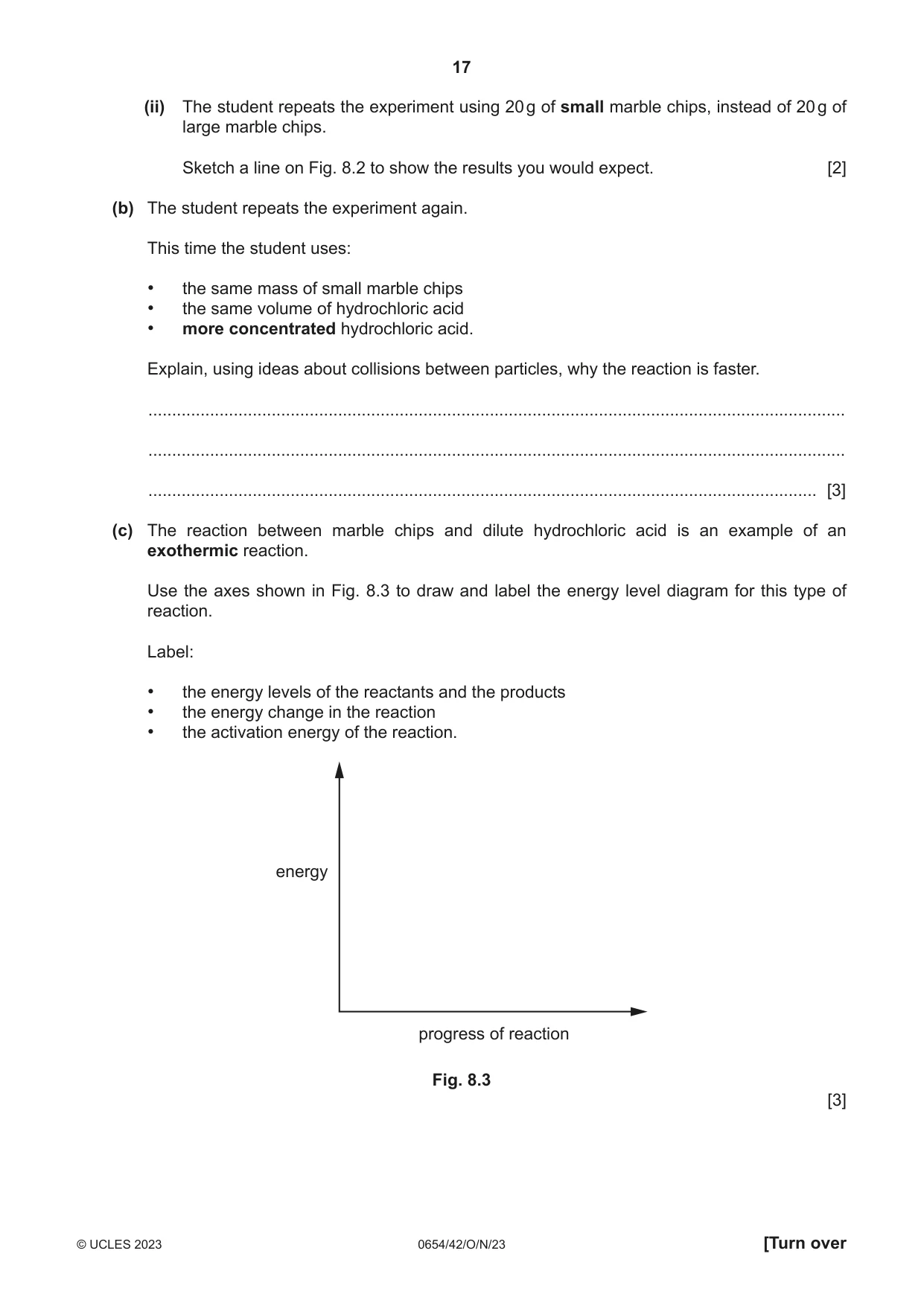
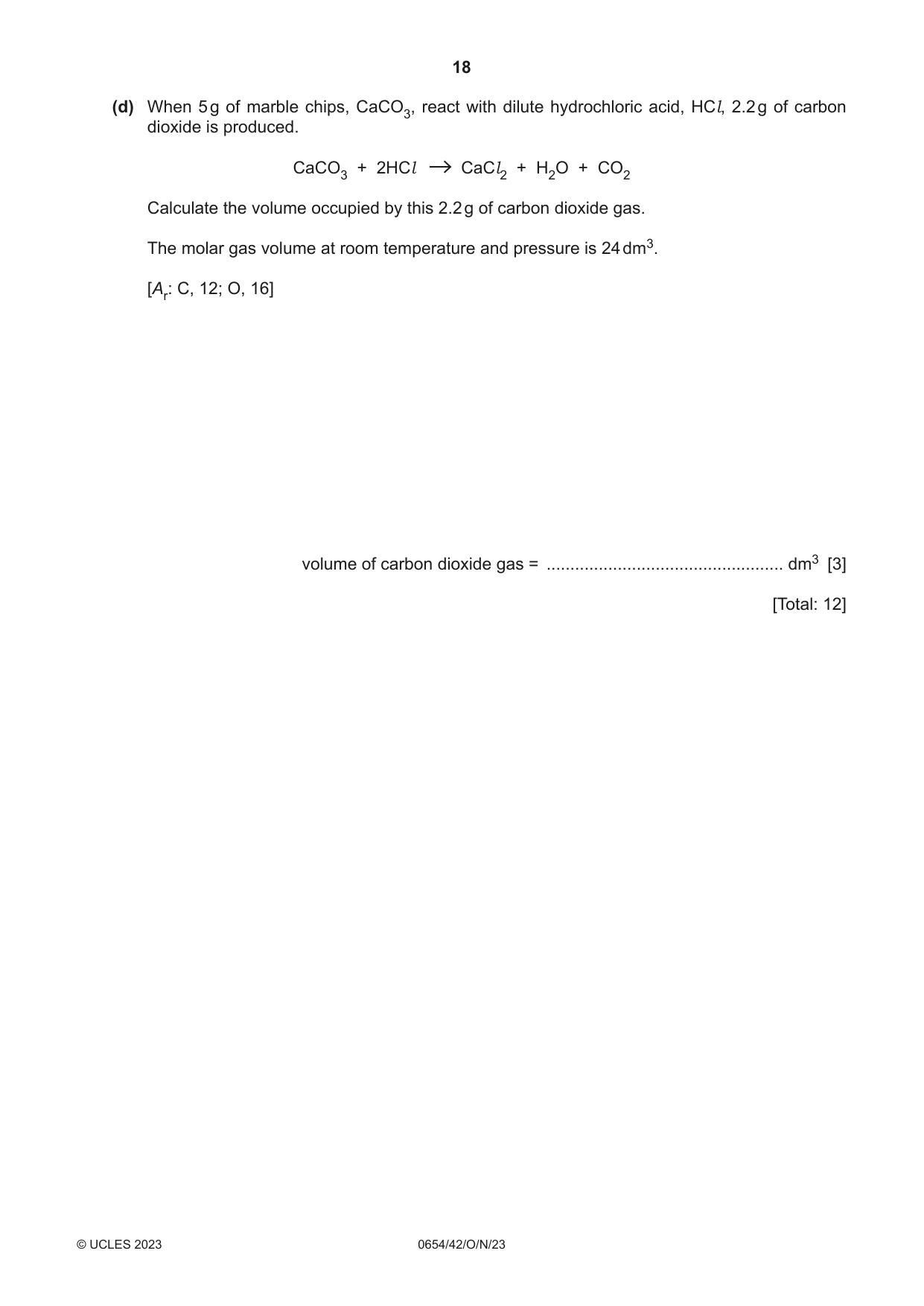
8 A student investigates the reaction between large marble chips and excess dilute hydrochloric acid. Fig. 8.1 shows the apparatus they use. carbon dioxide measuring cylinder dilute hydrochloric acid trough 20 g large marble chips water Fig. 8.1 The student measures the total volume of carbon dioxide gas every 30 seconds. Fig. 8.2 shows a graph of the student’s results. 100 90 80 70 60 volume of carbon 50 dioxide gas / cm3 40 30 20 10 0 0 30 60 90 120 150 180 210 240 270 time / s Fig. 8.2 (a) (i) State the time at which the reaction stops. time = ....................................................... s [1] (ii) The student repeats the experiment using 20 g of small marble chips, instead of 20 g of large marble chips. Sketch a line on Fig. 8.2 to show the results you would expect. [2] (b) The student repeats the experiment again. This time the student uses: • the same mass of small marble chips • the same volume of hydrochloric acid • more concentrated hydrochloric acid. Explain, using ideas about collisions between particles, why the reaction is faster. ................................................................................................................................................... ................................................................................................................................................... ............................................................................................................................................. [3] (c) The reaction between marble chips and dilute hydrochloric acid is an example of an exothermic reaction. Use the axes shown in Fig. 8.3 to draw and label the energy level diagram for this type of reaction. Label: • the energy levels of the reactants and the products • the energy change in the reaction • the activation energy of the reaction. energy progress of reaction Fig. 8.3 [3] (d) When 5 g of marble chips, CaCO3, react with dilute hydrochloric acid, HCl, 2.2 g of carbon dioxide is produced. CaCO3 + 2HCl CaCl2 + H2O + CO2 Calculate the volume occupied by this 2.2 g of carbon dioxide gas. The molar gas volume at room temperature and pressure is 24 dm3. [Ar: C, 12; O, 16] volume of carbon dioxide gas = .................................................. dm3 [3] [Total: 12]
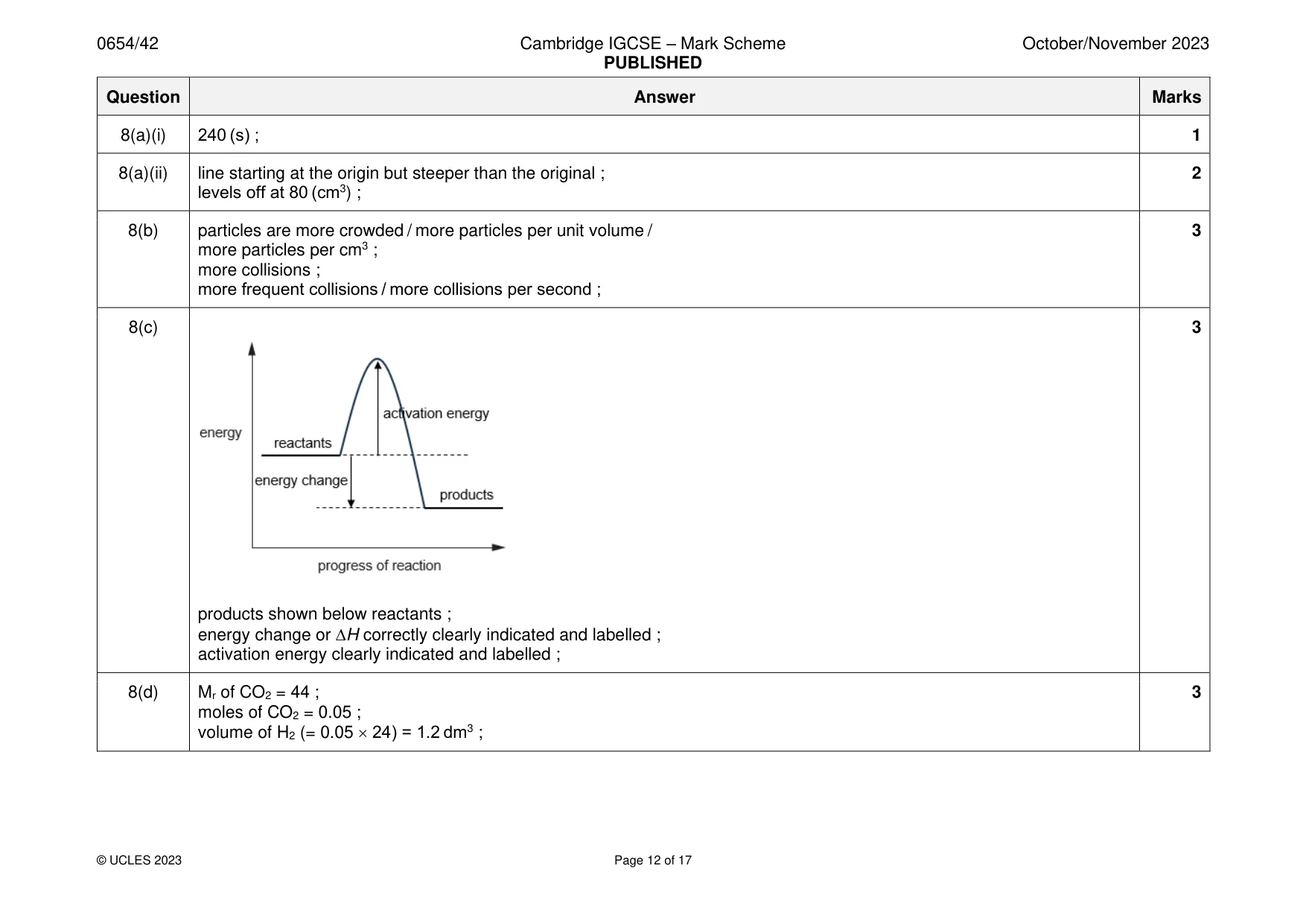
Mark scheme: 8(a)(i) 240 (s) ; 1 8(a)(ii) line starting at the origin but steeper than the original ; 2 levels off at 80 (cm3) ; 8(b) particles are more crowded / more particles per unit volume / 3 more particles per cm3 ; more collisions ; more frequent collisions / more collisions per second ; 8(c) 3 products shown below reactants ; energy change or H correctly clearly indicated and labelled ; activation energy clearly indicated and labelled ; 8(d) Mr of CO2 = 44 ; 3 moles of CO2 = 0.05 ; volume of H2 (= 0.05 24) = 1.2 dm3 ;
Question 9
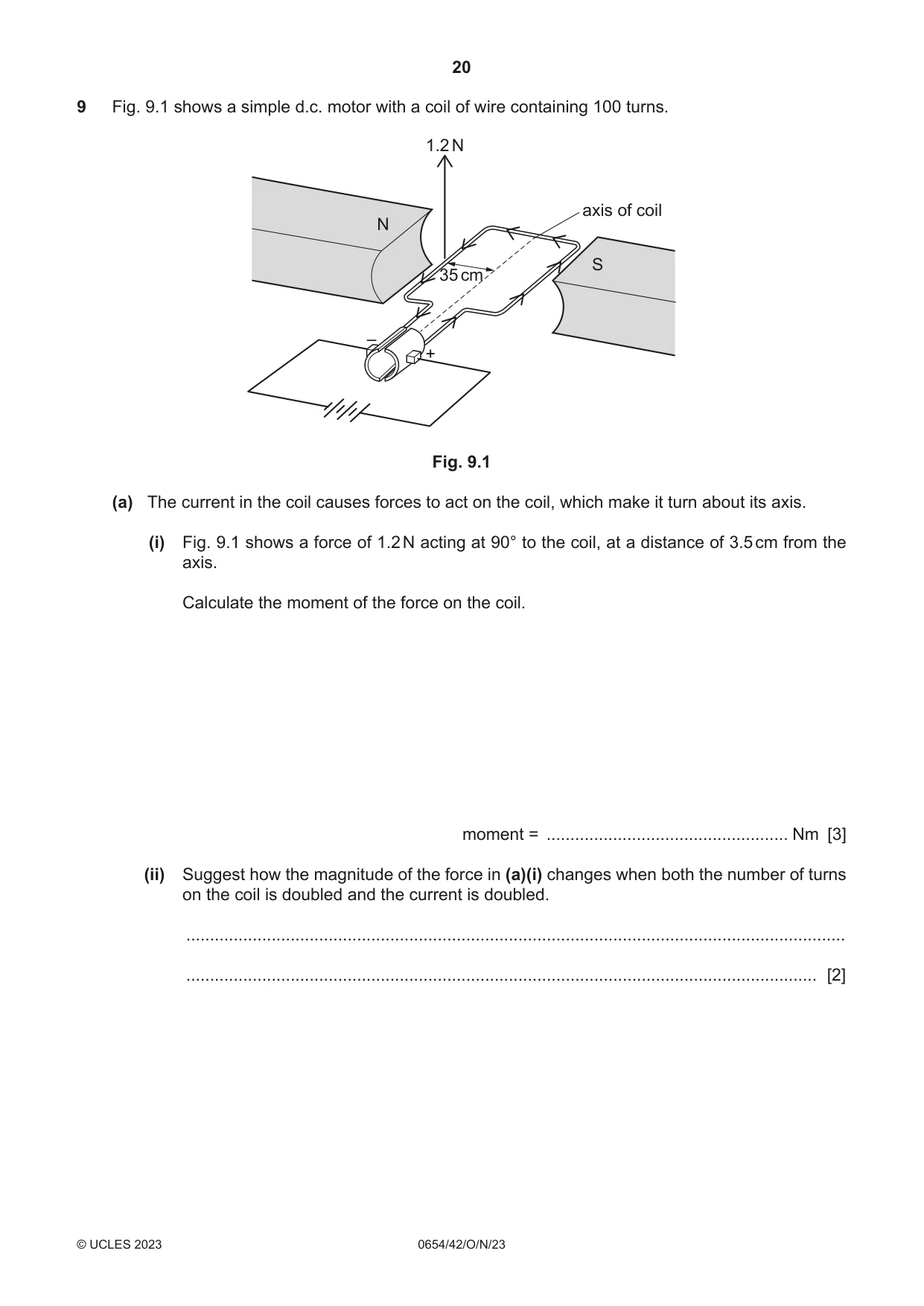
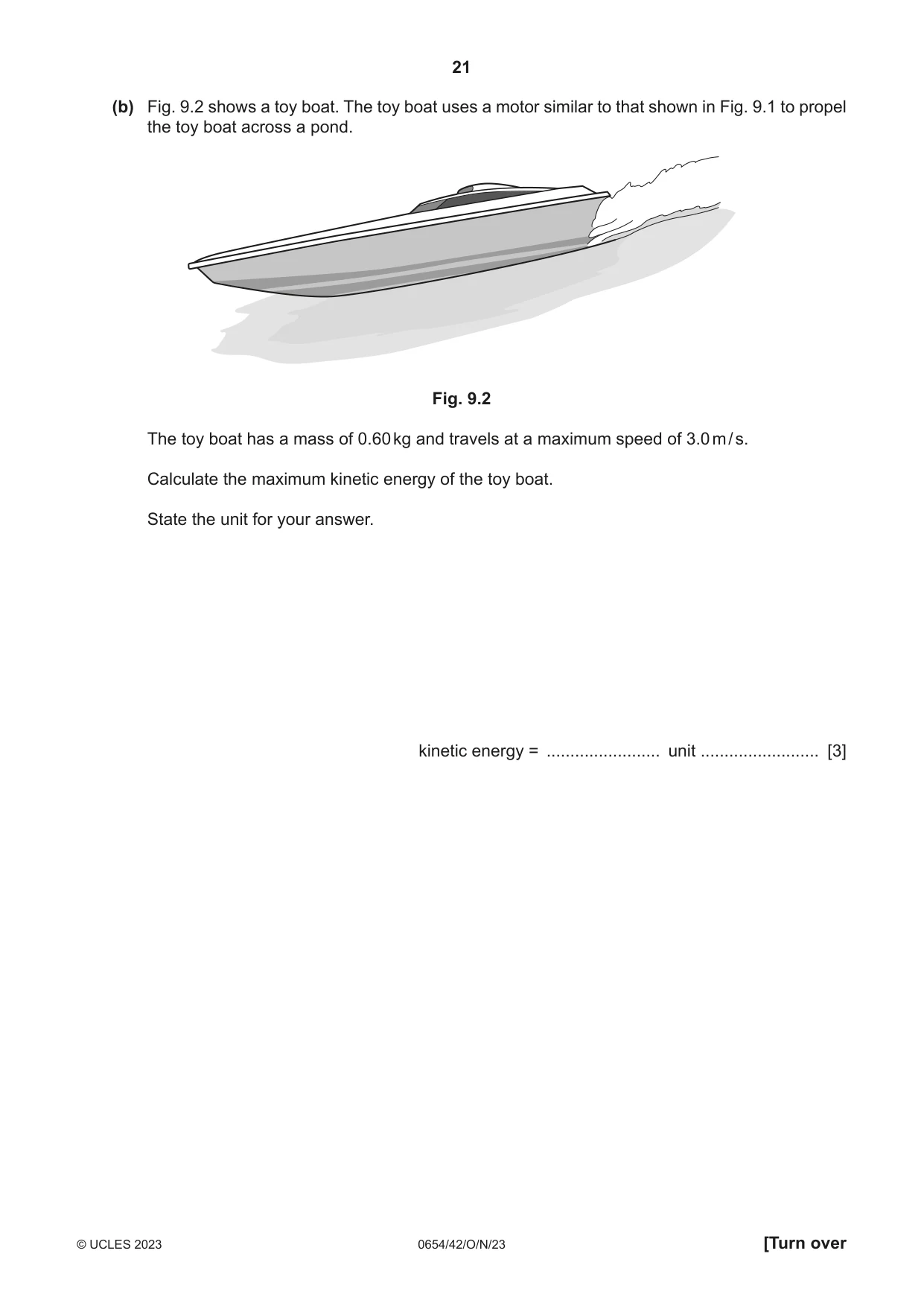
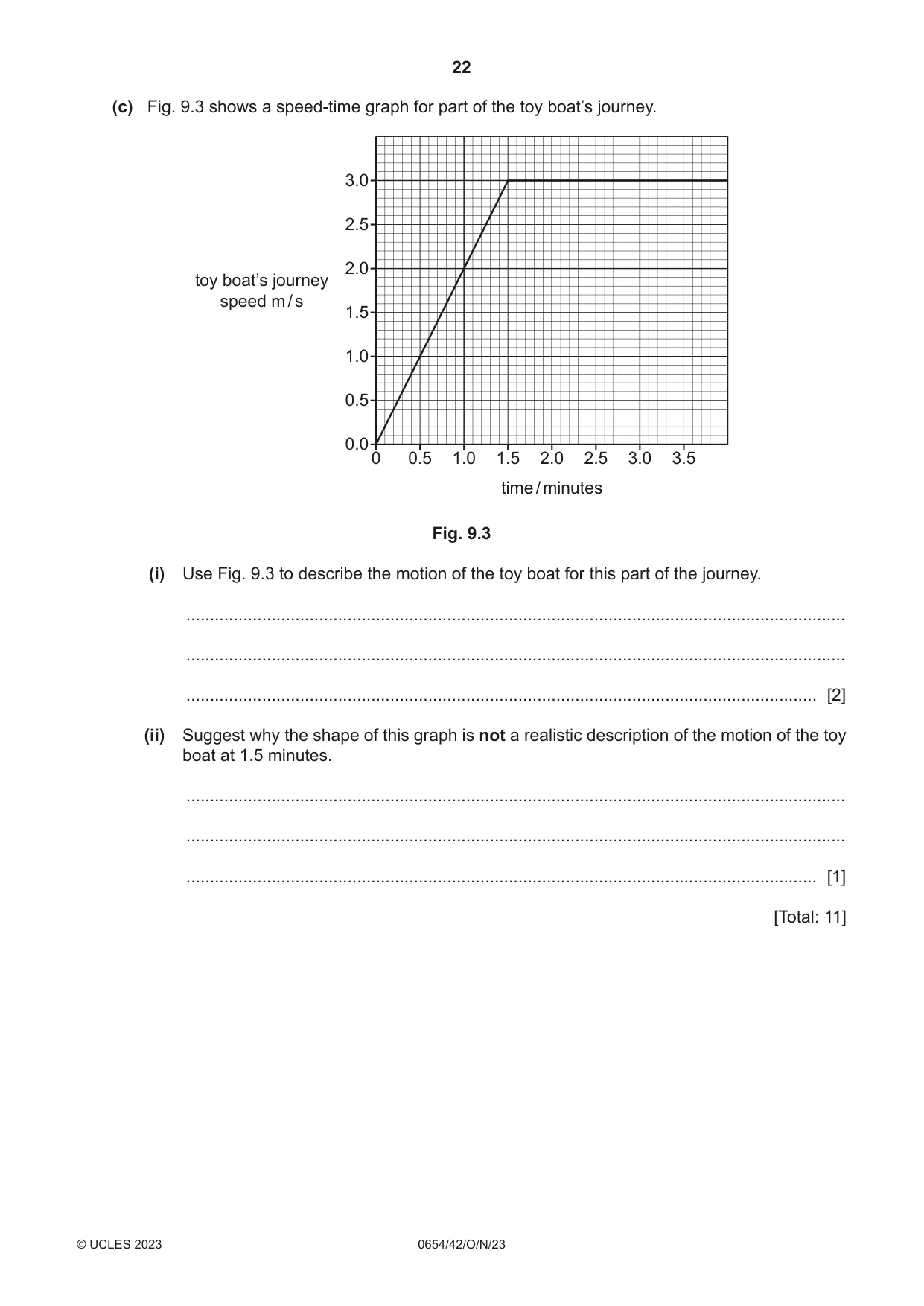
9 Fig. 9.1 shows a simple d.c. motor with a coil of wire containing 100 turns. 1.2 N axis of coil N S 35 cm – + Fig. 9.1 (a) The current in the coil causes forces to act on the coil, which make it turn about its axis. (i) Fig. 9.1 shows a force of 1.2 N acting at 90° to the coil, at a distance of 3.5 cm from the axis. Calculate the moment of the force on the coil. moment = ................................................... Nm [3] (ii) Suggest how the magnitude of the force in (a)(i) changes when both the number of turns on the coil is doubled and the current is doubled. ........................................................................................................................................... ..................................................................................................................................... [2] (b) Fig. 9.2 shows a toy boat. The toy boat uses a motor similar to that shown in Fig. 9.1 to propel the toy boat across a pond. Fig. 9.2 The toy boat has a mass of 0.60 kg and travels at a maximum speed of 3.0 m / s. Calculate the maximum kinetic energy of the toy boat. State the unit for your answer. kinetic energy = ........................ unit ......................... [3] (c) Fig. 9.3 shows a speed-time graph for part of the toy boat’s journey. 3.0 2.5 2.0 toy boat’s journey speed m / s 1.5 1.0 0.5 0.0 0 0.5 1.0 1.5 2.0 2.5 3.0 3.5 time / minutes Fig. 9.3 (i) Use Fig. 9.3 to describe the motion of the toy boat for this part of the journey. ........................................................................................................................................... ........................................................................................................................................... ..................................................................................................................................... [2] (ii) Suggest why the shape of this graph is not a realistic description of the motion of the toy boat at 1.5 minutes. ........................................................................................................................................... ........................................................................................................................................... ..................................................................................................................................... [1] [Total: 11]
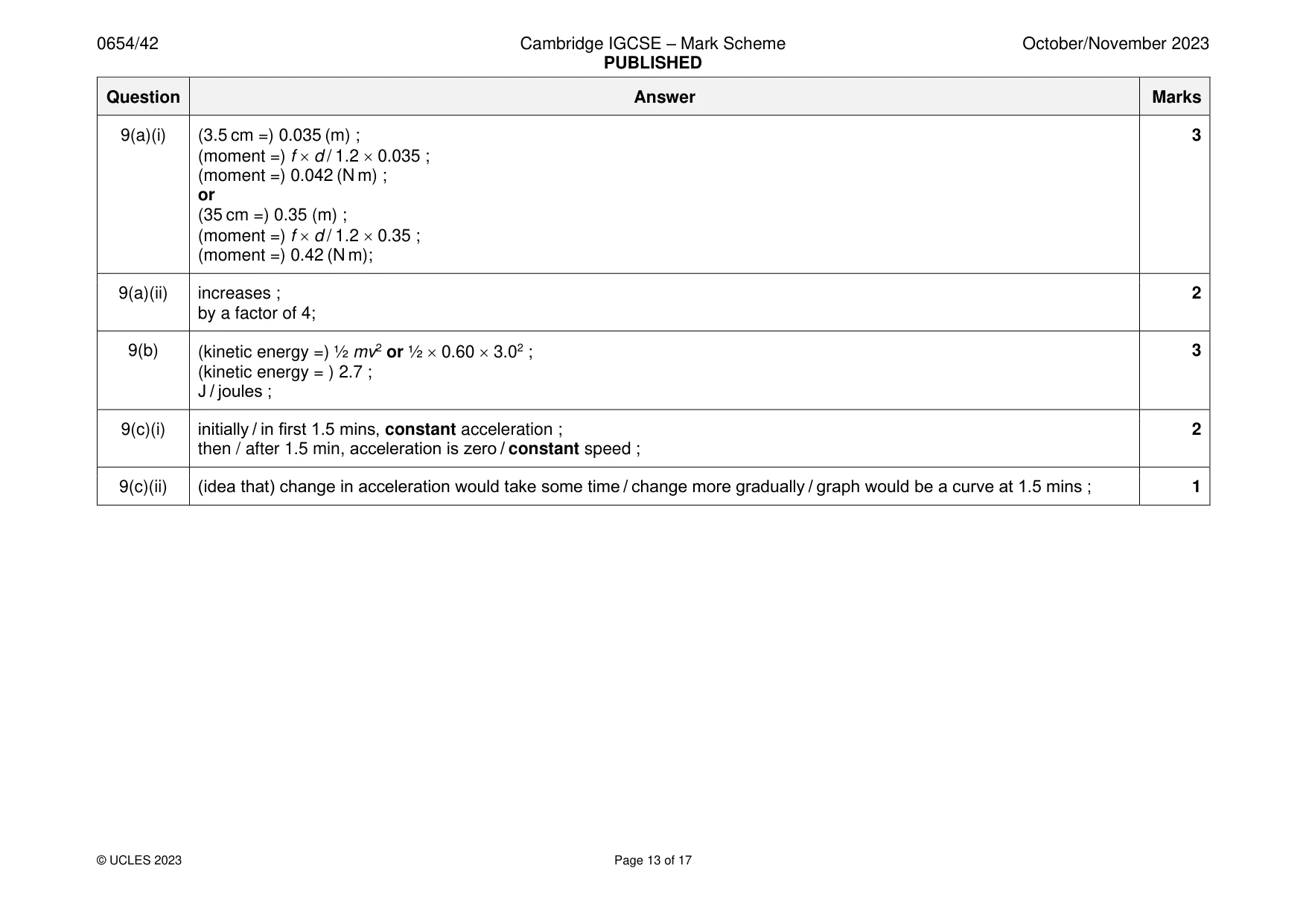
Mark scheme: 9(a)(i) (3.5 cm =) 0.035 (m) ; 3 (moment =) f d / 1.2 0.035 ; (moment =) 0.042 (N m) ; or (35 cm =) 0.35 (m) ; (moment =) f d / 1.2 0.35 ; (moment =) 0.42 (N m); 9(a)(ii) increases ; 2 by a factor of 4; 9(b) (kinetic energy =) ½ mv2 or ½ 0.60 3.02 ; 3 (kinetic energy = ) 2.7 ; J / joules ; 9(c)(i) initially / in first 1.5 mins, constant acceleration ; 2 then / after 1.5 min, acceleration is zero / constant speed ; 9(c)(ii) (idea that) change in acceleration would take some time / change more gradually / graph would be a curve at 1.5 mins ; 1
Q10 · The effect of adrenaline on blood glucose concentration
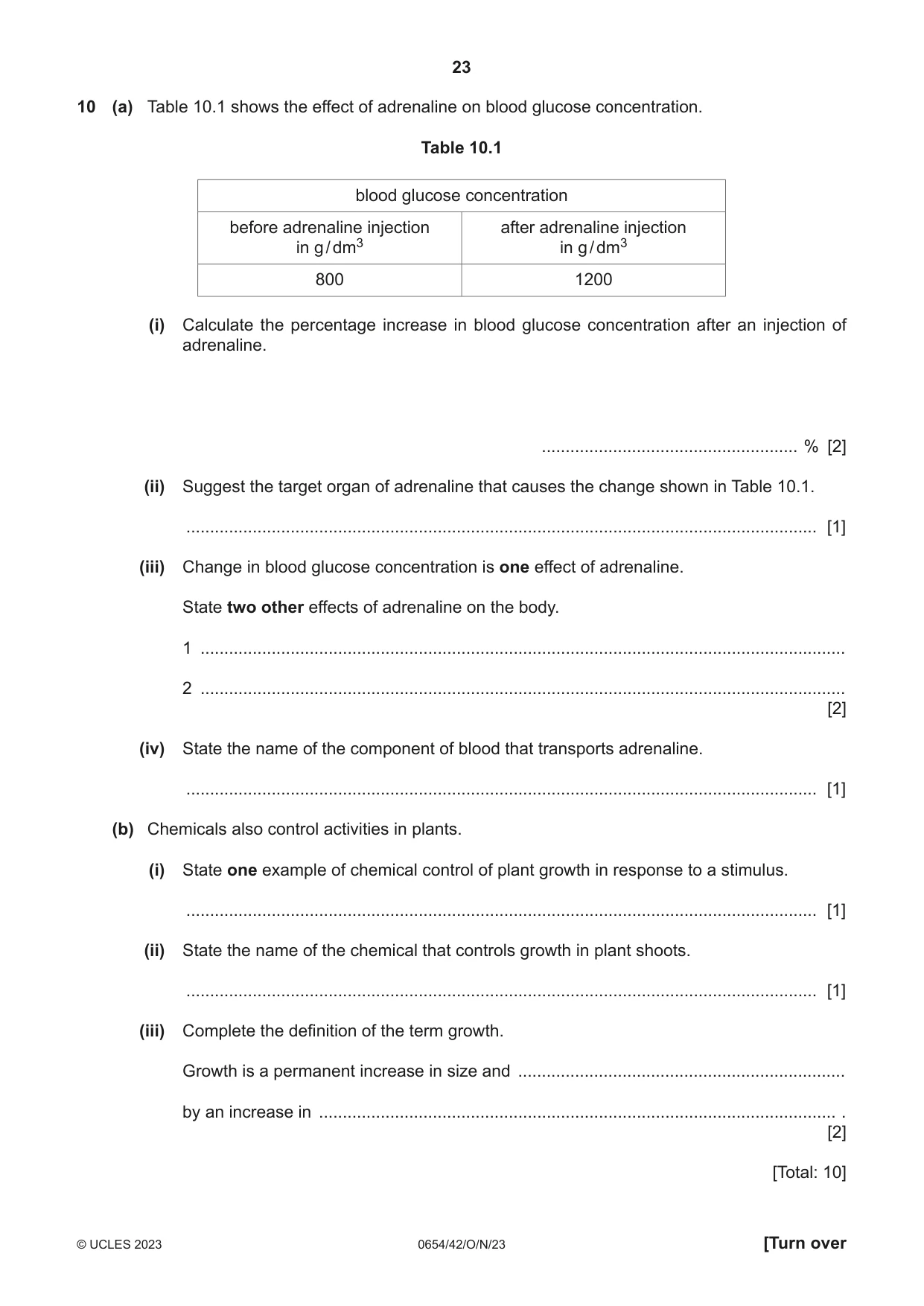
10 (a) Table 10.1 shows the effect of adrenaline on blood glucose concentration. Table 10.1 blood glucose concentration before adrenaline injection after adrenaline injection in g / dm3 in g / dm3 800 1200 (i) Calculate the percentage increase in blood glucose concentration after an injection of adrenaline. ...................................................... % [2] (ii) Suggest the target organ of adrenaline that causes the change shown in Table 10.1. ..................................................................................................................................... [1] (iii) Change in blood glucose concentration is one effect of adrenaline. State two other effects of adrenaline on the body. 1 ........................................................................................................................................ 2 ........................................................................................................................................ [2] (iv) State the name of the component of blood that transports adrenaline. ..................................................................................................................................... [1] (b) Chemicals also control activities in plants. (i) State one example of chemical control of plant growth in response to a stimulus. ..................................................................................................................................... [1] (ii) State the name of the chemical that controls growth in plant shoots. ..................................................................................................................................... [1] (iii) Complete the definition of the term growth. Growth is a permanent increase in size and ..................................................................... by an increase in ............................................................................................................. . [2] [Total: 10]
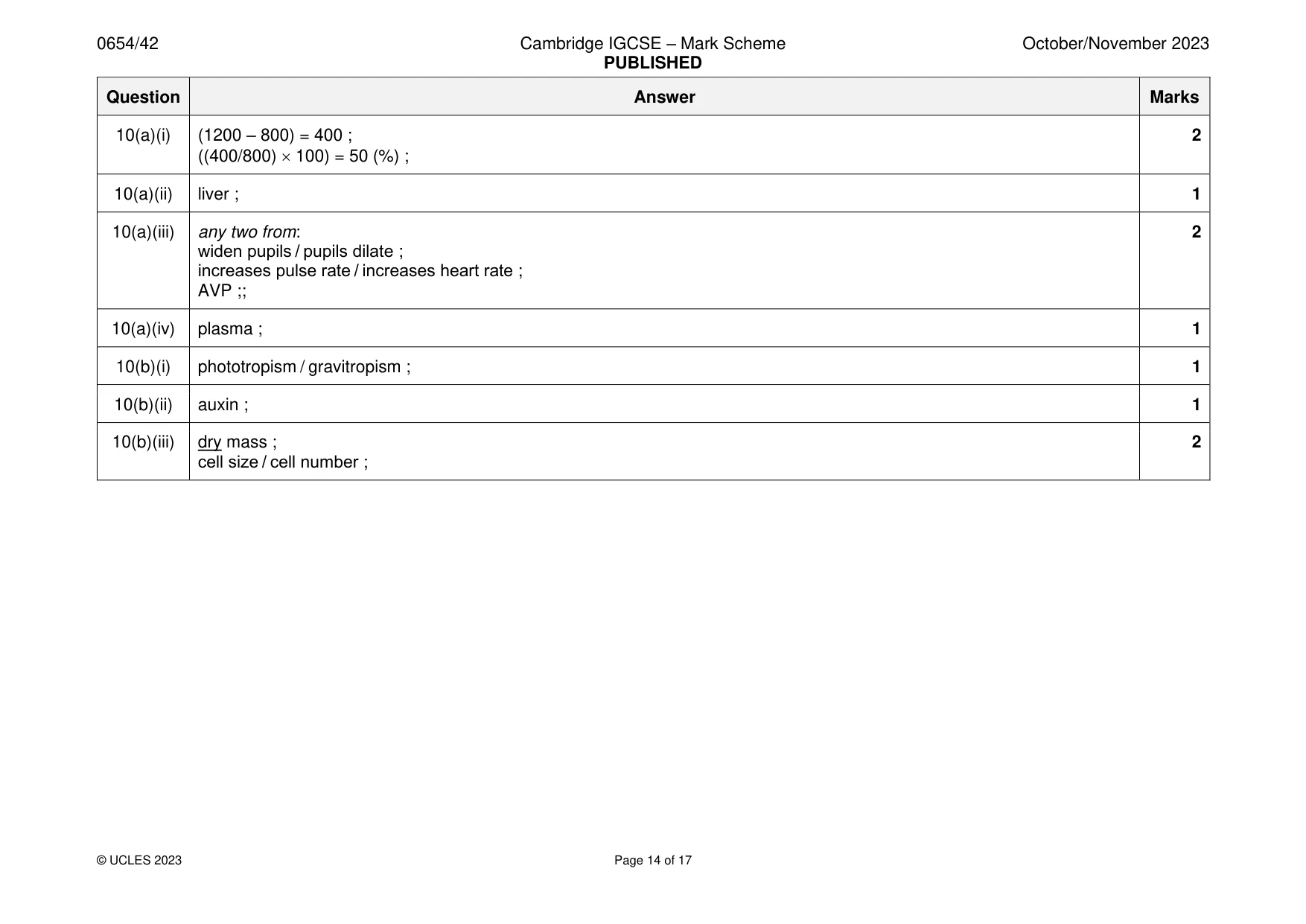
Mark scheme: 10(a)(i) (1200 – 800) = 400 ; 2 ((400/800) 100) = 50 (%) ; 10(a)(ii) liver ; 1 10(a)(iii) any two from: 2 widen pupils / pupils dilate ; increases pulse rate / increases heart rate ; AVP ;; 10(a)(iv) plasma ; 1 10(b)(i) phototropism / gravitropism ; 1 10(b)(ii) auxin ; 1 10(b)(iii) dry mass ; 2 cell size / cell number ;
Q11 · A scientist investigates food colourings using paper chromatography
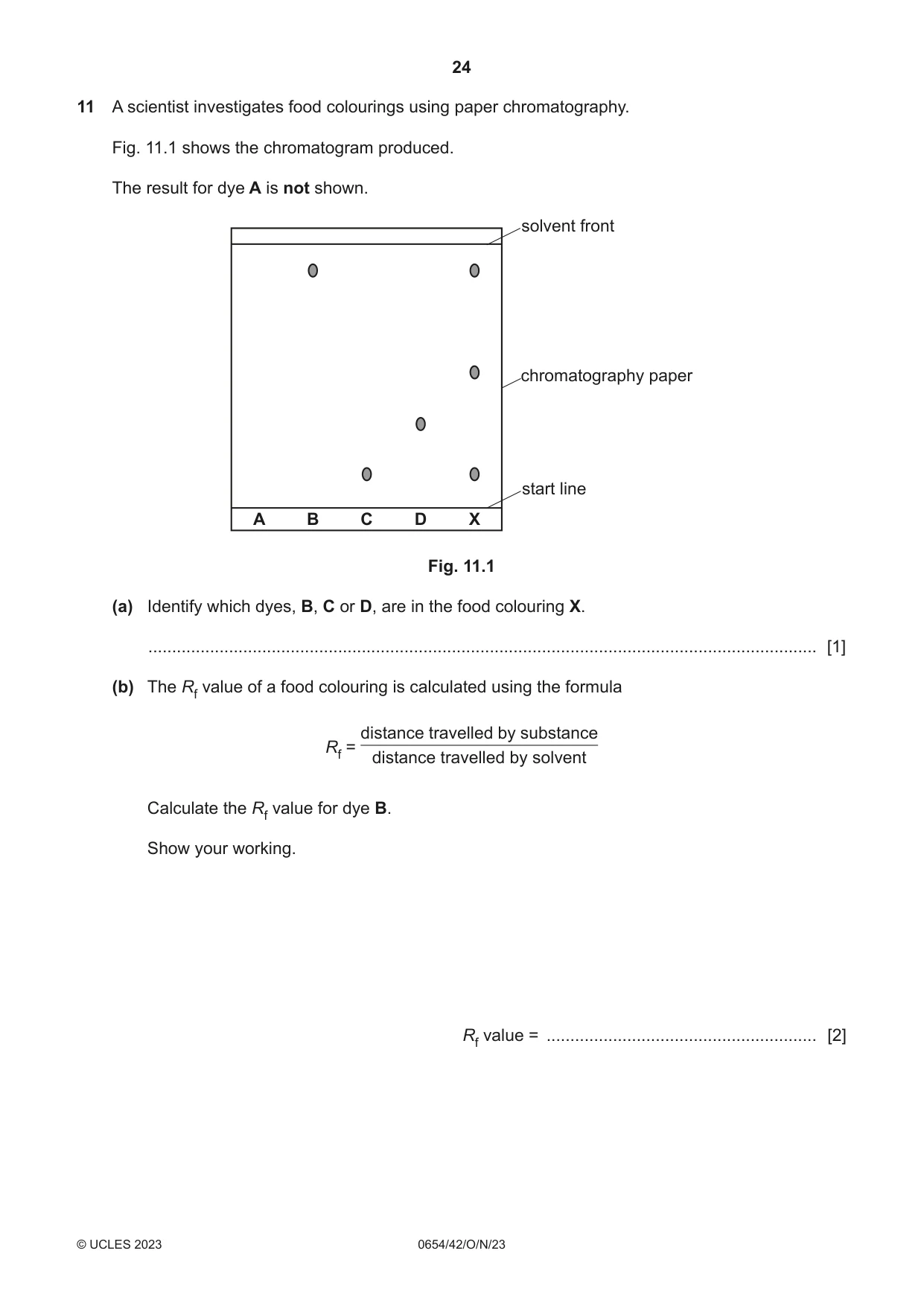
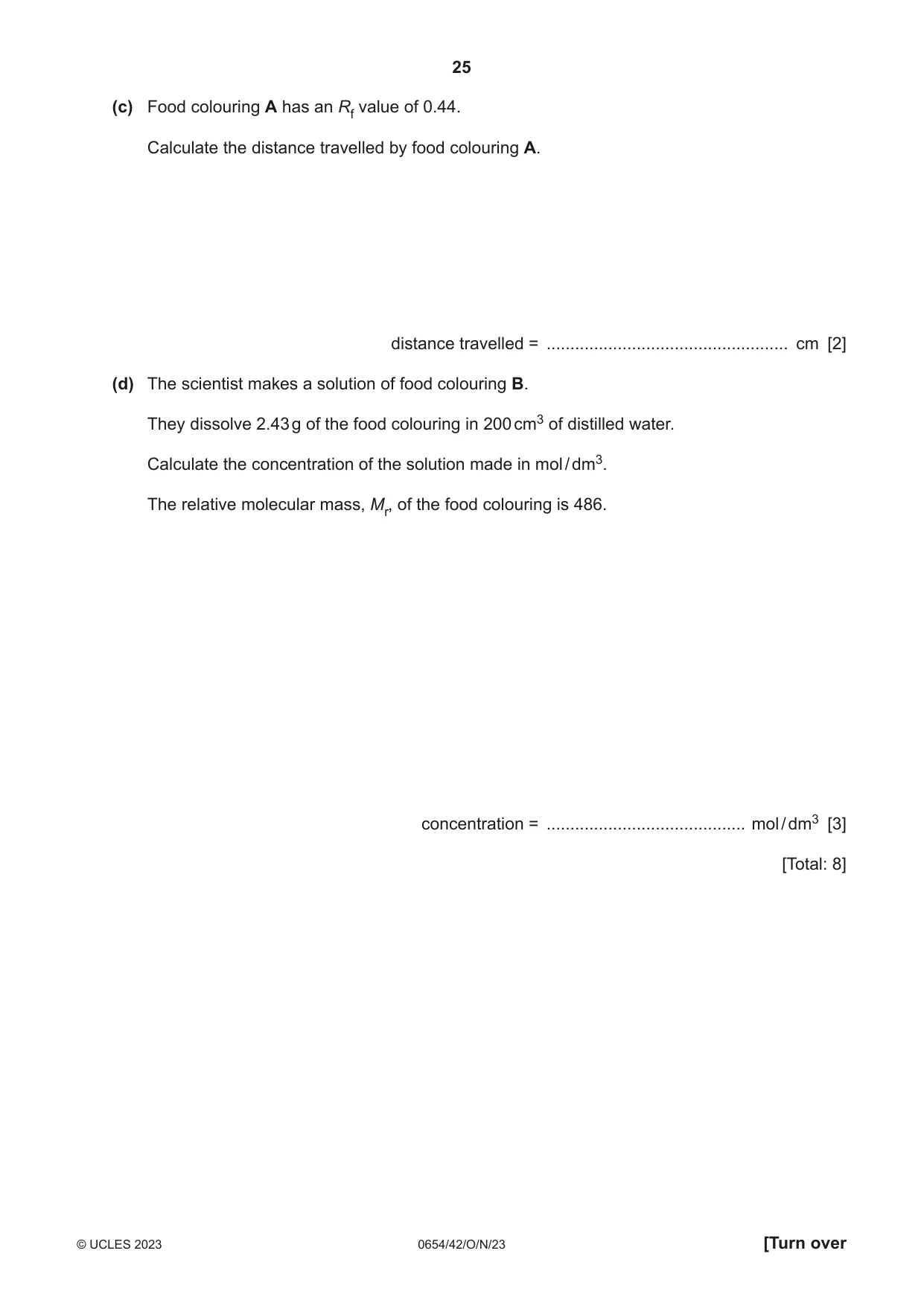
11 A scientist investigates food colourings using paper chromatography. Fig. 11.1 shows the chromatogram produced. The result for dye A is not shown. solvent front chromatography paper start line A B C D X Fig. 11.1 (a) Identify which dyes, B, C or D, are in the food colouring X. ............................................................................................................................................. [1] (b) The Rf value of a food colouring is calculated using the formula distance travelled by substance Rf = distance travelled by solvent Calculate the Rf value for dye B. Show your working. Rf value = ......................................................... [2] (c) Food colouring A has an Rf value of 0.44. Calculate the distance travelled by food colouring A. distance travelled = ................................................... cm [2] (d) The scientist makes a solution of food colouring B. They dissolve 2.43 g of the food colouring in 200 cm3 of distilled water. Calculate the concentration of the solution made in mol / dm3. The relative molecular mass, Mr, of the food colouring is 486. concentration = .......................................... mol / dm3 [3] [Total: 8]
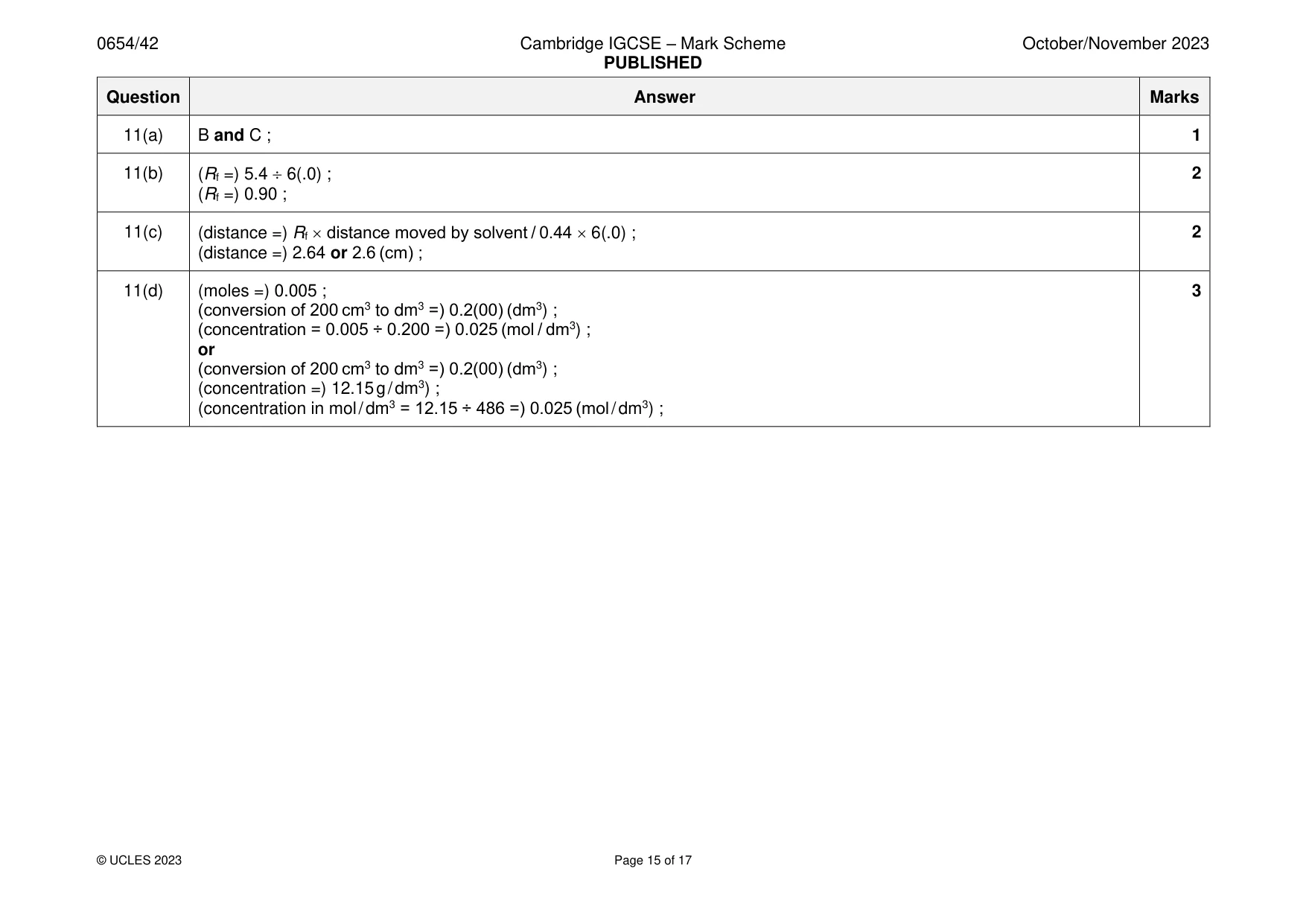
Mark scheme: 11(a) B and C ; 1 11(b) (Rf =) 5.4 6(.0) ; 2 (Rf =) 0.90 ; 11(c) (distance =) Rf distance moved by solvent / 0.44 6(.0) ; 2 (distance =) 2.64 or 2.6 (cm) ; 11(d) (moles =) 0.005 ; 3 (conversion of 200 cm3 to dm3 =) 0.2(00) (dm3) ; (concentration = 0.005 ÷ 0.200 =) 0.025 (mol / dm3) ; or (conversion of 200 cm3 to dm3 =) 0.2(00) (dm3) ; (concentration =) 12.15 g / dm3) ; (concentration in mol / dm3 = 12.15 ÷ 486 =) 0.025 (mol / dm3) ;
Q12 · Radon is a radioactive gas which occurs naturally in rocks and soil
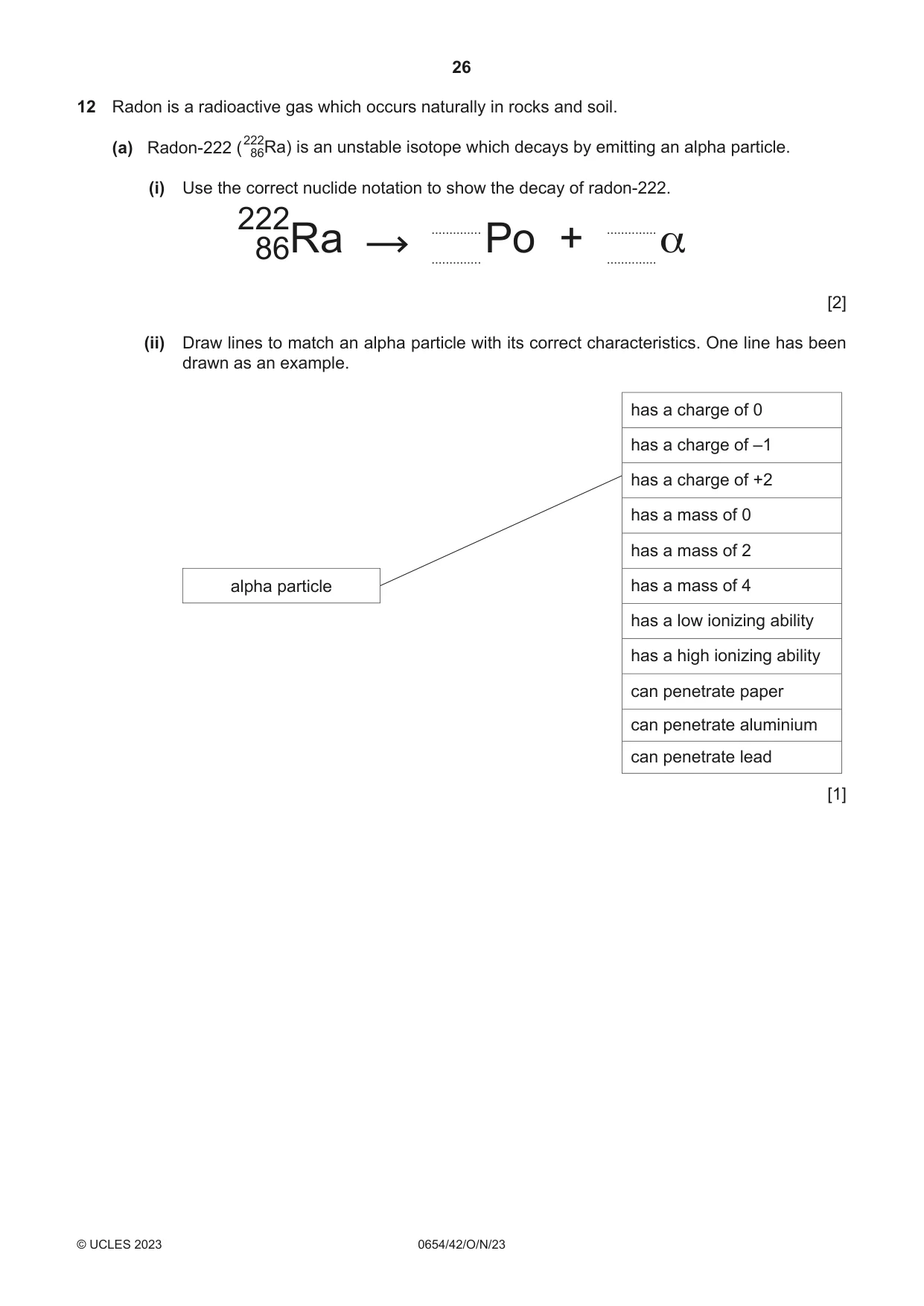
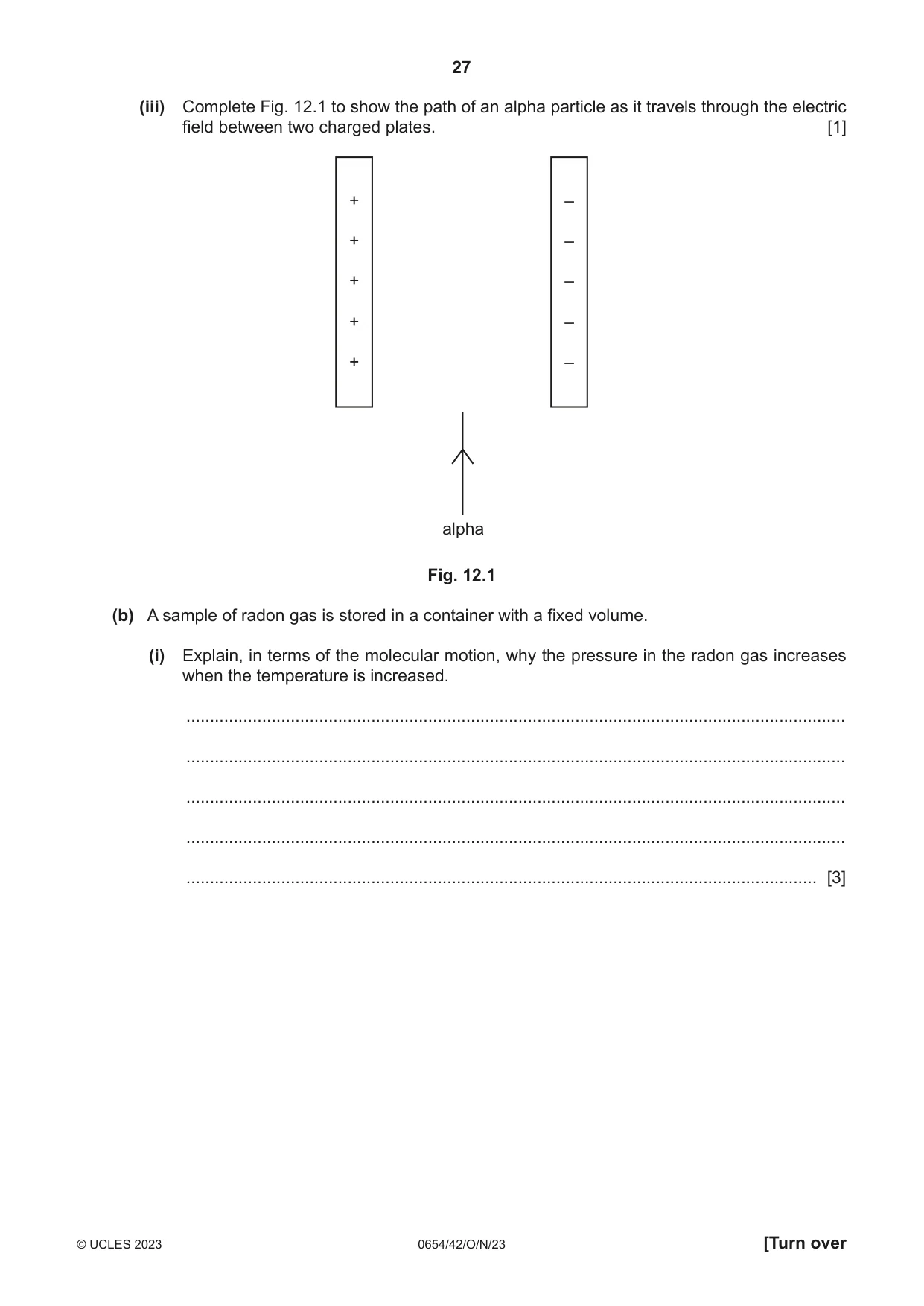
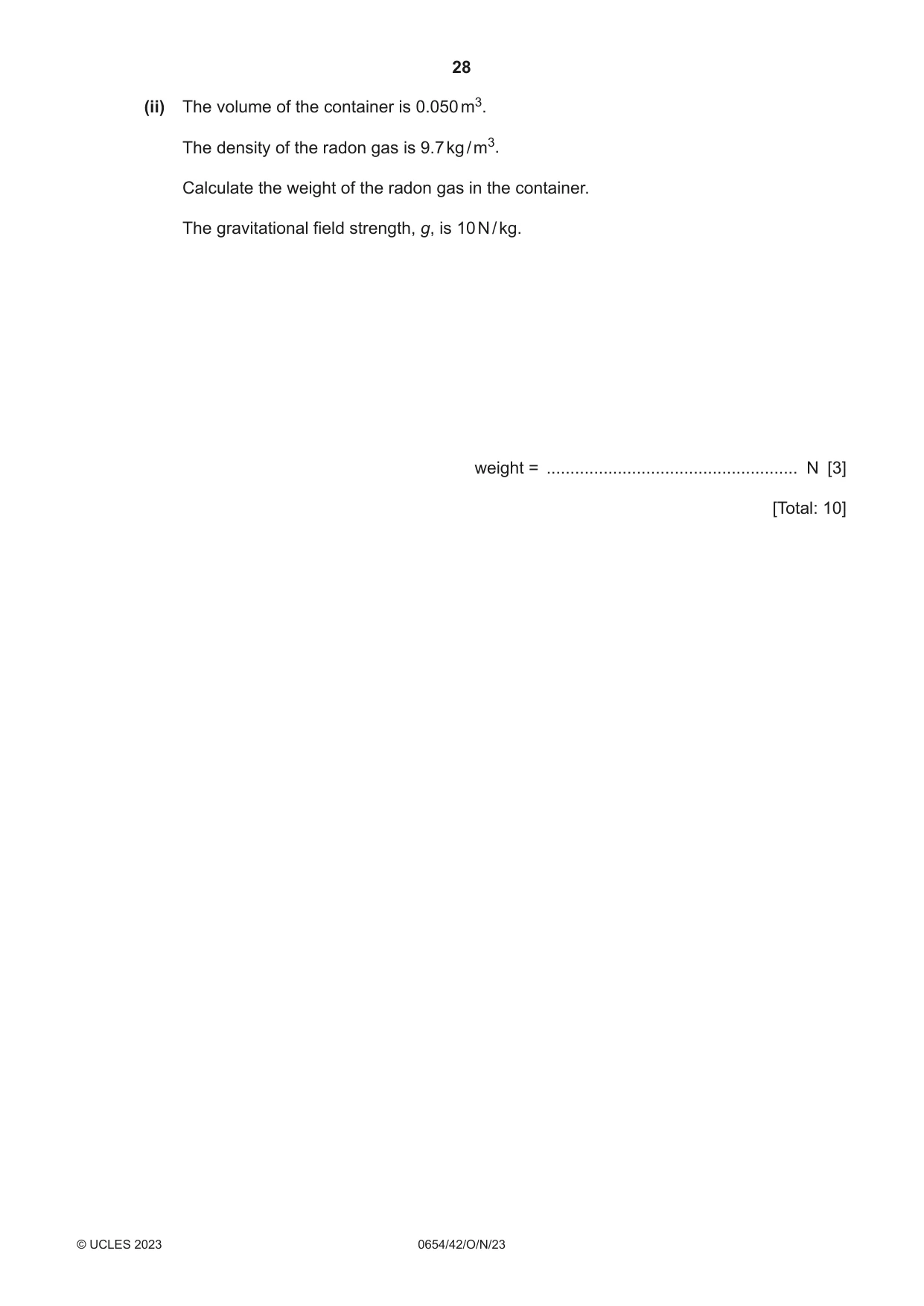
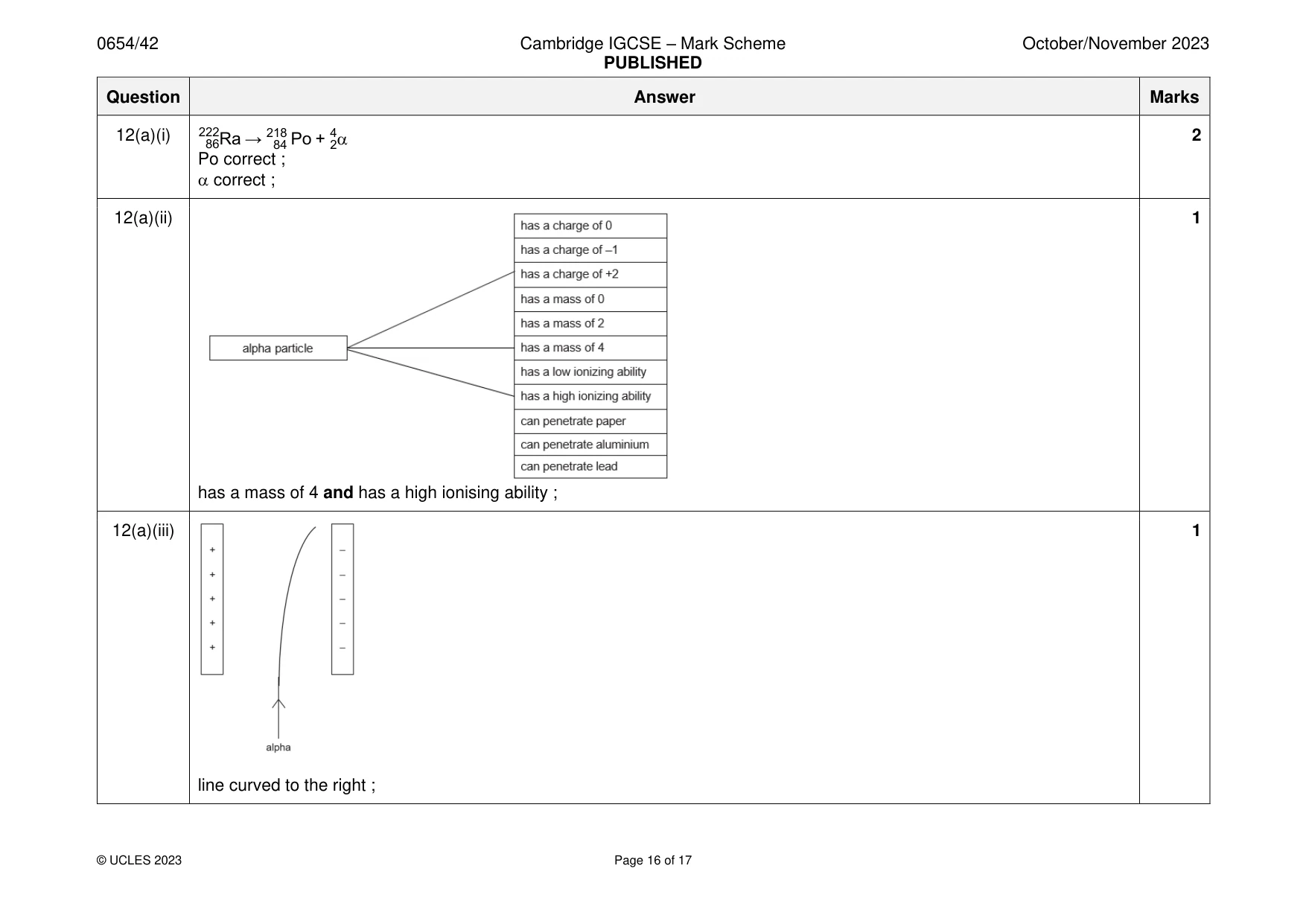
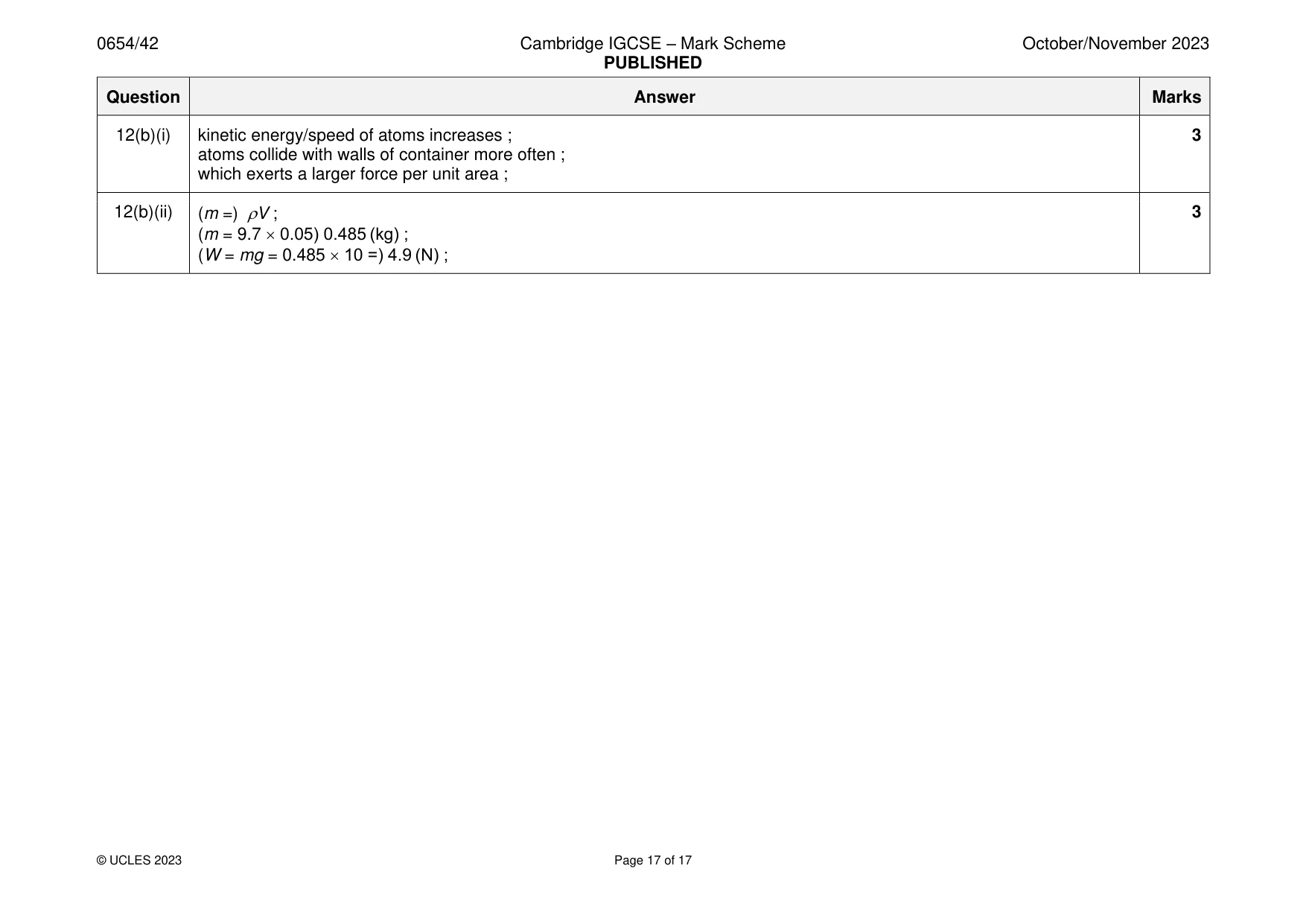
12 Radon is a radioactive gas which occurs naturally in rocks and soil. (a) Radon-222 (22286Ra) is an unstable isotope which decays by emitting an alpha particle. (i) Use the correct nuclide notation to show the decay of radon-222. 222 .............. .............. 86Ra ..............Po + ..............α [2] (ii) Draw lines to match an alpha particle with its correct characteristics. One line has been drawn as an example. has a charge of 0 has a charge of –1 has a charge of +2 has a mass of 0 has a mass of 2 alpha particle has a mass of 4 has a low ionizing ability has a high ionizing ability can penetrate paper can penetrate aluminium can penetrate lead [1] (iii) Complete Fig. 12.1 to show the path of an alpha particle as it travels through the electric field between two charged plates. [1] + – + – + – + – + – alpha Fig. 12.1 (b) A sample of radon gas is stored in a container with a fixed volume. (i) Explain, in terms of the molecular motion, why the pressure in the radon gas increases when the temperature is increased. ........................................................................................................................................... ........................................................................................................................................... ........................................................................................................................................... ........................................................................................................................................... ..................................................................................................................................... [3] (ii) The volume of the container is 0.050 m3. The density of the radon gas is 9.7 kg / m3. Calculate the weight of the radon gas in the container. The gravitational field strength, g, is 10 N / kg. weight = ..................................................... N [3] [Total: 10]
Mark scheme: 12(a)(i) 222 86Ra → 21884 Po + 42 2 Po correct ; correct ; 12(a)(ii) 1 has a mass of 4 and has a high ionising ability ; 12(a)(iii) 1 line curved to the right ; 12(b)(i) kinetic energy/speed of atoms increases ; 3 atoms collide with walls of container more often ; which exerts a larger force per unit area ; 12(b)(ii) (m =) V ; 3 (m = 9.7 0.05) 0.485 (kg) ; (W = mg = 0.485 10 =) 4.9 (N) ;
What was in this paper
The subtopics covered by these 12 questions, and how many questions each got. Open one in a new tab to see every Cambridge question on it.
What you needed in this session
Cambridge’s own grade thresholds for 2023 Oct/Nov, Paper 4 · Variant 2. A higher threshold means an easier paper — the bar moves with how the cohort did.