Cambridge IGCSE Pakistan Studies 0448 — 2018 May/June Paper 2 · Variant 0
0448/20/M/J/18 · 5 questions · 114 marks · ≈128 min
The question paper and its mark scheme, free to read here and free to download. This is Cambridge’s own paper, exactly as it was sat.
Question paper24 pages
Mark scheme
No mark scheme is in the library for this paper.
Questions as text
Question 1
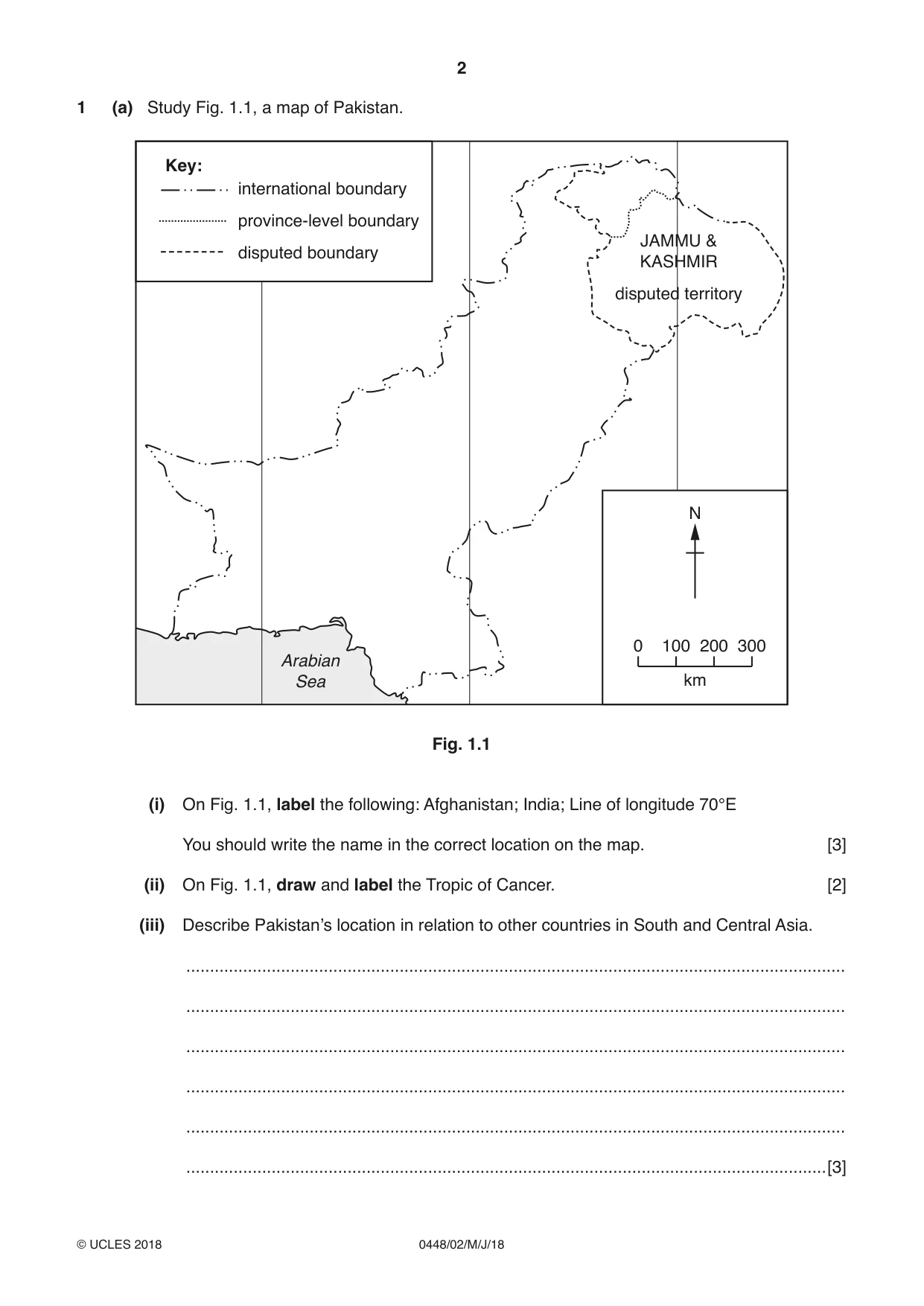
1 (a) Study Fig. 1.1, a map of Pakistan. Key: international boundary province-level boundary JAMMU & disputed boundary KASHMIR disputed territory N 0 100 200 300 Arabian Sea km Fig. 1.1 (i) On Fig. 1.1, label the following: Afghanistan; India; Line of longitude 70°E You should write the name in the correct location on the map. [3] (ii) On Fig. 1.1, draw and label the Tropic of Cancer. [2] (iii) Describe Pakistan’s location in relation to other countries in South and Central Asia. ........................................................................................................................................... ........................................................................................................................................... ........................................................................................................................................... ........................................................................................................................................... ........................................................................................................................................... .......................................................................................................................................[3] (b) (i) Study Fig. 1.2 (Insert). Describe the main features of the desert area shown in the photograph. ........................................................................................................................................... ........................................................................................................................................... ........................................................................................................................................... ........................................................................................................................................... ........................................................................................................................................... .......................................................................................................................................[3] (ii) Explain the challenges of living in a desert area, such as that shown in Fig. 1.2. You should develop your answer. ........................................................................................................................................... ........................................................................................................................................... ........................................................................................................................................... ........................................................................................................................................... ........................................................................................................................................... ........................................................................................................................................... ........................................................................................................................................... .......................................................................................................................................[4] (iii) Study Fig. 1.3 (Insert). State two features of the climate typical of the environment shown in the photograph. 1 ........................................................................................................................................ 2 ....................................................................................................................................[2] (c) Suggest two ways in which latitude affects the climate of Pakistan. ................................................................................................................................................... ................................................................................................................................................... ................................................................................................................................................... ...............................................................................................................................................[2] (d) Evaluate the extent to which the natural topography of Pakistan limits human activity and economic development in the north of the country. Give reasons to support your judgement and refer to examples you have studied. You should consider different points of view in your answer. ................................................................................................................................................... ................................................................................................................................................... ................................................................................................................................................... ................................................................................................................................................... ................................................................................................................................................... ................................................................................................................................................... ................................................................................................................................................... ................................................................................................................................................... ................................................................................................................................................... ................................................................................................................................................... ................................................................................................................................................... ................................................................................................................................................... ................................................................................................................................................... ................................................................................................................................................... ................................................................................................................................................... ................................................................................................................................................... ................................................................................................................................................... ...............................................................................................................................................[6] [TOTAL: 25]
Question 2
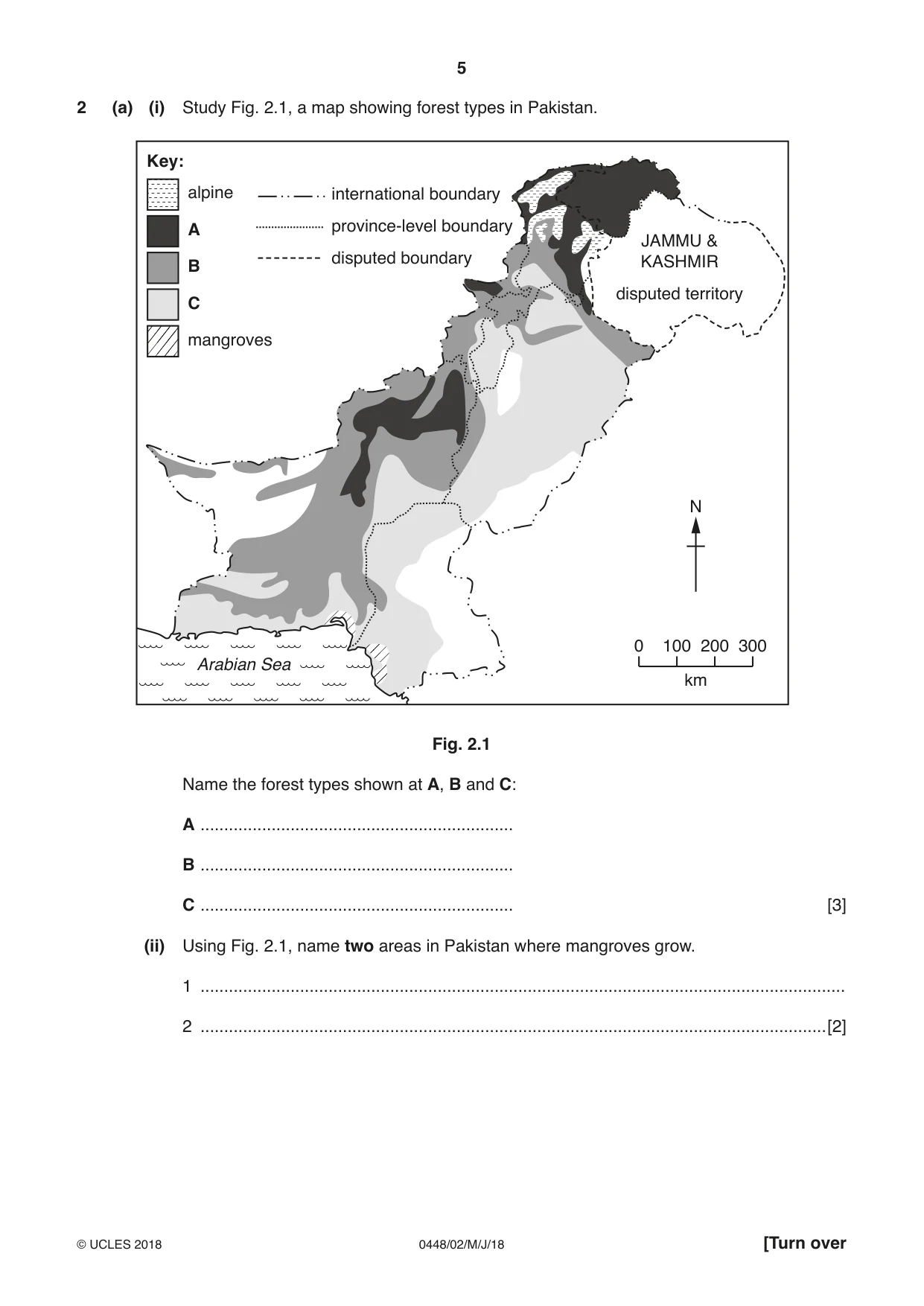
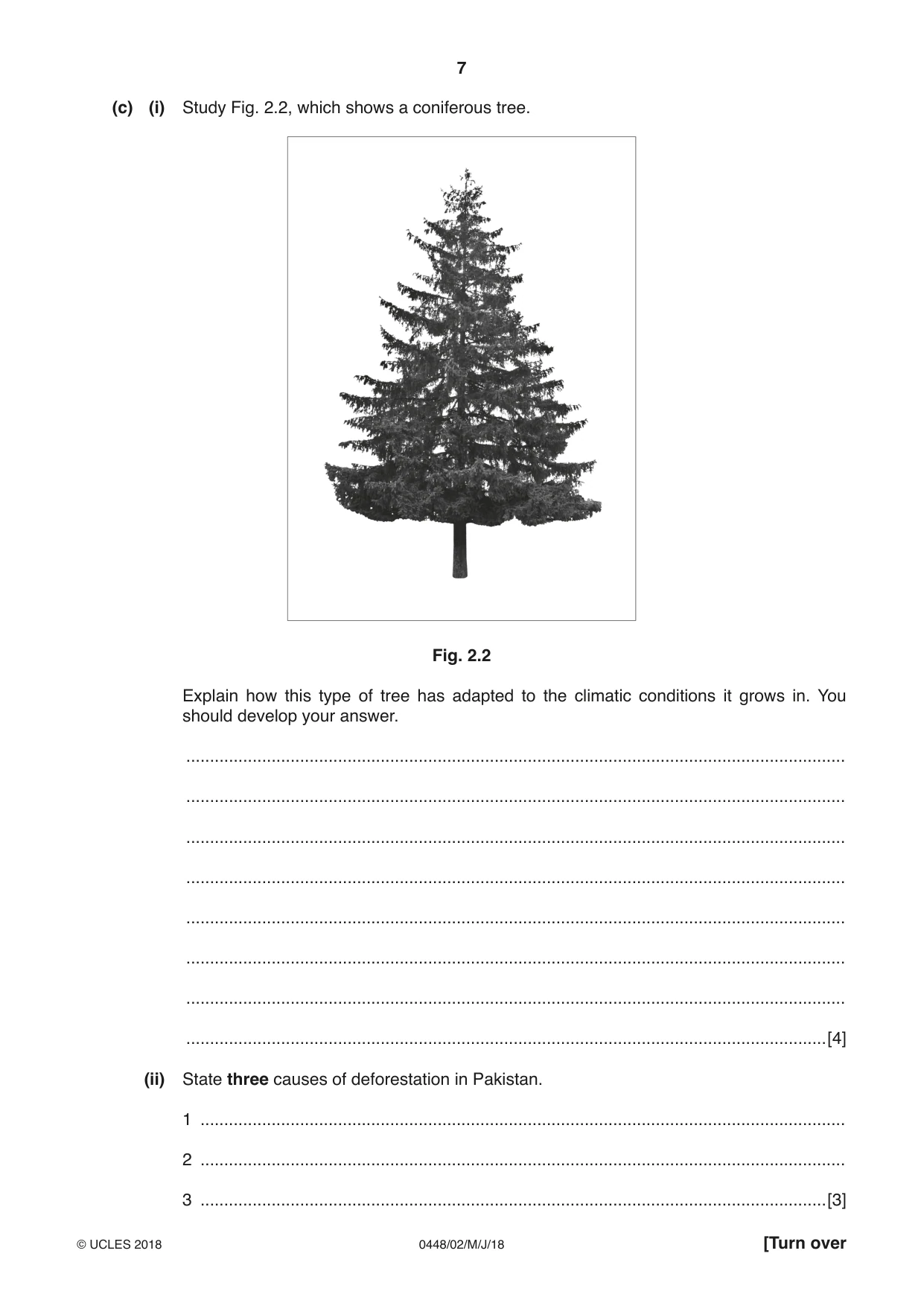
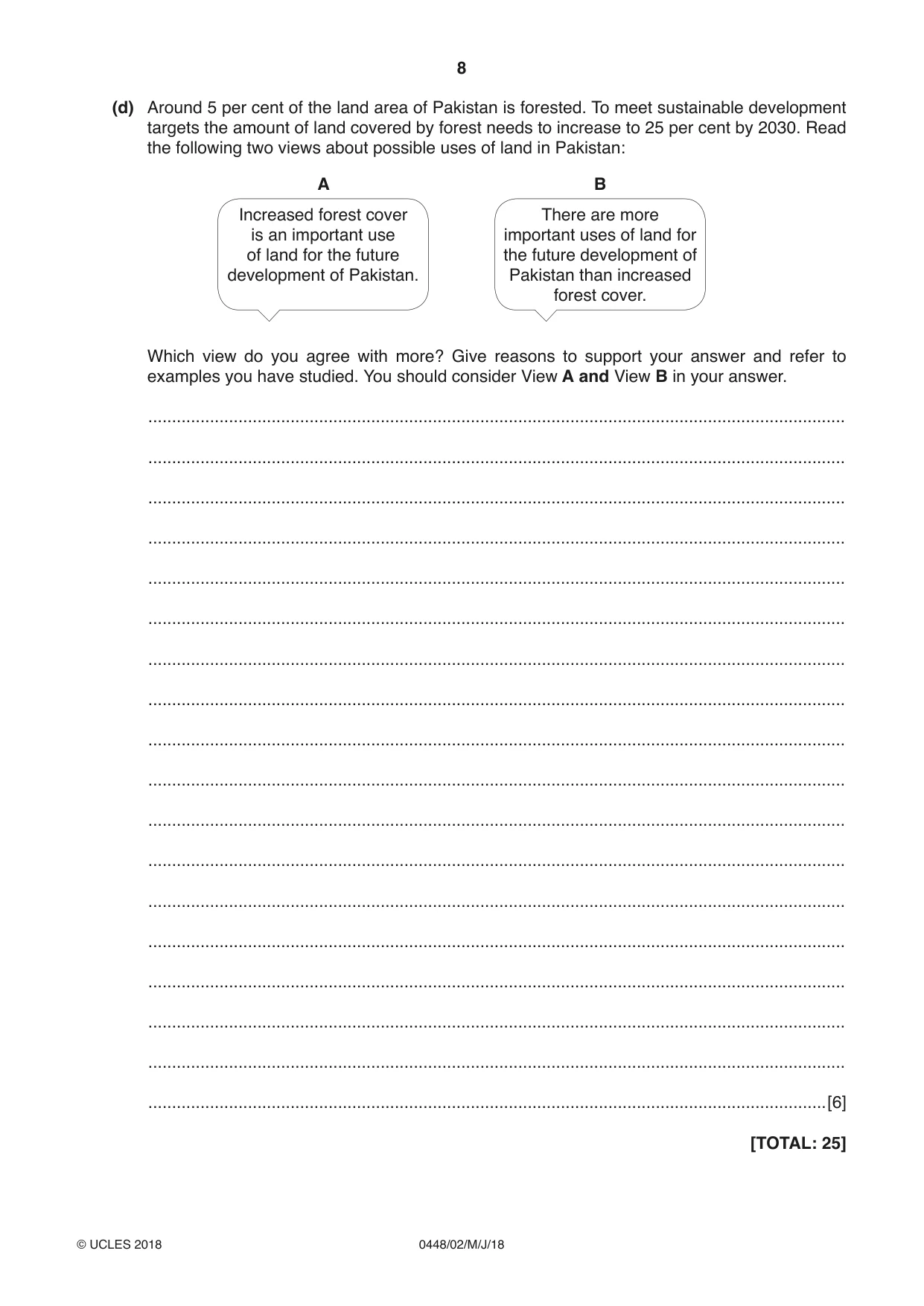
2 (a) (i) Study Fig. 2.1, a map showing forest types in Pakistan. Key: alpine international boundary A province-level boundary JAMMU & disputed boundary KASHMIR B disputed territory C mangroves N 0 100 200 300 Arabian Sea km Fig. 2.1 Name the forest types shown at A, B and C: A .................................................................. B .................................................................. C .................................................................. [3] (ii) Using Fig. 2.1, name two areas in Pakistan where mangroves grow. 1 ........................................................................................................................................ 2 ....................................................................................................................................[2] (b) (i) Describe two natural characteristics of mangrove forests. ........................................................................................................................................... ........................................................................................................................................... ........................................................................................................................................... .......................................................................................................................................[2] (ii) Describe two functions of forests. ........................................................................................................................................... ........................................................................................................................................... ........................................................................................................................................... .......................................................................................................................................[2] (iii) Suggest three physical factors which determine the type and density of forests. ........................................................................................................................................... ........................................................................................................................................... ........................................................................................................................................... ........................................................................................................................................... ........................................................................................................................................... .......................................................................................................................................[3] (c) (i) Study Fig. 2.2, which shows a coniferous tree. Fig. 2.2 Explain how this type of tree has adapted to the climatic conditions it grows in. You should develop your answer. ........................................................................................................................................... ........................................................................................................................................... ........................................................................................................................................... ........................................................................................................................................... ........................................................................................................................................... ........................................................................................................................................... ........................................................................................................................................... .......................................................................................................................................[4] (ii) State three causes of deforestation in Pakistan. 1 ........................................................................................................................................ 2 ........................................................................................................................................ 3 ....................................................................................................................................[3] (d) Around 5 per cent of the land area of Pakistan is forested. To meet sustainable development targets the amount of land covered by forest needs to increase to 25 per cent by 2030. Read the following two views about possible uses of land in Pakistan: A B Increased forest cover There are more is an important use important uses of land for of land for the future the future development of development of Pakistan. Pakistan than increased forest cover. Which view do you agree with more? Give reasons to support your answer and refer to examples you have studied. You should consider View A and View B in your answer. ................................................................................................................................................... ................................................................................................................................................... ................................................................................................................................................... ................................................................................................................................................... ................................................................................................................................................... ................................................................................................................................................... ................................................................................................................................................... ................................................................................................................................................... ................................................................................................................................................... ................................................................................................................................................... ................................................................................................................................................... ................................................................................................................................................... ................................................................................................................................................... ................................................................................................................................................... ................................................................................................................................................... ................................................................................................................................................... ................................................................................................................................................... ...............................................................................................................................................[6] [TOTAL: 25]
Q3 · Define the term ‘livestock farming’
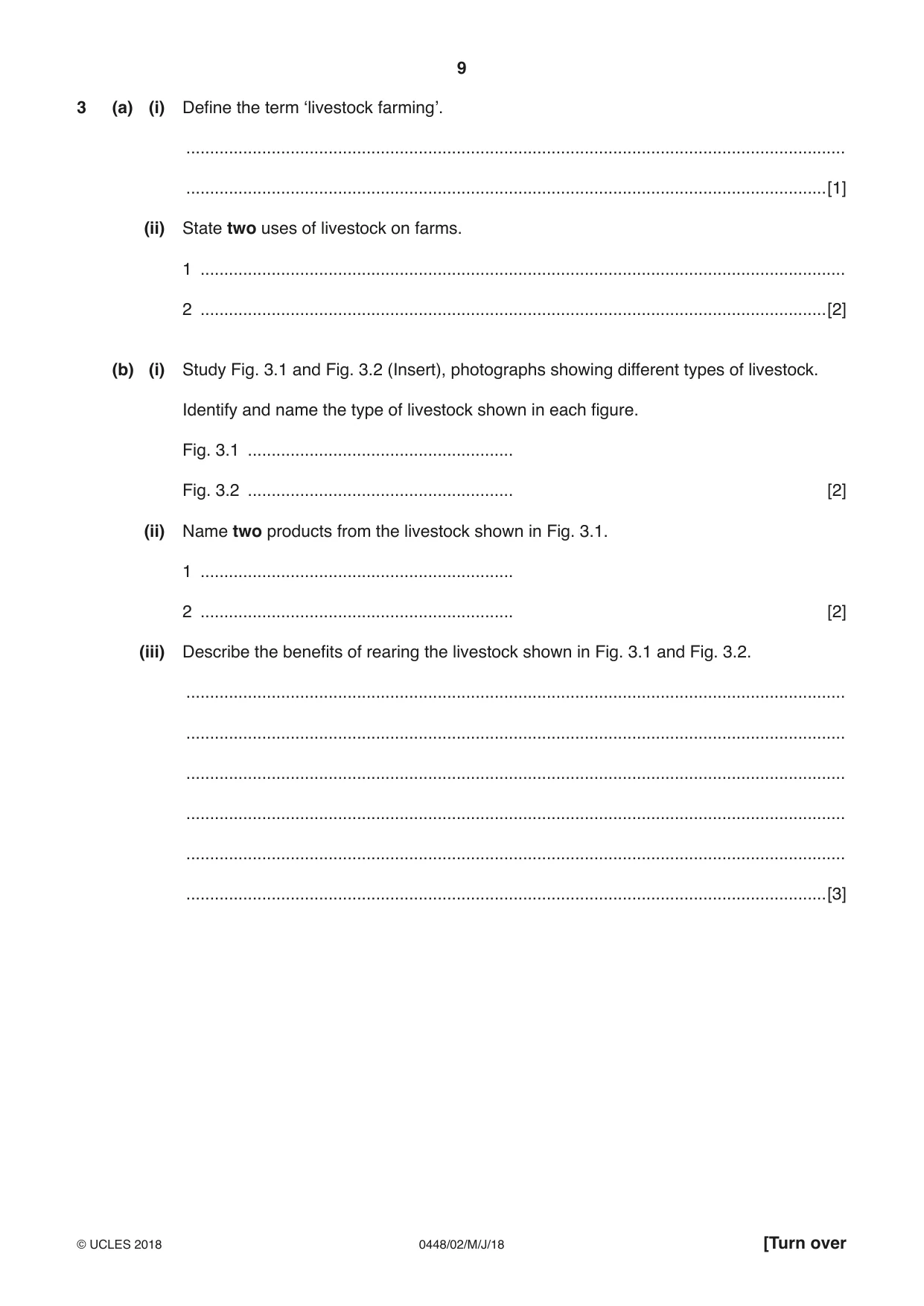
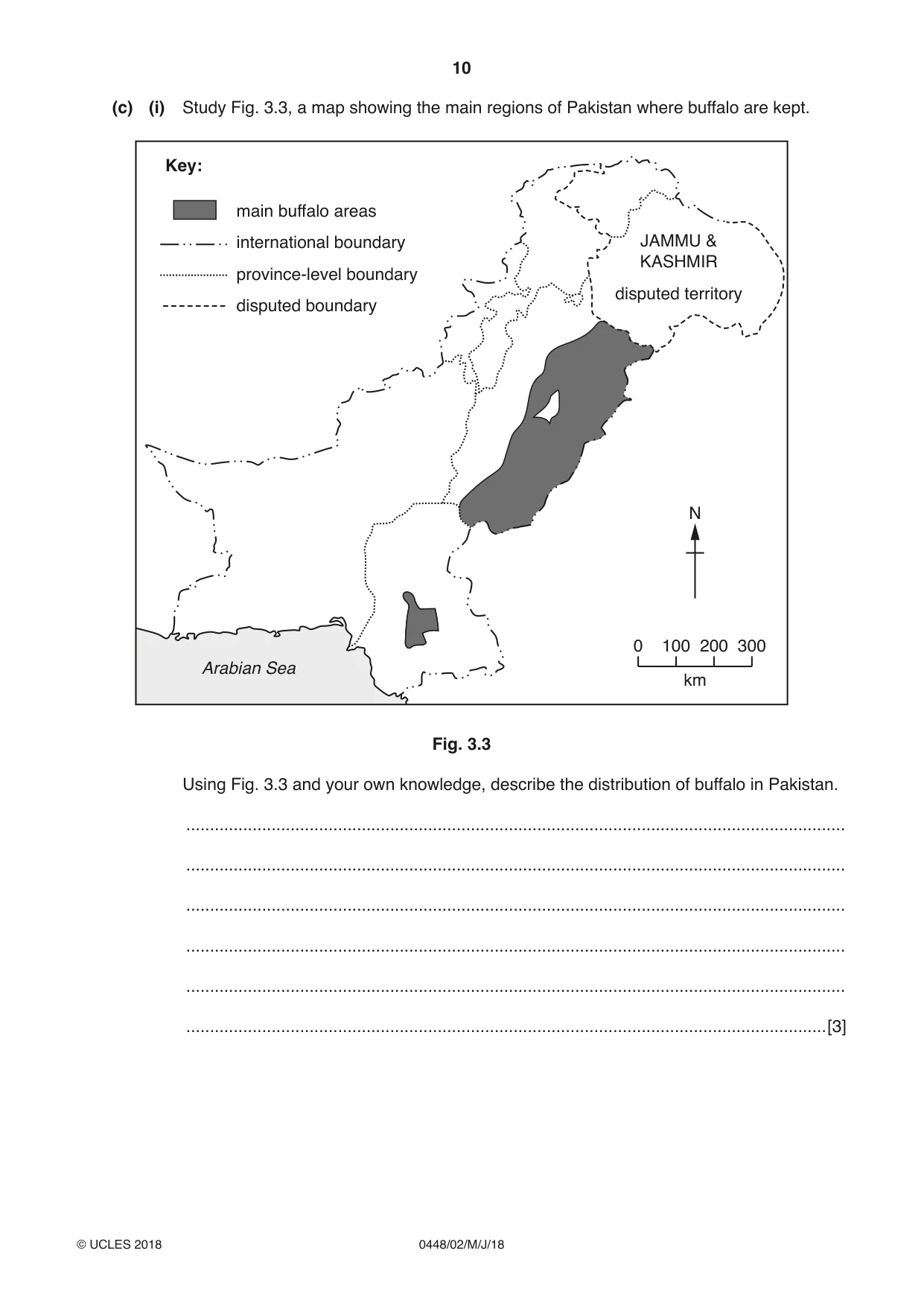
3 (a) (i) Define the term ‘livestock farming’. ........................................................................................................................................... .......................................................................................................................................[1] (ii) State two uses of livestock on farms. 1 ........................................................................................................................................ 2 ....................................................................................................................................[2] (b) (i) Study Fig. 3.1 and Fig. 3.2 (Insert), photographs showing different types of livestock. Identify and name the type of livestock shown in each figure. Fig. 3.1 ........................................................ Fig. 3.2 ........................................................ [2] (ii) Name two products from the livestock shown in Fig. 3.1. 1 .................................................................. 2 .................................................................. [2] (iii) Describe the benefits of rearing the livestock shown in Fig. 3.1 and Fig. 3.2. ........................................................................................................................................... ........................................................................................................................................... ........................................................................................................................................... ........................................................................................................................................... ........................................................................................................................................... .......................................................................................................................................[3] (c) (i) Study Fig. 3.3, a map showing the main regions of Pakistan where buffalo are kept. Key: main buffalo areas international boundary JAMMU & KASHMIR province-level boundary disputed territory disputed boundary N 0 100 200 300 Arabian Sea km Fig. 3.3 Using Fig. 3.3 and your own knowledge, describe the distribution of buffalo in Pakistan. ........................................................................................................................................... ........................................................................................................................................... ........................................................................................................................................... ........................................................................................................................................... ........................................................................................................................................... .......................................................................................................................................[3] (ii) Suggest two reasons why buffalo are kept in these regions. ........................................................................................................................................... ........................................................................................................................................... ........................................................................................................................................... .......................................................................................................................................[2] (iii) Explain how natural factors can create problems for buffalo farmers. You should develop your answer. ........................................................................................................................................... ........................................................................................................................................... ........................................................................................................................................... ........................................................................................................................................... ........................................................................................................................................... ........................................................................................................................................... ........................................................................................................................................... .......................................................................................................................................[4] (d) The government has encouraged the growth of commercial poultry farming since 1964. There have been some challenges but different strategies have been introduced to further develop this type of farming in Pakistan. Evaluate the extent to which commercial poultry farming in Pakistan has overcome its challenges and developed further. Give reasons to support your judgement and refer to examples you have studied. You should consider the challenges and the strategies used in your answer. ................................................................................................................................................... ................................................................................................................................................... ................................................................................................................................................... ................................................................................................................................................... ................................................................................................................................................... ................................................................................................................................................... ................................................................................................................................................... ................................................................................................................................................... ................................................................................................................................................... ................................................................................................................................................... ................................................................................................................................................... ................................................................................................................................................... ................................................................................................................................................... ................................................................................................................................................... ................................................................................................................................................... ................................................................................................................................................... ................................................................................................................................................... ...............................................................................................................................................[6] [TOTAL: 25]
Question 4
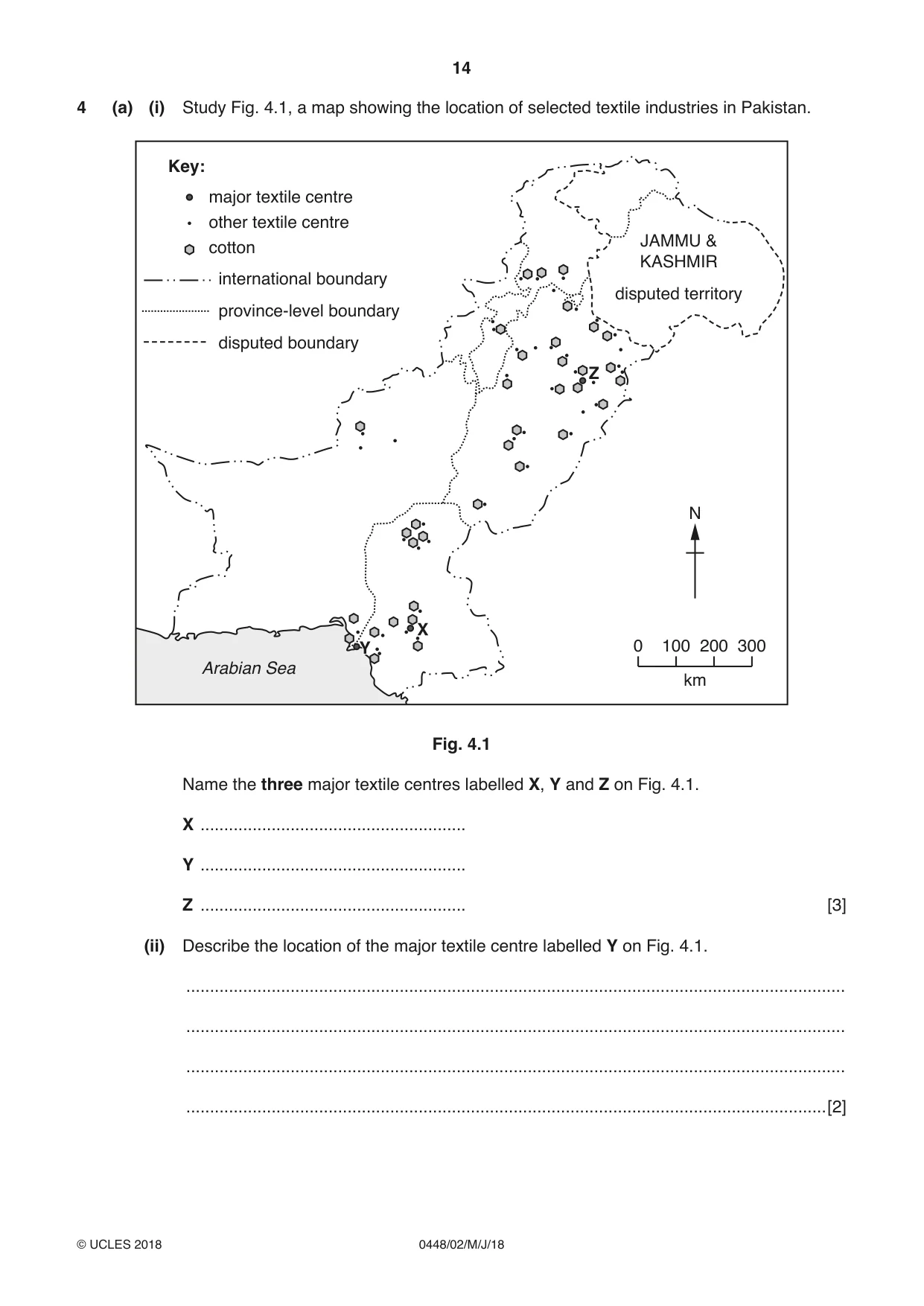
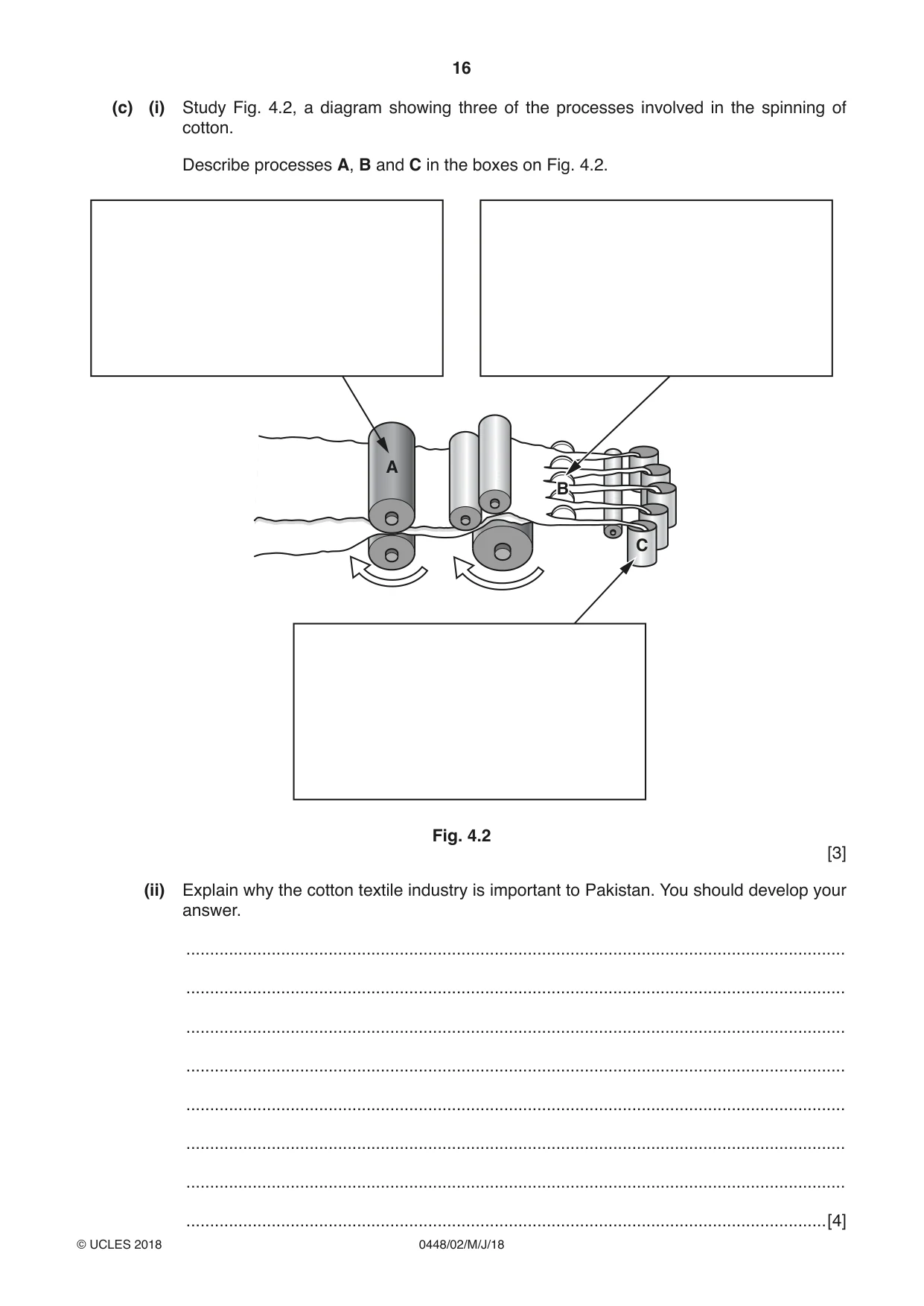
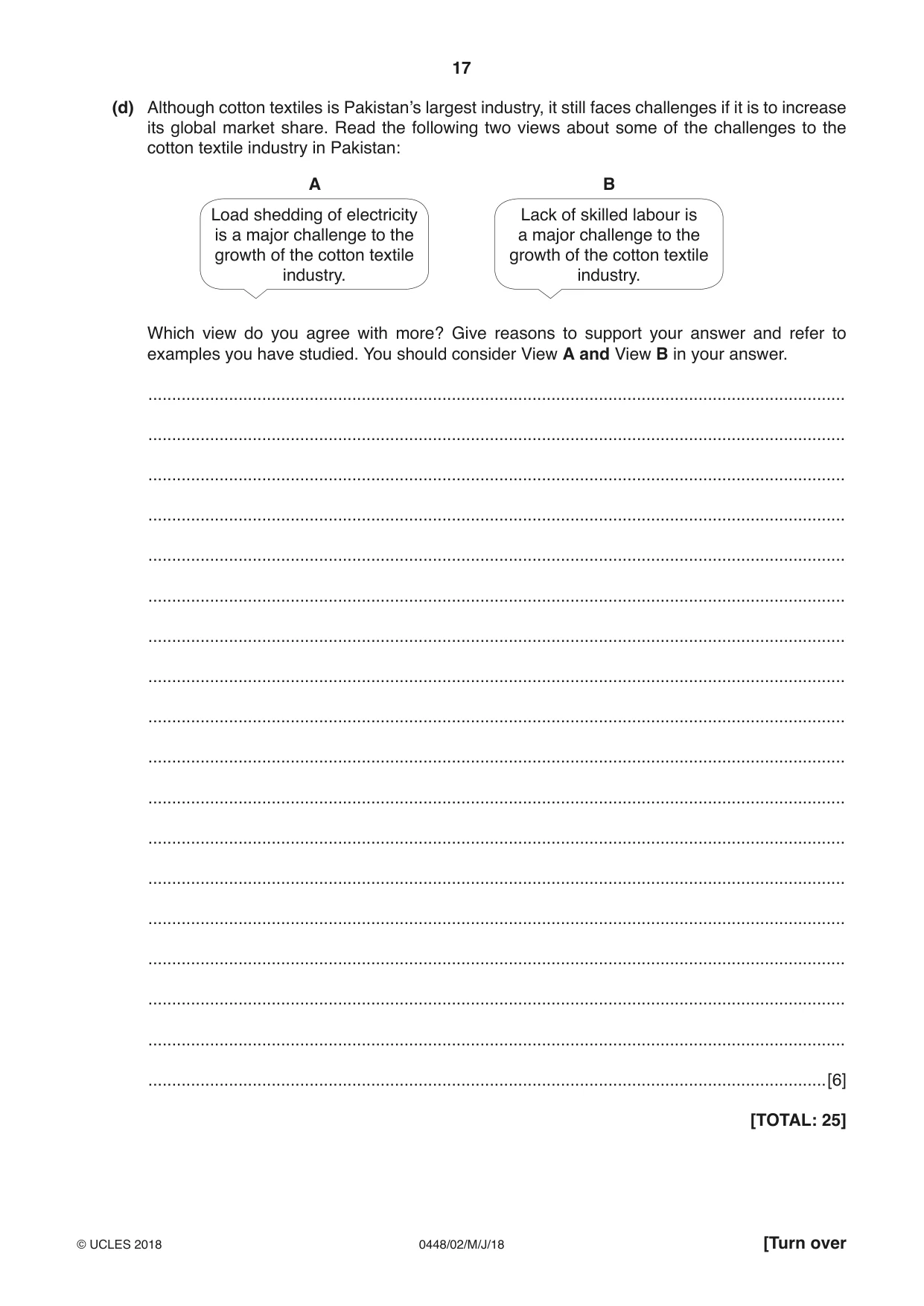
4 (a) (i) Study Fig. 4.1, a map showing the location of selected textile industries in Pakistan. Key: major textile centre other textile centre JAMMU & cotton KASHMIR international boundary disputed territory province-level boundary disputed boundary Z N X Y 0 100 200 300 Arabian Sea km Fig. 4.1 Name the three major textile centres labelled X, Y and Z on Fig. 4.1. X ........................................................ Y ........................................................ Z ........................................................ [3] (ii) Describe the location of the major textile centre labelled Y on Fig. 4.1. ........................................................................................................................................... ........................................................................................................................................... ........................................................................................................................................... .......................................................................................................................................[2] (b) (i) Define the term ‘secondary industry’. ........................................................................................................................................... .......................................................................................................................................[1] (ii) State a feature of each of the following types of industry: cottage industries; ............................................................................................................. ........................................................................................................................................... small-scale industries; ....................................................................................................... ........................................................................................................................................... large-scale industries. ....................................................................................................... .......................................................................................................................................[3] (iii) State three reasons for the location of the cotton textile industries in Pakistan. 1 ........................................................................................................................................ ........................................................................................................................................... 2 ........................................................................................................................................ ........................................................................................................................................... 3 ........................................................................................................................................ .......................................................................................................................................[3] (c) (i) Study Fig. 4.2, a diagram showing three of the processes involved in the spinning of cotton. Describe processes A, B and C in the boxes on Fig. 4.2. A B C Fig. 4.2 [3] (ii) Explain why the cotton textile industry is important to Pakistan. You should develop your answer. ........................................................................................................................................... ........................................................................................................................................... ........................................................................................................................................... ........................................................................................................................................... ........................................................................................................................................... ........................................................................................................................................... ........................................................................................................................................... .......................................................................................................................................[4] (d) Although cotton textiles is Pakistan’s largest industry, it still faces challenges if it is to increase its global market share. Read the following two views about some of the challenges to the cotton textile industry in Pakistan: A B Load shedding of electricity Lack of skilled labour is is a major challenge to the a major challenge to the growth of the cotton textile growth of the cotton textile industry. industry. Which view do you agree with more? Give reasons to support your answer and refer to examples you have studied. You should consider View A and View B in your answer. ................................................................................................................................................... ................................................................................................................................................... ................................................................................................................................................... ................................................................................................................................................... ................................................................................................................................................... ................................................................................................................................................... ................................................................................................................................................... ................................................................................................................................................... ................................................................................................................................................... ................................................................................................................................................... ................................................................................................................................................... ................................................................................................................................................... ................................................................................................................................................... ................................................................................................................................................... ................................................................................................................................................... ................................................................................................................................................... ................................................................................................................................................... ...............................................................................................................................................[6] [TOTAL: 25]
Question 5
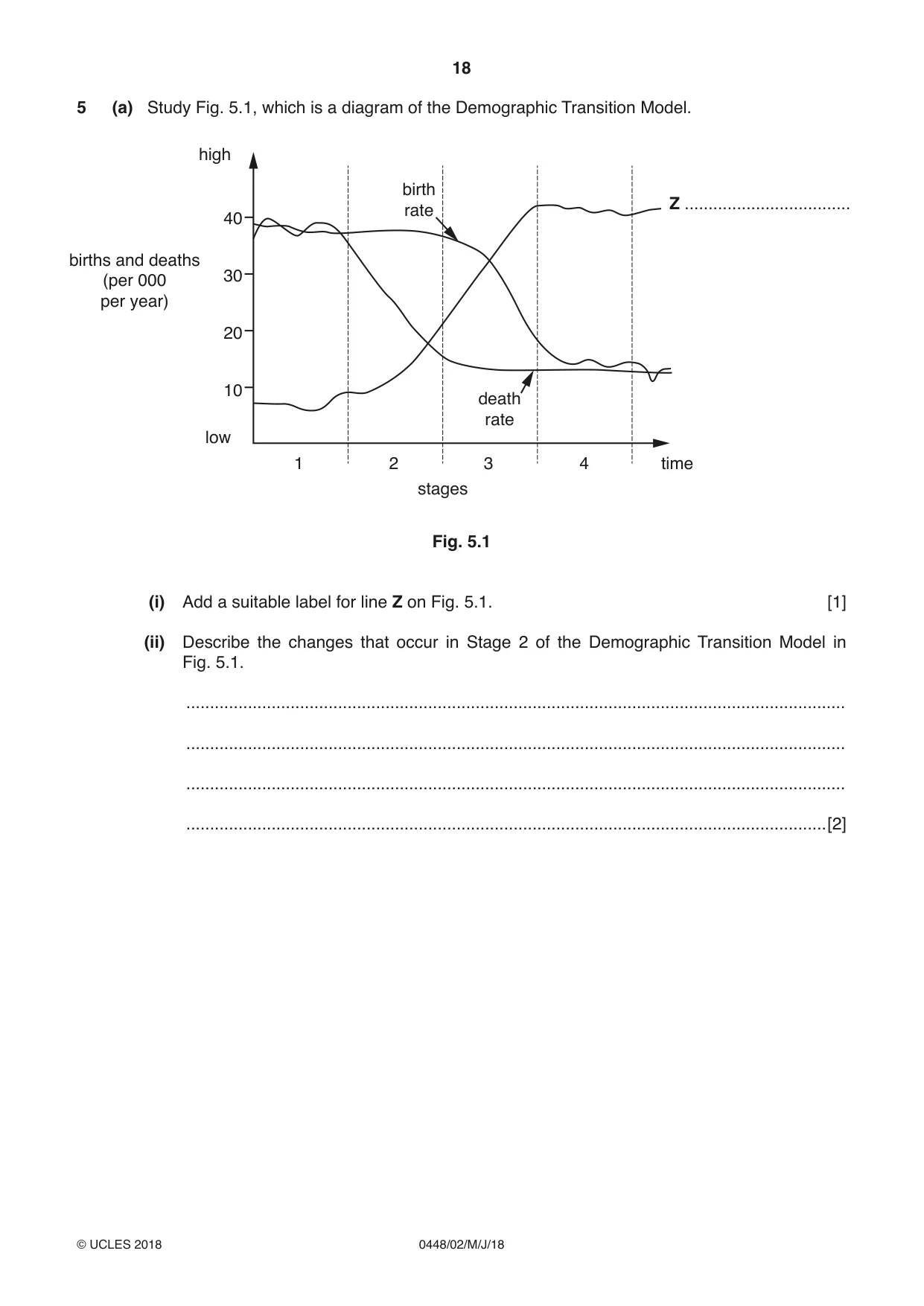
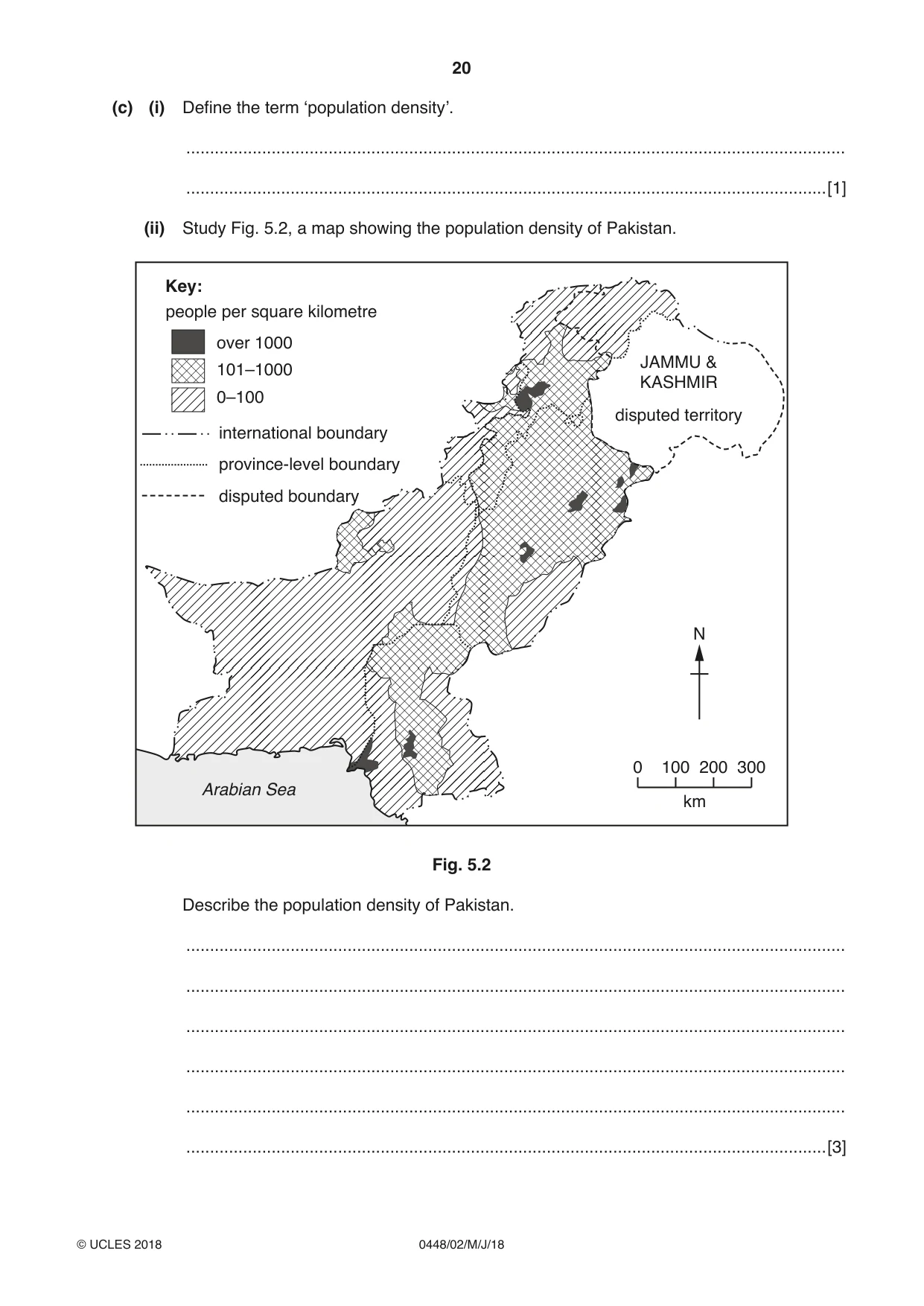
5 (a) Study Fig. 5.1, which is a diagram of the Demographic Transition Model. high birth Z ................................... rate 40 births and deaths 30 (per 000 per year) 20 10 death rate low 1 2 3 4 time stages Fig. 5.1 (i) Add a suitable label for line Z on Fig. 5.1. [1] (ii) Describe the changes that occur in Stage 2 of the Demographic Transition Model in Fig. 5.1. ........................................................................................................................................... ........................................................................................................................................... ........................................................................................................................................... .......................................................................................................................................[2] (b) (i) Suggest three reasons for a high and fluctuating death rate in Pakistan during Stage 1 of the Demographic Transition Model. 1 ........................................................................................................................................ ........................................................................................................................................... 2 ........................................................................................................................................ ........................................................................................................................................... 3 ........................................................................................................................................ .......................................................................................................................................[3] (ii) Explain two reasons for a fall in the birth rate in Pakistan during Stage 3 of the Demographic Transition Model. You should develop your answer. ........................................................................................................................................... ........................................................................................................................................... ........................................................................................................................................... ........................................................................................................................................... ........................................................................................................................................... ........................................................................................................................................... ........................................................................................................................................... .......................................................................................................................................[4] (c) (i) Define the term ‘population density’. ........................................................................................................................................... .......................................................................................................................................[1] (ii) Study Fig. 5.2, a map showing the population density of Pakistan. Key: people per square kilometre over 1000 JAMMU & 101–1000 KASHMIR 0–100 disputed territory international boundary province-level boundary disputed boundary N 0 100 200 300 Arabian Sea km Fig. 5.2 Describe the population density of Pakistan. ........................................................................................................................................... ........................................................................................................................................... ........................................................................................................................................... ........................................................................................................................................... ........................................................................................................................................... .......................................................................................................................................[3]