Cambridge IGCSE Pakistan Studies 0448 — 2011 May/June Paper 2 · Variant 1
0448/21/M/J/11 · 5 questions · 75 marks · ≈84 min
The question paper and its mark scheme, free to read here and free to download. This is Cambridge’s own paper, exactly as it was sat.
Question paper24 pages




Mark scheme11 pages
Answers below. Sit the paper first if you are practising.
Questions as text
Q1 · Study Photograph A (Insert), a Persian Wheel
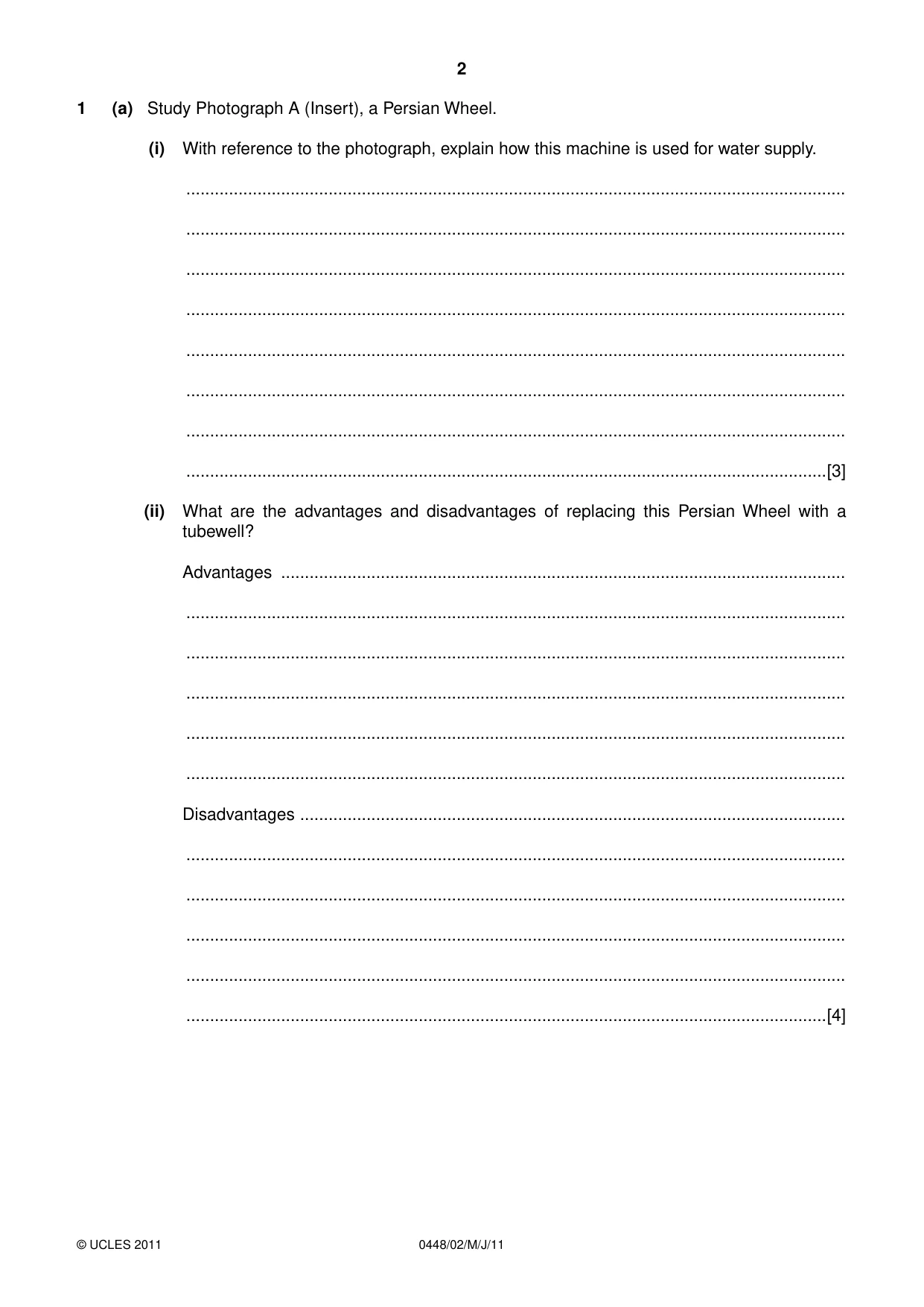
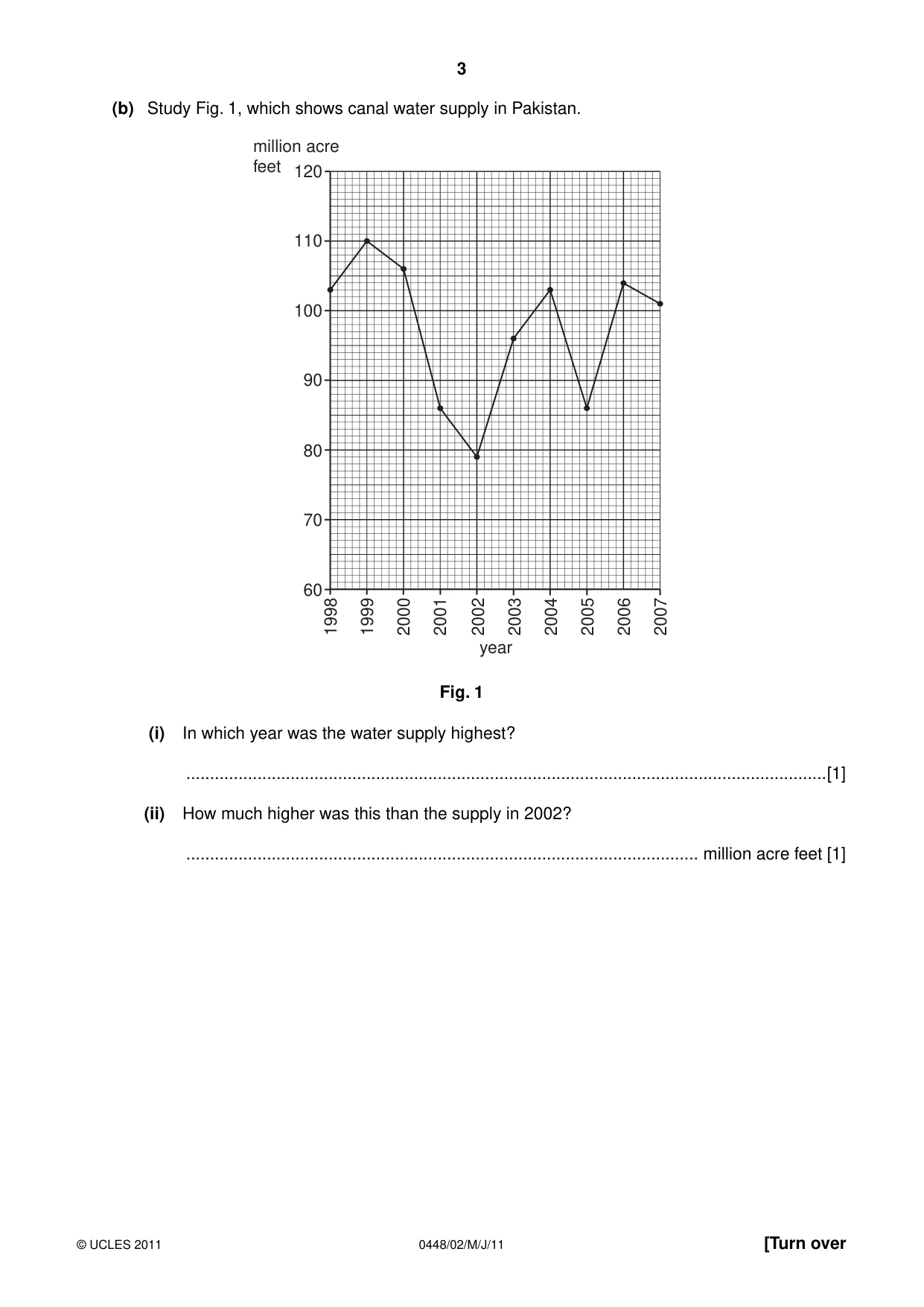
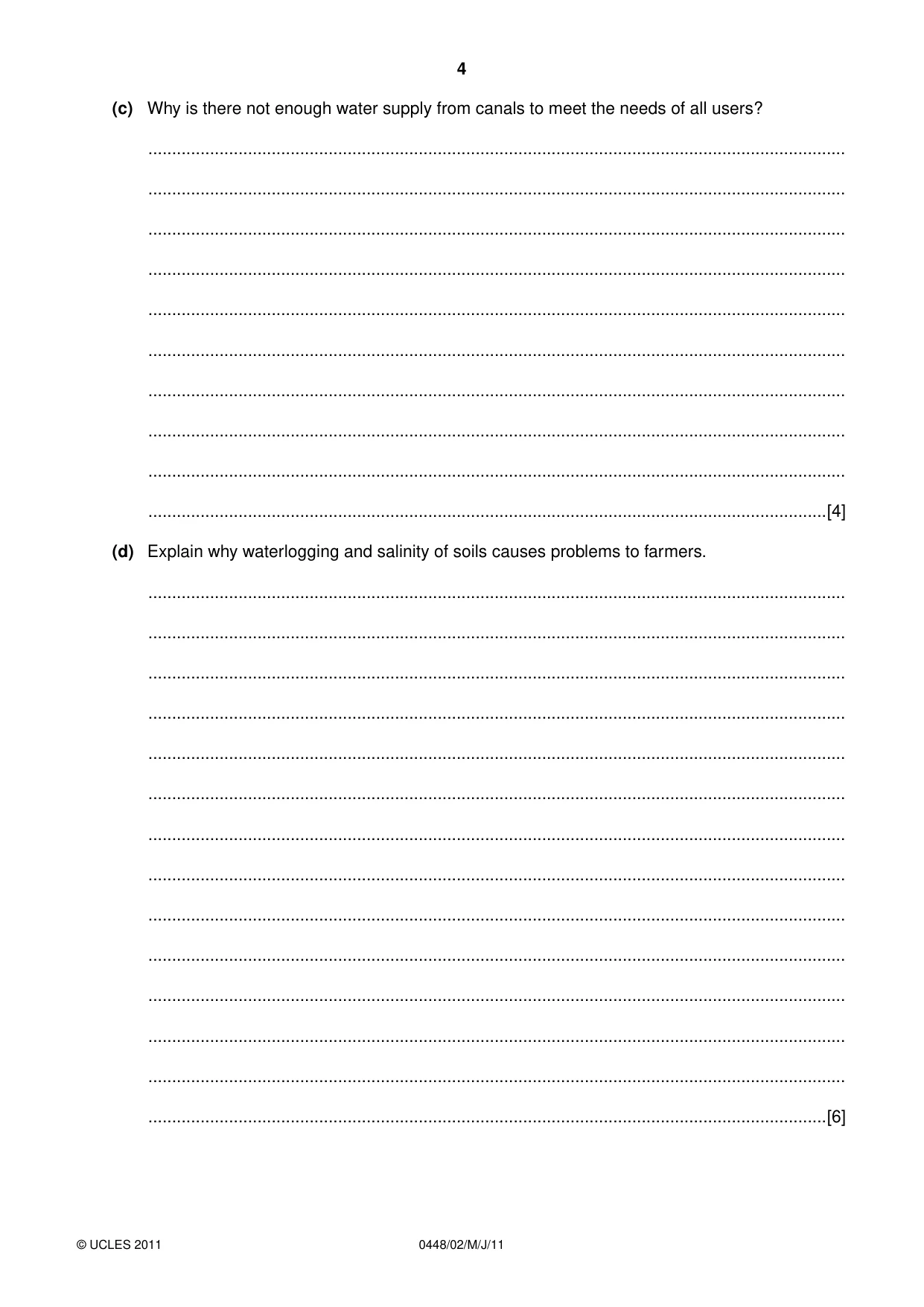
1 (a) Study Photograph A (Insert), a Persian Wheel. (i) With reference to the photograph, explain how this machine is used for water supply. ........................................................................................................................................... ........................................................................................................................................... ........................................................................................................................................... ........................................................................................................................................... ........................................................................................................................................... ........................................................................................................................................... ........................................................................................................................................... .......................................................................................................................................[3] (ii) What are the advantages and disadvantages of replacing this Persian Wheel with a tubewell? Advantages ....................................................................................................................... ........................................................................................................................................... ........................................................................................................................................... ........................................................................................................................................... ........................................................................................................................................... ........................................................................................................................................... Disadvantages ................................................................................................................... ........................................................................................................................................... ........................................................................................................................................... ........................................................................................................................................... ........................................................................................................................................... .......................................................................................................................................[4] (b) Study Fig. 1, which shows canal water supply in Pakistan. million acre feet 120 110 100 90 80 70 60 1998 1999 2000 2001 2002 2003 2004 2005 2006 2007 year Fig. 1 (i) In which year was the water supply highest? .......................................................................................................................................[1] (ii) How much higher was this than the supply in 2002? ............................................................................................................ million acre feet [1] (c) Why is there not enough water supply from canals to meet the needs of all users? ................................................................................................................................................... ................................................................................................................................................... ................................................................................................................................................... ................................................................................................................................................... ................................................................................................................................................... ................................................................................................................................................... ................................................................................................................................................... ................................................................................................................................................... ................................................................................................................................................... ...............................................................................................................................................[4] (d) Explain why waterlogging and salinity of soils causes problems to farmers. ................................................................................................................................................... ................................................................................................................................................... ................................................................................................................................................... ................................................................................................................................................... ................................................................................................................................................... ................................................................................................................................................... ................................................................................................................................................... ................................................................................................................................................... ................................................................................................................................................... ................................................................................................................................................... ................................................................................................................................................... ................................................................................................................................................... ................................................................................................................................................... ...............................................................................................................................................[6] (e) Water pollution is a major problem in urban areas. With reference to examples, explain some of the causes of this pollution, and why it is a major problem to the people who rely on this water supply. ................................................................................................................................................... ................................................................................................................................................... ................................................................................................................................................... ................................................................................................................................................... ................................................................................................................................................... ................................................................................................................................................... ................................................................................................................................................... ................................................................................................................................................... ................................................................................................................................................... ................................................................................................................................................... ................................................................................................................................................... ................................................................................................................................................... ................................................................................................................................................... ................................................................................................................................................... ................................................................................................................................................... ...............................................................................................................................................[6] [Total: 25]
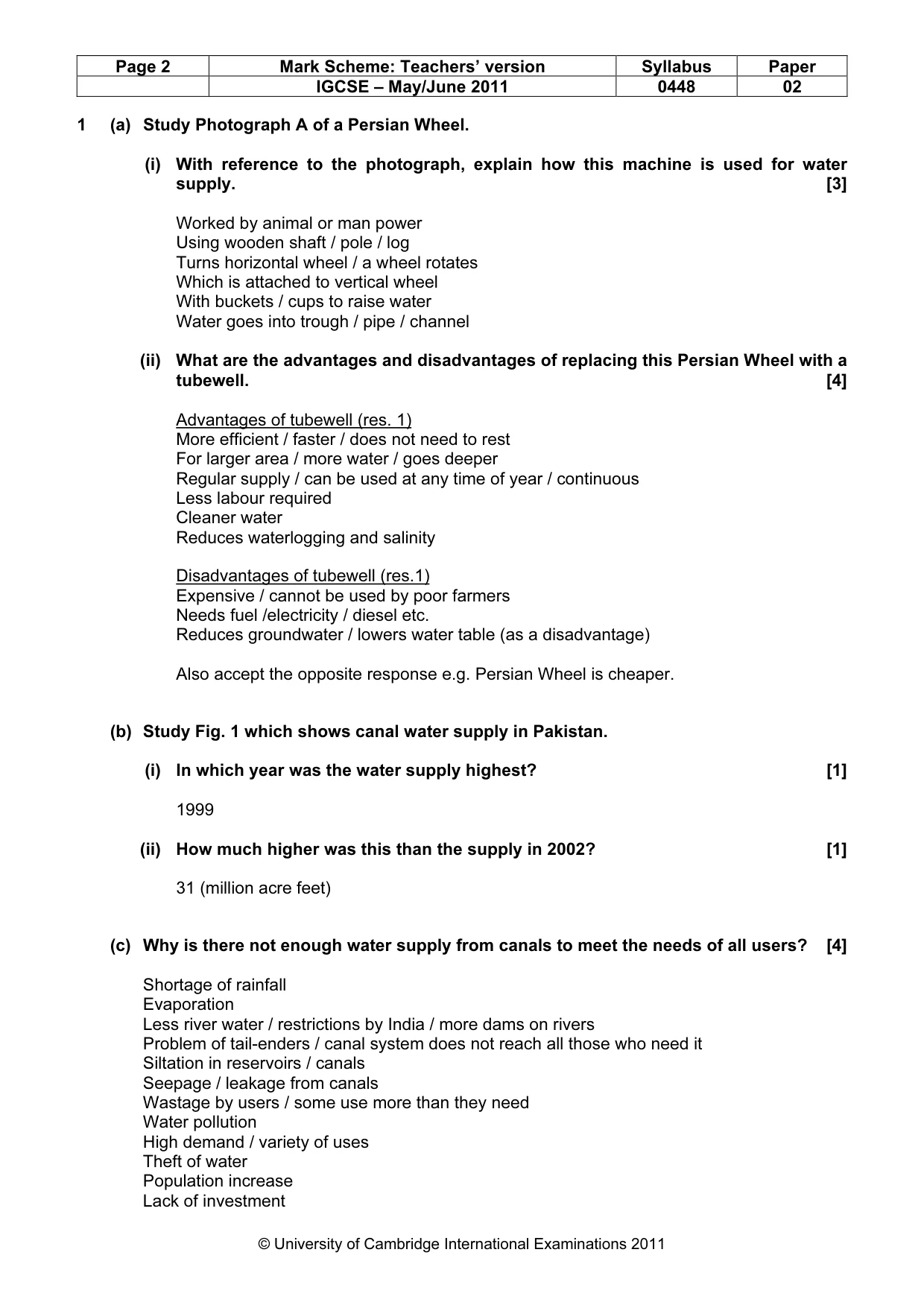
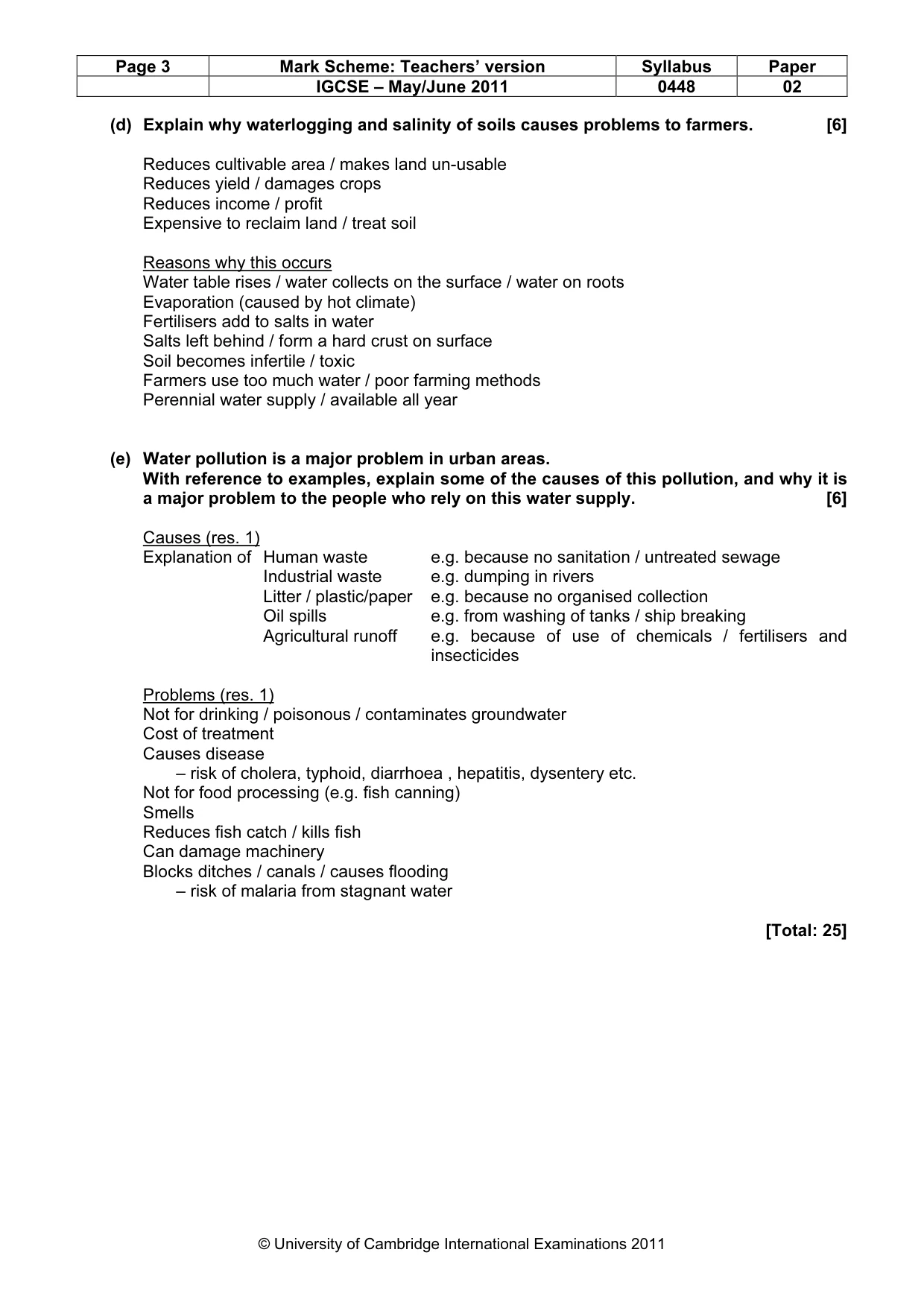
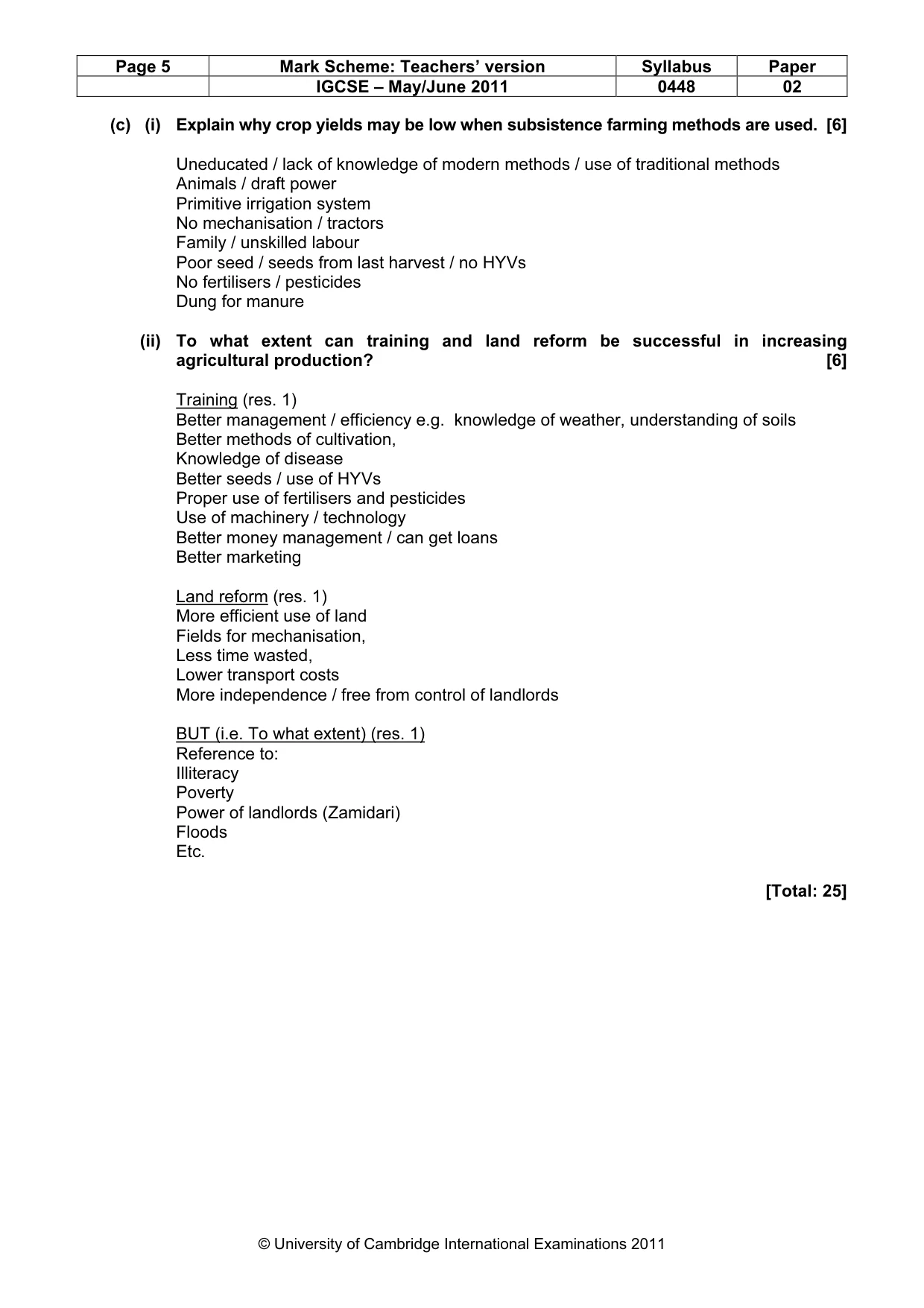
Mark scheme: 1 (a) Study Photograph A of a Persian Wheel. (i) With reference to the photograph, explain how this machine is used for water supply. [3] Worked by animal or man power Using wooden shaft / pole / log Turns horizontal wheel / a wheel rotates Which is attached to vertical wheel With buckets / cups to raise water Water goes into trough / pipe / channel (ii) What are the advantages and disadvantages of replacing this Persian Wheel with a tubewell. [4] Advantages of tubewell (res. 1) More efficient / faster / does not need to rest For larger area / more water / goes deeper Regular supply / can be used at any time of year / continuous Less labour required Cleaner water Reduces waterlogging and salinity Disadvantages of tubewell (res.1) Expensive / cannot be used by poor farmers Needs fuel /electricity / diesel etc. Reduces groundwater / lowers water table (as a disadvantage) Also accept the opposite response e.g. Persian Wheel is cheaper. (b) Study Fig. 1 which shows canal water supply in Pakistan. (i) In which year was the water supply highest? [1] 1999 (ii) How much higher was this than the supply in 2002? [1] 31 (million acre feet) (c) Why is there not enough water supply from canals to meet the needs of all users? [4] Shortage of rainfall Evaporation Less river water / restrictions by India / more dams on rivers Problem of tail-enders / canal system does not reach all those who need it Siltation in reservoirs / canals Seepage / leakage from canals Wastage by users / some use more than they need Water pollution High demand / variety of uses Theft of water Population increase Lack of investment IGCSE – May/June 2011 0448 02 (d) Explain why waterlogging and salinity of soils causes problems to farmers. [6] Reduces cultivable area / makes land un-usable Reduces yield / damages crops Reduces income / profit Expensive to reclaim land / treat soil Reasons why this occurs Water table rises / water collects on the surface / water on roots Evaporation (caused by hot climate) Fertilisers add to salts in water Salts left behind / form a hard crust on surface Soil becomes infertile / toxic Farmers use too much water / poor farming methods Perennial water supply / available all year (e) Water pollution is a major problem in urban areas. With reference to examples, explain some of the causes of this pollution, and why it is a major problem to the people who rely on this water supply. [6] Causes (res. 1) Explanation of Human waste e.g. because no sanitation / untreated sewage Industrial waste e.g. dumping in rivers Litter / plastic/paper e.g. because no organised collection Oil spills e.g. from washing of tanks / ship breaking Agricultural runoff e.g. because of use of chemicals / fertilisers and insecticides Problems (res. 1) Not for drinking / poisonous / contaminates groundwater Cost of treatment Causes disease – risk of cholera, typhoid, diarrhoea , hepatitis, dysentery etc. Not for food processing (e.g. fish canning) Smells Reduces fish catch / kills fish Can damage machinery Blocks ditches / canals / causes flooding – risk of malaria from stagnant water [Total: 25] IGCSE – May/June 2011 0448 02
Q2 · MAIZE PULSES MILLET OILSEEDS TOBACCO (i) Name two crops on the list that are used mainly…
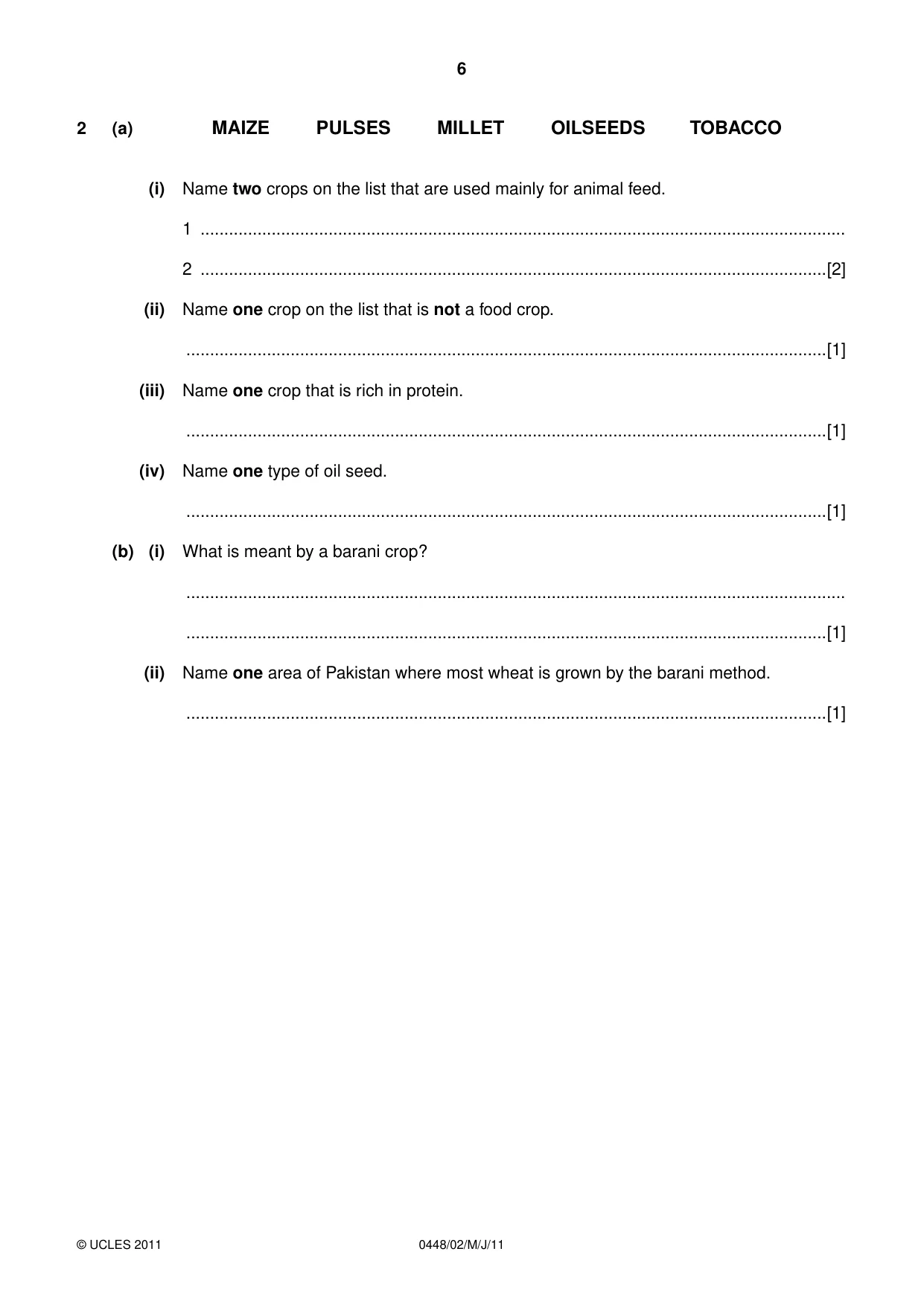
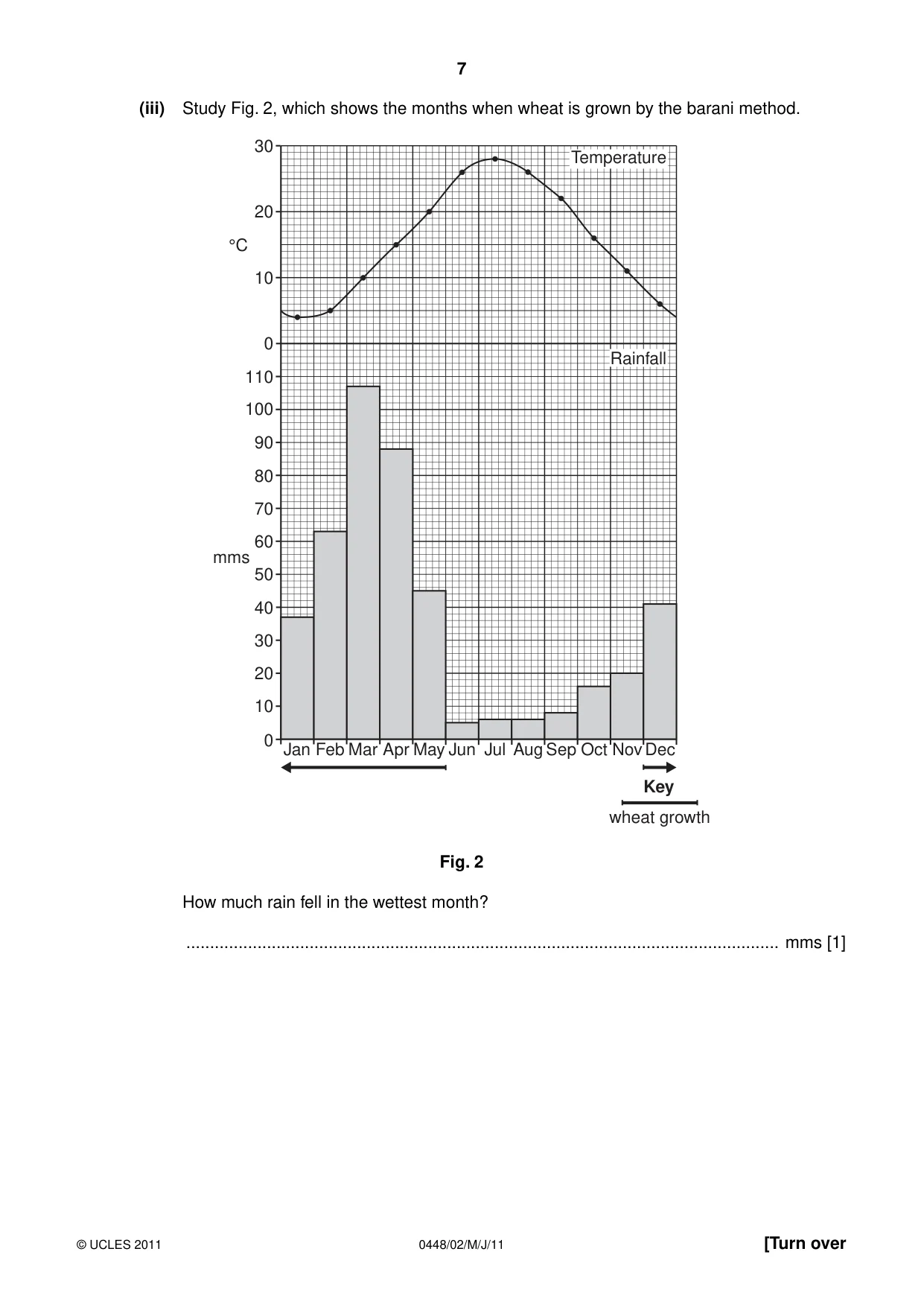
2 (a) MAIZE PULSES MILLET OILSEEDS TOBACCO (i) Name two crops on the list that are used mainly for animal feed. 1 ........................................................................................................................................ 2 ....................................................................................................................................[2] (ii) Name one crop on the list that is not a food crop. .......................................................................................................................................[1] (iii) Name one crop that is rich in protein. .......................................................................................................................................[1] (iv) Name one type of oil seed. .......................................................................................................................................[1] (b) (i) What is meant by a barani crop? ........................................................................................................................................... .......................................................................................................................................[1] (ii) Name one area of Pakistan where most wheat is grown by the barani method. .......................................................................................................................................[1] (iii) Study Fig. 2, which shows the months when wheat is grown by the barani method. 30 Temperature 20 °C 10 0 Rainfall 110 100 90 80 70 60 mms 50 40 30 20 10 0 Jan Feb Mar Apr May Jun Jul Aug Sep Oct Nov Dec Key wheat growth Fig. 2 How much rain fell in the wettest month? ............................................................................................................................. mms [1] (iv) Describe the barani method of wheat cultivation with reference to the temperatures and rainfall shown on Fig. 2. Temperatures .................................................................................................................... ........................................................................................................................................... ........................................................................................................................................... ........................................................................................................................................... ........................................................................................................................................... ........................................................................................................................................... Rainfall .............................................................................................................................. ........................................................................................................................................... ........................................................................................................................................... ........................................................................................................................................... ........................................................................................................................................... .......................................................................................................................................[5] (c) (i) Explain why crop yields may be low when subsistence farming methods are used. ........................................................................................................................................... ........................................................................................................................................... ........................................................................................................................................... ........................................................................................................................................... ........................................................................................................................................... ........................................................................................................................................... ........................................................................................................................................... ........................................................................................................................................... ........................................................................................................................................... ........................................................................................................................................... ........................................................................................................................................... ........................................................................................................................................... .......................................................................................................................................[6] (ii) To what extent can training and land reform be successful in increasing agricultural production? Training .............................................................................................................................. ........................................................................................................................................... ........................................................................................................................................... ........................................................................................................................................... ........................................................................................................................................... ........................................................................................................................................... ........................................................................................................................................... ........................................................................................................................................... Land reform ....................................................................................................................... ........................................................................................................................................... ........................................................................................................................................... ........................................................................................................................................... ........................................................................................................................................... ........................................................................................................................................... ........................................................................................................................................... .......................................................................................................................................[6] [Total: 25]
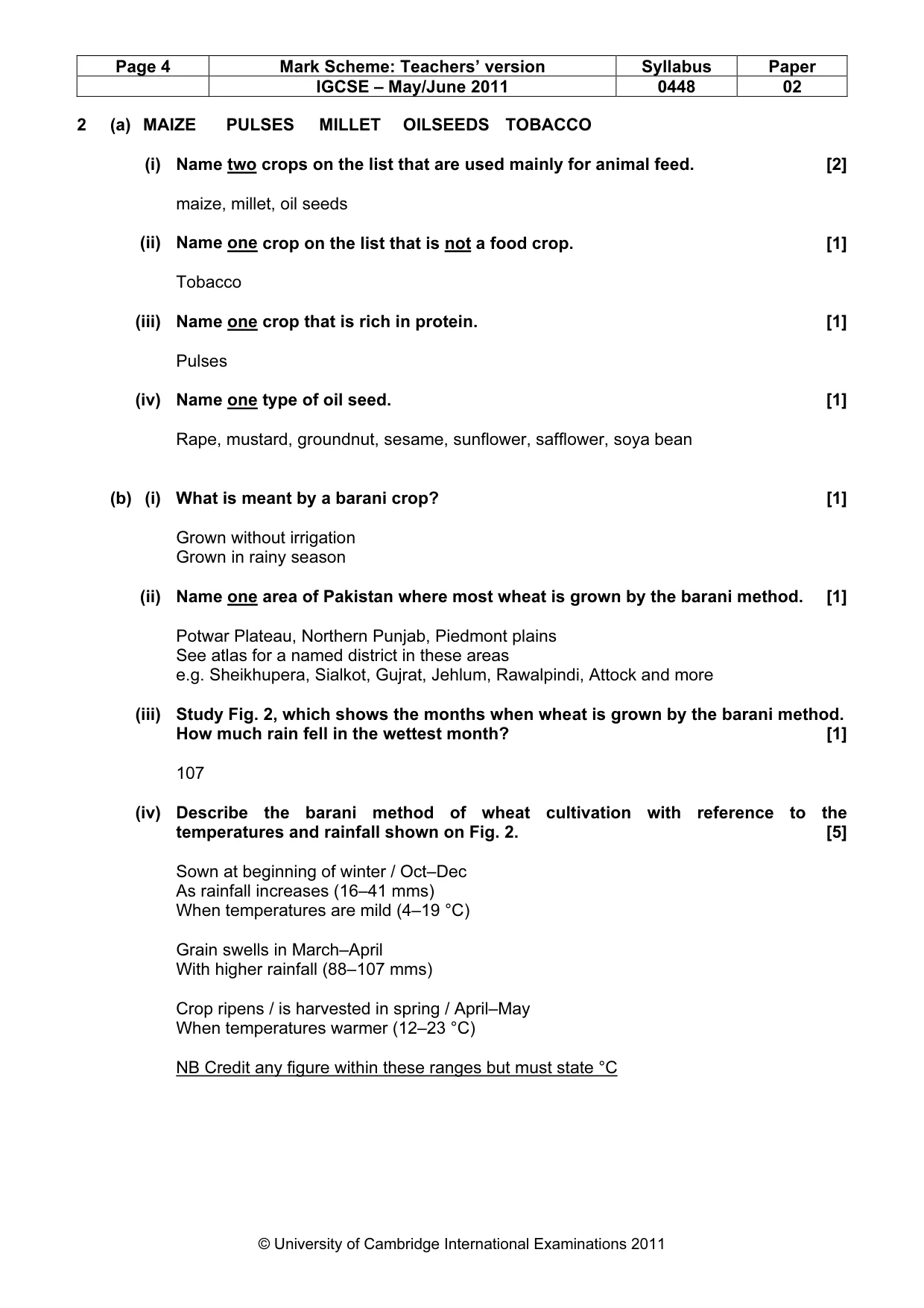
Mark scheme: 2 (a) MAIZE PULSES MILLET OILSEEDS TOBACCO (i) Name two crops on the list that are used mainly for animal feed. [2] maize, millet, oil seeds (ii) Name one crop on the list that is not a food crop. [1] Tobacco (iii) Name one crop that is rich in protein. [1] Pulses (iv) Name one type of oil seed. [1] Rape, mustard, groundnut, sesame, sunflower, safflower, soya bean (b) (i) What is meant by a barani crop? [1] Grown without irrigation Grown in rainy season (ii) Name one area of Pakistan where most wheat is grown by the barani method. [1] Potwar Plateau, Northern Punjab, Piedmont plains See atlas for a named district in these areas e.g. Sheikhupera, Sialkot, Gujrat, Jehlum, Rawalpindi, Attock and more (iii) Study Fig. 2, which shows the months when wheat is grown by the barani method. How much rain fell in the wettest month? [1] 107 (iv) Describe the barani method of wheat cultivation with reference to the temperatures and rainfall shown on Fig. 2. [5] Sown at beginning of winter / Oct–Dec As rainfall increases (16–41 mms) When temperatures are mild (4–19 °C) Grain swells in March–April With higher rainfall (88–107 mms) Crop ripens / is harvested in spring / April–May When temperatures warmer (12–23 °C) NB Credit any figure within these ranges but must state °C IGCSE – May/June 2011 0448 02 (c) (i) Explain why crop yields may be low when subsistence farming methods are used. [6] Uneducated / lack of knowledge of modern methods / use of traditional methods Animals / draft power Primitive irrigation system No mechanisation / tractors Family / unskilled labour Poor seed / seeds from last harvest / no HYVs No fertilisers / pesticides Dung for manure (ii) To what extent can training and land reform be successful in increasing agricultural production? [6] Training (res. 1) Better management / efficiency e.g. knowledge of weather, understanding of soils Better methods of cultivation, Knowledge of disease Better seeds / use of HYVs Proper use of fertilisers and pesticides Use of machinery / technology Better money management / can get loans Better marketing Land reform (res. 1) More efficient use of land Fields for mechanisation, Less time wasted, Lower transport costs More independence / free from control of landlords BUT (i.e. To what extent) (res. 1) Reference to: Illiteracy Poverty Power of landlords (Zamidari) Floods Etc. [Total: 25] IGCSE – May/June 2011 0448 02
Q3 · Name the two main raw materials quarried in Pakistan that are used to make cement
3 (a) (i) Name the two main raw materials quarried in Pakistan that are used to make cement. 1 ........................................................................................................................................ 2 ....................................................................................................................................[2] (ii) Name three other inputs used by a cement factory. 1 ........................................................................................................................................ 2 ........................................................................................................................................ 3 ....................................................................................................................................[3] (b) QUARRYING CRUSHING PACKING DRIVER SALESMAN OFFICE WORKER (i) From the list above, state one example of: A Primary employment ........................................................................................................................................... B Secondary employment ........................................................................................................................................... C Tertiary employment .......................................................................................................................................[3] (ii) Explain why a salesman should have a good education. ........................................................................................................................................... ........................................................................................................................................... ........................................................................................................................................... ........................................................................................................................................... ........................................................................................................................................... ........................................................................................................................................... ........................................................................................................................................... ........................................................................................................................................... ........................................................................................................................................... .......................................................................................................................................[4] (c) Study Photograph B (Insert), of Karachi. (i) State three uses of concrete shown on the photograph. 1 ........................................................................................................................................ 2 ........................................................................................................................................ 3 ....................................................................................................................................[3] (ii) Using your answer to (c)(i), explain the importance of concrete to the development of Karachi. ........................................................................................................................................... ........................................................................................................................................... ........................................................................................................................................... ........................................................................................................................................... ........................................................................................................................................... ........................................................................................................................................... ........................................................................................................................................... ........................................................................................................................................... ........................................................................................................................................... .......................................................................................................................................[4] (iii) What are the advantages and disadvantages of building large industrial developments, such as cement works, close to major cities? Advantages ....................................................................................................................... ........................................................................................................................................... ........................................................................................................................................... ........................................................................................................................................... ........................................................................................................................................... ........................................................................................................................................... ........................................................................................................................................... ........................................................................................................................................... Disadvantages .................................................................................................................... ........................................................................................................................................... ........................................................................................................................................... ........................................................................................................................................... ........................................................................................................................................... ........................................................................................................................................... ........................................................................................................................................... .......................................................................................................................................[6] [Total: 25]
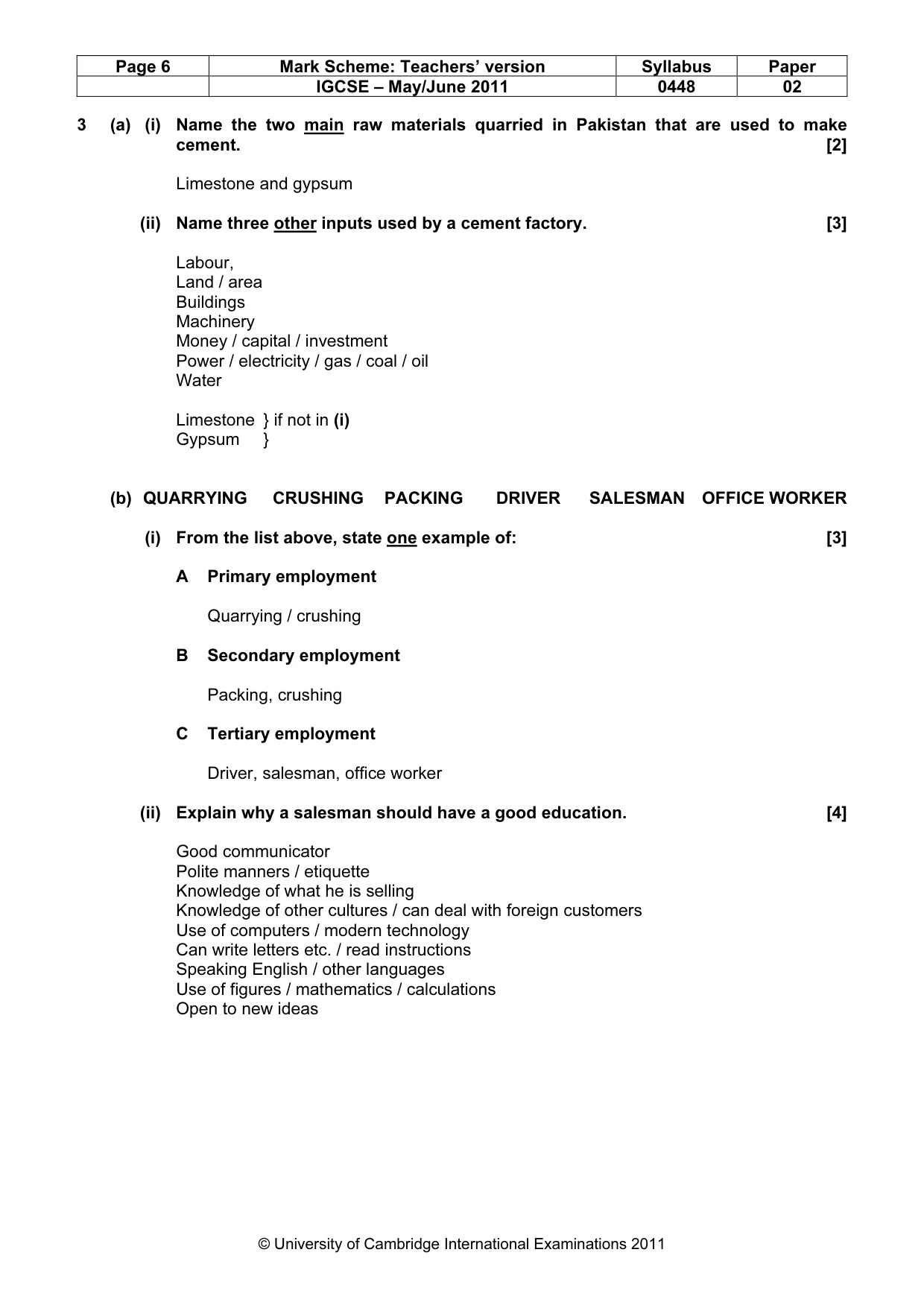
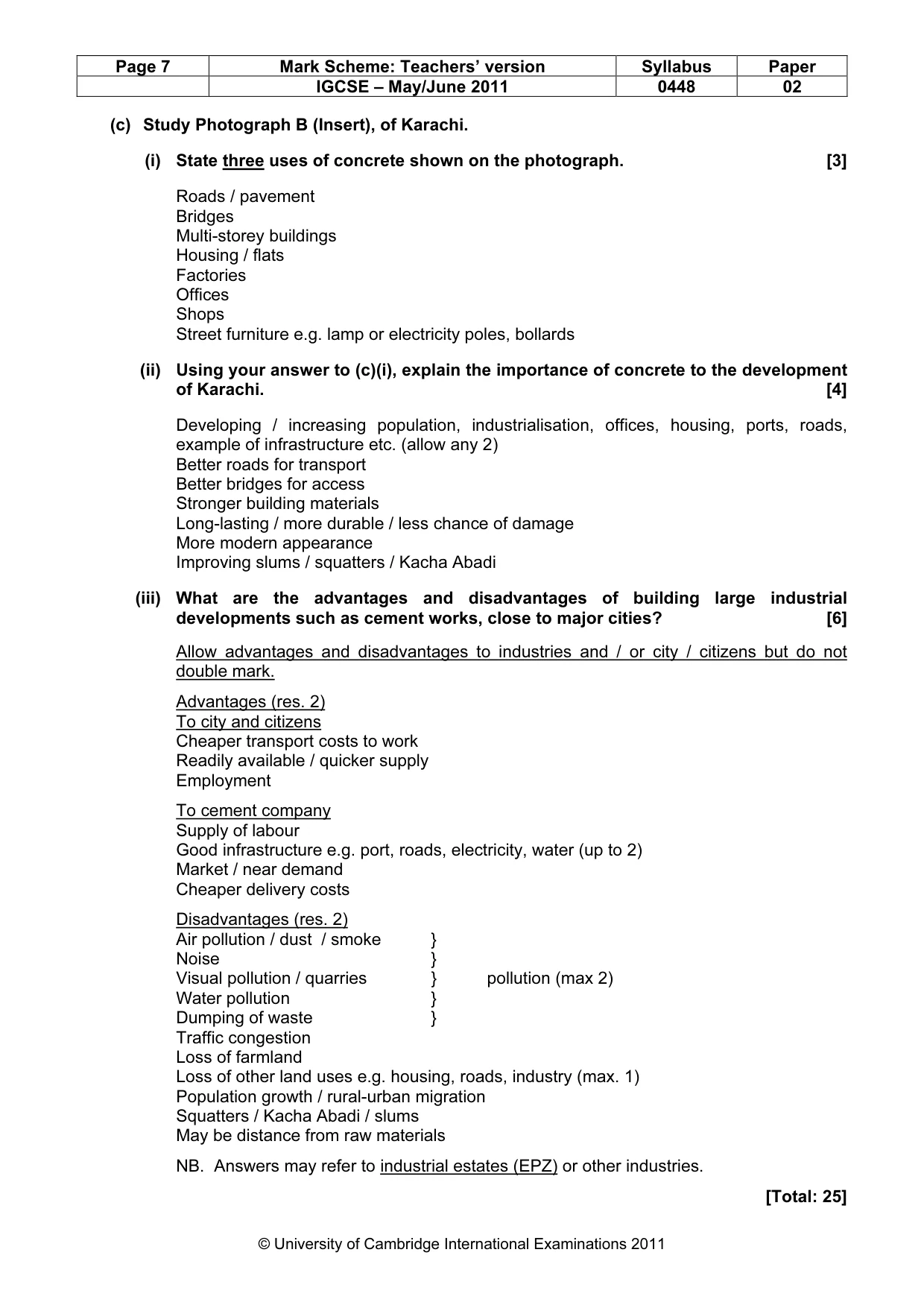
Mark scheme: 3 (a) (i) Name the two main raw materials quarried in Pakistan that are used to make cement. [2] Limestone and gypsum (ii) Name three other inputs used by a cement factory. [3] Labour, Land / area Buildings Machinery Money / capital / investment Power / electricity / gas / coal / oil Water Limestone } if not in (i) Gypsum } (b) QUARRYING CRUSHING PACKING DRIVER SALESMAN OFFICE WORKER (i) From the list above, state one example of: [3] A Primary employment Quarrying / crushing B Secondary employment Packing, crushing C Tertiary employment Driver, salesman, office worker (ii) Explain why a salesman should have a good education. [4] Good communicator Polite manners / etiquette Knowledge of what he is selling Knowledge of other cultures / can deal with foreign customers Use of computers / modern technology Can write letters etc. / read instructions Speaking English / other languages Use of figures / mathematics / calculations Open to new ideas IGCSE – May/June 2011 0448 02 (c) Study Photograph B (Insert), of Karachi. (i) State three uses of concrete shown on the photograph. [3] Roads / pavement Bridges Multi-storey buildings Housing / flats Factories Offices Shops Street furniture e.g. lamp or electricity poles, bollards (ii) Using your answer to (c)(i), explain the importance of concrete to the development of Karachi. [4] Developing / increasing population, industrialisation, offices, housing, ports, roads, example of infrastructure etc. (allow any 2) Better roads for transport Better bridges for access Stronger building materials Long-lasting / more durable / less chance of damage More modern appearance Improving slums / squatters / Kacha Abadi (iii) What are the advantages and disadvantages of building large industrial developments such as cement works, close to major cities? [6] Allow advantages and disadvantages to industries and / or city / citizens but do not double mark. Advantages (res. 2) To city and citizens Cheaper transport costs to work Readily available / quicker supply Employment To cement company Supply of labour Good infrastructure e.g. port, roads, electricity, water (up to 2) Market / near demand Cheaper delivery costs Disadvantages (res. 2) Air pollution / dust / smoke } Noise } Visual pollution / quarries } pollution (max 2) Water pollution } Dumping of waste } Traffic congestion Loss of farmland Loss of other land uses e.g. housing, roads, industry (max. 1) Population growth / rural-urban migration Squatters / Kacha Abadi / slums May be distance from raw materials NB. Answers may refer to industrial estates (EPZ) or other industries. [Total: 25] IGCSE – May/June 2011 0448 02
Question 4
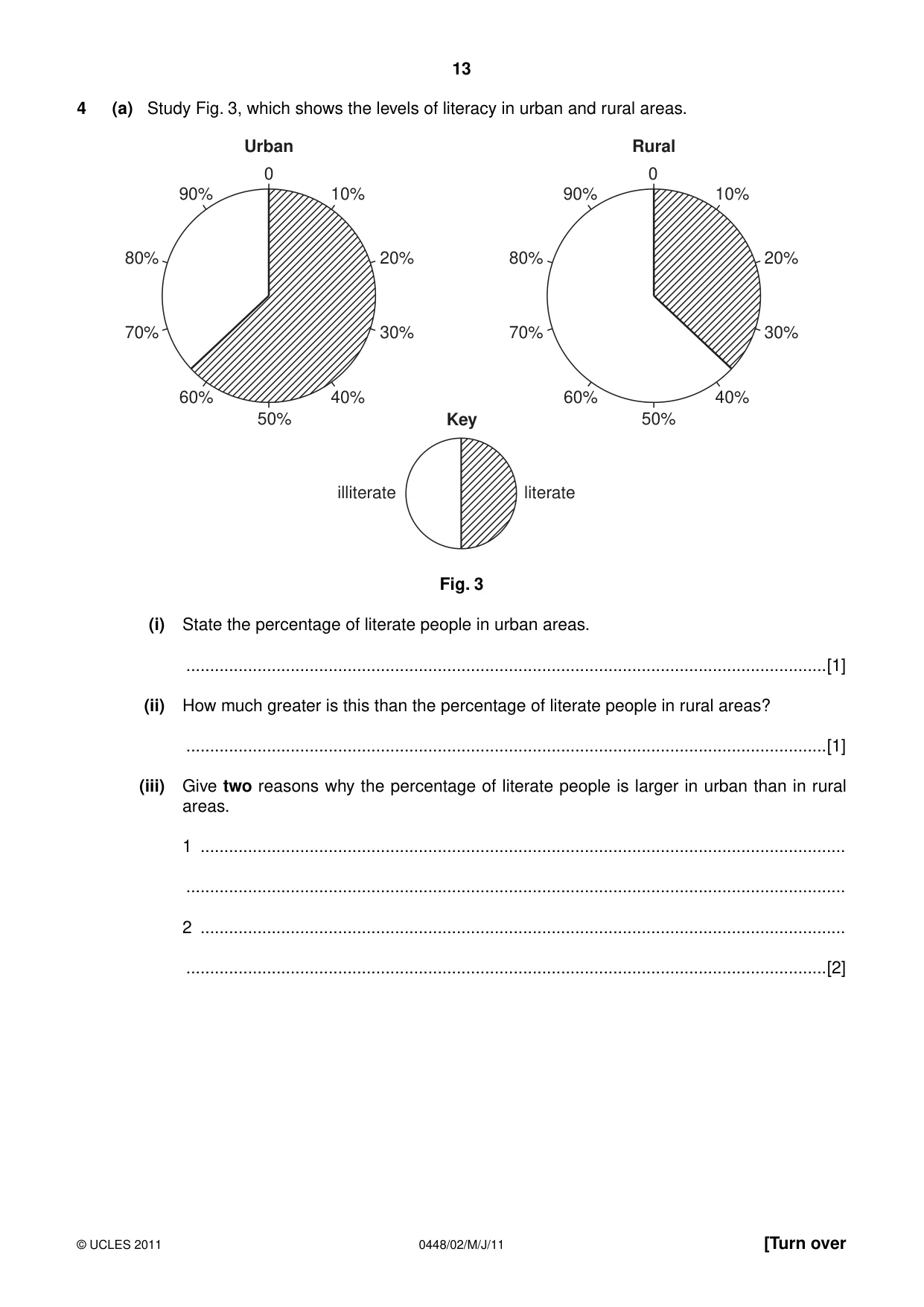
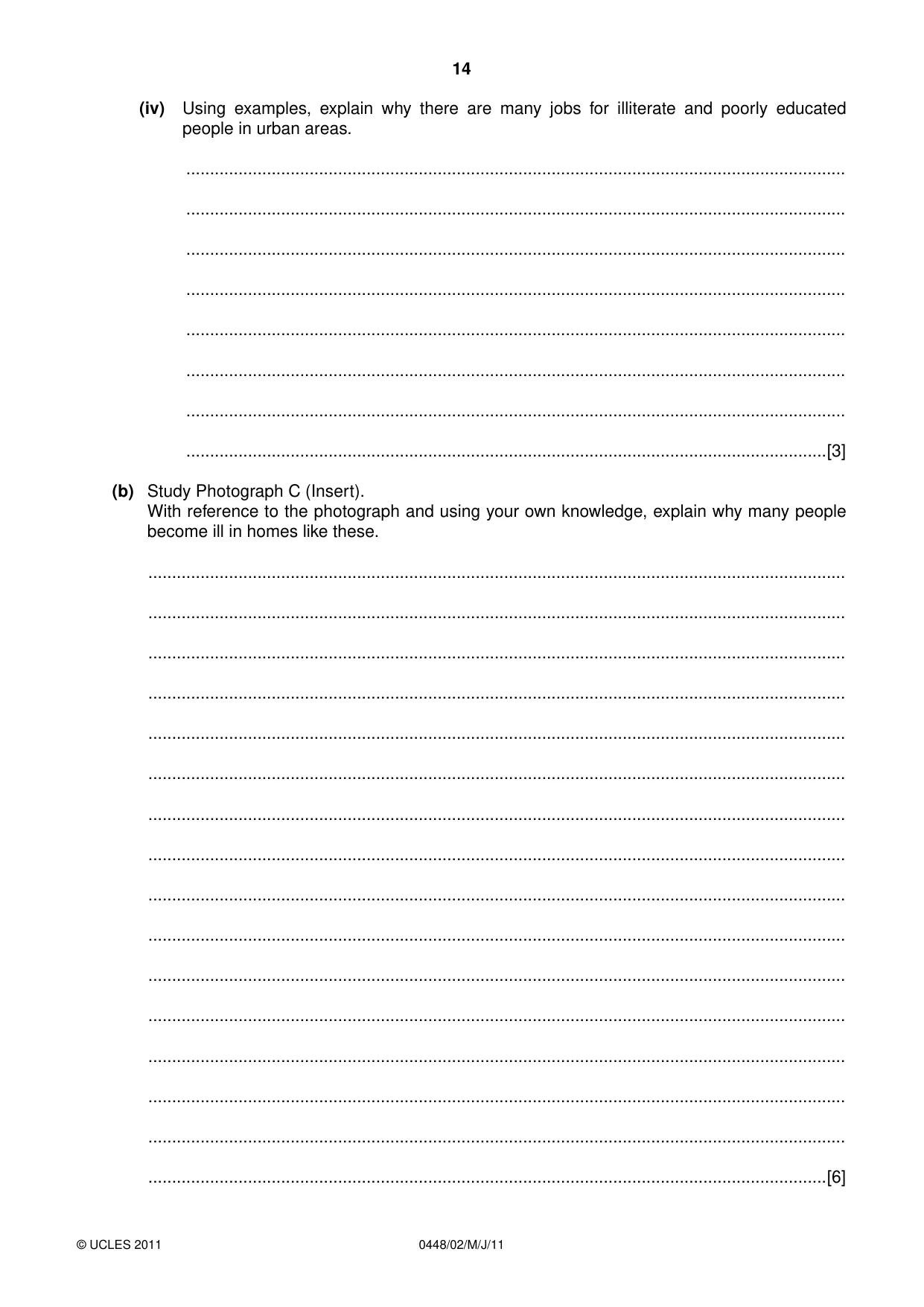
4 (a) Study Fig. 3, which shows the levels of literacy in urban and rural areas. Urban Rural 0 0 90% 10% 90% 10% 80% 20% 80% 20% 70% 30% 70% 30% 60% 40% 60% 40% 50% Key 50% illiterate literate Fig. 3 (i) State the percentage of literate people in urban areas. .......................................................................................................................................[1] (ii) How much greater is this than the percentage of literate people in rural areas? .......................................................................................................................................[1] (iii) Give two reasons why the percentage of literate people is larger in urban than in rural areas. 1 ........................................................................................................................................ ........................................................................................................................................... 2 ........................................................................................................................................ .......................................................................................................................................[2] (iv) Using examples, explain why there are many jobs for illiterate and poorly educated people in urban areas. ........................................................................................................................................... ........................................................................................................................................... ........................................................................................................................................... ........................................................................................................................................... ........................................................................................................................................... ........................................................................................................................................... ........................................................................................................................................... .......................................................................................................................................[3] (b) Study Photograph C (Insert). With reference to the photograph and using your own knowledge, explain why many people become ill in homes like these. ................................................................................................................................................... ................................................................................................................................................... ................................................................................................................................................... ................................................................................................................................................... ................................................................................................................................................... ................................................................................................................................................... ................................................................................................................................................... ................................................................................................................................................... ................................................................................................................................................... ................................................................................................................................................... ................................................................................................................................................... ................................................................................................................................................... ................................................................................................................................................... ................................................................................................................................................... ................................................................................................................................................... ...............................................................................................................................................[6] (c) Why do people in villages think that their quality of life will improve if they move to a city? ................................................................................................................................................... ................................................................................................................................................... ................................................................................................................................................... ................................................................................................................................................... ................................................................................................................................................... ................................................................................................................................................... ................................................................................................................................................... ................................................................................................................................................... ................................................................................................................................................... ................................................................................................................................................... ................................................................................................................................................... ................................................................................................................................................... ................................................................................................................................................... ................................................................................................................................................... ................................................................................................................................................... ...............................................................................................................................................[6] (d) The government can introduce self-help schemes to improve the living conditions of people in shanty developments and tent cities. Explain the advantages and disadvantages of self-help schemes. Advantages ............................................................................................................................... ................................................................................................................................................... ................................................................................................................................................... ................................................................................................................................................... ................................................................................................................................................... ................................................................................................................................................... ................................................................................................................................................... ................................................................................................................................................... Disadvantages ........................................................................................................................... ................................................................................................................................................... ................................................................................................................................................... ................................................................................................................................................... ................................................................................................................................................... ................................................................................................................................................... ................................................................................................................................................... ...............................................................................................................................................[6] [Total: 25]
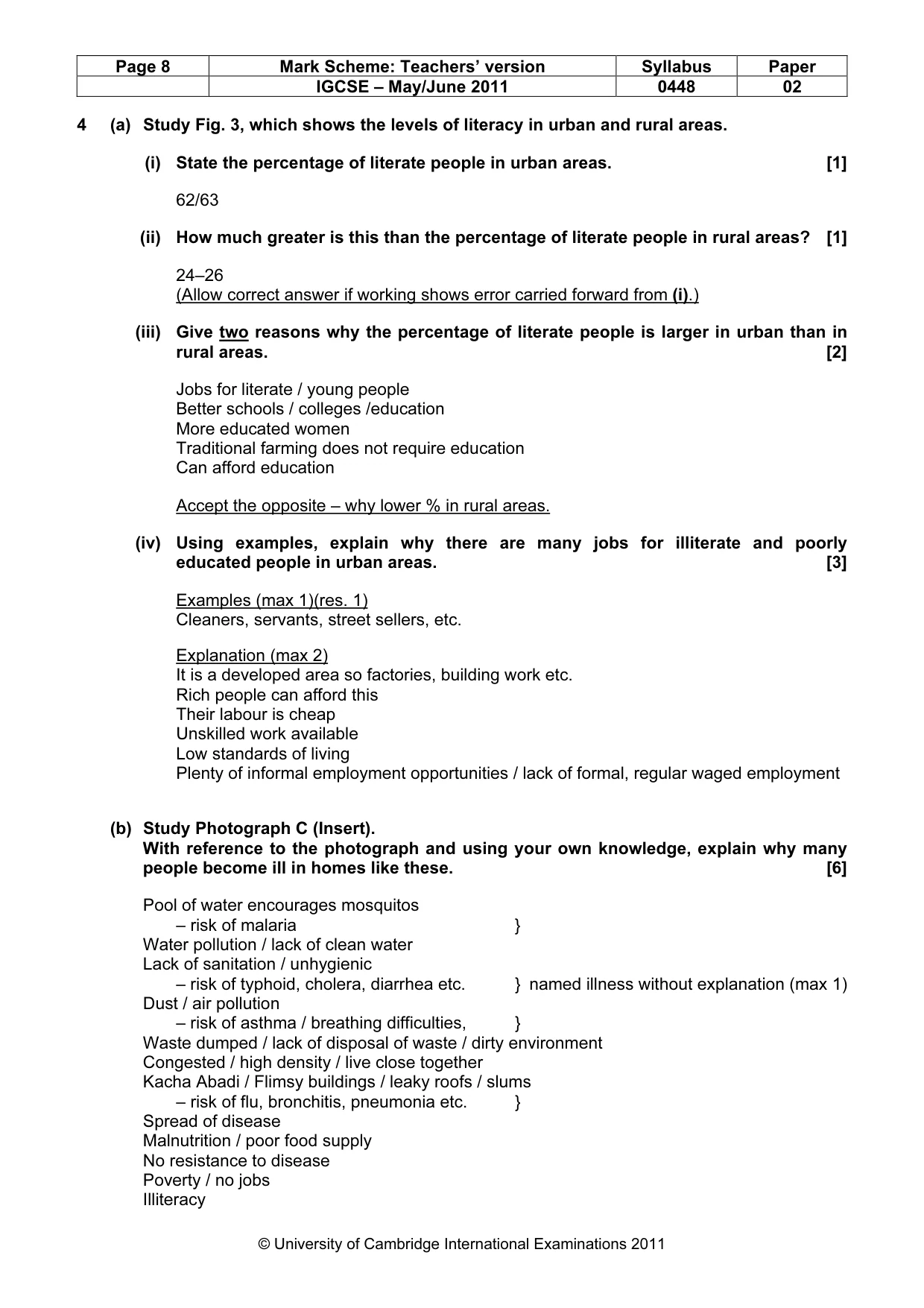
Mark scheme: 4 (a) Study Fig. 3, which shows the levels of literacy in urban and rural areas. (i) State the percentage of literate people in urban areas. [1] 62/63 (ii) How much greater is this than the percentage of literate people in rural areas? [1] 24–26 (Allow correct answer if working shows error carried forward from (i).) (iii) Give two reasons why the percentage of literate people is larger in urban than in rural areas. [2] Jobs for literate / young people Better schools / colleges /education More educated women Traditional farming does not require education Can afford education Accept the opposite – why lower % in rural areas. (iv) Using examples, explain why there are many jobs for illiterate and poorly educated people in urban areas. [3] Examples (max 1)(res. 1) Cleaners, servants, street sellers, etc. Explanation (max 2) It is a developed area so factories, building work etc. Rich people can afford this Their labour is cheap Unskilled work available Low standards of living Plenty of informal employment opportunities / lack of formal, regular waged employment (b) Study Photograph C (Insert). With reference to the photograph and using your own knowledge, explain why many people become ill in homes like these. [6] Pool of water encourages mosquitos – risk of malaria } Water pollution / lack of clean water Lack of sanitation / unhygienic – risk of typhoid, cholera, diarrhea etc. } named illness without explanation (max 1) Dust / air pollution – risk of asthma / breathing difficulties, } Waste dumped / lack of disposal of waste / dirty environment Congested / high density / live close together Kacha Abadi / Flimsy buildings / leaky roofs / slums – risk of flu, bronchitis, pneumonia etc. } Spread of disease Malnutrition / poor food supply No resistance to disease Poverty / no jobs Illiteracy IGCSE – May/June 2011 0448 02 (c) Why do people in villages think that their quality of life will improve if they move to a city? [6] Better housing More chances of employment / jobs with higher incomes, regular income etc. Easier work / better working conditions (than farming) Electricity / gas Telecommunication / telephone / internet Sanitation / sewage disposal / more hygienic / cleaner Water – more / clean water Access to entertainment / bright lights / clubs / parks Media encourages perception of a better life Good shops / major chains / markets More food / better food Public transport Education Health care / hospitals Security / police (d) The government can introduce self-help schemes to improve the living conditions of people in shanty developments and tent cities. Explain the advantages and disadvantages of self-help schemes. [6] Advantages (res 2)s Reduces poverty Healthier environment / less disease / lower death rates Encourages people (to better themselves / work harder etc.) / improve skills / get jobs Can build better housing / fewer slums Better care of the area Removes unwanted people May reduce crime rates Removes an eyesore / encourages tourism Less labour required Disadvantages (res. 2) High cost / lack of finance available Corruption (money goes elsewhere) Takes time to achieve High risk of failure in Pakistan Lack of resources to do this Where do people go / moves the problem elsewhere May attract more people / more rural-urban migration Need for education [Total: 25] IGCSE – May/June 2011 0448 02
Q5 · Describe the route of the main monsoon across Pakistan
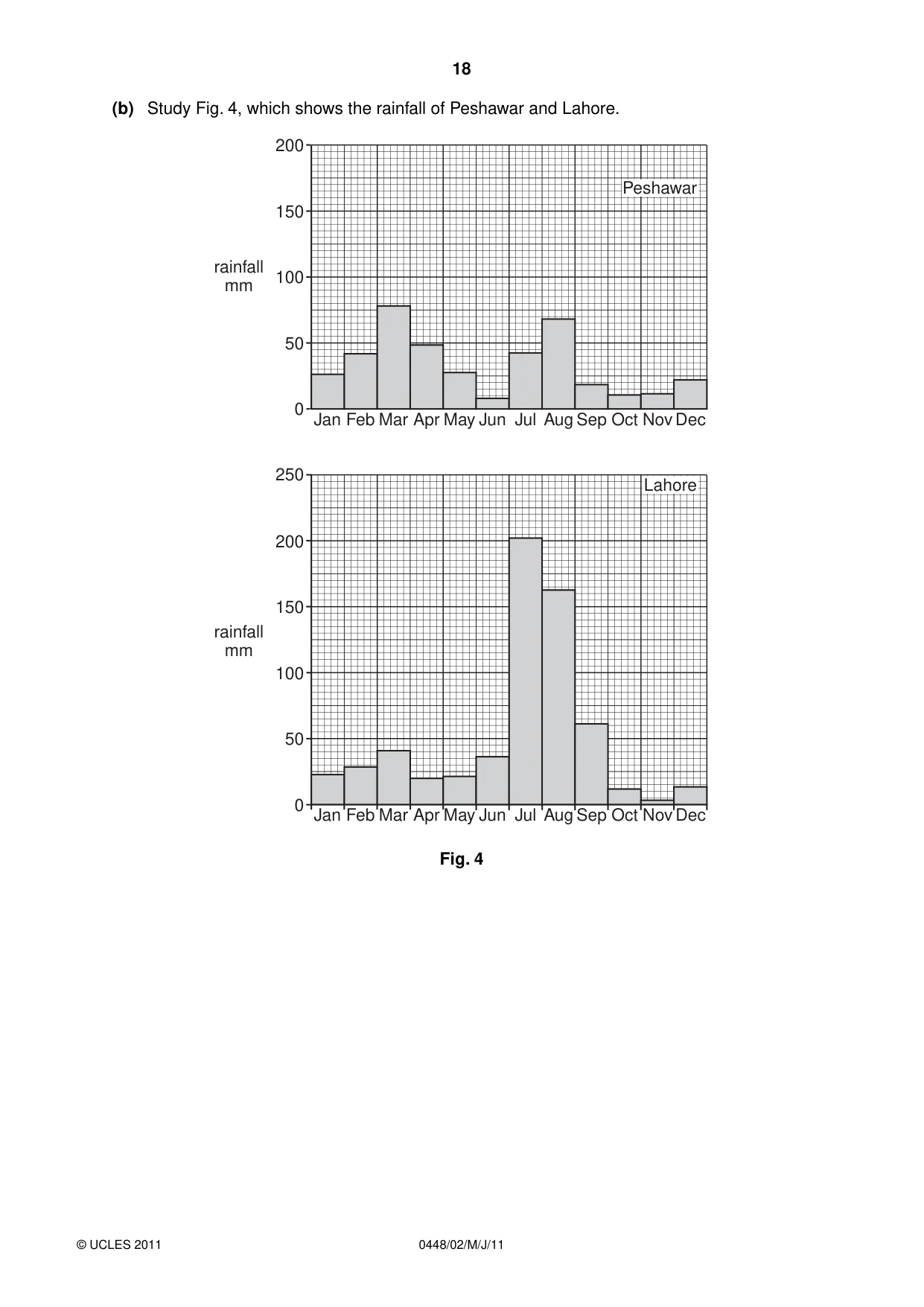
5 (a) Describe the route of the main monsoon across Pakistan. ................................................................................................................................................... ................................................................................................................................................... ................................................................................................................................................... ................................................................................................................................................... ................................................................................................................................................... ................................................................................................................................................... ................................................................................................................................................... ...............................................................................................................................................[3] (b) Study Fig. 4, which shows the rainfall of Peshawar and Lahore. 200 Peshawar 150 rainfall 100 mm 50 0 Jan Feb Mar Apr May Jun Jul Aug Sep Oct Nov Dec 250 Lahore 200 150 rainfall mm 100 50 0 Jan Feb Mar Apr May Jun Jul Aug Sep Oct Nov Dec Fig. 4 (i) Using figures from Fig. 4 in your answer, compare the distribution of rainfall from June to September at Lahore and Peshawar. ........................................................................................................................................... ........................................................................................................................................... ........................................................................................................................................... ........................................................................................................................................... ........................................................................................................................................... ........................................................................................................................................... ........................................................................................................................................... ........................................................................................................................................... ........................................................................................................................................... .......................................................................................................................................[4] (ii) Explain why there are differences in amounts of rainfall caused by the monsoon in different areas of Pakistan. ........................................................................................................................................... ........................................................................................................................................... ........................................................................................................................................... ........................................................................................................................................... ........................................................................................................................................... ........................................................................................................................................... ........................................................................................................................................... ........................................................................................................................................... ........................................................................................................................................... .......................................................................................................................................[4]
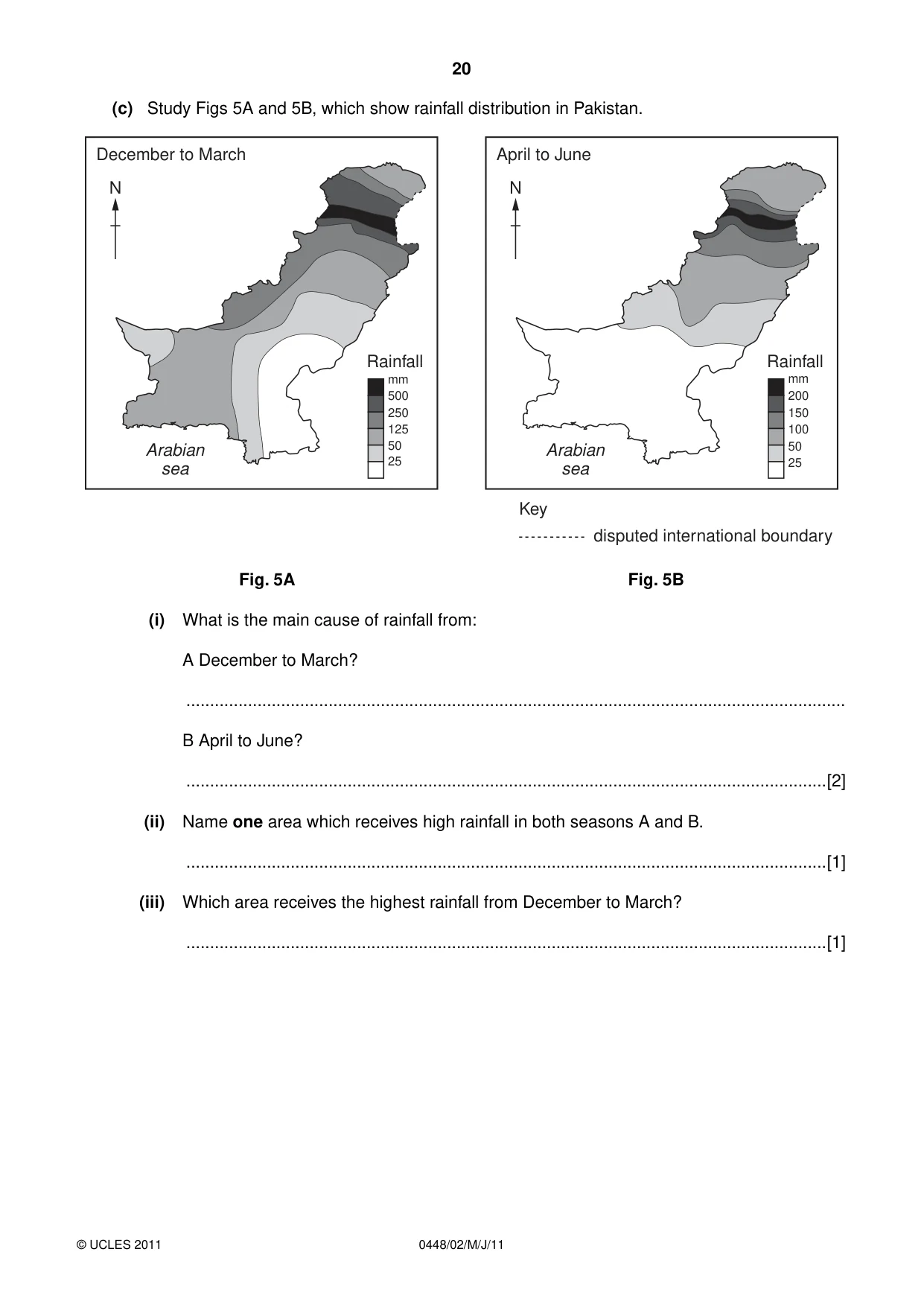
Mark scheme: 5 (a) Describe the route of the main monsoon across Pakistan. [3] East to west / from NE / from East From Bay of Bengal / Northern India Across Punjab / upper Indus Plain Towards the Northern Areas / mountains / interior Asia (b) Study Fig. 4, which shows the rainfall of Peshawar and Lahore. (i) Using figures from Fig. 4 in your answer, compare the distribution of rainfall from June to September at Lahore and Peshawar. [4] Comparative figures (res. 1) Max 68 mms in Peshawar, 202 mms in Lahore Totals June – September Figures for any one month with comparative word Comparisons Less in Peshawar Maximum later in Peshawar Max in Aug in Peshawar, July in Lahore Annual minimum in June in Peshawar but not Lahore NB candidates must write about distribution of rain over the period. (ii) Explain why there are differences in amounts of rainfall caused by the monsoon in different areas of Pakistan. [4] Depends on moisture content / humidity Loses moisture / drier as it crosses the land / Pakistan is at the tail end More rain as it rises over hills Condensation / clouds caused by cooling of rising air Rain shadow effect on lee slopes Climate change with reason e.g. global warming, ozone layer (max 1) (c) Study Figs 5A and 5B, which show rainfall distribution in Pakistan. (i) What is the main cause of rainfall from: [2] A December to March? Western depressions B April to June? Convection currents / thunderstorms (ii) Name one area which receives high rainfall in both seasons A and B. [1] N Punjab / central NWFP / Peshawar See atlas for a named district in these areas IGCSE – May/June 2011 0448 02 (iii) Which area receives the highest rainfall from December to March? [1] More than in summer – Western borders / Quetta More than rest of Pakistan – N Punjab / central NWFP / Peshawar See atlas for a named district in these areas (iv) What are the advantages and disadvantages of winter rainfall in Northern Pakistan? [6] Advantages (res. 2) Fills reservoirs / rivers / more storage Water for irrigation Water for HEP Water for barani crops Water for kharif / winter crops / fruit trees Water when everything else is frozen Lighter form of rain – can soak in Snow for tourism Disadvantages (res. 2) May fall as snow } Rivers / lakes frozen } so of little use Temperatures too cold for growth } Damage to environment – landslides, mudslides, floods etc. (allow avalanches) (max 1) Damage to roads – blockage, slippery etc. Silt collects in reservoirs / dams Difficulties meaning farmers must do transhumance/ nomadism (d) Explain the importance of the arrival of the monsoon to people who live and work in urban areas. [4] Benefits Cooler – better working and living conditions / pleasant climate Fresher – less dust, pollution, cleaner air Water supply – for drinking, factories, market gardens, buffalo (not rural farming) Problems Flooding (up to 2 marks) People cannot get to work Loss of production NB. Urban areas only Max 2 marks for any line [Total: 25]
What you needed in this session
Cambridge’s own grade thresholds for 2011 May/June, Paper 2 · Variant 1. A higher threshold means an easier paper — the bar moves with how the cohort did.