Cambridge IGCSE Environmental Management 0680 — 2024 Oct/Nov Paper 2 · Variant 1
0680/21/O/N/24 · 5 questions · 80 marks · ≈90 min
The question paper and its mark scheme, free to read here and free to download. This is Cambridge’s own paper, exactly as it was sat.
Question paper20 pages

Mark scheme11 pages
Answers below. Sit the paper first if you are practising.
Questions as text
Q1 · Calculate the number of people who lived in Istanbul in 2022
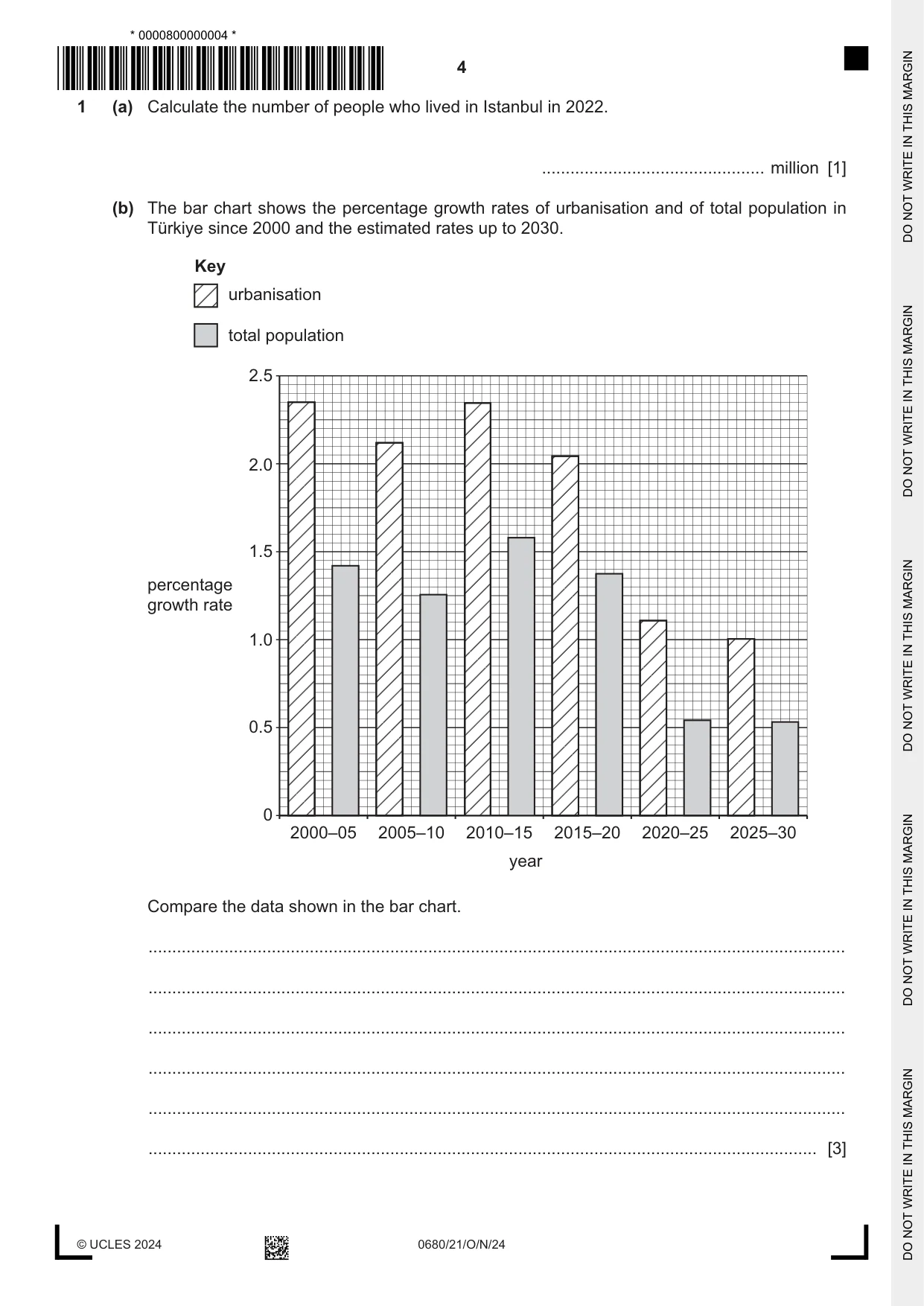
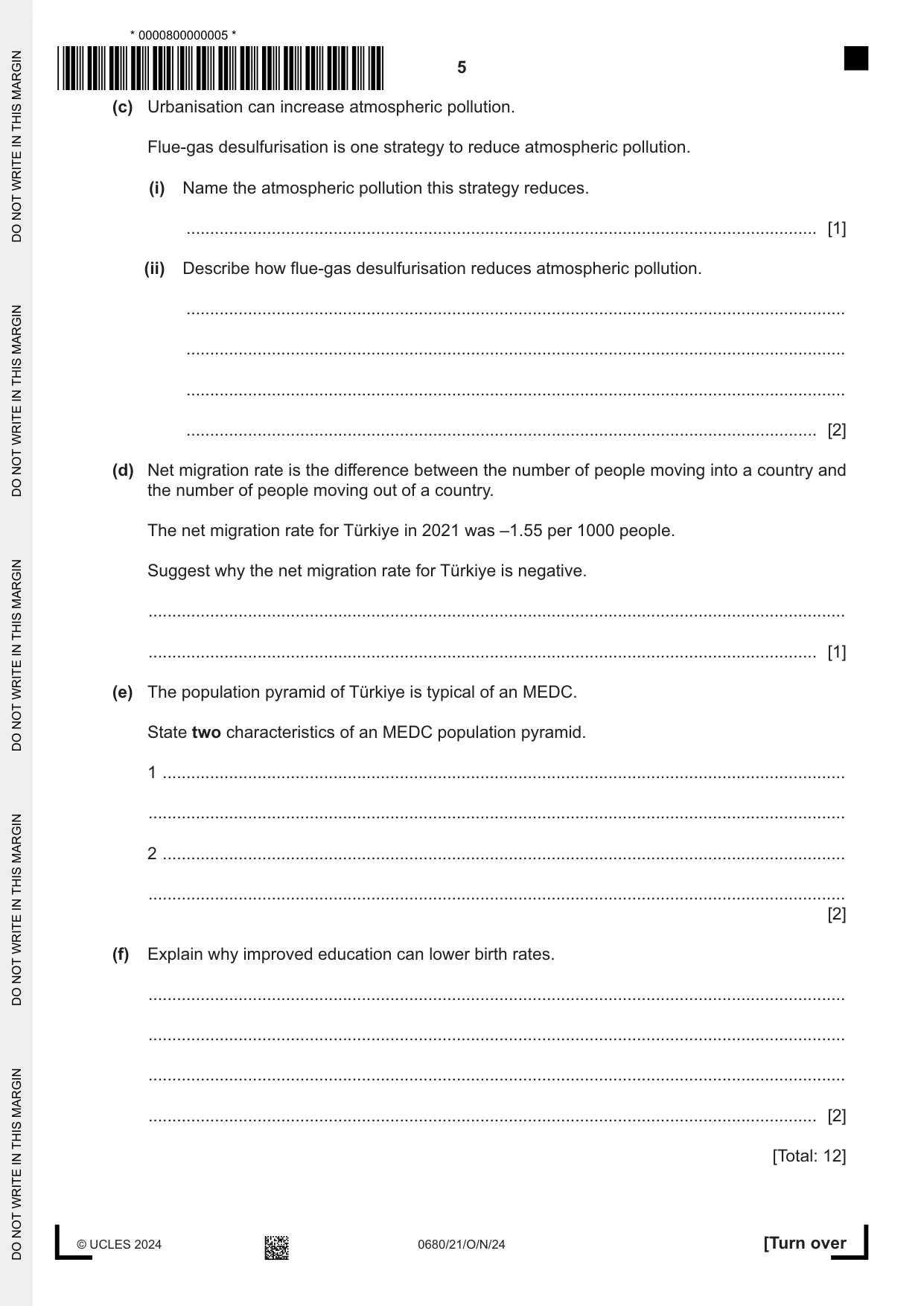
1 (a) Calculate the number of people who lived in Istanbul in 2022. ............................................... million [1] (b) The bar chart shows the percentage growth rates of urbanisation and of total population in Türkiye since 2000 and the estimated rates up to 2030. Key urbanisation total population 2.5 2.0 1.5 percentage growth rate 1.0 0.5 0 2000–05 2005–10 2010–15 2015–20 2020–25 2025–30 year Compare the data shown in the bar chart. ................................................................................................................................................... ................................................................................................................................................... ................................................................................................................................................... ................................................................................................................................................... ................................................................................................................................................... ............................................................................................................................................. [3] (c) Urbanisation can increase atmospheric pollution. Flue-gas desulfurisation is one strategy to reduce atmospheric pollution. (i) Name the atmospheric pollution this strategy reduces. ..................................................................................................................................... [1] (ii) Describe how flue-gas desulfurisation reduces atmospheric pollution. ........................................................................................................................................... ........................................................................................................................................... ........................................................................................................................................... ..................................................................................................................................... [2] (d) Net migration rate is the difference between the number of people moving into a country and the number of people moving out of a country. The net migration rate for Türkiye in 2021 was –1.55 per 1000 people. Suggest why the net migration rate for Türkiye is negative. ................................................................................................................................................... ............................................................................................................................................. [1] (e) The population pyramid of Türkiye is typical of an MEDC. State two characteristics of an MEDC population pyramid. 1 ................................................................................................................................................ ................................................................................................................................................... 2 ................................................................................................................................................ ................................................................................................................................................... [2] (f) Explain why improved education can lower birth rates. ................................................................................................................................................... ................................................................................................................................................... ................................................................................................................................................... ............................................................................................................................................. [2] [Total: 12]
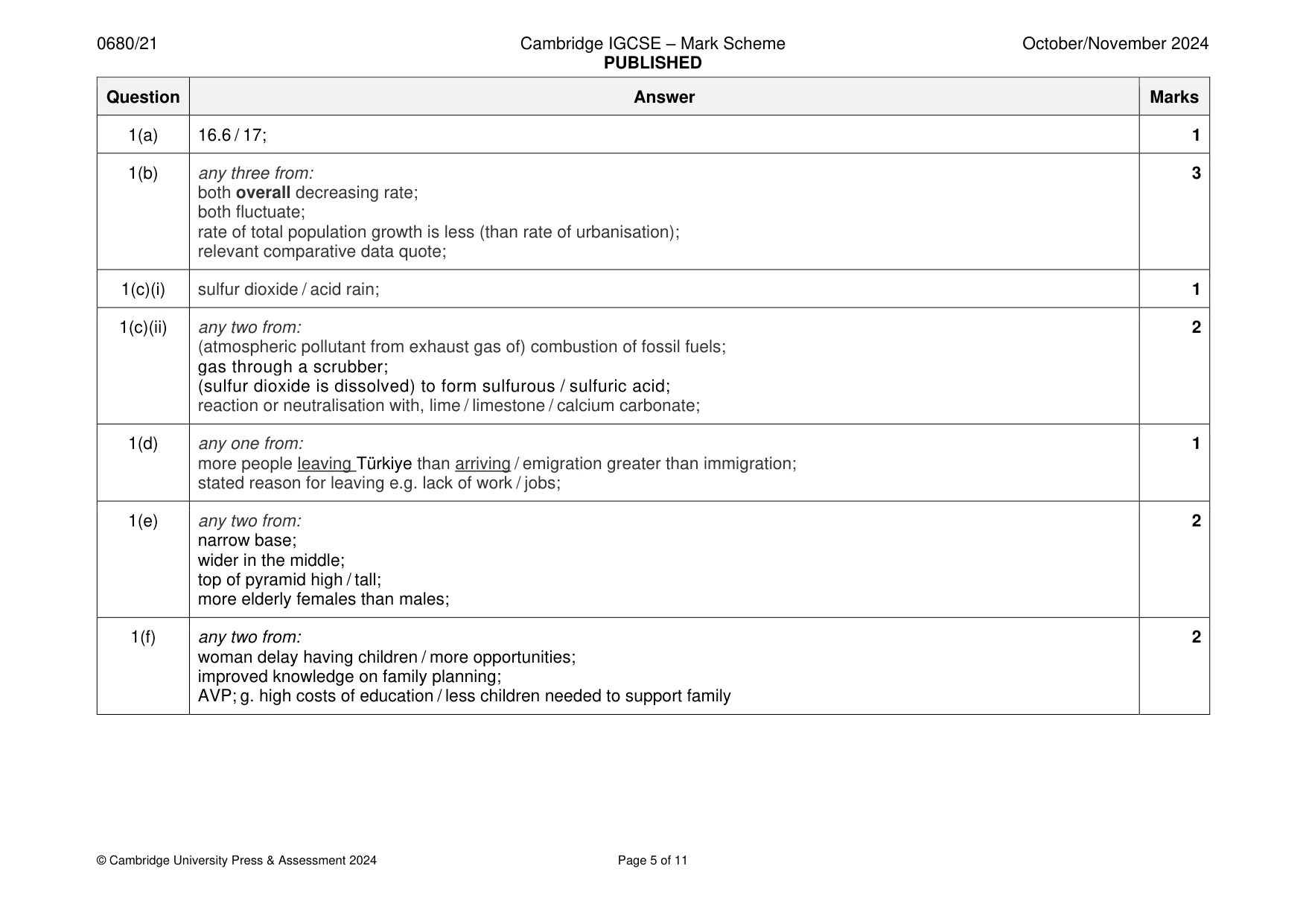
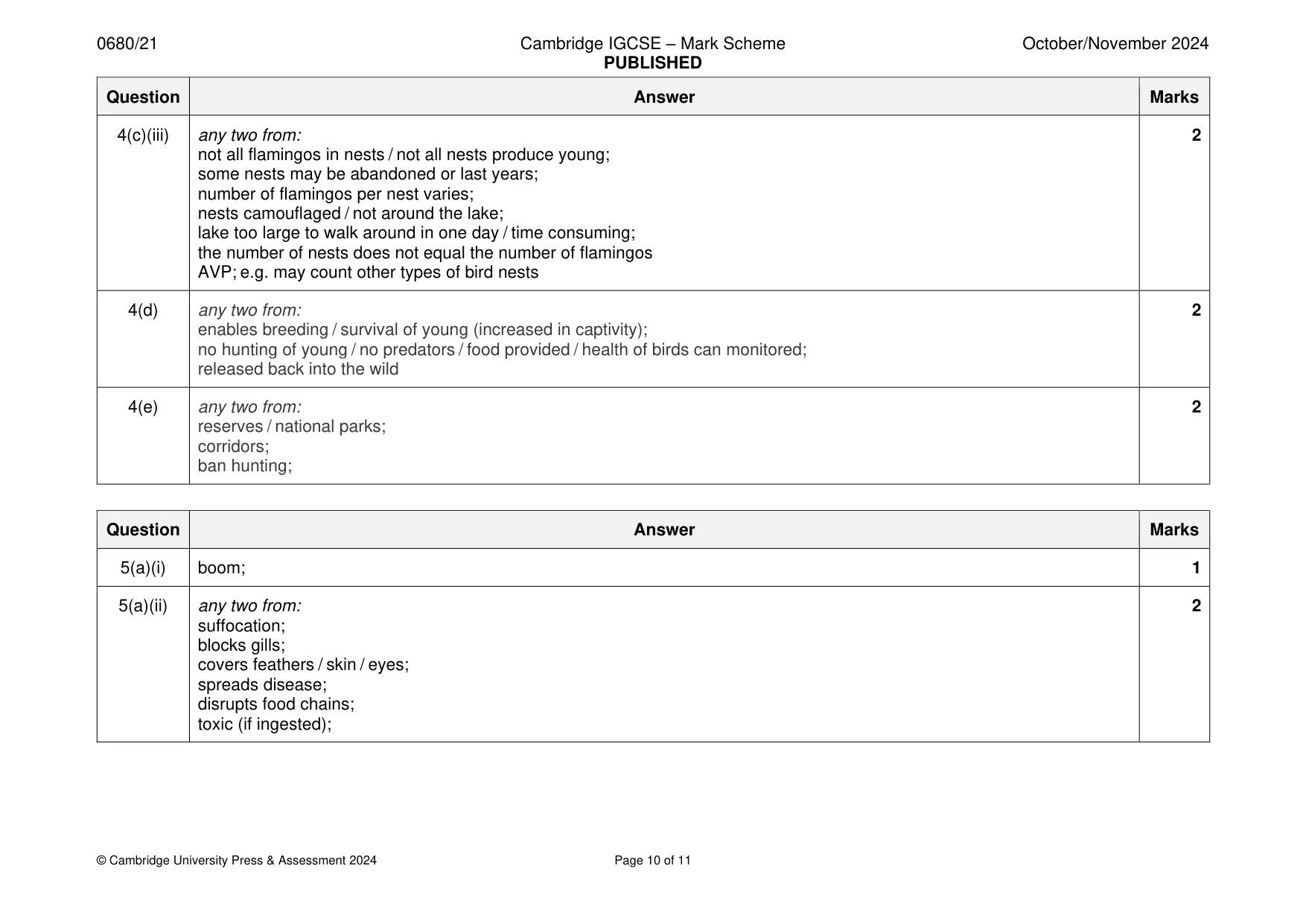
Mark scheme: Question Answer Marks 1(a) 16.6 / 17; 1 1(b) any three from: 3 both overall decreasing rate; both fluctuate; rate of total population growth is less (than rate of urbanisation); relevant comparative data quote; 1(c)(i) sulfur dioxide / acid rain; 1 1(c)(ii) any two from: 2 (atmospheric pollutant from exhaust gas of) combustion of fossil fuels; gas through a scrubber; (sulfur dioxide is dissolved) to form sulfurous / sulfuric acid; reaction or neutralisation with, lime / limestone / calcium carbonate; 1(d) any one from: 1 more people leaving Türkiye than arriving / emigration greater than immigration; stated reason for leaving e.g. lack of work / jobs; 1(e) any two from: 2 narrow base; wider in the middle; top of pyramid high / tall; more elderly females than males; 1(f) any two from: 2 woman delay having children / more opportunities; improved knowledge on family planning; AVP; g. high costs of education / less children needed to support family
Q2 · A report records how land is used in Türkiye
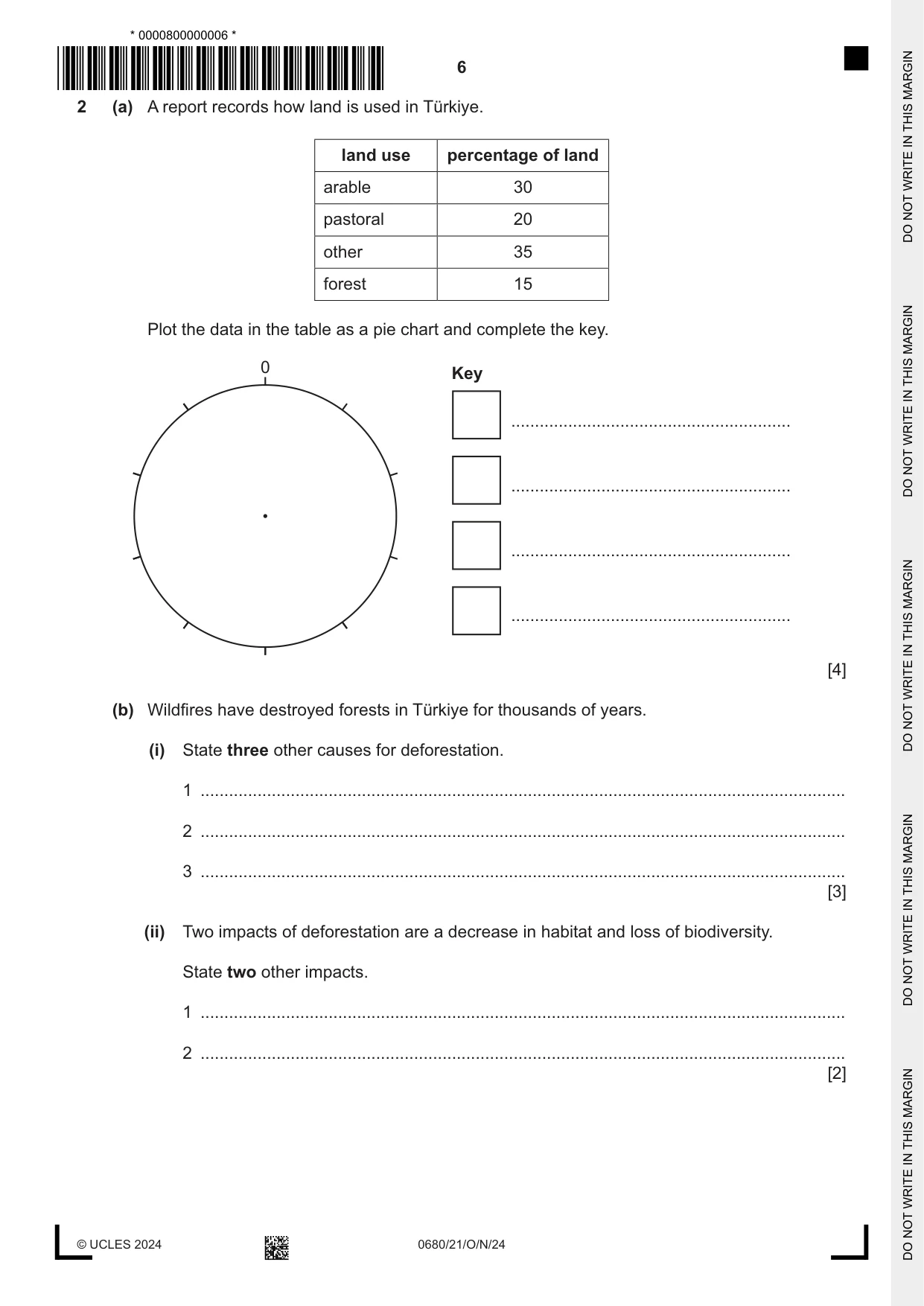
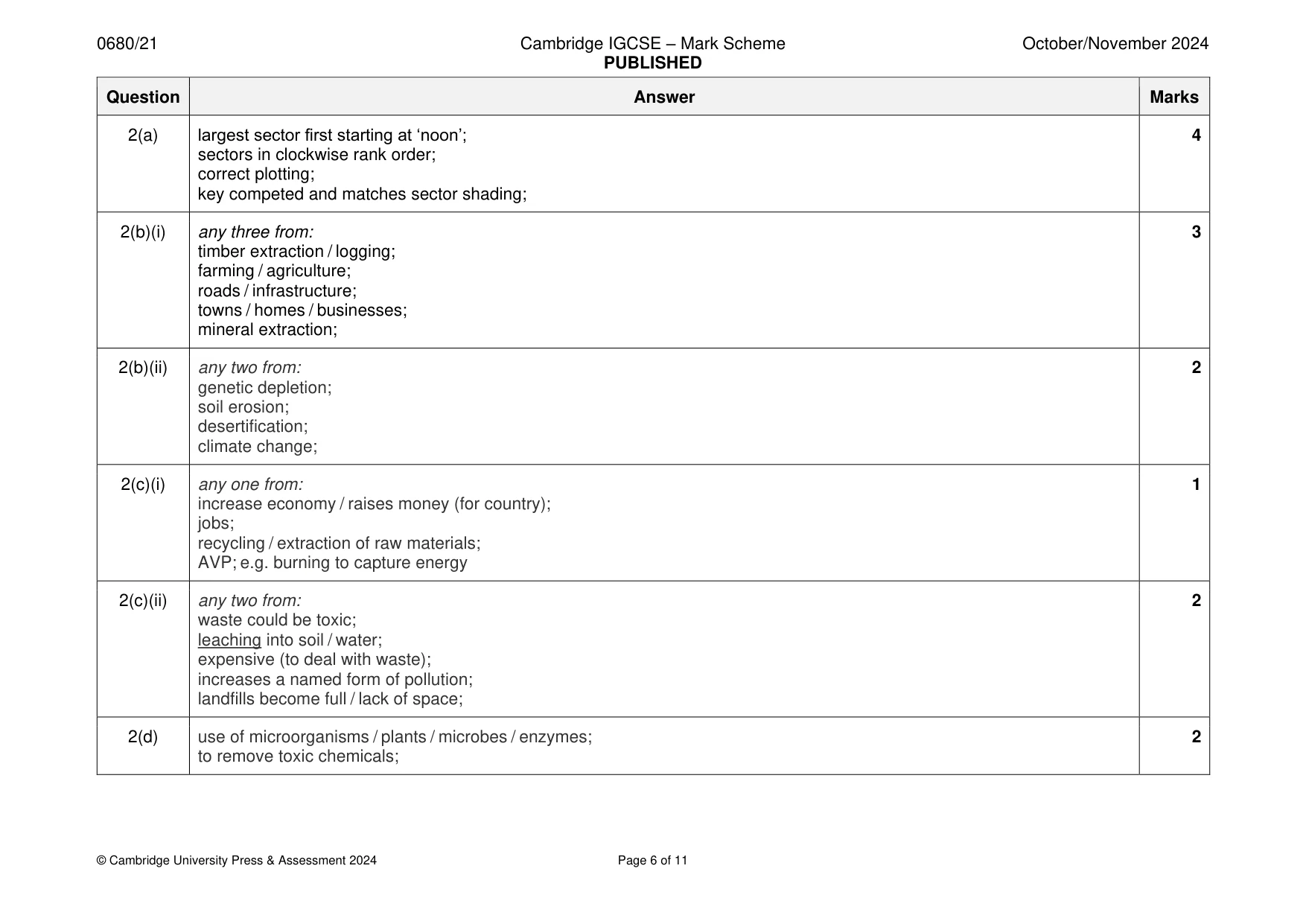
2 (a) A report records how land is used in Türkiye. land use percentage of land arable 30 pastoral 20 other 35 forest 15 Plot the data in the table as a pie chart and complete the key. 0 Key ........................................................... ........................................................... ........................................................... ........................................................... [4] (b) Wildfires have destroyed forests in Türkiye for thousands of years. (i) State three other causes for deforestation. 1 ........................................................................................................................................ 2 ........................................................................................................................................ 3 ........................................................................................................................................ [3] (ii) Two impacts of deforestation are a decrease in habitat and loss of biodiversity. State two other impacts. 1 ........................................................................................................................................ 2 ........................................................................................................................................ [2] (c) In 2020, a report stated that Türkiye imported 10.3 million tonnes of waste from other countries. Most of this waste became landfill or was incinerated. (i) Suggest one benefit to Türkiye of importing waste. ........................................................................................................................................... ..................................................................................................................................... [1] (ii) Suggest two negative impacts to Türkiye of importing waste. 1 ........................................................................................................................................ ........................................................................................................................................... 2 ........................................................................................................................................ ........................................................................................................................................... [2] (d) Landscapes damaged by mining can be used as landfill sites. Explain how bioremediation restores landscapes damaged by mining. ................................................................................................................................................... ................................................................................................................................................... ................................................................................................................................................... ............................................................................................................................................. [2] (e) Türkiye plans to increase recycling of its domestic waste. Suggest two ways recycling can be encouraged. 1 ................................................................................................................................................ ................................................................................................................................................... 2 ................................................................................................................................................ ................................................................................................................................................... [2] (f) Recycling is a strategy to increase the sustainable use of materials. State the meaning of sustainability. ................................................................................................................................................... ............................................................................................................................................. [2] [Total: 18]
Mark scheme: 2(a) largest sector first starting at ‘noon’; 4 sectors in clockwise rank order; correct plotting; key competed and matches sector shading; 2(b)(i) any three from: 3 timber extraction / logging; farming / agriculture; roads / infrastructure; towns / homes / businesses; mineral extraction; 2(b)(ii) any two from: 2 genetic depletion; soil erosion; desertification; climate change; 2(c)(i) any one from: 1 increase economy / raises money (for country); jobs; recycling / extraction of raw materials; AVP; e.g. burning to capture energy 2(c)(ii) any two from: 2 waste could be toxic; leaching into soil / water; expensive (to deal with waste); increases a named form of pollution; landfills become full / lack of space; 2(d) use of microorganisms / plants / microbes / enzymes; 2 to remove toxic chemicals; 2(e) any two from: 2 provide recycling bins; educating public; fines / financial incentives; e.g. charge for using plastic bags build (more) recycling centres; AVP e.g. legislation; 2(f) meeting the needs of current generation; 2 without comprising needs of future generations;
Q3 · Türkiye is the world’s largest producer of apricots
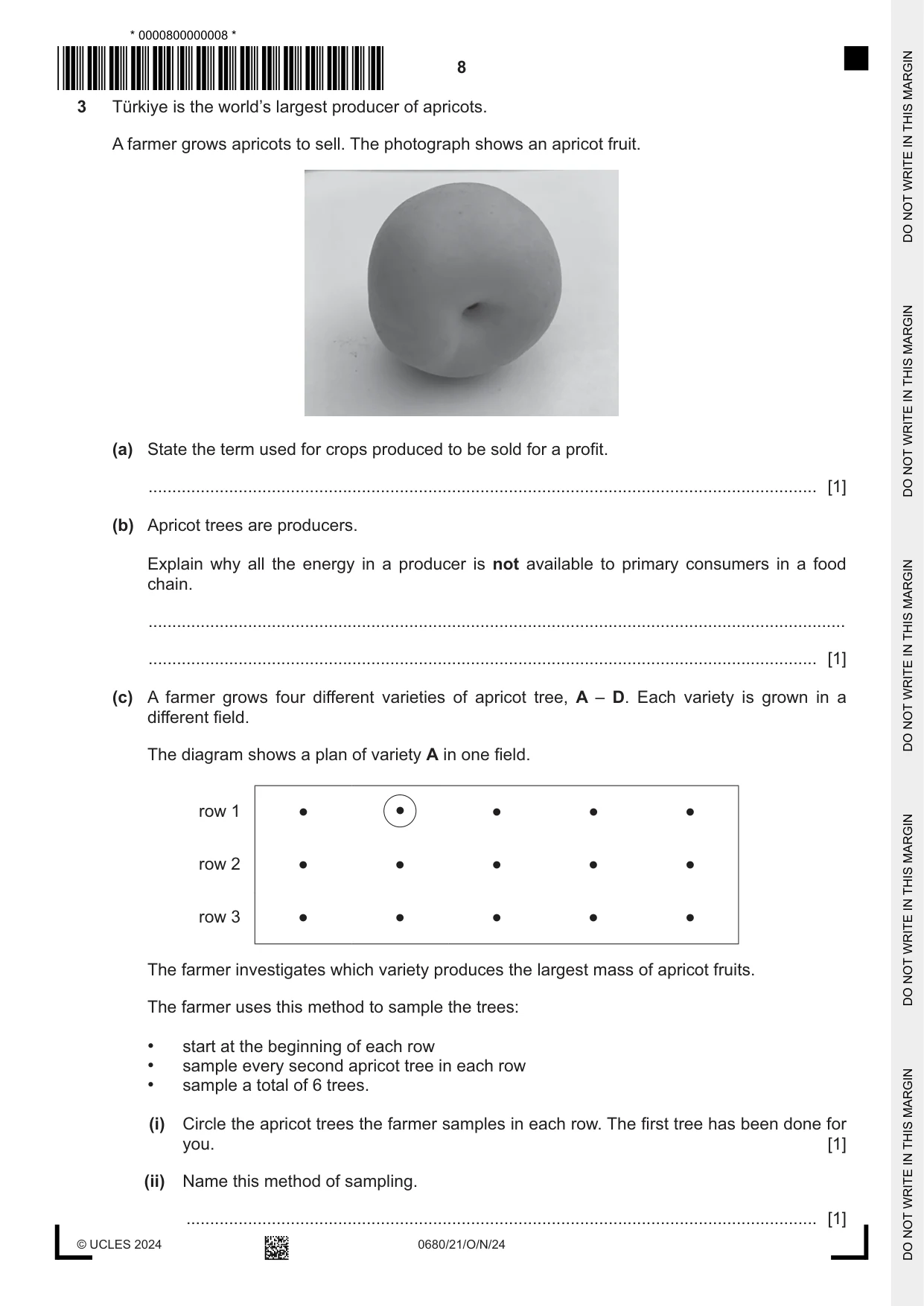
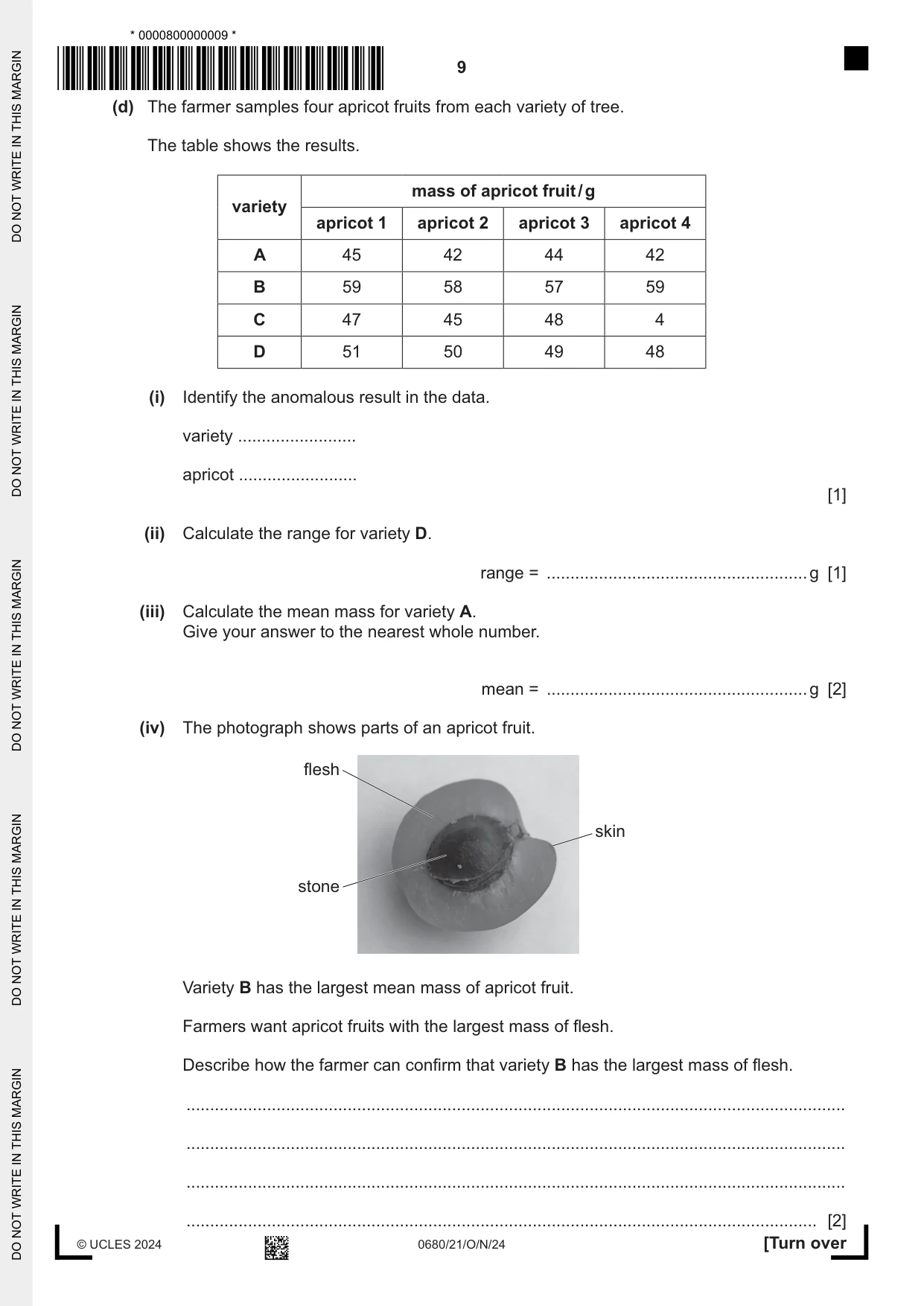
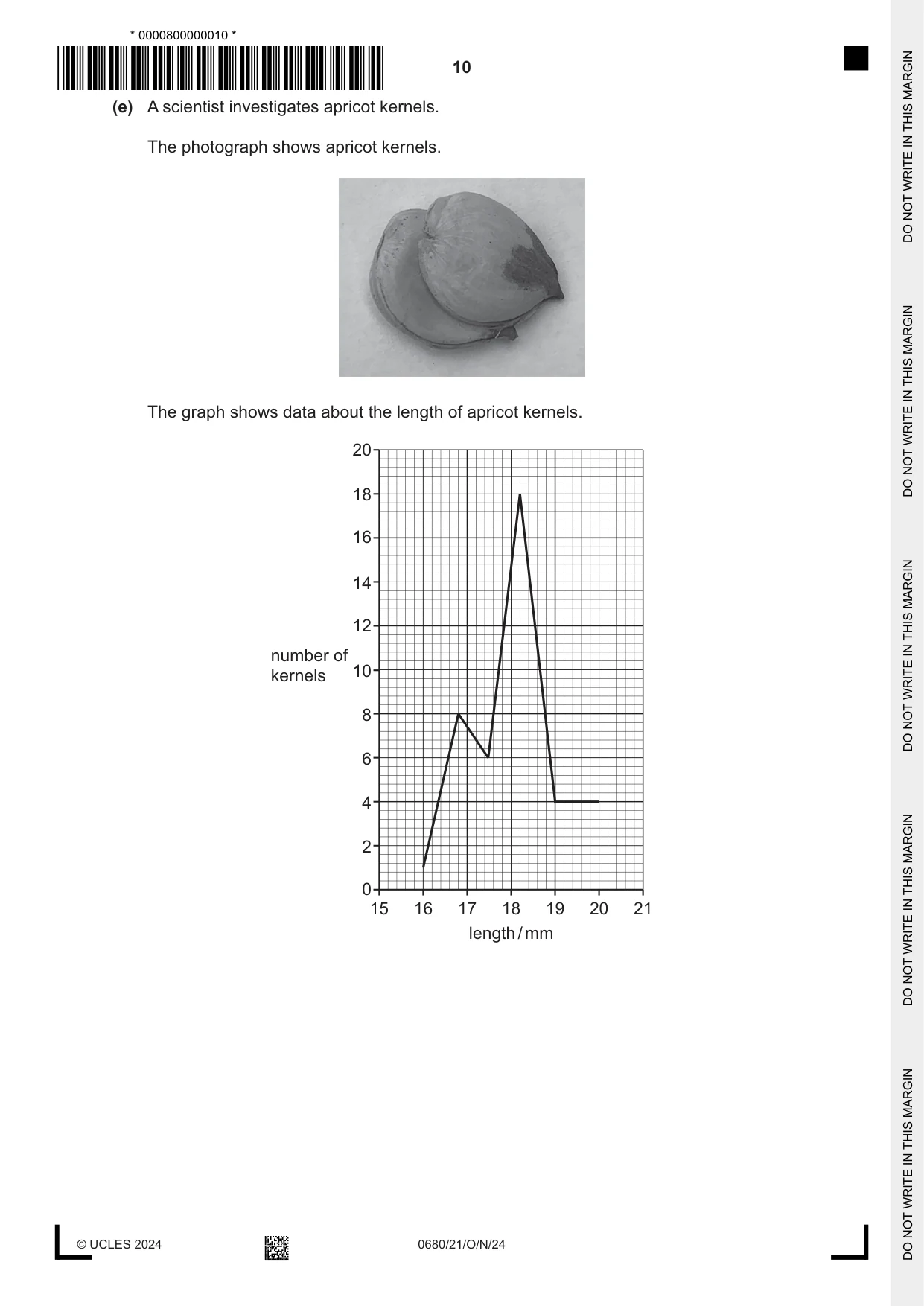
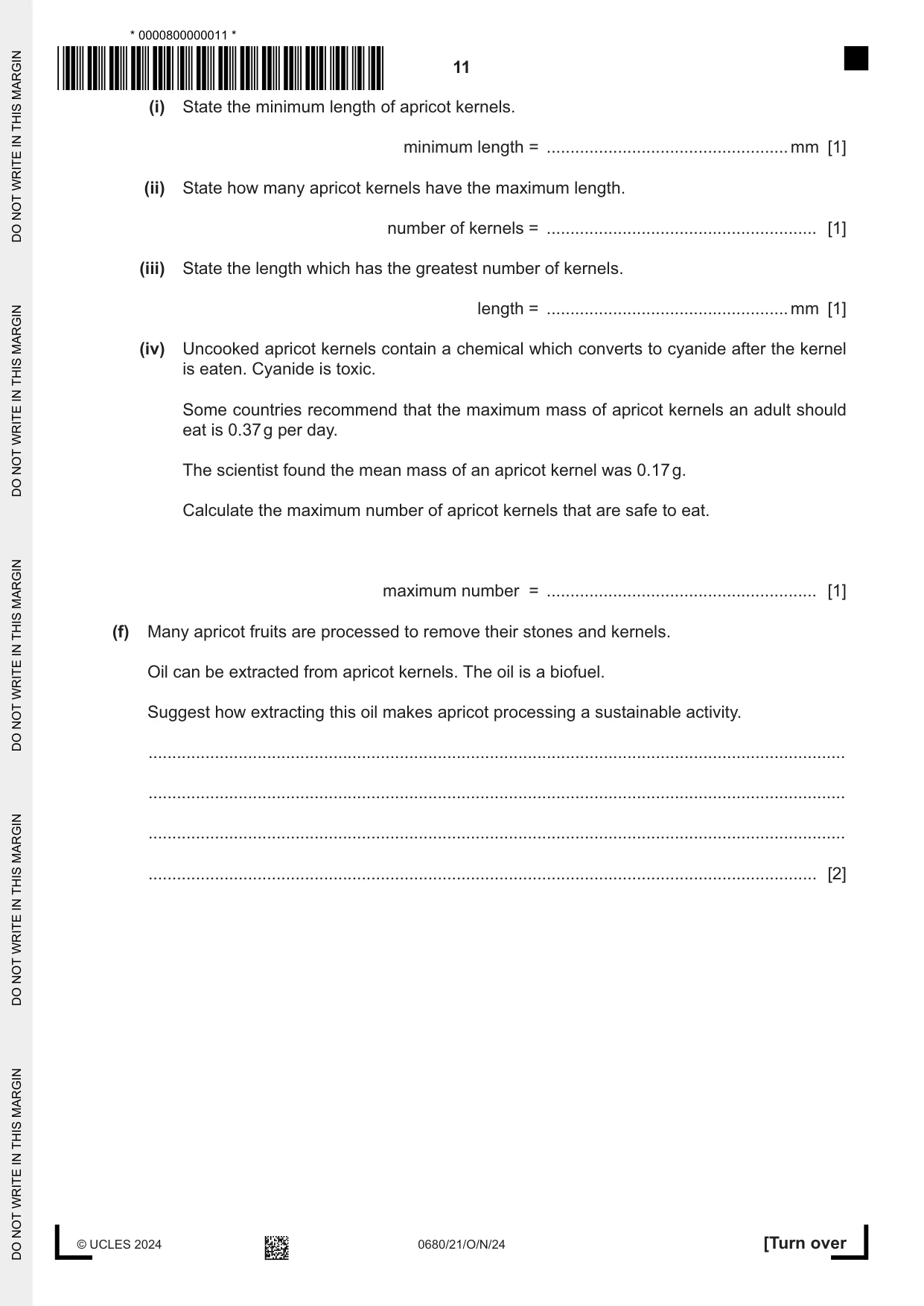
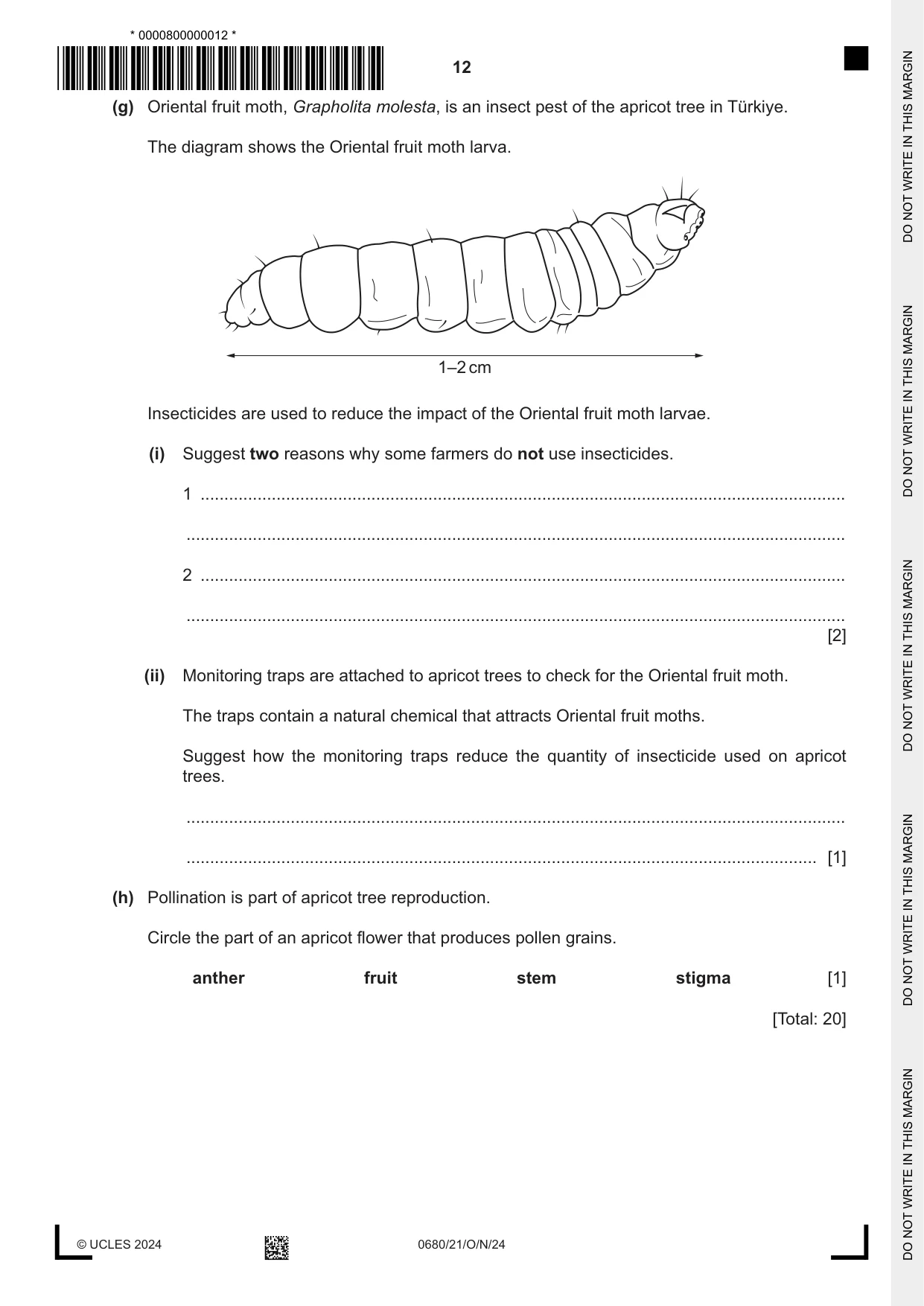
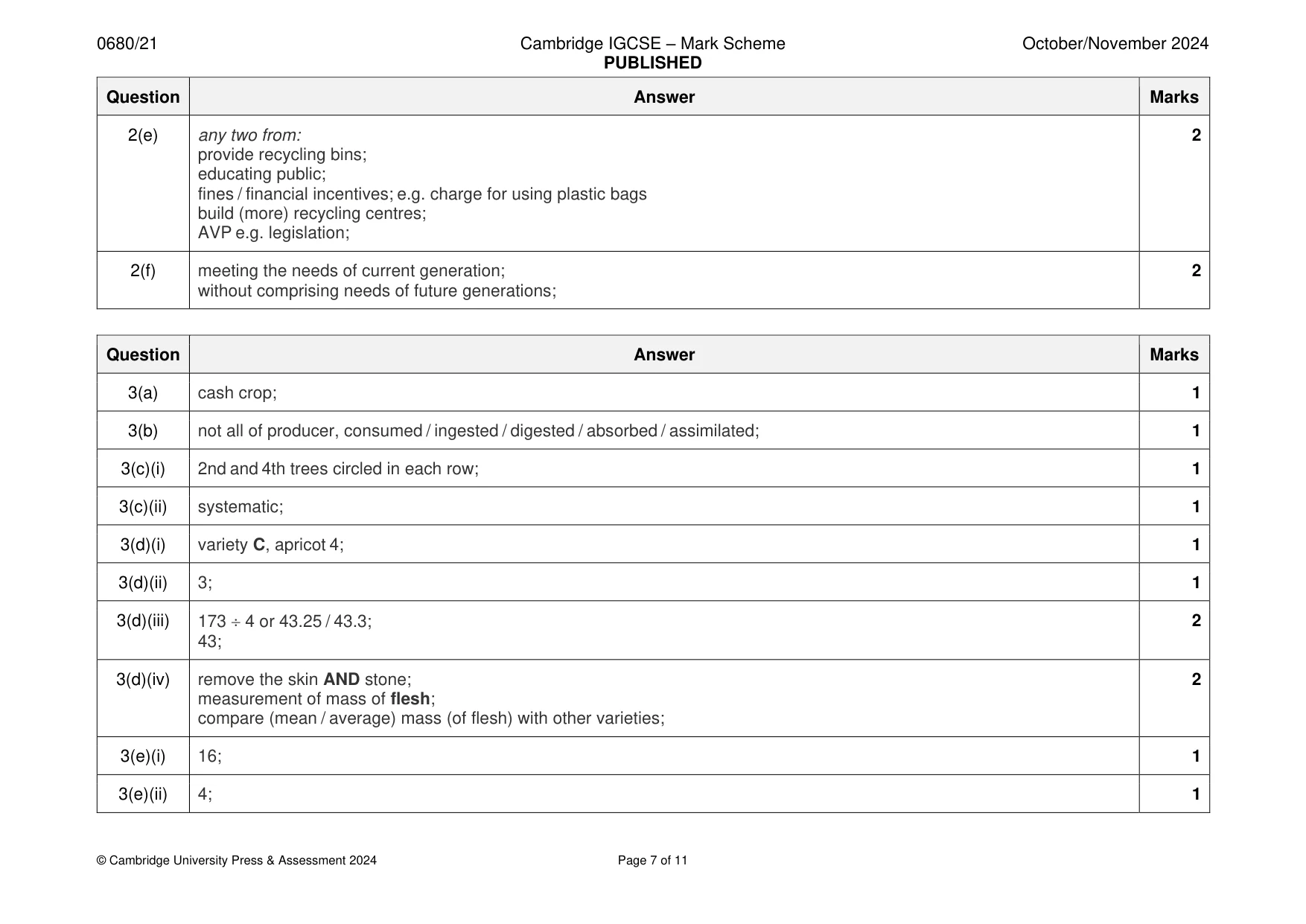
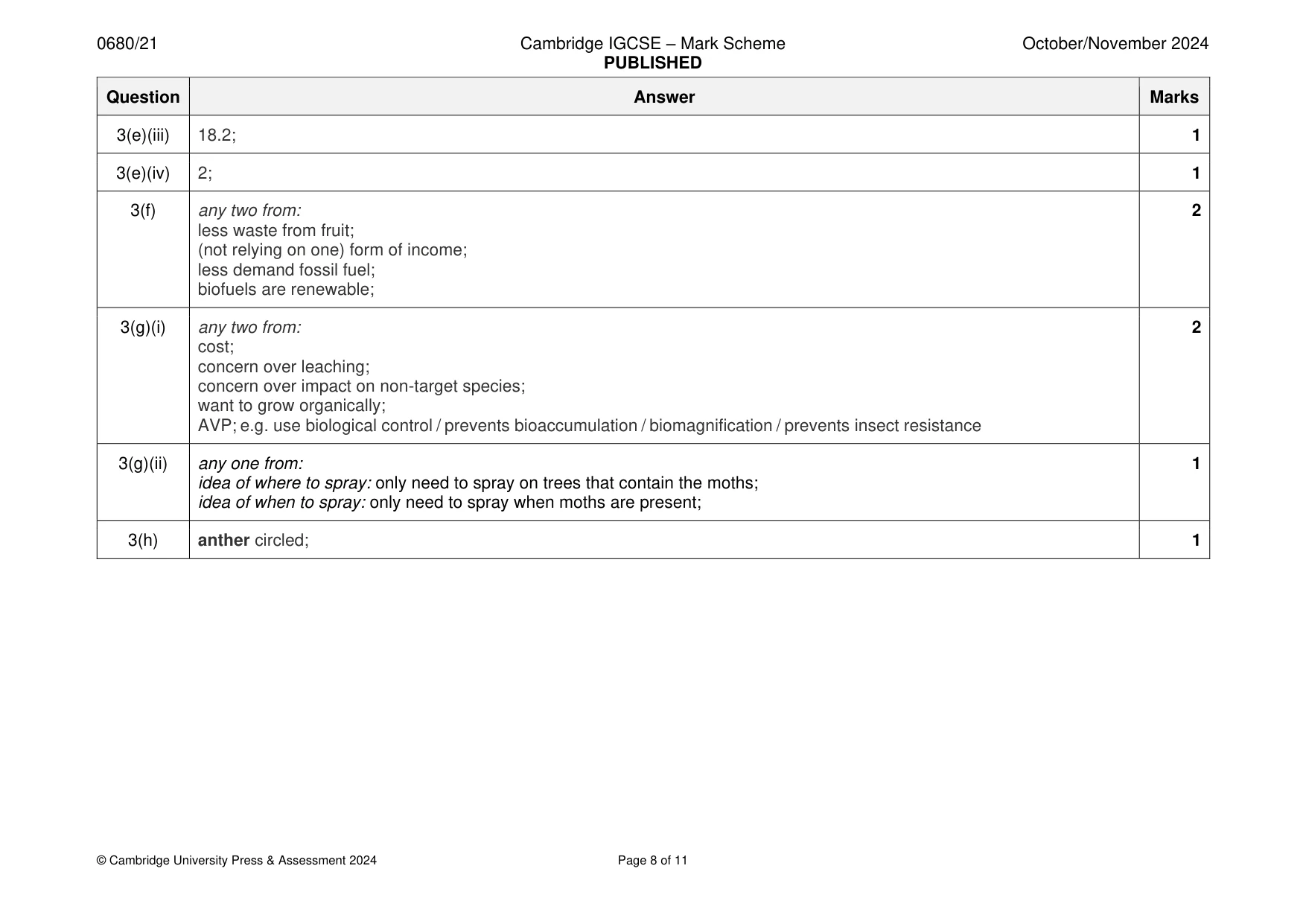
3 Türkiye is the world’s largest producer of apricots. A farmer grows apricots to sell. The photograph shows an apricot fruit. (a) State the term used for crops produced to be sold for a profit. ............................................................................................................................................. [1] (b) Apricot trees are producers. Explain why all the energy in a producer is not available to primary consumers in a food chain. ................................................................................................................................................... ............................................................................................................................................. [1] (c) A farmer grows four different varieties of apricot tree, A – D. Each variety is grown in a different field. The diagram shows a plan of variety A in one field. row 1 ● ● ● ● ● row 2 ● ● ● ● ● row 3 ● ● ● ● ● The farmer investigates which variety produces the largest mass of apricot fruits. The farmer uses this method to sample the trees: • start at the beginning of each row • sample every second apricot tree in each row • sample a total of 6 trees. (i) Circle the apricot trees the farmer samples in each row. The first tree has been done for you. [1] (ii) Name this method of sampling. ..................................................................................................................................... [1] (d) The farmer samples four apricot fruits from each variety of tree. The table shows the results. mass of apricot fruit / g variety apricot 1 apricot 2 apricot 3 apricot 4 A 45 42 44 42 B 59 58 57 59 C 47 45 48 4 D 51 50 49 48 (i) Identify the anomalous result in the data. variety ......................... apricot ......................... [1] (ii) Calculate the range for variety D. range = ....................................................... g [1] (iii) Calculate the mean mass for variety A. Give your answer to the nearest whole number. mean = ....................................................... g [2] (iv) The photograph shows parts of an apricot fruit. flesh skin stone Variety B has the largest mean mass of apricot fruit. Farmers want apricot fruits with the largest mass of flesh. Describe how the farmer can confirm that variety B has the largest mass of flesh. ........................................................................................................................................... ........................................................................................................................................... ........................................................................................................................................... ..................................................................................................................................... [2] (e) A scientist investigates apricot kernels. The photograph shows apricot kernels. The graph shows data about the length of apricot kernels. 20 18 16 14 12 number of 10 kernels 8 6 4 2 0 15 16 17 18 19 20 21 length / mm (i) State the minimum length of apricot kernels. minimum length = ................................................... mm [1] (ii) State how many apricot kernels have the maximum length. number of kernels = ......................................................... [1] (iii) State the length which has the greatest number of kernels. length = ................................................... mm [1] (iv) Uncooked apricot kernels contain a chemical which converts to cyanide after the kernel is eaten. Cyanide is toxic. Some countries recommend that the maximum mass of apricot kernels an adult should eat is 0.37 g per day. The scientist found the mean mass of an apricot kernel was 0.17 g. Calculate the maximum number of apricot kernels that are safe to eat. maximum number = ......................................................... [1] (f) Many apricot fruits are processed to remove their stones and kernels. Oil can be extracted from apricot kernels. The oil is a biofuel. Suggest how extracting this oil makes apricot processing a sustainable activity. ................................................................................................................................................... ................................................................................................................................................... ................................................................................................................................................... ............................................................................................................................................. [2] (g) Oriental fruit moth, Grapholita molesta, is an insect pest of the apricot tree in Türkiye. The diagram shows the Oriental fruit moth larva. 1–2 cm Insecticides are used to reduce the impact of the Oriental fruit moth larvae. (i) Suggest two reasons why some farmers do not use insecticides. 1 ........................................................................................................................................ ........................................................................................................................................... 2 ........................................................................................................................................ ........................................................................................................................................... [2] (ii) Monitoring traps are attached to apricot trees to check for the Oriental fruit moth. The traps contain a natural chemical that attracts Oriental fruit moths. Suggest how the monitoring traps reduce the quantity of insecticide used on apricot trees. ........................................................................................................................................... ..................................................................................................................................... [1] (h) Pollination is part of apricot tree reproduction. Circle the part of an apricot flower that produces pollen grains. anther fruit stem stigma [1] [Total: 20]
Mark scheme: 3(a) cash crop; 1 3(b) not all of producer, consumed / ingested / digested / absorbed / assimilated; 1 3(c)(i) 2nd and 4th trees circled in each row; 1 3(c)(ii) systematic; 1 3(d)(i) variety C, apricot 4; 1 3(d)(ii) 3; 1 3(d)(iii) 173 4 or 43.25 / 43.3; 2 43; 3(d)(iv) remove the skin AND stone; 2 measurement of mass of flesh; compare (mean / average) mass (of flesh) with other varieties; 3(e)(i) 16; 1 3(e)(ii) 4; 1 3(e)(iii) 18.2; 1 3(e)(iv) 2; 1 3(f) any two from: 2 less waste from fruit; (not relying on one) form of income; less demand fossil fuel; biofuels are renewable; 3(g)(i) any two from: 2 cost; concern over leaching; concern over impact on non-target species; want to grow organically; AVP; e.g. use biological control / prevents bioaccumulation / biomagnification / prevents insect resistance 3(g)(ii) any one from: 1 idea of where to spray: only need to spray on trees that contain the moths; idea of when to spray: only need to spray when moths are present; 3(h) anther circled; 1
Q4 · Lake Tuz is a large saltwater lake in Türkiye
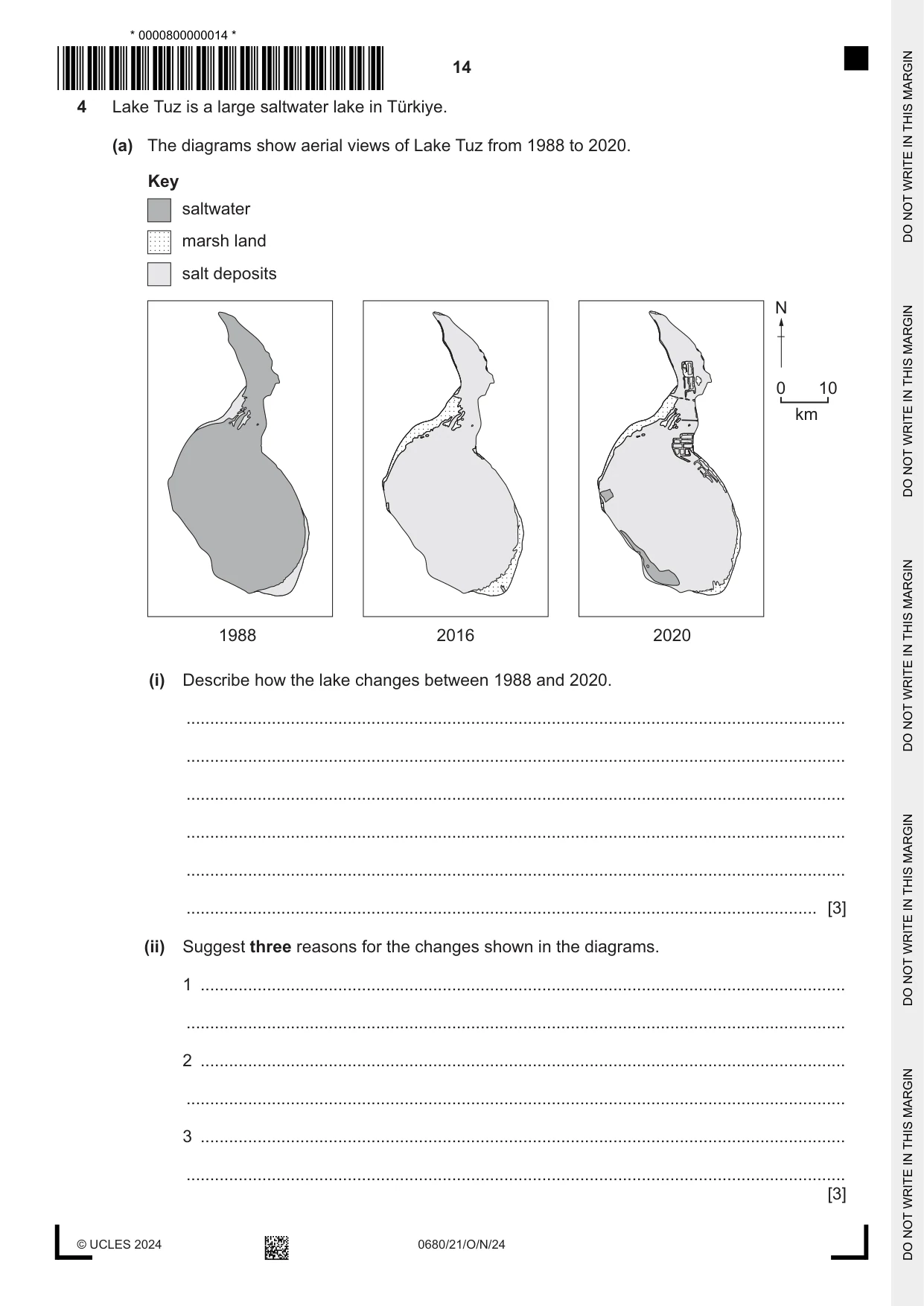
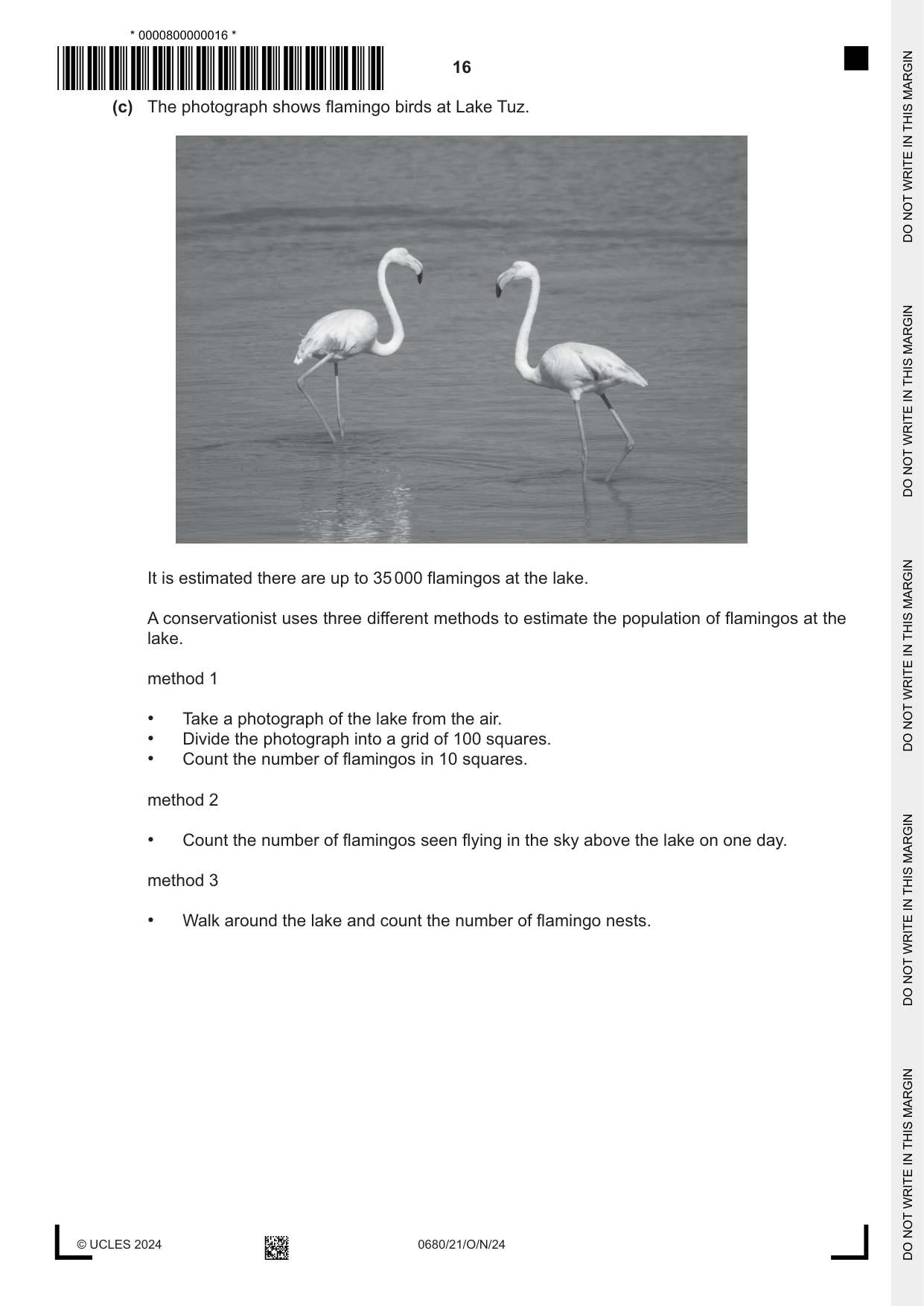
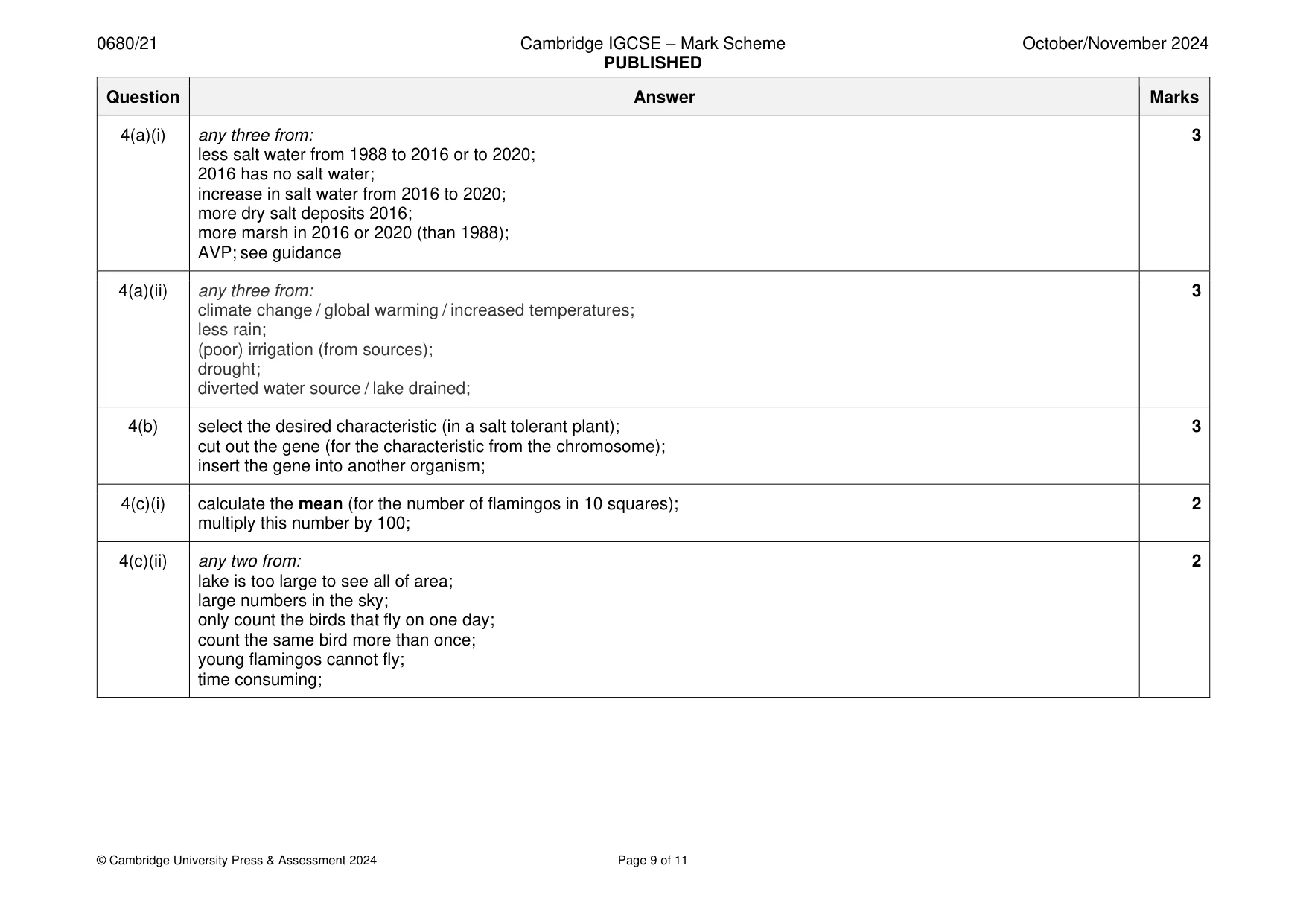
4 Lake Tuz is a large saltwater lake in Türkiye. (a) The diagrams show aerial views of Lake Tuz from 1988 to 2020. Key saltwater marsh land salt deposits N 0 10 km 1988 2016 2020 (i) Describe how the lake changes between 1988 and 2020. ........................................................................................................................................... ........................................................................................................................................... ........................................................................................................................................... ........................................................................................................................................... ........................................................................................................................................... ..................................................................................................................................... [3] (ii) Suggest three reasons for the changes shown in the diagrams. 1 ........................................................................................................................................ ........................................................................................................................................... 2 ........................................................................................................................................ ........................................................................................................................................... 3 ........................................................................................................................................ ........................................................................................................................................... [3] (b) The soil around Lake Tuz contains a high concentration of salt. Many plants cannot grow in salty conditions. Describe how genetic modification allows plants to grow in areas of high salt concentrations. ................................................................................................................................................... ................................................................................................................................................... ................................................................................................................................................... ................................................................................................................................................... ................................................................................................................................................... ............................................................................................................................................. [3] (c) The photograph shows flamingo birds at Lake Tuz. It is estimated there are up to 35 000 flamingos at the lake. A conservationist uses three different methods to estimate the population of flamingos at the lake. method 1 • Take a photograph of the lake from the air. • Divide the photograph into a grid of 100 squares. • Count the number of flamingos in 10 squares. method 2 • Count the number of flamingos seen flying in the sky above the lake on one day. method 3 • Walk around the lake and count the number of flamingo nests. (i) Explain how the total number of flamingos can be estimated using method 1. ........................................................................................................................................... ........................................................................................................................................... ........................................................................................................................................... ..................................................................................................................................... [2] (ii) Suggest two limitations of method 2. 1 ........................................................................................................................................ ........................................................................................................................................... 2 ........................................................................................................................................ ........................................................................................................................................... [2] (iii) Suggest two limitations of method 3. 1 ........................................................................................................................................ ........................................................................................................................................... 2 ........................................................................................................................................ ........................................................................................................................................... [2] (d) Describe how captive breeding can increase the population of flamingos in the wild. ................................................................................................................................................... ................................................................................................................................................... ................................................................................................................................................... ............................................................................................................................................. [2] (e) Suggest two strategies to increase the population of flamingos in the wild, other than captive breeding. 1 ................................................................................................................................................ ................................................................................................................................................... 2 ................................................................................................................................................ ................................................................................................................................................... [2] [Total: 19]
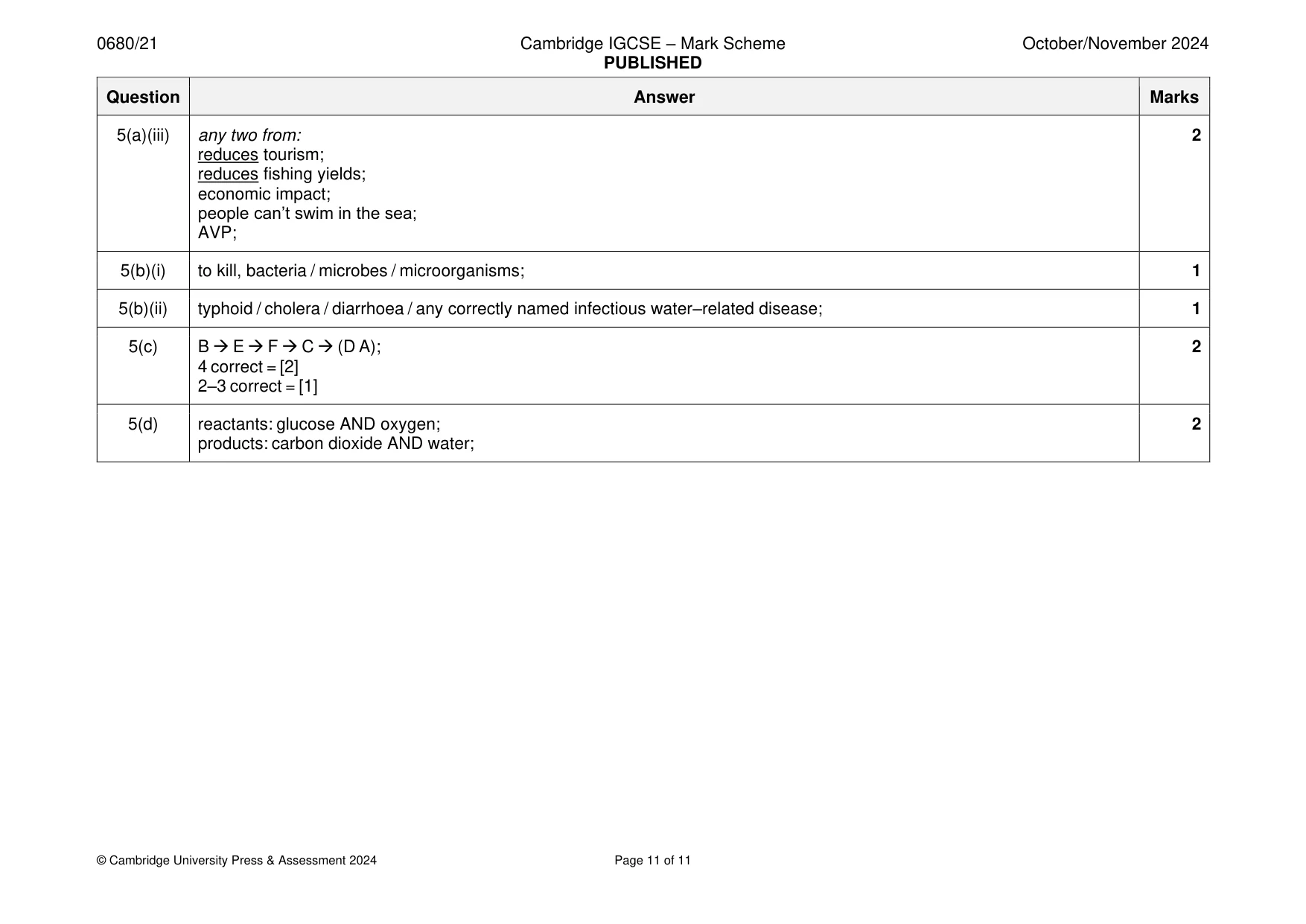
Mark scheme: 4(a)(i) any three from: 3 less salt water from 1988 to 2016 or to 2020; 2016 has no salt water; increase in salt water from 2016 to 2020; more dry salt deposits 2016; more marsh in 2016 or 2020 (than 1988); AVP; see guidance 4(a)(ii) any three from: 3 climate change / global warming / increased temperatures; less rain; (poor) irrigation (from sources); drought; diverted water source / lake drained; 4(b) select the desired characteristic (in a salt tolerant plant); 3 cut out the gene (for the characteristic from the chromosome); insert the gene into another organism; 4(c)(i) calculate the mean (for the number of flamingos in 10 squares); 2 multiply this number by 100; 4(c)(ii) any two from: 2 lake is too large to see all of area; large numbers in the sky; only count the birds that fly on one day; count the same bird more than once; young flamingos cannot fly; time consuming; 4(c)(iii) any two from: 2 not all flamingos in nests / not all nests produce young; some nests may be abandoned or last years; number of flamingos per nest varies; nests camouflaged / not around the lake; lake too large to walk around in one day / time consuming; the number of nests does not equal the number of flamingos AVP; e.g. may count other types of bird nests 4(d) any two from: 2 enables breeding / survival of young (increased in captivity); no hunting of young / no predators / food provided / health of birds can monitored; released back into the wild 4(e) any two from: 2 reserves / national parks; corridors; ban hunting;
Q5 · Marine mucilage is a very thick and sticky organic material that floats on the surface of…
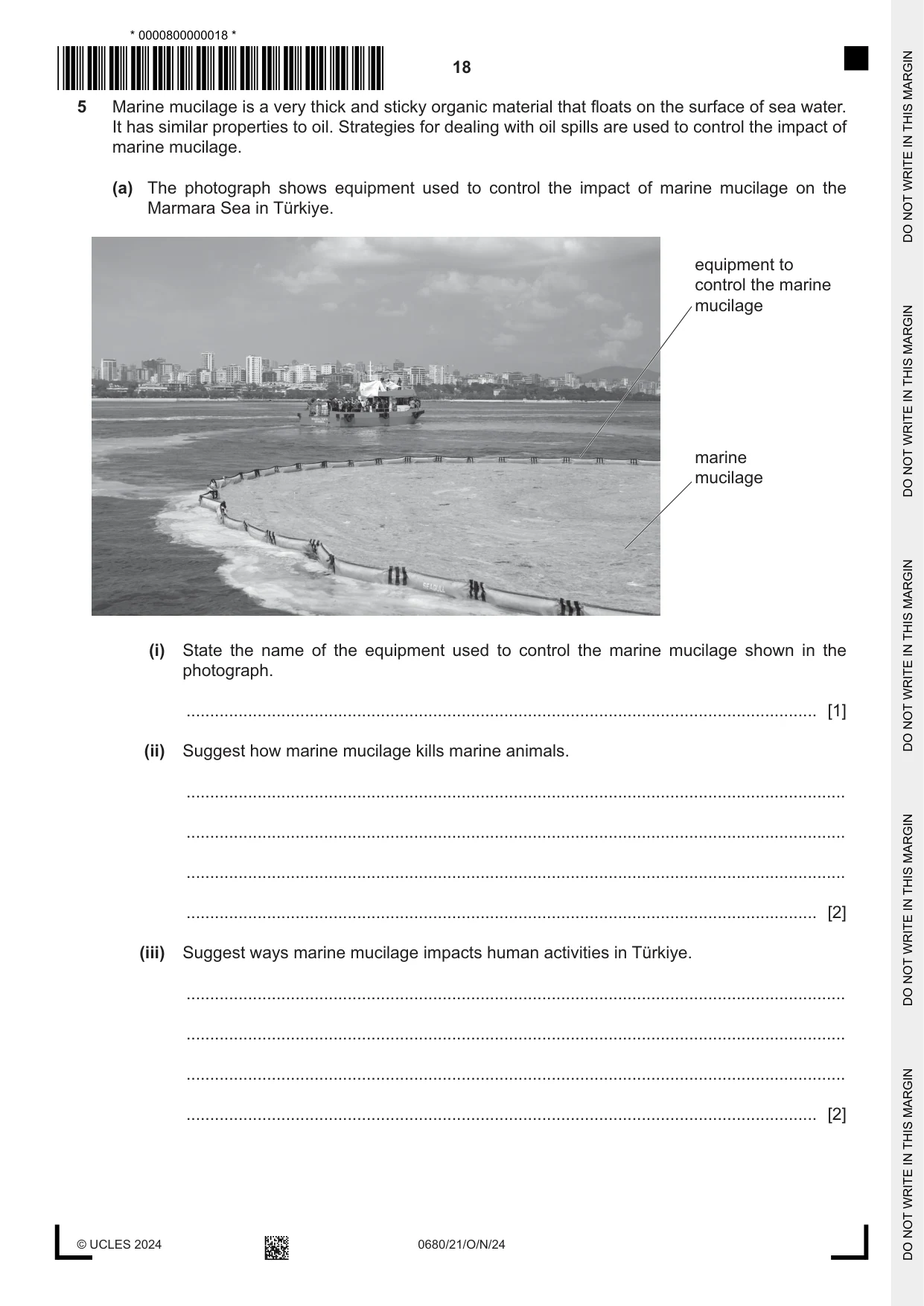
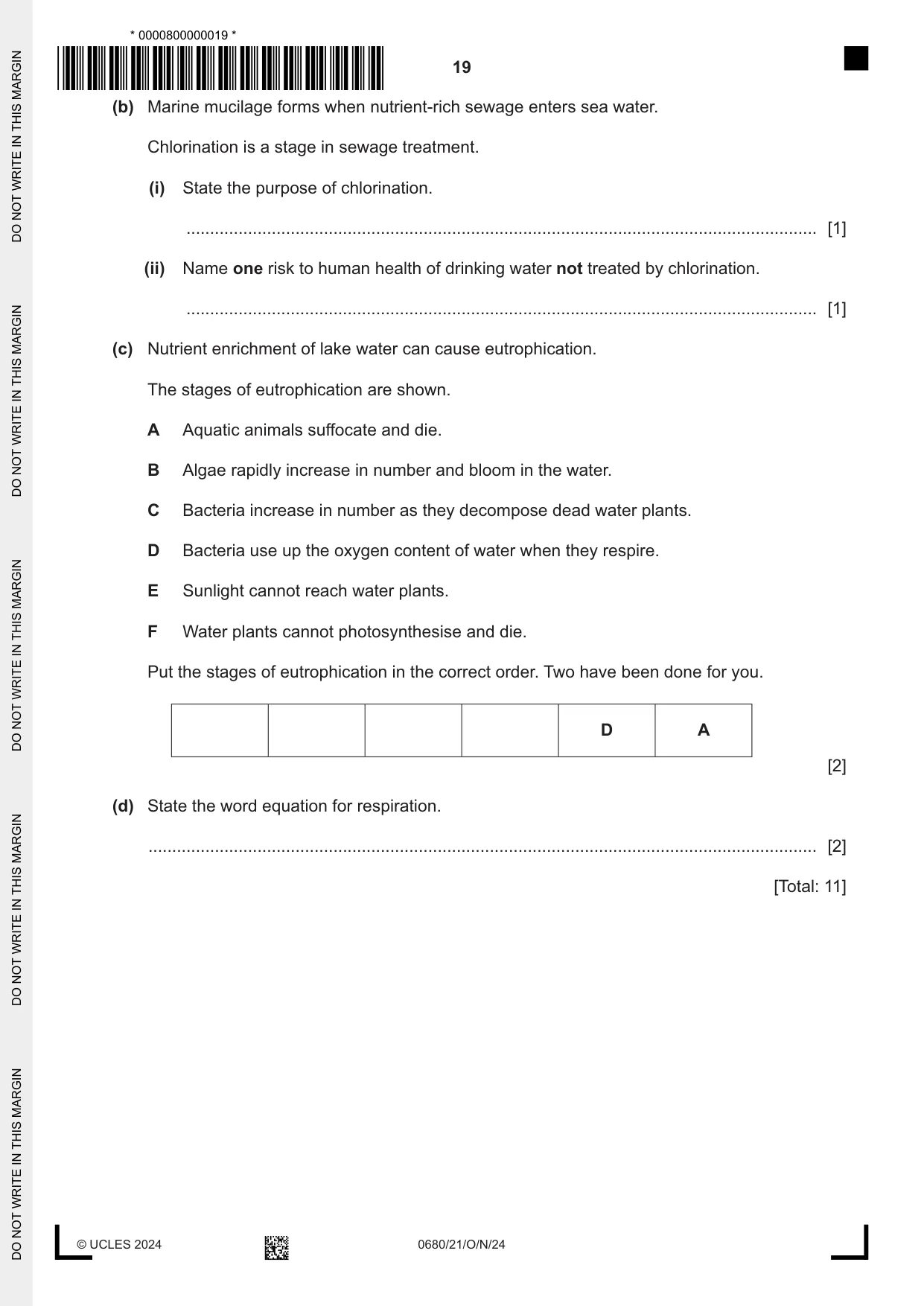
5 Marine mucilage is a very thick and sticky organic material that floats on the surface of sea water. It has similar properties to oil. Strategies for dealing with oil spills are used to control the impact of marine mucilage. (a) The photograph shows equipment used to control the impact of marine mucilage on the Marmara Sea in Türkiye. equipment to control the marine mucilage marine mucilage (i) State the name of the equipment used to control the marine mucilage shown in the photograph. ..................................................................................................................................... [1] (ii) Suggest how marine mucilage kills marine animals. ........................................................................................................................................... ........................................................................................................................................... ........................................................................................................................................... ..................................................................................................................................... [2] (iii) Suggest ways marine mucilage impacts human activities in Türkiye. ........................................................................................................................................... ........................................................................................................................................... ........................................................................................................................................... ..................................................................................................................................... [2] (b) Marine mucilage forms when nutrient-rich sewage enters sea water. Chlorination is a stage in sewage treatment. (i) State the purpose of chlorination. ..................................................................................................................................... [1] (ii) Name one risk to human health of drinking water not treated by chlorination. ..................................................................................................................................... [1] (c) Nutrient enrichment of lake water can cause eutrophication. The stages of eutrophication are shown. A Aquatic animals suffocate and die. B Algae rapidly increase in number and bloom in the water. C Bacteria increase in number as they decompose dead water plants. D Bacteria use up the oxygen content of water when they respire. E Sunlight cannot reach water plants. F Water plants cannot photosynthesise and die. Put the stages of eutrophication in the correct order. Two have been done for you. D A [2] (d) State the word equation for respiration. ............................................................................................................................................. [2] [Total: 11]
Mark scheme: 5(a)(i) boom; 1 5(a)(ii) any two from: 2 suffocation; blocks gills; covers feathers / skin / eyes; spreads disease; disrupts food chains; toxic (if ingested); 5(a)(iii) any two from: 2 reduces tourism; reduces fishing yields; economic impact; people can’t swim in the sea; AVP; 5(b)(i) to kill, bacteria / microbes / microorganisms; 1 5(b)(ii) typhoid / cholera / diarrhoea / any correctly named infectious water–related disease; 1 5(c) B → E → F → C → (D A); 2 4 correct = [2] 2–3 correct = [1] 5(d) reactants: glucose AND oxygen; 2 products: carbon dioxide AND water;
What was in this paper
The subtopics covered by these 5 questions, and how many questions each got. Open one in a new tab to see every Cambridge question on it.
What you needed in this session
Cambridge’s own grade thresholds for 2024 Oct/Nov, Paper 2 · Variant 1. A higher threshold means an easier paper — the bar moves with how the cohort did.