Cambridge IGCSE Environmental Management 0680 — 2017 May/June Paper 4 · Variant 2
0680/42/M/J/17 · 2 questions · 60 marks · ≈68 min
The question paper and its mark scheme, free to read here and free to download. This is Cambridge’s own paper, exactly as it was sat.
Question paper20 pages



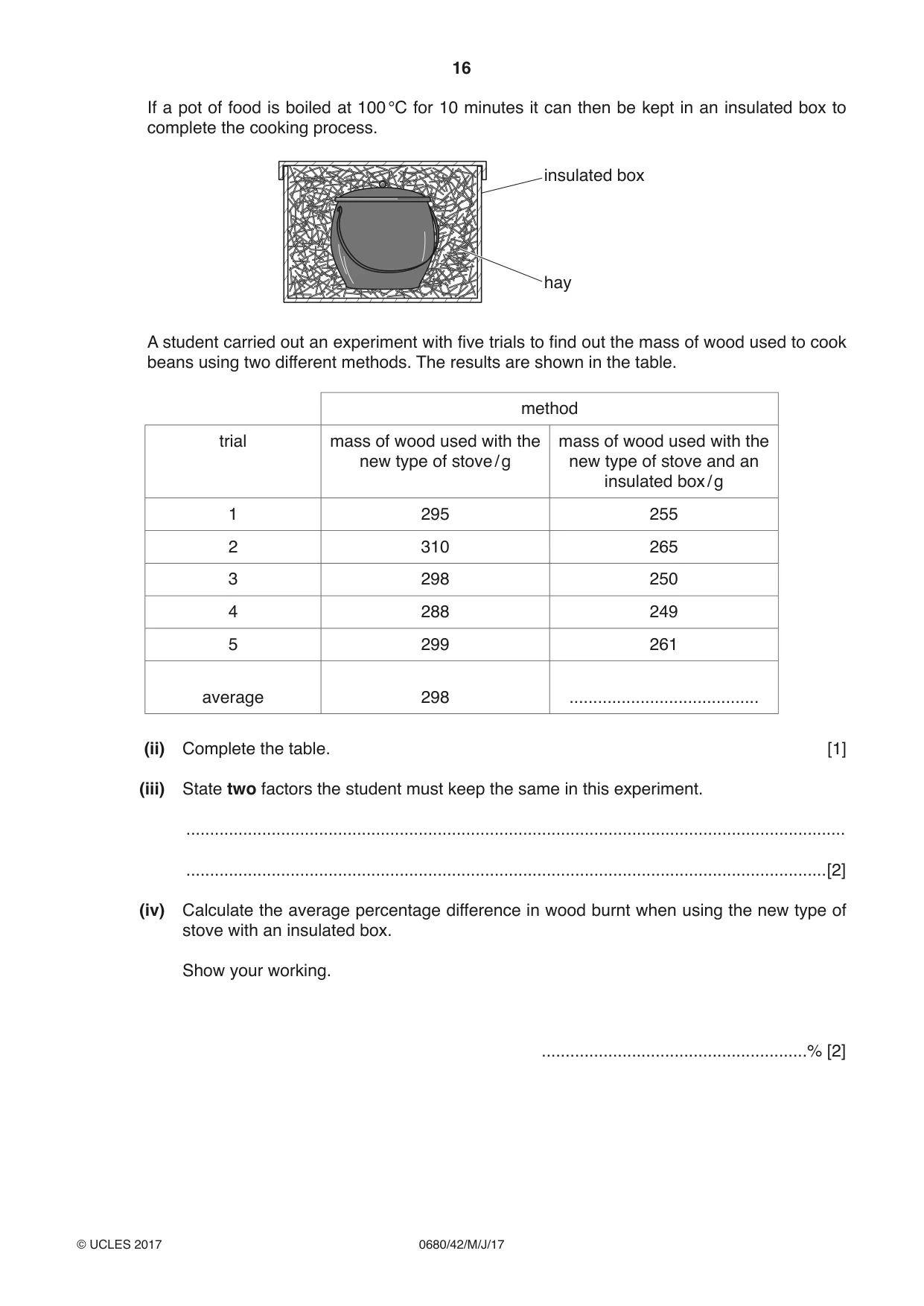
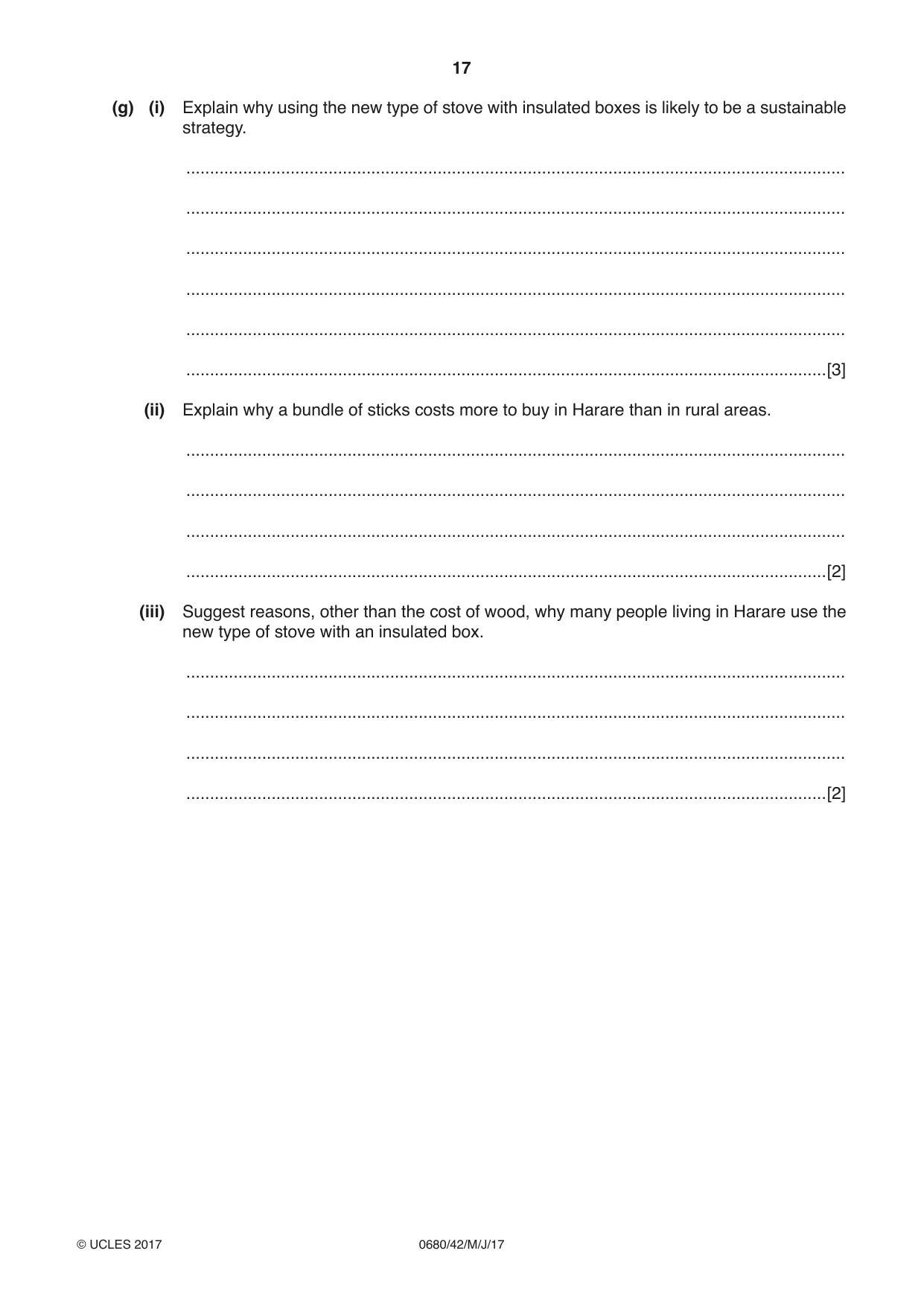



Mark scheme7 pages
Answers below. Sit the paper first if you are practising.

Questions as text
Q1 · Some people in Zimbabwe earn money selling building materials beside roads
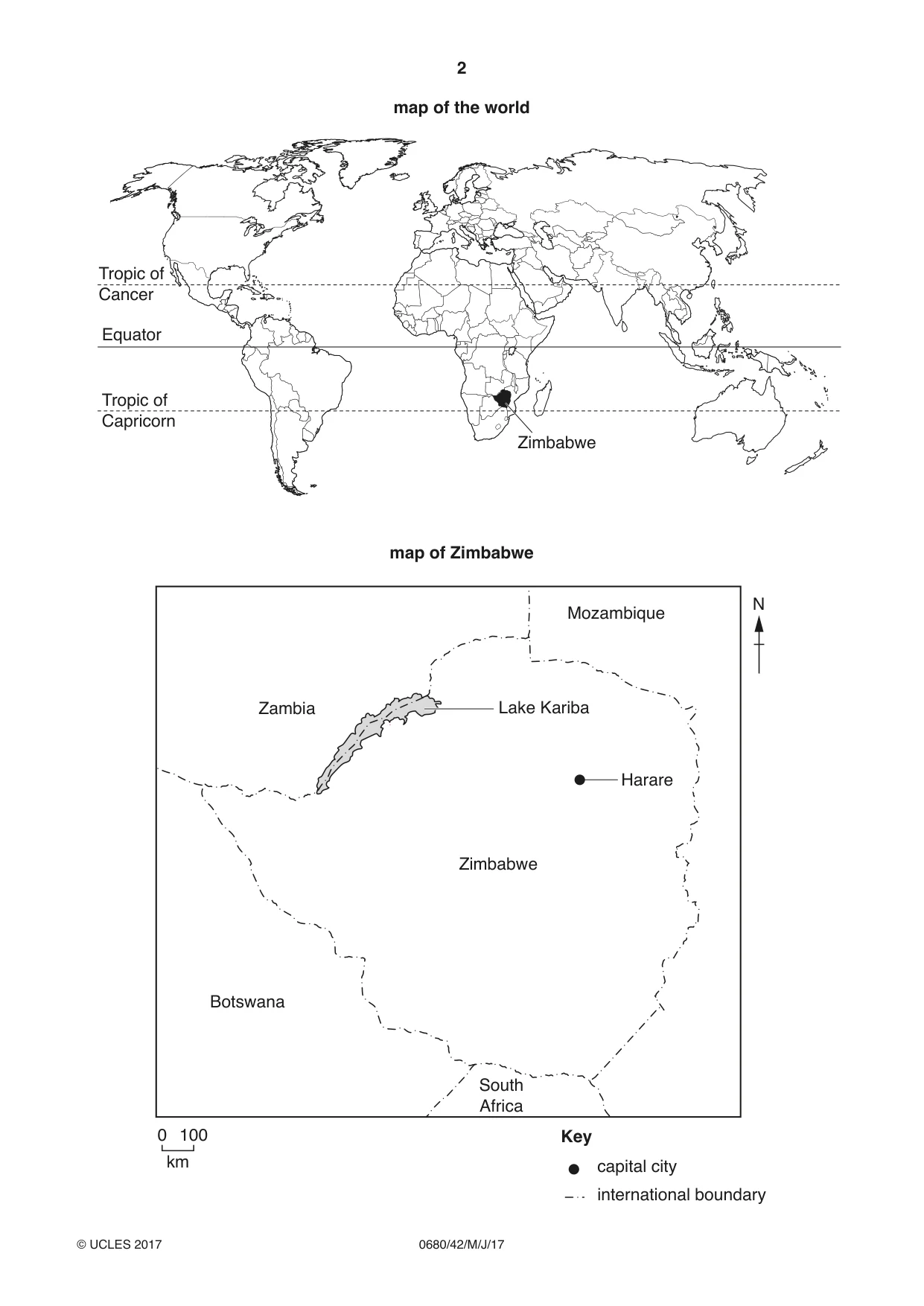
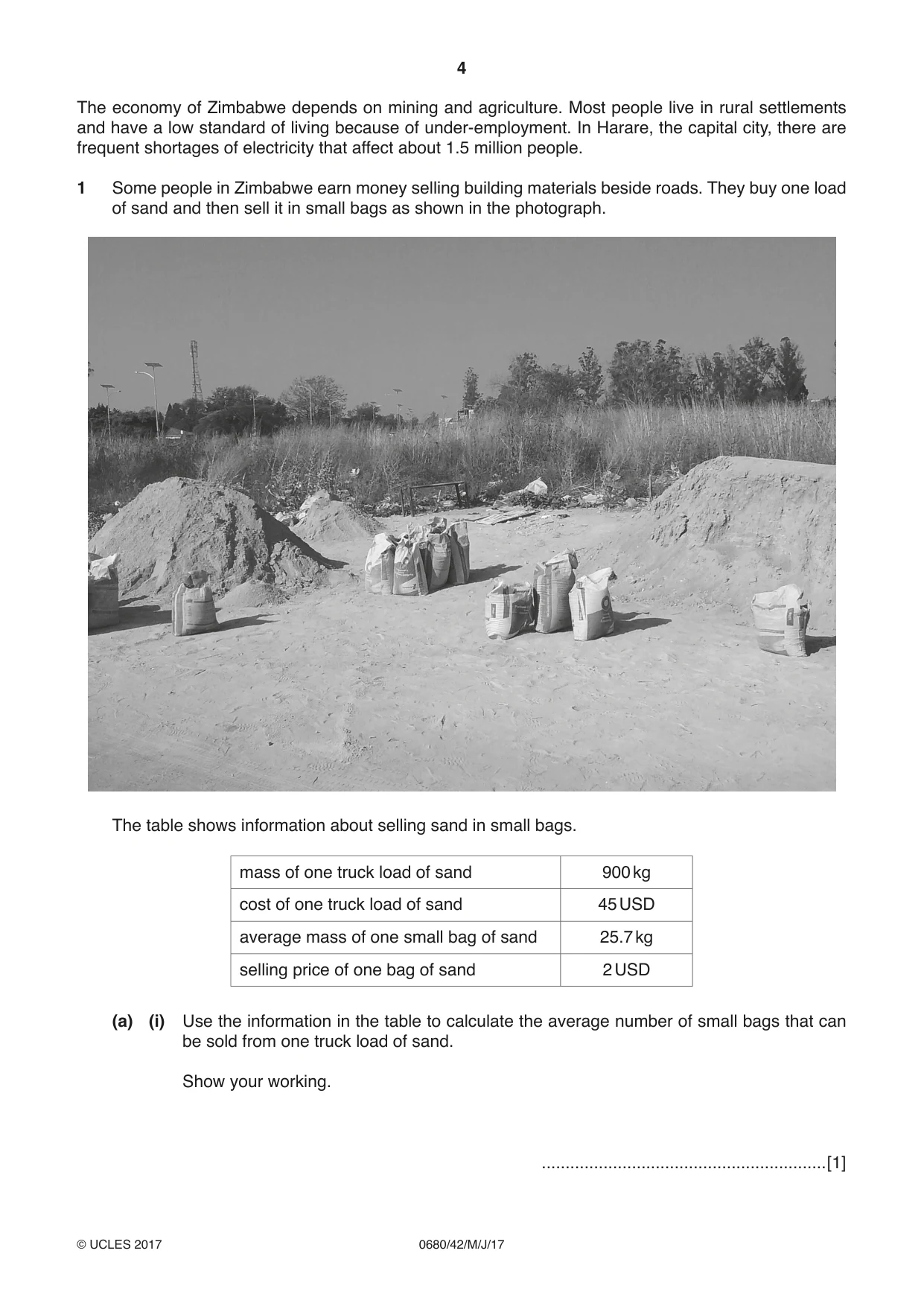
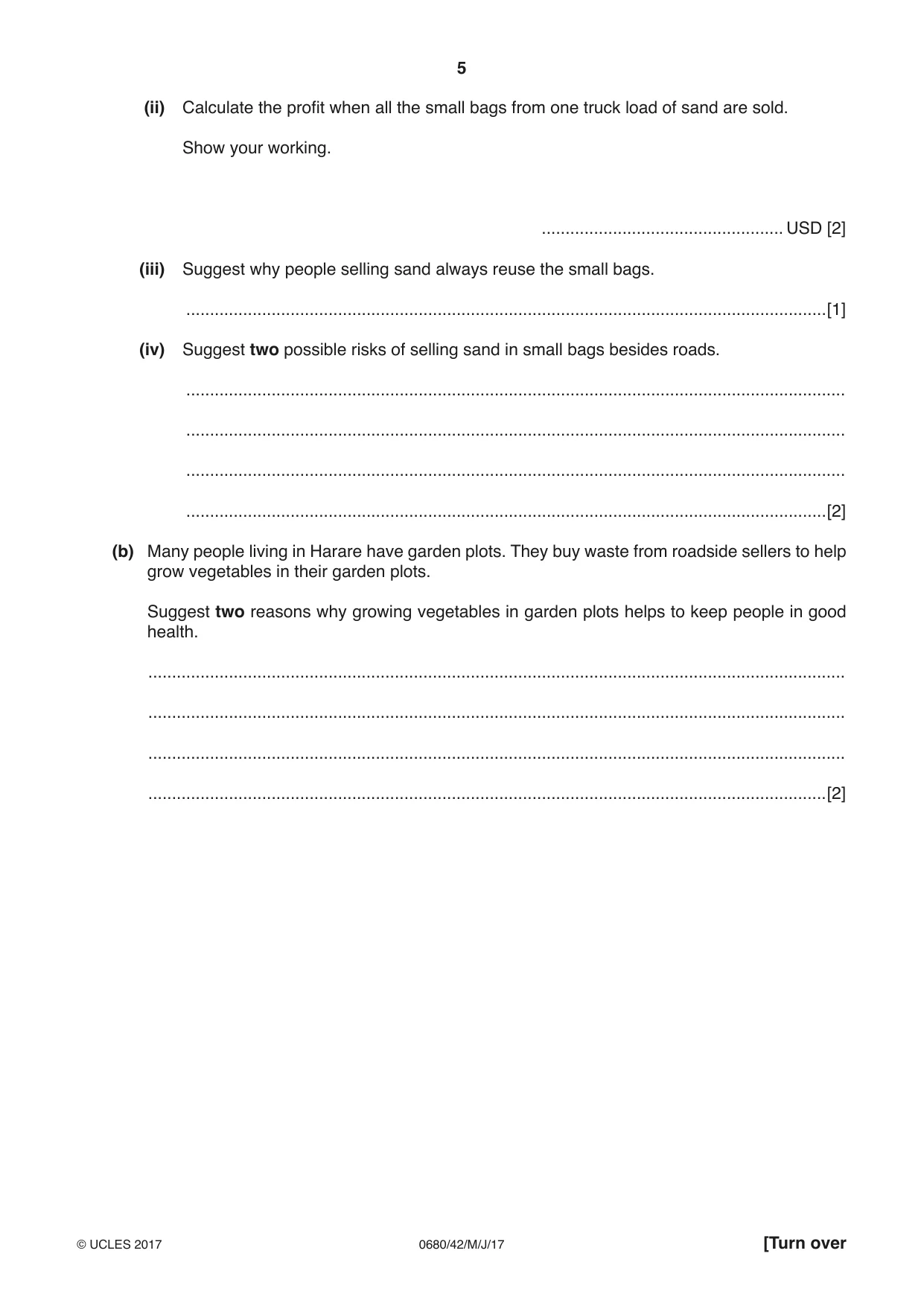
1 Some people in Zimbabwe earn money selling building materials beside roads. They buy one load of sand and then sell it in small bags as shown in the photograph. The table shows information about selling sand in small bags. mass of one truck load of sand 900 kg cost of one truck load of sand 45 USD average mass of one small bag of sand 25.7 kg selling price of one bag of sand 2 USD (a) (i) Use the information in the table to calculate the average number of small bags that can be sold from one truck load of sand. Show your working. ............................................................[1] (ii) Calculate the profit when all the small bags from one truck load of sand are sold. Show your working. ................................................... USD [2] (iii) Suggest why people selling sand always reuse the small bags. .......................................................................................................................................[1] (iv) Suggest two possible risks of selling sand in small bags besides roads. ........................................................................................................................................... ........................................................................................................................................... ........................................................................................................................................... .......................................................................................................................................[2] (b) Many people living in Harare have garden plots. They buy waste from roadside sellers to help grow vegetables in their garden plots. Suggest two reasons why growing vegetables in garden plots helps to keep people in good health. ................................................................................................................................................... ................................................................................................................................................... ................................................................................................................................................... ...............................................................................................................................................[2]
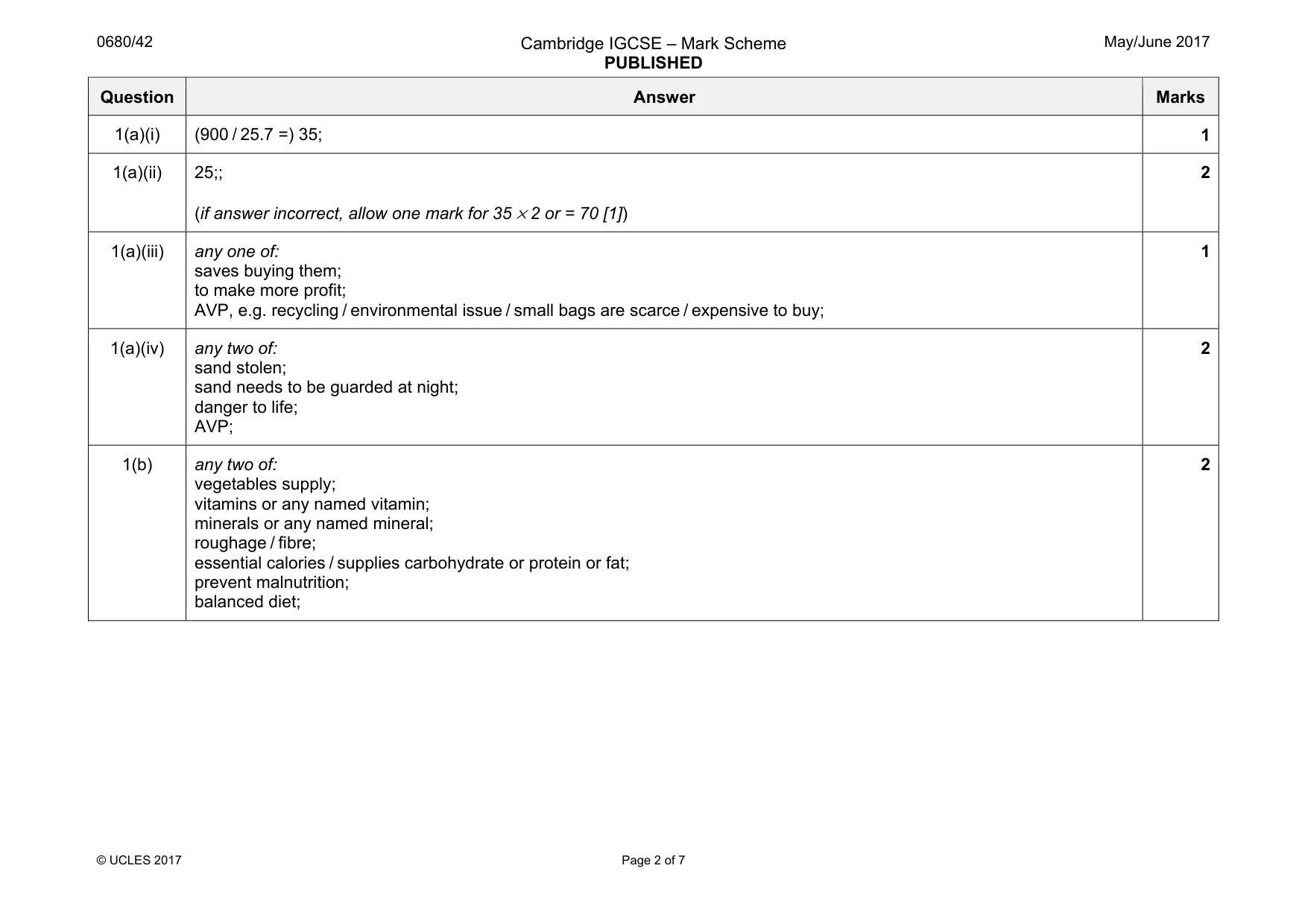
Mark scheme: 1(a)(i) (900 / 25.7 =) 35; 1 1(a)(ii) 25;; (if answer incorrect, allow one mark for 35 × 2 or = 70 [1]) 2 1(a)(iii) any one of: saves buying them; to make more profit; AVP, e.g. recycling / environmental issue / small bags are scarce / expensive to buy; 1 1(a)(iv) any two of: sand stolen; sand needs to be guarded at night; danger to life; AVP; 2 1(b) any two of: vegetables supply; vitamins or any named vitamin; minerals or any named mineral; roughage / fibre; essential calories / supplies carbohydrate or protein or fat; prevent malnutrition; balanced diet; 2
Q2 · The climate in Zimbabwe is recorded by collecting data from weather stations over many…
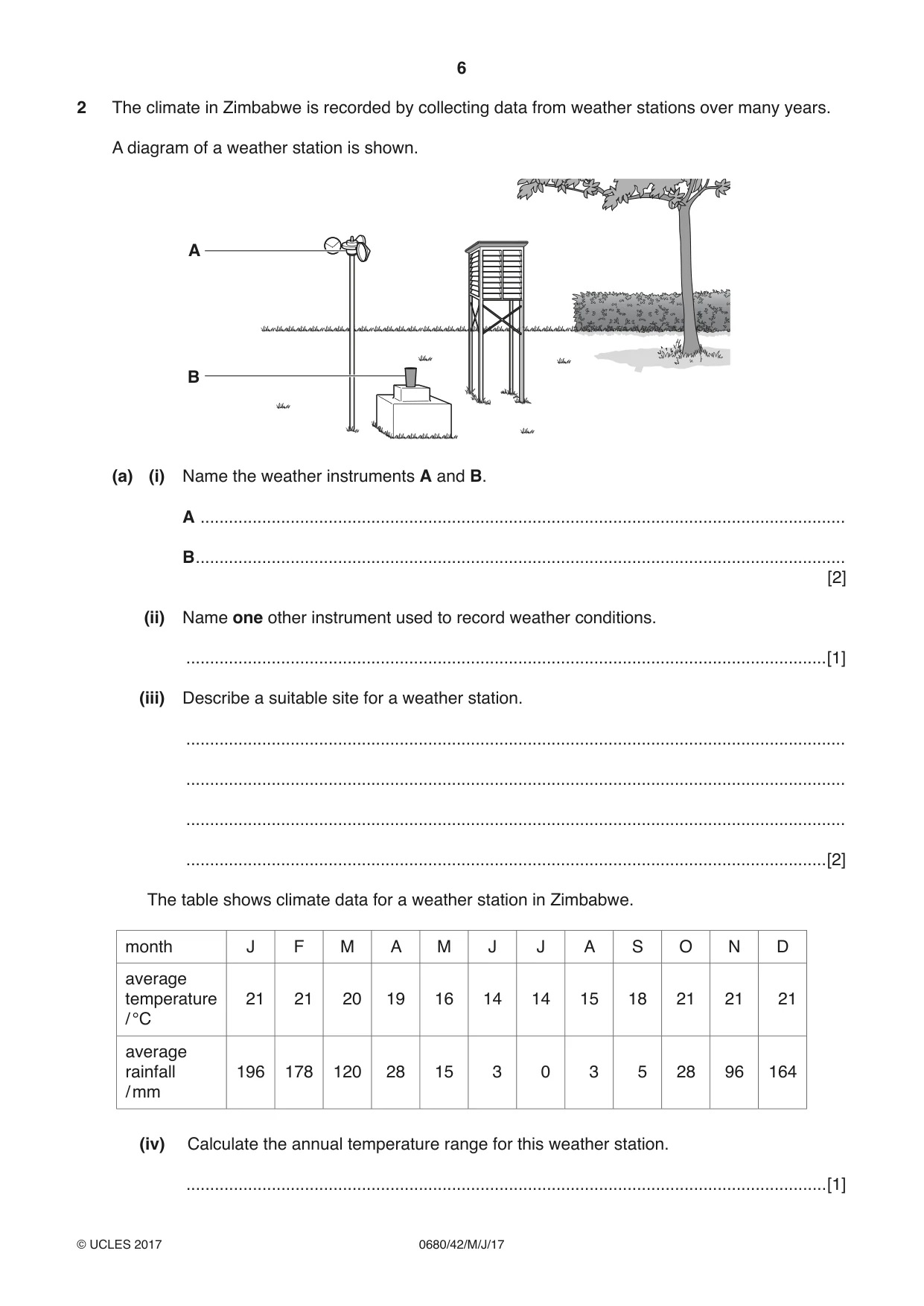
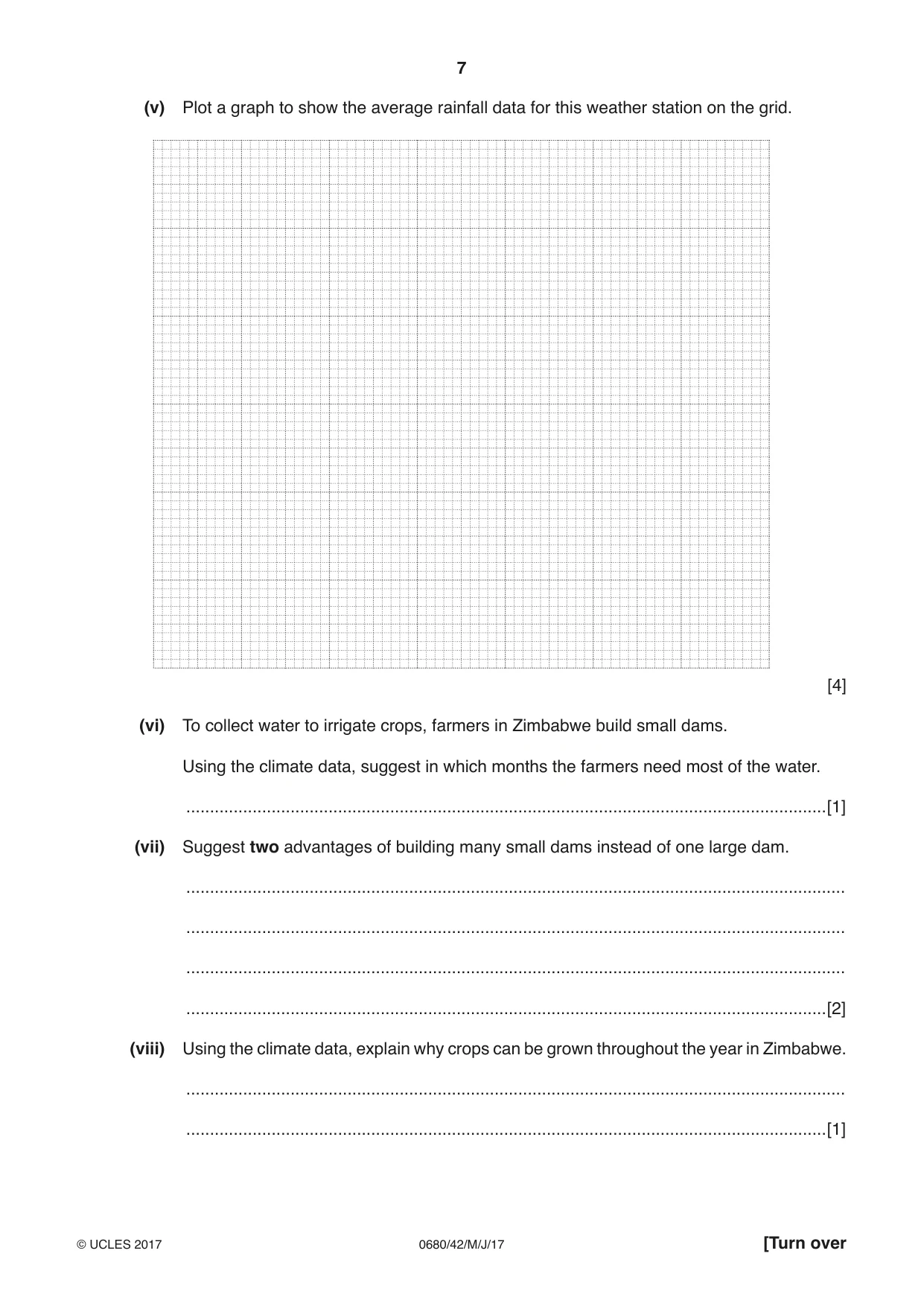
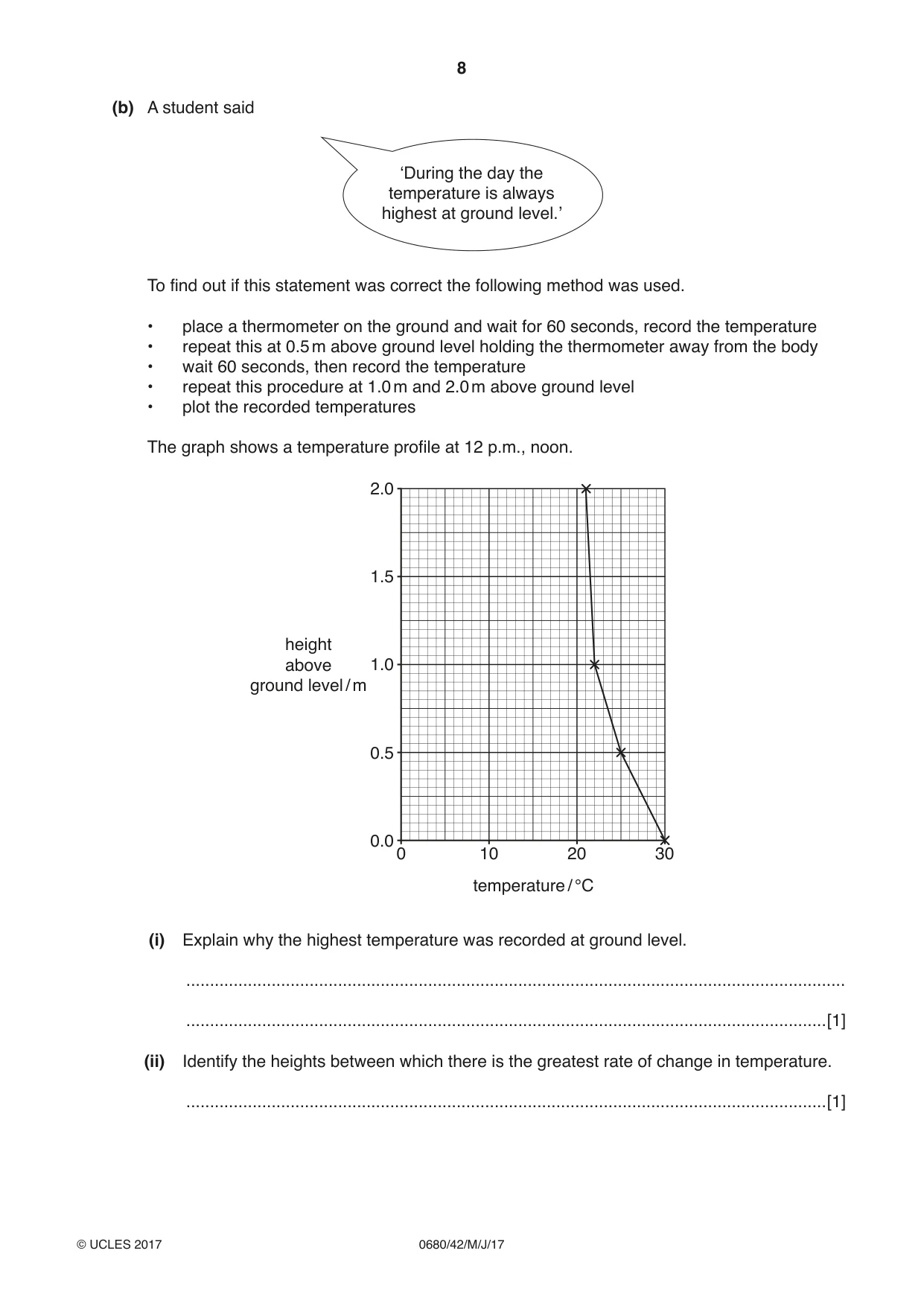
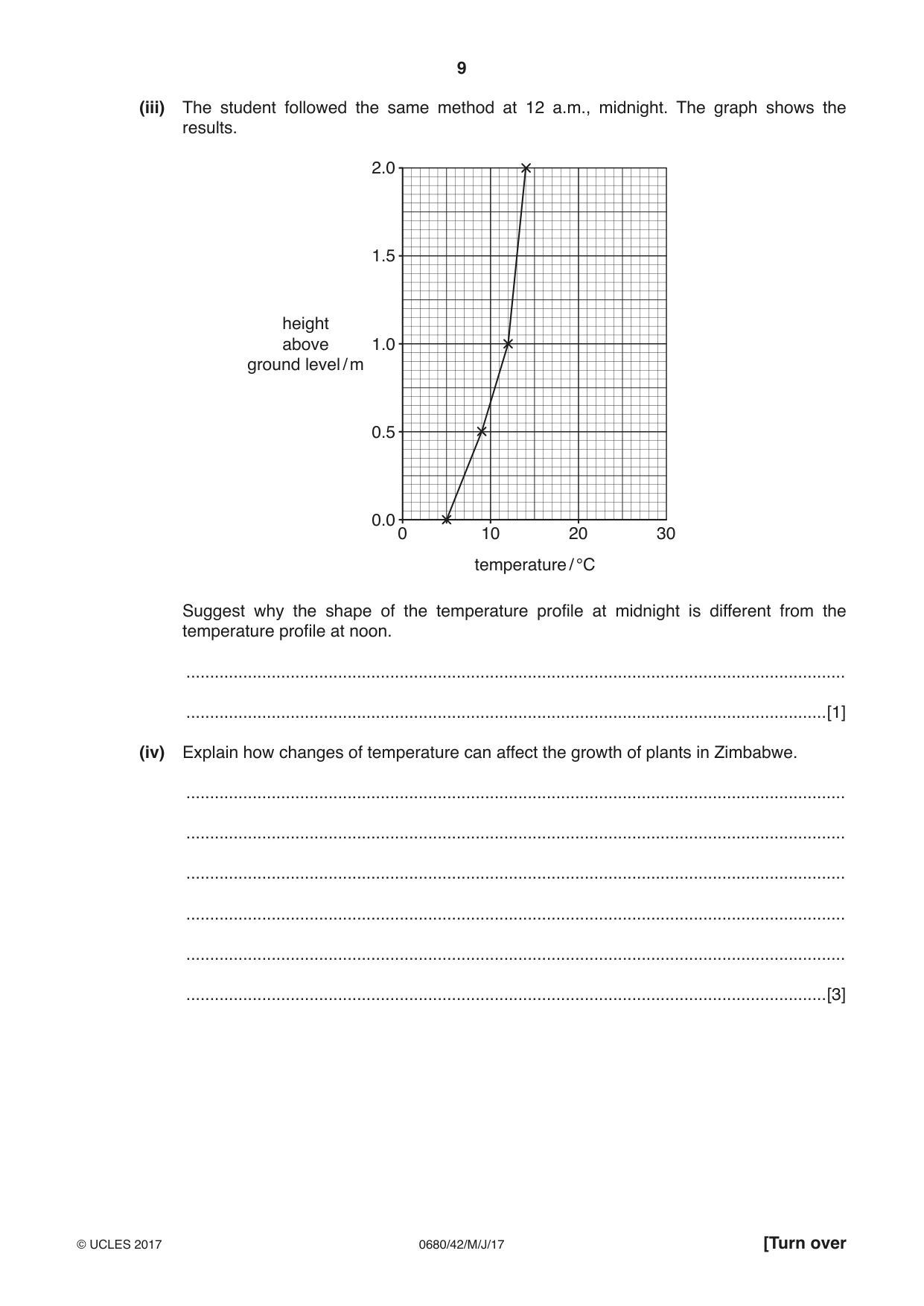
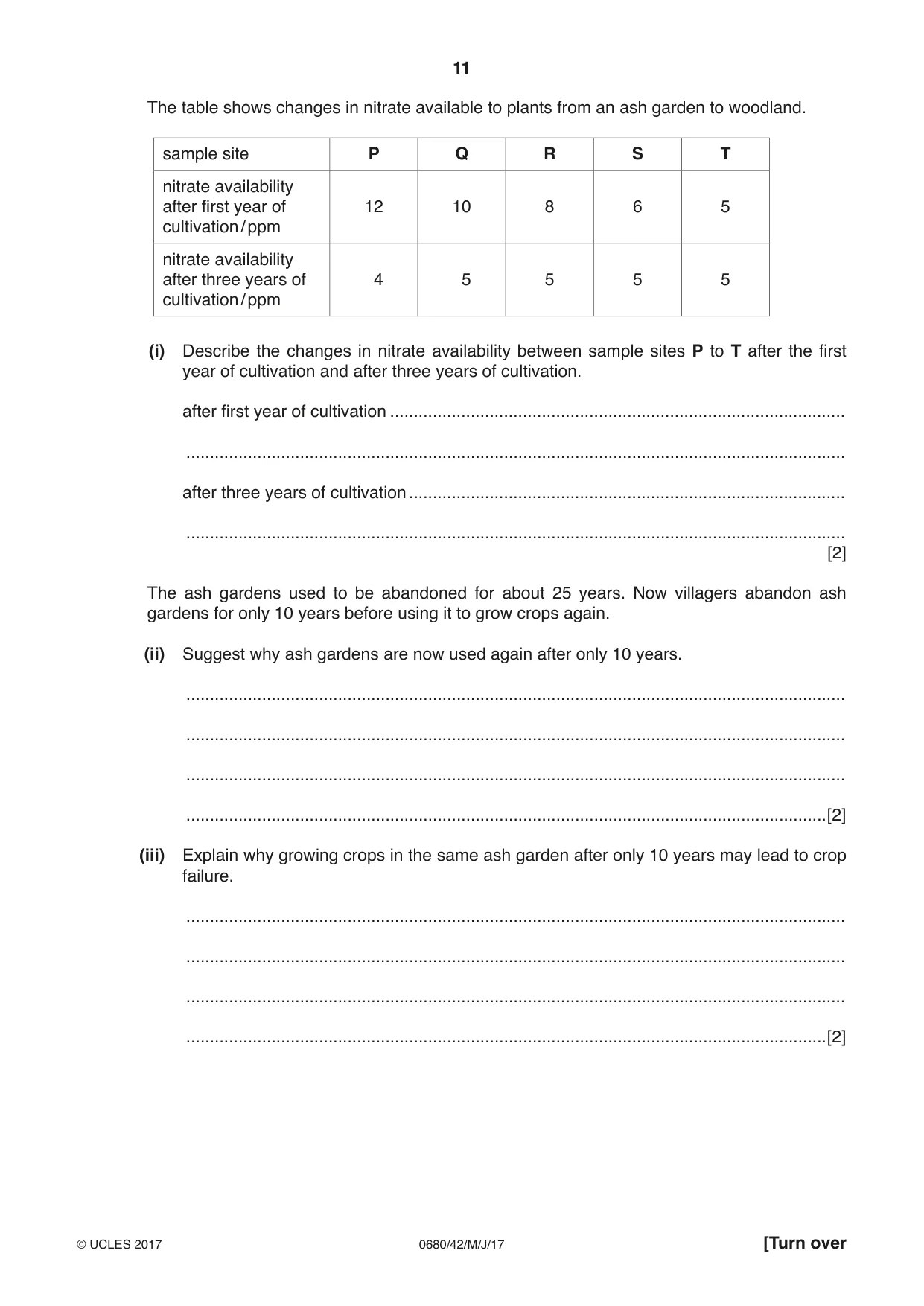
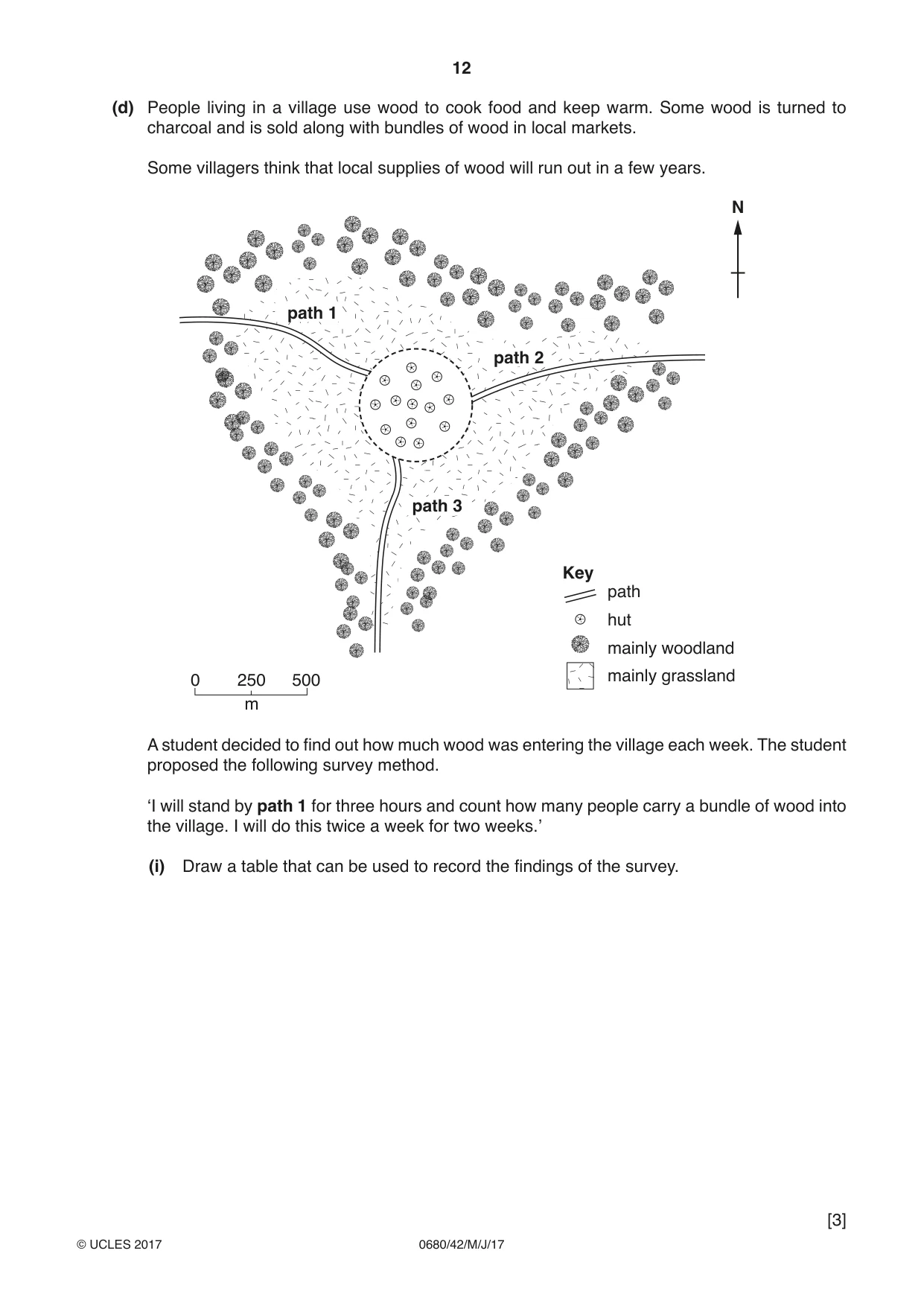
2 The climate in Zimbabwe is recorded by collecting data from weather stations over many years. A diagram of a weather station is shown. A B (a) (i) Name the weather instruments A and B. A ........................................................................................................................................ B ......................................................................................................................................... [2] (ii) Name one other instrument used to record weather conditions. .......................................................................................................................................[1] (iii) Describe a suitable site for a weather station. ........................................................................................................................................... ........................................................................................................................................... ........................................................................................................................................... .......................................................................................................................................[2] The table shows climate data for a weather station in Zimbabwe. month J F M A M J J A S O N D average temperature 21 21 20 19 16 14 14 15 18 21 21 21 / °C average rainfall 196 178 120 28 15 3 0 3 5 28 96 164 / mm (iv) Calculate the annual temperature range for this weather station. .......................................................................................................................................[1] (v) Plot a graph to show the average rainfall data for this weather station on the grid. [4] (vi) To collect water to irrigate crops, farmers in Zimbabwe build small dams. Using the climate data, suggest in which months the farmers need most of the water. .......................................................................................................................................[1] (vii) Suggest two advantages of building many small dams instead of one large dam. ........................................................................................................................................... ........................................................................................................................................... ........................................................................................................................................... .......................................................................................................................................[2] (viii) Using the climate data, explain why crops can be grown throughout the year in Zimbabwe. ........................................................................................................................................... .......................................................................................................................................[1] (b) A student said ‘During the day the temperature is always highest at ground level.’ To find out if this statement was correct the following method was used. • place a thermometer on the ground and wait for 60 seconds, record the temperature • repeat this at 0.5 m above ground level holding the thermometer away from the body • wait 60 seconds, then record the temperature • repeat this procedure at 1.0 m and 2.0 m above ground level • plot the recorded temperatures The graph shows a temperature profile at 12 p.m., noon. 2.0 1.5 height above 1.0 ground level / m 0.5 0.0 0 10 20 30 temperature / °C (i) Explain why the highest temperature was recorded at ground level. ........................................................................................................................................... .......................................................................................................................................[1] (ii) Identify the heights between which there is the greatest rate of change in temperature. .......................................................................................................................................[1]
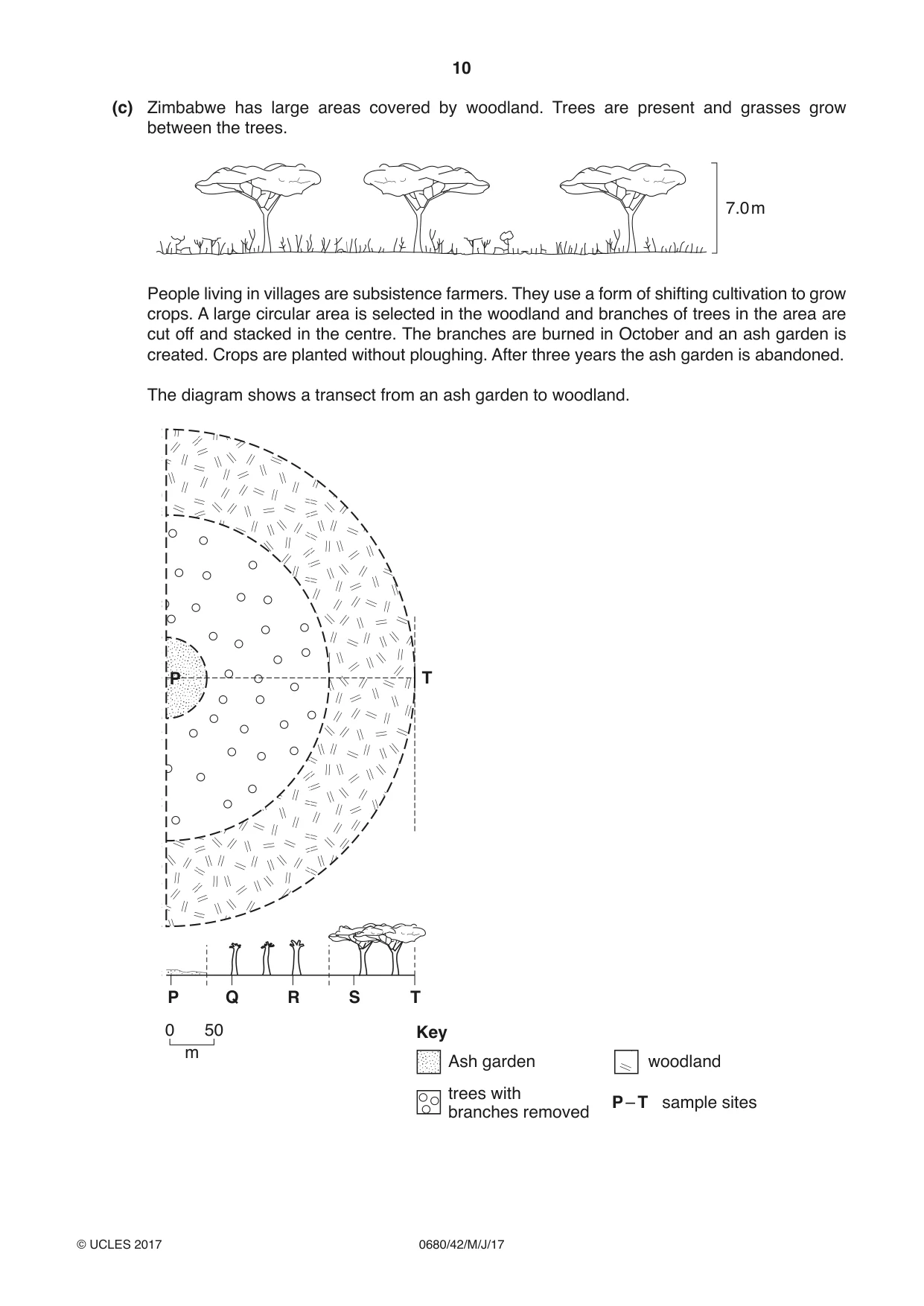
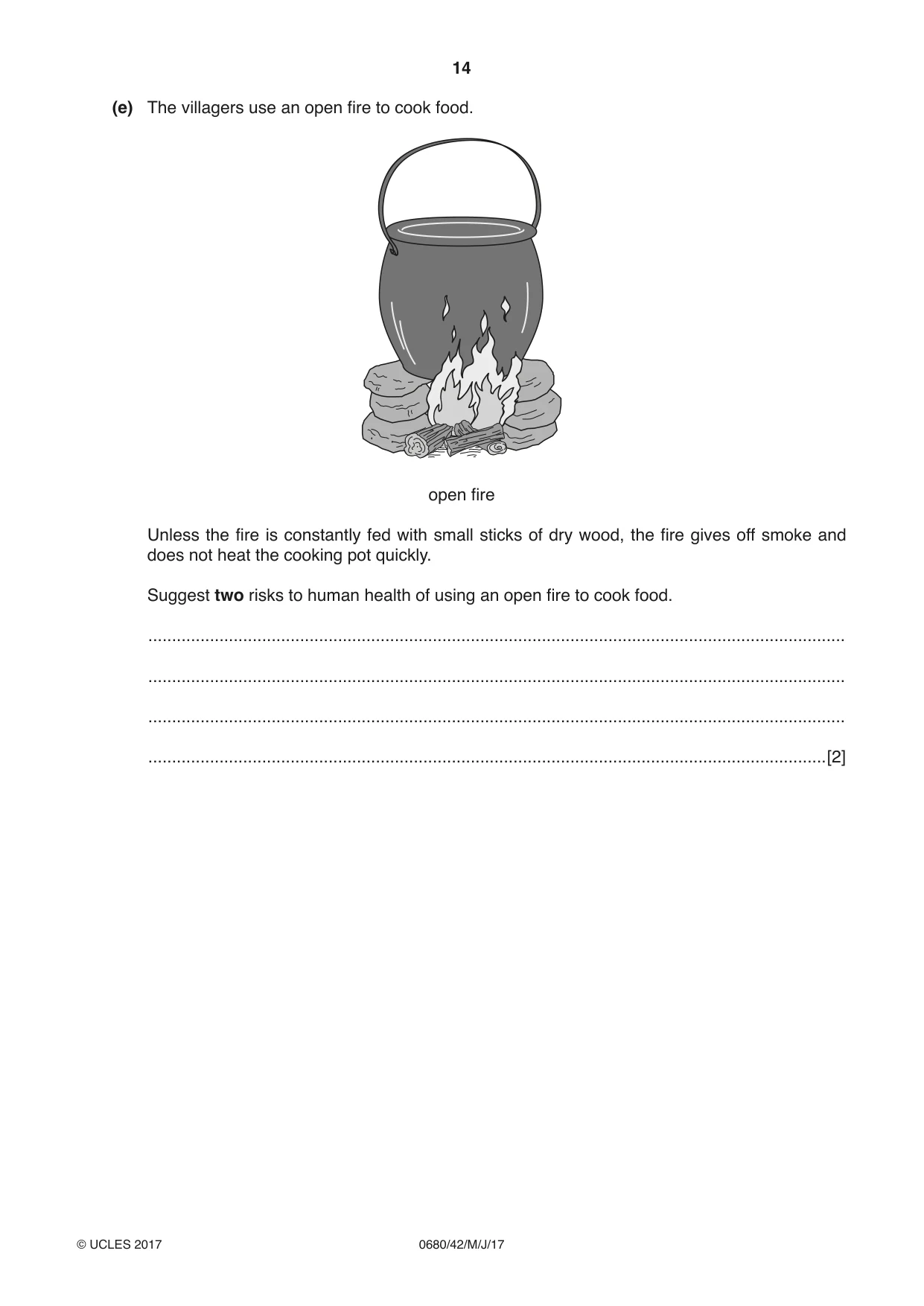
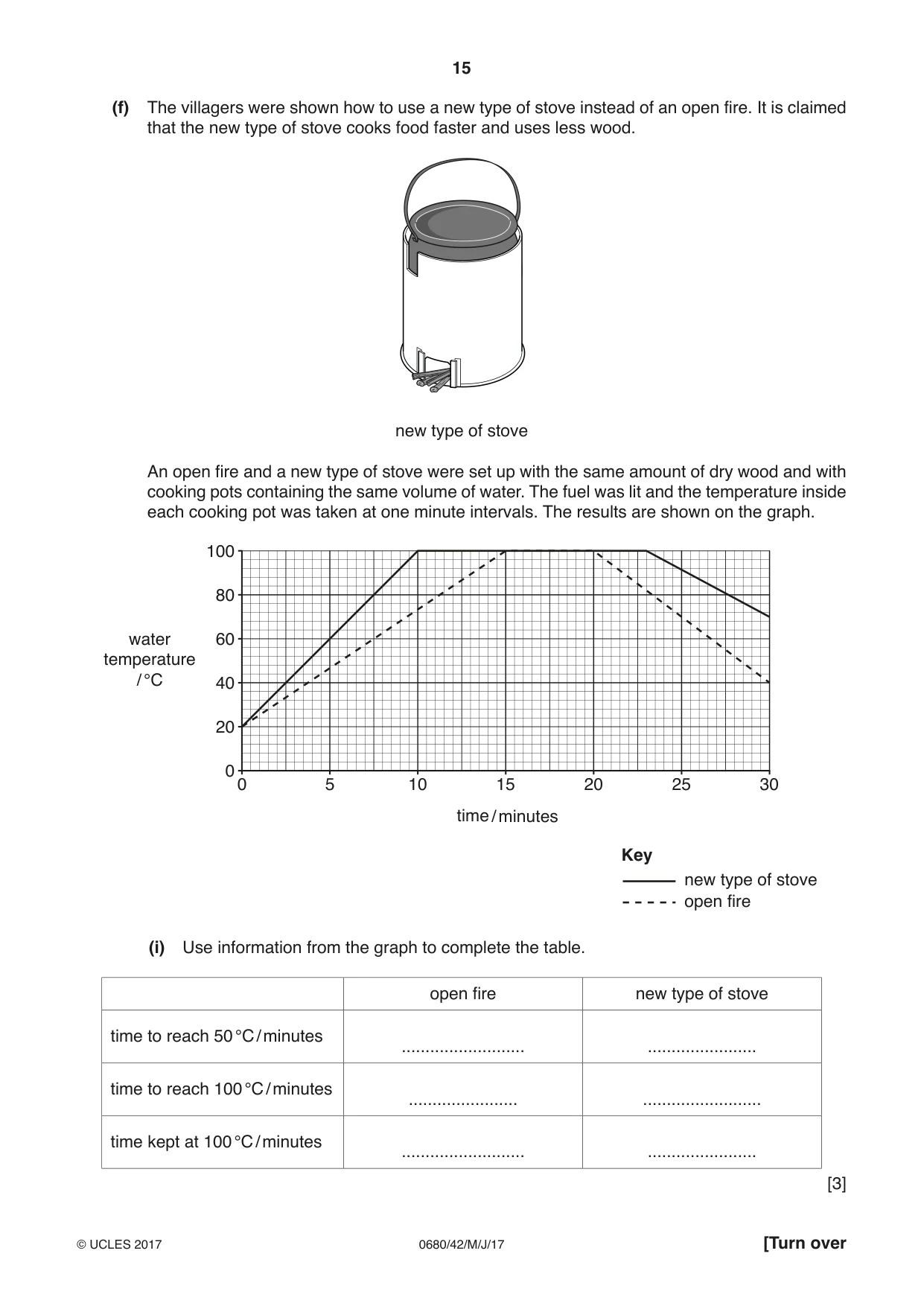
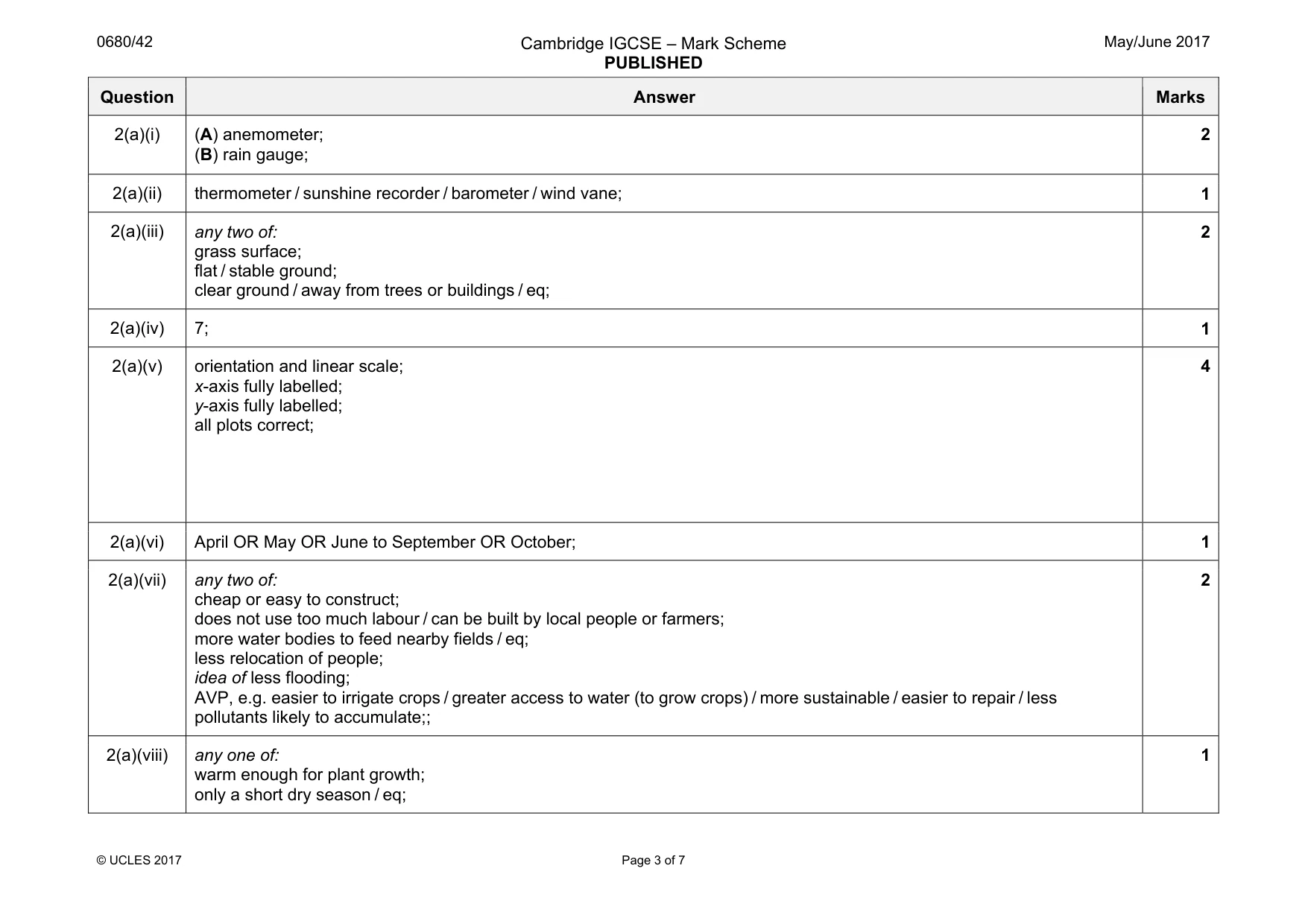
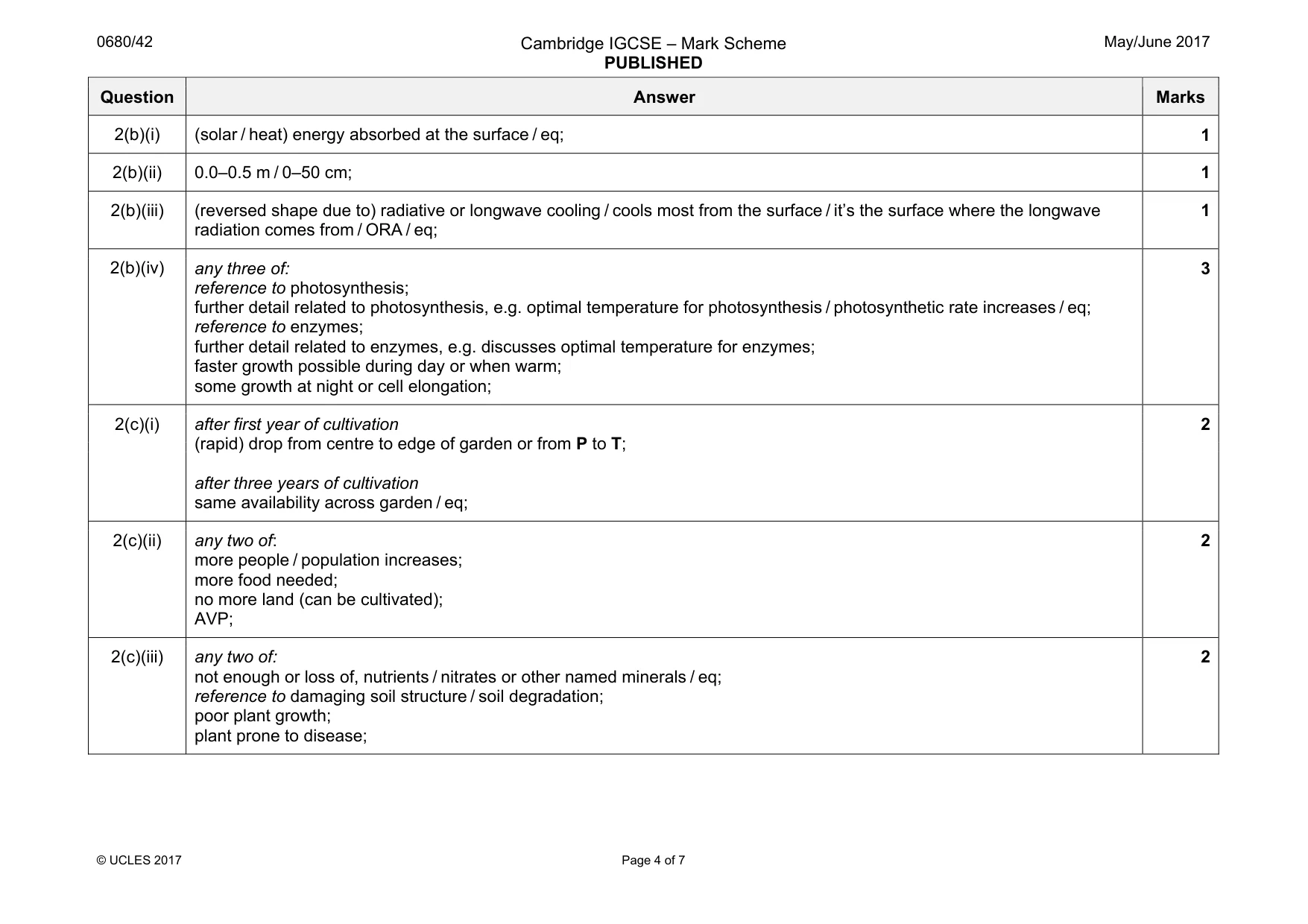
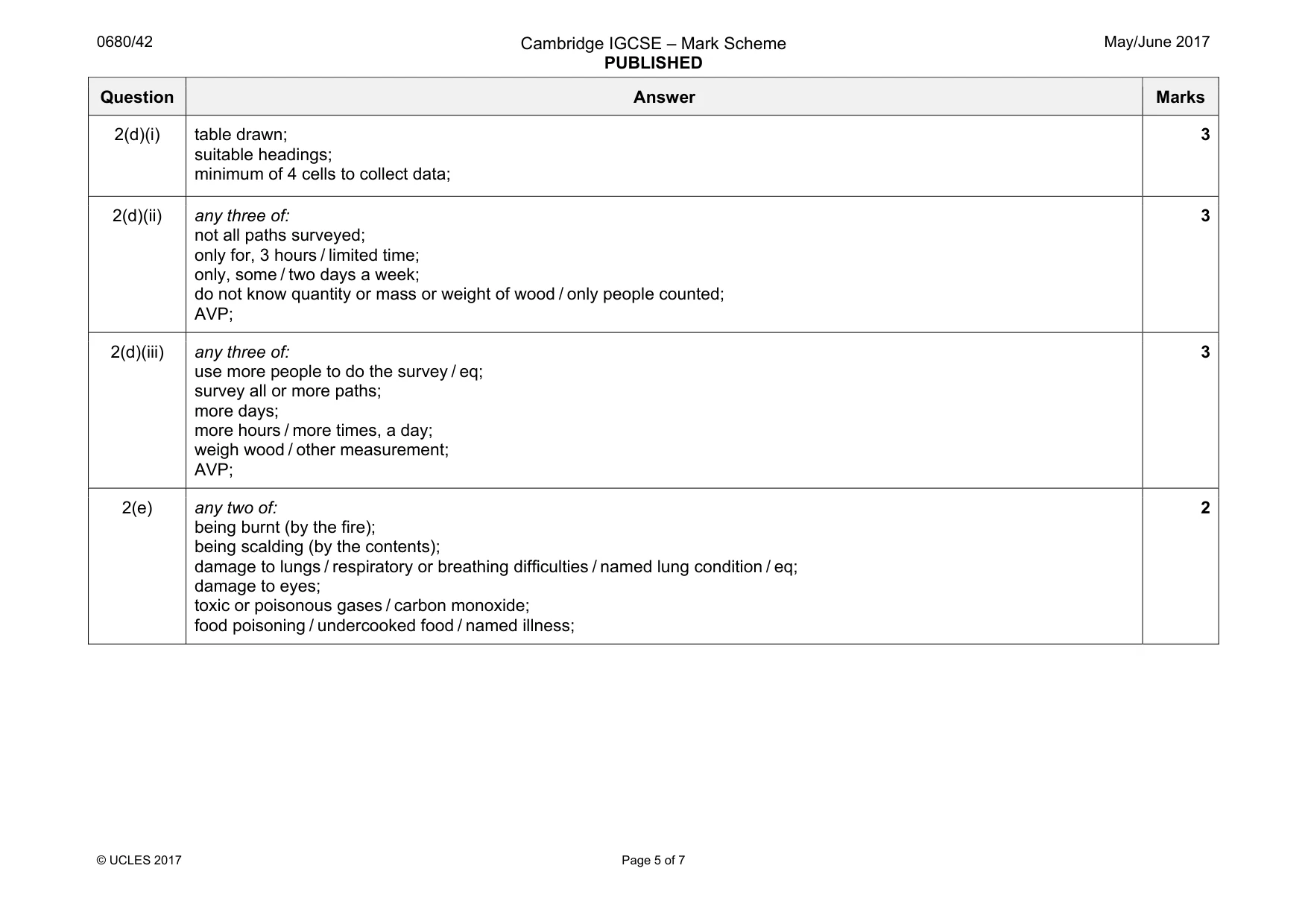
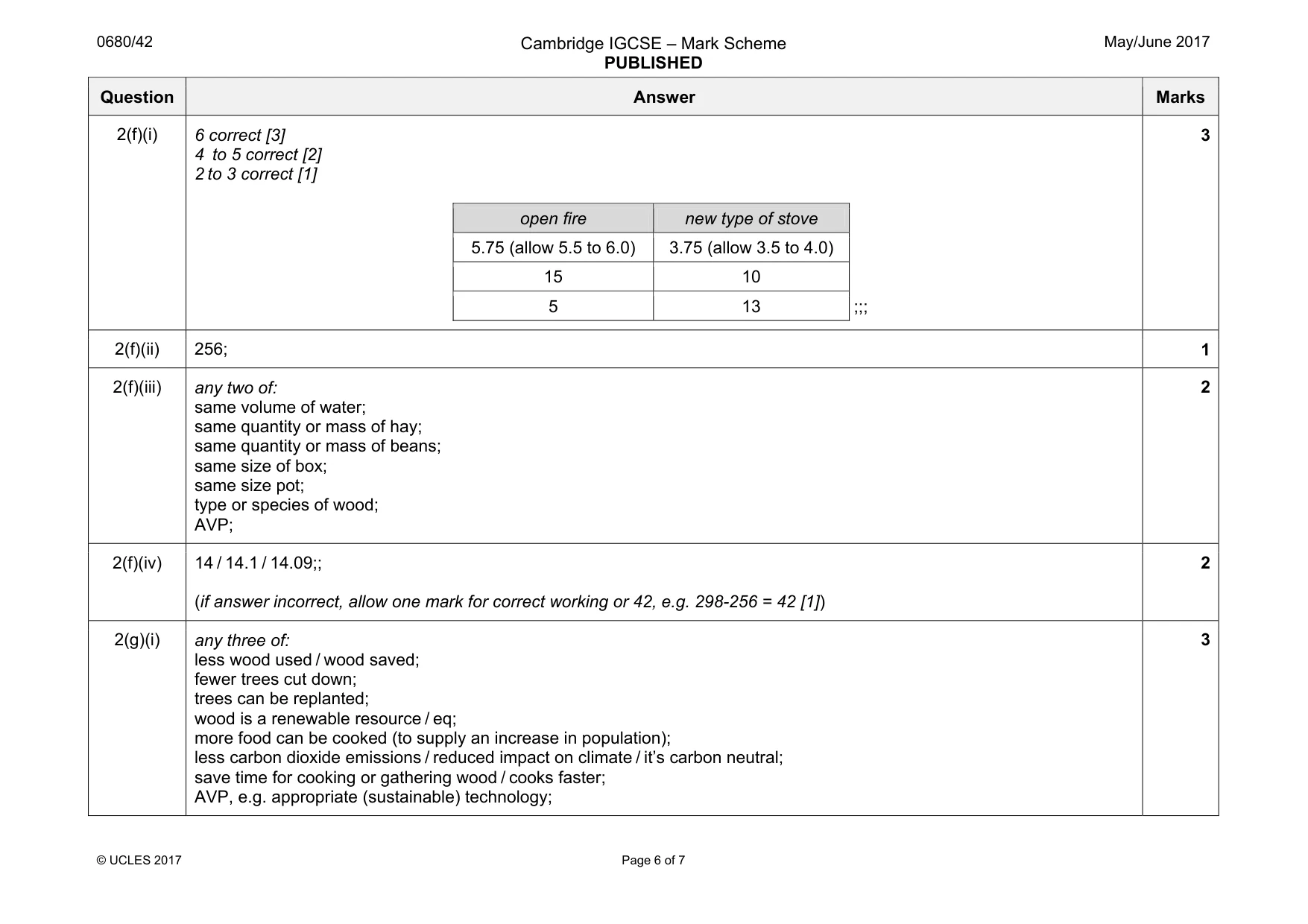
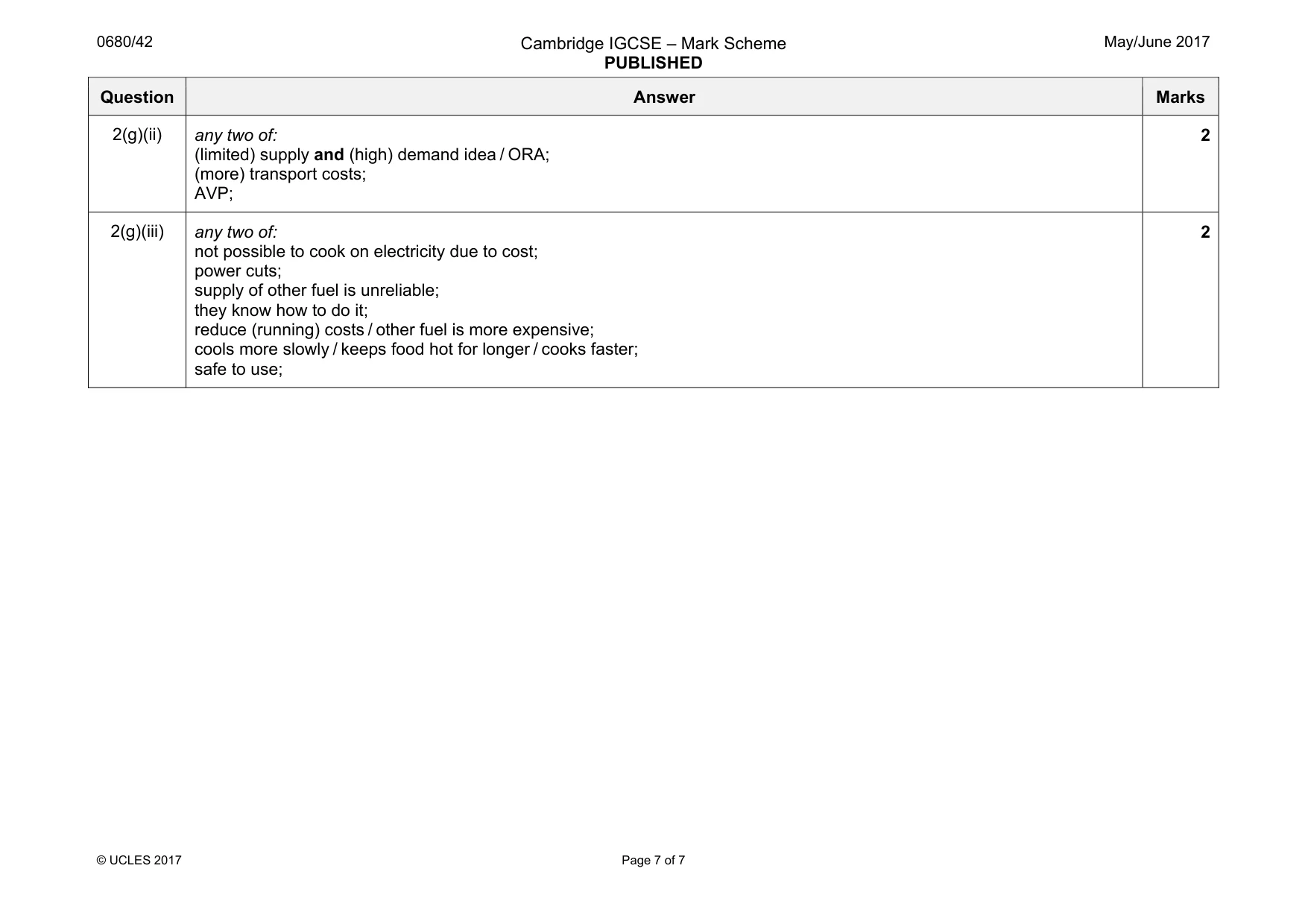
Mark scheme: 2(a)(i) (A) anemometer; (B) rain gauge; 2 2(a)(ii) thermometer / sunshine recorder / barometer / wind vane; 1 2(a)(iii) any two of: grass surface; flat / stable ground; clear ground / away from trees or buildings / eq; 2 2(a)(iv) 7; 1 2(a)(v) orientation and linear scale; x-axis fully labelled; y-axis fully labelled; all plots correct; 4 2(a)(vi) April OR May OR June to September OR October; 1 2(a)(vii) any two of: cheap or easy to construct; does not use too much labour / can be built by local people or farmers; more water bodies to feed nearby fields / eq; less relocation of people; idea of less flooding; AVP, e.g. easier to irrigate crops / greater access to water (to grow crops) / more sustainable / easier to repair / less pollutants likely to accumulate;; 2 2(a)(viii) any one of: warm enough for plant growth; only a short dry season / eq; 1 Question Answer Marks 2(b)(i) (solar / heat) energy absorbed at the surface / eq; 1 2(b)(ii) 0.0–0.5 m / 0–50 cm; 1 2(b)(iii) (reversed shape due to) radiative or longwave cooling / cools most from the surface / it’s the surface where the longwave radiation comes from / ORA / eq; 1 2(b)(iv) any three of: reference to photosynthesis; further detail related to photosynthesis, e.g. optimal temperature for photosynthesis / photosynthetic rate increases / eq; reference to enzymes; further detail related to enzymes, e.g. discusses optimal temperature for enzymes; faster growth possible during day or when warm; some growth at night or cell elongation; 3 2(c)(i) after first year of cultivation (rapid) drop from centre to edge of garden or from P to T; after three years of cultivation same availability across garden / eq; 2 2(c)(ii) any two of: more people / population increases; more food needed; no more land (can be cultivated); AVP; 2 2(c)(iii) any two of: not enough or loss of, nutrients / nitrates or other named minerals / eq; reference to damaging soil structure / soil degradation; poor plant growth; plant prone to disease; 2 Question Answer Marks 2(d)(i) table drawn; suitable headings; minimum of 4 cells to collect data; 3 2(d)(ii) any three of: not all paths surveyed; only for, 3 hours / limited time; only, some / two days a week; do not know quantity or mass or weight of wood / only people counted; AVP; 3 2(d)(iii) any three of: use more people to do the survey / eq; survey all or more paths; more days; more hours / more times, a day; weigh wood / other measurement; AVP; 3 2(e) any two of: being burnt (by the fire); being scalding (by the contents); damage to lungs / respiratory or breathing difficulties / named lung condition / eq; damage to eyes; toxic or poisonous gases / carbon monoxide; food poisoning / undercooked food / named illness; 2 Question Answer Marks 2(f)(i) 6 correct [3] 4 to 5 correct [2] 2 to 3 correct [1] open fire new type of stove 5.75 (allow 5.5 to 6.0) 3.75 (allow 3.5 to 4.0) 15 10 5 13 ;;; 3 2(f)(ii) 256; 1 2(f)(iii) any two of: same volume of water; same quantity or mass of hay; same quantity or mass of beans; same size of box; same size pot; type or species of wood; AVP; 2 2(f)(iv) 14 / 14.1 / 14.09;; (if answer incorrect, allow one mark for correct working or 42, e.g. 298-256 = 42 [1]) 2 2(g)(i) any three of: less wood used / wood saved; fewer trees cut down; trees can be replanted; wood is a renewable resource / eq; more food can be cooked (to supply an increase in population); less carbon dioxide emissions / reduced impact on climate / it’s carbon neutral; save time for cooking or gathering wood / cooks faster; AVP, e.g. appropriate (sustainable) technology; 3 Question Answer Marks 2(g)(ii) any two of: (limited) supply and (high) demand idea / ORA; (more) transport costs; AVP; 2 2(g)(iii) any two of: not possible to cook on electricity due to cost; power cuts; supply of other fuel is unreliable; they know how to do it; reduce (running) costs / other fuel is more expensive; cools more slowly / keeps food hot for longer / cooks faster; safe to use; 2
What was in this paper
The subtopics covered by these 2 questions, and how many questions each got. Open one in a new tab to see every Cambridge question on it.
What you needed in this session
Cambridge’s own grade thresholds for 2017 May/June, Paper 4 · Variant 2. A higher threshold means an easier paper — the bar moves with how the cohort did.