Cambridge IGCSE Economics 0455 — 2018 Oct/Nov Paper 1 · Variant 1
0455/11/O/N/18 · 30 questions · 30 marks · ≈34 min
The question paper and its mark scheme, free to read here and free to download. This is Cambridge’s own paper, exactly as it was sat.
Question paper12 pages

Mark scheme3 pages
Answers below. Sit the paper first if you are practising.
Questions as text
Q1 · Which factor of production involves risk-taking?
1 Which factor of production involves risk-taking? A capital B enterprise C labour D land
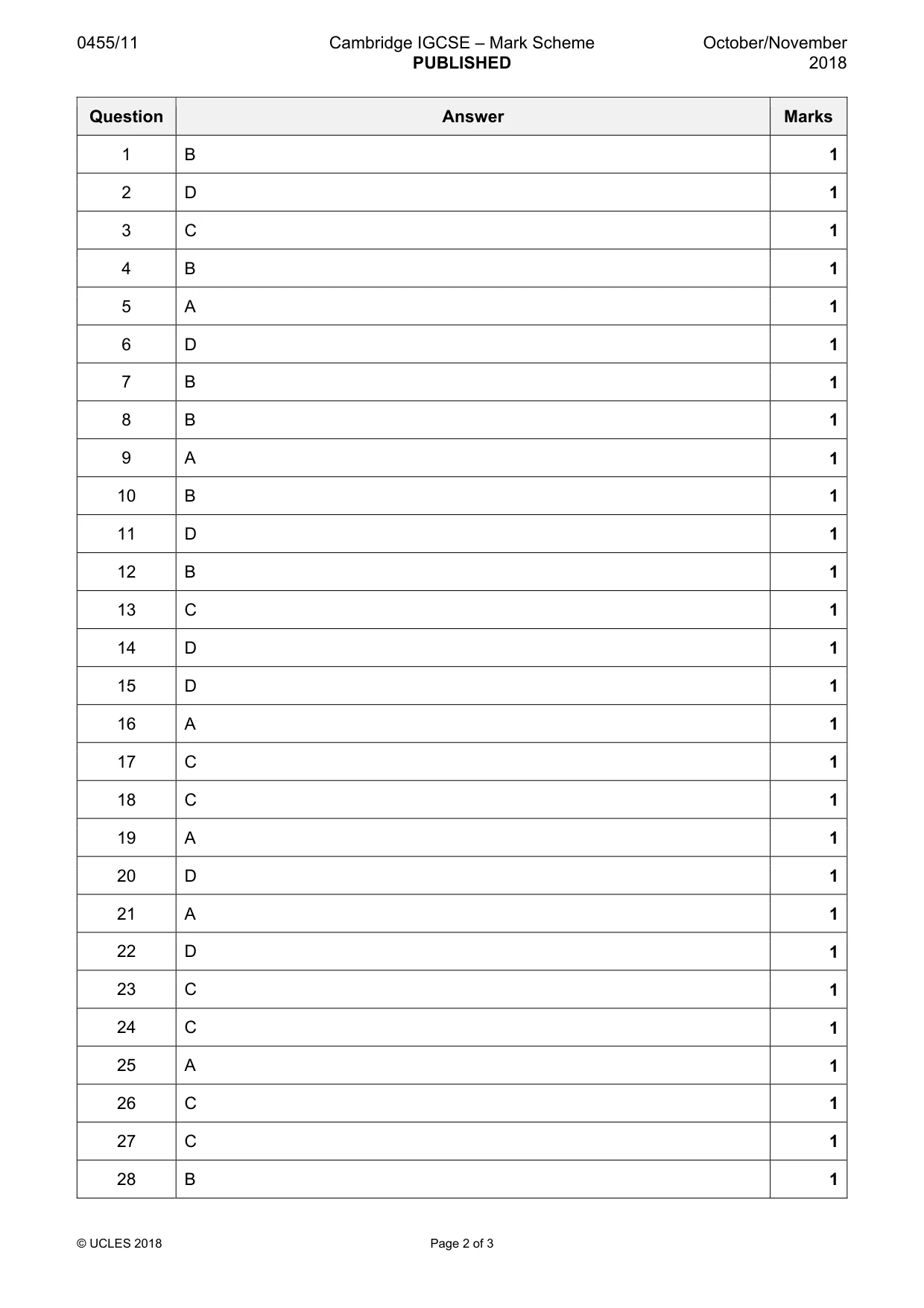
Mark scheme: B
Q2 · What is the basic problem facing all economies?
2 What is the basic problem facing all economies? A how to achieve a stable balance of payments B how to maximise tax revenues C how to reach full employment D how to use scarce resources
Mark scheme: D
Q3 · The diagram shows the production possibility curve (PPC) for an economy
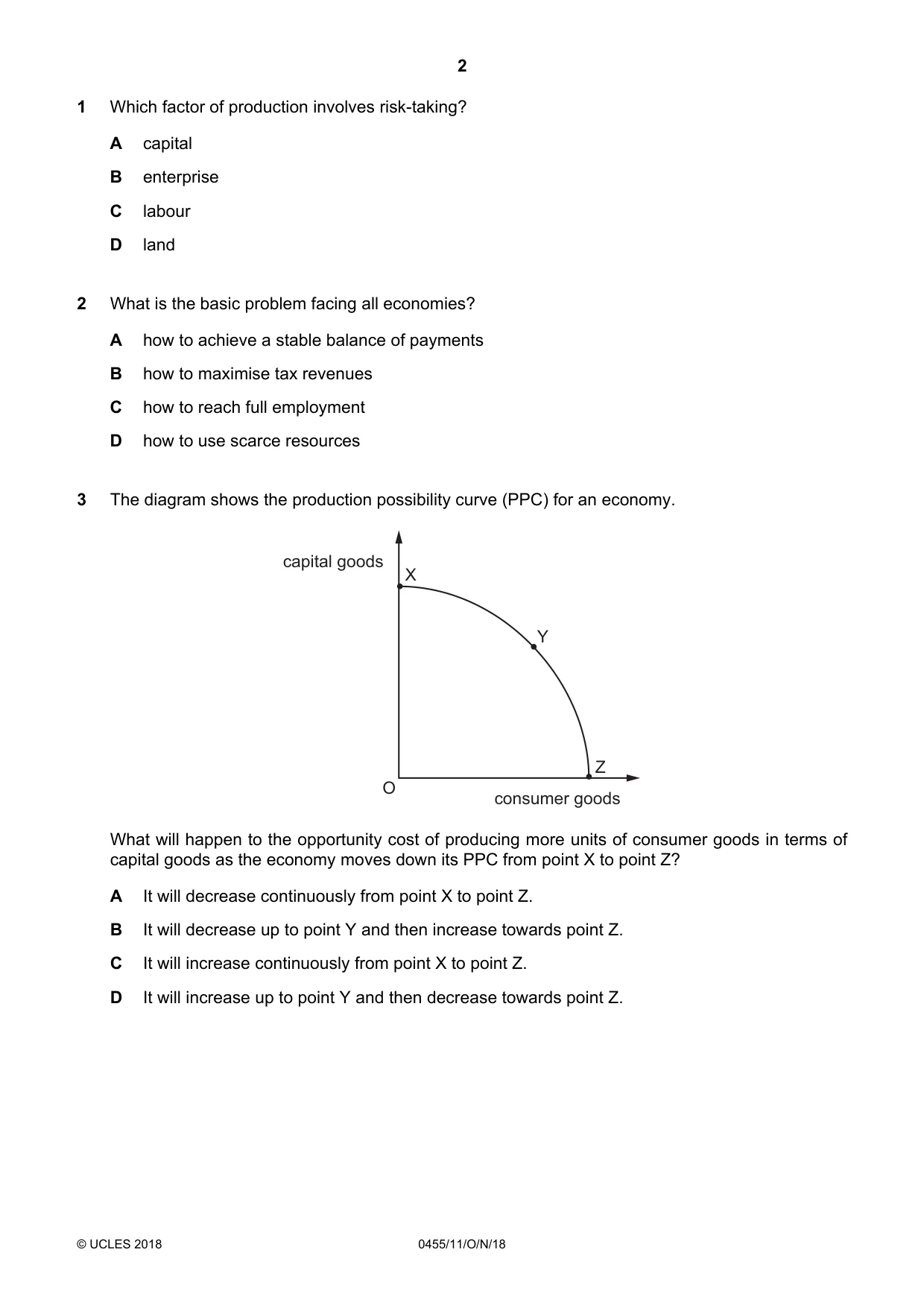
3 The diagram shows the production possibility curve (PPC) for an economy. capital goods X Y Z O consumer goods What will happen to the opportunity cost of producing more units of consumer goods in terms of capital goods as the economy moves down its PPC from point X to point Z? A It will decrease continuously from point X to point Z. B It will decrease up to point Y and then increase towards point Z. C It will increase continuously from point X to point Z. D It will increase up to point Y and then decrease towards point Z.
Mark scheme: C
More questions on Production possibility curve (PPC) diagrams
Q4 · An economy operates entirely as a market system
4 An economy operates entirely as a market system. Which type of service would not be provided in such an economy? A commercial banking services B free government health services C private educational services D profitable retail services
Mark scheme: B
Q5 · The diagram shows the equilibrium market price PE and quantity QE for rice in a country
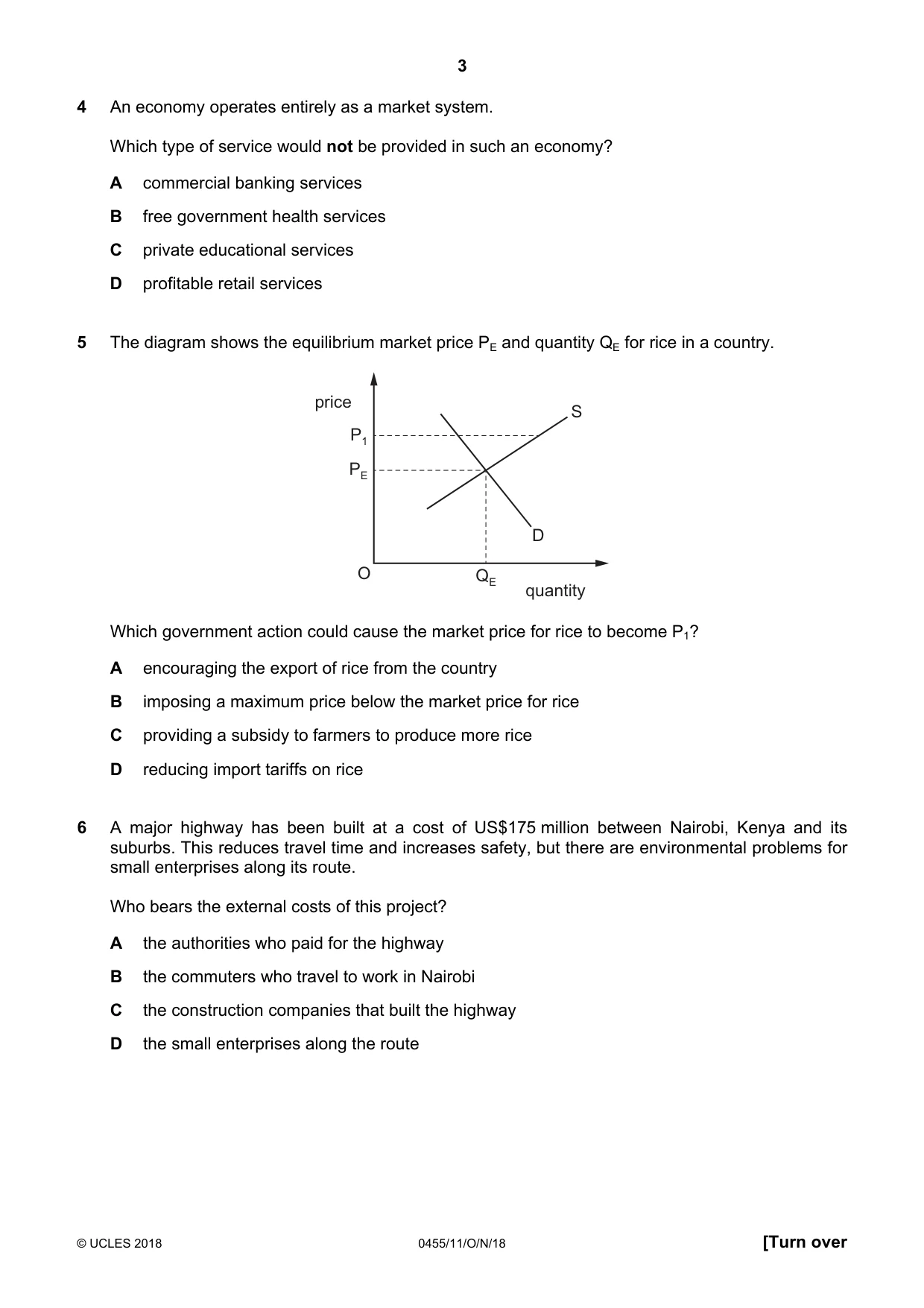
5 The diagram shows the equilibrium market price PE and quantity QE for rice in a country. price S P1 PE D O QE quantity Which government action could cause the market price for rice to become P1? A encouraging the export of rice from the country B imposing a maximum price below the market price for rice C providing a subsidy to farmers to produce more rice D reducing import tariffs on rice
Mark scheme: A
Q6 · A major highway has been built at a cost of US$175 million between Nairobi, Kenya and its…
6 A major highway has been built at a cost of US$175 million between Nairobi, Kenya and its suburbs. This reduces travel time and increases safety, but there are environmental problems for small enterprises along its route. Who bears the external costs of this project? A the authorities who paid for the highway B the commuters who travel to work in Nairobi C the construction companies that built the highway D the small enterprises along the route
Mark scheme: D
Q7 · The table shows the demand and supply for spices in a market in Africa
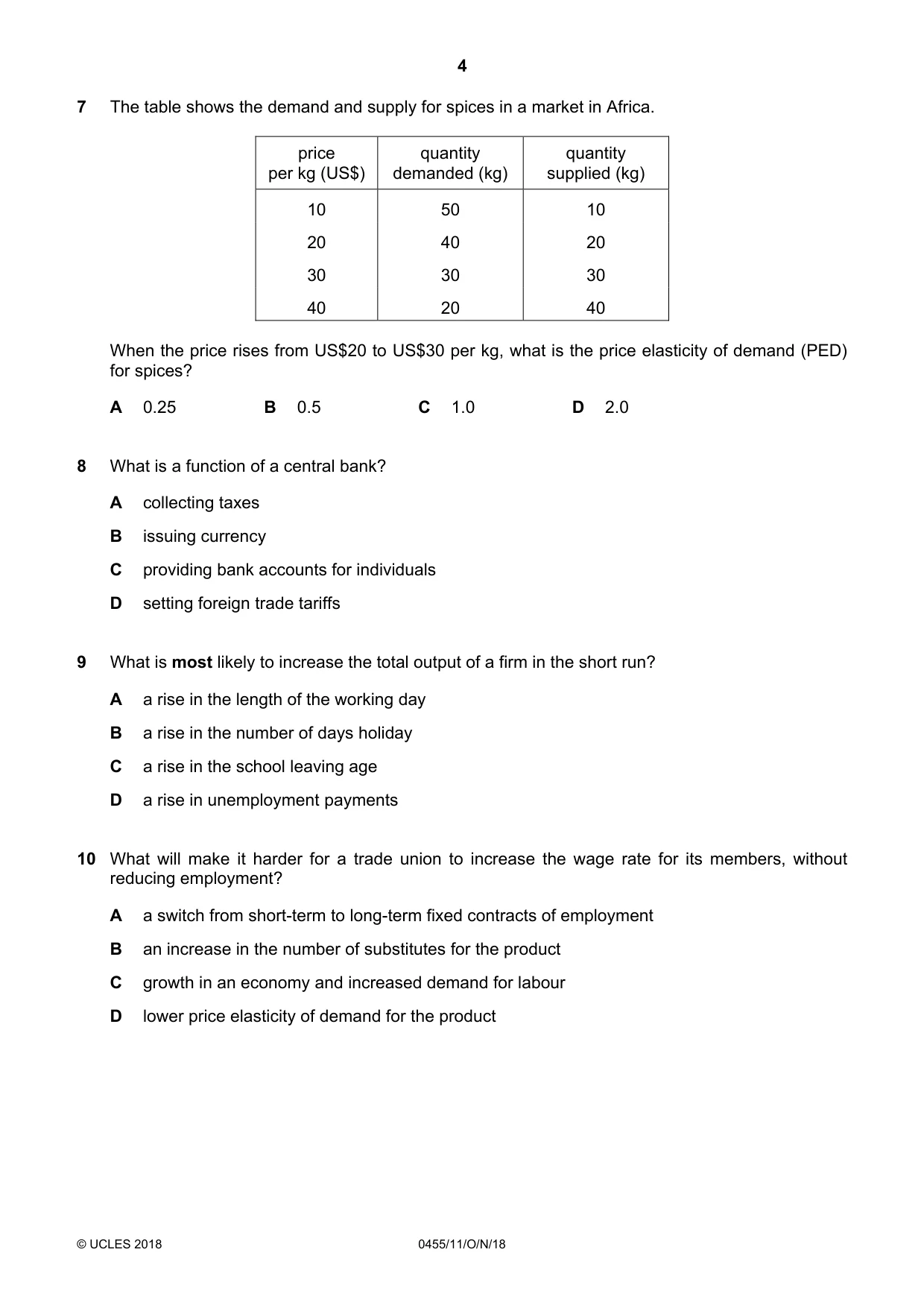
7 The table shows the demand and supply for spices in a market in Africa. price quantity quantity per kg (US$) demanded (kg) supplied (kg) 10 50 10 20 40 20 30 30 30 40 20 40 When the price rises from US$20 to US$30 per kg, what is the price elasticity of demand (PED) for spices? A 0.25 B 0.5 C 1.0 D 2.0
Mark scheme: B
Q8 · What is a function of a central bank?
8 What is a function of a central bank? A collecting taxes B issuing currency C providing bank accounts for individuals D setting foreign trade tariffs
Mark scheme: B
Q9 · What is most likely to increase the total output of a firm in the short run?
9 What is most likely to increase the total output of a firm in the short run? A a rise in the length of the working day B a rise in the number of days holiday C a rise in the school leaving age D a rise in unemployment payments
Mark scheme: A
Q10 · What will make it harder for a trade union to increase the wage rate for its members…
10 What will make it harder for a trade union to increase the wage rate for its members, without reducing employment? A a switch from short-term to long-term fixed contracts of employment B an increase in the number of substitutes for the product C growth in an economy and increased demand for labour D lower price elasticity of demand for the product
Mark scheme: B
Q11 · What is likely to assist a government’s policy of reducing inflation?
11 What is likely to assist a government’s policy of reducing inflation? A allowing businesses to borrow money for longer periods B encouraging the public to spend more money C increasing lending to members of the public D raising the interest rate on credit card borrowing
Mark scheme: D
Q12 · Which international market is closest to the model of perfect competition?
12 Which international market is closest to the model of perfect competition? A diamonds B foreign currency C petrol (fuel) D washing machines
Mark scheme: B
Q13 · Which form of production would be least likely to have the advantages of economies of…
13 Which form of production would be least likely to have the advantages of economies of scale? A car manufacturing B commercial cereal farming C handmade jewellery D refining of oil products
Mark scheme: C
Q14 · The table shows a firm’s average revenue and average cost at different levels of output
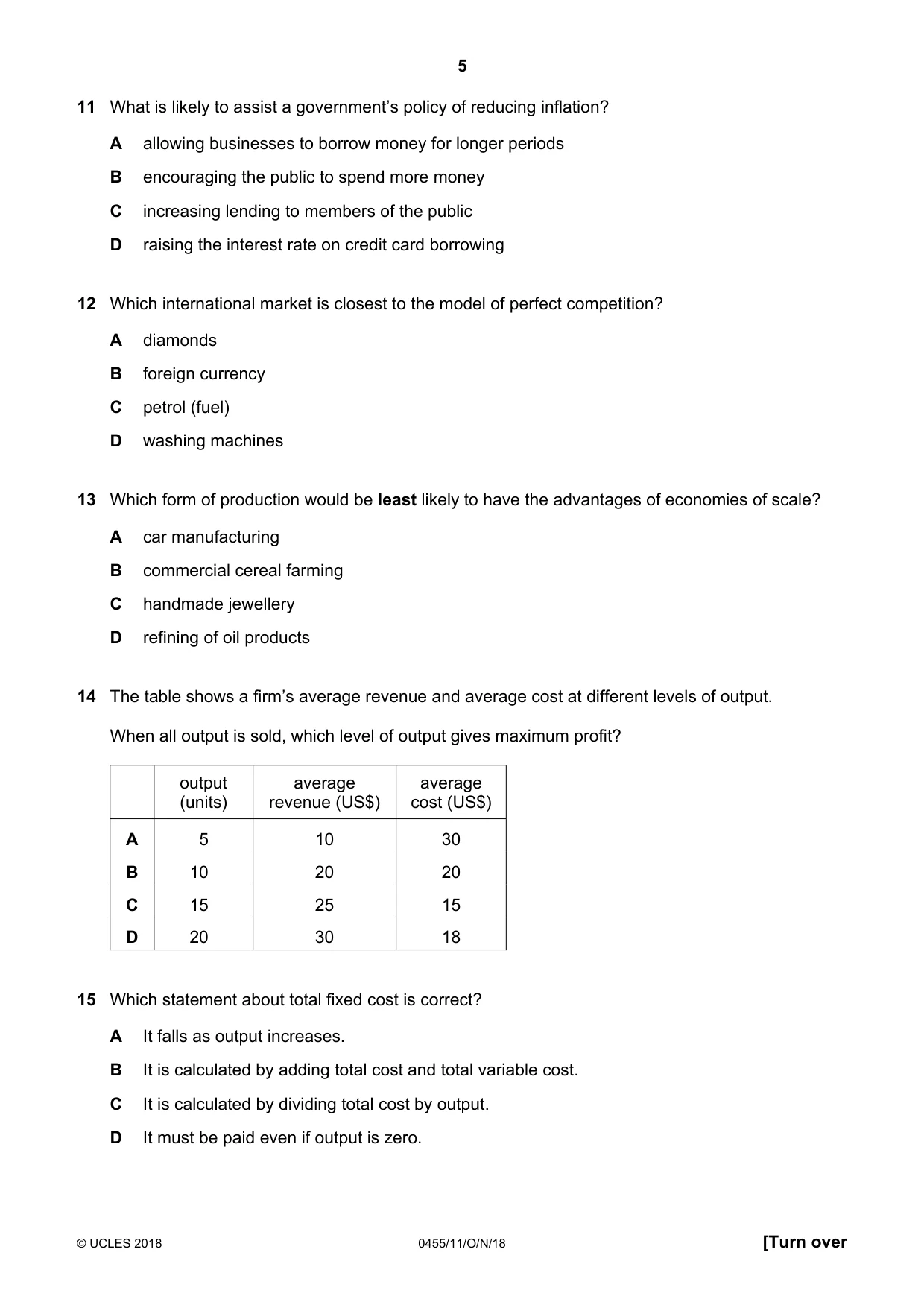
14 The table shows a firm’s average revenue and average cost at different levels of output. When all output is sold, which level of output gives maximum profit? output average average (units) revenue (US$) cost (US$) A 5 10 30 B 10 20 20 C 15 25 15 D 20 30 18
Mark scheme: D
Q15 · Which statement about total fixed cost is correct?
15 Which statement about total fixed cost is correct? A It falls as output increases. B It is calculated by adding total cost and total variable cost. C It is calculated by dividing total cost by output. D It must be paid even if output is zero.
Mark scheme: D
Q16 · What is a disadvantage of direct taxes?
16 What is a disadvantage of direct taxes? A They can be a disincentive to work. B They can be based on people’s ability to pay. C They can be a major source of tax revenue. D They can be progressive.
Mark scheme: A
Q17 · When is a government said to balance its budget?
17 When is a government said to balance its budget? A when all goods and services are taxed equally B when economic growth is the same in all regions of the economy C when its total income equals its total expenditure D when total exports equal total imports
Mark scheme: C
Q18 · In the diagram, which level of subsidy per kilo would a government have to give to…
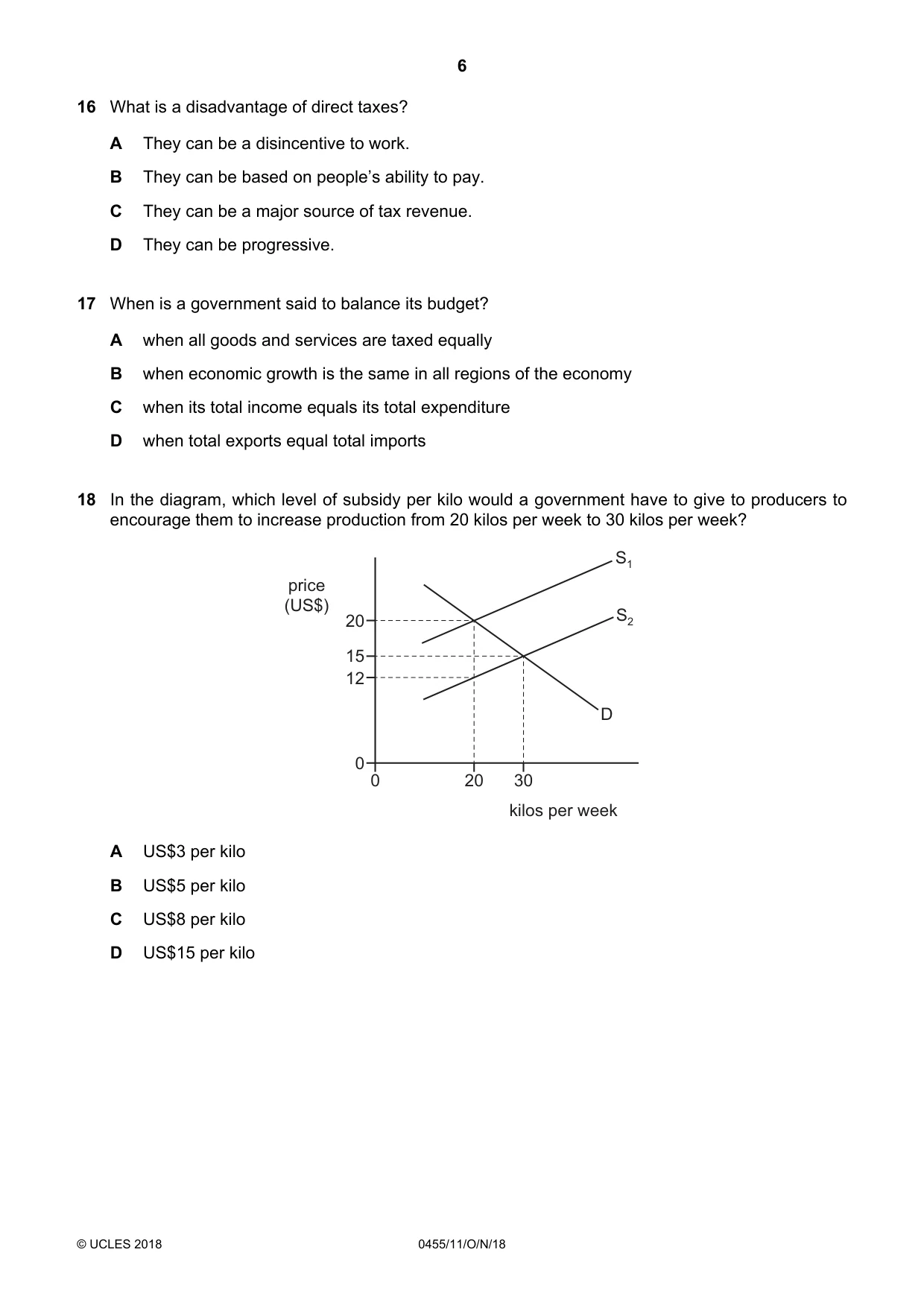
18 In the diagram, which level of subsidy per kilo would a government have to give to producers to encourage them to increase production from 20 kilos per week to 30 kilos per week? S1 price (US$) 20 S2 15 12 D 0 0 20 30 kilos per week A US$3 per kilo B US$5 per kilo C US$8 per kilo D US$15 per kilo
Mark scheme: C
Q19 · In which case is success for the government in achieving the first aim likely to cause…
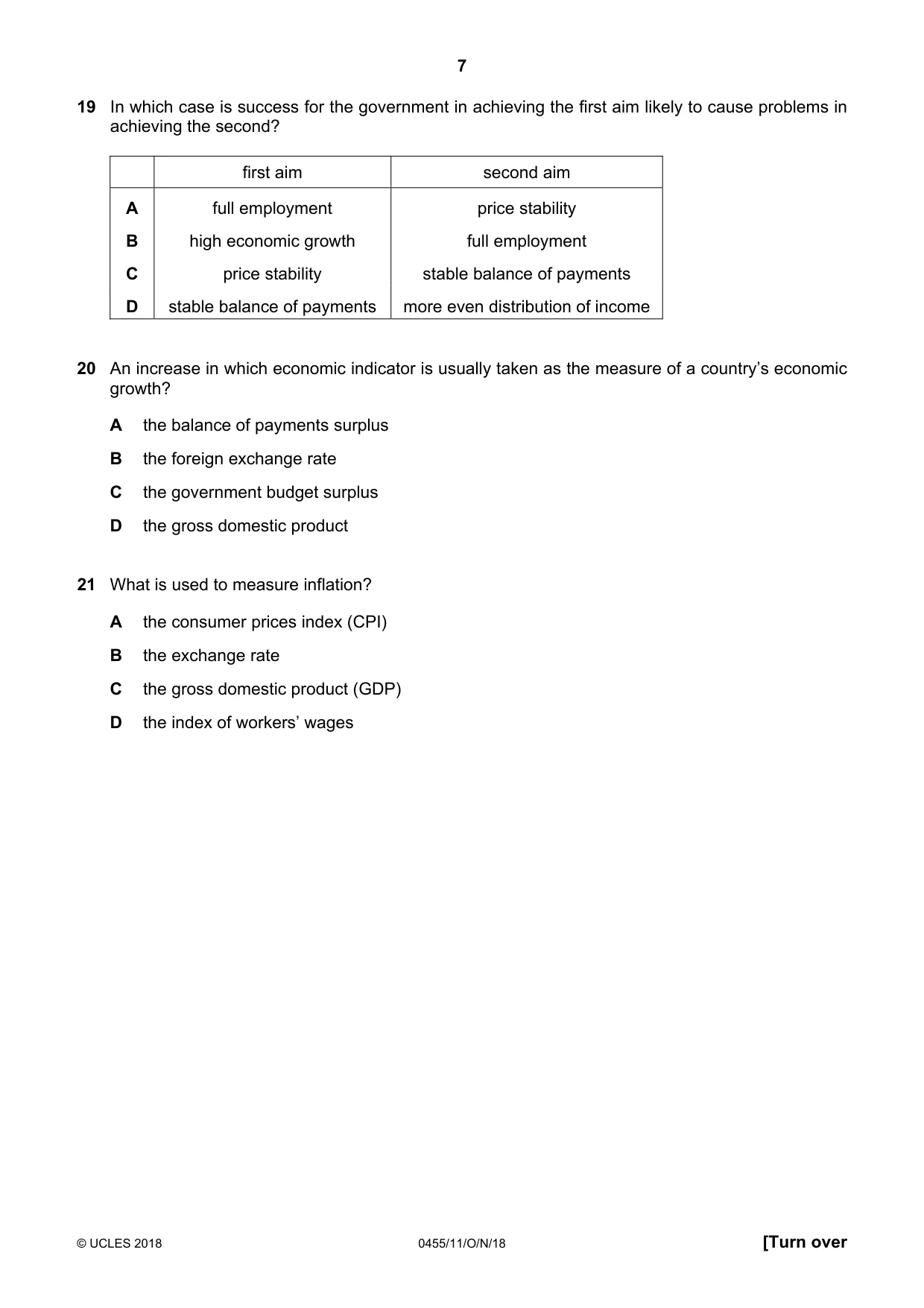
19 In which case is success for the government in achieving the first aim likely to cause problems in achieving the second? first aim second aim A full employment price stability B high economic growth full employment C price stability stable balance of payments D stable balance of payments more even distribution of income
Mark scheme: A
Q20 · An increase in which economic indicator is usually taken as the measure of a country’s…
20 An increase in which economic indicator is usually taken as the measure of a country’s economic growth? A the balance of payments surplus B the foreign exchange rate C the government budget surplus D the gross domestic product
Mark scheme: D
Q21 · What is used to measure inflation?
21 What is used to measure inflation? A the consumer prices index (CPI) B the exchange rate C the gross domestic product (GDP) D the index of workers’ wages
Mark scheme: A
Q22 · The diagram shows the rate of unemployment and the periods of recession in a country…
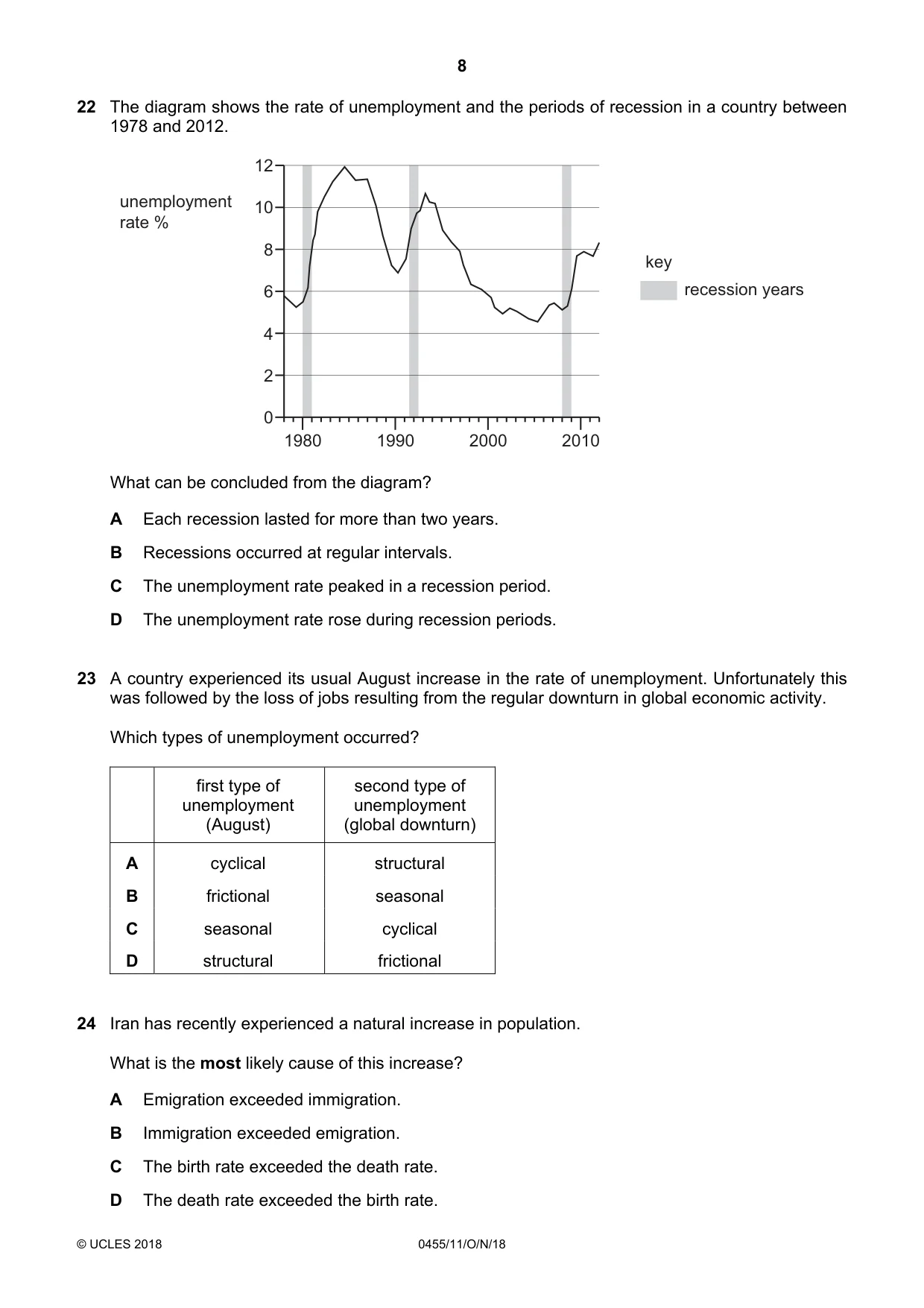
22 The diagram shows the rate of unemployment and the periods of recession in a country between 1978 and 2012. 12 unemployment 10 rate % 8 key 6 recession years 4 2 0 1980 1990 2000 2010 What can be concluded from the diagram? A Each recession lasted for more than two years. B Recessions occurred at regular intervals. C The unemployment rate peaked in a recession period. D The unemployment rate rose during recession periods.
Mark scheme: D
Q23 · A country experienced its usual August increase in the rate of unemployment
23 A country experienced its usual August increase in the rate of unemployment. Unfortunately this was followed by the loss of jobs resulting from the regular downturn in global economic activity. Which types of unemployment occurred? first type of second type of unemployment unemployment (August) (global downturn) A cyclical structural B frictional seasonal C seasonal cyclical D structural frictional
Mark scheme: C
Q24 · Iran has recently experienced a natural increase in population
24 Iran has recently experienced a natural increase in population. What is the most likely cause of this increase? A Emigration exceeded immigration. B Immigration exceeded emigration. C The birth rate exceeded the death rate. D The death rate exceeded the birth rate.
Mark scheme: C
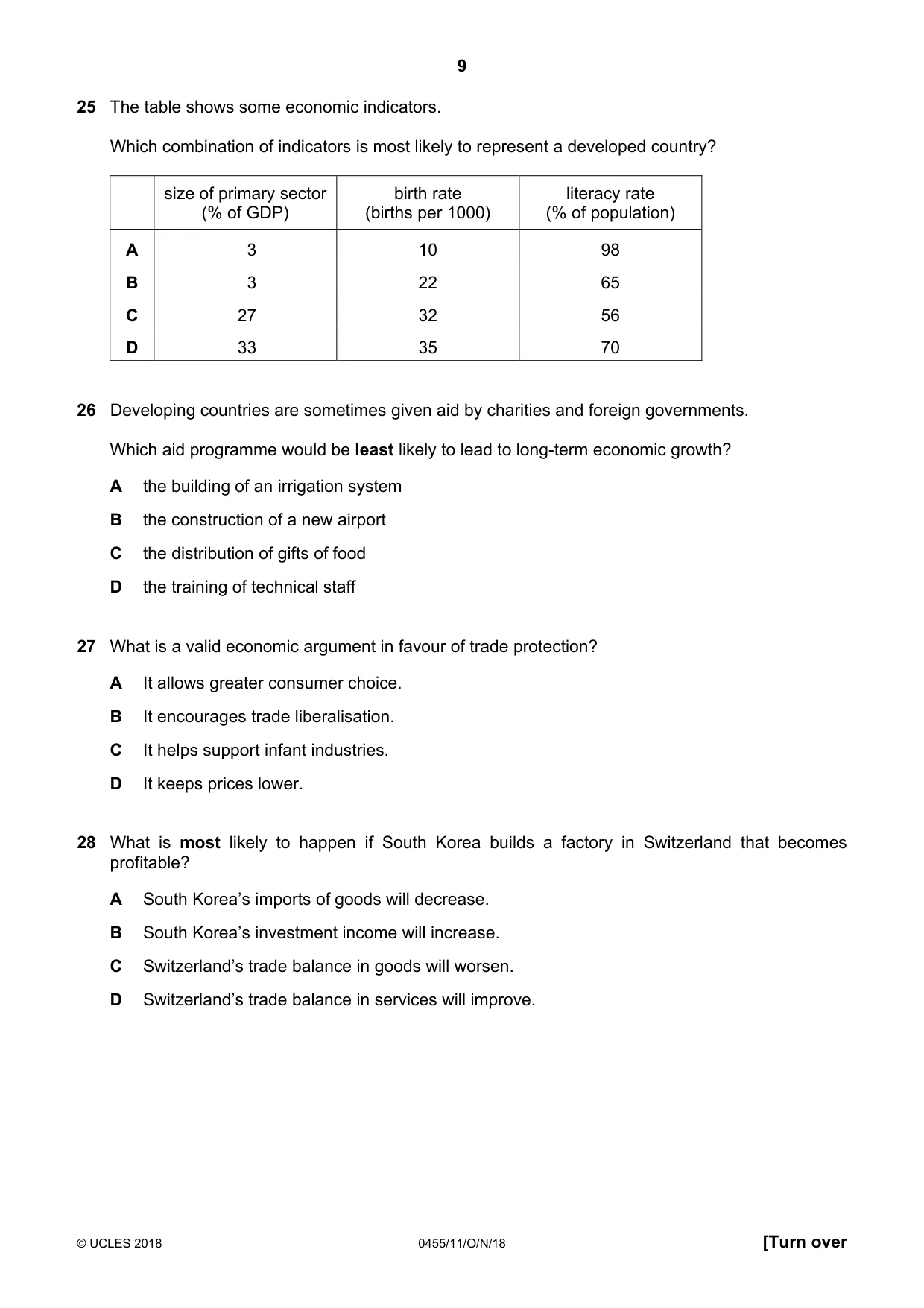
Q25 · The table shows some economic indicators
25 The table shows some economic indicators. Which combination of indicators is most likely to represent a developed country? size of primary sector birth rate literacy rate (% of GDP) (births per 1000) (% of population) A 3 10 98 B 3 22 65 C 27 32 56 D 33 35 70
Mark scheme: A
More questions on Differences in economic development between countries
Q26 · Developing countries are sometimes given aid by charities and foreign governments
26 Developing countries are sometimes given aid by charities and foreign governments. Which aid programme would be least likely to lead to long-term economic growth? A the building of an irrigation system B the construction of a new airport C the distribution of gifts of food D the training of technical staff
Mark scheme: C
More questions on Differences in economic development between countries
Q27 · What is a valid economic argument in favour of trade protection?
27 What is a valid economic argument in favour of trade protection? A It allows greater consumer choice. B It encourages trade liberalisation. C It helps support infant industries. D It keeps prices lower.
Mark scheme: C
Q28 · What is most likely to happen if South Korea builds a factory in Switzerland that becomes…
28 What is most likely to happen if South Korea builds a factory in Switzerland that becomes profitable? A South Korea’s imports of goods will decrease. B South Korea’s investment income will increase. C Switzerland’s trade balance in goods will worsen. D Switzerland’s trade balance in services will improve.
Mark scheme: B
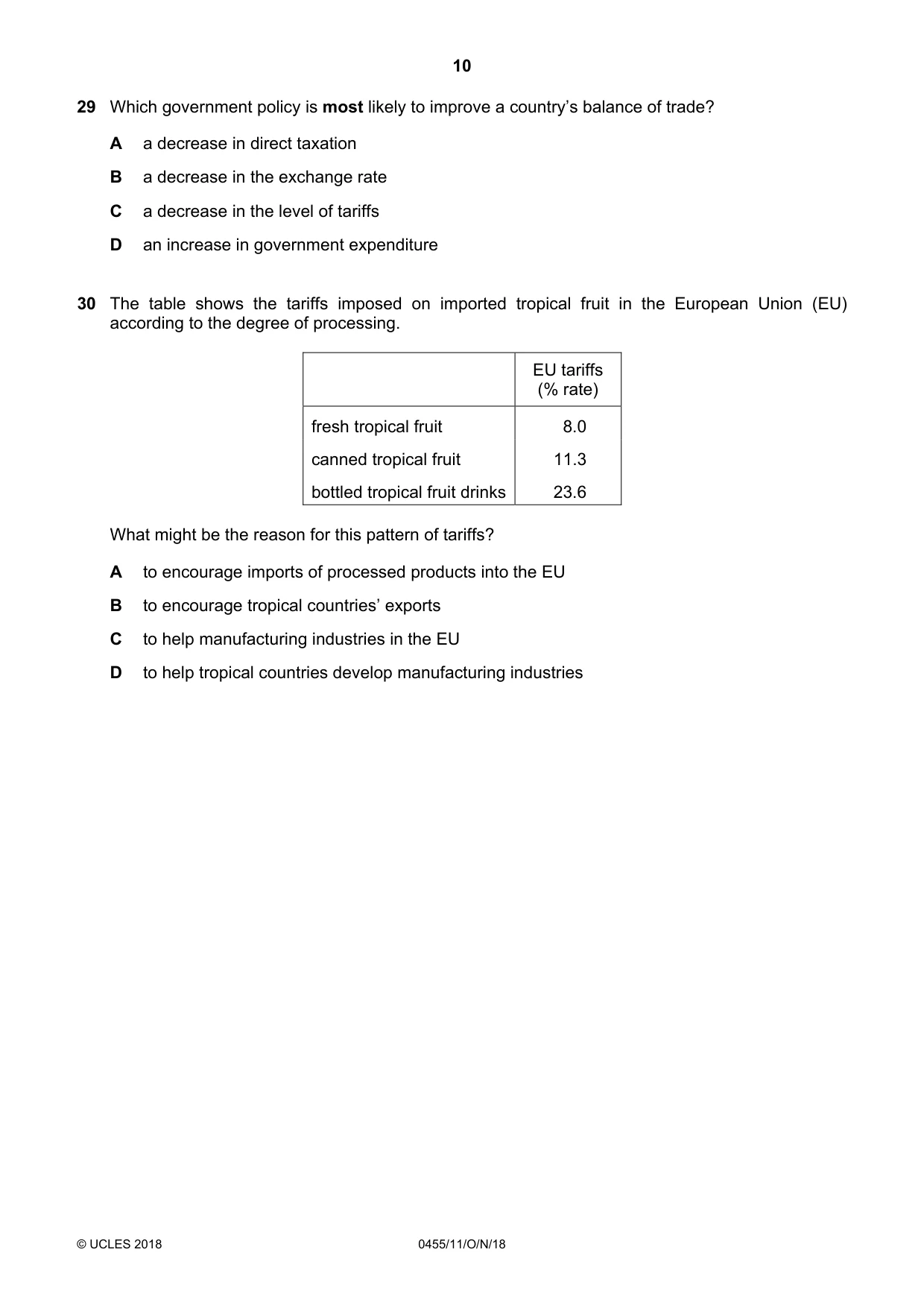
Q29 · Which government policy is most likely to improve a country’s balance of trade?
29 Which government policy is most likely to improve a country’s balance of trade? A a decrease in direct taxation B a decrease in the exchange rate C a decrease in the level of tariffs D an increase in government expenditure
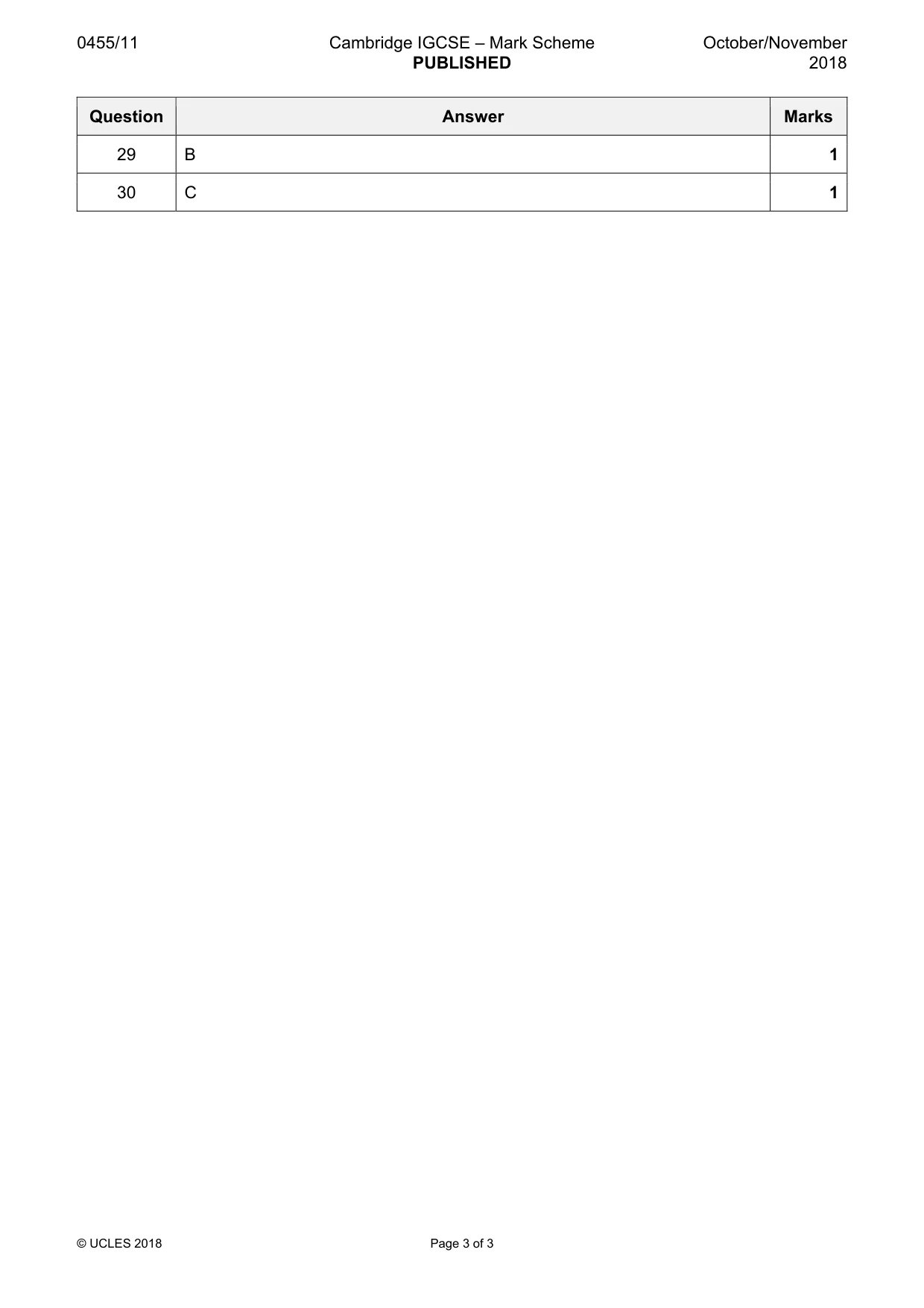
Mark scheme: B
Q30 · The table shows the tariffs imposed on imported tropical fruit in the European Union (EU)…
30 The table shows the tariffs imposed on imported tropical fruit in the European Union (EU) according to the degree of processing. EU tariffs (% rate) fresh tropical fruit 8.0 canned tropical fruit 11.3 bottled tropical fruit drinks 23.6 What might be the reason for this pattern of tariffs? A to encourage imports of processed products into the EU B to encourage tropical countries’ exports C to help manufacturing industries in the EU D to help tropical countries develop manufacturing industries
Mark scheme: C
What was in this paper
The subtopics covered by these 30 questions, and how many questions each got. Open one in a new tab to see every Cambridge question on it.
3Differences in economic development between countries2Employment and unemployment2Firms and production2Firms’ costs, revenue and objectives2Fiscal policy2Current account of balance of payments1Economic growth1Inflation and deflation1Market economic system1Market failure1Market structure1Monetary policy1Money and banking1Population1Price determination1Price elasticity of demand (PED)1Production possibility curve (PPC) diagrams1Supply1The factors of production1The macroeconomic aims of government1The nature of the economic problem1Trade unions1What you needed in this session
Cambridge’s own grade thresholds for 2018 Oct/Nov, Paper 1 · Variant 1. A higher threshold means an easier paper — the bar moves with how the cohort did.