Cambridge IGCSE Economics 0455 — 2013 May/June Paper 3 · Variant 2
0455/32/M/J/13 · 2 questions · 40 marks · ≈45 min
The question paper and its mark scheme, free to read here and free to download. This is Cambridge’s own paper, exactly as it was sat.
Question paper8 pages
Mark scheme5 pages
Answers below. Sit the paper first if you are practising.
Questions as text
Question 1
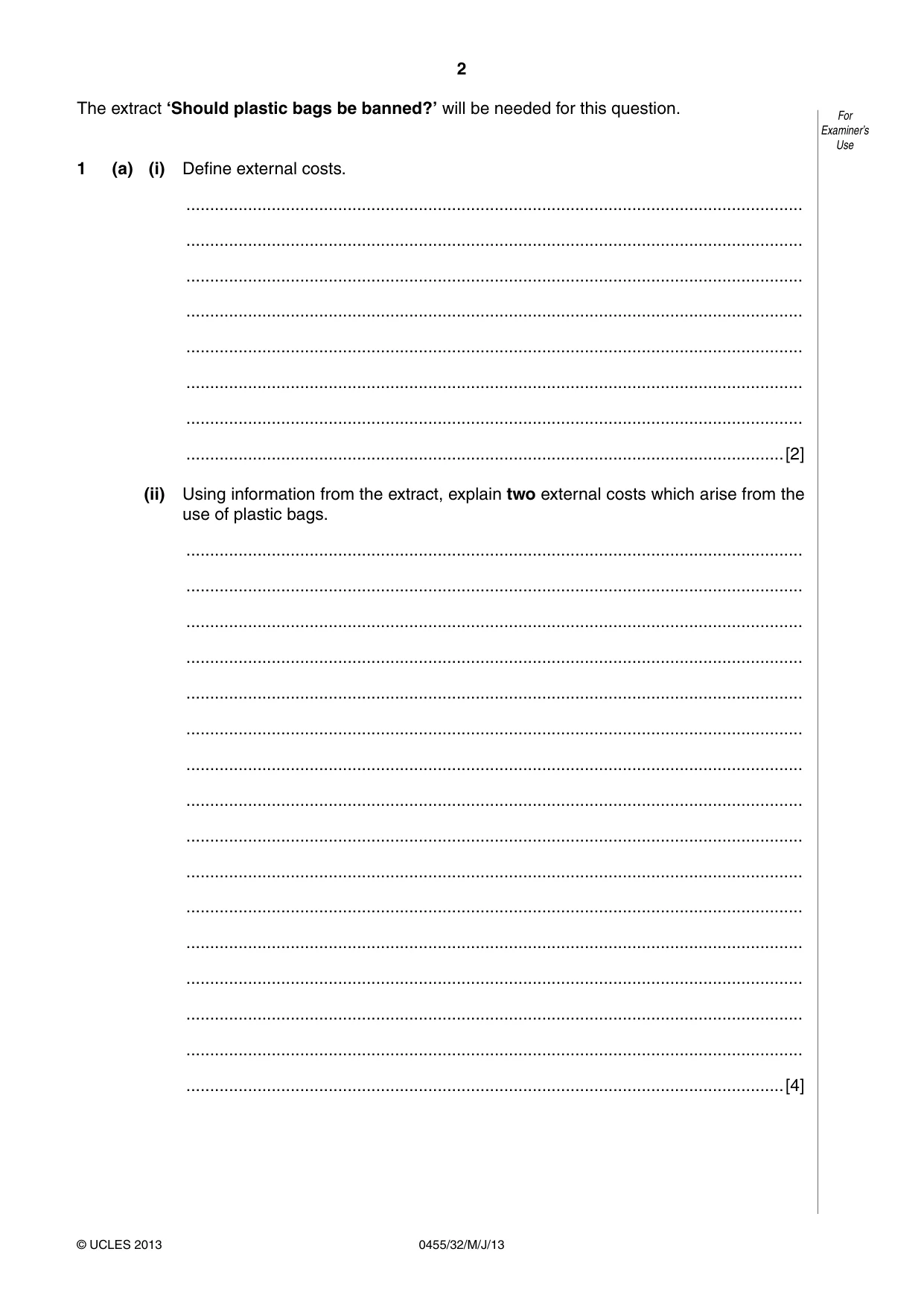
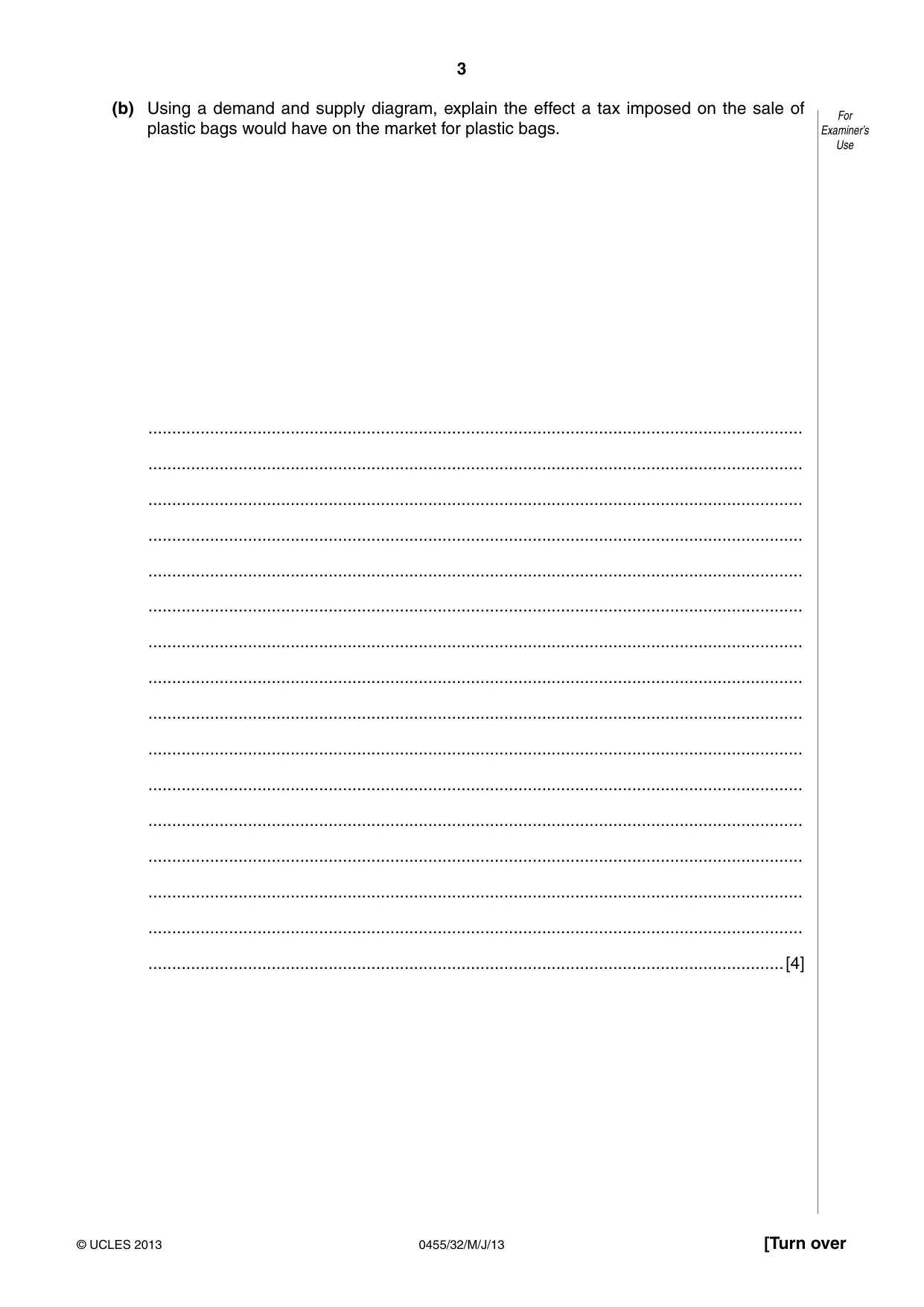
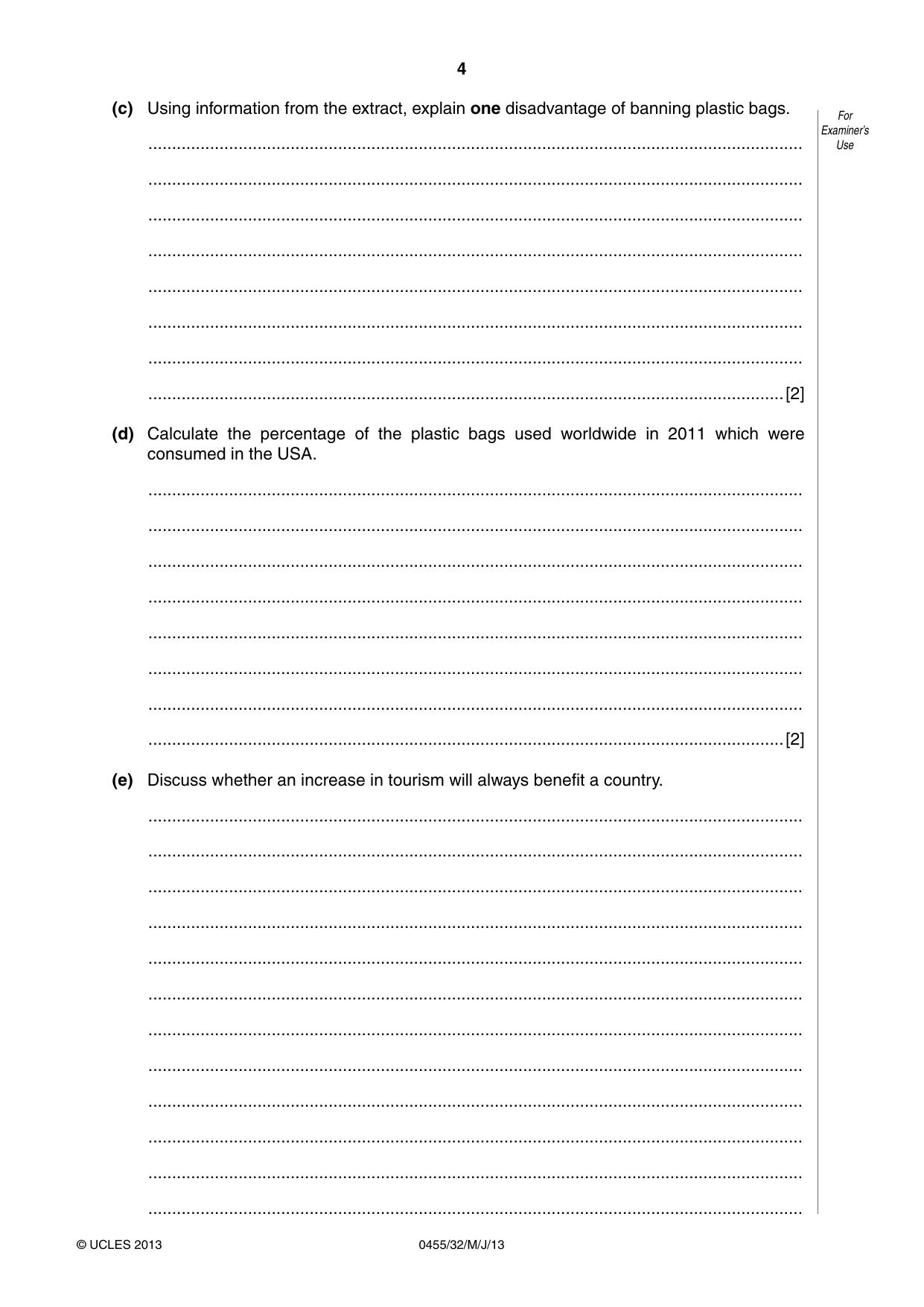
1 (a) (i) Define external costs. .................................................................................................................................. .................................................................................................................................. .................................................................................................................................. .................................................................................................................................. .................................................................................................................................. .................................................................................................................................. .................................................................................................................................. ..............................................................................................................................[2] (ii) Using information from the extract, explain two external costs which arise from the use of plastic bags. .................................................................................................................................. .................................................................................................................................. .................................................................................................................................. .................................................................................................................................. .................................................................................................................................. .................................................................................................................................. .................................................................................................................................. .................................................................................................................................. .................................................................................................................................. .................................................................................................................................. .................................................................................................................................. .................................................................................................................................. .................................................................................................................................. .................................................................................................................................. .................................................................................................................................. ..............................................................................................................................[4] (b) Using a demand and supply diagram, explain the effect a tax imposed on the sale of plastic bags would have on the market for plastic bags. .......................................................................................................................................... .......................................................................................................................................... .......................................................................................................................................... .......................................................................................................................................... .......................................................................................................................................... .......................................................................................................................................... .......................................................................................................................................... .......................................................................................................................................... .......................................................................................................................................... .......................................................................................................................................... .......................................................................................................................................... .......................................................................................................................................... .......................................................................................................................................... .......................................................................................................................................... .......................................................................................................................................... ......................................................................................................................................[4] (c) Using information from the extract, explain one disadvantage of banning plastic bags. .......................................................................................................................................... .......................................................................................................................................... .......................................................................................................................................... .......................................................................................................................................... .......................................................................................................................................... .......................................................................................................................................... .......................................................................................................................................... ......................................................................................................................................[2] (d) Calculate the percentage of the plastic bags used worldwide in 2011 which were consumed in the USA. .......................................................................................................................................... .......................................................................................................................................... .......................................................................................................................................... .......................................................................................................................................... .......................................................................................................................................... .......................................................................................................................................... .......................................................................................................................................... ......................................................................................................................................[2] (e) Discuss whether an increase in tourism will always benefit a country. .......................................................................................................................................... .......................................................................................................................................... .......................................................................................................................................... .......................................................................................................................................... .......................................................................................................................................... .......................................................................................................................................... .......................................................................................................................................... .......................................................................................................................................... .......................................................................................................................................... .......................................................................................................................................... .......................................................................................................................................... .......................................................................................................................................... .......................................................................................................................................... .......................................................................................................................................... .......................................................................................................................................... .......................................................................................................................................... .......................................................................................................................................... .......................................................................................................................................... .......................................................................................................................................... .......................................................................................................................................... .......................................................................................................................................... .......................................................................................................................................... .......................................................................................................................................... ......................................................................................................................................[6] [Total: 20] The extract ‘Will India overtake China?’ will be needed for this question.
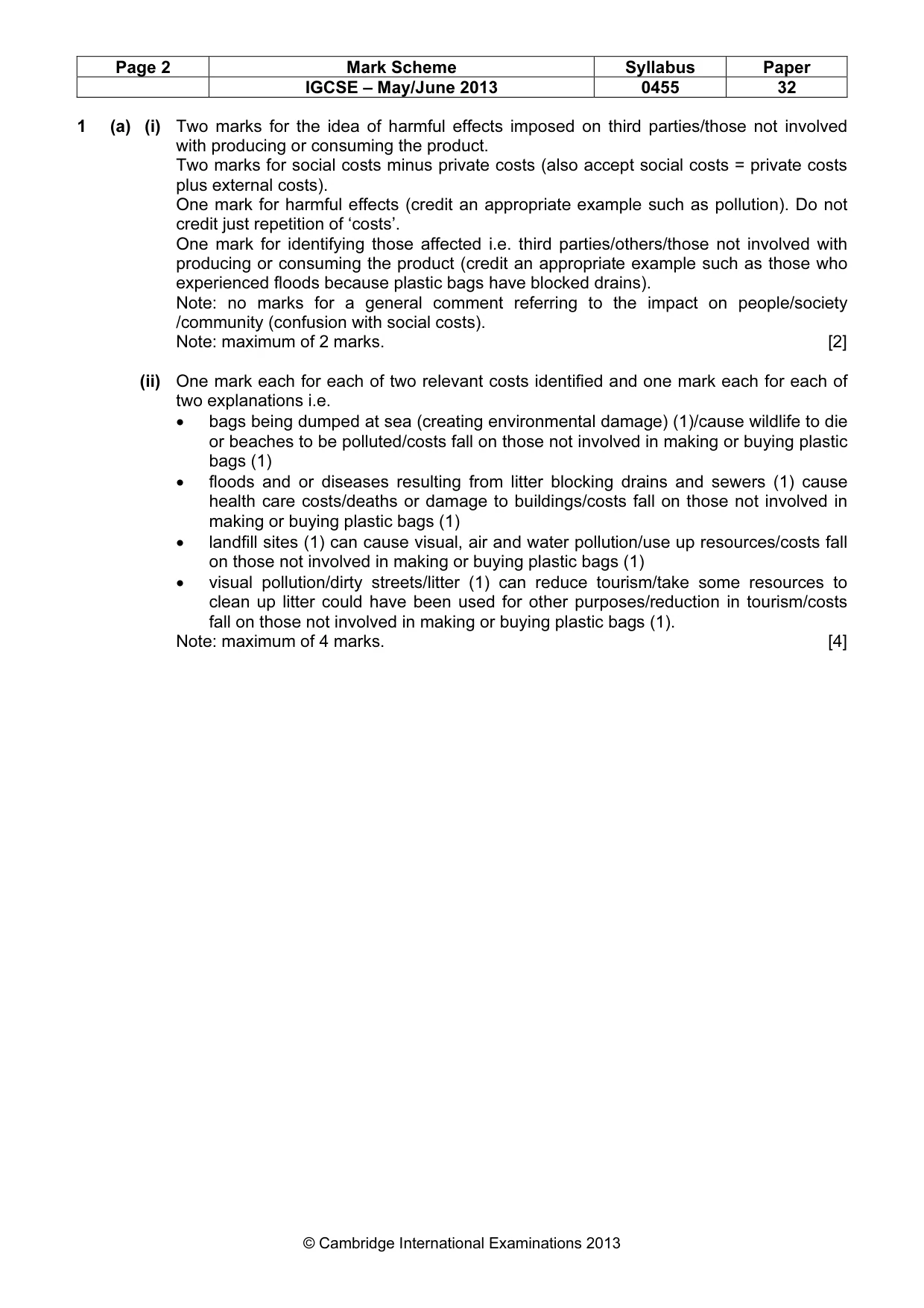
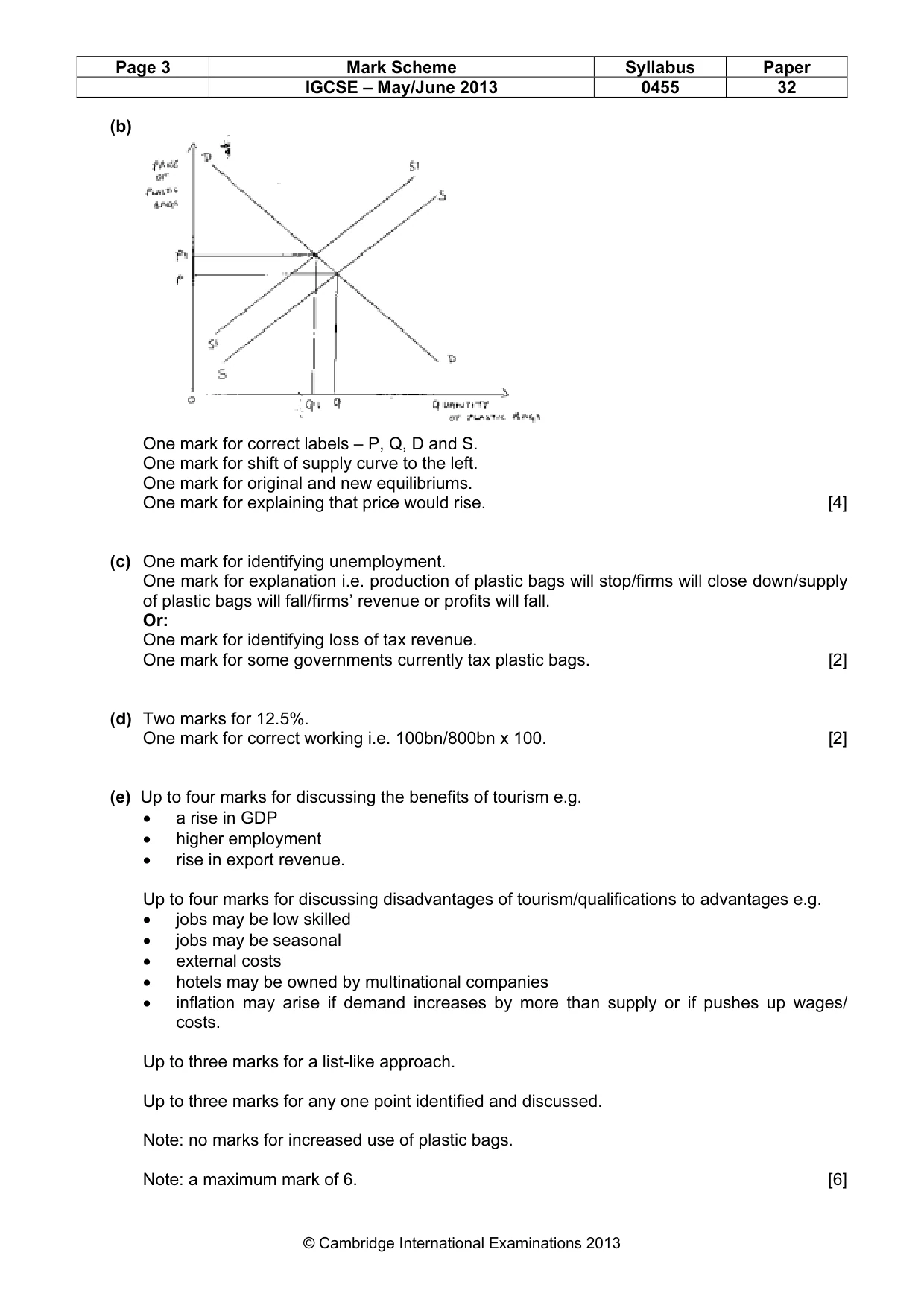
Mark scheme: 1 (a) (i) Two marks for the idea of harmful effects imposed on third parties/those not involved with producing or consuming the product. Two marks for social costs minus private costs (also accept social costs = private costs plus external costs). One mark for harmful effects (credit an appropriate example such as pollution). Do not credit just repetition of ‘costs’. One mark for identifying those affected i.e. third parties/others/those not involved with producing or consuming the product (credit an appropriate example such as those who experienced floods because plastic bags have blocked drains). Note: no marks for a general comment referring to the impact on people/society /community (confusion with social costs). Note: maximum of 2 marks. [2] (ii) One mark each for each of two relevant costs identified and one mark each for each of two explanations i.e. • bags being dumped at sea (creating environmental damage) (1)/cause wildlife to die or beaches to be polluted/costs fall on those not involved in making or buying plastic bags (1) • floods and or diseases resulting from litter blocking drains and sewers (1) cause health care costs/deaths or damage to buildings/costs fall on those not involved in making or buying plastic bags (1) • landfill sites (1) can cause visual, air and water pollution/use up resources/costs fall on those not involved in making or buying plastic bags (1) • visual pollution/dirty streets/litter (1) can reduce tourism/take some resources to clean up litter could have been used for other purposes/reduction in tourism/costs fall on those not involved in making or buying plastic bags (1). Note: maximum of 4 marks. [4] IGCSE – May/June 2013 0455 32 (b) One mark for correct labels – P, Q, D and S. One mark for shift of supply curve to the left. One mark for original and new equilibriums. One mark for explaining that price would rise. [4] (c) One mark for identifying unemployment. One mark for explanation i.e. production of plastic bags will stop/firms will close down/supply of plastic bags will fall/firms’ revenue or profits will fall. Or: One mark for identifying loss of tax revenue. One mark for some governments currently tax plastic bags. [2] (d) Two marks for 12.5%. One mark for correct working i.e. 100bn/800bn x 100. [2] (e) Up to four marks for discussing the benefits of tourism e.g. • a rise in GDP • higher employment • rise in export revenue. Up to four marks for discussing disadvantages of tourism/qualifications to advantages e.g. • jobs may be low skilled • jobs may be seasonal • external costs • hotels may be owned by multinational companies • inflation may arise if demand increases by more than supply or if pushes up wages/ costs. Up to three marks for a list-like approach. Up to three marks for any one point identified and discussed. Note: no marks for increased use of plastic bags. Note: a maximum mark of 6. [6] IGCSE – May/June 2013 0455 32
Q2 · What is meant by economic growth?
2 (a) What is meant by economic growth? .......................................................................................................................................... .......................................................................................................................................... .......................................................................................................................................... .......................................................................................................................................... .......................................................................................................................................... .......................................................................................................................................... .......................................................................................................................................... ......................................................................................................................................[2] (b) Using information from the extract, explain one reason, in each case, why India’s labour force is expected to grow in (i) quantity, .................................................................................................................................. .................................................................................................................................. .................................................................................................................................. .................................................................................................................................. .................................................................................................................................. .................................................................................................................................. .................................................................................................................................. ..............................................................................................................................[2] (ii) quality. .................................................................................................................................. .................................................................................................................................. .................................................................................................................................. .................................................................................................................................. .................................................................................................................................. .................................................................................................................................. .................................................................................................................................. ..............................................................................................................................[2] (c) Comment on whether the data in Table 1 supports the expected relationship between investment growth and unemployment. .......................................................................................................................................... .......................................................................................................................................... .......................................................................................................................................... .......................................................................................................................................... .......................................................................................................................................... .......................................................................................................................................... .......................................................................................................................................... .......................................................................................................................................... .......................................................................................................................................... .......................................................................................................................................... .......................................................................................................................................... .......................................................................................................................................... .......................................................................................................................................... .......................................................................................................................................... .......................................................................................................................................... ......................................................................................................................................[4] (d) (i) Using information from the extract, identify two functions of commercial banks. .................................................................................................................................. .................................................................................................................................. .................................................................................................................................. .................................................................................................................................. .................................................................................................................................. .................................................................................................................................. .................................................................................................................................. ..............................................................................................................................[2] (ii) Explain one other function of a commercial bank. .................................................................................................................................. .................................................................................................................................. .................................................................................................................................. .................................................................................................................................. .................................................................................................................................. .................................................................................................................................. .................................................................................................................................. ..............................................................................................................................[2] (e) Discuss what factors will influence the amount saved in India in the future. .......................................................................................................................................... .......................................................................................................................................... .......................................................................................................................................... .......................................................................................................................................... ..........................................................................................................................................
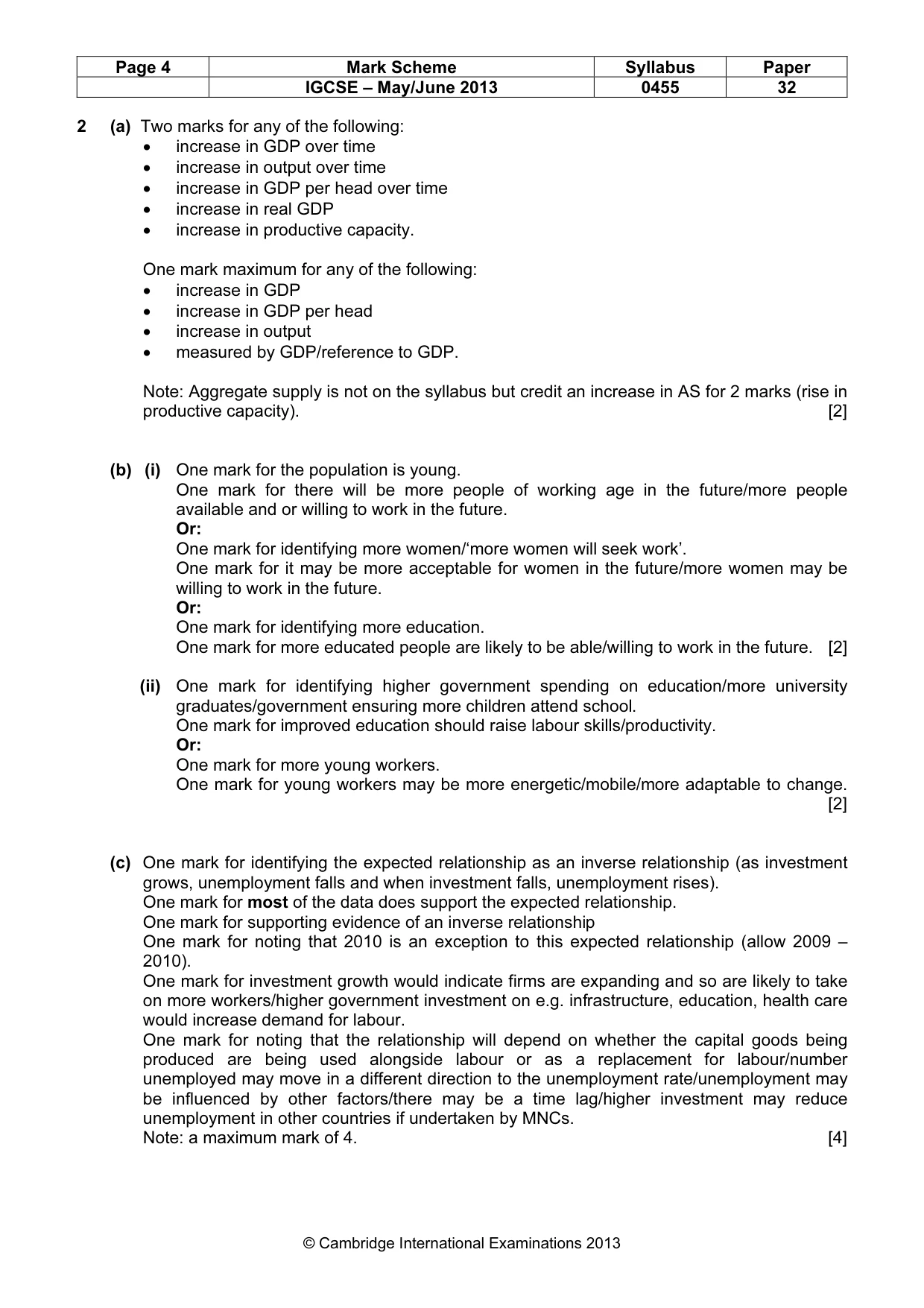
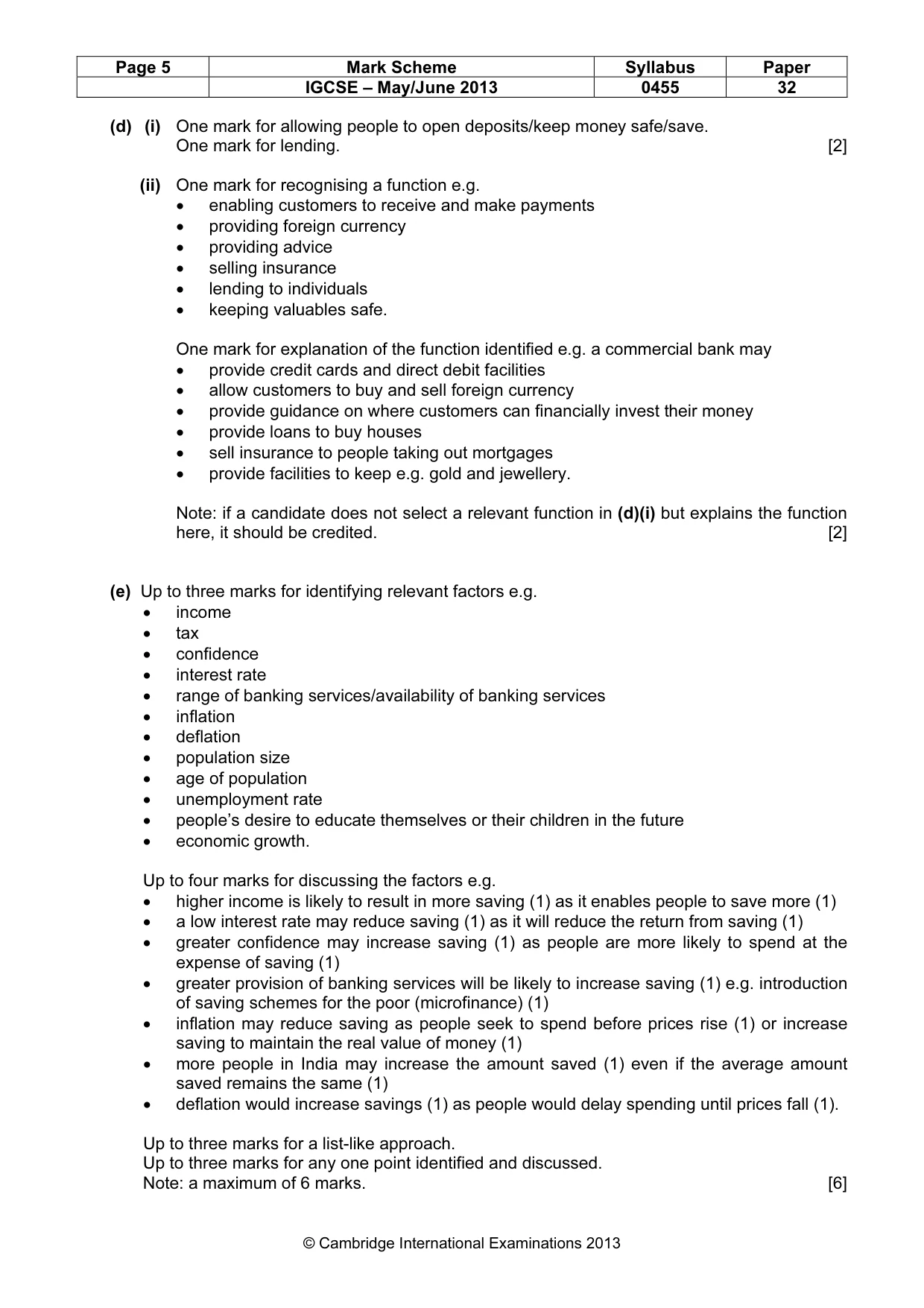
Mark scheme: 2 (a) Two marks for any of the following: • increase in GDP over time • increase in output over time • increase in GDP per head over time • increase in real GDP • increase in productive capacity. One mark maximum for any of the following: • increase in GDP • increase in GDP per head • increase in output • measured by GDP/reference to GDP. Note: Aggregate supply is not on the syllabus but credit an increase in AS for 2 marks (rise in productive capacity). [2] (b) (i) One mark for the population is young. One mark for there will be more people of working age in the future/more people available and or willing to work in the future. Or: One mark for identifying more women/‘more women will seek work’. One mark for it may be more acceptable for women in the future/more women may be willing to work in the future. Or: One mark for identifying more education. One mark for more educated people are likely to be able/willing to work in the future. [2] (ii) One mark for identifying higher government spending on education/more university graduates/government ensuring more children attend school. One mark for improved education should raise labour skills/productivity. Or: One mark for more young workers. One mark for young workers may be more energetic/mobile/more adaptable to change. [2] (c) One mark for identifying the expected relationship as an inverse relationship (as investment grows, unemployment falls and when investment falls, unemployment rises). One mark for most of the data does support the expected relationship. One mark for supporting evidence of an inverse relationship One mark for noting that 2010 is an exception to this expected relationship (allow 2009 – 2010). One mark for investment growth would indicate firms are expanding and so are likely to take on more workers/higher government investment on e.g. infrastructure, education, health care would increase demand for labour. One mark for noting that the relationship will depend on whether the capital goods being produced are being used alongside labour or as a replacement for labour/number unemployed may move in a different direction to the unemployment rate/unemployment may be influenced by other factors/there may be a time lag/higher investment may reduce unemployment in other countries if undertaken by MNCs. Note: a maximum mark of 4. [4] IGCSE – May/June 2013 0455 32 (d) (i) One mark for allowing people to open deposits/keep money safe/save. One mark for lending. [2] (ii) One mark for recognising a function e.g. • enabling customers to receive and make payments • providing foreign currency • providing advice • selling insurance • lending to individuals • keeping valuables safe. One mark for explanation of the function identified e.g. a commercial bank may • provide credit cards and direct debit facilities • allow customers to buy and sell foreign currency • provide guidance on where customers can financially invest their money • provide loans to buy houses • sell insurance to people taking out mortgages • provide facilities to keep e.g. gold and jewellery. Note: if a candidate does not select a relevant function in (d)(i) but explains the function here, it should be credited. [2] (e) Up to three marks for identifying relevant factors e.g. • income • tax • confidence • interest rate • range of banking services/availability of banking services • inflation • deflation • population size • age of population • unemployment rate • people’s desire to educate themselves or their children in the future • economic growth. Up to four marks for discussing the factors e.g. • higher income is likely to result in more saving (1) as it enables people to save more (1) • a low interest rate may reduce saving (1) as it will reduce the return from saving (1) • greater confidence may increase saving (1) as people are more likely to spend at the expense of saving (1) • greater provision of banking services will be likely to increase saving (1) e.g. introduction of saving schemes for the poor (microfinance) (1) • inflation may reduce saving as people seek to spend before prices rise (1) or increase saving to maintain the real value of money (1) • more people in India may increase the amount saved (1) even if the average amount saved remains the same (1) • deflation would increase savings (1) as people would delay spending until prices fall (1). Up to three marks for a list-like approach. Up to three marks for any one point identified and discussed. Note: a maximum of 6 marks. [6]
What was in this paper
The subtopics covered by these 2 questions, and how many questions each got. Open one in a new tab to see every Cambridge question on it.
What you needed in this session
Cambridge’s own grade thresholds for 2013 May/June, Paper 3 · Variant 2. A higher threshold means an easier paper — the bar moves with how the cohort did.