Cambridge IGCSE Economics 0455 — 2008 Oct/Nov Paper 3 · Variant 1
0455/31/O/N/08 · 1 question · 40 marks · ≈45 min
The question paper and its mark scheme, free to read here and free to download. This is Cambridge’s own paper, exactly as it was sat.
Question paper12 pages

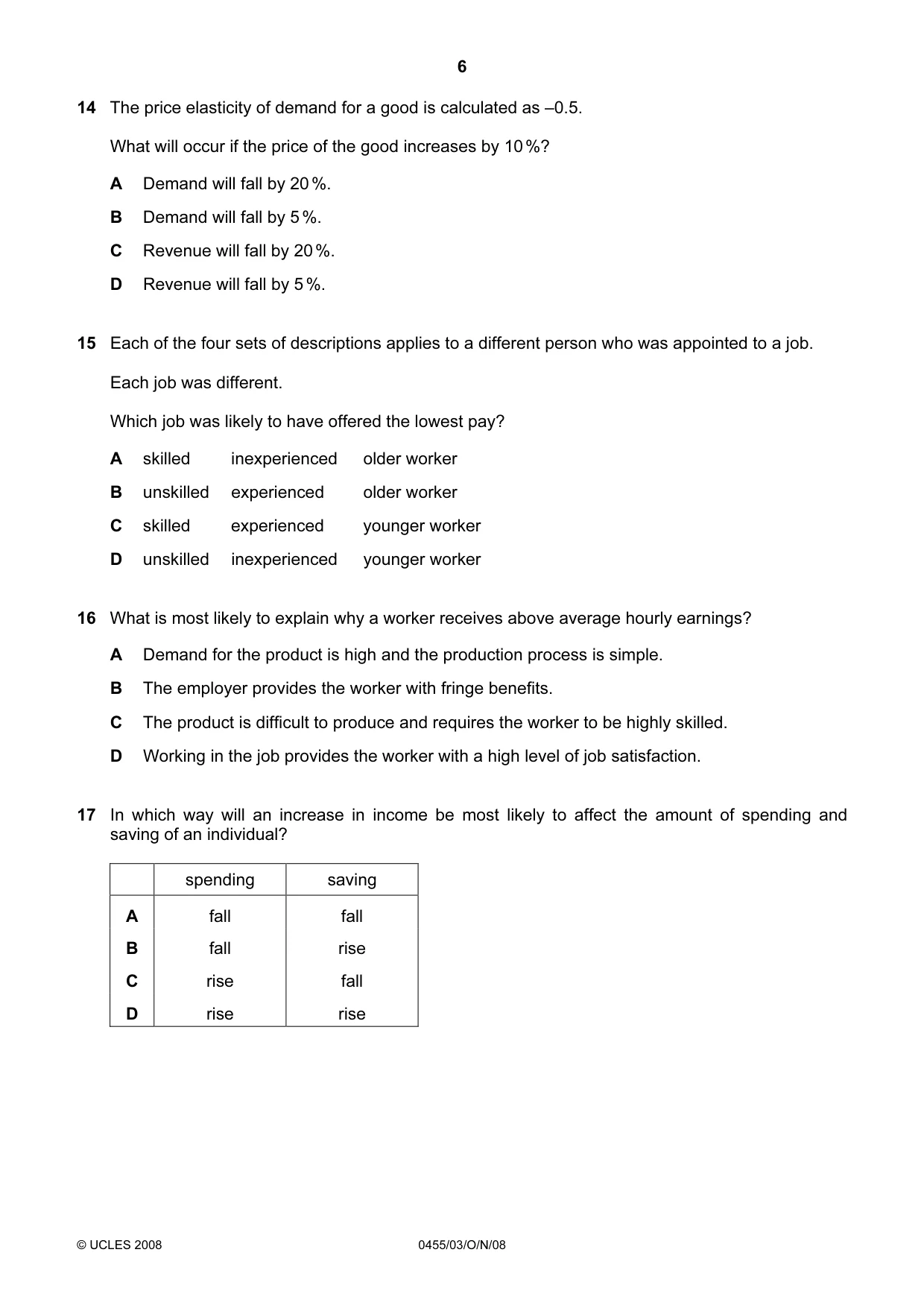
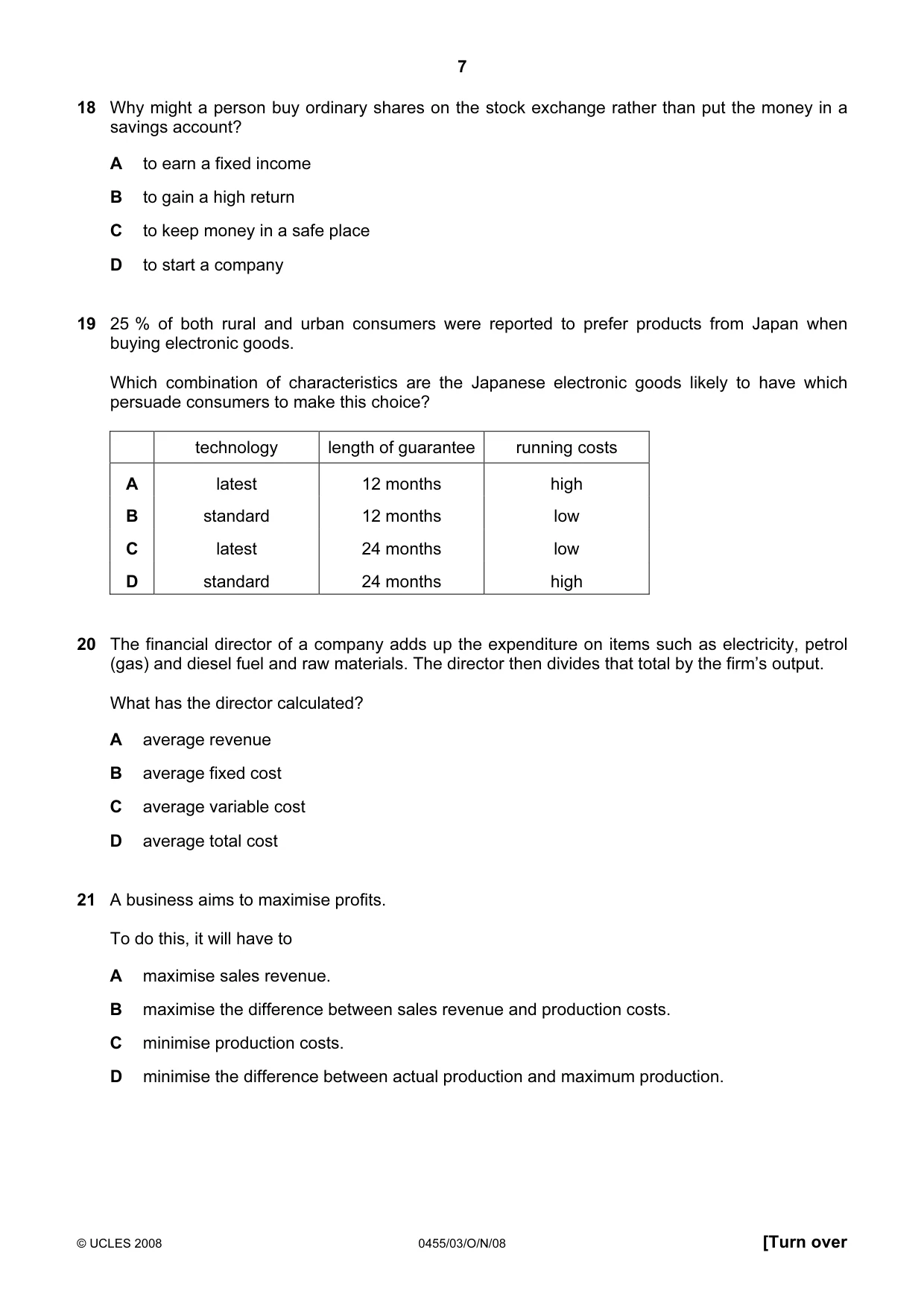
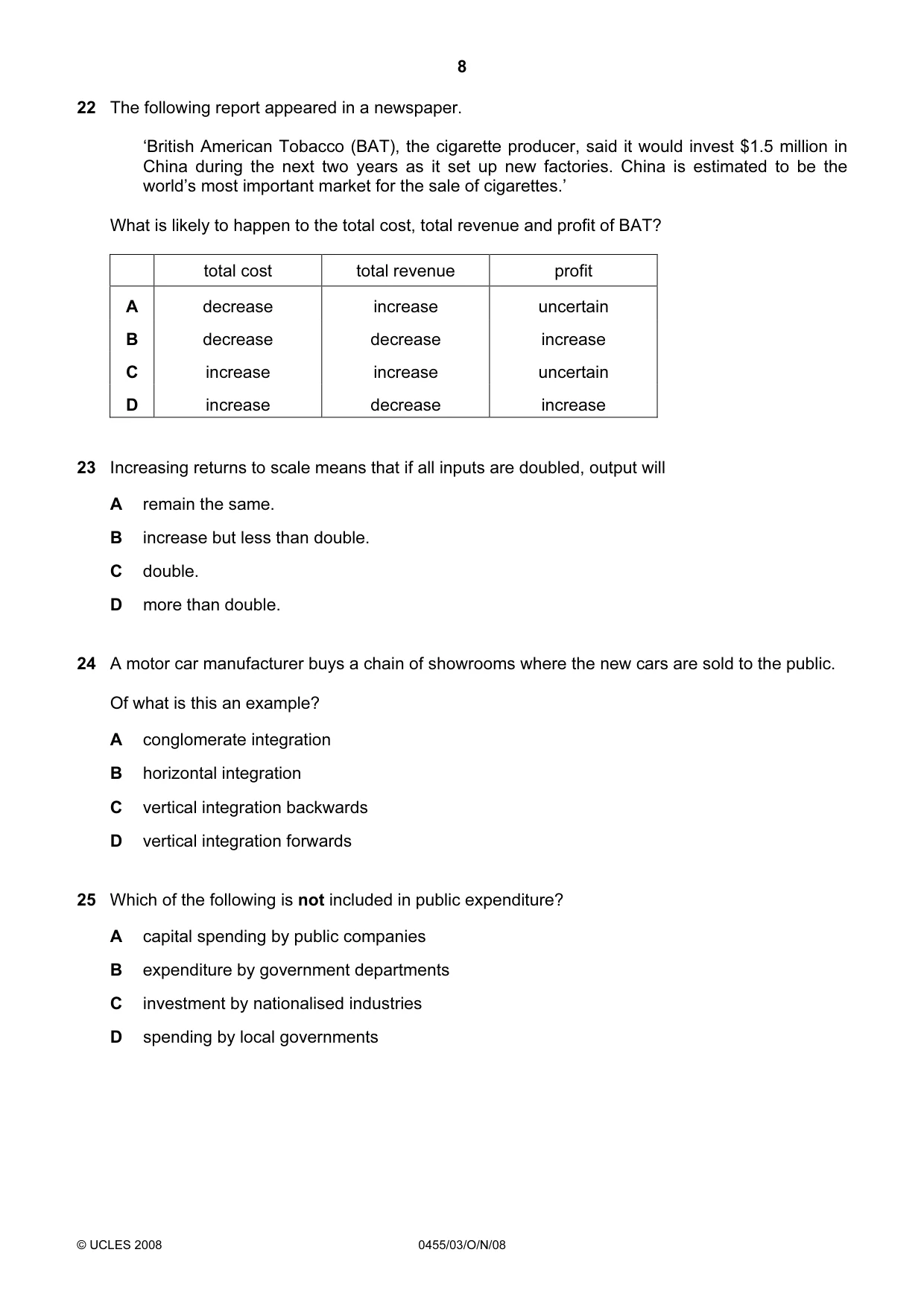
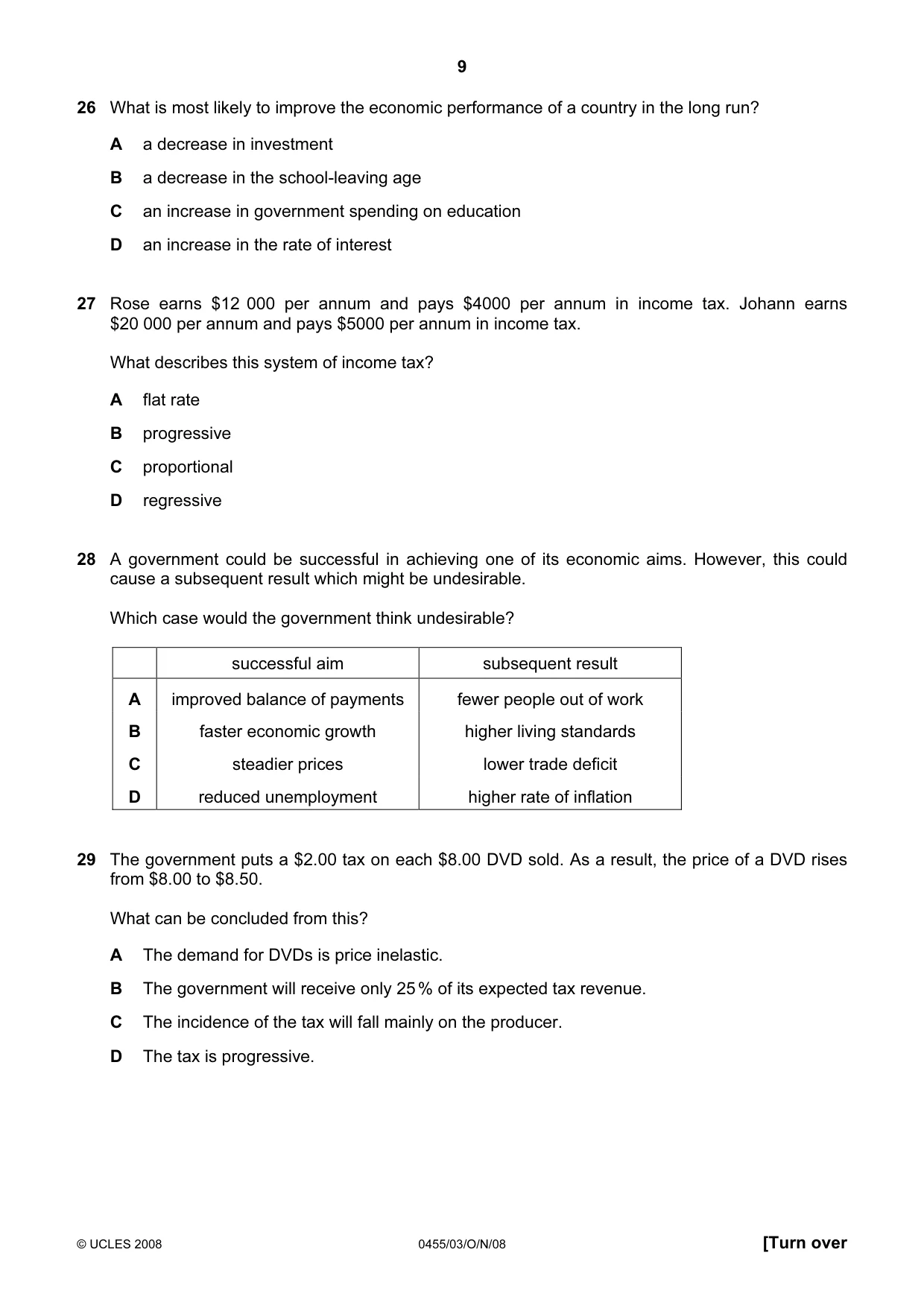
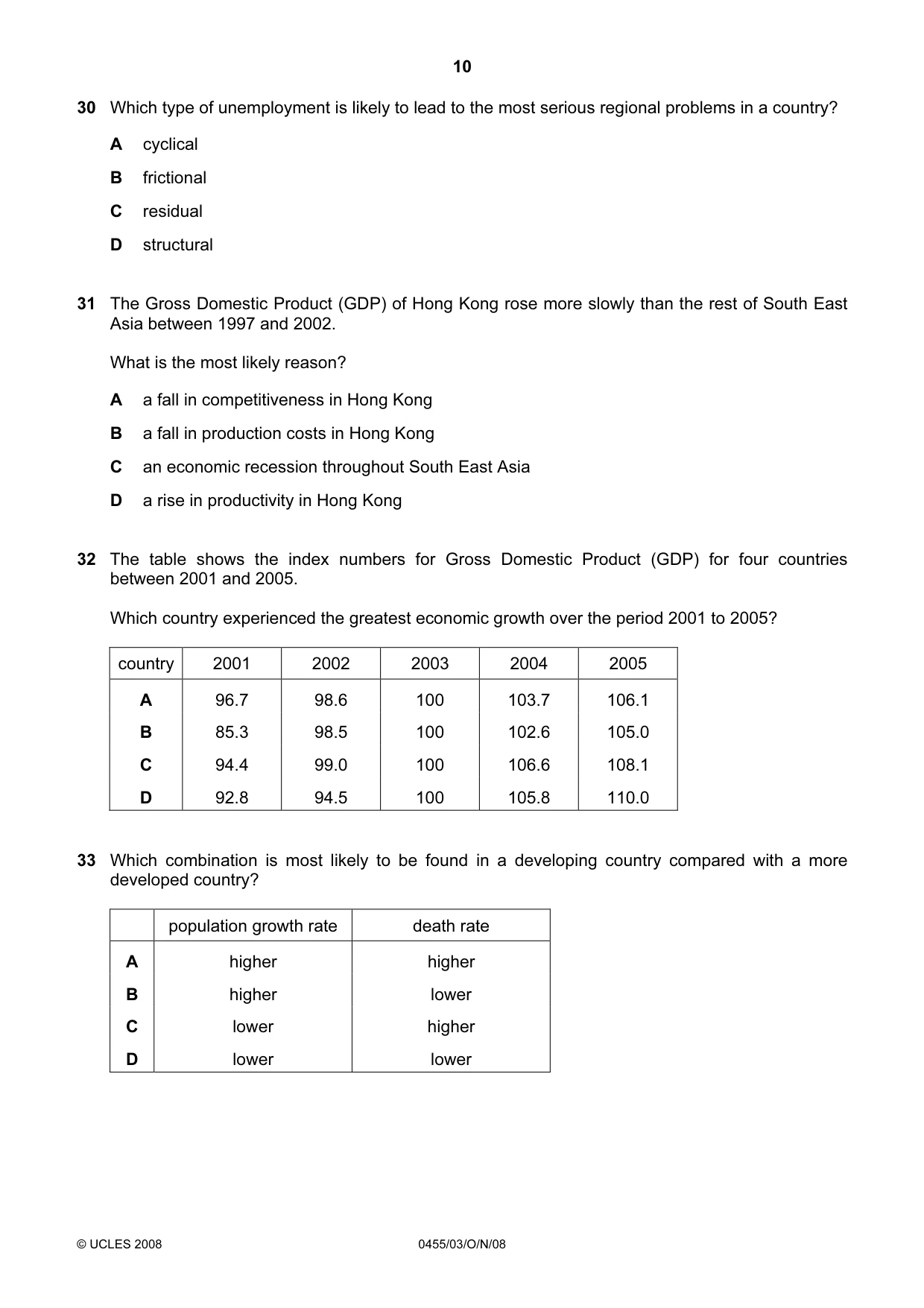
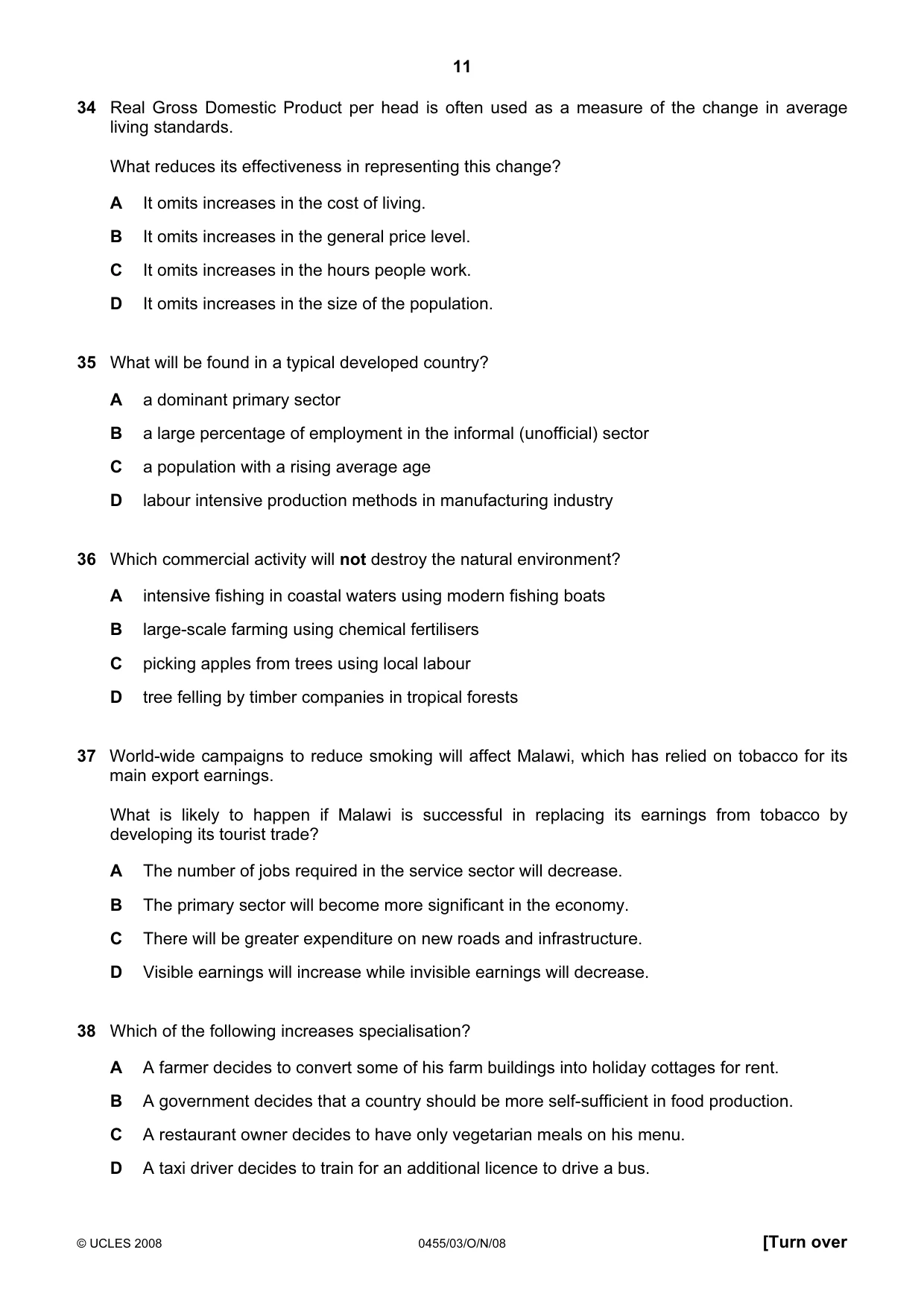
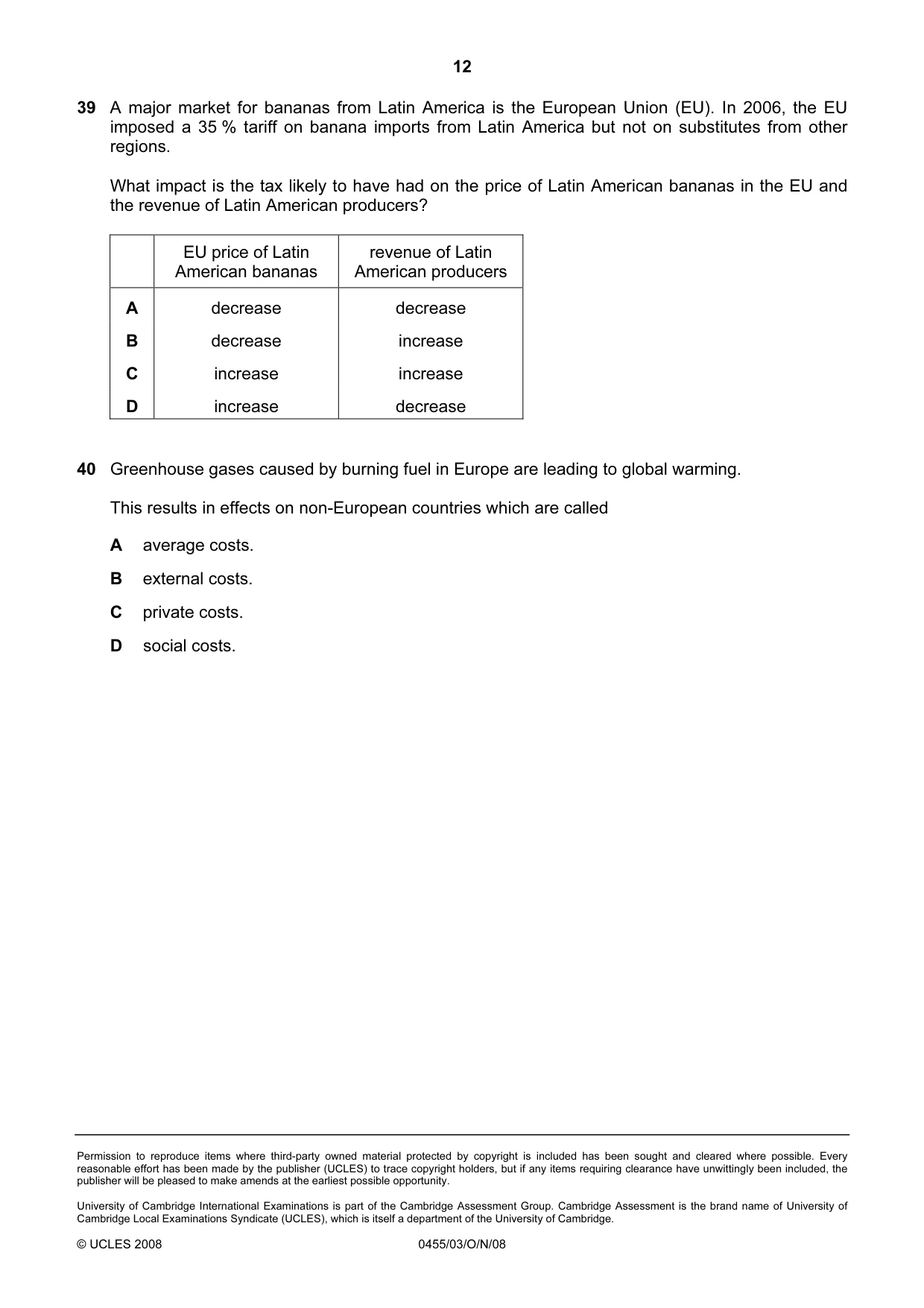
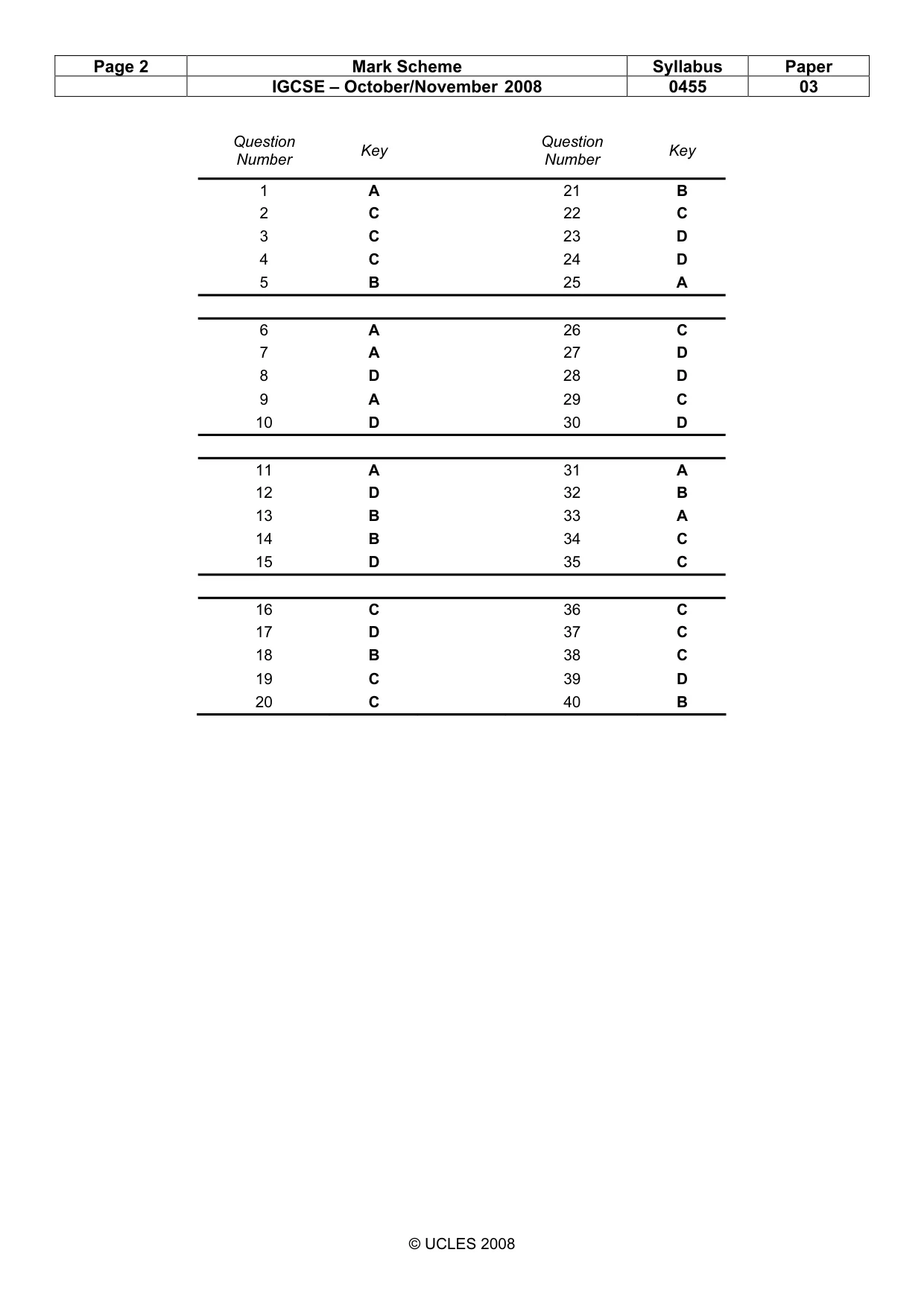
Mark scheme2 pages
Answers below. Sit the paper first if you are practising.
Questions as text
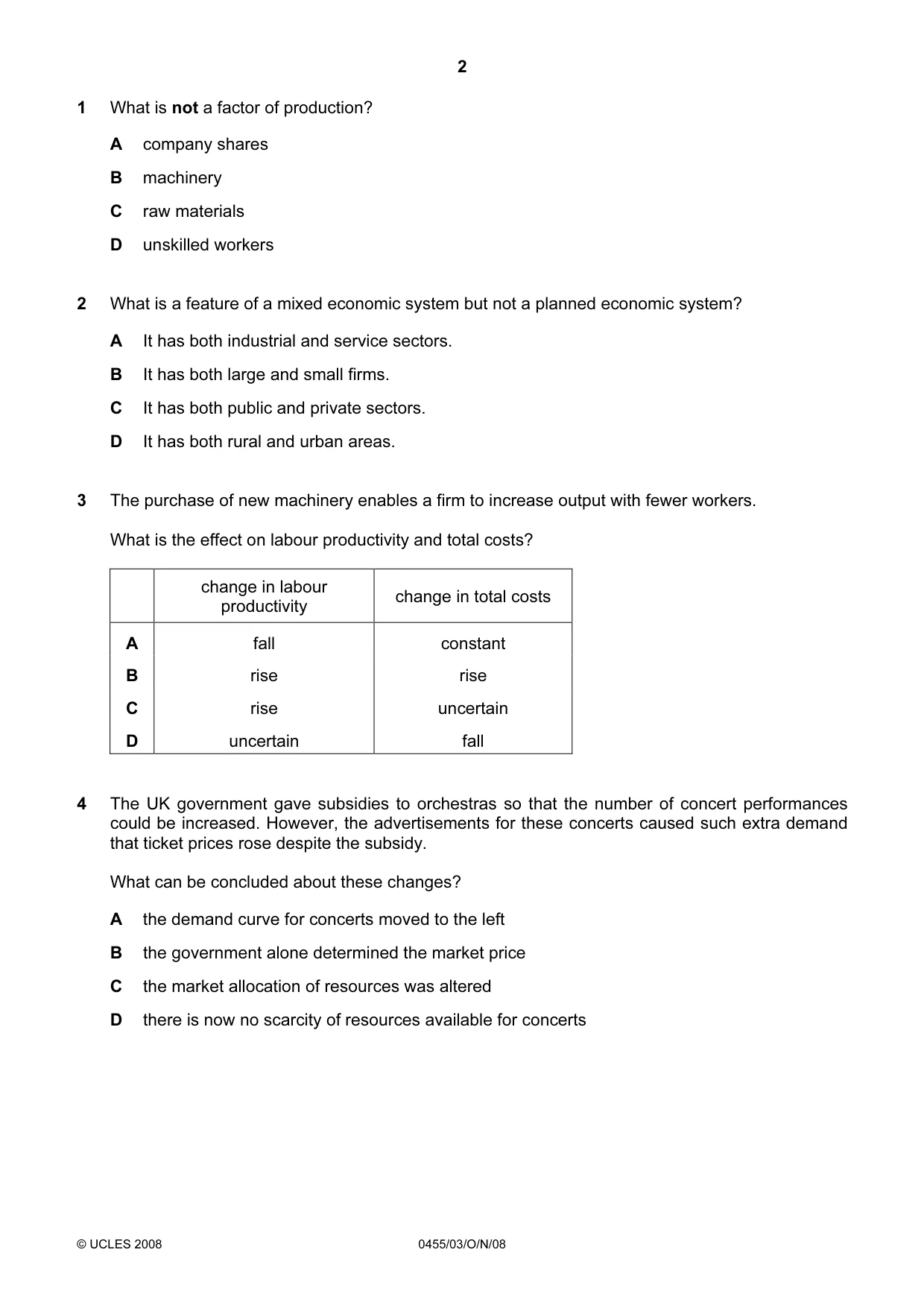
Q1 · What is not a factor of production?
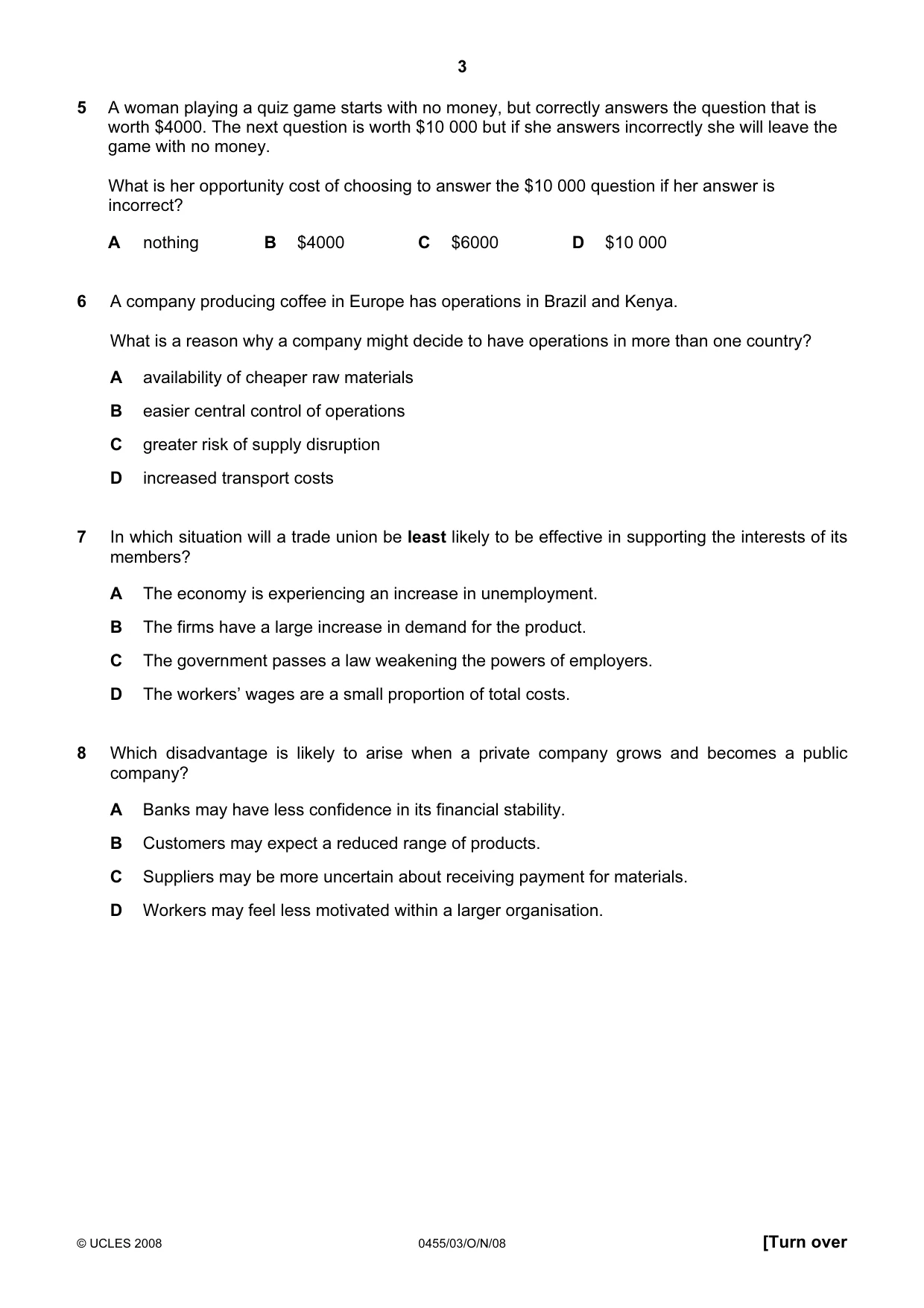
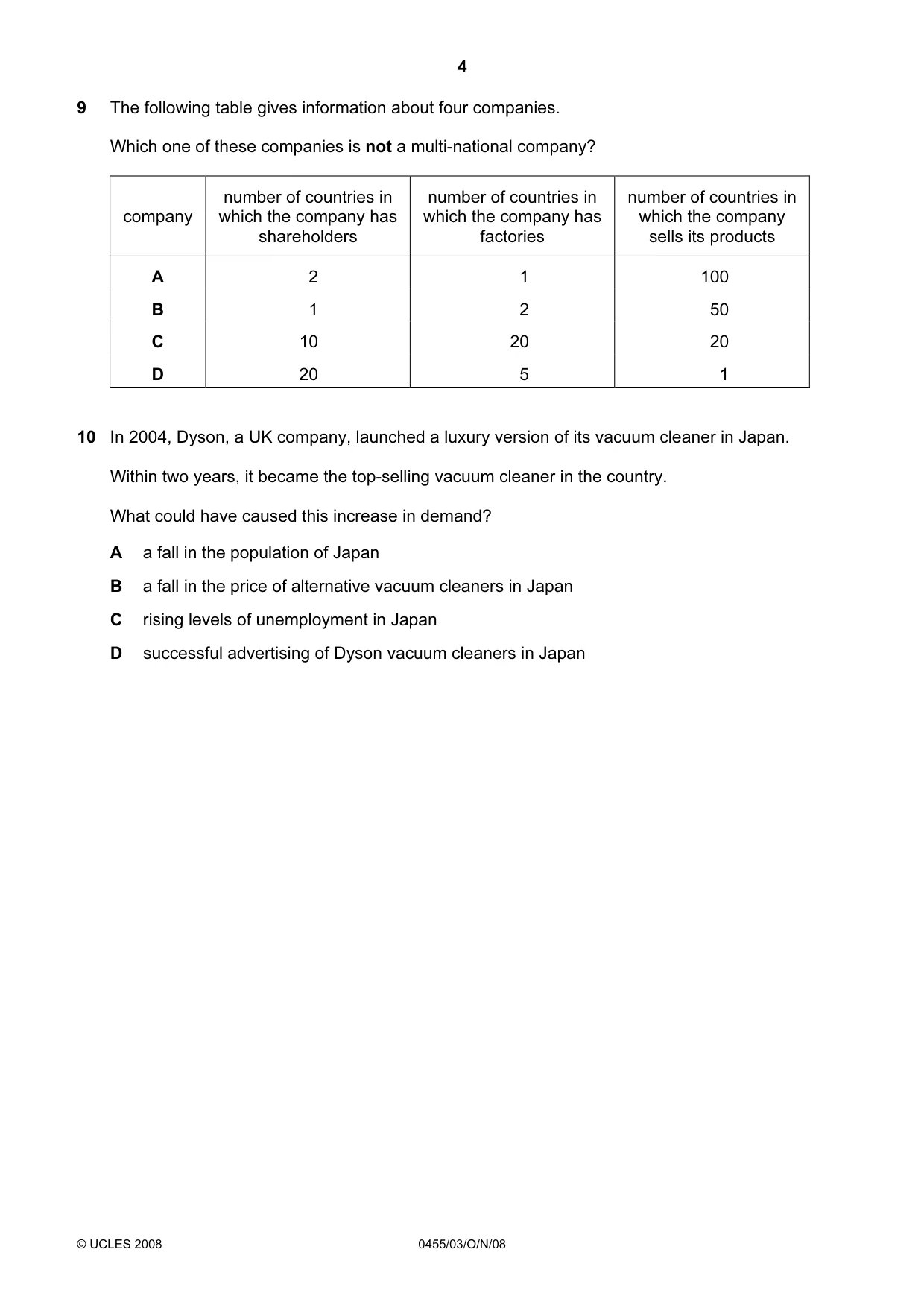
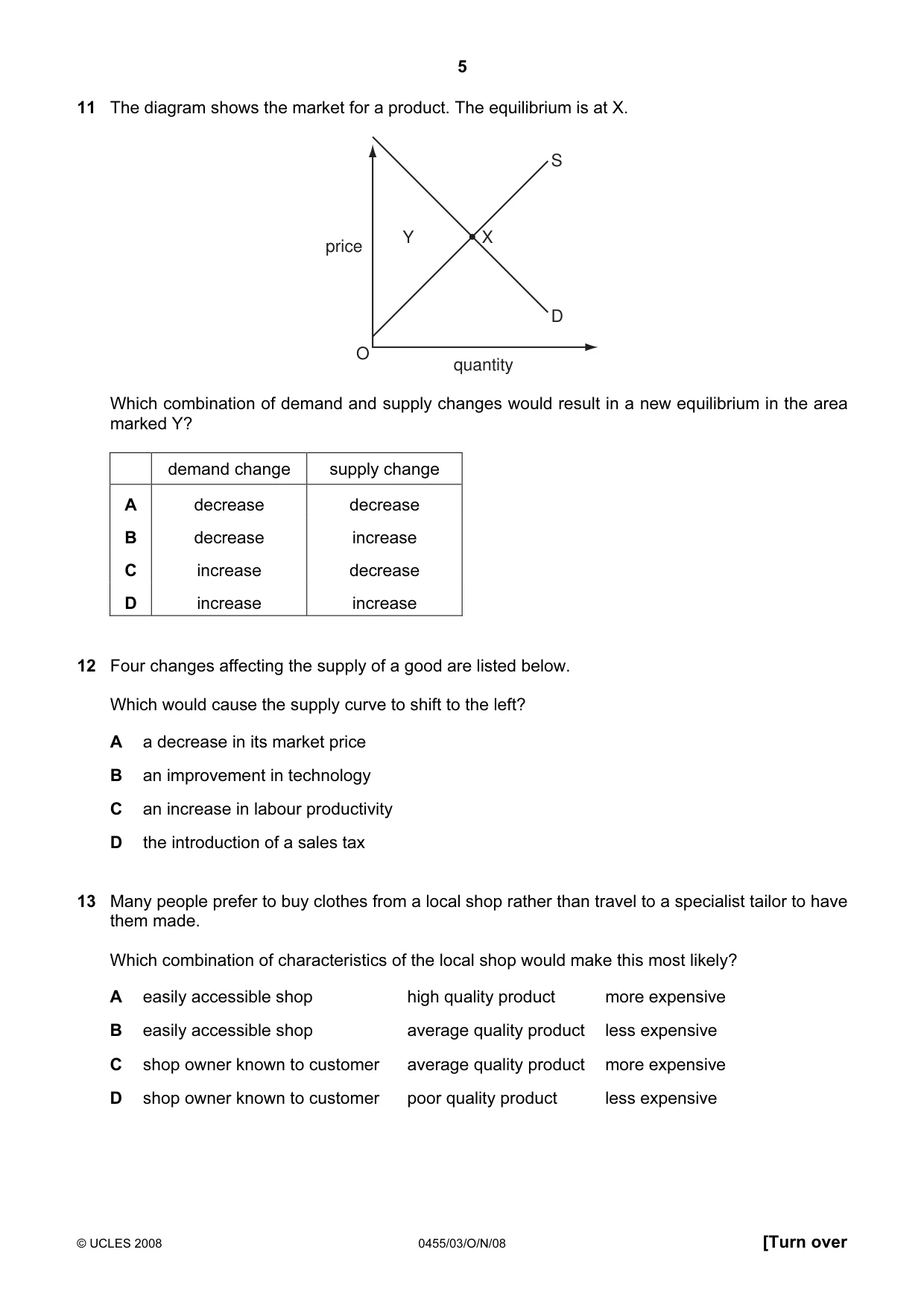
1 What is not a factor of production? A company shares B machinery C raw materials D unskilled workers 2 What is a feature of a mixed economic system but not a planned economic system? A It has both industrial and service sectors. B It has both large and small firms. C It has both public and private sectors. D It has both rural and urban areas. 3 The purchase of new machinery enables a firm to increase output with fewer workers. What is the effect on labour productivity and total costs? change in labour change in total costs productivity A fall constant B rise rise C rise uncertain D uncertain fall 4 The UK government gave subsidies to orchestras so that the number of concert performances could be increased. However, the advertisements for these concerts caused such extra demand that ticket prices rose despite the subsidy. What can be concluded about these changes? A the demand curve for concerts moved to the left B the government alone determined the market price C the market allocation of resources was altered D there is now no scarcity of resources available for concerts 5 A woman playing a quiz game starts with no money, but correctly answers the question that is worth $4000. The next question is worth $10 000 but if she answers incorrectly she will leave the game with no money. What is her opportunity cost of choosing to answer the $10 000 question if her answer is incorrect? A nothing B $4000 C $6000 D $10 000 6 A company producing coffee in Europe has operations in Brazil and Kenya. What is a reason why a company might decide to have operations in more than one country? A availability of cheaper raw materials B easier central control of operations C greater risk of supply disruption D increased transport costs 7 In which situation will a trade union be least likely to be effective in supporting the interests of its members? A The economy is experiencing an increase in unemployment. B The firms have a large increase in demand for the product. C The government passes a law weakening the powers of employers. D The workers’ wages are a small proportion of total costs. 8 Which disadvantage is likely to arise when a private company grows and becomes a public company? A Banks may have less confidence in its financial stability. B Customers may expect a reduced range of products. C Suppliers may be more uncertain about receiving payment for materials. D Workers may feel less motivated within a larger organisation. 9 The following table gives information about four companies. Which one of these companies is not a multi-national company? number of countries in number of countries in number of countries in company which the company has which the company has which the company shareholders factories sells its products A 2 1 100 B 1 2 50 C 10 20 20 D 20 5 1 10 In 2004, Dyson, a UK company, launched a luxury version of its vacuum cleaner in Japan. Within two years, it became the top-selling vacuum cleaner in the country. What could have caused this increase in demand? A a fall in the population of Japan B a fall in the price of alternative vacuum cleaners in Japan C rising levels of unemployment in Japan D successful advertising of Dyson vacuum cleaners in Japan
What was in this paper
The subtopics covered by these 1 questions, and how many questions each got. Open one in a new tab to see every Cambridge question on it.
What you needed in this session
Cambridge’s own grade thresholds for 2008 Oct/Nov, Paper 3 · Variant 1. A higher threshold means an easier paper — the bar moves with how the cohort did.