Cambridge IGCSE Economics 0455 — 2007 Oct/Nov Paper 3 · Variant 1
0455/31/O/N/07 · 1 question · 40 marks · ≈45 min
The question paper and its mark scheme, free to read here and free to download. This is Cambridge’s own paper, exactly as it was sat.
Question paper12 pages
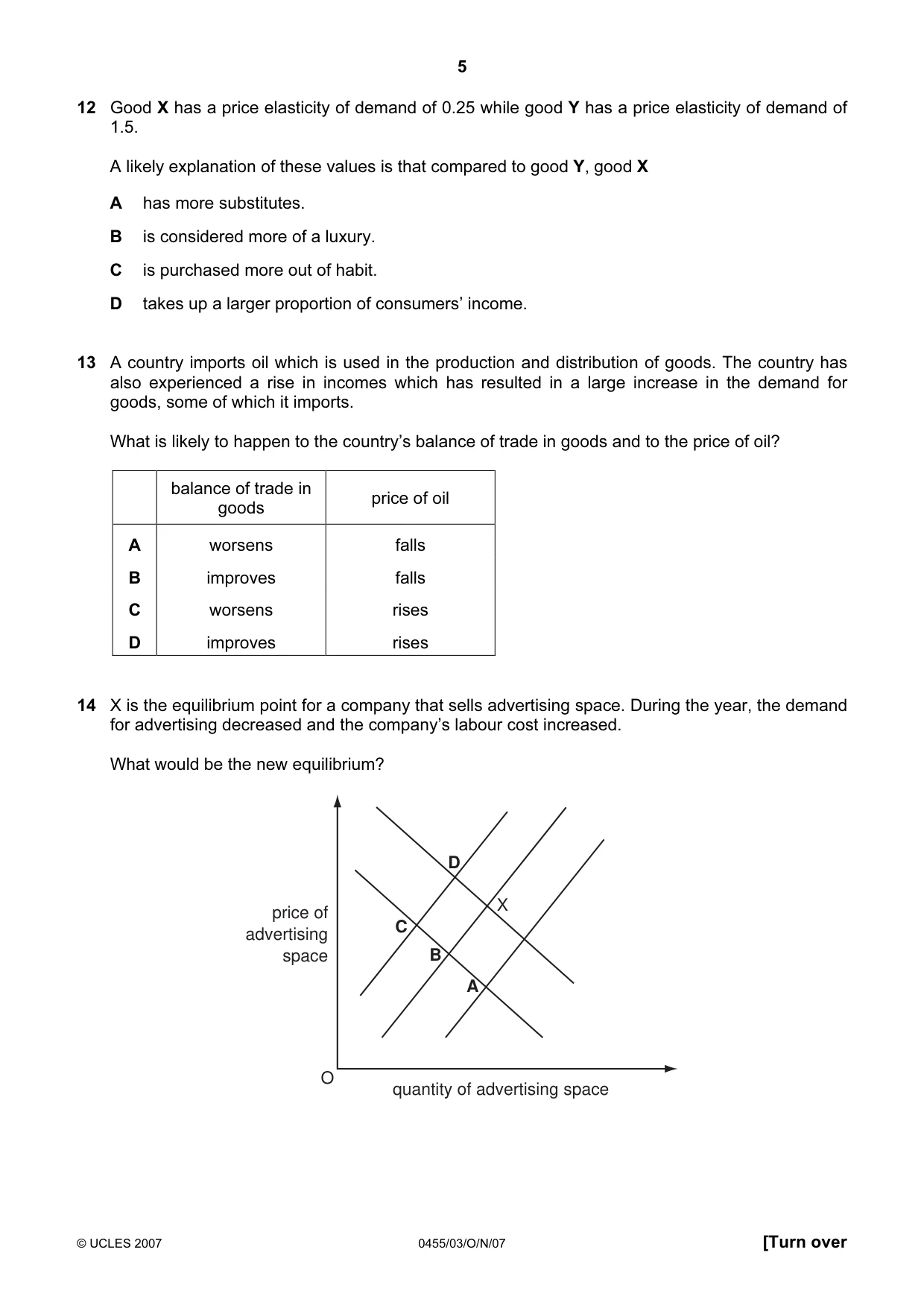
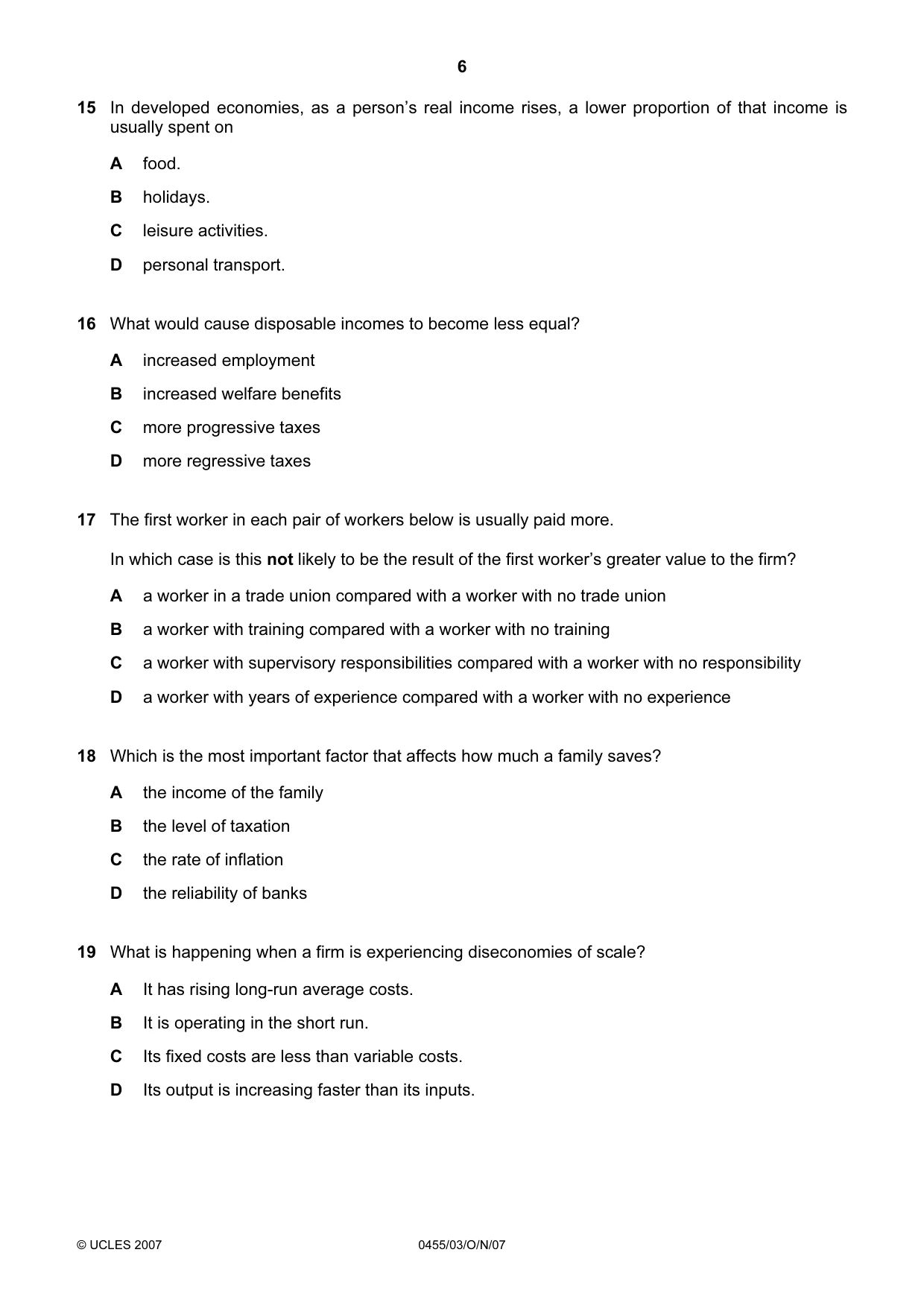
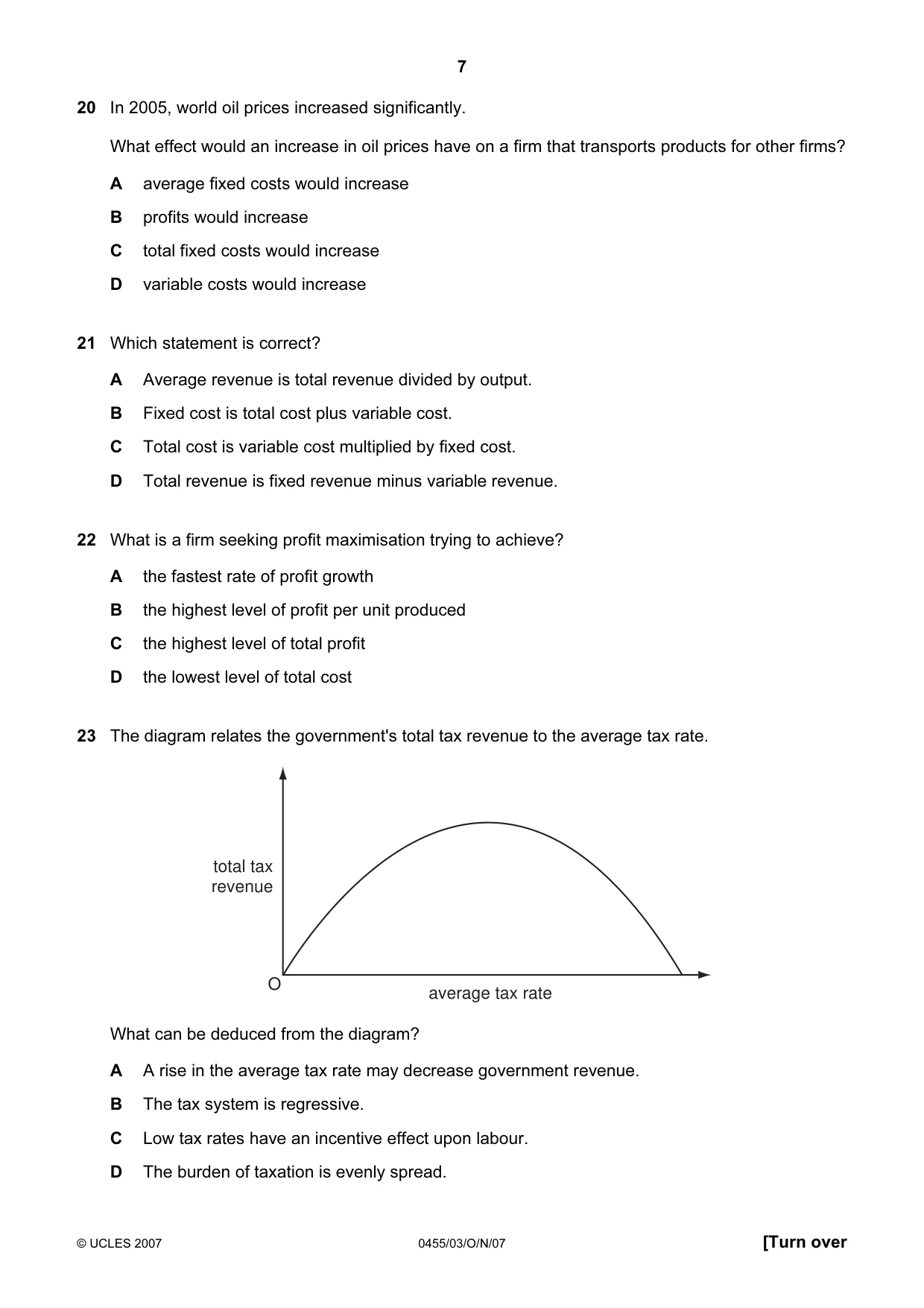
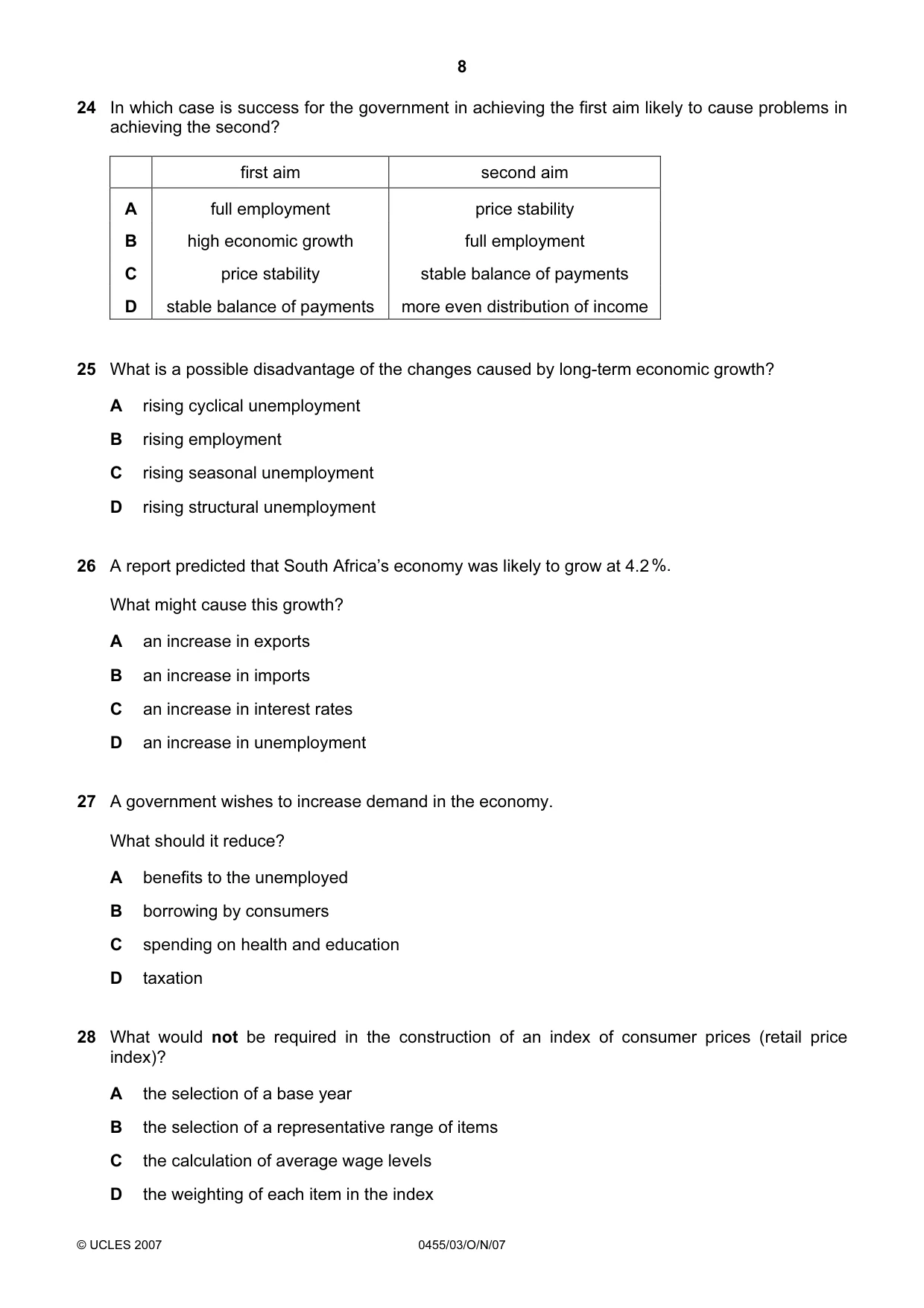
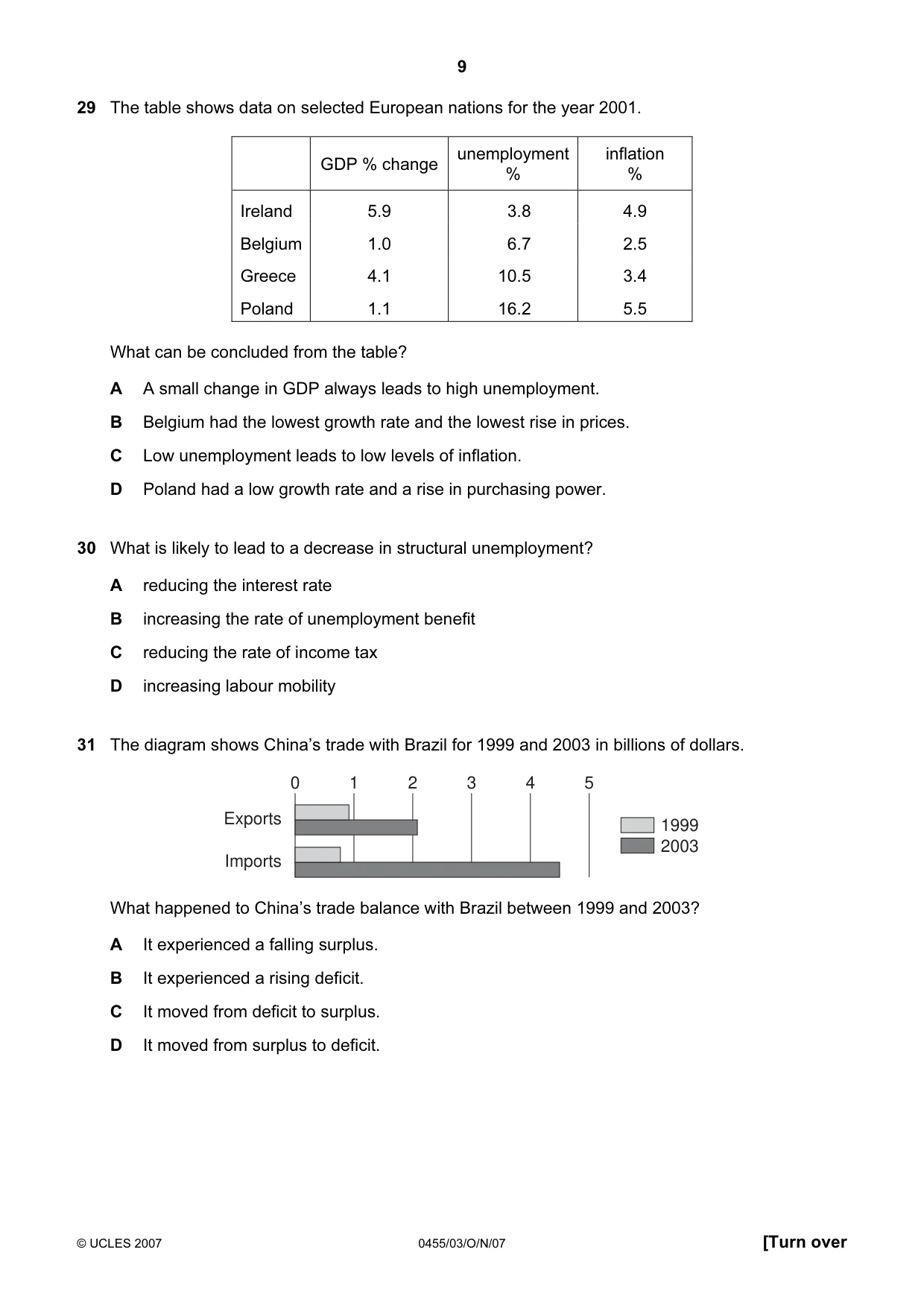
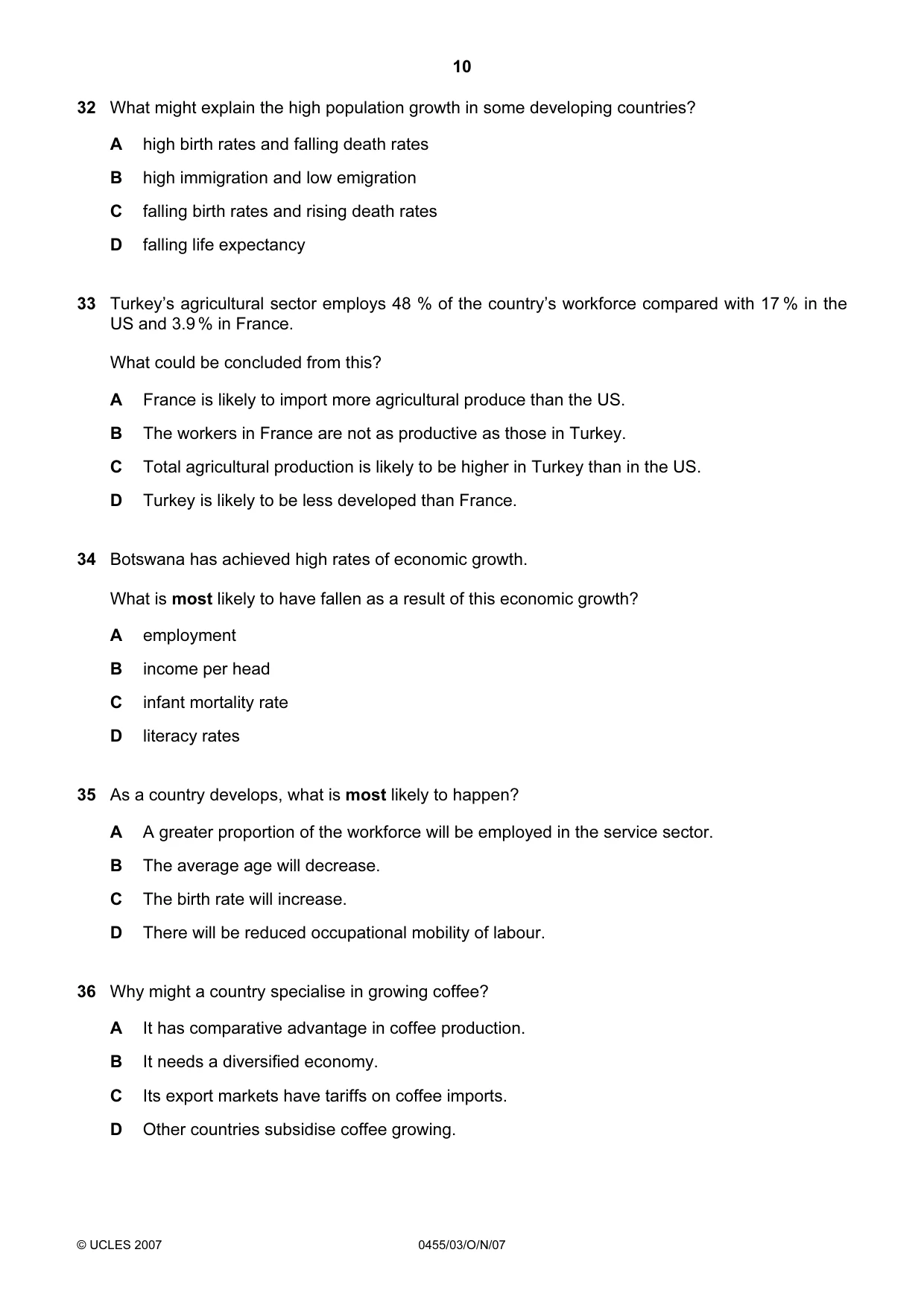
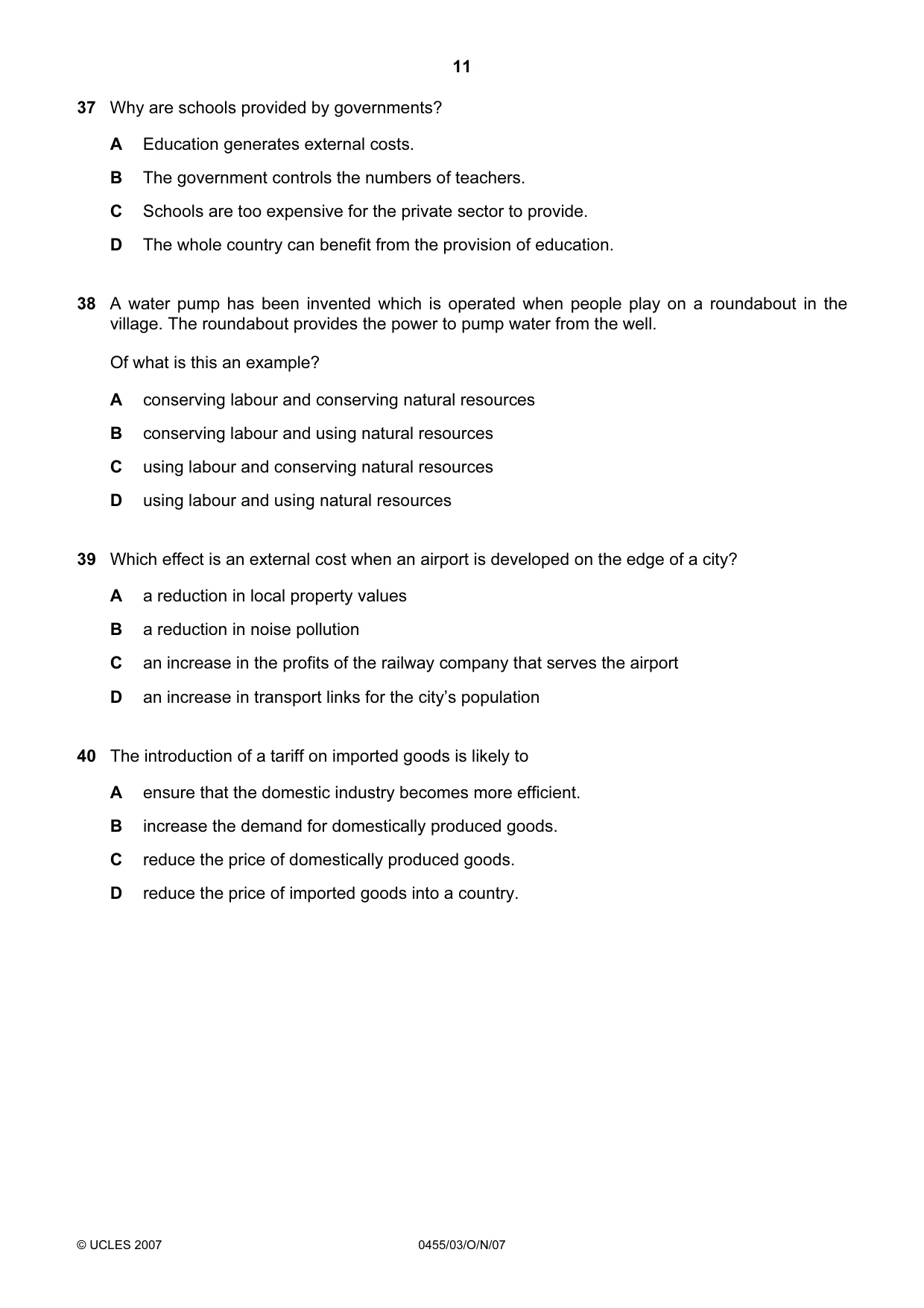

Mark scheme2 pages
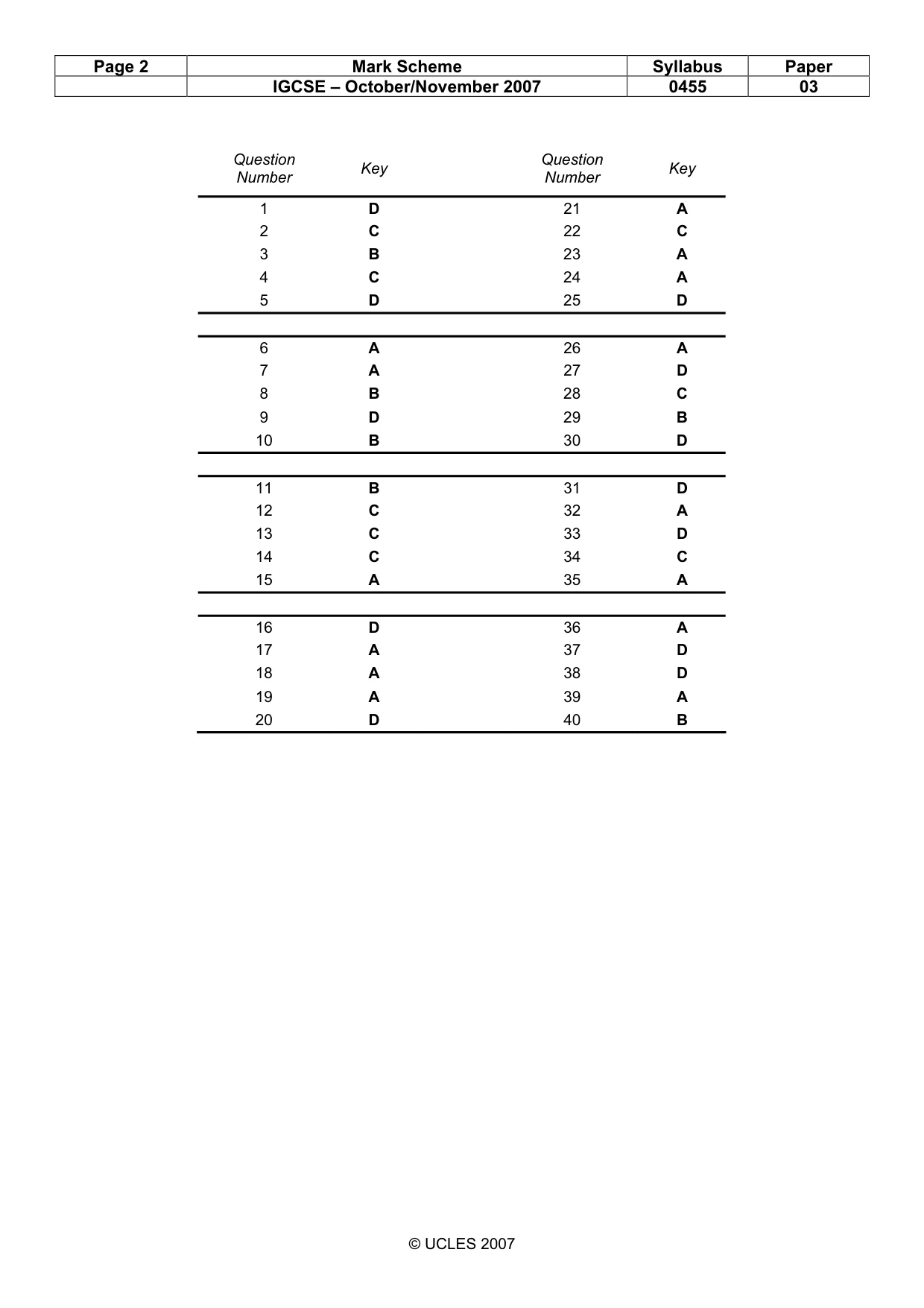
Answers below. Sit the paper first if you are practising.
Questions as text
Q1 · What is found in a market economy but not a command economy?
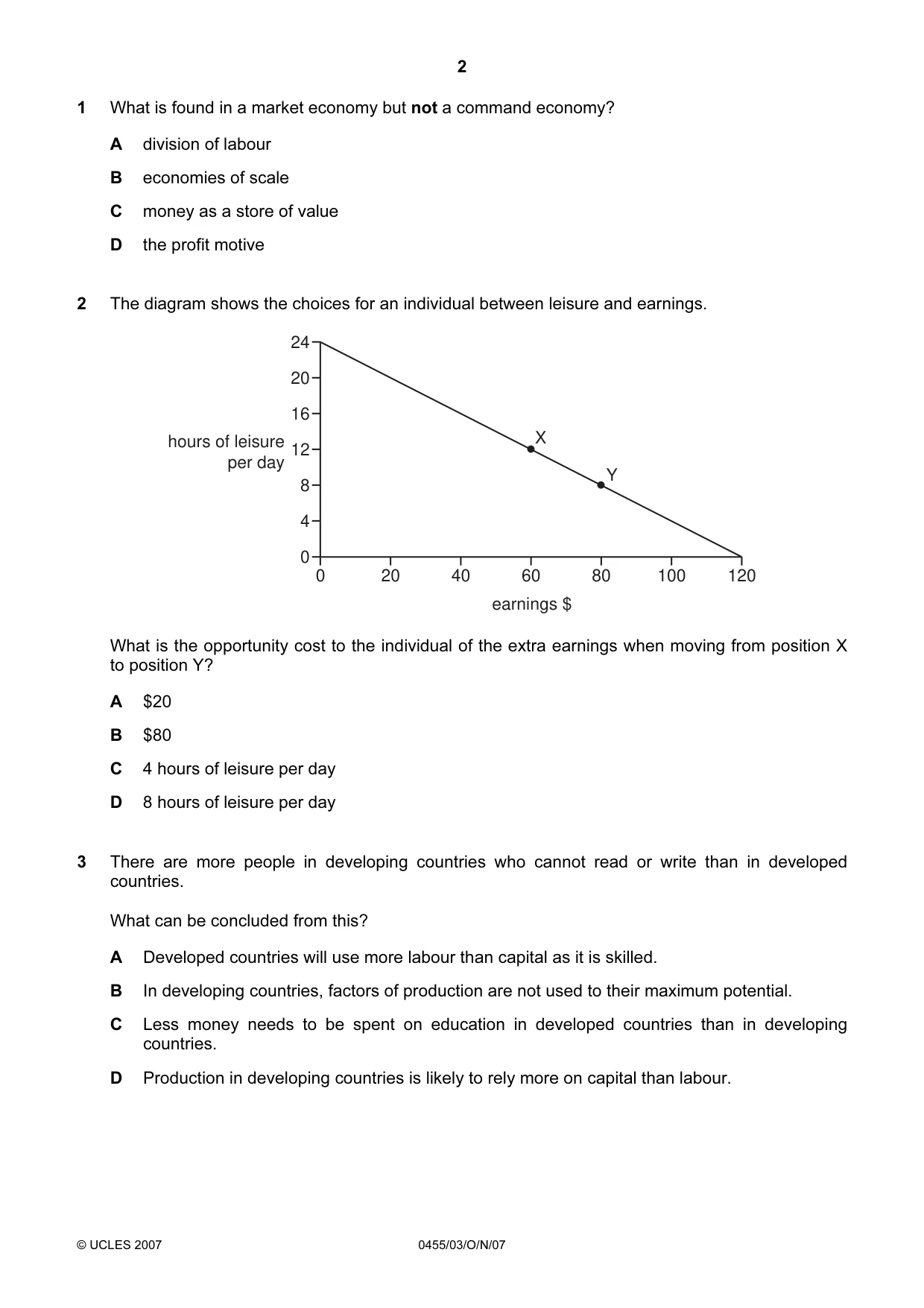
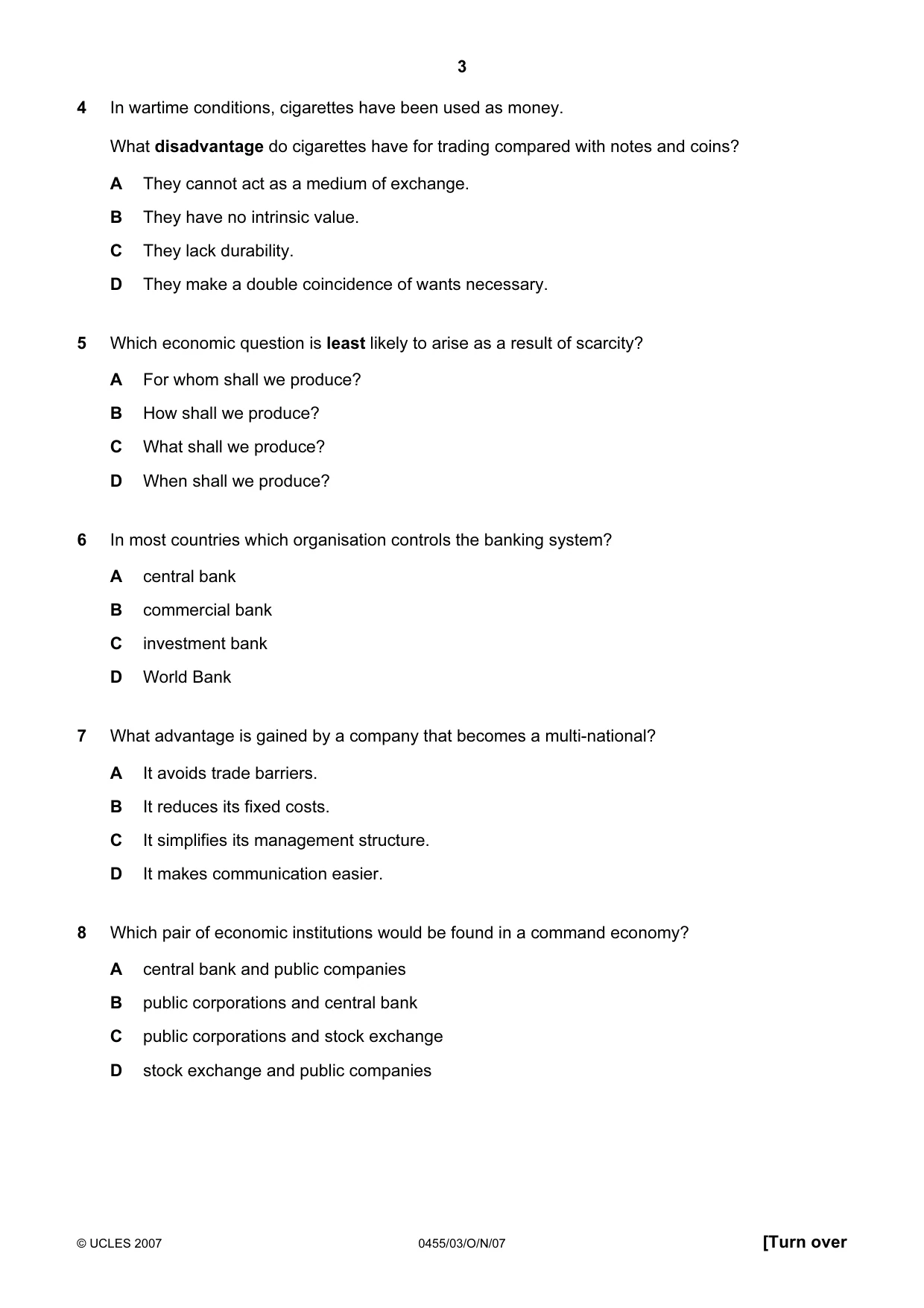
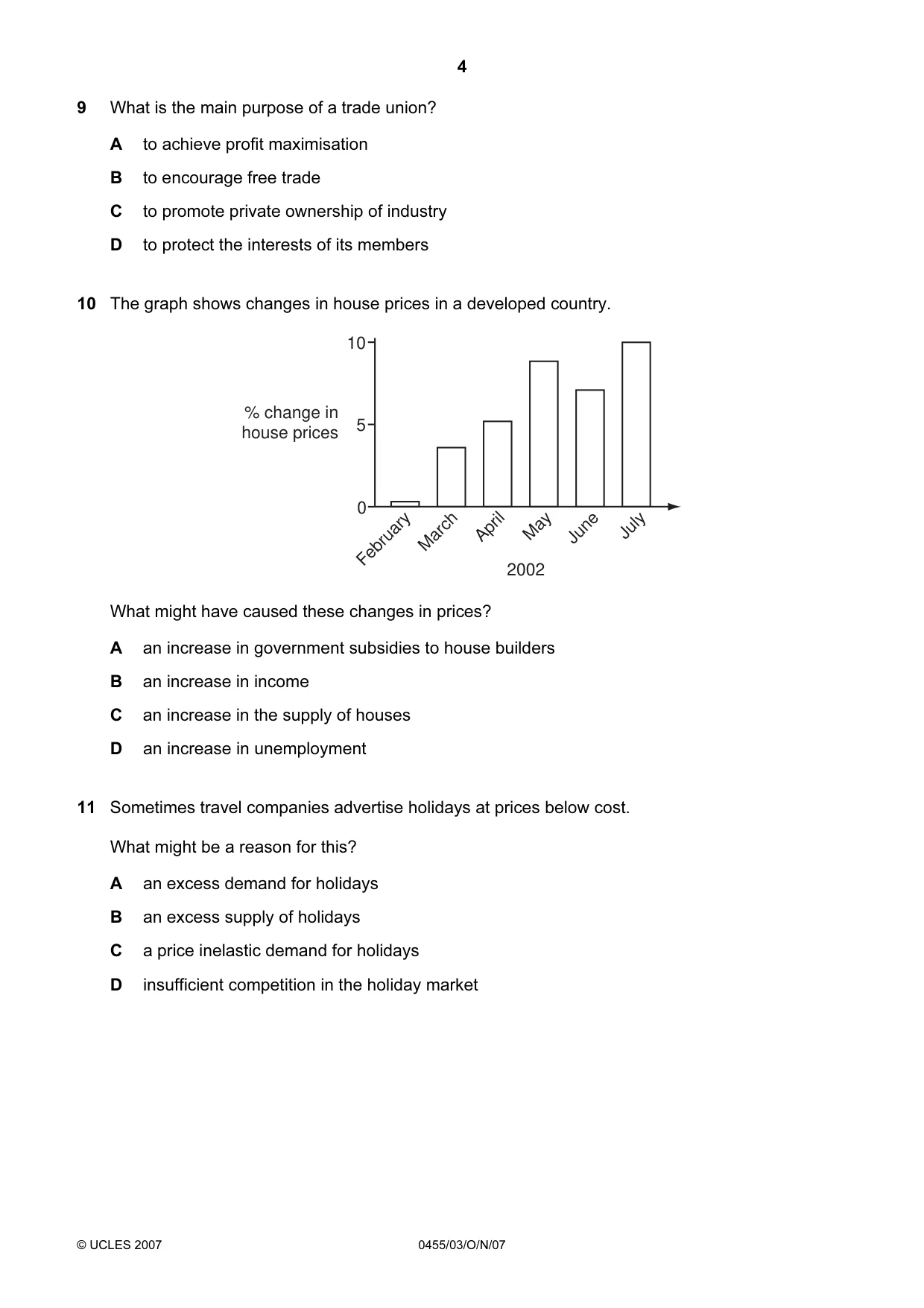
1 What is found in a market economy but not a command economy? A division of labour B economies of scale C money as a store of value D the profit motive 2 The diagram shows the choices for an individual between leisure and earnings. 24 20 16 hours of leisure X 12 per day Y 8 4 0 0 20 40 60 80 100 120 earnings $ What is the opportunity cost to the individual of the extra earnings when moving from position X to position Y? A $20 B $80 C 4 hours of leisure per day D 8 hours of leisure per day 3 There are more people in developing countries who cannot read or write than in developed countries. What can be concluded from this? A Developed countries will use more labour than capital as it is skilled. B In developing countries, factors of production are not used to their maximum potential. C Less money needs to be spent on education in developed countries than in developing countries. D Production in developing countries is likely to rely more on capital than labour. 4 In wartime conditions, cigarettes have been used as money. What disadvantage do cigarettes have for trading compared with notes and coins? A They cannot act as a medium of exchange. B They have no intrinsic value. C They lack durability. D They make a double coincidence of wants necessary. 5 Which economic question is least likely to arise as a result of scarcity? A For whom shall we produce? B How shall we produce? C What shall we produce? D When shall we produce? 6 In most countries which organisation controls the banking system? A central bank B commercial bank C investment bank D World Bank 7 What advantage is gained by a company that becomes a multi-national? A It avoids trade barriers. B It reduces its fixed costs. C It simplifies its management structure. D It makes communication easier. 8 Which pair of economic institutions would be found in a command economy? A central bank and public companies B public corporations and central bank C public corporations and stock exchange D stock exchange and public companies 9 What is the main purpose of a trade union? A to achieve profit maximisation B to encourage free trade C to promote private ownership of industry D to protect the interests of its members 10 The graph shows changes in house prices in a developed country. 10 % change in 5 house prices 0 February March April May June July 2002 What might have caused these changes in prices? A an increase in government subsidies to house builders B an increase in income C an increase in the supply of houses D an increase in unemployment 11 Sometimes travel companies advertise holidays at prices below cost. What might be a reason for this? A an excess demand for holidays B an excess supply of holidays C a price inelastic demand for holidays D insufficient competition in the holiday market
What was in this paper
The subtopics covered by these 1 questions, and how many questions each got. Open one in a new tab to see every Cambridge question on it.
What you needed in this session
Cambridge’s own grade thresholds for 2007 Oct/Nov, Paper 3 · Variant 1. A higher threshold means an easier paper — the bar moves with how the cohort did.