Cambridge IGCSE Economics 0455 — 2006 Oct/Nov Paper 3 · Variant 1
0455/31/O/N/06 · 1 question · 40 marks · ≈45 min
The question paper and its mark scheme, free to read here and free to download. This is Cambridge’s own paper, exactly as it was sat.
Question paper12 pages
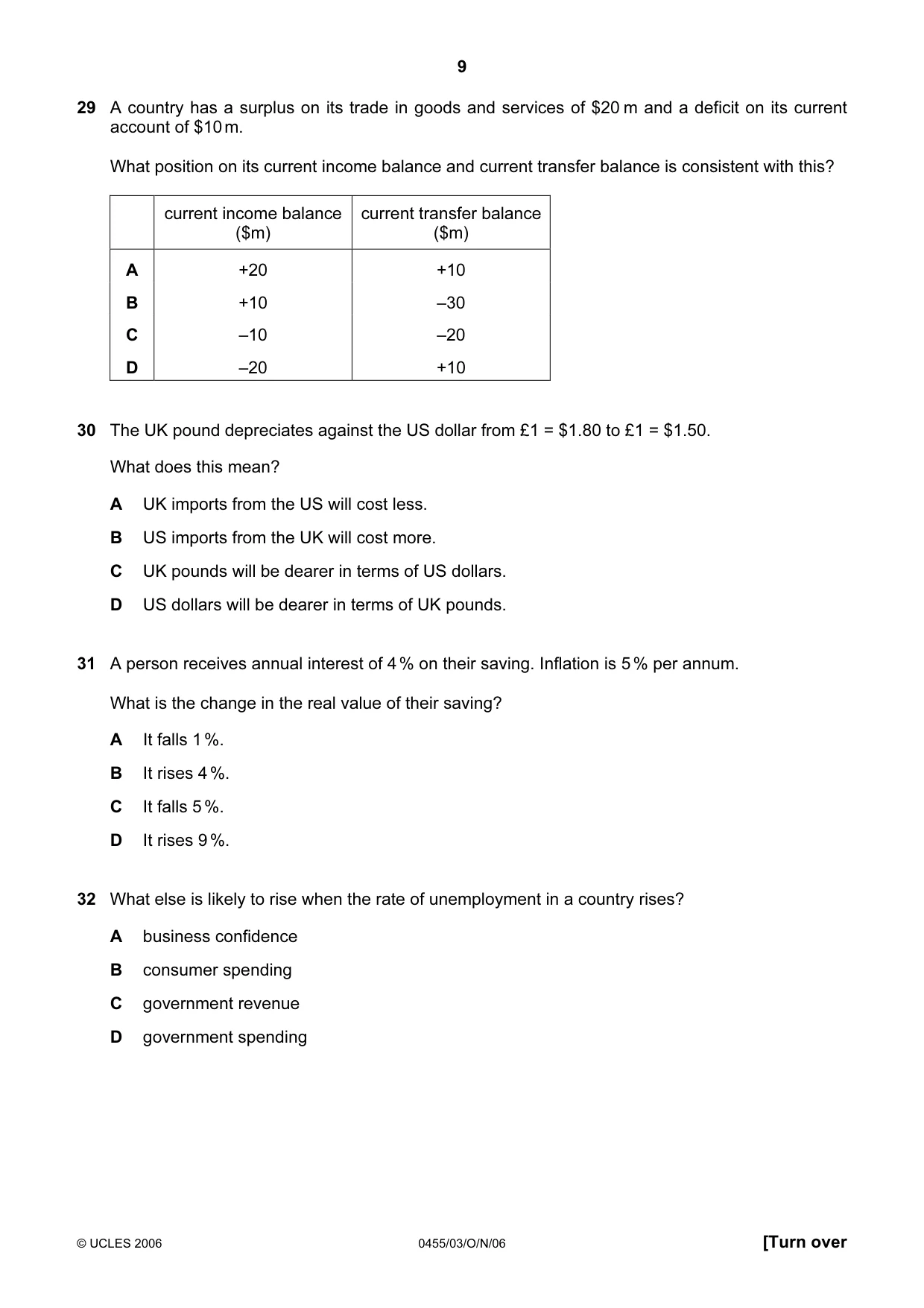
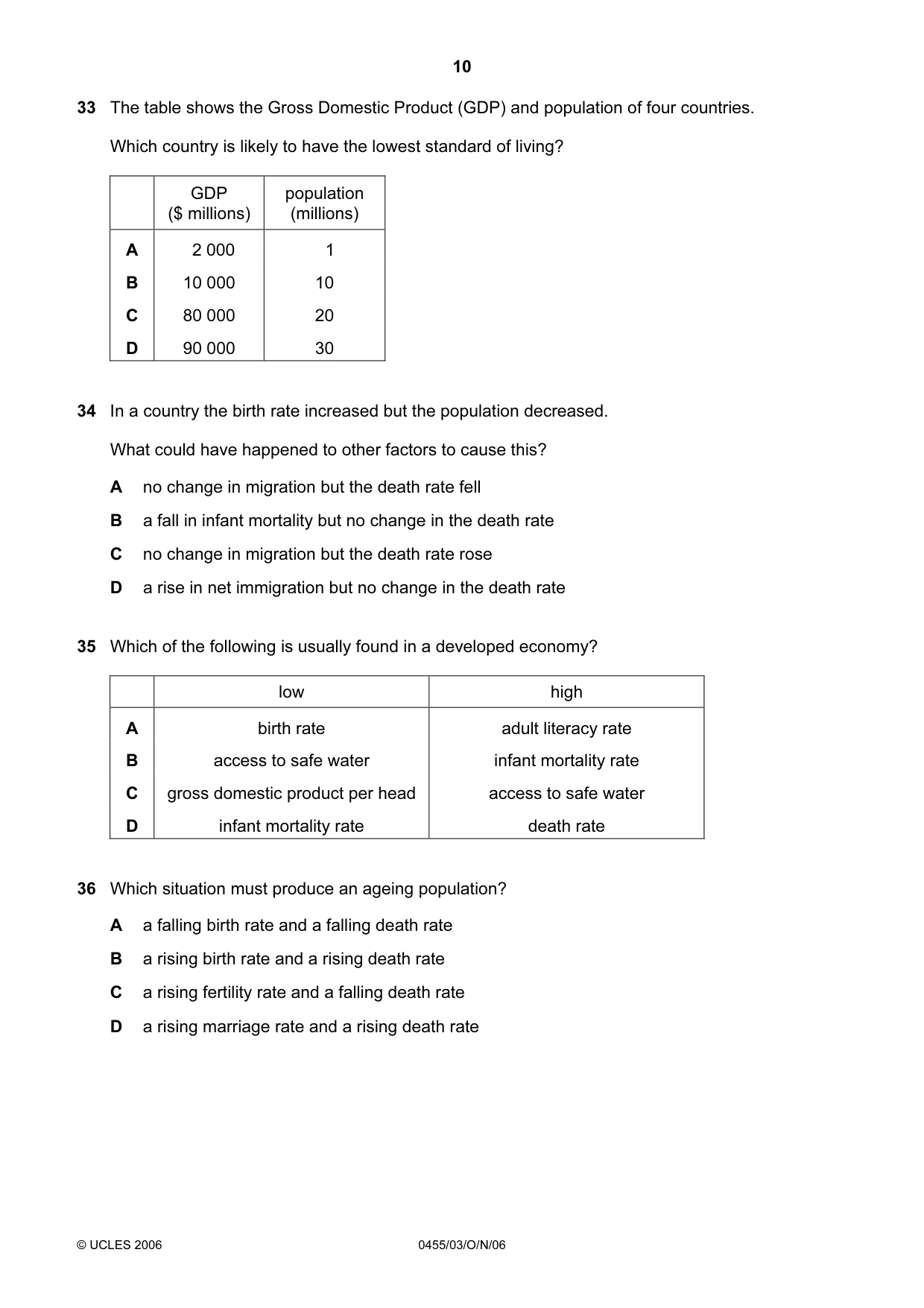
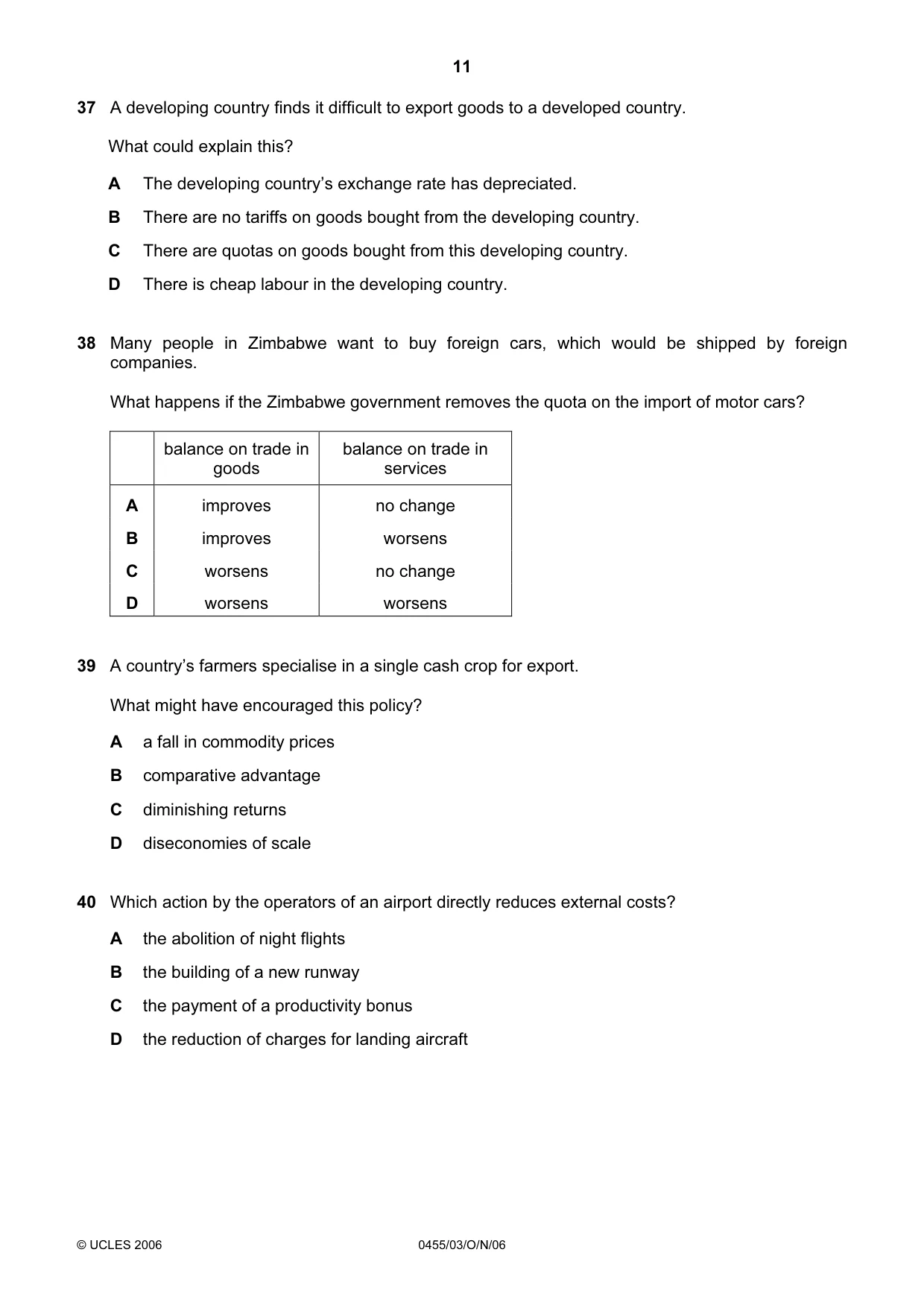
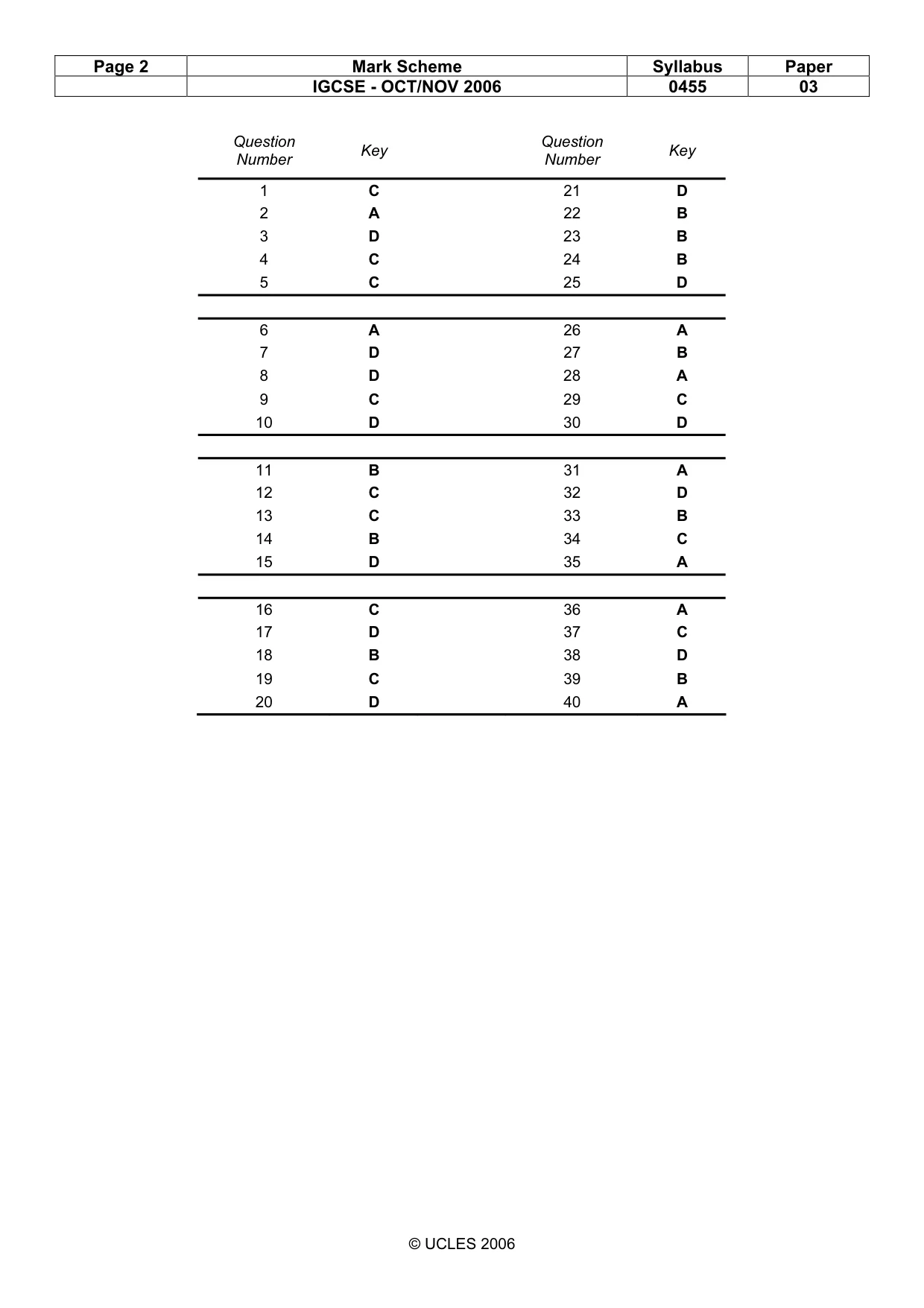
Mark scheme2 pages
Answers below. Sit the paper first if you are practising.
Questions as text
Q1 · A government decides to spend more on defence and, therefore, cannot spend as much on…
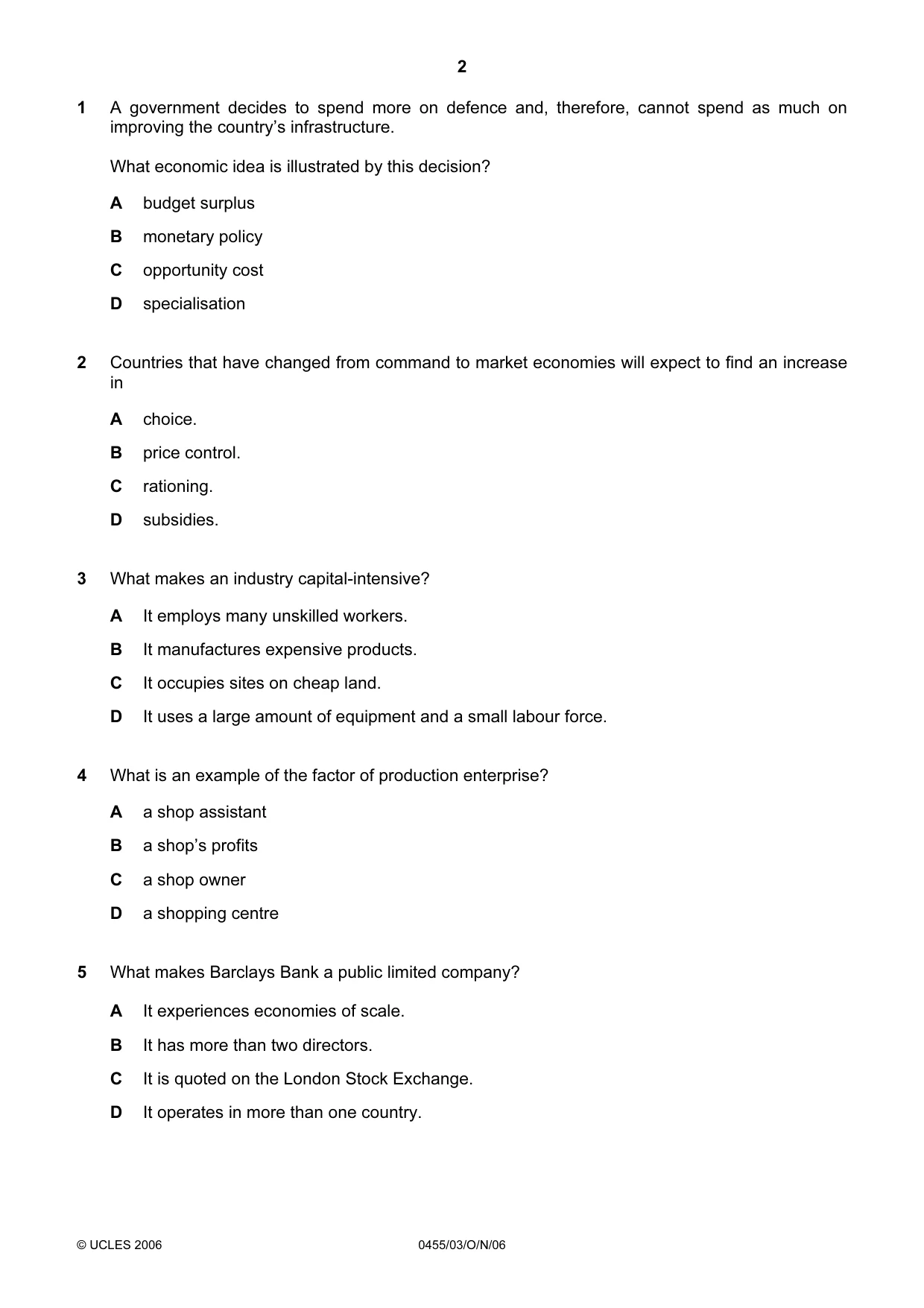
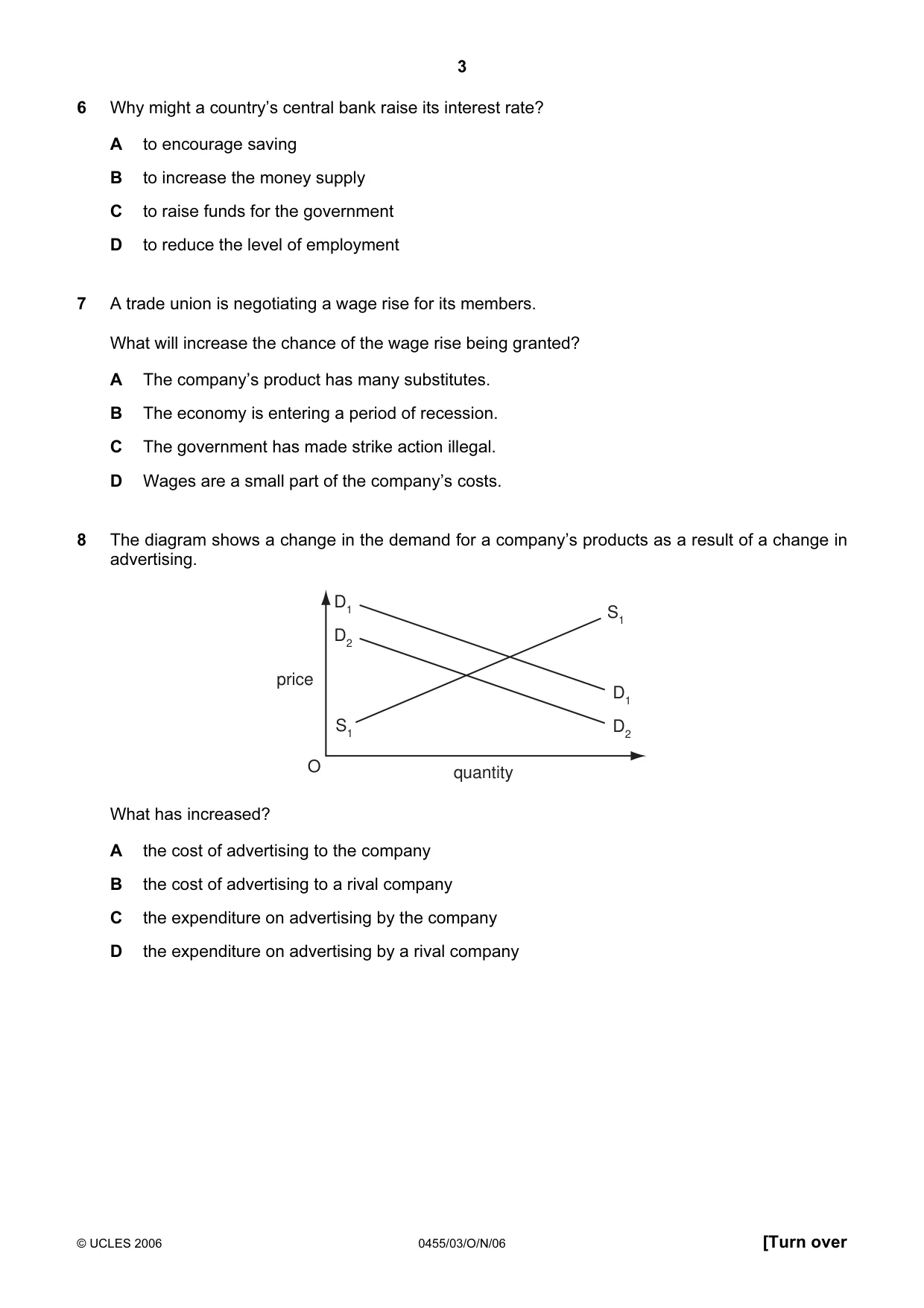
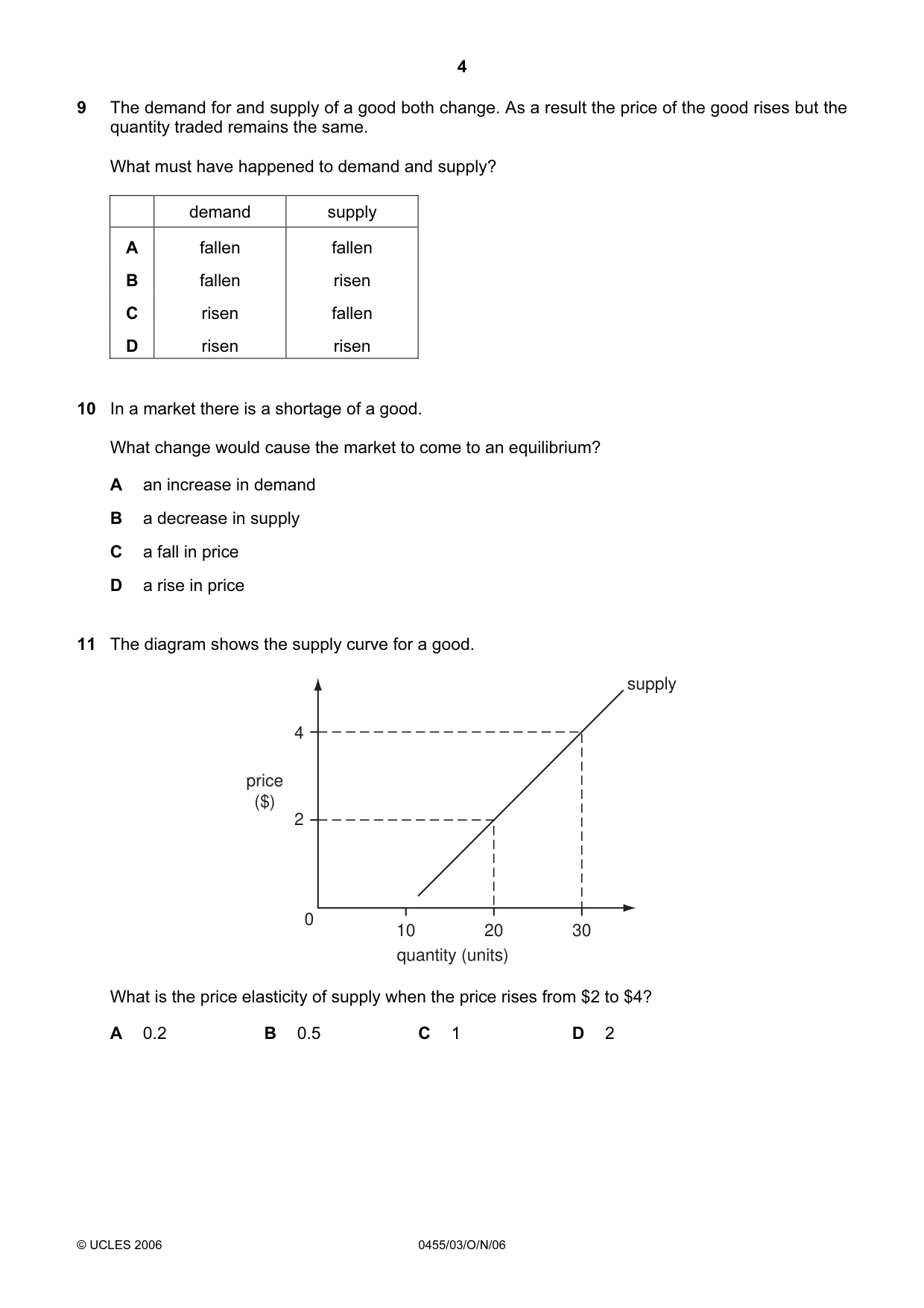
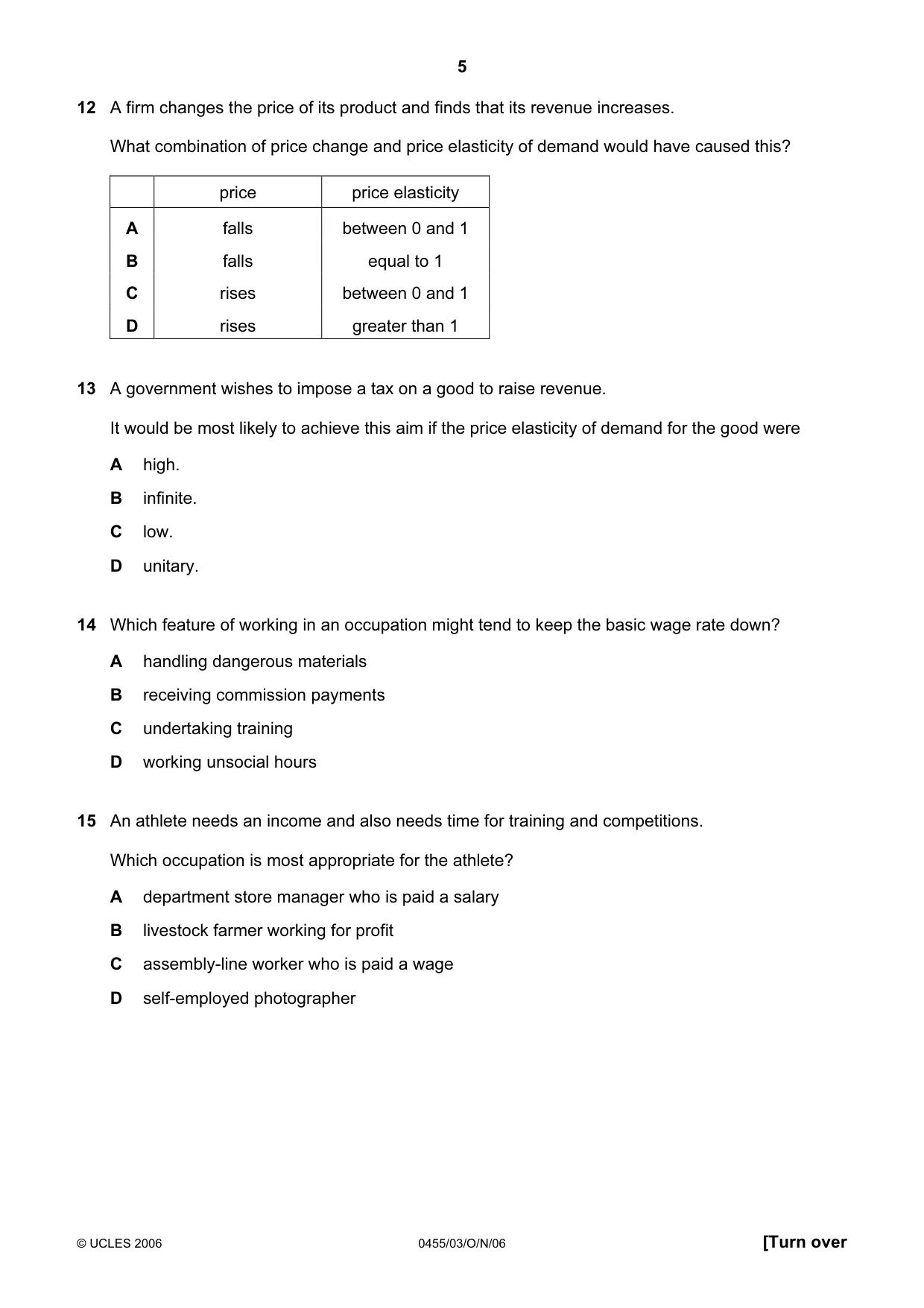
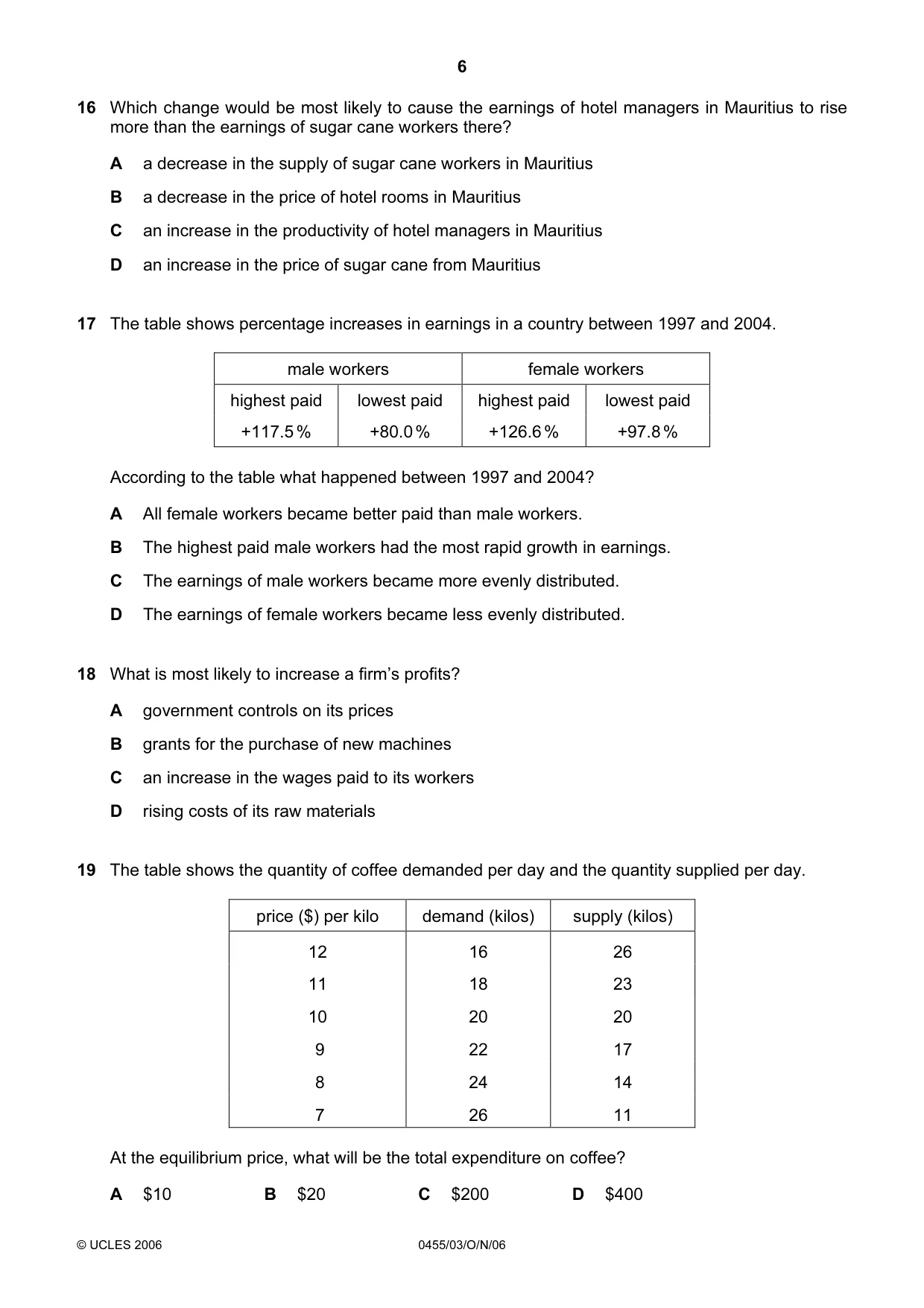
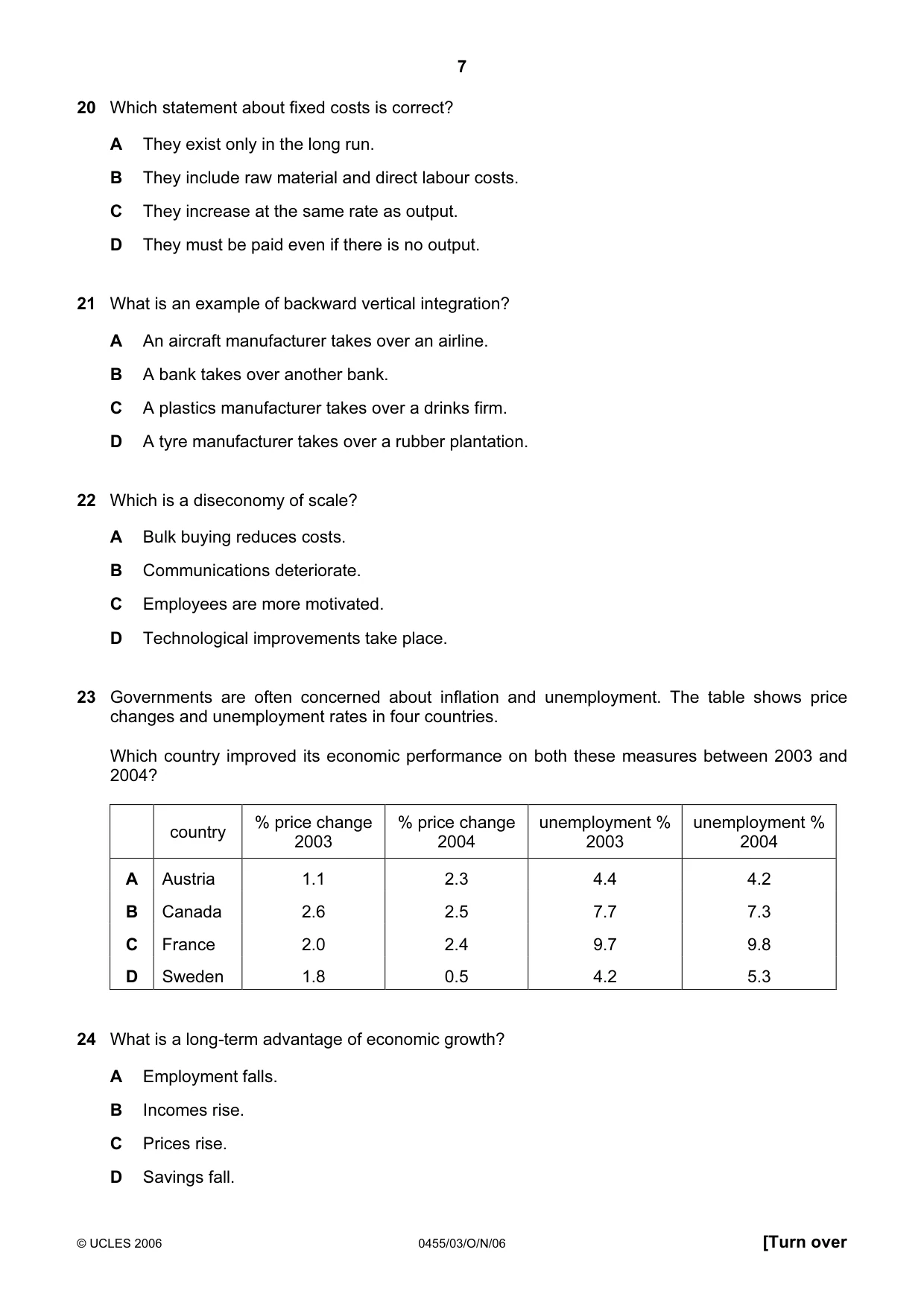
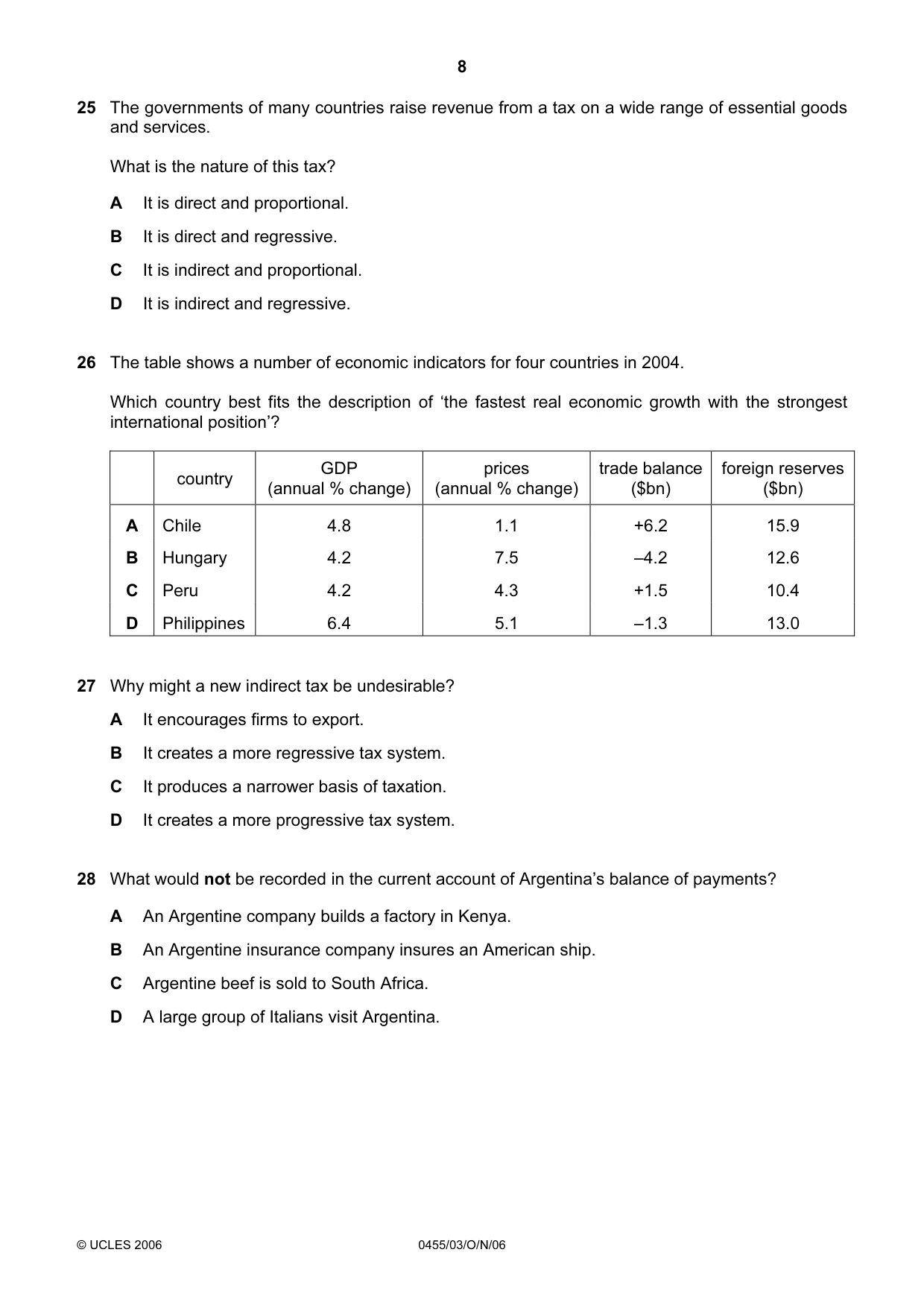
1 A government decides to spend more on defence and, therefore, cannot spend as much on improving the country’s infrastructure. What economic idea is illustrated by this decision? A budget surplus B monetary policy C opportunity cost D specialisation 2 Countries that have changed from command to market economies will expect to find an increase in A choice. B price control. C rationing. D subsidies. 3 What makes an industry capital-intensive? A It employs many unskilled workers. B It manufactures expensive products. C It occupies sites on cheap land. D It uses a large amount of equipment and a small labour force. 4 What is an example of the factor of production enterprise? A a shop assistant B a shop’s profits C a shop owner D a shopping centre 5 What makes Barclays Bank a public limited company? A It experiences economies of scale. B It has more than two directors. C It is quoted on the London Stock Exchange. D It operates in more than one country. 6 Why might a country’s central bank raise its interest rate? A to encourage saving B to increase the money supply C to raise funds for the government D to reduce the level of employment 7 A trade union is negotiating a wage rise for its members. What will increase the chance of the wage rise being granted? A The company’s product has many substitutes. B The economy is entering a period of recession. C The government has made strike action illegal. D Wages are a small part of the company’s costs. 8 The diagram shows a change in the demand for a company’s products as a result of a change in advertising. D1 S1 D2 price D1 S1 D2 O quantity What has increased? A the cost of advertising to the company B the cost of advertising to a rival company C the expenditure on advertising by the company D the expenditure on advertising by a rival company 9 The demand for and supply of a good both change. As a result the price of the good rises but the quantity traded remains the same. What must have happened to demand and supply? demand supply A fallen fallen B fallen risen C risen fallen D risen risen 10 In a market there is a shortage of a good. What change would cause the market to come to an equilibrium? A an increase in demand B a decrease in supply C a fall in price D a rise in price 11 The diagram shows the supply curve for a good. supply 4 price ($) 2 0 10 20 30 quantity (units) What is the price elasticity of supply when the price rises from $2 to $4? A 0.2 B 0.5 C 1 D 2
What was in this paper
The subtopics covered by these 1 questions, and how many questions each got. Open one in a new tab to see every Cambridge question on it.
What you needed in this session
Cambridge’s own grade thresholds for 2006 Oct/Nov, Paper 3 · Variant 1. A higher threshold means an easier paper — the bar moves with how the cohort did.