Cambridge IGCSE Economics 0455 — 2006 May/June Paper 3 · Variant 1
0455/31/M/J/06 · 1 question · 40 marks · ≈45 min
The question paper and its mark scheme, free to read here and free to download. This is Cambridge’s own paper, exactly as it was sat.
Question paper12 pages
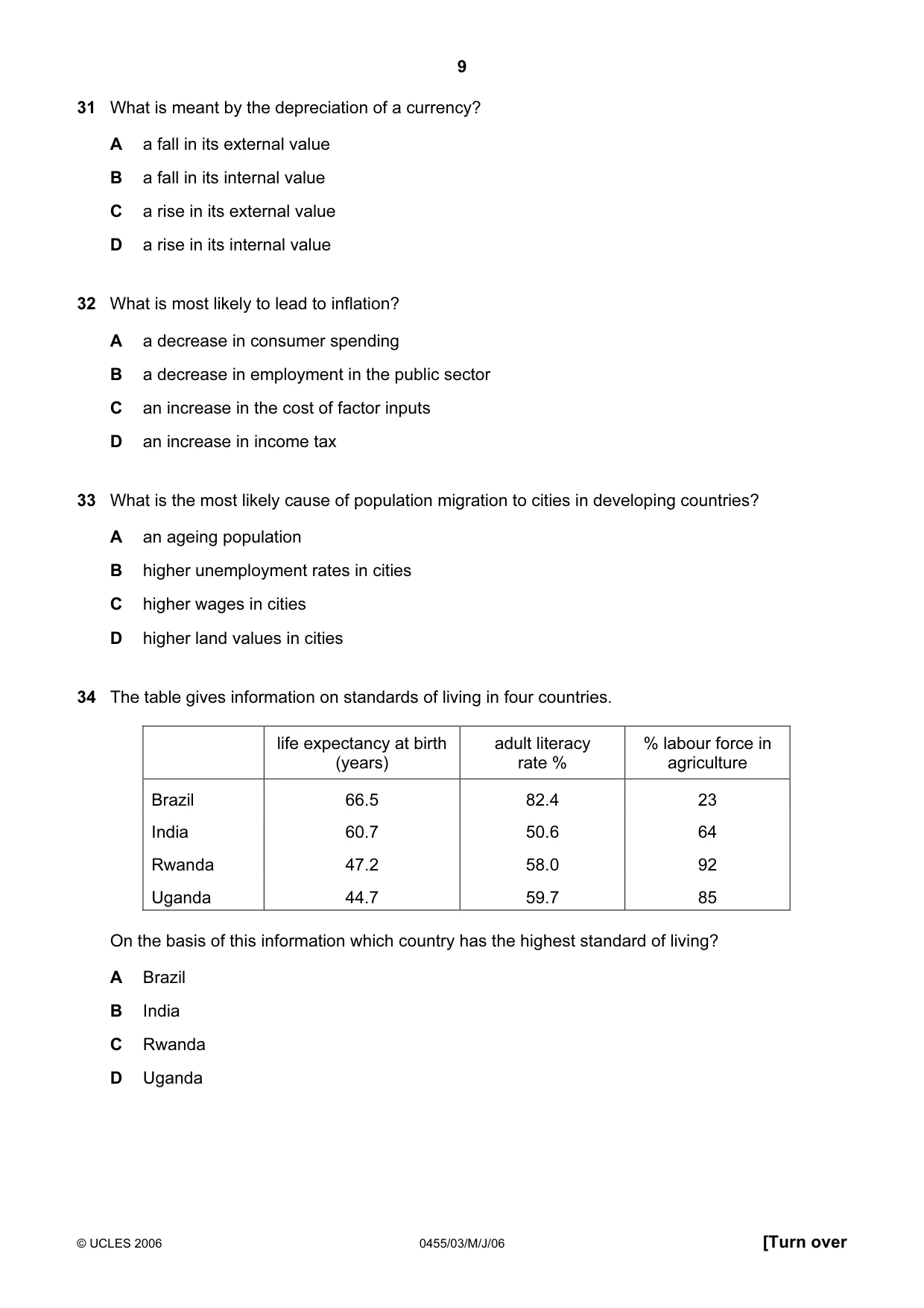
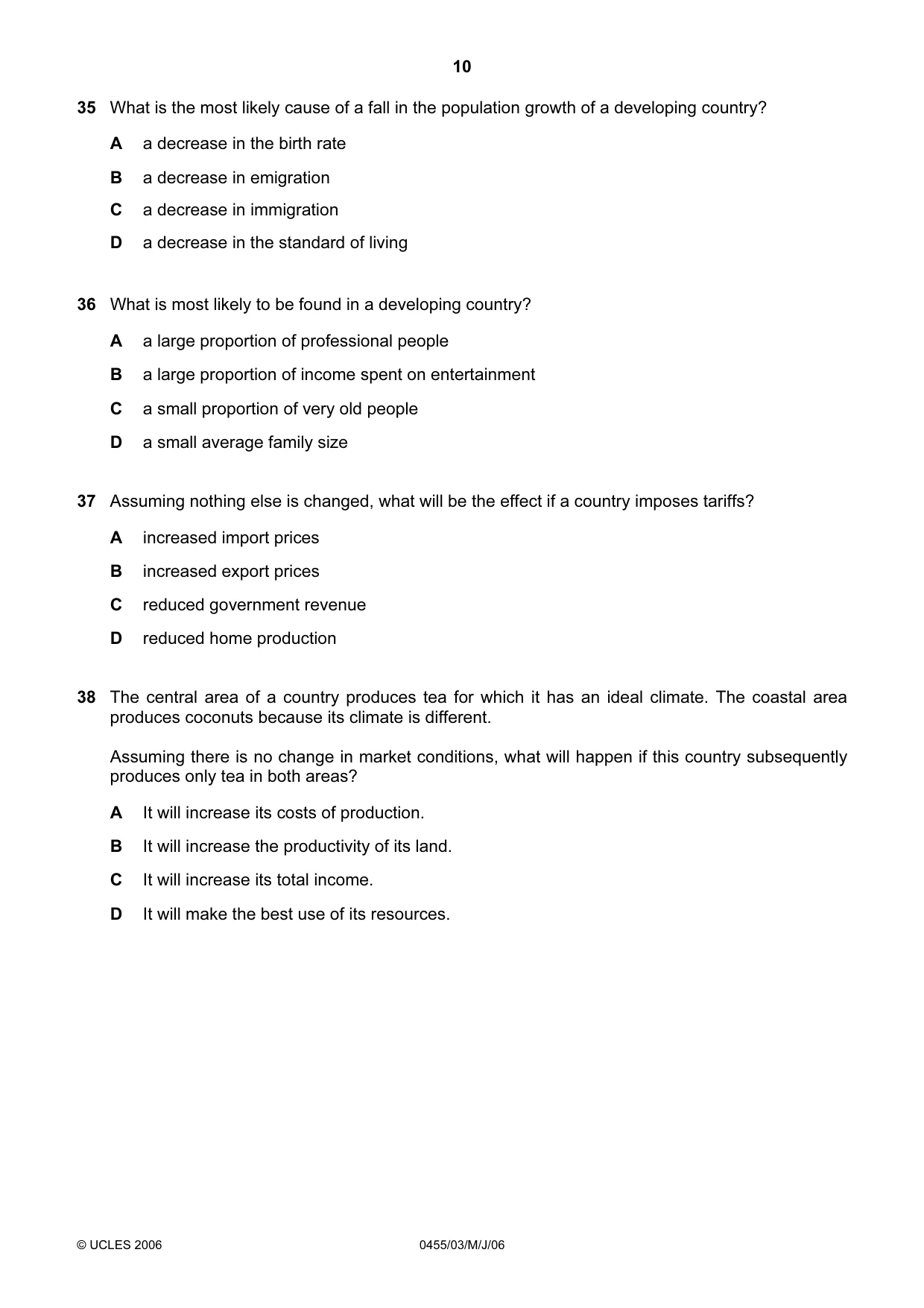
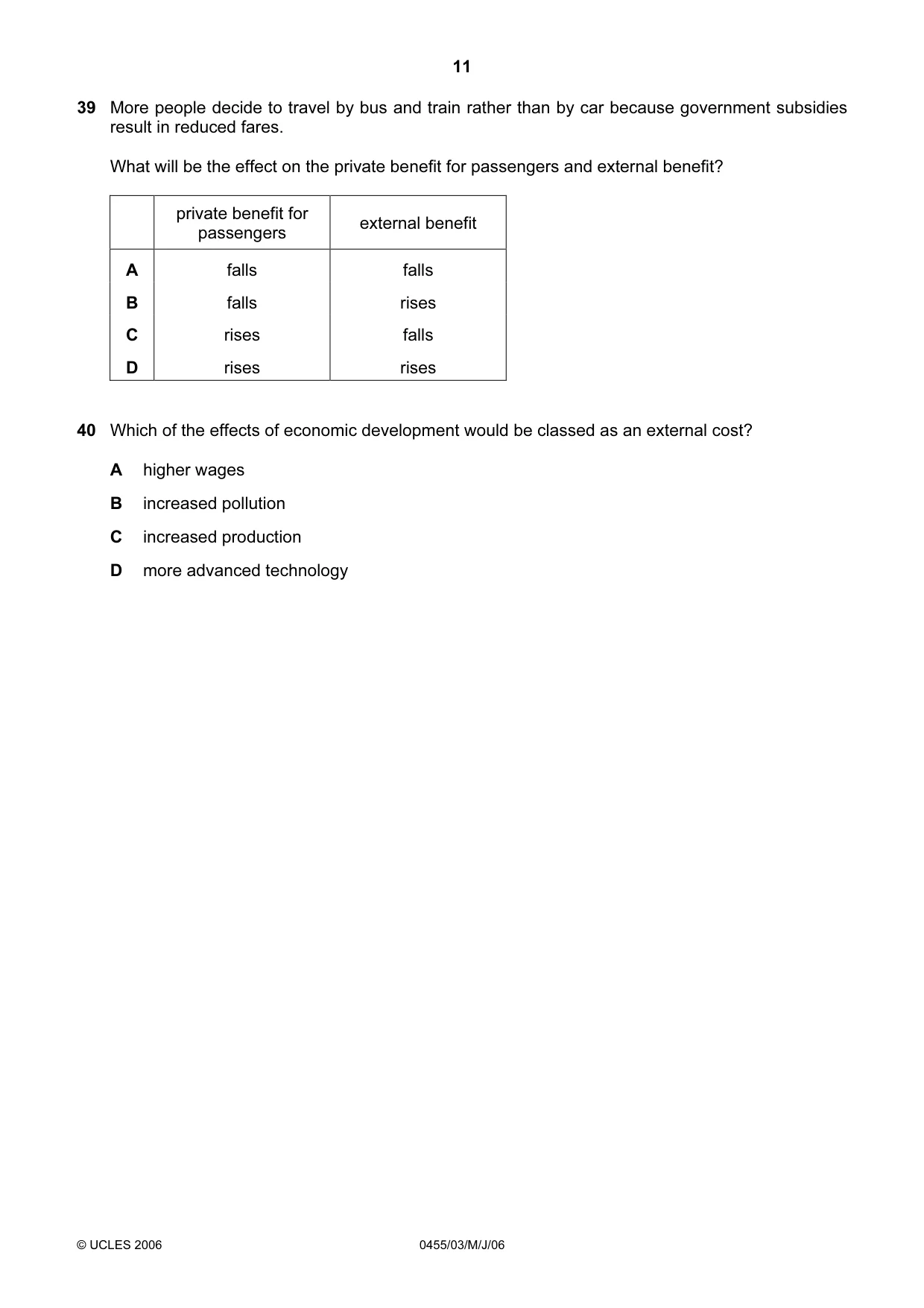

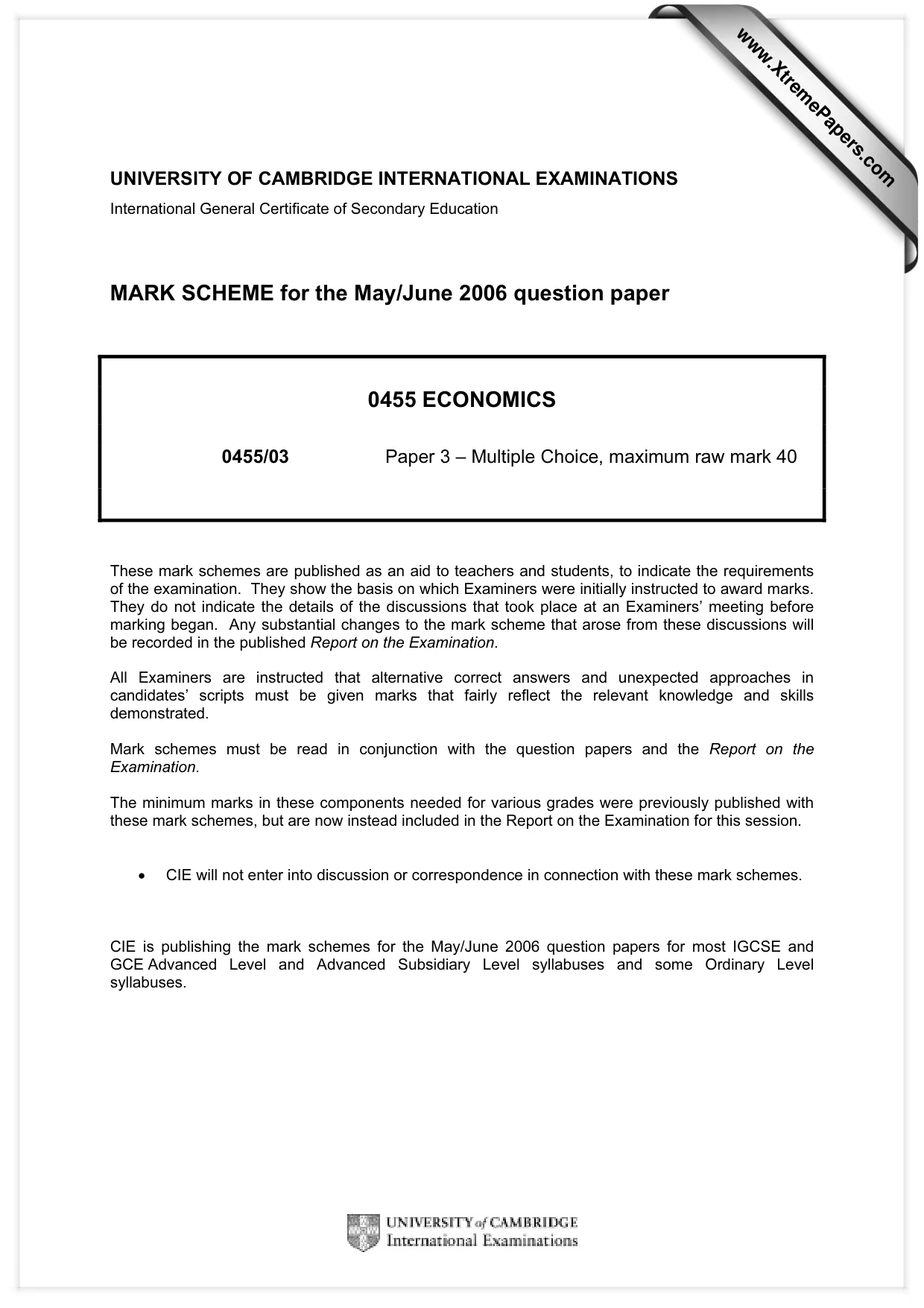
Mark scheme2 pages
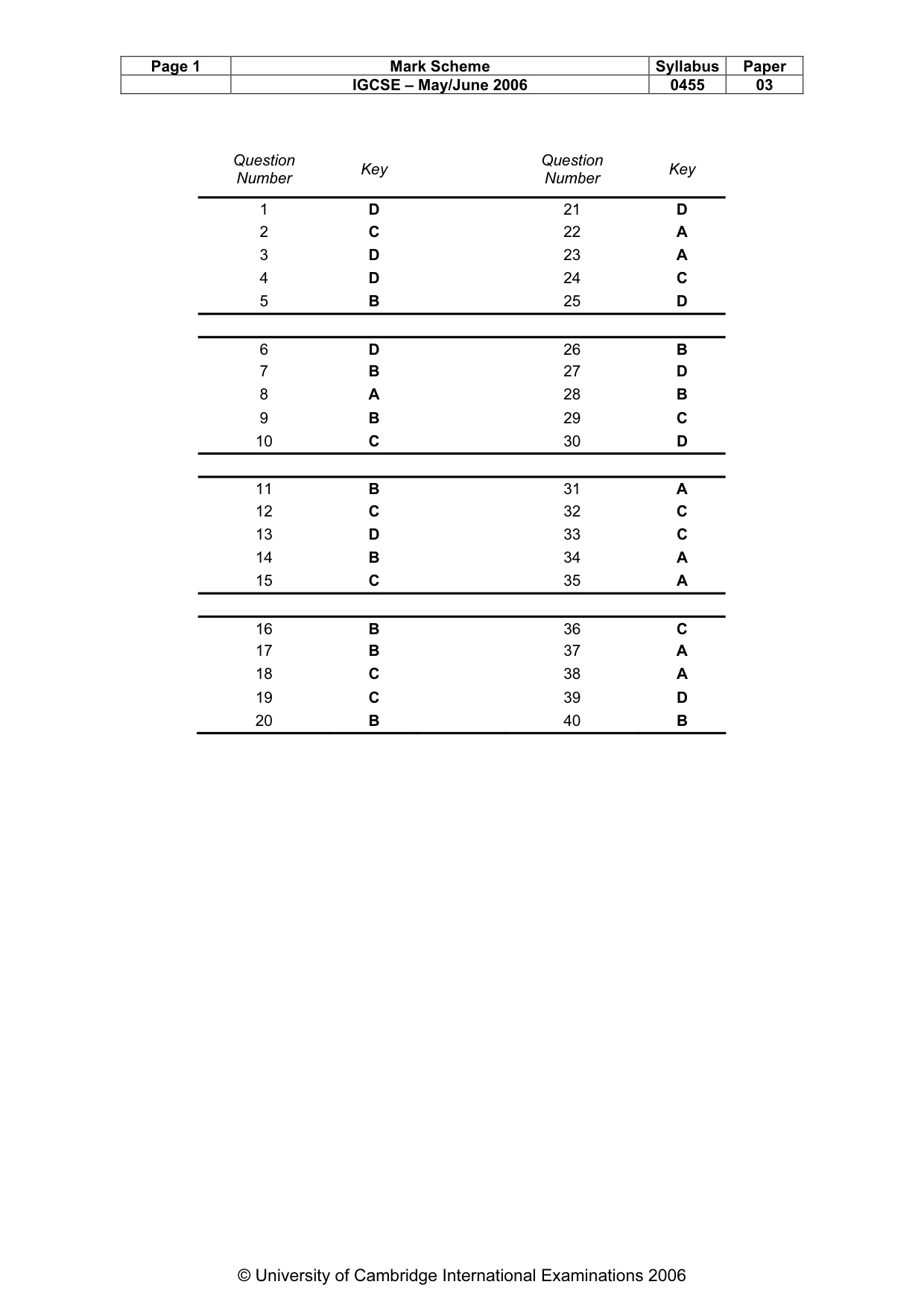
Answers below. Sit the paper first if you are practising.
Questions as text
Q1 · Construction companies are building new houses on land previously used for farming
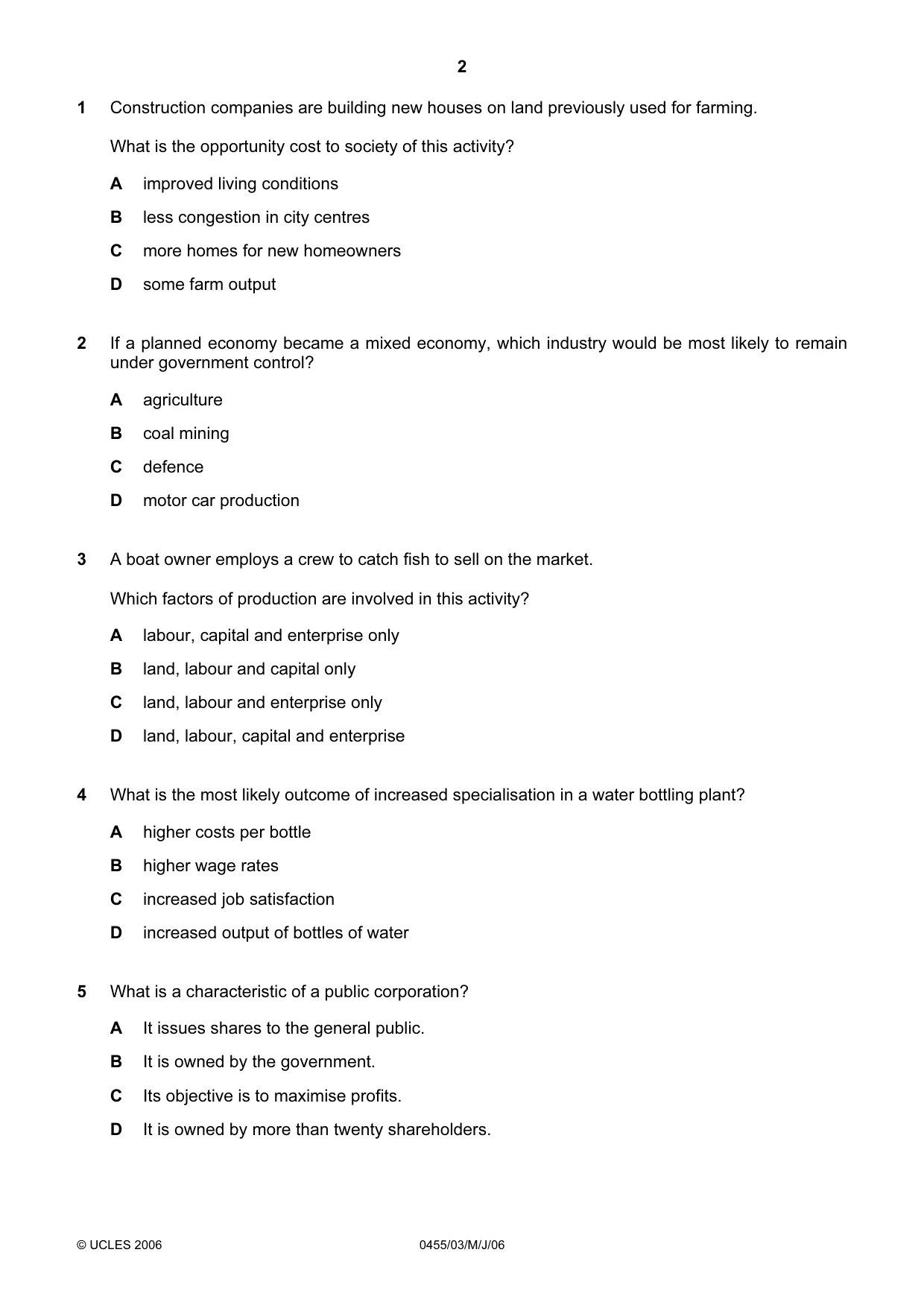
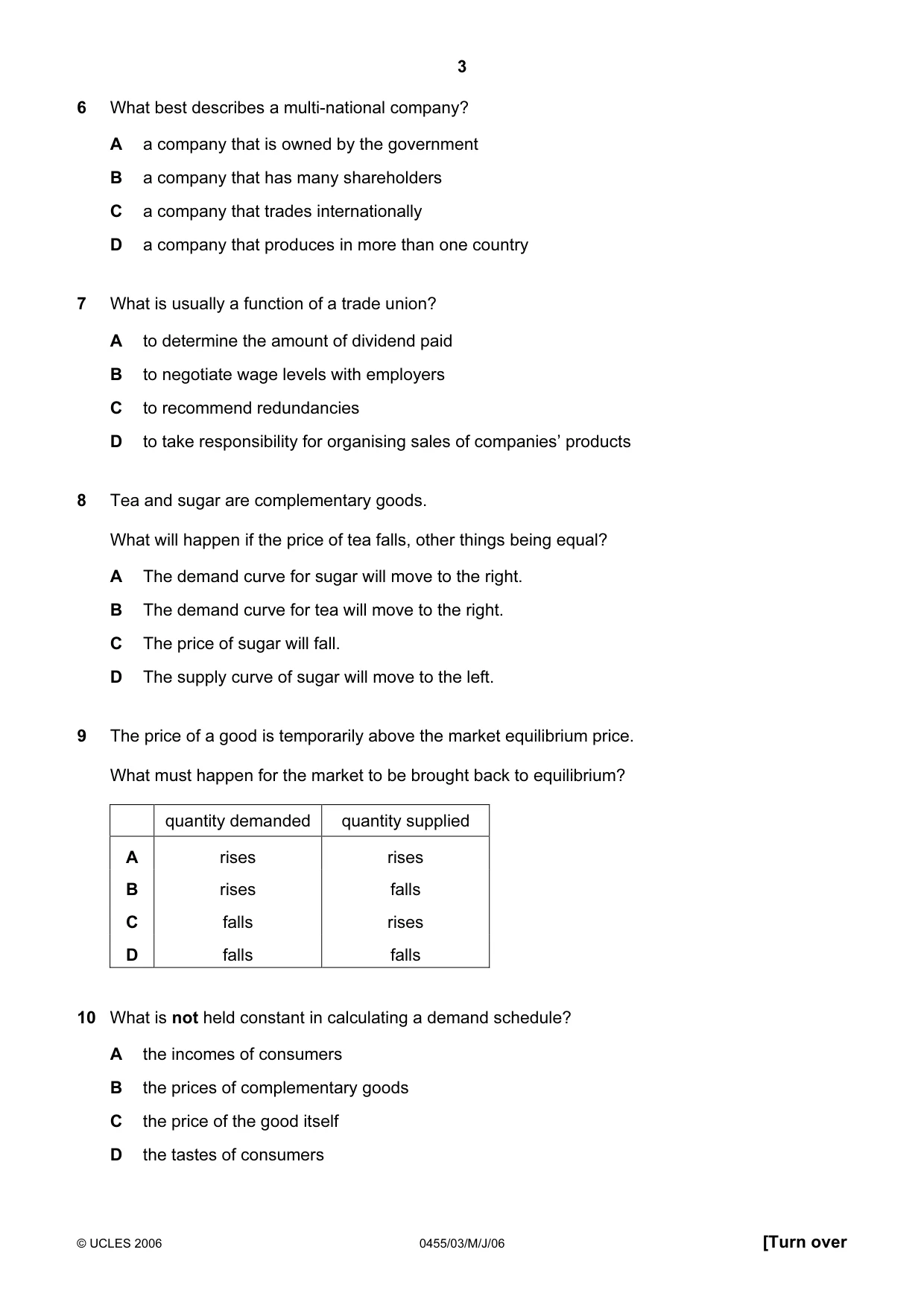
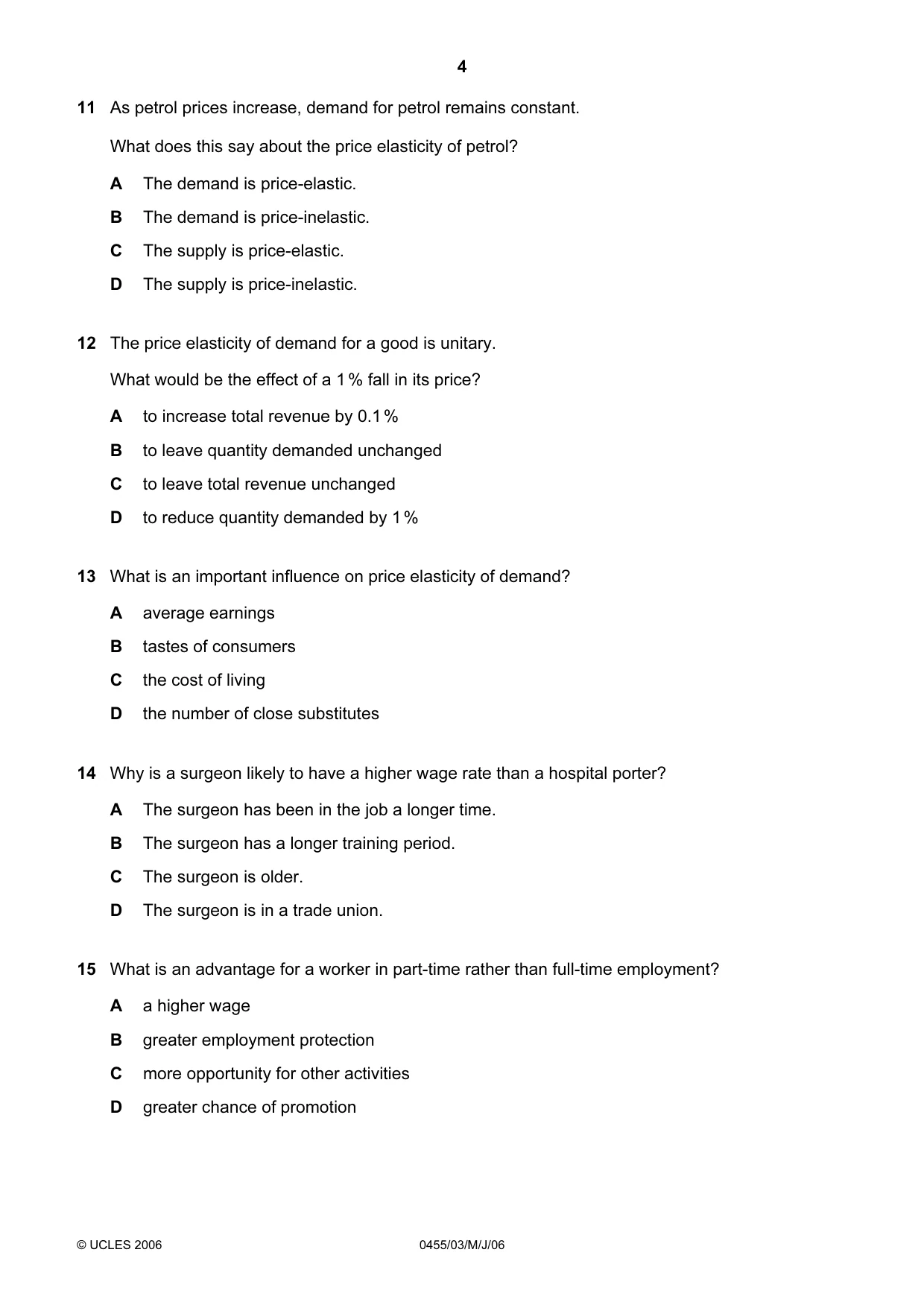
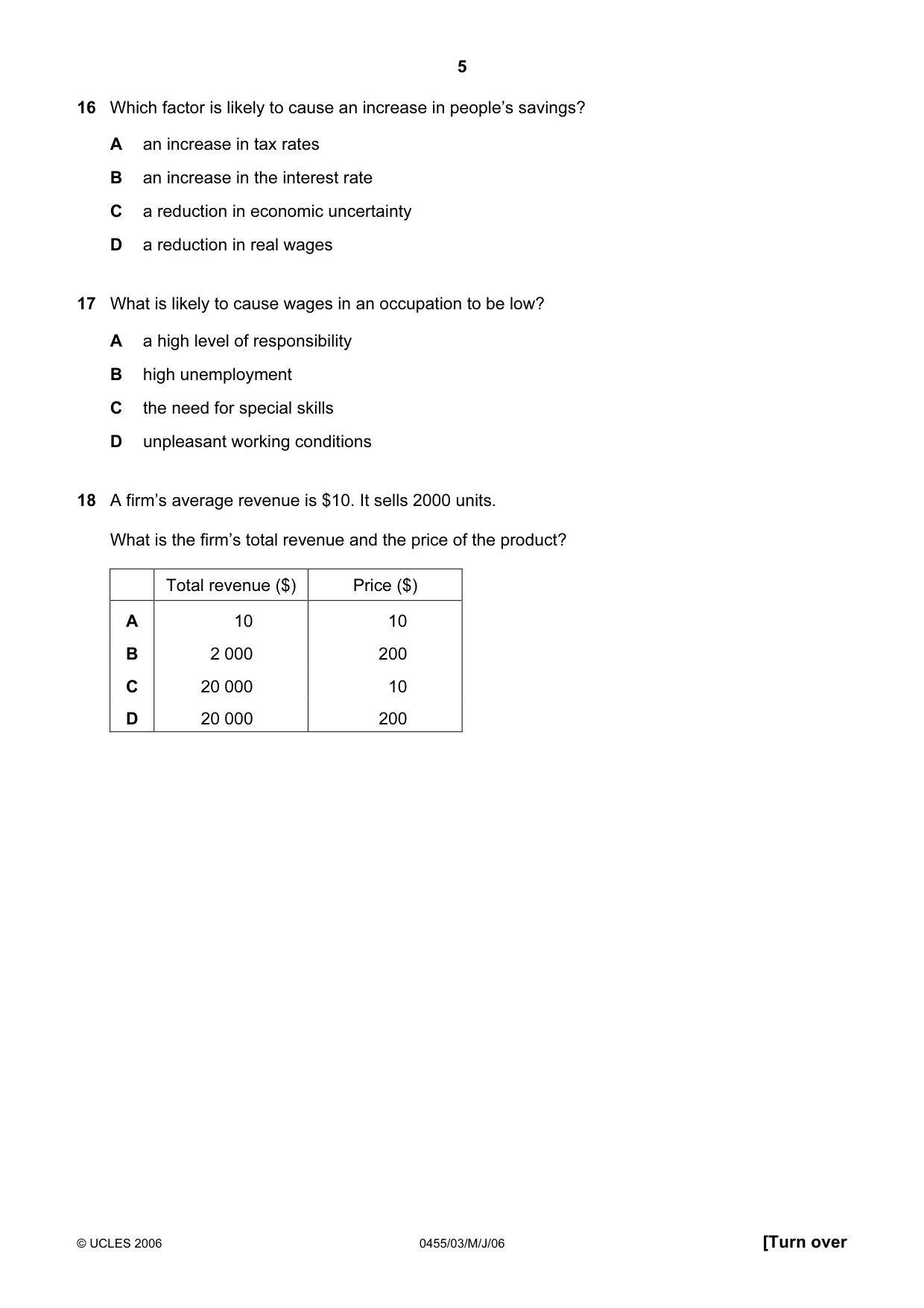
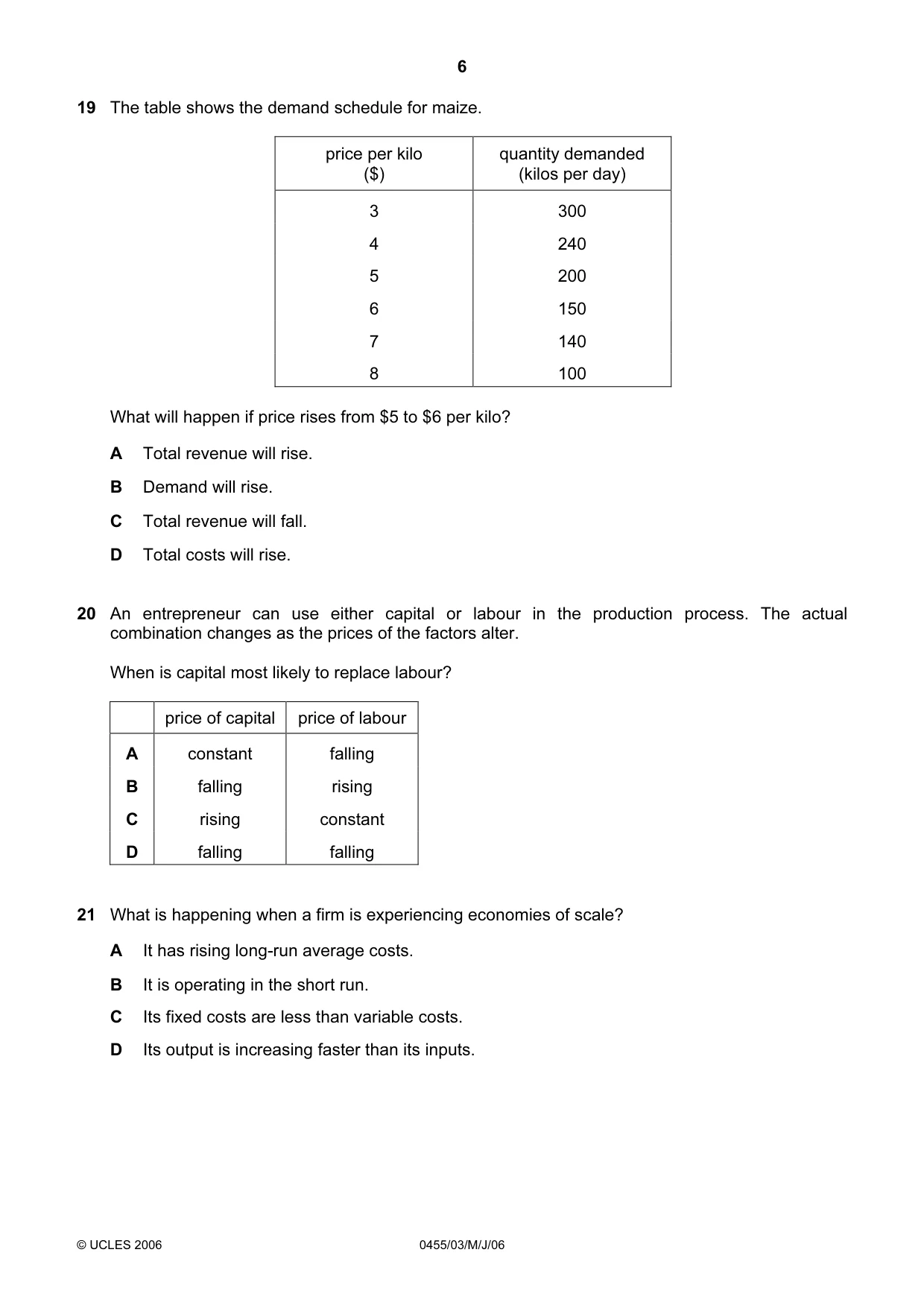
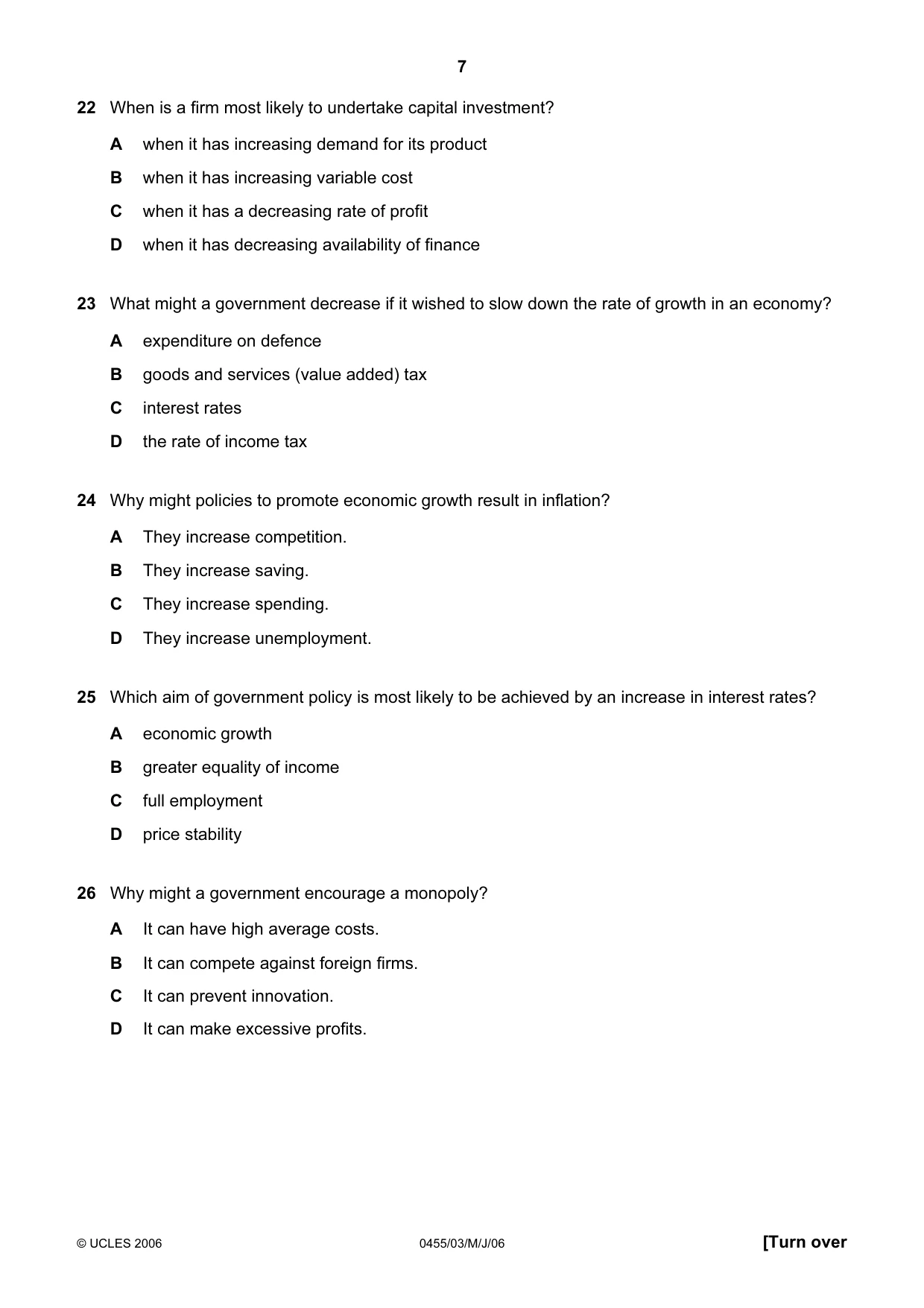
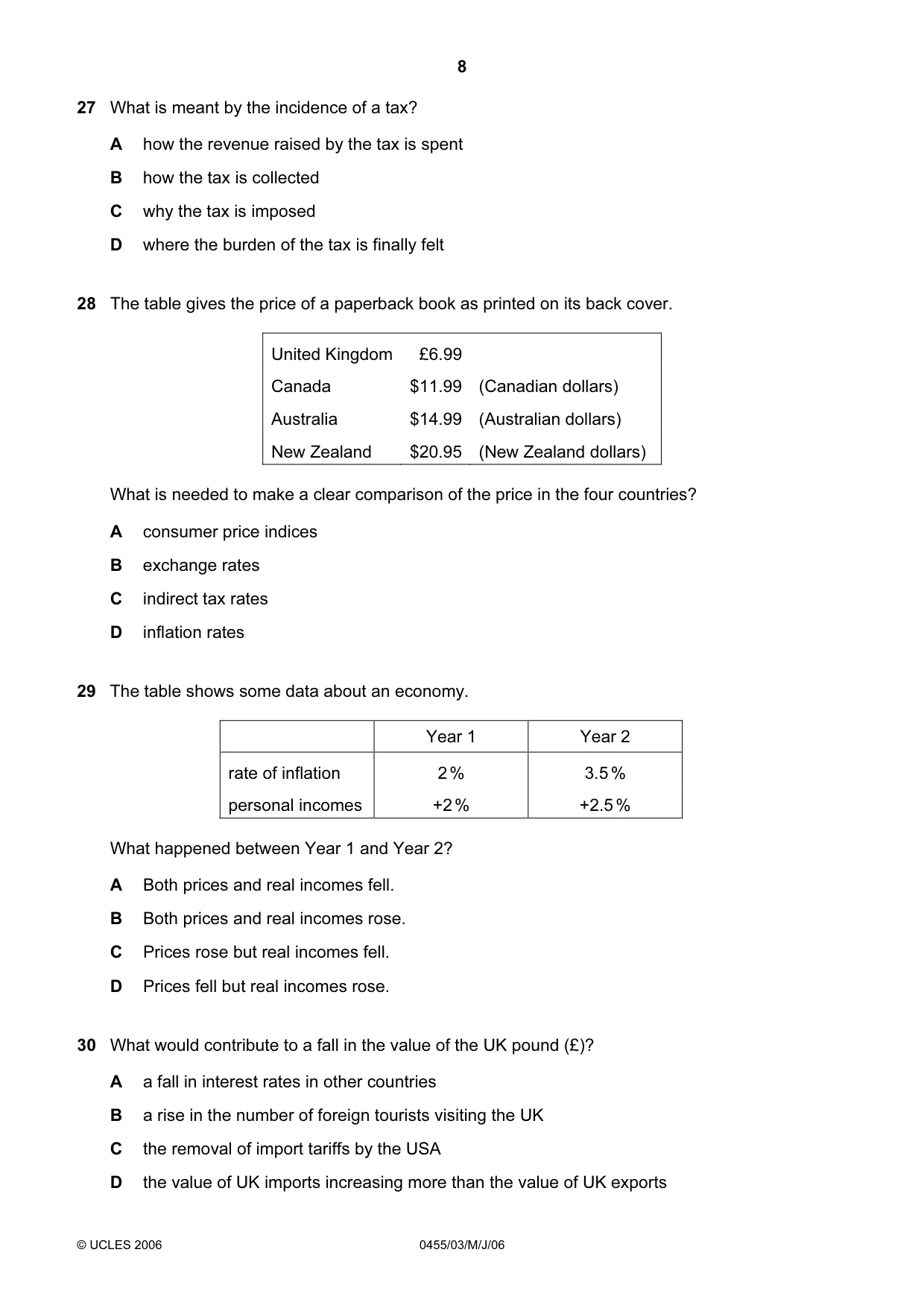
1 Construction companies are building new houses on land previously used for farming. What is the opportunity cost to society of this activity? A improved living conditions B less congestion in city centres C more homes for new homeowners D some farm output 2 If a planned economy became a mixed economy, which industry would be most likely to remain under government control? A agriculture B coal mining C defence D motor car production 3 A boat owner employs a crew to catch fish to sell on the market. Which factors of production are involved in this activity? A labour, capital and enterprise only B land, labour and capital only C land, labour and enterprise only D land, labour, capital and enterprise 4 What is the most likely outcome of increased specialisation in a water bottling plant? A higher costs per bottle B higher wage rates C increased job satisfaction D increased output of bottles of water 5 What is a characteristic of a public corporation? A It issues shares to the general public. B It is owned by the government. C Its objective is to maximise profits. D It is owned by more than twenty shareholders. 6 What best describes a multi-national company? A a company that is owned by the government B a company that has many shareholders C a company that trades internationally D a company that produces in more than one country 7 What is usually a function of a trade union? A to determine the amount of dividend paid B to negotiate wage levels with employers C to recommend redundancies D to take responsibility for organising sales of companies’ products 8 Tea and sugar are complementary goods. What will happen if the price of tea falls, other things being equal? A The demand curve for sugar will move to the right. B The demand curve for tea will move to the right. C The price of sugar will fall. D The supply curve of sugar will move to the left. 9 The price of a good is temporarily above the market equilibrium price. What must happen for the market to be brought back to equilibrium? quantity demanded quantity supplied A rises rises B rises falls C falls rises D falls falls 10 What is not held constant in calculating a demand schedule? A the incomes of consumers B the prices of complementary goods C the price of the good itself D the tastes of consumers 11 As petrol prices increase, demand for petrol remains constant. What does this say about the price elasticity of petrol? A The demand is price-elastic. B The demand is price-inelastic. C The supply is price-elastic. D The supply is price-inelastic. 12 The price elasticity of demand for a good is unitary. What would be the effect of a 1 % fall in its price? A to increase total revenue by 0.1 % B to leave quantity demanded unchanged C to leave total revenue unchanged D to reduce quantity demanded by 1 % 13 What is an important influence on price elasticity of demand? A average earnings B tastes of consumers C the cost of living D the number of close substitutes 14 Why is a surgeon likely to have a higher wage rate than a hospital porter? A The surgeon has been in the job a longer time. B The surgeon has a longer training period. C The surgeon is older. D The surgeon is in a trade union. 15 What is an advantage for a worker in part-time rather than full-time employment? A a higher wage B greater employment protection C more opportunity for other activities D greater chance of promotion
What was in this paper
The subtopics covered by these 1 questions, and how many questions each got. Open one in a new tab to see every Cambridge question on it.
What you needed in this session
Cambridge’s own grade thresholds for 2006 May/June, Paper 3 · Variant 1. A higher threshold means an easier paper — the bar moves with how the cohort did.