Cambridge IGCSE Economics 0455 — 2005 Oct/Nov Paper 3 · Variant 1
0455/31/O/N/05 · 1 question · 0 marks · ≈0 min
The question paper and its mark scheme, free to read here and free to download. This is Cambridge’s own paper, exactly as it was sat.
Question paper12 pages
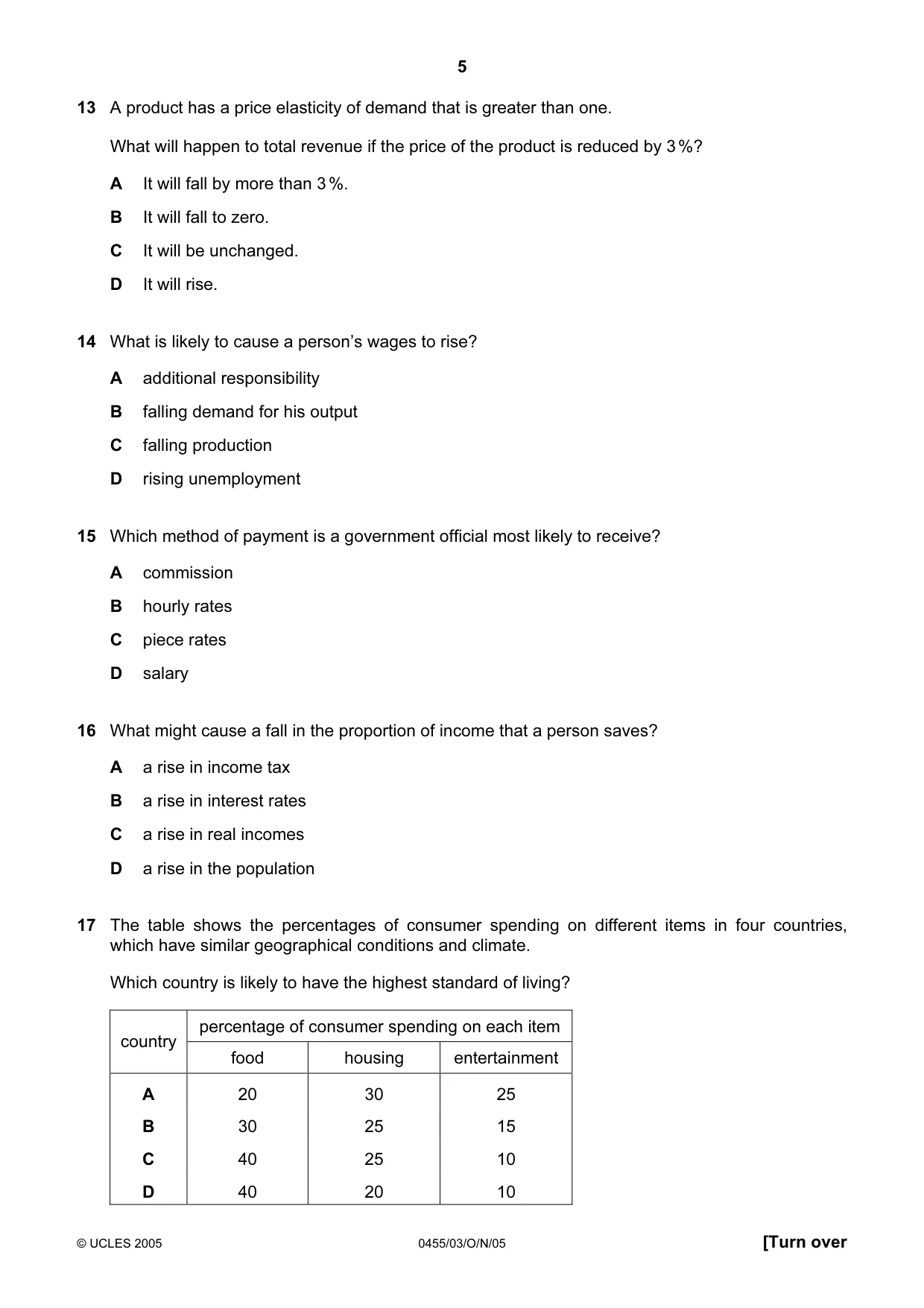
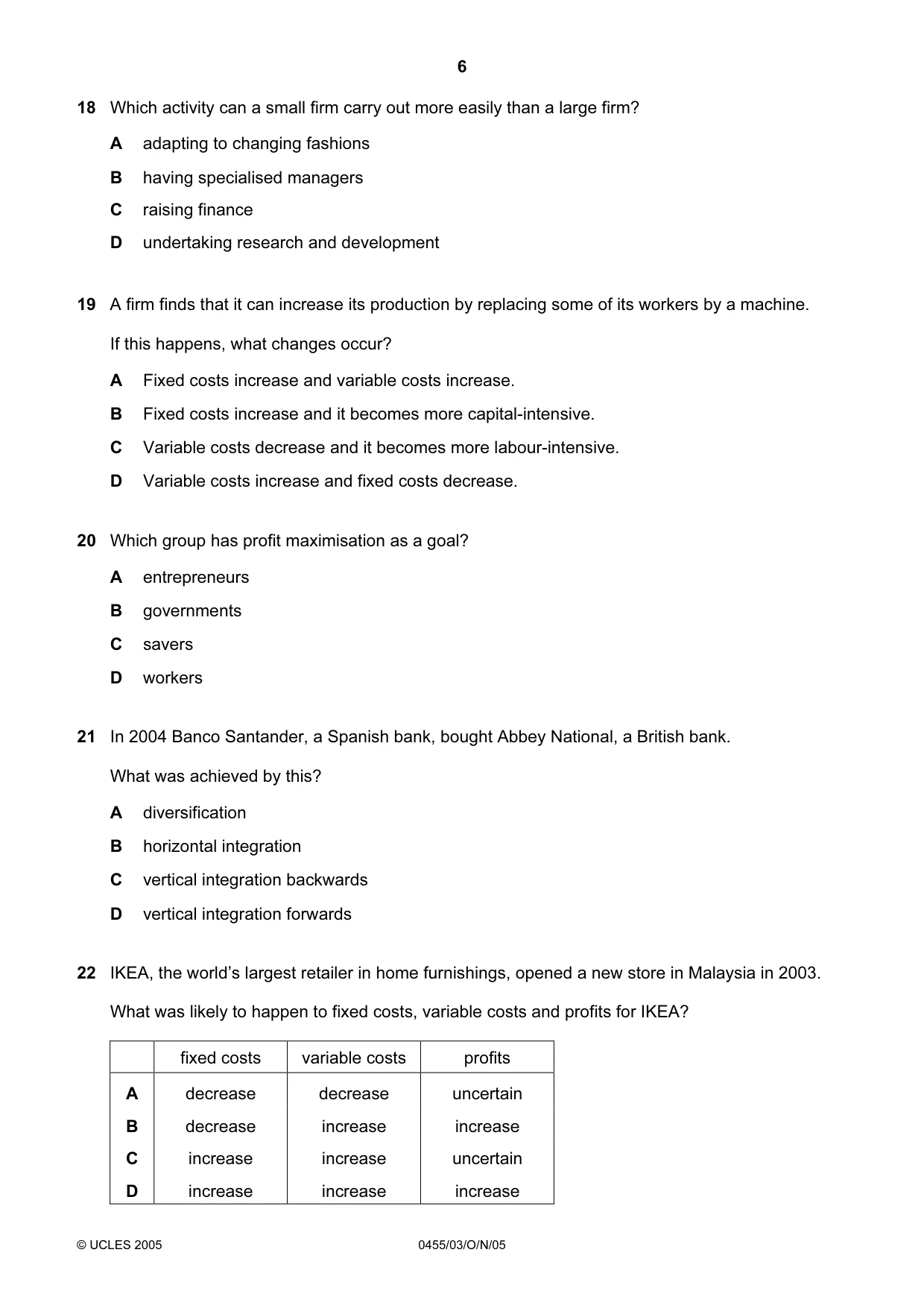
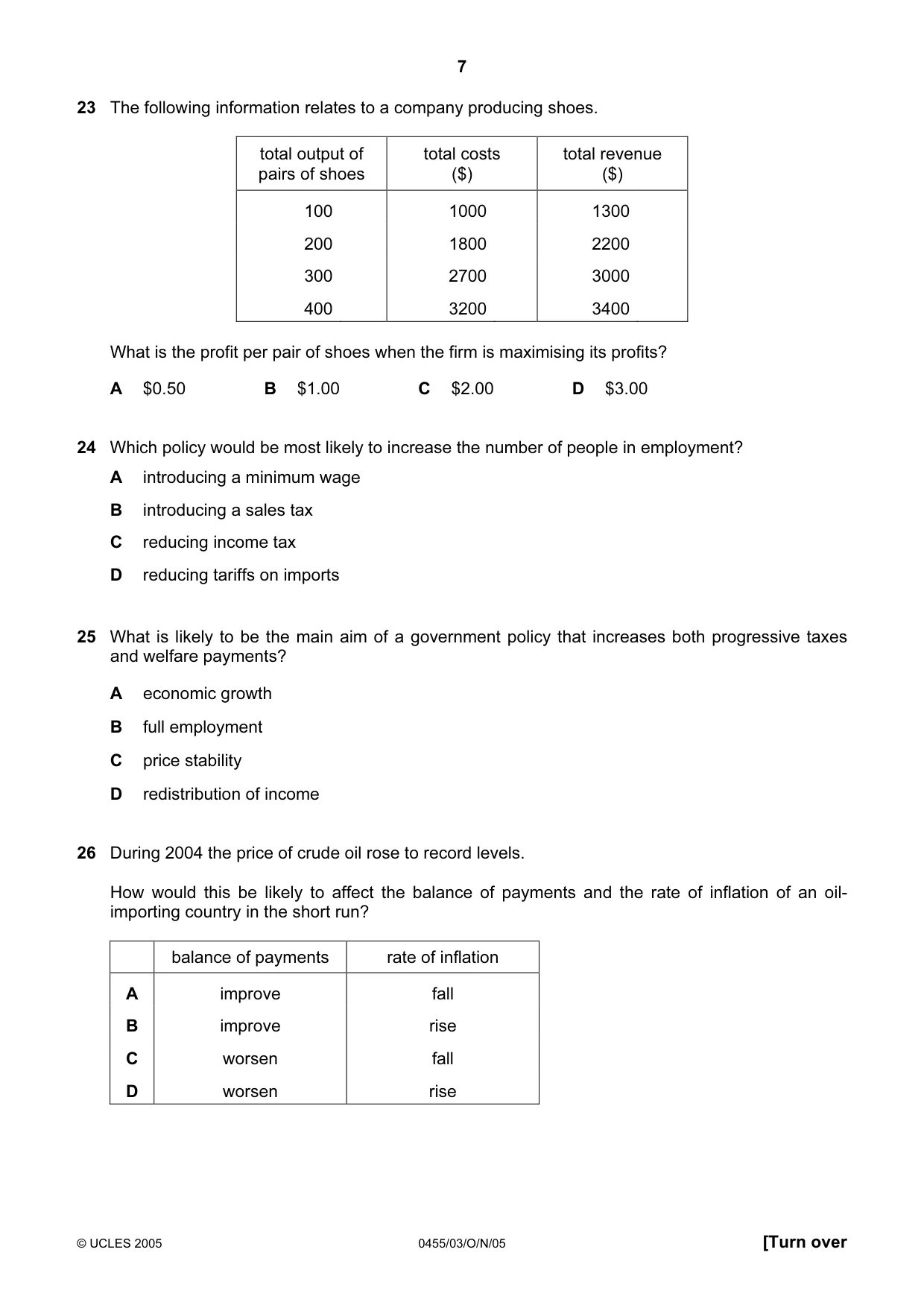
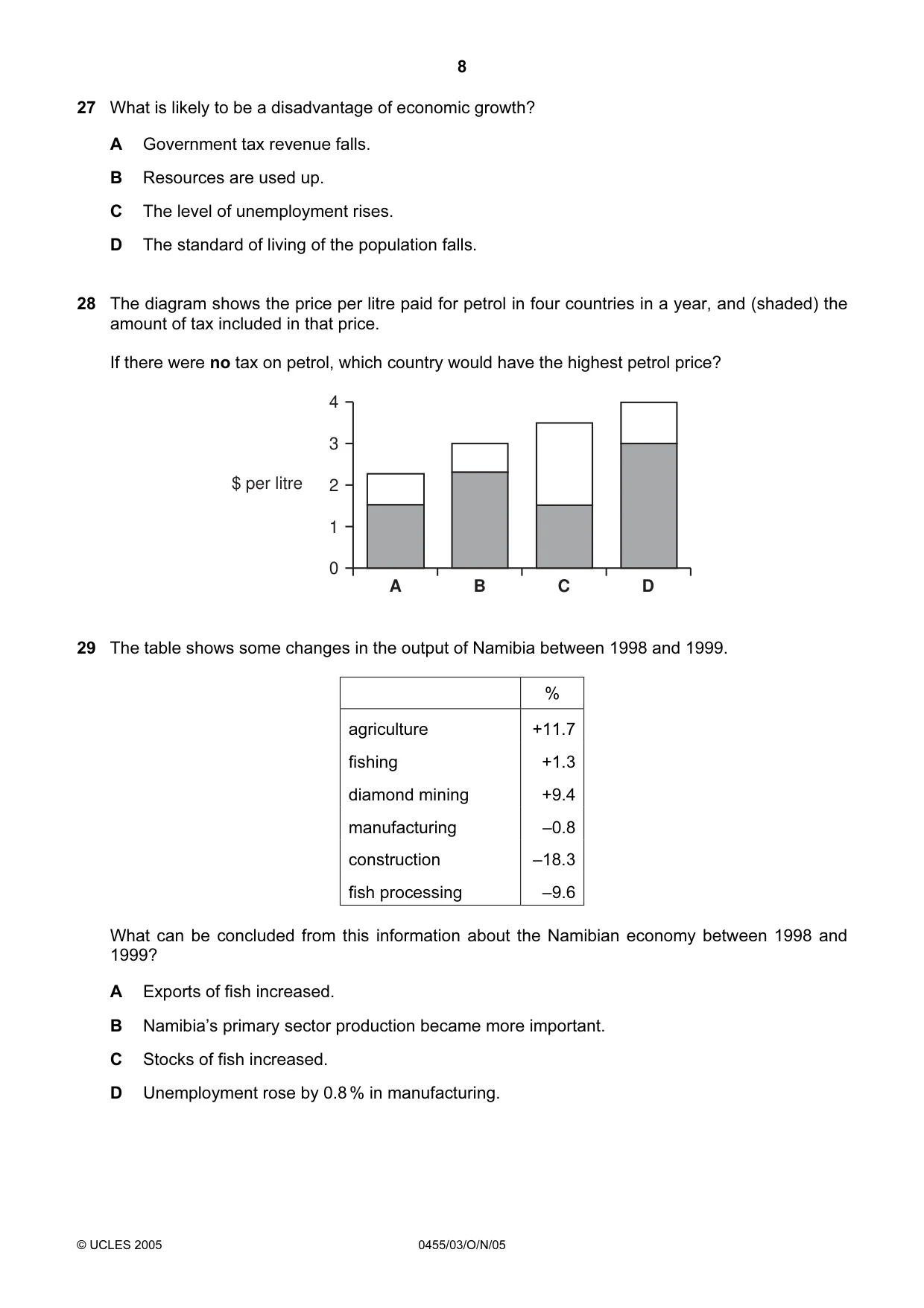
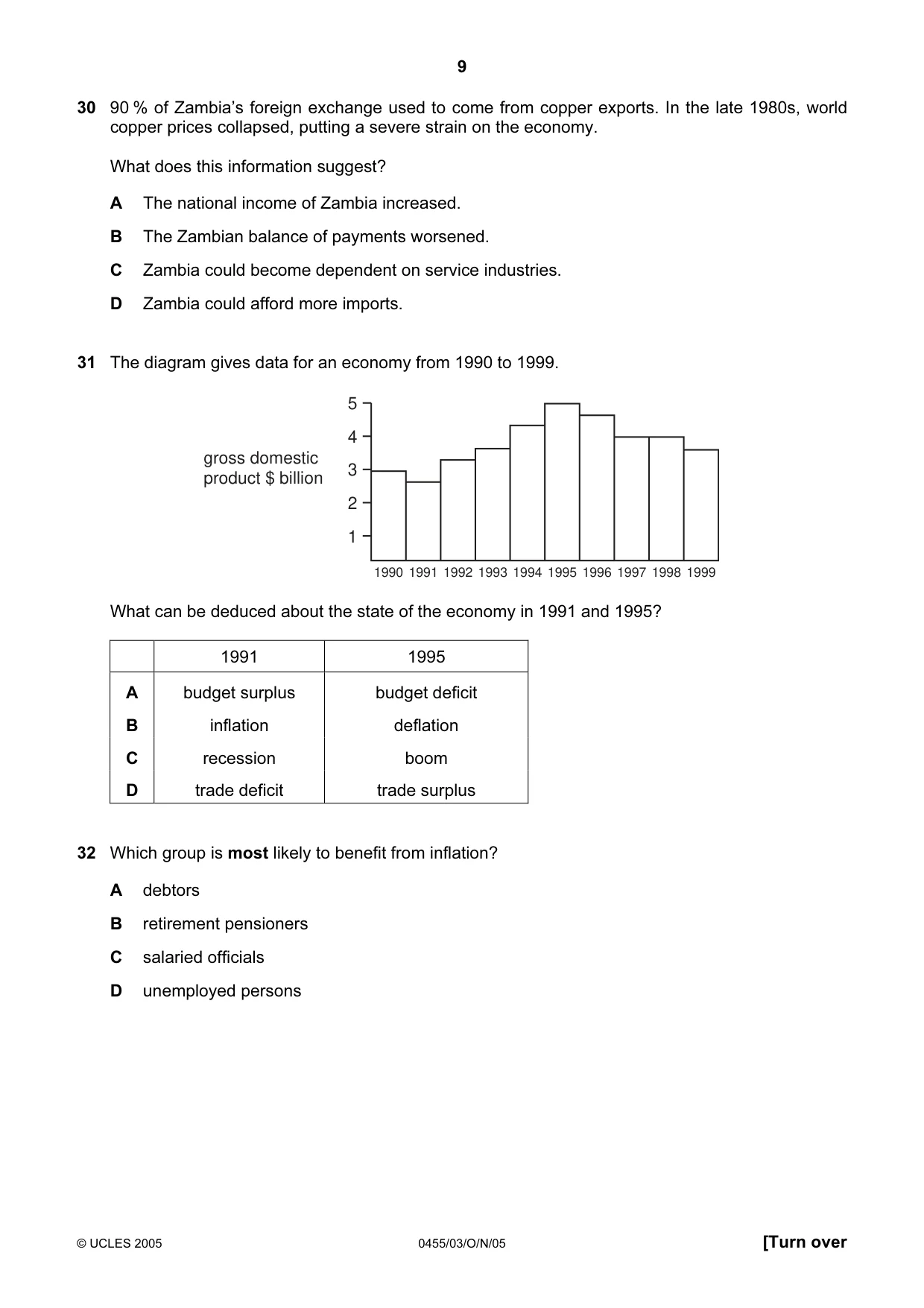
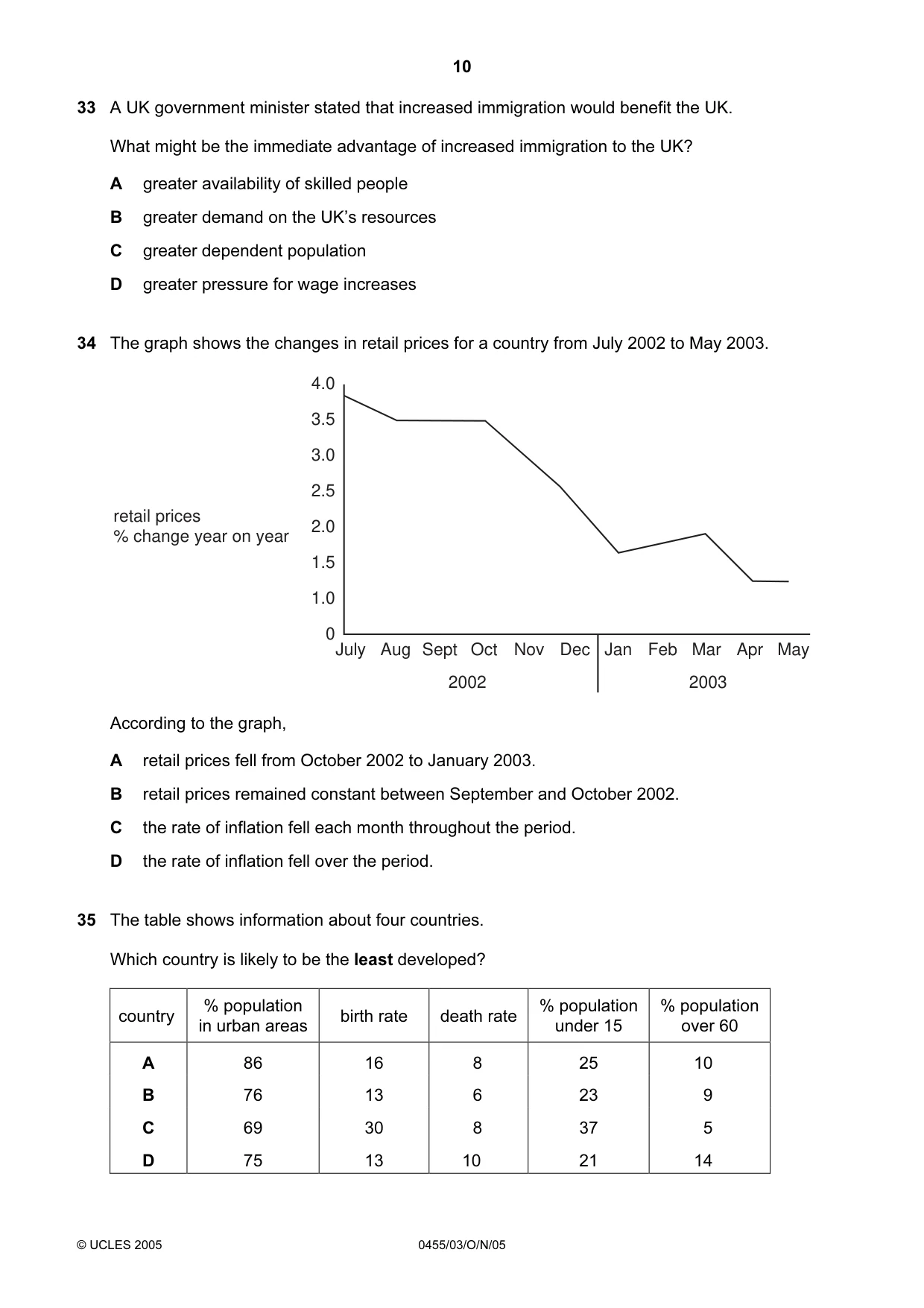
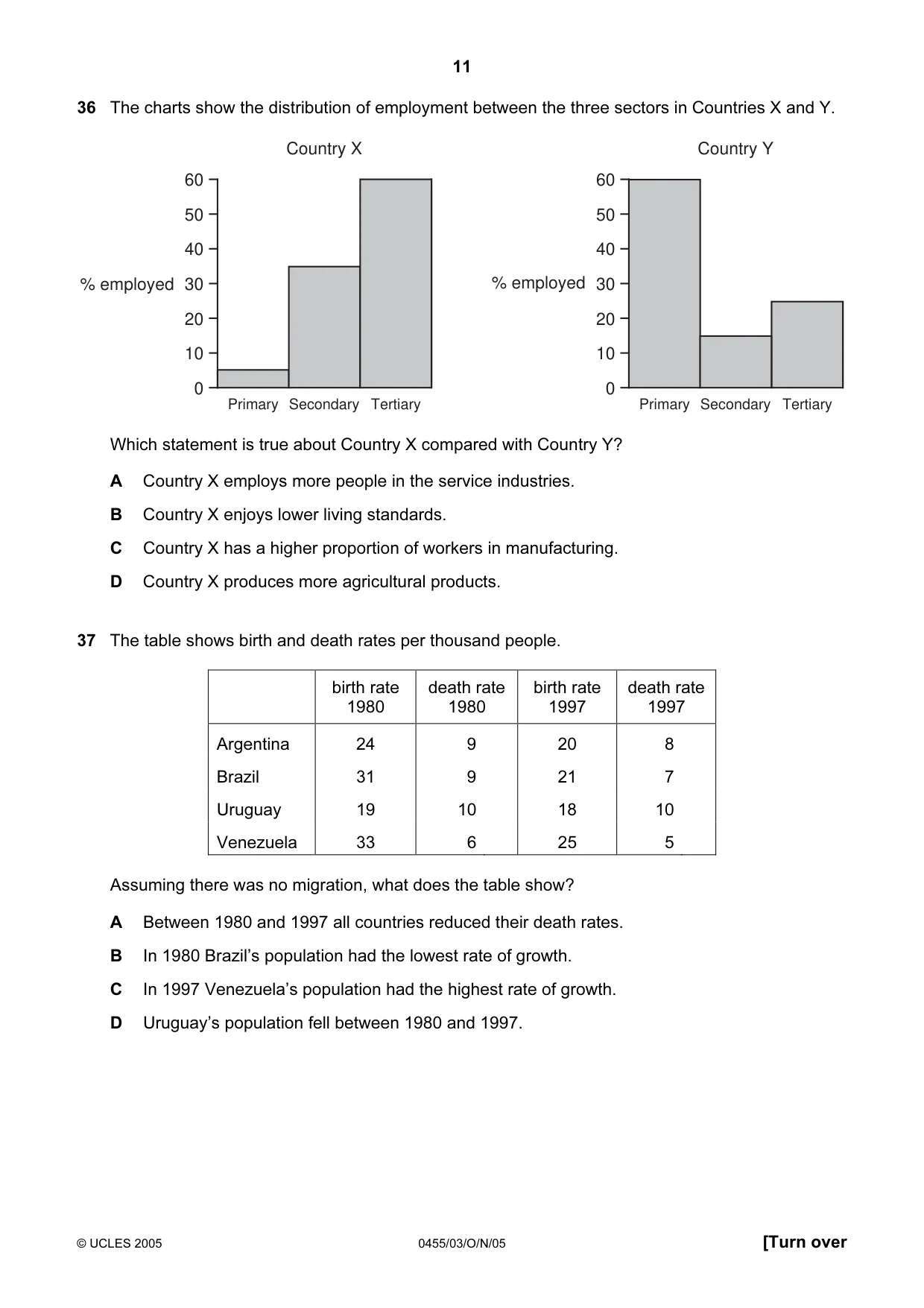
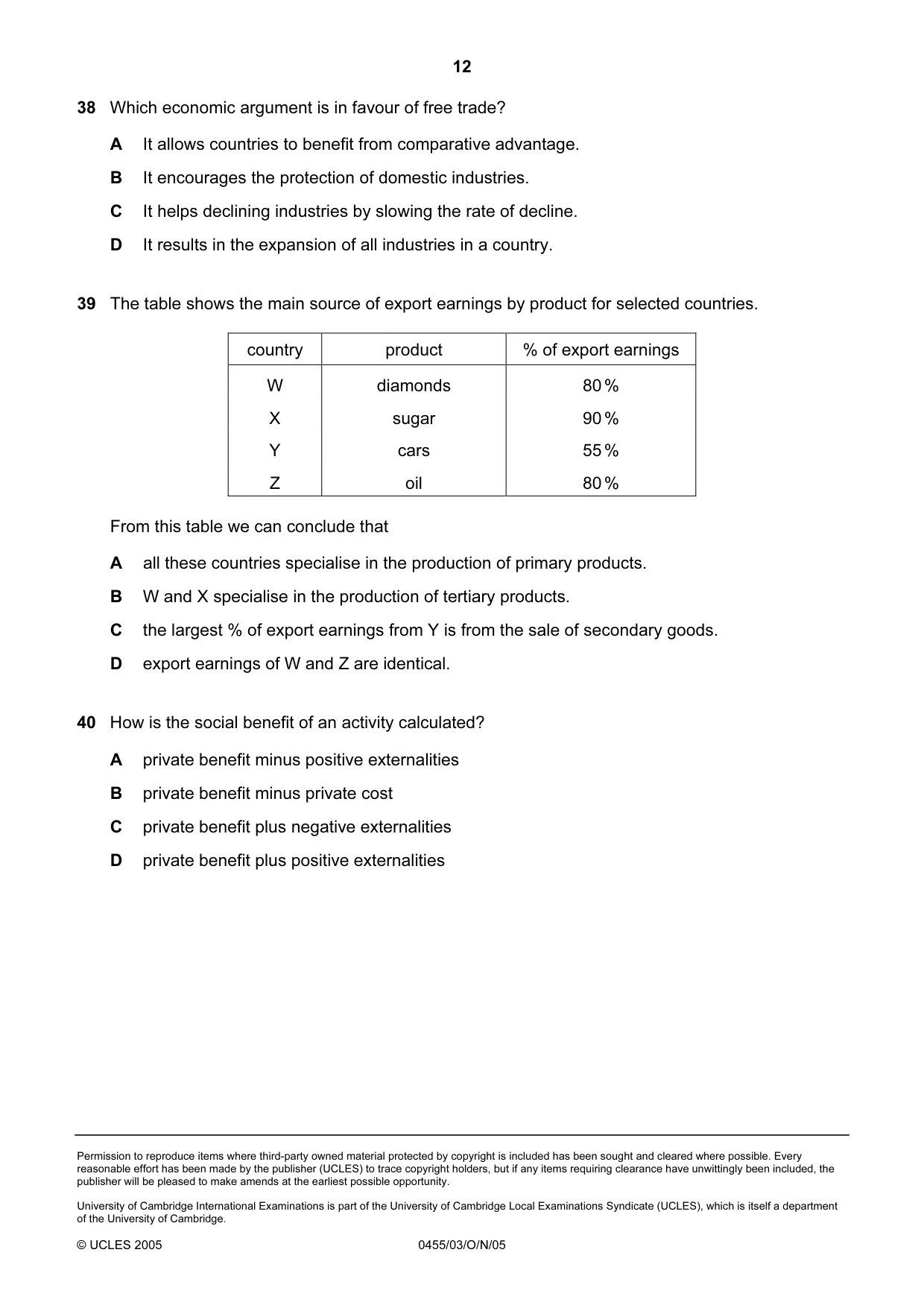
Mark scheme
No mark scheme is in the library for this paper.
Questions as text
Q1 · What is the basic economic problem facing all economies?
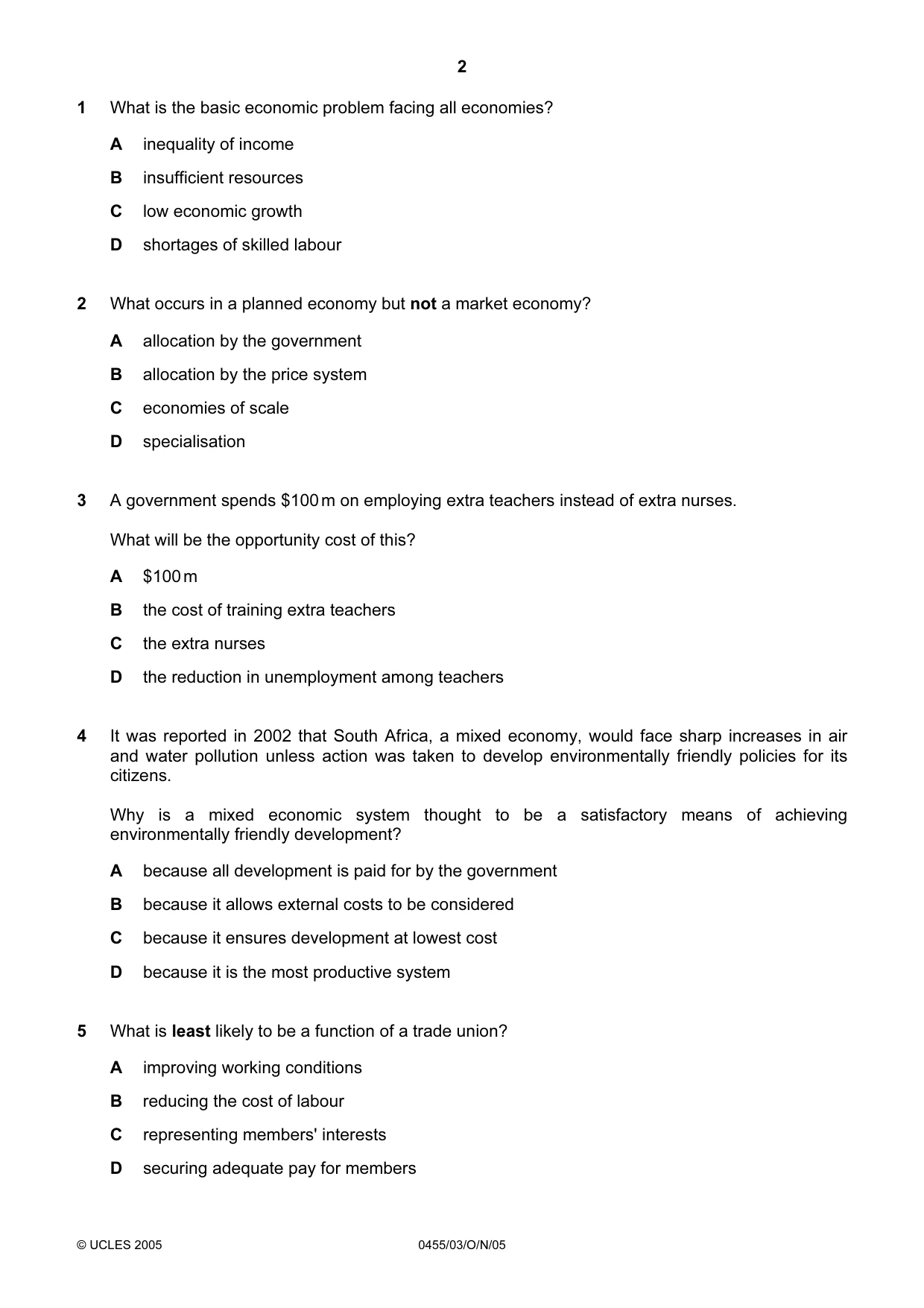
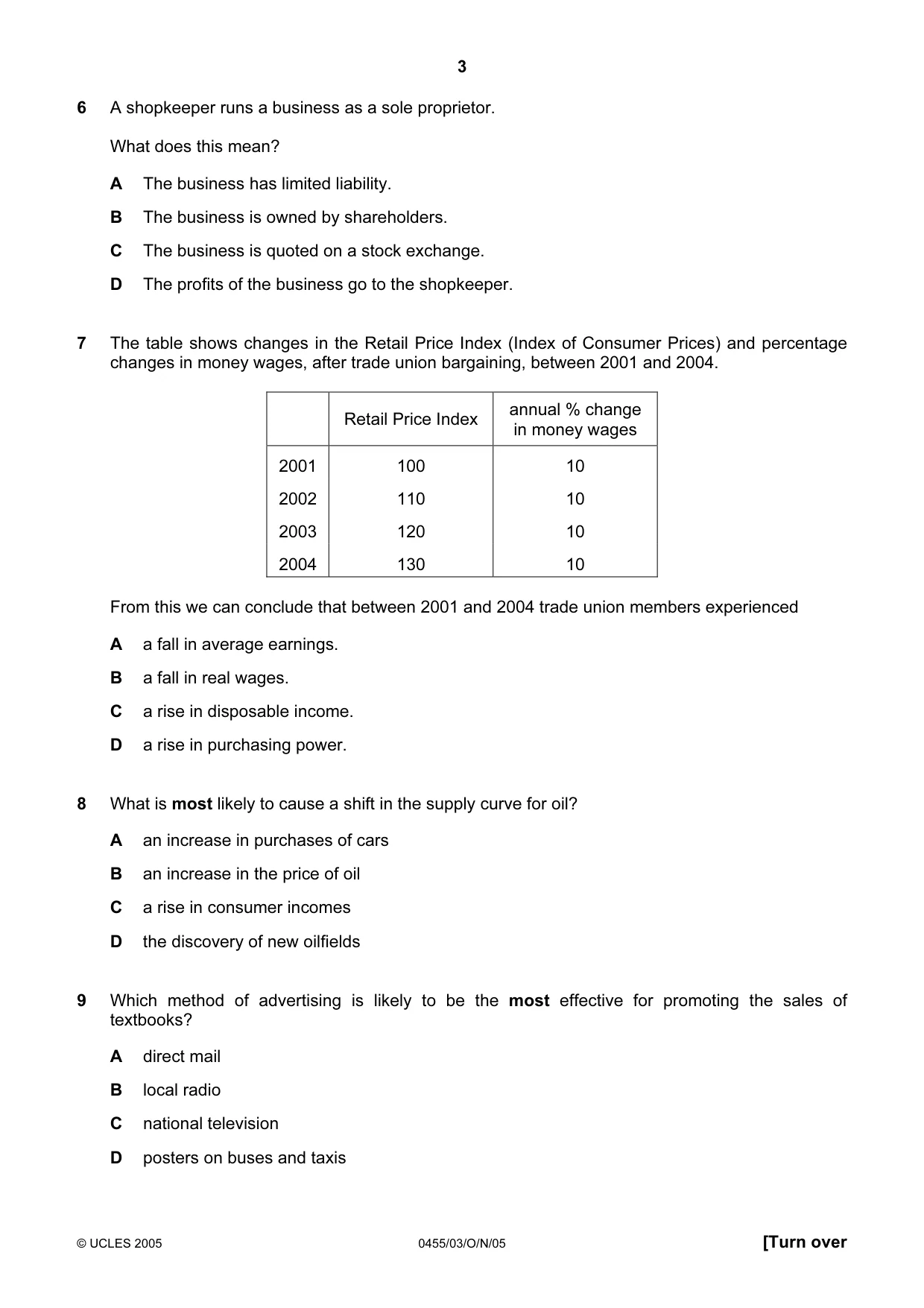
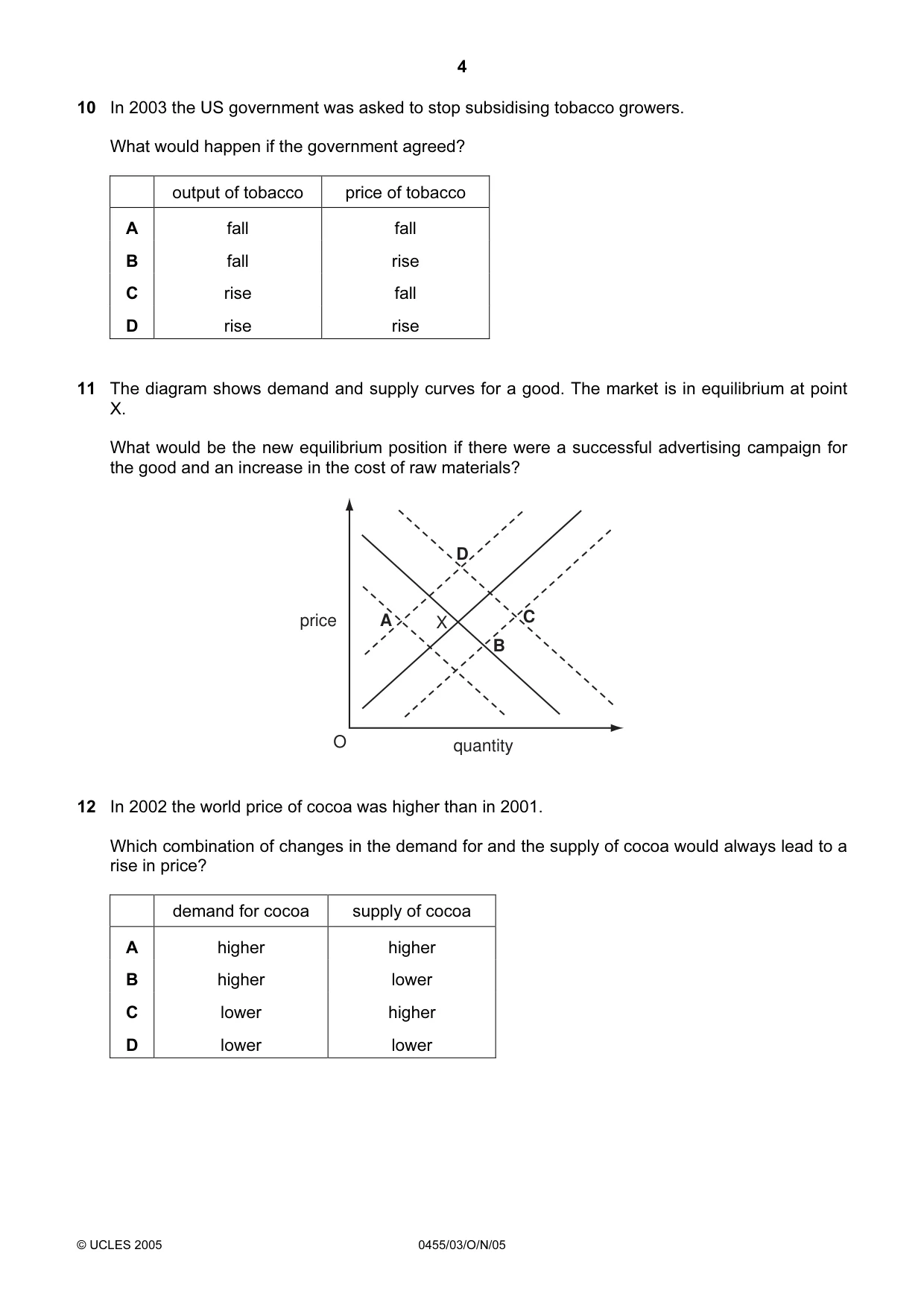
1 What is the basic economic problem facing all economies? A inequality of income B insufficient resources C low economic growth D shortages of skilled labour 2 What occurs in a planned economy but not a market economy? A allocation by the government B allocation by the price system C economies of scale D specialisation 3 A government spends $100 m on employing extra teachers instead of extra nurses. What will be the opportunity cost of this? A $100 m B the cost of training extra teachers C the extra nurses D the reduction in unemployment among teachers 4 It was reported in 2002 that South Africa, a mixed economy, would face sharp increases in air and water pollution unless action was taken to develop environmentally friendly policies for its citizens. Why is a mixed economic system thought to be a satisfactory means of achieving environmentally friendly development? A because all development is paid for by the government B because it allows external costs to be considered C because it ensures development at lowest cost D because it is the most productive system 5 What is least likely to be a function of a trade union? A improving working conditions B reducing the cost of labour C representing members' interests D securing adequate pay for members 6 A shopkeeper runs a business as a sole proprietor. What does this mean? A The business has limited liability. B The business is owned by shareholders. C The business is quoted on a stock exchange. D The profits of the business go to the shopkeeper. 7 The table shows changes in the Retail Price Index (Index of Consumer Prices) and percentage changes in money wages, after trade union bargaining, between 2001 and 2004. annual % change Retail Price Index in money wages 2001 100 10 2002 110 10 2003 120 10 2004 130 10 From this we can conclude that between 2001 and 2004 trade union members experienced A a fall in average earnings. B a fall in real wages. C a rise in disposable income. D a rise in purchasing power. 8 What is most likely to cause a shift in the supply curve for oil? A an increase in purchases of cars B an increase in the price of oil C a rise in consumer incomes D the discovery of new oilfields 9 Which method of advertising is likely to be the most effective for promoting the sales of textbooks? A direct mail B local radio C national television D posters on buses and taxis 10 In 2003 the US government was asked to stop subsidising tobacco growers. What would happen if the government agreed? output of tobacco price of tobacco A fall fall B fall rise C rise fall D rise rise 11 The diagram shows demand and supply curves for a good. The market is in equilibrium at point X. What would be the new equilibrium position if there were a successful advertising campaign for the good and an increase in the cost of raw materials? D price A X C B O quantity 12 In 2002 the world price of cocoa was higher than in 2001. Which combination of changes in the demand for and the supply of cocoa would always lead to a rise in price? demand for cocoa supply of cocoa A higher higher B higher lower C lower higher D lower lower
What was in this paper
The subtopics covered by these 1 questions, and how many questions each got. Open one in a new tab to see every Cambridge question on it.