Cambridge IGCSE Biology (9-1) 0970 — 2024 May/June Paper 3 · Variant 2
0970/32/M/J/24 · 8 questions · 80 marks · ≈90 min
The question paper and its mark scheme, free to read here and free to download. This is Cambridge’s own paper, exactly as it was sat.
Question paper16 pages

Mark scheme12 pages
Answers below. Sit the paper first if you are practising.
Questions as text
Q1 · State the word equation for photosynthesis
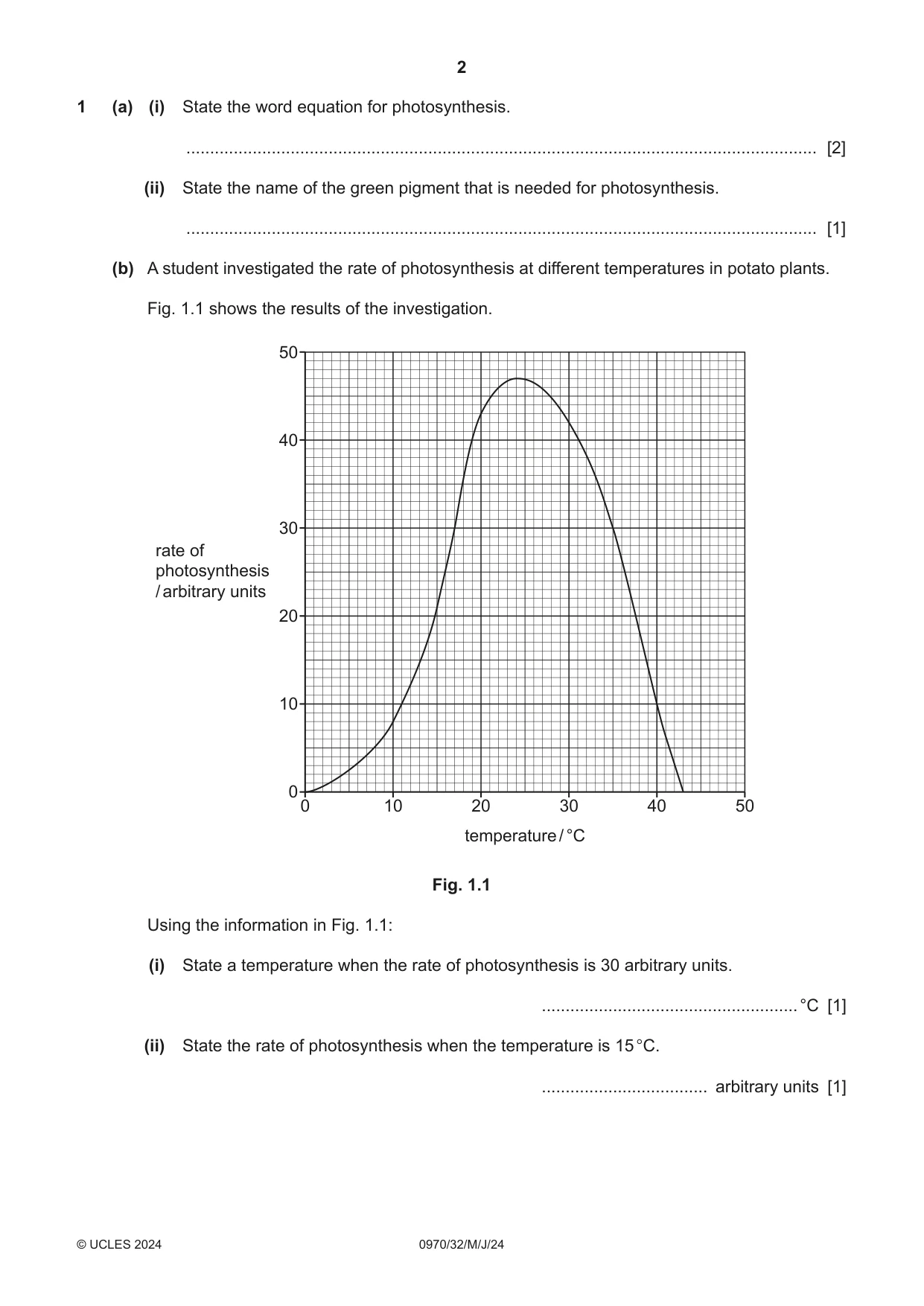
1 (a) (i) State the word equation for photosynthesis. ..................................................................................................................................... [2] (ii) State the name of the green pigment that is needed for photosynthesis. ..................................................................................................................................... [1] (b) A student investigated the rate of photosynthesis at different temperatures in potato plants. Fig. 1.1 shows the results of the investigation. 50 40 30 rate of photosynthesis / arbitrary units 20 10 0 0 10 20 30 40 50 temperature / °C Fig. 1.1 Using the information in Fig. 1.1: (i) State a temperature when the rate of photosynthesis is 30 arbitrary units. ...................................................... °C [1] (ii) State the rate of photosynthesis when the temperature is 15 °C. ................................... arbitrary units [1] (iii) Describe the effect of increasing temperature on the rate of photosynthesis in potato plants. ........................................................................................................................................... ........................................................................................................................................... ........................................................................................................................................... ........................................................................................................................................... ..................................................................................................................................... [2] (c) (i) Potato cells contain starch. State one use of starch in potato cells. ..................................................................................................................................... [1] (ii) Starch is a large molecule made from many glucose molecules. State the name of one other carbohydrate that is found in plants and is made from glucose molecules. ..................................................................................................................................... [1] (iii) Glucose can be combined with ions to make amino acids in plants. State the name of the ions needed to make amino acids. ..................................................................................................................................... [1] (d) Photosynthesis is one process of the carbon cycle. State two other processes of the carbon cycle. 1 ................................................................................................................................................ 2 ................................................................................................................................................ [2] [Total: 12]
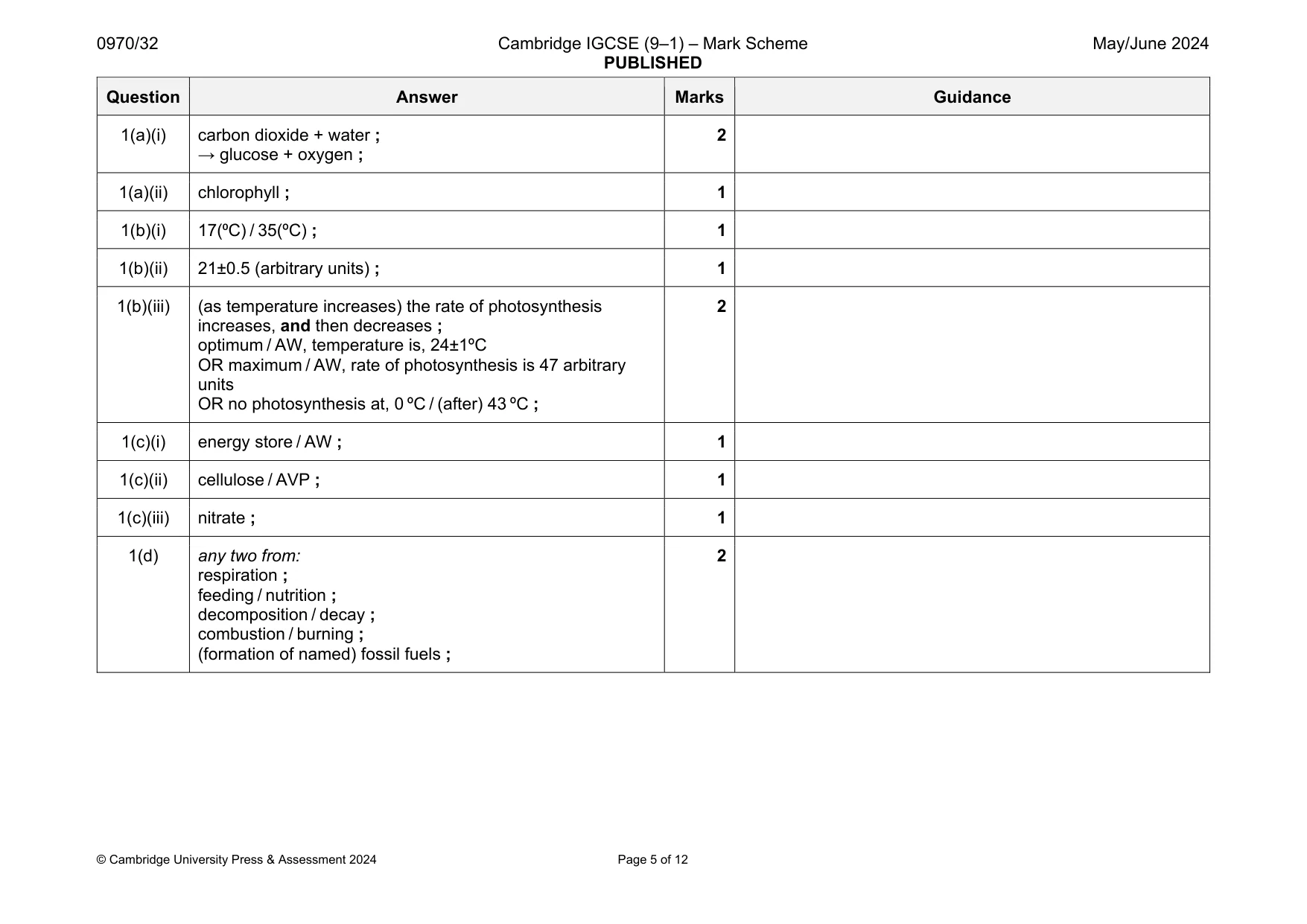
Mark scheme: 1(a)(i) carbon dioxide + water ; → glucose + oxygen ; 2 1(a)(ii) chlorophyll ; 1 1(b)(i) 17(⁰C) / 35(ºC) ; 1 1(b)(ii) 21±0.5 (arbitrary units) ; 1 1(b)(iii) (as temperature increases) the rate of photosynthesis increases, and then decreases ; optimum / AW, temperature is, 24±1ºC OR maximum / AW, rate of photosynthesis is 47 arbitrary units OR no photosynthesis at, 0 ºC / (after) 43 ºC ; 2 1(c)(i) energy store / AW ; 1 1(c)(ii) cellulose / AVP ; 1 1(c)(iii) nitrate ; 1 1(d) any two from: respiration ; feeding / nutrition ; decomposition / decay ; combustion / burning ; (formation of named) fossil fuels ; 2
Q2 · Physical digestion by teeth breaks down food into smaller pieces
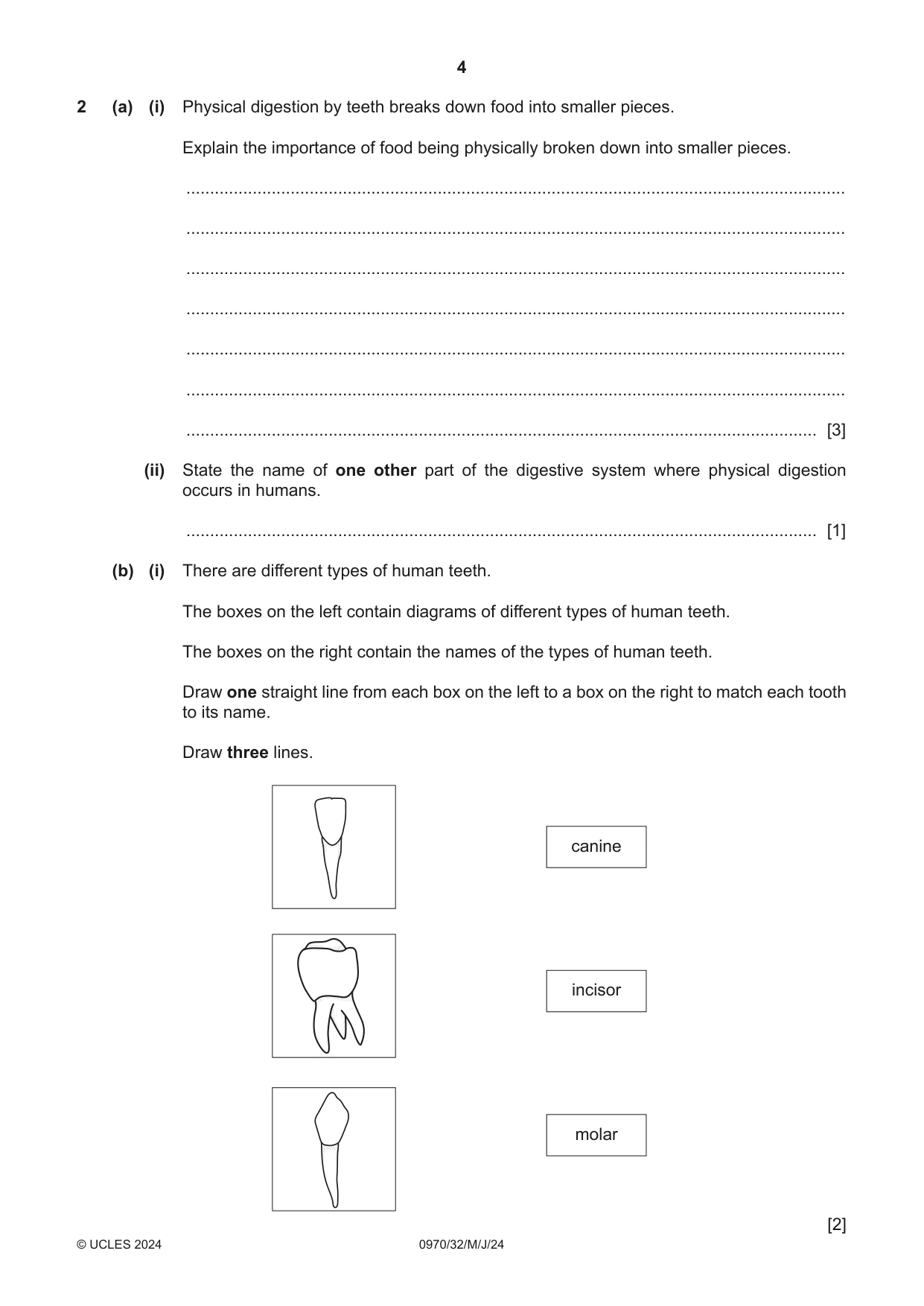
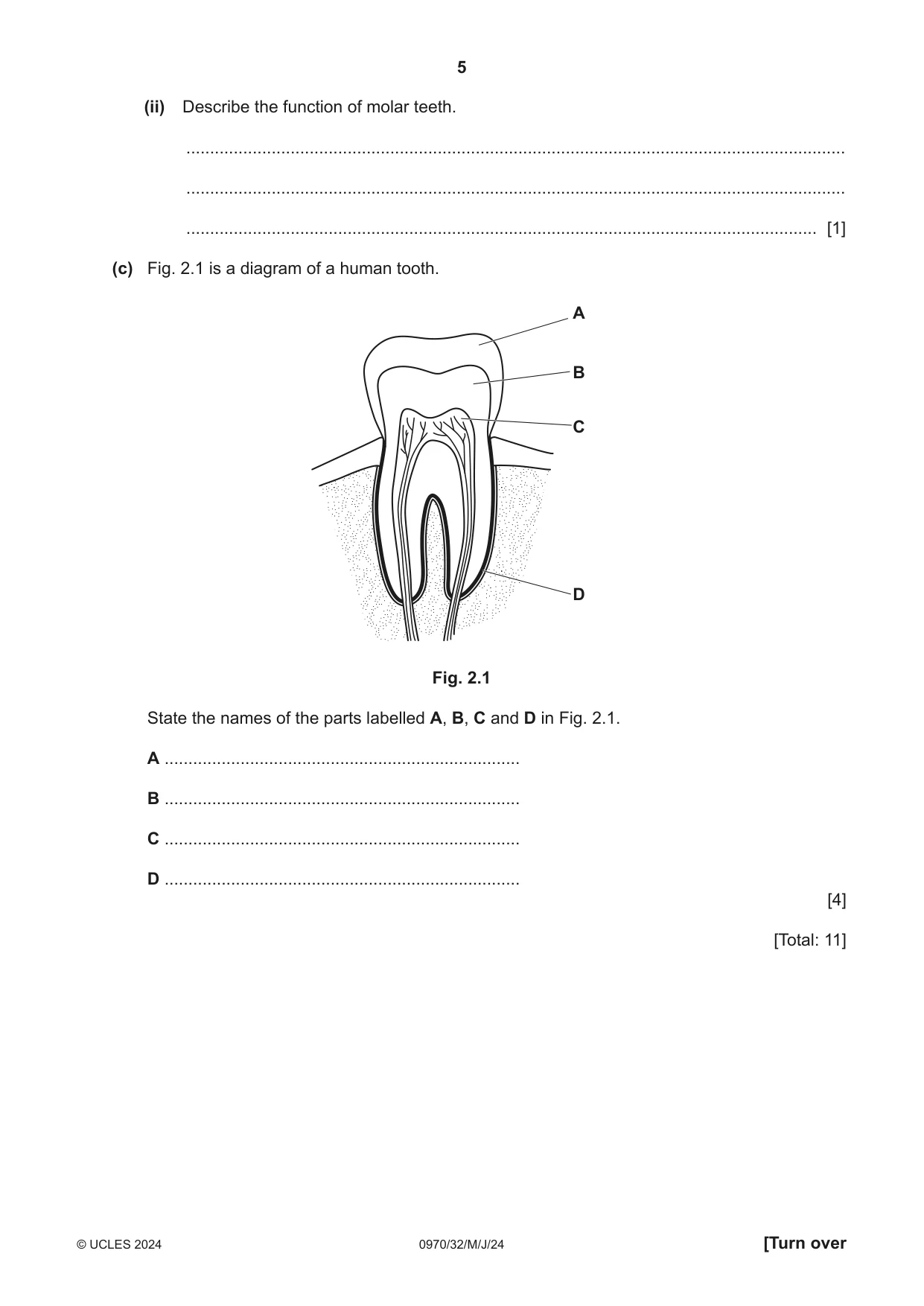
2 (a) (i) Physical digestion by teeth breaks down food into smaller pieces. Explain the importance of food being physically broken down into smaller pieces. ........................................................................................................................................... ........................................................................................................................................... ........................................................................................................................................... ........................................................................................................................................... ........................................................................................................................................... ........................................................................................................................................... ..................................................................................................................................... [3] (ii) State the name of one other part of the digestive system where physical digestion occurs in humans. ..................................................................................................................................... [1] (b) (i) There are different types of human teeth. The boxes on the left contain diagrams of different types of human teeth. The boxes on the right contain the names of the types of human teeth. Draw one straight line from each box on the left to a box on the right to match each tooth to its name. Draw three lines. canine incisor molar [2] (ii) Describe the function of molar teeth. ........................................................................................................................................... ........................................................................................................................................... ..................................................................................................................................... [1] (c) Fig. 2.1 is a diagram of a human tooth. A B C D Fig. 2.1 State the names of the parts labelled A, B, C and D in Fig. 2.1. A ........................................................................... B ........................................................................... C ........................................................................... D ........................................................................... [4] [Total: 11]
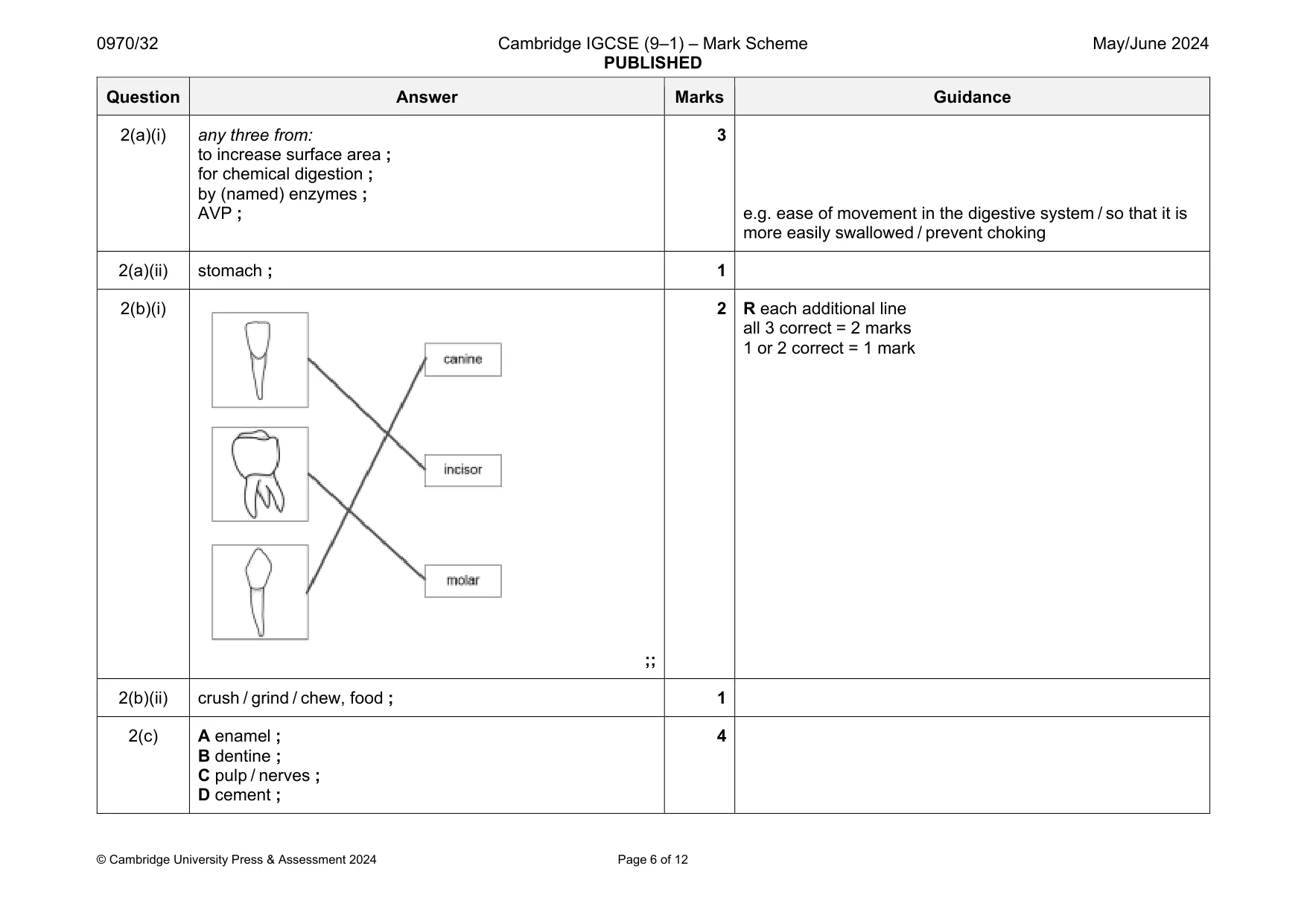
Mark scheme: 2(a)(i) any three from: to increase surface area ; for chemical digestion ; by (named) enzymes ; AVP ; 3 e.g. ease of movement in the digestive system / so that it is more easily swallowed / prevent choking 2(a)(ii) stomach ; 1 2(b)(i) ;; 2 R each additional line all 3 correct = 2 marks 1 or 2 correct = 1 mark 2(b)(ii) crush / grind / chew, food ; 1 2(c) A enamel ; B dentine ; C pulp / nerves ; D cement ; 4
Q3 · A photomicrograph of a section through the stem of a plant
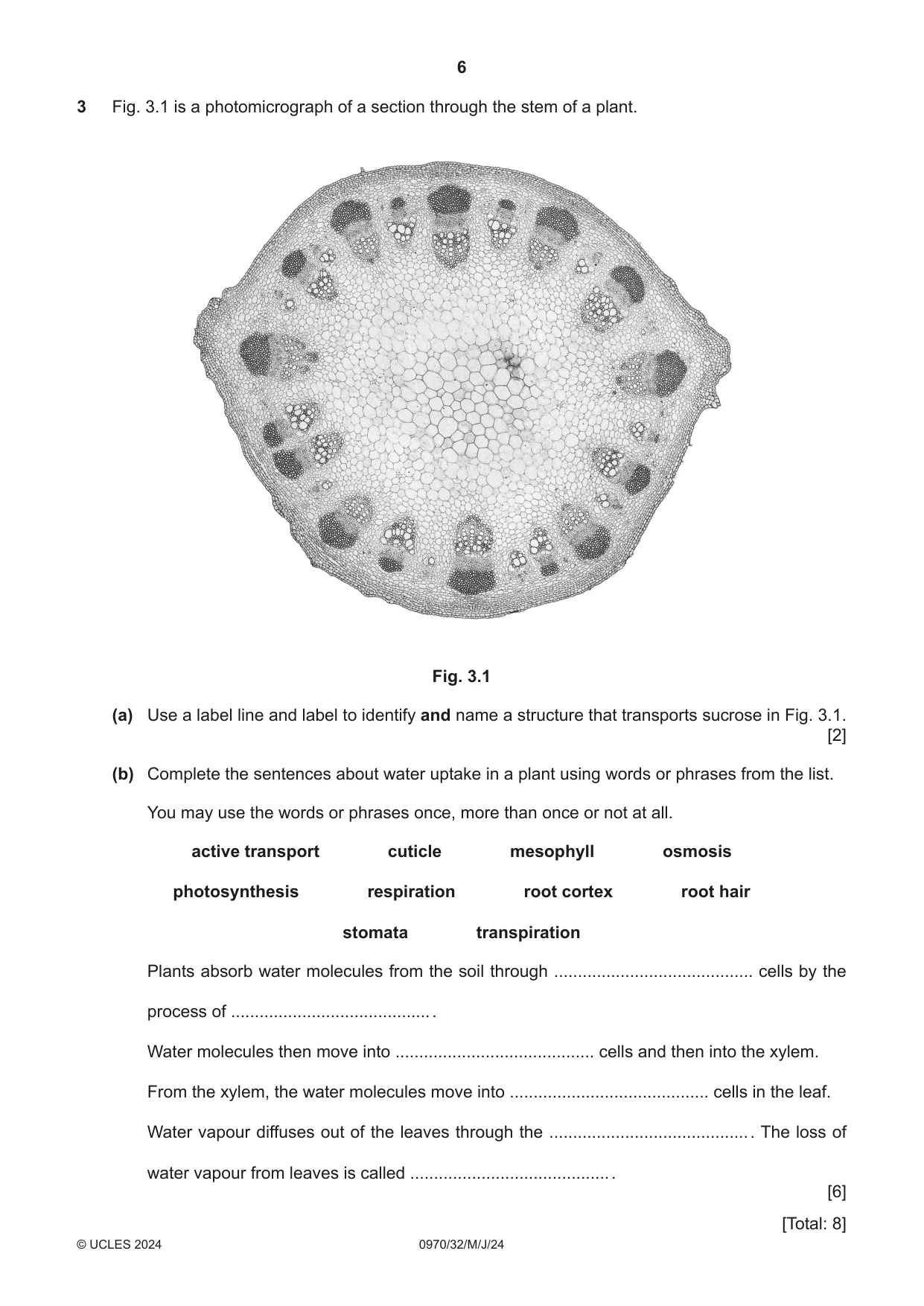
3 Fig. 3.1 is a photomicrograph of a section through the stem of a plant. Fig. 3.1 (a) Use a label line and label to identify and name a structure that transports sucrose in Fig. 3.1. [2] (b) Complete the sentences about water uptake in a plant using words or phrases from the list. You may use the words or phrases once, more than once or not at all. active transport cuticle mesophyll osmosis photosynthesis respiration root cortex root hair stomata transpiration Plants absorb water molecules from the soil through .......................................... cells by the process of .......................................... . Water molecules then move into .......................................... cells and then into the xylem. From the xylem, the water molecules move into .......................................... cells in the leaf. Water vapour diffuses out of the leaves through the .......................................... . The loss of water vapour from leaves is called .......................................... . [6] [Total: 8]
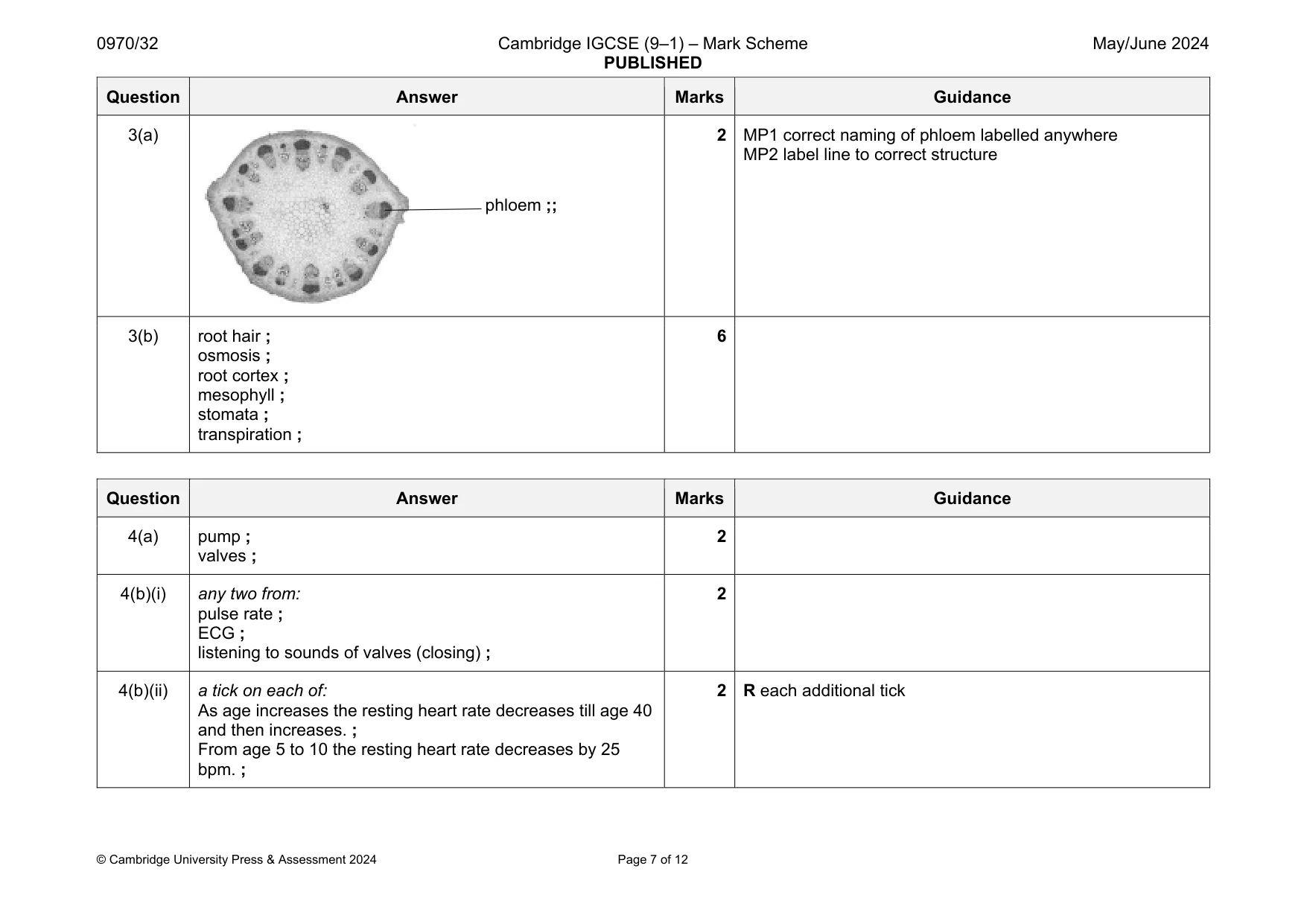
Mark scheme: 3(a) 2 MP1 correct naming of phloem labelled anywhere MP2 label line to correct structure 3(b) root hair ; osmosis ; root cortex ; mesophyll ; stomata ; transpiration ; 6 phloem ;;
Q4 · Complete the description of the human circulatory system
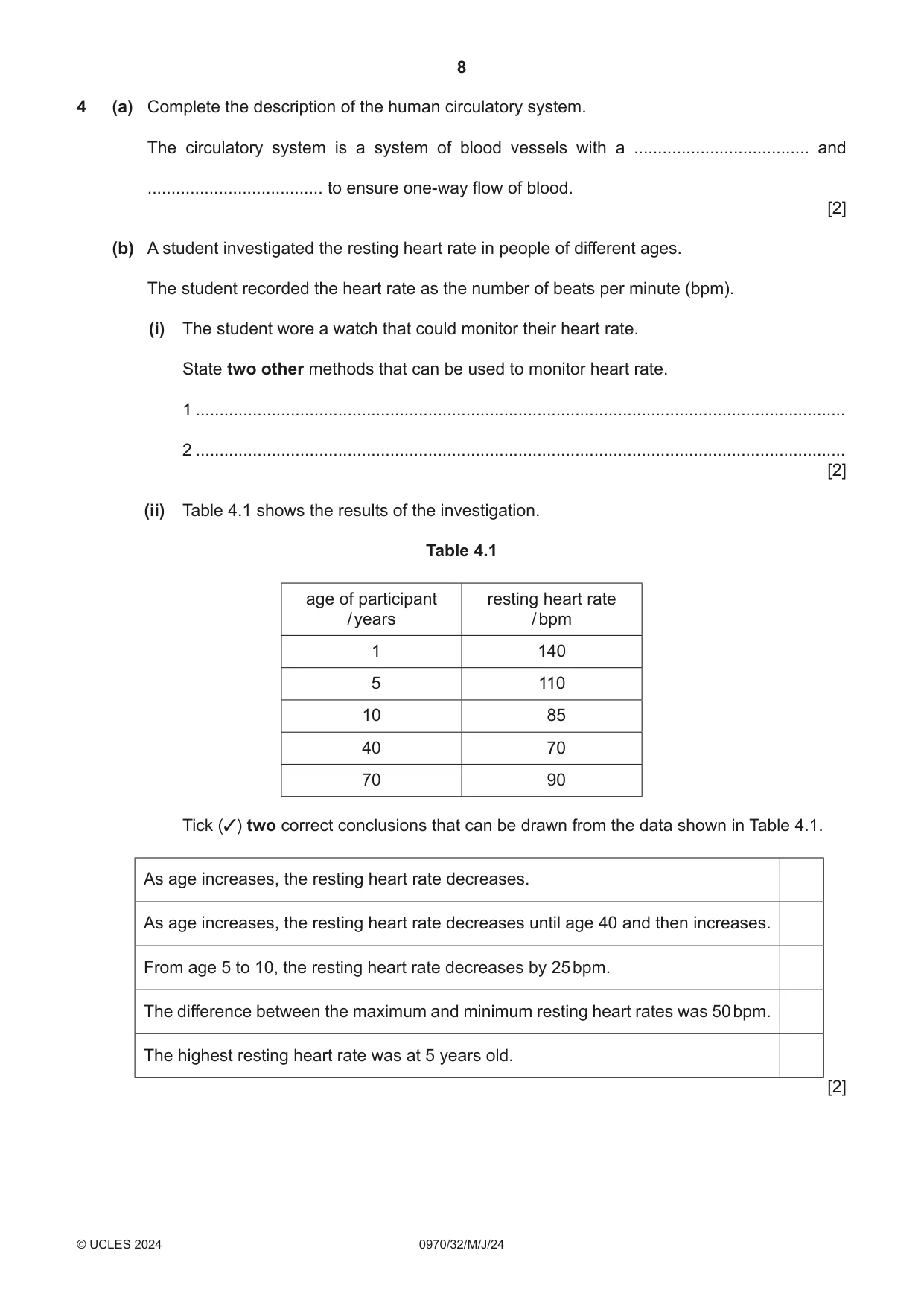
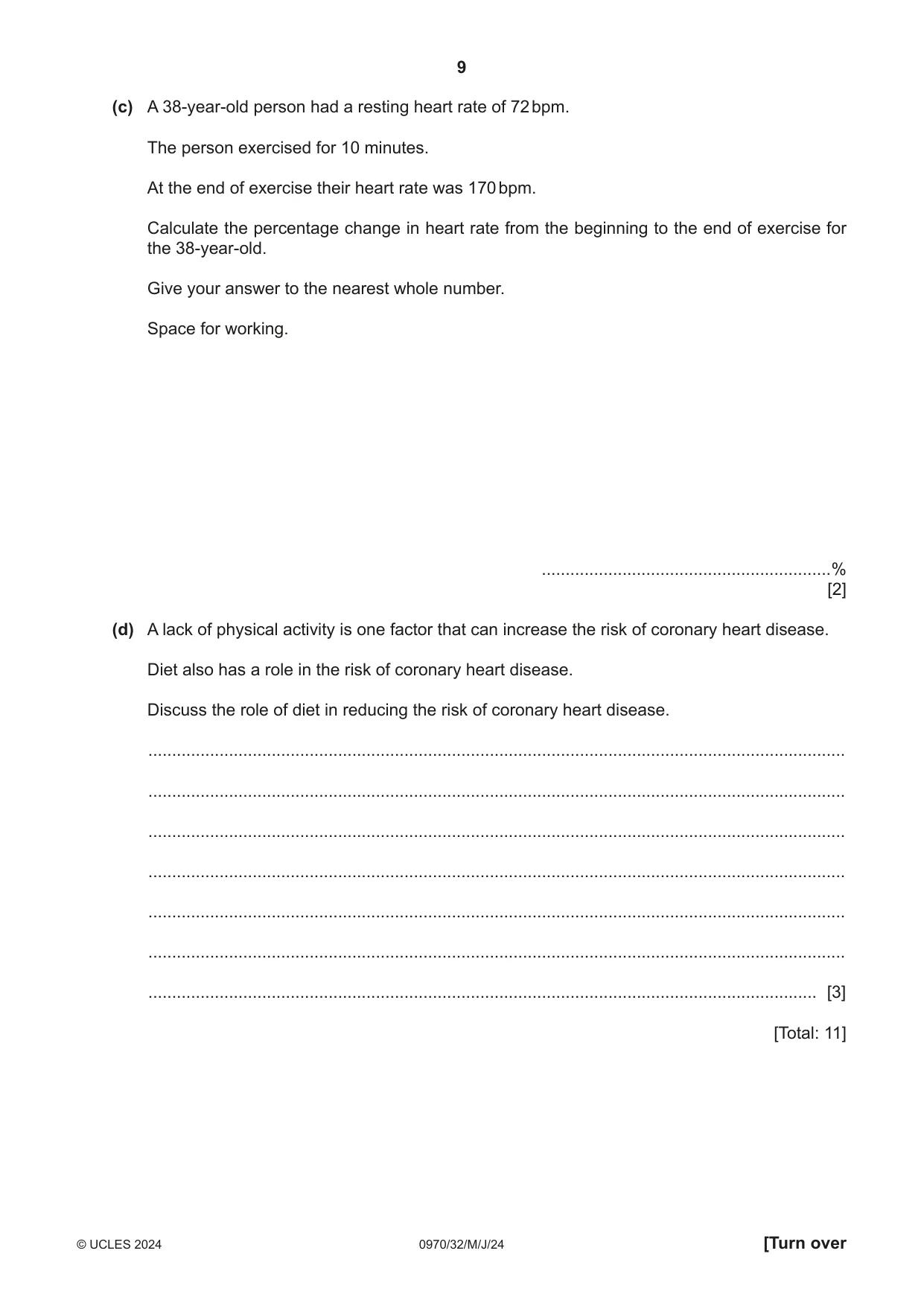
4 (a) Complete the description of the human circulatory system. The circulatory system is a system of blood vessels with a ..................................... and ..................................... to ensure one‑way flow of blood. [2] (b) A student investigated the resting heart rate in people of different ages. The student recorded the heart rate as the number of beats per minute (bpm). (i) The student wore a watch that could monitor their heart rate. State two other methods that can be used to monitor heart rate. 1 ......................................................................................................................................... 2 ......................................................................................................................................... [2] (ii) Table 4.1 shows the results of the investigation. Table 4.1 age of participant resting heart rate / years / bpm 1 140 5 110 10 85 40 70 70 90 Tick (✓) two correct conclusions that can be drawn from the data shown in Table 4.1. As age increases, the resting heart rate decreases. As age increases, the resting heart rate decreases until age 40 and then increases. From age 5 to 10, the resting heart rate decreases by 25 bpm. The difference between the maximum and minimum resting heart rates was 50 bpm. The highest resting heart rate was at 5 years old. [2] (c) A 38‑year‑old person had a resting heart rate of 72 bpm. The person exercised for 10 minutes. At the end of exercise their heart rate was 170 bpm. Calculate the percentage change in heart rate from the beginning to the end of exercise for the 38‑year‑old. Give your answer to the nearest whole number. Space for working. .............................................................% [2] (d) A lack of physical activity is one factor that can increase the risk of coronary heart disease. Diet also has a role in the risk of coronary heart disease. Discuss the role of diet in reducing the risk of coronary heart disease. ................................................................................................................................................... ................................................................................................................................................... ................................................................................................................................................... ................................................................................................................................................... ................................................................................................................................................... ................................................................................................................................................... ............................................................................................................................................. [3] [Total: 11]
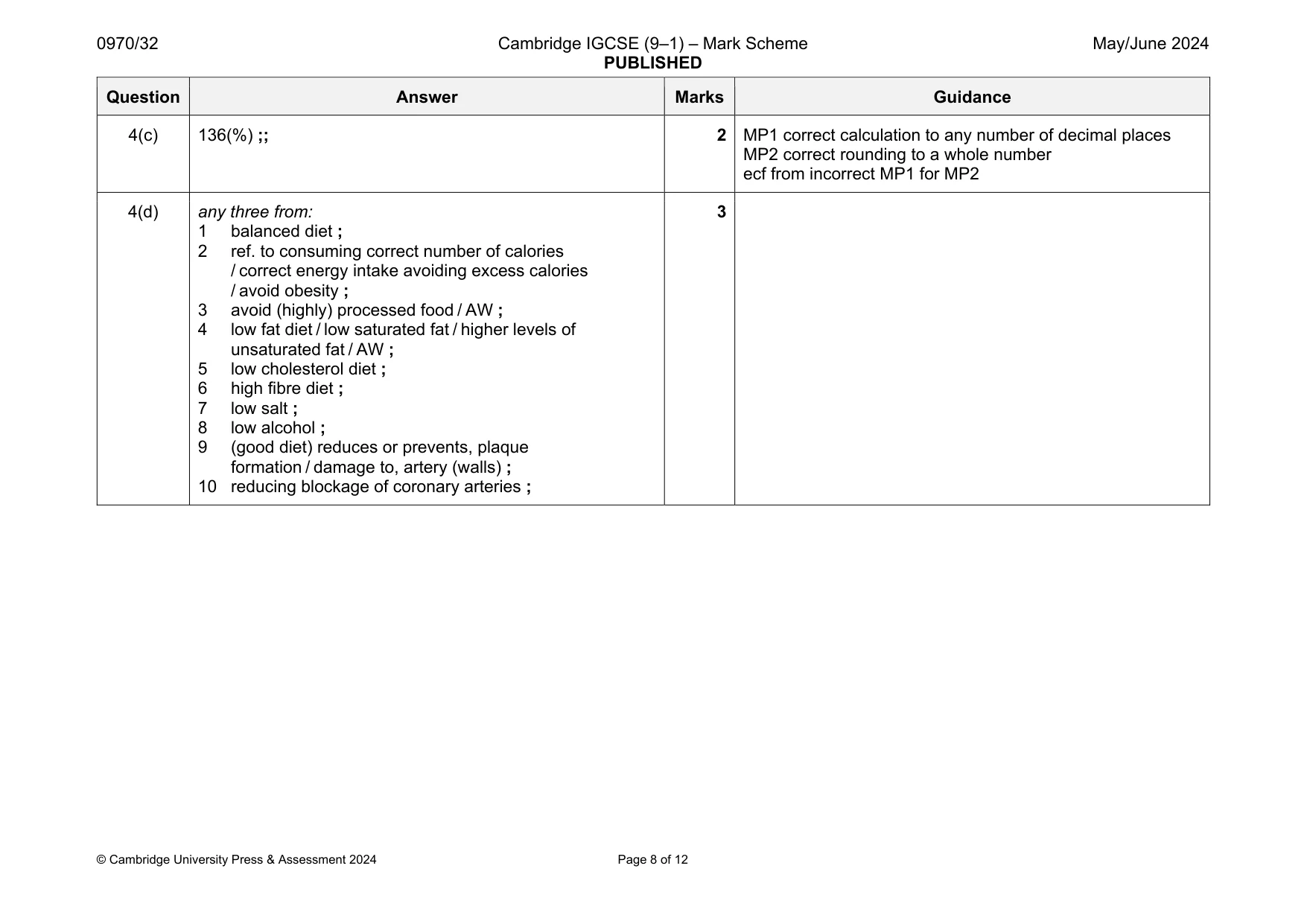
Mark scheme: 4(a) pump ; valves ; 2 4(b)(i) any two from: pulse rate ; ECG ; listening to sounds of valves (closing) ; 2 4(b)(ii) a tick on each of: As age increases the resting heart rate decreases till age 40 and then increases. ; From age 5 to 10 the resting heart rate decreases by 25 bpm. ; 2 R each additional tick Question Answer Marks Guidance 4(c) 136(%) ;; 2 MP1 correct calculation to any number of decimal places MP2 correct rounding to a whole number ecf from incorrect MP1 for MP2 4(d) any three from: 1 balanced diet ; 2 ref. to consuming correct number of calories / correct energy intake avoiding excess calories / avoid obesity ; 3 avoid (highly) processed food / AW ; 4 low fat diet / low saturated fat / higher levels of unsaturated fat / AW ; 5 low cholesterol diet ; 6 high fibre diet ; 7 low salt ; 8 low alcohol ; 9 (good diet) reduces or prevents, plaque formation / damage to, artery (walls) ; 10 reducing blockage of coronary arteries ; 3
Q5 · The melanin gene in humans codes for a pigment produced in the skin, hair and eyes
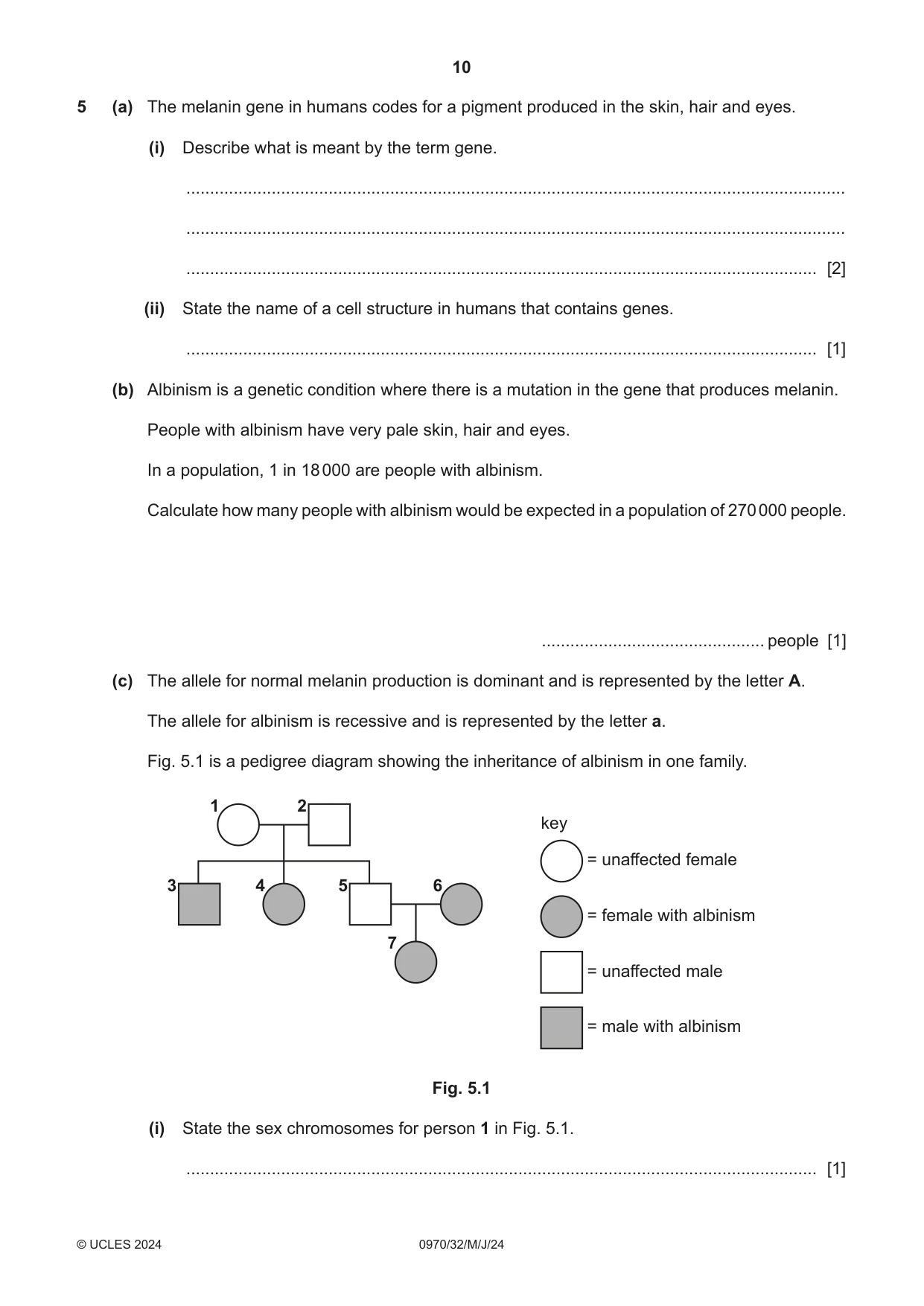
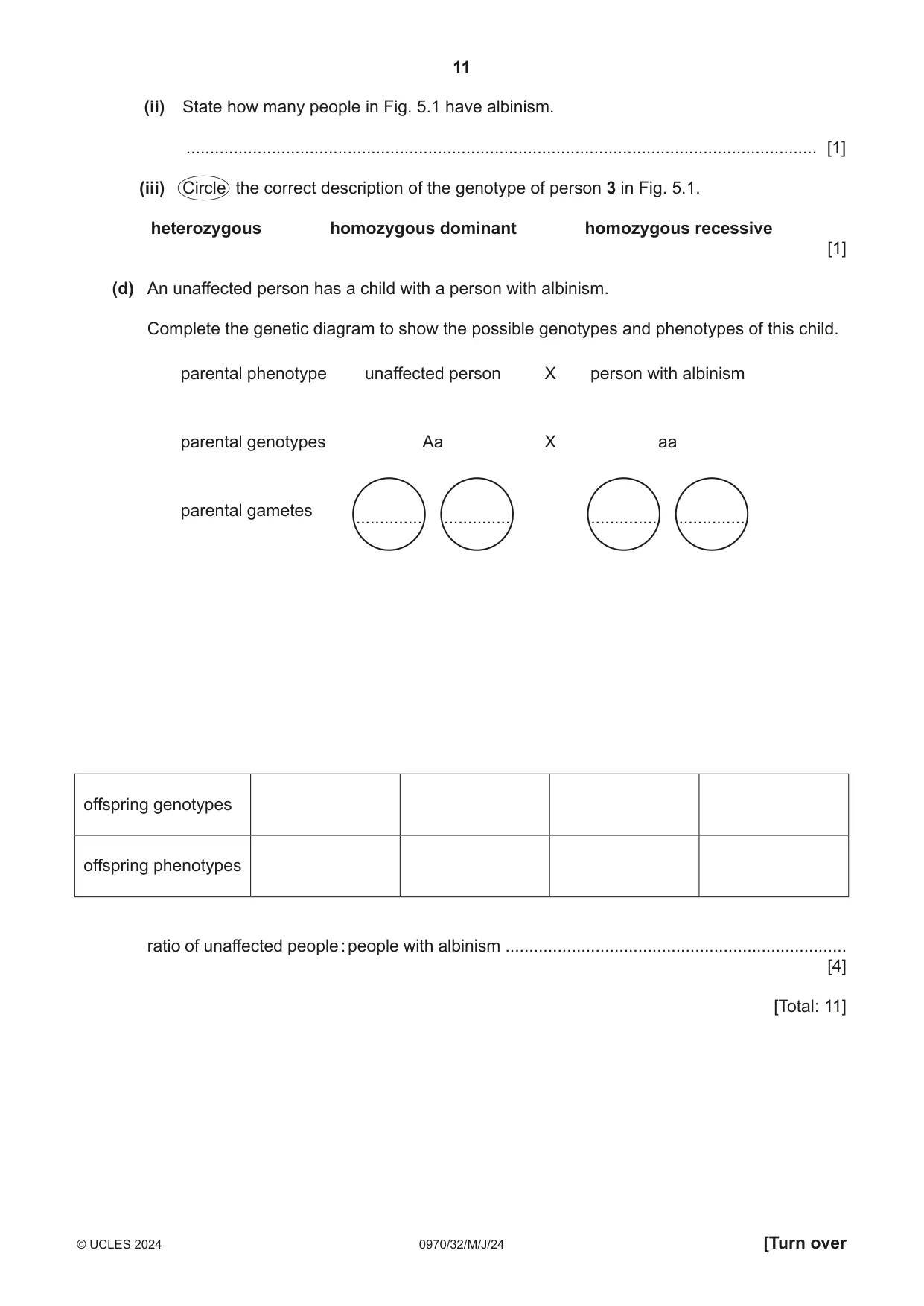
5 (a) The melanin gene in humans codes for a pigment produced in the skin, hair and eyes. (i) Describe what is meant by the term gene. ........................................................................................................................................... ........................................................................................................................................... ..................................................................................................................................... [2] (ii) State the name of a cell structure in humans that contains genes. ..................................................................................................................................... [1] (b) Albinism is a genetic condition where there is a mutation in the gene that produces melanin. People with albinism have very pale skin, hair and eyes. In a population, 1 in 18 000 are people with albinism. Calculate how many people with albinism would be expected in a population of 270 000 people. ............................................... people [1] (c) The allele for normal melanin production is dominant and is represented by the letter A. The allele for albinism is recessive and is represented by the letter a. Fig. 5.1 is a pedigree diagram showing the inheritance of albinism in one family. 1 2 key = unaffected female 3 4 5 6 = female with albinism 7 = unaffected male = male with albinism Fig. 5.1 (i) State the sex chromosomes for person 1 in Fig. 5.1. ..................................................................................................................................... [1] (ii) State how many people in Fig. 5.1 have albinism. ..................................................................................................................................... [1] (iii) Circle the correct description of the genotype of person 3 in Fig. 5.1. heterozygous homozygous dominant homozygous recessive [1] (d) An unaffected person has a child with a person with albinism. Complete the genetic diagram to show the possible genotypes and phenotypes of this child. parental phenotype unaffected person X person with albinism parental genotypes Aa X aa parental gametes .............. .............. .............. .............. offspring genotypes offspring phenotypes ratio of unaffected people : people with albinism ........................................................................ [4] [Total: 11]
Mark scheme: 5(a)(i) a length of DNA ; that codes for a protein ; 2 5(a)(ii) nucleus ; 1 A mitochondria 5(b) 15 (people) ; 1 5(c)(i) XX ; 1 5(c)(ii) 4 ; 1 5(c)(iii) homozygous recessive ; 1 R each additional circle 5(d) parental gametes: A a x a a ; offspring genotypes: Aa (Aa) aa (aa) ; offspring phenotypes: unaffected (unaffected) albinism (albinism) ; ratio 1:1 ; 4 A ecf from previous step A 2:2 / 50:50 / 50%
Q6 · A diagram of a bacterial cell
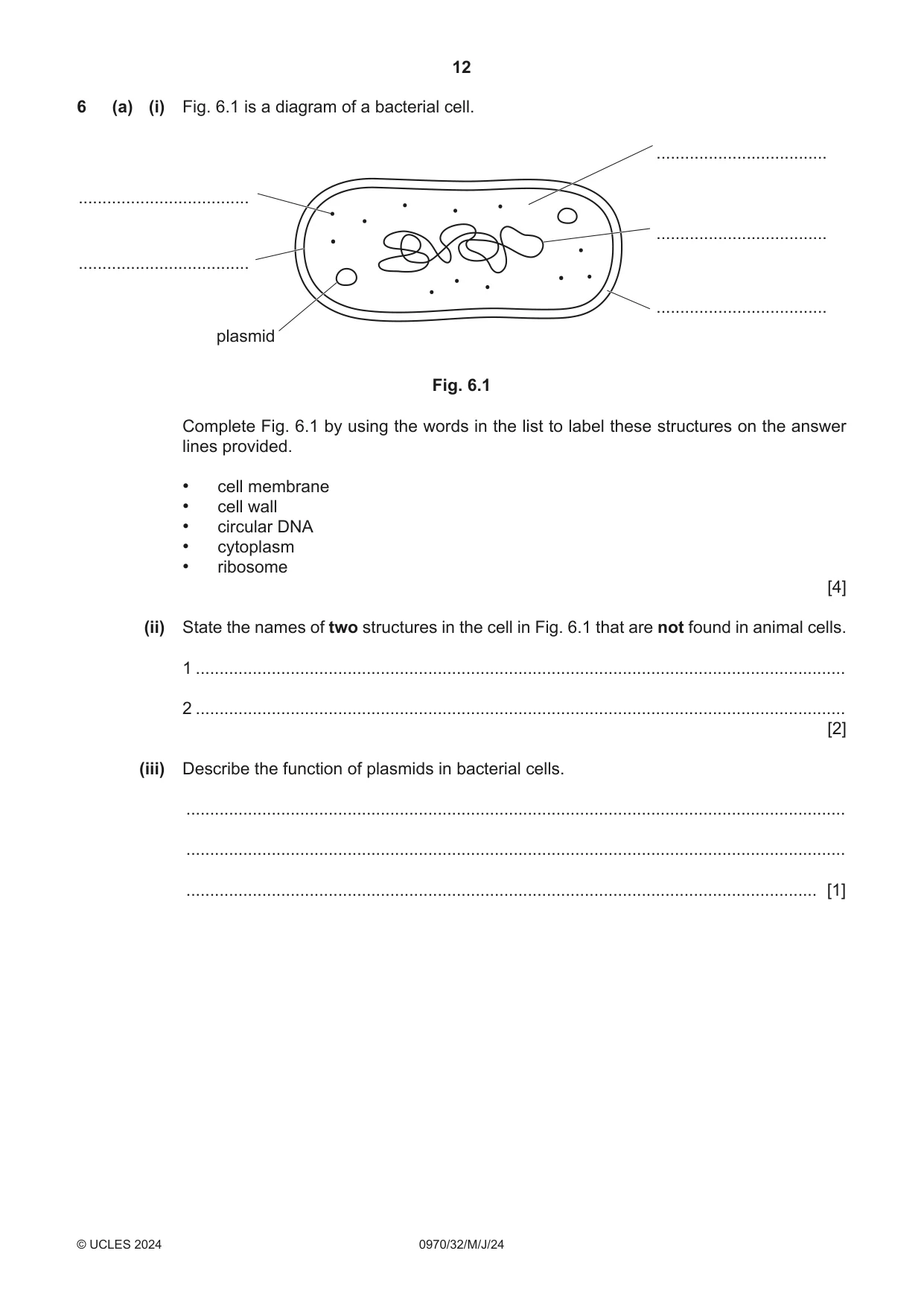
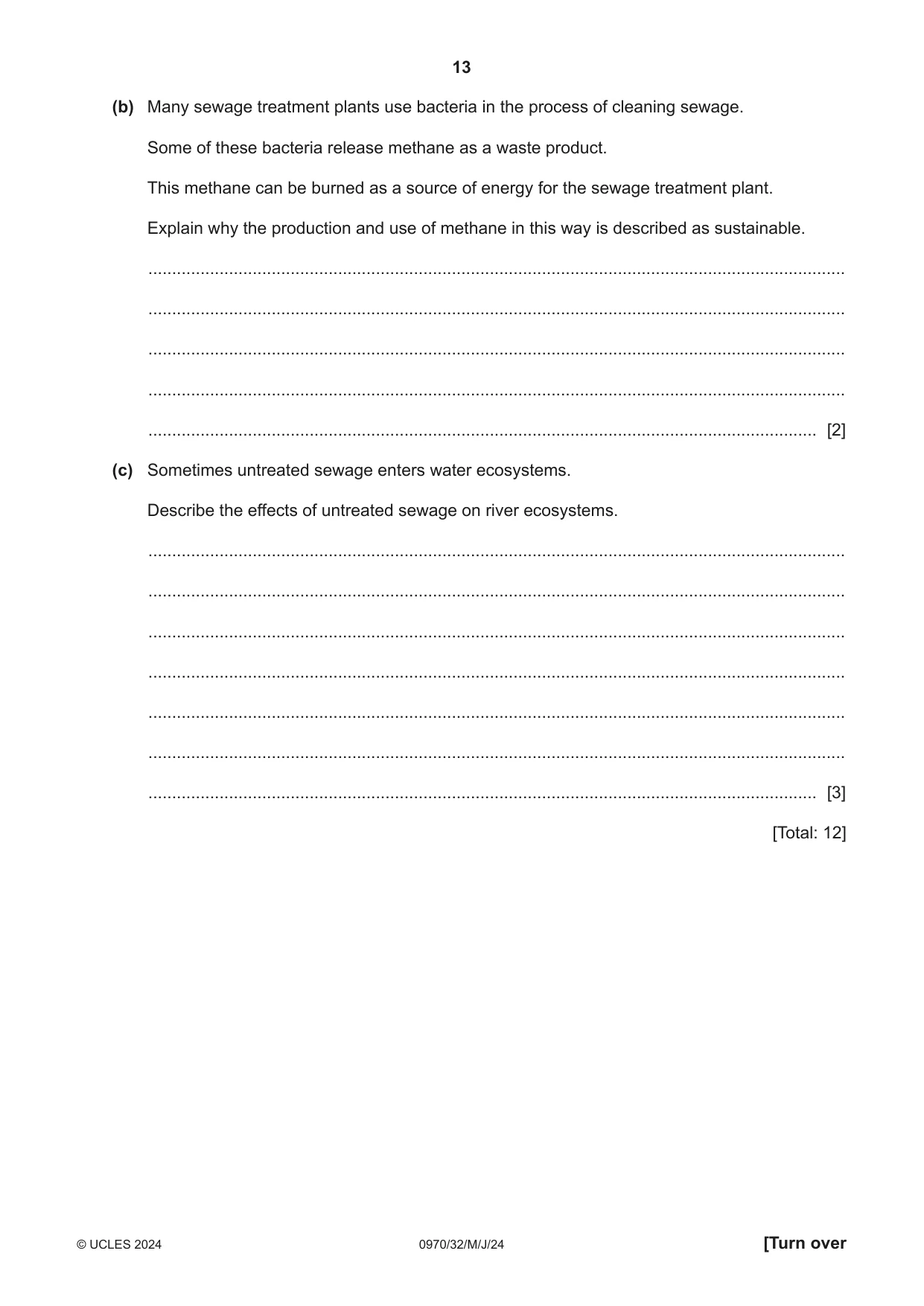
6 (a) (i) Fig. 6.1 is a diagram of a bacterial cell. .................................... .................................... .................................... .................................... .................................... plasmid Fig. 6.1 Complete Fig. 6.1 by using the words in the list to label these structures on the answer lines provided. • cell membrane • cell wall • circular DNA • cytoplasm • ribosome [4] (ii) State the names of two structures in the cell in Fig. 6.1 that are not found in animal cells. 1 ......................................................................................................................................... 2 ......................................................................................................................................... [2] (iii) Describe the function of plasmids in bacterial cells. ........................................................................................................................................... ........................................................................................................................................... ..................................................................................................................................... [1] (b) Many sewage treatment plants use bacteria in the process of cleaning sewage. Some of these bacteria release methane as a waste product. This methane can be burned as a source of energy for the sewage treatment plant. Explain why the production and use of methane in this way is described as sustainable. ................................................................................................................................................... ................................................................................................................................................... ................................................................................................................................................... ................................................................................................................................................... ............................................................................................................................................. [2] (c) Sometimes untreated sewage enters water ecosystems. Describe the effects of untreated sewage on river ecosystems. ................................................................................................................................................... ................................................................................................................................................... ................................................................................................................................................... ................................................................................................................................................... ................................................................................................................................................... ................................................................................................................................................... ............................................................................................................................................. [3] [Total: 12]
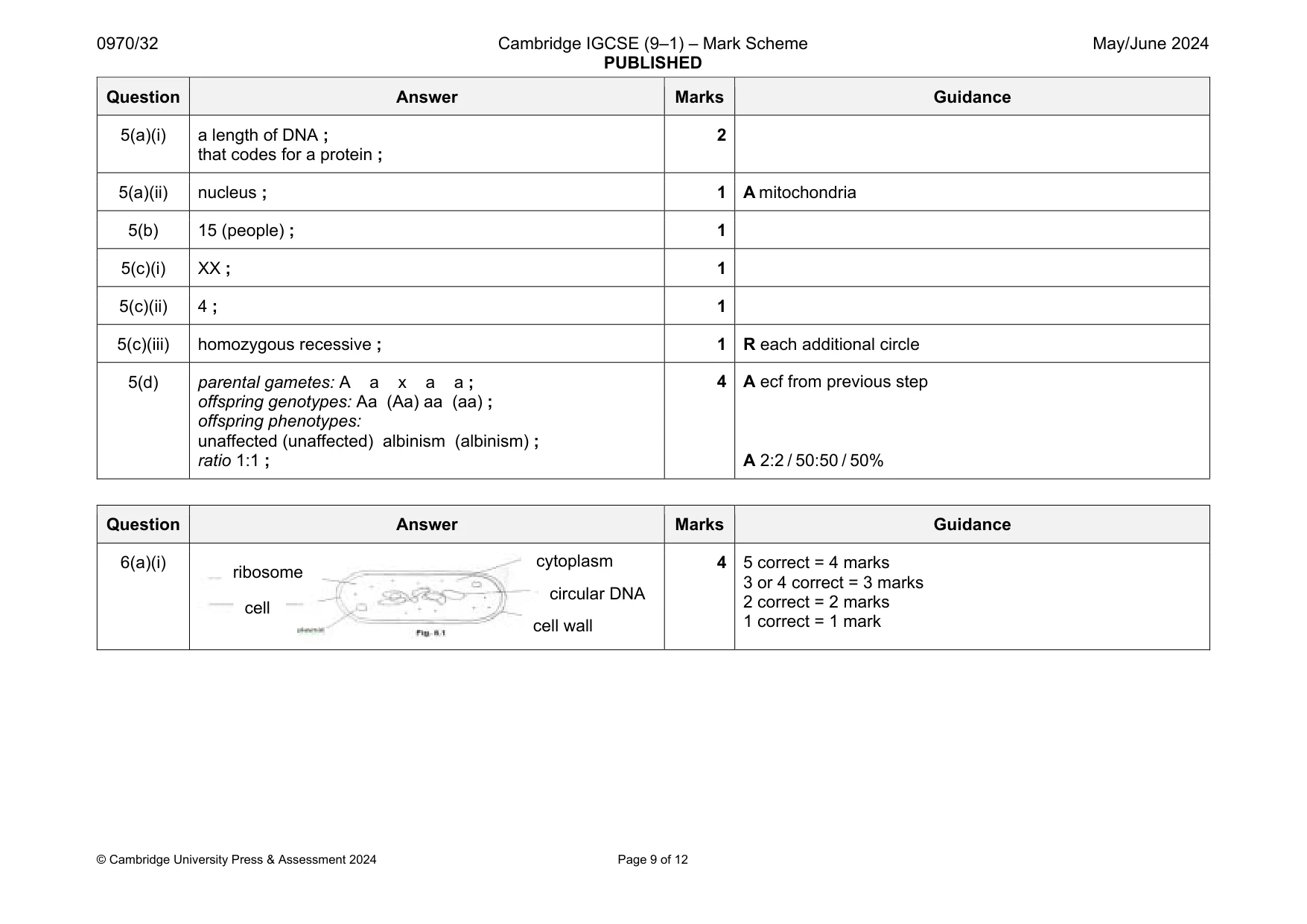
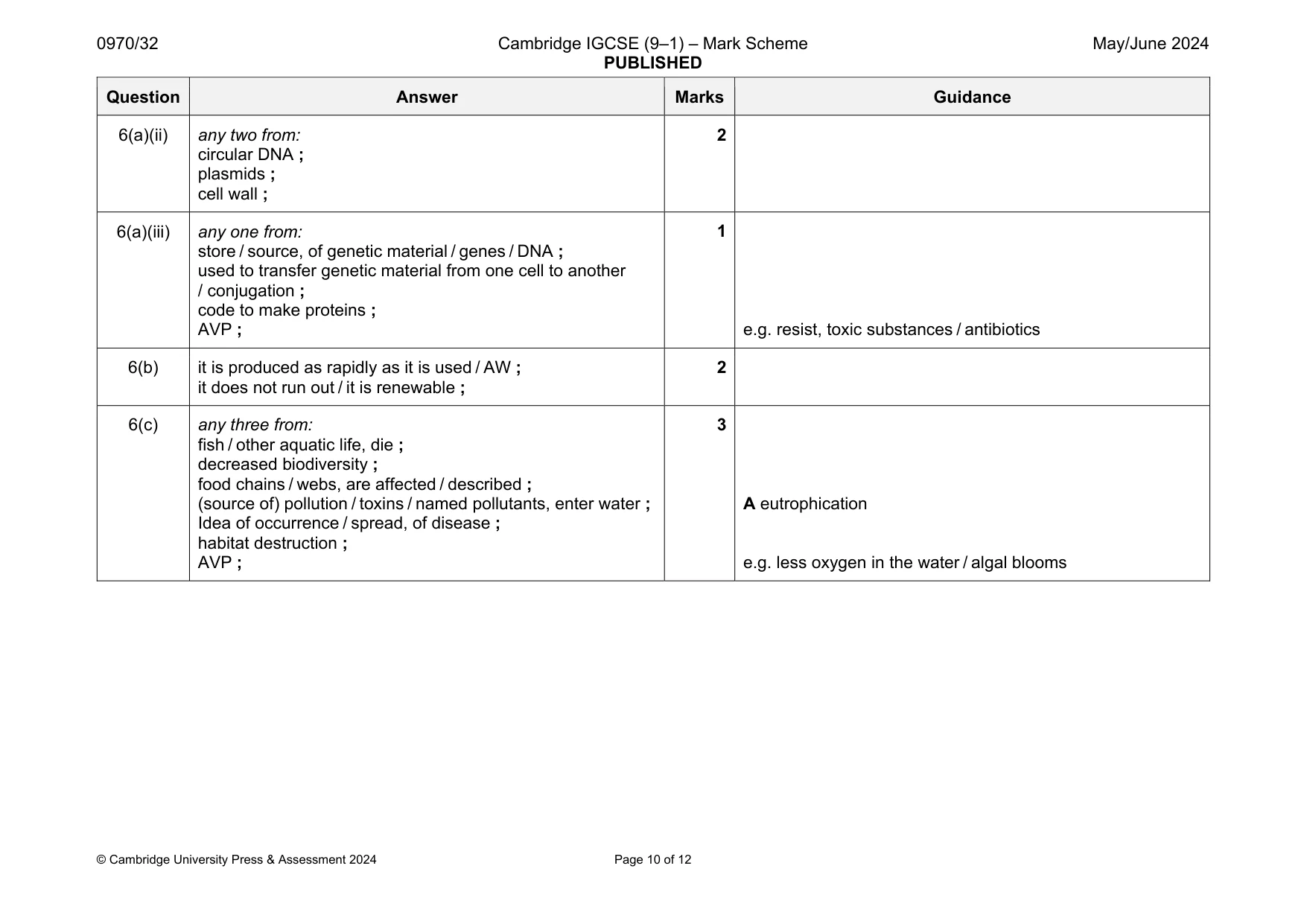
Mark scheme: 6(a)(i) 4 5 correct = 4 marks 3 or 4 correct = 3 marks 2 correct = 2 marks 1 correct = 1 mark ribosome cell circular DNA cell wall Question Answer Marks Guidance 6(a)(ii) any two from: circular DNA ; plasmids ; cell wall ; 2 6(a)(iii) any one from: store / source, of genetic material / genes / DNA ; used to transfer genetic material from one cell to another / conjugation ; code to make proteins ; AVP ; 1 e.g. resist, toxic substances / antibiotics 6(b) it is produced as rapidly as it is used / AW ; it does not run out / it is renewable ; 2 6(c) any three from: fish / other aquatic life, die ; decreased biodiversity ; food chains / webs, are affected / described ; (source of) pollution / toxins / named pollutants, enter water ; Idea of occurrence / spread, of disease ; habitat destruction ; AVP ; 3 A eutrophication e.g. less oxygen in the water / algal blooms
Q7 · The human body must maintain a constant internal environment
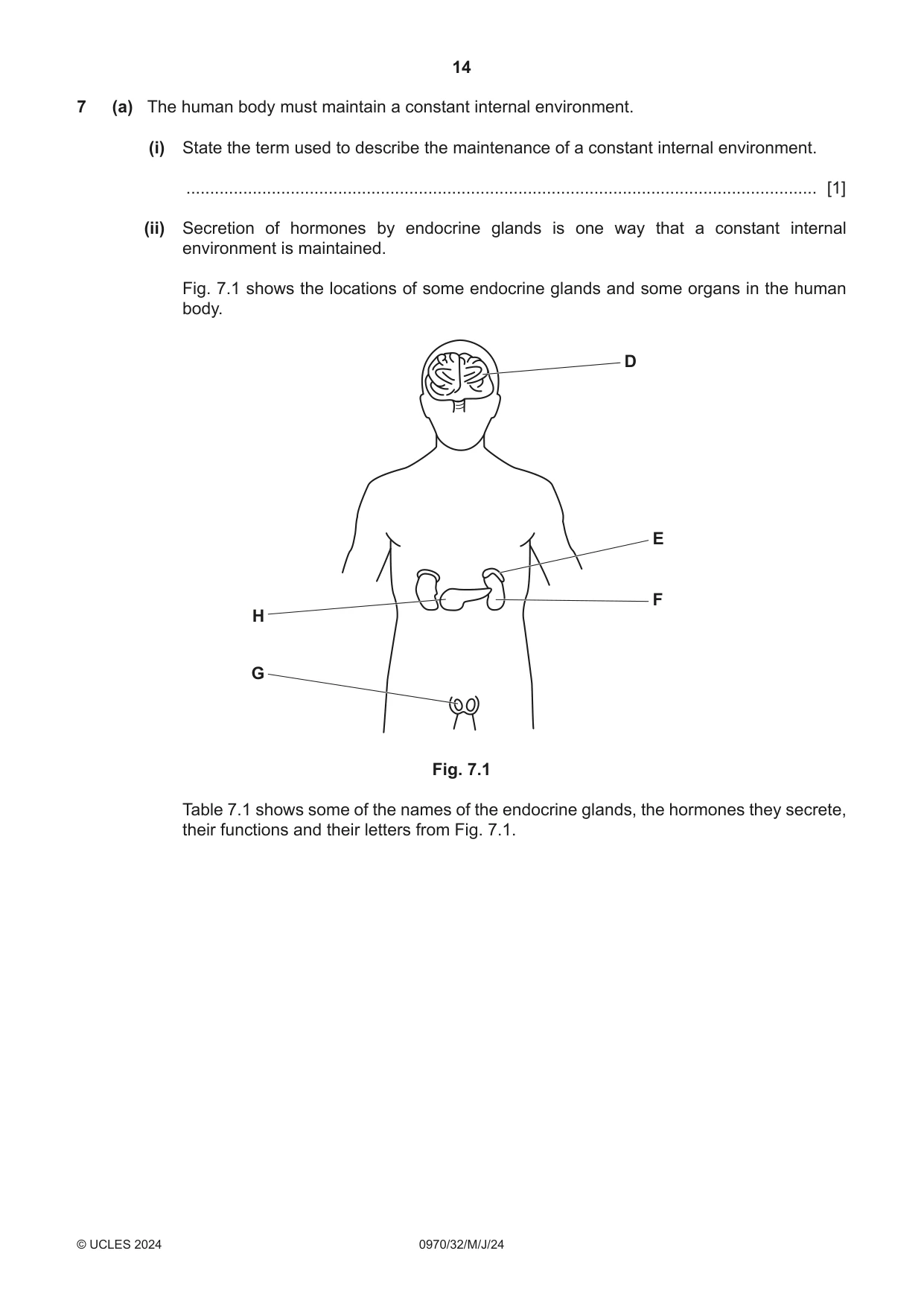
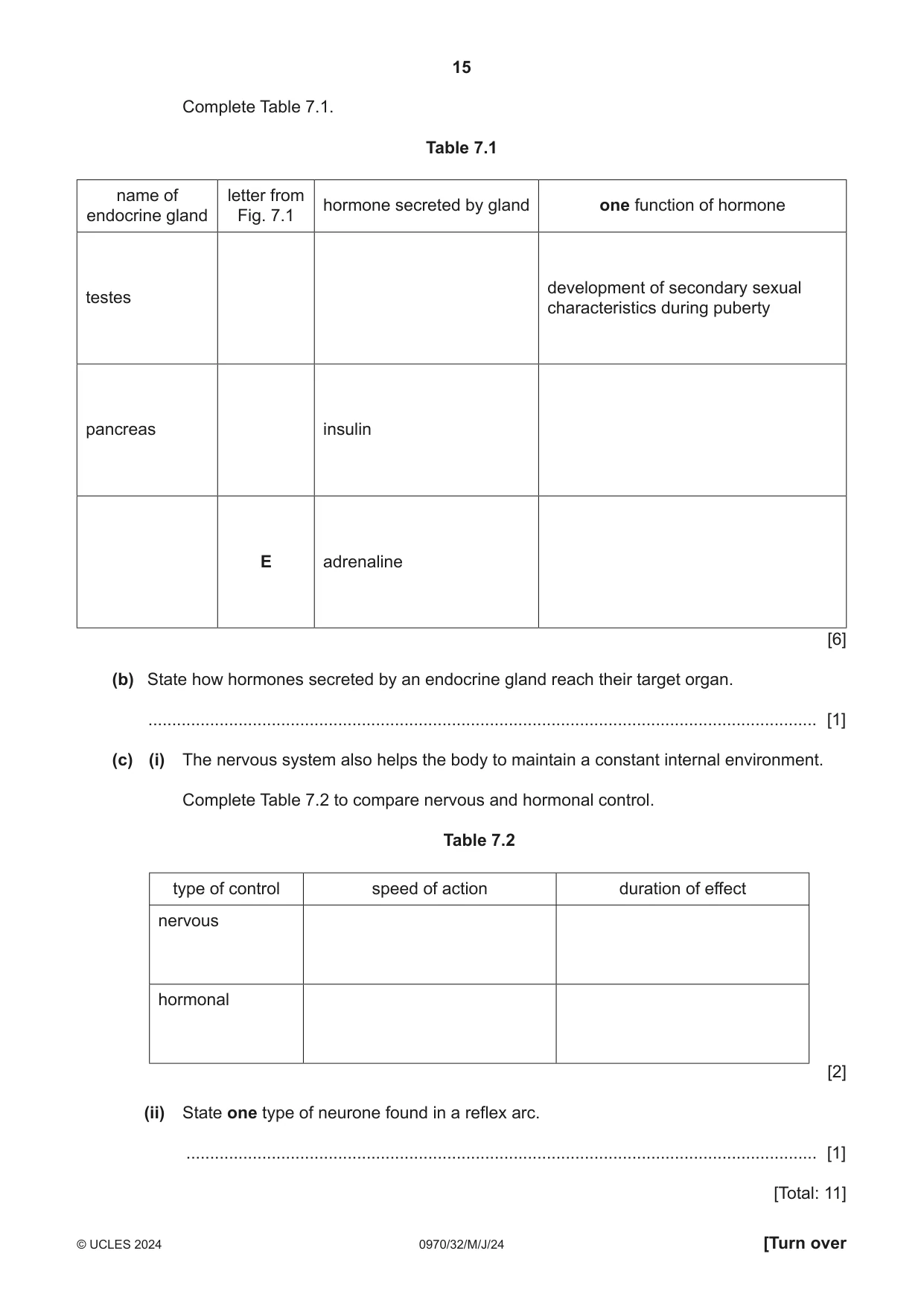
7 (a) The human body must maintain a constant internal environment. (i) State the term used to describe the maintenance of a constant internal environment. ..................................................................................................................................... [1] (ii) Secretion of hormones by endocrine glands is one way that a constant internal environment is maintained. Fig. 7.1 shows the locations of some endocrine glands and some organs in the human body. D E F H G Fig. 7.1 Table 7.1 shows some of the names of the endocrine glands, the hormones they secrete, their functions and their letters from Fig. 7.1. Complete Table 7.1. Table 7.1 name of letter from hormone secreted by gland one function of hormoneendocrine gland Fig. 7.1 development of secondary sexualtestes characteristics during puberty pancreas insulin E adrenaline [6] (b) State how hormones secreted by an endocrine gland reach their target organ. ............................................................................................................................................. [1] (c) (i) The nervous system also helps the body to maintain a constant internal environment. Complete Table 7.2 to compare nervous and hormonal control. Table 7.2 type of control speed of action duration of effect nervous hormonal [2] (ii) State one type of neurone found in a reflex arc. ..................................................................................................................................... [1] [Total: 11]
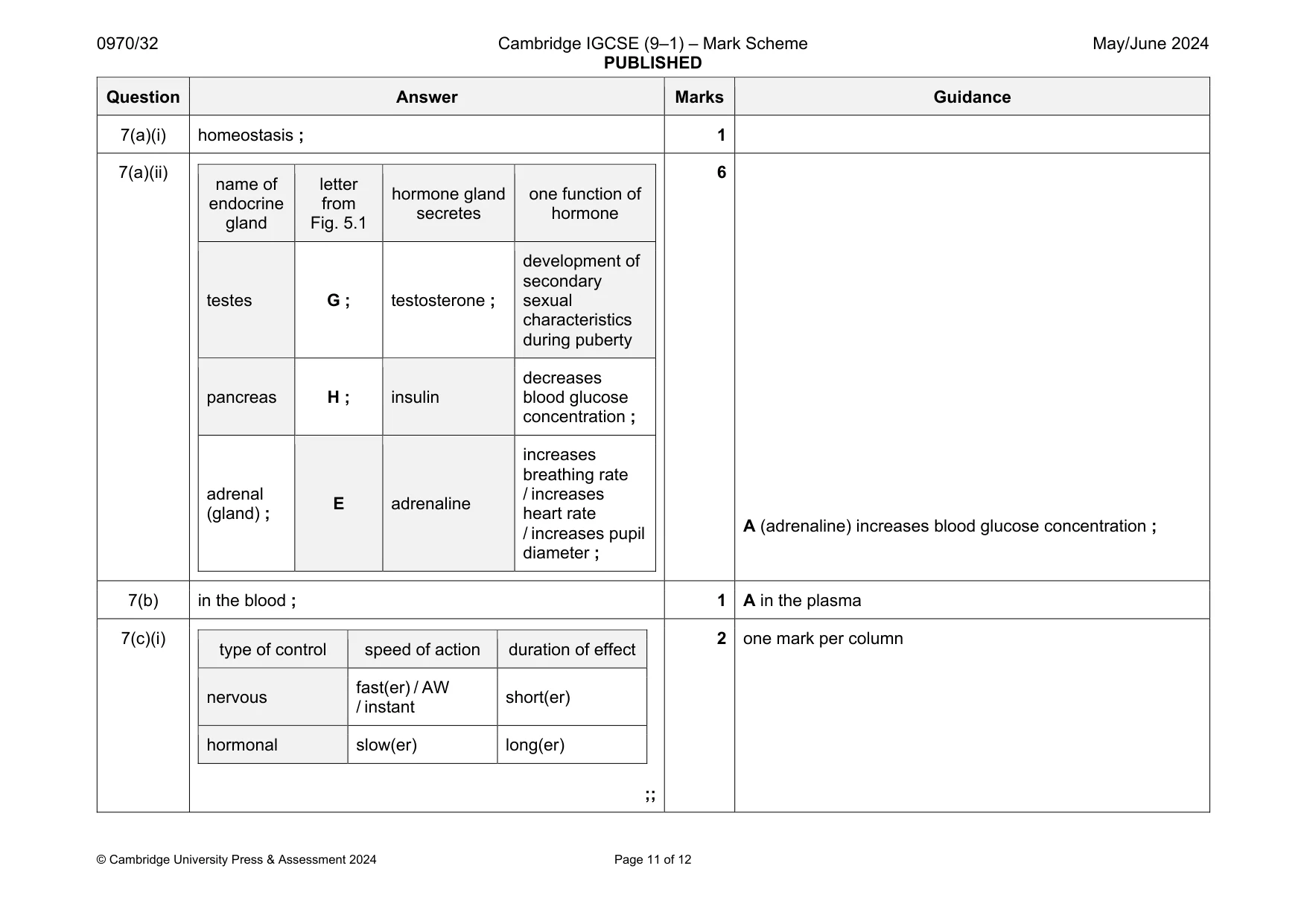
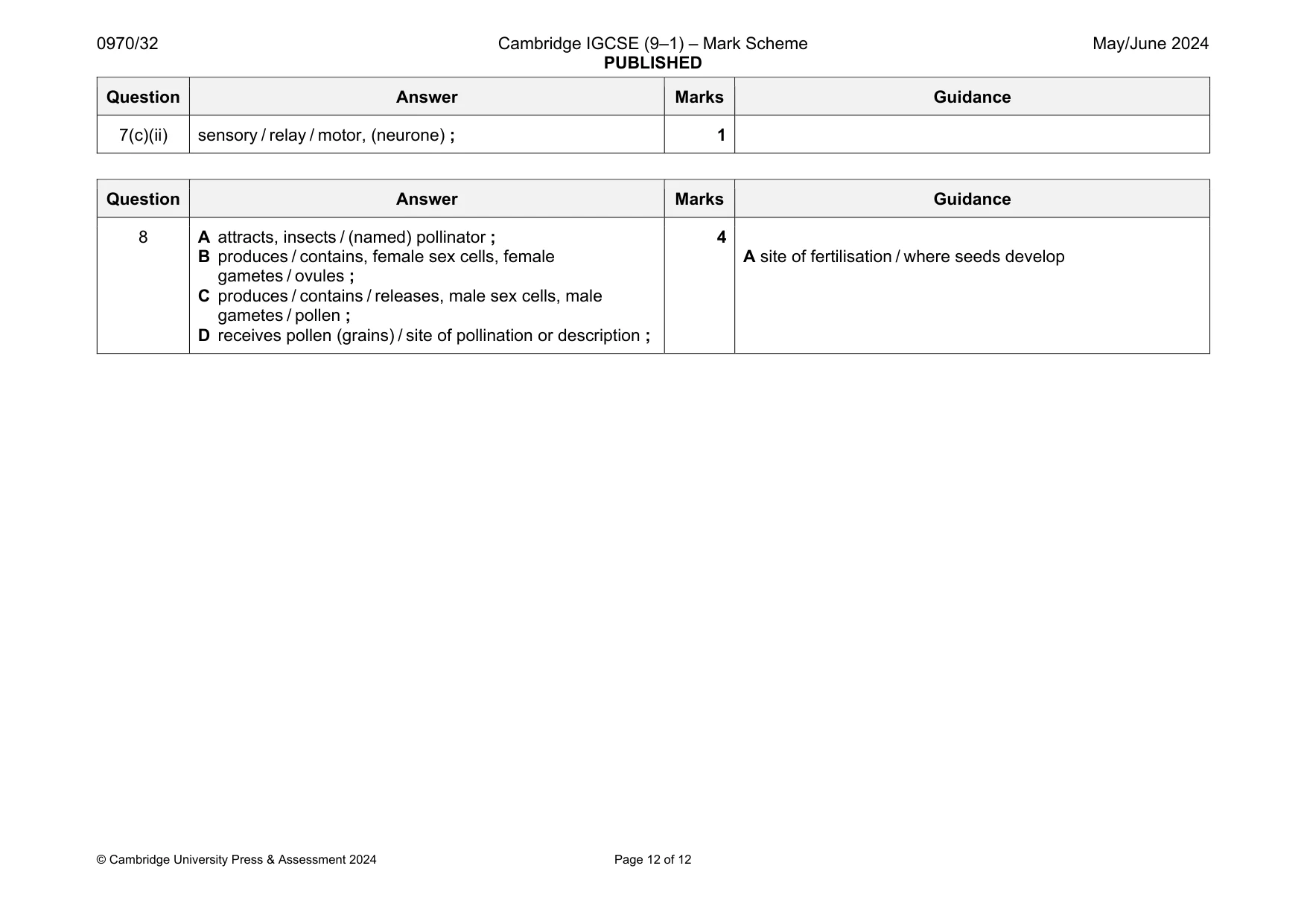
Mark scheme: 7(a)(i) homeostasis ; 1 7(a)(ii) name of endocrine gland letter from Fig. 5.1 hormone gland secretes one function of hormone testes G ; testosterone ; development of secondary sexual characteristics during puberty pancreas H ; insulin decreases blood glucose concentration ; adrenal (gland) ; E adrenaline increases breathing rate / increases heart rate / increases pupil diameter ; 6 A (adrenaline) increases blood glucose concentration ; 7(b) in the blood ; 1 A in the plasma 7(c)(i) type of control speed of action duration of effect nervous fast(er) / AW / instant short(er) hormonal slow(er) long(er) ;; 2 one mark per column Question Answer Marks Guidance 7(c)(ii) sensory / relay / motor, (neurone) ; 1
Q8 · A student carefully took a fuchsia flower apart
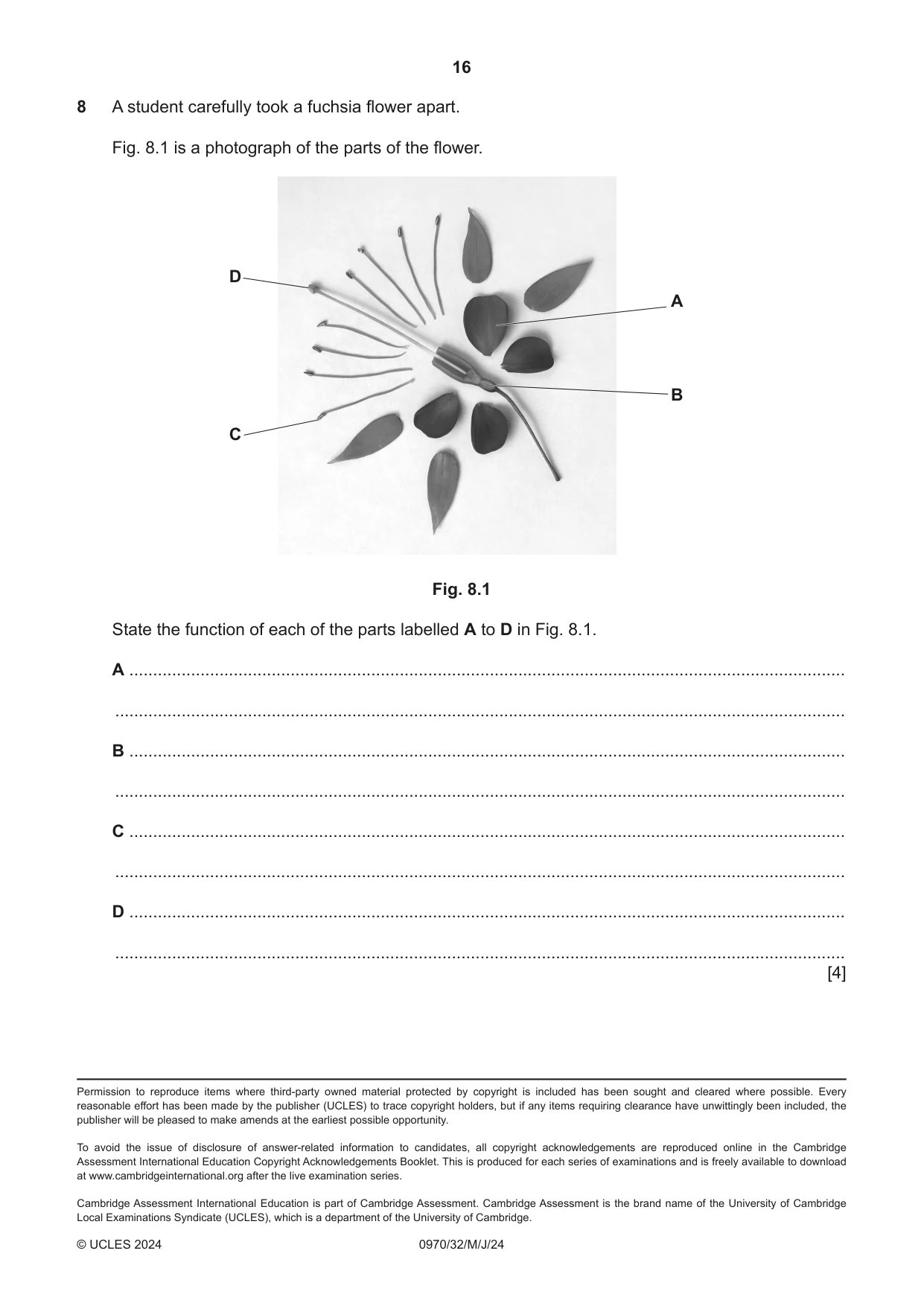
8 A student carefully took a fuchsia flower apart. Fig. 8.1 is a photograph of the parts of the flower. D A B C Fig. 8.1 State the function of each of the parts labelled A to D in Fig. 8.1. A ....................................................................................................................................................... .......................................................................................................................................................... B ....................................................................................................................................................... .......................................................................................................................................................... C ....................................................................................................................................................... .......................................................................................................................................................... D ....................................................................................................................................................... .......................................................................................................................................................... [4]
Mark scheme: 8 A attracts, insects / (named) pollinator ; B produces / contains, female sex cells, female gametes / ovules ; C produces / contains / releases, male sex cells, male gametes / pollen ; D receives pollen (grains) / site of pollination or description ; A site of fertilisation / where seeds develop
What was in this paper
The subtopics covered by these 8 questions, and how many questions each got. Open one in a new tab to see every Cambridge question on it.
What you needed in this session
Cambridge’s own grade thresholds for 2024 May/June, Paper 3 · Variant 2. A higher threshold means an easier paper — the bar moves with how the cohort did.