Cambridge A Level Marine Science 9693 — 2021 Oct/Nov Paper 3 · Variant 0
9693/30/O/N/21 · 6 questions · 75 marks · ≈84 min
The question paper and its mark scheme, free to read here and free to download. This is Cambridge’s own paper, exactly as it was sat.
Question paper20 pages



Mark scheme
No mark scheme is in the library for this paper.
Questions as text
Q1 · Sargassum natans and Sargassum fluitans are two species of brown seaweed found in the…
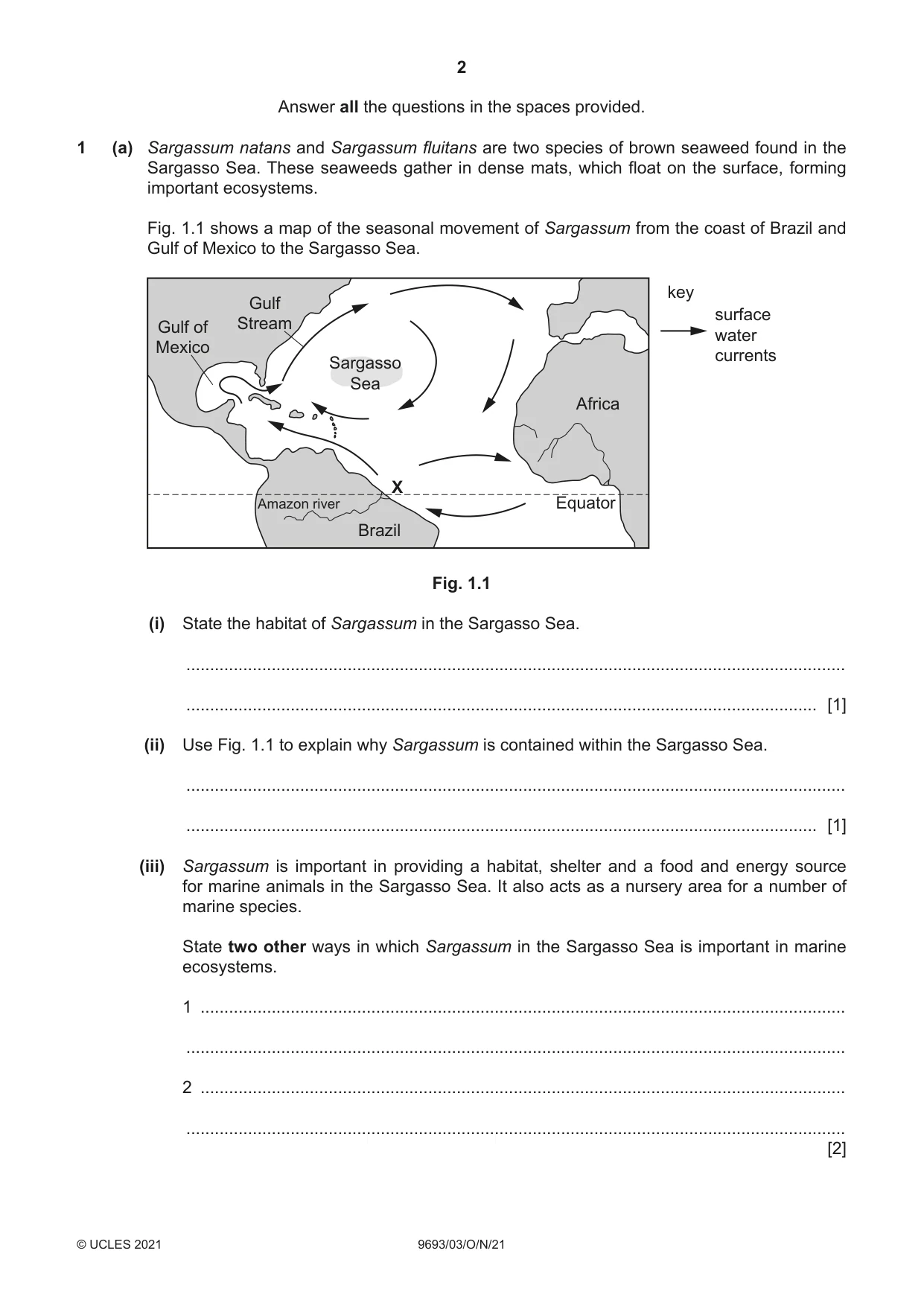
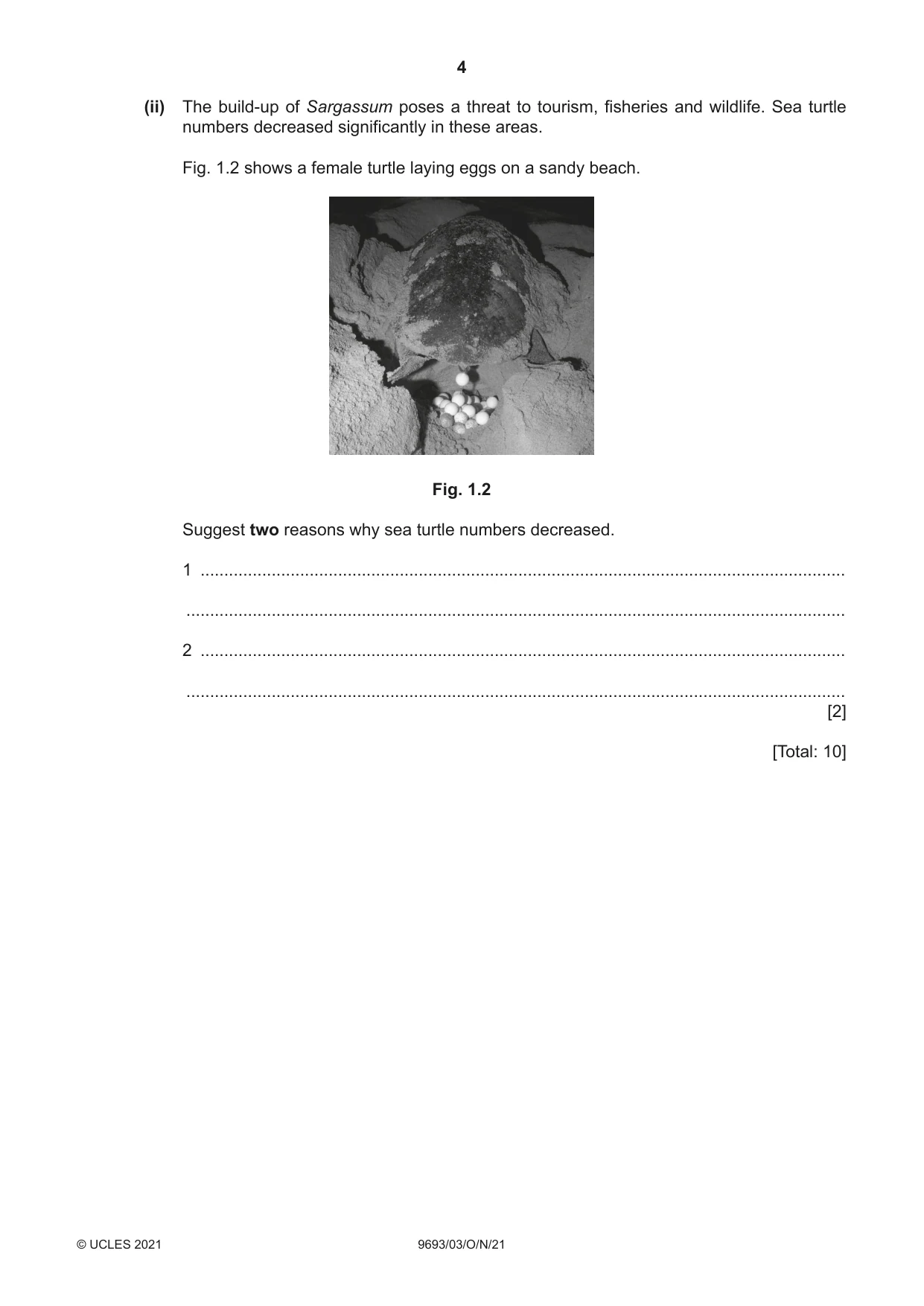
1 (a) Sargassum natans and Sargassum fluitans are two species of brown seaweed found in the Sargasso Sea. These seaweeds gather in dense mats, which float on the surface, forming important ecosystems. Fig. 1.1 shows a map of the seasonal movement of Sargassum from the coast of Brazil and Gulf of Mexico to the Sargasso Sea. key Gulf surface Gulf of Stream water Mexico currents Sargasso Sea Africa X Amazon river Equator Brazil Fig. 1.1 (i) State the habitat of Sargassum in the Sargasso Sea. ........................................................................................................................................... ..................................................................................................................................... [1] (ii) Use Fig. 1.1 to explain why Sargassum is contained within the Sargasso Sea. ........................................................................................................................................... ..................................................................................................................................... [1] (iii) Sargassum is important in providing a habitat, shelter and a food and energy source for marine animals in the Sargasso Sea. It also acts as a nursery area for a number of marine species. State two other ways in which Sargassum in the Sargasso Sea is important in marine ecosystems. 1 ........................................................................................................................................ ........................................................................................................................................... 2 ........................................................................................................................................ ........................................................................................................................................... [2] (b) In 2011, 2015 and again in 2018 there was a sudden and massive increase in Sargassum numbers. Huge piles, up to 2 m high, were washed ashore along the African coastline, coast of Brazil and Caribbean islands in the Gulf of Mexico. (i) It was initially thought that the Sargassum had come from the Sargasso Sea, but its origins were traced back to a new, smaller area which had formed in the tropical coastal waters of Brazil. This new area is marked X on Fig. 1.1. Use the information in Fig. 1.1 to suggest and explain why conditions at point X would favour rapid growth in comparison with conditions in the Sargasso Sea. ........................................................................................................................................... ........................................................................................................................................... ........................................................................................................................................... ........................................................................................................................................... ........................................................................................................................................... ........................................................................................................................................... ........................................................................................................................................... ..................................................................................................................................... [4] (ii) The build-up of Sargassum poses a threat to tourism, fisheries and wildlife. Sea turtle numbers decreased significantly in these areas. Fig. 1.2 shows a female turtle laying eggs on a sandy beach. Fig. 1.2 Suggest two reasons why sea turtle numbers decreased. 1 ........................................................................................................................................ ........................................................................................................................................... 2 ........................................................................................................................................ ........................................................................................................................................... [2] [Total: 10]
Q2 · Fish such as tuna use ram ventilation to obtain oxygen from sea water
2 (a) Fish such as tuna use ram ventilation to obtain oxygen from sea water. Describe what is meant by the term ram ventilation. ................................................................................................................................................... ................................................................................................................................................... ................................................................................................................................................... ................................................................................................................................................... ................................................................................................................................................... ............................................................................................................................................. [3] (b) Fish such as grouper use pumped ventilation to obtain oxygen from sea water. Outline what happens during outflow of water over the gills. ................................................................................................................................................... ................................................................................................................................................... ................................................................................................................................................... ................................................................................................................................................... ................................................................................................................................................... ............................................................................................................................................. [3] (c) Nurse sharks are a slow-moving benthic species found in tropical and sub-tropical seas. They are nocturnal hunters and rest in crevices and under ledges during the day. Suggest and explain why nurse sharks use pumped ventilation and not ram ventilation. ................................................................................................................................................... ................................................................................................................................................... ................................................................................................................................................... ............................................................................................................................................. [2] [Total: 8]
Q3 · State the type of fertilisation used by whales and tuna
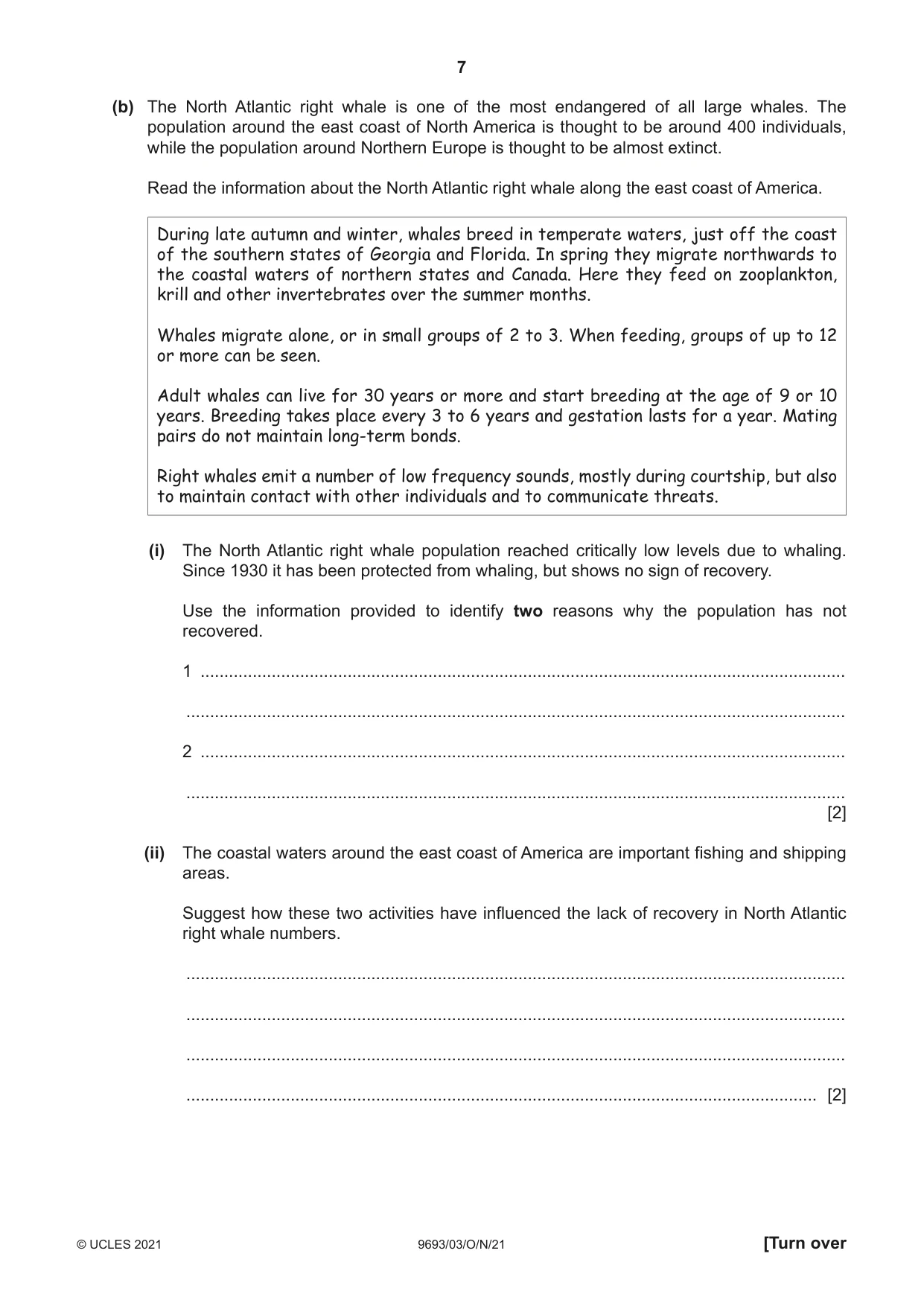
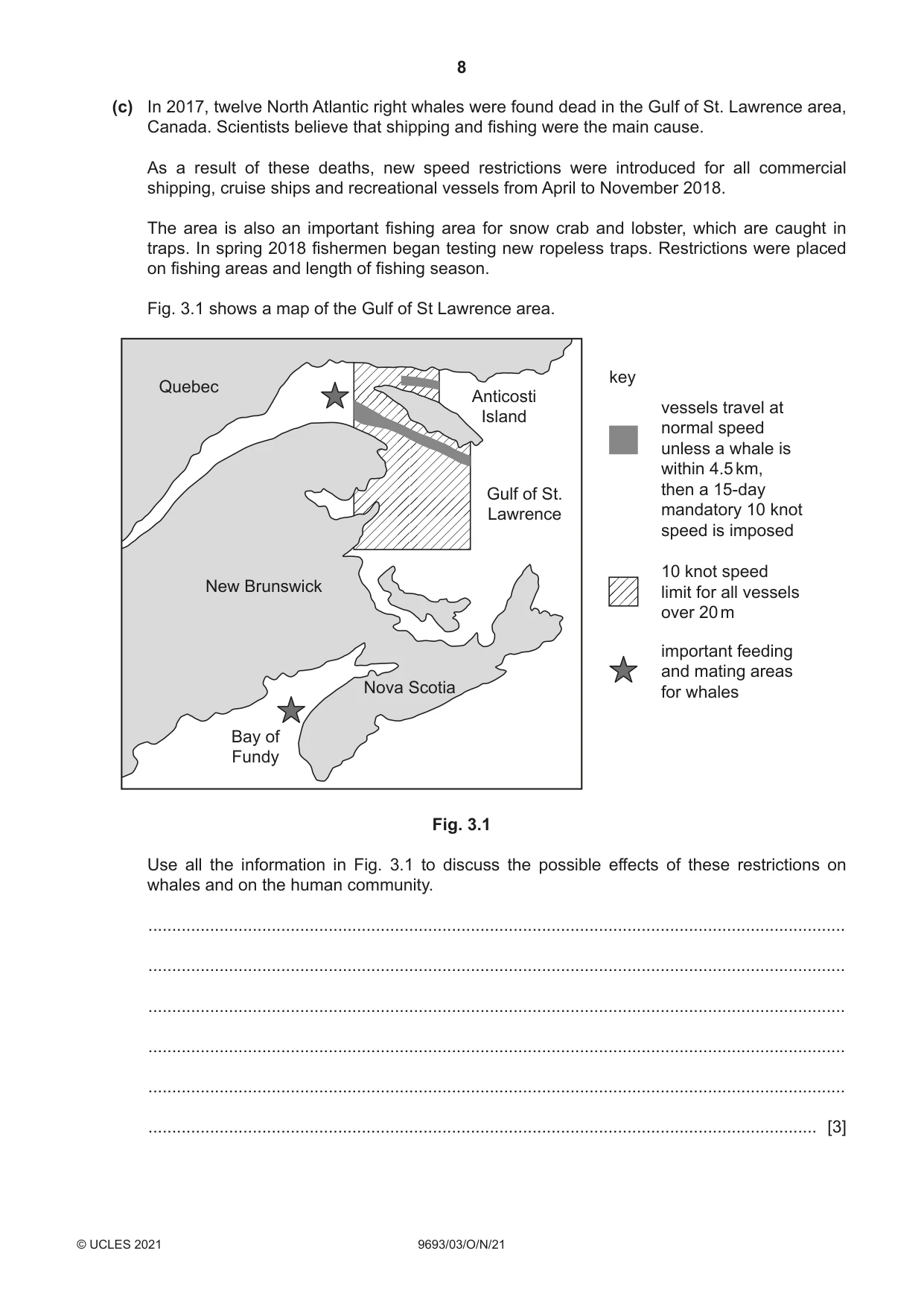
3 (a) (i) State the type of fertilisation used by whales and tuna. whales ............................................................................................................................... tuna ................................................................................................................................... [1] (ii) State how the spawning habits of tuna might increase the chances of fertilisation. ........................................................................................................................................... ..................................................................................................................................... [1] (iii) State and explain two ways in which a female whale increases the chances of her calf surviving to adulthood. 1 ........................................................................................................................................ ........................................................................................................................................... 2 ........................................................................................................................................ ........................................................................................................................................... [2] (b) The North Atlantic right whale is one of the most endangered of all large whales. The population around the east coast of North America is thought to be around 400 individuals, while the population around Northern Europe is thought to be almost extinct. Read the information about the North Atlantic right whale along the east coast of America. During late autumn and winter, whales breed in temperate waters, just off the coast of the southern states of Georgia and Florida. In spring they migrate northwards to the coastal waters of northern states and Canada. Here they feed on zooplankton, krill and other invertebrates over the summer months. Whales migrate alone, or in small groups of 2 to 3. When feeding, groups of up to 12 or more can be seen. Adult whales can live for 30 years or more and start breeding at the age of 9 or 10 years. Breeding takes place every 3 to 6 years and gestation lasts for a year. Mating pairs do not maintain long-term bonds. Right whales emit a number of low frequency sounds, mostly during courtship, but also to maintain contact with other individuals and to communicate threats. (i) The North Atlantic right whale population reached critically low levels due to whaling. Since 1930 it has been protected from whaling, but shows no sign of recovery. Use the information provided to identify two reasons why the population has not recovered. 1 ........................................................................................................................................ ........................................................................................................................................... 2 ........................................................................................................................................ ........................................................................................................................................... [2] (ii) The coastal waters around the east coast of America are important fishing and shipping areas. Suggest how these two activities have influenced the lack of recovery in North Atlantic right whale numbers. ........................................................................................................................................... ........................................................................................................................................... ........................................................................................................................................... ..................................................................................................................................... [2] (c) In 2017, twelve North Atlantic right whales were found dead in the Gulf of St. Lawrence area, Canada. Scientists believe that shipping and fishing were the main cause. As a result of these deaths, new speed restrictions were introduced for all commercial shipping, cruise ships and recreational vessels from April to November 2018. The area is also an important fishing area for snow crab and lobster, which are caught in traps. In spring 2018 fishermen began testing new ropeless traps. Restrictions were placed on fishing areas and length of fishing season. Fig. 3.1 shows a map of the Gulf of St Lawrence area. key Quebec Anticosti vessels travel at Island normal speed unless a whale is within 4.5 km, Gulf of St. then a 15-day Lawrence mandatory 10 knot speed is imposed 10 knot speed New Brunswick limit for all vessels over 20 m important feeding and mating areas Nova Scotia for whales Bay of Fundy Fig. 3.1 Use all the information in Fig. 3.1 to discuss the possible effects of these restrictions on whales and on the human community. ................................................................................................................................................... ................................................................................................................................................... ................................................................................................................................................... ................................................................................................................................................... ................................................................................................................................................... ............................................................................................................................................. [3] (d) Scientists are trialling the use of satellites to locate, identify and count whales. Suggest the advantages of using satellite images rather than traditional methods such as spotter planes, or counting from boats. ................................................................................................................................................... ................................................................................................................................................... ................................................................................................................................................... ............................................................................................................................................. [2] (e) In 2012 a decision was made to build an undersea sonar station just off the coast of Georgia / northern Florida. Use the information provided to suggest and explain the likely impact of this sonar station on the North Atlantic right whales. ................................................................................................................................................... ................................................................................................................................................... ................................................................................................................................................... ............................................................................................................................................. [2] (f) No North Atlantic right whales were born in 2018, but seven were born by March 2019. Suggest why the conservation measures put in place should remain for several years at least. ................................................................................................................................................... ............................................................................................................................................. [1] [Total: 16]
Q4 · Tuna stocks in the Indian Ocean are monitored annually
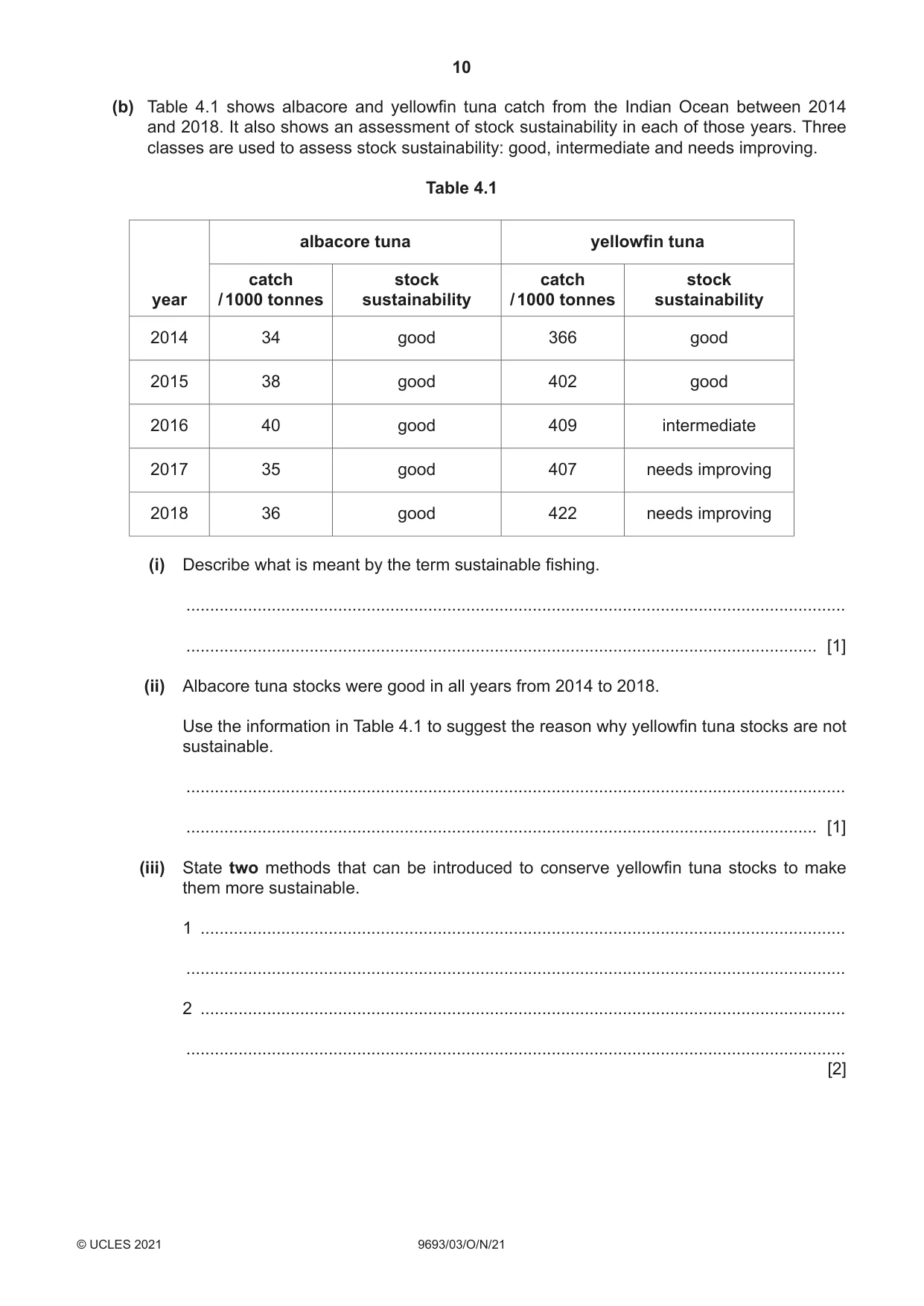
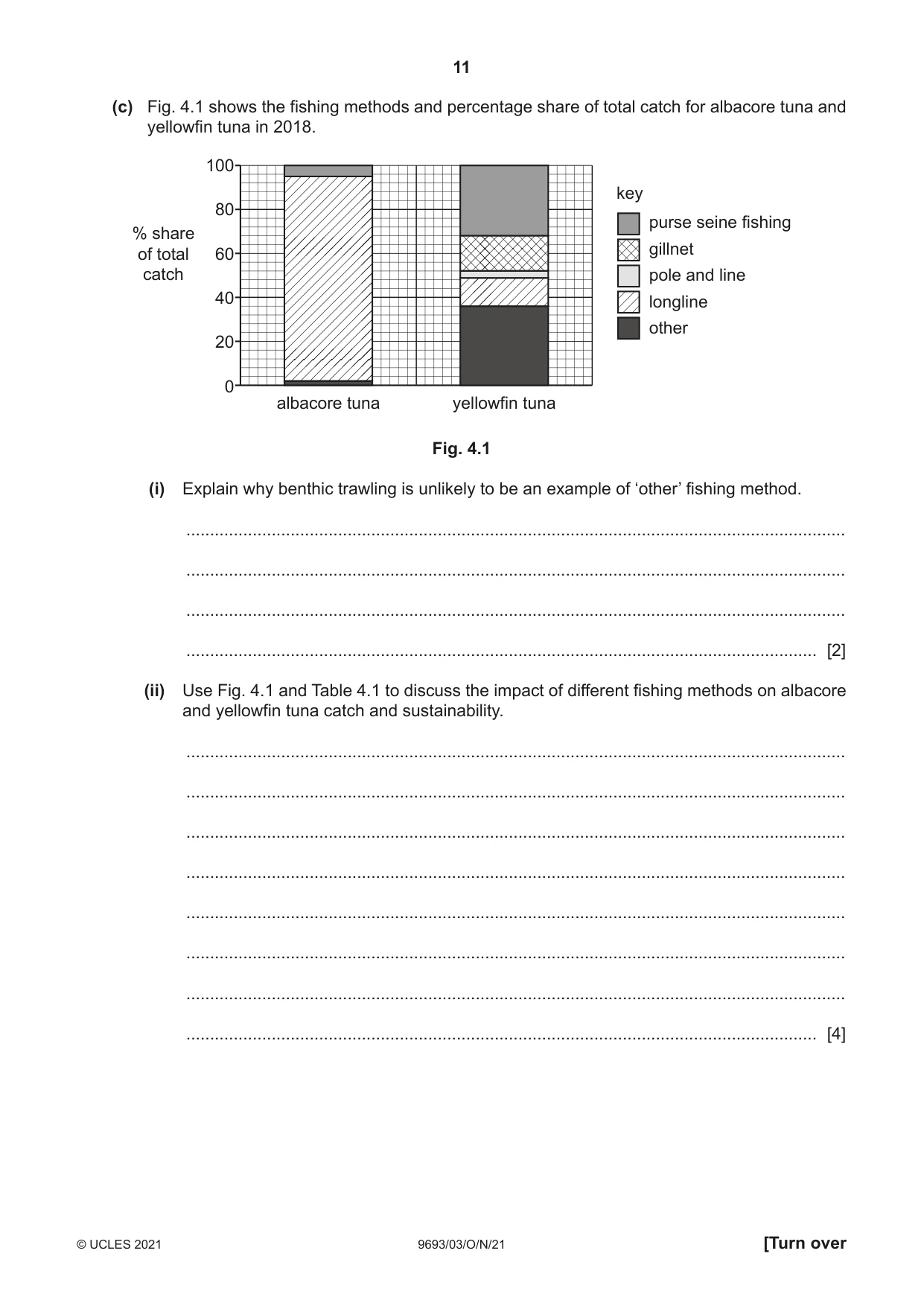
4 (a) Tuna stocks in the Indian Ocean are monitored annually. Information required to monitor stocks includes natural mortality, fishing mortality and age of reproductive maturity. State two other pieces of information used to monitor fish stocks. 1 ................................................................................................................................................ ................................................................................................................................................... 2 ................................................................................................................................................ ................................................................................................................................................... [2] (b) Table 4.1 shows albacore and yellowfin tuna catch from the Indian Ocean between 2014 and 2018. It also shows an assessment of stock sustainability in each of those years. Three classes are used to assess stock sustainability: good, intermediate and needs improving. Table 4.1 albacore tuna yellowfin tuna catch stock catch stock year / 1000 tonnes sustainability / 1000 tonnes sustainability 2014 34 good 366 good 2015 38 good 402 good 2016 40 good 409 intermediate 2017 35 good 407 needs improving 2018 36 good 422 needs improving (i) Describe what is meant by the term sustainable fishing. ........................................................................................................................................... ..................................................................................................................................... [1] (ii) Albacore tuna stocks were good in all years from 2014 to 2018. Use the information in Table 4.1 to suggest the reason why yellowfin tuna stocks are not sustainable. ........................................................................................................................................... ..................................................................................................................................... [1] (iii) State two methods that can be introduced to conserve yellowfin tuna stocks to make them more sustainable. 1 ........................................................................................................................................ ........................................................................................................................................... 2 ........................................................................................................................................ ........................................................................................................................................... [2] (c) Fig. 4.1 shows the fishing methods and percentage share of total catch for albacore tuna and yellowfin tuna in 2018. 100 key 80 purse seine fishing % share gillnet of total 60 catch pole and line 40 longline other 20 0 albacore tuna yellowfin tuna Fig. 4.1 (i) Explain why benthic trawling is unlikely to be an example of ‘other’ fishing method. ........................................................................................................................................... ........................................................................................................................................... ........................................................................................................................................... ..................................................................................................................................... [2] (ii) Use Fig. 4.1 and Table 4.1 to discuss the impact of different fishing methods on albacore and yellowfin tuna catch and sustainability. ........................................................................................................................................... ........................................................................................................................................... ........................................................................................................................................... ........................................................................................................................................... ........................................................................................................................................... ........................................................................................................................................... ........................................................................................................................................... ..................................................................................................................................... [4] (d) Conservation programmes involve the management of ecosystems in order to protect and preserve the species and habitats present. Outline why marine conservation must sustain ecological linkages to be successful. ................................................................................................................................................... ................................................................................................................................................... ................................................................................................................................................... ................................................................................................................................................... ................................................................................................................................................... ............................................................................................................................................. [3] [Total: 15]
Q5 · Marine food fish such as seabass are often cultured in sea cages
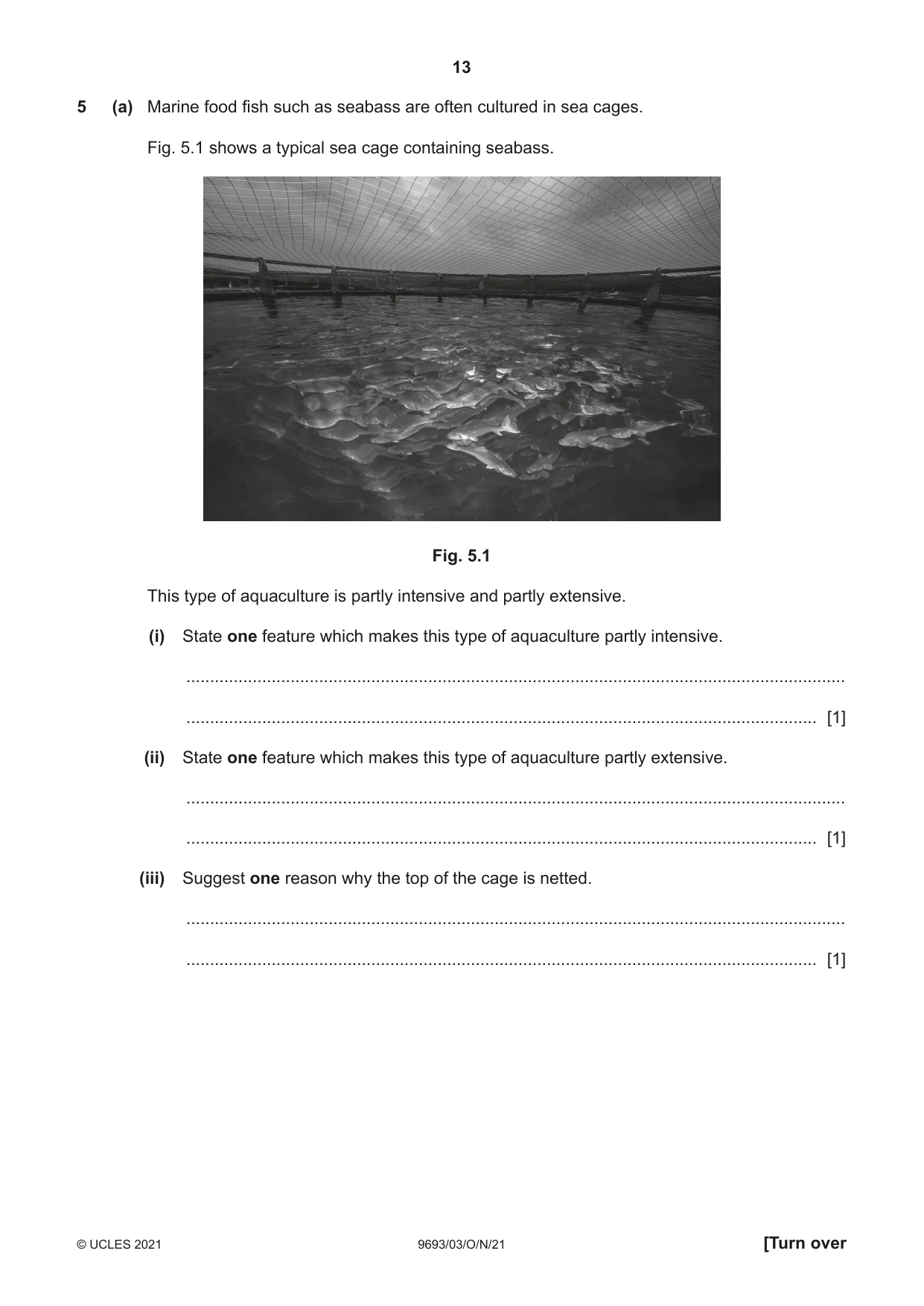
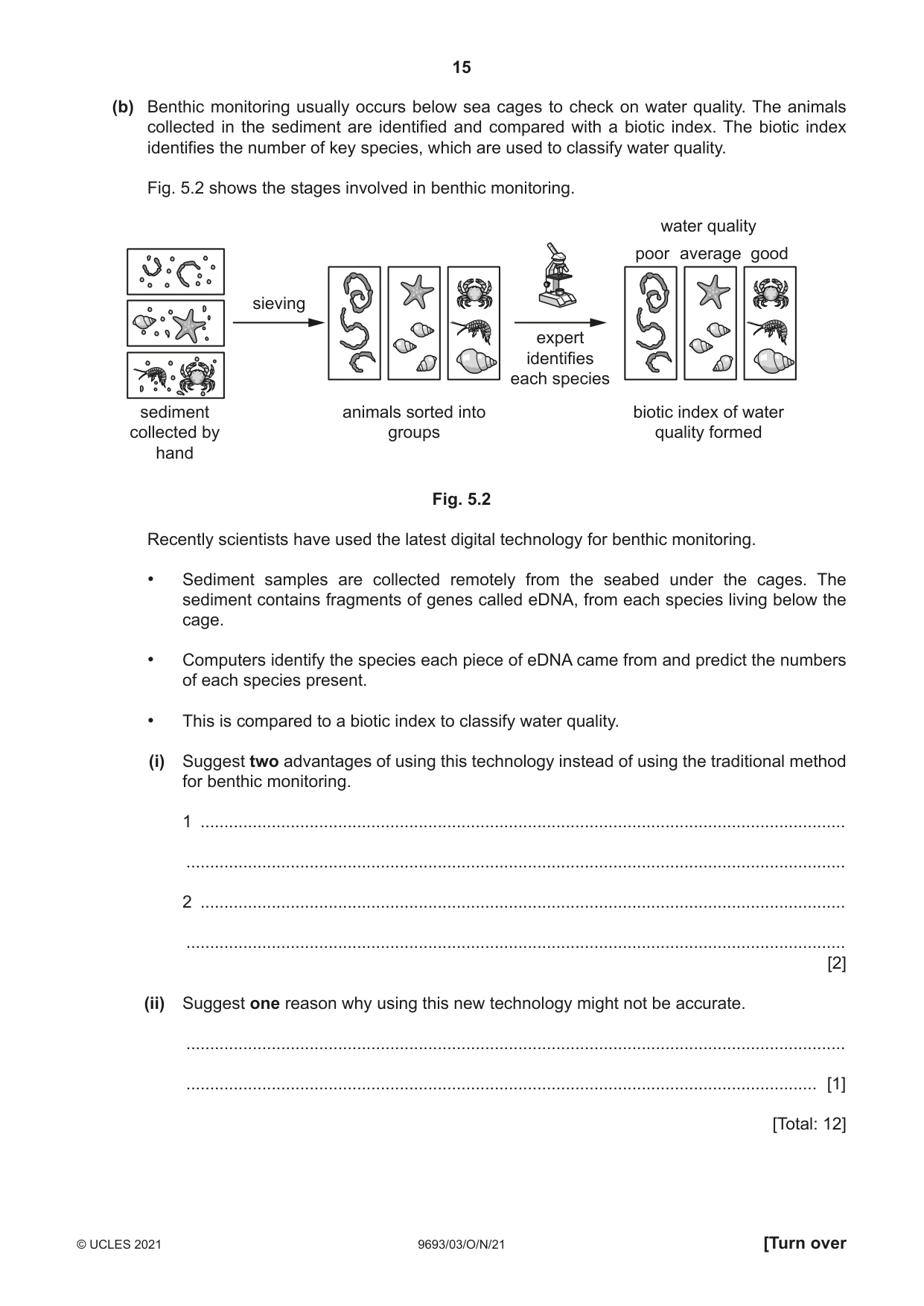
5 (a) Marine food fish such as seabass are often cultured in sea cages. Fig. 5.1 shows a typical sea cage containing seabass. Fig. 5.1 This type of aquaculture is partly intensive and partly extensive. (i) State one feature which makes this type of aquaculture partly intensive. ........................................................................................................................................... ..................................................................................................................................... [1] (ii) State one feature which makes this type of aquaculture partly extensive. ........................................................................................................................................... ..................................................................................................................................... [1] (iii) Suggest one reason why the top of the cage is netted. ........................................................................................................................................... ..................................................................................................................................... [1] (iv) Stocking densities for cage culture of seabass range from 15 to 40 kg m–3 although some may be as high as 60 kg m–3. At very high stocking densities oxygen levels inside sea cages can fall to lower levels than in the surrounding water. Suggest and explain one other potential negative impact on the seabass of these high stocking densities. ........................................................................................................................................... ........................................................................................................................................... ........................................................................................................................................... ..................................................................................................................................... [2] (v) Oxygen concentration inside the sea cages is usually monitored. Explain why the oxygen concentration needs to remain high. ........................................................................................................................................... ..................................................................................................................................... [1] (vi) Describe why the oxygen concentration underneath sea cages is usually much lower than the surrounding water. ........................................................................................................................................... ........................................................................................................................................... ........................................................................................................................................... ........................................................................................................................................... ........................................................................................................................................... ..................................................................................................................................... [3] (b) Benthic monitoring usually occurs below sea cages to check on water quality. The animals collected in the sediment are identified and compared with a biotic index. The biotic index identifies the number of key species, which are used to classify water quality. Fig. 5.2 shows the stages involved in benthic monitoring. water quality poor average good sieving expert identifies each species sediment animals sorted into biotic index of water collected by groups quality formed hand Fig. 5.2 Recently scientists have used the latest digital technology for benthic monitoring. • Sediment samples are collected remotely from the seabed under the cages. The sediment contains fragments of genes called eDNA, from each species living below the cage. • Computers identify the species each piece of eDNA came from and predict the numbers of each species present. • This is compared to a biotic index to classify water quality. (i) Suggest two advantages of using this technology instead of using the traditional method for benthic monitoring. 1 ........................................................................................................................................ ........................................................................................................................................... 2 ........................................................................................................................................ ........................................................................................................................................... [2] (ii) Suggest one reason why using this new technology might not be accurate. ........................................................................................................................................... ..................................................................................................................................... [1] [Total: 12]
Q6 · Read the information about oysters in Chesapeake Bay, United States of America
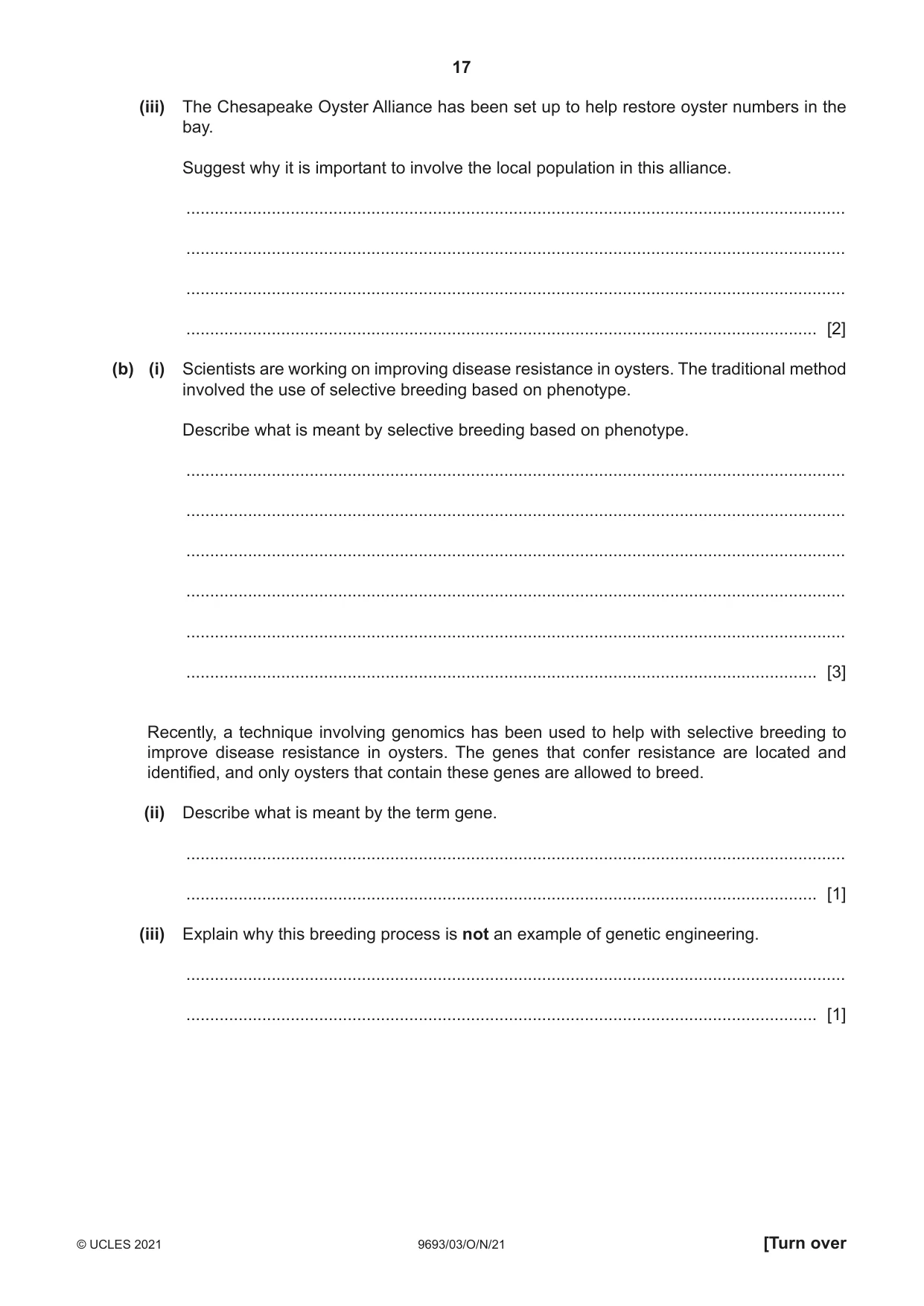
6 (a) Read the information about oysters in Chesapeake Bay, United States of America. Oyster numbers reduced to just 0.3% of the population in the 1800s. Disease, habitat loss, overharvesting and poor water quality were the main factors for this reduction. In recent years the oyster population has recovered due to water quality improvement of the ten tributaries which flow into the bay, increasing disease resistance, growth of aquaculture and better management of the wild harvest. Oysters are filter feeders and are used to improve water quality and provide a habitat for many species, especially crabs and shrimp, which in turn provide food for fish. Better management techniques include creating sanctuary areas for oysters where no harvesting is allowed. (i) Suggest the benefits of creating oyster sanctuary areas. ........................................................................................................................................... ........................................................................................................................................... ........................................................................................................................................... ........................................................................................................................................... ........................................................................................................................................... ..................................................................................................................................... [3] (ii) Suggest how aquaculture can be used to increase oyster numbers in the bay. ........................................................................................................................................... ........................................................................................................................................... ........................................................................................................................................... ..................................................................................................................................... [2] (iii) The Chesapeake Oyster Alliance has been set up to help restore oyster numbers in the bay. Suggest why it is important to involve the local population in this alliance. ........................................................................................................................................... ........................................................................................................................................... ........................................................................................................................................... ..................................................................................................................................... [2] (b) (i) Scientists are working on improving disease resistance in oysters. The traditional method involved the use of selective breeding based on phenotype. Describe what is meant by selective breeding based on phenotype. ........................................................................................................................................... ........................................................................................................................................... ........................................................................................................................................... ........................................................................................................................................... ........................................................................................................................................... ..................................................................................................................................... [3] Recently, a technique involving genomics has been used to help with selective breeding to improve disease resistance in oysters. The genes that confer resistance are located and identified, and only oysters that contain these genes are allowed to breed. (ii) Describe what is meant by the term gene. ........................................................................................................................................... ..................................................................................................................................... [1] (iii) Explain why this breeding process is not an example of genetic engineering. ........................................................................................................................................... ..................................................................................................................................... [1] (iv) Suggest the benefits of selecting the individuals allowed to breed according to their genes, rather than selecting them according to their phenotype. ........................................................................................................................................... ........................................................................................................................................... ........................................................................................................................................... ..................................................................................................................................... [2] [Total: 14]
What was in this paper
The subtopics covered by these 6 questions, and how many questions each got. Open one in a new tab to see every Cambridge question on it.
What you needed in this session
Cambridge’s own grade thresholds for 2021 Oct/Nov, Paper 3 · Variant 0. A higher threshold means an easier paper — the bar moves with how the cohort did.