Cambridge A Level Marine Science 9693 — 2017 Oct/Nov Paper 2 · Variant 1
9693/21/O/N/17 · 4 questions · 50 marks · ≈56 min
The question paper and its mark scheme, free to read here and free to download. This is Cambridge’s own paper, exactly as it was sat.
Question paper12 pages

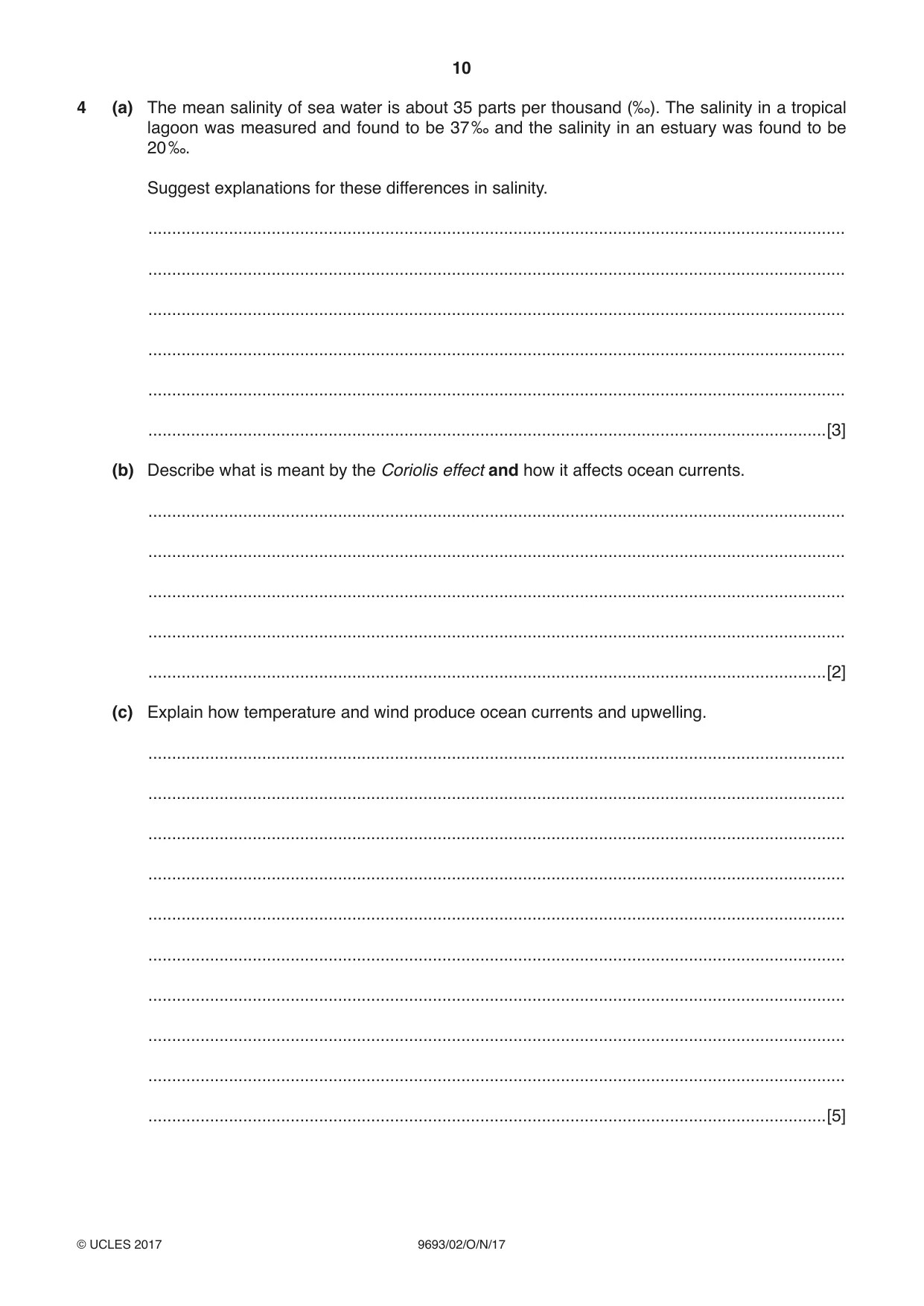
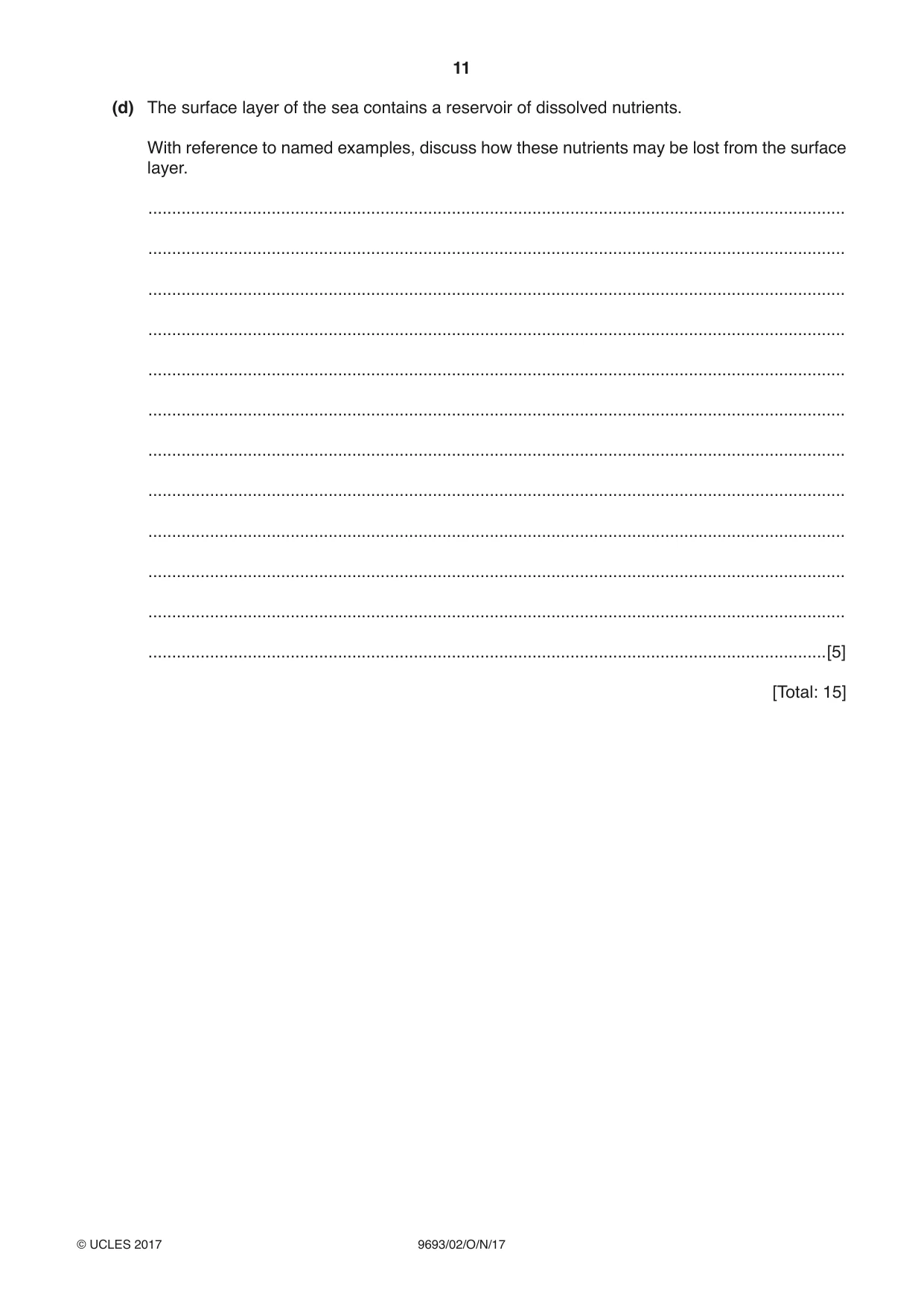

Mark scheme7 pages
Answers below. Sit the paper first if you are practising.
Questions as text
Q1 · A diversity index (D ) can be used to compare the biodiversity of two habitats
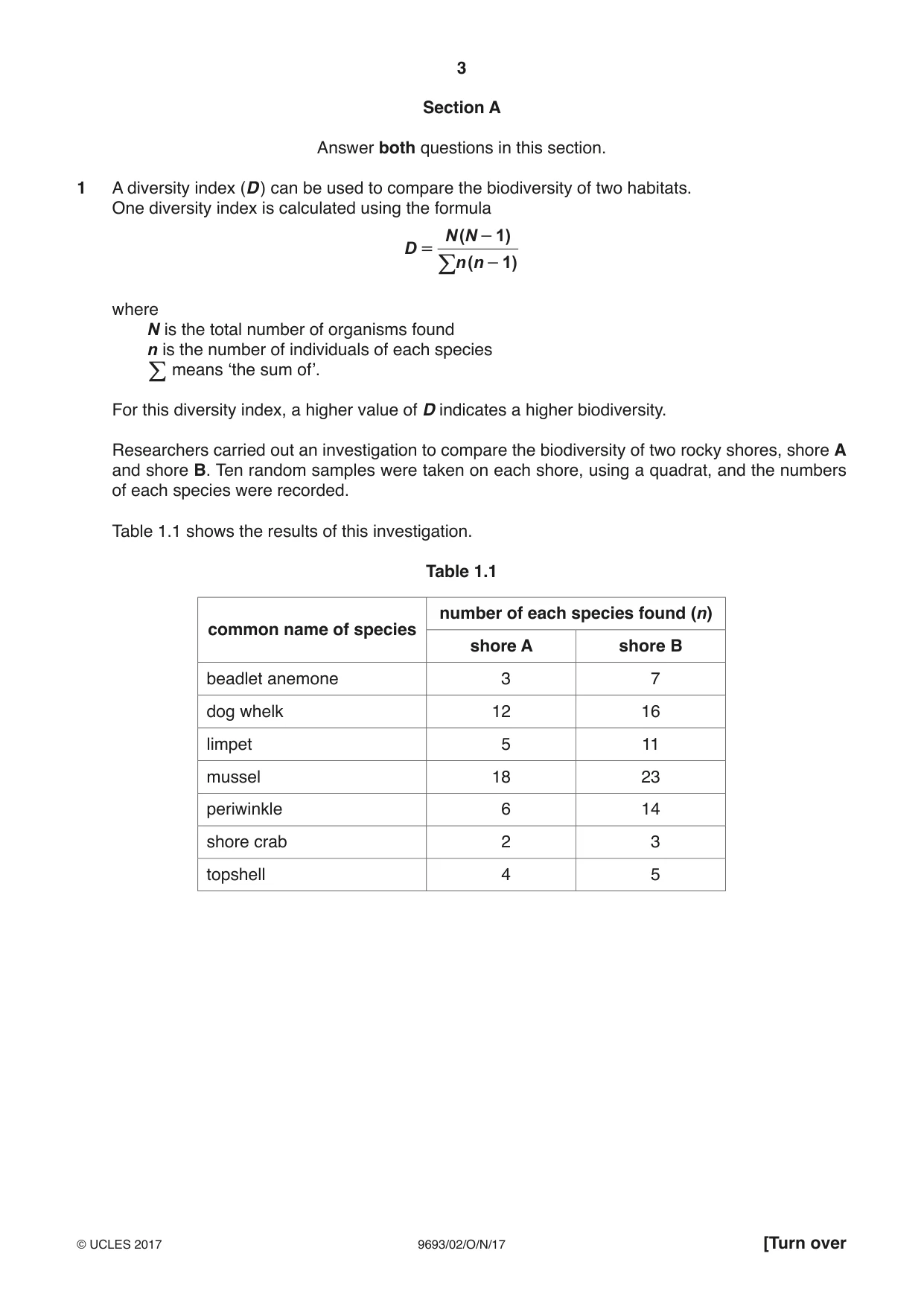
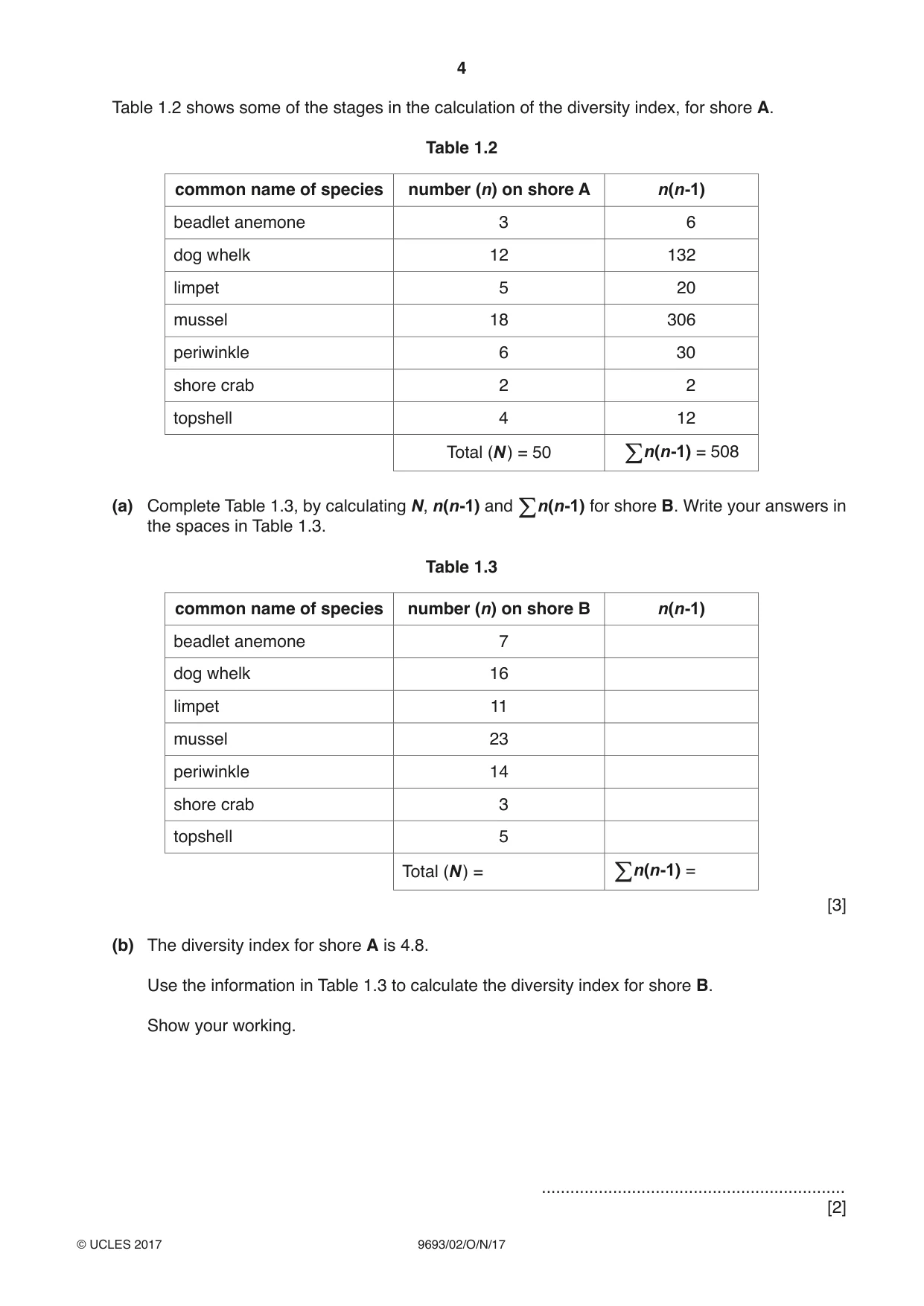
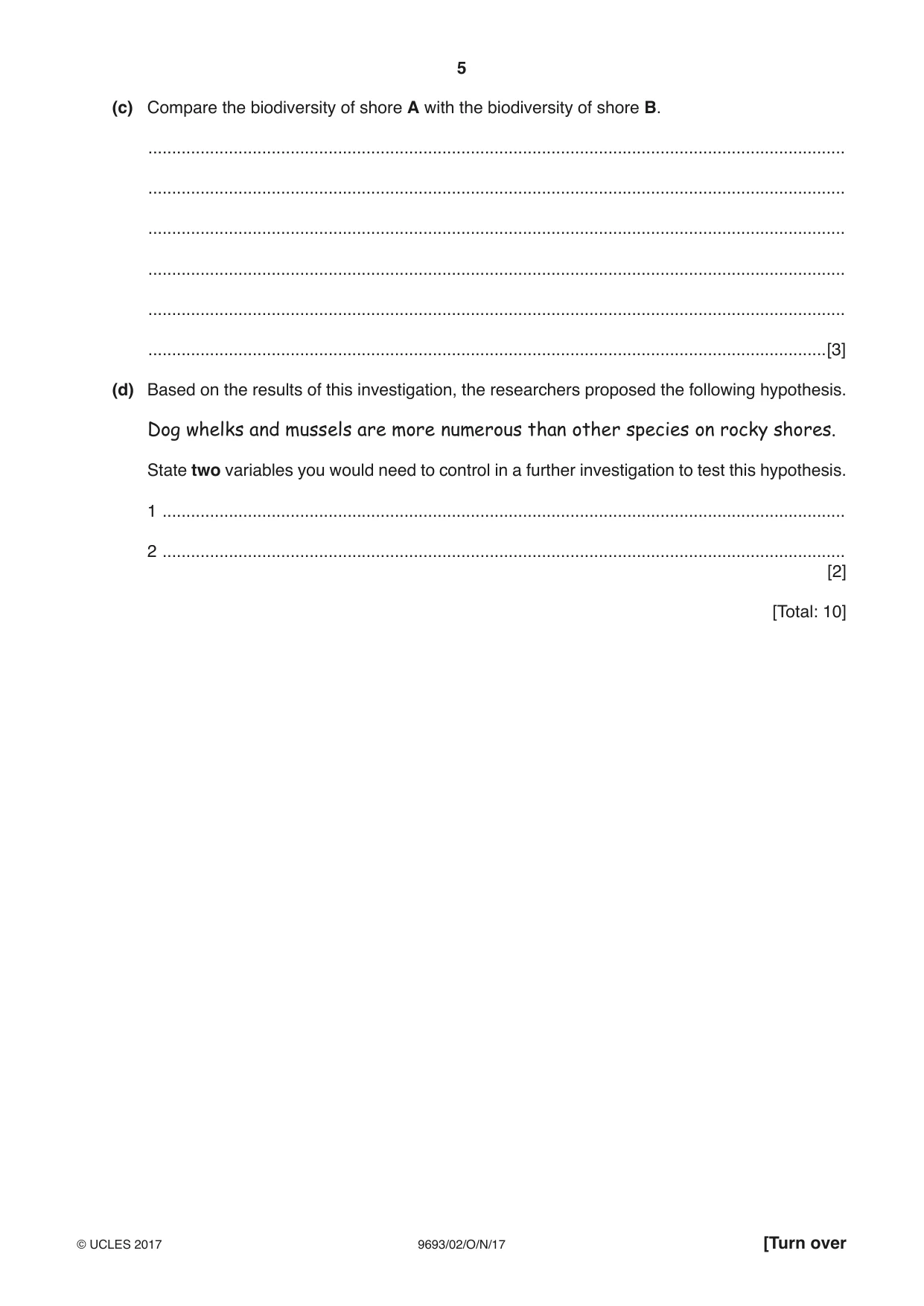
1 A diversity index (D ) can be used to compare the biodiversity of two habitats. One diversity index is calculated using the formula N (N - 1 ) D = - 1 ) /n (n where N is the total number of organisms found n is the number of individuals of each species / means ‘the sum of’. For this diversity index, a higher value of D indicates a higher biodiversity. Researchers carried out an investigation to compare the biodiversity of two rocky shores, shore A and shore B. Ten random samples were taken on each shore, using a quadrat, and the numbers of each species were recorded. Table 1.1 shows the results of this investigation. Table 1.1 number of each species found (n) common name of species shore A shore B beadlet anemone 3 7 dog whelk 12 16 limpet 5 11 mussel 18 23 periwinkle 6 14 shore crab 2 3 topshell 4 5 Table 1.2 shows some of the stages in the calculation of the diversity index, for shore A. Table 1.2 common name of species number (n) on shore A n(n-1) beadlet anemone 3 6 dog whelk 12 132 limpet 5 20 mussel 18 306 periwinkle 6 30 shore crab 2 2 topshell 4 12 Total (N ) = 50 /n(n-1) = 508 (a) Complete Table 1.3, by calculating N, n(n-1) and /n(n-1) for shore B. Write your answers in the spaces in Table 1.3. Table 1.3 common name of species number (n) on shore B n(n-1) beadlet anemone 7 dog whelk 16 limpet 11 mussel 23 periwinkle 14 shore crab 3 topshell 5 Total (N ) = /n(n-1) = [3] (b) The diversity index for shore A is 4.8. Use the information in Table 1.3 to calculate the diversity index for shore B. Show your working. ................................................................ [2] (c) Compare the biodiversity of shore A with the biodiversity of shore B. ................................................................................................................................................... ................................................................................................................................................... ................................................................................................................................................... ................................................................................................................................................... ................................................................................................................................................... ...............................................................................................................................................[3] (d) Based on the results of this investigation, the researchers proposed the following hypothesis. Dog whelks and mussels are more numerous than other species on rocky shores. State two variables you would need to control in a further investigation to test this hypothesis. 1 ................................................................................................................................................ 2 ................................................................................................................................................ [2] [Total: 10]
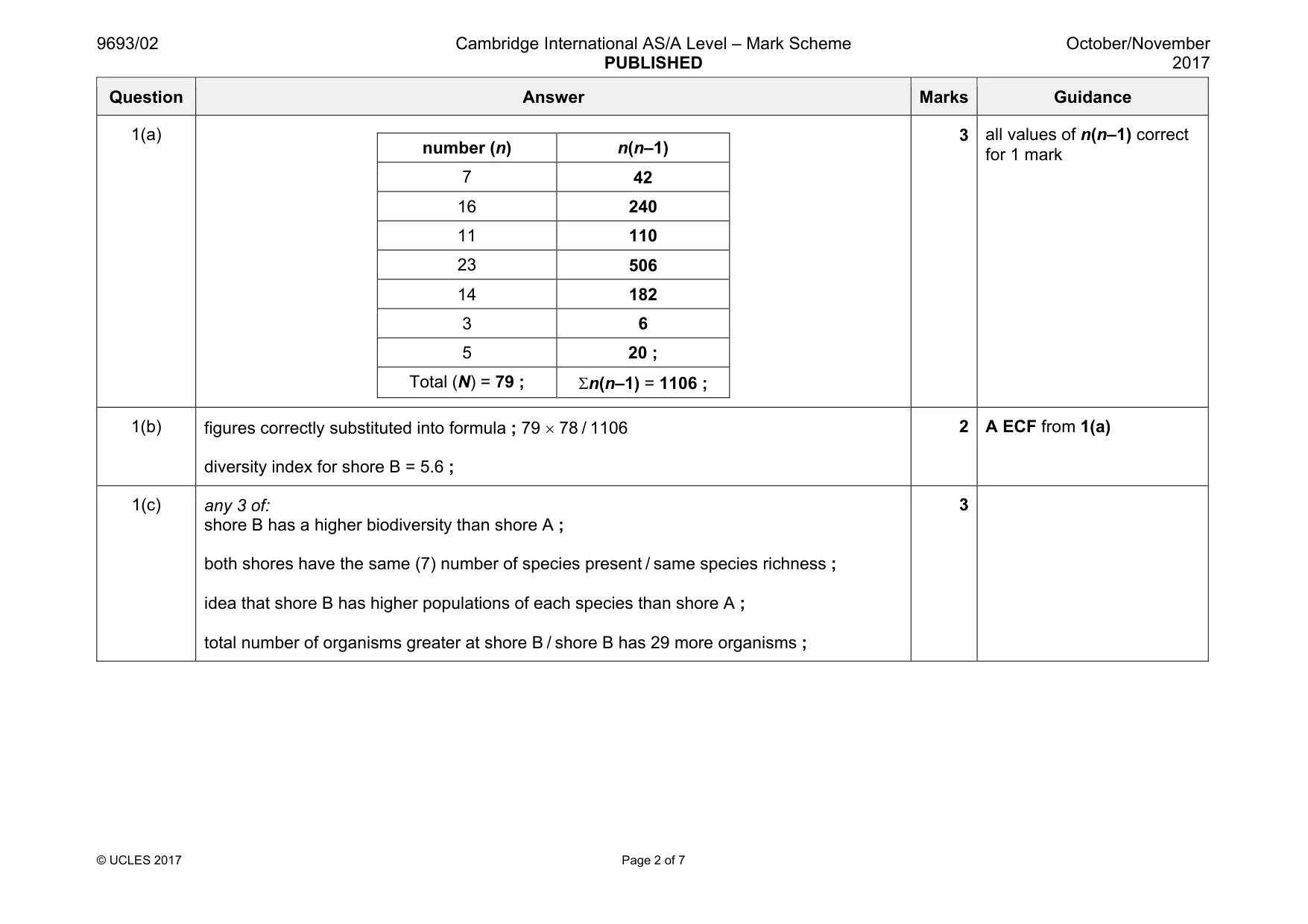
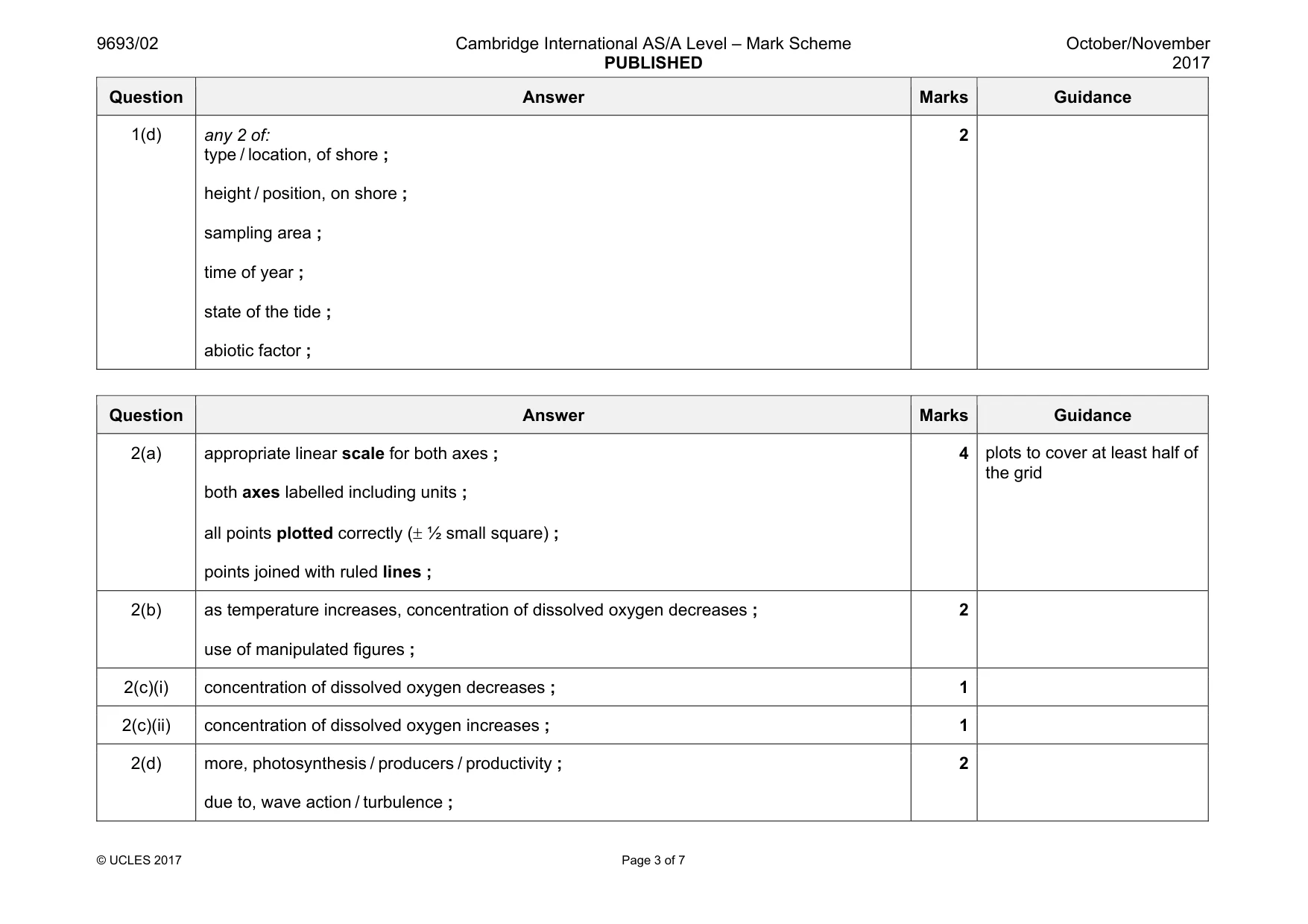
Mark scheme: 1(a) number (n) n(n–1) 7 42 16 240 11 110 23 506 14 182 3 6 5 20 ; Total (N) = 79 ; Σn(n–1) = 1106 ; 3 for 1 mark 1(b) figures correctly substituted into formula ; 79 × 78 / 1106 diversity index for shore B = 5.6 ; 2 A ECF from 1(a) 1(c) any 3 of: shore B has a higher biodiversity than shore A ; both shores have the same (7) number of species present / same species richness ; idea that shore B has higher populations of each species than shore A ; total number of organisms greater at shore B / shore B has 29 more organisms ; 3 Question Answer Marks Guidance 1(d) any 2 of: type / location, of shore ; height / position, on shore ; sampling area ; time of year ; state of the tide ; abiotic factor ; 2
Q2 · The concentration of dissolved oxygen in sea water is affected by a number of different…
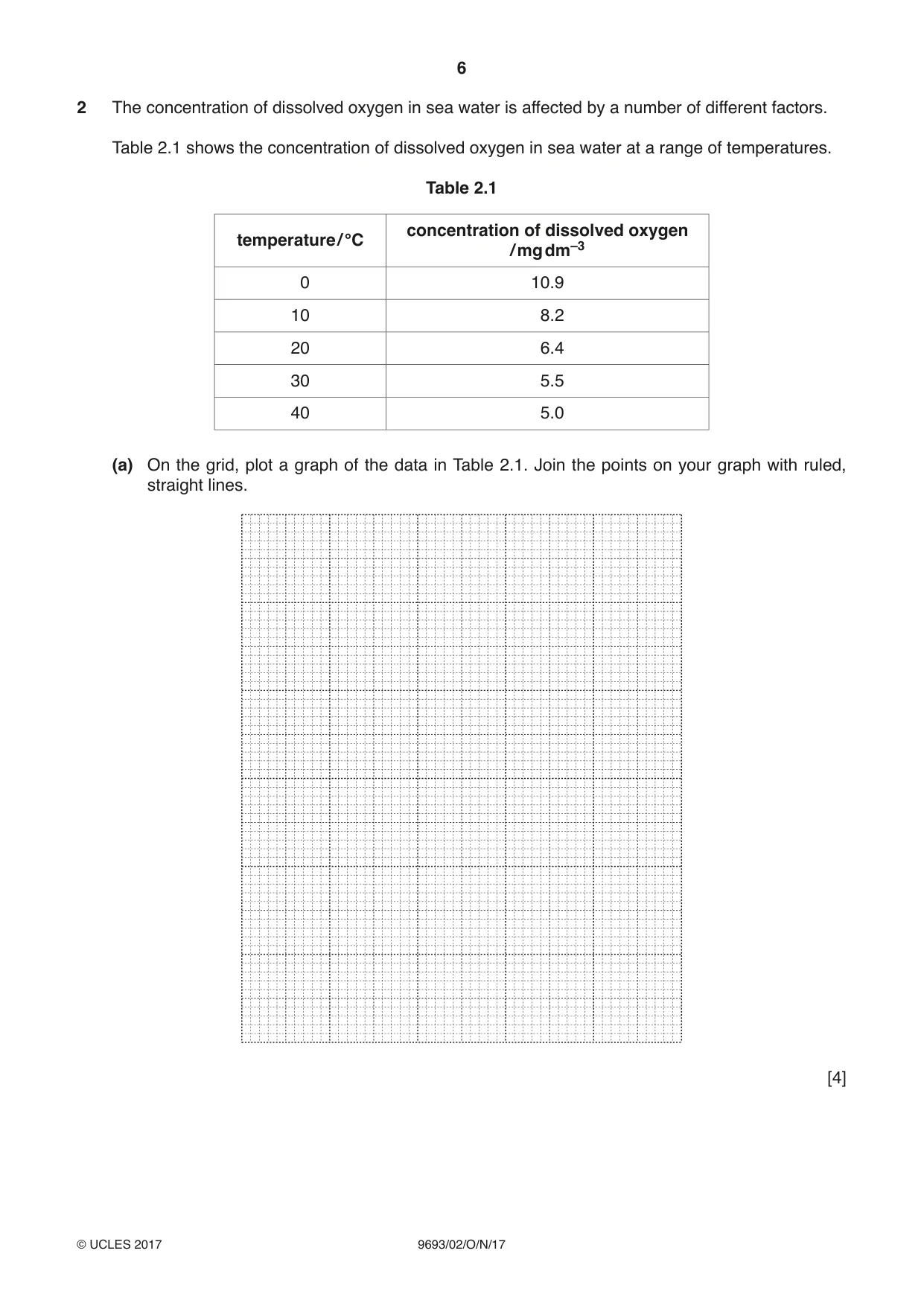
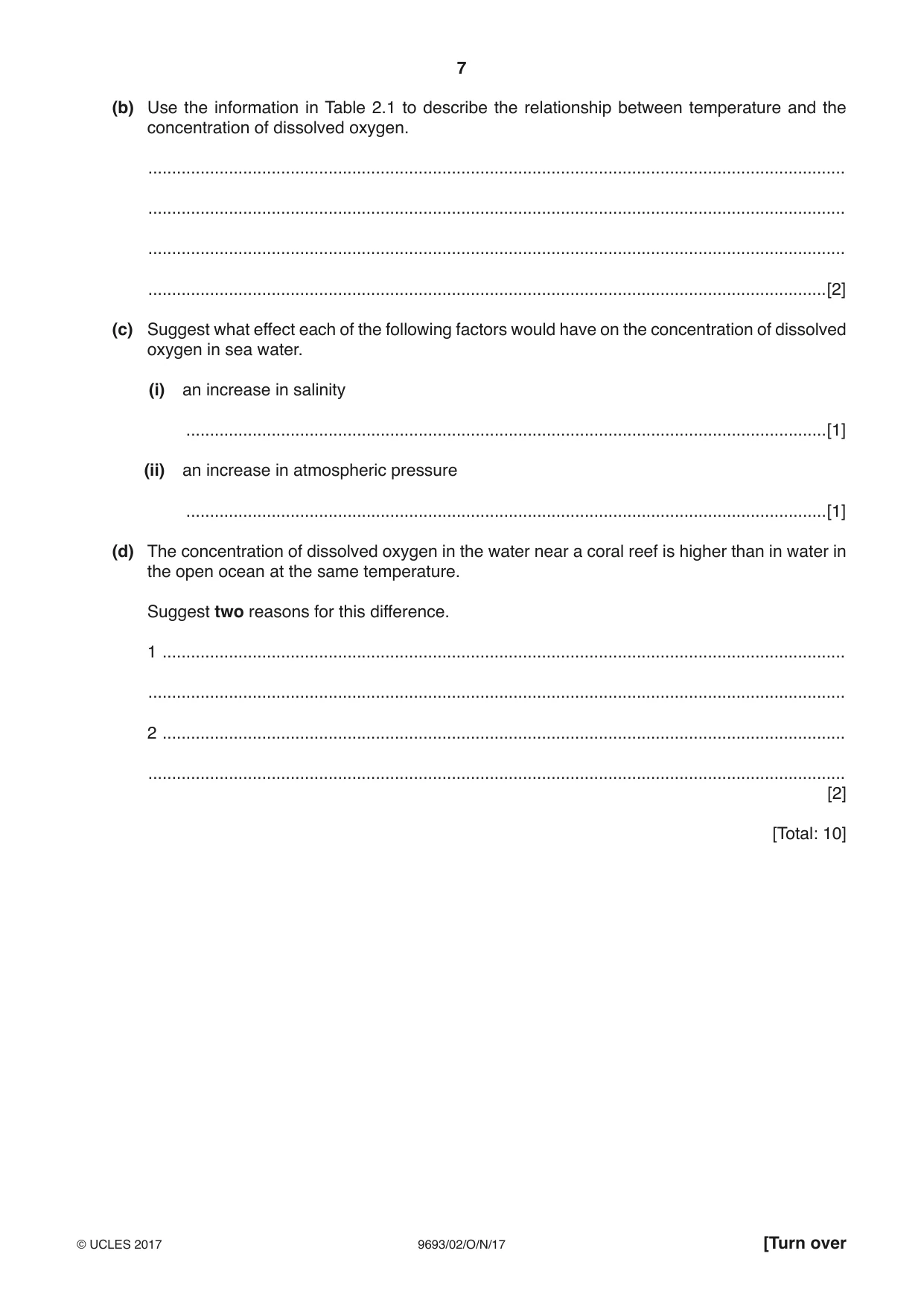
2 The concentration of dissolved oxygen in sea water is affected by a number of different factors. Table 2.1 shows the concentration of dissolved oxygen in sea water at a range of temperatures. Table 2.1 concentration of dissolved oxygen temperature / °C / mg dm–3 0 10.9 10 8.2 20 6.4 30 5.5 40 5.0 (a) On the grid, plot a graph of the data in Table 2.1. Join the points on your graph with ruled, straight lines. [4] (b) Use the information in Table 2.1 to describe the relationship between temperature and the concentration of dissolved oxygen. ................................................................................................................................................... ................................................................................................................................................... ................................................................................................................................................... ...............................................................................................................................................[2] (c) Suggest what effect each of the following factors would have on the concentration of dissolved oxygen in sea water. (i) an increase in salinity .......................................................................................................................................[1] (ii) an increase in atmospheric pressure .......................................................................................................................................[1] (d) The concentration of dissolved oxygen in the water near a coral reef is higher than in water in the open ocean at the same temperature. Suggest two reasons for this difference. 1 ................................................................................................................................................ ................................................................................................................................................... 2 ................................................................................................................................................ ................................................................................................................................................... [2] [Total: 10]
Mark scheme: 2(a) appropriate linear scale for both axes ; both axes labelled including units ; all points plotted correctly (± ½ small square) ; points joined with ruled lines ; 4 the grid 2(b) as temperature increases, concentration of dissolved oxygen decreases ; use of manipulated figures ; 2 2(c)(i) concentration of dissolved oxygen decreases ; 1 2(c)(ii) concentration of dissolved oxygen increases ; 1 2(d) more, photosynthesis / producers / productivity ; due to, wave action / turbulence ; 2
Q3 · Explain what is meant by each of the following terms used in ecology
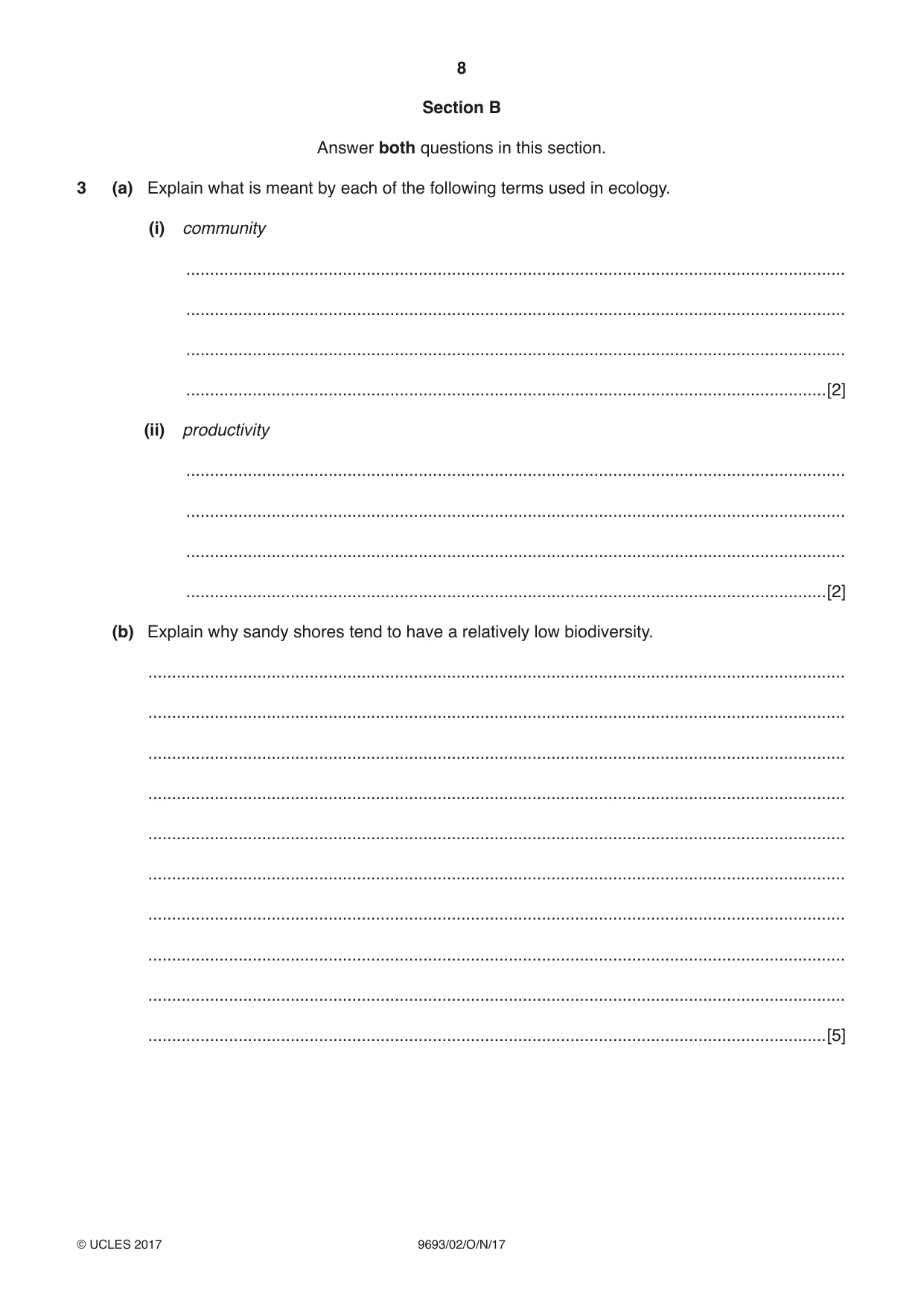
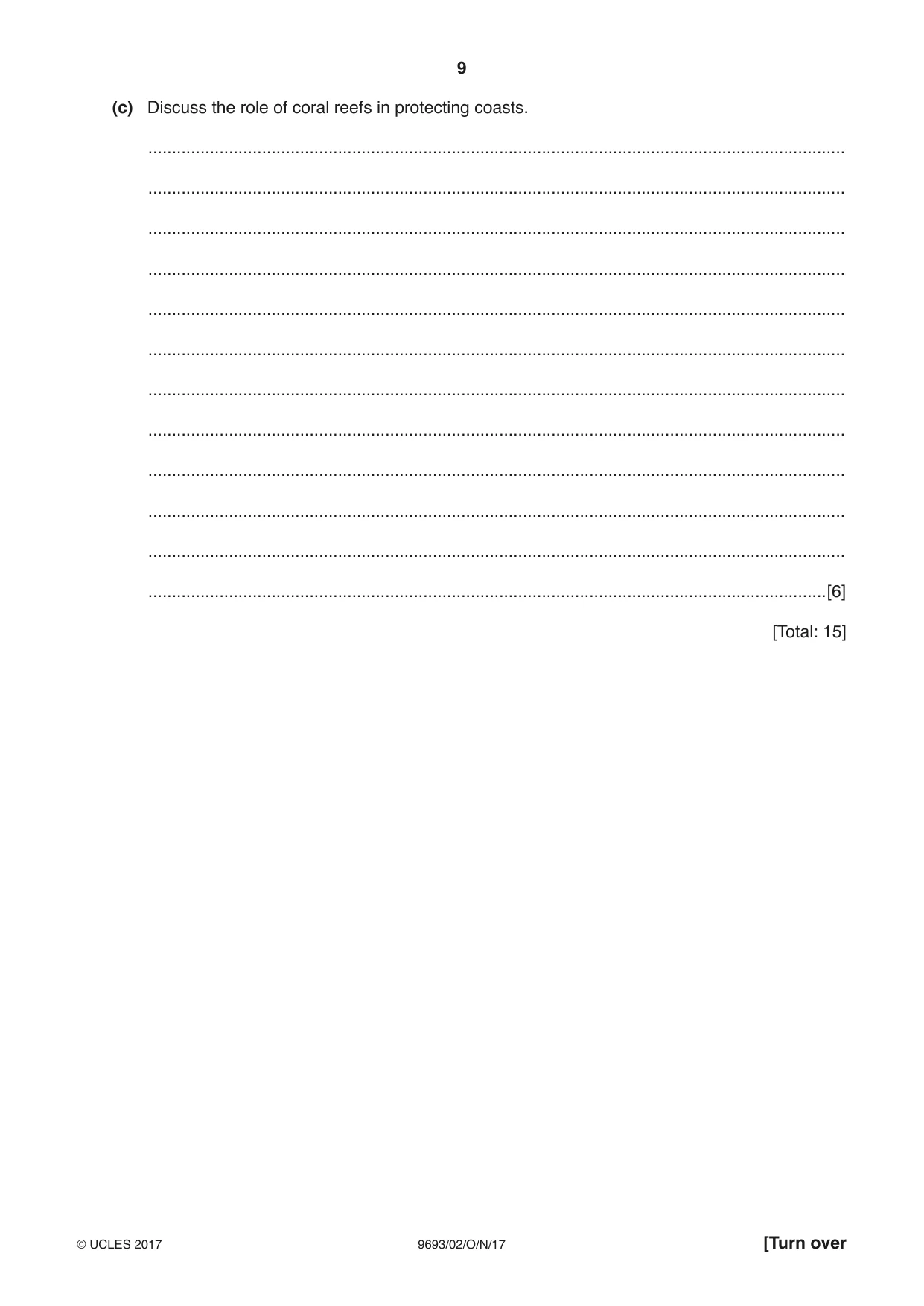
3 (a) Explain what is meant by each of the following terms used in ecology. (i) community ........................................................................................................................................... ........................................................................................................................................... ........................................................................................................................................... .......................................................................................................................................[2] (ii) productivity ........................................................................................................................................... ........................................................................................................................................... ........................................................................................................................................... .......................................................................................................................................[2] (b) Explain why sandy shores tend to have a relatively low biodiversity. ................................................................................................................................................... ................................................................................................................................................... ................................................................................................................................................... ................................................................................................................................................... ................................................................................................................................................... ................................................................................................................................................... ................................................................................................................................................... ................................................................................................................................................... ................................................................................................................................................... ...............................................................................................................................................[5] (c) Discuss the role of coral reefs in protecting coasts. ................................................................................................................................................... ................................................................................................................................................... ................................................................................................................................................... ................................................................................................................................................... ................................................................................................................................................... ................................................................................................................................................... ................................................................................................................................................... ................................................................................................................................................... ................................................................................................................................................... ................................................................................................................................................... ................................................................................................................................................... ...............................................................................................................................................[6] [Total: 15]
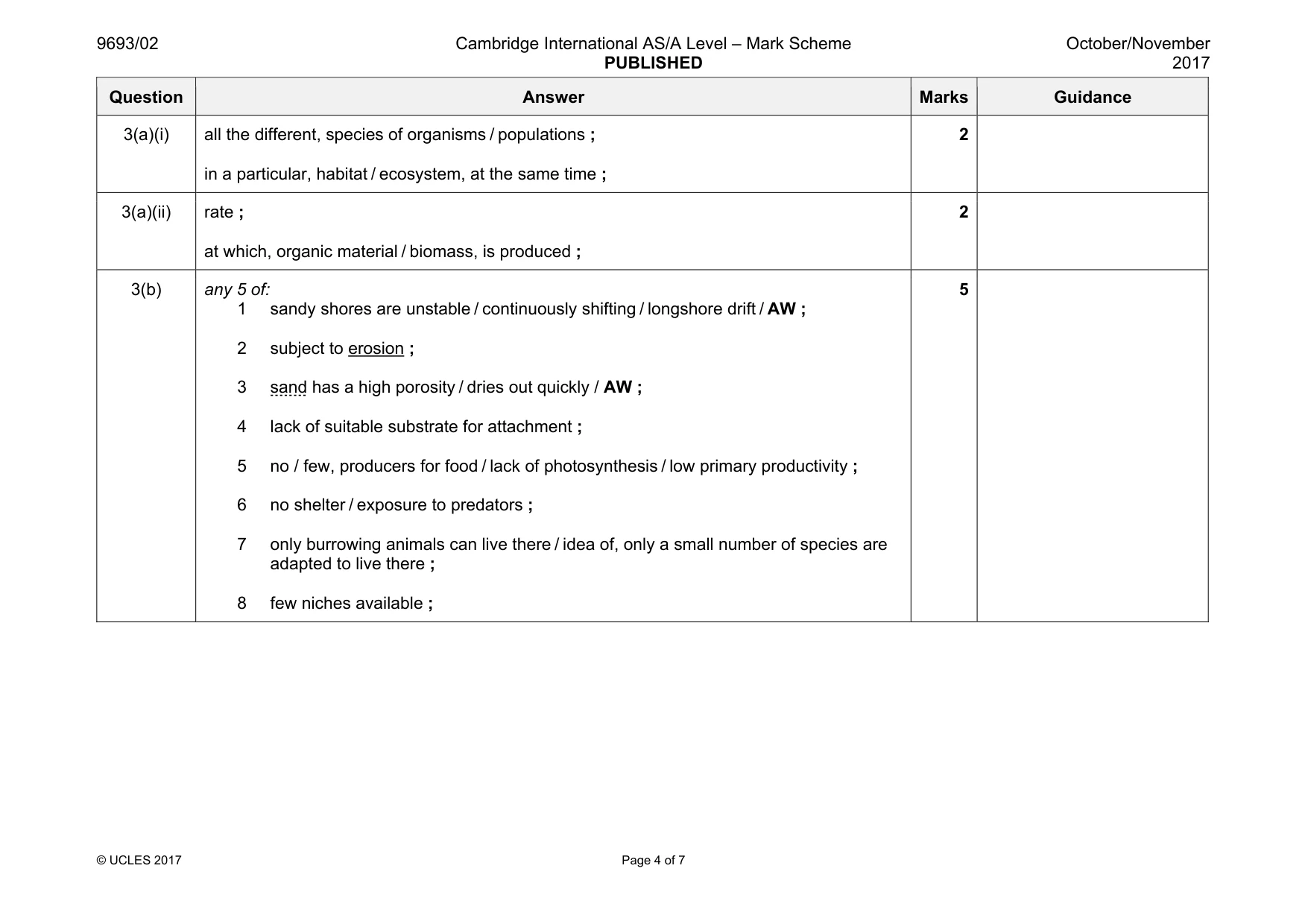
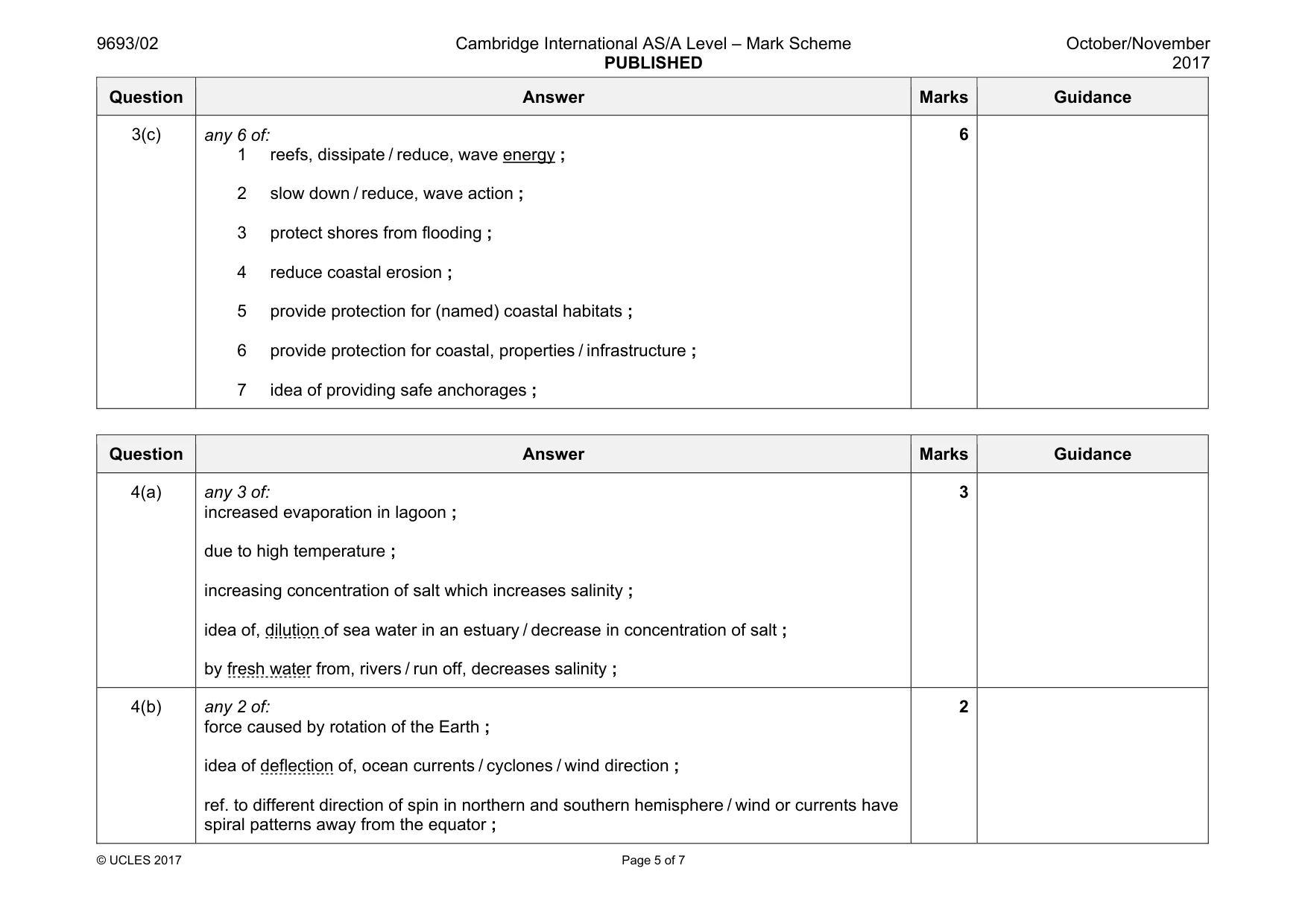
Mark scheme: 3(a)(i) all the different, species of organisms / populations ; in a particular, habitat / ecosystem, at the same time ; 2 3(a)(ii) rate ; at which, organic material / biomass, is produced ; 2 3(b) any 5 of: 1 sandy shores are unstable / continuously shifting / longshore drift / AW ; 2 subject to erosion ; 3 sand has a high porosity / dries out quickly / AW ; 4 lack of suitable substrate for attachment ; 5 no / few, producers for food / lack of photosynthesis / low primary productivity ; 6 no shelter / exposure to predators ; 7 only burrowing animals can live there / idea of, only a small number of species are adapted to live there ; 8 few niches available ; 5 Question Answer Marks Guidance 3(c) any 6 of: 1 reefs, dissipate / reduce, wave energy ; 2 slow down / reduce, wave action ; 3 protect shores from flooding ; 4 reduce coastal erosion ; 5 provide protection for (named) coastal habitats ; 6 provide protection for coastal, properties / infrastructure ; 7 idea of providing safe anchorages ; 6
Q4 · The mean salinity of sea water is about 35 parts per thousand (‰)
4 (a) The mean salinity of sea water is about 35 parts per thousand (‰). The salinity in a tropical lagoon was measured and found to be 37 ‰ and the salinity in an estuary was found to be 20 ‰. Suggest explanations for these differences in salinity. ................................................................................................................................................... ................................................................................................................................................... ................................................................................................................................................... ................................................................................................................................................... ................................................................................................................................................... ...............................................................................................................................................[3] (b) Describe what is meant by the Coriolis effect and how it affects ocean currents. ................................................................................................................................................... ................................................................................................................................................... ................................................................................................................................................... ................................................................................................................................................... ...............................................................................................................................................[2] (c) Explain how temperature and wind produce ocean currents and upwelling. ................................................................................................................................................... ................................................................................................................................................... ................................................................................................................................................... ................................................................................................................................................... ................................................................................................................................................... ................................................................................................................................................... ................................................................................................................................................... ................................................................................................................................................... ................................................................................................................................................... ...............................................................................................................................................[5] (d) The surface layer of the sea contains a reservoir of dissolved nutrients. With reference to named examples, discuss how these nutrients may be lost from the surface layer. ................................................................................................................................................... ................................................................................................................................................... ................................................................................................................................................... ................................................................................................................................................... ................................................................................................................................................... ................................................................................................................................................... ................................................................................................................................................... ................................................................................................................................................... ................................................................................................................................................... ................................................................................................................................................... ................................................................................................................................................... ...............................................................................................................................................[5] [Total: 15]
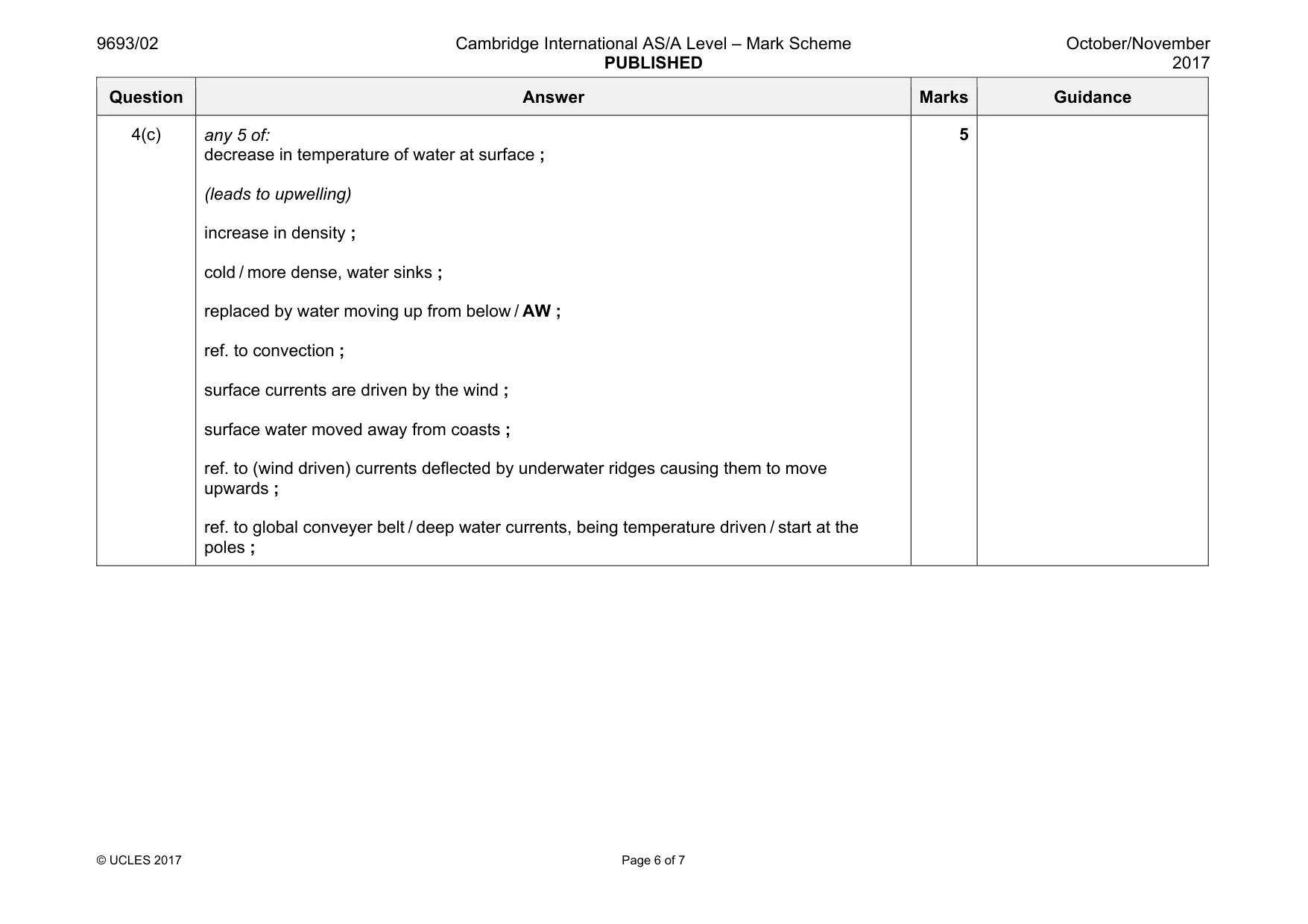
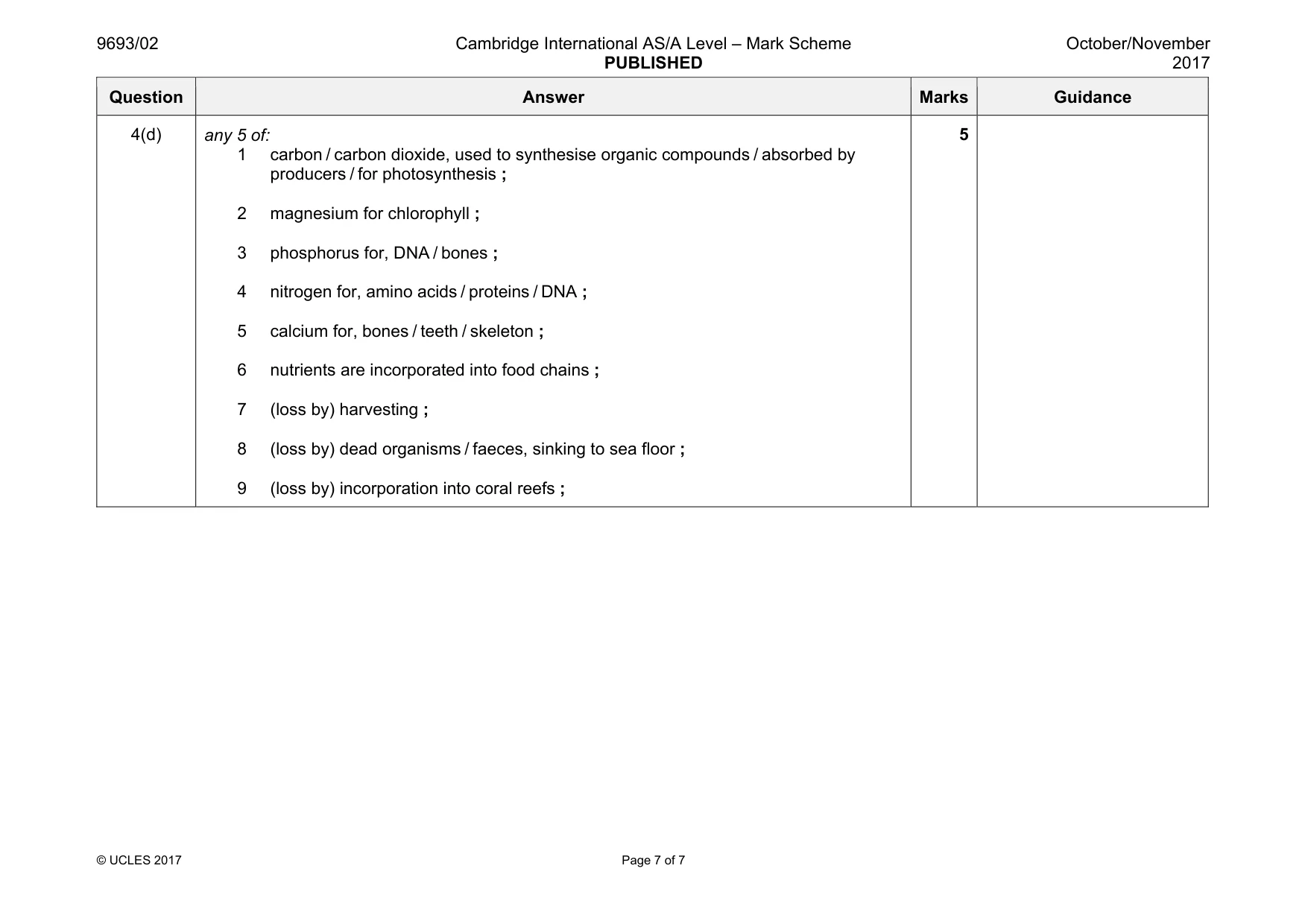
Mark scheme: 4(a) any 3 of: increased evaporation in lagoon ; due to high temperature ; increasing concentration of salt which increases salinity ; idea of, dilution of sea water in an estuary / decrease in concentration of salt ; by fresh water from, rivers / run off, decreases salinity ; 3 4(b) any 2 of: force caused by rotation of the Earth ; idea of deflection of, ocean currents / cyclones / wind direction ; ref. to different direction of spin in northern and southern hemisphere / wind or currents have spiral patterns away from the equator ; 2 Question Answer Marks Guidance 4(c) any 5 of: decrease in temperature of water at surface ; (leads to upwelling) increase in density ; cold / more dense, water sinks ; replaced by water moving up from below / AW ; ref. to convection ; surface currents are driven by the wind ; surface water moved away from coasts ; ref. to (wind driven) currents deflected by underwater ridges causing them to move upwards ; ref. to global conveyer belt / deep water currents, being temperature driven / start at the poles ; 5 Question Answer Marks Guidance 4(d) any 5 of: 1 carbon / carbon dioxide, used to synthesise organic compounds / absorbed by producers / for photosynthesis ; 2 magnesium for chlorophyll ; 3 phosphorus for, DNA / bones ; 4 nitrogen for, amino acids / proteins / DNA ; 5 calcium for, bones / teeth / skeleton ; 6 nutrients are incorporated into food chains ; 7 (loss by) harvesting ; 8 (loss by) dead organisms / faeces, sinking to sea floor ; 9 (loss by) incorporation into coral reefs ; 5
What was in this paper
The subtopics covered by these 4 questions, and how many questions each got. Open one in a new tab to see every Cambridge question on it.
What you needed in this session
Cambridge’s own grade thresholds for 2017 Oct/Nov, Paper 2 · Variant 1. A higher threshold means an easier paper — the bar moves with how the cohort did.