Cambridge A Level Marine Science 9693 — 2017 May/June Paper 3 · Variant 1
9693/31/M/J/17 · 7 questions · 75 marks · ≈84 min
The question paper and its mark scheme, free to read here and free to download. This is Cambridge’s own paper, exactly as it was sat.
Question paper20 pages




Mark scheme13 pages
Answers below. Sit the paper first if you are practising.
Questions as text
Q1 · The genus Sargassum is a group of macroscopic brown algae found in many parts of the…
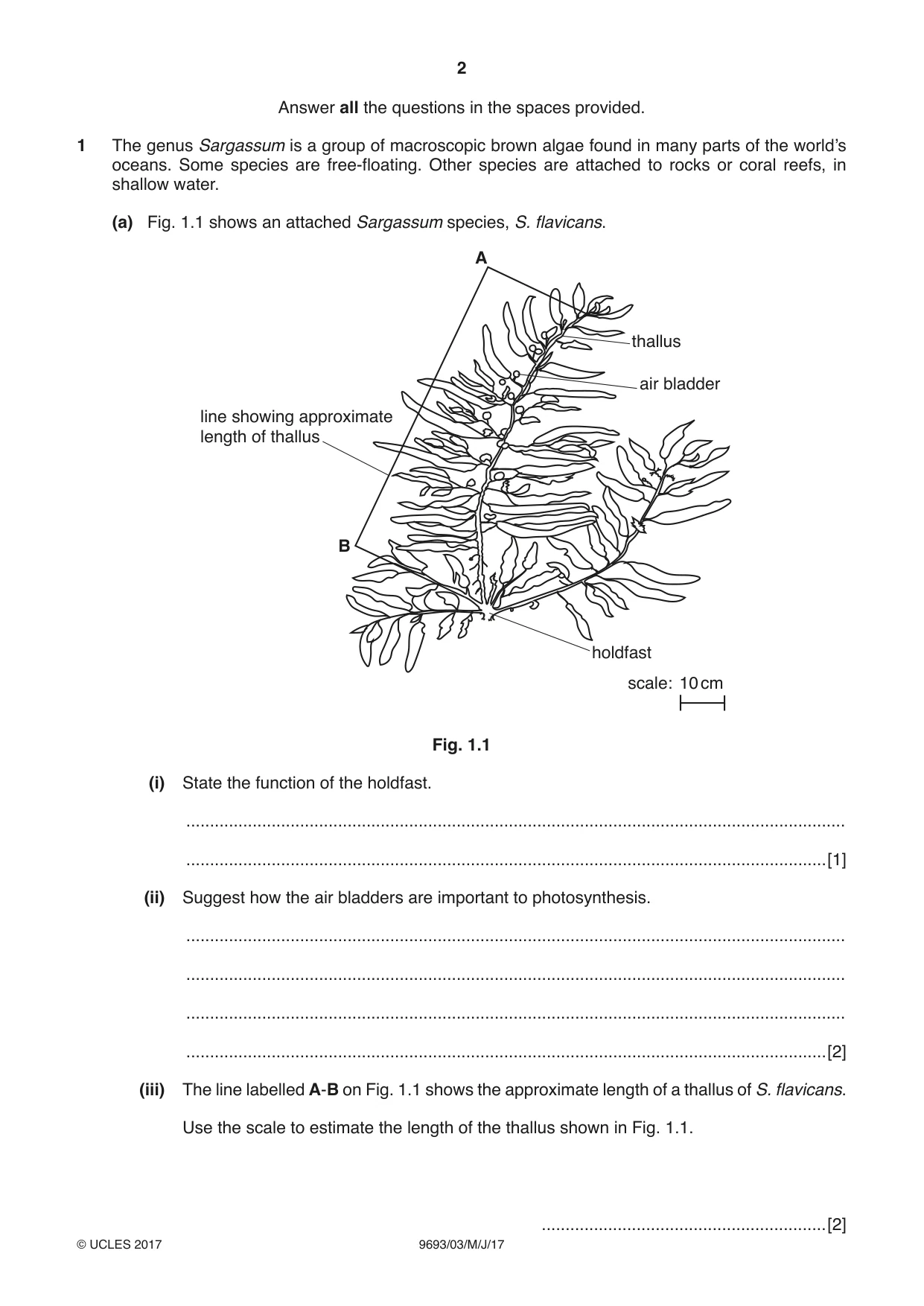
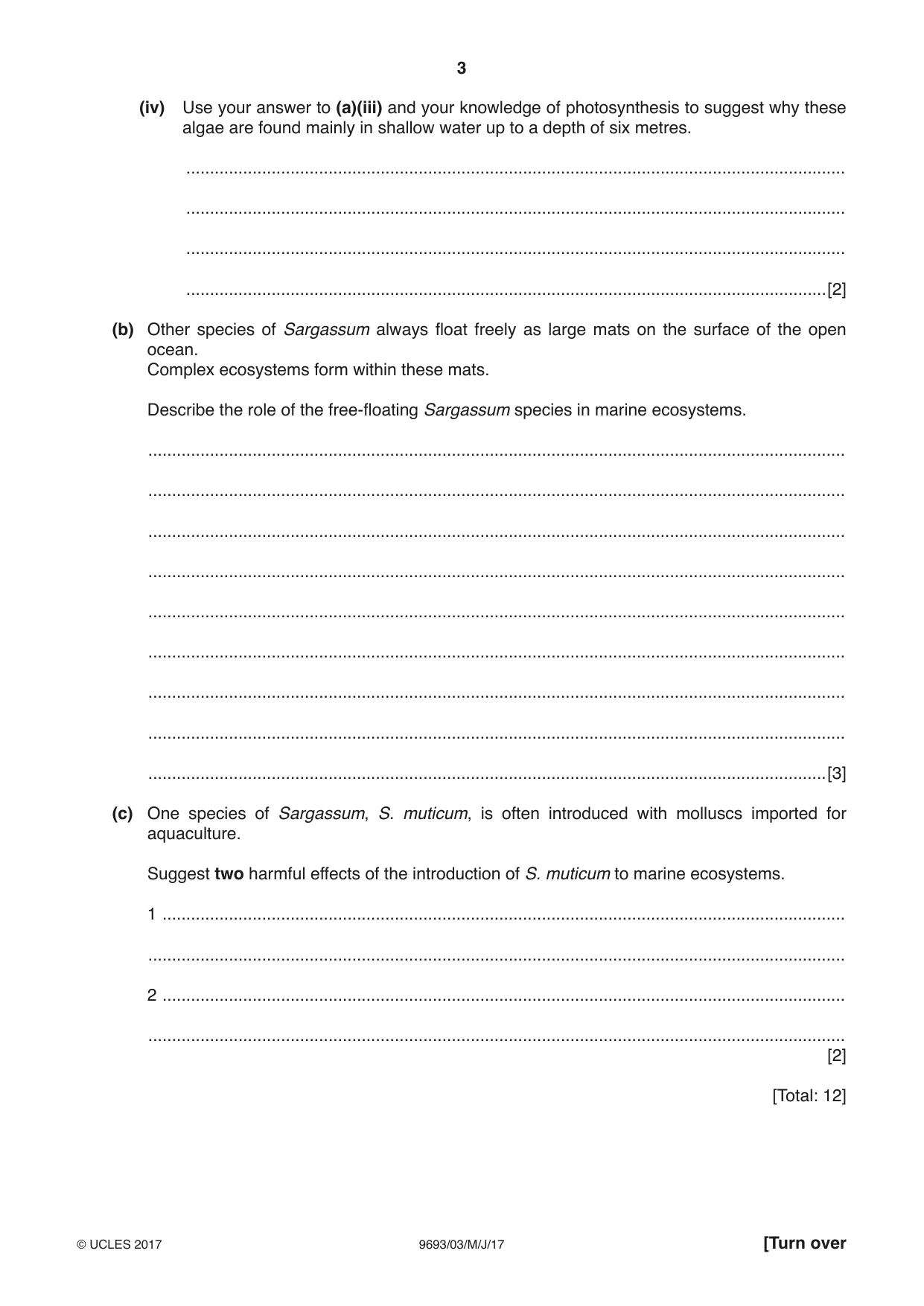
1 The genus Sargassum is a group of macroscopic brown algae found in many parts of the world’s oceans. Some species are free-floating. Other species are attached to rocks or coral reefs, in shallow water. (a) Fig. 1.1 shows an attached Sargassum species, S. flavicans. A thallus air bladder line showing approximate length of thallus B holdfast scale: 10 cm Fig. 1.1 (i) State the function of the holdfast. ........................................................................................................................................... .......................................................................................................................................[1] (ii) Suggest how the air bladders are important to photosynthesis. ........................................................................................................................................... ........................................................................................................................................... ........................................................................................................................................... .......................................................................................................................................[2] (iii) The line labelled A-B on Fig. 1.1 shows the approximate length of a thallus of S. flavicans. Use the scale to estimate the length of the thallus shown in Fig. 1.1. (iv) Use your answer to (a)(iii) and your knowledge of photosynthesis to suggest why these algae are found mainly in shallow water up to a depth of six metres. ........................................................................................................................................... ........................................................................................................................................... ........................................................................................................................................... .......................................................................................................................................[2] (b) Other species of Sargassum always float freely as large mats on the surface of the open ocean. Complex ecosystems form within these mats. Describe the role of the free-floating Sargassum species in marine ecosystems. ................................................................................................................................................... ................................................................................................................................................... ................................................................................................................................................... ................................................................................................................................................... ................................................................................................................................................... ................................................................................................................................................... ................................................................................................................................................... ................................................................................................................................................... ...............................................................................................................................................[3] (c) One species of Sargassum, S. muticum, is often introduced with molluscs imported for aquaculture. Suggest two harmful effects of the introduction of S. muticum to marine ecosystems. 1 ................................................................................................................................................ ................................................................................................................................................... 2 ................................................................................................................................................ ................................................................................................................................................... [2] [Total: 12]
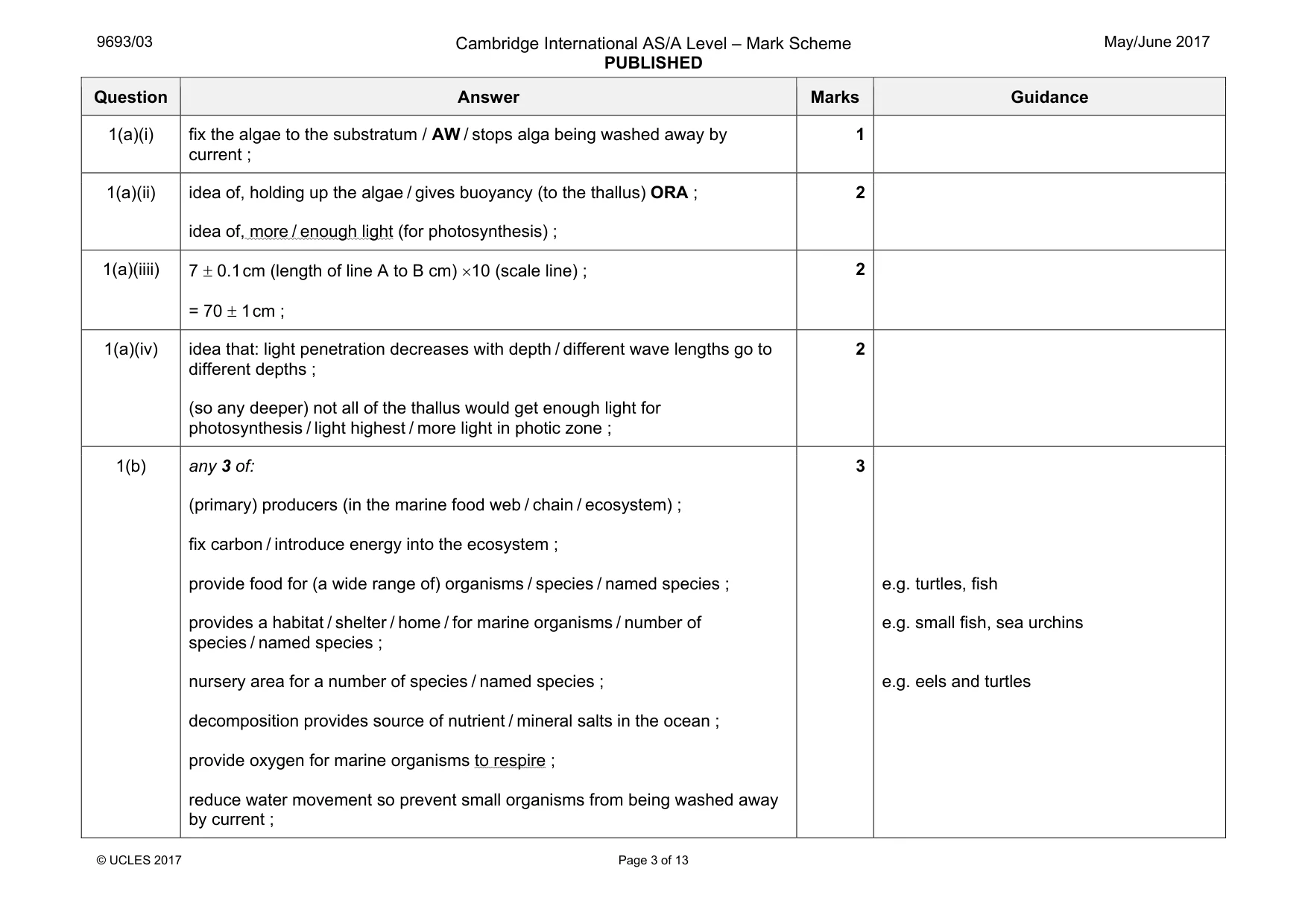
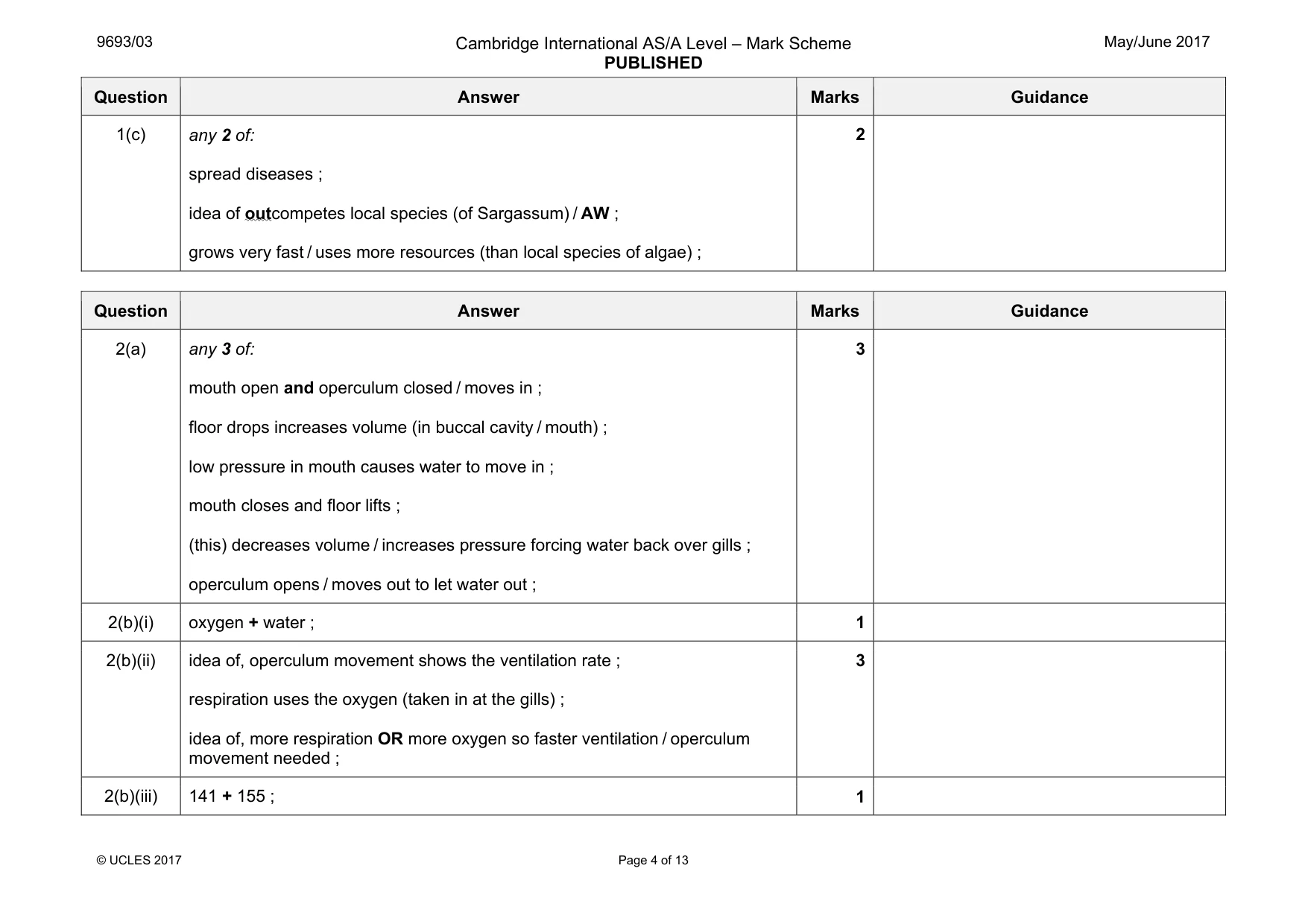
Mark scheme: 1(a)(i) fix the algae to the substratum / AW / stops alga being washed away by current ; 1 1(a)(ii) idea of, holding up the algae / gives buoyancy (to the thallus) ORA ; idea of, more / enough light (for photosynthesis) ; 2 1(a)(iiii) 7 ± 0.1 cm (length of line A to B cm) ×10 (scale line) ; = 70 ± 1 cm ; 2 1(a)(iv) idea that: light penetration decreases with depth / different wave lengths go to different depths ; (so any deeper) not all of the thallus would get enough light for photosynthesis / light highest / more light in photic zone ; 2 1(b) any 3 of: (primary) producers (in the marine food web / chain / ecosystem) ; fix carbon / introduce energy into the ecosystem ; provide food for (a wide range of) organisms / species / named species ; provides a habitat / shelter / home / for marine organisms / number of species / named species ; nursery area for a number of species / named species ; decomposition provides source of nutrient / mineral salts in the ocean ; provide oxygen for marine organisms to respire ; reduce water movement so prevent small organisms from being washed away by current ; 3 e.g. turtles, fish e.g. small fish, sea urchins e.g. eels and turtles Question Answer Marks Guidance 1(c) any 2 of: spread diseases ; idea of outcompetes local species (of Sargassum) / AW ; grows very fast / uses more resources (than local species of algae) ; 2
Q2 · The position of the operculum (gill cover) of a bony fish
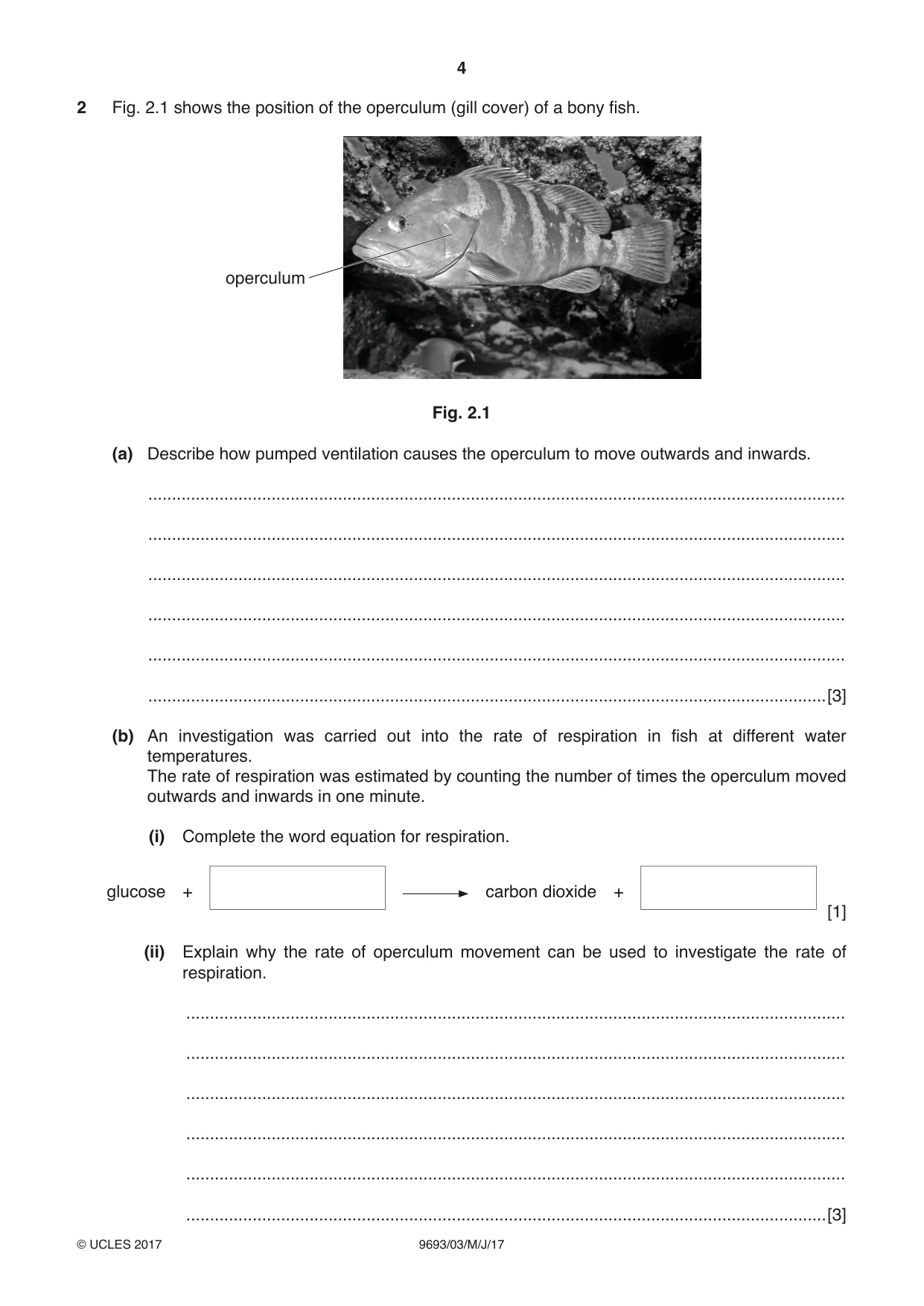
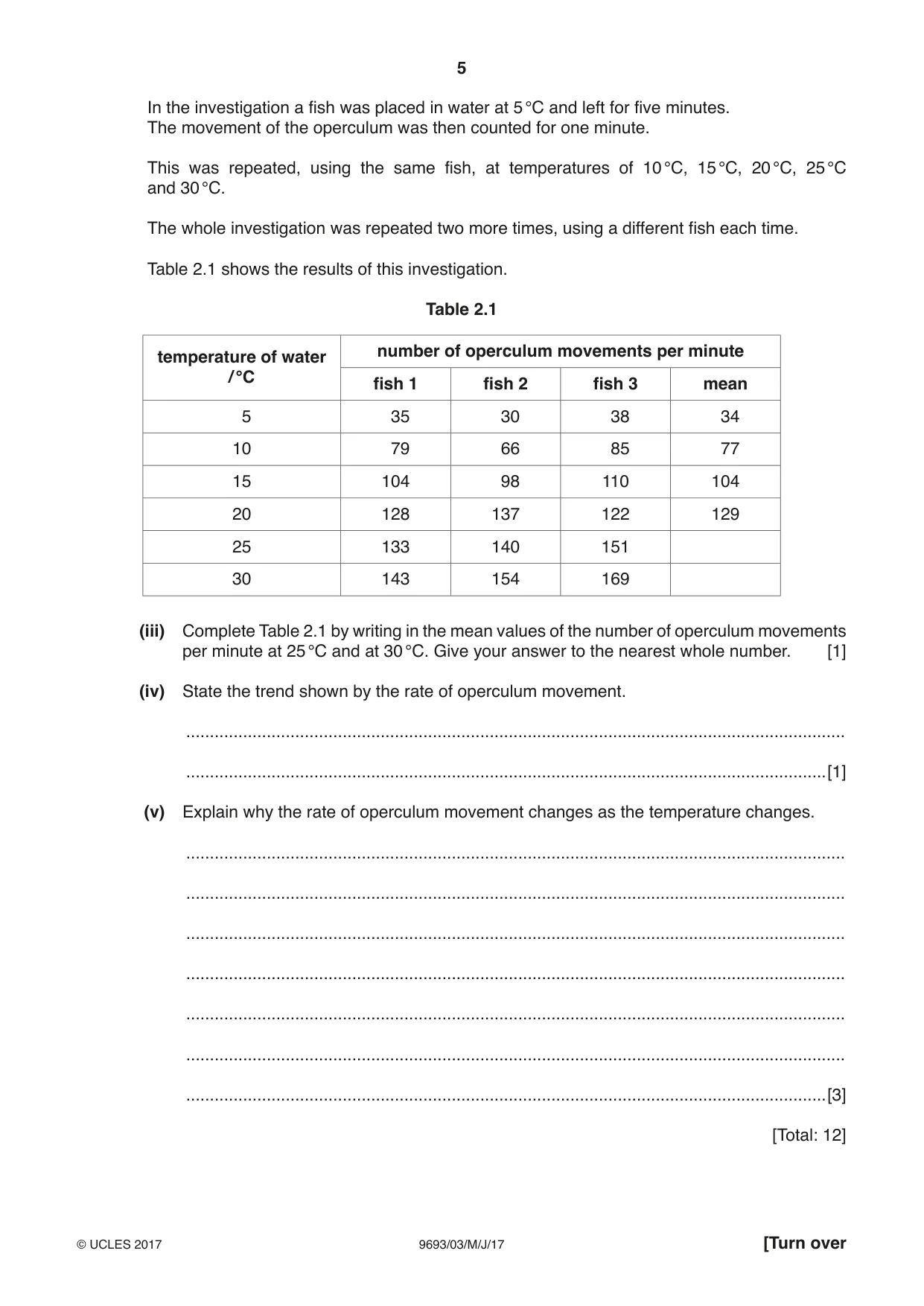
2 Fig. 2.1 shows the position of the operculum (gill cover) of a bony fish. operculum Fig. 2.1 (a) Describe how pumped ventilation causes the operculum to move outwards and inwards. ................................................................................................................................................... ................................................................................................................................................... ................................................................................................................................................... ................................................................................................................................................... ................................................................................................................................................... ...............................................................................................................................................[3] (b) An investigation was carried out into the rate of respiration in fish at different water temperatures. The rate of respiration was estimated by counting the number of times the operculum moved outwards and inwards in one minute. (i) Complete the word equation for respiration. glucose + carbon dioxide + [1] (ii) Explain why the rate of operculum movement can be used to investigate the rate of respiration. ........................................................................................................................................... ........................................................................................................................................... ........................................................................................................................................... ........................................................................................................................................... ........................................................................................................................................... .......................................................................................................................................[3] In the investigation a fish was placed in water at 5 °C and left for five minutes. The movement of the operculum was then counted for one minute. This was repeated, using the same fish, at temperatures of 10 °C, 15 °C, 20 °C, 25 °C and 30 °C. The whole investigation was repeated two more times, using a different fish each time. Table 2.1 shows the results of this investigation. Table 2.1 number of operculum movements per minute temperature of water / °C fish 1 fish 2 fish 3 mean 5 35 30 38 34 10 79 66 85 77 15 104 98 110 104 20 128 137 122 129 25 133 140 151 30 143 154 169 (iii) Complete Table 2.1 by writing in the mean values of the number of operculum movements per minute at 25 °C and at 30 °C. Give your answer to the nearest whole number. [1] (iv) State the trend shown by the rate of operculum movement. ........................................................................................................................................... .......................................................................................................................................[1] (v) Explain why the rate of operculum movement changes as the temperature changes. ........................................................................................................................................... ........................................................................................................................................... ........................................................................................................................................... ........................................................................................................................................... ........................................................................................................................................... ........................................................................................................................................... .......................................................................................................................................[3] [Total: 12]
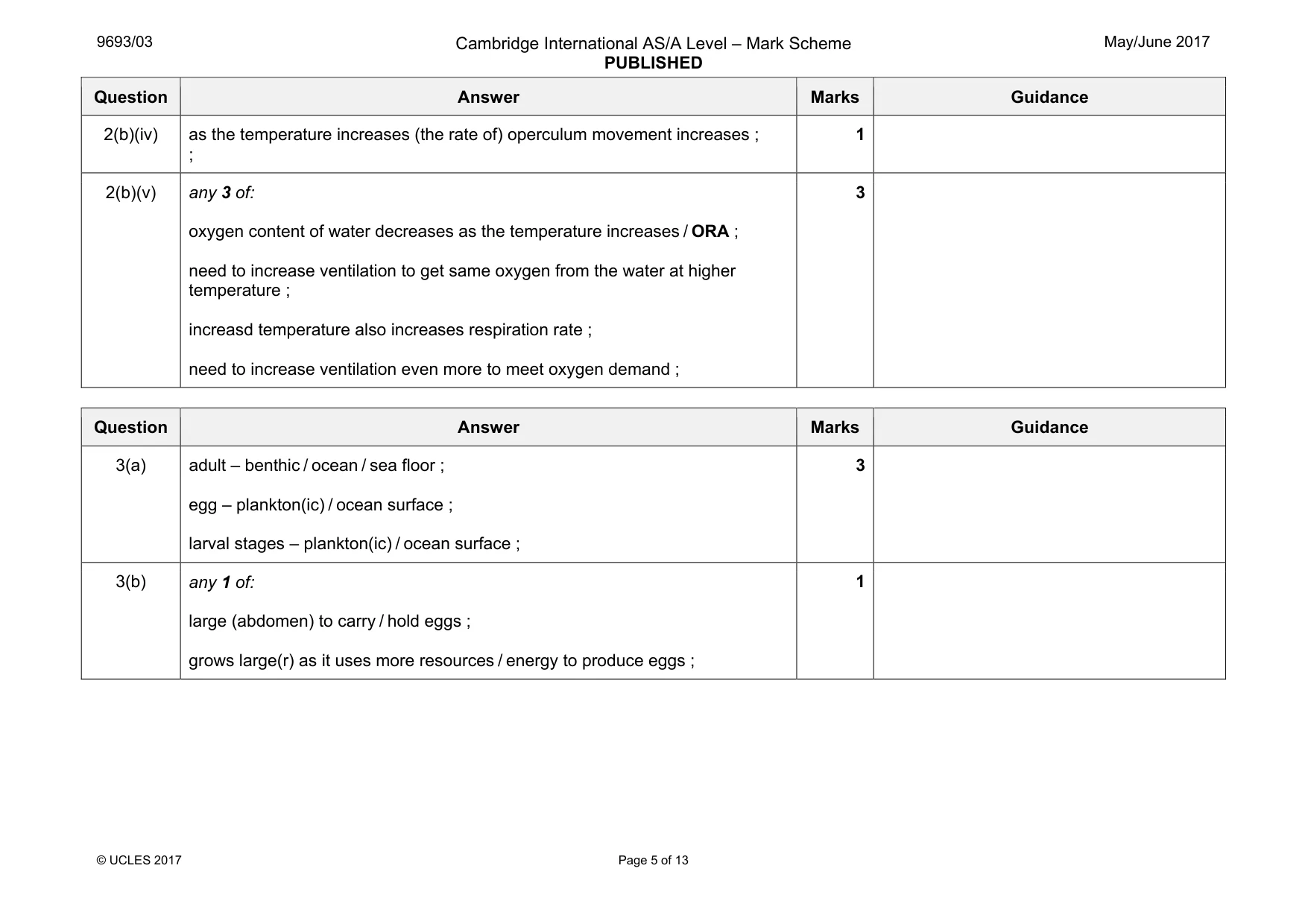
Mark scheme: 2(a) any 3 of: mouth open and operculum closed / moves in ; floor drops increases volume (in buccal cavity / mouth) ; low pressure in mouth causes water to move in ; mouth closes and floor lifts ; (this) decreases volume / increases pressure forcing water back over gills ; operculum opens / moves out to let water out ; 3 2(b)(i) oxygen + water ; 1 2(b)(ii) idea of, operculum movement shows the ventilation rate ; respiration uses the oxygen (taken in at the gills) ; idea of, more respiration OR more oxygen so faster ventilation / operculum movement needed ; 3 2(b)(iii) 141 + 155 ; 1 Question Answer Marks Guidance 2(b)(iv) as the temperature increases (the rate of) operculum movement increases ; ; 1 2(b)(v) any 3 of: oxygen content of water decreases as the temperature increases / ORA ; need to increase ventilation to get same oxygen from the water at higher temperature ; increasd temperature also increases respiration rate ; need to increase ventilation even more to meet oxygen demand ; 3
Q3 · The life cycle of a marine shrimp
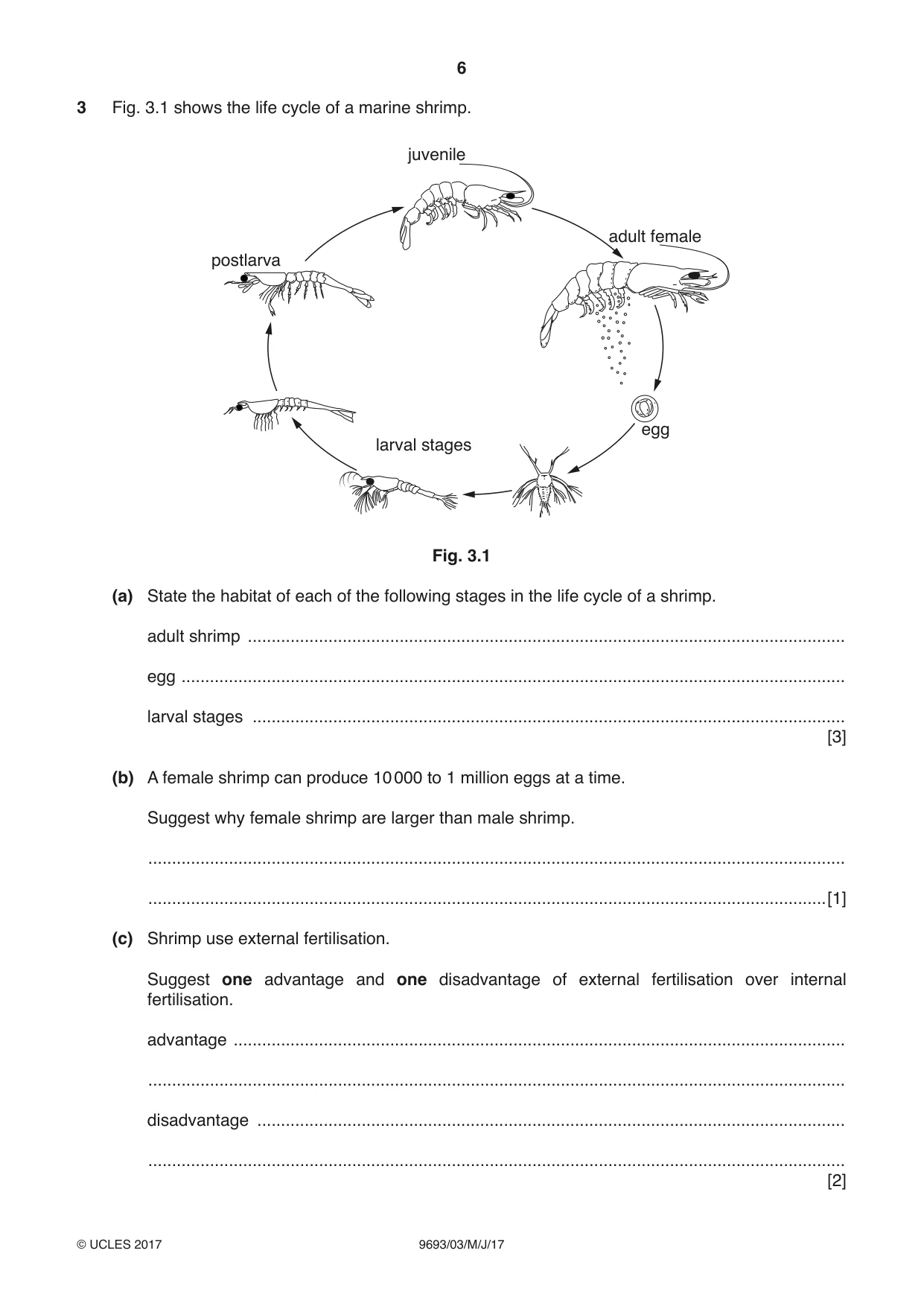
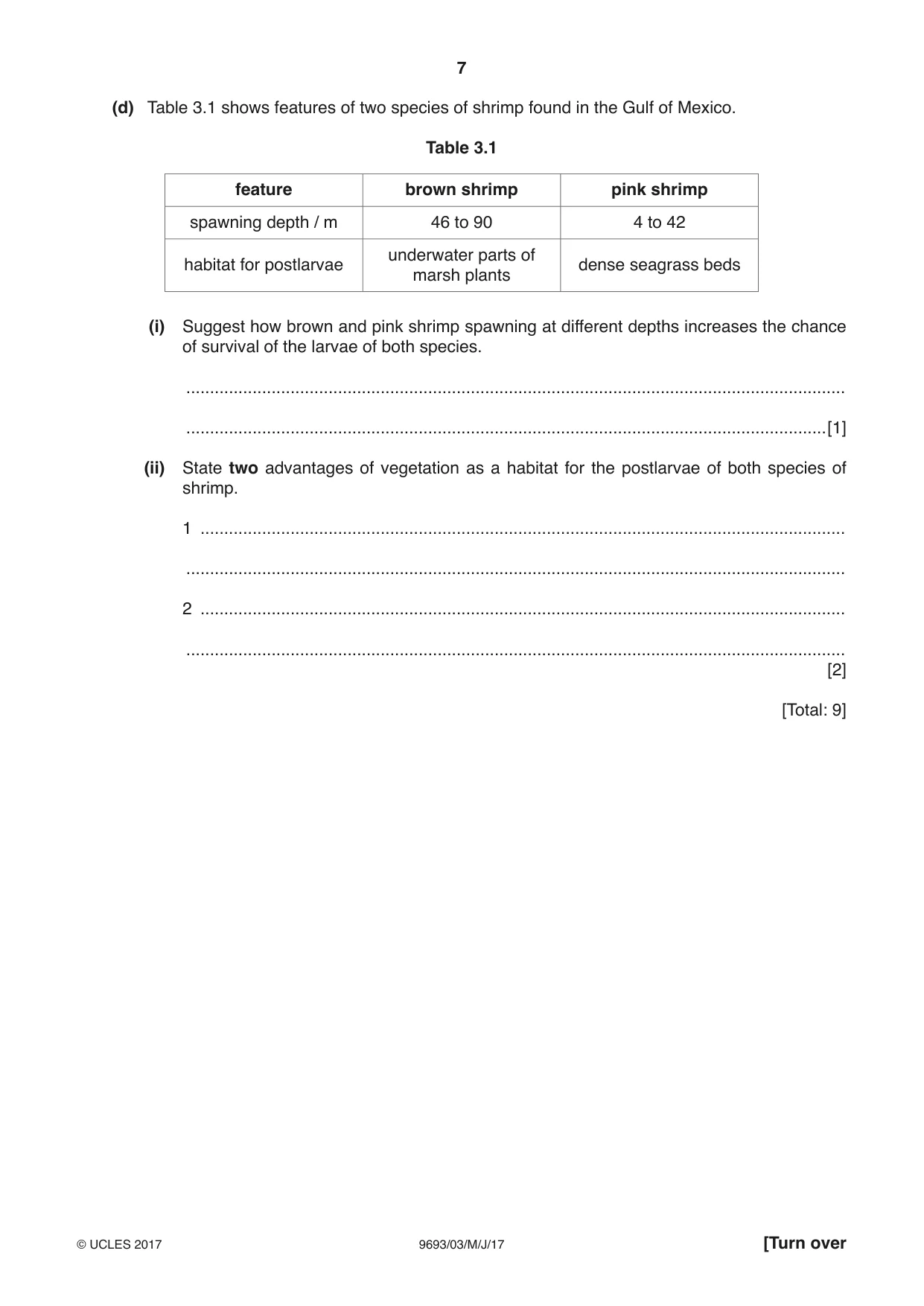
3 Fig. 3.1 shows the life cycle of a marine shrimp. juvenile adult female postlarva egg larval stages Fig. 3.1 (a) State the habitat of each of the following stages in the life cycle of a shrimp. adult shrimp .............................................................................................................................. egg ............................................................................................................................................ larval stages ............................................................................................................................. [3] (b) A female shrimp can produce 10 000 to 1 million eggs at a time. Suggest why female shrimp are larger than male shrimp. ................................................................................................................................................... ...............................................................................................................................................[1] (c) Shrimp use external fertilisation. Suggest one advantage and one disadvantage of external fertilisation over internal fertilisation. advantage ................................................................................................................................. ................................................................................................................................................... disadvantage ............................................................................................................................ ................................................................................................................................................... [2] (d) Table 3.1 shows features of two species of shrimp found in the Gulf of Mexico. Table 3.1 feature brown shrimp pink shrimp spawning depth / m 46 to 90 4 to 42 underwater parts of habitat for postlarvae dense seagrass beds marsh plants (i) Suggest how brown and pink shrimp spawning at different depths increases the chance of survival of the larvae of both species. ........................................................................................................................................... .......................................................................................................................................[1] (ii) State two advantages of vegetation as a habitat for the postlarvae of both species of shrimp. 1 ........................................................................................................................................ ........................................................................................................................................... 2 ........................................................................................................................................ ........................................................................................................................................... [2] [Total: 9]
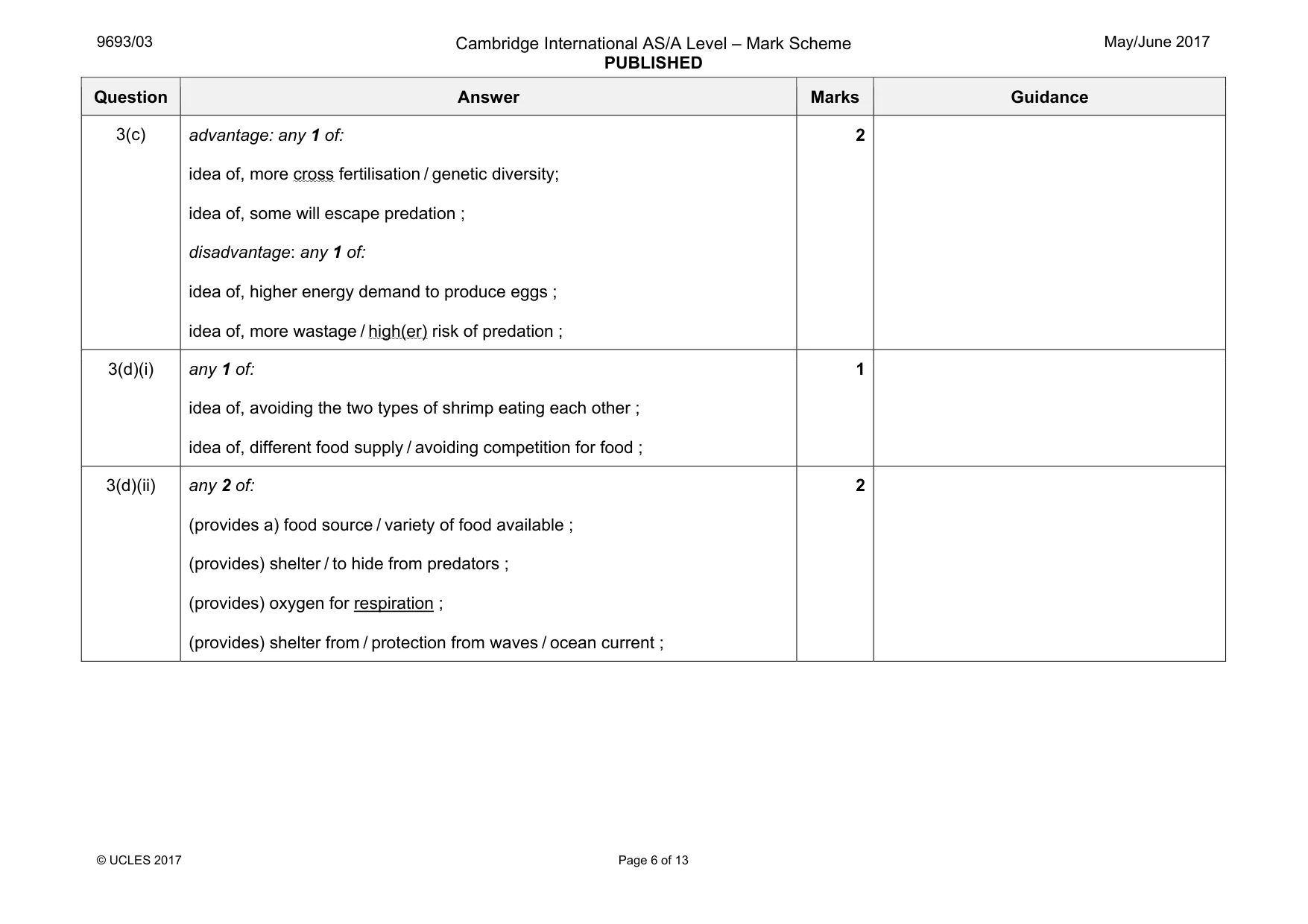
Mark scheme: 3(a) adult – benthic / ocean / sea floor ; egg – plankton(ic) / ocean surface ; larval stages – plankton(ic) / ocean surface ; 3 3(b) any 1 of: large (abdomen) to carry / hold eggs ; grows large(r) as it uses more resources / energy to produce eggs ; 1 Question Answer Marks Guidance 3(c) advantage: any 1 of: idea of, more cross fertilisation / genetic diversity; idea of, some will escape predation ; disadvantage: any 1 of: idea of, higher energy demand to produce eggs ; idea of, more wastage / high(er) risk of predation ; 2 3(d)(i) any 1 of: idea of, avoiding the two types of shrimp eating each other ; idea of, different food supply / avoiding competition for food ; 1 3(d)(ii) any 2 of: (provides a) food source / variety of food available ; (provides) shelter / to hide from predators ; (provides) oxygen for respiration ; (provides) shelter from / protection from waves / ocean current ; 2
Q4 · Read the information about sea bass in the North Sea
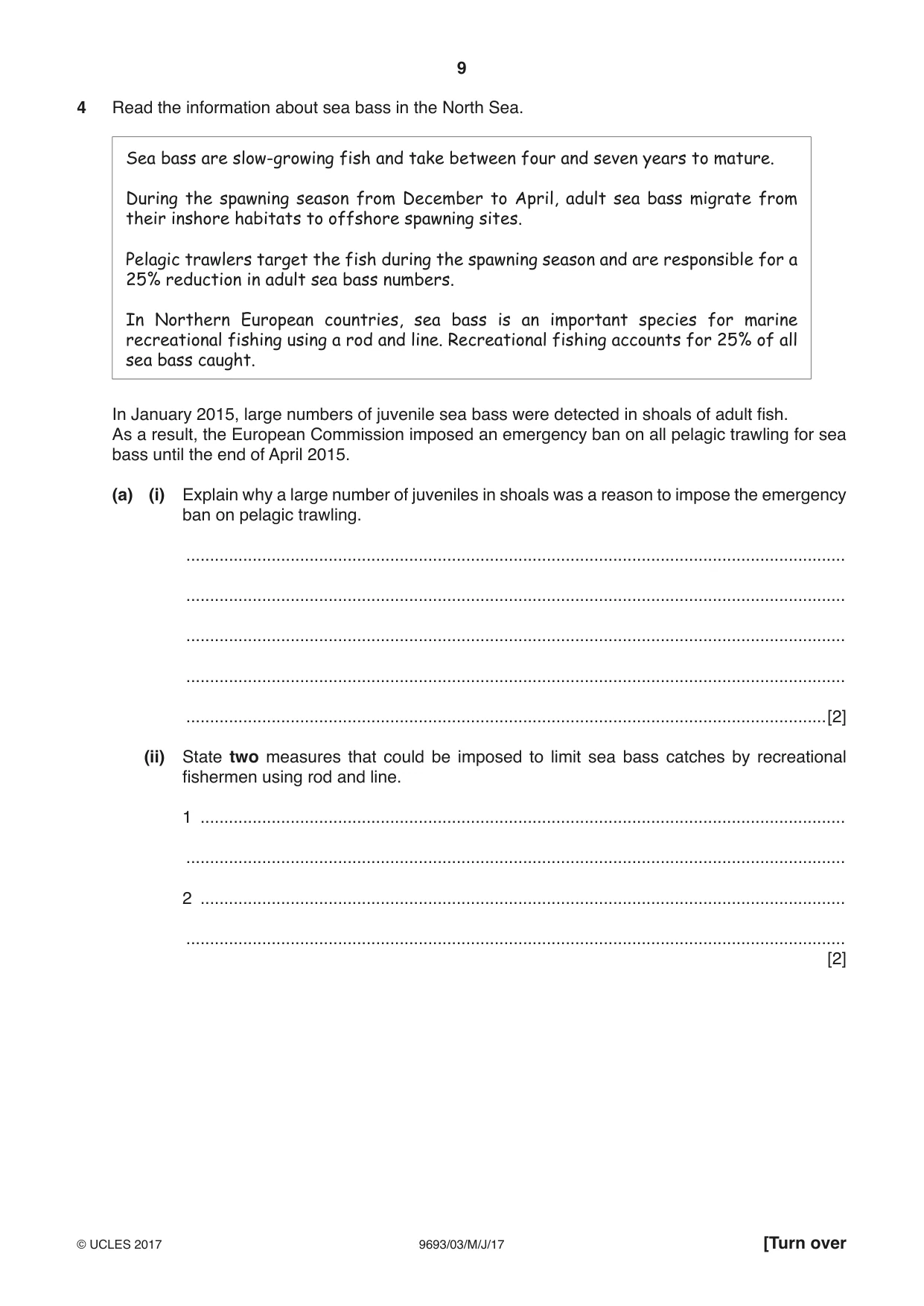
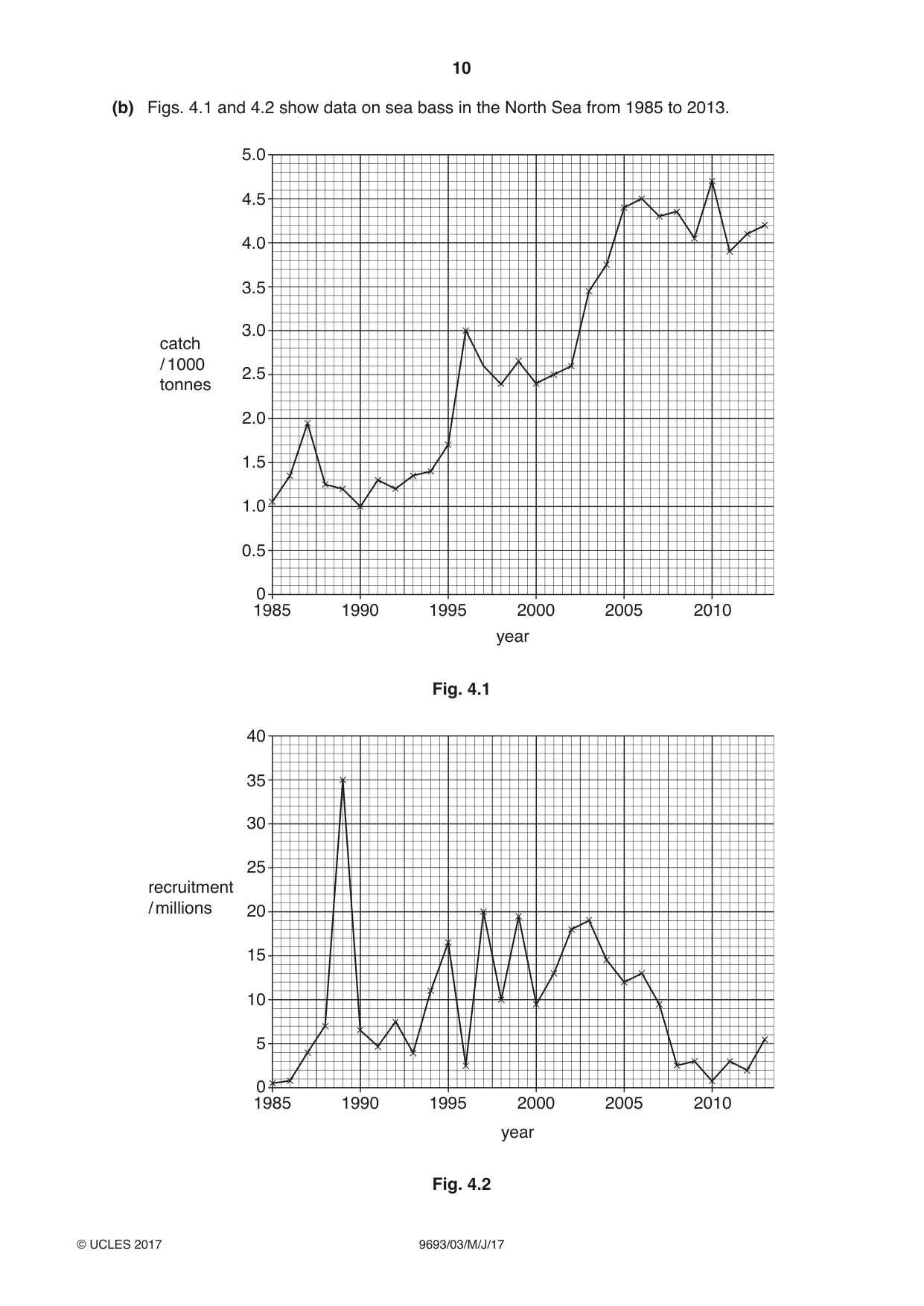
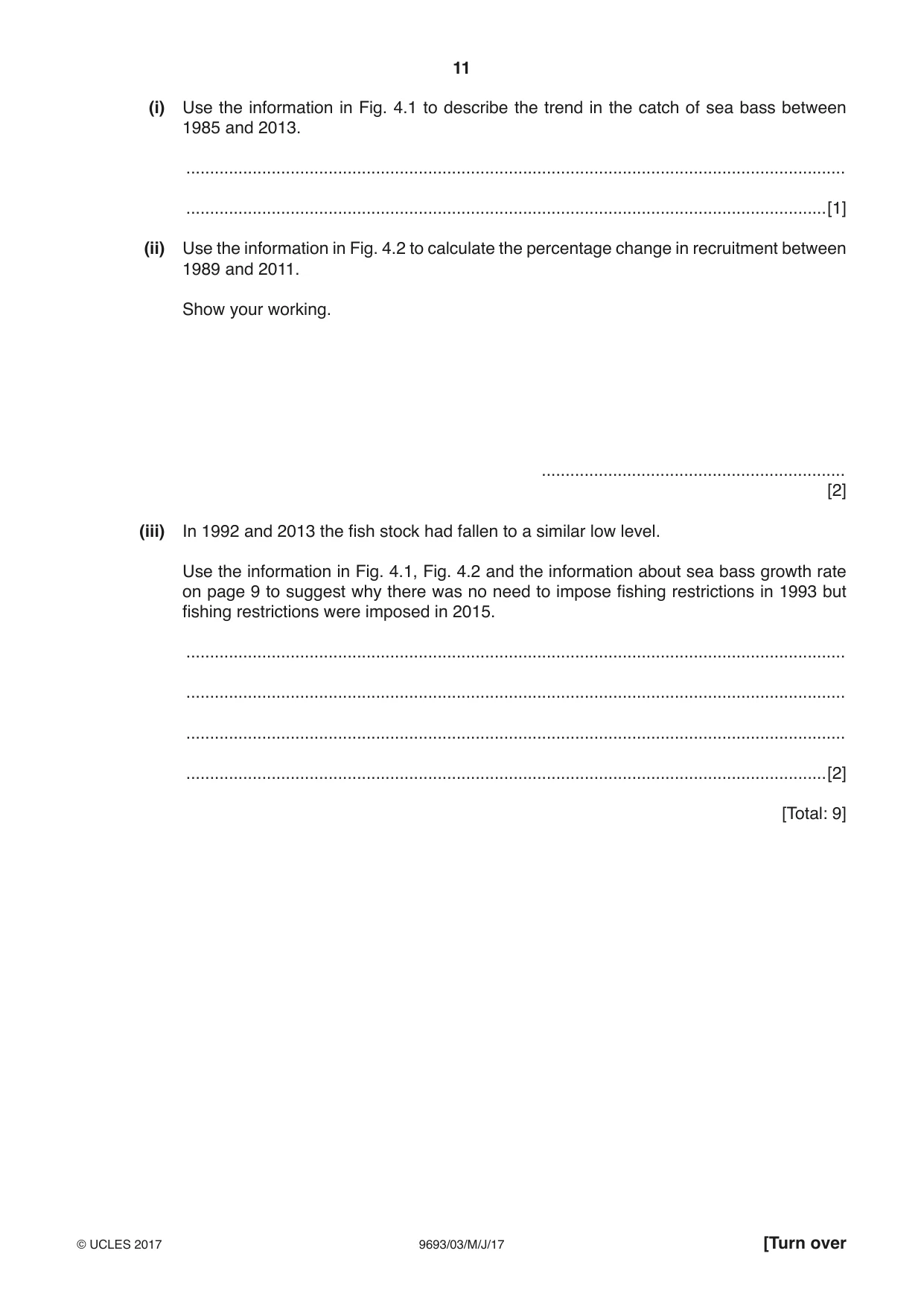
4 Read the information about sea bass in the North Sea. Sea bass are slow-growing fish and take between four and seven years to mature. During the spawning season from December to April, adult sea bass migrate from their inshore habitats to offshore spawning sites. Pelagic trawlers target the fish during the spawning season and are responsible for a 25% reduction in adult sea bass numbers. In Northern European countries, sea bass is an important species for marine recreational fishing using a rod and line. Recreational fishing accounts for 25% of all sea bass caught. In January 2015, large numbers of juvenile sea bass were detected in shoals of adult fish. As a result, the European Commission imposed an emergency ban on all pelagic trawling for sea bass until the end of April 2015. (a) (i) Explain why a large number of juveniles in shoals was a reason to impose the emergency ban on pelagic trawling. ........................................................................................................................................... ........................................................................................................................................... ........................................................................................................................................... ........................................................................................................................................... .......................................................................................................................................[2] (ii) State two measures that could be imposed to limit sea bass catches by recreational fishermen using rod and line. 1 ........................................................................................................................................ ........................................................................................................................................... 2 ........................................................................................................................................ ........................................................................................................................................... [2] (b) Figs. 4.1 and 4.2 show data on sea bass in the North Sea from 1985 to 2013. 5.0 4.5 4.0 3.5 3.0 catch / 1000 2.5 tonnes 2.0 1.5 1.0 0.5 0 1985 1990 1995 2000 2005 2010 year Fig. 4.1 40 35 30 25 recruitment / millions 20 15 10 5 0 1985 1990 1995 2000 2005 2010 year Fig. 4.2 (i) Use the information in Fig. 4.1 to describe the trend in the catch of sea bass between 1985 and 2013. ........................................................................................................................................... .......................................................................................................................................[1] (ii) Use the information in Fig. 4.2 to calculate the percentage change in recruitment between 1989 and 2011. Show your working. ................................................................ [2] (iii) In 1992 and 2013 the fish stock had fallen to a similar low level. Use the information in Fig. 4.1, Fig. 4.2 and the information about sea bass growth rate on page 9 to suggest why there was no need to impose fishing restrictions in 1993 but fishing restrictions were imposed in 2015. ........................................................................................................................................... ........................................................................................................................................... ........................................................................................................................................... .......................................................................................................................................[2] [Total: 9]
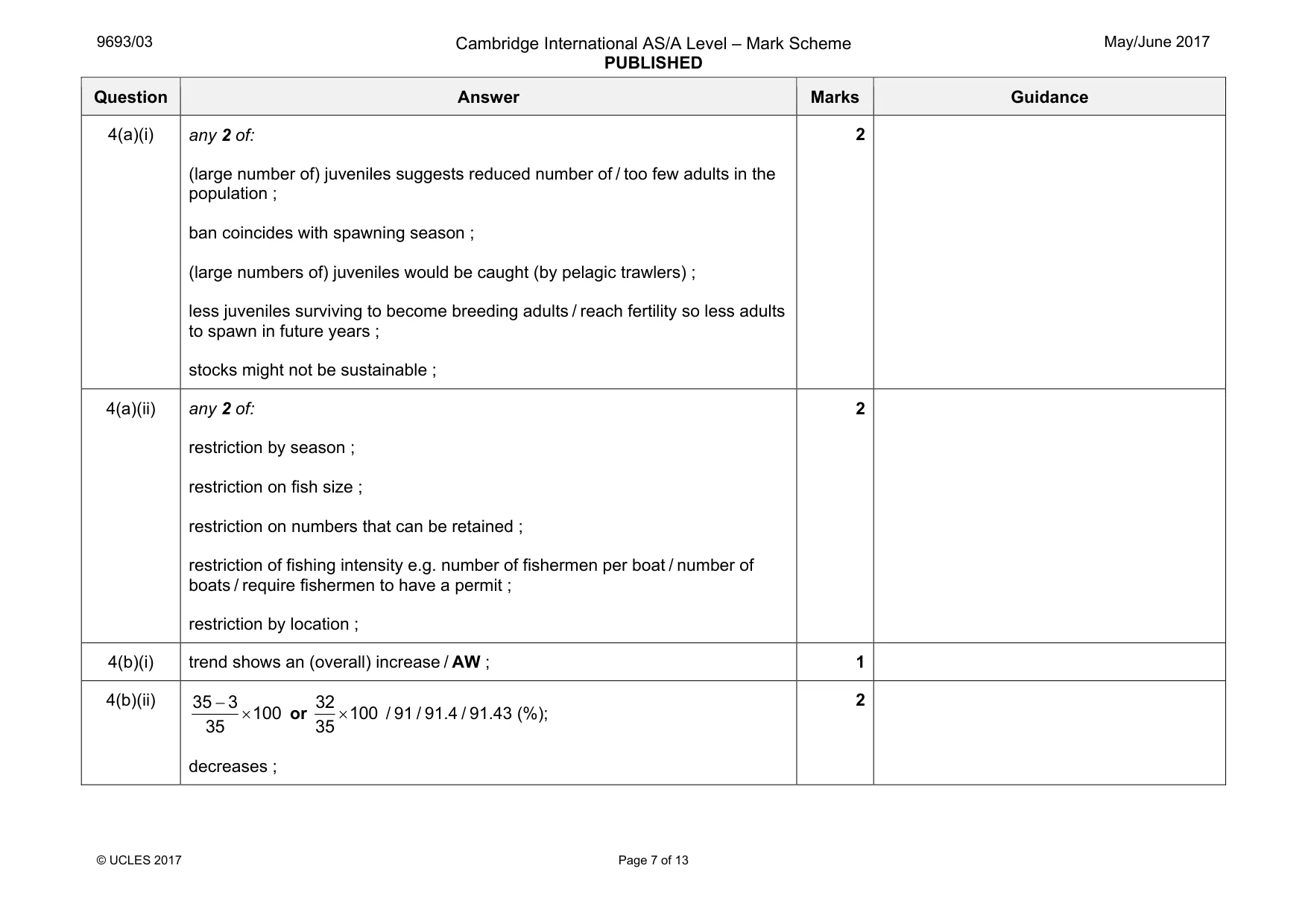
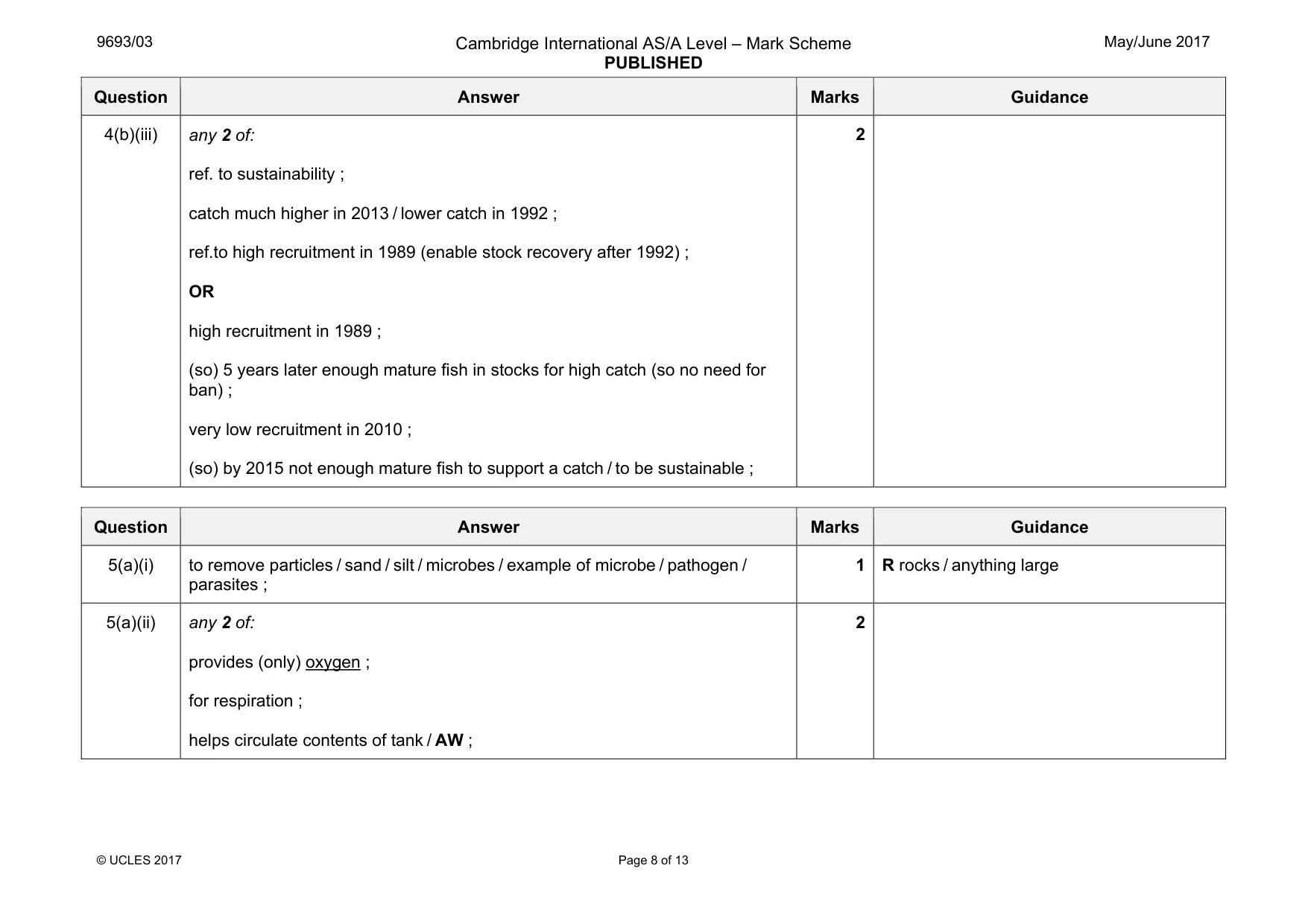
Mark scheme: 4(a)(i) any 2 of: (large number of) juveniles suggests reduced number of / too few adults in the population ; ban coincides with spawning season ; (large numbers of) juveniles would be caught (by pelagic trawlers) ; less juveniles surviving to become breeding adults / reach fertility so less adults to spawn in future years ; stocks might not be sustainable ; 2 4(a)(ii) any 2 of: restriction by season ; restriction on fish size ; restriction on numbers that can be retained ; restriction of fishing intensity e.g. number of fishermen per boat / number of boats / require fishermen to have a permit ; restriction by location ; 2 4(b)(i) trend shows an (overall) increase / AW ; 1 4(b)(ii) − × 35 3 100 35 or × 32 100 35 / 91 / 91.4 / 91.43 (%); decreases ; 2 Question Answer Marks Guidance 4(b)(iii) any 2 of: ref. to sustainability ; catch much higher in 2013 / lower catch in 1992 ; ref.to high recruitment in 1989 (enable stock recovery after 1992) ; OR high recruitment in 1989 ; (so) 5 years later enough mature fish in stocks for high catch (so no need for ban) ; very low recruitment in 2010 ; (so) by 2015 not enough mature fish to support a catch / to be sustainable ; 2
Q5 · The stages in grouper aquaculture
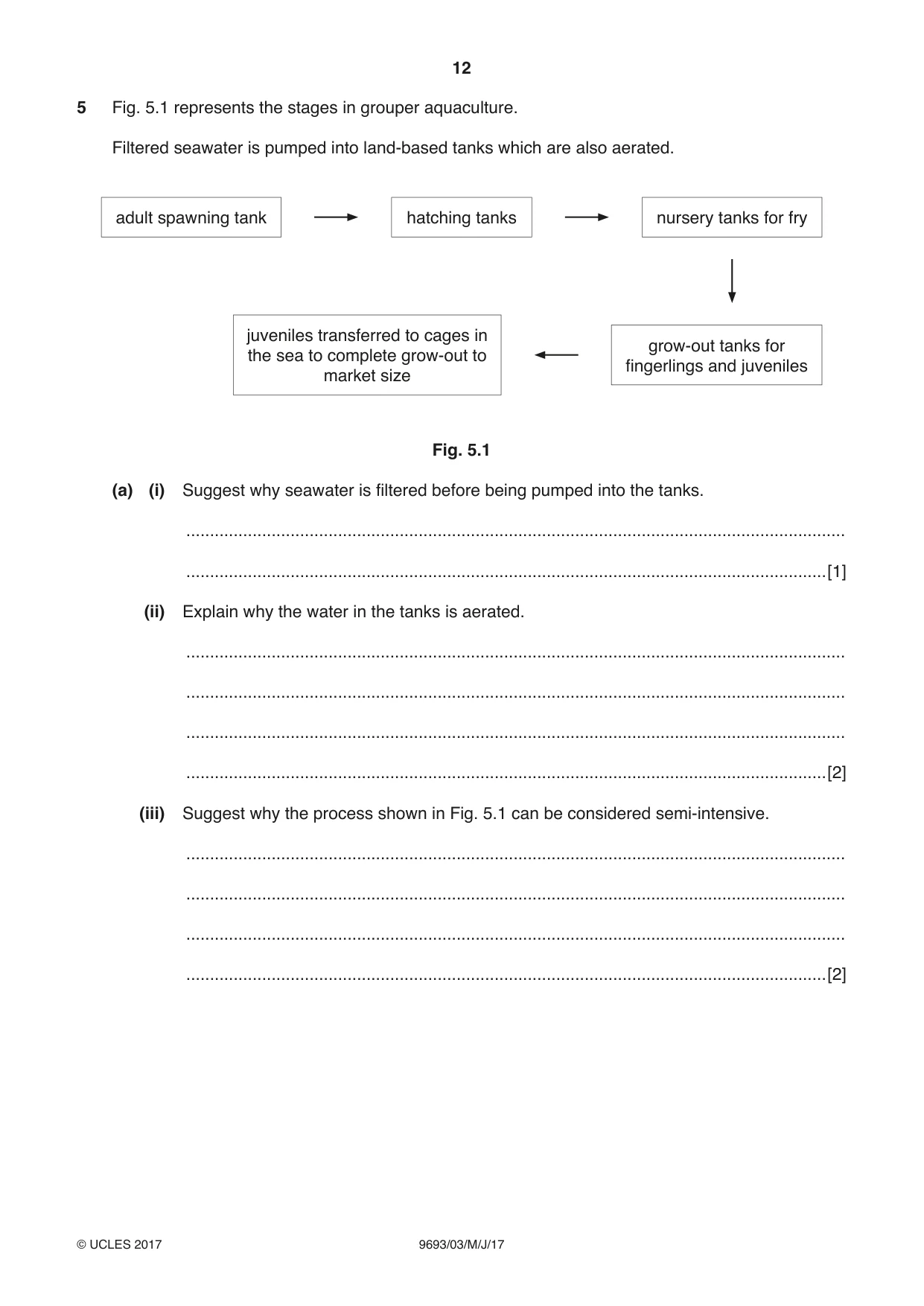
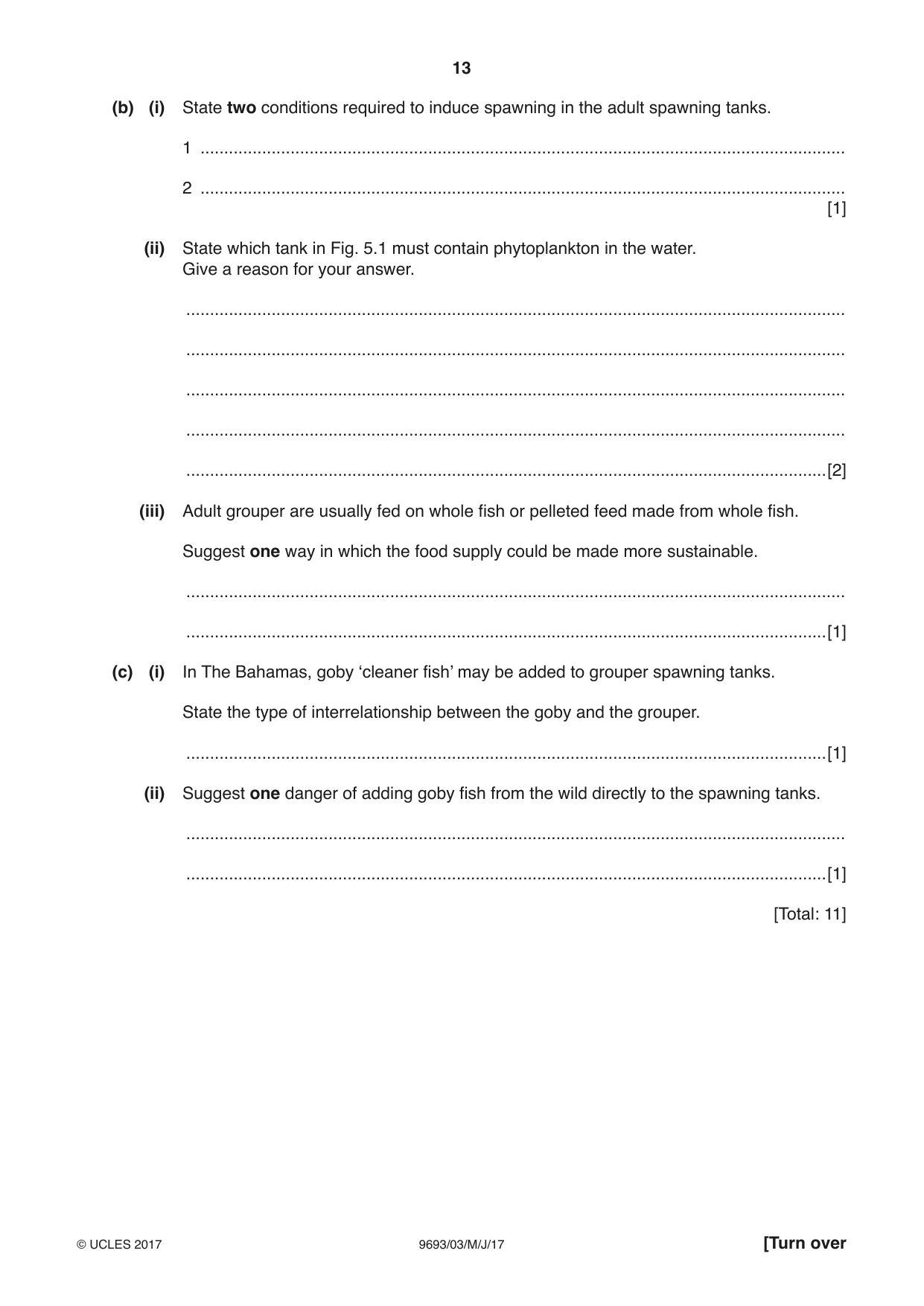
5 Fig. 5.1 represents the stages in grouper aquaculture. Filtered seawater is pumped into land-based tanks which are also aerated. adult spawning tank hatching tanks nursery tanks for fry juveniles transferred to cages in grow-out tanks for the sea to complete grow-out to fingerlings and juveniles market size Fig. 5.1 (a) (i) Suggest why seawater is filtered before being pumped into the tanks. ........................................................................................................................................... .......................................................................................................................................[1] (ii) Explain why the water in the tanks is aerated. ........................................................................................................................................... ........................................................................................................................................... ........................................................................................................................................... .......................................................................................................................................[2] (iii) Suggest why the process shown in Fig. 5.1 can be considered semi-intensive. ........................................................................................................................................... ........................................................................................................................................... ........................................................................................................................................... .......................................................................................................................................[2] (b) (i) State two conditions required to induce spawning in the adult spawning tanks. 1 ........................................................................................................................................ 2 ........................................................................................................................................ [1] (ii) State which tank in Fig. 5.1 must contain phytoplankton in the water. Give a reason for your answer. ........................................................................................................................................... ........................................................................................................................................... ........................................................................................................................................... ........................................................................................................................................... .......................................................................................................................................[2] (iii) Adult grouper are usually fed on whole fish or pelleted feed made from whole fish. Suggest one way in which the food supply could be made more sustainable. ........................................................................................................................................... .......................................................................................................................................[1] (c) (i) In The Bahamas, goby ‘cleaner fish’ may be added to grouper spawning tanks. State the type of interrelationship between the goby and the grouper. .......................................................................................................................................[1] (ii) Suggest one danger of adding goby fish from the wild directly to the spawning tanks. ........................................................................................................................................... .......................................................................................................................................[1] [Total: 11]
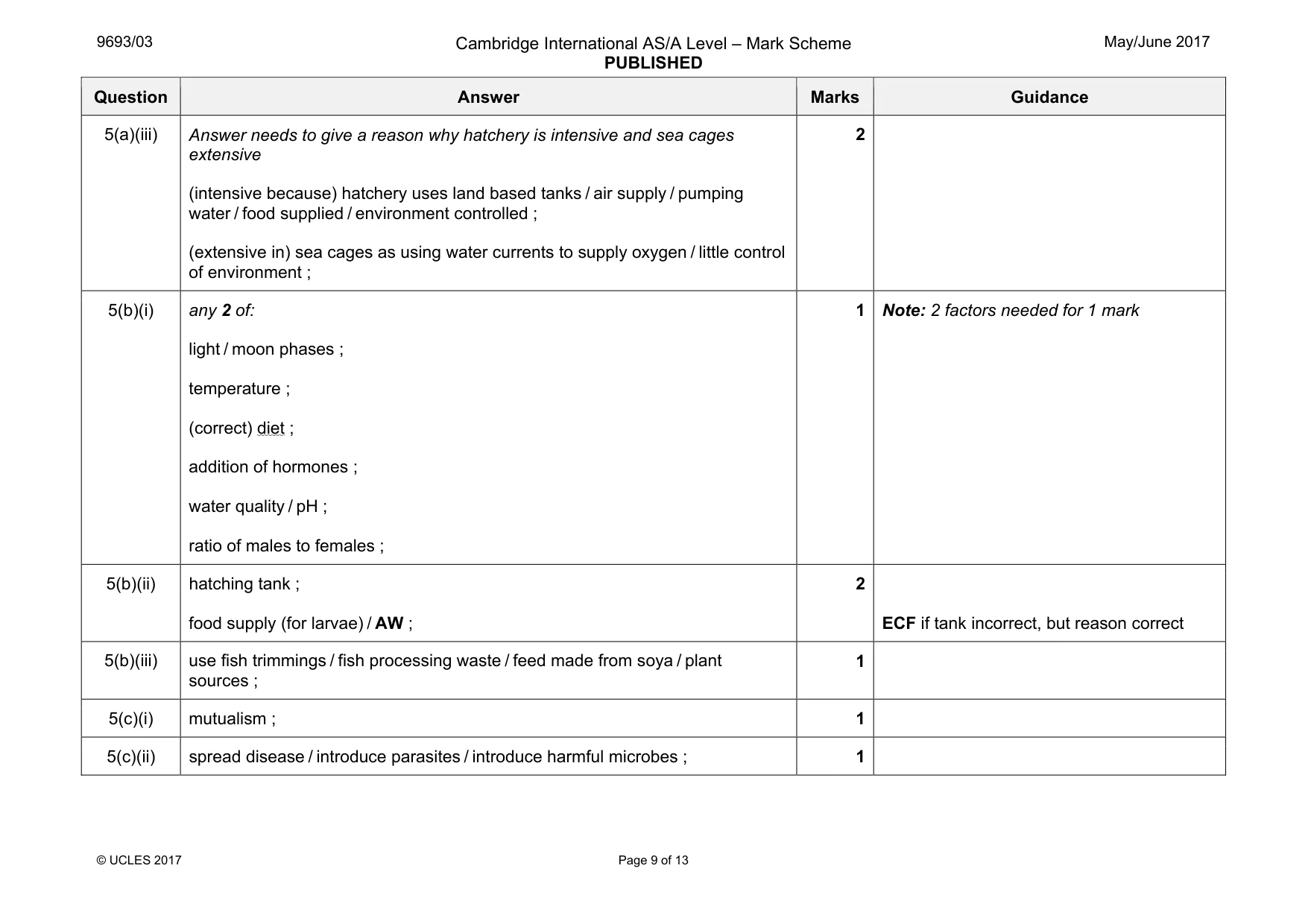
Mark scheme: 5(a)(i) to remove particles / sand / silt / microbes / example of microbe / pathogen / parasites ; 1 5(a)(ii) any 2 of: provides (only) oxygen ; for respiration ; helps circulate contents of tank / AW ; 2 Question Answer Marks Guidance 5(a)(iii) Answer needs to give a reason why hatchery is intensive and sea cages extensive (intensive because) hatchery uses land based tanks / air supply / pumping water / food supplied / environment controlled ; (extensive in) sea cages as using water currents to supply oxygen / little control of environment ; 2 5(b)(i) any 2 of: light / moon phases ; temperature ; (correct) diet ; addition of hormones ; water quality / pH ; ratio of males to females ; 1 Note: 2 factors needed for 1 mark 5(b)(ii) hatching tank ; food supply (for larvae) / AW ; 2 ECF if tank incorrect, but reason correct 5(b)(iii) use fish trimmings / fish processing waste / feed made from soya / plant sources ; 1 5(c)(i) mutualism ; 1 5(c)(ii) spread disease / introduce parasites / introduce harmful microbes ; 1
Q6 · Tuna catches along the Namibian coast in south west Africa have decreased significantly…
6 Tuna catches along the Namibian coast in south west Africa have decreased significantly in recent years. (a) The reduction in the catch has been blamed on seismic blasting during oil and gas exploration in the waters off the Namibian coast. Seismic blasting is carried out by firing airguns underwater every 10 seconds causing very large sound vibrations in the water. (i) Suggest why seismic blasting could affect tuna catch. ........................................................................................................................................... ........................................................................................................................................... ........................................................................................................................................... ........................................................................................................................................... ........................................................................................................................................... ........................................................................................................................................... .......................................................................................................................................[3] (ii) Seismic blasting is unregulated. The tuna fishing season lasts from October to April, with 70% of fish caught in February and March. Use this information to suggest what steps the Namibian government can take to reduce the decline in tuna catch, but continue with oil and gas exploration. ........................................................................................................................................... ........................................................................................................................................... ........................................................................................................................................... .......................................................................................................................................[2] (b) Scientists have suggested tagging tuna that migrate through the area, so that they can be monitored by satellite. State what information the satellite tag could provide. ................................................................................................................................................... ...............................................................................................................................................[1] (c) Environmentalists are concerned that oil exploration along the Namibian coast could result in an oil spill. (i) Explain how oil pollution could affect fish-eating seabirds in the area. ........................................................................................................................................... ........................................................................................................................................... ........................................................................................................................................... ........................................................................................................................................... ........................................................................................................................................... ........................................................................................................................................... ........................................................................................................................................... ........................................................................................................................................... ........................................................................................................................................... .......................................................................................................................................[4] (ii) Describe how biotechnology could be used to remove oil pollution from the environment. ........................................................................................................................................... ........................................................................................................................................... ........................................................................................................................................... .......................................................................................................................................[2] [Total: 12]
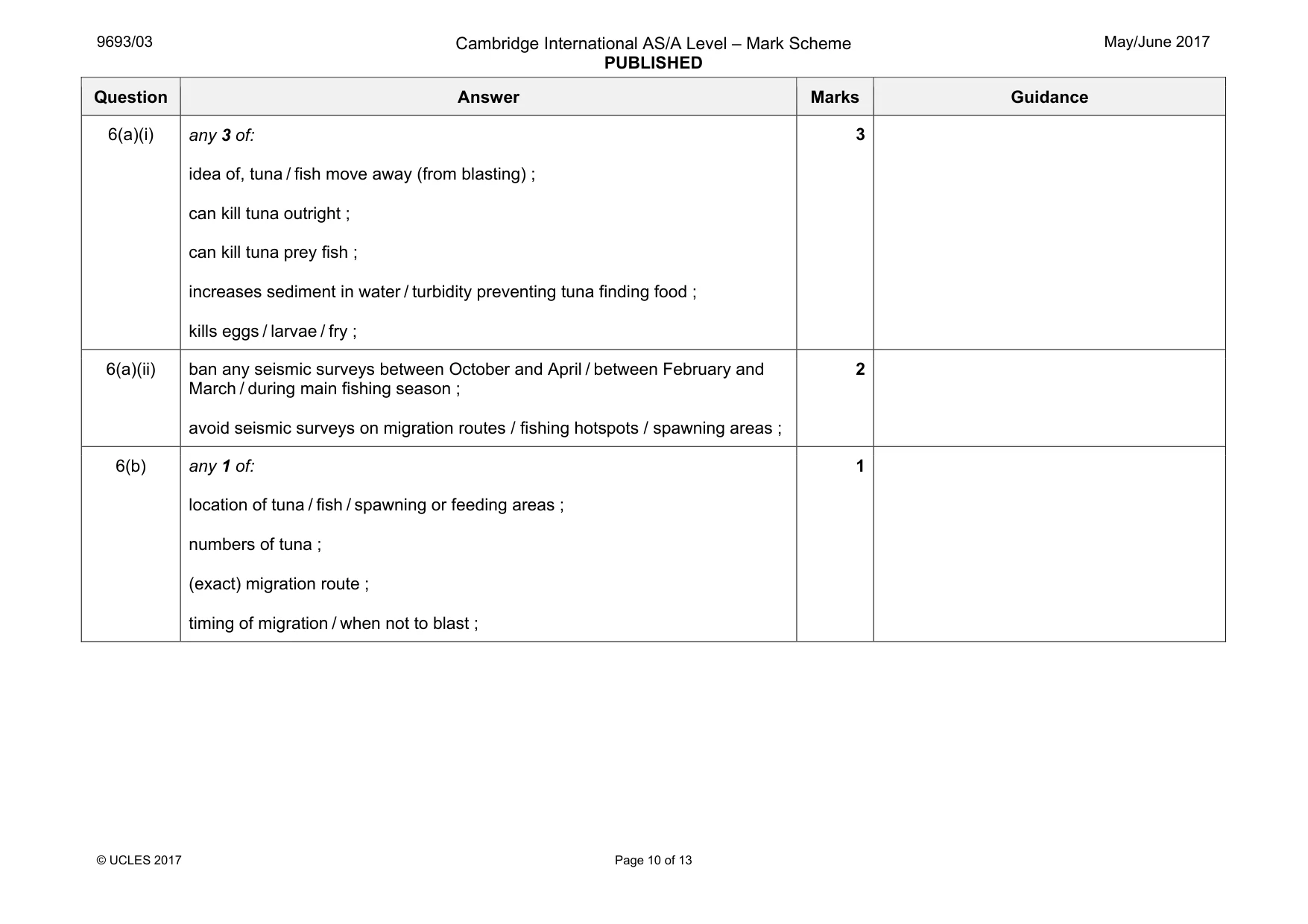
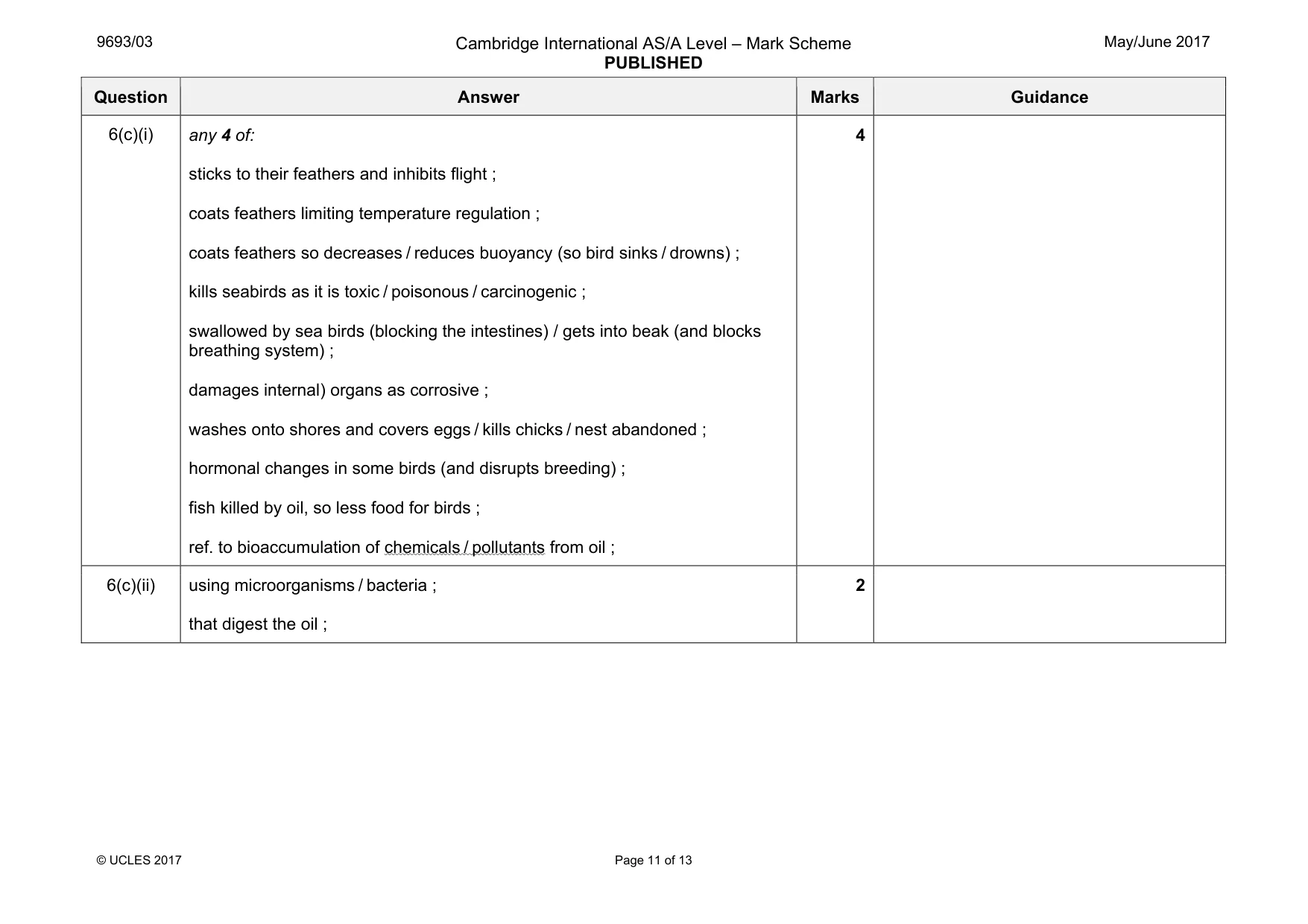
Mark scheme: 6(a)(i) any 3 of: idea of, tuna / fish move away (from blasting) ; can kill tuna outright ; can kill tuna prey fish ; increases sediment in water / turbidity preventing tuna finding food ; kills eggs / larvae / fry ; 3 6(a)(ii) ban any seismic surveys between October and April / between February and March / during main fishing season ; avoid seismic surveys on migration routes / fishing hotspots / spawning areas ; 2 6(b) any 1 of: location of tuna / fish / spawning or feeding areas ; numbers of tuna ; (exact) migration route ; timing of migration / when not to blast ; 1 Question Answer Marks Guidance 6(c)(i) any 4 of: sticks to their feathers and inhibits flight ; coats feathers limiting temperature regulation ; coats feathers so decreases / reduces buoyancy (so bird sinks / drowns) ; kills seabirds as it is toxic / poisonous / carcinogenic ; swallowed by sea birds (blocking the intestines) / gets into beak (and blocks breathing system) ; damages internal) organs as corrosive ; washes onto shores and covers eggs / kills chicks / nest abandoned ; hormonal changes in some birds (and disrupts breeding) ; fish killed by oil, so less food for birds ; ref. to bioaccumulation of chemicals / pollutants from oil ; 4 6(c)(ii) using microorganisms / bacteria ; that digest the oil ; 2
Q7 · Ecotourism is based on the appreciation of the natural environment and should involve…
7 Ecotourism is based on the appreciation of the natural environment and should involve good practice in conserving the environment. Read the descriptions of two types of ecotourism. type 1 • travelling by car to the tourist area • staying in small locally run hotels • helping to remove refuse from reefs and making maps of damaged reef areas • taking part in educational classes about reefs and the uses made of the resources of the reef type 2 • travelling by a small cruise ship to protected areas in a marine reserve • visiting islands, reefs and seagrass beds in small groups with a local tour guide who is an expert on the area (a) For each of these types of ecotourism, discuss the ways in which they support or undermine conservation. (i) type 1 ........................................................................................................................................... ........................................................................................................................................... ........................................................................................................................................... ........................................................................................................................................... ........................................................................................................................................... .......................................................................................................................................[3] (ii) type 2 ........................................................................................................................................... ........................................................................................................................................... ........................................................................................................................................... ........................................................................................................................................... ........................................................................................................................................... ........................................................................................................................................... ........................................................................................................................................... .......................................................................................................................................[3] (b) A beach hotel that is part of an international chain is going to be closed for redevelopment. All the existing guest rooms will be refitted and a new block of guest bedrooms built. The company that owns the hotel wants to improve the way in which the hotel uses energy and water so it is more ecologically sustainable. At present, energy is supplied from the main electricity supply for heating, lighting and air conditioning. Water is supplied from the main water supply for cooking, washing, toilets, the swimming pool and grass sprinklers. Suggest and explain two ways in which the use of energy and water by the hotel could be made more sustainable. 1 ................................................................................................................................................ ................................................................................................................................................... ................................................................................................................................................... 2 ................................................................................................................................................ ................................................................................................................................................... ................................................................................................................................................... [4] [Total: 10]
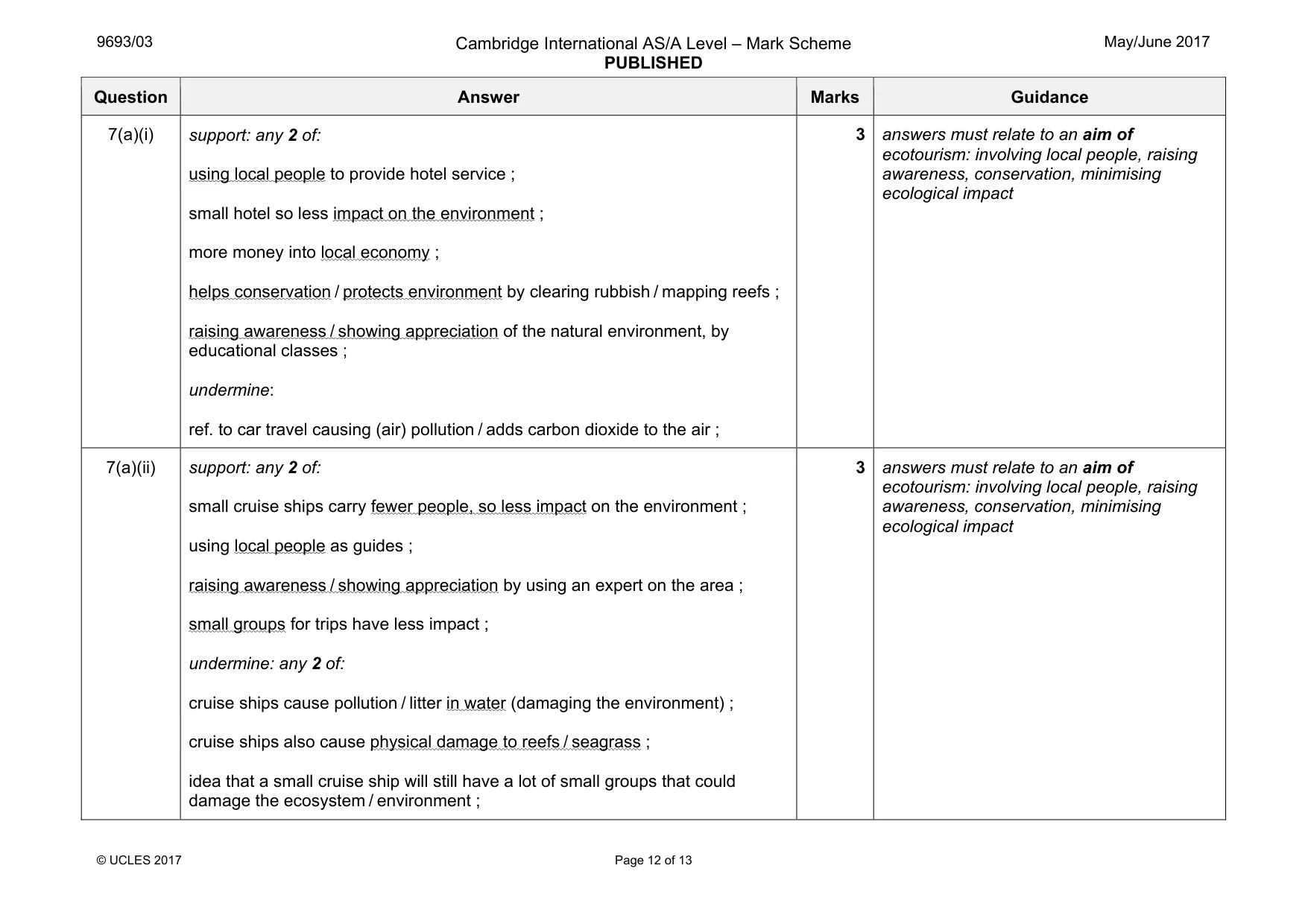
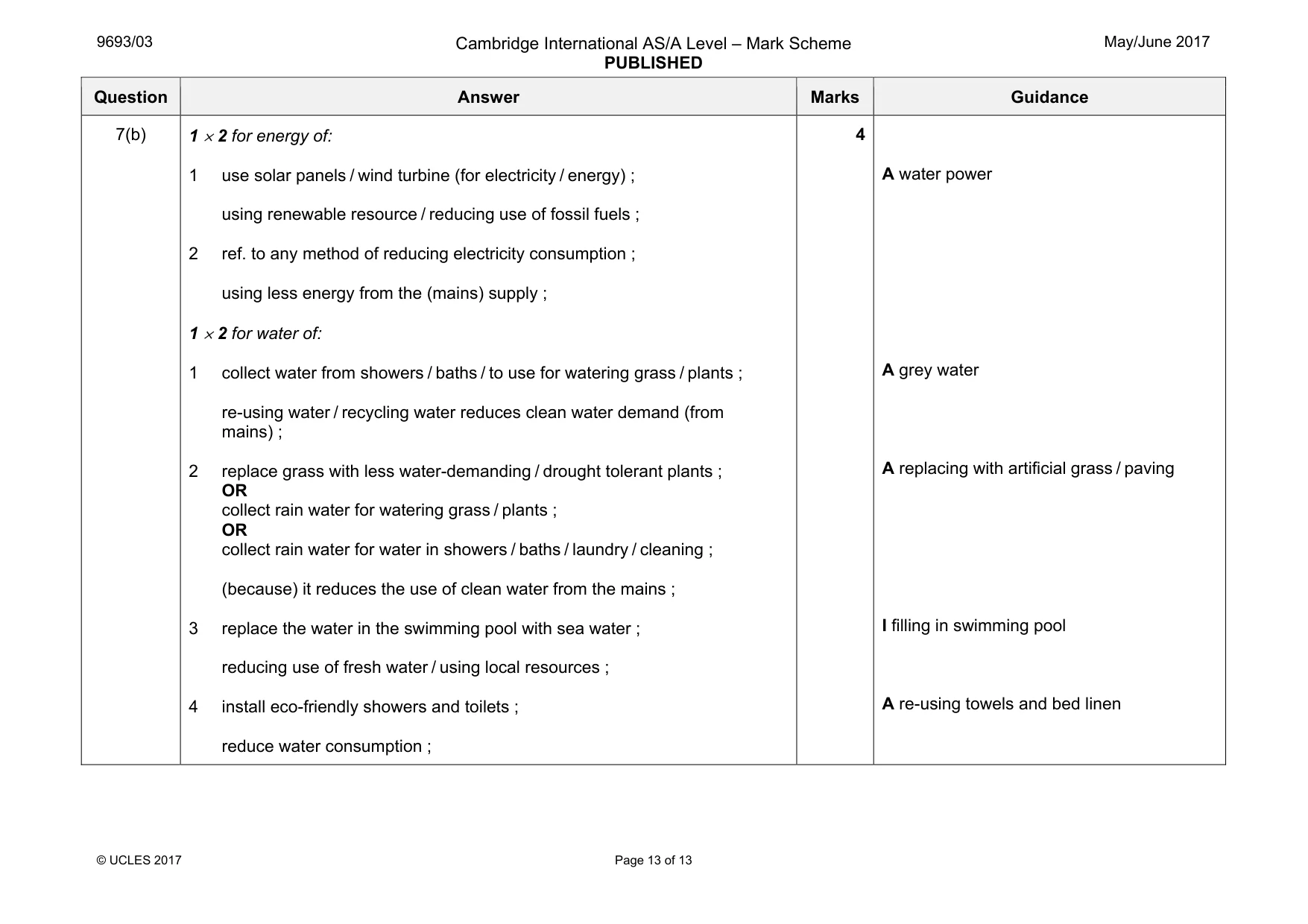
Mark scheme: 7(a)(i) support: any 2 of: using local people to provide hotel service ; small hotel so less impact on the environment ; more money into local economy ; helps conservation / protects environment by clearing rubbish / mapping reefs ; raising awareness / showing appreciation of the natural environment, by educational classes ; undermine: ref. to car travel causing (air) pollution / adds carbon dioxide to the air ; 3 answers must relate to an aim of ecotourism: involving local people, raising awareness, conservation, minimising ecological impact 7(a)(ii) support: any 2 of: small cruise ships carry fewer people, so less impact on the environment ; using local people as guides ; raising awareness / showing appreciation by using an expert on the area ; small groups for trips have less impact ; undermine: any 2 of: cruise ships cause pollution / litter in water (damaging the environment) ; cruise ships also cause physical damage to reefs / seagrass ; idea that a small cruise ship will still have a lot of small groups that could damage the ecosystem / environment ; 3 answers must relate to an aim of ecotourism: involving local people, raising awareness, conservation, minimising ecological impact Question Answer Marks Guidance 7(b) 1 × 2 for energy of: 1 use solar panels / wind turbine (for electricity / energy) ; using renewable resource / reducing use of fossil fuels ; 2 ref. to any method of reducing electricity consumption ; using less energy from the (mains) supply ; 1 × 2 for water of: 1 collect water from showers / baths / to use for watering grass / plants ; re-using water / recycling water reduces clean water demand (from mains) ; 2 replace grass with less water-demanding / drought tolerant plants ; OR collect rain water for watering grass / plants ; OR collect rain water for water in showers / baths / laundry / cleaning ; (because) it reduces the use of clean water from the mains ; 3 replace the water in the swimming pool with sea water ; reducing use of fresh water / using local resources ; 4 install eco-friendly showers and toilets ; reduce water consumption ; 4 A water power A grey water A replacing with artificial grass / paving I filling in swimming pool A re-using towels and bed linen
What was in this paper
The subtopics covered by these 7 questions, and how many questions each got. Open one in a new tab to see every Cambridge question on it.
What you needed in this session
Cambridge’s own grade thresholds for 2017 May/June, Paper 3 · Variant 1. A higher threshold means an easier paper — the bar moves with how the cohort did.