Cambridge A Level Food Studies 9336 — 2019 Oct/Nov Paper 1 · Variant 1
9336/11/O/N/19 · 100 marks · ≈113 min
The question paper and its mark scheme, free to read here and free to download. This is Cambridge’s own paper, exactly as it was sat.
Question paper8 pages



Mark scheme18 pages
Answers below. Sit the paper first if you are practising.
Paper as text
Question paper, page 1
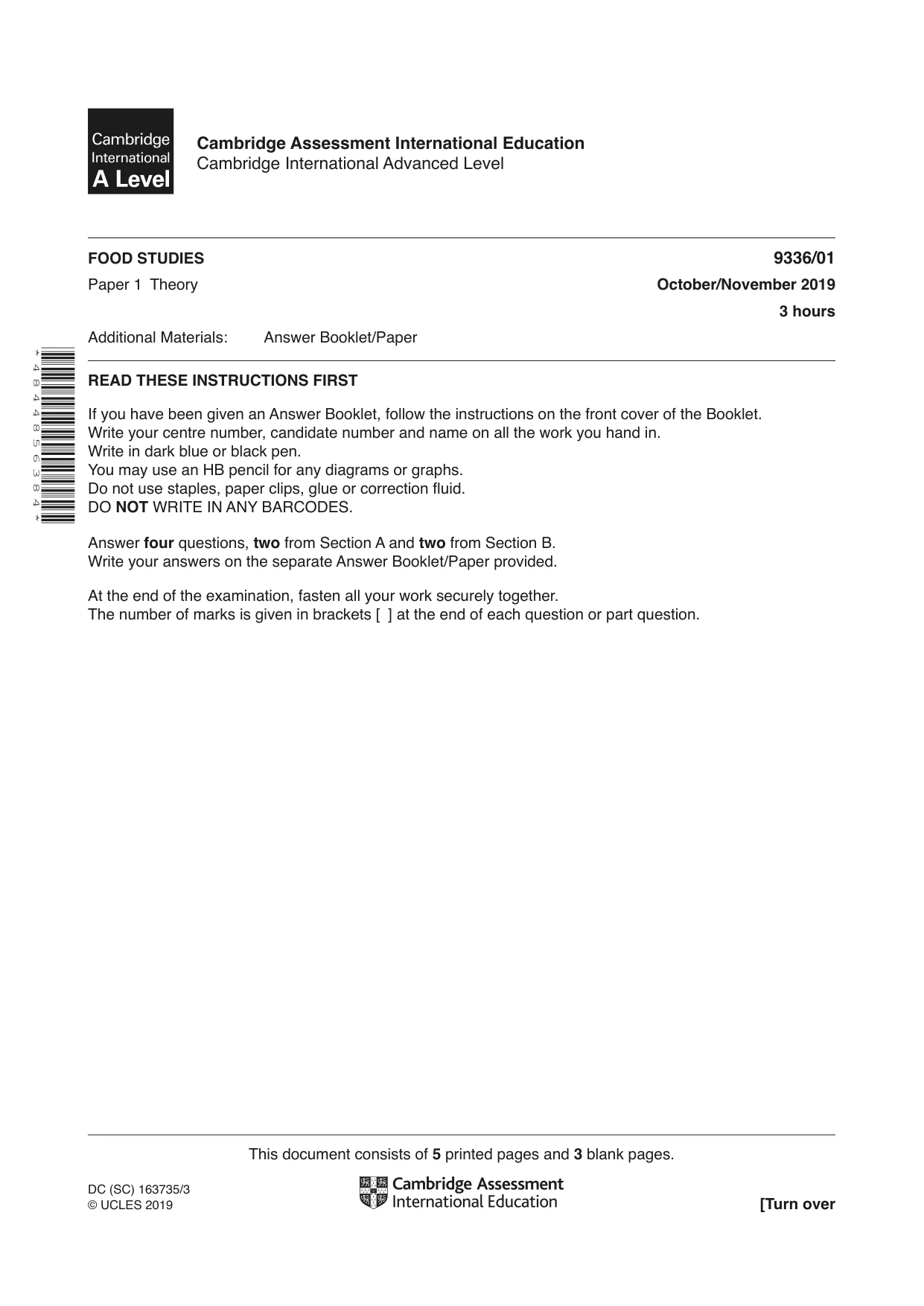
This document consists of 5 printed pages and 3 blank pages. DC (SC) 163735/3 © UCLES 2019 [Turn over Cambridge Assessment International Education Cambridge International Advanced Level * 4 8 4 4 8 5 6 3 8 4 * FOOD STUDIES 9336/01 Paper 1 Theory October/November 2019 3 hours Additional Materials: Answer Booklet/Paper READ THESE INSTRUCTIONS FIRST If you have been given an Answer Booklet, follow the instructions on the front cover of the Booklet. Write your centre number, candidate number and name on all the work you hand in. Write in dark blue or black pen. You may use an HB pencil for any diagrams or graphs. Do not use staples, paper clips, glue or correction fluid. DO NOT WRITE IN ANY BARCODES. Answer four questions, two from Section A and two from Section B. Write your answers on the separate Answer Booklet/Paper provided. At the end of the examination, fasten all your work securely together. The number of marks is given in brackets [ ] at the end of each question or part question.
Question paper, page 2
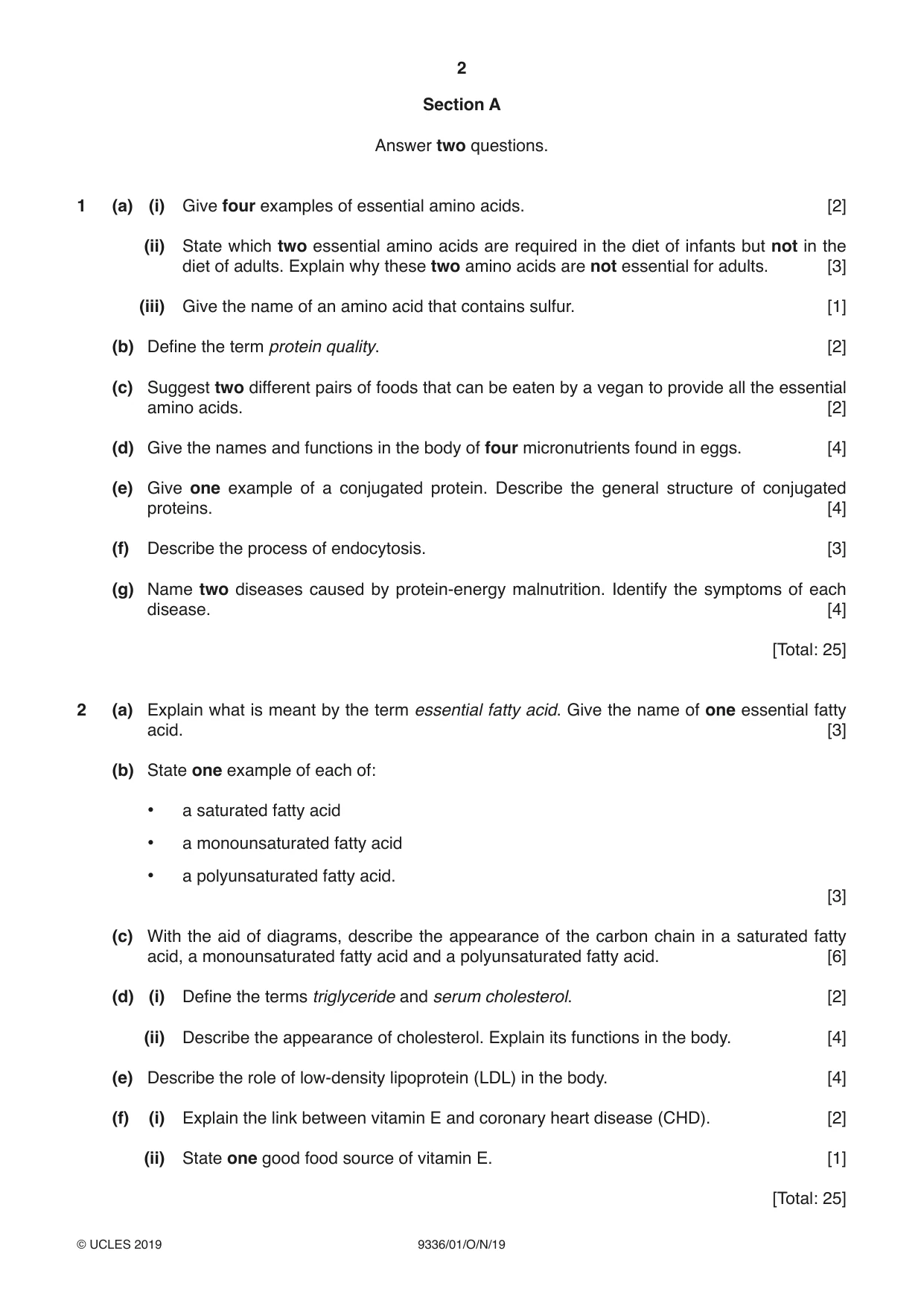
2 9336/01/O/N/19 © UCLES 2019 Section A Answer two questions. 1 (a) (i) Give four examples of essential amino acids. [2] (ii) State which two essential amino acids are required in the diet of infants but not in the diet of adults. Explain why these two amino acids are not essential for adults. [3] (iii) Give the name of an amino acid that contains sulfur. [1] (b) Define the term protein quality. [2] (c) Suggest two different pairs of foods that can be eaten by a vegan to provide all the essential amino acids. [2] (d) Give the names and functions in the body of four micronutrients found in eggs. [4] (e) Give one example of a conjugated protein. Describe the general structure of conjugated proteins. [4] (f) Describe the process of endocytosis. [3] (g) Name two diseases caused by protein-energy malnutrition. Identify the symptoms of each disease. [4] [Total: 25] 2 (a) Explain what is meant by the term essential fatty acid. Give the name of one essential fatty acid. [3] (b) State one example of each of: • a saturated fatty acid • a monounsaturated fatty acid • a polyunsaturated fatty acid. [3] (c) With the aid of diagrams, describe the appearance of the carbon chain in a saturated fatty acid, a monounsaturated fatty acid and a polyunsaturated fatty acid. [6] (d) (i) Define the terms triglyceride and serum cholesterol. [2] (ii) Describe the appearance of cholesterol. Explain its functions in the body. [4] (e) Describe the role of low-density lipoprotein (LDL) in the body. [4] (f) (i) Explain the link between vitamin E and coronary heart disease (CHD). [2] (ii) State one good food source of vitamin E. [1] [Total: 25]
Question paper, page 3
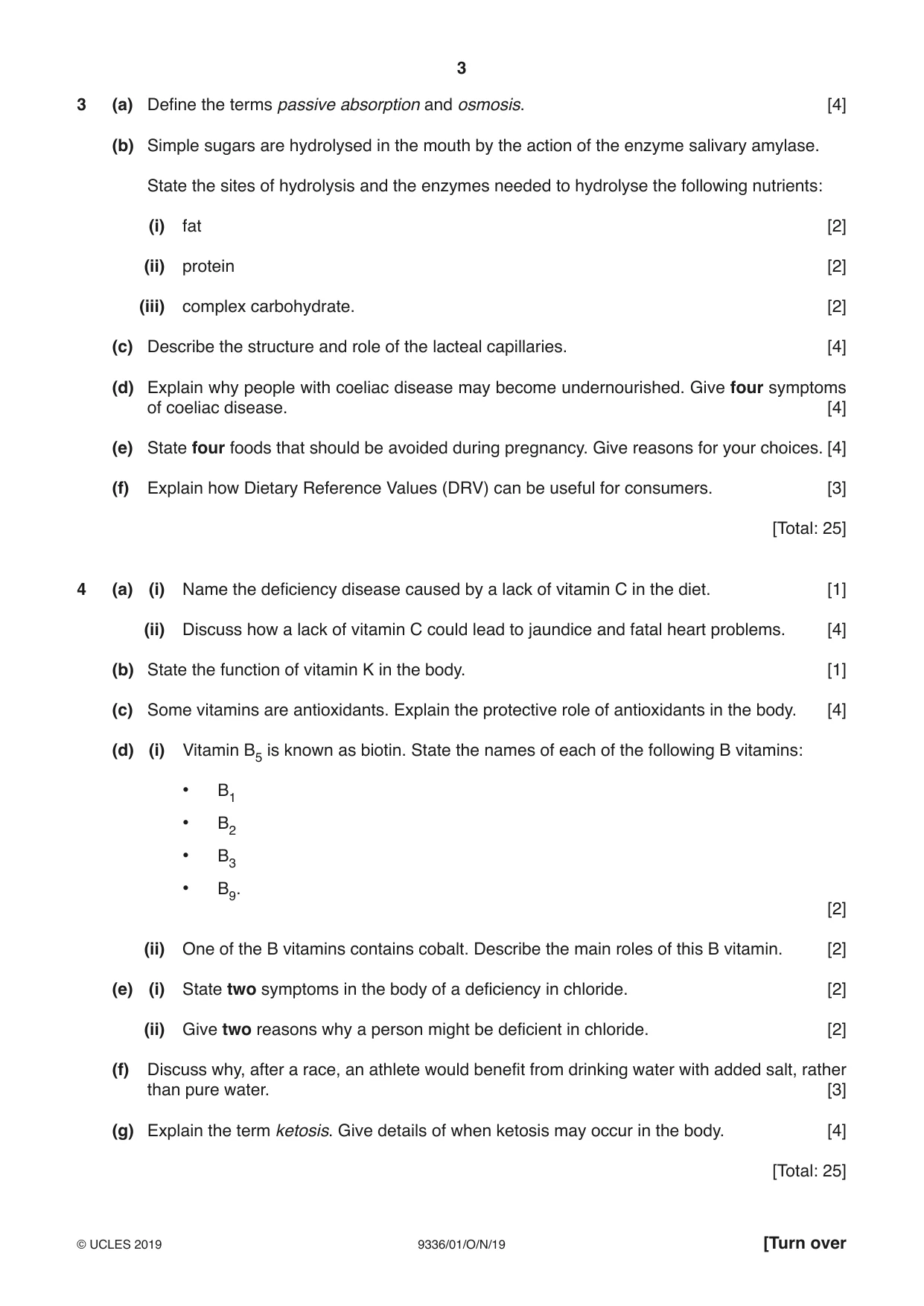
3 9336/01/O/N/19 © UCLES 2019 [Turn over 3 (a) Define the terms passive absorption and osmosis. [4] (b) Simple sugars are hydrolysed in the mouth by the action of the enzyme salivary amylase. State the sites of hydrolysis and the enzymes needed to hydrolyse the following nutrients: (i) fat [2] (ii) protein [2] (iii) complex carbohydrate. [2] (c) Describe the structure and role of the lacteal capillaries. [4] (d) Explain why people with coeliac disease may become undernourished. Give four symptoms of coeliac disease. [4] (e) State four foods that should be avoided during pregnancy. Give reasons for your choices. [4] (f) Explain how Dietary Reference Values (DRV) can be useful for consumers. [3] [Total: 25] 4 (a) (i) Name the deficiency disease caused by a lack of vitamin C in the diet. [1] (ii) Discuss how a lack of vitamin C could lead to jaundice and fatal heart problems. [4] (b) State the function of vitamin K in the body. [1] (c) Some vitamins are antioxidants. Explain the protective role of antioxidants in the body. [4] (d) (i) Vitamin B5 is known as biotin. State the names of each of the following B vitamins: • B1 • B2 • B3 • B9. [2] (ii) One of the B vitamins contains cobalt. Describe the main roles of this B vitamin. [2] (e) (i) State two symptoms in the body of a deficiency in chloride. [2] (ii) Give two reasons why a person might be deficient in chloride. [2] (f) Discuss why, after a race, an athlete would benefit from drinking water with added salt, rather than pure water. [3] (g) Explain the term ketosis. Give details of when ketosis may occur in the body. [4] [Total: 25]
Question paper, page 4
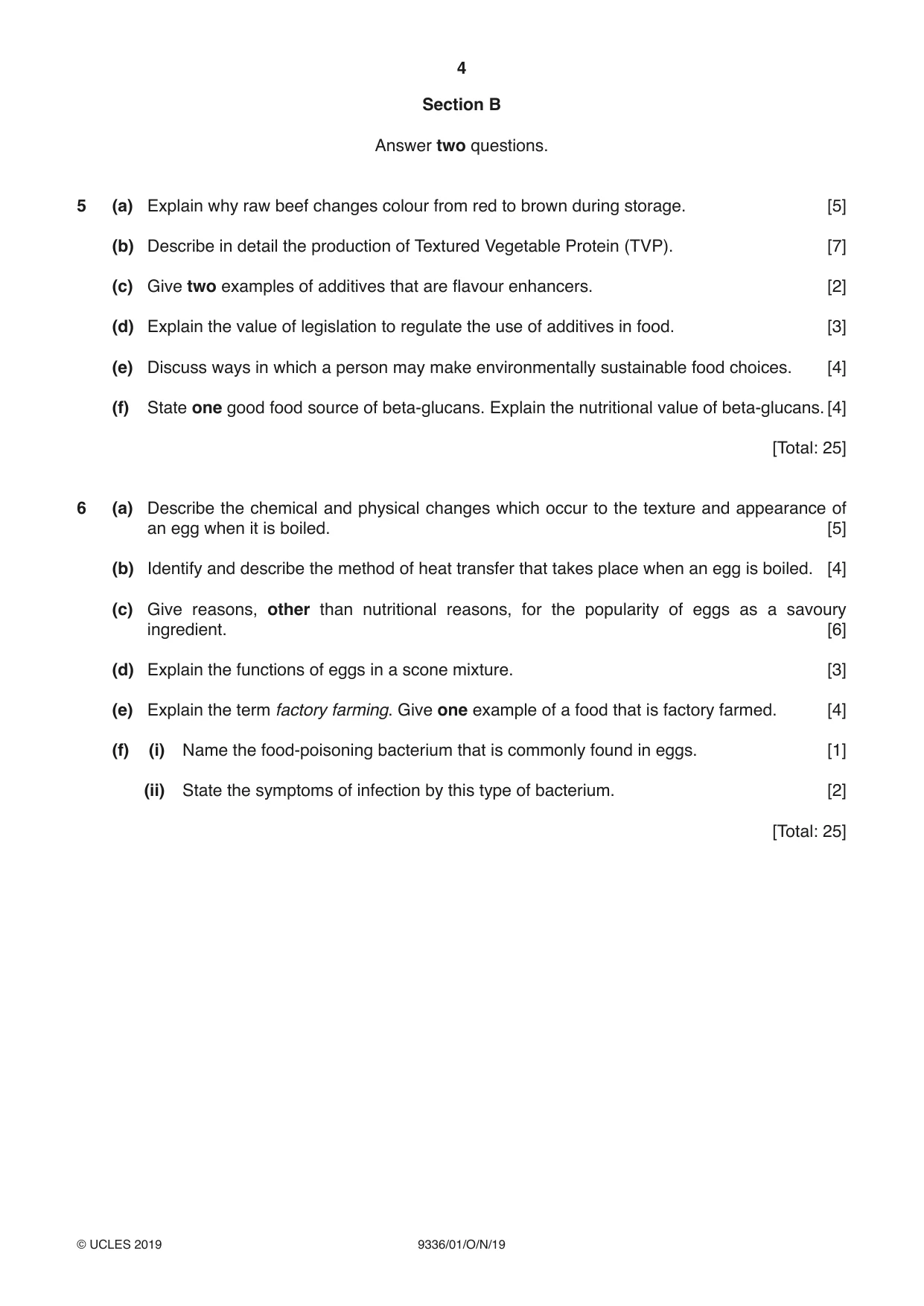
4 9336/01/O/N/19 © UCLES 2019 Section B Answer two questions. 5 (a) Explain why raw beef changes colour from red to brown during storage. [5] (b) Describe in detail the production of Textured Vegetable Protein (TVP). [7] (c) Give two examples of additives that are flavour enhancers. [2] (d) Explain the value of legislation to regulate the use of additives in food. [3] (e) Discuss ways in which a person may make environmentally sustainable food choices. [4] (f) State one good food source of beta-glucans. Explain the nutritional value of beta-glucans. [4] [Total: 25] 6 (a) Describe the chemical and physical changes which occur to the texture and appearance of an egg when it is boiled. [5] (b) Identify and describe the method of heat transfer that takes place when an egg is boiled. [4] (c) Give reasons, other than nutritional reasons, for the popularity of eggs as a savoury ingredient. [6] (d) Explain the functions of eggs in a scone mixture. [3] (e) Explain the term factory farming. Give one example of a food that is factory farmed. [4] (f) (i) Name the food-poisoning bacterium that is commonly found in eggs. [1] (ii) State the symptoms of infection by this type of bacterium. [2] [Total: 25]
Question paper, page 5
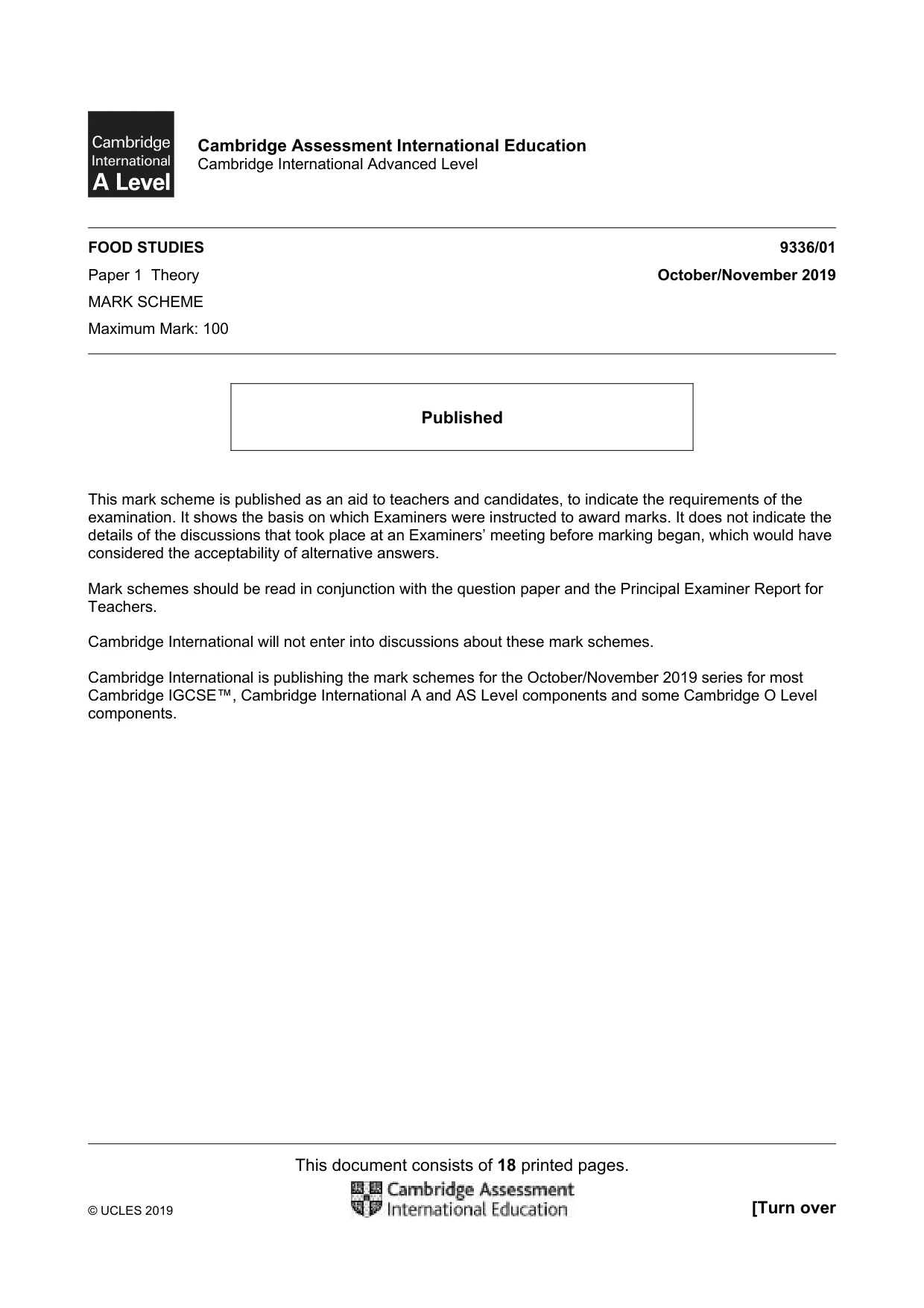
5 9336/01/O/N/19 © UCLES 2019 7 (a) Give an example of a biological raising agent. Suggest a food product that uses this raising agent. [2] (b) Explain the function of the butter in a rubbed-in mixture. [2] (c) Some cakes are made using the rubbed-in method. Name four other examples of baked products made using the rubbed-in method. [2] (d) Explain two ways that a vegetable soup can be thickened without the addition of flour, cream or cheese. [4] (e) Name and describe the process of non-enzymic browning. [5] (f) (i) Describe the characteristics of Clostridium perfringens. Explain how this type of bacterium causes food poisoning. [6] (ii) Identify four different groups of people who are at high risk of food poisoning. Explain why they are at high risk of food poisoning. [4] [Total: 25] 8 (a) Describe in detail the production of a simple curd cheese. [6] (b) Explain why homemade mayonnaise containing egg yolk, oil, vinegar and salt may fail to emulsify. [3] (c) (i) Describe the method of making a raspberry purée. [3] (ii) Describe the process of making raspberry jam. [4] (d) Explain how sugar acts as a preservative in jam. [2] (e) Suggest three ways of saving energy when cooking on the hob (top of the stove). [3] (f) Explain how to use an electric blender safely. [4] [Total: 25]
Question paper, page 6
6 9336/01/O/N/19 © UCLES 2019 BLANK PAGE
Question paper, page 7
7 9336/01/O/N/19 © UCLES 2019 BLANK PAGE
Question paper, page 8
8 9336/01/O/N/19 © UCLES 2019 BLANK PAGE Permission to reproduce items where third-party owned material protected by copyright is included has been sought and cleared where possible. Every reasonable effort has been made by the publisher (UCLES) to trace copyright holders, but if any items requiring clearance have unwittingly been included, the publisher will be pleased to make amends at the earliest possible opportunity. To avoid the issue of disclosure of answer-related information to candidates, all copyright acknowledgements are reproduced online in the Cambridge Assessment International Education Copyright Acknowledgements Booklet. This is produced for each series of examinations and is freely available to download at www.cambridgeinternational.org after the live examination series. Cambridge Assessment International Education is part of the Cambridge Assessment Group. Cambridge Assessment is the brand name of the University of Cambridge Local Examinations Syndicate (UCLES), which itself is a department of the University of Cambridge.
Mark scheme, page 1
This document consists of 18 printed pages. © UCLES 2019 [Turn over Cambridge Assessment International Education Cambridge International Advanced Level FOOD STUDIES 9336/01 Paper 1 Theory October/November 2019 MARK SCHEME Maximum Mark: 100 Published This mark scheme is published as an aid to teachers and candidates, to indicate the requirements of the examination. It shows the basis on which Examiners were instructed to award marks. It does not indicate the details of the discussions that took place at an Examiners’ meeting before marking began, which would have considered the acceptability of alternative answers. Mark schemes should be read in conjunction with the question paper and the Principal Examiner Report for Teachers. Cambridge International will not enter into discussions about these mark schemes. Cambridge International is publishing the mark schemes for the October/November 2019 series for most Cambridge IGCSE™, Cambridge International A and AS Level components and some Cambridge O Level components.
Mark scheme, page 2
9336/01 Cambridge International A Level – Mark Scheme PUBLISHED October/November 2019 © UCLES 2019 Page 2 of 18 Generic Marking Principles These general marking principles must be applied by all examiners when marking candidate answers. They should be applied alongside the specific content of the mark scheme or generic level descriptors for a question. Each question paper and mark scheme will also comply with these marking principles. GENERIC MARKING PRINCIPLE 1: Marks must be awarded in line with: • the specific content of the mark scheme or the generic level descriptors for the question • the specific skills defined in the mark scheme or in the generic level descriptors for the question • the standard of response required by a candidate as exemplified by the standardisation scripts. GENERIC MARKING PRINCIPLE 2: Marks awarded are always whole marks (not half marks, or other fractions). GENERIC MARKING PRINCIPLE 3: Marks must be awarded positively: • marks are awarded for correct/valid answers, as defined in the mark scheme. However, credit is given for valid answers which go beyond the scope of the syllabus and mark scheme, referring to your Team Leader as appropriate • marks are awarded when candidates clearly demonstrate what they know and can do • marks are not deducted for errors • marks are not deducted for omissions • answers should only be judged on the quality of spelling, punctuation and grammar when these features are specifically assessed by the question as indicated by the mark scheme. The meaning, however, should be unambiguous. GENERIC MARKING PRINCIPLE 4: Rules must be applied consistently e.g. in situations where candidates have not followed instructions or in the application of generic level descriptors.
Mark scheme, page 3
9336/01 Cambridge International A Level – Mark Scheme PUBLISHED October/November 2019 © UCLES 2019 Page 3 of 18 GENERIC MARKING PRINCIPLE 5: Marks should be awarded using the full range of marks defined in the mark scheme for the question (however; the use of the full mark range may be limited according to the quality of the candidate responses seen). GENERIC MARKING PRINCIPLE 6: Marks awarded are based solely on the requirements as defined in the mark scheme. Marks should not be awarded with grade thresholds or grade descriptors in mind.
Mark scheme, page 4
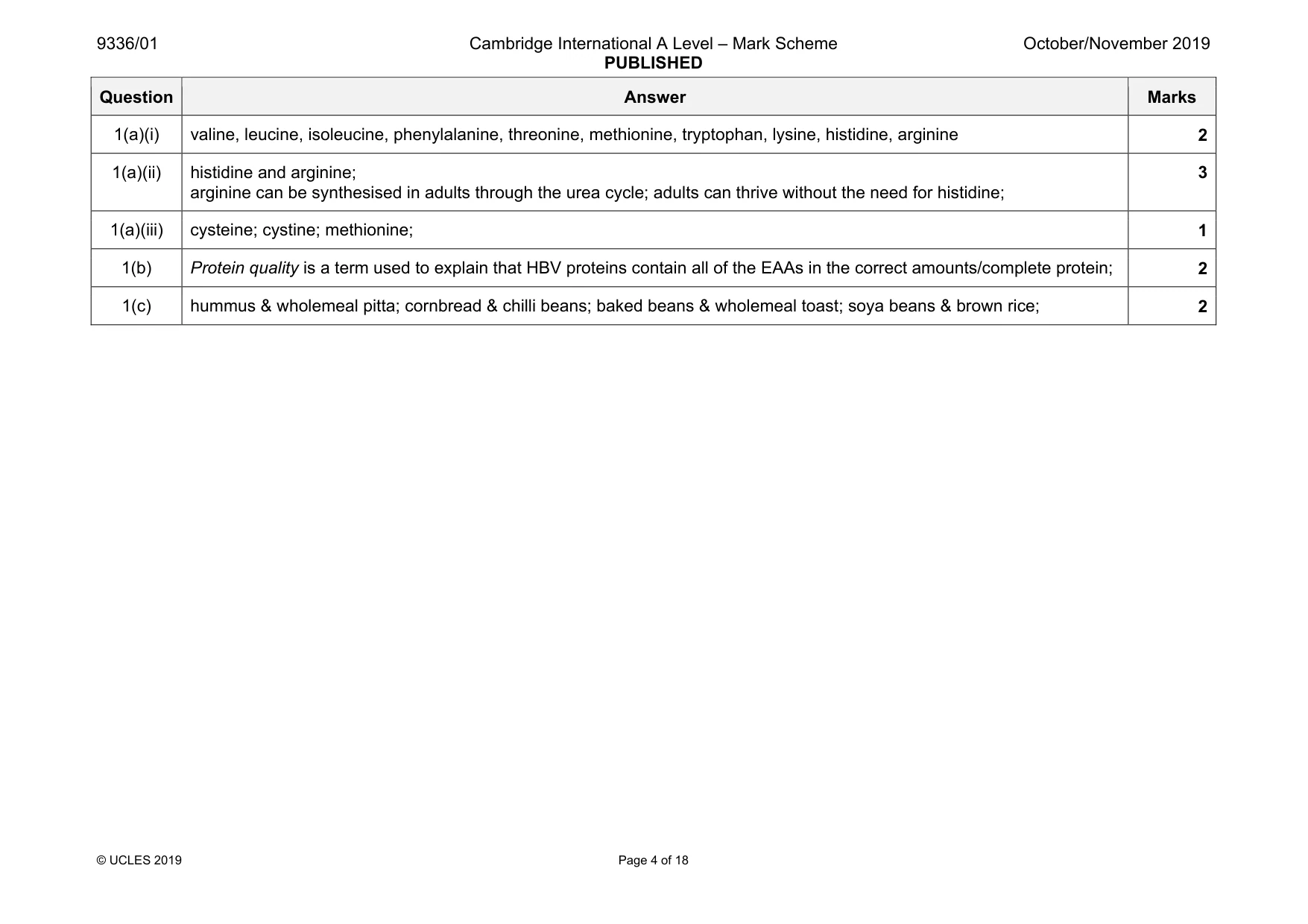
9336/01 Cambridge International A Level – Mark Scheme PUBLISHED October/November 2019 © UCLES 2019 Page 4 of 18 Question Answer Marks 1(a)(i) valine, leucine, isoleucine, phenylalanine, threonine, methionine, tryptophan, lysine, histidine, arginine 2 1(a)(ii) histidine and arginine; arginine can be synthesised in adults through the urea cycle; adults can thrive without the need for histidine; 3 1(a)(iii) cysteine; cystine; methionine; 1 1(b) Protein quality is a term used to explain that HBV proteins contain all of the EAAs in the correct amounts/complete protein; 2 1(c) hummus & wholemeal pitta; cornbread & chilli beans; baked beans & wholemeal toast; soya beans & brown rice; 2
Mark scheme, page 5
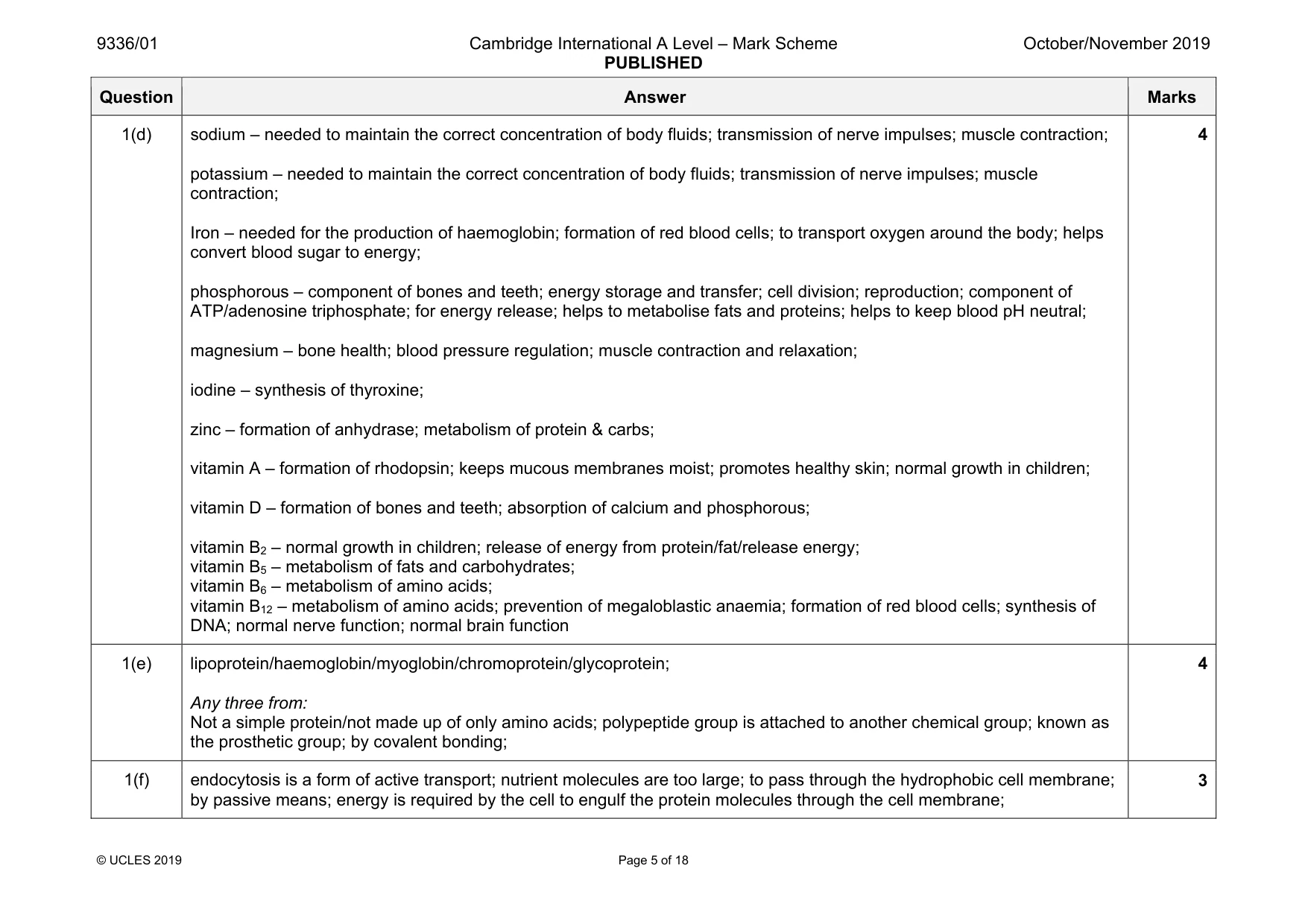
9336/01 Cambridge International A Level – Mark Scheme PUBLISHED October/November 2019 © UCLES 2019 Page 5 of 18 Question Answer Marks 1(d) sodium – needed to maintain the correct concentration of body fluids; transmission of nerve impulses; muscle contraction; potassium – needed to maintain the correct concentration of body fluids; transmission of nerve impulses; muscle contraction; Iron – needed for the production of haemoglobin; formation of red blood cells; to transport oxygen around the body; helps convert blood sugar to energy; phosphorous – component of bones and teeth; energy storage and transfer; cell division; reproduction; component of ATP/adenosine triphosphate; for energy release; helps to metabolise fats and proteins; helps to keep blood pH neutral; magnesium – bone health; blood pressure regulation; muscle contraction and relaxation; iodine – synthesis of thyroxine; zinc – formation of anhydrase; metabolism of protein & carbs; vitamin A – formation of rhodopsin; keeps mucous membranes moist; promotes healthy skin; normal growth in children; vitamin D – formation of bones and teeth; absorption of calcium and phosphorous; vitamin B2 – normal growth in children; release of energy from protein/fat/release energy; vitamin B5 – metabolism of fats and carbohydrates; vitamin B6 – metabolism of amino acids; vitamin B12 – metabolism of amino acids; prevention of megaloblastic anaemia; formation of red blood cells; synthesis of DNA; normal nerve function; normal brain function 4 1(e) lipoprotein/haemoglobin/myoglobin/chromoprotein/glycoprotein; Any three from: Not a simple protein/not made up of only amino acids; polypeptide group is attached to another chemical group; known as the prosthetic group; by covalent bonding; 4 1(f) endocytosis is a form of active transport; nutrient molecules are too large; to pass through the hydrophobic cell membrane; by passive means; energy is required by the cell to engulf the protein molecules through the cell membrane; 3
Mark scheme, page 6
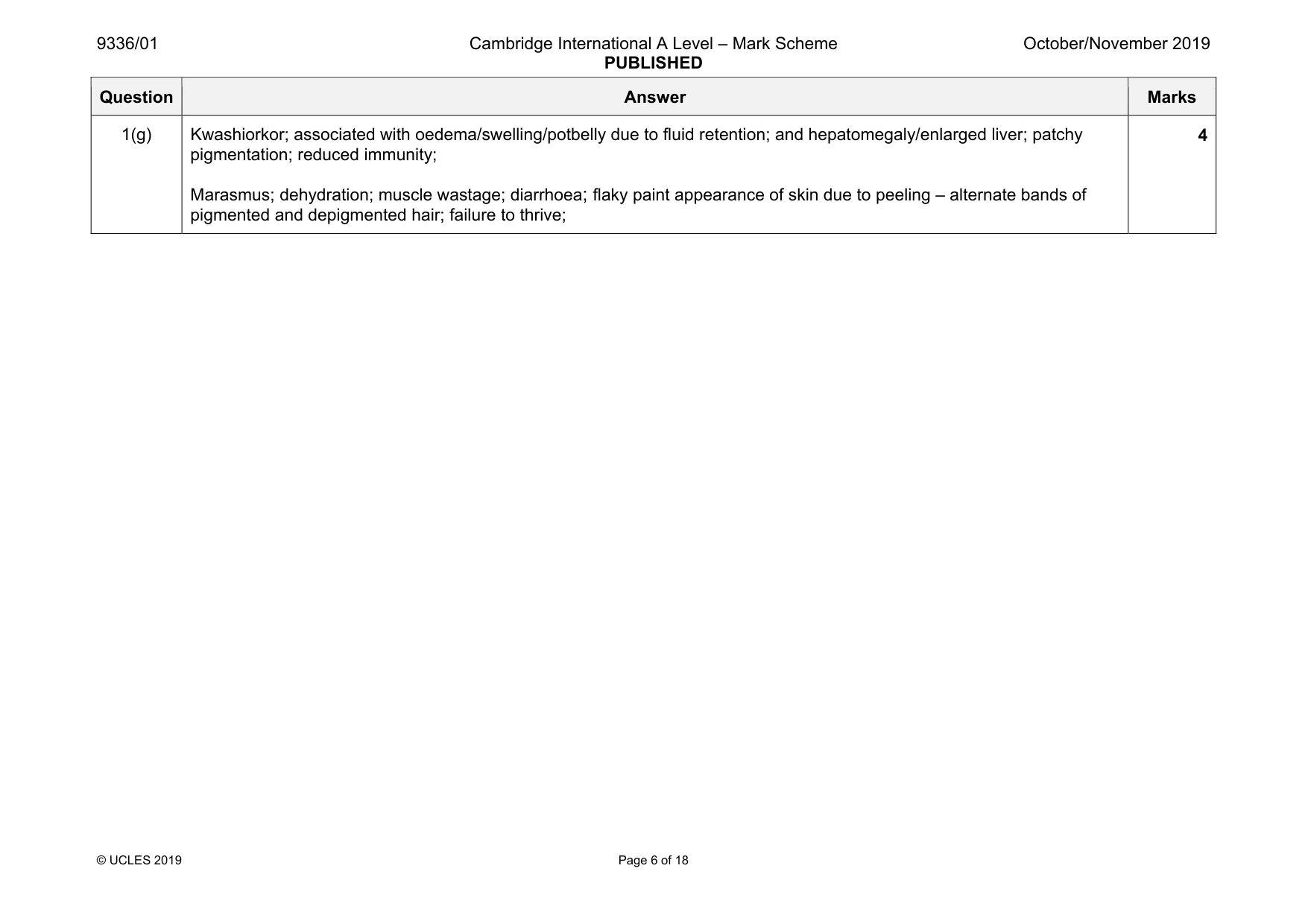
9336/01 Cambridge International A Level – Mark Scheme PUBLISHED October/November 2019 © UCLES 2019 Page 6 of 18 Question Answer Marks 1(g) Kwashiorkor; associated with oedema/swelling/potbelly due to fluid retention; and hepatomegaly/enlarged liver; patchy pigmentation; reduced immunity; Marasmus; dehydration; muscle wastage; diarrhoea; flaky paint appearance of skin due to peeling – alternate bands of pigmented and depigmented hair; failure to thrive; 4
Mark scheme, page 7
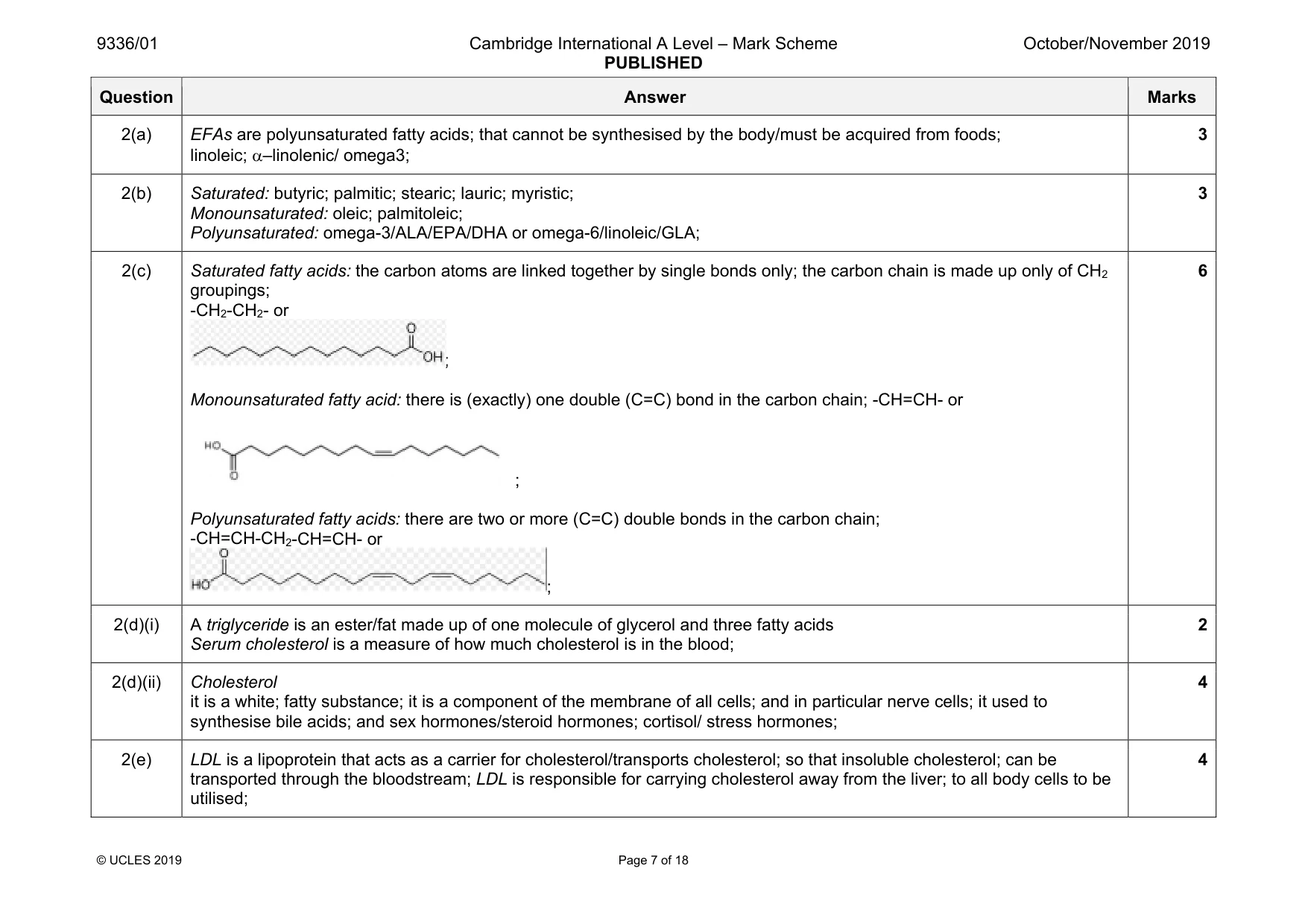
9336/01 Cambridge International A Level – Mark Scheme PUBLISHED October/November 2019 © UCLES 2019 Page 7 of 18 Question Answer Marks 2(a) EFAs are polyunsaturated fatty acids; that cannot be synthesised by the body/must be acquired from foods; linoleic; α–linolenic/ omega3; 3 2(b) Saturated: butyric; palmitic; stearic; lauric; myristic; Monounsaturated: oleic; palmitoleic; Polyunsaturated: omega-3/ALA/EPA/DHA or omega-6/linoleic/GLA; 3 2(c) Saturated fatty acids: the carbon atoms are linked together by single bonds only; the carbon chain is made up only of CH2 groupings; -CH2-CH2- or ; Monounsaturated fatty acid: there is (exactly) one double (C=C) bond in the carbon chain; -CH=CH- or ; Polyunsaturated fatty acids: there are two or more (C=C) double bonds in the carbon chain; -CH=CH-CH2-CH=CH- or ; 6 2(d)(i) A triglyceride is an ester/fat made up of one molecule of glycerol and three fatty acids Serum cholesterol is a measure of how much cholesterol is in the blood; 2 2(d)(ii) Cholesterol it is a white; fatty substance; it is a component of the membrane of all cells; and in particular nerve cells; it used to synthesise bile acids; and sex hormones/steroid hormones; cortisol/ stress hormones; 4 2(e) LDL is a lipoprotein that acts as a carrier for cholesterol/transports cholesterol; so that insoluble cholesterol; can be transported through the bloodstream; LDL is responsible for carrying cholesterol away from the liver; to all body cells to be utilised; 4
Mark scheme, page 8
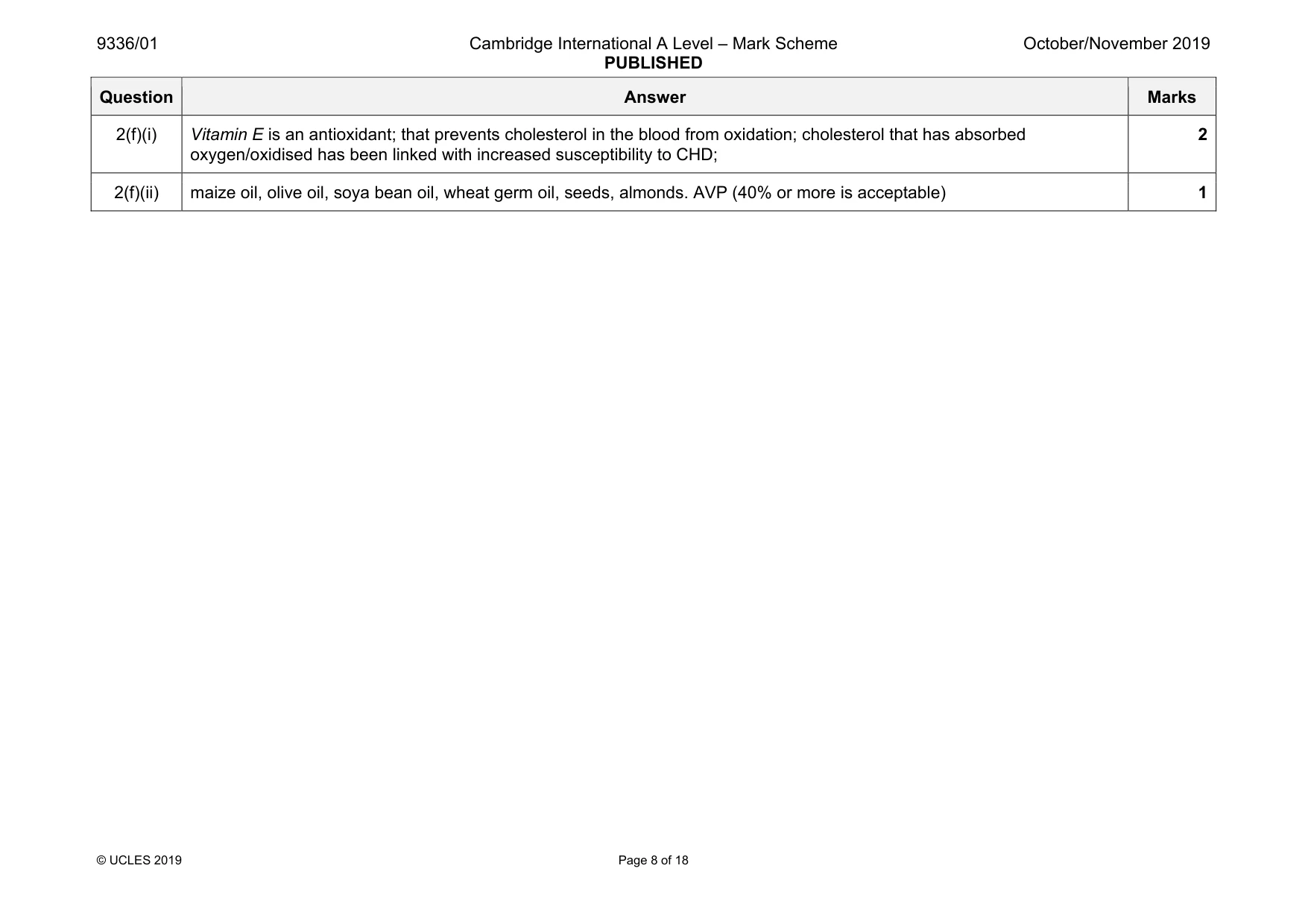
9336/01 Cambridge International A Level – Mark Scheme PUBLISHED October/November 2019 © UCLES 2019 Page 8 of 18 Question Answer Marks 2(f)(i) Vitamin E is an antioxidant; that prevents cholesterol in the blood from oxidation; cholesterol that has absorbed oxygen/oxidised has been linked with increased susceptibility to CHD; 2 2(f)(ii) maize oil, olive oil, soya bean oil, wheat germ oil, seeds, almonds. AVP (40% or more is acceptable) 1
Mark scheme, page 9
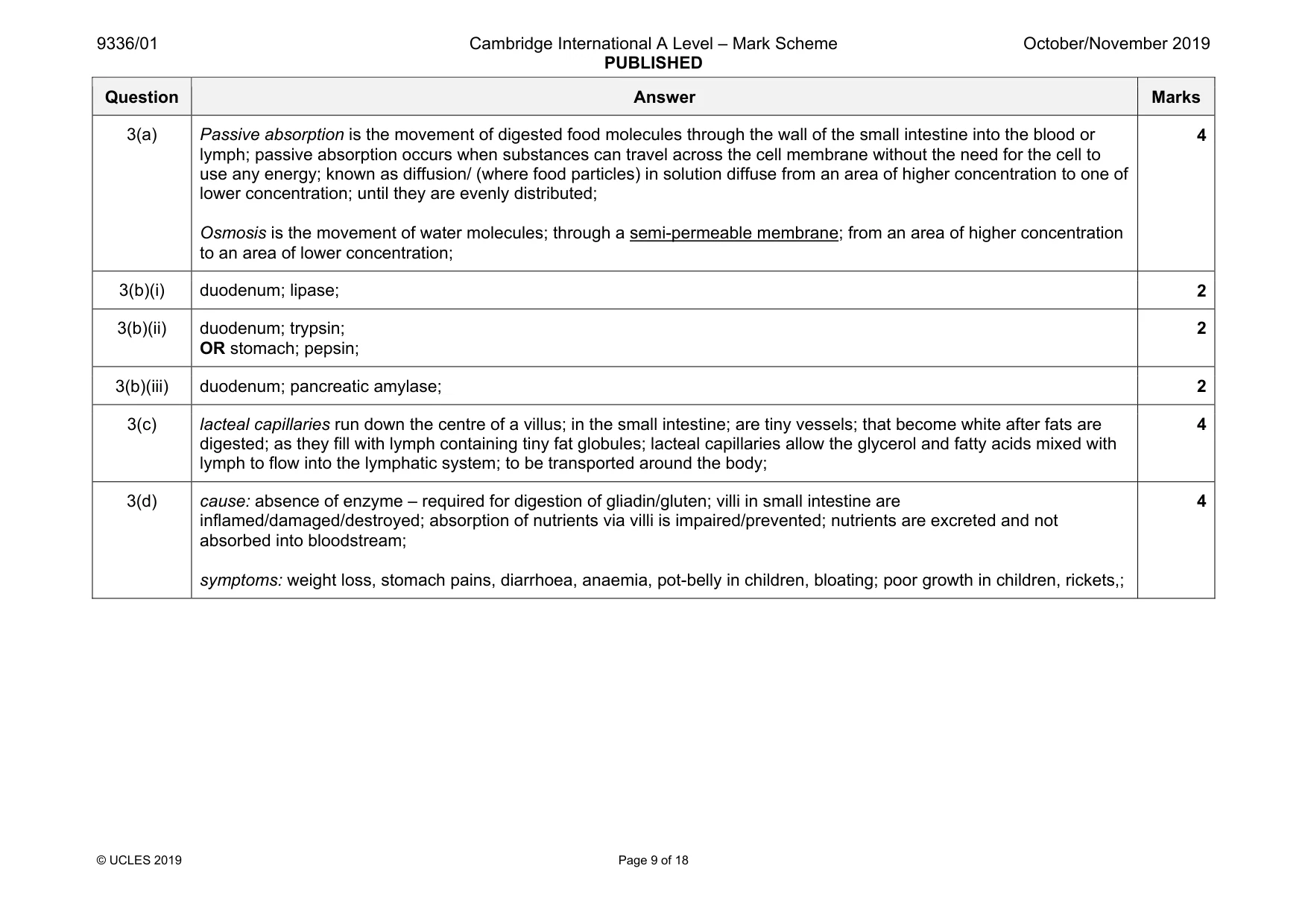
9336/01 Cambridge International A Level – Mark Scheme PUBLISHED October/November 2019 © UCLES 2019 Page 9 of 18 Question Answer Marks 3(a) Passive absorption is the movement of digested food molecules through the wall of the small intestine into the blood or lymph; passive absorption occurs when substances can travel across the cell membrane without the need for the cell to use any energy; known as diffusion/ (where food particles) in solution diffuse from an area of higher concentration to one of lower concentration; until they are evenly distributed; Osmosis is the movement of water molecules; through a semi-permeable membrane; from an area of higher concentration to an area of lower concentration; 4 3(b)(i) duodenum; lipase; 2 3(b)(ii) duodenum; trypsin; OR stomach; pepsin; 2 3(b)(iii) duodenum; pancreatic amylase; 2 3(c) lacteal capillaries run down the centre of a villus; in the small intestine; are tiny vessels; that become white after fats are digested; as they fill with lymph containing tiny fat globules; lacteal capillaries allow the glycerol and fatty acids mixed with lymph to flow into the lymphatic system; to be transported around the body; 4 3(d) cause: absence of enzyme – required for digestion of gliadin/gluten; villi in small intestine are inflamed/damaged/destroyed; absorption of nutrients via villi is impaired/prevented; nutrients are excreted and not absorbed into bloodstream; symptoms: weight loss, stomach pains, diarrhoea, anaemia, pot-belly in children, bloating; poor growth in children, rickets,; 4
Mark scheme, page 10
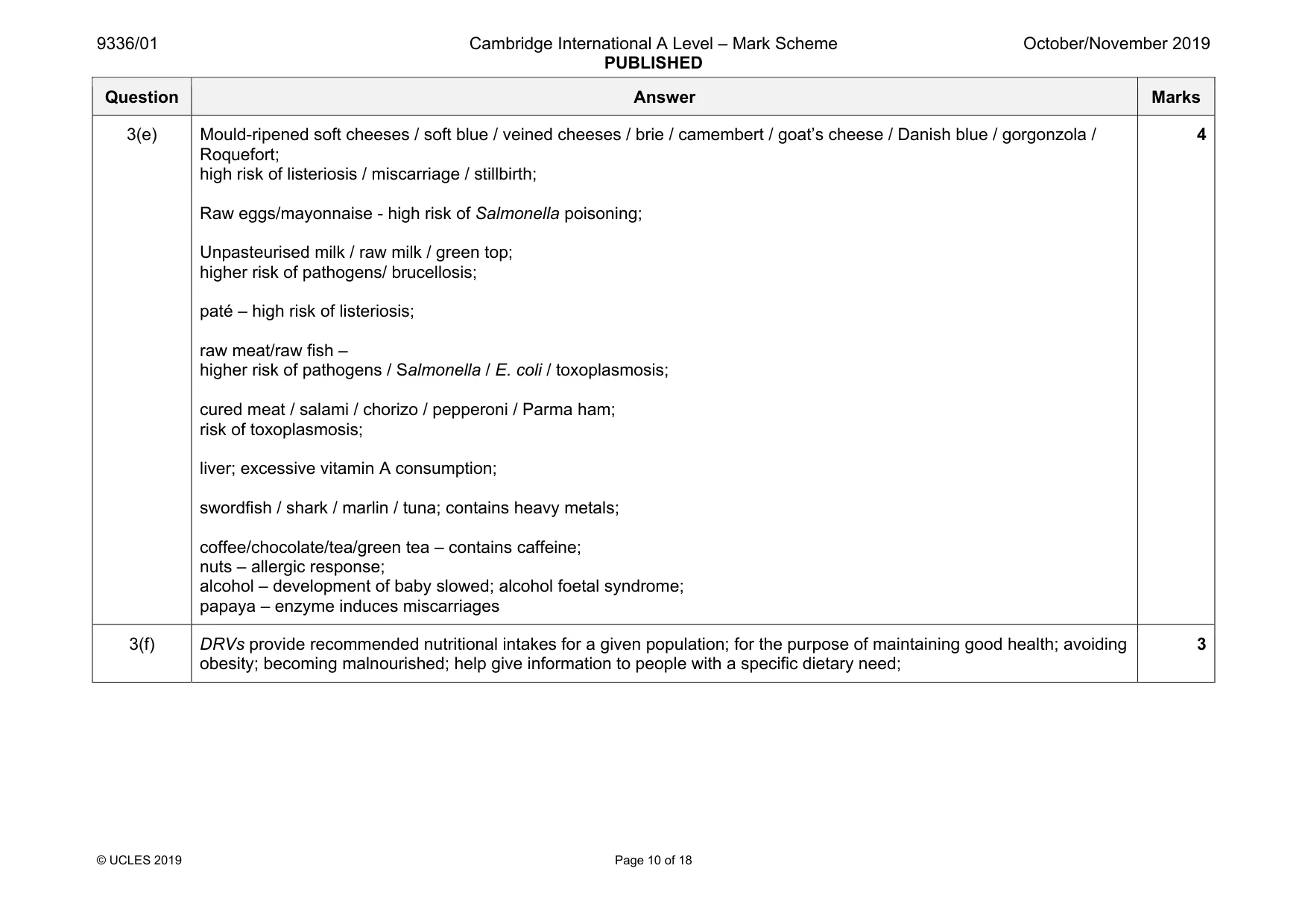
9336/01 Cambridge International A Level – Mark Scheme PUBLISHED October/November 2019 © UCLES 2019 Page 10 of 18 Question Answer Marks 3(e) Mould-ripened soft cheeses / soft blue / veined cheeses / brie / camembert / goat’s cheese / Danish blue / gorgonzola / Roquefort; high risk of listeriosis / miscarriage / stillbirth; Raw eggs/mayonnaise - high risk of Salmonella poisoning; Unpasteurised milk / raw milk / green top; higher risk of pathogens/ brucellosis; paté – high risk of listeriosis; raw meat/raw fish – higher risk of pathogens / Salmonella / E. coli / toxoplasmosis; cured meat / salami / chorizo / pepperoni / Parma ham; risk of toxoplasmosis; liver; excessive vitamin A consumption; swordfish / shark / marlin / tuna; contains heavy metals; coffee/chocolate/tea/green tea – contains caffeine; nuts – allergic response; alcohol – development of baby slowed; alcohol foetal syndrome; papaya – enzyme induces miscarriages 4 3(f) DRVs provide recommended nutritional intakes for a given population; for the purpose of maintaining good health; avoiding obesity; becoming malnourished; help give information to people with a specific dietary need; 3
Mark scheme, page 11
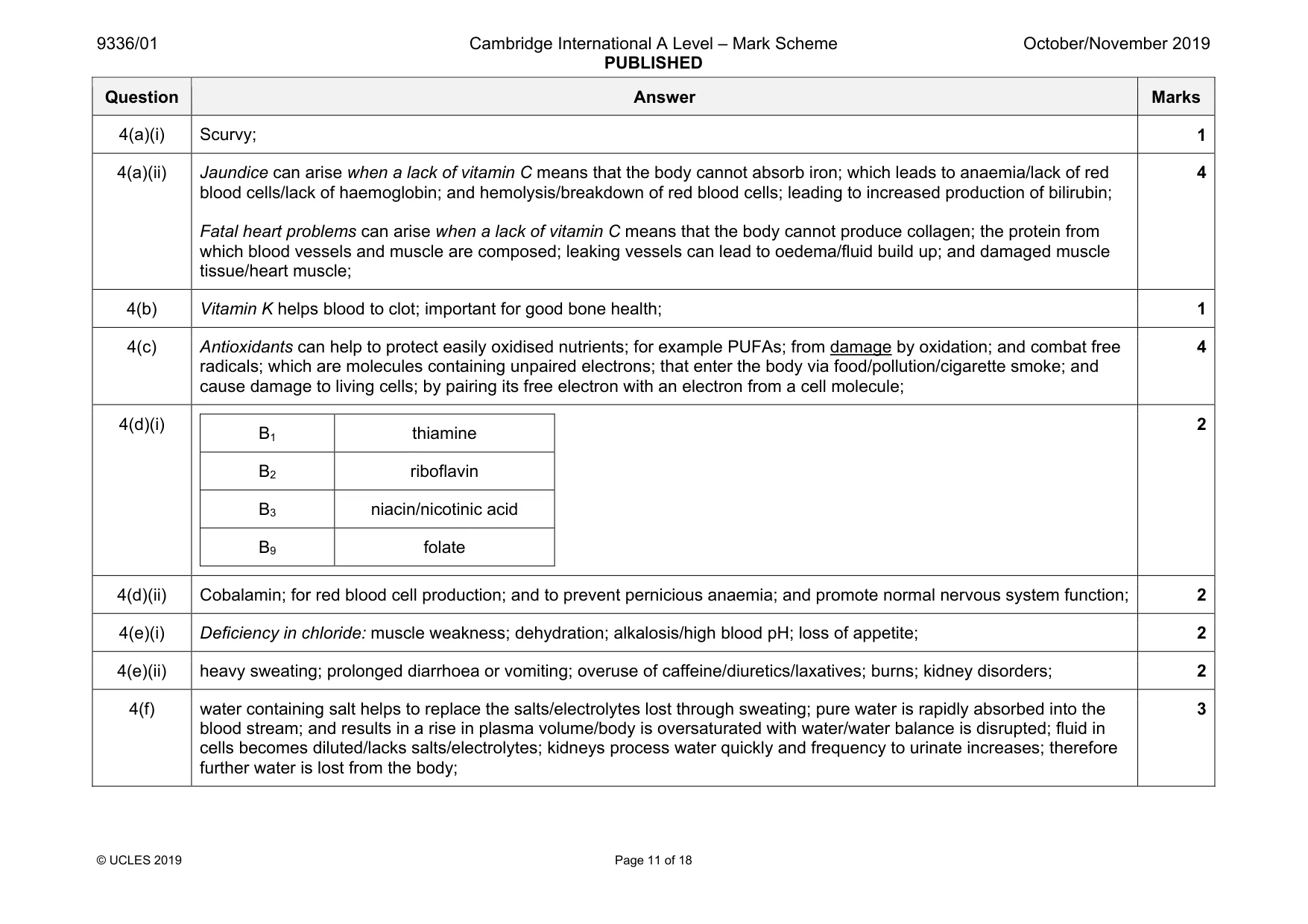
9336/01 Cambridge International A Level – Mark Scheme PUBLISHED October/November 2019 © UCLES 2019 Page 11 of 18 Question Answer Marks 4(a)(i) Scurvy; 1 4(a)(ii) Jaundice can arise when a lack of vitamin C means that the body cannot absorb iron; which leads to anaemia/lack of red blood cells/lack of haemoglobin; and hemolysis/breakdown of red blood cells; leading to increased production of bilirubin; Fatal heart problems can arise when a lack of vitamin C means that the body cannot produce collagen; the protein from which blood vessels and muscle are composed; leaking vessels can lead to oedema/fluid build up; and damaged muscle tissue/heart muscle; 4 4(b) Vitamin K helps blood to clot; important for good bone health; 1 4(c) Antioxidants can help to protect easily oxidised nutrients; for example PUFAs; from damage by oxidation; and combat free radicals; which are molecules containing unpaired electrons; that enter the body via food/pollution/cigarette smoke; and cause damage to living cells; by pairing its free electron with an electron from a cell molecule; 4 4(d)(i) B1 thiamine B2 riboflavin B3 niacin/nicotinic acid B9 folate 2 4(d)(ii) Cobalamin; for red blood cell production; and to prevent pernicious anaemia; and promote normal nervous system function; 2 4(e)(i) Deficiency in chloride: muscle weakness; dehydration; alkalosis/high blood pH; loss of appetite; 2 4(e)(ii) heavy sweating; prolonged diarrhoea or vomiting; overuse of caffeine/diuretics/laxatives; burns; kidney disorders; 2 4(f) water containing salt helps to replace the salts/electrolytes lost through sweating; pure water is rapidly absorbed into the blood stream; and results in a rise in plasma volume/body is oversaturated with water/water balance is disrupted; fluid in cells becomes diluted/lacks salts/electrolytes; kidneys process water quickly and frequency to urinate increases; therefore further water is lost from the body; 3
Mark scheme, page 12
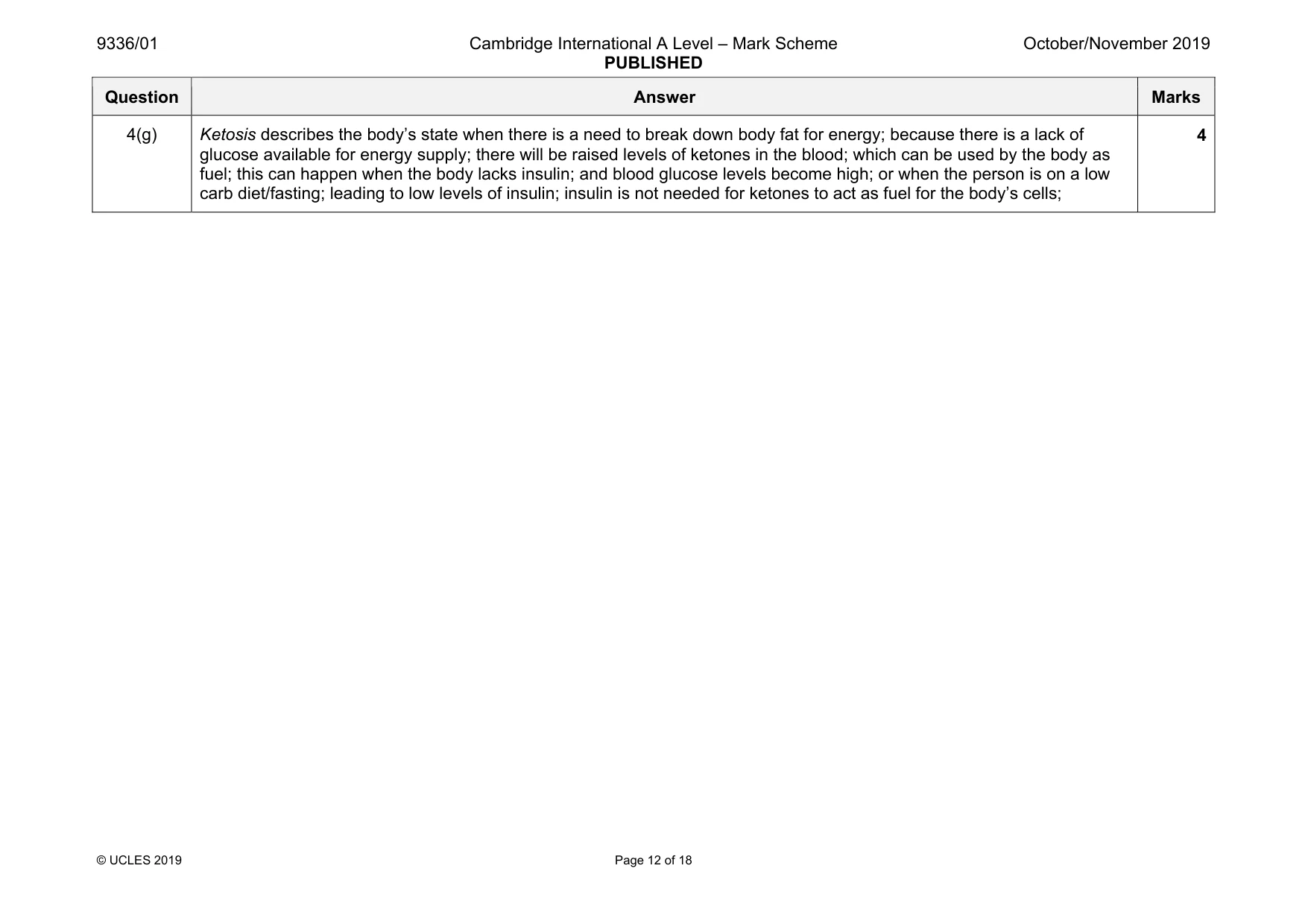
9336/01 Cambridge International A Level – Mark Scheme PUBLISHED October/November 2019 © UCLES 2019 Page 12 of 18 Question Answer Marks 4(g) Ketosis describes the body’s state when there is a need to break down body fat for energy; because there is a lack of glucose available for energy supply; there will be raised levels of ketones in the blood; which can be used by the body as fuel; this can happen when the body lacks insulin; and blood glucose levels become high; or when the person is on a low carb diet/fasting; leading to low levels of insulin; insulin is not needed for ketones to act as fuel for the body’s cells; 4
Mark scheme, page 13
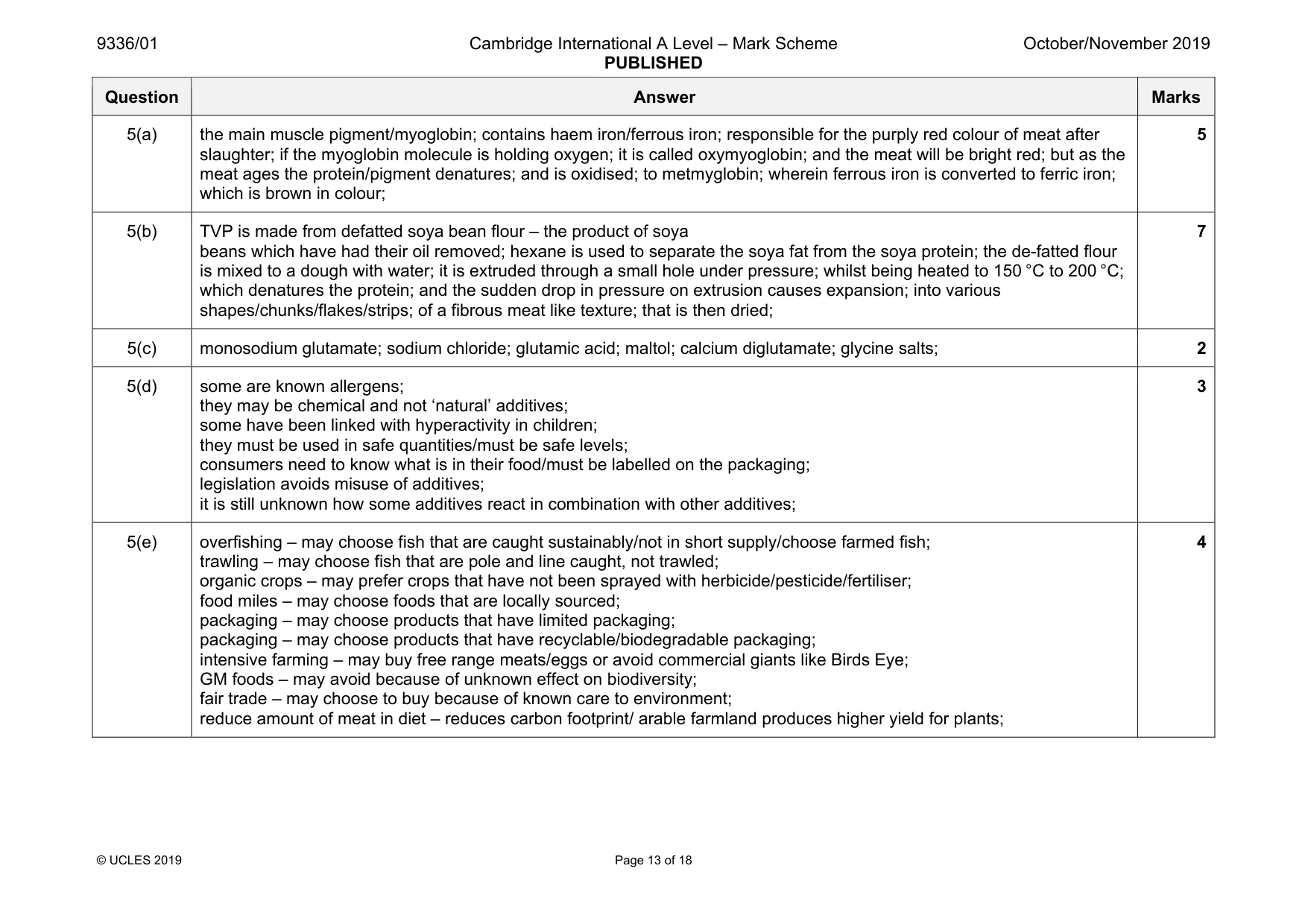
9336/01 Cambridge International A Level – Mark Scheme PUBLISHED October/November 2019 © UCLES 2019 Page 13 of 18 Question Answer Marks 5(a) the main muscle pigment/myoglobin; contains haem iron/ferrous iron; responsible for the purply red colour of meat after slaughter; if the myoglobin molecule is holding oxygen; it is called oxymyoglobin; and the meat will be bright red; but as the meat ages the protein/pigment denatures; and is oxidised; to metmyglobin; wherein ferrous iron is converted to ferric iron; which is brown in colour; 5 5(b) TVP is made from defatted soya bean flour – the product of soya beans which have had their oil removed; hexane is used to separate the soya fat from the soya protein; the de-fatted flour is mixed to a dough with water; it is extruded through a small hole under pressure; whilst being heated to 150 °C to 200 °C; which denatures the protein; and the sudden drop in pressure on extrusion causes expansion; into various shapes/chunks/flakes/strips; of a fibrous meat like texture; that is then dried; 7 5(c) monosodium glutamate; sodium chloride; glutamic acid; maltol; calcium diglutamate; glycine salts; 2 5(d) some are known allergens; they may be chemical and not ‘natural’ additives; some have been linked with hyperactivity in children; they must be used in safe quantities/must be safe levels; consumers need to know what is in their food/must be labelled on the packaging; legislation avoids misuse of additives; it is still unknown how some additives react in combination with other additives; 3 5(e) overfishing – may choose fish that are caught sustainably/not in short supply/choose farmed fish; trawling – may choose fish that are pole and line caught, not trawled; organic crops – may prefer crops that have not been sprayed with herbicide/pesticide/fertiliser; food miles – may choose foods that are locally sourced; packaging – may choose products that have limited packaging; packaging – may choose products that have recyclable/biodegradable packaging; intensive farming – may buy free range meats/eggs or avoid commercial giants like Birds Eye; GM foods – may avoid because of unknown effect on biodiversity; fair trade – may choose to buy because of known care to environment; reduce amount of meat in diet – reduces carbon footprint/ arable farmland produces higher yield for plants; 4
Mark scheme, page 14
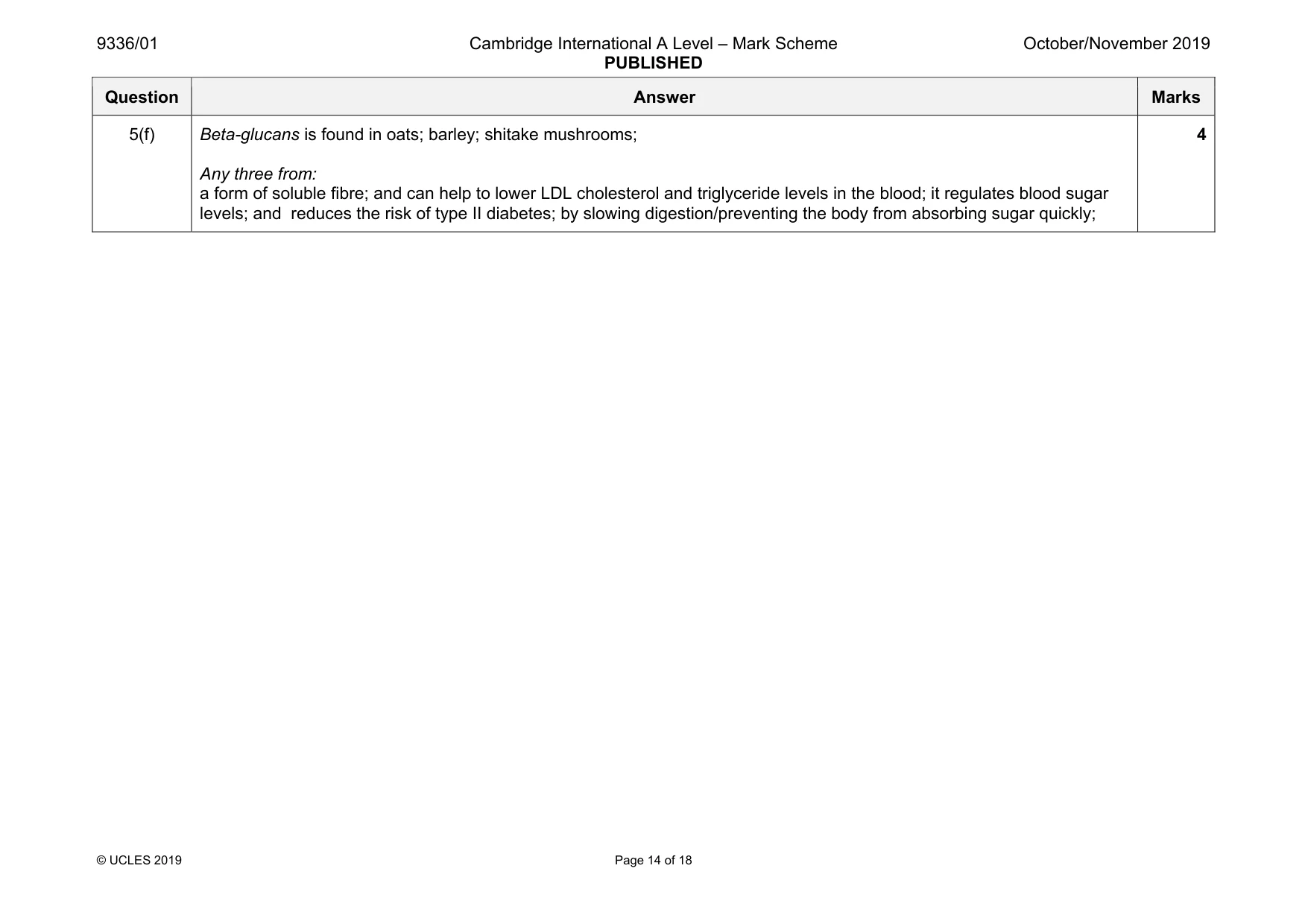
9336/01 Cambridge International A Level – Mark Scheme PUBLISHED October/November 2019 © UCLES 2019 Page 14 of 18 Question Answer Marks 5(f) Beta-glucans is found in oats; barley; shitake mushrooms; Any three from: a form of soluble fibre; and can help to lower LDL cholesterol and triglyceride levels in the blood; it regulates blood sugar levels; and reduces the risk of type II diabetes; by slowing digestion/preventing the body from absorbing sugar quickly; 4
Mark scheme, page 15
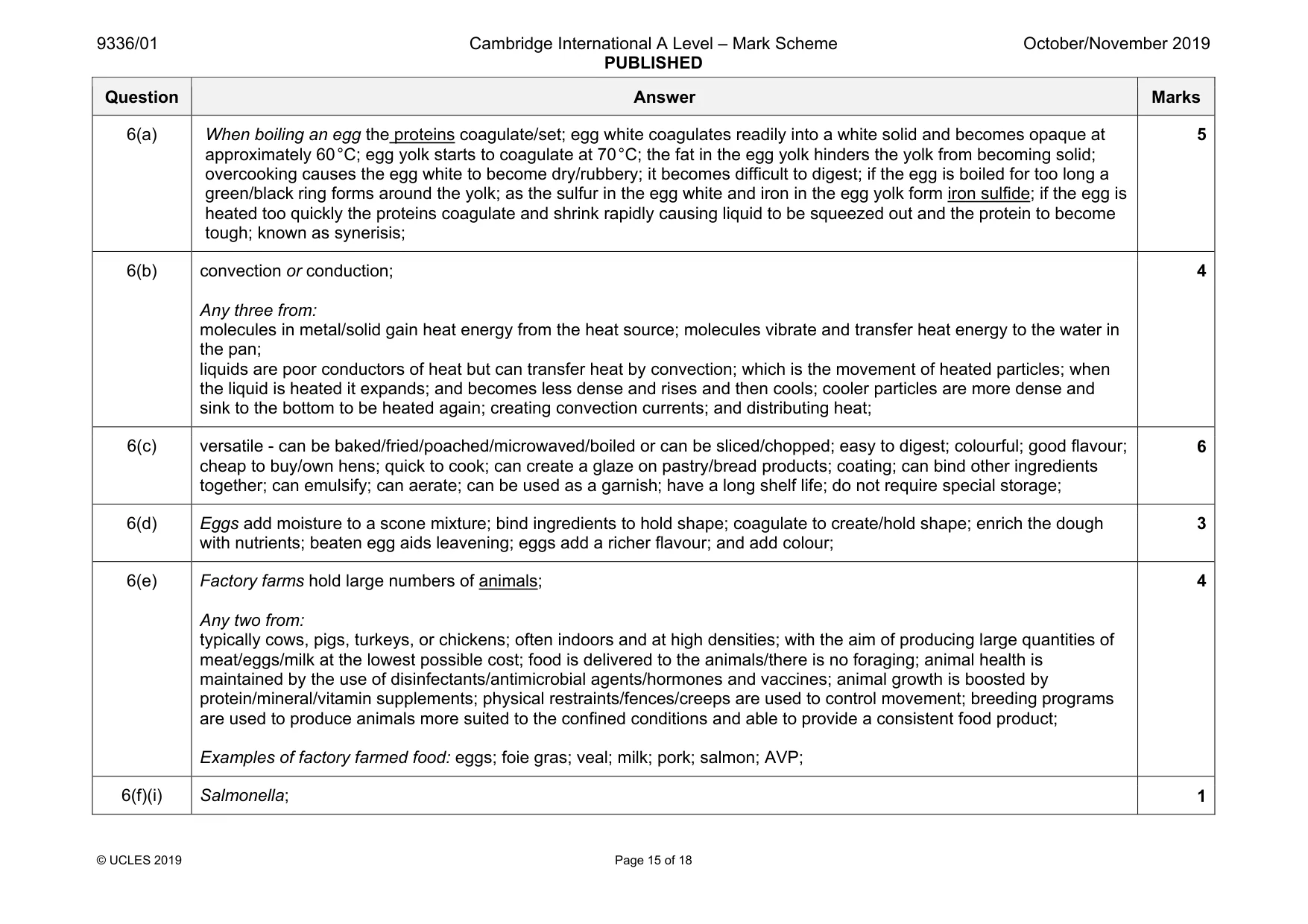
9336/01 Cambridge International A Level – Mark Scheme PUBLISHED October/November 2019 © UCLES 2019 Page 15 of 18 Question Answer Marks 6(a) When boiling an egg the proteins coagulate/set; egg white coagulates readily into a white solid and becomes opaque at approximately 60 °C; egg yolk starts to coagulate at 70 °C; the fat in the egg yolk hinders the yolk from becoming solid; overcooking causes the egg white to become dry/rubbery; it becomes difficult to digest; if the egg is boiled for too long a green/black ring forms around the yolk; as the sulfur in the egg white and iron in the egg yolk form iron sulfide; if the egg is heated too quickly the proteins coagulate and shrink rapidly causing liquid to be squeezed out and the protein to become tough; known as synerisis; 5 6(b) convection or conduction; Any three from: molecules in metal/solid gain heat energy from the heat source; molecules vibrate and transfer heat energy to the water in the pan; liquids are poor conductors of heat but can transfer heat by convection; which is the movement of heated particles; when the liquid is heated it expands; and becomes less dense and rises and then cools; cooler particles are more dense and sink to the bottom to be heated again; creating convection currents; and distributing heat; 4 6(c) versatile - can be baked/fried/poached/microwaved/boiled or can be sliced/chopped; easy to digest; colourful; good flavour; cheap to buy/own hens; quick to cook; can create a glaze on pastry/bread products; coating; can bind other ingredients together; can emulsify; can aerate; can be used as a garnish; have a long shelf life; do not require special storage; 6 6(d) Eggs add moisture to a scone mixture; bind ingredients to hold shape; coagulate to create/hold shape; enrich the dough with nutrients; beaten egg aids leavening; eggs add a richer flavour; and add colour; 3 6(e) Factory farms hold large numbers of animals; Any two from: typically cows, pigs, turkeys, or chickens; often indoors and at high densities; with the aim of producing large quantities of meat/eggs/milk at the lowest possible cost; food is delivered to the animals/there is no foraging; animal health is maintained by the use of disinfectants/antimicrobial agents/hormones and vaccines; animal growth is boosted by protein/mineral/vitamin supplements; physical restraints/fences/creeps are used to control movement; breeding programs are used to produce animals more suited to the confined conditions and able to provide a consistent food product; Examples of factory farmed food: eggs; foie gras; veal; milk; pork; salmon; AVP; 4 6(f)(i) Salmonella; 1
Mark scheme, page 16
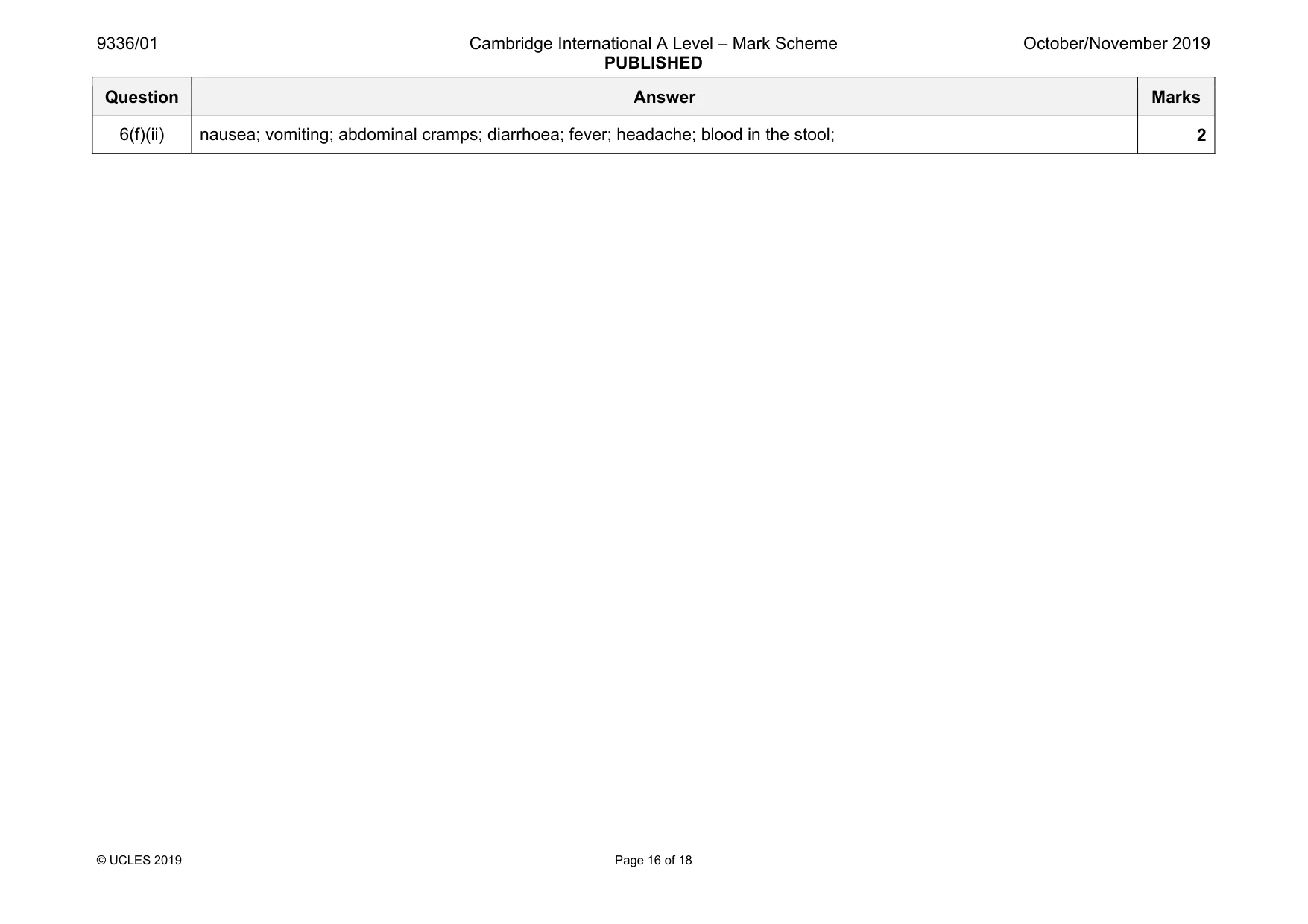
9336/01 Cambridge International A Level – Mark Scheme PUBLISHED October/November 2019 © UCLES 2019 Page 16 of 18 Question Answer Marks 6(f)(ii) nausea; vomiting; abdominal cramps; diarrhoea; fever; headache; blood in the stool; 2
Mark scheme, page 17
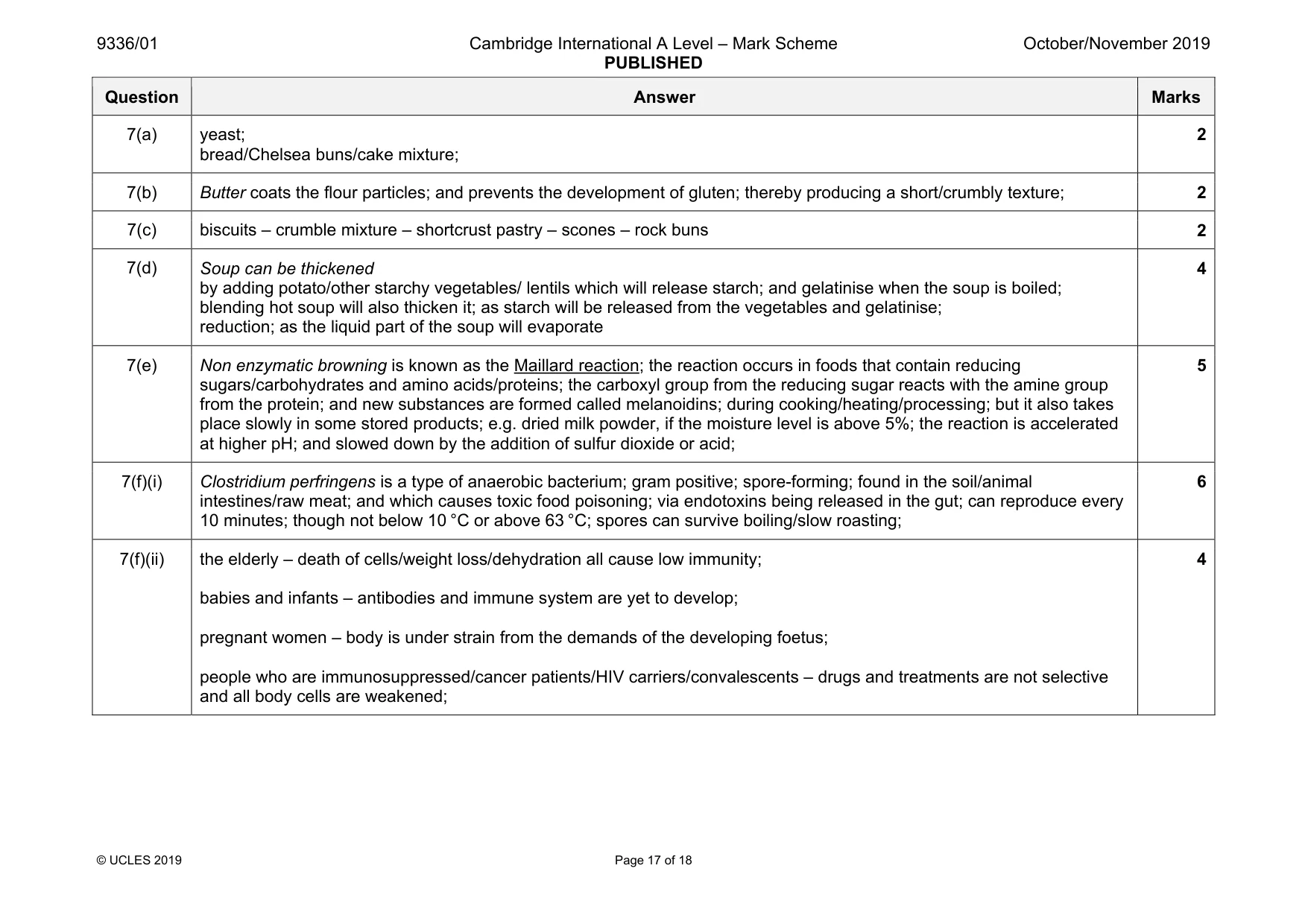
9336/01 Cambridge International A Level – Mark Scheme PUBLISHED October/November 2019 © UCLES 2019 Page 17 of 18 Question Answer Marks 7(a) yeast; bread/Chelsea buns/cake mixture; 2 7(b) Butter coats the flour particles; and prevents the development of gluten; thereby producing a short/crumbly texture; 2 7(c) biscuits – crumble mixture – shortcrust pastry – scones – rock buns 2 7(d) Soup can be thickened by adding potato/other starchy vegetables/ lentils which will release starch; and gelatinise when the soup is boiled; blending hot soup will also thicken it; as starch will be released from the vegetables and gelatinise; reduction; as the liquid part of the soup will evaporate 4 7(e) Non enzymatic browning is known as the Maillard reaction; the reaction occurs in foods that contain reducing sugars/carbohydrates and amino acids/proteins; the carboxyl group from the reducing sugar reacts with the amine group from the protein; and new substances are formed called melanoidins; during cooking/heating/processing; but it also takes place slowly in some stored products; e.g. dried milk powder, if the moisture level is above 5%; the reaction is accelerated at higher pH; and slowed down by the addition of sulfur dioxide or acid; 5 7(f)(i) Clostridium perfringens is a type of anaerobic bacterium; gram positive; spore-forming; found in the soil/animal intestines/raw meat; and which causes toxic food poisoning; via endotoxins being released in the gut; can reproduce every 10 minutes; though not below 10 °C or above 63 °C; spores can survive boiling/slow roasting; 6 7(f)(ii) the elderly – death of cells/weight loss/dehydration all cause low immunity; babies and infants – antibodies and immune system are yet to develop; pregnant women – body is under strain from the demands of the developing foetus; people who are immunosuppressed/cancer patients/HIV carriers/convalescents – drugs and treatments are not selective and all body cells are weakened; 4
Mark scheme, page 18
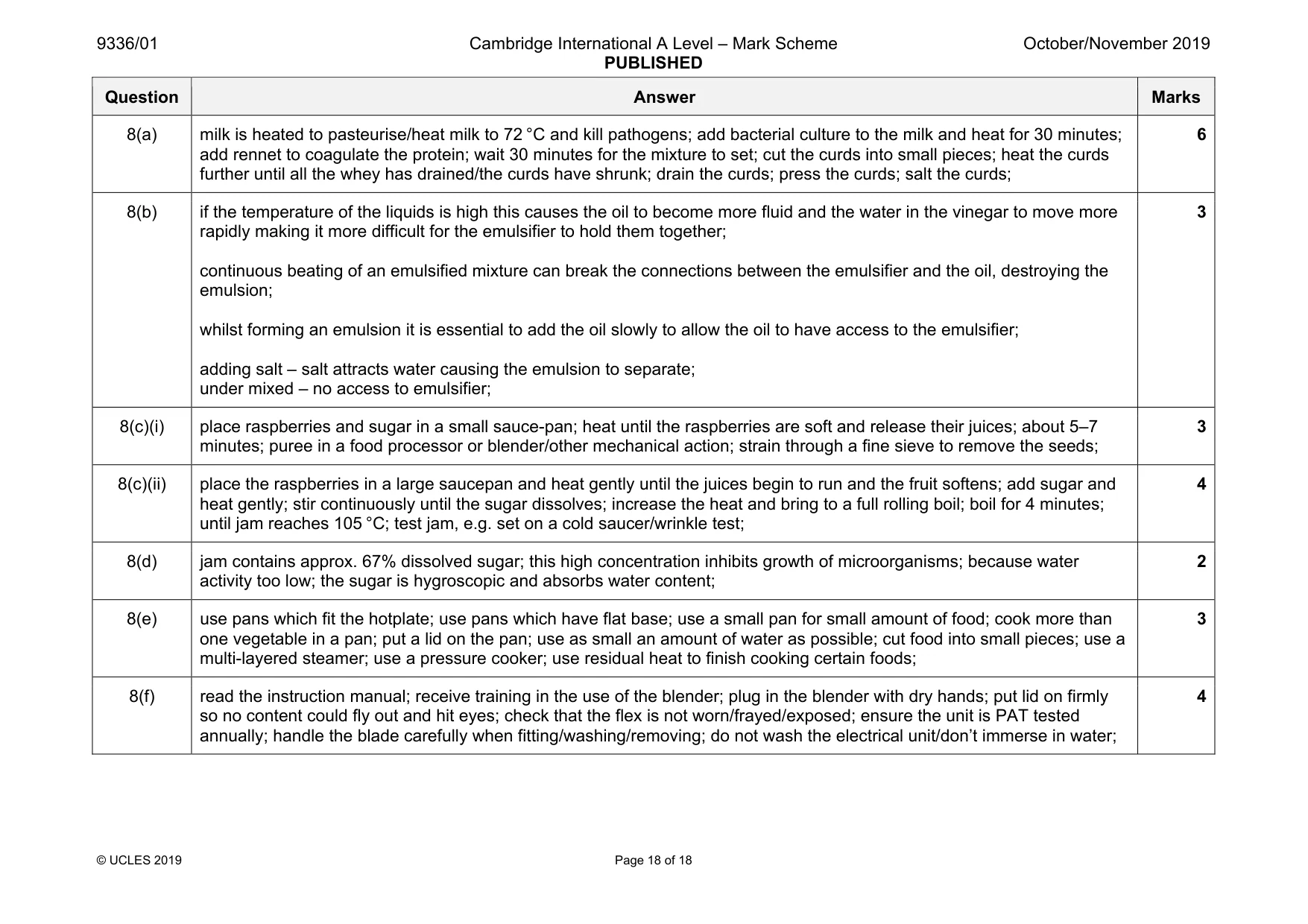
9336/01 Cambridge International A Level – Mark Scheme PUBLISHED October/November 2019 © UCLES 2019 Page 18 of 18 Question Answer Marks 8(a) milk is heated to pasteurise/heat milk to 72 °C and kill pathogens; add bacterial culture to the milk and heat for 30 minutes; add rennet to coagulate the protein; wait 30 minutes for the mixture to set; cut the curds into small pieces; heat the curds further until all the whey has drained/the curds have shrunk; drain the curds; press the curds; salt the curds; 6 8(b) if the temperature of the liquids is high this causes the oil to become more fluid and the water in the vinegar to move more rapidly making it more difficult for the emulsifier to hold them together; continuous beating of an emulsified mixture can break the connections between the emulsifier and the oil, destroying the emulsion; whilst forming an emulsion it is essential to add the oil slowly to allow the oil to have access to the emulsifier; adding salt – salt attracts water causing the emulsion to separate; under mixed – no access to emulsifier; 3 8(c)(i) place raspberries and sugar in a small sauce-pan; heat until the raspberries are soft and release their juices; about 5–7 minutes; puree in a food processor or blender/other mechanical action; strain through a fine sieve to remove the seeds; 3 8(c)(ii) place the raspberries in a large saucepan and heat gently until the juices begin to run and the fruit softens; add sugar and heat gently; stir continuously until the sugar dissolves; increase the heat and bring to a full rolling boil; boil for 4 minutes; until jam reaches 105 °C; test jam, e.g. set on a cold saucer/wrinkle test; 4 8(d) jam contains approx. 67% dissolved sugar; this high concentration inhibits growth of microorganisms; because water activity too low; the sugar is hygroscopic and absorbs water content; 2 8(e) use pans which fit the hotplate; use pans which have flat base; use a small pan for small amount of food; cook more than one vegetable in a pan; put a lid on the pan; use as small an amount of water as possible; cut food into small pieces; use a multi-layered steamer; use a pressure cooker; use residual heat to finish cooking certain foods; 3 8(f) read the instruction manual; receive training in the use of the blender; plug in the blender with dry hands; put lid on firmly so no content could fly out and hit eyes; check that the flex is not worn/frayed/exposed; ensure the unit is PAT tested annually; handle the blade carefully when fitting/washing/removing; do not wash the electrical unit/don’t immerse in water; 4
What you needed in this session
Cambridge’s own grade thresholds for 2019 Oct/Nov, Paper 1 · Variant 1. A higher threshold means an easier paper — the bar moves with how the cohort did.