Cambridge A Level Food Studies 9336 — 2015 Oct/Nov Paper 1 · Variant 1
9336/11/O/N/15 · 100 marks · ≈113 min
The question paper and its mark scheme, free to read here and free to download. This is Cambridge’s own paper, exactly as it was sat.
Question paper4 pages
Mark scheme10 pages
Answers below. Sit the paper first if you are practising.
Paper as text
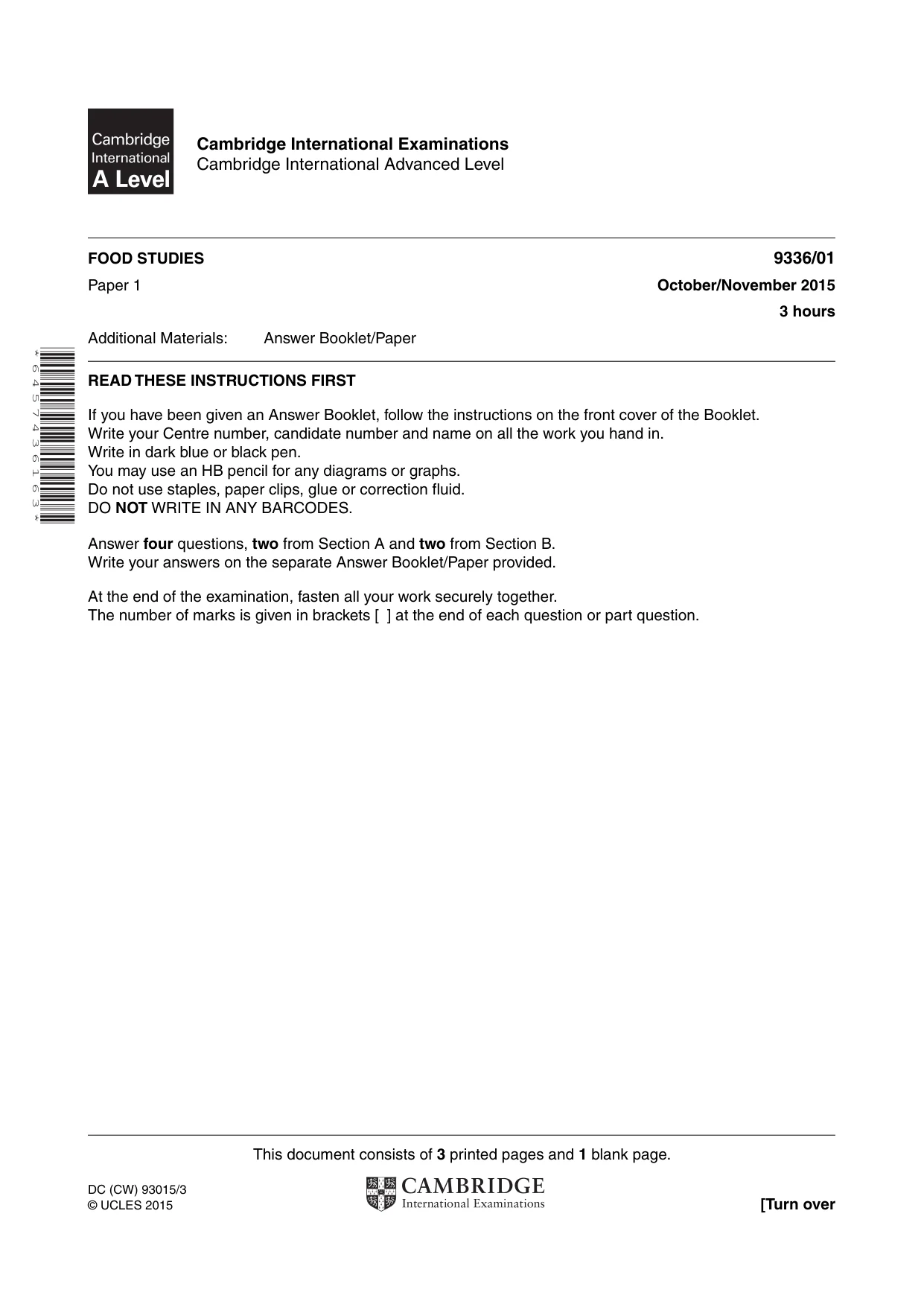
Question paper, page 1
This document consists of 3 printed pages and 1 blank page. DC (CW) 93015/3 © UCLES 2015 [Turn over Cambridge International Examinations Cambridge International Advanced Level * 6 4 5 7 4 3 6 1 6 3 * FOOD STUDIES 9336/01 Paper 1 October/November 2015 3 hours Additional Materials: Answer Booklet/Paper READ THESE INSTRUCTIONS FIRST If you have been given an Answer Booklet, follow the instructions on the front cover of the Booklet. Write your Centre number, candidate number and name on all the work you hand in. Write in dark blue or black pen. You may use an HB pencil for any diagrams or graphs. Do not use staples, paper clips, glue or correction fluid. DO NOT WRITE IN ANY BARCODES. Answer four questions, two from Section A and two from Section B. Write your answers on the separate Answer Booklet/Paper provided. At the end of the examination, fasten all your work securely together. The number of marks is given in brackets [ ] at the end of each question or part question.
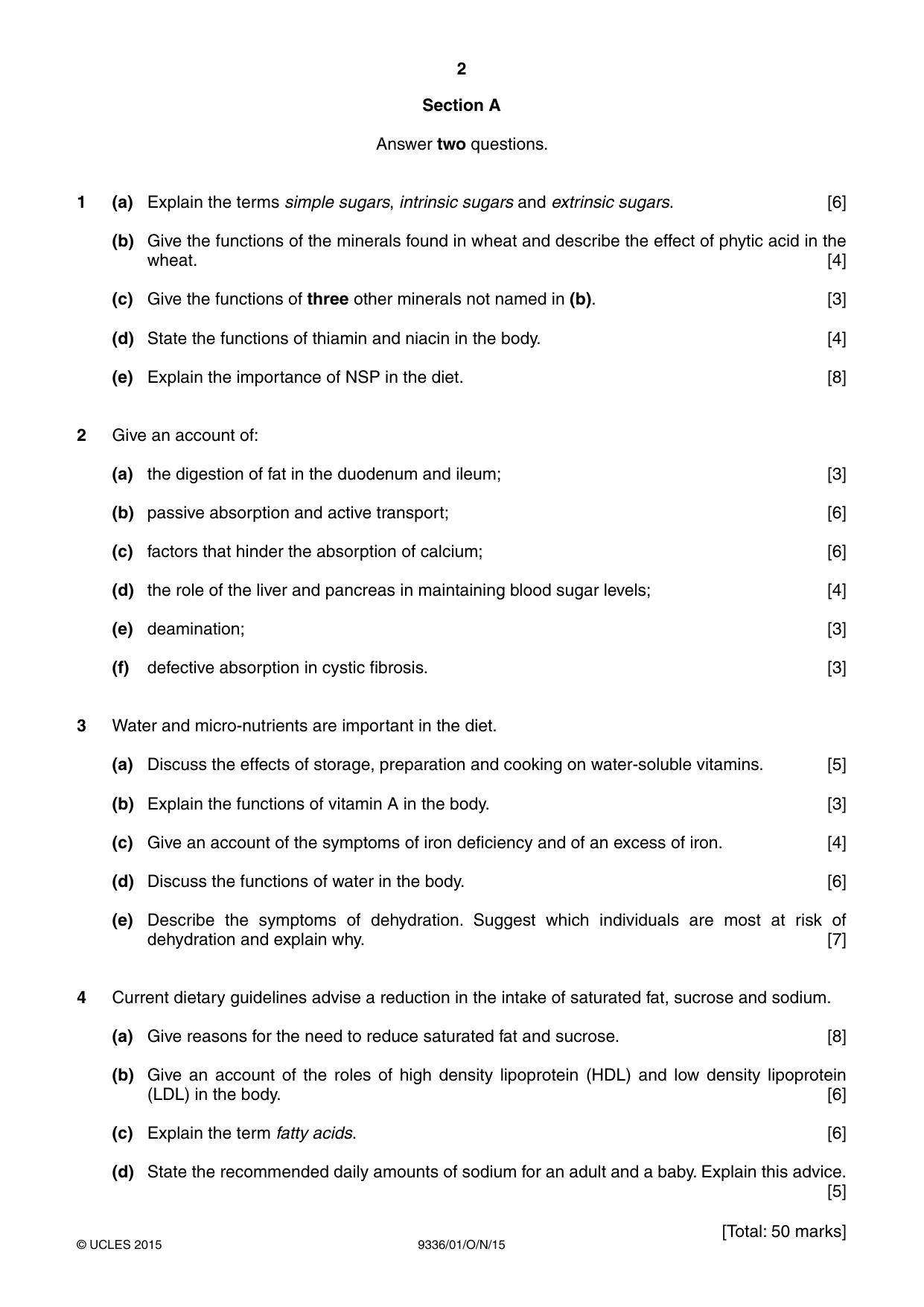
Question paper, page 2
2 9336/01/O/N/15 © UCLES 2015 Section A Answer two questions. 1 (a) Explain the terms simple sugars, intrinsic sugars and extrinsic sugars. [6] (b) Give the functions of the minerals found in wheat and describe the effect of phytic acid in the wheat. [4] (c) Give the functions of three other minerals not named in (b). [3] (d) State the functions of thiamin and niacin in the body. [4] (e) Explain the importance of NSP in the diet. [8] 2 Give an account of: (a) the digestion of fat in the duodenum and ileum; [3] (b) passive absorption and active transport; [6] (c) factors that hinder the absorption of calcium; [6] (d) the role of the liver and pancreas in maintaining blood sugar levels; [4] (e) deamination; [3] (f) defective absorption in cystic fibrosis. [3] 3 Water and micro-nutrients are important in the diet. (a) Discuss the effects of storage, preparation and cooking on water-soluble vitamins. [5] (b) Explain the functions of vitamin A in the body. [3] (c) Give an account of the symptoms of iron deficiency and of an excess of iron. [4] (d) Discuss the functions of water in the body. [6] (e) Describe the symptoms of dehydration. Suggest which individuals are most at risk of dehydration and explain why. [7] 4 Current dietary guidelines advise a reduction in the intake of saturated fat, sucrose and sodium. (a) Give reasons for the need to reduce saturated fat and sucrose. [8] (b) Give an account of the roles of high density lipoprotein (HDL) and low density lipoprotein (LDL) in the body. [6] (c) Explain the term fatty acids. [6] (d) State the recommended daily amounts of sodium for an adult and a baby. Explain this advice. [5] [Total: 50 marks]
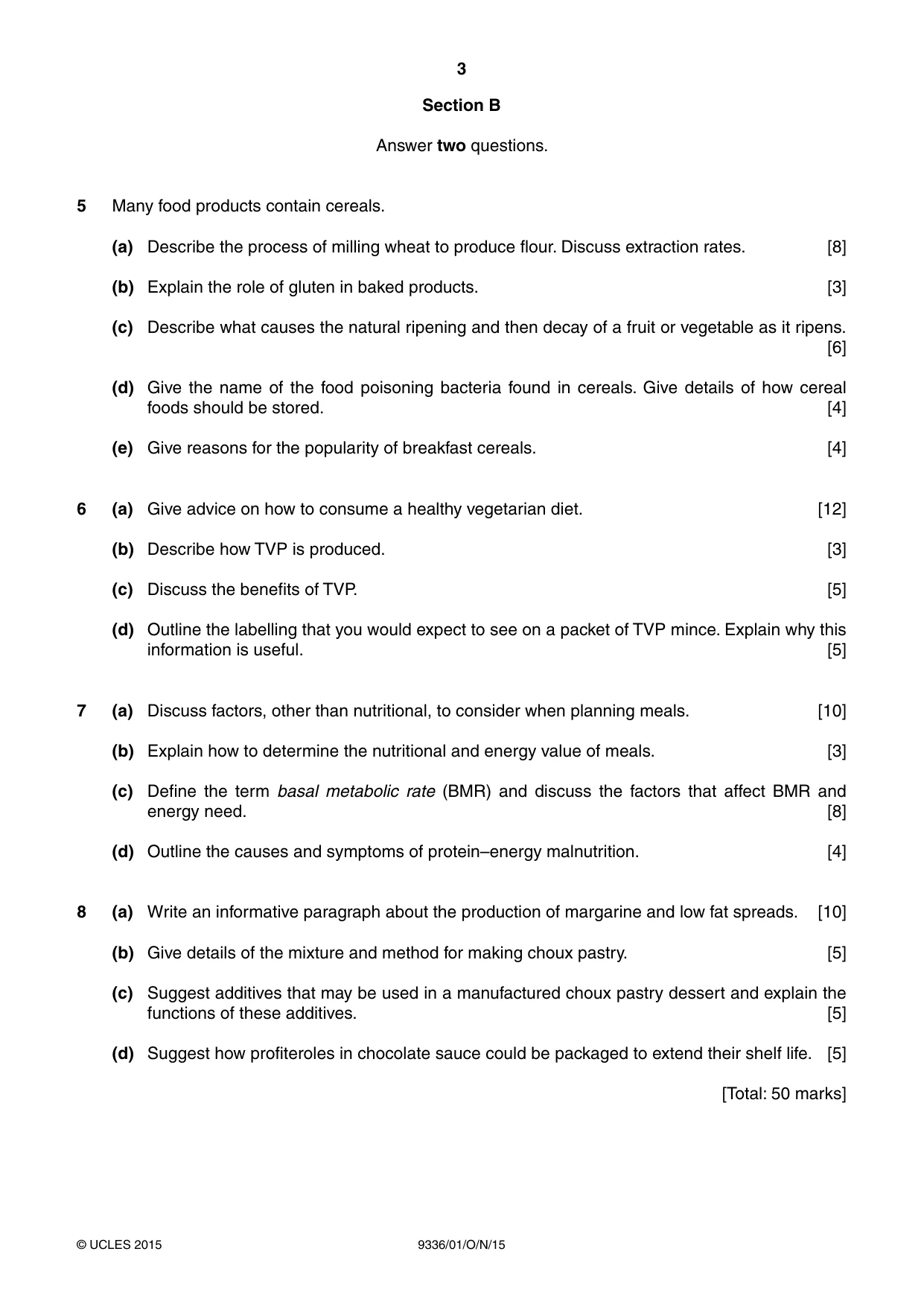
Question paper, page 3
3 9336/01/O/N/15 © UCLES 2015 Section B Answer two questions. 5 Many food products contain cereals. (a) Describe the process of milling wheat to produce flour. Discuss extraction rates. [8] (b) Explain the role of gluten in baked products. [3] (c) Describe what causes the natural ripening and then decay of a fruit or vegetable as it ripens. [6] (d) Give the name of the food poisoning bacteria found in cereals. Give details of how cereal foods should be stored. [4] (e) Give reasons for the popularity of breakfast cereals. [4] 6 (a) Give advice on how to consume a healthy vegetarian diet. [12] (b) Describe how TVP is produced. [3] (c) Discuss the benefits of TVP. [5] (d) Outline the labelling that you would expect to see on a packet of TVP mince. Explain why this information is useful. [5] 7 (a) Discuss factors, other than nutritional, to consider when planning meals. [10] (b) Explain how to determine the nutritional and energy value of meals. [3] (c) Define the term basal metabolic rate (BMR) and discuss the factors that affect BMR and energy need. [8] (d) Outline the causes and symptoms of protein–energy malnutrition. [4] 8 (a) Write an informative paragraph about the production of margarine and low fat spreads. [10] (b) Give details of the mixture and method for making choux pastry. [5] (c) Suggest additives that may be used in a manufactured choux pastry dessert and explain the functions of these additives. [5] (d) Suggest how profiteroles in chocolate sauce could be packaged to extend their shelf life. [5] [Total: 50 marks]
Question paper, page 4
4 9336/01/O/N/15 © UCLES 2015 BLANK PAGE Permission to reproduce items where third-party owned material protected by copyright is included has been sought and cleared where possible. Every reasonable effort has been made by the publisher (UCLES) to trace copyright holders, but if any items requiring clearance have unwittingly been included, the publisher will be pleased to make amends at the earliest possible opportunity. To avoid the issue of disclosure of answer-related information to candidates, all copyright acknowledgements are reproduced online in the Cambridge International Examinations Copyright Acknowledgements Booklet. This is produced for each series of examinations and is freely available to download at www.cie.org.uk after the live examination series. Cambridge International Examinations is part of the Cambridge Assessment Group. Cambridge Assessment is the brand name of University of Cambridge Local Examinations Syndicate (UCLES), which is itself a department of the University of Cambridge.
Mark scheme, page 1
® IGCSE is the registered trademark of Cambridge International Examinations. CAMBRIDGE INTERNATIONAL EXAMINATIONS Cambridge International Advanced Level MARK SCHEME for the October/November 2015 series 9336 FOOD STUDIES 9336/01 Paper 1 (Theory), maximum raw mark 100 This mark scheme is published as an aid to teachers and candidates, to indicate the requirements of the examination. It shows the basis on which Examiners were instructed to award marks. It does not indicate the details of the discussions that took place at an Examiners’ meeting before marking began, which would have considered the acceptability of alternative answers. Mark schemes should be read in conjunction with the question paper and the Principal Examiner Report for Teachers. Cambridge will not enter into discussions about these mark schemes. Cambridge is publishing the mark schemes for the October/November 2015 series for most Cambridge IGCSE®, Cambridge International A and AS Level components and some Cambridge O Level components.
Mark scheme, page 2
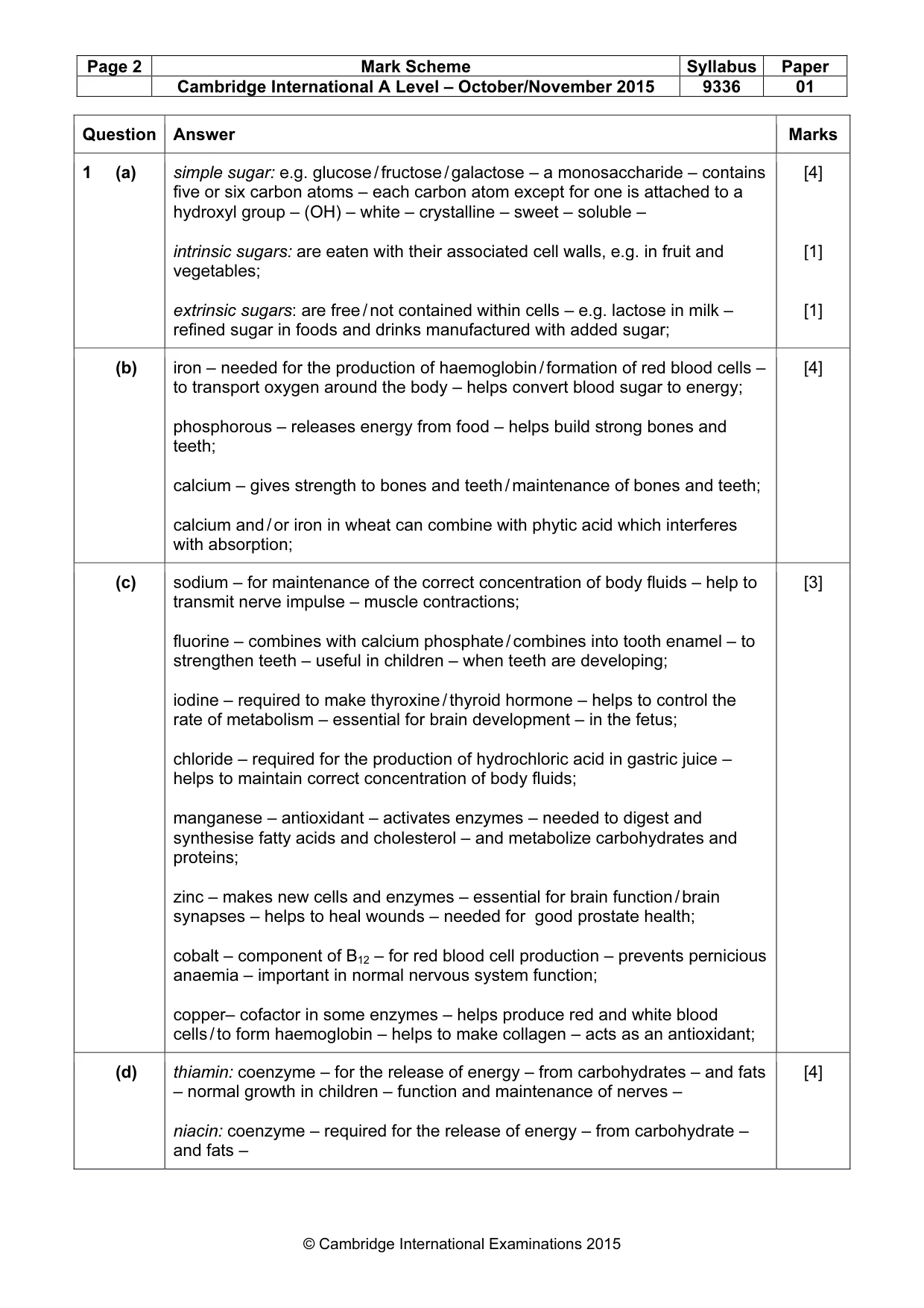
Page 2 Mark Scheme Syllabus Paper Cambridge International A Level – October/November 2015 9336 01 © Cambridge International Examinations 2015 Question Answer Marks 1 (a) simple sugar: e.g. glucose / fructose / galactose – a monosaccharide – contains five or six carbon atoms – each carbon atom except for one is attached to a hydroxyl group – (OH) – white – crystalline – sweet – soluble – intrinsic sugars: are eaten with their associated cell walls, e.g. in fruit and vegetables; extrinsic sugars: are free / not contained within cells – e.g. lactose in milk – refined sugar in foods and drinks manufactured with added sugar; [4] [1] [1] (b) iron – needed for the production of haemoglobin / formation of red blood cells – to transport oxygen around the body – helps convert blood sugar to energy; phosphorous – releases energy from food – helps build strong bones and teeth; calcium – gives strength to bones and teeth / maintenance of bones and teeth; calcium and / or iron in wheat can combine with phytic acid which interferes with absorption; [4] (c) sodium – for maintenance of the correct concentration of body fluids – help to transmit nerve impulse – muscle contractions; fluorine – combines with calcium phosphate / combines into tooth enamel – to strengthen teeth – useful in children – when teeth are developing; iodine – required to make thyroxine / thyroid hormone – helps to control the rate of metabolism – essential for brain development – in the fetus; chloride – required for the production of hydrochloric acid in gastric juice – helps to maintain correct concentration of body fluids; manganese – antioxidant – activates enzymes – needed to digest and synthesise fatty acids and cholesterol – and metabolize carbohydrates and proteins; zinc – makes new cells and enzymes – essential for brain function / brain synapses – helps to heal wounds – needed for good prostate health; cobalt – component of B12 – for red blood cell production – prevents pernicious anaemia – important in normal nervous system function; copper– cofactor in some enzymes – helps produce red and white blood cells / to form haemoglobin – helps to make collagen – acts as an antioxidant; [3] (d) thiamin: coenzyme – for the release of energy – from carbohydrates – and fats – normal growth in children – function and maintenance of nerves – niacin: coenzyme – required for the release of energy – from carbohydrate – and fats – [4]
Mark scheme, page 3
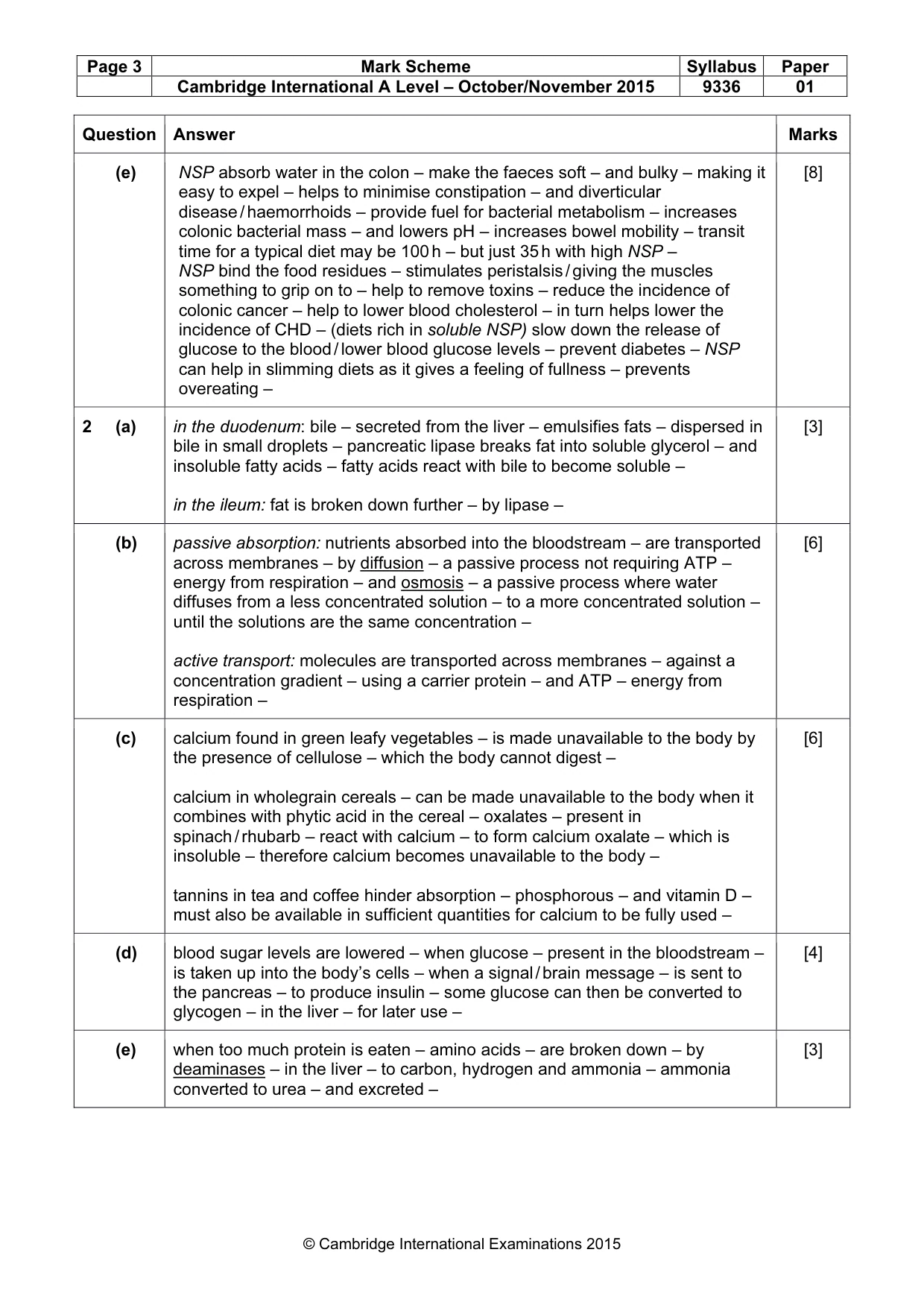
Page 3 Mark Scheme Syllabus Paper Cambridge International A Level – October/November 2015 9336 01 © Cambridge International Examinations 2015 Question Answer Marks (e) NSP absorb water in the colon – make the faeces soft – and bulky – making it easy to expel – helps to minimise constipation – and diverticular disease / haemorrhoids – provide fuel for bacterial metabolism – increases colonic bacterial mass – and lowers pH – increases bowel mobility – transit time for a typical diet may be 100 h – but just 35 h with high NSP – NSP bind the food residues – stimulates peristalsis / giving the muscles something to grip on to – help to remove toxins – reduce the incidence of colonic cancer – help to lower blood cholesterol – in turn helps lower the incidence of CHD – (diets rich in soluble NSP) slow down the release of glucose to the blood / lower blood glucose levels – prevent diabetes – NSP can help in slimming diets as it gives a feeling of fullness – prevents overeating – [8] 2 (a) in the duodenum: bile – secreted from the liver – emulsifies fats – dispersed in bile in small droplets – pancreatic lipase breaks fat into soluble glycerol – and insoluble fatty acids – fatty acids react with bile to become soluble – in the ileum: fat is broken down further – by lipase – [3] (b) passive absorption: nutrients absorbed into the bloodstream – are transported across membranes – by diffusion – a passive process not requiring ATP – energy from respiration – and osmosis – a passive process where water diffuses from a less concentrated solution – to a more concentrated solution – until the solutions are the same concentration – active transport: molecules are transported across membranes – against a concentration gradient – using a carrier protein – and ATP – energy from respiration – [6] (c) calcium found in green leafy vegetables – is made unavailable to the body by the presence of cellulose – which the body cannot digest – calcium in wholegrain cereals – can be made unavailable to the body when it combines with phytic acid in the cereal – oxalates – present in spinach / rhubarb – react with calcium – to form calcium oxalate – which is insoluble – therefore calcium becomes unavailable to the body – tannins in tea and coffee hinder absorption – phosphorous – and vitamin D – must also be available in sufficient quantities for calcium to be fully used – [6] (d) blood sugar levels are lowered – when glucose – present in the bloodstream – is taken up into the body’s cells – when a signal / brain message – is sent to the pancreas – to produce insulin – some glucose can then be converted to glycogen – in the liver – for later use – [4] (e) when too much protein is eaten – amino acids – are broken down – by deaminases – in the liver – to carbon, hydrogen and ammonia – ammonia converted to urea – and excreted – [3]
Mark scheme, page 4
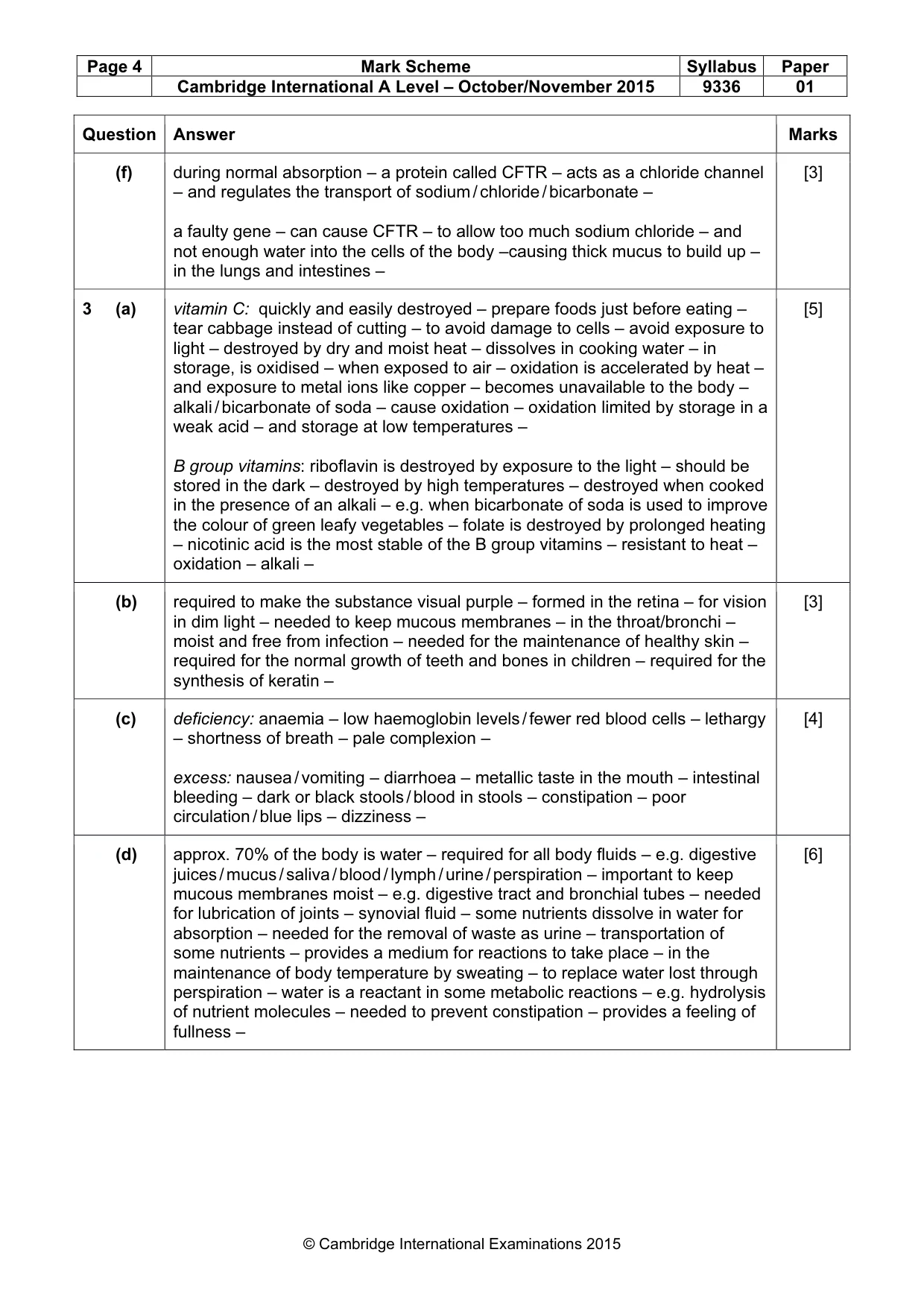
Page 4 Mark Scheme Syllabus Paper Cambridge International A Level – October/November 2015 9336 01 © Cambridge International Examinations 2015 Question Answer Marks (f) during normal absorption – a protein called CFTR – acts as a chloride channel – and regulates the transport of sodium / chloride / bicarbonate – a faulty gene – can cause CFTR – to allow too much sodium chloride – and not enough water into the cells of the body –causing thick mucus to build up – in the lungs and intestines – [3] 3 (a) vitamin C: quickly and easily destroyed – prepare foods just before eating – tear cabbage instead of cutting – to avoid damage to cells – avoid exposure to light – destroyed by dry and moist heat – dissolves in cooking water – in storage, is oxidised – when exposed to air – oxidation is accelerated by heat – and exposure to metal ions like copper – becomes unavailable to the body – alkali / bicarbonate of soda – cause oxidation – oxidation limited by storage in a weak acid – and storage at low temperatures – B group vitamins: riboflavin is destroyed by exposure to the light – should be stored in the dark – destroyed by high temperatures – destroyed when cooked in the presence of an alkali – e.g. when bicarbonate of soda is used to improve the colour of green leafy vegetables – folate is destroyed by prolonged heating – nicotinic acid is the most stable of the B group vitamins – resistant to heat – oxidation – alkali – [5] (b) required to make the substance visual purple – formed in the retina – for vision in dim light – needed to keep mucous membranes – in the throat/bronchi – moist and free from infection – needed for the maintenance of healthy skin – required for the normal growth of teeth and bones in children – required for the synthesis of keratin – [3] (c) deficiency: anaemia – low haemoglobin levels / fewer red blood cells – lethargy – shortness of breath – pale complexion – excess: nausea / vomiting – diarrhoea – metallic taste in the mouth – intestinal bleeding – dark or black stools / blood in stools – constipation – poor circulation / blue lips – dizziness – [4] (d) approx. 70% of the body is water – required for all body fluids – e.g. digestive juices / mucus / saliva / blood / lymph / urine / perspiration – important to keep mucous membranes moist – e.g. digestive tract and bronchial tubes – needed for lubrication of joints – synovial fluid – some nutrients dissolve in water for absorption – needed for the removal of waste as urine – transportation of some nutrients – provides a medium for reactions to take place – in the maintenance of body temperature by sweating – to replace water lost through perspiration – water is a reactant in some metabolic reactions – e.g. hydrolysis of nutrient molecules – needed to prevent constipation – provides a feeling of fullness – [6]
Mark scheme, page 5
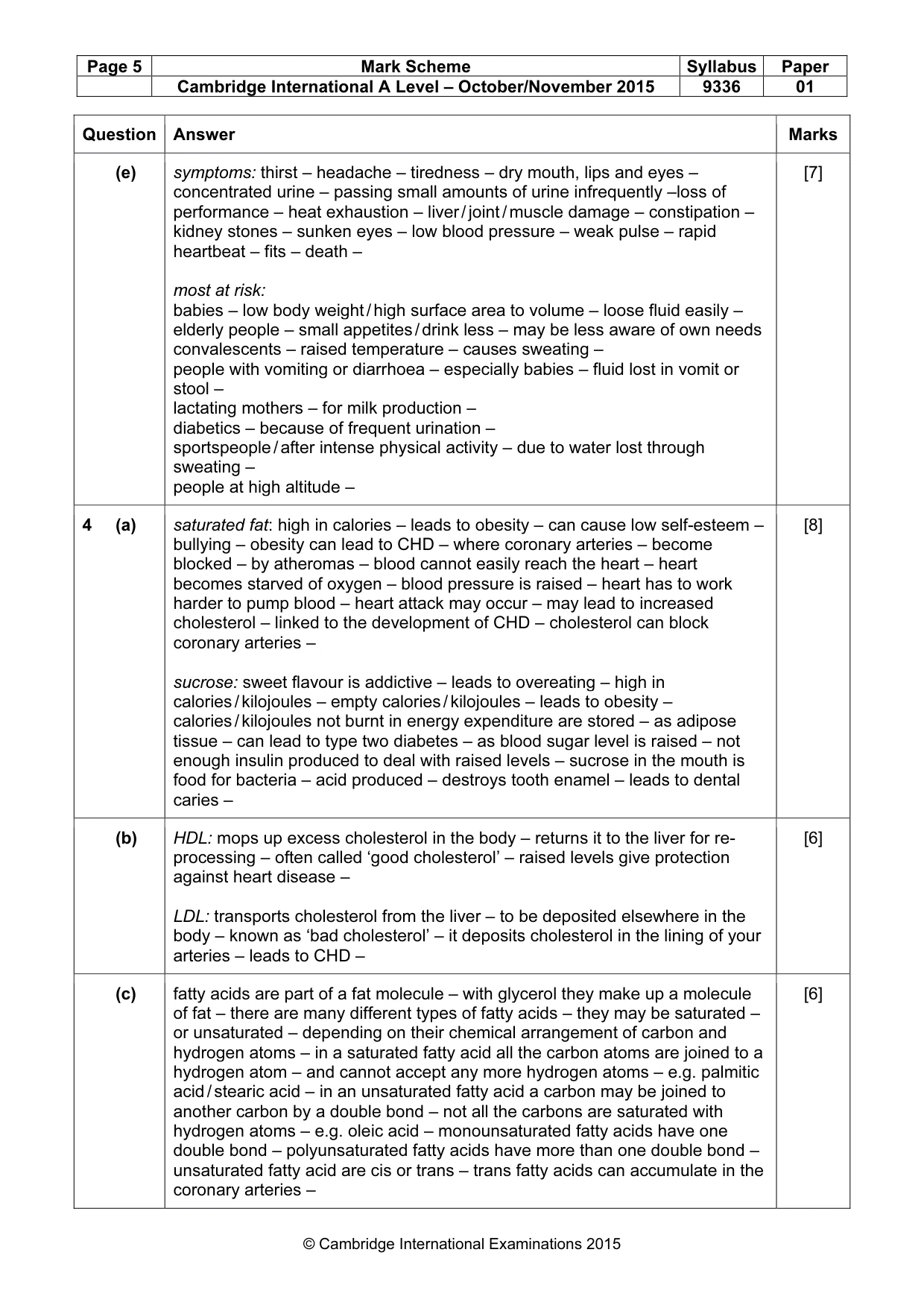
Page 5 Mark Scheme Syllabus Paper Cambridge International A Level – October/November 2015 9336 01 © Cambridge International Examinations 2015 Question Answer Marks (e) symptoms: thirst – headache – tiredness – dry mouth, lips and eyes – concentrated urine – passing small amounts of urine infrequently –loss of performance – heat exhaustion – liver / joint / muscle damage – constipation – kidney stones – sunken eyes – low blood pressure – weak pulse – rapid heartbeat – fits – death – most at risk: babies – low body weight / high surface area to volume – loose fluid easily – elderly people – small appetites / drink less – may be less aware of own needs convalescents – raised temperature – causes sweating – people with vomiting or diarrhoea – especially babies – fluid lost in vomit or stool – lactating mothers – for milk production – diabetics – because of frequent urination – sportspeople / after intense physical activity – due to water lost through sweating – people at high altitude – [7] 4 (a) saturated fat: high in calories – leads to obesity – can cause low self-esteem – bullying – obesity can lead to CHD – where coronary arteries – become blocked – by atheromas – blood cannot easily reach the heart – heart becomes starved of oxygen – blood pressure is raised – heart has to work harder to pump blood – heart attack may occur – may lead to increased cholesterol – linked to the development of CHD – cholesterol can block coronary arteries – sucrose: sweet flavour is addictive – leads to overeating – high in calories / kilojoules – empty calories / kilojoules – leads to obesity – calories / kilojoules not burnt in energy expenditure are stored – as adipose tissue – can lead to type two diabetes – as blood sugar level is raised – not enough insulin produced to deal with raised levels – sucrose in the mouth is food for bacteria – acid produced – destroys tooth enamel – leads to dental caries – [8] (b) HDL: mops up excess cholesterol in the body – returns it to the liver for re- processing – often called ‘good cholesterol’ – raised levels give protection against heart disease – LDL: transports cholesterol from the liver – to be deposited elsewhere in the body – known as ‘bad cholesterol’ – it deposits cholesterol in the lining of your arteries – leads to CHD – [6] (c) fatty acids are part of a fat molecule – with glycerol they make up a molecule of fat – there are many different types of fatty acids – they may be saturated – or unsaturated – depending on their chemical arrangement of carbon and hydrogen atoms – in a saturated fatty acid all the carbon atoms are joined to a hydrogen atom – and cannot accept any more hydrogen atoms – e.g. palmitic acid / stearic acid – in an unsaturated fatty acid a carbon may be joined to another carbon by a double bond – not all the carbons are saturated with hydrogen atoms – e.g. oleic acid – monounsaturated fatty acids have one double bond – polyunsaturated fatty acids have more than one double bond – unsaturated fatty acid are cis or trans – trans fatty acids can accumulate in the coronary arteries – [6]
Mark scheme, page 6
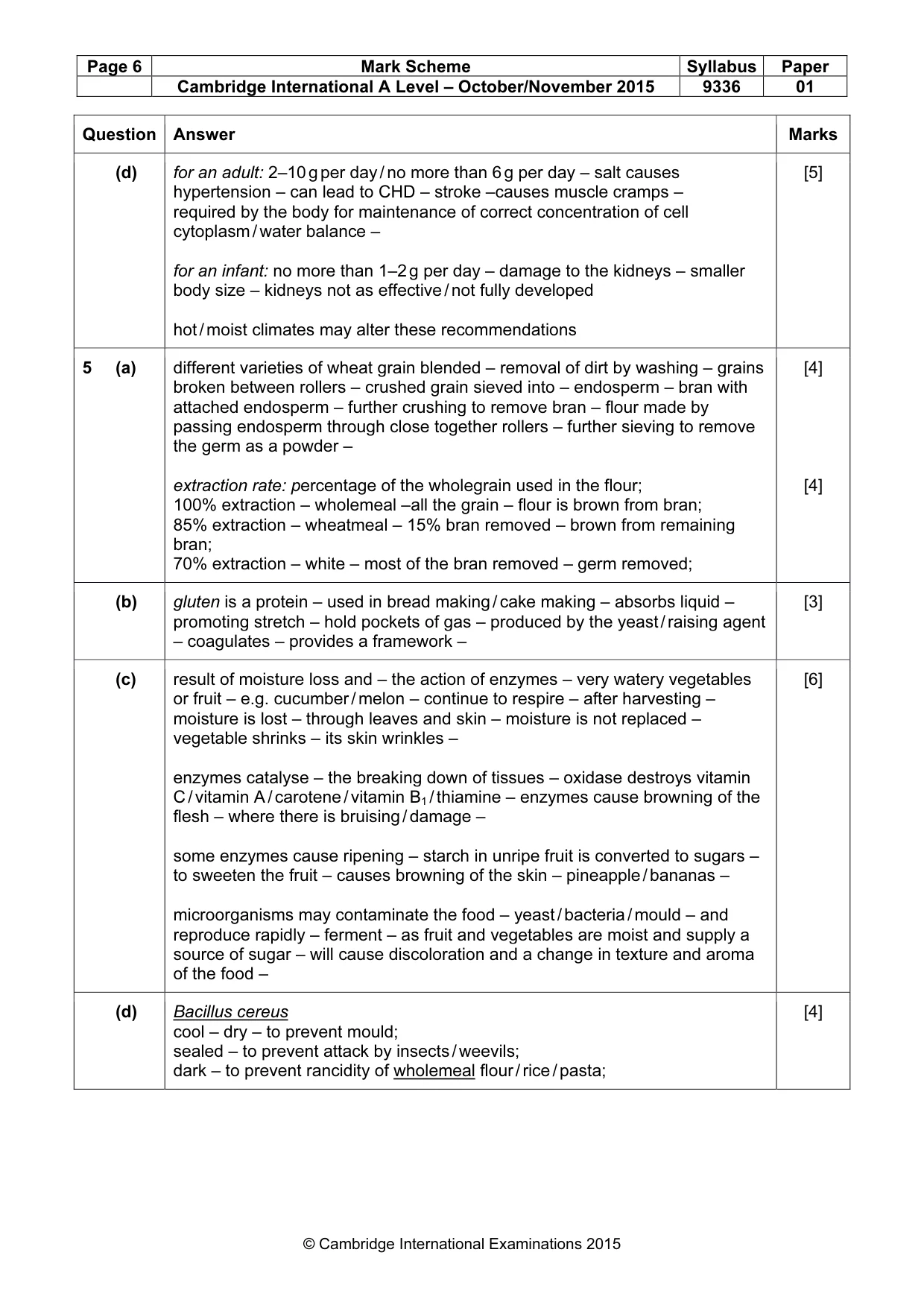
Page 6 Mark Scheme Syllabus Paper Cambridge International A Level – October/November 2015 9336 01 © Cambridge International Examinations 2015 Question Answer Marks (d) for an adult: 2–10 g per day / no more than 6 g per day – salt causes hypertension – can lead to CHD – stroke –causes muscle cramps – required by the body for maintenance of correct concentration of cell cytoplasm / water balance – for an infant: no more than 1–2 g per day – damage to the kidneys – smaller body size – kidneys not as effective / not fully developed hot / moist climates may alter these recommendations [5] 5 (a) different varieties of wheat grain blended – removal of dirt by washing – grains broken between rollers – crushed grain sieved into – endosperm – bran with attached endosperm – further crushing to remove bran – flour made by passing endosperm through close together rollers – further sieving to remove the germ as a powder – extraction rate: percentage of the wholegrain used in the flour; 100% extraction – wholemeal –all the grain – flour is brown from bran; 85% extraction – wheatmeal – 15% bran removed – brown from remaining bran; 70% extraction – white – most of the bran removed – germ removed; [4] [4] (b) gluten is a protein – used in bread making / cake making – absorbs liquid – promoting stretch – hold pockets of gas – produced by the yeast / raising agent – coagulates – provides a framework – [3] (c) result of moisture loss and – the action of enzymes – very watery vegetables or fruit – e.g. cucumber / melon – continue to respire – after harvesting – moisture is lost – through leaves and skin – moisture is not replaced – vegetable shrinks – its skin wrinkles – enzymes catalyse – the breaking down of tissues – oxidase destroys vitamin C / vitamin A / carotene / vitamin B1 / thiamine – enzymes cause browning of the flesh – where there is bruising / damage – some enzymes cause ripening – starch in unripe fruit is converted to sugars – to sweeten the fruit – causes browning of the skin – pineapple / bananas – microorganisms may contaminate the food – yeast / bacteria / mould – and reproduce rapidly – ferment – as fruit and vegetables are moist and supply a source of sugar – will cause discoloration and a change in texture and aroma of the food – [6] (d) Bacillus cereus cool – dry – to prevent mould; sealed – to prevent attack by insects / weevils; dark – to prevent rancidity of wholemeal flour / rice / pasta; [4]
Mark scheme, page 7
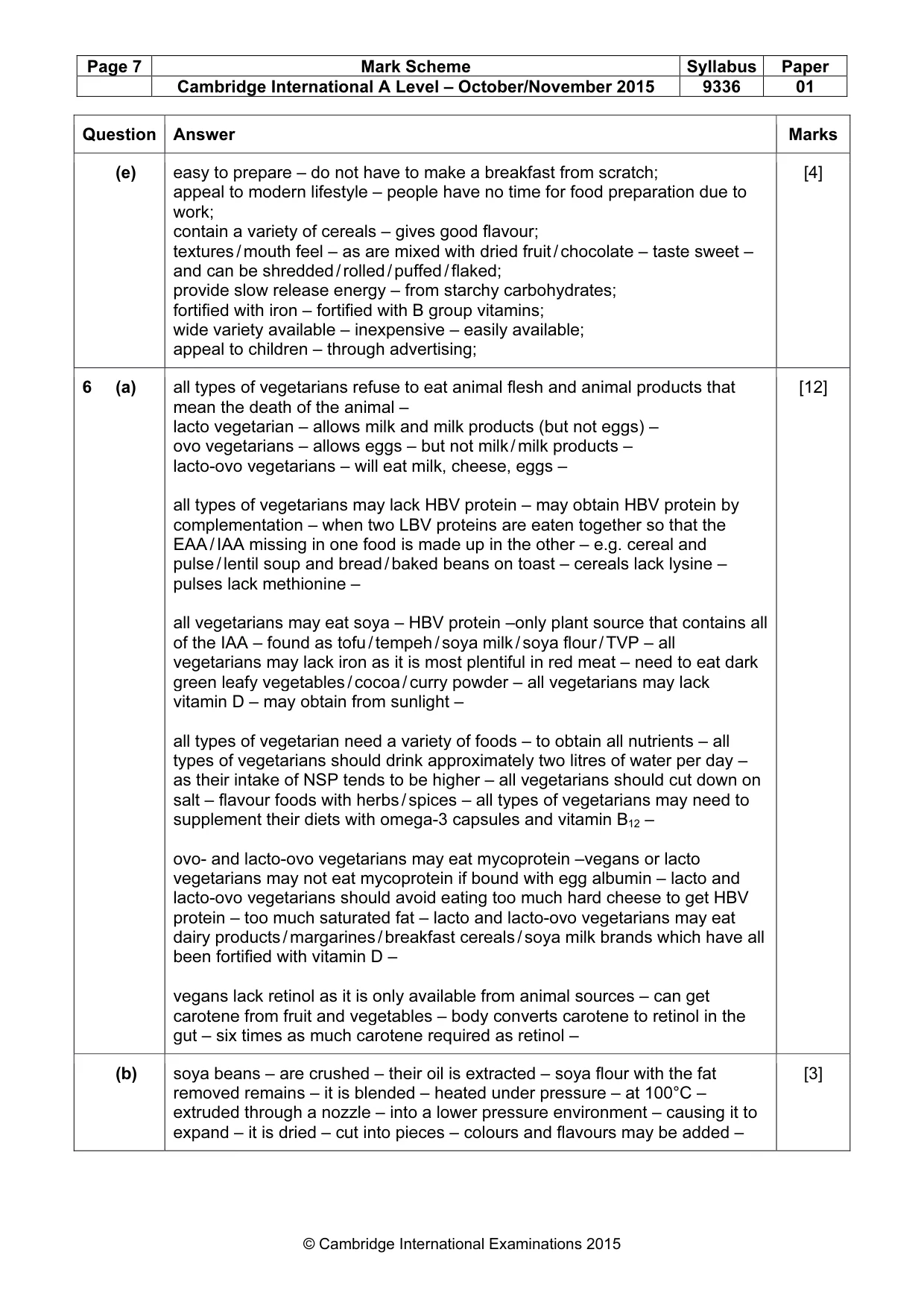
Page 7 Mark Scheme Syllabus Paper Cambridge International A Level – October/November 2015 9336 01 © Cambridge International Examinations 2015 Question Answer Marks (e) easy to prepare – do not have to make a breakfast from scratch; appeal to modern lifestyle – people have no time for food preparation due to work; contain a variety of cereals – gives good flavour; textures / mouth feel – as are mixed with dried fruit / chocolate – taste sweet – and can be shredded / rolled / puffed / flaked; provide slow release energy – from starchy carbohydrates; fortified with iron – fortified with B group vitamins; wide variety available – inexpensive – easily available; appeal to children – through advertising; [4] 6 (a) all types of vegetarians refuse to eat animal flesh and animal products that mean the death of the animal – lacto vegetarian – allows milk and milk products (but not eggs) – ovo vegetarians – allows eggs – but not milk / milk products – lacto-ovo vegetarians – will eat milk, cheese, eggs – all types of vegetarians may lack HBV protein – may obtain HBV protein by complementation – when two LBV proteins are eaten together so that the EAA / IAA missing in one food is made up in the other – e.g. cereal and pulse / lentil soup and bread / baked beans on toast – cereals lack lysine – pulses lack methionine – all vegetarians may eat soya – HBV protein –only plant source that contains all of the IAA – found as tofu / tempeh / soya milk / soya flour / TVP – all vegetarians may lack iron as it is most plentiful in red meat – need to eat dark green leafy vegetables / cocoa / curry powder – all vegetarians may lack vitamin D – may obtain from sunlight – all types of vegetarian need a variety of foods – to obtain all nutrients – all types of vegetarians should drink approximately two litres of water per day – as their intake of NSP tends to be higher – all vegetarians should cut down on salt – flavour foods with herbs / spices – all types of vegetarians may need to supplement their diets with omega-3 capsules and vitamin B12 – ovo- and lacto-ovo vegetarians may eat mycoprotein –vegans or lacto vegetarians may not eat mycoprotein if bound with egg albumin – lacto and lacto-ovo vegetarians should avoid eating too much hard cheese to get HBV protein – too much saturated fat – lacto and lacto-ovo vegetarians may eat dairy products / margarines / breakfast cereals / soya milk brands which have all been fortified with vitamin D – vegans lack retinol as it is only available from animal sources – can get carotene from fruit and vegetables – body converts carotene to retinol in the gut – six times as much carotene required as retinol – [12] (b) soya beans – are crushed – their oil is extracted – soya flour with the fat removed remains – it is blended – heated under pressure – at 100°C – extruded through a nozzle – into a lower pressure environment – causing it to expand – it is dried – cut into pieces – colours and flavours may be added – [3]
Mark scheme, page 8
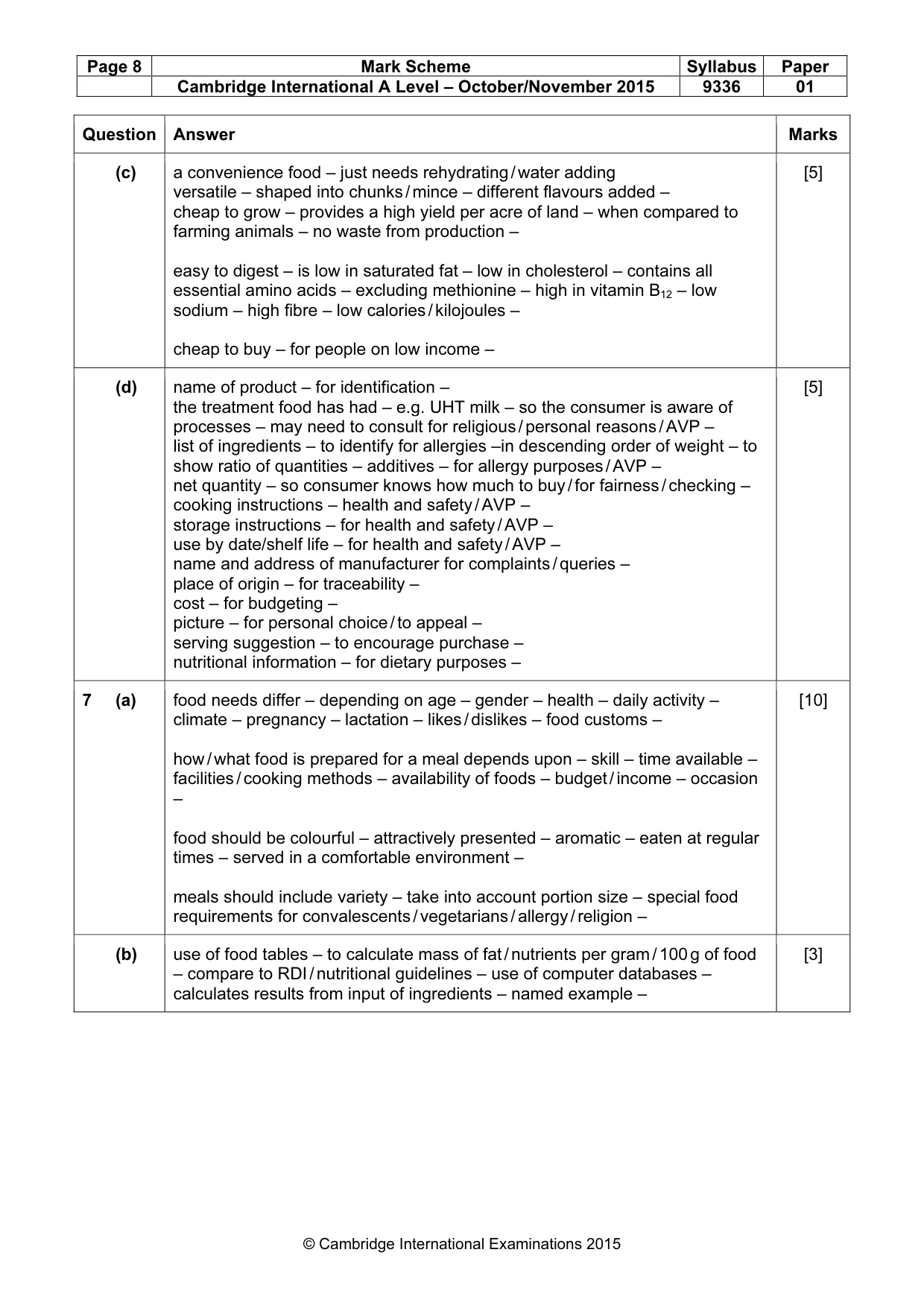
Page 8 Mark Scheme Syllabus Paper Cambridge International A Level – October/November 2015 9336 01 © Cambridge International Examinations 2015 Question Answer Marks (c) a convenience food – just needs rehydrating / water adding versatile – shaped into chunks / mince – different flavours added – cheap to grow – provides a high yield per acre of land – when compared to farming animals – no waste from production – easy to digest – is low in saturated fat – low in cholesterol – contains all essential amino acids – excluding methionine – high in vitamin B12 – low sodium – high fibre – low calories / kilojoules – cheap to buy – for people on low income – [5] (d) name of product – for identification – the treatment food has had – e.g. UHT milk – so the consumer is aware of processes – may need to consult for religious / personal reasons / AVP – list of ingredients – to identify for allergies –in descending order of weight – to show ratio of quantities – additives – for allergy purposes / AVP – net quantity – so consumer knows how much to buy / for fairness / checking – cooking instructions – health and safety / AVP – storage instructions – for health and safety / AVP – use by date/shelf life – for health and safety / AVP – name and address of manufacturer for complaints / queries – place of origin – for traceability – cost – for budgeting – picture – for personal choice / to appeal – serving suggestion – to encourage purchase – nutritional information – for dietary purposes – [5] 7 (a) food needs differ – depending on age – gender – health – daily activity – climate – pregnancy – lactation – likes / dislikes – food customs – how / what food is prepared for a meal depends upon – skill – time available – facilities / cooking methods – availability of foods – budget / income – occasion – food should be colourful – attractively presented – aromatic – eaten at regular times – served in a comfortable environment – meals should include variety – take into account portion size – special food requirements for convalescents / vegetarians / allergy / religion – [10] (b) use of food tables – to calculate mass of fat / nutrients per gram / 100 g of food – compare to RDI / nutritional guidelines – use of computer databases – calculates results from input of ingredients – named example – [3]
Mark scheme, page 9
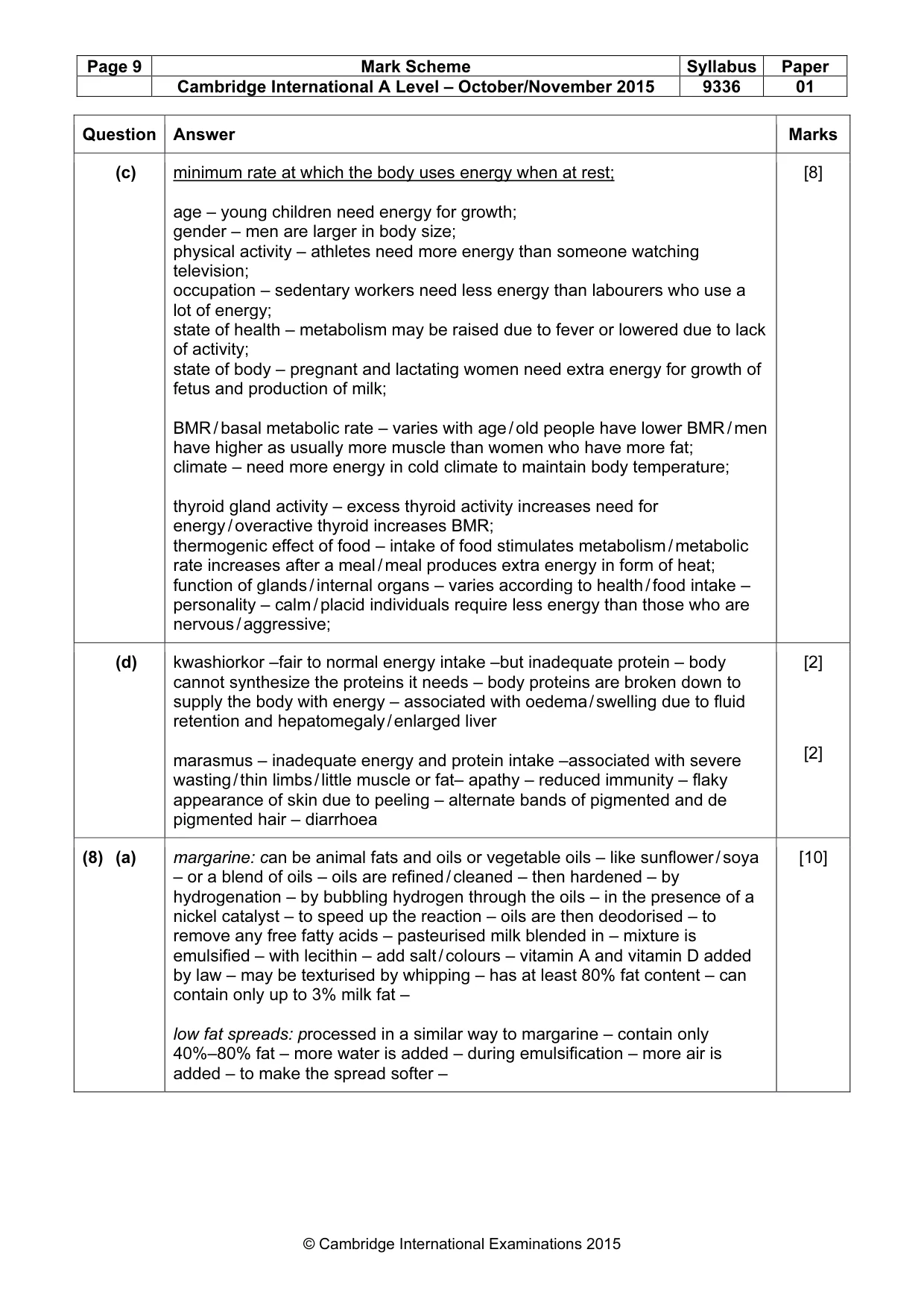
Page 9 Mark Scheme Syllabus Paper Cambridge International A Level – October/November 2015 9336 01 © Cambridge International Examinations 2015 Question Answer Marks (c) minimum rate at which the body uses energy when at rest; age – young children need energy for growth; gender – men are larger in body size; physical activity – athletes need more energy than someone watching television; occupation – sedentary workers need less energy than labourers who use a lot of energy; state of health – metabolism may be raised due to fever or lowered due to lack of activity; state of body – pregnant and lactating women need extra energy for growth of fetus and production of milk; BMR / basal metabolic rate – varies with age / old people have lower BMR / men have higher as usually more muscle than women who have more fat; climate – need more energy in cold climate to maintain body temperature; thyroid gland activity – excess thyroid activity increases need for energy / overactive thyroid increases BMR; thermogenic effect of food – intake of food stimulates metabolism / metabolic rate increases after a meal / meal produces extra energy in form of heat; function of glands / internal organs – varies according to health / food intake – personality – calm / placid individuals require less energy than those who are nervous / aggressive; [8] (d) kwashiorkor –fair to normal energy intake –but inadequate protein – body cannot synthesize the proteins it needs – body proteins are broken down to supply the body with energy – associated with oedema / swelling due to fluid retention and hepatomegaly / enlarged liver marasmus – inadequate energy and protein intake –associated with severe wasting / thin limbs / little muscle or fat– apathy – reduced immunity – flaky appearance of skin due to peeling – alternate bands of pigmented and de pigmented hair – diarrhoea [2] [2] (8) (a) margarine: can be animal fats and oils or vegetable oils – like sunflower / soya – or a blend of oils – oils are refined / cleaned – then hardened – by hydrogenation – by bubbling hydrogen through the oils – in the presence of a nickel catalyst – to speed up the reaction – oils are then deodorised – to remove any free fatty acids – pasteurised milk blended in – mixture is emulsified – with lecithin – add salt / colours – vitamin A and vitamin D added by law – may be texturised by whipping – has at least 80% fat content – can contain only up to 3% milk fat – low fat spreads: processed in a similar way to margarine – contain only 40%–80% fat – more water is added – during emulsification – more air is added – to make the spread softer – [10]
Mark scheme, page 10
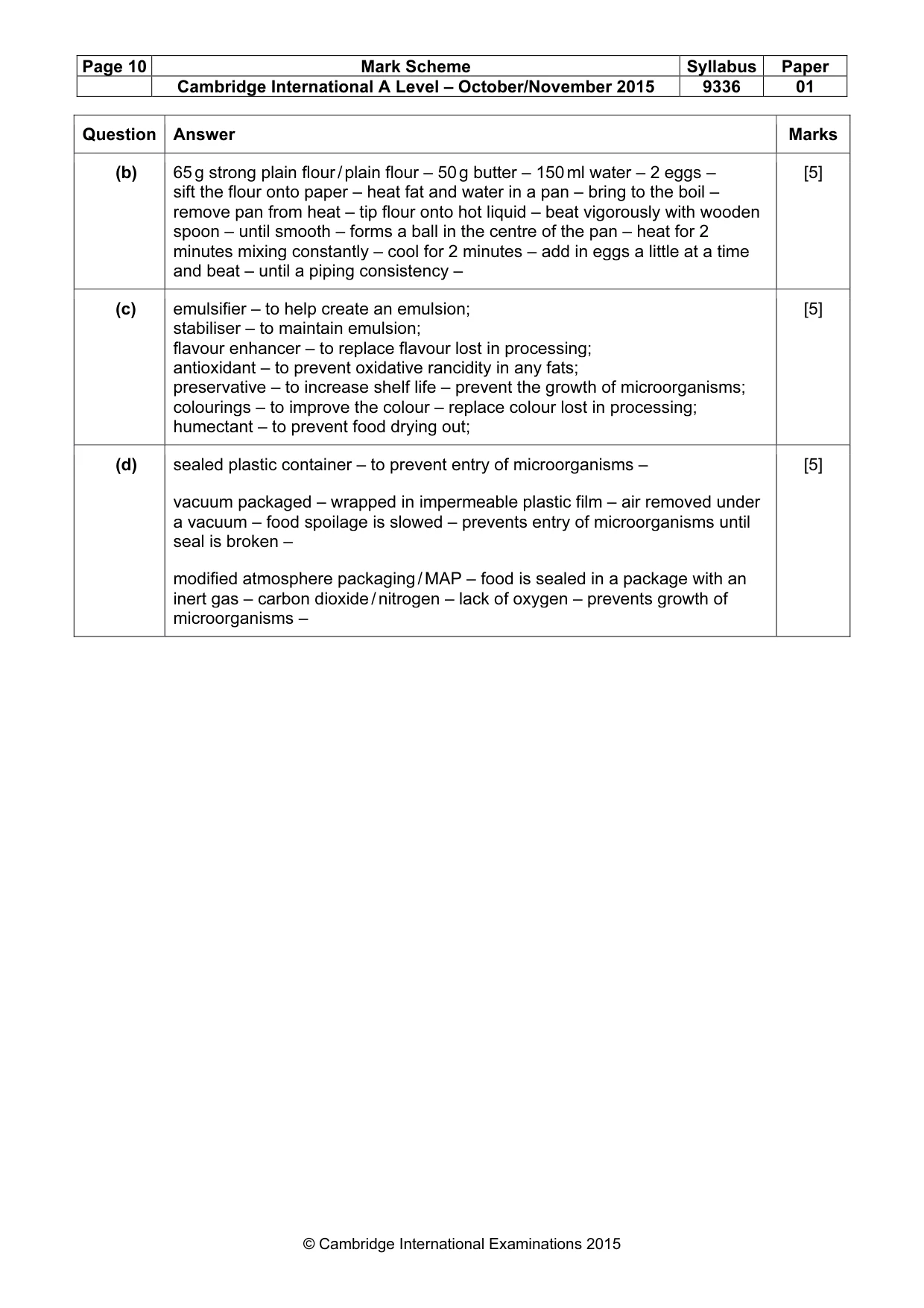
Page 10 Mark Scheme Syllabus Paper Cambridge International A Level – October/November 2015 9336 01 © Cambridge International Examinations 2015 Question Answer Marks (b) 65 g strong plain flour / plain flour – 50 g butter – 150 ml water – 2 eggs – sift the flour onto paper – heat fat and water in a pan – bring to the boil – remove pan from heat – tip flour onto hot liquid – beat vigorously with wooden spoon – until smooth – forms a ball in the centre of the pan – heat for 2 minutes mixing constantly – cool for 2 minutes – add in eggs a little at a time and beat – until a piping consistency – [5] (c) emulsifier – to help create an emulsion; stabiliser – to maintain emulsion; flavour enhancer – to replace flavour lost in processing; antioxidant – to prevent oxidative rancidity in any fats; preservative – to increase shelf life – prevent the growth of microorganisms; colourings – to improve the colour – replace colour lost in processing; humectant – to prevent food drying out; [5] (d) sealed plastic container – to prevent entry of microorganisms – vacuum packaged – wrapped in impermeable plastic film – air removed under a vacuum – food spoilage is slowed – prevents entry of microorganisms until seal is broken – modified atmosphere packaging / MAP – food is sealed in a package with an inert gas – carbon dioxide / nitrogen – lack of oxygen – prevents growth of microorganisms – [5]
What you needed in this session
Cambridge’s own grade thresholds for 2015 Oct/Nov, Paper 1 · Variant 1. A higher threshold means an easier paper — the bar moves with how the cohort did.