Cambridge A Level Food Studies 9336 — 2016 Oct/Nov Paper 1 · Variant 1
9336/11/O/N/16 · 100 marks · ≈113 min
The question paper and its mark scheme, free to read here and free to download. This is Cambridge’s own paper, exactly as it was sat.
Question paper4 pages
Mark scheme17 pages
Answers below. Sit the paper first if you are practising.
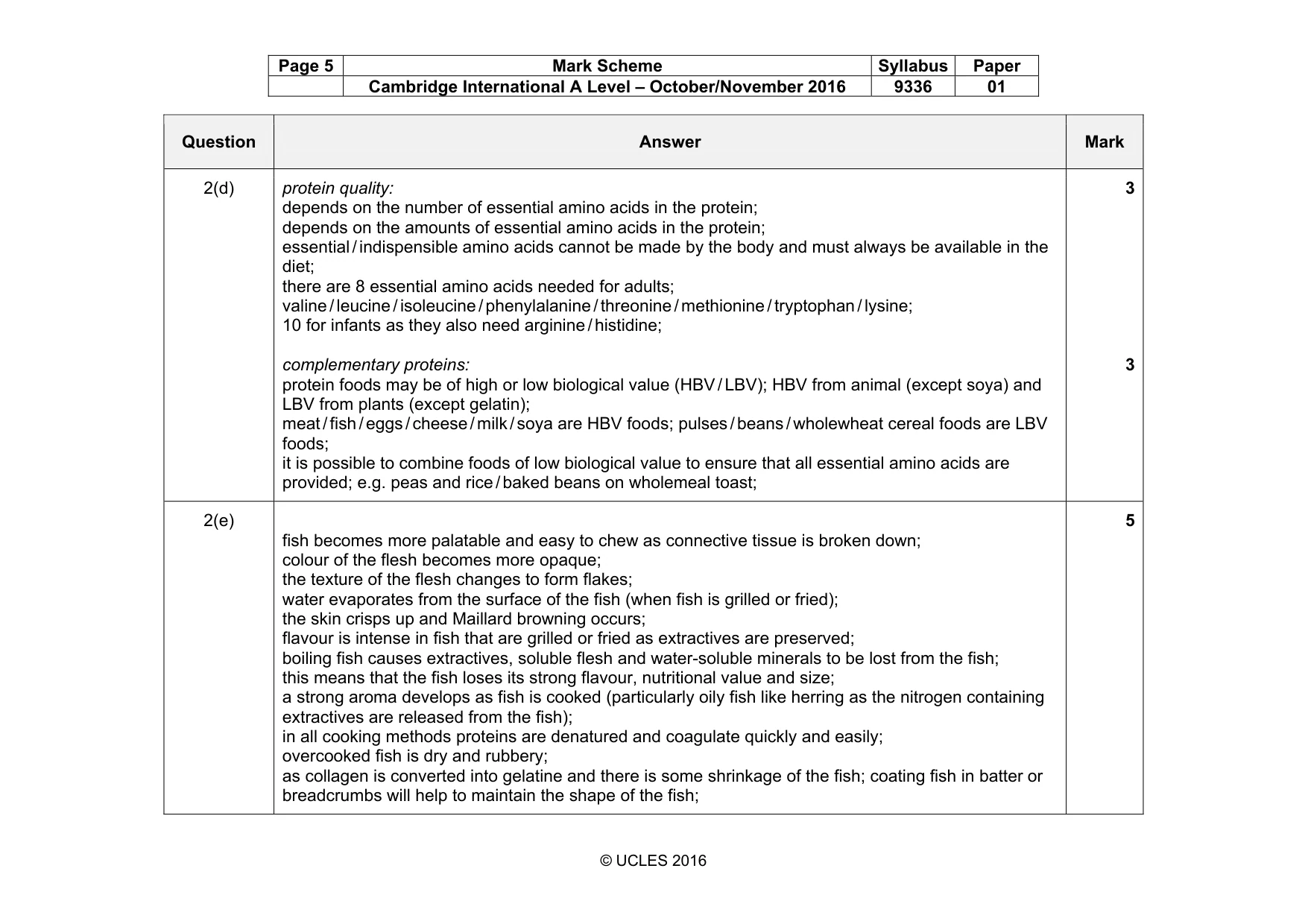
Paper as text
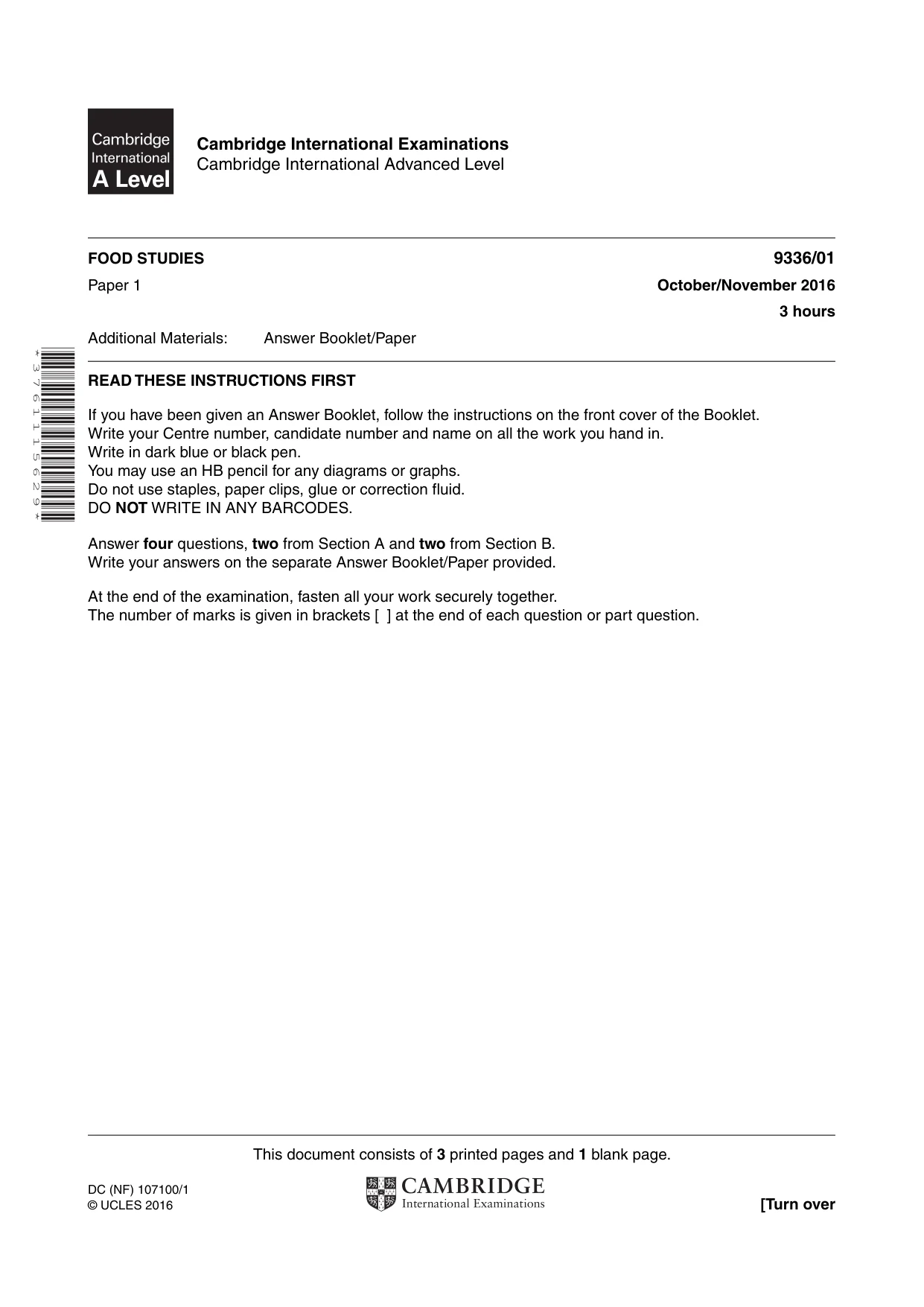
Question paper, page 1
This document consists of 3 printed pages and 1 blank page. DC (NF) 107100/1 © UCLES 2016 [Turn over Cambridge International Examinations Cambridge International Advanced Level * 3 7 6 1 1 1 5 6 2 9 * FOOD STUDIES 9336/01 Paper 1 October/November 2016 3 hours Additional Materials: Answer Booklet/Paper READ THESE INSTRUCTIONS FIRST If you have been given an Answer Booklet, follow the instructions on the front cover of the Booklet. Write your Centre number, candidate number and name on all the work you hand in. Write in dark blue or black pen. You may use an HB pencil for any diagrams or graphs. Do not use staples, paper clips, glue or correction fluid. DO NOT WRITE IN ANY BARCODES. Answer four questions, two from Section A and two from Section B. Write your answers on the separate Answer Booklet/Paper provided. At the end of the examination, fasten all your work securely together. The number of marks is given in brackets [ ] at the end of each question or part question.
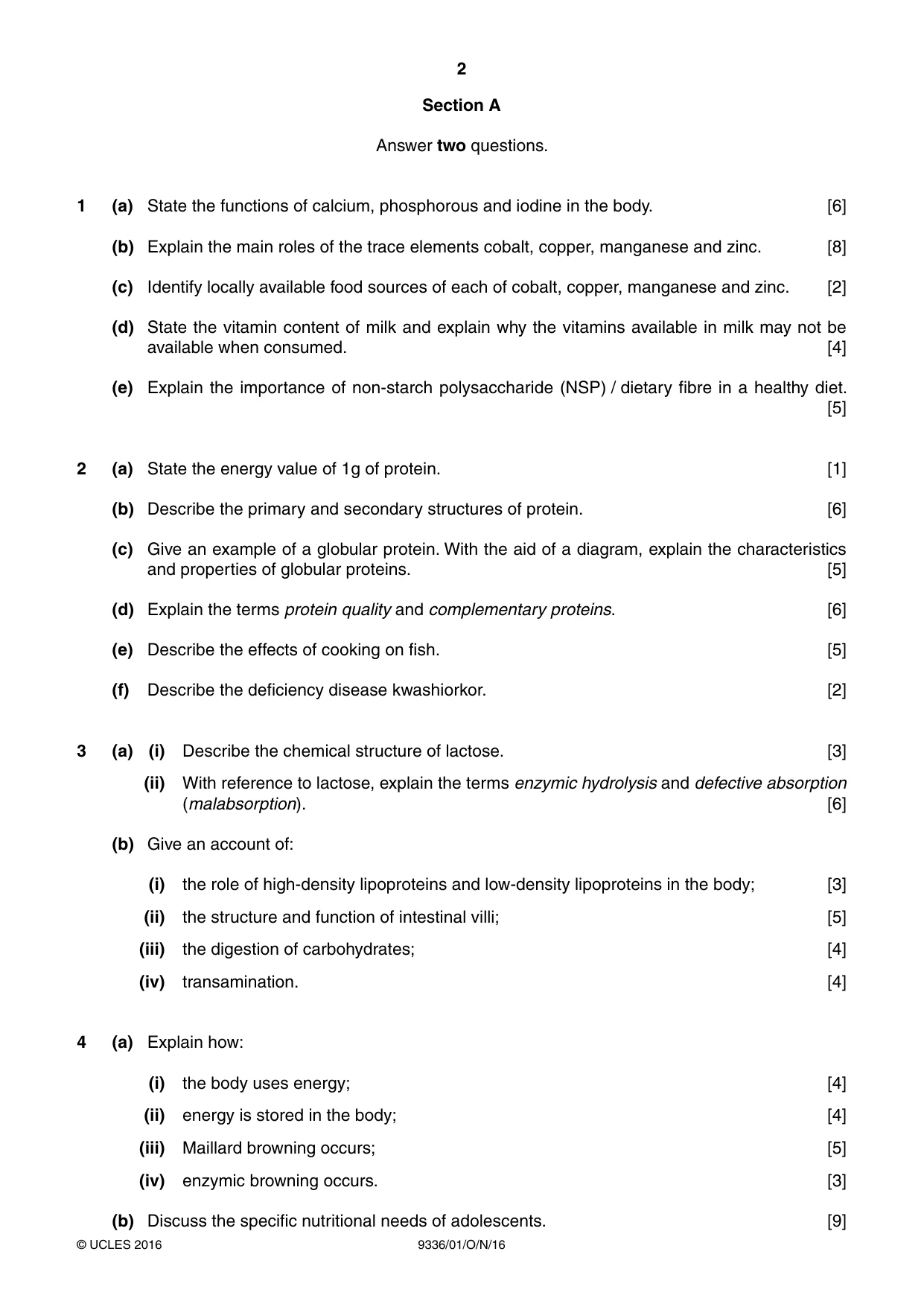
Question paper, page 2
2 9336/01/O/N/16 © UCLES 2016 Section A Answer two questions. 1 (a) State the functions of calcium, phosphorous and iodine in the body. [6] (b) Explain the main roles of the trace elements cobalt, copper, manganese and zinc. [8] (c) Identify locally available food sources of each of cobalt, copper, manganese and zinc. [2] (d) State the vitamin content of milk and explain why the vitamins available in milk may not be available when consumed. [4] (e) Explain the importance of non-starch polysaccharide (NSP) / dietary fibre in a healthy diet. [5] 2 (a) State the energy value of 1 g of protein. [1] (b) Describe the primary and secondary structures of protein. [6] (c) Give an example of a globular protein. With the aid of a diagram, explain the characteristics and properties of globular proteins. [5] (d) Explain the terms protein quality and complementary proteins. [6] (e) Describe the effects of cooking on fish. [5] (f) Describe the deficiency disease kwashiorkor. [2] 3 (a) (i) Describe the chemical structure of lactose. [3] (ii) With reference to lactose, explain the terms enzymic hydrolysis and defective absorption (malabsorption). [6] (b) Give an account of: (i) the role of high-density lipoproteins and low-density lipoproteins in the body; [3] (ii) the structure and function of intestinal villi; [5] (iii) the digestion of carbohydrates; [4] (iv) transamination. [4] 4 (a) Explain how: (i) the body uses energy; [4] (ii) energy is stored in the body; [4] (iii) Maillard browning occurs; [5] (iv) enzymic browning occurs. [3] (b) Discuss the specific nutritional needs of adolescents. [9]
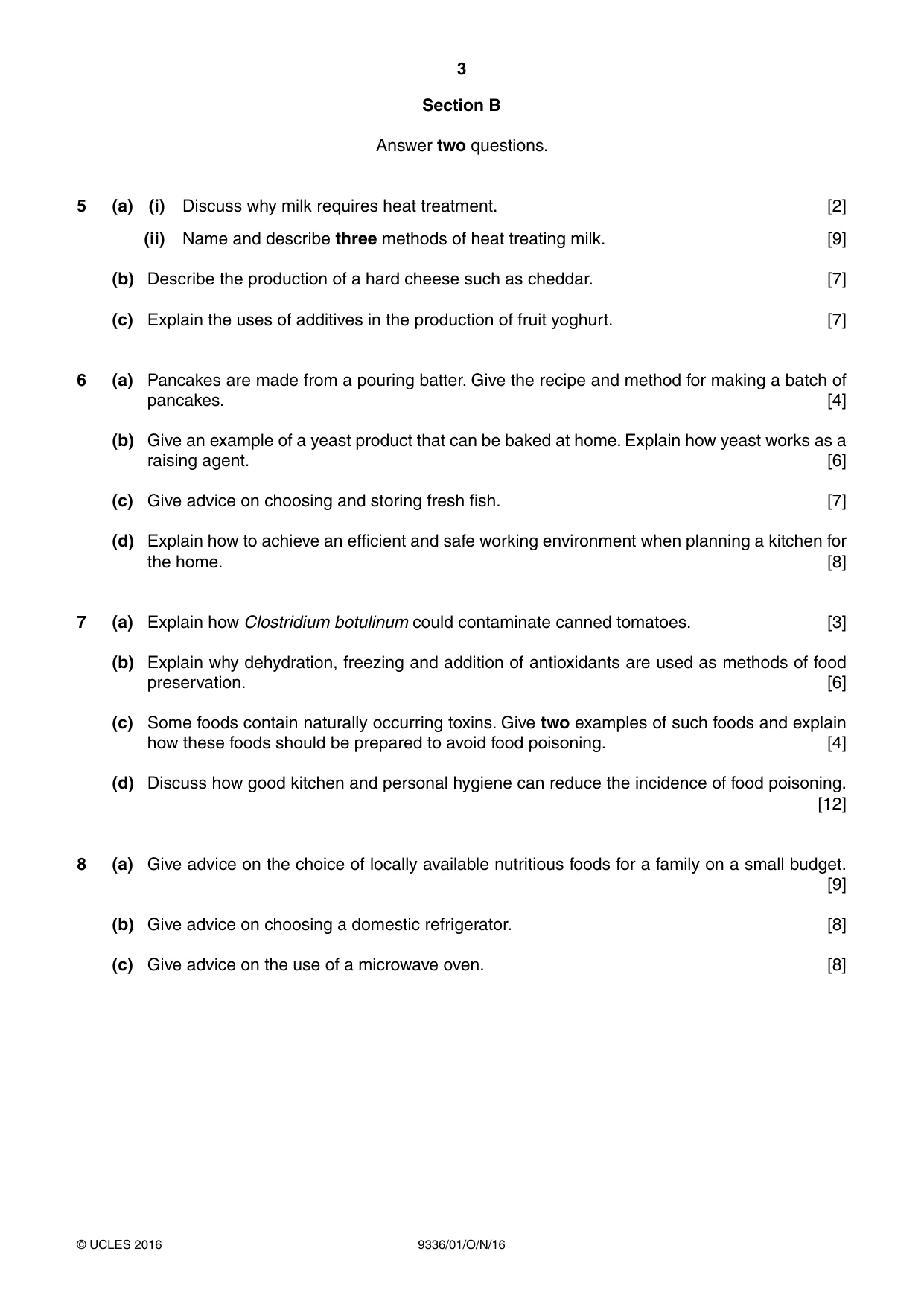
Question paper, page 3
3 9336/01/O/N/16 © UCLES 2016 Section B Answer two questions. 5 (a) (i) Discuss why milk requires heat treatment. [2] (ii) Name and describe three methods of heat treating milk. [9] (b) Describe the production of a hard cheese such as cheddar. [7] (c) Explain the uses of additives in the production of fruit yoghurt. [7] 6 (a) Pancakes are made from a pouring batter. Give the recipe and method for making a batch of pancakes. [4] (b) Give an example of a yeast product that can be baked at home. Explain how yeast works as a raising agent. [6] (c) Give advice on choosing and storing fresh fish. [7] (d) Explain how to achieve an efficient and safe working environment when planning a kitchen for the home. [8] 7 (a) Explain how Clostridium botulinum could contaminate canned tomatoes. [3] (b) Explain why dehydration, freezing and addition of antioxidants are used as methods of food preservation. [6] (c) Some foods contain naturally occurring toxins. Give two examples of such foods and explain how these foods should be prepared to avoid food poisoning. [4] (d) Discuss how good kitchen and personal hygiene can reduce the incidence of food poisoning. [12] 8 (a) Give advice on the choice of locally available nutritious foods for a family on a small budget. [9] (b) Give advice on choosing a domestic refrigerator. [8] (c) Give advice on the use of a microwave oven. [8]
Question paper, page 4
4 9336/01/O/N/16 © UCLES 2016 BLANK PAGE Permission to reproduce items where third-party owned material protected by copyright is included has been sought and cleared where possible. Every reasonable effort has been made by the publisher (UCLES) to trace copyright holders, but if any items requiring clearance have unwittingly been included, the publisher will be pleased to make amends at the earliest possible opportunity. To avoid the issue of disclosure of answer-related information to candidates, all copyright acknowledgements are reproduced online in the Cambridge International Examinations Copyright Acknowledgements Booklet. This is produced for each series of examinations and is freely available to download at www.cie.org.uk after the live examination series. Cambridge International Examinations is part of the Cambridge Assessment Group. Cambridge Assessment is the brand name of University of Cambridge Local Examinations Syndicate (UCLES), which is itself a department of the University of Cambridge.
Mark scheme, page 1
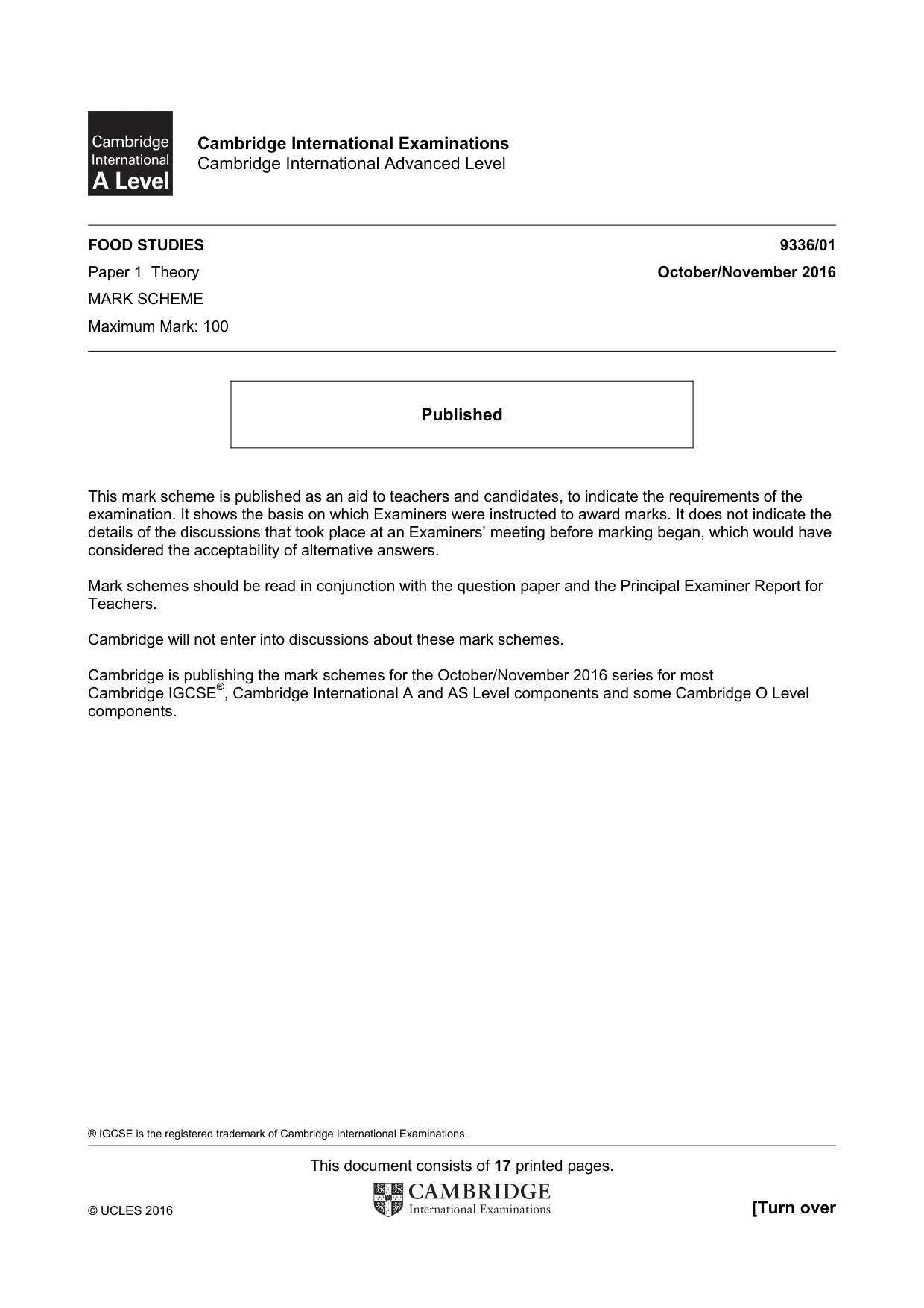
® IGCSE is the registered trademark of Cambridge International Examinations. This document consists of 17 printed pages. © UCLES 2016 [Turn over Cambridge International Examinations Cambridge International Advanced Level FOOD STUDIES 9336/01 Paper 1 Theory October/November 2016 MARK SCHEME Maximum Mark: 100 Published This mark scheme is published as an aid to teachers and candidates, to indicate the requirements of the examination. It shows the basis on which Examiners were instructed to award marks. It does not indicate the details of the discussions that took place at an Examiners’ meeting before marking began, which would have considered the acceptability of alternative answers. Mark schemes should be read in conjunction with the question paper and the Principal Examiner Report for Teachers. Cambridge will not enter into discussions about these mark schemes. Cambridge is publishing the mark schemes for the October/November 2016 series for most Cambridge IGCSE®, Cambridge International A and AS Level components and some Cambridge O Level components.
Mark scheme, page 2
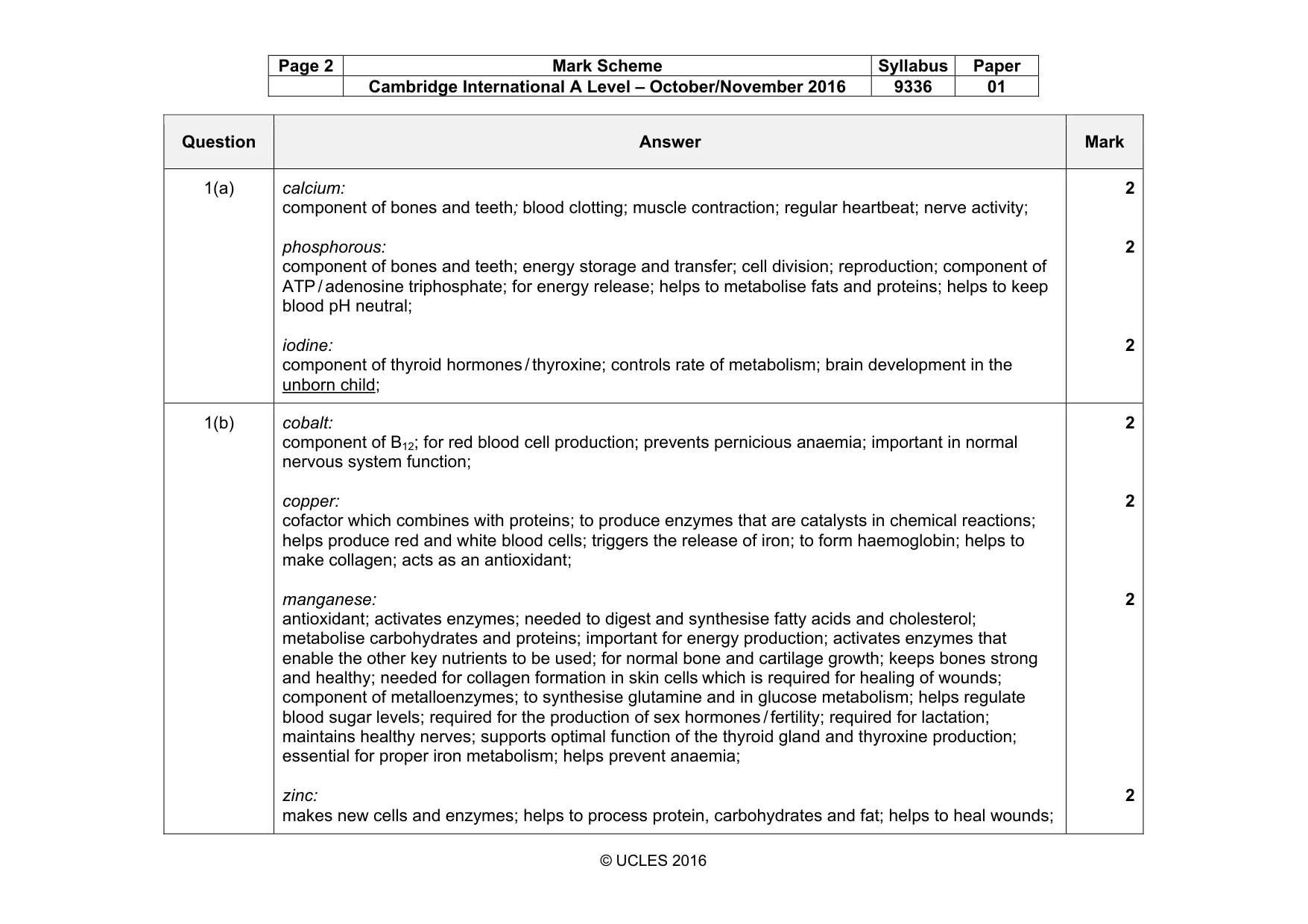
Page 2 Mark Scheme Syllabus Paper Cambridge International A Level – October/November 2016 9336 01 © UCLES 2016 Question Answer Mark 1(a) calcium: component of bones and teeth; blood clotting; muscle contraction; regular heartbeat; nerve activity; phosphorous: component of bones and teeth; energy storage and transfer; cell division; reproduction; component of ATP / adenosine triphosphate; for energy release; helps to metabolise fats and proteins; helps to keep blood pH neutral; iodine: component of thyroid hormones / thyroxine; controls rate of metabolism; brain development in the unborn child; 2 2 2 1(b) cobalt: component of B12; for red blood cell production; prevents pernicious anaemia; important in normal nervous system function; copper: cofactor which combines with proteins; to produce enzymes that are catalysts in chemical reactions; helps produce red and white blood cells; triggers the release of iron; to form haemoglobin; helps to make collagen; acts as an antioxidant; manganese: antioxidant; activates enzymes; needed to digest and synthesise fatty acids and cholesterol; metabolise carbohydrates and proteins; important for energy production; activates enzymes that enable the other key nutrients to be used; for normal bone and cartilage growth; keeps bones strong and healthy; needed for collagen formation in skin cells which is required for healing of wounds; component of metalloenzymes; to synthesise glutamine and in glucose metabolism; helps regulate blood sugar levels; required for the production of sex hormones / fertility; required for lactation; maintains healthy nerves; supports optimal function of the thyroid gland and thyroxine production; essential for proper iron metabolism; helps prevent anaemia; zinc: makes new cells and enzymes; helps to process protein, carbohydrates and fat; helps to heal wounds; 2 2 2 2
Mark scheme, page 3
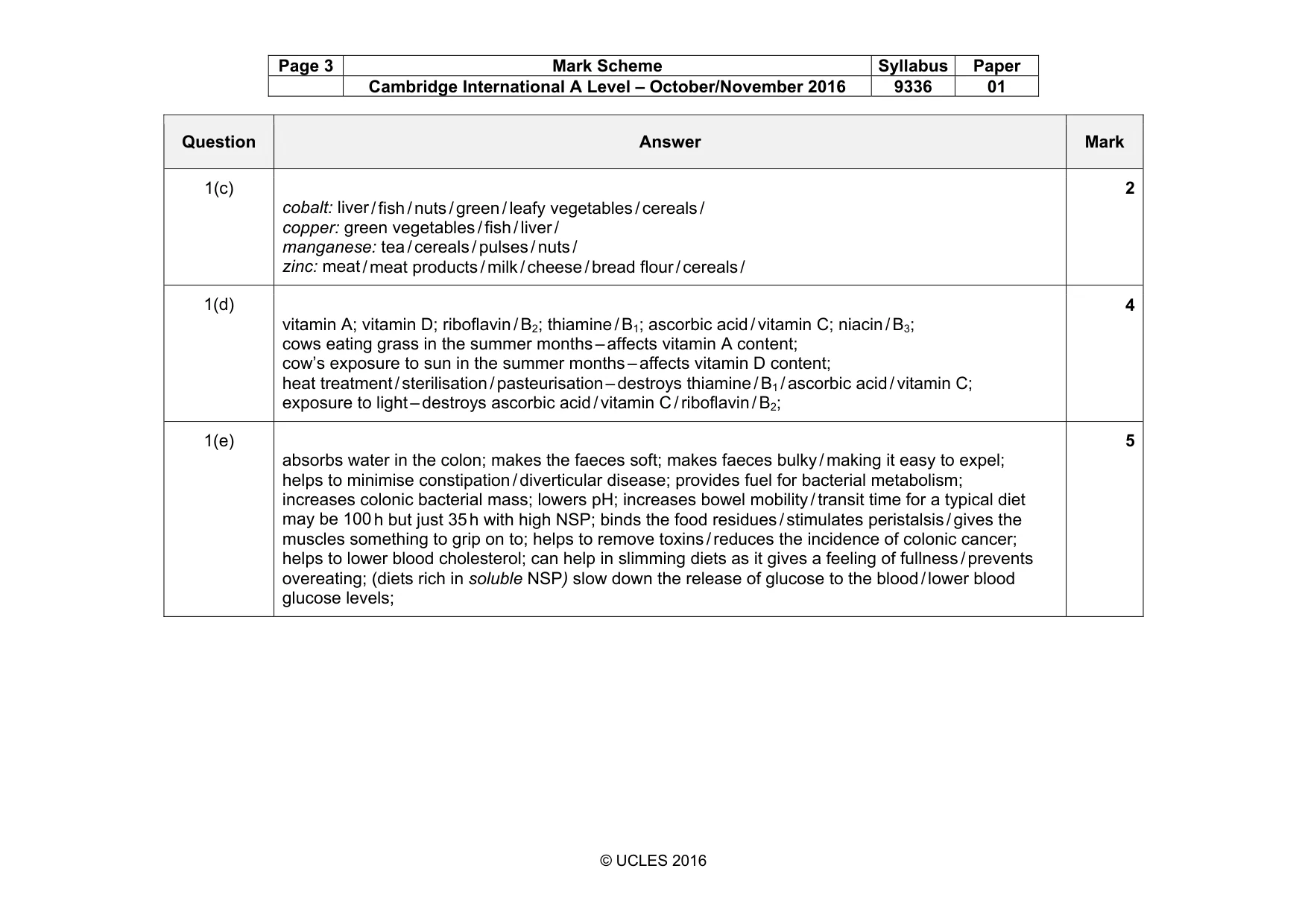
Page 3 Mark Scheme Syllabus Paper Cambridge International A Level – October/November 2016 9336 01 © UCLES 2016 Question Answer Mark 1(c) cobalt: liver / fish / nuts / green / leafy vegetables / cereals / copper: green vegetables / fish / liver / manganese: tea / cereals / pulses / nuts / zinc: meat / meat products / milk / cheese / bread flour / cereals / 2 1(d) vitamin A; vitamin D; riboflavin / B2; thiamine / B1; ascorbic acid / vitamin C; niacin / B3; cows eating grass in the summer months – affects vitamin A content; cow’s exposure to sun in the summer months – affects vitamin D content; heat treatment / sterilisation / pasteurisation – destroys thiamine / B1 / ascorbic acid / vitamin C; exposure to light – destroys ascorbic acid / vitamin C / riboflavin / B2; 4 1(e) absorbs water in the colon; makes the faeces soft; makes faeces bulky / making it easy to expel; helps to minimise constipation / diverticular disease; provides fuel for bacterial metabolism; increases colonic bacterial mass; lowers pH; increases bowel mobility / transit time for a typical diet may be 100 h but just 35 h with high NSP; binds the food residues / stimulates peristalsis / gives the muscles something to grip on to; helps to remove toxins / reduces the incidence of colonic cancer; helps to lower blood cholesterol; can help in slimming diets as it gives a feeling of fullness / prevents overeating; (diets rich in soluble NSP) slow down the release of glucose to the blood / lower blood glucose levels; 5
Mark scheme, page 4
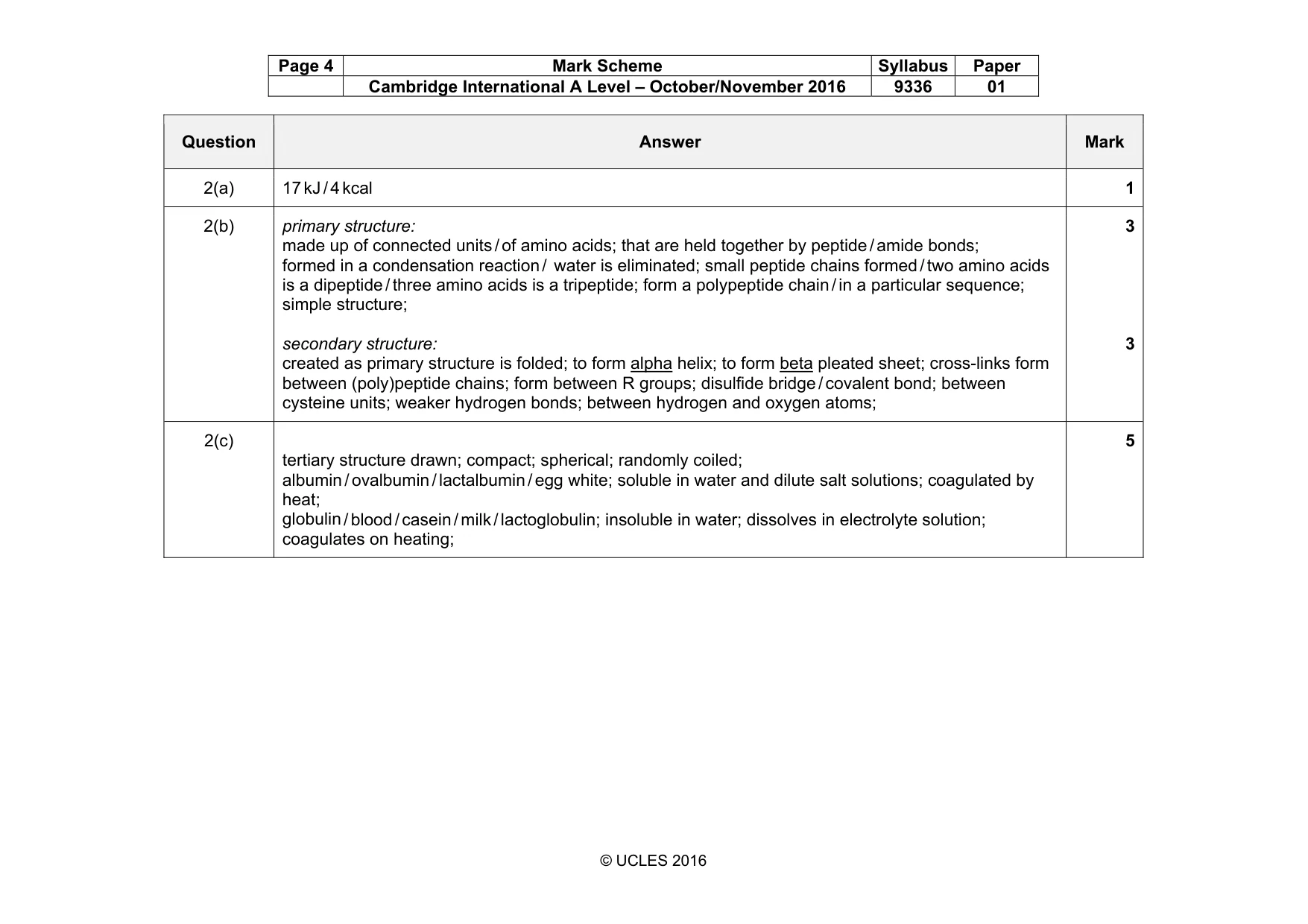
Page 4 Mark Scheme Syllabus Paper Cambridge International A Level – October/November 2016 9336 01 © UCLES 2016 Question Answer Mark 2(a) 17 kJ / 4 kcal 1 2(b) primary structure: made up of connected units / of amino acids; that are held together by peptide / amide bonds; formed in a condensation reaction / water is eliminated; small peptide chains formed / two amino acids is a dipeptide / three amino acids is a tripeptide; form a polypeptide chain / in a particular sequence; simple structure; secondary structure: created as primary structure is folded; to form alpha helix; to form beta pleated sheet; cross-links form between (poly)peptide chains; form between R groups; disulfide bridge / covalent bond; between cysteine units; weaker hydrogen bonds; between hydrogen and oxygen atoms; 3 3 2(c) tertiary structure drawn; compact; spherical; randomly coiled; albumin / ovalbumin / lactalbumin / egg white; soluble in water and dilute salt solutions; coagulated by heat; globulin / blood / casein / milk / lactoglobulin; insoluble in water; dissolves in electrolyte solution; coagulates on heating; 5
Mark scheme, page 5
Page 5 Mark Scheme Syllabus Paper Cambridge International A Level – October/November 2016 9336 01 © UCLES 2016 Question Answer Mark 2(d) protein quality: depends on the number of essential amino acids in the protein; depends on the amounts of essential amino acids in the protein; essential / indispensible amino acids cannot be made by the body and must always be available in the diet; there are 8 essential amino acids needed for adults; valine / leucine / isoleucine / phenylalanine / threonine / methionine / tryptophan / lysine; 10 for infants as they also need arginine / histidine; complementary proteins: protein foods may be of high or low biological value (HBV / LBV); HBV from animal (except soya) and LBV from plants (except gelatin); meat / fish / eggs / cheese / milk / soya are HBV foods; pulses / beans / wholewheat cereal foods are LBV foods; it is possible to combine foods of low biological value to ensure that all essential amino acids are provided; e.g. peas and rice / baked beans on wholemeal toast; 3 3 2(e) fish becomes more palatable and easy to chew as connective tissue is broken down; colour of the flesh becomes more opaque; the texture of the flesh changes to form flakes; water evaporates from the surface of the fish (when fish is grilled or fried); the skin crisps up and Maillard browning occurs; flavour is intense in fish that are grilled or fried as extractives are preserved; boiling fish causes extractives, soluble flesh and water-soluble minerals to be lost from the fish; this means that the fish loses its strong flavour, nutritional value and size; a strong aroma develops as fish is cooked (particularly oily fish like herring as the nitrogen containing extractives are released from the fish); in all cooking methods proteins are denatured and coagulate quickly and easily; overcooked fish is dry and rubbery; as collagen is converted into gelatine and there is some shrinkage of the fish; coating fish in batter or breadcrumbs will help to maintain the shape of the fish; 5
Mark scheme, page 6
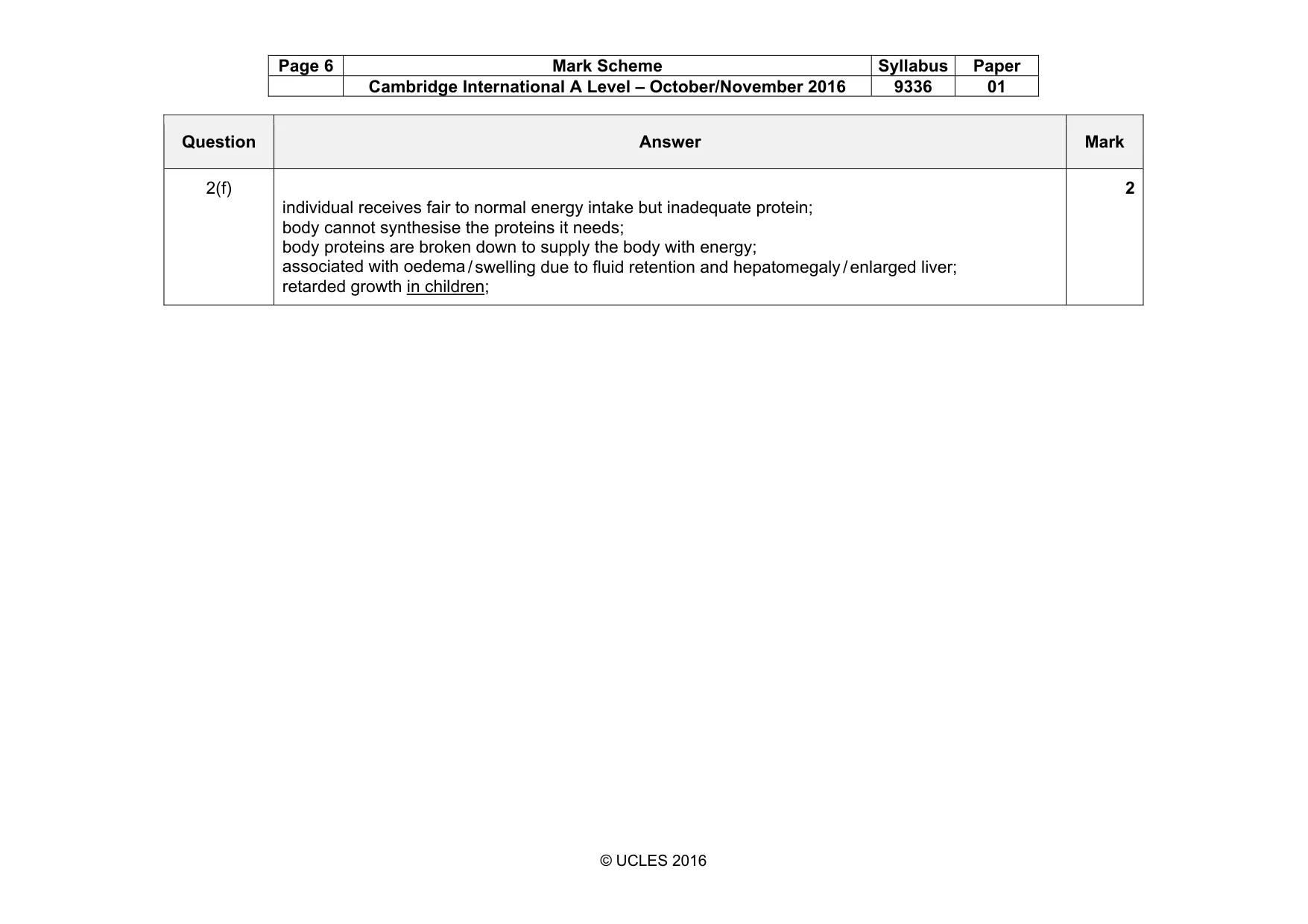
Page 6 Mark Scheme Syllabus Paper Cambridge International A Level – October/November 2016 9336 01 © UCLES 2016 Question Answer Mark 2(f) individual receives fair to normal energy intake but inadequate protein; body cannot synthesise the proteins it needs; body proteins are broken down to supply the body with energy; associated with oedema / swelling due to fluid retention and hepatomegaly / enlarged liver; retarded growth in children; 2
Mark scheme, page 7
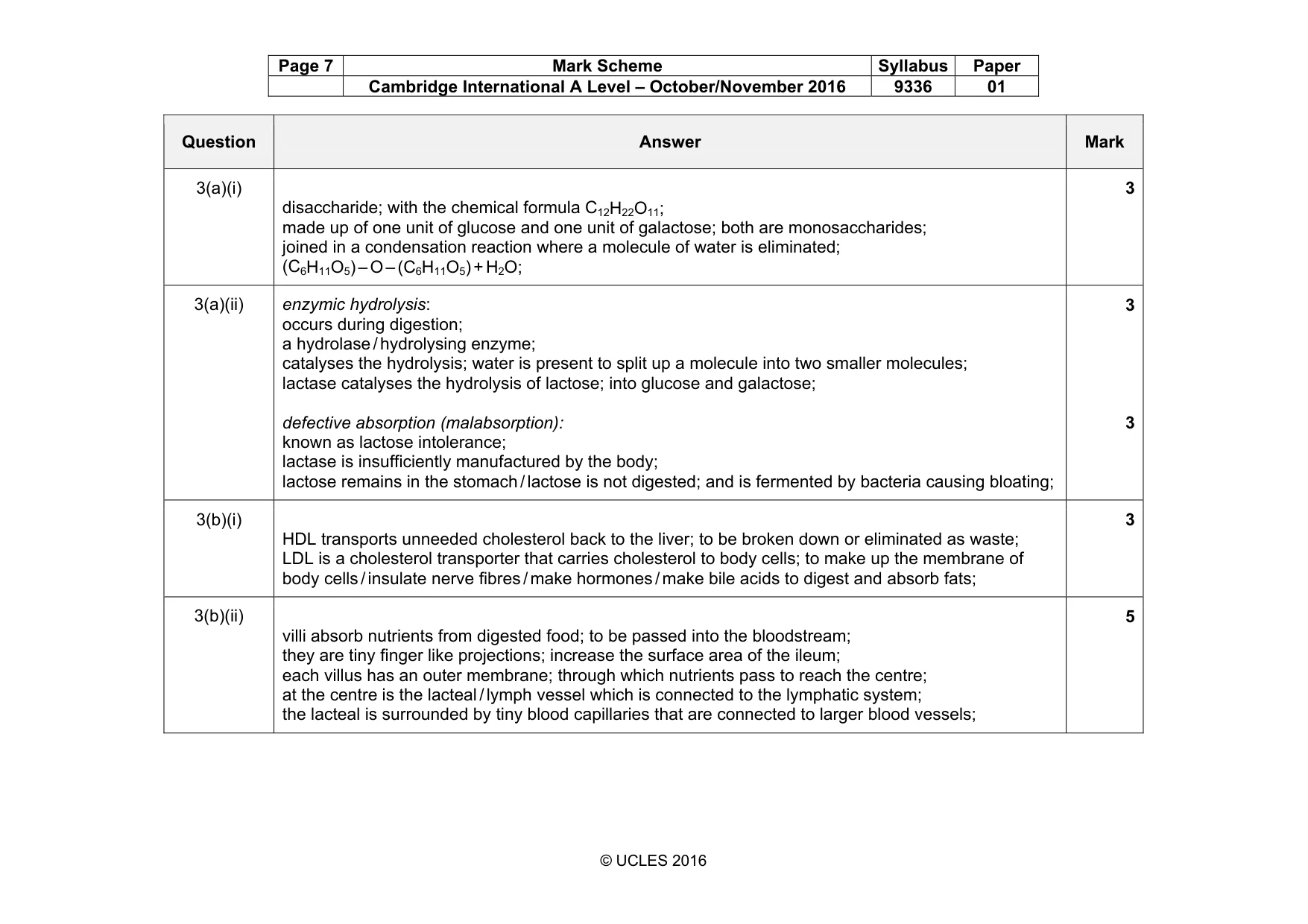
Page 7 Mark Scheme Syllabus Paper Cambridge International A Level – October/November 2016 9336 01 © UCLES 2016 Question Answer Mark 3(a)(i) disaccharide; with the chemical formula C12H22O11; made up of one unit of glucose and one unit of galactose; both are monosaccharides; joined in a condensation reaction where a molecule of water is eliminated; (C6H11O5) – O – (C6H11O5) + H2O; 3 3(a)(ii) enzymic hydrolysis: occurs during digestion; a hydrolase / hydrolysing enzyme; catalyses the hydrolysis; water is present to split up a molecule into two smaller molecules; lactase catalyses the hydrolysis of lactose; into glucose and galactose; defective absorption (malabsorption): known as lactose intolerance; lactase is insufficiently manufactured by the body; lactose remains in the stomach / lactose is not digested; and is fermented by bacteria causing bloating; 3 3 3(b)(i) HDL transports unneeded cholesterol back to the liver; to be broken down or eliminated as waste; LDL is a cholesterol transporter that carries cholesterol to body cells; to make up the membrane of body cells / insulate nerve fibres / make hormones / make bile acids to digest and absorb fats; 3 3(b)(ii) villi absorb nutrients from digested food; to be passed into the bloodstream; they are tiny finger like projections; increase the surface area of the ileum; each villus has an outer membrane; through which nutrients pass to reach the centre; at the centre is the lacteal / lymph vessel which is connected to the lymphatic system; the lacteal is surrounded by tiny blood capillaries that are connected to larger blood vessels; 5
Mark scheme, page 8
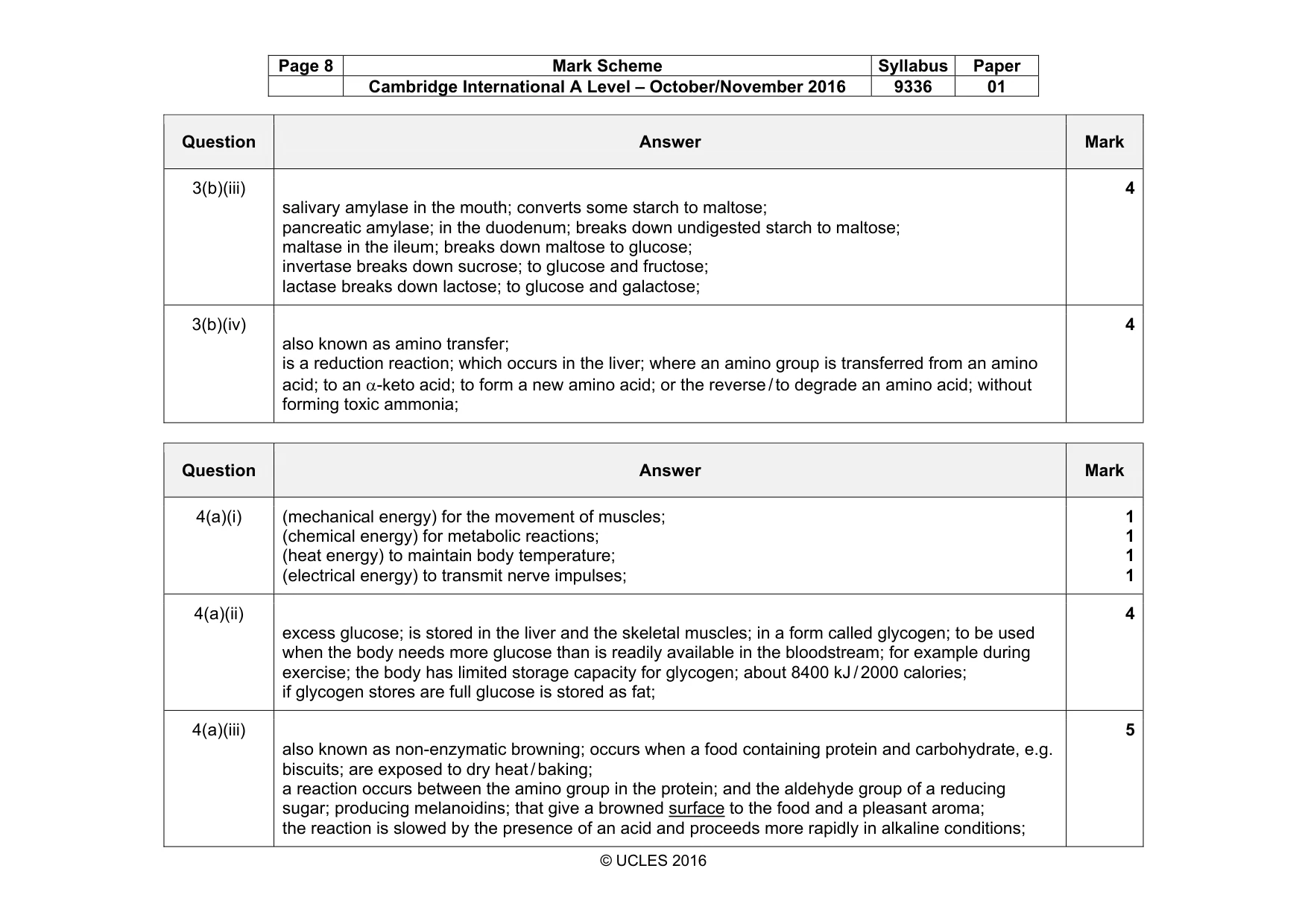
Page 8 Mark Scheme Syllabus Paper Cambridge International A Level – October/November 2016 9336 01 © UCLES 2016 Question Answer Mark 3(b)(iii) salivary amylase in the mouth; converts some starch to maltose; pancreatic amylase; in the duodenum; breaks down undigested starch to maltose; maltase in the ileum; breaks down maltose to glucose; invertase breaks down sucrose; to glucose and fructose; lactase breaks down lactose; to glucose and galactose; 4 3(b)(iv) also known as amino transfer; is a reduction reaction; which occurs in the liver; where an amino group is transferred from an amino acid; to an α-keto acid; to form a new amino acid; or the reverse / to degrade an amino acid; without forming toxic ammonia; 4 Question Answer Mark 4(a)(i) (mechanical energy) for the movement of muscles; (chemical energy) for metabolic reactions; (heat energy) to maintain body temperature; (electrical energy) to transmit nerve impulses; 1 1 1 1 4(a)(ii) excess glucose; is stored in the liver and the skeletal muscles; in a form called glycogen; to be used when the body needs more glucose than is readily available in the bloodstream; for example during exercise; the body has limited storage capacity for glycogen; about 8400 kJ / 2000 calories; if glycogen stores are full glucose is stored as fat; 4 4(a)(iii) also known as non-enzymatic browning; occurs when a food containing protein and carbohydrate, e.g. biscuits; are exposed to dry heat / baking; a reaction occurs between the amino group in the protein; and the aldehyde group of a reducing sugar; producing melanoidins; that give a browned surface to the food and a pleasant aroma; the reaction is slowed by the presence of an acid and proceeds more rapidly in alkaline conditions; 5
Mark scheme, page 9
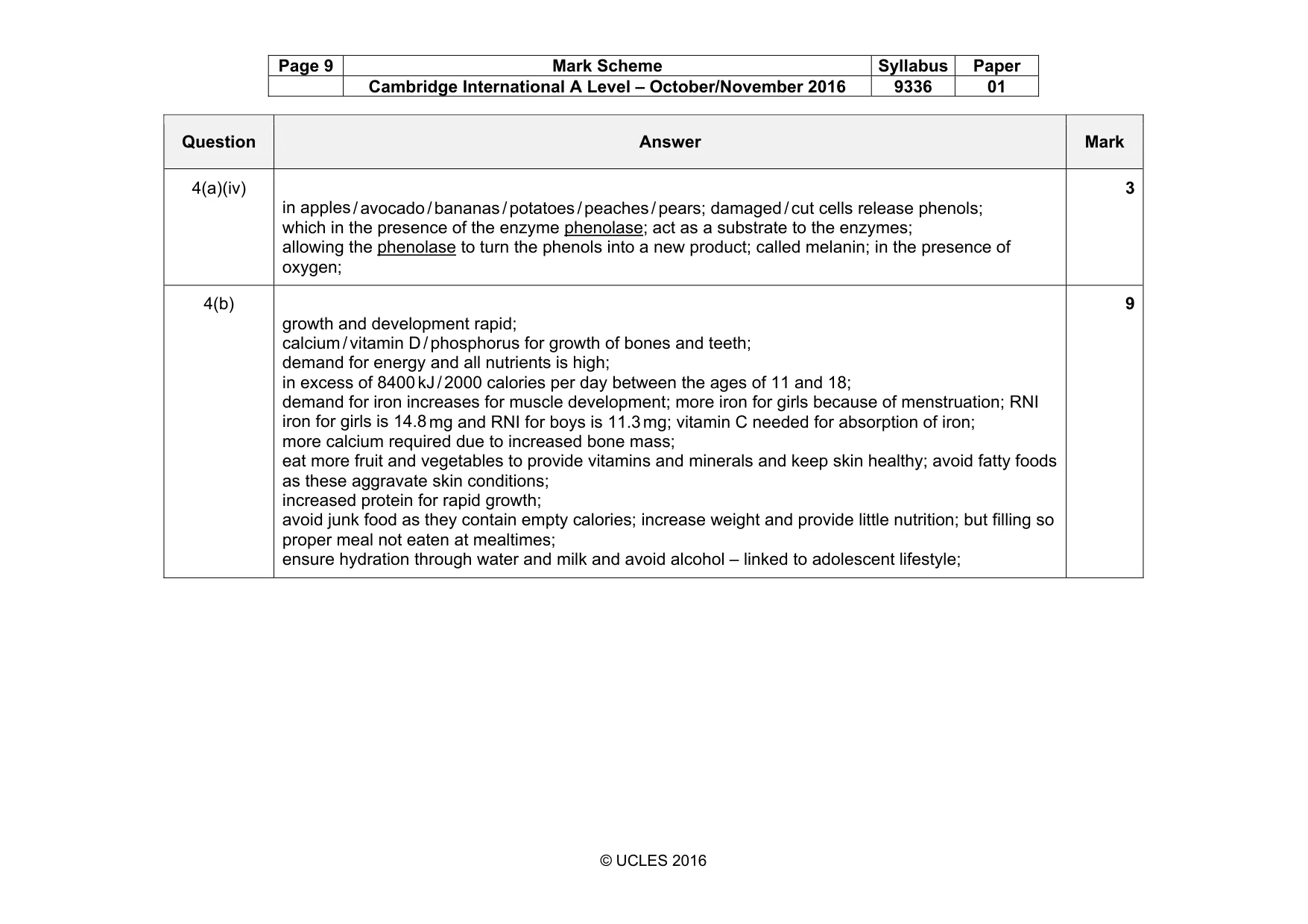
Page 9 Mark Scheme Syllabus Paper Cambridge International A Level – October/November 2016 9336 01 © UCLES 2016 Question Answer Mark 4(a)(iv) in apples / avocado / bananas / potatoes / peaches / pears; damaged / cut cells release phenols; which in the presence of the enzyme phenolase; act as a substrate to the enzymes; allowing the phenolase to turn the phenols into a new product; called melanin; in the presence of oxygen; 3 4(b) growth and development rapid; calcium / vitamin D / phosphorus for growth of bones and teeth; demand for energy and all nutrients is high; in excess of 8400 kJ / 2000 calories per day between the ages of 11 and 18; demand for iron increases for muscle development; more iron for girls because of menstruation; RNI iron for girls is 14.8 mg and RNI for boys is 11.3 mg; vitamin C needed for absorption of iron; more calcium required due to increased bone mass; eat more fruit and vegetables to provide vitamins and minerals and keep skin healthy; avoid fatty foods as these aggravate skin conditions; increased protein for rapid growth; avoid junk food as they contain empty calories; increase weight and provide little nutrition; but filling so proper meal not eaten at mealtimes; ensure hydration through water and milk and avoid alcohol – linked to adolescent lifestyle; 9
Mark scheme, page 10
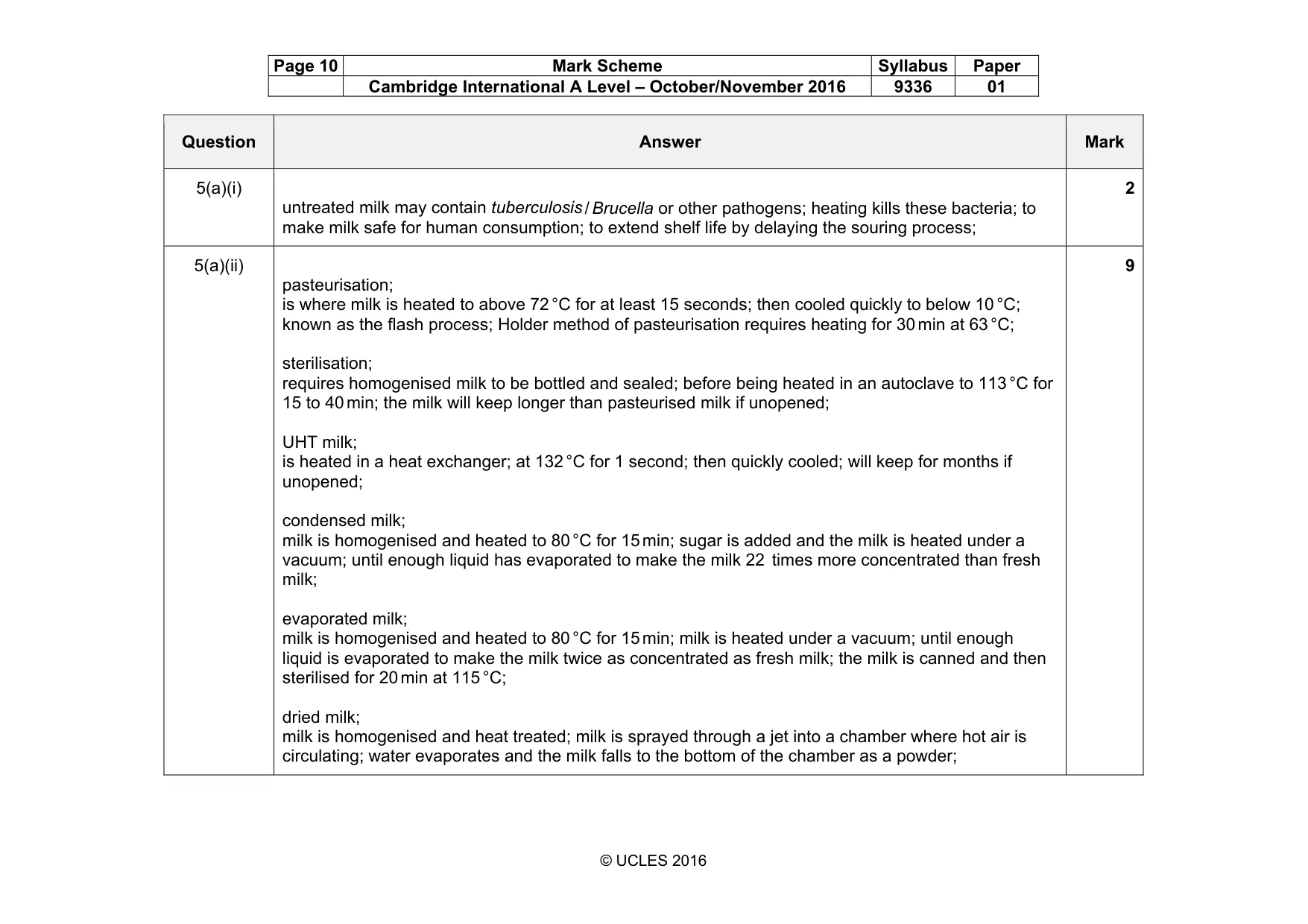
Page 10 Mark Scheme Syllabus Paper Cambridge International A Level – October/November 2016 9336 01 © UCLES 2016 Question Answer Mark 5(a)(i) untreated milk may contain tuberculosis / Brucella or other pathogens; heating kills these bacteria; to make milk safe for human consumption; to extend shelf life by delaying the souring process; 2 5(a)(ii) pasteurisation; is where milk is heated to above 72 °C for at least 15 seconds; then cooled quickly to below 10 °C; known as the flash process; Holder method of pasteurisation requires heating for 30 min at 63 °C; sterilisation; requires homogenised milk to be bottled and sealed; before being heated in an autoclave to 113 °C for 15 to 40 min; the milk will keep longer than pasteurised milk if unopened; UHT milk; is heated in a heat exchanger; at 132 °C for 1 second; then quickly cooled; will keep for months if unopened; condensed milk; milk is homogenised and heated to 80 °C for 15 min; sugar is added and the milk is heated under a vacuum; until enough liquid has evaporated to make the milk 22 times more concentrated than fresh milk; evaporated milk; milk is homogenised and heated to 80 °C for 15 min; milk is heated under a vacuum; until enough liquid is evaporated to make the milk twice as concentrated as fresh milk; the milk is canned and then sterilised for 20 min at 115 °C; dried milk; milk is homogenised and heat treated; milk is sprayed through a jet into a chamber where hot air is circulating; water evaporates and the milk falls to the bottom of the chamber as a powder; 9
Mark scheme, page 11
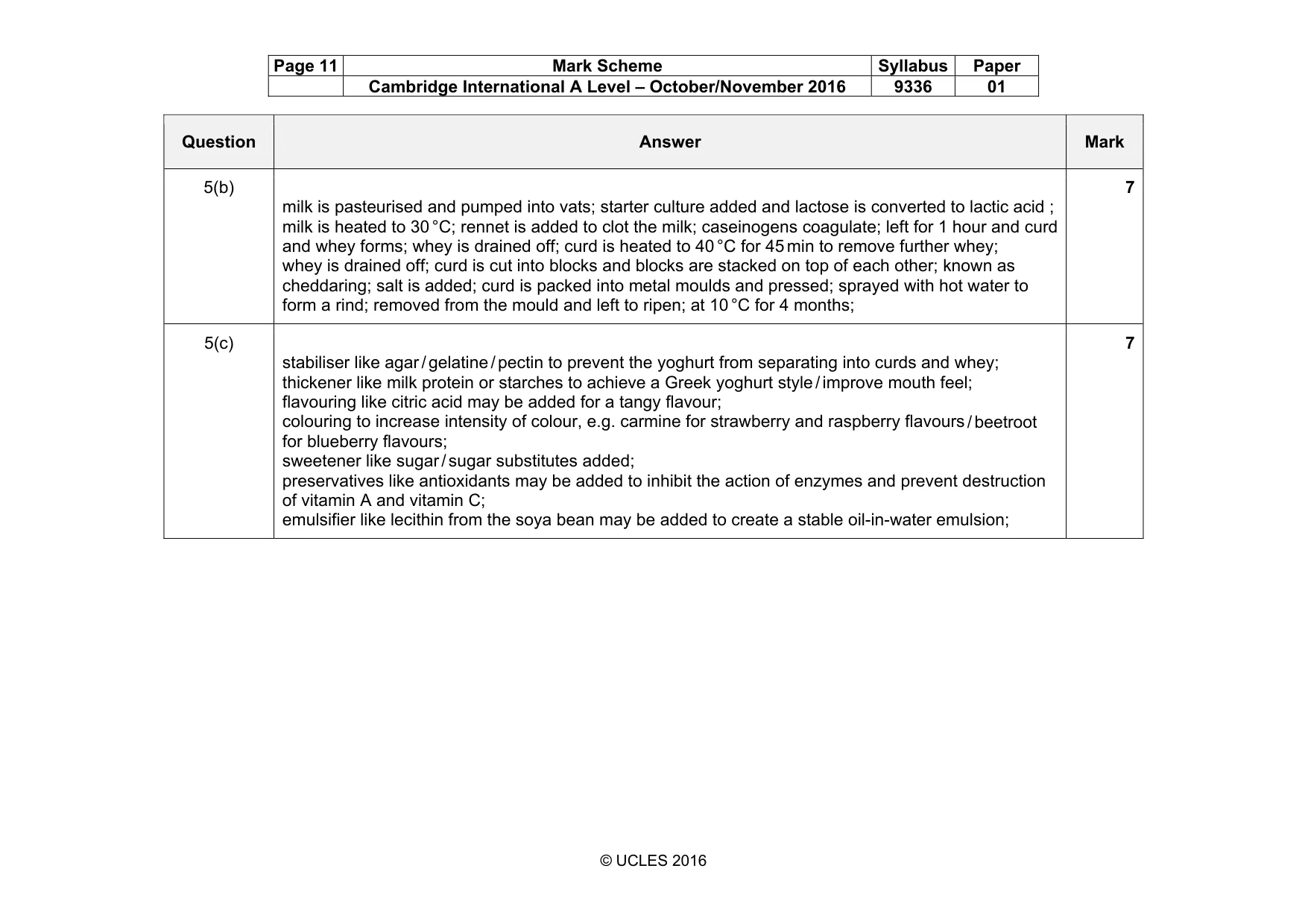
Page 11 Mark Scheme Syllabus Paper Cambridge International A Level – October/November 2016 9336 01 © UCLES 2016 Question Answer Mark 5(b) milk is pasteurised and pumped into vats; starter culture added and lactose is converted to lactic acid ; milk is heated to 30 °C; rennet is added to clot the milk; caseinogens coagulate; left for 1 hour and curd and whey forms; whey is drained off; curd is heated to 40 °C for 45 min to remove further whey; whey is drained off; curd is cut into blocks and blocks are stacked on top of each other; known as cheddaring; salt is added; curd is packed into metal moulds and pressed; sprayed with hot water to form a rind; removed from the mould and left to ripen; at 10 °C for 4 months; 7 5(c) stabiliser like agar / gelatine / pectin to prevent the yoghurt from separating into curds and whey; thickener like milk protein or starches to achieve a Greek yoghurt style / improve mouth feel; flavouring like citric acid may be added for a tangy flavour; colouring to increase intensity of colour, e.g. carmine for strawberry and raspberry flavours / beetroot for blueberry flavours; sweetener like sugar / sugar substitutes added; preservatives like antioxidants may be added to inhibit the action of enzymes and prevent destruction of vitamin A and vitamin C; emulsifier like lecithin from the soya bean may be added to create a stable oil-in-water emulsion; 7
Mark scheme, page 12
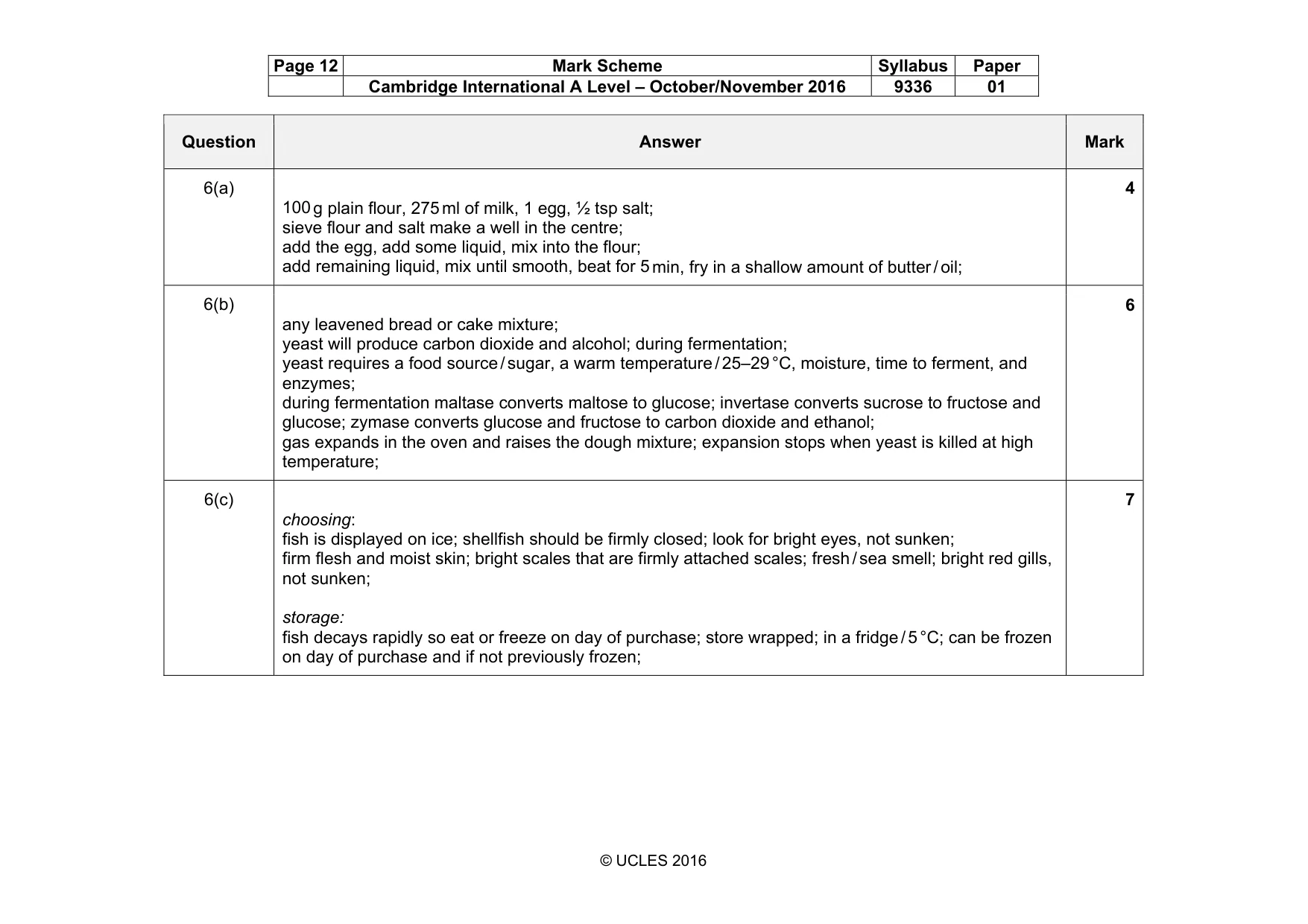
Page 12 Mark Scheme Syllabus Paper Cambridge International A Level – October/November 2016 9336 01 © UCLES 2016 Question Answer Mark 6(a) 100 g plain flour, 275 ml of milk, 1 egg, ½ tsp salt; sieve flour and salt make a well in the centre; add the egg, add some liquid, mix into the flour; add remaining liquid, mix until smooth, beat for 5 min, fry in a shallow amount of butter / oil; 4 6(b) any leavened bread or cake mixture; yeast will produce carbon dioxide and alcohol; during fermentation; yeast requires a food source / sugar, a warm temperature / 25–29 °C, moisture, time to ferment, and enzymes; during fermentation maltase converts maltose to glucose; invertase converts sucrose to fructose and glucose; zymase converts glucose and fructose to carbon dioxide and ethanol; gas expands in the oven and raises the dough mixture; expansion stops when yeast is killed at high temperature; 6 6(c) choosing: fish is displayed on ice; shellfish should be firmly closed; look for bright eyes, not sunken; firm flesh and moist skin; bright scales that are firmly attached scales; fresh / sea smell; bright red gills, not sunken; storage: fish decays rapidly so eat or freeze on day of purchase; store wrapped; in a fridge / 5 °C; can be frozen on day of purchase and if not previously frozen; 7
Mark scheme, page 13
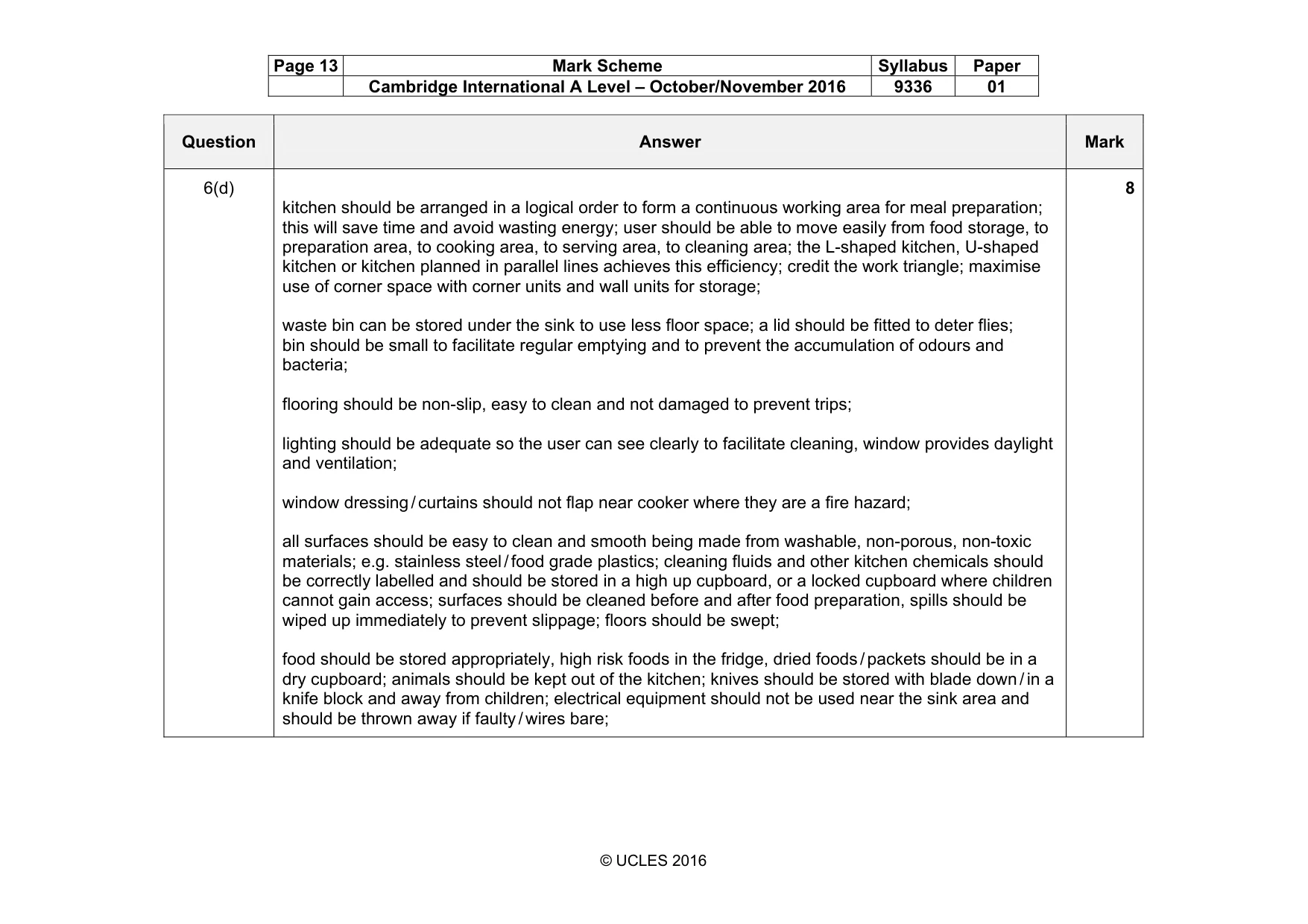
Page 13 Mark Scheme Syllabus Paper Cambridge International A Level – October/November 2016 9336 01 © UCLES 2016 Question Answer Mark 6(d) kitchen should be arranged in a logical order to form a continuous working area for meal preparation; this will save time and avoid wasting energy; user should be able to move easily from food storage, to preparation area, to cooking area, to serving area, to cleaning area; the L-shaped kitchen, U-shaped kitchen or kitchen planned in parallel lines achieves this efficiency; credit the work triangle; maximise use of corner space with corner units and wall units for storage; waste bin can be stored under the sink to use less floor space; a lid should be fitted to deter flies; bin should be small to facilitate regular emptying and to prevent the accumulation of odours and bacteria; flooring should be non-slip, easy to clean and not damaged to prevent trips; lighting should be adequate so the user can see clearly to facilitate cleaning, window provides daylight and ventilation; window dressing / curtains should not flap near cooker where they are a fire hazard; all surfaces should be easy to clean and smooth being made from washable, non-porous, non-toxic materials; e.g. stainless steel / food grade plastics; cleaning fluids and other kitchen chemicals should be correctly labelled and should be stored in a high up cupboard, or a locked cupboard where children cannot gain access; surfaces should be cleaned before and after food preparation, spills should be wiped up immediately to prevent slippage; floors should be swept; food should be stored appropriately, high risk foods in the fridge, dried foods / packets should be in a dry cupboard; animals should be kept out of the kitchen; knives should be stored with blade down / in a knife block and away from children; electrical equipment should not be used near the sink area and should be thrown away if faulty / wires bare; 8
Mark scheme, page 14
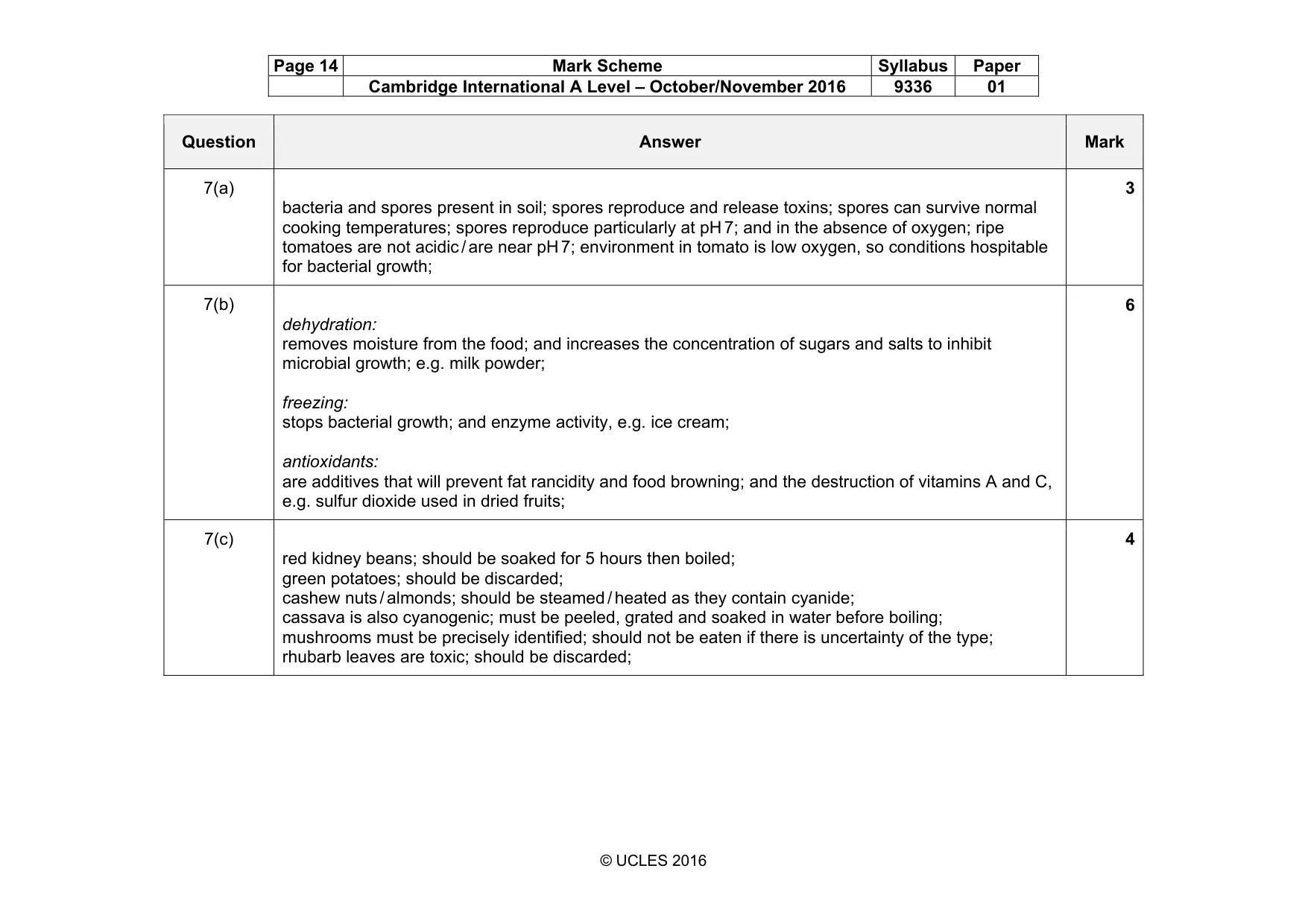
Page 14 Mark Scheme Syllabus Paper Cambridge International A Level – October/November 2016 9336 01 © UCLES 2016 Question Answer Mark 7(a) bacteria and spores present in soil; spores reproduce and release toxins; spores can survive normal cooking temperatures; spores reproduce particularly at pH 7; and in the absence of oxygen; ripe tomatoes are not acidic / are near pH 7; environment in tomato is low oxygen, so conditions hospitable for bacterial growth; 3 7(b) dehydration: removes moisture from the food; and increases the concentration of sugars and salts to inhibit microbial growth; e.g. milk powder; freezing: stops bacterial growth; and enzyme activity, e.g. ice cream; antioxidants: are additives that will prevent fat rancidity and food browning; and the destruction of vitamins A and C, e.g. sulfur dioxide used in dried fruits; 6 7(c) red kidney beans; should be soaked for 5 hours then boiled; green potatoes; should be discarded; cashew nuts / almonds; should be steamed / heated as they contain cyanide; cassava is also cyanogenic; must be peeled, grated and soaked in water before boiling; mushrooms must be precisely identified; should not be eaten if there is uncertainty of the type; rhubarb leaves are toxic; should be discarded; 4
Mark scheme, page 15
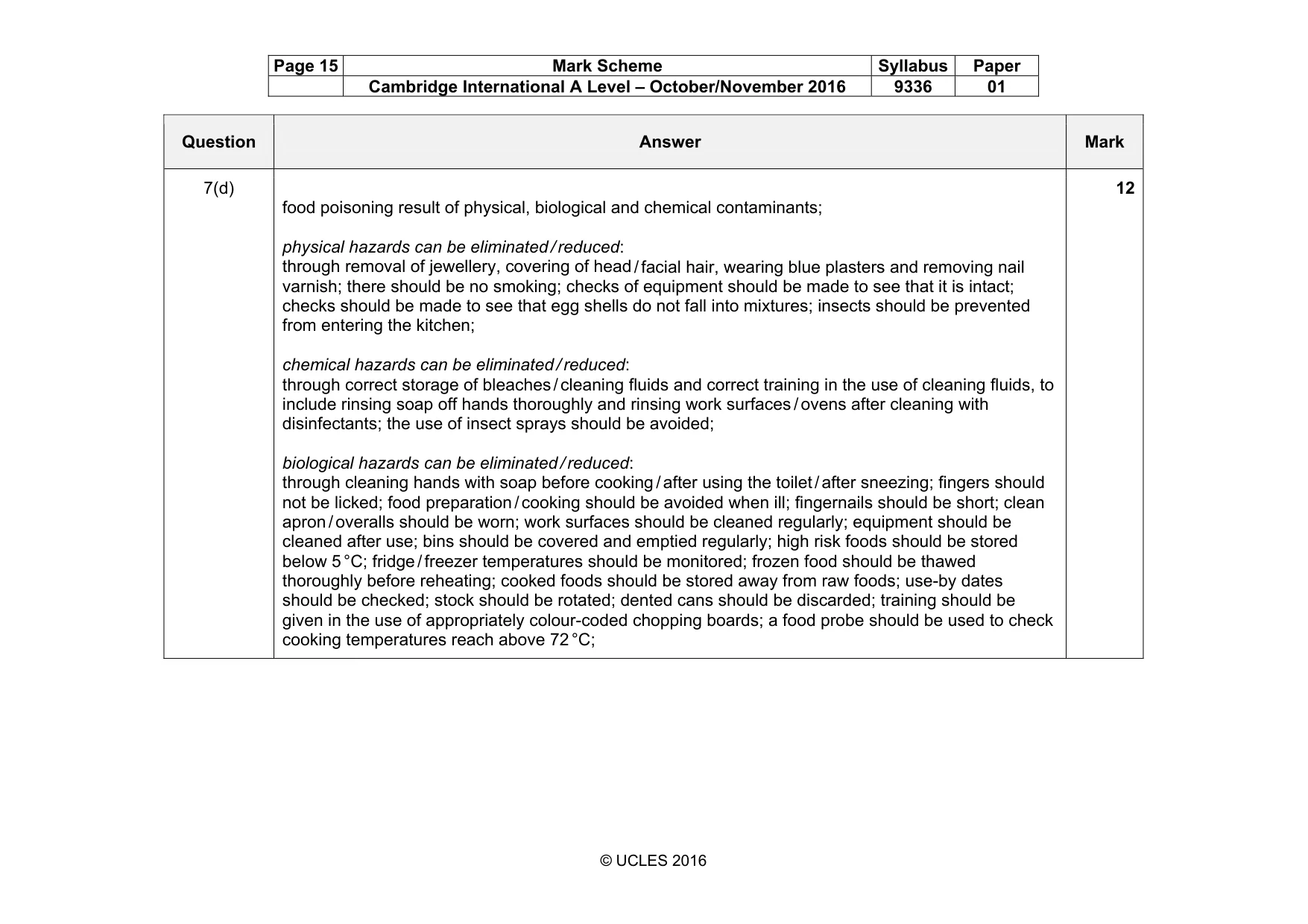
Page 15 Mark Scheme Syllabus Paper Cambridge International A Level – October/November 2016 9336 01 © UCLES 2016 Question Answer Mark 7(d) food poisoning result of physical, biological and chemical contaminants; physical hazards can be eliminated / reduced: through removal of jewellery, covering of head / facial hair, wearing blue plasters and removing nail varnish; there should be no smoking; checks of equipment should be made to see that it is intact; checks should be made to see that egg shells do not fall into mixtures; insects should be prevented from entering the kitchen; chemical hazards can be eliminated / reduced: through correct storage of bleaches / cleaning fluids and correct training in the use of cleaning fluids, to include rinsing soap off hands thoroughly and rinsing work surfaces / ovens after cleaning with disinfectants; the use of insect sprays should be avoided; biological hazards can be eliminated / reduced: through cleaning hands with soap before cooking / after using the toilet / after sneezing; fingers should not be licked; food preparation / cooking should be avoided when ill; fingernails should be short; clean apron / overalls should be worn; work surfaces should be cleaned regularly; equipment should be cleaned after use; bins should be covered and emptied regularly; high risk foods should be stored below 5 °C; fridge / freezer temperatures should be monitored; frozen food should be thawed thoroughly before reheating; cooked foods should be stored away from raw foods; use-by dates should be checked; stock should be rotated; dented cans should be discarded; training should be given in the use of appropriately colour-coded chopping boards; a food probe should be used to check cooking temperatures reach above 72 °C; 12
Mark scheme, page 16
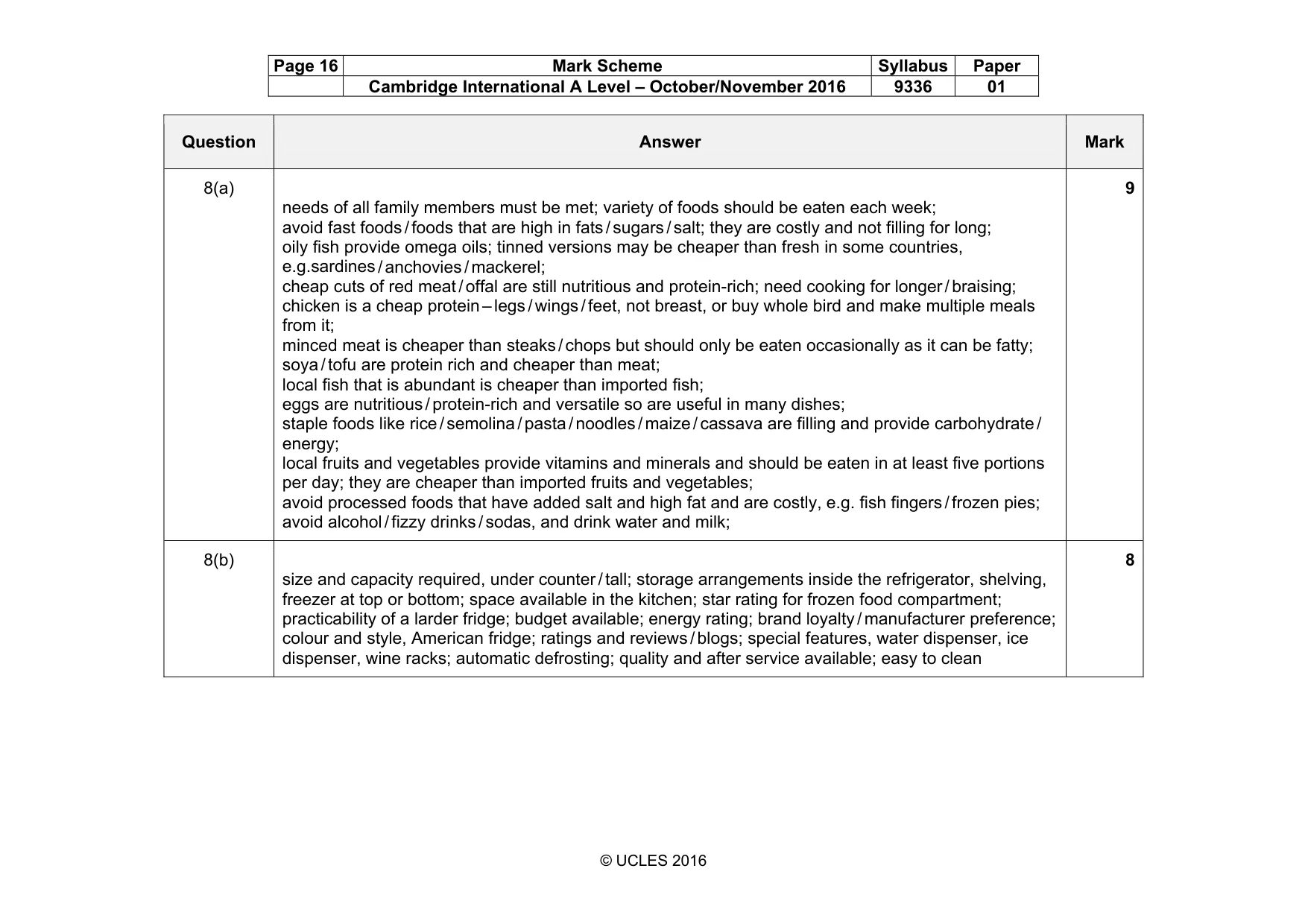
Page 16 Mark Scheme Syllabus Paper Cambridge International A Level – October/November 2016 9336 01 © UCLES 2016 Question Answer Mark 8(a) needs of all family members must be met; variety of foods should be eaten each week; avoid fast foods / foods that are high in fats / sugars / salt; they are costly and not filling for long; oily fish provide omega oils; tinned versions may be cheaper than fresh in some countries, e.g.sardines / anchovies / mackerel; cheap cuts of red meat / offal are still nutritious and protein-rich; need cooking for longer / braising; chicken is a cheap protein – legs / wings / feet, not breast, or buy whole bird and make multiple meals from it; minced meat is cheaper than steaks / chops but should only be eaten occasionally as it can be fatty; soya / tofu are protein rich and cheaper than meat; local fish that is abundant is cheaper than imported fish; eggs are nutritious / protein-rich and versatile so are useful in many dishes; staple foods like rice / semolina / pasta / noodles / maize / cassava are filling and provide carbohydrate / energy; local fruits and vegetables provide vitamins and minerals and should be eaten in at least five portions per day; they are cheaper than imported fruits and vegetables; avoid processed foods that have added salt and high fat and are costly, e.g. fish fingers / frozen pies; avoid alcohol / fizzy drinks / sodas, and drink water and milk; 9 8(b) size and capacity required, under counter / tall; storage arrangements inside the refrigerator, shelving, freezer at top or bottom; space available in the kitchen; star rating for frozen food compartment; practicability of a larder fridge; budget available; energy rating; brand loyalty / manufacturer preference; colour and style, American fridge; ratings and reviews / blogs; special features, water dispenser, ice dispenser, wine racks; automatic defrosting; quality and after service available; easy to clean 8
Mark scheme, page 17
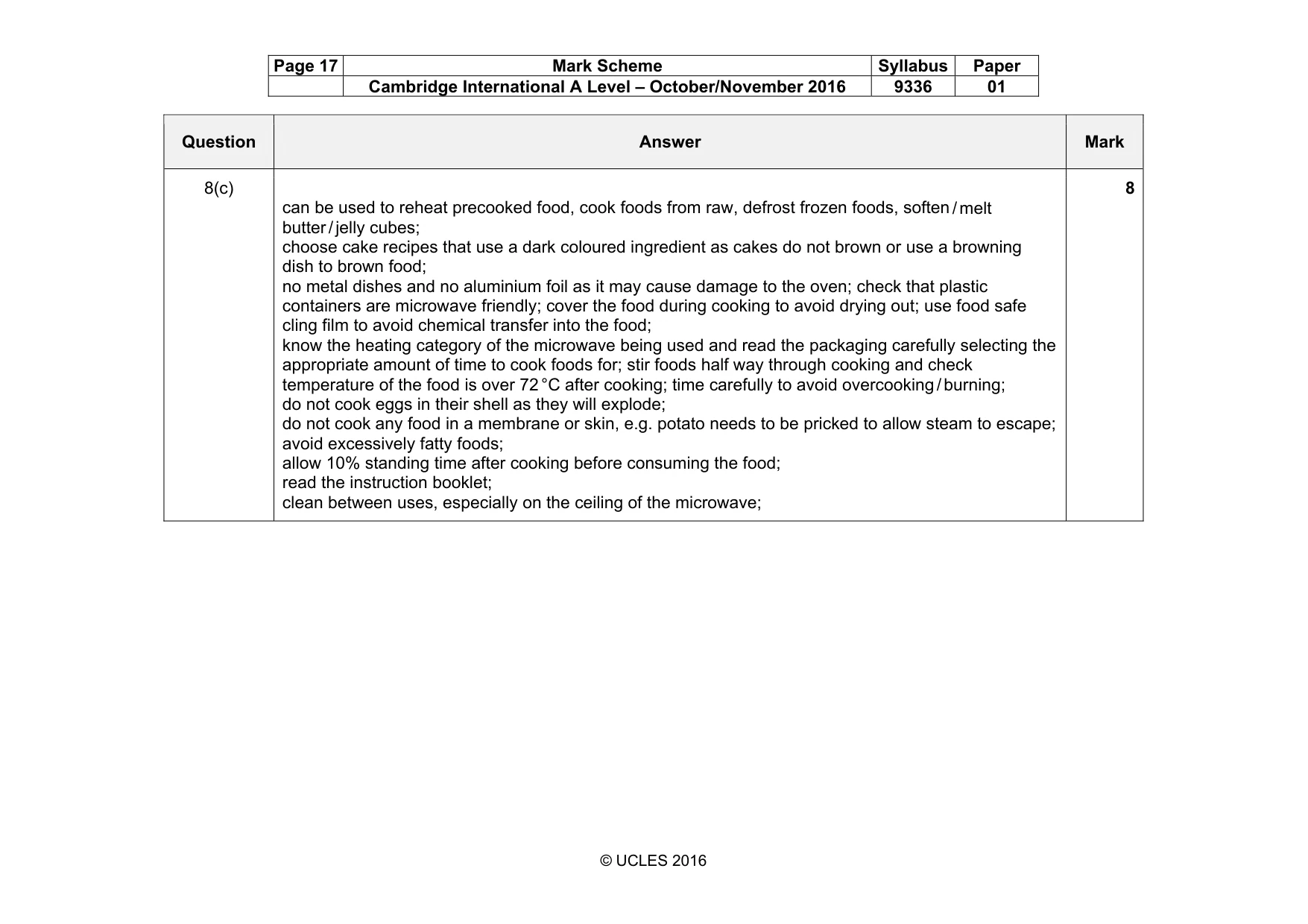
Page 17 Mark Scheme Syllabus Paper Cambridge International A Level – October/November 2016 9336 01 © UCLES 2016 Question Answer Mark 8(c) can be used to reheat precooked food, cook foods from raw, defrost frozen foods, soften / melt butter / jelly cubes; choose cake recipes that use a dark coloured ingredient as cakes do not brown or use a browning dish to brown food; no metal dishes and no aluminium foil as it may cause damage to the oven; check that plastic containers are microwave friendly; cover the food during cooking to avoid drying out; use food safe cling film to avoid chemical transfer into the food; know the heating category of the microwave being used and read the packaging carefully selecting the appropriate amount of time to cook foods for; stir foods half way through cooking and check temperature of the food is over 72 °C after cooking; time carefully to avoid overcooking / burning; do not cook eggs in their shell as they will explode; do not cook any food in a membrane or skin, e.g. potato needs to be pricked to allow steam to escape; avoid excessively fatty foods; allow 10% standing time after cooking before consuming the food; read the instruction booklet; clean between uses, especially on the ceiling of the microwave; 8
What you needed in this session
Cambridge’s own grade thresholds for 2016 Oct/Nov, Paper 1 · Variant 1. A higher threshold means an easier paper — the bar moves with how the cohort did.