Cambridge A Level Chemistry 9701 — 2018 May/June Paper 2 · Variant 1
9701/21/M/J/18 · 4 questions · 60 marks · ≈68 min
The question paper and its mark scheme, free to read here and free to download. This is Cambridge’s own paper, exactly as it was sat.
Question paper12 pages
Mark scheme9 pages
Answers below. Sit the paper first if you are practising.
Questions as text
Q1 · Sulfuric acid is manufactured by the Contact process
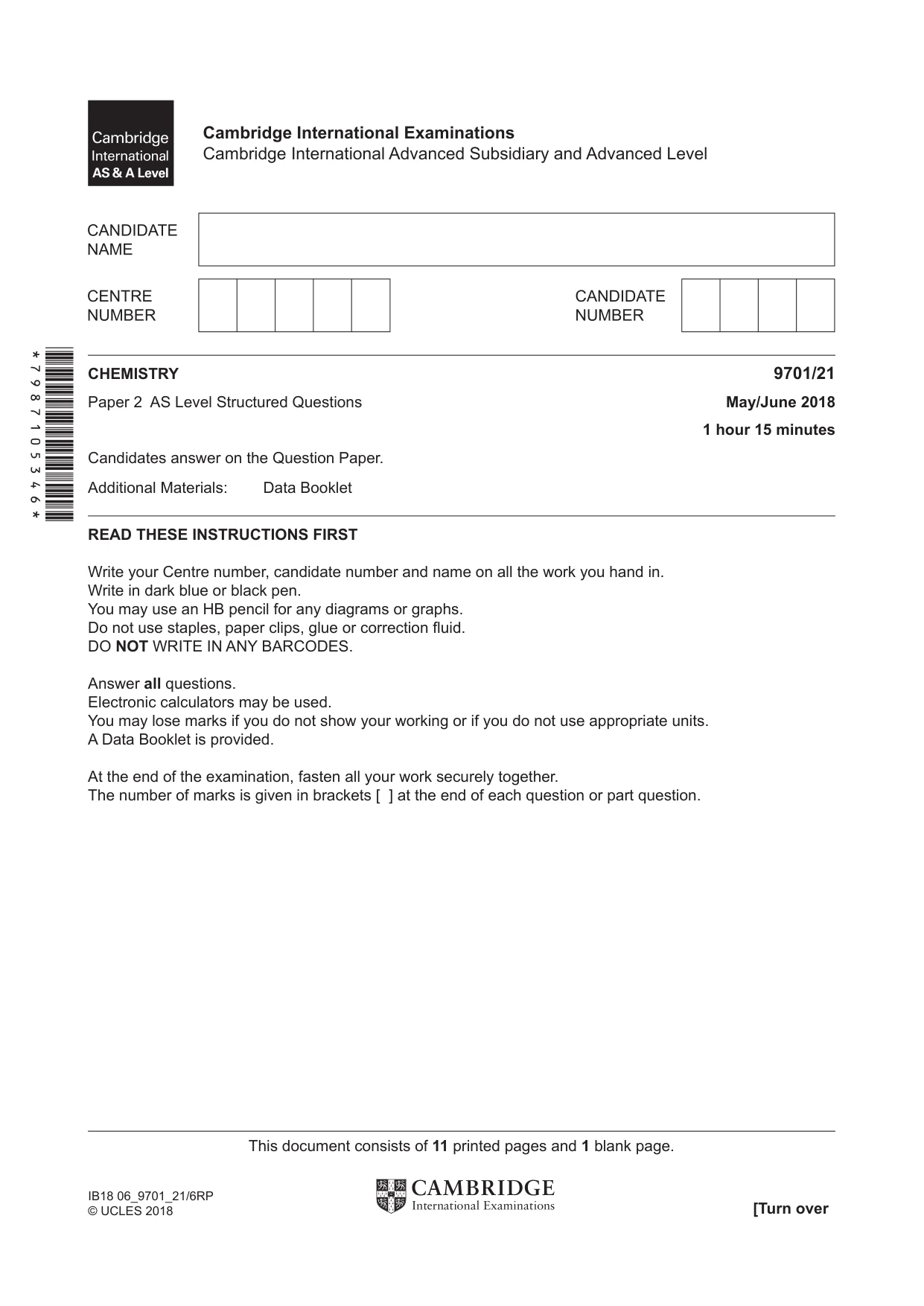
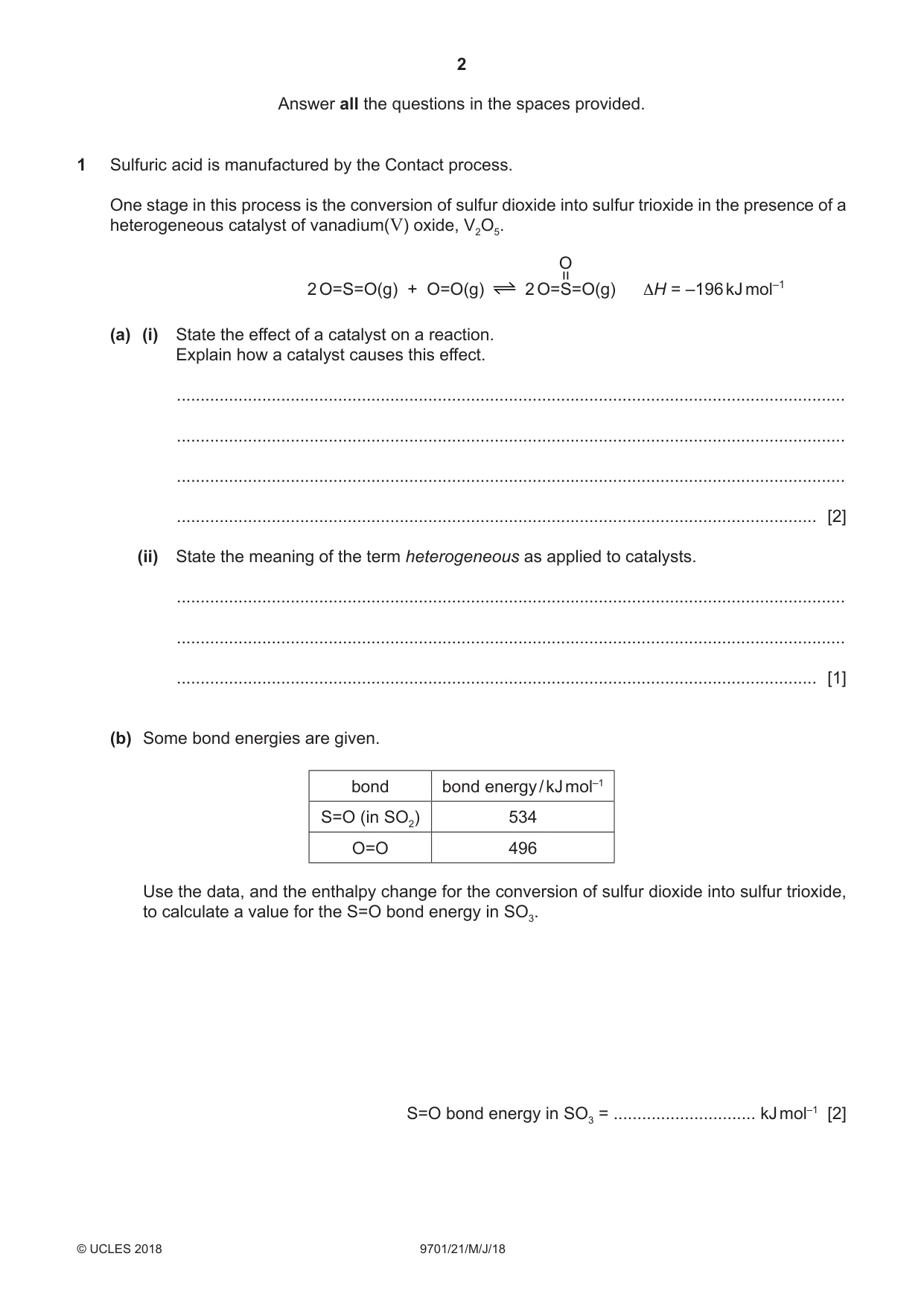
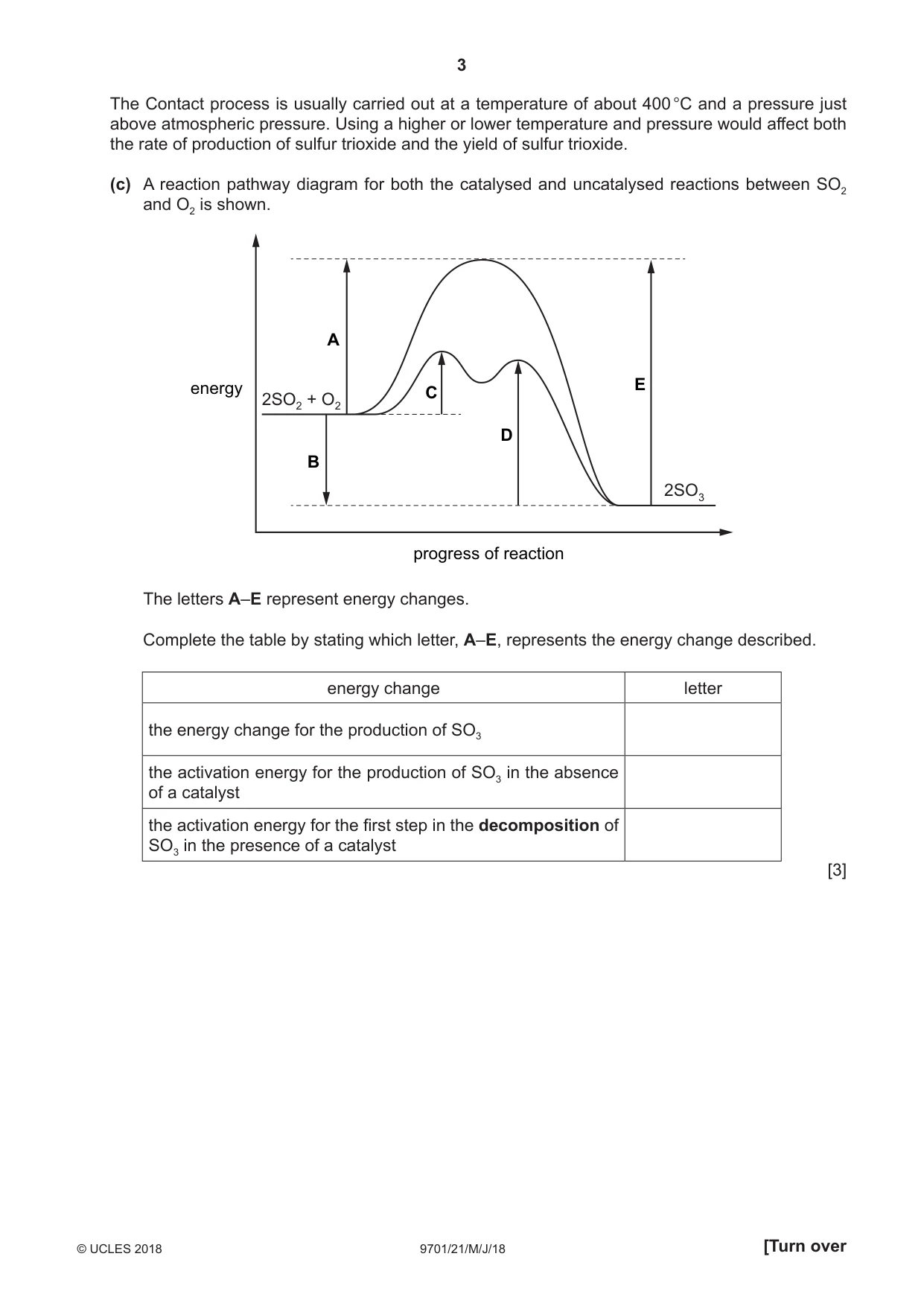
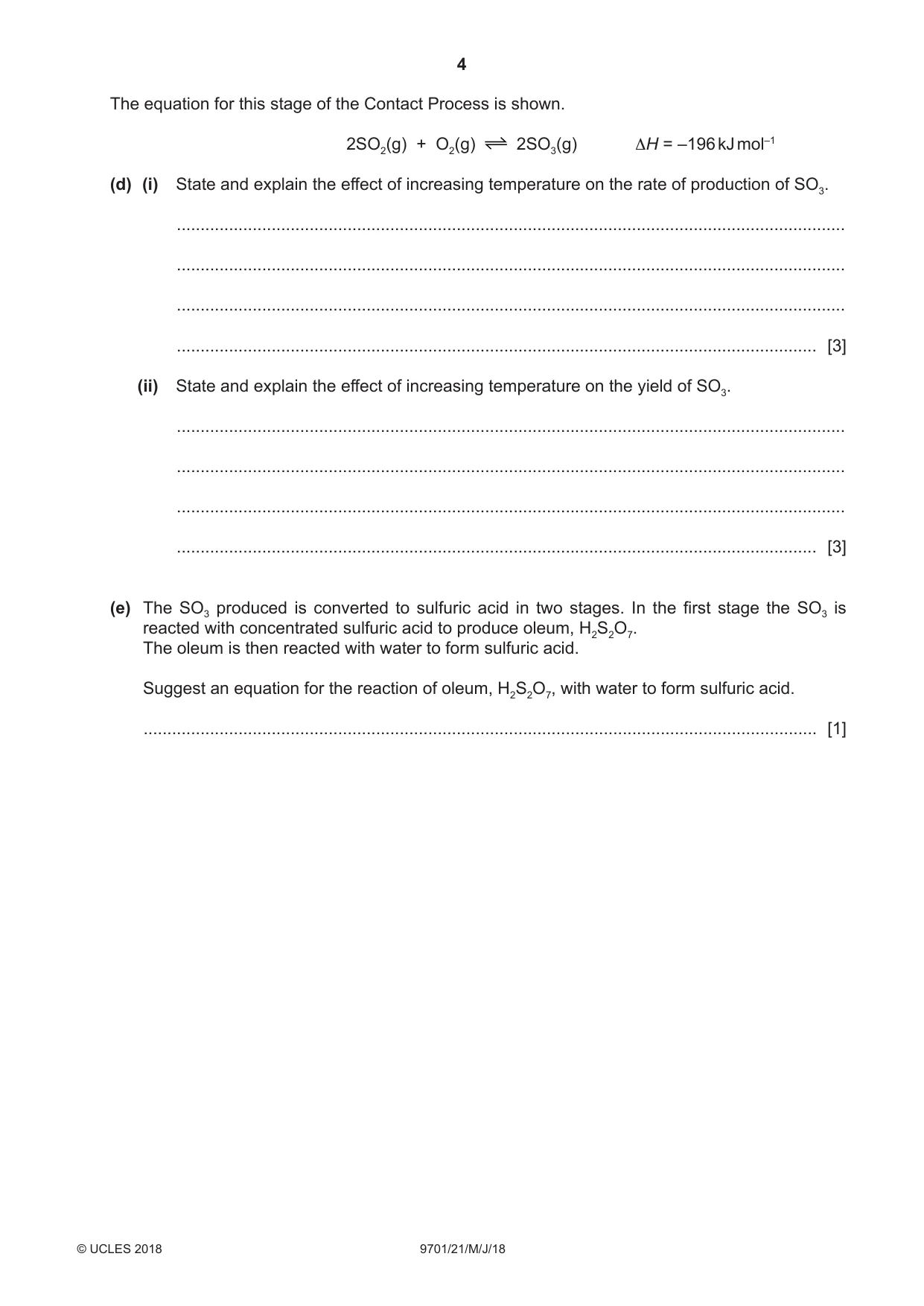
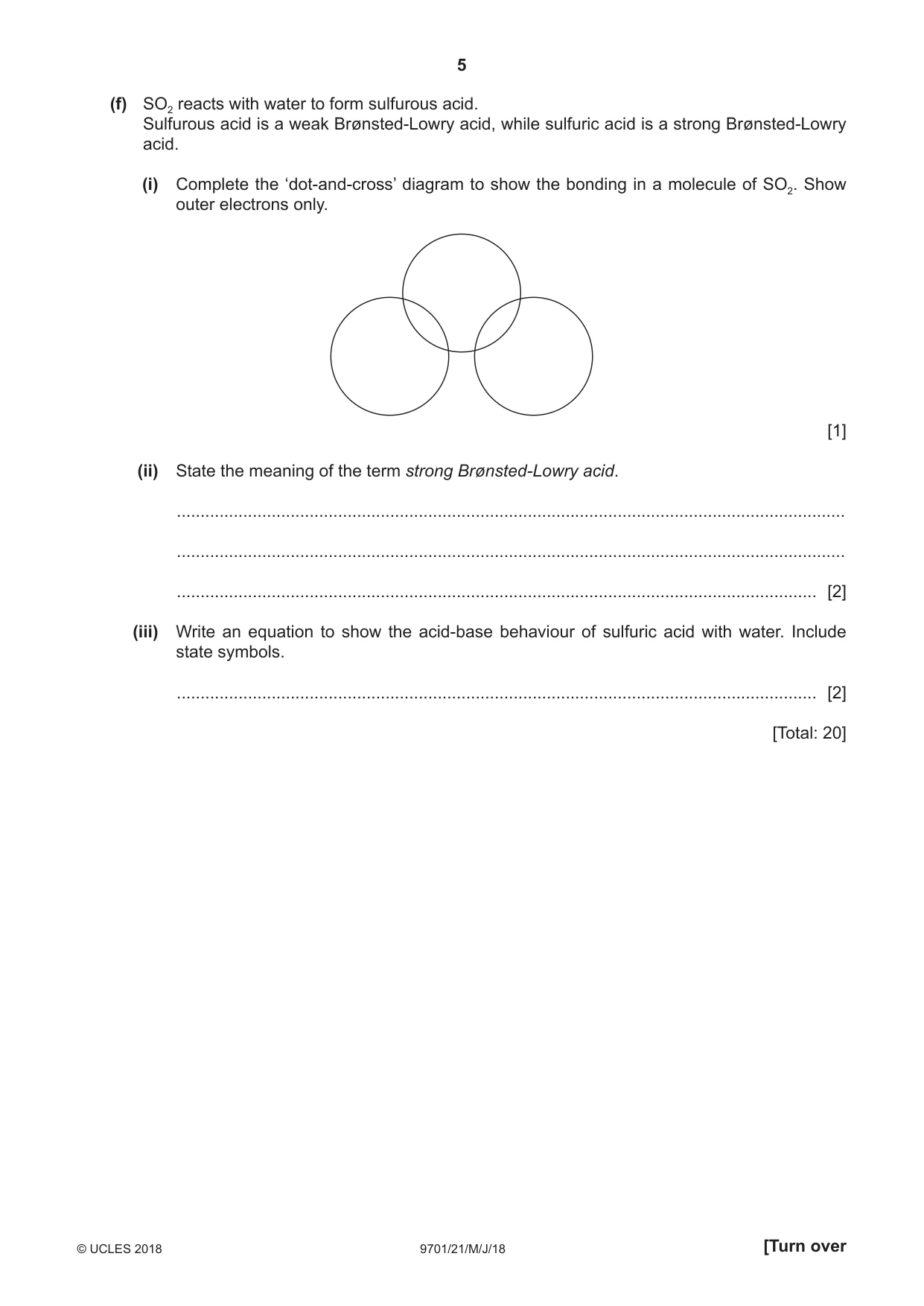
1 Sulfuric acid is manufactured by the Contact process. One stage in this process is the conversion of sulfur dioxide into sulfur trioxide in the presence of a heterogeneous catalyst of vanadium(V) oxide, V2O5. O = 2 O=S=O(g) + O=O(g) 2 O=S=O(g) ΔH = –196 kJ mol–1 (a) (i) State the effect of a catalyst on a reaction. Explain how a catalyst causes this effect. ............................................................................................................................................. ............................................................................................................................................. ............................................................................................................................................. ....................................................................................................................................... [2] (ii) State the meaning of the term heterogeneous as applied to catalysts. ............................................................................................................................................. ............................................................................................................................................. ....................................................................................................................................... [1] (b) Some bond energies are given. bond bond energy / kJ mol–1 S=O (in SO2) 534 O=O 496 Use the data, and the enthalpy change for the conversion of sulfur dioxide into sulfur trioxide, to calculate a value for the S=O bond energy in SO3. S=O bond energy in SO3 = .............................. kJ mol–1 [2] The Contact process is usually carried out at a temperature of about 400 °C and a pressure just above atmospheric pressure. Using a higher or lower temperature and pressure would affect both the rate of production of sulfur trioxide and the yield of sulfur trioxide. (c) A reaction pathway diagram for both the catalysed and uncatalysed reactions between SO2 and O2 is shown. A energy E C 2SO2 + O2 D B 2SO3 progress of reaction The letters A–E represent energy changes. Complete the table by stating which letter, A–E, represents the energy change described. energy change letter the energy change for the production of SO3 the activation energy for the production of SO3 in the absence of a catalyst the activation energy for the first step in the decomposition of SO3 in the presence of a catalyst [3] The equation for this stage of the Contact Process is shown. 2SO2(g) + O2(g) 2SO3(g) ΔH = –196 kJ mol–1 (d) (i) State and explain the effect of increasing temperature on the rate of production of SO3. ............................................................................................................................................. ............................................................................................................................................. ............................................................................................................................................. ....................................................................................................................................... [3] (ii) State and explain the effect of increasing temperature on the yield of SO3. ............................................................................................................................................. ............................................................................................................................................. ............................................................................................................................................. ....................................................................................................................................... [3] (e) The SO3 produced is converted to sulfuric acid in two stages. In the first stage the SO3 is reacted with concentrated sulfuric acid to produce oleum, H2S2O7. The oleum is then reacted with water to form sulfuric acid. Suggest an equation for the reaction of oleum, H2S2O7, with water to form sulfuric acid. .............................................................................................................................................. [1] (f) SO2 reacts with water to form sulfurous acid. Sulfurous acid is a weak Brønsted‑Lowry acid, while sulfuric acid is a strong Brønsted‑Lowry acid. (i) Complete the ‘dot-and-cross’ diagram to show the bonding in a molecule of SO2. Show outer electrons only. [1] (ii) State the meaning of the term strong Brønsted‑Lowry acid. ............................................................................................................................................. ............................................................................................................................................. ....................................................................................................................................... [2] (iii) Write an equation to show the acid-base behaviour of sulfuric acid with water. Include state symbols. ....................................................................................................................................... [2] [Total: 20]
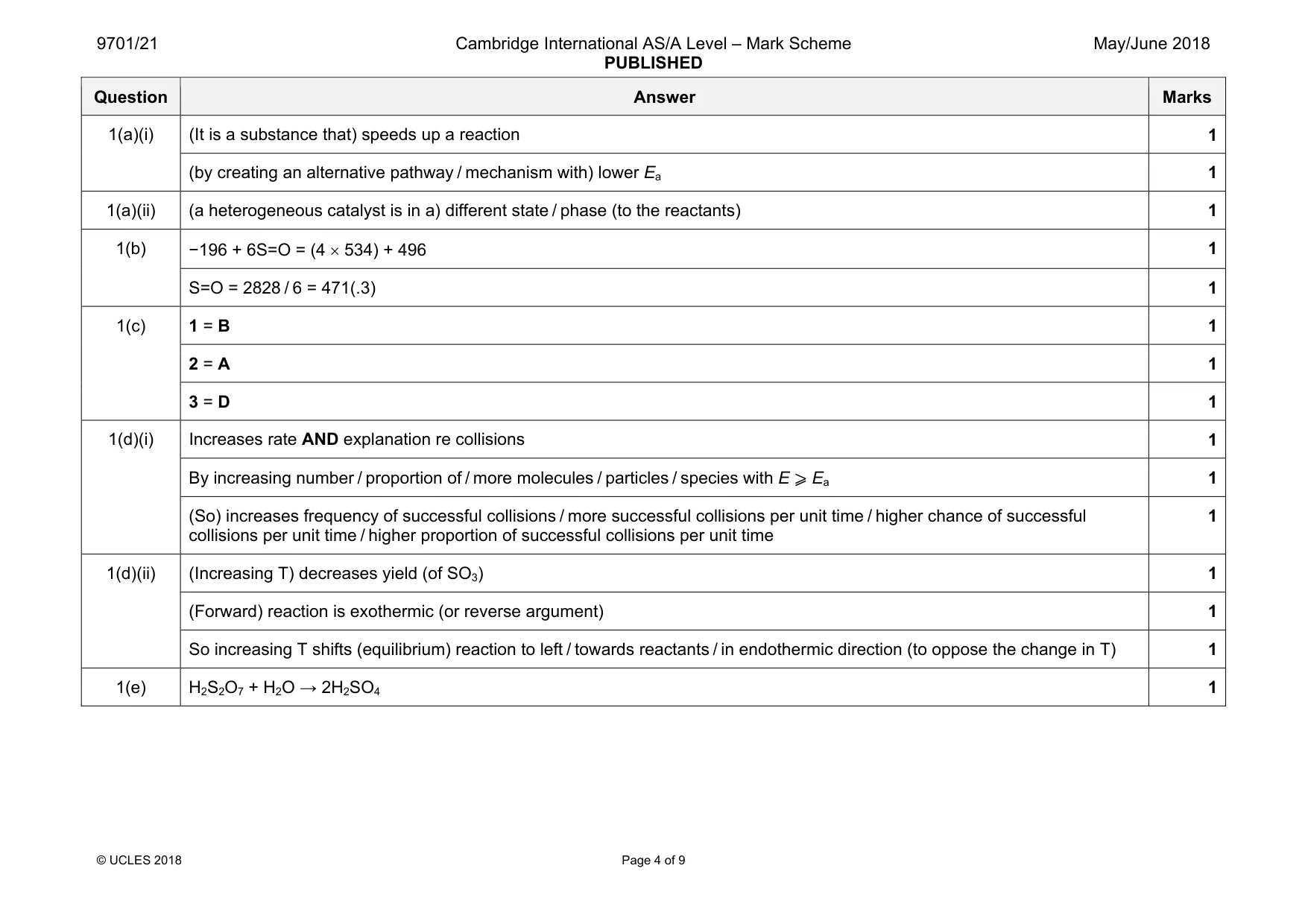
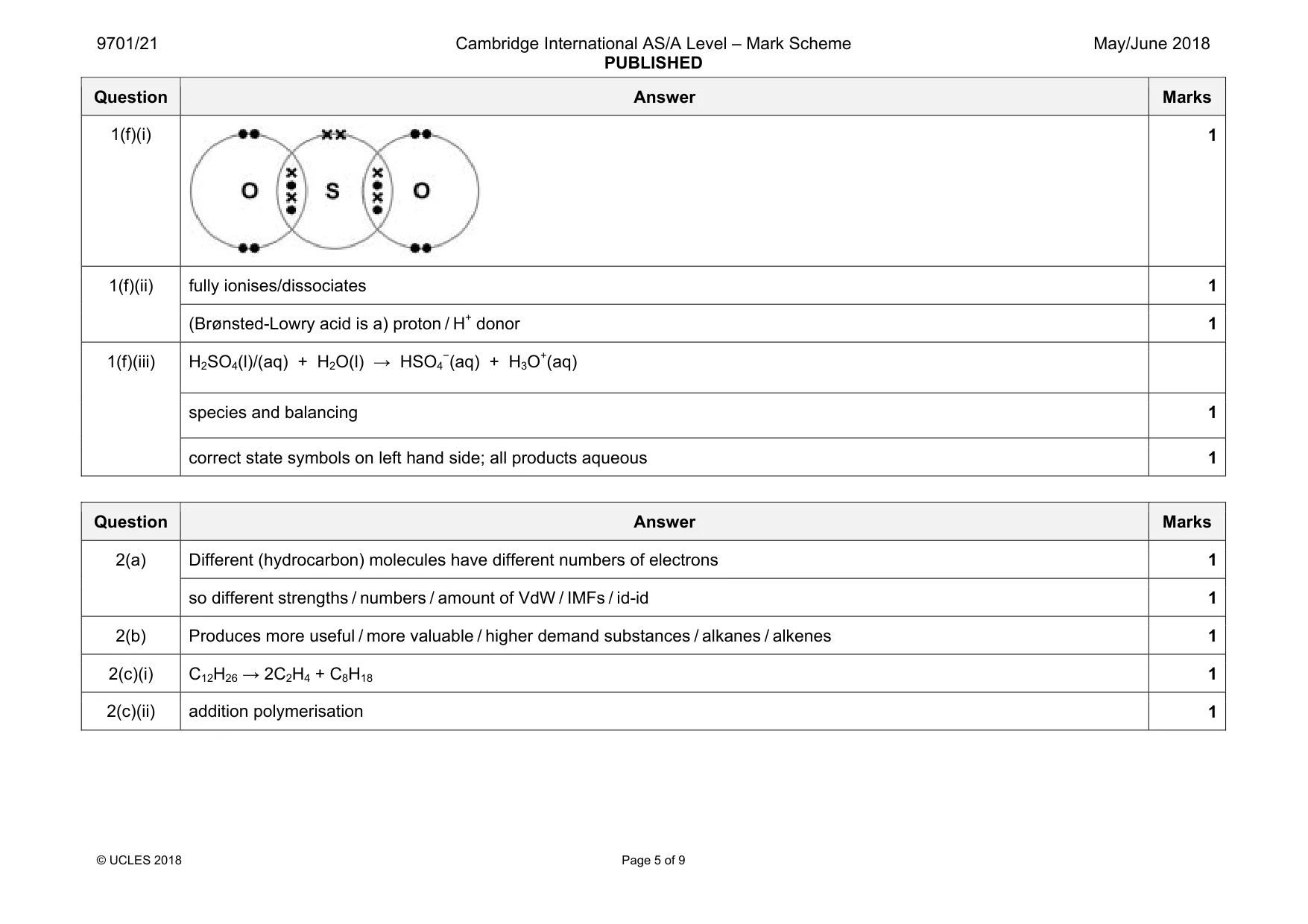
Mark scheme: 1(a)(i) (It is a substance that) speeds up a reaction 1 (by creating an alternative pathway / mechanism with) lower Ea 1 1(a)(ii) (a heterogeneous catalyst is in a) different state / phase (to the reactants) 1 1(b) −196 + 6S=O = (4 × 534) + 496 1 S=O = 2828 / 6 = 471(.3) 1 1(c) 1 = B 1 2 = A 1 3 = D 1 1(d)(i) Increases rate AND explanation re collisions 1 By increasing number / proportion of / more molecules / particles / species with E ⩾ Ea 1 (So) increases frequency of successful collisions / more successful collisions per unit time / higher chance of successful collisions per unit time / higher proportion of successful collisions per unit time 1 1(d)(ii) (Increasing T) decreases yield (of SO3) 1 (Forward) reaction is exothermic (or reverse argument) 1 So increasing T shifts (equilibrium) reaction to left / towards reactants / in endothermic direction (to oppose the change in T) 1 1(e) H2S2O7 + H2O → 2H2SO4 1 Question Answer Marks 1(f)(i) 1 1(f)(ii) fully ionises/dissociates 1 (Brønsted-Lowry acid is a) proton / H+ donor 1 1(f)(iii) H2SO4(l)/(aq) + H2O(l) → HSO4 −(aq) + H3O+(aq) species and balancing 1 correct state symbols on left hand side; all products aqueous 1
Q2 · Crude oil is a complex mixture of hydrocarbon molecules
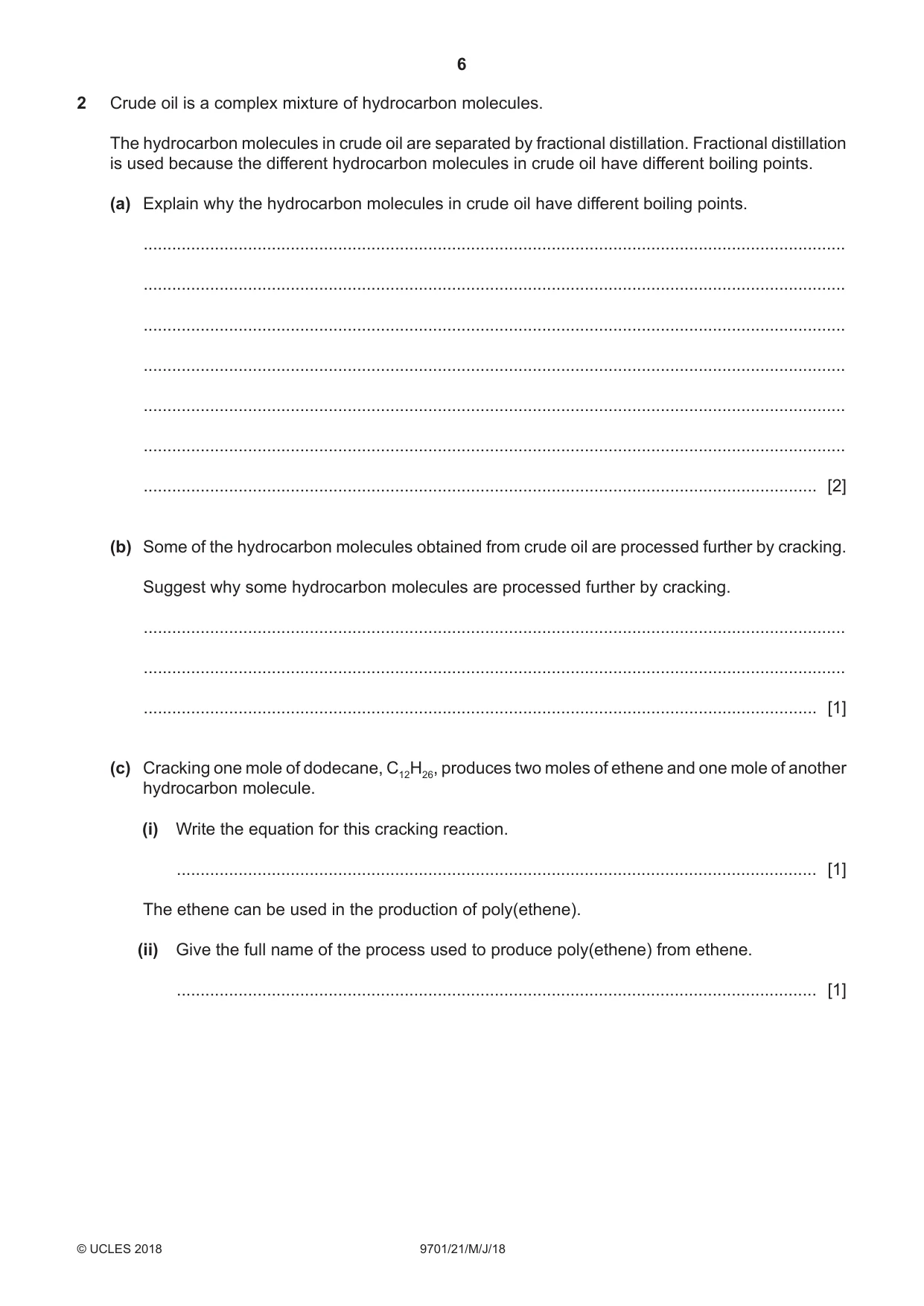
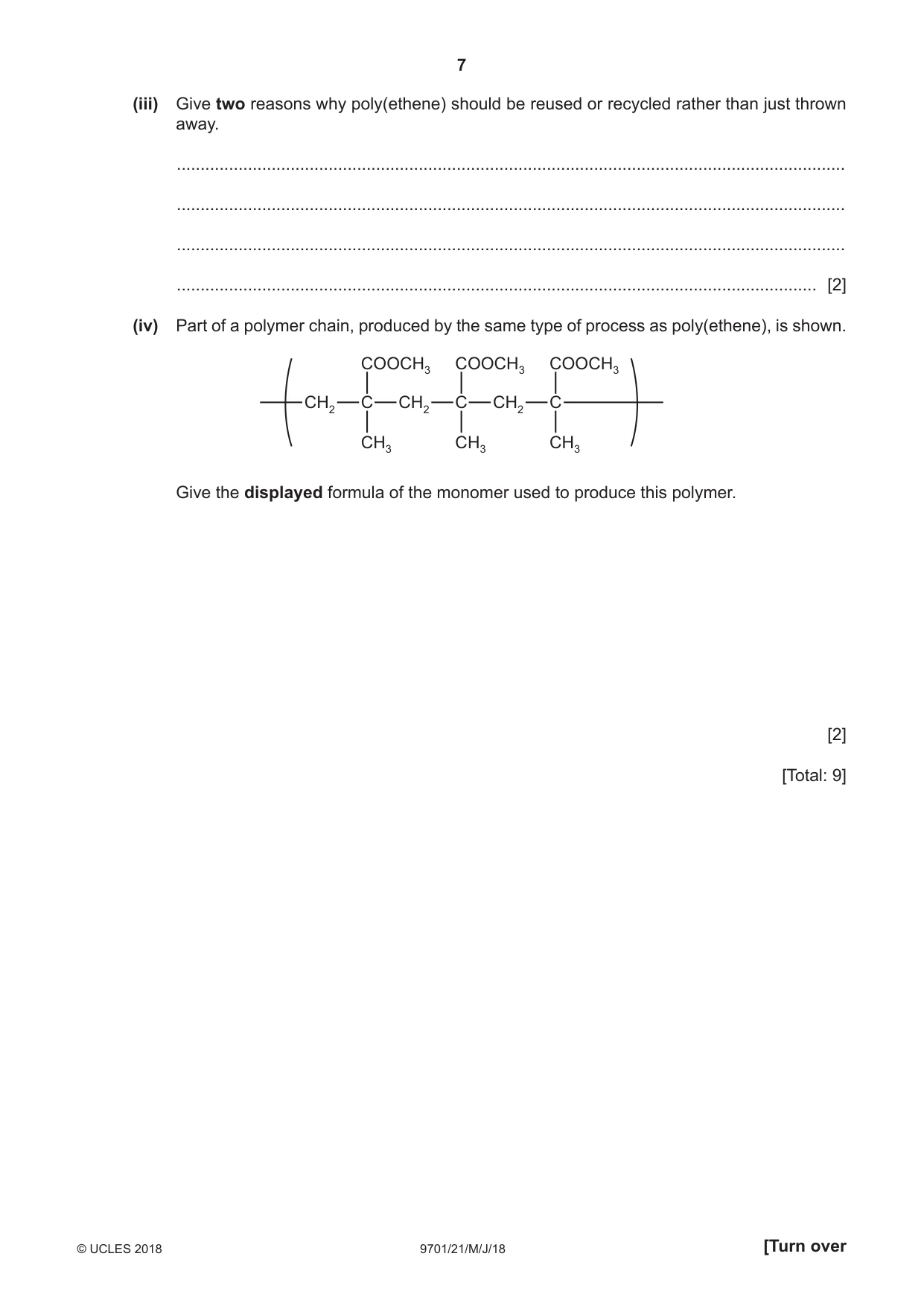
2 Crude oil is a complex mixture of hydrocarbon molecules. The hydrocarbon molecules in crude oil are separated by fractional distillation. Fractional distillation is used because the different hydrocarbon molecules in crude oil have different boiling points. (a) Explain why the hydrocarbon molecules in crude oil have different boiling points. .................................................................................................................................................... .................................................................................................................................................... .................................................................................................................................................... .................................................................................................................................................... .................................................................................................................................................... .................................................................................................................................................... .............................................................................................................................................. [2] (b) Some of the hydrocarbon molecules obtained from crude oil are processed further by cracking. Suggest why some hydrocarbon molecules are processed further by cracking. .................................................................................................................................................... .................................................................................................................................................... .............................................................................................................................................. [1] (c) Cracking one mole of dodecane, C12H26, produces two moles of ethene and one mole of another hydrocarbon molecule. (i) Write the equation for this cracking reaction. ....................................................................................................................................... [1] The ethene can be used in the production of poly(ethene). (ii) Give the full name of the process used to produce poly(ethene) from ethene. ....................................................................................................................................... [1] (iii) Give two reasons why poly(ethene) should be reused or recycled rather than just thrown away. ............................................................................................................................................. ............................................................................................................................................. ............................................................................................................................................. ....................................................................................................................................... [2] (iv) Part of a polymer chain, produced by the same type of process as poly(ethene), is shown. COOCH3 COOCH3 COOCH3 CH2 C CH2 C CH2 C CH3 CH3 CH3 Give the displayed formula of the monomer used to produce this polymer. [2] [Total: 9]
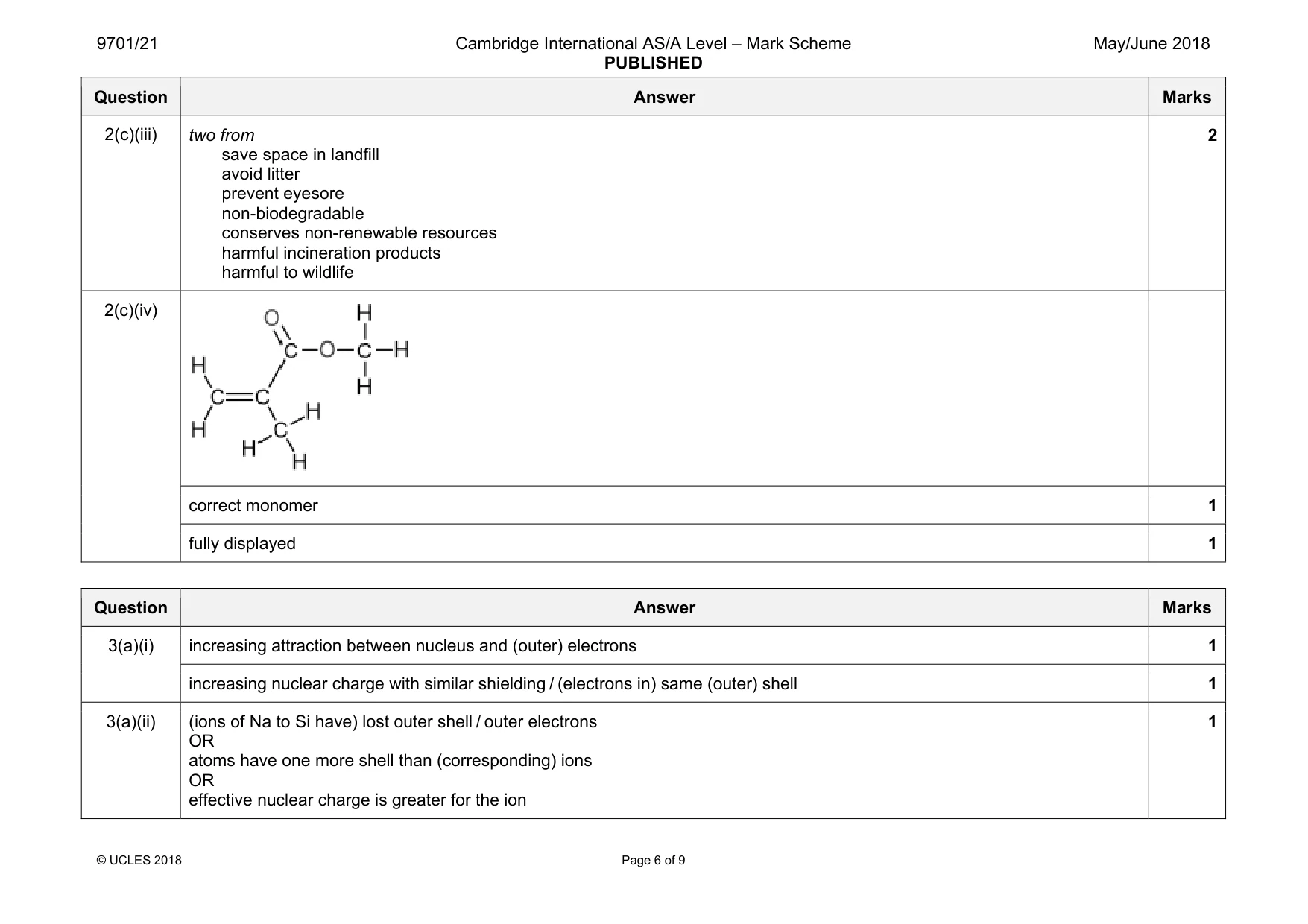
Mark scheme: 2(a) Different (hydrocarbon) molecules have different numbers of electrons 1 so different strengths / numbers / amount of VdW / IMFs / id-id 1 2(b) Produces more useful / more valuable / higher demand substances / alkanes / alkenes 1 2(c)(i) C12H26 → 2C2H4 + C8H18 1 2(c)(ii) addition polymerisation 1 Question Answer Marks 2(c)(iii) two from save space in landfill avoid litter prevent eyesore non-biodegradable conserves non-renewable resources harmful incineration products harmful to wildlife 2 2(c)(iv) correct monomer 1 fully displayed 1
Q3 · The elements in the third period exhibit periodicity in both their chemical and physical…
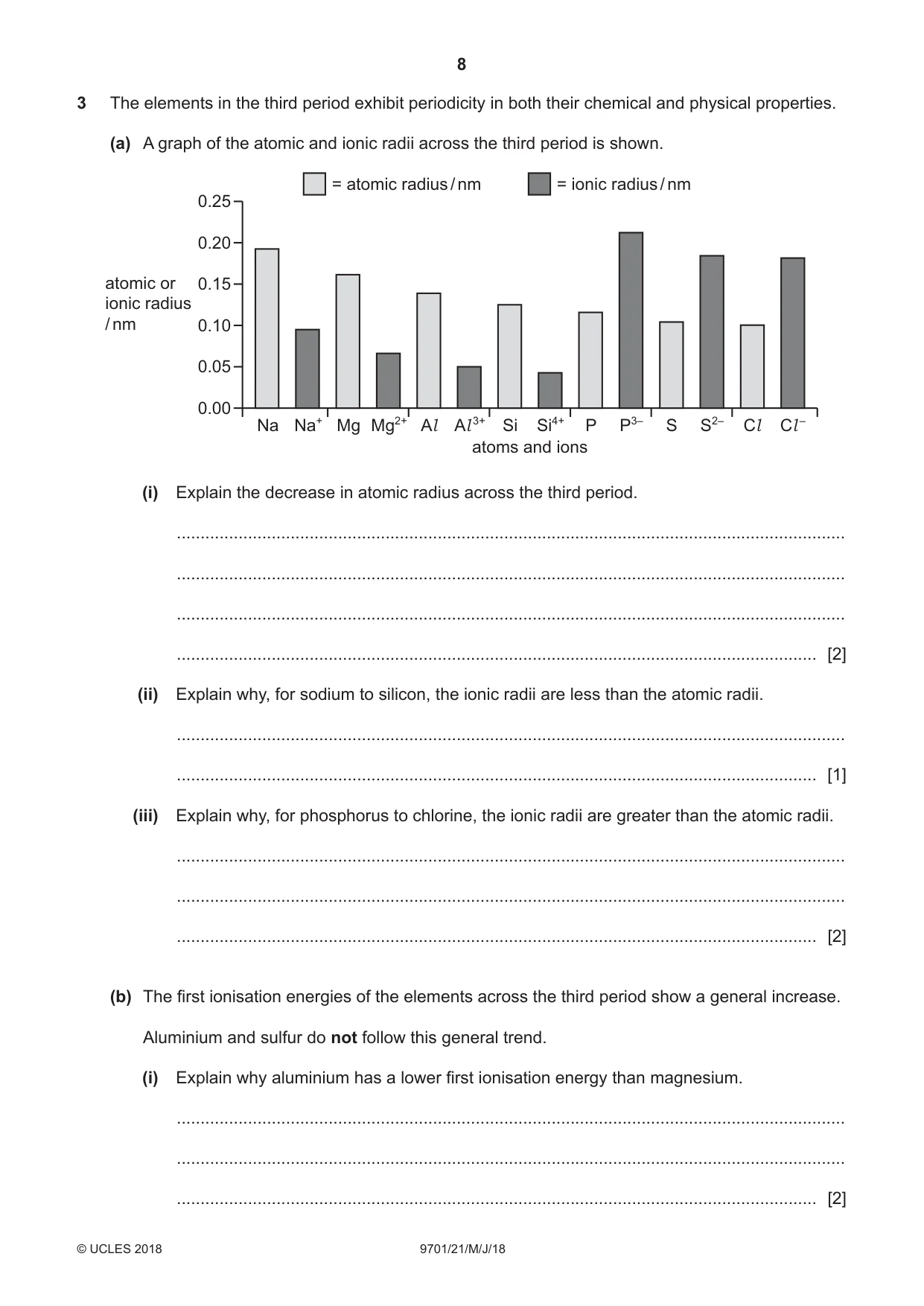
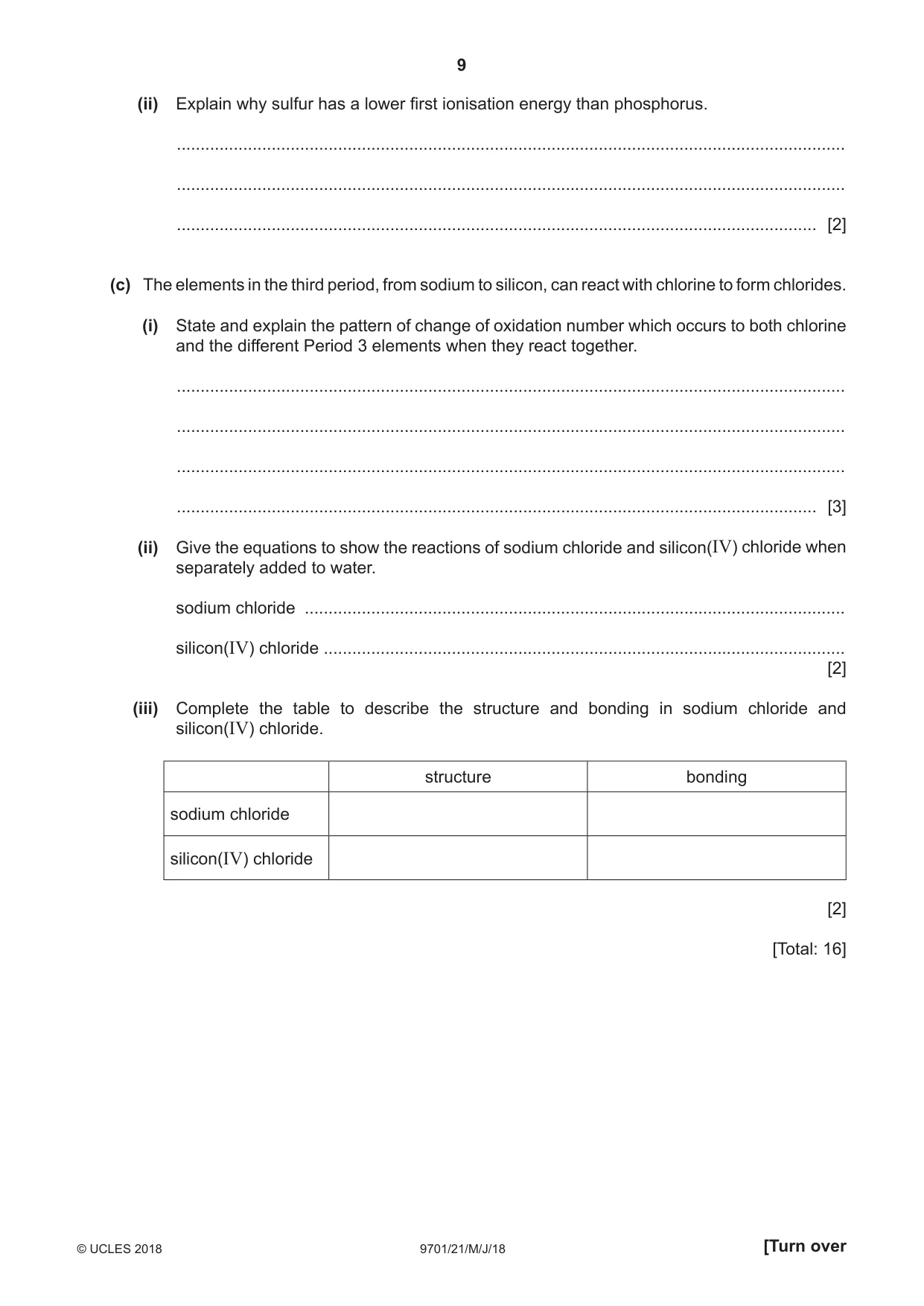
3 The elements in the third period exhibit periodicity in both their chemical and physical properties. (a) A graph of the atomic and ionic radii across the third period is shown. = atomic radius / nm = ionic radius / nm 0.25 0.20 atomic or 0.15 ionic radius / nm 0.10 0.05 0.00 Na Na+ Mg Mg2+ Al Al 3+ Si Si4+ P P3– S S2– Cl Cl – atoms and ions (i) Explain the decrease in atomic radius across the third period. ............................................................................................................................................. ............................................................................................................................................. ............................................................................................................................................. ....................................................................................................................................... [2] (ii) Explain why, for sodium to silicon, the ionic radii are less than the atomic radii. ............................................................................................................................................. ....................................................................................................................................... [1] (iii) Explain why, for phosphorus to chlorine, the ionic radii are greater than the atomic radii. ............................................................................................................................................. ............................................................................................................................................. ....................................................................................................................................... [2] (b) The first ionisation energies of the elements across the third period show a general increase. Aluminium and sulfur do not follow this general trend. (i) Explain why aluminium has a lower first ionisation energy than magnesium. ............................................................................................................................................. ............................................................................................................................................. ....................................................................................................................................... [2] (ii) Explain why sulfur has a lower first ionisation energy than phosphorus. ............................................................................................................................................. ............................................................................................................................................. ....................................................................................................................................... [2] (c) The elements in the third period, from sodium to silicon, can react with chlorine to form chlorides. (i) State and explain the pattern of change of oxidation number which occurs to both chlorine and the different Period 3 elements when they react together. ............................................................................................................................................. ............................................................................................................................................. ............................................................................................................................................. ....................................................................................................................................... [3] (ii) Give the equations to show the reactions of sodium chloride and silicon(IV) chloride when separately added to water. sodium chloride ................................................................................................................... silicon(IV) chloride .............................................................................................................. [2] (iii) Complete the table to describe the structure and bonding in sodium chloride and silicon(IV) chloride. structure bonding sodium chloride silicon(IV) chloride [2] [Total: 16]
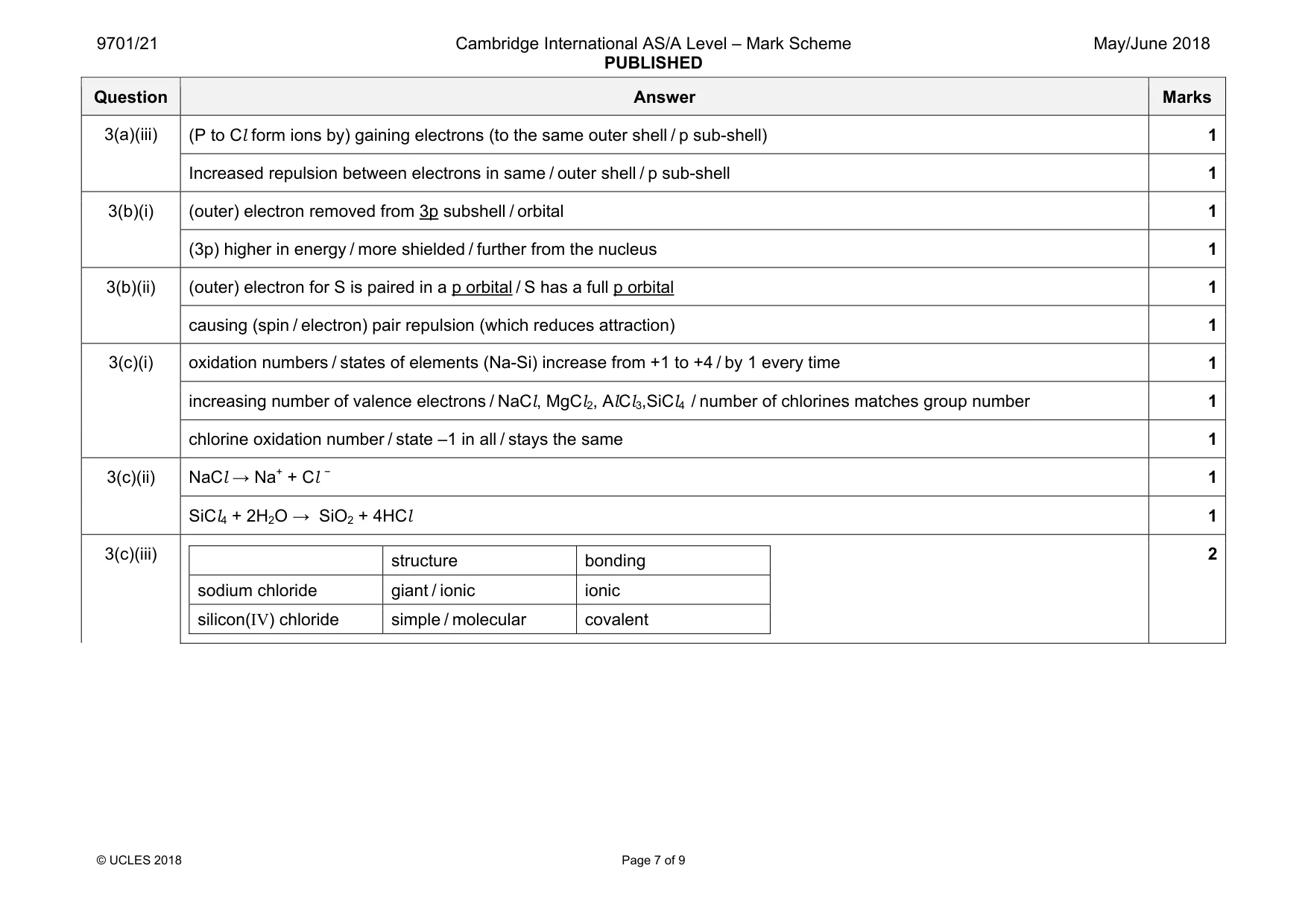
Mark scheme: 3(a)(i) increasing attraction between nucleus and (outer) electrons 1 increasing nuclear charge with similar shielding / (electrons in) same (outer) shell 1 3(a)(ii) (ions of Na to Si have) lost outer shell / outer electrons OR atoms have one more shell than (corresponding) ions OR effective nuclear charge is greater for the ion 1 Question Answer Marks 3(a)(iii) (P to Cl form ions by) gaining electrons (to the same outer shell / p sub-shell) 1 Increased repulsion between electrons in same / outer shell / p sub-shell 1 3(b)(i) (outer) electron removed from 3p subshell / orbital 1 (3p) higher in energy / more shielded / further from the nucleus 1 3(b)(ii) (outer) electron for S is paired in a p orbital / S has a full p orbital 1 causing (spin / electron) pair repulsion (which reduces attraction) 1 3(c)(i) oxidation numbers / states of elements (Na-Si) increase from +1 to +4 / by 1 every time 1 increasing number of valence electrons / NaCl, MgCl2, AlCl3,SiCl4 / number of chlorines matches group number 1 chlorine oxidation number / state –1 in all / stays the same 1 3(c)(ii) NaCl → Na+ + Cl − 1 SiCl4 + 2H2O → SiO2 + 4HCl 1 3(c)(iii) structure bonding sodium chloride giant / ionic ionic silicon(IV) chloride simple / molecular covalent 2
Question 4
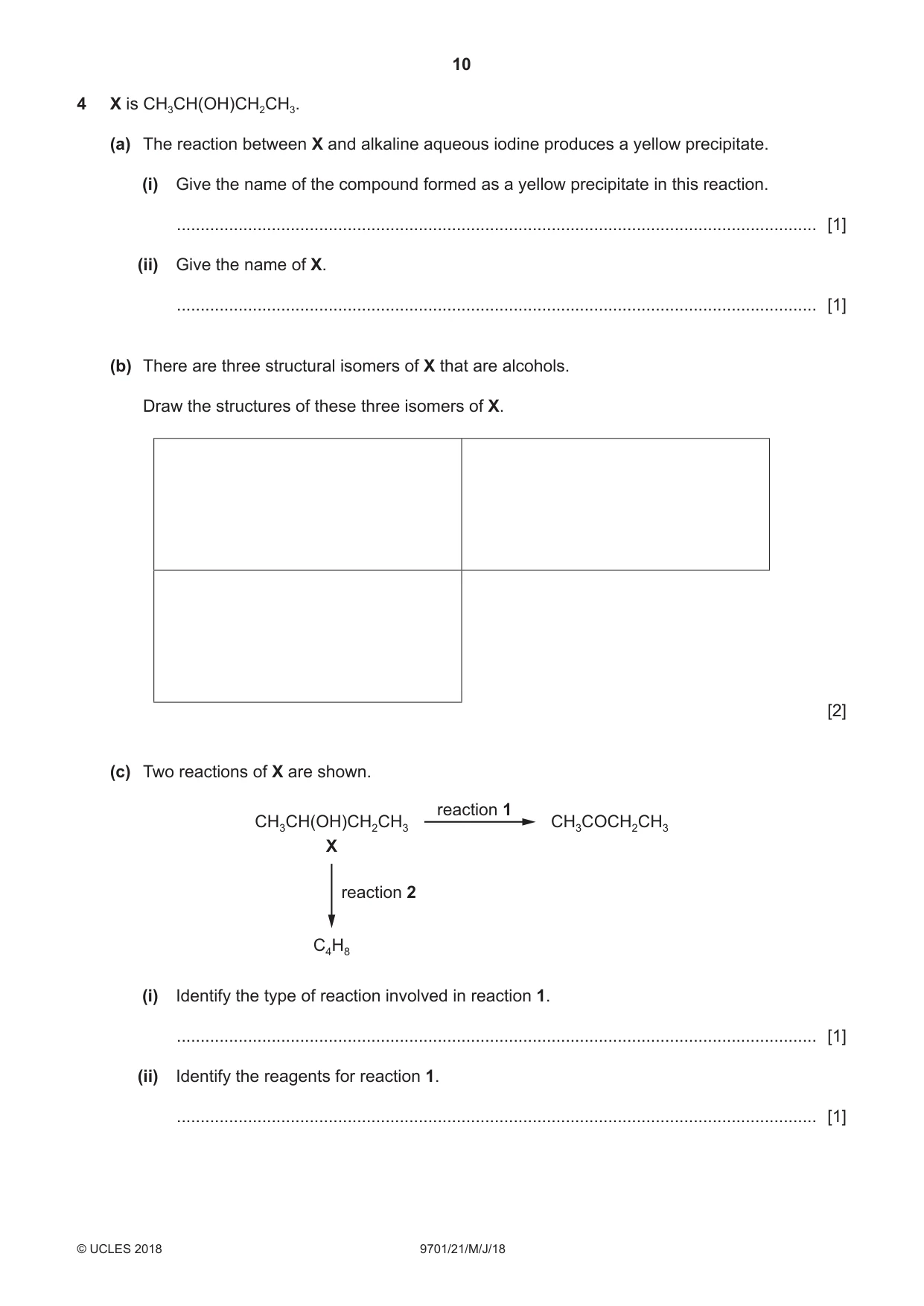
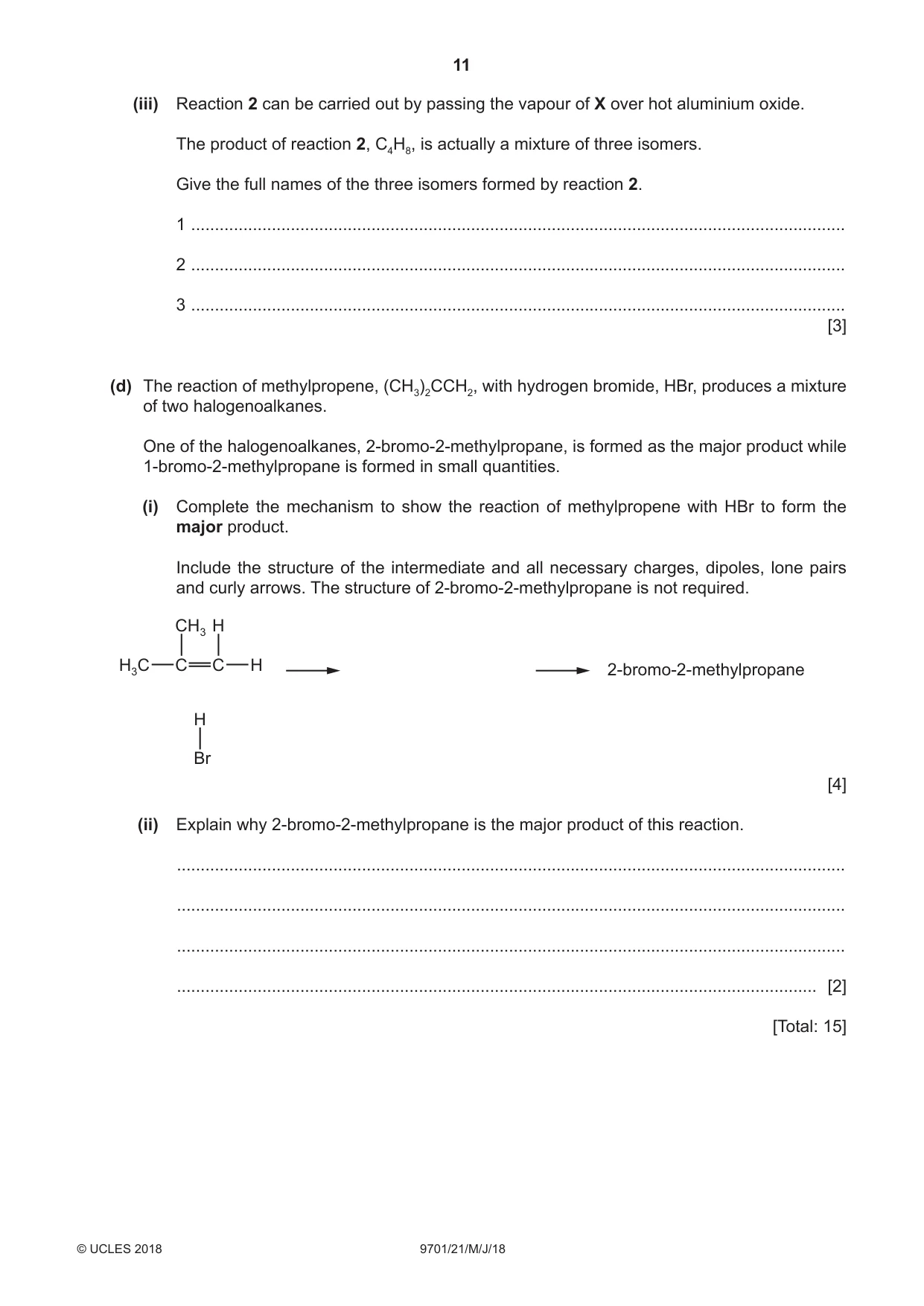
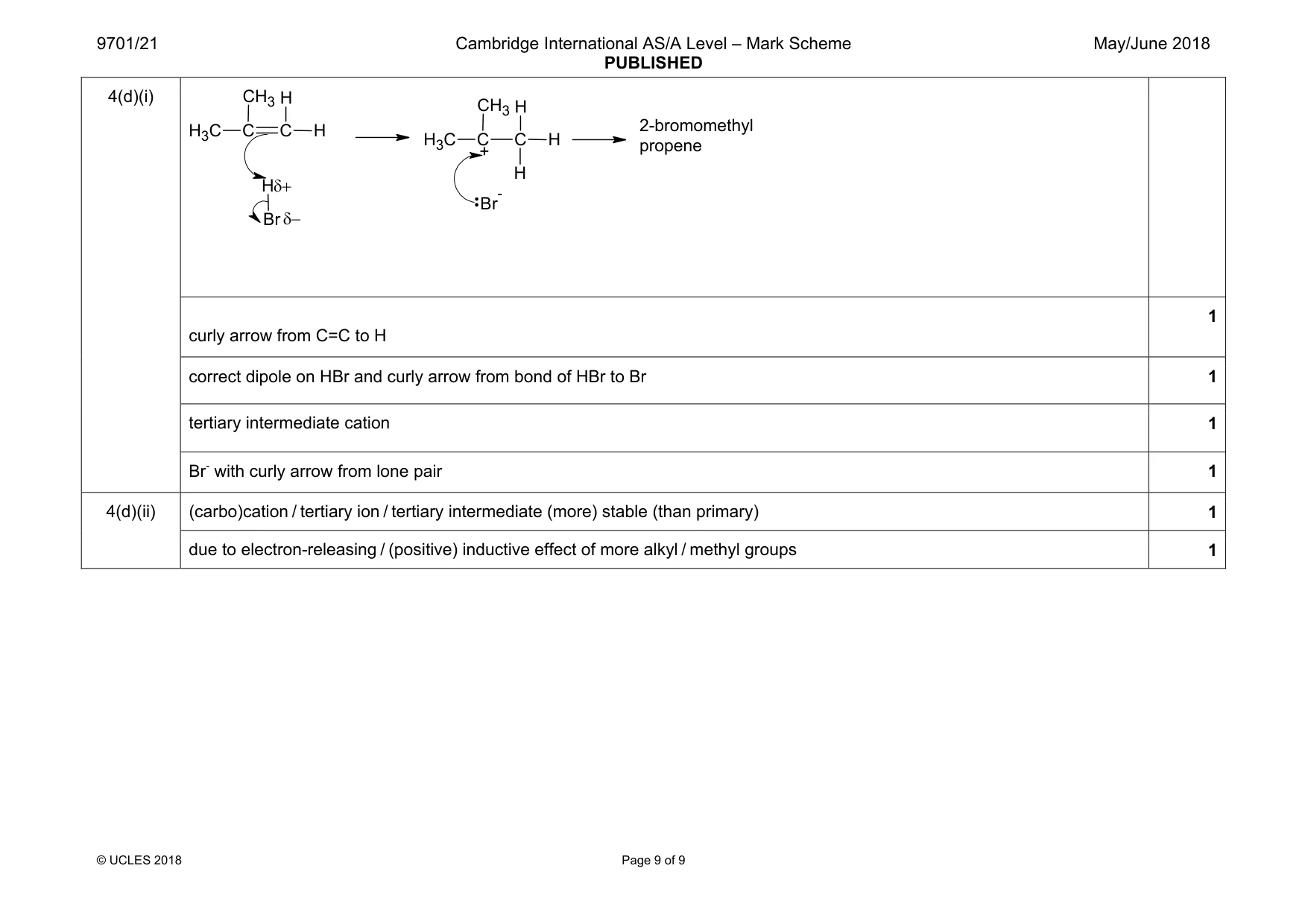
4 X is CH3CH(OH)CH2CH3. (a) The reaction between X and alkaline aqueous iodine produces a yellow precipitate. (i) Give the name of the compound formed as a yellow precipitate in this reaction. ....................................................................................................................................... [1] (ii) Give the name of X. ....................................................................................................................................... [1] (b) There are three structural isomers of X that are alcohols. Draw the structures of these three isomers of X. [2] (c) Two reactions of X are shown. reaction 1 CH3CH(OH)CH2CH3 CH3COCH2CH3 X reaction 2 C4H8 (i) Identify the type of reaction involved in reaction 1. ....................................................................................................................................... [1] (ii) Identify the reagents for reaction 1. ....................................................................................................................................... [1] (iii) Reaction 2 can be carried out by passing the vapour of X over hot aluminium oxide. The product of reaction 2, C4H8, is actually a mixture of three isomers. Give the full names of the three isomers formed by reaction 2. 1 .......................................................................................................................................... 2 .......................................................................................................................................... 3 .......................................................................................................................................... [3] (d) The reaction of methylpropene, (CH3)2CCH2, with hydrogen bromide, HBr, produces a mixture of two halogenoalkanes. One of the halogenoalkanes, 2‑bromo‑2‑methylpropane, is formed as the major product while 1‑bromo‑2‑methylpropane is formed in small quantities. (i) Complete the mechanism to show the reaction of methylpropene with HBr to form the major product. Include the structure of the intermediate and all necessary charges, dipoles, lone pairs and curly arrows. The structure of 2‑bromo‑2‑methylpropane is not required. CH3 H H3C C C H 2-bromo-2-methylpropane H Br [4] (ii) Explain why 2-bromo-2-methylpropane is the major product of this reaction. ............................................................................................................................................. ............................................................................................................................................. ............................................................................................................................................. ....................................................................................................................................... [2] [Total: 15]
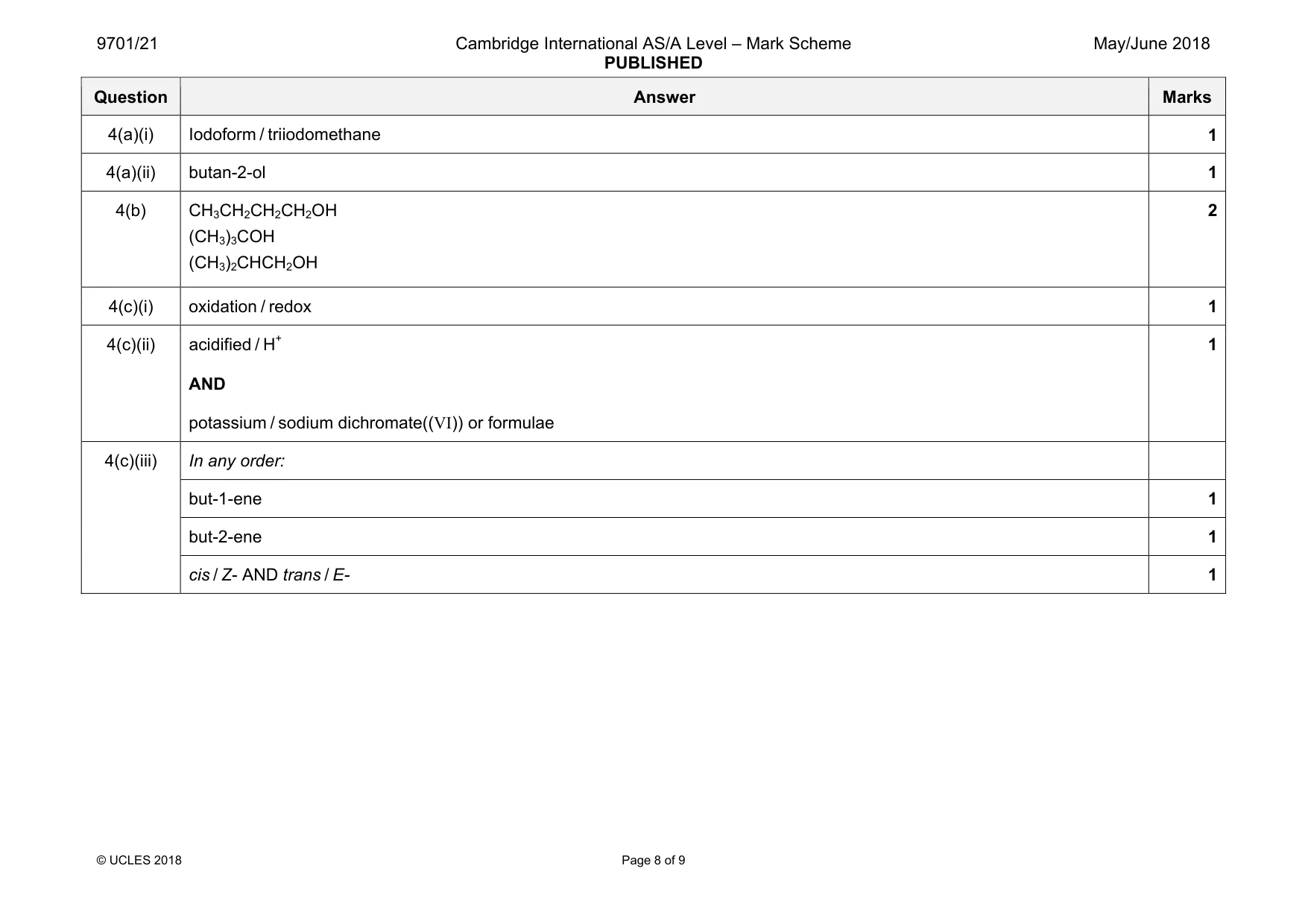
Mark scheme: 4(a)(i) Iodoform / triiodomethane 1 4(a)(ii) butan-2-ol 1 4(b) CH3CH2CH2CH2OH (CH3)3COH (CH3)2CHCH2OH 2 4(c)(i) oxidation / redox 1 4(c)(ii) acidified / H+ AND potassium / sodium dichromate((VI)) or formulae 1 4(c)(iii) In any order: but-1-ene 1 but-2-ene 1 cis / Z- AND trans / E- 1 4(d)(i) C H3 C C CH3 H H Br Hδ+ δ− C H3 C + C CH3 H H H + Br - C H3 C C CH3 H H Br H curly arrow from C=C to H 1 correct dipole on HBr and curly arrow from bond of HBr to Br 1 tertiary intermediate cation 1 Br- with curly arrow from lone pair 1 4(d)(ii) (carbo)cation / tertiary ion / tertiary intermediate (more) stable (than primary) 1 due to electron-releasing / (positive) inductive effect of more alkyl / methyl groups 1 2-bromomethyl propene
What was in this paper
The subtopics covered by these 4 questions, and how many questions each got. Open one in a new tab to see every Cambridge question on it.
What you needed in this session
Cambridge’s own grade thresholds for 2018 May/June, Paper 2 · Variant 1. A higher threshold means an easier paper — the bar moves with how the cohort did.