Cambridge A Level Business Studies (for final examination in 2015) 9707 — 2014 Oct/Nov Paper 2 · Variant 3
9707/23/O/N/14 · 2 questions · 60 marks · ≈68 min
The question paper and its mark scheme, free to read here and free to download. This is Cambridge’s own paper, exactly as it was sat.
Question paper4 pages

Mark scheme8 pages
Answers below. Sit the paper first if you are practising.
Questions as text
Q1 · Classic Clothes (CC) CC is a private limited company that manufactures clothes
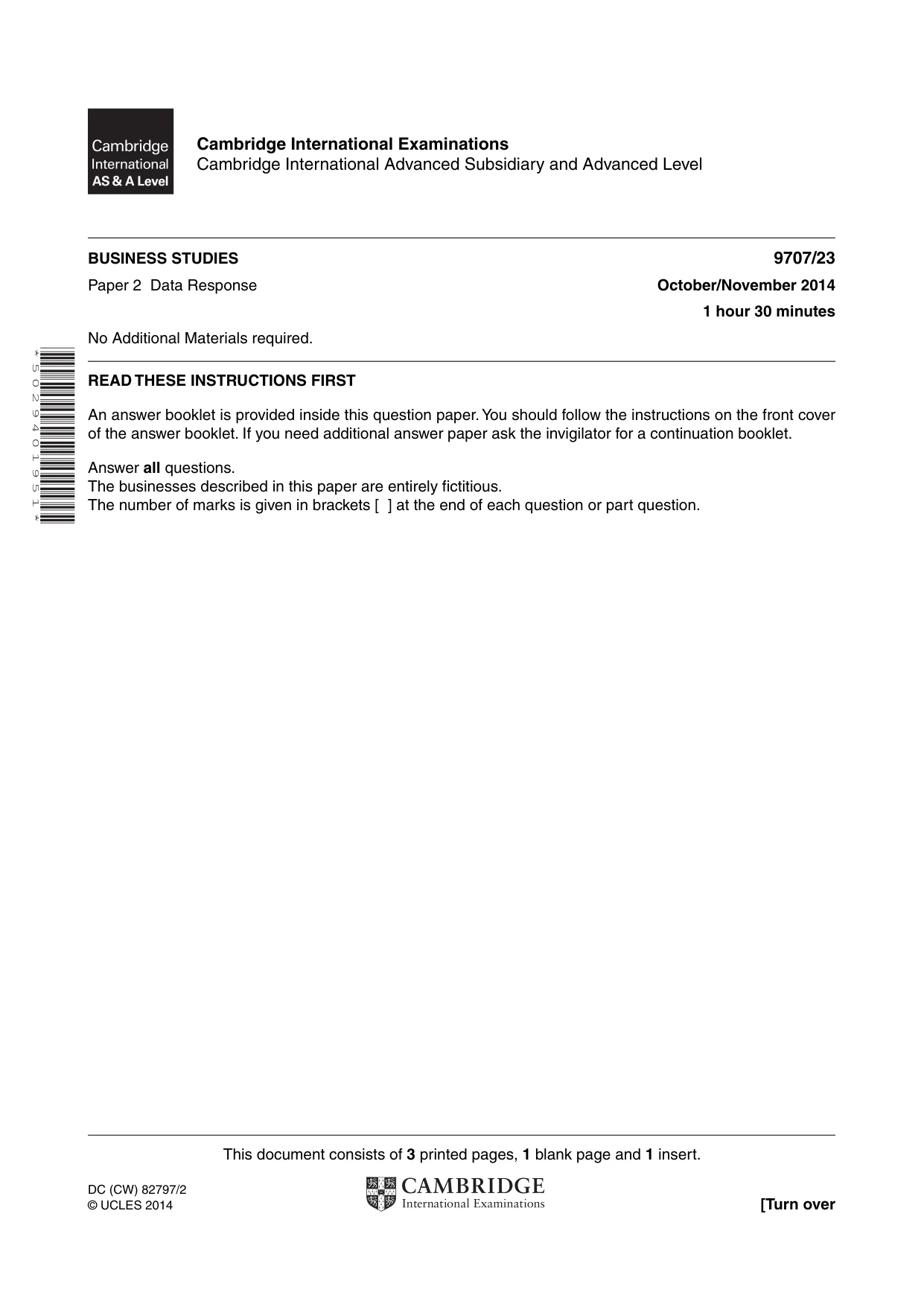
1 Classic Clothes (CC) CC is a private limited company that manufactures clothes. CC’s main customers are supermarkets and clothes shops that use CC to manufacture their own brands of clothing. These clothes are then sold at low prices to the final consumer. The Managing Director, Arfan, knows that it is important for CC to keep its costs at a minimum and to maintain quality. CC’s customers have high expectations. 5 Arfan is worried about inventory levels at CC. Due to the difficulty in forecasting demand, CC often buys in too much fabric (raw material). As a result, inventory levels are high. Arfan is thinking about introducing Just in Time (JIT). Currently, CC benefits from economies of scale due to bulk buying fabric from their suppliers. Some suppliers are located a long way from CC’s factory. Arfan knows he may have to find some new suppliers if JIT is introduced. 10 The production process is very capital intensive. Two production machines need to be replaced. Each new machine will cost $75 000 and will have a useful life of 10 years. Arfan has been reviewing the data shown in Table 1 and Table 2. Table 1: Extract from income statement and balance sheet data ($000s) 2011 2012 2013 15 Income statement data: Revenue 410 450 475 Profit before tax 35 42 50 Balance sheet data: Working capital 195 225 150 20 Table 2: Net profit margin (%) 2011 2012 2013 8.53 9.33 X Arfan has asked the Finance Director to consider possible sources of finance that could be used to purchase the 2 new machines. 25 (a) Explain the following terms: (i) capital intensive (line 11) [3] (ii) balance sheet (line 14). [3] (b) (i) Calculate the value of X in Table 2. [3] (ii) Using your answer to (b)(i) and Table 2, comment on the trend in CC’s net profit margin. [3] (c) Analyse the factors that the Finance Director should consider when deciding on a suitable source of finance to purchase the new machines. [8] (d) Discuss the advantages and disadvantages to CC from introducing Just in Time (JIT). [10]
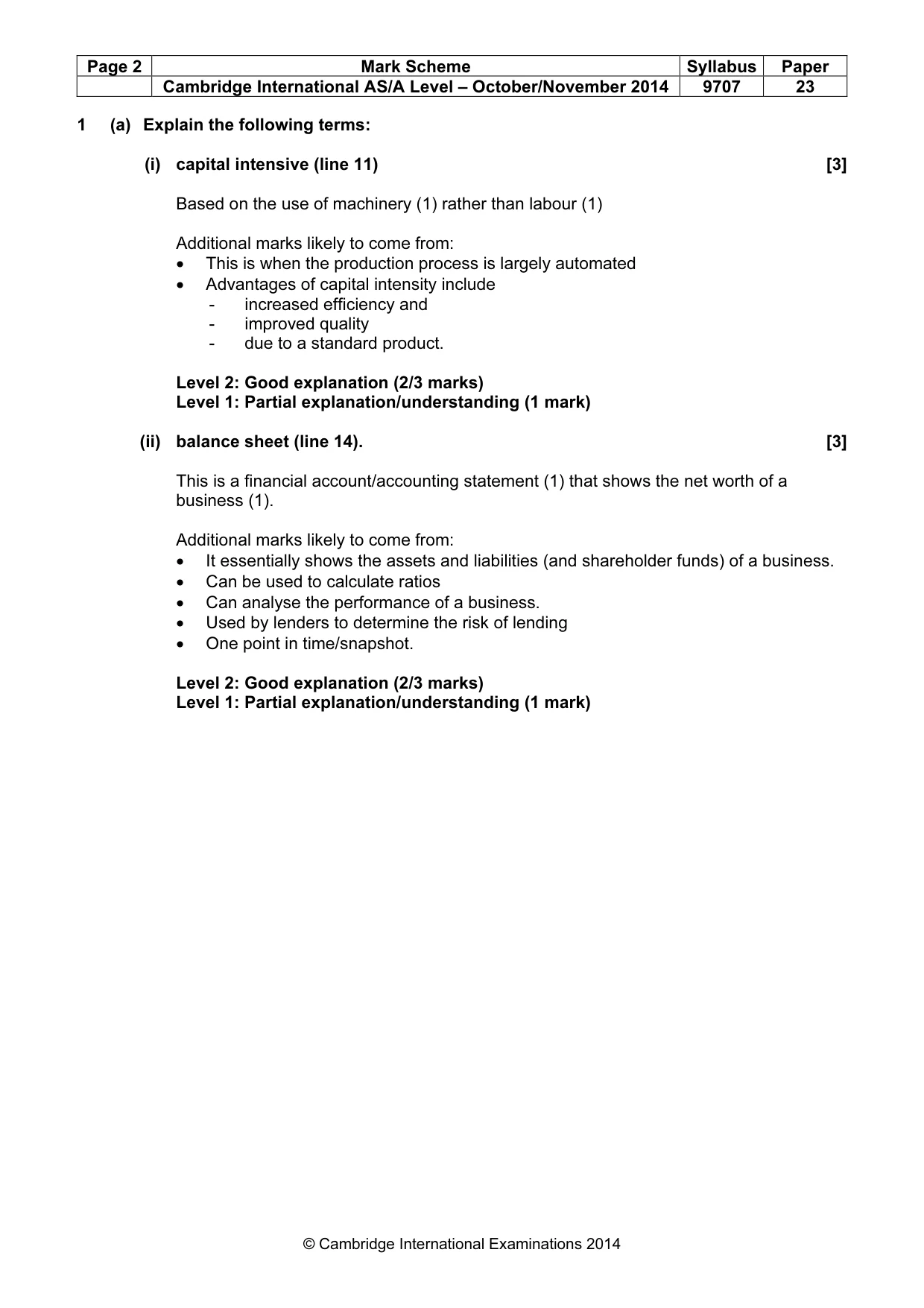
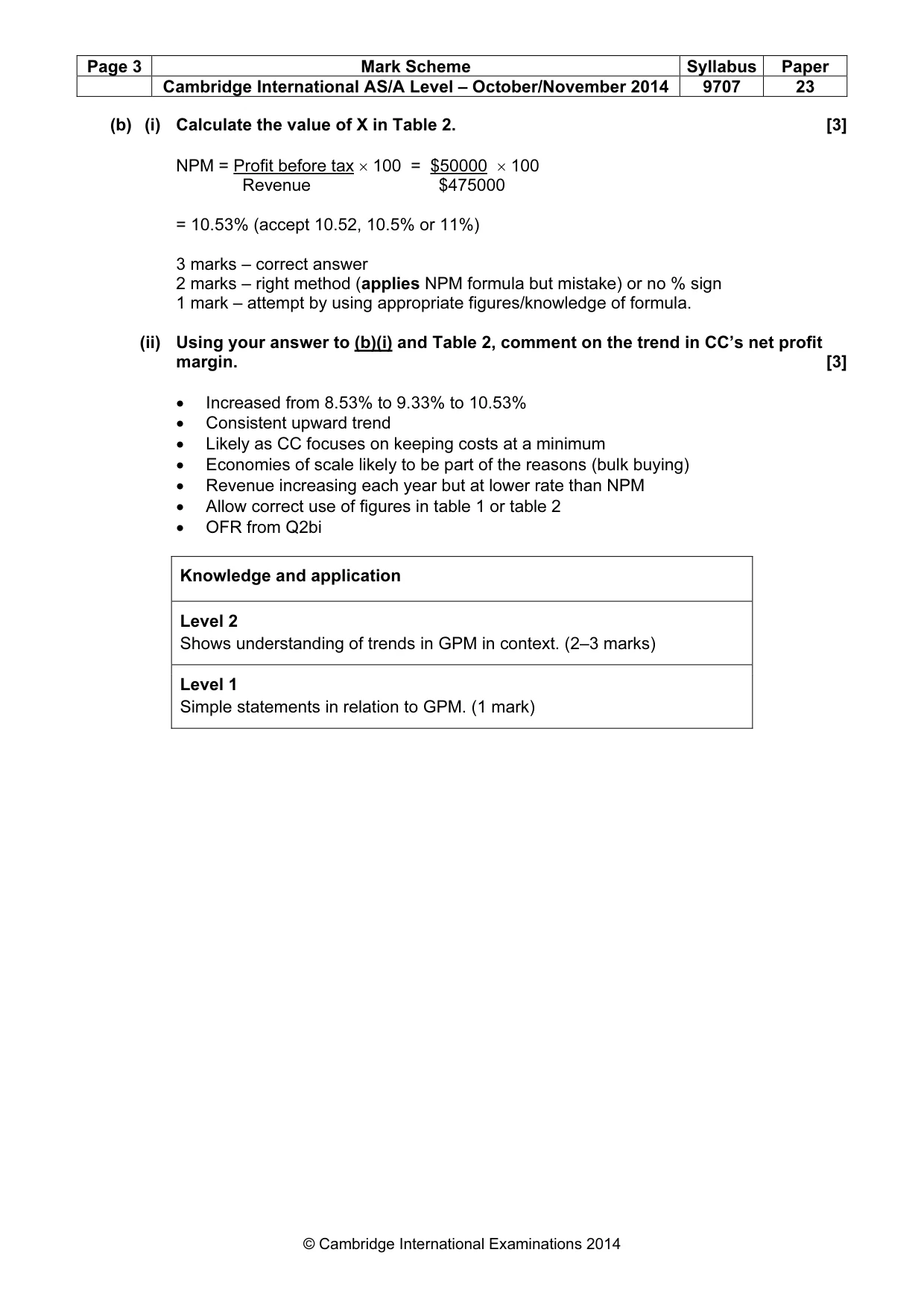
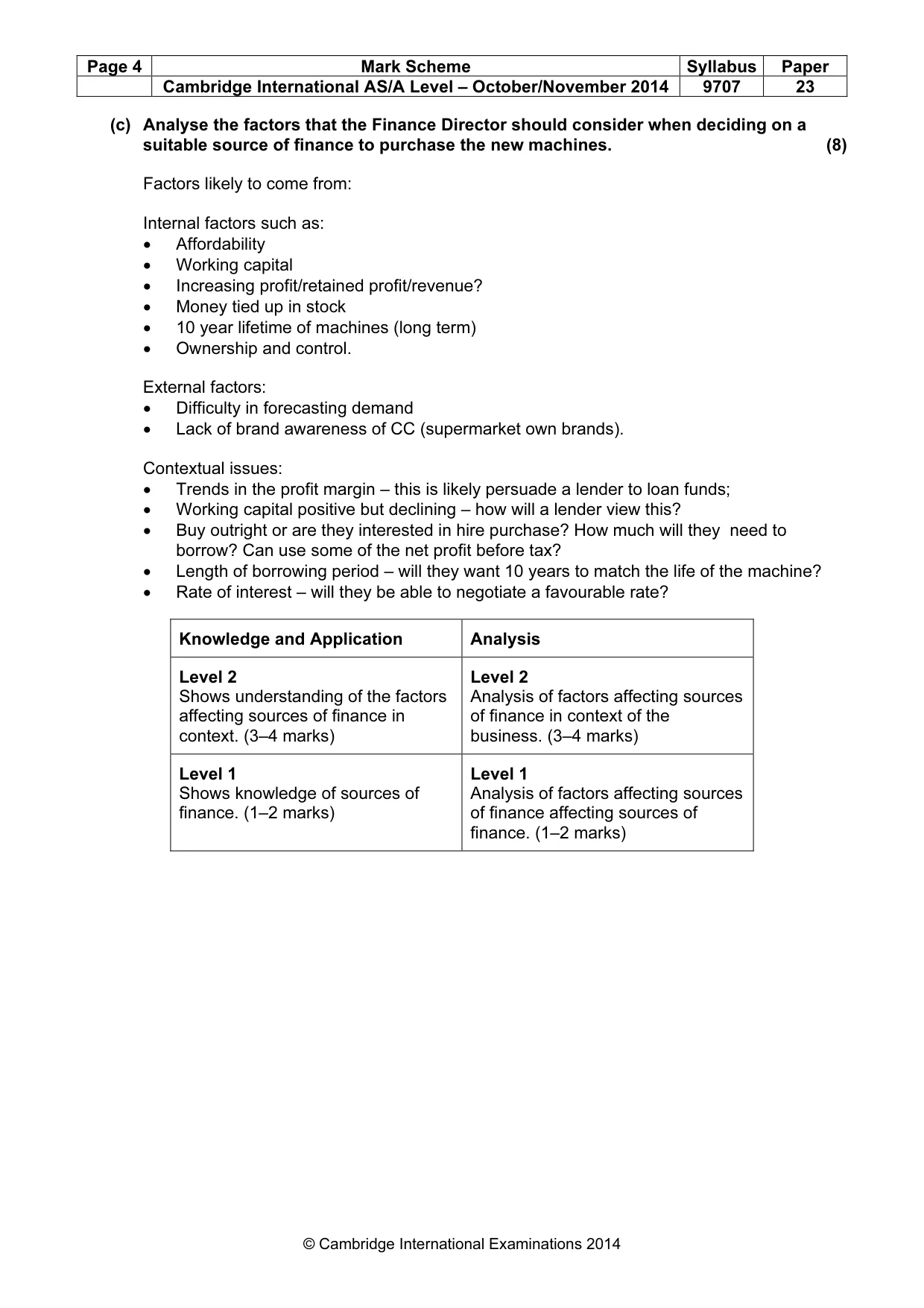
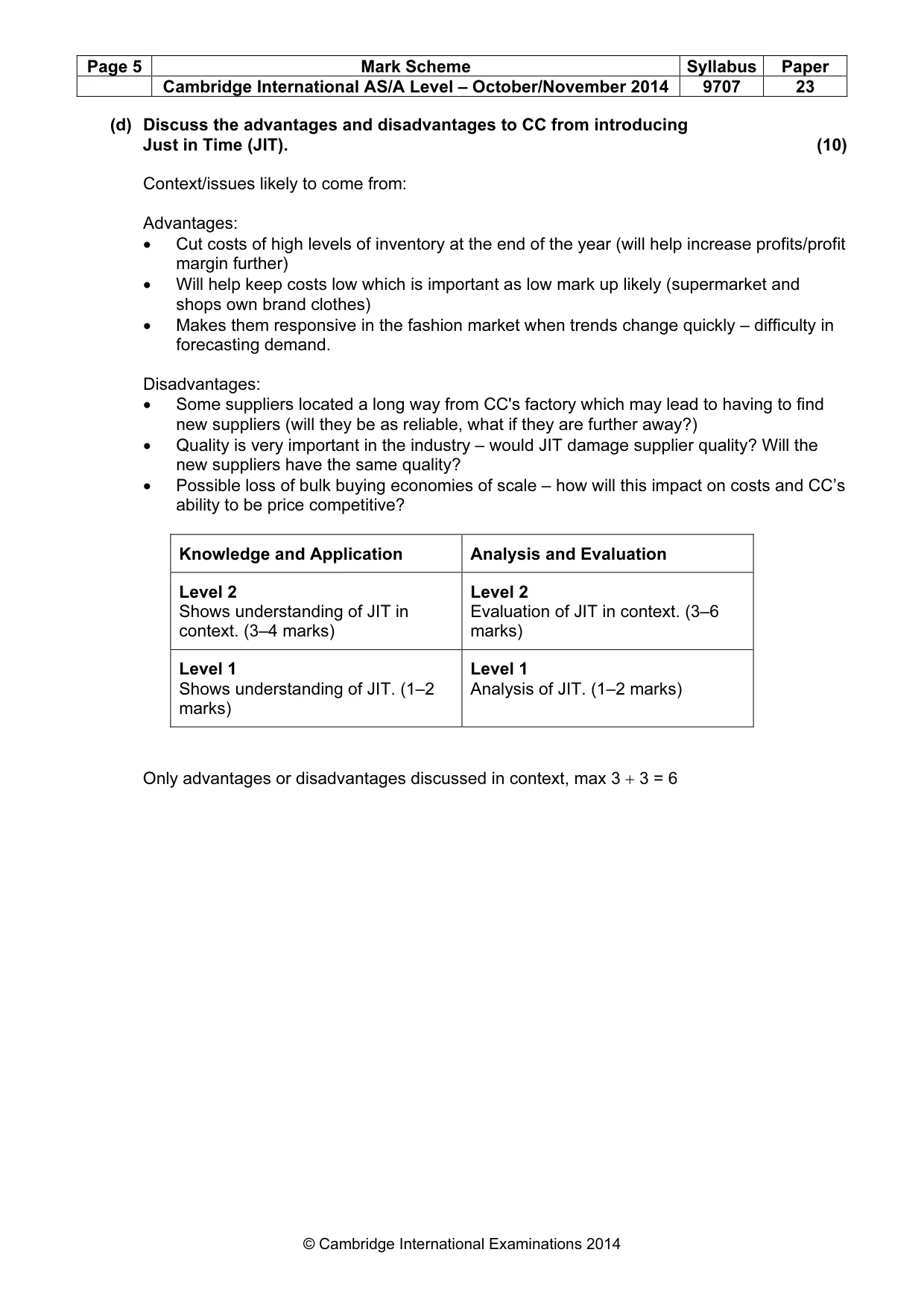
Mark scheme: 1 (a) Explain the following terms: (i) capital intensive (line 11) [3] Based on the use of machinery (1) rather than labour (1) Additional marks likely to come from: • This is when the production process is largely automated • Advantages of capital intensity include - increased efficiency and - improved quality - due to a standard product. Level 2: Good explanation (2/3 marks) Level 1: Partial explanation/understanding (1 mark) (ii) balance sheet (line 14). [3] This is a financial account/accounting statement (1) that shows the net worth of a business (1). Additional marks likely to come from: • It essentially shows the assets and liabilities (and shareholder funds) of a business. • Can be used to calculate ratios • Can analyse the performance of a business. • Used by lenders to determine the risk of lending • One point in time/snapshot. Level 2: Good explanation (2/3 marks) Level 1: Partial explanation/understanding (1 mark) (b) (i) Calculate the value of X in Table 2. [3] NPM = Profit before tax × 100 = $50000 × 100 Revenue $475000 = 10.53% (accept 10.52, 10.5% or 11%) 3 marks – correct answer 2 marks – right method (applies NPM formula but mistake) or no % sign 1 mark – attempt by using appropriate figures/knowledge of formula. (ii) Using your answer to (b)(i) and Table 2, comment on the trend in CC’s net profit margin. [3] • Increased from 8.53% to 9.33% to 10.53% • Consistent upward trend • Likely as CC focuses on keeping costs at a minimum • Economies of scale likely to be part of the reasons (bulk buying) • Revenue increasing each year but at lower rate than NPM • Allow correct use of figures in table 1 or table 2 • OFR from Q2bi Knowledge and application Level 2 Shows understanding of trends in GPM in context. (2–3 marks) Level 1 Simple statements in relation to GPM. (1 mark) (c) Analyse the factors that the Finance Director should consider when deciding on a suitable source of finance to purchase the new machines. (8) Factors likely to come from: Internal factors such as: • Affordability • Working capital • Increasing profit/retained profit/revenue? • Money tied up in stock • 10 year lifetime of machines (long term) • Ownership and control. External factors: • Difficulty in forecasting demand • Lack of brand awareness of CC (supermarket own brands). Contextual issues: • Trends in the profit margin – this is likely persuade a lender to loan funds; • Working capital positive but declining – how will a lender view this? • Buy outright or are they interested in hire purchase? How much will they need to borrow? Can use some of the net profit before tax? • Length of borrowing period – will they want 10 years to match the life of the machine? • Rate of interest – will they be able to negotiate a favourable rate? Knowledge and Application Analysis Level 2 Level 2 Shows understanding of the factors Analysis of factors affecting sources affecting sources of finance in of finance in context of the context. (3–4 marks) business. (3–4 marks) Level 1 Level 1 Shows knowledge of sources of Analysis of factors affecting sources finance. (1–2 marks) of finance affecting sources of finance. (1–2 marks) (d) Discuss the advantages and disadvantages to CC from introducing Just in Time (JIT). (10) Context/issues likely to come from: Advantages: • Cut costs of high levels of inventory at the end of the year (will help increase profits/profit margin further) • Will help keep costs low which is important as low mark up likely (supermarket and shops own brand clothes) • Makes them responsive in the fashion market when trends change quickly – difficulty in forecasting demand. Disadvantages: • Some suppliers located a long way from CC's factory which may lead to having to find new suppliers (will they be as reliable, what if they are further away?) • Quality is very important in the industry – would JIT damage supplier quality? Will the new suppliers have the same quality? • Possible loss of bulk buying economies of scale – how will this impact on costs and CC’s ability to be price competitive? Knowledge and Application Analysis and Evaluation Level 2 Level 2 Shows understanding of JIT in Evaluation of JIT in context. (3–6 context. (3–4 marks) marks) Level 1 Level 1 Shows understanding of JIT. (1–2 Analysis of JIT. (1–2 marks) marks) Only advantages or disadvantages discussed in context, max 3 + 3 = 6
Q2 · Fine Furniture (FF) FF is a medium sized, family business operating in the secondary…
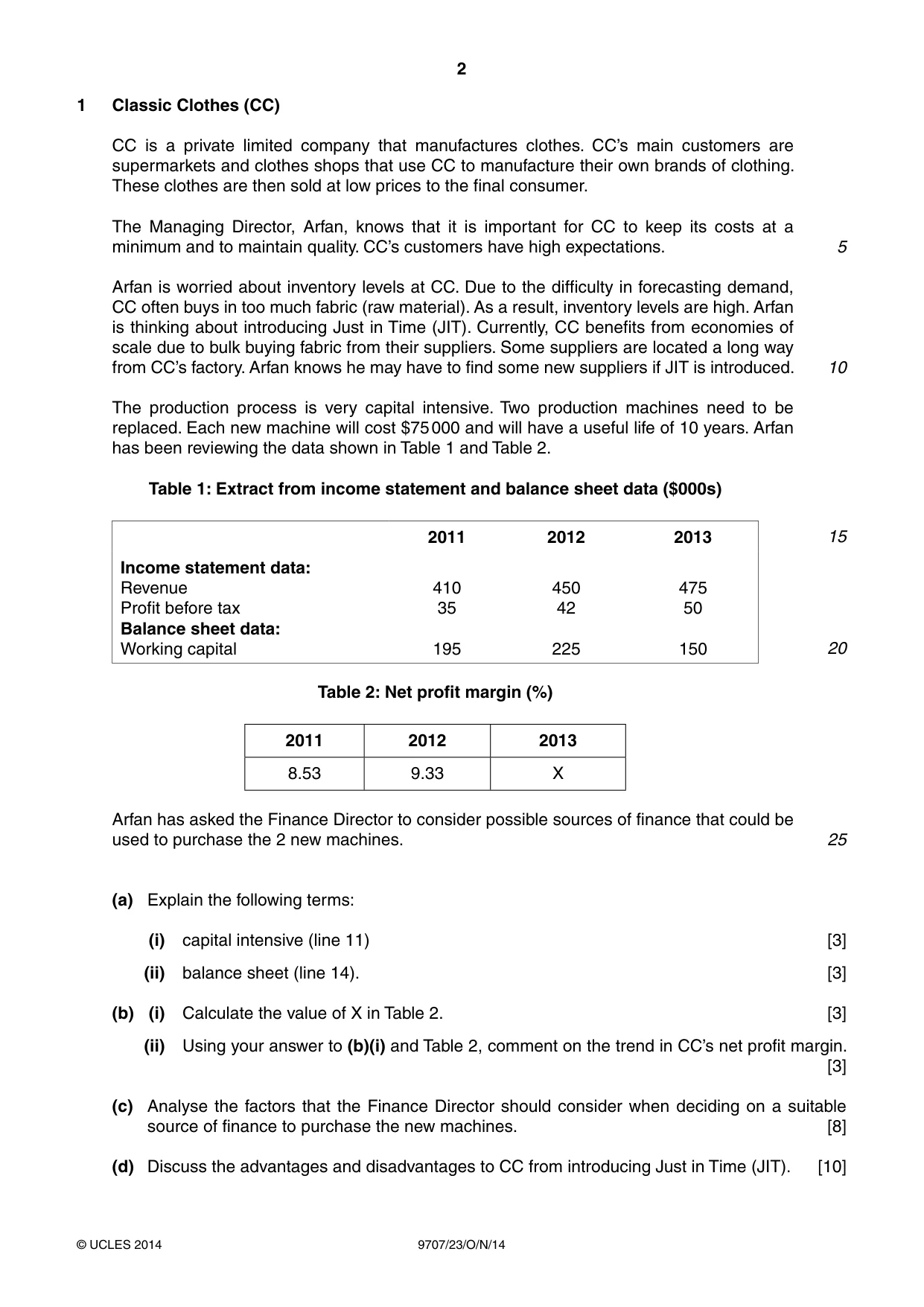
2 Fine Furniture (FF) FF is a medium sized, family business operating in the secondary sector. It specialises in producing a range of handmade furniture. FF has a very good reputation both as a supplier of excellent quality furniture and as an employer. FF is owned by James and his 3 brothers. James manages the production processes. He uses a democratic leadership style. FF’s 52 employees are well trained. FF shares a percentage of its profits with employees. The rate 5 of labour turnover is low and employees are loyal. Due to recession, revenue has declined over the last 2 years and trading is difficult. James knows that customers have changed their spending patterns. Customers who decide to purchase new furniture are now choosing to buy cheaper mass-produced furniture rather than the more expensive handmade furniture that FF produces. 10 To improve the performance of the business, James has developed 2 alternative plans. Plan A James would reduce costs significantly. This will include: • a pay freeze for employees • reducing employee training to a minimum 15 • some redundancies. He would also temporarily remove the employee profit sharing scheme. Plan B Reduce handmade production and introduce a range of mass-produced tables and chairs that can be sold at a cheaper price to consumers. This will require new machinery. James 20 has worked out that his break-even level of sales would be 1250 units. FF could expect to sell 1500 units in the first year. James has called a meeting with his 3 brothers to present Plan A and Plan B. They will then make a decision. James knows that 2 of his brothers may not support his plans for change. He is aware that each plan will also create conflict between different groups of 25 stakeholders. (a) Explain the following terms: (i) secondary sector (line 1) [3] (ii) leadership style (line 4). [3] (b) (i) For Plan B, calculate the margin of safety if James sells the expected level of tables and chairs. [2] (ii) Using your answer to (b)(i), briefly explain the importance to FF of the margin of safety. [4] (c) Analyse the strengths and weaknesses to FF of being a family business. [8] (d) Discuss the human resource problems that could arise if Plan A is chosen. [10]
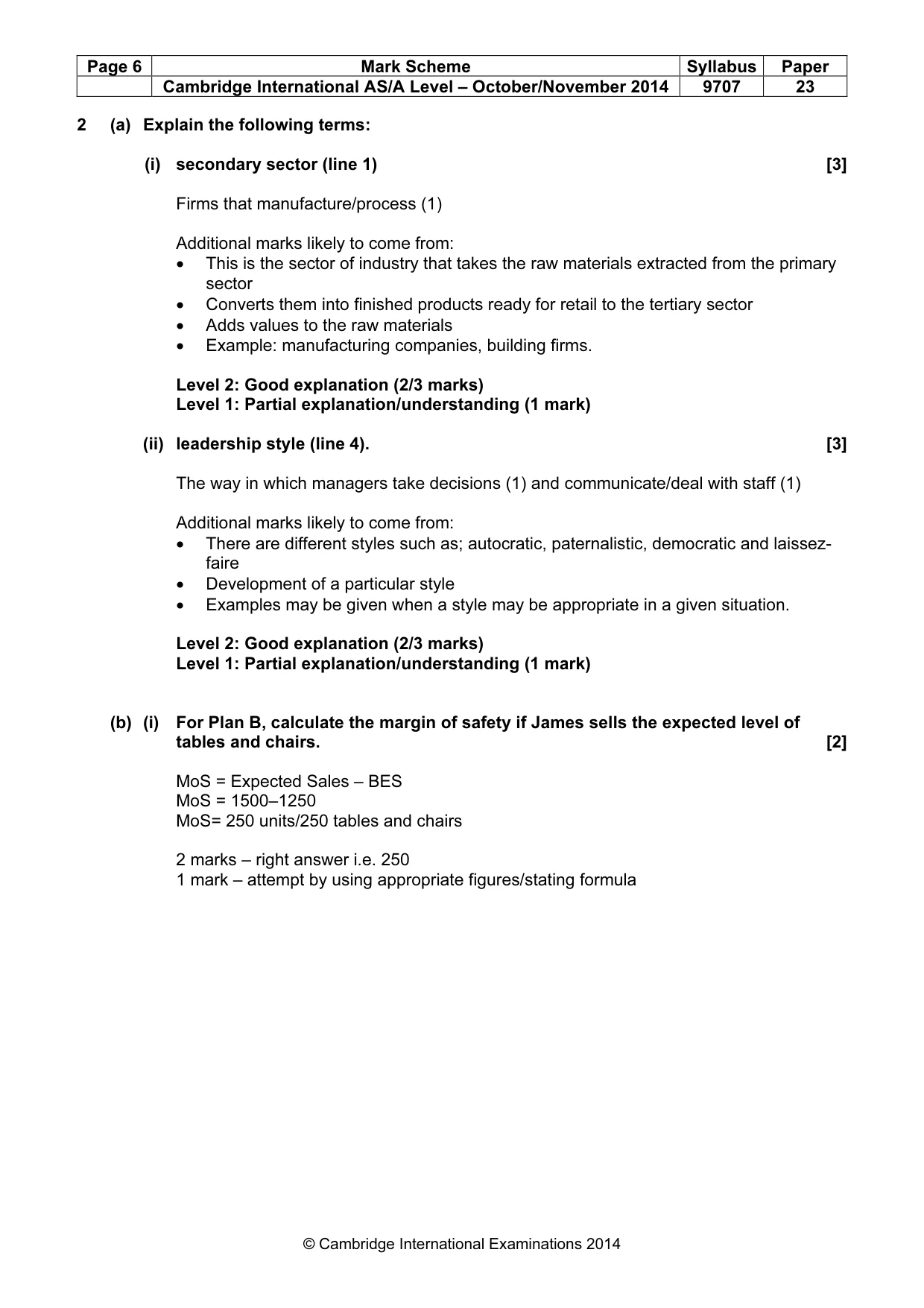
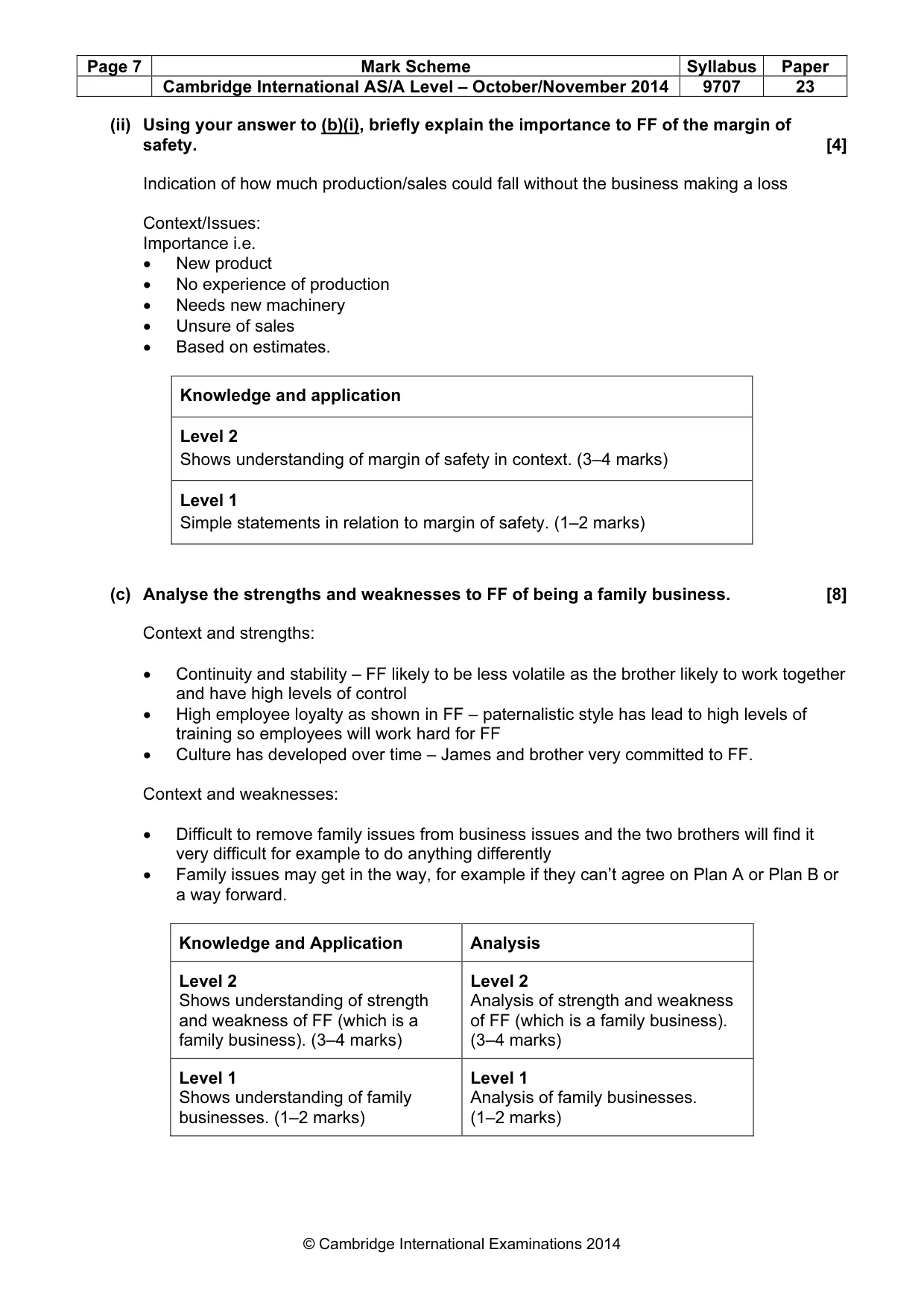
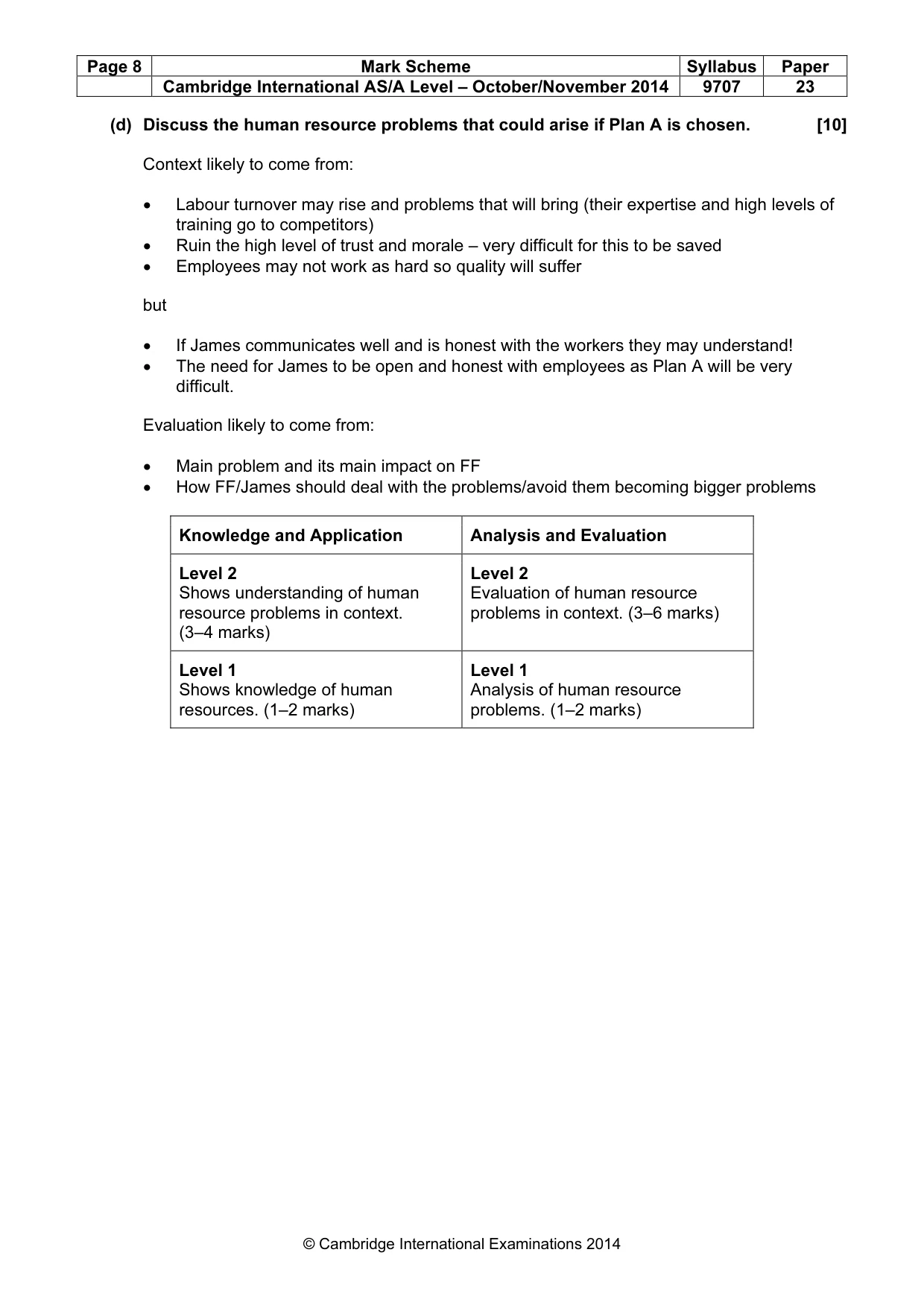
Mark scheme: 2 (a) Explain the following terms: (i) secondary sector (line 1) [3] Firms that manufacture/process (1) Additional marks likely to come from: • This is the sector of industry that takes the raw materials extracted from the primary sector • Converts them into finished products ready for retail to the tertiary sector • Adds values to the raw materials • Example: manufacturing companies, building firms. Level 2: Good explanation (2/3 marks) Level 1: Partial explanation/understanding (1 mark) (ii) leadership style (line 4). [3] The way in which managers take decisions (1) and communicate/deal with staff (1) Additional marks likely to come from: • There are different styles such as; autocratic, paternalistic, democratic and laissez- faire • Development of a particular style • Examples may be given when a style may be appropriate in a given situation. Level 2: Good explanation (2/3 marks) Level 1: Partial explanation/understanding (1 mark) (b) (i) For Plan B, calculate the margin of safety if James sells the expected level of tables and chairs. [2] MoS = Expected Sales – BES MoS = 1500–1250 MoS= 250 units/250 tables and chairs 2 marks – right answer i.e. 250 1 mark – attempt by using appropriate figures/stating formula (ii) Using your answer to (b)(i), briefly explain the importance to FF of the margin of safety. [4] Indication of how much production/sales could fall without the business making a loss Context/Issues: Importance i.e. • New product • No experience of production • Needs new machinery • Unsure of sales • Based on estimates. Knowledge and application Level 2 Shows understanding of margin of safety in context. (3–4 marks) Level 1 Simple statements in relation to margin of safety. (1–2 marks) (c) Analyse the strengths and weaknesses to FF of being a family business. [8] Context and strengths: • Continuity and stability – FF likely to be less volatile as the brother likely to work together and have high levels of control • High employee loyalty as shown in FF – paternalistic style has lead to high levels of training so employees will work hard for FF • Culture has developed over time – James and brother very committed to FF. Context and weaknesses: • Difficult to remove family issues from business issues and the two brothers will find it very difficult for example to do anything differently • Family issues may get in the way, for example if they can’t agree on Plan A or Plan B or a way forward. Knowledge and Application Analysis Level 2 Level 2 Shows understanding of strength Analysis of strength and weakness and weakness of FF (which is a of FF (which is a family business). family business). (3–4 marks) (3–4 marks) Level 1 Level 1 Shows understanding of family Analysis of family businesses. businesses. (1–2 marks) (1–2 marks) (d) Discuss the human resource problems that could arise if Plan A is chosen. [10] Context likely to come from: • Labour turnover may rise and problems that will bring (their expertise and high levels of training go to competitors) • Ruin the high level of trust and morale – very difficult for this to be saved • Employees may not work as hard so quality will suffer but • If James communicates well and is honest with the workers they may understand! • The need for James to be open and honest with employees as Plan A will be very difficult. Evaluation likely to come from: • Main problem and its main impact on FF • How FF/James should deal with the problems/avoid them becoming bigger problems Knowledge and Application Analysis and Evaluation Level 2 Level 2 Shows understanding of human Evaluation of human resource resource problems in context. problems in context. (3–6 marks) (3–4 marks) Level 1 Level 1 Shows knowledge of human Analysis of human resource resources. (1–2 marks) problems. (1–2 marks)
What you needed in this session
Cambridge’s own grade thresholds for 2014 Oct/Nov, Paper 2 · Variant 3. A higher threshold means an easier paper — the bar moves with how the cohort did.