Cambridge A Level Business Studies (for final examination in 2015) 9707 — 2014 May/June Paper 2 · Variant 3
9707/23/M/J/14 · 2 questions · 60 marks · ≈68 min
The question paper and its mark scheme, free to read here and free to download. This is Cambridge’s own paper, exactly as it was sat.
Question paper4 pages
Mark scheme6 pages
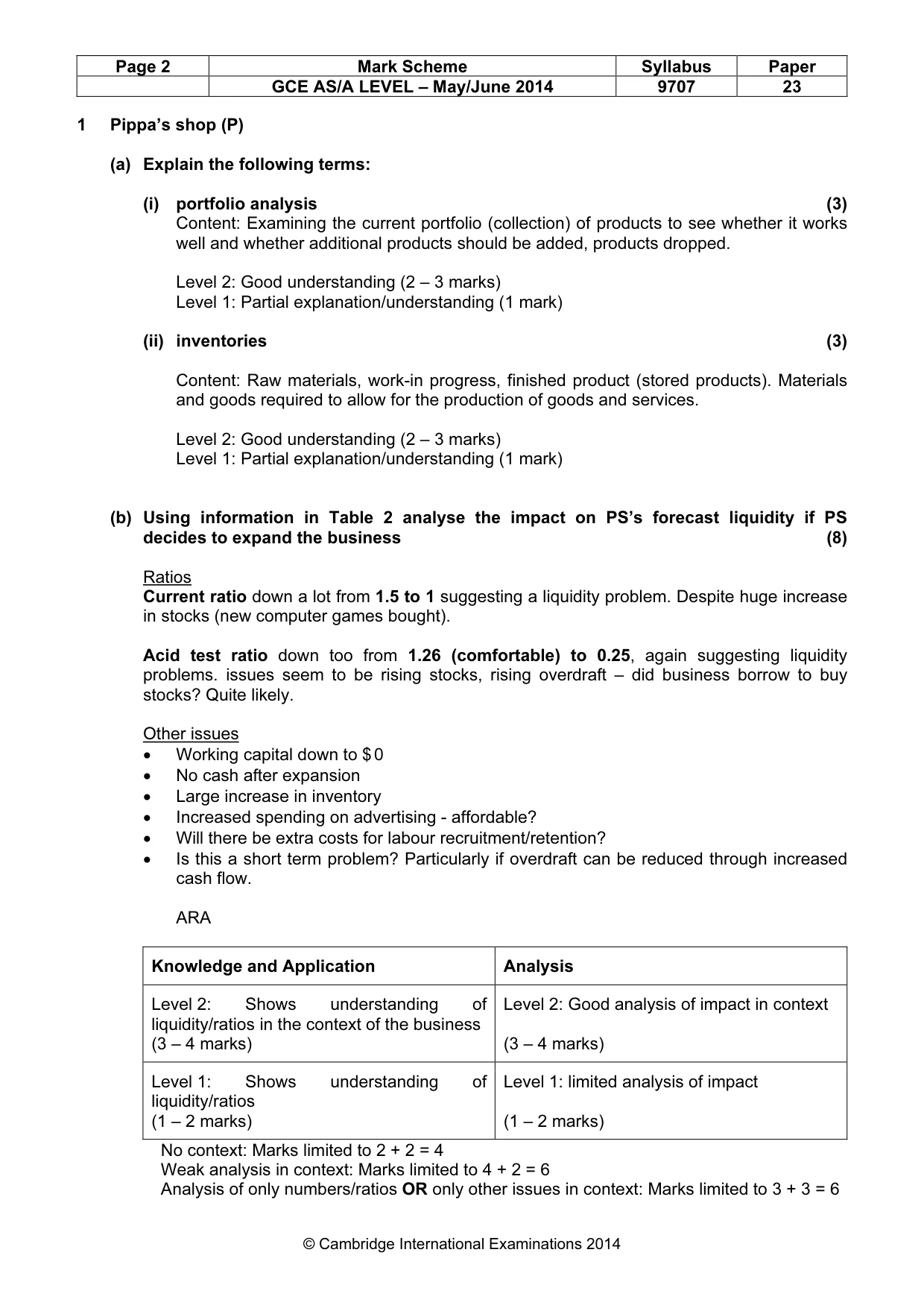
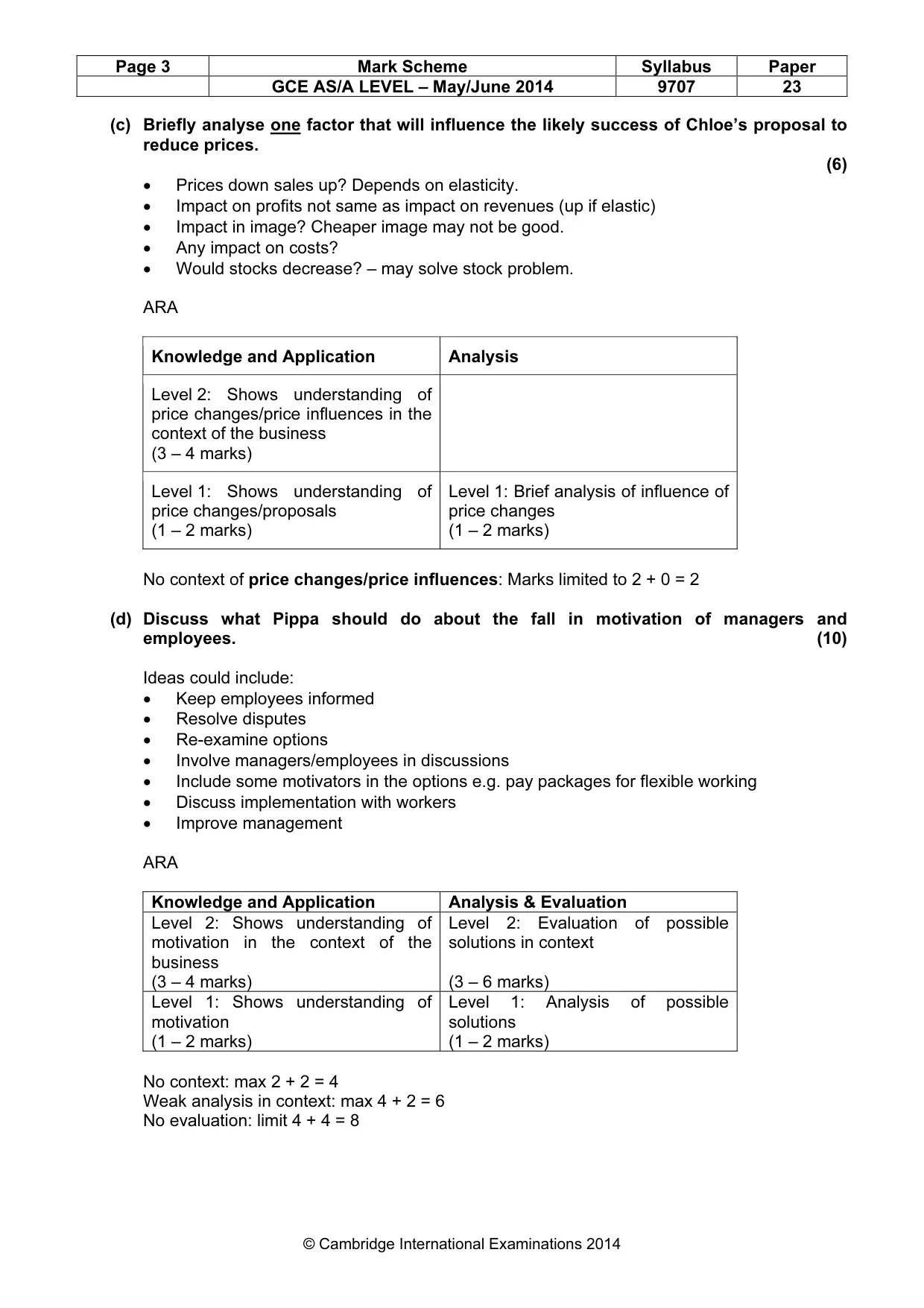
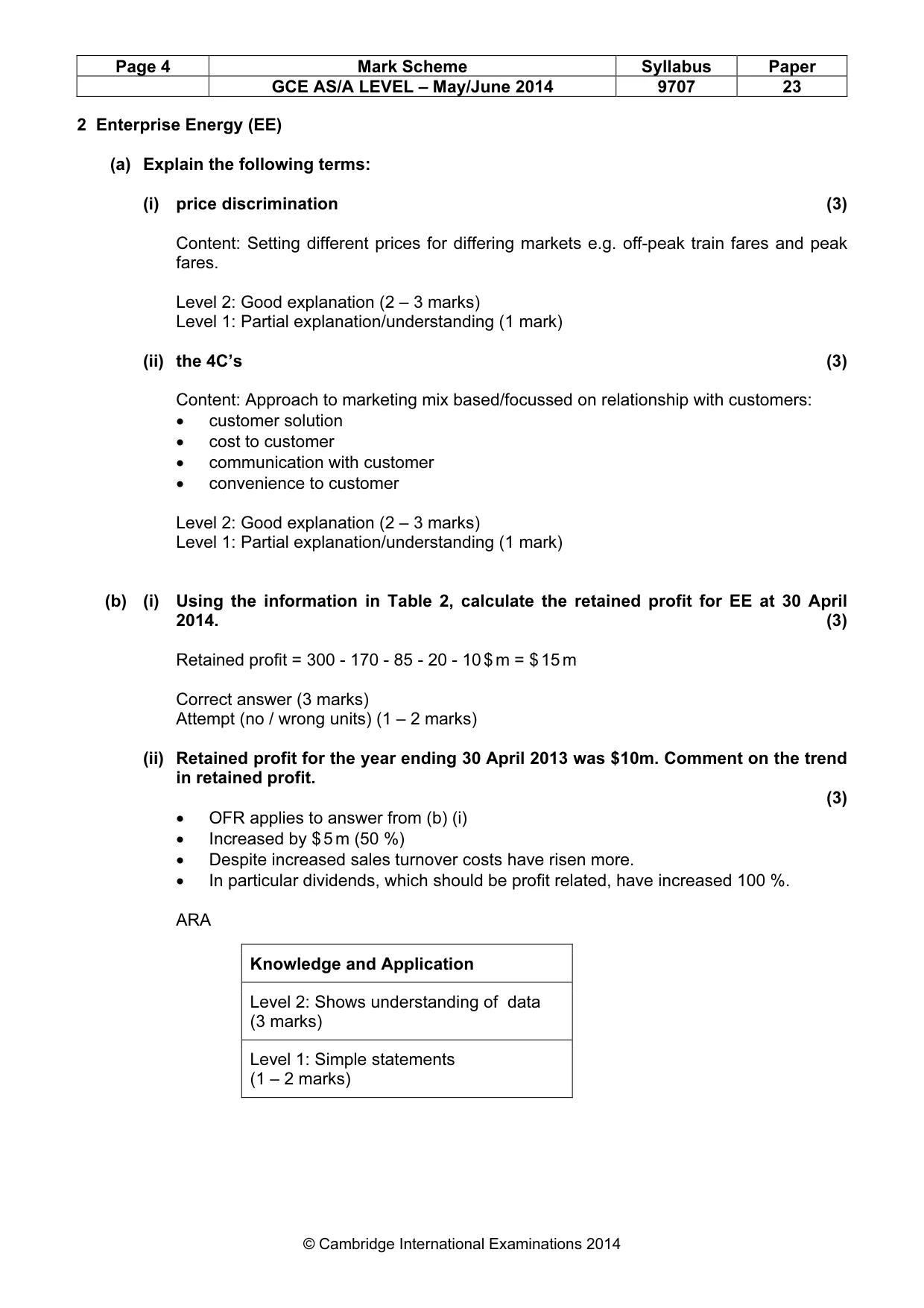
Answers below. Sit the paper first if you are practising.
Questions as text
Q1 · Pippa’s Shop (PS) PS is a family owned partnership
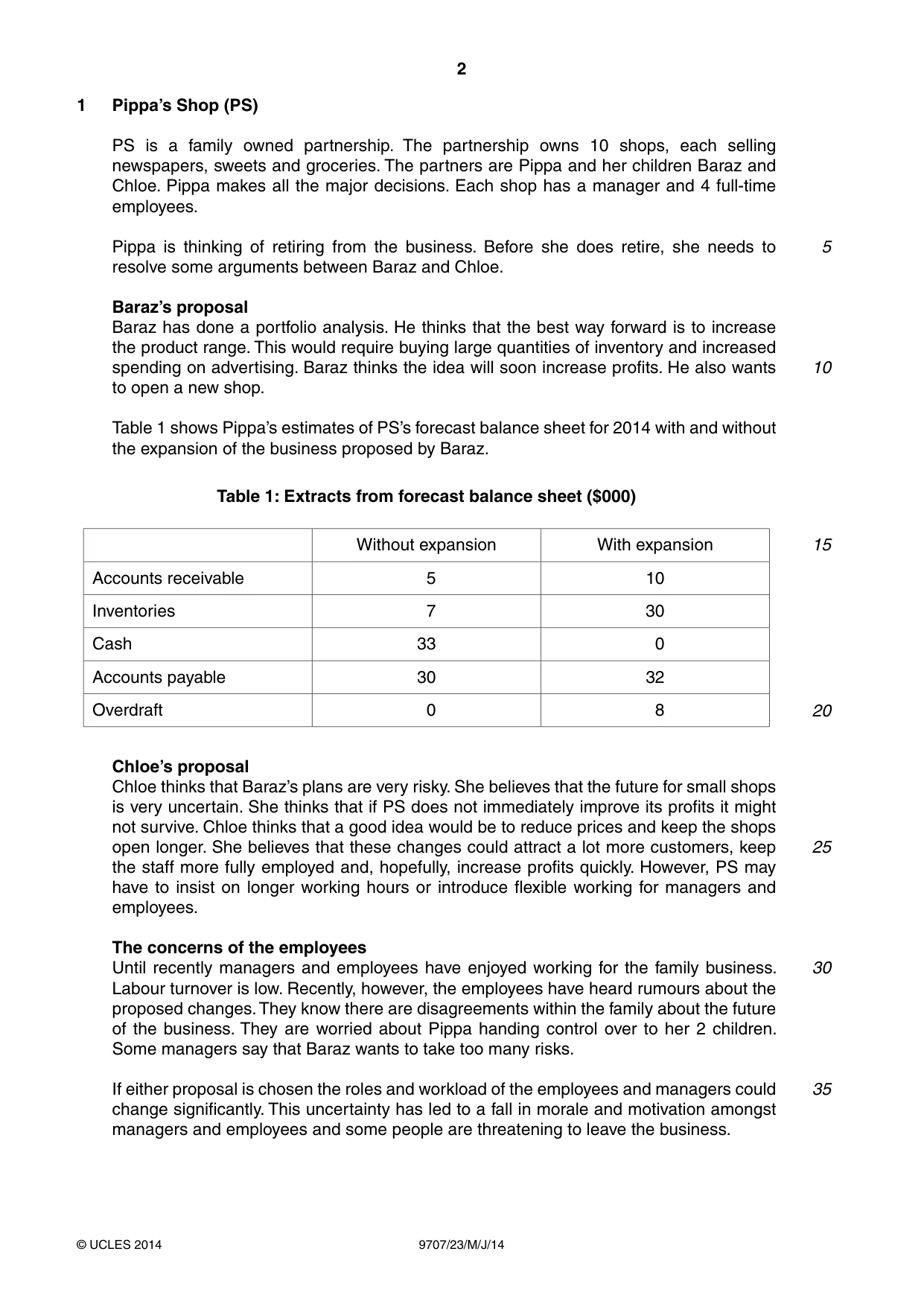
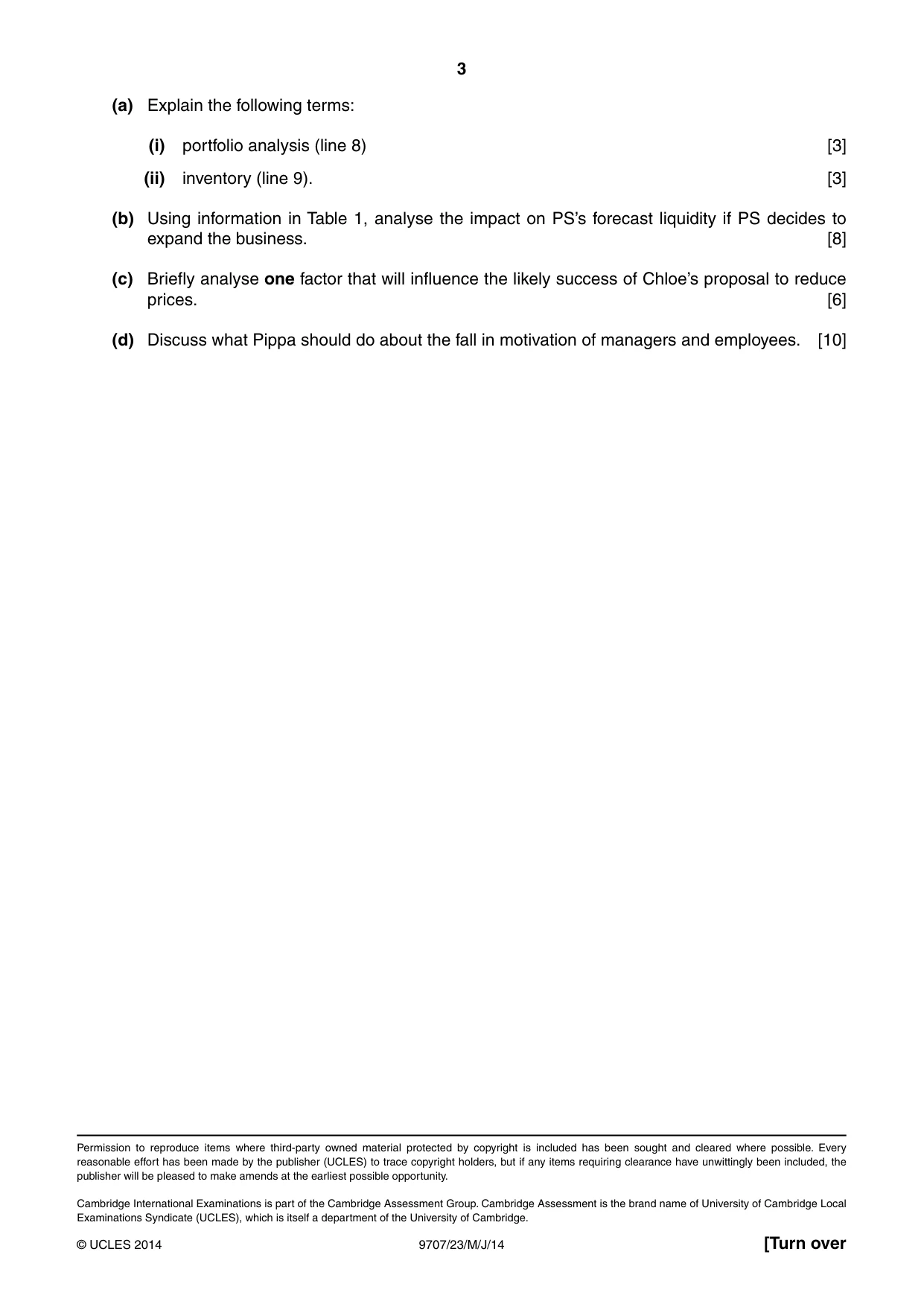
1 Pippa’s Shop (PS) PS is a family owned partnership. The partnership owns 10 shops, each selling newspapers, sweets and groceries. The partners are Pippa and her children Baraz and Chloe. Pippa makes all the major decisions. Each shop has a manager and 4 full-time employees. Pippa is thinking of retiring from the business. Before she does retire, she needs to 5 resolve some arguments between Baraz and Chloe. Baraz’s proposal Baraz has done a portfolio analysis. He thinks that the best way forward is to increase the product range. This would require buying large quantities of inventory and increased spending on advertising. Baraz thinks the idea will soon increase profits. He also wants 10 to open a new shop. Table 1 shows Pippa’s estimates of PS’s forecast balance sheet for 2014 with and without the expansion of the business proposed by Baraz. Table 1: Extracts from forecast balance sheet ($000) Without expansion With expansion 15 Accounts receivable 5 10 Inventories 7 30 Cash 33 0 Accounts payable 30 32 Overdraft 0 8 20 Chloe’s proposal Chloe thinks that Baraz’s plans are very risky. She believes that the future for small shops is very uncertain. She thinks that if PS does not immediately improve its profits it might not survive. Chloe thinks that a good idea would be to reduce prices and keep the shops open longer. She believes that these changes could attract a lot more customers, keep 25 the staff more fully employed and, hopefully, increase profits quickly. However, PS may have to insist on longer working hours or introduce flexible working for managers and employees. The concerns of the employees Until recently managers and employees have enjoyed working for the family business. 30 Labour turnover is low. Recently, however, the employees have heard rumours about the proposed changes. They know there are disagreements within the family about the future of the business. They are worried about Pippa handing control over to her 2 children. Some managers say that Baraz wants to take too many risks. If either proposal is chosen the roles and workload of the employees and managers could 35 change significantly. This uncertainty has led to a fall in morale and motivation amongst managers and employees and some people are threatening to leave the business. (a) Explain the following terms: (i) portfolio analysis (line 8) [3] (ii) inventory (line 9). [3] (b) Using information in Table 1, analyse the impact on PS’s forecast liquidity if PS decides to expand the business. [8] (c) Briefly analyse one factor that will influence the likely success of Chloe’s proposal to reduce prices. [6] (d) Discuss what Pippa should do about the fall in motivation of managers and employees. [10]
Q2 · Enterprise Energy (EE) EE supplies electricity to businesses and households
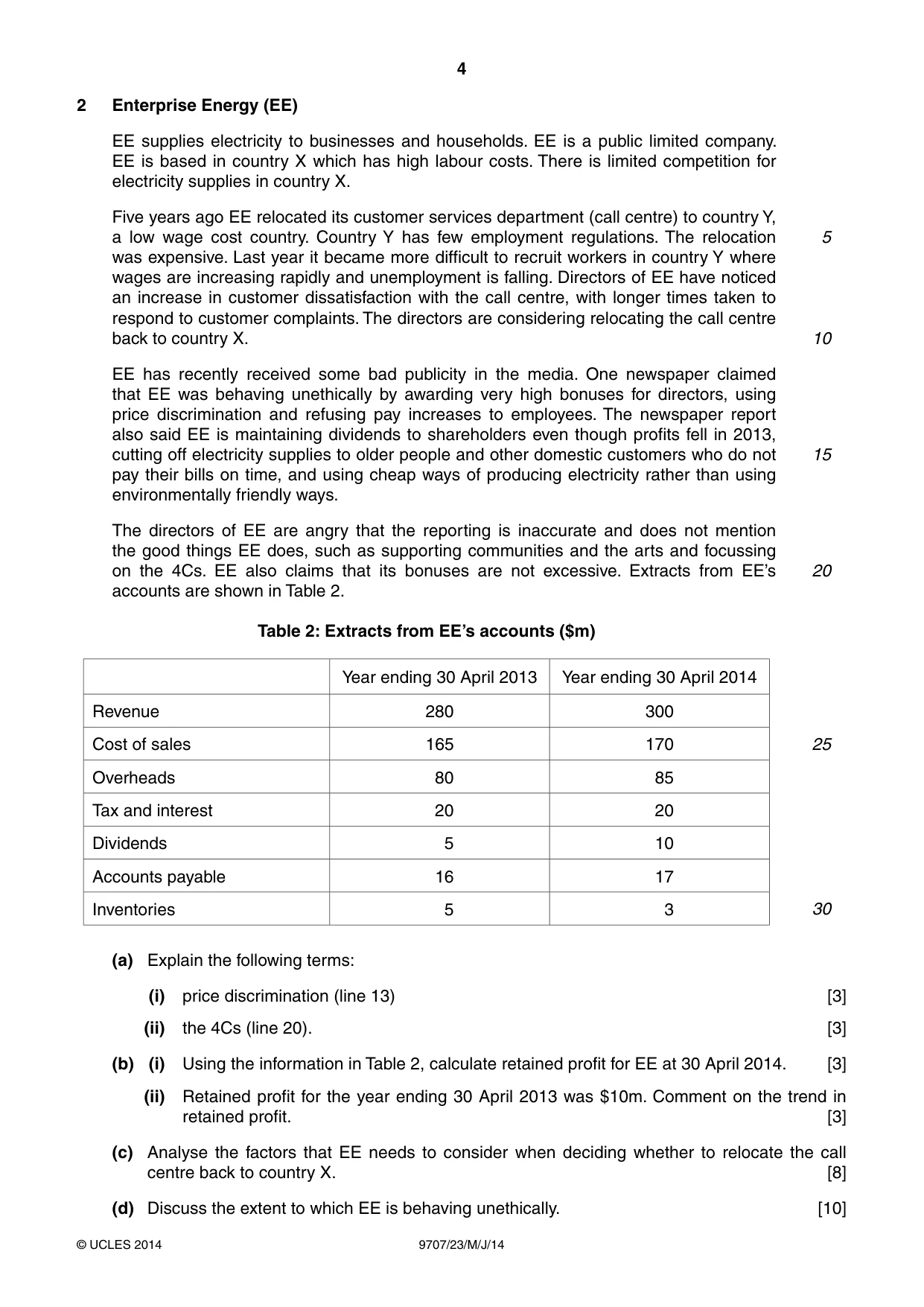
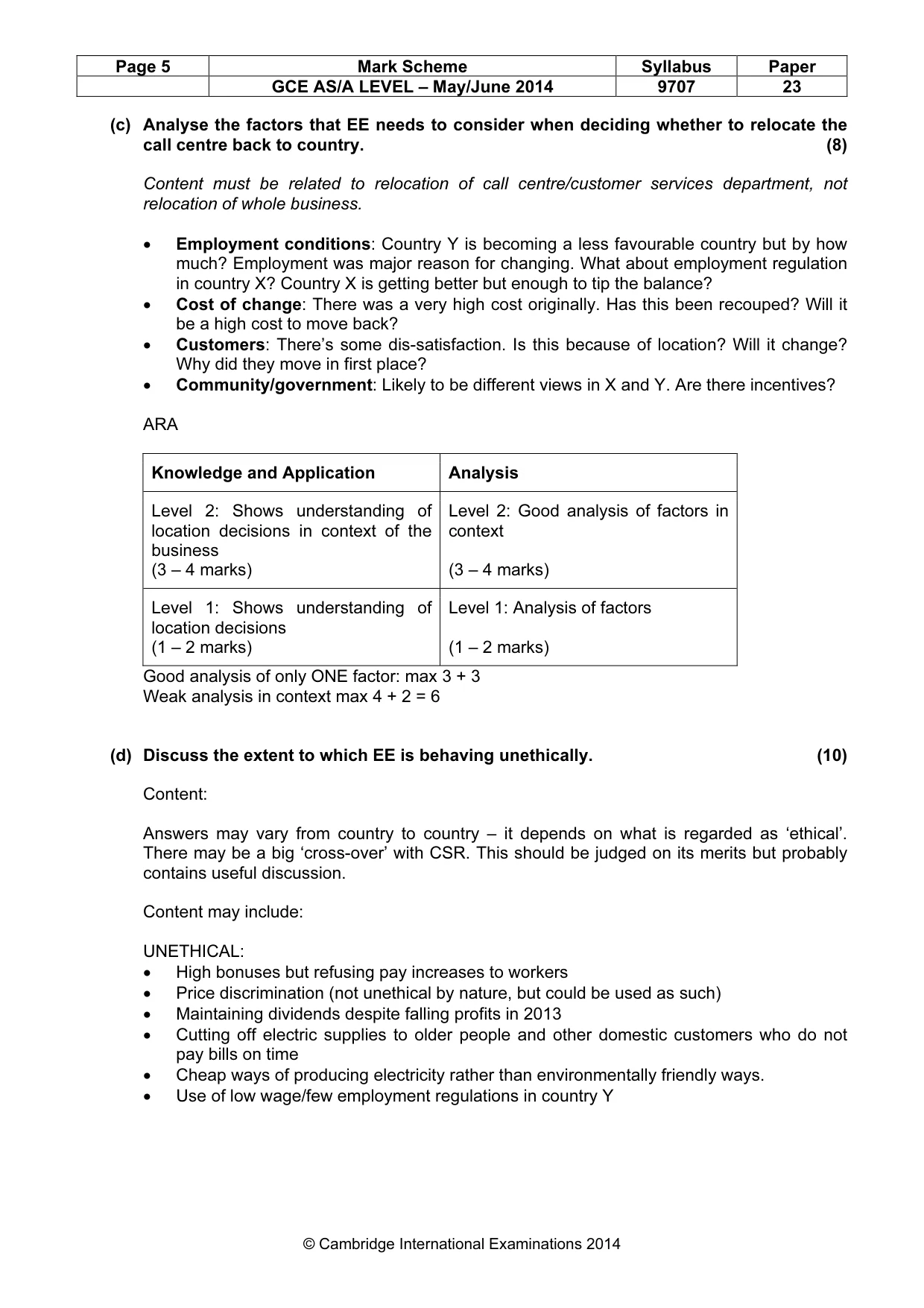
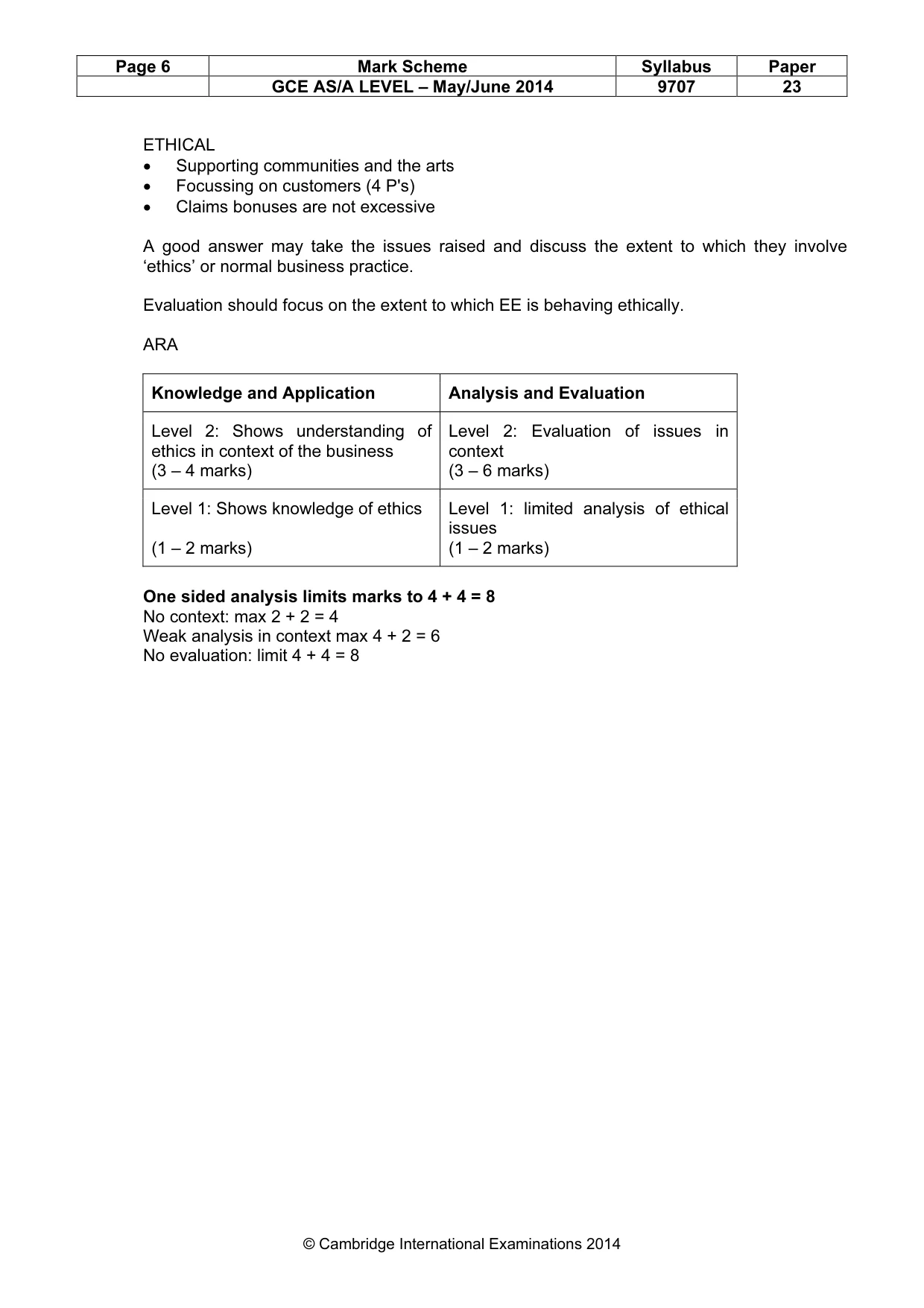
2 Enterprise Energy (EE) EE supplies electricity to businesses and households. EE is a public limited company. EE is based in country X which has high labour costs. There is limited competition for electricity supplies in country X. Five years ago EE relocated its customer services department (call centre) to country Y, a low wage cost country. Country Y has few employment regulations. The relocation 5 was expensive. Last year it became more difficult to recruit workers in country Y where wages are increasing rapidly and unemployment is falling. Directors of EE have noticed an increase in customer dissatisfaction with the call centre, with longer times taken to respond to customer complaints. The directors are considering relocating the call centre back to country X. 10 EE has recently received some bad publicity in the media. One newspaper claimed that EE was behaving unethically by awarding very high bonuses for directors, using price discrimination and refusing pay increases to employees. The newspaper report also said EE is maintaining dividends to shareholders even though profits fell in 2013, cutting off electricity supplies to older people and other domestic customers who do not 15 pay their bills on time, and using cheap ways of producing electricity rather than using environmentally friendly ways. The directors of EE are angry that the reporting is inaccurate and does not mention the good things EE does, such as supporting communities and the arts and focussing on the 4Cs. EE also claims that its bonuses are not excessive. Extracts from EE’s 20 accounts are shown in Table 2. Table 2: Extracts from EE’s accounts ($m) Year ending 30 April 2013 Year ending 30 April 2014 Revenue 280 300 Cost of sales 165 170 25 Overheads 80 85 Tax and interest 20 20 Dividends 5 10 Accounts payable 16 17 Inventories 5 3 30 (a) Explain the following terms: (i) price discrimination (line 13) [3] (ii) the 4Cs (line 20). [3] (b) (i) Using the information in Table 2, calculate retained profit for EE at 30 April 2014. [3] (ii) Retained profit for the year ending 30 April 2013 was $10m. Comment on the trend in retained profit. [3] (c) Analyse the factors that EE needs to consider when deciding whether to relocate the call centre back to country X. [8] (d) Discuss the extent to which EE is behaving unethically. [10]
What you needed in this session
Cambridge’s own grade thresholds for 2014 May/June, Paper 2 · Variant 3. A higher threshold means an easier paper — the bar moves with how the cohort did.