Cambridge A Level Business Studies (for final examination in 2015) 9707 — 2014 May/June Paper 3 · Variant 1
9707/31/M/J/14 · 7 questions · 100 marks · ≈113 min
The question paper and its mark scheme, free to read here and free to download. This is Cambridge’s own paper, exactly as it was sat.
Question paper8 pages
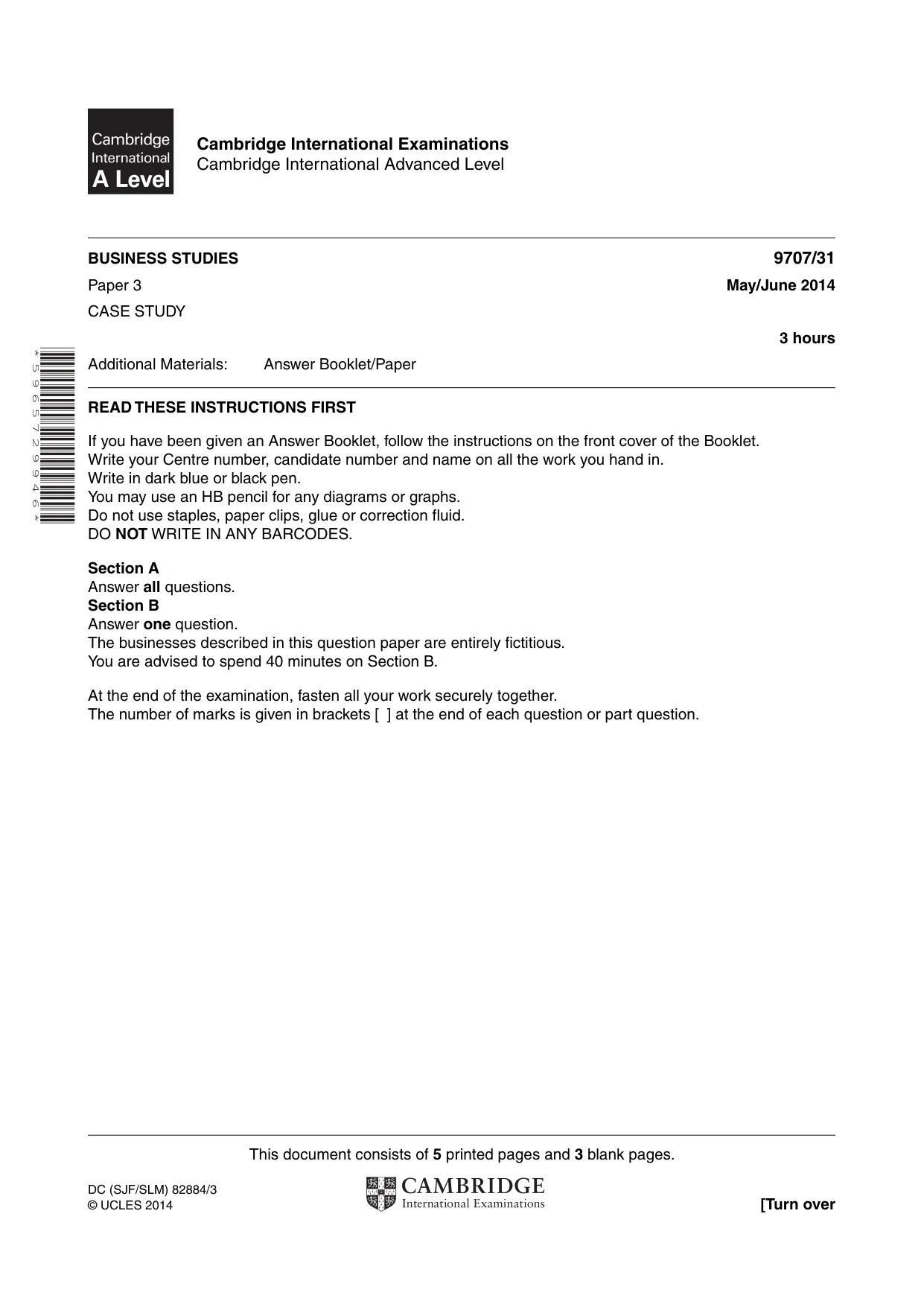



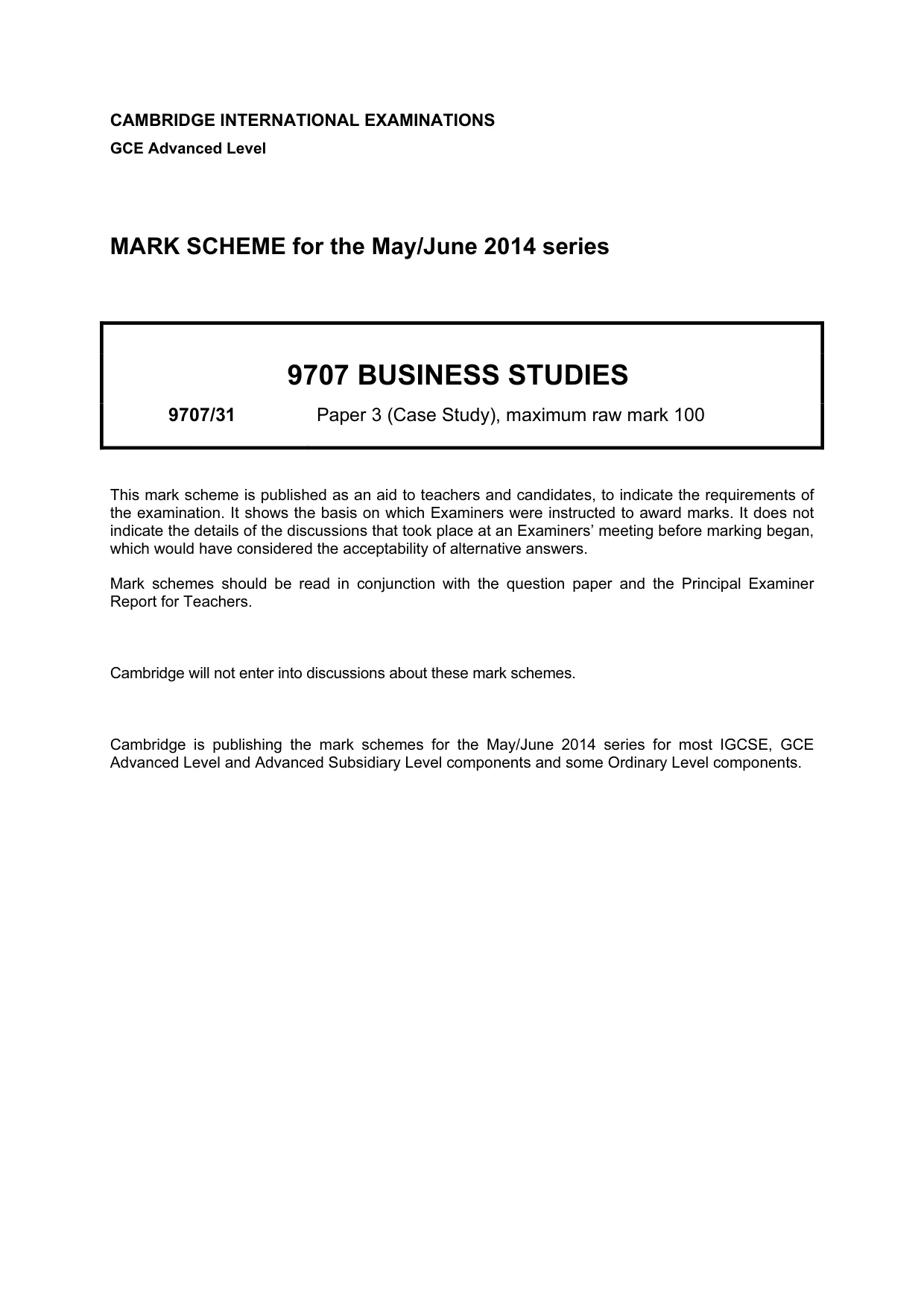
Mark scheme9 pages
Answers below. Sit the paper first if you are practising.
Questions as text
Q1 · Analyse the likely benefits to RSC of operating ethically towards its stakeholders
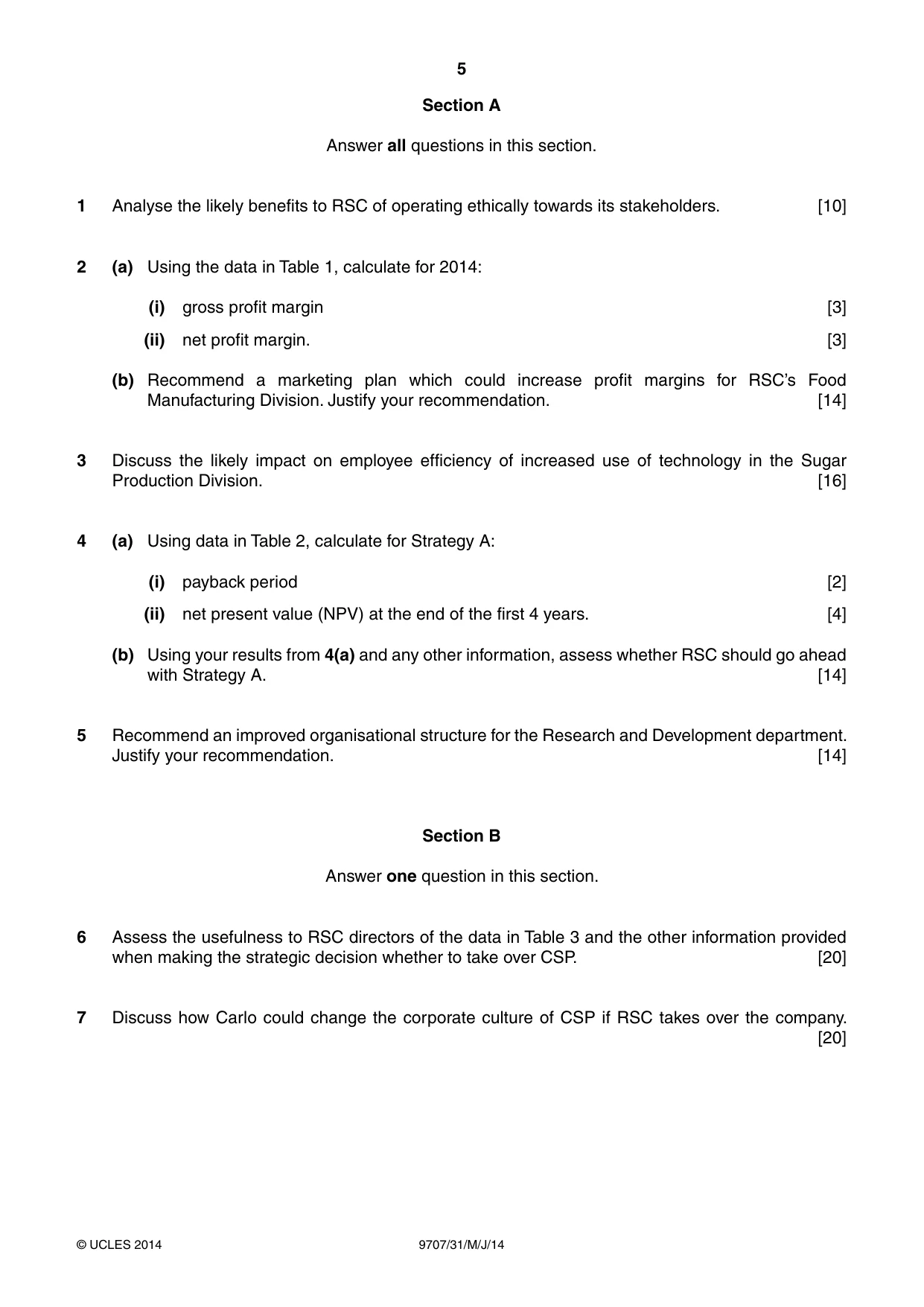
1 Analyse the likely benefits to RSC of operating ethically towards its stakeholders. [10]
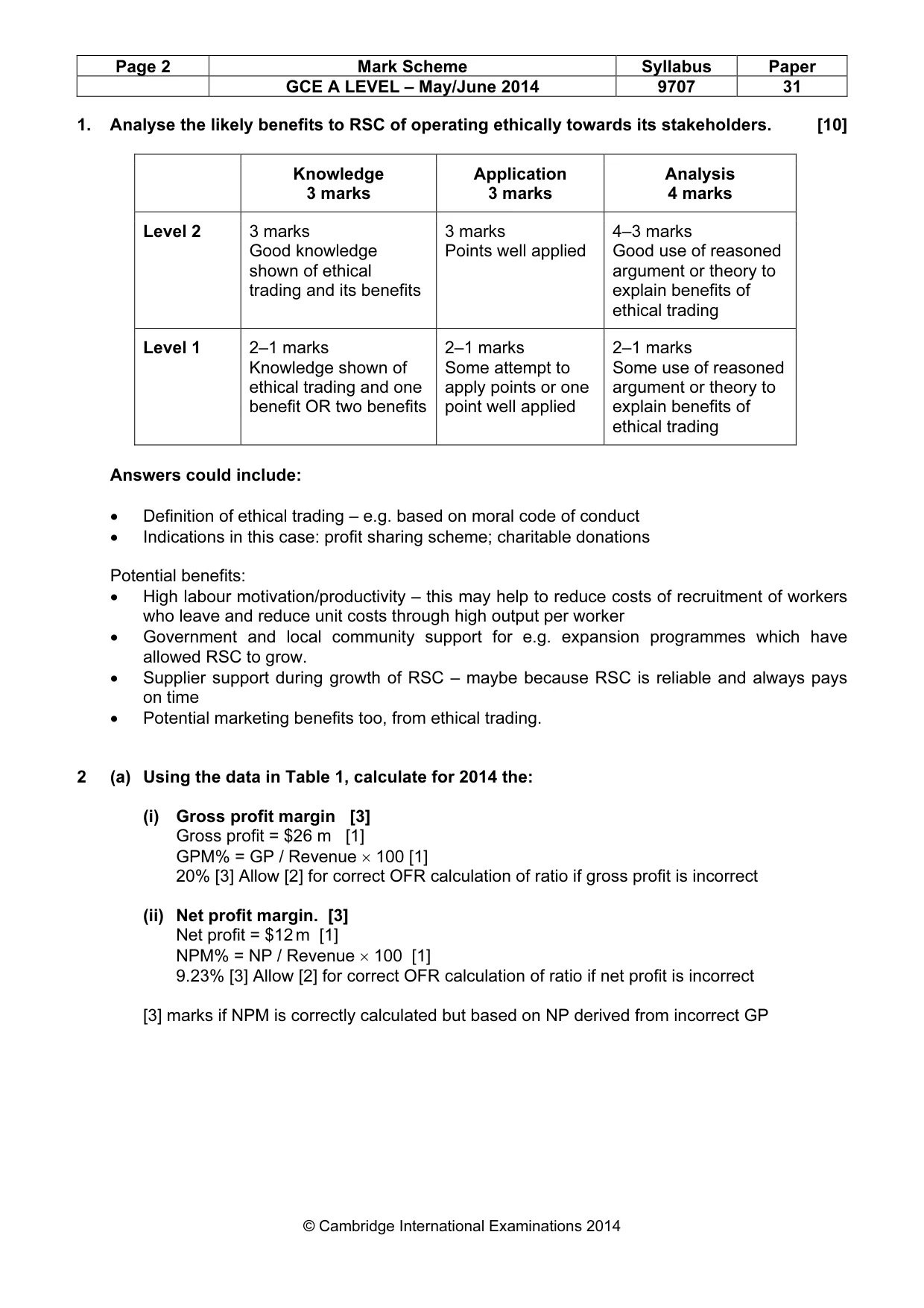
Mark scheme: 1 Some knowledge of Some Some use of reasoned Some judgement results or other application to argument or theory to shown in answer information case explain how results or other and/or information might influence conclusion this decision GCE A LEVEL – May/June 2014 9707 31 Answers could include: • Investment appraisal results look promising – quick payback reduces risks of the venture and the interest cost on borrowed capital – especially if economic slowdown continues • NPV shows the present value of future cash flows at 10% discount – this seems as if it will be a profitable project • This strategy will further vertically integrate RSC and there are benefits of this – it will supply its own retail shops, for example, and it will have more control over the marketing of its own food products – it may reverse the decline in profitability • BUT: RSC only seems to make a limited range of products – will this be sufficient to stock the shops? • RSC has no experience of retailing – how reliable are the cash flow estimates – Carlo might have unwittingly biased these; no management know-how about retailing organisation • Customers may still not value RSC name/branded good highly – perhaps more focus needs to be given to changing the products’ image rather than opening retail shops • Further growth might lead to diseconomies. Evaluation: • Supported recommendation needs to be given and evidence needs to be weighed up and compared. • Qualitative factors might be considered to be more important if cash flow data is thought to be too unreliable. • Judgement shown on relative importance of factors to be considered. GCE A LEVEL – May/June 2014 9707 31
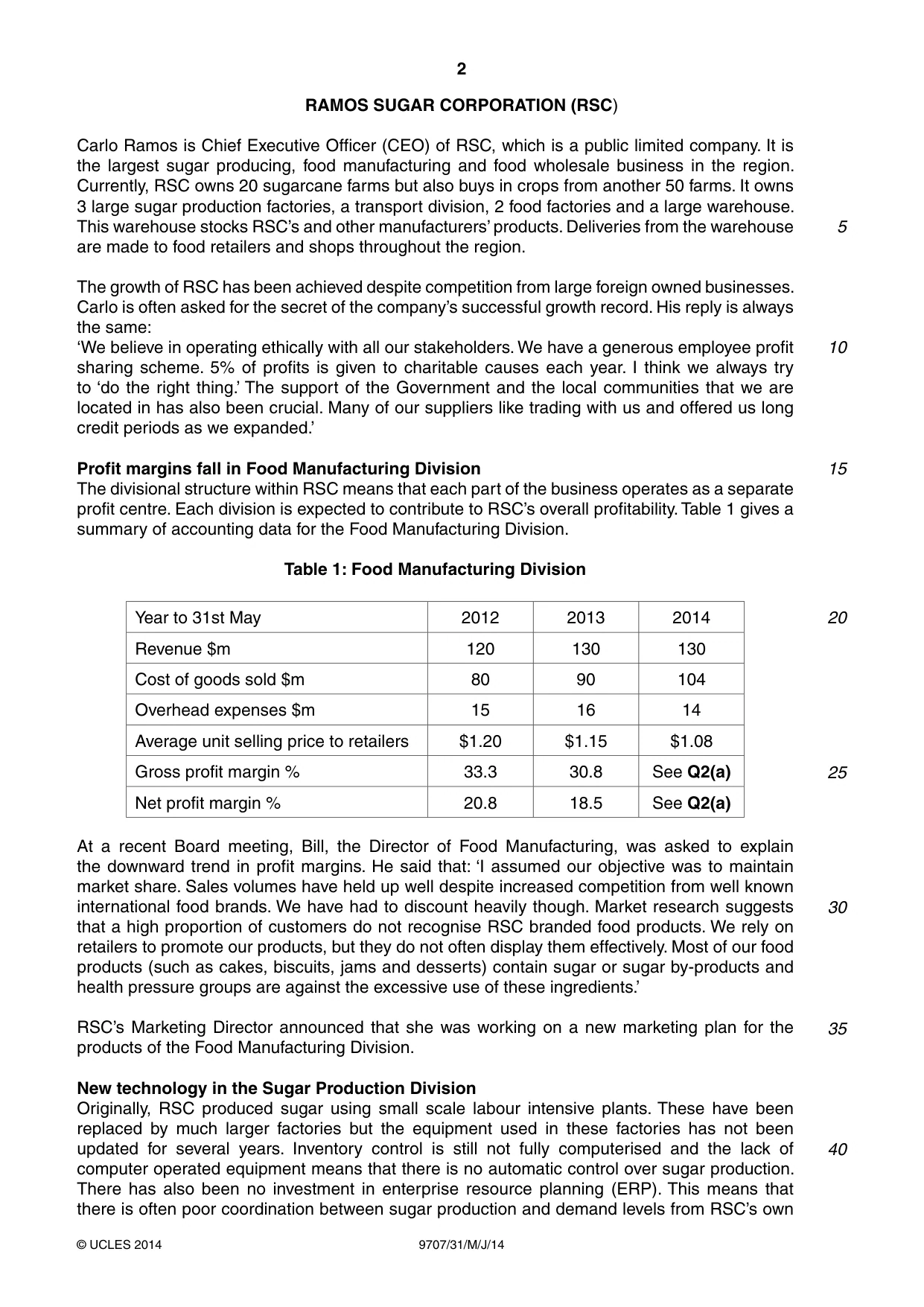
Q2 · Using the data in Table 1, calculate for 2014: (i) gross profit margin [3] (ii) net…
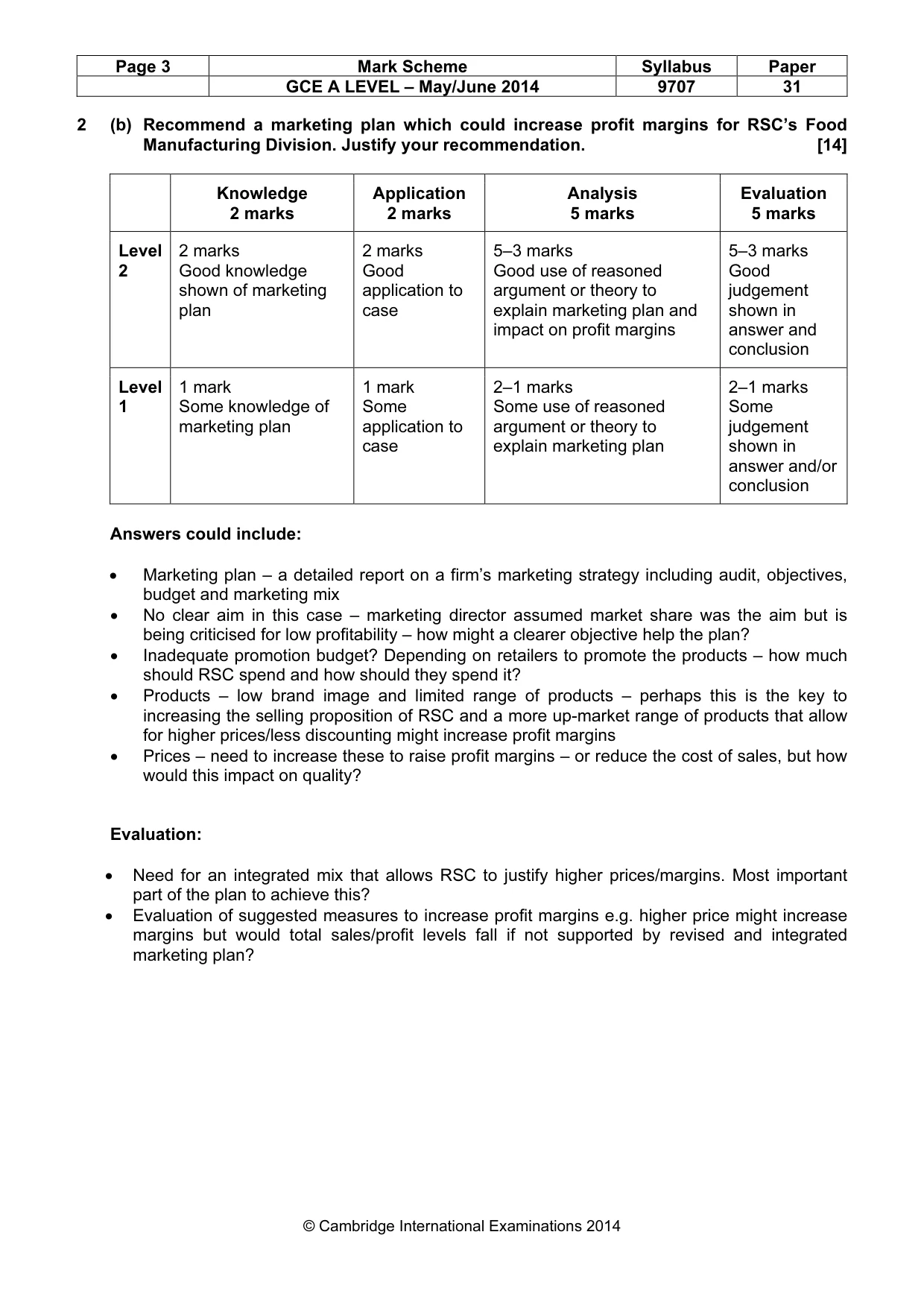
2 (a) Using the data in Table 1, calculate for 2014: (i) gross profit margin [3] (ii) net profit margin. [3] (b) Recommend a marketing plan which could increase profit margins for RSC’s Food Manufacturing Division. Justify your recommendation. [14]
Mark scheme: 2 Good knowledge Good Good use of reasoned Good judgement shown of investment application to argument or theory to shown in answer appraisal results or case explain how results and and conclusion other information other information might influence this decision Level 1 mark 1 mark 2–1 marks 2–1 marks
Q3 · Discuss the likely impact on employee efficiency of increased use of technology in the…
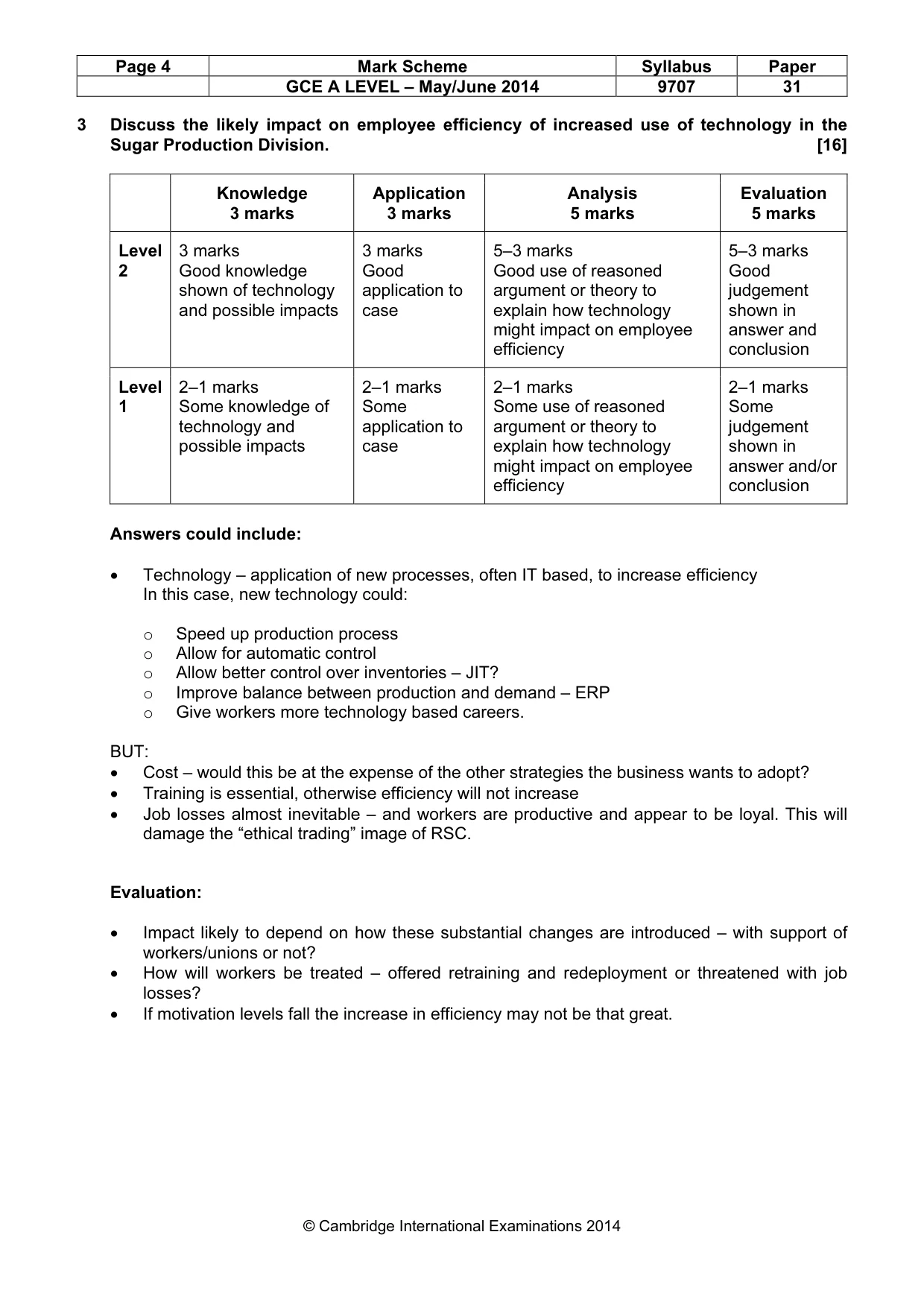
3 Discuss the likely impact on employee efficiency of increased use of technology in the Sugar Production Division. [16]
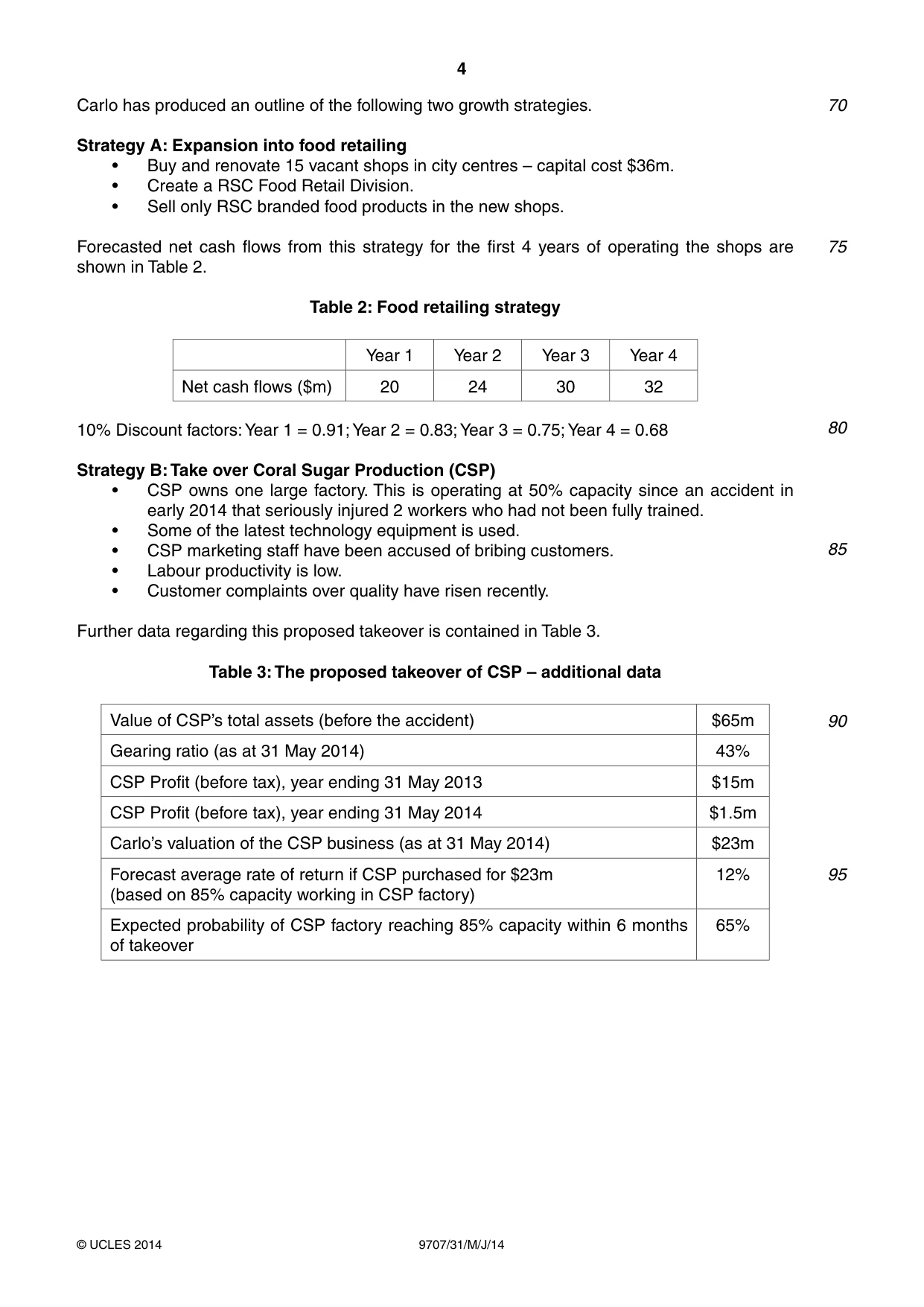
Q4 · Using data in Table 2, calculate for Strategy A: (i) payback period [2] (ii) net present…
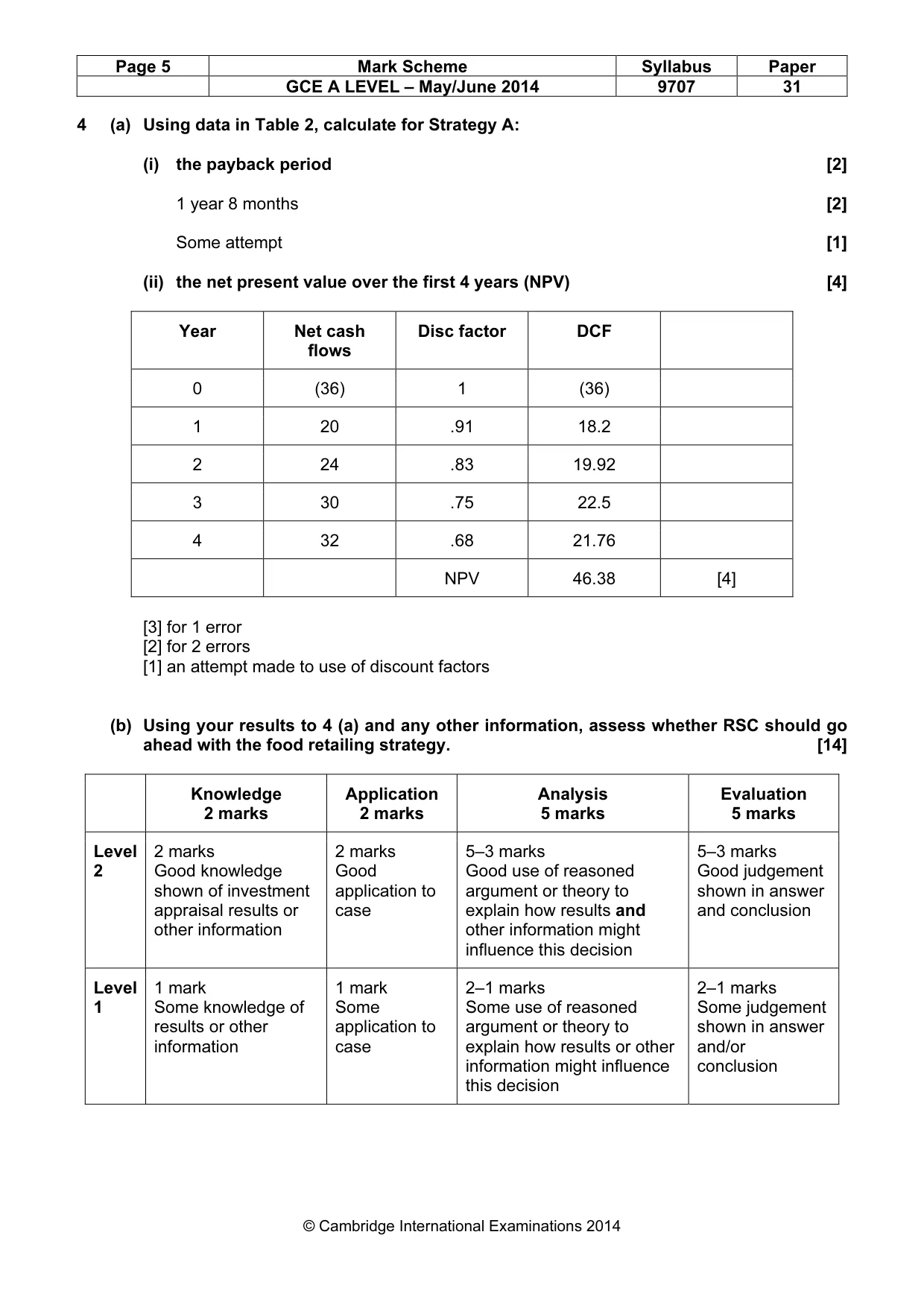
4 (a) Using data in Table 2, calculate for Strategy A: (i) payback period [2] (ii) net present value (NPV) at the end of the first 4 years. [4] (b) Using your results from 4(a) and any other information, assess whether RSC should go ahead with Strategy A. [14]
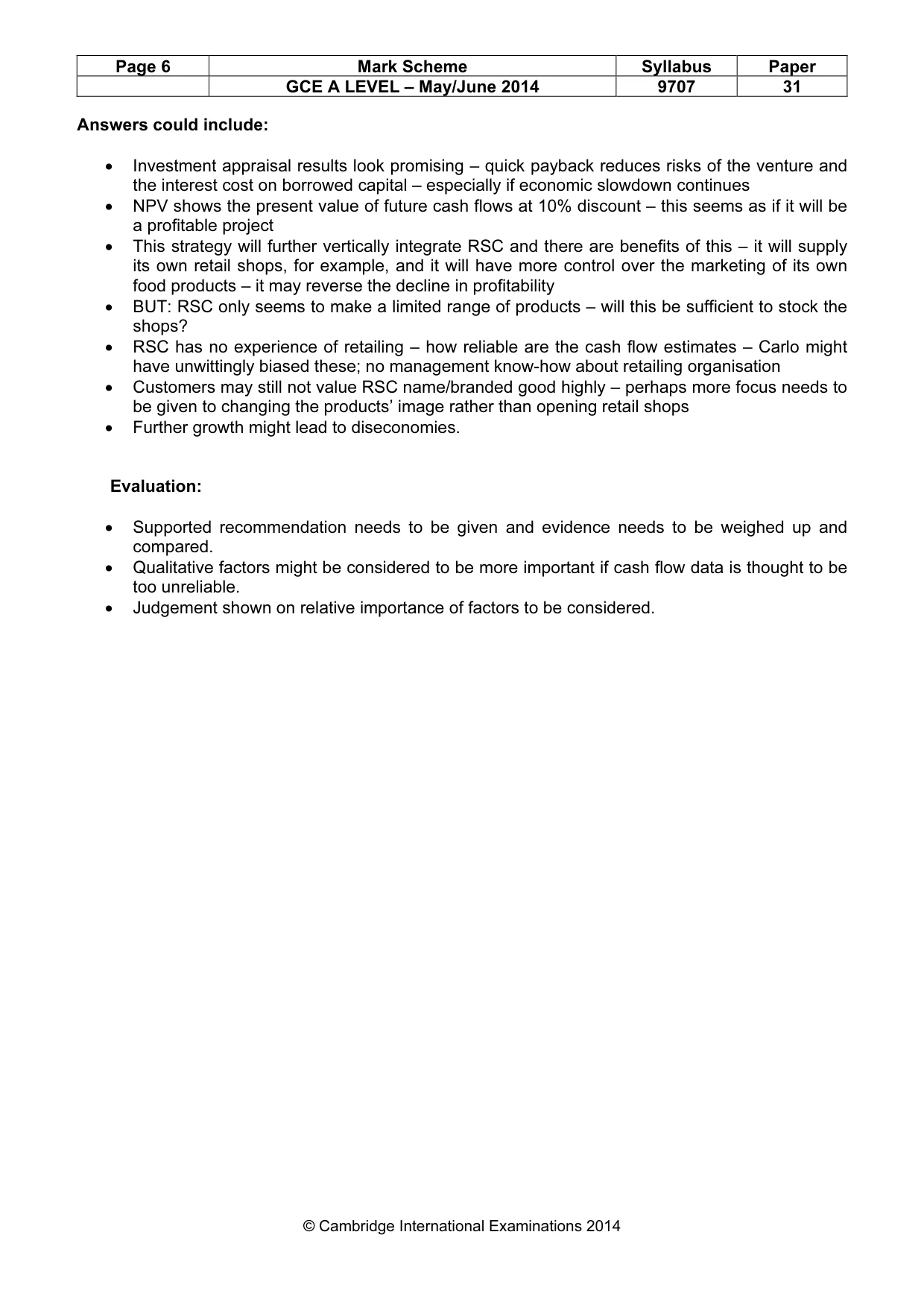
Mark scheme: 4 (a) Using data in Table 2, calculate for Strategy A: (i) the payback period [2] 1 year 8 months [2] Some attempt [1] (ii) the net present value over the first 4 years (NPV) [4] Year Net cash Disc factor DCF flows 0 (36) 1 (36) 1 20 .91 18.2 2 24 .83 19.92 3 30 .75 22.5 4 32 .68 21.76 NPV 46.38 [4] [3] for 1 error [2] for 2 errors [1] an attempt made to use of discount factors (b) Using your results to 4 (a) and any other information, assess whether RSC should go ahead with the food retailing strategy. [14] Knowledge Application Analysis Evaluation 2 marks 2 marks 5 marks 5 marks Level 2 marks 2 marks 5–3 marks 5–3 marks
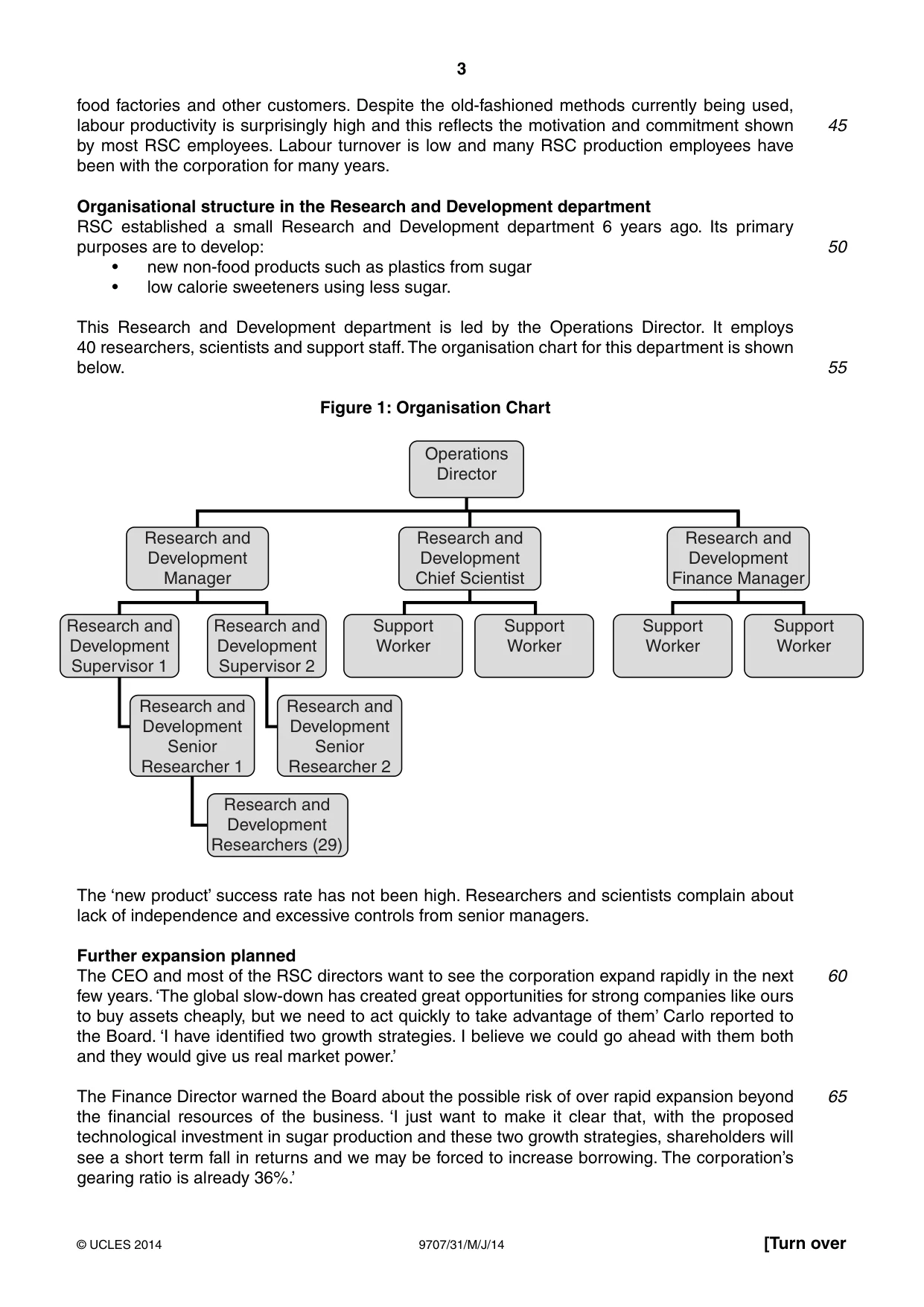
Q5 · Recommend an improved organisational structure for the Research and Development department
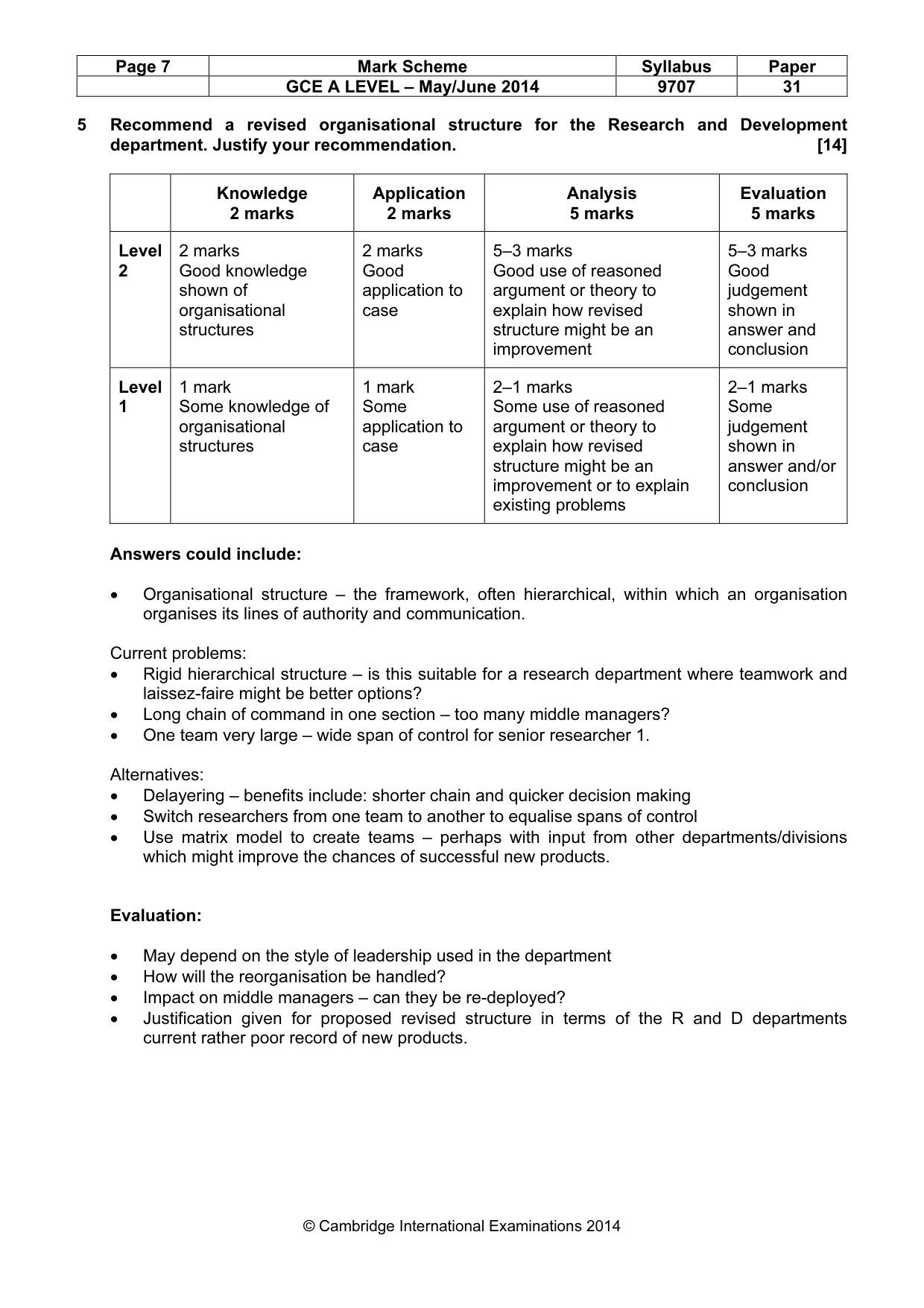
5 Recommend an improved organisational structure for the Research and Development department. Justify your recommendation. [14]
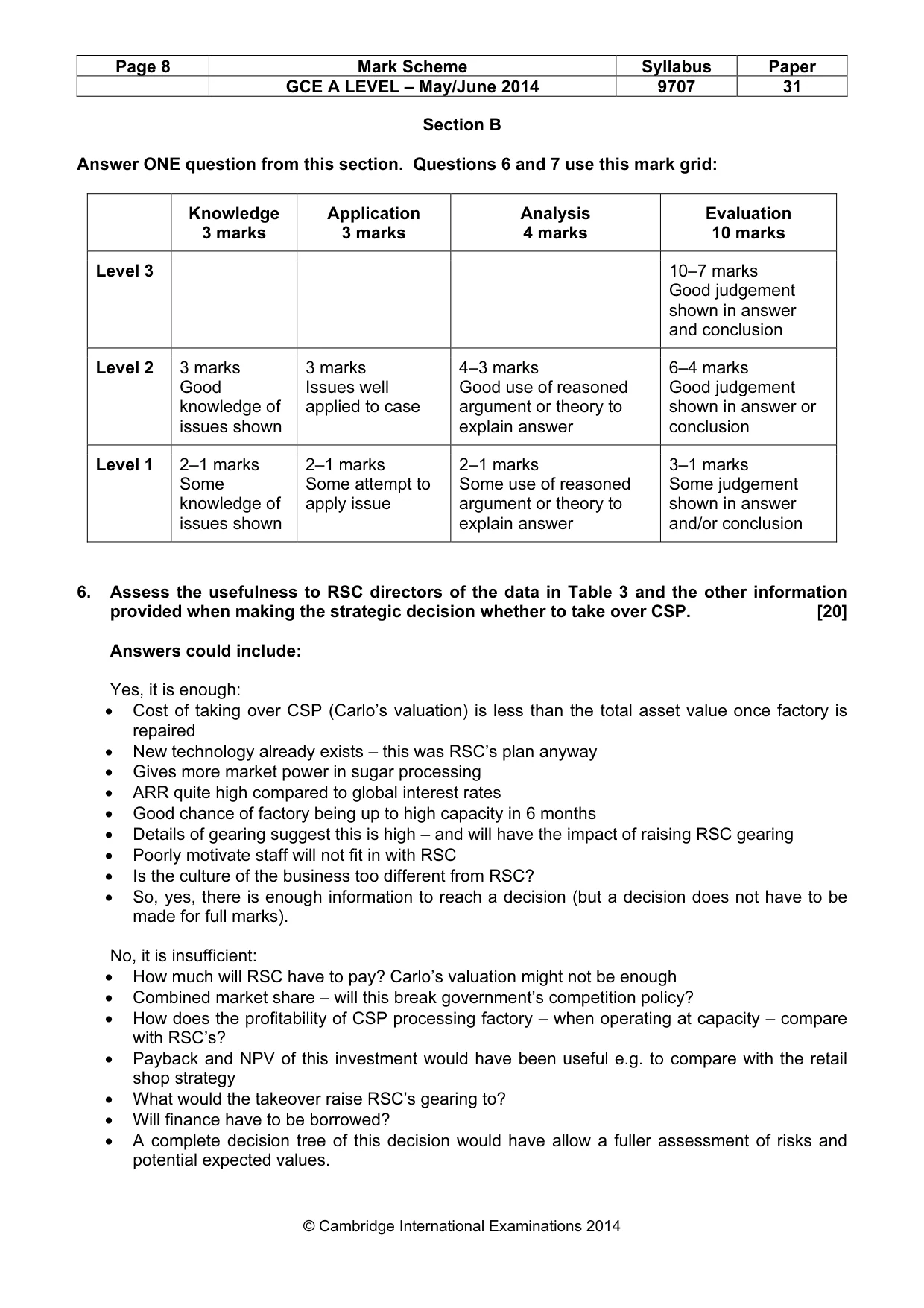
Mark scheme: 5 Recommend a revised organisational structure for the Research and Development department. Justify your recommendation. [14] Knowledge Application Analysis Evaluation 2 marks 2 marks 5 marks 5 marks Level 2 marks 2 marks 5–3 marks 5–3 marks 2 Good knowledge Good Good use of reasoned Good shown of application to argument or theory to judgement organisational case explain how revised shown in structures structure might be an answer and improvement conclusion Level 1 mark 1 mark 2–1 marks 2–1 marks 1 Some knowledge of Some Some use of reasoned Some organisational application to argument or theory to judgement structures case explain how revised shown in structure might be an answer and/or improvement or to explain conclusion existing problems Answers could include: • Organisational structure – the framework, often hierarchical, within which an organisation organises its lines of authority and communication. Current problems: • Rigid hierarchical structure – is this suitable for a research department where teamwork and laissez-faire might be better options? • Long chain of command in one section – too many middle managers? • One team very large – wide span of control for senior researcher 1. Alternatives: • Delayering – benefits include: shorter chain and quicker decision making • Switch researchers from one team to another to equalise spans of control • Use matrix model to create teams – perhaps with input from other departments/divisions which might improve the chances of successful new products. Evaluation: • May depend on the style of leadership used in the department • How will the reorganisation be handled? • Impact on middle managers – can they be re-deployed? • Justification given for proposed revised structure in terms of the R and D departments current rather poor record of new products. GCE A LEVEL – May/June 2014 9707 31 Section B Answer ONE question from this section. Questions 6 and 7 use this mark grid: Knowledge Application Analysis Evaluation 3 marks 3 marks 4 marks 10 marks Level 3 10–7 marks Good judgement shown in answer and conclusion Level 2 3 marks 3 marks 4–3 marks 6–4 marks Good Issues well Good use of reasoned Good judgement knowledge of applied to case argument or theory to shown in answer or issues shown explain answer conclusion Level 1 2–1 marks 2–1 marks 2–1 marks 3–1 marks Some Some attempt to Some use of reasoned Some judgement knowledge of apply issue argument or theory to shown in answer issues shown explain answer and/or conclusion 6. Assess the usefulness to RSC directors of the data in Table 3 and the other information provided when making the strategic decision whether to take over CSP. [20] Answers could include: Yes, it is enough: • Cost of taking over CSP (Carlo’s valuation) is less than the total asset value once factory is repaired • New technology already exists – this was RSC’s plan anyway • Gives more market power in sugar processing • ARR quite high compared to global interest rates • Good chance of factory being up to high capacity in 6 months • Details of gearing suggest this is high – and will have the impact of raising RSC gearing • Poorly motivate staff will not fit in with RSC • Is the culture of the business too different from RSC? • So, yes, there is enough information to reach a decision (but a decision does not have to be made for full marks). No, it is insufficient: • How much will RSC have to pay? Carlo’s valuation might not be enough • Combined market share – will this break government’s competition policy? • How does the profitability of CSP processing factory – when operating at capacity – compare with RSC’s? • Payback and NPV of this investment would have been useful e.g. to compare with the retail shop strategy • What would the takeover raise RSC’s gearing to? • Will finance have to be borrowed? • A complete decision tree of this decision would have allow a fuller assessment of risks and potential expected values. GCE A LEVEL – May/June 2014 9707 31 Evaluation: • Balance of these points • Most important factors in this case • Justification for the overall decision.
Q6 · Assess the usefulness to RSC directors of the data in Table 3 and the other information…
6 Assess the usefulness to RSC directors of the data in Table 3 and the other information provided when making the strategic decision whether to take over CSP. [20]
Q7 · Discuss how Carlo could change the corporate culture of CSP if RSC takes over the company
7 Discuss how Carlo could change the corporate culture of CSP if RSC takes over the company. [20]
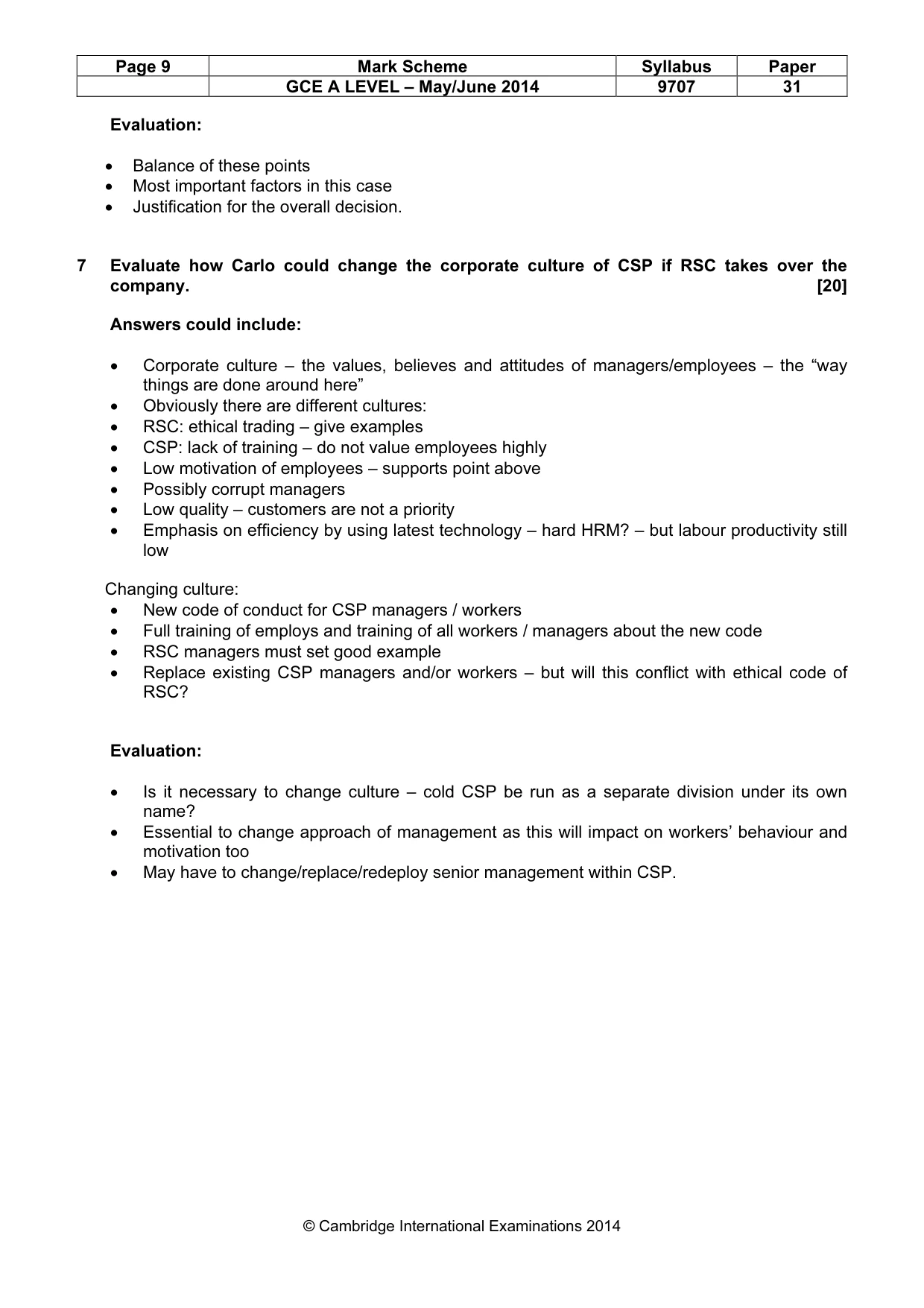
Mark scheme: 7 Evaluate how Carlo could change the corporate culture of CSP if RSC takes over the company. [20] Answers could include: • Corporate culture – the values, believes and attitudes of managers/employees – the “way things are done around here” • Obviously there are different cultures: • RSC: ethical trading – give examples • CSP: lack of training – do not value employees highly • Low motivation of employees – supports point above • Possibly corrupt managers • Low quality – customers are not a priority • Emphasis on efficiency by using latest technology – hard HRM? – but labour productivity still low Changing culture: • New code of conduct for CSP managers / workers • Full training of employs and training of all workers / managers about the new code • RSC managers must set good example • Replace existing CSP managers and/or workers – but will this conflict with ethical code of RSC? Evaluation: • Is it necessary to change culture – cold CSP be run as a separate division under its own name? • Essential to change approach of management as this will impact on workers’ behaviour and motivation too • May have to change/replace/redeploy senior management within CSP.
What you needed in this session
Cambridge’s own grade thresholds for 2014 May/June, Paper 3 · Variant 1. A higher threshold means an easier paper — the bar moves with how the cohort did.