Cambridge A Level Business (for first examination in 2016) 9609 — 2018 Feb/March Paper 2 · Variant 2
9609/22/F/M/18 · 2 questions · 60 marks · ≈68 min
The question paper and its mark scheme, free to read here and free to download. This is Cambridge’s own paper, exactly as it was sat.
Question paper4 pages


Mark scheme12 pages
Answers below. Sit the paper first if you are practising.
Questions as text
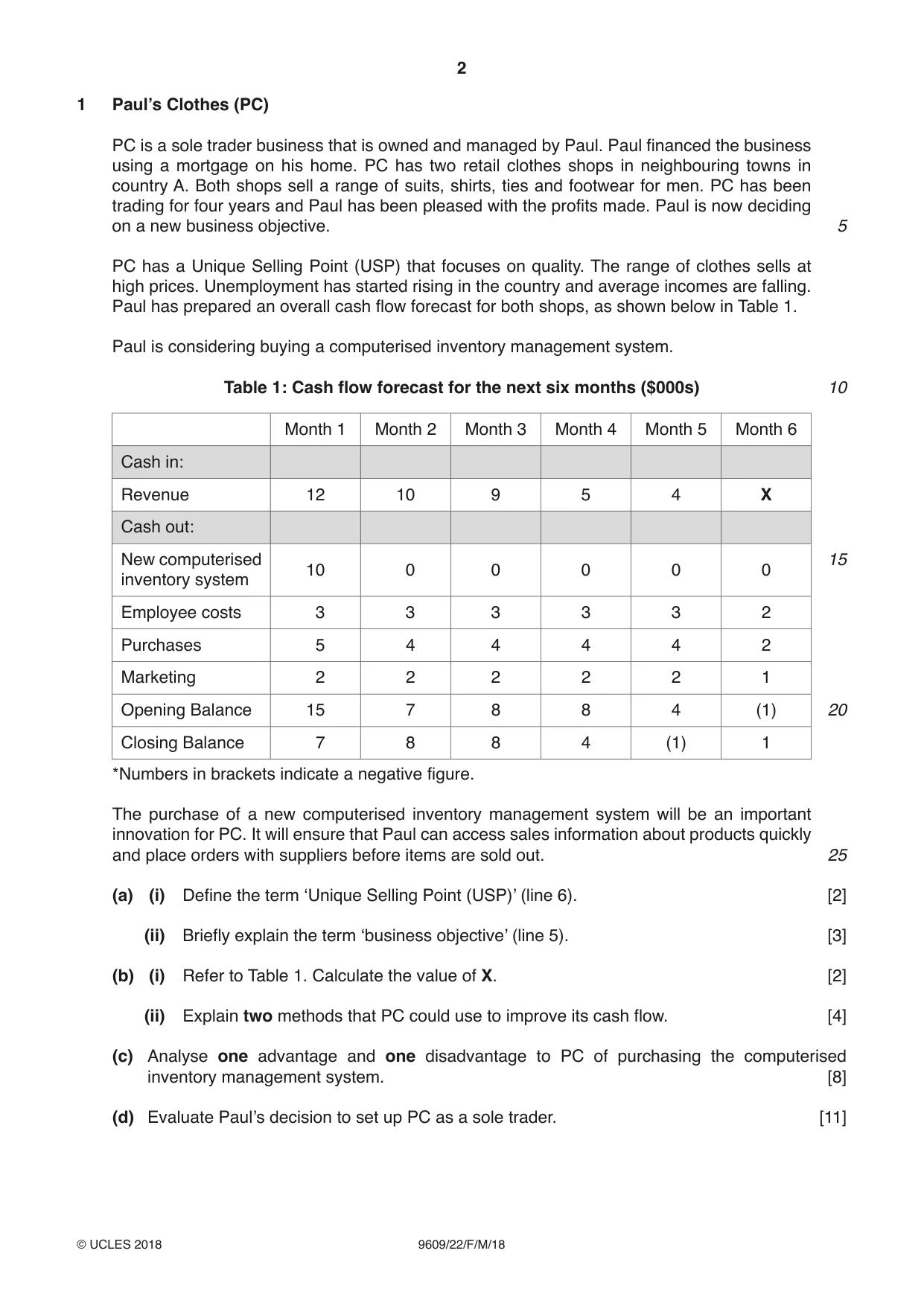
Q1 · Paul’s Clothes (PC) PC is a sole trader business that is owned and managed by Paul
1 Paul’s Clothes (PC) PC is a sole trader business that is owned and managed by Paul. Paul financed the business using a mortgage on his home. PC has two retail clothes shops in neighbouring towns in country A. Both shops sell a range of suits, shirts, ties and footwear for men. PC has been trading for four years and Paul has been pleased with the profits made. Paul is now deciding on a new business objective. 5 PC has a Unique Selling Point (USP) that focuses on quality. The range of clothes sells at high prices. Unemployment has started rising in the country and average incomes are falling. Paul has prepared an overall cash flow forecast for both shops, as shown below in Table 1. Paul is considering buying a computerised inventory management system. Table 1: Cash flow forecast for the next six months ($000s) 10 Month 1 Month 2 Month 3 Month 4 Month 5 Month 6 Cash in: Revenue 12 10 9 5 4 X Cash out: New computerised 15 10 0 0 0 0 0 inventory system Employee costs 3 3 3 3 3 2 Purchases 5 4 4 4 4 2 Marketing 2 2 2 2 2 1 Opening Balance 15 7 8 8 4 (1) 20 Closing Balance 7 8 8 4 (1) 1 *Numbers in brackets indicate a negative figure. The purchase of a new computerised inventory management system will be an important innovation for PC. It will ensure that Paul can access sales information about products quickly and place orders with suppliers before items are sold out. 25 (a) (i) Define the term ‘Unique Selling Point (USP)’ (line 6). [2] (ii) Briefly explain the term ‘business objective’ (line 5). [3] (b) (i) Refer to Table 1. Calculate the value of X. [2] (ii) Explain two methods that PC could use to improve its cash flow. [4] (c) Analyse one advantage and one disadvantage to PC of purchasing the computerised inventory management system. [8] (d) Evaluate Paul’s decision to set up PC as a sole trader. [11]
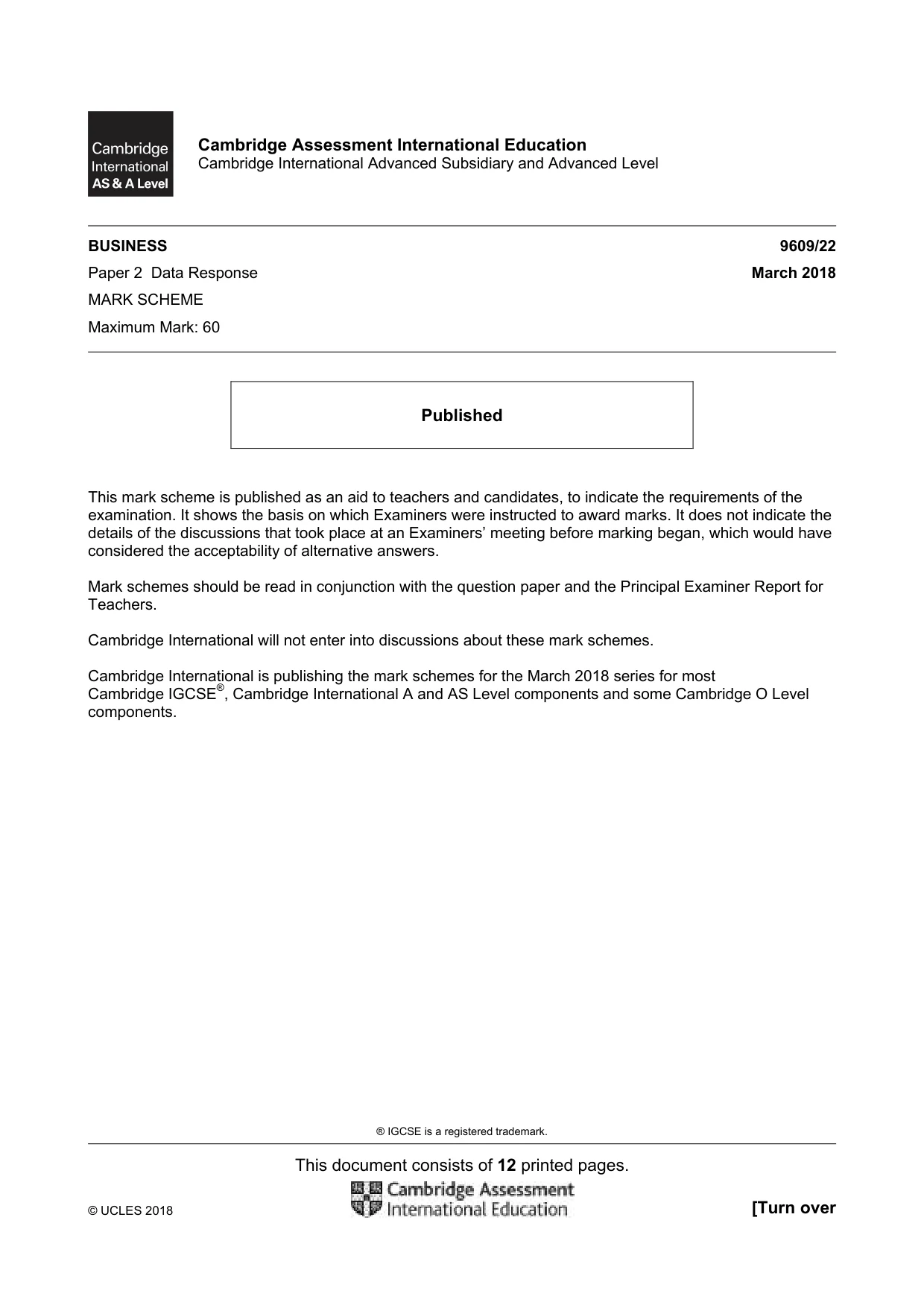
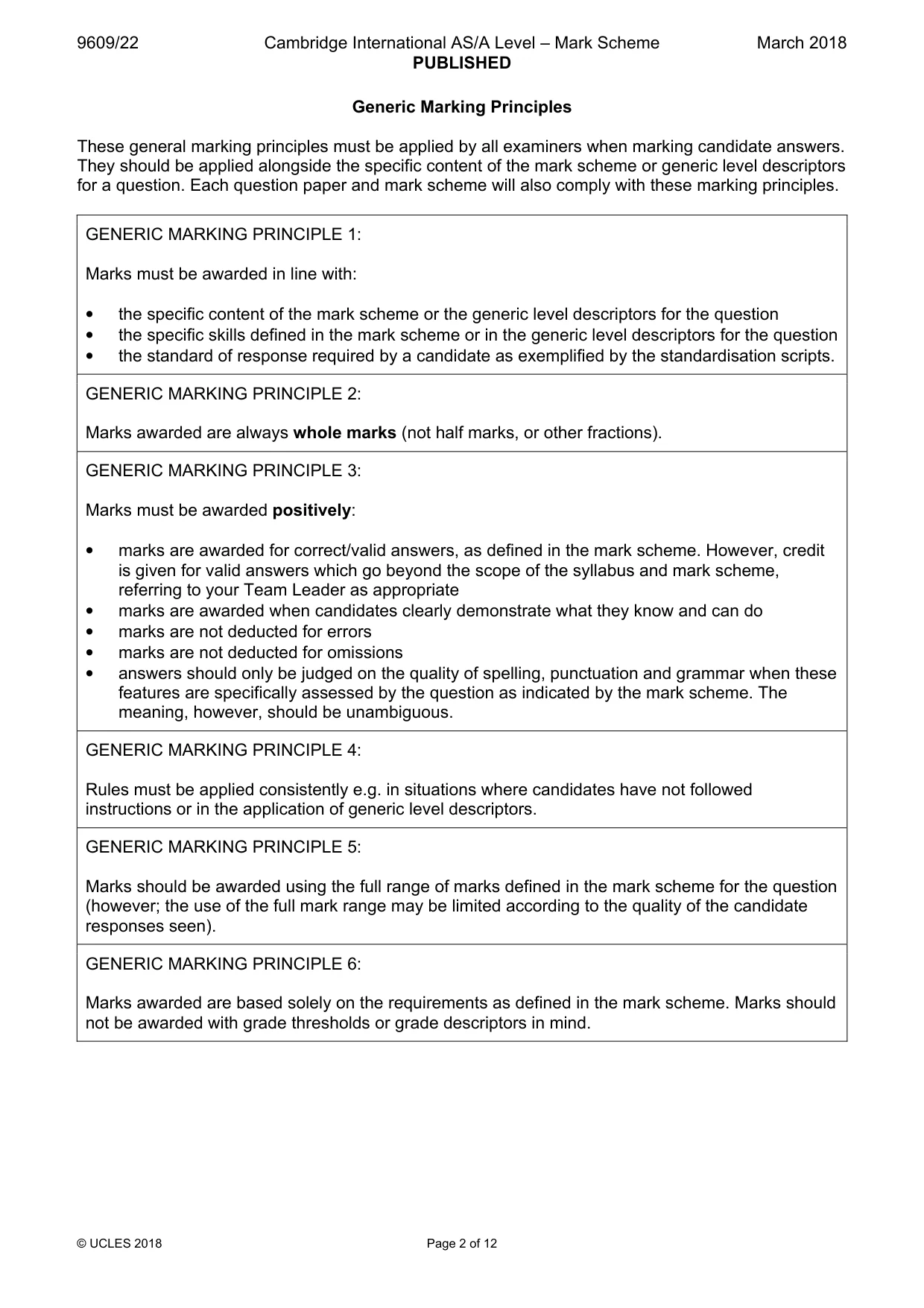
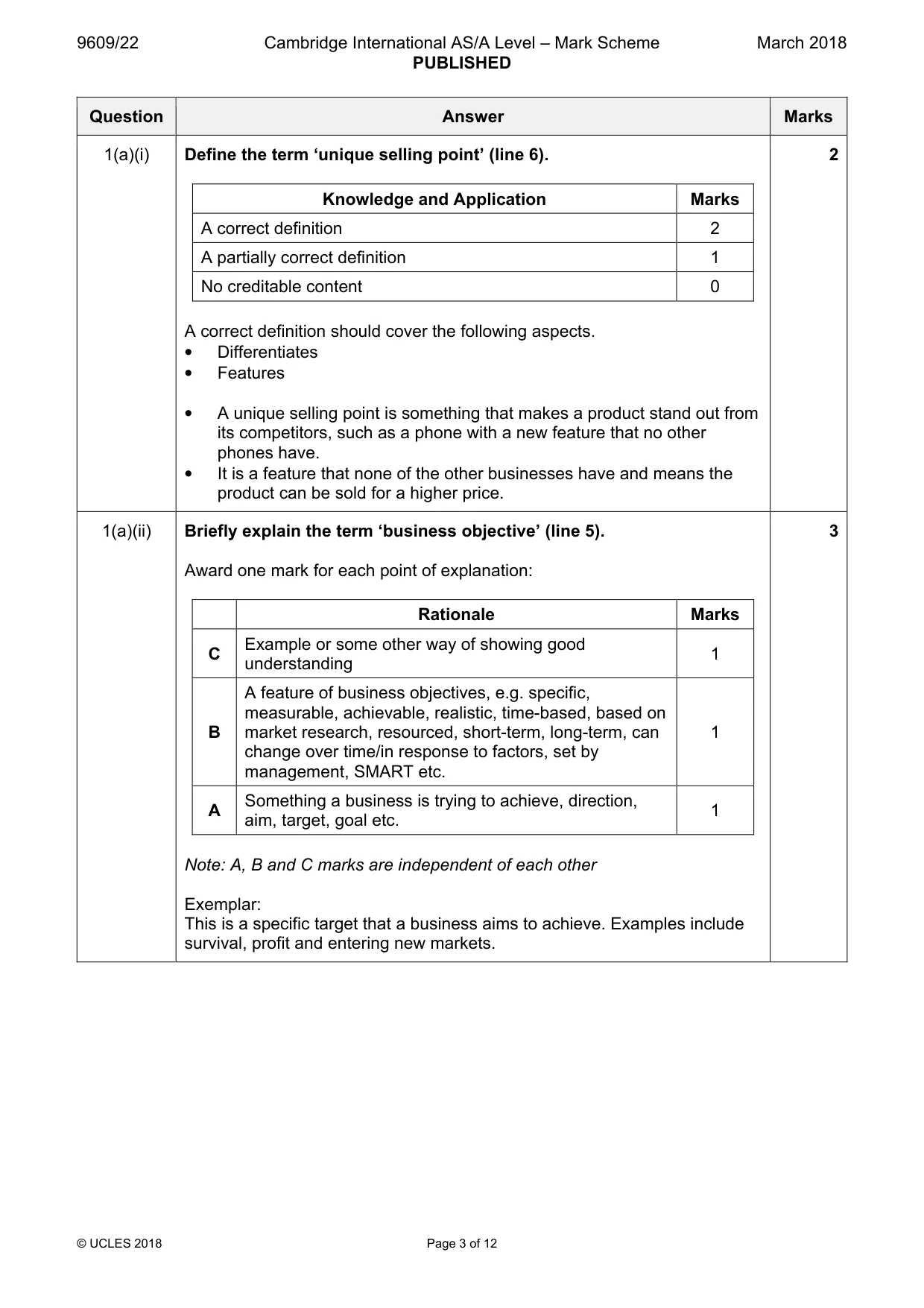
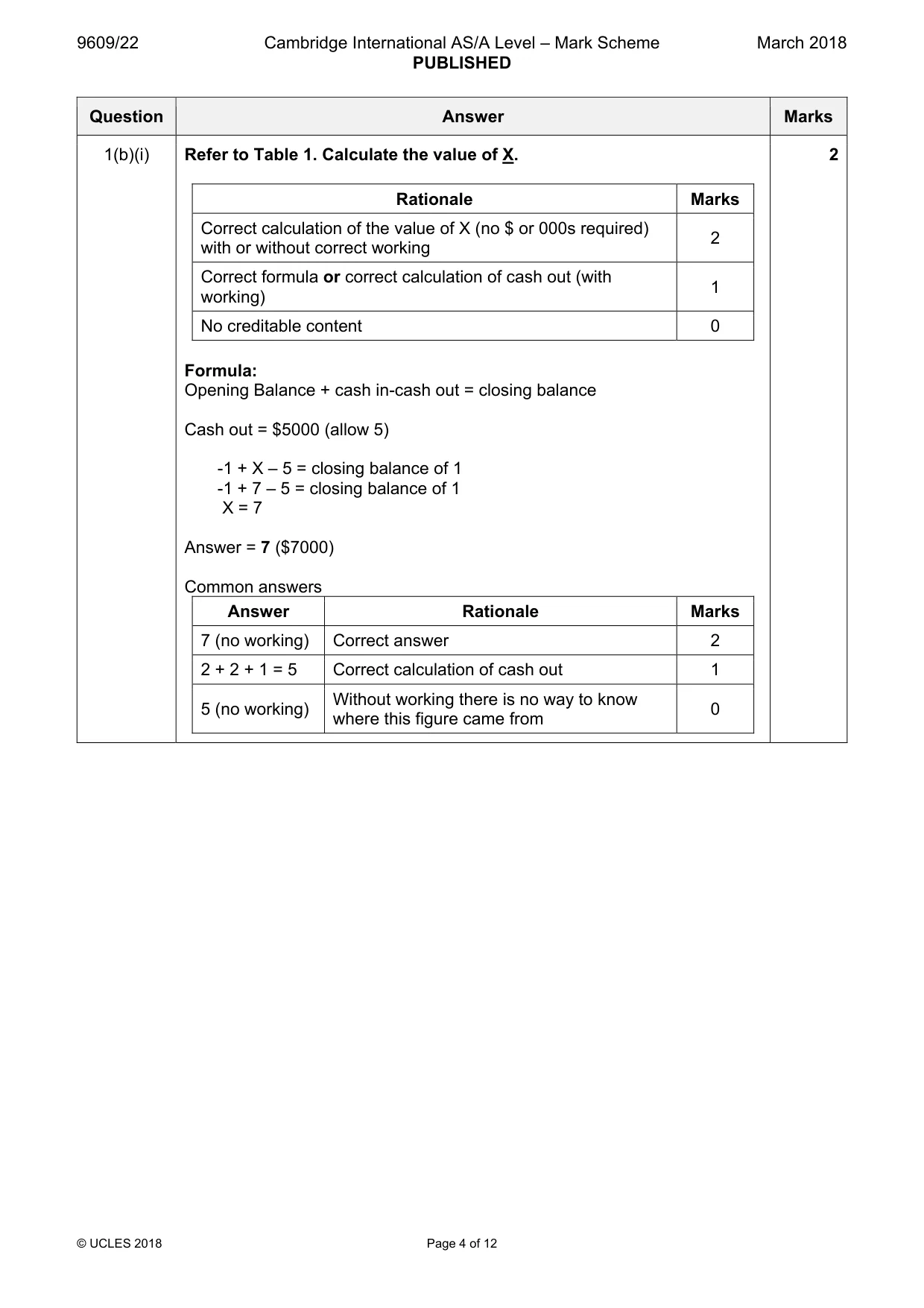
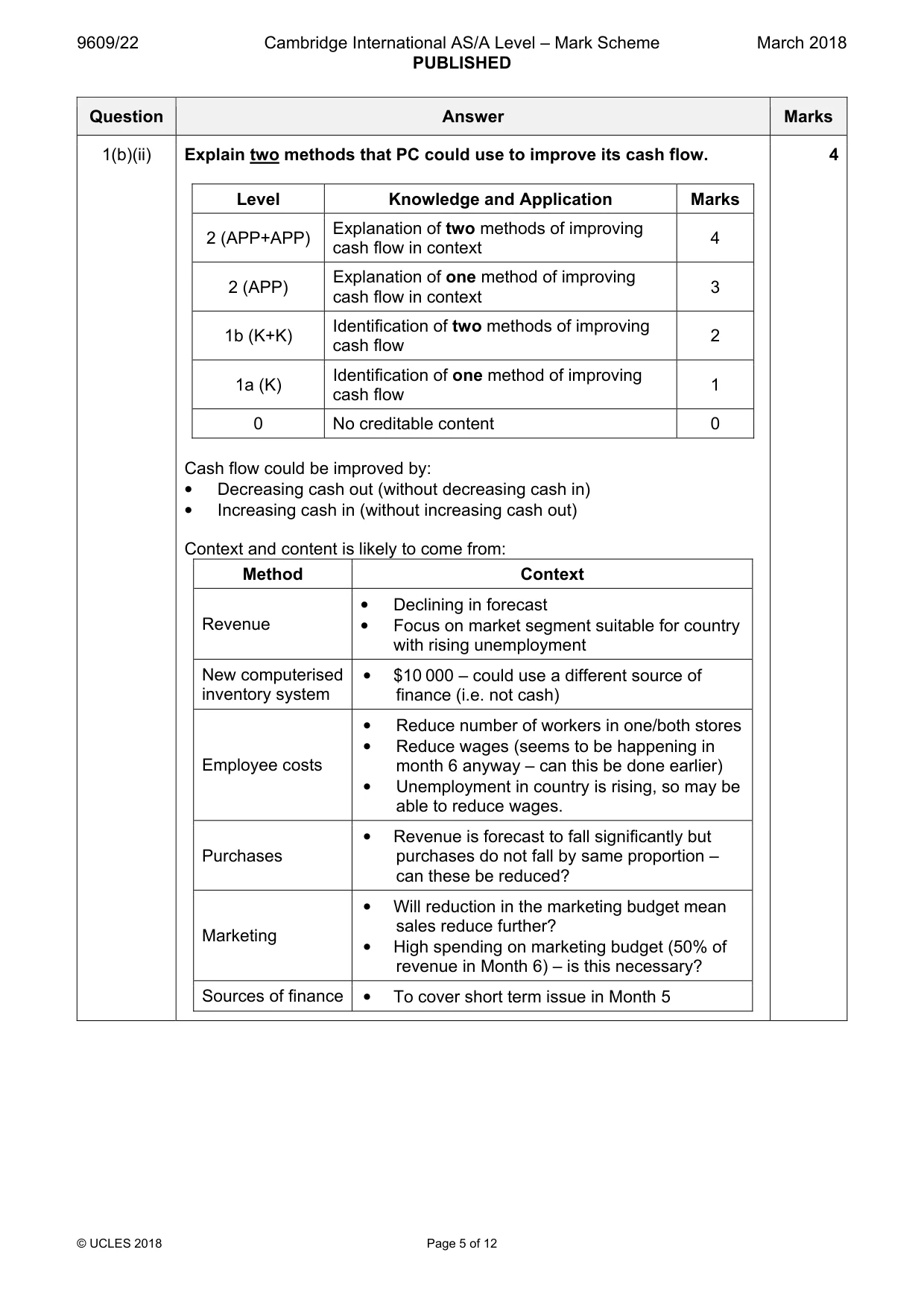
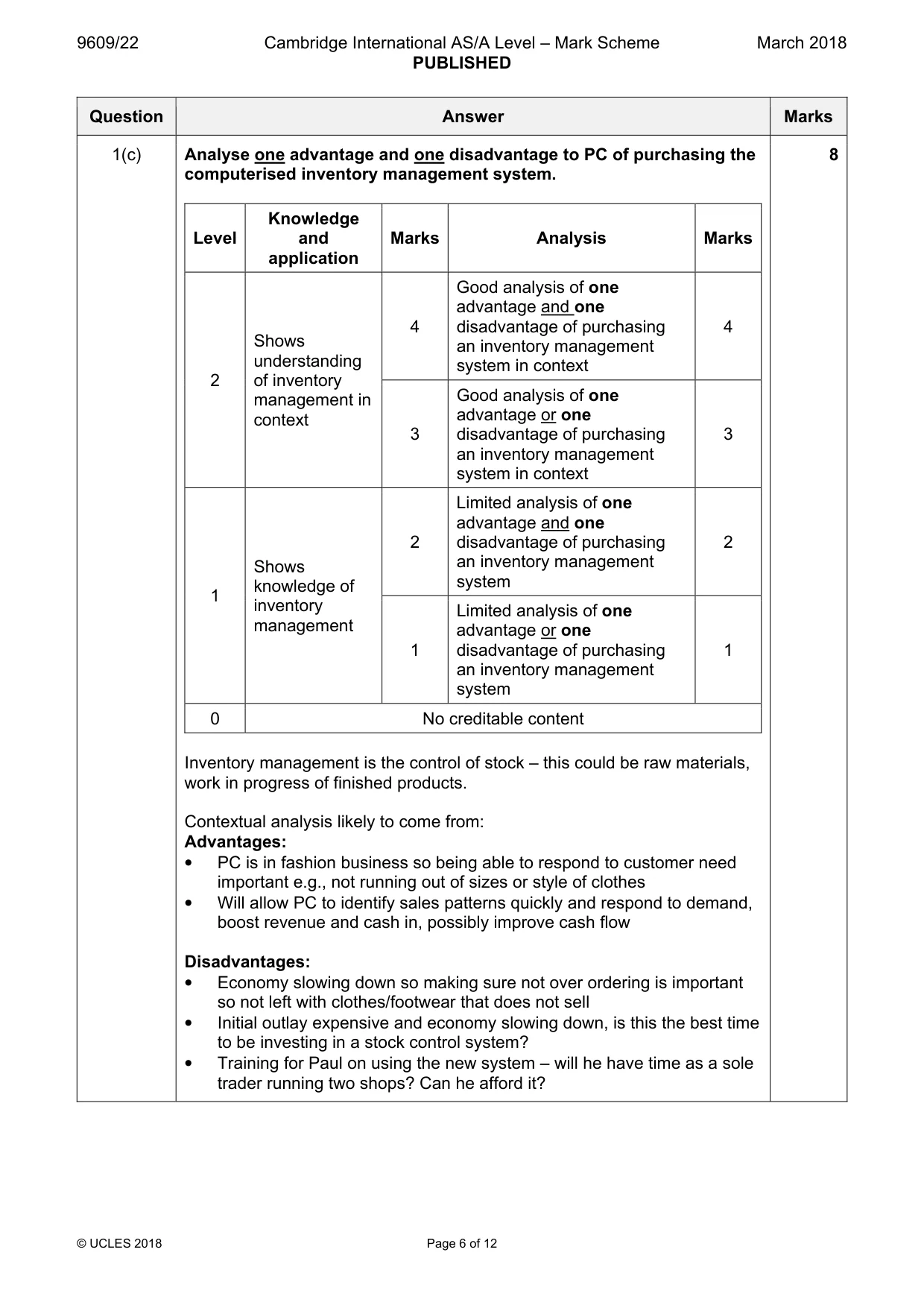
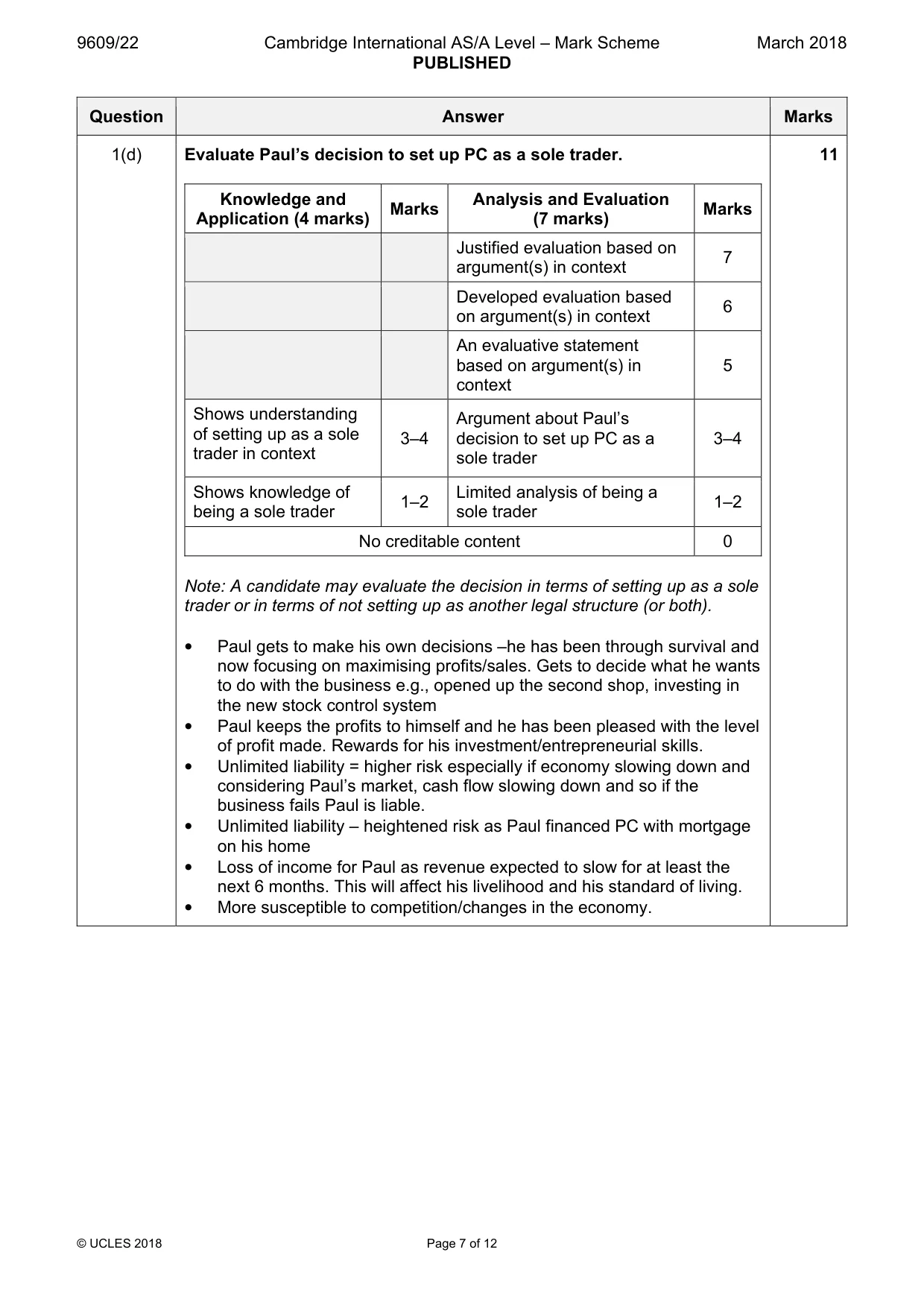
Mark scheme: Question Answer Marks 1(a)(i) Define the term ‘unique selling point’ (line 6). 2 Knowledge and Application Marks A correct definition 2 A partially correct definition 1 No creditable content 0 A correct definition should cover the following aspects. • Differentiates • Features • A unique selling point is something that makes a product stand out from its competitors, such as a phone with a new feature that no other phones have. • It is a feature that none of the other businesses have and means the product can be sold for a higher price. 1(a)(ii) Briefly explain the term ‘business objective’ (line 5). 3 Award one mark for each point of explanation: Rationale Marks Example or some other way of showing good C 1 understanding A feature of business objectives, e.g. specific, measurable, achievable, realistic, time-based, based on B market research, resourced, short-term, long-term, can 1 change over time/in response to factors, set by management, SMART etc. Something a business is trying to achieve, direction, A 1 aim, target, goal etc. Note: A, B and C marks are independent of each other Exemplar: This is a specific target that a business aims to achieve. Examples include survival, profit and entering new markets. 1(b)(i) Refer to Table 1. Calculate the value of X. 2 Rationale Marks Correct calculation of the value of X (no $ or 000s required) 2 with or without correct working Correct formula or correct calculation of cash out (with 1 working) No creditable content 0 Formula: Opening Balance + cash in-cash out = closing balance Cash out = $5000 (allow 5) -1 + X – 5 = closing balance of 1 -1 + 7 – 5 = closing balance of 1 X = 7 Answer = 7 ($7000) Common answers Answer Rationale Marks 7 (no working) Correct answer 2 2 + 2 + 1 = 5 Correct calculation of cash out 1 Without working there is no way to know 5 (no working) 0 where this figure came from 1(b)(ii) Explain two methods that PC could use to improve its cash flow. 4 Level Knowledge and Application Marks Explanation of two methods of improving 2 (APP+APP) 4 cash flow in context Explanation of one method of improving 2 (APP) 3 cash flow in context Identification of two methods of improving 1b (K+K) 2 cash flow Identification of one method of improving 1a (K) 1 cash flow 0 No creditable content 0 Cash flow could be improved by: • Decreasing cash out (without decreasing cash in) • Increasing cash in (without increasing cash out) Context and content is likely to come from: Method Context • Declining in forecast Revenue • Focus on market segment suitable for country with rising unemployment New computerised • $10 000 – could use a different source of inventory system finance (i.e. not cash) • Reduce number of workers in one/both stores • Reduce wages (seems to be happening in Employee costs month 6 anyway – can this be done earlier) • Unemployment in country is rising, so may be able to reduce wages. • Revenue is forecast to fall significantly but Purchases purchases do not fall by same proportion – can these be reduced? • Will reduction in the marketing budget mean sales reduce further? Marketing • High spending on marketing budget (50% of revenue in Month 6) – is this necessary? Sources of finance • To cover short term issue in Month 5 1(c) Analyse one advantage and one disadvantage to PC of purchasing the 8 computerised inventory management system. Knowledge Level and Marks Analysis Marks application Good analysis of one advantage and one 4 disadvantage of purchasing 4 Shows an inventory management understanding system in context 2 of inventory Good analysis of one management in advantage or one context 3 disadvantage of purchasing 3 an inventory management system in context Limited analysis of one advantage and one 2 disadvantage of purchasing 2 an inventory management Shows system knowledge of 1 inventory Limited analysis of one management advantage or one 1 disadvantage of purchasing 1 an inventory management system 0 No creditable content Inventory management is the control of stock – this could be raw materials, work in progress of finished products. Contextual analysis likely to come from: Advantages: • PC is in fashion business so being able to respond to customer need important e.g., not running out of sizes or style of clothes • Will allow PC to identify sales patterns quickly and respond to demand, boost revenue and cash in, possibly improve cash flow Disadvantages: • Economy slowing down so making sure not over ordering is important so not left with clothes/footwear that does not sell • Initial outlay expensive and economy slowing down, is this the best time to be investing in a stock control system? • Training for Paul on using the new system – will he have time as a sole trader running two shops? Can he afford it? 1(d) Evaluate Paul’s decision to set up PC as a sole trader. 11 Knowledge and Analysis and Evaluation Marks Marks Application (4 marks) (7 marks) Justified evaluation based on 7 argument(s) in context Developed evaluation based 6 on argument(s) in context An evaluative statement based on argument(s) in 5 context Shows understanding Argument about Paul’s of setting up as a sole 3–4 decision to set up PC as a 3–4 trader in context sole trader Shows knowledge of Limited analysis of being a 1–2 1–2 being a sole trader sole trader No creditable content 0 Note: A candidate may evaluate the decision in terms of setting up as a sole trader or in terms of not setting up as another legal structure (or both). • Paul gets to make his own decisions –he has been through survival and now focusing on maximising profits/sales. Gets to decide what he wants to do with the business e.g., opened up the second shop, investing in the new stock control system • Paul keeps the profits to himself and he has been pleased with the level of profit made. Rewards for his investment/entrepreneurial skills. • Unlimited liability = higher risk especially if economy slowing down and considering Paul’s market, cash flow slowing down and so if the business fails Paul is liable. • Unlimited liability – heightened risk as Paul financed PC with mortgage on his home • Loss of income for Paul as revenue expected to slow for at least the next 6 months. This will affect his livelihood and his standard of living. • More susceptible to competition/changes in the economy.
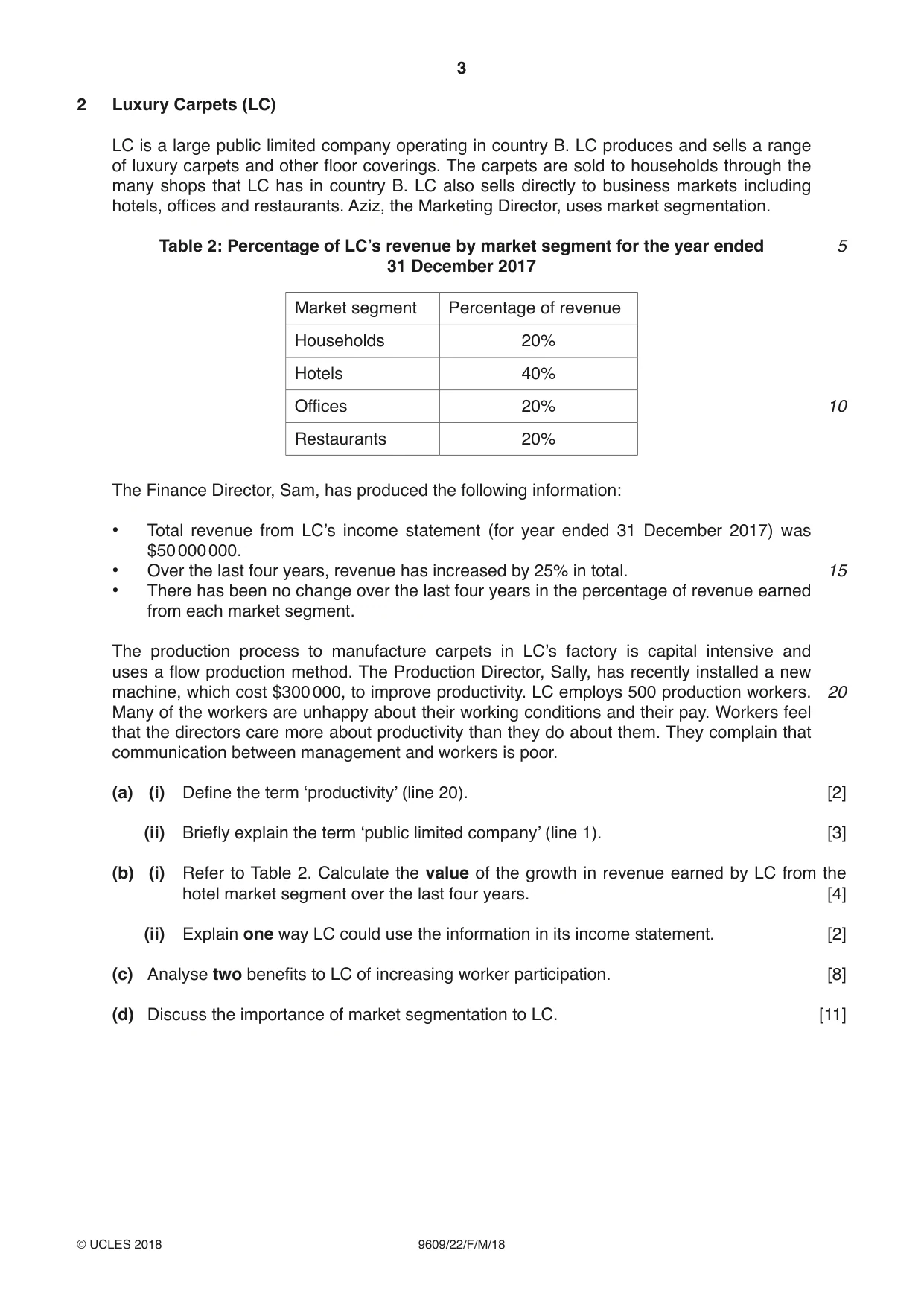
Q2 · Luxury Carpets (LC) LC is a large public limited company operating in country B
2 Luxury Carpets (LC) LC is a large public limited company operating in country B. LC produces and sells a range of luxury carpets and other floor coverings. The carpets are sold to households through the many shops that LC has in country B. LC also sells directly to business markets including hotels, offices and restaurants. Aziz, the Marketing Director, uses market segmentation. Table 2: Percentage of LC’s revenue by market segment for the year ended 5 31 December 2017 Market segment Percentage of revenue Households 20% Hotels 40% Offices 20% 10 Restaurants 20% The Finance Director, Sam, has produced the following information: • Total revenue from LC’s income statement (for year ended 31 December 2017) was $50 000 000. • Over the last four years, revenue has increased by 25% in total. 15 • There has been no change over the last four years in the percentage of revenue earned from each market segment. The production process to manufacture carpets in LC’s factory is capital intensive and uses a flow production method. The Production Director, Sally, has recently installed a new machine, which cost $300 000, to improve productivity. LC employs 500 production workers. 20 Many of the workers are unhappy about their working conditions and their pay. Workers feel that the directors care more about productivity than they do about them. They complain that communication between management and workers is poor. (a) (i) Define the term ‘productivity’ (line 20). [2] (ii) Briefly explain the term ‘public limited company’ (line 1). [3] (b) (i) Refer to Table 2. Calculate the value of the growth in revenue earned by LC from the hotel market segment over the last four years. [4] (ii) Explain one way LC could use the information in its income statement. [2] (c) Analyse two benefits to LC of increasing worker participation. [8] (d) Discuss the importance of market segmentation to LC. [11]
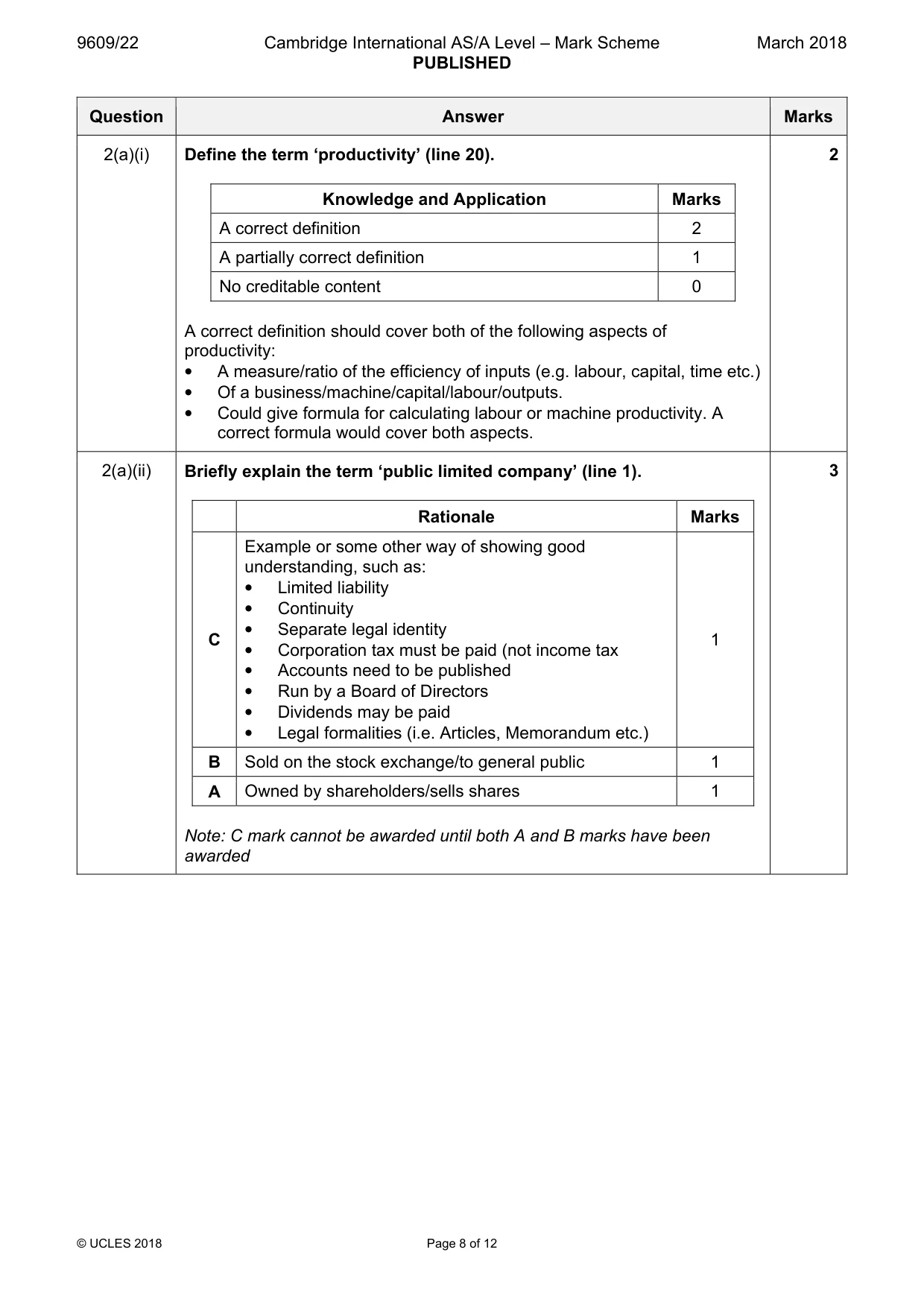
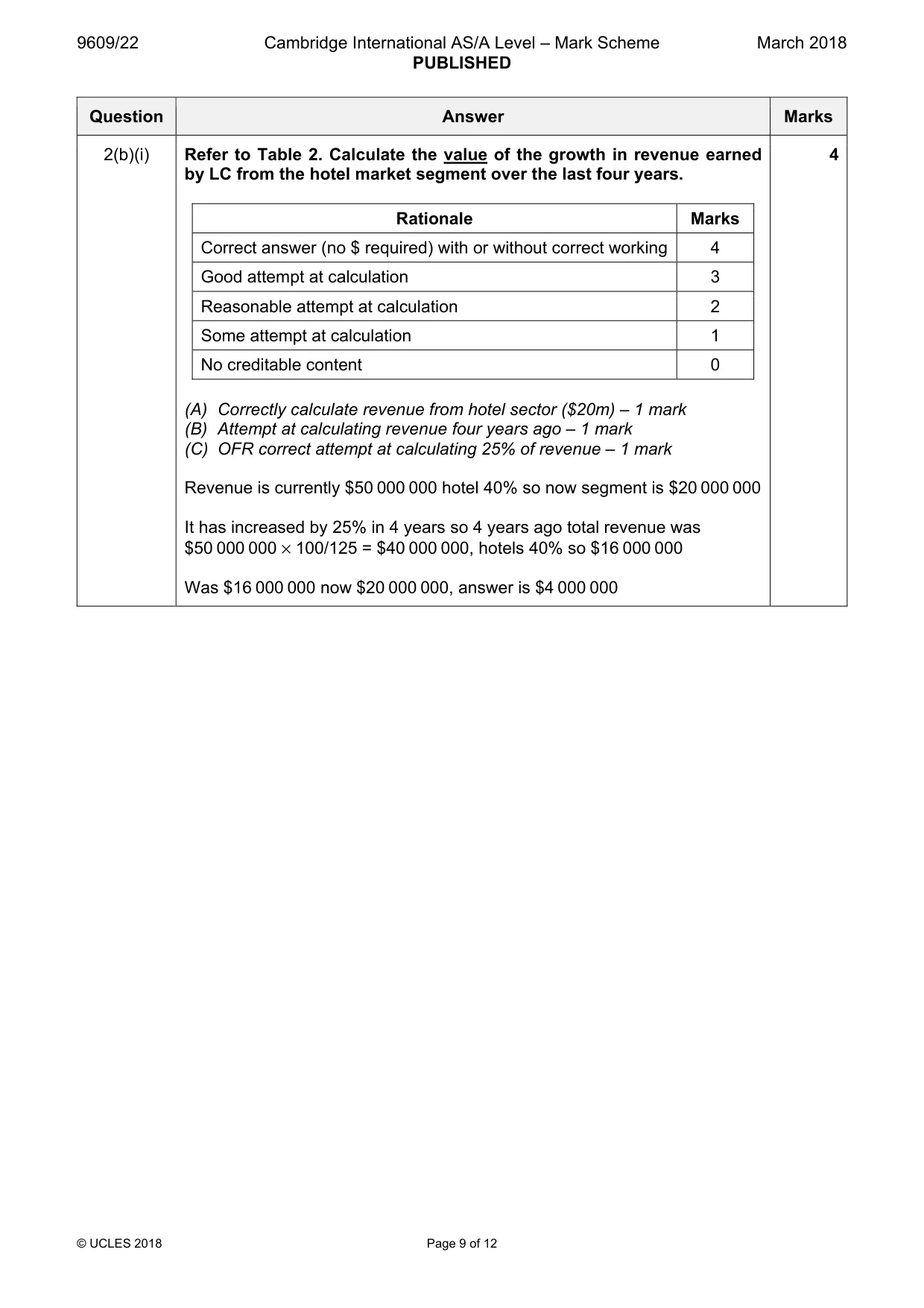
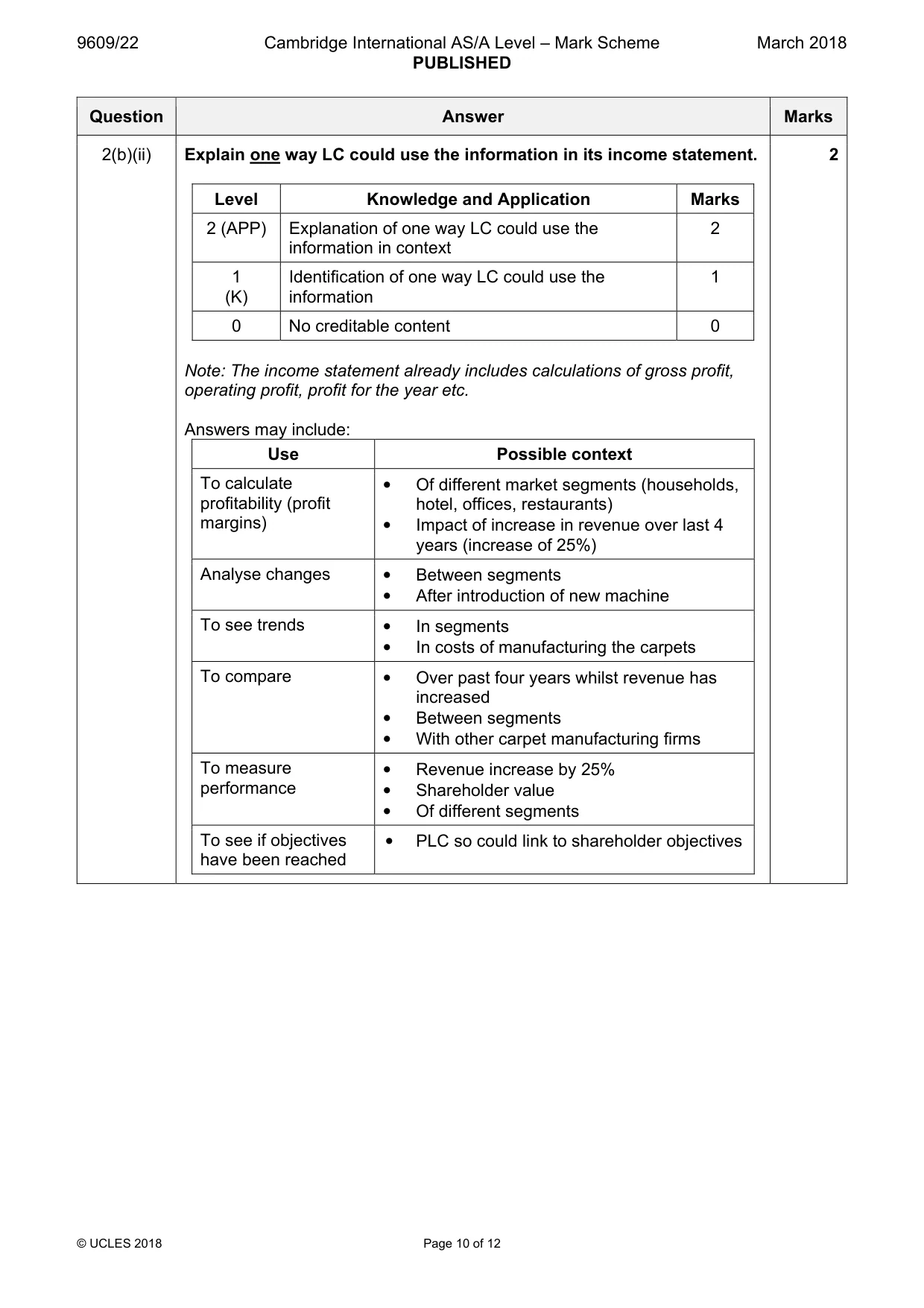
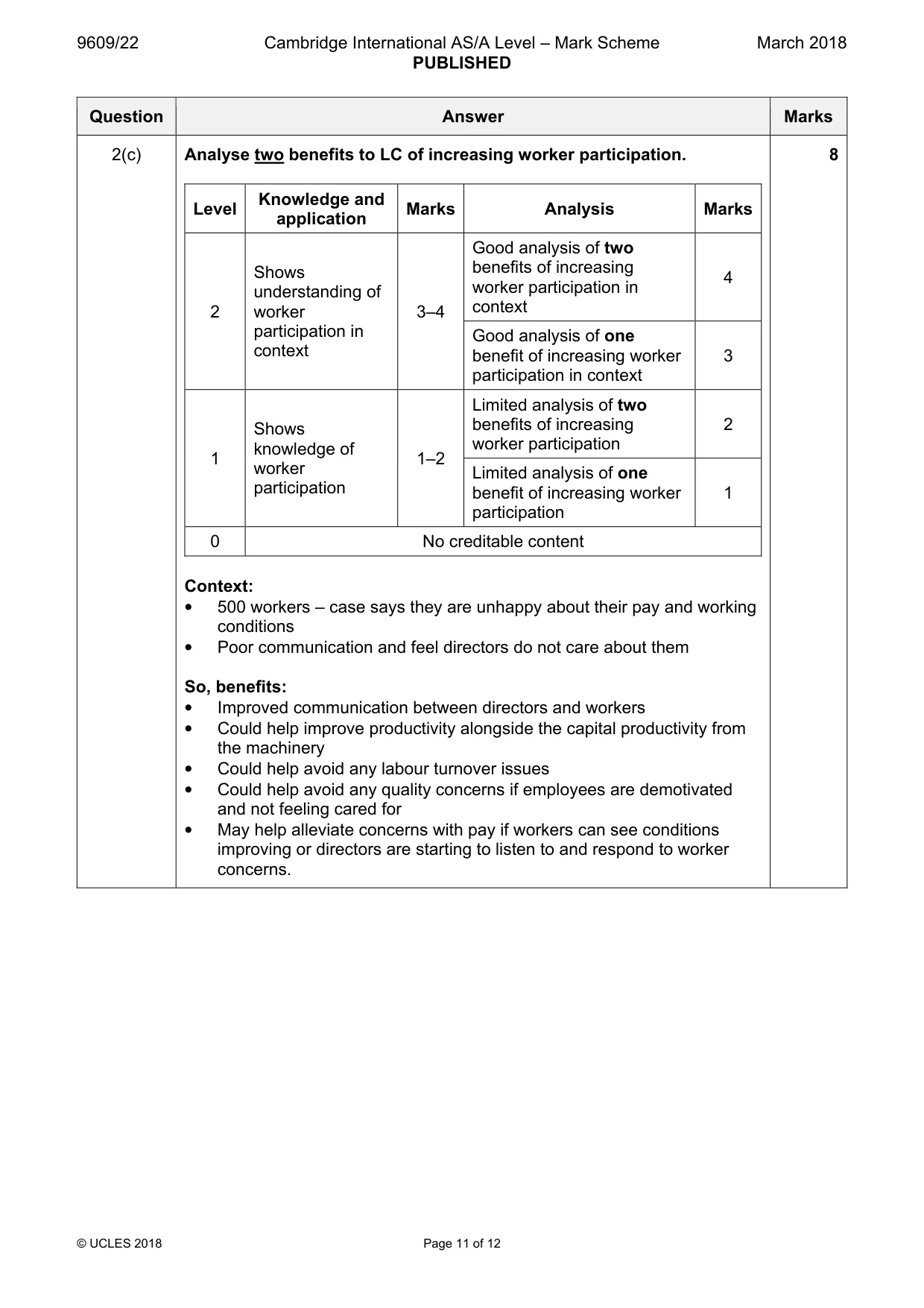
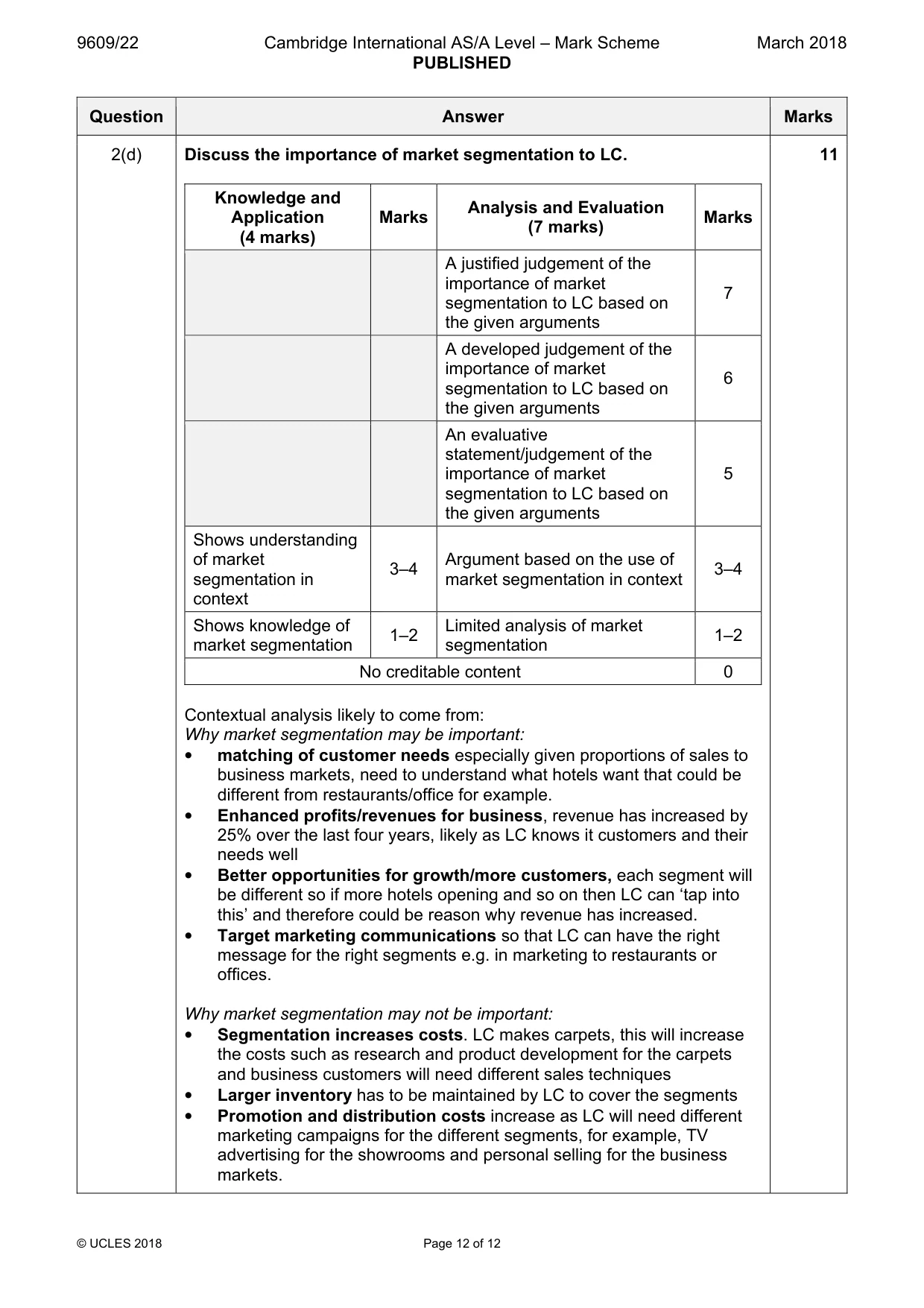
Mark scheme: 2(a)(i) Define the term ‘productivity’ (line 20). 2 Knowledge and Application Marks A correct definition 2 A partially correct definition 1 No creditable content 0 A correct definition should cover both of the following aspects of productivity: • A measure/ratio of the efficiency of inputs (e.g. labour, capital, time etc.) • Of a business/machine/capital/labour/outputs. • Could give formula for calculating labour or machine productivity. A correct formula would cover both aspects. 2(a)(ii) Briefly explain the term ‘public limited company’ (line 1). 3 Rationale Marks Example or some other way of showing good understanding, such as: • Limited liability • Continuity • Separate legal identity C 1 • Corporation tax must be paid (not income tax • Accounts need to be published • Run by a Board of Directors • Dividends may be paid • Legal formalities (i.e. Articles, Memorandum etc.) B Sold on the stock exchange/to general public 1 A Owned by shareholders/sells shares 1 Note: C mark cannot be awarded until both A and B marks have been awarded 2(b)(i) Refer to Table 2. Calculate the value of the growth in revenue earned 4 by LC from the hotel market segment over the last four years. Rationale Marks Correct answer (no $ required) with or without correct working 4 Good attempt at calculation 3 Reasonable attempt at calculation 2 Some attempt at calculation 1 No creditable content 0 (A) Correctly calculate revenue from hotel sector ($20m) – 1 mark (B) Attempt at calculating revenue four years ago – 1 mark (C) OFR correct attempt at calculating 25% of revenue – 1 mark Revenue is currently $50 000 000 hotel 40% so now segment is $20 000 000 It has increased by 25% in 4 years so 4 years ago total revenue was $50 000 000 × 100/125 = $40 000 000, hotels 40% so $16 000 000 Was $16 000 000 now $20 000 000, answer is $4 000 000 2(b)(ii) Explain one way LC could use the information in its income statement. 2 Level Knowledge and Application Marks 2 (APP) Explanation of one way LC could use the 2 information in context 1 Identification of one way LC could use the 1 (K) information 0 No creditable content 0 Note: The income statement already includes calculations of gross profit, operating profit, profit for the year etc. Answers may include: Use Possible context To calculate • Of different market segments (households, profitability (profit hotel, offices, restaurants) margins) • Impact of increase in revenue over last 4 years (increase of 25%) Analyse changes • Between segments • After introduction of new machine To see trends • In segments • In costs of manufacturing the carpets To compare • Over past four years whilst revenue has increased • Between segments • With other carpet manufacturing firms To measure • Revenue increase by 25% performance • Shareholder value • Of different segments To see if objectives • PLC so could link to shareholder objectives have been reached 2(c) Analyse two benefits to LC of increasing worker participation. 8 Knowledge and Level Marks Analysis Marks application Good analysis of two benefits of increasing Shows 4 worker participation in understanding of context 2 worker 3–4 participation in Good analysis of one context benefit of increasing worker 3 participation in context Limited analysis of two benefits of increasing 2 Shows worker participation knowledge of 1 1–2 worker Limited analysis of one participation benefit of increasing worker 1 participation 0 No creditable content Context: • 500 workers – case says they are unhappy about their pay and working conditions • Poor communication and feel directors do not care about them So, benefits: • Improved communication between directors and workers • Could help improve productivity alongside the capital productivity from the machinery • Could help avoid any labour turnover issues • Could help avoid any quality concerns if employees are demotivated and not feeling cared for • May help alleviate concerns with pay if workers can see conditions improving or directors are starting to listen to and respond to worker concerns. 2(d) Discuss the importance of market segmentation to LC. 11 Knowledge and Analysis and Evaluation Application Marks Marks (7 marks) (4 marks) A justified judgement of the importance of market 7 segmentation to LC based on the given arguments A developed judgement of the importance of market 6 segmentation to LC based on the given arguments An evaluative statement/judgement of the importance of market 5 segmentation to LC based on the given arguments Shows understanding of market Argument based on the use of 3–4 3–4 segmentation in market segmentation in context context Shows knowledge of Limited analysis of market 1–2 1–2 market segmentation segmentation No creditable content 0 Contextual analysis likely to come from: Why market segmentation may be important: • matching of customer needs especially given proportions of sales to business markets, need to understand what hotels want that could be different from restaurants/office for example. • Enhanced profits/revenues for business, revenue has increased by 25% over the last four years, likely as LC knows it customers and their needs well • Better opportunities for growth/more customers, each segment will be different so if more hotels opening and so on then LC can ‘tap into this’ and therefore could be reason why revenue has increased. • Target marketing communications so that LC can have the right message for the right segments e.g. in marketing to restaurants or offices. Why market segmentation may not be important: • Segmentation increases costs. LC makes carpets, this will increase the costs such as research and product development for the carpets and business customers will need different sales techniques • Larger inventory has to be maintained by LC to cover the segments • Promotion and distribution costs increase as LC will need different marketing campaigns for the different segments, for example, TV advertising for the showrooms and personal selling for the business markets.
What was in this paper
The subtopics covered by these 2 questions, and how many questions each got. Open one in a new tab to see every Cambridge question on it.
What you needed in this session
Cambridge’s own grade thresholds for 2018 Feb/March, Paper 2 · Variant 2. A higher threshold means an easier paper — the bar moves with how the cohort did.