Cambridge IGCSE Economics 0455 — 2012 Oct/Nov Paper 3 · Variant 3
0455/33/O/N/12 · 2 questions · 40 marks · ≈45 min
The question paper and its mark scheme, free to read here and free to download. This is Cambridge’s own paper, exactly as it was sat.
Question paper8 pages
Mark scheme4 pages
Answers below. Sit the paper first if you are practising.
Questions as text
Q1 · Identify, from the extract, two benefits tourism provides for the economy of Ecuador
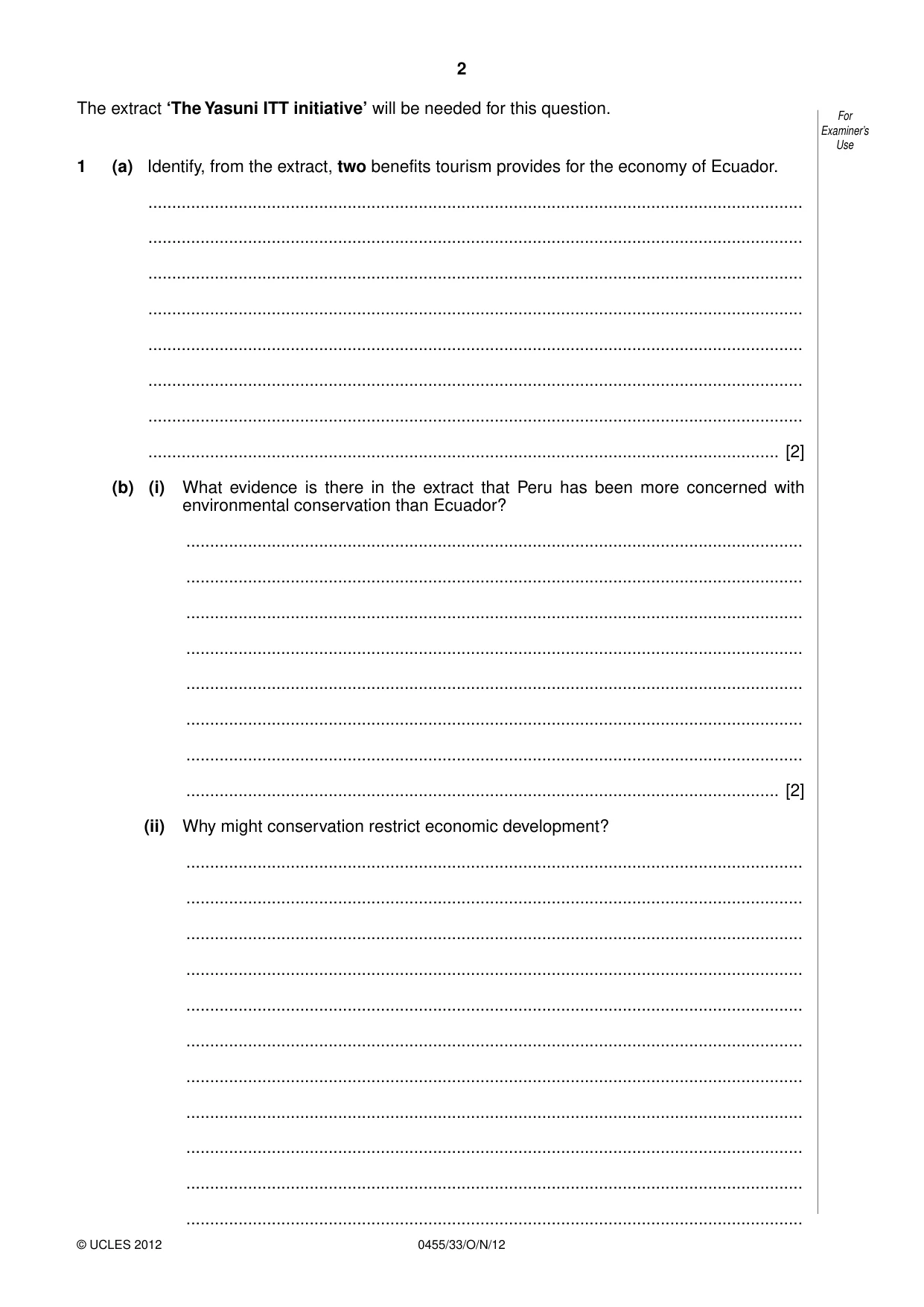
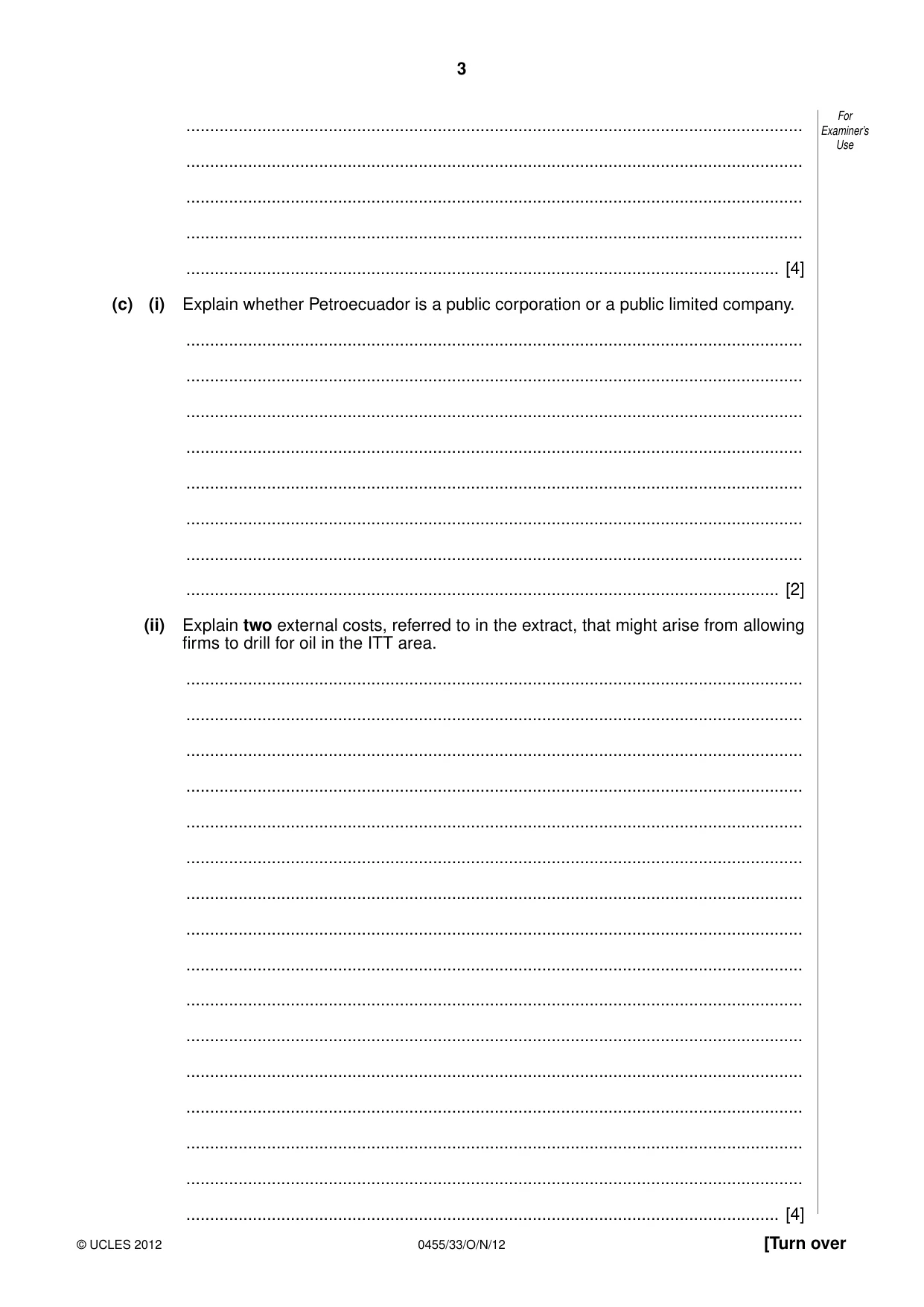
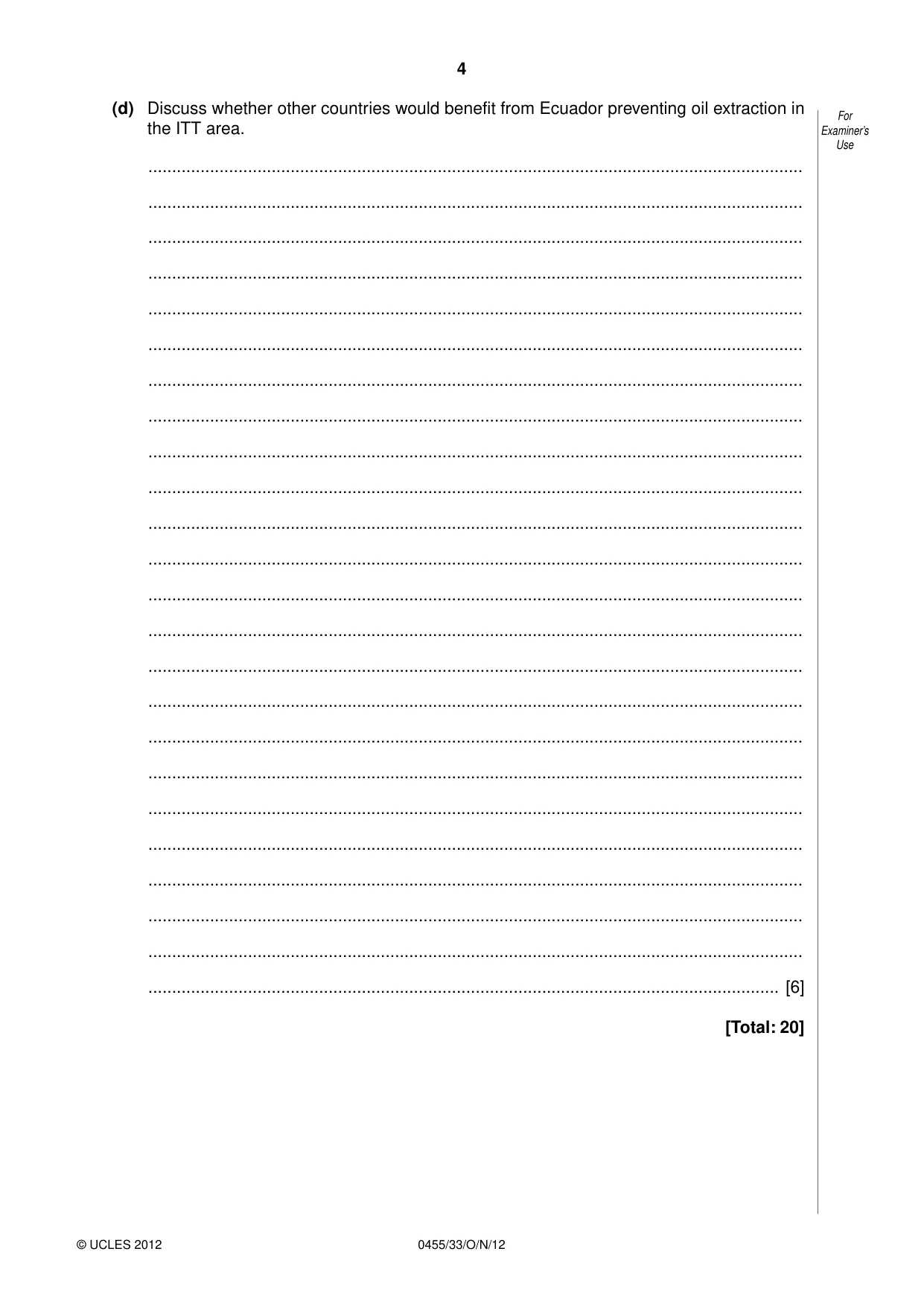
1 (a) Identify, from the extract, two benefits tourism provides for the economy of Ecuador. .......................................................................................................................................... .......................................................................................................................................... .......................................................................................................................................... .......................................................................................................................................... .......................................................................................................................................... .......................................................................................................................................... .......................................................................................................................................... ..................................................................................................................................... [2] (b) (i) What evidence is there in the extract that Peru has been more concerned with environmental conservation than Ecuador? .................................................................................................................................. .................................................................................................................................. .................................................................................................................................. .................................................................................................................................. .................................................................................................................................. .................................................................................................................................. .................................................................................................................................. ............................................................................................................................. [2] (ii) Why might conservation restrict economic development? .................................................................................................................................. .................................................................................................................................. .................................................................................................................................. .................................................................................................................................. .................................................................................................................................. .................................................................................................................................. .................................................................................................................................. .................................................................................................................................. .................................................................................................................................. .................................................................................................................................. .................................................................................................................................. .................................................................................................................................. .................................................................................................................................. .................................................................................................................................. .................................................................................................................................. ............................................................................................................................. [4] (c) (i) Explain whether Petroecuador is a public corporation or a public limited company. .................................................................................................................................. .................................................................................................................................. .................................................................................................................................. .................................................................................................................................. .................................................................................................................................. .................................................................................................................................. .................................................................................................................................. ............................................................................................................................. [2] (ii) Explain two external costs, referred to in the extract, that might arise from allowing firms to drill for oil in the ITT area. .................................................................................................................................. .................................................................................................................................. .................................................................................................................................. .................................................................................................................................. .................................................................................................................................. .................................................................................................................................. .................................................................................................................................. .................................................................................................................................. .................................................................................................................................. .................................................................................................................................. .................................................................................................................................. .................................................................................................................................. .................................................................................................................................. .................................................................................................................................. .................................................................................................................................. ............................................................................................................................. [4] (d) Discuss whether other countries would benefit from Ecuador preventing oil extraction in the ITT area. .......................................................................................................................................... .......................................................................................................................................... .......................................................................................................................................... .......................................................................................................................................... .......................................................................................................................................... .......................................................................................................................................... .......................................................................................................................................... .......................................................................................................................................... .......................................................................................................................................... .......................................................................................................................................... .......................................................................................................................................... .......................................................................................................................................... .......................................................................................................................................... .......................................................................................................................................... .......................................................................................................................................... .......................................................................................................................................... .......................................................................................................................................... .......................................................................................................................................... .......................................................................................................................................... .......................................................................................................................................... .......................................................................................................................................... .......................................................................................................................................... .......................................................................................................................................... ..................................................................................................................................... [6] [Total: 20] The extract ‘Falling fertility’ will be needed for this question.
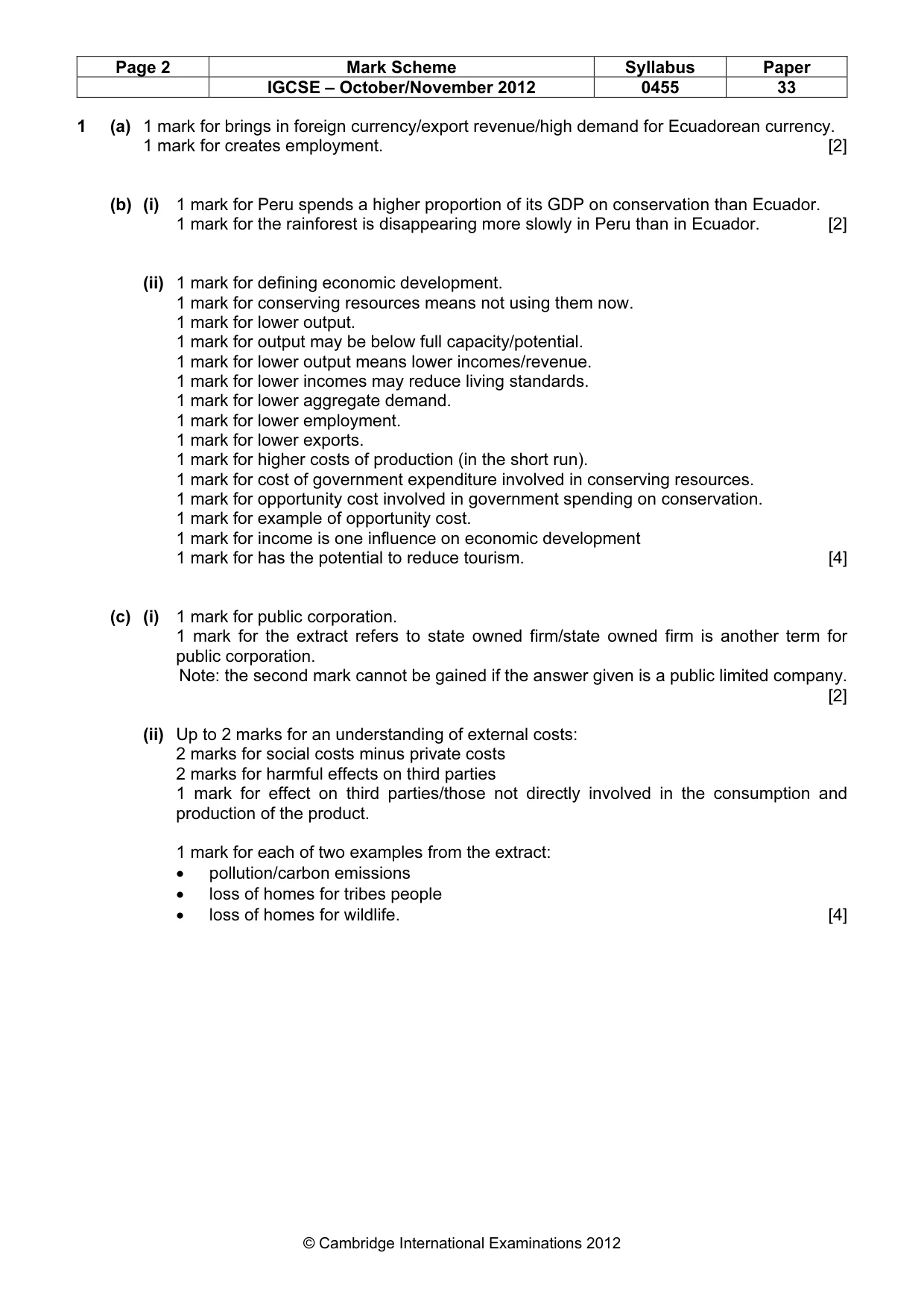
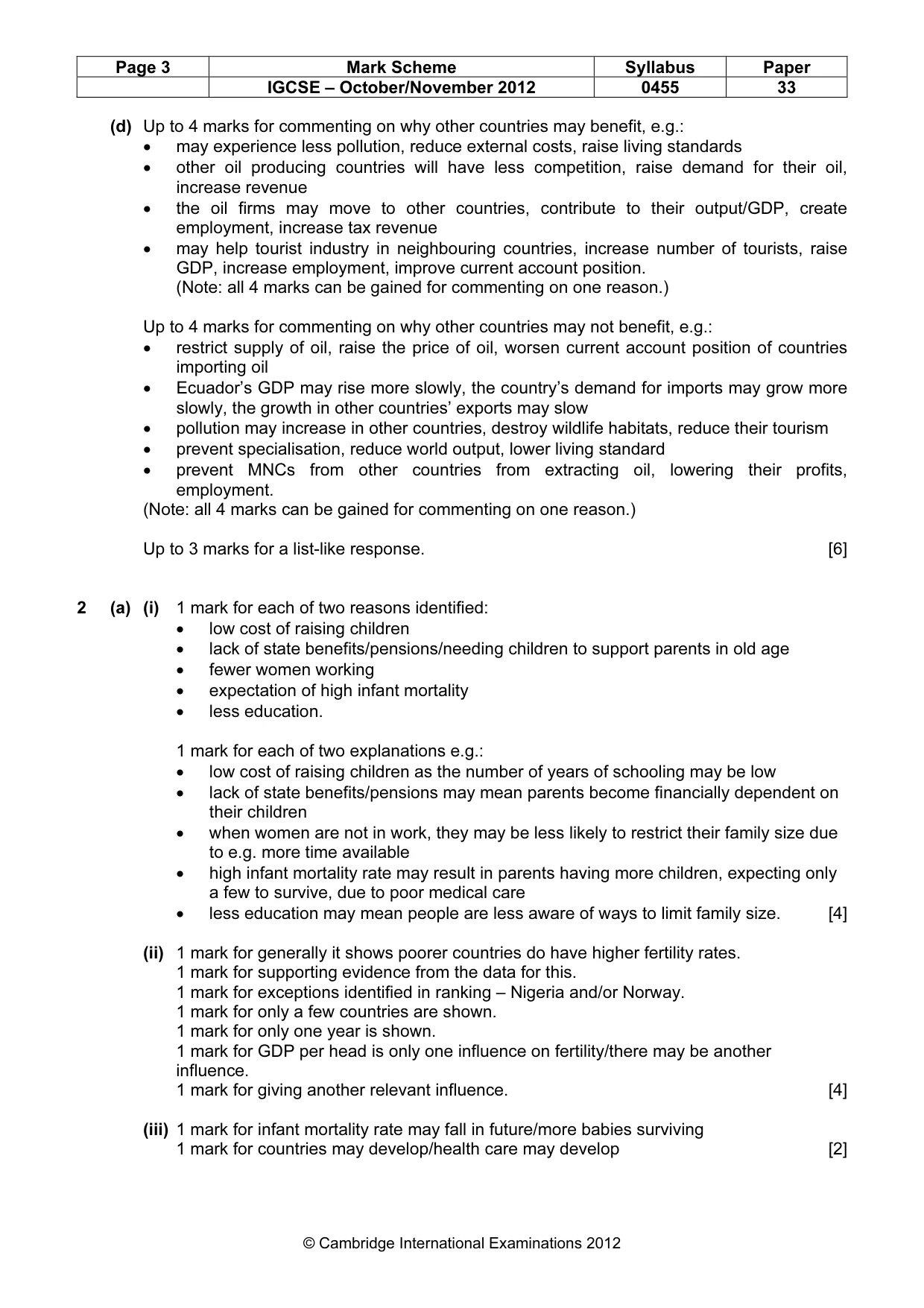
Mark scheme: 1 (a) 1 mark for brings in foreign currency/export revenue/high demand for Ecuadorean currency. 1 mark for creates employment. [2] (b) (i) 1 mark for Peru spends a higher proportion of its GDP on conservation than Ecuador. 1 mark for the rainforest is disappearing more slowly in Peru than in Ecuador. [2] (ii) 1 mark for defining economic development. 1 mark for conserving resources means not using them now. 1 mark for lower output. 1 mark for output may be below full capacity/potential. 1 mark for lower output means lower incomes/revenue. 1 mark for lower incomes may reduce living standards. 1 mark for lower aggregate demand. 1 mark for lower employment. 1 mark for lower exports. 1 mark for higher costs of production (in the short run). 1 mark for cost of government expenditure involved in conserving resources. 1 mark for opportunity cost involved in government spending on conservation. 1 mark for example of opportunity cost. 1 mark for income is one influence on economic development 1 mark for has the potential to reduce tourism. [4] (c) (i) 1 mark for public corporation. 1 mark for the extract refers to state owned firm/state owned firm is another term for public corporation. Note: the second mark cannot be gained if the answer given is a public limited company. [2] (ii) Up to 2 marks for an understanding of external costs: 2 marks for social costs minus private costs 2 marks for harmful effects on third parties 1 mark for effect on third parties/those not directly involved in the consumption and production of the product. 1 mark for each of two examples from the extract: • pollution/carbon emissions • loss of homes for tribes people • loss of homes for wildlife. [4] IGCSE – October/November 2012 0455 33 (d) Up to 4 marks for commenting on why other countries may benefit, e.g.: • may experience less pollution, reduce external costs, raise living standards • other oil producing countries will have less competition, raise demand for their oil, increase revenue • the oil firms may move to other countries, contribute to their output/GDP, create employment, increase tax revenue • may help tourist industry in neighbouring countries, increase number of tourists, raise GDP, increase employment, improve current account position. (Note: all 4 marks can be gained for commenting on one reason.) Up to 4 marks for commenting on why other countries may not benefit, e.g.: • restrict supply of oil, raise the price of oil, worsen current account position of countries importing oil • Ecuador’s GDP may rise more slowly, the country’s demand for imports may grow more slowly, the growth in other countries’ exports may slow • pollution may increase in other countries, destroy wildlife habitats, reduce their tourism • prevent specialisation, reduce world output, lower living standard • prevent MNCs from other countries from extracting oil, lowering their profits, employment. (Note: all 4 marks can be gained for commenting on one reason.) Up to 3 marks for a list-like response. [6]
Q2 · Using information from the extract, explain two reasons why developing countries tend to…
2 (a) (i) Using information from the extract, explain two reasons why developing countries tend to have higher fertility rates than developed countries. .................................................................................................................................. .................................................................................................................................. .................................................................................................................................. .................................................................................................................................. .................................................................................................................................. .................................................................................................................................. .................................................................................................................................. .................................................................................................................................. .................................................................................................................................. .................................................................................................................................. .................................................................................................................................. .................................................................................................................................. .................................................................................................................................. .................................................................................................................................. .................................................................................................................................. ............................................................................................................................. [4] (ii) Using Table 1, comment on whether the data supports the view that fertility rates fall as countries develop. .................................................................................................................................. .................................................................................................................................. .................................................................................................................................. .................................................................................................................................. .................................................................................................................................. .................................................................................................................................. .................................................................................................................................. .................................................................................................................................. .................................................................................................................................. .................................................................................................................................. .................................................................................................................................. .................................................................................................................................. .................................................................................................................................. .................................................................................................................................. .................................................................................................................................. ............................................................................................................................. [4] (iii) Why may the global average replacement rate fall in the future? .................................................................................................................................. .................................................................................................................................. .................................................................................................................................. .................................................................................................................................. .................................................................................................................................. .................................................................................................................................. .................................................................................................................................. ............................................................................................................................. [2] (b) (i) Explain two reasons why a country’s fertility rate may fall but its population size increases. .................................................................................................................................. .................................................................................................................................. .................................................................................................................................. .................................................................................................................................. .................................................................................................................................. .................................................................................................................................. .................................................................................................................................. .................................................................................................................................. .................................................................................................................................. .................................................................................................................................. .................................................................................................................................. .................................................................................................................................. .................................................................................................................................. .................................................................................................................................. .................................................................................................................................. ............................................................................................................................. [4] (ii) Discuss what information you would need to assess whether a country would benefit from a decrease in its population size. .................................................................................................................................. .................................................................................................................................. .................................................................................................................................. .................................................................................................................................. .................................................................................................................................. .................................................................................................................................. .................................................................................................................................. .................................................................................................................................. .................................................................................................................................. .................................................................................................................................. ..................................................................................................................................
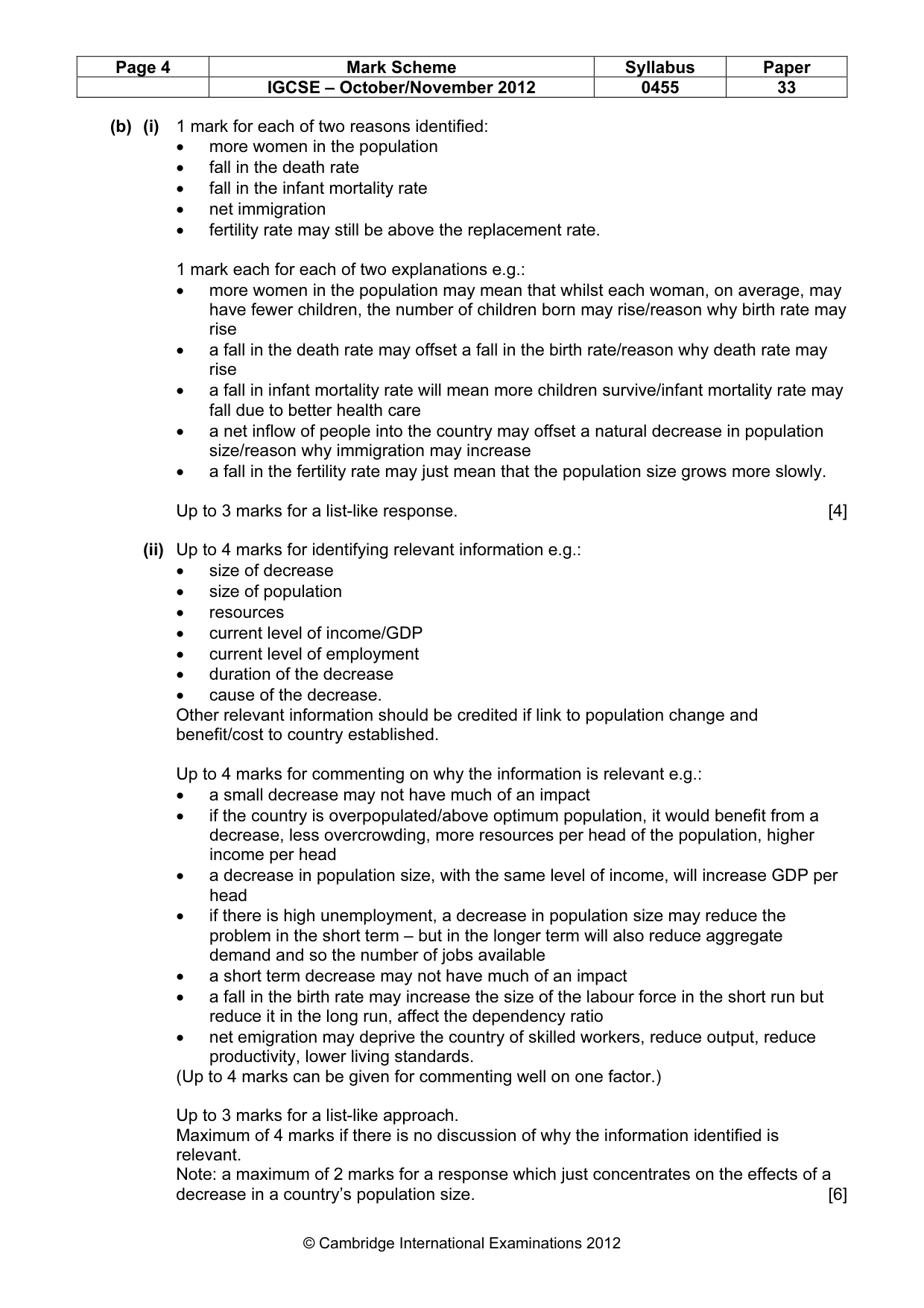
Mark scheme: 2 (a) (i) 1 mark for each of two reasons identified: • low cost of raising children • lack of state benefits/pensions/needing children to support parents in old age • fewer women working • expectation of high infant mortality • less education. 1 mark for each of two explanations e.g.: • low cost of raising children as the number of years of schooling may be low • lack of state benefits/pensions may mean parents become financially dependent on their children • when women are not in work, they may be less likely to restrict their family size due to e.g. more time available • high infant mortality rate may result in parents having more children, expecting only a few to survive, due to poor medical care • less education may mean people are less aware of ways to limit family size. [4] (ii) 1 mark for generally it shows poorer countries do have higher fertility rates. 1 mark for supporting evidence from the data for this. 1 mark for exceptions identified in ranking – Nigeria and/or Norway. 1 mark for only a few countries are shown. 1 mark for only one year is shown. 1 mark for GDP per head is only one influence on fertility/there may be another influence. 1 mark for giving another relevant influence. [4] (iii) 1 mark for infant mortality rate may fall in future/more babies surviving 1 mark for countries may develop/health care may develop [2] IGCSE – October/November 2012 0455 33 (b) (i) 1 mark for each of two reasons identified: • more women in the population • fall in the death rate • fall in the infant mortality rate • net immigration • fertility rate may still be above the replacement rate. 1 mark each for each of two explanations e.g.: • more women in the population may mean that whilst each woman, on average, may have fewer children, the number of children born may rise/reason why birth rate may rise • a fall in the death rate may offset a fall in the birth rate/reason why death rate may rise • a fall in infant mortality rate will mean more children survive/infant mortality rate may fall due to better health care • a net inflow of people into the country may offset a natural decrease in population size/reason why immigration may increase • a fall in the fertility rate may just mean that the population size grows more slowly. Up to 3 marks for a list-like response. [4] (ii) Up to 4 marks for identifying relevant information e.g.: • size of decrease • size of population • resources • current level of income/GDP • current level of employment • duration of the decrease • cause of the decrease. Other relevant information should be credited if link to population change and benefit/cost to country established. Up to 4 marks for commenting on why the information is relevant e.g.: • a small decrease may not have much of an impact • if the country is overpopulated/above optimum population, it would benefit from a decrease, less overcrowding, more resources per head of the population, higher income per head • a decrease in population size, with the same level of income, will increase GDP per head • if there is high unemployment, a decrease in population size may reduce the problem in the short term – but in the longer term will also reduce aggregate demand and so the number of jobs available • a short term decrease may not have much of an impact • a fall in the birth rate may increase the size of the labour force in the short run but reduce it in the long run, affect the dependency ratio • net emigration may deprive the country of skilled workers, reduce output, reduce productivity, lower living standards. (Up to 4 marks can be given for commenting well on one factor.) Up to 3 marks for a list-like approach. Maximum of 4 marks if there is no discussion of why the information identified is relevant. Note: a maximum of 2 marks for a response which just concentrates on the effects of a decrease in a country’s population size. [6]
What was in this paper
The subtopics covered by these 2 questions, and how many questions each got. Open one in a new tab to see every Cambridge question on it.
What you needed in this session
Cambridge’s own grade thresholds for 2012 Oct/Nov, Paper 3 · Variant 3. A higher threshold means an easier paper — the bar moves with how the cohort did.