Cambridge IGCSE Biology (9-1) 0970 — 2022 Oct/Nov Paper 3 · Variant 2
0970/32/O/N/22 · 9 questions · 80 marks · ≈90 min
The question paper and its mark scheme, free to read here and free to download. This is Cambridge’s own paper, exactly as it was sat.
Question paper20 pages



Mark scheme12 pages
Answers below. Sit the paper first if you are practising.
Questions as text
Q1 · A branching key that can be used to identify different types of crustaceans
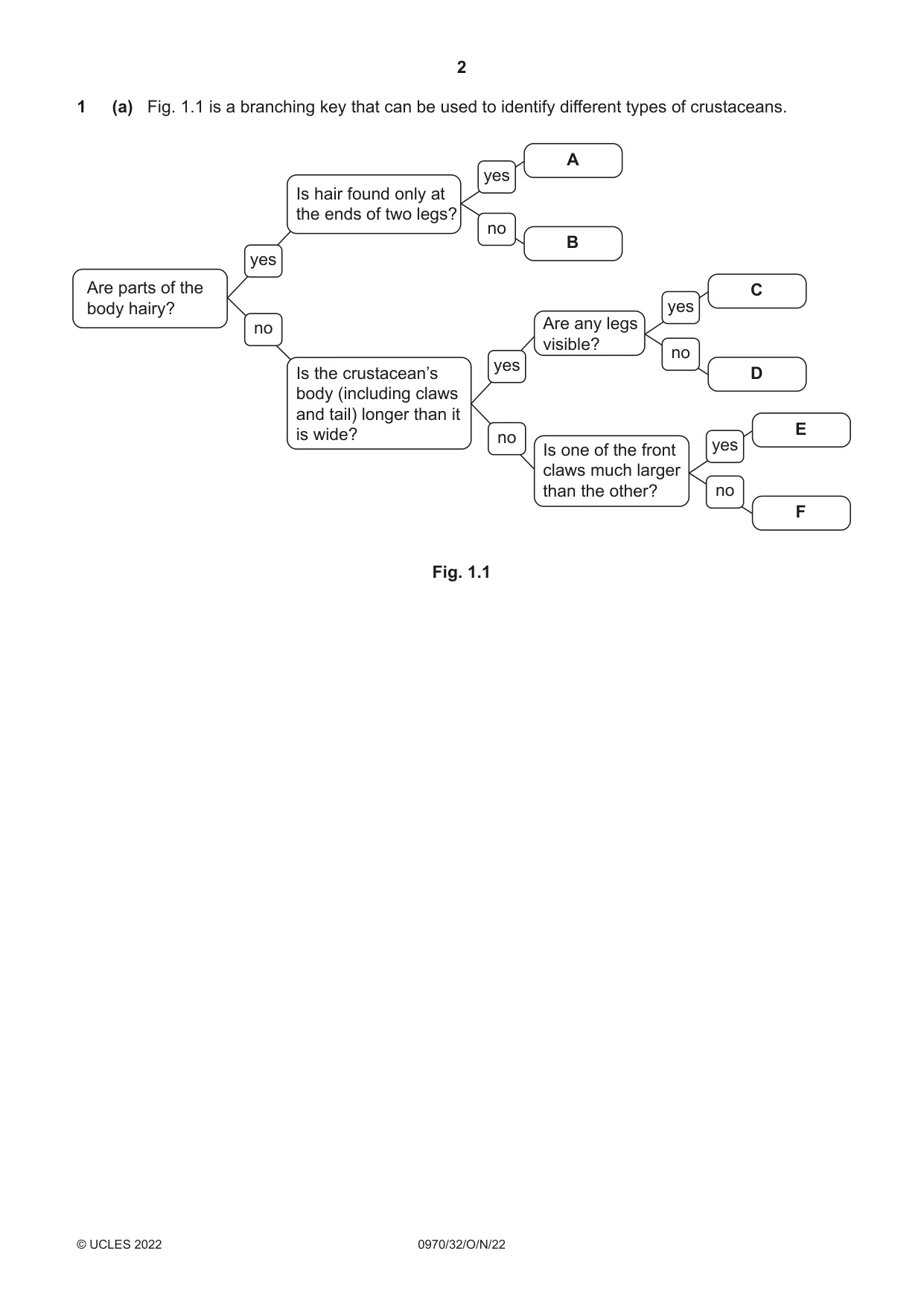
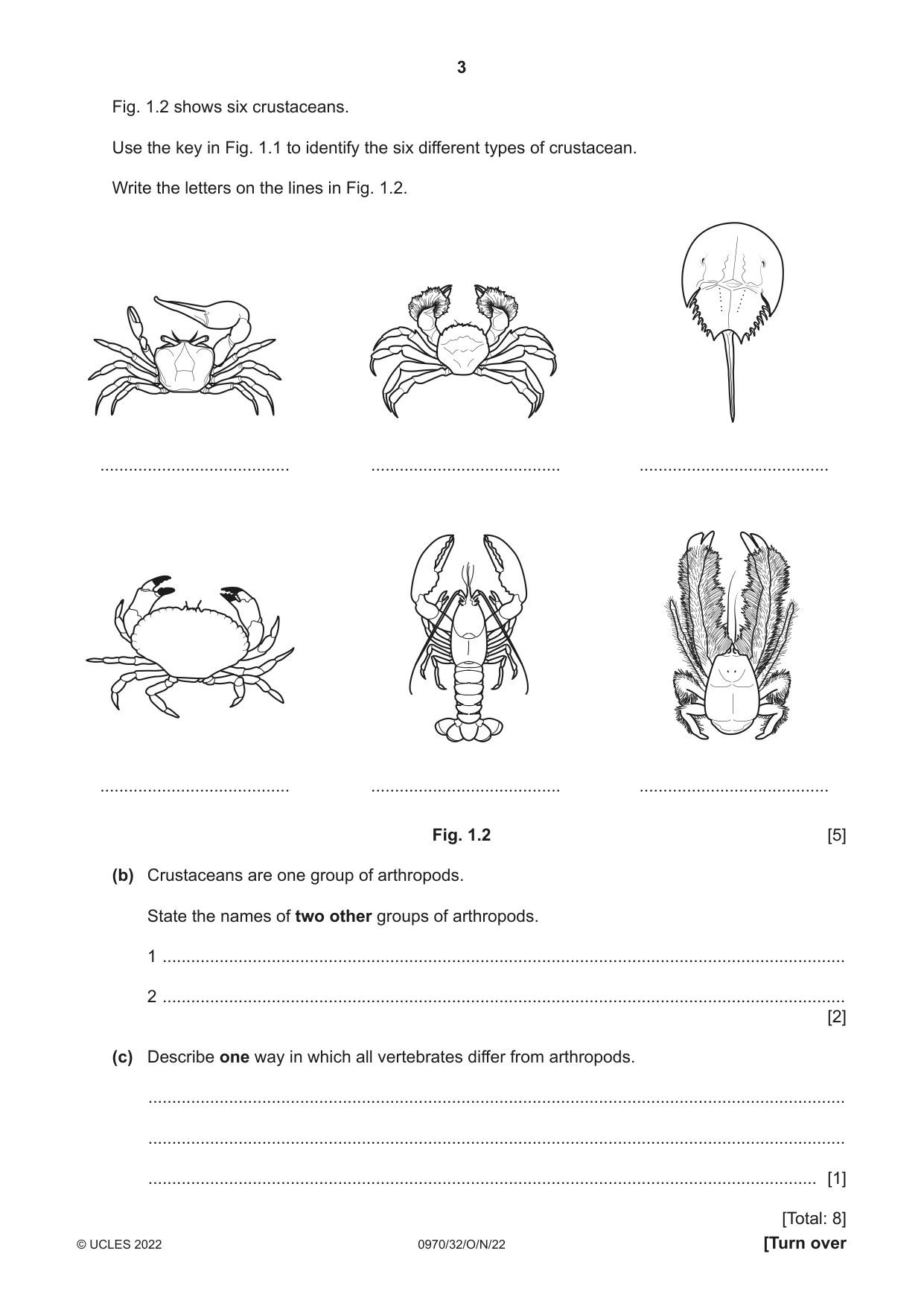
1 (a) Fig. 1.1 is a branching key that can be used to identify different types of crustaceans. A yes Is hair found only at the ends of two legs? no B yes Are parts of the C body hairy? yes no Are any legs visible? no yes Is the crustacean’s D body (including claws and tail) longer than it E is wide? no yes Is one of the front claws much larger than the other? no F Fig. 1.1 Fig. 1.2 shows six crustaceans. Use the key in Fig. 1.1 to identify the six different types of crustacean. Write the letters on the lines in Fig. 1.2. ........................................ ........................................ ........................................ ........................................ ........................................ ........................................ Fig. 1.2 [5] (b) Crustaceans are one group of arthropods. State the names of two other groups of arthropods. 1 ................................................................................................................................................ 2 ................................................................................................................................................ [2] (c) Describe one way in which all vertebrates differ from arthropods. ................................................................................................................................................... ................................................................................................................................................... ............................................................................................................................................. [1] [Total: 8]
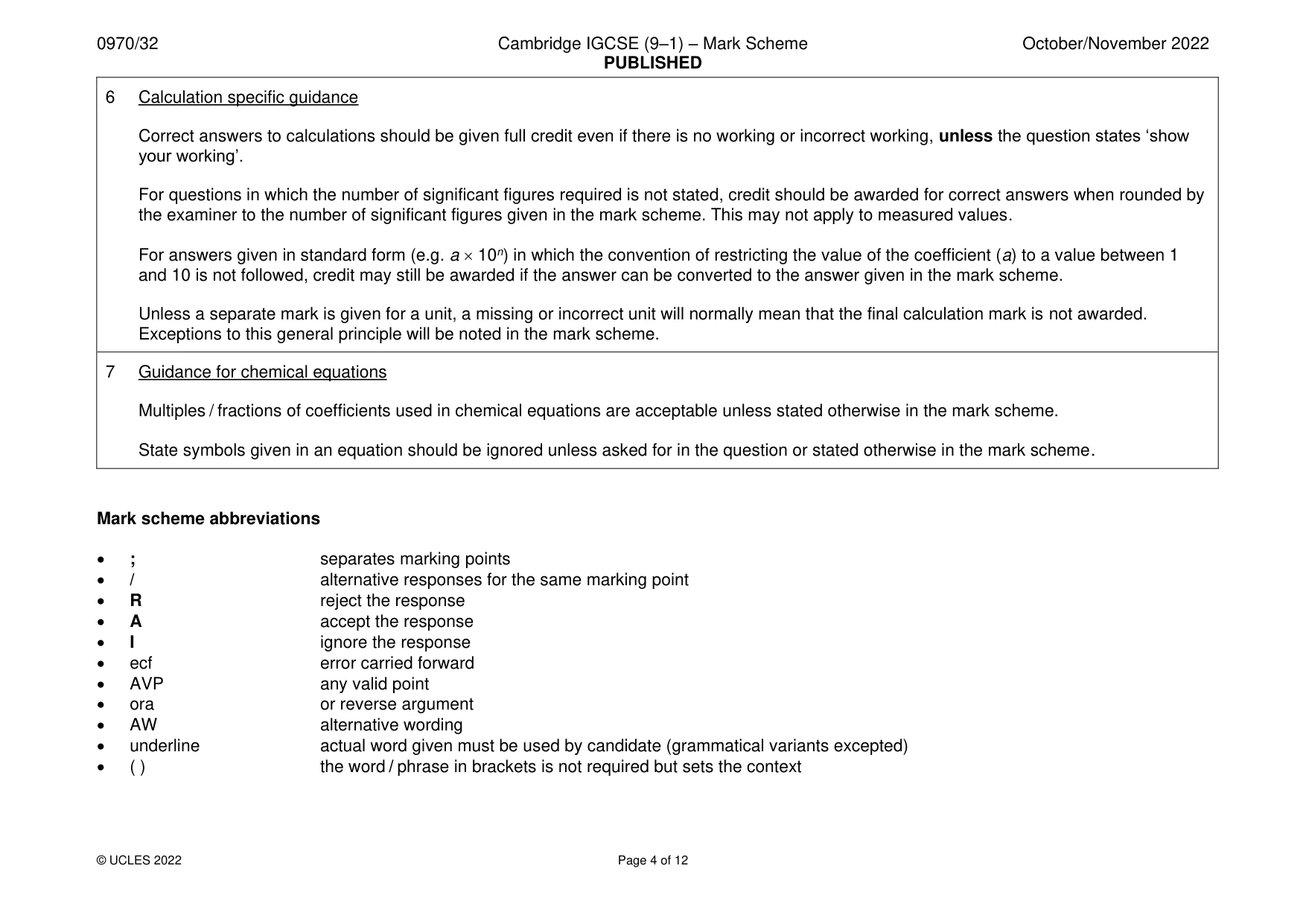
Mark scheme: Question Answer Marks Guidance 1(a) E, A, D, 5 6 correct = 5 marks F, C, B 4 or 5 correct = 4 marks ;;;;; 3 correct = 3 marks 2 correct = 2 marks 1 correct = 1 mark R any additional letters 1(b) any two from: 2 myriapods ; insects ; arachnids ; 1(c) (vertebrates) have a backbone / don’t have an exoskeleton ; 1
More questions on Concept and uses of classification systems
Q2 · A photomicrograph of human blood
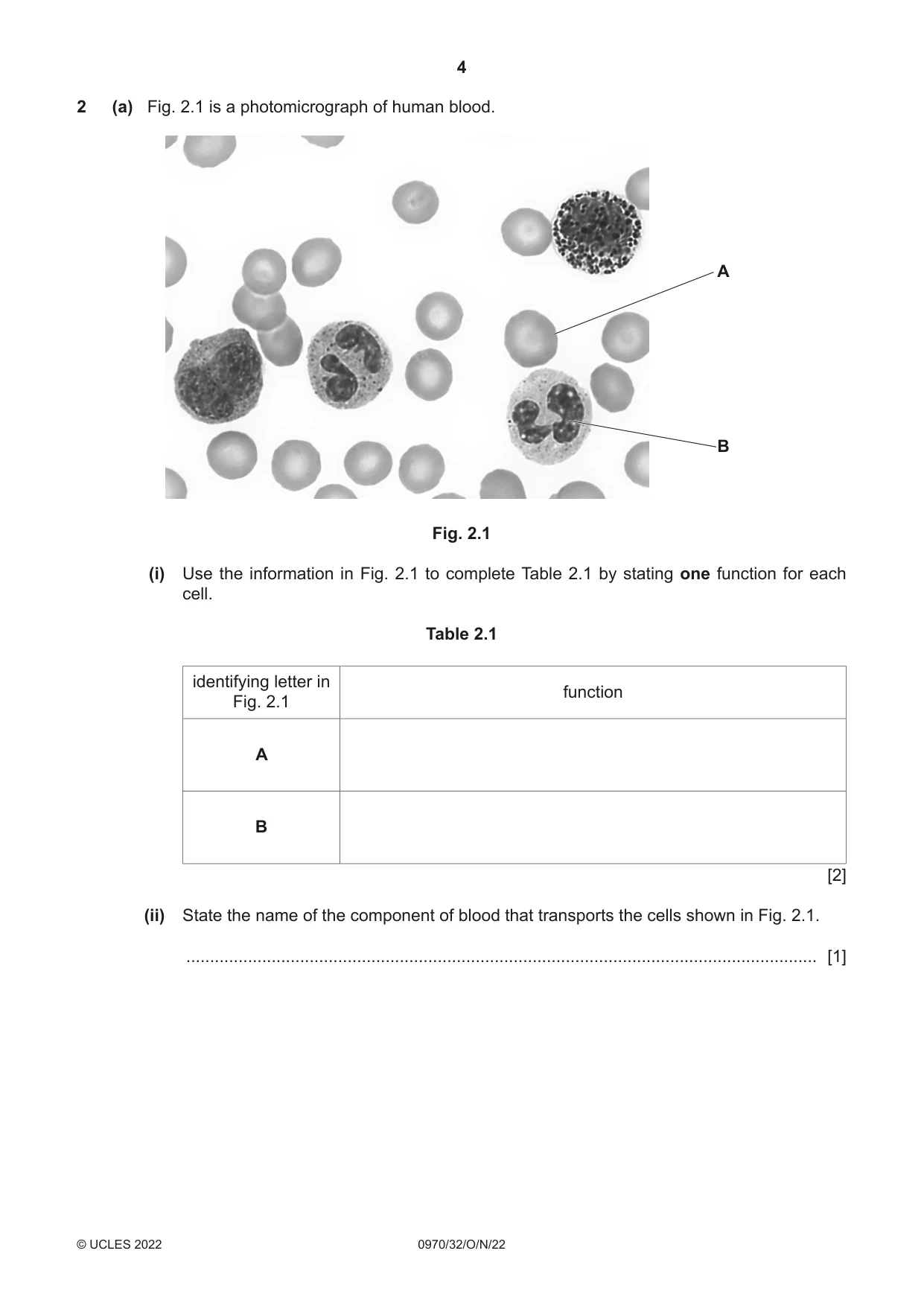
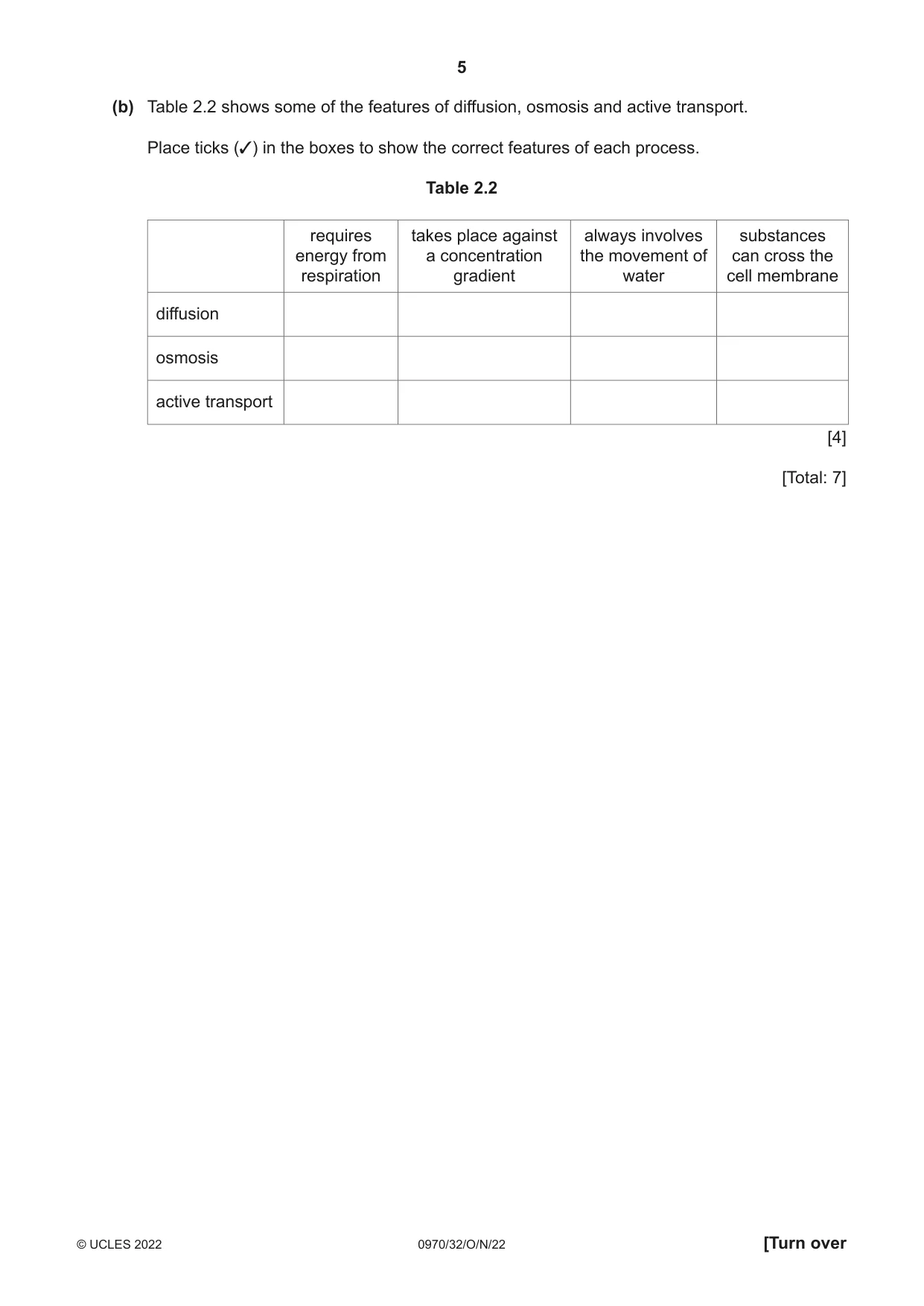
2 (a) Fig. 2.1 is a photomicrograph of human blood. A B Fig. 2.1 (i) Use the information in Fig. 2.1 to complete Table 2.1 by stating one function for each cell. Table 2.1 identifying letter in function Fig. 2.1 A B [2] (ii) State the name of the component of blood that transports the cells shown in Fig. 2.1. ..................................................................................................................................... [1] (b) Table 2.2 shows some of the features of diffusion, osmosis and active transport. Place ticks (3) in the boxes to show the correct features of each process. Table 2.2 requires takes place against always involves substances energy from a concentration the movement of can cross the respiration gradient water cell membrane diffusion osmosis active transport [4] [Total: 7]
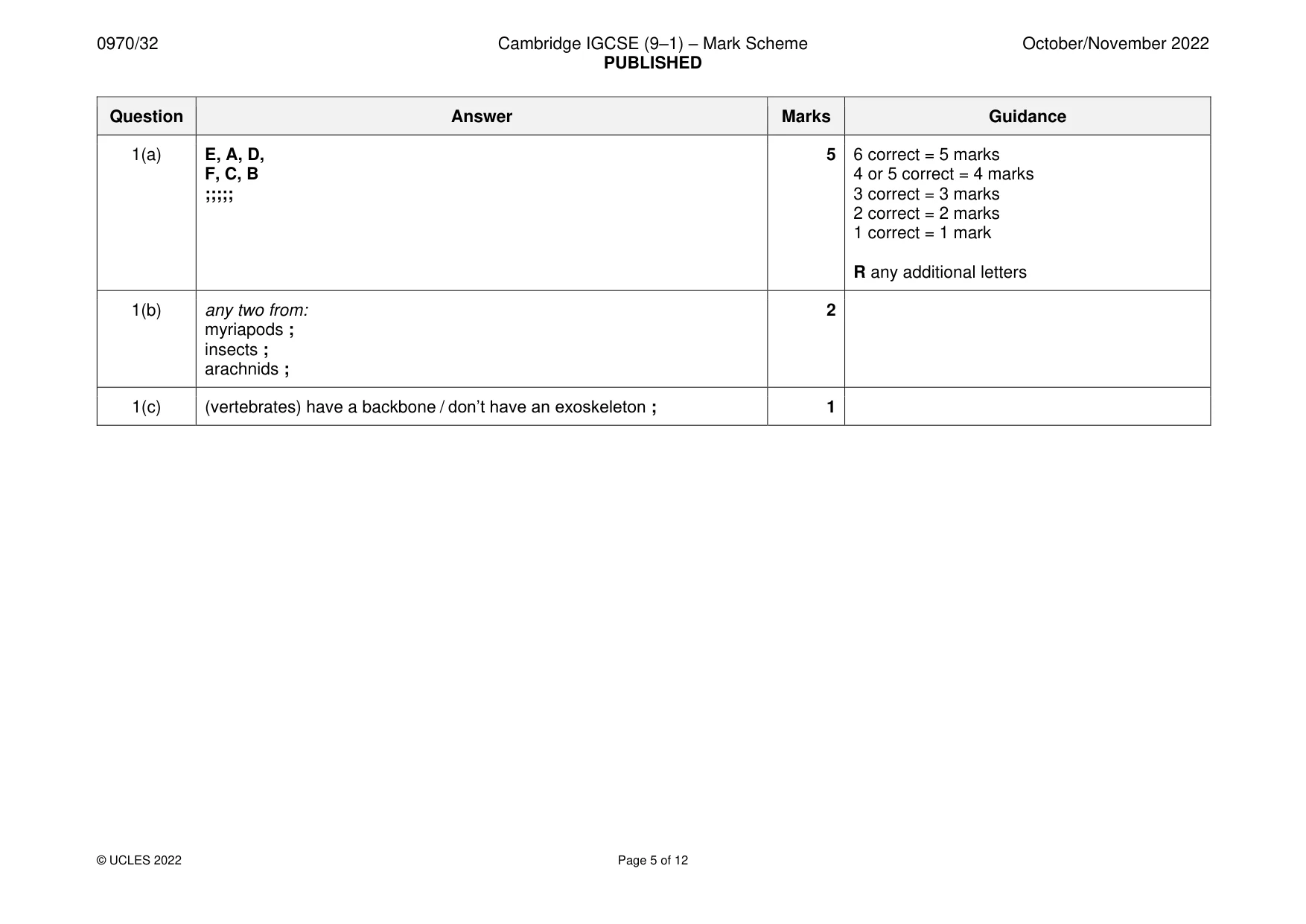
Mark scheme: 2(a)(i) A: transport of oxygen / AW ; 2 B: phagocytosis AW / antibody production ; 2(a)(ii) plasma ; 1 2(b) 4 one mark for each correct column requires takes place always substances energy against a involves the can cross from concentration movement the cell respiration gradient of water membrane diffusion osmosis active transport ;;;;
Q3 · The population of leatherback turtles in one part of the Pacific Ocean was monitored over…
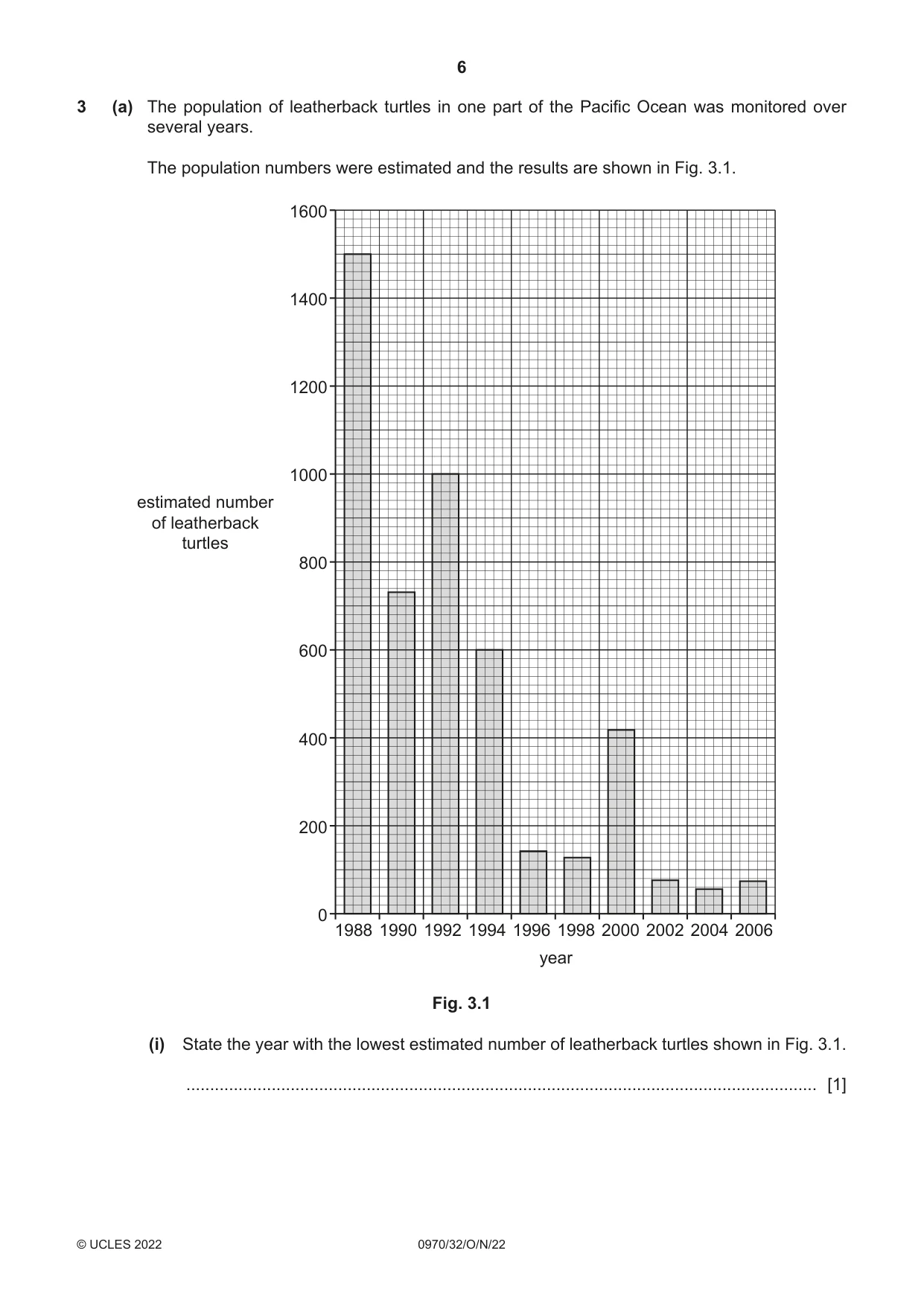
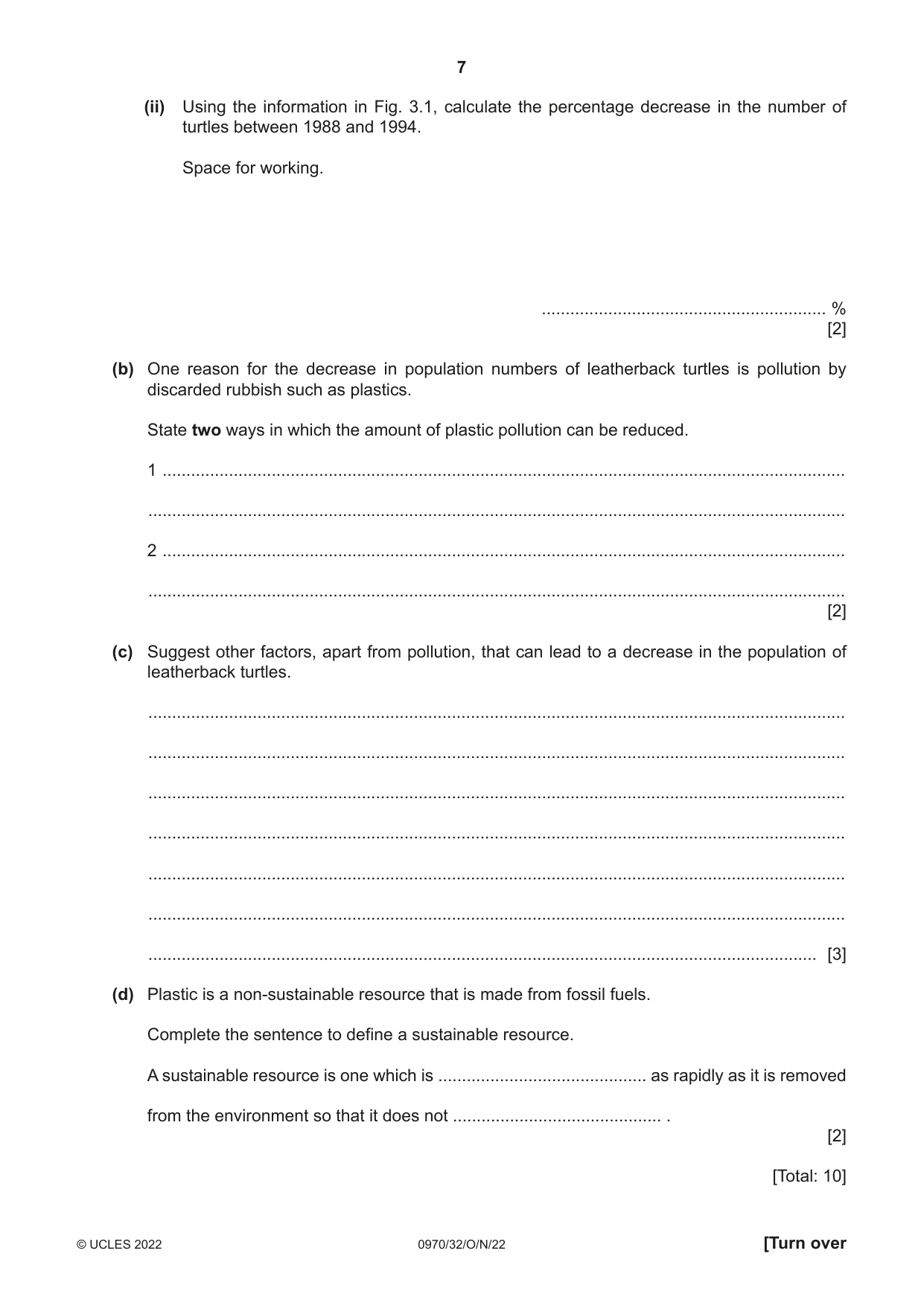
3 (a) The population of leatherback turtles in one part of the Pacific Ocean was monitored over several years. The population numbers were estimated and the results are shown in Fig. 3.1. 1600 1400 1200 1000 estimated number of leatherback turtles 800 600 400 200 0 1988 1990 1992 1994 1996 1998 2000 2002 2004 2006 year Fig. 3.1 (i) State the year with the lowest estimated number of leatherback turtles shown in Fig. 3.1. ..................................................................................................................................... [1] (ii) Using the information in Fig. 3.1, calculate the percentage decrease in the number of turtles between 1988 and 1994. Space for working. ............................................................ % [2] (b) One reason for the decrease in population numbers of leatherback turtles is pollution by discarded rubbish such as plastics. State two ways in which the amount of plastic pollution can be reduced. 1 ................................................................................................................................................ ................................................................................................................................................... 2 ................................................................................................................................................ ................................................................................................................................................... [2] (c) Suggest other factors, apart from pollution, that can lead to a decrease in the population of leatherback turtles. ................................................................................................................................................... ................................................................................................................................................... ................................................................................................................................................... ................................................................................................................................................... ................................................................................................................................................... ................................................................................................................................................... ............................................................................................................................................. [3] (d) Plastic is a non-sustainable resource that is made from fossil fuels. Complete the sentence to define a sustainable resource. A sustainable resource is one which is ............................................ as rapidly as it is removed from the environment so that it does not ............................................ . [2] [Total: 10]
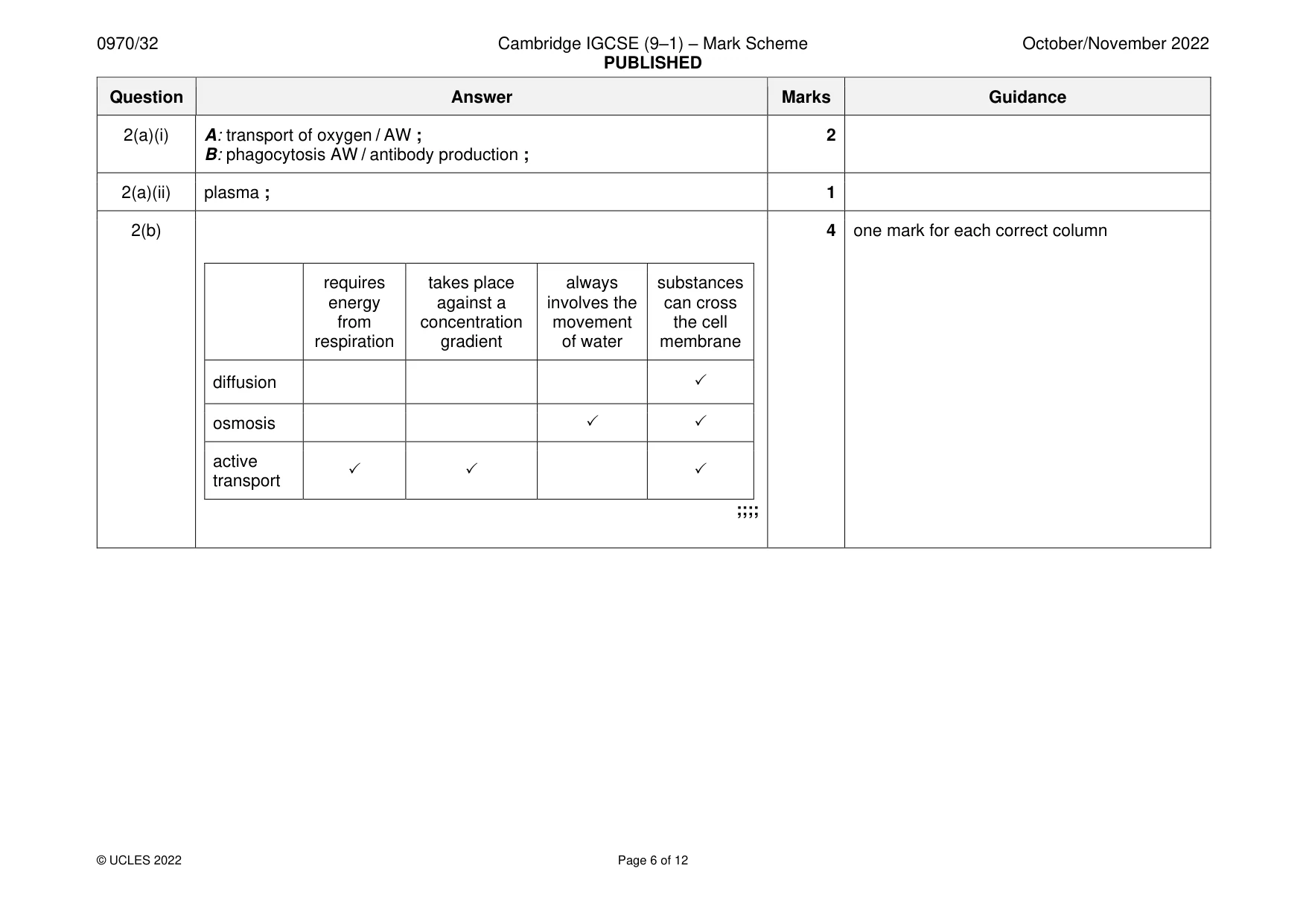
Mark scheme: 3(a)(i) 2004 ; 1 3(a)(ii) 60 (%) ;; 2 MP1 evidence of correct number from graph 1500 and 600 or 900 MP2 correct value calculated ecf for MP2 from wrong MP1 3(b) any two from: 2 recycling (used plastics) ; (named example of) reuse of (existing plastics) ; AVP ; e.g. reducing the amount of plastics manufactured / avoid single use plastics / use alternatives e.g. paper straws 3(c) any three from: 3 habitat destruction ; (increase in) predation / AW ; (increase in) hunting (by humans) / poaching ; introduction of a new (competitive) species ; disease ; climate change / global warming / enhanced greenhouse effect ; tourism ; lack of food ; less reproduction / infertility ; AVP ; e.g. raiding or disturbing nest sites / entanglement in fishing gear 3(d) produced / replaced ; 2 run out ;
Q4 · The structure of a human tooth
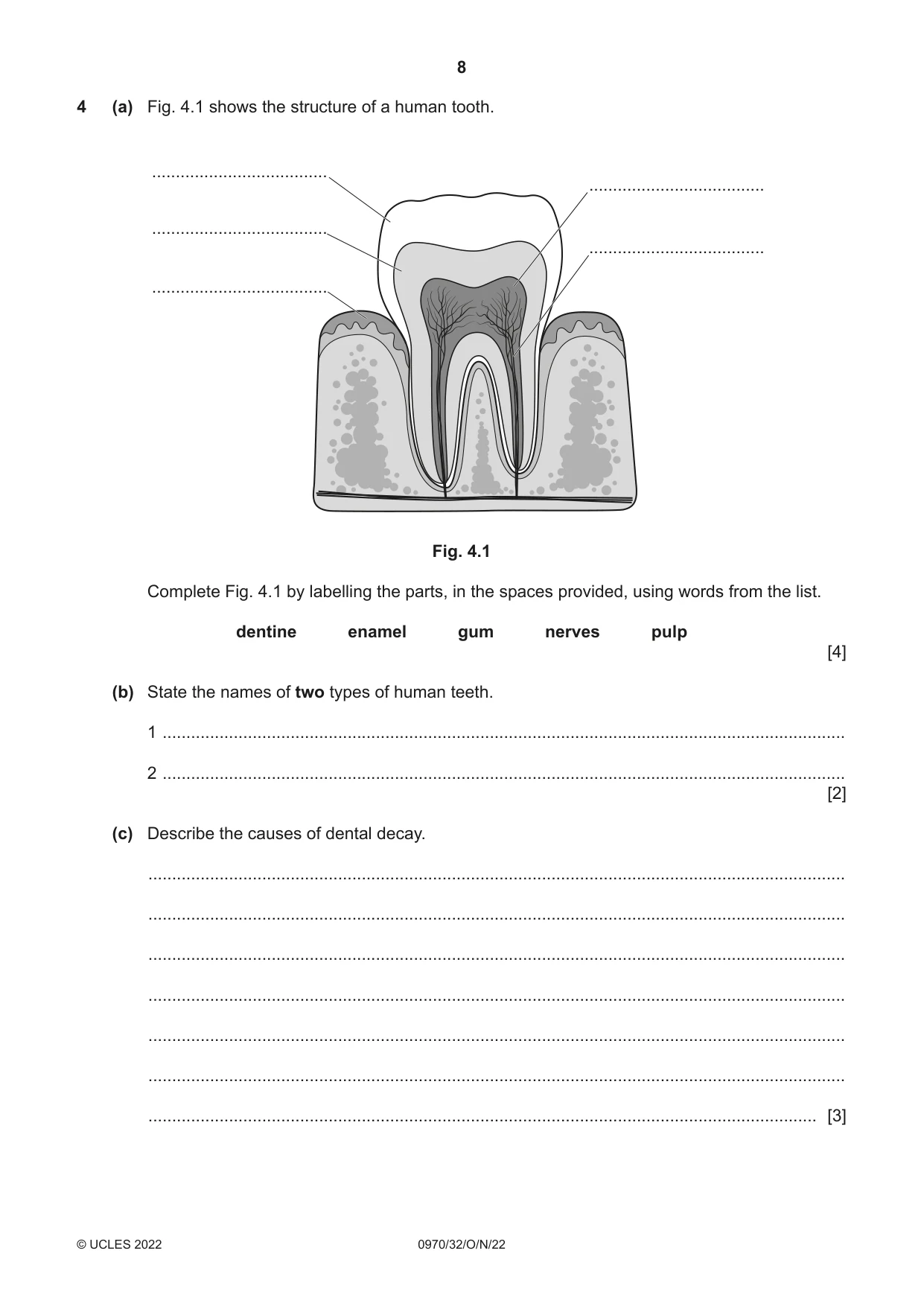
4 (a) Fig. 4.1 shows the structure of a human tooth. ..................................... ..................................... ..................................... ..................................... ..................................... Fig. 4.1 Complete Fig. 4.1 by labelling the parts, in the spaces provided, using words from the list. dentine enamel gum nerves pulp [4] (b) State the names of two types of human teeth. 1 ................................................................................................................................................ 2 ................................................................................................................................................ [2] (c) Describe the causes of dental decay. ................................................................................................................................................... ................................................................................................................................................... ................................................................................................................................................... ................................................................................................................................................... ................................................................................................................................................... ................................................................................................................................................... ............................................................................................................................................. [3] (d) Describe two ways of caring for teeth. 1 ................................................................................................................................................ ................................................................................................................................................... 2 ................................................................................................................................................ ................................................................................................................................................... [2] (e) State the type of digestion that teeth are involved in. ............................................................................................................................................. [1] [Total: 12]
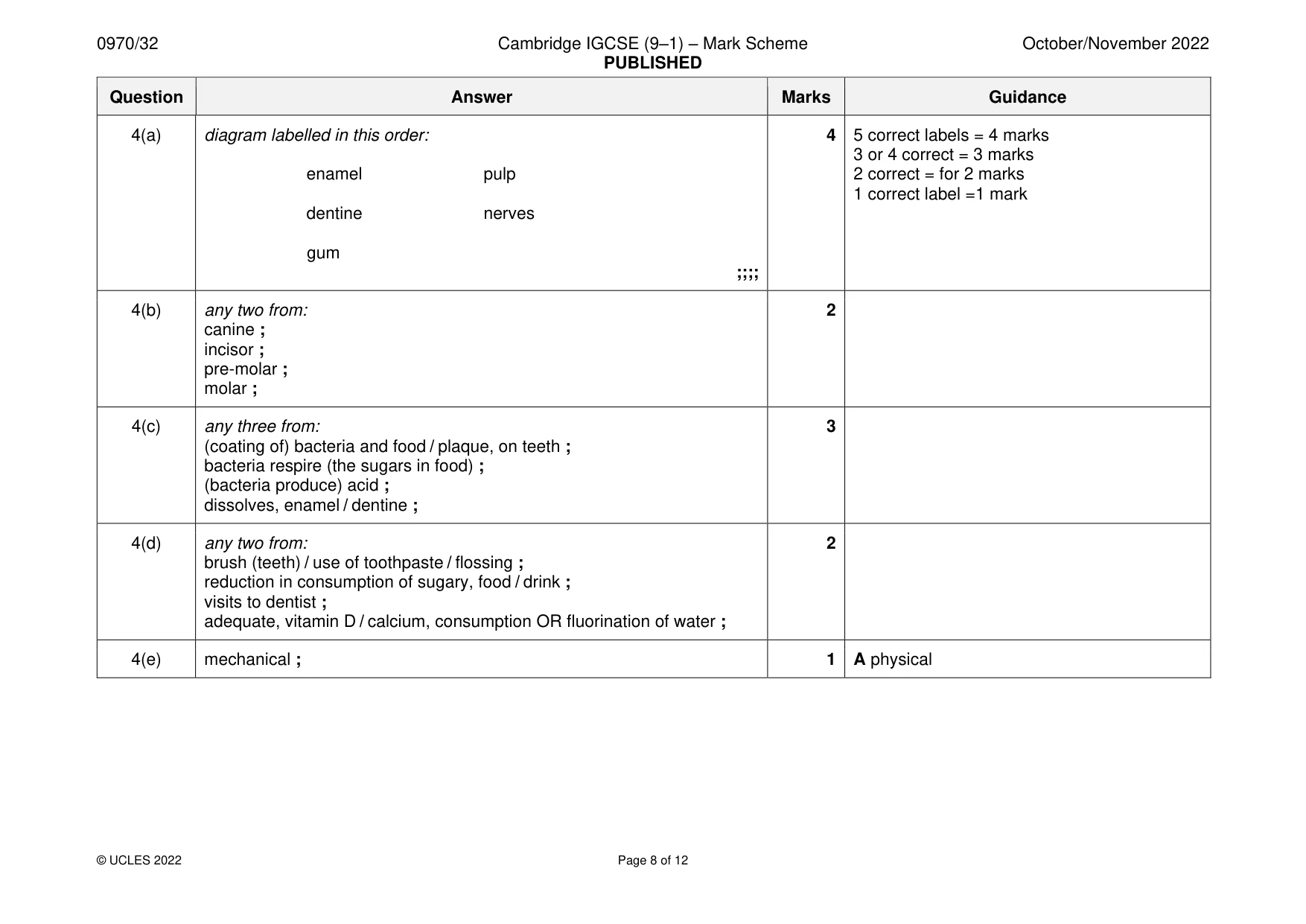
Mark scheme: 4(a) diagram labelled in this order: 4 5 correct labels = 4 marks 3 or 4 correct = 3 marks enamel pulp 2 correct = for 2 marks 1 correct label =1 mark dentine nerves gum ;;;; 4(b) any two from: 2 canine ; incisor ; pre-molar ; molar ; 4(c) any three from: 3 (coating of) bacteria and food / plaque, on teeth ; bacteria respire (the sugars in food) ; (bacteria produce) acid ; dissolves, enamel / dentine ; 4(d) any two from: 2 brush (teeth) / use of toothpaste / flossing ; reduction in consumption of sugary, food / drink ; visits to dentist ; adequate, vitamin D / calcium, consumption OR fluorination of water ; 4(e) mechanical ; 1 A physical
Q5 · A diagram of some of the organs involved in the production and release of urine
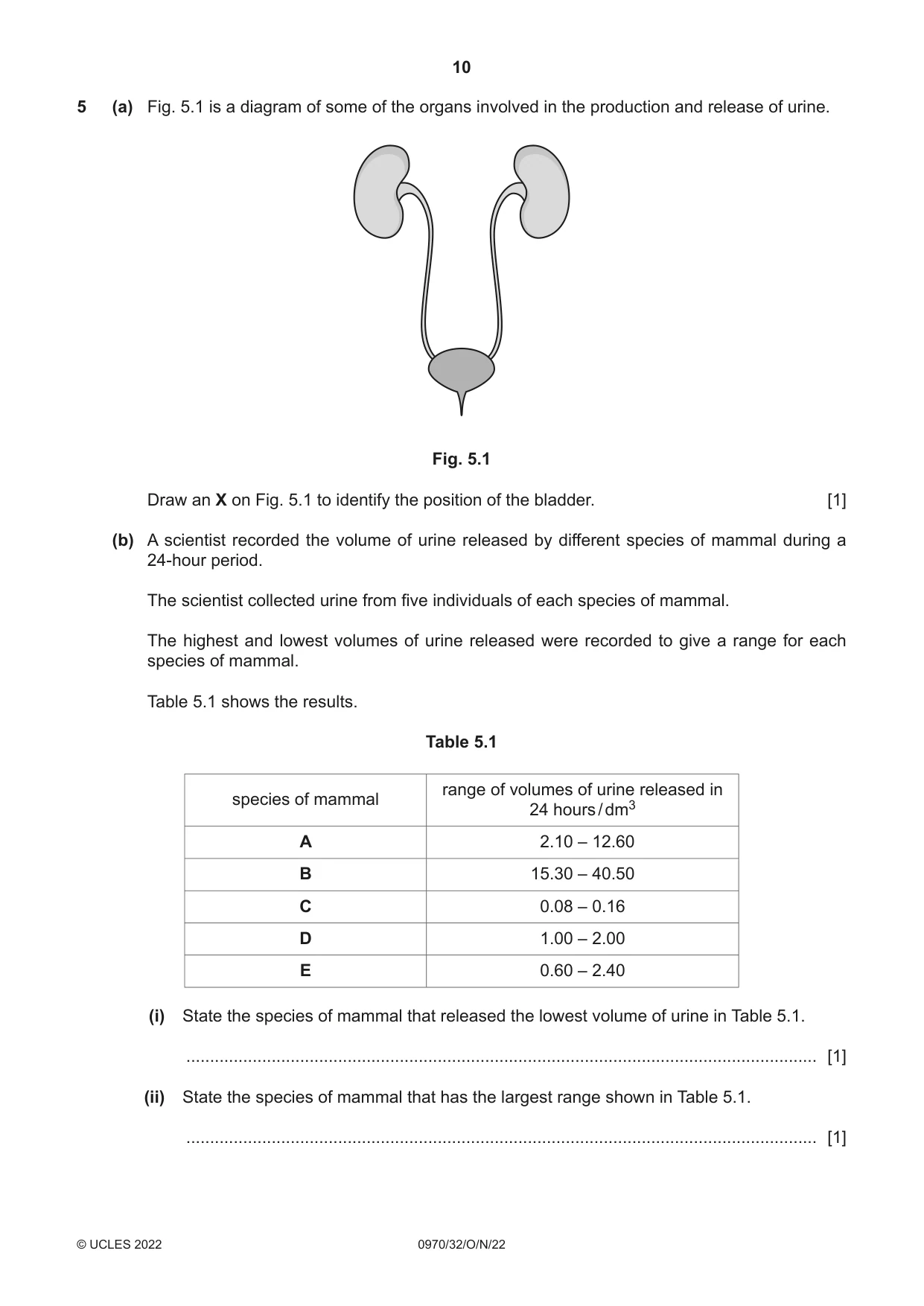
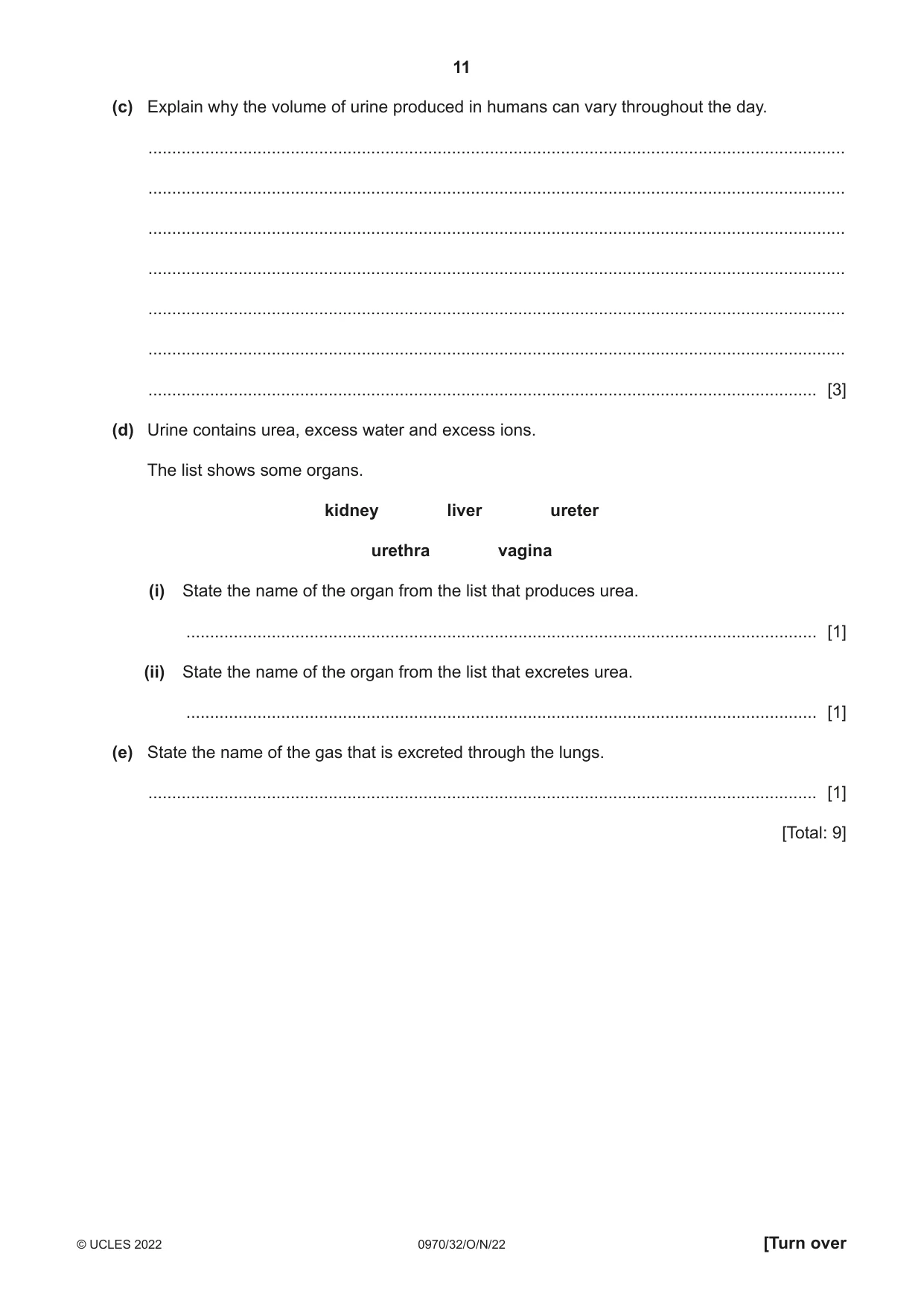
5 (a) Fig. 5.1 is a diagram of some of the organs involved in the production and release of urine. Fig. 5.1 Draw an X on Fig. 5.1 to identify the position of the bladder. [1] (b) A scientist recorded the volume of urine released by different species of mammal during a 24-hour period. The scientist collected urine from five individuals of each species of mammal. The highest and lowest volumes of urine released were recorded to give a range for each species of mammal. Table 5.1 shows the results. Table 5.1 range of volumes of urine released in species of mammal 24 hours / dm3 A 2.10 – 12.60 B 15.30 – 40.50 C 0.08 – 0.16 D 1.00 – 2.00 E 0.60 – 2.40 (i) State the species of mammal that released the lowest volume of urine in Table 5.1. ..................................................................................................................................... [1] (ii) State the species of mammal that has the largest range shown in Table 5.1. ..................................................................................................................................... [1] (c) Explain why the volume of urine produced in humans can vary throughout the day. ................................................................................................................................................... ................................................................................................................................................... ................................................................................................................................................... ................................................................................................................................................... ................................................................................................................................................... ................................................................................................................................................... ............................................................................................................................................. [3] (d) Urine contains urea, excess water and excess ions. The list shows some organs. kidney liver ureter urethra vagina (i) State the name of the organ from the list that produces urea. ..................................................................................................................................... [1] (ii) State the name of the organ from the list that excretes urea. ..................................................................................................................................... [1] (e) State the name of the gas that is excreted through the lungs. ............................................................................................................................................. [1] [Total: 9]
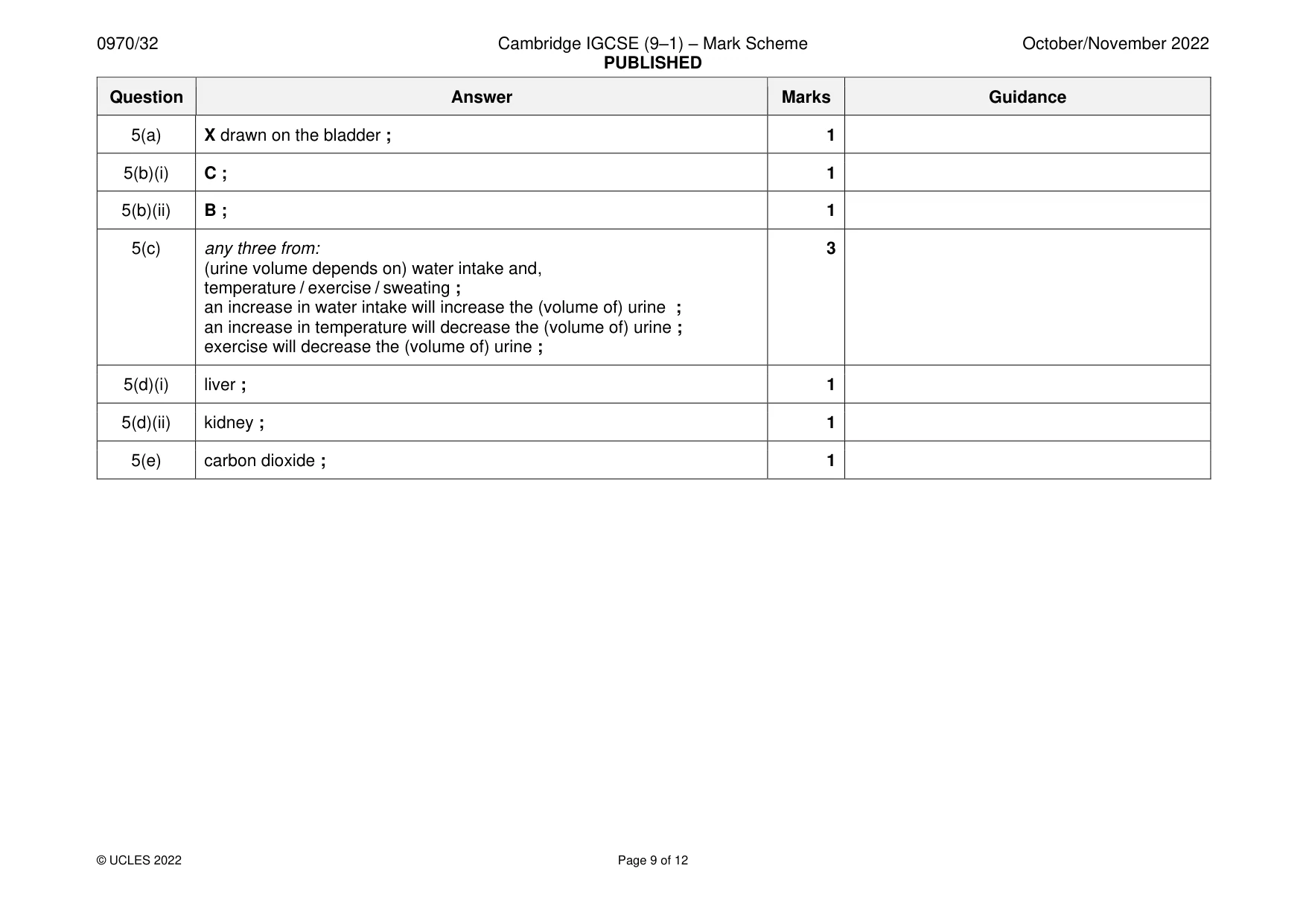
Mark scheme: 5(a) X drawn on the bladder ; 1 5(b)(i) C ; 1 5(b)(ii) B ; 1 5(c) any three from: 3 (urine volume depends on) water intake and, temperature / exercise / sweating ; an increase in water intake will increase the (volume of) urine ; an increase in temperature will decrease the (volume of) urine ; exercise will decrease the (volume of) urine ; 5(d)(i) liver ; 1 5(d)(ii) kidney ; 1 5(e) carbon dioxide ; 1
Q6 · Respiration occurs in all living organisms
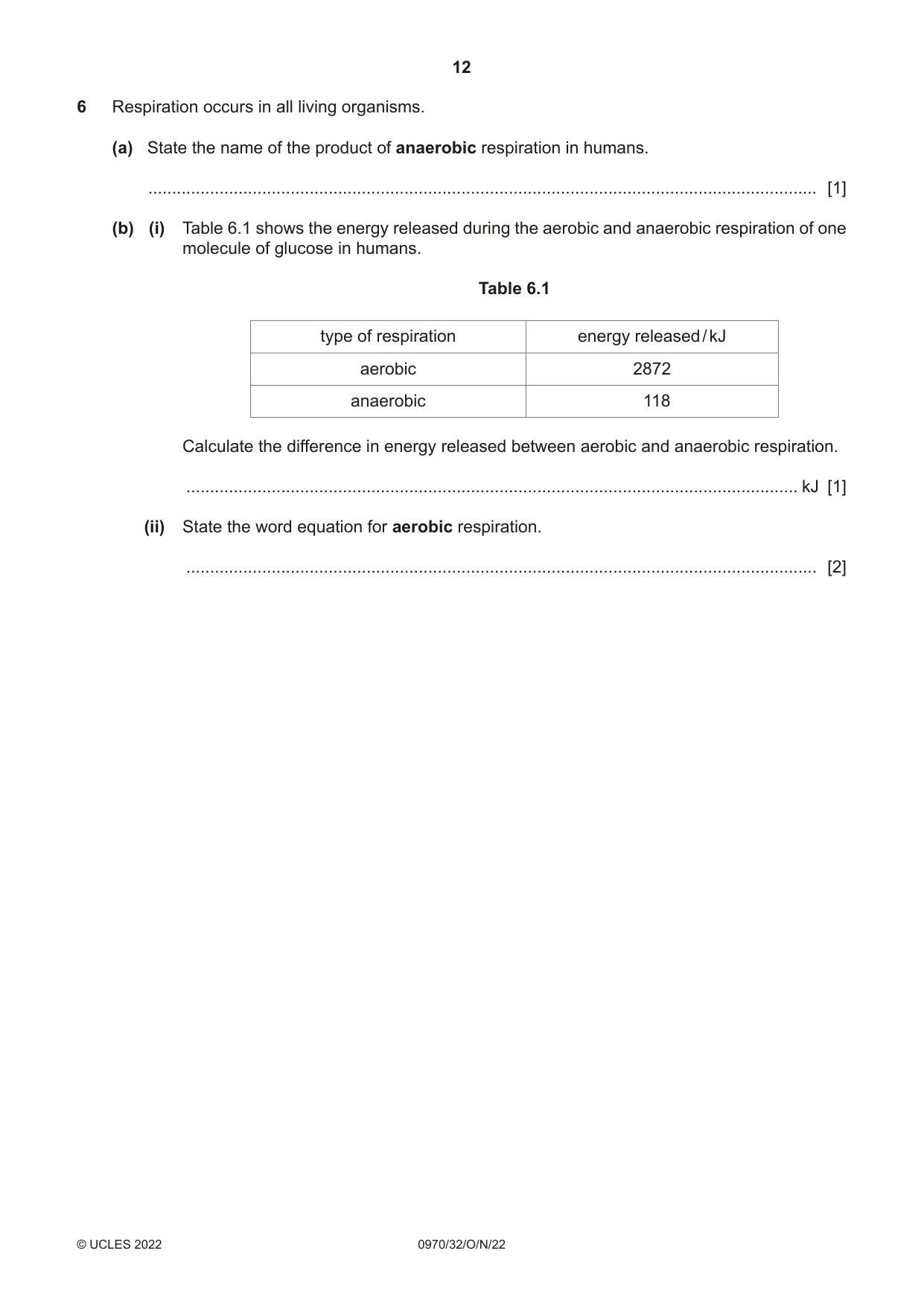
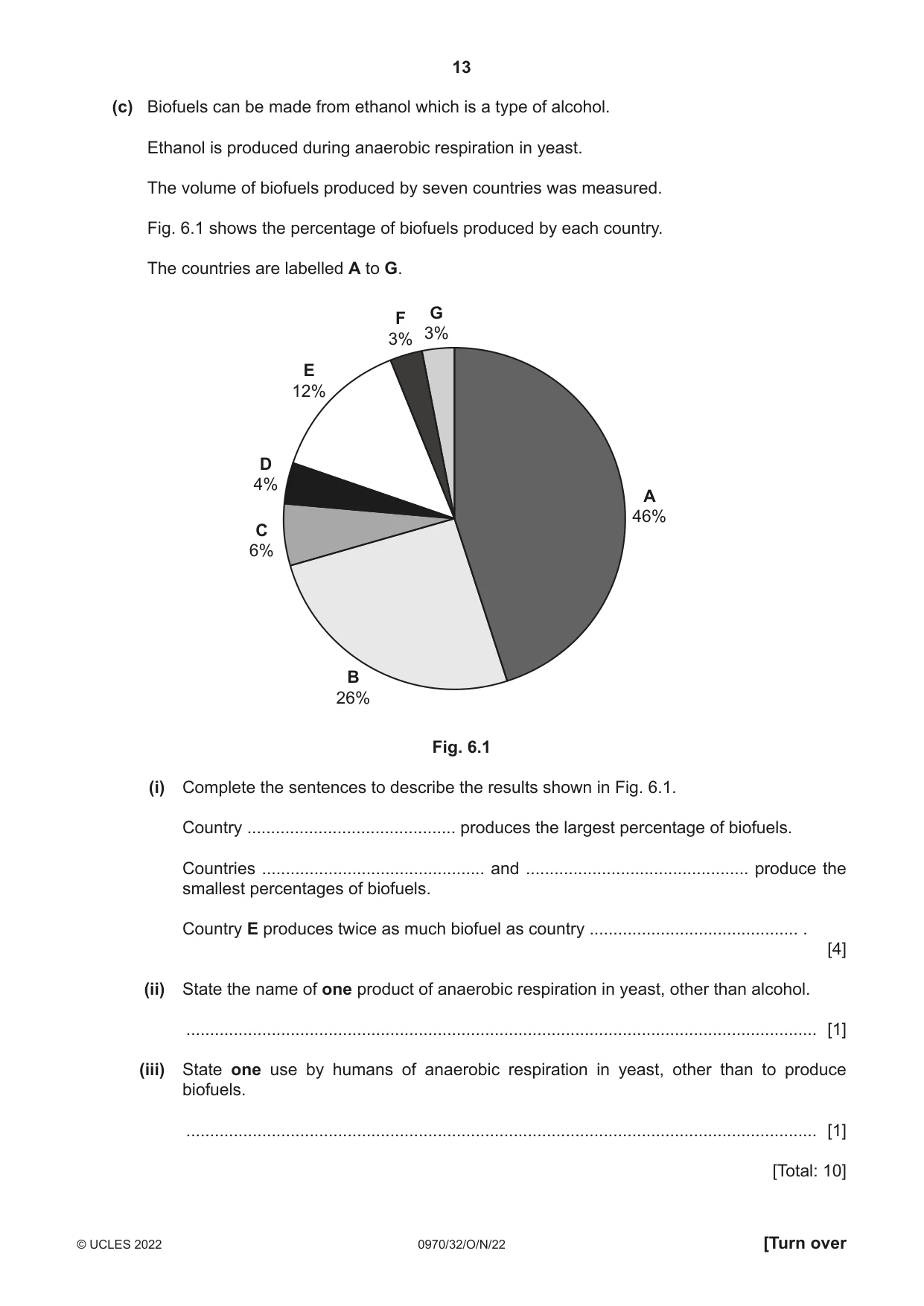
6 Respiration occurs in all living organisms. (a) State the name of the product of anaerobic respiration in humans. ............................................................................................................................................. [1] (b) (i) Table 6.1 shows the energy released during the aerobic and anaerobic respiration of one molecule of glucose in humans. Table 6.1 type of respiration energy released / kJ aerobic 2872 anaerobic 118 Calculate the difference in energy released between aerobic and anaerobic respiration. ................................................................................................................................. kJ [1] (ii) State the word equation for aerobic respiration. ..................................................................................................................................... [2] (c) Biofuels can be made from ethanol which is a type of alcohol. Ethanol is produced during anaerobic respiration in yeast. The volume of biofuels produced by seven countries was measured. Fig. 6.1 shows the percentage of biofuels produced by each country. The countries are labelled A to G. G F 3% 3% E 12% D 4% A 46% C 6% B 26% Fig. 6.1 (i) Complete the sentences to describe the results shown in Fig. 6.1. Country ............................................ produces the largest percentage of biofuels. Countries ............................................... and ............................................... produce the smallest percentages of biofuels. Country E produces twice as much biofuel as country ............................................ . [4] (ii) State the name of one product of anaerobic respiration in yeast, other than alcohol. ..................................................................................................................................... [1] (iii) State one use by humans of anaerobic respiration in yeast, other than to produce biofuels. ..................................................................................................................................... [1] [Total: 10]
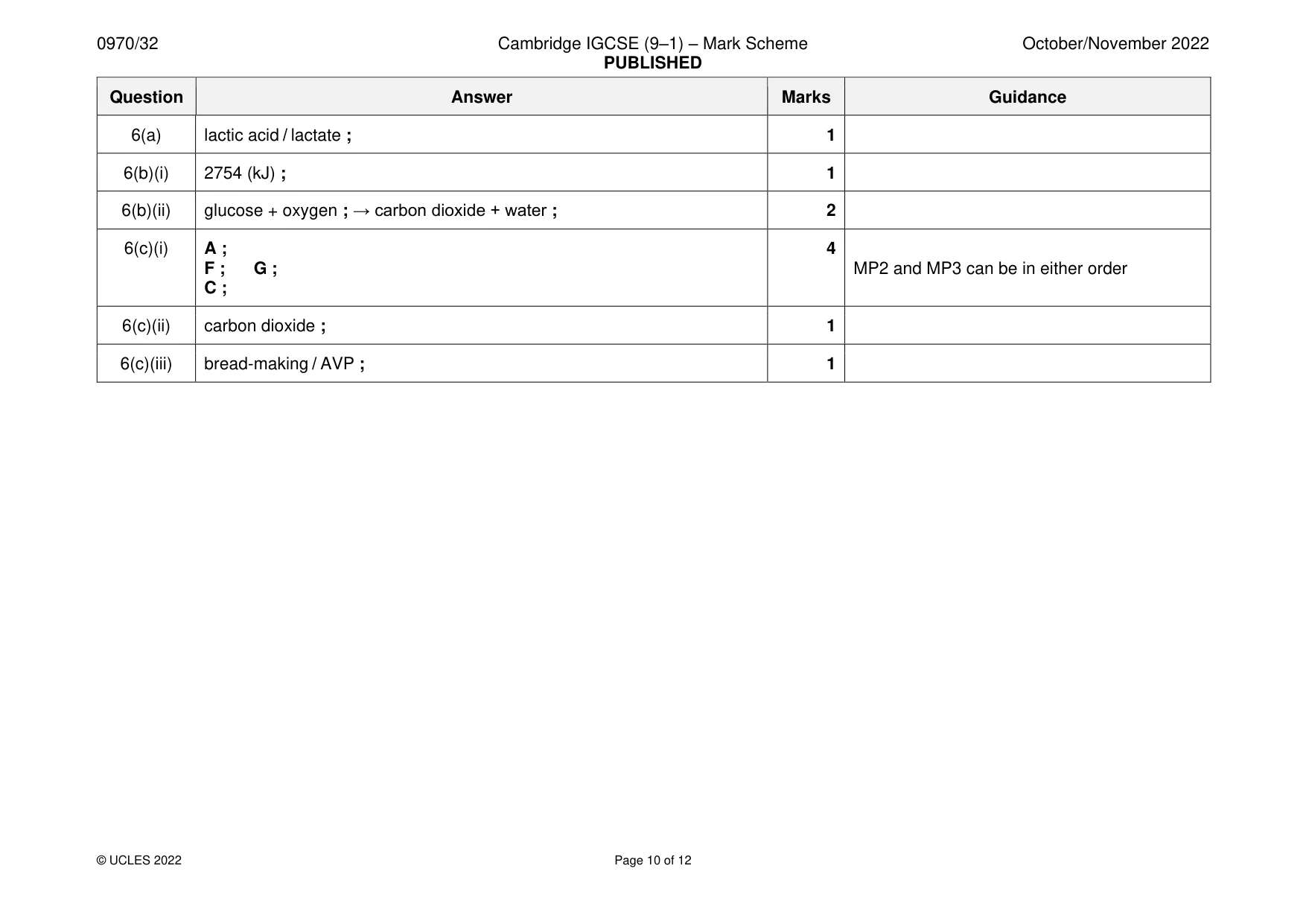
Mark scheme: 6(a) lactic acid / lactate ; 1 6(b)(i) 2754 (kJ) ; 1 6(b)(ii) glucose + oxygen ; → carbon dioxide + water ; 2 6(c)(i) A ; 4 F ; G ; MP2 and MP3 can be in either order C ; 6(c)(ii) carbon dioxide ; 1 6(c)(iii) bread-making / AVP ; 1
Q7 · A photomicrograph of pollen from an insect-pollinated plant
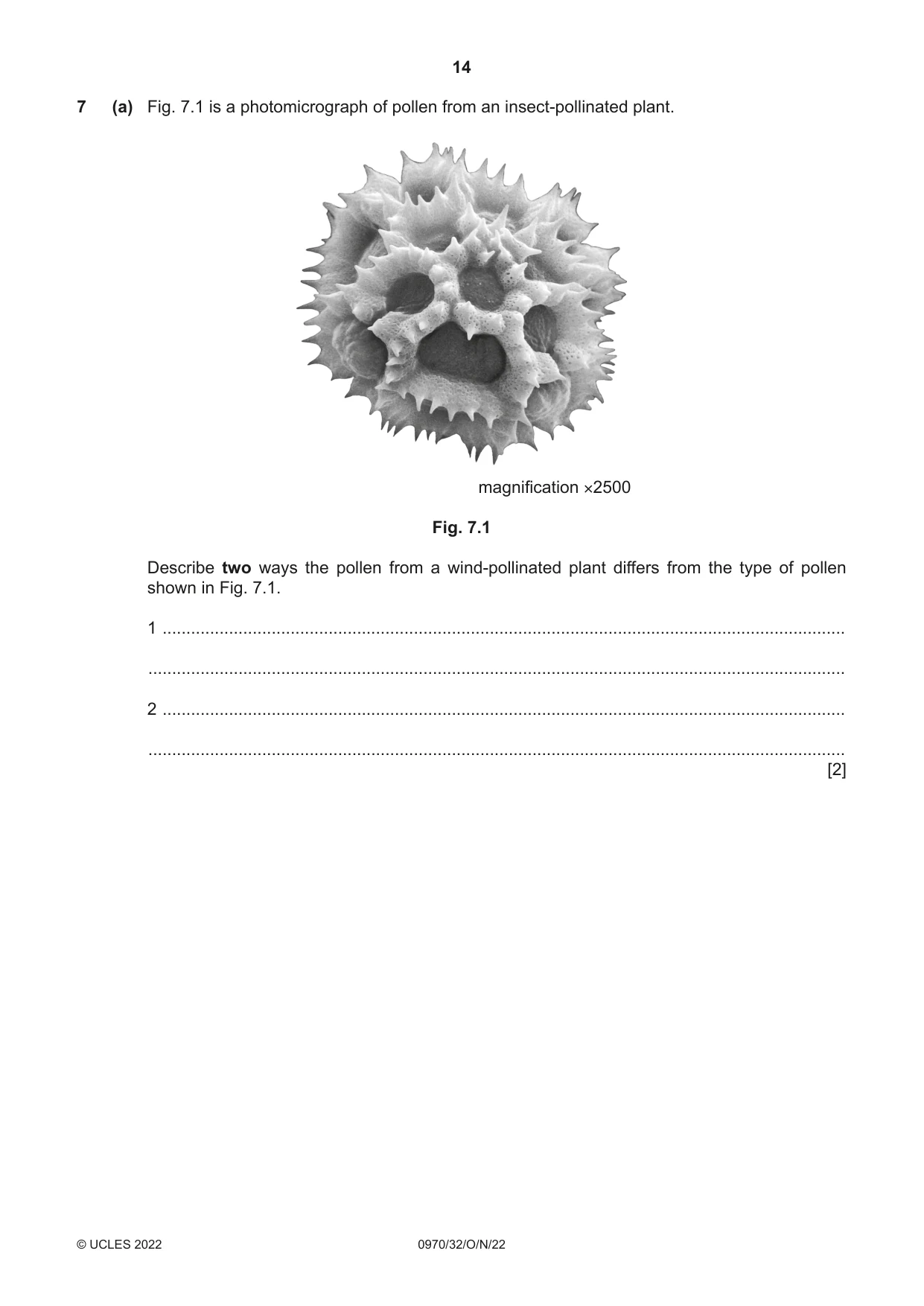
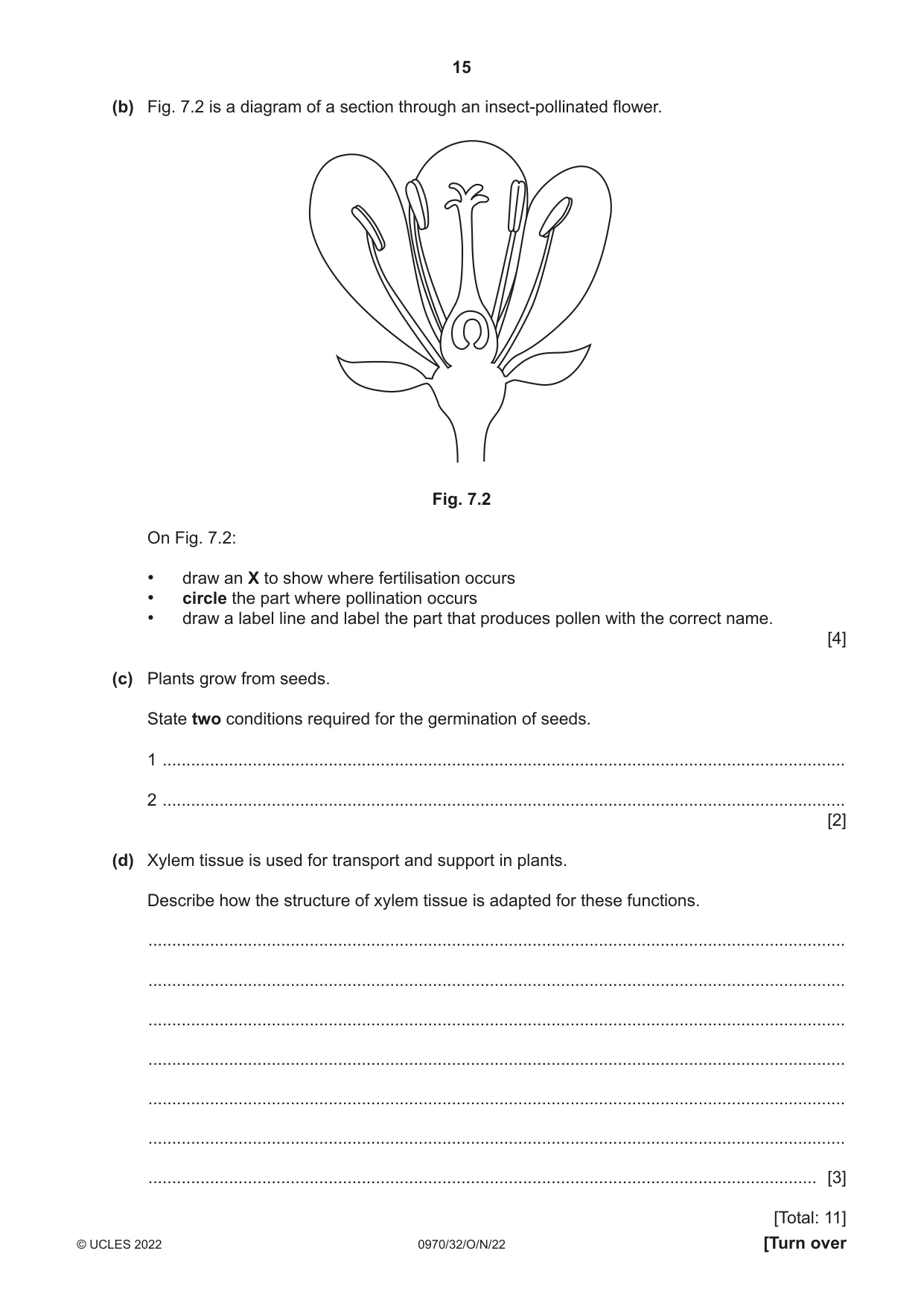
7 (a) Fig. 7.1 is a photomicrograph of pollen from an insect-pollinated plant. magnification ×2500 Fig. 7.1 Describe two ways the pollen from a wind-pollinated plant differs from the type of pollen shown in Fig. 7.1. 1 ................................................................................................................................................ ................................................................................................................................................... 2 ................................................................................................................................................ ................................................................................................................................................... [2] (b) Fig. 7.2 is a diagram of a section through an insect-pollinated flower. Fig. 7.2 On Fig. 7.2: • draw an X to show where fertilisation occurs • circle the part where pollination occurs • draw a label line and label the part that produces pollen with the correct name. [4] (c) Plants grow from seeds. State two conditions required for the germination of seeds. 1 ................................................................................................................................................ 2 ................................................................................................................................................ [2] (d) Xylem tissue is used for transport and support in plants. Describe how the structure of xylem tissue is adapted for these functions. ................................................................................................................................................... ................................................................................................................................................... ................................................................................................................................................... ................................................................................................................................................... ................................................................................................................................................... ................................................................................................................................................... ............................................................................................................................................. [3] [Total: 11]
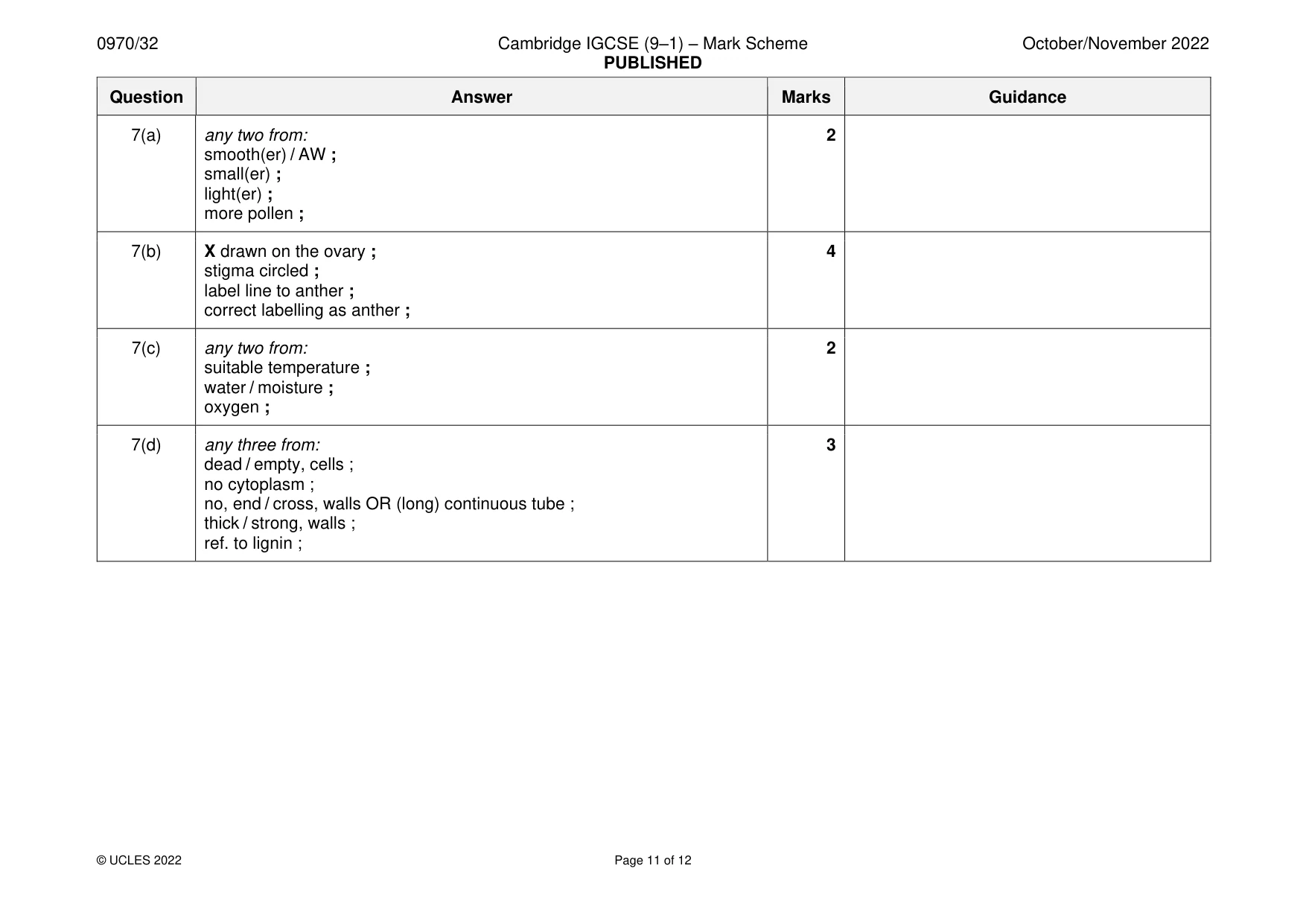
Mark scheme: 7(a) any two from: 2 smooth(er) / AW ; small(er) ; light(er) ; more pollen ; 7(b) X drawn on the ovary ; 4 stigma circled ; label line to anther ; correct labelling as anther ; 7(c) any two from: 2 suitable temperature ; water / moisture ; oxygen ; 7(d) any three from: 3 dead / empty, cells ; no cytoplasm ; no, end / cross, walls OR (long) continuous tube ; thick / strong, walls ; ref. to lignin ;
Q8 · The levels of organisation in living organisms and some examples
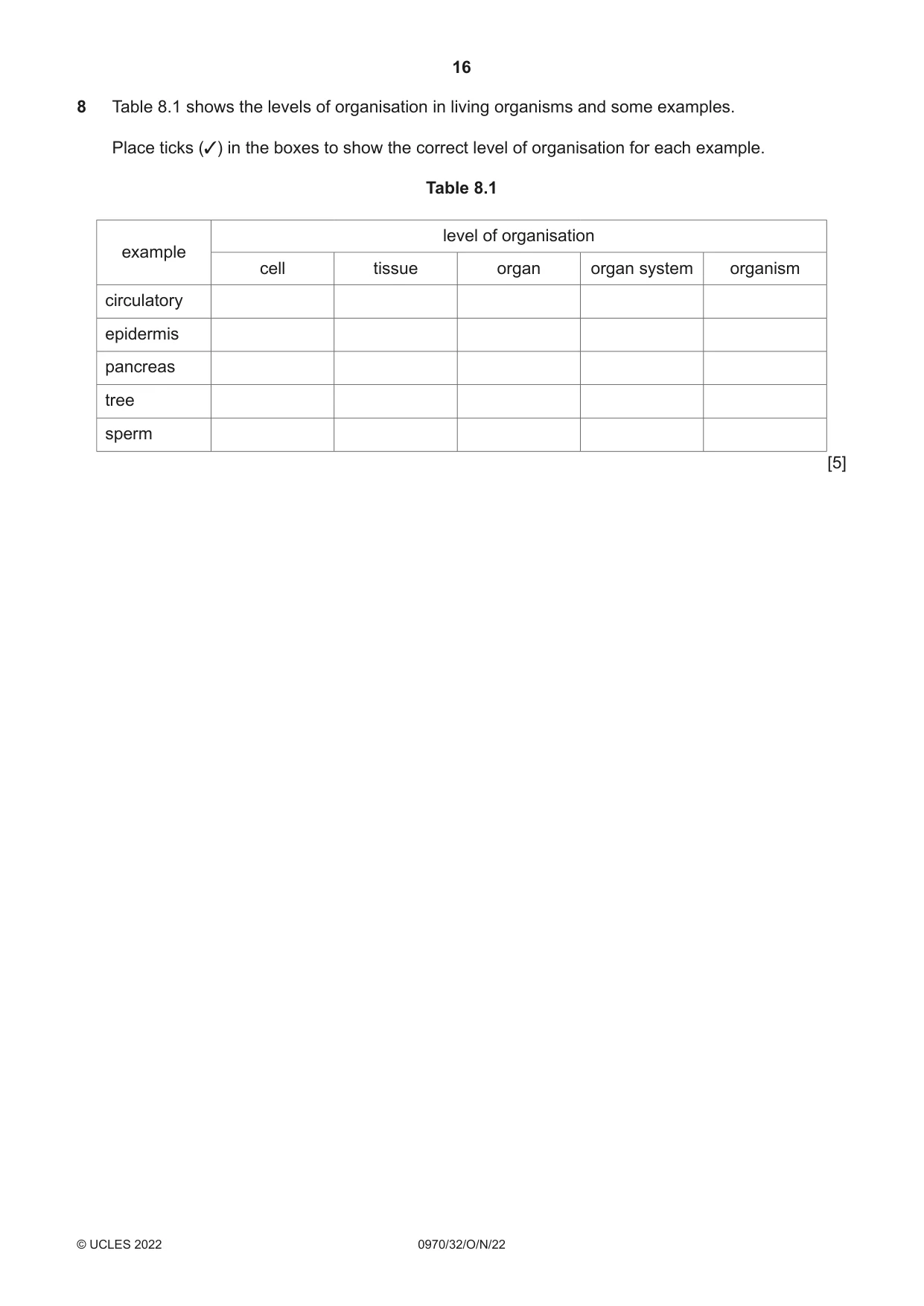
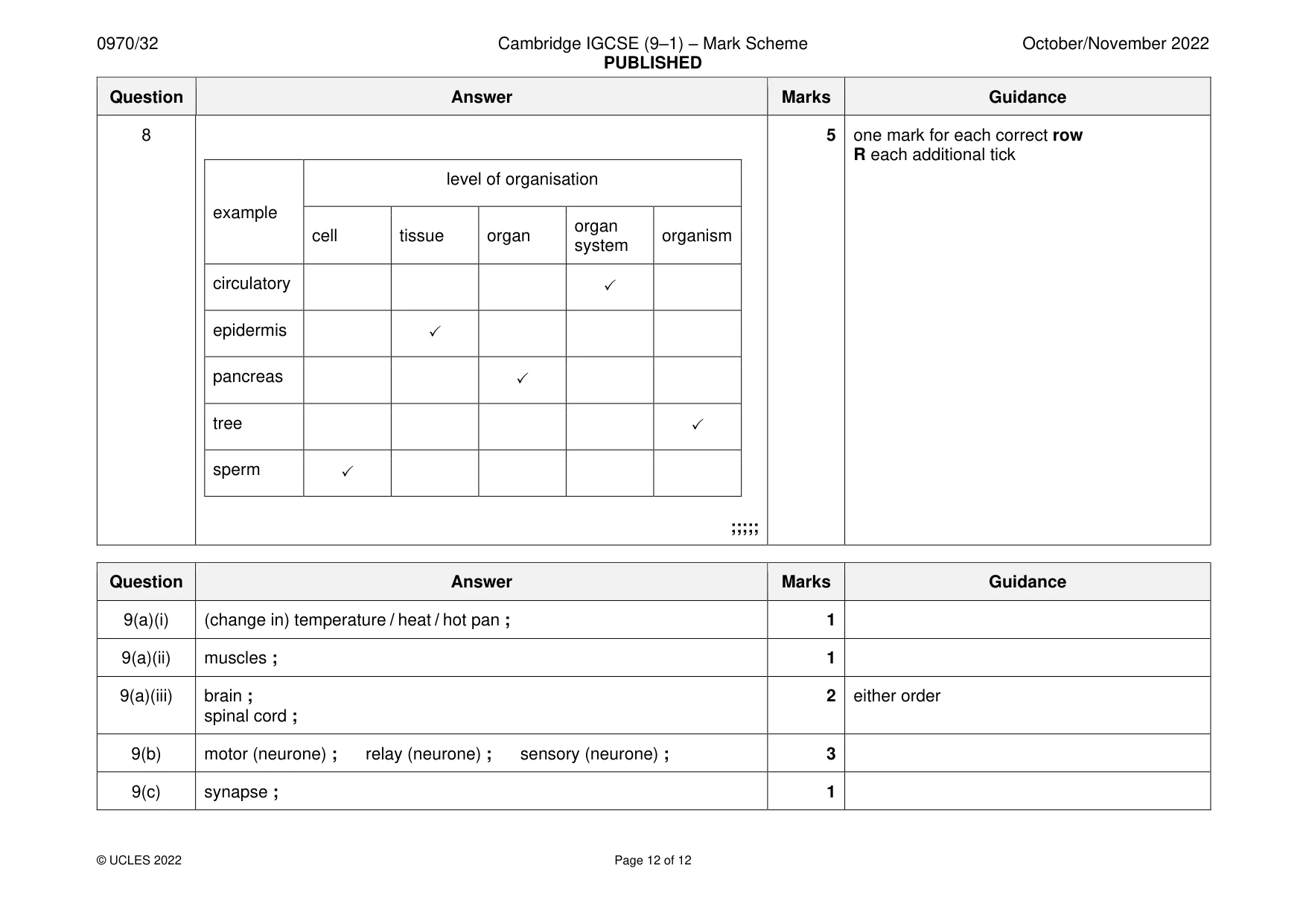
8 Table 8.1 shows the levels of organisation in living organisms and some examples. Place ticks (3) in the boxes to show the correct level of organisation for each example. Table 8.1 level of organisation example cell tissue organ organ system organism circulatory epidermis pancreas tree sperm [5]
Mark scheme: 8 5 one mark for each correct row R each additional tick level of organisation example organ cell tissue organ organism system circulatory epidermis pancreas tree sperm ;;;;;
Question 9
9 (a) Fig. 9.1 contains some information about a reflex action. A person touches a hot pan. Electrical impulses travel to the central nervous system which coordinates a response. The muscles in the arm contract quickly. Fig. 9.1 (i) State the name of the stimulus from the example given in Fig. 9.1. ..................................................................................................................................... [1] (ii) State the name of the effector from the example given in Fig. 9.1. ..................................................................................................................................... [1] (iii) State the names of the two parts of the central nervous system. 1 ........................................................................................................................................ 2 ........................................................................................................................................ [2] (b) Fig. 9.2 shows diagrams of three types of neurones. State the names of the three types of neurones on the lines provided in Fig. 9.2. ..................................... ..................................... ..................................... not to scale Fig. 9.2 [3] (c) State the name given to the junction between two neurones. ............................................................................................................................................. [1]
Mark scheme: 9(a)(i) (change in) temperature / heat / hot pan ; 1 9(a)(ii) muscles ; 1 9(a)(iii) brain ; 2 either order spinal cord ; 9(b) motor (neurone) ; relay (neurone) ; sensory (neurone) ; 3 9(c) synapse ; 1
What was in this paper
The subtopics covered by these 9 questions, and how many questions each got. Open one in a new tab to see every Cambridge question on it.
What you needed in this session
Cambridge’s own grade thresholds for 2022 Oct/Nov, Paper 3 · Variant 2. A higher threshold means an easier paper — the bar moves with how the cohort did.