Cambridge IGCSE Agriculture 0600 — 2011 Oct/Nov Paper 3 · Variant 1
0600/31/O/N/11 · 9 questions · 80 marks · ≈90 min
The question paper and its mark scheme, free to read here and free to download. This is Cambridge’s own paper, exactly as it was sat.
Question paper20 pages


Mark scheme4 pages
Answers below. Sit the paper first if you are practising.
Questions as text
Q1 · Part of a crop rotation
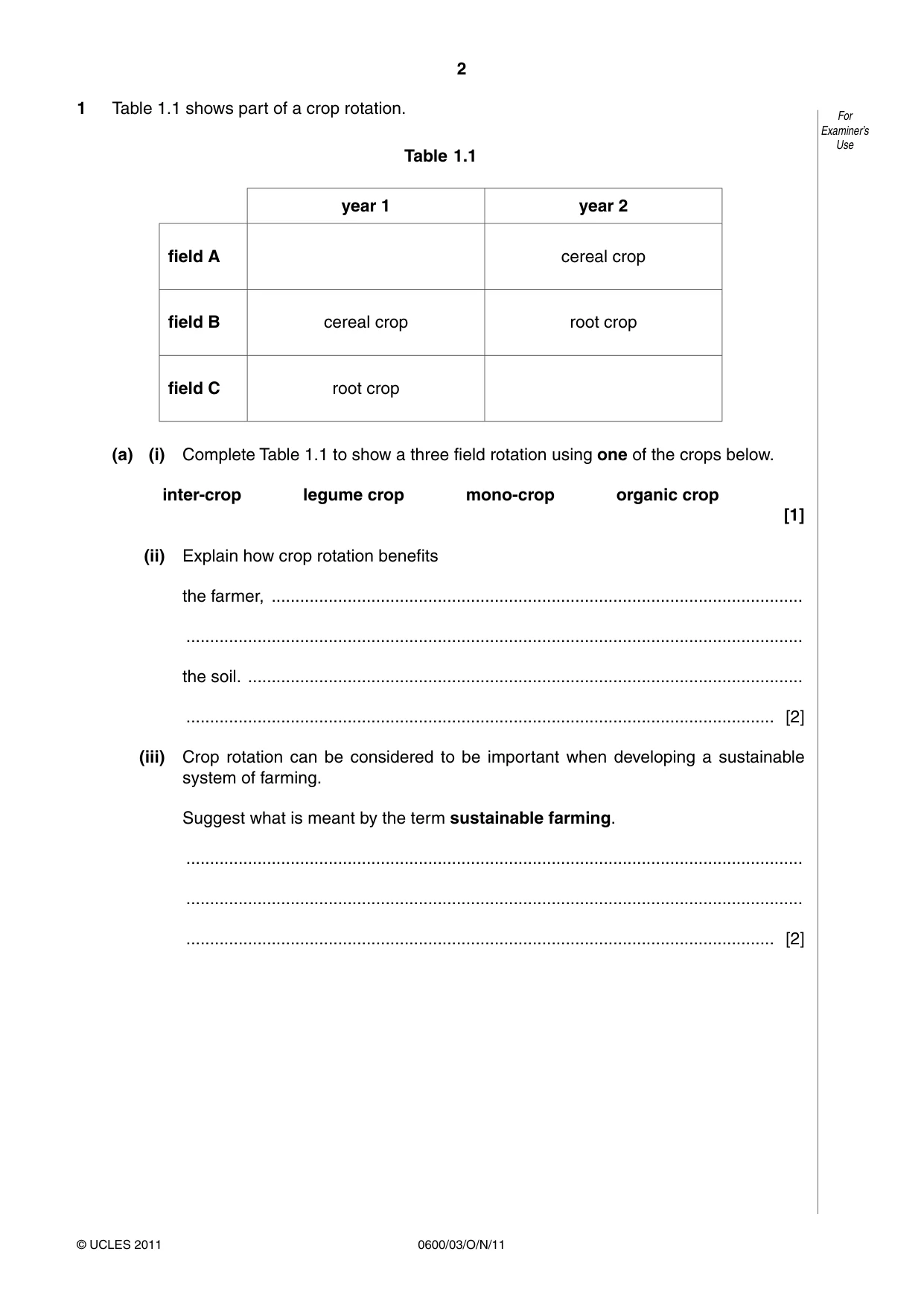
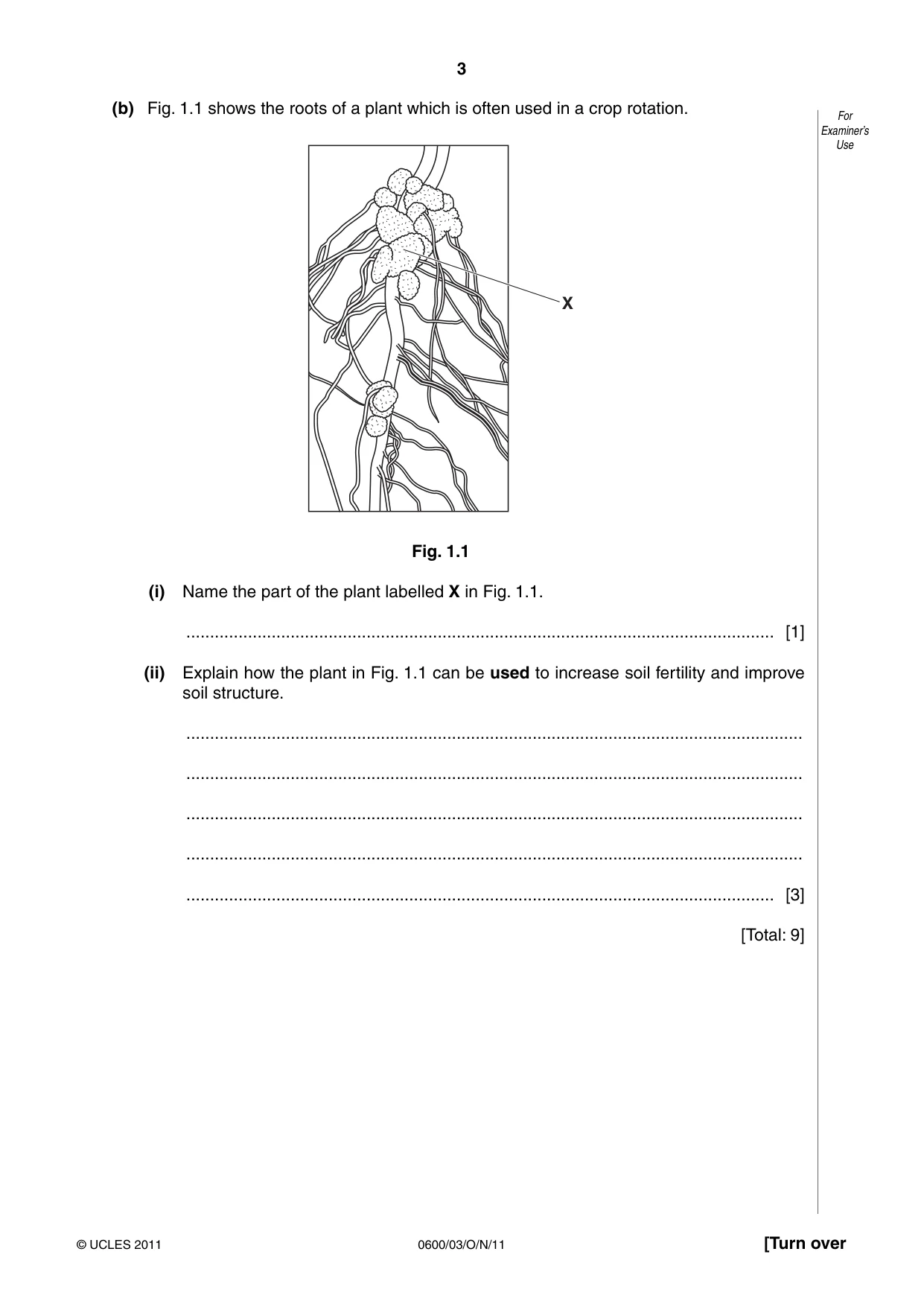
1 Table 1.1 shows part of a crop rotation. Table 1.1 year 1 year 2 field A cereal crop field B cereal crop root crop field C root crop (a) (i) Complete Table 1.1 to show a three field rotation using one of the crops below. inter-crop legume crop mono-crop organic crop [1] (ii) Explain how crop rotation benefits the farmer, ................................................................................................................ .................................................................................................................................. the soil. ..................................................................................................................... ............................................................................................................................ [2] (iii) Crop rotation can be considered to be important when developing a sustainable system of farming. Suggest what is meant by the term sustainable farming. .................................................................................................................................. .................................................................................................................................. ............................................................................................................................ [2] (b) Fig. 1.1 shows the roots of a plant which is often used in a crop rotation. X Fig. 1.1 (i) Name the part of the plant labelled X in Fig. 1.1. ............................................................................................................................ [1] (ii) Explain how the plant in Fig. 1.1 can be used to increase soil fertility and improve soil structure. .................................................................................................................................. .................................................................................................................................. .................................................................................................................................. .................................................................................................................................. ............................................................................................................................ [3] [Total: 9]
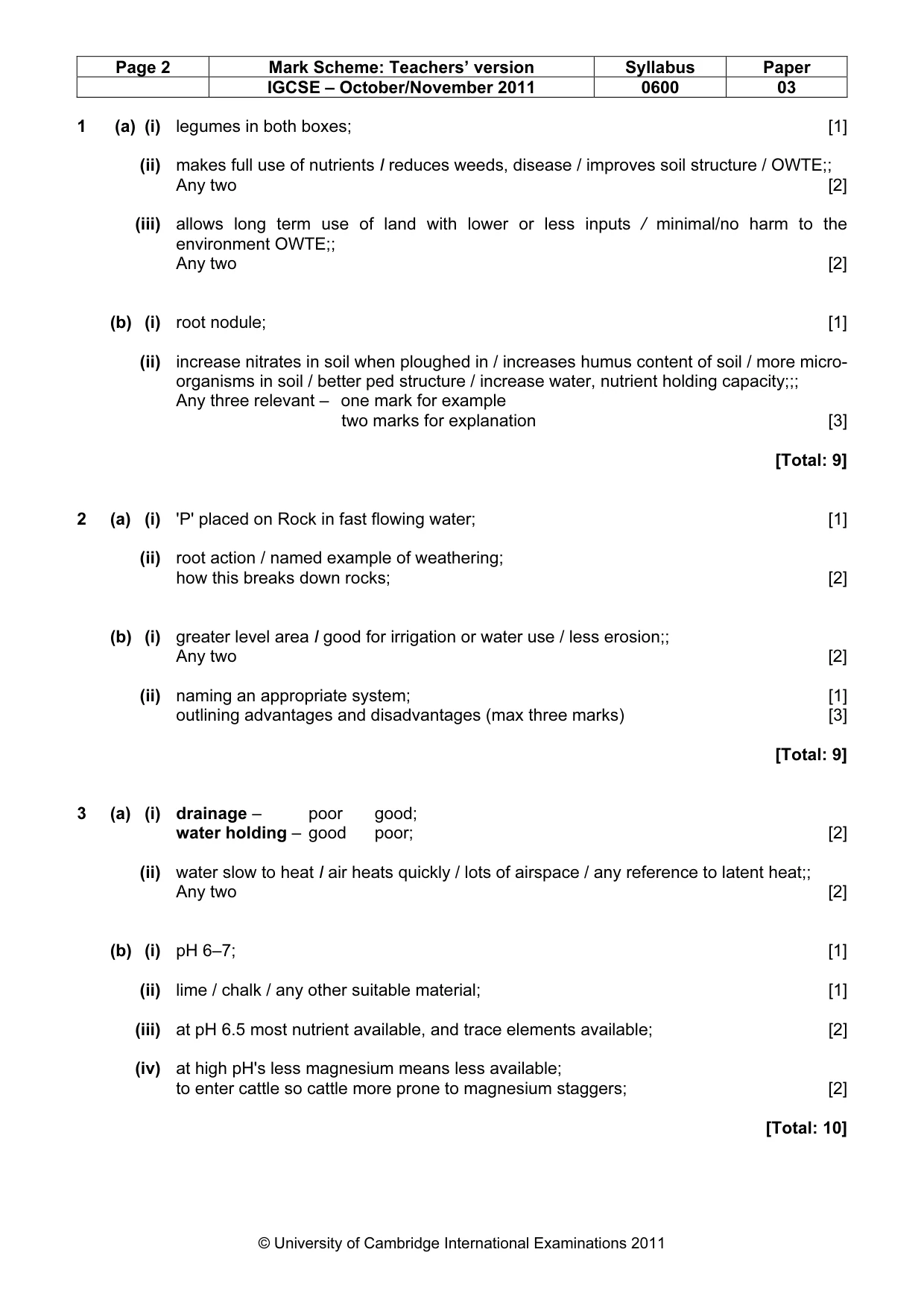
Mark scheme: 1 (a) (i) legumes in both boxes; [1] (ii) makes full use of nutrients I reduces weeds, disease / improves soil structure / OWTE;; Any two [2] (iii) allows long term use of land with lower or less inputs / minimal/no harm to the environment OWTE;; Any two [2] (b) (i) root nodule; [1] (ii) increase nitrates in soil when ploughed in / increases humus content of soil / more micro- organisms in soil / better ped structure / increase water, nutrient holding capacity;;; Any three relevant – one mark for example two marks for explanation [3] [Total: 9]
Q2 · An area where weathering is taking place
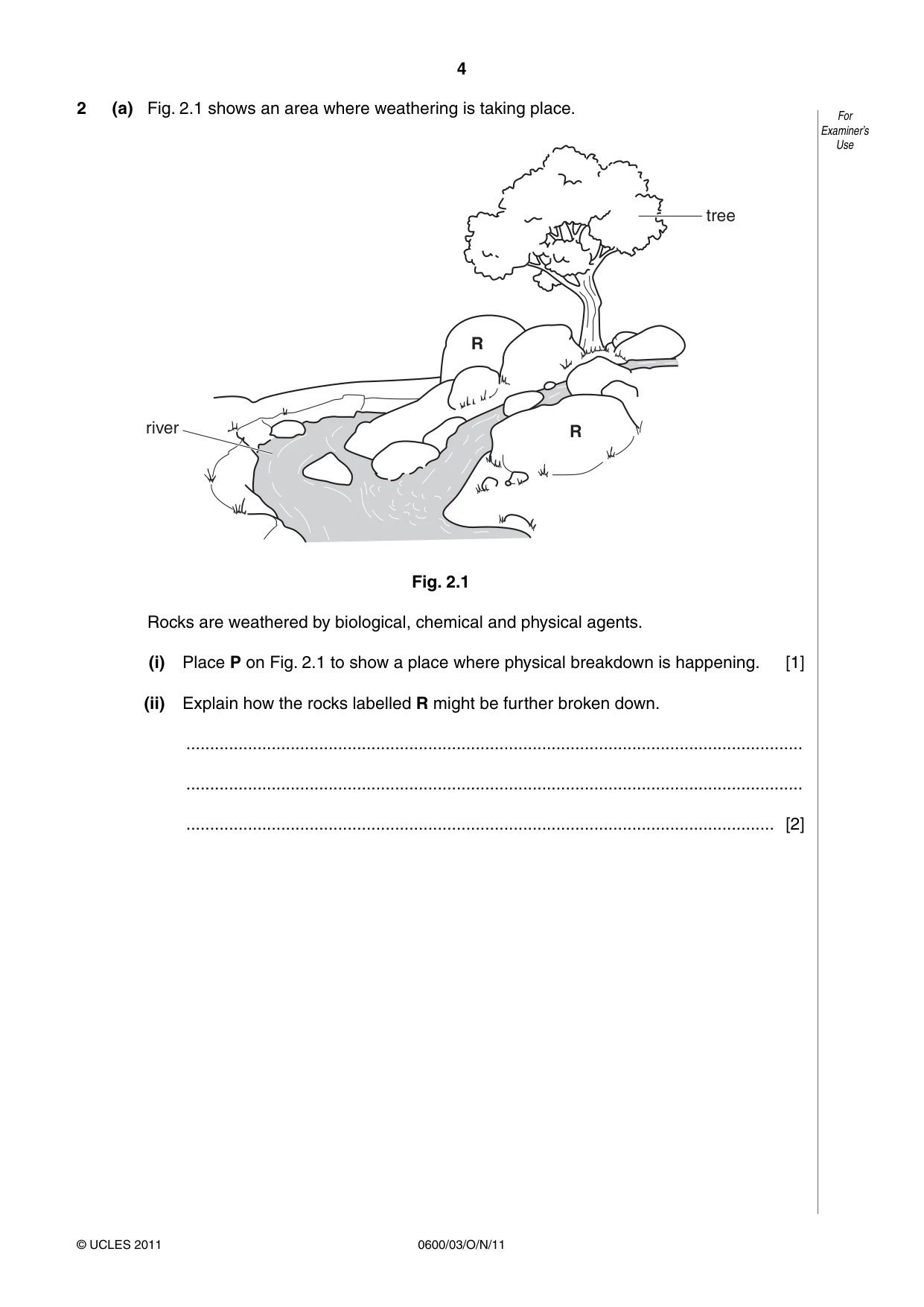
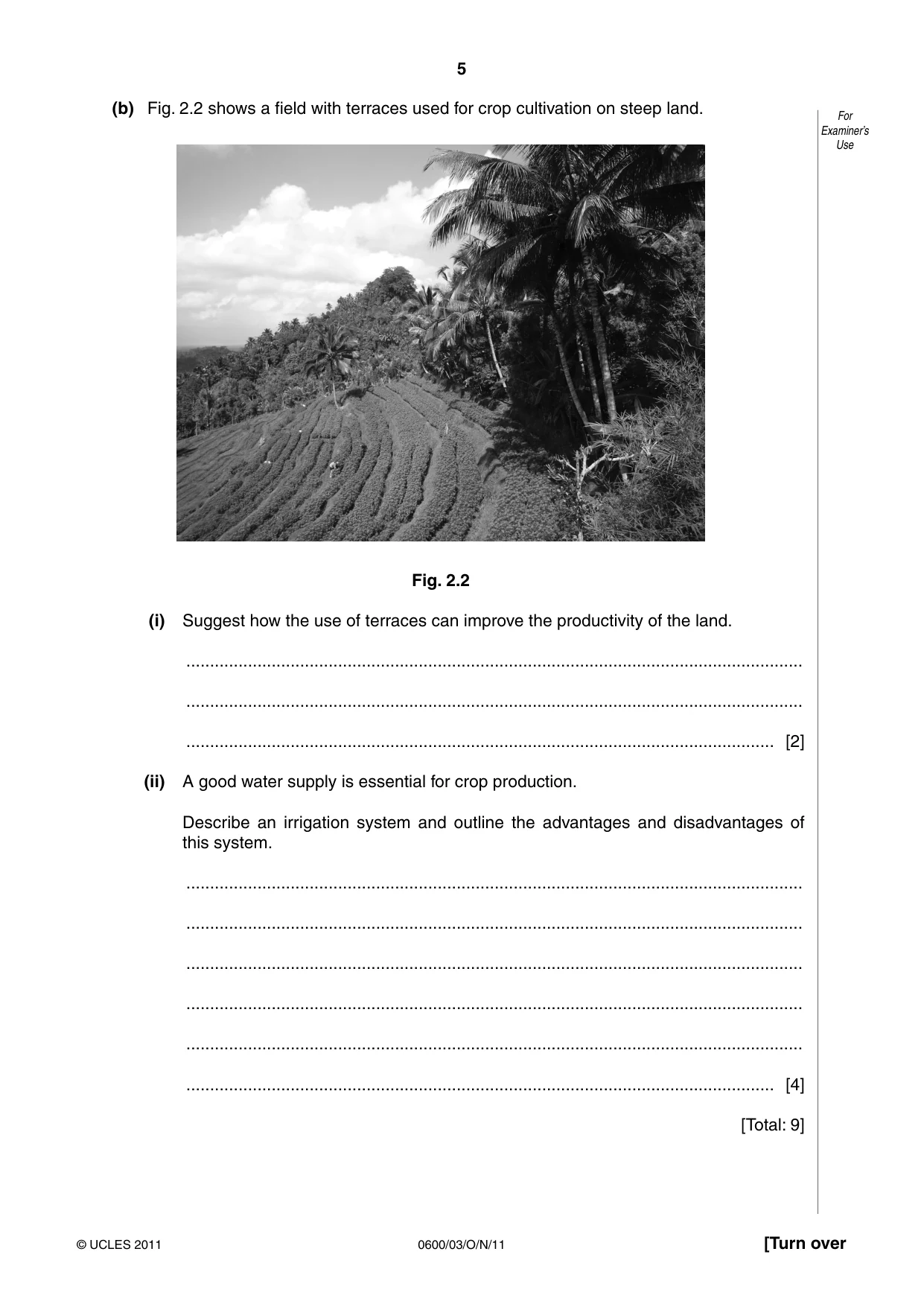
2 (a) Fig. 2.1 shows an area where weathering is taking place. tree R river R Fig. 2.1 Rocks are weathered by biological, chemical and physical agents. (i) Place P on Fig. 2.1 to show a place where physical breakdown is happening. [1] (ii) Explain how the rocks labelled R might be further broken down. .................................................................................................................................. .................................................................................................................................. ............................................................................................................................ [2] (b) Fig. 2.2 shows a field with terraces used for crop cultivation on steep land. Fig. 2.2 (i) Suggest how the use of terraces can improve the productivity of the land. .................................................................................................................................. .................................................................................................................................. ............................................................................................................................ [2] (ii) A good water supply is essential for crop production. Describe an irrigation system and outline the advantages and disadvantages of this system. .................................................................................................................................. .................................................................................................................................. .................................................................................................................................. .................................................................................................................................. .................................................................................................................................. ............................................................................................................................ [4] [Total: 9]
Mark scheme: 2 (a) (i) 'P' placed on Rock in fast flowing water; [1] (ii) root action / named example of weathering; how this breaks down rocks; [2] (b) (i) greater level area I good for irrigation or water use / less erosion;; Any two [2] (ii) naming an appropriate system; [1] outlining advantages and disadvantages (max three marks) [3] [Total: 9]
Q3 · Table 3.1 compares a clay soil with a sandy soil
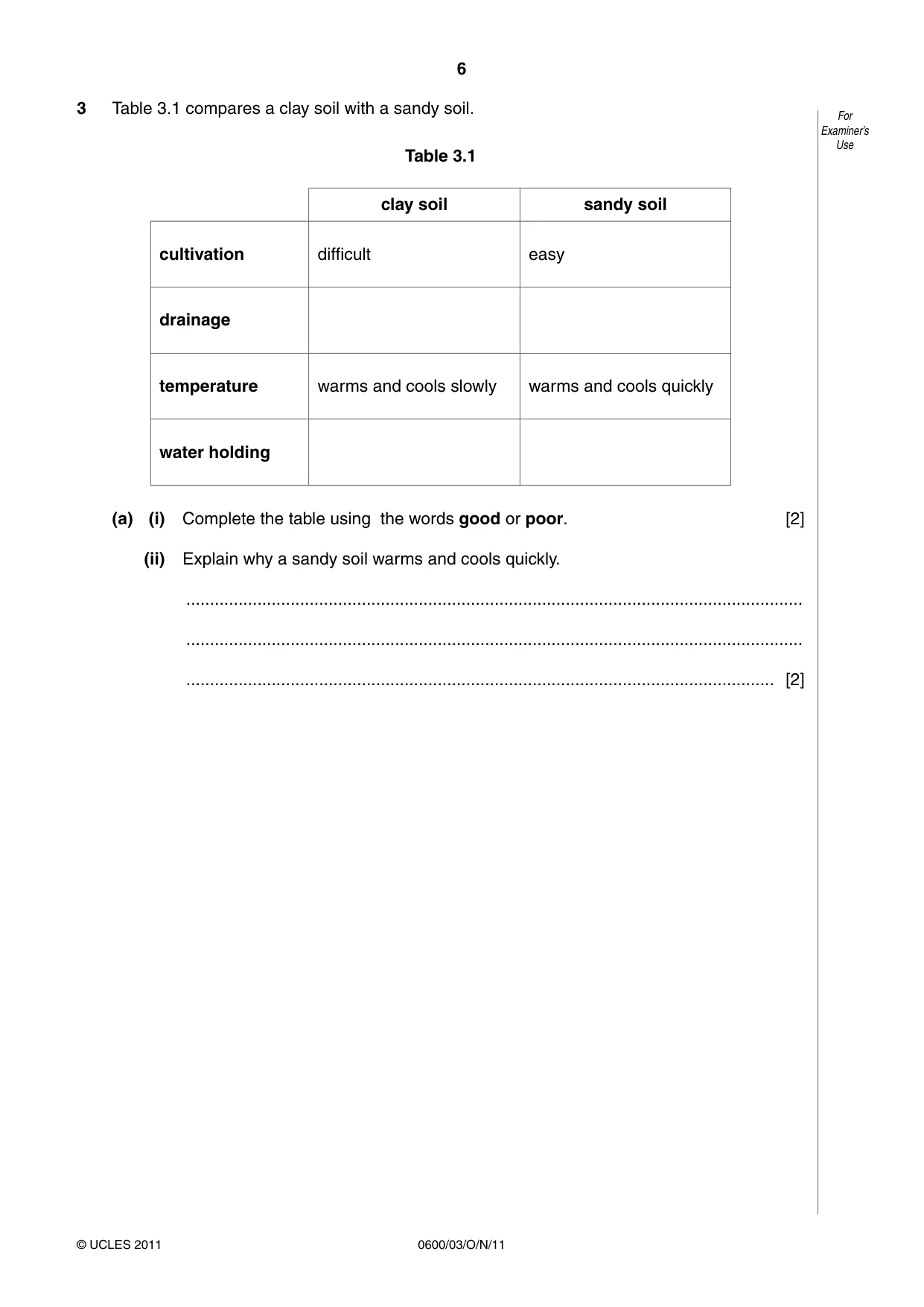
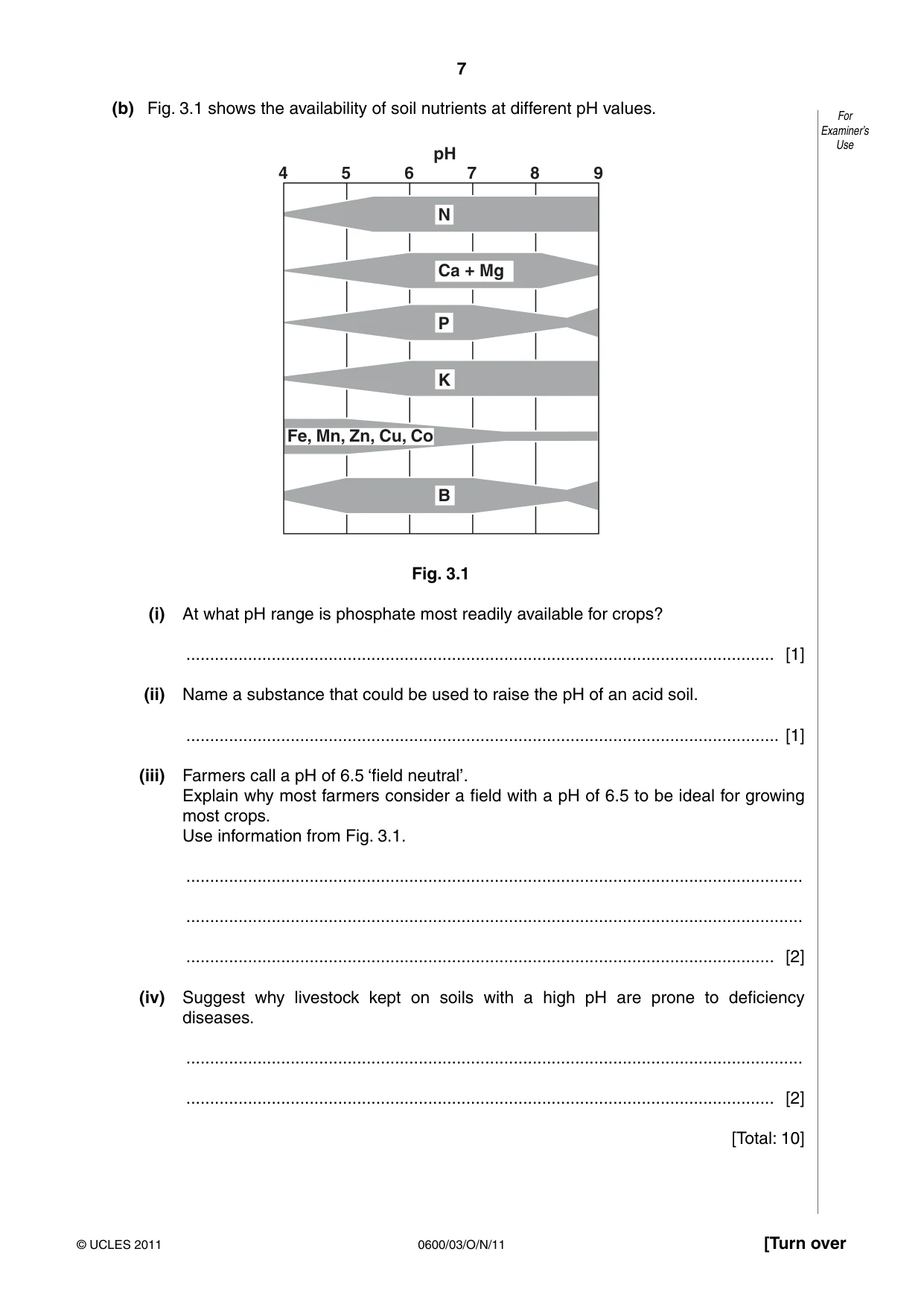
3 Table 3.1 compares a clay soil with a sandy soil. Table 3.1 clay soil sandy soil cultivation difficult easy drainage temperature warms and cools slowly warms and cools quickly water holding (a) (i) Complete the table using the words good or poor. [2] (ii) Explain why a sandy soil warms and cools quickly. .................................................................................................................................. .................................................................................................................................. ............................................................................................................................ [2] (b) Fig. 3.1 shows the availability of soil nutrients at different pH values. pH 4 5 6 7 8 9 N Ca + Mg P K Fe, Mn, Zn, Cu, Co B Fig. 3.1 (i) At what pH range is phosphate most readily available for crops? ............................................................................................................................ [1] (ii) Name a substance that could be used to raise the pH of an acid soil. ............................................................................................................................. [1] (iii) Farmers call a pH of 6.5 ‘field neutral’. Explain why most farmers consider a field with a pH of 6.5 to be ideal for growing most crops. Use information from Fig. 3.1. .................................................................................................................................. .................................................................................................................................. ............................................................................................................................ [2] (iv) Suggest why livestock kept on soils with a high pH are prone to deficiency diseases. .................................................................................................................................. ............................................................................................................................ [2] [Total: 10]
Mark scheme: 3 (a) (i) drainage – poor good; water holding – good poor; [2] (ii) water slow to heat I air heats quickly / lots of airspace / any reference to latent heat;; Any two [2] (b) (i) pH 6–7; [1] (ii) lime / chalk / any other suitable material; [1] (iii) at pH 6.5 most nutrient available, and trace elements available; [2] (iv) at high pH's less magnesium means less available; to enter cattle so cattle more prone to magnesium staggers; [2] [Total: 10] IGCSE – October/November 2011 0600 03
Q4 · Parts of a plant and the way in which water moves through the plant
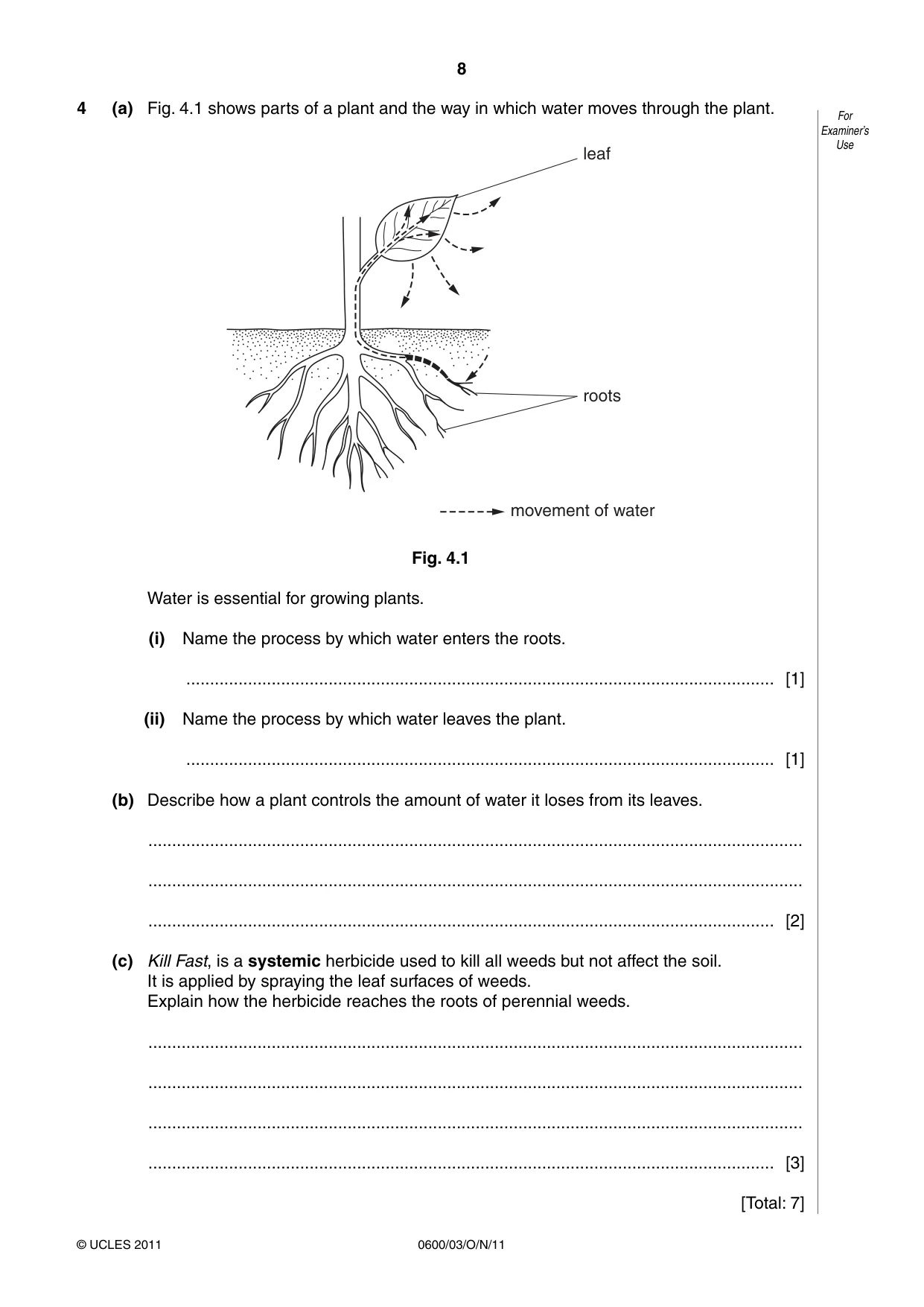
4 (a) Fig. 4.1 shows parts of a plant and the way in which water moves through the plant. leaf roots movement of water Fig. 4.1 Water is essential for growing plants. (i) Name the process by which water enters the roots. ............................................................................................................................ [1] (ii) Name the process by which water leaves the plant. ............................................................................................................................ [1] (b) Describe how a plant controls the amount of water it loses from its leaves. .......................................................................................................................................... .......................................................................................................................................... .................................................................................................................................... [2] (c) Kill Fast, is a systemic herbicide used to kill all weeds but not affect the soil. It is applied by spraying the leaf surfaces of weeds. Explain how the herbicide reaches the roots of perennial weeds. .......................................................................................................................................... .......................................................................................................................................... .......................................................................................................................................... .................................................................................................................................... [3] [Total: 7]
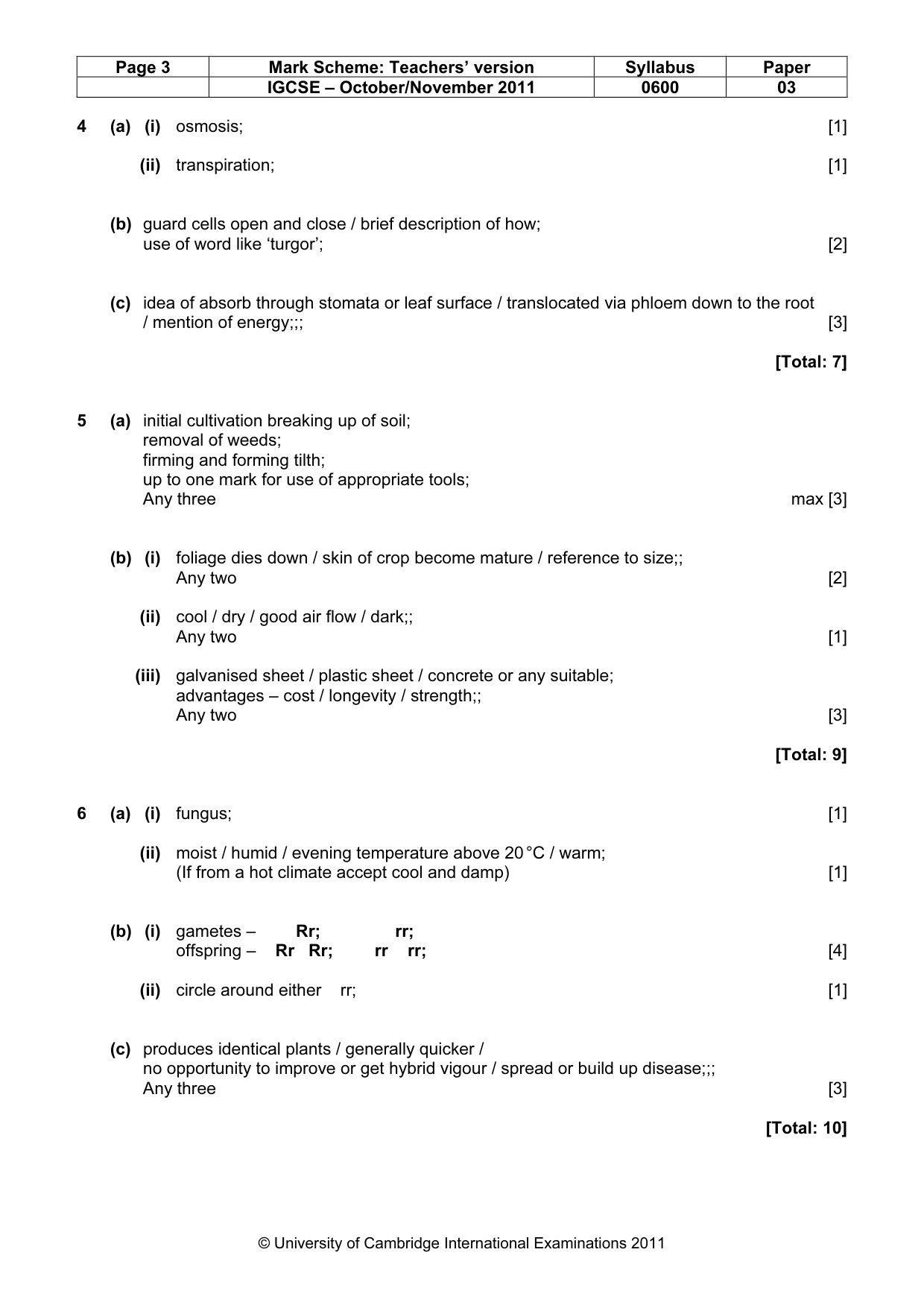
Mark scheme: 4 (a) (i) osmosis; [1] (ii) transpiration; [1] (b) guard cells open and close / brief description of how; use of word like ‘turgor’; [2] (c) idea of absorb through stomata or leaf surface / translocated via phloem down to the root / mention of energy;;; [3] [Total: 7]
Q5 · You are asked to grow a root crop in a garden plot
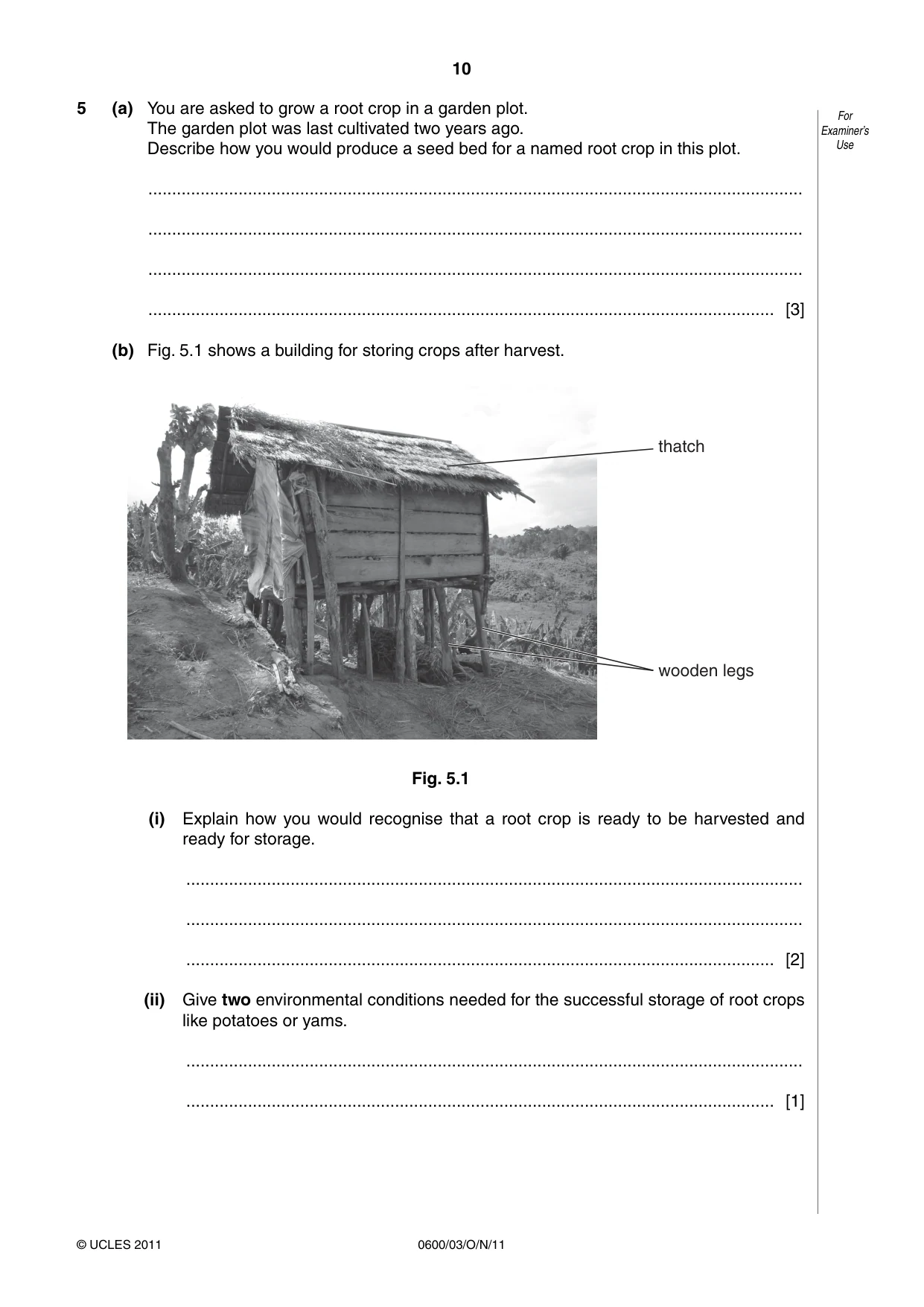
5 (a) You are asked to grow a root crop in a garden plot. The garden plot was last cultivated two years ago. Describe how you would produce a seed bed for a named root crop in this plot. .......................................................................................................................................... .......................................................................................................................................... .......................................................................................................................................... .................................................................................................................................... [3] (b) Fig. 5.1 shows a building for storing crops after harvest. thatch wooden legs Fig. 5.1 (i) Explain how you would recognise that a root crop is ready to be harvested and ready for storage. .................................................................................................................................. .................................................................................................................................. ............................................................................................................................ [2] (ii) Give two environmental conditions needed for the successful storage of root crops like potatoes or yams. .................................................................................................................................. ............................................................................................................................ [1] (iii) The farmer needs to build a new crop store using different materials. Suggest one material the farmer could use. Explain the advantages of using this material to build the store. .................................................................................................................................. .................................................................................................................................. .................................................................................................................................. .................................................................................................................................. ............................................................................................................................ [3] [Total: 9]
Mark scheme: 5 (a) initial cultivation breaking up of soil; removal of weeds; firming and forming tilth; up to one mark for use of appropriate tools; Any three max [3] (b) (i) foliage dies down / skin of crop become mature / reference to size;; Any two [2] (ii) cool / dry / good air flow / dark;; Any two [1] (iii) galvanised sheet / plastic sheet / concrete or any suitable; advantages – cost / longevity / strength;; Any two [3] [Total: 9]
Q6 · An Irish potato plant
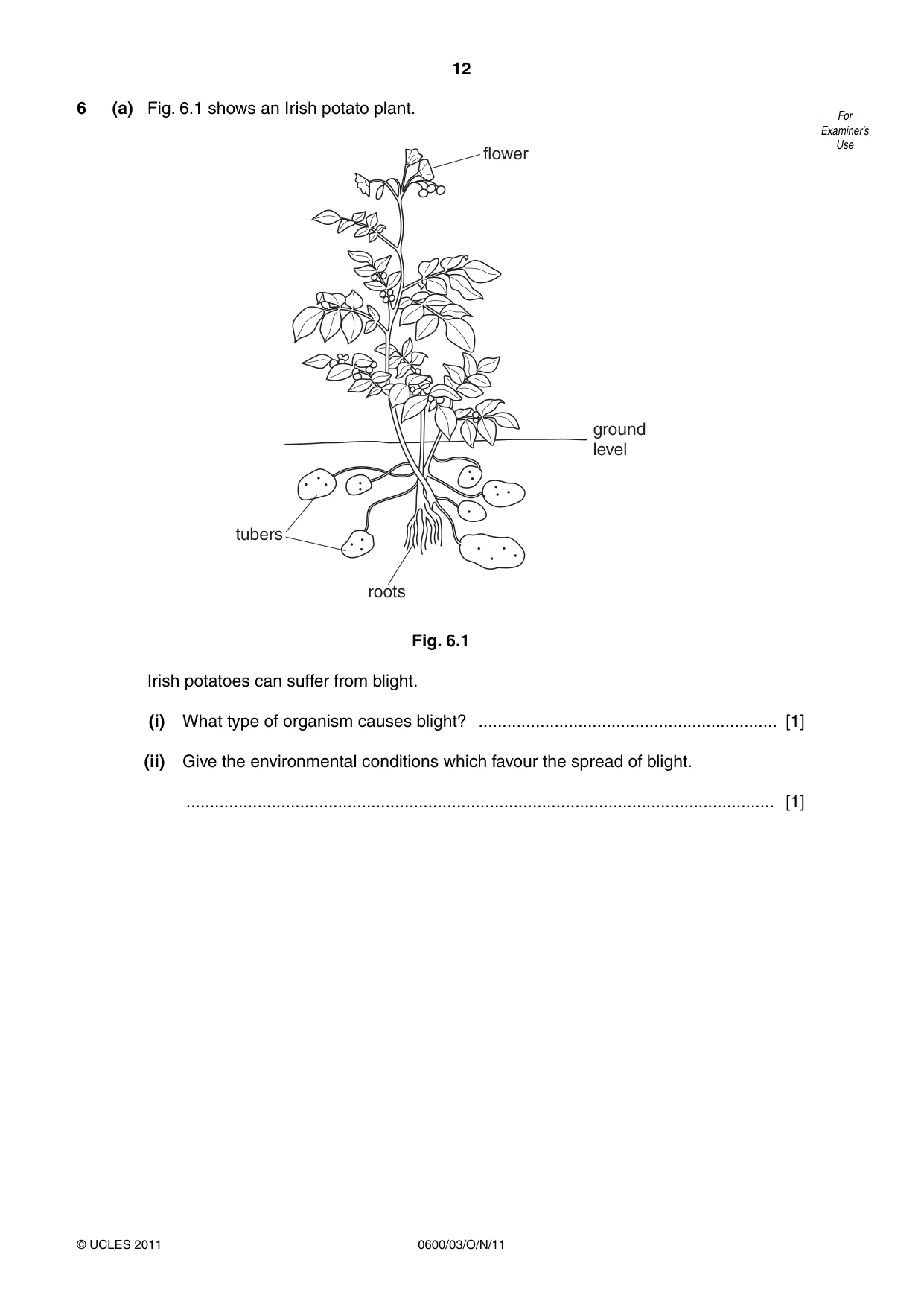
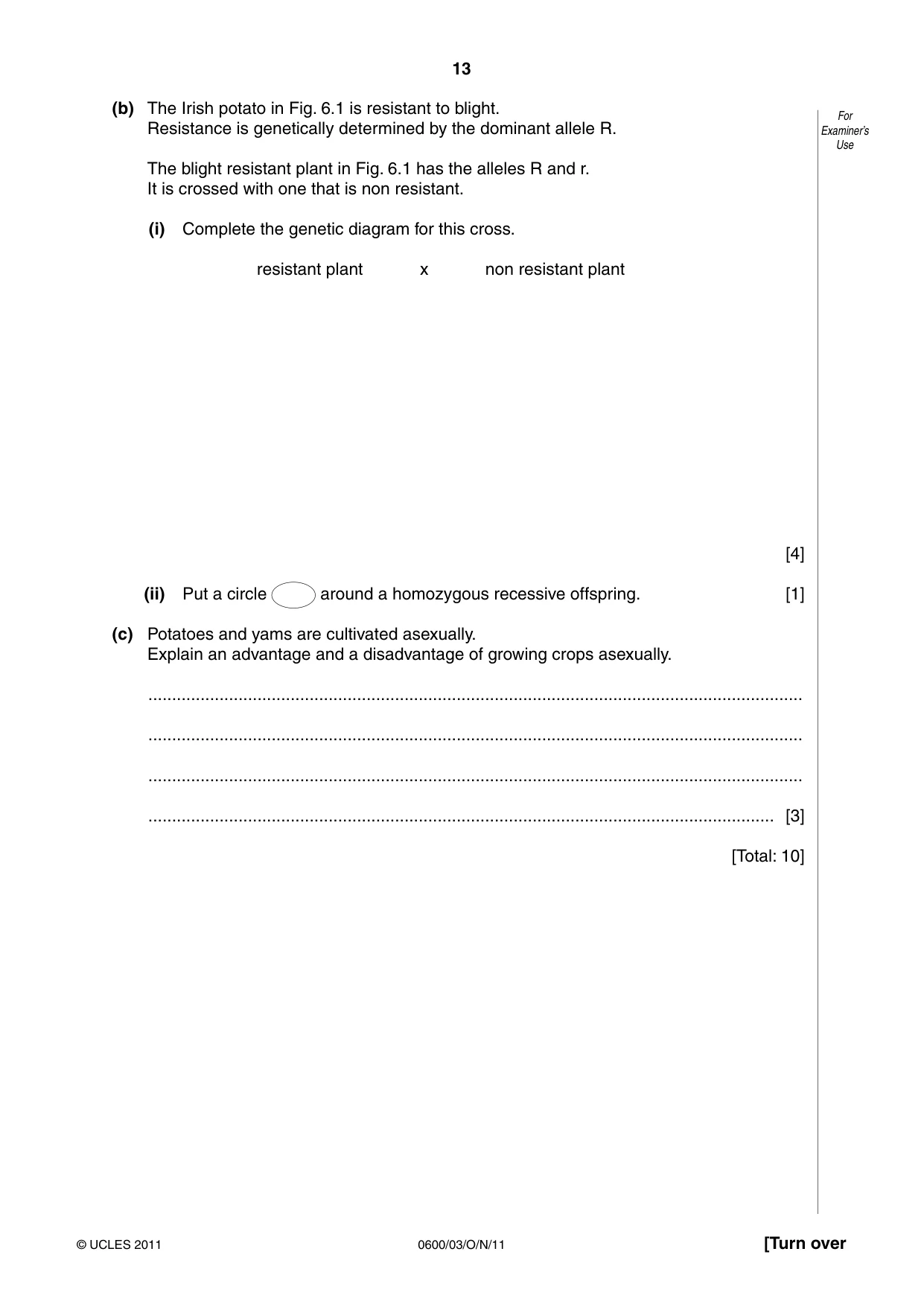
6 (a) Fig. 6.1 shows an Irish potato plant. flower ground level tubers roots Fig. 6.1 Irish potatoes can suffer from blight. (i) What type of organism causes blight? ............................................................... [1] (ii) Give the environmental conditions which favour the spread of blight. ............................................................................................................................ [1] (b) The Irish potato in Fig. 6.1 is resistant to blight. Resistance is genetically determined by the dominant allele R. The blight resistant plant in Fig. 6.1 has the alleles R and r. It is crossed with one that is non resistant. (i) Complete the genetic diagram for this cross. resistant plant x non resistant plant [4] (ii) Put a circle around a homozygous recessive offspring. [1] (c) Potatoes and yams are cultivated asexually. Explain an advantage and a disadvantage of growing crops asexually. .......................................................................................................................................... .......................................................................................................................................... .......................................................................................................................................... .................................................................................................................................... [3] [Total: 10]
Mark scheme: 6 (a) (i) fungus; [1] (ii) moist / humid / evening temperature above 20 °C / warm; (If from a hot climate accept cool and damp) [1] (b) (i) gametes – Rr; rr; offspring – Rr Rr; rr rr; [4] (ii) circle around either rr; [1] (c) produces identical plants / generally quicker / no opportunity to improve or get hybrid vigour / spread or build up disease;;; Any three [3] [Total: 10] IGCSE – October/November 2011 0600 03
Q7 · A diagram of the digestive system of a rabbit
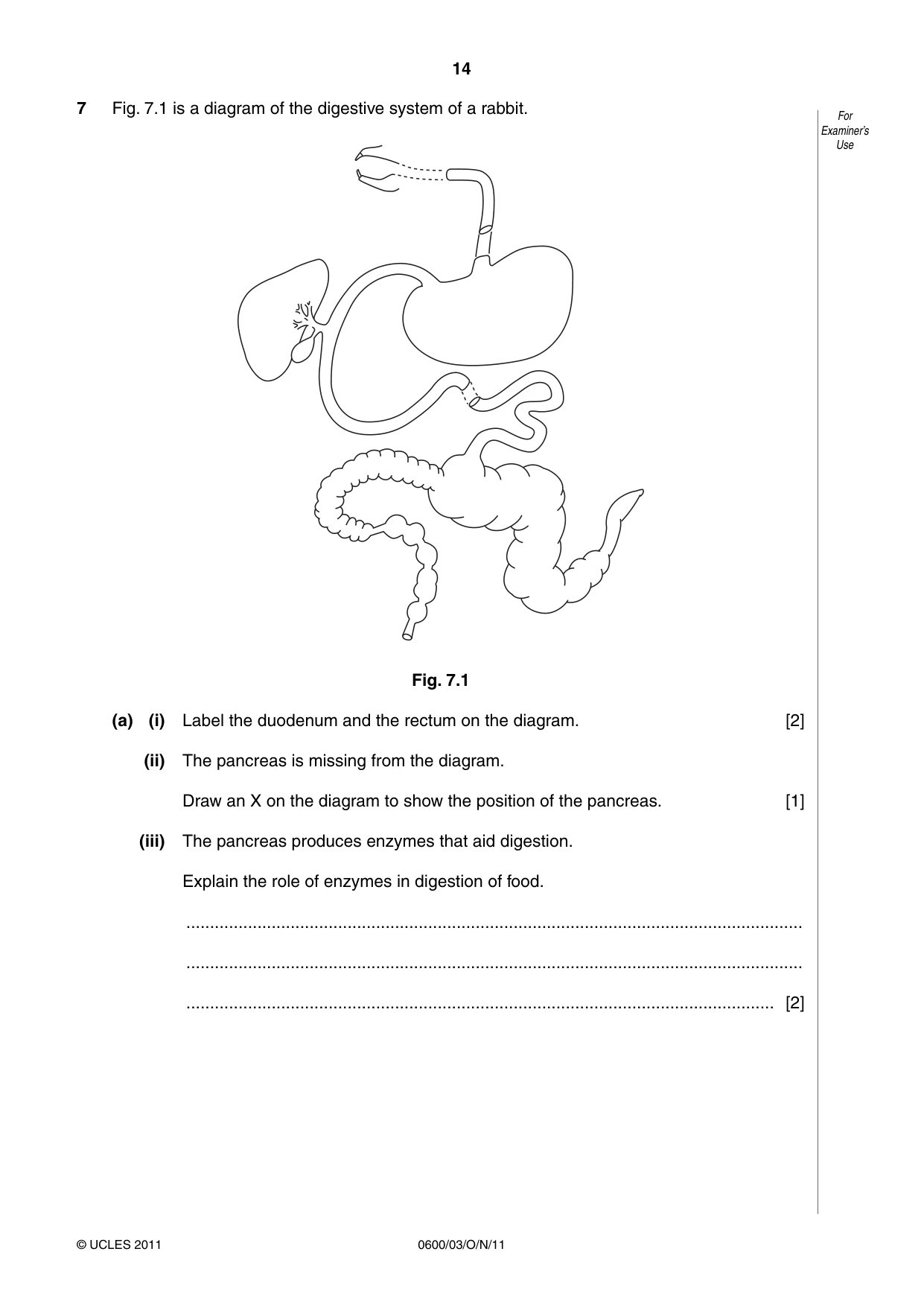
7 Fig. 7.1 is a diagram of the digestive system of a rabbit. Fig. 7.1 (a) (i) Label the duodenum and the rectum on the diagram. [2] (ii) The pancreas is missing from the diagram. Draw an X on the diagram to show the position of the pancreas. [1] (iii) The pancreas produces enzymes that aid digestion. Explain the role of enzymes in digestion of food. .................................................................................................................................. .................................................................................................................................. ............................................................................................................................ [2] (b) Both rabbits and sheep eat grass. Rabbits are classed as non-ruminants, sheep are classed as ruminants. Explain why. .......................................................................................................................................... .......................................................................................................................................... .................................................................................................................................... [2] (c) Explain how ruminants digest cellulose in plant cell walls. .......................................................................................................................................... .......................................................................................................................................... .......................................................................................................................................... .................................................................................................................................... [3] [Total: 10]
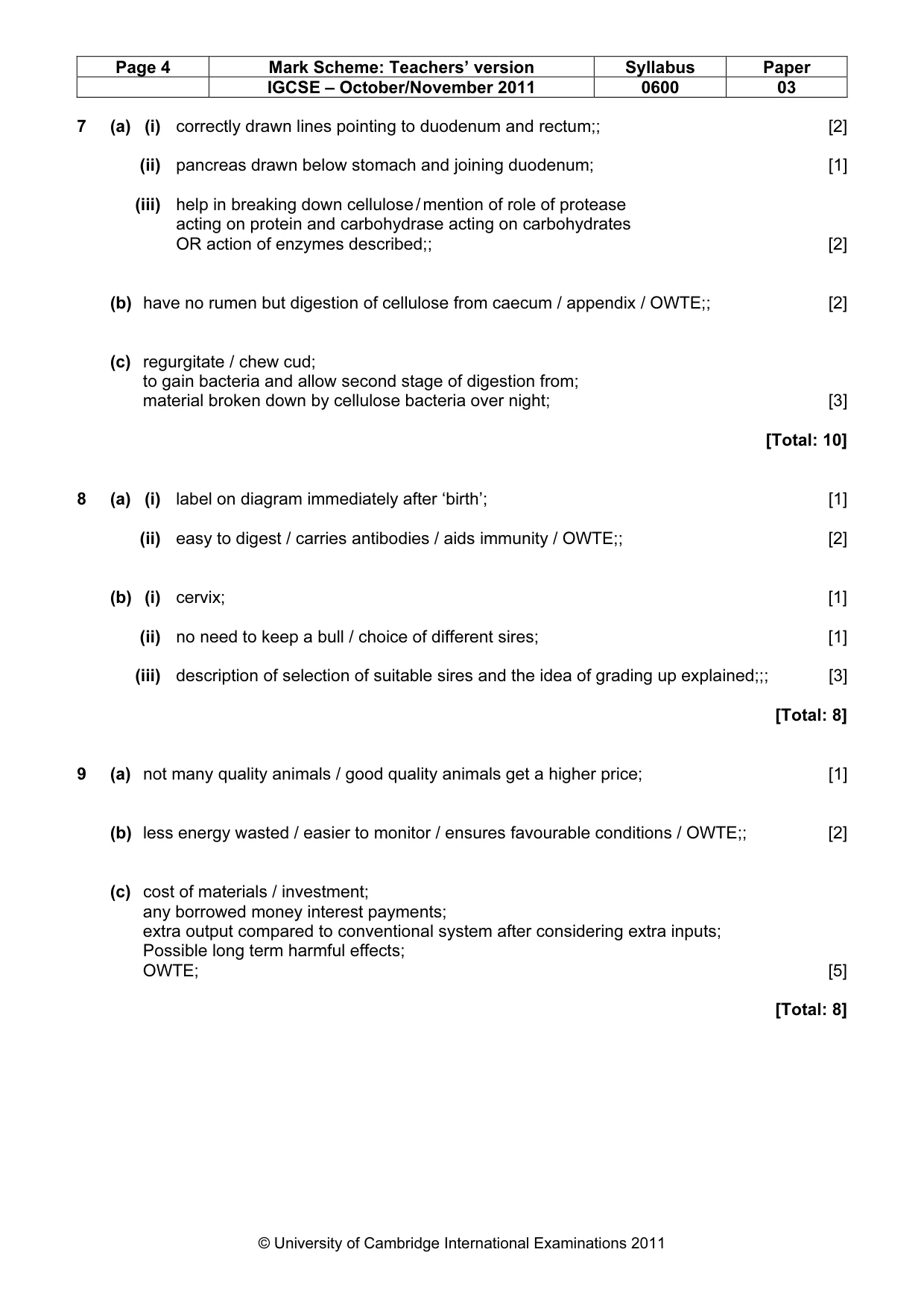
Mark scheme: 7 (a) (i) correctly drawn lines pointing to duodenum and rectum;; [2] (ii) pancreas drawn below stomach and joining duodenum; [1] (iii) help in breaking down cellulose / mention of role of protease acting on protein and carbohydrase acting on carbohydrates OR action of enzymes described;; [2] (b) have no rumen but digestion of cellulose from caecum / appendix / OWTE;; [2] (c) regurgitate / chew cud; to gain bacteria and allow second stage of digestion from; material broken down by cellulose bacteria over night; [3] [Total: 10]
Q8 · The life cycle of a farm animal
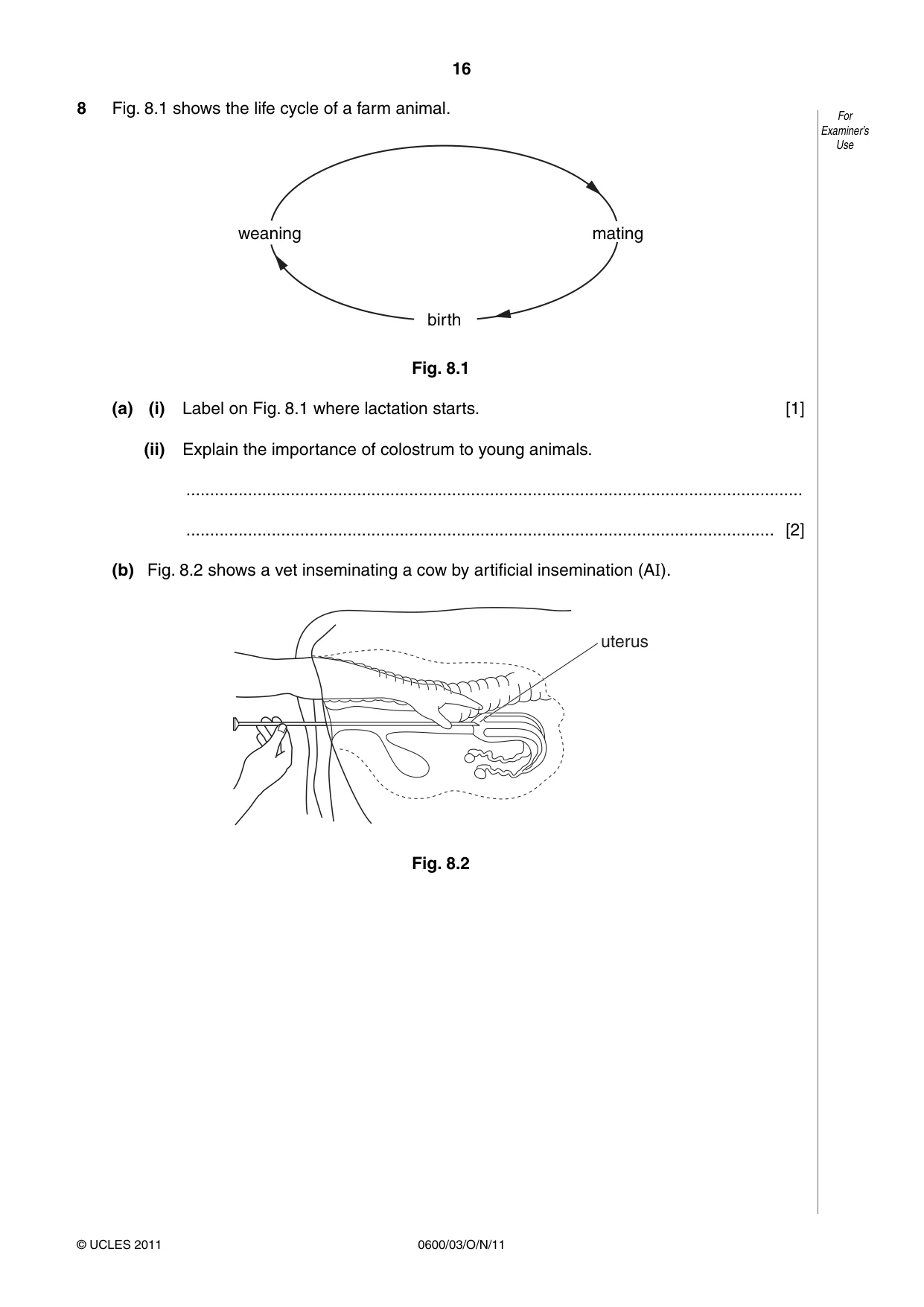
8 Fig. 8.1 shows the life cycle of a farm animal. weaning mating birth Fig. 8.1 (a) (i) Label on Fig. 8.1 where lactation starts. [1] (ii) Explain the importance of colostrum to young animals. .................................................................................................................................. ............................................................................................................................ [2] (b) Fig. 8.2 shows a vet inseminating a cow by artificial insemination (AI). uterus Fig. 8.2 (i) The vet’s hand, which is inside the rectum, is manipulating the inseminator into the uterus of the cow. What is the name of the opening to the uterus? ............................................................................................................................ [1] (ii) Give two reasons why a farmer with a small herd of cattle might choose artificial insemination. .................................................................................................................................. ............................................................................................................................ [1] (iii) Explain how artificial insemination could be used as part of a breeding programme to improve the cattle. .................................................................................................................................. .................................................................................................................................. ............................................................................................................................ [3] [Total: 8]
Mark scheme: 8 (a) (i) label on diagram immediately after ‘birth’; [1] (ii) easy to digest / carries antibodies / aids immunity / OWTE;; [2] (b) (i) cervix; [1] (ii) no need to keep a bull / choice of different sires; [1] (iii) description of selection of suitable sires and the idea of grading up explained;;; [3] [Total: 8]
Q9 · Most farm animals are kept for meat
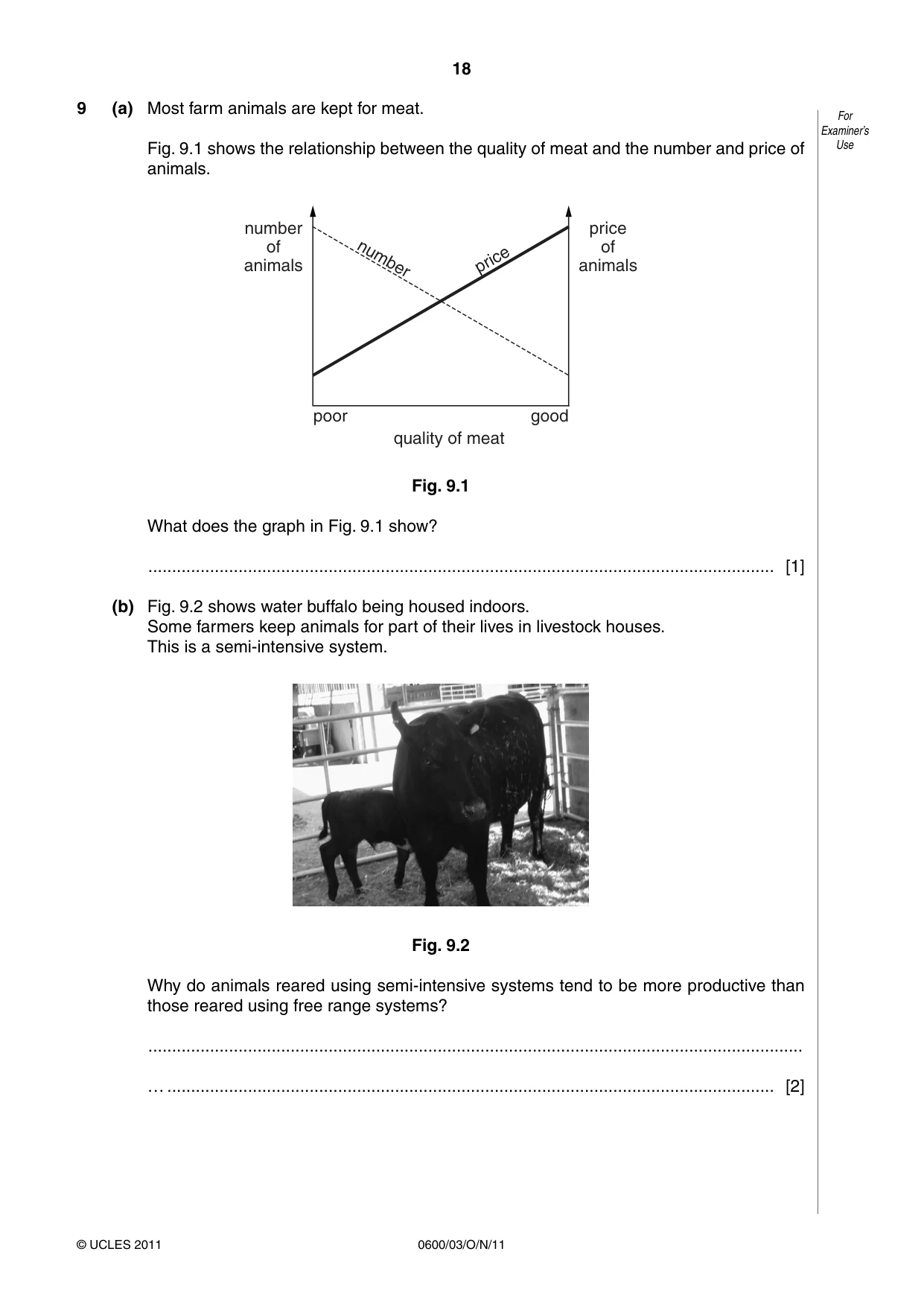
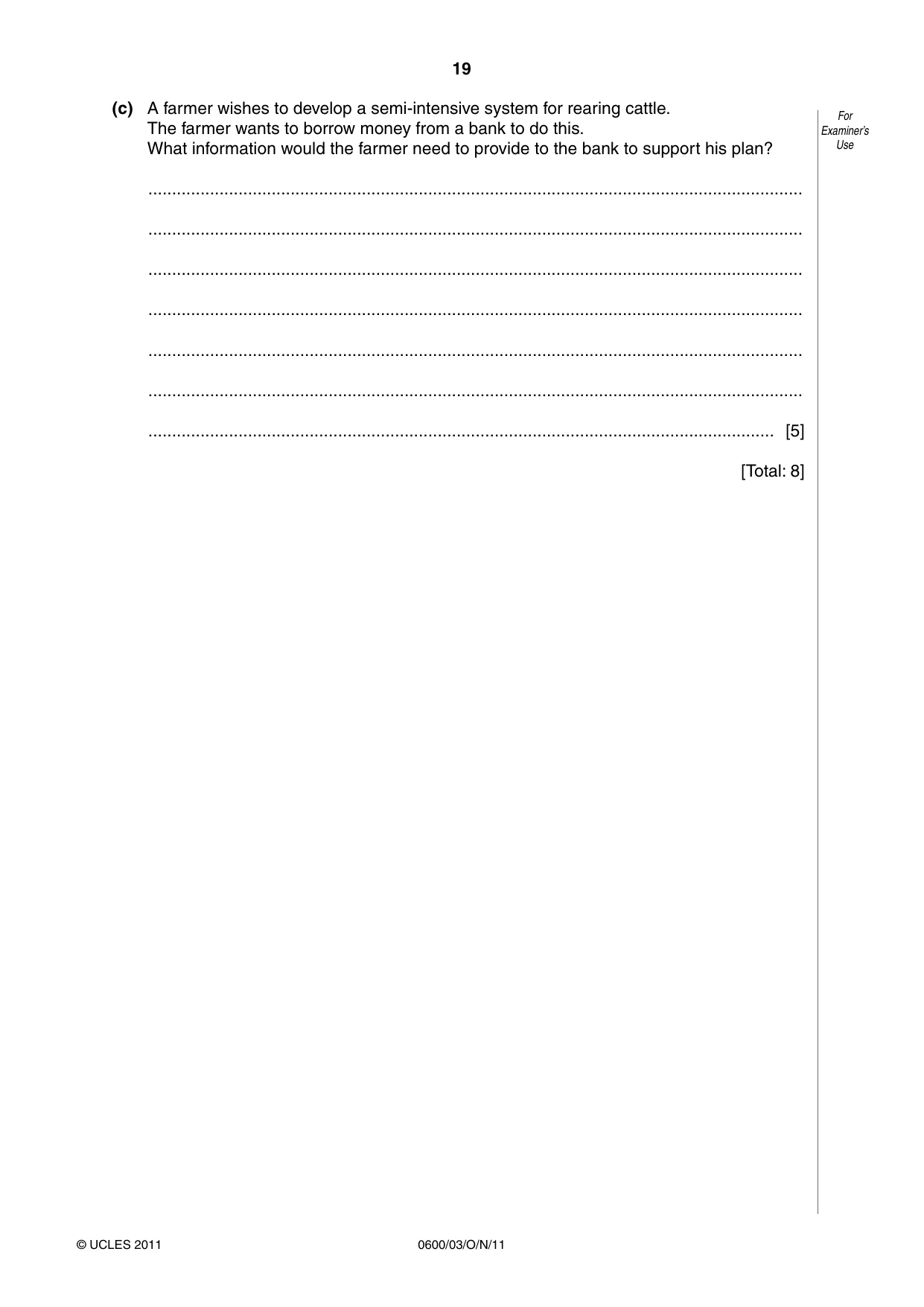
9 (a) Most farm animals are kept for meat. Fig. 9.1 shows the relationship between the quality of meat and the number and price of animals. number price of of animals price animals number poor good quality of meat Fig. 9.1 What does the graph in Fig. 9.1 show? .................................................................................................................................... [1] (b) Fig. 9.2 shows water buffalo being housed indoors. Some farmers keep animals for part of their lives in livestock houses. This is a semi-intensive system. Fig. 9.2 Why do animals reared using semi-intensive systems tend to be more productive than those reared using free range systems? .......................................................................................................................................... … ................................................................................................................................ [2] (c) A farmer wishes to develop a semi-intensive system for rearing cattle. The farmer wants to borrow money from a bank to do this. What information would the farmer need to provide to the bank to support his plan? .......................................................................................................................................... .......................................................................................................................................... .......................................................................................................................................... .......................................................................................................................................... .......................................................................................................................................... .......................................................................................................................................... .................................................................................................................................... [5] [Total: 8]
Mark scheme: 9 (a) not many quality animals / good quality animals get a higher price; [1] (b) less energy wasted / easier to monitor / ensures favourable conditions / OWTE;; [2] (c) cost of materials / investment; any borrowed money interest payments; extra output compared to conventional system after considering extra inputs; Possible long term harmful effects; OWTE; [5] [Total: 8]
What you needed in this session
Cambridge’s own grade thresholds for 2011 Oct/Nov, Paper 3 · Variant 1. A higher threshold means an easier paper — the bar moves with how the cohort did.