Cambridge A Level Physics 9702 — 2012 May/June Paper 2 · Variant 3
9702/23/M/J/12 · 7 questions · 60 marks · ≈68 min
The question paper and its mark scheme, free to read here and free to download. This is Cambridge’s own paper, exactly as it was sat.
Question paper16 pages
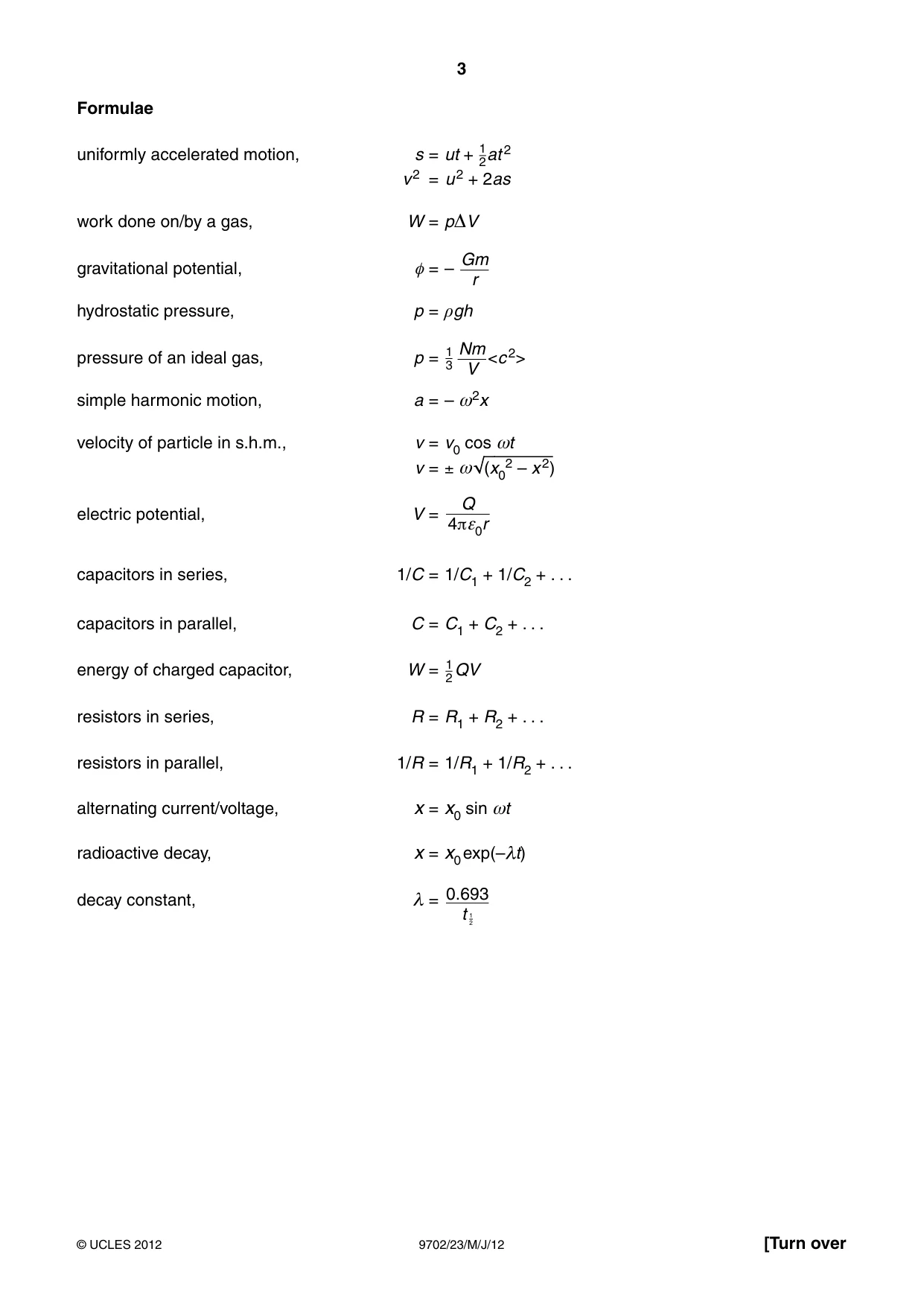

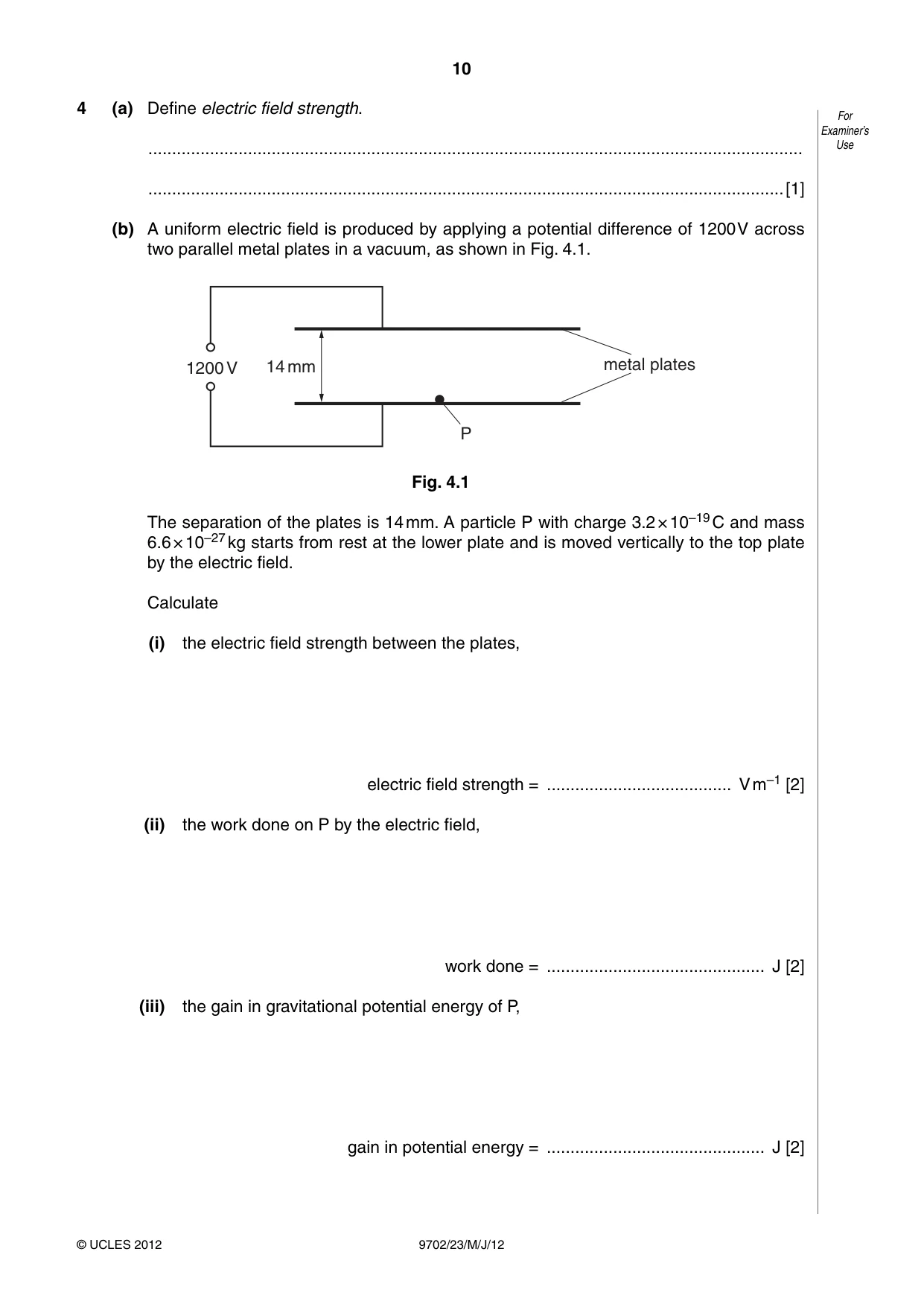
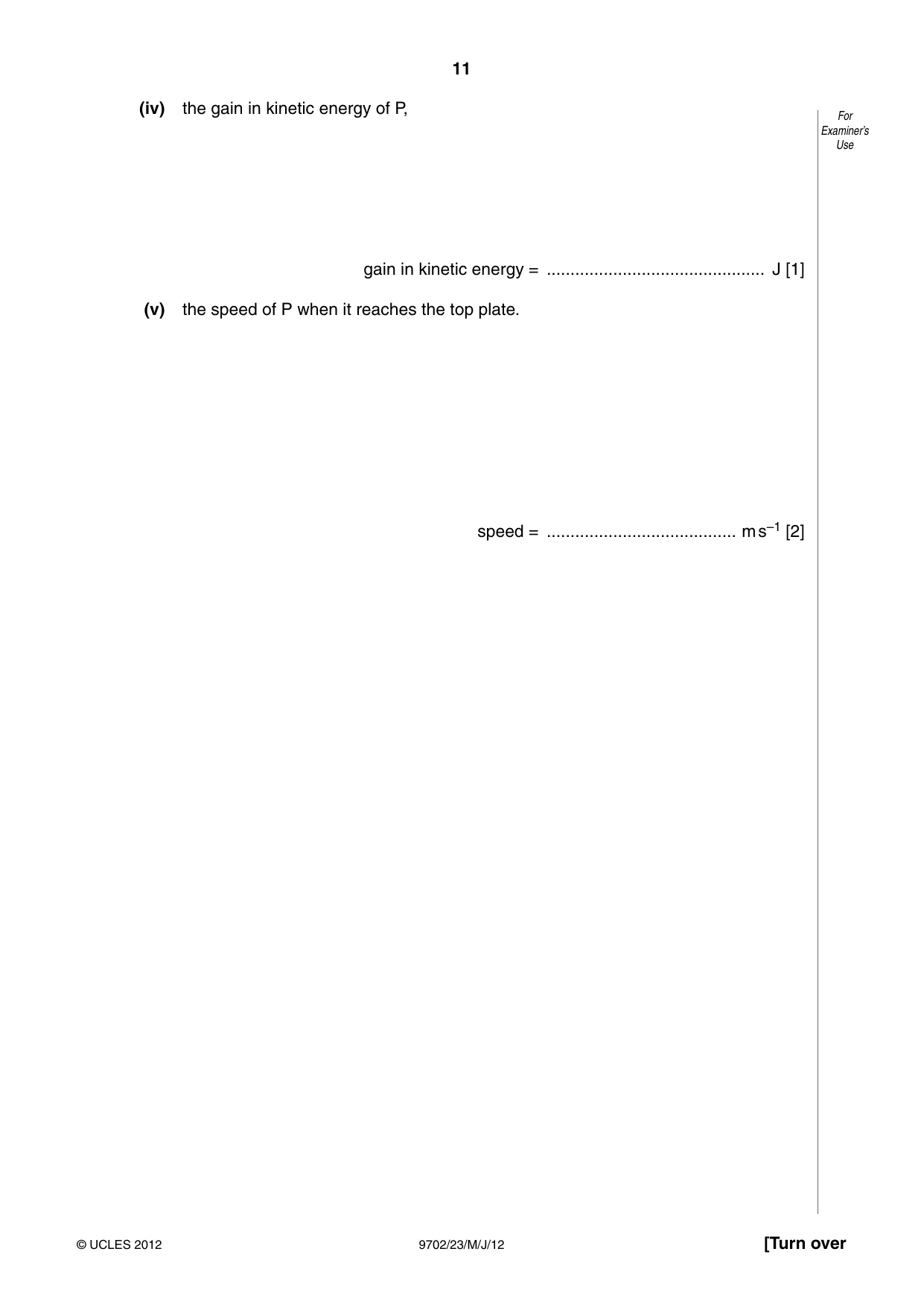
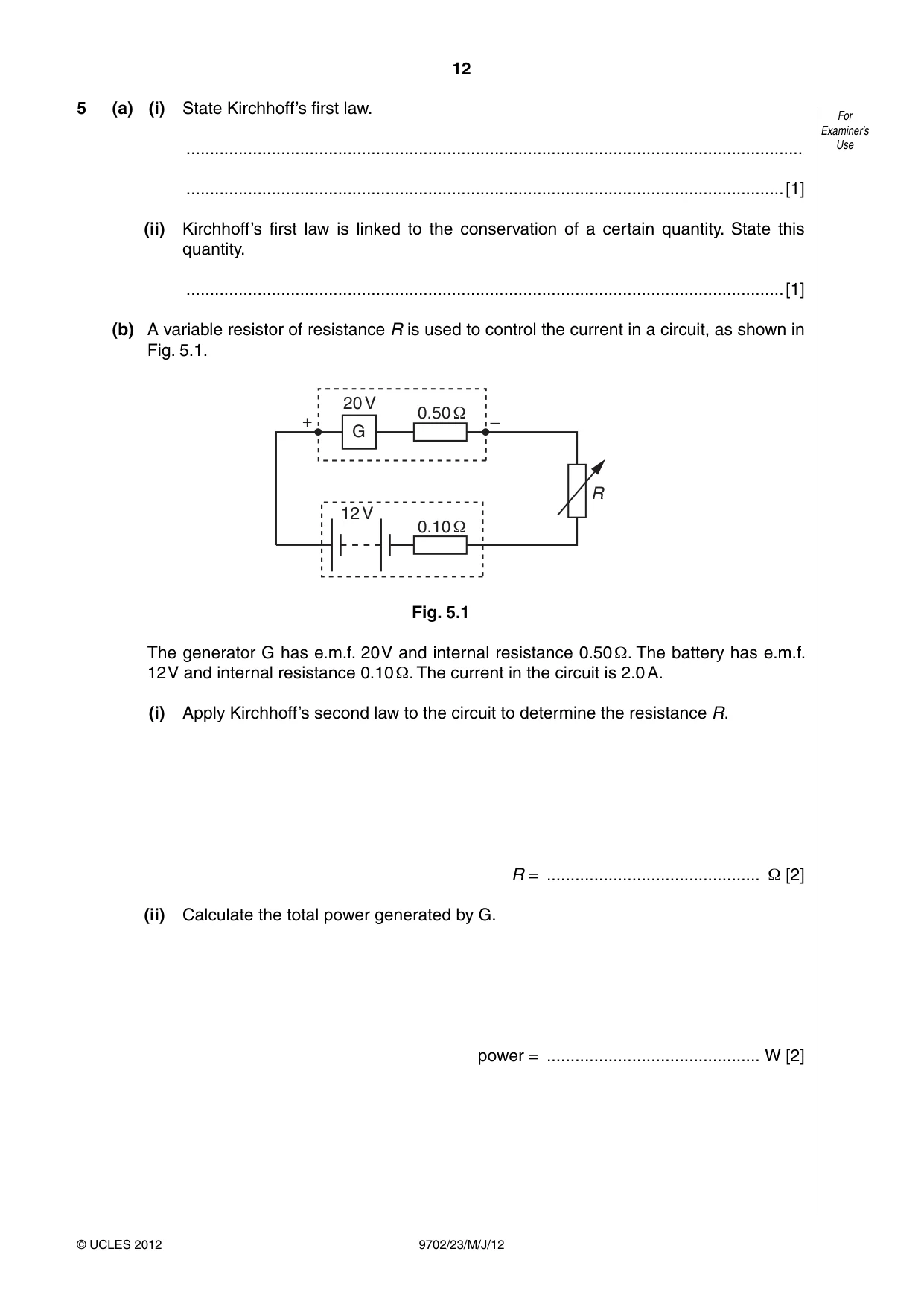
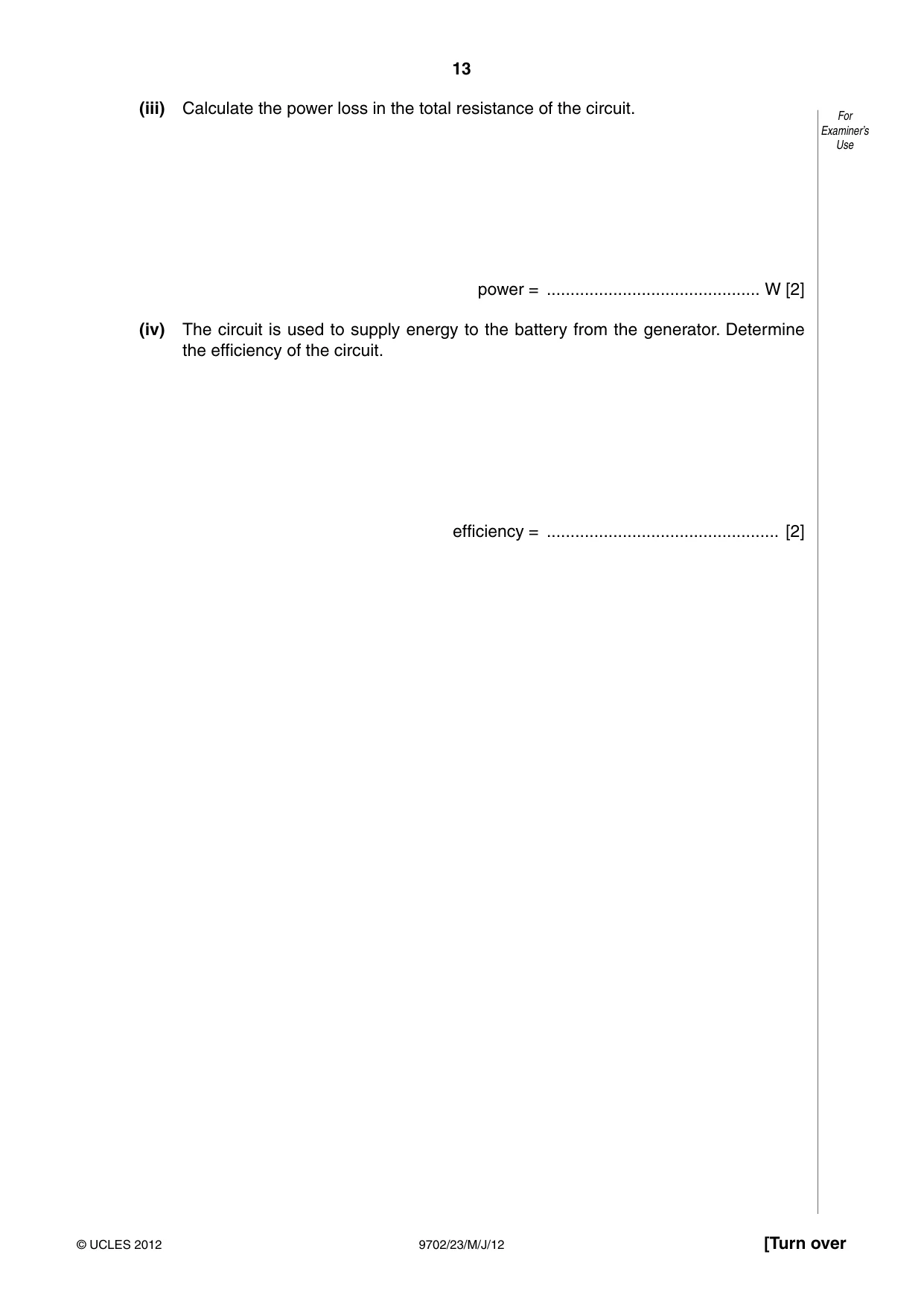
Mark scheme4 pages
Answers below. Sit the paper first if you are practising.
Questions as text
Q1 · Explain the differences between the quantities distance and displacement
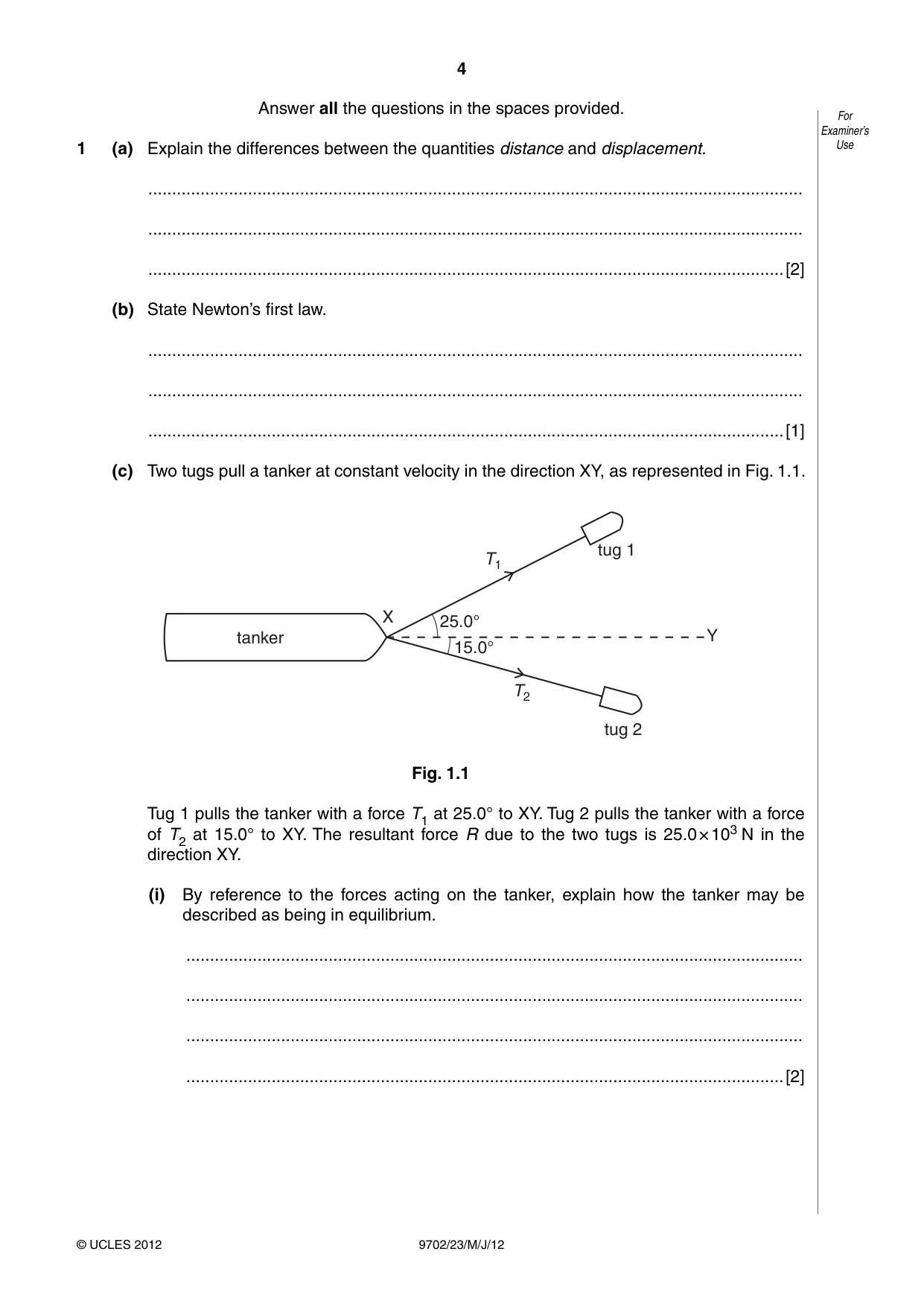
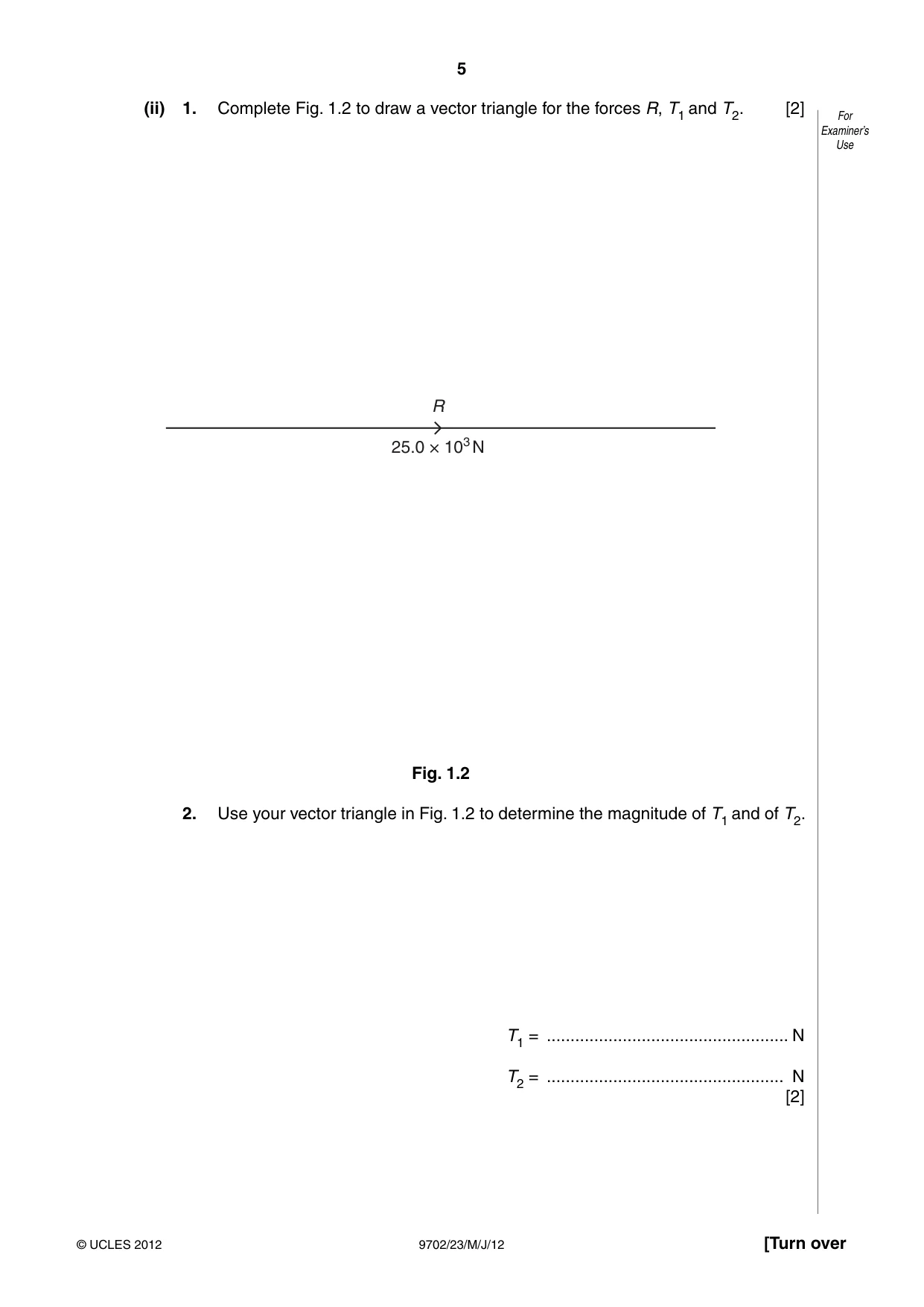
1 (a) Explain the differences between the quantities distance and displacement. Use .......................................................................................................................................... .......................................................................................................................................... ......................................................................................................................................[2] (b) State Newton’s first law. .......................................................................................................................................... .......................................................................................................................................... ......................................................................................................................................[1] (c) Two tugs pull a tanker at constant velocity in the direction XY, as represented in Fig. 1.1. tug 1 T1 X 25.0° tanker Y 15.0° T2 tug 2 Fig. 1.1 Tug 1 pulls the tanker with a force T1 at 25.0° to XY. Tug 2 pulls the tanker with a force of T2 at 15.0° to XY. The resultant force R due to the two tugs is 25.0 × 10³ N in the direction XY. (i) By reference to the forces acting on the tanker, explain how the tanker may be described as being in equilibrium. .................................................................................................................................. .................................................................................................................................. .................................................................................................................................. ..............................................................................................................................[2] (ii) 1. Complete Fig. 1.2 to draw a vector triangle for the forces R, T1 and T2. [2] For Examiner’s Use R 25.0 × 10³ N Fig. 1.2 2. Use your vector triangle in Fig. 1.2 to determine the magnitude of T1 and of T2. T1 = ................................................... N T2 = .................................................. N [2]
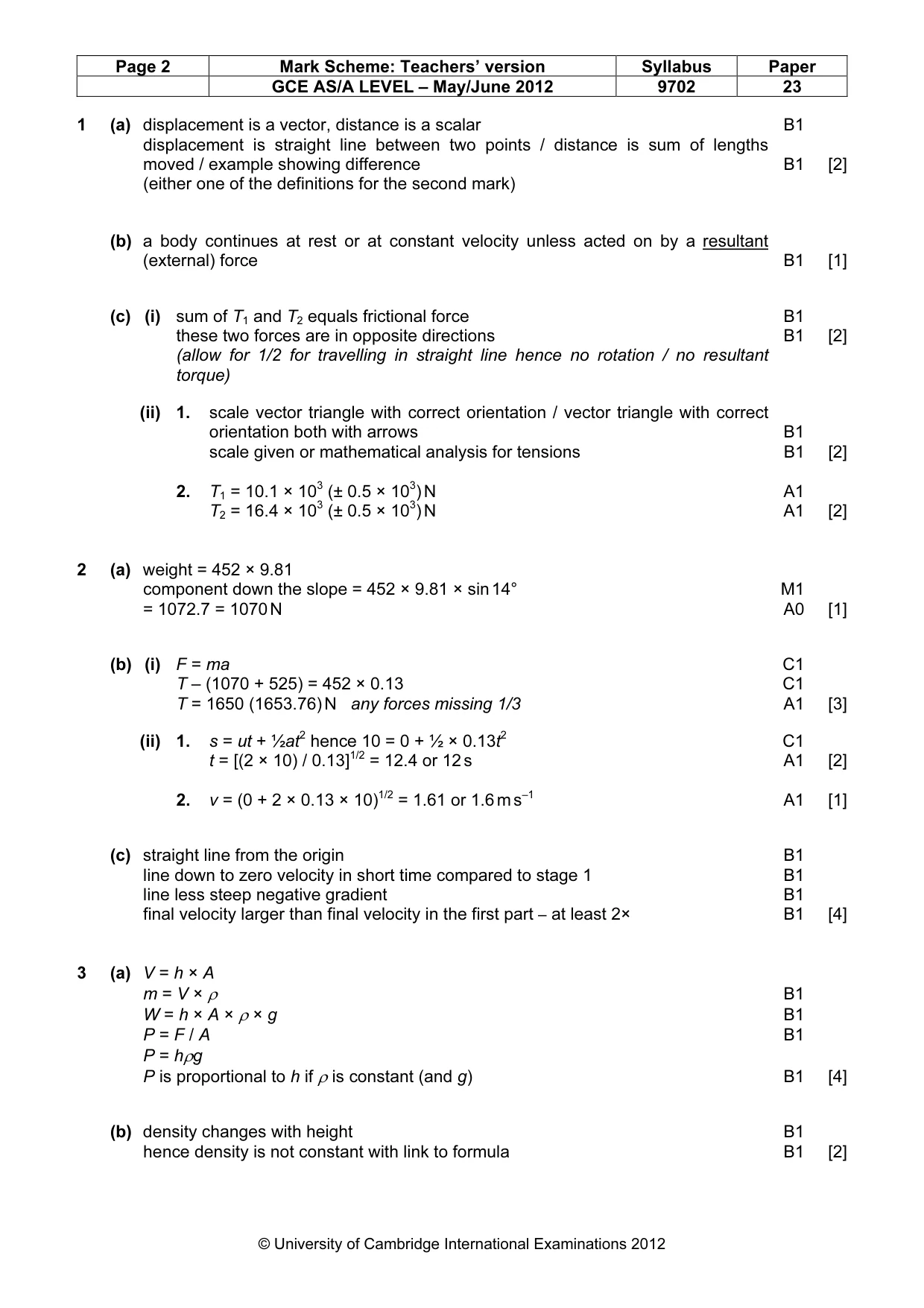
Mark scheme: 1 (a) displacement is a vector, distance is a scalar B1 displacement is straight line between two points / distance is sum of lengths moved / example showing difference B1 [2] (either one of the definitions for the second mark) (b) a body continues at rest or at constant velocity unless acted on by a resultant (external) force B1 [1] (c) (i) sum of T1 and T2 equals frictional force B1 these two forces are in opposite directions B1 [2] (allow for 1/2 for travelling in straight line hence no rotation / no resultant torque) (ii) 1. scale vector triangle with correct orientation / vector triangle with correct orientation both with arrows B1 scale given or mathematical analysis for tensions B1 [2] 2. T1 = 10.1 × 10³ (± 0.5 × 10³) N A1 T2 = 16.4 × 10³ (± 0.5 × 10³) N A1 [2]
Q2 · A motor drags a log of mass 452 kg up a slope by means of a cable, as shown in Fig
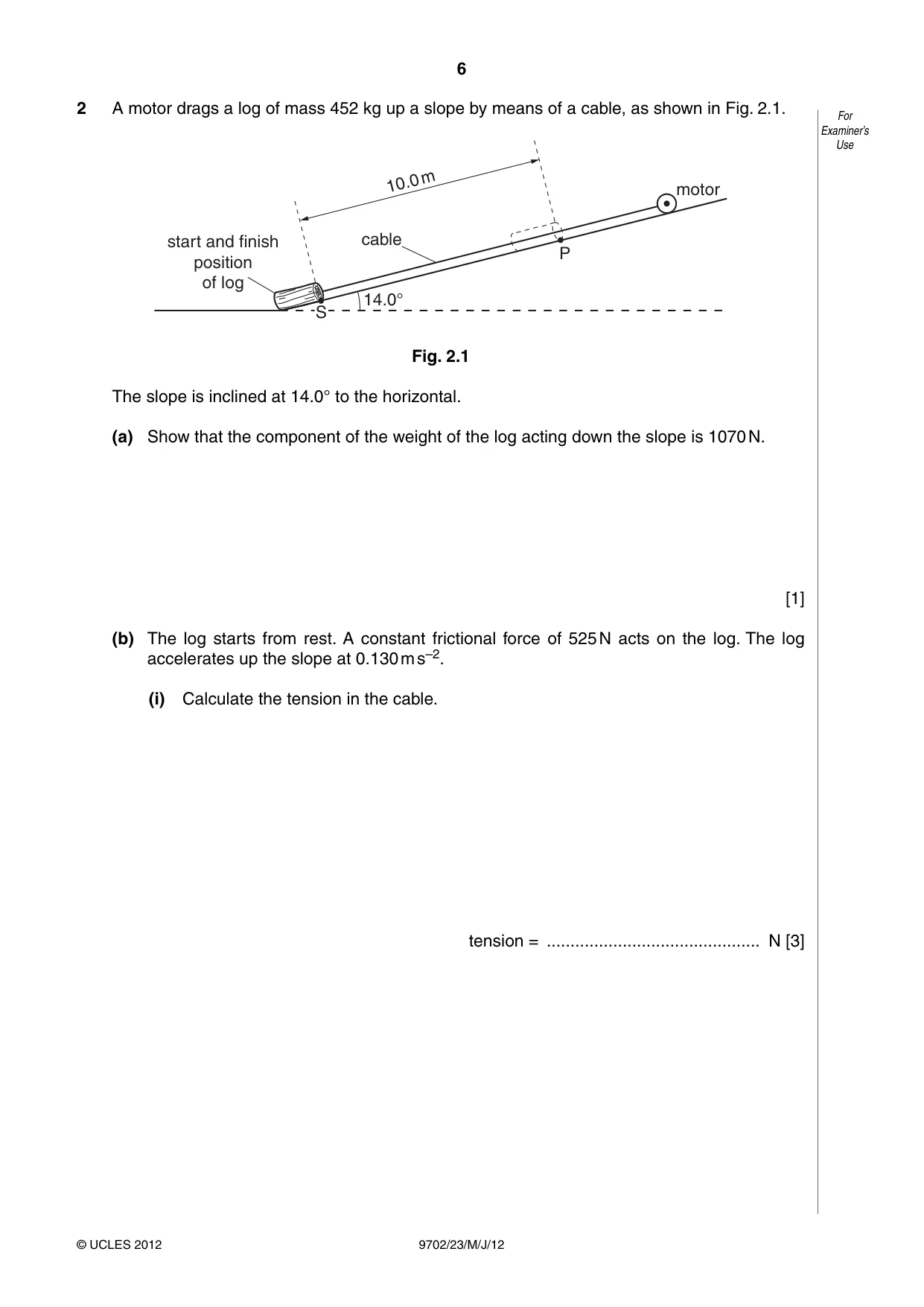
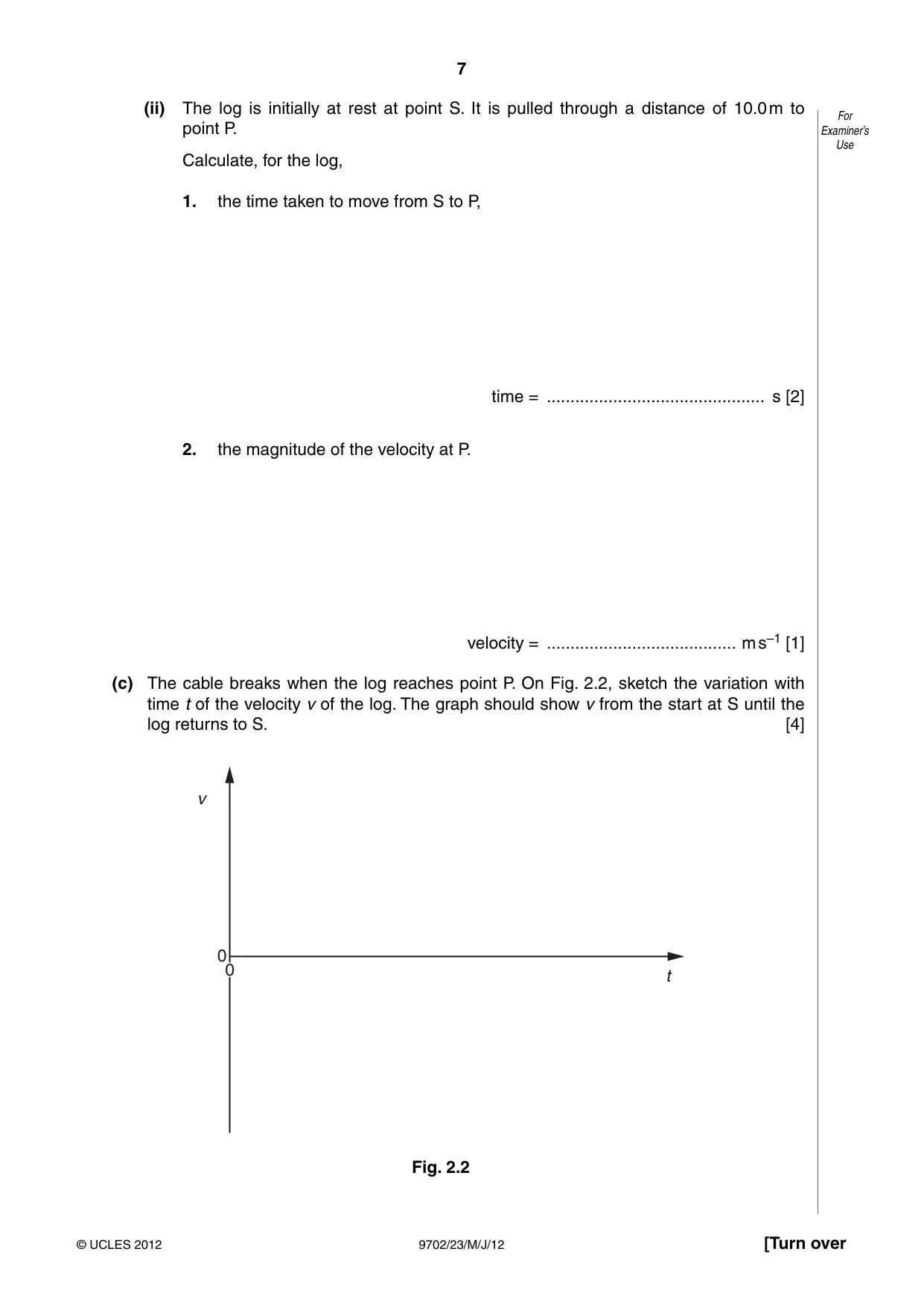
2 A motor drags a log of mass 452 kg up a slope by means of a cable, as shown in Fig. 2.1. For Examiner’s Use 10.0m motor start and finish cable P position of log 14.0° S Fig. 2.1 The slope is inclined at 14.0° to the horizontal. (a) Show that the component of the weight of the log acting down the slope is 1070 N. [1] (b) The log starts from rest. A constant frictional force of 525 N acts on the log. The log accelerates up the slope at 0.130 m s–2. (i) Calculate the tension in the cable. tension = ............................................. N [3] (ii) The log is initially at rest at point S. It is pulled through a distance of 10.0 m to For point P. Examiner’s Use Calculate, for the log, 1. the time taken to move from S to P, time = .............................................. s [2] 2. the magnitude of the velocity at P. velocity = ........................................ m s–1 [1] (c) The cable breaks when the log reaches point P. On Fig. 2.2, sketch the variation with time t of the velocity v of the log. The graph should show v from the start at S until the log returns to S. [4] v 0 0 t Fig. 2.2
Mark scheme: 2 (a) weight = 452 × 9.81 component down the slope = 452 × 9.81 × sin 14° M1 = 1072.7 = 1070 N A0 [1] (b) (i) F = ma C1 T – (1070 + 525) = 452 × 0.13 C1 T = 1650 (1653.76) N any forces missing 1/3 A1 [3] (ii) 1. s = ut + ½at2 hence 10 = 0 + ½ × 0.13t2 C1 t = [(2 × 10) / 0.13]1/2 = 12.4 or 12 s A1 [2] 2. v = (0 + 2 × 0.13 × 10)1/2 = 1.61 or 1.6 m s–1 A1 [1] (c) straight line from the origin B1 line down to zero velocity in short time compared to stage 1 B1 line less steep negative gradient B1 final velocity larger than final velocity in the first part – at least 2× B1 [4]
Q3 · Show that the pressure P due to a liquid of density ρ is proportional to the depth h…
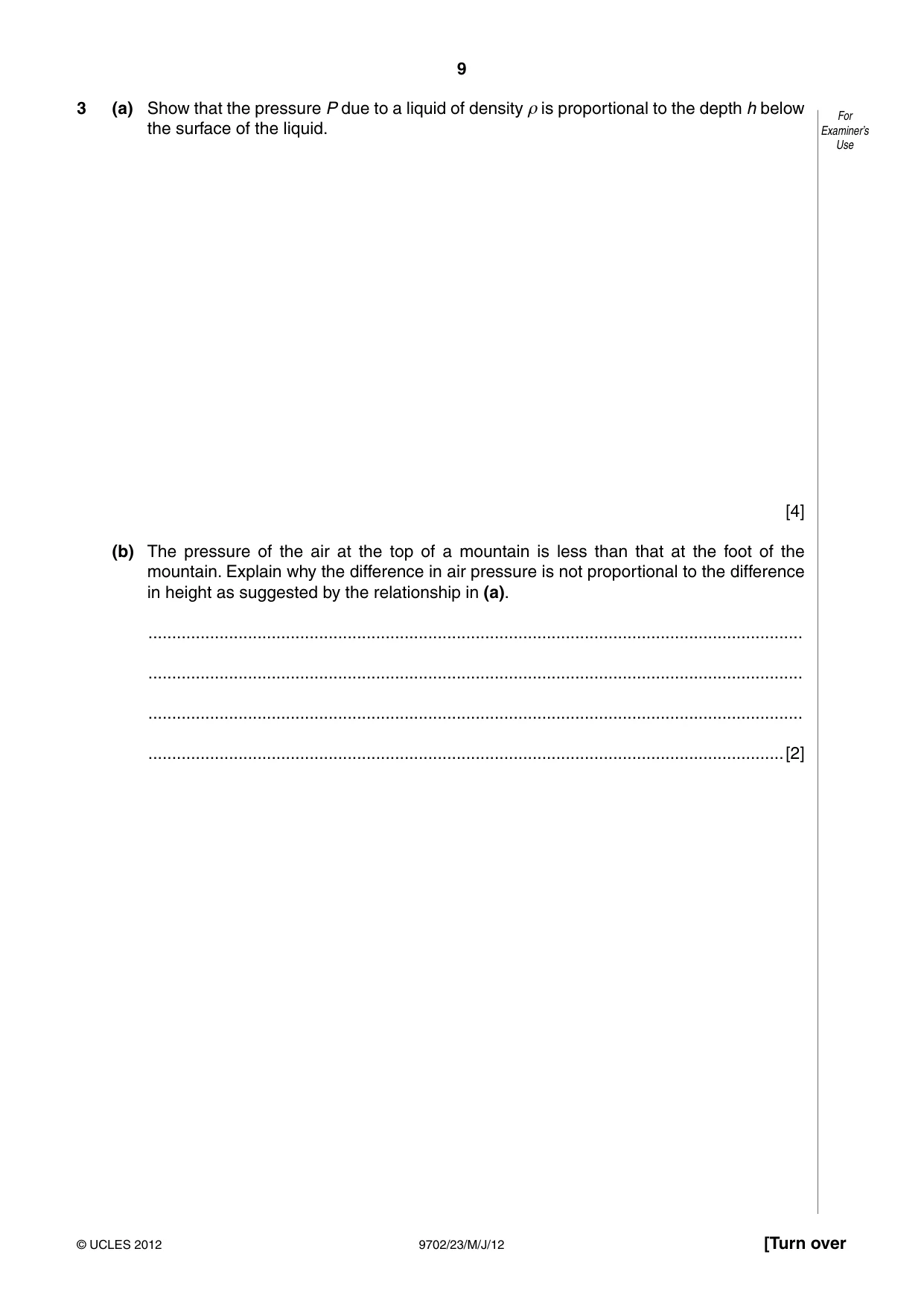
3 (a) Show that the pressure P due to a liquid of density ρ is proportional to the depth h below For the surface of the liquid. Examiner’s Use [4] (b) The pressure of the air at the top of a mountain is less than that at the foot of the mountain. Explain why the difference in air pressure is not proportional to the difference in height as suggested by the relationship in (a). .......................................................................................................................................... .......................................................................................................................................... .......................................................................................................................................... ......................................................................................................................................[2]
Mark scheme: 3 (a) V = h × A m = V × ρ B1 W = h × A × ρ × g B1 P = F / A B1 P = hρg P is proportional to h if ρ is constant (and g) B1 [4] (b) density changes with height B1 hence density is not constant with link to formula B1 [2] GCE AS/A LEVEL – May/June 2012 9702 23
Q4 · Define electric field strength
4 (a) Define electric field strength. For Examiner’s .......................................................................................................................................... Use ......................................................................................................................................[1] (b) A uniform electric field is produced by applying a potential difference of 1200 V across two parallel metal plates in a vacuum, as shown in Fig. 4.1. 1200 V 14 mm metal plates P Fig. 4.1 The separation of the plates is 14 mm. A particle P with charge 3.2 × 10⁻¹⁹ C and mass 6.6 × 10⁻²⁷ kg starts from rest at the lower plate and is moved vertically to the top plate by the electric field. Calculate (i) the electric field strength between the plates, electric field strength = ....................................... V m–1 [2] (ii) the work done on P by the electric field, work done = .............................................. J [2] (iii) the gain in gravitational potential energy of P, gain in potential energy = .............................................. J [2] (iv) the gain in kinetic energy of P, For Examiner’s Use gain in kinetic energy = .............................................. J [1] (v) the speed of P when it reaches the top plate. speed = ........................................ m s–1 [2]
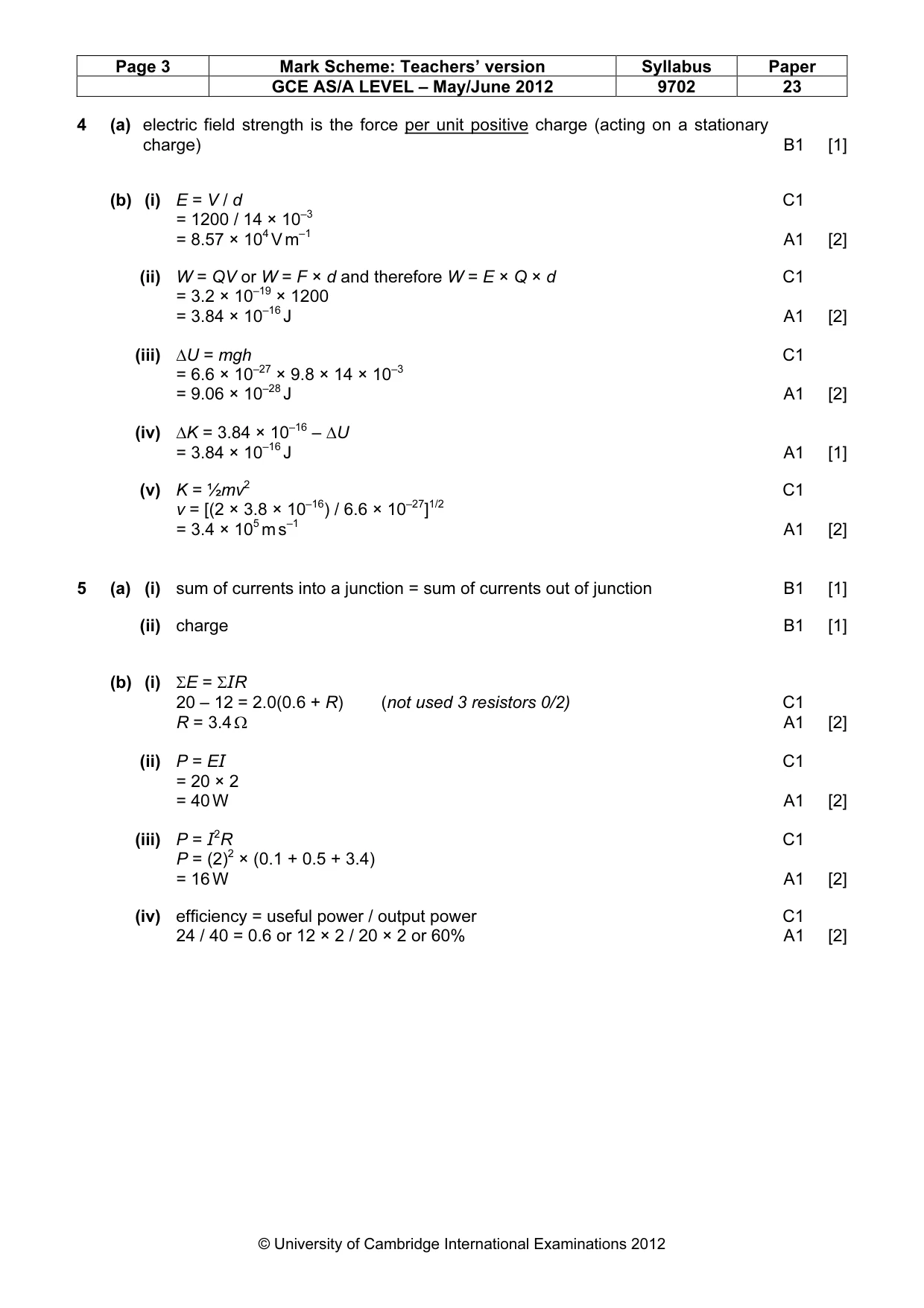
Mark scheme: 4 (a) electric field strength is the force per unit positive charge (acting on a stationary charge) B1 [1] (b) (i) E = V / d C1 = 1200 / 14 × 10–3 = 8.57 × 10⁴ V m–1 A1 [2] (ii) W = QV or W = F × d and therefore W = E × Q × d C1 = 3.2 × 10–19 × 1200 = 3.84 × 10⁻¹⁶ J A1 [2] (iii) ∆U = mgh C1 = 6.6 × 10–27 × 9.8 × 14 × 10–3 = 9.06 × 10⁻²⁸ J A1 [2] (iv) ∆K = 3.84 × 10⁻¹⁶ – ∆U = 3.84 × 10⁻¹⁶ J A1 [1] (v) K = ½mv2 C1 v = [(2 × 3.8 × 10–16) / 6.6 × 10⁻²⁷]1/2 = 3.4 × 10⁵ m s–1 A1 [2]
Q5 · State Kirchhoff’s first law
5 (a) (i) State Kirchhoff’s first law. For Examiner’s .................................................................................................................................. Use ..............................................................................................................................[1] (ii) Kirchhoff’s first law is linked to the conservation of a certain quantity. State this quantity. ..............................................................................................................................[1] (b) A variable resistor of resistance R is used to control the current in a circuit, as shown in Fig. 5.1. 20 V 0.50 Ω + – G R 12 V 0.10 Ω Fig. 5.1 The generator G has e.m.f. 20 V and internal resistance 0.50 Ω. The battery has e.m.f. 12 V and internal resistance 0.10 Ω. The current in the circuit is 2.0 A. (i) Apply Kirchhoff’s second law to the circuit to determine the resistance R. R = ............................................. Ω [2] (ii) Calculate the total power generated by G. power = ............................................. W [2] (iii) Calculate the power loss in the total resistance of the circuit. For Examiner’s Use power = ............................................. W [2] (iv) The circuit is used to supply energy to the battery from the generator. Determine the efficiency of the circuit. efficiency = ................................................. [2]
Mark scheme: 5 (a) (i) sum of currents into a junction = sum of currents out of junction B1 [1] (ii) charge B1 [1] (b) (i) ΣE = ΣIR 20 – 12 = 2.0(0.6 + R) (not used 3 resistors 0/2) C1 R = 3.4 Ω A1 [2] (ii) P = EI C1 = 20 × 2 = 40 W A1 [2] (iii) P = I2R C1 P = (2)2 × (0.1 + 0.5 + 3.4) = 16 W A1 [2] (iv) efficiency = useful power / output power C1 24 / 40 = 0.6 or 12 × 2 / 20 × 2 or 60% A1 [2] GCE AS/A LEVEL – May/June 2012 9702 23
Q6 · Monochromatic light is diffracted by a diffraction grating
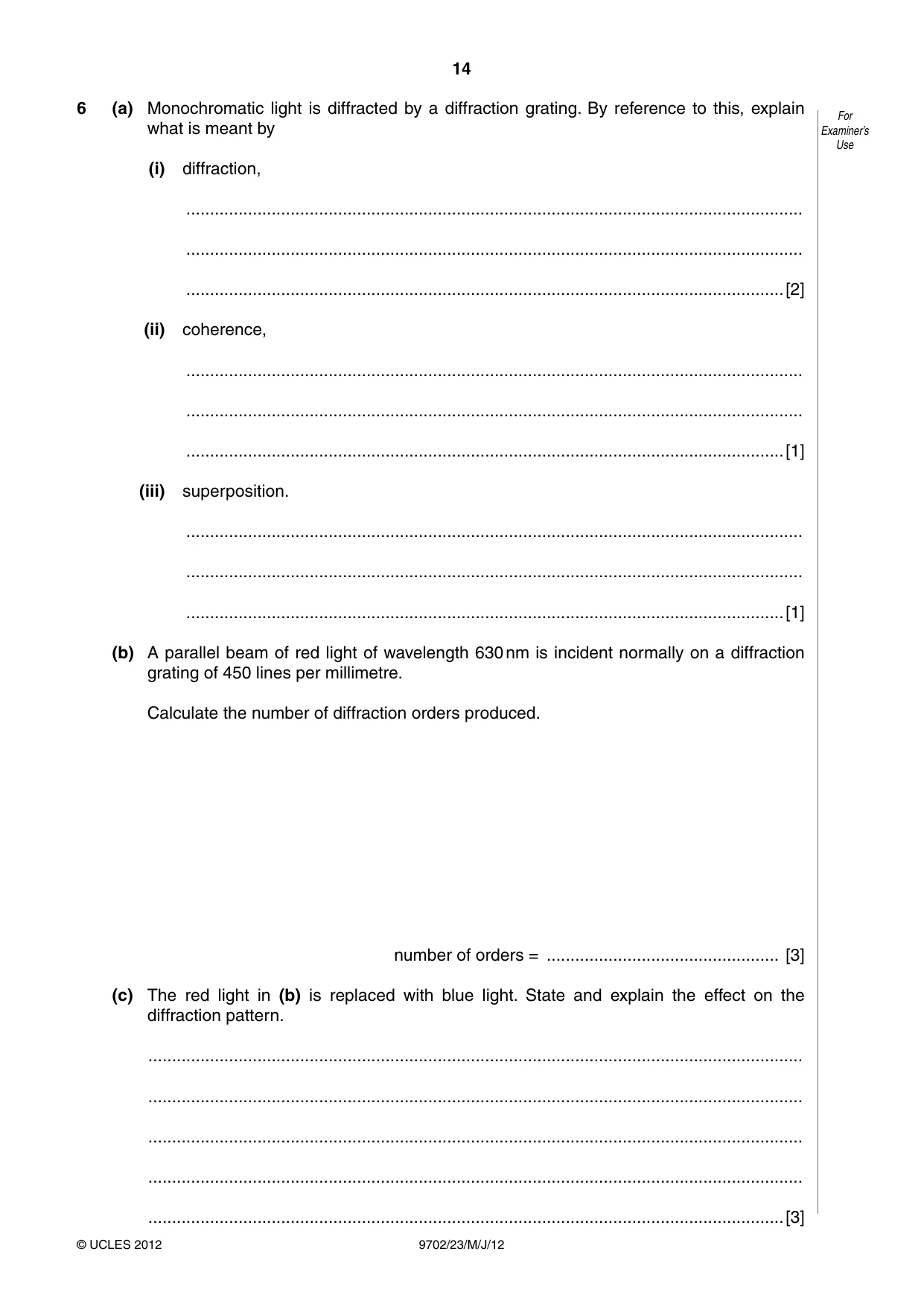
6 (a) Monochromatic light is diffracted by a diffraction grating. By reference to this, explain For what is meant by Examiner’s Use (i) diffraction, .................................................................................................................................. .................................................................................................................................. ..............................................................................................................................[2] (ii) coherence, .................................................................................................................................. .................................................................................................................................. ..............................................................................................................................[1] (iii) superposition. .................................................................................................................................. .................................................................................................................................. ..............................................................................................................................[1] (b) A parallel beam of red light of wavelength 630 nm is incident normally on a diffraction grating of 450 lines per millimetre. Calculate the number of diffraction orders produced. number of orders = ................................................. [3] (c) The red light in (b) is replaced with blue light. State and explain the effect on the diffraction pattern. .......................................................................................................................................... .......................................................................................................................................... .......................................................................................................................................... .......................................................................................................................................... ......................................................................................................................................[3]
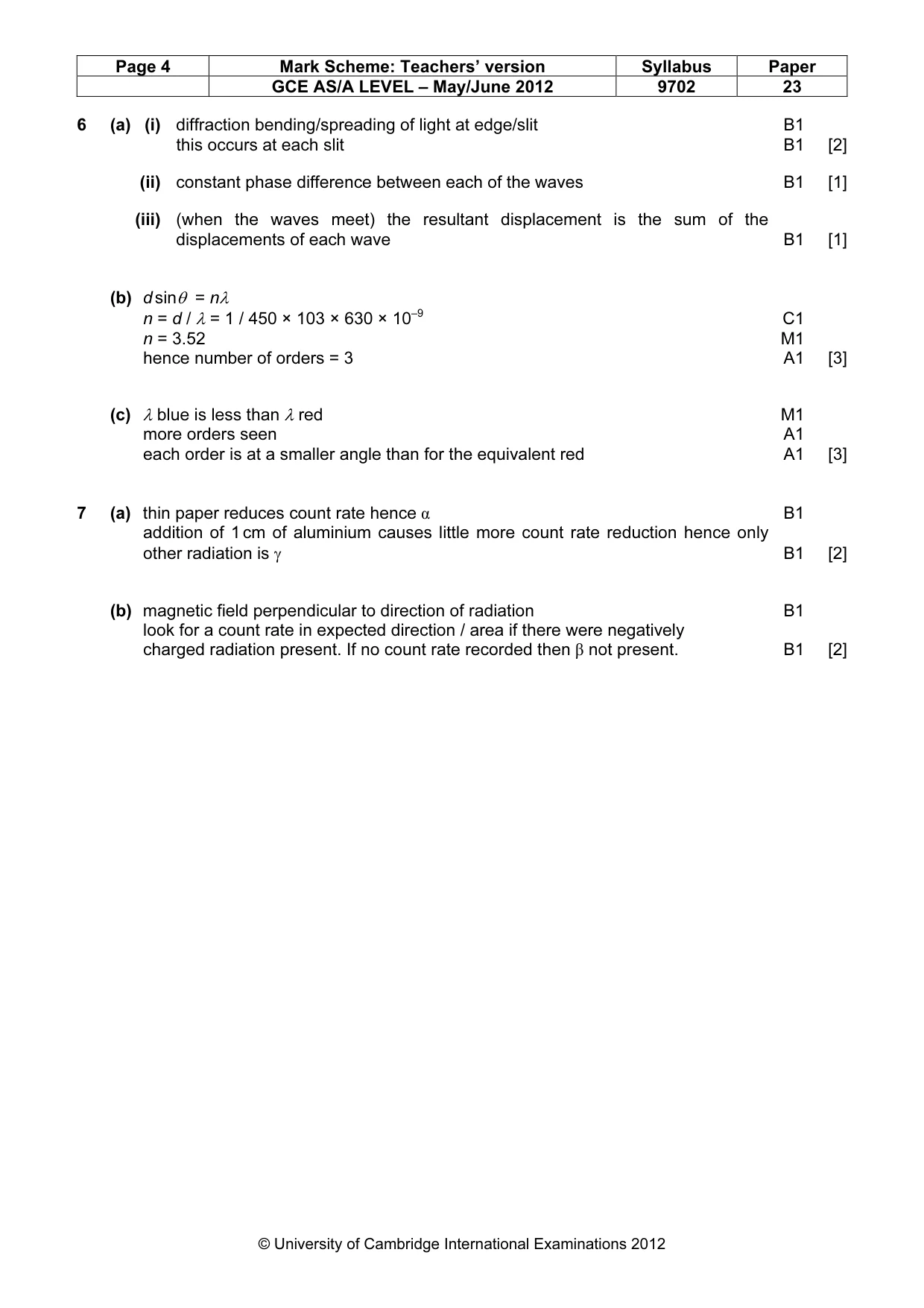
Mark scheme: 6 (a) (i) diffraction bending/spreading of light at edge/slit B1 this occurs at each slit B1 [2] (ii) constant phase difference between each of the waves B1 [1] (iii) (when the waves meet) the resultant displacement is the sum of the displacements of each wave B1 [1] (b) d sinθ = nλ n = d / λ = 1 / 450 × 103 × 630 × 10–9 C1 n = 3.52 M1 hence number of orders = 3 A1 [3] (c) λ blue is less than λ red M1 more orders seen A1 each order is at a smaller angle than for the equivalent red A1 [3]
Q7 · A radioactive source emits α-radiation and γ-radiation
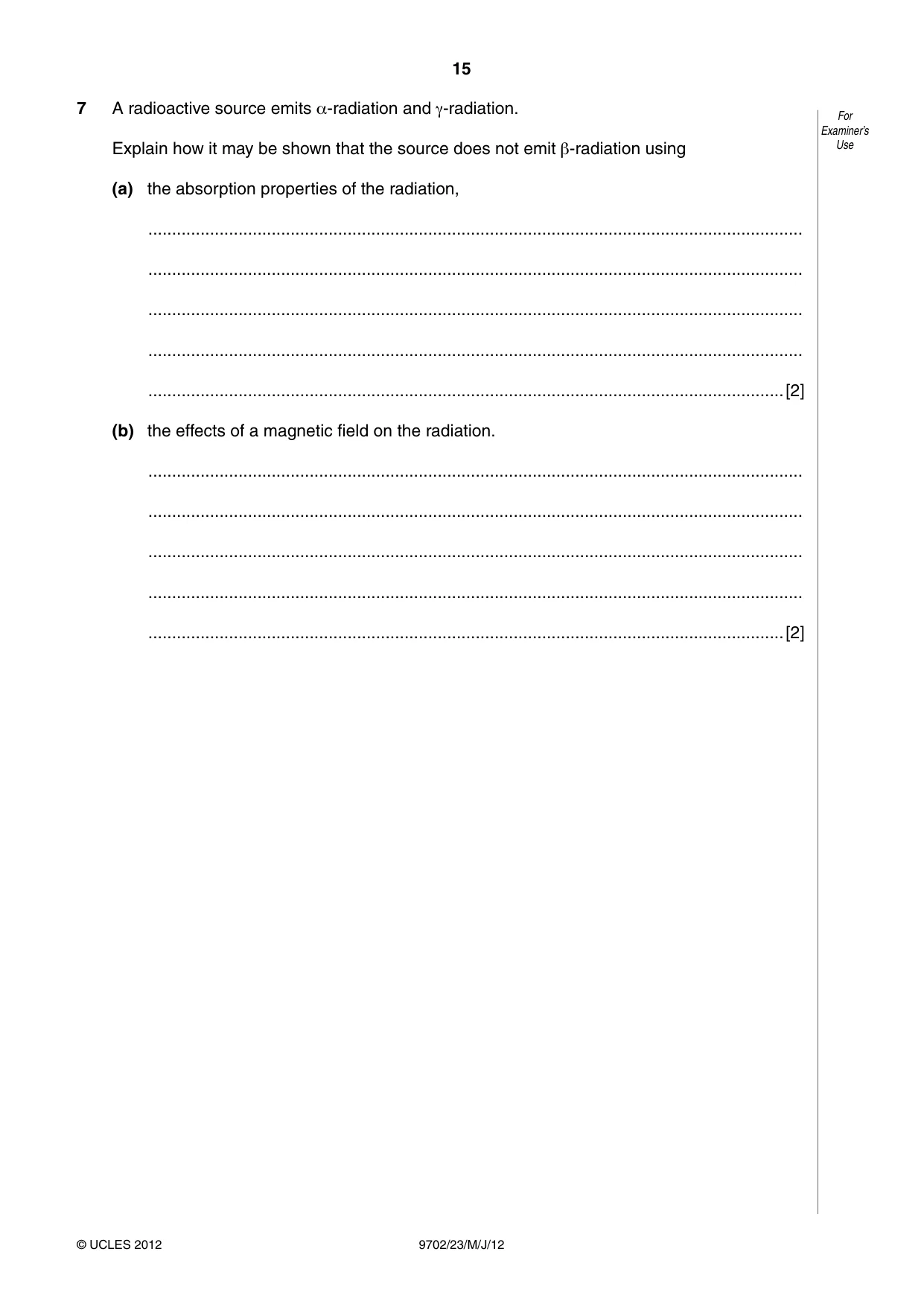
7 A radioactive source emits α-radiation and γ-radiation. For Examiner’s Explain how it may be shown that the source does not emit β-radiation using Use (a) the absorption properties of the radiation, .......................................................................................................................................... .......................................................................................................................................... .......................................................................................................................................... .......................................................................................................................................... ......................................................................................................................................[2] (b) the effects of a magnetic field on the radiation. .......................................................................................................................................... .......................................................................................................................................... .......................................................................................................................................... .......................................................................................................................................... ......................................................................................................................................[2]
Mark scheme: 7 (a) thin paper reduces count rate hence α B1 addition of 1 cm of aluminium causes little more count rate reduction hence only other radiation is γ B1 [2] (b) magnetic field perpendicular to direction of radiation B1 look for a count rate in expected direction / area if there were negatively charged radiation present. If no count rate recorded then β not present. B1 [2]
What was in this paper
The subtopics covered by these 7 questions, and how many questions each got. Open one in a new tab to see every Cambridge question on it.
What you needed in this session
Cambridge’s own grade thresholds for 2012 May/June, Paper 2 · Variant 3. A higher threshold means an easier paper — the bar moves with how the cohort did.