Cambridge A Level Marine Science 9693 — 2021 May/June Paper 2 · Variant 3
9693/23/M/J/21 · 4 questions · 50 marks · ≈56 min
The question paper and its mark scheme, free to read here and free to download. This is Cambridge’s own paper, exactly as it was sat.
Question paper16 pages







Mark scheme9 pages
Answers below. Sit the paper first if you are practising.
Questions as text
Q1 · Scientists investigated the effect of red grouper and lionfish on the numbers of juvenile…
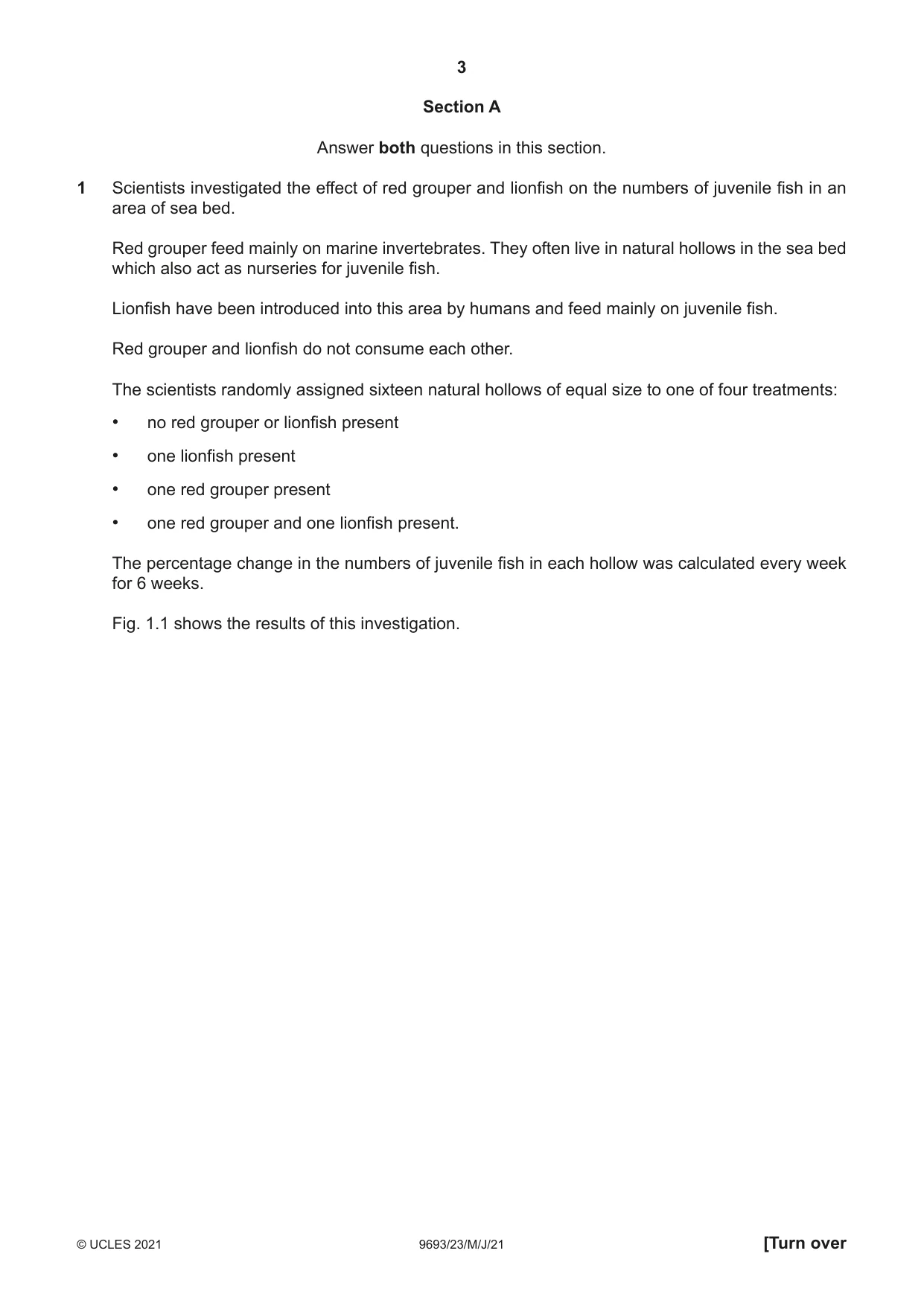
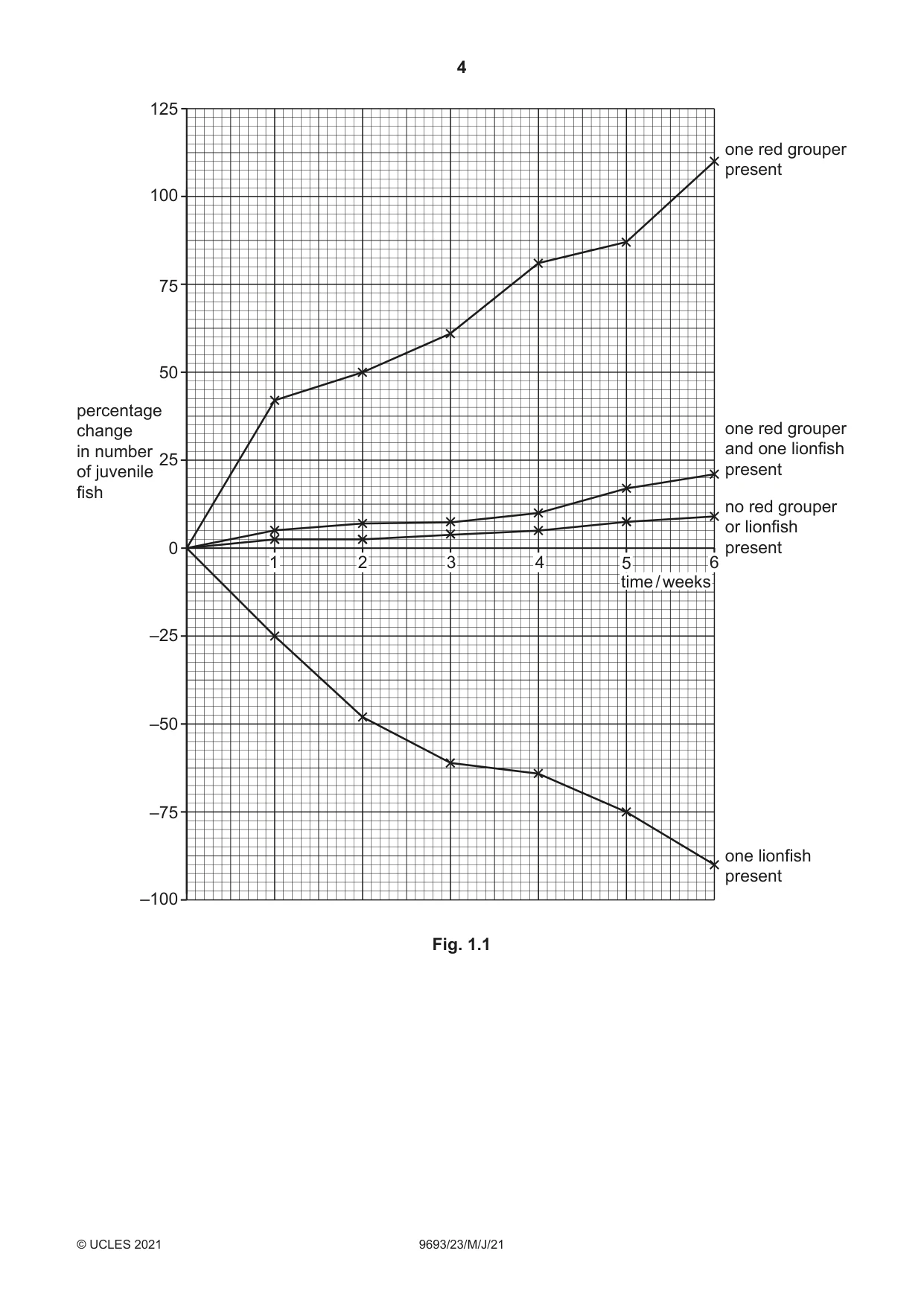
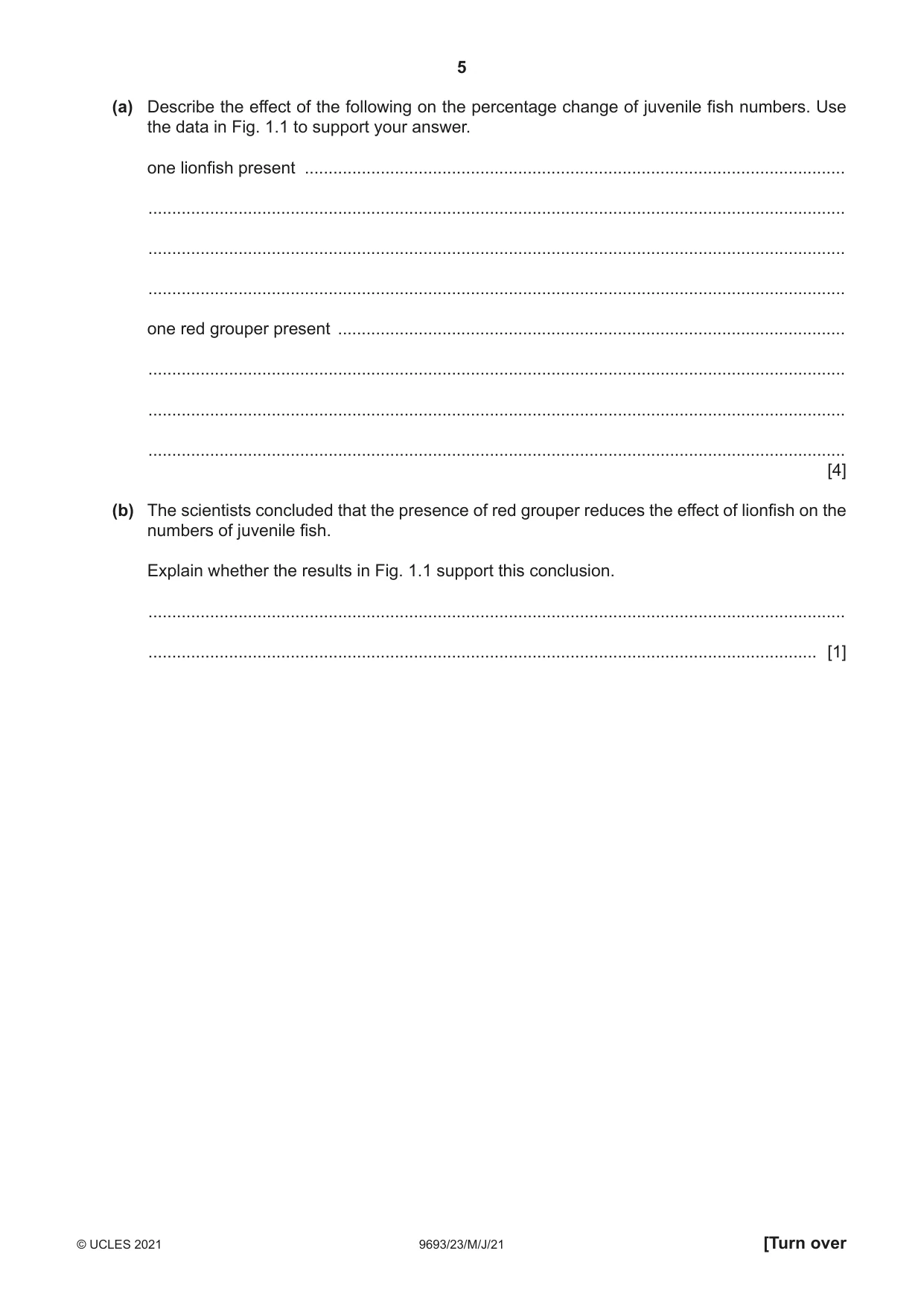
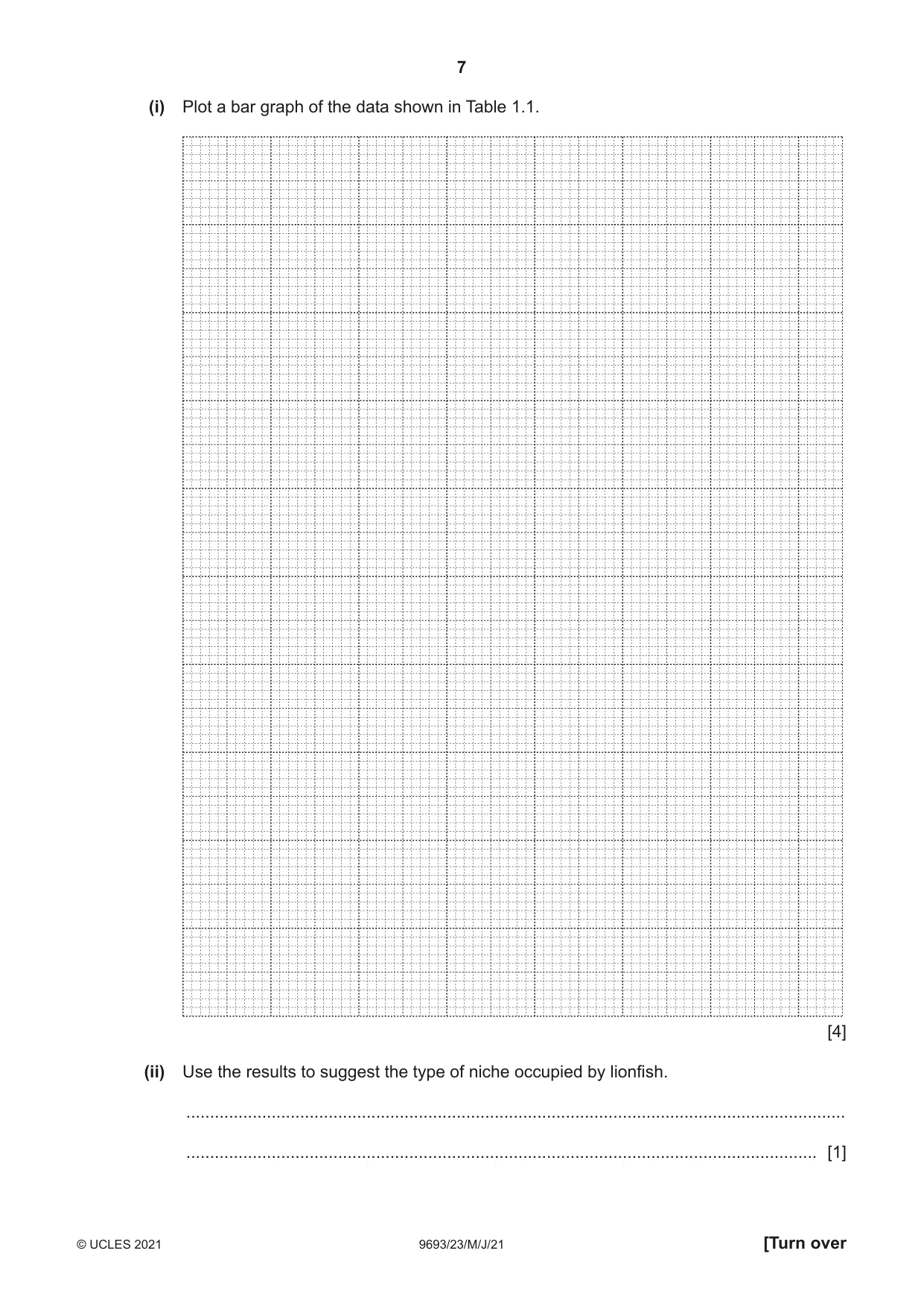
1 Scientists investigated the effect of red grouper and lionfish on the numbers of juvenile fish in an area of sea bed. Red grouper feed mainly on marine invertebrates. They often live in natural hollows in the sea bed which also act as nurseries for juvenile fish. Lionfish have been introduced into this area by humans and feed mainly on juvenile fish. Red grouper and lionfish do not consume each other. The scientists randomly assigned sixteen natural hollows of equal size to one of four treatments: • no red grouper or lionfish present • one lionfish present • one red grouper present • one red grouper and one lionfish present. The percentage change in the numbers of juvenile fish in each hollow was calculated every week for 6 weeks. Fig. 1.1 shows the results of this investigation. (a) Describe the effect of the following on the percentage change of juvenile fish numbers. Use the data in Fig. 1.1 to support your answer. one lionfish present .................................................................................................................. ................................................................................................................................................... ................................................................................................................................................... ................................................................................................................................................... one red grouper present ........................................................................................................... ................................................................................................................................................... ................................................................................................................................................... ................................................................................................................................................... [4] (b) The scientists concluded that the presence of red grouper reduces the effect of lionfish on the numbers of juvenile fish. Explain whether the results in Fig. 1.1 support this conclusion. ................................................................................................................................................... ............................................................................................................................................. [1] (c) The scientists calculated the percentage of juvenile fish and shrimp in the diet of the lionfish when red grouper were present and absent. Table 1.1 shows the composition of the diet of the lionfish. Table 1.1 percentage composition of lionfish diet red grouper juvenile fish shrimp present 43 57 absent 78 22 (d) Discuss the extent to which the whole investigation supports the idea that red grouper presence increases biodiversity. ................................................................................................................................................... ................................................................................................................................................... ................................................................................................................................................... ................................................................................................................................................... ................................................................................................................................................... ............................................................................................................................................. [3] [Total: 13]
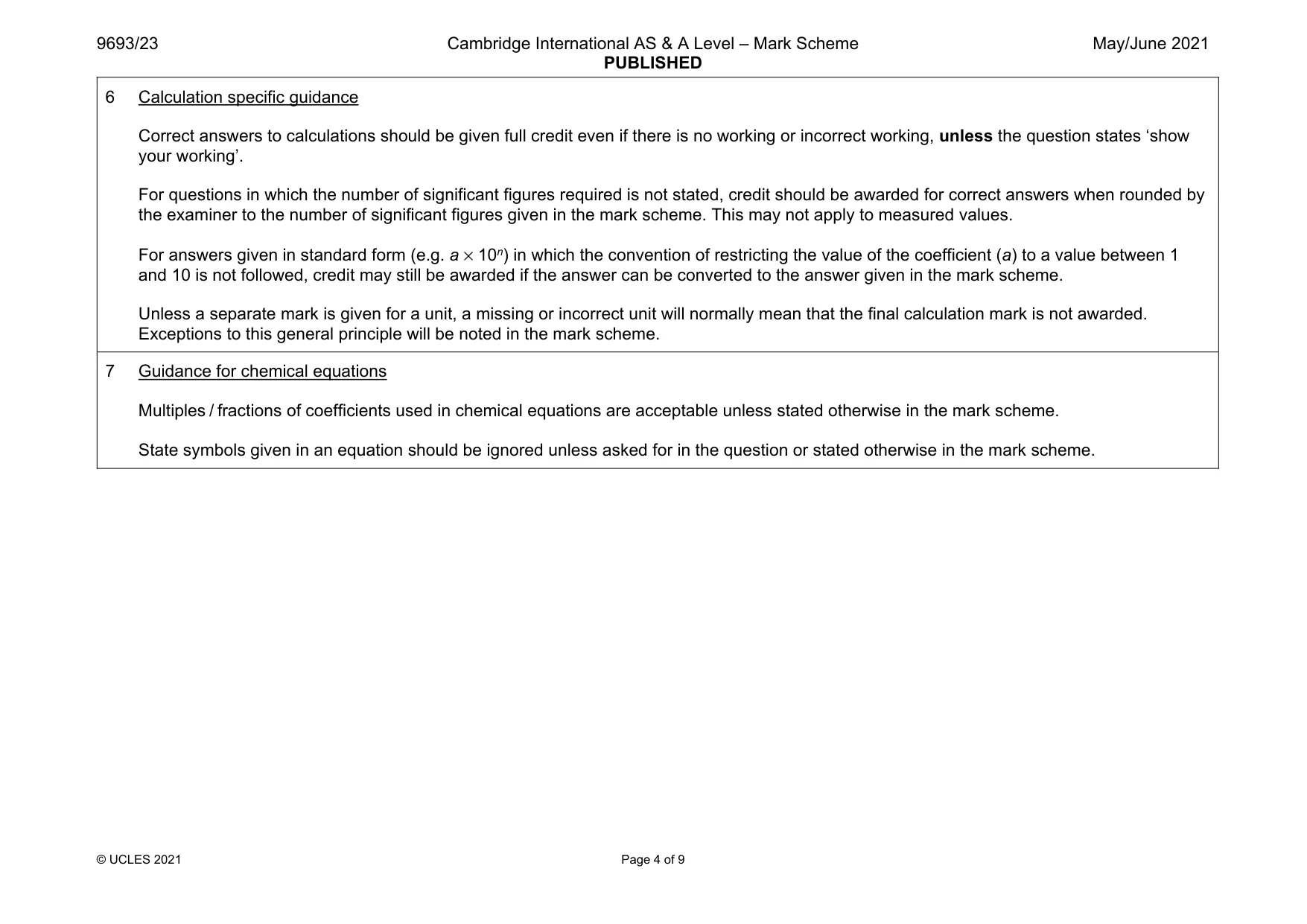
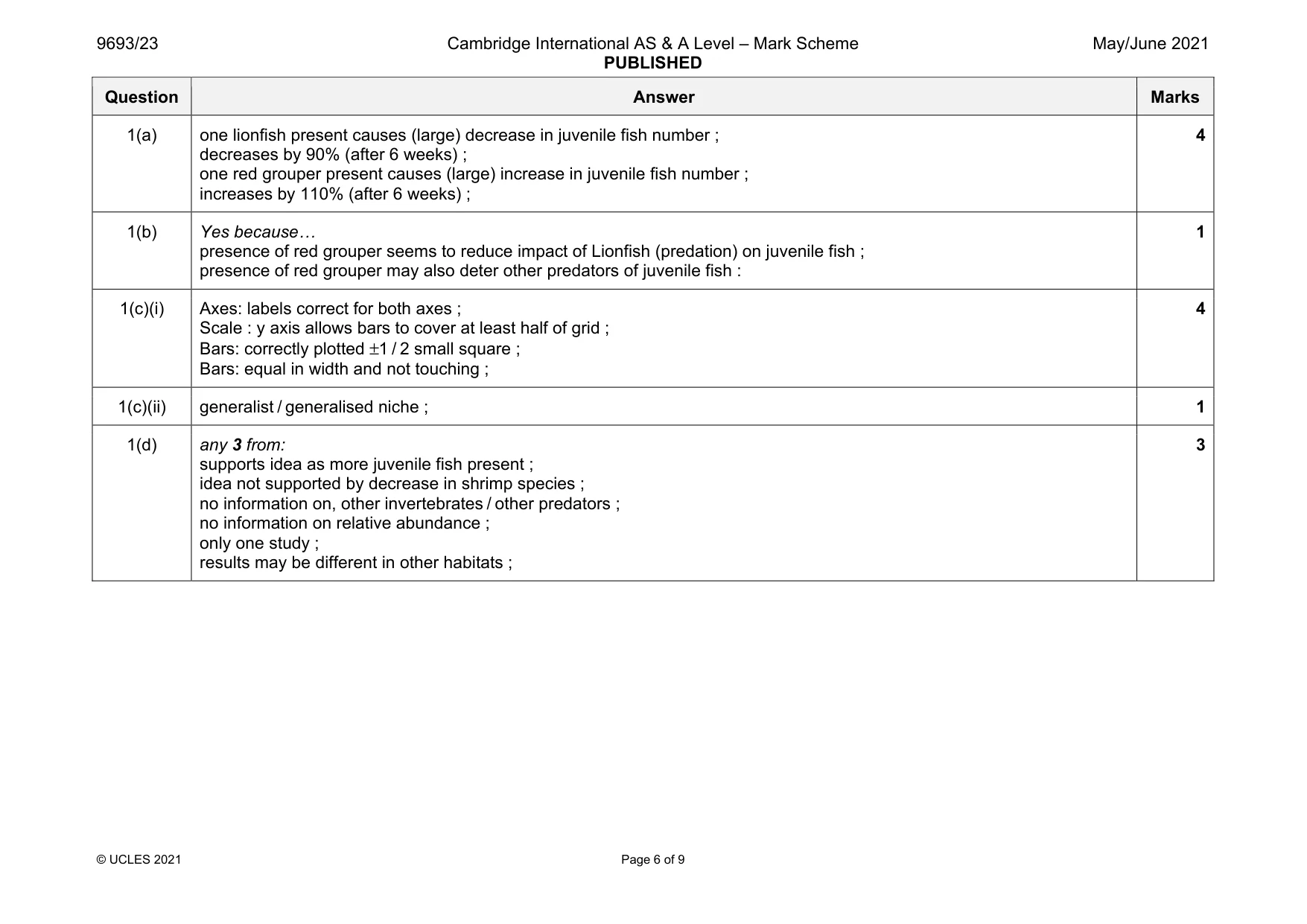
Mark scheme: 1(a) one lionfish present causes (large) decrease in juvenile fish number ; decreases by 90% (after 6 weeks) ; one red grouper present causes (large) increase in juvenile fish number ; increases by 110% (after 6 weeks) ; 4 1(b) Yes because… presence of red grouper seems to reduce impact of Lionfish (predation) on juvenile fish ; presence of red grouper may also deter other predators of juvenile fish : 1 1(c)(i) Axes: labels correct for both axes ; Scale : y axis allows bars to cover at least half of grid ; Bars: correctly plotted ±1 / 2 small square ; Bars: equal in width and not touching ; 4 1(c)(ii) generalist / generalised niche ; 1 1(d) any 3 from: supports idea as more juvenile fish present ; idea not supported by decrease in shrimp species ; no information on, other invertebrates / other predators ; no information on relative abundance ; only one study ; results may be different in other habitats ; 3
Q2 · Some dinoflagellates, which are small photosynthetic organisms that float in the upper…
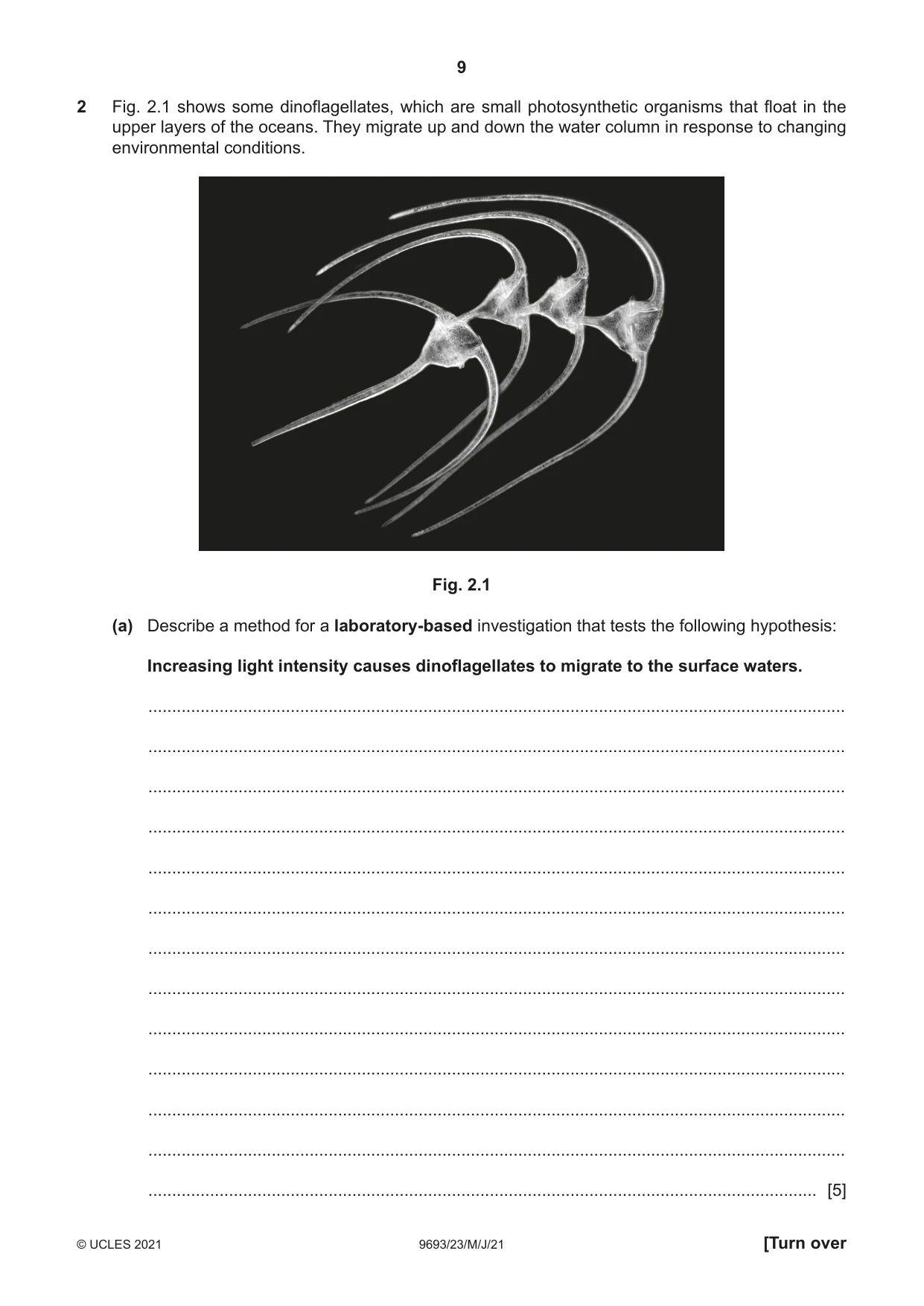
2 Fig. 2.1 shows some dinoflagellates, which are small photosynthetic organisms that float in the upper layers of the oceans. They migrate up and down the water column in response to changing environmental conditions. Fig. 2.1 (a) Describe a method for a laboratory-based investigation that tests the following hypothesis: Increasing light intensity causes dinoflagellates to migrate to the surface waters. ................................................................................................................................................... ................................................................................................................................................... ................................................................................................................................................... ................................................................................................................................................... ................................................................................................................................................... ................................................................................................................................................... ................................................................................................................................................... ................................................................................................................................................... ................................................................................................................................................... ................................................................................................................................................... ................................................................................................................................................... ................................................................................................................................................... ............................................................................................................................................. [5] (b) Suggest why dinoflagellates may benefit from their ability to migrate to the surface waters. ................................................................................................................................................... ................................................................................................................................................... ................................................................................................................................................... ............................................................................................................................................. [2] [Total: 7]
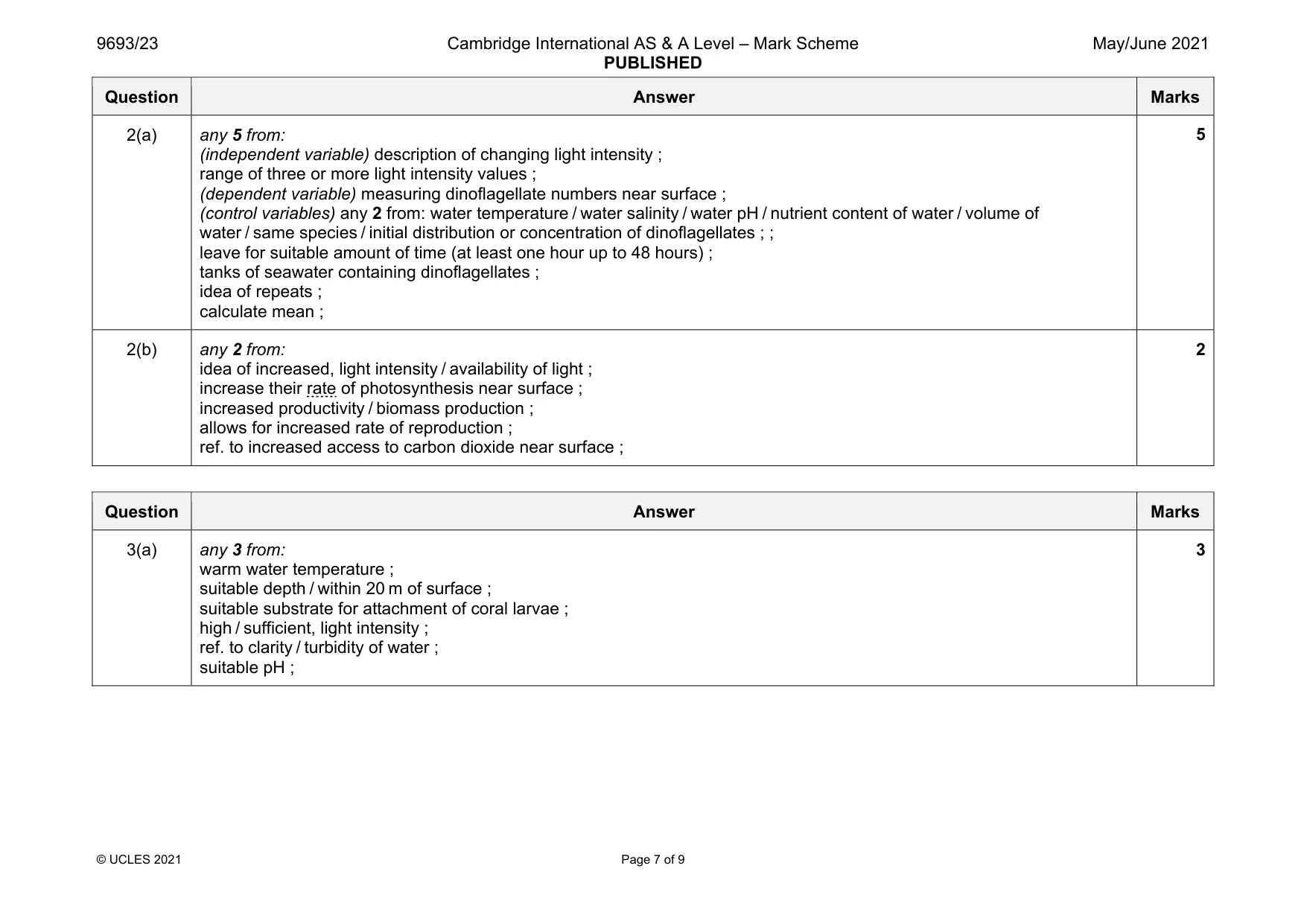
Mark scheme: 2(a) any 5 from: (independent variable) description of changing light intensity ; range of three or more light intensity values ; (dependent variable) measuring dinoflagellate numbers near surface ; (control variables) any 2 from: water temperature / water salinity / water pH / nutrient content of water / volume of water / same species / initial distribution or concentration of dinoflagellates ; ; leave for suitable amount of time (at least one hour up to 48 hours) ; tanks of seawater containing dinoflagellates ; idea of repeats ; calculate mean ; 2(b) any 2 from: idea of increased, light intensity / availability of light ; increase their rate of photosynthesis near surface ; increased productivity / biomass production ; allows for increased rate of reproduction ; ref. to increased access to carbon dioxide near surface ; 2
Q3 · Describe the factors needed for tropical coral reef growth
3 (a) Describe the factors needed for tropical coral reef growth. ................................................................................................................................................... ................................................................................................................................................... ................................................................................................................................................... ................................................................................................................................................... ................................................................................................................................................... ............................................................................................................................................. [3] (b) Describe the scientific methods that can be used to reconstruct the history of a coral reef. ................................................................................................................................................... ................................................................................................................................................... ................................................................................................................................................... ................................................................................................................................................... ................................................................................................................................................... ................................................................................................................................................... ................................................................................................................................................... ................................................................................................................................................... ................................................................................................................................................... ............................................................................................................................................. [5] (c) Discuss the impacts that tropical coral reef destruction can have on human coastal communities. ................................................................................................................................................... ................................................................................................................................................... ................................................................................................................................................... ................................................................................................................................................... ................................................................................................................................................... ................................................................................................................................................... ................................................................................................................................................... ................................................................................................................................................... ................................................................................................................................................... ................................................................................................................................................... ................................................................................................................................................... ................................................................................................................................................... ................................................................................................................................................... ............................................................................................................................................. [7] [Total: 15]
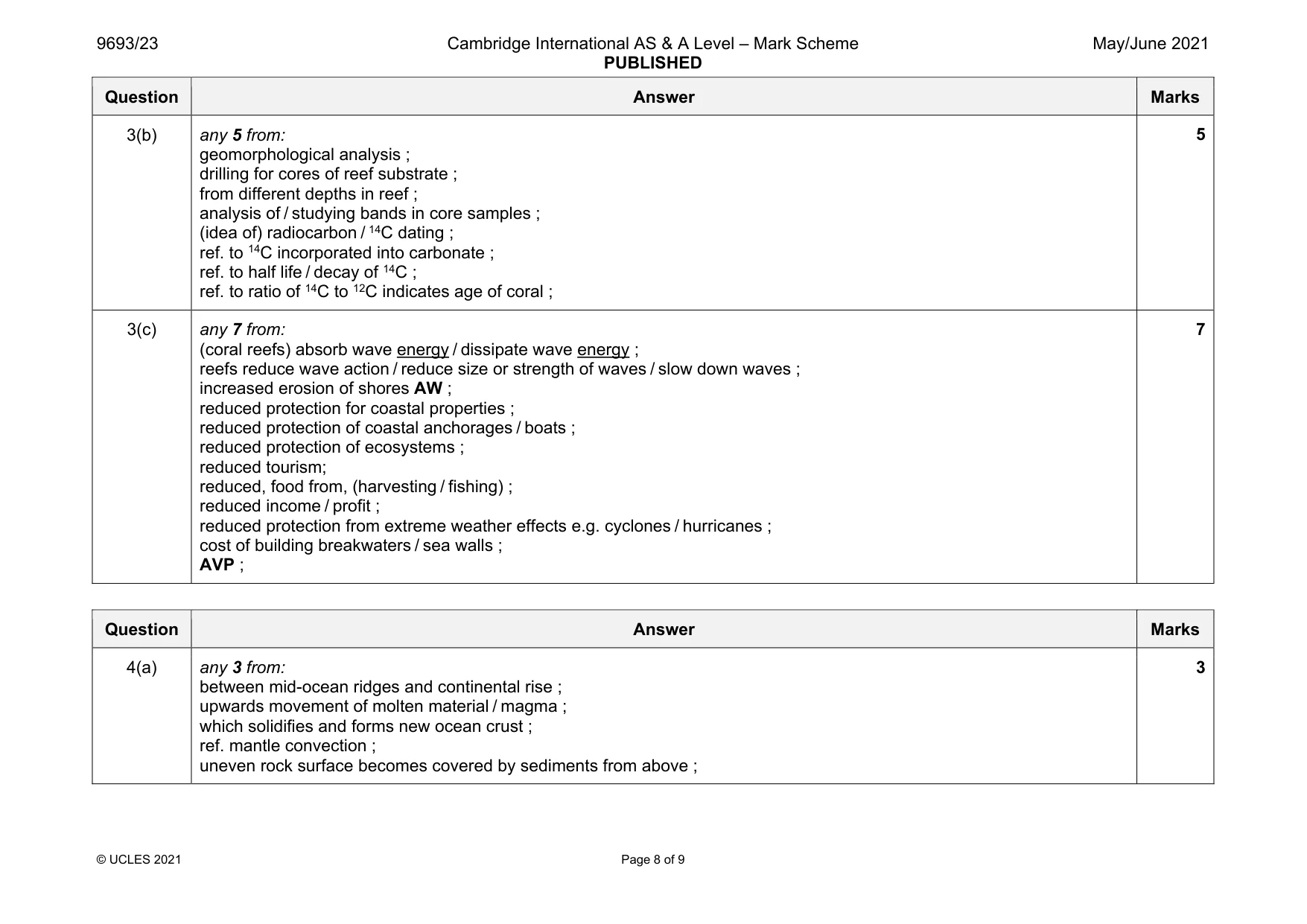
Mark scheme: 3(a) any 3 from: warm water temperature ; suitable depth / within 20 m of surface ; suitable substrate for attachment of coral larvae ; high / sufficient, light intensity ; ref. to clarity / turbidity of water ; suitable pH ; Question Answer Marks 3(b) any 5 from: geomorphological analysis ; drilling for cores of reef substrate ; from different depths in reef ; analysis of / studying bands in core samples ; (idea of) radiocarbon / 14C dating ; ref. to 14C incorporated into carbonate ; ref. to half life / decay of 14C ; ref. to ratio of 14C to 12C indicates age of coral ; 5 3(c) any 7 from: (coral reefs) absorb wave energy / dissipate wave energy ; reefs reduce wave action / reduce size or strength of waves / slow down waves ; increased erosion of shores AW ; reduced protection for coastal properties ; reduced protection of coastal anchorages / boats ; reduced protection of ecosystems ; reduced tourism; reduced, food from, (harvesting / fishing) ; reduced income / profit ; reduced protection from extreme weather effects e.g. cyclones / hurricanes ; cost of building breakwaters / sea walls ; AVP ; 7
Q4 · Describe how abyssal plains form on the sea bed
4 (a) Describe how abyssal plains form on the sea bed. ................................................................................................................................................... ................................................................................................................................................... ................................................................................................................................................... ................................................................................................................................................... ................................................................................................................................................... ............................................................................................................................................. [3] (b) Marine snow is the remains of dead organisms and faeces that sink to the abyssal plain from above. (i) Explain why most food chains on the abyssal plain depend on marine snow as a source of energy. ........................................................................................................................................... ........................................................................................................................................... ........................................................................................................................................... ........................................................................................................................................... ........................................................................................................................................... ........................................................................................................................................... ........................................................................................................................................... ..................................................................................................................................... [4] (ii) Marine snow also provides nutrients for organisms living on the abyssal plain. State the roles of different named examples of nutrients in marine organisms. ........................................................................................................................................... ........................................................................................................................................... ........................................................................................................................................... ........................................................................................................................................... ........................................................................................................................................... ........................................................................................................................................... ........................................................................................................................................... ........................................................................................................................................... ........................................................................................................................................... ........................................................................................................................................... ........................................................................................................................................... ........................................................................................................................................... ........................................................................................................................................... ........................................................................................................................................... ........................................................................................................................................... ..................................................................................................................................... [8] [Total: 15]
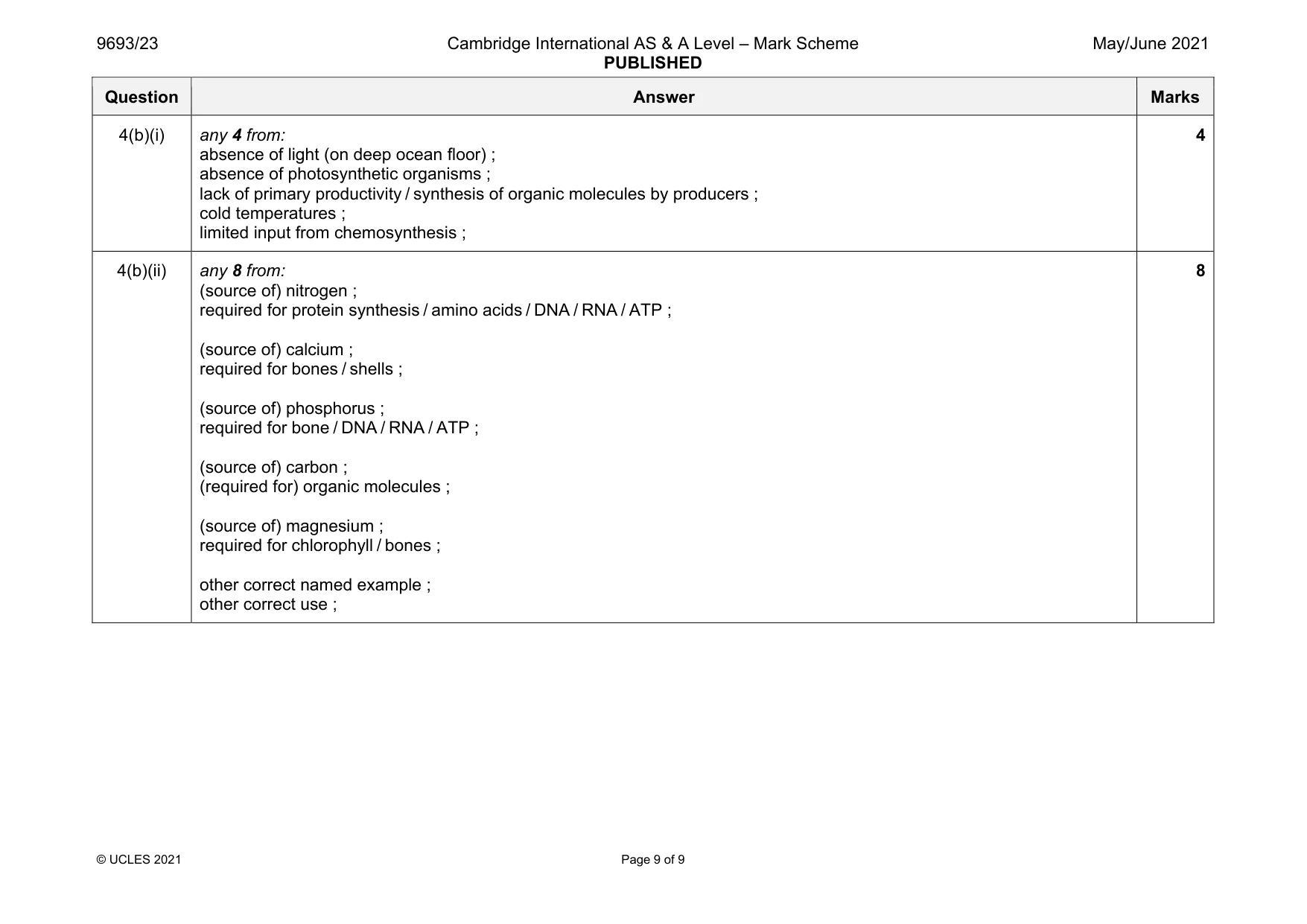
Mark scheme: 4(a) any 3 from: between mid-ocean ridges and continental rise ; upwards movement of molten material / magma ; which solidifies and forms new ocean crust ; ref. mantle convection ; uneven rock surface becomes covered by sediments from above ; Question Answer Marks 4(b)(i) any 4 from: absence of light (on deep ocean floor) ; absence of photosynthetic organisms ; lack of primary productivity / synthesis of organic molecules by producers ; cold temperatures ; limited input from chemosynthesis ; 4 4(b)(ii) any 8 from: (source of) nitrogen ; required for protein synthesis / amino acids / DNA / RNA / ATP ; (source of) calcium ; required for bones / shells ; (source of) phosphorus ; required for bone / DNA / RNA / ATP ; (source of) carbon ; (required for) organic molecules ; (source of) magnesium ; required for chlorophyll / bones ; other correct named example ; other correct use ; 8
What was in this paper
The subtopics covered by these 4 questions, and how many questions each got. Open one in a new tab to see every Cambridge question on it.
What you needed in this session
Cambridge’s own grade thresholds for 2021 May/June, Paper 2 · Variant 3. A higher threshold means an easier paper — the bar moves with how the cohort did.