Cambridge A Level Marine Science 9693 — 2020 May/June Paper 2 · Variant 3
9693/23/M/J/20 · 4 questions · 50 marks · ≈56 min
The question paper and its mark scheme, free to read here and free to download. This is Cambridge’s own paper, exactly as it was sat.
Question paper12 pages



Mark scheme11 pages
Answers below. Sit the paper first if you are practising.
Questions as text
Q1 · Mangroves growing in a tropical delta ecosystem
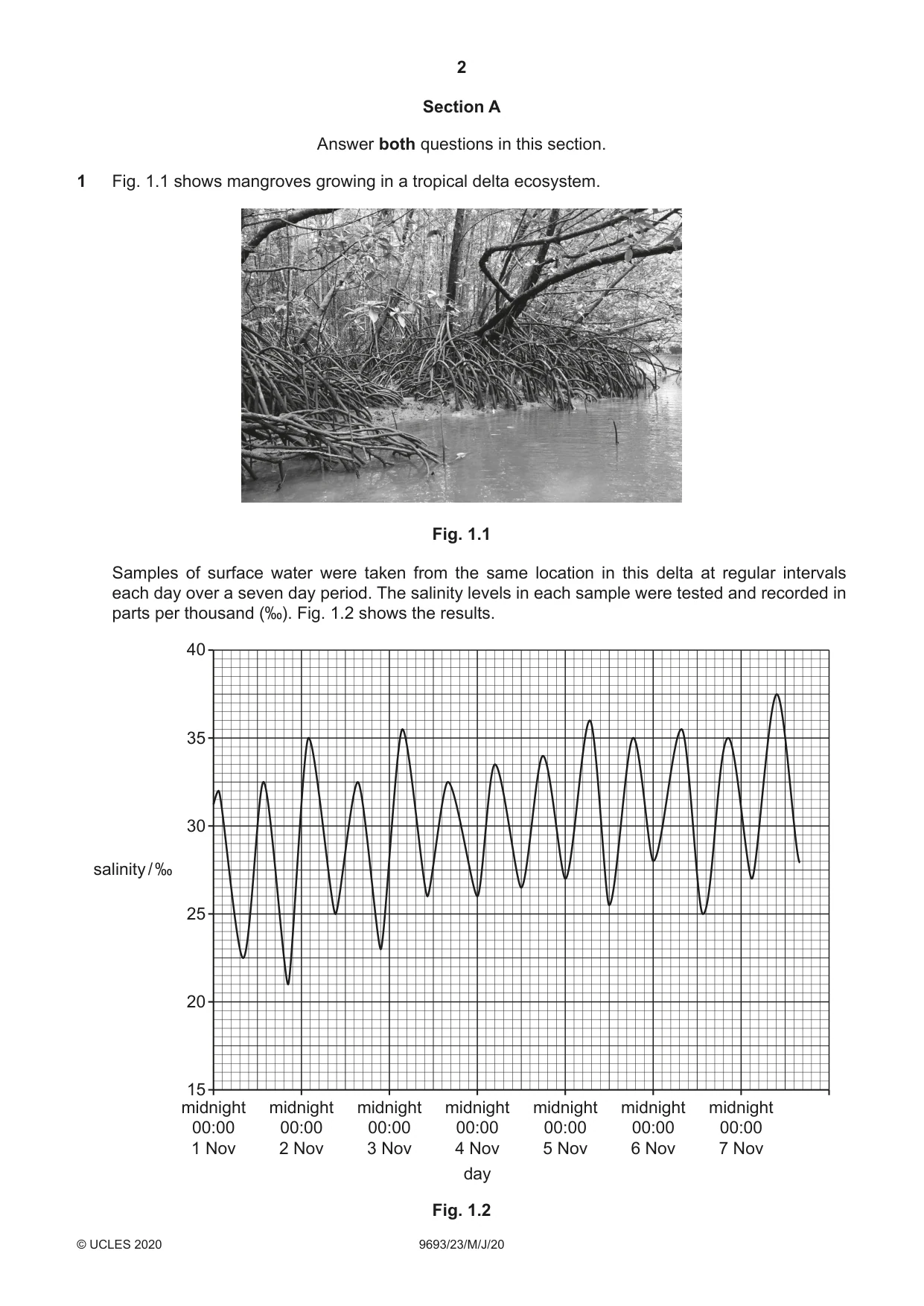
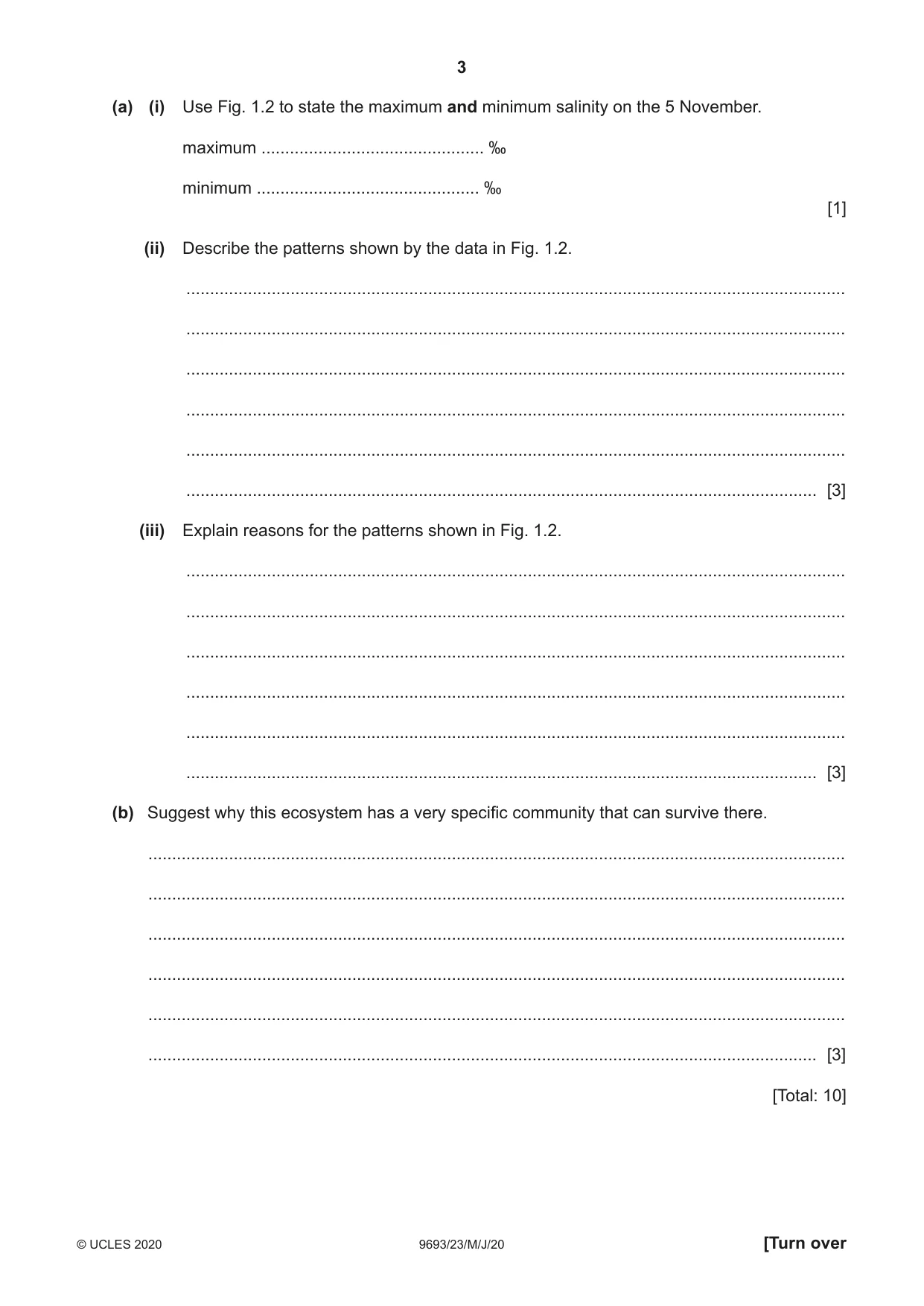
1 Fig. 1.1 shows mangroves growing in a tropical delta ecosystem. Fig. 1.1 Samples of surface water were taken from the same location in this delta at regular intervals each day over a seven day period. The salinity levels in each sample were tested and recorded in parts per thousand (‰). Fig. 1.2 shows the results. 40 35 30 salinity / ‰ 25 20 15 midnight midnight midnight midnight midnight midnight midnight 00:00 00:00 00:00 00:00 00:00 00:00 00:00 1 Nov 2 Nov 3 Nov 4 Nov 5 Nov 6 Nov 7 Nov day Fig. 1.2 (a) (i) Use Fig. 1.2 to state the maximum and minimum salinity on the 5 November. maximum ............................................... ‰ minimum ............................................... ‰ [1] (ii) Describe the patterns shown by the data in Fig. 1.2. ........................................................................................................................................... ........................................................................................................................................... ........................................................................................................................................... ........................................................................................................................................... ........................................................................................................................................... ..................................................................................................................................... [3] (iii) Explain reasons for the patterns shown in Fig. 1.2. ........................................................................................................................................... ........................................................................................................................................... ........................................................................................................................................... ........................................................................................................................................... ........................................................................................................................................... ..................................................................................................................................... [3] (b) Suggest why this ecosystem has a very specific community that can survive there. ................................................................................................................................................... ................................................................................................................................................... ................................................................................................................................................... ................................................................................................................................................... ................................................................................................................................................... ............................................................................................................................................. [3] [Total: 10]
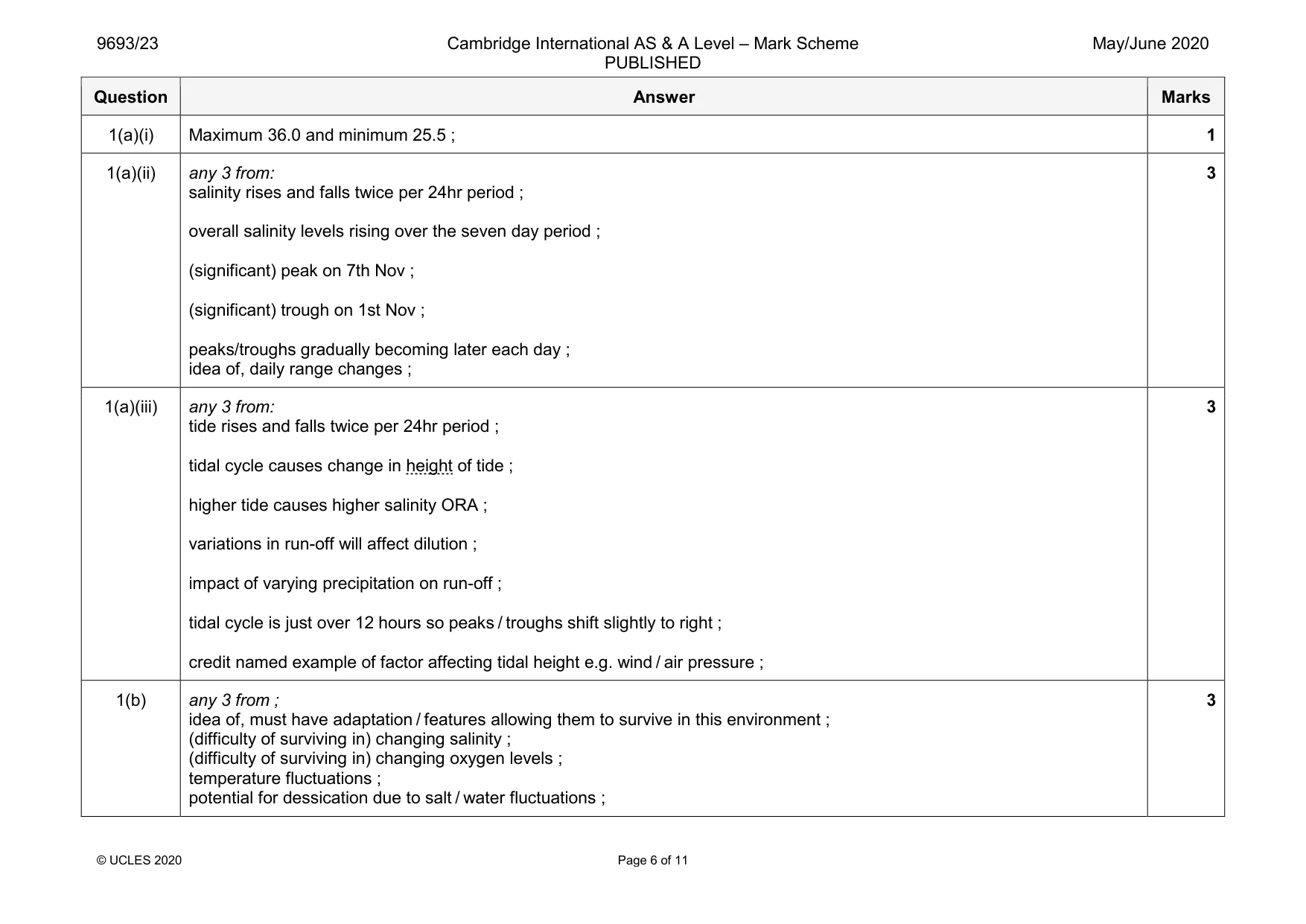
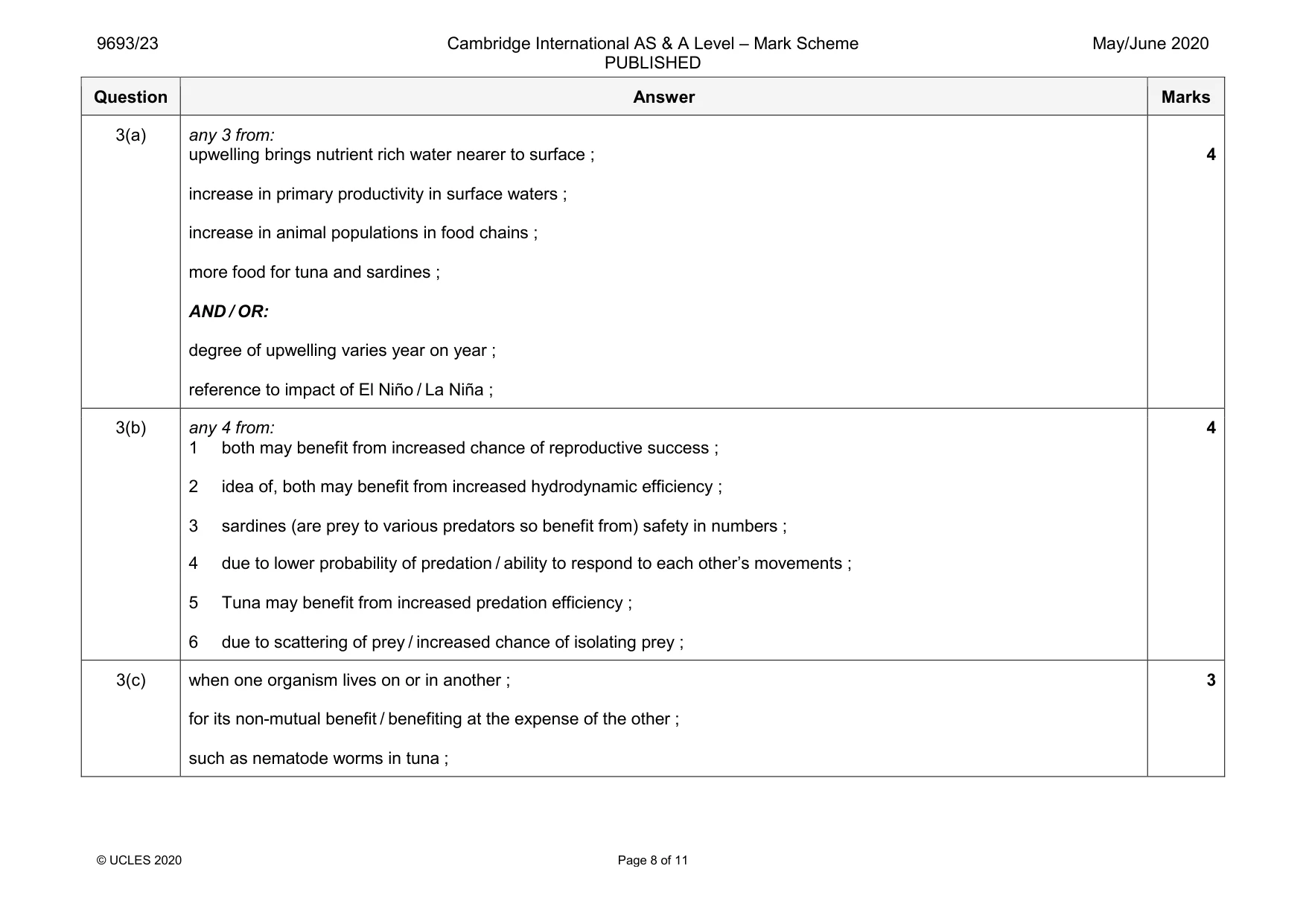
Mark scheme: Question Answer Marks 1(a)(i) Maximum 36.0 and minimum 25.5 ; 1 1(a)(ii) any 3 from: 3 salinity rises and falls twice per 24hr period ; overall salinity levels rising over the seven day period ; (significant) peak on 7th Nov ; (significant) trough on 1st Nov ; peaks/troughs gradually becoming later each day ; idea of, daily range changes ; 1(a)(iii) any 3 from: 3 tide rises and falls twice per 24hr period ; tidal cycle causes change in height of tide ; higher tide causes higher salinity ORA ; variations in run-off will affect dilution ; impact of varying precipitation on run-off ; tidal cycle is just over 12 hours so peaks / troughs shift slightly to right ; credit named example of factor affecting tidal height e.g. wind / air pressure ; 1(b) any 3 from ; 3 idea of, must have adaptation / features allowing them to survive in this environment ; (difficulty of surviving in) changing salinity ; (difficulty of surviving in) changing oxygen levels ; temperature fluctuations ; potential for dessication due to salt / water fluctuations ;
Q2 · Small sections of coral can be grown attached to steel frames
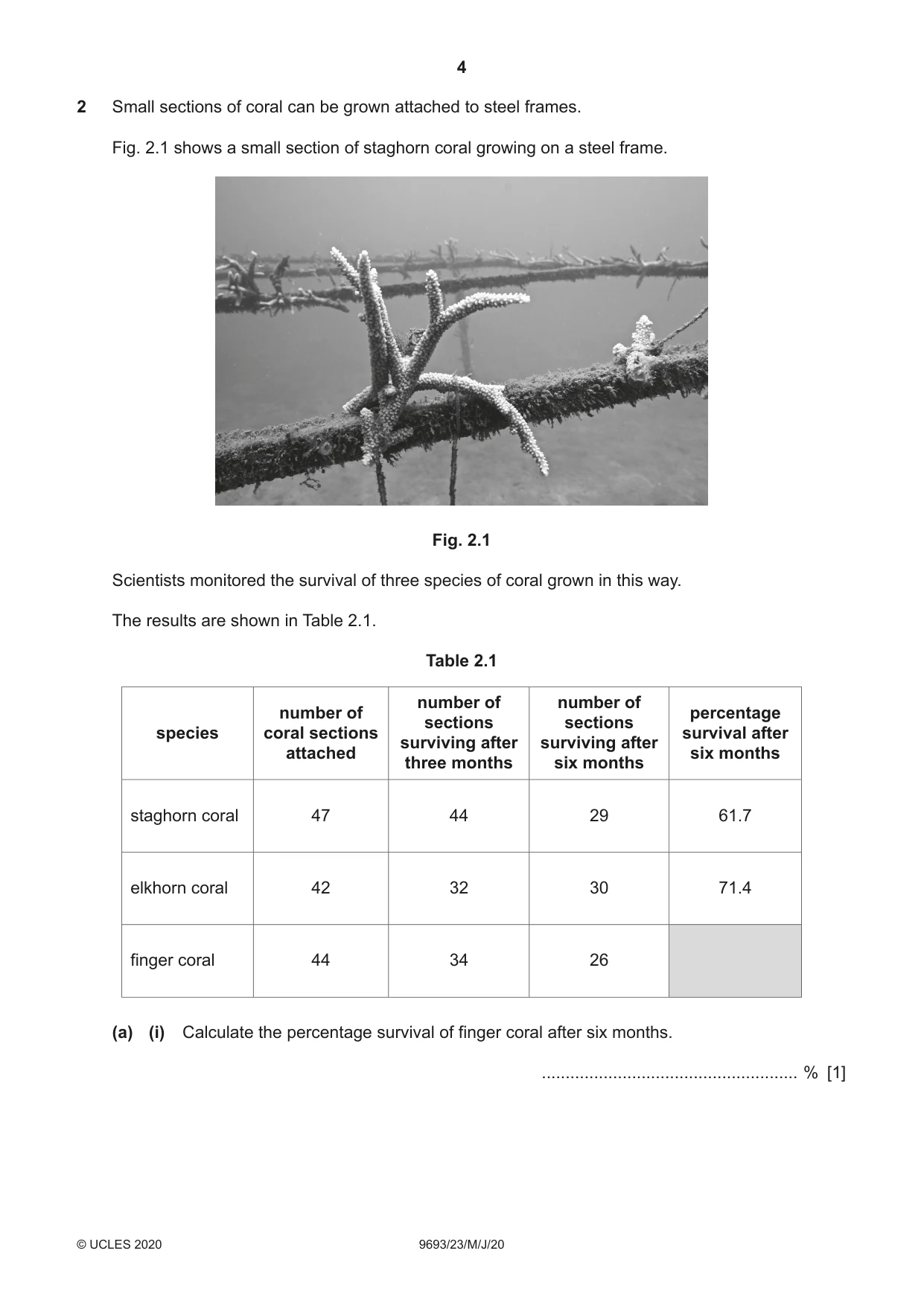
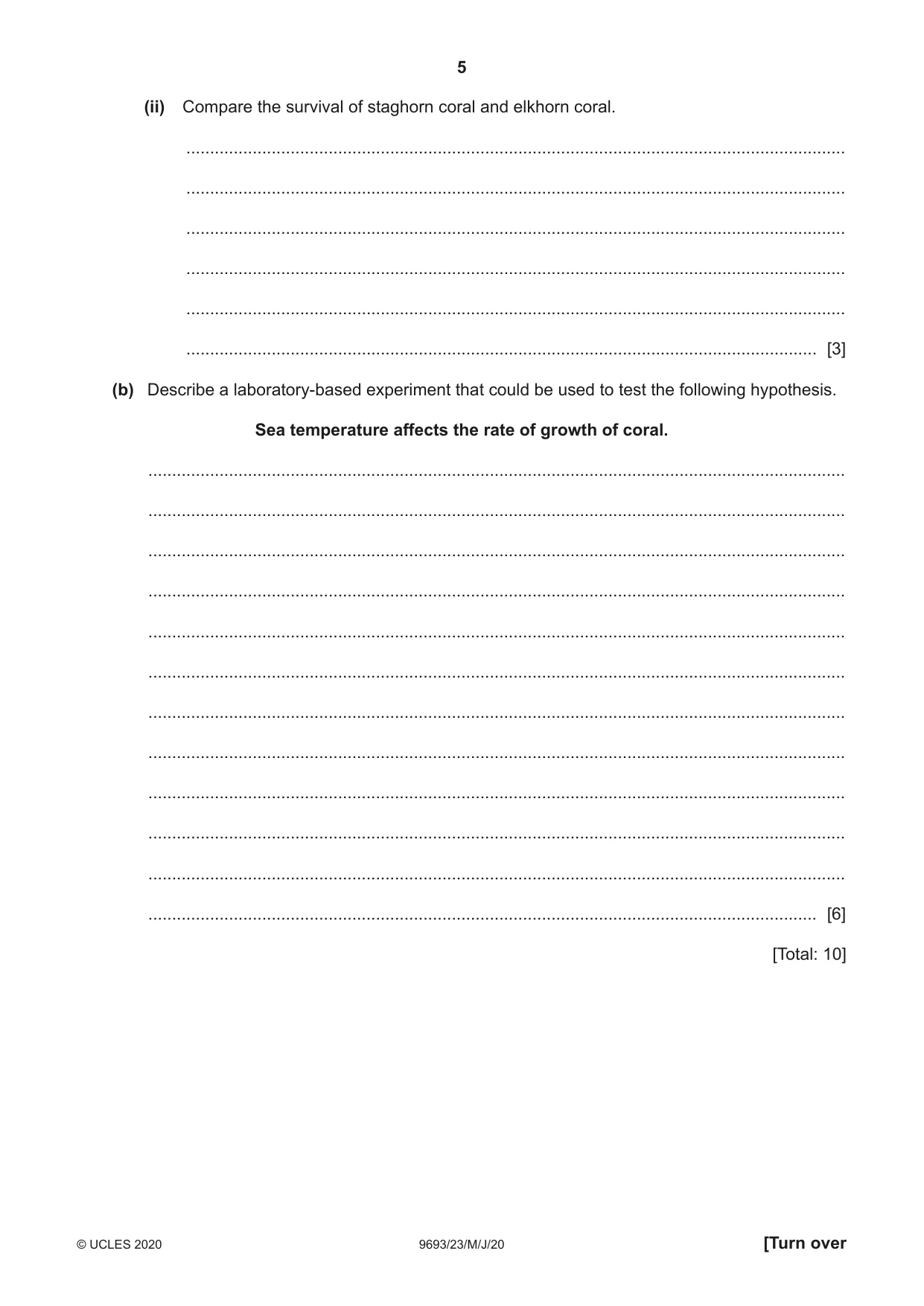
2 Small sections of coral can be grown attached to steel frames. Fig. 2.1 shows a small section of staghorn coral growing on a steel frame. Fig. 2.1 Scientists monitored the survival of three species of coral grown in this way. The results are shown in Table 2.1. Table 2.1 number of number of number of percentage sections sections species coral sections survival after surviving after surviving after attached six months three months six months staghorn coral 47 44 29 61.7 elkhorn coral 42 32 30 71.4 finger coral 44 34 26 (a) (i) Calculate the percentage survival of finger coral after six months. ...................................................... % [1] (ii) Compare the survival of staghorn coral and elkhorn coral. ........................................................................................................................................... ........................................................................................................................................... ........................................................................................................................................... ........................................................................................................................................... ........................................................................................................................................... ..................................................................................................................................... [3] (b) Describe a laboratory-based experiment that could be used to test the following hypothesis. Sea temperature affects the rate of growth of coral. ................................................................................................................................................... ................................................................................................................................................... ................................................................................................................................................... ................................................................................................................................................... ................................................................................................................................................... ................................................................................................................................................... ................................................................................................................................................... ................................................................................................................................................... ................................................................................................................................................... ................................................................................................................................................... ................................................................................................................................................... ............................................................................................................................................. [6] [Total: 10]
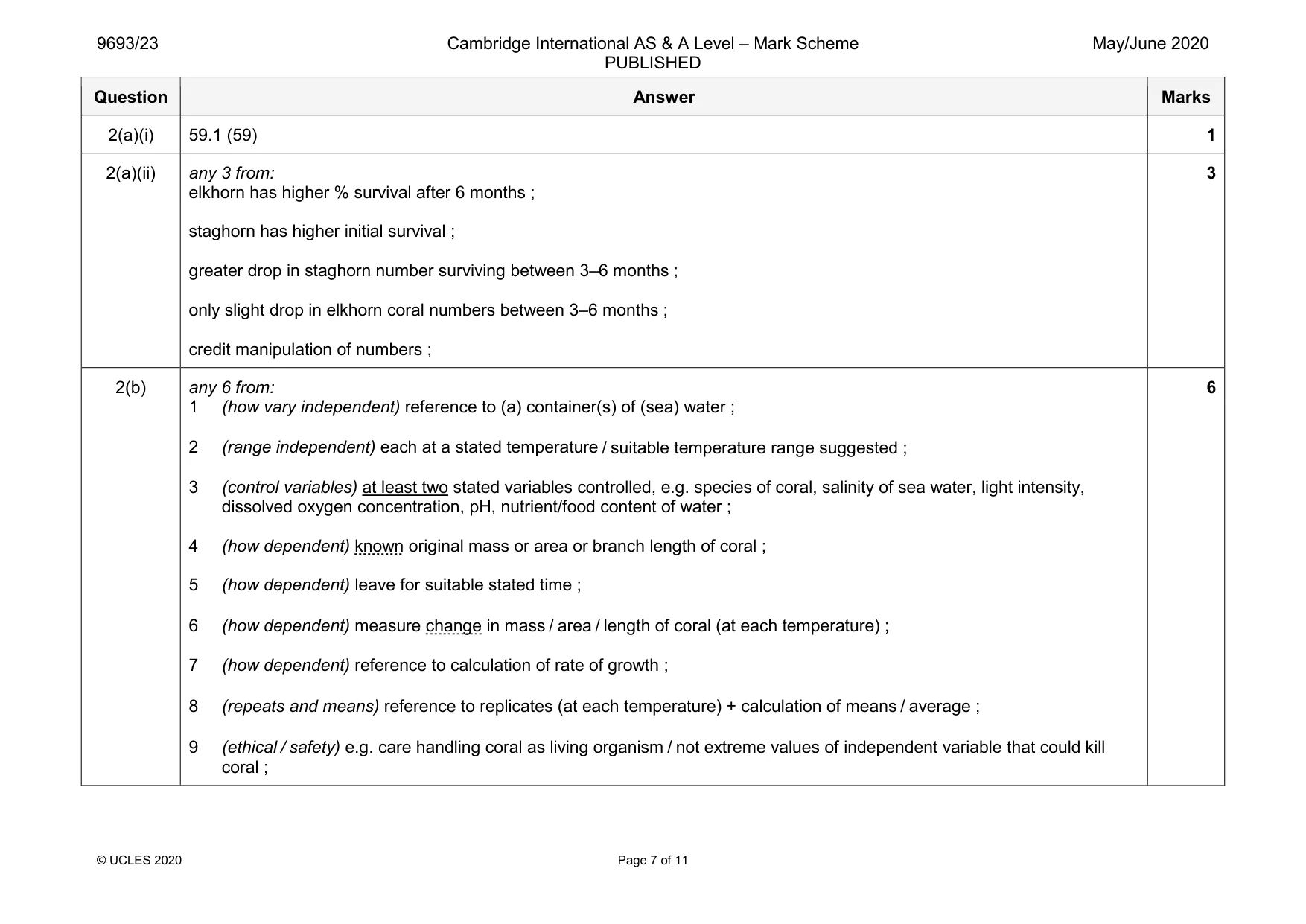
Mark scheme: 2(a)(i) 59.1 (59) 1 2(a)(ii) any 3 from: 3 elkhorn has higher % survival after 6 months ; staghorn has higher initial survival ; greater drop in staghorn number surviving between 3–6 months ; only slight drop in elkhorn coral numbers between 3–6 months ; credit manipulation of numbers ; 2(b) any 6 from: 6 1 (how vary independent) reference to (a) container(s) of (sea) water ; 2 (range independent) each at a stated temperature / suitable temperature range suggested ; 3 (control variables) at least two stated variables controlled, e.g. species of coral, salinity of sea water, light intensity, dissolved oxygen concentration, pH, nutrient/food content of water ; 4 (how dependent) known original mass or area or branch length of coral ; 5 (how dependent) leave for suitable stated time ; 6 (how dependent) measure change in mass / area / length of coral (at each temperature) ; 7 (how dependent) reference to calculation of rate of growth ; 8 (repeats and means) reference to replicates (at each temperature) + calculation of means / average ; 9 (ethical / safety) e.g. care handling coral as living organism / not extreme values of independent variable that could kill coral ;
Q3 · Tuna and sardines are examples of fish that survive in the open ocean
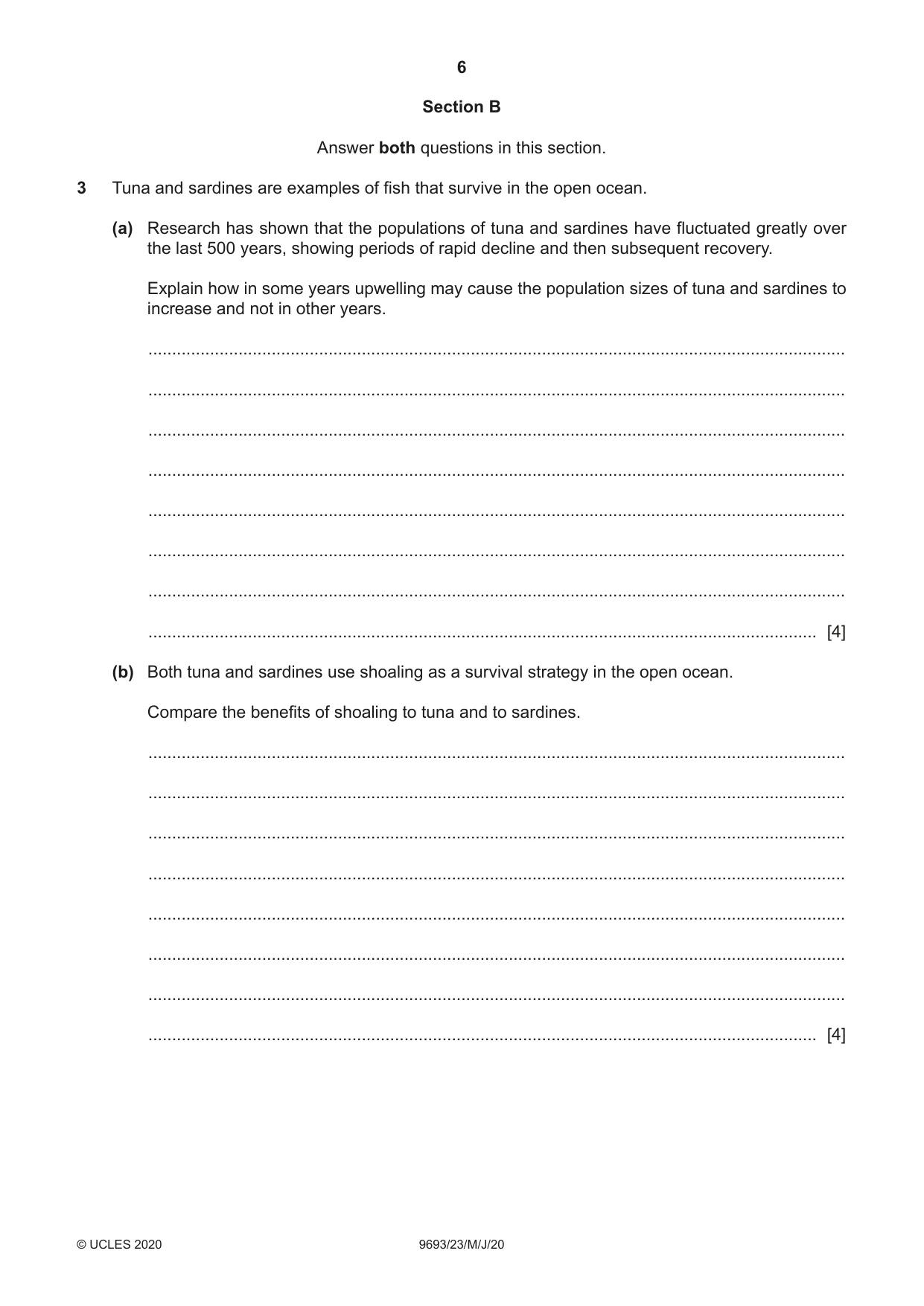
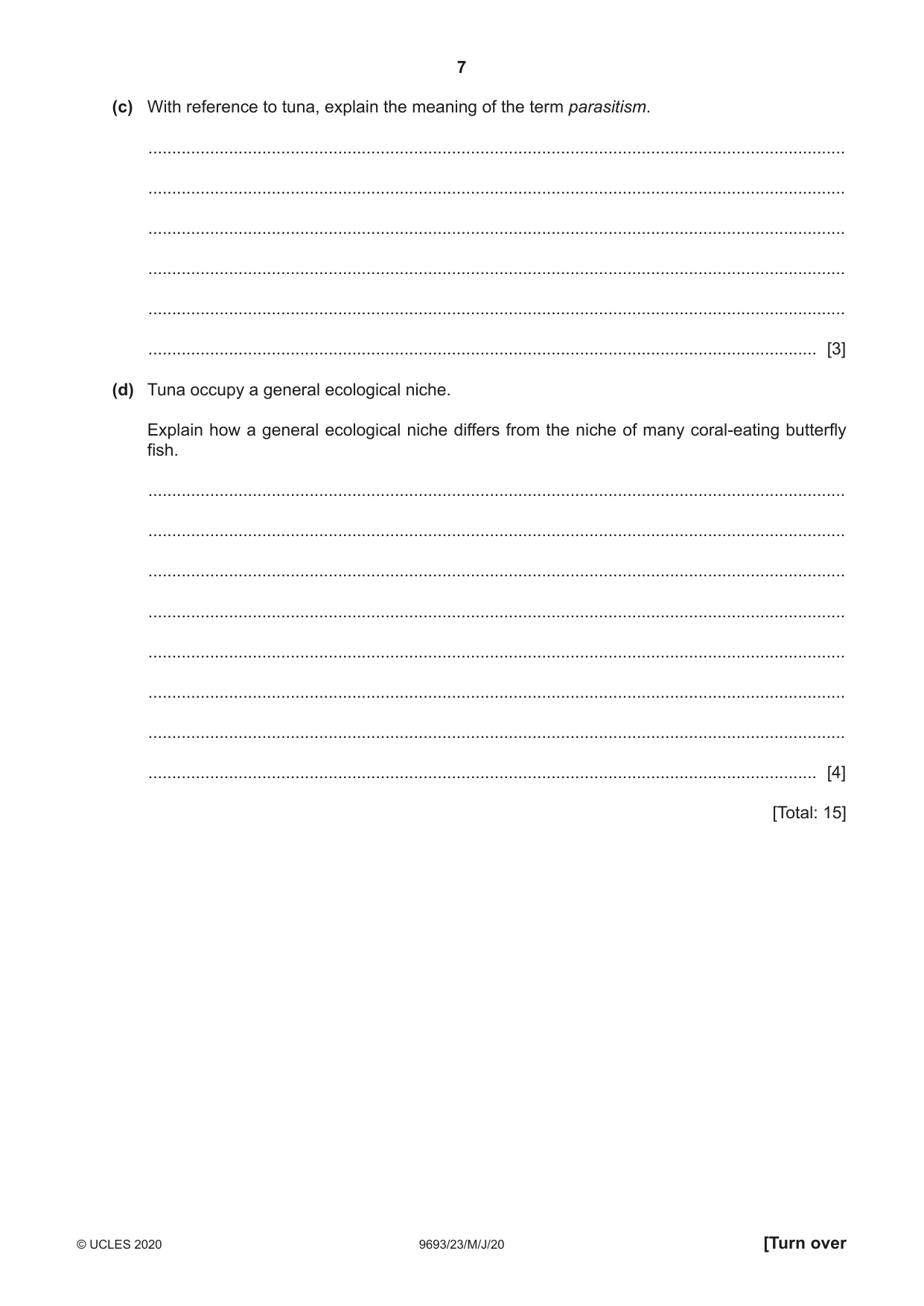
3 Tuna and sardines are examples of fish that survive in the open ocean. (a) Research has shown that the populations of tuna and sardines have fluctuated greatly over the last 500 years, showing periods of rapid decline and then subsequent recovery. Explain how in some years upwelling may cause the population sizes of tuna and sardines to increase and not in other years. ................................................................................................................................................... ................................................................................................................................................... ................................................................................................................................................... ................................................................................................................................................... ................................................................................................................................................... ................................................................................................................................................... ................................................................................................................................................... ............................................................................................................................................. [4] (b) Both tuna and sardines use shoaling as a survival strategy in the open ocean. Compare the benefits of shoaling to tuna and to sardines. ................................................................................................................................................... ................................................................................................................................................... ................................................................................................................................................... ................................................................................................................................................... ................................................................................................................................................... ................................................................................................................................................... ................................................................................................................................................... ............................................................................................................................................. [4] (c) With reference to tuna, explain the meaning of the term parasitism. ................................................................................................................................................... ................................................................................................................................................... ................................................................................................................................................... ................................................................................................................................................... ................................................................................................................................................... ............................................................................................................................................. [3] (d) Tuna occupy a general ecological niche. Explain how a general ecological niche differs from the niche of many coral-eating butterfly fish. ................................................................................................................................................... ................................................................................................................................................... ................................................................................................................................................... ................................................................................................................................................... ................................................................................................................................................... ................................................................................................................................................... ................................................................................................................................................... ............................................................................................................................................. [4] [Total: 15]
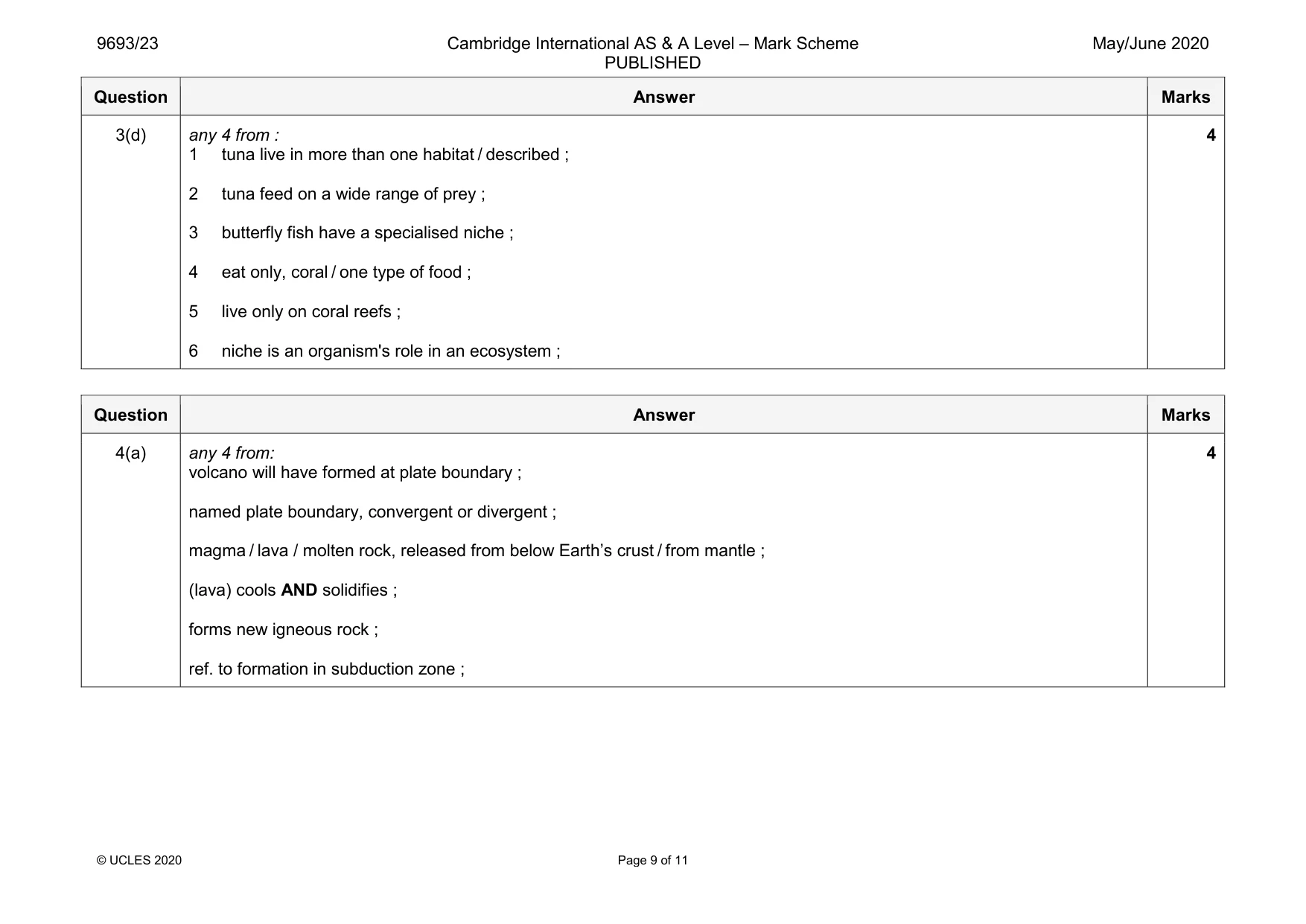
Mark scheme: 3(a) any 3 from: upwelling brings nutrient rich water nearer to surface ; 4 increase in primary productivity in surface waters ; increase in animal populations in food chains ; more food for tuna and sardines ; AND / OR: degree of upwelling varies year on year ; reference to impact of El Niño / La Niña ; 3(b) any 4 from: 4 1 both may benefit from increased chance of reproductive success ; 2 idea of, both may benefit from increased hydrodynamic efficiency ; 3 sardines (are prey to various predators so benefit from) safety in numbers ; 4 due to lower probability of predation / ability to respond to each other’s movements ; 5 Tuna may benefit from increased predation efficiency ; 6 due to scattering of prey / increased chance of isolating prey ; 3(c) when one organism lives on or in another ; 3 for its non-mutual benefit / benefiting at the expense of the other ; such as nematode worms in tuna ; 3(d) any 4 from : 4 1 tuna live in more than one habitat / described ; 2 tuna feed on a wide range of prey ; 3 butterfly fish have a specialised niche ; 4 eat only, coral / one type of food ; 5 live only on coral reefs ; 6 niche is an organism's role in an ecosystem ;
Q4 · Hunga Tonga is an underwater volcano in the tropical South Pacific Ocean near Tonga
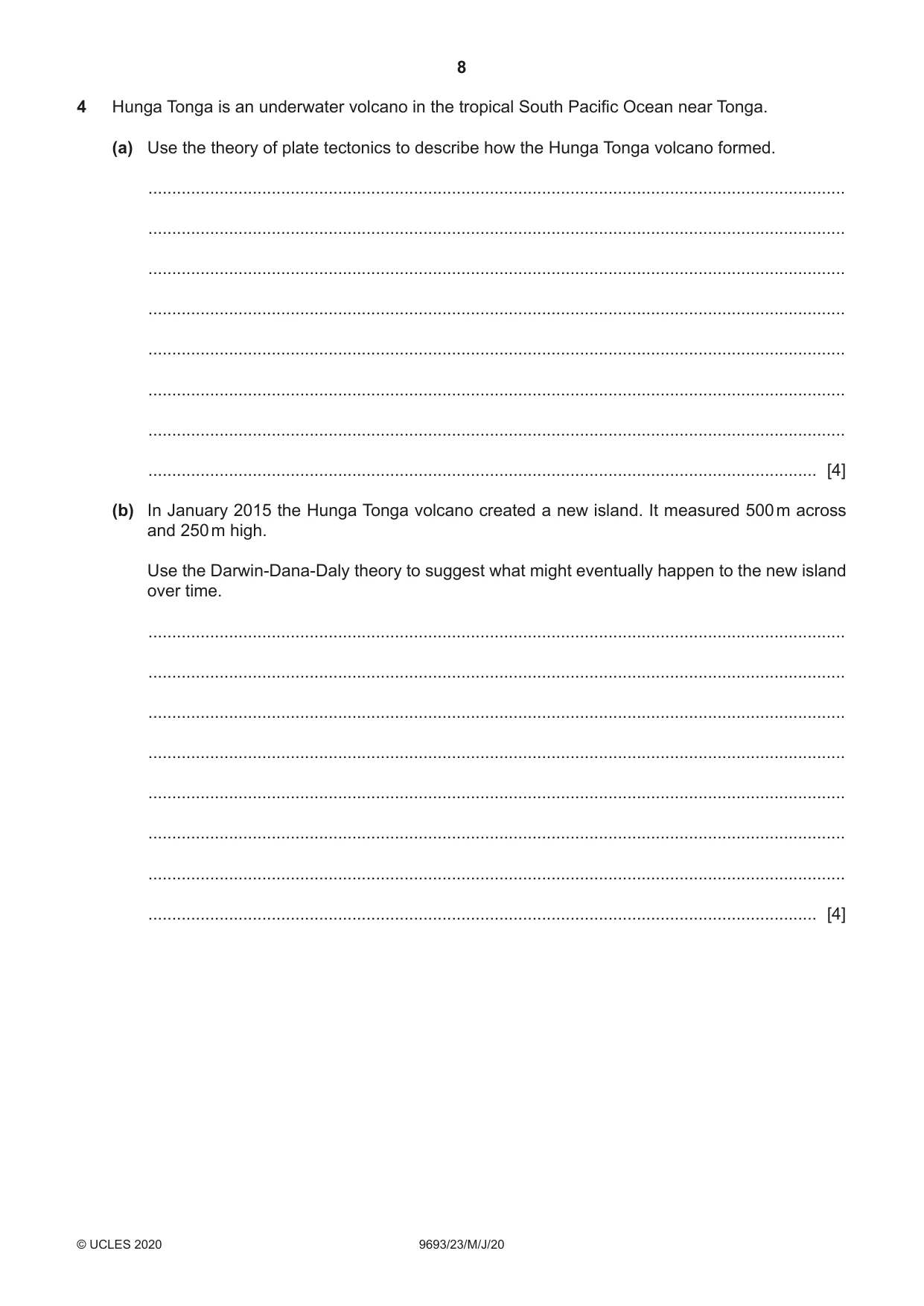
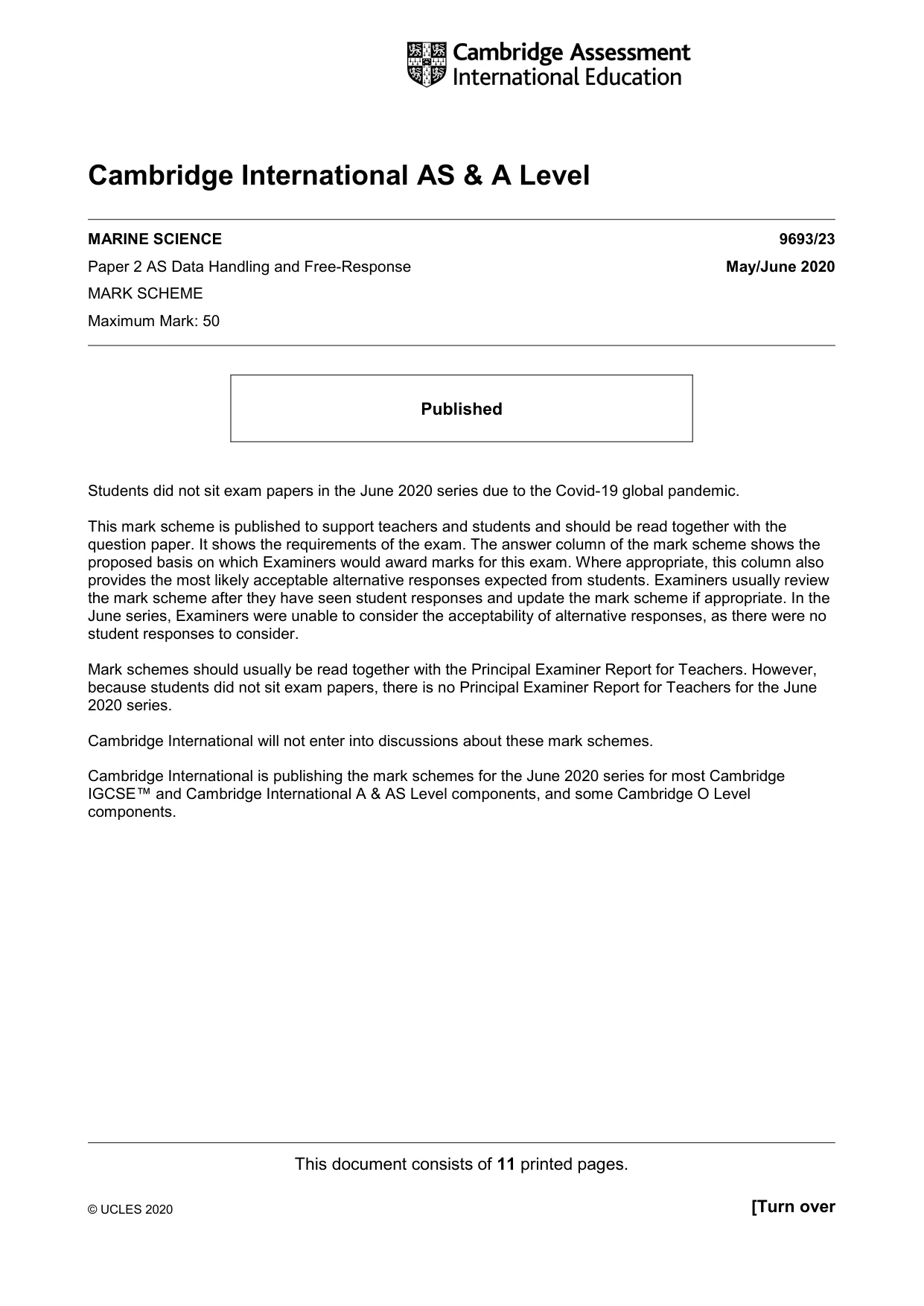
4 Hunga Tonga is an underwater volcano in the tropical South Pacific Ocean near Tonga. (a) Use the theory of plate tectonics to describe how the Hunga Tonga volcano formed. ................................................................................................................................................... ................................................................................................................................................... ................................................................................................................................................... ................................................................................................................................................... ................................................................................................................................................... ................................................................................................................................................... ................................................................................................................................................... ............................................................................................................................................. [4] (b) In January 2015 the Hunga Tonga volcano created a new island. It measured 500 m across and 250 m high. Use the Darwin-Dana-Daly theory to suggest what might eventually happen to the new island over time. ................................................................................................................................................... ................................................................................................................................................... ................................................................................................................................................... ................................................................................................................................................... ................................................................................................................................................... ................................................................................................................................................... ................................................................................................................................................... ............................................................................................................................................. [4] (c) Describe and explain how volcanic activity and other factors can affect the concentration of dissolved gases in sea water. ................................................................................................................................................... ................................................................................................................................................... ................................................................................................................................................... ................................................................................................................................................... ................................................................................................................................................... ................................................................................................................................................... ................................................................................................................................................... ................................................................................................................................................... ................................................................................................................................................... ................................................................................................................................................... ................................................................................................................................................... ................................................................................................................................................... ................................................................................................................................................... ............................................................................................................................................. [7] [Total: 15]
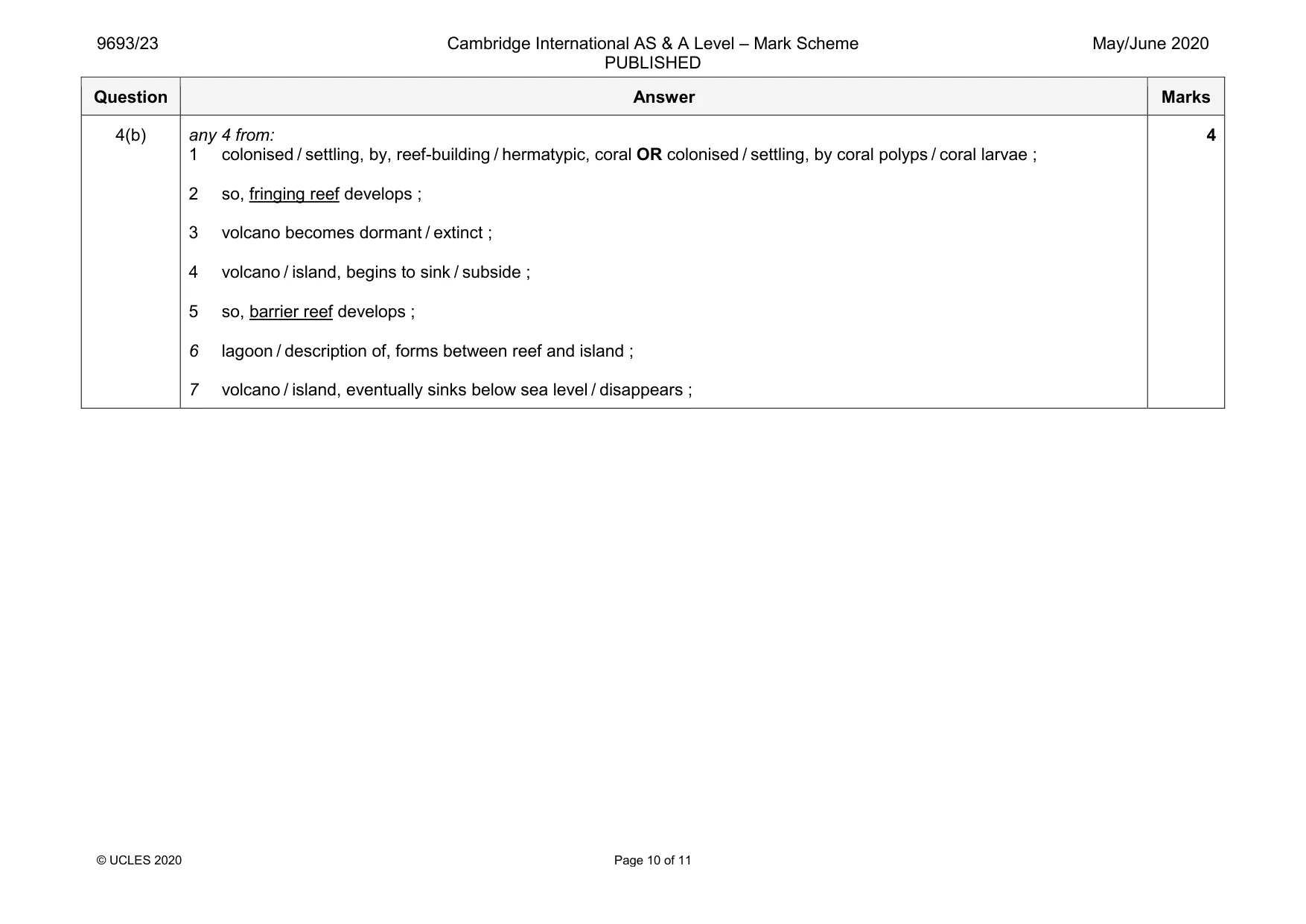
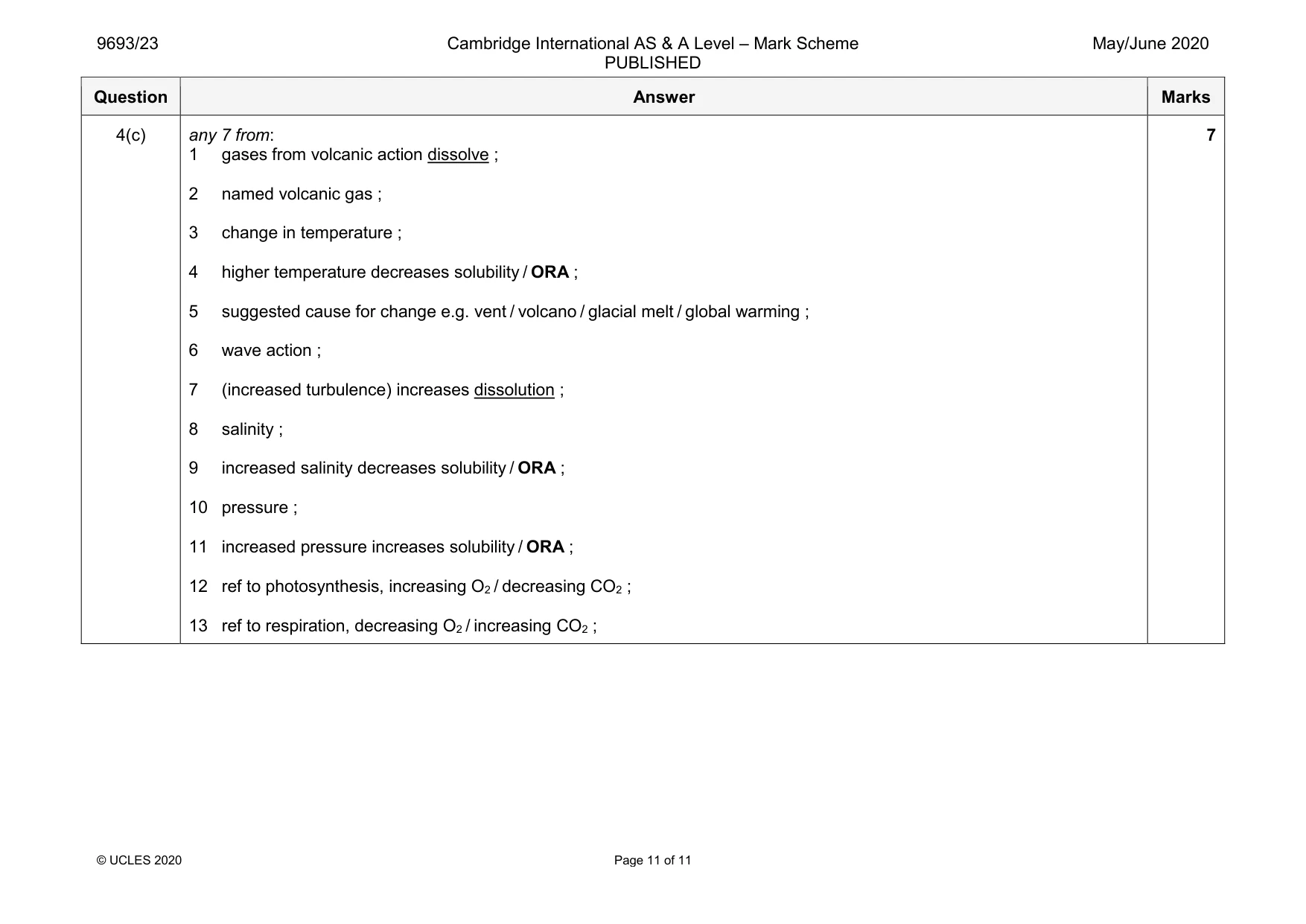
Mark scheme: 4(a) any 4 from: 4 volcano will have formed at plate boundary ; named plate boundary, convergent or divergent ; magma / lava / molten rock, released from below Earth’s crust / from mantle ; (lava) cools AND solidifies ; forms new igneous rock ; ref. to formation in subduction zone ; 4(b) any 4 from: 4 1 colonised / settling, by, reef-building / hermatypic, coral OR colonised / settling, by coral polyps / coral larvae ; 2 so, fringing reef develops ; 3 volcano becomes dormant / extinct ; 4 volcano / island, begins to sink / subside ; 5 so, barrier reef develops ; 6 lagoon / description of, forms between reef and island ; 7 volcano / island, eventually sinks below sea level / disappears ; 4(c) any 7 from: 7 1 gases from volcanic action dissolve ; 2 named volcanic gas ; 3 change in temperature ; 4 higher temperature decreases solubility / ORA ; 5 suggested cause for change e.g. vent / volcano / glacial melt / global warming ; 6 wave action ; 7 (increased turbulence) increases dissolution ; 8 salinity ; 9 increased salinity decreases solubility / ORA ; 10 pressure ; 11 increased pressure increases solubility / ORA ; 12 ref to photosynthesis, increasing O2 / decreasing CO2 ; 13 ref to respiration, decreasing O2 / increasing CO2 ;
What was in this paper
The subtopics covered by these 4 questions, and how many questions each got. Open one in a new tab to see every Cambridge question on it.